Posted on

A Conversation with Alana Arenas

Alana Arenas


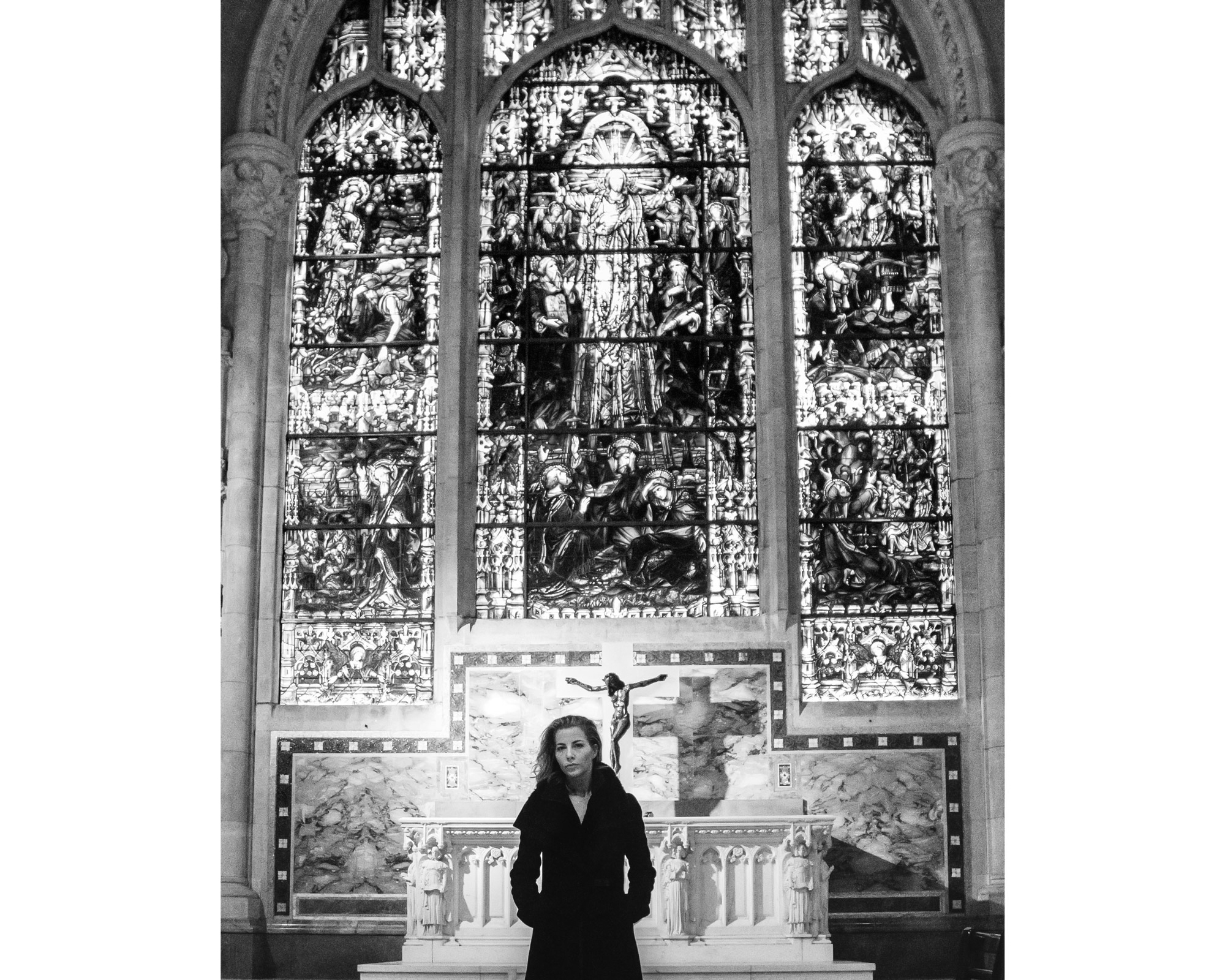
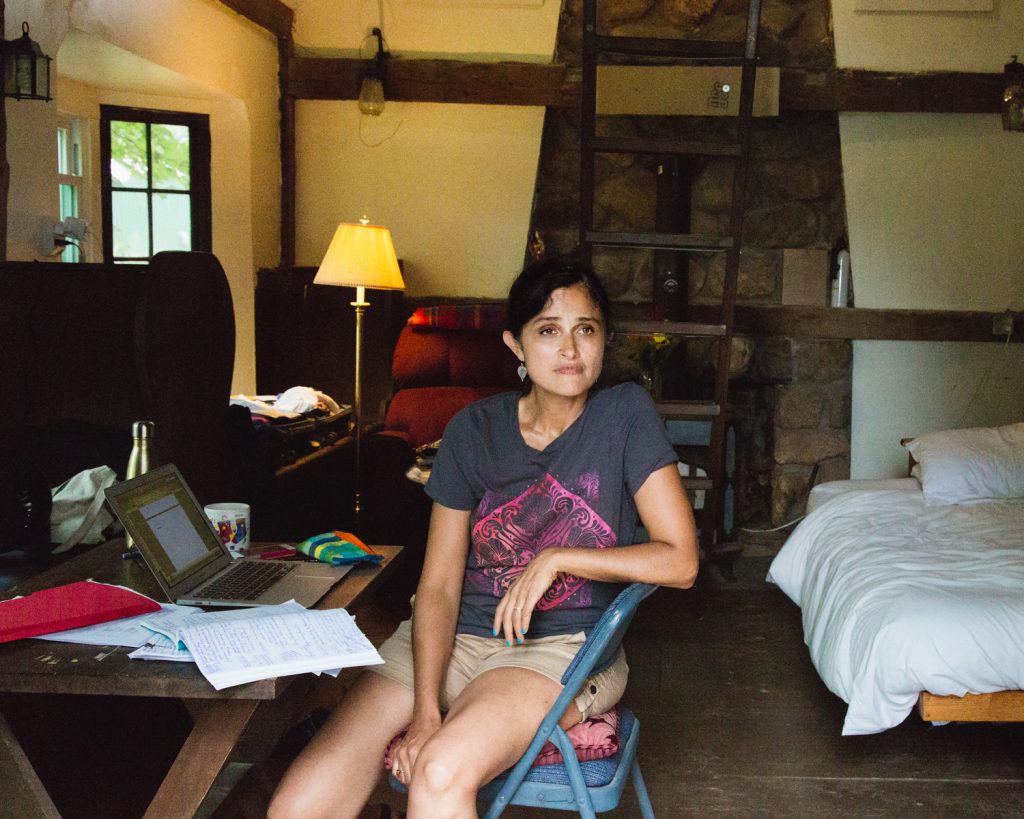
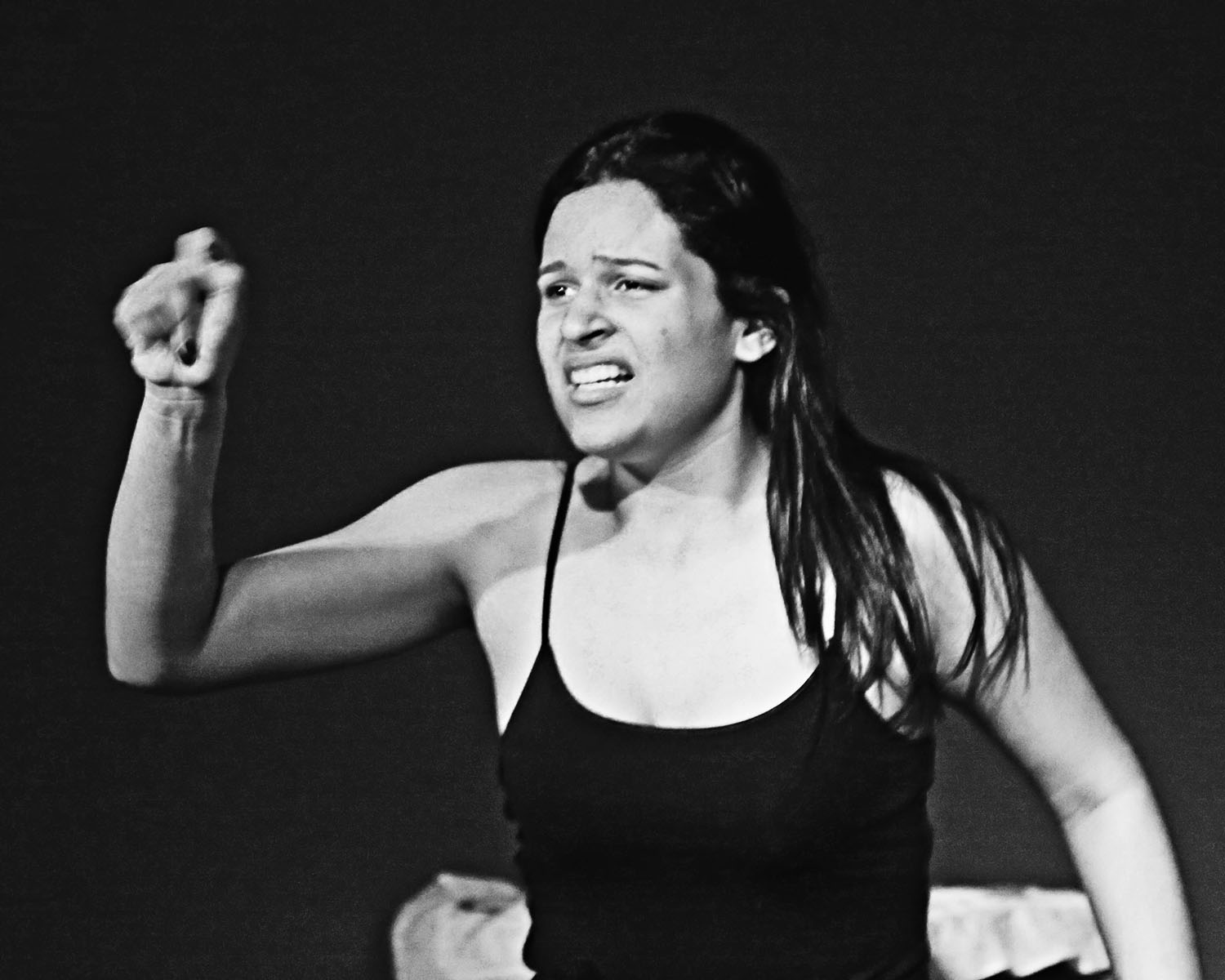
Alana Arenas loves drama and in Erika Sheffer’s new play, The Fundamentals, she gets to see plenty. The show takes a backstage look at the staff that keeps the sheets turned down and the bar stocked at a fancy New York City hotel. Arenas plays Millie, a housekeeper and a mother trying to make ends meet and our winsome guide through the highs and lows of hospitality. As she approaches her tenth year in the ensemble, I sat down with her before a performance at Steppenwolf’s Front Bar, to talk about taking care, onstage and off.


Kelly Wallace: How did you get started? What brought you to this company and why?
 

Alana Arenas: I was a student at DePaul. And I’m not originally from Chicago; I’m from Miami, Florida. So when you’re a student of a craft and you’re preparing yourself to enter the professional world, you know what the standard of excellence is. I had a list of all these places I wanted to work because based on reputation they were the biggest within the city. I honestly didn’t know the whole history behind Steppenwolf, beyond that I knew it was somewhere I wanted to work. So I kept going and going and wasn’t booking anything and so I decided I was going to call the casting director. Now, I know you’re not supposed to do that, but I called anyway and asked them to tell me what I was missing, what I was not getting. They said, That’s why we keep calling you in, we love you, we have to find the right role. And at the time there was nothing in me that would see that one day I could be an ensemble member there. I ended up doing a young-adults play by Lydia Diamond, which was where my relationship really began with Steppenwolf.
 

KW: What’s the experience like, of being an ensemble member as opposed to going from company to company?
 

AA: Interestingly enough, I was thinking about that onstage the other night. I have so much respect for the actors in this theater company; they’re the best actors I’ve seen. There are beautiful, wonderful actors everywhere, but this is an ensemble of amazing people. Something happens when somebody allows you to have more work opportunities and you know when it’s going to be, it alleviates that pressure you feel as an artist where you’re always reeling in limbo. You’re always reeling from a “no” and desperate to get another “yes.” When you can relax a little bit and know a job is coming and work with people you feel safe with…it really fosters an environment where you can strive for your best work. People are not at their most creative selves when they’re stressed out. When you can relax into discovery and play and really work as your creative self, it affords you the opportunity to continue to get better. It should push us all to seek to get better. It’s a real gift.
 

KW: I’ve heard that from other actors and artists that having so much focus on the machine and the product is exhausting, or at least, distracting. Having the stability of such an outstanding company whose work and actions really fuel themselves, it must be a nice change.
 

AA: I was thinking about that onstage too, looking at all the wonderful actors I had working with. I was thinking about how fortunate we are to be in this ensemble and have a home as an artist. Sometimes what you do might not be that great, but you still have a family who is supportive and who loves you, almost unconditionally. That might sound far reaching, but when you invite somebody into the ensemble, you enter a kind of marriage with them. That was the first thing I asked when they invited me in. I was like, “What do you have to do to get kicked out?” They were like, No…you don’t get kicked out. So, to have somebody make that type of commitment to you as an artist is extremely liberating, inspiring, and it’s just…a real incubator for that artist to become their best self.
 

KW: What made you want to pursue acting as a career?
 

AA: It was in high school. I went to performing arts high school, completely by chance. When I was young, I never wanted to be an actor. My mom made me audition for the school and I got in and it changed my life, for real. I have no idea what I would’ve done if I hadn’t gone down that path.
 

KW: Were there any actors who were role models to you? Or shows that you connected with?
 

AA: It was the school. It helped me discover who I am as a person, through my involvement with theater work. A lot of theater work and theater training is based on an individual really getting to know themselves. You have to have a great level of awareness beyond yourself as an actor, which starts with becoming aware of yourself. I appreciated the invitation to become conscious about who I am and what’s unique about me. To see that for myself, and then see it in other people was revolutionary for me. I got excited about an art form that made me have to be more in touch with human beings. I get to learn about people. And it’s really hard to get to know a person, or a character, and not find something to love about them.
 

KW: Theater is such an empathetic art. I mean, we’re in such divided times, do you think theater can play a role in helping to heal that divide now?
 

AA: My entryway into the art was to find it extremely therapeutic. Having gone through high school, college, and worked a little bit…I come to it with a desire to be the healing for other people.
 

KW: When did you find out about this show?
 

AA: We workshopped it. I’m gonna be honest, I don’t really remember; I just had a baby. It must’ve been a year ago.
 

KW: What jumped out at you about the character?
 

AA: Moreso, I was interested in the play, not just Millie. I’m a sucker for drama. I feel like…take the audience on a ride. Take them on a journey. I like when people are surprised, so I was interested in that experience. I think the actual vehicle, the play itself, is the unexpected thing. Millie herself isn’t an unfamiliar person, but she does finally gets to have her moment onstage in the spotlight.
 

KW: It’s not often that you see a well-rounded interesting female character be the lead in the show at all, and have her romantic life not be at the center of the plot.
 

AA: I think it’s about her wanting to be the things she believes she can be. But she learns she has to do a lot of juggling to have all the roles she wants within her circumstances. She’s still a mom to three kids. It’s very unfortunate but when you’re a wife, or a mom – and I’m both – you kinda have no idea what those titles are until you’re inside of them. Definitely having a child taught me that I had no idea. You think you can imagine, but you can’t. Some people think being a mom is a frustrating idea that’s projected on a woman, against their desires. Me, personally, I want to be a mom and I want to be there watching every second of his development as much as I wanna be onstage fully invested in that career. You have to figure out how to juggle them. But I will say, my son has put everything in perspective. Being an artist is such a precarious career; every audition I went on felt different. It was all or nothing. I’m either going to be an actor and this is my job or it isn’t. So everything I do, I have to go my 100% for him.
 

KW: I don’t have a child, but I would imagine that if you have one, you really do arrange the rest of your life around that.
 

AA: I feel like I know the point of view of women who will say, Oh, that’s not all you are, you’re not just a mom – and that’s so true. But I also do understand that being a mom is a part of my identity now and I love that.
 

KW: Why did you feel so called to the theater? What would you say to people who are having a hard time or who might be gay or a person of color who might not see a place for themselves in the industry?
 

AA: Personally, I am a person of faith. The first thing I would say is don’t let anything in society determine your path. Get in touch with the thing you feel you were placed here to go. Someone told me, “Welcome to not working,” and I thought…that might be your story, but it won’t be my story. I’m not going to walk out with a negative point of view. I’m going to do my best and hope. I feel like a lot of what has been afforded to me had to involve some kind of divine orchestrations. I really feel like God saved my life. Everybody has their talent and we have to share our talents with each other. You might find it disappointing if you’re looking for a spotlight and looking for it to be about you. Revisit yourself. See if you’re passionate about something that can help fulfill you and aim to be a gift to someone else too. I’d say do not take any struggle we have experienced in this life, our history, and assume you will be defeated. If someone has a problem with you for being gay or Latina that’s their perspective, but amongst your people and the people who understand that’s not a reality. You’ll find the people who need you and who support you, I promise.


Alana Arenas joined the Steppenwolf Theatre Company ensemble in 2007 and created the role of Pecola Breedlove for the Steppenwolf for Young Adults production of The Bluest Eye, which also played at the New Victory Theater off Broadway. She recently appeared in Belleville, Head of Passes, Good People, Three Sisters, The March, Man in Love, Middletown, The Hot L Baltimore, The Etiquette of Vigilance, The Brother/Sister Plays (Steppenwolf Theatre Company); Disgraced (American Theater Company); and The Arabian Nights (Lookingglass Theatre Company, Berkeley Repertory Theatre and Kansas City Repertory Theatre). Other theater credits include The Tempest, The Crucible, Spare Change, The Sparrow Project (Steppenwolf Theatre Company); Black Diamond (Lookingglass Theatre Company); Eyes (eta Creative Arts); SOST (MPAACT); WVON (Black Ensemble Theater); and Hecuba (Chicago Shakespeare Theater). Television and film credits include Boss, The Beast, Kabuku Rides and Lioness of Lisabi. She is originally from Miami, Florida where she began her training at the New World School of the Arts. Alana holds a BFA from The Theatre School at DePaul University.

Posted on

A Conversation with Keiko Agena

Keiko Agena


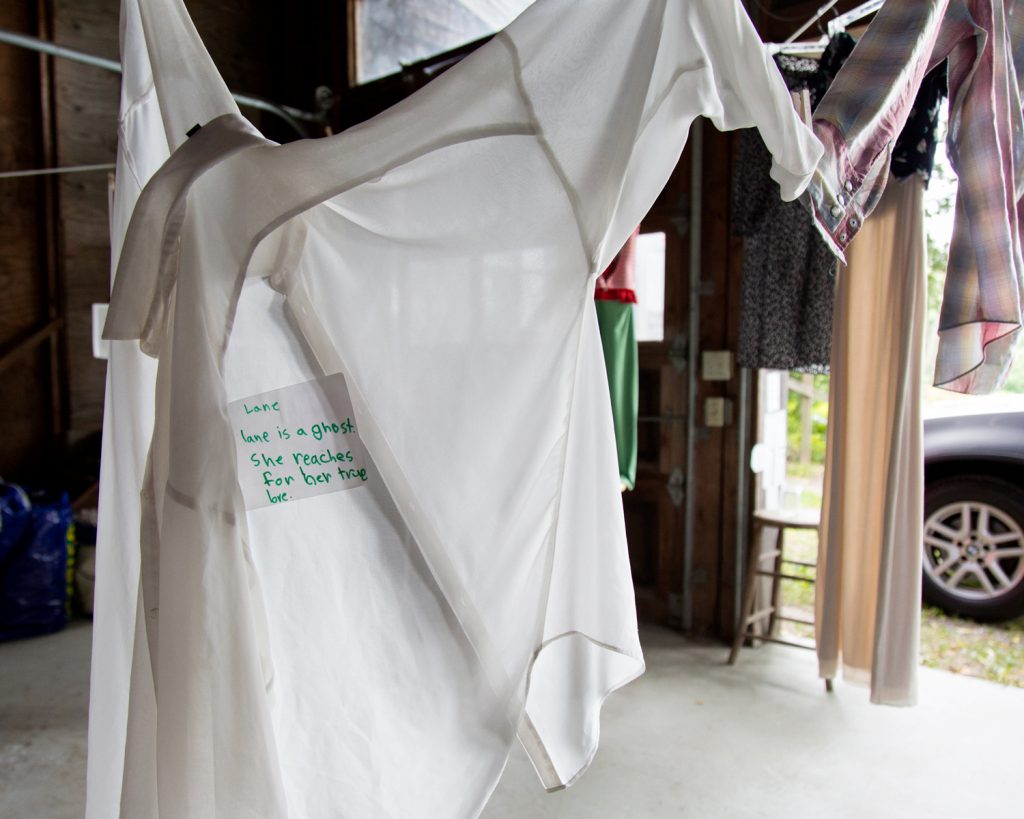
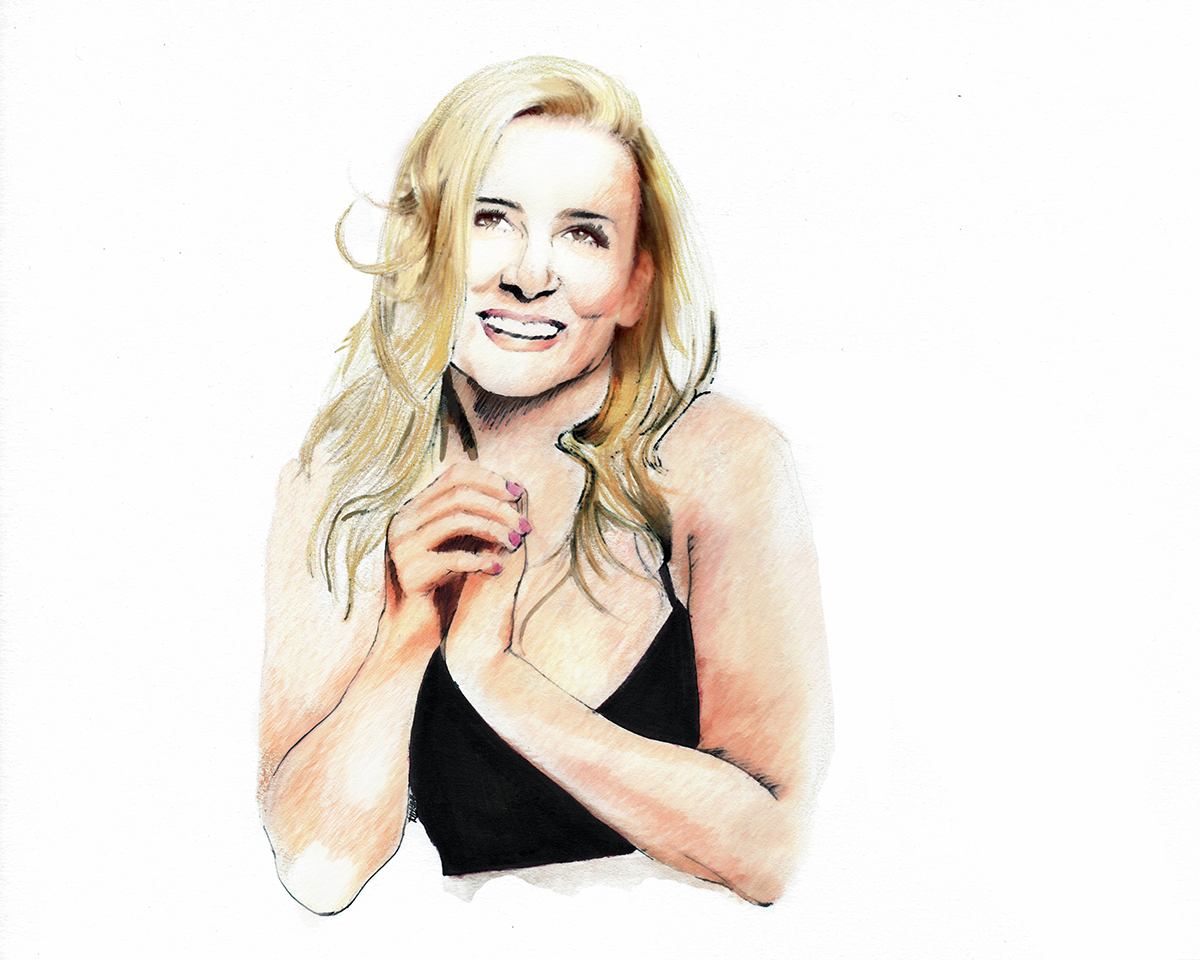
In the first decade of the millennium, there were only a handful of (East) Asian Americans in mainstream media who regularly represented Asian women. Sure, there were the random side characters portraying the usual stereotypes; Pick your two-dimensional poison: masseuse, sex worker, nail salon tech or even that one time we had a kung fu kickass like Lucy Liu in movie blockbuster Charlie’s Angels. In this desert of representation was Japanese American actor Keiko Agena who played Lane Kim, the young Korean American best friend of Rory Gilmore on the WB/CW television show Gilmore Girls. Over the course of seven seasons, we learned about Lane’s quirky hobbies and the stresses of being the “good daughter” in a strict Christian, Korean immigrant family. She wasn’t just a caricature but a rare “well-rounded” character who had time to breathe and evolve during the long run of this popular network television show.
 

It has been nearly a decade since the final cup of coffee was poured in Stars Hollow and Keiko Agena has continued her steady and successful career as a Hollywood actress. Recently, the Thanksgiving release of the Gilmore Girls mini-series Gilmore Girls: A Year In The Life on Netflix has also revived interest in Keiko’s character and how far we’ve come as Asian Americans in media.
 

In December, I sat down with my dear friend and collaborator Keiko Agena, to debrief this latest Gilmore Girls mini-series madness and what it’s like to be an Asian American actor and comedian in today’s media landscape. Feel free to imagine this conversation punctuated with lots of giggles and cackles of love and delight.


Jenny Yang: Keiko, first thank you so much for sitting down with me. This is fun for me because I feel like we get to chat more formally about the stuff that we would typically talk about anyway because we are in a community together–
 

Keiko Agena: Yes, and we are supportive of each other as artists, I feel.
 

JY: We are.
 

KA: We totally are.
 

JY: You’re a big supporter of mine.
 

KA: I would say with many exclamation points and stars that we do that for each other.
 

JY: Aw, thank you. So I think what interests me and Stage & Candor readers about you… Okay, we just have to talk about Gilmore Girls first.
 

KA: Okay, yes!
 

JY: Can I just say, day after Thanksgiving, when Gilmore Girls: A Year in the Life dropped, my ass was at home watching the whole damn thing, all day.
 

KA: Did you really?! All six hours?
 

JY: I saw all six hours, and it felt good. I don’t know if you remember this, but I feel like people who grew up on 80’s and 90’s sitcoms, whenever they do a reunion show, they always would give you what you liked, right? They give you what you wanted. Do you remember those reunion shows?
 

KA: Yes, yes, yes!
 

JY: Whoever would write it made sure of that.
 

KA: Someone became a princess, someone became the editor of Time magazine
 

JY: They gave you what you liked, and I think that – definitely spoiler alerts ahead–
 

KA: Stop reading here if you don’t want any spoilers.
 

[Editor’s note: The Gilmore Girls section of this conversation will be in grey.]
 

JY: Skip ahead to where we don’t talk about Gilmore Girls anymore. But I feel that as a 60-70% Gilmore Girls fan, that even I got the itch scratched for all that I needed.
 

KA: Yeah.
 

JY: Number one, not enough Keiko.
 

KA: Not enough Keiko! More Keiko!
 

JY: Not enough Lane Kim.
 

KA: #MoreLaneKim.
 

JY: Yes!
 

KA: #MoreLaneKim is very lame. Don’t do that.
 

JY: We don’t say ‘lame’ anymore, Keiko.
 

KA: Oh, sorry.
 

JY: It’s okay. I just reprimand. But yeah, it’s not cool. But I think #MoreLaneKim is good.
 

KA: Let’s Donald Trump this hashtag. What is the most direct and simple–
 

JY: As Donald Trump would tweet, “Gilmore Girls. It was good. But not enough Lane Kim. Sad. #MoreLaneKim”
 

KA: Exactly. To the point.
 

[Everybody laughs]
 

JY: But anyway. It did scratch that itch of it opened with a meta joke about talking really fast and a lot, and crazy commentary, and pop culture references. Then we got into seeing what their lives are all like – all the cameos, all the different men in their life, and where they’re at.
 

KA: They got a lot into those six hours. You pretty much saw or heard about every character that you knew about in the original seven seasons – which is an accomplishment – and introduced you to a few new main characters as well. I don’t know that there’s a stone left unturned.
 

JY: Yes. I feel the only thing that I was a little surprised by but definitely loved, was the fact that Rory Gilmore didn’t have her shit together.
 

KA: No. And it got worse as the episodes went on. She really hit a low. You saw her fall apart. All of the things that she was counting on slipped away, and you’re really going with her on this journey downward. It’s heart-achy.
 

JY: Thirty-two and not super together with her career goals–
 

KA: And her relationship goals–
 

JY: –and her relationship goals. Not that I know what that’s like.
 

[Everybody laughs]
 

KA: Are we veering off?! Are we tangent-ing? How personal are we going to get?!
 

JY: No, no, not personal.
 

KA: Follow Jenny and I on our new show as we talk about personal things. We are going to create it right after this interview.
 

[Everybody laughs]
 

JY: Anyway. That kind of intrigued me because of course it made it more interesting. There was a sense, watching the show before, that Oh okay, miss ‘I got into Yale, I’m so smart’, maybe she’d have her shit together. But knowing a bunch of these overachieving people – maybe myself as one – I know for a fact that after you go through college, and you’re an overachiever, real life happens, and it’s not perfect. You no longer have this structured world. I feel it’s almost like it’s a stereotypical overachiever Asian American story. Maybe at 32 you’re not going to have everything you’re supposed to have.
 

KA: Yes, not all the boxes are checked off. Especially if you go for the primary thing that you want, which she did – she wanted to be a journalist and a writer – and she’s going for it, and this is that time in her life where… It’s not that she’s been unsuccessful, because she has had success, but that’s not the end of the story. It’s not that you can just check that box and say, Okay, career success, let me sail into my 70s. That’s not the creative life and I think maybe people who read Stage & Candor know that. I have yet to meet a creative person where that is their journey. No artist I know found exactly what they wanted to do at 23, and rode that train safely–
 

JY: Uphill.
 

KA: Yes, uphill to greater and greater success.
 

JY: It’s not a linear process.
 

KA: It’s not.
 

JY: Totally, which is why we’re supportive of each other!
 

KA: It takes a village.
 

JY: It does. So how do you feel about being back in the Gilmore Girls revival? What was it like for you?
 

KA: You know what’s funny is, besides feeling like slipping into comfortable shoes, or something that’s fun, is that seeing it as an audience member really made me appreciate what we were just talking about. The people that were kids when we first met them – Paris, Lane, Rory – they’re all of a certain age, and their lives aren’t perfect, and they still have a lot of stuff to work out. I think when I was originally filming it, I was so focused on where Lane was that I thought, Oh it’s only Lane that doesn’t have her perfect dream life. Now, watching the series, in the greatest way possible, I think we feel the angst and the struggle and the ambition of all of those 30-something gang of people, where we have some successes but there’s still a lot to discover and a far way yet to go.
 

JY: Yeah, as if turning 30 is this magic number where everything is figured out.
 

KA: It’s not now, and I don’t know that it ever was in the past, or if that’s just the fairytale that previous stories have taught us.
 

JY: Right. So it was very gratifying, with lots of jokes and references and dialogue packed in there.
 

KA: Did you enjoy that? I know that I loved all that fun stuff that only happens in Gilmore World.
 

JY: Yes! I loved reading on my Facebook feed, where a comedy writer friend of mine who was confessing on a status update, Already got through my first viewing of Gilmore Girls revival. Getting started on episode one again. Same day.
 

KA: Wow.
 

JY: I know. Day after Thanksgiving. She was so happy.
 

KA: There’s a lot packed in there.
 

JY: There is. I feel like it’s like fine art. You see something new probably with every viewing. But #MoreLaneKim.
 

KA: #MoreLaneKim!
 

[Everybody laughs]
 

KA: I like that they won’t get to hear our laughing. Wow, Keiko is really uppity! That’s all she talks about! #MoreLaneKim!
 

JY: Chuckle chuckle chuckle. When did the final season end?
 

KA: 2007.
 

JY: [gasp] That’s like nine years ago. Almost ten years ago.
 

KA: Yeah. So a lot has happened.
 

JY: So for you, what have you seen in terms of changes as an Asian American actor in that time in terms of the industry?
 

KA: I feel that last year, especially, was such a high tide year. We were talking about it when we were doing the fundraiser for Angry Asian Man where we were talking about Wow, if we were to choose what our favorite scene was that an Asian person was in on television for the last year in America, we’d have so much to choose from.
 

JY: Much more.
 

KA: Way more than you would five years ago. Five years ago, you’d have to really search your brain for any scene that you could remember that an Asian person was in that was your favorite. I feel like now, there are so many shows that are out now, and there’s a lot to celebrate. Again, there’s a far, far way to go, but I think the content and the quality that is coming out is something to be supported and celebrated.
 

JY: Yes. Seven years ago, if we asked the question, What are your favorite characters and scenes up until that point? It would be maybe a Lane Kim reference, maybe Margaret Cho, maybe Lucy Liu, and maybe Brenda Song.
 

KA: As you know very well, 2016 has been a crazy year with whitewashing feeling like it’s making a resurgence of some kind, which is challenging to come up against.
 

JY: I feel like it happened in 2016 because it’s been an increasing drumbeat of Hollywood wanting to be like, Oh, we’ve got to make Asian stuff so that China will want it, so let’s maybe start making more Asian stuff. But it’s also the drumbeat of, We have these other ‘diverse’ properties like the Marvel and DC world, let’s just also bring that up. So they’re deciding they just can’t bear to take a risk on non-white talent, not even have us play Asian characters. They do these crazy mental jiujitsu public gymnastics around justifying why the whitest actors are playing the Asian characters.
 

KA: Right.
 

JY: It’s almost a joke to me that the palest, porcelain, transparent actors are chosen, right? Emma Stone is translucent. Benedict Cumberbatch?! It’s like the whitest… It’s not even like Italians, you know?
 

KA: Maybe it’s the love of the geisha.
 

JY: The paleness? The pale Asian?
 

KA: Yes.
 

JY: In the right light, Scarlett Johansson’s European roots will look kind of pale and Asian.
 

KA: It’s tough, man.
 

JY: Scarlett Johansson, Tilda Swinton, Benedict Cumberbatch, Emma Stone: they all have the most pale ethnic heritage.
 

KA: Yes, I think it’s true.
 

JY: And then there’s Matt Damon, but he played a white person that’s saving China.
 

KA: Yes, and that’ll probably do well, too.
 

JY: So I feel that’s kind of upsetting that China is also down for it. I feel like they got brainwashed. The world got brainwashed to want white people as heroes.
 

KA: I feel like I’m part of that generation too of being brainwashed a little. You think it’s natural and then one day, you go, Is it? What would it be like to have a different option? I look at that trailer for “Ghost in the Shell”, and – first of all, I love Scarlett Johansson, I think she’s incredibly talented and she does play that type of character very well.
 

JY: You mean slightly robotic and a little flat?
 

[Everybody laughs]
 

KA: I know you said it as a joke, but yeah, kind of! It’s funny because that’s actually a very tough thing to play – to still be human, and still create empathy, but be dead inside. Anyway, as I’m watching, I cringe and clench a little because it’s so Asian-stylized, and there are just a few people that pop up in Asian dress that it’s uncomfortable to watch. But the second or third time I watched it, I thought, What would it have been like to see a fresh Asian face in that role? It would’ve been incredible. It absolutely would have been star making material, because it’s so incredible. I guess that’s the whole point though, that they don’t feel like it’s bankable – but I don’t think this is bankable the way it has been done.
 

JY: The trailer shows oriental things as only costume and backdrop.
 

KA: Someone already wrote this, but all the bad guys get to be Asian, and that’s been true in other movies too.
 

JY: Since the 80’s films.
 

KA: Yes. You can have the people that actually know kung-fu and different martial arts, the bad guys, be actual Asian people, and that’s acceptable.
 

JY: So you came up during a time where you were probably a part of seeing the default as this is how it works. It’s white people who are the ones that are chosen to lead. How has that shifted for you, or not?
 

KA: I guess it has shifted, little bits over time. I do know when I was a kid, I didn’t think about Asian people because there were none. But I was a huge consumer of media, and I related to all of the white characters, and I emotionally invested in them. So I didn’t feel at that time that I was cheated, but maybe that’s because I didn’t know what I was missing. When you actually do see someone that’s Asian, there’s a different level of excitement that comes with that, that I didn’t even know was an option, I suppose.
 

JY: Right.
 

KA: It’s like living on skim milk ice-cream and being satisfied. When you have a taste of full fat ice-cream, you’re like, Dammit, I want more! Give me more Constance Wu! Give me more! Then for some reason, you’re not satisfied anymore.
 

JY: I think that’s a good analogy. If you think there’s only skim milk ice-cream…

KA: Damn, this is alright!
 

JY: Oh it’s sweet, and kind of creamy. It’s ice-cream!
 

KA: This is what ice-cream is!
 

JY: Oh, I like that. Do you ever feel like now, especially with the rise of social media, and the ability for us to basically protest something that’s not good, how different that feels? You’re basically a Generation X-er, and now Millennials are like, Oh what the fuck, this isn’t good.
 

KA: I think without social media, there are pockets of people that would have this opinion, but there wasn’t a way for you to know that a thousand miles away, there’s another pocket of people that have the same opinion. Asian Americans are concentrated in some big cities, but we’re also spread out all across the United States. So having this platform where people can come and show themselves – we have a voice in this way that has been very productive. In a lot of ways, niche groups have used social media to be very dangerous also, but I think in this way, for the Asian-American community, it’s been extremely helpful.
 

JY: And therefore, #MoreLaneKim, #NotDangerous.
 

[Everybody laughs]
 

KA: Now, let me ask you, how do you feel as someone who has switched – because I think this is very interesting viewpoint – from a completely different career where you were seriously involved, into now having become an artist and producer full-time? What are the changes that have happened for you in the past five or six years? How do you think it’s coincided with how the country has been changing?
 

JY: Oh god, that’s a big question. So I used to work in politics, where creativity was very limited. I didn’t start pursuing entertainment in my early 20s like a lot of folks I meet in LA, so I feel like I had the benefit of work experience and some maturity, but I personally could not have the kind of career I have just five years in, now, if I had started in my early 20s, because of social media.
 

KA: The timing was right for you.
 

JY: The timing was right for me – oh, I’m reliving my early 20s, girl.
 

KA: You’re not in your early 20s?!
 

[Everybody laughs]
 

JY: It’s a completely new terrain. I’m able to have my career because I decided to do a very old school craft of stand-up comedy, where it’s just you and an audience. That’s the core of what I do, but I’ve been able to grow an audience and get work because of new media. Honestly, if I wasn’t on the ground floor of when Buzzfeed Video started… I mean, that’s when they started, three or four years ago. It doesn’t sound like that long ago–
 

KA: But so much has changed in that time.
 

JY: Yes, so much has changed in three or four years. If I wasn’t there, knowing one of the original director/producers who comprised of this new BuzzFeed Video unit, I don’t know if I could’ve had the career I’ve had already in just the last two or three years, simply because I was a part of that process of figuring out what made a viral video. I feel like I’m a part of that history.
 

KA: That’s also half of where I see the success of your career, too, because you’re a very proactive go-getter/producer person.
 

JY: Right – touring, events, and shows.
 

KA: I think it’s an interesting point to say that from an outsider’s point of view – knowing you for a long time – I can see all of the experience that you have gained through the work that you’d done previously of knowing how to organize people, knowing how to set up an event, learning all of that on the job, training, and being very proficient at that… All of that translates now into a new goal and a new dream. That life experience isn’t lost, it just gets funneled into your new creative endeavor. Sometime what maybe would’ve taken 10 years previously, now the time is even quicker because you have an engine of knowledge that’s pushing you forward.
 

JY: Damn. That’s a good summary of my professional life.
 

KA: It’s true though.
 

JY: Yes, all the skills I learned while working, I have been using to build my career now. It makes me hit the ground running a lot more. I have all these business skills because I know about resumes, I know about business communication, I know how to negotiate contracts, because that’s what I used to do. I know how to run meetings, I know how to run large scale events for people, and produce things.
 

KA: Exactly.
 

JY: One of my first jobs was in communications. I was being trained to write a press release, or know how to pitch to a reporter. All of these skills I learned in politics like organizing campaigns and being a part of that all applies to leadership skills, and business skills for being an entrepreneur, essentially.
 

KA: Right. One of the last big things that we worked on together was the Comedy Comedy Festival. How many people were a part of that team and that were volunteering? You had a leadership circle that was how many people?
 

JY: We had about 15 people on the leadership team that took big chunks of what the work needed to be.
 

KA: Right. Then with volunteers–
 

JY: That was another 20.
 

KA: And that’s not even counting performers.
 

JY: 150 performers.
 

KA: So there was a lot happening.
 

JY: Right, and I was able to do that because that was stuff that I did in my previous career. I feel very fortunate that not every stand-up comedian is able to do something like that. I feel very grateful that people feel grateful that such a thing exists. It has helped my career – me personally – but I think what’s tough is balancing external energy like producing things versus, Oh yeah, I need to be writing and creating new material. I think that’s a struggle.
 

KA: Right.
 

JY: But going back to you.
 

KA: We will get back to me, but one thing I do want to say is that that is also a great thing that has happened in the last couple years, where there is the Comedy Comedy Festival that you put on, which is a place for Asian Americans to come and perform, and it’s important for us to have a place with that much support and that many people involved to make it great. Even Will Choi, who is starting to do this stuff over at UCB, is starting to put together shows that have an Asia focus. I feel like this is also a new thing that’s starting to happen right now, where maybe five years down the line we’ll look at this year and be like, Wow, can you believe that this last couple of years, the seed of us all coming together and doing these shows have built into something else? Who knows where that goes.
 

JY: I hope so. When people ask me what I do, I say, “I’m a stand-up comedian, writer, actor, host, producer,” but I really do still think of myself as an organizer, cause that’s what I did for politics. I just apply that same perspective to organizing my career and organizing like-minded people. I see myself as organizing Asian-American audiences and creatives. We have to, or else we’re missing out on opportunities to collaborate and strengthen each other if we don’t get to know each other and build these relationships. I’m super proud about that.
 

KA: You should be super proud.
 

JY: I’m super proud of Comedy Comedy Fest. Will Choi gets complete credit for creating these really successful shows at Upright Citizens Brigade, and really expanding the Asian-American presence at UCB. I personally also feel that it’s part of this greater movement of all of us through Comedy Comedy Fest, or even Tuesday Night Cafe, if we want to go back to that institution in LA of Asian American Artists – that’s where you and I met.
 

KA: Right.
 

JY: I feel like it’s up to us to keep really solid institutions like Tuesday Night going, but also to build on that, and to adapt to current needs. Let’s get all Asian-American people doing comedy together, and include YouTubers, live performers, up-and-comers, as well as veterans.
 

KA: Totally.
 

JY: I feel good about that, that we’re a part of that, you know?
 

KA: Uh huh, I think so.
 

JY: High-five. [They do.]
 

KA: Final thoughts?
 

JY: I feel like a lot of the drum beat and the message that everyone has been saying is, We have to tell our own stories.
 

KA: Yes, absolutely. We have to create our own stories, right?
 

JY: And we’re not the first ones to say that.
 

KA: Yes.
 

JY: How has that call to create or tell our own stories evolved for you, in terms of your work?
 

KA: Hm.
 

JY: For example, I know that you had taken a stab at improv, and it wasn’t a super positive experience necessarily, and then you came back to it, and now you’re an improv beast. You’re an addict! You’re in it, and you love it.
 

KA: Absolutely, for sure.
 

JY: I know that you write, you draw, all this stuff. So that idea of creating your own material and telling your own stories, how has that call operated in your career?
 

KA: I have a podcast called “Drunk Monk,” where the shell of it is where we get drunk and we watch Monk and we talk about it, which is a fun starting point, but really, we go into a lot of tangents. What’s fun about that podcast is that we didn’t intend it, but we’re two Asian people – me and Will Choi, who we mentioned earlier – so we have our point of view, which is an Asian-American point of view by the mere fact that we’re Asian Americans. It’s something that comes up every once in awhile, but I think even if you weren’t coming to it for that perspective, it’s just part of what it is, which is something that I like about it. We also get very personal and we share a lot of personal stories over the course of it. I find that really fulfilling, because that structure is something that we create on our own, and it could be whatever we wanted, and so it is exactly what we wanted. In that way, it’s completely fulfilling because you’re not answering to anybody.
 

JY: Right.
 

KA: The other thing about creating through improv is that part of the reason why I think improv is a draw – especially for people of color – is because you can play family members to anyone that’s on stage. It might sound silly, but it’s not really silly if you think about the fact that I can’t go in and audition for a family member for 90% of the roles out there. I’m not going to match that person as a family member. The freedom of being able to play any type of role that I can think of and not have to be constrained by the fact that I am a 43-year-old Asian woman is freeing in a way that almost feels at this point necessary to my creativity as an artistic person. It’s not something that necessarily gets fulfilled in other areas of my career at this point.
 

JY: Because you’re at the mercy of the character descriptions that you get sent for auditions.
 

KA: Yup, uh huh.
 

JY: Asian. Thirties. Blah blah blah, you know?
 

KA: Yes. I really do appreciate that a lot of them, especially recently, are written as open ethnicity. I appreciate that. That’s most of what I go out for, or a mix of that. The good and the bad of that is, almost everything is written now as open ethnicity, which is great, but, the other side of that is that the two leads have already been cast, and they’re white. That’s the ‘norm.’
 

JY: Yeah…
 

KA: So they’re open to all ethnicities, except for the leads.
 

JY: We’re working on that, Keiko.
 

KA: We’re working on that.


Keiko Agena is best known for the TV show, GILMORE GIRLS, where she played LANE KIM for seven seasons. As a guest star she has appeared on such shows as SHAMELESS, SCANDAL, TWISTED, HOUSE, ER and WITHOUT A TRACE, and got to work with Frances McDormand on the film TRANSFORMERS DARK OF THE MOON. Besides iO she has also trained with Dave Razowsky, at the Groundlings and UCB and her band FLYING PLATFORMS has a monthly residency (first Fridays) at the Grandstar Jazz Club in downtown LA. Plus (believe it or not) Keiko was once featured in PEOPLE MAGAZINE’S 100 MOST BEAUTIFUL PEOPLE ISSUE, in the “they play meek and geeky, but off screen they shine” section, with America Ferrera, Jenna Fischer and Mary Lynn Rajskub!

Posted on

A Conversation with Amélie van Tass & Jinger Leigh-Kalin

Amélie van Tass & Jinger Leigh-Kalin


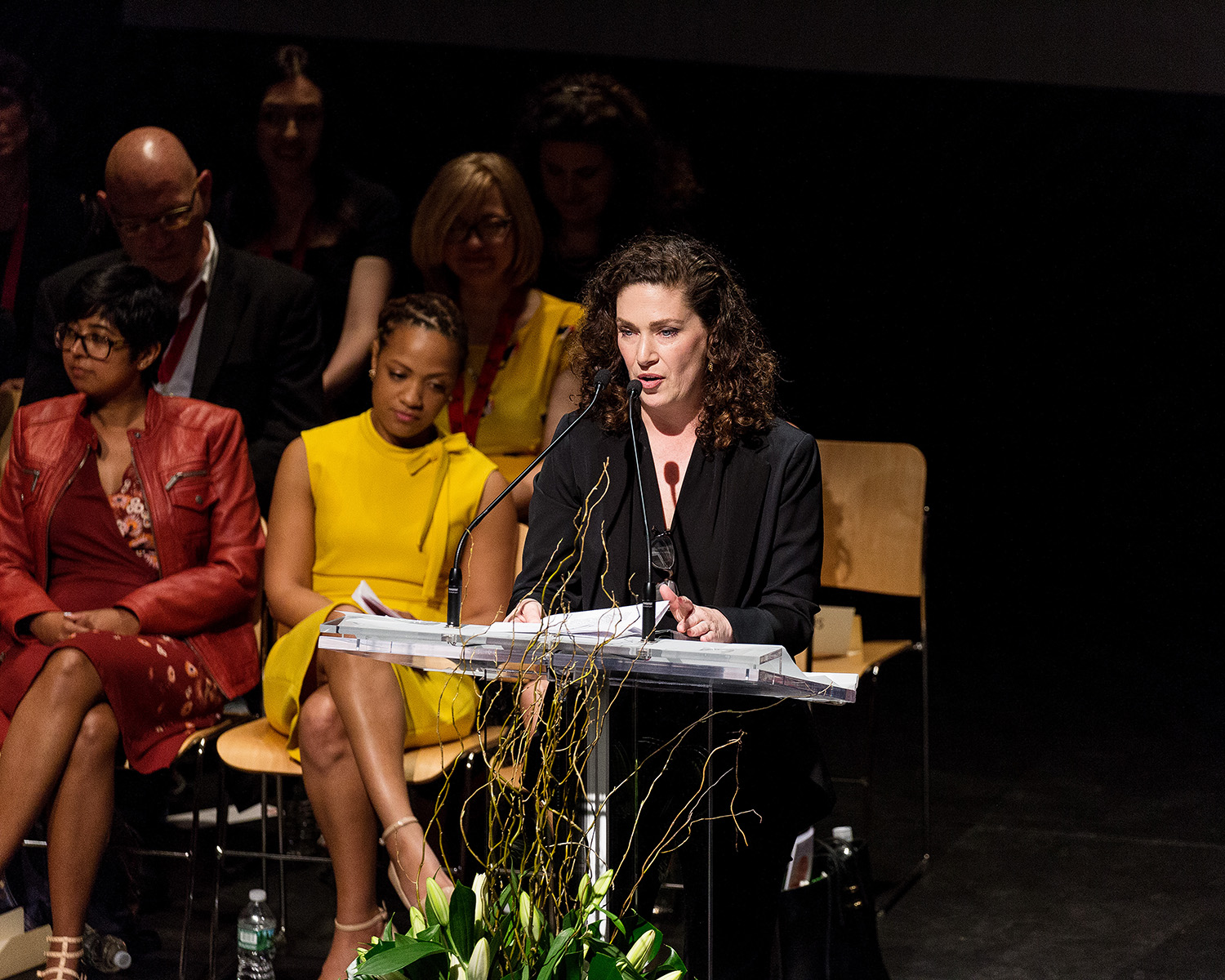
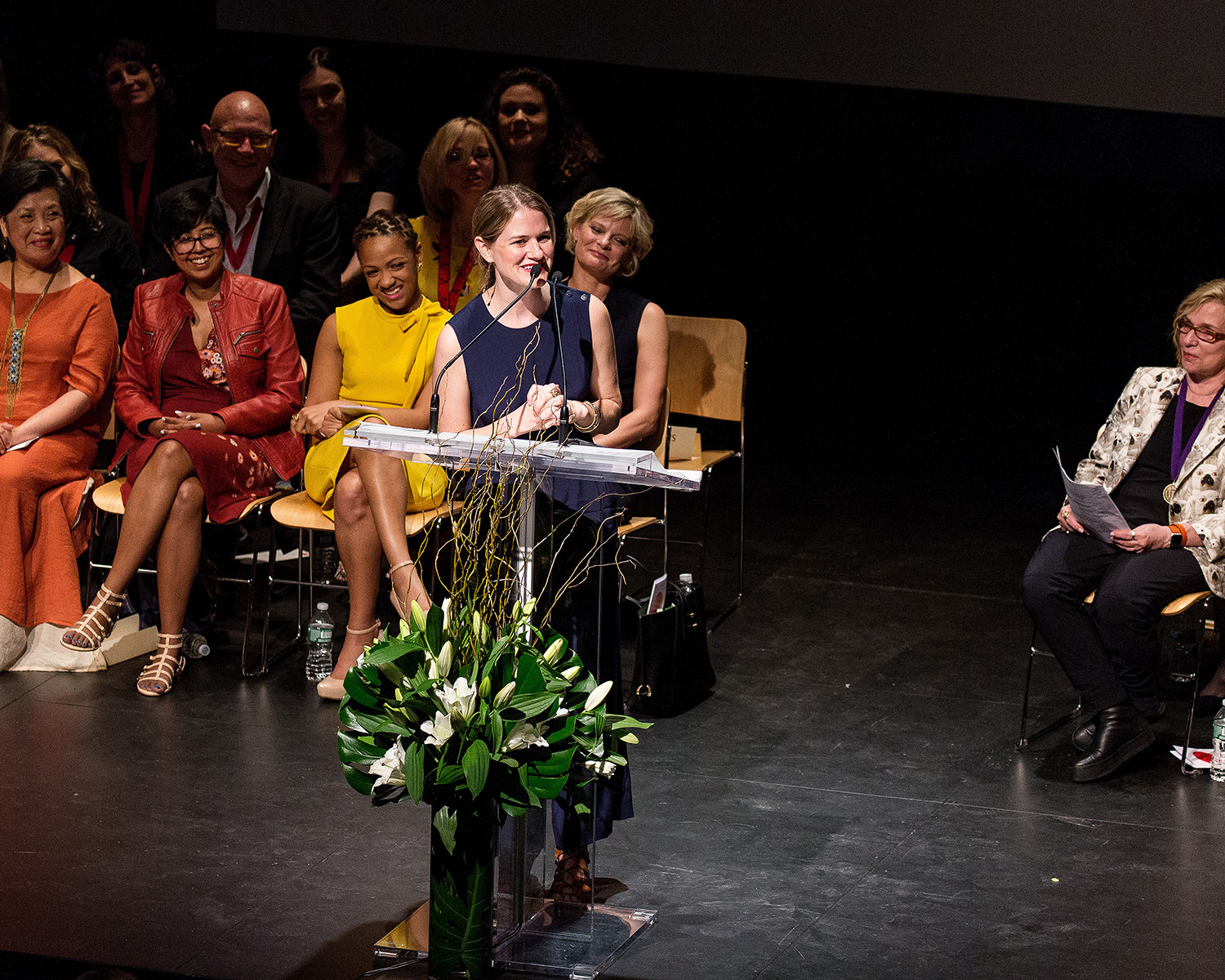
Until recently, when someone mentions “Magician” and “Women” in the same sentence, the images that immediately come to mind are perhaps the illusionists in hit movies like Now You See Me or the image of the “Magician and his Lovely Assistant.” But, if one dives into the history of the art and performance of magic, you will discover a rich history of spectacle, performance. Skill and theatrics that, in its prime, had a fair share of female powerhouses. So, why can’t we name any of them? Magic, like any other industry, may have a gender equity problem, but talented stars like Amélie van Tass (of The Clairvoyants) and Jinger Leigh-Kalin take center stage as an artful mentalist and elegant conjuress in the third incarnation of Broadway’s best magic show. Jinger and Amélie shine in The Illusionists: Turn of the Century, which pays homage to the golden age of magic in one spellbinding performance that is not to be missed.


Alicia Carroll: I’m curious, neither you or Jinger are a stranger to performing in front of large crowds, but how do you like Broadway?
 

Amélie van Tass: Broadway, for a performer, is probably the huge-est thing ever, next to maybe The Sydney Opera House which we did in December last year. It’s amazing. We love the theater; this theater has a lot of history. Houdini, The Greatest Cape Artist, performed here 100 years ago, and we are standing on this very stage right now, and this is like a very big dream come true for us.
 

We are very happy that people appreciate our show being here because it’s so different; it’s not a normal magic show. There is a lot of history in this show and it’s very theatrical – the costumes, the stage itself, everything is in turn-of-the-century style. And throughout the show, performers will also get a little into history detail, so the audience goes home with some new information about the history.
 

AC: That’s amazing. Did you research the craft and history before coming into the profession as a mentalist? Was it always something you were interested in?
 

AVT: I was always interested in the history concerning performance, and a hundred years ago, magicians were the rockstars. When they entered the stage, people would come, and they would scream and cheer and… the girls would go crazy for Houdini, for example. You can imagine nowadays, it was very similar. And I think there were some very golden times of magic too, but I think now is a new time and it’s coming back anew – although it’s an old thing the show presents it in a different way. And people are very excited about it, and magic is coming back – differently.
 

AC: What about the modern presentation of magic, in your opinion, is reinvigorating it with audiences and performance artists?
 

AVT: I think it is very interesting to them – and also there are female positions too. It’s not always the magician and his assistant which we have too in the show, which is completely fine and they do an amazing job. Females come more in the spotlight, and I think a lot of people can relate to that. In the whole world, there are male and female positions and especially in show business and then especially in magic. It’s very important that females are coming back into the spotlight. And also what Thommy [Ten] and I do – the Clairvoyance style, Mentalism – we perform onstage and every night is different. And people always ask us, Is there ever a chance of failure? Are there mistakes happening? And we say, “Of course,” because we are all human and humans make mistakes. And that is very interesting for the audience too so they feel, Okay, performers make mistakes so that I can make mistakes too in my life. I like the relationship between the audience and us in our performance.
 

Jinger Leigh-Kalin: Magic goes through cycles. I think we are back to a cycle of pure magic; that is very parallel to the Golden Age. There are some really good performers out there now, and that’s how it was in the Golden Age where there was this healthy competition going on that was forcing a certain amount of innovation and forcing people to be creative and make new things as opposed to recycling old things. In this show, we sort of pay homage to the classic things, but there is a very imaginative aspect to some of it.
 

Amélie van Tass & Jinger Leigh-Kalin
 

AC: You spoke about the tradition of the magician and his assistant and how, historically, it’s all very gendered, but you and Thommy are very much on equal footing, which I love. When you got started in the industry, was it a deliberate decision that you wanted to be equal partners?
 

AVT: Both of us wanted it. We are equal partners onstage – and I forgot to mention in the Golden Age of magic, a hundred years ago, there were some female rockstars – clairvoyant rockstars – so there was this time when women were in the spotlight. It was clear to us from the beginning, since our style is very different and it’s all about the connection between Thommy and myself, so it just works with the two of us. It’s never I do something alone, or he does something alone. We have a very good connection and we want to present that connection to the audience, and then we can work together. And it is very difficult sometimes, still, although we always present ourselves like that, there are still people who will say, “Great job Thommy Ten and your assistant was great too.” We have to mention it over and over, and I don’t know if it will ever stop. And it’s okay; it’s the cliché that there’s the magician and his beautiful assistant who is fine, but we want to be equal partners on stage. We mention it over and over; we will probably do that for the next 20 years and we have to work on it.
 

AC: So what brought you to mentalism?
 

AVT: I am interested in doing magic without any props. And in mentalism we have – in this show, for example – we don’t have any props. In our main act, we have a blindfold, and that’s it. We work with the audience, their minds, and what they have in their handbags. Every night it’s different, and that’s what I enjoy. Never will there be a show that will be the same. It’s always different and it’s always challenging for us. I think what I love about it so much is the challenge, and that it will never get boring. Because I have to be very aware and Thommy has to be aware, and the connection has to be good – only then it works.
 

AC: Between mentalism and the other acts in this shows, do you think there is a major difference between the different sects within magic?
 

AVT: The great thing about the show is there are very different acts – everyone in the show, the whole cast are masters in what they do, and they are the best people in the world. We have great illusionists, great slight-of-hand magicians, great comedy magicians. It’s a great mixture. I love being part of it; I am very thankful. And since it’s such a mixture, you learn a lot from the others. And I think only the mixture makes it good. And everyone does their best, and together we create this cool production.
 

AC: And, Jinger, what brought you to stage magic?
 

JL: Well, I started in show business in song and dance. I started taking dance lessons when I was four, and I started doing it seriously around 11 and got my first professional job when I was about 14. Then I did a lot of dinner theater and stuff that was really performance based, not just chorus based or choir based. That’s what inspired me and what I was passionate about. I met my husband Mark. I had seen some magic, and this was 25 years ago, so there wasn’t a lot of magic. I was working on the same show as him – it was a Las Vegas Style review show called American Glitz – it was the sister show to Follie Bergère. Anyway, he was the variety act in the show we were performing in, and my contract was coming to a close – I was gonna go back to LA and work and I watched the magic from the front, and I was very impressed. I was impressed with his performance, however, it was the connection to the audience in the performances that convinced me that there was a different utensil – a different tool there – to connect to the audience and that’s what I loved.
 

So I went backstage during the show and said, “If you ever want anyone to work with, I would love to give it a shot,” and he took me up on my offer and brought me back to work with him like three months later or something like that. And within the first month of working together, I realized that it was what I was meant to do. And he allowed me to turn everything upside down and restructure the act and add the skills that I had to bring to it. And from that day forward, we were a team.
 

Amélie van Tass & Jinger Leigh-Kalin
 

AC: And the two of you still perform together as a team?
 

JL: We still mostly perform together, and we would work some separate shows as well. In this show, I do some of my things, and I’ve been focused on that for maybe five or six years. But even when we’re performing together, like in our full-length shows, I’ve always had independent things.
 

AC: There’s a lot of messaging from a young age that maybe in magic – unless you’re a magician’s assistant – there may not be a place for you, so how did you forge your path and discover your place in it?
 

AVT: When we first started working together, I was always interested in magic. But I never did it to the people; I was in the audience and experiencing it. So when I started performing it and getting more into the whole theme, I realized how much I could do with people and how happy I can make them and how people feel enchanted, and they can just feel this magical experience. And for me, this is a great feeling; I stand there onstage and do something and people will sit there with open mouths and open eyes and just don’t believe what they are seeing. And then I started to realize what I do when I am onstage, and I wanted to make it better and work on it. And now we are on tour worldwide, and I’m very thankful for that and also the huge acknowledgment from the people we get.
 

AC: For both of you, when you decided that this was what you wanted to do, what was your first step? How did you develop your craft?
 

AVT: I think it’s very important never to lose – since I started late, I was 21 years old–
 

JL: –that’s not late!
 

AVT: The boys all started at like 5 or 6 years–
 

JL: –yeah, well, it’s a process; it’s a journey. You learn a lot from your audience. You learn a lot from preparing to a certain extent because you want to have respect for your audience and be well prepared, but you also want to be open to how they respond and so you know it’s a constant learning process. So refining our craft, you know, you let one mistake lead to an improvement and then the next day an improvement on top of that and after you get a few thousand shows under your belt you go, “Okay,” but you have to enjoy the process as well. You can’t just say, “One day, I’ll be great,” you have to enjoy and appreciate it as you go. But the audience will let you know how you’re doing and then you take that and figure out how to make this magical for them. There’s so much psychology that goes into it.
 

AC: In what way?
 

JL: For the stuff that I do, and for the stuff that Amélie does with the predictions and mind reading, you have to create a picture for the audience. You have to let their imaginations fill in some of the blanks. Stage magic is a different thing; sometimes there is a certain timing to things, a certain amount of space that has to be involved. A certain amount of what they call “convincers’ or “verifications” – something that lets people forget that it’s a puzzle,lets them go past that and they simply experience the magic. So that’s our job, and that’s a pretty hard job. You have to think how is their brain reacting and how is their brain reacting to tell their heart – and did I give them too much time or did I give them just the right amount of time to feel that rather than to think it.
 

AC: That’s so interesting because I am an audience member that tends to overthink things.
 

JL: But if you see the good magic, you shouldn’t have time to think about it, and then you should go and think about it afterward and go, “Hmmm,” and that’s what I mean about psychology. There’s a psychology not just to the staging, but the structure of magic. And when you see good magic, the audience doesn’t realize how much work went into that or how much psychology went into that. All they realize is that was “good” or that was “not so good.”
 

Amélie van Tass & Jinger Leigh-Kalin
 

AVT: I had a very naive point of view in how I saw magic, so when Thommy asked me what I wanted to do I said, “I want to fly through the room and everything and I want to levitate.”And he was like, “Well, let’s see,” because I didn’t know how anything was done. I was crazy; I had so many ideas and some of them we could realize and some of them not, but we are still working on it. And I think you should never lose sight of how the audience is seeing what they see so that they are fascinated, and they can’t explain how it’s done. You should always keep that in mind: they are seeing it for the first time and they don’t know how anything is done.
 

Also it’s so important to believe in yourself and to believe in what you do. If I don’t believe in what I do–
 

JL: –they won’t–
 

AVT: –they won’t believe it, the audience feels it.
 

JL: That’s 100% true.
 

AC: To talk a bit about the representation of women in the industry, how do you think the representation of women in magic affects who becomes a performance artist?
 

JL: I think more and more to any art form or sport – you know there are a lot of female basketball teams now and world cup soccer players, so women are coming up now in so many mostly male-dominated fields. Magic is no different; however, it’s not necessarily – you know men dominate magic, but that doesn’t mean there haven’t been successful women in magic in the past. In fact, there was more so in the history of magic – in the Golden Age – there were female headliners, there were illusionists and magicians at the time. They may have come to magic in a slightly different way – they may not have studied since they were five or six years old in their room practicing sleight of hand things. For me, I mean I do a few slight of hand things, but that’s not my area. My area is a presentation for the stage, you know? That’s how I perform; that’s my area of specialty. I don’t think it’s a sleight on women. I just think women will find their own, and there is a place. Absolutely. 100%.
 

AVT: Also the other way around, I think it’s important nowadays that people allow men to be weak, or to be another part and not be the powerful person on stage and also off stage. Men can also cook and–
 

JL: –and be nurses and do all those things–
 

AVT: –exactly, so I think it’s a good age for things like that, and it’s changing. It’s changing.
 

JL: I think for women, it’s important to be true to yourself, you know? Just like in anything. You don’t have to wear slacks and a tuxedo and behave “like a man;” you can be a woman and still be popular on stage and do magic. You can.
 

AC: Are there any challenges you’ve faced in your career? And how did you overcome them as you were growing as performers?
 

Amélie van Tass & Jinger Leigh-Kalin
 

JL: You know, women in magic it’s a difficult thing. For me, it’s been a constant struggle. So, for instance, when I perform with my husband, we do a wide variety of material. In this show, we are only doing a few things, so it’s very important to choose what we are doing – it’s unfortunate that when a woman gets inside a box, it’s perceived that she’s the helper and she’s not doing the magic. So we have struggled very hard to counteract that stereotype and say one wouldn’t happen without the other, and that the magic is a partnership. And it’s essential that both the performers be strong in what they’re doing. That’s kind of always been a battle. That’s why sometimes if that’s in the show, then something else of mine, solo, is on the show just to give me credibility. So we have had to be careful of that because it’s stereotype; people will believe what they believe. You can say it all you want – that the magic happens equally – but it is what it is.
 

And a side note on that – this is the funny story I tell with this because females are perceived most often as “the Magician’s Assistant” in this day and age, however, all magician’s assistants in history before the Golden Age of magic were men. So it was sawing a man in half and it was always the men, because women’s costume and wardrobe didn’t allow itself to be placed on tables and things, so it wasn’t until the Golden Age in 1921 when P. T. Selbit was getting ready to do the sawing a man in half did he suggest – because it was an unspoken political, violent act because women were going for the vote – that he decided he would get better headlines and better crowd draw if he would saw a woman in half. And from that moment on, most of the magicians realized that…women made better assistants [laughs]. So you constantly fight that, constantly.
 

AVT: Also in our case, we still have to always remind people that we are equal partners on stage, and it still happens that people come after the show and tell Thommy how great he was and, yes, “His assistant was great too,” and he has to remind them and I remind them until things change.
 

JL: And you’ll do that for 25 more years like me! [Laughs]
 

AVT: Probably. That’s what I said before; I will do it for the next 25 years!
 

JL: The Clairvoyants are a really good example of the choice of material. Working in teams is the same thing – when you do intelligent magic, and there’s a perceived skill from the female it’s hard to deny, and I would not think that anybody would deny Amélie that there’s a skill involved in being smart enough to perform in the way she performs.


Jinger Leigh’s unique blend of elegance and theatricality have redefined the role of the magician. A modern conjuress in a very ancient art, Jinger has earned fans around the world and was recently featured in the touring show, “Masters of Illusion Live!” She began her professional career as a dancer when she was fifteen years old. She was one of the “Young Americans,” and toured for companies like Disney, appeared on Fuji Television, and starred in Southern California dinner theater productions. She also toured with artists like The Beach Boys, Tony Bennett and Cab Callaway. It was while working as a dancer in Guam that Jinger first met magician Mark Kalin. The results were magical, in every sense of the word, combining the arts of dance and illusion. Working together, as Kalin and Jinger, they appeared in their award-winning shows, Carnival of Wonders and Before Your Very Eyes, in their own Reno Theatre, “Magic Underground”.
 

Amélie van Tass and Thommy Ten are “The Clairvoyants.” They were both born and raised in Austria and now reside in Austria and America. When they met in October 2011, they began to develop their “second sight” act, and two months later brought it on stage for the first time. Within a year they had developed a full length show. Shortly thereafter, they started touring Europe. The Clairvoyants have traveled the world as part of the touring company of The Illusionists with The Illusionists 1903, The Illusionists 2.0, and The Illusionists-Live from Broadway. In 2016, they decided to take part in the biggest talent show in the world, “America’s Got Talent.” After four months, six different performances and over 100.000 contestants, America voted them second place. In October 2016 they will appear, together with winner Grace Vanderwaal, at Planet Hollywood in Las Vegas. Being part of this show was another major step in the evolution of their career. Van Tass and Ten were awarded “The German Champions of Mentalism,” “Magicians of the Year 2015,” and, also in 2015, were enthusiastically chosen as the “World Champions of Mentalism,” a prize that hasn’t been awarded in 30 years.

Posted on

A Conversation with Jorge Molina

Jorge Molina


Since November 9th, the art world has been entrenched in discussion and debate on what the purpose of Art is now – what is its impact? What does it look like? What do we want it to look like? And how does it affect us? Now, more than ever, the fight for inclusion is a battle that must be won, and we look to up and coming artists like Jorge Molina and countless others to lead the charge for the next generation of cultural influencers.
 

As a recent graduate, artist, immigrant, and a member of the LGBTQ+ community, Jorge speaks to the importance of intersectional representation on screen, “breaking in” in Hollywood, and his experience on the up and coming TV Land pilot anthology adaptation of the seminal 1988 classic, Heathers.


Alicia Carroll: So, why don’t you start by telling us a little about yourself!
 

Jorge Molina: Sure! I was born in Mexico City and raised in a suburb right outside of it. I always knew I wanted to work in the film industry in some way and knew that I had to come to the U.S. to do that. I’ve also always loved writing, so screenwriting seemed like an obvious career choice. I applied to several schools my senior year and got into USC with a scholarship. So I moved here, graduated last May, and now am in the process of getting my artist’s visa to stay.
 

AC: What is that process like? I know so many people who have stayed on education or work visa, but how does it differ for artists? Has your experience been smooth?
 

JM: It has been smooth, luckily, but it’s a long and complicated process. The way I describe it best is you’re preparing for a job interview you won’t be present in. It’s a talent-based process, so immigration is basically deciding if you’re talented enough to stay in the country. You compile literally everything you’ve ever done in a binder (your work history, education, awards, letters of reference, etc…) and present it to immigration and they base their decision off of that. There’s other things to it, like lots of paperwork and bureaucracy, but that’s the gist of it.
 

AC: Wow that seems highly subjective. Maybe that’s just me.
 

JM: Hah, I feel you. That’s exactly how I feel.
 

Kelly Wallace: When you decided to come to the U.S., what kinds of concerns did you have?
 

JM: To be honest, I was much more excited and looking forward to come here than concerned. It was always a conscious and active decision to come here and actually move countries, so when it happened it was all very quick and surreal, and didn’t really give me much time to be afraid. I had some worries that I would be home sick, and wouldn’t fit in, but I felt so well versed in American culture – film and TV culture especially, which is what I came here to do – and I wanted it so much that those worries quickly dissipated.
 

AC: That’s wonderful. What made you gravitate towards film and television at a young age?
 

JM: I still ask myself that a lot of the times. I think for me, film and TV have always represented a place where anything that can be conjured up in your head can come to exist. If you can imagine it, it can become a movie or TV show. And that’s enormously appealing. I know it’s a bit of a cliché to be the young, closeted boy that didn’t fit in and yearns of bigger places with more creative freedom, but clichés are grounded on truth.
 

KW: It’s a common feeling, I think. I felt the same way when I was younger. How helpful was TV and film for you when you were discovering your sexuality and when you were coming out?
 

JM: Ah, I can go on about that for ages. More than film and TV directly informing of my sexuality – they were not great at that, since the content we got back home wasn’t always the most inclusive – they served as an escape and kind of a gateway for me to start creating my own worlds. Now looking back, I can see that I was always attracted to stories about underdogs and people not fitting in, and to films with so much queer sensibility, but at the time I didn’t see that. That’s actually a big propeller of what I write. I try to create stories that I would like to have seen when I was growing up.
 

AC: So what kind of worlds do you create for yourself now, in your writing?
 

JM: I am very attracted to coming-of-age stories, people realizing who they are and their identities, and people fitting in. I feel that’s a topic I’m very familiar with, and I’m a believer in the “write what you know best.” I try not to be bounded by genres, but by themes.
 

AC: I am very similar in that I gravitate towards themes. From what I hear, you also write for the stage?
 

JM: I have dabbled in that. I’ve written a couple of one-act plays and would definitely like to explore that more one day, but right now I am more focused on features and TV especially.
 

AC: What draws you to the film and television mediums? It’s always interesting to hear since writers have so many storytelling avenues available to them; why the screen?
 

JM: I think ultimately for me it comes down to the number of people it can reach. I grew up with American content all around me, and it’s the same for so many places around the world. Hollywood is a world forefront in film and TV, and the stories they tell can really make an impact. So that’s what I’m after. I’m sure of the power of art in all its forms, but few have the widespread reach that film and TV have.
 

AC: Agreed. I also went to film school and I’m drawn to it for the same reasons. There is also a certain unlimited freedom to the medium, which I love. In terms of impact, what characters or stories had a significant impact on you? Do you see representation of aspects of your identity improving as you grow?
 

JM: As far as specific characters or stories, I always talk about Ugly Betty and how big that was for me. It had this character of her nephew Justin and it was the first time I saw someone that was a young, Latino gay boy like me and that was huge because his family and coming out circumstances looked a lot like me. I’d seen some gay and Latino characters before, but never one so specific to me. Glee was also huge because it was the first show for me to really both normalize and shed a direct light on gay characters.
 

As for if I see representation, yes. It is definitely growing and changing and that’s what’s so amazing about today’s current entertainment landscape: everyone is getting a voice. Where I think it sometimes lags is getting into nuanced representation that go beyond a single identity. Intersectionality is tricky.
 

AC: It is very tricky. I love seeing intersectional representation because it makes the stories more rich – more human.
 

JM: Exactly. No one is just one thing. I’m gay, and Mexican, and an immigrant, and a writer, and so many more things
 

AC: You mentioned that you use pieces of your real experience and what you know in your writing. How do you think the different parts of your identity have helped you develop your perspective as an artist?
 

JM: Well, it took me a while to realize and embrace that no one else has my experience. I think that in Hollywood, you are often forced into a box and to fit someone else’s vision, but if you look, it’s the people with unique perspectives that stand out. Those are the people I admire, so now I search for stories that only I can tell, in whatever way that may be. Maybe I identify with a character’s story, or am familiar with a world, or know a certain central feeling well.
 

AC: Inclusion in writing is definitely improving but still generally white-cis-straight-male dominated in the industry at large. Because of that, so many people write outside their experience or write stories that…maybe they shouldn’t be telling…or maybe are stories you should be telling, or they should include you in. What do you say to those people? Or is there a way we can combat that aspect of the system other than diversity pipelines?
 

JM: That’s a tricky question. What many people forget a lot of the time is that filmmaking and television are collaborative mediums by nature. I am generally not against people writing outside their own experience, as long as they do their homework. Reach out to people that do have that experience and let it inform the project. Have them read over the script and give an honest opinion. If it’s a TV show – since it’s a writer’s room – a diverse group of people is essential in my opinion. But for more solitary projects like filmmaking, it doesn’t have to be a one-person duty, even if the writing itself is. I don’t know if that makes any sense.
 

AC: That makes perfect sense. I think that is what all of us hope for. The ideal is that anyone can write anything as long as they include research and points of view that make it authentic. It doesn’t always work out that way, but that’s what we strive for.
 

JM: Exactly, I mean no one can write everything. But if you’re going outside what you know, learn it before. These movies and shows do have a very big social and cultural impact.
 

AC: What kind of impact do you hope to have with your work?
 

JM: I do believe entertainment should be the first goal of any of these, so of course to get people entertained. But beyond that, I want people to 1) feel something, and 2) either feel identified [or represented] or feel they knew someone/something they didn’t. I guess I want people to find meaning in what I do, whatever that is for them.
 

AC: Definitely. So we want to transition a little bit to talk about TV Land’s Heathers. For background, what was your journey to Heathers and TV Land? You graduated recently, correct?
 

JM: Yes, I graduated in May. And that’s actually a funny story. When I found out they were developing Heathers – my all time favorite movie – into a TV series, I made it a goal to be a part of the project. So when my school contacts gave me no leads to anyone involved, I tracked down the showrunner on Instagram, DMed him and told him I was willing to do any type of work but I wanted to be on the show. After some months of bothering him, he agreed to interview me, and I ended up as his assistant.
 

AC: That is a bold move. A true Hollywood story.
 

JM: It was crazy. While I was on set just watching the show being made, I couldn’t believe I actually got there.
 

AC: I can imagine. From what has been released thus far about the new Anthology series, the show is diverse in terms of race, sexual orientation, and gender identity. Has it been exciting for you to work on a show that values that?
 

JM: Oh of course! I mean, besides the original being my all-time favorite movie and kind of my model for how I want to write, this new version does such an amazing job of bringing it to the 21st century in those very important terms. I couldn’t be more excited to have been part of a project that sees that, and values that, and kind of plays around with that.
 

AC: That’s truly amazing. You seem like a very dedicated Winona Ryder fan.
 

JM: [Laughs] Oh I am. Favorite actress, I’m sure you can tell.
 

AC: Heathers has such a specific tone. Do you gravitate towards dark comedy? Or the macabre? I feel that is Winona’s wheelhouse.
 

JM: Hm, yes, I gravitate towards dark comedy, but even more towards satire. That’s my favorite genre. Shows like The Comeback or Crazy Ex-Girlfriend, or this new show Search Party, they all take a subject and examine it under a lens and pick it apart and make fun of it. I like pointing things out about society and making it fun.
 

AC: All great shows, we have similar taste Comedy can be such a great avenue for subversion and commentary too.
 

JM: Oh of course! I can’t really do pure comedy; I’m not really good at that, but I like the dark funny – when anytime it can jump to a drama.
 

AC: It’s weird to say that comedic drama or dramatic comedy is “in” right now, but it is. [Laughs] #SadCom
 

JM: Absolutely, it is. And that’s good for me, because that’s my wheelhouse.
 

AC: I agree that the new series does an excellent job of bringing the story into the 21st century. What do you think the benefit of re-inventing stories for a new era or generation is?
 

JM: Well, I don’t think every story should be reinvented. I think if a story still has relevance today, or the creators can find a way to make it relevant for today’s audience, there is big value to it. And Heathers definitely does that. But what’s the point of telling a story that lost its value or that feels dated?
 

AC: Agreed. So what is the relatable/relevant element of this story, Heathers? Or other reboots that are on television now – there are a lot.
 

JM: Well, it should say something about the audience that watches it, or the characters inside them. Heathers does a wonderful job of portraying teen culture like it is now, and not in 1989. I don’t know if I can say much else, but it feels 2016. I think that reboots, whether they do it directly like this, or more nuanced – like say, Westworld, is doing – should really say something about today.
 

AC: So, what do you feel the role of art is, today?
 

JM: Wow, that is a broad question. I think the role of art today – and always, really – is to provide some sort of meaning to whoever is enjoying it. That can be everything from inspiration, to information, to emotion. What’s great about art is that it can be anything you want it to be. Both from the artist’s and the audience’s perspective.


Jorge is a professional screenwriter and filmmaker from Mexico City. Jorge is a two time recipient of The Juan Rulfo National Short Story Award, and his works have been published in several anthology collections from the Universidad Iberoamericana and his original script “Fool Me Once” won him the Best Screenplay Award at the 2014 Ed Wood Film Festival. Jorge is a contributor to Gay and Lesbian Alliance Against Defamation (GLAAD) website, as well as The Film Experience and AwesomenessTV. Currently, Jorge works on the television reboot of the 1989 cult film classic Heathers, spearheaded by TVLand, written by Jason Micallef (Butter) and directed by Leslye Headland (Sleeping with Other People, Bachelorette).

Posted on 1 Comment

A Conversation with Hilary Bettis

Hilary Bettis


Earlier this year, The Sol Project was announced as a new initiative to raise visibility of Latina/o voices in the theatrical landscape. To kick off this venture, The Sol Project is collaborating with New Georges to present a brand new production of accomplished playwright Hilary Bettis’ Alligator, which opens on December 4 and runs through December 18 at the A.R.T./New York Theatres. I sat down with the smart, funny, charming, and wittily self-deprecating Hilary over hot tea on a rainy day in Williamsburg, where we chatted, among other things, about her play, her creative process, the current political climate, and the complicated nature of her personal cultural identity. I also attempted to get her to spill some spoilers for the upcoming season of FX’s The Americans, for which she is a staff writer.


Margarita Javier: The first thing I wanted to ask you is about The Sol Project. I’m very excited about it. How did you become involved with them?
 

Hilary Bettis: It’s one of those things that happened organically. Elena Araoz, who’s directing, has been a longtime friend of mine. We’ve done lots of readings and workshops together over the past four or five years. She actually directed a reading of [Alligator] in 2012, and that’s how she and I met. She was part of the founding members of [The Sol Project], and this was one of the plays that they had been considering. New Georges – who I also had a relationship with and had done a lot of workshops with for this play years ago as well – ended up being the first producers. I got a phone call one day from Susan [Bernfield] and Jacob [Padrón] and they were like, Hey! We’re gonna do your play!
 

MJ: That’s amazing. And it’s been a good experience so far?
 

HB: Yeah! It’s been a great experience. There’s been bumps in the road, because The Sol Project is new and they’re trying to figure out how they produce together. This is the biggest play that New Georges has ever done, on top of the first play in the A.R.T./New York space that’s still literally under construction. We just figured out how to have heat in the theater two days ago. It’s the first production that Elena and I have done together, so we’re trying to figure out what that relationship is, how we work together, and how we communicate. It seems so easy in theory, and then you’re in the thick of it and you’re like, Oh, we didn’t talk about this, or maybe we should talk about this, or maybe we should approach it this way. It’s actually really exciting, despite the stress and the lack of sleep that I’ve gotten throughout this process.
 

MJ:Tell me about the play, Alligator. What is it about, where did the idea come from?
 

HB: It’s this crazy, messy, chaotic, bloody, ensemble-driven play that I wrote when I was going through a lot of shit in my own personal life, like taking care of a friend who was dying of cancer and living with my alcoholic ex-boyfriend – a lot of a lot of a lot of a lot of chaos. That play came in like a fever dream; it sort of vomited out one night. It was very instinctual. I’ve never written anything quite like that since in that way, and I think it came out of trying to survive my life at that time and find meaning in this messy chaos with all these people that are literally wrestling life and death demons, including myself. It’s set in the Everglades. It’s in a really small rural town and it’s about all of these teenagers, and they’re trying to figure out how they fit into the world and trying to figure out how to love and be loved, but none of them have the tools or even know what that really means. It’s like a collision of pain and how these seemingly innocent interactions translate into this bigger destruction of this community.
 

MJ: Why the Everglades?
 

HB: I like to write about places that I’ve never been and I get really excited about, and I think for a long time it was because I was so poor and couldn’t actually travel. I wanted to see the world.
 

MJ: So you could write it.
 

HB: Yeah, and when you have an excuse to just dig and research and let your mind go on crazy tangents. I love being able to do that, but I also think there’s something really interesting about it, because you don’t have the familiarity of that place. In some ways, you can have a bigger perspective of it if you really do your homework. In all of my plays, place is always the number one character. All of who we are as people, the choices that we make, the decisions that we have to make, come from our environment and surviving our environment. The Everglades in particular is this messy, swampy, isolated part of the world that you really have to understand how to fight to survive in because everything in there is trying to kill you. It takes a certain type of person in and of itself just to be able to live in that environment, and that becomes a metaphor for these deeper struggles.
 

Hilary Bettis
 

MJ: Why do you write? Out of all the things you could be, why a writer?
 

HB: Oh man, I don’t know. Insanity? [laughs] Writing is really a byproduct of surviving my own life, you know? My family moved a lot when I was growing up and we didn’t have a lot of money – and I was the oldest, the only girl, and I was “the new kid” every two years. I saw a lot of violence and sexual abuse and all kinds of shit when I was growing up. We never lived in a community long enough to really get to know a community. My parents both worked 60-hour work weeks, and so we would end up just having to learn how to survive and navigate people with our instincts. And sometimes that was good and sometimes it wasn’t good. Being the only girl on top of that, writing was a thing that I did to deal with life and deal with feelings, and it was the only place I felt safe because you can say the most poetic thing or the most horrible thing, and you can rip it up and burn it or you can show the world. There’s a sense of empowerment that I never felt in any other aspects of my life.
 

I never actually wanted to be a writer. I wanted to be a veterinarian and then I probably wanted to be an actress. I moved to LA a week out of high school to escape this very small, rural, conservative Minnesota town that we’d moved to when I was 15. I ended up homeless in LA. My first job was cocktailing at a strip club when I was 17 years old. I saw the greatness and the rottenness of that world and also the complicated humanity. You know, people don’t lose their dignity just because they make hard choices for survival, and I think that it’s so easy to place moral judgment on people when we have food and shelter and water, you know? I was going out for terrible, terrible acting roles, and reading scripts where women were non-existent – they weren’t human, they were body parts. My 17/18-year-old brain was like, Well, I’ve lived in six different states at this point and I’ve been through so much shit and survived so much shit. I’ve had my big existential crisis over religion; I’ve seen people die when I’ve lived. Why is it that nobody writes people like me? I can’t be the only one in the world, you know? And so I think asking that question started this career path that has been – I mean, I’ve been really blessed. I have this sort of beautiful, lovely career that I never thought would happen to someone like me.
 

MJ: As a woman playwright, how has your experience been in the theater community or in television? Given the fact that it is – some would say and I would agree – harder for women to make it in these environments. Do you feel that pressure at all, or are you fighting to get more representation for women – is that a struggle?
 

HB: Yes. Especially in the TV world where people are really starting to recognize the importance of diversity. In some ways, I think that I’ve had doors opened that even three or four years ago women trying to break into TV didn’t have. I think it’s harder in theater for women than TV really, truly. Truly. In TV there’s a lot of turnover and executives tend to be younger. Everybody wants who the next up-and-coming voices are, and so they’re really excited to at least read your work. In theater I feel, you know, artistic directors who have been in the same position for 20 or 30 years feel very much a generation behind in their tastes, and I think there’s a lot of subconscious biases in there. They look at young women playwrights and it’s like, Oh well, you are a niche market, you cannot be mainstream. Whereas you can be a straight white male writer and, you know. I watch my classmates out of Juilliard, and hands down the guys always had it very easy in a way that it wasn’t for the girls.
 

MJ: You look at representation right now, and there’s not that many plays being produced or written by women happening in New York, or women directed plays, but there’s so much talent out there. What can be done about that?
 

HB: Really, I think that women need to be in positions of power and leadership. I think that it’s not enough unfortunately and I wish it were, but it’s not enough just to write a play. It’s not enough just to want to be a director. You have to also be an advocate, not just for your work, but for your career. You have to be an advocate for other women, and you have to really think in versatile terms. What I am really consistently learning in my career is that if I really want to protect the things that I write, and protect the female characters that I write from becoming stock characters, gratuitous, or objectified. Then I need to learn how to produce and I need to learn the business side of things.
 

MJ: I’ve read a lot about you, and I know that a recurring theme in your work is identity.You’ve talked about your desire to reclaim your Mexican identity and that’s reflected in your work. That’s a very conflicting thing: not quite fitting in, not quite knowing. I identify because I’m Puerto Rican but don’t fit into a stereotypical look, so I understand the conflict that comes from that, but being part of The Sol Project, and the fact that it is something that recurs in your plays, how do you feel about your identity or wanting to reclaim that side of yourself?
 

HB: God, yeah, I feel like it’s gonna be something that is always gonna be – I don’t think I’ll ever have a definitive answer. I think it’s always going to be evolving as I evolve and the world evolves. Growing up, we mostly lived in really rural parts of the country that were really, really white. My brothers and I were always the most ethnic kids at our school, and I never thought about that as a hindrance to my opportunity in the world. My grandfather had experienced it – I mean, his whole life was fighting against prejudice – and he really felt that he was deeply held back and denied opportunities in his life because he was Mexican.
 

I think in order to protect us from that, he really deeply advocated for us being as American as possible and not learning Spanish.He didn’t speak Spanish around us. When my mother was pregnant with me, his biggest fear was that I would be dark and I would look too Mexican and I would have to deal with the same prejudices he dealt with, and so for me in some ways… I mean, yes, there are a lot of prejudices in the world, especially with Donald Trump in power now and it’s really, really scary. It’s really scary. But part of reclaiming that side of my family is giving dignity and honor to my grandfather’s life and his struggles, and it’s a complicated thing, right? My entire life people have told me that I don’t fit into any community. When I moved to LA and met a lot of Chicanos, they were like, Oh, you’re a white girl, you’re not Mexican at all. And yet being in rural white communities in the Midwest, I was always Latina. And so it’s been a strange thing. Am I allowed to claim? I struggle with it. I actually struggle with whether or not I’m allowed to claim that part of my identity, and yet it’s my blood and my DNA.
 

MJ: Absolutely. And I understand where the dissent comes from because I do feel very protective about portrayals of Puerto Ricans specifically, and I do have that same struggle where I’m like, Well, you’re only ¼ Puerto Rican. I don’t know if you’re qualified to represent us. But at the same time, why create that conflict? It’s really complicated.
 

HB: It’s really complicated and I would never claim to be able to speak for Mexican culture. I’m an American. I was born in America. I speak a little Spanish, but it’s not great. I don’t know what life is like to be Mexican in Mexico. I don’t really know what life is like really to come to this country as an immigrant from Mexico. It’s a complicated thing, but at the same time, it’s also part of my own family identity.
 

MJ: I think it’s admirable because it’s so easy to give into not claiming that, because doing so makes it harder. If you are ethnic, it is harder in this country, and there’s this constant struggle to want to assimilate. I think it’s admirable of you to want to claim that part of yourself because it would be easy to just be like, No, I’m just American. That path would be easier, I think, than saying, No, I want to talk about this. I think it’s important to do so.
 

HB: Well, I really appreciate that. I really do.
 

Hilary Bettis
 

MJ: So you mentioned Donald Trump. And I wanted to bring it up, especially since somewhat recently Vice President-elect Mike Pence went to see Hamilton, and it became this big thing where suddenly the president-elect was launching an attack against the theater community, and I was just wondering if you have any thoughts about that.
 

HB: I mean it’s scary, right? On the surface, it’s like, Oh, you know, he’s crazy and his ego was hurt, and it’s just somebody complaining on Twitter and it’s harmless. But the reality is that those are the beginning steps towards really taking away some of our basic fundamental rights in this country. And it’s not really even about theater – it’s about freedom of speech; it’s about being able to be safe in this world and say things that might not always be popular, be able to talk about and give voice to marginalized communities, and be able call into question the people that are in power and the way that we always have… That’s one of the foundations of our country. I think we have to be very vigilant about it, especially as artists. Our purpose in this world really is to call into question the world around us and make people uncomfortable.
 

MJ: Absolutely, and it’s about challenging ideas and theater has always been challenging and arts have always been challenging.
 

HB: Yeah, and it should be! We’re doing our jobs.
 

MJ: What is the intended audience for your plays when you’re writing?
 

HB: I know that my plays are probably never gonna be at places like MTC. Especially with Alligator, I wanted to write plays that my friends would go see. My friends who weren’t in theater. I wanted to write things that I would want to go see and I also wanna write things that ask really uncomfortable questions. I know that that’s not always popular, and people want to go to the theater to escape and you have to have money, really, to see theater, for most people. Many of them will walk out of my plays, and that’s fine. But the ones that stay, I want plays that are really gonna make people think, and make me think as the writer too. I mean, it’s not just about, Oh, I’m gonna use this as a soap box. It’s just as much about, These are the things that I also struggle with or the hypocrisy that I see in myself, and let’s talk about it. Let’s not pretend that we’re better, or that these things don’t exist.
 

MJ: So why theater specifically? What drew you to theater?
 

HB: You know, I think part of it is just always being a new kid and never having friends growing up, and really yearning for a community. My dad’s a Methodist minister, and so the church was a big part of my childhood and my father’s very poetic and he loves to tell stories. I think part of it was growing up watching my father write beautiful sermons, and the way that he could captivate a room of people. That’s what great theater does; it’s a shared experience. Especially in this day and age where we’re so addicted to technology, we’re having less and less human interaction, and our entertainment, our love lives, and our whole existence is us and a screen. Theater, I really and truly believe, is going to become more and more relevant because people are going to crave human connection in a way that I don’t think we quite understand yet, because of what technology is doing.
 

MJ: What are your theatrical influences, and who are your favorite playwrights? Or is there anything you’ve seen recently that you thought was great?
 

HB: Well, I haven’t seen anything recently because I’ve been so crazy [busy], but I have a very special place in my heart for Marsha Norman, of course. I fell in love with her work when I was 18 years old. To have gotten to study with her at Juilliard for two years and be… I actually talked to her on the phone today, and to have a relationship with her is incredible. I really love [Edward] Albee and Sam Shepard and Sarah Kane, and unapologetic writers, and I really love Westerns too. I love Cormac McCarthy and [Quentin] Tarantino and super masculine genres. I love to try to find a woman’s perspective in those worlds, and so I tend to write things that feel really gritty on the surface but have a lot of empathy and vulnerability underneath.
 

MJ: Have you ever had a great idea that you abandoned because it didn’t work?
 

HB: [laughs] Um, every day. I don’t know if any of them are great. I have ideas all the time. I have a lot of files on my computer that are false starts to things that seemed so cool and then five pages in you’re like, Oh, this is not a thing at all. I have a lot of those. A lot. And then I have these ideas that are like, Oh, that’s my magnum opus that I’m gonna write some day when I have the ability to. I think there are some things that I want to write that I just don’t have the craft yet. I haven’t written enough to be able to execute it.
 

MJ:You’re a staff writer for The Americans. I love that show. How did that gig happen?
 

HB: It’s such a good show! And it’s such a great culture. My bosses are amazing. They’re at the top of their field and their craft and are the nicest, most respectful, down to earth people, that also have families and lives and treat everyone with respect and value everybody’s opinions. To have that be your first TV job and to also really see that you can be successful in this career and you can write things that are of really high quality and you can still be a normal person and treat people well – I feel really blessed to have that be the place where I’m starting from. So yeah, they were looking for a writer for my position and read some of my plays and I went and met with them and then they hired me.
 

MJ: That’s amazing. They’re filming now, right?
 

HB: Yeah, it’s insanity. We finished the first two episodes. We have the producers’ cuts for those; we have the entire season broken; we have scripts through episode nine written and all the rest of the episodes are in process of being written right now. They’re like a machine, it’s insane.
 

MJ: Can you tease anything about the upcoming season?
 

HB: [laughs] It’s going to be awesome!
 

Hilary Bettis
 

MJ: I read that you have a development deal for a show called Finding Natalie?
 

HB: I have two! I have a project at the Weinstein Company with Alyssa Milano, who’s executive producer on it, and we’ve been working on that for about a year. Then Finding Natalie is a gritty hour drama about sex trafficking. It’s about a young Mexican girl whose sister is kidnapped by a sex trafficking cartel, and she gets herself kidnapped to find her sister, and so really it’s a love story at the heart of it about two sisters, and what family will do for each other and the things that we will endure for love, for real love, and having that juxtaposed against this brutal world. Our culture really associates sex with love and being wanted, and to be able to say that’s actually not at all, that what these sisters are willing to do for each other is real intimacy. It’s in the pretty early stages. I’m in the middle of writing the first draft of the pilot right now, so I’m sure that I’ll have hundreds and hundreds of drafts with all the network notes and things like that.
 

MJ: And there are a few movies you’ve done as well.
 

HB: I have. I’ve done a couple of short films, and produced, and I have a feature film project that I’m developing with some producers as well that’s in the super early stages. I don’t quite know what that will be yet.
 

MJ: Do you think you’ll continue to do theater?
 

HB: I have to do theater. I have to. I do, but it’s so damn hard to get a production. I see why so many playwrights that are like, I’m done with theater. I’m gonna write for TV. I get it. I totally, totally get it. You have to continue to write plays because you love writing plays, and you don’t care if they’ll sit in a desk drawer and never see the light of day and you’ll never be paid for it.
 

MJ: What advice would you have liked to have had when you were younger and deciding that you wanted to be writer?
 

HB: Don’t be so hard on yourself. Just write and let things be terrible. I think I had the impulse to write long before I really started doing it, and I think that I was really scared and didn’t think I had anything worth saying. I didn’t think that I was smart enough to be able to do it, and I meet a lot of people that say, “I just started writing” or “I want to be a writer” or “I want to write a play, how do you do it?” I think the biggest obstacle is fear. You have to take the pressure off yourself and give yourself permission to just be really terrible for awhile. Even when you learn how to write, the first draft of everything you write is going to be terrible. Giving yourself permission allows you to really trust your instincts and really conquer your fear. I think that more than anything is what prevents people from following their heart and saying the things they need to say. Also, learning how to protect and advocate for your work. Start in that place and really give yourself permission to be terrible.
 

MJ: Why should people come see Alligator?
 

HB: Yes, come see my show! Because, first of all, Elena has done an incredible job with the direction, and it’s messy and it’s bloody, and there’s an alligator onstage who also happens to be my boyfriend. There’s an actual alligator.
 

MJ: Well, I’ve heard so many wonderful things about it. I can’t wait to see it.
 

HB: Good! It’s so scary right now. The past week I’ve been like, Oh my god, I’m just gonna call everyone tomorrow and say this is terrible, let’s pull the plug, let’s pretend this never happened, let’s never talk about it again! Elena and I just sit in the corner ripping the whole thing apart and being like, Oh my god, what have we done? We’re both perfectionists.
 

MJ: I think if you get to a point where you’re entirely happy with what you’re doing, you’re doing something wrong. I think you always have to challenge yourself to be better.
 

HB: Yeah. Yeah! I hope you’re right!


Hilary Bettis writes for the theater, television and film. Her work includes: “Dolly Arkansas,” “Blood & Dust,” “The Ghosts of Lote Bravo,” “The History of American Pornography,” “Alligator,” “Dakota Atoll,” “Mexico” and “American Girls.” A two-time recipient of the Lecomte du Nouy Prize from Lincoln Center, she is a 2015 graduate of the Lila Acheson Wallace Playwright Fellowship at The Juilliard School.
 

Bettis has received many fellowships and residencies at the O’Neill National Playwrights Conference, York Theatre Workshop, SPACE at Ryder Farm, La Jolla Playhouse, New York Foundation for the Arts, Playwrights’ Week at The Lark, Audrey Residency at New Georges, Two River Theater, Great Plains Theatre Conference, The Kennedy Center/NNPN MFA Workshop and more.
 

As a screenwriter, Bettis has written and produced two short films, “B’Hurst” and “The Iron Warehouse,” which have screened at multiple film festivals across the globe. She lives in Brooklyn, New York, where she works as a staff writer for the TV series “The Americans” on FX.

Posted on

A Conversation with Morgan James, Torya Beard, & Richard Amelius

Jesus Christ Superstar


Walking into St. John the Divine to meet with the three masterminds behind the upcoming one-night-only female centric Jesus Christ Superstar concert felt epic. While I’ve never been religious, St. John always felt like a sanctuary to me. I first started visiting the cathedral as a young art student, sketching the Gothic interior architecture for hours on end, while visiting Tibetan monks created Mandala Sand Art in an adjacent chapel. As years passed, I would often return for New York Philharmonic’s free concerts, and often stopped by to light candles for loved ones and their families during challenging times. This conversation was Stage & Candor’s first scheduled exchange since the election, and it felt like the quiet revolution I’ve been craving – to meet in a space that’s built and held so many representations of the patriarchy. We sat down with actor/singer Morgan James, producer Torya Beard, and director Richard Amelius to discuss the conception of this concert, the timeliness and timelessness of the material, and what it means to be an artist during the incoming administration.


Michelle Tse: Let’s start with the obvious. Why Jesus Christ Superstar?
 

Richard Amelius: Morganza?
 

Morgan James: Right around Christmas of last year, I had a dream that I did Jesus Christ Superstar with Shoshana Bean as Judas. I didn’t know Shoshana very well at the time ­– I didn’t even have her number. [Richard and Torya] were coming over for Christmas dinner, and when they came over, I said, oh, I had this dream, and they both immediately said, when are you doing that? That needs to happen. So I asked a friend for Shoshana’s number and I texted her: It’s Morgan James. I had this dream. She said something to the effect of WHEN ARE WE DOING THAT? and I thought, ok, there’s three people that I like a lot who don’t think I’m insane.
 

Michelle: I was certainly looking for tickets the second I heard.
 

Morgan: We started spitballing immediately and went into production mode. We didn’t know how hard it was going to be to get the rights, who else would say yes, if anyone, but we started putting together an idea of what we could feasibly make happen.
 

Michelle: Right. Our mutual friend had mentioned something in passing a few months into this year.
 

Morgan: We initially wanted to do it in April. We thought around Easter would be interesting. We didn’t end up getting the rights in time. We encountered a lot of red tape because I don’t think it’s been done this way, ever, maybe. Certainly not in New York.
 

Michelle: Assembling a cast must have been a fun challenge as well.
 

Morgan: Everyone we wanted or ended up getting, I reached out to personally because I figured that’s the best way to communicate with someone that you’re asking to do a lot for very little. So first of all I called my friends [laughs] – that’s always my rule of thumb.
 

Michelle: Why one-night-only if it’s so much work?
 

Morgan: If it’s a nightmare, or a terrible idea, then i’ll go down with the ship. I would love this concert to serve as the start of the development process.
 

Jesus Christ Superstar

 
Michelle: So the evening is billed as a ‘female centered concert of Jesus Christ Superstar.’ The two leads, typically played by male identifying actors, will be portrayed by two women. The role of Mary will be portrayed by Alex Newell
 

Richard: Ninety percent of the cast is typically male – there are two female roles in the whole show: Mary, and there’s an ensemble member named “Maid by the Fire.”
 

Michelle: Would you say the event is more about challenging the spectrum of gender, a gendered or role reversal, or more the idea of casting people as characters they’ll typically never be able to play?
 

Morgan: I want to say that I don’t love concept-y things generally. I don’t love the ‘all-Asian this,’ or the ‘all-Black this,’ because that defeats the purpose of being inclusive or ‘color-blind.’ If something is not completely based around race, then any person should be able to play them. So I hate when people say, well, they wouldn’t have been there back in the day. We get it. We’re smarter than that. So I think to reverse it completely defeats the purpose of inclusion. I don’t want to be gimmicky; I initially just thought that women don’t have these good roles to play, period. There’s no other show that has this many great female roles, but there are plenty of shows with this many great male roles.
 

Michelle: I just saw a production of it that our contributor Gina Rattan directed. I forgot how high the voices that are required are.
 

Morgan: That was one of the things R&H was worried about – the keys. We aren’t changing the keys. Richard can probably speak to the concept on a greater scope.
 

Richard: I think what [Morgan] said is very important. The majority of the names [Morgan] was throwing out in terms of who would you like to do this with were female. So it was bound to be female centered. But we were always open to possibilities.
 

Michelle: And Alex? I love his work.
 

Richard: Morgan had met him and he said he’d love to do something with her. She asked me, what do you think about him? I said I think he’d be great. At the time, Mary was sort of a question mark. Ironically, of the roles, once you do cast women in the roles, Mary is the lowest, vocally. Alex happens to have a high voice, and he’s going to sing that role with no problem. He is interesting because as you said, this is on the spectrum of femininity. He is what makes it female-centric as opposed to all-female. His point of view adds to the inclusion; it doesn’t detract from it.
 

Michelle: Were there any female names attached to it before Alex came along?
 

Richard: There were many women that would sing the crap out of it and be awesome. Then the idea of him came up and it was a game-changer.
 

Morgan: I also had a conversation with him because we were teaching together. We were getting to know each other and finding out what the other person likes to do. He said that he was having trouble because his agents would say, well, what roles could you even play on Broadway now? He goes through every show and he can’t list one, because he has a female voice and wants to sing female roles. It’s not as black and white as oh, are you this? Are you that?
 

Michelle: It’s more about the vocal range.
 

Morgan: He would say, I am an actor and this is the voice I have. I don’t have a traditional male voice, why can’t you understand that?
 

Jesus Christ Superstar
 

Richard: This was written 40 years ago. I think that the men who wrote it were trying to say something provocative. And I’ve seen many productions where it is a robe-and-sandal passion play – Jesus is a beautiful white guy with abs and a great wig, who wears linen and you think to yourself, that’s what you heard? We know what white people think Jesus looked like in 4BC, but I don’t think that’s what they were trying to say.
 

Michelle: What’s your interpretation of the material?
 

Richard: To me, they were talking a lot about celebrity. Jesus, today, would be a rock star. Today, people would follow him because of his celebrity, which Judas warns about in the first song. Jesus had an incredible ability to communicate with people and people were drawn to him. It is a story that will always be relevant because there will always be people that… I’m not comparing Jesus Christ to Donald Trump in any way, but look what just happened.
 

Michelle: That’s kind of my next question. Go on.
 

Richard: Christ was speaking to politics and people thought that was dangerous. They thought he was anti-government, which he certainly was, and so this narrative is not hard to imagine. It is something that’s very relevant.
 

Michelle: Right. So my question is, to be putting this concert together post-election, to be performed four days before the end of Obama’s administration—
 

Torya Beard: On MLK Day.
 

Michelle: Has your idea of the production shifted in any way, in terms of somehow amplifying exactly what you’re saying?
 

Torya: I don’t think it shifts the way we’re thinking about it, but it validates [Richard’s] point – shines a light on it. A multigenerational, diverse group of mostly women telling this story gives you a multifaceted prism through which to view it.This is a story that everyone is familiar with on some level. If you examine it from all sides, informed by our current climate, it becomes a new story in some respects. Different things bubble to the top.
 

Morgan: I agree with that. I’m in depression mode right now, so I don’t think I’ve really thought about how I’m going to tell anything differently, but like [Torya] said, all the more reason to tell this story with a diverse group of people. I definitely want it to represent every color, shape, size, voice, and otherwise. I called my friends that I love and people I wanted to sing with, and there are so many great female singers that we can cast it 12 times over. We have a burden of riches. Theoretically in an administration that would look out for this faction of people… what better time, I suppose.
 

Richard: Tim Rice is a brilliant guy. He had a lot of really important things to say. But music is so cool, you get lost sometimes in the points he’s trying to make. The great thing about doing it in a concert setting is that the audience will be listening more than watching. It was our responsibility to cast it in a way that your ear would automatically tune in. I think by having the first voice be Shoshana singing, “Heaven on Their Minds,” it’s going to be an unfamiliar sound. [Shoshana] is very creative and she’s going to do things with it, and I think it’s going to set the absolute right tone. When each of these roles you’re used to hearing a certain way is taken over by a female voice, you’re going to hear the words in a new way.
 

Morgan: It’s also going to be an all-female band. We’ve all been trying to bring as many women into the fold as possible.
 

Michelle: Have all the roles been cast?
 

Morgan: Yes.
 

Michelle: It seems you’re selling well without any promotion. The VIP tickets are already gone despite the fact that you haven’t even done a press release.
 

Torya: We’re finding that it’s very popular, which is good.
 

Jesus Christ Superstar
 

Michelle: The three of you are educators, artists, dancers, singers, and entrepreneurs – all things that are considered ‘elitist’ in this post-truth new climate that we’re living in. Moving forward, how do you think these roles you all occupy inform and intersect with each other? How does it affect your ways of storytelling, if at all?
 

Torya: It helps to see people who believe in racial equality, gender parity, and inclusion for all people speaking out, advocating for themselves and others. As it relates to telling stories, I am even more committed to maintaining a No Bullshit Policy. For me, that means working harder and more truthfully – saying what I mean and doing what I say. I am not interested in work that is self-serving. I want to put things into the world that change it for the better, even in the smallest ways. It’s hard to even scratch the surface without accountability partners. I have an incredible crew [Morgan & Richard, the artists at Siena Music] and because of them, I feel strong. I am leaning into possibility.
 

Morgan: I find solace and comfort in the community. Everybody keeps talking about how divided we are, that the two sides of the country don’t understand the middle of the country. We definitely learned that. But the middle of the country doesn’t understand our side of the country, and they don’t see it. The way we work, the way we see our working class. They think we are elitists. They’re not the only part of the country that has a working class, a middle class, or people who are disenfranchised… they think they’re the only ones who are. They don’t see it and they’re in a bubble, too. Now obviously the reason we got into this mess is because neither side wants to talk to the other, but I take solace in the community that I have here. We’ve survived worse, and people have still made art.
 

Michelle: Has it, in this way, here? Not since—
 

Morgan: We have to go further back. My father was drafted, during Vietnam…
 

Michelle: Right. I’m in a fascinating position, having been born in Hong Kong at the beginning of the Tiananmen conflict. I get to hear first person accounts from differing sides of a lot of conflicts.
 

Morgan: We’ve survived things. God forbid it turns to that, but we have to press forward. We have to surround ourselves with like-minds. We have to understand we both live in bubbles. There’s no way to solve it by getting further apart.
 

Richard: There is that great Nina Simone quote…
 

Morgan: “It’s the job of an artist to reflect that time they’re living in.”
 

Richard: Right. When this was written in 1970, Tim Rice and Andrew Lloyd Webber were talking about the present. If you listen to the music, it’s 70’s vernacular. Now, it feels like a period piece, but what they were doing was telling a very old story in a very modern way. So the best way to approach any project is from the truth. When you read it, what does it say? Not what you want it to be, not how you’re going to decorate it vocally, not making your stamp as a director, but what is the book in front of you telling you? The works that have existed the longest still speak to you and they’re honest. It doesn’t matter who you cast, how you dress them, or what set they stand in front of. If the material is good, and people relate to it, it’s a home run before you even start. Sometimes you just have to do the show. You have to tell the story that’s been told before you. We didn’t write our own version of Jesus Christ Superstar, we’re doing the one that’s always been done. The point of view is different, but we didn’t have to rewrite the material in the process.
 

Morgan: The other thing is – and I hear this from a lot of younger singers – that idea of oh, I want to make it my own, or let’s change everything! It really made me come to this idea that, do you really think you’re better than someone who has done it before you, better than something that’s classic? We’re not trying to make something better. It sounds cheesy, but it’s already great. All we have to do is put in the hands of great people, and great ideas. We add value to things by being there.
 

Richard: And working together, listening to each other, and collaborating.
 

Jesus Christ Superstar
 

Morgan: I didn’t have to call Richard or Torya to convince them of something. These things happened organically.
 

Richard: I think you come to that realization in any discipline when you reach outside of your bubble. When you start writing songs, you have a great appreciation for the songwriter. When you start directing, you have a greater responsibility for telling everyone’s story, not just one person’s.
 

Morgan: I can’t speak for Shoshana because I didn’t know her back in the day, but there may have been a time ten years ago if you’d asked me to do this, you’d get a very indulgent performance. I think you’re getting us at a time when we’ve been through our particular struggles, and I have an appreciation for where I am, and I think she does too. There’s this humility and grace about Shoshana, and I’ve always loved going to see her sing. I’ve always been blown away by a grounded wisdom in her instrument.
 

Michelle: She’s great.
 

Morgan: I basically forced my way into her life. We didn’t even know each other! I tricked her into being my friend.
 

Richard: She’s going to betray you. I can feel it.
 

[Everybody laughs]
 

Michelle: I want to go back to a point made earlier because I usually end with asking what kind of advice you’d have for future generations. As it was brought up earlier, Nina Simone has said that our job as artists is to reflect the times, and it seems so now more than ever. We’ve been standing on the shoulders of Nina, of Ethel Merman, Josephine Baker…
 

Torya: Absolutely.
 

Michelle: What I’m interested to know is, other than continuing to tell the truth, make art, and exercise your constitutional rights, how do we as a community keep fostering our support for one another during this hostile time, and assure for the generations to come that art is ‘worth it’ to devote your career to? How will we continue to grow the platform the way giants before our time have done for us?
 

Torya: Recently, I assisted a friend, Brian Brooks, with choreography for the opening number for the BC/EFA benefit Gypsy of the Year. It was a condensed version of The Wiz, maybe 15 minutes long, and members of the original cast were performing. We sat in the room with them, and they shared stories about their experiences working on the show. It was an incredibly powerful moment. As our society continues to obsess over youth, beauty and all things fleeting, our elders can often fade into the shadows. Interaction with the people whose shoulders we stand on is essential for sustaining our art. We need to hear those stories. It provides an opportunity for us revel in the joy of being a part of a legacy. I have joy, so just by having this experience with you now, [the joy is] being multiplied. The communities that we are building are largely virtual: we share, comment, post, like, and love on social media and that’s fun, but having face time with people, spending time sitting at the feet of our elders while they are still alive, sharing our combined joy, and multiplying that joy is really what’s going to keep it alive.
 

Morgan: I love that. Whenever I am about to sing a cover of a song – which I often do – I say, I’d be nothing without Nina and Aretha. You’re only as good as what you listen to. Artists that come along and think they’ve just invented something – it’s just mind-boggling to me, you know? I think what happened at Hamilton the other night is amazing. I don’t think we have to worry about kids finding music or theater, but we have to hope that they pass through their tumultuous 20s and discover that they need to feed themselves with everything that came before them. We need to lead by example, lead with humility. If I get to make a living doing what I do, it is with a greater sense of humility everyday, because I did not understand what that meant ten or fifteen years ago.
 

Jesus Christ Superstar
 

Richard: I’m asked this question a lot because I work with kids often. I feel that young performers want the chance to play the lead, so they end up at places where they will get the lead. My advice? Don’t do that. Find the best place, and get in any way you can, because you’re going to learn a lot more being in a show with really quality people. A healthy ego is great for any artist, but if you think you’re the most talented person in the room, go find another room, one where you will learn something.
 

Michelle: Pay your dues.
 

Richard: I know that when I was 20, I thought, I can do this! Just give me a chance to do this! As I grew up, people would always be like, you’re good… but I think it’s a lot harder than you think. So I said to myself, fine, I’ll direct, and I’ll choreograph, and I’ll write. I want to see how hard it is. It’s horrible! Just to have the guts to sit down and write something, you realize how much courage it takes to ask, ‘will you read this?’
 

Michelle: I’m still struggling with that.
 

Richard: Do it all. Learn everything. Keep your eyes open. When someone invites you to be a something experimental, don’t ask, what’s in it for me, you will be rewarded, even if it’s not a success. Do you want to learn to drive from someone who has been doing it for 20 years, or do you want to get in the car and go? But at the beginning of Stephen Sondheim’s career, they said, you need to write the lyrics with established composers and he said, I don’t want to do that. I want to do my own thing and I have my own ideas. But what would West Side Story or Gypsy be—
 

Morgan: And what would he be!
 

Richard: Exactly.
 

Morgan: I was teaching high school kids, and they all just wanted to do new music, which is great, but I wanted to teach a class on Sondheim. They love him, but they don’t want to sing it. (Frankly, they hadn’t put in the time to learn the rhythms). So I went in, and I told them, “you like Hamilton? There’s a reason Lin-Manuel exists. He idolized Sondheim. Who did Sondheim idolize? Hammerstein.” These things don’t exist in a vacuum. You can’t understand one without the other. You just can’t.
 

One more thing about what we’re telling, and how divided our country is – we’re going to tell a story that a lot of people think ‘elitists’ don’t understand. I’m not a religious person; music is my church. Now it’s my job to understand this story. Maybe it’ll bring me closer to the middle of the country, and maybe them hearing it done this way will bring them closer to us.
 

***


Jesus Christ Superstar – In Concert is playing one-night-only at the Highline Ballroom on January 16, 2017. Tickets can be purchased at highlineballroom.com.

Posted on

Advocating for Inclusion in Post 11/9 America

Christine Toy Johnson


I’ve been thinking a lot about how we are starting to look at the world as “pre 11/9” and “post 11/9.” That’s not a typo, and is in no way meant to disrespect references to the devastating tragedies that happened in America on September 11, 2001. But I do believe that November 9, 2016 is a date on which many Americans – no matter how they voted in the presidential election the day before – saw a seismic shift in the way certain citizens found permission to express themselves. This, in turn, has created a seismic shift in our understanding of the world in which we have always lived, but are perhaps seeing through a pair of newly shattered glasses.
 

It seems that for some people who have been harboring years, decades, and perhaps generations of hatred and fear towards those who do not look like them or worship like them or speak like them (just to begin), the election has sanctioned expressing their preferred worldview in new and bold ways. Words and actions indicate that some now feel profoundly entitled to demonize (with a certain kind of giddiness) entire populations of other human beings who have been living, working, voting, and paying taxes amongst them. Turning their backs on the principles with which this country was founded, they seem to be intent on rewriting the narrative to say: “Give us your tired, your poor, your huddled masses yearning to breathe free – but not you, you, and certainly not you.”
 

Can the arts influence a wider worldview? The tip of the iceberg of this debate is reflected in the response to the whole Hamilton/Mike Pence situation (if you were hiding under your covers that weekend, here is a link to the New York Times article about it). The incident spurred comments suggesting (among other things) that the show, which casts our founding fathers with people of color to make a statement on the role immigrants had in the forming of the U.S.A, “erases white culture,” but that’s a whole other discussion.
 

What I’d like to talk about here might seem like a simplistic assessment of some of the ways I think the arts can influence a worldview that is diverse, equitable, and inclusive. But it seems to me that the spate of hate crimes that have been occurring post 11/9 are as huge a flashing sign as any that we need to do better in how we reflect the world and our individual diversity on our stages and screens, in the media and in popular culture.
 

Now to be crystal clear: I am not equating in any way, shape or form the arts and media’s portrayal of our gorgeous tapestry to the kind of prejudice we’re seeing across the country right now. And I’m not naïve enough to think that expanding this portrayal could heal the giant schism that is at the heart of our national divide all by itself. But I think it can absolutely play a part. And we need to do better.
 

When journalist Roland Martin recently interviewed Richard Spencer (president of an “alt-right” organization with the seemingly innocuous name of “The National Policy Institute”) about his view of post 11/9 America, Mr. Spencer claimed supremacy founded on an assertion that Europeans invented everything in civilization (no, really, he said this – watch this lengthy but illuminating interview). This, he believes, is why white people deserve to be compensated with all of the opportunities that America has to offer. When Mr. Martin asked if he had ever heard about the pyramids built by the Egyptians, for example (never mind gunpowder, paper, the compass, and printing – all contributed by the Chinese – and other life altering inventions by other cultures), Mr. Spencer countered that “Egyptians are white.” Now, clearly he needs a history lesson. But it could also be argued that the plethora of media images on stage and screen (see “Aida,” “Cleopatra,” “Exodus,” “The Ten Commandments,” etc.) help to tell him that this is so. In addition, the more we (women, Muslims, Asian Americans, African Americans, LGBTQ Americans, people with disabilities, Latino/a, etc.) are viewed as “other” in the media and not portrayed with authenticity or accuracy or sheer inclusion of our stories, the more people who have this kind of skewed view of the world and/or have no contact with actual living humans who are women, Muslim, Asian American, African American, LGBTQ, Latino/a and/or have a disability etc can choose to believe that these images and portrayals reflect the truth of our American landscape. The more we are seen as “other” in the media and the American theater, the more we are seen as “other” in the theater of American culture.
 

In June of 2015, I had the privilege of addressing members of FIA (The International Federation of Actors) about the global impact of diversity on our stages. FIA is made up of performers’ trade unions, guilds and professional associations from more than 60 countries around the world – and as national chair of the Equal Employment Opportunity Committee at Actors’ Equity Association, I had been invited to participate in the conference along with other elected leaders of the union and executive staff. What moved me most, without a doubt, was to see the shared passions that we had for making theater, and the ways in which our commonalities were made more textured and beautifully complex by our differences.
 

When I addressed the delegates, I pointed out that the bridges we were building there and the ways our global perspective had expanded by getting to know each other just over a few short days were prime examples of why inclusion is vital. Without it, you would miss out on a whole lot. I noted how we began introductions to each other by asking what country we were from and whom we represented – but after that, all that mattered was how we connected on a human level: what we cared about, what we were fighting for, and how we were effecting change. And that phenomenon – connecting on a human level once you get a glimpse into someone’s life; someone who might literally live around the world from you, or not even speak the same language as you, or look anything like you — that phenomenon of connecting on a human level is at the heart of how I believe the theater can unite us. It’s a spectacular and singular opportunity. And one that can never be underestimated.
 

I asked them to imagine if the conference delegates had been chosen based solely on the color of our eyes – nothing to do with individual qualities, skills, contributions, or achievements – but only on the color of our eyes. That would be ridiculous. But that’s how many of us feel when we are evaluated or excluded from even having the chance to audition for a role whose cultural specificity is not germane to the story. That’s how we feel when we are excluded based solely on the color of our skin or the shape of our eyes. That’s how we feel when we are told to “go back to where you came from,” based not on actual knowledge of who we are and where we actually did come from, but based on an assumption that our “otherness” makes us “less than” and therefore unworthy to be considered “American.”
 

It seems that this is what is at the core of today’s fractured discourse: the unwillingness to connect on a human level, but rather responding to fear and perceived threats to the status quo. The outright dismissal of individualism, the blanket assumptions attached to race, gender, religious beliefs, presence or absence of a disability, sexual preference, gender identity, and so on, and the belief that the mere existence of entire populations of people can only lead to lack – all add up to form a vicious circle of fear and hate, hate and fear.
 

I acknowledge that this assessment requires me to try to connect on a human level with those who threaten Muslim citizens living in their neighborhoods, those who vandalize synagogues with swastikas, those who beat up LGBTQ Americans for being LGBT or Q, those who tell children they’ll be deported, those who would have me banished from the only country I’ve ever called home, etc. I’m still working on wrapping my head around that one. To follow this line of thinking, I cannot in good faith condemn these people without getting to know them either. But as we disagree, fundamentally, on how to treat one another, I admit that this is a more difficult task than I can currently handle.
 

Still, I contend that now more than ever, we need to find ways to go further in expanding perceptions of who we are and what we can do. At my core, I’ve always firmly believed that the media and media images can help do this. When we find more substantive ways to stop defining our storytellers only by the color of their skin, their presence of a disability, gender, age, creed, sexual identity, etc. and look more at our individual qualities and skills, perhaps we can help to penetrate the national psyche with our individual and then collective humanity, as expressed through our art. Can this really make a dent in the National Hate? Honestly, I don’t know anymore. But I think we have to try. And try harder.
 

The gross display of man’s inhumanity to man over the past few weeks has made me go through the seven stages of grief for my advocacy work – yet I have also been buoyed and inspired by the compassion and empathy of artists. We cannot capitulate and make hate the new normal. We cannot. This is not a statement in favor of “political correctness.” This is a statement in favor of civility and kindness, an appeal to uplift our better angels with the help of the images and stories we share in the arts and media.
 

We must be even louder than those who scream at us to “go back to where we came from.” Because where I really want to go is a place where our open, creative hearts can beat freely and express the many layers of our diverse humanity – with an expectation of celebration, not annihilation. A place where we can help keep the world we want to live in from being bullied to death. I hope we can.


 Christine Toy JohnsonCHRISTINE TOY JOHNSON is an award-winning writer, actor, filmmaker, director and advocate for inclusion. Her plays and musicals have been developed and produced at such places as the Roundabout Theatre Company, The O’Neill Theater Center, The Meryl Streep/IRIS Writers Lab, Crossroads Theatre, The Barrow Group, Prospect Theater Company, CAP21, The Weston Playhouse, Gorilla Rep, Leviathan Lab and Village Theatre. A collection of her written work is included in the Library of Congress Asian Pacific American Performing Arts Collection.
As a performer, she has been breaking the color barrier in non-traditionally cast roles for over 25 years, and has been featured extensively on Broadway, off-Broadway, in regional theatres across the country, in film, television, and concerts worldwide.
Christine is a proud member of the elected leaderships of both the Dramatists Guild (also serving on the Publications Committee) and Actors’ Equity Association (also serving as National chair of the Equal Employment Opportunity Committee and National chair of the Equity News Advisory Committee), an alumna of the BMI Lehman Engel Musical Theatre Writing Workshop, a founding member of AAPAC (Asian American Performers Action Coalition), a board member of Alliance for Inclusion in the Arts and founder of The Asian American Composers & Lyricists Project. She is a graduate of Sarah Lawrence College and the Certificate of Screenwriting Program at NYU.
She was honored by the JACL (the nation’s largest and oldest Asian American civil rights organization) in 2010 for “exemplary leadership and dedication”, the “Wai Look Award for Service in the Arts” from the Asian American Arts Alliance in 2012, and the Rosetta LeNoire Award for “outstanding contributions to the universality of the human spirit” from Actors’ Equity Association, in 2013. For more information, please visit www.christinetoyjohnson.com. Twitter: @CToyJ.

Posted on

Theater Breaking Through Barriers

TBTB


“Disability is an experience that shapes my life and view of the world…it is the one minority class in which anyone can become a member of at any time.” — John Belluso


As of 2012, the US Census Bureau estimates that close to 1 in 5 Americans have some form of disability. You’d think something that affects 20% of the population would take center stage a little more often, but theater has been slow to to present productions that truly represents people with disabilities and often when they do, able-bodied people are chosen to play roles that could easily be filled by actors with actual lived experience as a person with a disability. But for 37 years, Theatre Breaking Through Barriers has been creating art Off-Broadway with a mission exclusively focused on producing work for both writers and actors with disabilities. We sat down with Nicholas Viselli, the Artistic Director, to talk about the history of TBTB, the importance of inclusive casting, and the work we all have to do to normalize the experience and the art of actors with disabilities.


Michelle Tse: Where do you think your empathy comes from, as a Straight White Able-Bodied Man running a theater company that ‘breaks through barriers’?
 

Nicholas Viselli: In order to have that empathy, you have to filter through the intellectual stuff and identify with people on a deeper level. I have a sister with lupus, and both her and my older brother had epilepsy. I also lived with my grandmother, who had just suffered a stroke and couldn’t walk without a walker. I had a neighbor who spent time at our house all the time who had Down Syndrome. I have a cousin with cerebral palsy. My wife has multiple sclerosis, and she is a wheelchair user. I was immersed with a lot of different disabilities throughout my early life. Disability and diversity were never a big deal for me, and I was always attracted to people who were different from me because I found those interactions interesting. I can credit my parents with that, because in the town I grew up with, people were small-minded and if you were different you were segregated because of your differences.
 

Empathy is a combination of things. Another part of it is that you always have to be open and not shut the door and label. When you do that, you’re shutting out empathy and not acknowledging it. You need to keep feeding it and opening it up, because that will help you.
 

Helen Schultz: Can you talk a bit about how you became involved with Theater Breaking Through Barriers? I know you’re an actor as well as an artistic director.
 

NV: Richard Harris’s brother was producing the Camelot tour in the late 80s and it had stopped in my hometown. His brother passed away while they were on the road, so our local university, University of Scranton, said they wanted to set up a memorial scholarship in his name. Richard Harris was so moved by that that he said, “I’ve always had this idea to do a production of Julius Caesar and I want to take it to Broadway. I would like to do it in Scranton as a work in progress.” So I ran home when I graduated from Hofstra University and auditioned for the play and I got a small part.
 

There was an actor, George, in that play who managed to come in from New York and he was blind. He was wonderful and we became very fast friends, and he told me he worked with this theater company in New York called Theater By The Blind and they were doing a production of an Agatha Christie play called The Unexpected Guest. That was my first experience with TBTB. At that time, the artistic director was working with a lot of blind actors and creating performances in which you would not be able to tell whether the actors were blind or not. George was completely blind, and he was moving around the stage and it was a non-issue. At that point I didn’t think TBTB was an integrated company [the way it is now]. It wasn’t until about 10 years later that they started hiring sighted actors to do play readings, rather than printing scripts in braille and large print. One of those readings was how I started working with the company, and it was also sort of my audition. If the artistic director liked those sighted actors, he would continue to hire them and eventually feed them into the shows. So I really started working with the company in the summer of ‘97 and the company started growing and became a really solid professional corps.
 

MT: What have you learned, being the Artistic Director of TBTB?
 

NV: One of my biggest revelations through all of this as a new Artistic Director is that I want to be as open as possible. I don’t want to be limited. When you start building walls and creating parameters – in art, it’s all valid. If you only want to do plays that deal with being an Asian female, that’s great and it’s absolutely valid. If you are a theater company that only wants to do Jacobian drama, that’s great. And it’s great that we live in a city where you can do something that specialized and still thrive. But for my money, I don’t want to be limited by anything. I don’t want to just talk about disability because there’s more to life than that.
 

MT: It’s right in your company name, “barriers.” Breaking through barriers. Ah, those pesky walls.
 

NV: We’ve gotten criticized by saying, “oh you’re a company of disabled artists and it’s so great that you’ve got these disabled people breaking the barriers, aww, that’s so nice.” But they’re not getting it. It’s barriers of perception. We’re all others. We all have our limitations. We’re never going to be omniscient. The great thing about this life is that every person you meet is a new story, unless they’re putting up walls and identifying as something. Then they become less interesting. I want to know about you, not your label. That’s why I love theater and art, because it is the expression of humanity. We’ve become very compartmentalized and dehumanized. We spend so much time on our phones and in our own little worlds, and it’s much more interesting to live in your heart. Your head will mess with you all the time – it’s our greatest gift as humans and our worst enemy.
 

TBTB
 

MT: To go back a little bit, how do you deal with triggers, offensive words, and labels?
 

NV: When you go through something without fear and limitations, you make the best art. We did Unexpected Guest last year and some advocates in the disabled community were very upset with us because the play was written in 1956 and there was a character in the play who has a mental disability and becomes one of the suspects in the murder mystery. In 1956, if you had a mental disability, you were called ‘retarded,’ and that’s the standard vernacular of the time. I wasn’t willing to change that because we were doing a play set in 1956. A lot of advocates were upset with us and said, you should at least have program notes that talk about it. I’m not going to change it because that turns into something else called censorship, which to me is more offensive than any other political correctness.
 

I had a discussion with David Henry Hwang, who has also written for us, about when he did Kung Fu, the play about Bruce Lee. In the 60s and 70s, if you were Asian, you were often called ‘Oriental.’
 

MT: I was actually called that just a few days ago.
 

NV: And you will be called that because there are older generations that grew up on that. Oriental, colored, crippled…
 

MT: They’re just not going to catch up. And us ‘others’ have learned to try to ignore microaggressions.
 

NV: I think the best way to do that is to talk to each individual and ask, how do you want me to address that if it ever comes up? I have a friend with cerebral palsy who says, “Yeah, call me a crip, I’m crippled, I don’t care.” If that’s how he identifies, I’m going to respect that. That goes for anything. Any type of vernacular. If a person identifies as that, I only care what that person thinks.
 

MT: It’s similar to people that are taking back the word “bitch.”
 

NV: David Henry Hwang said, “Of course I’m going to use that in my play because the play is set in that time period and in the 60s in San Francisco, people who were Asian were not referred to as Asian.” They were referred to as their ethnicity or as oriental as a general blanket term. And I agree with that. And as an artist, I want to be able to say and do whatever is right for the play. And if people are offended by it, good.
 

MT: It starts a conversation.
 

HS: How do you make sure that your work, or any work like this, is evaluated at the same artistic standard and treated as a serious piece of theatre?
 

NV: We had to fight that for a long time in our company. When we used to be Theater By The Blind, we had a great group of talented people – some experienced actors mixed in with some other people who were not as experienced – and it became a kind of community theater. The common theme was blindness, so it became a connection – so the work was not as professional. We were getting reviewed in the early and the mid-90s when we were still forming, and critics would come and say, “This is actually really good work for a group of blind artists.” And it’s like, don’t give me the “Special” award. If you’re going to judge the work, judge it at face value and judge it for what it is. And if it sucks, say it sucks! As a group of artists, that is what we need to hear.
 

TBTB
 

HS: We also go so far out of our way to praise actors without disabilities that play people with disabilities, or actors who are not trans that play trans characters, yet we don’t privilege the stories of people who actually live that. Why do you think that happens?
 

NV: There’s this whole idea of what an actor must do to prepare and endure to create a role, the hardships they have to put themselves through and the positions they have to twist themselves into. Oh, I played someone who was blind, and for six weeks I lived in total darkness. It’s like, Great, that’s lovely and interesting, but why don’t you even consider hiring someone who has that disability to play that role?
 

MT: People seem to be afraid of what they don’t know or see every day.
 

NV: In theater and in film, they’ll hire a disabled actor to serve as an advisor. And yet they also say, “We don’t want to work with a blind person because there’ll be too much liability, too many demands, too much work. They’re going to have needs we won’t be able to meet.” There’s the star factor too. If I’m going to do a production of My Left Foot, I’m going to want Daniel Day Lewis. I don’t want someone who has cerebral palsy who I don’t know to play the role because I want to see Daniel Day Lewis do it. And then I can say, Wow he is really an amazing actor, because look at his range.
 

HS: It’s remarkable that the first person with an actual disability to play Laura in The Glass Menagerie is going to happen next season on Broadway.
 

NV: The fact that a major producer like Scott Rudin is considering and casting a person with a natural disability to play the role of Laura in Glass Menagerie is great and it shows that there is indeed progress being made.
 

MT: Disability is so often an afterthought in the conversation of inclusion.
 

NV: People always look at disability as something that makes a person less-than. You say, I have a disability, and they go “Aw, can I help you? You need a hand?” Because suddenly you’re a poor damaged bird who needs help. When it comes to disability, there are definitely people who are in a position where they might need more help than others, but it’s up to the individual to make those decisions. It’s not up to the society to make those decisions for them. That’s horribly condescending and it’s just wrong. It’s a perception that has been hardwired into us forever.
 

HS: And it’s so interesting that, as you said, it intersects with other forms of diversity. And yet, those categories usually become the more dominant form of diversity.
 

NV: The idea of non-traditional casting always came down to making sure that we’re being inclusive. If possible, we also try not to look at gender. I’ve always tried to address [issues of inclusion]. Our world is full of limitations; there are obstacles everywhere. If you have a disability, getting through daily life means you have to learn to really navigate through many obstacles. I don’t think anybody wants to be disabled, but if you become disabled or have a disability and you learn to adapt and live with it, you may realize, I don’t need my eyes, I don’t need my legs, I’m still me and that’s wonderful. The idea is that, if you were to become disabled tomorrow it would be horrible but you would learn to adapt and you would still want to be treated as you. And that’s how it is for everybody.
 

MT: So you’re talking about inclusion beyond disability at TBTB?
 

NV: I want our company to be able to explore all types of diversity. Most of the performers I know with disabilities are white. I don’t know a whole lot of actors with disabilities who are actors of color. I know they’re out there, and I want to work with them, I really want to meet them. Anytime you bring someone into a work, their energy and their life experience changes it and adds a different tone and color to it. It always makes the work richer. To me, that’s what’s exciting. Let’s see what we can get out of this.
 

MT: How often do you communicate with casting directors about inclusive casting?
 

NV: We’ve had a lot of conversations with casting directors, and they for the most part are on board. They want a fresh perspective and face. A lot of the issues with casting comes down to the money people, because they wonder, Is this person marketable or sellable? If they’re disabled, will people be uncomfortable with that? And that’s the perception we have to get over.
 

MT: I’m sure you hear a lot of stories from your cast members…
 

NV: We’ve had actors who have been told over and over again that they didn’t get a part because their disability was too real. You’re a congenital amputee, and that makes people squeamish. One of our actors, Mary, was up for a role a couple years ago in Army Wives. The part was for a female soldier who just came back from Afghanistan and she had lost her arm. Mary is a congenital amputee and is missing her arm. They auditioned her, called her back 6 times, and her agent thought she had it in the bag.
 

She didn’t get it, and the other actress who was not disabled got it, and they CGI’ed her arm out. They thought the cast and crew would be too uncomfortable being in the presence of an actor with a missing arm, that was why they did it. And everyone has those stories.
 

TBTB
 

HS: Let’s talk about The Healing, your last production. It was written by Sam Hunter, and was commissioned for TBTB. Without giving it away, I found it fascinating that Joan, the one character in the show without a disability, is actually the most fragile and the one we’re most worried about. The rest of them have their lives so together. Sharon, for example, is this very successful woman. Her detriment is almost that she is so together.
 

NV: It’s very subtle but the fact of the matter is it’s about a group of people that are haunted by their past. Sharon especially, she’s haunted by Zoe – was I able to help her? Was I able to do anything for her? And all of them are haunted by the ghost of Joan, a second ghost in the play. She’s painted as this horrible person, she’s awful, so you expect this crazy fanatical woman to enter, but instead you get this very sweet fragile woman who is terrified. Which sort of says something about all of us. That’s something that says, when it comes right down to it, we’re all the same in that regard. We all can relate to this play because we’ve all had things happen to us in the past that have affected us, good and bad, and changed our lives. That’s the parameter of what this life is I think. But I think it is important to realize that the other great message is to realize that we all matter, we all leave something behind. You are influence over the people you interact with in your life. Maybe it’s not a huge influence at first, maybe we won’t feel that influence for months and years down the road, but it’s important to think that everybody you encounter sort of nudges you in a different direction or different way.
 

MT: So Helen saw the show when there was a primarily deaf and hard of hearing audience. I went when VISIONS was there. Do you partner with them? Do they come to most of the productions? How does your accessibility program work?
 

NV: They don’t always come. We try to do at least one open caption performance whenever we do a show, but it’s my goal to make everything we do fully accessible to everyone always. We’re not there yet and I’m not saying we’re gonna be there next year or even in five years. But it’s something we’re constantly working on. Until the time that we can create work that is fully accessible to all people at all times, there will be those limitations. This year we did two open captioned performances and we did not do an audio description performance, because I don’t think this show really needed an audio description performance. It was a very dialogue driven play, there wasn’t a lot of non-verbal action that a blind or low-vision audience member would miss. We did create a series of program notes for our braille programs so that if you were blind, if there was something that was a non-verbal indication, there would be a note about what that thing was.
 

MT: What about the time changes and flashbacks within the show?
 

NV: Our blind and low vision audience got that. They might not have gotten it right away, but if you saw it, you might not get it right away either. The lights change, but you realize eventually that Zoe was dead and now Zoe is onstage talking. We like to do talkbacks for all of our show, and we very intentionally did talkbacks for our Deaf and HoH audience and our Blind and Low Vision audiences because I really wanted to get their feedback. I wanted to know what they thought – did they miss anything? Was there something we didn’t do right? What could we have done better? I thought it was great that you guys attended those talkbacks.
 

MT: And John McGinty was in the show. I know from the talkback that the role was slightly edited to fit him.
 

NV: This was the first show that we worked with an actor who was deaf. We’ve worked with hard of hearing actors and actors with assisted devices, but John is deaf and needs an interpreter in the room. That was all a new but great experience. It’s work we should be doing.
 

MT: It’s often people that are empathetic and compassionate that actively look for shows that are not about themselves or the majority. We at Stage & Candor look at it and talk about it because we’re interested in confronting it. But the people who actually need to be there will never seek it out. Do you ever think about that with TBTB, about how you can somehow reach out to a larger audience and unexpected groups of people?
 

NV: The thing you have to do is just keep reaching out. If you try to force a message on people they will not want to hear it, especially when it comes to entertainment. People go to the theater because they want to be entertained, not because they want to be educated or talked down to.
 

It’s always been a tough thing for our company because, bottom line, disability doesn’t sell. People hear disability and they automatically think it is going to be less-than. I cannot tell you how many times we’ve had people send us a donation and say, “That’s great work you’re doing,” and I think, “Wait a second, how do you know it’s great work if you’ve never seen it?”
 

Our ultimate goal has always been to create great work. We want to do work that you’re going to want to come and see, and you will see a group of great artists, many of whom have disabilities, and it’s going to be an eye opening experience.
 

TBTB
 

MT: Have you ever chosen to not disclose the fact that most of the company members have disabilities?
 

NV: As a non-profit theater, when we’re asking for funding, we want it to advance the work of performers, writers, directors with disabilities. Last year we did Agatha Christie’s The Unexpected Guest and sold out 95% of the run when we announced we were doing Christie. Our audiences didn’t know what TBTB was. We had a cast of nine artists, seven of whom were performers with disabilities. And at the end of the show when people would read the program it was like, “Where was the disability? I saw one actress in a wheelchair, but I thought that was a character choice!” This world is full of limitations. And in our lifetime, we may never see a wheelchair user working as a construction worker on a high rise, we may never see a person who is completely blind doing brain surgery. What we do as artists is create our own world and set our own limitations.
 

MT: “If you can believe in a singing crab in a Disney show, why can’t you believe in a person with a wheelchair playing an able-bodied role?”
 

NV: We say it all the time, but disability is a human characteristic. Sometimes you’re born with a disability, sometimes it comes to you in your life. As you age, the chances are you will have to deal with a disability at some point. Whether it is minor, whether it prevents you from being able to do something you were able to do earlier, that is a disability. Disability is personal. And it’s not.
 

We were talking before about hierarchies in our society and how we strive for equality and a level playing field, and this sounds negative, but we will never have a level playing field because our world and our society is one based on hierarchies. Who is smarter than whom, who is richer than whom, who lives here versus there, and we make judgments on that. And as long as we’re making judgments on those levels, there will always be the haves and the have nots. There will always be someone who we can point to and say, “’You’re different because you don’t have what we have.” It’s human, but that doesn’t mean we can’t keep working on that. Our goal for this company is to change the perception of disability and make people realize it is simply a human characteristic, and not something that invokes pity, not something that makes a person lesser-than. In fact, anybody who has a disability but lives in this city who is able to survive and exist and get around and do things – they are the truly incredible and true survivors. We always say the strong survive, but it’s not the strong, it’s the ones who are adaptable to change. And change is one of those things that – it’s the only constant in our life. We don’t like change, we’re creatures of habit, we like to know that when we roll out of bed the floor will be there, the water will be on, and we’ll be able to get to our favorite coffee shop. And when that changes, it’s earth shattering.
 

MT: Any general goals and challenges?
 

NV: Ike Shamblin, the founding artistic director of this company, started this company back in 1979 and he ran it virtually single-handedly for almost the entirety of its existence. This little off-Broadway, essentially community theater, existed for 38 years with such great potential, but he was only able to grow the company as big as one person can grow a company. You can be the hardest worker in the world, but there are only so many hours in the day and one person can only reach out to so many people.
 

My goal now is to grow this company and blow the walls out and grow our administrative staff and try to get more money. We need to do more work. Because, if we’re going to change perceptions, we need to be out there all the time, tapping people on the shoulder saying, “Come see this.”
 

MT: Is that why it went from Theater for the Blind to Theater Breaking Through Barriers? Was that part of that perception shift?
 

NV: It was a part of our expansion. It was also for practical reasons. The disabled performing arts community in New York City is probably one of the largest in the country – but that’s not saying much; it’s a very small community and everyone knows everyone else. If you decide to limit it further, and focus on just one disability, you’re really narrowing the field and you really have just a handful of actors. It got to a point where Ike was working with the same actors and casting shows for the same actors and felt constrained by it. I really pushed for this change. One of the things we’re fighting against is being discriminated against as a disabled performer. What we were doing is discrimination in itself, and why would we do that? So we need to change the name and open it up. Many of our blind actors felt that they were losing their company and losing their identity, and we had to say, no, you’re not losing it, you’re gaining something and growing the company. Some people didn’t like it and walked away. But it was the best move we could have ever made for the company and it changed everything. The work became richer. [The Healing] would not have happened if we were just theater by the blind. It’s a great gift. And what that taught me was that if I see myself limiting anything, I need to check that. Do we really want to limit ourselves? One of the reasons that our world is in the mess it’s in right now is because of the closures that we make and the judgments that we make.
 

The other goal is that there are so many different types of disability and I want to be able to work with anybody. We haven’t even gotten into working with artists with mental disabilities. That’s a very unique experience and it depends on the artist and the project, but it’s all a possibility and it’s all something I hope to do.
 

TBTB
 

MT: What’s coming up next for TBTB?
 

NV: In March, we’re going to be bringing back our short play festival, which we haven’t had for a couple of years. We used to do plays about disability; we don’t want to do that anymore. I’ve reached out to a lot of different playwrights and I want to do plays about otherness in our society. I want that otherness to focus on racial otherness, sexual orientation otherness, religious otherness, social otherness. The plays will be called “The Other Plays.” That’s the title of the festival and it is going to be a group of plays – and the idea is that the playwrights will write these plays knowing that they’re going to be performed by performers with disabilities. I don’t want the otherness to be disability, because the point is disability is one diversity that cuts through all other diversities. We want to examine transgender and race and religion through a lense of disability.
 

MT: Any fun commissions coming up, from other writers? Do you guys do it every couple of seasons or every season?
 

NV: I don’t have any actual formal commissions, but I’ve spoken to several different writers and I’ve asked them to write for us. Lameece Issaq, who is with the Noor Theatre, she is Arab American, and I would love for her to write a play about that experience. I’m just curious about the experience of being an Arab-American female in our world today. That role could be played by someone with a disability. Dennis Allen, who is a wonderful playwright, who does a lot of work for Theatre Harlem, I’ve asked him to write. I’ve also asked Neil LaBute to write. Now Neil LaBute, that’s going to be an interesting one, because his plays are always very misogynistic. But I think he could really come up with something really interesting when it comes to social otherness. I’m also especially fascinated because I’ve asked this other writer, Basil Kreimendahl – Basil is transgender so a lot of Basil’s work focuses on transgender issues. And I’m thinking, how cool would it be to bump Basil’s play up against Neil LaBute’s play. With a short play festival, you want a bunch of different perspectives thrown at you. As for other writers, Neil was interested in writing a full length for us, as was Bekah Brunstetter. There are a lot of writers out there I’d love to have.
 

Here’s the hard part – there are a lot of people I want to work with, but I also have to think, as a small off-Broadway theater company, we do very few shows per year and we have to make those shows count. We have to sell tickets. My biggest goal is to draw people in to see our work. So if I have a playwright I’m interested in but no one else really knows them, I can’t do the show, at least not right now. So my goal is to keep building so I can get back to doing a three-show season and I can have a brand new play by Sam Hunter, a fun crowd-pleasing play like a Neil Simon company, and another play by a new up-and-coming playwright. That will allow us to introduce new writers, as does the short play festival.
 

MT: Other than, from my knowledge, New York Deaf Theatre, I believe you are the only two companies in New York City that cater to disabled artists. Beyond donating money and showing up to support the productions, what can people without disabilities, people wanting to help, do?
 

NV: Perceptions of what disabilities are need to change. I think we have a good shot at really making a change through theater, through film, through television. America was the pioneer that innovated many things, and one thing we still do better than anyone else is entertainment. There are other parts of the world that produce more entertainment, but people look to us. The world learns about America through our television and our films – that’s why our stars and celebrities are such commodities. The sad part of it though, is that perceptions won’t change as long as it is misrepresented, or represented in a way where it becomes, “we’re going to have a celebrity winning an Oscar for playing a disabled person.”
 

Normalizing what disability is is really the only way to help change that. And I think it’s that way with everything! And talking about it helps, when we talk about racial diversity, religious diversity. The more we can talk and come to an accord that the bottom line is we’re all just people. We’re all human beings who are inhabiting the same planet, and there’s so much more to us than our bodies. Take the time to look at how absolutely special and unique every person is, because every person’s life experience is unique. You’re a walking story book, you’ve got stories that are your own that nobody else has. It’s overwhelming, but it’s true.

Posted on

Chasing Stages

chasing stages


If you aren’t doing it for the money, the connections, or for the love of the project…why are you doing it?
 

This advice was passed along to me while I was in graduate school. Asking yourself this question can help you decide if a project is worth your time. Navigating the design world is complex, so if an opportunity presented to you fulfills at least one of these things (money, networking, or artistic expression), consider it. This discernment, however, requires practice. The most successful creatives constantly evaluate their professional choices, designing their lives to work for them.
 

Unlike traditional 9-5 employees, artists need to identify their own priorities and make a conscious effort to take care of themselves and their art. New designers may need to take whatever comes along – either to get things started or provide for themselves financially during dry spells – but as their resources and industry contacts expand, they can then focus on projects that will help them thrive personally and professionally. Whether your motive is creative growth, paying the rent, or professional development, be mindful of the projects you choose and why you are choosing them.
 

Here are some more questions to consider before committing to a new project:
 

1. Is the project congruent with my personal values? This is the most important question to ask yourself. Your projects define you as an artist, therefore, your choices are significant. Some personalities live in a black-and-white world, always standing confident – pillars of righteousness and virtue. If you are one of these types, skip the next two paragraphs and to move on to the next discussion point.
 

If you dwell in the gray, reflect on your artistic interests and boundaries before you make a big decision. If you have doubts about a show, even if it is sought-after show, it could be still be a poor fit for you. Trust your instincts. Stand by your choices. Backing out after the contract is signed is unprofessional.
 

For example, I thought art directing a demon movie and set decorating a creepy old Victorian house would be fabulous, so I agreed to do it. The script was good in terms of horror movies, and after spending time in the theater, I was excited about adding a movie to my portfolio. After a day or so, I realized that I just don’t like or relate to horror movies, and I’m uncomfortable with the negativity of the genre. I found a boundary with the genre I didn’t know I had, so I turned it down. However, it opened my schedule up for projects that were much more in-sync with my creative voice. Although I turned it down before any official paperwork was done, I still felt bad about saying yes, then no. Don’t do it.
 

2. Do I have the time and resources to follow through? This is the question I’ve struggled with most often. In the theater, standards are high, fees are low, and deadlines are tight. Time and money management is essential for producing a good show and making a living as a professional designer. Artistry aside, there is some practical information that you need from the company in order to and make an informed decision.
 

If the show is large and you have a professional scene shop build and paint the set,
 

· what is your budget? How is it broken down among set construction, prop, and paint departments?
· when are your final materials due? (Model, renderings, construction drawings, paint elevations, etc.)
· do you have architectural drawings for the theater space?
· what shop is building your set and where is it?
· do you have the time to do all the studio work yourself? If not, is the fee large enough to hire an assistant?
· when is tech and do I have other commitments during this time? (This should be noted for shows of any size)
 

If the show is small and the company’s resources are limited,
 

· can they afford a shop to build?
· do they have petty cash for you to buy materials? (Do. Not. Ever. Agree to be compensated after the shopping trip. Doing this can destroy both your finances and trust in mankind.)
· do you have space and tools to do the work?
· they may want you to do the build the set and props, paint, load-in ect. Do you have the time to take on craft roles and are you being compensated accordingly?
· and if you are working for free, do you have financial support from another source?
 

Be honest about your abilities, and look after your own interests and livelihood. To avoid awkward and angry emails about money or your production role, negotiate these things before committing to the project. When the director or producer calls to discuss the show for the first time, listen to the basic creative concepts first. If it’s something you’re interested in and the budgets, design fees, and job description are not mentioned, tactfully bring up the basics as soon as possible.
 

Walking them through your basic design process and how the contract and payments work in conjunction is a good way to do this. If the fee is larger, some design fees are split into three payments: at the beginning of the project, when the drawings are turned in, and opening night. Establish a written agreement concerning this discussion. Make sure any paperwork the company needs from you is submitted to the appropriate person. Late paperwork can delay your payment by weeks, or even months. Schools and public institutions have lots of red tape and freelancers’ paperwork generally takes much longer to process – for reasons I’ll never fully understand or accept as valid.
 

3. Is this company a good group of people? Theater is a collaborative art, and relationships are important for creating quality work and getting your name out there. While the design concepts are being created, mutual trust, respect, and availability are important between the director and the design team. Ask yourself if these personalities can work towards a common goal. I’m not saying to be overly suspicious and cautious about every person that comes your way – you’ll never work enough that way. However, if the design team and the director can’t collaborate well, even the best written play will be a dumpster fire.
 

Be positive and give people grace, but don’t work on a project if you know you will be mistreated or undervalued. I’m grateful to the design teams I’ve been part of over the past few years that have set my expectations high. Through rewarding experiences, I’ve learned that good-ol’ Sesame Street “cooperation” really does “make it happen.”
 

Your talent is in your choice.
-Stella Adler
 

I first heard the quote from lighting designer F. Mitchell Dana, and it has been a little gem in my pocket ever since. It brings the present moment into focus, steering us away from the myth that some cosmic force is going to make us wake up awesome one day.
 

You may be at home, staring at your model, thinking about how much you want to sleep rather than take this time to decide where Peter Pan’s big entrance window should go. However, what you choose in those mundane moments will help build your career and strengthen (or weaken) your voice. Be mindful, and make your craft meaningful.

Posted on

Trick… or Trans?

Pooya Mohseni


A few weeks ago I was asked to be a panelist at Samuel French’s #Identityweek panel for a discussion regarding transgender visibility both on stage and off. The discussion covered a gamut, from the evolution of trans characters, the growing visibility of trans performers as well as writers, designers and so on. As the night went on and I listened to other stories that were being told by my trans siblings, I realized that as different as we are, we had one thing in common: the feeling of awkwardness around cisgender (non-trans) people who think they understand our journey and want to retell our stories – and then fail miserably. Don’t get me wrong, I love the idea of people being interested in telling stories about my community. But, for the same reason I don’t write about slavery, the Holocaust, or uterine cancer without conducting proper research/interviewing people who have first hand experience of these topics, I feel offended when someone else tries to tell me what my experience as a transgender woman must have been like. They expect me to swallow their falsehood – whether it’s a blog, a movie, or political rhetoric – and be grateful that they even acknowledge my existence. I cannot and will not stand for it. I, and many like me, have put up with this for a long time, but no more!
 

Then I thought maybe we, the trans community, should tell our own stories. But who? Me?
 

Who the fuck am I to write about this? Well, if not me, then who? I may not be the best choice, but I have seen eye opening things in my community and I need to tell the rest of the world what I’ve seen…
 

The stereotypical lying, tricking transgender – who is possibly a street hooker – does exist, as do all stereotypes, but is as true as almost all other generalizations; it does not acknowledge a whole community. As a trans woman, I admit that there is some truth to the fact that the trans community – especially the trans-feminine community – has higher numbers of sex workers per capita than their cisgender/non-trans counterparts and maybe even the gay community. But, do we ever wonder why?
 
Do we ever wonder where the myth of the lying, cheating, manipulative Tranny prostitute who is out to trick the unsuspecting straight man comes from? Most of us don’t think about why there are so many trans women who turn tricks to make a living – why they would give unprotected blowjobs in back alleys and get propositioned in the least humane way by people who, on the surface, seem respectable and “normal,” but in secret, drool over the idea of being with a “chick with a dick.” We don’t ask why because we don’t really care enough to want to be bothered by the route of this issue. In the same vein, we blame rape on what the victim was wearing, or what she/he/they was drinking, or where they were walking. The perils of the trans community are looked at as our punishment for being freaks. We are disowned, thrown out, bullied, fired, refused proper healthcare, raped, assaulted and killed…because we asked for it!? I was born into an educated, reasonably progressive, middle class Iranian family. I had no confusion about my gender since as long as I can remember, nor do I think it was any real secret to my immediate family, even though they couldn’t come to terms with it until they had to. By the time I hit puberty and started having questions about love, attraction, and gender, I realized I had no place in the world around me. I would be safer if I didn’t speak. I would be left alone if I stayed in the dark. I would be better off if I were invisible.
 

Have you ever felt invisible? Have you ever wanted to feel invisible? Did it feel good? Did you enjoy it? No. I would bet that the thing that made you want to disappear was a painful and traumatic experience, one that you probably would never want to repeat and would like to forget at some point. This is how most LGBT youth, especially the transgender population, feel most of their lives: at school, on the street, at home…
 

We wake up to fear most of our lives – fear being hurt physically, emotionally, economically, and spiritually. We are afraid of being beaten by our families, harassed by classmates or even killed by a total stranger, for no reason other than the fact that we are transgender. When we do decide to step up to our truth and be open with the world, we risk losing our homes, our families, our jobs, and our lives. We look for warmth and safety wherever we can find them. They say “beggars can’t be choosers,” so let me tell you a little story:
 

When I was 16, my parents became familiar with the term “gender identity disorder” – now referred to as gender dysphoria – for the first time from a therapist that diagnosed my gender variance. I was depressed, couldn’t sleep, didn’t eat. I was bullied at school. Boys would offer me “protection” at school in return for “favors.” At home, I felt like an unwanted guest. My parents couldn’t look at me or speak to me, let alone ask me how I felt. Don’t get me wrong, I love my mom and my late dad, but the truth is they didn’t know what to do. Their culture had not prepared them to deal with a transgender child. To them, I was sick, and they looked high and low to find a cure; I was the guinea pig of this “conversion” therapy. It was mental and emotional torture, as anyone who has suffered such treatment would agree. I looked for affection anywhere I could find it, and I found it in the worst places. I got in cars with strangers. I went to parties. I got handed from person to person and I, at the age of 17, thought those people cared about me. Maybe some of them did, but the majority didn’t. I got offered money, which I had no use for at the time, so I refused, but it gave me a sense of power, control, and worth that I had no prior experience of. IT FELT GOOD! It felt great to be wanted.
 

That’s just a small part of my story, and I was one of the lucky ones. Even though my parents couldn’t talk to me, hug me, or tell me that it’s going to be okay, they didn’t throw me out and I didn’t have to run away from home. Many LGBT youth are not so lucky. In my 20-year journey of transitioning in New York City and seeing people’s attitudes change, I have seen many trans and queer youth who didn’t have a voice. These kids may not have had the education to verbalize their pain, but their pain was real and their pain would be unbearable for most heteronormative people to live through one day of their lives, let alone a lifetime. I saw kids who were thrown out of their front door with nothing more than the clothes on their back. I met queer youth of color who lived in group homes that were LGBTQ friendly and still suffered harassment. I encountered beautiful souls who engaged in unprotected sex with strangers in back alleys just to barely make ends meet or to buy their hormones illegally from some shady street dealer. I have known at least six or more trans women at different stages of transition who were escorts at some point in their lives, two of whom are now dead.
 

Pre-op transgender women are much more sought after by straight men than post-op Trans women. We are the golden idols of the human gender spectrum: worshiped in secret, vilified in the open.
 

Why are so many members of my community escorts and prostitutes? Plain and simple: we need it emotionally. We need to feel wanted and desired. We need to feel that we exist. We need to feel that somewhere in this world, someone wants us.
 

We need it financially. We were mostly let go of by our families and our communities. We have no ideas as to how we are suppose to prepare ourselves for the work force. We have no idea how we are suppose to pay for our meds, our therapy, or our gender-affirming surgeries, since until not too long ago, most transgender health needs were not covered by most insurances.
 

We DO NOT see ourselves represented. During my 19 years in New York City, I have only seen three individuals that I could discern were trans who were working behind a counter at a coffee shop, a bank, or any other store. I acknowledge that in stores which cater to the LGBT community, or areas that are more trans- and gay-friendly, the number of trans employees may be higher, but not enough to offer jobs to a greater portion of my disenfranchised community.
 

To add insult to injury, most of us in the LGBT community are never told, “You are worthy of love and respect.” We are told, “It is your choice,” “You are asking for it,” “God hates you,” and “You are sick.” We hear such hate so often that we begin to believe it. It becomes our inner punisher – so much so that even if no one else is around to harass us, we have our inner voice to beat us down. We carry shame because we have disappointed our loved ones: shame, guilt, doubt, and self-hate are very familiar feelings to us, not because we have done anything wrong, but only because we are different. We are openly and unapologetically ridiculed and vilified as pedophiles by the right, and shunned as frauds by radical feminists. Very few people, until recently, have stood up for our rights. In such a world where over 40% of trans youth have tried to commit suicide at some point, where transgender women showing up dead is rarely headline news, where a trans sex worker getting killed is just another “well, that was to be expected,” is it hard to imagine why the transgender community has such high percentage of sex workers? You may not like it. You may judge it. You may even condemn it. But it does not change the harsh truth my community lives through every day.
 

So, next time you want to judge my community for not being open enough, truthful enough, or worthy enough of your respect and compassion, ask yourself: what have you done to deserve that truth? Did you make us feel loved and safe, so we could tell you who we are? Did you help build our self-esteem so that we could also contribute to our society as others do? Did you at least give us the courtesy of respecting our gender and identity? If so, we are thankful for your humanity. If not, you deserve no respect or truth from anyone, because WE DON’T OWE ANYONE ANYTHING! We are part of the human race, just like anyone else. We exist, we love, we hurt and we learn. If you teach us love, we will love back. But if you teach us fear and hate, we will inevitably hide and lie. The choice is yours.
 

With much love, Pooya, your unicorn princess. 


 Privilege PassingI am an Iranian/American actress, born and raised in Tehran, Iran. I moved to New York in my teens, where I discovered my love of acting and story telling. I am a graduate from the esteemed Maggie Flanigan Studio. I continue building my resume of a variety of characters from weak to strong, while exploring their humanity and fragility. I am fluent in Persian/Farsi and a transgender advocate, as well as a voice for immigrant issues and women’s issues. I am also involved in writing and co-writing original LGBT stories to shed light on an otherwise under represented community.

Posted on

A Conversation with Tom Phelan

Tom Phelan


A year ago, Taylor Mac’s Hir became the buzziest show off-Broadway: extensions, sold-out runs at Playwrights Horizons, and Critics’ Picks from virtually every publication in New York. At the center of it all: a TV actor who had made history playing a transgender teen on ABC Family’s The Fosters. Tom Phelan would again make history by playing the genderqueer Max – a young person whose preferred pronoun, “hir,” inspired the title of the new American classic.
 

A year later, Tom is no longer onstage at the Peter Jay Sharp. These days, he’s a college student by day, working actor by night. And, of course, a rabid fan of theater. We sat down to talk with him about the historical resonance of Hir, the power of unlikable marginalized characters, and his hopes for the future of a more empathetic theater.


Helen Schultz: How did you discover the role in Hir?
 

Tom Phelan: I got an email from the team and a message on Twitter. It was the most gobbledigook, millennial casting process ever. They asked me to put myself on tape, so I did my audition in my high school auditorium, and had my high school drama teacher be my reader. I practiced for days with my dad going back and forth, doing it over and over. I happened to be in New York because I was auditioning for Juilliard, and they were like hey – can you come in and do it with us? I went into the room and it was Taylor [Mac], Niegel [Smith], and Bailey [Koch] and one other casting person. I freak out and I do it and I don’t remember a second of it and I leave. I’m shaking and I call my mom and I’m going to Chipotle because I haven’t eaten, and then they call me back and they say, hey, can you come back? We need you for one more thing! Niegel had been giving me these notes, and I was kinda getting it but I wasn’t quite there, and I walked out feeling a little weird about it, and they called me back, and I finally got it, and I walked out and it was just the craziest thing that’s ever happened. Off-Broadway was the dream of all dreams and I don’t know…I just love theater so much, and for it to be Playwrights Horizons, and for it to be Hir, a play that I literally read in American Theatre Magazine and was like, oh! I’ll see that when that comes out! It was the craziest thing.
 

HS: Did they give you sides to read from?
 

TP: It was about four pages of sides, and they didn’t change at all from audition to the show.
 

HS: What was it like to go into a play that you loved so much, and so wanted to be a part of? And being DM’d on Twitter about being in a show you’d dreamed of being in?
 

TP: It was crazy. It was the first time I’d done a project that I cared so, so, so deeply about, which radically changed the experience. It made it so much more difficult to work on, honestly, because I cared so much about how it turned out, and I knew that I could sink the play. It’s a pretty evenly-balanced play in terms of how much every character gets to play and be, and I really wanted to do justice to Taylor’s play. The pressure was on.
 

HS: And you got to work with so many incredible actors.
 

TP: You should’ve seen me when I found out Kristine Nielsen was going to be my mom. I hit the floor. I dropped. Just the talent and the level of expertise – I was so daunted and so terrified and felt so horrible after so many rehearsals…but I learned so much. I can’t imagine ever touching an experience like that.
 

HS: Did you see something on Backstage at all? I know that Hir lead to a real rethinking of their casting calls, and the binary in so many casting notices.
 

TP: No. And I wasn’t even looking at the time – I was in high school, taking Calc AP and freaking out. They reached out to me.
 

Tom Phelan
 

HS: Had you wrapped The Fosters by then?
 

TP: I had, I think so. The last thing I shot was on my high school graduation day. I couldn’t make it – “I’m sorry, I’m working!” They were like we might bring you back, and they’re always sort of “maybe.”
 

HS: That’s amazing to have both of those experiences at the same time – filming a TV show and living your life in high school. Were you doing school plays and amateur stuff as well?
 

TP: Oh yes. Oh god… what’s the worst thing I did in high school? [Laughs] I was in a production of In The Heights – #InTheWhites – as my high school was predominantly white. That was very shameful and it was horrible. It was horrible. I was in School for Scandal; I was in Sweeney Todd as Beggar Woman as a freshman. I did this play by Richard Greenberg, this short play, that originally starred David Hyde Pierce, Patricia Clarkson, and Philip Seymour Hoffman, and I was Philip Seymour Hoffman. And that really solidified “this is my type, this is how I’m typecast, as a Philip Seymour Hoffman.” It was about a troll, and I played a troll, and I was like, this is it! This is who I am! Finally! [Laughs]
 

HS: Was it a magnet school?
 

TP: I went to an off-set of Cal Tech, which was an offset of the university, but they just happened to have a really great theater program.
 

HS: They were cool with you doing stuff outside of school?
 

TP: Yes!
 

HS: And now you’re in college and living that life! Do you think you’re going to work during your studies, or take some time off?
 

TP: I’m really going to try to! I have a reading tomorrow actually, whcih is awesome. Other than that, I’m going out on calls and, you know, the grind.
 

HS: Do you ever find it hard to balance all that?
 

TP: Telling my professors that I was going to miss my first day of classes because of a reading was not a fun task.
 

HS: I’m sure that they knew that going in, having accepted you as a student and as an actor. What work inspires you, and what are you most looking forward to this season?
 

TP: I have a list on my phone! I bought a subscription to the Signature, because their season is unbelievably exciting. All the Suzan-Lori Parks, the new Annie Baker, Will Eno, new BJJ, it’s going to be amazing. Obviously I’m excited for Taylor’s play – tickets are a lot. But I’m going to see if I can get my dad to go see it and ride his coattails and hook on.
 

HS: And the new Sondheim!
 

TP: Yes!
 

Tom Phelan
 

HS: Something that we really believe in at Stage & Candor is that theater is all about empathy. Hir feels that way too. They’re not the sort of characters you’d meet, point-blank – they’re so isolated. The entire play takes place in their home, this sort of world of their own creation. They don’t really leave their house. Could you talk about the process of that show, and a moment of empathy you’ve had as an audience member or an artist?
 

TP: I feel like I so often enter a room with hostility, and entering a rehearsal room, that’s not something you can do. The play really taught me a lot about that and not assuming anything about anyone. I think that identify politics is a little bit deaf, and I think… I think approaching people as human beings is the first thing you should do.
 

The play itself, everything I think about it, it just breaks me. It’s really, really brutal. Everyday it would shift and I would feel more for a different character. I would get so angry at the audience – the audience a lot of times would come out really hating Paige. I remember feeling so much anger about that, and being so furious that they refused to consider it from her angle. We had a lot of audience talkbacks that were horrible in that way.
 

HS: What do you think that’s a product of? Misogyny?
 

TP: Absolutely misogyny. A misplaced…I think people assume that because there’s a Capital T Trans Character that they are infallible and that they are, I don’t know, the “good ones.” It’s good representation, whatever that means, to have a perfect model of a trans character. I think a lot of times the audience would be l really feeling for Max when they should be feeling for everyone in the play. I just love the play so much, I love it so much.
 

HS: So much of that play is about misogyny – not just gender, but the idea of dismantling patriarchy from a very female perspective. The mother really is the one driving the action.
 

TP: Dream. That’s crazy. I read this interview with her where Young Jean Lee was like, I wanted to write a play. I went to my students and I asked them all, what do you think? How can a straight white man be a good person? She asked them all and then she wrote a play about that person, who would listen and didn’t speak over people and did all these things their students said they wanted. [Editor’s note: Straight White Men.] He was a loser and no one liked him. And I think that’s so fascinating, that the idea of the person we believe these dominant people should be is not actually what we want them to be.
 

HS: There’s definitely a parallel between that character and the dad in Hir. It’s sort of this immobilized person.
 

TP: You think you want that but ultimately that’s not what you want, and also incredibly dehumanizing and horrible. People are people, people aren’t monoliths. They’re not representative of their group.
 

HS: Your character really has the button at the end of the play – hir goes and forgives everyone and offers a way forward, this new cycle.
 

TP: It was a lot. It was a lot. I don’t know. Theater’s the best. Getting to do that play for so long and become a family with those people was transcendent. Like, just amazing.
 

HS: And it really started so many conversations about casting. What really sort of baffles me is that there’s so few plays about the LGBT experience, especially the “T,” and TV is blowing up with stories about queer people. It was really interesting for me to go on Instagram and go through and see these kids who are like 11 and are like, correcting each other and saying, No, you should ask somebody’s preferred pronouns and not assume, because of The Fosters.
 

TP: It’s really crazy, it’s really cool. TV is the new frontier and, I dunno, you just hope that it allows…I think there’s a lot more room for nuance in theater. Not to generalize, but I think theater oftentimes is just smarter and more thought-through. Just for the fact that these opportunities are opening up for all these actors is fantastic. It’s really great, the fact that people are finally being paid to do this. That’s a step forward.
 

Tom Phelan
 

HS: And you were involved on the new series, Doubt.
 

TP: Yeah, my parents created Doubt and I worked as a PA over the summer. I got lunches and printed out scripts and collated. It was the best job I’ve ever had. I love and trust my parents and I think it’s going to be a really good show.
 

HS: I’m so excited to see that Laverne Cox is just everywhere.
 

TP: Thank god!
 

HS: I was so upset that she wasn’t on the last season. Don’t keep her locked up, she’s the best part of the show.
 

TP: Honestly. She’s deserves all the opportunities in the world. Seeing her face on a bus is going to be mind-boggling.
 

HS: Was it at all strange to see yourself with ABC Family and The Fosters blowing up? You received a ton of press for you and your character, Cole.
 

TP: It was really weird. But it was really cool and I’m so lucky that I got to do that. I’m so glad that weird, awful, in-between part of my teen years is so well-documented. It’s amazing to see me in between figuring things out. It’s embarrassing but great. Nobody wants to be documented that well at 16.
 

HS: Your character now has so much weight too. It’s really very interesting to see how much backstory and importance is packed into a small character.
 

TP: They devoted a lot of time to Cole, which was really cool. I’m just so lucky that I got to be…I think there was, the pre-requisite capital T trans storyline, but after that I got to have a love interest, and be funny, and have fun, and have friends, and go to the beach. That’s the sort of story I think is the most important. Just normal people, doing people things.
 

Tom Phelan
 

HS: Where do you think it goes next? How do we start to create trans characters that just…are, you know?
 

TP: That’s something I think that Doubt is doing pretty well. Literally in the pilot there’s one or two lines about her being trans and it’s just a huge deal. I think a lot of that stems from having a trans writer on staff whose name is Imogen Binnie – she wrote a novel called Nevada that is mind-blowing. She’s the greatest. Obviously, having trans storylines about being trans is important because that’s just a fundamental part of our lives but having that be the smallest piece of the pie in storylines about losing your lottery receipt and taking your dog to doggy day care…I think that’s great.
 

HS: I thought it was interesting, what you said about likable characters. Because now, Shakina [Nayfack] is on Difficult People and she’s just an awful character.
 

TP: Oh my god, those scenes…I look forward to them so much. The scenes with Cole Escola and Shakina and Derrick Baskin, who is amazing…But I think it is really interesting in that being unlikable is something we’ve talked about with women, but not necessarily with POC or trans people and all these other groups that when they’re put into a story, have to be representative and perfect.
 

It’s so uninteresting. It’s so, so, so, so boring and un-nuanced. I mean, take it if it pays well but it’s not a story that I want to tell. And it’s not a story for people like me. It’s for other people; it’s for a different audience. And I think considering who you’re aiming your media for is really important.
 

Michelle Tse: Do you think that contributes to education of the general public?
 

TP: I think it does. I think people try their best and they mean well and they want to spread the word and get these issues out there, but it’s so often second hand information through a friend of a friend or through a fact page on Wikipedia. I don’t know. It’s just boring.
 

HS: And at the same time, I feel like there’s been…something that Black Lives Matter talks about a lot is that you need to educate yourself. It’s not the job of marginalized folks to do that for you. Do you feel similarly?
 

TP: There is just a huge pressure to be vulnerable and educate people using your own personal pain. That’s so coercive and awful. There’s pressure to put myself on display, and so often it’s unpaid and just expected of me no matter what. Expect people to educate you if you’re paying them to educate you. Other than that, do it yourself.
 

HS: You love Sondheim a lot. Talk about that, because I feel like Sondheim isn’t someone we talk about much anymore, now that we’re in the Lin era.
 

TP: I have been in love with him. I listened to Assassins for the first time, it was the first Sondheim musical I ever listened to. I was in 7th grade, and I only listened to it because I was infatuated with Neil Patrick Harris and I got the revival cast recording for all of his songs and I was like, I actually like this, let’s listen to the whole thing. His work…I could try to pinpoint exactly what it is but it moves me so much, more than anything else. I think Sunday in the Park with George is the most…
 

HS: There are no words, honestly.
 

TP: It’s the best musical.
 

MT: Especially since it’s art, visually…
 

HS: It’s hard to articulate it in words. It’s theater.
 

TP: I know.
 

Tom Phelan
 

HS: I was listening to the new Carly Rae CD…
 

TP: Stop it. Stop it. Stop it. Emotion Side B…queen of everything. It’s so good. I keep telling my friends to listen to it and they’re like, mmm, okay. But I’m like, you don’t understand. It’s the best pop album ever written.
 

HS: Sondheim and Carly Rae.
 

TP: I’m not kidding all I’ve been listening to is Carly Rae, a little bit of Sondheim, Crazy Ex-Girlfriend, that’s it.
 

HS: Donna Lynne Champlin…did you run into her at all when she was working on The Qualms at Playwrights Horizons?
 

TP: Oh my god, no, but what an amazing, amazing person. I will go down with character actors until the day I die.
 

HS: In a lot of ways, I feel like TV is becoming what I want theater to be: a much more accepting, rich representation of all of these people whose stories we very rarely see in the mainstream.
 

TP: Me too, but I hope TV becomes more like theater. I was watching Horace and Pete, which failed in a lot of ways but was also incredible in a lot of ways, and seeing Annie Baker’s little touch on that, how she influenced it, was really cool. I think it accomplished a lot more depth than I’ve ever seen in TV. I hope the two can influence each other.
 

HS: Is there anyone on Doubt or on The Fosters who is a playwright on the writing teams?
 

TP: That’s such a good question…no. We have a lot of lawyers. One lawyer who is very New York and into the playwriting scene. We have a folk musician on the writing staff who is just a really good writer. A woman who went to Columbia and is really cool. It’s a diverse little room.
 

HS: It’s so interesting now that so many people we’ve talked to write for TV too, because it’s sort of the way to make a living. It’s usurping all our writers.
 

TP: I know. Literally.
 

MT: Playwrights know character development. They know how to do it and fit it into two-and-a-half hours, so imagine what they could do with 13 or 22 episodes.
 

TP: I do die a little bit whenever another one bites the dust and then gets taken away.
 

HS: Yeah. I mean, Jordan Harrison is on Orange is the New Black now.
 

MT: Hilary Bettis is at The Americans. Tanya Barfield is there too, I think. Carla Ching is at I Love Dick. Oh, there are so many. David Henry Hwang is working on The Affair…
 

TP: He is doing a lot. He’s head of the American Theatre Wing too?
 

MT: Yeah he’s the Chair. I believe ATW just started a diversity committee last year.
 

TP: Good for them, that’s awesome.
 

HS: It’s interesting. Sometimes I worry about diversity in theater because TV is producing so much and they can pay so much more…It’s like, you don’t say no to writing for Netflix, and when you’ve been standing outside in the theater world banging on the door for 20 years…
 

TP: You just hope that companies like Playwrights and The Public are able to work with enough money and really finance these playwrights and get them developing.
 

HS: It makes me so sad that Playwrights is the first company to offer even half of healthcare.
 

TP: And the amazing thing was that they paid Taylor to be in rehearsal every single day, which was really important. It was such a boon to us.


Tom Phelan made headlines becoming the first transgender teen actor to portray a transgender teen on a major network show, ABC Family’s groundbreaking series “The Fosters.” Credits with Pasadena’s Theatre 360 include Hair, Spring Awakening, The Authors’ Voice and School for Scandal. Hir is Tom’s Playwrights Horizons and New York stage debut.

Posted on

Line, Please!?

line please


Hi, I’m Liz and I’ll be offering you advice on navigating the tricky situations that can come from working in or being a fan of theater.
I’ve been doing it out on my blog, fyeahgreatplays.com, for a while now, so it seemed only natural to migrate here in a more official Advice Columnist capacity. I’ve freelanced as a stage manager around New York as well as regionally, I’m a member of Actor’s Equity and a total contract junkie, and I occasionally cohost a podcast on theater and performance (Maxamoo).
 

To submit a question, email lineplease@stageandcandor.wpcomstaging.com.


Dear Liz,
 

To whom does the armrest belong?! – We’ve all been there…Get to the theater early and get comfortable…The second we move our arm the person next to us snatches the armrest…Or someone of larger frame or stature spreads out onto our armrest…And you’re sitting next to a couple who should share the armrest between them but they insist on using yours! I need to know who has the right of way! To whom does the armrest belong at the theater?!


Ahh, the question of the ages.
 

I feel like the answer is more cut-and-dry in an airplane. The poor middle-seated person, unable to lean against the window or stretch out into the aisle, gets both middle armrests. It’s the least you can do. But in the theater, nearly everyone has to share an armrest!
 

I asked a lot of frequent theatergoers this question and lots of them said the armrest goes to the person who stakes claim to the armrest first. But I also think it’s a jerk move to claim both armrests when they are nearly all shared. Also, if you get to the theater early enough to claim your armrest, you’ll likely sit and stand a few times to let other people into the aisle, and what are you going to do, race to sit down before the person next to you does and throw your elbows down?
 

I think the fairest way is for all of us civilized theatergoing folk to collectively agree: Everyone gets ONE armrest. The lucky aisled patron in A101 takes the aisle armrest as a courtesy (they already get the legroom). The person in A102 takes whichever armrest they’d like. The person in A103 takes the leftover armrest, as does the person in A104, so on and so forth. I’m sure somewhere in there will be a person who doesn’t use the armrest (me, for example) and the process can repeat itself.
 

Look, I’m not a mathematician.
 

If you really must have arms resting on both sides, there’s the option where one person gets the front half and one gets the back half. That can be difficult to maneuver, especially in the dark, and how much you enjoy touching strangers. But until I can hold the Global Audience Summit and set rules for this (as well as for food and drink that should and should not be allowed in the theater), I think we have to just try to deal with it as politely as possible.

Posted on

A Conversation with the cast of Julius Caesar

Julius Ceasar


The production of Julius Caesar currently playing at Writers Theatre is, in many ways, feels like a 105-minute meditation on ambition and the nature of power. And though Caesar’s reign came well before the eventual collapse of the Roman Empire, it’s hard not to remember the fate of the ancient world’s biggest superpower as the projections onstage light up with the hashtag #MakeRomeGreatAgain. The words may have been written in the late 16th Century, but juxtaposed with the imagery of a rabid mob clamoring angrily for the complete destruction of its political enemies feel just a little too familiar. This Caesar is unapologetic about its modernity, and doesn’t waste time condescending to its audience by over-explaining its message.
 

I sat down with some of the cast to talk about the show’s point of view, which instead of transporting us to Rome, reminds us that we are all, in many ways, Roman…even today.


Kelly Wallace: So this is a very non-traditional production of Julius Caesar. When you first got the script and saw how modern and political the themes and undertones would be, what did you think? How did you react to that?
 

Arya Daire (Portia/Decia/Soothsayer): For me, when I got the script…I haven’t done Julius Caesar before and I hadn’t read it in a long time. I got the eight sides and I saw our current political climate reflected in it, and that was the vibe I had with Michael Halberstam, our co-director, when I went in to audition. It was informed by a lot of current events, especially the omens, were very reflective of our current politics all over the world and that’s all I saw. I think the casting itself was a broader pool, but it wasn’t set that it would be this way. I don’t think it was predetermined with minority reflection in it in advance from the start.
 

Madrid St. Angelo (Julius Caesar): Julius Caesar is one of Shakespeare’s greatest plays. I was familiar with it and have seen productions of it throughout my life. When I was invited to audition for it, and especially the opportunity to work with Michael and Writers Theatre, there was no question. It’s a great role and I would’ve played him in any way that they’d chosen to depict him or portray him.
 

As far as reading the script, I really appreciated the stripped down adaptation and I thought it gave a great deal of focus to this idea of ambition and how ambition can trickle down and infect an entire population of people. I personally saw that parallel in the political climate, not that it was told to me, but I saw the emphasis on the relationship between Brutus and Cassius and the central characters’ obsession with power and how it spreads to the entire city and the people.
 

Kelly: It almost reminded me of something like Hamilton, in the sense that it takes historical figures or characters that we’ve seen in history books and have pre-determined ideas about and what they look like, and flips that on its head. What do you think it does to open up the show, if you remove that visual barrier?
 

Madrid: This is something I think Lin-Manuel Miranda has done incredibly well in Hamilton. It’s an indictment on our education system here in America. We learn very little about our political leaders from the past, in particular Hamilton. What we know and what we think about him is so small when you actually look at the history, where he came from, the world he lived in, what his upbringing was…it was completely multi-ethnic. It was a very dark-skinned world, not a white-washed world like we see in our history books. Lin was super smart in trying to cast and write the show with people of color, and give us the world that Hamilton lived in prior to his coming to America and studying in American schools. The world he came from was slaves and Dominicans and blacks.
 

Arya: And contemporary casting isn’t always accurate anyway. We’re all aware of it. Sometimes you see, in plays with all-caucasian casts, a mother and a daughter cast who look nothing alike, even though they’re both caucasian. Even if there’s no way this daughter came from this mother, the fact that they’re both caucasian makes it okay. When there are works done about Ancient Egypt, Cleopatra is often white and the Egyptians are played by Caucasian actors. When you read about the history, that’s not very accurate.
 

Kelly: When you think of Rome, it was in a lot of ways the melting pot of its time.
 

Madrid: It was a multi-cultural epicenter.
 

Arya: We’re used to that kind of casting that isn’t necessarily accurate and correct. We’re just used to it so we accept it as “correct.”
 

Madrid: I think that somehow, theater-makers believed for a long time that it was a safer bet to cast “traditionally” to make it palatable for the audience. It’s like…oh my god, girls, hide your gold, there’s some dark people coming onstage! I think what Michael’s doing with this production is painting Rome in a very authentic manner, and hopefully, if somebody says God, Caesar looks like Che Guevara, or ask why there’s a Latino Caesar, they move beyond that and we draw them into the world that we’re crafting and they get the story and start to see that the world is multi-faceted and multi-colored.
 

Kelly: Would you say that’s something you really want people to focus on in this? That they leave the show realizing that their mental picture of that character doesn’t mean much other than it was their pre-conception? I think about young people seeing something like this…all they know is mostly multi-cultural interpretation, which is incredibly valuable. 
 

Julian Parker (Caska/Cobbler): I spent most of my process trying to convince myself that this was a reality that I could accept. I was fortunate enough to have a mother who is an English teacher and I was always the…not that I loved school, but I loved English and History. My first experience with Julius Caesar was in sixth grade and nobody wanted to read any parts, so I was the only one doing all of them. I love language and finding that balance between finding my voice through a culture where I don’t have many representations of people that look like me with my age, speaking the words I do.
 

I spent a lot of my time trying to convince myself that I didn’t need to speak how I’ve been told people speak from this time and to use my own voice. I realized it today when we had the high school kids. It was a real pleasure to have them, and they’re much closer to where I’m from at least, even in hue. It made me want to make sure that this shit was understood and –I hate to use the word but – to represent. This table in this room is beautiful. This is what it should look like. We have so many different voices at this table alone. So most of it was about myself, and any time I became hesitant, I looked around and I was constantly reaffirmed by my castmates, who also may have had a similar plight.
 

Arya: Also, the thing about doing Shakespeare is, you can take as many classes as you want, or as many monologues as you want, but the fact is minorities are not often in the productions.
 

Madrid: Or it’s only in minor roles.
 

Arya: Right, and because of that, you don’t get that mastery and fluidity in the language. The only way to get it is to do it night after night in front of an audience. I was so nervous with this text, it took me a long time to relax. Maybe a week or two ago, I hit a point where I was happy with what was happening. The language started to pull me and I understood what people meant in those books when they talk about acting Shakespeare. I would’ve never been able to reach that understanding if we hadn’t been given an opportunity to actually play it. If theater companies say they want to encourage diversity in casting, there’s just one way: You just do it. You don’t talk about it anymore. Talking has happened enough, and it’s time to just do it, and Michael is just doing it. He just said, the people who came in for these roles were the best. We need that kind of acknowledgment and we all earned our spots here in this production.
 

Kelly: Yes, how often do we use “the best person for the role” and they mean who’s the best white person?
 

Arya: It’s very coded language.
 

Madrid: This time apparently it was the best faggot for the role.
 

Julius Caesar
 

[Everyone Laughs]
 

Kelly: We’ve seen it a lot in Chicago recently too. First at the Marriott for Evita, and now with In the Heights. Those were more conversational exchanges, not necessarily any concrete action. But this is a choice, this is an action. This is in front of an audience every night, it’s not a conversation about how we could do that.
 

Arya: Exactly.
 

Madrid: I don’t want to monopolize the conversation, but I want to say that on the hand of diversity in casting: just do it. A lot of people have their hearts in the right place, but aren’t at the place where Michael and Writers Theatre are at. It could be all of Michael’s experience as a man and an artistic director and an actor, where they’re actually laboring over the conversation pre-casting. They’re saying, can this role be portrayed this way, that way, and the other way? In a recent interview, Michael talked about Octavius and Cinna. Is it possible to cast that person and have one actor play both? Is that person, given the sexual ambiguity of Octavius historically, cast as a woman? Can we cast a man? Can we cast a trans-person? They’re advancing the conversation and pushing the envelope before they go into casting. Not enough Artistic Directors are doing that. They’ve never thought to. You can’t have a casting call and say we’re going to bring in 500 Latinos or 500 “ethnic people.”
 

Arya: It really was like that. There were all kinds of people at the audition for this production, caucasian included, and he really made an emphatic point to say that the person who got the role was the best, regardless [of identity]. It wasn’t based on trying for anything specific thing.
 

Kelly: Syd, do you feel that being trans has really informed your work here playing Octavius?
 

Sydney Germaine (Octavius/Cinna): Yes, absolutely. Originally, I was called in for Calphurnia and Octavius and that was really interesting. I was excited, because those are two very different characters who could be grouped that way. Something I had to get over in playing Octavius was, historically, as far as we know, Octavius was a cis male.I started trying to put on some very masculine things that may not have been right or authentic. In my everyday life, I always am having to “put on” something to be a little more presentable to people. There’s some stuff I do in my everyday life that I do onstage, but I had to realize that whatever I am is fine. That’s who the person is onstage. It’s not a trans person playing a male character. It’s, this kind of person is playing this kind of person and that’s how it is. I’ve never been able to do that onstage. I’ve always played characters who are very clearly a man or a woman, without ambiguity, which is something I deal with in my everyday life. People don’t get how to deal with what’s going on, they have to choose one or the other. Does that make sense? There’s a parallel between figuring out things onstage and figuring out things in my personal life. It’s informed and helped me in my personal life.
 

Kelly: It makes sense, and Octavius is figuring himself out too at this point in history.
 

Sydney: Right! It was also just exciting to me to be called in for a Shakespeare character who was very clearly a male, because I medically transitioned and stopped hormone therapy a few years ago because I was like, Fuck it, I don’t want to do that anymore, I’m beyond whatever this thing is. That has resulted in a lot of people reading me as female, which is what I don’t identify as, and no one had given me the opportunity yet to come in and read for a character that is traditionally cast a male. That was really, really cool to me.
 

Kelly: Performing Julius Caesar in this way, in this political moment, is fascinating. In the playbill, someone said something to the effect of that if you want to see more of this world, just turn on CNN when you get home. What is that like for you, to know you’re performing this show in a context that’s ever-evolving? You do this during the day, and go home and live it at night.
 

Sydney: I started thinking about it, even in regard to the Senators onstage today, there’s so much about this mob mentality and so much of that happening on social media. I see all these very blanket statements where people are grouping together and getting very excited or very upset about stuff and it’s all very polarized. All of that, onstage, is reflecting what I see in real life. It’s made me more aware of when am I doing that? When am I not doing my research on something and how easy is it to let myself get worked up and out of control?
 

Arya: Or just being carried along by a current opinion.
 

Julian: There are small things that are very touchy in the show, that came as a surprise. We spend so much time at the table, contextualizing and over-contextualizing, and then we finally get on our feet and we’re feeling it out. A couple weeks ago, [we were doing] something that we had been doing forever: at the very top of the show, a gun was pointed at me onstage, but in lieu of what had happened the night before in the news, I saw the other actor realize at the same time I did, that this is potentially bigger than us, even in that small moment that’s going to end in a paragraph. It can cause you to drift in a place where you have to force even your ego to override whatever’s going on with you internally. That freaked me the hell out. Something else that I saw was that we did a really good job of trying to create a culture in the room that was as nonpartisan as possible in order to stick to the work, although we did have a theme of wanting Caesar to represent a hybrid of Trump/Bernie Sanders…
 

Kelly: You even use the hashtags on the projections, like #MakeRomeGreatAgain, which is a pretty explicit reference…
 

Julian: Right, right, right. I allowed myself to dismiss that idea in the marketplace scene…where [Julius Caesar] is laying on the ground for what must be at least thirty minutes; I can’t imagine what he’s thinking under there. Something really intimate happened where he was under the cloak and I could see the brown of his skin on his calf and I don’t associate that skin tone with Bernie or Trump and now I see Barack. Now I see people that killed a brown man based on what he achieved and off of what they fear him to do based off of some social science of people who historically don’t look anything like him. So it’s a completely different variable and you’ve taken it into your hands, literally, to murder someone. Some nights I’m like, wow, we kill somebody every night, in one of the most tragic ways possible. We know this man, we’re close enough to stab him in the back, and we kill this man on the ground based off a fear of what he could potentially do, which is bullshit. It messed me up. I see somebody that looks like me on the ground. I wouldn’t have been able or allowed to have that in my brain if this hadn’t been cast in the way that it was.
 

Arya: History repeats itself. This was written how long ago and we always consider ourselves very highly evolved. Every generation considers itself more evolved or civilized than the ones that came before it. But…are we really?
 

Madrid: And there are more ways than one to kill somebody. In one way, we’ve been killing Barack Obama for eight years. We’ve been killing Hillary Clinton for thirty years. The media encourages it. We actually have candidates implying that somebody should shoot this person, and you have somebody saying here’s a President who wasn’t even born in this country and amassing an incredible amount of hate towards someone. That’s another way of killing any good that they might do, be it out of fear, jealousy, or envy. When I think of Caesar, I heard the Trump allegory and the parallels that were being talked about when we were working in the script. I always liked Caesar, and I try not to judge the characters that I play going in. I was able to separate Caesar, the way he is with his wife in the play, versus this idea of ambition and how ambition can spiral out of control and blind you to everything. It blinds you to decency, and general good-doing. It catapults you somewhere else. People can love it, hate it, want to bury it, want to kill it, and I think that’s what happens.
 

Julian: That’s so interesting. I believe there’s a lot in the show that revolves around ambition. You could play a drinking game with how many times we’ve mentioned it. I also think that it can even be about reform versus tradition. And I think, again, with Caesar in this adaptation, we or at least I, see a man who sees what the people need. Who’s to say that Rome doesn’t need a fucking dictator right now? It could’ve been like the one dictator that did it right. It’s reform versus tradition. We have a Republic who insists to keep it how it was, versus the new. That is the crux of the play and what’s driving it, and how quickly it all falls apart. You see at the beginning of the prologue we created, and the beginning of a hint of what a Democracy should look like, it’s like 12 Angry Men almost. Then you see it again at Portia’s house. That’s the moment where I think it would be like a back room, where they’re actually trying to fight this out. They don’t all agree. You get to see the Republic they set up, that they understand, and the workings of that, and then you see it all fall apart immediately after they stab and kill him. People decide this maybe wasn’t a good idea.
 

Sydney: When we leave the house, at the end of the scene, it’s not settled. We were talking about this in rehearsals, but they didn’t have an exit plan.
 

Julian: And Cassius is a dictator!
 

Arya: The ideas are connected, the ambition informs the reform versus tradition. We don’t reform unless ambition informs that wish to better what comes before. Ambition runs everything. Ambition informs a lot of the honor that Caesar stands on, but it’s also ambition to kill your best friend.
 

Julius Caesar
 

Kelly: This is fascinating…Julian, since you brought it up, I’d love to know what’s the crux of the piece for all of you.
 

Madrid: I would like to believe that it has to do with love. Love of country can take you in directions that are both good or bad. Everyone clearly loves Rome – I think Caesar loves his country, I think Brutus does, I think Cassius loves Rome. But I think that when you add the ambition to that, like they say money is the root of all evil, ambition can take you in directions that ultimately result in your own demise. At the end everyone’s dead.
 

Arya: For me, the crux of it…I always go with psychological things to help me understand plays I work on. Every character in the play has certain traits about themselves that they value and certain other traits about themselves that they try and silence. Using Brutus as an example, he values honor, virtue, nobility, but he doesn’t listen to his emotional self, which is kicking underneath very hard. The harder it kicks, the more brutal his words become to suppress it. He’s not respecting that other part of himself. All characters in the play have this duality. The reason I think of it this way is I do that a lot in my own life. I don’t respect my emotional side, I always think the logical, rational thing has to happen. And if I cave to the emotional side, it’s weak. So, in the play, that’s the crux of it. That’s where I see the human in all of the characters.
 

Christine Bunuan (Calphurnia/Metella Cimber): I feel like for the characters that I play, it’s coming from a place of love and maybe righteousness, and a protection. I feel like that’s where I’m coming from. Metella loves her brother and is trying to find a way to protect him and bring him back because what was done to him was not right and she is fighting for him. And Calphurnia absolutely loves her husband and the last thing on earth that she wants to do is lose him and it’s just horrifying. I mean, I’m married, so the thought of losing my own husband is awful. If the only way I could protect him was to keep him in the house for just that one day, then…I would do everything that I could to keep him in the house. I actually come from a very emotional place. This play has touched a lot of emotional things in my life, because I also don’t normally get to play roles like this. I play funny, quirky roles. So to play a woman like Calphurnia has been very rewarding and has allowed me to be the strong person that I am in my life and to represent her onstage.
 

Kelly: What do you think about the diversity of theater here in Chicago? You have a lot of theater, from the storefronts to the bigger theaters like this one…
 

Madrid: People should keep in mind, about storefront theater, that you’re talking about a city that has over 300 non-equity theater companies. You’re talking about a lot of actors getting work, but not making any money. Here, we’re working at a theater that pays actors really well. Is there the opportunity to take this elsewhere? Sure, but not making what we’re making here. Money is a factor.
 

Kelly: What do you think is so different out here versus other cities?
 

Julian: I think it’s all about the handshake here. It’s very much rooted in a complete open-door policy. You can meet anybody from the Artistic Director all the way down the ladder. Through my non-profit, Definition Theatre Company, I truly believe it’s all about the handshake here and relationships, more than anywhere else. If you do good work and want to do good work, people will link you in. There’s so much shit happening here all the time. As far as representation goes, I think Chicago is doing much better in the theater scene, but it’s still a huge gap of what should and could be. I know I’m preaching to the choir, but it starts with representation from a young age, in the classrooms. That’s why those performances are the most important.
 

I was almost a manager at Hollister. I didn’t know where I was going, I was out in Northbrook trying on clothes and they signed me up to be a manager. But what I learned from it is that they put you in the front of the store wearing the clothes. If I’m the only one who wears that, it’s like, oh, somebody looks like me wears that! So you have to get in the schools and get these kids to know. There’s such a push to have all-black or all-lady administration on both sides of the table. If they don’t know that’s even an option, all we’re doing is twiddling our thumbs that we can’t find them because we never showed them it was cool, or a trustful place to go, or that you could accrue cash from it too.
 

Kelly: I think it’s really moving for people to see people who look like them. It shows them that they can do it too, whatever it is.
 

Sydney: The first time I saw someone onstage who was like me was three years ago and a thing happened to me where I was like oh…OH. It’s okay. You can be different. I am still very impacted by that.
 

Christine: Performing is a part of my culture. People start singing karaoke when they come out of the womb and they all start dancing and stuff. So I was trying to think back about when it did affect me. My mother always encouraged me to sing as a child, then I did see somebody doing a talent show, and she was Asian. So I never necessarily believed I couldn’t do it, because I saw other kids. Sometimes I think that talking too much can actually separate us. I didn’t see colors, really, until I came to Chicago and not really until I’d graduated from school, because I was told that I was Asian. I would see auditions and I would just go in because I “didn’t know any better,” but it wasn’t until everyone started talking about diversity that it actually made me fearful of it. Then I started to only go in for Asian roles, and I put myself in a little box and started to live in fear. A few years ago, I saw I put myself in my own box. Some people do need to see someone like them in order to know that they can do that too, but it’s also on us to be like, well, this is what I want to do, so I’m just going to do it anyway. If it’s in you, the worst that someone can ever say is no. So go try again.
 

Kelly: The last thing I want to pose to all of you is…what do you hope people take from this? When someone leaves the theater, what do you want them to have that they didn’t have before the show started?
 

Madrid: A) An appreciation for the language, B) I hope that the story inspires them to have a real conversation amongst themselves.
 

Sydney: And an understanding that the ideas that they have about what casting should be is not…
 

Arya: It’s not set in stone.
 

Sydney: Yeah, I think especially a lot of the people in this area –and I don’t want to make assumptions –but a lot of people have a certain idea and I want it to be shattered.
 

Christine: What’s fascinating is they did a reading with the Chicago Inclusion Project of Saint Joan, and [Michael Halberstam] presented a very diverse cast, and asked the question to the audience, did it throw you to actually see this diversity onstage? And one woman raised her hand and said she thought about it for a moment, but that’s it.
 

I think it is important for Artistic Directors to understand. Michael is one of the rare ADs who actually understands the complexity. When he did present this show to his audience, he was like, did this change the story in any way? And the audience said no, not at all. It’s our responsibility as artists to give our audiences more credit, that they are smarter than what we think they are. So the door’s open, and it’s going to be a different world.

Posted on

Children & Art

SPACE on Ryder Farm Family Residency


Very few writers’ retreats or artist residencies consider working mothers or single parents when it comes to programming. Enter Emily Simoness, co-founder and executive director of SPACE on Ryder Farm, who identified the issue and got to work. She created a first-of-its-kind family retreat, developed in conjunction with The Lilly Awards, aimed at supporting working parents and their children by providing a space for the artists to create, while also providing a creative and nature-focused program for the artists’ children.
 

We visited the farm during the week-long Family Residency program and sat down with Emily to learn about the development of the program. We also sat down with two of this year’s participating artists, Georgia Stitt and Deepa Purohit, to learn more about this unique and vital program.


SPACE on Ryder Farm Family Residency
 

Gina Rattan: How did the family residency come about?
 

Emily Simoness: In 2014, there was a playwright and a designer who asked if they could bring their kids. Christine Jones, the designer, was curious if she could bring her two boys up with their sitter, and then Sarah Gancher was curious if her son could come up and we made allowances in both instances because it just felt like we should try to make that work.
 

GR: How did the Lillys get involved?
 

ES: I somehow got wind that the Lillys were super interested in an initiative like this, so we connected and one of the great benefits of SPACE is that we’re still young and nimble. SPACE is not super bureaucratic or institutionalized. We’re able to pivot in a shorter time than an institution that plans two years in advance. As long as the insurance is good, and we are able to fund the program, we’re able to execute. So I said let’s do it this summer. That was last year, 2015, and we invited six women and their kids and it was good and productive. The kids had programming with Megan Cramer, who’s a really extraordinary educator and if it wasn’t for her I don’t think I would have felt comfortable doing this because I want to make sure the kids have great experiences. The kids had their special time and programming, the parents had time to work on their craft and we all came together for the three meals, and it was a total win. So we opened it up for applications this year.
 

GR: So it was a test run last summer where you knew the people and could see how it went?
 

ES: Exactly. I was overwhelmed with the amount of applications, and the level of applications this year. It was articulated in a lot of these applications that I haven’t applied for an opportunity like this in a year or four years or seven years because I didn’t feel invited, or I didn’t feel like I could bring my kid, or I have to choose between my child and my work…all the different reasons that we make the choices that we make.
 

GR: Were they mostly female applicants?
 

ES: 99% Female. I felt like I was reading these years of deferred applications, one after the other. It was really hard to pick. We’re contemplating next year doing two weeks just because the need is so strong. It’s also nice in that when there are kids in residence you get up earlier, you have dinner earlier, you go to bed earlier. Everything’s more civilized. It’s not debaucherous. We were leaving dinner yesterday and I was taking a couple of the staff to Trader Joe’s to get food or something and it’s still light outside. It’s nice. And it’s so clear that the demand is high, it’s so obvious that this should be a thing.
 

GR: Is it more costly for you because you have to put together programming for the kids?
 

ES: Yeah.
 

GR: So you have to hire more staff.
 

ES: There are more people here. Because typically we don’t double-up in rooms – there are double beds in rooms but we don’t double the occupancy in a lot of them, but with the kids we do. So it’s just a bigger number of people, the childcare is really significant.
 

GR: So who comes to do that?
 

ES: The child care?
 

GR: Yeah.
 

ES: Megan Cramer was at the 52nd Street Project forever. She now works at a school in Atlanta. She’s this amazing educator. Then there are individuals that work with her, Michael Calciano, who was a former SPACE intern, he’s an actor and he works a lot with kids, and then there’s Lindsay Torrey who’s been at the 52nd Street Project who also is an actor and works a lot with kids. They’re the same team that did it last year, so it’s been really nice to have them back.
 

GR: So it’s an arts camp?
 

ES: Yeah. Art and farm camp. At 4pm, Alan Ryder, who is my cousin and has the eight sheep on the farm, is going to come and show the kids the sheep. Which is adorable.
 

GR: They’re gonna love that. They were running after them earlier.


SPACE on Ryder Farm Family Residency
 

Michelle Tse: You’re a board member of The Lilly Awards, where the idea for this program came about and was developed with Emily and SPACE. I know Julia Jordan was up here last year testing this out. Tell me more.
 

Georgia Stitt: Julia and Pia [Scala-Zankel] came up last year for the pilot program of this retreat. The idea for this whole thing was born at a Lilly board meeting. We were sitting around talking about the challenges of mid-career women writers and we all identified with the same problems. All of us in our 30s and 40s with kids confessed we had not applied to writers’ retreats for a decade. There comes a point where the thought of leaving your kids for a week or two or three to go work on your art feels, in a way, self-indulgent, and it’s more than your family can handle. So we all stopped applying because it didn’t seem practical to go.
 

MT: Unless it somehow fits in perfectly with a school break.
 

GS: Certainly during the school year it’s hard, and then during the summer – I mean, I’ve certainly done it before, where I leave my husband in charge of the kids, but we wind up paying so much in babysitters and hiring other people to fill the second parent role – it’s just this hardship that the whole family absorbs.
 

MT: And perhaps dads don’t get as much flack for it.
 

GS: Culturally, it’s less of an issue for dads. I’m not saying there aren’t stay-at-home dads who don’t feel all the same challenges, but culturally, nobody blinks when a dad goes away for a week to work on something. When the mom goes away, the question is always, Where are your kids? Who’s taking care of your kids? My husband doesn’t get asked that.
 

MT: Right. So this idea was born…
 

GS: So at this board meeting, we were talking about how many of us had not applied to retreats in a long time. There’s that idea in the corporate world that men make deals on the golf course and women usually aren’t invited to participate. I think it’s changing in some ways and not changing in other ways. But this, the writers’ retreat, is our industry’s golf course, in a way – you meet other writers, you form collaborations, you have this structured but unlimited time to produce your work.
 

MT: And a welcomed break from the city.
 

GS: I think all of us in that room said, it’d be different if we could bring our kids with us, but that just seemed so unrealistic. So Marsha [Norman], Julia, and Pia, and the whole team just started running with… well, why is it unrealistic?
 

MT: Little did you all know, it was very realistic.
 

GS: Some of the first family-friendly ideas we had were more about taking a pre-existing place like Williamstown or Sundance, partner with a day camp in the area, and perhaps we could provide funding for it. For example, if you go to Williamstown, you could send your kids to the day camp right next door. Out of that idea sprang this idea. Emily stepped up and said, let’s try it!
 

MT: It’s always such a blessing to have that one person believe in trying.
 

GS: Julia said [during the pilot program last summer] that everyone had been productive and the kids had a good time, and it was everything it was supposed to be. So we did it again. This is the first year we had open submissions from the writing community at large.
 

MT: So you applied through that open submission process?
 

GS: Yes. I’m here as both an artist and as a representative of the Lillys to keep an eye on the retreat to see how it’s going. But in the future, our hope is that no one from the Lillys has to come, that it’s for other artists.
 

SPACE on Ryder Farm Family Residency
 

MT: What are you working on this week?
 

GS: I have two projects that I’m trying to get progress made here. I’m working on The Snow Child for Arena Stage, which is mostly done but I’m doing a lot of editing and shaping work on it. Next week, I’m going to Rhinebeck Writers Retreat with Hunter Foster. He and I are working on a brand new show, so I’m trying to generate some content for that while I’m here.
 

MT: Has it been a productive week so far?
 

GS: For me, I’ve been very productive. I came up with a huge to-do list of tasks – compositional and organizational – that I need to get done, and I’m just knocking through them. I hear the kids running around – they’ve been at the lake, they have their grilled cheese sandwiches and their apple slices for snacks…
 

MT: …and they’re having a dress-up class right now!
 

GS: Yeah! There are all sorts of projects. The dress-up party is part of Louisa [Thompson]’s project. She’s a set designer and she develops children’s theater. The dressing-up has to do with helping kids identify when clothes become costumes, when they’re not just clothes, and when they’re a part of a character. She brought in a lot of costumes and is helping them build and imagine characters.
 

MT: We peeked in earlier. The kids are having a ball. It’s like summer camp except mom is an earshot away.
 

GS: Yeah. Earlier today, we finished lunch, and my youngest was on the hammock and she hurt her finger. She’s six years old, so she came to me crying. I said, come sit with me on the bed and we snuggled for ten minutes, and then she went on her way. Those are the things you miss when you’re not around. Somebody else would’ve comforted her, and she would’ve been fine, but being able to be her mother shouldn’t have to stop just because I’m working.
 

MT: That’s fantastic.
 

GS: I’m also less worried about my kids than I would be if I’d left them in the city. Everything for them stops at 6pm here. We have dinner at six, then if the adults still have the energy, they can return to work at nine or so. I guess that break wouldn’t happen if the kids weren’t here…
 

MT: But that’s the trade off, and your kids are here!
 

GS: Right.
 

MT: Wait, hold on – 6pm dinner?
 

GS: Well, I was here at Ryder Farm once before, and it was a very grown up experience. Meals were all later – that was an adjustment we made yesterday. Dinner on the first night was at seven and all the moms were like, umm…this is going to be hard.
 

MT: So they made it earlier.
 

GS: Yeah. All the meals are about half an hour or even an hour earlier than Ryder Farm usually does them. Breakfast here is usually at 9, and we’ve been doing it at 8, 8:30. Dinner is usually at 7 and we’ve been doing it at 6, because the kids are hungry and they don’t want to wait!
 

MT: And I’m sure the menu is different.
 

GS: Yes, yesterday we had a beautiful garden salad and stuffed baked potatoes, and the kids were like [mimics their blank stare]. So today they did grilled cheese and potato chips.
 

MT: Everyone likes grilled cheese and chips. And it’s so nice to be out of the city.
 

GS: Yeah, I don’t think the kids realize what a treat this is. They’re having a great time, but I don’t think they realize what a big deal this is. They are city kids out of the city, though. They’re scared of the crickets.
 

MT: Of course.
 

GS: They were like, “Mom, I can’t sleep! There’s a bug! I can hear it!” I said, “Yes, it’s outside.” There was one bug that was closer so they could hear the buzzing by their window even though it was outside.
 

MT: But they seem to be loving it here. They’ve got so many activities planned.
 

GS: Yeah, they’ve planned great things for them. Some of it is creative work, where the kids can create characters, write a play or songs, write a poem – some sort of creative element. This is in addition to things like swimming, and harvesting from the garden what we’re going to eat for dinner.
 

MT: That’s amazing. I’m jealous.
 

GS: Today, when they were out at the lake, they collected snails in a pail… I imagine they’ll return them. My kid said they saw flying fish. They’re kind of having guided nature time, which is good.
 

MT: Getting down and dirty with nature.
 

GS: Last night they took their baths and they’re just filthy. Filthy with farm, not filthy with New York City.
 

MT: Clean dirt. Not city dirt.
 

GS: Yes, it’s just dirt. Not smog and pollution.
 

[Georgia’s daughter walks in with one of her teachers.]
 

GS: Come sit.
 

MT: Honey, did you name your characters?
 

S. Brown: Yep. One’s Magnificent and one’s Maleficent. They’re sisters. I mean twins.
 

GS: And one’s good, one’s bad?
 

SB: Nope.
 

[Everyone laughs.]
 

MT: By the way, you’re a really good photographer.
 

GS: She loves taking pictures.
 

MT: I left the camera in there for you if you want to take more pictures.
 

SB: I know. I’m going to go check out the puppy.


SPACE on Ryder Farm Family Residency
 

Michelle Tse: How did you hear about SPACE?
 

Deepa Purohit: I applied last year, when a friend of mine told me about it. I’m coming back here for a week on my own in September and she’s coming too. Her name is Monet Hurst-Mendoza. She’s also a writer and we actually were in the theater company I started together. We’re pretty close colleagues and she had mentioned it and so I looked it up and thought, this looks kind of cool.
 

MT: Was it the working farm program?
 

DP: I applied to the working farm but when I was applying I was like, Can I really be away for five weeks? It wasn’t a problem because I didn’t get into it, but they offered me a week residency, which I said yes to. I had never been on an actual retreat before, so that was my first writers’ retreat ever, and that was last July.
 

MT: Did it change your habits of working since it was your first retreat?
 

DP: It was great because I have never had the time to sit every day and have a routine for writing, so there were actually a few things routine-wise that I actually kept from that time. I mean, clearly I’m not able to write for eight hours a day because I work a couple other jobs to help pay the bills, but key routines have increased the amount of time I’m writing and my efficiency.
 

MT: That’s awesome. How did you hear about the Family Residency program?
 

DP: My husband was in this play Dry Powder that Sarah Burgess wrote here and these guys had a fundraiser. They asked him to join Sarah at the fundraiser for SPACE and asked if we would both come. Emily asked if I wanted to apply for the Family Residency and I said I was thinking about it. I applied and got in. I was considering it, initially, before she asked me, but I just wasn’t sure what my son’s schedule was going to be and when his camps were going to run. But that prompt pushed me to apply. The more I thought about it…I haven’t sent my son to sleepaway camp. I’m not that interested in being apart from him, so this is great. It’s a great opportunity.
 

MT: And the kids have their own schedule and their own classes.
 

DP: Yeah exactly, and it’s nice because I’m not the kind of mom that needs to be in all day activities. I like spending time with him, I like having our evenings and our meals, but I like him doing his thing.
 

SPACE on Ryder Farm Family Residency
 

MT: What are you working on this week?
 

DP: I’m working on a piece that I worked on last year here. It’s a very personal piece in that…I met a woman ten years ago who turned eighty this year. She’s a good friend of mine, and even a better friend now after going through this process, and she’s a Sri Lankan woman who left Sri Lanka in the 1950s, when she was about eighteen. She moved to London and hopped into the jazz scene. She was a really talented singer and piano player, and she kind of, in some ways, fell into and in some ways found her way into jazz, because her father was very passionate about jazz.
 

MT: I already want to see this story. What’s her name?
 

DP: Yolande Bavan. She comes from a very specific community in Sri Lanka called the Burgher community, and they’re a very mixed race group of people – they’re a mix of Tamils and Sinhalese and Dutch and Portuguese, but there’s a very European feel to their culture. When the British were there, the Burghers were actually highly educated, they were sort of that class of people that ran a lot of different sectors. Suddenly the British left and the Sinhalese took over and a lot of them left. They moved and migrated because a lot of them were worried about their status in the country so they moved to Australia and England. Some stayed, but she ended up leaving around that time because her father said, you should go to England; there’s nothing here for you here, really.
 

MT: Wow.
 

DP: She went to England in 1954 and she just found her way into the jazz scene. She had been listening to jazz music a lot in Sri Lanka – she would tell these stories about her dad who would get these guys, these Americans, who would come to the docks in Colombo and they’d have all these jazz records. He’d go down to the docks and trade jazz records. He introduced her to Duke Ellington and all the people who were not doing Dixieland because at that time, Dixieland was really big. They were moving into bebop and stuff like Count Basie, that were really going into this complex jazz stuff so she got really into that.
 

MT: So she found her art and stuck with it.
 

DP: She started acting in theater and TV and then she was, in her eyes, plucked. She ended up having this range and this ability to hear music and mimic it right away, is the short story of her coming to the States.
 

MT: Why tell her story?
 

DP: Her story is really interesting and the reason I’m drawn to it is because, number one, when she was doing readings and things for me, she was in her 70s playing all the mom roles in my plays. She started to tell me about her life and I was like, who’s going to tell her story? She’s been around some really famous people – she was a protege of Billie Holiday’s, she knew Sarah Vaughan and Joe Williams, these big people – and in the jazz circles some people know her name but beyond that not really, and in the Sri Lankan world, definitely, she’s gone back and given concerts and things and I thought, I’m going to tell her story. But it’s not going to be a bio-play, it’s gonna be something cooler.
 

MT: Of course.
 

DP: So the last three years I’ve been doing interviews with her, taping them, transcribing them, writing drafts of the play, and really trying to find: what is the play? What is the story? Last summer when I was here, I was in a real block, and a friend who was here, who I met here at the farm, is an Australian playwright – she’s actually based in London now – she said, “You know what, it really sounds like you need to get Yolande, you, and the play in a room and do this exercise and just write, see what they all say to each other.” I thought, I’ll try whatever, I’m so blocked with this. I had so much material and I didn’t know what to do with it. I got them in the room and I wrote crazy amounts of material and created a play that was about creating this play and our relationship.
 

MT: How has the piece progressed?
 

DP: I did a reading of it in the fall of last year, and she was in it, because the whole thing was that I want her to be in what I’m writing. It was a very bizarre, meta-experience because a lot of it is about our tussles and differences around it and what we wanted this thing to be. A lot of the writing came from conversations out of which tension came, and both of us are non-confrontational, so there were very interesting dynamics. She did the reading full-heartedly and was amazing in it. It was a first-draft play and had a lot of flaws and I was ready to rewrite, and in the meantime, one of my friends said, “You need to take a break from the play and then go back to it.” And I thought, no, I can’t, she’s turning eighty. I need her to be in this play.
 

MT: I get that though, sometimes you need a mental break.
 

DP: I did take a break. I wrote another piece and came back to this, this summer. And as I came back to it, I realized, oh my god I’m in another block. I was having a lot of conversations with her and she was asking, what’s this play going to be? And I was not giving her the answer because I didn’t know. She had very much been saying she wanted to do a play with songs about her life, people tell me I should write a book. And I’m not going to be that person. Even though I have all the material, I don’t want to write that book. So there was a lot of that dynamic going on, and I thought, I can’t do this. I’m just going to write what she wants.
 

So I’m writing a cabaret of songs and her telling her story, directly addressing the audience, which is something I never wanted to do – totally traditional, whatever. I started doing that this summer through a class I was taking, and every time I walked into the class I would be like [sighs]. I was stuck again. So I thought, let’s trying having this conversation again. I brought a scene into class that was me and her having conversation, and everybody was like, whoa, that is really interesting. So now I’m back in that place, but I think I’m taking everything that I learned with me over the last three years.
 

MT: So the piece is taking on a new form.
 

DP: I kind of don’t trust myself at this point, because I’ve felt like this four times, but I think this is part of the process to write a play about a person you’re close to, who’s alive, who you’re interacting with all the time – we’re kind of codependent. She’s a bull and she’s been through a ton in her life and that is the honor that I want to bestow on the stage, not only the flaws between us.
 

MT: How has your personal relationship informed and shifted the piece?
 

DP: There are two things that happened. She took a fall about four years ago, onstage. It was a plebeian kind of fall where she missed her mark onstage and she fell backwards and missed a chair. So she went on with the show and the rest of the run but what happened in that fall was that she had crushed her entire coccyx and so she was in excruciating pain and then had to have a nine-hour surgery to reassemble her back. So for the last four years she’s been in recovery for that and she’s a woman that’s a mover and a shaker. She’s tiny, she’s always on the move – her life has always been on the move. She’s crossed oceans, and I think I realized for the first time this last summer was, oh that’s what these few years have been about, being still.
 

Around the time she took that fall, my father passed away. He had been sick for a couple of years. I think we met at a time where we were both facing mortality in a different way. The other piece is that I’m officially realizing I’m in middle-age. That’s also about looking on the horizon thinking I’m not thirty-something and I have forever to do something, and what does that mean for me as an artist when I’ve spent the last fifteen years struggling to even define myself as an artist? I was an actor and I still do act. I wonder if I’ll act again. I write – I’m really just emerging as a writer in middle age – not really having done a lot of writing that prior to it…so there are a lot of issues around mortality for both of us that are really different. So I do imagine this piece like we’re looking in the mirror, but the mirror is open and we’re looking really at each other.
 

MT: And it must be interesting to explore mortality in a place that is as old as this. The farm and its structures are older than the town, but everywhere you look, new life is growing around you.
 

DP: Yeah, this house is interesting. There’s all these artifacts from all these different times. I don’t necessarily want to walk through this house because I don’t relate to it culturally, because there are all these pictures, of white people, and there’s this feeling of it being an American place, and I don’t have a legacy in that way in the United States.
 

MT: As an immigrant, I get that.
 

DP: If I were to walk into a stone house that was only cooled by the fact that it’s stone, and it’s concrete and people are lying their mats on the floor or they have beds or whatever, that seems more a part of my past and time. Where Yolande is interesting because she’s got so much European culture in her blood, this house would actually be quite evocative for her, even though she’s coming from a South Asian country. A lot of her life has been as an outsider, even within her own country in so many different ways. As a woman…what woman in the 1950s was leaving her country, not getting married, and going to sing jazz?
 

MT: Unheard of, especially in Asia.
 

DP: All these women who were in school with her were getting married, cooking curries and having kids, and that wasn’t her. So there’s a real trailblazer aspect to her and her story and I stand on her shoulders. So many of us do. And there are lots of people like her but this story is unheard.
 

In the Asian community, there are so many people whose shoulders we stand on but we don’t even know unless we really ask. And I would say, for me, I’ve taken it for granted, but every time I look at the material or go back to listen to her interviews…she’s like a regular person to me and we have a regular relationship that’s fraught with love and annoyances or whatever but then I’ll listen to these things and I’ll just be like…holy shit. This woman is on her own, just trailblazing, even now at the age of 80.

Posted on

A Conversation with Emily Simoness

Emily Simoness SPACE on Ryder Farm

 
Emily Simoness and I met seven years ago on a blustery January morning. Emily was an actor and I was working at Disney Theatricals. It was 6:45am in Harlem; we were stationed outside of the Apollo Theater, registering legions of hopeful young Simbas and Nalas for an open call of The Lion King. As is customary among chilly compatriots working an open call, Emily and I stole time to make small talk. Warming on our hands on dunkin donuts coffee, we discussed, among many usual topics, our aspirations to make a lasting impact in the industry in the interest of new, exciting, and vital work. We spent a harried day freezing and thawing our fascia all for the sake of the dreams of these little ones — and a paycheck from doing work in the biz.
 

After spending the day with Emily I was struck by two wonderful things about her: she was confident and powerful in a warm way. She has nothing to prove – she knew she had a place at the table just by virtue of her passion for art and artists. She’s not arrogant. She knows she can make a difference, and does. She sees you. She listens attentively without waiting for her turn to speak. Okay, so maybe this is more than two things. If you don’t know her, you don’t know it’s hard to just pick two. And if you don’t know me you don’t know that I say “just two little things” which eventually leads to an effusively extended list.
 

When Emily created a space for artists I wasn’t surprised. But, SPACE?! Who knew the woman had a three hundred year connection to a farm in upstate New York? I don’t know that for much of her life even Emily knew. I love visiting the farm. Everyone you encounter looks well fed and contemplative and yes, they really are all theater artists. They’re well fed, nurtured by nature, and trusted to do their work. Emily’s leadership on the farm is apparent not only in her involvement but also in her delegation. She trusts those she’s hired to be ambassadors of the SPACE mission – let the people do the work in the most beautiful place with the confidence and validation that just being at SPACE is enough.
 

What follows is the transcript of what always proves to be an enlightening conversation with a very real, very honest, and very special person. Emily, thank you for the space. From all of us.


Gina Rattan: So is Ryder Farm your mom’s side or dad’s side of the family?
 

Emily Simoness: My mom’s.
 

GR: Was she ever out here?
 

ES: She was born in upstate New York, but she never visited the farm until I visited the farm. So her father, my grandfather, had been here a lot but she had never visited. So it really wasn’t until…she told me tales of it when I was a kid, and one of my aunts had visited a few times, so she told me about it. Now they come and visit. My branch of the tree was sort of far flung – my grandparents moved them all to Wisconsin and they weren’t really involved – and now they’ve come back, which is cool.
 

Emily Simoness SPACE on Ryder Farm
 

GR: It’s cool that it skipped one generation in your family and has now come back. What brought you here in the first place?
 

ES: That’s the part I still don’t know. I had heard about it as a kid. We would get like a yearly letter from the corporation which owns the land, which is comprised of 87 family members, and I remember getting that letter and I remember hearing about it and then I honestly don’t know what made me cold call Betsey Ryder, who is my fourth cousin once removed. I called and said, “I’m Emily, I’m related to you, can I come and check out the farm?” And she was like, sure. But I don’t know what made me curious.. I was an actress, I was bored, I was curious, and the farm seemed so groovy. That’s the part that like…I don’t really believe in God, but…destiny or something. It’s weird. It was great timing. It’s very clear to me why I stayed, but why I went in the first place? I don’t know.
 

GR: So, now the dream has been realized, right? This incredible place exists, you have a phenomenal team, and really well-developed programming. Is your ultimate goal achieved?
 

ES: Right now, because this 1795 homestead is not insulated, we’re limited with the time we can be here because the winters are not bearable. One of the things I’m interested in is getting the place (buildings) online for the whole year, what that would look like, and what that would necessitate. It’s something I really have my mind on.
 

In terms of the first six years, I do feel like it’s been a test kitchen. It’s been great, and successful – we’ve tried a lot of different things. We started out with just a general residency, which meant that any individual artist or artistic organization could apply with a project. Now we have the Family Residency and the Creative Solutions Symposium, which is for those working in the social justice space and are looking at creative solutions for their organization’s mandates. We have The Working Farm, which is where seven or eight playwrights come up for five weeks and they all work on a play. Additionally, we support a bunch of institutions, and they come up and either work on strategic planning or workshop plays for their next season. We also just hosted a week of social justice activists, their guiding question was how to combat racial inequity. I would say 80% of our constituents are theater artists, and the other 20% sort of wax and wane between activists and dancers and some visual artists, musicians, and filmmakers. Next year, we’re really going to clarify the communities we’re serving are and why; who’s primary and who is secondary.
 

GR: What’s down the road in the immediate future?
 

ES: We’re also on the brink of a capital campaign. We’ve done what we can do with the existing physical plant. We’ve rehabilitated these structures and started renting them; the outdoor stage was built – there’s now a stage in the barn – and there’s now a dock on the lake. We’ve converted a chicken coop to an artist studio. There isn’t any other existing structure that we can do anything with. We’ve had some informal performances in the barn, and I really think having a barn-like structure, whether it’s the existing one or a new one, would allow us to have rehearsals and workshops and present shows and hold conferences for farmers. Part of what I’m trying to sort out is what the earned revenue engine is of this place, from a business standpoint. A commercial kitchen is on my mind, because that would allow us to take our farm-to-table dinner situation to the next level. And then, ultimately – and this is down the road – really looking to have a different housing set-up with artists and farmers. This house – which is called The Sycamores, and was built in 1795 – ultimately probably wants to be the show piece and a love letter to the family, so [I want] to preserve the house.
 

Emily Simoness SPACE on Ryder Farm
 

GR: Did you ever think you were going to be here, at this time, looking at all of these past and future endeavors? It’s really remarkable what you’ve all accomplished.
 

ES: No, fuck no. Thank you, and no. No way. I did not grow up in a rural setting so that wasn’t ever anything I saw for myself. There’s always so many new challenges here. The minute you figure out how to get your 501(c)(3) non-profit status and [figure out] what that even means, and what a board of a non-profit means, and all of those things…the minute you sort all that out, you have to hire staff and understand what that means, both from a person-to-person place and also a legality place. And then the minute you figure that out, you have to start working with building inspectors about what compliance looks like, in terms of buildings. It’s just a lot of different areas of learning. I think that’s been good for my temperament.
 

GR: Because there’s enough variety.
 

ES: Yeah. I’m trying to learn now what a conservation easement would mean. I don’t know a lot about that. Learning how people organize around that, and what a winning application would look like, and how that differs from a winning application from the NEA.
 

GR: What is a conservation easement?
 

ES: There are a bunch of different kinds of easements, but essentially it would ensure the land’s safety and security from development. So essentially, you apply to the state…well, you first get an appraisal on the land, and the appraisers tell you what it’s worth. Then you apply to the state and if you win, the state puts up 75% of the appraised value of the land, and 25% in matching funds is secured for the rest of the appraised value. So Ryder Farm would get paid a nice sum of money in exchange for agreeing to never develop the land, which is funny, because if you had said to me seven years ago that land conservation was of interest, I wouldn’t have even known what that meant.
 

GR: Or why it would be important.
 

ES: Right. It factors in hugely to me, because our artistic mission is a big one, but there’s also the mission of this family and keeping this land. I guess that’s another question. What’s next? Ultimately, I’ve got this thing in my craw about saving family farms through art, which sounds crazy. When I first said this to my mom, she was like, “So you’re putting a church on a farm?” But I do think that if a template can be created here, who knows? You might be able to take that to other places.
 

GR: Saving family farms through art, meaning people setting up similar things to this because it revitalizes everything?
 

ES: Yeah, basically learning from what we have done at Ryder and seeing what the components are that we can take forward into the next venture that would yield a similar result.
 

Emily Simoness SPACE on Ryder Farm
 

GR: Does this help make money for the farm? Or is not really about money?
 

ES: I think it’s more about reviving. This makes money because [SPACE] pays rent on the structures we use, thus we created revenue streams through rent. There are a lot of ways to skin that cat, but it might be a viable model. We’ve got a lot of work to do still.
 

GR: This seems like a place where no matter who comes here, they’re profoundly impacted by it and want to be around here. There’s something that’s revitalizing about the place. What a wonderful lifecycle for the artist to give back to the farm and continue to engage.
 

ES: Exactly. And I guess a question I have is, was SPACE a fluke? I doubt it. I’m sure there are other places like this that could use a similar model.
 

GR: Oh, especially being able to get out of the city and into a different place. It has been inspiring for artists of many generations, retreating to nature and the country and all of that…but something you guys do that’s unique is that the whole experience is very home-y. Everyone eats meals together that are cooked fresh in the kitchen with ingredients from the farm.
 

ES: Being in someone’s home is different than being in a dorm. Having your rehearsal studio be a barn or a chicken coop is different than being in a fluorescent-lighted, mirrored space. Actually, a lot of the feedback we’ve gotten, is that there’s something about the wildness of the land and imperfect nature of these homes that lets people feel like it doesn’t have to be so perfect, you know? The pressure is off. In the beginning we said – and it’s on the website still – that this is “your artistic home away from home.” It really does feel like a home. It wasn’t by design because we’re using what was here, but it certainly has been leaned into.
 

GR: Feeling at home and releasing your non-fluorescent work are correlated.
 

Emily Simoness SPACE on Ryder Farm
 

ES: At the beginning, the intention was to paint a wall or fix a ceiling so we could inhabit it. It wasn’t much beyond that. The fact that there’s a guy gardening there [points to the field] is hilarious to me, because for four years we didn’t even look at the land – I couldn’t take that on. I couldn’t focus on how to spackle a wall and how to erect a loft in the corn crib and how to insulate a structure and also look at manicuring the hedges.
 

GR: I like that idea; that being in a space that’s not perfect allows you to take the pressure off of yourself, or allows you to focus more on the process. This house is keeping me dry in the rain, it doesn’t have to be fabulous, so what’s the purpose of what I’m working on now?
 

ES: Right, which like, when we do “improve” the things here, it wants to be in line with this sentiment. I never want to get too fancy, because that’s just not what this is. I love the idea that people came to Taylor Mac’s performance here and used a port-a-potty.
 

GR: That’s the gig.
 

ES: That’s what this is, and most people are pretty great about that.
 

GR: In a way, it attracts a good fit artist-wise.
 

ES: That’s true. And I take that really seriously. That’s one thing I’ve really learned about this – managing expectations. In a lot of ways, this is a hospitality job. It’s really important for people to feel safe and comfortable. They know what they’re getting into and what it’s going to look like and I think that’s a part of feeling safe. They need to feel safe to be creative. It can be dangerous too, but there needs to be a container for it. There are so many variables here, like the weather…
 

GR: There are bugs, there are raccoons…
 

ES: Yeah, it’s like, really freakin’ old. That’s why the days are grounded in the three meals, so there’s some sort of grounding or common denominator.
 

GR: Well, yeah, it allows it to be a cohesive experience. Is it worth complaining about something when you have this beautiful meal in front of you and you’re all working away?
 

ES: The staffing has been a huge part of it, too. At the very beginning, it was like ten of us who were hardy and down and it was a totally different thing. There was no evidence that what you and I are talking about right now [SPACE] was ever going to exist. And then it was like I was on a life raft for a very long time with various founders who would come in for short spurts or we’d cobble together a little bit of money and hire a contractor for a stint, and then in the last two-and-a-half years we’ve really had people who get up in the morning and think about the organization like I do, because they’re paid to. That’s a radically different thing, and there’s so much responsibility that comes with that too.
 

GR: Well, it must’ve changed a lot for you to have full time support.
 

ES: Right, the fact that Maggie [SPACE’s Company Manager] was able to take you guys down to the lake, and that there are three contractors with the kids who are in residency with their moms, that’s the only way we can do this. I was never going to run this Family Residency program if SPACE didn’t have this kind of professional oversight. I would say that is the number one thing that has changed since the beginning. I mean, time is this crazy thing, because you’re like…could [SPACE] happen? Will all the things I want in terms of the buildings and the programs and the infrastructure come to fruition? Something that I can point to is staffing. It’s alleviated the strain and made us able to do more things and helped us serve people more deeply.
 

GR: I imagine, too, that every year you do it, the more you realize is possible, because you accomplish this, this year and then next year…
 

ES: That’s a big thrill of it too.
 

GR: Wanting more.
 

ES: There’s so much responsibility to do what I see as the right thing for now. But also…I’m seventh generation of this family. I want the place (the farm) to still be flexible enough so that the version of me 140 years from now could have some amazing idea that isn’t this idea. [Emily points down towards the road] You know, there used to be a tennis court over there. There was an apple orchard over there for a long time. Towards the back of the property, at the lake, is a forest, but 40 years ago it wasn’t a forest, it was pasture, which is crazy. I find myself constantly trying to zoom out, and that’s challenging.
 

Emily Simoness SPACE on Ryder Farm
 

GR: Right, what allows you to be here today is that legacy and then you are also realizing that you’re a part of someone else’s legacy in doing it. I wonder then what it would be like to make those decisions and go, “Okay, we don’t want this to be a prohibitive choice”…it would be so interesting to see how your relatives in the past made those decisions and what plays into it historically, because some of it is out of necessity, of course. You build this and that and build a forest or an apple orchard because it was time to do that.
 

ES: That’s what’s so crazy about it. Different iterations.
 

GR: I have a question for you about transitioning from being a freelance actor – which you were for years in New York – to doing this. In some ways you’re using similar skills – having to be bright, resourceful, and excellent at dealing with people, but in a very different way. That’s a huge transition. What was that like? Did you have regrets?
 

ES: It was hard. When I first came here, [SPACE on Ryder Farm] was a hobby. It was not a salary, it wasn’t even a thing…it was just this crazy notion that was distracting at a time when I needed a lot of distraction.
 

GR: Because you were unhappy?
 

ES: Yeah. I have tremendous respect for actors. My husband [Michael Chernus] is an actor, but it was such an unrelentingly hard profession for me. For Michael, [SPACE] would be unrelentingly difficult. I really believe that it’s all going to be hard, it just depends on what you’re built for and what you want to do. Anything worth doing is going to be hard. When I was an actor, I hated not being able to get up in the morning and have a thing I was doing. I hated waiting for other people’s permission and invitation.
 

I landed here in 2009 and I would say I really stopped acting in 2012. So for three years, I was still identifying as an actress. SPACE was a hobby on the side, and then all of a sudden – not all of a sudden, a couple mornings in a row, a couple of weeks in a row, and then for a couple months in a row – I realized, I am only thinking about Ryder Farm. I’m never thinking about being an actor. Right around the time that I started making the decision [to focus on SPACE] is when things really started to kick in for me. It was hard in some ways. Acting was my life. I went to conservatory and failure is not something that I had a good time with. Not to say that I was a failure, but my time acting was incomplete for sure. What I set out to do, I didn’t do as an actor, but I also didn’t want to be an actor anymore.
 

GR: Being a super successful working actor didn’t happen right away for you but you found something else that had a greater number of elements of what you were interested in.
 

ES: In a lot of ways, thank God success in acting didn’t happen right away, because we probably wouldn’t be standing here. At the beginning of SPACE, the concept appealed to so many actors. It’s such a tactile thing. It’s making something. There were walls to paint.
 

GR: Like, oh look I painted that, it’s done, it’s accomplished.
 

ES: Right, it’s really good for people. Something I really try to instill in the interns, the ones who are actors, is to figure out what you’re doing between acting jobs that is meaningful and uses your skills.


Posted on

Writing While Asian

Timothy Huang


“Dear Mr. Huang,” the email usually reads. “I was recently at your show at [insert venue here] and really enjoyed your work. I was wondering if we could have a meeting. I’m a [lyricist/librettist] in need of a composer and I’m working on a show that I think is right up your alley…” My eyes roll. This email/facebook message/tweet always seems to find its way to me – no matter where I run, no matter what disguise I’m wearing, or what wooden barrel I’m hiding in. And it is always awkward.
 

With the exception of one single time (hey, Marlo), what happens next is always the same: I take the meeting, the person has little if any idea what is actually “up my alley,” and instead is actually just a Caucasian person who wants to write about China but feels the need for some kind of political cover. And it breaks my heart. For so many reasons, none of which are what you probably think.
 

I’ve written about this before, but in order to really appreciate the cognitive dissonance, let’s talk about a few givens:
 

1. We live in a time where plays and musicals that aren’t about race can and should be cast color-consciously – aware and reflective of the diversity of contemporary audiences. This is a step forward.
2. We also live in a time where the playing field is still uneven. Characters within produced shows still largely reflect a heteronormative, Caucasian, male perspective. (This isn’t a bad thing, per se; it points to a deeper institutional exclusivity that’s a different discussion altogether – see below about the tail-eating snake.)
3. Because of this, when shows are written specifically for characters of color (or for that matter, of any diversity), we should always make our best efforts to cast them “traditionally” diversely.
 

So why is it, you ask, that if we adhere to this type of awareness in the casting of the show we should be blind in the creating of it? Isn’t the telling of a story as much about the author as the subject? I for one have seen countless shows about Asians written by non-Asians that were at best ill-considered, at worst offensive. Why shouldn’t all shows about Chinese things be written by someone who was culturally Chinese?
 

The short answer is, “Because if I want to write about #BlackLivesMatter, I shouldn’t have to be Black to write about it.” Nobody has the corner market on telling stories about other people or cultures. Period. What we do have (and this is part of the longer answer, so pay attention), is a responsibility to represent those other people and cultures as if they were our own – with the highest of standards and greatest integrity, with twice as much research and twice as much oversight.
 

During the writing of my full length Peter and the Wall, (which involves an American man who must travel to Japan to locate and identify the body of his deceased husband) it wasn’t just researching Gay culture in Japan, or government procedure for transporting a dead American citizen, though it was that as well. It was enlisting the help of three different Japanese and Japanese-American translators to get confirmation of pronunciation, and then scansion (some words “sing” differently than they “speak.” And sometimes my very American ideas “did not exist in Japanese thought.”) Then, when we got into workshop, it was things like “‘a concierge would never be this impolite’ vs. ‘But I need her to be the bad guy in this scene so he can be the good guy. How do I achieve that?’” It was, in short, a monumental pain in the ass. And it cost me many beers and favors. But each time, it was me with an idea and context, and frequently a finished execution being asked to modify. It was never “You do it. Whatever you do is okay because your last name is Matsui.” And it certainly wasn’t “I’ll just hire a Japanese director.” (Though if you’re out there and interested, give me a call.)
 

And here’s where the heartbreak comes. More often than not the shows I’ve been asked to co-write were born from a desire to exoticize, or otherwise re-appropriate Chinese culture and not, say, add a meaningful or deeper understanding therein. At the ground floor, if there isn’t a dramatic need for you to set a show “in an exotic locale” you’re fetishizing. If writing as an outsider is research and oversight, then hiring an insider is circumventing the former with the latter. These were never my stories to tell, yet embedded within the offers to co-write them was a tacit expectation that not only would I do the homework, but I would in part be the homework.
 

Now, let’s not talk about how the color of my skin doesn’t qualify me to write for the Erhu or Pipa any more than it qualifies me to write you a doctor’s note. My ethnicity is not a permission slip. The writers I have encountered were either unaware of their own responsibility, or just lazy. No middle ground. Either way, the eyes roll, the heart breaks.
 

But the good news is this isn’t where the story ends; it’s where it begins. Firstly, these invitations always come from decent if misguided intentions and any time there’s curiosity, there’s also room for recognition. I have a list of questions I always ask writers in this situation about why this story, why you, why me. Even if I know I want to decline the invitation, I take the opportunity to share the questions. Curiosity begets recognition begets responsibility. Secondly, that same curiosity manifests in general audiences as a desire to see what my former grad school professor and good friend Robert Lee, calls the “Third Generation [Asian-American] Show” to enter the conversation. These are shows where the ethnicity or self-identity of a character, while deliberate, takes a back seat to larger thematic ideas within the narrative: A Chinese-American protagonist, for example, whose journey is not about struggling to understand her first generation parents, but instead, must come to terms with her best friend who is in love with her. In this story, she is allowed to be Chinese American because such things exist.
 

And such things do. Just off the top of my head I can count fifteen plays and musicals that follow the Third Generation Rule (twelve if I’m not including my own work). These types of shows have existed for years. And while they have been produced on smaller scales, off-radar, their emergence into the mainstream is helping to dismantle snake that eats its own tail mentality: no one will produce stories like this because they don’t resonate with audiences, because no one will produce stories like this…. lather, rinse, repeat. Imagine then, what a difficult and monochromatic world it would be if the advent of these kinds of stories were coupled with the expectation that they be written only by people who had first-hand knowledge of that experience. The skin may be different, but it’s still the same snake eating the same tail.
 

Like the lyric says: Art isn’t easy. But it isn’t meant to be, and we won’t always get it right. My list of questions changes frequently because nuance is hard. But as excruciating as these conversations can be, they are always necessary for quality work. They may not yield bars of music, or fancy lyrics, but they are the telltale signs of marginalized stories coming into the mainstream. And that is not a bad thing at all. Curiosity begets recognition, begets responsibility.


 Timothy HuangTimothy Huang is a New York based writer of new musical theater. His full length musical Costs of Living was the recipient of the 2015 New American Musical Award, and the 2015 Richard Rodgers Award. Other works include Peter and the Wall (2013 Rhinebeck Retreat), And the Earth Moved, (CAP21) Death and Lucky (MacDowell Fellowship), the song cycle LINES (NYMF), A Relative Relationship (Winner, Best Musical, 2013 SoundBites Festival) and Missing Karma (2016 Samuel French OOB Short Play Festival). He is the creator of the one person musical The View From Here (cast album available wherever digital music is sold) and was a 2012 Dramatists Guild Fellow. He is also the recipient of the 2013 Jerry Harrington Award, a Fred Ebb Award Finalist and a two time Jonathan Larson Grant finalist. His song Everything I Do, You Do (with co-lyricist Sara Wordsworth) was recorded by Sutton Foster for the charity album Over the Moon: The Broadway Lullaby Project. To see a website made before the advent of smart phones, please visit www.TimothyHuang.net

Posted on

A Conversation with Lyndsay Magid & Josh Aviner

Lyndsay Magid & Josh Aviner


Walking into the studio where producer Lyndsay Magid and director Josh Aviner are rehearsing is like walking into EDM slumber party fever dream. As they tell the story, the performers walk the line between precision and wild abandon. We sat down with Lyndsay and Josh to talk about their dazzling hybrid of dance-circus-storytelling, SLUMBER, premiering at House of Yes.


Corey Ruzicano: I would love to start by talking about the language of circus. How does the cirque vocabulary add to or shift the process and limits of storytelling?
 

Josh Aviner: I think circus traditionally is very trick-based. Most different cirque disciplines have a series of tricks that you learn and do. In the last thirty years, a lot of circus schools have been focusing less on the trick and more on the over-the-top physicality stuff you might see at Streb. It’s closer to dance, but still circus-esque. A challenge for us is picking what tricks we think enhance the storytelling and which are just too “show-biz-y” to use. It’s a balance between, okay that trick looks like you’re choking her and is also a really impressive circus trick, versus, that one looks too much like a style, like it belongs on a more old school style show. It’s important to be familiar with the vocabulary, seeing a lot of different acts, and being able to say, out of the thirty tricks you can do, which are the fifteen that work best for what we’re doing, and then using Keone and Mari [Madrid, choreographers] to fill in the gaps to make the tricks look a little less like tricks and a little more like acting moments.
 

Lyndsay Magid: Something that’s been really interesting is that most circus performers come with a specific act and then there’s a process of restructuring it so it has the feeling of the song and the moment of the show, which is different than a traditional circus show where they just book the act.
 

JA: They already come with a song.
 

LM: They come with the song, they come with the act, that’s what you get. With this it’s: let’s deconstruct your act and mold it to fit the dynamics of the moment.
 

JA: That’s the fun part.
 

CR: I would love to hear more about what are the things that you love about doing this? As a pair you have such compatible backgrounds for this kind of work –what is it like working on a project where you’re both coming at it from such different angles?
 

LM: Well, I’m like, what’s the story? Who are you? What is their connection to each other? Because I’m a musical theater girl. Make me feel something. And Josh is like, I want to feel something but I want to be wowed.
 

JA: What’s special about circus, at least to me, is that in-the-moment, visceral reaction. When you see someone drop from fifteen feet and all you know is that the only thing catching them is their own hands, that gives you a gasp you can’t really get in another medium. So the tricky part is tying what’s best about circus and what’s best about theater, and now that we have Keone and Mari here, what’s best about dance. What’s interesting about adding dance is that it’s this level of precision that theater and circus don’t really have. Theater often, with the exception of Curious Incident, isn’t so specifically choreographed. Circus isn’t choreographed at all – it’s athletic, it’s a trick and then another trick. Having Keone and Mari has been so helpful because they point out that we can take all of these little moments in between and just by moving your hand in this direction you can add a whole meaning to it without text. And that’s been my favorite part.
 

We’ve been working on this contortion number with Olga, where the premise is that she’s coming back from being almost dead. Usually a contortion number is just picking the trick sequences and now that we have the song, we have all this cool movement you can do within a trick with your free hand or your free foot or leg or head, to make it way more creepy and make the character way more clear. So that kind of collaboration, taking what the artist brings to it, has been the most fun part.
 

LM: It’s almost like the dance is the bridge between these two worlds, it’s connecting it. When we started, I knew it would be additive, but I didn’t think it would be so connecting of the two. It’s so cool because we have the dancers and we have the circus performers, and both groups keep saying, I feel so out of my element. It’s not a circus show, it’s not a dance show.
 

Lyndsay Magid & Josh Aviner
 

CR: Absolutely. What’s it like when all these people who speak different languages get in a room together?
 

LM: It’s awesome. I think a lot of people would think it’d be hard, building a show with so many different vocabularies, but everyone is so game to do it. It’s funny, we’re doing lift and the dancers are trying to figure out how to do it, and the circus performers get it in one go, and then they’re doing a section where they’re dancing in counts and that’s easy for the dancers, but it’s so different from circus. So it’s really cool to see the different skills, it’s what makes it a show I’ve never seen before, it’s a whole new genre.
 

JA: All the numbers that we’re making are ensemble numbers, and usually when you’re seeing a circus show, you see a Chinese pole act, there’s a sort of lamppost looking thing. If you’re doing an ensemble piece in circus, you have a bunch of people coming down and doing flips and things, but now that we have all these dancers we can do all these things with dance that match – like, as he drops, what kind of dance movements can we do that a typical circus performer wouldn’t have the physical awareness to be able to do? We picked Keone and Mari when we were looking around, because they do this very close storytelling thing that we really want to do and because we thought our languages were similar.
 

CR: In that vein, what has it been like cultivating these different creative partnerships, both with each other and with the community? How and with whom do you collaborate? What’s your recipe for success?
 

JA: Well, I think I have a recipe for collaboration, not necessarily for success. I think it’s being super, super open, to start with. Not taking anything personally if someone throws up an idea that’s different from your idea. And I think listening, particularly for me as the director and Lyndsay as the producer, it’s really about getting everybody’s thoughts on how they imagined it, because usually that’s so much better than I imagined it in my head alone. I feel like if we let everybody bring to the table what we hired them for, why we wanted to work with them in the first place, I think that’s really key. Listening.
 

LM: Yeah, not treating any idea like it’s precious. Being open, knowing that ideas can come from anywhere; I think that’s really important way to think about the process. My idea isn’t the right idea, it’s just an idea. It’s how we go about it, even with each other when we’re talking about something. It’s like, well I have an idea, so we just start with that, and then it usually ends up a totally different idea, but if you’re not open to it, it can never get to that other place.
 

JA: Circus is also a little bit different from theater in that there’s no playwright. The job of the director is mostly to come up with the concept for each of the scenes. Circus community doesn’t call the rehearsal period rehearsal, they call it creation, because so much that actually needs to be created in that period that typically the playwright would probably have created prior to, that would map out the beginning, middle, end of the scene. With circus, it’s like we know we need to hit this trick and this trick and we have to get to the finale trick at this musical cue, and I want to use you guys…and there’s no way to really script that.
 

CR: Do you guys use text in this piece?
 

JA: We do. We have two characters who have pre-scripted text and there’s about ten minutes of talking in the show – some of it is improv, some of it is set. We do acknowledge the audience is there, so some of it, who’s in the audience that day will determine what we talk about.
 

CR: That’s so cool. I ask because I remember reading this article on HowlRound while Les 7 Doigts de la Main were doing their show Traces at ArtsEmerson, about how the use of spoken text in circus was so form-breaking and shocking for a lot of people, that it’s a different practice with a different set of rules. So I think it’s so cool to hear about how you’re taking this rulebook and reframing it for what you want to make and do.
 

JA: Oh yeah, we’ve definitely been inspired by 7 Fingers. Gypsy [Snider], one of the co-founders who directs many of their shows, was actually very helpful in getting two of our circus performers. We called her and said, we need a contortionist and we need someone who can do Chinese pole, and she was like, I have the people for you. It’s so great to be able to all help each other out and it’s a pretty small community, you get to know everybody pretty quickly.
 

CR: Of course, I’m sure there aren’t very many performers who can do all those things. How do you see horror and circus being used as a lens for autobiography?
 

JA: That’s a good question. I think the tricky part about circus is being very specific. It’s hard to hit or talk about specific themes. In a play, you’re talking, so you can talk about things, about what you want to artistically say. I think the purpose of circus is to give you emotion, and we’re trying to use the text to get you the ideas, that hopefully over the show, the music, the dance, the circus, has put you in the right kind of mood to be receptive to the little bit of talking they have, to what the motivation is behind the show, why we’re here doing what we’re doing.
 

LM: I also think the idea, when you see horror, that person doing the horrific acts has a very strong motivation, and that motivation is clear to see when you go see horror.
 

JA: And the way in which we’re treating horror less like slasher film and more like a Quentin Tarantino movie: lots of thriller, blood, action, but it’s not just gore.
 

LM: Exactly, and I think it helps that it’s horror because this character with the motivation, we follow her through the whole show and she has a very strong point of view and a very strong point to her actions, so it’s a really easy story to follow. I think sometimes with contemporary circus, you get the idea or theme of the show but it’s hard to follow the actual story; whereas with this I understand what’s happening to these people, especially with the talking, it clarifies exactly what’s happening. You get the story and you get the visceral motivation.
 

JA: The most important thing is character, so with all of the physicality, with your dance, how can we be really clear about how everyone is related together, who’s the one who’s not cool, who’s the one who’s super cool, who has a crush on whom, who’s angry at whom? Without words you have to get that all across, but if you manage to do that, then you can get the audience aligned with the performers the way you would in a play.
 

Lyndsay Magid & Josh Aviner
 

CR: What about fear is compelling for the act of storytelling, especially when there’s a choice involved?
 

JA: Circus is very fear-based I think. You can imagine someone walking a wire or doing an aerial act and the danger is just real, and therefore the fear is real.
 

LM: I mean, they train lots and lots and lots of years. It’d be different if, say, I decided to get up there and do it.
 

CR: Oh yeah, me too.
 

JA: Of course, but fear is still really tied to circus. Even the best acting moments…you could have Meryl Streep stabbing Al Pacino on stage, and at the end of the day, you know it’s all fake. With circus, if you mess up, the danger is real.
 

LM: I really want to see that show.
 

CR: Well, there you go, that’s your next project!
 

JA: Definitely. And that’s what makes fear such a fun thing to play with. Our performers totally know what they’re doing, but maybe to the audience there is a question of whether or not they’re in control of what they’re doing.
 

LM: It’s new every time – even though I know exactly what trick he’s doing, I know the setup, I still gasp. As an audience member, it is really fun to feel that real, urgent sense of fear.
 

CR: And it’s so interesting to juxtapose the manufactured horror-fear with the very real physical fear.
 

JA: Yes, exactly. Nailed it.
 

CR: Oh amazing, I passed the test. So why Brooklyn? Why New York? How does circus relate to place?
 

LM: Well, we both live in Brooklyn. We’ve lived in New York for the past seven or eight years, my formative understanding of the field is what it’s like to be part of the field in New York. I spent a lot of time in commercial theater and Broadway and I loved the community. Meeting Josh three years ago at Columbia and talking about where New York fits in this greater scheme of circus…it’s a pretty small community here. And it’s such a hub for all other art forms that it’s strange that circus is so underrepresented here.
 

JA: But the thing about New York circus is that it seems inherently a little more theatrical because it’s in a very theatrical city, and there are other cities like Montreal or Chicago or Las Vegas, where it’s a little more traditional show-biz-y, and not in a bad way, it’s just more presentational. And because we’re in New York and there’s less circus, the circus that does exist seems to pull a lot from the theater and from the dance community and so I think we both realized that and thought, oh, we really really commit to that and really pull from theater and really pull from dance and try to make something that New York audiences will like.
 

LM: And we also both felt strongly that we wanted to stay in New York and create this new voice of our voices in circus and what the future of the American contemporary circus is and can be, because there’s a lot of people doing it that I really admire, and so in trying to create our own voice, doing it in Brooklyn felt like the most authentic place to start.
 

JA: And then we can tour it.
 

Lyndsay Magid & Josh Aviner
 

CR: How does audience engagement differ for this kind of art? How has the development of your podcast informed your work?
 

JA: Oh man the podcast has been so awesome, because when we started it, I think the idea was, it doesn’t really matter who listens because we’re just going to get to talk to all these amazing people we admire. They come over to our house and have beer and hang out and we chat, but we never really get into it in the way you sometimes do in an interview. And after the podcast we felt like all these amazing people give these snippets of advice and things that have worked for them, that we’re trying to absorb as much as we can. As to how we’re trying to work with the audience in this show, we start off with the audience thinking that there’s a fourth wall and there are all these perceptions that get shattered pretty quickly.
 

LM: It’s an immersive show in that you’re actually inside of this environment of the world. It’s not invasive in that you have to participate.
 

JA: It comes to you.
 

CR: What is the role of technology in the conversation – both of making the art and producing or communicating it?
 

LM: Well we found Keone and Mari on YouTube. Their career started through YouTube.
 

JA: And the internet is so amazing in terms of casting. Circus performers are spread all over the world, and sometimes you’re hiring people from Mongolia or Russia or Australia, and that’s pretty normal just because there aren’t that many people who can do all that stuff, so you have to find them wherever you can. And the internet is the number one way to find them, and then you try to go see and meet them in person. But that casting is pretty key for the conception of the project, but other than that this is a pretty low-tech show. The blood effects have a little tech in them but pretty much everything else is done by hand, old school ropes and pulleys.
 

LM: And as far as the audience using their cell phones, the good thing about circus and being in the space we’re in, we don’t care if you post a photo.
 

JA: As long as you use the right hashtag.
 

LM: Yeah, we’re lucky in that sense that it’s not destructive to the show, it’s additive in a way. Just no flash. Other than that it’s a pretty low-tech show, which is nice.
 

JA: The more tech, the more things can go wrong.
 

CR: Definitely, there’s already a lot of fear involved. When you feel stuck, what do you do? To whom do you turn?
 

JA: One another.
 

CR: That’s awesome – do you have pieces or places you look to for inspiration, or heroes that you draw from?
 

JA: Oh absolutely. Sort of all over the place. Artistically, 7 Fingers and James Thiérrée, Charlie Chaplin’s grandson, who has a lot of shows that come to BAM, and frankly Cirque du Soleil have been huge influences in shaping what I like and got me excited abou circus in the first place. Whenever we’re stuck, Lyndsay and I sit in our apartment and we just talk it out.
 

LM: And coming from musical theater, I love contemporary musical theater songs. I think they’re great at telling a song telling a specific story and I love listening to the builds of those songs. I worked at Atlantic Theater Company for a while and the Managing Director there, Jeff Lawson, I call him my theater dad. He’s really great at being part of the theater world but also understanding what we’re doing.
 

JA: And both our dad’s are entrepreneurs, totally self-made people, so whenever we have a real legal problem like, oh man this contract totally blew up in my face and it has nothing to do with theater, it’s nice to have parents who have that business background and have been through that struggle.
 

LM: Because that stuff is a struggle.
 

Lyndsay Magid & Josh Aviner
 

CR: My last question is, what’s the best piece of advice you’ve ever gotten?
 

LM: The best piece of advice I’ve actually ever gotten has nothing to do with anything, but I was an actor at one point and studied at BADA in Oxford, and Alan Rickman came and taught class and someone had said, you always play the villain – and I think this is really pertinent to this show – and he said, I never think of myself as the villain. The villain never sees themself as the villain. They want whatever they want more than anyone else and they’ll do whatever it takes to get it. And I just thought, that’s so smart and it’s so relevant to this show with a character who wants what she wants more than anybody else.
 

JA: Mine’s more circus-y but Paul Binder, the founder of Big Apple Circus, told me this thing about working with collaborators which is that, you know you have a good or bad collaborator if, when you tell them you don’t know about an idea, they get very defensive. Because people who are genuinely creative are open to new ideas and coming up with more things. But if someone is so defensive and fights so hard for their idea it’s because they’re worried they won’t have more. And even though that sounds like something you would use as a template to hire people, it’s actually great internal advice: don’t fight so hard for that one idea, you’ll have more, be in a place where you can let them go, be confident enough that you’ll think of new ones. And if you go into that, you will be in a place to be a good collaborator. 
 

Posted on

A Conversation with Ayodele Casel

Ayodele Casel


Ayodele Casel is one of those people you can point to and say, that is one of the most exceptional humans I know. Fierce and funny, disciplined and brave, Ayodele is quick-footed and lion-hearted as she takes on the world. Whether it’s on tap dancing, safety tips, how to play video games on her couch at home or active, hopeful ways to look at the world, she teaches me monumental new things with every conversation, class, or performance. Ayodele upholds a level of excellence across the board in art and in heart, a reminder of what we can all strive for.


Corey Ruzicano: You have this new, extraordinary piece coming up, so I wanted to start out by talking about storytelling. You’re a dancer and an educator and a leader and an actress and a photographer, you’re now running this space, Original Tap House, you’re bursting with talents, and I’m wondering how all these different roles inform one another, and how they’ve shaped the way you communicate and the way you tell your story.
 

Ayodele Casel: Thank you. Yeah, it’s such a great question because I’m not sure I’ve ever actually verbalized how they all intersect. I suppose that there is a throughline, right? There has to be. I was always into telling stories. I think kids are so naturally engaged with their imagination. I knew I wanted to be an actress since I was nine. I knew then: that’s what I wanted to do. So everything that I experienced from that point was with the knowledge that one day I was going to be an actress.
 

CR: That filter was always there?
 

AC: Exactly, it was always through that filter. If I played with my friends, I was practicing. If I watched a film I would think, how are they doing that? How does that work? I was always processing in that kind of a way. I was also a very introverted person, so I think it was also easy for me to kind of play and imagine and pretend in my own space and time. This is kind of related to the piece that I’m doing. When I was eighteen, I discovered classic films and I was really, really into them – analyzing who the directors were, what kind of stories they liked to tell, who they worked with consistently, what kind of storyteller was Hitchcock, what kind of films Cary Grant always did… and so I knew that who I was watching was masterful at what they were doing. I’d like to think that I had, at an early age, a sense for quality. When I started tap dancing in college, I was fortunate enough to meet someone who was an incredible tap dancer. I was fortunate to always have a high level of people around me and for some reason, I just always sought that. I always wanted to surround myself with the best. Having danced with some of, I feel like, the best tap dancers to grace the earth, you can’t help but be filled with that. It just happens naturally; their greatness rubs off on you. At least you hope it does. You know what’s good, there’s a high standard, a bar that you’re always reaching for. That discipline, you can’t escape that. I feel like I have carried that through every aspect of my life. When I became interested in photography, I wanted to look at the best images out there, the best photographers. Even with this space that Torya Beard and I have created here, we wanted to have an elegant space for artists to create. The through line would be integrity and quality, that’s what I’ve tried to draw through everything. But I think I may have lost what your initial question was about storytelling.
 

CR: Not at all. I’m really interested in this question of, how do you tell your own story? Especially for people who are used to expressing themselves through different lenses and with different mediums, how do those vocabularies start to inform the very nature of how you talk about yourself? And then I feel like there’s the tendency or the opportunity to step into the narrative you create for yourself, from that. When you have so many different intersecting interests, how do they come together and shape the way you communicate?
 

AC: You know, it’s so interesting because I feel like I have just recently tried to articulate my story. For many years, I was just dancing it. There are no words, and I was dancing for myself a lot of the time. And with acting, you’re saying words but they aren’t yours. Even now as I struggle to find the words…this piece has been a really great gift and tool for me. For so many years I had always either been acting or dancing and I wanted to combine the two.
 

I had actually explored doing my own show about fifteen years ago, and it was a concert, I had a ten-piece Latin band behind me, and basically I wanted to give voices to my influences. Like my grandfather, I grew up with him and I started listening to Latin music because of him and then I wanted to honor my great-grandmother, because I was so fortunate to know my great-grandparents. I had these really vivid memories of them and I loved their spirits, they were so humble, and I wanted to share that with people. Not a lot of people tell their story and I want to hear everybody’s story. I have wanted to also really give voice to these women tap dancers that I had done as much research as I could, because there’s such little information on them and I’ve had such a great career; I’ve been so blessed that sometimes I don’t think it’s fair. I don’t take it for granted that I’m so fortunate and I don’t like it when people just think they’re the origins of something. One of the things that I’m so connected to and proud of is that I am a part of a larger picture, not just of my family but of this art form, and I think that it’s important to honor the people that put in good blood, sweat, and tears before you so that you could safely step on the stage or express yourself or be recognized.
 

Ayodele Casel
 

CR: Absolutely. Your piece is called “While I Have the Floor.” What are some of the floors or platforms that have been given to you or that you’ve had to fight for along the way? How has artistic mentorship played a role in your life?
 

AC: I feel like it’s important to be very mindful of gratitude. Not always on purpose, but we take things for granted – where you live, being able-bodied, getting to go to college. My mom was really proud that I attended college because she didn’t get to go. For her to have given me that space and encouragement, and to have that vision for myself, right there, that’s one more leg up than what she had. It starts there. And actually, I started dancing in college, so really it was like a double blessing! To meet this guy who was a freshman who said, you like tap, I like tap, I’ll teach you for free. It was just a sharing, there’s no monetary value you can put on that. People take private lessons all the time, I give them all the time, but here I was and he was freely giving his knowledge and sharing his love with me, so that was another leg up for me. When I started tap dancing, there were women in my generation who wanted to dance, but I felt like they were very intimidated by the energy that the men were giving off. They were very confident and virtuosic in improv circles – and I just wanted to dance so badly it didn’t really matter to me. I didn’t see gender in that way, I just thought, we’re here, and I want to do that, so I’m gonna put myself in that circle. As far as having to fight for something, one of my favorite shows and influences was Bring in ‘da Noise, Bring in ‘da Funk. I was so inspired by that show and also so incredibly disheartened by the fact that there weren’t any female roles for tap dancers. Ann Duquesnay was the singer/actress, but the dancing was all done by men at the time and there were no conceivable openings for women. How do you react to that, if you don’t see yourself fitting in the picture? Do you quit? Do you say, screw it? I thought, I’m gonna make space. It didn’t deter me, I just kept dancing.
 

So when Savion [Glover] first created this group, Not Ordinary Tappers, which was my first big, professional group thing that I did, I was the only woman. That gave me a huge platform. At the time, it wasn’t like, I am woman, hear me roar, I stand for all women, watch out! I just was happy to be there. I didn’t realize it was a thing for me to be the only woman, until people would interview us or they would interview me and say, I didn’t even know women tap-danced. I thought, I get that my presence must feel like an anomaly, but surely I can’t be the only one that’s ever done this. There was Brenda Bufalino, she’s one of our pioneers, and Roxane Butterfly who’s maybe five years my senior, but in terms of that circle of men and people of color doing it…I was kind of alone, especially in New York, in this particular environment. So I thought, clearly there’s a platform here, for me to really speak on this. My first solo show, the one I was telling you about, I called out these same women that I’m calling out in this piece now. It was important to me then to say their names. Nobody was saying their names. The first time I saw Lois Bright, my jaw dropped to the ground, because we knew about Lon Chaney, and Chuck Greene, and Buster Brown, and Jimmy Slyde; they were all alive at that time, but nobody had ever said: Lois Bright, Juanita Pitts, Louise Madison, the Whitman Sisters. And I get it, I know that it comes up when it comes up and sometimes the focus just isn’t on any particular gender but I just thought, isn’t anyone talking about these women?
 

CR: Yeah, whose stories do you think we’re missing – either the stories that you name in this piece or stories you’ve encountered in life that you want to lift?
 

AC: I want to know so much about Lois Bright. Cholly Atkins writes in his book that she was a beautiful, wonderful dancer and his right-hand person for when he would choreograph. That’s a small piece of what we know of her and we know that she was gorgeous and an incredible, flashy, and athletic tap dancer because of the ONE dance clip in “Hi-De-Ho”. She was married to one of the brothers that she danced with and there isn’t much more on her. I don’t know when she started dancing, I don’t know why she quit. I just want to know and see so much more. Louise Madison, there’s just a small short paragraph on her in this dissertation I discovered by Cheryl Willis and it says that she could eat Gregory Hines alive.
 

CR: Wow, what a thing to be remembered by!
 

AC: I know, I was reading it and just thought, oh my god, where is she? Where’s the rest of it? They say she may have fallen in with drugs, and then she essentially just fell off the face of the earth.
 

CR: The way so many women’s stories do.
 

AC: Exactly. We know more about the Whitman Sisters because they were producers and they had their own show, their own Vaudeville act and they were very successful in that circuit, but there’s no footage on them, not in all my twenty plus years of dancing have I seen anything because it doesn’t exist. We’re missing all of their stories, we’re missing all of their voices and I don’t want to be that. I just feel like it would devolve dance and the lineage, so I just feel like it’s really important to write it down.
 

Ayodele Casel
 

CR: How does it change the relationship you have to what kind of story you want to leave behind?
 

AC: I’ll tell you, I’ve been wanting to do this kind of thing since the year 2000 and what really kind of woke me up was a tap history book that was recently published. There’s this section on me and as iI was reading it and its depiction of other women it wasn’t that I was expecting a full story, the book isn’t about me, it’s about a tap dance history, and I’m thankful to even be mentioned in the lineage, but what really bothered me about this particular version of my life that’s now in print forever and ever, amen, is that it reads: “and she stopped for two years.” Period. And then on to the next section. It’s three pages and it ends with that, and I just thought, oh my god this is not my story. This will not define me in print. God forbid something happens to me tomorrow and that’s what’s left. I don’t want to let other people define what that is, because I know what a loss it was to me not to have those other voices and stories of these other women.
 

CR: It’s that same need to “see it to be it” idea, what Jeanine Tesori said in her Tony speech, what we always talk about, how deeply important and revolutionary it is to see representations of people like you doing what you want to do, being who you want to be. Especially when you don’t fit into what’s been presented to you as the canon of whatever that field is, being yourself in that is a political act.
 

AC: Yeah, it absolutely is. I think that, that is one of the wonderful things that tap dance has given me: it teaches you to recognize your individuality from the get-go. In improvisation, you cannot be anybody else. If you aren’t being yourself, you aren’t being authentic, you aren’t being interesting, you aren’t honoring the dance that you’re doing, you aren’t honoring the art form and most importantly, you aren’t honoring yourself because we all have our own unique and wonderful point of view. If you’re paying attention, you learn very quickly to start honing some authenticity.
 

CR: And I love that word “attention” – you’ve said that before to me about making conscious choices about what you pay attention to –
 

AC: Yes, what you put your attention on grows stronger.
 

CR: Yes, I love that idea and that language.
 

AC: That’s how I try to live my life, very intentionally aware of your energy, your point of view, how you see things, positively or negatively, and if they’re negative, you’re going to attract a lot of crap in your life. When I was in my twenties, I read a book called The Four Agreements and it really changed my life because I thought, oh I don’t have to be mad at little things, I don’t have to take things personally. I really started to shift internally how I was reacting. I witnessed a lot of violence as a child and I wasn’t a violent kid, but…well, actually I was going to say that I wasn’t a violent kid, but I used to fight all the time! They used to call me Muhammad Ali, because I was constantly fighting boys, so actually, I was taking that out on the playground. But I was a very good student, I got straight A’s…
 

CR: And you were also in fight club.
 

AC: Yes!
 

CR: It’s so interesting, because female aggression is something that’s so little talked of and so seldom represented, especially for young women growing up.
 

AC: And it’s judged if it is.
 

CR: Right, it’s only the Wicked Stepmothers.
 

AC: Exactly. The book was life-changing because it felt like in my personal life I’d released a lot of tension of anger and lack of control, I felt much happier and at peace. If you cut me off while driving, clearly you’re having a bad day, that doesn’t reflect on me, but then I started to going to William Esper Acting Studio and doing Meisner work, and you have to take everything personally in your work. I realized, doing that training, that, though I’d become a more benevolent, graceful human, I wasn’t honoring the full spectrum of my feelings and emotions. When we’d be doing scene work and you’re supposed to really take in the other person and my partner would be dismissive, and just let it go and Bill Esper would say, how do you feel about it? And it took that for me to actually go back and honor and exercise the full spectrum of all my emotions. Maybe because I was a little bit older, I had the maturity to actually apply that concept into my life with me. I meet everybody now with as much positivity as I can muster, I’m very even-tempered, but I’m from the Bronx. I could beat you down if I wanted to. I don’t have to access that all the time, I cultivate a very peaceful existence because that is something great to put my attention on but I do think it’s important for young girls to know that it’s okay to have that strength. It’s really valuable because, for any human you’re going to face things, things that will want to beat you down, but especially for girls we are constantly judged for how we exhibit strength. She’s a bitch, why’s she so angry? We’re judged on a different scale but I say, don’t apologize for who you are.
 

Same thing for the presidential elections, I just find it so interesting that all of a sudden everyone cares so passionately about a candidate’s honesty and whether or not they lie – and I’m not saying that’s not an important thing on it’s own, but all of a sudden it’s her honesty and her purity that’s under scrutiny and I call hypocrisy.
 

CR: I can only imagine how many more hurdles she’s had to jump than her male counterparts – of course she’s more of a politician, she’s survived this long.
 

Ayodele Casel
 

AC: Yes, that’s the other thing, I read these comments that say: she just feels like “it’s her turn,” she just wants people to vote for her because “it’s her turn,” you know what? YES. It is her turn; she’s held just about every imaginable office. It just makes sense that if you start your life, just like I did at nine years old with the intent of being an actress and joining art programs and going to school for it and doing community theater, and training and this and that and the other thing, then now, yes. If I audition for something now, I want to get it because it’s my turn, I’ve been at this a long time. Don’t tell me that the audacity of me wanting it to be my turn is a bad thing. That double standard is killing me.
 

CR: It’s just equity versus equality, it’s not an equal chance at the goal if they playing fields up until that point haven’t been equal.
 

AC: And I believe the parallel to be absolutely true about tap dancing for men and women. How is that we had someone like Louise Madison, who had the reputation of being able to eat Gregory Hines alive, but we don’t know anything about her? And I get it, we’ve evolved, society has evolved, then in the fifties and the forties, it was different especially for a black woman, but let’s just call it what it is – there is a definite difference in how the genders have been treated. I’ve had such a breeze comparatively, it’s not a complaint because I’ve been so lucky and that’s not lost on me, however, even after I’d worked a lot, agents would call me and say, they’re looking for a tap dancer for a commercial…and I’d say, so, you called me…? And they’d say, well they want a man. They would call me to get the name of a male tap dancer. That was then and it’s gotten so much better, even from twenty years ago. I’m so happy to have witnessed the evolution of it, because, as I said, when I started there weren’t a lot of women getting in the ring with the fellas.
 

CR: Except for Muhammad Ali!
 

AC: Exactly, I was in there, and a lot of women tap dancers would tell me how momentous it was for them to see me up there because it would show them that they could do it. Now I’m looking at so many women flourish, Michelle Dorrance just won a MacArthur Genius Grant, there are so many female dancers who are working at high levels, so I hope that they are aware.
 

CR: And that their history begins to get chronicled in the way that it should.
 

AC: And then, only because I’m obsessed with it, that they then recognize that they’re standing on the shoulders of many, many others.
 

CR: Definitely, and with that in mind, how have you come to define the word “community” for yourself? Has that influenced the genesis of this Tap House you’re creating?
 

AC: Yeah, so many of my friends have been talking a lot lately about that idea of finding your tribe. Because sometimes you land in something that looks like a community and sounds like a community, talks like a community, but really is not a community. It’s really confusing, especially when you’re the newbie, but in my old, wise age.
 

You know, in July, when I was doing the piece at City Center, the reason I was so moved, that it had such an impact on me was because I think it was the first time in my entire career that I felt so supported by fellow artists and the people around me in these last few years. It’s the first time. It felt really good to have people genuinely cheering for you and encouraging you, being moved and expressing that freely, not withholding their compliments and experience, it was an incredible feeling.
 

CR: I wonder if that’s because of the people or because you’ve developed a sense of what you’re looking for, or both maybe.
 

AC: Yeah, I think it all goes back to that community. I got to a point where it’s not about what you have or your status in the field; I now try to keep people around who are great people. That wasn’t always the case. I was trying to fit the circle in the square or the square in the circle. There was a lot of conflict. I mean, I wasn’t fighting anymore! But when you grow up and you aren’t fighting anymore, if you haven’t resolved that way to deal with conflict then you do it internally. And I finally stopped doing that, I stopped trying to fit into people that weren’t my tribe. I’ve definitely cultivated that and I’m much happier for it.


CR: Absolutely, so then tell me about the Tap House! What are your dreams for this space?
 

AC: Yes, Original Tap House! Torya and I, my little lady love, several years ago we were walking – we used to live on the Upper West Side – so we would walk to the river and were talking about how we wanted to have a space, a building where artists could come to collaborate and make work, we wanted to commission work, we want them to take risks and, as a tap dancer, it’s really important to me to actually have space to rehearse, because in New York a lot of those spaces are closing down.
 

CR: Really?
 

AC: Yeah, we used to have Fazil’s – rest in peace Fazil’s, I love them so much – it was this rickety, rickety studio with holes everywhere but it was amazing. It had wood floors and when I first started it was eight dollars an hour and it was so cheap and there was no pretense. When you were going in there you were going in there to work, you weren’t going in there to get cast or get discovered or hob nob, you were there to work out yourself. Since that space closed, there have been others. We used to go to Chelsea Studios, but now they no longer accept tap dancers. So we’ve slowly and systematically been shut out of all rental and rehearsal spaces in New York City, and that pisses me off. I think if Gregory were alive, he would be banging down doors. It’s important to me for tap dancers to have a space to come and work and not be harassed – you’re tapping, you’re going to scuff the wood, that’s just what happens.
 

So Tap House is all of these things. It’s a space for artists to create, collaborate, in a space that is positive and not oppressive, and elegant at the same time. You should feel as free as possible to create. The big dream is the four-floor building, I have my sights set on one in particular, but we did not want to wait for that. So often we wait and tomorrow is not guaranteed, so what can we do now, while you’re still breathing? I’m a real believer that if I wake up and have breath in my body it’s another chance to do something great. So we thought, what can we do now? We don’t have the million dollar building and we don’t have the time to sit down and write grants which is a job in and of itself. So we thought, what we have now is this space. It’s kind of like the shell, like the body, what matters is what happens inside. Right now, this is the shell, but really what it is, is the program, the idea that you can come here, if you have a play that you’ve written and you’re too scared to invest five hundred dollars in a day to have a reading, you can come here, invite twenty people of your choosing, it looks great and you get to share something. And that is the environment we’re creating. Like when we had Johan Thomas come here, we presented this artist who’s been doing oil on canvas for many, many years, but only for himself because he was hesitant to share his art with the public. So over brunch Torya said why don’t you just present at Tap House? Get some cheese and grapes and wine and we’ll just do it. Just get the ball rolling.
 

CR: That’s what Van Gogh did.
 

AC: Yeah! So he committed to it! He was really nervous, and that’s real, it’s such a vulnerable position to be in. But he came here, forty-five people came, and he sold about eighty percent of his work that afternoon! He didn’t anticipate such interest and I feel like he released something in himself. That is what we want to do for artists. When you talk about opening up the floor, I feel like that is what Jeanine Tesori did for me. She said, you have this idea, here’s a platform for you to do it and I think it’s really important to have people support you in that way. So that kind of energy? That’s my community. If you’re on board with that, with helping us be the absolute best we can be while we’re on this earth, then I’m good with you.
 

Ayodele Casel


Ayodele Casel began her professional training at NYU Tisch and is a graduate of The William Esper Studio. Hailed by Gregory Hines as “one of the top young tap dancers in the world,” Ms. Casel has created commissions for Harlem Stage, the Apollo Theater’s Salon Series, and Lincoln Center. Ms. Casel co-choreographed and was featured on the PBS special The Rodgers & Hart Story. Other TV/Film: Third Watch, Law & Order, The Jamie Foxx Show, Bojangles, and Savion Glover’s Nu York. She has performed with Gregory Hines, Jazz Tap Ensemble, and American Tap Dance Orchestra. Ms. Casel was the only female in Savion Glover’s company NYOTs and recently performed in his work STePz. Ms. Casel is a founding director of Original Tap House and Operation:Tap. She is on the faculty of A BroaderWay, and LA DanceMagic. She has appeared on the cover of Dance Spirit, American Theatre, and The Village Voice.

Posted on

Line, Please!?

line please


Hi, I’m Liz and I’ll be offering you advice on navigating the tricky situations that can come from working in or being a fan of theater.
I’ve been doing it out on my blog, fyeahgreatplays.com, for a while now, so it seemed only natural to migrate here in a more official Advice Columnist capacity. I’ve freelanced as a stage manager around New York as well as regionally, I’m a member of Actor’s Equity and a total contract junkie, and I occasionally cohost a podcast on theater and performance (Maxamoo).
 

To submit a question, email lineplease@stageandcandor.wpcomstaging.com.


Dear Liz,
 

Is there money to be made in theater or do people do it more as passion projects? I’m wondering if theater artists usually work on a deficit or breaking even or actually bring in decent money. I’m talking more about the off/off-off Broadway/regional theater creatives and performers. Everyone’s situation is different, but generally how do they get by financially?


Oh, my darling sweet letter writer, I can hear the panic in your voice. If you are looking for a career that will guarantee big bucks, this is not the one. Anecdotally, I’d say people come into theater as a passion with the hopes of making money. And similarly to other arts professions, there’s lots of opportunities to make little to no money, fewer opportunities to make a full-time living wage out of it, and fewer still to be wealthy. It’s a tough field to break even in, and since I’ve always been employed in the arts (or arts-adjacent), it’s hard for me to say if that’s the case everywhere, but I don’t think it is.
 

So how do people who aren’t getting wealthy off theater (aka most of us) get by? Day jobs, temp jobs, freelance gigs. The fortunate thing is many people in theater have transferable skills that translate to non-theater jobs. The Ensemblist podcast has done a few episodes on actors and their side hustles, some of which became their passion and led to them leaving the theater world altogether. I think most people who want to make it work find a way, and the people who can’t make it work find a way to stay involved at a capacity that makes financial sense to them. Personally, I moved from the freelance theater world to a full time job that uses many of my skills honed as a stage manager, and I occasionally drop in to work on shows I feel passionate about. It allows me to be selective about the productions I choose to work on, and not panic about my financial situation. It’s actually made me a happier person.
 

I also remember a great interview with John Slattery where, when asked how he felt about his “overnight” success on Mad Men, said he considered it back payment for all the underpaid, unrecognized gigs he did up until that point. So if that doesn’t sound like such a bad deal to you, go for it.

Posted on

What’s That You Hear?

Brian Quijada


We asked Brian Quijada to tell us about the technology he uses during his one man show, Where Did We Sit On The Bus?, now playing at Ensemble Studio Theatre. Read our conversation with Brian here.


Brian Quijada
 

1.   There’s two harmonicas and a MPK mini, which is how I finger drum and how I play piano in the show.
 

2.   This is an electric ukelele. A lot of people are like, “that’s a weird looking small guitar.” It isn’t.
 

3.   I have an iPod touch that works as a remote control to operate my iPad when I’m not near it, via bluetooth.
 

4.   I have eight applications running at once [on my iPad] – everywhere from a voice modulator to the app that programs things, to the actual looping application, called Loopy HD. It is $8 and the most incredible $8 I’ve ever spent in my life.
 

5.   It’s all hooked up into the house through this Apogee Duet. This is the thing that’s kind of like the brain right here. It’s what everything plugs into, including the iPad, which is the other brain that actually controls all the applications running.


Where Did We Sit On The Bus? is now playing at Ensemble Studio Theatre through October 9th. Tickets can be purchased at ensemblestudiotheatre.org.

Posted on

A Conversation with Nathan Alan Davis & Megan Sanberg-Zakian

Nathan Alan Davis & Megan Sandberg-Zakian


The story of Nat Turner is going viral these days as the United States continues to confront slavery’s legacy when we witness and respond to police brutality, mass incarceration, and more. Nat Turner’s story is also made current by the premiere of the film, Birth of a Nation by Nate Parker and by the premier of the play, Nat Turner in Jerusalem this season at the New York Theatre Workshop. Since Nat Turner is on everyone’s tongue and mind, I sat down with playwright, Nathan Alan Davis and director, Megan Sandberg-Zakian, the visionaries behind the play at New York Theatre Workshop, to talk to them about all things Nat Turner including their new play, and the continued fight for diversity and inclusion in contemporary American theatre. Here’s what we had to say.


Darrel Alejandro Holnes: Nathan, you’re making your New York debut with what feels like a very timely play. Is it true what they say, that timing is everything?
 

Nathan Alan Davis: Who says that?!
 

Megan Sandberg-Zakian: They!
 

[Everyone laughs]
 

NAD: I mean, yes, timing. I definitely feel like there are forces at work, besides myself, in terms of this play. The way that Megan, myself, Phillip [James Brannon, who plays Nat Turner], and Rowan [Vickers, who plays Thomas R. Gray and Guard], all came together – the way the theater came around to support us and the work has kept us together as a team to continue the process all the way to production. [This] has just been a dream come true. It’s allowed us to, as fully as possible, develop this story and get the play out. So much of the timing and those types of things are out of my control as an artist, so when it all falls into line, it’s a beautiful thing.
 

DAH: Why is Nat Turner in Jerusalem so timely? What does it mean to see the piece produced now as conversations around race in America continue to heat up?
 

MSZ: Well, one of the scholars who writes about Nat Turner – his name is Ken Greenberg – has said that the story of Nat Turner continually resurfaces. There have been these moments over the last couple hundred years where the story suddenly arrives back in the consciousness, and how we’re telling the story this time and why we’re telling the story now probably has a lot to do with where we are right now. So I think the questions that you just asked are the set of questions that we are hoping people will be in conversation about and around the play. Why do we need to hear this story right now? I actually think that in a way, that is what the play is about. The play isn’t about here’s the story, the play is about why do we need to be in a room together and engage with this story at this moment? So I don’t know that I have a really great answer. If I did, I could solve everything.
 

DAH: Thank you for your response.
 

MSZ: Partially, for me, the thing that feels really rich and activated right now, around this story, is the questions [raised] about how we view violence. What is the story we tell around violent acts? What is our understanding of the social violence that is shaping our daily lives and our awareness of it? What is our stake in maintaining ignorance about violence? – Ta-Nehisi Coates calls it “The Dream” – What is our stake in staying ignorant of these really violent social systems? Then, what is our response to violence that resists those systems? For me – for all of us – it’s been a very uncomfortable conversation. When you read about – as we did in development – the shooters in Baton Rouge and Dallas who are taking out cops with sniper rifles… to experience the coverage of those things, and see the families of those people whose lives were taken, our reaction, whether it’s grief or activism or sharing on social media – whatever it is – [must be to] then consider our ongoing reaction of, or ignorance of, or complicity in all of the other kinds of deaths that are going on all around us…
 

DAH: What are the other kinds? To name a few…
 

MSZ: All of the deaths related to poverty and disenfranchisement in this country; the deaths of people who aren’t receiving adequate healthcare; the deaths of people who are in dire types of housing situations; the deaths of people who are wrongfully incarcerated in a system that is strongly biased; and of course, the deaths of people all over this country, particularly black people, gunned down by our police forces. So, it’s really hard, as a human being and a progressive person, to say that the violent taking a human’s life is somehow necessary.
 
In the play, when I hear Thomas Gray talk about all of the people that were killed during Nat Turner’s “insurrection,” as it’s called by Thomas Gray, the lawyer character, when 75% of the deaths were women and children – small children, infants and babies – it’s very hard to hear. It’s very hard to listen to, you know? You think about describing the deaths of those 55 people, and then you think about if you had a play describing all of the violent deaths of people under the system of slavery, it would be a 15 year long play.
 

DAH: Yeah, or a 400 year long play.
 

NAD: It continues.
 

MSZ: It’s just very uncomfortable stuff to engage with. So coming back around to my answer to your question, I wonder if part of the reason that the story comes back is that somehow we’re at a place where we’re more motivated to tolerate that discomfort.
 

NAD: I remember Megan and I had a conversation on the phone after I’d written an initial draft of the play, which barely anybody had seen; it was kind of a dream state type of the play; it didn’t really have a lot of the plot elements that this play has now. Megan read it, and it wasn’t even a complete draft, but Megan was like “I’m really uncomfortable! This makes me feel bad!” And that was the main takeaway for me; this is hard stuff to think about, to process, and to look at. It was actually a very important part of the growth of the play for me. You write something, and you have a response…I had to take a breath and be like, yeah, the territory that this delves into is extremely difficult to handle and it asks so much of the artists who are involved in creating it and carrying it and sharing it. It asks us to give everything to it, to honor it in the right way, and to live in a place of discomfort, and to not hide from it. It’s been extremely challenging and also a rewarding part of this process, staying in that conversation.
 

Nathan Alan Davis & Megan Sandberg-Zakian
 

DAH: So a few of the words I’ve heard you both mention are: difficult, hard, complicated. I have not heard the word contentious, controversial. I’m wondering, is this play about controversy? Is this play a controversy?
 

NAD: I never looked at it that way, and I never defined it that way. I think when I approach a play or a piece of art, I’m not particularly thinking of it attempting to cause a controversy or attempting to respond to a controversy. To me, controversy kind of is in the realm of what people find aesthetically acceptable or what people find can or cannot be spoken, or should or should not be said. I’m not saying that…Megan mentioned, when the Nat Turner story does appear in our consciousness over and over again, controversy does erupt out of it. Probably the most famous example is the William Styron novel about Nat Turner, which caused a lot of controversy, because William Styron is a white author portraying Nat Turner, so there was backlash of that from black writers and scholars and people who just found that that wasn’t a fair or accurate depiction. So it happens. But looking at myself now, as an artist, I feel it is my responsibility to tell as much of the truth of the story as I could see. That means me looking inward, and looking outward, having conversations, and keeping the story moving forward. I think for all of us, we really want to honor the spirit of Nat Turner and the spirits of everybody who was involved in that insurrection, you know? Knowing that that is a real thing, and that this is a thing that happened, and that we just want to do our very best to bring as much light as we can to it. As one of many Nat Turner stories that will be told – I certainly don’t claim to be writing any sort of a definitive interpretation, I don’t think that exists, but we’re just really focused on doing our very best.
 

MSZ: I will say though, that we have a lot more information than William Styron did. I would say pretty much more than anyone else has had, in creating this story, just because there’s been a couple of books published recently and one in particular that is extremely exhaustive in terms of the research. I think that book was published after Nate Parker’s film was already happening. So I think once we read that book, by David Allmendinger, we felt a lot of responsibility not to actually have facts that we knew were wrong. For a play that’s very poetic, and is really an invented event, it’s very factually correct. I can only think of one thing in it that is tiny, that I know is not historically true.
 

DAH: And what is that?
 

MSZ: The lawyer character was disinherited by his father. His father made him the executor of his will where he was disinherited. In the play, the father also wills that lawyer a desk, to be the executor of the will on. I would say that was a poetic, dramatic underscore of that historical fact, but really, I don’t think there’s anything else. And I’ve been very, you know, nope, that’s not right, find another way to do that!
 

DAH: So historical accuracy was a priority for you guys?
 

MSZ: Oh yeah. I mean, it’s more like I don’t want the play to contain something that I know to be a historical inaccuracy. Although, I don’t think that it can be historically accurate, it is a crazy idea anyway.
 

NAD: It actually helps a lot, artistically. I think if I felt limited to “Oh, I can only have hard facts in the play,” or “you’ve got to make sure all the facts will tell the actual story,” that would be a problem. But when you actually get down to real specifics of the story – like if you find the historical truth – it actually brings a specificity to the play, which I think actually makes it more poetic. You also just have to realize these were real people, living real lives, with real problems, who did real things. It’s not this portrait of a distant past.
 

MSZ: Every single new fact that we’ve found, has been like oh, shit! It feels like it drops you deeper and deeper into the truth of what the story was and why we need to tell it. It’s like there’s no inconvenient facts for this play… This is what we do all day, except you guys are not usually here.
 

[Everyone laughs]
 

Nathan Alan Davis & Megan Sandberg-Zakian
 

DAH: You mentioned William Styron and the controversy of who gets to tell Nat Turner’s story. Nathan, can you speak a little to the politics of racial identity and authorship?
 

NAD: Wow, that’s a big question.
 

DAH: I can point the question more if you want me to.
 

NAD: Please do, and I’ll either take the small point or the larger point.
 

DAH: In what ways does your personal experience of race inform your writing of the play, and what kind of responsibility does your unique experience as a person of color give you in telling stories with characters of color?
 

NAD: I guess the first part is that, in every way, being black in America yields full-time internal conflict. What does this country mean to you? How do I reconcile being part of this society? I think that the internal conflict and questioning, naturally, makes its way into all aspects of my life, especially the art that I create and the plays that I write. I don’t know that there is [a specific], identifiable way, it’s just a part of who I am, you know what I mean? The thing about responsibility is a big question because I think one of the biggest difficulties, being a person of any marginalized community, is that you feel the need to represent everybody in your group every time you have a platform, every time you have a chance to speak up. You feel that you’re not just speaking for yourself. I think on one hand, that’s just the truth, and I hope to embrace that responsibility. On the other hand, I need to find room for my own individual voice, my individuality. Who am I? What do I have to say? How do I do things as a person? I think oftentimes, if you get too caught up in representing, what does that mean? It doesn’t mean the same thing to me as everybody else. You can lose you own fire and your own artistic passion if you start to generalize your approach, because you’re repping a group. But at the same time, the need to rep the group is always present, you know? I think it’s a constant balancing act.
 

DAH: Megan, as a female-identifying director, can you speak to the absence of women in the show, and the ways in which their presence might be felt, whether it’s in the writing, or in any decisions you’ve made as the director?
 

MSZ: There’s a physical absence of women in the play. Women are talked about in the play, as the victims of murder, as mothers who die in childbirth or abandoned by their families – helpless victims. I think to some extent the play does a really great job of representing the 19th century view of women. The politics of the time, as we have them recorded, are very male. I am quite sure that there are lots of very interesting female viewpoints on this history that we just don’t have. That would be another really interesting play, but we unfortunately just don’t have it.
 

DAH: Are there any women referenced by the men who played an integral role in this particular history during its time? Someone we should all know about and have never heard of?
 

MSZ: The one woman that stood out to me in the research didn’t make it into the play at all. She was a woman named Elizabeth Harris, I think, who was a slave owning white woman whose house was deliberately skipped by the insurgents as a favor to one of the original core group. We don’t know why, we don’t have any other information on it, but the thing that we do know about her is that there’s a free black man who was living in the household of some of the white folks who were victims of the insurgency. Immediately following it, he sold himself back into slavery to this woman, Elizabeth, for $1, which to me is just the world’s craziest story. It makes you think about – as opposed to women as victims – women as protectors, and what women were actually doing at the time, in the context that they could, with whatever the oppressive and the unjust structures that were in place at that time. How were people resisting them? There isn’t anything about that in the play. The focus is on violent resistance and revolution.
 

DAH: That’s remarkable. She didn’t make it into your play, but has discovering her influenced how you think or dare I say fantasize about history at that time?
 

MSZ: My fantasy is that there were black women and white women – and women in between – who were finding ways to subvert this stuff everyday. But I think I kind of keep that narrative alive, because I need to, working on material that doesn’t really include us.
 

DAH: Would you say that intersectionality is a way for you look closely at mirrors that do not reflect your own face when you polish them? How is intersectionality at work when you work behind the scenes on this play?
 

MSZ: My assistant director is also a woman, a biracial woman, and it’s been incredibly important to have the directorial perspective of two intersectional women. Our design team is predominantly women, and our design team is very intersectional in terms of identity. That kind of multiplicity of holding of different identities and perspectives is incredibly helpful with this story. Working on a story like this, as a 21st century artist, I feel is an asset. If you are an artist that identifies as white working on this play, I think that it may be… More painful? Or harder. It’s like you get stuck in where the racial politics are now and then, somehow you can’t find your way out of it. Rebecca [Frank, assistant director] is black and Jewish; I’m Armenian and Jewish – there’s something about being able to breathe into owning parts of it and not owning other parts of it, and respect parts that I don’t understand. I think it gives it a little bit of the breath, and is maybe useful. As any human being, sometimes you just have to go, “This shit isn’t about me! And it’s okay that there’s a play that isn’t about women.” This play is very important. And it’s not about part of my own identity. It’s not about queerness, which is part of my identity. It’s really not about me or my identity, but in some ways, it really is.
 

Nathan Alan Davis & Megan Sandberg-Zakian
 

DAH: Hmm. Your answer makes me think, Is this history, her story, their story, is this our story?
 

NAD: Yes? I think what Megan said was really poignant – our ability to find ourselves in a story that is relatively narrow and limited in some ways, finding an expanse within that. One of the most beautiful things about this process for me… I think it’s sort of a mark of our maturity. There’s oftentimes talk in and around the theater and in general about who has the right to tell what story. I think those are always going to be ongoing negotiations that we should be involved in, but I feel like being able to collaborate with people who have widely diverse identities and represent the facets of life is so enriching. It’s shaped this production the way that it is. This play is this play because of the people doing it – I have no comparison, but I will say that the way that everybody has been together… Megan came in and said, “Okay, we’re going to pray together every day, we’re each going to bring our own version of prayer, whatever that means to us.” Everyday, somebody would come in, and bring some kind of offering – whether it was a poem, a prayer, or some spiritual practice – and we’d do it together, so we found this collective identity together. It has been really essential for us staying cohesive. Having that foundation has been so key.
 

MSZ: For me, the play is a kind of a dance between history and poetry. Even in just the physical design of it, there’s a kind of dance between the intimate and the epic, the physical shape of it, experience of both the elemental and the apocalyptic, the personal and the interpersonal. To me, that’s what it is – the relationship where you can hold history and watch it become something poetic that can help you come back to it and understand it better. For me, that’s what it is. I think it’s a story that is critically important to all of us, but I wouldn’t say that it is “our story.” I think that we have a responsibility to come together, live, in rooms that have a shared encounter around this story, but I don’t think it’s all of ours.
 

DAH: Megan you talk about how in a way, the play is a story of violence. Thinking about this play as a story of violence and as a story of all male characters, is the story of violence also a story of men?
 

NAD: Yes, very much so. I think one of the things that causes of violence is the imbalance between the masculine and the feminine aspects of society. I think our value of men and of masculinity and that as an ideal – or making everything revolve around it, marginalizing femininity and women and femininity in ourselves – I think this is one of the reasons why we have such imbalance and violence in society. I don’t know that I went into the play attempting to expose that thesis, but I think it’s very much a part of that world, and very much part of the fabric of the world we live in now, but certainly in a more obvious way, in the world of 1831.
 

DAH: Is it also a marginalizing of peace?
 

NAD: Yeah! That’s a great way to put it. I do think in some ways we don’t recognize the peace that we do have. It’s that old story of the more violent, the more extreme things that happen are going to get more attention. Certainly, we shouldn’t ignore [that]– when violence happens, it should be known – but marginalizing peace is an interesting way to look at it because do we honor the peacekeeping, not only of now, but of our history? There’s that book, A People’s History of the United States, that goes into stories of everyday people that often wouldn’t be told. It features more stories about women, of people working together for change than we usually get. To a certain extent, our obsession over the violence or the wrongs can drown out the goodness that’s happening. We have to know what’s working if you want to improve upon it. The play tries to hold some goodness in it, even though the situation and the events of the play are extremely violent. I do think it’s important to hold space for light to come in as well, and for there to be some sense of hope or a possibility of peace, even if it’s distant.
 

DAH: Can you talk a little bit about the poetry that’s in the play? Or perhaps, not “poetry” per se, but please speak about the lyrical language that’s in the play. What are some of your influences? Is the play’s language a mix of southern vernacular and biblical language? How have your aesthetics related to language come together when writing this play?
 

NAD: I do consider myself a poet at heart; I’m not a poet in practice, and I don’t write poems very often, but I’m always looking for and gravitating towards musicality in language and creating poetic images. That’s incredibly important for the kind of theater that I want to make. I think that the experience and the world that’s created in someone’s mind when they’re processing poetry, to co-create a picture, expand the person’s horizons, just by the way the words are put together, is incredibly important. A lot of it also comes from the actual document; “The Confessions of Nat Turner” by Thomas R Gray, is written in this lyrical, biblical, heightened style. When I read that, that sort of ignited me, reading the style of that document. I felt like it was a place where what I do, what I’m attracted to, and what the document has given me kind of met, and I retained some of that style throughout the play. I’m always thinking about language, poetry, hip-hop – I love Shakespeare, I love language, and always have.
 

DAH: Can you talk a little bit about Dontrell Who Kissed the Sea, and in what ways that play prepared you to write this one?
 

NAD: From the purely practical standpoint, that’s the play that helped me get engrossed into the profession. Dontrell was the play that I used to apply to the 2050 Fellowship here at New York Theatre Workshop. I also learned quite a bit from seeing Dontrell produced – it had a National New Play Network Rolling World Premiere, so several small productions in different places. It’s also how I met Megan. Megan directed the production in Cleveland, and I met her through that process. It certainly paved the way. I’d hope that every time I write a play I’d get a little bit more refined in my understanding of the craft, that I get wiser, but I also feel like every play is it’s own puzzle I have to solve, so I can’t necessarily take everything that I might have learned on Dontrell and just apply it to this. I think, everytime I write a play it forces me to grow and transform, and this is no exception.
 

DAH: A favorite moment of mine in the play was a scene where the two lead characters debate whether the lives of the slave owners’ children were more, less, or just as important as the lives of enslaved children. It made me think of the lyric, “I believe that children are the future” from Whitney Houston’s “Greatest Love of All” song. Does that ring true as a key value in Nat Turner in Jerusalem? Can you talk a bit more about the thinking behind that scene in particular?
 

NAD: Wow.
 

MSZ: I think you saw the second time that scene was ever performed, so we’re still working on it.
 

NAD: I mean, for me, I have three children, all girls, and that’s just such a huge part of who I am that it’s always with me. I think it makes its way into my writing in different ways. When I’m around these little people who are just giving this very innocent unfiltered perspective about life – I find constantly refreshing, at times scary, at times challenging. What our children say or do – they mimic and reflect us – they live in the world that we made. I think that that scene is too fresh for me to have perspective that is useful right now.
 

MSZ: I was laughing at directing that scene because we got the scene at night, and these amazing actors memorized it – they must stay up all night or something. We have this tiny little amount of time to rehearse it before they perform it that night, so for that particular performance that you saw, they just did it in rehearsal. The guys have already figured out that at the end of the scene, Thomas kind of collapses, and Nat displays an enormous amount of compassion towards him, and it just felt like such a powerful moment of this white fragility idea that people are talking about now. The white guy falls apart by being overwhelmed by the things in the world that are really hard in his life, and the fact that he’s being asked to come up to this larger truth and be part of the revolution and it’s just overwhelming and intense. The person that’s actually in the oppressed position, in this case actually getting executed momentarily, is required to step in and comfort him and provide compassion. Yet that’s the only way forward. That moment is so real to me. I think that what the rewrite did, which is the text that you’re talking about, provided Nat with some language to say what you feel, what you experience, the things that cause you pain and grief, you can have company in that. You can stand with the rest of humankind and be in the beloved community if you choose to stand with us. I mean this is the poison of privilege. It makes you alone. It doesn’t allow you to be connected with other people. It’s so clear now how much loss there is there. Also, when Nat stands up and says, “The signs of revolution will continue to come until injustice ceases,” that’s one of my favorite moments, and also one of the things we were talking about earlier about what’s so scary about the play. It really does feel like that.
 
One of the things I keep listening to over and over again as we were developing the play is the long outtake interview at the end of To Pimp A Butterfly, that long interview he does with Tupac, and Tupac is like, yeah you’re young, but you’ve got to do what you’ve got to do now before you turn 30 because the world beats brothers down once you turn 30. You have to make your mark. Kendrick is like, yeah, I mean, what do you see for my generation, because things are getting really scary. Tupac says, oh yeah, white America isn’t ready for us. They think that whatever the next thing is is just us looting TVs out of stores. But it’s going to be Nat Turner 1831 up in here.
 

Nathan Alan Davis & Megan Sandberg-Zakian
 

DAH: There’s this beautiful metaphor of crossing the river in the play, where Nat Turner discusses America coming to the river but not yet crossing it as a metaphor for this nation attempting to confront the horrors of slavery yet not engaging in true healing and reparations; thinking about diversity and inclusion in contemporary American Theater, have we come to the river, have we crossed it?
 

NAD: Wow. Great question.
 

MSZ: I don’t think that we cross the river. I think we go in the water. We get baptized, we come out, we go back in and get baptized again. I wish that everyone in the American Theater would let go of the idea that you could cross the river and come out of the other side and be like now we are diverse! That’s not a thing.
 

NAD: I’d answer just like Megan did. That was perfect. I do think that to some extent we look at it as a numbers game. We think if we check this box and that box, we’ve achieved. I do think assessment and numbers and important aspect of assessing progress, but they’re not the thing itself. The thing itself is a revolution of the mind and the reorientation of the way that we interact together, you know? It’s actually much harder and more painstaking, longer work. It’s not that it isn’t happening, but the question is where is it happening, and where isn’t it happening, and are we aware of that?
 

DAH: Any advice for young theater artists of color or who identify with a marginalized group?
 

NAD: I think the most important thing is to find a place where you have unquestioned support, where people know you and support you, and you feel as much as you can able to be yourself and grow. As a young artist, one of the difficulties I had was just being comfortable with my own skin – not that I’ve totally solved that in every way. I think especially for artists of color or marginalized groups, you often feel like you’re the person on the outside looking in, or you’re the odd person out. You just have to find that place where you’re you. People can hold you up and support you. You really have to believe in yourself, like authentically believe that you can do it, which is a very hard thing to do. I think maintaining a sort of somewhat irrational belief in yourself is a good thing, knowing that the mountain is really high, and if I just start climbing, I’m going to get there. There’s no guarantee that you’re going to be affirmed every step of the way, you have to cultivate that belief in yourself.


Nathan Alan Davis’ plays include Nat Turner in Jerusalem, Dontrell Who Kissed the Sea (NNPN Rolling World Premiere; Steinberg/ATCA New Play Citation), The Wind and the Breeze (Blue Ink Playwriting Award; Lorraine Hansberry Award) and The Refuge Plays Trilogy: Protect the Beautiful Place (L. Arnold Weissberger Award Finalist), Walking Man and Early’s House. His work has been produced or developed with New York Theatre Workshop, The Public Theatre, Rattlestick Playwrights Theatre, McCarter Theatre Center, New Neighborhood, Baltimore Center Stage, Merrimack Rep., The Kennedy Center, Theater Alliance, Skylight Theatre, Lower Depth Theatre Ensemble, Oregon Contemporary Theatre, Phoenix Theatre, Cleveland Public Theatre, The Source Festival, Chicago Dramatists and The New Harmony Project. He is a 2016 graduate Juilliard’s Lila Acheson Wallace American Playwrights Program and a recipient of NYTW’s 2050 Fellowship for 2015-16. MFA: Indiana University, BFA: University of Illinois.
 

Megan Sanberg-Zakian is a theater-maker based in Watertown, MA. She is a current recipient of the Princess Grace Foundation Theatre Fellowship, working with Merrimack Repertory Theatre in Lowell, MA, as their Director in Residence – nurturing, developing, and directing work that will premiere in MRT’s and other theatre’s upcoming seasons. Previously, Megan completed a TCG Future Leaders grant at Central Square Theater in Cambridge, MA, aimed at deepening the theater’s engagement with its community. In addition to her directing work, Megan is an activist and consultant supporting theaters to work towards inclusion and equity. She is a member of the Lincoln Center Theater Directors Lab, a Merrimack Repertory Theater “Artistic Patriot” and an Associate member of SDC. Megan is a graduate of Brown University and holds an MFA in Interdisciplinary Arts from Goddard College.

Posted on

A Conversation with Brian Quijada

Brian Quijada


The Chicago born, New York based writer and performer Brian Quijada is young, witty, energetic, talented and oozing charisma. His technologically ingenious hip-hop, dance and poetry infused one man show Where Did We Sit On The Bus? is currently playing through October 9 at Ensemble Studio Theater. The title of the piece comes from an episode in Brian’s childhood when, during a third grade lesson on the Civil Rights movement and Rosa Parks, Brian – suddenly realizing his people were not represented in this story – raised his hand and asked the titular question. His teacher’s dismissive response prompted a lifelong examination of the role of latinos in the US historical narrative and of his own personal history. I sat down with Brian after a matinée of his show to talk about his upbringing, his creative process, latino identity, the political climate, and the future of diversity and representation in the theatrical world.


Margarita Javier: This is the first time I’ve ever seen a show where they say, “There’s use of Bluetooth technology, turn off your phones or else there’s going to be interference.” Has there been interference at any of the performances?
 

Brian Quijada: Today there was interference.
 

MJ: Do you have to stop the show when that happens?
 

BQ: No. Luckily today it just happened while I was already [onstage], and it just requires me to press a button that reconnects. But we’re prepared; there are a few moments in the show that we are prepared to accommodate when I can’t go back [behind the equipment]. Luckily, though, here the audiences have been pretty good about it. So that’s good.
 

[Editor’s Note: Read about the technology Brian uses here.]
 

MJ: I saw the show, and I was blown away.
 

BQ: Amazing!
 

MJ: It was absolutely fantastic. It’s very close to my heart. I’m from Puerto Rico, and I brought my friend from Puerto Rico, and we were talking about how much we identified with it and how wonderful it is. And after the show she was texting her husband, “You have to see the show. Tines que venir a verlo.” So I just wanted to let you know how much I loved it and can’t wait to talk about it.
 

BQ: Oh my God, thank you.
 

MJ: She actually wanted me to ask you: When you’re recording with the Looper, do you ever save those recordings or listen to them after the show, or do you discard them?
 

BQ: I discard them. Well, the play actually started with improvisational looping, à la Reggie Watts. Reggie Watts is one of my favorite loopers. He just totally improvises everything, and that’s how I started developing the show – through improvisational loops. And the ones that I really liked I would save. But the looping that’s in the show is kind of now set. Sometimes I don’t have perfect pitch, so it’s sometimes a little different, different ranges of my voice, but it’s the same construct. But improvising the loop is how I first developed the show.
 

MJ: Can you talk a little more about the development of the show? Where did the idea come from? How has it grown from when it started to what it is now?
 

BQ: I was at the Denver Center and I was working in a different show, and I was looping. I’m in a band. We’re not really a real band, we go to theater conferences and perform there [laughs]. My friend and playwright Idris Goodwin is the rapper; I’m the looper. Chay Yew, who directed the piece, saw us perform and afterwards came up to me. He’s the artistic director of Victory Gardens in Chicago, and when I used to live in Chicago, I auditioned for him. And he says, “Do you ever write plays?” And I’m like, “No, not really. I write poems.” I felt stupid [laughs]. Very dumb. And he said, “Well, if you ever write anything about Chicago, let us know.” And so a few months later I wrote this piece and then I submitted it to terraNOVA Collectives soloNOVA. And they accepted it, and then I was like, “Hey Chay, by the way, you told me to write a play. I mean, you didn’t tell me to write a play but you were like, hey!” And I sent it to them and they liked it, and now I’m doing it over there. And then it went to Ignition Festival with Chay; we worked on it together. It went to the Millennium Stage at The Kennedy Center. I kind of developed it at these theater conferences. Anytime I had a little support…people wanting me to workshop it around the country. And then it premiered in Chicago earlier this year.
 

MJ: And now you’re here.
 

BQ: And now I’m here!
 

160922_emma-pratte-for-sc_brian-quijada_01
 

MJ: I thought the direction and the overall aesthetics were really impressive. I loved the use of projections. How much of that is coming from you, and how much is it a collaboration with the director and the designers?
 

BQ: Very little was coming from me. I didn’t tell them to do anything. They read the script and Liviu Pasare – who did the projection design – it was his interpretation. He’d worked a lot with Chay. I think the only thing that I was fascinated with was the Michael Jackson blocks. Because it’s not like the choreography is the same. It’s an Xbox Kinect Sensor that reads where I’m walking on the stage, which is amazing. The design is great. The lighting designer is just mind blowingly good. All those aesthetics and the blocking and all, I really had very little to do with it [laughs]. But I’m happy that I was in great hands.
 

MJ: You’re doing pretty much everything onstage. You’re acting, you’re singing, you’re playing instruments, you’re dancing, you’re rapping. What do you do to prepare when you’re backstage?
 

BQ: I dance. There’s a little bit of dancing. I like to go over the text. Because I also wrote it in a certain mindset. Sometimes I’m saying a line and I go over line notes and I’m like, “Oh. The way that I wrote it is better than the way that the actor in me is saying it.” So I go over super simple but really huge notes. It’s a solo show; it’s not like a play where you’re talking to a character. It’s talking to the audience. It changes based on who’s in the audience and it changes every night. The big note that I keep repeating to myself over and over backstage is to talk to the audience and not at them. And that’s also something that I work on throughout the run. I don’t want it to become stale and the same. So reminding myself to be honest and talk to the people is important to me.
 

MJ: The show is obviously very autobiographical. Can you talk about your upbringing?
 

BQ: My parents are from El Salvador. They came here in the 70s. They already had two children, Fernando and Roberto. And then they had me and my brother Marvin, and they gave us those names to give us easier lives, I guess, in the States. And we first moved to a Trailer Park, cause that’s what my parents could afford. And then my dad started making a little more money and we moved to a ‘burb that’s surrounded by a very affluent – I would say 70% Jewish town. You can’t leave my town, where I grew up, without going into their town. I remember being the first latinos on our block, which was all Italian. And now when I go back and visit my parents it’s a latino street, which is great. It’s blasting a lot of music [laughs]. Going to middle school and high school was a weird culture shock. I was just like, “What is this? What is Jewish?” And then going to people’s houses and being like, “Your house is enormous. What do your parents do?” And then I started becoming really great friends with my new Jewish friends and then you kind of have an identity crisis. But anyway, this “Where did we sit on the bus?” moment that the play is named after, to me was the supernova. Asking my third grade teacher that question and her responding, “They weren’t around,” it flipped my mind. It was the first time that I was just like, “Where the hell were we in history?” There’s a whole other thing that I feel about the way that history is taught in the public school system. That’s, honestly, I think a totally separate show that needs to be tackled. It’s something else. But yeah, my upbringing was moving around and new cultures, and a cultural explosion for me throughout my life.
 

MJ: Since you mentioned that comment the teacher made in the classroom, I had a question about that, because it really stuck with me, when she said, “They weren’t around.” And I was like, “What do you mean we weren’t around? We’ve been around since the 17th century! Look at the names of some of the towns in this country, Los Angeles, Santa Fe, those are Spanish names!”
 

BQ: [Laughs] Yeah, yeah, totally!
 

MJ: So it’s blatantly false and it speaks to what you were talking about – the gaps in education in this country. And I feel like maybe it’s the role of the artist to fill in those gaps, to tell the stories of the people that have been marginalized.
 

BQ: Yeah, totally!
 

MJ: Do you think that’s one of the roles of art? Is it your intent to maybe educate people about these gaps in narrative history?
 

BQ: I think the beginning wasn’t that. I didn’t feel that a story like ours was being told often enough, so I was just like, “Well, I’m gonna tell it!” Cause who is gonna write a show for me where I get to play a bunch of instruments and beatbox, sing, and dance? Nobody. So I’m gonna do it. And then later as I started working on it, people were like, “This is my story” or “This touched me because I love Michael Jackson” or “This touched me because my parents are Polish” and “Your parents are my parents” or “This touched me because I’m an artist.” And then I felt an obligation to write in more things that – it’s still honest, but it’s a little more opinionated where I’m like, “Ok, we need to talk about the political climate right now.” But I don’t think it started that way. It was just me trying to tell an infrequently told story.
 

MJ: Speaking about politics, there’s a moment in the show when you make a very impassioned speech about immigration. You keep repeating, “Let them in,” which to me felt like an act of rebellious compassion. Just let them in. Which is something that for some of us who are immigrants or have parents who are immigrants rings true. Yet it’s still one of the most hotly debated issues in this country. So what would you say to detractors, or people who say things like, “Well, why can’t they just immigrate legally”?
 

BQ: Listen, the thing is that I don’t think that this show, nor I have an answer for the immigration policies. I think it’s a little too complex to really go into it. It’s already messed up. I don’t have the answer, but there needs to be a little more compassion, I think. And that’s why I feel that it’s important to have people who don’t believe, or are not with my certain opinions, that they should come. Even though it scares me very much to have somebody who doesn’t agree with me watch this show, I think it’s important. Because I think that what’s missing is being able to hear the story from a person who you see as a human first and not as a stereotype. The biggest thing that warms my heart is if people who watch the show would leave being like “Oh I see things just a slightly bit different than I used to.” In a good way. You know? That’s the best.
 

160922_emma-pratte-for-sc_brian-quijada_03
 

MJ: Speaking about immigration, I did notice that there was a line in the show where you said, “All latinos are rapists,” which I felt was a reference to Donald Trump’s comments during this election cycle.
 

BQ: Absolutely.
 

MJ: Are you influenced by current events and then you write it into the show, or do you feel it’s pretty much set?
 

BQ: That Donald Trump line, I couldn’t help it, it’s unavoidable. It’s so big, it’s so scary right now, and putting that into the show felt like a no brainer. The thing is, a lot of people are like, “Oh, this show is so relevant right now!” And it’s relevant always, I think. It’s just that right now it’s hot because somebody just said something really racist. But I think that it’s relevant always; it’s just that we forget about it a little bit. We put it in the back of our heads and we put it on the back burner. But really, it’s still burning, it’s still right there, it’s just that now we’re talking about it again. You know? That’s why when Colin Kaepernick sits down or he doesn’t stand, all of a sudden it’s fired up again. But no, it’s still always been there. It’s just fresh.
 

MJ: I feel like latino identity is an important part of the show. Being latina myself, every country in Latin America is so different and so distinct.
 

BQ: Totally.
 

MJ: We each have our own culture, and Mexico is different from El Salvador and from Puerto Rico and from Cuba. And yet in this country, we always do talk about a unified latino identity. Why do you feel that it’s important to talk about latinos as a unified whole?
 

BQ: I think because as a country the United States unifies us so much that we stick together. So that when Donald Trump says something about Mexico, we’re all affected. Even though, yes, the small town where I grew up is now all Mexican, and I’m not Mexican, what can we do but unify, really? Somebody told me recently that we like to stick to our traditions, which is true. But there is this other half of our brains, I think, that is trying really hard to assimilate, and fit into the norm that is American culture and society. But it’s hard to let go of the traditions, nor do I want to lose those traditions. That’s in the show, where I say, “Am I going to speak Spanish and you’ll speak German?” to my fiancée, who’s Austrian and Swiss. I have something deep within me that wants to pass on what was passed on to me because I find so much comfort in my racial and cultural identity.
 

MJ: I feel the same way. There’s been some talk recently about there being greater diversity in the theater world than ever before, especially when you look at the success of a show like Hamilton.
 

BQ: No doubt!
 

MJ: But do you hope, like I do, that it’s a trend that’s going to continue, or is it a fluke?
 

BQ: Oh man, I don’t know! I think I’m always going to lean on the hopeful side of “Yeah! This is the beginning of something great!” But I really don’t know. What’s cool is that there is, like Ensemble Studio Theater, a great place that said, “Yeah, let’s do this show! We want to include the untold stories.” And that’s what’s great; it’s going from the smaller theaters to the Broadway scale theaters, which are finally being like, “Let’s maybe listen to something else. Let’s try to take in an American story in a completely new way, in a new light.” I hope so. Hamilton is pretty remarkable in the way that it kind of just opened up a cast of, what, 30, 40 people of color to show up there and play these familiar faces that have been on our money. It’s kind of beautiful; it’s a beautiful thing.
 

MJ: Yeah, and it’s putting people of color in the audience as well.
 

BQ: Absolutely.
 

MJ: If we want more diversity onstage, we have to have more diversity in the audience, because that’s where artists are born. You know, you were watching Michael Jackson on MTV and wanted to do that.
 

BQ: YEAH!
 

160922_emma-pratte-for-sc_brian-quijada_02
 

MJ: Is that your goal? Cause I’ve noticed the audience is pretty diverse.
 

BQ: That’s what we’re trying to do. We’re trying to reach out to a youthful, people of color audience. They’re making an effort to reach out to the latino community, to the young urban spoken word kind of audiences. Because that’s what it is, really, it’s a whole bunch of spoken word poetry and rap put onstage. And it’s real. It’s such a part of me and my brother Marvin’s experience growing up in Chicago land. It was such a no-brainer that that’s how we would begin to express ourselves. We listened to hip-hop and that became the way of storytelling. “The art of storytelling,” like the rapper Slick Rick. I’m happy that they’re making an effort to reach out to a new audience that doesn’t usually sit in those seats.
 

MJ: I noticed there were people in the audience who were older and white, and they were like, “Oh the show is fantastic!”
 

BQ: [Laughs] Yeah, right!
 

MJ: So it’s also great to appeal to that audience as well.
 

BQ: Yeah! I think that a show like this shouldn’t feel like anybody’s excluded. It shouldn’t feel like that. To me this show is a celebration of the path that this country is going in. Hopefully. That maybe there’s a little bit of humanity and compassion in all of us, and if we unite we’ll be able to come out all right. This is the country that experiments, so let’s try to go into this experimentation with good vibes and good intentions. And that’s something that – it’s easy to be like, “Nah! Nah! I’m not down with that!” You know what I mean? But you have to embrace the fact that we’re all in this big bus together trying to get somewhere.
 

MJ: You talk a lot about your relationship with your parents in the show, especially your father, which I thought was very relatable to a lot or artists. That idea of maybe your parents don’t fully approve of your career choice. Have your parents seen the show, and what did they think?
 

BQ: They have. They saw the show. They saw it front row opening night in Chicago. And before that, they saw it at Ignition Festival, which is Victory Garden’s new play festival at Chay Yew’s theater. I’ll sum it up with this one story where my dad had just gotten out of the show. Ignition Festival’s free for all, which is amazing. And a guy came up to my dad and he’s just like, “Hey, are you Brian’s father?” And he’s just like, “Yeah, yeah. I’m his dad.” And he’s just like, “Oh my God, I just saw a show at the Goodman, I paid $65” – No shots on Goodman, no shots on Goodman. Love the Goodman! – But this guy was just like, “I paid $65 for a show at the Goodman, and that shit sucked! I paid zero dollars for this show, and this show was amazing!” And my dad said, “Thank you, thank you.” And then he came up to me and he was just like, “Brian, you could really make some money doing this show.” [Laughs] And I’m like, “Of course that’s what you’re gonna say, dad! It’s so typical!” And it made sense. My relationship with my dad now that he’s kind of given me the go-ahead with doing art – and especially now that I’m getting married and we’re talking about having kids – is that I finally, now, after so many years of him being like, “Don’t do it, don’t do it, please!” I get it. Because I’m about to get married, maybe have kids in a few years and I get it. Of course! He doesn’t want his kids to die. He doesn’t want his children to starve.
 

MJ: Right, it’s coming from a good place.
 

BQ: It’s coming from a great place, and before I was just like, “He just wants to cramp my style! He just wants to stunt me!” And I didn’t get it. And I totally understand now. And so we have a much better relationship. He’s still on the whole, “You have no idea how much I did to make sure that we could afford a house, a car – that you could afford to go to college.” But I think he’s finally seeing that the American Dream is not a one-way street.
 

MJ: You have a strong theatrical background, so I was wondering: What is your dream role?
 

BQ: Oh man! The very first play that I ever saw was Cabaret. I saw it in Chicago, and when I saw it I went home and just listened to the soundtrack. Alan Cumming. The original, well, not the original, and not the recent one, but the original revival. And for my birthday a couple of years ago, I went to go see it again, and he was in it, and it was the most amazing thing. I was crying the entire time. Just dying of tears. Because it brought me back. Of course, I don’t know that I could ever do it. It would be a very crazy world where they’d cast a Latin dude to play a German guy or a French guy.
 

MJ: But Raúl Esparza played the Emcee!
 

BQ: Really?
 

MJ: Yeah, you could totally do it!
 

BQ: It’s gonna happen! You’ve given me so much faith! It’s gonna happen! Yeah, I would love to play that part. That part is amazing. And that play is just so political as well, and so great and beautiful, and dark, and lovely and funny. Yeah, Cabaret. It’s the first play; you have such a deep connection to the first play you ever see.
 

MJ: I wonder if you wanted to talk about your new project, Kid Prince and Pablo.
 

BQ: Yes, Kid Prince and Pablo was at Ars Nova. I was asked to write it for Texas Tech University, for their WildWind Performance Lab, where they bring in artists who are doing the work and established and write a new play. And it serves as new play development and a way for the theater students to have conversations with and collaborate with professional artists. So the new play takes place in the future of an alternate universe of America, where when America seceded from England, they sat their own monarch. So it’s still a king in the United States but it’s in the future so at this point, everybody’s mixed race, everybody is brown, for the most part, except the Royal family, who stayed white. And it’s set in this hip-hop world where the Prince is this aspiring rapper, and this poor pauper, this Mexican boy, whose name is Pablo, is a bucket drummer. It’s based off Mark Twain’s The Prince and the Pauper story. So when they switch spots, Pablo, who barely speaks a lick of English, has technology, futuristic, beautiful hip-hop technology to be able to make beats and become a producer. And the Prince is kind of like, “What is this, what are these streets? What are these colored people?” Blah blah. And through his hardships is able to actually rap about something as opposed to rap about, you know, what I like to compare it to is being in the club, popping bottles, a life of luxury. And then finally he experiences something real to rap about. And it’s the same thing. Trading places, etc. I’m working on it with my brother, his name is Marvin. He’s an actor, too, so you can imagine what my parents were like.
 

MJ: Oh your parents must love that!
 

BQ: [Laughs] My parents were like, “We had two kids in the States for them to become artists.” They’re dealing with it. Yeah, no he’s done well. He’s done Chicago PD, and Chicago Fire. He still lives in Chicago, he’s doing well. He’s great. We’ve never really worked on a play together, so, and we’re both actors and I’m writing plays now, after this one.
 

160922_emma-pratte-for-sc_brian-quijada_05
 

MJ: You should absolutely keep writing.
 

BQ: Yeah, I’m excited about it.
 

MJ: So what are your hopes for this show?
 

BQ: I didn’t know that people would be like, “This is an important story.” Because, again, I started just telling it because I feel like I needed to tell it for myself, for my own health. But now that I’m seeing people respond to it and I’m going to some colleges to talk about it and teach workshops, I’m realizing that it’s a story that I think other people also need. So I’m hoping that whatever it means to have the most amount of people watch it and see it, that’s what I want. Isn’t that the point of all art? To have as many people watch it? And I know that this is a play that will not, on a totally broad scale get everybody.
 

MJ: It has a very wide appeal, though.
 

BQ: Yeah, yeah, but still, there are some people who are just like, “Nah!” But my hope is that people at least take something away from it. Whether it be a red state or a blue state, or whether it be in a big city like New York, or we’re going to Boise in January, so we’ll see how it goes there. I’m very excited. My friends run the company over there, Boise Contemporary. So we’ll see. You cross your fingers that people like it and continue to talk about it.
 

MJ: Yes, I’m sure they will, because it’s fantastic.
 

BQ: Thanks.
 

MJ: Finally, what would you say to young artists, especially young latinos, who are now getting started? Any words or wisdom or advice?
 

BQ: If there’s anything that I’ve learned out of doing all this is that every story is worth telling. Every story is worth telling. I didn’t think that I had it within me to do this, until somebody was like, “You should write a play!” And I’m like, “Oh ok! I’ll write what I know.” I didn’t know that I had the capacity to write something where designers would sit at home and conceive of design, whether it be light or set or projections. That’s insane! And it wouldn’t have happened if somebody hadn’t just said, “Do it. Just go home and write it.” I guess that’s the advice. There’s no one stopping you other than yourself.


Brian Quijada is a Chicago-born, New York-based actor, musician, and playwright. As an actor, Brian has helped develop new work across the country. New York collaborations include: Ensemble Studio Theatre, Repertorio Español, The Lark, The Brick, Page 73, Atlantic Theatre Company, Up Theatre, Astoria Performing Arts Center, Primary Stages, TerraNOVA Collective, LAByrinth, New Georges, The Public, and Playwright’s Realm. Regional: How We Got On(Actor’s Theater of Louisville’s Humana Festival), Beat Generation by Jack Keroac (Merrimack Rep), The Solid Sand Below by Martin Zimmerman (The Eugene O’Neill’s National Playwright’s Conference), No More Sad Things by Hansol Jung (Boise Contemporary Theatre), andInformed Consent by Deborah Laufer (The Baltic Playwright’s Conference in Estonia). Most recently, Brian was seen performing in his newest play development, Kid Prince and Pablo (a Digital Age, Hip Hop, American retelling of Mark Twain’s The Prince and The Pauper) at Ars Nova’s Ant Fest.

Posted on

A Conversation with Lauren Molina & Bri Sudia

Lauren Molina Bri Sudia


“What year is this?” Bri Sudia, in-character as Ruth, asks in a promotional video for Wonderful Town. In the video, Lauren Molina and Bri Sudia run all around Chicago, trying to figure out if it’s quite as wonderful of a town as New York City. And even though their characters are confused after arriving straight out of 1935, you could be forgiven for asking the same question in earnest with one look around today’s world. So you can see why The Goodman would think we all need a little more Leonard Bernstein in our lives right now. The production, helmed by MacArthur-certified genius Mary Zimmerman, opens this week and from what audiences are saying, the break spent with smartphones and cable news turned off is giving them a rare respite from a rapidly changing world, a chance to live in an exuberant, silly, joyful Wonderful Town, even if it’s just for two and a half hours.


Kelly Wallace: Let’s start with how you came to be involved with the show.
 

Lauren Molina:  I got an audition through my agent and fortunately I had a wonderful experience doing Candide here at The Goodman years ago with Doug Peck, the music director. They brought me in for an audition and after some callbacks, I ended up with the part!
 

Bri Sudia: I’m based here in Chicago so I knew the show was auditioning and was sort of trying to figure out how to get seen for it, since I don’t have an agent, who usually makes that process a little smoother. But actually our musical director, Doug Peck, who is fabulous and just a great music director and also a really good human being…he threw my name out. He said, “It sounds like you’re looking for Bri Sudia.” And then they had me send a tape, because they were in New York City, probably because of Lauren, and then I came in when they were back in Chicago and it all just fell into place from there.
 

KW: Did you know each other before working on this show?
 

BS: No! We actually met for the first time on a phone interview, just like this one.
 

LM: Which is actually hilarious because we were on the phone for this interview for what seemed like 40 minutes and when we got off, a couple days later the interviewer sent us an email saying that interview was never recorded, so we have to do it all over again.
 

KW: Well, I promise you this is recording and we won’t do it over again. So you didn’t know each other, you come into the rehearsal room and you’re playing sisters. How did you create that bond with each other in a believable way?
 

LM: I have to say, Bri makes it super easy to be her sister. I really feel a kindred spirit towards her and I feel like we are sisters in comedy as well as we have a sense of…I don’t know. I just feel like we both get it.
 

BS: Yeah, we had to do a couple of different press events before we even started rehearsals. For example, we had to take the poster photograph.
 

LM: They flew me out to Chicago a week early, just to do that kind of thing.
 

BS: So she came out for the photo shoot and I don’t know if you’ve ever been to a professional photo studio but it’s very…models have it hard; I get it now. It’s not easy but we had such a fun time and we had the whole day to get to know each other outside of the confines of a rehearsal hall and any pressure to chat. We had the choice to get to know each other and then we did another day doing the promo video, which you can see on the website, of us just going around Chicago and talking to people about what makes Chicago great. We had a really good time and just enjoy each other. The other thing that’s wonderful is that there’s nothing better than being onstage with someone who you really think is funny and who you really think is a great singer. We learned to love matching our voices together. We’re different singers but when we sing together, we wanted it to sound like people who grew up together and they do sound alike. We found a way of blending our voices into the duets we sing together and that’s just been a bonding experience on its own.
 

Lauren Molina Bri Sudia
 

KW: So you were asking people what’s so great about being here in Chicago…what do you love about being out here? Lauren, you’re based in New York and Bri, you’re based here, so I’m sure you have different experiences.
 

LM: I love Chicago theater because everyone is so genuinely nice. I feel this warmth here that is so special, that I feel no cattiness or competitive divaness here. I feel like it’s a community that builds each other up, in my experience. Bri, you live it more, but just whenever I’m here I feel that. And whenever I’m in Chicago, I’m doing a dream job, so that doesn’t hurt. Even just the city in general, people are very friendly and in the summertime, I think people are extra happy.
 

BS: That’s so true.
 

LM: I just find a general sunniness here. Also, people are very smart here. At least working with The Goodman, the people in our cast, the creative team – the wheels are always spinning. Mary Zimmerman is actually a certified genius: she’s a MacArthur Genius Award winner! So in general, I love Chicago.
 

BS: I came here because, well, I went to grad school out here, but I’m from the East Coast, and I applied to a lot of graduate programs on the East Coast and for graduate school they do these sort of interview/callback weekends where you go and you meet the other potential students and see the facilities. All the schools I saw on the East Coast…everyone at the callback was really beautiful. I remember being there and taking my shoes off and wanting to do my monologue barefoot. When I auditioned for a school in the Midwest, before I even had a chance, the school I ended up going to, he said why don’t you take your shoes off and let’s talk? There was something about that – I’ve always hated shoes my whole life, so I love working barefoot – it felt like a sign to me that the type of work being done here is just dressed down and it’s about people. It’s not about how you look as much. I feel like I can walk into a room in an audition in Chicago and they will really consider you if you’re outside the box. I’m 5’10” and I’m not super-petite and I don’t really fit into a type. I’ve made my own type.
 

LM: Yes, girl! I feel the same way.
 

KW: I definitely get that vibe. Lauren, I had seen you in Sweeney Todd, so I knew that aspect of your voice, and then I saw you sing “King of Anything” by Sara Bareilles and it was just a totally different thing. It’s so important for women who aren’t that cookie-cutter stereotype musical theater girl. I’ve seen both of your work enough to know that neither of you “fit” in a box, in a great way.
 

BS: And that’s what’s awesome about Chicago; Chicago says yes. Chicago says show me your idea. Show me your idea of this character. Show me who you are. And when we all say yes together, it makes it really exciting and different. It’s so filled with people breaking expectations and filled with people breaking barriers and getting out of that box. We’re also fiercely protective of our own and that’s something I just really admire. If they identify a problem, they go after it and they attempt to solve it. We don’t just bring it up and say this is a problem, someone fix it. The community is really driven, as we’ve seen lately, to make change and make things better for everybody. I just couldn’t be more proud of our community.
 

wt_03_lizlauren
 

KW: You’re right, we’ve seen a lot of that especially in the past few months, for better or worse. There’s been this series of conversations about appropriate casting and diversity in shows. In New York, I didn’t necessarily hear those conversations happening in as big of a way, the way that you hear it here.
 

LM: From the New York perspective, I feel like small, experimental theater does exist, but it’s so priced out in New York. Everything has become so commercial; things that are happening Off-Broadway are basically guaranteed to not make money, so people don’t want to do that anymore and people aren’t taking the same kind of risks in New York that they can in Chicago, I think just simply based on funding.
 

KW: You don’t necessarily have access to the top of the food chain in New York, so to speak. New York is such a machine.
 

LM: It’s so money-driven. I really see that, as an outsider, coming into this community. I feel everything that Bri is talking about. People are very aware and conscious.
 

BS: Also, casting people here are way more accessible. They’re more accessible to young actors and old actors alike and you develop relationships with them. I first met Bob Mason at Chicago Shakespeare Theatre six or seven years ago and he has seen me and he sees a lot. He comes out to Utah Shakespeare Festival most years, so he’s had the chance to see me out there. We had a relationship where it wasn’t a matter of if you were good; it was about if you were right. You can ask questions. You can get feedback. I feel like the one-on-one relationship is really special and helps young actors get better and do better and work more. That upward mobility and support is really exciting.
 

wt_02_lizlauren
 

KW: Lauren, you’re very active on social media. You’re very openly political; you talk a lot about your personal views. Do you feel like marrying your performance with that activism is something that’s important to your art?
 

LM: I mean, I believe in speaking up for equality and justice. I don’t think you often get an opportunity in a commercial way to be in a show that’s going to address some of the greater issues we have. For me, I haven’t gotten to do any political pieces or anything, but I do think that what I can do is use any…I’m like an F or G-List “celebrity,” maybe like H or I or J. But any people that respect me as a person, I can use that platform to bring up things that I believe in or sing about them with The Skivvies and talk about them. It’s very important. I wish I could do it more through big plays or musicals, but often it has to be on a smaller scale. I like to be a part of benefits and concerts that raise awareness too, that raise money for all different types of organizations.
 

KW: Bri, you worked on Shining Lives at Northlight, which is such a women’s story and definitely the heart of it was the bond between those women. It addresses the very real issues that existed at the time – these are real events. What was it like to build that character and engage with that kind of history?
 

BS: That show is incredibly special to me mostly because it was the first time I’d ever worked on a new musical and originated a character and I was with it for about a year before we actually went into rehearsal. Multiple people did multiple workshops of it. During one of those workshops, when we were up at Northwestern rehearsing, Molly Glynn and Bernie Yvon passed away. We got word of their passing during the workshop. We were all together. We had really just met and we were working on this show about what it is to be friends and lose friends and grieve friends and how to move on, figuring out if it’s even possible to move on, and what that looks like. I didn’t know them personally, but the moment that happened between all of us in the room that day was…it was an unspeakable level of grief. Once you show that deep of an emotion to a stranger, you’re linked to them. Because we don’t often really, really ugly cry in front of people we just met, let alone our professional comrades. It’s a rare thing to really let it fly. I think that day, and in the following days, all of our barriers were down and we were walking with that in our hearts. After that workshop, making the show really always kept the preciousness of life and the time we have together in the forefront of the piece. I think that was a big factor in why we actually felt such a strong bond, the women in that show particularly. We genuinely love each other. It’s the only cast I’ve ever been a part of that regularly tries to see each other. The four of us regularly try to hang out and have a glass of wine and catch up because we shared so much of our lives together.
 

KW: I think a lot of people are drawn to theater, as you were describing, because it can be very healing and help people through their struggles in real way. Shining Lives took that on in a very serious way, but at the same time, you’re both working now on Wonderful Town and that kind of show brings a different kind of healing, almost a form of escapism, at a time that we’re in right now.
 

LM: Absolutely. I want to touch on this topic as Bri is talking about the sadness. I feel as a performer, part of the way I can give back is by making people laugh and bringing people joy through theater and music. And in a different way, on a side note, I have a band called The Skivvies and we perform in our underwear and do comedic mash-ups and on October 17th, Bri is going to be doing a number with us! But I do feel like there’s something to feeling confident and empowering in being that exposed…literally in my underwear but also just being real and natural and bring people joy by connecting with them. And I think with Wonderful Town, you escape. The comedy and the deliciousness of the characters…I think we definitely need that in today’s world.
 

wt_03_lizlauren
 

KW: And to touch on another issue that I think is important in theater now…Bri, I noticed you have a degree in interpreting sign language. What made you decide to pursue that? Have you had experience using that in your work?
 

BS: Yeah, I was actually involved in community theater as a kid, but I went to college for interpreting and worked as an interpreter for several years in New Jersey and Philadelphia. I started regularly interpreting for theatrical performances. I trained at the Theatre Development Fund, the Juilliard School theater interpreting program, which is a summer intensive where they train you specifically in interpreting theatrical performances. That was what I did. There came a point where I became deeply conflicted because I wanted to be onstage and it was hard for me to continue that on the sidelines, so I stopped and went back to graduate school for acting. But I love working and performing in ASL, it’s one of my favorite things. I’m so happy to see a resurgence of shows like Big River as a Deaf West Production and Spring Awakening which had such success.
 

LM: The deaf production of Hunchback of Notre Dame.
 

BS: Yeah! John McGinty, he and I worked together on Tribes at Steppenwolf. I’m always excited to incorporate ASL into my acting. The time commitment of interpreting would be impossible right now, but I would definitely go back to interpreting. My hands feel a little rusty.
 

KW: Lauren, you briefly touched on your group, The Skivvies. do you want to tell us a little more about that and how it came about?
 

LM: Absolutely. It was kind of a fluke how it got started. My best friend, Nick Cearly, we met in 2003 doing a children’s theater tour together and then became best friends. So we made music together, with our clothes on. But it wasn’t until four years ago, when we were hanging out one day, where we were putting a cover on YouTube and we wanted to strip it down in the quirky way that we usually do. We made this arrangement of Rihanna’s “We Found Love” and set up the video camera. I was trying to figure out what to wear to film the piece and I was walking around in my bra and Nick said, you should just wear that. I said, well, we are stripping it down. What if we did a whole strip-down music series? And then my boyfriend said you should call yourselves The Skivvies and we did a whole series. The videos started to go viral, and fans started asking when we’d do a live show, so we did. Everything blew up since then. We’ve had amazing Broadway friends guest perform with us and it’s so collaborative. It’s all about the music and coming up with fun new arrangements constantly. I love the freedom of being creative with my best friend and starting a small business has felt. This industry can be so miserable sometimes and so full of rejection…being able to start something and keep it up in a way that is so fulfilling and bring it around the country has been incredible. Right now, we’re just trying to balance theater and The Skivvies and try to plan concerts when one of us is out of town doing a gig, we try to do concerts in that city. We jump around all over and what’s next…who knows.
 

KW: And Bri, you’re doing Sweeney Todd at the Paramount next season, is that right?
 

BS: Yes, that’s correct!
 

LM: You are!?
 

KW: Do you have any tips for her?
 

LM: Wait, I didn’t know this! Who are you playing?
 

BS: I’m in the ensemble, I think I’m going to sing in the quintet.
 

LM: Oh super. We did it just slightly differently…
 

BS: Just a little bit! And before that I’m doing Miss Bennett at Northlight.
 

LM: You’ve got things all planned out. I don’t have any theater planned yet after Wonderful Town but I have a bunch of concerts. In January, I’m doing a show called Eating Raoul and we’re just doing a few performances of a reading version of that musical at 54 Below. We have a holiday show, we’re taking it to San Francisco and Cincinnati, Nantucket. All over the place. It’s going to be crazy. It’s so fun; I love traveling so much.
 

BS: She does really good train station dances.
 

LM: Ohhh yeah. When I’m miserable and waiting for delayed flights or trains, I like to dance when there’s no one else in there at 1AM and send my videos to Bri.
 

KW: See, and just based on this conversation, I would buy that you were sisters.
 

LM: Absolutely, we are.
 

wt_04_lizlaurenrehearsal
 

KW: What is it that attracts you to this piece? What do you love about it? Is there a moment or a theme that made you want to do this?
 

LM: I think it’s the joy. The music and the characters are so classic – classic musical theater comedy.
 

BS: Exactly, it’s what I grew up on. It feels like…it feels familiar. We were talking a lot in rehearsal about the running time of the show because you know, musicals used to be allowed to be these big, epic experiences that were hours and hours long and our tolerance as American audiences has gone down a bit. Movies are shorter.
 

KW: Well, you would know specifically, just based on doing Tug of War at Chicago Shakes. I saw that, at first I have to admit I balked at the idea of 6 hours. And I swear, I went and at the end of it, I was like, wow I could sit here for three more hours. I’ve been to 75 minute shows that felt longer. So I feel like, when you have something that’s engaging, it should be allowed to be as long as it needs to be.
 

BS: Absolutely, that’s something that’s really exciting to throw the kitchen sink at an audience. We joke about it in rehearsal, but I don’t think there’s anything in rehearsal that the show doesn’t tap. We have singing policeman…
 

LM: Irish step-dancing policeman.
 

BS: Swing dancing, secretaries on wheels…we have pretty much everything that you can want out of a musical comedy, and we’re just hoping to bring our audiences a few hours of a great time and leave them smiling.


Lauren Molina returns to Goodman Theatre, where she previously appeared in Mary Zimmerman’s Candide (also at Huntington Theatre Company and Shakespeare Theatre, Helen Hayes Award). She appeared on Broadway as Regina in Rock of Ages and Johanna in Sweeney Todd (IRNE Award). Off-Broadway, Ms. Molina played Her in Marry Me A Little (Keen Company, Drama League Award nomination), originated Megan in Nobody Loves You (Second Stage Theatre and also at The Old Globe, San Diego Critics Circle Award nomination) and Regina in Rock of Ages. She most recently performed as Audrey in Little Shop of Horrors at the Cleveland Playhouse and the Countess in A Little Night Music at Huntington Theatre Company. Other regional credits include Murder Ballad (TUTS Houston), The Rocky Horror Show (Bucks County Playhouse) and Ten Cents a Dance (Williamstown Theatre Festival). Television credits include The Good Wife, and she has filmed pilots for A&E, WE and FOX. She is half of the comedy-pop duo The Skivvies and can be found performing in New York City and on tour across the country. LaurenMolina.com. TheSkivviesNYC.com.
 

Bri Sudia makes her Goodman Theatre debut. Chicago credits include Shining Lives, A Musical (Northlight Theatre); Far From Heaven (Porchlight Music Theatre); Road Show, Pericles and Shakespeare’s Greatest Hits (Chicago Shakespeare Theatre) and understudying in Tribes (Steppenwolf Theatre Company). Regional credits include three seasons at the Utah Shakespeare Festival, the Texas and Arkansas Shakespeare Festivals and the Milwaukee Repertory Theatre. Ms. Sudia received her MFA in acting from The University of Illinois and holds a degree in sign language interpreting for the deaf.

Posted on

A Conversation with HowlRound

HowlRound


Discussions are had by those who show up. HowlRound has been showing up to facilitate conversation about theater since its inception at Arena Stage. Now at Emerson College under the leadership of its original team plus some new recruits, the online commons has been disrupting our views about the performing arts online and in-person through positive inquiry.


Helen Schultz: How do you end up at HowlRound? These aren’t jobs you necessarily train for or think about going into when you study theater.
 

Vijay Mathew: In the summer of 2007, I got the directing fellowship at Arena Stage in D.C. Through the course of the year, I met David Dower and Jamie [Gahlon] was there too. I told David that I wanted to make it more of a producing, behind-the-scenes fellowship. Then what happened was at the end of that year in 2008, at that moment, David Dower was able to get Arena Stage to be a cooperator with the National Endowment for the Arts new play program, so we we’re administering that program for the NEA, running its application process and its panel, and then eventually documenting the results of this grant over the two years.
 

Jamie Gahlon: I started in 2006 in the fall, part-time. Then after the NEA, kind of in tandem with the NEA, we got this grant from the Mellon Foundation to start the American Voices New Play Institute, and that in combination with the work we were doing with the NEA became the precursor to what is now HowlRound. The Institute was founded in 2009, and then we stayed at Arena doing that work in 2012. And in January 2011, we officially started HowlRound as the Journal. And then we moved here; we basically moved everything with us from Arena. And so Vijay, Carl, David, and I moved here from D.C. up to Boston to be here at Emerson. That’s how HowlRound as it was currently conceived came to be.
 

VM: In terms of the platforms that are still in existence from the original start, there is TV – which was the New Play Development Program TV, then New Play TV, and now HowlRound TV – and then there was the New Play Map which we started in 2009 once Mellon funded this thing called the American Voices New Play Institute. And then, a year and a half later, we started the Journal, the HowlRound.com Journal.
 

JG: The other thing that we had been doing, since 2007, was having convenings – in-person gatherings that we were hosting about topics that felt important for people from our field to be discussing together. And so we were also doing that.
HowlRound
Ramona Ostrowski: And the Twitter chats, which used to be under #NewPlay.
 

JG: So in terms of how we ended up here, for Vijay and I, it has been a sort of journey of many different roles and different versions of an organization that is now HowlRound but began at Arena Stage.
 

RO: I got this job last April, April 2015, and I had been working at a local arts services organization and as a dramaturg at a local company and was sort of feeling like I was interested in not focusing quite so locally in my career, so not necessarily just working for one theater company, which had been my goal throughout college and for the first few years of my career. So when the HowlRound job opened up and it was clearly a chance to interface with the field more broadly and think about the trends of the international theater community rather than doing a deep dive into one theater’s season and dig deep into individual plays, but to think more broadly it felt like a really exciting fit for me.
 

Adewunmi Oke: I had heard about HowlRound while I was in grad school, and it was probably spring 2012 when someone in the dramaturgy part of the department was like, “I read this HowlRound article,” and I was like, “What is that?” Throughout grad school, some of the articles from HowlRound and some of the livestreamings that were happening, they turned into the conversation, and I was like, “Oh. Okay. Cool.” I actually started the job last July, and when I was applying for it, I was just so happy there was an opportunity with HowlRound because I was like, “Oh my gosh – this is them!” I wasn’t when I was applying to stuff after grad school I didn’t think I was going to get anything in theater – I had applied to different theater companies in Philly and Atlanta and just nothing was coming through and happening. And then with HowlRound I was like, “Oh my gosh – I know about them!” and just to be a part of them, to work with the different platforms and work in them, has been really beneficial.
HowlRound
HS: A lot of all your roles and the work that HowlRound does has to do with tech, and the role of disruption in theater.
 

VM: I think the key idea, to boil it down, is using the internet in its most powerful way, which is empowering and enabling everyone to have a voice and everyone to produce content and have a voice through that. It’s all peer-production. Just that idea is basically how all the HowlRound platforms work and are designed. What that allows is for an incredible power shift, it allows for democratizing, and it allows for previously unknown perspectives to be amplified in a way that they’ve never been amplified. And so that deals with gender parity, and every kind of issue that the theater is facing.
 

JG: And also, practically speaking, the power shift is an intentional power shift; it’s a really intentional means of making sure that no voice is privileged over any other, which hilariously in the theater scene is still really radical while you think it would be at the forefront of all of these sort of countercultural alternative movements in some ways. At least in America, it has been replicating these sort of dominant power structures and hierarchies, just like in all over the world; we’re trying to use the internet as a kind of means for that democratization to happen in a way that is quicker and more connected than sort of in-person reality could allow.
 

VM: These ideas are changing this dynamic of democratization that the internet has enabled. It’s really social media platforms and YouTube in earlier days – YouTube and Twitter and Facebook that used that technique on social media, of allowing everyone to be a media producer. However, all – because they’re corporations – to leverage this media and leverage this collaboration to gain a profit by selling advertising, by selling attention. What we’re doing differently than that: we’re using the same technique, but leveraging this attention and all of this media in order to do something good besides just making money, to help the future. So we call it common space peer production as opposed to profit-motivated production.
 

AO:: I think the cool thing about social media and the internet at large that really benefits us is the idea that there is no geographical boundary. Anyone can pitch an article for us, and as a team we figure out whether or not we think it’s a right fit in terms of the issues that our authors dole out. Anyone can livestream – if you’re interested in livestreaming, we’ll teach you how to livestream over the phone. If you’re in the area, you can come by. I think this idea of not having geographical boundaries and I think that’s something that, with theater specifically, if you don’t see a show in New York, you miss it. If you can’t get to Chicago to see a new play, you miss it. It’s something that really drew me to HowlRound, this idea of erasing boundaries, erasing those borders, and being able to traverse them in ways that you couldn’t do if you were just like in isolation.
 

RO: It’s been so interesting – we’re going through a strategic planning process right now, and so we did a survey of various stakeholders: readers, writers, and livestreamers and just people we’ve intersected with. One of the things that we’ve heard is that people are hungry for us to do more convenings, more in-person gatherings. So as amazing as the internet is – and realistically, as we move to a more international focus, our main platforms probably will be digital – I think there’s also a hunger to see people face-to-face. To share a room and share ideas too.
stage-candor_howlround-4
HS: I feel like so many conferences in theater are focused around software and business – all people who use AudienceView, all people who use Tessitura. But you bring together underrepresented artists. What sort of conversations and actions come from those gatherings?
 

JG: From the beginning, our convenings have really focused on trying to bring together people who share some common ground in terms of issue at stake, but it’s never been focused; it’s always been focused on hot button issues, or issues that feel like they’re bubbling up in many different places and are affecting many different parts of the sector. We usually start by figuring out who needs to be in the room. I don’t mean specific people – I mean like what is the sort of DNA the room needs to look like, what should the artist to producer ratio be, are we looking for people from a specific region or are we trying to make this a truly national conversation? Do we have varying levels of experience in the field? Are we getting people who are all working in the same aesthetic or are we focused on making it intentionally broad in that way? A lot of what ends up dictating the types of conversations that we have is actually making that room full of people that can represent different perspectives on the same thing, and engage in meaningful and productive dialogue. The other thing that we do particularly well and has been a focus of ours is really trying to structure the conversation in a way that can be productive and action oriented, but also can allow for the kind of grey areas that do exist and the nuances that do exist within a topic. We also livestream every convening that we have, and so that’s a really intentional thing. We’re trying to be really transparent about not only the conversation that’s happening, but also make everyone that’s in the room physically feel as though they’re a delegate for a broader community that they’re representing so people feel like when they can find a way to look beyond their kind of individual eye, their own self, and think about the broader implications of being in that room and what they can do by being in that room, not only for themselves but on behalf of other people who can’t be in the room because of capacity, economic barriers, geographic barriers.
 

HS: At the trans theater convening, you had people like Carl, who’s hugely prominent, and Will Davis in the same room as people who are more emerging. You’re bringing people together from all these different perspectives and I think that feels like a physical manifestation of what HowlRound is.
 

VM: Totally. And that’s what the soul of disruption is about at HowlRound – no longer maintaining this old hierarchy, and this scarcity to the conversation and who gets to have the conversation and who has access to what knowledge is produced from that conversation. And so, in the very beginning, making these convenings accessible to the very people who didn’t have the resources or didn’t have the connections or didn’t know the right people to get in the physical room that we were filming it, tweeting about it, make broadcasting basically everything that was happening in this formerly very private, scarce room where these conversations would happen. That changes social dynamics hugely. It allows that knowledge to do more and to advance more.
 

RO: One thing that we did for the trans convening and we do as much as possible for convenings is to pay for everybody’s travel and housing, so that it is truly accessible for people who don’t necessarily have personal or institutional resources to travel to be a part of those conversations. We’re really just trying to break down as many barriers as possible to get as many perspectives and experiences in the room as possible.
 

HS: So much of theater criticism is so snarky and negative. HowlRound has a guiding editorial policy of “positive inquiry.” Could you talk more about that policy and why it exists?
 

RO: We have this policy not just in our articles, but in our comments section as well. We really don’t do a lot of moderating, but the community as a whole has one of the most generous and respectful environments that you’ll find in a comment section almost anywhere else on the internet. A lot of times the comments section becomes a sort of second article – so many people are weighing in differently and the author is responding and it’s a real conversation. The times that we do step in and delete comments and tell that person why is when they’re making a personal attack against the author, like saying “you are stupid” instead of saying “this idea you’re laying out is problematic.” Or that they’re speaking in a way that shuts down the conversation – it’s hard to respond to “you are stupid,” but it’s really easy to respond to “I don’t agree to this idea that you’ve laid out here” or “I don’t understand the way you went about this” or “in my experience, I’ve done this differently and it worked out” and stuff like that. So I think that sort of expectation that we set up not just in the content that we publish, but in the way that we center the conversations around it has been really positive and really worth it.
 

HS: HowlRound has had so many articles about Hamilton. A lot of the conversation around the show in these articles has been that the diversity of this past season is not reflective of the theater world as a whole – we have so far to go. Could you talk a bit about how these new representations in commercial theater are both helping, hindering, or changing the conversation you’re having here? And how non-theater people are getting in on that conversation?
 

JG: On that level, I think Hamilton is a good thing. I saw the show, I thought it was incredible and life-altering and all of the things, all of the good things. In terms of HowlRound, we’ve have a lot of pieces about Hamilton and I am proud that they haven’t all be one note. They haven’t all been “this is the greatest thing since sliced bread.” We had a really smart piece by James McMaster called, “Why Hamilton Is Not The Revolution You Think It Is” and it’s a deep dive look into Hamilton’s politics and what the representation means through certain lenses and even how the story is told. I think there are as many different opinions about Hamilton as there are people in the world right now. But, on the whole, in terms of what I think it’s doing for the American theater right now, I think it’s fantastic. Are you kidding me? There’s a bunch of New York public school kids who are getting to see the show and are getting to see a show in the first place, period – which is a sad statement. The world of arts education in our country… But that’s great. I think that the story is an important story to be told, and the way that Lin is telling it is brilliant. Masters of craft.
HowlRound

Posted on

Making Depression Sing: The Cast of We Have Apples on Mental Health

We Have Apples


Do you have apples? In America, over 50 million people do and Rachel Griffin’s new musical is giving voice, and music, to their suffering. The fruit in question in We Have Apples represents mental health, and recent estimates suggest that nearly 1 in 5 people have some form of mental illness. Those statistics beg the question…why aren’t we doing anything to remedy inadequate, cold, and confusing maze that they have to navigate to receive any kind of care? Enter We Have Apples. The musical centers around Jane, who suffers from anxiety and depression, as she enters a psych ward, and finds herself surrounded by people who also have apples, all different, destructive, and beautiful, like hers.
 

We were given the opportunity to sit in on a rehearsal the week before their concert, which premieres tonight at 54 Below, and talk to creator Rachel Griffin and the cast about their message, their experiences, and their goals; to help audiences empathize and learn about one of the most misunderstood issues in our country with authenticity, humor, and boundless imagination.


We Have Apples
 

Kelly Wallace: You’ve had a lot of experience as a songwriter before, but this is your first musical. Why did you want to use this medium for this story?
 

Rachel Griffin: Theater gives me the ability to share a story about mental illness that starts with debilitation and suffering and ends with triumph and recovery. I think we need more stories that show that a mental health diagnosis does not mean you are doomed. I wanted to show a bunch of characters that have mental illness but are not defined by it. They are a professor, a med student, a creative writer, a musician, etc. By the end of the show, you want to be friends with them. You respect them and admire their strength. You also see how stigma and crappy healthcare affect them. Hopefully their stories will foster action and compassion!  
I didn’t think about writing theater until I met my husband, who is the associate music director of Aladdin and a musical theater composer. All the shows we saw together and his projects got me really excited about the power storytelling and theater. I noticed how theater can reach people and awaken something in them that might fail to awaken through other methods. Without being preachy, you can preach! 
I really care about mental healthcare reform and de-stigmatizing mental illness. I’m not going to run for office or work in healthcare, but I can use creativity and music to help. I started writing this show on my iPhone and I was writing it out of frustration with my own mental healthcare experiences and the stigma I faced and saw others face. I was afraid to let the show out of my iPhone because I knew if I shared it then people would probably figure I had a mental health condition. Then it dawned on me that stigma was stopping me from sharing it. Stigma is powerful. I realized if what I was writing could help people, it was worth being vulnerable. I think writing about what we fear can lead to our best writing. I still resist it, but I want to be brave. We have this one life, I think it’s important to remember that and be bold and as fearless as possible with our writing. It still scares me, though!
 

KW: As you said, it is so personal. Did you find the editing and cutting process was hard for you because of how close to home the story is?
 

RG: Yeah! Once in awhile someone says, “You know, I don’t think this part is realistic,” and it’s literally something that I’ve experienced in real life with the mental health care system. It’s so bad that people don’t believe it as fiction. That’s crazy! As some of my mentors have recommended, like Larry O’Keefe and Michael Korie, sometimes I make a change someone suggests, but I make it in a way that makes sense to me but might not be exactly what they thought was right. I love that theater is collaborative. I love when an actor will email me and say, you know, I don’t think my character would say exactly that, what do you think about this? Just to take that in and be like, you know, let me think about that. It’s been incredible, because composing can be kind of lonely. So with theater, you have this community. I feel extremely blessed to have the people we do involved with this show because they bring so much. One mind alone is so much less powerful than a bunch of different perspectives.
 

KW: When did you decide to have Depression be a physical presence onstage as a person?
 

RG: It wasn’t in the first draft. The show is based on a short story I wrote in undergrad about a girl in therapy. In the short story her thoughts were shouted in capitals. We all have that voice in our head, whether we have depression or not, that says you’re not good enough. We all have that fight or flight reflex that we don’t need going off all the time anymore, because a lion isn’t going to jump out at us. I don’t think we talk about that voice too much, I don’t think we talk about those weird or scary thoughts. I thought it would be cool to have a character who was saying those things so the audience can realize that other people have those thoughts, too. I played with the idea of having an offstage voice say it and then moved to having a character. I like that the character, at first was one-sided and was just the darkness, and then I was like, I couldn’t write this show if I didn’t have the imagination I have. Having such a vivid imagination can look like anxiety, racing thoughts.. but it also can look like creativity and music and empathy.. so depression and anxiety and mental illness have beauty in them, and that’s something I’ve always wanted to show. A lot of media show only the bad stuff, which we need and we need to see the struggle that is a reality for many, but we also need the beauty, the hope, the brilliance. So, I thought, maybe I could also make this character be the source of imagination and have that there too. It’s been cool too, because a lot of people’s favorite character in the piece is Depression and I’m like, oh, I thought everybody would hate her! She’s the antagonist. And I’ve had people come up after presentations and say, “I just love Depression!” And I’m like…”Okay!” That’s… great!
 

KW: What do you hope that audiences take from the show? When someone comes to see this, what do you want them to leave with?
 

RG: I want them to see that people with mental health conditions are their doctors, their friends, their teachers, people they admire. I want people to realize mental healthcare is inadequate and inaccessible and that causes suicide. I want people to see how isolating it is to have people respond with silence and shame to an illness. When a friend of the family is in the hospital with a physical illness, people bring pies and cards. When they are there for a mental illness, people disappear.  
We can’t have all the shame and the silence, because it really does corrode the human spirit. People really lose lives because of it. We need to talk about it in the open so it evolves to not be so uncomfortable. Mental health should be taught in schools along with physical health in health class. I think many teenagers think their pain is permanent. They need to be aware of symptoms, treatments, and stories of hope.


We Have Apples
 

Kelly Wallace: Tell me about your character.
 

Hannah Elless: I play Jane and she is a young woman that is aspiring to go to college and all the normal things that a young woman aspires to. She’s a writer, she’s creative, she really has a lot of great energy and yet she has this duality about her that she’s constantly coming to terms with. In the show, they call that character Depression, which is personified by Emily, who plays Depression. So it’s pretty interesting to have that, since the audience can see both of these characters having a conversation with each other, when in reality it’s Jane having a conversation in her mind and fighting, sometimes fighting and sometimes agreeing. That’s what’s lovely about the show. We’re looking at Depression not as an enemy but as sort of a friend in a way. Maybe a friend that doesn’t always help you make good choices, but we’re definitely looking at it as part of who Jane is inherently, and not something that she despises, but something she’s constantly trying to reconcile within herself.
 

KW: How has working on this piece changed or informed your views on mental illness?
 

HE: I just think it’s so important that we’re having a dialogue about mental health and putting it into a musical is so smart. What the writers have done to bring this to the surface of everybody’s minds is really commendable. I think my viewpoint has changed in a great way. Being able to work with this company, and explore who Jane is – I think the point is that as an actor you always want to play these great roles and the point of Jane is that she’s just a normal girl. That’s what surprised me the most, reading through her character and her songs and her singing. She wants all the things any girl wants. So there’s something different and lovely about her, but there’s also something so normal and relatable because she’s just a girl.
 

KW: Why do you think theater is such a powerful medium for telling this kind of story and to help change people’s minds and erase some of the stigmas associated with mental illness?
 

HE: I think it’s because when you sit through this show, you feel like you really know these people. After sitting through a concert or a full production of this hopefully someday, you really feel like you know Jane. You feel like you know Avery and Charlie and Alex and all these characters and by the end of the show they’re your neighbors, your brother, your sister, your mom, your dad…you start relating to these people and realize they’re people in your life. It makes it really safe to talk about mental illness in a way that’s funny and heartbreaking and completely serious sometimes. They hit all spectrums of the emotional journey. That’s what is great about this show too. They let you laugh and they let you cry and there’s no right or wrong, it’s just exploring who these people are and their specific journeys in life.


We Have Apples
 

Kelly Wallace: Tell me about your character.
 

Emily Nash:  I play Depression, who is the personification of Jane’s mental illness. It’s kind of larger than that; it also embodies her OCD, her anxiety, but also her creativity and her protection. So, it’s all of the good and bad aspects that come from mental illness. So, I’m the personification of all of that, and I appear as a person, but I’m really just a figment, not of her imagination, but of what’s going on in her mind. You’re seeing everything from the inside out, which I think is really cool. I love this role; I think it’s really great to get the chance to play this.
 

KW: How has working on this piece changed or informed your views on mental illness?
 

EN: I’ve always been passionate about the topic. I actually just lost my grandmother to depression a few weeks ago, so it feels especially powerful now to be working on this. I feel like I’m giving voice to her story in a way that…it feels great to have ownership of that story. I myself have struggled with anxiety my whole life, just generalized anxiety, which has at times manifested itself in depressive episodes. So, definitely not to the extent that Jane experiences it in the show, but I so relate. Singing a song about having a panic attack? That’s not something I have to get into someone else’s shoes and figure out what that feels like. I know what that feels like.
 

KW: Why do you think theater is such a powerful medium for telling this kind of story and to help change people’s minds and erase some of the stigmas associated with mental illness?
 

EN: It’s the best medium because we’re getting people in a room together talking about this. We’re not hiding behind a movie screen, this is live and in the flesh. People are going to respond in different ways, but I just really hope that people will grow to become more vocal about this and not stay silent, because it is something that plagues so many people.


We Have Apples
 

Kelly Wallace: Tell me about your character.
 

Meagan Hodson: I’m playing Charlie. Her illness has evolved with the character. I used to be Martha and she was older, so she’s evolved back into a twenty-something. She’s relatively new to the psych ward because she has just been turned down with all her cries for help and not getting what she needed, so she did something drastic and hurt herself to finally get admitted. And then, I think, a couple weeks passed by and the insurance company said, “Alright, you’re good, you’re fine, you’re free to go.” She’s not ready, and she’s terrified, and she ends her life. Which is hard, and it’s that one character. Unfortunately, it feels very necessary. It’s such a, not common, but it is an outcome that happens. It’s the reality of it. Not to make it a statement, but to make it realistic. That’s something they’re trying to combat, trying to get better, and sometimes it doesn’t work out.
 

KW: How has working on this piece changed or informed your views on mental illness?
 

MH: I think it really opened my eyes a little bit more to how much stigma there is. Because, I think growing up, we don’t have as much interaction with people, or if we do, it’s a little more quiet. There’s a separation. But I never realized there was a huge discriminatory element to it until I really thought about it. There’s not a lot of talk about it in the media. And more people are coming out and talking about it, which is such a big deal, but it shouldn’t be such a big deal. It should be common place.
 

KW: Why do you think theater is such a powerful medium for telling this kind of story and to help change people’s minds and erase some of the stigmas associated with mental illness?
 

MH: Well, I really love theater for social change, just because I think you can say things without it being so direct. It seems more of an artistic way to present it, but it still can be very real and start conversations. So you don’t feel like you’re being lectured the whole time; you’re immersing yourself into a story and a character and then you realize that really says something to you personally as well, or about someone you know. There’s that wall that helps to ease into that for other people.


We Have Apples
 

Kelly Wallace: Tell me about your character.
 

Andrew Kober: I play a character named Alex, he’s manic. He’s sort of the bright shining face of the psych ward. He’s excited about everything that happens there. He’s a source for positivity and ultimately for organization and his illness manifests itself in a way that can be a positive influence on the rest of the ward. Does that sound like an intelligent answer? I’m faking it.
 

KW: It does! How has working on this piece changed or informed your views on mental illness?
 

AK: Rarely do you see stories where people with different mental illnesses co-exist in this way. I mean, there’s really, at least in this kind of condensed version of it…yes, it’s about one character’s struggle, but it’s about all sorts of backgrounds coming together to support the storytelling. What it’s done for me more than anything, is to say that everyone has a story to tell. It’s a great reminder that there is absolutely no story that is not worth telling, exploring, delving into. There is absolutely something theatrical and beautiful to be mined in anyone’s experience and their journey.
 

KW: Why do you think theater is such a powerful medium for telling this kind of story and to help change people’s minds and erase some of the stigmas associated with mental illness?
 

AK: I’ll tell you why. For lack of a better way of putting it, you can’t leave. It’s there. It’s in front of you. It’s live, happening in front of your face. You can’t disconnect from it in the way that you can with some other art forms. Social constructs say you can’t check your phone in the middle of it, you can’t run to the bathroom in the middle of it. You’re there, and it’s happening to humans in front of your human eyes. I think that adds an immediacy and raises the stakes to the conversation.


We Have Apples
 

Kelly Wallace: Tell me about your character.
 

Tamika Lawrence: I play Avery, she’s one of the patients in the ward. She’s there because she’s been dealing with a lot of body issues and with bulimia.
 

KW: How has working on this piece changed or informed your views on mental illness?
 

TL: It hasn’t, actually, because I am pretty familiar with a little bit of it because I think living in the city and being around so many people who don’t have access to mental care in this country makes you aware. Doing research and also, you know, being here makes you invest in things like therapy, just to stay healthy and take care of yourself. But I’m very happy that she’s doing this piece to bring awareness to all of this, because a lot of people don’t have that experience.
 

KW: Why do you think theater is such a powerful medium for telling this kind of story and to help change people’s minds and erase some of the stigmas associated with mental illness?
 

TL: I think because theater is accessible; theater is enjoyable. For issues that might be hard, such as mental illness, or even politics, things that are hot button topics, I think theater helps to build the conversation on both sides. Whether you agree with what’s being presented or not, I think it helps to make it palatable.


We Have Apples
 

Kelly Wallace: Tell me about your character.
 

Brian Graziani: I play Jonah. Rachel just incorporated Jonah into the show recently, so I’ve had a lot of wiggle room to do whatever I want. I chose me – there’s not really a single difference between the two of us.
 

KW: How has working on this piece changed or informed your views on mental illness?
 

BG: You know, this is my fourth time doing the show in various stages. I realized doing it the first time that I suffer from a mental illness. It wasn’t until that first scene, seeing the way that depression is personified, it’s very jarring. It was very eye-opening in regards to some of the trials and tribulations I’ve been through myself and how I cope with them, especially those little voices we all hear. I went from there and was diagnosed with depression, so this changed my life.
 

KW: And why theater? Why is this such a powerful medium for changing people’s’ minds and getting them to really think about this issue?
 

BG: I think art in general, especially onscreen or onstage, is just a very passive way of communicating about social issues. It feels less preachy, because we’re invested in a story. We’re looking at a person, rather than a direct lecture on how we cope with an issue. It’s not a political statement, you think, but then subconsciously, hopefully, the piece teaches us something and gives us some shape of life and some taste of this heightened version of reality. I would like to think that’s what this piece and theater in general can do.


We Have Apples
 

Kelly Wallace: Tell me about your character.
 

Michael Winther: My character’s name is Bill, and he has a really beautiful song about losing his wife and kids. This is one of those things where it’s like SWAT Team theater, where you sweep in and do this for creatives so they can see what they have. Being on both sides of that, because I’ve worked as a writer on my own stuff as well, I always love to do it as much as I can.
 

KW: How has working on this piece changed or informed your views on mental illness?
 

MW: It’s a bit of an anthology kind of piece. Everyone has their stories. I definitely have history of mental illness in my family; I had a cousin who was undiagnosed on the spectrum and schizophrenia and he ended up dying very young. He was like 40. He had another brother, my other cousin, who committed suicide. There’s a lot of that on my mother’s side of the family. I think everybody has some kind of personal experience with this. With a piece like this, you start talking about it and like many things, you think you’re the only one or it’s unusual, because we don’t talk about it. It’s important to talk about. The country in general, and the United States in general, is moving towards having less shame about mental illness, I hope.

 
KW: Why do you think theater is such a powerful medium for telling this kind of story and to help change people’s’ minds and erase some of the stigmas associated with mental illness?
 

MW: It’s the reason why I wanted to go out on tour with a show like Fun Home. Like this, it’s about an issue that matters and there’s something about your having an encounter with an actual person. You have to show up as an audience member, especially in musical theater, the voice literally hits your body. I think it’s a really great thing to try and find a way to tell this story about mental illness and depression with music. Non-musical theater people always scoff, “You’re going to make a musical out of that?” But it’s the same thing with Hamilton. At first, you’re like, “Really? That? I can’t believe it.” But it’s those shows that – not all of them break through – but when all the pieces work together, it’s transcendent. It transforms people in a non-intellectual way, which is I think what we all want to do. At least for me, that’s what I care about. It’s great to see a lot of musicals now that tackle weightier issues, which doesn’t mean they’re downers, like Evan Hansen, they just have a mission along with the story they’re telling. Even if you look back…The King and I, Oklahoma, Carousel…they have some really heavy stuff in it. There’s a bit of that in musical theater, always. I did Mamma Mia on Broadway the year of the Republican National Convention and it was on the list of “approved shows” to go see, until an advance person came to see it and they’re like, “There’s a story about an unwed mother and there’s a gay guy in this, this is no longer on the Republican okay list.” So the delegates knew what was “okay” to see. Things have changed a lot since then, of course. So we were shocked. There would be these Republicans who would come and say things like, “Don’t tell anybody I’m here but we really had a great time.” You’re like, really? This show? We live in a bubble in New York and we think, oh, this is no big deal.


We Have Apples
 

Kelly Wallace: Tell me about your character.
 

Coleman Hemsath: Orien is his name. So he is not really in the whole psych ward at all, he is the son of the guy who runs it. He’s on the outside looking in at all the “crazies,” even though he really relates to them. He relates to the main character because they both are very out of touch with modern-day things and ways to connect. They connect when they’re both like, “Wow, we don’t get anything; wow, we’re the same person because we don’t understand anything in the real world.” So even though he’s from the outside looking in, he’s still a part of that whole idea that he feels like an outcast.
 

KW: How has working on this piece changed or informed your views on mental illness?
 

CH: I’ve never really thought about the inner workings of a psych ward or how people interact with other people who are in the psych ward at the same time. I think it’s really cool that you get to see that, you get to hear people communicate, and you see this girl start at the beginning and go through this whole journey. It’s really terrible at the end when people leave in all this debt or leave without a plan on what to do, it’s very eye-opening and things that I’d never even thought about before. If you do have exposure to that environment, people don’t always want to talk about it. I feel like this is great, because it makes more people able to talk about it, since I feel like it touches a lot of people’s families.
 

KW: Why do you think theater is such a powerful medium for telling this kind of story and to help change people’s minds and erase some of the stigmas associated with mental illness?
 

CH: I think theater in general makes people talk, even with uncomfortable topics such as this. So therefore, I think this gives people the opportunity to bring it up. You generally won’t just sit down with someone and say, “Hey, let’s talk about mental illness.” This, seeing the show or watching the YouTube video, will give them the springboard to start talking about it if it’s a conversation they want to have.


Posted on

A Conversation with Tyrone Phillips

Tyrone Phillips


Byhalia, Mississippi closed at Steppenwolf’s on August 21st, but don’t expect that to be your last opportunity to see this American classic in the making. The play tells the story of a young, blue-collar couple expecting their first child. The baby, Bobby, is born and Jim realizes immediately he isn’t the father because of an extra-marital relationship Lauren had with an African-American man. It complicates Jim’s relationship with Karl, a black man, who is one of his closest friends, and it lights the fuse to a powder keg that had been lying in wake in their small house in the small town of Byhalia. The play is doing the same thing for the theater community both here in Chicago and around the country. Byhalia, Mississippi, written by Evan Linder, has enjoyed productions in two countries and all across the United States, and if you love art that asks you questions, that demands something of you as an audience member, and leaves your mind turning at the final blackout, make sure you get a ticket when you have the chance.
 

I sat down with the Artistic Director of Definition Theatre Company and the director of the show, Tyrone Phillips, whose hand guided his incredible cast and whose vision took Evan’s brilliant words and made them so real that they hurt you, they give you hope, and ultimately, they heal you if you let them.


Kelly Wallace: I was so excited when I heard about this play; I was so glad to see that it was coming to this new space and having this second life. Is that gratifying?
 

Tyrone Phillips: It’s been so strange for me because I didn’t realize how many people hadn’t seen it yet, and we’re basically sold out. So it’s been great.
 

KW: How did you get involved with the play?
 

TP: Julian Parker was reading Karl’s part and was in the reading and we throw plays at each other all the time. He’s a co-founder of Definition Theatre Company as well, so once he said that, I said alright, let me read this play. And Evan [Lindner] sent us the scripts and at the time we were talking about producing it, just being co-producers, which we did. But I wasn’t directing. I went into rehearsals and took a page of notes and I just remember getting so invested in this play from the first rehearsal. We had half the cast that I’d seen or heard do a reading of the play. The one thing we didn’t have was Momma, and we didn’t have Cecelia Wingate until tech. But after I listened to her read the scene and I thought, this is Momma. It was written with her [Cecelia Wingate] voice in mind, and Evan jazzed me up about her. I met Cecelia and I went down to Byhalia myself, and to Memphis, and I rehearsed with her. Evan played Liz and she was here finally and met her cast and luckily it all worked out! She is a force to be reckoned with, as you now know.
 

KW: She’s incredible.
 

TP: I still remember reading the first scene of the play, between the mom and her daughter, and thinking this is an American classic. This is going to be done over and over again. We need to get this play. Immediately as I continue to read and find out about the son, Bobby, that’s where it got my heart. That’s where it got me as an artist, that we can actually say something here. There’s a reason this is all coming together for this story. And as time went on, no one could predict the events of the world. The show has become even more meaningful now.
 

KW: Of course it’s been through a long development process, it’s being done all over…
 

TP: Six different cities are doing it at the same time.
 

KW: So already, this story has been all over the country.
 

TP: As far as Toronto to Memphis to L.A., from readings to full productions. It’s really exciting.
 

KW: And now you are putting this piece up in this specific political moment. You couldn’t have planned for it, but here you are.
 

TP: I just knew that story could help. We’re all learning. There’s still things we’re trying to fix. At the end of the play, that question, no matter what happens, will always be relevant. How do we start to see each other as human? How do we do that before these things escalate? When we watch these videos of black people being shot on the street, and even after they’re shot and killed, the way that they treat the body…is not human. There’s something missing there. That’s what got me going. Finding out about Butler Young Jr., in 1974, shot and killed, hands behind his back. It happened back then and it’s happening now. How?
 

KW: The conversation between Karl and Jim where he admits that he doesn’t know who Butler Young Jr. is…
 

TP: I can’t watch the play from that moment. I couldn’t even watch it at opening. After Karl can’t find the words to describe it, it breaks my heart. From that moment on, the whole rest of the play, I’m crying the whole time.
 

KW: The range of emotions and the arc Karl takes, I found to be incredibly compelling. At the end, the play talks a lot about forgiveness. Do you feel like you would be able to forgive in Karl’s situation?
 

TP: It’s so interesting, all these characters change in front of us, which of course is another sign of a great play. Every single person changes. Momma’s the only one we’re not sure of, she just leaves, but we’re hoping and praying and wishing that when she gets in that car, she will change. Something’s gonna happen. I do think one day maybe Karl can come to forgiveness. One lady, after the first production, came up to me in tears. She was an older, white lady and she said that she had a friend in college – she could barely get it out. I stood there because I wanted to know what was happening and she said, “She just passed away, she was African American, she’s been my best friend her whole life.” She said, “I just hope I never made her feel the way Jim made Karl feel. And I don’t know. She’s already passed on.” My hope is that everyone finds peace for themselves, and that everyone finds forgiveness here and in the world. We can all be friends. But sometimes, there is just too much baggage to hold onto. People need to be okay with that sometimes. It’s not always about you. You’re not absolved of all of it. I could talk about this play all day. I was going through some personal things during the first rehearsals and love and forgiveness and how much and how far you’re willing to go to make a relationship work, and all of that was fresh in my mind. It’s been a healing process for me too.
 

stage-candor_tyrone-phillips_byhalia-mississippi_1
 

KW: One of the things people seem to really love about the show, and keep talking about, is the authenticity. People look at these characters and say, “I know these people. I’ve seen these people.” It could so easily have veered away from that. You have many stereotypes in your head going in about poor people, or about “white trash,” or about how people in a town like that would behave. As a director, how do you feel like you dismantled that?
 

TP: That’s something I’m always asking – in my own work as an actor – and when I’m directing. This is new for me. This is the second show I’ve professionally directed. Be truthful, be honest. Love each other, tell the truth. That’s the motto of the play and that’s the motto of the rehearsal room. I know you’re all amazing actors, that’s why you’re here, and I’m gonna try to make you better. Cecelia’s a well-known director in Memphis. They were almost all older than me. There’s that. So coming into the room, I thought, what do I have to offer? Why am I directing this play? It is something every director needs to know. But how can I help them tell the story? The end, this child, that’s where I see myself. I told them my vision for this show is about Bobby. I want to feel him in the room when you’re walking, the arguments you have; I need you to know that everything you say and do in this house is affecting that child immediately. He’s right there, overhearing everything.
 

KW: He’s not onstage, but he is distinctly a character in the show.
 

TP: And he’s the most important character, in my view. I was always worried about that child, and he’s not revealed to the audience, not once. I didn’t want a fake baby. Everybody knows. Everybody knows it’s a fake baby. You check out immediately, because it feels like a prop. But it’s not, this is a real life. My actors were all also really talented, they’re great. It was awesome. You can only hope for a collaboration to go as well as this one between actor and director. They know I’m crazy, and they’re used to it. I give them notes and I can be like, “Well, that didn’t work at all!” And they can be like, “Yeah, that was pretty terrible…” and we’re okay. The honesty, the trust, it’s there. It happened very fast. They were creating these characters, and I just wanted to help them be three-dimensional. As you said, you connected to them personally, and that’s huge.
 

KW: What do you think the show has to bring here in Chicago? What do you like about Chicago as a theater town?
 

TP: I grew up in Chicago, so I know the audience. I was the audience, growing up as a child. I didn’t see much theater, but I was always involved in school. My family’s here, and that’s also very important to me. All artists need a support system. You can’t make a living in this business by yourself, you need a support system. This is home. If I ever go anywhere, I’ll come back. If you’ve got a job for me, I’ll pack my bags, but I’m still coming back here. To me, this is where the best theater happens. There’s heart in Chicago theater. The actors are the most hard-working. The institutions are trying to do better. Authentic acting happens here. It’s not about backstabbing or competition, it’s the best man for the job. I’m Chicago born and bred, I love it, and I won’t leave. Definition Theatre is also my passion, and as the Artistic Director, I hope it shows people that I’m staking claim here and building a foundation here and having a visible flag. I mean, we don’t have a building yet, but when we do, we will have a flag and it will be here. I just love it here. Why are you here? Why not New York? I mean, I love New York, don’t get me wrong.
 

KW: It’s interesting, I always like to ask people about why they’re in Chicago because the prevailing wisdom is that New York is the epicenter of the theater world. It’s Broadway. You know, the whole idea of it…
 

TP: Totally, and sure it’d be fun to do shows in New York.
 

KW: New York is great! Chicago is interesting in that I feel that there’s a diversity of opportunity in Chicago that’s very different from the New York theater scene. It’s interesting, of late, to see some of the conversations we’re having here about race, about gender, about how to treat artists, are not happening in New York. And I can’t imagine them happening on this scale in New York…
 

TP: Not anytime soon, no. Because of what it is. Because of the machine.
 

KW: Right. Here, you can actually communicate and be in a conversation with the people at the top of the chain.
 

TP: And you do!
 

KW: It’s been my experience here that, now, when something is brought to the attention of a theater company and you say you have a problem with it and want to have a conversation, you actually get a real response.
 

TP: It’s incredible. The heart and compassion and the level of care people have for their art…we need this. We need it now. I’m over the gun violence. It can all just numb you. I remember asking…how are we helping? How are we in theater changing the world? Is this play helping anything? To go back into rehearsal immediately after the trip to Byhalia, told me that yes, it is. It was more than reassuring. I know theater can change hearts.
 

KW: Theater, unfortunately, isn’t as diverse as it should be either, but at least you can see the conversation starting to be had.
 

TP: That’s what we want to do. Our staff is multicultural, as it should be. Theater should look like the world. And if you look at institutions – unfortunately Chicago is not the best either – I know there’s work to be done.
 

KW: It almost has to start at the top, but representation is so important. If you don’t see people who are like you succeeding in your field…
 

TP: Right! Why would you do it? I agree, I hear you. That’s what we want to do at Definition Theatre Company. The day that we don’t exist…I mean, there could come a day where we don’t need to exist, but I highly, highly doubt it.
 

KW: I think a lot of people working on these kinds of issues wish that they didn’t need to, that we could put ourselves out of business, but…
 

TP: It’s not going to happen anytime soon.
 

KW: A play like this makes you confront a lot of your internalized prejudice in an interesting way too. Have people expressed that kind of reaction to you? What do you hope they take from this?
 

TP: I want to take care of my audience members the same way I take care of my actors. Enlightenment is the best word I can think of. I don’t want to get into preaching and telling everyone they’re wrong. I want people to reflect. We’re all grown-ups – look inside yourself, take a look. Sometimes you don’t know. It’s making people take a step back and ask questions. All good theater does that. I remember being told that as a kid, that good theater asks questions. I couldn’t comprehend that as a child, but now I totally do. This play isn’t going to solve everything; it won’t just end racism. But people do leave changed, in their own lives, and with their own stories. Who hasn’t been in love? Or wanted to be in love? These things affect everyone.
 

KW: The emotions are absolutely universal. It’s a very focused story. It’s about these very specific people at this moment in their life, but at the same time, it speaks to things that transcend all of our human experiences.
 

TP: It’s absolutely crazy how good it is.
 

KW: What was it like being down there in Byhalia?
 

TP: I’m a new director, so that was something I always wanted to do. I wanted to go to the actual place. We were doing research, taking pictures, when we were stopped. I was with Evan, the playwright, and a reporter as well, and apparently there’s a bank down the road. So they thought maybe we were taking pictures of the bank. So we were stopped and questioned. And I remember thinking, “Holy shit, I’m gonna die here. This is real.” The problems we’re facing in this play are real. Evan talked to the officer for the most part, we were there for about ten minutes talking to him because we were taking pictures as research for a play. And sometimes I get so stressed out and I just try to remember…it’s theater. We’re doing theater here. It’s not life or death right now. But it immediately became that.
 

KW: And most white people don’t experience that. I would never feel that fear to take some pictures for my play.
 

TP: It was insane. But to see the town, to see how small it was, that helped. When they say, everybody is going to know, they mean it. When we walk down the street with our half-black baby, they’ll know he’s not adopted. This isn’t New York. That’s real life, when you’re in a smaller community. It’s a microcosm of the bigger picture in America. We’ve been hiding things, sweeping them under the rug. There’s no way to heal that way.
 

KW: The adoption issue really hit for me, being adopted myself, but both my parents look like me. Nobody would ever look at my family walking down the street…
 

TP: And think like…they don’t match.
 

KW: Right, it just wouldn’t happen.
 

TP: That’s the thing, it’s very telling. I want the audience to realize that when Bobby grows up, as he’s growing up, they’re the ones. They have a big say in how his life will go. It’s that town. That’s Byhalia, Mississippi. Nothing ever changes unless people are forced to look at it. The audience is moved to tears sometimes because they never thought about these issues this way before. People are fascinating to me. Our meeting…it’s for a reason, I feel. There’s so many people in this world, and even the strangers you pass, you can just smile at someone, and it could change their day. We’re all here for a reason. That’s it, that’s all you can do. You don’t have to do everything for everybody, but I want my experiences when I’m dead and gone to be positive.
 

stage-candor_tyrone-phillips_byhalia-mississippi_2
 

KW: Where do you see the play going next?
 

TP: I see it going everywhere. My thing is that I want as many people to see it as possible.
 

KW: And of course bringing it to New York would be great for the audience, but you’re right that this show should be done everywhere, especially in the South. Do it in Mississippi!
 

TP: Yeah! Exactly, it should be everywhere. We can start those conversations. They’re already started, so it’s really that we need to confront those conversations. The play was preserved at the Harold Washington Library already, our first production. I just want more people to see it. That’s literally it. Theater can change the world. I believe in that, and it sounds cliché, but that’s how you actually get in someone’s psyche. Everyone sits down and we pretend and here we are. Evan was passionate and he was smart, and I’m honored he asked me to direct this play. Who’s telling the story? What stories are you responsible for telling and what opportunities are you giving? Two different conversations. Sometimes bigger theaters get confused.
 

KW: It’s so complicated to untangle. I’m a solutions person.
 

TP: Thank you, yes.
 

KW: We’ve found a problem. Now what are the steps we take? What do we do to make sure that all of this is resolved in a way where people feel heard and represented?
 

TP: That’s what we strive for at Definition. I grew up in a very diverse school environment, and I’ve seen it work. It’s not a mystery to me. The other part of it for me is that I’m Jamaican American, and people have no idea, but I’m first generation, born here from Jamaica. So, my outlook and experience as a black male and seeing the difference in how we’re culturally treated, it’s unique and propelling me. My mindset is just different. I want to show people that this is for you, too. The first thing I said when I started Definition was…if you don’t see anyone who looks like you, you’ll never know it’s for you. If a ten-year-old kid goes and sees a play and everyone in it is white, or even the reverse, you wouldn’t think, “Oh, that could be me!”
 

KW: I always think of that photo of the young boy with President Obama who was so enthralled by the fact that the President had hair like his.
 

TP: Yes! That is it. That’s the key. I’m passionate. I could talk about this all day.
 

KW: What do you want see Chicago theater go from here? If you got to direct the next five years…
 

TP: I see a beautiful world, I really do. Another thing that’s become really important to me are younger people that love theater. I’m really hopeful. They see past all the bullshit that we’re fighting. They believe we can do it. They think differently. I hope that we, Definition, can say hey, come here. We can do it. We’ll help you. I hope that all of Chicago is like that. What are you leaving behind? Legacy is really important to me. It’s morbid but…when I’m dead and gone, what have you done? What can you speak for? What can you say you’ve changed? What opportunities have you given someone else? Being able to spend time with these people and their passion and their energy and finding their voice because the media isn’t doing it and the world isn’t doing it…that’s exciting to me. There’s no place like Chicago – I couldn’t have started this company anywhere else. I couldn’t have found the traction or gotten the people that we have behind us. That mystifies me a little, but it’s also why I’m so proud of this city. I believe in Chicago, you can do whatever you want to. We’ve fought and scratched but we’ve done it all by not being afraid of asking. People are going to say no. But you won’t hear the no if you don’t ask. In five years, I hope I’m singing a song about how happy I am to be in Chicago.


Tyrone Phillips is the founding artistic director of Chicago’s Definition Theatre Company where he recently appeared as Torvald in A Doll’s House. He holds a B.F.A. from the University of Illinois in Urbana-Champaign where he graduated with departmental distinction. He is proudly represented by Grossman and Jack Talent. Recent onstage credits include Stick Fly (Windy City Playhouse), Genesis (Definition Theatre Company), and Saturday Night/Sunday Morning (Prologue Theatre at Steppenwolf Garage Rep). Tyrone has also studied abroad at Shakespeare’s Globe and was an artistic intern at the Milwaukee Repertory Theater. At Milwaukee Rep he was seen in Assassins (Ensemble), A Christmas Carol (Ensemble, U/S Bob Cratchit), The Mountaintop (U/S MLK), Clybourne Park (U/S Kevin/Albert), and A Raisin in the Sun (Moving Man, U/S Walter Lee). Directing credits include Dutchman, Evening News, A Taurian Tale, Just Suppose (Definition Theatre Company), Amuse Bosh (Pavement Group), Luck of the Irish, Lord of the Flies, and The Tempest (Niles North Theatre). Film and television credits include Boss, Divergent, Gimmick, and Intersection. In fall 2015, the Chicago Tribune named Tyrone a “rising star” in Chicago theatre.

Posted on

A Conversation with Shaina Taub

Shaina Taub


We sat with Shaina Taub in the quiet, ghost-lit Anspacher Theater of the Public, on break from her rehearsal for Twelfth Night, on another of these swelteringly hot Manhattan days. Having for years known her genius through her music, it was no surprise that her head was full of beautiful, revolutionary things. As a performer, composer, and maker of things, she lends herself generously to the conversation of how to love each other better, how to leave this planet better than we found it.
 

On the record of the world, Shaina is moving the needle toward empathy in her words and trade and deeds, reminding us that we all have much left to learn and how better to do it than together.


Corey Ruzicano: I said this to you the last time we chatted, but I haven’t stopped thinking about an idea you said you’d borrowed from the Public Works program, that singing together is a proposal of the best humankind could be.
 

Shaina Taub: Yeah, that’s part of the Public Works language, that it’s a radical proposal to humanity through unified singing.
 

CR: Have you felt that reflected in your work here with Public Works? Has that sentiment deepened for you?
 

ST: Yeah, I think about it all the time. In the times we’re living in, just to come together in a room and do something joyful is kind of a radical act. When I think about what it took for all these people to be in a room, all hundred people, everyone in the ensemble, from all different walks of life, all different economic, social, racial backgrounds – just what it took for every person to arrive in that room. Including the team, that’s not an us and them situation, it’s such a miracle for all of us to be making art together. It’s important to remember how much that took and how easy it feels in a way, and how natural it feels. And there’s a quote right now that’s outside the Public on all the window-casings by Nelson Mandela – I’ll probably butcher it so you should look it up – but it’s something like, no one is born hating, people learn to hate so they can also learn to love and loving is more natural.
 
And especially the kids. We have maybe ten or twelve people all under the age of thirteen from, again, all different backgrounds, and just watching them teach one another dance steps – it always reminds me of that final line in Ragtime. Are you a Ragtime person?
 

Stage & Candor_Shaina Taub_Quotings-01
 

CR: Clearly not enough of one!
 

ST: I’m a super fan. It’s Tateh saying, I have an idea for a movie, a gang, a bunch of kids getting into trouble, getting out of trouble, black, white, Christian, Jew, gay, straight – he doesn’t say “gay” and “straight” in Ragtime, but – all the time, despite their differences, seeing these kids together, you see that it’s true: we learn these biases. We learn to hate and just being around young people has changed the way I look at the city. And what I’ve realized these past couple weeks is that I know that I’m inside it right now and the processing is going to happen later, in these next couple months, so I don’t even know how to articulate how I feel about it because it’s impacting me so immediately but it’s already changing how I walk down the streets of New York. Every block, everyone I see, I just think, you look like you could be in our show. Every person has that story to tell.
 

CR: That’s really beautiful; I don’t think you have to be any more articulate than that.
 

ST: Yeah, I’m just so grateful to be involved in this kind of work and it’s made me realize, I can never not do this kind of work now. It’s not that I don’t want to do all kinds of work but it’s one of those moments where there’s no going back.
 

CR: You can’t unsee it.
 

ST: Exactly.
 

Shaina Taub
 

CR: A word that I really love and am often sensitive to its overuse because it is one of these nonprofit buzzwords, but I would love to hear what the word community means to you. How have you defined your artistic community?
 

ST: It’s interesting. I think my answer before these couple of weeks would have been different. In my own artistic community, it’s the idea of truly supporting each other and truly being on the same team and having this mutual inspiration ecosystem of talent and ideas where we’re all feeding off each other and not feeding into the myth of the individual genius alone in their room, that we all make each other better. Actually embracing that, actually letting yourself learn from each other. I feel more a part of the city this past month than I have in a decade of living here.
 

CR: That’s amazing.
 

ST: And part of it is that it makes a difference to actually know people. It’s one thing to intellectually say I’m an ally to lots of people different from me, and yes, of course I believe in equality and stand against oppression and institutional racism, but it’s another thing to really know all the people with the differences. I’ve realized to know these people from all the different backgrounds, that I might not have crossed paths with otherwise, when I think of something happening to any of them… just thinking about it, I get emotional – if anything were to happen to any of us, especially at the hands of something to do with our oppressive system, it kills me. It now kills me in a different way. Knowing people matters. It’s one thing to have your politics and be on the right side of history – and I’m not trying to put everything in binary, but I do think if you stand for equality and freedom, that’s the right side – but it’s important to build those real relationships; it’s a different kind of engagement.
 

CR: Yeah, I think that is absolutely true. And it is a special thing; it’s not always obviously accessible all the time.
 

ST: And you do have to seek it out. You should…and I don’t want to preach, I want to engage actively with as many people who are different from me as possible.
 

CR: It enlarges your life.
 

ST: And it makes you realize we’re not different. The more different a person you meet, the more you realize we’re not so different. It’s the thread I’m trying to pull out of Twelfth Night, because when I was assigned it, I had to look at, what about this story would this community possibly care about? What would be the way in? I was reading the various literature that the Public Works has put together over the past couple of years where they’ve had some amazing anthropologists release reports and study how this work affects the community. It’s so hard to convince people and institutions that the arts matter, because their impact is not as tangible as other things. It’s qualitative not quantitative, so they’re trying to really study to gather data to show the various places funding comes from, that this stuff does matter. One of the big takeaways was the idea of empathy, and that this program and this work and community arts engagement helps you empathize in this deeper way I was talking about before. And then I was like oh, Twelfth Night is all about empathy; it’s all about walking a mile in another person’s shoes. It’s about Viola taking on her brother’s identity, taking on a male identity and pretending to be something she’s not. By taking on that other person, she learns more about herself and learns more about others. That became my way in.
 

CR: That’s a really beautiful and fascinating way of looking at it – I don’t know that I’ve ever thought about it like that, and it makes perfect sense.
 

ST: Yeah, that was a challenge with this. Oskar Eustis is a great man for so many reasons, but in the first draft I had written one finale song and it was kind of about wearing your heart on your sleeve, kind of all these platitudes and plays on words about how it’s not about what you wear, it’s about who you are…it didn’t quite land. It didn’t quite nail it. And he said, really try and write a song that sums up why we were here this evening. What’s the point?
 

CR: Ooh that’s a tall order.
 

ST: That’s when I really went back to the drawing board and had to think about why is she here, why does New York care about Twelfth Night, what does it have to say to us in 2016. From that came our finale song that’s called “Eyes of Another” and it’s about looking through the eyes of other people.
 

CR: I wonder if you could talk about some of those relationships that have taken shape in, and helped to shape, this process?
 

ST: I think it’s just seeing people, beyond all the differences I was talking about, the generational differences, to be seeing the nine- and ten-year-old from completely different walks of life teaching each other dance steps, remembering that every person was that age. Looking at the senior citizens and knowing they’ve gone through so much. One of the organizations we work with is called Military Resilience Project, so it’s a lot of people who fought in the armed services, and we work with the Fortune Society, which provides support for reentry for people who have been recently incarcerated, people who have served time. What it’s taken for all these people to go through all that and show up in a room and still say yes to life, and say yes to joy, has been inspiring and perspective-putting for me.
 

CR: Yeah, absolutely, in both the practice of art-making and for this specific story, it feels like it’s really all related.
 

ST: Right, and something that is so important about Public Works that I think is really central is the value of excellence. This isn’t a pageant where we’re patting ourselves on the back and, you know, gave it a college try, and the community did the best they could. This production, every element of it, is at the highest level. We all bring our best selves to it, and what’s so beautiful about it, when I’ve seen the Public Works shows in the past, is we have five equity actors and you don’t always know who they are. You can’t spot them – I mean you might know who one is, like there’s Nikki JamesBook of Mormon, but you don’t totally know. When I saw The Tempest, I wish we could do an audience exit poll: which do you think the five equity actors were? You don’t know. There’s so much talent in the community, and that’s something else I love: there is talent and genius everywhere. It’s kind of an accident which ones end up making it to the pedestal, but it’s just incredible creative, artistic virtuosity. And I think one incredibly powerful thing is, with some of the young people in our cast, they’re incredibly gifted singers, performers, and I’ve gotten the sense that, when I tell them that, that potentially they haven’t heard it before, and how powerful that is. What an honor for me to get to get to encourage them – because it’s clear to me how talented they are, so if my believing in them can help facilitate them having the courage to keep pursuing it, that would be such a great reward.
 

CR: And I think for young people to be treated with the same kind of creative responsibility as the adults in the room is such a powerful tool toward agency-building.
 

ST: Yeah, and that is a talent-continuum. Talent is not something that people have or don’t have. Theater and art and music – it’s not something that divides between people who do it and people who don’t; it’s something we all own and can take part in.
 

Stage&Candor_Shaina Taub_Emma Pratte_02
 

CR: I read your tedX talk and I love what you’ve said about listening, and I would love to hear more about that – how has your work, with Public Works and beyond, informed the way you listen and how has listening informed the way you work?
 

ST: We’re all standing on the shoulders of giants, no one is making art alone, no one is not a combination of their influences. And how awesome? I think this is a Billy Joel quote, that you can spend all your time taking in art or music and you can never be done – even if art stopped now, you would never get through it all. And that’s such a gift. For me, whenever I’m stuck on a song or a character or lyrics, there’s just a trove and there’s so much to borrow from. Being in conversation with it is not stealing from it or plagiarizing – but to get to be in conversation with all that came before me and all the people that are working around me is one of the most exciting parts of it. I’m constantly looking to other musicals, other artists, to see how they handled a specific character or moment and then try and put my own spin on it.
 

CR: Yeah, and someone said to me once that great leadership is being able to ask the question and actually hear the answer, and I think that listening is actually a much more radical idea than we give it credit sometimes.
 

ST: Yeah, and accepting that…I hope in forty years, I’m writing my best shit. I’m aware that there’s so much I don’t know yet. I don’t want to be the best writer I can be already, I want to get there, it’s like that quote, I think it’s Cheryl Strayed, that humility is the first byproduct of self-knowledge. I’m aware that I have a lot to learn. So maybe up till now I’ve written in the hundred-ish range of songs I’ve written. I hope that in forty years there are still three of those songs that I’m standing by or still playing life, that would be ideal.
 

Stage & Candor_Shaina Taub_Quotings-04
 

CR: Yeah, and it just takes all of that time, to become. Becoming is hard.
 

ST: Yes, and being okay with throwing things away. That’s been a big lesson for me and Jeanine Tesori has been a big mentor for me and she’s always told me, it’s okay to productively fail. I’ve had various projects or collaborations that haven’t panned out necessarily but what I’ve learned from them is so worth it. I don’t for a second think of it as lost work.
 

CR: We do talk about making mistakes a lot in this field, that pro-failing rhetoric feels really common, but I was talking to a playwright friend the other day who was saying, yeah, yeah everyone says it’s great to fail, it’s so important to fail, but they don’t remind you how bad it sucks! How do you make it not suck? But maybe that’s part of it, maybe you can’t dilute that part without also losing what you learn from it? I don’t know.
 

ST: Right, me either.
 

CR: But throwing things away or moving on from them isn’t a bad thing.
 

ST: Oh yeah, I released an album six months ago and for every song on it there are four or five songs that didn’t make it in – the songs on the album are the culmination of all the songs that have been able to stick around the last couple of years.
 

CR: Is there something about those songs that you can recognize as similar? Can you trace why they’ve all remained?
 

ST: The common denominator is that they all withstood two years of being played live. It gets fed back to you. it’s the reaction they get over time. If a song lasts for two years in concert and I’m still playing it, it still feels like it’s getting an honest response and my band is still excited about playing it, after two years – and this is going to sound too lofty for what I mean – but after that, it enters my canon. It reveals itself.
 

CR: Something that I find so exciting about your work is that you are an interdisciplinary artist and I wonder what that ability to be in different roles has informed you about your practice of each one?
 

ST: I have a thing that I think helps feed doing the multiple things which is that the grass is always a little greener. When I’m only acting I think, oh man I have all these creative opinions about the show, I wish I had a hand in it, but then when I’m writing, I think aw man I wish I could just be an actor and go home at six o’clock and be done…and every combination of it there are different benefits. It all informs each other.
 

CR: That’s awesome. I think it is becoming a much more common story that people do more than one thing, and that’s exciting at least to me.
 

ST: Yeah and I think part of it, and this is sort of a truism but I believe it – that how you define yourself and treat yourself is how you teach everyone else how to treat you. I think for a while I was skating back and forth saying, oh I’m a writer, I’m a performer, I have to choose. I had different bios, I’d use a different one if I was trying to pursue this or that and I felt that pressure to choose, or that split, but then a couple of years ago I was like, I do all these things. I introduce myself that way, I present myself that way all the time, and I don’t try to backtrack or apologize about it and I do a lot of it. From there, it started to roll back to me in that those were the kind of opportunities I got, those were the calls I got, to come do Old Hats, and write songs and perform and improv little songs and dances and arrange…the jobs I’ve been lucky enough to have in these last few years have started to reflect that.
 

CR: And something else that I really value in your work is that you use your art really explicitly to bring awareness to and ask for change around certain things, and I wanted to know if you had any thoughts about how artists can be part of the conversation around social and policy change?
 

ST: Yeah, well…now I’m always quoting other people, but I love the Nina Simone quote of how can you be an artist and not reflect the times? I don’t think there’s political or social art and then not, it’s all one big conversation with the world around me. People look for stories, they love to watch their stories on TV, that’s the thing that people respond to, they don’t want to listen to data numbers and facts and polls and pundits and twenty-four-hour news cycle, people want stories. That’s what they listen to. For me the kind of stories that we’re putting out there through music, through theater, it’s not that it necessarily gets legislation passed, but it informs a conversation, informs the communal hive-mind about what we care about.
 

Stage & Candor_Shaina Taub_Quotings-02
 

CR: Yeah, absolutely. I’m always really excited to hear about how someone who has a totally different skillset to mine, talk about work and how that informs their view of the world. Do you see any lessons that songwriting has taught you when you look at the rest of your life?
 

ST: Well, I think why I’m drawn to writing songs is the way they’re always constantly being re-taken on. If you write a song, it’s just not definitive – other people cover it. One of the most rewarding things to me has been other people singing my music, and I think that’s one thing that draws me to theater, that I like to perform myself too, but to me that’s the conversation, that’s the generational lineage of how many people have sung “Hallelujah,” or “Hey Jude,” or “You’ve Got A Friend”? It’s not just something you can take in, you have to wear it, to try it on yourself. It’s not like a painting where it is what it is, no one does a new version of it, or maybe that’s not true, I don’t know enough about the visual art world, but I love that songs are this thing that everyone gets to continually examine.
 

CR: Absolutely. Is there a song that’s taught you a specific lesson – in your writing or someone else’s, in the listening?
 

ST: Yes, oh man. Well for me, I always think of “He Wanted to Say” from Ragtime, which I recently found out that in the libretto is one that they make optional to do, which is crazy because to me, just in thinking about theater songs, in terms of songs that can uniquely use the form of music to tell that moment better than a scene could, I love “He Wanted to Say” because it’s this moment of Mother’s younger brother, going to Coalhouse. And he has all these things inside of him of wanting to join in Coalhouse’s cause, which is black men speaking out against systemic racism, and there’s all this stuff going on because Mother’s younger brother is this wealthy white guy but he really wants to stand with him. So he goes to him and he’s trying to think of how to express that, and he also has technical skills that can help in what Coalhouse is going through, but then Emma Goldman, who’s this other character, comes forward while Mother’s younger brother is saying he wanted to…and she says, he wanted to say…? And she sings this whole song about all the things he wants to say, and then the last line of the song is but all he said was, and he says: I know how to blow things up, because he can help build a bomb. And I just love that song because it’s all the emotions and all the things he has inside, and it works so uniquely and so specifically as a song. I always point to that one.
 

Stage&Candor_Shaina Taub_Emma Pratte_03
 

CR: So I’ve heard a little about what you’re up to next but I would love to hear more about your dream project.
 

ST: Yeah, as soon as we finish Twelfth Night, the project I’m starting – which I’m already in the research phase of – is the women’s suffrage movement. It does feel like a dream project because in a way, like I was saying before in terms of productive failing, I’ve known I wanted to write musicals, but I’ve had kind of a tug-of-war with it because I’m such a musicals person but it links everything we’re talking about because I still have so much to learn. I constantly have songs I want to write, I always have statements I want to make in two-three minutes, and that feels like a well that keeps serving me, but to make an evening length story, to find a thing that I really care enough about…and what Jeanine talks about is, even when you’re going crazy, because musicals make you crazy because they’re so hard, the running engine, the slow hum underneath it all has to be how much you don’t want to die without telling that story. And I feel like I hadn’t quite found that, but getting this history feels like the first time I’ve felt that way.
 

CR: It’s certainly a story I’m still so hungry to hear. That’s really exciting. And it’s so cool getting to see you bringing to light this story about women, when you’ve worked with so many incredible women in this field.
 

ST: Yeah, there are so many freaking awesome female directors. I feel so lucky that I’ve gotten to work with Rachel Chavkin twice and Tina Landau and Lear deBessonet. And those are my favorite directors; it’s not that they’re women – I mean, they’re women and that’s awesome – but even beyond that, they’re my favorite directors. They’re the people I’m most excited about, genitals aside.
 

CR: Totally, and it’s just exciting to have so many different people at the table. Not that enough room has been made at this table we’re all sharing yet, but that it feels like more room is being made.
 

ST: Definitely, and walking into this building always feels like magic because Liz Swados was my mentor in college and now Jeanine is my mentor, and there are no two more badass women than those two. I’m sure the shit they went through as women in the 70s, 80s, 90s, being the only ones, or one of the few in positions of leadership at that time, the way they’ve paved the way…I’ve had my difficult experiences of what it is to be a woman in this field, for sure our work is far from over, but my path has been infinitely easier because of the barriers they knocked down, and before them, the suffragettes, so it feels like, yes, the work is never over, but that’s no excuse not to do it. You have to move your little inch in the line, and sometimes it can feel like, I can work my whole life and only move it a millimeter forward, and why bother? It’s just a millimeter? But we all have to do that, and over time—this is another quote that I’m going to butcher, but, the moral arc of the universe is long but it bends towards justice. You have move your link in the chain forward.
 

Stage & Candor_Shaina Taub_Quotings-05
 

CR: And it takes so much longer than even conceivable. And yes, probably nine times out of ten, the things you do won’t change a thing, but that one time, you have no idea who or how or what things you’re setting in motion, so you have to keep at it.
 

ST: I’m gonna quote again, cause I’m a big dork; I’m gonna be really Jew-y, this is a Talmud quote sort of in the idea of tikkun olam, of social justice, that our duty is to leave the world better than we found it and there’s a quote that you are not obligated to complete the task, nor are you free to abandon it. You’re not gonna finish it, but you have to do your part.
 

Stage & Candor_Shaina Taub_Quotings-03
 

CR: Yeah, and this feels like your music is part of you discovering what work there is to be done and what of it is yours to do. When you have a gift or a tool or a platform, like you do, it feels exciting to be able to use your art to reflect the things that you want to see.
 

ST: Yeah, and – oh man I’m full of quotes – but it’s like the Moral Bucket List, the question should not be what do I want out of life but it should be, how can I use my gifts to meet the deep needs of the world? And that really resonated with me; I have these things that I happen to have skill in, and have worked really hard on, and how can I use that to fill in gaps and fill holes. It’s not just, what do I want out of life – doing that work actually becomes the thing that I want. It’s the humility thing we were talking about earlier; if I can just inspire the fourteen-year-old girls in my cast, [sung:] that would be enough. Had to, I’m sorry, how can you get through a day without quoting Hamilton?
 

Stage & Candor_Shaina Taub_Quotings-06
 

CR: You can’t, it’s not possible. And I think it’s really true, and it feels like for a lot of this work you really have to know who you are and the Public Works program really feels like a channel to be in a space with people who are different from you, and realize how similar everyone really is, like you were saying before. I mean, I’m not in the room where it happens, but it sounds like that’s what it’s like.
 

ST: Yeah, yes, yes it is. It’s such a gift, I’m already feeling how much I’m going to miss them, but when I started to feel sad about it, Laurie Woolery, who’s another amazing woman who works at The Public and Public Works, said, but now you get to watch them grow; it gets to continue on.
 

CR: And that’s amazing, and to know that New York City is full of that, even when it’s hard to see. The storytelling around New York is often so polarized – it’s really nice to hear about something that encompasses all of it.
 

ST: Yeah, I’ve been here eleven years, and maybe I just haven’t been here long enough to be jaded about it, but I love it. I grew up in a very small town in Vermont, and rural Vermont is lovely, but it’s pretty homogenous. My being Jewish was pretty exotic. So to now be constantly immersed in so many different cultures and stories, I don’t think I fully appreciated or knew how to appreciate it before this project. It’s just such an exciting and inspiring place to live. You can’t hide from the world here, for better and for worse.
 

CR: Exactly, and I’ll give you a quote too, that James Baldwin wrote: “the role of the artist is exactly the same as the role of the lover; if I love you I have to make you aware of the things you can’t see.” New York is a really hardcore love, you have to keep being aware.
 

ST: Yeah, and how you act and the energy you put out does matter. We’re not powerless. A thought I had in the wake of one of the unfortunately fill-in-the-blank terrible days we’ve had this year, was that: we’re not powerless, we can’t give into the myth that we’re powerless. We can love each other and put out a loving, joyful energy and that doesn’t count for nothing. It counts for a lot. We can’t let anyone take that away from us.
 

CR: And that telling stories spills out into everything, everything we do is a story and it’s really easy not to take responsibility for the plot. There is deep power in just being aware of what story you’re telling, as a person.
 

ST: I’m trying to pick a show next year; I’m trying to pick a play that responds to what we need, and a thing that keeps coming up, that comes up a lot in Shakespeare and also in our lives and in the lives of a lot of these community members is the idea of second chances. It’s never over, no matter the terrible things you’ve been through, you can start again.
 

Stage&Candor_Shaina Taub_Emma Pratte_04
 

CR: Yeah, and it’s amazing that Shakespeare is one of these things that continues to give and give and give, and lend itself to all times and all people. Were you big into Shakespeare before this project?
 

ST: No. I did a show in middle school and I worked on a production of The Tempest two years ago at A.R.T. but no, I just hadn’t spent a lot of time with it, so I have a newfound appreciation for it. The stories are big, and for a lot of the lives of the people in New York, the lives are lived in these epic proportions, so it really resonates. And you feel it, it’s so exciting to see community members click in. And our director Kwame has a particular gift for finding the ways to connect those dots with people working on Shakespeare, in ways I had never thought about it. He just has a way of making it feel immediate and necessary, like it happened yesterday.
 

CR: That’s beautiful. And language sort of is this amazing human-made gift, and it’s almost like music or a score – that everyone can own in the way you were talking about songs before.
 

ST: Yeah, we’re constantly doing it again and again. For me, the main thing has been figuring out Viola in 2016, and that’s so cool. I hope in another hundred years, someone does another musical adaptation, so these things continually hold the mirror up to ourselves again and again.
 

CR: So what have you learned about Viola today?
 

ST: I feel like a lot of her journey is figuring out that it was inside her all along, that she thought she needed to dress a certain way or act a certain way or take something on in order to be taken seriously in order to succeed, in order to survive, but she had it. And I think for me, working on the show and collaborating, so to speak, with Shakespeare, it’s been a process of, no, it’s in me, and owning yourself and not apologizing for it. You can still have that humility and know how much you have left to learn and still trust yourself without any added accessories. I used to have this thing where I thought, I need to wear pants and suits, like I would never want to dress too girly if I had a fancy meeting, and it’s been a process of taking ownership of however you want to dress and however you want to be. It’s you that matters.


Raised in the green mountains of Vermont, Shaina Taub is a New York-based performer and songwriter.
 

She made her Lincoln Center solo concert debut in their American Songbook series in 2015, and plays regularly in New York with her band. Her sold-out Joe’s Pub concert and debut EP What Otters Do were featured on NPR/WNYC’s Best of the Year listing, and her debut full-length album Visitors was released at the end of 2015.
 

As a songwriter, Shaina won the 2014 Jonathan Larson Grant, and was Ars Nova’s 2012 Composer-in-Residence. Her original soul-folk opera, The Daughters, has been developed by the Yale Institute of Music Theatre, CAP21 Theater Company, and was featured in NYU’s mainstage season. She has created songs for Walt Disney Imagineering, Sesame Street, and recently signed a publishing deal with Ghostlight / Sh-k-Boom Records and Razor & Tie, as the first artist in their new joint venture to represent songwriters that fuse theatrical and pop music. Six-time Tony winner Audra McDonald is currently performing Shaina’s song, The Tale of Bear & Otter, on her world concert tour.
 

Shaina is currently creating a musical adaptation of Shakespeare’s Twelfth Night for the Public Theater with director Kwame Kwei-Armah that will be performed in the summer of 2016 at the Delacorte Theater in Central Park as part of the Public Works initiative. She is also currently writing a new musical about Alice Paul and the last seven years of the American women’s suffrage movement.
 

As a performer, Shaina has traveled the world as a vocalist, actor and musician. She was Karen O’s (of the Yeah Yeah Yeahs) vocal standby and back-up singer in her psycho-opera, Stop the Virgens at St. Ann’s Warehouse and the Sydney Opera House. She earned a Lucille Lortel Award nomination for her portrayal of Princess Mary in the the hit electropop opera, Natasha, Pierre & The Great Comet of 1812, and performed the songs of Tom Waits in the American Repertory Theater’s production of Shakespeare’s The Tempest, for which she also arranged the music. She recently starred in the critically acclaimed west coast premiere of Bill Irwin and David Shiner’s Old Hats, directed by Tina Landau, performing her original songs along with her band. The production will return for an encore run at New York’s Signature Theatre, beginning performances in January 2016.
 

A fellow of the MacDowell Colony, the Yaddo Colony, the Sundance Institute and the Johnny Mercer Songwriter’s Project, winner of the 2013 MAC John Wallowitch Award, a TEDx conference speaker, and a featured artist in the Gc Watches ad campaign, Shaina served on the music theatre faculty at Pace University, and is a University Scholar alumnus of NYU’s Tisch School of the Arts.

Posted on

Line, Please!?

line, please!?


Hi, I’m Liz and I’ll be offering you advice on navigating the tricky situations that can come from working in or being a fan of theater.
I’ve been doing it out on my blog, fyeahgreatplays.com, for a while now, so it seemed only natural to migrate here in a more official Advice Columnist capacity. I’ve freelanced as a stage manager around New York as well as regionally, I’m a member of Actor’s Equity and a total contract junkie, and I occasionally cohost a podcast on theater and performance (Maxamoo).
 

To submit a question, email lineplease@stageandcandor.wpcomstaging.com.


Dear Liz,
 

Should I spend $10k on tuition for a playwriting degree or spend a fraction of that on seeing more theater, buying plays and other books, practicing and teaching myself?


One of my producer friends once said that theater is one of the only professions where you can wake up and decide you’re in it. A doctor will have a very hard time if they suddenly start calling themselves a doctor and open up an office. (Or at least a very dangerous time.)
 

So yes, you can be a playwright without going to school for it. You can write like mad, read and see everything, and work on your own. But I also think that going to a school and surrounding yourself with like-minded, driven people can help you challenge yourself in a way that’s hard to do on your own. It’s less about the prestige or reputation you can gain from a specific university program (though sometimes connections made through colleges can be invaluable), and more about being constantly pushed and challenged in a structured environment bent on getting the best out of you they can. There’s a freedom to experiment in the collegiate environment that is sometimes harder to find in the real world: you have performance space, prop, costume, and scene shops with archives at your disposal, and most importantly, the time to work things out on your own you often aren’t afforded in the real world of producing.
 

I’m not saying everyone has to go to college. If you can afford it, it’s a wonderful resource. If not, there are plenty of previously mentioned ways to create your own education. You can form your own weekly writers’ groups, meeting to read and give feedback. Find your favorite collaborators and play with them. See lots of shows and read lots of books. Make your homework reading the trade papers. There’s more than one way to get your work onstage.

Posted on

Butler

Butler


Playwright Richard Strand’s Butler is an outstanding, captivating, important play about race relations – part historical drama and part biography. In wake of the 2016 summer shootings in Louisiana, Minnesota, Dallas, and elsewhere, the issues debated in Butler about Black equality are extremely timely.
 

A simple act of defiance or a “why not?” decision can be a catalyst for change. For example, on December 1, 1955 in Montgomery, Alabama, African American civil rights activist Rosa Parks challenged a bus driver, refusing to give up her seat to a white man, thereby making a stand against an unjust segregation law. And, on November 9, 1989, a Berlin checkpoint captain, Harald Jäger, decided to open the Berlin Wall gates, effectively ending the Cold War.
 

In Butler, the play focuses on such a moment in history — another catalyst — a moment that helped enact a sea change for racial equality. On May 23, 1861 at Fort Monroe, Virginia, three courageous fugitive slaves – Shepard Mallory, Frank Baker and James Townsend – and a shrewd politic Major General Benjamin Franklin Butler worked in tandem in unexpected ways to set in motion the Emancipation Proclamation of 1862.
 

Fort Monroe, Virginia is central in the momentous events, which altered history for people of color – actually two specific histories. Ironically, in August 1619, this exact location was where the first Africans (20 African captives) set foot on the North American continent and where slavery first was established. Almost 250 years later, the Union-held Virginia Fort Monroe was where the three refugee slaves sought sanctuary from the Confederacy. They escaped from the Confederate-held post of Big Bethel, Virginia, eight miles away.
 

A key event to these Virginia locations being pivotal was the Confederacy Act the day before (May 22, 1861). Virginia seceded from the Union and became essentially a “foreign country.” Laws particular to the United States of America no longer applied to the Confederate States, including The Fugitive Slave Act of 1850. Butler, both a military man and lawyer in civil life, recognized the judicial loophole and took action to establish a way and means by which slaves did not have to be returned to the Confederacy and their “owners,” and, in fact, could become part of the Union army.
 

Butler is not just a story about one man, but two – Benjamin Butler (Ames Adamson) and Shepard Mallory (John G. Williams). However important the other two slaves who sought asylum were, their contributions are back-story in the play, and the other two slaves are never seen. It is through Butler’s and Mallory’s meetings, conversations and decisions that caused the dominos to fall and change history.
 

Besides Butler and Mallory, Union Lt. Kelly (Benjamin Sterling) and Confederate Major Cary (David Stiller) are an integral part of the drama. Joseph Discher (Director) has inspired exceptional performances from all four actors, each channeling their characters in distinct ways.
 

The two main actors, Butler and Mallory, square off against each other in an admirable battle of wits, circling each other with one rhetoric jab after another. Butler has never had a conversation with a black man. Mallory, a learned man, surprises Butler with his eruditeness. Butler becomes more and more intrigued by Mallory’s knowledge of and use of words. Butler is an absorbing boxing match on which historical revisions are not based on rabbit punches, but verbal feints.
 

Butler, a lawyer and aspiring politician, weighs words more carefully than most military men. The opening scene of the play establishes how words and their importance come into play. Butler demands that words be precise. Astonished is different from being surprised. A request is considered being polite; a demand is not. Butler takes offense at having demands made of him.
 

Butler
 

I spoke with Ames Adamson and John G. Williams about the moment in the play that stands out to them the most:
 

Ames Adamson (Butler): “Mallory’s entrance into Butler’s office and Mallory and Butler regarding each other. Butler has never been confronted by a slave before. I am sure Butler has seen them, but not in such close proximity as a man. And Mallory is standing almost exactly as Butler is standing. And looking Butler straight in the eye. Mallory and Butler regard each other. And I think that’s a very powerful moment. And then Mallory, of course, tells what’s happened to him. But when Mallory shows Butler the scars on his back, Butler sees that this is a “man,” a human who has been tortured. And that sets the dominos falling.”
 

John Williams (Mallory): “In piggy-backing on what Ames just said, for me, a significant moment for my character [Mallory] in his journey he takes throughout the play is the line, ‘You find me interesting, don’t you?’ The line comes at the same scene that Ames just referred to … I feel that Mallory has been waiting his whole life to give a confession about the person that he is. And, he has found a willing listener. Someone who wants to know him. The way that [Butler] takes that in and says ‘thank you.’ It’s sort of weighted. Nobody has ever found [Mallory] interesting before. He knows that he is interesting but nobody has ever seen it. And Butler sees it. From that point on Mallory feels he can work with [Butler].”
 

Strand structures their discussions with comedic panache – ping pong exchanges with each trying to one up the other. Discher directs their back and forth debates with fast-paced humor. Discher carefully choreographs their meetings of mind and quick witted conversations so that they escalate into a growing trust of each other and camaraderie.
 

Adamson portrays Butler as a man not to be toyed – brazen, confident, with a tad of hubris. Adamson highlights Butler’s pride in securing a military general’s commission, but also aptly conveys his assuredness and his abilities as a canny attorney.
 

Williams’ Mallory counters Butler effectively, depicting Mallory as a complex, quick-change artist, who can easily swing between being impertinent, cocksure, guarded, hotheaded, and clever – at a moment’s notice. Mallory gets away (except in one instance) with slyly making sport of Butler, without crossing the line.
 

As their guarded relationship grows into mutual respect, Butler comments: “You are a collection of contradictions. You’re brash but wary. I don’t even know how it’s possible to be both of those things at once. You seem, I don’t know, scared and overly confident at the same time. You’re humble and arrogant at once. It’s quite remarkable.”
 

Mallory recognizes first how ”not unlike” they are, when he proclaims: “It’s because I remind you of you. It’s because I’m just like you.”
 

And, it is Mallory who maintains, and even plants a seed with Butler: “I heard a good lawyer can always use convoluted reasoning to find a loophole.”
 

Butler10
 

Butler’s right-hand is Lt. Kelly, who shifts from being on the fence as to what to do about Mallory to taking Mallory’s side. Benjamin Sterling subtly captures Lt. Kelly’s belief shift in whether or not to like this Black man, to changing his opinion and to trying to champion him. Sterling maintains the air of puzzled complaisance as his change towards Mallory evolves.
 

David Stiller takes on the difficult role of the Confederate Major Cary – conveying both superciliousness and ignorance.
 

As Butler comes to like Mallory, Butler grudgingly begins to agree there may be ways to bend the law in Mallory’s favor, and Butler devises a way to shrewdly use language in the service of justice.
 

A pivotal plot point occurs when Confederate Major Cary confronts Butler and reads a document drafted by his superior, Confederate Colonel Charles Mallory:
 

“You have, in your possession, property belonging to Colonel Charles Mallory of the Sovereign State of Virginia. Specifically, you are sheltering three runaway slaves: Shepard Mallory, Frank Baker and James Townsend. We ‘demand’ that you release those slaves to the custody of Major John B. Cary, also of of the Sovereign State of Virginia, as is appropriate under the Constitution of the United States, and the universal Articles of War. If you refuse our ‘demand,’ we will have no choice but to consider you no more than a common thief and we will take appropriate measures in response.”
 

When Cary reads the document, his usage of the word, “demand,” triggers an aha moment for Butler. He sees a way out for Mallory and the other slaves, where Butler is not obligated to return them to the Confederacy. Butler realizes the slaves are ‘contraband.’
 

Butler (addressing Cary) in the play: “Nothing in either document (the Constitution and The Fugitive Slave Act) requires me to return a runaway slave to a foreign country. Yesterday, I’d have been obliged to return these three men to the state of Virginia. But since yesterday Virginia has claimed to be no longer a part of the United States …. The three slaves you speak of – the property you allude to – they were being used by you to build fortifications. They are, therefore, contraband …. which I can impound according to the Articles of War.”
 

The playwright, Richard Strand, gives the words “demand” and “contraband” weight – shifting the balance for Butler to be able to help Mallory.
 

Strand researched the Civil War extensively and stated that he came to know about Butler and his relationship to the fugitive slaves by way of reading a biography about Abraham Lincoln. However, Strand discovered Mallory and the other slaves’ contributions to history as but a footnote in the Lincoln biography he read. Strand felt impassioned to render Mallory’s and Butler’s story; their relationship deserved much more consideration.
 

Strand was unable to find out much about what became of Mallory or the others after 1861. But, Butler lived on to become both famous, as well as notorious. Among Butler’s accomplishments was his appointment of the first woman to a political office in his home state of Massachusetts— Clara Barton, the pioneering nurse who founded the American Red Cross.
 

However, according to Ames Adamson’s research, Butler was not highly regarded in New Orleans, when the city was under his command in 1862. Butler made hard choices to save New Orleans from the yellow fever epidemic. He was hated for his strict quarantines and his serve measures for garbage disposal, and became known as the “Beast of New Orleans.” Butler’s unpopularity reached such heights that he was ridiculed in the most outrageous way — his image was stamped into the bottom of chamber pots (which can still be procured on eBay today).
 

Terry Gilliam too has immortalized Benjamin Franklin Butler in his opening title sequence of the British TV series, Monty Python’s Flying Circus. After Gilliam announces: “Now for something completely different,” Butler’s photo pops up over the TV series title, whereby a large foot stomps on him. Butler’s feats of accomplishment in public policy are legendary today despite his notoriety.
 

Kudos to Richard Strand, the actors and production designers in portraying an historic event that might have been left obscured. Butler is Strand’s tribute to the two catalysts that largely caused the Emancipation Proclamation of 1862 to be enacted — Shepard Mallory’s act of defiance and Benjamin Franklin Butler’s “why not?” decision.
 

Butler (through August 28, 2016)
Produced by New Jersey Repertory Company (Artistic Director SuzAnne Barabas, Executive Producer Gabor Barabas) by special arrangement with Eric Falkenstein, Czekaj Artistic Productions, Ken Wirth, and Jamie deRoy/Catherine Adler at 59E59 Theaters, 59 East 59th Street, between Park and Madison Avenues, in Manhattan
For tickets, call Ticket Central at 212-279-4200 or visit http://www.59e59.org
Running time: two hours with one intermission
 

Posted on

A Conversation with Carla Ching

Carla Ching


Carla Ching is in full LA-mode: she calls us from the car in – you guessed it – immense traffic. She was rolling into a spacing rehearsal for her newest play, The Two Kids That Blow Shit Up at Artists at Play. After rehearsal, it’s home to work on rewrites. There’s a new project for The Kilroys to be constructed, a show to open, and more scenes to be written for her gig on Jill Soloway’s I Love Dick. But she still has time to talk to us about the educational system in America, balancing the worlds of television and theater, and why representation matters – especially when it comes to Asian artists.


Helen Schultz: You developed this play at a week-long Lark/Vassar retreat. For our readers, what’s a quick synopsis of the show?
 

Carla Ching: It’s the story of a Chinese-American and Korean-American kid who meet when they are nine years old and their parents start sleeping with each other. We follow them through their lives together: they get married, divorced, fall apart, and then get back together. It’s really about who they become to each other over the course of their parents’ relationship.
 

HS: You have two actors playing two characters are at different stages in their lives – sometimes they’re 9, sometimes they’re 30. Knowing you didn’t want this to be a memory play, how did you decide on the ‘order’ of events? How did you go about casting actors who had the range to do all of these parts justice?
 

CC: It’s an insane challenge, and I’m so lucky that I have amazing actors – Nelson Lee and Julia Cho – who’ve both gone above and beyond. We also had the help of an incredible movement specialist named Donna Eshelman who taught them the specific behavior and movements and body of a nine year old, a thirteen year old, a seventeen year old, a twenty-four year old, and finding the body that comes to convey how you feel on the inside. So we worked really hard to achieve all those different ages. The play poses a challenge because it’s not in order – it doesn’t go nine, 14, 17, 24. That would be one thing. They have to go through the extra rigor of dealing with a play that is not even in order. They are heroes for sure.
 

HS: How did you go about determining that order?
 

CC: It’s something that we talk about a lot. I had originally made it out of order – that’s how I built the play when I was at the Lark, and each day I would write a scene: one from when they were children, and one from when they were adults. And that’s how I really constructed the play. When I was at the workshop, I did put the play in order, largely for the actors to see how it felt to play it in order, and to make sure that there weren’t any holes that were being appeared by the fact that it was out of order. At the time, we sort of enjoyed the chronology, so it stayed that way for a while. But after that, my wonderful dramaturg, Andy Knight, talked to me about the different incarnations it had and the different shapes of the play, chronological and not chronological. He said to me, “Well, can you tell me what you get from the play either way?” He said that when it went forward it felt more like a memory play to him, whereas when it was not in order, it evoked the title more – The Two Kids That Blow Shit Up, and these fragments from their lives. It showed the challenges in their friendship and their relationship, which I wanted. So we kept it like that, but it took us quite a long time to find the right order, and to make sure that it suited them. We were still making changes to the order up until a few days ago. It was a lot of trial and error, but it was trying it a bunch of different ways until we found the order that had the emotional journey that we wanted the audience to go on. We wanted to see what broke them before we saw what got them back together.
 

Carla Ching
 

Michelle Tse: You used to work a lot in poetry. Do you use a specific medium to achieve a specific goal, or do you stick with your theater and TV work now?
 

CC: I pretty much stick with theater and my TV work now. I haven’t written a poem in a very long time. I used to very much love it, but I think all of my stories go into the play now. I enjoy writing different worlds and different characters and I have a selfish need to write people, because that way they’re sort of all-encompassing.
 

MT: Was it figuring out what the proper medium was for you, or were you drawn to different mediums of writing at different parts of your life?
 

CC: I went down a pretty long road with poetry. I was doing the whole poetry and spoken word thing in New York. I even went back to school and tried to do my MFA at City College of New York in poetry and I got about a year and change through before I realized I wasn’t having a breakthrough and there were other people who were far better at it than me. It’s a very lonely way of writing. In the best case scenario, I could publish a chapbook and forty people could read it, which made me sad. At the same time, I was writing and performing with a Pan-Asian Performance group called Peeling where we would read my poems and they sort of became plays. So I transitioned from doing poetry and writing poetry into doing performance pieces that looked more like theater. I really liked them and the nature of them, which naturally started to send me down a road of trying to do theater.
 

HS: Is there a big difference for you between writing a play and writing a TV show?
 

CC: Playwriting is different in that it took me a little while to find that frame. And when I first started doing TV writing, the TV writing made my playwriting suck, and my playwriting made my TV writing suck. And I think – I would hope – I’ve gotten a little bit more of a handle on it. Television is just so much more about digital media, and you have to be a lot more terse and pithy with your dialogue. Your scenes are much shorter. You can control people’s gaze and what they’re looking at, and do a lot with the image in a way. In theater, you need to have dialogue do that for you, because you can’t do a close-up. You can’t focus in on someone’s eye. You can’t do a close-up of someone’s chest heaving. So we have different tools to do it in different media. I enjoy both of them a lot.
 

MT: You discovered theater in high school. Would you say that’s maybe why you gravitated back to theater?
 

CC: Theater will always be my first love. It’s this seed of an idea and then it grows into something collaborative in the room. In TV, you get these great writers together in the same room and it’s just the biggest treat ever. It’s very different breaking story in a room with seven or eight other people. It has its challenges, but it’s also really wonderful because it means that you have seven or eight other minds at work and all their stories of the world. Sometimes you can break through a problem at lot faster with eight brains. With most of them you are writing to the world of the show, you are writing to the showrunner’s voice, but once the story is spoken together, you’re allowed to go off and spin out the story and give it a bit of your art. There’s some art in that you have to go off and write it all by yourself. And then it becomes lot like play production again where you have actors and directors and your own production team working together to spit this thing out really fast. In a lot of ways, theater is similar when you get to that juncture. Theater was a really great training ground for the other stuff. They’re both great in different ways. I wonder if – cause I’ve never been a showrunner and I’m still working my way up the ladder – I do wonder if perhaps being a showrunner is exactly like being a playwright.
 

HS: How does the writing process differ for you in New York versus LA?
 

CC: In New York, I had this really tiny, tiny apartment and my place was essentially a closet. I would try to write there, and I would sometimes write there, but the only place I had to sit in my apartment was on my bed. It was hard to be sleeping and working in the same place, and I’d also just get claustrophobic. I’d just have to go to a coffee shop or the library, or – for a little while – I subscribed to Paragraph Writing Space just to have a sure place to write. Even in a coffee shop they’ll eventually kick you out. Here [in LA], I have a little more space so I can work at home, but there’s also a completely incredible library near me that has these doors and windows and I can look out on this beautiful sculptural design center. I still need to hustle, but when I lived in New York I had six jobs at any given time – I wish that were an exaggeration. Now I still have to hustle, but I’m able to have one survival job and that’s the TV writing. And then I do my playwriting. For whatever reason – cost of living, hustle of life – I feel like I have a little more time to write [in LA]. I go to my job at I Love Dick from like 10 until 5 or 6, and then I go straight to rehearsal from around 7:30 until 11. Sometimes, at 11, it’s like, “are there any rewrites that need to be attended to, any more information? Then I get up again and do the same thing again. It feels a little like New York.
 

MT: So, just FYI, I’m also Asian.
 

CC: Oh, awesome!
 

[Everyone laughs]
 

MT: I bring that up because for me, it’s so great to see an Asian playwright, but also someone who is socially engaged – you’re part of The Kilroys. Does that clue you into social and political engagement?
 

CC: Completely. To me, writing a play with two Asian-American people is a political act. I do this with intention. I do not do it accidentally. I want to put Asian-American people onstage. My partner is an actor. I know a lot of super talented Asian-American actors. It hurts me sometimes, the parts that they get to play and they don’t get to play. So I just wanted to write a play that would show the breadth and depth of all of these actors, and to show a life. You probably grew up watching a bunch of stories over time – I know I did – and they never contained people that looked like me. So I wanted to write one.
 

MT: Yep. There’s this one scene in your play where they’re talking about Chinese school, and that their parents just wanted them to have a place where they belonged. Was that something you experienced as a kid? I know that you taught middle and high school, and you did a bit of teaching artist work. Does your identity and working in the education system foster your sense of empathy and how these kids are affected?
 

CC: I think because of a lot of gaps in my educational career, feeling invisible and not noticed… I worked hard and wasn’t the best student in the class but certainly wasn’t the worst. I sort of fell between the cracks. I was often frustrated in school and often felt unchallenged and lost. So I went into education to sort of figure out how to – at least for that period of time – how to give back and figure out how to engage young people in a real and meaningful way. I think that’s why, in a lot of my plays, young [characters] show up, because it bothers me how young people are often portrayed in theater, in TV, and in film in only a small fragment of their complexity, their bravery, and in how their incredible stories are told. So I try to put those out there too.
 

MT: Were your parents dismayed that you wanted to go into the arts and become a writer?
 

CC: My mom was horrifically dismayed. To be honest, I don’t think that they truly accepted that I could have a career as a writer until maybe a year or two ago. Their whole thing was, “Make sure you get a safety job,” which is part of why I actually got into teaching. I thought, “If I’m going to have a safety job, I want it to be something that I’m engaged with, that I can stand to do for the rest of my life, that is meaningful.” That’s why I chose teaching. Although, she got mad at me – she was a former teacher, but she got mad at me for teaching. She said something like she thought I could do better, or something about a teaching degree being a bullshit degree. Anyway, she didn’t agree with my choice to become a teacher.
 

MT: Sounds about right. And dad?
 

CC: My dad was very different. My dad is unusual as an Asian-American parent in that he thought it was very important to chase what you love. My mom is opposite – my mom is “do what’s practical.” I think that came from him growing up very poor – there were seven kids in his family and his dad was a gas station manager. He didn’t go to a restaurant until he was in college. They struggled.
 

MT: Were they first generation?
 

CC: They were not – my parents were third gen. When he said he wanted to be a doctor, they said, “You’re crazy. You’re reaching too far. You’re trying to be out of your station. You need to do something way more reasonable.” He fought his way through. It took him a long time, and he had to serve in the Navy in order to pay for it, but he came out and by the time he was forty-one he was a doctor. He loved what he did every day of his life, and you could see it. Having him as a role model was pretty great. And, in a way, having his permission, to “be smart about it, but try to do what you love, and then hopefully the money will come or you’ll get paid for it but you have to enjoy yourself, whatever you choose.”
 

MT: That’s incredible!
 

CC: I know. And especially – he’s a little older – for an older Asian-American man to have that mentality for sure.
 

MT: Are you at all sick of talking about diversity?
 

CC: No. I’m not. I’d really like to get to the point where we don’t have to talk about it anymore, but we obviously still do. It’s such a part of our theatrical seasons, and the problems are better in television and there’s still not as much representation as I’d like to see in front of the camera, and especially behind the camera. My first job, I was the only woman; often I’m the only person of color. What happens and who gets in front of the screen is determined by who’s writing stuff. No – I think diversity is something we still need to talk about. It’s why I work with The Kilroys, it’s why I worked with Second Generation for a number of years. I was still a struggling playwright myself, but Lloyd Suh gave me the opportunity: “Hey, you want to run 2G for a couple of years?”
 

MT: He’s incredible.
 

CC: He’s completely incredible. And I owe so much of my career to Lloyd: he gave me my first production, he was in my first production, he gave me the opportunity to run 2G, and he’s always been a dear friend. I learned so much from running 2G, and the best part was that we [tried to] see how many people – how many Asian-American artists we can cull. How many plays we can get started, how many directors, actors, and writers we can get to know each other? Let’s really community build here in New York so that most of the Asian-American theatrical artists that are working know each other. I think that’s fantastic. And what’s incredible now too is that so many names that I came up with, Maureen Sebastian, Ali Ahn, Rey Pamatmat, Mike Lew – everyone’s over there doing what they’re meant to do. People are working across platforms in theater and TV and film and just killing it, rooting for each other, helping each other, and casting each other when they can. I think it’s going to take all of us to change things. It’s a small force. But the more that we’re working together, the more we can pull the community forward, I hope.
 

MT: For us, as a community, it’s like we haven’t even identified all the problems yet.
 

CC: Yes. We still have work to do. I remember when I was in class in college, I was told, generationally, we’re behind the African-American movement by a generation or two. And I was like, “That’s not true!” But yes: we have a way to go.
 

HS: How did you get involved with The Kilroys?
 

CC: I was lucky in that they had already gotten started up a bit. Before it happened, there was sort of a backyard barbecue with a bunch of the women who are now The Kilroys who were meeting up and sort of talking about how they were sick of seeing seasons that were so non-diverse, and so many all-male seasons, and what they started to say was, “We can keep talking about it, or we can do something about it. Can we band together and leverage the people that we know and figure it out?” So I think they just started to get started, and I arrived a little later with Kelly Miller and maybe a couple of others. What I appreciated about them was that they were interested in doing specific actions. The idea of The List emerged to sort of combat the notion that the reason that more women aren’t produced is that they’re not in the pipeline, i.e. they don’t exist. So we figured, why don’t we survey the field, and ask what are the good plays being written right now? And they put them out here, they’re here, and here are the ones that they recommended. They do exist. So that artistic directors and theater companies don’t have the excuse anymore. So it seems like it’s been helping out a little more in terms of female playwrights getting more traction, which we are happy about. But also there should be celebration of the companies that are producing lots of women. That’s why we do the Cake Bomb. It was someone’s idea that we should do something fun and celebratory. And there are other projects that are currently in the bubbling process. It’s a group of women who were tired of waiting and ready to put their action where their mouths are. What I really appreciate about everybody is that it’s a super busy group of folks, but somehow everybody makes the time, finds the time, to pitch in.
 

HS: Something that we’ve talked a lot about is that some theaters think it’s okay to now produce 50/50 men and women, but that 50/50 is solely white men and white women.
 

CC: It’s so difficult. I feel like, currently, in seasons, we’re lumped together. In most rooms in television, when they talk about diversity hires in writers’ rooms, women count as diversity. That’s how bad it is. That’s how male-dominated it is. I don’t think much of theater is any different – when they’re looking to diversify their seasons, I feel that they’re looking at women and people of color the same, in the same breath. I don’t really know how I feel about that. I’m surprised nobody has done this yet, but I think some coalition building is in order to get people of color in the theater to work with groups like The Kilroys to really put pressure on theaters to do better. It’s also not just about putting pressure on the theaters – it’s about putting pressure on the theatergoers to chime in about what they want to see. Again – I would like to sometimes see people like me onstage, and so I probably need to make more noise about that than I do to my local theaters. That’s an action I can take – that’s an action we all can take – and if we are loud enough and there are enough of us, they have to listen.
 

Carla Ching
 

HS: Something that we talked with Leah Nanako Winkler about was that a theater asked her to provide them with her own list of Asian actors. You tweeted about having a theater ask you to replace your cast with white actors. Do you feel that playwrights of color have an unfair responsibility to educate theaters in diversity?
 

CC: Oh yes. White writers rarely have to provide a list of white actors, although they might have to provide a list of actors that they’d rather have. I’ve been asked to help cast before. Which is okay because I do know – through 2G – a lot of people. And being in Los Angeles for a couple years now, I know a lot of people here. I’m happy to help out if the people who are casting don’t know better. I personally feel a responsibility to be representative or to write Asian-American characters or to write people of color because if I’m not going to do it, then who’s going to do it? If I’m not seeing people of color onstage, then I need to write them. I, as a single writer, need to do it in any way I can. Again: I look at that as a political act. I’m putting people of color onstage – that’s intentional. However if I can change the world’s mind about how they view us, and give them a richer and more detailed perspective of what they’ve already seen, then great. I’m doing my job. I know that not all Asian-American artists or playwrights feel that way and they just want to write what they want to write, and more props to them. I don’t want to say I have an agenda, but maybe I have an agenda.
 

MT: But your plays seem to never be “here is an Asian person.” They just happen to be Asian.
 

CC: They just happen to be, and I don’t write overt identity plays. But I also like to say that my plays, like The Two Kids, need to be played by Asian actors. It’s how it’s written. These are these people. There are influences that are taken from my life, people that I know. So it can’t be done by white people. I don’t even think this could be done by another group of people of color – it’s race-specific. One of my other plays, Fast Company, a pretty massive regional theater said that they would consider it, but only if they cast it with white people. I said no. There are Asian-American people in your city that you could find to play these parts and it’s an Asian-American family – that’s the story. It’s the story of an Asian-American family. You can’t do that. I was even asked by another theater company if we could make it half-Asian, and the unspoken phrase after that was “and half white” so they could get more of their company membership in the show. And I was like “no – if you want to do this play, you need to get more Asian-American company members or you cast outside this company. I’m not going to change the race of these characters.” Even though it’s not an identity play, I think that it is very important that the characters are Asian American. They’re meant to be that; they’re meant to be that way. The way that they interact onstage is partially influenced by their identity and who they are to each other.
 

MT: And usually all of Asian cultures are lumped together. We’re just Asian… strength in numbers?
 

CC: I think identification and this umbrella is partially a political act, right? We coalesce communities so we can have more power. We stand together so we can fight together. While we’re radically different and our communities speak different languages, have different customs, ideologies, I still am proud that we’re able to fight the good fight together.
 

MT: Definitely.
 

HS: Do you have any advice for aspiring playwrights?
 

CC: Read and see as many things as possible. Being in New York for so many years was so great because theater is so accessible. There are ways to find cheap tickets – 99 Cent Sundays at Soho Rep is a great example. There are great ways to find a cheap ticket. My advice to theatermakers is always to see as much as you can, because – certainly – all of my practice is formed by the mind-blowing amazing shit that I’ve seen onstage and going to stuff and making yourself available for readings and making shit from the ground up as much as possible and learning every job that you can. New York feels so warm – if you’re really willing to spend time, you can insinuate yourself into so many different communities. They welcome you. Find your tribe.


A Los Angeles native, Carla Ching stumbled upon pan-Asian performance collective Peeling at the Asian American Writers Workshop and wrote and performed with them for three years, which she still considers her first theater training. Her plays include Nomad Motel (2015 O’Neill Playwrights Conference), Fast Company (South Coast Repertory, Ensemble Studio Theatre, Lyric Stage, Pork Filled Productions; recipient of the Edgerton New American Play Award), TBA (2g), The Sugar House at the Edge of the Wilderness (Ma-Yi Theater Company), and The Two Kids That Blow Shit Up (also forthcoming from Mu Performing Arts). Alumna of The Women’s Project Lab, the Lark Play Development Center Writers Workshop and Meeting of the Minds, the CTG Writers’ Workshop and the Ma-Yi Writers Lab. Former Artistic Director of Asian American Theater Company, 2g. TBA is published in Out of Time and Place. Fast Company is published by Samuel French. BA, Vassar College. MFA, New School for Drama. Proud member of New Dramatists and The Kilroys. On television, Carla has written on USA’s Graceland, AMC’s Fear the Walking Dead and is currently writing on Amazon’s I Love Dick, executive produced by Sarah Gubbins and Jill Soloway.

Posted on

A Conversation with Jocelyn Bioh

Jocelyn Bioh


Jocelyn Bioh plays William Hawkins in Men on Boats by Jaclyn Backhaus, directed by Will Davis at Playwrights Horizons. The fascinating show closes August 21st 2016. After attending a sold-out matinee performance, I spoke with Jocelyn Bioh about gender, race, and performance, and about her future projects as a playwright and actor. Here’s what she had to say.


Darrel Alejandro Holnes: After a solid run on Broadway, you left Curious Incident of the Dog in the Night-Time and have now joined the cast of Men on Boats at Playwrights Horizons. What has the experience been like joining a new cast-family in an Off-Broadway house?
 

Jocelyn Bioh: Joining Men on Boats has actually been quite a wild ride. It’s been ten months since I left Curious Incident, which was an extremely physical show. It took a few months of physical therapy to completely heal and feel back to normal again. So when I said yes to Men on Boats, it was like déjà vu! You wouldn’t know it from reading the script, but this show is extremely physical and calls for an actor to flex a lot of muscles at once, and even crazier, because it was a remount of the Clubbed Thumb production, I only had ten days, including tech, to learn the entire show. My castmates and my director were so great and so patient with me and helped me through the whole process. Truly one of the craziest rehearsal processes of my life.
 

DAH: How would you describe the character you play in context of the play? In context of history?
 

JB: Men on Boats is based on John Wesley Powell‘s journals of the 1869 expedition he went on with nine other men to chart the Green and Colorado rivers. In our production, all ten of the men are played by women and I play William Hawkins, who served as one of Powell’s right-hand men and also the cook for the expedition. Because of our fast rehearsal process, I didn’t do much research on Hawkins while we were rehearsing. From what Jaclyn [Backhaus, the playwright] wrote on the page, it seemed to me that Hawkins was dependable, a straight talker, shoot-from-the-hip kind of guy, so I built on that foundation. Because we only know so much about him based on Powell’s journals, it’s hard to know how much influence he had in our history – suffice it to say, Powell really depended on and trusted him, so I just want to do right by him in my portrayal and make him proud.
 

DAH: What were some of the steps you took to prepare for the role? How did you prepare on your own? And what was it like for you to work with the play’s director Will Davis?
 

JB: Working with Will was great! He is the perfect person to take on a play like this. We are both similar in that we have a dance background and understand the importance of telling stories with our bodies. The choreography of the show came pretty naturally to me in that way, but I did need a lot of help in crafting my interpretation of Hawkins. I decided one night that I would think of characters that I knew who were cooks to see if I could pull inspiration from them. The first one that came to mind was Lou Myers character named “Mr. Gaines” on the sitcom A Different World. I always thought he was so funny, yet stern and discerning and I thought I could infuse a lot of that into Hawkins and it would fit into this kooky world and language we were creating in this play. Will never gave me a note about it, so I think it works!
 

DAH: Would the men from your family or friend group recognize themselves in your portrayal of Hawkins?
 

JB: A lot of the men in my life, between my father, brother and all of my male friends are very funny and crack jokes a lot. If there is anything they recognize in my character, it would be that I think! [Laughs]
 

DAH: What was it like to play a man? Did it change how you view and interact with men? Or how and what you understand of male privilege?
 

JB: Playing a man has actually been really fun and, weirdly, easy. Will let us be free with our interpretations of masculinity. Some of my castmates are using a deeper register with their voices and some of us are speaking with our regular timbre. Some castmates are wearing a glamoured up face of makeup and others are rocking a more muted look. It’s been interesting because the more we do the show, the more I understand the simplicity of men – their wants, desires, and emotions. They want what they want when they want it. That is certainly indicative of male privilege. In 1869, the President was certainly not entrusting ten women to set off on an expedition through the Grand Canyon. Women are always questioned about their skills and their level of expertise on anything. Considering the time we are in now politically, I would say that idea still rings, sadly, true.
 

DAH: Was James Brown right? Is it really a man’s world? How can theater make it a world for everybody? How is this play and your performance in it part of that movement towards more diversity, inclusion, and equal representation in contemporary American theater?
 

JB: James Brown is always right in my book! I love his music, but it’s true – theater is definitely still a playground for men. The fact that The Kilroys List was created (an annual list of industry recommended plays written by female and trans playwrights) just shows how we need to force theaters and producers to take our work seriously. Men on Boats made the list in 2015, and as a playwright, I have been on both the 2015 and 2016 lists. I think what this play is doing, with a diverse cast of ten women playing men, is showing that diversity and inclusion can come in all sorts of forms. The theater community is thirsty for work that’s new, different, and innovative. This is what has always made the theater an exciting place to go to and it will continue to be exciting with the inclusion of stories not written by the same kind of people with the same kind of perspective.
 

DAH: The play is about much more than gender. As a black actress, or however you identify, telling a history written by white men, how do you think race is challenged in your re-telling of this historical white male narrative?
 

JB: Well, thanks to Hamilton, you don’t have to be a white man to tell the stories of other dead white men. [Laughs] As a black actress, I always approach my work with being true to the character and serving the story. With this play, I just assumed that the creatives knew that casting me in this role meant that I was going to bring a lot of myself to the table. Jaclyn also wrote a lot of contemporary language so this really freed me up to not shy away from the fact that audiences are experiencing Hawkins via the vessel of a black woman. This play would be far less interesting if it were cast to type. I think the non-traditional casting of this play only further emphasizes the narratives American history has created and how little women and people of color are included in them – regardless of how much we were a vital part of the construction of this country, of this world.
 

DAH: You are one of several women of color in the cast playing white men. How do you transcend differences between constructed dichotomous identities (black vs. white; male vs. female) to find your entry point to a character that on the surface seems so different from you?
 

JB: My entry point was simple – Hawkins was human, just like me. He had goals, dreams, and aspirations. He decided to take a risk and go on a crazy journey that changed the course of his life. As an artist, I live in constant cloud of goals, dreams, and certainly risks. Seeing the humanity of Hawkins transcended any barrier I could have created for myself in terms of race and gender.
 

DAH: Around NYC, your plays have a reputation of being quite humorous and in Men on Boats your character, Hawkins, provides a lot of comic relief. Do you have any tips for actors interested in working on their comedic timing? Or for playwrights interested in developing their comedic voices?
 

JB: Thank you for saying that. I have always loved comedy. I read a quote a long time ago that said, “Comedy is just a funny way of being serious,” and that has been my mantra and thesis statement really for my work as both an actress and a writer. I would encourage actors that love comedy and want to work on the craft to study the greats. Lucille Ball, Eddie Murphy, Whoopi Goldberg, Bill Cosby, and Sinbad were my heroes growing up. I did not realize it at the time, but I would watch them and marvel at how great they were at impressions, comedic timing and soon began to mimic them and eventually formed my own comedic language. Because all of them wrote their own material, they also influenced how I tell stories as well. I write a lot of character-driven plays and I’m sure that is a direct result of my influences. Truly, if there is any advice I always give it is to study the greats – they knew what they were doing and just like any other subject, if you study it hard enough eventually the formulas are easy to solve.
 

DAH: What is next for you? How can we continue to support you and your great work?
 

JB: As a playwright, in the beginning of September, my play School Girls; Or The African Mean Girls Play will be featured in the MCC PlayLab Series at the Lucille Lortel Theater. It’s inspired by true events but tells the fictional story of Paulina, the queen bee of her mean girls crew who has her sights set on winning the Miss Ghana pageant, until the arrival of a new girl at school throws her off course. It’s a fun play and I’m looking forward to working on it and presenting a reading of it.
 
As an actor, my next scheduled play is in January of 2017 where I will be starring in Branden Jacob-Jenkins new play Everybody at The Signature Theater. I’m really excited about both projects and hope for more things to come in the future!


Jocelyn Bioh is a writer/performer from New York City. She was last seen in the Tony Award-winning play The Curious Incident of the Dog in the Night-Time. Other credits include An Octoroon (Soho Rep.), Bootycandy (Wilma Theater), SEED (Classical Theater of Harlem), and Neighbors (The Public). Her plays include Nollywood Dreams (Kilroys List 2015), School Girls, and the musical The Ladykiller’s Love Story (with music/lyrics by CeeLo Green).

Posted on

Acting While Asian

Ann Harada


Being an actor is not particularly fun except when you’re working, but it is very difficult to be taken seriously when you complain about being an actor because it is so obviously a conscious choice to be one. Absolutely no one is encouraged to be an actor, so, if you are one, you have done so against conventional wisdom and deserve whatever hardships come with the profession. Now multiply that premise by about a thousand if you are an actor of color.
 

On top of the dearth of roles for Asian actors, I was a young Asian character actress, so I was practically unusable. And by “character actress,” I mean “not conventionally attractive,” so I would never be cast in shows like Miss Saigon or The King and I because I didn’t fit the mold of what Asian women were supposed to look like: slim, beautiful, and graceful. I remember auditioning to replace Mia Korf in the 1988 off-Broadway production of Godspell and absolutely nailing the callback, only to be told I wasn’t cast because I wouldn’t fit her costume. Hilariously, I recently met one of the producers of that show, who insisted I had been cast in Godspell. I replied that I had not. “Well, if it wasn’t you, who was it?” “You hired Elizabeth Kubota,” I answered, almost instantly. I have not thought about this incident in years and was amazed how quickly it all came back to my mind. Maybe I haven’t dealt with rejection very well after all. I also didn’t fit the costume when I auditioned to replace Cathy Foy as Chah Li in Song of Singapore. Of course, that character demanded an element of glamour, not something I usually project. I did get to play Bloody Mary a couple of times!
 

I was born and raised in Hawaii, and when I was growing up, it didn’t occur to me that being Asian might be a liability when it came to casting. All the plays I ever saw in high school or in the community theaters cast the best actor available for the role regardless of race. At that time, I never thought I’d ever be trying to act professionally. And I probably would never have had the guts to try if it weren’t for the encouragement of a Broadway veteran, Roger Minami, who performed the iconic “Arthur in the Afternoon” number with Liza Minnelli in The Act. For some reason Roger attended a performance of A Funny Thing Happened on the Way to the Forum at my local community theater when I was playing Philia, and told me that I had talent and could do it professionally. He was an Asian in musical theater and so was I! And he had worked with the best! Not that I want to put all the blame for my career at his doorstep, but it was reassuring. When I meet young Asian theater fans at a stage door, they have the same look in their eyes as I did….”you did it, maybe I can too.”
 

I have been terrifically lucky to have been offered many jobs that fall under the concept of non-traditional casting. I can’t stress enough that non-traditional casting only goes one way. It’s only supposed to enable minority actors to play traditionally white roles, not vice versa. White actors have always had more opportunities than the rest of us. They don’t need to play roles designated for people of color. I played one of the stepsisters in Cinderella on Broadway; I played the mom who vomits in God of Carnage at George Street Playhouse; I was Zerbinette in Scapin at Portland Stage; I played Ms. Darbus the drama teacher in High School Musical, Maggie Jones in 42nd Street, and Rosie in Mamma Mia – all at the MUNY. I like to think that the directors and producers of these shows managed to see my soul as well as my face when they cast me. Not that I’m ashamed of my face, but it’s nice to know I’m not just being cast on the basis of it. However, some of the most precious memories of my career occurred when I was cast traditionally as Pitti-Sing in Mikado, Inc. at Papermill Playhouse, Comrade Chin in M. Butterfly on Broadway, and Christmas Eve in Avenue Q. At least in the first two shows, it was a comfort to experience a cast full of other Asian actors, a built-in family of peers and confidantes. To finally belong, with all of the baggage that word entails.
 

I know things are getting better for actors of Asian descent. I know efforts are being made to increase diversity in casting and that awareness is being raised in regards to yellowface and race-specific casting. I know this because I hear white actors complaining that they are losing roles “because of diversity.” I also know this because black actors have made it a point to come up to me and say, “Wow, I thought we had it bad, but you guys REALLY don’t have many opportunities.” There are so many horrible inequalities in this world, casting almost seems irrelevant. But I do believe the more faces of color on our stages and screens there are, the more people will understand the importance and relevance of inclusivity in both art and in daily life. And they will be better able to identify with us, get involved in our stories, and empathize with our feelings because we are a part of their world. 


 Ann HaradaANN HARADA is best known for playing Christmas Eve in the Broadway and West End productions of AVENUE Q and stepsister Charlotte in RODGERS + HAMMERSTEIN’S CINDERELLA. Other Bway: Madame Thenardier in LES MISERABLES (revival), 9 TO 5, SEUSSICAL, and M. BUTTERFLY. She performed her solo concert in Lincoln Center’s American Songbook series in 2014. Film: SISTERS, TROUBLE, YOUTH IN OREGON, ADMISSION, HOPE SPRINGS, FEEL, HAPPINESS. TV includes: SMASH (recurring as Linda, the Stage Manager), LIPSTICK JUNGLE, 30 ROCK, DOUBT, THE GOOD WIFE, HOUSE OF CARDS, MASTER OF NONE, THE JIM GAFFIGAN SHOW (recurring as Stevie, Jim’s clueless agent).

Posted on

A Conversation with Klea Blackhurst & Andrea Prestinario

Klea Blackhurst & Andrea Pestinario


Andrea Prestinario and Klea Blackhurst are a musical theater family. Even their dog, Sprout, will sing along to Book of Mormon on command. But musical theater hasn’t been particularly kind to the lesbian community in return. The first lesbian kiss to appear on Broadway came early, in 1923, in God of Vengeance at the Apollo Theatre. That may seem progressive…until you read that the entire cast was arrested on obscenity charges for it. Lesbians have made appearances on Broadway since then, to be sure, but not quite in the way the community would hope. Legally Blonde turned a gay lawyer attending Harvard Law School into a running gag that even the New York Times called, “the object of the show’s most unsavory jokes.” Hairspray trades on the tired stereotype of lesbianism in prison, offering “extra credit” to shower with the female prison guard. Shows like Aspects of Love, Falsettos, and Rent fare a bit better in comparison, but the queer female characters are still there only in supporting roles, to further the plot for other characters, or simply as the butt of an ongoing joke. Fun Home brought the first lesbian protagonist on a Broadway stage, but saying that in 2016 feels less like a victory and more like a long overdue representation of an entire community, both in and out of the theatrical world.
 

We sat down with Andrea and Klea in what Andrea affectionately refers to as their “brownstone of dreams” to talk about their experiences as a queer couple trying to find a home in an industry that has, thus far, failed to tell their stories.


Kelly Wallace: So let’s start with some basics. Where are you from, how did you end up in Chicago and then in New York?
 

Klea Blackhurst: Well, I’m from Salt Lake City, Utah. And I came to New York…and I came here because this is where they kept Broadway. That’s what I wanted to do, my whole mission was to do Broadway shows…so I got a musical theater degree; my mom was a performer in musicals. She did “Bells Are Ringing” with Hal Linden and Betty Garrett and old school kind of people would come in and work in Utah. So I always knew those people’s names and had an awareness of what that was. I followed that, moved to New York right after college (a billion years ago), and I’ve been here ever since, just following that dream. That’s how I ended up here.
 

Andrea Prestinario: I grew up in the South suburbs of Chicago; since I was 11, I always wanted to do musical theatre. I was in a production of Joseph and the Amazing Technicolor Dreamcoat with Donny Osmond, our children’s choir, so that is what made me decide at 11 – bam, this is what I’m doing for the rest of my life. And it has dictated most of the choices of my life. I then went to Ball State University in Indiana for musical theater, I had professors encourage me to go back to Chicago first before coming to New York. They said, “Get your card in Chicago, start there.” And I liked Chicago so much that I stayed for eight years before I got here. I left because I had gone through a breakup and I was kind of at this point in my life of…if I’m gonna do New York, I need to not be afraid and just go. So yeah, I’m very glad I’m here. I don’t regret that choice.
 

KW: Where did you two meet?
 

KB: We met doing a show…
 

AP: The last show I did in Chicago before I moved was Gypsy and I was considering moving to New York and I played Louise and she played my mother…
 

[Laughter]
 

KB: That’s a good meet-cute. We shared a dressing room, with Sprout, Sprout played Chowsie. And it was a beautiful production. I’ve done another Gypsy since and I didn’t end up falling in love with Louise, so I don’t think that’s the thing.
 

AP: Well, we didn’t fall in love then…
 

KB: No, no, but since I was living with my Louise, I was looking at the new Louise and thought…I would never live with you. A soprano…I don’t know. It was a slow burn, this relationship. I’m not really…first of all, I’ve never dated anybody in the arts. That was not a dream of mine. It’s just too much up and down and too much neediness. For both of you to have that component…it’s actually working out great. It’s not as bad as I thought. It was nothing I sought out.
 

AP: It kind of became of thing of…we were friends for a while, she was a mentor of mine, and she went through a breakup and was newly single and needed a roommate. She had been with her ex for many years and was going into the rental market kind of scandalized by the rent prices. I actually needed a roommate too at the time. We just had a moment where we were like…we can’t be roommates.
 

KB: Yeah, she came with me to look at a place in Brooklyn, for me, and we were supposed to go for dinner. So we just went and I saw this place and I thought I would rather die than live in this commute. Nothing against Brooklyn, but it was tough. And then I was like…should we just address the obvious? Like, we shouldn’t be roommates, right? …I actually think you’re pretty cute…and it would just wreck everything. So we finally confessed the feelings and didn’t become roommates. Because I was like, “Nothing gets you in the wrong place faster than real estate in Manhattan.” People get into things they shouldn’t, they stay in things they shouldn’t. So I at least had that awareness.
 

AP: It’s funny, because now we are roommates. But it was the conversation that was the catalyst. Like, we have this sexual tension, we need to address it.
 

Klea Blackhurst & Andrea Prestinario
 

KW: Growing up in Utah…did you have a lot of exposure to gay culture, to even lesbianism as a broader concept?
 

KB: No. I was twisted up in Mormonism. I was taught it was a grievous sin, second only to murder. I ultimately felt grateful that I was gay because if I wasn’t gay, I think I would’ve stayed there. Being gay was what drove me to feel like I had to get thousands of miles away from this to figure out if I am, what it is, and I see that as a good thing.
 

AP: I’ve read so many articles about how people flock to cities and urban areas because of sexuality, feeling like, “I need to get out of this place.” So it’s interesting to think of what the future holds for that. As more places become accepting, how does the landscape change? Will there not be as much of a huge concentration of the gay population in large cities?
 

KW: Now we have the internet, which makes access to information about different cultures and experiences so much more accessible. Even when I was growing up, which wasn’t so terribly long ago but it was before social media, before the internet was a thing everyone had…you just didn’t have the same tools to figure it all out.
 

AP: I’m so jealous of the kids now! You have so many resources at your fingertips.
 

Michelle Tse: But it does increase the amount of bullying.
 

AP: That’s true, maybe I shouldn’t be so envious.
 
KB: I find that’s what’s challenging about all that access. I run into a lot of younger people who aren’t curious about anything, because you can go right to Google at the dinner table. Somebody asks, “Oh, who got the Academy Award that year?” and then there’s three people on the phone, and I would get insulted, until I realized they were looking up who won.
 

AP: As opposed to talking about it?
 

KB: Oh no, I just mean that you used to just have to wait or go figure it out from a book or something. It wasn’t instantaneous. I did this show about Ethel Merman; it’s kind of my calling card.
 

AP: It’s not just a little show; it’s a huge deal.You’ve made a living off that show for the last 14 years. Not solely, but…
 

KB: My research on Merman was thrilling. It all came from used bookstores and the Strand and going to the index and seeing if there was a listing for Merman. It was like actual research. Now, everything I found could probably be looked up on the internet. I’m not sure if that’s true; I still hope I have some corner on the market. But researching something is no longer this giant mountain to climb. When I teach a master class with young people, I get so delighted when they know who Jerry Herman is. And it’s like…well, they googled him last night. And that’s good, but they weren’t curious until I said one of the requirements was that you had to sing a Jerry Herman song, you know what I mean? I’m sure the future is going to be never-endingly fascinating.
 

MT: I’m starting to notice – I finished my masters not long ago – the difference of us looking stuff up and how it’s hurting our memory. I talk to my 80-year-old mentor and he’s like a dictionary or an encyclopedia, because he’s used to the first 60 years of his life having to memorize everything. You couldn’t look stuff up, so you have to remember everything. So you ask a question, and get like a 15-year timeline of the entire thing you asked about. I don’t have to retain information that way. I remember my house phone number from when I was five, but that’s about it.
 

KB: I have no idea what your phone number is.
 

AP: Honey! Learn it!
 

KB: I know my phone number.
 

KW: So, you would go to the Strand and look up all this stuff on Ethel Merman…
 

KB: The Strand Annex was down on Fulton Street. Now I own all the books. That’s what survived the move. We’ve got the feminism and every theater book…I got rid of things, because in this big move, I had to get rid of stuff. If you are a novel and I love you and I’ve read you…you’re now going away. Because I’m probably not going to read you again. And if I decide to, I will go buy you.
 

AP: She’s a theater historian. She really should be classified that way. She has an encyclopedic amount of knowledge.
 

KB: I love that part of it. I love our history.
 

AP: It really is impressive. She’s actually doing Lyrics & Lyricists at the 92nd Street Y.
 

KB: Deborah Grace Winer is the artistic director of the overall Lyrics & Lyricists programming. She invited me to join Robert Kimball and Vince Giordano to curate a show about Harold Arlen before the Wizard of Oz. It’s such a huge honor. It validates the historian in me.
 

AP: I’m excited for the future to see her do more of that kind of thing because people should take advantage of you as a resource…
 

KB: Yes, take advantage of me!
 

Klea Blackhurst & Andrea Prestinario
 

KW: Andrea, you’re a bit of a music historian too. You recently did a Smokeytown cabaret
 

AP: That show was inspired by her show, very much so. So I have to give credit where credit is due; she was one of the influences, in that I had done cabaret shows in Chicago but I was inspired to do my Smokey Robinson show…
 

KB: Look, I’m a big fan of not waiting for permission. So, y’know, when you come to New York, or anywhere, there’s a lot of power, in particular we’ve been lamenting the power of casting directors, you have to get an agent, who will put you on a list to send you in to have the casting director say yes or no. And if for some reason you get on the list and get into the room, probably nobody who can make final decisions is there so you come back again, so you go through all this to actually be in the room with the person who can say no.
 

KW: I interned in casting for a little while and it was very much like that. You come back and you come back and come back; it’s such an ordeal.
 

AP: It’s an ordeal just to get an audition, just to get in the room.
 

KB: I wrote my show eventually just because I wanted to be busy. I wasn’t ready to quit yet but nobody saw me as what I saw myself as, casting-wise. And it just seemed like…well, I basically just wrote something and cast myself in it. I’m not famous or powerful, but you can rent a cabaret room, and go in there and do it. The whole thing took off out of necessity and drive. I think that’s part of what you were attracted to…
 

AP: And it’s a big transition. When I got here, it’s a brand new marketplace and there are a lot of casting directors to meet and learn and build relationships with. It was jarring to be at a place in Chicago where I was making a living as an actor – I didn’t even have a day job for the last three years of my life in Chicago – to then go here where I was not seeing results immediately. I don’t think I thought it would happen right away; I don’t know what I thought. I didn’t think it would take as long – relationship-building takes a long time. I can’t not have something artistically to dig my teeth into and that’s kind of how that show came about.
 

KW: What’s it like switching from playing a character to actually being Andrea onstage?
 

AP: It’s a very different medium. We talk about that a lot too. Producing your own work is really scary and producing my Smokey Robinson show is probably the hardest thing I’ve ever done. It isn’t validated in accolades or any of that, but personally it really fulfilled me. I want to keep doing it, and I’m still working on it, and it’s so great because it’s this full show that I have in my back pocket that I can pull out.
 

KW: Obviously you did Gypsy…do you two want to do another show together?
 

AP: It’s interesting, we kind of laugh about doing a cabaret show together but we would just fight the whole time I think. She’s so not disciplined.
 

KB: That’s true. But it would get done, thanks to you.
 

AP: We’re polar opposites in the way we come about our work. I’m warming up to just practice in our bedroom and she doesn’t ever warm up.
 

KB: I’m just one of those performers that I feel like I might need those notes later.
 

AP: That’s such an Ethel Merman quote.
 

KB: I don’t do it. I’ll do a side run and stretch and bend, but I don’t need to practice the notes. Because I might actually need them later. I find them to be a semi-finite resource.
 

AP: She also has an old-school belt, and I’m a soprano. She’s a comedian; I’m academic and cerebral. I have a Moleskine that I use for every character I build and I furiously write notes about.
 

Klea Blackhurst & Andrea Prestinario
 

KW: It’s interesting to me, you both came to do cabaret work out of a want for artistic fulfillment and something to sink your teeth into. You almost can’t do a show together…how many shows even are there with two strong female leading roles? If you wanted to play romantic opposites, how many shows are there about lesbians?
 

AP: Right, exactly. That’s why Fun Home resonated so strongly with me.
 

KB: I think it might be the only one.
 

AP: Well, it’s certainly one of the first real lesbian protagonists.
 

KW: That’s the dangerous thing. We talk about diversity and wanting opportunity, and it feels like some people say… well, we gave them Fun Home, or, we have Hamilton, now we’re diverse, let’s move on.
 

KB: It’s gonna be really interesting to see how it plays out. Hamilton has really put musical theater in the national conversation and that’s exciting.
 

MT: I’m so happy people are talking about theater, and it is exciting, but at the same time the audiences are very white because they’re who can afford to see the show…
 

KB: And the new block of tickets came out and the top ticket is $850! I mean, come on.
 

KW: It’s a fantastic show but there’s no show I could spend that much money on.
 

KB: Exactly. That’s exactly to your point.
 

MT: I feel like because Hamilton has become what it is…there are so many shows that are deserving of attention this year, like Waitress, Shuffle Along, The Color Purple
 

KW: I think I was worried this season might be sparse because people would be afraid of competing with Hamilton, but it turned out that this season was actually really rich and diverse.
 

KW: Obviously it wasn’t a huge presence in your early life, but did you have any queer books, music, TV…for me it was Annie on My Mind
 

KB: I don’t think I know it.
 

KW: It’s an older book about a girl in New York who’s at this private school and figuring out her sexuality, and she meets this girl Annie and it’s just a sweet, lovely book. That was one of the first for me. I highly recommend it.
 

AP: I definitely had Indigo Girls. I was in college and listening to that and quite literally went to the library on campus, and would just look up the homosexuality section. I would just sit in that section on the floor and hope nobody was around…
 

KW: I would just go to the LGBT section, grab a book and run, and hope it was something I was interested in reading so no one would see me in that section.
 

KB: Thank God, that’s something that’s changed.
 

KW: It used to be like, half of one shelf. It wasn’t even it’s own section, it was just this label in the middle of a wooden shelf that said like, “Gay and Lesbian.” I would always sneak downtown when I was younger and they used to have this great bookshop, the Oscar Wilde bookshop…
 

KB: I know!! Oh, that’s the first one I went to. I loved it; I just loved it. It was great. That was a real loss. It was very special.
 

AP: Was it just a gay and lesbian bookstore?
 

KW: Yeah, it was all LGBT-centric.
 

AP: I had a moment walking on campus and being like…I can’t be, I don’t want to cut my hair like Ellen, I can’t be. All I knew was Ellen and Rosie O’Donnell.
 

KW: The gay community definitely has an interesting relationship with portraying gay women. I always think of The Heidi Chronicles line, “You either shave your legs or you don’t.” And I feel like sometimes that stereotypical image lesbianism hurts people.
 

AP: I definitely felt that coming out at first.
 

KW: How old were you?
 

AP: It was 2003, I think that’s important given the cultural relevancy. It was awhile ago, it was in college. I was twenty-one.
 

KW: Ellen Page said recently that ever since she came out, she gets offered mostly gay roles. Were you concerned as an actress about how it would affect your career?
 

AP: Oh, absolutely. That was part of my neurosis about it, because my career has always just come first and it’s what’s most important to me but I didn’t want to sacrifice who I really was. There was this inner turmoil about how I could have both. How could I be myself and still be taken seriously in musical theater? And playing ingenues! I’m a soprano; I play ingenues. I’m a wildcard – there’s really none of that. That’s what’s so weird to about when we met in Gypsy. In Chicago, there were no lesbian, queer women in musical theater. Then I met her and I was like, “Woah, you’re gay? I don’t know anyone else that’s gay!”
 

KW: And Klea, when did you come out? How did that process work for you?
 

KB: I was about thirty. Late.
 

AP: But you had relationships with women.
 

KB: Yes, very closeted. But I found, I was coming of age in a time where you could sleep with anybody you wanted to. But like, don’t acknowledge it. Don’t say it in public, don’t say it at work. It has changed so fast, for me, from my perspective. I know we still have a long way go, but I remember when there were no gay people on TV. And now, you gotta have the gay friend! That whole phenomenon. And Ellen coming out…right on the cover of Time Magazine. I remember that summer. Ellen really risked everything.
 

KW: She was everybody’s best friend; she put everything on the line.
 

KB: She really lost her career for awhile.
 

AP: She really did.
 

KW: It took her so long to get back to what she was, but now she’s such an icon.
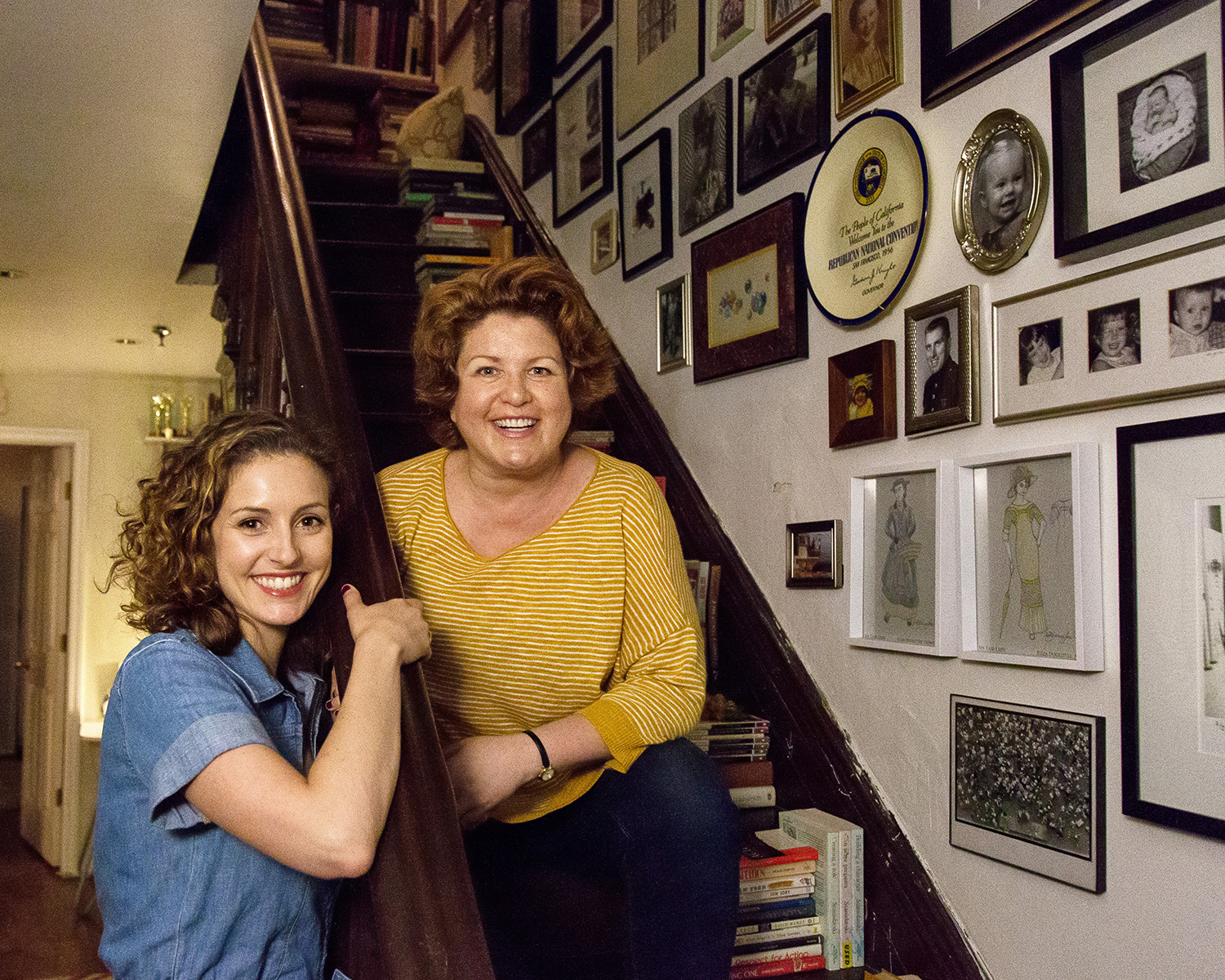
 

Klea Blackhurst & Andrea Prestinario
 

KB: It’s easy for successful comedians to cross a line between being funny and thinking that what they believe is more important than being funny. Bill Maher, Rosie O’Donnell, Lenny Bruce – their politics become more important than their comedy. Ellen has always stayed on the side of the line that says the reason you know me and love me is because I’m funny; that’s the reason you let me into your living room. I think that’s very unique and I love that about her.
 

KW: You as a comedienne wouldn’t want to lose the entertainment of what you do to put more political activist content in there.
 

KB: No. I don’t think I have an inner activist. I don’t think I’m a coward or I lay down though.
 

AP: She just isn’t political.
 

KB: It doesn’t drive me at the expense of other things, no.
 

KW: Andrea, you, to me, seem to be very political.
 

AP: Very much so. It’s how I see the world. I see the world through a feminist lens. It’s a curse and a blessing. Sometimes you want to not be able to see things so analytically and just relax. I have a gender studies and musical theater degree…
 

KB: That’s a rare combo, I think. I myself went for musical theater and geology. We’re very rare. I like to collect rocks and you like to introduce me to Dworkin.
 

AP: You do not collect rocks.
 

KB: I have a rock collection!
 

AP: Shut up.
 

KB: I do.
 

AP: She also has a rubber stamp collection.
 

KB: I love rubber stamps.
 

AP: I grew up in a house with just sisters and my parents are obsessed with fairness. So everything was always the same for all of us. If I got a phone in my bedroom when I was ten, I was the oldest, everyone else had everything else lined up that way. Then I went to an all-girls Catholic high school that was very progressive. There was even a sign in the hallway that said, “God is good, She is great.” It was very empowering. In my fourth year, you got to choose what theology class you wanted to take, there were options like God Talk or something else…I chose Women’s Contemporary Issues. That’s where my feminist seed was born.
 

KW: There was something on Facebook, I’ll probably misquote it, but it said something to the effect of, “God has to be a woman, why else would the Bible be a bunch of men explaining what she meant?”
 

[Laughter]
 

AP: That class sort of illuminated everything. I grew up in this household, and your household sets your guidelines for what you understand in the world and I understood it to be very fair and I went out and suddenly you’re coming to maturity and I was so enraged when my eyes were opened to it. At the end of freshman year of college, I started taking classes in the women’s studies department and that’s how it all started.
 

KW: Both of you…when you came out, what was your family’s reaction like? Was it supportive? Was it a welcoming thing or…
 

KB: I think it was good? It wasn’t talked about for awhile, and then it just like…was fine. It felt like a big risk but it actually ended up being great, I think. My first partner died very suddenly. I was in the closet, I was 27.
 

AP: They lived together but no one knew they were together.
 

KB: I was so invested in nobody knowing and family and stuff. I look back on it now, because I went through that whole experience in the closet, and I’m like…what was I doing? There was an obituary for her, because we lived here but she had been an acting professor at the university where I’d gone to school…the person writing the article talked to me and was like, “Do you want to be listed as a survivor?” And I was like…yeah, but I was totally in the closet.
 

AP: So what did it say…like, “friend of”?
 

KB: Yeah, something like that. It was so weird. That was a long time coming. I think it was easier for girls. This might be political here, I might get political.
 

AP: Whoa!
 

KB: It seems like boys were getting in more trouble because they’re actually like spilling seed and doing foul things…
 

AP: Spilling seed?
 

KB: That’s in the Bible! You know, you’re supposed to procreate, not just goof off. So they’re wasting it. I’m just talking like the Mormons. They weren’t enlightened, they were in hell on earth. The women it felt more like, “don’t ask, don’t tell.” Even if you had a suspicion, it was really like…they share expenses and snuggle. That’s what it felt like. In a way, if I had been the oldest son…
 

KW: Religion places such a high premium on masculinity and maleness…
 

KB: The patriarchy!
 

KW: So if it’s the person in the position of the most power disobeying this religious law or going against the faith…
 

KB: Exactly. That’s right. We’re just the sister wives. It was terrible. I was terrified to come out. I’m so glad I finally did. I remember the first interview I had, when I started giving interviews, when people cared…and this interviewer from Rehoboth Beach was like, “So, are you in-out or out-out?” And I was like…in-out? I think? By the end of the interview, I was like…I’m gonna be out-out. I was able to change that in the span of a conversation. I mean, I was going to Rehoboth Beach which is very gay-centric and your mom already knows, so what’re you saving it up for? But I did think, since I did a lot of solo performing, gay men like their women straight.
 

AP: That’s so true.
 

KB: They want you to suffer, like…over the man that got away. It is true.
 

AP: It’s so penis-heavy in musical theater, between all the gay men and all the straight women.
 

KB: And in Streisand and Garland, all the leading ladies, they flock to the one who is voicing what they’re voicing, which is always about a man. So I was reluctant. But then I was like, no, it’s okay. Nothing is really going to change.
 

AP: They also love a belter!
 

KB: I court that audience.
 

AP: Gay men love her.
 

Klea Blackhurst & Andrea Prestinario
 

KW: Andrea, when you first came to me about doing this, one of the phrases you used was “normalizing queer women in theater,” what do you feel like we can do? What do you want to see theater do?
 

AP: Exposure. Obviously you can’t recruit queer women to partake in musical theater. We are a minority, but I don’t know why…maybe the future holds the opportunity for that type of woman to be interested in theater. Right now, we’re not really telling those stories, so why would a young queer girl be drawn to it? I mean that in the sense of being an artist and an audience member, being a part of it in all aspects, arts administration, all of those components. I don’t know, do you have answers?
 

KB: No, I would never say something like that. I wouldn’t have been smart enough to even say that.
 

KW: Visibility is important; if you can’t see someone doing it…having the first black President, possibly the first female President, so young people can see…I can do that too.
 

KB: To me, that’s what Fun Home represented. We’ve heard gay male stories…
 

AP: So many times.
 

KB: It’s like everything else. The guys got there first. I was talking to a lesbian friend of mine about Fun Home, and she had decided she didn’t like it because she didn’t think we should know that the father kills himself from the beginning. And I was like.. anything else? She said no. And I said: okay, may I challenge you please to open your heart a bit bigger? That could be the artifact of the source material. You’re taking this one thing about the storytelling and have decided you don’t like this piece that is trailblazing like a giant comet through our lives. You’ve got to open your heart a little bigger.
 

AP: That’s a great example. I don’t think that queer women root for themselves in that sense the way that gay men do.
 

KB: Have you watched The Women? They’re so awful to each other and as I grew up, I was shocked to find out that’s how straight women relate to each other. They will take each other down.
 

KW: Women are pitted against each other so constantly, from a young age.
 

MT: People think there’s only one cake. So if you don’t get in there, you won’t get a piece. But it’s like actually there’s hundreds of cakes around you.
 

KB: That’s right.
 

AP: I think, in terms of normalizing and visibility, I think it irritates me that as a community, that men and women who are gay don’t come together more often. There are some gay men, I absolutely don’t want to generalize here, but there are some gay men that love their gay female friends. But there’s still that niche of gay men to whom we’re a bunch of jokes. You always say the example about when the AIDS crisis came, the lesbian community were the first to come to their side and take care of them. When your friends were dying…
 

KB: When it came down to it, yes, absolutely.
 

AP: And I would like to think gay men could support us in return.
 

KB: I know, I remember I introduced you at a party to a casting director and said, “This is my girlfriend, Andrea” and she’d been in for him before, and he did like a big cartoon eyes thing. Then later he comes over to me and says, “I’m sure she’s delighted that you told me she’s your girlfriend.” And I said, “What do you mean?” And he said, “I’m sure she wants me to know she’s gay.” Meaning that I never should’ve done that because she’s an ingenue.
 

AP: And he’s gay!
 

KW: It’s within our community and these stereotypes – we should be the first to break them, and yet…
 

AP: I think it’s what makes me an interesting ingenue.
 

KW: Do you think your experience as a queer woman informs your acting?
 

AP: Totally.
 

KW: Some of the ingenue roles are just so thin. You’re a prop for something else or for the male lead so much of the time.
 

AP: And we blame the actresses sometimes, but it’s the source material; it’s not heavy to begin with. Last summer the choreographer, and I love this quote, said, “You’re the anti-ingenue.” I love that. I should put that on my website as a pull-quote.
 

KW: Obviously the competition for female roles is steep and the roles that do exist can be pretty two-dimensional and sparse; have you ever gotten a show or an audition or an offer that you’ve turned down because you didn’t connect with it or were offended by it?
 

KB: My thing is always…there are three reasons to take a job. And one can trump the other two. Sorry, I said Trump. Personal satisfaction, prestige, and money. I’ve recently added health insurance, for real. I’m doing a job coming up and the deciding factor will be that I’d get the four weeks for health insurance, because it’s certainly not the money or prestige. 
 

AP: There’s a lot of shows I’ve been in where I just disagree entirely with the plot. Like I was thinking, Seven Brides for Seven Brothers…
 

KB: Annie Get Your Gun!
 

AP: I did that show and I just hated it the whole time I was in it. I had the choice to not audition, ultimately I sometimes have to swallow my feminism a bit and choke it down in the sense…I just don’t understand why we’re still telling that story. Why are we still doing that?
 

KB: I’m not a fan of that show. I don’t know that it really has a place in 2016.
 

KW: I keep thinking about what you said about being in-out vs. being out-out, and I was rewatching Ellen Page’s coming out speech like a week ago…
 

AP: Ugh, it was so good.
 

KW: She said that she felt like she was lying by omission by not being out. Do you feel like people who aren’t out are lying by omission? Did you feel that way?
 

KB:I don’t think I did personally, because I was so wrapped up in religion and expectation and wading through all that, it felt like for the longest time just like bad news and how am I gonna break this to people? First, how am I gonna try to get rid of it? Then, how am I gonna embrace it? Then, how am I gonna show others it isn’t scary? I’m older, it’s a lot different.
 

AP: We’ve definitely had very different experiences.
 

KB: Now I can say, oh, that’s my girlfriend. Also, when you get to a certain age, towards your 50s, people ask are you married? No. Oh, um, do you have kids? No. If you’re being in, at 50, saying no to those questions, it’s a very different person. To me, the test of whether a girl was gay in high school and college…it was the girl who was with the gang, but kinda separate, an observer, she caught the comedy, she very often was a comedic person, and never talked about a boy.
 

AP: You use comedy as a vehicle.
 

KW: What about you?
 

AP: I waited until…I was telling friends and my sisters, but I was waiting to tell my parents until I was completely on my own financially. I was on my own as soon as I graduated college, so I was wanting to get that apartment and get out of their house as soon as I could. A couple months after graduating, I was dating my first girlfriend, and she broke up with me, and it was my first heartbreak. It was so overwhelming, they knew something was wrong. I told them, and it was a very emotional experience. My grandpa had just died, and my dad was in a very emotional place, and my mom, she can be very matter-of-fact, and she doesn’t cry, but my dad is way more theatrical and emotional. My dad just cried and my mom just sat there and listened and said, “We kinda had a feeling…”
 

KW: They always know before you do!
 

AP: Yes! I said, “I waited until I moved out because I was scared you were gonna disown me.” We can laugh about it now but I really did think…you expect the worst.
 

KW: Especially if you grow up in a family that is religious in any way at all, even if it’s in a small way.
 

AP: Catholicism has an effect. My dad just cried and said nothing would ever make me stop loving you. I still cry every time I say that.
 

Klea Blackhurst & Andrea Prestinario
 

KW: After all we’ve talked about…where do you see us in ten years? Where do you want theater to be?
 

AP: I want to see more gender-bending. I wanna see women playing Aaron Burr. I wanna see more of that. It’s funny to think about what we’re seeing illuminated by the activism in theatre right now. In the 60s, the Civil Rights Movement happened and there were these raising consciousness groups, and there were all these women’s groups that were like, we’re fighting about race but we’re also all still second class to these men. It’s that pecking order. Intersectionality, right? I want to see all of it at once in a way. I wanna see us work on all of them all the time and work on that in theater and tell those stories and have opportunities for women and men of color and minorities overall. There’s such a disparity of roles.
 

KB: Well, that’s why I was like…come on, Hazel. But that role doesn’t come along. It doesn’t exist.
 

KW: It’s a great part. You wish that there were ten parts like that.
 

KB: And it just doesn’t exist! Exactly. It could join the ranks of like, does Dolly get a guy? We don’t care. Does Rose get a guy? We don’t care.
 

KW: That’s part of what I loved about it. The love story was never the focus. The central question isn’t whether or not she’ll find a man.
 

KB: That’s what I think is actually Merman-esque about it, having nothing to do with Merman. But she was a star. She had thirteen Broadway hits. Thirteen! But none of them depended on the guy, nobody cared. Yeah, in Annie Get Your Gun, she throws the contest at the end so he can think he’s the big man so that one she ends up with him, but the other ones…it’s not the central thing. You didn’t need a guy’s name with her name. That’s all that anybody cared about, at a time when Broadway was a major growing concern. That’s what attracted me to Hazel, and is one of the things I think they need to do to it. Make it Hazel’s story. Focus that thing and just…people wanna know about Hazel, not because I’m Hazel, but the same thing happened with Hello Dolly! out of town. People didn’t want Act I to end with a song about how Horace became half a millionaire. We just wanna get back to Dolly.
 

KW: At least everyone I have heard talk about the show or what I’ve read, Hazel is what people are responding to. She’s the heart of the show.
 

AP: The work ahead is very exciting to think about.
 

KB: Taking that story, making it more. My questions became, if we’re going to encourage Mrs. Baxter to have it all, why can’t Hazel have it all? This millionaire guy dates her and it’s like, no, I’m gonna stay with the family…that I met last week. It doesn’t make sense. Those things could be more realistic and valid. And why can’t she date a millionaire and have a job? And why can’t Mrs. Baxter have a job?
 

KW: It’s very subtle, the way it’s done, but there’s a level of classism in the show as well. You do feel that she’s “working class,” that she’s the help.
 

KB: That’s right, absolutely. I think that should be fixed. Hazel has to come out on top on every question. And she should solve every problem. That’s what she does! To me, it’s so exciting, I hope they get it right, because I will play her forever. You would have to kick me out of my Broadway dressing room, you would have to ask me cordially to leave after like 30 years. I’d be like, nope, I like taking naps between shows on Wednesdays, I like having my soup sent in, I would not want to leave. It’s taken me so long to get to where I am. I was just thinking the other day, it’s kind of obnoxious to say, but lately I’ve done a string of roles where I get the last bow. And that’s just a fact; it’s how it is. It’s awesome, what an awesome thing! I’m hoping ten years from now that I look back and that I have opportunities to create things, do things, and that I stuck in this long.
 

KW: They say if you’re not a soprano, you won’t work steadily until your 40s…
 

KB: Yes, exactly! And I am hoping that’s true. ‘Cause once the Reno Sweeney years were over, the Gypsy years arrived, now that time has come. I hope it’s a long train. And a lot of stuff gets sent to me now, new stuff…Let’s see. One of them, there’s one called Vanishing Point, I love this piece so much… It’s about Aimee Semple McPherson, Agatha Christie, and Amelia Earhart, all of whom vanished. Aimee Semple McPherson who walked out of the dessert saying that she had no idea what happened to her, and then Agatha Christie disappeared for days and found her car wrecked by the side of the road, and she was registered at a nearby hotel under the name of her husband’s mistress. So three different experiences of women vanishing. It’s so smart. I did concept things and Agatha Christie was always Alison Frasier, I was Aimee, and Amelia has changed a couple times…you’d be a great Amelia Earhart.
 

AP: Cast me!
 

KW: There it is! There’s your show together.
 

KB: Yes!!! There it is!
 

AP: Oh, babe, we did it!
 

KB: That could actually be good. It’s been struggling, but stuff I get asked to do, I say yes yes yes unless there’s a reason to say no. They don’t want me for Seven Brides but let’s say no. If you can, just say yes. My whole career is a series of what happened because I said yes. Interesting combinations of things you could not have made up. So, I’m gonna do more of that.


Posted on

A Conversation with Jeff Augustin & Srda Vasiljevic

Srda Vasiljevic and Jeff Augustin have both played instrumental parts in my first year post-grad. Both as artists and as people they surprise me with their warmth, focus and generosity time and time again. Srda and I played in the same playground of college theater and the splash he's made in New York in the short time he's been here has been nothing short of inspiring. His hard work and clarity of vision teach me something every day, but even more than that, his willingness to make space, to pull others up with him has made me more excited than ever about being part of the New York theater community. I was struck first by the quiet precision with which Jeff enters a room, and quickly came to love both the joyful movement and radical thoughtfulness he brings to his work and his relationships. As Jeff closes The Last Tiger in Haiti at La Jolla Playhouse and Srda opens Dust Can’t Kill Me at the June Havoc, I am endlessly excited by the stories they share.


Srda Vasiljevic and Jeff Augustin have both played instrumental parts in my first year post-grad. Both as artists and as people, they surprise me with their warmth, focus and generosity time and time again. Srda and I played in the same playground of college theater and the splash he’s made in New York in the short time he’s been here has been nothing short of inspiring. His hard work and clarity of vision teach me something every day, but even more than that, his willingness to make space, to pull others up with him has made me more excited than ever about being part of the New York theater community. I was struck first by the quiet precision with which Jeff enters a room, and quickly came to love both the joyful movement and radical thoughtfulness he brings to his work and his relationships. As Jeff closes The Last Tiger in Haiti at La Jolla Playhouse and Srda opens Dust Can’t Kill Me at the June Havoc, I am endlessly excited by the stories they share.


Corey Ruzicano: How have you come to tell your origin story, publicly or privately, and has the practice of telling that story informed the way you tell stories as an artist? What is your story and how has it given you a lens to listen to other stories? How did you come to be who you are, and how have you drawn the lines between those points of the constellation for yourself?
 

Srda Vasiljevic: I was born as a refugee. Actually, I was born right before the Bosnian genocide happened, so I guess there was a six month period where I was not a refugee. I think when most people hear the word refugee, they think of women and children wrapped in layers of fabric, people huddled together, decrepit housing, but my understanding of what a refugee was, was based on the community around me. As a young child, I was always with other children – it was for the most part women and children, and I feel like that plays a huge role in the kinds of stories I’m interested in and the kind of relationships I hold dear. I think I’m drawn to telling female stories and have always loved female characters, because I love and appreciate my mom and my sister and my grandmother. I feel very tied to the women in my family.
 

Jeff Augustin: Did you still feel like a refugee, moving around?
 

SV: I actually wrote about this recently for a grant application or something – I don’t think I realized that I was a refugee until I started grade school in Iowa. When you grow up like that, that very, very early, elementary age, you don’t realize that your situation is different from anyone else’s.
 

CR: It’s like a categorization only in hindsight.
 

SV: Exactly, and then we moved to Iowa and lived with refugee families, so I was still surrounded by other people like me. For some reason that cultural smashing of Bosnian and Iowan together was normal, because that’s what everyone else around me was, too. It wasn’t until I met people with other understandings of what a refugee was, that I started to think about what I was or what it meant. That was a big time historically with Clinton’s involvement with Bosnia – specifically in those few years – you would say “refugee” and you would just think of photos shown on the news of the Bosnian Genocide, and think of these horrific stories. So my presence was always defined then by others’ insinuations, their very limited understanding of what this culture actually is. I started grade school and I guess at that point, I decided I needed to start American-izing myself. My name is so weird, I hated it growing up – you have to hate it growing up! Every substitute teacher is scared of it…
 

JA: You know it’s you when they pause…
 

SV: Weirdly, I remember as a seven- or eight-year-old going to the vending machine at the big K-Mart by where we lived that sold these really gaudy fake cross necklaces. I needed one. I thought if I had a cross necklace, that would make me feel so much more American. I’m not really sure why. I remember thinking, I’ll be one of them. I wore it for a couple of days until my family said, “you can’t just wear that, it’s not just a necklace, it’s a symbol that means something.” So I quickly moved on from that, but I do find these little vestiges of needing to become American, subconsciously. It’s always little things, little ways of wanting to acclimate myself to the culture and the art.
 

JA: Yeah, I grew up in Miami, the youngest of seven. So it was a whole lot of people. My sister and I are the two youngest and we’re the only two who were born here and everyone else was born in Haiti. I learned Creole and English at the same time. I remember distinctly in fourth or fifth grade finally figuring out how to say the word “iron”, because it sounded so different in Creole. Things like that stick in my mind even though my Creole is practically gone. But growing up in Miami, it just feels like the Caribbean – it’s just like all these different immigrants. It’s tricky. I also remember going through this whole thing of understanding what black meant – having a phase where I was African American and then reevaluating and realizing I’m very much Haitian American. My roots come from Haitian culture and so a lot of my journey has been exploring where that comes from, all sorts of things like vodou and the Haitian revolution. And I do think very much that the way I first started stories was very influenced by the folklore quality of Haitian culture. I think Haitians are some of the best storytellers. And then I think the first time I really began to understand the cultural difference of what it means to be American or what America looks like didn’t happen until I left Miami and went to college.
 

SV: Because Miami is such a specific pocket of American culture?
 

JA: Yeah. I went to Boston College, and BC is one of the whitest institutions and economically is also so different from where I grew up. That was a culture shock. And that was the first time I really felt like my identity was shaped out of that shock – it was the first time I really felt like “I am a Haitian American.” It’s where I started to understand the significance of place and what home means.
 

CR: What did some of those things mean or look like to you?
 

JA: I think I understood privilege in a very particular way. I understood my place and how I was seen. I was this poor Haitian kid and also very obviously gay, so there were a lot of different lenses to be seen through. A lot of people at Boston College are at least upper middle class and my fashion sense was so different – I think I always had a bit of fashion sense but what I could afford was so different from everyone else.
 

CR: Well especially when so much of the dominant culture only sees color, it doesn’t always see the cultural gradations within it.
 

SV: There’s a strange separation but overlap of race and culture that I think many people don’t really understand. I’m white, obviously I’m caucasian, but I feel such a very specific identity with Eastern European culture, so I don’t necessarily identify with white American culture, although I’m very obviously white. For example, a lot of Bosnian people are Muslim. It’s the predominant religion in Bosnia, especially in the countrysides. A lot of my community and friends and family are Muslim, so when Donald Trump says “let’s ban all Muslims” and focusing his attacks on the Middle East, he doesn’t realize that a lot of Muslims are not what he imagines Muslim people to be. It’s also the language. Anti-Muslim rhetoric is cropping up in schools, but the people that are persecuted for being Muslim are people with brown skin, people who look different, and that’s troublesome, because people are associating religion and a culture with a shade of skin. It’s very intricate, that way of compartmentalizing.
 

CR: And so much of it is informed by external projections from the outside world that aren’t factual, but exist in their own kind of fact because perceptions create reality.
 

SV: If they exist in any world, they exist. We as people need to understand why these biases exist and how to clarify… or do you need to clarify things?
 

CR: It’s an interesting question. I was talking to a writer the other day and he was talking about being a white-presenting biracial person and that for him, he’s gone through so many iterations of understanding and owning his racial identity that he’s begun to think of race as a fluid thing the way we think of gender as a fluid thing. But it doesn’t work like that for everyone because not everyone has the capacity for or is beholden to that fluctuation, or is able to make choices about that journey they’re on. When you’re having to identity yourself as a certain thing, how do you find the license or empathy or understanding, or the ground to stand on, when you’re trying to tell more than your own story?
 

JA: I think it’s tricky. I feel, at least in theater, there’s this mark of “I’m this Haitian playwright.” And I think the expectation, when I walk into a room or a meeting, is that I’m going to pitch you a play about Haitian culture. And I do want to tell those stories, but I shouldn’t feel forced or obligated to. Fundamentally I got into writing because watching TV and movies, I did not see any stories about Haitian culture, or if I did it was horribly exploitative or just wrong. So that’s kind of where I entered and that’s just part of the fabric of who I am, and so I do feel that pressure of having to be a specific type of writer. But the question of the ownership of work… I was born here. And my siblings who spent fifteen, sixteen, twenty years of their lives in Haiti, they are Haitian people.
 

SV: Do they consider themselves Haitian American or Haitian?
 

JA: I think they consider themselves Haitian. I’ve never asked. But for me, that American part of me is important and very much a part of my identity, but there’s also a fear when Haitian people come to my plays to know if I’ve gotten this quote unquote right. Am I telling the story right? And how am I presenting Haitian culture to these majority white audiences? And making sure it’s clear that this is my one experience, my one lens into this and there are many Haitian stories. Please do not make this your one reference.
 

SV: But people do that. People see one thing and just automatically assume that it’s everyone’s experience. Just like you were saying, there’s a such a gradient of white stories, there isn’t one experience. You don’t think all white people think this way, because Willy Loman does.
 

CR: Because white usually means “neutral,” and anything is defined by the negative space that that leaves. There are only these tiny corners made for the non-dominant culture, so it’s made to feel like there’s only room for one or two types of stories within that corner.
 

SV: You look at a theater season and there are six slots and you have to – I hate to say this – but there’s usually a show that caters to a “minority” audience. Why aren’t we focusing on human stories regardless of background for every slot?
 

CR: People are always worrying how you make any story relevant, but the theory of the United States of America should predicate that they’re all relevant. We aren’t carrying out the thesis statement we started with, so of course there’s a lot of gear shifting to be done. And it’s not only a cultural conversation to be had but a capitalist one. Because when there’s a price tag on everything, some things will always be valued more than others. You’re always in a marketplace, you always have to be thinking about how to sell yourself and your stories. So does that change the way you make choices about the pieces that you look for or the collaborators you’re interested in working with?
 

SV: As a refugee I grew up with stories – we didn’t have television to watch. So now as an adult, I want to tell stories that feel larger than life, a deviation from your normal circumstances. Theater is the last art form where you can present something on stage where the audience has the ability to use their imagination to understand the world you’re presenting. I feel like that’s what storytelling is, at it’s basest form, you’re saying “fill in the rest.”
 

CR: Especially when you’re thinking about what it means to own a story… and the word own has such specific, dark roots in this country –
 

SV: Yes, it can be very challenging being a director, directing a work that is outside of your own background.
 

CR: Yeah, I never think about it as much with directors as much as I do with writers.
 

SV: But I also think there is a stigma. August Wilson wanted his plays to only be directed by directors of color, which makes a lot of sense. I think there’s a specific reason why his stories about the African-American condition should be told by directors of colors. But do I, as a gay, Bosnian American director, have the ability to direct an August Wilson play? What is my “ownership” of that – do I have any ownership at all? Am I just the third party observing and trying to make sense of it? I think one of the reasons I love Jeff’s writing is that the cultural aspect of it resonates with me. It feels like our backgrounds are incredibly divergent. Do I have a clear understanding of the Haitian American experience? No. Do I have an understanding of growing up in an immigrant household? Yes. So it depends on what context you’re talking about. You definitely have to make choices about whether or not you have the authority to tell a story and why. You have to be conscious of it, or you aren’t really telling the whole story.
 

CR: Ultimately the idea is that the ideal we’re moving toward is that the playing field is not uneven, so that sharing each other’s stories will not be so fraught with inequity, that no one will be disenfranchised from the platform to tell stories. But that’s not where we are right now, so the choices you make sort of have to be prioritized in that direction. It’s hard because there are times right now when the gear-shifting feels really transparent and uncomfortable and pointed but it’s all about habit forming.
 

SV: You’re making a statement. I think there should be more cross-pollination of ideas and backgrounds, especially between directors and playwrights. A lot of the time we get paired together because of our similarities, rather than our differences.
 

CR: It’s like saying two people of the same culture will automatically have the same thoughts and want to work in the same way.
 

JA: It’s a tricky road. There are certain plays where there is a certain kind of director I would like to work with because of the matter that I’m diving into. I’m working on a play about a bunch of generations of Haitian women working on this farm and there’s this very particular director I want to work with that’s half Haitian, and that’s important because I’m diving into this world and I want that perspective. But other times, back to that idea of the machine of season planning, a company decides to do your show and the directors that they come up with are only people of color and you can feel the pigeon holing. This is our minority play so we’re going to stuff in every minority that we can. In the same way that plays written by straight white men should not only be directed by straight white men.
 

SV: Signature just announced their season and I think five of the six directors are female, and it’s so exciting to see shows written by men being directed by women, because women can and should do more than tell female stories. I do think the pairing thing is really problematic because sometimes the best stories are told by people with completely separate backgrounds. Look at John Doyle and The Color Purple.
 

JA: When I’m writing a play, I’m thinking more about what these characters are going through and what kind of director, what kind of people whose work I’ve seen connects with the heart of that story. We can’t forget that there are people on stage who are acting the way people act.
 

CR: Of course, and some of the circumstances have been informed by a social paradigm, but if I’m coming to your show as an actor, I’m looking for what anxiety or desire or fear would make me say the next line on the page. It’s an endlessly interesting conversation that never has an answer.
 

SV: I don’t know if people talk about it, though.
 

CR: Well it’s a privilege too, to have the time and space and resources to have these conversations. Sometimes I forget that. I also feel like I’m always asking this question, but I’m always trying to define what community is for me and for the people around me. What does community mean to you and how have you found your place in it?
 

SV: I grew up in one culture and then was plopped in another, so I never really felt at home in either. I feel a kinship with both, but do I feel at home in either? I think I finally felt at home in New York. It feels like an island of misfit toys to me. Everyone has weird backgrounds and weird ways they got here. The artist community here that didn’t take the same narrow path to get here but we’ve all sort of hopscotched to it, so it feels like we’re all very similar, yet incredibly different, and that makes me feel at home.
 

JA: I think one of the most important ideas about community for me is a place where I can feel grounded, where I can just be whatever version of myself I want to be, where I can find mental stability. When I work with people who are of both my artistic and my deep friend community, I feel like they carry me creatively and personally, and that always challenges me to be a better person. Community for me is very much about my personal alignment, because as a writer I spend hours and hours alone and feel like I’m in a bubble.
 

CR: And in New York as individual artists who aren’t always working collaboratively or with the same people, there’s also a very practical question of how you find your people.
 

SV: Yeah, finding community in a freelance life is definitely a puzzle. I’m part of an artist board and that introduced me to so many people on similar artistic wavelengths. I think you just have to be open to it. You meet people all the time, so you really have to put the time into finding out what your connection is with them. That’s my job as director – finding the connective tissue. I know that if I were working in an institution and using that as my main throughline to meet people, I wouldn’t have met the same kind of varied groups of people that I have freelancing. They connect the dots for me, make me a more whole person, supplement something in me and make me stronger, and truth be told, your artistic community doesn’t have to just be artists.
 

CR: Absolutely, and I love the idea that your community is the people who make you want to be a better person. I don’t know if I’ve ever thought about it like that, but I think it’s completely true for the people I’m most drawn to–they make me want to show up and be better.
 

SV: But it definitely takes a while. It doesn’t happen immediately. It accumulates, the people and the experiences.
 

JA: And you do make relationships with institutions over time, not just people who will do your play but people who are behind your voice.
 

CR: People do stick their necks out for you every once in awhile. It’s not an industry that supports corporate singularity, it’s totally a word of mouth world.
 

JA: Absolutely, and the more people you meet, the more new experiences you get pulled into, the more you’re stretching as an artist and as a person.
 

SV: I don’t want to say it’s happenstance but a lot of it is just where the chips fall… that’s an expression right? That’s one thing about being Bosnian is that I still don’t know idioms.
 

JA: Oh I know.
 

SV: It’s how the crackers crunch? No.
 

CR: Do you have any Bosnian idioms?
 

SV: No, just curse words. Bosnian language can be vile. And the literal translation of Bosnian curse words can be so much worse than English.
 

CR: Yeah, expressions like that are so cultural.
 

SV: And they translate so differently. I speak English fluently and I speak Serbian-Croatian fluently and there’s such a difference of tone between the two languages.
 

JA: I’ve been thinking a lot lately, talking about language, that so much of understanding my work is understanding the style. So much of the influence of my work is Haitian language and culture, and it’s big and it’s loud. Creole happens to be a lot more poetic than English, so people’s turn of phrase are different, and that has influenced the way I work. Sometimes when I’m writing, I think that’s not going to read or be understood. When you’re directing, do you feel like that ever?
 

SV: I feel like Bosnian, as a language and as a culture, exists in this slightly heightened realm. We would have parties at our house and seeing how Bosnian adults interact…everything is big. There are big screaming fights, big love, big feelings. There’s a lot of emotion. So when I look at a piece of text, I always want to know what happens if you pull this tiny string and elevate it to this almost hyper-heightened sensibility. Did that change the ebb and flow of a scene? How do you dramatize real life? I don’t necessarily consciously try to hyper-dramatize my work, but I guess in my head I see conversations as much more dramatic, because that’s what I grew up with.
 

JA: Right.
 

SV: Nothing is ever easy but it’s also just funny. There’s a lot of joy and laughter in my family and in storytelling, so all that emotion and the fights and the laughter all lead into how I tell stories and how I see characters interact. It has that blood flow.
 

CR: I’m a big believer that often language creates reality. It’s like that John Muir saying, “When we try to pick out anything by itself, we find it hitched to everything else in the Universe,” and I think language is no different especially because it’s man made.
 

JA: I can only think about writing-wise, but sometimes I’ll have a line that feels like, there’s so much acting in that, and yeah, Haitian culture can dig at someone with one word, and it’s very still and very smiley. I do sometimes feel that trickiness of navigating having to unpack that more or figure out a way to sound a bit more American or pull in more Western dramaturgy, whatever that means. Sometimes it feels like it opens up the work, but not always.
 

CR: Where do you draw the line of I want to represent this, this way but I also want it to be understood? It’s a very delicate balancing act. I don’t want people to shut off, but I also don’t want to spoon-feed them.
 

SV: When you’re looking at a piece as a director, sometimes you feel like you understand exactly the intention of the writer in that moment but it may not read to the audience at large, because it’s so specific. So what do you do? Do you keep it specific or do you open it up so that it’s a moment that more people resonate with? Do you adjust?
 

JA: I think there’s also a bigger question about how we watch plays and critique works of groups you don’t have an education about.
 

CR: Totally, how can you engage as an insider and as an outsider or somewhere in between?


Jeff Augustin’s play Little Children Dream of God received its world premiere at the Roundabout Underground, where he was the inaugural Tow Foundation Playwright-in-Residence. His plays have also been produced by Actors Theatre of Louisville (Cry Old Kingdom, Humana 2013; That High Lonesome Sound, Humana Apprentice Anthology 2015), and Western Washington University (Corktown). His work has been developed at the Eugene O’Neill Playwrights Conference, La Jolla Playhouse, The Ground Floor at Berkeley Rep, American Conservatory Theater, and Seattle Rep. He is a member of The Working Farm at SPACE on Ryder Farm and was a New York Theatre Workshop 2050 Fellow. Currently, Jeff is the Shank Playwright-in-Residence at Playwrights Horizons. He is under commission from Manhattan Theatre Club and Roundabout. BA: Boston College, MFA: UCSD.
 

Srda Vasiljevic is a theater director living and working in New York City. Born in Sarajevo, Bosnia a few months before the Bosnian War broke out, Srda spent his childhood living in refugee camps across Europe before moving to the bustling Midwestern metropolis of Des Moines, Iowa, and later on, New York City. Srda has worked on and off Broadway developing new and reinvented works with artists such as Terrence McNally, Jeanine Tesori, Moisés Kaufman, Billy Porter, Leigh Silverman, and Deaf West Theatre Company. Working on the directorial teams of such productions as The Laramie Project Cycle at BAM, 2014 Tony-nominated Mothers and Sons, ENCORES! Off-Center revival of Andrew Lippa’s The Wild Party and the Deaf West Theater’s Broadway revival of Spring Awakening have contributed to Srda’s eclectic and electric style.

Posted on

A Conversation with Scott Gilmour & Claire McKenzie


The story of Forest Boy seems like it was meant to be put onstage: out of nowhere, a boy emerges from the woods, and tells the story of how he hid out in the forest and is all alone in the world. Or is he?
 

Scott Gilmour and Claire McKenzie, a composing team from Scotland, brings Forest Boy to the New York Musical Festival this summer. We sat down to talk about making a living as an artist, social media, and the freedom to construct one’s own identity.


Helen Schultz: How did you first encounter the story of Forest Boy?
 

Scott Gilmour: In 2013, Claire and I were commissioned to write a piece for the Royal Conservatoire of Scotland. We were brought in for a very last-minute notice – they said, “We have a development week thing and if you have any ideas, you can come in and work with this cast,” but we didn’t have any ideas. That story was trending at the time on Twitter and Facebook, and we kind of got a bit hooked.
 

Claire McKenzie: I found it on Facebook one night and I read it, and it’s a fascinating true story and I just wanted to keep on reading about what happened. It was still unraveling at the time, so back then there wasn’t an end to the story – where it ended was that he was found working in Burger King. I thought there’s something very poetic about that. He came out of the forest and this land and character he had created, but in reality he was working at a Burger King. I found that there was something theatrical in that for me.
 

SG: We took the story and a song into this development week as a starting point, and the conservatoire that we were working with liked it. They gave us some commission money to go to the Edinburgh Fringe Festival. The story was still unraveling, [so] the version at Fringe didn’t have an ending. This version does have an ending, don’t worry.
 

HS: And you both went to the Royal Conservatoire in Scotland. How did you guys meet and start working together?
 

CM: I studied composition in the music school – they have a music school and a drama school. For the first four years, our paths didn’t cross because I was in the music school. Scott studied musical theater performance. I moved to the drama school for a year and did musical direction. We met and became friends through that course and through meeting in drama school. We decided that we liked the same things, and we went to see lots of theater and just became friends. One day we decided we might try to write together, and, actually [Scott] signed me up for something–
 

SG: –yeah… I kind of forced Claire to do it. We had put together another project, and it was a new works thing. I was working as an actor in it, and you were a musical director. The vibe of the room was very cool, and I thought maybe we should try to do this, the two of us. At the end of my degree, there was this sort of collaboration thing between the Conservatoire and this theater in Glasgow that was an underground, new works venue. They had this collaborative project where if you had any ideas you wanted to develop, you could do that. I didn’t ask Claire, and I [just] signed her up to work with me. We went for the pitch, and our first piece was a piece called Freak Show. It was based around a Coney Island freakshow, so it was a song-cycle type thing. It was sort of immersive, so the audience moved around it and if you’d stop by a performer, they’d have a song and interact with you. That was the first idea we had. From then on, that show went on to have another life and we were like, “Oh! Well maybe we should do this again sometime!” That was four years ago, and now we’re here!
 

Scott Gilmour & Claire McKenzie
 

HS: Forest Boy is of course based on a true story and real people that are still alive. How did you go about culling all these facts and figures, and putting them into something that’s also narrative?
 

SG: For me, I find it a challenge in that when you’re able to come up with your own world and your own story, there’s a lot more artistic license to do what you want with it. When you take a true subject, there’s a respect there. You can’t lie too much if it’s a true thing. The biggest challenge was trying – with the theatricality – to fit in these facts.
 

CM: True, and I’d say structure. Because we’ve done three or four different versions of the show over the years, I think the main thing that we’ve been playing with is what the best order and structure to tell the audience this story, because it’s quite complicated. Do you tell them all of the forest story, then all of the real story of what really happened, or do you tell them at the same time, or do you try and tell them as it was unveiled in the press? That’s this version. You can tell it lots of different ways. It’s just very complicated story to tell – it’s not a linear structure.
 

SG: It’s also that dangerous thing that when you get a real story, you’ve got to try and find the version of it that’s actually true because it was a story that came through the press and social media, and they have a tendency to exaggerate. In order to get the facts, you need to troll through the different articles. For me, when it came to getting the actual facts and figures about when he was there, when he was kept there, and how long he stayed in Berlin and all that, I actually turned to the German papers. Everyone else was a knock-off version of the German newspapers at the time. There were a lot of news sources in the UK, but there was a sort of a diluted version of the truth, so you have to do the detective work to get the real story.
 

CM: He hasn’t done many interviews. There’s not much we found of what he made of the whole thing. He’s decided not to really talk about it.
 

SG: I think that was a way in, of making it a drama, because he’s the only one that has not spoken out. So you’ve got all these people saying that he’s like this, or like that, and actually there’s this kid in the middle of it all who still hasn’t done any press – he did one interview in a little tiny paper in Holland, and that’s it. Immediately you go, well maybe we can make a character out of him.
 

HS: So much of this show is about media frenzy.
 

CM: That’s a big part of the show.
 

HS: And I feel like that’s a big part of our world right now, too.
 

CM: They made “Forest Boy.” They made the story what it is. In reality, a boy turned up and tried to be taken in by social workers, but we – the media and social media and the press – made it into the story of Forest Boy, a big mystery that lasted about a year. Without them, it would have never become a story.
 

SG: It’s enticing and I think it was one of the reasons that we felt maybe now is the time to tell the story in that way because even five years ago, ten years ago certainly, it wouldn’t have happened. He wouldn’t have become this huge, massive “who’s Forest Boy?” and #ForestBoy would have never become a thing. It would have stayed local, it would have stayed a national thing in Germany and it wouldn’t have permeated across into all our cultures. Forest Boy is one story, but – like you said – social media is doing that all over the place. It’s exaggerating everything. As a person, I get most of my news through Twitter way quicker than I get it through a newspaper – it’s immediate. That said, you take what’s said there as truth… It’s a different time now, I guess.
 

Scott Gilmour & Claire McKenzie
 

HS: Has it made you consider these things differently in your own lives, and how it forms your opinions?
 

CM: Scott doesn’t have Facebook, do you?
 

SG: I’m really bad at it; I’m really awful. I’ve been told to get Twitter because of work. But I’m getting better at it. I’ve started doing hashtags and everything, but I never got Facebook. It is a really fascinating thing: how quickly you can become reliant on it being there, and how quickly you can rely on it not just for communication, but for information. We take what it says as granted right away.
 

CM: Also, we know something that’s happened, instantly, anywhere in the world. In the past, it would take time to feed through.
 

SG: Exactly! Like the thing in Turkey, the madness that happened there. The Prime Minister, he’s out of the country, and they cut off the internet in Turkey, but he’s got Twitter and can see everything happening, like the coup. It’s a really different kind of time.
 

HS: And now celebrities like Forest Boy have morphed into politicians like Donald Trump.
 

SG: Because he’s become a character in himself.
 

CM: In Scotland, we have an opinion of him through the media. That’s all we have.
 

SG: Taking it back to the story, what always took me about that story was that it he has been turned into a character, like Donald Trump – he’s become The Forest Boy. But who actually is that, underneath all that stuff? Why did he do that thing, and how does he feel about it? It began to become a window into why we wanted to make a piece about it.
 

HS: Forest Boy also constructs his own identity, that’s so disparate from his reality. Could you talk about identity in this piece, and what role it plays?
 

SG: I think one of the most exciting parts of this story, for me, is that it immediately divides people. On one side, you have people saying this guy is a hero! He managed to convince the whole world that he was this kid from the forest, he escaped his life, and he said I’m not going to accept that this is the life I’ve been given, I’m going to do something different about it. And I feel that. I think he’s brilliant. And that fact that his imagination could do that to the world. But then you get all these other people, who are like he’s like a little dick. How could you do that?! He lied, and cheated, and played everyone along in that way and I think it’s one of the interesting parts of the story: what is it about his identity and our own? Do you just accept what’s been laid out in front of you, or do you have a say in it?
 

CM: Can you change it? He did. He tried to.
 

SG: I think as a piece, it’s a massive part of it. One of the hooks about the story is that you kind of want it to be true. You want to believe that he actually did live in the forest. You think, wouldn’t that be great? Because in the back of your head, it’s the thing you ask yourself: could I do that? Could I drop everything and go live in this other place and become someone else? I think it questions an awful lot about how we feel about our own identity, and I certainly did when I first read it.


HS: Switching gears a bit: can we talk about the difference in making art in the US, Scotland, and the UK?
 

CM: There are some similarities – we have experience in Fringe; and this right now is a festival. There are some similarities in the kind of speed you need to make it, the speed you need to put it up in the theater; there’s no comfort time, everyone’s running at pace to make the show, which I think creates an energy. I think that’s something that, for shows that a take a long time, sometimes you can lose that momentum. So that’s a really positive thing. In terms of differences, in Scotland, musicals aren’t a big culture, and in the UK it’s not as big as it is here in the US. Scotland hasn’t made that many [musicals] so you’re trying to build an audience for musicals over there, while here the musical is the major genre of theater. It’s wonderful being in this environment where it’s such a big thing and you have a massive audience waiting to see the work.
 

SG: I think it’s a slightly different feeling about how you make stuff over here as well. It’s different in that – particularly in New York City, which is like this incredible place that all this wonderful work come from – even at this stage, you’re surrounded by a bunch of people asking you, “What’s the next thing? Where’s it going to go next?” I think that’s great, because to think in that way is really positive. In Scotland, because a lot of arts is subsidized by the government, if you want to do anything, you have to send an application into an arts council, and if they consider it and they like it, you get some money to do the thing. Whereas here, if you want to do the thing, do the thing. You’re on your own and you’ve got to make it. That energy is really present here, but sometimes you can see it clouding everyone’s vision on actually making a bit of art because everyone is so worried about the next thing, and how can we make it bigger.
 

CM: It’s very much a business here, isn’t it?
 

SG: That’s it! That’s missing from where we are.
 

CM: Well, we’re on a festival level, but on a Broadway level, there has to be a return. There has to be a viable business, which is understandable. Whereas in Scotland, you would get money to put on a show and if you made money, that would be great.
 

SG: It’s less for profit. It’s never “let’s sell this thing out.” It’s “let’s make another piece for people in Dundee because they don’t get theater that much and let’s make it for them” and that’s a slightly different tone. Actually, being over here, I think the best version is set somewhere between the two. I think it’s something that I think is a business, but also keeps the heart of it at the front.
 

CM: It’s probably why we’re grateful to be here, though, because we’re learning from both ways of doing it. We’ll hopefully find that middle ground of how to make work, but also make money while doing it. That would be nice.
 

HS: How does government funding affect the tenor of your work, and what it’s like to live as an artist in Scotland?
 

SG: You can live as an artist in Scotland. You can afford to. You can afford to do a couple of jobs throughout the year and that is enough to make a living and you can have your own place just by doing your job. Over here everyone has so many jobs and everyone does everything – it’s amazing! Everyone’s sort of like I do this at night, then that and that pace is really incredible.
 

CM: I have to move around Scotland to whichever theater wants some music for the next show, but I’ve only ever worked as a composer. I imagine I couldn’t have that here. I would have to do something else on the side. I imagine I would have to do something else and write in my spare time here with the hope that it would get on.
 

SG: We’ve been been quite lucky in that way. It’s that thing of allowing you some time to develop your craft. We’ve done five other shows since doing Forest Boy, and now we come back to doing Forest Boy and it’s like, “oh, we’re better at this now than when we started.” I think being away from it, working in a more regional environment, [in our case] Scottish theater, allows you that time to make mistakes; you’re allowed to get it wrong, and it doesn’t destroy your entire career if you get it wrong in an environment like that. It feels like – coming to a place like New York – it’s a wonderful place to bring stuff to when it’s ready to come here. If it’s really ready, it’s the perfect place for it to flourish. But if you mistime that, you kind of get eaten up, it feels like, and you can never come back here.
 

Scott Gilmour & Claire McKenzie
 

HS: Claire, I wanted to ask you, in the US, female composers are not the most common, and it’s just starting to get talked about. Is it the same in Scotland?
 

CM: It’s still a male-dominated industry. I’m a musical director as well, and that’s very male-dominated. The thing is, I’ve kind of gotten used to it because I remember even when I was back in school, I was the only one in my music class. I was the only girl in the composition department when I started at the Conservatoire. That’s gotten better though – they’ve started bringing in more girls. But I remember at the start I was the only girl in my year. I’ve just kind of been used to that environment. I stopped noticing it. I think if you do a good job and you keep doing good work, it shouldn’t matter, and I hope it would count over here as well. I remember I was warned when I thought I wanted to go into theater by quite a lauded musical director in London. He said, “It’s really hard for a woman.” At that stage, I think it really was. I hope it’s changing. I think it is in the UK, and I would hope it is here, too. It’s good that we are talking about it as an issue!
 

HS: I think Fun Home was our wake-up call.
 

CM: Yes. You know, you’re right. I can’t name anyone… even in London, can you name anyone? In the big shows?
 

SG: No, actually.
 

CM: It’s an interesting one. It’s funny – when you’re living it, you don’t realize it so much. Maybe we should change all that.
 

HS: The stories we tell about ourselves and others are at the center of this piece. When you choose to write stories about yourself and others, how do you decide on what stories you choose to tell? How do you take on that responsibility?
 

SG: The way we always work is the story has to come from both of us. Usually the idea has got to be a thing that we share and we both connect to because if it’s not that, it’s never going to work. From that point, we find a way in, make a story, make what it will be as a structure, and write the thing. And then I give it to Claire, and she makes it sound good. That way of working always puts the story at the heart.
 

CM: For us, it’s always picking the lyrics first. In terms of picking a story, we probably go with something that would allow music to have a voice, because I think there’s nothing worse than a very domestic story where you’re trying to chuck music in there.. Certainly with Forest Boy, there was such an environment and imagination, and so many themes that allowed me to be a bit freer in the writing.
 

SG: I think it has to be a story around an idea that has a way in for music and song for it to make sense, otherwise it’s a waste of the form and it just allows for a lot of storytelling that way. Even if it’s not on a domestic level, if it’s pitched right… Fun Home is totally brilliant that way. It’s allowing the music to do some storytelling for you. I think that’s where musical theater can suffer a little from “I’ve got this great idea, let’s make a musical from it!” Yes, but that idea has to be musical as an idea.
 

CM: In terms of our ideas, some of our ideas are completely original, whereas I think with Forest Boy and a couple of our other shows, it’s like more of an adaptation, but here’s what we can make our own. It’s always how original can we be with this?
 

HS: Does Forest Boy know about this musical?
 

SG: No, but we’ve tried to find him. We went to Berlin to try to find some information about him, and we went to the various places where he appeared. We found the people he appeared to and it was crazy! We met them, and they remembered him. When he arrived in Berlin, he turned up and said to them, “I’m all alone in the world; I don’t know who I am”. They totally remembered him. It was odd because we only knew about him through social media, and suddenly we’re at this place and it’s like my god, it really was real – this was a thing! 
He doesn’t know about it because he’s missing again. After they found out about him and that it was a hoax, he went on trial, disappeared, and they found him nine months later, as we said earlier, at a Burger King. After that he had to do the community service and then he just vanished. He was meant to be sent back home to the Netherlands but he never did. So that’s why he doesn’t know, I guess.
 

CM: We would love to meet him. We have a million questions for him.
 

SG: The biggest question that we’ve always spoke about is did he plan it? Or did it just come out? That was a choice in the writing and I had to decide that. But I’ve always been so intrigued: did he actually plan it, or did he just appear in front of them and it just came out at that moment? It just changes the whole color of the lie, and the story.
 

CM: Maybe if the story has another life and we can get to him some way, that would be a goal.
 

HS: Is it weird to talk about this person and think about what they would do and know that they are out there somewhere?
 

SG: In my head, if he is the character I think he is, I’d imagine he’d be quite cool in that he is a total fantasist, and I think that the idea that your story is so good that people would spend years writing a musical… I think that’s the fuel for more fantasy. It’s kind of weird, that he’s out there somewhere. All of them are! All the people in that story are really real. That’s the weird bit: the fact that these people are normal, everyday people and just were just thrown into this crazy limelight and then they go back to being normal again.
 

Scott Gilmour & Claire McKenzie
 

HS: And there’s this sort of empathy in writing about these people who are all pretty “grey area” – can you talk about theater and empathy and how you access that?
 

SG: For me, it’s where’s the heart? What’s the idea? It has to fit the theater and it has to fit the imagination. It also has to answer the question, “why should we care about it?” Going to the theater is kind of a pain in the ass, actually – it’s expensive and not always good and if you can answer why I should care about this thing, it actually helps with all of that. I think talking about empathy, it only becomes relevant when the story that you’re telling can in someway be taken back to the present, watching it and going “Oh that’s me, and my own life”. With this story, it’s the subject of identity, and do we have to just accept who we are, or can we make a change in that too?
 

CM: And we’ve played with different endings as well – we won’t give it away, but in terms of giving the audience the “oh! I could make my life what I want it to be!” and “I have some control,” it’s that sort of… you can make your life exactly what you want with some confidence and courage.
 

SG: And I think it’s the magic of theater. It’s that actual live conversation between the people onstage and the audience out there, and if we can strike some kind of note that the audience can take away, the note is what theater has over all these other forms. You can’t really get that note as strongly from a film or a book. They speak to us in different ways because they speak to us in the way of life. Think about this and it is magic in that way and I think that what you said in terms of empathy, that’s how you get into it.
 

HS: And I love that idea of courage too, and I was wondering where you get the courage to go out there and make something like this, and put it in the world as artists.
 

CM: Because… the two of us.
 

SG: Definitely.
 

CM: I was composing a little bit before we started writing together, and I was doing fine, but I think, like, having the courage to come up to New York is a lot easier when you’re a team doing it. And facing it all the difficulties, I don’t think I would be here without you.
 

SG: I think that is the thing though. We’ve been a partnership for four, five years now, and you give each other confidence in that way.
 

CM: And you push each other!
 

SG: Exactly. Absolutely.
 

CM: If I was on my own, writing a musical, the writing would not be half as good. It’s only because we’re trying to make each other write the best we’ve ever written. And I’m trying to not only write for myself and the audience, but I’m also trying to write the best thing for you as well. So I do think that we’ll get the best part of each other out of that.
 

SG: I do think that it’s being alone, I think it’s something difficult as an artist out on your own, it is hard – it’s hard to keep momentum, to keep courage, but when you do have that other person –
 

CM: – even in those hard times, those stressful moments –
 

SG: – it’s okay, because it’s just a stressful moment. In short, it’s because there’s two of us.
 

HS: What advice would you give to someone who’s where you guys were when you first met?
 

CM: Don’t try to be anything you’re not when you’re a writer. Write from the heart. Only write something you connect with and want to tell. Don’t think “I know what a musical is,” because we don’t follow a form. Try and find your own voice, try to be original, but mostly don’t be afraid of making mistakes while you’re learning. And I think we’re absolutely learning.
 

SG: Totally. Get it wrong. Allow yourself to be inspired by other artists – by other writers, by other stories. But don’t try to emulate them. Just find yourself. Be inspired, but don’t emulate.


Scott trained at the Royal Conservatoire of Scotland and now works as an actor, writer and director within the UK and internationally. Alongside composer Claire McKenzie, he runs multi award-winning musical theatre company, Noisemaker. Together Scott and Claire are dedicated to creating and developing original and innovative musical theatre. Previous work includes The National Theatre of Scotland, The BBC, Chichester Festival Theatre, The Royal Lyceum, Clerkenwell Films, Dundee Rep and Starz.
 

Claire trained in composition at the Royal Conservatoire of Scotland and now writes music for theatre throughout the UK. Claire has worked for theatre companies such as National Theatre of Scotland, The Royal Lyceum Edinburgh, Dundee Rep, Citizens’ Theatre and was recently nominated for a BAFTA New Talent Award for Original Music. Alongside writer Scott Gilmour, Claire runs multi award-winning company, Noisemaker, who create and develop original music theatre in the UK and internationally.

Posted on

Line, Please!?

line, please!?


Hi, I’m Liz and I’ll be offering you advice on navigating the tricky situations that can come from working in or being a fan of theater.
I’ve been doing it out on my blog, fyeahgreatplays.com, for a while now, so it seemed only natural to migrate here in a more official Advice Columnist capacity. I’ve freelanced as a stage manager around New York as well as regionally, I’m a member of Actor’s Equity and a total contract junkie, and I occasionally cohost a podcast on theater and performance (Maxamoo).
 

To submit a question, email lineplease@stageandcandor.wpcomstaging.com.


Dear Liz,
 

I have a friend who, to be frank, acts like a snob. We met in college and have become theatre buddies, usually attending at least one play or musical together a month. I noticed lately when I make suggestions for interesting new shows, she is excited about the concept or plot, but then when hears it’s not “Broadway,” shuts it down quickly. “Nope!” Should I call her out on her snobbish attitude, ditch her and go to the theatre with other friends instead? Please help.
 

xoxo
Havana


Hi Havana,
 

Between you and me, your friend is probably missing out on some great theater. But that doesn’t mean you have to! Some friends are more adventurous theatergoers than others. I think you could go one of two ways with this:
 

Option A: You both alternate who gets to choose the show you’re going to see together. Let them choose the Broadway show they want to see, then you choose what you want the next time. It’s a nice way to get your friend out of their comfort zone, and you still get to see shows with your friend. Maybe you could ease them off-Broadway with a show in the New York Musical Festival (NYMF) this summer?
 

Option B: This friend is now your designated Broadway friend. Maybe you see shows with them less often in favor of seeing the shows you want to see with people who will be excited about it. I personally have different friends who enjoy many different kinds of theater, so who I invite depends on who’s going to actually enjoy it; one of my best friends loves a big splashy musical but I think she’d die if I took her to some performance art. And if you worry you don’t have enough theatergoing friends, here’s what I used to do: if I get offered a free ticket to something, ask if it’s ok to have 2 tickets, then bring someone you don’t know well but you know likes theater. It takes a little bravery on your part, but you may find a new theatre buddy who’s open to theatrical adventures with you.

Posted on

A Conversation with (some of) the cast of Hadestown

Hadestown


There’s something in the water at New York Theatre Workshop the famed East Village theater is known for producing hits: RENT, Once, and – most recently – David Bowie’s final project, Lazarus.
 

But Hadestown, a new musical based on Anaïs Mitchell’s concept album, has a certain magic all its own. The show, based on the Greek myth of Orpheus and Eurydice, combines bluegrass music with the inventive staging by Rachel Chavkin (Preludes; Natasha, Pierre, and the Great Comet of 1812; The TEAM). The result is an intoxicating glance into the underworld and a tale about the perils of love in an unforgiving world.
 

We sat down with some of the cast of Hadestown to talk about the development of the show, what Hadestown has to say about Trump-era America, and why theater – now more than ever – is the ultimate textbook on empathy.


Esther Cohen: How did each of you come to be involved with the show? I know it’s had many iterations.
 

Damon Daunno: In 2012, I received an email that they were doing a reading of this piece called Hadestown based on a concept album by Anaïs Mitchell, and this gang from Vermont was coming down to New York to try it out in the big city. I happily agreed to audition and was immediately blown away by Anaïs and her cronies and all the beauty that followed.
 

Lulu Fall: Rachel Chavkin, whom I know from doing Natasha, Pierre, and the Great Comet of 1812, reached out to my agents and asked if I could personally audition for the show. I’m really happy that I accepted the audition and that I … did a good job!
 

Shaina Taub: I grew up in Vermont, where Anaïs is from. I’d been a big fan of hers for a long time because she’s musical royalty in Vermont and beyond. So I’d been a fan of the record and then I was working with Rachel on Natasha, Pierre, and the Great Comet of 1812. And one day in a rehearsal she turned to me and said, “Do you know Anaïs Mitchell?” And I kind of just put it together in my head; I was like, “You’re developing Hadestown, YES! That’s perfect! That’s perfect!” I was so happy that they had found each other. And then I got to audition for the 2014 Dartmouth workshop and went to Dartmouth for 2 weeks to work on it and have luckily been a part of it ever since.
 

Amber Gray: Rachel Chavkin is sort of my partner in crime. Thank god – she keeps me employed. This is may be my sixth show with her, all of which have had many iterations. When we were doing Great Comet, she asked me to audition for Persephone and I GOT IT, yeah! [laughs] I also did the workshop in 2014.
 

Jessie Shelton: I did a reading with the Foundry Theatre upstairs at New York Theatre Workshop. The casting director saw me there and asked me to come in to audition. There was a long time where I heard nothing, but I went back for an open call cause I really wanted to work on this piece. They eventually called me back to be one of the Fates and that’s how I met everyone and joined the magic!
 

Nabiyah Be: I met Rachel when I was in college and ever since then I’ve been involved in many of her projects. She asked me to be involved in this, so I did the last workshop in the fall and have been involved since then.
 

Chris Sullivan: I also joined in the workshop right before this production. That’s about it for me.
 

061916_Hadestown Cast_S&C_04
 

Alicia Carroll: Even though this show has been in development for a long time, much of the music is very similar to the original concept album. In what ways have you all seen the show change over the years?
 

Damon: The core remains the same for sure. The greatest hits are the greatest hits. But what’s on the cutting the room floor is of course always vast. What have you guys noticed?
 

Jessie: I’m new to the show, but it’s really cool to hear how it started, the audience it had, the people who made it, and how it was made. Anaïs says on her website that the first album and production couldn’t have happened anywhere but Vermont. So to bring it to this city, obviously things had to change. I think that the story has shifted to be more accessible to a wider audience.
 

Esther: For those of you who have been with the show for a longer time, do you feel that you’ve had a big role in the development of it? What influence did the developmental climate have on the rehearsal room and how much influence do you think you had as actors?
 

Damon: Whenever I came back into the room for a new iteration it felt very collaborative. For example, I play tenor guitar. Rachel and Anaïs and I had a been in conversation for a long time about “What is going to be Orpheus’ golden gun?” And they were very open to my preferences and skill set and thoughts. The same went for the singing and musical phrasing. They gave me some license but then wrangled accordingly. That was really lovely.
 

Amber: I work on a lot of new plays and can sometimes be slow to say, “Oh, this isn’t working.” That’s never what I’m trying to do in a two week workshop. I’m just trying to do the thing that the writer has written for that one phase. When we did the workshop at Dartmouth a few years ago, that was the first time it had ever been on its feet in any form. Anaïs had originally written Hades for a tenor. And just by having it on its feet, you figure out, this works or this doesn’t work. And we realized that some cliches and archetypes were right on – like, Hades should definitely be that low bass. So that’s what actors can help figure out. The biggest thing that I’ve seen change over the past two years is that more has been added and spelled out for the audience. I think that’s a bit out of fear that people don’t know the myth.
 

Nabiyah: During the workshop in October, there were two polar opposite ideas of what Eurydice was in both Anaïs and Rachel’s heads. Either she was the wide-eyed, child-like soul not too experienced with pragmatic things in life, or she was hardened. And I feel like I was very much dwelling and swimming in the wide-eyed Eurydice in the workshop, and that was working for me. But then for this production I really had to dig into the other side of it.
 

061916_Hadestown Cast_S&C_05
 

Alicia: Do you see yourself as more of an Orpheus, or more of an Eurydice?
 

Jessie: It’s all in all of us. It all exists and sometimes Orpheus wins, sometimes Eurydice wins. Sometimes even Hades wins. What I love so much about Orpheus is that he can make something from nothing. I often feel that way as an artist. Maybe I don’t have a lot of skills in terms of making money [laughs], but I can make a lot of things just with my body. Then again, I also need to make sure that someone can give me money to put food on the table. So that’s a bit of Eurydice.
 

Lulu: If we all dig deep and think about it, there is a little bit of Orpheus in even the most practical people, and a little bit of Eurydice in the dreamers.
 

Esther: I love the line, “Orpheus has a way of seeing the world in the way that it could be.” Everyone needs a little bit of that hope.
 

Chris: There are so many moments like that in the life of an artist. You can’t see how anything you’re doing is going to do you any good, but you put all of your faith in your creativity and hope for the best. I mean, that is literally why we’re all sitting here. Because at one point we did it for the first time. And sometimes it works out, and sometimes it doesn’t, but we keep doing it.
 

Amber: When I was a kid, I actually thought art could change the world. And now that I’m 35, I don’t really believe that any more. However, I stay for the community. Having a community of artists is a radical thing and can change things. When I was a kid, I was very much an Orpheus and that’s why I went into theater in the first place. But I’ve gotten a little less Orpheus and a little more Eurydice.
 

Esther: Because you have to.
 

Damon: As you get older, you get smacked around enough that you do lose a little bit of the glow. You have to fight to get that back and remember why we do this and what’s so pure and potent about it. But it’s fair enough to move more towards Eurydice as you grow.
 

Jessie: That’s what brings you back to theater, though. Going through different periods, feeling jaded, having frustration and difficulty. But what I love about theater and the people in it is their child-like desire to always learn and be open to new people and opinions. When you work on a character that is so far from yourself, you have to meet them halfway and get inside their mind. That experience changes you, and you can let it go if you want, but the better artists carry it with them. I find that a lot of artists, even those in their 60s, 70s, 80s, still have a vital curiosity and willingness.
 

061916_Hadestown Cast_S&C_01
 

Alicia: Let’s talk about the politics of the show. The first thing out of everybody’s mouth at the talkback was, “Is this an allegory for our election?” The relevance of the message, especially because so much of it was written ten years ago, is astounding.
 

Esther: “Why We Build The Wall” was written in 2006. That’s amazing.
 

Amber: But those archetypes have always been around and they always will be. That’s why myths are so great for teaching lessons.
 

Chris: Exactly. It’s so thoroughly entertaining to see people surprised and offended by Donald Trump saying those things. Politicians have been saying this forever.
 

Nabiyah: It’s so funny to me because I was born and raised in Brazil, a place where corruption is a part of life. We have had Donald Trumps in our elections many, many, many times. It’s funny to see Americans react to someone who is gaining status through corruption and bigotry. It affirms the existence of this ongoing archetype that lives in any political system.
 

Esther: The concept of an “Us” and a “Them.”
 

Nabiyah: Yes.
 

Esther: So if Hadestown is America, what is our “Wall”? And who is the enemy?
 

Chris: The wall is money and the fact that we have all been conditioned to seek money above all else. The choice becomes, do you pursue financial security or do you pursue spiritual happiness? And can they coexist? I believe heaven in right in the middle, but that happens so rarely.
 

Jessie: The idea of a class system is also key to the concept of the wall.
 

Shaina: And fear. That’s the common denominator of humanity, that we’re all always scared. But it’s about how you channel that fear, and how leaders choose to manipulate that fear in order to unite people, either uniting them against an enemy or uniting them for good. Leaders throughout history, just like Trump, have gathered people based on fear. They say, “This is the enemy, and if this enemy is gone, your fear will go away. So we must build a wall against that enemy.”
 

061916_Hadestown Cast_S&C_02
 

Esther: At the end of the show, everyone says, “We’re going to tell this story again and again and again in hopes that it turns out differently.” Can you guys talk a little bit about retelling stories and, partially why this story now, and also what the point of retelling stories is in general. Is it because we hope they’re gonna turn out differently?
 

Chris: The point of telling a story again and again is because every time you tell it you’re at a different point in your life. And the people watching it are at a different point in their lives. And you learn something different from it every time you tell it. Every time we perform this on an acting level I learn something. So that repetition and that reintroducing it into the ether is – it might be the same story but it’s never told the same way twice.
 

Esther: Which is the magic of theater.
 

Jessie: Yes. Live theater is such an amazing space and I’m just at the very tip of the iceberg of discovering how amazing it is. People come back to see the show many many times and they learn something completely new. The four of us [The Fates and Hermes] watch the entire show every night – for one thing, we have to stay activated, so obviously I’m watching everyone and trying to figure things out afresh. But it’s not hard to do because if you just think thinking about – like I was hit by a bunch of new stuff today that I just never –that didn’t get me before. And that’s because every day, we go through a different day before we get to the theater. We have different conversations with each other, with other people, we have different experiences walking down the street in New York City. And that all comes into this story. And because it is so specific and yet so universal it’s – there’s constant turnover.
 

Damon: There’s a new audience every day.
 

Chris: The themes are why this story has lasted for thousands and thousands of years. There’s something primal. No matter how hard we try to evolve, we will never evolve out of this story.
 

Esther: And as you said, every person has a little bit of every character in them. And that’s why myths survive because every human being can identify with them.
 

Jessie: And I was taught growing up that we learn history so it won’t repeat itself. I don’t believe that is true because I’ve seen it repeat itself so many times, and it’s horrible – or great! And I think that’s another reason why retelling stories in different places, different times, even this show as written now with different people versus us a year from now is going to be completely different. And I think that’s because, yeah, to check back in, now that you’ve been in that headspace, now that this election is coming, whatever it is, you will see everything differently. And you can watch film over and over again and have a similar experience, but something about everyone coming to the table fresh every time is – that’s chemistry.
 

Esther: And people come to the theater to experience something, not to just see – if they already know what the ending is, they come to experience the story overall.
 

Nabiyah: I also think there’s something unique about retelling myths and tales, which is the aspect of dissecting archetypes. Because you can dissect an archetype as it is outside of yourself and in the external world, but you can also use it to dissect aspects of your psyche and learn so much about yourself, and therefore learn about other people and be more compassionate and be a little more understanding. So I think there’s something special about the classics.
 

Shaina: Specifically musicals, musicals that join sort of the canon of musicals that become a part of our international vocabulary and are done over and over again – and I believe Hadestown will join that canon – is that unlike films that get passed down over generations or paintings or other art forms, theater is constantly re-taken on. Like everyone does Fiddler in high school, there are these stories that generations of people grow up actually getting to embody and immerse in and it’s just this amazing shared dialogue of the generations that is unlike any other art form. Especially the musicals, what musicals do for community. That we gather to tell stories, the great ones again and again and again. Something that is simultaneously timeless and interacts differently in the ‘50s and the ‘70s and the ‘90s…2016, 2050…and will hold that mirror up to us again and again in different ways.
 

Damon: And that is the way in which art can change the world. I mean, this medium is epic; it is storytelling. Before the modern world, people gathered. And so, this kind of piece, that asks you to think about whose side you’re on, or where do you stand, what do you stand for. Do you want to fight for that, do you want to stand for that, do you wanna find that within yourself in this otherwise cold world? This hard world? It’s beautiful and magic, but it is hard, so it’s natural to wither sometimes. So to have children and young folks step into these themes and to have audiences, like waves, come in every day to take this really beautiful question into themselves. And hopefully they say, no, I am a light, I do want to stand for goodness, and can carry that into the world and can be that for their mini worlds, y’know? That’s how you do it. That’s how you change the world. You start on an individual level and ask people to find their humanity and then you find that humanity is a bit richer for it.
 

Esther: And one thing Stage & Candor is trying to do – it’s amazing going to this show and seeing such a diverse cast onstage, that’s incredible, and to see women in creative roles, directing and creating new musicals. But we also want to look around in the audience and see that reflected in the audience.
 

061916_Hadestown Cast_S&C_03
 

Jessie: There are theaters that have initiatives like “99 cent Sunday” and it’s like, even if you can’t, even if you’re a person who will camp out for something like that, those are often the most fun shows. Because those people really want to be there. Sometimes there are audiences – and I try not to be at war with them, but rather just send more and more energy out to get more back in hopefully – but people who just buy a ticket to be seen at a place. I hope that we will change something in their minds over the course of the show. But oftentimes, it’s like, yeah, you’re here and it’s a status symbol to have spent the money on this ticket, versus someone who is like, “I desperately want to see this!” And afterwards, those people say, “Thank you” after the performance and it’s genuine and real and I miss that a lot of the time. But of course, we have to get paid too so you find yourself at the higher-priced ticket venues.
 

Lulu: You can learn a ton from kids. My nephew, he wants to be an architect, and every time I visit he has me read the same book over and over again. And I always say, “Sure!” And every single time I read it, same words, same pictures, same everything, he tells me that he learned something different. And that fuels your imagination, that fuels your hunger, that just opens you up to endless possibilities. And going back to why storytelling is important, why doing what we do is important – it’s just to get a different perspective, to chip away at our walls and open up a little bit. And learn something new. And I think that’s so important, to open up to things. We did a student matinee a couple weeks ago, which was great and terrible and funny and weird. And they were with us in the end, they all gasped, they all went crazy. And I hope that they go see different performances; I hope that my nephew, hanging with me, hopefully will be able to check out more performances and be able to open up his world a little bit more – fuel his imagination. I believe in the power of moving the spirit and opening up your horizons and opening up that third eye.
 

Amber: It’s a human right to have a creative outlet. You have to have it.
 

Damon: And hopefully they’ll grow up to be police officers who don’t shoot people, y’know what I mean? There’s a sad element, there’s such a crazy element of this waking life, everyone on their own spiritual trajectory, but if you can just tip the scales a bit …
 

Jessie: I have to do a shout-out – because I’ve had people tell me to my face that they don’t see the need for the arts. And it’s just for all the stuff we’ve said here today – so vital. Because it’s not just about learning to sing and dance. That’s not what the arts mean; that’s not what an arts education means. It’s about looking at things differently.
 

Esther: It’s about learning compassion.
 

061916_Hadestown Cast_S&C_06
 

Chris: The only thing I wanted to say about theater, regardless of the show that is being performed, the mere act of theater is an act of revolution. We don’t have campfires any more, we don’t have anywhere to gather, so the theater is a place to gather and to witness something human and to witness something communally. It doesn’t matter what the show is because the act of doing it as a group affects the group in the same way every time. Now, the better the show, the better the effect on the group. But there’s a reason why – especially musicals, Shaina was commenting on musicals – there’s a reason the word “harmony” has become the most beautiful word in the world. Because if you watch enough people sing together in harmony, you will cry.
 

Shaina: I’m stealing this phrase from the Public Works program at The Public, but it’s, “When people are singing together, it’s a radical proposal of what humanity could be.” And are all the different factions and boroughs of New York and the world in harmony? No, of course not. But if they’re all singing onstage together, it’s saying, “It’s possible.” So take that out onto the street.
 

Chris: The most basic song ever written – lyrically, melodically – is “We Shall Overcome.” I mean, it’s a crappy song. But if you sing it with 10,000 people, it’s the greatest song in the world.
 

Nabiyah: I like to think that art itself, what is being created, is so much farther ahead than whoever is creating it, than us who are trying to figure it out. And whatever it is that we’re doing and expelling out with our bodies and voices and consciousness is much farther ahead. It’s like in music – music is so much more intertwined than the labels [think] – they’re trying to fit in all of these types of music. It’s already there, and we’re here trying to hold it back and categorize it.
 

Shaina: And it’s unkillable. There’s this quote that “theater artists don’t leave artifacts for the museums.” We put something out there and it happens and you can’t kill it or change it.


With Hadestown, celebrated singer-songwriter Anaïs Mitchell and inventive two-time Obie award-winning director Rachel Chavkin transform Mitchell’s “phenomenal concept album” (Rolling Stone) into a bold new work for the stage. This folk opera follows Orpheus’ mythical quest to overcome Hades and regain the favor of his one true love, Eurydice. Together we travel from wide open plains where love and music are not enough nourishment to survive the winter, down to Hadestown, an industrialized world of mindless labor and full stomachs. Inspired by traditions of classic American folk music and vintage New Orleans jazz, Mitchell’s beguiling melodies and poetic imagination pit nature against industry, faith against doubt, and love against death.

Posted on

A Conversation with Jaime Lozano & Lauren Epsenhart

Jaime Lozano & Lauren Epsenhart


Lauren Epsenhart and Jaime Lozano are hard at work. It’s almost opening night and there are decisions to make: what costume to choose; which lighting gel looks just right; where to seat their friends and family for the best view. But this dynamic team isn’t sweating any of it: having worked together since their time in graduate school at NYU, the two share a closeness and common vocabulary that is clear from the moment you meet them. Though these two artists were raised worlds apart, they’ve since learned to harmonize beautifully.
 

Their show Children of Salt, which has been in development for nearly ten years, is headed for its world premiere at NYMF. We sat down with them to discuss the state of diversity and empathy in the American theater, the wide-reaching Latinx influences in the show, and their longtime collaboration.


Esther Cohen: The two of you met at NYU’s Graduate Musical Theatre Writing Program.
 

Lauren Epsenhart: Yes, about nine years ago.
 

EC: How did you decide to work together and collaborate; when did it start clicking?
 

Jaime Lozano: They actually put us together.
 

LE: NYU has a process: It’s a two year program, and so the first year, you collaborate – so all the words people collaborate with all the composers, so you get to kind of feel each other out. At the end of that first year, you compile a list of people that you’re interested in working with. They do their best to match you with your top picks and people on your list, so they paired us!
 

JL: Yup! It was so random, but so right.
 

EC: So it was an immediate click for you guys?
 

LE: Yeah, pretty much.
 

JL: We wrote a couple of songs together during the first year, and I think we have a great collaboration and that’s why we were in each other’s lists in some way. I don’t know where I was on the list –
 

LE: I’ll never tell.
 

EC: Obviously it was up there!
 

JL: [laughs] So all the second year, we worked on this project. During the summer, we were trying to figure out about what we should write –
 

LE: Yeah, school isn’t really over in the summer in that program because that’s the time you’re paired up, at the end of the year, and then you’re exploring material. What we had to do was, we had to present an original option, then an adapted option at the beginning of the year to the faculty. So we started an original piece, which we actually are continuing to work on, and then we – we didn’t explore Children of Salt first, I thought about that today. We wanted to write Like Water for Chocolate, and the rights weren’t available, which I suppose worked in our favor.
 

JL: I’m sure someone is working on it right now and bringing it to Broadway.
 

EC: Well, darn it.
 

LE: Darn it, what do we do!?
 

Jaime Lozano & Lauren Epsenhart
 

EC: So let’s talk about why you did decide to adapt Los Niños De Sal.
 

LE: Jaime had seen the stage production in Mexico.
 

JL: Yeah, I did. I saw the stage production in Monterrey, Mexico, in 2001, I think. So eight years before we actually talked about adapting this piece. I told Lauren that I’ve seen this piece in Mexico that I liked, that is very poetic, that it could be good material to adapt into a musical. I sent her the script –
 

LE: It’s funny, you had actually printed the script.
 

JL: Right.
 

LE: So I remember reading through it – I don’t think I ever shared this with you, Jaime – I finished reading it, and I’m scared out of my mind, even trying to think about tackling it, because the stage show is so existential in a way, and it is very poetic, so I had to ground that into a solid musical piece –
 

EC: – without it losing that touch?
 

LE: Right. So I was quite intimidated by it.
 

JL: It was a big challenge. Now we keep the story –
 

LE: – and the theme –
 

JL: Right, but no: it’s a very different show. We made it our own, and we added a lot of different scenes that weren’t in the original play. We even changed a character. I think we brought a lot of ourselves into the piece in so many ways. It’s changed a lot from during that time at NYU to now eight years later.
 

LE: Yeah, a lot has happened and a lot has changed in that time.
 

JL: When Lauren said go for it, we contacted the writer and we asked him for the rights, and from there we have been working during the last eight years.
 

LE: We’re not always in the same state. He went back to Mexico for a period of time then came back to New York, then I left New York, so we’ve been doing a lot of it through email, and messaging.
 

EC: I can’t imagine how hard that must be.
 

JL: I think we dealt with a lot of it during those two years [at NYU], and knew each other very well, good and bad. We collaborated a lot. So we learned a lot from each other and helped us to keep working.
 

LE: You learn your vocabulary. And there were periods of time where nothing was happening.
 

JL: Yeah, like even for a year.
 

LE: Yeah, a year would go by, and we wouldn’t work on it, because he was in other projects and I was working, so it just all depends on where life is taking you in that moment. But that’s probably why the time doubled for us to get this on its feet – because we were together.
 

JL: But that helped the show as well.
 

LE: Definitely. I think something really clicked this past year, at least for me, in editing it, cause I finally got to that point where… it’s a Mexican piece, and I’m a Jewish white girl.
 

JL: Really?! I thought you were Mexican!
 

LE: [Laughs] But really, there’s so much richness in Mexican culture that I’ve not been privy to in the past because I didn’t grow up around it. I finally got to the point where in making those edits and in working on the book and lyrics, realized I do have to make it my own in some way.
 

JL: But at the same time, I always say that when something is very specific, that’s what makes it universal, you know? So the fact that it’s set in Mexico and they’re suppose to be a Mexican story is actually what makes it universal because of that specificity.
 

Jaime Lozano & Lauren Epsenhart
 

EC: Theater operates on the idea of empathy. When you see or listen to a piece of music or theater, you can relate to people that are different from you. But on the other hand, Jaime, you may have a better idea of adapting a Mexican piece of art because of your background. Lauren, theater is about playing pretend, but you also have to respect and relate as a Jewish white woman, while not knowing everything about that experience. So can you talk a little bit about how you both approached it?
 

LE: Well thankfully, Jaime is in my skin now. He’s kept me in check. There are a lot of things that have come up in writing the piece that I didn’t necessarily understand. For example, there’s something that happened recently. You weren’t there for it, Jaime, but we were talking about costume design. They showed me the costumes for one of our characters, Ángel, and I thought oh wow, it’s a little over the top there. Then I was speaking with our director, José Zayas, and our lead actor Mauricio Martinez, who said, “No, that’s common!” I didn’t know that. There are things that I just don’t know. Other people in the cast that are Latino or Mexican are able to say hold up, white girl, that’s not what it is.
 

JL: We’re very glad that we have a good mix of people in this production. We have a guy from Venezuela, another from Spain, an American with Mexican parents, Puerto Rican, a girl from LA, two Mexicans. Our choreographer is from Hamilton, Stephanie Klemons. We have people from all different cultures, and that helped the show a lot.
 

LE: Definitely. And they’re very proactive in suggesting ideas, and it helps, and makes it a bit more authentic.
 

EC: It’s funny that you say that you’re the only white person in the room, because in most rehearsal rooms, in the United States and across the world, it is very rare for it not just be white people. So it’s actually a very unique experience.
 

LE: You’re right. My past experiences have been like that.
 

EC: Theater is usually overwhelmingly white, and overwhelmingly male, especially on the creative side. In theater right now, diversity is growing, but a big issue is that non-black people of color are still extremely underrepresented. Hamilton is definitely helping, but how would you like to see that change, or how do you think that is changing?
 

JL: We’re lucky to be living in this era of the musical theater. There’s a lot of diversity on Broadway right now. We have Hamilton, we have On Your Feet!. Right now, two very close friends of mine are the stars of Chicago, and they’re Mexican. So I think it’s the right moment for this show to happen at NYMF. New York City is this big diverse city, people from all around, but for some reason, musical theater was about Jewish people, and gay people.
 

LE: Well, hey now.
 

EC: My boss always says that American Theater, for a very long time, was just the white upper middle class Jewish experience in the living room, and that’s all that it was. And then people started realizing oh wait! America is not all white Jewish people!
 

JL: What’s great is that, me as a Latino, I can identify myself with a lot of shows that have no Latinos. And white people should be able to see themselves in shows not about white people. That’s the great thing about theater and art. You can reflect yourself and whatever kind of show.
 

LE: Right, and that’s the point. And I suppose my experience is a bit colored, but this is my only true musical experience. In terms of being a part of something like this, I don’t have any other experience. It feels different for me – not in a bad way, but this is all I’m used to. How I’m perceiving things right now is different because all I see is Latin things on Broadway, because my head is so in it right now. I know it’s not a lot, but to your point, there’s a lot going on right now.
 

EC: This year is definitely a jumping off point for the Broadway community. This year was the first time in a long time it was possible for all black people to sweep the musical acting categories.
 

LE: I’m going to play devil’s advocate for a moment. I agree with you, but did you follow what happened at the Oscars this year, with all the people boycotting? I wonder if the Tonys had something to do with that, not to say that all the people who won didn’t deserve it. When I watched them, I had that moment of, good or bad, but this person is extremely talented but why are they really winning?
 

EC: Three of them were from one show. So part of it was obviously that Hamilton was going to sweep. I think without Hamilton, having four actors from four different shows that are people of color winning those trophies would’ve been much less likely.
 

JL: We’re not there yet.
 

LE: Absolutely not.
 

Jaime Lozano & Lauren Epsenhart
 

EC: Jaime, you work with – I’m going to butcher the name of this, I’m so sorry – R.Evolucion Latina. Did I just totally ruin that?
 

JL: No! No you didn’t. And before [NYU], I didn’t speak English.
 

EC: Wow.
 

LE: That was the first thing that came out of your mouth when you got here. I remember that. You introduced yourself and said “I don’t speak English” and then you sat down. I still remember that. That’s brave. That’s strong.
 

EC: I have so much respect for anyone who has to learn English in the twenties and thirties.
 

JL: At the end of everyday, I get a headache, because I was trying to understand what they were saying in class, and I didn’t get it. After class, I’d have to talk with friends.
 

LE: Really? During the first year?
 

JL: Yeah, and every week or two, the faculty would go over all the information with me.
 

EC: That’s really amazing.
 

LE: You never gave that away. You were always confident.
 

JL: I tried to fake it.
 

EC: You faked it till you made it!
 

JL: Yeah!
 

EC: Back to R.Evolucion Latina, can you talk about why arts activism is so important to you?
 

JL: R.Evolucion Latina is a non-profit organization, founded and led by Luis Salgado, who was the In the Heights Latin choreographer, and now he’s in On Your Feet! We they do, what they say, is that they do “art with a purpose”, to touch people, to move people. Luis Salgado is bringing musical theater to every suburb, for example they do this summer camp with hundreds of kids. During the fall, they do a free workshop with New York City actors and dancers. They bring kids to the theater. They’re just trying to bring arts to the Latino community. I work with them as a teacher. I went to different schools to teach musical theater or theater or music –
 

LE: A teaching artist.
 

JL: Right. A teaching artist. I worked on a couple of projects. We did something with a lot of Broadway artists – Corbin Bleu, Janet Dacal, so on, all the In the Height people – recorded an album and I was the music arranger on that. It’s called “Dare to Go Beyond”. Things like that. What is it called, a catchphrase? “Dare to Go Beyond” is actually their –
 

LE: Oh, motto.
 

JL: Motto. “Dare to Go Beyond” is their motto. It invites people to know that they can do anything they want to do. Just be brave, and go for it. Some of their projects are very private, some are very big, like this album.
 

Jaime Lozano & Lauren Epsenhart
 

EC: That’s really cool.
 

JL: I’m really glad I crossed paths with them. It started out when I was very alone in New York City. So this took me into a Latino community in New York City. Because of that, I met a lot of people that now have collaborated with us in the show. That’s what’s really great about New York City and musical theater in New York City – we’re really a community.
 

EC: Everyone knows everyone.
 

JL: Exactly. And especially in the Latino community. So it’s been really helpful as a Mexican to have this community.
 

LE: Hm, I just learned a few things.
 

JL: Another thing I want to bring up is that we have a lot of women on our team. Of course Lauren, our choreographer, our music director–
 

LE: Your wife.
 

JL: Right of course. Anyway, we have three very important women in our creative team.
 

LE: It’s interesting because – you’d mentioned earlier, being a women – it’s interesting being a woman in this particular instance amongst all of that, and not being Latino. I’m not saying this to be like… and I’m not saying it’s bad, I mean Jaime, I don’t think you’d even think twice about it, but there are times when I’m not completely comfortable and at times I feel like wow I really don’t fit in here. I definitely have those moments.
 

JL: Is it because one person speaks Spanish and then all of a sudden everyone’s speaking Spanish?
 

LE: No, no, you guys are very good about that with me. No. It’s not that. It’s just sometimes I don’t – I’m not a part of your culture necessarily.
 

EC: You’re not sure where you fit.
 

LE: I think that’s very true, in a certain way.
 

JL: I mean that’s how I felt at NYU.
 

LE: But you’ve moved on in a way that I haven’t.
 

EC: But I think it’s an important experience, I think – especially – as white people, to be in spaces where you think you don’t fit. Because you fit in most spaces.
 

LE: I’ve felt that way my entire life. That depends on perspective and experience also, though. Not every white person has the same experience. But it’s there.


Born in Monterrey, Mexico. Jamie Lozano is an accomplished musician, vocal coach, composer, arranger, orchestrator, musical producer and musical director. Jaime’s musical theatre works include Tlatelolco (composer, lyricist, librettist), Myths (composer), The Yehuatl (composer, lyricist), Lightning Strikes Twice (composer) Off-Broadway, The Yellow Brick Road (composer, lyricist) Off-Broadway and National Tour, Carmen La Cubana (additional orchestrations) Théâtre du Châtelet in Paris, France, Children of Salt (composer) New York Musical Festival 2016. Albums: Tlatelolco (producer, composer, lyricist), Carols for a Cure 2010 (arranger, orchestrator), R.Evolución Latina’s Dare to Go Beyond (arranger, orchestrator, music director), Florencia Cuenca’s Aquí – Los Nuevos Standards (producer, arranger, music director), Doreen Montalvo’s Alma Americana, Corazón Latino (producer, arranger, music director). As a director: The Last Five Years, Into the Woods, Jesus Christ Superstar, The Fantasticks, Jekyll & Hyde, Songs for a New World, Joseph and the Amazing Dreamcoat Technicolor, some of them Spanish World Premiere or Mexican Premiere; as well as his very own works Tlatelolco and Myths. He is a teacher and activist for the New York City based not-for-profit organization R.Evolución Latina. BFA: Music & Composition, Universidad Autónoma de Nuevo León; MFA: NYU/Tisch, Graduate Musical Theatre Writing Program. Proud member of the Dramatists Guild of America and BMI. “A mi hermosa familia, Florencia (Mi Henrucha hermosa), mi inspiración. Alonzo, bienvenido a este mundo, y mi princesa Ely Aimé. Los amo todo, siempre”.
 

Lauren graduated from the SUNY Plattsburgh, where she received a BFA in Writing. Lauren earned a MFA in Musical Theatre Writing from NYU. Lauren began a M.S.e.D. at CUNY Hunter and finished her studies at Indian River State College. Recent projects include Children of Salt and Pushing Daisy. Past productions have been featured at Lincoln Center, Julliard, NYU, The Secret Theatre, Goodspeed Opera House, Triad Theatre, Queens Botanical and The Theatre for the New City.

Posted on

A Conversation with Aya Aziz

Aya Aziz


Look up any positive adjective in the dictionary and Aya Aziz should be cited as an example: bright, magnetic, gregarious, compassionate, insightful – the list goes on. In short, we’re utterly obsessed with her. Read on to see why you will be too.


Esther Cohen: Let’s start by learning a little bit about you.
 

Aya Aziz: I grew up in New York City in many different social spaces. I had a grandmother who was an actress, and my mother was a dancer and a mad scientist type, so I had an interesting childhood where I jumped between all of these different social spaces, classes, cultures and perspectives. I was a very loud, dancing child, and I’ve used that in this piece about identity and growing up. How do you become one thing from so many different things? What is the process of differentiating between different identities or honing in on one particular vernacular or perspective or culture? The question of who we are is very prevalent and interesting to me and I’m still trying to figure it out.
 

ES: Can you tell us a bit about what the piece is, and also how you came to create it? How did you make the transition from doing more traditional theater to writing specifically your own story? What challenges did you discover as you made that transition to being a solo artist and a playwright?
 

AA: I would say that this is – I don’t know if this is a real term – but a friend once said, “I write autobiographical fiction.” That feels like what I’m doing. I’m taking autobiographical elements and things that have happened, but weaving them into an arc that isn’t as consecutive. I take liberty with how I portray different people in my life, and also to protect my family so I don’t embarrass anyone. So there are many, many fictional elements within how this story is organized and how it came together.
 

Stage & Candor_Aya Aziz_03
 

The piece is about a young woman who travels to Philadelphia to see her Muslim Egyptian family. She’s not estranged from them, but she’s certainly distanced. She lives her life separately as an artist New York City and, ultimately, leads a pretty privileged life. She has a relaxed life where she can think about the world and take liberties with how she spends her time. So she spends a few nights with her family in Philadelphia and she’s pushed to confront what it means to have distanced herself from their reality. It’s a reality that she’s never lived. She’s documented and has a white American mom, so she has that privilege that her cousins do not; she’s taking liberty with her time and taking time off college; she lives as a performance artist while her family is very conservative and traditional. There’s a culture clash: in one scene, she comes out as Princess Jasmine in this performance piece that she’s devised against orientalism, and her family doesn’t know what orientalism is. She comes to her art with certain privileges because she hasn’t actually lived the experiences that she writes about. That concept encouraged me and guided me towards this piece. How did I experience so many different spaces that I never had to experience the consequences of?
 

Michelle Tse: Can you elaborate on those different spaces?
 

AA: I spent a lot of time in public housing. I lived across the street from the Elliott Houses in Chelsea and I spent a lot of time there just by virtue of my mom being busy and my dad being away. And yet, ultimately, I had vastly different experiences than the kids that I grew up with and who were my friends. The projects have a unique atmosphere and I got to leave that. Even though I was across the street, I was a world away. Similarly, I could visit my Muslim family but never feel surveilled, never have ICE pressure me for documentation, never have green cards denied, never having to leave the country, which they ultimately had to do.
 

MT: It baffles me when someone like you can accept your privileges, but a lot of white people can’t.
 

AA: I have so much privilege because I can get close to these parts of my identity but never experience the consequences of them. I can pretend to be them. I get to pick and choose. The play takes that lens and explores that privilege in her meeting with her family, reflecting on her childhood and moments of closeness she felt, and how that sits behind the present day distance she has from the traumas that happened between childhood and now.
 

MT: When did the piece take shape?
 

AA: The play came out of my time living in Lebanon. I was given a chance to play my songs at a cabaret theater. I didn’t have enough songs to fill an hour and fifteen minutes, but I love performing and telling stories, so I thought, “Oh, I’ll do short vignettes between each.” People really responded to it and I realized that all my music had this kind of common thread of identity because it was something I’d been working out internally. The play came out of that. I’d never produced anything myself before.
 

EC: So I’m sure it’s been an adventure.
 

AA: NYMF is a whirlwind! And it’s so shiny! And I wonder the entire time, “Who let me in here?!”
 

EC: Let’s talk about the challenges of doing a solo show. Is it hard to be critical of yourself, or to be a collaborator but still stay true to your work?
 

AA: Oh my god, I’ve faced all of it. It’s been a kind of continuous meta crisis. The work kind of came out of me whether I wanted it to or not. And last year, I turned 21 and I wanted to commemorate my adulthood by having done something. So I just sent these vignettes to Fringe and Planet Connections and they said, “Yeah, great.” And I was like, “What? No! No!”
 

EC: “I was kidding!”
 

AA: So I had to make an actual piece! There was a lot of cognitive dissonance in the process, because the people I’m writing about are inspired by real people in my life, right? So even if I change names, I’m still in a position where I can really embarrass people. I didn’t appreciate that until the opening of my first show at Planet Connections. Almost nobody was there, but my mother was. And in my former show, I talked much more about New York City than I did about my Muslim family. The show was about growing up in Chelsea and this triangle of different classes and that ever-gentrifying, changing space.
 

Stage & Candor_Aya Aziz_01
 

MT: How did Mom react?
 

AA: My mom told me she was really hurt by it. I was talking about growing up in this crazy tenement that was so unattractive and so shabby that it was featured as a heroin den in a Nicholas Cage movie. I mean, we didn’t have a bathroom in the apartment, it was in the hallway. And the whole time growing up there – I spent 16 years there – I wanted to leave. I was embarrassed about it, but upon reflection, I realized it was this great show material, because of all the crazy stuff that would happen in that tenement. Oh, the characters I wish I had space to fit into my show! 
Back then, I didn’t realize that the work carries its own narrative. Even if the place I was writing it from was loving, just by sharing it I could embarrass people. I don’t want to reflect negatively on, or hurt, anyone in my life. I’m in a position where I can do a lot of damage to people. So that’s been difficult, because that is truly my nightmare and I wouldn’t know what to do with myself if I hurt someone.
 

EC: But of course you also still want to be honest.
 

AA: Yes. So I’m wrestling with how to be honest while also being careful. And of course I have to confront again that is such a position of privilege! How many people get to be in a space where they can reflect to mass audiences on other people’s lives that they have not lived, whose traumas they have not experienced? So I was writing about that and I was acting out that privilege – and it was a little overwhelming, honestly. But it’s also pushed me to grow up. Because ultimately, I can’t walk away from the piece. And that’s what Fringe and Planet Connections represented. I have to keep moving forward. I’ve since had many talks with my parents about it.
 

MT: Did you edit down or take things out because of those conversations?
 

AA: Well, another reality for me is that Egypt is not the nicest of places right now. My family is there and my father is not liked by that government. So it’s very real. I had a theme I loved in one of my earlier pieces where I rapped the Quran, because that was how I’d learned it as a kid! I loved learning the Quran and I wanted to be a part of that world, but I was also bringing my New York with me. And no, of course, I couldn’t keep that in.
I’ve lived so sheltered from that aggression and violence that I haven’t had to think about how parts of me that I love will be used as weapons against other people and myself. That reality has been difficult to wrestle with as I shape and go forward with this work.
 

EC: There are still huge gaps in diversity in theater. One of the big ones is that people of color, and especially non-black people of color, are still extremely underrepresented both on and off stage. What do you see as non-black people of color’s role in the American theater right now, and how would you like to see that change?
 

AA: Wow. I think you’re right, and that is such a good and such a frustrating point, the lack of availability of theater to non-white communities. And I think so many people are making their own theater because of it. There are so many people making incredible art in this city who are just not seen. They get to La Mama and then it’s the end, because, until recently, those stories weren’t wanted. Culturally, we’re now seeing a change by virtue of the immensity of globalization and multiculturalism. We’re seeing a change in the forced or protected singularity of the American narrative, and what it means to be American.
 

EC: American theater used to be only about the white, upper middle class Jewish experience in a living room. But now, people are realizing that white Jews in a living room is not all of America. It’s not even most of it.
 

AA: And it’s wonderful that Hamilton has done what it has done. But I want to see more shows like Hamilton that are accessible to people who can’t afford that ticket price. There’s certainly been a change in the pressure that the public is putting on big outlets to diversify their ensembles. We need to see more lives and more faces and bodies that are traditionally not marketed, intentionally not marketed. Those populations have been making work forever, so we should just keep making what we’re making and putting pressure on those outlets to attend to our art. The quality of the work I’ve seen out there is unbelievable and yet it never sees an audience more than 30. And that’s a real issue, especially in this city.
 

EC: And there’s definitely a balance to strike between only talking about niche identities and just using theater as a means of pure storytelling, which is something I think your show really does. Theater should be about the ability of any person to tell any story.
 

MT: And yet, some people can suspend their disbelief enough to believe a talking crab, but not to believe that a black woman could be, say, a 19th century explorer, like in Men On Boats.
 

AA: Arpita [Mukherjee, producer] would sometimes joke, when we’d go to festival meetings, that “when it comes to you and your presentation, folks are just not going to get it or believe it.” It never happened, but we always made that joke because in theater, people are reticent to suspend their disbelief when confronted with body types and faces and people they don’t want to see. And let me tell you, my whole show is premised on suspending disbelief. I have to completely get rid of disbelief.
 

Stage & Candor_Aya Aziz_02
 

EC: Let’s talk about Girl Be Heard. Girls, especially young and minority girls, are told to be small and quiet. Girl Be Heard completely throws that out the door and says, “Be big! Be loud! Tell your story!” Tell us about how you, as one of their teachers, encourage girls to tell their stories.
 

AA: I’ve been with Girl Be Heard since 2011. It started as this little collective of radical women and teenagers in a synagogue somewhere in Dumbo and now it’s an NGO and is co-sponsored by the UN! The organization works with young women globally and essentially says, “Whatever you are feeling, talk about it.” Because from those narratives, we can reflect on how the experiences of girls intersect with larger political platforms and problems in the world. The work is inherently political. Asking a young woman to speak out about her story is both a political and personal act. 
I work a lot with middle schoolers. They’re at this beautiful age that’s also somewhat tragic to me. The change that happens between eleven and fourteen with puberty and the pressures put on their bodies and the pressure to express femininity can be painful to watch. They’re at this age where they’re becoming something, and what they’re becoming is not necessarily what they want to be or how they really feel.
 

MT: So is it sort of like a seminar, or a writing class?
 

AA: When the girls enter the room I have them free write immediately. I say, “Write anything that you need to get off your chest! Give me something that you feel is really important that people should know! Either about you, or about the world – something that people aren’t thinking about that they should be!” It’s incredible what comes out of that writing. Kids have so much curiosity, but in women that curiosity is sculpted down into something that is acceptable and packaged. So I made sure that whatever we did in that classroom, whether it was talking about gun violence or talking about domestic violence or the question of “what is a woman?” came out of the questions that they wrote down. You give girls a pen and an incentive – they have so much of it – and they fly. 
I’ve seen that a lot of storytelling comes out of having the space and freedom to let yourself inspire yourself. As women, there are so many voices in our head telling us what we cannot do. I had one student who would constantly say, “I’m too stupid, I’m not good enough, no I can’t” about everything. But after many, many group hugs and read-alouds and chanting her name, she got onstage and went crazy with this incredible dance! When she got offstage, she immediately said, “I messed up.” So I said, “Yeah, but you did it.” And she said, “Yeah! I did!” Learning to turn off those voices is an essential lesson for women.
 

EC: I think that’s part of the reason we see so many women, and especially young women, embrace theater. Because theater is an empowering, but not too personal, way to express ideas and face doubts.
 

AA: Pretend and play have been powerful tools in the classroom. Even when we’re playing other women, at least we’re in control of those women. By being outside of your body and your head, you actually are more in control.
 

EC: What are the best and worst pieces of advice you’ve received? And if you were to give advice to a young, female theater artist, what would that advice be?
 

AA: Something my mom has told me throughout this entire process is, “Just let the work take you.” Once you’re not thinking about whether you’ll make it and who will like you, you’ll realize that if you’re doing what you love, you will be good at it. If you do what you love, what you love will carry you to where you need to go. Being unafraid to keep going and keep doing what you love is such a simple piece of advice, but it’s been incredibly helpful.
 

EC: That is such a Mom piece of advice. Only moms have that kind of wisdom.
 

AA: Yes! Thank god for moms! And to anyone who wants to do what I’m doing, I’d tell them not to second guess themselves. When festivals accepted my work last year, it scared the bajeesus out of me! But if you have the opportunity, you have to take it. Take every opportunity. 
On the other hand, festivals can be stressful and it can be difficult to know when to take time for yourself and say, “Actually, I can’t do that right now.” That knowledge is especially important for women because we’re conditioned to say yes to everything or give a highly apologetic no. Creative energy takes a toll on a person, and while being on a deadline can be a good way to be productive, it’s also a fast way to become exasperated with yourself. So to love yourself throughout that process and take time when you need it is really important.  
Love yourself, that’s my piece of advice. Just love yourself!


Aya Aziz is a performance artist and songwriter based between New York and Beirut, Lebanon. She is a graduate of the Hemispheric Institute for Performance and Politics and a longtime member of and current teaching artist for the feminist theater ensemble Girl Be Heard. Sitting Regal by the Window is her first full production and has been featured in the Fringe and Planet Connections Theater Festival in New York as well as at the Metro Al-Madina cabaret theater in Beirut, Lebanon where the show was first produced. When Aya isn’t preparing for a show, studying, or guiding middle-schoolers in the writing and performing of their stories she is probably playing her music at a local restaurant or coffee shop in the city. You can follow her work on SoundCloud and Facebook.

Posted on

A Conversation with Mia Walker

Mia Walker


Mia Walker greets us with a hug and we immediately feel like she’s been our friend for years. Maybe that’s what it’s like to be in the rehearsal room with her. It figures: Mia is responsible for some of the most galvanizing, vulnerable theater in New York right now. She is the assistant director of Waitress, the emotional and optimistic musical about a working-class woman surviving and thriving through an abusive relationship and illicit affair. Then there’s Normativity, the project she’s helming off-off-Broadway at NYMF. Penned by twenty-year old Jaime Jarrett, starring a cast as diverse in gender expression as anything we’ve seen onstage, the new musical is the buzziest show of the festival this year. So it’s natural that we feel right at home with Mia – she’s in the business of empathy.


Helen Schultz: Looking at the projects you’ve done – you’ve done American Sexy at The Flea; Normativity, which is about gender identity; and Waitress, which brought domestic violence to a stage that it hadn’t necessarily been on before. How do you come to pick projects?
 

Mia Walker: I wanted to do a show that told a love story between two women. To me, that hadn’t been represented. People don’t empathize with that, and that’s how homophobia perpetuates itself as well because we’re not identifying characters that are women falling in love. There are shows about lesbian love, but I wanted to see something that felt very real and honest for a younger generation. With Normativity, I don’t think I totally understood how bold it was or how needed it was in the theater community until I got involved. It wasn’t until auditions, when I was getting Facebook messages and emails from people coming in to auditions for us. Multiple people wrote me and said, “I don’t care if I don’t get cast in this show – thank you for letting me audition,” because our casting notice said, “all gender identities welcome.” Our casting director, Rebecca Feldman, works at The Public and is an amazing advocate for queer trans performers being welcomed and embraced in the community. People were saying how liberating and empowering it was to go into an audition where they could just be themselves, where they didn’t have to hide their gender identity, where they didn’t have to find a song that didn’t sit well in their voice because that’s not how they identify in terms of their gender, that’s when I started really realizing how necessary this piece was. It became a movement.
 

HS: How did that translate to the rehearsal process?
 

MW: When I first started it with Jaime [Jarrett], I was just really excited to be doing a musical, and I thought it was dealing with something that was bold and marginalized. And I was excited about that. But as we were getting more and more people involved, I realized that it was truly a movement. Normally, in theater, your first production meeting you talk about set design and you figure out when designer runs will be, you talk about budget – it’s a pretty straight-forward model for a production meeting. But our production meeting was different because I started telling our whole team about all these emails and messages I was getting. As I was telling our crew how important this piece really was, I started expressing how much of a movement it is, and how I’ve become part of that movement just by virtue of caring about Jaime and wanting to represent [the LGBT community] in the world and I saw their eyes light up, and I thought, “everyone on our team just became part of that movement.”
 

HS: Can you talk a bit about the phenomenon of “Bury Your Gays?” It looms very large in Normativity.
 

MW: What’s interesting about Normativity, the whole premise, is that there’s this phenomenon called “Bury Your Gays.” It’s a tendency in arts and culture and media where gay characters are killed off. It’s crazy – if you do the research, you’ll see. The percentage of gay characters that die, commit suicide, get hit by a stray bullet, it’s like society is subconsciously telling us that being gay is a sin. That is ever-present in the media, and Jaime has been reacting to that and trying to fight that. The quest of Normativity is to rewrite the queer narrative. The idea is that we want positive representation in the LGBTQ community, and everyone deserves a happy ending. There’s a song where one of the characters, Taylor, sings “I’m sick of reading stories about girls who don’t make it past age nineteen” because there’s this phenomenon of queer characters committing suicide.
 

HS: And in the wake of Orlando, that movement feels even more urgent.
 

MW: It was a very somber reminder that tragedy is still happening in this world to the queer community, and our show is not trying to erase that or deny that. I met with Jaime after Orlando, and we were both very shell-shocked and in a weird place and we sort of went through the show and we sort of worked on ways to recognize that it doesn’t erase the fact that tragedy still happens in the queer community, and that’s been a really important part of the piece. Something that’s so exciting about working on a new musical that actually deals with timely issues is that it’s being affected by the moment. It’s not like we’re working on a show that was written fifty years ago and isn’t being impacted by current events; we’re actually working on something that’s living and breathing right now. Jaime’s making changes every day based on what’s happening in the world. That’s been what’s been really eye-opening about this experience – how much our daily lives play into it.
 

HS: Could you talk about Jaime, and how you connect with them for this show?
 

MW: Rachel Sussman is the programmer at NYMF. I had an informal meeting with her, like “Hi! I’m a female director. Hi! You’re a female producer. Let’s meet.” She said to me, “If you could direct anything right now, what would it be?” and I said, “I’ve been trying to find a piece that has to do with a lesbian love story. She said, “I think I may have something for you,” and sent me the materials for Normativity. I met with Jaime and that meeting was pretty amazing because it was pretty clear that we were having some sort of soul connection. Jaime is a student at UArts in Philly. Jaime is twenty years old. Jaime wrote the book, the music, and the lyrics, which is an incredible feat for anyone, let alone a student. And the music is beautiful. When I met with Jaime, I really got this sense that Jaime was very open to making changes and delving through and working with this piece. I got the sense that there was potential, and a spark, and an amazing story that needed to be told; and I could tell immediately that Jaime’s voice as a composer was deeply needed in the musical theater community, but I was also reassured by the fact that Jaime was totally game to delve into an intense rewrite process. And that’s what we did – we cleaned for months. Jaime was churning out draft after draft, creating new characters. We actually went to an open call that NYMF had for casting, and we met one of our actors there, Soph Menas, and Soph inspired a whole new character – Jaime wrote a whole new song to do with the experience of being trans. And that was really inspired by Soph, who identifies as a trans man. I really felt deeply connected to Jaime, and excited to go on this ride with them.
 

HS: And this play is so personal to Jamie’s own experience as a gender-queer person.
 

MW: When I first met Jaime, it was like a whole new world opened up to me. … Jaime explained to me the use of ‘they’ as a pronoun. It’s amazing because now that’s so second-nature to me, because there are multiple people in the show who identify as gender-queer and so pronouns are a very sensitive issue in our rehearsal room, and we all take great care to respect people’s gender pronoun preferences. But I just think back to that meeting in October, November when that kind of blew my mind. And now it’s second-nature.
 

Stage & Candor_Mia Walker_02
 

HS: I wanted to ask you about the design of Normativity, in as much as the set echoes what’s going on in the characters’ minds and in their emotional lives. Could you talk about that process of putting together the design and the world of the show?
 

MW: So, we have an amazing set designer named Kristen Robinson, who studied at Yale. And her background actually is in installation art and painting. So she does a lot of set design for plays and musicals, but she also has that installation side of her. I went to see something she did recently – it was called The Heart of Darkness. And it was an immersive experience where you were thrown into the jungle. It was just incredible. But it also felt like modern art – it felt like I was at MoMa or something. I knew she was the right person to bring onto this because we had a few meetings with Kristen – it was me, Jaime, and Kristen – and we were talking about why Jaime wrote this show, where it came from in Jaime’s soul, why Jaime felt the need to write it. Kristen sort of took that away and came back with a list of locations that we needed to have: a high school, a writer’s office, and a bookstore. Then we had a meeting with her and she was like, “my instinct is rather than to have a very literal world, that we have a sort of surreal – this was her word – ‘poetic gesture.’ She wanted to have a poetic gesture so that we’re in a space that’s already surreal. I think the design element is very important because with NYMF, it’s a festival show, so there are certain restrictions. Their entire set needs to be taken down within twenty minutes and put up in half an hour. Every prop and every set piece has to be stored within a set amount of space. There’s a really incredible floor treatment that Kristen’s doing and it’s a very minimal set but it all comes together in this one poetic gesture. I’ve never been interested in literal theater and so, for me, the approach that the show takes is embracing the fact that we are in a theatrical space and we’re not in a cinematic world where we can just be in a school, a store, and an office.
 

HS: Choreography is a big part of that world too. And your brother is the choreographer!
 

MW: Adin just graduated from Princeton this year, so he’s right out of college. He’s an amazing choreographer. I’ve never had an experience with a choreographer before where it felt like we were really creating a vocabulary of the show together, and Adin – I don’t know if it’s because he’s my brother, or because he’s a genius – he’s illuminating the world of the show in a way that I don’t think anyone else would have. And I think that’s part of why Kristin and I wanted to keep the space sparse – now it’s really about bodies and space and the awkwardness of not feeling totally in your skin. Adin has been exploring how to create a stage vocabulary of that, and I actually think that people are going to see the show and go “who choreographed that?”
 

HS: Let’s talk about your time at Harvard. It’s interesting that you went from being a film major to working in theater.
 

MW: When I was nine, I was actually on Broadway. I lived in Washington, D.C. and my grandfather took me to a Broadway audition as a present. I wanted to be an actress – “I want to go to a real Broadway casting call!” Then I booked it.
 

HS: Can I ask what show it was?
 

MW: It was Annie Get Your Gun with Bernadette Peters.
 

HS: Oh, wow!
 

MW: Oh yeah. So I spent a year in New York doing that show when I was nine years old. I think that’s when the theater got in my blood after that. Like whenever I’m working on a show now, or on any of the shows I’ve worked on with Diane [Paulus], being in a Broadway theater to me feels like home. I thought I was going to be an actress, and that was my whole thing; after Annie Get Your Gun, I was auditioning for more shows, I went to LA for pilot season, but when I went to college, I started to feel frustrated when I was in shows. I don’t really want anyone else telling me what to do! I was lucky at Harvard that there wasn’t a theater major at the time because I was able to do whatever I wanted. I got space in the experimental black box, and I was allowed to do whatever I wanted as soon as the on-campus student groups gave us permission to do it. I was really able to explore and treat Harvard as my lab. I started out with directing a three-person play that was about college students, and then I did The History Boys, and Grease was my senior project.
 

HS: How did you connect with Diane?
 

MW: Diane actually generously came to see a tech rehearsal of Grease and that was sort of what connected us. I had been flinging myself into her office, asking for advice, like, “How do you work with a choreographer?” and in between meetings, she would for ten minutes bare her soul to me, and I was just taken by that: how generous she was to actually mentor me. It was incredible. She took me under her wing. So after I graduated, I started going from project to project with her. The access that she’s given me has been such a gift.
 

HS: What is it like to learn from a female director in a field that’s so hugely dominated by men?
 

MW: It’s funny because when people say to me, “theater is dominated by men,” I literally have not seen them. I’ve worked with so many women, because Diane surrounds herself with women – and not intentionally, by the way. It happens organically. I think she just has this incredible network of strong, amazing, talented women and she just happens to staff her shows with them. A lot of men, too. But I’ve gotten so used to working with women, and it’s been such a blessing. I guess in a way it’s how people say, “you grow up knowing what you know,” so for me the idea that women are not empowered or not represented in the theater… I’ve literally never seen that because I have had the blessing of just seeing women kick ass for the past six years. Diane is so strong, but she’s strong in a way that is non-gender. She’s just a person with the vision and the endurance to push people to their best. That’s what I’m most thankful for: the fact that I don’t see being female as any sort of hindrance. In fact, I see it as a benefit. I don’t want to make any gender-divided assumptions, especially after working on a show right now that’s bashing all expectations and assumptions about gender and sexuality that I’ve ever had. I do find that the women I work with are incredibly focused on detail and incredibly compassionate, vulnerable, and strong, and I feel very much at home working with other women. I hope that, as I continue to turn into my own director, that I’m also giving opportunities to women. Diane’s whole thing is that I’m a director. I’m not just a female director. I’m an artist. My gender is part of me, but doesn’t define me. I very much feel the same way too.
 

Stage & Candor_Mia Walker_01
 

HS: Something people talk about when they talk about women and directors is confidence and taking up space and being bold, things we really try to beat out of women from a very young age.
 

MW: I read this article about how women tend to use the word “just” more. They write emails with questions more. “Just checking in,” “just wanting to know.” There’s a tendency for women in rhetoric to excuse themselves or apologize. I do see that – I see that happens. Part of what’s great about working with Diane is that she doesn’t apologize for herself. She takes up space. Hugely confident. I think I, personally, have definitely struggled with confidence. I think part of being a child actress and getting rejected from auditions at the age of nine impacted me. Part of why I didn’t want to continue being a performer was I didn’t like that feeling of being rejected. My mom used to say, “you care a lot about what people think of you, and that’s what is going to be hard for you as a performer,” and that’s ultimately why I ended my career as an actor. It made me very anxious. I’ve found my confidence in directing. It’s funny – in real life, I’m very indecisive. It’s hard for me to pick out clothes; it’s very hard for me to make general life decisions. But in a rehearsal room, I’m decisive, I’m in my element, I’m working from my gut. I would like to try to apply that to the rest of my life.
 

HS: I think it’s starting to change now, but there seems to be a certain level of shame that women feel, just because we’re women.
 

MW: I do think that women have to stop apologizing for ourselves. I know someone that works in resources in a media company, and he told me how little women ask for more. Men ask for a promotion every six months, and women go ten years with the same paycheck. It’s the asking that’s scary. I’m really trying to attack that, because asking for more, for me, is also really hard. Asserting my needs is not easy. It’s definitely a process. I’m getting better at that; directing is forcing me to get better at that because I think directing is all about asserting your needs and not being afraid to take up space, ask for what you want, demand it, not doubt that you mean it, not try to please anyone.
 

Michelle Tse: As a director, you’ve stepped in so many other people’s shoes that are different than your own. Where does your empathy come from?
 

MW: I remember this moment in college where I was really trying to figure out what to do, and I wanted to be a director. But then I decided that my goal had to be bigger than “I want to be a director.” So that’s when I identified: I want to move people. I think it’s because I’ve had the blessing of being moved myself. My parents always took me to see shows when I was little. My parents would take my brother and I to Shakespeare festivals when we were five years old. I love that experience of sitting in an audience and feeling moved, or feeling sick, or scared, and I think that I wanted to give that to other people. That’s my goal, to do that. My parents have also said that I’ve always been very sensitive. When I was a kid, if something was upsetting me or I saw something in the news about a bomb I would just immediately throw up. I think in artists, that’s often mistaken for mental illness or depression or anxiety, and it can be all of those things – and that’s certainly part of my life. But, to me, that’s what allows me to tell stories. I think the most important thing about theater and about a piece worth telling is that there are not good guys and bad guys. I would like to never do a piece where I’m perpetuating an idea that someone is good and someone is bad. To me, it’s messy and I’m drawn to pieces where you can see the reasoning behind people doing evil things, and you see the reasoning behind people doing good things and it’s hard to locate a black and white structure in that.
 

HS: It’s hard to get people to really embrace that ambiguity, that discomfort.
 

MW: The shame is that the people who are seeing these things… it’s like preaching to the choir. I think that Normativity will attract people who are excited and happy about it, but I would love to go find some really homophobic people, sit them in the theater, and make them feel compassion for those characters. That’s the struggle, I think: reaching people who actually need these stories.
 

MT: That’s a doozy of a struggle.
 

HS: We can probably talk for the rest of the day about that.
 

MT: I’m hopeful, though, with musicals becoming more popular in the mainstream the past year, that people will start to seek out and do theater. Do you have any advice for aspiring theater artists?
 

MW: I am still learning myself, so it’s definitely coming from a place of still taking advice myself, but I definitely think that the most important thing that I’ve learned is how to listen. I think when I graduated college there was an environment that was so focused on your opinion, your voice, what you think, and as soon as I graduated and started working with Diane, I learned to silence myself and that didn’t mean that I wasn’t expressing myself, but that I was able to take in what other people were saying around me, and know that if I don’t express my idea right now, it’s okay. They’re going to eventually arrive at it in their own way. I think that’s a really big kernel of advice that I’d give to aspiring directors in general – if you are taking the path of assisting and working with other people, it’s learning how to listen and not have to voice yourself in order to feel confident. You can know that you have value without other people validating you.
 
When I graduated college, my icon was Lena Dunham. She was twenty-five and doing it. I was feeling that if I wasn’t doing it, there was no hope for me. But now I’m six, seven years out of college, and I’m grateful for every minute and I feel like I’m really ready for my voice and to direct. It definitely took me that long, and it may take me longer. My advice is, also, in this time and generation of feeling like you have to do everything now, there is something to be said for learning and developing a path and being ready. Growing and becoming ready. Once you express your voice, it’s out there.


Mia is currently Assistant Director for A.R.T.’s new Broadway musical Waitress, directed by Diane Paulus, with music by Sara Bareilles. She is also Assistant Director on Finding Neverland, Pippin (winner of 4 Tony Awards in 2013, including Best Revival and Best Director); The Gershwins’ Porgy and Bess; Invisible Thread (Second Stage). Recent directing credits include world premieres of new works by Trista Baldwin and Israel Horovitz (The Flea); recurrent projects at Ensemble Studio Theater; Zoe Sarnak’s The Last Five Years at 54 Below; Gardenplays (East 4th St. Theatre). 
Mia is also in development for the film adaptation of American Sexy, her feature film directorial debut; she also made a dance film with Sonya Tayeh, award-winning choreographer on So You Think you Can Dance and frequently shoots and edits video content for Amsale the fashion designer and singer/songwriter Rachel Brown. Not Cool, a short film Mia directed was recently screened at the Soho Short Film Festival and LA Indie Film Fest. B.A. Harvard University. While at Harvard, Mia was one of the founding members of On Harvard Time, the university’s first student-run news station, that still exists today.

Posted on

Are The #TonySoDiverse?

#TonySoDiverse


The Tony Awards are a celebration of a tiny fraction of what’s happening in American Theater, and this year’s event was full of love in the wake of the Orlando Shooting.
 

At the 70th Annual Tony Awards, host James Corden said, “The Tonys are like the Oscars but with diversity.” It got us wondering: if Broadway is a representation of what’s happening in theater in the United States right now, who is being represented? Are the #TonySoDiverse?
 

To learn more about who is being produced across America, check out The Lilly Awards and The Dramatist Guild‘s The Count. To learn more about who designs and directs in League of Resident Theatres (LORT), check out Porsche McGovern‘s project.
 

Click here to download our Tony Statistics.


Posted on

A Conversation with Diana Oh


I’ve lived in cities all my life. On the sidewalk, I have been called a slut, a princess, a whore, a bitch, I’ve been bowed to and guilted and leered at and grabbed at and followed home. And, of course, it doesn’t just happen on the street: I’ve been propositioned at corporate events, had hands slid onto knees under tables, been called jailbait. I live in a state of recoiling, of doubt, full of questions that I never know how or when or whom to ask, when so often the story written is of The Girl Who Cried Wolf. So I stay quiet more often than not. This year, I met Diana Oh, a performance artist whose ten-piece installation and social movement is dedicated to creating a safe world for women to live in. Diana is a Courage Woman whose acts of art and of activism are intimately entwined. Working with Diana has granted me permission as an artist, as a citizen, and as a woman to speak up, to question, to push back on a world that grinds along, fueled by silences like mine. In a world like this one, where bombs are falling and bullets are flying and people are abandoning one another, I look to people like Diana for how to talk about these impossible things. We sat down to talk on the threshold of her show at Joe’s Pub to about the messy process of making art and making change, and figuring it out as you go along.


Corey Ruzicano: So this is it, right? This is the final installment of {my lingerie play}. Do you see an end goal for this project?
 

Diana Oh: I don’t know if there is one. I can’t really see an end, if anything I see a passing onto. If I were to move on from this project, it would look like: okay Corey, it’s yours. Have fun with the facebook page, it’s your cultural hub. Take over the website. I’d like to blog, when I want to blog, but it’s yours.
 

CR: Now you have a written text, you have songs written, so in the next world do you think it’s a different installation? Do you think that this text lives on or pieces of it live on? Or you write new text that lives in the same world of questions?
 

DO: I have no idea.
 

CR: That’s kind of amazing.
 

DO: It’s what’s so awesome, right? It’s not my lingerie play, it’s our lingerie play. We really did reinvent the wheel with this one. Rather than it being, I’m scared it won’t work or no theater is going to produce this…it will work. We know what we’re trying to say.
 

CR: So when you find other people with that vocabulary –
 

DO: or enthusiasm –
 

CR: or the same kind of values or respect…it keeps moving?
 

DO: Exactly. With the ‘Catcalling Sucks’ shirts – I have my own artistic experience wearing them. It’s not a public street installation, I’m not standing on a soapbox, but it’s a very one-on-one thing. I always end up engaging in conversation about it, because it always spark questions. Just last night, some guy stopped me in a Swatch store and said talk to me about your shirt, what does it mean? And I said to him, catcalling sucks. It sucks. And so he asked what men should do when they want to talk to a woman, when they have something to say to a stranger, and I said you just don’t. Don’t say anything. We don’t leave for the day wanting your attention, so don’t. And if you genuinely feel a real connection with a person and you think you want to get to know that, then you can pursue that in a sincere way. But we don’t need to know that you think we’re pretty.
 

CR: We weren’t made for that.
 

DO: Exactly. I realized it while talking to him, that, wow, we both just had a learning experience.
 

CR: And an artistic experience.
 

DO: Yes! I had this one-on-one performance thing. Isn’t that what theater is? We all get into a room to be changed in some way. You don’t just go to be entertained. I’m learning more and more that theater isn’t just entertainment. It can be entertaining, but there’s something there. You’re going there to be challenged.
 

Stage & Candor Diana Oh Catcalling Sucks 1

(Amanda Tralle, @trallskis_writes)


CR: I think it’s about an intersection of those roads. There’s a reason people love television – not that there aren’t challenging and intelligent television shows, obviously there are, but it takes an extra step to show up in a room with strangers. I guess I struggle with whether or not it’s okay to have something that’s purely entertaining?I just can’t un-see how, say, white everything is, and especially in something where people are bursting into song spontaneously, it feels like there’s just zero justification for whether or not there were historically people of color in that particular story’s setting. It’s a space to be expanded, why can’t we just lean into that?
 

DO: I know…I can’t enjoy Disney movies anymore. I can’t watch children’s television. I know too much…so because all of that is true, I can’t see {my lingerie play} ending.
 

CR: I guess the ending is that we have racial and gender parity. With this publication, too, our mission is in hopes that the space for conversation about these things is no longer necessary because it’s already habit, it’s already known.
 

DO: Exactly. But even then, maybe it’s a celebration of gender equality. There was a decision, I remember, when I changed all my social media stuff from my name to {my lingerie play} where I felt: I am ready to be this, to be {my lingerie play}. Just this, right now.
 

CR: It’s your calling card.
 

DO: Yeah, it’s comfortable now. I’ve already accepted that I’m a multi-disciplinary actor-singer-songwriter-whatever, so I’m not trying to push myself as one thing, as Diana Oh.
 

CR: Which is so exciting to me, this rise of the slash-person, of the interdisciplinary artist. What is it like to pursue many things at once?
 

DO: It’s exhausting and really exciting and manic. You can’t turn it off because your senses are always on fire. You’re always inspired. There’s a genuine curiosity and a genuine hunger for anything. Even if it’s “bad”, it still feeds some part of you.
 

CR: Everything connects to everything.
 

DO: Yes. I’m so thankful JLo exists. I just feel like she’s the only person we can really look up to.
 

CR: Really?
 

DO: Yes!
 

CR: Please say more about this. Why do we love JLo?
 

DO: In terms of commercial success, I feel like she’s the only true hyphenate artist –
 

CR: singer, dancer, actor, producer –
 

DO: Produces her own things, makes her own projects happen. I’m sure she has a perfume line in there somewhere, or makes baby clothes or something. She does it and makes time for it, or maybe it’s all a team. I don’t know her strategy but she does it and she has a platform. She’s like the commercial version of Taylor Mac, whom I would love to have as a mentor.
 

CR: Because they both do it all?
 

DO: Exactly. It’s about being able to answer the vertical, the core why or calling – you’re given these gifts, why? What are you trying to communicate into the world? That higher purpose calling is the vertical, for me. And by being secure in my mission, in my understanding of what I’m trying to do, I can then answer the horizontal.
 

CR: You mean how you relate to other people?
 

DO: Exactly, how you can spread yourself with communication? You need tools: social media? Manipulative tool. Websites? Manipulative tool. All this stuff, we use to spread ourselves out into the world, and they can only occur as long as your vertical is clear. Does that make sense?
 

CR: I think so. You have to start with something, so you have to be clear about what you start with?
 

DO: Yeah, cause otherwise you’re just a horizontal blob that exists and here’s my selfie and here’s all this stuff…but if you have a vertical line that you’re answering, that I’m posting a selfie because there are people out there in the world that want to kill me and people like me, now I’m tall and horizontally wide.
 

CR: Totally, start with why.
 

DO: Yeah, that’s how I made peace with all the social media stuff because I used to hate it. Then the street installations happened and I realized this is just a tool. This is an artistic tool.
 

CR: That everyone has tools or weapons that take all different forms. Words are definitely a weapon, pictures can definitely be a weapon. But it’s all stories so however you end up telling them –
 

DO: It’s just like what you were saying about stories and how stories shape the world.
 

CR: It sounds dramatic, but I believe it – people live and die by stories. You can change a life in the telling. And I’m sure music is a huge tool or weapon in all of this.
 

DO: It’s the best. It’s the best one. I think it’s also the hardest one. I’ve been trying to record for the past five years and it’s been impossible to me. I have yet to put anything out because there’s always a problem. There’s too much of an inner critic. I can’t release it in the way I can release live performances or acting. I only ever want it to be experienced live, but I understand that you need that tool. You need the recording to get your voice out there, but I don’t know…
 

CR: I guess you either have to redefine your picture of what success looks like, or find a different way to get the same picture.
 

DO: Yeah…probably the answer is just to record. And you have to figure out the way to do it. The moral of the story is everything is hard, and what makes it easy is that you have to do it.
 

CR: What do you do when you get stuck?
 

DO: DEADLINES.
 

CR: I know you love a good deadline.
 

DO: I do. I’ll have a rewrite deadline coming up, and I won’t know how to fix any of it, but I’ll find a way because I don’t have a choice. Pressure is cool like that, and the singing-songwriting stuff is the best one because everyone loves music. It’s another tool, another manipulator.
 

CR: That word, manipulation, is so full of negative connotations for me, but it’s true, music is incredibly communicative. There’s a stage direction in one of Jeff Augustin’s plays where two characters are listening to music together and inevitably something happens to them, they are changed, in the way theater wishes it could but music is simpler, more visceral than we can ever be in the theater. It reaches right on in and you can’t help yourself.
 

DO: I can’t tell you how many projects I’ve done and it’s been fine or good but then the sound designer comes in and it’s like, whoa we’re doing a play now, I’m ready to take my job seriously. Now {my lingerie play} has a band, which it didn’t have in January. The scheduling is crazy in the wild freelance arts world, but it’s all worth it. Matt Park leaves his job in Brooklyn on his lunch break to take the train for an hour so that we can play music in Hell’s Kitchen for an hour, so he can go back to his job in Brooklyn, because we love it so much. Playing music is the best.
 

CR: It always feels like a magic trick, too, even though I know there’s study and precision and science behind it, songwriters still always feel like wizards to me.
 

DO: And it’s also a unifying thing, right? Maybe this play is making some people sleepy and some people are really into it, but if there’s music, at least we can all sway together?
 

CR: And some of these things, the feelings that your play, and that all stories elicit to some degree, are bigger than language, in the way that music too is bigger than language. I think that some of those complicated, deep things are really hard to express in a linear monologue form. It’s possible but really hard and language-bound.
 

DO: Yeah, it’s a really powerful tool and I’m still just barely learning. I’m only scratching the surface. I wish that the tickets for the Joe’s Pub show could be pay what you can, because really this is just visibility. It’s just a vehicle to ask the question of how to get a producer who can make this their pet project, who can connect and produce it in a way that breaks the form with us. How can we do it so the audience pays at the end of the show and they pay what they can? How can we learn to trust our audiences?
 

CR: Well and it’s funny because my first reaction is always naive. Or, I guess I should say, that my first reaction is idealistic and then my immediate second reaction is, oh, right, I’m naive, of course I don’t know. But maybe the answer that I don’t necessarily know how to do this or what these venues need or whatever, maybe the answer is that we don’t even want to live in the same system.
 

2016-07-02 11:55
 

DO: Exactly, and when I even just try to picture it, I don’t see it in a Broadway house. The day that I do, the day that this fits there, will be revolutionary. We will all feel that like a revolution – the day this weird badass feminist story thing that started as street art is in a big commercial space? Who’s even going to come see that? People are going to be fucking confused. But it’ll have to be in a way that works for us and our audience.
 

CR: And that idea of trusting the audience is such an interesting thing, because so much of it does feel like it stems from a divide between the people in the seats or the people behind the curtain. But if it started with trust, at least if it crashes and burns, it started in the right way? I’m not sure. It’s complicated.
 

DO: Exactly, at least you were striving for authenticity. And I’m falling so much more in love with grants and fellowships. There are a lot of opportunities if you keep looking.

CR: Especially if you walk in these spaces where the paths meet.
 

DO: Last night was an excellent example of that – I was asked to come in as an actor, and I love acting so much. It’s the first of my hyphenates. And I came in because Adrienne Campbell-Holt knew me from having worked with me in Chris Nunez’s play, the work that I do with {my lingerie play}, and she had me come in and do this reading of Winter [Miller]’s play to honor Dr. Willie Parker, hosted by Gloria Steinem. It was just this perfect synthesis of soul-brain-heart-talent-gifts. And it was the most rewarding thing. This is what every job should feel like. I just kept thinking, whoa, this is an option? You don’t just have to do Nickelodeon? This is real. Your acting roles are your political choices, and there’s space for that.
 

CR: And it’s such a hard balance to strike when work for actors is so scarce – you have really tough choices to make: do you work on a project you don’t believe in because you might meet someone who will lead you to a project that will feed you, figuratively but also literally?
 

DO: Oh yeah, I went through that. There were so many years of does this headshot look like me? And now I can’t even look at my headshots. I just feel like, you’ll ask me because you want me. Not my face picture, but me.
 

CR: And probably part of that is knowing who that person is, and the confidence of knowing who you are.
 

DO: Yes, and there’s always another way in. How many people can say, oh yeah I met that playwright because I did their friend’s workshop in a garbage can where I ate trash and then they cast me in She Loves Me or whatever. I feel like 89% of the past few years has been that, just building those little things in an organic way.
 

CR: Do you have any other advice for young artists?
 

DO: You have to set your Dope North Star. You put that star, that dream, up here and you say to yourself: that’s my Dope North Star and I just have to let myself be dope so I can reach it, and all I need is one other person to believe in it. Everyone else can think I’m crazy, because all I need is that star and that one person to help me keep going. So when I start to doubt my star, I can turn to my person and they’ll tell me to shut the fuck up and keep my eye on the prize. Half of it is just figuring out what you actually want. We don’t have to have all the answers. The conversation can be messy.
 

CR: And it should be, probably. Life is.


Diana Oh creator of {my lingerie play} that culminates into an 80 minute concert-play of her original music featured on People.com, The Huffington Post, Upworthy, Marie Claire Netherlands, at Ensemble Studio Theatre, The Lark, and All For One. One of Refinery 29’s Top 14 LGBTQ Influencers, recipient of the Van Lier New Voices Fellowship in Acting with the Asian American Arts Alliance, the first Queer Korean-American interviewed on Korean Broadcast Radio, a featured Playwright at the Lark, a Radical Diva Finalist, an Elphaba Thropp Fellow, and one of New York Theatre Now’s Person of the Year. Great big music from the {my lingerie play} band coming soon. The Wall Street Journal and Upworthy call her “bad-ass.”

Posted on

Can Playwriting Be Taught?

Playwriting Be Taught


Originally published by The Dramatist Guild
Keynote address from the Southeasern Theater Conference, 2006


The age-old answer to this question was always “”No, playwriting cannot be taught.” And like other age-old answers – abstinence is the only way, father knows best, etc – it was not true at all, but did serve a certain purpose, which was to keep young people from trying stuff the grayhairs wanted to keep for themselves, or knew to be fraught with peril. The “answer” also kept the grayhairs from having to learn how to teach playwriting, or from having to answer any number of other questions that would come up in a playwriting class, such as why can a good writer write so many bad plays, or why are Shakespeare and Sherlock Holmes so popular when the plays by or about them are always so long.
 

The real answer to the age-old question is simple enough. Some aspects of playwriting can be taught, and some cannot. But that is true of everything. You can teach someone the rules of writing a haiku, but you cannot teach them to write one that will make you cry. You can teach people how to improve the odds of having better sex through cool techniques and secret knowledge, but that doesn’t mean that in practice, they will actually have better sex, there being so many other factors involved. And so it is with playwriting.
 

There are things about playwriting that can be taught. Christopher Durang and I have been working up at Juilliard for the last thirteen years discovering many of them. Much of what I will say here, is knowledge we came upon together. There are also things about playwriting that cannot be taught, and there is some common wisdom about plays that cannot be counted on to be true. So here we go.


WHAT CAN BE TAUGHT
 

1. You can teach young playwrights what the audience expects.
 

There are things audience members want when they come to the theater. In general, they want to care about a character, see the trouble that character is in, and watch while that character figures out what to do about it.
 

Very early in the play, say on page 8, people in the audience also want to know when they can go home, what is at stake here –Which brother will get the piano? Will the girl actually kill herself? What will the Sphinx-dispatching hero do when he learns he’s just married his mother? The audience wants to know what it’s waiting for, why are you telling this story, what do you want from them? They are like a jury, they need to know what the person is accused of so they can know how to listen to the information, render a judgment, and be dismissed. They also need that information delivered to them in a way that they can process it, but that’s a longer discussion.
 

In the first ten minutes, people in the audience want to know where they are, where they are going, who is related to whom, and how things work here – kind of like what you want when you get on a plane, arrive at a wedding, or wake up in some strange bed without knowing how you got there.
 

And finally, the audience expects the playwright to pay off on the promises you made them in the first ten minutes. If you say you are here to decide who gets the piano, somebody better damn well get the thing by the end. No amount of pretty writing or character development will save you from the wrath of the audience if whatever was at stake, isn’t resolved. Is the marriage over or not? Is the father revenged or not? Do the sisters get to Moscow or not?
 

The chaos that interrupted the order at the beginning of the play, must be dealt with, and the order, even if it’s a new order, must return. That is what the audience has come to see, the return of order. The old version of this old rule was Get the main character up in the tree, throw rocks at him, and get him down. You could do a lot worse than just remembering this one rule.
 

2. You can teach playwrights how to write the various types of scenes that are useful in plays.
 

Writers can easily learn that an argument is the best way to cover exposition. Writers can learn that a long monologue is usually just you the writer talking to yourself, which is not a bad thing to do as an exercise, but in the actual play, it’s better when you let the characters talk to each other. Writers can learn how to make the characters sound different from each other. (Take away all the names, give the play to somebody else, and see if they know who is talking.) Writers can learn how to make the audience know the end is coming, wait for it, wait for it, and then give it to them. (see the sex reference at the beginning) And writers can learn how to write a love scene, which all good plays must have, almost without exception.
 

It is also important for playwrights to learn to write a good opening scene (say what’s at stake, who’s in this and where you are), a good end of the first act (state the question the audience should talk about during intermission), a good opening of the second act (remind the audience where you are without making them feel stupid), a good climactic scenery-chewing, hair-pulling fight, (so you’ll interest good actors and get your play on) and a satisfying final scene (so the audience will go out and call their friends and tell them to come see your show)
 

Figuring out where and when to use these scenes is not so hard. Read The Cat in the Hat and look at what happens moment to moment. It’s the golden guide to writing plays.
 

3. You can teach playwrights how to recognize a good subject for a play.
 

Most troubled plays go wrong right at the beginning, in the choice of subject. This is the unrecoverable mistake. If I gave ten people twenty ideas for plays, it would only take them two minutes of conversation or voting to decide which two plays they would be most inclined to see. I don’t know why this is, but it is. Audiences are not equally interested in all subjects, and nothing will compel them to be interested in something they don’t care about. For example, audiences hate plays about how hard it is to be a writer. They just don’t care.
 

Audiences very much like stories of love and justice, both of which involve seeking and finding. But it’s worse than that. I actually think that the only thing an audience wants to see is a search. If a play can be reduced to the search for x, it has a chance, no matter what X is. I can’t believe it’s that simple, but I believe that it is. Try it. Go through the plays you love, and see if they can’t be reduced to the search for x. Hamlet, A Doll’s House, True West, Lear, The Faith Healer, Sideman, Rabbit Hole, Our Town, West Side Story, Proof, they are all searches. We love to see what happens when somebody wants something enough to go looking for it. We want to see what happens, we want to experience the consequences of desire. Why? Because we all want things, that’s why. (The scientists are now saying that we’re humans precisely because we developed the ability to want things.) And plays are about humans at their most basic.
 

So write about somebody wanting something. But you have to choose a search that you know about personally. You can’t write somebody else looking for something they want. That old rule about writing about what you know? It’s not a bad rule, it’s just not active enough. Write about what you want, and what would happen to you if you went looking for it. Or if all else fails, pick some time when you really afraid and write about that.


WHAT CANNOT BE TAUGHT
 

1. Voice cannot be taught
 

Real playwrights just naturally listen to how people talk. And this is good, because it is very hard to teach someone how to create the impression of real speech onstage. Stage talk isn’t actually real, but it sounds real. It’s something slightly larger than real talk in size and quality, which if delivered well by an actor, will shrink slightly on its way out to the audience, and then strike them as perfectly natural once they hear it. It is also difficult to teach people how to listen to their characters as they write them, so they can draw clues from those characters as if they were real people. There are also verbal rhythms that work well on the stage, and some that don’t. Real playwrights know these instinctively, and are musical in their souls, and the sentences they write just sound good from the stage. This is the famous ear for dialogue you hear about. If the audience detects something false in the way a character is talking, you will lose them. Characters must pass a certain “reality” test that the audience administers. You wouldn’t put a robotic dog in a dog show and expect to win a prize. Ditto for playwriting.
 

And it goes without saying that you can’t have a play where all the characters have the same voice, and thus are the same person, (the author) but have different names. This we call laziness and vanity.
 

The same is also true of gender differences in language, but that’s a longer conversation. But the short version is if you want to write two men in a marriage, write two men. Don’t give one of them a woman’s name and hope no one will notice. Men and women speak very different languages. And women in the audience notice this.
 

2. Observation cannot be taught.
 

If a writer cannot observe what happens around him/her, and write about it with some compassion, then he/she should go into journalism. The theater depends on subjectivity, not objectivity. And you need to be able to write all the characters with the same degree of compassion. Demonizing people is the province of politics, not theater.
 

3. A sense of theatricality cannot be taught.
 

Plays are about conflict. We come to plays to see things happen. Plays must contain mistakes, surprises, reversals, murders, betrayals, fights, overheard conversations, secrets, in short, dramatic action. Plays are not conversations. If something doesn’t happen, it’s not a play. Or it’s not a play that’s going to find much of an audience anyway. Because so many young writers spend their lives listening to readings, they begin to think that a play is the stuff people say to each other while sitting in a line of chairs. But it is not. Nor is a play a string of unrelated events, even if they are killings, murders, fights, etc. A play is a series of events arising naturally from the situation the hero is in, and what he/she does about it.
 

There are other things that cannot be taught, and other things that cannot be counted on to be true (the main one being that you can read a play and know what it is), but this seems like enough for now. I have only one warning, in conclusion.
 

Once before, I wrote an article like this, proclaiming some things to be true, and one person actually resigned from the Guild because I had made such pronouncements about such a personal art. Well. I am doing it again, playing my dogmatic role, just for the purpose of stating, more or less, where the boundaries are in the writing of plays. Once you know these fundamentals, then if you want to duck under the fence and ski the fresh powder on a slope no one has ever tried, please do. Break the rules all you want. Just know that if you get lost, it’s the dreary old rules that will get you back on course and back down to the lodge in time for drinks. See you there.


Stage-&-Candor_Marsha-Norman_BioMarsha Norman won a Pulitzer for her play ‘night, Mother, a Tony for The Secret Garden on Broadway and a Tony nomination for her book for The Color Purple.
 

Ms. Norman is co-chair of Playwriting at Julliard and serves on the Steering Committee of the Dramatists Guild. She has numerous film and TV credits, as well as a Peabody for her work in TV. She has won numerous awards including the Inge Lifetime Achievement in Playwriting. She is also Presiden of the Lilly Awards Foundation, a non-profit honoring women in theater and working for gender parity nationwide.

Posted on

Chasing Stages

chasing stages


I’ve been involved in theater since 2006. I became brave enough to pursue it professionally when I graduated college at Minnesota State University Moorhead and then enrolled in graduate school at Mason Gross School of the Arts (Rutgers University). Since 2012, I’ve been designing professionally as well as snagging some artistically quirky side jobs. I’m very proud of the work I’ve done, but I recognize that I also have more to learn and I’m hoping this column will allow me to pass along what I know while also sharing my current creative challenges.


I was involved in a more improvisational approach to theater design at the Princeton Festival last month. To designers just starting out, I can’t stress enough the importance of having a step-by-step process that you can adapt for new design projects. Yet, every now and again, designers must throw their process out the window and figure out a new plan as they go along. Depending on your personality type, this second approach can be a bit scary or liberating.
 

Keep in mind, smaller theater groups (i.e. high schools, off-off Broadway, or summer stock theater) make last-minute builds happen ALL THE TIME. I’m a planner, therefore most comfortable with shows that have solid pre-production phases. However, even though these kinds of projects always shake my snow globe, this past month reminded me that it’s valuable to be adaptable.
 

When the producer contacted me about serving as the props craftsperson for A Little Night Music (a musical), I expected to be crafting props, painting furniture, and painting the floor treatment for the set. However, the day before the work call, the producer told me that the project would require more construction than originally thought.
 

When I arrived at the theater, the producer handed me a credit card and told me we needed supplies to build several birch trees to fill the space. Although I was surprised to learn that we were at the beginning of the build during the “load-in,” I was relieved to see a box-truck and driver waiting to whisk me away to Home Depot. The basics had been addressed: transportation and a budget. If these two things can be taken care of ahead of time, much can be accomplished.
 

All theater artisans will eventually get thrown into a last minute project. When this happens, stay positive, stay collected, and ask for what you need to do your job. Not everyone has worked on scenery, so don’t assume that people will be able to discern what is needed for time and materials. Be a good resource to your co-workers, use common sense, and make suggestions to streamline the situation. In this case, I had a proactive hands-on producer that did an impressive job orchestrating all the details of a last-minute, non-union build.
 

Stage & Candor_Gennie Neuman_Chasing Stages_1
 
This kind of strategy was needed to finish these trees on time for opening. For those of you who have never built a tree, let alone a forest (and unless you’re God or an established scenic artist, I’m assuming that’s most of you), building full-scale, realistic trees with leaves and grassy knolls can take a lot of time, alternative materials, and manpower. It’s very easy to underestimate your resources for organic structures because there are so many different ways of making them, and you will have to experiment with your method before you find a way to get the effect you want. Professor Peter Miller at Rutgers University completed a step-by-step instructional article for creating realistic foliage for the stage for USITT in 2012. If you ever need a good resource for taking on theatrical foliage, and you can’t go outside and cut it down yourself like we did for my first summer stock in rural Minnesota, check out this article. Building trees has challenges of its own, but you don’t have to deal with all the bugs and critters that come in with the real ones.
 

Lucky for us, the trees needed for this production were whimsical, abstract, white birch trees. We needed no heavy armatures or hundreds of synthetic leaves (sigh of relief). The director/designer also took the time to make the bark out of unbleached muslin, antique sheet music, and glossy Mod-Podge. We used these as a sample to make more.
 

Our original plan was to build a three-foot tall wooden armature to give the trees vertical direction and attach a round wooden disk on top for rigging and shape. The muslin bark would have been wrapped around the wooden structures, then hung off the lighting grid to make a semi-hollow, lightweight birch tree.
 

Stage & Candor_Gennie Neuman_Chasing Stages_2
 
For the style of tree we were going for, this method could have worked if we had enough material. However, when my crafty co-conspirator, Brit Bannon, calculated the circumference of the wooden discs needed, she discovered that the muslin bark would only make a five-inch diameter trunk. Given the narrow circumference, the crinkly fabric would not behave well without an inner cylinder.
 

We went back to the drawing board. Luckily, Brit and the director went dumpster diving and salvaged some sturdy shipping tubes from an art project that had been tossed at the end of Princeton’s semester. Additionally, Staples had a sale on five-inch diameter mailing tubes, so we bought them out. With the new tube infrastructure, the trees were slightly narrower than envisioned, but still true to natural birch tree proportions.
 

We achieved the full length of the tree by attaching the shipping tubes together with window screen. Window screen is great to sculpt with and it’s super cheap. This also allowed us to add gaps between each mailing tube, making the trees less rigid. This bendy-straw method made the structures flexible, creating a more naturalistic sway when hung from the grid.
 

Once the structures were complete, we wrapped the fabric around the tube and made more bark so we could have a few more trees. Since the structures were light-weight, we rigged them with tie-line. With the major tree structures attached to the grid, we moved onto making branches. Again, these trees needed a crafty-handmade aesthetic, so they didn’t have to look real, but rather leave the impression of the natural proportion and sway of birch trees. We used a thicker twine with hand-crafted music paper leaves to give the set the graceful gesture of branches.
 

Rigging branches was the most challenging part of this process. We needed three people: a branch-hanging person (situated on top of the scaffolding), a scaffolding mover/hot gluer (situated on the floor level), and an observer to make sure the trees looked good from the audience’s perspective. The three of us took two four-hour work sessions to do this project. This is one of those tasks that sounds like it could be completed quickly, but actually takes some time and finesse. Easy doesn’t necessarily mean fast; this is a lesson I learn over and over again.
 

Stage & Candor_Gennie Neuman_Chasing Stages_3
 
Even with a little scrambling, the show came together to be something truly enjoyable that I would recommend seeing. Designs that need to happen quickly can turn out to be truly innovative and beautiful. When approaching these projects, keep things as simple as possible and take a bit of time to discern which scenic elements will best tell the story.


A Little Night Music at The Princeton Festival
Director/set designer: Diana Basmajian
Lighting designer: Burke Wilmore
Costume Designer: Marie Miller
Scenic artists: Gennie Neuman Lambert & Brit Bannon
Producer: Lauren Parish

Posted on

Chimerica: Theater’s Role in Preserving History

Chimerica


Chimerica


Do you recognize the Tank Man photo? If you don’t, you’re not alone. Chinese history isn’t something that American schooling teaches about. Even some of the cast of Lucy Kirkwood’s Chimerica (playing now through July 31st at Timeline Theatre Company) didn’t have much familiarity with the now-iconic photograph taken during the Tiananmen Square protests in 1989. What happened after the photo was taken is anybody’s guess, there isn’t any definitive information on what happened to “the Tank Man.” That’s where Lucy Kirkwood comes in, demonstrating a masterful command of crafting an alternate history, and brings us Chimerica. The play is set 20 years after the protest, focusing on a photojournalist who is trying to uncover the identity of the man in the photograph, and the deeply felt relationship with his friend Zhang, who is still living in China. I spoke to several members of the cast and Artistic Director of Timeline Theatre, PJ Powers, about the show and their connection to it.
 

With performers that represent such a wide range of ages, their experiences with the photo and the protests themselves were varied. Wai Yim, who plays several roles including that of a Chinese soldier, recalls, “I remember that I saw [the Tank Man photograph] when I was in Hong Kong; I’m originally from Hong Kong and I saw it right after the massacre. I was so young then, I mostly remember snapshots of famous photos. I remember the burning rubbish, I remember people running, and I remember the Tank Man.” Yim moved to America in 1996, when Hong Kong was returning back to China from England, because his family did not want to risk life in a communist country. Christine Bunuan remembers seeing the photo when she was younger too but the show gave her the opportunity to engage with it more fully. She said, “It had the most impact on me when I auditioned for this play. Even more so when we started rehearsals and we got all the video – I’d never seen the video, it knocked the wind out of me. It punched me in the stomach to actually see the images of those who were killed when all they were trying to do was fight for what they believed in.” Cheryl Hamada knew the Tank Man photo well, it was ingrained in her growing up, but she wasn’t as familiar with the poster that her character, Ming Xiaoli, posed for in the play. “One of my characters is a dying woman,” she said, “and she talks about being in a Chinese propaganda poster. They brought some of the posters in…it was an interesting part of the history that I didn’t know about.”
 

In the rehearsal process, it was important to Timeline and director Nick Bowling to give the cast all the information they needed to understand the world of the show and begin to define their characters. The show mentions the fact that many people – especially those of the newer generation – may not even have seen the photo before, might not know anything about Tiananmen Square. Lucy Kirkwood’s script connects the larger political movement to an incredibly personal story in a way that will bring it to life for the unfamiliar and give new context and meaning to a familiar event to those who remember it well, like Yim: “Even though it’s about China and America, there’s the personal relationship, how one person struggled to achieve something at all costs. What is right and wrong, who’s a hero and who is not…the show is about humanity, still, no matter what.” Dan Lin, who plays the younger Zhang Lin among other characters, said the conversation began on the very first day of rehearsal, “Nick held up the photo and asked us to go around and say what the picture meant to us. People said things like justice, protest…I said, ‘wrong place, right time.’”
 

The historical significance of the show is conspicuous, but the significance of the production offstage isn’t lost on the company either. Artistic Director PJ Powers found the epic nature of the play, the global perspective, and the diversity of it incredibly appealing; he fought for two years to obtain the rights to do the show at Timeline. “I just want to shout from the rooftops that plays like this deserve championing. We read the play and we were like, …’This scares the fuck out of us. Let’s do it.’” Lin said that the opportunity to play parts that weren’t one-dimensional was one of the things he loved most about the show. “As a working minority actor,” he says, “I hope things like this come around more often. Juicy roles, well-rounded people with baggage and lives and perspectives – people you can identify with. I don’t feel any of my characters are caricatures in any way. That’s something I treasure.” Still, there is a lot of progress yet to be made in the theater industry, he admits, “I’d love to be able to play a Chinese-American one day. It’d be good to be me, to represent myself and people like me onstage. That would be really exciting.”
 

Chimerica is playing at the Timeline Theatre Company now through July 31st. Tickets can be purchased at timelinetheatre.com.

Posted on

Line, Please!?

line, please!?


Hi, I’m Liz and I’ll be offering you advice on navigating the tricky situations that can come from working in or being a fan of theater.
I’ve been doing it out on my blog, fyeahgreatplays.com, for a while now, so it seemed only natural to migrate here in a more official Advice Columnist capacity. I’ve freelanced as a stage manager around New York as well as regionally, I’m a member of Actor’s Equity and a total contract junkie, and I occasionally cohost a podcast on theater and performance (Maxamoo).
 

To submit a question, email lineplease@stageandcandor.wpcomstaging.com.


Dear Liz,
 

I’m assuming you’ve seen the Chicago Reader article about Profiles Theatre, and I’d love to get your thoughts on it. My whole (Chicago-centric) Facebook feed is devastated and galvanized by it. What can we do in our theaters to keep this from happening again? Education and empowerment = everything!
 

-Katie


Hi Katie,
 

The whole Profiles expose, which revealed systematic enabling and abuse of power within the Chicago theater scene, saddened me but ultimately wasn’t surprising. I’ve seen many people allowed into positions of power despite their abusive tendencies because of their real or perceived talent. If an employee at a bank, for example, continually coerced or harassed a coworker, presumably the employee would be able to take it to HR and have the bully dealt with. However, theater as a creative art isn’t always held to the same standard, and union productions less so. Cast and crew spend long hours together, both on and off the clock, which can make the environment seem more casual; less like a job and more like-minded people hanging out together. I think this makes it even harder to stand up and call harassment out.
 

What this means is we have to look out for not only ourselves but for each other. Chicago’s theater community has developed Not In Our House, a code of conduct for non-Equity that seeks to ensure safe creative spaces. Not allowing auditions to go longer than 3 hours or after 11 PM, required access to water and ventilation, and notification of potential stage violence in the audition process are some of the ways they are working to assure regulations in the workplace. They also clearly spell out the path of reporting an issue through the chain of command in case something does happen. I’d highly recommend looking to their code of conduct if you’d like to build your own in your community.
 

Actor’s Equity also recently released a Harassment Code of Conduct in light of actor Marin Ireland’s article about her personal experience with abuse within the Wooster Group. It’s less a series of rules and more publicly pledging to take stronger action on harassment and abuse in the theater community. They encourage you to bring any instances of misconduct to your stage manager, or directly to the AEA office. Speaking from personal experience, I’ve called Equity twice with questions regarding harassment in the workplace and found them quite helpful.
 

If you’re uncomfortable bringing the issue to Actors Equity, you can meet, call, or even Skype with The Actors Fund for free to speak confidentially with a professional who can assist with counseling and helping you determine your options moving forward. Theater companies can be our friends, family, and home; take care of each other.

Posted on

A Conversation with Gabriela Ortega


Though New York still has yet to embark on its Fringe Season, the Pacific coast is already underway. The Hollywood Fringe Festival provides a platform for developing artists in the Los Angeles area to bring their work to an audience hungry for new voices – a mission that is furthered by the Hollywood Fringe Festival Scholarship, which was awarded to five productions that “features the participation of ethnically diverse artists; the production will enrich audience experience through the presentation of unique, underrepresented themes…” One recipient of the first inaugural scholarship is Gabriela Ortega, a native of the Dominican Republic and BFA Acting student at University of Southern California who has written, produced, and stars in a one-woman show entitled Las Garcia, currently running at the 2016 Hollywood Fringe Festival. In this conversation, we discuss the process of writing a solo performance piece, fighting for your space, embodying personal history in your work, and how Disney Movies can make a difference in a person’s life.


Alicia Carroll: If you could, start by telling me a little about the production you have created!
 

Gabriela Ortega: Well, the production that I am doing at the Hollywood Fringe Festival is called Las Garcia. It’s a solo performance inspired by my heritage in Santo Domingo, Dominican Republic. I wanted to write a show about how I felt when I moved to the States, which was sort of split in two because I felt like I was drawing inspiration from this place that I left. So it was sort of like the representation of discovering myself as a Latina in [another] country rather than my town. But I didn’t want to write it just about me, and I wanted it to be more universal. The story came to me in different pieces, and basically what it is right now – it follows two women of the same bloodline from different generations. One is in 1960s Dominican Republic, and one is in 2016, or present day, in Los Angeles. They both are struggling with a literal war in DR and the other is struggling with a war against herself. It’s a coming of age about how generations pass on that culture, and sort of my coming of age -which is kind of half true, half not – but because it’s part of the creative process, I was able to draw from my experience and my imagination. So it was kind of fun to have those two aspects of storytelling.
 

AC: How was it moving to the United States from The Dominican Republic?
 

GO: I came to the US at 17 to start college. I had visited the US multiple times before I got to go school at USC [University of Southern California] for acting. I had done a few summer programs and I sort of got my feet wet in terms of what it was to get a degree in acting. I wasn’t sure what four years of that was going to be. So I moved here and USC was kind of a reach school for me; I didn’t think I was going to get in. So when I did get in, I was like, “of course I’m coming here.” But I’d never visited California, nor the school. So, I kind of thought, “Ok, I am going to wing it and go to this place” and it was really shocking to me to see how independent people are here, you know? You move out of your house when you get married in Dominican Republic, or at least when you had a really steady job. I mean, my sister moved out of the house at 28, when she was about to get married and she had a full-time job – like a whole career, and an MFA everything – and it’s just how we do it there. You don’t have dorms or roommates; you just live in your house and commute to school. And everything just stays like that, you go to school with the same people you’ve known since you were three, and I came here and there were so many people from so many places, and so many languages, and so many…labels and perceptions. And the most amazing thing was, I think, being identified as a Latina for the first time in my life because I didn’t really have to deal with that back home, you know. Because we were all Dominicans, we were all there. There were people who were black, or white, or sort of in between, like my color, and that’s just how it was. But, here, you have “what are you?” “Are you mixed?” “Are you ethnically ambiguous?” “Are you Middle Eastern?”… and it was really shocking. It took me leaving my country in order to realize what it really meant to be a Latino woman. So, it was kind of this whole new discovery, which was both scary and exciting.
 

AC: And so now are you the only person in your family who has left the Dominican Republic for an extended period of time?
 

GO: My sister went to grad school. She went to Georgetown for Law, and that was only a year. And then some of my cousins have gone to grad school – that’s usually how you do it; you go to grad school. But for undergraduate, I actually moved here and lived here – for sure, I am probably the only one. I have family in the States like in New York and stuff, but they moved there when they were really young, so they were already there, but definitely even in my close friend group, I was probably the only person who left. And not only left, but also pursued a creative career. A lot of my friends and family members are lawyers or doctors or architects and…not something that necessarily has to do with the arts – or the performing arts I would say.
 

AC: So I know something I have talked about – and we have probably discussed in the past – is the privilege of being able to study the arts. How has going to school for Theater, and the relationship between you and your family and the “lawyer-doctor tradition” – because it’s the same in my family I am the only one. So how does that dynamic work, or how do they view your studies?
 

GO: Well, I am very persistent. I have always had an affinity towards the arts. Like I started painting early on, so they thought I have always been creative. And I talk a lot and I wanted to be a comedian when I was little. So not that they didn’t take it seriously in my young age, but they just thought it would develop into something else. So in high school I thought I was going to be a lawyer because, honestly, I was more ignorant than that. Because I had been taking classes as an extracurricular program outside of school, in acting and theater. But I didn’t know you could major in this. I thought if by the time you were 14 if you weren’t on Disney Channel, you were done. So I thought, “Well, I am not Hannah Montana, that means I am going to be a lawyer.” So realizing how young I was and how much more there is to the arts was so crazy – like I went to a camp at AADA when I was a junior. And then things started changing because some of the kids there, in New York, they were like, “I go to a performing arts high school” and I said, “What is that?” Then, I started doing the research. I think once I started taking it seriously and saying, “Okay, I gotta find a way to get myself there. I gotta get my grades up. I’ve gotta get good scores on the SATs, I gotta get extracurriculars, and my essays and everything. My parents started to say, “Oh, she’s actually serious about this” and, I mean getting into USC helped, but I guess my commitment to doing this really opened their eyes to like, “Well maybe, that is what she does” and, you know, I always believed that they were supportive, but as soon as I started seeing a little bit of a result and me getting it together and going for it, they were like, “Let’s let her do this and support her fully.” And now, they’re not anything but excited, you know? And they have faith that this is what I came into this world to do, and that is not, honestly, a privilege that a lot of people share, but it’s not something I am going to take for granted you know? It sort of opens your eyes when you study theater. It makes you a better person because you start seeing different perspectives.Just being able to learn about other people’s stories, and maybe sometimes you shut up and listen and see what the other person is about before coming in with your own perspective. That has definitely helped me, at least.
 

990A8642
 

AC: Well, speaking of other people’s stories, did you see yourself in the media or culture you consumed when you were little? Growing up with television, you mentioned Disney Channel and stuff; how did that affect you?
 

GO: I think now I am realizing stuff, looking back. Because I remember when I would dress up for Halloween, I wanted to be Little Mermaid but people would be like, “You’re not a redhead,” and stuff like that. You know the little things that you realize – like I was almost always a pumpkin or a random witch. [Laughs] My mom would joke around, “You’re going to be a pumpkin this year” like, thanks, Mom. So it was always a pumpkin or something. I was thinking, you know what changed for me? What you just asked made me be like, “Of course, this made me see those things differently, High School Musical. A girl named Gabriella, and Vanessa Hudgens cast, she looks a little bit Hispanic, I don’t know if she has any [in her heritage]. But when I saw her in that musical, I was like, “She has my name, and she can sing and she is doing it.” And I saw the staged version in the Dominican Republic – the girl that played her in the DR, she was Dominican, and she looked like me too, and I was with my cousin and it was the first musical that I saw…and I was like, “I wanna do this.” And after that I started taking acting classes, to be honest. It was really astonishing to me that someone could have my name and be up there and do that.
 

AC: Wow, that’s so true; I understand. For Las Garcia, how does it embody your experience and how does it portray history? It’s two characters, but obviously a solo show, so how do you think each character reflects you and reflects the history after writing it?
 

GO: It reflects the history because – sister here had to do some research. It was going back and reading all these stories about our dictatorship in the 1930s and the 30 years of oppression and the women, and my own family. It was calling up my mom and my sister in the middle of the night and asking, “Could you tell me what were you doing around this time,” and putting the pieces together – how can I create this character, this woman? The character in the 1960s is a singer and she has this larger than life personality. I wanted to challenge this perception that people have of Latinos: like the Sofia Vergara, over-the-top accent, and that only means you’re funny, and you have big boobs. And, I mean, I love her, but people think that’s the only thing. And I wondered how can I have something like that, but challenges us to flip the coin. And how could I have a woman – she could be a delinquent. She could be a fighter on her own terms. She could be a singer. She could be fighting a war we didn’t even know about. And she has a thick accent and moves her hips and sings, but she’s so much more than that. And I wanted to make these characters different than just a stereotype you know?
 
And it reflects me because…I am the 1%. I’m the exception,you know? I am lucky enough to go to school for theater, to have an education, to have a different perspective and to be in the arts. And back home, a lot of them cannot necessarily do that, so I, as a Latina, have privilege. We have this character in the play that is a version of me and what was really most interesting about it was really exploring my own dark sides and the things that sometimes I don’t want to talk about. And how do I not make that indulgent, and how can I make that relatable? It’s really when you look at your story, and you don’t judge it, and you talk to the truth that… and in this play I am talking about growing up with nannies and I’m addressing that privilege – I mean, there’s a line in the play that goes:
 

“Look around, there are 101 paintings in this house. I know that because I have the privilege of being bored. So bored, that I counted them.”


I’m looking into the privilege that I have and the disadvantage that I have as a latino woman, putting those two together and seeing which one ends up on top. But the reality is that they’re both part of me and I can’t just bring you a story about how sad it is to be a latino, or how lucky I am to have everything I have. But I can bring you a story about how I was at times inside a bubble and how I had to see past myself, and grow up. I mean, we’re not all perfect you know? We all have lightness and darkness about ourselves, you know? It was very scary to tap into that. And then have people read the script and be like, “You’re afraid of this line, that’s why you’re paraphrasing. You’re subconsciously moving away from it,” and realize, “Oh, you’re finding subtext in something I wrote.” It’s been really an interesting experience, doing this type of work. It’s like driving a car in the middle of a raid and you can’t stop because you have to get to the finish line. It’s just you.
 

AC: What made you choose to make it a solo show versus having a partner on stage?
 

GO: I wanted to challenge myself – well, first of all, it’s cheap [laughs] – but also it’s my own past and my own story. But, I will say that the best discovery in the solo work, is that it truly is the story about women, and the women in my family so it should be played by a woman. And they’re related, so the fact that it’s me, you know, I am able to play into that and you can see the different generations without needing the male characters to come up. I wanted to make it a solo show because I wanted you to see the women and the generational aspects of it. And I think it could extend to a play, I mean, I believe in the story so much, I would love to see if I could turn it into a script for a film because I think there is some cinematic quality to it. But I really think of it as a first step; I think a solo show was the way to go because of that. We don’t see stories about women often…so you gotta force yourself to make it about the women because you’re a woman and you’re doing it on your own, you know? So it really challenged me to enhance these two female characters beyond a box, beyond the stereotype, or beyond a circumstance.
 

AC: Something that I don’t think writers get asked often enough, so as a playwright, if it were to get published right now and the rights were to become available, what do you hope for people to take away from the play, at its core? And what do you hope for potential future productions of the work? Especially something so personal and intimate. Like eventually some high school is going to do Hamilton – is there anything you’d nervous for?
 

GO: First of all, the only man who could play it is Lin-Manuel Miranda. [Laughs] Maybe Leslie [Odom Jr.] who knows? I mean, I think the show should be played by a woman…I think that there is a specific song in, it it’s called “Dondé es?” It’s sort of a theme in the show of “Where is your life hiding” I would like that song to be in it, as a guiding tool. I wouldn’t be opposed to – I wrote the whole thing as if it were a script, like the scenes between men and women, they are written as dialogue [as opposed to monologue] so I’d be interested in seeing it developed into a play opposed to a solo show; I would like to give people the chance to work with it and workshop it whatever way they would like, but definitely keeping mind the people and their ethnicities – because so many shows take advantage of that…because they think that “yes art is for everyone,” but there are certain stories that may need to be told by the people who can really tell them, and can give them justice.
 

AC: Yes, I completely agree. Interesting. Well, also, congrats on the Fringe scholarship!
 

GO: Thank you.
 

AC: What does it mean to you, that you received the scholarship? And what do you think it will give you in terms of furthering your audience and telling your story?
 

GO: I think it means a welcome to me and as a reminder that we are here. And the fact that we got that scholarship is nothing to be cocky about, or to be to think “oh, we got somewhere” – no, it’s actually challenging us to tell this story to the best of our ability, and my ability. And Fringe is such a wonderful platform to workshop new work because it really is a very supportive community; everybody wants to see each other’s shows. It is a competition in the way that there are awards and stuff, but at its core it’s an opportunity for everyone who’s an artist in Los Angeles and wants to create new work and be bold and wants to put up things at no budget pretty much to have that opportunity and to showcase their work. And to me, this is my coming out party as a writer and a performer and to me that scholarship is me saying I will not conform, and I will write my own work and I will star in it and produce it and I will wear all the hats, and I am a woman and I’m Hispanic and I’m here. And I won’t let anyone or anything that believes I don’t fit in this medium – or that I’m too this or too that for this art form tell me I don’t belong. So, I am happy that the Fringe Festival community sees that and is encouraging that and are hungry for stories that are different. It’s the first year that they’re doing this scholarship and the five people who won are all people of color and women, three of them I think are written, directed, and starring women. And I think that’s telling of what people are hungry for and the stories they want to hear.
 

IMG_6240
 

AC: Are there any last thoughts you’d like to get into the universe, or anything you’d like to say?
 

GO: Thank you, first of all, for reaching out to me and thank you for your support. For anyone that will read this and is a young artist or woman or girl who thinks they are too young to do something, don’t. Because honestly, if you look for space and if you fight for that space, the doors will open and people will come support you and people will be with you. The amount of gratitude I have for so many people who have reached out to me and offered their help and their services for me to create this piece of theater really gave me hope as to what I can do in the future and – you just gotta ask sometimes, you know? And just really fight for and go for it without judgment. So, I really encourage people to try this type of work and just get out there and figure it out.
 

AC: Absolutely. Awesome, well, thank you so much for speaking with us. And break a leg on your premiere!
 

GO: Thank you, thank you. I am trying to get it to New York, hopefully I can get it into the United Solo Festival. So, we will keep in touch, because I really want to travel with it. Thanks again, I really appreciate it.
 

AC: Yes of course, keep us posted!


Gabriela was born and raised in the Dominican Republic and is an LA based Actress, writer and Spoken word poet. She is currently pursuing a Bachelor of Fine Arts in Acting at the University of Southern California.A proud Latina, Feminist and above all: a collaborator, Gabriela is thrilled to be returning to the Hollywood Fringe in 2016 with her own show. She is excited to bring her stories to life in her show inspired by her heritage and life in Santo Domingo. In 2014, Gabriela helped develop “The New Artist’s Festival” at the 13th Street Repertory Company in NYC. As part of the festival, she helped produce 7 original one-act plays (2 which she directed, 1 which she wrote), as well as two MainStage productions (Rabbit Hole, Dark Play/Stories for Boys). Some of her most recent roles include: HOMEFREE by Lisa Loomer at The Road*, SPIT! at HFF15, The House of Bernarda Alba with the Bilingual Foundation of The Arts (Magdalena), Grey Street, The Musical (Off-Broadway Workshop, Ensemble) and Blossoming readings with The Vagrancy. USC: Breath, Boom (Angel)**, Camille (Prudence), Marisol (Ensemble), Anna in the Tropics (Conchita), What We’re Up Against and other short plays (Lorna/Annie), Disappearing Act by Lena Ford (USC workshop/ Millie)
*WINNER: Noho Fringe Festival Best play/Best Ensemble
**WINNER: Aileen Stanley Memorial Award for excellence in Acting
Las Garcia (my solo show) won one of the 5 “2016 Fringe Scholarships”
webpage: www.ortegart.com
manager: Nick Campbell
Velocity entertainment partners
nick@velocity-ent.com

Posted on

A Conversation with Winter Miller


Winter Miller’s ferocious, forward-facing energy is contagious. In her words, in her work, in her sense of humor, she champions action and raises vital, challenging questions. Especially in a week like this one where fear and darkness feel paralyzing, speaking with Winter Miller calls me to action, to open up the conversations that are uncomfortable, to ask the questions that prompt complicated answers, if there are any answers to be had. Her upcoming piece, Spare Rib, hosted by Gloria Steinem and friends, and directed by Adrienne Campbell-Holt, is a fundraising celebration honoring the legacy of Dr. Willie Parker and broadening the rhetoric around female reproductive rights.


Corey Ruzicano: I’m so excited to hear about your new project – maybe we should start there. Will you tell me about Spare Rib?
 

Winter Miller: Yeah, I can talk a little bit about process. First of all, the place of inspiration came from an intellectual idea, but out of urgency. Just thinking about how, in this country, we don’t have a way to talk about abortion beyond the semantics of pro-life/pro-choice, this is a fetus, this is a baby. We got really stuck in what those labels meant and the consequence was that our access to reproductive freedom has been chiseled away and is in deep danger of not being accessible to people who need it. That’s how it is. There are not enough clinics. Rhetoric got in the way of a movement for equality. And I was thinking about how the way the gay rights movement moved ahead was by being about pro-love and pro-family and that if we could say the same thing about abortion – that it is pro-love and pro-family because it allows us to choose the kind of family we want and to be able to love and care for them as we are able without stigma or shame, whatever that decision is. That debate had sort of been snatched from liberals by the Christian Right and the consequences of that are dire. So the inciting action of this was: how could I write a play that could be about the subject of abortion but could involve us in such a way that we could show up with whatever beliefs we had and come away with a broader understanding?
 

CR: Yeah, absolutely.
 

WM: So it’s not just about–
 

CR: –that binary.
 

WM: Yes, exactly. I think what I try to do with all my work is to get out of the binary.
 

CR: And I think that’s something that’s so particularly enlarging for me about this piece is that it expands that single-story narrative model. Because that single narrative is so seductive, we as humans are so compelled and attach so easily to that protagonist, part-for-whole structure. It’s so exciting to have a piece that’s really a quilt or a community of stories that are all confronting the same thing. And being able to talk about the way we talk about these different issues and open up the rhetoric is revolutionary.
 

WM: Well what’s challenging – what’s exciting, I’ll say that – is that this is a play with multiple narratives. There’s not one protagonist and we’re time-hopping throughout history. We’re time-bending and gender-bending and genre-bending. The play invites you to engage with it in kind of a Coney Island way. Welcome to the amusement park, get on whatever ride you want and some are going to scare you, some will make you howl with laughter, and – probably not that many rides make you cry – but some of this will make you cry. There is humor, you have to have levity with the deeply true.
 

CR: Yeah, totally. I’m always so fascinated with the different lenses and openings and ways in that writers provide audiences with, especially when the subject matter is something that every human body has to engage with, and I think humor is an incredible tool.
 

WM: Yeah, I’ve not written a play without it. I don’t exist without it.
 

CR: That’s really useful and important. Are there places that you’ve drawn inspiration from, in the realm of humor or beyond?
 

WM: There are different kinds of humor that I connect with. I like silliness. I like wordplay. I also like the juxtaposition of two ideas that don’t belong together. There’s a scene in the play where all these different women from different times and different eras are sitting around and it’s somewhere between a consciousness raising and an AA meeting and at the end of an introductory speech about herself, one of the characters says, oh is there reindeer milk? Like is there cream or milk, but it’s particular to the goofiness of time-hopping. It’s unexpected and probably many people will breeze right by it, but I giggle every time I hear it. I don’t know, is there reindeer milk? What would that be?
 

CR: Maybe.
 

WM: Most everything in my play is fact-checked, but I have not fact-checked whether or not there is reindeer milk.
 

CR: Well, it’s nice to have questions like that in there, more full of whimsy–
 

WM: Yes, there’s definitely room for whimsy. In researching the play I visited Schlesinger Library at Radcliffe and they have vast archives of first-person accounts of feminists and abortion providers and I read through a bunch of those accounts just to get a deeper knowledge. I spent a weekend in Michigan with these women who do really thoughtful work around de-stigmatizing what it is to be an abortion provider. They invited me to come and pitch creative ideas to them and part of that was spent at a Planned Parenthood shadowing one of the doctors but also several patients as they came in. I didn’t know the steps that people go through when they arrive at a clinic, and I followed a young woman throughout her visit.
 

CR: Could you talk a little more about what that was like?
 

WM: What struck me is just the precision and skill of someone who does her job well and has experience. When I walk down the street and see sanitation workers and watch the way they arc the trash perfectly into the back of the truck, I’m looking at skill and experience and athleticism, and I marvel at it. It’s the same thing with watching this doctor perform an abortion. I’m not sure the words to describe it. I was seeing experience and prowess and grace. I thought, of course, she’s skilled at this. But I haven’t sat in on anyone else’s dental or doctor appointment to see what anyone else’s experience looks like outside of myself as the patient, so I’m sure I would experience much of what doctors do, to be like that. It was impressive. This is something that this doctor has done over and over again and she’s good at it; the same way that the sanitation workers perfectly arc the trash.
 

CR: Yeah, there’s a procedure and precision to it.
 

WM: I sat on the other side as someone got an ultrasound to make sure that she was pregnant. I watched as someone was given a medical abortion, the pills that you take. You take some in the office and you take some at home later. The conversation is all very straightforward. This is what this does and this is what this does. It’s not particularly dramatic. Then I watched some surgical abortions and it was something that I had never seen. At the end of it, there is what’s been removed, blood and organs and the tiny beginnings of what will become a person. The doctor sifts through it to make sure they’ve gotten everything out; she’s looking for two hands, two feet. And that’s a fact. You can’t hide from the truth of what you see at fourteen weeks, but that doesn’t make it a person with any kind of rights that should supercede those of a woman. Women are not incubators, we have a choice. What is inside is something that is alive in as much as it is growing, just like a plant is alive and growing, but it’s not a person. It does not have personhood. It has been scientifically proven a fetus is not a thinking or feeling being.
 

CR: And I wonder how your connection with these different organizations changed the way you’re looking to tell this story? How do these different connections and conversations impact the way you’re trying to tell these many narratives?
 

WM: Any time that you see something that is new to you, it has an effect on the totality of the play. For instance, when I wrote In Darfur, I’d read many, many things and I’d heard many first- and second-hand accounts, and I’d looked at many photographs – things the general public wasn’t seeing but I was seeing because I was working with Nicholas Kristof at the New York Times – but I still felt I have to go to Darfur to see what I don’t know. You don’t know what you don’t know until you know more. I wanted to know: what is the ground like? What is the dust like? What does the terrain feel like; what does it smell like? All that stuff you can’t get from news accounts and things people don’t include in their stories because they’re it’s unremarkable to them. You don’t know the smell of blood until you smell it. That’s just how it is. You’re taking someone else’s word for it unless you’re seeing something or hearing something firsthand, and that matters to me.
 

CR: So this project is about to have a public showing?
 

WM: We’re just doing Act I. It’s a big play. I just keep slicing it down.
 

CR: That sounds so hard – it’s scope is so multivalent; it would be so hard to make it shorter!
 

WM: Yeah, it is. I think, Oh I want to include that. But there’s great discipline in cutting. One of the nice things about this upcoming reading is that it’s a chance for more discipline. I know that the length of this first act needs to be an hour, so knowing that I’m just choosing even more specifically what needs to be included and what doesn’t. You can fall in love with characters and then realize they have to go. I tell that to all of my students, so I have to take my own medicine.
 

CR: Always hard to kill your darlings. In a perfect world, what action steps does this play want us to take away?
 

WM: It’s broad. First of all, I hope that we open up for a greater dialogue about abortion. There are so many people that don’t know that their partners or sisters or friends or mothers have had abortions. It’s not something to be ashamed of, so I’d like to decrease the stigma so people can actually think: can I choose this for myself without fear of being judged? Can I talk about this without being slut-shamed or called a murderer? We have to make room for people to be able to say, “I had an abortion and it was really painful emotionally.” But there also has to be room to say, “I had an abortion and it was not a big deal and such a great relief.” We have to have room for the vast experiences in the way that we might talk about going to the dentist: “I had a tooth pulled but it was fine,” or, “I had a tooth pulled and it was upsetting.” Not to make light of when people have emotional thoughts about something, but to actually say let’s not project onto people what we think they might feel.
 

CR: Bodies have responses and you have to be able to talk about them without fear of being reduced.
 

WM: Or being stigmatized. I want to create a space where people feel included. I want to have a way of helping to create more community for people who are abortion providers. Because there’s an idea that they’re either killers or heroes, and they’re people doing their job. Some of them have a real attachment to the mission, for others it’s their job and they think it’s what needs to happen. But they can’t talk about that in front of many people without fear of how they’ll be responded to. That’s isolating. How many people are comfortable coming out as abortion providers in environments that are hostile to them? Not to mention the number of people that harass and threaten and in some cases murder abortion providers. So I think that we as a society could be less binary about heroes or killers and just say they’re people and this is the job they do. That would be less isolating and more people would be willing to provide abortions. It’s an area where we need skilled workers and access.I hope the play will galvanize people to stand up for reproductive freedom, regardless of what their personal choice is, that they would stand up and say that each person deserves their own choice. We’re dealing with issues of privilege – who has access to clinics, who has money, who can afford childcare for their already existing children, who has the ability to get time off work… We have to make sure that reproductive freedom is truly free, that it’s accessible, so that people can choose their families.
 

CR: Yeah, and that bottom line people should have control over their own body without jurisdiction from any of the systems that are at play.
 

WM: Yes. The parental consent laws are terrible. They leave young women with the option of a judge deciding their fate if they can’t tell their parents. Not only that, there are so many instances that are tied to incest or rape and it forces people to have to confront people in environments that may not be safe if they want to have an abortion. We have to do better at supporting reproductive freedom, whether or not we ourselves need it.
 

CR: Of course. Are there any other resources or things that are happening in the conversation that we should know about?
 

WM: Sure. I think campaigns like Shout Your Abortion – people underestimate how important that is. I think the organization that Martha Plimpton founded, A is For, is important because this is how we create acceptance and tolerance and support for something that is legally a fundamental right. But also I am inspired by Dr. Willie Parker, his life story and his mission are of great interest to me and I want more people to know about him. We need more Dr. Willie Parkers. I’m excited to hold this event to honor him and I hope we raise substantial funds for the National Network of Abortion Funders, they help they help provide money for people who cannot afford travel their abortion, to pay for what they need. With waiting periods, people have to factor in a place to stay – they have to take a bus, whatever it is; it’s doubly and triply expensive based on legislation that exists to prevent people from getting abortions. So this fund is allocated directly to people that need it. I think it’s great to that we all stand with Planned Parenthood, but it’s also important to stand with the clinics and the funders that are directly involved with making reproductive freedom a reality. Watch the movie Trapped – it’ll be on PBS – and see the sacrifices people are making; what they’re up against to keep these clinics open and for people to get their abortion. I’m so inspired by Dr. Willie Parker and I’m excited to hold this event to honor him. Two-thirds of the proceeds of this event will go to supporting the NAAF in the areas where Dr. Parker worked in the Southeast. The other third goes towards whatever the next Spare Rib event will be so we continue to grow. It’s not so difficult to arrange an abortion in New York City. It is in much of Mississippi, Alabama, Texas, and I could go on. But this is where we as a community help out the people who need it. This is sisterhood, this is brotherhood. Reproductive freedom affects all of us.


For more information visit Winter’s website. Ticket information can be found here. For those unable to attend but would like to contribute can do so here, even after the event has passed. For more information contact spareribtheplay@gmail.com  


Winter Miller is an award-winning playwright and founding member of the Obie-recognized collective 13 Playwrights. She is best known for her drama IN DARFUR which premiered at The Public Theater, followed by a standing room only performance at their 1800-seat Delacorte Theater in Central Park, a first for a play by a woman.

Posted on

Tug of War: Come on Back to the War

Tug Of War


It seems like every politician has put Hamilton on their must-see list, and rightfully so, but truly, they should all be required to experience Tug of War: Foreign Fire at Chicago Shakespeare Theatre. Foreign Fire is the first in a two-part adaptation of Shakespeare’s histories, the passion project and brainchild of Artistic Director Barbara Gaines. If you think you know what six hours of Shakespeare feels like, you haven’t seen Tug of War. And in a world where the definition of warfare is constantly changing, where two armies don’t meet on the field anymore, and where the United States of America has escaped the monarchal system, what do these kings have to teach us? As it turns out, quite a lot.
 

Tug of War plays out as the French and the English spend decades entangled in a bloody political feud, as kings come and go. The show first introduces us to Edward III and his thirst to claim the French throne that he believes is his birthright, then to his grandson, Henry V, rousing his comrades with grand speeches, and then failing to find words to win the heart of the French Princess Katherine, and finally, to their infant son, Henry VI, who sets off yet another series of war games because he is too young to assume the throne. The production is scored to the heavy drumbeat of rock music, sampling everything from Pink to Pink Floyd, which only adds to the urgency and contemporary feel of this play that begins in the 14th century.
 

This is more than Shakespearean Game of Thrones, though the comparisons are certainly apt. Tug of War is, at its core, a journey through generations embroiled in the futility and fatigue of endless conflict over invisible lines on a map. It’s a story of a perpetual power struggle, of men cutting the head of a Hydra over and over again, and being shocked when two grew back in its place. This notion that changing one leader for another will somehow change the nature of power and the need to fight to keep it still plagues American policy today. Just in the past 15 years, we’ve engaged in military action to overthrow foreign dictators in Iraq, Libya, Egypt, and now Syria may be next. But there was no peace to be had after these efforts. We created new enemies, new alliances, and supplied weapons to new rebel groups, but we’ve stayed engaged in the oldest, deadliest game in the world: war.
 

The show doesn’t necessarily advocate against interventionism, to the contrary, the show illustrates that we very clearly live in a world where the lines that divide us are mostly imaginary and that peace is fragile and always in danger of collapse. Moreover, it reveals that the motivations that take us to war, the things that weigh on the minds of those who decide what battles we will fight, are sometimes more personal than political. Henry V fights bitterly to finish the battle his grandfather started and take back control of France and immediately, you can’t help but think about President George W. Bush, taking us to war in Iraq, some would say motivated by the need for revenge on behalf of his father’s failure to take out Saddam Hussein during the Gulf War. Even without the context of a debt to settle, the need to be perceived as strong on behalf of the populace haunts all of our leaders, whether it be 700 years ago, or right now. For the first time ever, as of December 2015, a CNN poll showed that the majority of Americans, 53%, believed that we should send troops into Syria. Depending on the outcome of this election, we may be looking at yet another exercise in violently replacing a dictatorial leader and hoping that the results will be different this time, in the face of all evidence to the contrary.
 

Tug of War also gives voice to the personal, internal struggles of some of history’s most enduring figures. One of the most moving parts of the production comes when Joan la Pucelle (played dazzlingly and with fierce strength by Heidi Kettenring), is captured after spending a captivating two acts fighting off men who believe themselves to be stronger than her and outwitting even the French king. She pleads for her life with her captors, first insisting on her maidenhood, then invoking a pregnancy to try to stop her inevitable execution, all but begging, frantic and trapped, but never defeated. She is taken away to eventually be burned at the stake, the symbolism of defeating “The Maid of Orléans” is much more important than considering Joan’s humanity, even for a moment. From the iconic, like Joan, down to the unnamed soldiers, who all feel deeply connected due to the double, triple, and quadruple casting, Tug of War brilliantly takes us through war on a macro and micro level, all at once.
 

After six hours of the epic saga, engaging and thrilling enough that I could’ve watched another six, the show ends with a musical tease, courtesy of Leonard Cohen. The cast sings “come on back to the war,” and I want to, but only in the fictional castle Barbara Gaines has built at Chicago Shakespeare Theatre.
 

Tug of War: Civil Strife begins performances at Chicago Shakespeare Theatre on September 14th. Tickets can be purchased at chicagoshakes.com.
 

Posted on

A Conversation with Leah Nanako Winkler


Meeting Leah Nanako Winkler in a coffee shop is something everyone should do. Her imaginative character and insurgent passion for art, story, and equity leave her listeners not only more informed but somehow more hopeful for change. Whether it’s at Pret A Manger or in the studio of EST, Leah’s work and words light up the room.


Corey Ruzicano: I loved hearing you talk about the idea of “home,” those you’re born into and those you create. I would love to hear more about your search for home and how the shaping of your identity has played into that.
 

Leah Nanako Winkler: I moved from Japan when I was a child. There, I was known as “the white girl,” as in I look pretty white, especially to a really homogenous race. There weren’t that many HAPAs. I was actually a child model.
 

CR: Oh wow, what did you model?
 

LNW: I modeled for this clothing magazine called Samantha and it was really fun. Then, when we moved to Kentucky that life was taken away from me, and I had an identity crisis. I went from being viewed as an American in Japan to being viewed as a Japanese person in America, even though I didn’t know the language. I think it made me internalize a lot of feelings, and I grew changed from being a very outgoing child to a very shy and reserved child. I didn’t really have any creative or emotional outlet to express these feelings, until I found theater. I had a an exceptional drama teacher. Theater really kept me out of trouble. It let me go to college.
 

CR: Yeah, one good teacher really can change everything.
 

LNW: She helped me find a home in the theater. Hiro [from Kentucky] is actually kind of a bizarro world version of me. I don’t imagine her as a theater kid at all-but I did try to transport the passion I have for the arts into her passion for her amazing job in marketing and making a life for herself in New York City.
 

CR: Of course, and that idea to belong, too, can be anything. I do think theater has some special powers, but I think when you decide to devote yourself to a place, that can matter just as much. I really enjoyed that about the play, the passion that some characters had for Kentucky, as well as this desire to leave and get out. I think that’s so human and so relatable, and I have such a different background but I think those feelings are every bit as relatable. Having a vehicle, especially something like art or storytelling that includes this constant search for identity and re-examination of the self, allows you to move through the world in a way that brings home with you.
 

LNW: I define “home” as anywhere that you can be free to really express yourself. I wanted to stay away from expressing the stereotypes because a lot of people are really happy in Kentucky. All my friends who stayed aren’t jealous of me or wishing that they’d gotten out. It’s “oh, you have a play? Cool, I have a baby.
 

Stage-&-Candor_Leah-Nanako-Winkler_Emma-Pratte_3BW
 

CR: Absolutely. And I think it’s really important because there are two, probably more, stereotypes of the South. Often it’s either the romantic, small town, everybody knows you or it’s this backwater white supremacist Hicksville everyone is trying to get out of. And I thought your play did a really good job of trying to straddle such a complex thing. In a show with so many perspectives, and different characters from different places, how have you struck that balance of developing and listening to each character and their voice?
 

LNW: I think theater makes you a really empathetic person.
 

CR: I hope.
 

LNW: Exactly, I hope. As a writer it’s been really important that I participated in various aspects of theater growing up because it teaches you to listen to people, be inquisitive and not judge. In my work, I like presenting various perspectives, sometimes through stereotypes and then breaking it to help dismantle preconceived notions that both I and the audience may have had. This was especially true with Kentucky.
 

CR: It’s almost more building a muscle than trying to balance an equation. How have audiences reacted to such different perspectives or if you see alignments start to form?
 

LNW: Everyone has a different opinion about my writing, and it’s been like that since I’ve been active here, which is actually about nine years.
 

CR: Congratulations!
 

LNW: Thank you! But this is my first produced play. I’ve been a self-producing playwright for years. I’ve always known that my writing is not for everyone.
 

CR: Nothing can be.
 

LNW: Commercial theater people think my writing is experimental. Experimental theater people think it’s commercial. Some critics say I write cartoons or too long monologues. But the people that get it, love it. I just try to be as honest as possible.
 

CR: And the truth is weird.
 

LNW: One night they love it and the next night someone walks out.
 

CR: Wow, well I certainly know which camp I’m in. I wonder if you could talk a little bit about what it means to be an artist in the United States. What is the American Theater to you, and how has that affected your writing process as you’ve grown up?
 

LNW: I made my first play in New York at the Brick Theater where I did all the scene changes myself and there were like six people in the audience because nobody knew who I was. But I still had a blast because it’s a great place- and there is a compulsive part of who I am that needs to do theater. I think theater artists in the United States need this compulsion to keep going because trying to carve out a career in this industry can often be challenging. That being said- it’s a really exciting time to be in American Theater right now. There are a lot of conversations being had about diversity and inclusion and it’s finally, finally acceptable to talk about race and class. I remember even five years ago getting crucified for talking about those issues under the guise of a science fiction parody called, “ Flying Snakes in 3D!!!” [Co-written with Teddy Nicholas] People got so upset about that show! They were like, “How dare you say that people in the theater are independently wealthy. How dare you say everyone is white.
 

CR: Wow. How dare you, Leah?
 

LNW: I know, it sounds so crazy now, but it wasn’t that long ago. This journalist, who shall remain unnamed, wrote a long, long tirade on facebook saying [essentially] “Why don’t we stop blaming the white man for our problems, you should just work harder.” And I got really mad because they didn’t even come see the show! Then it kind of became this whole big thing, and I got invited to give a manifesto about race and class at the Prelude Festival and ever since some people have assumed I’m an extremely angry person. But I’m not. I just grew up with stories that weren’t predominantly white. So, I kind of went through a culture shock when I started trying to make work here–
 

CR: Here, that we think of as the cultural hub of American Theater–
 

LNW: Yes! I didn’t really start thinking about the lack of diversity in theater in a serious way until I started doing theater here, and my way of processing it was writing about it. It was so shocking to me at the time.
 

CR: I wonder if, after these couple of years of really having to assess what the state of this place is, you have any action steps for yourself and your work moving forward?
 

LNW: Lately I’ve learned that audiences respond better to my work when I write actively and authentically. I’m less interested in making a play with criticism being the baseline and more willing to tell the stories that are often under-represented in a funny, engaging way.
 

Stage-&-Candor_Leah Nanako Winkler_Emma Pratte_4BW
 

CR: Definitely. Do you have any advice to the younger playwrights coming up, both to those who have those diverse perspectives and to those that don’t? How do you tell stories responsibly in this world we live in right now?
 

LNW: It’s a learning process, right? I have a hard time writing outside of my identity.
 

CR: But you did it in this piece…
 

LNW: Well actually, on the page many characters in Kentucky can be played by any race. So maybe the answer is not to write for specific races because then they become beholden to that, their sole characteristic becomes about that. I don’t go around saying, hi, I’m half-Asian, let’s talk about it. White people definitely don’t say, hi, I’m white. Who am I to give advice because we’re all still trying to figure it out, but I think thinking outside the box when it comes to casting is key. I fundamentally believe that the everyman can be any race, the romantic lead can be any race. Same goes for the hero. I think it’s important to visually reflect the world we live in and while also checking my own biases. You grow up with these notions that the blonde, white girl is the “every girl.” And I’m not sick of seeing that, I love Reese Witherspoon movies, but I think that if you trust your audience, it doesn’t make that big of a difference if you put Sandra Oh in that role. People will come.
 

CR: Absolutely. We’ve been talking about the whitewashedout hashtag that was trending for a while, and when it was really popular Sarah Kuhn, who’s a HAPA writer, tweeted: “whitewashedout meant it took years for me to realize writing an Asian protag was possible, I cast myself as the sidekick in my own story.” And I wonder what, if any, resonance that statement has for you?
 

LNW: That’s actually the first time I’ve heard that statement. I had to take a break from the online activism world when a blog I wrote went semi-viral, and I got a lot of hate mail for it; and any time I tweet about anything Asian-related, those trolls come back. I love the whitewashedout movement, I just decided to take a step back and work on my play, but then I got complaints from people on twitter saying, why aren’t you a part of the whitewashedout movement?
 

CR: You really can’t win.
 

LNW: But taking in that statement now- I can relate. Growing up, white girls told me I could only play Pocahontas when we’re playing Disney princesses and -this is specifically for mixed races; I can only speak about being biracial, but I didn’t have a vocabulary to identify myself until I was twenty-one. Because I was white in Japan, and Japanese in America, it was like: you’re not white enough. I think it’s another reason I feel so at home in New York, because I really feel like I was able to find my identity here. I remember there was this exhibition at NYU with the APA Institute called Part Asian, One 100% HAPA by Kip Fullbeck. It was just a room filled with photographs of the faces of mixed race people. Until then I didn’t know about the artist, I didn’t know about any community, I thought we were just supposed to choose one side. All my life people have asked, “Do you feel more Japanese or do you feel more American?” It wasn’t until I saw that exhibition I was able to say, “I’m both and that’s OK.” I still think that there isn’t a lot of art out there that speaks to the mixed race- and maybe that’s because we’re still talking through the definition of diversity as one race against the other. In order to have the hapa conversation we need to be able to have the Asian conversation first. And people still don’t know what Asian American performers can actually do. For example- people still tell me Asians can’t sing.
 

CR: They do?
 

LNW: Yeah! But when we were casting an Asian American triple threat for Kentucky, we saw so many girls who were AMAZING. It really blew my mind when we had these open calls because I have my own list of nearly 200 Asian American performers and we saw girl after girl that I’d never heard of. When casting Asian roles I often have to come up with my own list because many theaters claim to not know many.
 

CR: Two hundred sounds like a lot, but it’s actually a tiny little fraction.
 

LNW: And there still aren’t that many roles that are specifically Asian American and a lot of my Asian American actor friends go in for the same roles even though they’re totally different types. It’s like getting Susan Sarandon and Emma Stone because they both have red hair to go in for the same part. The only type that these girls are , is Asian, whereas the white girls are broken down in so many more specific ways. Asian is still seen as a full characteristic. So what I’ve been trying to do is, not writing specifically for any race, and just casting outside of the traditional box. For example, I just wrote a two person play about sex that doesn’t have race as a central theme- but the casting criteria is that the actors be different ethnicities from each other. I’m less interested in blantantly commenting right now and more interested in showing.
 

CR: Yes, absolutely, and I’m excited about the way you talk about building vocabulary around these things.
 

LNW: It’s hard!
 

CR: It’s really hard, and it’s so easy to use language as a scapegoat – not having the language to have the uncomfortable conversation, when the conversation will always be uncomfortable. But, I do really believe in the power of language, and I think giving people literacy around these things is actually at the heart of this movement.
 

LNW: Yeah, I get the feeling that this movement isn’t about confrontation. It’s less about saying, “Fuck you.” I’ve learned the hard way that people shut down pretty quickly.
 

CR: You can only digest so much shame.
 

LNW: There’s a lot of fragility among white people. I think with theater culture, because a lot of people grew up a certain way, and it’s so free and it’s so fun that I think if you’re a trust fund person, of course you’re going to get defensive. That was a learning curve for me. I was misunderstood when I wasn’t careful of that fragility, I realized I have to be an adult. To be effective, there’s a way to do it. Shonda Rhimes is really great at it.
 

Stage-&-Candor_Leah Nanako Winkler_Emma Pratte_5
 

CR: Yes, that’s a great example. Do you have a question that you’re grappling with right now? And how are you using art to help you ask that question?
 

LNW: I have no idea what is going to happen. I quit my job to do this play. I could afford to self produce because I had a really good job and then when the show started, I quit and in order to be able to pay rent I moved upstate. So I’ve been couch-surfing and I’m just at the point where I’m wondering: how am I going to live? What’s the best way to sustain myself as an artist? My whole life is a big question mark right now.
 

CR: Totally. But I’m so, so glad to hear you say the theater world is so fun.
 

LNW: Oh my god, yeah.
 

CR: I don’t know if people say that, that often.
 

LNW: I love it. I wish I could do this all the time. It’s a gift to have a production. I literally had the time of my life. The fact that they put sixteen diverse actors on stage to tell a story that deals with some big questions – that means things are changing. And we had fun.
 

CR: We had fun, too. 


Leah Nanako Winkler is from Kamakura, Japan and Lexington, Kentucky. Her other plays incluse Death for Sydney Black (terraNova Collective), Double Suicide At Ueno Park!!! (EST Marathon), and more. She was a winner of the 2015 Samuel French OOB Festical, 2016 Susan Smith Blackburn Nominee, member of Youngblood, and the Dorothy Stelsin New American Writers Group at Primary Stages. Pending MFA at Brooklyn College. Learn more at www.leahwinkler.org.

Posted on

Creating Characters with Mental Illness Who Aren’t “Crazy”

creating characters mental illness crazy rachel griffin


When people ask me why I’m writing a whole musical by myself, the answer isn’t, “frustration,” it’s “passion.” My passion is huge. It’s a T-Rex. It’s a caffeinated T-Rex. That being said, frustration does play a role and fuels me as well. It’s a smaller dinosaur. But it’s still a dinosaur.
 

I am frustrated by the portrayals of people with mental illness in the media. The stereotypes, dated language, and misinformation make me cringe. They are the violent criminals, pill-downing zombies, the men in the basement who collect troll doll hair. (Well, I kind of like the troll guy.) These are not people with mental health conditions, they are caricatures of mental illnesses.
 

Besides being wrong, these portrayals also lead to a misinformed public who are then uncomfortable with conversations about mental illness or even people with mental illness. They lead to unnecessary shame, guilt and embarrassment in people with the conditions. (The last thing they need on top of chronic pain!) After a piece I wrote in the Huffington Post “5 Reasons Why I’m Not Ashamed of My Mental Health Condition” went viral, I realized just how prevalent the shame is and that is why I started the #ImNotAshamed movement. The media creating a culture of shame around mental illness is lethal and we have a responsibility to future generations to change this.
 

These stereotypes affect people like me in my daily life. Someone commented on a piece I wrote on the huff post that I must be wild in bed. A gal I know told her friend she was bipolar and the friend said she’d have to “hide the knives” when they were around.
 

Don’t get me wrong, there are wonderful portrayals that have opened doors, and moved people and changed hearts. I’m so thankful for those. They show that mental illness is just that– an illness. “Crazy” does not describe anyone suffering from a mental health condition.
 

Though I have enjoyed and have been touched by some portrayals of mental illness in theater and in the media, I haven’t seen anything at all like my own experience. That is one of the many reasons I felt moved to write We Have Apples. I was debilitated by depression, anxiety, and OCD. It was scary. Finding the right treatment was a nightmare. But my life now is not one of debilitation but one of triumph. I am graduating with a masters from NYU with a 3.9 GPA. I’m marrying my best friend this summer. I’m developing a musical in NYC and helping people through the #imnotashamed campaign. I have gifts and talents I feel I wouldn’t have had without the brain differences and I have gained so much strength and grown more compassionate because of them as well. Having anxiety, I picture things going wrong in the wackiest ways. It sucks. But I also imagined this whole musical. And that’s awesome.
 

Also, for the writing of We Have Apples, I’m not guessing what it’s like to try to navigate awful mental health care, to go into debt paying for it, to sit on the phone with an insurance company’s terrible waiting music (can’t they get better tunes with all that money?) for an hour and then be told they are denying the claims. I’m not guessing what it’s like to be stigmatized. I know.
 

I’m excited that in We Have Apples I’m showing the pain and struggle, but also the possibility of triumph and transformation. I’m showing many varied faces of mental illness. The characters in the show are people with enormous compassion, wonderful gifts and talents, that also happen to have mental illnesses. You will want to be BFFs with them. The protagonist, Jane, has a mental illness, but she also has aspirations to be a writer and to go to college. Spoiler alert: she’s not saved by a dude. Yes!
 

What I love about the creative process is it can help us turn negative feelings into something beautiful. Negative feelings are energy we can convert to art. We can do an evil laugh (muahahaha) when someone treats us terribly and be like “I’m going to write you into my show!” I’ve tried with this piece to turn frustration into something more beautiful. The dinosaurs in my head are starting to dance. 


 Stage-&-Candor Rachel Griffin BioRachel Griffin is a 2015-2016 Dramatists Guild Fellow whose compositions have been showcased at 54 Below, 47th St Theatre, the Musical Theatre Factory, Alice Tully Hall at Lincoln Center, the New Light Theatre Project, Rockwood Music Hall, The Living Room, and Hotel Cafe. She has won two National songwriting contests, the NPR Historic Songwriting Contest and the American Idol Underground Songwriting Contest. Griffin’s work has been featured in The Washington Post, The Huffington Post, The Mighty, PBS News Hour chats, Art With Impact and on CBS News. She has created several viral videos, blogs, and the viral Twitter campaign #imnotashamed. She is writing full length musical about mental health that can be found at www.wehaveapples.com.

Posted on

Chasing Stages

chasing stages


I’ve been involved in theater since 2006. I became brave enough to pursue it professionally when I graduated college at Minnesota State University Moorhead and then enrolled in graduate school at Mason Gross School of the Arts (Rutgers University). Since 2012, I’ve been designing professionally as well as snagging some artistically quirky side jobs. I’m very proud of the work I’ve done, but I recognize that I also have more to learn and I’m hoping this column will allow me to pass along what I know while also sharing my current creative challenges.


Design for the stage, in this case set design, is the process that takes us from the words in a script to a physical experience in a theater. The phrase “page to stage” is often used to describe this journey. I hesitated to use the term “journey” simply because the term is clichéd… spiritual journey…. fitness journey …..creative journey…..2016 Dodge Journey. However, there is no better way to describe what happens between the first design meeting and opening night.
 

Even if the play has been done 1000 times, each production is unique. Telling the story changes everyone involved. You end in a different place than where you started, and therefore design is truly an emotional, intellectual, and (given that you may travel for tech rehearsal) very often a literal journey.
 

For new designers, this journey can easily turn into an acid trip of conceptual and technical demands. However – if up for the challenge – you can create something truly beautiful by working collaboratively, and be a part of something bigger than you could ever accomplish on your own.
 

For those of you considering a career in set design, it will be important to develop a production process. Remember, there are infinite ways to approach design. Many designers use similar processes while others do things differently – which is fine. Most importantly, set designers must clearly communicate their ideas to the director, other designers (costumes, lights, sound, projection, ect.), and technicians within the established deadlines. As you learn, focus on developing your own process and professional skill set. Your process is your recipe; the skill set is your kitchen. You will use these two things in every design that you whip up.


1. Understand the Script:
Thoroughly understand the story. Read the play once with no agenda. Keeping a clear mind can be difficult, but a solid first impression of the story will help you filter your design choices. Most writers are concerned with ideas, not the exact placement of the couch on stage. Don’t worry about those things yet. Story first…furniture later.
 
In addition to the script, read about the playwright, setting, time period, and history of the play itself. If the script is challenging, this will help you find your footing.
 
While designing my first show, Fen by Caryl Churchill, I was staying with my sister, and was eager to jump into my first realized design. Always the good student, I found the play on a dusty corner shelf of the empty university library. No one had checked it out since 1993. Alone on the fourth floor between the stacks, I read the play. Then I panicked. I went back to my sister’s apartment, ugly cried and drank all her wine. Sometimes it takes more than a skim through to really know the play. Once I read a few books about Caryl Churchill and what she was about, the play clicked and I was ready to discuss ideas with the director.
 
Dos: Read the play multiple times and gather good research.
 
Don’ts: Drink all of your sister’s Arbor Mist. This is a procrastination technique that could have given me diabetes. (The best way to cure dread is to move forward and do something useful, even if it’s small, like reading more books.)


2. List the set requirements
Strap in! Now it’s time for furniture! This part is every type “A” personality’s fantasy. You finally get to focus on the details! Go through the script again, this time through the lens of a scenic designer and write down what is required to make the play work. I like to organize the requirements by acts, scenes, or locations.
 
Keep this list broad at first. Does the play mention things like an upstairs? Do you need a phone? Is there a bar? What about doors? Does anything happen outside? What time of day is it in Act 2? What season are they in? Once you organize the major requirements, start a props list. Make a list of mentioned set pieces and how the characters interact with them.
 
Dos: Highlight requirements in the script, make lists, start a folder on your computer, or make a physical binder.
 
Don’ts: Skip this part and accidently forget to design a scene. Try explaining that to a director.


Stage & Candor_Gennie Neuman_1
3. Set up a meeting with the director
Chat with your director after you’ve done the script work. The director guides the production conceptually and ensures the actors are on the right track (by the way, this is a whole different article). In a formal process, this meeting may be scheduled, but usually it’s up to the two of you to connect. Send a friendly email reminder. The sooner you get started, the better.
 
Listen well and ask the director questions. S/he may have a lot of ideas about the concept or s/he may be just getting started. Be accepting of new ideas, ask clarifying questions, and have a voice. If the other designers are present, bounce some ideas off of them. This is the fun part – the time to dream! So start dreaming and get to work!


Stage & Candor_Gennie Neuman_2
4. Gather image research and start sketching
Now that you have a solid direction, research images. This can be anything that will help form your design. Set designers collage shamelessly. There is no such thing as a new idea; you can only make new juxtapositions. Some typical sources are art history, decor magazines from the period, architectural references, illustrations, advertisements…the list goes on and on. The internet really comes in handy. I like using Google Images, Corbis, and New York Image Library, but print references are also good resources that you shouldn’t overlook. Art libraries are a wealth of unique historical images that other people haven’t found by using the same generic keyword. Once images are gathered, examine everything overall to create an atmosphere. This stage is intuitive and poetic – some images may be emotionally-driven while others may be historical references, but everything you pull needs to advance the story and tell your audience what kind of world the play lives in.
 
You may be curious, but don’t look at photos of other productions of the same play. This is like a song writer trying to compose a new love ballade when Whitney’s version of I Will Always Love You is playing in the background. No good will come from this.
 
Once an atmosphere is established, begin sketching thumbnails to weave the emotional and physical elements. I draw small so I don’t commit to an idea simply because the drawing is nice. Make multiple thumbnail sketches then enlarge two or three for the director.
 
Now the director can review the images and sketches and discern if the design is headed in the right direction. Don’t take it personally if you need to start over. Change is a part of life. If the director loves what you did, totally take that personally because you’re awesome!
 
Dos: Collect lots of images and make several sketches.
 
Don’ts: Cling to just one sketch and limit your director’s options.


Stage & Candor_Gennie Neuman_3
5. Models and drafting
Articles about set designers usually feature the designer standing in front of his/her model looking stylish or posing “in-process” while drawing at a drafting table. There is nothing particularly wrong with this, but there’s more to a design process than these two stages. We’ve reached the cream filling stage of design, the part everyone looks forward to – the scale model! However, nobody takes ownership of the constant emailing and choppy skype calls needed to plan the design.
 
Although models can be beautiful, they are essentially communication tools. Set designers in the United States do most of their work in half-inch or quarter-inch scale (about half the size of a doll’s house”¦then half of that). First, make a box that resembles the theater’s architecture in scale. Most set designers will then build a white model, which is a quick way to determine if an idea will work within the context of the theater space. On clean white paper, walls are taped together, rough platforming is made, and tiny paper furniture are used to start defining the playing space. This will help you decide if your brilliant sketch was indeed brilliant, or if it will be a disaster in real space. The technical staff usually doesn’t see the white model. This is a quick way to help the designer and the director make important choices. After the director approves the white model, add the details and begin working in color.
 
Color brings personality to the design. It’s the strongest element of art with the strongest psychological impact. Color is a true diva, and that’s why it’s brought in last. Color does, however, distract from the space, form, and texture, so make sure those elements are going in the right direction in your white model first.
 
To make a color model, I take scale drawings from my drafting software and export them into Photoshop. I then digitally paint the drawings, print the drawings, glue them to illustration board, cut them out, and put them together. Models answer a lot of questions for the whole creative team. They are especially necessary when the designer is not on site, and they are tremendously useful to actors in rehearsal. They can speak in three dimensions, unlike sketches and computer renderings.
 
Once the model is finished and approved, you and your brilliant idea can go public. The drafting package is the scale drawings the technical staff uses to make the set. Although drafting comes easily to some, it is still an acquired skill. The best way to learn is to take a class with someone using technical drafting in the same context, or assist another designer. You can also find a helpful books or online tutorials to help you get started.


Stage & Candor_Gennie Neuman_4
6. Communication!
The best way to communicate your set to the technical director, props master, and paint charge is to finish your model, paint elevations, and drafting on time. This is easier said than done, but it is the best way to ensure that your ideas will be taken seriously and completed at the highest level of craftsmanship. Visit key rehearsals and pass along changes to the art departments. Theater is in a constant state of change and that’s what makes it exciting! The scenic departments take great pride in their crafts. They are your most helpful allies so give them respect and be responsive to questions and feedback. You will likely need to scale back part of your design to make something more doable. When these discussions happen, go back to your requirements and core concept. As the designer, people look to you to discern what is needed to visually tell the story. Make sure cuts are not part of the set’s essential concept or the story’s plot. Suggest other ways to work with the constraints of the situation. This is where experience with stagecraft will serve you well. Always strive for a finished look but meet people halfway when possible.
 
Dos: Finish your materials and answer your phone.
 
Don’ts: Be a mysterious and unavailable (help the whole team make good choices about the final design).


Stage & Candor_Gennie Neuman_7
7. Tech rehearsals!
Technical rehearsals are the last few rehearsals designated to fix the technical elements (set, sound, lights, etc.). Tech is stressful, but seeing all the elements come together is very rewarding. For set designers, it’s a time for final touches, working out scene shifts, and making sure things are finished well. In smaller theaters, set designers may need to complete the final touches on their own. It’s a luxury to have a full set department, so use their powers wisely when you have them.
 
While most of the set designer’s work is complete, designers working on lights, sound, and projection do the majority of their work during this time. As these individuals add layers to the production, conversation in meetings becomes less about the set and more about other production elements and the actors.
 
Dos: Go to tech rehearsals. Be available to help and discuss issues that arise.
 
Don’ts: Disappear for a long time. (Many busy set designers will send a capable assistant in their place if they need to leave tech, and that’s responsible. However, try to be there. No one knows your design better than you.)


8. Opening Night!
Enjoy the show”¦you and your collaborators have earned it. A good show is worth celebrating. Write thank you notes to everyone who helped you!

 
Stage & Candor_Gennie Neuman_8
9. New Beginnings
When you’ve completed a project, it’s time to start the process all over again with a new one!

Posted on

Line, Please!?

line please


Hi, I’m Liz and I’ll be offering you advice on navigating the tricky situations that can come from working in or being a fan of theater.
I’ve been doing it out on my blog, fyeahgreatplays.com, for a while now, so it seemed only natural to migrate here in a more official Advice Columnist capacity. I’ve freelanced as a stage manager around New York as well as regionally, I’m a member of Actor’s Equity and a total contract junkie, and I occasionally cohost a podcast on theater and performance (Maxamoo).
 

To submit a question, email lineplease@stageandcandor.wpcomstaging.com.


Dear Liz,
 

I recently got my first Big Kid Theater Job. I’m very happy at my office, and I’m thrilled to be getting to actually use my degree. It’s a great place to work, and I have no complaints. Except for one.
 

A few weeks into my new position, a male co-worker asked me to get drinks. I wasn’t interested, and so I tried to turn him down without saying an outright “no” (it wasn’t phrased as a date, but a near-stranger asking me to get drinks set off the “DATE” alarm bells in my head). The second time he asked, I gave a more concrete answer of “I really appreciate your asking, but I’m trying to focus on getting adjusted to a new city right now.” But now it’s been five, six times, and he doesn’t seem to be tiring of asking. A mutual friend told me that it is indeed romantic, and that – even after he told him “she’s not interested” – he believes I will “change my mind.”
 

I’m not sure what to do: I feel really uncomfortable with the situation (and with some of his other behavior – trying to hug me, sitting near me at every meeting), but I don’t want to cause a stir with HR. And I don’t want to make a stink: he knows a lot of people, and I don’t want to get a bad rep in a tiny new city.
 

How do I get this guy to leave me alone without burning a bridge?


As I said last month, everyone deserves to feel comfortable in their workplace. It’s hard to focus on your first Big Kid Theater Job (congrats!) with a gnat buzzing around. I’m sure you’ve been kind and polite in your interactions with him thus far, but now it’s time to cut that. He’s clearly not getting the hint, so you’ll need to be direct.
 

Tell him No. Don’t say you’re busy, or you’re not interested “right now,” because that leaves the possibility of something in the future. Don’t make it your issue- that you’re adjusting to the new city or your new job (even if it’s true!). Again, you’re leaving him with an implied “maybe later.”
 

The other part of this is that theater is a social job, and you’ll probably be out to drinks with this guy (and the rest of your office) at some point. I’d make sure you have a friend or two with you that will run interference for you as well as keep you entertained. If he invites you out, invite two friends. Just play it as dense as he actually is and ignore that he wants some one-on-one time.
 

And if it becomes more of an issue, and he really doesn’t get it and becomes more aggressive, take it to HR. Sometimes there’s an attitude that theater jobs are more relaxed than “real jobs,” so you shouldn’t take that sort of harassment seriously. But it is harassment. And you need to keep your focus on bigger things, like taking the theater world by storm.

Posted on

A Conversation with Sigrid Gilmer


Even from 3000 miles away, Sigrid Gilmer’s exuberance, artistic insight, and hilarious writing brightened our days. In this conversation, we discuss why she reimagined Harriet Tubman as an action star in Harry and the Thief, the myth of niche writing, a pesky little thing called the fourth wall, and everything in between.


Esther Cohen: Give me the quick biography of Sigrid Gilmer.
 

Sigrid Gilmer: I was in born in San Francisco and raised out in the ‘burbs in Pittsburg, California–
 

EC: It’s called ‘Pittsburg’?
 

SG: Yeah [laughs]. It doesn’t have an ‘H’ on the end! The town had a steel plant early in its history so they changed the name to ‘Pittsburg.’ So yes, it’s not very original. But that’s where I grew up. 
I went to college at Cal State LA and studied theater, but not playwriting – I did acting and directing and was just a total theater nerd overall. And towards the end of my college career, right before I was about to graduate, I fell out of love with acting. I realized I didn’t have any control, it was high stress, and I wasn’t having fun anymore. You don’t have any agency when it comes to being able to do your art. You’re always dependent on somebody else.
 

EC: How did you make the transition from actor to playwright?
 

SG: I had a playwriting class and an English class to take right before I graduated. And the playwriting class just made sense to me. I found this new way to put myself in another person’s shoes. I could still pretend to be somebody else, something I loved about acting, but in a way that seemed to fit better.
 

EC: So tell me, what is the difference between New York and LA for playwriting? It seems unusual to be a playwright based in LA.
 

SG: So, the caveat here is that I don’t really leave my house that much [laughs]. So the scene that I’m in is a very small community. Most of the theater in LA is very small and company- and actor-driven. Personally, I feel much freer out here than I did in New York. It’s not exactly that nobody is paying attention, but the stakes aren’t as high.
 

EC: Tell me about the spark for this play. It’s a pretty traditional story presented in a really uniquely funny and fast-paced way. How did the base idea and the unusual structure of the play come together?
 

SG: A couple different threads merged to make this play. I joined two writing groups in LA, Center Theatre Group and Skylight Theatre, that involved writing a play over the span of one year. And I was talking to a friend of mine, a playwright who writes a lot of TYA (Theatre for Young Audiences) plays, and he was talking about how a bunch of TYA plays that deal with African Americans experiences – he made this big joke – that all of them were about Harriet Tubman. And I remember saying, “Well, I’m gonna write a Harriet Tubman play!”
 

EC: And it’s gonna be different!
 

SG: Exactly! I’m gonna write my own version of ‘The Harriet Tubman Play’! I had The Thief and The Mad Scientist characters from a previous short play. I started thinking, oh, I have these characters that I really love over here, and I have Harriet Tubman over here. And I just started playing around thinking, how can I mesh these characters together?
 
I went into the writing process knowing the basics of Harriet Tubman, but I was poking around on the internet and read that she apparently carried a gun with her. When the people traveling North would get freaked out, she would pull out her gun and she would tell them, “You’re gonna be free or you’re gonna be dead.” I read that and instantly thought it was the coolest, most action-movie badassery I had ever heard in my life. Like, why hasn’t Michael Bay done a big flashy Harriet Tubman action movie? [laughs] And as I was writing, a writer at Skylight said, “You should have a trailer for the play.” He was just being snarky, but I thought, “y’know, I should have a trailer. That feels appropriate for this play.” So the action movie concept kept informing the play’s style.
 

EC: Even outside of the guiding theme of “action movie,” the play has a structure I’ve never seen before. Did you dictate in the script the dance breaks and chase scenes and repeated montages? How much of that did you imagine when you first wrote the play, and how much was developed with the director and actors?
 

SG: The short answer is yes, all of the action sequences and songs are written into the play. Of course the specifics get developed in the room with me and the actors and the director. So the tone is everywhere in the script, but how it looks has been different in each production.
 

EC: What do you hope to achieve by very specifically dictating action in a script? Some playwrights love stage directions; others hate them. What’s your stance?
 

SG:: Theater is a visual medium. As much as it is auditory and linguistic, in the end, it must be visual. Movement informs action – it carries the story. I think you can get a lot of storytelling and emotional punch with gesture and movement as much as you can, and sometimes even more so, than with just language. So I do see the action in my head because it is part of the story I’m telling. What the actors are physically doing, how their bodies carry the story, is important to me. That, to me, is an essential aspect of writing a play.
 

Stage & Candor_Sigrid-Gilmer_Harry and the Thief

EC: The play also breaks the fourth wall a ton. Tell me about that.
 

SG: I enjoy the idea that my plays are really just me and the audience, in my backyard, playing. “Let’s pretend this is a spaceship; let’s pretend this is a horse; let’s pretend the floor is lava!” I like that proverbial play found in all theater. And I like the idea of the form acknowledging that and making the audience complicit in it. Saying, no, we’re not actually going back to the 1800s, no we’re not in somebody’s living room – none of this is real. Because you can see people breathe and spit.
 

EC: And that’s the point!
 

SG: Yes, exactly. That’s the point, and that’s the joy and the fun of it: that we’re all gonna sit here together and say, “Let’s play!” To me, that is one of the great things about theater that other storytelling mediums don’t get to do.
 

EC: And breaking the fourth wall is really just another form of audience engagement.
 

SG: Yeah, it’s “Hey, welcome!” I love that engagement and deciding that on this night, in this space, we’re all together and we’re gonna make some shit happen. For me, that always feels right and juicy and delicious.
Especially with this play, because I’m playing around with subject matter that gets told in a certain way all the time, I felt like I needed to reach out to the audience and acknowledge, no, this isn’t the way we normally tell this.
 

EC: You had to acknowledge the unusual circumstances.
 

SG: And also question “Why do we always tell it the other way?” Why are all stories about people of color always tragic, tragic stories? There’s a set frame around suffering. The play actively butts up against that and says, “We can still tell this story and these people can be happy and have agency and joy.” And at the same time, it still acknowledges – not even the challenges –
 

EC: The bullshit.
 

SG: Right! The insurmountable, horrible, messed-up shit that happens. But that stuff isn’t framed in a way that makes the people tragic. Being born into a situation that is fucked up and tragic is different from being fucked up and tragic because of a situation.
 

EC: This play, along with many of your other works, is chock full of both obvious and not-so-obvious historical and popular culture references. How do those references find their way into your writing? What do you hope to achieve with them?
 

SG: When I write, I’m writing for and from what’s in my head. This sounds so narcissistic and selfish, but my first audience is always myself. Like, naming the band of slaves after the Jolie-Pitt kids literally happened because I was obsessed with Brad Pitt and Angelina Jolie when I was writing it. And all the cultural references from civil war and antebellum-style movies were just what came to mind when I thought about the content of the play.
 
Music also helps me a lot in my writing process, so the soundtracks I make when I write will make it into the play. When I was looking for songs and trying to figure out characters through those songs, Rebel Yell started playing in iTunes. And it just dawned on me: oh, Rebel Yell has roots in the Civil War, and it sends a kind of fucked-up message. So in my mind, that song fit Harry perfectly. Because this show messes with time, it felt super normal to insert, like, a Dawson’s Creek reference. Because why not? Nothing else in this play plays by the rules. Also, I was watching Dawson’s Creek while writing it [laughs]. My writing is just me working through my own feelings and assumptions about the play and the content. I was working through what I’d read about Harriet Tubman and the Civil War in order to write the play. That ends up getting filtered through my own idiosyncratic interests and whatever I connect with.
 

EC: Tell me about the rehearsal process for this play.
 

SG: In this rehearsal process, and in other the rehearsal rooms of other productions, what I’ve found is that the table work, the first week of being with the play, is important for unpacking the themes, the hard stuff, the messed up stuff. So especially in this production, that first week was really remarkable because we just sat and talked about race, and slavery, and what it’s like to be a woman of color, and how we frame history, and how images about people of color and women get disseminated and framed, and how we negotiate those frames. The first week was laying all that stuff out.
 
The rest of the rehearsal process felt really playful. Katie Lindsay, the director, ran such a warm, open, creative, collaborative room. And this cast – I’m shaking my head now because I can’t even find the words. They are talented and facile and just badass. Everyday in that room was a fucking joy. And for me – outside of making an amazing, great, successful show – the process needs to be wonderful and joyful and encouraging so that I’ll actually want to make another play.
 

EC: And as a member of the creative team, your time is really the process.
 

SG: I think the process matters for everybody. Because how miserable and horrible would it be to be in a room and a process where people aren’t giving and generous and kind to one another? That energy filters down into the final product of the play and the audience feels it. I think, and hope, that our joy comes across onstage and informs the play.
 

EC: This play reclaims a story that is usually told in distorted or sanitized ways about people like you. Have you always had an attraction to writing about people of color, about women, about your personal experience, and rewriting those narratives?
 

SG: I mean, it might be super egocentric, but yes, a lot of the time, I’m writing about me.
 

EC: I’ll also go back on my own question and say that it’s not really egocentric. When women or people of color write about themselves, they get told they’re writing for a niche. But when white men write stories about white men they’re never told that.
 

SG: Exactly. There’s an idea that white maleness is somehow universal and everyone else is super specific. It’s just not true. Everyone’s writing is super specific. Tennessee William’s writing was super specific, but because he fit into the dominant power structure, he gets to be universal.
 

EC: Plays about rich white people are not universal.
 

SG: They’re specifically about rich white people. Which is fine! I love a good Noel Coward play, but let’s be real and say that that is a specific cultural viewpoint. And that’s great, and there really is enough room for everyone’s story. There are a ton of people in the world, so why do all the stories we see have to be about one specific, narrow group?
 

EC: And why do stories that are not about that group have to be ‘niche’?
 

SG: Exactly. Because it’s all niche. It’s all one person sitting down and saying, “I’m gonna think about and explore x, y, and z from my point of view, and my point of view is predicated on my race, my gender, my sexuality, where I grew up, how old I am, and all of that goes into it.”
 
So really, to answer your question, I honestly don’t even think about it. I get interested in a topic and it filters through me and what creatively inspires me and what I’m working through in my own life. I just think “I want to see people that look like me.” Because if I can’t be an actor, at least I can make characters that look like me and live through them.
 

EC: As you said at the very beginning of our conversation, acting is not the only part of theater that involves pretending to be someone else, and I think people forget that. Every single part of theater is about projecting yourself onstage.
 

SG: Hopefully we’re bringing ourselves as artists to the work. And if not, why do it? All of who you are informs your writing. So I don’t think of my writing as niche any more than any other writer’s writing is niche. It’s me specifically. Another black woman would write a totally different play. And you’d think I’m stating the obvious there, but unfortunately, that’s not obvious to a lot of people.
 

EC: Have people approached you and said, “you’re a black female writer, write me a play like a black female writer?” Do you feel lumped in with a demographic?
 

SG: I don’t actually. I’ve been very fortunate to not have an experience in which someone says “write blacker,” or you know, “write more ladylike” [laughs].
 

EC: That’s nice.
 

SG: It is nice. And if that does happen, I will cross, and then burn down, that horrible bridge when I come to it.


Sigrid Gilmer makes black comedies that are historically bent, totally perverse, joyfully irreverent and are concerned with issues of identity, pop culture and contemporary American society. Her work has been performed at the Skylight Theatre, Pavement Group, Know Theatre of Cincinnati, Cornerstone Theater Company and Highways Performance Space. She is a winner of the Map Fund Creative Exploration Grant, the James Irving Foundation Fellowship and is an United States Artist Ford Fellow in Theatre.

Posted on

The 7th Annual Lilly Awards – Theater & Activism


The Lilly Awards took place on Monday, May 23rd at Pershing Square Signature Center, honoring extraordinary women artists by promoting gender parity at all levels of theatrical production. This year’s festivities focused on activism, and brought out some of the best and brightest. We had to write out some of the pearls, so the words and deeds of these amazing women can continue to be shared. It was important to see a room full of women celebrating one another; sharing the seeds of these ideas – long-timecoming though they are – is how to push this movement forward.


http://video.irishtimes.com/services/player/bcpid1849334937001?bckey=AQ~~,AAABogn1yyk~,LkRilRH4kedNk-13aFn_KvUuwIQyITxo&bctid=4609036523001

The ceremony started off with a video from Waking The Feminists, who protested in front of The Abbey Theatre. Despite The Abbey being a publicly funded entity in a country with at least 50% females, only one of the ten announced plays was written by a female playwright.


2016 Lilly Awards_Emma Pratte_001
Zoe Sarnak, Georgia Stitt, Amanda Green, and Rebecca Naomi Jones opened the show with “It’s Lilly Time Again,” to the tune of Bob Dylan’s “Blowing in the Wind.”
 
“How many great plays must one woman write
Before she’s as good as a man
Yes and if she directs
But she seldom gets hired
Well if that’s just part of God’s plan
Yes and how can a girl dream of lighting a show
When nobody shows her she can
 
That’s why my friend
It’s Lilly time again
That’s why it’s Lilly time again
 
How much more dough must a man get to make
Before someone calls it unfair
 
Yes and how many gigs must a mother turn down
When theaters won’t help with childcare?
Yes and how many slaps must she take on the ass
When she’d like to complain but won’t dare?
 
For the rights women fought for in decades gone by
Our debts can never be repaid
(Thank you Gloria Steinem!)
 
In the sixties we march and decisions were passed
And we cheered for the progress we made
 
Yes and how many times must we fight for this shit
So they don’t overturn Roe V Wade
(Roe V Wade!)
 
That’s why my friend
It’s Lilly time again
That’s why it’s Lilly time again”


2016 Lilly Awards_Emma Pratte_003
Sarah Durcan and Lisa Tierney Keogh of the Waking The Feminists movement accepted the first ever International Lilly Award. Sarah Durcan and Lisa Tierney Keogh of the Waking The Feminists movement accepted the first ever International Lilly Award.


“…Six months ago, I didn’t know what a hashtag was. I thought Twitter was a weird foreign land where people wrote fortune cookie length brain vomit and Facebook was a place I could post videos of cats attacking toddlers. I never in my wildest dreams imagined that [Twitter] could be used to mobilize an entire movement for equality.
 
Waking The Feminists has awakened a force in Ireland that is spreading globally. Joining hands with the Lilly Awards and the phenomenal work you are doing has been exhilarating. To be part of the ruckus in our corner of the world is personally one of the most rewarding and inspiring experiences of my life…I would like to thank all of you here tonight for not being quiet the next time you see inequality in your theater, in your rehearsal room, or on your set. Thank you for calling it out. Thank you for being the rising tide that is lifting the boats.” – Lisa Tierney Keogh


“…Waking The Feminists’ aim is simple: equality for women in Irish theater. We understand the causes are structural and systemic. The theater community is small but its reach is wide. We hope that what we will achieve will have impact around the world. These two great theatrical islands of ours coexist in a global community, connected together, and we will achieve gender equality faster by working together. Everyone at every level in the theater needs to engage with this movement. We are working with our own sector in Ireland to create policies and from those policies we must see action and from those actions we must see results. Sooner rather than later. Our deadline is five years to achieve full gender equality. Looking out from The Abbey stage that day, I was shocked by the depth of feeling, by the anger expressed with such dignity, by the sheer number of women of all ages who are affected by gender inequality…I was furious at the realization of what we had all lost and what we all continue to lose, artists and audiences alike. Anger burns short but determination burns long and the core group of Waking The Feminists working week on week to drive the campaign is fueled by that determination. Women of the theater whether in Ballinagh, Baltimore, or Berlin will no longer fade into the wings. We will no longer be told, ‘wait,’ ‘not ready,’ ‘not good enough,’ ‘not yet.’ We will not wait. Our audiences will not wait. The time for action, the time for equality is now.” – Sarah Durcan


2016 Lilly Awards_Emma Pratte_013
The cast of Eclipsed (Zainah Jah, Pascale Armand, Saycon Sengbloh, Akousa Busia, and Lupita Nyong’o) presents playwright, actor, and founder of Almasi Arts Danai Gurira with the Lilly Award in Playwriting. The women lit up the stage with language and feeling about Danai’s activism, not only in her plays, but also with Girl Be Heard in the United States and in Zimbabwe, where she grew up. “Danai has worked tirelessly to make sure we never forget abducted girls all over the world,” said Akousa Busia. Though two girls have been found, “over 200 girls kidnapped by the Boko Haram are still missing.”
 
 
2016 Lilly Awards_Emma Pratte_016
Danai spoke of staying in the moment, and using the outrage and anger she felt from the Waking The Feminists video to fuel her writing. She brought along two young women, Ebony and Imani, from Girl Be Heard, and gave beautiful advice to young playwrights, encouraging them to keep writing and telling their stories.


“…I remember coming to the Lilly Awards its inaugural year, 7 years ago… Sarah Ruhl was introduced to me and she told me she had just read my play Eclipsed. She told me how she thought it was beautiful and powerful, and important. At the time, I didn’t know that the world thought that way about the work or the effort. I remember being filled with so much hope, inspiration, and fuel to know I was on the right track and I was doing the right thing, even though the world might not tell you so all the time. So what I’ve realized lately is that the spirit of what I feel in me as I’ve been walking through this road with these plays, is that of making sure, as Sarah did that day, that those coming behind me are validated. That those girls coming up behind me that might not know what AD will pick up the phone, or pick up their script. Or those girls who might not know where they’re going to get their next job from or how they’re going to get around that male in front of them who keeps stopping them from getting to their destiny.
I really want to speak to those girls who are coming up behind me, as a way of doing what I think The Lilly Awards does so well, which is really making sure we know we are important, we are vital, we are crucial, we are here…
 
The first thing, young female artist: Have a vision. Identify your outreach. The lack that is unjustifiable in what narratives are yet to be told. Embrace that burden on your heart to get that story to be told. That burden is a blessing. Then get to work. No excuses. No one in the world can do what you can do. Tell the story the way only you can tell it and don’t deprive the world of your uniqueness.
 
This is a big one: Go where you are loved. How many times did I have to learn that? And how often do I meet other young writers who speak about how this avenue and this artistic director and this agent didn’t see something through, didn’t respond the way they hoped and desired.
Don’t let disappointment stop you. Go where you are loved, where your voice is embraced and your vision is respected, it may not be where you expect it or where you had hoped, but it may just be where you grow and are nurtured as an artist. It may just be where your breakthrough comes to pass. Don’t let disappointment take hold. It is really asinine to creativity – it’s poison to your creativity, rather. Stick to your vision and trust the right words will emerge if you keep doing your thing and putting yourself out there.
 
And lastly, be a finisher. Get it done. All the way. Embrace the right collaborators and Get. It. Done. It’s not for you – it’s for all those other young female writers who will be less than inspired by your product. It’s for all the women you will employ. It’s for those whose light will shine as a result of the excellency you pursued when you put those words on the page. And it’s for the legacy you assisted in building that annihilates the concept that women’s concepts are weak, rare, or unprofitable.
 
So, to the young women writers and creators in this room, I speak over you the same validation Sarah [Ruhl] gave me that day and I so look forward to continuing to celebrate you.” – Danai Gurira


2016 Lilly Awards_Emma Pratte_020
Director and Artistic Director of A.R.T Diane Paulus presented Jessie Mueller with the Lilly Award in Acting. The team of Waitress made history earlier this year by having an all-female creative team.


“Jessie Mueller has brought us the stories of two astonishing women in the last five years: Carole King and Adrienne Shelly. The Lillys are proud to recognize the clarity and boldness of her work bringing these pioneers, these women warriors onto the Broadway stage. Adrienne Shelly’s 2000 film Waitress tells the story of Jenna, a working-class waitress and expert pie-maker, stuck in a loveless marriage who finally finds the courage to free herself from an abusive relationship. The story of a woman overcoming domestic violence is a vital and pressing one that affects millions of people each year. According to the National Coalition Against Domestic Violence, one-in-three women and one-in-four [men] in the United States have been physically abused by an intimate partner. The cover of the Arts & Leisure Section two weeks ago was an article entitled The Year Broadway Broke Through, in which New York Times’ theater critics Ben Brantley and Charles Isherwood and editor Scott Heller discussed how it was a strikingly diverse, unusually urgent season. Sexual and domestic violence must not be urgent issues, since in their discussion, there was not one mention of this theme that has been an integral part of our Broadway season of this year, exhibited in many productions including The Color Purple, Eclipsed, Spring Awakening, Bright Star, Blackbird, and Waitress. Furthermore, of the artists working on Broadway this season, their conversation cites ten male artists by name – directors, writers, actors, choreographers – in contrast to only one female artist who is mentioned by name. OK, she’s fierce, Audra McDonald. Female artists are significantly underrepresented on Broadway and female stories are quick to be brushed under the rug by the media. It’s time that we recognize the incredible artists, many of whom are in the room tonight, who are telling these stories in impactful ways. In the opening weekend of Waitress, we found a note pinned to the wall in the lobby installation of the Brooks Atkinson Theatre. It read: “Thank you for saving my life. I left my abusive relationship because of this show.” This was because of your performance, Jessie. You have brought this human story to life with stunning urgency and beautiful authenticity, true to the messiness we all experience in life. The Lilly Awards are grateful for the continuing grace and power of Jessie Mueller’s work on the American stage. ” – Diane Paulus


2016 Lilly Awards_Emma Pratte_021

“I’m really sick of wearing dresses and heels. I’m so humbled. I feel like I have no right to be up here with all the people that are out here and the work that’s being done. I’ve never thought of myself as a feminist or doing anything feminine, and I’m not very good with words which is why I guess I like to pretend to be other people…but I am floored by the response of people who have seen Waitress and the note Diane read. We got to work with a wonderful organization while we were rehearsing through Mt. Sinai Hospital, SAVI, doing sexual violence and assault intervention. They have a team of volunteers. If you have a problem, they can meet you on the street corner. You can say, I have a bag; I just left my home. They work with people that come into emergency rooms, with people who have experienced sexual violence, because a lot of the doctors aren’t equipped to help them with their heads and their hearts at that moment, and these people come in and they save people. The theater is there to help and to heal and everyone’s stories deserve to be heard. Women’s stories can help and heal just as much as men’s. ” – Jessie Mueller


2016 Lilly Awards_Emma Pratte_022
Actor, director, activist, and founder of Blind Spot Russell G Jones presented Kate Whoriskey with the Lilly Award in Directing. Jones was relieved that Whoriskey was finally getting the recognition she deserved for years.


“Directors do not just stand around telling actors where to stand. Directors help writers to see what they have written, they help actors to understand what they’re meant to play, and they help the entire team grasp what we all as one soul want to bring to the audience. Kate Whoriskey is an official, major presence in the world of directing. From Shakespeare to the work of Lynn Nottage, she has brought audiences into close contact with people they would otherwise not even know existed on this planet. It’s as if she’s determined to get American audiences aware of the world. She has been doing this for a long time, and I’m glad to see that she’s getting a little respect because she’s the one.
 
She got a note here from Lynn Nottage, which says, ‘I wish I could be there to fetch you, Kate. Thank you for being such a dear friend, trusted collaborator, and my sister in this artistic marathon. As a director, I appreciate that you bring great clarity and vision to all your projects, and I apologize for dragging you to unusual corners in this creative universe to find inspiration, but I thank you for being so game. You dive into your work with all your heart, and you’re always willing to wade into dark and unruly territory to find truth and beauty, even in the most mundane of moments. Boston tough, uncompromising and generous, you make your collaborators feel safe and cared for as artists, and I feel eternally thankful that our paths crossed at just the right moment in our creative lives. It would’ve been tough finding my way through the thicket without your support. Congratulations, a well deserved honor for a director.'” – Russell G Jones


2016 Lilly Awards_Emma Pratte_026

“…It’s wonderful to be in a room with people who formed this community. I want to have a little conversation with all of you about the nature of community and what women can do for each other. In 2008, I had one of the most difficult conversations I ever had with Lynn Nottage. I took her out to dinner, and I knew I had to tell her something that I felt like would end our working relationship. We agreed to meet uptown, and we spent the time between appetizers and desserts talking about anything that I could think of that was not the subject at hand. [Lynn Nottage] then starts to drive the conversation to notes on Ruined and I stopped her, and I said, ‘Lynn-‘ she said, ‘No, no, no.’ You have to understand that we’ve been working on Ruined for 5 years, and we had travelled to Uganda, and we had done endless workshops and I had to tell her that I couldn’t do it. I blurted out, ‘Lynn, I’m pregnant. The baby is due 5 weeks before we start rehearsal, I can’t.’ She stopped me, interrupted, and says, ‘Well, congratulations. Welcome to the world of working mothers.’ I got home to my husband, and he asked how it went, knowing it was an emotional time for me. I dumbfoundedly said, ‘Well, I think I’m still doing it.’ When I look back over the last decade, I recognize what a defining moment that was for me. In some ways, Lynn made clear that who we love, who we make our family, and what we say on stage is all of a piece. We are responsible to those we love, and responsibility translates to who and what we see on stage. Getting this award is now significant to me, and in this election process where floodgates of hate speech are being unleashed, I’m honored to be a part of a community that is in pursuit of strengthening the underrepresented voice, diminishing the hardening of our culture, and deepening the sense of empathy.” – Kate Whoriskey


2016 Lilly Awards_Emma Pratte_027
Vice President Julia Jordan introduced Emily Simoness from SPACE on Ryder Farm – a program in its second year of partnership with The Lilly Awards that brings child care to writers’ retreats. Most retreats and workshops do not accommodate families, making it difficult for working mothers to afford the same opportunities as their male counterparts. This year’s residency awardees include Beth Nixon, Deepa Purohit, Sarah Ruhl, Georgia Stitt, Louisa Thompson Pregerson, and their children.
 

“Last year, The Lilly Awards began to roll out a childcare initiative. A model camp where women who are both writers and mothers could bring their families and actually get work done and have happy children. We are determined that one day, every colony, play lab, and theater will have a child care policy, so that never again will a woman writer have to choose between advancing her work and taking care of her children.” – Julia Jordan


2016 Lilly Awards_Emma Pratte_029

“…For those of you who don’t know, we are an artist-in-residency program housed on an organic farm an hour north of New York City. Last year, we had the supreme pleasure of partnering with The Lillys on our first ever family residency that aims to 1) give working moms the time and space to work on their art; 2) give their kids time and space to be outdoors, play with other kids, and be supervised by some education professionals; and 3) to have time to be together as a family. It went swimmingly…One of the pervasive threads was this notion that ‘Well, I haven’t applied for an opportunity like this in 3 years, or 5, or 7 years,’ because ‘I’m a mom’, or because ‘I thought I wasn’t invited.’ We’re here to say that that’s not what you need to do going forward. If I could take those applications and make a coffee table book about why this is so important, I would.” – Emily Simoness


2016 Lilly Awards_Emma Pratte_033
Director of Outreach and Leah Ryan Fund Board Member Cusi Cram presented Genne Murphy with the Leah Ryan Prize. She spoke about her late friend Leah Ryan, and her wish to help writers in any way she, her friends, and her family could.
 

“…To my mind Leah embodied what it means to be a modern woman of letters. She was infinitely curious and brave in her work and how she chose to live her life. When she died of leukemia in 2008, her friends and family created a foundation to honor her work and her extraordinarily generous spirit. Each year we award an emerging female playwright with $2,500 and a professional reading of their play. Since the theme of this year’s award is advocacy and activism, I would encourage you all to think about how you can be actively generous to one another in both ways large and small.
 
I am thrilled to present the Leah Ryan Prize to Genne Murphy for her wildly original and theatrical play, Giantess. It is a play about complicated bodies, choices, and leaps of understanding we make when we love someone who is seemingly very different from us. Genne has a truly original and fresh voice and I want to see her plays living and breathing on stages all around the country.” – Cusi Cram


“Like many women playwrights, I have struggled with the not unreasonable fear that my plays might not find a place onstage in the American Theater. At times it’s been hard to quell these fears when writing to keep pushing forward an idea, a character, a world. As an early career writer, I realize it is critical to find real allies and collaborators and I feel so lucky to be connected with the Leah Ryan Fund and for your support and your guidance moving forward […] I also would like to acknowledge those who helped get me here. Philadelphia Young Playwrights, or PYP, is an arts organization – a very dynamic one – in my home city. I wrote my first play for PYP when I was in high school and PYP helped to shape my understanding of theater as an art form that is evocative and deeply human and one that has the potential to engage audiences and communities together in their ideas. I would also like to thank my family – both the family I was born into and my queer family for their love, support, and smart council. You’ve helped to shape my brain, my heart, my spirit, and you’ve encouraged me to engage both the political and the personal in my work. And thanks also to all the teachers in my life. My recent mentors, Jeanie O’Hare and Sarah Ruhl, as well as my college and high school writing teachers, Anton Dudley and Ms. Schroeder, and also my second grade teacher, Teacher Penny, who told me not to worry about my terrible handwriting or my inventive spelling and just to write. I am also the daughter of two very amazing teachers…I am grateful for your faith in me and for your love. ” – Genne Murphy


2016 Lilly Awards_Emma Pratte_040
Howard McGillin presented Martha Plimpton with the Award for Speaking Truth to Power.
 

“Martha Plimpton has been politically active since she was a teenager, marching for women’s reproductive freedom in the 80s, in the 90s, and now. Even now, when the battle is far from over. She has lobbied Congress on behalf of Planned Parenthood and has spoken out for women’s reproductive rights at campuses and rallies all across this country, and I believe she will keep doing this for as long as it takes, goddamnit. When Amanda Green asked me to present this award, I was so delighted and honored to be asked. I’ve known Martha for about fifteen years; we’ve been good friends, shared a lot of birthdays and holidays together, and I know her not only to be an artist of singular quality but also ridiculously funny – her wit and her passion for the world we live in and the causes that are dedicated to making it a better place make her a role model for us all.” – Howard McGillin


2016 Lilly Awards_Emma Pratte_044

“I’m really astonished to be in all these people’s company, some of whom I know, many of whom I don’t, but all of whom I respect and admire and am completely in awe of – some of you I have worked with and some of you I hope to work with, many of you, all of you, if you’ll have me, cause it’s hard out there for a chick.
 
In this particular election year, regardless of where each of us may stand politically, though in this room I have a feeling we’re pretty safe […] I think it’s safe to say that issues of representation and visibility are a central theme in the public discussion over who it is we feel should lead us, who it is we should feel silenced or marginalized by, and how it is that we should go about making our voices heard. Representation of diverse voices in the arts, in culture, and in political and social life is essential to influencing the course we take, not just in this election but in life in general. The stakes are incredibly high for all of us, but particularly for women, people of color, immigrants and refugees, children, LGBTQ Americans and other members of our society whose most basic interests of survival and of equality are under direct and constant threat pretty much daily around the world and unfortunately here at home as well. The voices of women of diverse experiences are necessary to telling these stories and bringing them to the attention of the nation. They develop our understanding of human nature and life and they bring us closer to the empathic and intelligent society we all seek to live in. We can’t afford not to listen to them, to amplify them and to celebrate the courage to do what it takes, what so few others are willing to do, which is to tell the stories without traditionally accepted paths to power.
 
I am astonished and inspired by the creativity and courage of all the women here today and I do take a lesson from each of them – that every heart and mind is capable of reaching into every other heart and mind, those of strangers, and altering, even if only for a moment, the trajectory of a single life. And that is no small accomplishment. It is everything. All each of us has is one voice and this moment. Only this moment. This moment alone which is in fact vast, eternal, and encompasses all of creation.
 
In the advocacy work that we do for the abortion rights organization A is For, we are doing our part to amplify the voices of those who have been silenced and shamed for making choices of their own conscience. From the Rio Grande Valley to the Mississippi Delta to the prisons of El Salvador, where women risk imprisonment for up to forty years for the crime of miscarriage, these voices of the women most severely affected by abortion restrictions and prohibitions are rarely heard. It is our duty to give them a platform, a place to speak out, and in some cases to speak out in their names when there is no other option, so that everyone will know the depth and the truth of their humanity, their dignity, their strength, and their right to live their lives as they see fit. I so appreciate everyone here who is dedicated to this mission of celebrating and encouraging women to speak up, to write from their own experiences, and to share those experiences with an audience that is truly hungry for more.” – Martha Plimpton


2016 Lilly Awards_Emma Pratte_045

“In the words of Lorraine Hansberry, the thing that makes you exceptional, if you are at all, is inevitably that which must also make you lonely. Well, the Lillys are doing their part to make each of us feel a little less lonely, a little more heard, and a great deal more prepared to keep on going.” – Martha Plimpton


2016 Lilly Awards_Emma Pratte_050
Marsha Norman introduced this year’s Miss Lilly Awardee, Norbert Leo Butz. “Sometimes when something awful happens, you see someone set a heroic example.” She honors Norbert Leo Butz with the words: “a man who fights for women is a real man.”
 

Norbert Leo Butz received the Miss Lilly Award for his work with Rachel Ebeling to create The Angel Band Project, a music-based organization dedicated to breaking the silence and providing support for rape survivors.
 

He began his address by saying, “my name is Norbert and I’m a feminist. As honored as I am to be receiving this award, as badly as we need this $5,000, I wish to God, if I have to speak the truth, that I weren’t here tonight. The circumstances that brought me to this podium tonight are unspeakable.”
 

He spoke about losing his sister to a sexual assault hate crime, and the movement to change the culture of violence against women.
 

“This event, the loss of my sister, meant the loss of many things in my life. It’s the nature of sexual violence, these crimes, their far-reaching implications and why we must fight to eradicate crimes against women […] My girls were 13 and 11 when their beloved aunt was taken in their teenage years. They have both suffered through eating disorders, self-harm, and drug issues…within a year I had to seek help because I was drinking myself into a stupor every night, unable to deal with my own trauma. At Teresa’s funeral…we sang. No one could speak. All we did was weep and we sang. We were able to get out these hymns that we’d grown up singing.
Rachel Ebeling had been best friends with Teresa since they were in kindergarten. She and her best friend had a vision after the memorial service of having another memorial service in Seattle where we got out guitars and sang and this amazing thing started happening. People started talking about the event, people started expressing their grief, people started coming together. Rachel proposed the idea of the Angel Band Project and amazing things have started to happen…Not long after my sister died, two interesting events happened in my life. My wife, was a wonderful ingenue and then she started playing moms the way you ladies do at 33, starting to play moms of teenage girls, and then did three roles on three procedurals in which she played moms and then corpses. My wife played three corpses on television before she went into semi-retirement. I was given two scripts that pilot season after Teresa died, one was to participate in a sexual crime against a woman, another to investigate one. Both of my daughters came home from their high school cafeteria saying they couldn’t eat in the cafeteria, they were being too harassed by the boys in their public high school. What the fuck is going on here? And how was I blind to this my whole life? And then it dawned on me. Women have known this all along, right? I was just getting a glimpse into the world and I was horrified by what I saw.” – Norbert Leo Butz


“…He represents the men in this because we cannot stop violence against women until the men start stepping up. All of these wonderful women here are using their voices and it’s so important…and for the young people here – your voices matter the most.” –Rachel Ebeling


2016 Lilly Awards_Emma Pratte_054
Playwright Neena Beber introduced recipient of the Stacey Mindich Go Write A Play Award, Rehana Lew Mirza.
 

“The Stacey Mindich Prize is not just $25,000, it’s an invitation into a group of writers whom Stacey has commanded to go write a play. Someone out there cares and will feed you. Stacey gathers everyone who’s won into her vision of, as Gloria Steinem says, I like to quote, “women who are all linked, not ranked.” This year’s winner is Rehana Lew Mirza. Rehana has had readings everywhere, established Asian American companies everywhere, received awards from everyone, has an MFA in Revolution from Columbia – wait I’m sorry, an MFA in Playwriting from Columbia. She was a co-founder of the Ma-Yi Writers Lab and is a brand new mom. Her baby is one month old, and one thing Stacey wanted to make clear is that writers are moms, [moms] are writers.” – Neena Beber


2016 Lilly Awards_Emma Pratte_055

“When I got the news about this award, I was sitting with my one month old child. One of us was curled up in fetal position; the other was crying that their career was over. We live in a two-playwright household, and my husband, Mike Lew, and I would often joke that we’re doubly fucked: Double the rejections, half the bank account. As the woman, apparently I get â…” of those rejections, and â…“ of the bank account. It’s easy to feel forgotten as a woman of color in the theater, and in a year where politicians are spinning hateful narratives about Muslims and POC’s, it’s easy to feel not just forgotten, but downright unwelcome. So I try to address some of that in my plays, but what I can address is trying to survive in this industry with a baby. When we started this family, I was worried people would assume I’d give up writing for the baby, or that when I’m accompanying Mike to his productions, the theaters would mistake me for the nanny, instead of acknowledge me as a playwright.”

 
She addressed her month-old son, saying:

“You are in a room filled with game-changers, people who understand the power of storytelling and are working to show the full breadth of the human experience, who are making room for complex identities. I want you to be as thankful and grateful to them as I am, especially to the Lillys for creating a different narrative, for firmly saying: We hear you, we see you, you are welcome here.” – Rehana Lew Mirza


2016 Lilly Awards_Emma Pratte_065
Candis Jones was the Recipient of the New York Women’s Foundation Directing Apprenticeship Award. The award comes with a $15,000 check and an apprenticeship with Rachel Chavkin. Candis is a director and founder of Theater YinYin. She speaks candidly about the “badassery” she is a part of in this room. She thanks the Lillys for believing in her and “for teaching young women to believe in themselves.”
 

“I regard the theater as an act of faith, where we ask audiences to believe in the unseen and the theatricality of magic.” – Candis Jones


2016 Lilly Awards_Emma Pratte_067
Legendary producer Daryl Roth announces that from this point forward the home for the annual presentation of the Daryl Roth Creative Spirit Award will be at the Lilly Awards, dedicated to apprenticeship for women in tech or design.
 

“It feels to me that this is the right place to dedicate this award. It will honor emerging women of any age, with the incentive of financial support to nurture her creative spirit in the field of theater design – sets, costume, lighting, or sound. This woman will have the opportunity to work with an accomplished mentor in her chosen field, and together they will create a year long apprenticeship, where she can assist on three professional productions. It’s my hope that more women will think about careers in all areas of theater design, and know that we’re here to encourage them, and help sustain them, and offer an open door to the myriad possibilities available. While my heart is with writers, and directors, and actors, I feel this is a really wonderful area that we have to commit to and support, and so it will be my pleasure to begin doing that, next year.” – Daryl Roth


2016 Lilly Awards_Emma Pratte_071
Playwright and member of the Dramatist’s Guild Council Lloyd Suh presented Mia Katigbak with the Lilly Award in Trailblazing. He eloquently described her as “not only one of the greatest actors in the world, but the Godmother of the movement of Asian American culture.”
 

“When Mia Katigbak was at Barnard, she performed in the only roles that were deemed appropriate for her: maids and hookers. One day she was invited to play the harpsichord in a Moliere play. She thought ‘oh good, they see me.’ But no, she had to play her harpsichord from behind the curtain, because the director said there were no Asians in France at that time. There are too many stories like this that happen, even today. But now, when aspiring Asian American artists look to the stage for a reflection of themselves, when they look for their roles and their role models, they can see Mia, because she ripped that curtain down and she set it on fire. As the founder and artistic director of NAATCO, the National Asian American Theater Company, she has produced over 25 years of visionary and revolutionary work that has nurtured generations of Asian American artists. She is not only one of the greatest actors in the world, but she is godmother to a revolution, and a leading figure in the cultural history of Asian America, and she is one of the most important people in my life.” – Lloyd Suh


2016 Lilly Awards_Emma Pratte_075
Mia Katigbak thanked many women including Lear Debessonet, Kate Whoriskey, Sarah Benson and others who made space for her to play roles outside of the Asian female stereotypes and came to thank her mother, present in the audience, whose unwavering faith has been her guiding light.
 

“[This] has great meaning, especially coming at this sometimes perplexing time of my life. For the past 25 years, NAATCO has been working towards the improvement of Asian American representation in the theater, so that we are insignificant, central, multi-faceted, complex, non-stereotypical roles on our stages. I know that change often happens in painfully slow increments, but I believe that we’re seeing some progress. But for the past five years, there seems to be a huge backslide – an uptick in what I call irresponsible and careless casting when it comes to Asian Americans in theater and in film. Instances of exclusion and yellowface, which to me, point to a severe backlash to our endeavors for equity and diversification, to our efforts to present onstage the accurate picture of what America looks like today. These events will sometimes burden my heart and deflate my spirits. And yet, congruently, I have been given the opportunities outside of NAATCO to portray just the kinds of characters that I advocate for Asian American actors. Almost all of these opportunities have been made possible by women. My recent bout of good fortune came about three years ago, when Melanie Joseph and Lear Debessonet cast me as a God in [Good Person of] Szechwan. And then Maria Striar, Becky Stafford, Portia Krieger […]Then with Kate Ryan, the owner of a card and gift shop somewhere in New Hampshire, without having to explain how an Asian American got there. Next, Kate Benson and Susan Bernfield made me the matriarch of four generations of the most diverse family I’ve ever had the crazy fun to do on stage. Lisa McNulty joined in the fun in the remounting of A Beautiful Day in November [on the Banks of the Greatest of the Great Lakes]. Lisa, Sarah Ruhl, and Kate Whoriskey gave me the most wonderful gift of portraying Elizabeth Bishop. A few months ago, Clare Barron convinced me to play one of her alter egos in I’ll Never Love Again.
 
I implore everyone who is here tonight to get on this bandwagon, band-truck, band-cruiser, or band-jumbo jet. I promise it will catapult the American theater to the 21st century. ” – Mia Katigbak


2016 Lilly Awards_Emma Pratte_078
Gloria Steinem took the stage to present the Lilly Award in Activism to Kathy Najimy, but not before giving high praise to The Lilly Awards. “Can we give The Lilly Awards an award?”
 
“This is the ultimate campfire,” Gloria said, “that’s really what we’re doing here, right? Sitting around the campfire telling stories for the last hundred thousand years and unfortunately, some folks have been excluded from the campfire and you are making it complete and I am grateful to you.”
 
 
2016 Lilly Awards_Emma Pratte_088
She describes Kathy as someone who “knew what mattered and got involved.”
 

“I challenge all of you to become activists and advocates for the things that matter to us and to be inspired by Kathy in this. [Her activism is] not only reflected in the producing, writing, directing, all of it, but in the help, the support, the innovation, and the kindness she gives to everyone else…And I want to say one thing about laughter because I think we don’t give it its due. I figured out a couple of years ago: it is the only free emotion. You can compel fear, as we know. You can even compel love – if someone is isolated and dependant long enough they become enmeshed with their captor. But you can’t compel love or laughter. It happens when two things come together and make a third. It happens when you learn something; it’s an orgasm of the mind. It’s a moment of freedom. In Native American and I’m sure other first cultures, there is a God of Laughter, because it is the path into the unknown. They say you cannot pray before you have laughed. Kathy brings us freedom in everything she does, especially in her inspiration of laughter.” – Gloria Steinem


2016 Lilly Awards_Emma Pratte_091
Kathy was true to Gloria’s words, inspiring both laughter and awe throughout her speech. She honors the other awardees, Gloria, the Lillys, and her daughter with her generous, honest, and witty words. She compels us all to keep going, saying: “to believe we might be able to make a difference simply gets us through the fucking day.”
 

“…I’ll tell you what A is for. A is for ‘Are you fucking kidding me?’ To have the courage to say any tiny public opinion is unheard of, let alone be the glooming voice of reproductive rights. This woman is on network TV! She even had the word ‘abortion’ printed on a dress! And she just got picked up for a second season!” – Kathy Najimy on Martha Plimpton


“I was doing a colonic the other day, and between kegels, I was thinking about what really is an activist. After my third release, I said to my colon therapist, ‘so, Svetlana, maybe an activist is someone who just improves the little space that they take up before they split.’ I’m not sure exactly when my activism started, maybe when I refused to take off my ‘Legalize Weed’ button when I got kicked out of junior theater for it. The crazy thing is, I’ve never smoked pot. Or maybe it was when I got them to let women wear pants and change the dress code. Activism is a way to temporarily mute the hideous voices screaming out in your gut at the state of things. It quiets the rage for just a minute – rage of suffering, abuse, violence, rape, inequality, racism, shame, poverty, war, misogyny, homophobia, and hate – the things that just shred our insides. When I see Donald Trump’s face on my AOL feed page, I do one of two things: I either inhale a brownie, or I plan a rally. To believe we might be able to make a difference simply helps us get through the fucking day. Activism [also] means we make a play, a dance, a poem, direct a film, write a book, a speech, a TV show, a song, or in some rare chance we get to perform or create something that leaves this place where we stand a little bit better, a little bit fairer, and a little bit more fun. If we get the chance to even jostle an opinion or an audience to do any of these, that’s a really good day for me. If I get to watch three Wheel of Fortunes in a row, have a bubble tea, and get a grand Lilly prize from Gloria Steinem, it’s a really good day for me.” – Kathy Najimy


2016 Lilly Awards_Emma Pratte_099
The show ended with a closing number from Zoe Sarnak, Georgia Stitt, Amanda Green, and Rebecca Naomi Jones singing “This Stage is Your Stage” to the tune of Woody Guthrie’s “This Land is Your Land.”

“As I went looking through the theater season
I saw no women
And I saw no reason
For the lack of balance
With the wealth of talent
This stage belongs to you and me

This stage is your stage
This stage is my stage
From sets and lighting
To the final script page
From the streets of Ireland
To Manhattan Island
This stage belongs to you and me

If you’re ingenue-ish
If you’re male and Jewish
Christian and Caucasian
Not trans or Asian
Then you might belong here
But there’s something wrong here
This stage belongs to you and me”


The event was produced by Tessa LaNeve and Chelsea Marcantel, and co-produced by Amanda Green. To learn more about The Lilly Awards, click here.
 
Red Carpet photo by Zach Ranson.

Posted on

A Conversation with Anne Kauffman


During intermission at Lorraine Hansberry’s The Sign in Sidney Brustein’s Window, everyone was having a conversation. Not the usual, “Do you have to go to the bathroom?” or “I’m going to get a drink” chatter that generally fills a lobby. As I stood near the doors, I heard a daughter ask her mother what the 60s were like for her, two friends debating their level of empathy for Sidney, and a woman telling a girlfriend about how deeply she understood, on a spiritual level, what Iris was going through in her marriage. The theater was full of vibrant, smart, diverse people engaging with the complicated characters they’d come to know during the first act. And the guiding hand that shaped the beautiful, naturalistic production, running at The Goodman through June 5th, is director Anne Kauffman.


Kelly Wallace: How did you come to be involved in this production with The Goodman?
 

Anne Kauffman: Well, I actually brought it to the Goodman because I’d been wanting to do it for ten years. I originally came into contact with it when I was an undergrad and I was an actress and I was looking for an audition monologue. You know those anthologies of audition monologues. Well I was looking through it and I found this monologue, the Iris monologue about her fear of auditioning. So that was my first encounter with the play. And then several years later, when I was working at NYU (teaching directing) one of my students wanted to do this play for her thesis. I was like, “Really, you want to do this play? It’s so creaky…what do you want to do this old thing for?” But she really wanted to do it and so the faculty agreed to let her. I was her mentor and I sat in and watched rehearsals and I was totally blown away. I was completely blown away. I was first and foremost blown away by the marriage at the center of it and then its immediacy and urgency in terms of the social and political climate. So I started talking to Joi Gresham, who is the Director and Trustee of the Lorraine Hansberry Literary Trust, about doing this. I just fell in love with it. And so I started to pursue a production of it. And finally gave it to Bob [Falls] after Smokefall when we were talking about what we should do together next. And I said, “I really want to do this…” and he was like, “Great, let’s do it.”
 

KW: What made you feel like The Goodman was the right home for it?
 

AK: I feel like Bob and The Goodman are expansive thinkers. They’re interested in the epic, like 2666, and plays that are very ambitious in what they’re trying to do, who they’re trying to reach, what they’re trying to say. I feel like there’s a kind of large embrace that The Goodman has; they are interested in diverse voices and varying styles and eclectic subject matter so this felt like a really good fit in terms of that aesthetic. And also Bob was saying earlier at a board meeting, which I thought was kind of interesting, that he was interested in the lesser-known works of great writers. So, that seemed to be a little bit of a theme with Thornton Wilder this season, with The Matchmaker, and then I brought this to them. A Raisin in the Sun recently had its 50th birthday in 2009, and this had its 50th birthday in 2014. So all the stars aligned and here we are.
 

KW: You’ve worked in New York a lot too, what do you think the differences are between Chicago audiences and New York audiences?
 

AK: Oh gosh. It’s hard. I think that Chicago audiences come at things with their heart and New York audiences come to things with their brain. And neither one is better or worse. I think that they’re both necessary and ways of watching work. That’s where I’m at. That’s my very unprofessional opinion about it.
 

KW: How does doing this play today, in this political climate, affect your perception of the show and your process?
 

AK: Well, it’s really interesting. I think for awhile when I was passing this play around, people were really hesitant to do it because they felt like the issues being explored in it have been somehow resolved in our country. Unfortunately, recently these issues have raised their ugly heads once again. They sort of resurfaced; it’s all been underneath the surface for a while, and now we’re in a moment where all of this rumbling is actually erupting. Trump is really allowing the vitriol and things that have been buried for a while and never went away, that were just sublimated – he’s opening up the floodgates. It’s a little bit…it’s funny, I was reading the Carlyle interview that you did –which was really amazing – and he had said something about how it felt like The Purge, and it does. It has that kind of feel to it. We’re living in a time where gay marriage is…yes, we’ve made some strides, but there are still a lot of issues with sexuality and the fact that people can’t go into the bathroom they feel they have the right to go into, in this country, in this day. Definitely women – pay equity, and the struggle women have to gain the same access that men do…it’s still an issue. And we have a movement called Black Lives Matter, the fact that we actually need to have that in 2016 is pretty astonishing and reprehensible.
 

KW: Black Lives Matter is very close to my heart, I’ve demonstrated with them in New York quite a few times.
 

AK: Oh, that’s really cool.
 

KW: And the energy there in that movement, especially in the aftermath of Eric Garner, was transformative. It’s interesting because Lorraine Hansberry was so in favor of civil disobedience as a means of communication and protest. She’s pretty hard on white America when they don’t accept these kind of “radical” tactics.
 

AK: That’s exactly right, that’s what this play is about. She’s trying to excite the white liberal into action. That’s what The Sign in Sidney Brustein’s Window is all about.
 

KW: What is the heart of the play, for you? What excites you about it?
 

AK: I think the play is about commitment and engagement, and in order to do that you have to really understand who you are at your core, the revelation of your true self, and be honest with yourself. What I really really like about the play is that it’s not just a political statement, it’s a personal statement. This marriage is happening.
 

KW: The politics and the personal are so intertwined in this show.
 

AK: Absolutely. I keep thinking what’s happening is that Sidney has this young wife who is growing and changing right in front of his eyes and he’s still treating her the same way as he always has treated her and he not seeing the change. There’s a rupture that happened with him not being able to recognize the change and address the change. The same thing is happening in his world at that moment, the same thing is happening in our world. We’re very afraid of change and we don’t know how to adapt to change. It’s really crazy. Again, Donald Trump, wanting to send us back to the Dark Ages. For him, it’s not about change; it’s about going back to what it used to be. It’s oppressive. That’s what is exciting to me is that the political is being reflected in the personal, and in the marriage.
 

KW: Do you think it’s possible to separate the two completely?
 

AK: I think a lot of us are able to. I’ve always thought that a certain strata of society can very much separate the personal and political because they don’t have as much at stake, in terms of what laws are being passed. Meaning, there are certain people of a certain class in this country who can live a life unaffected by government policies. The first time I took notice of this was when I went to the Soviet Union when it was still the “Soviet Union.” I come from a very comfortable home and family – suburban Arizona, Jewish. And going to the Soviet Union and seeing how directly the government is mistreating its citizens, it’s like a 1:1 ratio there. It was very clear that the government was the parents who are treating the people, their children, poorly. And you could see it on the street. No one is exempt from it. In our country, there are people who can be exempt, not literally exempt, but they can certainly live in a world where they’re not looking it in the face.
 

KW: Gender issues come up a lot in this show, and in the world. It’s interesting because in theater, which you think of as such a liberal art form, or that the community is such a liberal group of people…but then you look at stats like 10.7% of works in the ’12-13 season on Broadway were written by women, gender parity in theater is not where it should be, even though audiences are 68% women. What has your experience with that been?
 

AK: This is a touchy issue. We talk about this all the time. It’s interesting to hear you say that, and it’s true, you have this liberal art form, this accepting art form, and they’re treating their women not so well, which is exactly what Sidney is. He’s this liberal guy, who thinks of himself as a very experimental, avante garde, forward-thinking person who is ignoring his wife. I mean, it’s true the statistics don’t lie. For me personally, I think it’s dangerous to get caught up in it. I feel like I need to put my head down, and do the work, and I’ll be recognized, and that’s a little bit naive because I don’t think I actually have the access that guys do to certain things. I’m a little myopic when I put my head down and think, “This is actually great, I’m doing my work and I’m getting stuff…” and I look up and around me and I’m like, “Holy fuck.” We’re nowhere near where some of these dudes are. It is difficult to identify, it’s hard to say that if you don’t get a certain job, it’s because I’m a woman. So it’s hard to identify it specifically. And the last thing I’ll say is that this all changed for me when I got back from graduate school in the late 90s. I came back to New York and I was having an interview. I was being interviewed by Zelda Fichandler for a job at NYU. She said to me, “How’s it going?” I said, “Well, you know, it’s hard being a woman in this field.” And she looked at me and she was like, “What?” Zelda Fichandler, who basically started the regional theater movement in the 50s. She translated Russian documents in World War II. She built the Arena Stage, the NYU acting conservatory, she’s responsible for basically a huge movement in the theater. And for me, that was when I decided I’m going to do my work, do it well, hopefully, and be recognized. It’s a very complicated issue.
 

Stage-&-Candor_Anne-Kauffman_Photo1_BW
 

KW: You started as an actor…what made you switch to directing?
 

AK: I’m kind of a control freak, I think. I always was one growing up. I grew up in a family of six children and I was always organizing these little shows with the kids in the neighborhood. But I wanted to be a musical theater star, that was what I really wanted to be. I wasn’t very good. It became really evident in undergrad when I kept being cast as guys. It was because there weren’t a lot of guys in the drama department and they were like, “Well, what’re we gonna do with Annie? Just stick her in some breeches and whatever.” It became very apparent, I knew that I wasn’t good. Someone gave me a play to do in the dorm and so I did it and then I took a directing class and the guy who taught it, Michael Hackett, was like, “You’re a director.” So that’s how I came to it. Also, as an actor, not only was I not very good, I really checked out. When I was in a play and a director was telling me what to do I would sort of pay attention only when he told me what to do and then I would check out. I got bored. I didn’t have an idea of the whole play or any interest in figuring out where I am in the play. I’m actually, by nature, kind of a lazy person. So directing was the only thing that fully engaged all of my faculties in a way that I was interested in. It kept me excited. You’re responsible for so much, it was the only thing that would bring me out of what I think of as my laziness, to activate myself, to get me excited about something.
 

KW: When you direct a show like this, when you start the rehearsal process and start working with actors and putting the pieces together…do you find it helpful to talk to the cast about the outside, real life issues or is it more useful to you to stick close to the text and keep it in the bubble of the show?
 

AK: That’s a very good question. I don’t think I ever talked to the cast; I mean, we all agreed that the play is important to do right now but we actually, all of us, went inside the play. We have a great dramaturg team, so we all immersed ourselves in 1964. I think that the more we immersed ourselves in 1964 and the more expansive our knowledge became, just by being in that world, the parallels became really apparent. But we never said, “Oh, that’s like today!” We were just living inside of that world.
 

KW: As you said, you grew up in Arizona in a fairly comfortable environment. What’s it like to come at this as a white woman from a comfortable background, to look at something that touches on race, and privilege, and all those things?
 

AK: It’s funny because what I like about it, and why I think it’s interesting to have a woman direct it is because it’s Lorraine Hansberry, it’s a woman’s point of view so in a way that’s why I think I’m very attached to Iris. I think she’s the person with the most evident journey in the play from the beginning to the end. And I happen to be a white liberal, so having to take apart the play and understand all the different points of view and to identify where the white liberals’ blind spots are, was a really interesting process. It’s been really incredible. Joi Gresham has come into rehearsal, one of our understudies is very well-versed in the civil rights movement, so it’s been an education. There are so many different points of view, so many different kinds of people in the play, it’s really a community. It’s a motley crew of people. We’ve got politicians, we’ve got artists, we’ve got activists, we’ve got actors. It felt like my way of educating myself about where Lorraine Hansberry was coming from, to be in dialogue with this play.
 

KW: You’ve done a lot of new work, and then you come to a show like this that’s from the past. What’re the differences for you in coming back to a piece like this and doing something new?
 

AK: Since I’m exploring this piece for the first time, and we’re working with several different versions of the play, and again we have the dramaturgs, we have Joi, so in a way…it feels like a new play. We just changed where the intermission is, so it tells a very different story now. The major difference for me is, well, first, there’s a responsibility that feels different. I feel like this is a play that has been done, it’s had a rocky past, I think it’s so important for our communities to see this play, to access Lorraine Hansberry through this particular vantage point and to hear what she had to say and how it’s relevant today. So I feel a responsibility there. Of course I feel a responsibility for new work too, but it’s a different thing. What’s really interesting is I don’t actually have a playwright in the room, so I can and need to answer for myself. I’m so used to the collaboration and asking if something works, or a playwright telling me, “No, we can’t do that.” What’s nice is it feels like it’s all me. It’s generative in terms of the world, and that it’s totally my responsibility.
 

KW: Who are some of your favorite female playwrights? What other plays are you drawn to?
 

AK: Lillian Hellman. Contemporary ones…Anne Washburn, Jenny Schwartz, Annie Baker, Amy Herzog, Sarah Gancher, Sarah Gubbins. Oh god, there’s a million. A bunch of people. Tracy Scott Wilson, Jackie Sibblies Drury, Claire Barron, Lynn Nottage, Quiara Alegria Hudes.
 

KW: What plays did you feel like made you gravitate towards theater? What specifically about live theater is it that you’re drawn to?
 

AK: I grew up on musicals! All the greats. Oklahoma, My Fair Lady, The Sound of Music, Kiss Me Kate, The Wizard of Oz. I mean, those are the things I grew up on. And what’s so great about musicals is that they’re inherently not realistic. They’re really not realistic. So you’re entering another world, and I was always very drawn to these other worlds. As I got older, I got very interested in Eastern European writers who were very, very dark. They were coming out of World War II and so had very desolate points of view on humankind. It’s very stripped down; it’s a very different kind of theatricality. It’s very raw; it’s very real. It’s a really strange journey that I’ve had because then for a while, I was sort of known as the weird new play director in New York. It’s funny because growing up I was much more interested in linear narratives and these musicals, but wait, now that I’m thinking about it out loud, I’m like…of course, there’s nothing weirder than a musical, actually, when you think about it.
 

KW: You have to go in with an inherent suspension of disbelief that other art forms don’t require.
 

AK: Exactly. I think that’s really true.
 

KW: You walk in and you have to immediately accept, for example, that singing is dialogue from the very beginning.
 

AK: Right, it’s absurd!
 

KW: The show talks about idealism and the way we look at people and the ways that people can disappoint us or not disappoint us. How do you feel like political idealism has evolved between the world of this play and where we are now? In an election year where people talk about compromise and the lesser of two evils, is idealism a luxury?
 

AK: You know, this election season generates such a cynicism. And I feel like we’re at a very cynical point in our history. I do feel like there’s a lot of succumbing to the issues. We’re not actually solving them right now. It’s a difficult thing to figure out how to solve. And then you think about Lorraine’s time, where there was a lot of political activity, but then I think she would say that her generation and what was going on then, that they had a lot of cynicism too and I would say the same thing. I actually think not much has changed. What I mean is, I feel like the ratio of idealistic to cynical people probably has not changed. I think this is what I feel like Lorraine Hansberry was trying to say in a way with this play, and what she felt was so important to her, was that we cannot be subsumed by our cynicism. We cannot be subsumed by our failure. We cannot give over to not being able to solve these issues. We cannot acquiesce. Period. She believes that even though there’s a lot of darkness, there are a lot of issues, a lot of problems, a lot of conflicts, she believes in humanity. She believes in humanity triumphing. That’s what I find so moving about the play. Inside the play, there’s a duality. There’s David, there’s Sidney. David is absorbed in the existentialist, the absurdist, “there’s nothing we can do, so let’s give up and acquiesce to the darkness as human beings.” Sidney, weirdly, is the most positive cynic I’ve ever encountered. So the argument is what’s the path we want to take, and Lorraine was having it at her time too. Do not give into thinking we can’t do anything about. We’re all in the same boat. Yes, there’s a lot of darkness and cruelty and human beings are capable of terrible, terrible things but we’re also capable of really great things. I think that remains today. I feel like that’s where we’re at.
 

KW: Lorraine was such a political person. Do you consider yourself to be a political person?
 

AK: No! That’s the thing, I’m really not. How I align with Lorraine is that these plays are tools. These plays are a weapon. These plays are meant to provoke. I feel like, for me, I’m more interested in going inside of them and educating myself. I haven’t marched in years. I haven’t been involved. Her way was writing these plays, my way is directing them and sharing them with people. That’s my political act, my political act is directing, not marching on the street.
 

KW: What was your biggest challenge coming at this play?
 

AK: Stylistically, this is a tricky play. Lorraine was playing with a lot of different styles, so trying to figure out how to approach that was very tricky. I know when I first wanted to do it, I thought I would have to convince people that this was actually a relevant piece of writing. I felt like that was my chore, that it was going to be crazy to make it clear that it’s relevant, but that challenge has become the easiest thing. I didn’t have to really do anything, unfortunately, to have it resonate so deeply with audiences.
 

KW: For audiences, seeing a show like this will, hopefully, start a conversation for them. Do you listen to the audience reaction?
 

AK: It depends on the day. I really do like to eavesdrop. I think it’s important to hear how people are interpreting the story and sometimes I will actually outright say, “This moment, what did it mean to you?” I do canvas the audience sometimes to make sure that the story I want to be telling is actually coming through.
 

KW: Do you read reviews and listen to critics, or is it the audience you’re most interested in hearing from?
 

AK: Critics…I mean, you want them to like the show. I’m much more interested in how audiences are responding to it and receiving it. Unfortunately, after a review comes out, that’s the way the audience sees it. It’s nice to get to them before they’re being told how to react to something.
 

KW: Well, there’s a lack of diversity in criticism too. So when you put such weight on a review, sometimes you don’t realize that you’re only getting a certain point of view, a certain type of person who comes into that job.
 

AK: That’s totally right. And you know, the critics don’t do what they used to do. Critics were actually supposed to contextualize art. Contextualize the plays. Their role wasn’t to say see it or don’t come see it. Their role was to put it in the larger context of our art form, which is sadly, sadly missing these days. I actually think that some of our critics have no idea about theater history. So they criticize something without realizing the etymology of it, the antecedents to it. So yes, it’s very problematic. The diversity and what it’s come to.
 

KW: We don’t necessarily have a Frank Rich or a Brooks Atkinson. There’s this storied history of theatrical criticism, and you see what we have now; it’s a different world.
 

Stage-&-Candor_Anne-Kauffman_Photo2_BW
 

AK: I don’t know if you read Joseph Papp’s biography, which is so amazing that he called up a critic and told him you have to get your ass back here and you have to re-review this, and the critic was like…okay. The same thing happened with this show. There were a couple critics who came back after panning it and re-engaged with it and changed their minds. What we do, it’s sad that it’s still happening, but Lorraine Hansberry wrote A Raisin in the Sun and she was celebrated as a black voice. And then she writes a play about white people. There’s only one black person and he passes for white. So the critics come and they’re looking through these lenses and it’s so crazy for them, they come expecting something. They expect her to stay in the box they created for her, the black culture box.
 

KW: She’s been criticized, in this work, for not representing the African-American experience.
 

AK: Exactly. And we still have that, as a problem. We don’t let black writers write outside their culture. White people can write about anyone’s culture. So we’re still in that place where that’s happening.
 

KW: It’s that same problem of white stories or men’s stories are universal, but it’s always a qualifier for other people. She’s a female playwright, she’s an African-American playwright, you’re attached to a label.
 

AK: And that’s part of the issue that I have talking about women and all that. The New York Times did this piece on female directors and got a bunch of us together and did it. I was actually bummed I said yes to it because the fact that we need to have an article about it means we’re ghettoized. That’s part of my conflict with this issue. If we really give into it, then we’re saying that we’re a ghettoized community. That’s the tricky balance.
 

KW: We don’t do that to white men, we don’t interview them asking them to talk about the white male experience.
 

AK: Exactly.
 

KW: What do you think Lorraine would think if she came into the world now? Would she be horrified, excited?
 

AK: I think she’d be horrified. But I was watching the video for “Formation” recently and I thought…oh my god, she and Beyoncé would be best buds. I feel like she would love Beyoncé. Holy shit, that video totally blew me away. I didn’t realize, was there some controversy about it?
 

KW: Well, there was this reaction to it about this idea that somehow by celebrating black culture she was inciting racial conflict, or that she was inciting violence against police by referencing the Black Lives Matter movement. People saw it as aggressive instead of celebratory.
 

AK: And even so, what if? What if it is a criticism? I think that Lorraine and Beyoncé would be best friends. It’s really sad to me that she didn’t live to meet her. But I do think she’d be horrified. Don’t you?
 

KW: I do. I think she would be on the street in Ferguson.
 

AK: Oh my god, yeah. And then she would criticize Black Lives Matter because it wouldn’t be exactly what she thought when she first joined, or it wasn’t exactly what she wanted it to be. She was a very singular, specific, opinionated, and complex person.
 

KW: And she would be right to say that even that movement has it’s problems. I remember going to the protests and there would be TV cameras, and it would always be these young, white college kids jumping in front of the camera to explain why they were there, instead of saying this isn’t my microphone, this isn’t my place.
 

AK: Exactly.
 

KW: Where do you want to see us in five years, ten years? Where should theater be going?
 

AK: That’s such a good question. Well, I definitely think there needs to be a diversity of voices, and diversity of how to tell a story. We’re still kind of stuck in modern drama and not contemporary drama. I feel like the theater has a responsibility to show its audiences the gray area and contradictions and complexity. We don’t get that in our lives; we have to make these decisions. Politicians are so black and white, and we’re scared to acknowledge the gray area. I think it’s very important that we, working in this art form, address that. To do that, it’s not just a straight narrative, it’s a diversity of style. One thing I will say, I’m very interested in plays that are language heavy, that experiment with language. That’s what theater does best. Language creates the world, unlike TV or film where sets create the world, it’s actually the language in the theater… So I really want us to listen again, in a new way.


Anne Kauffman returns to Goodman Theatre, where she previously directed Smokefall in both the 2014/2015 and 2013/2014 Seasons. Ms. Kauffman is an Obie Award–winning director whose production highlights include You Got Older with P73; The Nether at MCC; Somewhere Fun at Vineyard Theatre; Your Mother’s Copy of the Kama Sutra, Detroit and Maple and Vine at Playwrights Horizons; Belleville at New York Theatre Workshop, Yale Repertory Theatre and Steppenwolf Theatre Company; Tales from My Parents’ Divorce at the Williamstown Theatre Festival and The Flea Theater; This Wide Night at Naked Angels; Becky Shaw, Cherokee and Body Awareness at The Wilma Theater; Slowgirl and Stunning at LCT3; Sixty Miles to Silver Lake with Page 73 Productions at Soho Rep; God’s Ear at Vineyard Theatre and New Georges; The Thugs at Soho Rep and the musical 100 Days at Z Space. Ms. Kauffman is a recipient of the Joan and Joseph F. Cullman Award for Extraordinary Creativity, the Alan Schneider Director Award and several Barrymore awards. She is a Program Associate with Sundance Theater Institute, a New York Theatre Workshop Usual Suspect, a member of Soho Rep’s Artistic Council, on the New Georges’ Kitchen Cabinet, an alumna of the Lincoln Center Directors Lab and the Drama League, a founding member of the Civilians and an associate artist with Clubbed Thumb with whom she created the CT Directing Fellowship.

Posted on

Reflections on the Chicago Spring Season

Chicago Spring


Stage & Candor_Hazel


Hazel
March 31 – May 29, 2016 at the Dury Lane Theatre
Book by Lissa Levin; Lyrics by Chuck Steffan; Music by Ron Abel; Directed and Choreographed by Joshua Bergasse
Photo: Brett Beiner

 
Hazel Burke could easily run a small country with efficiency, grace, and a sense of humor. But in the world of the early 1960s, we meet her as the maid to the Baxter family, at a time where wearing pants is enough to make George Baxter do a double-take at his wife. The show gives us a snapshot of the world as it was –still in the midst of the space-race, on the precipice of drastic change and progress. The new musical, with a sharp book by Lissa Levin, period-appropriate music by George Abel, and lyrics by Chuck Steffan, takes on a myriad of serious issues such as changes in the traditional, Leave it to Beaver world of the 50s; women beginning to enter the workforce; inequalities in class structure and economic status; and the choice women felt forced to make between their careers and their families, to name a few. In our political landscape, these conversations still feel unfortunately relevant.
 
But with Hazel as our guide and North Star, we trust that things truly will change. She handles all manner of crisis and conflict, and remains warm-hearted and convinced of the romantic notion that there is a solution for all problems. In a serious world, a visit with Hazel feels like salve on a wound. It’s impossible not to leave with a smile on your face; her optimism is so contagious and catching. We all need a little help, and thank goodness Hazel is here to lend a hand.


Stage & Candor_Dreamgirls


Dreamgirls
April 8 – May 22, 2016 at Porchlight Music Theater
Book and Lyrics by Tom Eyen; Music by Henry Kreger; Directed and Choreographed by Brenda Didier
Photo: Kelsey Jorissen

 
You don’t necessarily think of Dreamgirls as a show about race. Truthfully, I can’t say that I did either, until I saw Porchlight Music Theatre’s production. One of the biggest laughs of the night was during the cartoonishly neutered recreation of “Cadillac Car” by a white artist, immediately following the electric version performed by Jimmy Early and the Dreams. It’s a little less funny when you start to think about how many white artists built castles with the money they made stealing from black culture.
 
The show is a glorious celebration of music, full of exuberant numbers that shake the walls, sung in impressively tight, perfect harmony. It is also an indictment of an industry that demands endless negotiations between artist and audience, driven by the sinister motive of a white-dominated world’s discomfort with black artists. Instead of seeming like the temper-tantrum of a fading star, Eric Lewis performs Jimmy’s Rap like an explosion of soul that had been building underneath all the desperate attempts to whitewash his aesthetic to get him jobs at the lounges where “even Sammy Davis Jr.” couldn’t perform. It makes you wish that was a piece of the narrative that had stayed in the 60s.


Stage & Candor_The Woen of Lockerbie


The Women of Lockerbie
April 7 – May 8, 2016, Presented by AstonRep Theatre Company at the West Stage at the Raven Theatre Complex
Written by Deborah Brevoort; Directed by Robert Tobin
Photo: Emily Schwartz

 
Revisiting the bombing of Pan Am 103 over Lockerbie, Scotland has a great deal of historical weight in a post-9/11 world. But what The Women of Lockerbie does so brilliantly is marry the importance of the facts of the tragedy to the personal grief of the women at the heart of the show. Sometimes it’s tempting, even easy, to talk about things like this in abstractions. It’s easy to condemn an ideology, an act of violence. It’s harder to get past the platitudes and let people be broken in front of us. Amy and Bill Livingston lost their son in the bombing and have returned to Lockerbie –Amy searching endlessly for some physical, tangible piece of her child to cling to in the absence of his body. She is embraced and aided by the women of the town, even when she doesn’t want to be.
 
It is a show that celebrates the sometimes seemingly small, everyday acts of compassion. The women of Lockerbie are fighting to gain access to the recovered clothes of the victims from the government, so that they may be washed and returned to their families. I don’t think a group of people has ever wept so much watching someone do laundry. That’s the beauty of the show –sometimes there are events that are so earth-shaking they defy human comprehension; they feel completely outside our ability to heal. And it’s true that we may not be able to heal everything, but we can still, always, do something.


Stage & Candor_Dry Land


Dry Land
April 28 – May 28, 2016 at The Rivendell Theatre Ensemble
Written by Ruby Rae Spiegel; Directed by Hallie Gordon
Photo: Michael Brosilow

 
You know these people. You went to school with Amy and Ester. You’ve watched someone like Amy try so desperately to prove how little she cares, hurting anyone who comes close to making her feel like a girl when she wants so badly to be a woman. You’ve watched someone like Ester follow her around, accepting any table scrap of friendship that she can pick up off the ground. What you probably haven’t seen is those same girls you know doing shots, or Amy begging Ester to punch her in the stomach harder and harder and harder, praying that these actions will terminate her unplanned pregnancy.
 
Ruby Rae Spiegel doesn’t let anyone off the hook, including the audience, in her hyper-realistic depiction of teen pregnancy, female friendship, and the many ways that young girls are expected to be women well before they’re prepared for it. In one of the most unexpectedly affecting exchanges of the night, Amy is telling dark jokes about her situation and says to Ester: “What do you call a black woman who’s had 9 abortions? A crime fighter.” The audience at the performance I saw giggled uncomfortably, unsure if they were being given permission to laugh. Ester sat on the chlorine-soaked floor of the locker room in silence. “It’s not funny?” Amy asks. “No.” “Why? Because it’s racist?” “Yeah.” There is such a profound bravery that needs to be exhibited more in today’s world in Ester’s simple decision not to laugh to make Amy comfortable. What would happen in a world where we all stopped laughing to make other people feel comfortable?

Posted on

Hazel, A Musical Maid in America

Lissa Levin


What is the specific challenge of basing a musical on an everyday housekeeper? As a writer who doesn’t cook and has never cleaned a window without making it look worse, the answer is clear. But although Google Chrome can provide no end of housekeeping tips, there is no website, no YouTube tutorial on how to take HAZEL, a housekeeper character in a sixties tv series, based on a 1940’s Saturday Evening Post cartoon, and turn her and her world into a musical for 2016 audiences. But if there were a tutorial…
 

Step One. Getting Started. Examine your source materials.
 

Hazel is not your everyday maid. But she is a maid named Hazel. A lead character with a name from another time (although it’s making a comeback), whose occupation’s title is from another time. How do you feature a female character in a subservient role during a time when Hillary Clinton is running for president?
 

Step Two. Compare Hazel and Hillary Clinton.
 

As it turns out, the similarities are uncanny. Both are servants; one just happens to be public. Hazel serves the Baxter family – conservative, George; his evolving sixties wife, Dorothy, and their intense, impulsive eight year old son, Harold. Hillary serves the interests of not one, but many American families. Both assess what a family needs to feel safe, secure, to be well-fed, healthy. Both are committed problem solvers. Once they identify and address a problem, both are very opinionated about the subject. Both share their opinions with others. Repeatedly. Whether others want to hear it or not. Both wear iconic uniforms reflective of their line of work. Whether a power suit and pearls or a maid’s apron and hat; whether chosen to convey command or for its wash n’ wear capabilities, both women dress for success. Both are emblems of feminism. Running for the ultimate position of executive power, a two hundred year old male-only institution, ain’t the only way to wave your flag. Hazel, too, walks the walk. Never married, fiercely independent, she leads by example, by being true to herself, not driven by other people’s expectations of her as a woman or a domestic, unapologetic for her beliefs or opinions, and not to serve a cause or run a race. It is simply who she is. In so doing, she actually serves as an inspiration and role model for the very wife and mother for whom she works. Plus, she runs a household, traditionally a wife or mother’s domain, and gets paid for it. And in no way did she rely on a husband to get the job. In a death match, Hazel would beat Hillary, hands down. So the character is more than relevant to our times, but is her time relevant to our own, and to its audiences?
 

Step Three. Compare 2016 with 1965.
 

Take, for example, America’s awareness that it’s no longer number one: that other countries are pulling ahead in science and technology, the issues of equal pay and reproductive rights for women, the fear by many that foreigners pose a threat to our shores, or could trigger nuclear war. And now let’s look at 2016. HAZEL, the musical is set in the 1960s not only because the TV series was, (because there are those of you who don’t remember the TV series, let alone network TV) but because the U.S. was suffering a bruised ego not unlike today. Russia had beaten us getting a satellite in space and a man in space, and while we feared we were losing our innovative footing, we also feared a Russian spacecraft not just beating us to the moon, but being able to reach us with a nuclear payload. Our national psychology then as now makes George Baxter as a charmingly competitive, paranoid alpha male relatable and/or recognizable. But while the U.S. was lagging in the Space Race, it was a leader in social and political change – that certainly shaped Hillary Clinton’s future, my future as a comedy writer, and informs the characters and storylines in HAZEL, the musical. For example, a plot wherein the open-minded housekeeper is hired by and runs interference between George and Dorothy Baxter, who grapple with the early burgeoning of feminism and their gender roles as Dorothy decides to return to work. And who don’t necessarily agree on the upbringing of young, impressionable loose-canon Harold Baxter. Paranoia, bruised egos, men behaving badly, conflicted women, battles of the sexes, family dysfunction – do they ever go out of style as fodder for comedy? Particularly when your star is also the observer who comments on them?
 

Step Five. See Step Two.
 

Hilary will never be as funny as Hazel. Because as a politician, she can never be as unflinchingly honest. She can never say what she or what everybody else is really thinking. But Hazel never censors herself. She calls it as she sees it. And as a daily witness and window on to one American family, she sees everything. And comments on it. The dysfunction, the secrets, the clutter. Her charm being, as it was in the TV series and the original cartoon, that she’s as savvy as she is innocent, as wise as she is uneducated. In dialogue or lyric, her perceptions are sophisticated but never her expression of them. “To thine own self be true” in Hazel-speak becomes “A toaster wasn’t meant to bake a chicken.”
 

Step Six. Yes, but does it sing?
 

Unlike Mame, Dolly, or Mama Rose, Hazel is not larger than life, a lead character staple in a musical. But her heart is. Her humanity. Her sense of dignity. Her sense of self. As a housekeeper, Hazel’s station in life may be considered low, but she sees it as a calling. Such character deserves a larger than life talent; say, Klea Blackhurst. A simple maid with a power belt? In a big show with a varied score and dynamic choreography? You can’t help but root for her, and that reaction is what musical theater is all about. In fact, Hazel is pretty much classic musical theater personified: she is funny, charming, optimistic, joyous, and life affirming. Not only relevant to our times, but the answer to our times. 


 Stage-&-Candor_Lissa-Levin_BioLissa Levin is the recipient of the prestigious Kleban Award for her libretto for Twist Of Fate; composer, Ron Abel. The musical comedy won L.A. Weekly’s Musical of the Year and two L.A. Drama Critics Circle Awards, and a Los Angeles Ovation Award nomination for Best Musical. Her play, Sex And Education, first presented at the Kennedy Center’s Page-to-Stage Festival, (New York premiere, Penguin Rep), opens in spring of 2016 at the Laguna Playhouse. She also penned book and lyrics for Jewsical, The Low Bar Mitzvah; Hot Blooded, A Vampire in Rio; and the play, What Would Jesus Do? A twenty-five year veteran of television as a writer producer, Levin’s credits include the Emmy Award winning Mad About You and Cheers; Wkrp In Cincinnati, Family Ties, Brothers, Complete Savages (with Keith Carradine), Thunder Alley (with Ed Asner) and Gloria (with Sally Struthers), amongst many others. Her essay, Pisser, a rant about insufficient stalls in women’s restrooms in theaters, was published by Random House in an anthology of noted female humorists: Life’s A Stitch; later transformed into a theatrical revue co-produced by Levin, a staunch activist, benefiting breast cancer research.

Posted on

The Privilege of Passing

Privilege Passing


Passing, passing, passing, passing… what does it mean to us? We try to pass tests in class, we try to pass entrance exams to universities, and we try to pass interviews to jobs.
 

These are all valid examples of passing, but they all have one thing in common: they are about what you do and how well you do it, not who you are… but there also exists a different kind of passing.
 

A kind of passing that has to do with who you are, so you really can’t do much about it. You either are what “they” (whoever they may be) want, like, desire and approve of – or not.
 

Throughout history, women have tried to pass as men in order to have access to education or be able to fight in wars… people of color have tried to pass as “white” so they could live in certain neighborhoods, go to certain schools, get certain jobs, be allowed in certain circles and so on.
 

This passing is about exclusivity, or inclusivity, depending on how you look at it:
 

In a society where women were not allowed higher education and books and scientific/religious gatherings were exclusive to men, women tried to “pass” as men, so they could educate themselves. During the late 1800s and early 1900s, when African American individuals who looked “white” enough and had enough guts to pass as non-black tried their luck and went to those schools and moved into those “white” neighborhoods so they could have the same privileges and opportunities that were afforded to their Caucasian counterparts.
 

But, since the growth of the Civil Rights movement and the push to create equal opportunities for all Americans – of all colors, nationalities and genders – regardless of its shortcomings and hurdles, the need to “pass” has decreased. Still, the movement towards inclusivity has its barriers: Federal regulations vs state law; culture, education, ignorance, history, religion, prejudice. One of the most unfortunate barriers is our own feelings. Our innate fears and insecurities can turn into a desire to be superior and exclude other groups of citizens from our oneness. This can be seen in regards to religion, race, class and EVEN within fractions of the same religion or group.
 

This brings me to the use of the term “passing” within the Transgender community. The “T”!
 

The last frontier of the Lesbian, Gay, Bisexual, Asexual, Transgender family! We are all one large colorful family, but as I said before, there are many innate elements in us that prevent us from celebrating our similarities, and push us to focus on how we are different from one another and what that means to us.
 

If you are a religious zealot, everyone who does not follow your religion becomes a sinner and automatically drops to the depths of hell and whatever horrible things happen to them is less than they deserve… If you’re a race supremacist, whoever is not your race is inferior to you, and again, whatever happens to them is what they had coming to them. Right?
 

When it comes to issues of sexuality and gender variance, most of us grew up in societies that had very strict binary and black and white ideas about the human body and different forms of intimacy. This does not allow the inclusion of people who are not straight, who are not 100% men or women, who are genderqueer, who are trans or who don’t know where they fall on the spectrum yet, or ever!
 

This lack of knowledge, this sexual and gender ignorance prompts and nurtures ignorance! Statements like “the gays are coming for your kids” or “transgender people are grown men who dress in women’s clothes to do…” come out of that ignorance! I want to clarify that while ignorance is not knowing something, and we all have ignorance of some kind, prejudice is believing that anything other than what you know and believe is wrong. Sometimes it is and sometimes it is not, but if you’re not open to changing your mind on something, even if the evidence says otherwise, then yes, you are prejudiced!
 

Transgender people, if they were fortunate enough, as I was, passed for decades, if not centuries, to SURVIVE: To enter schools without being bullied or bashed. To eat at restaurants without being gawked at like aliens. To get jobs without being disqualified just because they “looked different.” To walk down the street, or stand at a bus stop without someone yelling at you, following you, or in some cases, beating you death, for no reason, other than the fact that you are different.
 

When in 2016, we are still debating whether or not trans people can use a certain bathroom because there are people who feel that trans women are just pedophiles in dresses, while hardcore feminists don’t want to include trans women as “women,” while some gay activists try to separate themselves from the trans community because “transgender people are trying to conform to the heteronormative majority”… while all of this is going on, do you wonder why 1 out of 2.5 trans youth has tried to commit suicide at some point?
 

Yes! We are different! We are all different: Women, men, black, fat, white, thin, yellow, red, tall, gay, trans, lesbian, cis and so on… but we are also very much the same. We hurt when we are not loved. We smile when we are embraced. We bleed when we are bashed and we like to be close to those we care about, and sometimes we even share our hearts with other living things.
These are our rights as humans. These are our gifts as living beings. Not just the privilege for some. Not just the privilege that should be acquired through “passing.” But the divine rights that are afforded to us – to all of us – because we, humans, plants, and all life, exist.
 

We all deserve this privilege of respect, dignity, and humanity… a privilege, without passing. 


 Privilege PassingI am an Iranian/American actress, born and raised in Tehran, Iran. I moved to New York in my teens, where I discovered my love of acting and story telling. I am a graduate from the esteemed Maggie Flanigan Studio. I continue building my resume of a variety of characters from weak to strong, while exploring their humanity and fragility. I am fluent in Persian/Farsi and a transgender advocate, as well as a voice for immigrant issues and women’s issues. I am also involved in writing and co-writing original LGBT stories to shed light on an otherwise under represented community.

Posted on

Play Like a Man

Georgia Stitt


About twenty years ago, the first composer to hire me for a professional job said to me, “I like the way you play the piano. You play like a man.”
 

At the time I was thrilled. Enormously flattered. I knew what he meant. He meant I was strong, that I attacked the keys with passion and energy, that I could be loud, that I had command of the instrument. I immediately drew a picture in my head of the kind of “girly” piano player he meant and I was glad I was not one of them. Those girls are afraid to dig in and play with their muscles. Their fingers lightly dust the keys. They play fluidly, yes, but gently, as if they are hoping you don’t really notice them.
 

One of the most visceral memories I have from growing up in the South is the sound of my mother’s voice correcting me. “Georgia, that’s not ladylike.” It might have referred to the way I was sitting or the way I was eating or something impolite I was saying about someone else. But “ladylike” meant “elegant,” “mannered,” and “appropriate.” It did not mean “ferocious.”
 

That composer who gave me my first job remains a friend of mine and he’s anything but sexist. The concept, however, that playing like a man is better than playing like a woman, has burned itself into my brain and I am only now starting to become aware of its implications. As the years have gone by, I’ve revisited his words a lot, and I have come to understand that that composer’s bias echoes my own. Clearly he didn’t create a bias in me, but he seems to have called it to the surface and forced me to name it.
 

To be honest, my friend the composer is a pretty aggressive pianist himself, and he writes bombastic solo lines and chords so big that I have to stretch my hands out to play them. I think it’s possible that what he meant to say was, “I like the way you play the piano, because you play like ME.” That would have been a great compliment. But that’s not what he said, and his chosen words have lived on in my psyche. Here’s how they manifest: I am constantly fighting against the bias that men are better musicians than women. I fight it prominently out in the world, I fight it quietly among my peers, and I even fight it, secretly, in myself.
 

Is it possible for a woman to be biased against women? Seems illogical. In fact, I think in many cases I actually prefer working with women. Let’s make a bunch of generalizations that are basically true: women listen. They multi-task. They have easy access to their empathy. But consider this: if someone submits to me a list of ten composers I don’t know, I look at the men’s names and wonder why I haven’t heard of them. Who are these guys? Where did they go to school? How did they get on this list? What scores have they written, and have I ever heard their music? If there are women’s names on the list– and that’s a big if– I’ll look at their credits and their references, and then I’ll think, “Huh. Prove it.”
 

What is that? What makes the first-response noise in my brain beep those words out at me? A fellow female composer once remarked that she didn’t understand why we composers were such a back-stabby lot of egoists. “After all,” she said, and I remember it clear as day, “there’s room for all of us to succeed.” But that’s the million-dollar question, isn’t it? Is there room for all of us to succeed? What if there isn’t?
 

In the last few years The Lilly Awards Foundation (of which I am a Board Member) has sponsored The Count, a statistical analysis of who’s getting produced in American theater. The shocking national average is that only 22% of the theater made in this country is made by women. So that means that on every list of ten theater composers who are up for a job, roughly two of them will be female. I’m the female composer who plays piano like a man. But if that’s what you’re looking for, you could also just hire a man.
 

No wonder we are competitive! On that particular list, it’s nearly impossible for someone like me to be viewed as a “composer.” I’m a “female composer,” and as such, a novelty. A statistic. A risk, even. You might have also noticed in our national theater the dearth of black composers or Asian-American composers. According to The Count, white males create nearly 63% of the theater in this country, which means the rest of us are fighting to fill those 3 to 4 available spots on any given list of ten.
 

I’m not anti-establishment. I’m not anti-men. I’m not anti-white-men. But that majority of not-me kinds of people does have a tendency to make actual-me invisible. The fear of being invisible is a constant truth in the ambitious person’s life. Let’s be honest: the only thing worse than getting a bad review is getting a review where your work isn’t even noticed. Maybe that fear of invisibility is why I play the piano so loudly, so aggressively, so “like a man.” It’s okay. I’ve been at this long enough that I know I don’t REALLY play like a man. I play like a woman, and I write like a woman, and I think like a woman and I maneuver my way through this business like a woman. But I’m still working on the part where I worry that you’ll find me un-ladylike.
 

I want to redefine that word. In fact, I want to admit, to myself and to my poor mother who certainly never meant any offense, that I don’t give a shit about being ladylike. But that, in itself, is unladylike. And to the best of my knowledge, there’s no (positive) word that describes a woman who is strong, ambitious, visible, commanding AND polite. The only word I can come up with is “ballsy,” and I actually can’t be that.
 

Until we change the language, how can we expect to change the culture? A woman I greatly admire told me recently that the trick to raising daughters was to get them through college without breaking their spirit. I think about it all the time. I try to teach my daughters manners without requiring them to be “ladylike.” If I had a son I’d want him to have manners, too. And if these children of mine were pianists, I’d want my daughters to play boldly just as much as I’d want my sons to play sensitively. What’s the word for that? 


 Stage-Candor_Georgia-Stitt_BioGeorgia Stitt (composer/lyricist) is currently writing the musicals Snow Child for Arena Stage (Washington, DC) and Big Red Sun for 11th Hour Theatre (Philadelphia). Other shows include Tempest Rock with Hunter Foster, The Danger Year, Mosaic and the commissioned children’s musical Samantha Space, Ace Detective, co-written with Lisa Diana Shapiro for TADA Youth Theater in NYC. Georgia has released three albums of her music: This Ordinary Thursday, Alphabet City Cycle and My Lifelong Love. She music directs concerts and recordings for singers like Laura Benanti, Kate Baldwin, Elena Shaddow, Susan Egan and Robert Creighton, and she writes quite a bit of choral music, including an upcoming oratorio for Tituss Burgess. www.georgiastitt.com

Posted on

The Trigger Project


The Trigger Project is meant to be a resource for theatergoers who appreciate a heads-up. Understandably, productions want to protect the work– the twists, the stolen kisses, the fights, the cliffhangers – but sometimes, in order to fully enjoy a piece of art, a clue into potentially sensitive material within a piece goes further than the collective *Gasp* from the audience you partake in when Juliet dies at the end. (Hopefully, that wasn’t a spoiler. That’s Shakespeare, maybe you’ve heard of him?) We at Stage & Candor want you to feel comfortable and confident going into a production and give you the information and tools you need to make sure caring for yourself and being an audience member are not mutually exclusive. So be forewarned, there are so many spoilers ahead. Spoilers abound. We can’t say SPOILERS enough times to let you know that if you want to stay in the dark about the plot, this is not the page for you. If you’d like to continue, scroll down.
 

We are of the firm belief that many members of the Stage & Candor team possess super powers, but alas (poor Yorick, ha!) omnipresence was not one of them. We can’t see every show! If you have seen a production and would like to submit a trigger warning to be posted on this resource page, email tips to resources@stageandcandor.wpcomstaging.com


Keep Scrolling


New York – Broadway


Show Theater Genre Trigger
Aubergine Playwrights Horizons Play Death of a parent
Beautiful Sondheim Musical Discussion of domestic abuse
Book of Mormon O’Neil Musical Depiction of violence; Reference to genital mutilation
Chicago Ambassador Musical Revival Gunshots; Depiction of violence against women
Fun Home Circle in the Square Musical Discussion and imagery of suicide
Hamilton Richard Rodgers Musical Depictions of war; Violence
Les Miserables Imperial Musical Revival War; Gun Violence; Violence against women; Sexual assault
Matilda Shubert Musical Depiction of child neglect
Phantom of the Opera Circle in the Square Musical Discussion and imagery of suicide
The Color Purple Jacobs Musical Revival Depiction and discussion of domestic abuse and child abuse; Discussion of sexual assault
The Crucible Walter Kerr Play Revival Witchcraft; Torture; Excessive loud noise, screaming, etc.
The Humans Schoenfeld Play New York-based story with reference to 9/11/2001
The Lion King Minskoff Musical Depicts parental death, violence
Waitress Brooks Atkinson Musical Depicts domestic abuse
Posted on

Firebrand Theatre Company


As soon as the press release came out announcing the launch of Firebrand Theatre Company, the first equity, feminist musical theater company, we knew we had to sit down with its founders, Harmony France and Danni Smith. So, we spent an afternoon tucked into the corner of Hoosier Mama Pie Company in Evanston to talk about feminism and musical theater. A few days later, I attended the opening night of Hazel at Drury Lane in Oakbrook, and I mentioned that I’d met with them to a friend. She asked, “Was it at Hoosier Mama?” Our feminist pie summit had been overheard, and she was just as excited as I was. As it turns out, Firebrand’s launch was unintentionally well-timed, at a moment when the Chicago theater community is beginning to have some real conversations about the importance of representation and diversity. Firebrand and its founders are about to start a whole lot more.


Kelly Wallace: The timing of all this is perfect. It seems like you’ve jumped into a moment where this conversation is happening in a lot of different places.
 

Harmony France: It’s very odd. Because we didn’t plan it. There’s a couple of weird things that happened, and it’s why we think we’re on the right path. My post about body image and inclusive casting that went viral; we’d already been planning the company when that happened. Then we had to push our press launch day by a day because Steppenwolf was announcing, so we pushed it a day, not knowing that day was International Women’s Day. Not intentional.
 

Danni Smith: It’s all very serendipitous.
 

HF: Well, it is intentional in the sense that this is the conversation we wanted to have. What isn’t intentional is the “jumping on a bandwagon” – this is already the direction we’d been heading in for for a long time, actually knowing we’re starting a theater company for the last six months. But everything is happening very fast and it’s confusing a lot of old, white men. Our community is demanding change at a very rapid pace and I think a lot of people are really taken aback by it. I think it’s the quote, “Once we know better, we do better”. That’s what everyone needs to do. Take away the blame, take away the shame.
 

DS: And the defensiveness.
 

HF: And the offensiveness. All of it. And just…”oh, okay, now I know better, so now I’ll do better.”
 

KW: Why Firebrand? What inspired the name?
 

HF: We were stream of consciousness trying to think of something. We thought of Greek goddesses; I wanted something very ancient. This has been around for a long time. We thought Athena, but that’s a little on the nose. Then I thought of Cassandra of Troy, who was the prophetess who no one believed, and one of my favorite books from when I was younger was Marion Zimmer Bradley’s The Firebrand, where Cassandra is the firebrand. We liked it, and then looked up the meaning and it was like, “to incite change or cause radical action”.
 

DS: We were like…yup! There it is. That’s perfect.
 

KW: You just launched. Firebrand is here. How are you guys doing? What’s the response been like so far?
 

HF: It’s been overwhelmingly positive. Yeah. We’ve got support…nationally, not just in Chicago. Just people reaching out. LA, New York…
 

KW: This doesn’t exist anywhere else.
 

HF: It doesn’t exist anywhere. We’re the first one!
 

DS: The more we work on it and realize that, because we are so laser-focused with our mission, I think some people would get scared and say that’s very limiting. And for us, we acknowledge that we’ve not made it easy on ourselves. But that’s the excitement; it’s going to keep us really focused on what kind of work we’re producing.
 

KW: What kind of work do you want to produce?
 

HF: We definitely want to do full-blown musicals. It’s less about the type of musical and more about representation of women onstage, passing the Bechdel test, passing what we’ve started as the “Firebrand Test.”
 

The Firebrand Test:
— In this work, there are at least as many women as men in the cast,
— It lends itself to inclusive, diverse casting,
— It empowers women.


HF: We’ve both been a part of theater companies before. There’s something different with this one. People are donating their time to us in ways that I’ve never seen before. We don’t even have to ask. People are just approaching us. So I think we’ve really captured something.
 

DS: We’d make a list of like, ten people we could potentially ask to do something assuming that the first eight are going to say no. And then we’ll be…
 

HF: We’re actually – we’re not in trouble, but our next benefit, it’s our “Sung By Her” series, so basically we pick an artist and find some kickass women to do a tribute to that artist. So, the first one we’re doing is Pink. So we’ve reached out to more than what we would normally put in the show, thinking not everyone would do it, and then every person has said yes. So…
 

DS: You’ll get to hear more of Pink!
 

KW:You’re calling yourselves the first equity, feminist musical theater company. Why is it important to be Equity; what’s the importance in differentiating that it’s a union theater company?
 

HF: There are a couple things. One is because the shows we can produce are going to be so limited, by us, by our standards. If we need an Equity actor to play like, a random older character, we don’t want that to be a barrier too. We want to be able to have access to all actors. Plus, we don’t want to be unable to use someone because they’re union. The goal, eventually, is to pay everyone a living wage. That’s important to us too.
 

DS: We want to be a part of that, and I mean commercial in the sense of like, people that come to the theater and subscribe and are theater-goers, we want them to see this as a valid part of the conversation in musical theater. There’s something about people who don’t know the inner workings of Equity and non-equity and all that, there’s something about having that stamp to appeal to a more commercial base. It’s just – ultimately, it’s access.
 

HF: We want to be on the same level as any theater in the city. We want to be competitive with any theater in the city. We don’t really see ourselves as a storefront. I mean, we definitely still want it to be Chicago and have that feel and be in glorious intimate spaces, but also to have the professionalism, and the quality. That’s the goal.
 

Stage-&-Candor_Firebrand2

KW: You both come from an acting background. Have you ever turned a role down because you were either offended by or couldn’t stomach the content?
 

DS: It’s an interesting conversation because…I certainly feel like it’s in the light now because of social media and the access we have to raising our voices. I am appreciative of being asked to think before I accept. It would’ve never occurred to me that I couldn’t accept that role or that I shouldn’t go in for that. So I don’t know that there’s anything I’ve turned down at this point, but I certainly have an awareness now.
 

HF: Yeah, I want to say that I’ve walked out of unprofessional situations. I think it’s kind of another reason why we started this company; it’s years and years and years of frustrated conversations on my couch. How we were being treated or having to dance around a male director’s ego or a leading actor’s ego.
 

DS: Or being tired of seeing each other every Saturday morning at whatever callback it was for the same one part that was available to us in that show.
 

HF: To the point that for years we were almost convinced we were the same actor. Which we are not, at all. But we were constantly up for the same roles. And it’s because there is not a variety. We are so different but we are enough alike that we fit into this one type, and it’s just because when you’re a man, in musical theater, you can play anything. When you’re a woman, you’re the virgin, the whore, the mother, or the hag. Those are the options.
 

KW: Now we’re seeing things like Lauren Villegas’ “Am I Right?” and my wonder becomes, at what point is it an actor’s responsibility to say no? It is hard to make a living as an actor; at what point do you have to say no to a job?
 

DS: I think there are instances in which it is very clear. It is, for lack of a better term, black and white. What I appreciate about Lauren’s website is that it’s a series of questions. And ultimately she says, at the end of that, if after asking yourself all of these things you feel like you can move forward, then do that. But just make sure you’ve asked the questions. I think that is a responsibility of actors to do that.
 

KW: Why Chicago? What brought you here? Why are you still here?
 

DS: I’m from Indiana. And I did a New York showcase and I visited L.A., and those were always like, the three options that we were given. You can go to New York, L.A., or Chicago. And I had a professor who was actually with Red Orchid Theatre, but she teaches in Muncie, where I went to school. And she told us, she encouraged everybody to go to Chicago right out of school. Because she said, Chicago is like street grad school, which I always loved. She was like, if you go to Chicago and you show up at auditions, you will work. You know? It may not always be at the Goodman or wherever, but you’re going to work. And if you go to work and you are respectful and you show up on time and you do your job and you’re professional, you’ll probably get the opportunity to work again. I think for me, I just see her people working. They are here to work on their craft. So much risk is taken here, particularly in the storefronts. There’s a glorious, rich storefront scene here. I love that any day of the week you can find something to see and celebrate. Monday’s not necessarily a dark day for everybody here.
 

HF: The quality of work, the risk. I actually grew up in New York. Basically, after being in the Navy for six years, I got out, and the whole time I knew I wanted to get out and be an actor. I auditioned for two schools, Julliard and Columbia College. There was just something about Chicago; there was something about Columbia. You can take a math class, but it’s art-based. Columbia is the craziest liberal arts school ever, and it really appealed to my brain, that had been in this very regimented thing for six years. And the thing about Chicago that has really come home to me after doing a Broadway national tour is what Danni said. It is about the art here. There are actually people here, we all have to make a living. We all have to pay the rent. But we want to be artists first. The show I did was so commercial, and I got to travel the world with it. It was an incredible experience, but all I wanted to do was come home and make art. That’s all I wanted to do. When you’re an actor, particularly musical theater, the ultimate goal for most everyone is Broadway. And I think doing that tour, I was like…oh, maybe that’s not my ultimate goal. Maybe my ultimate goal is that I want to help fix some of these inequities. I truly believe the longer we go on this path that this is my calling. This. Not to star on Broadway. But I want to make a difference. The kind of theater that makes me feel good. I’ve never been a hoofer. I’m not a dancer. I don’t dance in ensembles. Dessa Rose, which I did with Bailiwick in Chicago a few years back, was about slavery, or I did a play at Profiles Theatre, which was about 9/11. When it’s about something, an activist part of me gets lit up. I need that aspect in my art. I need to feel like I’m making the world better, and not just because they’re distracted for an hour. I want them to actually leave the theater thinking about something. There’s just no better place for that then Chicago. I’ve been all over the world and I just wanted to come home.
 

DS: I would say the word that I feel like always comes up among Chicago artists is “community.” I always hear people saying the theater community.
 

HF: We actually care about each other. We care about each other’s careers. Like, in a different world, we could have not been friends because we were constantly in competition with each other. Chicago lends itself to wanting everyone to win. If she wins, I win. There’s just that feeling of camaraderie that I haven’t felt anywhere else…if I am losing a role, I want Danni to be really, really good! It’s just what Amy Poehler says.
 

DS: Bitches get stuff done?
 

HF: Well, bitches get stuff done, yes. But “good for her, not for me”. In that…that wasn’t for me. And every time I have lost something that I wanted so desperately, as far as a role or something, something else has happened that has enriched me more than that initial experience ever could.
 

KW: You said you worked on Dessa Rose and had a lot of conversations about race. When you come into starting Firebrand, you are in a position of power. Your Firebrand Test for submissions specifically lists diverse casting as a priority for you. What does “diverse” casting mean to you? What do you hope this is going to accomplish?
 

HF: Quite honestly, we want to have as many different types of people and women as possible. It just enriches the conversation. I’ve been casting for awhile. When I was with Bailiwick Chicago, we always used inclusive casting. The first show I helped cast at Bailiwick was Aida, and we cast it with an almost all-black cast. And that’s not how Aida is normally done. And Lili-Anne Brown [the director] was like, well, they’re in Africa. And I hadn’t ever thought of that. And I was like…well, yeah! They’re in Africa. It makes so much sense if you really think about it. I don’t see it as, “oh, we have to make sure we have this many of this type of person,” I see it as a privilege to represent as many points of view as we possibly can. It’s so important to us. We are just looking for an open, inclusive community, and that’s how we’re going to pick our shows. We’re going to pick shows that lend themselves to diversity.
 

DS: It’s all about action. It’s like…just do it. Just DO it. We’re committed to going beyond that paragraph blurb, just speaking of our casting right now, you know the blurb. Where it says, “all ethnicities are encouraged to attend”, it’s like…we’re gonna go beyond that. That’s a token stamp. We’re putting it into action. I don’t know how else more to say it. We’re just gonna do the damn thing. It’s also important to us because we’re very aware that we are two white women starting a feminist musical theater company that is committed to inclusive, diverse casting. We didn’t want to be “whitesplaining”.
 

HF: It’s a very complicated and nuanced conversation and feminism has a history of not being the most inclusive for other races. We’re very aware of that too.
 

KW: What made you hit that point of “enough is enough”?
 

DS: It truly has been a conversation we’ve been having for years, that other women have been having too. For me, the turning point was for the past six months I’ve been going through this process…I was close to having the amount of points to take my Equity card but somewhere in my mind, it was still in the distant future. Then I was offered a contract at The Paramount for A Christmas Story and they were like, we need to offer you an Equity contract because of the amount of non-equity we have to use. All of a sudden, it was like, we’re gonna do this. And it made me sit back and reflect on the past ten years of my life in this city as a non-equity actor and the incredible experiences that I’ve been able to have. It’s not that that isn’t available in Equity but the opportunities and the kind of work that’s produced at houses that have to maintain a subscription base and a lot of money…some of those glorious shows for actors where you get to dig in and work on something…they’re usually non-equity storefronts. That’s where those risks are taken. I was having this pain in my heart of…I feel like it’s time to go Equity and give that a try and give myself a chance to be paid a living wage to do what I do. But where can I find my heart again too? And it was in helping others. It was in taking action and this theater company happened because we were like, we need to act. We need to do something about it.
 

HF: It came from conversations not just about theater. It came from conversations about the war on women, about inequities in the political situation right now. And both of us have come to points in our careers where we’ve been like…this is such a vain thing, what are we doing? Shouldn’t we be helping the world? How can we do that? And what we came to is…well, this is what we do, this is how we help the world. We’re not politicians or heart surgeons or any of these things. I make art. But what if we make art with a socially-conscious mission? Then we can change the world, in our way.
 

KW: One of the things that you said is important is feeling like you’re creating a safe space. How do you do that and create an environment where people can express themselves without worrying about being judged for it?
 

DS: I think it’s all about communication. I had an incredibly positive experience with a show called The Wild Party (LaChiusa) and the very first get-together that we had, our director Brenda sat there with us and said, “I care about all of you as people first. You are a person to me before you’re an actor. And so I want to acknowledge that if there’s ever a point in this rehearsal process where you don’t feel safe or you feel like I can’t quite go there today, because today is not a good day, just know we can have that conversation.” And so just for her to have that conversation with us and establish that right away, it empowered everybody to jump off the cliff together. Everybody dove in and I swear it was because of that initial meeting of, let’s take a few minutes and acknowledge that we’re all human beings.
 

HF: I think for actors to feel comfortable and not “diva out”, ’cause I’ve done it and I’ve felt a certain way…is they need to feel respected and safe. Those are the two things. And there are so many situations where actors are just treated like scenery, y’know, where as Danni said…they’re not treated as people, as humans, as employees, as people with rights. So I had a similar experience with Dessa Rose where it’s about slavery, so that first day, we talked about race. We talked about it for like five hours. It was instructive and made us all feel safe with each other, that our opinions weren’t taboo, and we could speak honestly about things. I think you can have, even if it’s just a half-hour “come to Jesus” with the cast, it’s important to feel like you’re respected, to not feel scared. I always – as an actor, I was terrified I am going to be fired every day until we open the show. Every day, when I was in nun bootcamp for the Sister Act tour, I thought I was getting fired every day. And part of that insecurity is just…actors are insecure beings, in general, but part of that insecurity is being treated like, “Oh, you’re so lucky to be here. There’s so many people who would like to have your spot.” And that’s probably true, but that doesn’t mean we don’t have worth. Even if there are ten people that could fill my spot, I still have worth, you still chose me. So treat me with the respect that I deserve as a professional.
 

DS: There are a lot of little things that add up too, like something as simple as…if you don’t think you’re going to realistically use that actor until an hour into the rehearsal…don’t call them until an hour into the rehearsal. If you’re not paying that actor a living wage to be there, try to at least respect their time. Use them as much as you can. If we need to have a conversation that’s about the company or something logistically that’s not working, rather than having that in front of the actors, say “take a five” and have a pow-wow. Little things that you’d be surprised not every company feels that way.
 

HF: I mean, I have a military background. So rule number one is that you praise in public and you admonish in private. Like, that’s rule number one. And I can’t tell you how many theater companies I’ve been to where they’ll pick on someone or call someone out in front of the whole cast. That kind of stuff isn’t needed. And specifically because we’re actors, I think it gives us a great insight into how actors want to be treated. We just want to take care of our employees, and not just our actors, all of our employees. We just want to make them feel as safe and respected as possible. It makes for better work. When people feel good, they give you their best.
 

KW: Who are some of your influences? Who do you look at and see inspiration in?
 

DS: I feel like I see it more in my people here, in our community; I see it in my friend, Harmony. I look at Jeanine Tesori or a Michael John LaChiusa, who writes gorgeously for women.
 

HF: Lin-Manuel Miranda.
 

KW: And even something like Hamilton sounds like a huge risk on paper. Who do you have in your head with a stronger image of whiteness than the founding fathers?
 

DS: We’ve all seen the paintings, the portraits.
 

HF: The marble busts.
 

KW: And then you say, okay, let’s cast a multicultural rap musical about them. The idea just sounds outlandish to people, and then you see it. The opening number wasn’t even over and you’re not even thinking about the fact that these people aren’t the same race as the people they’re portraying.
 

HF: It’s a suspension of disbelief. It’s part of theater.
 

KW: I mean, you can buy a singing crab in The Little Mermaid but you can’t buy that Thomas Jefferson is played by a black man?
 

DS: That’s such a good point.
 

HF: It’s a wonderful point. And the thing is that I keep stressing this to people that we’re pitching things to…as a businesswoman, it doesn’t make sense to not be inclusive. It doesn’t make sense. This is an audience that has probably stopped paying attention to you because you are not representing them onstage. As we spoke about in the 2014/2015 season, 68% of the audience on Broadway were women. It makes good business sense to tailor to women. So it’s just a little backwards to me. I think in every way. All it’s gonna do when we make theater more inclusive, is include more people. More people are going to see themselves onstage. It’s the future of theater.
 

DS: If we want theater to be for everybody, it needs to be by everybody.
 

KW: Now, on Facebook, you wrote a post that went viral about commenting on women’s appearances. In theater, and especially in casting, how do you not comment on women’s appearances? That’s a world where the shorthand can be…
 

HF: It can be gross. On the other end too, I cast a show once where we were auditioning guys and they were being objectified. It’s tricky because you almost need to go back to the text. Every time. Does the text specifically say that we need a 5’8″ blonde with a 36/28/36? Maybe it does.
 

DS: Does it say specifically caucasian? Does it specifically black?
 

HF: Does it say specifically one gender, even? So that’s kind of how we’re gonna increase our canon. We’re going to really look at texts and looking at what can we get away with, quite honestly. It’s almost a challenge to ourselves of…how diversified can we get?
 

DS: How can we break the preconceived norm of what that show is “supposed” to be? And just go back and commit to breaking down that barrier and seeing it with fresh eyes.
 

HF: We have to be so creative with musical theater because it’s just not there. Even the shows that are…it’s so funny that I say that Broadway is revolutionary right now because that’s so not normally the case but it is. With Hamilton and Fun Home and even Waitress, there’s some really inclusive stuff.
 

DS: Eclipsed!
 

HF: But we’re not going to get those titles for a very, very long time. So in the meantime, we have to think outside the box of how we can bring change and how we can make this better within what we have to work with.
 

DS: While we continue to foster new work…
 

HF: While we foster new work. We don’t want to be behind! Why should we be behind New York? We’re Chicago. Are you kidding me? This is the hub! This is where you go for exciting, brave theater.
 

KW: And even when you put on this great work, you’re still in the position of having so many men in power who get to comment on what you’re doing…Waitress had that article in the New York Post that Michael Riedel wrote about Diane Paulus and her “merry band of feminists”…
 

HF: Oh yeah! The piece I’m writing is a response to that.
 

DS: It was infuriating on multiple levels too. Like, why can’t women have that conversation? Why can’t we dive deeper into this stuff with musical theater? Why is it only in plays that we can address tough topics?
 

KW: And women buy most of the tickets…
 

HF: 68% of them! The article is ridiculous anyway. He used The Color Purple as an example of what we should be striving for, rather than the domestic abuse in Waitress. Have you seen either show? The Color Purple is definitely about domestic abuse. Like, quite definitely. I didn’t even understand what that article was about. It infuriated me. It was so confusing. That last line about, “leave domestic violence to Tennessee Williams and David Mamet”…I mean, my blood was boiling.
 

DS: I just want to ask him…why?
 

HF: Why can’t a woman tell her point of view in a situation like that? Why is that not as important? Just…all the questions.
 

KW: And can’t a show be both things? Can’t it be a hopeful show and be about domestic violence?
 

HF: It is! You saw it, I saw it. I think it’s very uplifting at the end.
 

DS: And aren’t most shows about reflecting on human nature? At the core of them, it’s about reflecting on how we get through everything we get through in this world, what brings out the best in us, what brings out the worst in us. So it’s an examination of that and I don’t think that you can only have one or the other. Life isn’t that way.
 

HF: I also don’t think musical theater should be exempt from that conversation. Why can’t musical theater be effective, life-changing theater? It is!
 

KW: To reference Tennessee Williams and David Mamet completely erases musical theater from the conversation.
 

HF: Yes! It deletes the art form, entirely. Like musical theater isn’t worth that kind of heavy material. Some of my most profound experiences have been in musical theater. There is something about music that can touch emotions in us that nothing else can.
 

KW: And this isn’t to pile on to Michael Riedel. He’s hardly the only culprit.
 

HF: It’s just society.
 

DS: I think that’s another goal of our company too. In this world, I think it’s harder for women, that we’re pitted against each other. It’s easier to tear each other down, it’s easier to leave a snarky comment and not be held accountable. Something you would probably never say in person to somebody’s face. In this world of crazy, we can create a place where we lift each other up and we create opportunities for each other. There are always going to be people out there trying to tear it down. So, it’s incredibly important to us to try and make something good.
 

KW: One of the things that’s important to us is the idea that there’s not one way to be a feminist.
 

HF: We talked about that, we didn’t know if wanted to use the word feminist or not because it’s so loaded. It has all of this baggage attached to it. And finally we were like, what else is there, we don’t have another word for this yet. Hopefully one day we don’t need this word, but when we talk about feminism, all we’re talking about is equality. That’s it. At our launch party, we did a gender bender concert, and so many conversations were started from that. We picked a show that’s typical all-male with one female character and we turned it. It was all women and one male character. People came up to me and were like, I didn’t even notice that it was weird that this is all guys until you flipped it, ’cause it looked strange. People aren’t used to seeing it.
 

DS: Or hearing the words in a new way, of something they were maybe very familiar with and there’s the potential to unlock that by simply casting a woman.
 

HF: It was just very interesting, all of it. And on the other end of it, we cast a man to play a role that is very vulnerable and has moments of weakness, and when do you see a man do that in musical theater? So, it was really interesting. How did the story change, how did it stay the same? But people didn’t come up to us just to say, “Oh, that was awesome!” They wanted to talk to us about that stuff. I think that’s our ultimate goal. To get this conversation going.
 

DS: A lot of people play devil’s advocate with us about feminism and running a feminist theater company and we just want to say, stop playing devil’s advocate and just play advocate.
 

Stage-&-Candor_Firebrand1

KW: There’s this idea that a show about women, by women, is a “women’s musical” as opposed to a show about men by men is universal, it’s for everyone.
 

HF: There’s also this expectation that if it’s a woman’s story, it’s everyone wearing pink or eating cupcakes or something. It’s this certain thing; it’s a chick flick.
 

DS: “I had to go see some rom-com with my wife; it’s my duty.”
 

HF: Exactly. And it’s not necessarily the case, you know? And so…we just wanna be human. We just want to be equal. It’s just exhausting. Every day, reading some nonsense like the New York Post article or what’s happening in the political campaigns…
 

KW: I don’t know any woman who didn’t watch even the Democratic debate and say…wow, I’ve been that person who’s had a finger pointed in their face, maybe that’s not how you engage with someone. No matter who you’re supporting, you see the double standard.
 

DS: They even did it on Scandal a little bit.
 

HF: I haven’t seen the last couple!
 

DS: Well, Mellie’s running and they’re practicing debates and it’s all of that.
 

HF: I love that. Obviously as a theater company, we can’t endorse anyone or anything like that. But what I will say is that all of that trickles down. If we’re gonna treat a woman as accomplished and respected as Hillary Clinton this way…then you’ll treat any woman this way. We all have these silent rules. We see it played out on a national stage in this situation, and we’re not under scrutiny, but even now, when we have to do business dealings with a man, I find myself having to correct my corrective behavior, if that makes sense. You think, “I could charm my way out of that if I want to”. You think of all those things. We’ve figured out how to get what we want, as women, without actually saying what we want.
 

DS: You have to tell yourself that it’s okay just to ask the damn question.
 

KW: Things like the word “just”, that you don’t even think about. You diminish the things you’re asking.
 

HF: Or, “does that make sense?” I do that a lot.
 

KW: “We don’t have to do this, but…”
 

HF: It’s all those ways that we’ve learned to try to get what we want, without just saying what we want.
 

DS: And it’s not just with men, it’s with other women too.
 

KW: Even women are raised in the same society that men are raised in. We grow up being told to compete with other women. That’s hard, even for women, to escape.
 

DS: We both acknowledge the whole “seeing is believing” aspect of things. When we’ve talked about Star Wars, seeing a woman and a black man as our leading characters, in Star Wars
 

HF: But then you can’t find her doll!
 

DS: I remember reading some blog post, it was a Dad talking about his daughter, saying here’s why Rey is not a great example for my daughter. It was the whole anti-argument of…well, my daughter doesn’t need Rey to tell her she can be anything she wants to be. It’s like, actually sir, we do need to see that. For some of us, we need to see it to see that it’s even possible.
 

HF: When I was a little girl, when I would play Star Wars, I was a jedi. I mean, duh. Obviously. So, I’ve always known I’m called to be a jedi. But when you’re kids, there aren’t those rules, you learn them.
 

KW: People reacted the same way when J.J. Abrams talked about putting gay characters in Star Wars. And the reaction was that they were just trying to check the boxes…not really.
 

HF: No! And I think we need to stop that way of thinking. That like, oh, we need the tokens. I don’t think of it that way. I think of it like…it’s really important that we represent everyone.
 

KW: How is it more outlandish to be gay than to be an alien?
 

DS: It’s the singing crab and the founding father!
 

HF: It’s so absurd to me. It’s 2016. I look around at some of the stuff that’s going on, and it’s what feeds, and support feeds us to stay motivated because this is hard but I think the other thing that feeds me is looking around and being like, “No. This is 2016. Absolutely not.” It’s all crazy. We say every day that we have a lot of work to do. We’ll be talking about some of this and just stop and be like…we have a lot of work to do.
 

DS: We can do this, though.
 

HF: As cliché as it sounds, we’re just trying to make a difference.
 

DS: Be the change.
 

HF: I’m tired of bitching about it on my couch. I want to fix it…we’re trying to do things that…I mean, take all the activism away. We’re also artists that want to make really good art.
 

DS: We want to make really, really good theater.
 

KW: You have to balance the entertainment without losing the socially-conscious aspect of it. People want to go to a show and not feel like they’re being lectured.
 

HF: It’s a delicate balance, we talk about it all the time, how to get both things across? I don’t care if you came in the door because you believe in the cause or if you came in the door because you heard that show was awesome. I want both groups of those people to come in the door and see the theater. And maybe the people who heard the show was awesome are gonna leave with a little bit of that conversation started about activism and feminism. And maybe the people who came for the activism are going to see this great show.

Posted on

A Conversation with James Earl Jones II


From the way James Earl Jones II shows up, early, dressed to the nines when it’s barely noon, and with that disarming smile at the ready, you could easily assume he’s running for office. Currently though, Jones is starring in Carlyle, a new work by playwright Thomas Bradshaw, at The Goodman Theatre in Chicago. Carlyle is based on a simple premise. The Republican Party is in trouble and they need someone to save it. So, enter Carlyle, a black Republican man and the Republican Party’s choice for the role of cheery ringmaster, impossibly charming you with feats of daring and slights of hand, luring your attention away from the broken lock on the tiger cage in back.
 

Now, in an industry that sets schedules eighteen months in advance, Bradshaw and The Goodman have managed to produce their smart satire on the American political arena at the exact point of pique bloodlust in the election season. My trip to the campaign office, such as it is, was spent in one of those infamous back rooms (a lounge, upstairs at The Goodman) talking red, white, blue, and black.


Kelly Wallace: So this show…I’m very excited about it.
 

James Earl Jones II: As am I.
 

KW: You’ve done the show before, now you’re coming back to it in the middle of a complete firestorm in the American election cycle.
 

JEJ: Yes! I was telling someone…it just so happens that all of the stars are aligned and here we are in a discussion about the Republican Party and where it’s headed, who could be heading it, and people of color involved in the Republican race, and who will come out victorious. So I think it’s extra interesting.
 

KW:It certainly is. And who will be heading it is the interesting question we’re all stuck on right now. A lot of people seem to think the Republican Party is about to crack down the center.


JEJ: Right, yeah. Especially with our show, before we even really jump into the script, it’s like… “Did you hear?” That’s every day. Somebody comes in with something new. “Did you hear?” And sometimes we haven’t heard because, for me, I will say that I get a lot of information secondhand because… if I think about anything other than the script I will lose my mind.
 

KW: How do you separate the noise from doing character work – from doing the text?
 

JEJ: Honestly, I know it sounds really crazy, but I’m an actor first. It’s not only something that I’m passionate about, but it’s my job. It goes back to when kids used to say, “My dog ate my homework.” There’s a lot of things going on, but you have to get your homework done. And so I find myself in these moments where it’s like, “Wow, this is happening and this is happening…” I’m like…but I’ve gotta get my homework done. We did a show on Sunday afternoon that was drastically changed by half-hour for the evening show. And so, if I come into the theater, there’s a possibility that I can get an email maybe an hour or two before the show starts… here’s a new line. And that’s where I keep my focus, regardless of all of the outside stuff going on, regardless of what people are saying is coming up now. I’ll know about it because I have to say it.
 

KW: Were you a political/history nerd before this process?
 

JEJ: I was not. And I’m ashamed to say that I really wasn’t. My father was a CTA bus driver, but he’s from Mississippi and dealt with a lot of civil rights issues. My mother was a teacher for 42 years in East Englewood. I know that there’s a lot that goes on, just with education, the balance of who gets what in that particular arena. And so there are certain things that I know about as it applies to people of various colors not necessarily being on equal footing. …I’m a little ashamed to say that I didn’t know more, but it’s very weird. I was talking to a friend who is a dual citizen…people who are taking tests to become citizens know everything. So I’ve been learning – slowly but surely – about some things I was less familiar with. One of the big things – and it doesn’t really seem that big – but I didn’t know that Booker T. Washington was a Republican.
 

KW: I feel like that surprises a lot of people.
 

JEJ: Right. And that there was this conflict between him and W.E.B. DuBois and I was like…really? This happened? I had no idea!
 

KW: One of the things you say in the press videos as Carlyle, is that everyone might be a little more Republican than they think they are. Do you feel like you’re more Republican than you thought you were?
 

JEJ: I don’t feel like I’m a little more Republican than I thought I was. I know that I’m a little Republican, but just a smidge. In the play they talk about affirmative action. I find myself torn in many ways because I know people who have jobs, who work really, really hard, and they work really hard to get to about here, and they’re above poverty but not quite at middle-income, but they’re working their butts off. And no one just says here, have this. Then there are people who are like, I have had 5 or 6 kids, I’ve been in and out of homeless shelters, but I can have housing downtown if I work the system right. I think that’s a discredit to people who are getting up every day. You work hard to get a little bit of nothing; this person doesn’t work at all to get everything. That seems unfair. So yeah there are lots of things on the Republican side that I don’t get but with regards to empowering yourself and working hard for what you get, that’s something I do believe. It bothers me, just because I just see it so often. It just makes me sad sometimes. So I will say, yes there is a dash of Republican in me. Because I believe in African-American empowerment, I believe in Latin-American empowerment, I believe in people fighting and earning things and saying that I got this because I actually deserve it and worked for it, as opposed to someone saying I have this fantastic home and I have two hundred and-fifty dollars in food stamps, which I can sell at my leisure. You know it was something I had never been exposed to until maybe about 10 or 11 years ago. It was the first time a person approached me in a store and was like hey, I can sell you some food stamps. I was just thinking…this is supposed to be for food. But if I give you $50 or $35, you can give me $75 worth of food stamps and it’s no skin off your back. Okay, I say to myself. I look at my check. I look at my taxes. And I say that I’m paying them for this person to have free stuff. And that irritates me. But yeah, that’s just one aspect.
 

KW: At one point, Carlyle describes himself as a “political unicorn,” to be a Black Republican. One of the things I was looking over before this was a poll in the New York Times that said 1 in 5 Donald Trump supporters don’t believe in the Emancipation Proclamation. When you hear something like that, how is there a place for Carlyle in the party?
 

JEJ: As James Earl Jones II, I’m never shocked by something like that. And maybe in the years, decades, centuries to come, someone will be shocked. I’m not shocked today. It is disturbing to see what the Trump supporters – it’s really kind of like some kind of reckless, free card – , it’s anarchy almost. You’re like, “˜My God!’ I feel Trump’s people right now are caged pit bulls that were beaten over and over and then you release them. There’s no filter. And people are saying and doing things that they have been waiting to –it reminds me of that movie The Purge, where just for one night people just do all types of random craziness. Except it’s happening every day with Trump supporters. In general, it’s hard to think that an African-American, Latin-American, anyone of color is like, oh I found a comfortable place here in the Republican Party with a statistic like that.
 
I guess in that same vein, life in Chicago is not necessarily life in Wyoming or life in Glencoe, even. There’s obviously some give and take in everything. I think that’s how anybody of color says to themselves, “Oh, I fit here. Even if this person doesn’t necessarily agree with me. I still have the freedom to have my opinion. And maybe that person didn’t agree with the Emancipation Proclamation, but I don’t see them at home and I’m just going to go about my business. I’m not shocked by it. Carlyle might be shocked by it, but he lives in his own world.
 

KW: And Carlyle’s world is funny. It’s a comedy; there’s humor there. Obviously, these issues we’re talking about are serious but…
 

JEJ: Yeah, you know, I think somebody was telling me that in some magazine someplace someone called it a drama. And I was thinking, huh, where did they get that from? Because I think that – I’ve always loved comedy. It’s rare that I get a chance to do dramas. But, I mean, when I do them, sure they’re great. But I will say that heavy topics in my opinion are more readily accepted, easier to understand, or the message can sometimes sink in more if it’s lighter. I think there’s something to be said about not hitting people over the head with bricks of despair and sadness. Even if it’s one-act, no one wants to sit through 70 minutes of that. Pain, suffering, despair, more pain. And the audience is like, “God, when is this going to be over?” You don’t want people to come to the theater, I mean you want peoples’ lives to be changed, but ideally for the better, something to invoke thought…but not thought of suicide.
 
Like, my God, life is awful. You want people to – you hope that people will come away from this show and yeah, there are serious topics, but perhaps serious topics where you’re like, “Huh, I didn’t think about it that way.” But you’re ideally smiling about something. I think that this show is a comedy, but there’s no doubt that it’s going to touch on hot topics and push buttons. We found that out in New Stages. But as far as I’m concerned, this is the best type of theater. The theater that…it might shock you a bit, but it’s definitely going to make you laugh, it’s gonna make you think and talk about it after.
 

Stage-&-Candor_James Earl Jones_Carlyle-reh

KW: What has the audience response been like?
 

JEJ: I can only speak about a couple people who have approached me. I have had people approach me with nothing but good things to say. I’ve had a couple people secretly tell me they’re a Republican on the way out the door. Like, “Hey man, that was an excellent job…[whispered] wanted to let you know I’m a Republican…okay, take care, bye!” And they’d rush off. Like, alright then. That always makes me giggle. One guy in one of the talkbacks – I guess he got grilled in there because he was a Republican/African American, I just…I think the responses have been awesome. People who approach me are like, “I’m gonna tell all my friends, I’m gonna come see it again.” The word of mouth has spread the show.
 
It’s not necessarily Second City, but you’re not sure what show you’re gonna see. Tonight’s show could be potentially very different from tomorrow’s. I have three new monologues…we went to lunch and came back and there were 10 edited pages, there you go. And by “there you go” they mean, “James, this is for you.” ‘Cause it really is generally just me who gets lots of new stuff.
 

KW: Do you feel like there’s a different energy, for you, doing a show like this written by an African-American author, as opposed to someone else trying to tackle these issues? Does it feel more authentic?
 

JEJ: So, Stephen Sondheim writes these amazing, brilliant musicals; people are always trying to make the comparison. “Is this your life?” And Sondheim’s like, it’s not my life. None of these things are my life. One specific song in one specific show was about his life called, “Opening Doors,” and that was it. For the most part, these people write these things but it’s not their lives”¦.Too often you find that it’s just a whitewash of a creative team putting together this show for people of color. What they won’t do is hire me, Thomas Bradshaw, and a couple of other popular African Americans to tell the story of Fiddler on the Roof. I’m not offended by it, but I get it.
 
So they’re like…you might know Jewish people, you might even have a relative that’s Jewish, you may even convert to the faith at some point in your life, but what we won’t do is have you direct Fiddler on the Roof. I’m okay with that. But on the flip side, when you have shows that you know are speaking from this African-American perspective or this Latin American perspective, there’s nothing but a white creative team…it does something to you. It’s weird also when you know, when they write about it. Even going past color, it’s like…Spike Lee wrote this Chi-raq film…but he’s not from Chicago. And he can do the research and he can bring in all of these random actors from LA and New York but there were like two or three people, most of them not leads, from Chicago and it’s like…you don’t know the Chicago experience. You think you do. You’ve googled and you’ve gone on Wikipedia, but have you lived it? How often does a writer of color get to write first person stories? It’s rare and it’s unfortunate.
 

KW: And it feels like in a lot of ways, Chicago’s ahead of the rest of the country at least having these conversations; we’re talking about these things. Is this a new development, or is there more of an open dialogue in Chicago?
 

JEJ: Chicago is blue collar. Chicago is gritty. And we hustle in a different way than New York does. It’s very interesting. There are a lot of Chicago actors who are like, I’m in Chicago and I’m not thinking about going to Broadway; I’m just telling this story. I’m interested in doing this work here. And it’s odd sometimes because people are like, what do you want to do, do you want to go to Broadway? That’s the end game. And you’re like…no, I just love what I do and I love telling these stories. I think there’s a certain air that’s put on in New York that I don’t find here as often? Everywhere in this business, there is a question of being blackballed. Things don’t change like when things are going well. It’s like crisis. I have to give credit where credit is due. I have spoken to directors personally like – I think that this is inappropriate; I think that this is wrong – but I have to say, in my opinion, Bear Bellinger is really the catalyst for extreme change. Bear had nothing to lose. He was just like…here goes. He was fed up with various things that had happened to him in his own personal career and was like alright, this is the last straw. A lot of people make the argument that like….oh, couldn’t you have handled it a different way? What other way could this have been addressed so we can talk about race in theaters and identity in theaters? But the thing is, there really is no better way than just to do it. The people who are in positions of power in these theaters have been there for years. It’s not to think that this just happened overnight. These things have been happening at these various theaters for quite some time. But no one has spoken about it. After a certain amount of years, people say, well, what’s the alternative? Well..now, we gotta do this. Because I’m sure there probably were other ideas, but no one did them. So now we’re here. There might’ve been another one back there. I’m sure there were other ideas, but no one did them. So now we’re here. And I think Chicago’s already more conscious but now it’s even a bigger deal. Also, I do also feel there are some theaters that are going to have to follow suit with what’s going on at the Marriott. This theater [the Goodman] isn’t one of them. That is one of the cool things, all the madness going on out there, the audiences that come to the Goodman are regular people; they’re sophisticated, they’re intelligent, blue color, white color; they see themselves reflected on this stage. I think each director, each writer, and Bob Falls make these conscious choices to be extremely inclusive. I’m glad I’m in Chicago where we are more grounded and have a better take on seeing everyone included. I do think obviously some theaters need some help but, as a whole, we are ahead of other cities.
 

KW: You are. Yet there’s still this sense that Broadway is the goal. What made you want to stay here in Chicago?
 

JEJ: Well, I have done a tour. And I’ve done regional work. But I think for me…well, I have a daughter here. I wouldn’t want to uproot her life moving to New York. I think that New York, if you are living somewhere like in Ithaca, it might be ideal to raise your children. But there’s something about…every time I’m in New York I always think to myself, these kids go to school on their own, on these trains, and that guy over there might have just killed three people, like…you say to yourself…and then you look over and you see Bobby and Diane and Katie and they’re just sitting there with their chocolate milk and you’re like…this is strange. I’m nervous. So I feel bringing my daughter up in an environment that is healthy and normal and ideally nurturing is important for me. People want to be on Broadway for various reasons. I know someone who booked Les Miserables on Broadway as a Valjean cover, but he was just like, “My bills are killing me.” If you’re asking about being rich and famous, I don’t know anything about that, but these college loans are kicking me. And so people do it for various reasons. I think most people do it for fame. But I think some people do it for financial security. I personally have been very fortunate to be here, in Chicago, with very steady employment. That I haven’t felt like there was a need for me to go anywhere else or do anything else. Maybe I would cross that bridge if I found myself destitute, like I just had nothing, but I love Chicago. I love Chicago theater. I think we’re more real; I think we’re more grounded. We are truth-tellers. It’s like seeing Carlyle or 2666 as opposed to seeing Wicked. I mean, it’s grand. There are dragons. There’s a little bit of pyro but like, at the end of the day you’re just like…but it’s just The Wizard of Oz but really grand, and yeah it took her awhile to get that makeup on and God bless her, but after that it’s like…is there any real truth telling to it? That’s what I think is so amazing. I saw 2666; I was blown away. For one, they were out on that stage for about 5,000 hours. Two, because I was like this is so interesting, intriguing, thought provoking. Carlyle obviously provokes thought in a different way. It’s just 70-minutes. That’s just one Metra ride from Chicago to Wisconsin and you can learn a lot and be super entertained as opposed to like, “I saw this chick with green and she flew…and it was fun.” But I get it, I mean, sometimes people are drawn to that. It’s the Chicago theater audiences that are drawn to “the real” and that’s what you get here, but many tourists go to Cadillac and Oriental and they wonder what show is coming up. But this will always be here. It’s because of the stories that they tell and how they tell them.
 

KW: A lot of what we’re talking about touches on your kids, too. They need role models. What about you? Who did you look up to and think, “I wanna be that”?
 

JEJ: Ohhh boy. Well, when I was super young, Eddie Murphy. Eddie Murphy is always stuck in my head. For me it was like a bucket list when I played Donkey [in Shrek] at Chicago Shakes in 2013. I was just like, I get to play Eddie!!!! When I got a little older – at that time I just loved telling jokes; I wasn’t so much concerned with the acting. When I finally started to act, my father was like, “Well, you should probably know James Earl Jones is your cousin. And he’s coming here to do a show. And if you’re interested in goin’, we can go.” I was like…”Oh! Sure!” So I went. Whenever he came here, we would get tickets and see him perform. His story is specifically personal to me because he has an awful stutter. I have Tourette’s. Both he and I…it’s a matter of finding yourself so focused, so in love with what you’re doing, the stutter goes away; the Tourette’s goes away, the quirks and jerks, they stop, and watching him perform, knowing his story, helped me – as I got older – focus on my craft. It was easier to, in the moment, suppress all off my physical quirks and jerks. It was not, though, my desire to be an actor as a career. I wanted to be a doctor.


KW: Slightly different.
 

JEJ: It actually links to the Tourette’s. They say that it’s a hereditary disease. When I was a sophomore in college and I still had a great-great Grandmother,nobody in my family had tourettes. My mother was talking to me about my very difficult birth and how they thought it might break my neck. Me, theorizing as a non-doctor, I was like, maybe it was my intense breech that did something to the nerve, and perhaps triggered… I mean, a lot of things aren’t hereditary, but it has to start somewhere. I thought, okay, here’s my mission. I’m gonna become an obstetrician and deliver children all over the world and they will never suffer from hurt, harm, or danger, ever in life. And I did early application to Emory University. I was gonna go there for pre-med; I was all suited and booted. I was doing a medical program at UIC [University of Illinois at Chicago] in the department of transplant surgery and I just remember my supervisor talking to me casually about his trajectory through medical school and I was like hmmm…that’s just for you, right? Not everybody has to be there that long?” He was like, “Of course, you can skew it by a year, maybe two, but…you’re lookin’ at 8. Minimum.” So I was like, well, I gotta find something else to do, Jesus. I finished the program and then I immediately started applying to college. Someone told me I could get a scholarship if I sing, which I do, so I went to University of Illinois (at Urbana Champaign), specifically opera. I sang one opera in my entire time at the school. I never auditioned for a single one. Didn’t want to. I was forced to do it. And came out of school still confused. I went to Europe, sang. Came back to Chicago, confused. I didn’t know what I wanted to do for the rest of my life. I was working in advertising and the catalyst that pushed me to perform, he passed away, and left me a letter saying that I had amounted to nothing. He didn’t say it exactly like that, but I kinda felt like in the words it was, “I’m leaving you my piano; I’m leaving you my music. You’re one of my dearest students. I’ve loved you for many years, You’re a wonderful person. You just haven’t done anything.” Like, you’ve spent your time casually singing with Grant Park Chorus or CSO, but you’re singing these well-oiled machines and it’s not something you really enjoy. It’s not something you really care about. You need to do something that sets you apart. Essentially the note was saying that he felt I had a star quality and that he thought I should embrace that. So, beginning of the next year, I auditioned, and I didn’t look back. I was doing shows. Singing on the boat at Navy Pier. I was super busy. Then I booked the show Spelling Bee at Drury Lane Water Tower in ’06 and that basically cemented it for me. Like….okay, I guess this is what I’m going to do for my life. So I did. And so that’s how I found my way here. Which is kind of random but…now that I’m doing it, I couldn’t imagine not doing it. This is all I wanna do for the rest of my life.
 

KW: It’s funny, my father is a doctor. He would love to be doing what you’re doing…he’d get off at the next exit ramp…
 

JEJ: [laughter] Well, it’s like Ken Jeong! He’s an M.D. But he’s hilarious. You would’ve never known. It can happen, clearly. If you wanna do it, you just gotta do it.
 

KW: We talked to Harmony France and Danni Smith
 

JEJ: Firebrand!
 

KW: We were talking about responsibility to racial parity, in addition to gender parity, and how they want to navigate that without just “talking the talk,” why not just do it? Do you feel a responsibility as an artist or an actor to what projects you take or theaters you work at in the sense of being a socially conscious person?
 

JEJ: Yeah, I think that luckily, for the most part, I haven’t found myself in a really uncomfortable situation where I just absolutely don’t agree at all. But I have found myself doing a show where I thought I had a responsibility to speak up about things that I thought were not really appropriate. Or, I don’t agree. But I think that there has yet to be a show that I have felt my family could not see. There have certainly been shows my daughter can’t see, but I don’t think that I felt like there was a show she couldn’t see because of the subject material, but just that she’s a child I just think that if there’s an excessive amount of cursing…and you can talk about race, but when people get killed onstage then it kinda makes me a little uncomfortable honestly and I say no thank you. Obviously I think that adults grasp that stuff better. And yes, you can’t really seem to avoid something like that on the news. But at the same time, if I can, I want her to see the things that aren’t too intense. God willing, I’m still doing this and she’s older and she feels compelled and wants to attend, she can. I don’t think I’ve done something yet where I’m like – where my family can’t see this because this is just ridiculous. When the time comes, I’m sure that I will make the conscious decision, my parents encourage me in everything that I do. But I feel like I want to make sure that I’m making them just as proud as I think they’re feeling when they’re supporting me. As opposed to them smiling like, “Great job son, can’t believe you did that!” Now to be fair, my mother, I love her so much, [sotto voce] she’s so boring, but she’ll say James, I don’t know. That one moment I had to turn my head. Okay mama, that’s fine. My grandmother on the other hand is like, “Baby, I loved every minute! It was so FUNNY.” Like, in this show, my mom is like…”James, what’re you doin’ onstage?” And my dad loves everything. My mother is the nurturer, but she’s also the prude. She’s the prude in the family. But I don’t feel like I’ve done anything so out of pocket that my family could not be there to support me. And hopefully I never find myself at that point.
 
There’s art and there is morality. I do believe that they can coexist. I feel like there are probably people out there who think they’ve lost their souls years ago, but I still have it. I’d like to hold onto it for a few more years. I haven’t done a show yet where I’ve felt like I was being socially irresponsible, or inconsiderate to who I am, or to my family, or to who I am as a culture.
 

Stage-&-Candor_James Earl Jones_Carlyle-reh

KW: So you don’t want to lose your soul…where does your soul want to be in theater-future? Five, ten years from now? What conversations do you want us to be having?
 

JEJ: The conversations that we’re having now. The conversation that you and I are having. But on a grander scale…to the point that we don’t have to have the conversation. That we find ourselves in a place where the things that you talk about have nothing to do with race or height but just that you saw an amazing show. I realize that’s ambitious. For all of the stuff people say, many people are like it’s 2016 and you look out your window or watch your TV screen and you’re like, but this madness is happening. So as far as people think we’ve gone, there are still people who have taken 3.5 million steps back. You just hope that, especially in something like theater, like you go to the AEA website and go on any casting notice, the first thing they try to make clear is, ‘AEA is open to all ethnicities, disabilities’ and that’s not true. A lot of theaters will say well, yeah, we put it. We don’t BELIEVE it, but we have to put it, we have to put it. And I think that’s sad and unfortunate. So, hopefully, when we have conversations five years later, it’s not about asking whether there’s an issue with being too black, too hispanic, where it’s just like, we’re doing this show and we’re all various cultures and we all like to identify individually, but we are all accepted. When you sit down and watch a show, you’re not completely caught off guard by the difference in race or gender, but instead caught up in it. The Matchmaker…if that isn’t the most randomly diverse group of actors brought together in a long time I don’t know what is. To have someone say, “No, I only have one leg, but I’m all good.” That’s amazing. But the thing is, I read one of her interviews, you want people to just see the show and not think, which leg is real. You want people to see the through and not get caught up with something that is trivial. Are you in the story or not?” You know, like, don’t worry about how short this actress is as opposed to how tall he is or how short he is vs how tall she is or the fact that one of them is Asian American and one is Latin American or any of those things. Just being able to come to a theater, see a show, and have a conversation about how great it was. Not about how black, how dark, how light. How Asian sounding. I mean, there are so many things that people will sometimes touch on and you’re like, that’s irrelevant. So, that’s…what I’d like to see in 5 years? Hell, I’d like to see it tomorrow. The sooner the better.
 

KW: Do shows like this help? Do you think a piece like Carlyle gets people engaged who may not have been before?
 

JEJ: I will say the awesome thing about our time right now is that we have Google. And Yahoo, and Bing, and access to the internet. All types of searches. There are people who learn things about the show that they didn’t know…and they will wait until they can turn their phone on, and they will look this stuff up. It’s kind of random, but I don’t know if you know there’s a story coming out about Anita Hill.
 

KW: Yes, with Kerry Washington.
 

JEJ: So if you google it, Kerry Washington, Anita Hill, you’ll see it. It’s like, this show couldn’t be more on time. But it’s one of those things where 20 years ago, eh, 25 years ago where what you could do was very limited on the internet, people were talking about stuff that happened with Anita Hill. Things that happened decades ago, sometimes people talk about, but it’s not like, those things don’t “go viral” per se. The time that we’re living in now, everything can go viral. It’s like, there are young people who know nothing about Anita Hill or younger generations who don’t know, they’ll come and see this and be like…Clarence Thomas, Anita Hill, what!? And they’re gonna google it and then Kerry Washington’s show is gonna get more heat – not that it isn’t already – but it’s out there and it’s being talked about. So it’s just interesting how that circle works. People will leave this theater and things that may be were never really relevant to a younger generation is going to be relevant, and people will talk about more. It’s very interesting how it all comes together. I know about Anita Hill, because I’m of a certain age, but a lot of people don’t. And they’re like, what’s the story? Huh. And I can guarantee that someone is going to see Confirmation and wish that they had seen this show too.
 

KW: Confirmation is, obviously, a TV movie. What do you feel you get out of being onstage that maybe you don’t get on film or in TV?
 

JEJ: Well, I do a lot of voiceover. But theater is great because every day it’s different. Every audience is different. Sometimes…some days the script is different. [Shhhhhh!] Alright, alright. But that’s the thing, when you’re doing a show like this or the Spelling Bee show where you have four spellers from the audience you have no idea what they’re gonna say, no idea how they’re gonna react or what they’re gonna do. Carlyle is the same in that it immediately breaks the fourth wall. The purpose is to talk to these audiences. And so just talking to them, just having a conversation, the reactions are…[pause] they’re great. For me, theater is the best because you know that you’re changing all of these people. Maybe for the better, hopefully not for the worse. But you know at that moment, you are affecting each of these individuals in a way. You don’t do that with film. You do the film, you leave. You do a commercial, you leave. But like the theater you’re in it, you see these people, you hear them. It doesn’t necessarily change my show per say but it’s interesting to hear and to see. It’s just as thrilling for the actor’s onstage watching the audience.
 

KW: So you have a daughter…how old is she?
 

JEJ: Ten…OOOOHHHHH. Eleven! She’s eleven, I’m in trouble.
 

KW: What kind of conversations do you have with her about all this?
 

JEJ: It’s no offense to anyone who happens to be a white child, but my daughter will find herself in the thick of more conversations…my daughter is me, she’s like a female Caryle. Carlita. In the regard that like, she’s a dark-skinned African-American girl, who really hasn’t had to deal a great deal of issues regarding race because most of her friends at her school, many of them, are white, Asian, or Latino. For some odd reason, and it’s super disturbing, you’re made fun of more as an African-American girl amongst other African Americans. At my mother’s school, I just felt like the kids said the most out of pocket things. I don’t know if you’ve ever seen Hotel Rwanda?
 

KW: Yes.
 

JEJ: It’s like Hutu and the Tutsis. We have a problem with you because you’re darker, as opposed to just being a different color. That’s something she doesn’t necessarily deal with at her school. They’re just like, oh, that’s Semaje. As opposed to oh, that’s Semaje the African dark girl. She just happens to be dark skinned, that doesn’t classify her as something less than you, or not as important, or not as attractive. But for some odd reason, the ignorant black kids do that. And so that was…that’s been a slight issue for her when she finds herself around a lot of black kids that may be… She generally doesn’t deal with that, with us. And she’s intelligent, she’s an only child. She can have fun but she’s sometimes not as playful because she is the only child. I’m not outside every day doing cartwheels with her, we ride bikes together, but…I feel like there are things that I tell her that I want her to be aware of when I think that it’s appropriate. But I have to say that there’s also the drawback of sometimes, when you don’t find a good balance of being with people of various races, colors, creeds, what can happen sometimes and what I feel has happened with my daughter at some point, where she was like, “All you see on TV are these Disney princesses who are white with fair skin, and she was like…I want to be like that.” Until the Princess and the Frog came out, every princess didn’t look like her. And it’s so subtle, it like goes under the radar, but it can affect them greatly. There’s another cast member in the show, Patrick Clear, his daughter is doing her residency at St. Francis in Evanston. He said, “I’m so lucky that my daughter had great, positive, female science teachers along the way.” You don’t think about it, but…they were female, and they were great at their job, very interested, and this potentially shaped who his daughter was. My mother is a teacher at my daughter’s school, unfortunately there is one African female teacher. Ms. Easely, 2nd grade. I remember that during the teacher assignments, they gave my daughter the other teacher first. And I was like “Oh…oh no, laughter,”I don’t want to have to burn down the school.” Miss Easely is going to be my daughter’s 2nd grade teacher hell or high water. Why? Because my mother is a teacher, my mother is a positive female figure in my daughter’s life, and the only opportunity she could see that in action is Miss Easely. So then I’m gonna need her to have Miss Easely. This may be the only time until she gets to high school where she can be exposed to an African-American woman doing something great in the classroom setting. So yeah, that is important. It might seem like a subtle thing but like…having people who look like my daughter exposing her to musicians and actors and scientists…I try to expose her to as much as I can but I also want her to know that there are POC both male and female that she can read and learn about. I think it is important for her to know that if she sets her mind do it, anything she wants to do, she should be able to do. And so I try to expose her to what I feel is appropriate. We talk about Civil Rights. She loves Coretta Scott King. She’s done some research papers about her. She tells the whole story, the speech. That’s important to me. Unfortunately, we don’t see that enough, specifically in the African-American community. I feel like you’re surrounded sometimes by a sense of apathy and mediocrity in certain circles. It’s important to pull people from those circles. To encourage them to shoot for the stars.



James Earl Jones II returns to Goodman Theatre, where he previously appeared in the New Stages Festival production of Carlyle. Chicago credits include October Sky, Elf, Dreamgirls and The Full Monty (Marriott Theatre); Satchmo at the Waldorf, The Secret Garden, The Good Book and Porgy and Bess (Court Theatre); Sondheim on Sondheim (Porchlight Music Theatre); Shrek (Chicago Shakespeare Theater); Cymbeline (First Folio Theatre); Sweet Charity and the upcoming Company (Writers Theatre); Mr. Rickey Calls a Meeting (Lookingglass Theatre Company); Porgy and Bess (Lyric Opera of Chicago and San Francisco Opera); The Wiz (Theatre at the Center, Jeff Award nomination); Aida, Spamalot and Ragtime (Drury Lane Theatre); A Civil War Christmas (Northlight Theatre); Annie Get Your Gun (Ravinia Festival); The 25th Annual Putnam County Spelling Bee (Broadway in Chicago and Mason Street Warehouse); Dessa Rose (Apple Tree Theatre); Aspects of Love (Jedlicka Performing Arts Center); I Pagliacci (Intimate Opera); On the Town (New Classic Singers), as well as The Gondoliers, Patience, H.M.S. Pinafore and The Pirates of Penzance. National tour credits include The Gershwin’s Porgy and Bess. Television and film credits include Pokerhouse, Chicago Fire and Empire.

Posted on

Line, Please!?


Hi, I’m Liz and I’ll be offering you advice on navigating the tricky situations that can come from working in or being a fan of theater.
I’ve been doing it out on my blog, fyeahgreatplays.com, for a while now, so it seemed only natural to migrate here in a more official Advice Columnist capacity. I’ve freelanced as a stage manager around New York as well as regionally, I’m a member of Actor’s Equity and a total contract junkie, and I occasionally cohost a podcast on theater and performance (Maxamoo).
 

To submit a question, email lineplease@stageandcandor.wpcomstaging.com.


Dear Liz,
 

I recently worked as a stage manager on a student theater production with a director who is in my same year at college. I didn’t know him super well professionally before we began, but after working with him, I realize that a lot of the things that he said/did during the process were pretty offensive. He made a lot of comments about actresses’ bodies, and generally treated the production team pretty badly.
 

The tough part is that we’re good friends (or, at least, I thought we were). This production showed me a new side of him, and a lot of the actresses in the production came to me with pretty serious concerns after the post-pro. Other people in the theater society love him – including other people on the production. It seems like I’m the only person people have gone to.
 

Should I confront this director? I’m worried that it’s not my place, and that I may lose his friendship. I also have two more years left in college, and I don’t want to spend them with an empty resume.


When I was in college, I would usually mention in my pre-production meeting with the director that though we are friends, I need the space to be an authority when we’re in the room. Working with your friends is great, and I encourage it, but you also have to be prepared to be coworkers and keep your relationship professional. It’s a good sign that the actors came to you, because you’re clearly making them feel safe and taken care of in the space! The flip side to this is that they’ve trusted you with this information, and it’s going to be uncomfortable (for you, for them, possibly for your oblivious director) until the issue is settled. I’d recommend suggesting a one-on-one meeting with the director that’s not in a dorm or a personal space, where you can go have a postmortem to go over what worked and what didn’t in your process together. This is strictly business, and I’d recommend having concrete examples where you can (i.e. “When you waited to give approval for the furniture you wanted, the piece you wanted got booked so we were unable to get it.”) Hopefully in that context you can voice the concerns of the cast as well as discuss strategies for working together on future productions in a way that works for the production team too. Be careful not to name names or single voices, as you don’t want the story to spiral into finger pointing.
 

But maybe you don’t want to work with him in the future. Everyone deserves to feel comfortable in the rehearsal room, including you. And if you voice your concerns and he brushes them off, find a polite but firm way to tell him you don’t think you’ll be able to work with him anymore. I’m sure he’s not the only one directing in your school, and you should work with people who inspire you, not someone who is going to upset you.
 

Ultimately, there are tons of artists in the world, and you shouldn’t feel locked into working with someone you don’t artistically connect with. As you mentioned, you have two more years in this school. No need to settle down now.

Posted on

Approaching Race in The Adding Machine


Our production was probably miscast from the start. The Adding Machine, as it exists in our musical form, is a surrealistic expression of Mr. Zero’s journey that, loosely, takes place in the 1920s. The production was cast with an eye towards inclusivity and color-blindness with two Black men, one Black woman, and a Latino man participating in a show that lives in the mind of a racist White man. Along with three White women and another White man, we become the boss who fires him, the friends who ignore him, and the machinations of his destruction. We are a Benetton ad set in a polarized time.
 

That show, as I have described above, is possible. It could be compelling and beautiful while examining the role of race in America’s past and present. The problem is that The Adding Machine, as written, was, seemingly, not thought of with these issues in mind. It’s inhabitants hurl epithets around the stage in a stylized musical sequence that is an apparent send-up of American White nationalism in an age of discrimination. But, when you add minority bodies to that mix, the message becomes muddled.
 

None of this is an indictment of the actors on our stage. I could not have asked for a more talented, enthusiastic, and collaborative group to have the honor of taking the stage with every night. Everyone on that stage deserves their spot and more and has poured themselves into this production. The issue is how do we address this racism in an era of inclusivity?
 

Before I even auditioned, I asked the director about the racism in the show and how it would be approached. He responded with an enthusiastic desire to tackle race as presented in the script. I accepted his explanations with measured skepticism – I am, truthfully, jaded by years of experiencing people talking inclusivity, while not doing the real work of examining race.
 

Come a few weeks before rehearsals start, I am surprised by two emails. The first one is addressed to the cast, welcoming us; I’m immediately struck by the diversity. The second is a personal e-mail from our director asking to have a meeting on race in the piece: Wait, is he actually following through?
 

We meet, and one of the first things he does is apologize for asking me to be the voice on minorities and race. Maybe he does get it . I respond that, being so outspoken on race issues, I’ve come to expect and embrace it: anything I can do to help promote better understanding of marginalized voices. He then asks the exact same question that popped into my head upon reception of the cast list: How do we approach this racist world with a multi-racial cast? It’s not inherent in the script so, what do we do? We speak for three hours, weaving in and out of the topic of race in the show, the current state of the world, and politics at large. I leave encouraged.
 

First rehearsal – The director gives a speech about how the overt racism in the piece, while being a function of the time period, is a reminder of Mr. Zero’s dysfunction in the world and another manifestation of his ugliness. We’re told we will lean-into the racism while honoring our relationships to race as the actors playing the parts, the characters within the story, and as an audience viewing the racism.
 

Four weeks into rehearsal – We are tackling the most difficult sequence, racially: A list of slurs spoke-sung by the ensemble while in lock-step. I’m sitting on the side of the room, uninvolved in the sequence. The director walks over and asks what I think, given our earlier conversations and his stated intentions. I give feedback, we discuss, and he immediately starts working to address the more problematic aspects of the scene’s possible impact.
 

Tech – We’ve had a few audiences, and are working on that same sequence in a post-show rehearsal. If you’ve never been in a technical rehearsal, time is incredibly limited. You triage which issues are the most glaring. The director stops running the sequence to hold a 30 minute discussion about everyone involved in the scene’s opinion on what they’re being asked to do personally, creatively, and technically. In doing so, he, whether conscious of the impact or not, acknowledged that conversations about race are just as important as every other aspect of a show.
 

We’ve opened now. There are no more rehearsals. Reviews have poured in and they have been glowing. The show is a critical success. But, where did we land racially? Honestly, I don’t know. I’ve had friends of color ask me about it. I don’t think it’s perfect. I’m not even sure that it’s good. I don’t know that there was a way to achieve the sweet spot we desired given the racial make up of the cast.
 

What I do know is that I can, confidently, respond that it was addressed. I can say that it was a true collaboration and that the multitude of our experiences and perspectives were valued throughout the process. While I have to limit details about the depth of our conversations here for brevity, I can tell those who ask that, while we may not have gotten to the perfect choice, the conversations were valuable, respectful, and consistently held – This is not something I can say, with conviction, about many processes I have been a part of.
 

I’m not sure there is a “right” perspective on race on stage. What I am sure of is that, in a medium where our bodies are our instruments, candid, honest, and open conversation about what is being perceived is a huge step towards true diversity and inclusion. Start by asking questions and truly listening to the answers as equals. Theater is a community; we succeed, most, when we remember that.  


 Stage-&-Candor_Bear-Bellinger_BioBear Bellinger is an actor, writer, singer, bartender, activist, and all-around trouble maker based in Chicago.
 

He has been seen on stage with The Hypocrites, Court Theatre, Paramount Theatre, The Inconvenience, and Chicago Children’s Theatre among many others. And, his words have graced such prestigious spaces as Vox First Person, The RedEye, and his Facebook page. If you would like to follow more of what he has to say, you can follow him on Facebook under his name or on twitter: @lifeofablacktor.

Posted on

A Conversation with Heidi Kettenring


First Davis, then Bacall, now Kettenring. That’s what the graphic from Porchlight Theatre Company read, advertising Heidi Kettenring’s turn as Margo Channing in Applause. And if you ask anyone who has seen Heidi perform, they would tell you that Addison DeWitt’s analysis of Margo in All About Eve could just as easily apply to her: “Margo is a great star, a true star. She never was or will be anything less or anything else.” Onstage, you can’t argue with the comparison to Margo, and undoubtedly Heidi will soon have even more pages of glowing notices to add to her collection, just like Bacall and Davis. But to get a real sense of what has made Heidi one of Chicago’s most beloved leading ladies, you need to dig a little deeper than that. As impressive as she is as an actress, and she is very impressive, there is just as much to be said for her offstage. There is an intellectual ease with which Heidi analyzes a text, a genuine passion for the collaborative process and a deeply rooted belief in the power of truth, kindness, and understanding. Put it all together and you can begin to understand the reviews she gets, not just from the critics, but from the people who have come to know her over the course of her multi-decade career in Chicago.
 

We sat down for coffee in Evanston, Illinois, and talked about the iconic roles she’s played, what it means to “have it all” as a woman in the theater industry, and why she doesn’t care what Hillary Clinton wears.


Kelly Wallace: Let’s start with some basics. Where are you from? Where did you grow up?
 

Heidi Kettenring: I’m originally from Metairie, Louisiana, which is a part of New Orleans. I grew up in Nashville, Tennessee, and moved here to go to Northwestern, and just…stayed.
 

KW: Why acting? How did you come to the decision to pursue it professionally?
 

HK: I don’t think I really knew that until I was about 24. And honestly…other people? I graduated; I was never very confident. In particular, in my abilities as an auditioner. I was never good at that. I always sang the wrong stuff and walked in too shyly. And so when I graduated, I auditioned for three things, one of which I got. It was Healthworks Theatre and you travel to schools doing health –­ mostly at the time HIV/AIDS –­education shows. And I was doing that while I decided what I wanted to do. And I auditioned for two other things and one of the experiences was so bad that I quit. I waited tables in three different restaurants and did Healthworks for about two years, and then a friend of mine basically called me out for being miserable and told me to go audition at the Wagon Wheel Dinner Theatre, which I did. I got cast in everything there, and I met people who did theater in Chicago professionally. One of the gals there convinced me to audition for a show at Drury Lane, which I got cast in. And that’s where I met my future husband, my future agent, and got my Equity card.
 

KW: Now, you’ve chosen to stay here in Chicago. In theater, as you know, there’s a common wisdom that New York is the center of everything, and that Broadway is the standard. We would challenge that assumption. There’s a huge diversity of opportunity out here, especially for women. What made you want to be here in Chicago specifically, as opposed to pursuing a career out in New York?
 

HK: I mean, initially, it was because once I started doing theater, I was successful pretty quickly. I love this town. There are tons of opportunities. And then as I got older and was sort of faced with the choice of…well, I could go to New York. At the end of the day, I do think when people first start doing theater…Broadway is the brass ring. It’s the brass ring that’s in your head of…well, I’m going to be on Broadway someday. But my brass ring wasn’t ‘I want to be on Broadway,’ it was ‘I want to be a working actor’ and ‘I want to have a certain kind of lifestyle.’ Meaning, I love having my own home. Not that you can’t do that in New York, but it takes a lot more money to do that. But immediately in Chicago, I met people like Paula Scrofano and John Reeger, like Roger and Jill Mueller, and looked at them and thought, “They have the life that I want to live. They have a home, they have a family, their job is being an actor. That’s their job; that’s what they do.” And when I was first starting and waiting tables and doing theater at night, that was so exhausting to me. I thought, “I just hope that, sooner rather than later, I get to the point where I don’t have to do all of these other things to put food on my table.” That’s what I wanted. And that’s what I got. It’s just never really been part of my reality to want to move to New York. It’s not a hugely glamorous answer. Every now and then, you think, “Oh, wouldn’t that be great? To be on Broadway and live on the Upper West Side” and then, pretty immediately, I think…no. I love my house, I love this town, I love the supportive nature of it. I mean, I’ll be standing in a room, at an audition, with five women and we’re all audition ing for the same part, and we’re basically saying to each other, you guys would be great in this! As opposed to not talking to each other. And part of that, maybe, is because there’s a lot of opportunity, and you know that if this one doesn’t work out, hopefully another one will.
 

Lila Morse, actor, The Diary of Anne Frank:
“I learned a lot from her about being a principled artist and professional. Regardless of the circumstances offstage, or any mishaps onstage, she always focused her energy on supporting the rest of the cast and giving the audience a wonderful show. Not only was it a comfort to know that kind of support was there, I find it to be a great example of a standard to have in my own work. And that she was never mean or awkward around me after I busted her elbow and sent her to the hospital.”


KW: You came here and saw Paula Scrofano and Jill Mueller having the life that you wanted to have. Do you feel like you needed to “see it to be it”?
 

HK: I do. Because I didn’t know what to expect. I think that’s sort of why I was reticent at all turns to go into this field. I think being able to see anything and be able to put yourself in those shoes and try to see…and know that it’s possible. That’s great. Kudos to people who don’t have that and decide to do who they want to be and what they want to do and they just trailblaze and make it happen. But I know it helped me. I know it helped me to be able to meet people right away who were mentors to me, who were kind to me, but I believed them. I never felt like I was being condescended to or told that I was better than I actually was. I felt like I was truly being mentored here. Truly, right away. Sam Samuelson was one of the first people I met and he was married to Mary Beth and they were making a go of it and making it work. And I thought, well that’s fantastic. It’s not just about, oh, they have a relationship and they’re doing theater. It was, well, what are all the elements of life that I would like to have. Not just “I want to be an actor,” because that has never been all that I was. Can I read my book for an hour? Can I work hard at what I really love doing? Can I cook myself a meal and walk in my back door to my home? All of these elements of things that, over time, I cobbled together…that’s what I want. And I can do that here.
 

KW: Mentorship is a huge issue; there should be so many more opportunities for young women to be able to have that experience. You’ve taught before, and some of your former castmates have said you were a great teacher to them backstage. Is it important to you to give back in that way?
 

HK: Absolutely. I feel like it’s interestingly part of my job. I’m reticent to use the word job; it makes it sound like it’s something I’m supposed to do. But in a positive way. I feel like it’s something that we’re all supposed to do. What is life without being able to help anybody with the knowledge that you have? It is. I love it when people are asking me questions about what have you done to create this life that I would very much like to have. At the end of the day, everyone’s experience is going to be different. But I know as a woman, as a female in Chicago, as an actor, what it has been like for me. It’s one of my favorite things about working with younger people, is helping if they want my help. If they don’t, that’s fine. But if somebody wants it, it’s my honor to help.
 

KW: Sometimes there’s a lot women aren’t prepared for or don’t know about being an actor, and one of those things often is being comfortable saying no. Did that take you time to learn?
 

HK: Oh absolutely. I think that there’s always a fear of…they don’t know me, I don’t want to be perceived as difficult.
 

KW: Which can be such a uniquely female problem, to be called difficult or a diva, and then it makes you worry about your ability to work.
 

HK: Right! It definitely took me a long time to learn that. Even in just over-booking myself. That ‘no’ is a perfectly acceptable answer. It doesn’t mean that I’m not being agreeable, it means that I just can’t. It just doesn’t work. Yes, I could technically do that and run myself ragged and be really tired, but that doesn’t help anybody . Learning how to say no, I think, for anyone, but especially for women, is a really difficult lesson to learn. And to realize, why do I want to say no? Do I want to say no just because I want to say no? I want to say no because the answer is actually no. And I want to say yes because the answer is actually yes, I don’t want to answer any question unless the truth behind it is the truth behind it. But yes and no…they really are, they’re sentences unto themselves. When am I meaning it? And when is it important to say? It’s a wonderful, difficult lesson to learn.
 

KW: Seeing people like you be able to do that and say that is really important. Were there women you worked with who you helped you develop that skill as a performer, both onstage and off?
 

HK: Oh yeah, lots of them. I mean, Susan Moniz is one of the first people that pops into my mind. Just from an audience perspective, oh my god, she’s incredible. And then being offstage with her, she’s lovely and delightful and kind and works hard, but when it’s not working for her…she’s perfectly delightful in her way of standing up for herself and getting what she needs and wants. It’s my honor and pleasure, there are countless women in this town that I consider mentors. And a lot of them are my age, and part of that is because I was a little late to auditioning, it was really fun to meet people who initially felt like they were older and I was younger, because they’d been doing this longer, but we actually were very similar or the same age. Truly, the dressing room is such a wonderful, sacred, awesome place. The things that I’ve learned about how I want to be in rehearsal, backstage, onstage, are from watching and learning from all of these magnificent women that I’ve gotten to spend time with. And ones that I don’t want to emulate. Learning from, “Oh, I don’t want to behave like that. I don’t want to learn like that. I don’t want to be perceived like that.” It has been invaluable for me.
 

KW: What’s onstage can be just as inspiring. Seeing women take on challenging, powerful roles can really help aspiring performers find inspiration to pursue their own art as well. What performances have really changed you?
 

HK: Oh god, what would they be? There’s so many. Kate Fry in a production of Hapgood. A Tom Stoppard play, I don’t remember the play; I haven’t read it since. This was when I was a student at Northwestern. I will never forget that. I don’t remember the play at all, and I don’t know if I’d met Kate yet. I’ve known Kate since 1991 and we’ve never worked together, which is crazy to me, but we’re good friends. I remember she was doing this scene and food was flying out of her mouth and she was having an argument of some kind and just going for it, and I had never seen anything like it. I have truly never seen anything like that, to the point that I don’t remember anything except her in that play. That was a life-changer for me. And honestly, since then, everything I’ve seen her in, I have felt that way about. She just has –­ and she’s like this in life –­ she’s just an honest, true person. And it reads onstage. She comes to everything from a completely honest and true place, which sounds so easy and it’s so hard. That’s a big one.
 

Stage-&-Candor_Heidi Kettenring_personal

KW: Have you seen anything recently that really struck you?
 

HK: Renee Elise Goldsberry, the woman who plays Angelica in Hamilton. That was a performance that knocked me out, just knocked me out on every level. And part of it is that the material was so surprising, I didn’t know anything about it when I saw it. I hadn’t listened to it on purpose. So you know, the fact that this elegant, beautiful woman comes out and then starts rapping like a, just, diva, for lack of a better word, and then singing like an angel and emoting with every inch of her body…the whole show was mind-altering, but that performance for me stood out. She was my favorite.
 

Dara Cameron, actor, Little Women:
“I feel so lucky to have gotten to share the stage with Heidi several times and she is one of my dearest friends. The first time we worked together, in Little Women, was a magical experience. It was one of my first professional jobs and I remember feeling instantly comfortable with Heidi. She has this ease about her – we became close very quickly. We got to sing a beautiful duet together and I’m not sure I’ve felt more connected with someone onstage (except maybe when playing opposite my husband…maybe…). She is a uniquely respectful and attentive scene partner, and one of the most honest actors I’ve ever encountered. 
We were also lucky enough to perform in Hero together, also at the Marriott, where she schooled me on holding a coffee cup realistically onstage (you have to hold it like there’s actual hot liquid in there!) and where we consistently had the hardest time keeping it together in one of our scenes because we just were having too much fun. Every night I got to listen to her sing her big act one solo number while waiting in the wings to enter and I remember marveling at her both her consistency and her spontaneity. I love going to work with Heidi because she takes herself and our business exactly the right amount of seriously.”


KW: So, since you started, you’ve gotten to play some of the most well- known roles in theater history. You’ve played Fanny Brice, Eliza Doolittle, and you played one of my personal heroines, Jo March.
 

HK: Oh, Jo is one of my favorites too!
 

KW: Let’s talk about Jo and Little Women. She’s one of my favorite characters, I know you’ve said in the past that she was a big love of yours too. Why do you think she’s become such a hero for women?
 

HK: I think a lot of the time when women are represented as strong professionally or strong as a leader, their femininity is left out. Their ability to love and be loved is left out, and what I loved about her is that she –­ surprise surprise –­ she can do well at that and she can love as a sister and love as a friend, with Laurie, and love as a lover, with the professor, but more importantly than that she…I don’t want to say she’s unforgivingly who she is, because she does try to be kind and she struggles within herself and asks, am I doing the right thing? But she knows what she wants to do and who she wants to be and she does what she needs to in a healthy way, to get it done. But at the same time, she is open to following love, and getting married if she wants. I think that for so long there hasn’t been a heroine that embodied all of that, even from a time when that wasn’t considered the norm, it wasn’t considered something people would want to be read about, and go figure, they did. It was sort of interesting proof of that we’ve come so far, but then we haven’t at all.
 

KW: There’s a lot of academic debate about Jo’s ending, in the book and onstage, about whether ending up home with her family and her husband is a betrayal of her pursuit of her career and her independence.
 

HK: I don’t agree with that at all. That’s one of the reasons why I love her, you don’t have to sacrifice one for the other. She [Louisa May Alcott] isn’t in the room for us to ask, but that’s an interesting thing. I can understand that point of view, “Oh well, she got professionally what she wanted, but it’s just not enough, I have to be something for a man” but I don’t think that’s it. I think there’s a wonderful partnership with the professor and Jo does doubt herself a lot at the time. There’s something sort of wonderful, I feel, about the fact that he helps her. I mean, it would’ve been just as good for her to handle everything on her own, but how wonderful that she didn’t have to. There are many ways to be fulfilled and she happens to fall in love while she was becoming an author.
 

KW: I think that’s one of the things that’s important to touch on: the fact that there’s not one path, there’s not one way to be a woman or to be strong. But that there’s room for all different kinds of choices and that real empowerment for women is about being able to make the choice…
 

HK: Right! And not necessarily what that choice is.
 

KW: Obviously, her relationship with her family, and with her sisters, is at the heart of the piece. You did the show out here at the Marriott Lincolnshire, with a lot of other great women…Dara Cameron, Morgan Weed, Abby Mueller. How do you feel like you all worked together in the rehearsal process to make that bond really present onstage?
 

HK: It was immediate. It was really immediate. I had been doing Wicked for two years when I did Little Women. I had been out of the loop of Chicago theater, really, for two years. I knew Abby because I had worked with, at that point, Roger…I think Roger was the only Mueller I’d worked with at that point, and I’d worked with him a lot. So I knew them from when they were kids. But it truly was immediate. I mean, that whole company was just really, really awesome. And the show is set up that you kind of –­ at least with the sisters anyway –­ if you can’t create that bond, you’re gonna have a terrible time. And I don’t think you can play Jo; I mean, I feel this way about any show. If you’re playing Annie in Annie Get Your Gun, or Fanny in Funny Girl, if you go into it thinking ‘I’m Jo March,’ then the whole thing is doomed to failure. You’re part of an ensemble, in any show that you do. So that’s what we were collectively, although we did have an issue when we got our sweatshirts. And we got pink ones, and the guys were really mad. ‘Cause they were like, I don’t want a pink sweatshirt that says ‘Little Women’ on the back, and we were like…’tough!’. That was maybe the one time we weren’t very ensemble–ish. But, it was funny.
 

Annaleigh Ashford, actor, Wicked:
“Heidi Kettenring is an astoundingly versatile and wonderfully gifted actress that is such a treat to work with onstage and off. It is no wonder that her craft and work ethic has made her known as Chicago’s leading lady. I had the great pleasure of working with her in the Chicago company of Wicked, a show that celebrates female empowerment and female driven stories.”


KW: You were in Wicked for quite some time.
 

HK: I did it for three years! I want to say I did over a thousand performances of that show.
 

KW: That show attracts such a young, passionate female fanbase. Did you have the opportunity to really engage with the fans of that show?
 

HK: I did. It took me awhile to accept that. It’s such a phenomenon, and that’s something that here…nobody hangs out, really, at the stage doors. I never experienced that before. It’s gotten more –­which is kind of exciting –­ that people now know that they can do that. But for the first year, I was able to get out of the building before the orchestra had finished playing. And I’d be at my car before people were even out of the theater. And it was actually somebody in the show who said to me, “You know, it might behoove you to go to the stage door. Because there are hundreds of girls, there are hundreds of young people and not-so-young people…there are tons of people hanging out at the stage door, and they just want to meet you. They want to talk to you.” And I’m really good at being onstage and behind lights, but I get really nervous about when I have to do a concert and be myself, or speak in front of people as myself. I get really, really nervous. It was a really big learning curve for me. But once I started doing it…you know, I loved it. 
Facebook started really becoming a thing during Wicked . And I am still Facebook friends with a lot of the fans. I’m actually almost grateful, because I think if Facebook had started now, I would probably not have accepted a lot of friend requests from people I didn’t know. But at the time, I was like, “Oh, sure!” and I didn’t know who these people were. And what’s interesting is that these people who were teenagers, young teenagers at the time; I’m still sort of seeing their lives in an interesting way. And we’re still in communication, and there’s a handful of them who will every now and then drop a line about how important that thirty seconds was, at the stage door, of just saying hello. And I don’t regret that first year, because that’s how I learned how much I enjoyed it, by not doing it, but there’s a little part of me that wishes I hadn’t waited so long to actually experience that. And it’s not because it makes me feel good to have people say, “You’re so good!” It’s almost the opposite. That’s the part that makes me uncomfortable, once I get beyond that, and they’re telling me how good they feel because of what they just experienced…I love that. And there’s still a handful of people who now come see me in things all over the place because of that. Yeah, I mean, it’s kind of it’s own weird form of…it’s not mentoring, but it’s the same kind of feeling of like…realizing I’ve just done my show for the 725th time. But this is the first time for this person, who just spent their money to come experience that and how singularly awesome that is, the responsibility and opportunity that I have even when it’s over, to say thank you. Thank you for coming.
 

KW: The stage door after a show is a place where people really have access to their heroes. Anyone can go, anyone can say hi and share their experiences.
 

HK: Yeah, we’re all standing out there wearing our coats and our hats and our scarves at that point. I’m not wearing my costume that was designed by somebody standing on this big fancy stage. I’m just standing in an alley next to a dumpster and we’re complete equals talking about what we both just experienced from two sides of the stage.
 

KW: Have you ever met or worked with someone that was an idol to you?
 

HK: I’m sure. Well, Susan. I keep bringing Susan Moniz up, and it’s fun, because she’s such a good friend of mine, but I remember being in a show with her for the first time…I was just knocked out because I had seen her when I was at Northwestern; I had seen The Hot Mikado at the Marriott Lincolnshire and we’re sitting next to each other in a dressing room and it was just crazy, crazy, crazy to me. Ben Vereen! Oh my god, he was in Wicked for one week. He did the show for one week. And the Wizard didn’t walk onstage for 45 minutes, he could’ve shown up at half hour, and gone to his dressing room. But he came up on the deck at places every day, shook everybody’s hand. He said, “Make some magic out there!” He learned everybody’s name before he got there, for the one week he was there. Oh man, that was incredible.
 

KW: Have you found that the people who are the most engaged and kind and honest offstage are often also some of the best performers you’ve worked with onstage?
 

HK: Yes. I’m sure there are many who are not, but from my experience, the more open you are…being a good actor is reacting to what is coming at you. ‘Cause even a one person show, you have to react to the music, you have to react to the lights, you have to react to the audience, you have to react to your own self. And if you have a block up for that, then I don’t know how you can really truly tap into being a really good actor. If you can’t look someone in the eye and say hello, how are you gonna look someone in the eye onstage and see, “Oh, today their energy is a little bit lower, I gotta maybe kick it up a notch a little bit,” or vice versa.
 

KW: And in the moment you’re lost in the world of the show. But now we live in a world now where technology has enabled a lot of people to react offstage and share opinions on what they saw or how they feel. Do you read reviews or reactions to your performances online?
 

HK: I do read reviews. I went through a period of thinking, don’t read reviews, they’re detrimental. I’m the kind of person who…I almost even have a hard time not flipping through and reading the last page of a book. For me, it’s ripping the band-aid off. Yeah, sometimes I read stuff that I don’t wanna read, but I find they help me. I don’t necessarily listen to them, but I like to get that over with. Reactions…on the flip side, I learned very quickly, especially with Wicked, I don’t go to blogs, I don’t read message board type stuff. Because it’s too easy for people to…like, when people are driving a car and they feel like they’re in the privacy of their car and act horribly, sometimes I feel like behind the screen of a computer, even if people don’t necessarily mean to be really mean, I’ve read some really hurtful things about myself. And I don’t need that. But there’s something about, in the confines of a review, I can’t not. Every time I try to not do it, I end up thinking, “I wonder what they said. I wonder what they’re saying.” And I find that for me, it takes the mystique away. I read it, it’s done, and then I can move on with my life.
 

Jessie Mueller, actor, She Loves Me:
“Heidi and I did She Loves Me together at Writers’ theater and it’s one of my favorite things I’ve ever seen her do. She’s just kind of dreamy to work with. She knows how she works and how to work with others – when to get down to business and when to have fun. You’ll realize after a day of rehearsal that you’ve laughed your butt off AND gotten the scene blocked too. She’s also a gem of a human being and a great friend – the kind that can help you look at this business with a keen eye, or a healthy dose of humor. She’s a great human being and a great actor. You’d be surprised at how rare that is.”


KW: One of the other big shows you did here in Chicago was She Loves Me at Writers Theatre
 

HK: I love that show, I love Jessie Mueller.
 

KW: Ilona is so interesting as a character. She’s very open about sex and sexuality in a time when a lot of women were not, and that was a controversial thing to be. She’s very resistant to marriage and she’s even slightly afraid of Paul, whom she later marries, when they meet. The lyric is, ‘he looks really strong, I wonder if he could hurt me’.
Where do you think that comes from? Why does she find herself able to let Paul in, in a way she hasn’t been able to before?
 

HK: If somebody is bigger than you, somebody’s stronger than you…you don’t know them. It’s wise to be trepidatious about that. But for her, she finds him very attractive, but also it’s the first time that she’s allowed herself to be interested in somebody because of their mind, and he’s interested in her…they probably both find each other very attractive, they’re talking about books. They’re talking. They’re sipping hot chocolate and actually talking. They’re not flirting. It’s not just ‘a really attractive man has walked into the Parfumerie and I’m going to flirt with them,’ it’s ‘Oh, this respectable guy with glasses has asked me a question, asked me if he could help.’ There’s a moment, where the lyric is, “Clearly respectable/thickly bespectacled man,” by the second verse she’s singing “slightly bespectacled man,” it’s like even she stops looking at his surface because of what he’s giving her from the inside, to her inside.
 

Stage-&-Candor_Heidi Kettenring_Theater

KW: Have you ever had to do a show where you get the script, and you look at the text, and you don’t necessarily identify with your character or their story arc? How do you proceed from there?
 

HK: Oh sure. There are definitely times when technique has to come into play, if my human experience isn’t going to help me. Angels in America was a really hard one for me to tap into. The language is so beautiful but a little difficult, and the subject matter was difficult to tap into. I do tend to then lean a little bit more on technique. But interestingly, even those, after awhile they become easier, almost because they must. The longer they’re in your body, and the longer you work on them…your body as a vessel, it does become easier, just because it must, for lack of a better way to put it. In order to lose yourself into a performance, while at the same time bringing a lot of Heidi into everything I do, because I am who I am, so the more challenging ones, I think, the more of myself I let in, it helps me with that.
 

KW: Jessie Mueller she said something similar about playing Carole, that she felt that you can’t just play the character without bringing some of what you are into the role. Have you ever had the experience of playing a real person? How was that different?
 

HK: Oh, Jessie! Fanny Brice was the big one, probably.
 

KW: Did you lean on the biographical material? How do you combine that with finding your way into it as Heidi?
 

HK: Because of the nature of who I am, I am sort of a natural mimic. So I try very hard to not do too much visual, audio research because I will just innately have a difficult time shedding that. We actually talked about this a lot with The Diary of Anne Frank [Writers Theatre, 2015] actually. Some people read the actual diary and some people didn’t. 99.9% of the time, the words on the page of the play that I’m doing are gonna give me the information that I need. If I don’t understand something or I’m speaking of something historically that I don’t really know what that is, I’m gonna look it up so I know what I’m talking about, but if the scene on the page didn’t happen, knowing what really happened doesn’t help me tell the story I’m trying to tell. So playing somebody like Carole King, when there’s so much out there…it’s a really fine line to walk. You don’t want to do a mimicry of Carole King’s voice, but, you know, I’m Jessie. There are certain things that are quintessential that people are gonna think about…it’s a really fine line to walk.
 

KW: And a show like Funny Girl, people come into it with a certain expectation of what they think that character is or what it should be. You come in, and you surprise people. Do you enjoy that?
 

HK: I really do. I mean, playing Patsy Cline in Always Patsy Cline is one of the funnest times I’ve ever had. And it was really complicated. Now that’s one where I listened to her recordings over and over, because I’m never going to sound like Patsy Cline. I’m not Patsy Cline. But…she’s an iconic singer. So, I love that, I love the idea that there is no way I’m going to sound like Patsy Cline, but what can I do to give grace notes to her so that within a few minutes, people have forgotten the fact that I’m Heidi Kettenring playing Patsy Cline. And that was really fun, people knew she had died years prior, but you hear people saying, “I thought she died?” like, they would actually lose themselves into thinking, “Oh my god, I’m watching Patsy Cline in a play”, and I think that’s wonderful and fun and cool and such a challenge. I don’t want to do it all the time, because it’s a whole other element of taking a little bit of the freedom away as an actor. You do have to work to fit into that mold, but it’s a fun challenge.
 

KW: There’s been some controversy around Madeleine Albright lately but there’s something really interesting she wrote in an op-ed, “In a society where women feel pressured to tear one another down, the real saving grace we have is our willingness to lift one another up.” How can we do better about lifting each other up?
 

HK: I almost feel like if I knew the answer to that, the problem wouldn’t be there. All I do know is that it is the truth. It’s something that I don’t understand why it’s a conversation we need to keep having but we obviously do. Knocking people down isn’t going to help. Building people up is going to help. It helps you as a human being to build somebody up. It blows my mind that it’s a conversation we will need to have. So we have to keep having it. We can’t be afraid of having it. Don’t be afraid of, “Oh no, somebody might call me a feminist!” So? Be a feminist.
 

KW: Do you describe yourself as a feminist?
 

HK: Absolutely.
 

KW: Some people would say that it’s a loaded word. What does that word mean to you?
 

HK: Right, I think maybe I am because I don’t think it’s a loaded word. I’m a feminist because —maybe it’s a naive reaction— I’m a feminist because of the fact that we still have to ask if it’s okay for me to say I’m a feminist. I am a woman who believes that I— in every way other than my actually physiologically differences— I’m tongue-tied about it, even…
 

KW: “Feminism is the radical notion that women are people”?
 

HK: Yeah, exactly! Like the fact that it just blows my mind that we’re gonna have a conversation about what Hillary Clinton wore. It seems so irrelevant. I sit there and I’m like, okay, she wore a gold outfit. Show me a time that one of the men shows up not wearing a suit and a red or maroon tie, y’know? And even when they do, we’re not gonna talk about it. Because it’s not what’s important. I guess because of that it has this stigma that it’s a word that means I’m shrilly, speaking about what I’m owed and what I’m deserved…the fact that there still needs to be a conversation about what makes people equal…that alone makes me a feminist, because how could I not be? I’m a woman who in no way doesn’t think in every way we’re equal.
 

KW: Have you ever felt treated differently because you were a woman?
 

HK: Yes. That’s definitely been the case. I’ve never been one to be actively physical, I’m not a hugger. It takes awhile for me to walk up and kiss a friend of mine that I don’t know very well. In theater, that’s an interesting thing, I don’t know if it’s a gender thing or a me thing, but I do think it’s a gender thing. The immediate intimacy that a lot of people have…I don’t immediately have. Words come up like “lighten-up” or “oh, you’re such a prude” in that regard, and it’s not all the time, but when it happens my wall immediately goes up. “Oh, I’m a prude because I don’t like the fact that you just smacked my ass? Okay.”
 

KW: Do you feel like there’s that pressure onstage too…to “lighten up”, to be more likeable?
 

HK: I do. Yes. I do. And a lot of it is, in particular, with words that I’ve always hated. “You’re making her really shrill, you’re making her really strident.” As a woman, why are those a bad thing? That is actually the timbre of my voice. When I’m getting angry, I get a little “shrill” or “strident”, so really what you’re telling me is that you want me to be likeable. Well, in this moment, she’s not likeable. I’ve never heard “shrill” used towards a man. And…ugh, I just hate that word so much.
 

KW: We were talking before about politics, which feels relevant here…Donald Trump, who comes from a place of anger so much of the time, or even Bernie Sanders, who come from this place of being loud and having raised voices…if Hillary Clinton or Carly Fiorina matched that tone, they’d certainly be (and are) called “shrill”. But somehow with men, it’s seen as strong.
 

HK: That’s exactly it. People don’t realize that they don’t want to associate women with anger or strength until they actually see it happening. They’re like …ugh, what is this unladylike behavior? But at a debate, when a man is doing it, it’s not even considered.
 

KW: What do you want to see in the future? For women, for theater, what is your vision of where you want to be in 10 years?
 

HK: My hope is that, the gilded lily hope, it’s a conversation that we no longer need to have because everyone is on the same page and on the same foot. My hope is just that it’s not, “Oh my god we have this wonderful female director, we have this wonderful female…” that it’s just “wonderful director”, so what if it happens to be a woman. And that there’s just more. More opportunity to talk about it. To talk about it like this, like we are right now. More to actually do. That it’s not avant garde for there to be a play of all women. That it’s not avant garde that the team is all women, you know? The fact that it’s news in 2015 to have on Broadway the creative team for Waitress is all women…my hope is that in five years that not only is that not a conversation, but it’s not even a question. It shouldn’t be a novelty. I don’t want it to be a surprising thing. It’s just a thing. Well, of course it’s all women. They were the best ones to do the job. But there doesn’t have to be a press release, because of how great and unusual it is, and right now it is great and unusual, but it would be great for it to just be great.
 

Barbara Gaines, Artistic Director, Chicago Shakespeare Theatre, directing the upcoming Tug of War:
“Every performance I see of Heidi’s—no matter what the play—is my favorite performance, because she is the ultimate chameleon. She changes characterization depending on the show and the demands of the role. She completely blows us away with her versatility, and with her profound understanding of human nature. Besides that, having her in the rehearsal room is nothing but a complete and utter joy. She is a fantastic human being…wise, warm, and she makes the best egg salad I’ve ever tasted. I feel truly blessed for all of the opportunities we have had to work together—and for the great adventure we are embarking on this year with Tug of War.”


KW: Now, you’re on to Tug of War at Chicago Shakespeare Theatre, a six-hour marathon of a show.
 

HK: Terrifying!
 

KW: Barbara Gaines is directing that…do you feel like the energy in the room is different when you’ve got mostly women?
 

HK: Oh yeah, just as we were saying before, the inherent fact that she’s a woman is different. Barbara for me is a singular, wonderful person to work with because she’s so strong and she’s so nurturing. She embodies for me all these wonderful elements of being a strong, full woman. She’s smart, she commands a room, she’s nurturing, she’s kind, and not that I haven’t worked with men who are like this, but there’s something about this petite, spark plug, lovely woman who I feel completely at ease talking to. It’s just a different energy. I don’t know what’s better, what’s not, but I love working with women, and with Barbara. She brings a positive, kind, strong forward momentum into the room every day. And I so admire that about her.
 

KW: And then, working on Applause, with Margo and Eve…their relationship starts off with a conversation at a stage door.
 

HK: Right, like, you’ve come to see me twenty-four times. You’ve earned my attention.
 

KW: Her instinct is to be the mentor. The break-up of that friendship feels like it is a product of the idea that there isn’t room for everyone. Eve feels like it’s her OR Margo, but there’s a place for both of them.
 

HK: That’s where my Margo is coming from. She’s mentoring her. Eve, unfortunately, I mean, it turns sour, because of the fact that…when Margo sees her with her, “Oh, I’ll take care of that, I’ll do that, I’ll sew your clothes” and then she goes back into the room and she’s bowing and holding Margo’s dress up to her. I don’t think –­I mean there is the undercurrent of Margot feeling old, so there is that element of it. Women can have less opportunity as they age. But y’know, what I see for Margot, because I’m coming at it on her side now. I’ve played Eve years ago. Margo’s reaction is to the dishonesty. As much as Margot is this sort of flamboyant, fabulous personality, she is unabashedly who she is. And here is this woman who is hiding completely who she is so there’s that part of –­ you’re trying to be successful by being completely who you are not. The number, “Who’s That Girl” she sings when Eve is there –­ y’know, does he want to marry this Margo, that Margo, or the one on the TV –­ well I don’t feel like she’s saying that’s not who I was, this is who I am now, that’s what I was, but I think one of the many things that bothers her about Eve is that she is completely not in any way who she says that she is. She’s covering up, whether or not she’s doing it because she’s a woman or because her dad was so horrible to her as a child; she is not who she says she is. It’s an interesting piece. What I’m struggling with is the end, is how to make the end not unpalatable. Because of the fact that Margo, the words to it are beautiful, ‘there’s something greater,’ I don’t need to just be the person on the screen. But then it’s like, she just gives it all up to be with Bill. So finding the way in a non-1960s world, to take that and make it work in my brain and not make it, “Well, I’m giving up the theatre so I can be with my guy!” That’s become a really interesting, fun, challenge.
 

KW: Gloria Steinem said in an interview with PBS a few years ago that women can’t “have it all” until we realize that not only can women do anything men can do, but men can do anything women can do, because women end up expected to do two jobs, one in the home and one out of it. Do you feel like you’ve been able to “have it all”? What does that mean to you?


HK: I do feel like I’ve been able to have it all. Well, all I wanted in the the time that I wanted it, if that makes sense. Because I don’t think anyone can or should have it all, because then…what do we need other people for? I was actually having a conversation with my husband just last night. We were talking about all kinds of stuff, but the conversation we had recently was that you can’t possibly understand what I’m feeling because I’m a woman. And he said, “I do, I understand”. And I said, “Well, no, I think it’s actually okay that you don’t. And it’s okay that I don’t understand everything that you’re going through since you’re a man. You’re a man, I’m a woman. The difference is how we handle those things and how we interact because of them. Because we’re all innately different. For me personally, yeah, I think, and I don’t look at it in any way as giving up anything, how do I want to say this…I feel like I have what I need and I want because…I try, I work very hard all the time and in every phase of my life to look at my life and think, “What do I need, in this moment, to have the full life that I need right now?”
 

KW: I’m really glad that you brought that up. The idea that we can’t ever completely understand what someone else is going through when you have such a different identity or life experience is something some people are afraid to say. Man and woman is one example, race is another. It’s important to have the conversation.
 

HK: Right, absolutely. I always feel like, if I don’t understand, which I can’t, with race, with gender, with class…you know, we’re all different. Talk to me about it. Explain to me what, you know, I’m going to say or do something “wrong” just from the sheer fact that I don’t know. And so…help me. Educate me. And I will do the same. Because it is impossible for me to understand the full experience of a man, of anyone of a different race than me, because I just am not those things. But I want to. I want to do everything in my power to understand that because we all walk the face of the earth and we should all walk it together, as much as we can. But I cannot pretend that I understand everything because I just don’t. I would like to learn as much as I possibly can. And I think that, I hope, that’s part of why I’ve been able to lead the life that I do, and that I’ve wanted, is that I try to have as much empathy and sympathy to the degree that I can, and I want to live to my honest and true self.


Heidi Kettenring’s favorite Chicago credits include: Wicked (Nessa) with Broadway in Chicago, The Diary Of Anne Frank (Mrs. Van Daan) and She Loves Me (Ilona), at Writers’ Theatre, The King And I (Anna—Jeff Award best actress in a musical) and Funny Girl (Fanny Brice), at Marriott Theatre in Lincolnshire, The Merry Wives Of Windsor (Mistress Ford) and The School For Lieu (Eliante), at Chicago Shakespeare, Oliver (Nancy) at Drury Lane Oakbrook, as well as work with Chicago Commercial Collective, Court Theatre, Northlight Theatre, Theatre At The Center, Drury Lane Evergreen Park, and American Theatre Company. She toured the U.S. in Disney’s Beauty And The Beast. Regional credits include work at Fulton Theatre, Maine State Music Theatre, TheatreWorks Palo Alto, Peninsula Players and Bar Harbor Theatre. Ms. Kettenring has also sung concerts for Artists Lounge Live, Ravinia Festival, the Pensacola Symphony Orchestra and at Millennium Park. Heidi can be heard singing on two Disney Junior Books and can be seen in the film Man Of Steel. Television credits include Cupid and Chicago Fire. She is the recipient of a Joseph Jefferson Award, 7 Jeff Award nominations, the Sarah Siddons’ Chicago Leading Lady Award, an After Dark Award, the Richard M. Kneeland Award and is a graduate of Northwestern University. She is a proud member of AEA and wife of actor David Girolmo. Heidi can be seen this Summer and this Fall in Tug Of War at Chicago Shakespeare Theatre.

Posted on

On Playwriting


Originally published in The Dramatist


What are we doing when we write for the stage? Are we entertaining ourselves? Entertaining others? Having our say? Trying to make a living? Trying to make a point? Furthering the art form? Joining the dialogue? Trying to save the ship? Trying to sink the ship? Getting even? Getting ahead? Keeping our career alive? Completing a commission? What?
 

We’ve all written for all of these reasons from time to time. We’ve all needed what only the theater has to give, and we’ve all offered our hearts up to the gods in the hope of getting a place at the playwrights’ table. And we have all been hurt. We have all heard
 

“No, you can’t sit here. You’re not ready.”
“Yes, you can sit here, but we’re not going to feed you.”
“Are you crazy? People like you can’t sit here.”
“OK, you can sit here, but just til the new you comes in.”
“No, you write for TV, you can’t sit here.”
“Yes, you can sit here. But just til your next show opens.”


If you are reading this magazine, you know that it hurts to write for the theater. But you also know that hurt is not just what artists go through. Hurt is the human condition. Fortunately, hurt is not the only human condition. Humans also feel hope and love and fear and confusion and power and glory. They experience frustration and defeat and triumph. They long for the wrong person, they make bargains with the devil, they take things that don’t belong to them, they have fatal flaws and outrageous fortune, they make the same mistake again and again, and sometimes they learn things. Especially in musicals, people learn things. What we need to do, as playwrights, librettists and composers, is not try for a seat at the table, we just need to say what it has felt like to be a lone, living human in our time. The playwrights who convey the human condition, who chart the desperate path of one human toward one goal, those are the playwrights we treasure. The plays that tell the stories we need to hear, because we are traveling the same road, those are the plays that survive.
 

We all want to write these plays that don’t go back in the drawer, that have a life of their own. Like Dr. Frankenstein, we all want to create the monster that gets up off the table and walks out into the night looking for love. But how do we do that? If we were going up a big mountain, a trusted guide would tell us what to wear, what to take in our pack, and when to stop and rest. Listening to this good guide could improve our chances of getting to the summit and back, save us time and even save our lives, maybe.
 

So what are the ropes of the playwrights’ life, the signposts, the signals, the ways to get on the right path and stay there. This whole issue is a collection of them, from some of the finest guides we have, people who have spent their lives watching people go up the big mountain. But I want to talk a little about SUBJECT, because in my experience, choosing the wrong subject is the mistake you don’t recover from, it’s the beginner’s mistake that anybody can make any time. So what is a good subject for a play? Arthur Miller said the only subject was, how does a man make of the world, a home. But what does that mean?
 

When I was first starting to write, Jon Jory asked me what I wanted to write about. I said I didn’t know, I just knew I belonged in the theater. And then he gave me this advice. “Go back to a time when you were really scared and write about that. Being afraid makes you remember details, and details convince people a story is real. And chances are, if you were scared by this, other people will be scared of it too, and that will make them pay attention.” The play I wrote after that advice was Getting Out, based on a violent girl I met when I worked in a state mental hospital. It launched my career and is still the most performed of all my plays. All my students have heard this advice. David Lindsay-Abaire has credited this advice with giving him the subject for Rabbit Hole. I heard Toni Morrison say the same thing once. She said, “Dread is what keep people turning the pages.” Clearly, fear of something is a great subject.
 

At this point, we could go through all the great plays and musicals and reduce them to what all the great characters were afraid of. That might feel trivial, but Hamlet is afraid of what will happen if he doesn’t discover who killed his father. Nora is afraid of what will happen to her if she keeps living in Torvald’s house. Lear is afraid his girls don’t love him, Oedipus is afraid more people will die if the curse is not lifted. Masha is afraid of not getting to Moscow, Juliet is afraid she won’t get Romeo, Curly is afraid Judd will take his girl, Maria is afraid to leave the convent, etc etc. But a better use of our time is thinking about fear, and how we are pulled to edge of our seats when we have some form of it on the stage.
 

One thing I know for absolute certain, it isn’t enough just to have the fear by itself. I was recently onboard a whale-watching expedition north of Iceland. I was so afraid of drowning that I wore a huge blue moonsuit, an orange raincoat, a life preserver, two sets of gloves, and three hats. I never stood up, not once. Because the sea was so rough, I held onto my seat and kept my eyes shut the whole trip. What I was hoping for the whole time was some relief from this fear, but it never came. Only when the boat docked was I free to leave, and I got out of there as fast as I could. If this had been a play, I would have been furious at the playwright for trapping me and torturing me like this.
 

The point here is that your character needs some action she can take to overcome her fear and save herself. We come to the theater to see what people do when they get in trouble, almost any kind of trouble. We want to see this because we may find ourselves in that same trouble someday. For all of our time on earth, we have gathered around our tribal fires at night to listen to stories. But they are not the stories of what made our people happy. They are the stories of how our people survived their difficulties. Maybe this is why we know so little about being happy, because we see so few stories about how people do it. But we have survived as a species because we have told stories about how people have solved their problems, conquered their fears and got where they were going. Or not.
 

So now. This is your guide speaking. If you know a story about a brave human in big trouble, write that. Write how the trouble started, what the person did, and how it turned out. Little troubles, for example, troubles that will solve themselves just by the person growing up, you don’t need to waste your time on those. Write about greed, revenge, rage, betrayal, guilt, adultery, and murder. When writing about softer troubles such as injustice, loss, humiliation, incapacity, aging, sadness and being misunderstood, just be sure to attach them to one of the more active troubles. Attach betrayal to loss and you have a play. Attach adultery to aging and you have a play. And let fear drive the whole thing. An aging woman is afraid her husband is having an affair, so she plots to kill him. Just kidding, but you see what I mean. We know we would watch that story, as stupid as it is in sentence form. Then you just add your great dialogue and your fabulous scenes and you’re done. Haha.
 

Seriously, what we are doing when we write for the stage is telling stories people need to see. We do it for the same reason we put up stop signs, because it is important, for some reason, for people to stop at this place and look around. Our place at the playwrights’ table is determined by how many people remember the stories we tell, and people remember the stories they feel they will need someday. Just like life. Urgency is the key to a good story, fear is the force that keeps it moving. The good news is that humans are so hungry for stories that our brains invent them even when we are asleep. So they need us. It is a great privilege to be a storyteller. And if it hurts, it hurts. We can take it.


Stage-&-Candor_Marsha-Norman_BioMarsha Norman won a Pulitzer for her play ‘night, Mother, a Tony for The Secret Garden on Broadway and a Tony nomination for her book for The Color Purple.
 

Ms. Norman is co-chair of Playwriting at Julliard and serves on the Steering Committee of the Dramatists Guild. She has numerous film and TV credits, as well as a Peabody for her work in TV. She has won numerous awards including the Inge Lifetime Achievement in Playwriting. She is also Presiden of the Lilly Awards Foundation, a non-profit honoring women in theater and working for gender parity nationwide.

Posted on

A Conversation with Jaime Jarrett


Jaime Jarrett is a composer, playwright, and student at the University of the Arts in Philadelphia. Their musical Normativity is being produced as part of The Next Link Project at The New York Musical Theatre Festival this July. We sat down at The Last Drop Coffee House in Philadelphia to discuss Normativity, being a queer person in theater, the limits of representation, and of course, Fun Home.


Esther Cohen: What’s your elevator pitch? How would you describe yourself as a person and an artist?
 

Jaime Jarrett: I got started in theater really young, maybe 6 years old. My parents sent me to workshops and classes, so I was a performer in the beginning.
 

EC: Everyone starts out in community theater musicals.
 

JJ: Yes! I think the first thing I did was Disney. And I always loved writing songs – I was writing these little songs when I was really young – but I started actually writing songs on guitar and piano when I was in middle school. I put my songs on Youtube for a while, but those are all gone now, of course. When I got to college I deleted them, because some of my friends were finding them, and those were not the type of thing I wanted circulating. They were really embarrassing. I realized that I really loved writing music my senior year of high school. I wrote this song that was a parody about being a hipster. Everyone always called me a hipster in high school, even though, if they had used their brains, they would have realized I was actually just gay. Like, wow, I wore a lot of flannels, I wonder why that was! So I wrote this parody song for a class and I kept getting asked to perform it again and again at school functions. And I started thinking, “Wow, people like this. I’m doing something cool that people like.” And then I wrote a film underscore for another class, and I won an award for that piece. That was when I started connecting the dots and going, “Oh, I’m good at this.”
 

EC: Discovering that you’re good at something is the best feeling.
 

JJ: It’s really wild. My freshman year of college, I wrote this song, and I remember showing it to the girl I was dating at the time and my sister, and I remember them saying “How did you do that?!” That was one of the first songs I wrote for Normativity.
 

EC: How did Normativity come about? It seems like it’s had a long development period before even getting to NYMF.
 

JJ: It started as this 60-minute show called Don’t Bury Your Gays.
 

EC: Oh god, what a title.
 

JJ: I know! And I got this mishmash group together of my friends and people who were friends of friends and we just did a show. And a lot of people came to see it. I was totally blown away by that. The summer after my freshman year of college, I made myself stay at school in Philadelphia so that I would write everyday. I would go to the practice rooms at 11 am everyday and I would stay for 6 or 7 hours. I’d bring my lunch and I’d just stay and write music all day. I wrote so much stuff that didn’t even end up in the show, but the whole point was that I was working really hard. I’m so grateful that I had that summer to kick myself into gear and say “I’m going to finish this show. I’m just going to do it until its done.” I was grateful for the consistency that writing gave my life. The schedule of waking up, eating breakfast, exercising, and then sitting with a piano for 7 hours. I loved that. That felt amazing. Especially because I don’t think I’ll ever have the chance to really do something like that again. Life gets in the way, y’know?
 

EC: And now you’re going to NYMF! How did the show get there?
 

JJ: I applied on a whim, knowing that there was a really high chance I wouldn’t get in. They told me I’d hear back sometime in December about whether or not I was being considered. And on December 1st, I got an email telling me I was being considered as a finalist. And that was “¦ I mean, I was screaming and jumping around because I had never been recognized that way before.
 

EC:: And NYMF is such an incredible festival!
 

JJ: I mean, it’s blowing my mind. I’m really grateful. And since then, everything has just been falling into place. Like, Mia [Walker], our director, was just casually talking to Rachel [Sussman], the Director of Programming, about what she wanted to work on next, and she told Rachel that she wanted to work on a lesbian love story. So from the first time I spoke with Rachel, she was able to say “We already have a director who’s interested.” And Mia is great. I think that our morality and our issues with the world lie in the same place, so I think we’re really going to click.
 

EC: Normativity is a story very much plucked from your own experiences. What’s your view on queer representation in media? What void are you trying to fill with Normativity?
 

JJ: Even with a really supportive family and friend group, I struggled with coming out to people. And as I continued to come out – because it really is an ongoing process – I was trying to pick apart why I wasn’t feeling comfortable with my identity yet. So I started looking at the theater and the media I was taking in, looking at the portrait of lesbians that was being painted there, and I thought, “this is where I think something is going wrong.”
That portrait was abysmal and made me feel like I did not have a life ahead of me in any way. I just remember thinking, and this is kind of dark, but I remember thinking pretty confidently that I was going to die before I was 30. I wasn’t suicidal, I just felt that I wasn’t going to have a long life.
 

EC: You were asking “What’s next?” and there didn’t seem to be a clear answer.
 

JJ: Exactly. I didn’t see any queer stories. I remember going into Barnes & Nobles and saying “I want a book with a lesbian protagonist. Can you help me find that?” And they searched, and searched, and searched, and found nothing. In an entire bookstore! There were floors and floors of books, and they couldn’t find one. Eventually, they directed me to the queer section. Which is the same at every Barnes & Noble I’ve ever been to. It’s two shelves, one labeled gay, one labeled lesbian. And it’s all erotica. And I was standing there wondering “Is this me? Is this what I get as a person?” I did find a handful of books with protagonists who were questioning their sexuality, but it was always a really taboo thing. There’s actually a line in the Normativity script that is pulled directly from the back of a book like that, in which a girl’s life gets turned upside down when she falls in love with a girl because she didn’t even know that could happen and now everything is so wrong! Why does realizing you’re gay always have to be associated with “and now my life is going to shit”?
 

EC: Why can’t it be “I realized I’m gay. And then, life continues.”
 

JJ: Yes! Life continues! We never see lesbian stories that continue on past the point of realizing you’re gay. It’s always about the tragedy of coming out. I just wanted to read a book about a girl whose problems didn’t revolve around her being queer. And that was so hard to find. So Normativity is about literally rewriting the queer narrative and pushing it in that direction.
 

EC: How do you think Fun Home deals with telling a fully-realized story about a gay woman without being all about the fact that she’s gay?
 

JJ: If someone asked me what Fun Home was about, in one word, I would say family. It’s about the connections that a child and parent can have, and it’s about uncovering your family’s past and rewriting the past. And I think it just so happens that one of the connections that Alison and Bruce shared was that they were both queer. But I wouldn’t say Fun Home is about being gay. What makes that novel and that show so great is that it’s not just about one thing – there’s so much to connect to. It’s written for anyone who doesn’t see themselves, who doesn’t know how to identify themselves in the world. That “Ring of Keys” song isn’t just about seeing someone like you who is gay – it’s about seeing someone who is like you, period.
 

EC: It’s about the thought of “I can live past 30 being who I am.”
 

JJ: Exactly. And my “Ring of Keys” moment came really late, in that it came when I saw Fun Home. I saw the show and I thought, “Oh, this is me. This is the kind of person I am.” I’m so grateful for that, and I do feel very connected to Alison Bechdel as an artist because of that.
 

EC: The ability to identify oneself in art and the media is obviously important to your work. How far do you think representation and truthfulness need to go in creating narratives? In other words, do writers and actors simply have to look the part, or do they have to have lived it too?
 

JJ: That’s a complicated question. So I’m gonna give you a complicated answer.
 

EC: Great!
 

JJ: I have this discussion every time I newly cast Normativity. We want a cast full of people who are queer. But what’s the deal if we see someone who is really right for the role and they happen to be straight? It’s a tricky question. And so far, we’ve only had straight women play the two lesbian characters. We’ve never had queer women in those roles. So even in my own work, I don’t have a clear answer.
As far as gender and race goes, I’m very strong and unwavering on the point that, if a character is trans or if a character is black, it must be a trans actor or a black actor playing that role.
 

EC: And why is that? Is it about bringing truth to the role? Or is it about artistic opportunity?
 

JJ: My friend explained this in a great way the other day. He is a cis man and he once played a serial killer. And he was saying, well, theoretically, in some world, he could become a serial killer. That’s something that could happen, it’s an experience he can tap into that is in the realm of possibility. However, no matter the experiences he goes through, he identifies as male and is never gonna be a trans man. And, no matter the experiences he goes through, he is white and is never going to become black. Identities are developed over time, but there are certain aspects of your identity that do not change. Your race doesn’t change, and while gender is fluid, I think we can all agree that there are cis people who will always identify as cis. There isn’t anything that can change that fact about you.
So it’s about truth of experience and it’s also about opportunity. Because if my cis male friend is cast in a trans role, there is a trans actor out there being actively denied an opportunity.
 

EC: Does your take on this issue change when it comes to writing experiences? Because a big part of playwriting is accurately writing a whole host of characters who might be completely different from you.
 

JJ: As someone who is queer, I can certainly speak to the sexuality aspect of that. I do think straight people should be writing queer stories as well. If straight people only write straight stories and queer people only write queer stories, then we’re not going to – well, first of all, we’re going to have fewer queer stories, because there’s less queer representation amongst playwrights.
 

EC: Right, and if white people only write plays about white people – which they kind of already do – there will be very few stories about anyone who is not white.
 

JJ: Yes. And as a white playwright, I can’t fully speak to the race aspect. Because maybe I’d like to say that I can totally write a truthful story from a black perspective, but could I? What I could do is listen. A lot. I once had a man ask me, “How do I write about women?” And I told him, to get a truthful perspective, you just have to listen. You have to talk to actual, real, live women and actually listen to their stories. If you don’t know someone’s life and lifestyle, and you want to write about that, then you have to actively learn and not stereotype and not fetishize.
 

EC: Talk to me about your experience being a woman and being queer in theater.
 

JJ: So, while I can certainly speak to experiences in the theater as a woman – because for most of my life I’ve been treated as one – I think it’s important to clarify that I currently identify as genderqueer.
 

EC: Great point.
 

JJ: When I was younger and auditioning for female roles, there was this weird competitiveness. I was realizing that all my friends who were male got cast all the time because there was a scarcity, and because there were so many girls, I just wouldn’t get callbacks for things. I just remember thinking that that didn’t make sense, because these boys who I was working just as hard as or harder than were getting roles, and I wasn’t getting any turnaround.
 

EC: When I was maybe 14 I have a distinct memory of a director telling me I didn’t “look like a leading lady.” When you’re not traditionally pretty as a female actress your options shrink intensely.
 

JJ: I remember all my dance teachers talking about my weight when I was younger. I would always hear that if I lost a couple pounds that I would be more marketable. And I’ve always felt uncomfortable with my body, but I could never figure out why. In the past couple years, I’ve come to identify somewhere in between the binary genders. I’m somewhere along that spectrum. So being told that my body wasn’t right, that it wasn’t female or feminine enough, when I was only 12 years old, was difficult. And men or boys just don’t get as much flack for their bodies not being perfect or not looking right.
 

EC: How did your experience change as you moved from acting to playwriting?
 

JJ: When I made the switch over to being a playwriting major, I started to dress how I wanted to dress. I realized that I didn’t have to be female anymore. I switched my major and I cut off all my hair. I was changing my major to Joan! I used that joke a lot when I was changing majors. I don’t really wear dresses anymore, I don’t really wear makeup – except for my eyebrows –
 

EC: On fleek eyebrows are important no matter who you are.
 

JJ: Yes, of course. So moving away from acting meant I got to stop thinking about how to make myself desirable for men to look at. Because even though I was never actually trying to attract men sexually, it still mattered what they thought.
 

EC: Because men rule the industry.
 

JJ: Exactly. And that’s part of why I love working with women and with non-binary folks. I feel very safe in that environment. And even if I’m working with men who identify as queer, there’s a shared perspective there that I like.
 

EC: One last fun question. Who or what inspires your work? Who are some of your dream collaborators?
 

JJ: When I was really young, one of my first memories is of my Mom playing a song from Falsettos on the piano and my Dad singing along. It’s such a beautiful song – “What More Can I Say” – about falling deeply in love with someone. And of course I ended up becoming so obsessed with queer politics, so William Finn has always had a big influence on my work. I also have such a love for the basics. I love Sondheim. And – this sounds so nerdy – sometimes I’ll just sit and listen to A Little Night Music because I think it’s just such a beautiful score and there’s a lot to learn from it. Also, although I know I’m so different from Lin-Manuel Miranda, I’m obsessed with his work. And if I could work with him one day, I would die. He’s just so smart. I just admire his sheer creativity. And I think he’s very socially-aware, which makes me happy.


Jaime Jarett is a Philadelphia-based playwright, composer, and lyricist who is currently studying Directing, Playwriting, and Production at the University of the Arts. Writing credits include Normativity, Aubade, The Cabin Play, and Brief Connection(s). They were the associate music director of Sometimes in Prague and will music direct and orchestrate the upcoming Hear Me War. Dramaturgy credits include She Keeps Me Warm and Michael Friedman’s American Pop. They are the recipient of the NVOT Outstanding Original Score Award for their work on the film From Me To You. Projects currently in development include Hearts, Brains, and Other Organs: A Song Collection in Progress and Fair Woman. They are particularly enthusiastic about bringing queer stories to the stage.

Posted on

Reflections on the Chicago Spring Season

Chicago Spring

Stage & Candor_Carlyle


Carlyle
April 2 – May 1, 2016 in the Owen, at Goodman Theatre
Written by Thomas Bradshaw; Directed by Benjamin Kamine
Photo: Liz Lauren

 
Enter Carlyle, the hour-and-fifteen minute personal travelogue of the self-described “political unicorn”, a Harvard-educated black Republican whose personal hero is Clarence Thomas. The Goodman Theatre has become host to biographical play about the life of Carlyle Meyers, played by Carlyle Meyers (played by James Earl Jones II with smooth charm and a winning smile that would sell even the most liberal on entertaining a tax cut or two). The show is one of the most relevant satires of the decade, but Carlyle is no joke. At the performance I attended, a discussion ensued between a young black woman made a comment about two side-characters, Shaniqua and Tyrone (Charlette Speigner and Levenix Riddle, respectively), who are Carlyle’s schoolmates, and are worried he just isn’t black enough. She asked Mr. Jones about the fact that in the show, Tyrone is expelled for having weed, and isn’t that a retread of a lazy stereotype? Mr. Jones took her point thoughtfully, and then responded, “It also tells me that we still have police looking for weed in black kids lockers.” Before you can even finish calling something a stereotype, Bradsaw expertly breaks it. The play, in a very real way, ask the audience to define what blackness means to them, and then look in the mirror and wonder where you learned your answer.


Stage & Candor_Hillary and Clinton


Hillary and Clinton
April 1 – May 1, 2016 at Victory Gardens Theater
Written by Lucas Hnath; Directed by Chay Yew

 
Hillary & Clinton (pristinely directed by Chay Yew) at Victory Gardens takes us to another world too, though this time they ask a little more politely. Where The Realm drops you right into a different place in time, playwright Lucas Hnath instead asks us to imagine a world very much like our own, and a time very much like our own, and a woman very much like a one Hillary Rodham Clinton. It’s the thick of a tough primary campaign and Hillary is about to lose New Hampshire. and that’s when we meet her. We explore this other Hillary as she is crafted with expert grace by Cheryl Lynn Bruce. This Hillary has been in the battlefield for a long time and is struggling with the impossible challenge of trying to cram that lifetime of experience into a hashtag, which has somehow become a necessary part of campaigning to run the free world. I felt a tightness in my chest as we, as an audience, become witness once again to the humiliating parade of false accusations of sexist critique we’ve subject Hillary Clinton to over the past two decades, and a burning frustration at the constant hemming and hawing about her needing a more “presidential narrative”. At times I was sure I was hearing the CNN commentary echoed across Chicago from my apartment. And then Bill Clinton (John Apicella) says it, “You’re Hillary. Not Hillary Clinton. You’re just Hillary. That’s your story.” I’d punch a ballot for that.


Stage & Candor_The Realm


The Realm
April 14 – May 8, 2016 at The Side Project Theatre, presented by The Other Theatre Co.
Written by Sarah Myers; Directed by Kelly Howe
Photo: Ashlee Estabrook

 
Words make worlds. I heard the phase at The Other Theatre Company’s The Realm. In the cacophony of platitudes and instructions, the awesome chaos of having visual and aural information jackhammered into all of my sense receptors, one clear phrase stuck in my brain. And it wasn’t until I stepped out of the fascinating fun house that Sarah Myers’ created in The Realm, that the three word phrase was finally alone in my mind so I could chew on it a little more. In The Realm, resources are short and are almost entirely under the Realm’s control. This allowed them to rise, with their motionless and incisive ideas for curbing overuse of resources and overpopulation. Our guide is Kansas (played by Esme Perez), whose name is not really Kansas, a teenage girl who is “immune” and thus, isn’t losing her vocabulary or free will the way that those around her are. We know there’s a dark, hard underbelly beneath the primary-color red paint that covers the set, but this story isn’t a story of conquering worlds, it’s a story of defining your own.
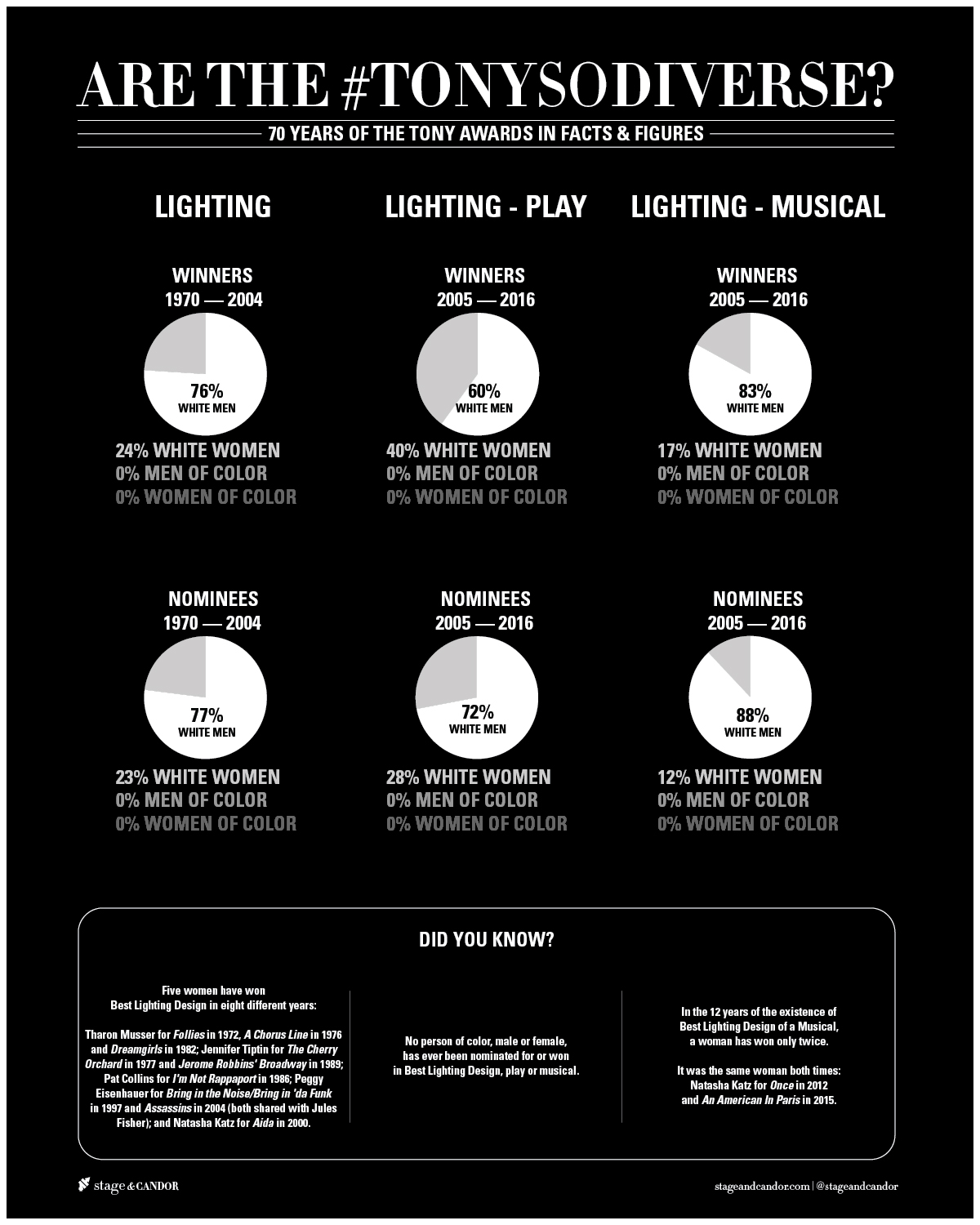
Posted on

Advocates and Links


If you want to share resources you believe benefit the performing arts community, email resources@stageandcandor.wpcomstaging.com. If you work for an organization interested in collaborating with Stage & Candor, email hello@stageandcandor.wpcomstaging.com.


Video Series

Title Author
Women in Theatre CUNY TV/ Linda Winer
Working in the Theatre American Theatre Wing


Advocacy Groups

Name Website Twitter
A Broader Way http://abroaderway.org/ @ABroaderWay
Alliance for Inclusion in the Arts http://inclusioninthearts.org/ @InclusionArts
Arts Integrity Initiative at The New School http://www.artsintegrity.org/ @ArtsIntegrity
Broadway Black http://broadwayblack.com/ @BroadwayBlack
Broadway PATP http://www.onbroadway-patp.com/ @OnBroadway_patp
Girl Be Heard http://girlbeheard.org/ @GirlBeHeard
HowlRound http://howlround.com/ @HowlRound
League of Professional Theatre Women http://theatrewomen.org/ @LPTWomen
National New Play Network http://nnpn.org/ @NewPlayNetwork
Stage Source Boston http://www.stagesource.org/ @StageSourceBos
The Dramatist Guld http://www.dramatistsguild.com/ @dramatistsguild
The Interval NY http://theintervalny.com @theintervalny
The Kilroys http://thekilroys.org/ @thekilroys13
Literary Managers and Dramaturgs of the Americas http://www.lmda.org/ @LMDAmericas
The Lilly Awards http://thelillyawards.org @TheLillyAwards
The Ziegfeld Club http://www.theziegfeldclubinc.com/ @ZiegfeldClubInc
Works By Women https://worksbywomen.wordpress.com/ N/A