Posted on

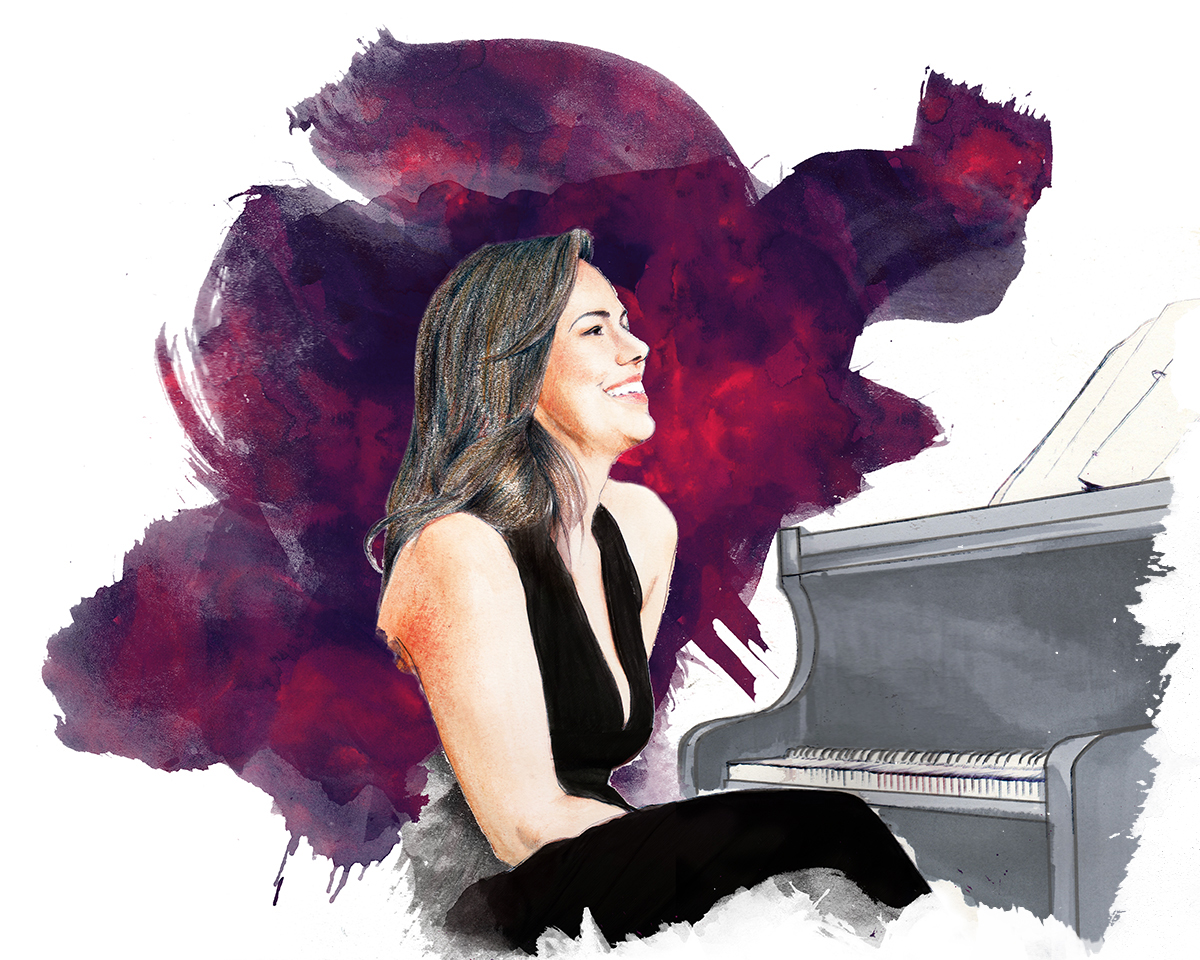
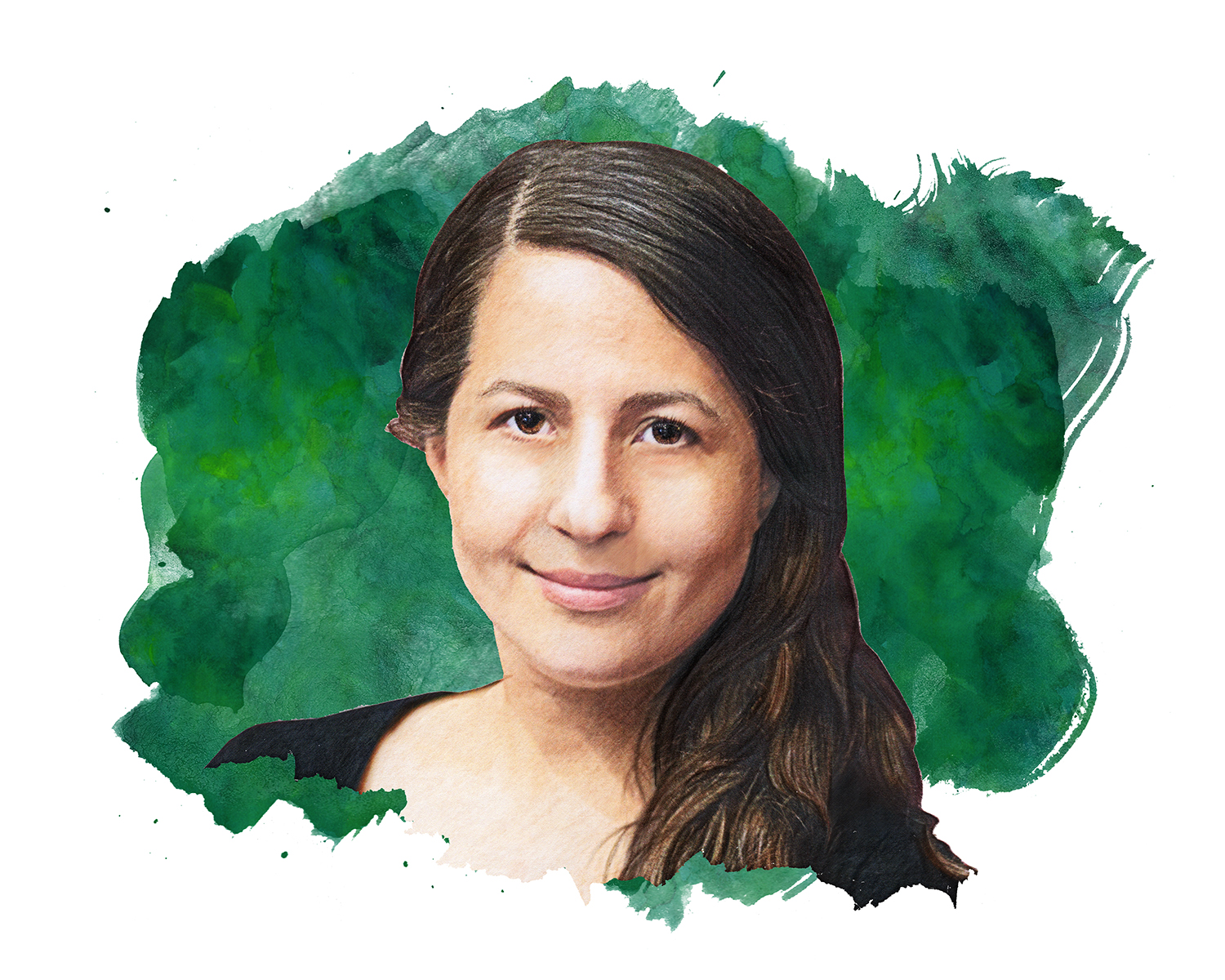
A Conversation with Andrea Prestinario and Royer Bockus of Ring of Keys

Ring of Keys


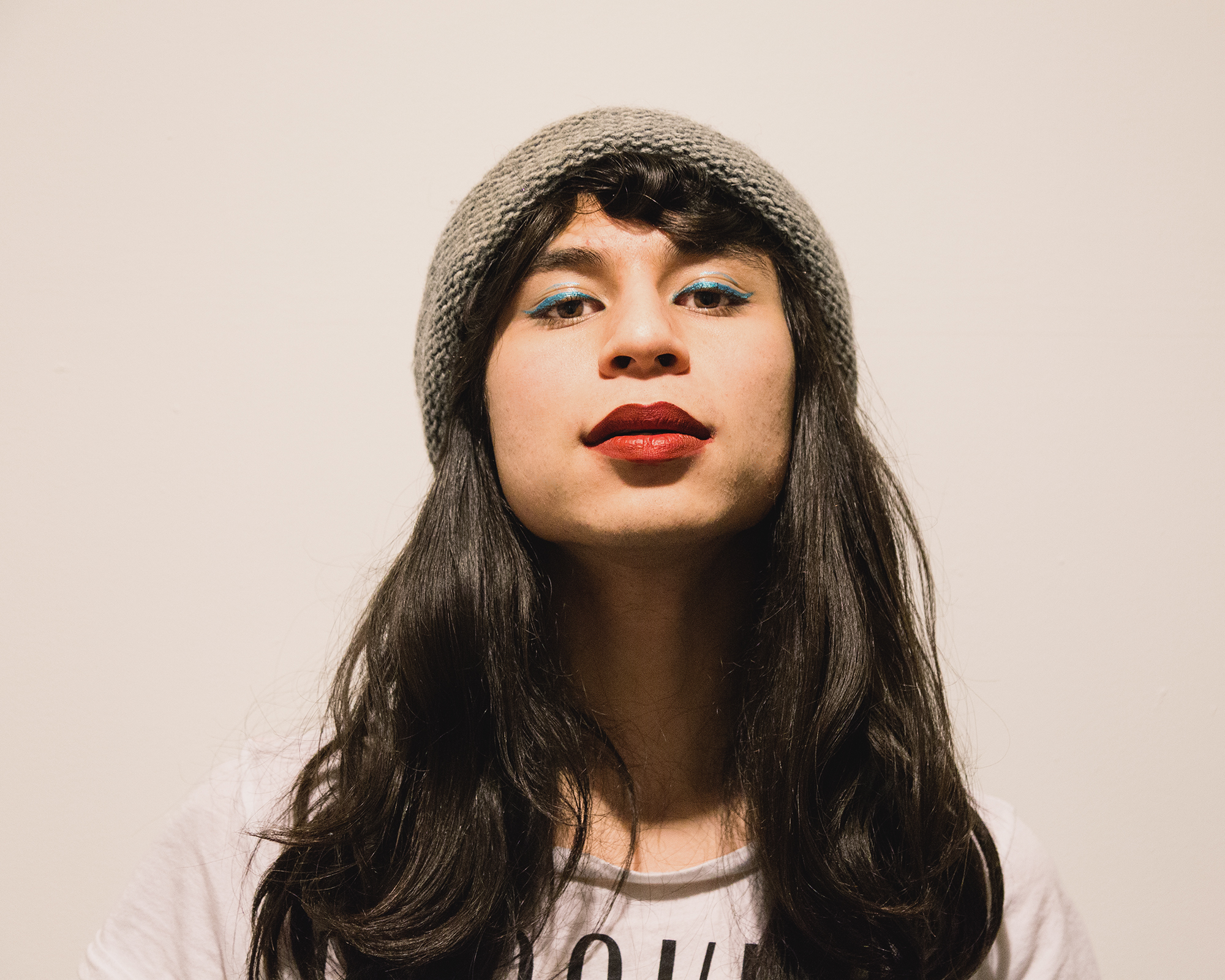
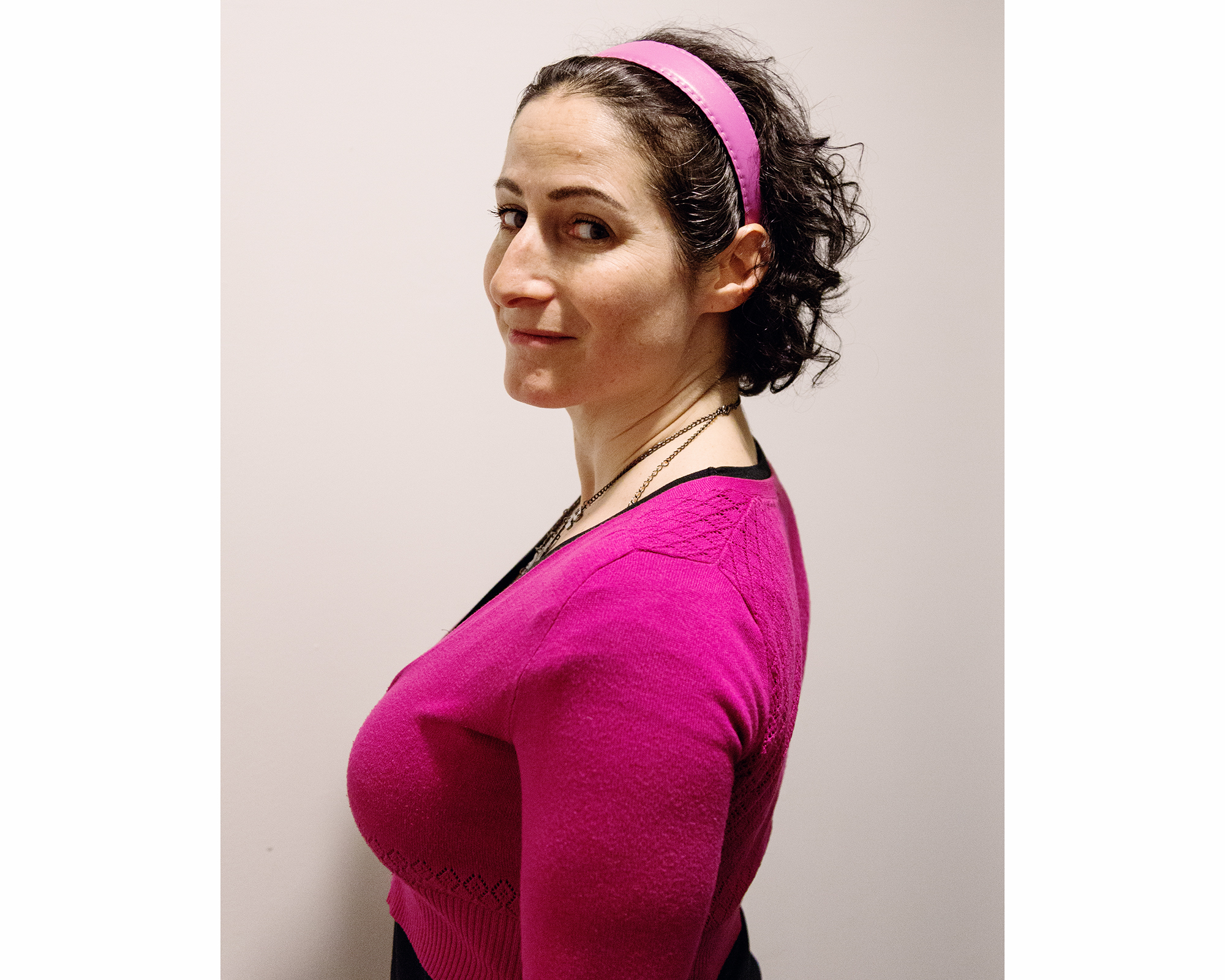
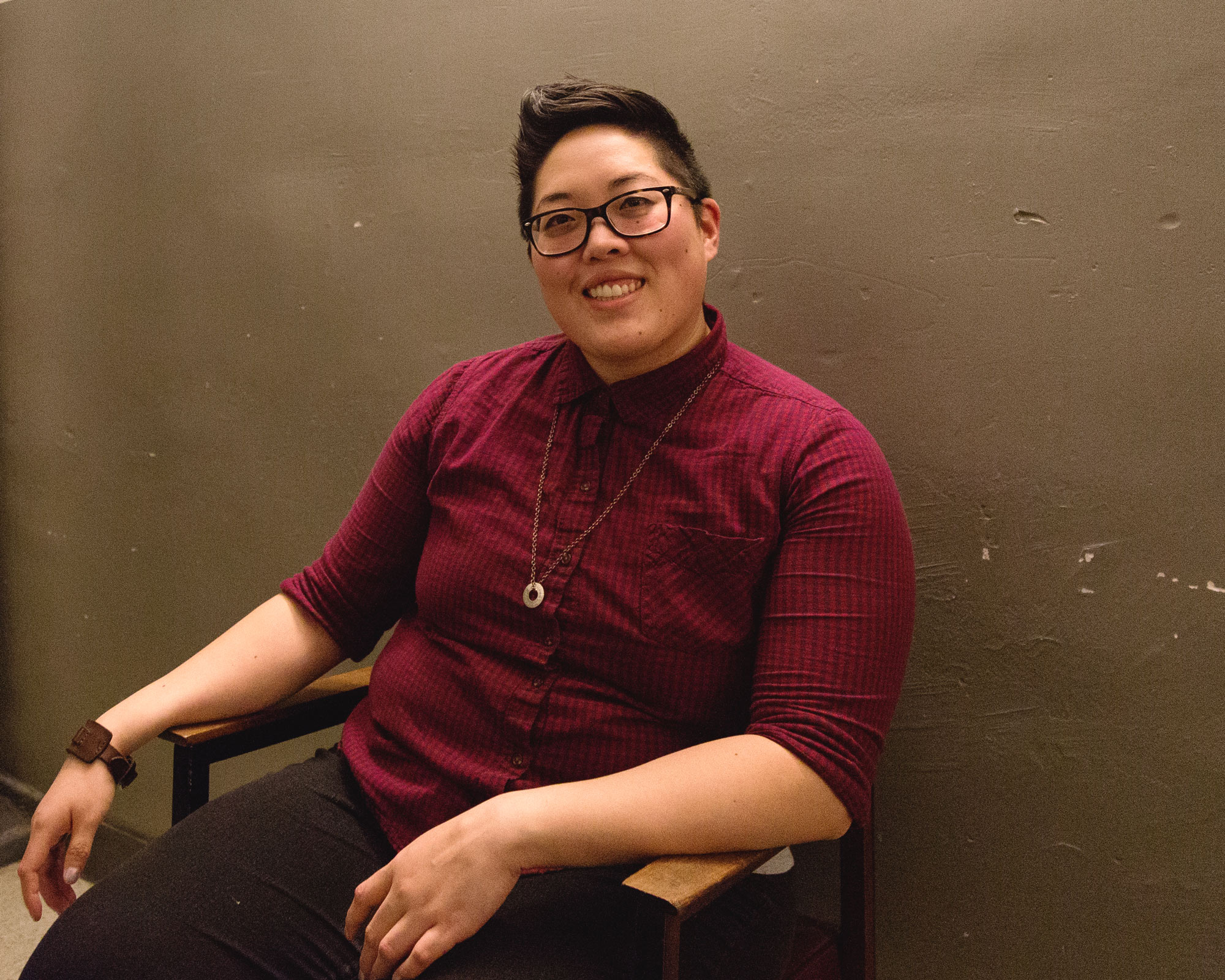
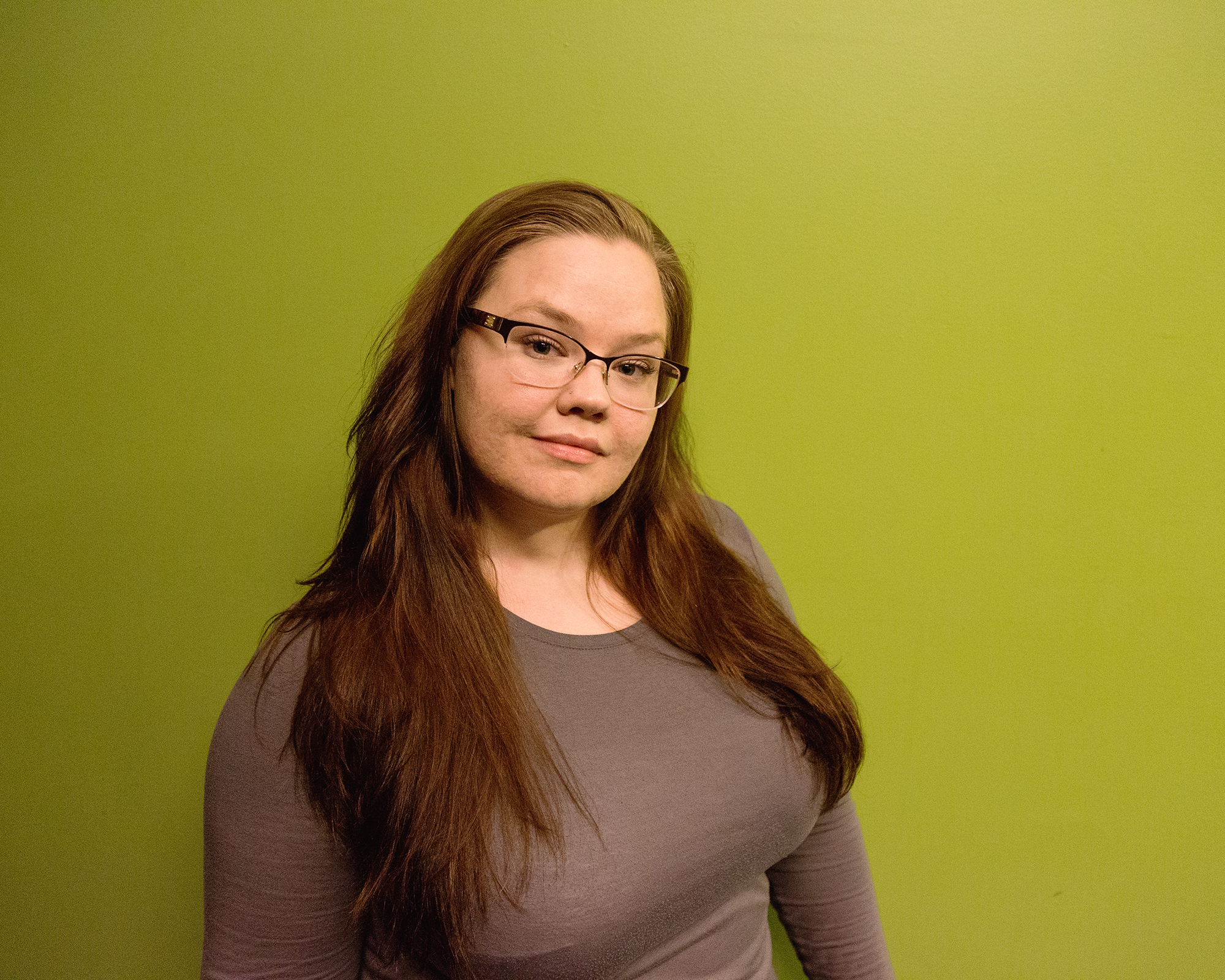
When Jeanine Tesori and Lisa Kron became the first all-female writing team to win Best Score at the Tony Awards, Tesori said: “You have to see it to be it.” Andrea Prestinario and Royer Bockus are hoping their new organization, Ring of Keys, will help queer women+, trans, and gender non-conforming artists be seen a whole lot more often both on and offstage. Ring of Keys seeks to help connect non-cisheterosexual theater professionals connect both with each other and with potential employers. At a time when so many theater companies are talking the talk about commitment to diversity, Ring of Keys is challenging the industry to move beyond lip service and start doing the work.
 
I talked to Andrea and Royer recently and they told me all about how Ring of Keys got started, where they’re going, and why Seven Brides for Seven Brothers is a problem.


Kelly Wallace: Tell me about Ring of Keys. Where did the idea come from? What motivated you to start it?
 
Royer Bockus: I think the story of how we met is basically the story of how the group got started. I was going to do a workshop of an opera that our mutual friend had written the music for. He said, “Oh, Royer, there’s another woman in the cast, she’s an actress and…she’s a lesbian.” Like, he whispered it.
 
Andrea Prestinario: I had the same experience of being whispered at with, “Andrea, I really want you to meet this girl who’s going to be in this reading with us, she’s a lesbian.”
 
Royer: And obviously Andrea has a partner, so it wasn’t about setting us up. He just really wanted us to know each other. What’s crazy is we get to the opera reading and we meet each other and we’re instantly friends and I’m like, “Did the music director tell you that I was a lesbian?” And she said yes and I said, “Oh, great! Well, I guess now we’re friends.” We realized, or at least I realized, that we don’t really know any other queer, female actresses in the community. Gay men have kajillions of people who are out and open and networking with each other and they’re very visible. We had the idea that we wanted to find all of us.
 
Andrea: We needed to find each other!
 
Royer: We needed to be organized and find a way to meet one another. It meant so much to me to meet Andrea. I just felt like I was alone, in a way, in the industry and that I was invisible.
 
Andrea: It feels like we’re the butt of gay mens’ jokes still? We’re not all one team; we’re still the joke. Even though he was kidding, there’s some implication there and we thought that we needed to join and merge and make our own club.
 
Royer: And so we did! After awhile of being just friends, we decided we were going to make our idea into a reality and that’s how we got here.
 

Ring of Keys
 

Kelly: Were there other specific moments in your career where someone made a joke or said something that made you aware of the discrimination that queer women face in this industry?
 
Andrea: I remember a moment of just being in a dressing room and coming out to the other women in my dressing room and they were like, “You can’t be gay, you’re too pretty!” I am straight-presenting and I think that’s also part of the issue in terms of having to come out again and again, obviously, but it being this idea that I felt alone in that world.
 
Royer: I think most of it for me, instead of outright discrimination, I didn’t feel represented in my industry. I remember completely losing my mind the first time I heard the soundtrack to Fun Home because I couldn’t believe that it was my story and my genre. I had never realized that those things had never met before. Also, I just didn’t know anybody else, or if I did, they weren’t out or were keeping it a secret. I felt like I had two identities, in a way: I had my work identity and my personal identity. One of the things that we hope, by creating this group, is that when we all see our collective queerness, and the industry sees our collective queerness, people will want to represent those stories onstage. The stage is one of our society’s pedestals for ideas and people, and we all know how important representation is. I know that’s what Stage & Candor is all about.
 
Andrea: I would add too that Ring of Keys is a collective for queer women, trans, and gender non-conforming artists working on and offstage in musical theater. We want to encompass everything under the umbrella of the queer spectrum that is not cis-men. When we see queerness onstage, they’re primarily cis-male narratives.
 

Kelly: Intersectionality is a big goal you’ve talked about for Ring of Keys; how do you plan to make sure transwomen and nonbinary people feel welcome, especially when there is a lot of trans-exclusive rhetoric in the cis-lesbian community?
 
Royer: I mean, I think the most important thing in that situation is to listen to their concerns and adapt to them. We can say all kinds of stuff about wanting to be inclusive and that we want to make sure you feel welcome here, but we need to listen to people. I hope that anyone would tell us if there were reasons they didn’t feel welcome.
 
Andrea: We also really look forward to having diversified leadership in the future, as our organization grows. We understand that as much as we try, there’s just a perspective that we don’t have. We are absolutely anti trans-exclusive radical feminism. We are not interested in anything that excludes trans and non-binary people.
 
Royer: We’re definitely striving to make space for marginalized voices within our own queer community, and we look forward to a leadership that isn’t just three cis women.
 
Kelly: What has the reaction been so far since you’ve launched?
 
Royer: It’s mostly been overwhelmingly positive from folks who have been seeking and needing this kind of collective. Everyone who has signed up to be a member has been looking for this and their responses in their applications have said so.
 
I had a gay friend who was concerned it would be anti-guys, and I found that to be an interesting comment because we’re making space and asking to have a seat at the table. Gay men set the table. There are all kinds of other humans that are under that queer spectrum, and those narratives aren’t being told. You want those stories onstage but you also want to see queer leadership off the stage as well.


Ring of Keys
 

Kelly: Why did you decide to go with the name “Ring of Keys”?
 
Royer: “Ring of Keys” is a song from the musical Fun Home. It refers to a moment in the character Young Allison’s life when she sees a woman in a diner who is basically like old school butch lesbian, and she has this moment where she recognizes something in herself in that person. It helps her to understand her own identity and grow into it. I think most queer people who you talk to will speak to the truth of this song. It’s so affirming to see yourself in someone else, to feel like you’re not alone in the world. That’s the goal of the organization. We want to be visible so young artists can look at us and think they can do this—they can be in musical theater. It’s really hard to see yourself in musical theater sometimes.
 
Kelly: It feels like it’s almost…not for you, on some level.
 
Royer: I used to wish when I did shows that I could put some sort of asterisk or indicator in the program that I was queer because I know how much it would’ve meant to me as a kid and see there’s somebody like me.
 
Andrea: I also have a friend who’s a very butch, gay woman in her 60s, and when I told her about Ring of Keys, she was so taken by it. She told me about how she used to see shows all the time and thought about doing musical theater. She said, “But I would go see musicals and nobody looked like me.” And so she thought it wasn’t for her. That breaks my heart. You have to see it to be it. She didn’t see her story, or anyone that looked like her, and so she went in another direction.
 
Another thing was when we did a Stage & Candor interview about two years ago, you had asked me why I thought we weren’t in musical theater, and I thought, maybe because our stories aren’t being told. It seems obvious when we think about it through that lens.


Kelly: The offstage representation is something I think a lot about. There are so few trans, NB, queer roles available, and there are mostly cisheterosexual men and women playing those roles. You wish that wasn’t true and that more people got to play “themselves.”
 
Royer: I think that any time somebody plans to profit artistically or financially from a character who is trans, nonbinary, queer, those people should get the opportunity to play that role. Those characters are never onstage, or so rarely onstage, and now that they are starting to be, the idea that we would cast somebody else in those roles, to me, is unfortunate and wrong.
 

Ring of Keys
 

Kelly: One thing I do want to talk about is the discourse around shows like Carousel, My Fair Lady, and Kiss Me Kate, which are all returning to Broadway. Are they sexist? Is it a good idea to produce these shows right now? What’s the line? A lot of older shows don’t align with our goals of representation and equality now.
 
Royer: I don’t see the value anymore in putting museum pieces onstage. If I’m going to see an older piece of our canon, I need to see it through an intersectional feminist lens. I thought Sweet Charity at the Signature did that well. I left that production thinking there is a future for musical theater and there is a future that doesn’t just completely throw away our canon. You can perform old pieces of theater through a lens that demonstrates either how far we’ve come or how far we haven’t come, but I’m not a fan of putting up “purist” revivals that don’t really say anything about the gender politics or racial politics within them. It’ll depend on what these productions do with themselves. If they put women at the forefront of the stories, if they are produced in a way that highlights that, and doesn’t make things sugary and sweet for old school audiences, put that onstage. If it’s behind a piece of museum glass, I’m not interested anymore, personally.
 
Andrea: I had a conversation with a casting director in a casting director session and we were talking about the musical Seven Brides for Seven Brothers. They’re doing it in their season because their audiences demand it. I think we need put more impetus on the chokehold theaters say they’re in with their audiences. Are you sure they “demand” it? I think we’re not exposing them enough to know that. They’re smarter than that. They just can’t know what they don’t know. His comment was about how he would have a hard time with that show “in this day and age,” it’s an example of raising consciousness. He finally looked at a musical and saw women abducted and taken against their consent and saw that was not okay.
 
Kelly: It’s honestly a terrible show.
 
Royer: And if you still want to do it, you need to navigate that. Our current consciousness is not going to be okay with that. And it’s so great that we are having these conversations and saying like, yeah, this is troubling. I just want to see that continue and for all of us to constantly have this lens. I don’t want it to be that you can’t do it because of the #MeToo movement right now and you’re going to do it next summer. It’s not okay. It’s just not okay.
 
Kelly: I think that’s a valid fear that a lot of women have, that this moment is temporary and things will regress to what they were before.
 
Andrea: There’s a fear that it’s just a trend, but we’re pushing the needle. We can never go back.
 
Kelly: I think my concern with something like Carousel, the creative team is pretty much all cis white men.
 
Royer: You can put my groaning in the interview if you want. [laughter]
 
Kelly: It’s just so hard to trust the idea of these shows when the same people are in charge who have always been in charge.
 
Royer: That Sweet Charity I described was directed by Leigh Silverman, who is a queer woman. I didn’t know that when I saw it and was experiencing it, and afterwards I thought, of course. Queer women were at the table; queer women were running the ship.
 
Andrea: Consider the fact that so much of the Golden Age was written by men. Why are most women written in that time period just virgins or mothers? The female perspective and experience wasn’t there.
 
Kelly: And all of this goes back to what you’re doing with Ring of Keys.
 
Andrea: It’s the intersection of queerness and musical theater and not being a white cis man.
 
Kelly: What else do you see in the future for the organization?
 
Andrea: I think the future is unknown, in terms of what potential Ring of Keys has. We’re twofold in our mission. One is to build a community and two is for it to be a hiring resource.
 
Kelly: It’s great that beyond just having this online network, you’re also committed to having in-person events and bringing people together that way. What kind of things will you guys be doing?

Royer: Well, we started with just gathering, which I think is really important. We got to know each other and learn what we’re doing as artists and activists in our own communities. I think of Ring of Keys as a community center. I think it would be great in the future to have readings of people’s work, to go see theater together, to organize politically and artistically. Ring of Keys is the building in which to do that, both online and in-person.
 
We’re looking to produce events too that showcase our members in concert, in cabarets, and in workshops.
 
Kelly: How would you explain to someone why Ring of Keys is important if we want to make change?
 
Andrea: To me, it’s like, just think of how much it would mean to other people for you to be public about your identity in this industry.
 
Royer: This is our diversity; it’s an asset we bring to the theater world. It’s exciting to make room at the table for these stories and drive opportunities for these artists. I think that this is an opportunity to, as we put it, kick-ball-change open the closet door and reveal a vibrant, new musical theater landscape.


Ring of Keys
 
If you are a queer women+, trans, or gender non-conforming artist and would like to apply to be a key, you can find more information at www.ringofkeys.org.

Posted on

Giving Voice to the Body: The Cast of ReconFIGUREd

ReconFIGUREd


Honest Accomplice Theatre tells stories that are rarely brought to light: those that are silenced, pushed aside, or deemed too “fringe” for mainstream theater. Working with an ensemble of artists, the company works to bring these topics into the light; to create dialogue about the things we don’t see onstage when it comes to the lives of female-identified and trans people.
 

ReconFIGUREd, the company’s latest piece, is a heart-warming devised work about the experience of living in our bodies, and how it feels to inhabit the female and trans identity. We spoke with members of the cast about their process, their characters, and why theater matters.


ReconFIGUREd
 

Helen Schultz: How did you get involved with HAT/ReconFIGUREd?
 

Seth Day (He/Him/His): It’s actually a funny story! Although I had some theater experience growing up, I’m not an actor by trade. I wasn’t actively searching for acting gigs, but I’m a member of this Facebook group that is a forum to share queer-friendly employment opportunities, and I saw the casting call for ReconFIGUREd and thought, “Why not!?” To be honest, I almost chickened out of the audition, but the project seemed so important to me. The subject matter of the show is what really piqued my interest. It was the first time I had seen a casting call that was genuinely interested in the trans experience.
 

HS: Tell me about your character and creative/design role.
 

SD: I’m one of the two actors playing Luke, a trans guy in the first year of his transition, who struggles with feeling the need to perform toxic masculinity in order to be seen as male. He also has some family drama going on and has to balance that with dealing with his masculinity issues. It’s very exciting for me as a transperson to get to play a trans character, and to put a story on stage that feels more authentic than other trans representations in the media.
 

I’m also the prop designer, which was a first for me and a fun challenge! I really tried to give attention to detail to each and every prop in a way that each prop adds something to the story.
 

HS: Why do you think theater is such a powerful medium for telling this kind of story and to help change people’s minds and erase some of the stigmas associated with current identity/body politics?
 

SD: Generally when people see theater it’s for enjoyment, so I think when we go see a show, we let our guard down. If I were to walk up to someone and try to engage in a conversation about the body or gender or any sensitive topic, I think they’d probably be a little guarded. But when we let our guard down and are open, theater can really change us.
 

HS: Tell me about one of the scenes in the play.
 

SD: There is a power ballad sung from the last remaining estrogen in a menopausal body. What more do you need?
 

HS: Tell me about a moment in the development process that surprised or stuck out to you.
 

SD: At the beginning of each devising session, we would go around and introduce our name and pronouns (as these are things that can change!). And one session, one of the ensemble members asked us to use a pronoun I had never even heard of before, which was a really humbling moment for me. Sometimes I think just because I’m trans, I know all there is to know about gender, but that was a great reminder that we all have room to grow and learn!
 

HS: What is one thing you hope people take away from this piece?
 

SD: I suppose I don’t really care what people take away from the show as long as they’re still thinking after it’s over. My hope is that the show starts a conversation!
 

HS: What makes this show unique?
 

SD: I think one of the most unique aspects of this show is its honesty. That and the fact that about a third of the cast is trans! Which is just amazing.


ReconFIGUREd
 

Helen Schultz: How did you get involved with ReconFIGUREd?
 

Jo’Lisa Jones (She/Her/Hers): I saw a posting to audition for the devising portion, not realizing that a friend of mine had actually worked for HAT previously and gave them glowing reviews, so I knew I should go for it! The reason I first wanted to get involved was because I feel like seldom do women and trans folk have an opportunity to truly discuss and express what our bodies go through. I also wanted to share and relate my experiences with other people so that others feel comfortable to speak up and so that I could find some camaraderie.
 

HS: Tell me about your character.
 

JJ: My character’s name is Fiona, and she works in a women’s health clinic that also performs abortions. Despite having fertility issues, she gets pregnant, only to suffer a miscarriage. This character is loosely related to a short movement piece that I created about having an invisible illness, as I have PCOS [Polycystic Ovary Syndrome] and can potentially have fertility issues, so this character is very near and dear to my heart.
 

HS: Why do you think theater is such a powerful medium for telling this kind of story? How does it help change people’s minds and erase some of the stigmas associated with current identity/body politics?
 

JJ: I think it’s a fun way to be educated. You are moved by the characters and gain new perspectives on what others may be going through. People want to have fun, and I think ReconFIGUREd is a really fun show that has a beautifully crafted undercurrent of truth telling and insight – and other times we just let it all hang out because that’s appropriate too!
 

HS: Tell me about a moment in the development process that surprised or stuck out to you.
 

JJ: I think the strongest moment in the development process that stuck out was the day we were embodying mental illness and addictions. It was truly enlightening to me. I have been very fortunate to not suffer from either and, although I may logically understand both, I don’t always physically or emotionally understand what’s happening. It finally clicked that day because, rather than having a verbal scene, I got to see how it wears on the body, and that really struck a cord with me.


ReconFIGUREd
 

Helen Schultz: How did you get involved with HAT/ReconFIGUREd?
 

Jordan Ho (Xe/Xem/Xyr or She/Her/Hers): I started working with HAT in 2015 for the Tank run of The Birds and the Bees: Unabridged and I have been with them ever since. I stayed because this company is like home to me.
 

HS: Tell me about your character.
 

JH: I devised the role of Melanie in the show with castmate Holly Samson. There are many facets to Melanie: having a trans brother and a mother who works in an abortion clinic, on top of figuring out her race, ethnic identity, and coping with mental illness. It’s been a joy getting to create Melanie, and I hope anyone else who is suffering can find comfort in her arc.
 

HS: Why do you think theater is such a powerful medium for telling this kind of story? How does it help change people’s minds and erase some of the stigmas associated with current identity/body politics?
 

JH: When talking about the body academically, it’s easy to desensitize ourselves from actually addressing the issues. Not to say that literature and news articles are telling lies, but written word automatically makes these concepts abstract and not attached to our physical forms. And even if these concepts do manifest inside our bones, the natural next step is to act, which is why we do theater. I think there will be something powerful about seeing actual bodies tell the stories about how we carry and take care of our vessels.
 

HS: Tell me about one of the scenes in the play.
 

JH: There happens to be a musical number called “Gemme Femmes” that is horrifyingly entertaining. I grew up watching shows like Sailor Moon, The Winx Club, and Mew Mew Power, so I have a strong affinity to girl-power television. That being said, it is so, so interesting looking back and seeing just the opening intros and seeing these shallow molds of femininity veiled under the guise of being a cute television show for kids.
 

HS: Tell me about a moment in the development process that surprised or stuck out to you.
 

JH: Honestly, I was most surprised when we learned our character tracks and who was paired with whom. I’m a trans gender fluid actrex, so I just assumed that I would be assigned a trans character. But when I heard that I would be working with Holly to devise the role of a cisgender woman, I was really struck for a moment. And then I had a creative epiphany: because if Hollywood is so dead set on allowing cis people to play trans characters, then why can’t a trans person play a cis character? I will never forget this moment because it gave me such clarity that trans artists are capable of anything. Creating this role has helped me reclaim my femininity, and I’m so glad that Maggie, Rachel, and Holly have trusted me in this creation process.


ReconFIGUREd
 

Helen Schultz: How did you get involved with HAT/ReconFIGUREd?
 

Simona Berman (She/Her/Hers): I came on board this year for ReconFIGUREd and am outrageously happy to now be in the company.
 

HS: Why do you think theater is such a powerful medium for telling this kind of story? How does it help change people’s minds and erase some of the stigmas associated with current identity/body politics?
 

​”​And i said to my body. softly. ‘I want to be your friend.’ it took a long breath. and replied ‘i have been waiting my whole life for this.'”​

When I first read this quote by Nayyirah Waheed, I literally took a deep breath as I was reading, unconsciously wrapped my arms around my body, and started to cry. Or at least dry heave a bit, because I stopped myself from crying long ago when I was bullied growing up and didn’t want to give the bullies anymore fodder for their fire. Much of that bullying was a catalyst in my long continuous battle with my body. Along with a few eating disorders, I also struggle with body dysmorphia: where I look in the mirror and see my arm and where the large muscle from doing gymnastics meets my large breast it triggers my brain to see my body as one big armbreast – much bigger than it actually is.
 

That quote by Nayyirah took me out of my head and separated me from my body and gave my body its own persona, arousing empathy in me for my body. As a self-hating Empath, it is easier for me to be moved to action by others, not so much for myself. I suddenly saw my body as a scared little girl, who opened her arms wide and said, “Please love me, I beg of you!” The quote made me want to take care of that little girl that is my body. This was easier for me to process as opposed to trying to just love me for me.
 

That’s what theater does for certain issues, such as the ones we tackle in ReconFIGUREd. Theater takes an issue and initiates awareness for someone to be able to see outside of themselves. For an audience, if they connect deeply to the story as if it was theirs personally, theater allows for aesthetic distance where the story becomes a safe friend that might help someone feel less alone or less awkward. It also opens up whole new worlds for people who can’t relate at all to the story personally, but being able to see, hear, feel the story played out can now evoke empathy for the characters. Or at least a better understanding, as opposed to just hearing about it or reading about it in a random story.


ReconFIGUREd
 

Helen Schultz: How did you get involved with HAT/ReconFIGUREd?
 

Holly Sansom (She/Her/Hers): I started working with Maggie and Rachel before the Honest Accomplice Theatre company was created, back in 2012. I was an original ensemble member and deviser for the show The Birds and the Bees: Unabridged. When HAT was formed in 2014, I came on as the General Manager as well.
 

HS: Tell me about your character.
 

Holly: I share the role of Melanie with Mx. Jordan Ho. Melanie is a cis woman thinking about her identity as a biracial person in America. She is also dealing with mental illness and how these aspects of her body affect her relationship with the world and the people in her life.


ReconFIGUREd
 

Helen Schultz: How and when did you get involved with HAT/ReconFIGUREd?
 

Jesse Geguzis (Squee/Squer/Squem): I had auditioned for the previous project and then I was asked to be a part of this project about a year ago.
 

HS: Tell me about your character.
 

JG: Luke is a young trans guy in college and struggling to be comfortable in his new body with old friends and family of origin.
 

HS: Why do you think theater is such a powerful medium for telling this kind of story? How does it help change people’s minds and erase some of the stigmas associated with current identity/body politics?
 

JG: I think theater can change the world. Everyone involved in this project is throwing their energy at creating change. I think visual mediums are the strongest vehicle to get into folks’ heads and leave them starting to change their thinking. It plants a seed. This company is gardening a new world by telling new non-heteronormative narratives.
 

HS: Tell me about one of the scenes in the play.
 

JG: My favorite scene is with my character, Luke, and his sister Melanie, fighting and trying to find common ground around identity struggles. The whole scene takes place with both characters wearing the same giant shirt, as a punishment for fighting by their mother.
 

HS: What is one thing you hope people take away from this piece?
 

JG: I hope people leave thinking about how to open up their minds more and more every day.
 

HS: What makes this show unique?
 

JG: It’s a company of only female and trans-identified folks.


reconFIGUREd
 

Helen Schultz: How and when did you get involved with HAT/ ReconFIGUREd?
 

Kat Swanson (She/Her/Hers): I was lucky enough to be involved with HAT early through some of the first Birds and the Bees workshops, which I heard about through Rachel while working with her on another project. I remember being so struck by the questions being asked and by the process. I tried to be involved in whatever way I could from there. I helped out a bit with general support on one of the Birds and the Bees productions, and finally had the chance to be involved from the beginning of this project.
 
 
HS: Tell me about your character.
 

KS: My character is a struggling single mother named Donna. She has an eight-year-old daughter named Ari – short for Ariel – who she’s supporting on her own (the father has been out of the picture for some time now), which creates a lot of financial hardships. She also grapples with lack of self-love, binge eating disorder (BED), and back pain, partially caused by having larger breasts. Donna suffers from the classic single-parent time versus money dilemma: how can she be a good mother to Ari when all she has time to focus on is the next step, the next place to be, the next bill to pay? She’s in survival mode and is realizing the negative impact on her growing daughter.
 

HS: Why do you think theater is such a powerful medium for telling this kind of story and to help change people’s minds and erase some of the stigmas associated with current identity/body politics?
 

KS: I really think that seeing is believing and feeling is understanding. People who aren’t trans or women or disabled and so on don’t really know what gaps exist in their understanding. When you don’t live it, you just don’t know. You can read an article or catch on to all the political and social media buzzwords and think you know something, but you just don’t. People are often afraid to admit, even to themselves, that they don’t understand.
 

Theater is such a unique art form in how it is able to combine all the other art forms to create a true, visceral experience. It is able to make the audience see and feel and have at least the opportunity to start to know. By attending and really opening yourself up to a play that portrays an experience that is not your own, you get a chance to empathize with other people. That empathy, especially when it occurs on a large scale, is – I think – what really has the power to make a difference in people and society as a whole.
 
 
HS: Tell me about one of the scenes in the play.
 

KS: Ooph – tough question! There are so many excellent ones. My favorite scene is one that portrays caretaking for a character whose mobility has been severely impacted by her battle with cancer. It’s really loaded – the daughter is getting ready herself and is helping her mother get ready for the day at the same time. The scene is great because the dialogue is very normal but also tells so much in so little. I think it’s something a lot of families can relate to, [regardless of the] situation they’re in. It hit a chord with me because my mom has been wheelchair-bound her entire life, but growing up, I realized that no one really understood what that meant for her day-to-day life. They had this general, blind pity and were usually kind – all good things – but they had no idea what it took for her just to get out of bed, to use the bathroom, things that able-bodied folk, myself included, often take for granted. I cried when I saw it because it just hit home so hard. I hope it makes able-bodied folks happy to be in their bodies to some degree, and also helps people who are in a similar position as this character for whatever reason feel more understood and represented onstage.
 

HS: Tell me about a moment in the development process that surprised you or stuck out to you.
 

KS: I didn’t realize how tough the development process could be. For a while, I thought I was the only one who was in rehearsal feeling as though I didn’t belong there, like I didn’t have anything to contribute. To Maggie and Rachel’s credit, things kept moving forward because they heard these concerns from several folks in the room and implemented things like a “question box”. [The idea of the box is] to try and help the cast understand each other better, and also understand what they each brought to the room – all while taking the “educator” responsibility on themselves. [Because of that], folks who are often put into that position involuntarily in their day-to-day lives didn’t have to take that role on here. It became such a safe space to discuss really challenging issues with lots of differing viewpoints. While it was tough, the end result and the value of realizing that kind of space is possible was immeasurable to me.
 

As for a specific moment… picking one, I guess I was really surprised to realize that a lot of people don’t view their periods as a negative thing. For some it’s culturally celebrated, for others it’s empowering and magical – it opened my mind because for me, my period had just always been a monthly “Congrats, you’re not pregnant!” notification and a frustrating, painful, messy pain-in-the-ass. It’s hard to explain, but it was a really memorable rehearsal.
 

HS: What is one thing you hope people take away from this piece?
 

KS: I hope people take away a new appreciation for the complexity of a person’s agency over their body, as well as the wide variety of experiences that are different from their own. I hope they see and appreciate something new, and I hope they ask questions and start talking about things they’ve been silent about before.
 

HS: What makes this show unique?
 

KS: It’s people and it’s honesty.


***


ReconFIGUREd is playing at The Tank on January 6 to January 15, 2017. Tickets can be purchased at http://thetanknyc.org. For $10 tickets, use code HATBODY.

Posted on

A Conversation with Tom Phelan

Tom Phelan


A year ago, Taylor Mac’s Hir became the buzziest show off-Broadway: extensions, sold-out runs at Playwrights Horizons, and Critics’ Picks from virtually every publication in New York. At the center of it all: a TV actor who had made history playing a transgender teen on ABC Family’s The Fosters. Tom Phelan would again make history by playing the genderqueer Max – a young person whose preferred pronoun, “hir,” inspired the title of the new American classic.
 

A year later, Tom is no longer onstage at the Peter Jay Sharp. These days, he’s a college student by day, working actor by night. And, of course, a rabid fan of theater. We sat down to talk with him about the historical resonance of Hir, the power of unlikable marginalized characters, and his hopes for the future of a more empathetic theater.


Helen Schultz: How did you discover the role in Hir?
 

Tom Phelan: I got an email from the team and a message on Twitter. It was the most gobbledigook, millennial casting process ever. They asked me to put myself on tape, so I did my audition in my high school auditorium, and had my high school drama teacher be my reader. I practiced for days with my dad going back and forth, doing it over and over. I happened to be in New York because I was auditioning for Juilliard, and they were like hey – can you come in and do it with us? I went into the room and it was Taylor [Mac], Niegel [Smith], and Bailey [Koch] and one other casting person. I freak out and I do it and I don’t remember a second of it and I leave. I’m shaking and I call my mom and I’m going to Chipotle because I haven’t eaten, and then they call me back and they say, hey, can you come back? We need you for one more thing! Niegel had been giving me these notes, and I was kinda getting it but I wasn’t quite there, and I walked out feeling a little weird about it, and they called me back, and I finally got it, and I walked out and it was just the craziest thing that’s ever happened. Off-Broadway was the dream of all dreams and I don’t know…I just love theater so much, and for it to be Playwrights Horizons, and for it to be Hir, a play that I literally read in American Theatre Magazine and was like, oh! I’ll see that when that comes out! It was the craziest thing.
 

HS: Did they give you sides to read from?
 

TP: It was about four pages of sides, and they didn’t change at all from audition to the show.
 

HS: What was it like to go into a play that you loved so much, and so wanted to be a part of? And being DM’d on Twitter about being in a show you’d dreamed of being in?
 

TP: It was crazy. It was the first time I’d done a project that I cared so, so, so deeply about, which radically changed the experience. It made it so much more difficult to work on, honestly, because I cared so much about how it turned out, and I knew that I could sink the play. It’s a pretty evenly-balanced play in terms of how much every character gets to play and be, and I really wanted to do justice to Taylor’s play. The pressure was on.
 

HS: And you got to work with so many incredible actors.
 

TP: You should’ve seen me when I found out Kristine Nielsen was going to be my mom. I hit the floor. I dropped. Just the talent and the level of expertise – I was so daunted and so terrified and felt so horrible after so many rehearsals…but I learned so much. I can’t imagine ever touching an experience like that.
 

HS: Did you see something on Backstage at all? I know that Hir lead to a real rethinking of their casting calls, and the binary in so many casting notices.
 

TP: No. And I wasn’t even looking at the time – I was in high school, taking Calc AP and freaking out. They reached out to me.
 

Tom Phelan
 

HS: Had you wrapped The Fosters by then?
 

TP: I had, I think so. The last thing I shot was on my high school graduation day. I couldn’t make it – “I’m sorry, I’m working!” They were like we might bring you back, and they’re always sort of “maybe.”
 

HS: That’s amazing to have both of those experiences at the same time – filming a TV show and living your life in high school. Were you doing school plays and amateur stuff as well?
 

TP: Oh yes. Oh god… what’s the worst thing I did in high school? [Laughs] I was in a production of In The Heights – #InTheWhites – as my high school was predominantly white. That was very shameful and it was horrible. It was horrible. I was in School for Scandal; I was in Sweeney Todd as Beggar Woman as a freshman. I did this play by Richard Greenberg, this short play, that originally starred David Hyde Pierce, Patricia Clarkson, and Philip Seymour Hoffman, and I was Philip Seymour Hoffman. And that really solidified “this is my type, this is how I’m typecast, as a Philip Seymour Hoffman.” It was about a troll, and I played a troll, and I was like, this is it! This is who I am! Finally! [Laughs]
 

HS: Was it a magnet school?
 

TP: I went to an off-set of Cal Tech, which was an offset of the university, but they just happened to have a really great theater program.
 

HS: They were cool with you doing stuff outside of school?
 

TP: Yes!
 

HS: And now you’re in college and living that life! Do you think you’re going to work during your studies, or take some time off?
 

TP: I’m really going to try to! I have a reading tomorrow actually, whcih is awesome. Other than that, I’m going out on calls and, you know, the grind.
 

HS: Do you ever find it hard to balance all that?
 

TP: Telling my professors that I was going to miss my first day of classes because of a reading was not a fun task.
 

HS: I’m sure that they knew that going in, having accepted you as a student and as an actor. What work inspires you, and what are you most looking forward to this season?
 

TP: I have a list on my phone! I bought a subscription to the Signature, because their season is unbelievably exciting. All the Suzan-Lori Parks, the new Annie Baker, Will Eno, new BJJ, it’s going to be amazing. Obviously I’m excited for Taylor’s play – tickets are a lot. But I’m going to see if I can get my dad to go see it and ride his coattails and hook on.
 

HS: And the new Sondheim!
 

TP: Yes!
 

Tom Phelan
 

HS: Something that we really believe in at Stage & Candor is that theater is all about empathy. Hir feels that way too. They’re not the sort of characters you’d meet, point-blank – they’re so isolated. The entire play takes place in their home, this sort of world of their own creation. They don’t really leave their house. Could you talk about the process of that show, and a moment of empathy you’ve had as an audience member or an artist?
 

TP: I feel like I so often enter a room with hostility, and entering a rehearsal room, that’s not something you can do. The play really taught me a lot about that and not assuming anything about anyone. I think that identify politics is a little bit deaf, and I think… I think approaching people as human beings is the first thing you should do.
 

The play itself, everything I think about it, it just breaks me. It’s really, really brutal. Everyday it would shift and I would feel more for a different character. I would get so angry at the audience – the audience a lot of times would come out really hating Paige. I remember feeling so much anger about that, and being so furious that they refused to consider it from her angle. We had a lot of audience talkbacks that were horrible in that way.
 

HS: What do you think that’s a product of? Misogyny?
 

TP: Absolutely misogyny. A misplaced…I think people assume that because there’s a Capital T Trans Character that they are infallible and that they are, I don’t know, the “good ones.” It’s good representation, whatever that means, to have a perfect model of a trans character. I think a lot of times the audience would be l really feeling for Max when they should be feeling for everyone in the play. I just love the play so much, I love it so much.
 

HS: So much of that play is about misogyny – not just gender, but the idea of dismantling patriarchy from a very female perspective. The mother really is the one driving the action.
 

TP: Dream. That’s crazy. I read this interview with her where Young Jean Lee was like, I wanted to write a play. I went to my students and I asked them all, what do you think? How can a straight white man be a good person? She asked them all and then she wrote a play about that person, who would listen and didn’t speak over people and did all these things their students said they wanted. [Editor’s note: Straight White Men.] He was a loser and no one liked him. And I think that’s so fascinating, that the idea of the person we believe these dominant people should be is not actually what we want them to be.
 

HS: There’s definitely a parallel between that character and the dad in Hir. It’s sort of this immobilized person.
 

TP: You think you want that but ultimately that’s not what you want, and also incredibly dehumanizing and horrible. People are people, people aren’t monoliths. They’re not representative of their group.
 

HS: Your character really has the button at the end of the play – hir goes and forgives everyone and offers a way forward, this new cycle.
 

TP: It was a lot. It was a lot. I don’t know. Theater’s the best. Getting to do that play for so long and become a family with those people was transcendent. Like, just amazing.
 

HS: And it really started so many conversations about casting. What really sort of baffles me is that there’s so few plays about the LGBT experience, especially the “T,” and TV is blowing up with stories about queer people. It was really interesting for me to go on Instagram and go through and see these kids who are like 11 and are like, correcting each other and saying, No, you should ask somebody’s preferred pronouns and not assume, because of The Fosters.
 

TP: It’s really crazy, it’s really cool. TV is the new frontier and, I dunno, you just hope that it allows…I think there’s a lot more room for nuance in theater. Not to generalize, but I think theater oftentimes is just smarter and more thought-through. Just for the fact that these opportunities are opening up for all these actors is fantastic. It’s really great, the fact that people are finally being paid to do this. That’s a step forward.
 

Tom Phelan
 

HS: And you were involved on the new series, Doubt.
 

TP: Yeah, my parents created Doubt and I worked as a PA over the summer. I got lunches and printed out scripts and collated. It was the best job I’ve ever had. I love and trust my parents and I think it’s going to be a really good show.
 

HS: I’m so excited to see that Laverne Cox is just everywhere.
 

TP: Thank god!
 

HS: I was so upset that she wasn’t on the last season. Don’t keep her locked up, she’s the best part of the show.
 

TP: Honestly. She’s deserves all the opportunities in the world. Seeing her face on a bus is going to be mind-boggling.
 

HS: Was it at all strange to see yourself with ABC Family and The Fosters blowing up? You received a ton of press for you and your character, Cole.
 

TP: It was really weird. But it was really cool and I’m so lucky that I got to do that. I’m so glad that weird, awful, in-between part of my teen years is so well-documented. It’s amazing to see me in between figuring things out. It’s embarrassing but great. Nobody wants to be documented that well at 16.
 

HS: Your character now has so much weight too. It’s really very interesting to see how much backstory and importance is packed into a small character.
 

TP: They devoted a lot of time to Cole, which was really cool. I’m just so lucky that I got to be…I think there was, the pre-requisite capital T trans storyline, but after that I got to have a love interest, and be funny, and have fun, and have friends, and go to the beach. That’s the sort of story I think is the most important. Just normal people, doing people things.
 

Tom Phelan
 

HS: Where do you think it goes next? How do we start to create trans characters that just…are, you know?
 

TP: That’s something I think that Doubt is doing pretty well. Literally in the pilot there’s one or two lines about her being trans and it’s just a huge deal. I think a lot of that stems from having a trans writer on staff whose name is Imogen Binnie – she wrote a novel called Nevada that is mind-blowing. She’s the greatest. Obviously, having trans storylines about being trans is important because that’s just a fundamental part of our lives but having that be the smallest piece of the pie in storylines about losing your lottery receipt and taking your dog to doggy day care…I think that’s great.
 

HS: I thought it was interesting, what you said about likable characters. Because now, Shakina [Nayfack] is on Difficult People and she’s just an awful character.
 

TP: Oh my god, those scenes…I look forward to them so much. The scenes with Cole Escola and Shakina and Derrick Baskin, who is amazing…But I think it is really interesting in that being unlikable is something we’ve talked about with women, but not necessarily with POC or trans people and all these other groups that when they’re put into a story, have to be representative and perfect.
 

It’s so uninteresting. It’s so, so, so, so boring and un-nuanced. I mean, take it if it pays well but it’s not a story that I want to tell. And it’s not a story for people like me. It’s for other people; it’s for a different audience. And I think considering who you’re aiming your media for is really important.
 

Michelle Tse: Do you think that contributes to education of the general public?
 

TP: I think it does. I think people try their best and they mean well and they want to spread the word and get these issues out there, but it’s so often second hand information through a friend of a friend or through a fact page on Wikipedia. I don’t know. It’s just boring.
 

HS: And at the same time, I feel like there’s been…something that Black Lives Matter talks about a lot is that you need to educate yourself. It’s not the job of marginalized folks to do that for you. Do you feel similarly?
 

TP: There is just a huge pressure to be vulnerable and educate people using your own personal pain. That’s so coercive and awful. There’s pressure to put myself on display, and so often it’s unpaid and just expected of me no matter what. Expect people to educate you if you’re paying them to educate you. Other than that, do it yourself.
 

HS: You love Sondheim a lot. Talk about that, because I feel like Sondheim isn’t someone we talk about much anymore, now that we’re in the Lin era.
 

TP: I have been in love with him. I listened to Assassins for the first time, it was the first Sondheim musical I ever listened to. I was in 7th grade, and I only listened to it because I was infatuated with Neil Patrick Harris and I got the revival cast recording for all of his songs and I was like, I actually like this, let’s listen to the whole thing. His work…I could try to pinpoint exactly what it is but it moves me so much, more than anything else. I think Sunday in the Park with George is the most…
 

HS: There are no words, honestly.
 

TP: It’s the best musical.
 

MT: Especially since it’s art, visually…
 

HS: It’s hard to articulate it in words. It’s theater.
 

TP: I know.
 

Tom Phelan
 

HS: I was listening to the new Carly Rae CD…
 

TP: Stop it. Stop it. Stop it. Emotion Side B…queen of everything. It’s so good. I keep telling my friends to listen to it and they’re like, mmm, okay. But I’m like, you don’t understand. It’s the best pop album ever written.
 

HS: Sondheim and Carly Rae.
 

TP: I’m not kidding all I’ve been listening to is Carly Rae, a little bit of Sondheim, Crazy Ex-Girlfriend, that’s it.
 

HS: Donna Lynne Champlin…did you run into her at all when she was working on The Qualms at Playwrights Horizons?
 

TP: Oh my god, no, but what an amazing, amazing person. I will go down with character actors until the day I die.
 

HS: In a lot of ways, I feel like TV is becoming what I want theater to be: a much more accepting, rich representation of all of these people whose stories we very rarely see in the mainstream.
 

TP: Me too, but I hope TV becomes more like theater. I was watching Horace and Pete, which failed in a lot of ways but was also incredible in a lot of ways, and seeing Annie Baker’s little touch on that, how she influenced it, was really cool. I think it accomplished a lot more depth than I’ve ever seen in TV. I hope the two can influence each other.
 

HS: Is there anyone on Doubt or on The Fosters who is a playwright on the writing teams?
 

TP: That’s such a good question…no. We have a lot of lawyers. One lawyer who is very New York and into the playwriting scene. We have a folk musician on the writing staff who is just a really good writer. A woman who went to Columbia and is really cool. It’s a diverse little room.
 

HS: It’s so interesting now that so many people we’ve talked to write for TV too, because it’s sort of the way to make a living. It’s usurping all our writers.
 

TP: I know. Literally.
 

MT: Playwrights know character development. They know how to do it and fit it into two-and-a-half hours, so imagine what they could do with 13 or 22 episodes.
 

TP: I do die a little bit whenever another one bites the dust and then gets taken away.
 

HS: Yeah. I mean, Jordan Harrison is on Orange is the New Black now.
 

MT: Hilary Bettis is at The Americans. Tanya Barfield is there too, I think. Carla Ching is at I Love Dick. Oh, there are so many. David Henry Hwang is working on The Affair…
 

TP: He is doing a lot. He’s head of the American Theatre Wing too?
 

MT: Yeah he’s the Chair. I believe ATW just started a diversity committee last year.
 

TP: Good for them, that’s awesome.
 

HS: It’s interesting. Sometimes I worry about diversity in theater because TV is producing so much and they can pay so much more…It’s like, you don’t say no to writing for Netflix, and when you’ve been standing outside in the theater world banging on the door for 20 years…
 

TP: You just hope that companies like Playwrights and The Public are able to work with enough money and really finance these playwrights and get them developing.
 

HS: It makes me so sad that Playwrights is the first company to offer even half of healthcare.
 

TP: And the amazing thing was that they paid Taylor to be in rehearsal every single day, which was really important. It was such a boon to us.


Tom Phelan made headlines becoming the first transgender teen actor to portray a transgender teen on a major network show, ABC Family’s groundbreaking series “The Fosters.” Credits with Pasadena’s Theatre 360 include Hair, Spring Awakening, The Authors’ Voice and School for Scandal. Hir is Tom’s Playwrights Horizons and New York stage debut.

Posted on

A Conversation with the cast of Julius Caesar

Julius Ceasar


The production of Julius Caesar currently playing at Writers Theatre is, in many ways, feels like a 105-minute meditation on ambition and the nature of power. And though Caesar’s reign came well before the eventual collapse of the Roman Empire, it’s hard not to remember the fate of the ancient world’s biggest superpower as the projections onstage light up with the hashtag #MakeRomeGreatAgain. The words may have been written in the late 16th Century, but juxtaposed with the imagery of a rabid mob clamoring angrily for the complete destruction of its political enemies feel just a little too familiar. This Caesar is unapologetic about its modernity, and doesn’t waste time condescending to its audience by over-explaining its message.
 

I sat down with some of the cast to talk about the show’s point of view, which instead of transporting us to Rome, reminds us that we are all, in many ways, Roman…even today.


Kelly Wallace: So this is a very non-traditional production of Julius Caesar. When you first got the script and saw how modern and political the themes and undertones would be, what did you think? How did you react to that?
 

Arya Daire (Portia/Decia/Soothsayer): For me, when I got the script…I haven’t done Julius Caesar before and I hadn’t read it in a long time. I got the eight sides and I saw our current political climate reflected in it, and that was the vibe I had with Michael Halberstam, our co-director, when I went in to audition. It was informed by a lot of current events, especially the omens, were very reflective of our current politics all over the world and that’s all I saw. I think the casting itself was a broader pool, but it wasn’t set that it would be this way. I don’t think it was predetermined with minority reflection in it in advance from the start.
 

Madrid St. Angelo (Julius Caesar): Julius Caesar is one of Shakespeare’s greatest plays. I was familiar with it and have seen productions of it throughout my life. When I was invited to audition for it, and especially the opportunity to work with Michael and Writers Theatre, there was no question. It’s a great role and I would’ve played him in any way that they’d chosen to depict him or portray him.
 

As far as reading the script, I really appreciated the stripped down adaptation and I thought it gave a great deal of focus to this idea of ambition and how ambition can trickle down and infect an entire population of people. I personally saw that parallel in the political climate, not that it was told to me, but I saw the emphasis on the relationship between Brutus and Cassius and the central characters’ obsession with power and how it spreads to the entire city and the people.
 

Kelly: It almost reminded me of something like Hamilton, in the sense that it takes historical figures or characters that we’ve seen in history books and have pre-determined ideas about and what they look like, and flips that on its head. What do you think it does to open up the show, if you remove that visual barrier?
 

Madrid: This is something I think Lin-Manuel Miranda has done incredibly well in Hamilton. It’s an indictment on our education system here in America. We learn very little about our political leaders from the past, in particular Hamilton. What we know and what we think about him is so small when you actually look at the history, where he came from, the world he lived in, what his upbringing was…it was completely multi-ethnic. It was a very dark-skinned world, not a white-washed world like we see in our history books. Lin was super smart in trying to cast and write the show with people of color, and give us the world that Hamilton lived in prior to his coming to America and studying in American schools. The world he came from was slaves and Dominicans and blacks.
 

Arya: And contemporary casting isn’t always accurate anyway. We’re all aware of it. Sometimes you see, in plays with all-caucasian casts, a mother and a daughter cast who look nothing alike, even though they’re both caucasian. Even if there’s no way this daughter came from this mother, the fact that they’re both caucasian makes it okay. When there are works done about Ancient Egypt, Cleopatra is often white and the Egyptians are played by Caucasian actors. When you read about the history, that’s not very accurate.
 

Kelly: When you think of Rome, it was in a lot of ways the melting pot of its time.
 

Madrid: It was a multi-cultural epicenter.
 

Arya: We’re used to that kind of casting that isn’t necessarily accurate and correct. We’re just used to it so we accept it as “correct.”
 

Madrid: I think that somehow, theater-makers believed for a long time that it was a safer bet to cast “traditionally” to make it palatable for the audience. It’s like…oh my god, girls, hide your gold, there’s some dark people coming onstage! I think what Michael’s doing with this production is painting Rome in a very authentic manner, and hopefully, if somebody says God, Caesar looks like Che Guevara, or ask why there’s a Latino Caesar, they move beyond that and we draw them into the world that we’re crafting and they get the story and start to see that the world is multi-faceted and multi-colored.
 

Kelly: Would you say that’s something you really want people to focus on in this? That they leave the show realizing that their mental picture of that character doesn’t mean much other than it was their pre-conception? I think about young people seeing something like this…all they know is mostly multi-cultural interpretation, which is incredibly valuable. 
 

Julian Parker (Caska/Cobbler): I spent most of my process trying to convince myself that this was a reality that I could accept. I was fortunate enough to have a mother who is an English teacher and I was always the…not that I loved school, but I loved English and History. My first experience with Julius Caesar was in sixth grade and nobody wanted to read any parts, so I was the only one doing all of them. I love language and finding that balance between finding my voice through a culture where I don’t have many representations of people that look like me with my age, speaking the words I do.
 

I spent a lot of my time trying to convince myself that I didn’t need to speak how I’ve been told people speak from this time and to use my own voice. I realized it today when we had the high school kids. It was a real pleasure to have them, and they’re much closer to where I’m from at least, even in hue. It made me want to make sure that this shit was understood and –I hate to use the word but – to represent. This table in this room is beautiful. This is what it should look like. We have so many different voices at this table alone. So most of it was about myself, and any time I became hesitant, I looked around and I was constantly reaffirmed by my castmates, who also may have had a similar plight.
 

Arya: Also, the thing about doing Shakespeare is, you can take as many classes as you want, or as many monologues as you want, but the fact is minorities are not often in the productions.
 

Madrid: Or it’s only in minor roles.
 

Arya: Right, and because of that, you don’t get that mastery and fluidity in the language. The only way to get it is to do it night after night in front of an audience. I was so nervous with this text, it took me a long time to relax. Maybe a week or two ago, I hit a point where I was happy with what was happening. The language started to pull me and I understood what people meant in those books when they talk about acting Shakespeare. I would’ve never been able to reach that understanding if we hadn’t been given an opportunity to actually play it. If theater companies say they want to encourage diversity in casting, there’s just one way: You just do it. You don’t talk about it anymore. Talking has happened enough, and it’s time to just do it, and Michael is just doing it. He just said, the people who came in for these roles were the best. We need that kind of acknowledgment and we all earned our spots here in this production.
 

Kelly: Yes, how often do we use “the best person for the role” and they mean who’s the best white person?
 

Arya: It’s very coded language.
 

Madrid: This time apparently it was the best faggot for the role.
 

Julius Caesar
 

[Everyone Laughs]
 

Kelly: We’ve seen it a lot in Chicago recently too. First at the Marriott for Evita, and now with In the Heights. Those were more conversational exchanges, not necessarily any concrete action. But this is a choice, this is an action. This is in front of an audience every night, it’s not a conversation about how we could do that.
 

Arya: Exactly.
 

Madrid: I don’t want to monopolize the conversation, but I want to say that on the hand of diversity in casting: just do it. A lot of people have their hearts in the right place, but aren’t at the place where Michael and Writers Theatre are at. It could be all of Michael’s experience as a man and an artistic director and an actor, where they’re actually laboring over the conversation pre-casting. They’re saying, can this role be portrayed this way, that way, and the other way? In a recent interview, Michael talked about Octavius and Cinna. Is it possible to cast that person and have one actor play both? Is that person, given the sexual ambiguity of Octavius historically, cast as a woman? Can we cast a man? Can we cast a trans-person? They’re advancing the conversation and pushing the envelope before they go into casting. Not enough Artistic Directors are doing that. They’ve never thought to. You can’t have a casting call and say we’re going to bring in 500 Latinos or 500 “ethnic people.”
 

Arya: It really was like that. There were all kinds of people at the audition for this production, caucasian included, and he really made an emphatic point to say that the person who got the role was the best, regardless [of identity]. It wasn’t based on trying for anything specific thing.
 

Kelly: Syd, do you feel that being trans has really informed your work here playing Octavius?
 

Sydney Germaine (Octavius/Cinna): Yes, absolutely. Originally, I was called in for Calphurnia and Octavius and that was really interesting. I was excited, because those are two very different characters who could be grouped that way. Something I had to get over in playing Octavius was, historically, as far as we know, Octavius was a cis male.I started trying to put on some very masculine things that may not have been right or authentic. In my everyday life, I always am having to “put on” something to be a little more presentable to people. There’s some stuff I do in my everyday life that I do onstage, but I had to realize that whatever I am is fine. That’s who the person is onstage. It’s not a trans person playing a male character. It’s, this kind of person is playing this kind of person and that’s how it is. I’ve never been able to do that onstage. I’ve always played characters who are very clearly a man or a woman, without ambiguity, which is something I deal with in my everyday life. People don’t get how to deal with what’s going on, they have to choose one or the other. Does that make sense? There’s a parallel between figuring out things onstage and figuring out things in my personal life. It’s informed and helped me in my personal life.
 

Kelly: It makes sense, and Octavius is figuring himself out too at this point in history.
 

Sydney: Right! It was also just exciting to me to be called in for a Shakespeare character who was very clearly a male, because I medically transitioned and stopped hormone therapy a few years ago because I was like, Fuck it, I don’t want to do that anymore, I’m beyond whatever this thing is. That has resulted in a lot of people reading me as female, which is what I don’t identify as, and no one had given me the opportunity yet to come in and read for a character that is traditionally cast a male. That was really, really cool to me.
 

Kelly: Performing Julius Caesar in this way, in this political moment, is fascinating. In the playbill, someone said something to the effect of that if you want to see more of this world, just turn on CNN when you get home. What is that like for you, to know you’re performing this show in a context that’s ever-evolving? You do this during the day, and go home and live it at night.
 

Sydney: I started thinking about it, even in regard to the Senators onstage today, there’s so much about this mob mentality and so much of that happening on social media. I see all these very blanket statements where people are grouping together and getting very excited or very upset about stuff and it’s all very polarized. All of that, onstage, is reflecting what I see in real life. It’s made me more aware of when am I doing that? When am I not doing my research on something and how easy is it to let myself get worked up and out of control?
 

Arya: Or just being carried along by a current opinion.
 

Julian: There are small things that are very touchy in the show, that came as a surprise. We spend so much time at the table, contextualizing and over-contextualizing, and then we finally get on our feet and we’re feeling it out. A couple weeks ago, [we were doing] something that we had been doing forever: at the very top of the show, a gun was pointed at me onstage, but in lieu of what had happened the night before in the news, I saw the other actor realize at the same time I did, that this is potentially bigger than us, even in that small moment that’s going to end in a paragraph. It can cause you to drift in a place where you have to force even your ego to override whatever’s going on with you internally. That freaked me the hell out. Something else that I saw was that we did a really good job of trying to create a culture in the room that was as nonpartisan as possible in order to stick to the work, although we did have a theme of wanting Caesar to represent a hybrid of Trump/Bernie Sanders…
 

Kelly: You even use the hashtags on the projections, like #MakeRomeGreatAgain, which is a pretty explicit reference…
 

Julian: Right, right, right. I allowed myself to dismiss that idea in the marketplace scene…where [Julius Caesar] is laying on the ground for what must be at least thirty minutes; I can’t imagine what he’s thinking under there. Something really intimate happened where he was under the cloak and I could see the brown of his skin on his calf and I don’t associate that skin tone with Bernie or Trump and now I see Barack. Now I see people that killed a brown man based on what he achieved and off of what they fear him to do based off of some social science of people who historically don’t look anything like him. So it’s a completely different variable and you’ve taken it into your hands, literally, to murder someone. Some nights I’m like, wow, we kill somebody every night, in one of the most tragic ways possible. We know this man, we’re close enough to stab him in the back, and we kill this man on the ground based off a fear of what he could potentially do, which is bullshit. It messed me up. I see somebody that looks like me on the ground. I wouldn’t have been able or allowed to have that in my brain if this hadn’t been cast in the way that it was.
 

Arya: History repeats itself. This was written how long ago and we always consider ourselves very highly evolved. Every generation considers itself more evolved or civilized than the ones that came before it. But…are we really?
 

Madrid: And there are more ways than one to kill somebody. In one way, we’ve been killing Barack Obama for eight years. We’ve been killing Hillary Clinton for thirty years. The media encourages it. We actually have candidates implying that somebody should shoot this person, and you have somebody saying here’s a President who wasn’t even born in this country and amassing an incredible amount of hate towards someone. That’s another way of killing any good that they might do, be it out of fear, jealousy, or envy. When I think of Caesar, I heard the Trump allegory and the parallels that were being talked about when we were working in the script. I always liked Caesar, and I try not to judge the characters that I play going in. I was able to separate Caesar, the way he is with his wife in the play, versus this idea of ambition and how ambition can spiral out of control and blind you to everything. It blinds you to decency, and general good-doing. It catapults you somewhere else. People can love it, hate it, want to bury it, want to kill it, and I think that’s what happens.
 

Julian: That’s so interesting. I believe there’s a lot in the show that revolves around ambition. You could play a drinking game with how many times we’ve mentioned it. I also think that it can even be about reform versus tradition. And I think, again, with Caesar in this adaptation, we or at least I, see a man who sees what the people need. Who’s to say that Rome doesn’t need a fucking dictator right now? It could’ve been like the one dictator that did it right. It’s reform versus tradition. We have a Republic who insists to keep it how it was, versus the new. That is the crux of the play and what’s driving it, and how quickly it all falls apart. You see at the beginning of the prologue we created, and the beginning of a hint of what a Democracy should look like, it’s like 12 Angry Men almost. Then you see it again at Portia’s house. That’s the moment where I think it would be like a back room, where they’re actually trying to fight this out. They don’t all agree. You get to see the Republic they set up, that they understand, and the workings of that, and then you see it all fall apart immediately after they stab and kill him. People decide this maybe wasn’t a good idea.
 

Sydney: When we leave the house, at the end of the scene, it’s not settled. We were talking about this in rehearsals, but they didn’t have an exit plan.
 

Julian: And Cassius is a dictator!
 

Arya: The ideas are connected, the ambition informs the reform versus tradition. We don’t reform unless ambition informs that wish to better what comes before. Ambition runs everything. Ambition informs a lot of the honor that Caesar stands on, but it’s also ambition to kill your best friend.
 

Julius Caesar
 

Kelly: This is fascinating…Julian, since you brought it up, I’d love to know what’s the crux of the piece for all of you.
 

Madrid: I would like to believe that it has to do with love. Love of country can take you in directions that are both good or bad. Everyone clearly loves Rome – I think Caesar loves his country, I think Brutus does, I think Cassius loves Rome. But I think that when you add the ambition to that, like they say money is the root of all evil, ambition can take you in directions that ultimately result in your own demise. At the end everyone’s dead.
 

Arya: For me, the crux of it…I always go with psychological things to help me understand plays I work on. Every character in the play has certain traits about themselves that they value and certain other traits about themselves that they try and silence. Using Brutus as an example, he values honor, virtue, nobility, but he doesn’t listen to his emotional self, which is kicking underneath very hard. The harder it kicks, the more brutal his words become to suppress it. He’s not respecting that other part of himself. All characters in the play have this duality. The reason I think of it this way is I do that a lot in my own life. I don’t respect my emotional side, I always think the logical, rational thing has to happen. And if I cave to the emotional side, it’s weak. So, in the play, that’s the crux of it. That’s where I see the human in all of the characters.
 

Christine Bunuan (Calphurnia/Metella Cimber): I feel like for the characters that I play, it’s coming from a place of love and maybe righteousness, and a protection. I feel like that’s where I’m coming from. Metella loves her brother and is trying to find a way to protect him and bring him back because what was done to him was not right and she is fighting for him. And Calphurnia absolutely loves her husband and the last thing on earth that she wants to do is lose him and it’s just horrifying. I mean, I’m married, so the thought of losing my own husband is awful. If the only way I could protect him was to keep him in the house for just that one day, then…I would do everything that I could to keep him in the house. I actually come from a very emotional place. This play has touched a lot of emotional things in my life, because I also don’t normally get to play roles like this. I play funny, quirky roles. So to play a woman like Calphurnia has been very rewarding and has allowed me to be the strong person that I am in my life and to represent her onstage.
 

Kelly: What do you think about the diversity of theater here in Chicago? You have a lot of theater, from the storefronts to the bigger theaters like this one…
 

Madrid: People should keep in mind, about storefront theater, that you’re talking about a city that has over 300 non-equity theater companies. You’re talking about a lot of actors getting work, but not making any money. Here, we’re working at a theater that pays actors really well. Is there the opportunity to take this elsewhere? Sure, but not making what we’re making here. Money is a factor.
 

Kelly: What do you think is so different out here versus other cities?
 

Julian: I think it’s all about the handshake here. It’s very much rooted in a complete open-door policy. You can meet anybody from the Artistic Director all the way down the ladder. Through my non-profit, Definition Theatre Company, I truly believe it’s all about the handshake here and relationships, more than anywhere else. If you do good work and want to do good work, people will link you in. There’s so much shit happening here all the time. As far as representation goes, I think Chicago is doing much better in the theater scene, but it’s still a huge gap of what should and could be. I know I’m preaching to the choir, but it starts with representation from a young age, in the classrooms. That’s why those performances are the most important.
 

I was almost a manager at Hollister. I didn’t know where I was going, I was out in Northbrook trying on clothes and they signed me up to be a manager. But what I learned from it is that they put you in the front of the store wearing the clothes. If I’m the only one who wears that, it’s like, oh, somebody looks like me wears that! So you have to get in the schools and get these kids to know. There’s such a push to have all-black or all-lady administration on both sides of the table. If they don’t know that’s even an option, all we’re doing is twiddling our thumbs that we can’t find them because we never showed them it was cool, or a trustful place to go, or that you could accrue cash from it too.
 

Kelly: I think it’s really moving for people to see people who look like them. It shows them that they can do it too, whatever it is.
 

Sydney: The first time I saw someone onstage who was like me was three years ago and a thing happened to me where I was like oh…OH. It’s okay. You can be different. I am still very impacted by that.
 

Christine: Performing is a part of my culture. People start singing karaoke when they come out of the womb and they all start dancing and stuff. So I was trying to think back about when it did affect me. My mother always encouraged me to sing as a child, then I did see somebody doing a talent show, and she was Asian. So I never necessarily believed I couldn’t do it, because I saw other kids. Sometimes I think that talking too much can actually separate us. I didn’t see colors, really, until I came to Chicago and not really until I’d graduated from school, because I was told that I was Asian. I would see auditions and I would just go in because I “didn’t know any better,” but it wasn’t until everyone started talking about diversity that it actually made me fearful of it. Then I started to only go in for Asian roles, and I put myself in a little box and started to live in fear. A few years ago, I saw I put myself in my own box. Some people do need to see someone like them in order to know that they can do that too, but it’s also on us to be like, well, this is what I want to do, so I’m just going to do it anyway. If it’s in you, the worst that someone can ever say is no. So go try again.
 

Kelly: The last thing I want to pose to all of you is…what do you hope people take from this? When someone leaves the theater, what do you want them to have that they didn’t have before the show started?
 

Madrid: A) An appreciation for the language, B) I hope that the story inspires them to have a real conversation amongst themselves.
 

Sydney: And an understanding that the ideas that they have about what casting should be is not…
 

Arya: It’s not set in stone.
 

Sydney: Yeah, I think especially a lot of the people in this area –and I don’t want to make assumptions –but a lot of people have a certain idea and I want it to be shattered.
 

Christine: What’s fascinating is they did a reading with the Chicago Inclusion Project of Saint Joan, and [Michael Halberstam] presented a very diverse cast, and asked the question to the audience, did it throw you to actually see this diversity onstage? And one woman raised her hand and said she thought about it for a moment, but that’s it.
 

I think it is important for Artistic Directors to understand. Michael is one of the rare ADs who actually understands the complexity. When he did present this show to his audience, he was like, did this change the story in any way? And the audience said no, not at all. It’s our responsibility as artists to give our audiences more credit, that they are smarter than what we think they are. So the door’s open, and it’s going to be a different world.

Posted on

A Conversation with Ayodele Casel

Ayodele Casel


Ayodele Casel is one of those people you can point to and say, that is one of the most exceptional humans I know. Fierce and funny, disciplined and brave, Ayodele is quick-footed and lion-hearted as she takes on the world. Whether it’s on tap dancing, safety tips, how to play video games on her couch at home or active, hopeful ways to look at the world, she teaches me monumental new things with every conversation, class, or performance. Ayodele upholds a level of excellence across the board in art and in heart, a reminder of what we can all strive for.


Corey Ruzicano: You have this new, extraordinary piece coming up, so I wanted to start out by talking about storytelling. You’re a dancer and an educator and a leader and an actress and a photographer, you’re now running this space, Original Tap House, you’re bursting with talents, and I’m wondering how all these different roles inform one another, and how they’ve shaped the way you communicate and the way you tell your story.
 

Ayodele Casel: Thank you. Yeah, it’s such a great question because I’m not sure I’ve ever actually verbalized how they all intersect. I suppose that there is a throughline, right? There has to be. I was always into telling stories. I think kids are so naturally engaged with their imagination. I knew I wanted to be an actress since I was nine. I knew then: that’s what I wanted to do. So everything that I experienced from that point was with the knowledge that one day I was going to be an actress.
 

CR: That filter was always there?
 

AC: Exactly, it was always through that filter. If I played with my friends, I was practicing. If I watched a film I would think, how are they doing that? How does that work? I was always processing in that kind of a way. I was also a very introverted person, so I think it was also easy for me to kind of play and imagine and pretend in my own space and time. This is kind of related to the piece that I’m doing. When I was eighteen, I discovered classic films and I was really, really into them – analyzing who the directors were, what kind of stories they liked to tell, who they worked with consistently, what kind of storyteller was Hitchcock, what kind of films Cary Grant always did… and so I knew that who I was watching was masterful at what they were doing. I’d like to think that I had, at an early age, a sense for quality. When I started tap dancing in college, I was fortunate enough to meet someone who was an incredible tap dancer. I was fortunate to always have a high level of people around me and for some reason, I just always sought that. I always wanted to surround myself with the best. Having danced with some of, I feel like, the best tap dancers to grace the earth, you can’t help but be filled with that. It just happens naturally; their greatness rubs off on you. At least you hope it does. You know what’s good, there’s a high standard, a bar that you’re always reaching for. That discipline, you can’t escape that. I feel like I have carried that through every aspect of my life. When I became interested in photography, I wanted to look at the best images out there, the best photographers. Even with this space that Torya Beard and I have created here, we wanted to have an elegant space for artists to create. The through line would be integrity and quality, that’s what I’ve tried to draw through everything. But I think I may have lost what your initial question was about storytelling.
 

CR: Not at all. I’m really interested in this question of, how do you tell your own story? Especially for people who are used to expressing themselves through different lenses and with different mediums, how do those vocabularies start to inform the very nature of how you talk about yourself? And then I feel like there’s the tendency or the opportunity to step into the narrative you create for yourself, from that. When you have so many different intersecting interests, how do they come together and shape the way you communicate?
 

AC: You know, it’s so interesting because I feel like I have just recently tried to articulate my story. For many years, I was just dancing it. There are no words, and I was dancing for myself a lot of the time. And with acting, you’re saying words but they aren’t yours. Even now as I struggle to find the words…this piece has been a really great gift and tool for me. For so many years I had always either been acting or dancing and I wanted to combine the two.
 

I had actually explored doing my own show about fifteen years ago, and it was a concert, I had a ten-piece Latin band behind me, and basically I wanted to give voices to my influences. Like my grandfather, I grew up with him and I started listening to Latin music because of him and then I wanted to honor my great-grandmother, because I was so fortunate to know my great-grandparents. I had these really vivid memories of them and I loved their spirits, they were so humble, and I wanted to share that with people. Not a lot of people tell their story and I want to hear everybody’s story. I have wanted to also really give voice to these women tap dancers that I had done as much research as I could, because there’s such little information on them and I’ve had such a great career; I’ve been so blessed that sometimes I don’t think it’s fair. I don’t take it for granted that I’m so fortunate and I don’t like it when people just think they’re the origins of something. One of the things that I’m so connected to and proud of is that I am a part of a larger picture, not just of my family but of this art form, and I think that it’s important to honor the people that put in good blood, sweat, and tears before you so that you could safely step on the stage or express yourself or be recognized.
 

Ayodele Casel
 

CR: Absolutely. Your piece is called “While I Have the Floor.” What are some of the floors or platforms that have been given to you or that you’ve had to fight for along the way? How has artistic mentorship played a role in your life?
 

AC: I feel like it’s important to be very mindful of gratitude. Not always on purpose, but we take things for granted – where you live, being able-bodied, getting to go to college. My mom was really proud that I attended college because she didn’t get to go. For her to have given me that space and encouragement, and to have that vision for myself, right there, that’s one more leg up than what she had. It starts there. And actually, I started dancing in college, so really it was like a double blessing! To meet this guy who was a freshman who said, you like tap, I like tap, I’ll teach you for free. It was just a sharing, there’s no monetary value you can put on that. People take private lessons all the time, I give them all the time, but here I was and he was freely giving his knowledge and sharing his love with me, so that was another leg up for me. When I started tap dancing, there were women in my generation who wanted to dance, but I felt like they were very intimidated by the energy that the men were giving off. They were very confident and virtuosic in improv circles – and I just wanted to dance so badly it didn’t really matter to me. I didn’t see gender in that way, I just thought, we’re here, and I want to do that, so I’m gonna put myself in that circle. As far as having to fight for something, one of my favorite shows and influences was Bring in ‘da Noise, Bring in ‘da Funk. I was so inspired by that show and also so incredibly disheartened by the fact that there weren’t any female roles for tap dancers. Ann Duquesnay was the singer/actress, but the dancing was all done by men at the time and there were no conceivable openings for women. How do you react to that, if you don’t see yourself fitting in the picture? Do you quit? Do you say, screw it? I thought, I’m gonna make space. It didn’t deter me, I just kept dancing.
 

So when Savion [Glover] first created this group, Not Ordinary Tappers, which was my first big, professional group thing that I did, I was the only woman. That gave me a huge platform. At the time, it wasn’t like, I am woman, hear me roar, I stand for all women, watch out! I just was happy to be there. I didn’t realize it was a thing for me to be the only woman, until people would interview us or they would interview me and say, I didn’t even know women tap-danced. I thought, I get that my presence must feel like an anomaly, but surely I can’t be the only one that’s ever done this. There was Brenda Bufalino, she’s one of our pioneers, and Roxane Butterfly who’s maybe five years my senior, but in terms of that circle of men and people of color doing it…I was kind of alone, especially in New York, in this particular environment. So I thought, clearly there’s a platform here, for me to really speak on this. My first solo show, the one I was telling you about, I called out these same women that I’m calling out in this piece now. It was important to me then to say their names. Nobody was saying their names. The first time I saw Lois Bright, my jaw dropped to the ground, because we knew about Lon Chaney, and Chuck Greene, and Buster Brown, and Jimmy Slyde; they were all alive at that time, but nobody had ever said: Lois Bright, Juanita Pitts, Louise Madison, the Whitman Sisters. And I get it, I know that it comes up when it comes up and sometimes the focus just isn’t on any particular gender but I just thought, isn’t anyone talking about these women?
 

CR: Yeah, whose stories do you think we’re missing – either the stories that you name in this piece or stories you’ve encountered in life that you want to lift?
 

AC: I want to know so much about Lois Bright. Cholly Atkins writes in his book that she was a beautiful, wonderful dancer and his right-hand person for when he would choreograph. That’s a small piece of what we know of her and we know that she was gorgeous and an incredible, flashy, and athletic tap dancer because of the ONE dance clip in “Hi-De-Ho”. She was married to one of the brothers that she danced with and there isn’t much more on her. I don’t know when she started dancing, I don’t know why she quit. I just want to know and see so much more. Louise Madison, there’s just a small short paragraph on her in this dissertation I discovered by Cheryl Willis and it says that she could eat Gregory Hines alive.
 

CR: Wow, what a thing to be remembered by!
 

AC: I know, I was reading it and just thought, oh my god, where is she? Where’s the rest of it? They say she may have fallen in with drugs, and then she essentially just fell off the face of the earth.
 

CR: The way so many women’s stories do.
 

AC: Exactly. We know more about the Whitman Sisters because they were producers and they had their own show, their own Vaudeville act and they were very successful in that circuit, but there’s no footage on them, not in all my twenty plus years of dancing have I seen anything because it doesn’t exist. We’re missing all of their stories, we’re missing all of their voices and I don’t want to be that. I just feel like it would devolve dance and the lineage, so I just feel like it’s really important to write it down.
 

Ayodele Casel
 

CR: How does it change the relationship you have to what kind of story you want to leave behind?
 

AC: I’ll tell you, I’ve been wanting to do this kind of thing since the year 2000 and what really kind of woke me up was a tap history book that was recently published. There’s this section on me and as iI was reading it and its depiction of other women it wasn’t that I was expecting a full story, the book isn’t about me, it’s about a tap dance history, and I’m thankful to even be mentioned in the lineage, but what really bothered me about this particular version of my life that’s now in print forever and ever, amen, is that it reads: “and she stopped for two years.” Period. And then on to the next section. It’s three pages and it ends with that, and I just thought, oh my god this is not my story. This will not define me in print. God forbid something happens to me tomorrow and that’s what’s left. I don’t want to let other people define what that is, because I know what a loss it was to me not to have those other voices and stories of these other women.
 

CR: It’s that same need to “see it to be it” idea, what Jeanine Tesori said in her Tony speech, what we always talk about, how deeply important and revolutionary it is to see representations of people like you doing what you want to do, being who you want to be. Especially when you don’t fit into what’s been presented to you as the canon of whatever that field is, being yourself in that is a political act.
 

AC: Yeah, it absolutely is. I think that, that is one of the wonderful things that tap dance has given me: it teaches you to recognize your individuality from the get-go. In improvisation, you cannot be anybody else. If you aren’t being yourself, you aren’t being authentic, you aren’t being interesting, you aren’t honoring the dance that you’re doing, you aren’t honoring the art form and most importantly, you aren’t honoring yourself because we all have our own unique and wonderful point of view. If you’re paying attention, you learn very quickly to start honing some authenticity.
 

CR: And I love that word “attention” – you’ve said that before to me about making conscious choices about what you pay attention to –
 

AC: Yes, what you put your attention on grows stronger.
 

CR: Yes, I love that idea and that language.
 

AC: That’s how I try to live my life, very intentionally aware of your energy, your point of view, how you see things, positively or negatively, and if they’re negative, you’re going to attract a lot of crap in your life. When I was in my twenties, I read a book called The Four Agreements and it really changed my life because I thought, oh I don’t have to be mad at little things, I don’t have to take things personally. I really started to shift internally how I was reacting. I witnessed a lot of violence as a child and I wasn’t a violent kid, but…well, actually I was going to say that I wasn’t a violent kid, but I used to fight all the time! They used to call me Muhammad Ali, because I was constantly fighting boys, so actually, I was taking that out on the playground. But I was a very good student, I got straight A’s…
 

CR: And you were also in fight club.
 

AC: Yes!
 

CR: It’s so interesting, because female aggression is something that’s so little talked of and so seldom represented, especially for young women growing up.
 

AC: And it’s judged if it is.
 

CR: Right, it’s only the Wicked Stepmothers.
 

AC: Exactly. The book was life-changing because it felt like in my personal life I’d released a lot of tension of anger and lack of control, I felt much happier and at peace. If you cut me off while driving, clearly you’re having a bad day, that doesn’t reflect on me, but then I started to going to William Esper Acting Studio and doing Meisner work, and you have to take everything personally in your work. I realized, doing that training, that, though I’d become a more benevolent, graceful human, I wasn’t honoring the full spectrum of my feelings and emotions. When we’d be doing scene work and you’re supposed to really take in the other person and my partner would be dismissive, and just let it go and Bill Esper would say, how do you feel about it? And it took that for me to actually go back and honor and exercise the full spectrum of all my emotions. Maybe because I was a little bit older, I had the maturity to actually apply that concept into my life with me. I meet everybody now with as much positivity as I can muster, I’m very even-tempered, but I’m from the Bronx. I could beat you down if I wanted to. I don’t have to access that all the time, I cultivate a very peaceful existence because that is something great to put my attention on but I do think it’s important for young girls to know that it’s okay to have that strength. It’s really valuable because, for any human you’re going to face things, things that will want to beat you down, but especially for girls we are constantly judged for how we exhibit strength. She’s a bitch, why’s she so angry? We’re judged on a different scale but I say, don’t apologize for who you are.
 

Same thing for the presidential elections, I just find it so interesting that all of a sudden everyone cares so passionately about a candidate’s honesty and whether or not they lie – and I’m not saying that’s not an important thing on it’s own, but all of a sudden it’s her honesty and her purity that’s under scrutiny and I call hypocrisy.
 

CR: I can only imagine how many more hurdles she’s had to jump than her male counterparts – of course she’s more of a politician, she’s survived this long.
 

Ayodele Casel
 

AC: Yes, that’s the other thing, I read these comments that say: she just feels like “it’s her turn,” she just wants people to vote for her because “it’s her turn,” you know what? YES. It is her turn; she’s held just about every imaginable office. It just makes sense that if you start your life, just like I did at nine years old with the intent of being an actress and joining art programs and going to school for it and doing community theater, and training and this and that and the other thing, then now, yes. If I audition for something now, I want to get it because it’s my turn, I’ve been at this a long time. Don’t tell me that the audacity of me wanting it to be my turn is a bad thing. That double standard is killing me.
 

CR: It’s just equity versus equality, it’s not an equal chance at the goal if they playing fields up until that point haven’t been equal.
 

AC: And I believe the parallel to be absolutely true about tap dancing for men and women. How is that we had someone like Louise Madison, who had the reputation of being able to eat Gregory Hines alive, but we don’t know anything about her? And I get it, we’ve evolved, society has evolved, then in the fifties and the forties, it was different especially for a black woman, but let’s just call it what it is – there is a definite difference in how the genders have been treated. I’ve had such a breeze comparatively, it’s not a complaint because I’ve been so lucky and that’s not lost on me, however, even after I’d worked a lot, agents would call me and say, they’re looking for a tap dancer for a commercial…and I’d say, so, you called me…? And they’d say, well they want a man. They would call me to get the name of a male tap dancer. That was then and it’s gotten so much better, even from twenty years ago. I’m so happy to have witnessed the evolution of it, because, as I said, when I started there weren’t a lot of women getting in the ring with the fellas.
 

CR: Except for Muhammad Ali!
 

AC: Exactly, I was in there, and a lot of women tap dancers would tell me how momentous it was for them to see me up there because it would show them that they could do it. Now I’m looking at so many women flourish, Michelle Dorrance just won a MacArthur Genius Grant, there are so many female dancers who are working at high levels, so I hope that they are aware.
 

CR: And that their history begins to get chronicled in the way that it should.
 

AC: And then, only because I’m obsessed with it, that they then recognize that they’re standing on the shoulders of many, many others.
 

CR: Definitely, and with that in mind, how have you come to define the word “community” for yourself? Has that influenced the genesis of this Tap House you’re creating?
 

AC: Yeah, so many of my friends have been talking a lot lately about that idea of finding your tribe. Because sometimes you land in something that looks like a community and sounds like a community, talks like a community, but really is not a community. It’s really confusing, especially when you’re the newbie, but in my old, wise age.
 

You know, in July, when I was doing the piece at City Center, the reason I was so moved, that it had such an impact on me was because I think it was the first time in my entire career that I felt so supported by fellow artists and the people around me in these last few years. It’s the first time. It felt really good to have people genuinely cheering for you and encouraging you, being moved and expressing that freely, not withholding their compliments and experience, it was an incredible feeling.
 

CR: I wonder if that’s because of the people or because you’ve developed a sense of what you’re looking for, or both maybe.
 

AC: Yeah, I think it all goes back to that community. I got to a point where it’s not about what you have or your status in the field; I now try to keep people around who are great people. That wasn’t always the case. I was trying to fit the circle in the square or the square in the circle. There was a lot of conflict. I mean, I wasn’t fighting anymore! But when you grow up and you aren’t fighting anymore, if you haven’t resolved that way to deal with conflict then you do it internally. And I finally stopped doing that, I stopped trying to fit into people that weren’t my tribe. I’ve definitely cultivated that and I’m much happier for it.


CR: Absolutely, so then tell me about the Tap House! What are your dreams for this space?
 

AC: Yes, Original Tap House! Torya and I, my little lady love, several years ago we were walking – we used to live on the Upper West Side – so we would walk to the river and were talking about how we wanted to have a space, a building where artists could come to collaborate and make work, we wanted to commission work, we want them to take risks and, as a tap dancer, it’s really important to me to actually have space to rehearse, because in New York a lot of those spaces are closing down.
 

CR: Really?
 

AC: Yeah, we used to have Fazil’s – rest in peace Fazil’s, I love them so much – it was this rickety, rickety studio with holes everywhere but it was amazing. It had wood floors and when I first started it was eight dollars an hour and it was so cheap and there was no pretense. When you were going in there you were going in there to work, you weren’t going in there to get cast or get discovered or hob nob, you were there to work out yourself. Since that space closed, there have been others. We used to go to Chelsea Studios, but now they no longer accept tap dancers. So we’ve slowly and systematically been shut out of all rental and rehearsal spaces in New York City, and that pisses me off. I think if Gregory were alive, he would be banging down doors. It’s important to me for tap dancers to have a space to come and work and not be harassed – you’re tapping, you’re going to scuff the wood, that’s just what happens.
 

So Tap House is all of these things. It’s a space for artists to create, collaborate, in a space that is positive and not oppressive, and elegant at the same time. You should feel as free as possible to create. The big dream is the four-floor building, I have my sights set on one in particular, but we did not want to wait for that. So often we wait and tomorrow is not guaranteed, so what can we do now, while you’re still breathing? I’m a real believer that if I wake up and have breath in my body it’s another chance to do something great. So we thought, what can we do now? We don’t have the million dollar building and we don’t have the time to sit down and write grants which is a job in and of itself. So we thought, what we have now is this space. It’s kind of like the shell, like the body, what matters is what happens inside. Right now, this is the shell, but really what it is, is the program, the idea that you can come here, if you have a play that you’ve written and you’re too scared to invest five hundred dollars in a day to have a reading, you can come here, invite twenty people of your choosing, it looks great and you get to share something. And that is the environment we’re creating. Like when we had Johan Thomas come here, we presented this artist who’s been doing oil on canvas for many, many years, but only for himself because he was hesitant to share his art with the public. So over brunch Torya said why don’t you just present at Tap House? Get some cheese and grapes and wine and we’ll just do it. Just get the ball rolling.
 

CR: That’s what Van Gogh did.
 

AC: Yeah! So he committed to it! He was really nervous, and that’s real, it’s such a vulnerable position to be in. But he came here, forty-five people came, and he sold about eighty percent of his work that afternoon! He didn’t anticipate such interest and I feel like he released something in himself. That is what we want to do for artists. When you talk about opening up the floor, I feel like that is what Jeanine Tesori did for me. She said, you have this idea, here’s a platform for you to do it and I think it’s really important to have people support you in that way. So that kind of energy? That’s my community. If you’re on board with that, with helping us be the absolute best we can be while we’re on this earth, then I’m good with you.
 

Ayodele Casel


Ayodele Casel began her professional training at NYU Tisch and is a graduate of The William Esper Studio. Hailed by Gregory Hines as “one of the top young tap dancers in the world,” Ms. Casel has created commissions for Harlem Stage, the Apollo Theater’s Salon Series, and Lincoln Center. Ms. Casel co-choreographed and was featured on the PBS special The Rodgers & Hart Story. Other TV/Film: Third Watch, Law & Order, The Jamie Foxx Show, Bojangles, and Savion Glover’s Nu York. She has performed with Gregory Hines, Jazz Tap Ensemble, and American Tap Dance Orchestra. Ms. Casel was the only female in Savion Glover’s company NYOTs and recently performed in his work STePz. Ms. Casel is a founding director of Original Tap House and Operation:Tap. She is on the faculty of A BroaderWay, and LA DanceMagic. She has appeared on the cover of Dance Spirit, American Theatre, and The Village Voice.

Posted on

A Conversation with Nathan Alan Davis & Megan Sanberg-Zakian

Nathan Alan Davis & Megan Sandberg-Zakian


The story of Nat Turner is going viral these days as the United States continues to confront slavery’s legacy when we witness and respond to police brutality, mass incarceration, and more. Nat Turner’s story is also made current by the premiere of the film, Birth of a Nation by Nate Parker and by the premier of the play, Nat Turner in Jerusalem this season at the New York Theatre Workshop. Since Nat Turner is on everyone’s tongue and mind, I sat down with playwright, Nathan Alan Davis and director, Megan Sandberg-Zakian, the visionaries behind the play at New York Theatre Workshop, to talk to them about all things Nat Turner including their new play, and the continued fight for diversity and inclusion in contemporary American theatre. Here’s what we had to say.


Darrel Alejandro Holnes: Nathan, you’re making your New York debut with what feels like a very timely play. Is it true what they say, that timing is everything?
 

Nathan Alan Davis: Who says that?!
 

Megan Sandberg-Zakian: They!
 

[Everyone laughs]
 

NAD: I mean, yes, timing. I definitely feel like there are forces at work, besides myself, in terms of this play. The way that Megan, myself, Phillip [James Brannon, who plays Nat Turner], and Rowan [Vickers, who plays Thomas R. Gray and Guard], all came together – the way the theater came around to support us and the work has kept us together as a team to continue the process all the way to production. [This] has just been a dream come true. It’s allowed us to, as fully as possible, develop this story and get the play out. So much of the timing and those types of things are out of my control as an artist, so when it all falls into line, it’s a beautiful thing.
 

DAH: Why is Nat Turner in Jerusalem so timely? What does it mean to see the piece produced now as conversations around race in America continue to heat up?
 

MSZ: Well, one of the scholars who writes about Nat Turner – his name is Ken Greenberg – has said that the story of Nat Turner continually resurfaces. There have been these moments over the last couple hundred years where the story suddenly arrives back in the consciousness, and how we’re telling the story this time and why we’re telling the story now probably has a lot to do with where we are right now. So I think the questions that you just asked are the set of questions that we are hoping people will be in conversation about and around the play. Why do we need to hear this story right now? I actually think that in a way, that is what the play is about. The play isn’t about here’s the story, the play is about why do we need to be in a room together and engage with this story at this moment? So I don’t know that I have a really great answer. If I did, I could solve everything.
 

DAH: Thank you for your response.
 

MSZ: Partially, for me, the thing that feels really rich and activated right now, around this story, is the questions [raised] about how we view violence. What is the story we tell around violent acts? What is our understanding of the social violence that is shaping our daily lives and our awareness of it? What is our stake in maintaining ignorance about violence? – Ta-Nehisi Coates calls it “The Dream” – What is our stake in staying ignorant of these really violent social systems? Then, what is our response to violence that resists those systems? For me – for all of us – it’s been a very uncomfortable conversation. When you read about – as we did in development – the shooters in Baton Rouge and Dallas who are taking out cops with sniper rifles… to experience the coverage of those things, and see the families of those people whose lives were taken, our reaction, whether it’s grief or activism or sharing on social media – whatever it is – [must be to] then consider our ongoing reaction of, or ignorance of, or complicity in all of the other kinds of deaths that are going on all around us…
 

DAH: What are the other kinds? To name a few…
 

MSZ: All of the deaths related to poverty and disenfranchisement in this country; the deaths of people who aren’t receiving adequate healthcare; the deaths of people who are in dire types of housing situations; the deaths of people who are wrongfully incarcerated in a system that is strongly biased; and of course, the deaths of people all over this country, particularly black people, gunned down by our police forces. So, it’s really hard, as a human being and a progressive person, to say that the violent taking a human’s life is somehow necessary.
 
In the play, when I hear Thomas Gray talk about all of the people that were killed during Nat Turner’s “insurrection,” as it’s called by Thomas Gray, the lawyer character, when 75% of the deaths were women and children – small children, infants and babies – it’s very hard to hear. It’s very hard to listen to, you know? You think about describing the deaths of those 55 people, and then you think about if you had a play describing all of the violent deaths of people under the system of slavery, it would be a 15 year long play.
 

DAH: Yeah, or a 400 year long play.
 

NAD: It continues.
 

MSZ: It’s just very uncomfortable stuff to engage with. So coming back around to my answer to your question, I wonder if part of the reason that the story comes back is that somehow we’re at a place where we’re more motivated to tolerate that discomfort.
 

NAD: I remember Megan and I had a conversation on the phone after I’d written an initial draft of the play, which barely anybody had seen; it was kind of a dream state type of the play; it didn’t really have a lot of the plot elements that this play has now. Megan read it, and it wasn’t even a complete draft, but Megan was like “I’m really uncomfortable! This makes me feel bad!” And that was the main takeaway for me; this is hard stuff to think about, to process, and to look at. It was actually a very important part of the growth of the play for me. You write something, and you have a response…I had to take a breath and be like, yeah, the territory that this delves into is extremely difficult to handle and it asks so much of the artists who are involved in creating it and carrying it and sharing it. It asks us to give everything to it, to honor it in the right way, and to live in a place of discomfort, and to not hide from it. It’s been extremely challenging and also a rewarding part of this process, staying in that conversation.
 

Nathan Alan Davis & Megan Sandberg-Zakian
 

DAH: So a few of the words I’ve heard you both mention are: difficult, hard, complicated. I have not heard the word contentious, controversial. I’m wondering, is this play about controversy? Is this play a controversy?
 

NAD: I never looked at it that way, and I never defined it that way. I think when I approach a play or a piece of art, I’m not particularly thinking of it attempting to cause a controversy or attempting to respond to a controversy. To me, controversy kind of is in the realm of what people find aesthetically acceptable or what people find can or cannot be spoken, or should or should not be said. I’m not saying that…Megan mentioned, when the Nat Turner story does appear in our consciousness over and over again, controversy does erupt out of it. Probably the most famous example is the William Styron novel about Nat Turner, which caused a lot of controversy, because William Styron is a white author portraying Nat Turner, so there was backlash of that from black writers and scholars and people who just found that that wasn’t a fair or accurate depiction. So it happens. But looking at myself now, as an artist, I feel it is my responsibility to tell as much of the truth of the story as I could see. That means me looking inward, and looking outward, having conversations, and keeping the story moving forward. I think for all of us, we really want to honor the spirit of Nat Turner and the spirits of everybody who was involved in that insurrection, you know? Knowing that that is a real thing, and that this is a thing that happened, and that we just want to do our very best to bring as much light as we can to it. As one of many Nat Turner stories that will be told – I certainly don’t claim to be writing any sort of a definitive interpretation, I don’t think that exists, but we’re just really focused on doing our very best.
 

MSZ: I will say though, that we have a lot more information than William Styron did. I would say pretty much more than anyone else has had, in creating this story, just because there’s been a couple of books published recently and one in particular that is extremely exhaustive in terms of the research. I think that book was published after Nate Parker’s film was already happening. So I think once we read that book, by David Allmendinger, we felt a lot of responsibility not to actually have facts that we knew were wrong. For a play that’s very poetic, and is really an invented event, it’s very factually correct. I can only think of one thing in it that is tiny, that I know is not historically true.
 

DAH: And what is that?
 

MSZ: The lawyer character was disinherited by his father. His father made him the executor of his will where he was disinherited. In the play, the father also wills that lawyer a desk, to be the executor of the will on. I would say that was a poetic, dramatic underscore of that historical fact, but really, I don’t think there’s anything else. And I’ve been very, you know, nope, that’s not right, find another way to do that!
 

DAH: So historical accuracy was a priority for you guys?
 

MSZ: Oh yeah. I mean, it’s more like I don’t want the play to contain something that I know to be a historical inaccuracy. Although, I don’t think that it can be historically accurate, it is a crazy idea anyway.
 

NAD: It actually helps a lot, artistically. I think if I felt limited to “Oh, I can only have hard facts in the play,” or “you’ve got to make sure all the facts will tell the actual story,” that would be a problem. But when you actually get down to real specifics of the story – like if you find the historical truth – it actually brings a specificity to the play, which I think actually makes it more poetic. You also just have to realize these were real people, living real lives, with real problems, who did real things. It’s not this portrait of a distant past.
 

MSZ: Every single new fact that we’ve found, has been like oh, shit! It feels like it drops you deeper and deeper into the truth of what the story was and why we need to tell it. It’s like there’s no inconvenient facts for this play… This is what we do all day, except you guys are not usually here.
 

[Everyone laughs]
 

Nathan Alan Davis & Megan Sandberg-Zakian
 

DAH: You mentioned William Styron and the controversy of who gets to tell Nat Turner’s story. Nathan, can you speak a little to the politics of racial identity and authorship?
 

NAD: Wow, that’s a big question.
 

DAH: I can point the question more if you want me to.
 

NAD: Please do, and I’ll either take the small point or the larger point.
 

DAH: In what ways does your personal experience of race inform your writing of the play, and what kind of responsibility does your unique experience as a person of color give you in telling stories with characters of color?
 

NAD: I guess the first part is that, in every way, being black in America yields full-time internal conflict. What does this country mean to you? How do I reconcile being part of this society? I think that the internal conflict and questioning, naturally, makes its way into all aspects of my life, especially the art that I create and the plays that I write. I don’t know that there is [a specific], identifiable way, it’s just a part of who I am, you know what I mean? The thing about responsibility is a big question because I think one of the biggest difficulties, being a person of any marginalized community, is that you feel the need to represent everybody in your group every time you have a platform, every time you have a chance to speak up. You feel that you’re not just speaking for yourself. I think on one hand, that’s just the truth, and I hope to embrace that responsibility. On the other hand, I need to find room for my own individual voice, my individuality. Who am I? What do I have to say? How do I do things as a person? I think oftentimes, if you get too caught up in representing, what does that mean? It doesn’t mean the same thing to me as everybody else. You can lose you own fire and your own artistic passion if you start to generalize your approach, because you’re repping a group. But at the same time, the need to rep the group is always present, you know? I think it’s a constant balancing act.
 

DAH: Megan, as a female-identifying director, can you speak to the absence of women in the show, and the ways in which their presence might be felt, whether it’s in the writing, or in any decisions you’ve made as the director?
 

MSZ: There’s a physical absence of women in the play. Women are talked about in the play, as the victims of murder, as mothers who die in childbirth or abandoned by their families – helpless victims. I think to some extent the play does a really great job of representing the 19th century view of women. The politics of the time, as we have them recorded, are very male. I am quite sure that there are lots of very interesting female viewpoints on this history that we just don’t have. That would be another really interesting play, but we unfortunately just don’t have it.
 

DAH: Are there any women referenced by the men who played an integral role in this particular history during its time? Someone we should all know about and have never heard of?
 

MSZ: The one woman that stood out to me in the research didn’t make it into the play at all. She was a woman named Elizabeth Harris, I think, who was a slave owning white woman whose house was deliberately skipped by the insurgents as a favor to one of the original core group. We don’t know why, we don’t have any other information on it, but the thing that we do know about her is that there’s a free black man who was living in the household of some of the white folks who were victims of the insurgency. Immediately following it, he sold himself back into slavery to this woman, Elizabeth, for $1, which to me is just the world’s craziest story. It makes you think about – as opposed to women as victims – women as protectors, and what women were actually doing at the time, in the context that they could, with whatever the oppressive and the unjust structures that were in place at that time. How were people resisting them? There isn’t anything about that in the play. The focus is on violent resistance and revolution.
 

DAH: That’s remarkable. She didn’t make it into your play, but has discovering her influenced how you think or dare I say fantasize about history at that time?
 

MSZ: My fantasy is that there were black women and white women – and women in between – who were finding ways to subvert this stuff everyday. But I think I kind of keep that narrative alive, because I need to, working on material that doesn’t really include us.
 

DAH: Would you say that intersectionality is a way for you look closely at mirrors that do not reflect your own face when you polish them? How is intersectionality at work when you work behind the scenes on this play?
 

MSZ: My assistant director is also a woman, a biracial woman, and it’s been incredibly important to have the directorial perspective of two intersectional women. Our design team is predominantly women, and our design team is very intersectional in terms of identity. That kind of multiplicity of holding of different identities and perspectives is incredibly helpful with this story. Working on a story like this, as a 21st century artist, I feel is an asset. If you are an artist that identifies as white working on this play, I think that it may be… More painful? Or harder. It’s like you get stuck in where the racial politics are now and then, somehow you can’t find your way out of it. Rebecca [Frank, assistant director] is black and Jewish; I’m Armenian and Jewish – there’s something about being able to breathe into owning parts of it and not owning other parts of it, and respect parts that I don’t understand. I think it gives it a little bit of the breath, and is maybe useful. As any human being, sometimes you just have to go, “This shit isn’t about me! And it’s okay that there’s a play that isn’t about women.” This play is very important. And it’s not about part of my own identity. It’s not about queerness, which is part of my identity. It’s really not about me or my identity, but in some ways, it really is.
 

Nathan Alan Davis & Megan Sandberg-Zakian
 

DAH: Hmm. Your answer makes me think, Is this history, her story, their story, is this our story?
 

NAD: Yes? I think what Megan said was really poignant – our ability to find ourselves in a story that is relatively narrow and limited in some ways, finding an expanse within that. One of the most beautiful things about this process for me… I think it’s sort of a mark of our maturity. There’s oftentimes talk in and around the theater and in general about who has the right to tell what story. I think those are always going to be ongoing negotiations that we should be involved in, but I feel like being able to collaborate with people who have widely diverse identities and represent the facets of life is so enriching. It’s shaped this production the way that it is. This play is this play because of the people doing it – I have no comparison, but I will say that the way that everybody has been together… Megan came in and said, “Okay, we’re going to pray together every day, we’re each going to bring our own version of prayer, whatever that means to us.” Everyday, somebody would come in, and bring some kind of offering – whether it was a poem, a prayer, or some spiritual practice – and we’d do it together, so we found this collective identity together. It has been really essential for us staying cohesive. Having that foundation has been so key.
 

MSZ: For me, the play is a kind of a dance between history and poetry. Even in just the physical design of it, there’s a kind of dance between the intimate and the epic, the physical shape of it, experience of both the elemental and the apocalyptic, the personal and the interpersonal. To me, that’s what it is – the relationship where you can hold history and watch it become something poetic that can help you come back to it and understand it better. For me, that’s what it is. I think it’s a story that is critically important to all of us, but I wouldn’t say that it is “our story.” I think that we have a responsibility to come together, live, in rooms that have a shared encounter around this story, but I don’t think it’s all of ours.
 

DAH: Megan you talk about how in a way, the play is a story of violence. Thinking about this play as a story of violence and as a story of all male characters, is the story of violence also a story of men?
 

NAD: Yes, very much so. I think one of the things that causes of violence is the imbalance between the masculine and the feminine aspects of society. I think our value of men and of masculinity and that as an ideal – or making everything revolve around it, marginalizing femininity and women and femininity in ourselves – I think this is one of the reasons why we have such imbalance and violence in society. I don’t know that I went into the play attempting to expose that thesis, but I think it’s very much a part of that world, and very much part of the fabric of the world we live in now, but certainly in a more obvious way, in the world of 1831.
 

DAH: Is it also a marginalizing of peace?
 

NAD: Yeah! That’s a great way to put it. I do think in some ways we don’t recognize the peace that we do have. It’s that old story of the more violent, the more extreme things that happen are going to get more attention. Certainly, we shouldn’t ignore [that]– when violence happens, it should be known – but marginalizing peace is an interesting way to look at it because do we honor the peacekeeping, not only of now, but of our history? There’s that book, A People’s History of the United States, that goes into stories of everyday people that often wouldn’t be told. It features more stories about women, of people working together for change than we usually get. To a certain extent, our obsession over the violence or the wrongs can drown out the goodness that’s happening. We have to know what’s working if you want to improve upon it. The play tries to hold some goodness in it, even though the situation and the events of the play are extremely violent. I do think it’s important to hold space for light to come in as well, and for there to be some sense of hope or a possibility of peace, even if it’s distant.
 

DAH: Can you talk a little bit about the poetry that’s in the play? Or perhaps, not “poetry” per se, but please speak about the lyrical language that’s in the play. What are some of your influences? Is the play’s language a mix of southern vernacular and biblical language? How have your aesthetics related to language come together when writing this play?
 

NAD: I do consider myself a poet at heart; I’m not a poet in practice, and I don’t write poems very often, but I’m always looking for and gravitating towards musicality in language and creating poetic images. That’s incredibly important for the kind of theater that I want to make. I think that the experience and the world that’s created in someone’s mind when they’re processing poetry, to co-create a picture, expand the person’s horizons, just by the way the words are put together, is incredibly important. A lot of it also comes from the actual document; “The Confessions of Nat Turner” by Thomas R Gray, is written in this lyrical, biblical, heightened style. When I read that, that sort of ignited me, reading the style of that document. I felt like it was a place where what I do, what I’m attracted to, and what the document has given me kind of met, and I retained some of that style throughout the play. I’m always thinking about language, poetry, hip-hop – I love Shakespeare, I love language, and always have.
 

DAH: Can you talk a little bit about Dontrell Who Kissed the Sea, and in what ways that play prepared you to write this one?
 

NAD: From the purely practical standpoint, that’s the play that helped me get engrossed into the profession. Dontrell was the play that I used to apply to the 2050 Fellowship here at New York Theatre Workshop. I also learned quite a bit from seeing Dontrell produced – it had a National New Play Network Rolling World Premiere, so several small productions in different places. It’s also how I met Megan. Megan directed the production in Cleveland, and I met her through that process. It certainly paved the way. I’d hope that every time I write a play I’d get a little bit more refined in my understanding of the craft, that I get wiser, but I also feel like every play is it’s own puzzle I have to solve, so I can’t necessarily take everything that I might have learned on Dontrell and just apply it to this. I think, everytime I write a play it forces me to grow and transform, and this is no exception.
 

DAH: A favorite moment of mine in the play was a scene where the two lead characters debate whether the lives of the slave owners’ children were more, less, or just as important as the lives of enslaved children. It made me think of the lyric, “I believe that children are the future” from Whitney Houston’s “Greatest Love of All” song. Does that ring true as a key value in Nat Turner in Jerusalem? Can you talk a bit more about the thinking behind that scene in particular?
 

NAD: Wow.
 

MSZ: I think you saw the second time that scene was ever performed, so we’re still working on it.
 

NAD: I mean, for me, I have three children, all girls, and that’s just such a huge part of who I am that it’s always with me. I think it makes its way into my writing in different ways. When I’m around these little people who are just giving this very innocent unfiltered perspective about life – I find constantly refreshing, at times scary, at times challenging. What our children say or do – they mimic and reflect us – they live in the world that we made. I think that that scene is too fresh for me to have perspective that is useful right now.
 

MSZ: I was laughing at directing that scene because we got the scene at night, and these amazing actors memorized it – they must stay up all night or something. We have this tiny little amount of time to rehearse it before they perform it that night, so for that particular performance that you saw, they just did it in rehearsal. The guys have already figured out that at the end of the scene, Thomas kind of collapses, and Nat displays an enormous amount of compassion towards him, and it just felt like such a powerful moment of this white fragility idea that people are talking about now. The white guy falls apart by being overwhelmed by the things in the world that are really hard in his life, and the fact that he’s being asked to come up to this larger truth and be part of the revolution and it’s just overwhelming and intense. The person that’s actually in the oppressed position, in this case actually getting executed momentarily, is required to step in and comfort him and provide compassion. Yet that’s the only way forward. That moment is so real to me. I think that what the rewrite did, which is the text that you’re talking about, provided Nat with some language to say what you feel, what you experience, the things that cause you pain and grief, you can have company in that. You can stand with the rest of humankind and be in the beloved community if you choose to stand with us. I mean this is the poison of privilege. It makes you alone. It doesn’t allow you to be connected with other people. It’s so clear now how much loss there is there. Also, when Nat stands up and says, “The signs of revolution will continue to come until injustice ceases,” that’s one of my favorite moments, and also one of the things we were talking about earlier about what’s so scary about the play. It really does feel like that.
 
One of the things I keep listening to over and over again as we were developing the play is the long outtake interview at the end of To Pimp A Butterfly, that long interview he does with Tupac, and Tupac is like, yeah you’re young, but you’ve got to do what you’ve got to do now before you turn 30 because the world beats brothers down once you turn 30. You have to make your mark. Kendrick is like, yeah, I mean, what do you see for my generation, because things are getting really scary. Tupac says, oh yeah, white America isn’t ready for us. They think that whatever the next thing is is just us looting TVs out of stores. But it’s going to be Nat Turner 1831 up in here.
 

Nathan Alan Davis & Megan Sandberg-Zakian
 

DAH: There’s this beautiful metaphor of crossing the river in the play, where Nat Turner discusses America coming to the river but not yet crossing it as a metaphor for this nation attempting to confront the horrors of slavery yet not engaging in true healing and reparations; thinking about diversity and inclusion in contemporary American Theater, have we come to the river, have we crossed it?
 

NAD: Wow. Great question.
 

MSZ: I don’t think that we cross the river. I think we go in the water. We get baptized, we come out, we go back in and get baptized again. I wish that everyone in the American Theater would let go of the idea that you could cross the river and come out of the other side and be like now we are diverse! That’s not a thing.
 

NAD: I’d answer just like Megan did. That was perfect. I do think that to some extent we look at it as a numbers game. We think if we check this box and that box, we’ve achieved. I do think assessment and numbers and important aspect of assessing progress, but they’re not the thing itself. The thing itself is a revolution of the mind and the reorientation of the way that we interact together, you know? It’s actually much harder and more painstaking, longer work. It’s not that it isn’t happening, but the question is where is it happening, and where isn’t it happening, and are we aware of that?
 

DAH: Any advice for young theater artists of color or who identify with a marginalized group?
 

NAD: I think the most important thing is to find a place where you have unquestioned support, where people know you and support you, and you feel as much as you can able to be yourself and grow. As a young artist, one of the difficulties I had was just being comfortable with my own skin – not that I’ve totally solved that in every way. I think especially for artists of color or marginalized groups, you often feel like you’re the person on the outside looking in, or you’re the odd person out. You just have to find that place where you’re you. People can hold you up and support you. You really have to believe in yourself, like authentically believe that you can do it, which is a very hard thing to do. I think maintaining a sort of somewhat irrational belief in yourself is a good thing, knowing that the mountain is really high, and if I just start climbing, I’m going to get there. There’s no guarantee that you’re going to be affirmed every step of the way, you have to cultivate that belief in yourself.


Nathan Alan Davis’ plays include Nat Turner in Jerusalem, Dontrell Who Kissed the Sea (NNPN Rolling World Premiere; Steinberg/ATCA New Play Citation), The Wind and the Breeze (Blue Ink Playwriting Award; Lorraine Hansberry Award) and The Refuge Plays Trilogy: Protect the Beautiful Place (L. Arnold Weissberger Award Finalist), Walking Man and Early’s House. His work has been produced or developed with New York Theatre Workshop, The Public Theatre, Rattlestick Playwrights Theatre, McCarter Theatre Center, New Neighborhood, Baltimore Center Stage, Merrimack Rep., The Kennedy Center, Theater Alliance, Skylight Theatre, Lower Depth Theatre Ensemble, Oregon Contemporary Theatre, Phoenix Theatre, Cleveland Public Theatre, The Source Festival, Chicago Dramatists and The New Harmony Project. He is a 2016 graduate Juilliard’s Lila Acheson Wallace American Playwrights Program and a recipient of NYTW’s 2050 Fellowship for 2015-16. MFA: Indiana University, BFA: University of Illinois.
 

Megan Sanberg-Zakian is a theater-maker based in Watertown, MA. She is a current recipient of the Princess Grace Foundation Theatre Fellowship, working with Merrimack Repertory Theatre in Lowell, MA, as their Director in Residence – nurturing, developing, and directing work that will premiere in MRT’s and other theatre’s upcoming seasons. Previously, Megan completed a TCG Future Leaders grant at Central Square Theater in Cambridge, MA, aimed at deepening the theater’s engagement with its community. In addition to her directing work, Megan is an activist and consultant supporting theaters to work towards inclusion and equity. She is a member of the Lincoln Center Theater Directors Lab, a Merrimack Repertory Theater “Artistic Patriot” and an Associate member of SDC. Megan is a graduate of Brown University and holds an MFA in Interdisciplinary Arts from Goddard College.

Posted on

A Conversation with HowlRound

HowlRound


Discussions are had by those who show up. HowlRound has been showing up to facilitate conversation about theater since its inception at Arena Stage. Now at Emerson College under the leadership of its original team plus some new recruits, the online commons has been disrupting our views about the performing arts online and in-person through positive inquiry.


Helen Schultz: How do you end up at HowlRound? These aren’t jobs you necessarily train for or think about going into when you study theater.
 

Vijay Mathew: In the summer of 2007, I got the directing fellowship at Arena Stage in D.C. Through the course of the year, I met David Dower and Jamie [Gahlon] was there too. I told David that I wanted to make it more of a producing, behind-the-scenes fellowship. Then what happened was at the end of that year in 2008, at that moment, David Dower was able to get Arena Stage to be a cooperator with the National Endowment for the Arts new play program, so we we’re administering that program for the NEA, running its application process and its panel, and then eventually documenting the results of this grant over the two years.
 

Jamie Gahlon: I started in 2006 in the fall, part-time. Then after the NEA, kind of in tandem with the NEA, we got this grant from the Mellon Foundation to start the American Voices New Play Institute, and that in combination with the work we were doing with the NEA became the precursor to what is now HowlRound. The Institute was founded in 2009, and then we stayed at Arena doing that work in 2012. And in January 2011, we officially started HowlRound as the Journal. And then we moved here; we basically moved everything with us from Arena. And so Vijay, Carl, David, and I moved here from D.C. up to Boston to be here at Emerson. That’s how HowlRound as it was currently conceived came to be.
 

VM: In terms of the platforms that are still in existence from the original start, there is TV – which was the New Play Development Program TV, then New Play TV, and now HowlRound TV – and then there was the New Play Map which we started in 2009 once Mellon funded this thing called the American Voices New Play Institute. And then, a year and a half later, we started the Journal, the HowlRound.com Journal.
 

JG: The other thing that we had been doing, since 2007, was having convenings – in-person gatherings that we were hosting about topics that felt important for people from our field to be discussing together. And so we were also doing that.
HowlRound
Ramona Ostrowski: And the Twitter chats, which used to be under #NewPlay.
 

JG: So in terms of how we ended up here, for Vijay and I, it has been a sort of journey of many different roles and different versions of an organization that is now HowlRound but began at Arena Stage.
 

RO: I got this job last April, April 2015, and I had been working at a local arts services organization and as a dramaturg at a local company and was sort of feeling like I was interested in not focusing quite so locally in my career, so not necessarily just working for one theater company, which had been my goal throughout college and for the first few years of my career. So when the HowlRound job opened up and it was clearly a chance to interface with the field more broadly and think about the trends of the international theater community rather than doing a deep dive into one theater’s season and dig deep into individual plays, but to think more broadly it felt like a really exciting fit for me.
 

Adewunmi Oke: I had heard about HowlRound while I was in grad school, and it was probably spring 2012 when someone in the dramaturgy part of the department was like, “I read this HowlRound article,” and I was like, “What is that?” Throughout grad school, some of the articles from HowlRound and some of the livestreamings that were happening, they turned into the conversation, and I was like, “Oh. Okay. Cool.” I actually started the job last July, and when I was applying for it, I was just so happy there was an opportunity with HowlRound because I was like, “Oh my gosh – this is them!” I wasn’t when I was applying to stuff after grad school I didn’t think I was going to get anything in theater – I had applied to different theater companies in Philly and Atlanta and just nothing was coming through and happening. And then with HowlRound I was like, “Oh my gosh – I know about them!” and just to be a part of them, to work with the different platforms and work in them, has been really beneficial.
HowlRound
HS: A lot of all your roles and the work that HowlRound does has to do with tech, and the role of disruption in theater.
 

VM: I think the key idea, to boil it down, is using the internet in its most powerful way, which is empowering and enabling everyone to have a voice and everyone to produce content and have a voice through that. It’s all peer-production. Just that idea is basically how all the HowlRound platforms work and are designed. What that allows is for an incredible power shift, it allows for democratizing, and it allows for previously unknown perspectives to be amplified in a way that they’ve never been amplified. And so that deals with gender parity, and every kind of issue that the theater is facing.
 

JG: And also, practically speaking, the power shift is an intentional power shift; it’s a really intentional means of making sure that no voice is privileged over any other, which hilariously in the theater scene is still really radical while you think it would be at the forefront of all of these sort of countercultural alternative movements in some ways. At least in America, it has been replicating these sort of dominant power structures and hierarchies, just like in all over the world; we’re trying to use the internet as a kind of means for that democratization to happen in a way that is quicker and more connected than sort of in-person reality could allow.
 

VM: These ideas are changing this dynamic of democratization that the internet has enabled. It’s really social media platforms and YouTube in earlier days – YouTube and Twitter and Facebook that used that technique on social media, of allowing everyone to be a media producer. However, all – because they’re corporations – to leverage this media and leverage this collaboration to gain a profit by selling advertising, by selling attention. What we’re doing differently than that: we’re using the same technique, but leveraging this attention and all of this media in order to do something good besides just making money, to help the future. So we call it common space peer production as opposed to profit-motivated production.
 

AO:: I think the cool thing about social media and the internet at large that really benefits us is the idea that there is no geographical boundary. Anyone can pitch an article for us, and as a team we figure out whether or not we think it’s a right fit in terms of the issues that our authors dole out. Anyone can livestream – if you’re interested in livestreaming, we’ll teach you how to livestream over the phone. If you’re in the area, you can come by. I think this idea of not having geographical boundaries and I think that’s something that, with theater specifically, if you don’t see a show in New York, you miss it. If you can’t get to Chicago to see a new play, you miss it. It’s something that really drew me to HowlRound, this idea of erasing boundaries, erasing those borders, and being able to traverse them in ways that you couldn’t do if you were just like in isolation.
 

RO: It’s been so interesting – we’re going through a strategic planning process right now, and so we did a survey of various stakeholders: readers, writers, and livestreamers and just people we’ve intersected with. One of the things that we’ve heard is that people are hungry for us to do more convenings, more in-person gatherings. So as amazing as the internet is – and realistically, as we move to a more international focus, our main platforms probably will be digital – I think there’s also a hunger to see people face-to-face. To share a room and share ideas too.
stage-candor_howlround-4
HS: I feel like so many conferences in theater are focused around software and business – all people who use AudienceView, all people who use Tessitura. But you bring together underrepresented artists. What sort of conversations and actions come from those gatherings?
 

JG: From the beginning, our convenings have really focused on trying to bring together people who share some common ground in terms of issue at stake, but it’s never been focused; it’s always been focused on hot button issues, or issues that feel like they’re bubbling up in many different places and are affecting many different parts of the sector. We usually start by figuring out who needs to be in the room. I don’t mean specific people – I mean like what is the sort of DNA the room needs to look like, what should the artist to producer ratio be, are we looking for people from a specific region or are we trying to make this a truly national conversation? Do we have varying levels of experience in the field? Are we getting people who are all working in the same aesthetic or are we focused on making it intentionally broad in that way? A lot of what ends up dictating the types of conversations that we have is actually making that room full of people that can represent different perspectives on the same thing, and engage in meaningful and productive dialogue. The other thing that we do particularly well and has been a focus of ours is really trying to structure the conversation in a way that can be productive and action oriented, but also can allow for the kind of grey areas that do exist and the nuances that do exist within a topic. We also livestream every convening that we have, and so that’s a really intentional thing. We’re trying to be really transparent about not only the conversation that’s happening, but also make everyone that’s in the room physically feel as though they’re a delegate for a broader community that they’re representing so people feel like when they can find a way to look beyond their kind of individual eye, their own self, and think about the broader implications of being in that room and what they can do by being in that room, not only for themselves but on behalf of other people who can’t be in the room because of capacity, economic barriers, geographic barriers.
 

HS: At the trans theater convening, you had people like Carl, who’s hugely prominent, and Will Davis in the same room as people who are more emerging. You’re bringing people together from all these different perspectives and I think that feels like a physical manifestation of what HowlRound is.
 

VM: Totally. And that’s what the soul of disruption is about at HowlRound – no longer maintaining this old hierarchy, and this scarcity to the conversation and who gets to have the conversation and who has access to what knowledge is produced from that conversation. And so, in the very beginning, making these convenings accessible to the very people who didn’t have the resources or didn’t have the connections or didn’t know the right people to get in the physical room that we were filming it, tweeting about it, make broadcasting basically everything that was happening in this formerly very private, scarce room where these conversations would happen. That changes social dynamics hugely. It allows that knowledge to do more and to advance more.
 

RO: One thing that we did for the trans convening and we do as much as possible for convenings is to pay for everybody’s travel and housing, so that it is truly accessible for people who don’t necessarily have personal or institutional resources to travel to be a part of those conversations. We’re really just trying to break down as many barriers as possible to get as many perspectives and experiences in the room as possible.
 

HS: So much of theater criticism is so snarky and negative. HowlRound has a guiding editorial policy of “positive inquiry.” Could you talk more about that policy and why it exists?
 

RO: We have this policy not just in our articles, but in our comments section as well. We really don’t do a lot of moderating, but the community as a whole has one of the most generous and respectful environments that you’ll find in a comment section almost anywhere else on the internet. A lot of times the comments section becomes a sort of second article – so many people are weighing in differently and the author is responding and it’s a real conversation. The times that we do step in and delete comments and tell that person why is when they’re making a personal attack against the author, like saying “you are stupid” instead of saying “this idea you’re laying out is problematic.” Or that they’re speaking in a way that shuts down the conversation – it’s hard to respond to “you are stupid,” but it’s really easy to respond to “I don’t agree to this idea that you’ve laid out here” or “I don’t understand the way you went about this” or “in my experience, I’ve done this differently and it worked out” and stuff like that. So I think that sort of expectation that we set up not just in the content that we publish, but in the way that we center the conversations around it has been really positive and really worth it.
 

HS: HowlRound has had so many articles about Hamilton. A lot of the conversation around the show in these articles has been that the diversity of this past season is not reflective of the theater world as a whole – we have so far to go. Could you talk a bit about how these new representations in commercial theater are both helping, hindering, or changing the conversation you’re having here? And how non-theater people are getting in on that conversation?
 

JG: On that level, I think Hamilton is a good thing. I saw the show, I thought it was incredible and life-altering and all of the things, all of the good things. In terms of HowlRound, we’ve have a lot of pieces about Hamilton and I am proud that they haven’t all be one note. They haven’t all been “this is the greatest thing since sliced bread.” We had a really smart piece by James McMaster called, “Why Hamilton Is Not The Revolution You Think It Is” and it’s a deep dive look into Hamilton’s politics and what the representation means through certain lenses and even how the story is told. I think there are as many different opinions about Hamilton as there are people in the world right now. But, on the whole, in terms of what I think it’s doing for the American theater right now, I think it’s fantastic. Are you kidding me? There’s a bunch of New York public school kids who are getting to see the show and are getting to see a show in the first place, period – which is a sad statement. The world of arts education in our country… But that’s great. I think that the story is an important story to be told, and the way that Lin is telling it is brilliant. Masters of craft.
HowlRound

Posted on

A Conversation with Shaina Taub

Shaina Taub


We sat with Shaina Taub in the quiet, ghost-lit Anspacher Theater of the Public, on break from her rehearsal for Twelfth Night, on another of these swelteringly hot Manhattan days. Having for years known her genius through her music, it was no surprise that her head was full of beautiful, revolutionary things. As a performer, composer, and maker of things, she lends herself generously to the conversation of how to love each other better, how to leave this planet better than we found it.
 

On the record of the world, Shaina is moving the needle toward empathy in her words and trade and deeds, reminding us that we all have much left to learn and how better to do it than together.


Corey Ruzicano: I said this to you the last time we chatted, but I haven’t stopped thinking about an idea you said you’d borrowed from the Public Works program, that singing together is a proposal of the best humankind could be.
 

Shaina Taub: Yeah, that’s part of the Public Works language, that it’s a radical proposal to humanity through unified singing.
 

CR: Have you felt that reflected in your work here with Public Works? Has that sentiment deepened for you?
 

ST: Yeah, I think about it all the time. In the times we’re living in, just to come together in a room and do something joyful is kind of a radical act. When I think about what it took for all these people to be in a room, all hundred people, everyone in the ensemble, from all different walks of life, all different economic, social, racial backgrounds – just what it took for every person to arrive in that room. Including the team, that’s not an us and them situation, it’s such a miracle for all of us to be making art together. It’s important to remember how much that took and how easy it feels in a way, and how natural it feels. And there’s a quote right now that’s outside the Public on all the window-casings by Nelson Mandela – I’ll probably butcher it so you should look it up – but it’s something like, no one is born hating, people learn to hate so they can also learn to love and loving is more natural.
 
And especially the kids. We have maybe ten or twelve people all under the age of thirteen from, again, all different backgrounds, and just watching them teach one another dance steps – it always reminds me of that final line in Ragtime. Are you a Ragtime person?
 

Stage & Candor_Shaina Taub_Quotings-01
 

CR: Clearly not enough of one!
 

ST: I’m a super fan. It’s Tateh saying, I have an idea for a movie, a gang, a bunch of kids getting into trouble, getting out of trouble, black, white, Christian, Jew, gay, straight – he doesn’t say “gay” and “straight” in Ragtime, but – all the time, despite their differences, seeing these kids together, you see that it’s true: we learn these biases. We learn to hate and just being around young people has changed the way I look at the city. And what I’ve realized these past couple weeks is that I know that I’m inside it right now and the processing is going to happen later, in these next couple months, so I don’t even know how to articulate how I feel about it because it’s impacting me so immediately but it’s already changing how I walk down the streets of New York. Every block, everyone I see, I just think, you look like you could be in our show. Every person has that story to tell.
 

CR: That’s really beautiful; I don’t think you have to be any more articulate than that.
 

ST: Yeah, I’m just so grateful to be involved in this kind of work and it’s made me realize, I can never not do this kind of work now. It’s not that I don’t want to do all kinds of work but it’s one of those moments where there’s no going back.
 

CR: You can’t unsee it.
 

ST: Exactly.
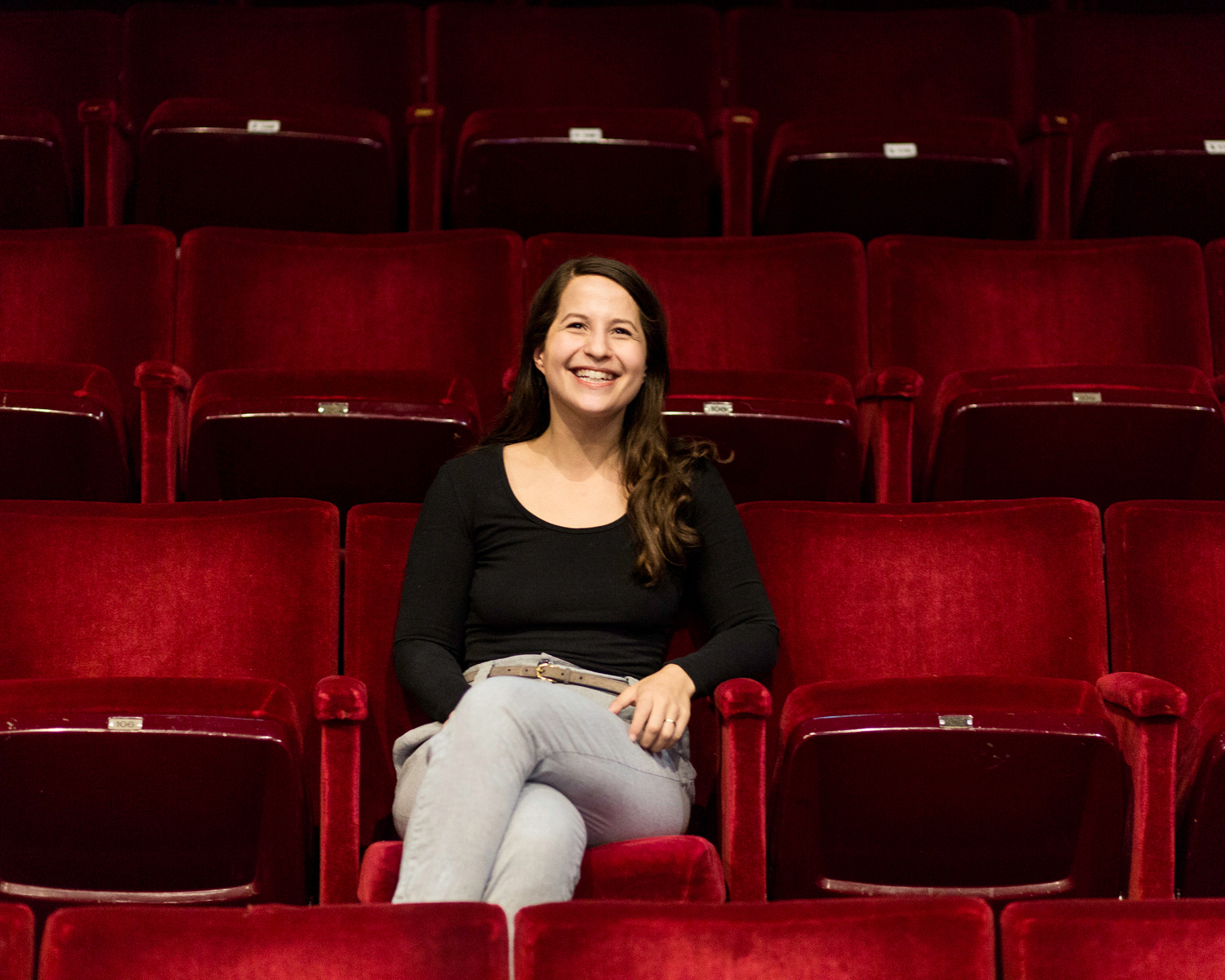
 

Shaina Taub
 

CR: A word that I really love and am often sensitive to its overuse because it is one of these nonprofit buzzwords, but I would love to hear what the word community means to you. How have you defined your artistic community?
 

ST: It’s interesting. I think my answer before these couple of weeks would have been different. In my own artistic community, it’s the idea of truly supporting each other and truly being on the same team and having this mutual inspiration ecosystem of talent and ideas where we’re all feeding off each other and not feeding into the myth of the individual genius alone in their room, that we all make each other better. Actually embracing that, actually letting yourself learn from each other. I feel more a part of the city this past month than I have in a decade of living here.
 

CR: That’s amazing.
 

ST: And part of it is that it makes a difference to actually know people. It’s one thing to intellectually say I’m an ally to lots of people different from me, and yes, of course I believe in equality and stand against oppression and institutional racism, but it’s another thing to really know all the people with the differences. I’ve realized to know these people from all the different backgrounds, that I might not have crossed paths with otherwise, when I think of something happening to any of them… just thinking about it, I get emotional – if anything were to happen to any of us, especially at the hands of something to do with our oppressive system, it kills me. It now kills me in a different way. Knowing people matters. It’s one thing to have your politics and be on the right side of history – and I’m not trying to put everything in binary, but I do think if you stand for equality and freedom, that’s the right side – but it’s important to build those real relationships; it’s a different kind of engagement.
 

CR: Yeah, I think that is absolutely true. And it is a special thing; it’s not always obviously accessible all the time.
 

ST: And you do have to seek it out. You should…and I don’t want to preach, I want to engage actively with as many people who are different from me as possible.
 

CR: It enlarges your life.
 

ST: And it makes you realize we’re not different. The more different a person you meet, the more you realize we’re not so different. It’s the thread I’m trying to pull out of Twelfth Night, because when I was assigned it, I had to look at, what about this story would this community possibly care about? What would be the way in? I was reading the various literature that the Public Works has put together over the past couple of years where they’ve had some amazing anthropologists release reports and study how this work affects the community. It’s so hard to convince people and institutions that the arts matter, because their impact is not as tangible as other things. It’s qualitative not quantitative, so they’re trying to really study to gather data to show the various places funding comes from, that this stuff does matter. One of the big takeaways was the idea of empathy, and that this program and this work and community arts engagement helps you empathize in this deeper way I was talking about before. And then I was like oh, Twelfth Night is all about empathy; it’s all about walking a mile in another person’s shoes. It’s about Viola taking on her brother’s identity, taking on a male identity and pretending to be something she’s not. By taking on that other person, she learns more about herself and learns more about others. That became my way in.
 

CR: That’s a really beautiful and fascinating way of looking at it – I don’t know that I’ve ever thought about it like that, and it makes perfect sense.
 

ST: Yeah, that was a challenge with this. Oskar Eustis is a great man for so many reasons, but in the first draft I had written one finale song and it was kind of about wearing your heart on your sleeve, kind of all these platitudes and plays on words about how it’s not about what you wear, it’s about who you are…it didn’t quite land. It didn’t quite nail it. And he said, really try and write a song that sums up why we were here this evening. What’s the point?
 

CR: Ooh that’s a tall order.
 

ST: That’s when I really went back to the drawing board and had to think about why is she here, why does New York care about Twelfth Night, what does it have to say to us in 2016. From that came our finale song that’s called “Eyes of Another” and it’s about looking through the eyes of other people.
 

CR: I wonder if you could talk about some of those relationships that have taken shape in, and helped to shape, this process?
 

ST: I think it’s just seeing people, beyond all the differences I was talking about, the generational differences, to be seeing the nine- and ten-year-old from completely different walks of life teaching each other dance steps, remembering that every person was that age. Looking at the senior citizens and knowing they’ve gone through so much. One of the organizations we work with is called Military Resilience Project, so it’s a lot of people who fought in the armed services, and we work with the Fortune Society, which provides support for reentry for people who have been recently incarcerated, people who have served time. What it’s taken for all these people to go through all that and show up in a room and still say yes to life, and say yes to joy, has been inspiring and perspective-putting for me.
 

CR: Yeah, absolutely, in both the practice of art-making and for this specific story, it feels like it’s really all related.
 

ST: Right, and something that is so important about Public Works that I think is really central is the value of excellence. This isn’t a pageant where we’re patting ourselves on the back and, you know, gave it a college try, and the community did the best they could. This production, every element of it, is at the highest level. We all bring our best selves to it, and what’s so beautiful about it, when I’ve seen the Public Works shows in the past, is we have five equity actors and you don’t always know who they are. You can’t spot them – I mean you might know who one is, like there’s Nikki JamesBook of Mormon, but you don’t totally know. When I saw The Tempest, I wish we could do an audience exit poll: which do you think the five equity actors were? You don’t know. There’s so much talent in the community, and that’s something else I love: there is talent and genius everywhere. It’s kind of an accident which ones end up making it to the pedestal, but it’s just incredible creative, artistic virtuosity. And I think one incredibly powerful thing is, with some of the young people in our cast, they’re incredibly gifted singers, performers, and I’ve gotten the sense that, when I tell them that, that potentially they haven’t heard it before, and how powerful that is. What an honor for me to get to get to encourage them – because it’s clear to me how talented they are, so if my believing in them can help facilitate them having the courage to keep pursuing it, that would be such a great reward.
 

CR: And I think for young people to be treated with the same kind of creative responsibility as the adults in the room is such a powerful tool toward agency-building.
 

ST: Yeah, and that is a talent-continuum. Talent is not something that people have or don’t have. Theater and art and music – it’s not something that divides between people who do it and people who don’t; it’s something we all own and can take part in.
 

Stage&Candor_Shaina Taub_Emma Pratte_02
 

CR: I read your tedX talk and I love what you’ve said about listening, and I would love to hear more about that – how has your work, with Public Works and beyond, informed the way you listen and how has listening informed the way you work?
 

ST: We’re all standing on the shoulders of giants, no one is making art alone, no one is not a combination of their influences. And how awesome? I think this is a Billy Joel quote, that you can spend all your time taking in art or music and you can never be done – even if art stopped now, you would never get through it all. And that’s such a gift. For me, whenever I’m stuck on a song or a character or lyrics, there’s just a trove and there’s so much to borrow from. Being in conversation with it is not stealing from it or plagiarizing – but to get to be in conversation with all that came before me and all the people that are working around me is one of the most exciting parts of it. I’m constantly looking to other musicals, other artists, to see how they handled a specific character or moment and then try and put my own spin on it.
 

CR: Yeah, and someone said to me once that great leadership is being able to ask the question and actually hear the answer, and I think that listening is actually a much more radical idea than we give it credit sometimes.
 

ST: Yeah, and accepting that…I hope in forty years, I’m writing my best shit. I’m aware that there’s so much I don’t know yet. I don’t want to be the best writer I can be already, I want to get there, it’s like that quote, I think it’s Cheryl Strayed, that humility is the first byproduct of self-knowledge. I’m aware that I have a lot to learn. So maybe up till now I’ve written in the hundred-ish range of songs I’ve written. I hope that in forty years there are still three of those songs that I’m standing by or still playing life, that would be ideal.
 

Stage & Candor_Shaina Taub_Quotings-04
 

CR: Yeah, and it just takes all of that time, to become. Becoming is hard.
 

ST: Yes, and being okay with throwing things away. That’s been a big lesson for me and Jeanine Tesori has been a big mentor for me and she’s always told me, it’s okay to productively fail. I’ve had various projects or collaborations that haven’t panned out necessarily but what I’ve learned from them is so worth it. I don’t for a second think of it as lost work.
 

CR: We do talk about making mistakes a lot in this field, that pro-failing rhetoric feels really common, but I was talking to a playwright friend the other day who was saying, yeah, yeah everyone says it’s great to fail, it’s so important to fail, but they don’t remind you how bad it sucks! How do you make it not suck? But maybe that’s part of it, maybe you can’t dilute that part without also losing what you learn from it? I don’t know.
 

ST: Right, me either.
 

CR: But throwing things away or moving on from them isn’t a bad thing.
 

ST: Oh yeah, I released an album six months ago and for every song on it there are four or five songs that didn’t make it in – the songs on the album are the culmination of all the songs that have been able to stick around the last couple of years.
 

CR: Is there something about those songs that you can recognize as similar? Can you trace why they’ve all remained?
 

ST: The common denominator is that they all withstood two years of being played live. It gets fed back to you. it’s the reaction they get over time. If a song lasts for two years in concert and I’m still playing it, it still feels like it’s getting an honest response and my band is still excited about playing it, after two years – and this is going to sound too lofty for what I mean – but after that, it enters my canon. It reveals itself.
 

CR: Something that I find so exciting about your work is that you are an interdisciplinary artist and I wonder what that ability to be in different roles has informed you about your practice of each one?
 

ST: I have a thing that I think helps feed doing the multiple things which is that the grass is always a little greener. When I’m only acting I think, oh man I have all these creative opinions about the show, I wish I had a hand in it, but then when I’m writing, I think aw man I wish I could just be an actor and go home at six o’clock and be done…and every combination of it there are different benefits. It all informs each other.
 

CR: That’s awesome. I think it is becoming a much more common story that people do more than one thing, and that’s exciting at least to me.
 

ST: Yeah and I think part of it, and this is sort of a truism but I believe it – that how you define yourself and treat yourself is how you teach everyone else how to treat you. I think for a while I was skating back and forth saying, oh I’m a writer, I’m a performer, I have to choose. I had different bios, I’d use a different one if I was trying to pursue this or that and I felt that pressure to choose, or that split, but then a couple of years ago I was like, I do all these things. I introduce myself that way, I present myself that way all the time, and I don’t try to backtrack or apologize about it and I do a lot of it. From there, it started to roll back to me in that those were the kind of opportunities I got, those were the calls I got, to come do Old Hats, and write songs and perform and improv little songs and dances and arrange…the jobs I’ve been lucky enough to have in these last few years have started to reflect that.
 

CR: And something else that I really value in your work is that you use your art really explicitly to bring awareness to and ask for change around certain things, and I wanted to know if you had any thoughts about how artists can be part of the conversation around social and policy change?
 

ST: Yeah, well…now I’m always quoting other people, but I love the Nina Simone quote of how can you be an artist and not reflect the times? I don’t think there’s political or social art and then not, it’s all one big conversation with the world around me. People look for stories, they love to watch their stories on TV, that’s the thing that people respond to, they don’t want to listen to data numbers and facts and polls and pundits and twenty-four-hour news cycle, people want stories. That’s what they listen to. For me the kind of stories that we’re putting out there through music, through theater, it’s not that it necessarily gets legislation passed, but it informs a conversation, informs the communal hive-mind about what we care about.
 

Stage & Candor_Shaina Taub_Quotings-02
 

CR: Yeah, absolutely. I’m always really excited to hear about how someone who has a totally different skillset to mine, talk about work and how that informs their view of the world. Do you see any lessons that songwriting has taught you when you look at the rest of your life?
 

ST: Well, I think why I’m drawn to writing songs is the way they’re always constantly being re-taken on. If you write a song, it’s just not definitive – other people cover it. One of the most rewarding things to me has been other people singing my music, and I think that’s one thing that draws me to theater, that I like to perform myself too, but to me that’s the conversation, that’s the generational lineage of how many people have sung “Hallelujah,” or “Hey Jude,” or “You’ve Got A Friend”? It’s not just something you can take in, you have to wear it, to try it on yourself. It’s not like a painting where it is what it is, no one does a new version of it, or maybe that’s not true, I don’t know enough about the visual art world, but I love that songs are this thing that everyone gets to continually examine.
 

CR: Absolutely. Is there a song that’s taught you a specific lesson – in your writing or someone else’s, in the listening?
 

ST: Yes, oh man. Well for me, I always think of “He Wanted to Say” from Ragtime, which I recently found out that in the libretto is one that they make optional to do, which is crazy because to me, just in thinking about theater songs, in terms of songs that can uniquely use the form of music to tell that moment better than a scene could, I love “He Wanted to Say” because it’s this moment of Mother’s younger brother, going to Coalhouse. And he has all these things inside of him of wanting to join in Coalhouse’s cause, which is black men speaking out against systemic racism, and there’s all this stuff going on because Mother’s younger brother is this wealthy white guy but he really wants to stand with him. So he goes to him and he’s trying to think of how to express that, and he also has technical skills that can help in what Coalhouse is going through, but then Emma Goldman, who’s this other character, comes forward while Mother’s younger brother is saying he wanted to…and she says, he wanted to say…? And she sings this whole song about all the things he wants to say, and then the last line of the song is but all he said was, and he says: I know how to blow things up, because he can help build a bomb. And I just love that song because it’s all the emotions and all the things he has inside, and it works so uniquely and so specifically as a song. I always point to that one.
 

Stage&Candor_Shaina Taub_Emma Pratte_03
 

CR: So I’ve heard a little about what you’re up to next but I would love to hear more about your dream project.
 

ST: Yeah, as soon as we finish Twelfth Night, the project I’m starting – which I’m already in the research phase of – is the women’s suffrage movement. It does feel like a dream project because in a way, like I was saying before in terms of productive failing, I’ve known I wanted to write musicals, but I’ve had kind of a tug-of-war with it because I’m such a musicals person but it links everything we’re talking about because I still have so much to learn. I constantly have songs I want to write, I always have statements I want to make in two-three minutes, and that feels like a well that keeps serving me, but to make an evening length story, to find a thing that I really care enough about…and what Jeanine talks about is, even when you’re going crazy, because musicals make you crazy because they’re so hard, the running engine, the slow hum underneath it all has to be how much you don’t want to die without telling that story. And I feel like I hadn’t quite found that, but getting this history feels like the first time I’ve felt that way.
 

CR: It’s certainly a story I’m still so hungry to hear. That’s really exciting. And it’s so cool getting to see you bringing to light this story about women, when you’ve worked with so many incredible women in this field.
 

ST: Yeah, there are so many freaking awesome female directors. I feel so lucky that I’ve gotten to work with Rachel Chavkin twice and Tina Landau and Lear deBessonet. And those are my favorite directors; it’s not that they’re women – I mean, they’re women and that’s awesome – but even beyond that, they’re my favorite directors. They’re the people I’m most excited about, genitals aside.
 

CR: Totally, and it’s just exciting to have so many different people at the table. Not that enough room has been made at this table we’re all sharing yet, but that it feels like more room is being made.
 

ST: Definitely, and walking into this building always feels like magic because Liz Swados was my mentor in college and now Jeanine is my mentor, and there are no two more badass women than those two. I’m sure the shit they went through as women in the 70s, 80s, 90s, being the only ones, or one of the few in positions of leadership at that time, the way they’ve paved the way…I’ve had my difficult experiences of what it is to be a woman in this field, for sure our work is far from over, but my path has been infinitely easier because of the barriers they knocked down, and before them, the suffragettes, so it feels like, yes, the work is never over, but that’s no excuse not to do it. You have to move your little inch in the line, and sometimes it can feel like, I can work my whole life and only move it a millimeter forward, and why bother? It’s just a millimeter? But we all have to do that, and over time—this is another quote that I’m going to butcher, but, the moral arc of the universe is long but it bends towards justice. You have move your link in the chain forward.
 

Stage & Candor_Shaina Taub_Quotings-05
 

CR: And it takes so much longer than even conceivable. And yes, probably nine times out of ten, the things you do won’t change a thing, but that one time, you have no idea who or how or what things you’re setting in motion, so you have to keep at it.
 

ST: I’m gonna quote again, cause I’m a big dork; I’m gonna be really Jew-y, this is a Talmud quote sort of in the idea of tikkun olam, of social justice, that our duty is to leave the world better than we found it and there’s a quote that you are not obligated to complete the task, nor are you free to abandon it. You’re not gonna finish it, but you have to do your part.
 

Stage & Candor_Shaina Taub_Quotings-03
 

CR: Yeah, and this feels like your music is part of you discovering what work there is to be done and what of it is yours to do. When you have a gift or a tool or a platform, like you do, it feels exciting to be able to use your art to reflect the things that you want to see.
 

ST: Yeah, and – oh man I’m full of quotes – but it’s like the Moral Bucket List, the question should not be what do I want out of life but it should be, how can I use my gifts to meet the deep needs of the world? And that really resonated with me; I have these things that I happen to have skill in, and have worked really hard on, and how can I use that to fill in gaps and fill holes. It’s not just, what do I want out of life – doing that work actually becomes the thing that I want. It’s the humility thing we were talking about earlier; if I can just inspire the fourteen-year-old girls in my cast, [sung:] that would be enough. Had to, I’m sorry, how can you get through a day without quoting Hamilton?
 

Stage & Candor_Shaina Taub_Quotings-06
 

CR: You can’t, it’s not possible. And I think it’s really true, and it feels like for a lot of this work you really have to know who you are and the Public Works program really feels like a channel to be in a space with people who are different from you, and realize how similar everyone really is, like you were saying before. I mean, I’m not in the room where it happens, but it sounds like that’s what it’s like.
 

ST: Yeah, yes, yes it is. It’s such a gift, I’m already feeling how much I’m going to miss them, but when I started to feel sad about it, Laurie Woolery, who’s another amazing woman who works at The Public and Public Works, said, but now you get to watch them grow; it gets to continue on.
 

CR: And that’s amazing, and to know that New York City is full of that, even when it’s hard to see. The storytelling around New York is often so polarized – it’s really nice to hear about something that encompasses all of it.
 

ST: Yeah, I’ve been here eleven years, and maybe I just haven’t been here long enough to be jaded about it, but I love it. I grew up in a very small town in Vermont, and rural Vermont is lovely, but it’s pretty homogenous. My being Jewish was pretty exotic. So to now be constantly immersed in so many different cultures and stories, I don’t think I fully appreciated or knew how to appreciate it before this project. It’s just such an exciting and inspiring place to live. You can’t hide from the world here, for better and for worse.
 

CR: Exactly, and I’ll give you a quote too, that James Baldwin wrote: “the role of the artist is exactly the same as the role of the lover; if I love you I have to make you aware of the things you can’t see.” New York is a really hardcore love, you have to keep being aware.
 

ST: Yeah, and how you act and the energy you put out does matter. We’re not powerless. A thought I had in the wake of one of the unfortunately fill-in-the-blank terrible days we’ve had this year, was that: we’re not powerless, we can’t give into the myth that we’re powerless. We can love each other and put out a loving, joyful energy and that doesn’t count for nothing. It counts for a lot. We can’t let anyone take that away from us.
 

CR: And that telling stories spills out into everything, everything we do is a story and it’s really easy not to take responsibility for the plot. There is deep power in just being aware of what story you’re telling, as a person.
 

ST: I’m trying to pick a show next year; I’m trying to pick a play that responds to what we need, and a thing that keeps coming up, that comes up a lot in Shakespeare and also in our lives and in the lives of a lot of these community members is the idea of second chances. It’s never over, no matter the terrible things you’ve been through, you can start again.
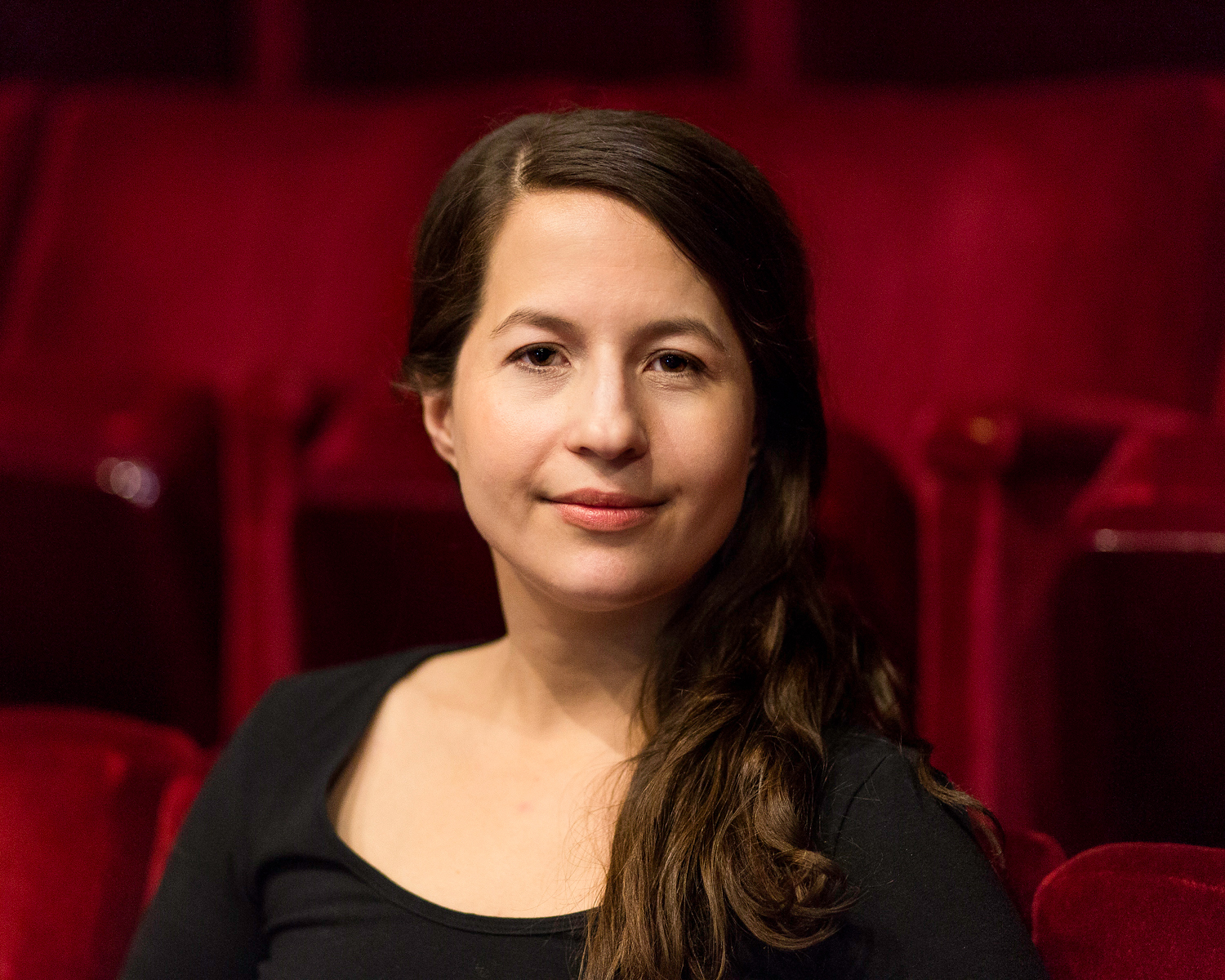
 

Stage&Candor_Shaina Taub_Emma Pratte_04
 

CR: Yeah, and it’s amazing that Shakespeare is one of these things that continues to give and give and give, and lend itself to all times and all people. Were you big into Shakespeare before this project?
 

ST: No. I did a show in middle school and I worked on a production of The Tempest two years ago at A.R.T. but no, I just hadn’t spent a lot of time with it, so I have a newfound appreciation for it. The stories are big, and for a lot of the lives of the people in New York, the lives are lived in these epic proportions, so it really resonates. And you feel it, it’s so exciting to see community members click in. And our director Kwame has a particular gift for finding the ways to connect those dots with people working on Shakespeare, in ways I had never thought about it. He just has a way of making it feel immediate and necessary, like it happened yesterday.
 

CR: That’s beautiful. And language sort of is this amazing human-made gift, and it’s almost like music or a score – that everyone can own in the way you were talking about songs before.
 

ST: Yeah, we’re constantly doing it again and again. For me, the main thing has been figuring out Viola in 2016, and that’s so cool. I hope in another hundred years, someone does another musical adaptation, so these things continually hold the mirror up to ourselves again and again.
 

CR: So what have you learned about Viola today?
 

ST: I feel like a lot of her journey is figuring out that it was inside her all along, that she thought she needed to dress a certain way or act a certain way or take something on in order to be taken seriously in order to succeed, in order to survive, but she had it. And I think for me, working on the show and collaborating, so to speak, with Shakespeare, it’s been a process of, no, it’s in me, and owning yourself and not apologizing for it. You can still have that humility and know how much you have left to learn and still trust yourself without any added accessories. I used to have this thing where I thought, I need to wear pants and suits, like I would never want to dress too girly if I had a fancy meeting, and it’s been a process of taking ownership of however you want to dress and however you want to be. It’s you that matters.


Raised in the green mountains of Vermont, Shaina Taub is a New York-based performer and songwriter.
 

She made her Lincoln Center solo concert debut in their American Songbook series in 2015, and plays regularly in New York with her band. Her sold-out Joe’s Pub concert and debut EP What Otters Do were featured on NPR/WNYC’s Best of the Year listing, and her debut full-length album Visitors was released at the end of 2015.
 

As a songwriter, Shaina won the 2014 Jonathan Larson Grant, and was Ars Nova’s 2012 Composer-in-Residence. Her original soul-folk opera, The Daughters, has been developed by the Yale Institute of Music Theatre, CAP21 Theater Company, and was featured in NYU’s mainstage season. She has created songs for Walt Disney Imagineering, Sesame Street, and recently signed a publishing deal with Ghostlight / Sh-k-Boom Records and Razor & Tie, as the first artist in their new joint venture to represent songwriters that fuse theatrical and pop music. Six-time Tony winner Audra McDonald is currently performing Shaina’s song, The Tale of Bear & Otter, on her world concert tour.
 

Shaina is currently creating a musical adaptation of Shakespeare’s Twelfth Night for the Public Theater with director Kwame Kwei-Armah that will be performed in the summer of 2016 at the Delacorte Theater in Central Park as part of the Public Works initiative. She is also currently writing a new musical about Alice Paul and the last seven years of the American women’s suffrage movement.
 

As a performer, Shaina has traveled the world as a vocalist, actor and musician. She was Karen O’s (of the Yeah Yeah Yeahs) vocal standby and back-up singer in her psycho-opera, Stop the Virgens at St. Ann’s Warehouse and the Sydney Opera House. She earned a Lucille Lortel Award nomination for her portrayal of Princess Mary in the the hit electropop opera, Natasha, Pierre & The Great Comet of 1812, and performed the songs of Tom Waits in the American Repertory Theater’s production of Shakespeare’s The Tempest, for which she also arranged the music. She recently starred in the critically acclaimed west coast premiere of Bill Irwin and David Shiner’s Old Hats, directed by Tina Landau, performing her original songs along with her band. The production will return for an encore run at New York’s Signature Theatre, beginning performances in January 2016.
 

A fellow of the MacDowell Colony, the Yaddo Colony, the Sundance Institute and the Johnny Mercer Songwriter’s Project, winner of the 2013 MAC John Wallowitch Award, a TEDx conference speaker, and a featured artist in the Gc Watches ad campaign, Shaina served on the music theatre faculty at Pace University, and is a University Scholar alumnus of NYU’s Tisch School of the Arts.

Posted on

A Conversation with Carla Ching

Carla Ching


Carla Ching is in full LA-mode: she calls us from the car in – you guessed it – immense traffic. She was rolling into a spacing rehearsal for her newest play, The Two Kids That Blow Shit Up at Artists at Play. After rehearsal, it’s home to work on rewrites. There’s a new project for The Kilroys to be constructed, a show to open, and more scenes to be written for her gig on Jill Soloway’s I Love Dick. But she still has time to talk to us about the educational system in America, balancing the worlds of television and theater, and why representation matters – especially when it comes to Asian artists.


Helen Schultz: You developed this play at a week-long Lark/Vassar retreat. For our readers, what’s a quick synopsis of the show?
 

Carla Ching: It’s the story of a Chinese-American and Korean-American kid who meet when they are nine years old and their parents start sleeping with each other. We follow them through their lives together: they get married, divorced, fall apart, and then get back together. It’s really about who they become to each other over the course of their parents’ relationship.
 

HS: You have two actors playing two characters are at different stages in their lives – sometimes they’re 9, sometimes they’re 30. Knowing you didn’t want this to be a memory play, how did you decide on the ‘order’ of events? How did you go about casting actors who had the range to do all of these parts justice?
 

CC: It’s an insane challenge, and I’m so lucky that I have amazing actors – Nelson Lee and Julia Cho – who’ve both gone above and beyond. We also had the help of an incredible movement specialist named Donna Eshelman who taught them the specific behavior and movements and body of a nine year old, a thirteen year old, a seventeen year old, a twenty-four year old, and finding the body that comes to convey how you feel on the inside. So we worked really hard to achieve all those different ages. The play poses a challenge because it’s not in order – it doesn’t go nine, 14, 17, 24. That would be one thing. They have to go through the extra rigor of dealing with a play that is not even in order. They are heroes for sure.
 

HS: How did you go about determining that order?
 

CC: It’s something that we talk about a lot. I had originally made it out of order – that’s how I built the play when I was at the Lark, and each day I would write a scene: one from when they were children, and one from when they were adults. And that’s how I really constructed the play. When I was at the workshop, I did put the play in order, largely for the actors to see how it felt to play it in order, and to make sure that there weren’t any holes that were being appeared by the fact that it was out of order. At the time, we sort of enjoyed the chronology, so it stayed that way for a while. But after that, my wonderful dramaturg, Andy Knight, talked to me about the different incarnations it had and the different shapes of the play, chronological and not chronological. He said to me, “Well, can you tell me what you get from the play either way?” He said that when it went forward it felt more like a memory play to him, whereas when it was not in order, it evoked the title more – The Two Kids That Blow Shit Up, and these fragments from their lives. It showed the challenges in their friendship and their relationship, which I wanted. So we kept it like that, but it took us quite a long time to find the right order, and to make sure that it suited them. We were still making changes to the order up until a few days ago. It was a lot of trial and error, but it was trying it a bunch of different ways until we found the order that had the emotional journey that we wanted the audience to go on. We wanted to see what broke them before we saw what got them back together.
 

Carla Ching
 

Michelle Tse: You used to work a lot in poetry. Do you use a specific medium to achieve a specific goal, or do you stick with your theater and TV work now?
 

CC: I pretty much stick with theater and my TV work now. I haven’t written a poem in a very long time. I used to very much love it, but I think all of my stories go into the play now. I enjoy writing different worlds and different characters and I have a selfish need to write people, because that way they’re sort of all-encompassing.
 

MT: Was it figuring out what the proper medium was for you, or were you drawn to different mediums of writing at different parts of your life?
 

CC: I went down a pretty long road with poetry. I was doing the whole poetry and spoken word thing in New York. I even went back to school and tried to do my MFA at City College of New York in poetry and I got about a year and change through before I realized I wasn’t having a breakthrough and there were other people who were far better at it than me. It’s a very lonely way of writing. In the best case scenario, I could publish a chapbook and forty people could read it, which made me sad. At the same time, I was writing and performing with a Pan-Asian Performance group called Peeling where we would read my poems and they sort of became plays. So I transitioned from doing poetry and writing poetry into doing performance pieces that looked more like theater. I really liked them and the nature of them, which naturally started to send me down a road of trying to do theater.
 

HS: Is there a big difference for you between writing a play and writing a TV show?
 

CC: Playwriting is different in that it took me a little while to find that frame. And when I first started doing TV writing, the TV writing made my playwriting suck, and my playwriting made my TV writing suck. And I think – I would hope – I’ve gotten a little bit more of a handle on it. Television is just so much more about digital media, and you have to be a lot more terse and pithy with your dialogue. Your scenes are much shorter. You can control people’s gaze and what they’re looking at, and do a lot with the image in a way. In theater, you need to have dialogue do that for you, because you can’t do a close-up. You can’t focus in on someone’s eye. You can’t do a close-up of someone’s chest heaving. So we have different tools to do it in different media. I enjoy both of them a lot.
 

MT: You discovered theater in high school. Would you say that’s maybe why you gravitated back to theater?
 

CC: Theater will always be my first love. It’s this seed of an idea and then it grows into something collaborative in the room. In TV, you get these great writers together in the same room and it’s just the biggest treat ever. It’s very different breaking story in a room with seven or eight other people. It has its challenges, but it’s also really wonderful because it means that you have seven or eight other minds at work and all their stories of the world. Sometimes you can break through a problem at lot faster with eight brains. With most of them you are writing to the world of the show, you are writing to the showrunner’s voice, but once the story is spoken together, you’re allowed to go off and spin out the story and give it a bit of your art. There’s some art in that you have to go off and write it all by yourself. And then it becomes lot like play production again where you have actors and directors and your own production team working together to spit this thing out really fast. In a lot of ways, theater is similar when you get to that juncture. Theater was a really great training ground for the other stuff. They’re both great in different ways. I wonder if – cause I’ve never been a showrunner and I’m still working my way up the ladder – I do wonder if perhaps being a showrunner is exactly like being a playwright.
 

HS: How does the writing process differ for you in New York versus LA?
 

CC: In New York, I had this really tiny, tiny apartment and my place was essentially a closet. I would try to write there, and I would sometimes write there, but the only place I had to sit in my apartment was on my bed. It was hard to be sleeping and working in the same place, and I’d also just get claustrophobic. I’d just have to go to a coffee shop or the library, or – for a little while – I subscribed to Paragraph Writing Space just to have a sure place to write. Even in a coffee shop they’ll eventually kick you out. Here [in LA], I have a little more space so I can work at home, but there’s also a completely incredible library near me that has these doors and windows and I can look out on this beautiful sculptural design center. I still need to hustle, but when I lived in New York I had six jobs at any given time – I wish that were an exaggeration. Now I still have to hustle, but I’m able to have one survival job and that’s the TV writing. And then I do my playwriting. For whatever reason – cost of living, hustle of life – I feel like I have a little more time to write [in LA]. I go to my job at I Love Dick from like 10 until 5 or 6, and then I go straight to rehearsal from around 7:30 until 11. Sometimes, at 11, it’s like, “are there any rewrites that need to be attended to, any more information? Then I get up again and do the same thing again. It feels a little like New York.
 

MT: So, just FYI, I’m also Asian.
 

CC: Oh, awesome!
 

[Everyone laughs]
 

MT: I bring that up because for me, it’s so great to see an Asian playwright, but also someone who is socially engaged – you’re part of The Kilroys. Does that clue you into social and political engagement?
 

CC: Completely. To me, writing a play with two Asian-American people is a political act. I do this with intention. I do not do it accidentally. I want to put Asian-American people onstage. My partner is an actor. I know a lot of super talented Asian-American actors. It hurts me sometimes, the parts that they get to play and they don’t get to play. So I just wanted to write a play that would show the breadth and depth of all of these actors, and to show a life. You probably grew up watching a bunch of stories over time – I know I did – and they never contained people that looked like me. So I wanted to write one.
 

MT: Yep. There’s this one scene in your play where they’re talking about Chinese school, and that their parents just wanted them to have a place where they belonged. Was that something you experienced as a kid? I know that you taught middle and high school, and you did a bit of teaching artist work. Does your identity and working in the education system foster your sense of empathy and how these kids are affected?
 

CC: I think because of a lot of gaps in my educational career, feeling invisible and not noticed… I worked hard and wasn’t the best student in the class but certainly wasn’t the worst. I sort of fell between the cracks. I was often frustrated in school and often felt unchallenged and lost. So I went into education to sort of figure out how to – at least for that period of time – how to give back and figure out how to engage young people in a real and meaningful way. I think that’s why, in a lot of my plays, young [characters] show up, because it bothers me how young people are often portrayed in theater, in TV, and in film in only a small fragment of their complexity, their bravery, and in how their incredible stories are told. So I try to put those out there too.
 

MT: Were your parents dismayed that you wanted to go into the arts and become a writer?
 

CC: My mom was horrifically dismayed. To be honest, I don’t think that they truly accepted that I could have a career as a writer until maybe a year or two ago. Their whole thing was, “Make sure you get a safety job,” which is part of why I actually got into teaching. I thought, “If I’m going to have a safety job, I want it to be something that I’m engaged with, that I can stand to do for the rest of my life, that is meaningful.” That’s why I chose teaching. Although, she got mad at me – she was a former teacher, but she got mad at me for teaching. She said something like she thought I could do better, or something about a teaching degree being a bullshit degree. Anyway, she didn’t agree with my choice to become a teacher.
 

MT: Sounds about right. And dad?
 

CC: My dad was very different. My dad is unusual as an Asian-American parent in that he thought it was very important to chase what you love. My mom is opposite – my mom is “do what’s practical.” I think that came from him growing up very poor – there were seven kids in his family and his dad was a gas station manager. He didn’t go to a restaurant until he was in college. They struggled.
 

MT: Were they first generation?
 

CC: They were not – my parents were third gen. When he said he wanted to be a doctor, they said, “You’re crazy. You’re reaching too far. You’re trying to be out of your station. You need to do something way more reasonable.” He fought his way through. It took him a long time, and he had to serve in the Navy in order to pay for it, but he came out and by the time he was forty-one he was a doctor. He loved what he did every day of his life, and you could see it. Having him as a role model was pretty great. And, in a way, having his permission, to “be smart about it, but try to do what you love, and then hopefully the money will come or you’ll get paid for it but you have to enjoy yourself, whatever you choose.”
 

MT: That’s incredible!
 

CC: I know. And especially – he’s a little older – for an older Asian-American man to have that mentality for sure.
 

MT: Are you at all sick of talking about diversity?
 

CC: No. I’m not. I’d really like to get to the point where we don’t have to talk about it anymore, but we obviously still do. It’s such a part of our theatrical seasons, and the problems are better in television and there’s still not as much representation as I’d like to see in front of the camera, and especially behind the camera. My first job, I was the only woman; often I’m the only person of color. What happens and who gets in front of the screen is determined by who’s writing stuff. No – I think diversity is something we still need to talk about. It’s why I work with The Kilroys, it’s why I worked with Second Generation for a number of years. I was still a struggling playwright myself, but Lloyd Suh gave me the opportunity: “Hey, you want to run 2G for a couple of years?”
 

MT: He’s incredible.
 

CC: He’s completely incredible. And I owe so much of my career to Lloyd: he gave me my first production, he was in my first production, he gave me the opportunity to run 2G, and he’s always been a dear friend. I learned so much from running 2G, and the best part was that we [tried to] see how many people – how many Asian-American artists we can cull. How many plays we can get started, how many directors, actors, and writers we can get to know each other? Let’s really community build here in New York so that most of the Asian-American theatrical artists that are working know each other. I think that’s fantastic. And what’s incredible now too is that so many names that I came up with, Maureen Sebastian, Ali Ahn, Rey Pamatmat, Mike Lew – everyone’s over there doing what they’re meant to do. People are working across platforms in theater and TV and film and just killing it, rooting for each other, helping each other, and casting each other when they can. I think it’s going to take all of us to change things. It’s a small force. But the more that we’re working together, the more we can pull the community forward, I hope.
 

MT: For us, as a community, it’s like we haven’t even identified all the problems yet.
 

CC: Yes. We still have work to do. I remember when I was in class in college, I was told, generationally, we’re behind the African-American movement by a generation or two. And I was like, “That’s not true!” But yes: we have a way to go.
 

HS: How did you get involved with The Kilroys?
 

CC: I was lucky in that they had already gotten started up a bit. Before it happened, there was sort of a backyard barbecue with a bunch of the women who are now The Kilroys who were meeting up and sort of talking about how they were sick of seeing seasons that were so non-diverse, and so many all-male seasons, and what they started to say was, “We can keep talking about it, or we can do something about it. Can we band together and leverage the people that we know and figure it out?” So I think they just started to get started, and I arrived a little later with Kelly Miller and maybe a couple of others. What I appreciated about them was that they were interested in doing specific actions. The idea of The List emerged to sort of combat the notion that the reason that more women aren’t produced is that they’re not in the pipeline, i.e. they don’t exist. So we figured, why don’t we survey the field, and ask what are the good plays being written right now? And they put them out here, they’re here, and here are the ones that they recommended. They do exist. So that artistic directors and theater companies don’t have the excuse anymore. So it seems like it’s been helping out a little more in terms of female playwrights getting more traction, which we are happy about. But also there should be celebration of the companies that are producing lots of women. That’s why we do the Cake Bomb. It was someone’s idea that we should do something fun and celebratory. And there are other projects that are currently in the bubbling process. It’s a group of women who were tired of waiting and ready to put their action where their mouths are. What I really appreciate about everybody is that it’s a super busy group of folks, but somehow everybody makes the time, finds the time, to pitch in.
 

HS: Something that we’ve talked a lot about is that some theaters think it’s okay to now produce 50/50 men and women, but that 50/50 is solely white men and white women.
 

CC: It’s so difficult. I feel like, currently, in seasons, we’re lumped together. In most rooms in television, when they talk about diversity hires in writers’ rooms, women count as diversity. That’s how bad it is. That’s how male-dominated it is. I don’t think much of theater is any different – when they’re looking to diversify their seasons, I feel that they’re looking at women and people of color the same, in the same breath. I don’t really know how I feel about that. I’m surprised nobody has done this yet, but I think some coalition building is in order to get people of color in the theater to work with groups like The Kilroys to really put pressure on theaters to do better. It’s also not just about putting pressure on the theaters – it’s about putting pressure on the theatergoers to chime in about what they want to see. Again – I would like to sometimes see people like me onstage, and so I probably need to make more noise about that than I do to my local theaters. That’s an action I can take – that’s an action we all can take – and if we are loud enough and there are enough of us, they have to listen.
 

Carla Ching
 

HS: Something that we talked with Leah Nanako Winkler about was that a theater asked her to provide them with her own list of Asian actors. You tweeted about having a theater ask you to replace your cast with white actors. Do you feel that playwrights of color have an unfair responsibility to educate theaters in diversity?
 

CC: Oh yes. White writers rarely have to provide a list of white actors, although they might have to provide a list of actors that they’d rather have. I’ve been asked to help cast before. Which is okay because I do know – through 2G – a lot of people. And being in Los Angeles for a couple years now, I know a lot of people here. I’m happy to help out if the people who are casting don’t know better. I personally feel a responsibility to be representative or to write Asian-American characters or to write people of color because if I’m not going to do it, then who’s going to do it? If I’m not seeing people of color onstage, then I need to write them. I, as a single writer, need to do it in any way I can. Again: I look at that as a political act. I’m putting people of color onstage – that’s intentional. However if I can change the world’s mind about how they view us, and give them a richer and more detailed perspective of what they’ve already seen, then great. I’m doing my job. I know that not all Asian-American artists or playwrights feel that way and they just want to write what they want to write, and more props to them. I don’t want to say I have an agenda, but maybe I have an agenda.
 

MT: But your plays seem to never be “here is an Asian person.” They just happen to be Asian.
 

CC: They just happen to be, and I don’t write overt identity plays. But I also like to say that my plays, like The Two Kids, need to be played by Asian actors. It’s how it’s written. These are these people. There are influences that are taken from my life, people that I know. So it can’t be done by white people. I don’t even think this could be done by another group of people of color – it’s race-specific. One of my other plays, Fast Company, a pretty massive regional theater said that they would consider it, but only if they cast it with white people. I said no. There are Asian-American people in your city that you could find to play these parts and it’s an Asian-American family – that’s the story. It’s the story of an Asian-American family. You can’t do that. I was even asked by another theater company if we could make it half-Asian, and the unspoken phrase after that was “and half white” so they could get more of their company membership in the show. And I was like “no – if you want to do this play, you need to get more Asian-American company members or you cast outside this company. I’m not going to change the race of these characters.” Even though it’s not an identity play, I think that it is very important that the characters are Asian American. They’re meant to be that; they’re meant to be that way. The way that they interact onstage is partially influenced by their identity and who they are to each other.
 

MT: And usually all of Asian cultures are lumped together. We’re just Asian… strength in numbers?
 

CC: I think identification and this umbrella is partially a political act, right? We coalesce communities so we can have more power. We stand together so we can fight together. While we’re radically different and our communities speak different languages, have different customs, ideologies, I still am proud that we’re able to fight the good fight together.
 

MT: Definitely.
 

HS: Do you have any advice for aspiring playwrights?
 

CC: Read and see as many things as possible. Being in New York for so many years was so great because theater is so accessible. There are ways to find cheap tickets – 99 Cent Sundays at Soho Rep is a great example. There are great ways to find a cheap ticket. My advice to theatermakers is always to see as much as you can, because – certainly – all of my practice is formed by the mind-blowing amazing shit that I’ve seen onstage and going to stuff and making yourself available for readings and making shit from the ground up as much as possible and learning every job that you can. New York feels so warm – if you’re really willing to spend time, you can insinuate yourself into so many different communities. They welcome you. Find your tribe.


A Los Angeles native, Carla Ching stumbled upon pan-Asian performance collective Peeling at the Asian American Writers Workshop and wrote and performed with them for three years, which she still considers her first theater training. Her plays include Nomad Motel (2015 O’Neill Playwrights Conference), Fast Company (South Coast Repertory, Ensemble Studio Theatre, Lyric Stage, Pork Filled Productions; recipient of the Edgerton New American Play Award), TBA (2g), The Sugar House at the Edge of the Wilderness (Ma-Yi Theater Company), and The Two Kids That Blow Shit Up (also forthcoming from Mu Performing Arts). Alumna of The Women’s Project Lab, the Lark Play Development Center Writers Workshop and Meeting of the Minds, the CTG Writers’ Workshop and the Ma-Yi Writers Lab. Former Artistic Director of Asian American Theater Company, 2g. TBA is published in Out of Time and Place. Fast Company is published by Samuel French. BA, Vassar College. MFA, New School for Drama. Proud member of New Dramatists and The Kilroys. On television, Carla has written on USA’s Graceland, AMC’s Fear the Walking Dead and is currently writing on Amazon’s I Love Dick, executive produced by Sarah Gubbins and Jill Soloway.

Posted on

A Conversation with Jocelyn Bioh

Jocelyn Bioh


Jocelyn Bioh plays William Hawkins in Men on Boats by Jaclyn Backhaus, directed by Will Davis at Playwrights Horizons. The fascinating show closes August 21st 2016. After attending a sold-out matinee performance, I spoke with Jocelyn Bioh about gender, race, and performance, and about her future projects as a playwright and actor. Here’s what she had to say.


Darrel Alejandro Holnes: After a solid run on Broadway, you left Curious Incident of the Dog in the Night-Time and have now joined the cast of Men on Boats at Playwrights Horizons. What has the experience been like joining a new cast-family in an Off-Broadway house?
 

Jocelyn Bioh: Joining Men on Boats has actually been quite a wild ride. It’s been ten months since I left Curious Incident, which was an extremely physical show. It took a few months of physical therapy to completely heal and feel back to normal again. So when I said yes to Men on Boats, it was like déjà vu! You wouldn’t know it from reading the script, but this show is extremely physical and calls for an actor to flex a lot of muscles at once, and even crazier, because it was a remount of the Clubbed Thumb production, I only had ten days, including tech, to learn the entire show. My castmates and my director were so great and so patient with me and helped me through the whole process. Truly one of the craziest rehearsal processes of my life.
 

DAH: How would you describe the character you play in context of the play? In context of history?
 

JB: Men on Boats is based on John Wesley Powell‘s journals of the 1869 expedition he went on with nine other men to chart the Green and Colorado rivers. In our production, all ten of the men are played by women and I play William Hawkins, who served as one of Powell’s right-hand men and also the cook for the expedition. Because of our fast rehearsal process, I didn’t do much research on Hawkins while we were rehearsing. From what Jaclyn [Backhaus, the playwright] wrote on the page, it seemed to me that Hawkins was dependable, a straight talker, shoot-from-the-hip kind of guy, so I built on that foundation. Because we only know so much about him based on Powell’s journals, it’s hard to know how much influence he had in our history – suffice it to say, Powell really depended on and trusted him, so I just want to do right by him in my portrayal and make him proud.
 

DAH: What were some of the steps you took to prepare for the role? How did you prepare on your own? And what was it like for you to work with the play’s director Will Davis?
 

JB: Working with Will was great! He is the perfect person to take on a play like this. We are both similar in that we have a dance background and understand the importance of telling stories with our bodies. The choreography of the show came pretty naturally to me in that way, but I did need a lot of help in crafting my interpretation of Hawkins. I decided one night that I would think of characters that I knew who were cooks to see if I could pull inspiration from them. The first one that came to mind was Lou Myers character named “Mr. Gaines” on the sitcom A Different World. I always thought he was so funny, yet stern and discerning and I thought I could infuse a lot of that into Hawkins and it would fit into this kooky world and language we were creating in this play. Will never gave me a note about it, so I think it works!
 

DAH: Would the men from your family or friend group recognize themselves in your portrayal of Hawkins?
 

JB: A lot of the men in my life, between my father, brother and all of my male friends are very funny and crack jokes a lot. If there is anything they recognize in my character, it would be that I think! [Laughs]
 

DAH: What was it like to play a man? Did it change how you view and interact with men? Or how and what you understand of male privilege?
 

JB: Playing a man has actually been really fun and, weirdly, easy. Will let us be free with our interpretations of masculinity. Some of my castmates are using a deeper register with their voices and some of us are speaking with our regular timbre. Some castmates are wearing a glamoured up face of makeup and others are rocking a more muted look. It’s been interesting because the more we do the show, the more I understand the simplicity of men – their wants, desires, and emotions. They want what they want when they want it. That is certainly indicative of male privilege. In 1869, the President was certainly not entrusting ten women to set off on an expedition through the Grand Canyon. Women are always questioned about their skills and their level of expertise on anything. Considering the time we are in now politically, I would say that idea still rings, sadly, true.
 

DAH: Was James Brown right? Is it really a man’s world? How can theater make it a world for everybody? How is this play and your performance in it part of that movement towards more diversity, inclusion, and equal representation in contemporary American theater?
 

JB: James Brown is always right in my book! I love his music, but it’s true – theater is definitely still a playground for men. The fact that The Kilroys List was created (an annual list of industry recommended plays written by female and trans playwrights) just shows how we need to force theaters and producers to take our work seriously. Men on Boats made the list in 2015, and as a playwright, I have been on both the 2015 and 2016 lists. I think what this play is doing, with a diverse cast of ten women playing men, is showing that diversity and inclusion can come in all sorts of forms. The theater community is thirsty for work that’s new, different, and innovative. This is what has always made the theater an exciting place to go to and it will continue to be exciting with the inclusion of stories not written by the same kind of people with the same kind of perspective.
 

DAH: The play is about much more than gender. As a black actress, or however you identify, telling a history written by white men, how do you think race is challenged in your re-telling of this historical white male narrative?
 

JB: Well, thanks to Hamilton, you don’t have to be a white man to tell the stories of other dead white men. [Laughs] As a black actress, I always approach my work with being true to the character and serving the story. With this play, I just assumed that the creatives knew that casting me in this role meant that I was going to bring a lot of myself to the table. Jaclyn also wrote a lot of contemporary language so this really freed me up to not shy away from the fact that audiences are experiencing Hawkins via the vessel of a black woman. This play would be far less interesting if it were cast to type. I think the non-traditional casting of this play only further emphasizes the narratives American history has created and how little women and people of color are included in them – regardless of how much we were a vital part of the construction of this country, of this world.
 

DAH: You are one of several women of color in the cast playing white men. How do you transcend differences between constructed dichotomous identities (black vs. white; male vs. female) to find your entry point to a character that on the surface seems so different from you?
 

JB: My entry point was simple – Hawkins was human, just like me. He had goals, dreams, and aspirations. He decided to take a risk and go on a crazy journey that changed the course of his life. As an artist, I live in constant cloud of goals, dreams, and certainly risks. Seeing the humanity of Hawkins transcended any barrier I could have created for myself in terms of race and gender.
 

DAH: Around NYC, your plays have a reputation of being quite humorous and in Men on Boats your character, Hawkins, provides a lot of comic relief. Do you have any tips for actors interested in working on their comedic timing? Or for playwrights interested in developing their comedic voices?
 

JB: Thank you for saying that. I have always loved comedy. I read a quote a long time ago that said, “Comedy is just a funny way of being serious,” and that has been my mantra and thesis statement really for my work as both an actress and a writer. I would encourage actors that love comedy and want to work on the craft to study the greats. Lucille Ball, Eddie Murphy, Whoopi Goldberg, Bill Cosby, and Sinbad were my heroes growing up. I did not realize it at the time, but I would watch them and marvel at how great they were at impressions, comedic timing and soon began to mimic them and eventually formed my own comedic language. Because all of them wrote their own material, they also influenced how I tell stories as well. I write a lot of character-driven plays and I’m sure that is a direct result of my influences. Truly, if there is any advice I always give it is to study the greats – they knew what they were doing and just like any other subject, if you study it hard enough eventually the formulas are easy to solve.
 

DAH: What is next for you? How can we continue to support you and your great work?
 

JB: As a playwright, in the beginning of September, my play School Girls; Or The African Mean Girls Play will be featured in the MCC PlayLab Series at the Lucille Lortel Theater. It’s inspired by true events but tells the fictional story of Paulina, the queen bee of her mean girls crew who has her sights set on winning the Miss Ghana pageant, until the arrival of a new girl at school throws her off course. It’s a fun play and I’m looking forward to working on it and presenting a reading of it.
 
As an actor, my next scheduled play is in January of 2017 where I will be starring in Branden Jacob-Jenkins new play Everybody at The Signature Theater. I’m really excited about both projects and hope for more things to come in the future!


Jocelyn Bioh is a writer/performer from New York City. She was last seen in the Tony Award-winning play The Curious Incident of the Dog in the Night-Time. Other credits include An Octoroon (Soho Rep.), Bootycandy (Wilma Theater), SEED (Classical Theater of Harlem), and Neighbors (The Public). Her plays include Nollywood Dreams (Kilroys List 2015), School Girls, and the musical The Ladykiller’s Love Story (with music/lyrics by CeeLo Green).

Posted on

Play Like a Man

Georgia Stitt


About twenty years ago, the first composer to hire me for a professional job said to me, “I like the way you play the piano. You play like a man.”
 

At the time I was thrilled. Enormously flattered. I knew what he meant. He meant I was strong, that I attacked the keys with passion and energy, that I could be loud, that I had command of the instrument. I immediately drew a picture in my head of the kind of “girly” piano player he meant and I was glad I was not one of them. Those girls are afraid to dig in and play with their muscles. Their fingers lightly dust the keys. They play fluidly, yes, but gently, as if they are hoping you don’t really notice them.
 

One of the most visceral memories I have from growing up in the South is the sound of my mother’s voice correcting me. “Georgia, that’s not ladylike.” It might have referred to the way I was sitting or the way I was eating or something impolite I was saying about someone else. But “ladylike” meant “elegant,” “mannered,” and “appropriate.” It did not mean “ferocious.”
 

That composer who gave me my first job remains a friend of mine and he’s anything but sexist. The concept, however, that playing like a man is better than playing like a woman, has burned itself into my brain and I am only now starting to become aware of its implications. As the years have gone by, I’ve revisited his words a lot, and I have come to understand that that composer’s bias echoes my own. Clearly he didn’t create a bias in me, but he seems to have called it to the surface and forced me to name it.
 

To be honest, my friend the composer is a pretty aggressive pianist himself, and he writes bombastic solo lines and chords so big that I have to stretch my hands out to play them. I think it’s possible that what he meant to say was, “I like the way you play the piano, because you play like ME.” That would have been a great compliment. But that’s not what he said, and his chosen words have lived on in my psyche. Here’s how they manifest: I am constantly fighting against the bias that men are better musicians than women. I fight it prominently out in the world, I fight it quietly among my peers, and I even fight it, secretly, in myself.
 

Is it possible for a woman to be biased against women? Seems illogical. In fact, I think in many cases I actually prefer working with women. Let’s make a bunch of generalizations that are basically true: women listen. They multi-task. They have easy access to their empathy. But consider this: if someone submits to me a list of ten composers I don’t know, I look at the men’s names and wonder why I haven’t heard of them. Who are these guys? Where did they go to school? How did they get on this list? What scores have they written, and have I ever heard their music? If there are women’s names on the list– and that’s a big if– I’ll look at their credits and their references, and then I’ll think, “Huh. Prove it.”
 

What is that? What makes the first-response noise in my brain beep those words out at me? A fellow female composer once remarked that she didn’t understand why we composers were such a back-stabby lot of egoists. “After all,” she said, and I remember it clear as day, “there’s room for all of us to succeed.” But that’s the million-dollar question, isn’t it? Is there room for all of us to succeed? What if there isn’t?
 

In the last few years The Lilly Awards Foundation (of which I am a Board Member) has sponsored The Count, a statistical analysis of who’s getting produced in American theater. The shocking national average is that only 22% of the theater made in this country is made by women. So that means that on every list of ten theater composers who are up for a job, roughly two of them will be female. I’m the female composer who plays piano like a man. But if that’s what you’re looking for, you could also just hire a man.
 

No wonder we are competitive! On that particular list, it’s nearly impossible for someone like me to be viewed as a “composer.” I’m a “female composer,” and as such, a novelty. A statistic. A risk, even. You might have also noticed in our national theater the dearth of black composers or Asian-American composers. According to The Count, white males create nearly 63% of the theater in this country, which means the rest of us are fighting to fill those 3 to 4 available spots on any given list of ten.
 

I’m not anti-establishment. I’m not anti-men. I’m not anti-white-men. But that majority of not-me kinds of people does have a tendency to make actual-me invisible. The fear of being invisible is a constant truth in the ambitious person’s life. Let’s be honest: the only thing worse than getting a bad review is getting a review where your work isn’t even noticed. Maybe that fear of invisibility is why I play the piano so loudly, so aggressively, so “like a man.” It’s okay. I’ve been at this long enough that I know I don’t REALLY play like a man. I play like a woman, and I write like a woman, and I think like a woman and I maneuver my way through this business like a woman. But I’m still working on the part where I worry that you’ll find me un-ladylike.
 

I want to redefine that word. In fact, I want to admit, to myself and to my poor mother who certainly never meant any offense, that I don’t give a shit about being ladylike. But that, in itself, is unladylike. And to the best of my knowledge, there’s no (positive) word that describes a woman who is strong, ambitious, visible, commanding AND polite. The only word I can come up with is “ballsy,” and I actually can’t be that.
 

Until we change the language, how can we expect to change the culture? A woman I greatly admire told me recently that the trick to raising daughters was to get them through college without breaking their spirit. I think about it all the time. I try to teach my daughters manners without requiring them to be “ladylike.” If I had a son I’d want him to have manners, too. And if these children of mine were pianists, I’d want my daughters to play boldly just as much as I’d want my sons to play sensitively. What’s the word for that? 


 Stage-Candor_Georgia-Stitt_BioGeorgia Stitt (composer/lyricist) is currently writing the musicals Snow Child for Arena Stage (Washington, DC) and Big Red Sun for 11th Hour Theatre (Philadelphia). Other shows include Tempest Rock with Hunter Foster, The Danger Year, Mosaic and the commissioned children’s musical Samantha Space, Ace Detective, co-written with Lisa Diana Shapiro for TADA Youth Theater in NYC. Georgia has released three albums of her music: This Ordinary Thursday, Alphabet City Cycle and My Lifelong Love. She music directs concerts and recordings for singers like Laura Benanti, Kate Baldwin, Elena Shaddow, Susan Egan and Robert Creighton, and she writes quite a bit of choral music, including an upcoming oratorio for Tituss Burgess. www.georgiastitt.com

Posted on

A Conversation with Jaime Jarrett


Jaime Jarrett is a composer, playwright, and student at the University of the Arts in Philadelphia. Their musical Normativity is being produced as part of The Next Link Project at The New York Musical Theatre Festival this July. We sat down at The Last Drop Coffee House in Philadelphia to discuss Normativity, being a queer person in theater, the limits of representation, and of course, Fun Home.


Esther Cohen: What’s your elevator pitch? How would you describe yourself as a person and an artist?
 

Jaime Jarrett: I got started in theater really young, maybe 6 years old. My parents sent me to workshops and classes, so I was a performer in the beginning.
 

EC: Everyone starts out in community theater musicals.
 

JJ: Yes! I think the first thing I did was Disney. And I always loved writing songs – I was writing these little songs when I was really young – but I started actually writing songs on guitar and piano when I was in middle school. I put my songs on Youtube for a while, but those are all gone now, of course. When I got to college I deleted them, because some of my friends were finding them, and those were not the type of thing I wanted circulating. They were really embarrassing. I realized that I really loved writing music my senior year of high school. I wrote this song that was a parody about being a hipster. Everyone always called me a hipster in high school, even though, if they had used their brains, they would have realized I was actually just gay. Like, wow, I wore a lot of flannels, I wonder why that was! So I wrote this parody song for a class and I kept getting asked to perform it again and again at school functions. And I started thinking, “Wow, people like this. I’m doing something cool that people like.” And then I wrote a film underscore for another class, and I won an award for that piece. That was when I started connecting the dots and going, “Oh, I’m good at this.”
 

EC: Discovering that you’re good at something is the best feeling.
 

JJ: It’s really wild. My freshman year of college, I wrote this song, and I remember showing it to the girl I was dating at the time and my sister, and I remember them saying “How did you do that?!” That was one of the first songs I wrote for Normativity.
 

EC: How did Normativity come about? It seems like it’s had a long development period before even getting to NYMF.
 

JJ: It started as this 60-minute show called Don’t Bury Your Gays.
 

EC: Oh god, what a title.
 

JJ: I know! And I got this mishmash group together of my friends and people who were friends of friends and we just did a show. And a lot of people came to see it. I was totally blown away by that. The summer after my freshman year of college, I made myself stay at school in Philadelphia so that I would write everyday. I would go to the practice rooms at 11 am everyday and I would stay for 6 or 7 hours. I’d bring my lunch and I’d just stay and write music all day. I wrote so much stuff that didn’t even end up in the show, but the whole point was that I was working really hard. I’m so grateful that I had that summer to kick myself into gear and say “I’m going to finish this show. I’m just going to do it until its done.” I was grateful for the consistency that writing gave my life. The schedule of waking up, eating breakfast, exercising, and then sitting with a piano for 7 hours. I loved that. That felt amazing. Especially because I don’t think I’ll ever have the chance to really do something like that again. Life gets in the way, y’know?
 

EC: And now you’re going to NYMF! How did the show get there?
 

JJ: I applied on a whim, knowing that there was a really high chance I wouldn’t get in. They told me I’d hear back sometime in December about whether or not I was being considered. And on December 1st, I got an email telling me I was being considered as a finalist. And that was “¦ I mean, I was screaming and jumping around because I had never been recognized that way before.
 

EC:: And NYMF is such an incredible festival!
 

JJ: I mean, it’s blowing my mind. I’m really grateful. And since then, everything has just been falling into place. Like, Mia [Walker], our director, was just casually talking to Rachel [Sussman], the Director of Programming, about what she wanted to work on next, and she told Rachel that she wanted to work on a lesbian love story. So from the first time I spoke with Rachel, she was able to say “We already have a director who’s interested.” And Mia is great. I think that our morality and our issues with the world lie in the same place, so I think we’re really going to click.
 

EC: Normativity is a story very much plucked from your own experiences. What’s your view on queer representation in media? What void are you trying to fill with Normativity?
 

JJ: Even with a really supportive family and friend group, I struggled with coming out to people. And as I continued to come out – because it really is an ongoing process – I was trying to pick apart why I wasn’t feeling comfortable with my identity yet. So I started looking at the theater and the media I was taking in, looking at the portrait of lesbians that was being painted there, and I thought, “this is where I think something is going wrong.”
That portrait was abysmal and made me feel like I did not have a life ahead of me in any way. I just remember thinking, and this is kind of dark, but I remember thinking pretty confidently that I was going to die before I was 30. I wasn’t suicidal, I just felt that I wasn’t going to have a long life.
 

EC: You were asking “What’s next?” and there didn’t seem to be a clear answer.
 

JJ: Exactly. I didn’t see any queer stories. I remember going into Barnes & Nobles and saying “I want a book with a lesbian protagonist. Can you help me find that?” And they searched, and searched, and searched, and found nothing. In an entire bookstore! There were floors and floors of books, and they couldn’t find one. Eventually, they directed me to the queer section. Which is the same at every Barnes & Noble I’ve ever been to. It’s two shelves, one labeled gay, one labeled lesbian. And it’s all erotica. And I was standing there wondering “Is this me? Is this what I get as a person?” I did find a handful of books with protagonists who were questioning their sexuality, but it was always a really taboo thing. There’s actually a line in the Normativity script that is pulled directly from the back of a book like that, in which a girl’s life gets turned upside down when she falls in love with a girl because she didn’t even know that could happen and now everything is so wrong! Why does realizing you’re gay always have to be associated with “and now my life is going to shit”?
 

EC: Why can’t it be “I realized I’m gay. And then, life continues.”
 

JJ: Yes! Life continues! We never see lesbian stories that continue on past the point of realizing you’re gay. It’s always about the tragedy of coming out. I just wanted to read a book about a girl whose problems didn’t revolve around her being queer. And that was so hard to find. So Normativity is about literally rewriting the queer narrative and pushing it in that direction.
 

EC: How do you think Fun Home deals with telling a fully-realized story about a gay woman without being all about the fact that she’s gay?
 

JJ: If someone asked me what Fun Home was about, in one word, I would say family. It’s about the connections that a child and parent can have, and it’s about uncovering your family’s past and rewriting the past. And I think it just so happens that one of the connections that Alison and Bruce shared was that they were both queer. But I wouldn’t say Fun Home is about being gay. What makes that novel and that show so great is that it’s not just about one thing – there’s so much to connect to. It’s written for anyone who doesn’t see themselves, who doesn’t know how to identify themselves in the world. That “Ring of Keys” song isn’t just about seeing someone like you who is gay – it’s about seeing someone who is like you, period.
 

EC: It’s about the thought of “I can live past 30 being who I am.”
 

JJ: Exactly. And my “Ring of Keys” moment came really late, in that it came when I saw Fun Home. I saw the show and I thought, “Oh, this is me. This is the kind of person I am.” I’m so grateful for that, and I do feel very connected to Alison Bechdel as an artist because of that.
 

EC: The ability to identify oneself in art and the media is obviously important to your work. How far do you think representation and truthfulness need to go in creating narratives? In other words, do writers and actors simply have to look the part, or do they have to have lived it too?
 

JJ: That’s a complicated question. So I’m gonna give you a complicated answer.
 

EC: Great!
 

JJ: I have this discussion every time I newly cast Normativity. We want a cast full of people who are queer. But what’s the deal if we see someone who is really right for the role and they happen to be straight? It’s a tricky question. And so far, we’ve only had straight women play the two lesbian characters. We’ve never had queer women in those roles. So even in my own work, I don’t have a clear answer.
As far as gender and race goes, I’m very strong and unwavering on the point that, if a character is trans or if a character is black, it must be a trans actor or a black actor playing that role.
 

EC: And why is that? Is it about bringing truth to the role? Or is it about artistic opportunity?
 

JJ: My friend explained this in a great way the other day. He is a cis man and he once played a serial killer. And he was saying, well, theoretically, in some world, he could become a serial killer. That’s something that could happen, it’s an experience he can tap into that is in the realm of possibility. However, no matter the experiences he goes through, he identifies as male and is never gonna be a trans man. And, no matter the experiences he goes through, he is white and is never going to become black. Identities are developed over time, but there are certain aspects of your identity that do not change. Your race doesn’t change, and while gender is fluid, I think we can all agree that there are cis people who will always identify as cis. There isn’t anything that can change that fact about you.
So it’s about truth of experience and it’s also about opportunity. Because if my cis male friend is cast in a trans role, there is a trans actor out there being actively denied an opportunity.
 

EC: Does your take on this issue change when it comes to writing experiences? Because a big part of playwriting is accurately writing a whole host of characters who might be completely different from you.
 

JJ: As someone who is queer, I can certainly speak to the sexuality aspect of that. I do think straight people should be writing queer stories as well. If straight people only write straight stories and queer people only write queer stories, then we’re not going to – well, first of all, we’re going to have fewer queer stories, because there’s less queer representation amongst playwrights.
 

EC: Right, and if white people only write plays about white people – which they kind of already do – there will be very few stories about anyone who is not white.
 

JJ: Yes. And as a white playwright, I can’t fully speak to the race aspect. Because maybe I’d like to say that I can totally write a truthful story from a black perspective, but could I? What I could do is listen. A lot. I once had a man ask me, “How do I write about women?” And I told him, to get a truthful perspective, you just have to listen. You have to talk to actual, real, live women and actually listen to their stories. If you don’t know someone’s life and lifestyle, and you want to write about that, then you have to actively learn and not stereotype and not fetishize.
 

EC: Talk to me about your experience being a woman and being queer in theater.
 

JJ: So, while I can certainly speak to experiences in the theater as a woman – because for most of my life I’ve been treated as one – I think it’s important to clarify that I currently identify as genderqueer.
 

EC: Great point.
 

JJ: When I was younger and auditioning for female roles, there was this weird competitiveness. I was realizing that all my friends who were male got cast all the time because there was a scarcity, and because there were so many girls, I just wouldn’t get callbacks for things. I just remember thinking that that didn’t make sense, because these boys who I was working just as hard as or harder than were getting roles, and I wasn’t getting any turnaround.
 

EC: When I was maybe 14 I have a distinct memory of a director telling me I didn’t “look like a leading lady.” When you’re not traditionally pretty as a female actress your options shrink intensely.
 

JJ: I remember all my dance teachers talking about my weight when I was younger. I would always hear that if I lost a couple pounds that I would be more marketable. And I’ve always felt uncomfortable with my body, but I could never figure out why. In the past couple years, I’ve come to identify somewhere in between the binary genders. I’m somewhere along that spectrum. So being told that my body wasn’t right, that it wasn’t female or feminine enough, when I was only 12 years old, was difficult. And men or boys just don’t get as much flack for their bodies not being perfect or not looking right.
 

EC: How did your experience change as you moved from acting to playwriting?
 

JJ: When I made the switch over to being a playwriting major, I started to dress how I wanted to dress. I realized that I didn’t have to be female anymore. I switched my major and I cut off all my hair. I was changing my major to Joan! I used that joke a lot when I was changing majors. I don’t really wear dresses anymore, I don’t really wear makeup – except for my eyebrows –
 

EC: On fleek eyebrows are important no matter who you are.
 

JJ: Yes, of course. So moving away from acting meant I got to stop thinking about how to make myself desirable for men to look at. Because even though I was never actually trying to attract men sexually, it still mattered what they thought.
 

EC: Because men rule the industry.
 

JJ: Exactly. And that’s part of why I love working with women and with non-binary folks. I feel very safe in that environment. And even if I’m working with men who identify as queer, there’s a shared perspective there that I like.
 

EC: One last fun question. Who or what inspires your work? Who are some of your dream collaborators?
 

JJ: When I was really young, one of my first memories is of my Mom playing a song from Falsettos on the piano and my Dad singing along. It’s such a beautiful song – “What More Can I Say” – about falling deeply in love with someone. And of course I ended up becoming so obsessed with queer politics, so William Finn has always had a big influence on my work. I also have such a love for the basics. I love Sondheim. And – this sounds so nerdy – sometimes I’ll just sit and listen to A Little Night Music because I think it’s just such a beautiful score and there’s a lot to learn from it. Also, although I know I’m so different from Lin-Manuel Miranda, I’m obsessed with his work. And if I could work with him one day, I would die. He’s just so smart. I just admire his sheer creativity. And I think he’s very socially-aware, which makes me happy.


Jaime Jarett is a Philadelphia-based playwright, composer, and lyricist who is currently studying Directing, Playwriting, and Production at the University of the Arts. Writing credits include Normativity, Aubade, The Cabin Play, and Brief Connection(s). They were the associate music director of Sometimes in Prague and will music direct and orchestrate the upcoming Hear Me War. Dramaturgy credits include She Keeps Me Warm and Michael Friedman’s American Pop. They are the recipient of the NVOT Outstanding Original Score Award for their work on the film From Me To You. Projects currently in development include Hearts, Brains, and Other Organs: A Song Collection in Progress and Fair Woman. They are particularly enthusiastic about bringing queer stories to the stage.