Posted on

The Privilege of Passing

Privilege Passing


Passing, passing, passing, passing… what does it mean to us? We try to pass tests in class, we try to pass entrance exams to universities, and we try to pass interviews to jobs.
 

These are all valid examples of passing, but they all have one thing in common: they are about what you do and how well you do it, not who you are… but there also exists a different kind of passing.
 

A kind of passing that has to do with who you are, so you really can’t do much about it. You either are what “they” (whoever they may be) want, like, desire and approve of – or not.
 

Throughout history, women have tried to pass as men in order to have access to education or be able to fight in wars… people of color have tried to pass as “white” so they could live in certain neighborhoods, go to certain schools, get certain jobs, be allowed in certain circles and so on.
 

This passing is about exclusivity, or inclusivity, depending on how you look at it:
 

In a society where women were not allowed higher education and books and scientific/religious gatherings were exclusive to men, women tried to “pass” as men, so they could educate themselves. During the late 1800s and early 1900s, when African American individuals who looked “white” enough and had enough guts to pass as non-black tried their luck and went to those schools and moved into those “white” neighborhoods so they could have the same privileges and opportunities that were afforded to their Caucasian counterparts.
 

But, since the growth of the Civil Rights movement and the push to create equal opportunities for all Americans – of all colors, nationalities and genders – regardless of its shortcomings and hurdles, the need to “pass” has decreased. Still, the movement towards inclusivity has its barriers: Federal regulations vs state law; culture, education, ignorance, history, religion, prejudice. One of the most unfortunate barriers is our own feelings. Our innate fears and insecurities can turn into a desire to be superior and exclude other groups of citizens from our oneness. This can be seen in regards to religion, race, class and EVEN within fractions of the same religion or group.
 

This brings me to the use of the term “passing” within the Transgender community. The “T”!
 

The last frontier of the Lesbian, Gay, Bisexual, Asexual, Transgender family! We are all one large colorful family, but as I said before, there are many innate elements in us that prevent us from celebrating our similarities, and push us to focus on how we are different from one another and what that means to us.
 

If you are a religious zealot, everyone who does not follow your religion becomes a sinner and automatically drops to the depths of hell and whatever horrible things happen to them is less than they deserve… If you’re a race supremacist, whoever is not your race is inferior to you, and again, whatever happens to them is what they had coming to them. Right?
 

When it comes to issues of sexuality and gender variance, most of us grew up in societies that had very strict binary and black and white ideas about the human body and different forms of intimacy. This does not allow the inclusion of people who are not straight, who are not 100% men or women, who are genderqueer, who are trans or who don’t know where they fall on the spectrum yet, or ever!
 

This lack of knowledge, this sexual and gender ignorance prompts and nurtures ignorance! Statements like “the gays are coming for your kids” or “transgender people are grown men who dress in women’s clothes to do…” come out of that ignorance! I want to clarify that while ignorance is not knowing something, and we all have ignorance of some kind, prejudice is believing that anything other than what you know and believe is wrong. Sometimes it is and sometimes it is not, but if you’re not open to changing your mind on something, even if the evidence says otherwise, then yes, you are prejudiced!
 

Transgender people, if they were fortunate enough, as I was, passed for decades, if not centuries, to SURVIVE: To enter schools without being bullied or bashed. To eat at restaurants without being gawked at like aliens. To get jobs without being disqualified just because they “looked different.” To walk down the street, or stand at a bus stop without someone yelling at you, following you, or in some cases, beating you death, for no reason, other than the fact that you are different.
 

When in 2016, we are still debating whether or not trans people can use a certain bathroom because there are people who feel that trans women are just pedophiles in dresses, while hardcore feminists don’t want to include trans women as “women,” while some gay activists try to separate themselves from the trans community because “transgender people are trying to conform to the heteronormative majority”… while all of this is going on, do you wonder why 1 out of 2.5 trans youth has tried to commit suicide at some point?
 

Yes! We are different! We are all different: Women, men, black, fat, white, thin, yellow, red, tall, gay, trans, lesbian, cis and so on… but we are also very much the same. We hurt when we are not loved. We smile when we are embraced. We bleed when we are bashed and we like to be close to those we care about, and sometimes we even share our hearts with other living things.
These are our rights as humans. These are our gifts as living beings. Not just the privilege for some. Not just the privilege that should be acquired through “passing.” But the divine rights that are afforded to us – to all of us – because we, humans, plants, and all life, exist.
 

We all deserve this privilege of respect, dignity, and humanity… a privilege, without passing. 


 Privilege PassingI am an Iranian/American actress, born and raised in Tehran, Iran. I moved to New York in my teens, where I discovered my love of acting and story telling. I am a graduate from the esteemed Maggie Flanigan Studio. I continue building my resume of a variety of characters from weak to strong, while exploring their humanity and fragility. I am fluent in Persian/Farsi and a transgender advocate, as well as a voice for immigrant issues and women’s issues. I am also involved in writing and co-writing original LGBT stories to shed light on an otherwise under represented community.

Posted on

Play Like a Man

Georgia Stitt


About twenty years ago, the first composer to hire me for a professional job said to me, “I like the way you play the piano. You play like a man.”
 

At the time I was thrilled. Enormously flattered. I knew what he meant. He meant I was strong, that I attacked the keys with passion and energy, that I could be loud, that I had command of the instrument. I immediately drew a picture in my head of the kind of “girly” piano player he meant and I was glad I was not one of them. Those girls are afraid to dig in and play with their muscles. Their fingers lightly dust the keys. They play fluidly, yes, but gently, as if they are hoping you don’t really notice them.
 

One of the most visceral memories I have from growing up in the South is the sound of my mother’s voice correcting me. “Georgia, that’s not ladylike.” It might have referred to the way I was sitting or the way I was eating or something impolite I was saying about someone else. But “ladylike” meant “elegant,” “mannered,” and “appropriate.” It did not mean “ferocious.”
 

That composer who gave me my first job remains a friend of mine and he’s anything but sexist. The concept, however, that playing like a man is better than playing like a woman, has burned itself into my brain and I am only now starting to become aware of its implications. As the years have gone by, I’ve revisited his words a lot, and I have come to understand that that composer’s bias echoes my own. Clearly he didn’t create a bias in me, but he seems to have called it to the surface and forced me to name it.
 

To be honest, my friend the composer is a pretty aggressive pianist himself, and he writes bombastic solo lines and chords so big that I have to stretch my hands out to play them. I think it’s possible that what he meant to say was, “I like the way you play the piano, because you play like ME.” That would have been a great compliment. But that’s not what he said, and his chosen words have lived on in my psyche. Here’s how they manifest: I am constantly fighting against the bias that men are better musicians than women. I fight it prominently out in the world, I fight it quietly among my peers, and I even fight it, secretly, in myself.
 

Is it possible for a woman to be biased against women? Seems illogical. In fact, I think in many cases I actually prefer working with women. Let’s make a bunch of generalizations that are basically true: women listen. They multi-task. They have easy access to their empathy. But consider this: if someone submits to me a list of ten composers I don’t know, I look at the men’s names and wonder why I haven’t heard of them. Who are these guys? Where did they go to school? How did they get on this list? What scores have they written, and have I ever heard their music? If there are women’s names on the list– and that’s a big if– I’ll look at their credits and their references, and then I’ll think, “Huh. Prove it.”
 

What is that? What makes the first-response noise in my brain beep those words out at me? A fellow female composer once remarked that she didn’t understand why we composers were such a back-stabby lot of egoists. “After all,” she said, and I remember it clear as day, “there’s room for all of us to succeed.” But that’s the million-dollar question, isn’t it? Is there room for all of us to succeed? What if there isn’t?
 

In the last few years The Lilly Awards Foundation (of which I am a Board Member) has sponsored The Count, a statistical analysis of who’s getting produced in American theater. The shocking national average is that only 22% of the theater made in this country is made by women. So that means that on every list of ten theater composers who are up for a job, roughly two of them will be female. I’m the female composer who plays piano like a man. But if that’s what you’re looking for, you could also just hire a man.
 

No wonder we are competitive! On that particular list, it’s nearly impossible for someone like me to be viewed as a “composer.” I’m a “female composer,” and as such, a novelty. A statistic. A risk, even. You might have also noticed in our national theater the dearth of black composers or Asian-American composers. According to The Count, white males create nearly 63% of the theater in this country, which means the rest of us are fighting to fill those 3 to 4 available spots on any given list of ten.
 

I’m not anti-establishment. I’m not anti-men. I’m not anti-white-men. But that majority of not-me kinds of people does have a tendency to make actual-me invisible. The fear of being invisible is a constant truth in the ambitious person’s life. Let’s be honest: the only thing worse than getting a bad review is getting a review where your work isn’t even noticed. Maybe that fear of invisibility is why I play the piano so loudly, so aggressively, so “like a man.” It’s okay. I’ve been at this long enough that I know I don’t REALLY play like a man. I play like a woman, and I write like a woman, and I think like a woman and I maneuver my way through this business like a woman. But I’m still working on the part where I worry that you’ll find me un-ladylike.
 

I want to redefine that word. In fact, I want to admit, to myself and to my poor mother who certainly never meant any offense, that I don’t give a shit about being ladylike. But that, in itself, is unladylike. And to the best of my knowledge, there’s no (positive) word that describes a woman who is strong, ambitious, visible, commanding AND polite. The only word I can come up with is “ballsy,” and I actually can’t be that.
 

Until we change the language, how can we expect to change the culture? A woman I greatly admire told me recently that the trick to raising daughters was to get them through college without breaking their spirit. I think about it all the time. I try to teach my daughters manners without requiring them to be “ladylike.” If I had a son I’d want him to have manners, too. And if these children of mine were pianists, I’d want my daughters to play boldly just as much as I’d want my sons to play sensitively. What’s the word for that? 


 Stage-Candor_Georgia-Stitt_BioGeorgia Stitt (composer/lyricist) is currently writing the musicals Snow Child for Arena Stage (Washington, DC) and Big Red Sun for 11th Hour Theatre (Philadelphia). Other shows include Tempest Rock with Hunter Foster, The Danger Year, Mosaic and the commissioned children’s musical Samantha Space, Ace Detective, co-written with Lisa Diana Shapiro for TADA Youth Theater in NYC. Georgia has released three albums of her music: This Ordinary Thursday, Alphabet City Cycle and My Lifelong Love. She music directs concerts and recordings for singers like Laura Benanti, Kate Baldwin, Elena Shaddow, Susan Egan and Robert Creighton, and she writes quite a bit of choral music, including an upcoming oratorio for Tituss Burgess. www.georgiastitt.com

Posted on

The Trigger Project


The Trigger Project is meant to be a resource for theatergoers who appreciate a heads-up. Understandably, productions want to protect the work– the twists, the stolen kisses, the fights, the cliffhangers – but sometimes, in order to fully enjoy a piece of art, a clue into potentially sensitive material within a piece goes further than the collective *Gasp* from the audience you partake in when Juliet dies at the end. (Hopefully, that wasn’t a spoiler. That’s Shakespeare, maybe you’ve heard of him?) We at Stage & Candor want you to feel comfortable and confident going into a production and give you the information and tools you need to make sure caring for yourself and being an audience member are not mutually exclusive. So be forewarned, there are so many spoilers ahead. Spoilers abound. We can’t say SPOILERS enough times to let you know that if you want to stay in the dark about the plot, this is not the page for you. If you’d like to continue, scroll down.
 

We are of the firm belief that many members of the Stage & Candor team possess super powers, but alas (poor Yorick, ha!) omnipresence was not one of them. We can’t see every show! If you have seen a production and would like to submit a trigger warning to be posted on this resource page, email tips to resources@stageandcandor.wpcomstaging.com


Keep Scrolling


New York – Broadway


Show Theater Genre Trigger
Aubergine Playwrights Horizons Play Death of a parent
Beautiful Sondheim Musical Discussion of domestic abuse
Book of Mormon O’Neil Musical Depiction of violence; Reference to genital mutilation
Chicago Ambassador Musical Revival Gunshots; Depiction of violence against women
Fun Home Circle in the Square Musical Discussion and imagery of suicide
Hamilton Richard Rodgers Musical Depictions of war; Violence
Les Miserables Imperial Musical Revival War; Gun Violence; Violence against women; Sexual assault
Matilda Shubert Musical Depiction of child neglect
Phantom of the Opera Circle in the Square Musical Discussion and imagery of suicide
The Color Purple Jacobs Musical Revival Depiction and discussion of domestic abuse and child abuse; Discussion of sexual assault
The Crucible Walter Kerr Play Revival Witchcraft; Torture; Excessive loud noise, screaming, etc.
The Humans Schoenfeld Play New York-based story with reference to 9/11/2001
The Lion King Minskoff Musical Depicts parental death, violence
Waitress Brooks Atkinson Musical Depicts domestic abuse
Posted on

Firebrand Theatre Company


As soon as the press release came out announcing the launch of Firebrand Theatre Company, the first equity, feminist musical theater company, we knew we had to sit down with its founders, Harmony France and Danni Smith. So, we spent an afternoon tucked into the corner of Hoosier Mama Pie Company in Evanston to talk about feminism and musical theater. A few days later, I attended the opening night of Hazel at Drury Lane in Oakbrook, and I mentioned that I’d met with them to a friend. She asked, “Was it at Hoosier Mama?” Our feminist pie summit had been overheard, and she was just as excited as I was. As it turns out, Firebrand’s launch was unintentionally well-timed, at a moment when the Chicago theater community is beginning to have some real conversations about the importance of representation and diversity. Firebrand and its founders are about to start a whole lot more.


Kelly Wallace: The timing of all this is perfect. It seems like you’ve jumped into a moment where this conversation is happening in a lot of different places.
 

Harmony France: It’s very odd. Because we didn’t plan it. There’s a couple of weird things that happened, and it’s why we think we’re on the right path. My post about body image and inclusive casting that went viral; we’d already been planning the company when that happened. Then we had to push our press launch day by a day because Steppenwolf was announcing, so we pushed it a day, not knowing that day was International Women’s Day. Not intentional.
 

Danni Smith: It’s all very serendipitous.
 

HF: Well, it is intentional in the sense that this is the conversation we wanted to have. What isn’t intentional is the “jumping on a bandwagon” – this is already the direction we’d been heading in for for a long time, actually knowing we’re starting a theater company for the last six months. But everything is happening very fast and it’s confusing a lot of old, white men. Our community is demanding change at a very rapid pace and I think a lot of people are really taken aback by it. I think it’s the quote, “Once we know better, we do better”. That’s what everyone needs to do. Take away the blame, take away the shame.
 

DS: And the defensiveness.
 

HF: And the offensiveness. All of it. And just…”oh, okay, now I know better, so now I’ll do better.”
 

KW: Why Firebrand? What inspired the name?
 

HF: We were stream of consciousness trying to think of something. We thought of Greek goddesses; I wanted something very ancient. This has been around for a long time. We thought Athena, but that’s a little on the nose. Then I thought of Cassandra of Troy, who was the prophetess who no one believed, and one of my favorite books from when I was younger was Marion Zimmer Bradley’s The Firebrand, where Cassandra is the firebrand. We liked it, and then looked up the meaning and it was like, “to incite change or cause radical action”.
 

DS: We were like…yup! There it is. That’s perfect.
 

KW: You just launched. Firebrand is here. How are you guys doing? What’s the response been like so far?
 

HF: It’s been overwhelmingly positive. Yeah. We’ve got support…nationally, not just in Chicago. Just people reaching out. LA, New York…
 

KW: This doesn’t exist anywhere else.
 

HF: It doesn’t exist anywhere. We’re the first one!
 

DS: The more we work on it and realize that, because we are so laser-focused with our mission, I think some people would get scared and say that’s very limiting. And for us, we acknowledge that we’ve not made it easy on ourselves. But that’s the excitement; it’s going to keep us really focused on what kind of work we’re producing.
 

KW: What kind of work do you want to produce?
 

HF: We definitely want to do full-blown musicals. It’s less about the type of musical and more about representation of women onstage, passing the Bechdel test, passing what we’ve started as the “Firebrand Test.”
 

The Firebrand Test:
— In this work, there are at least as many women as men in the cast,
— It lends itself to inclusive, diverse casting,
— It empowers women.


HF: We’ve both been a part of theater companies before. There’s something different with this one. People are donating their time to us in ways that I’ve never seen before. We don’t even have to ask. People are just approaching us. So I think we’ve really captured something.
 

DS: We’d make a list of like, ten people we could potentially ask to do something assuming that the first eight are going to say no. And then we’ll be…
 

HF: We’re actually – we’re not in trouble, but our next benefit, it’s our “Sung By Her” series, so basically we pick an artist and find some kickass women to do a tribute to that artist. So, the first one we’re doing is Pink. So we’ve reached out to more than what we would normally put in the show, thinking not everyone would do it, and then every person has said yes. So…
 

DS: You’ll get to hear more of Pink!
 

KW:You’re calling yourselves the first equity, feminist musical theater company. Why is it important to be Equity; what’s the importance in differentiating that it’s a union theater company?
 

HF: There are a couple things. One is because the shows we can produce are going to be so limited, by us, by our standards. If we need an Equity actor to play like, a random older character, we don’t want that to be a barrier too. We want to be able to have access to all actors. Plus, we don’t want to be unable to use someone because they’re union. The goal, eventually, is to pay everyone a living wage. That’s important to us too.
 

DS: We want to be a part of that, and I mean commercial in the sense of like, people that come to the theater and subscribe and are theater-goers, we want them to see this as a valid part of the conversation in musical theater. There’s something about people who don’t know the inner workings of Equity and non-equity and all that, there’s something about having that stamp to appeal to a more commercial base. It’s just – ultimately, it’s access.
 

HF: We want to be on the same level as any theater in the city. We want to be competitive with any theater in the city. We don’t really see ourselves as a storefront. I mean, we definitely still want it to be Chicago and have that feel and be in glorious intimate spaces, but also to have the professionalism, and the quality. That’s the goal.
 

Stage-&-Candor_Firebrand2

KW: You both come from an acting background. Have you ever turned a role down because you were either offended by or couldn’t stomach the content?
 

DS: It’s an interesting conversation because…I certainly feel like it’s in the light now because of social media and the access we have to raising our voices. I am appreciative of being asked to think before I accept. It would’ve never occurred to me that I couldn’t accept that role or that I shouldn’t go in for that. So I don’t know that there’s anything I’ve turned down at this point, but I certainly have an awareness now.
 

HF: Yeah, I want to say that I’ve walked out of unprofessional situations. I think it’s kind of another reason why we started this company; it’s years and years and years of frustrated conversations on my couch. How we were being treated or having to dance around a male director’s ego or a leading actor’s ego.
 

DS: Or being tired of seeing each other every Saturday morning at whatever callback it was for the same one part that was available to us in that show.
 

HF: To the point that for years we were almost convinced we were the same actor. Which we are not, at all. But we were constantly up for the same roles. And it’s because there is not a variety. We are so different but we are enough alike that we fit into this one type, and it’s just because when you’re a man, in musical theater, you can play anything. When you’re a woman, you’re the virgin, the whore, the mother, or the hag. Those are the options.
 

KW: Now we’re seeing things like Lauren Villegas’ “Am I Right?” and my wonder becomes, at what point is it an actor’s responsibility to say no? It is hard to make a living as an actor; at what point do you have to say no to a job?
 

DS: I think there are instances in which it is very clear. It is, for lack of a better term, black and white. What I appreciate about Lauren’s website is that it’s a series of questions. And ultimately she says, at the end of that, if after asking yourself all of these things you feel like you can move forward, then do that. But just make sure you’ve asked the questions. I think that is a responsibility of actors to do that.
 

KW: Why Chicago? What brought you here? Why are you still here?
 

DS: I’m from Indiana. And I did a New York showcase and I visited L.A., and those were always like, the three options that we were given. You can go to New York, L.A., or Chicago. And I had a professor who was actually with Red Orchid Theatre, but she teaches in Muncie, where I went to school. And she told us, she encouraged everybody to go to Chicago right out of school. Because she said, Chicago is like street grad school, which I always loved. She was like, if you go to Chicago and you show up at auditions, you will work. You know? It may not always be at the Goodman or wherever, but you’re going to work. And if you go to work and you are respectful and you show up on time and you do your job and you’re professional, you’ll probably get the opportunity to work again. I think for me, I just see her people working. They are here to work on their craft. So much risk is taken here, particularly in the storefronts. There’s a glorious, rich storefront scene here. I love that any day of the week you can find something to see and celebrate. Monday’s not necessarily a dark day for everybody here.
 

HF: The quality of work, the risk. I actually grew up in New York. Basically, after being in the Navy for six years, I got out, and the whole time I knew I wanted to get out and be an actor. I auditioned for two schools, Julliard and Columbia College. There was just something about Chicago; there was something about Columbia. You can take a math class, but it’s art-based. Columbia is the craziest liberal arts school ever, and it really appealed to my brain, that had been in this very regimented thing for six years. And the thing about Chicago that has really come home to me after doing a Broadway national tour is what Danni said. It is about the art here. There are actually people here, we all have to make a living. We all have to pay the rent. But we want to be artists first. The show I did was so commercial, and I got to travel the world with it. It was an incredible experience, but all I wanted to do was come home and make art. That’s all I wanted to do. When you’re an actor, particularly musical theater, the ultimate goal for most everyone is Broadway. And I think doing that tour, I was like…oh, maybe that’s not my ultimate goal. Maybe my ultimate goal is that I want to help fix some of these inequities. I truly believe the longer we go on this path that this is my calling. This. Not to star on Broadway. But I want to make a difference. The kind of theater that makes me feel good. I’ve never been a hoofer. I’m not a dancer. I don’t dance in ensembles. Dessa Rose, which I did with Bailiwick in Chicago a few years back, was about slavery, or I did a play at Profiles Theatre, which was about 9/11. When it’s about something, an activist part of me gets lit up. I need that aspect in my art. I need to feel like I’m making the world better, and not just because they’re distracted for an hour. I want them to actually leave the theater thinking about something. There’s just no better place for that then Chicago. I’ve been all over the world and I just wanted to come home.
 

DS: I would say the word that I feel like always comes up among Chicago artists is “community.” I always hear people saying the theater community.
 

HF: We actually care about each other. We care about each other’s careers. Like, in a different world, we could have not been friends because we were constantly in competition with each other. Chicago lends itself to wanting everyone to win. If she wins, I win. There’s just that feeling of camaraderie that I haven’t felt anywhere else…if I am losing a role, I want Danni to be really, really good! It’s just what Amy Poehler says.
 

DS: Bitches get stuff done?
 

HF: Well, bitches get stuff done, yes. But “good for her, not for me”. In that…that wasn’t for me. And every time I have lost something that I wanted so desperately, as far as a role or something, something else has happened that has enriched me more than that initial experience ever could.
 

KW: You said you worked on Dessa Rose and had a lot of conversations about race. When you come into starting Firebrand, you are in a position of power. Your Firebrand Test for submissions specifically lists diverse casting as a priority for you. What does “diverse” casting mean to you? What do you hope this is going to accomplish?
 

HF: Quite honestly, we want to have as many different types of people and women as possible. It just enriches the conversation. I’ve been casting for awhile. When I was with Bailiwick Chicago, we always used inclusive casting. The first show I helped cast at Bailiwick was Aida, and we cast it with an almost all-black cast. And that’s not how Aida is normally done. And Lili-Anne Brown [the director] was like, well, they’re in Africa. And I hadn’t ever thought of that. And I was like…well, yeah! They’re in Africa. It makes so much sense if you really think about it. I don’t see it as, “oh, we have to make sure we have this many of this type of person,” I see it as a privilege to represent as many points of view as we possibly can. It’s so important to us. We are just looking for an open, inclusive community, and that’s how we’re going to pick our shows. We’re going to pick shows that lend themselves to diversity.
 

DS: It’s all about action. It’s like…just do it. Just DO it. We’re committed to going beyond that paragraph blurb, just speaking of our casting right now, you know the blurb. Where it says, “all ethnicities are encouraged to attend”, it’s like…we’re gonna go beyond that. That’s a token stamp. We’re putting it into action. I don’t know how else more to say it. We’re just gonna do the damn thing. It’s also important to us because we’re very aware that we are two white women starting a feminist musical theater company that is committed to inclusive, diverse casting. We didn’t want to be “whitesplaining”.
 

HF: It’s a very complicated and nuanced conversation and feminism has a history of not being the most inclusive for other races. We’re very aware of that too.
 

KW: What made you hit that point of “enough is enough”?
 

DS: It truly has been a conversation we’ve been having for years, that other women have been having too. For me, the turning point was for the past six months I’ve been going through this process…I was close to having the amount of points to take my Equity card but somewhere in my mind, it was still in the distant future. Then I was offered a contract at The Paramount for A Christmas Story and they were like, we need to offer you an Equity contract because of the amount of non-equity we have to use. All of a sudden, it was like, we’re gonna do this. And it made me sit back and reflect on the past ten years of my life in this city as a non-equity actor and the incredible experiences that I’ve been able to have. It’s not that that isn’t available in Equity but the opportunities and the kind of work that’s produced at houses that have to maintain a subscription base and a lot of money…some of those glorious shows for actors where you get to dig in and work on something…they’re usually non-equity storefronts. That’s where those risks are taken. I was having this pain in my heart of…I feel like it’s time to go Equity and give that a try and give myself a chance to be paid a living wage to do what I do. But where can I find my heart again too? And it was in helping others. It was in taking action and this theater company happened because we were like, we need to act. We need to do something about it.
 

HF: It came from conversations not just about theater. It came from conversations about the war on women, about inequities in the political situation right now. And both of us have come to points in our careers where we’ve been like…this is such a vain thing, what are we doing? Shouldn’t we be helping the world? How can we do that? And what we came to is…well, this is what we do, this is how we help the world. We’re not politicians or heart surgeons or any of these things. I make art. But what if we make art with a socially-conscious mission? Then we can change the world, in our way.
 

KW: One of the things that you said is important is feeling like you’re creating a safe space. How do you do that and create an environment where people can express themselves without worrying about being judged for it?
 

DS: I think it’s all about communication. I had an incredibly positive experience with a show called The Wild Party (LaChiusa) and the very first get-together that we had, our director Brenda sat there with us and said, “I care about all of you as people first. You are a person to me before you’re an actor. And so I want to acknowledge that if there’s ever a point in this rehearsal process where you don’t feel safe or you feel like I can’t quite go there today, because today is not a good day, just know we can have that conversation.” And so just for her to have that conversation with us and establish that right away, it empowered everybody to jump off the cliff together. Everybody dove in and I swear it was because of that initial meeting of, let’s take a few minutes and acknowledge that we’re all human beings.
 

HF: I think for actors to feel comfortable and not “diva out”, ’cause I’ve done it and I’ve felt a certain way…is they need to feel respected and safe. Those are the two things. And there are so many situations where actors are just treated like scenery, y’know, where as Danni said…they’re not treated as people, as humans, as employees, as people with rights. So I had a similar experience with Dessa Rose where it’s about slavery, so that first day, we talked about race. We talked about it for like five hours. It was instructive and made us all feel safe with each other, that our opinions weren’t taboo, and we could speak honestly about things. I think you can have, even if it’s just a half-hour “come to Jesus” with the cast, it’s important to feel like you’re respected, to not feel scared. I always – as an actor, I was terrified I am going to be fired every day until we open the show. Every day, when I was in nun bootcamp for the Sister Act tour, I thought I was getting fired every day. And part of that insecurity is just…actors are insecure beings, in general, but part of that insecurity is being treated like, “Oh, you’re so lucky to be here. There’s so many people who would like to have your spot.” And that’s probably true, but that doesn’t mean we don’t have worth. Even if there are ten people that could fill my spot, I still have worth, you still chose me. So treat me with the respect that I deserve as a professional.
 

DS: There are a lot of little things that add up too, like something as simple as…if you don’t think you’re going to realistically use that actor until an hour into the rehearsal…don’t call them until an hour into the rehearsal. If you’re not paying that actor a living wage to be there, try to at least respect their time. Use them as much as you can. If we need to have a conversation that’s about the company or something logistically that’s not working, rather than having that in front of the actors, say “take a five” and have a pow-wow. Little things that you’d be surprised not every company feels that way.
 

HF: I mean, I have a military background. So rule number one is that you praise in public and you admonish in private. Like, that’s rule number one. And I can’t tell you how many theater companies I’ve been to where they’ll pick on someone or call someone out in front of the whole cast. That kind of stuff isn’t needed. And specifically because we’re actors, I think it gives us a great insight into how actors want to be treated. We just want to take care of our employees, and not just our actors, all of our employees. We just want to make them feel as safe and respected as possible. It makes for better work. When people feel good, they give you their best.
 

KW: Who are some of your influences? Who do you look at and see inspiration in?
 

DS: I feel like I see it more in my people here, in our community; I see it in my friend, Harmony. I look at Jeanine Tesori or a Michael John LaChiusa, who writes gorgeously for women.
 

HF: Lin-Manuel Miranda.
 

KW: And even something like Hamilton sounds like a huge risk on paper. Who do you have in your head with a stronger image of whiteness than the founding fathers?
 

DS: We’ve all seen the paintings, the portraits.
 

HF: The marble busts.
 

KW: And then you say, okay, let’s cast a multicultural rap musical about them. The idea just sounds outlandish to people, and then you see it. The opening number wasn’t even over and you’re not even thinking about the fact that these people aren’t the same race as the people they’re portraying.
 

HF: It’s a suspension of disbelief. It’s part of theater.
 

KW: I mean, you can buy a singing crab in The Little Mermaid but you can’t buy that Thomas Jefferson is played by a black man?
 

DS: That’s such a good point.
 

HF: It’s a wonderful point. And the thing is that I keep stressing this to people that we’re pitching things to…as a businesswoman, it doesn’t make sense to not be inclusive. It doesn’t make sense. This is an audience that has probably stopped paying attention to you because you are not representing them onstage. As we spoke about in the 2014/2015 season, 68% of the audience on Broadway were women. It makes good business sense to tailor to women. So it’s just a little backwards to me. I think in every way. All it’s gonna do when we make theater more inclusive, is include more people. More people are going to see themselves onstage. It’s the future of theater.
 

DS: If we want theater to be for everybody, it needs to be by everybody.
 

KW: Now, on Facebook, you wrote a post that went viral about commenting on women’s appearances. In theater, and especially in casting, how do you not comment on women’s appearances? That’s a world where the shorthand can be…
 

HF: It can be gross. On the other end too, I cast a show once where we were auditioning guys and they were being objectified. It’s tricky because you almost need to go back to the text. Every time. Does the text specifically say that we need a 5’8″ blonde with a 36/28/36? Maybe it does.
 

DS: Does it say specifically caucasian? Does it specifically black?
 

HF: Does it say specifically one gender, even? So that’s kind of how we’re gonna increase our canon. We’re going to really look at texts and looking at what can we get away with, quite honestly. It’s almost a challenge to ourselves of…how diversified can we get?
 

DS: How can we break the preconceived norm of what that show is “supposed” to be? And just go back and commit to breaking down that barrier and seeing it with fresh eyes.
 

HF: We have to be so creative with musical theater because it’s just not there. Even the shows that are…it’s so funny that I say that Broadway is revolutionary right now because that’s so not normally the case but it is. With Hamilton and Fun Home and even Waitress, there’s some really inclusive stuff.
 

DS: Eclipsed!
 

HF: But we’re not going to get those titles for a very, very long time. So in the meantime, we have to think outside the box of how we can bring change and how we can make this better within what we have to work with.
 

DS: While we continue to foster new work…
 

HF: While we foster new work. We don’t want to be behind! Why should we be behind New York? We’re Chicago. Are you kidding me? This is the hub! This is where you go for exciting, brave theater.
 

KW: And even when you put on this great work, you’re still in the position of having so many men in power who get to comment on what you’re doing…Waitress had that article in the New York Post that Michael Riedel wrote about Diane Paulus and her “merry band of feminists”…
 

HF: Oh yeah! The piece I’m writing is a response to that.
 

DS: It was infuriating on multiple levels too. Like, why can’t women have that conversation? Why can’t we dive deeper into this stuff with musical theater? Why is it only in plays that we can address tough topics?
 

KW: And women buy most of the tickets…
 

HF: 68% of them! The article is ridiculous anyway. He used The Color Purple as an example of what we should be striving for, rather than the domestic abuse in Waitress. Have you seen either show? The Color Purple is definitely about domestic abuse. Like, quite definitely. I didn’t even understand what that article was about. It infuriated me. It was so confusing. That last line about, “leave domestic violence to Tennessee Williams and David Mamet”…I mean, my blood was boiling.
 

DS: I just want to ask him…why?
 

HF: Why can’t a woman tell her point of view in a situation like that? Why is that not as important? Just…all the questions.
 

KW: And can’t a show be both things? Can’t it be a hopeful show and be about domestic violence?
 

HF: It is! You saw it, I saw it. I think it’s very uplifting at the end.
 

DS: And aren’t most shows about reflecting on human nature? At the core of them, it’s about reflecting on how we get through everything we get through in this world, what brings out the best in us, what brings out the worst in us. So it’s an examination of that and I don’t think that you can only have one or the other. Life isn’t that way.
 

HF: I also don’t think musical theater should be exempt from that conversation. Why can’t musical theater be effective, life-changing theater? It is!
 

KW: To reference Tennessee Williams and David Mamet completely erases musical theater from the conversation.
 

HF: Yes! It deletes the art form, entirely. Like musical theater isn’t worth that kind of heavy material. Some of my most profound experiences have been in musical theater. There is something about music that can touch emotions in us that nothing else can.
 

KW: And this isn’t to pile on to Michael Riedel. He’s hardly the only culprit.
 

HF: It’s just society.
 

DS: I think that’s another goal of our company too. In this world, I think it’s harder for women, that we’re pitted against each other. It’s easier to tear each other down, it’s easier to leave a snarky comment and not be held accountable. Something you would probably never say in person to somebody’s face. In this world of crazy, we can create a place where we lift each other up and we create opportunities for each other. There are always going to be people out there trying to tear it down. So, it’s incredibly important to us to try and make something good.
 

KW: One of the things that’s important to us is the idea that there’s not one way to be a feminist.
 

HF: We talked about that, we didn’t know if wanted to use the word feminist or not because it’s so loaded. It has all of this baggage attached to it. And finally we were like, what else is there, we don’t have another word for this yet. Hopefully one day we don’t need this word, but when we talk about feminism, all we’re talking about is equality. That’s it. At our launch party, we did a gender bender concert, and so many conversations were started from that. We picked a show that’s typical all-male with one female character and we turned it. It was all women and one male character. People came up to me and were like, I didn’t even notice that it was weird that this is all guys until you flipped it, ’cause it looked strange. People aren’t used to seeing it.
 

DS: Or hearing the words in a new way, of something they were maybe very familiar with and there’s the potential to unlock that by simply casting a woman.
 

HF: It was just very interesting, all of it. And on the other end of it, we cast a man to play a role that is very vulnerable and has moments of weakness, and when do you see a man do that in musical theater? So, it was really interesting. How did the story change, how did it stay the same? But people didn’t come up to us just to say, “Oh, that was awesome!” They wanted to talk to us about that stuff. I think that’s our ultimate goal. To get this conversation going.
 

DS: A lot of people play devil’s advocate with us about feminism and running a feminist theater company and we just want to say, stop playing devil’s advocate and just play advocate.
 

Stage-&-Candor_Firebrand1

KW: There’s this idea that a show about women, by women, is a “women’s musical” as opposed to a show about men by men is universal, it’s for everyone.
 

HF: There’s also this expectation that if it’s a woman’s story, it’s everyone wearing pink or eating cupcakes or something. It’s this certain thing; it’s a chick flick.
 

DS: “I had to go see some rom-com with my wife; it’s my duty.”
 

HF: Exactly. And it’s not necessarily the case, you know? And so…we just wanna be human. We just want to be equal. It’s just exhausting. Every day, reading some nonsense like the New York Post article or what’s happening in the political campaigns…
 

KW: I don’t know any woman who didn’t watch even the Democratic debate and say…wow, I’ve been that person who’s had a finger pointed in their face, maybe that’s not how you engage with someone. No matter who you’re supporting, you see the double standard.
 

DS: They even did it on Scandal a little bit.
 

HF: I haven’t seen the last couple!
 

DS: Well, Mellie’s running and they’re practicing debates and it’s all of that.
 

HF: I love that. Obviously as a theater company, we can’t endorse anyone or anything like that. But what I will say is that all of that trickles down. If we’re gonna treat a woman as accomplished and respected as Hillary Clinton this way…then you’ll treat any woman this way. We all have these silent rules. We see it played out on a national stage in this situation, and we’re not under scrutiny, but even now, when we have to do business dealings with a man, I find myself having to correct my corrective behavior, if that makes sense. You think, “I could charm my way out of that if I want to”. You think of all those things. We’ve figured out how to get what we want, as women, without actually saying what we want.
 

DS: You have to tell yourself that it’s okay just to ask the damn question.
 

KW: Things like the word “just”, that you don’t even think about. You diminish the things you’re asking.
 

HF: Or, “does that make sense?” I do that a lot.
 

KW: “We don’t have to do this, but…”
 

HF: It’s all those ways that we’ve learned to try to get what we want, without just saying what we want.
 

DS: And it’s not just with men, it’s with other women too.
 

KW: Even women are raised in the same society that men are raised in. We grow up being told to compete with other women. That’s hard, even for women, to escape.
 

DS: We both acknowledge the whole “seeing is believing” aspect of things. When we’ve talked about Star Wars, seeing a woman and a black man as our leading characters, in Star Wars
 

HF: But then you can’t find her doll!
 

DS: I remember reading some blog post, it was a Dad talking about his daughter, saying here’s why Rey is not a great example for my daughter. It was the whole anti-argument of…well, my daughter doesn’t need Rey to tell her she can be anything she wants to be. It’s like, actually sir, we do need to see that. For some of us, we need to see it to see that it’s even possible.
 

HF: When I was a little girl, when I would play Star Wars, I was a jedi. I mean, duh. Obviously. So, I’ve always known I’m called to be a jedi. But when you’re kids, there aren’t those rules, you learn them.
 

KW: People reacted the same way when J.J. Abrams talked about putting gay characters in Star Wars. And the reaction was that they were just trying to check the boxes…not really.
 

HF: No! And I think we need to stop that way of thinking. That like, oh, we need the tokens. I don’t think of it that way. I think of it like…it’s really important that we represent everyone.
 

KW: How is it more outlandish to be gay than to be an alien?
 

DS: It’s the singing crab and the founding father!
 

HF: It’s so absurd to me. It’s 2016. I look around at some of the stuff that’s going on, and it’s what feeds, and support feeds us to stay motivated because this is hard but I think the other thing that feeds me is looking around and being like, “No. This is 2016. Absolutely not.” It’s all crazy. We say every day that we have a lot of work to do. We’ll be talking about some of this and just stop and be like…we have a lot of work to do.
 

DS: We can do this, though.
 

HF: As cliché as it sounds, we’re just trying to make a difference.
 

DS: Be the change.
 

HF: I’m tired of bitching about it on my couch. I want to fix it…we’re trying to do things that…I mean, take all the activism away. We’re also artists that want to make really good art.
 

DS: We want to make really, really good theater.
 

KW: You have to balance the entertainment without losing the socially-conscious aspect of it. People want to go to a show and not feel like they’re being lectured.
 

HF: It’s a delicate balance, we talk about it all the time, how to get both things across? I don’t care if you came in the door because you believe in the cause or if you came in the door because you heard that show was awesome. I want both groups of those people to come in the door and see the theater. And maybe the people who heard the show was awesome are gonna leave with a little bit of that conversation started about activism and feminism. And maybe the people who came for the activism are going to see this great show.

Posted on

A Conversation with James Earl Jones II


From the way James Earl Jones II shows up, early, dressed to the nines when it’s barely noon, and with that disarming smile at the ready, you could easily assume he’s running for office. Currently though, Jones is starring in Carlyle, a new work by playwright Thomas Bradshaw, at The Goodman Theatre in Chicago. Carlyle is based on a simple premise. The Republican Party is in trouble and they need someone to save it. So, enter Carlyle, a black Republican man and the Republican Party’s choice for the role of cheery ringmaster, impossibly charming you with feats of daring and slights of hand, luring your attention away from the broken lock on the tiger cage in back.
 

Now, in an industry that sets schedules eighteen months in advance, Bradshaw and The Goodman have managed to produce their smart satire on the American political arena at the exact point of pique bloodlust in the election season. My trip to the campaign office, such as it is, was spent in one of those infamous back rooms (a lounge, upstairs at The Goodman) talking red, white, blue, and black.


Kelly Wallace: So this show…I’m very excited about it.
 

James Earl Jones II: As am I.
 

KW: You’ve done the show before, now you’re coming back to it in the middle of a complete firestorm in the American election cycle.
 

JEJ: Yes! I was telling someone…it just so happens that all of the stars are aligned and here we are in a discussion about the Republican Party and where it’s headed, who could be heading it, and people of color involved in the Republican race, and who will come out victorious. So I think it’s extra interesting.
 

KW:It certainly is. And who will be heading it is the interesting question we’re all stuck on right now. A lot of people seem to think the Republican Party is about to crack down the center.


JEJ: Right, yeah. Especially with our show, before we even really jump into the script, it’s like… “Did you hear?” That’s every day. Somebody comes in with something new. “Did you hear?” And sometimes we haven’t heard because, for me, I will say that I get a lot of information secondhand because… if I think about anything other than the script I will lose my mind.
 

KW: How do you separate the noise from doing character work – from doing the text?
 

JEJ: Honestly, I know it sounds really crazy, but I’m an actor first. It’s not only something that I’m passionate about, but it’s my job. It goes back to when kids used to say, “My dog ate my homework.” There’s a lot of things going on, but you have to get your homework done. And so I find myself in these moments where it’s like, “Wow, this is happening and this is happening…” I’m like…but I’ve gotta get my homework done. We did a show on Sunday afternoon that was drastically changed by half-hour for the evening show. And so, if I come into the theater, there’s a possibility that I can get an email maybe an hour or two before the show starts… here’s a new line. And that’s where I keep my focus, regardless of all of the outside stuff going on, regardless of what people are saying is coming up now. I’ll know about it because I have to say it.
 

KW: Were you a political/history nerd before this process?
 

JEJ: I was not. And I’m ashamed to say that I really wasn’t. My father was a CTA bus driver, but he’s from Mississippi and dealt with a lot of civil rights issues. My mother was a teacher for 42 years in East Englewood. I know that there’s a lot that goes on, just with education, the balance of who gets what in that particular arena. And so there are certain things that I know about as it applies to people of various colors not necessarily being on equal footing. …I’m a little ashamed to say that I didn’t know more, but it’s very weird. I was talking to a friend who is a dual citizen…people who are taking tests to become citizens know everything. So I’ve been learning – slowly but surely – about some things I was less familiar with. One of the big things – and it doesn’t really seem that big – but I didn’t know that Booker T. Washington was a Republican.
 

KW: I feel like that surprises a lot of people.
 

JEJ: Right. And that there was this conflict between him and W.E.B. DuBois and I was like…really? This happened? I had no idea!
 

KW: One of the things you say in the press videos as Carlyle, is that everyone might be a little more Republican than they think they are. Do you feel like you’re more Republican than you thought you were?
 

JEJ: I don’t feel like I’m a little more Republican than I thought I was. I know that I’m a little Republican, but just a smidge. In the play they talk about affirmative action. I find myself torn in many ways because I know people who have jobs, who work really, really hard, and they work really hard to get to about here, and they’re above poverty but not quite at middle-income, but they’re working their butts off. And no one just says here, have this. Then there are people who are like, I have had 5 or 6 kids, I’ve been in and out of homeless shelters, but I can have housing downtown if I work the system right. I think that’s a discredit to people who are getting up every day. You work hard to get a little bit of nothing; this person doesn’t work at all to get everything. That seems unfair. So yeah there are lots of things on the Republican side that I don’t get but with regards to empowering yourself and working hard for what you get, that’s something I do believe. It bothers me, just because I just see it so often. It just makes me sad sometimes. So I will say, yes there is a dash of Republican in me. Because I believe in African-American empowerment, I believe in Latin-American empowerment, I believe in people fighting and earning things and saying that I got this because I actually deserve it and worked for it, as opposed to someone saying I have this fantastic home and I have two hundred and-fifty dollars in food stamps, which I can sell at my leisure. You know it was something I had never been exposed to until maybe about 10 or 11 years ago. It was the first time a person approached me in a store and was like hey, I can sell you some food stamps. I was just thinking…this is supposed to be for food. But if I give you $50 or $35, you can give me $75 worth of food stamps and it’s no skin off your back. Okay, I say to myself. I look at my check. I look at my taxes. And I say that I’m paying them for this person to have free stuff. And that irritates me. But yeah, that’s just one aspect.
 

KW: At one point, Carlyle describes himself as a “political unicorn,” to be a Black Republican. One of the things I was looking over before this was a poll in the New York Times that said 1 in 5 Donald Trump supporters don’t believe in the Emancipation Proclamation. When you hear something like that, how is there a place for Carlyle in the party?
 

JEJ: As James Earl Jones II, I’m never shocked by something like that. And maybe in the years, decades, centuries to come, someone will be shocked. I’m not shocked today. It is disturbing to see what the Trump supporters – it’s really kind of like some kind of reckless, free card – , it’s anarchy almost. You’re like, “˜My God!’ I feel Trump’s people right now are caged pit bulls that were beaten over and over and then you release them. There’s no filter. And people are saying and doing things that they have been waiting to –it reminds me of that movie The Purge, where just for one night people just do all types of random craziness. Except it’s happening every day with Trump supporters. In general, it’s hard to think that an African-American, Latin-American, anyone of color is like, oh I found a comfortable place here in the Republican Party with a statistic like that.
 
I guess in that same vein, life in Chicago is not necessarily life in Wyoming or life in Glencoe, even. There’s obviously some give and take in everything. I think that’s how anybody of color says to themselves, “Oh, I fit here. Even if this person doesn’t necessarily agree with me. I still have the freedom to have my opinion. And maybe that person didn’t agree with the Emancipation Proclamation, but I don’t see them at home and I’m just going to go about my business. I’m not shocked by it. Carlyle might be shocked by it, but he lives in his own world.
 

KW: And Carlyle’s world is funny. It’s a comedy; there’s humor there. Obviously, these issues we’re talking about are serious but…
 

JEJ: Yeah, you know, I think somebody was telling me that in some magazine someplace someone called it a drama. And I was thinking, huh, where did they get that from? Because I think that – I’ve always loved comedy. It’s rare that I get a chance to do dramas. But, I mean, when I do them, sure they’re great. But I will say that heavy topics in my opinion are more readily accepted, easier to understand, or the message can sometimes sink in more if it’s lighter. I think there’s something to be said about not hitting people over the head with bricks of despair and sadness. Even if it’s one-act, no one wants to sit through 70 minutes of that. Pain, suffering, despair, more pain. And the audience is like, “God, when is this going to be over?” You don’t want people to come to the theater, I mean you want peoples’ lives to be changed, but ideally for the better, something to invoke thought…but not thought of suicide.
 
Like, my God, life is awful. You want people to – you hope that people will come away from this show and yeah, there are serious topics, but perhaps serious topics where you’re like, “Huh, I didn’t think about it that way.” But you’re ideally smiling about something. I think that this show is a comedy, but there’s no doubt that it’s going to touch on hot topics and push buttons. We found that out in New Stages. But as far as I’m concerned, this is the best type of theater. The theater that…it might shock you a bit, but it’s definitely going to make you laugh, it’s gonna make you think and talk about it after.
 

Stage-&-Candor_James Earl Jones_Carlyle-reh

KW: What has the audience response been like?
 

JEJ: I can only speak about a couple people who have approached me. I have had people approach me with nothing but good things to say. I’ve had a couple people secretly tell me they’re a Republican on the way out the door. Like, “Hey man, that was an excellent job…[whispered] wanted to let you know I’m a Republican…okay, take care, bye!” And they’d rush off. Like, alright then. That always makes me giggle. One guy in one of the talkbacks – I guess he got grilled in there because he was a Republican/African American, I just…I think the responses have been awesome. People who approach me are like, “I’m gonna tell all my friends, I’m gonna come see it again.” The word of mouth has spread the show.
 
It’s not necessarily Second City, but you’re not sure what show you’re gonna see. Tonight’s show could be potentially very different from tomorrow’s. I have three new monologues…we went to lunch and came back and there were 10 edited pages, there you go. And by “there you go” they mean, “James, this is for you.” ‘Cause it really is generally just me who gets lots of new stuff.
 

KW: Do you feel like there’s a different energy, for you, doing a show like this written by an African-American author, as opposed to someone else trying to tackle these issues? Does it feel more authentic?
 

JEJ: So, Stephen Sondheim writes these amazing, brilliant musicals; people are always trying to make the comparison. “Is this your life?” And Sondheim’s like, it’s not my life. None of these things are my life. One specific song in one specific show was about his life called, “Opening Doors,” and that was it. For the most part, these people write these things but it’s not their lives”¦.Too often you find that it’s just a whitewash of a creative team putting together this show for people of color. What they won’t do is hire me, Thomas Bradshaw, and a couple of other popular African Americans to tell the story of Fiddler on the Roof. I’m not offended by it, but I get it.
 
So they’re like…you might know Jewish people, you might even have a relative that’s Jewish, you may even convert to the faith at some point in your life, but what we won’t do is have you direct Fiddler on the Roof. I’m okay with that. But on the flip side, when you have shows that you know are speaking from this African-American perspective or this Latin American perspective, there’s nothing but a white creative team…it does something to you. It’s weird also when you know, when they write about it. Even going past color, it’s like…Spike Lee wrote this Chi-raq film…but he’s not from Chicago. And he can do the research and he can bring in all of these random actors from LA and New York but there were like two or three people, most of them not leads, from Chicago and it’s like…you don’t know the Chicago experience. You think you do. You’ve googled and you’ve gone on Wikipedia, but have you lived it? How often does a writer of color get to write first person stories? It’s rare and it’s unfortunate.
 

KW: And it feels like in a lot of ways, Chicago’s ahead of the rest of the country at least having these conversations; we’re talking about these things. Is this a new development, or is there more of an open dialogue in Chicago?
 

JEJ: Chicago is blue collar. Chicago is gritty. And we hustle in a different way than New York does. It’s very interesting. There are a lot of Chicago actors who are like, I’m in Chicago and I’m not thinking about going to Broadway; I’m just telling this story. I’m interested in doing this work here. And it’s odd sometimes because people are like, what do you want to do, do you want to go to Broadway? That’s the end game. And you’re like…no, I just love what I do and I love telling these stories. I think there’s a certain air that’s put on in New York that I don’t find here as often? Everywhere in this business, there is a question of being blackballed. Things don’t change like when things are going well. It’s like crisis. I have to give credit where credit is due. I have spoken to directors personally like – I think that this is inappropriate; I think that this is wrong – but I have to say, in my opinion, Bear Bellinger is really the catalyst for extreme change. Bear had nothing to lose. He was just like…here goes. He was fed up with various things that had happened to him in his own personal career and was like alright, this is the last straw. A lot of people make the argument that like….oh, couldn’t you have handled it a different way? What other way could this have been addressed so we can talk about race in theaters and identity in theaters? But the thing is, there really is no better way than just to do it. The people who are in positions of power in these theaters have been there for years. It’s not to think that this just happened overnight. These things have been happening at these various theaters for quite some time. But no one has spoken about it. After a certain amount of years, people say, well, what’s the alternative? Well..now, we gotta do this. Because I’m sure there probably were other ideas, but no one did them. So now we’re here. There might’ve been another one back there. I’m sure there were other ideas, but no one did them. So now we’re here. And I think Chicago’s already more conscious but now it’s even a bigger deal. Also, I do also feel there are some theaters that are going to have to follow suit with what’s going on at the Marriott. This theater [the Goodman] isn’t one of them. That is one of the cool things, all the madness going on out there, the audiences that come to the Goodman are regular people; they’re sophisticated, they’re intelligent, blue color, white color; they see themselves reflected on this stage. I think each director, each writer, and Bob Falls make these conscious choices to be extremely inclusive. I’m glad I’m in Chicago where we are more grounded and have a better take on seeing everyone included. I do think obviously some theaters need some help but, as a whole, we are ahead of other cities.
 

KW: You are. Yet there’s still this sense that Broadway is the goal. What made you want to stay here in Chicago?
 

JEJ: Well, I have done a tour. And I’ve done regional work. But I think for me…well, I have a daughter here. I wouldn’t want to uproot her life moving to New York. I think that New York, if you are living somewhere like in Ithaca, it might be ideal to raise your children. But there’s something about…every time I’m in New York I always think to myself, these kids go to school on their own, on these trains, and that guy over there might have just killed three people, like…you say to yourself…and then you look over and you see Bobby and Diane and Katie and they’re just sitting there with their chocolate milk and you’re like…this is strange. I’m nervous. So I feel bringing my daughter up in an environment that is healthy and normal and ideally nurturing is important for me. People want to be on Broadway for various reasons. I know someone who booked Les Miserables on Broadway as a Valjean cover, but he was just like, “My bills are killing me.” If you’re asking about being rich and famous, I don’t know anything about that, but these college loans are kicking me. And so people do it for various reasons. I think most people do it for fame. But I think some people do it for financial security. I personally have been very fortunate to be here, in Chicago, with very steady employment. That I haven’t felt like there was a need for me to go anywhere else or do anything else. Maybe I would cross that bridge if I found myself destitute, like I just had nothing, but I love Chicago. I love Chicago theater. I think we’re more real; I think we’re more grounded. We are truth-tellers. It’s like seeing Carlyle or 2666 as opposed to seeing Wicked. I mean, it’s grand. There are dragons. There’s a little bit of pyro but like, at the end of the day you’re just like…but it’s just The Wizard of Oz but really grand, and yeah it took her awhile to get that makeup on and God bless her, but after that it’s like…is there any real truth telling to it? That’s what I think is so amazing. I saw 2666; I was blown away. For one, they were out on that stage for about 5,000 hours. Two, because I was like this is so interesting, intriguing, thought provoking. Carlyle obviously provokes thought in a different way. It’s just 70-minutes. That’s just one Metra ride from Chicago to Wisconsin and you can learn a lot and be super entertained as opposed to like, “I saw this chick with green and she flew…and it was fun.” But I get it, I mean, sometimes people are drawn to that. It’s the Chicago theater audiences that are drawn to “the real” and that’s what you get here, but many tourists go to Cadillac and Oriental and they wonder what show is coming up. But this will always be here. It’s because of the stories that they tell and how they tell them.
 

KW: A lot of what we’re talking about touches on your kids, too. They need role models. What about you? Who did you look up to and think, “I wanna be that”?
 

JEJ: Ohhh boy. Well, when I was super young, Eddie Murphy. Eddie Murphy is always stuck in my head. For me it was like a bucket list when I played Donkey [in Shrek] at Chicago Shakes in 2013. I was just like, I get to play Eddie!!!! When I got a little older – at that time I just loved telling jokes; I wasn’t so much concerned with the acting. When I finally started to act, my father was like, “Well, you should probably know James Earl Jones is your cousin. And he’s coming here to do a show. And if you’re interested in goin’, we can go.” I was like…”Oh! Sure!” So I went. Whenever he came here, we would get tickets and see him perform. His story is specifically personal to me because he has an awful stutter. I have Tourette’s. Both he and I…it’s a matter of finding yourself so focused, so in love with what you’re doing, the stutter goes away; the Tourette’s goes away, the quirks and jerks, they stop, and watching him perform, knowing his story, helped me – as I got older – focus on my craft. It was easier to, in the moment, suppress all off my physical quirks and jerks. It was not, though, my desire to be an actor as a career. I wanted to be a doctor.


KW: Slightly different.
 

JEJ: It actually links to the Tourette’s. They say that it’s a hereditary disease. When I was a sophomore in college and I still had a great-great Grandmother,nobody in my family had tourettes. My mother was talking to me about my very difficult birth and how they thought it might break my neck. Me, theorizing as a non-doctor, I was like, maybe it was my intense breech that did something to the nerve, and perhaps triggered… I mean, a lot of things aren’t hereditary, but it has to start somewhere. I thought, okay, here’s my mission. I’m gonna become an obstetrician and deliver children all over the world and they will never suffer from hurt, harm, or danger, ever in life. And I did early application to Emory University. I was gonna go there for pre-med; I was all suited and booted. I was doing a medical program at UIC [University of Illinois at Chicago] in the department of transplant surgery and I just remember my supervisor talking to me casually about his trajectory through medical school and I was like hmmm…that’s just for you, right? Not everybody has to be there that long?” He was like, “Of course, you can skew it by a year, maybe two, but…you’re lookin’ at 8. Minimum.” So I was like, well, I gotta find something else to do, Jesus. I finished the program and then I immediately started applying to college. Someone told me I could get a scholarship if I sing, which I do, so I went to University of Illinois (at Urbana Champaign), specifically opera. I sang one opera in my entire time at the school. I never auditioned for a single one. Didn’t want to. I was forced to do it. And came out of school still confused. I went to Europe, sang. Came back to Chicago, confused. I didn’t know what I wanted to do for the rest of my life. I was working in advertising and the catalyst that pushed me to perform, he passed away, and left me a letter saying that I had amounted to nothing. He didn’t say it exactly like that, but I kinda felt like in the words it was, “I’m leaving you my piano; I’m leaving you my music. You’re one of my dearest students. I’ve loved you for many years, You’re a wonderful person. You just haven’t done anything.” Like, you’ve spent your time casually singing with Grant Park Chorus or CSO, but you’re singing these well-oiled machines and it’s not something you really enjoy. It’s not something you really care about. You need to do something that sets you apart. Essentially the note was saying that he felt I had a star quality and that he thought I should embrace that. So, beginning of the next year, I auditioned, and I didn’t look back. I was doing shows. Singing on the boat at Navy Pier. I was super busy. Then I booked the show Spelling Bee at Drury Lane Water Tower in ’06 and that basically cemented it for me. Like….okay, I guess this is what I’m going to do for my life. So I did. And so that’s how I found my way here. Which is kind of random but…now that I’m doing it, I couldn’t imagine not doing it. This is all I wanna do for the rest of my life.
 

KW: It’s funny, my father is a doctor. He would love to be doing what you’re doing…he’d get off at the next exit ramp…
 

JEJ: [laughter] Well, it’s like Ken Jeong! He’s an M.D. But he’s hilarious. You would’ve never known. It can happen, clearly. If you wanna do it, you just gotta do it.
 

KW: We talked to Harmony France and Danni Smith
 

JEJ: Firebrand!
 

KW: We were talking about responsibility to racial parity, in addition to gender parity, and how they want to navigate that without just “talking the talk,” why not just do it? Do you feel a responsibility as an artist or an actor to what projects you take or theaters you work at in the sense of being a socially conscious person?
 

JEJ: Yeah, I think that luckily, for the most part, I haven’t found myself in a really uncomfortable situation where I just absolutely don’t agree at all. But I have found myself doing a show where I thought I had a responsibility to speak up about things that I thought were not really appropriate. Or, I don’t agree. But I think that there has yet to be a show that I have felt my family could not see. There have certainly been shows my daughter can’t see, but I don’t think that I felt like there was a show she couldn’t see because of the subject material, but just that she’s a child I just think that if there’s an excessive amount of cursing…and you can talk about race, but when people get killed onstage then it kinda makes me a little uncomfortable honestly and I say no thank you. Obviously I think that adults grasp that stuff better. And yes, you can’t really seem to avoid something like that on the news. But at the same time, if I can, I want her to see the things that aren’t too intense. God willing, I’m still doing this and she’s older and she feels compelled and wants to attend, she can. I don’t think I’ve done something yet where I’m like – where my family can’t see this because this is just ridiculous. When the time comes, I’m sure that I will make the conscious decision, my parents encourage me in everything that I do. But I feel like I want to make sure that I’m making them just as proud as I think they’re feeling when they’re supporting me. As opposed to them smiling like, “Great job son, can’t believe you did that!” Now to be fair, my mother, I love her so much, [sotto voce] she’s so boring, but she’ll say James, I don’t know. That one moment I had to turn my head. Okay mama, that’s fine. My grandmother on the other hand is like, “Baby, I loved every minute! It was so FUNNY.” Like, in this show, my mom is like…”James, what’re you doin’ onstage?” And my dad loves everything. My mother is the nurturer, but she’s also the prude. She’s the prude in the family. But I don’t feel like I’ve done anything so out of pocket that my family could not be there to support me. And hopefully I never find myself at that point.
 
There’s art and there is morality. I do believe that they can coexist. I feel like there are probably people out there who think they’ve lost their souls years ago, but I still have it. I’d like to hold onto it for a few more years. I haven’t done a show yet where I’ve felt like I was being socially irresponsible, or inconsiderate to who I am, or to my family, or to who I am as a culture.
 

Stage-&-Candor_James Earl Jones_Carlyle-reh

KW: So you don’t want to lose your soul…where does your soul want to be in theater-future? Five, ten years from now? What conversations do you want us to be having?
 

JEJ: The conversations that we’re having now. The conversation that you and I are having. But on a grander scale…to the point that we don’t have to have the conversation. That we find ourselves in a place where the things that you talk about have nothing to do with race or height but just that you saw an amazing show. I realize that’s ambitious. For all of the stuff people say, many people are like it’s 2016 and you look out your window or watch your TV screen and you’re like, but this madness is happening. So as far as people think we’ve gone, there are still people who have taken 3.5 million steps back. You just hope that, especially in something like theater, like you go to the AEA website and go on any casting notice, the first thing they try to make clear is, ‘AEA is open to all ethnicities, disabilities’ and that’s not true. A lot of theaters will say well, yeah, we put it. We don’t BELIEVE it, but we have to put it, we have to put it. And I think that’s sad and unfortunate. So, hopefully, when we have conversations five years later, it’s not about asking whether there’s an issue with being too black, too hispanic, where it’s just like, we’re doing this show and we’re all various cultures and we all like to identify individually, but we are all accepted. When you sit down and watch a show, you’re not completely caught off guard by the difference in race or gender, but instead caught up in it. The Matchmaker…if that isn’t the most randomly diverse group of actors brought together in a long time I don’t know what is. To have someone say, “No, I only have one leg, but I’m all good.” That’s amazing. But the thing is, I read one of her interviews, you want people to just see the show and not think, which leg is real. You want people to see the through and not get caught up with something that is trivial. Are you in the story or not?” You know, like, don’t worry about how short this actress is as opposed to how tall he is or how short he is vs how tall she is or the fact that one of them is Asian American and one is Latin American or any of those things. Just being able to come to a theater, see a show, and have a conversation about how great it was. Not about how black, how dark, how light. How Asian sounding. I mean, there are so many things that people will sometimes touch on and you’re like, that’s irrelevant. So, that’s…what I’d like to see in 5 years? Hell, I’d like to see it tomorrow. The sooner the better.
 

KW: Do shows like this help? Do you think a piece like Carlyle gets people engaged who may not have been before?
 

JEJ: I will say the awesome thing about our time right now is that we have Google. And Yahoo, and Bing, and access to the internet. All types of searches. There are people who learn things about the show that they didn’t know…and they will wait until they can turn their phone on, and they will look this stuff up. It’s kind of random, but I don’t know if you know there’s a story coming out about Anita Hill.
 

KW: Yes, with Kerry Washington.
 

JEJ: So if you google it, Kerry Washington, Anita Hill, you’ll see it. It’s like, this show couldn’t be more on time. But it’s one of those things where 20 years ago, eh, 25 years ago where what you could do was very limited on the internet, people were talking about stuff that happened with Anita Hill. Things that happened decades ago, sometimes people talk about, but it’s not like, those things don’t “go viral” per se. The time that we’re living in now, everything can go viral. It’s like, there are young people who know nothing about Anita Hill or younger generations who don’t know, they’ll come and see this and be like…Clarence Thomas, Anita Hill, what!? And they’re gonna google it and then Kerry Washington’s show is gonna get more heat – not that it isn’t already – but it’s out there and it’s being talked about. So it’s just interesting how that circle works. People will leave this theater and things that may be were never really relevant to a younger generation is going to be relevant, and people will talk about more. It’s very interesting how it all comes together. I know about Anita Hill, because I’m of a certain age, but a lot of people don’t. And they’re like, what’s the story? Huh. And I can guarantee that someone is going to see Confirmation and wish that they had seen this show too.
 

KW: Confirmation is, obviously, a TV movie. What do you feel you get out of being onstage that maybe you don’t get on film or in TV?
 

JEJ: Well, I do a lot of voiceover. But theater is great because every day it’s different. Every audience is different. Sometimes…some days the script is different. [Shhhhhh!] Alright, alright. But that’s the thing, when you’re doing a show like this or the Spelling Bee show where you have four spellers from the audience you have no idea what they’re gonna say, no idea how they’re gonna react or what they’re gonna do. Carlyle is the same in that it immediately breaks the fourth wall. The purpose is to talk to these audiences. And so just talking to them, just having a conversation, the reactions are…[pause] they’re great. For me, theater is the best because you know that you’re changing all of these people. Maybe for the better, hopefully not for the worse. But you know at that moment, you are affecting each of these individuals in a way. You don’t do that with film. You do the film, you leave. You do a commercial, you leave. But like the theater you’re in it, you see these people, you hear them. It doesn’t necessarily change my show per say but it’s interesting to hear and to see. It’s just as thrilling for the actor’s onstage watching the audience.
 

KW: So you have a daughter…how old is she?
 

JEJ: Ten…OOOOHHHHH. Eleven! She’s eleven, I’m in trouble.
 

KW: What kind of conversations do you have with her about all this?
 

JEJ: It’s no offense to anyone who happens to be a white child, but my daughter will find herself in the thick of more conversations…my daughter is me, she’s like a female Caryle. Carlita. In the regard that like, she’s a dark-skinned African-American girl, who really hasn’t had to deal a great deal of issues regarding race because most of her friends at her school, many of them, are white, Asian, or Latino. For some odd reason, and it’s super disturbing, you’re made fun of more as an African-American girl amongst other African Americans. At my mother’s school, I just felt like the kids said the most out of pocket things. I don’t know if you’ve ever seen Hotel Rwanda?
 

KW: Yes.
 

JEJ: It’s like Hutu and the Tutsis. We have a problem with you because you’re darker, as opposed to just being a different color. That’s something she doesn’t necessarily deal with at her school. They’re just like, oh, that’s Semaje. As opposed to oh, that’s Semaje the African dark girl. She just happens to be dark skinned, that doesn’t classify her as something less than you, or not as important, or not as attractive. But for some odd reason, the ignorant black kids do that. And so that was…that’s been a slight issue for her when she finds herself around a lot of black kids that may be… She generally doesn’t deal with that, with us. And she’s intelligent, she’s an only child. She can have fun but she’s sometimes not as playful because she is the only child. I’m not outside every day doing cartwheels with her, we ride bikes together, but…I feel like there are things that I tell her that I want her to be aware of when I think that it’s appropriate. But I have to say that there’s also the drawback of sometimes, when you don’t find a good balance of being with people of various races, colors, creeds, what can happen sometimes and what I feel has happened with my daughter at some point, where she was like, “All you see on TV are these Disney princesses who are white with fair skin, and she was like…I want to be like that.” Until the Princess and the Frog came out, every princess didn’t look like her. And it’s so subtle, it like goes under the radar, but it can affect them greatly. There’s another cast member in the show, Patrick Clear, his daughter is doing her residency at St. Francis in Evanston. He said, “I’m so lucky that my daughter had great, positive, female science teachers along the way.” You don’t think about it, but…they were female, and they were great at their job, very interested, and this potentially shaped who his daughter was. My mother is a teacher at my daughter’s school, unfortunately there is one African female teacher. Ms. Easely, 2nd grade. I remember that during the teacher assignments, they gave my daughter the other teacher first. And I was like “Oh…oh no, laughter,”I don’t want to have to burn down the school.” Miss Easely is going to be my daughter’s 2nd grade teacher hell or high water. Why? Because my mother is a teacher, my mother is a positive female figure in my daughter’s life, and the only opportunity she could see that in action is Miss Easely. So then I’m gonna need her to have Miss Easely. This may be the only time until she gets to high school where she can be exposed to an African-American woman doing something great in the classroom setting. So yeah, that is important. It might seem like a subtle thing but like…having people who look like my daughter exposing her to musicians and actors and scientists…I try to expose her to as much as I can but I also want her to know that there are POC both male and female that she can read and learn about. I think it is important for her to know that if she sets her mind do it, anything she wants to do, she should be able to do. And so I try to expose her to what I feel is appropriate. We talk about Civil Rights. She loves Coretta Scott King. She’s done some research papers about her. She tells the whole story, the speech. That’s important to me. Unfortunately, we don’t see that enough, specifically in the African-American community. I feel like you’re surrounded sometimes by a sense of apathy and mediocrity in certain circles. It’s important to pull people from those circles. To encourage them to shoot for the stars.


James Earl Jones II returns to Goodman Theatre, where he previously appeared in the New Stages Festival production of Carlyle. Chicago credits include October Sky, Elf, Dreamgirls and The Full Monty (Marriott Theatre); Satchmo at the Waldorf, The Secret Garden, The Good Book and Porgy and Bess (Court Theatre); Sondheim on Sondheim (Porchlight Music Theatre); Shrek (Chicago Shakespeare Theater); Cymbeline (First Folio Theatre); Sweet Charity and the upcoming Company (Writers Theatre); Mr. Rickey Calls a Meeting (Lookingglass Theatre Company); Porgy and Bess (Lyric Opera of Chicago and San Francisco Opera); The Wiz (Theatre at the Center, Jeff Award nomination); Aida, Spamalot and Ragtime (Drury Lane Theatre); A Civil War Christmas (Northlight Theatre); Annie Get Your Gun (Ravinia Festival); The 25th Annual Putnam County Spelling Bee (Broadway in Chicago and Mason Street Warehouse); Dessa Rose (Apple Tree Theatre); Aspects of Love (Jedlicka Performing Arts Center); I Pagliacci (Intimate Opera); On the Town (New Classic Singers), as well as The Gondoliers, Patience, H.M.S. Pinafore and The Pirates of Penzance. National tour credits include The Gershwin’s Porgy and Bess. Television and film credits include Pokerhouse, Chicago Fire and Empire.

Posted on

Line, Please!?


Hi, I’m Liz and I’ll be offering you advice on navigating the tricky situations that can come from working in or being a fan of theater.
I’ve been doing it out on my blog, fyeahgreatplays.com, for a while now, so it seemed only natural to migrate here in a more official Advice Columnist capacity. I’ve freelanced as a stage manager around New York as well as regionally, I’m a member of Actor’s Equity and a total contract junkie, and I occasionally cohost a podcast on theater and performance (Maxamoo).
 

To submit a question, email lineplease@stageandcandor.wpcomstaging.com.


Dear Liz,
 

I recently worked as a stage manager on a student theater production with a director who is in my same year at college. I didn’t know him super well professionally before we began, but after working with him, I realize that a lot of the things that he said/did during the process were pretty offensive. He made a lot of comments about actresses’ bodies, and generally treated the production team pretty badly.
 

The tough part is that we’re good friends (or, at least, I thought we were). This production showed me a new side of him, and a lot of the actresses in the production came to me with pretty serious concerns after the post-pro. Other people in the theater society love him – including other people on the production. It seems like I’m the only person people have gone to.
 

Should I confront this director? I’m worried that it’s not my place, and that I may lose his friendship. I also have two more years left in college, and I don’t want to spend them with an empty resume.


When I was in college, I would usually mention in my pre-production meeting with the director that though we are friends, I need the space to be an authority when we’re in the room. Working with your friends is great, and I encourage it, but you also have to be prepared to be coworkers and keep your relationship professional. It’s a good sign that the actors came to you, because you’re clearly making them feel safe and taken care of in the space! The flip side to this is that they’ve trusted you with this information, and it’s going to be uncomfortable (for you, for them, possibly for your oblivious director) until the issue is settled. I’d recommend suggesting a one-on-one meeting with the director that’s not in a dorm or a personal space, where you can go have a postmortem to go over what worked and what didn’t in your process together. This is strictly business, and I’d recommend having concrete examples where you can (i.e. “When you waited to give approval for the furniture you wanted, the piece you wanted got booked so we were unable to get it.”) Hopefully in that context you can voice the concerns of the cast as well as discuss strategies for working together on future productions in a way that works for the production team too. Be careful not to name names or single voices, as you don’t want the story to spiral into finger pointing.
 

But maybe you don’t want to work with him in the future. Everyone deserves to feel comfortable in the rehearsal room, including you. And if you voice your concerns and he brushes them off, find a polite but firm way to tell him you don’t think you’ll be able to work with him anymore. I’m sure he’s not the only one directing in your school, and you should work with people who inspire you, not someone who is going to upset you.
 

Ultimately, there are tons of artists in the world, and you shouldn’t feel locked into working with someone you don’t artistically connect with. As you mentioned, you have two more years in this school. No need to settle down now.

Posted on

Approaching Race in The Adding Machine


Our production was probably miscast from the start. The Adding Machine, as it exists in our musical form, is a surrealistic expression of Mr. Zero’s journey that, loosely, takes place in the 1920s. The production was cast with an eye towards inclusivity and color-blindness with two Black men, one Black woman, and a Latino man participating in a show that lives in the mind of a racist White man. Along with three White women and another White man, we become the boss who fires him, the friends who ignore him, and the machinations of his destruction. We are a Benetton ad set in a polarized time.
 

That show, as I have described above, is possible. It could be compelling and beautiful while examining the role of race in America’s past and present. The problem is that The Adding Machine, as written, was, seemingly, not thought of with these issues in mind. It’s inhabitants hurl epithets around the stage in a stylized musical sequence that is an apparent send-up of American White nationalism in an age of discrimination. But, when you add minority bodies to that mix, the message becomes muddled.
 

None of this is an indictment of the actors on our stage. I could not have asked for a more talented, enthusiastic, and collaborative group to have the honor of taking the stage with every night. Everyone on that stage deserves their spot and more and has poured themselves into this production. The issue is how do we address this racism in an era of inclusivity?
 

Before I even auditioned, I asked the director about the racism in the show and how it would be approached. He responded with an enthusiastic desire to tackle race as presented in the script. I accepted his explanations with measured skepticism – I am, truthfully, jaded by years of experiencing people talking inclusivity, while not doing the real work of examining race.
 

Come a few weeks before rehearsals start, I am surprised by two emails. The first one is addressed to the cast, welcoming us; I’m immediately struck by the diversity. The second is a personal e-mail from our director asking to have a meeting on race in the piece: Wait, is he actually following through?
 

We meet, and one of the first things he does is apologize for asking me to be the voice on minorities and race. Maybe he does get it . I respond that, being so outspoken on race issues, I’ve come to expect and embrace it: anything I can do to help promote better understanding of marginalized voices. He then asks the exact same question that popped into my head upon reception of the cast list: How do we approach this racist world with a multi-racial cast? It’s not inherent in the script so, what do we do? We speak for three hours, weaving in and out of the topic of race in the show, the current state of the world, and politics at large. I leave encouraged.
 

First rehearsal – The director gives a speech about how the overt racism in the piece, while being a function of the time period, is a reminder of Mr. Zero’s dysfunction in the world and another manifestation of his ugliness. We’re told we will lean-into the racism while honoring our relationships to race as the actors playing the parts, the characters within the story, and as an audience viewing the racism.
 

Four weeks into rehearsal – We are tackling the most difficult sequence, racially: A list of slurs spoke-sung by the ensemble while in lock-step. I’m sitting on the side of the room, uninvolved in the sequence. The director walks over and asks what I think, given our earlier conversations and his stated intentions. I give feedback, we discuss, and he immediately starts working to address the more problematic aspects of the scene’s possible impact.
 

Tech – We’ve had a few audiences, and are working on that same sequence in a post-show rehearsal. If you’ve never been in a technical rehearsal, time is incredibly limited. You triage which issues are the most glaring. The director stops running the sequence to hold a 30 minute discussion about everyone involved in the scene’s opinion on what they’re being asked to do personally, creatively, and technically. In doing so, he, whether conscious of the impact or not, acknowledged that conversations about race are just as important as every other aspect of a show.
 

We’ve opened now. There are no more rehearsals. Reviews have poured in and they have been glowing. The show is a critical success. But, where did we land racially? Honestly, I don’t know. I’ve had friends of color ask me about it. I don’t think it’s perfect. I’m not even sure that it’s good. I don’t know that there was a way to achieve the sweet spot we desired given the racial make up of the cast.
 

What I do know is that I can, confidently, respond that it was addressed. I can say that it was a true collaboration and that the multitude of our experiences and perspectives were valued throughout the process. While I have to limit details about the depth of our conversations here for brevity, I can tell those who ask that, while we may not have gotten to the perfect choice, the conversations were valuable, respectful, and consistently held – This is not something I can say, with conviction, about many processes I have been a part of.
 

I’m not sure there is a “right” perspective on race on stage. What I am sure of is that, in a medium where our bodies are our instruments, candid, honest, and open conversation about what is being perceived is a huge step towards true diversity and inclusion. Start by asking questions and truly listening to the answers as equals. Theater is a community; we succeed, most, when we remember that.  


 Stage-&-Candor_Bear-Bellinger_BioBear Bellinger is an actor, writer, singer, bartender, activist, and all-around trouble maker based in Chicago.
 

He has been seen on stage with The Hypocrites, Court Theatre, Paramount Theatre, The Inconvenience, and Chicago Children’s Theatre among many others. And, his words have graced such prestigious spaces as Vox First Person, The RedEye, and his Facebook page. If you would like to follow more of what he has to say, you can follow him on Facebook under his name or on twitter: @lifeofablacktor.

Posted on

A Conversation with Heidi Kettenring


First Davis, then Bacall, now Kettenring. That’s what the graphic from Porchlight Theatre Company read, advertising Heidi Kettenring’s turn as Margo Channing in Applause. And if you ask anyone who has seen Heidi perform, they would tell you that Addison DeWitt’s analysis of Margo in All About Eve could just as easily apply to her: “Margo is a great star, a true star. She never was or will be anything less or anything else.” Onstage, you can’t argue with the comparison to Margo, and undoubtedly Heidi will soon have even more pages of glowing notices to add to her collection, just like Bacall and Davis. But to get a real sense of what has made Heidi one of Chicago’s most beloved leading ladies, you need to dig a little deeper than that. As impressive as she is as an actress, and she is very impressive, there is just as much to be said for her offstage. There is an intellectual ease with which Heidi analyzes a text, a genuine passion for the collaborative process and a deeply rooted belief in the power of truth, kindness, and understanding. Put it all together and you can begin to understand the reviews she gets, not just from the critics, but from the people who have come to know her over the course of her multi-decade career in Chicago.
 

We sat down for coffee in Evanston, Illinois, and talked about the iconic roles she’s played, what it means to “have it all” as a woman in the theater industry, and why she doesn’t care what Hillary Clinton wears.


Kelly Wallace: Let’s start with some basics. Where are you from? Where did you grow up?
 

Heidi Kettenring: I’m originally from Metairie, Louisiana, which is a part of New Orleans. I grew up in Nashville, Tennessee, and moved here to go to Northwestern, and just…stayed.
 

KW: Why acting? How did you come to the decision to pursue it professionally?
 

HK: I don’t think I really knew that until I was about 24. And honestly…other people? I graduated; I was never very confident. In particular, in my abilities as an auditioner. I was never good at that. I always sang the wrong stuff and walked in too shyly. And so when I graduated, I auditioned for three things, one of which I got. It was Healthworks Theatre and you travel to schools doing health –­ mostly at the time HIV/AIDS –­education shows. And I was doing that while I decided what I wanted to do. And I auditioned for two other things and one of the experiences was so bad that I quit. I waited tables in three different restaurants and did Healthworks for about two years, and then a friend of mine basically called me out for being miserable and told me to go audition at the Wagon Wheel Dinner Theatre, which I did. I got cast in everything there, and I met people who did theater in Chicago professionally. One of the gals there convinced me to audition for a show at Drury Lane, which I got cast in. And that’s where I met my future husband, my future agent, and got my Equity card.
 

KW: Now, you’ve chosen to stay here in Chicago. In theater, as you know, there’s a common wisdom that New York is the center of everything, and that Broadway is the standard. We would challenge that assumption. There’s a huge diversity of opportunity out here, especially for women. What made you want to be here in Chicago specifically, as opposed to pursuing a career out in New York?
 

HK: I mean, initially, it was because once I started doing theater, I was successful pretty quickly. I love this town. There are tons of opportunities. And then as I got older and was sort of faced with the choice of…well, I could go to New York. At the end of the day, I do think when people first start doing theater…Broadway is the brass ring. It’s the brass ring that’s in your head of…well, I’m going to be on Broadway someday. But my brass ring wasn’t ‘I want to be on Broadway,’ it was ‘I want to be a working actor’ and ‘I want to have a certain kind of lifestyle.’ Meaning, I love having my own home. Not that you can’t do that in New York, but it takes a lot more money to do that. But immediately in Chicago, I met people like Paula Scrofano and John Reeger, like Roger and Jill Mueller, and looked at them and thought, “They have the life that I want to live. They have a home, they have a family, their job is being an actor. That’s their job; that’s what they do.” And when I was first starting and waiting tables and doing theater at night, that was so exhausting to me. I thought, “I just hope that, sooner rather than later, I get to the point where I don’t have to do all of these other things to put food on my table.” That’s what I wanted. And that’s what I got. It’s just never really been part of my reality to want to move to New York. It’s not a hugely glamorous answer. Every now and then, you think, “Oh, wouldn’t that be great? To be on Broadway and live on the Upper West Side” and then, pretty immediately, I think…no. I love my house, I love this town, I love the supportive nature of it. I mean, I’ll be standing in a room, at an audition, with five women and we’re all audition ing for the same part, and we’re basically saying to each other, you guys would be great in this! As opposed to not talking to each other. And part of that, maybe, is because there’s a lot of opportunity, and you know that if this one doesn’t work out, hopefully another one will.
 

Lila Morse, actor, The Diary of Anne Frank:
“I learned a lot from her about being a principled artist and professional. Regardless of the circumstances offstage, or any mishaps onstage, she always focused her energy on supporting the rest of the cast and giving the audience a wonderful show. Not only was it a comfort to know that kind of support was there, I find it to be a great example of a standard to have in my own work. And that she was never mean or awkward around me after I busted her elbow and sent her to the hospital.”


KW: You came here and saw Paula Scrofano and Jill Mueller having the life that you wanted to have. Do you feel like you needed to “see it to be it”?
 

HK: I do. Because I didn’t know what to expect. I think that’s sort of why I was reticent at all turns to go into this field. I think being able to see anything and be able to put yourself in those shoes and try to see…and know that it’s possible. That’s great. Kudos to people who don’t have that and decide to do who they want to be and what they want to do and they just trailblaze and make it happen. But I know it helped me. I know it helped me to be able to meet people right away who were mentors to me, who were kind to me, but I believed them. I never felt like I was being condescended to or told that I was better than I actually was. I felt like I was truly being mentored here. Truly, right away. Sam Samuelson was one of the first people I met and he was married to Mary Beth and they were making a go of it and making it work. And I thought, well that’s fantastic. It’s not just about, oh, they have a relationship and they’re doing theater. It was, well, what are all the elements of life that I would like to have. Not just “I want to be an actor,” because that has never been all that I was. Can I read my book for an hour? Can I work hard at what I really love doing? Can I cook myself a meal and walk in my back door to my home? All of these elements of things that, over time, I cobbled together…that’s what I want. And I can do that here.
 

KW: Mentorship is a huge issue; there should be so many more opportunities for young women to be able to have that experience. You’ve taught before, and some of your former castmates have said you were a great teacher to them backstage. Is it important to you to give back in that way?
 

HK: Absolutely. I feel like it’s interestingly part of my job. I’m reticent to use the word job; it makes it sound like it’s something I’m supposed to do. But in a positive way. I feel like it’s something that we’re all supposed to do. What is life without being able to help anybody with the knowledge that you have? It is. I love it when people are asking me questions about what have you done to create this life that I would very much like to have. At the end of the day, everyone’s experience is going to be different. But I know as a woman, as a female in Chicago, as an actor, what it has been like for me. It’s one of my favorite things about working with younger people, is helping if they want my help. If they don’t, that’s fine. But if somebody wants it, it’s my honor to help.
 

KW: Sometimes there’s a lot women aren’t prepared for or don’t know about being an actor, and one of those things often is being comfortable saying no. Did that take you time to learn?
 

HK: Oh absolutely. I think that there’s always a fear of…they don’t know me, I don’t want to be perceived as difficult.
 

KW: Which can be such a uniquely female problem, to be called difficult or a diva, and then it makes you worry about your ability to work.
 

HK: Right! It definitely took me a long time to learn that. Even in just over-booking myself. That ‘no’ is a perfectly acceptable answer. It doesn’t mean that I’m not being agreeable, it means that I just can’t. It just doesn’t work. Yes, I could technically do that and run myself ragged and be really tired, but that doesn’t help anybody . Learning how to say no, I think, for anyone, but especially for women, is a really difficult lesson to learn. And to realize, why do I want to say no? Do I want to say no just because I want to say no? I want to say no because the answer is actually no. And I want to say yes because the answer is actually yes, I don’t want to answer any question unless the truth behind it is the truth behind it. But yes and no…they really are, they’re sentences unto themselves. When am I meaning it? And when is it important to say? It’s a wonderful, difficult lesson to learn.
 

KW: Seeing people like you be able to do that and say that is really important. Were there women you worked with who you helped you develop that skill as a performer, both onstage and off?
 

HK: Oh yeah, lots of them. I mean, Susan Moniz is one of the first people that pops into my mind. Just from an audience perspective, oh my god, she’s incredible. And then being offstage with her, she’s lovely and delightful and kind and works hard, but when it’s not working for her…she’s perfectly delightful in her way of standing up for herself and getting what she needs and wants. It’s my honor and pleasure, there are countless women in this town that I consider mentors. And a lot of them are my age, and part of that is because I was a little late to auditioning, it was really fun to meet people who initially felt like they were older and I was younger, because they’d been doing this longer, but we actually were very similar or the same age. Truly, the dressing room is such a wonderful, sacred, awesome place. The things that I’ve learned about how I want to be in rehearsal, backstage, onstage, are from watching and learning from all of these magnificent women that I’ve gotten to spend time with. And ones that I don’t want to emulate. Learning from, “Oh, I don’t want to behave like that. I don’t want to learn like that. I don’t want to be perceived like that.” It has been invaluable for me.
 

KW: What’s onstage can be just as inspiring. Seeing women take on challenging, powerful roles can really help aspiring performers find inspiration to pursue their own art as well. What performances have really changed you?
 

HK: Oh god, what would they be? There’s so many. Kate Fry in a production of Hapgood. A Tom Stoppard play, I don’t remember the play; I haven’t read it since. This was when I was a student at Northwestern. I will never forget that. I don’t remember the play at all, and I don’t know if I’d met Kate yet. I’ve known Kate since 1991 and we’ve never worked together, which is crazy to me, but we’re good friends. I remember she was doing this scene and food was flying out of her mouth and she was having an argument of some kind and just going for it, and I had never seen anything like it. I have truly never seen anything like that, to the point that I don’t remember anything except her in that play. That was a life-changer for me. And honestly, since then, everything I’ve seen her in, I have felt that way about. She just has –­ and she’s like this in life –­ she’s just an honest, true person. And it reads onstage. She comes to everything from a completely honest and true place, which sounds so easy and it’s so hard. That’s a big one.
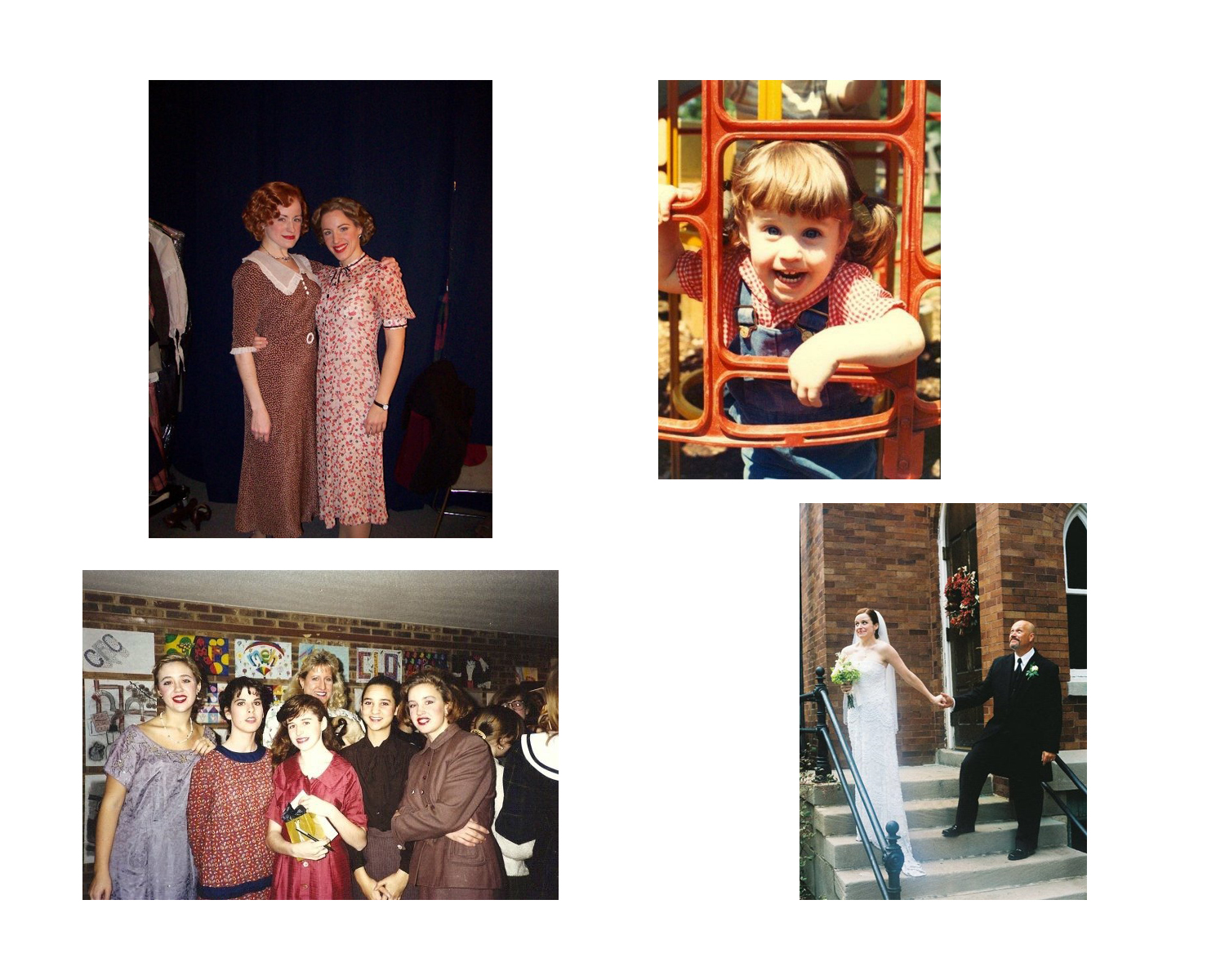
 

Stage-&-Candor_Heidi Kettenring_personal

KW: Have you seen anything recently that really struck you?
 

HK: Renee Elise Goldsberry, the woman who plays Angelica in Hamilton. That was a performance that knocked me out, just knocked me out on every level. And part of it is that the material was so surprising, I didn’t know anything about it when I saw it. I hadn’t listened to it on purpose. So you know, the fact that this elegant, beautiful woman comes out and then starts rapping like a, just, diva, for lack of a better word, and then singing like an angel and emoting with every inch of her body…the whole show was mind-altering, but that performance for me stood out. She was my favorite.
 

Dara Cameron, actor, Little Women:
“I feel so lucky to have gotten to share the stage with Heidi several times and she is one of my dearest friends. The first time we worked together, in Little Women, was a magical experience. It was one of my first professional jobs and I remember feeling instantly comfortable with Heidi. She has this ease about her – we became close very quickly. We got to sing a beautiful duet together and I’m not sure I’ve felt more connected with someone onstage (except maybe when playing opposite my husband…maybe…). She is a uniquely respectful and attentive scene partner, and one of the most honest actors I’ve ever encountered. 
We were also lucky enough to perform in Hero together, also at the Marriott, where she schooled me on holding a coffee cup realistically onstage (you have to hold it like there’s actual hot liquid in there!) and where we consistently had the hardest time keeping it together in one of our scenes because we just were having too much fun. Every night I got to listen to her sing her big act one solo number while waiting in the wings to enter and I remember marveling at her both her consistency and her spontaneity. I love going to work with Heidi because she takes herself and our business exactly the right amount of seriously.”


KW: So, since you started, you’ve gotten to play some of the most well- known roles in theater history. You’ve played Fanny Brice, Eliza Doolittle, and you played one of my personal heroines, Jo March.
 

HK: Oh, Jo is one of my favorites too!
 

KW: Let’s talk about Jo and Little Women. She’s one of my favorite characters, I know you’ve said in the past that she was a big love of yours too. Why do you think she’s become such a hero for women?
 

HK: I think a lot of the time when women are represented as strong professionally or strong as a leader, their femininity is left out. Their ability to love and be loved is left out, and what I loved about her is that she –­ surprise surprise –­ she can do well at that and she can love as a sister and love as a friend, with Laurie, and love as a lover, with the professor, but more importantly than that she…I don’t want to say she’s unforgivingly who she is, because she does try to be kind and she struggles within herself and asks, am I doing the right thing? But she knows what she wants to do and who she wants to be and she does what she needs to in a healthy way, to get it done. But at the same time, she is open to following love, and getting married if she wants. I think that for so long there hasn’t been a heroine that embodied all of that, even from a time when that wasn’t considered the norm, it wasn’t considered something people would want to be read about, and go figure, they did. It was sort of interesting proof of that we’ve come so far, but then we haven’t at all.
 

KW: There’s a lot of academic debate about Jo’s ending, in the book and onstage, about whether ending up home with her family and her husband is a betrayal of her pursuit of her career and her independence.
 

HK: I don’t agree with that at all. That’s one of the reasons why I love her, you don’t have to sacrifice one for the other. She [Louisa May Alcott] isn’t in the room for us to ask, but that’s an interesting thing. I can understand that point of view, “Oh well, she got professionally what she wanted, but it’s just not enough, I have to be something for a man” but I don’t think that’s it. I think there’s a wonderful partnership with the professor and Jo does doubt herself a lot at the time. There’s something sort of wonderful, I feel, about the fact that he helps her. I mean, it would’ve been just as good for her to handle everything on her own, but how wonderful that she didn’t have to. There are many ways to be fulfilled and she happens to fall in love while she was becoming an author.
 

KW: I think that’s one of the things that’s important to touch on: the fact that there’s not one path, there’s not one way to be a woman or to be strong. But that there’s room for all different kinds of choices and that real empowerment for women is about being able to make the choice…
 

HK: Right! And not necessarily what that choice is.
 

KW: Obviously, her relationship with her family, and with her sisters, is at the heart of the piece. You did the show out here at the Marriott Lincolnshire, with a lot of other great women…Dara Cameron, Morgan Weed, Abby Mueller. How do you feel like you all worked together in the rehearsal process to make that bond really present onstage?
 

HK: It was immediate. It was really immediate. I had been doing Wicked for two years when I did Little Women. I had been out of the loop of Chicago theater, really, for two years. I knew Abby because I had worked with, at that point, Roger…I think Roger was the only Mueller I’d worked with at that point, and I’d worked with him a lot. So I knew them from when they were kids. But it truly was immediate. I mean, that whole company was just really, really awesome. And the show is set up that you kind of –­ at least with the sisters anyway –­ if you can’t create that bond, you’re gonna have a terrible time. And I don’t think you can play Jo; I mean, I feel this way about any show. If you’re playing Annie in Annie Get Your Gun, or Fanny in Funny Girl, if you go into it thinking ‘I’m Jo March,’ then the whole thing is doomed to failure. You’re part of an ensemble, in any show that you do. So that’s what we were collectively, although we did have an issue when we got our sweatshirts. And we got pink ones, and the guys were really mad. ‘Cause they were like, I don’t want a pink sweatshirt that says ‘Little Women’ on the back, and we were like…’tough!’. That was maybe the one time we weren’t very ensemble–ish. But, it was funny.
 

Annaleigh Ashford, actor, Wicked:
“Heidi Kettenring is an astoundingly versatile and wonderfully gifted actress that is such a treat to work with onstage and off. It is no wonder that her craft and work ethic has made her known as Chicago’s leading lady. I had the great pleasure of working with her in the Chicago company of Wicked, a show that celebrates female empowerment and female driven stories.”


KW: You were in Wicked for quite some time.
 

HK: I did it for three years! I want to say I did over a thousand performances of that show.
 

KW: That show attracts such a young, passionate female fanbase. Did you have the opportunity to really engage with the fans of that show?
 

HK: I did. It took me awhile to accept that. It’s such a phenomenon, and that’s something that here…nobody hangs out, really, at the stage doors. I never experienced that before. It’s gotten more –­which is kind of exciting –­ that people now know that they can do that. But for the first year, I was able to get out of the building before the orchestra had finished playing. And I’d be at my car before people were even out of the theater. And it was actually somebody in the show who said to me, “You know, it might behoove you to go to the stage door. Because there are hundreds of girls, there are hundreds of young people and not-so-young people…there are tons of people hanging out at the stage door, and they just want to meet you. They want to talk to you.” And I’m really good at being onstage and behind lights, but I get really nervous about when I have to do a concert and be myself, or speak in front of people as myself. I get really, really nervous. It was a really big learning curve for me. But once I started doing it…you know, I loved it. 
Facebook started really becoming a thing during Wicked . And I am still Facebook friends with a lot of the fans. I’m actually almost grateful, because I think if Facebook had started now, I would probably not have accepted a lot of friend requests from people I didn’t know. But at the time, I was like, “Oh, sure!” and I didn’t know who these people were. And what’s interesting is that these people who were teenagers, young teenagers at the time; I’m still sort of seeing their lives in an interesting way. And we’re still in communication, and there’s a handful of them who will every now and then drop a line about how important that thirty seconds was, at the stage door, of just saying hello. And I don’t regret that first year, because that’s how I learned how much I enjoyed it, by not doing it, but there’s a little part of me that wishes I hadn’t waited so long to actually experience that. And it’s not because it makes me feel good to have people say, “You’re so good!” It’s almost the opposite. That’s the part that makes me uncomfortable, once I get beyond that, and they’re telling me how good they feel because of what they just experienced…I love that. And there’s still a handful of people who now come see me in things all over the place because of that. Yeah, I mean, it’s kind of it’s own weird form of…it’s not mentoring, but it’s the same kind of feeling of like…realizing I’ve just done my show for the 725th time. But this is the first time for this person, who just spent their money to come experience that and how singularly awesome that is, the responsibility and opportunity that I have even when it’s over, to say thank you. Thank you for coming.
 

KW: The stage door after a show is a place where people really have access to their heroes. Anyone can go, anyone can say hi and share their experiences.
 

HK: Yeah, we’re all standing out there wearing our coats and our hats and our scarves at that point. I’m not wearing my costume that was designed by somebody standing on this big fancy stage. I’m just standing in an alley next to a dumpster and we’re complete equals talking about what we both just experienced from two sides of the stage.
 

KW: Have you ever met or worked with someone that was an idol to you?
 

HK: I’m sure. Well, Susan. I keep bringing Susan Moniz up, and it’s fun, because she’s such a good friend of mine, but I remember being in a show with her for the first time…I was just knocked out because I had seen her when I was at Northwestern; I had seen The Hot Mikado at the Marriott Lincolnshire and we’re sitting next to each other in a dressing room and it was just crazy, crazy, crazy to me. Ben Vereen! Oh my god, he was in Wicked for one week. He did the show for one week. And the Wizard didn’t walk onstage for 45 minutes, he could’ve shown up at half hour, and gone to his dressing room. But he came up on the deck at places every day, shook everybody’s hand. He said, “Make some magic out there!” He learned everybody’s name before he got there, for the one week he was there. Oh man, that was incredible.
 

KW: Have you found that the people who are the most engaged and kind and honest offstage are often also some of the best performers you’ve worked with onstage?
 

HK: Yes. I’m sure there are many who are not, but from my experience, the more open you are…being a good actor is reacting to what is coming at you. ‘Cause even a one person show, you have to react to the music, you have to react to the lights, you have to react to the audience, you have to react to your own self. And if you have a block up for that, then I don’t know how you can really truly tap into being a really good actor. If you can’t look someone in the eye and say hello, how are you gonna look someone in the eye onstage and see, “Oh, today their energy is a little bit lower, I gotta maybe kick it up a notch a little bit,” or vice versa.
 

KW: And in the moment you’re lost in the world of the show. But now we live in a world now where technology has enabled a lot of people to react offstage and share opinions on what they saw or how they feel. Do you read reviews or reactions to your performances online?
 

HK: I do read reviews. I went through a period of thinking, don’t read reviews, they’re detrimental. I’m the kind of person who…I almost even have a hard time not flipping through and reading the last page of a book. For me, it’s ripping the band-aid off. Yeah, sometimes I read stuff that I don’t wanna read, but I find they help me. I don’t necessarily listen to them, but I like to get that over with. Reactions…on the flip side, I learned very quickly, especially with Wicked, I don’t go to blogs, I don’t read message board type stuff. Because it’s too easy for people to…like, when people are driving a car and they feel like they’re in the privacy of their car and act horribly, sometimes I feel like behind the screen of a computer, even if people don’t necessarily mean to be really mean, I’ve read some really hurtful things about myself. And I don’t need that. But there’s something about, in the confines of a review, I can’t not. Every time I try to not do it, I end up thinking, “I wonder what they said. I wonder what they’re saying.” And I find that for me, it takes the mystique away. I read it, it’s done, and then I can move on with my life.
 

Jessie Mueller, actor, She Loves Me:
“Heidi and I did She Loves Me together at Writers’ theater and it’s one of my favorite things I’ve ever seen her do. She’s just kind of dreamy to work with. She knows how she works and how to work with others – when to get down to business and when to have fun. You’ll realize after a day of rehearsal that you’ve laughed your butt off AND gotten the scene blocked too. She’s also a gem of a human being and a great friend – the kind that can help you look at this business with a keen eye, or a healthy dose of humor. She’s a great human being and a great actor. You’d be surprised at how rare that is.”


KW: One of the other big shows you did here in Chicago was She Loves Me at Writers Theatre
 

HK: I love that show, I love Jessie Mueller.
 

KW: Ilona is so interesting as a character. She’s very open about sex and sexuality in a time when a lot of women were not, and that was a controversial thing to be. She’s very resistant to marriage and she’s even slightly afraid of Paul, whom she later marries, when they meet. The lyric is, ‘he looks really strong, I wonder if he could hurt me’.
Where do you think that comes from? Why does she find herself able to let Paul in, in a way she hasn’t been able to before?
 

HK: If somebody is bigger than you, somebody’s stronger than you…you don’t know them. It’s wise to be trepidatious about that. But for her, she finds him very attractive, but also it’s the first time that she’s allowed herself to be interested in somebody because of their mind, and he’s interested in her…they probably both find each other very attractive, they’re talking about books. They’re talking. They’re sipping hot chocolate and actually talking. They’re not flirting. It’s not just ‘a really attractive man has walked into the Parfumerie and I’m going to flirt with them,’ it’s ‘Oh, this respectable guy with glasses has asked me a question, asked me if he could help.’ There’s a moment, where the lyric is, “Clearly respectable/thickly bespectacled man,” by the second verse she’s singing “slightly bespectacled man,” it’s like even she stops looking at his surface because of what he’s giving her from the inside, to her inside.
 

Stage-&-Candor_Heidi Kettenring_Theater

KW: Have you ever had to do a show where you get the script, and you look at the text, and you don’t necessarily identify with your character or their story arc? How do you proceed from there?
 

HK: Oh sure. There are definitely times when technique has to come into play, if my human experience isn’t going to help me. Angels in America was a really hard one for me to tap into. The language is so beautiful but a little difficult, and the subject matter was difficult to tap into. I do tend to then lean a little bit more on technique. But interestingly, even those, after awhile they become easier, almost because they must. The longer they’re in your body, and the longer you work on them…your body as a vessel, it does become easier, just because it must, for lack of a better way to put it. In order to lose yourself into a performance, while at the same time bringing a lot of Heidi into everything I do, because I am who I am, so the more challenging ones, I think, the more of myself I let in, it helps me with that.
 

KW: Jessie Mueller she said something similar about playing Carole, that she felt that you can’t just play the character without bringing some of what you are into the role. Have you ever had the experience of playing a real person? How was that different?
 

HK: Oh, Jessie! Fanny Brice was the big one, probably.
 

KW: Did you lean on the biographical material? How do you combine that with finding your way into it as Heidi?
 

HK: Because of the nature of who I am, I am sort of a natural mimic. So I try very hard to not do too much visual, audio research because I will just innately have a difficult time shedding that. We actually talked about this a lot with The Diary of Anne Frank [Writers Theatre, 2015] actually. Some people read the actual diary and some people didn’t. 99.9% of the time, the words on the page of the play that I’m doing are gonna give me the information that I need. If I don’t understand something or I’m speaking of something historically that I don’t really know what that is, I’m gonna look it up so I know what I’m talking about, but if the scene on the page didn’t happen, knowing what really happened doesn’t help me tell the story I’m trying to tell. So playing somebody like Carole King, when there’s so much out there…it’s a really fine line to walk. You don’t want to do a mimicry of Carole King’s voice, but, you know, I’m Jessie. There are certain things that are quintessential that people are gonna think about…it’s a really fine line to walk.
 

KW: And a show like Funny Girl, people come into it with a certain expectation of what they think that character is or what it should be. You come in, and you surprise people. Do you enjoy that?
 

HK: I really do. I mean, playing Patsy Cline in Always Patsy Cline is one of the funnest times I’ve ever had. And it was really complicated. Now that’s one where I listened to her recordings over and over, because I’m never going to sound like Patsy Cline. I’m not Patsy Cline. But…she’s an iconic singer. So, I love that, I love the idea that there is no way I’m going to sound like Patsy Cline, but what can I do to give grace notes to her so that within a few minutes, people have forgotten the fact that I’m Heidi Kettenring playing Patsy Cline. And that was really fun, people knew she had died years prior, but you hear people saying, “I thought she died?” like, they would actually lose themselves into thinking, “Oh my god, I’m watching Patsy Cline in a play”, and I think that’s wonderful and fun and cool and such a challenge. I don’t want to do it all the time, because it’s a whole other element of taking a little bit of the freedom away as an actor. You do have to work to fit into that mold, but it’s a fun challenge.
 

KW: There’s been some controversy around Madeleine Albright lately but there’s something really interesting she wrote in an op-ed, “In a society where women feel pressured to tear one another down, the real saving grace we have is our willingness to lift one another up.” How can we do better about lifting each other up?
 

HK: I almost feel like if I knew the answer to that, the problem wouldn’t be there. All I do know is that it is the truth. It’s something that I don’t understand why it’s a conversation we need to keep having but we obviously do. Knocking people down isn’t going to help. Building people up is going to help. It helps you as a human being to build somebody up. It blows my mind that it’s a conversation we will need to have. So we have to keep having it. We can’t be afraid of having it. Don’t be afraid of, “Oh no, somebody might call me a feminist!” So? Be a feminist.
 

KW: Do you describe yourself as a feminist?
 

HK: Absolutely.
 

KW: Some people would say that it’s a loaded word. What does that word mean to you?
 

HK: Right, I think maybe I am because I don’t think it’s a loaded word. I’m a feminist because —maybe it’s a naive reaction— I’m a feminist because of the fact that we still have to ask if it’s okay for me to say I’m a feminist. I am a woman who believes that I— in every way other than my actually physiologically differences— I’m tongue-tied about it, even…
 

KW: “Feminism is the radical notion that women are people”?
 

HK: Yeah, exactly! Like the fact that it just blows my mind that we’re gonna have a conversation about what Hillary Clinton wore. It seems so irrelevant. I sit there and I’m like, okay, she wore a gold outfit. Show me a time that one of the men shows up not wearing a suit and a red or maroon tie, y’know? And even when they do, we’re not gonna talk about it. Because it’s not what’s important. I guess because of that it has this stigma that it’s a word that means I’m shrilly, speaking about what I’m owed and what I’m deserved…the fact that there still needs to be a conversation about what makes people equal…that alone makes me a feminist, because how could I not be? I’m a woman who in no way doesn’t think in every way we’re equal.
 

KW: Have you ever felt treated differently because you were a woman?
 

HK: Yes. That’s definitely been the case. I’ve never been one to be actively physical, I’m not a hugger. It takes awhile for me to walk up and kiss a friend of mine that I don’t know very well. In theater, that’s an interesting thing, I don’t know if it’s a gender thing or a me thing, but I do think it’s a gender thing. The immediate intimacy that a lot of people have…I don’t immediately have. Words come up like “lighten-up” or “oh, you’re such a prude” in that regard, and it’s not all the time, but when it happens my wall immediately goes up. “Oh, I’m a prude because I don’t like the fact that you just smacked my ass? Okay.”
 

KW: Do you feel like there’s that pressure onstage too…to “lighten up”, to be more likeable?
 

HK: I do. Yes. I do. And a lot of it is, in particular, with words that I’ve always hated. “You’re making her really shrill, you’re making her really strident.” As a woman, why are those a bad thing? That is actually the timbre of my voice. When I’m getting angry, I get a little “shrill” or “strident”, so really what you’re telling me is that you want me to be likeable. Well, in this moment, she’s not likeable. I’ve never heard “shrill” used towards a man. And…ugh, I just hate that word so much.
 

KW: We were talking before about politics, which feels relevant here…Donald Trump, who comes from a place of anger so much of the time, or even Bernie Sanders, who come from this place of being loud and having raised voices…if Hillary Clinton or Carly Fiorina matched that tone, they’d certainly be (and are) called “shrill”. But somehow with men, it’s seen as strong.
 

HK: That’s exactly it. People don’t realize that they don’t want to associate women with anger or strength until they actually see it happening. They’re like …ugh, what is this unladylike behavior? But at a debate, when a man is doing it, it’s not even considered.
 

KW: What do you want to see in the future? For women, for theater, what is your vision of where you want to be in 10 years?
 

HK: My hope is that, the gilded lily hope, it’s a conversation that we no longer need to have because everyone is on the same page and on the same foot. My hope is just that it’s not, “Oh my god we have this wonderful female director, we have this wonderful female…” that it’s just “wonderful director”, so what if it happens to be a woman. And that there’s just more. More opportunity to talk about it. To talk about it like this, like we are right now. More to actually do. That it’s not avant garde for there to be a play of all women. That it’s not avant garde that the team is all women, you know? The fact that it’s news in 2015 to have on Broadway the creative team for Waitress is all women…my hope is that in five years that not only is that not a conversation, but it’s not even a question. It shouldn’t be a novelty. I don’t want it to be a surprising thing. It’s just a thing. Well, of course it’s all women. They were the best ones to do the job. But there doesn’t have to be a press release, because of how great and unusual it is, and right now it is great and unusual, but it would be great for it to just be great.
 

Barbara Gaines, Artistic Director, Chicago Shakespeare Theatre, directing the upcoming Tug of War:
“Every performance I see of Heidi’s—no matter what the play—is my favorite performance, because she is the ultimate chameleon. She changes characterization depending on the show and the demands of the role. She completely blows us away with her versatility, and with her profound understanding of human nature. Besides that, having her in the rehearsal room is nothing but a complete and utter joy. She is a fantastic human being…wise, warm, and she makes the best egg salad I’ve ever tasted. I feel truly blessed for all of the opportunities we have had to work together—and for the great adventure we are embarking on this year with Tug of War.”


KW: Now, you’re on to Tug of War at Chicago Shakespeare Theatre, a six-hour marathon of a show.
 

HK: Terrifying!
 

KW: Barbara Gaines is directing that…do you feel like the energy in the room is different when you’ve got mostly women?
 

HK: Oh yeah, just as we were saying before, the inherent fact that she’s a woman is different. Barbara for me is a singular, wonderful person to work with because she’s so strong and she’s so nurturing. She embodies for me all these wonderful elements of being a strong, full woman. She’s smart, she commands a room, she’s nurturing, she’s kind, and not that I haven’t worked with men who are like this, but there’s something about this petite, spark plug, lovely woman who I feel completely at ease talking to. It’s just a different energy. I don’t know what’s better, what’s not, but I love working with women, and with Barbara. She brings a positive, kind, strong forward momentum into the room every day. And I so admire that about her.
 

KW: And then, working on Applause, with Margo and Eve…their relationship starts off with a conversation at a stage door.
 

HK: Right, like, you’ve come to see me twenty-four times. You’ve earned my attention.
 

KW: Her instinct is to be the mentor. The break-up of that friendship feels like it is a product of the idea that there isn’t room for everyone. Eve feels like it’s her OR Margo, but there’s a place for both of them.
 

HK: That’s where my Margo is coming from. She’s mentoring her. Eve, unfortunately, I mean, it turns sour, because of the fact that…when Margo sees her with her, “Oh, I’ll take care of that, I’ll do that, I’ll sew your clothes” and then she goes back into the room and she’s bowing and holding Margo’s dress up to her. I don’t think –­I mean there is the undercurrent of Margot feeling old, so there is that element of it. Women can have less opportunity as they age. But y’know, what I see for Margot, because I’m coming at it on her side now. I’ve played Eve years ago. Margo’s reaction is to the dishonesty. As much as Margot is this sort of flamboyant, fabulous personality, she is unabashedly who she is. And here is this woman who is hiding completely who she is so there’s that part of –­ you’re trying to be successful by being completely who you are not. The number, “Who’s That Girl” she sings when Eve is there –­ y’know, does he want to marry this Margo, that Margo, or the one on the TV –­ well I don’t feel like she’s saying that’s not who I was, this is who I am now, that’s what I was, but I think one of the many things that bothers her about Eve is that she is completely not in any way who she says that she is. She’s covering up, whether or not she’s doing it because she’s a woman or because her dad was so horrible to her as a child; she is not who she says she is. It’s an interesting piece. What I’m struggling with is the end, is how to make the end not unpalatable. Because of the fact that Margo, the words to it are beautiful, ‘there’s something greater,’ I don’t need to just be the person on the screen. But then it’s like, she just gives it all up to be with Bill. So finding the way in a non-1960s world, to take that and make it work in my brain and not make it, “Well, I’m giving up the theatre so I can be with my guy!” That’s become a really interesting, fun, challenge.
 

KW: Gloria Steinem said in an interview with PBS a few years ago that women can’t “have it all” until we realize that not only can women do anything men can do, but men can do anything women can do, because women end up expected to do two jobs, one in the home and one out of it. Do you feel like you’ve been able to “have it all”? What does that mean to you?


HK: I do feel like I’ve been able to have it all. Well, all I wanted in the the time that I wanted it, if that makes sense. Because I don’t think anyone can or should have it all, because then…what do we need other people for? I was actually having a conversation with my husband just last night. We were talking about all kinds of stuff, but the conversation we had recently was that you can’t possibly understand what I’m feeling because I’m a woman. And he said, “I do, I understand”. And I said, “Well, no, I think it’s actually okay that you don’t. And it’s okay that I don’t understand everything that you’re going through since you’re a man. You’re a man, I’m a woman. The difference is how we handle those things and how we interact because of them. Because we’re all innately different. For me personally, yeah, I think, and I don’t look at it in any way as giving up anything, how do I want to say this…I feel like I have what I need and I want because…I try, I work very hard all the time and in every phase of my life to look at my life and think, “What do I need, in this moment, to have the full life that I need right now?”
 

KW: I’m really glad that you brought that up. The idea that we can’t ever completely understand what someone else is going through when you have such a different identity or life experience is something some people are afraid to say. Man and woman is one example, race is another. It’s important to have the conversation.
 

HK: Right, absolutely. I always feel like, if I don’t understand, which I can’t, with race, with gender, with class…you know, we’re all different. Talk to me about it. Explain to me what, you know, I’m going to say or do something “wrong” just from the sheer fact that I don’t know. And so…help me. Educate me. And I will do the same. Because it is impossible for me to understand the full experience of a man, of anyone of a different race than me, because I just am not those things. But I want to. I want to do everything in my power to understand that because we all walk the face of the earth and we should all walk it together, as much as we can. But I cannot pretend that I understand everything because I just don’t. I would like to learn as much as I possibly can. And I think that, I hope, that’s part of why I’ve been able to lead the life that I do, and that I’ve wanted, is that I try to have as much empathy and sympathy to the degree that I can, and I want to live to my honest and true self.


Heidi Kettenring’s favorite Chicago credits include: Wicked (Nessa) with Broadway in Chicago, The Diary Of Anne Frank (Mrs. Van Daan) and She Loves Me (Ilona), at Writers’ Theatre, The King And I (Anna—Jeff Award best actress in a musical) and Funny Girl (Fanny Brice), at Marriott Theatre in Lincolnshire, The Merry Wives Of Windsor (Mistress Ford) and The School For Lieu (Eliante), at Chicago Shakespeare, Oliver (Nancy) at Drury Lane Oakbrook, as well as work with Chicago Commercial Collective, Court Theatre, Northlight Theatre, Theatre At The Center, Drury Lane Evergreen Park, and American Theatre Company. She toured the U.S. in Disney’s Beauty And The Beast. Regional credits include work at Fulton Theatre, Maine State Music Theatre, TheatreWorks Palo Alto, Peninsula Players and Bar Harbor Theatre. Ms. Kettenring has also sung concerts for Artists Lounge Live, Ravinia Festival, the Pensacola Symphony Orchestra and at Millennium Park. Heidi can be heard singing on two Disney Junior Books and can be seen in the film Man Of Steel. Television credits include Cupid and Chicago Fire. She is the recipient of a Joseph Jefferson Award, 7 Jeff Award nominations, the Sarah Siddons’ Chicago Leading Lady Award, an After Dark Award, the Richard M. Kneeland Award and is a graduate of Northwestern University. She is a proud member of AEA and wife of actor David Girolmo. Heidi can be seen this Summer and this Fall in Tug Of War at Chicago Shakespeare Theatre.

Posted on

On Playwriting


Originally published in The Dramatist


What are we doing when we write for the stage? Are we entertaining ourselves? Entertaining others? Having our say? Trying to make a living? Trying to make a point? Furthering the art form? Joining the dialogue? Trying to save the ship? Trying to sink the ship? Getting even? Getting ahead? Keeping our career alive? Completing a commission? What?
 

We’ve all written for all of these reasons from time to time. We’ve all needed what only the theater has to give, and we’ve all offered our hearts up to the gods in the hope of getting a place at the playwrights’ table. And we have all been hurt. We have all heard
 

“No, you can’t sit here. You’re not ready.”
“Yes, you can sit here, but we’re not going to feed you.”
“Are you crazy? People like you can’t sit here.”
“OK, you can sit here, but just til the new you comes in.”
“No, you write for TV, you can’t sit here.”
“Yes, you can sit here. But just til your next show opens.”


If you are reading this magazine, you know that it hurts to write for the theater. But you also know that hurt is not just what artists go through. Hurt is the human condition. Fortunately, hurt is not the only human condition. Humans also feel hope and love and fear and confusion and power and glory. They experience frustration and defeat and triumph. They long for the wrong person, they make bargains with the devil, they take things that don’t belong to them, they have fatal flaws and outrageous fortune, they make the same mistake again and again, and sometimes they learn things. Especially in musicals, people learn things. What we need to do, as playwrights, librettists and composers, is not try for a seat at the table, we just need to say what it has felt like to be a lone, living human in our time. The playwrights who convey the human condition, who chart the desperate path of one human toward one goal, those are the playwrights we treasure. The plays that tell the stories we need to hear, because we are traveling the same road, those are the plays that survive.
 

We all want to write these plays that don’t go back in the drawer, that have a life of their own. Like Dr. Frankenstein, we all want to create the monster that gets up off the table and walks out into the night looking for love. But how do we do that? If we were going up a big mountain, a trusted guide would tell us what to wear, what to take in our pack, and when to stop and rest. Listening to this good guide could improve our chances of getting to the summit and back, save us time and even save our lives, maybe.
 

So what are the ropes of the playwrights’ life, the signposts, the signals, the ways to get on the right path and stay there. This whole issue is a collection of them, from some of the finest guides we have, people who have spent their lives watching people go up the big mountain. But I want to talk a little about SUBJECT, because in my experience, choosing the wrong subject is the mistake you don’t recover from, it’s the beginner’s mistake that anybody can make any time. So what is a good subject for a play? Arthur Miller said the only subject was, how does a man make of the world, a home. But what does that mean?
 

When I was first starting to write, Jon Jory asked me what I wanted to write about. I said I didn’t know, I just knew I belonged in the theater. And then he gave me this advice. “Go back to a time when you were really scared and write about that. Being afraid makes you remember details, and details convince people a story is real. And chances are, if you were scared by this, other people will be scared of it too, and that will make them pay attention.” The play I wrote after that advice was Getting Out, based on a violent girl I met when I worked in a state mental hospital. It launched my career and is still the most performed of all my plays. All my students have heard this advice. David Lindsay-Abaire has credited this advice with giving him the subject for Rabbit Hole. I heard Toni Morrison say the same thing once. She said, “Dread is what keep people turning the pages.” Clearly, fear of something is a great subject.
 

At this point, we could go through all the great plays and musicals and reduce them to what all the great characters were afraid of. That might feel trivial, but Hamlet is afraid of what will happen if he doesn’t discover who killed his father. Nora is afraid of what will happen to her if she keeps living in Torvald’s house. Lear is afraid his girls don’t love him, Oedipus is afraid more people will die if the curse is not lifted. Masha is afraid of not getting to Moscow, Juliet is afraid she won’t get Romeo, Curly is afraid Judd will take his girl, Maria is afraid to leave the convent, etc etc. But a better use of our time is thinking about fear, and how we are pulled to edge of our seats when we have some form of it on the stage.
 

One thing I know for absolute certain, it isn’t enough just to have the fear by itself. I was recently onboard a whale-watching expedition north of Iceland. I was so afraid of drowning that I wore a huge blue moonsuit, an orange raincoat, a life preserver, two sets of gloves, and three hats. I never stood up, not once. Because the sea was so rough, I held onto my seat and kept my eyes shut the whole trip. What I was hoping for the whole time was some relief from this fear, but it never came. Only when the boat docked was I free to leave, and I got out of there as fast as I could. If this had been a play, I would have been furious at the playwright for trapping me and torturing me like this.
 

The point here is that your character needs some action she can take to overcome her fear and save herself. We come to the theater to see what people do when they get in trouble, almost any kind of trouble. We want to see this because we may find ourselves in that same trouble someday. For all of our time on earth, we have gathered around our tribal fires at night to listen to stories. But they are not the stories of what made our people happy. They are the stories of how our people survived their difficulties. Maybe this is why we know so little about being happy, because we see so few stories about how people do it. But we have survived as a species because we have told stories about how people have solved their problems, conquered their fears and got where they were going. Or not.
 

So now. This is your guide speaking. If you know a story about a brave human in big trouble, write that. Write how the trouble started, what the person did, and how it turned out. Little troubles, for example, troubles that will solve themselves just by the person growing up, you don’t need to waste your time on those. Write about greed, revenge, rage, betrayal, guilt, adultery, and murder. When writing about softer troubles such as injustice, loss, humiliation, incapacity, aging, sadness and being misunderstood, just be sure to attach them to one of the more active troubles. Attach betrayal to loss and you have a play. Attach adultery to aging and you have a play. And let fear drive the whole thing. An aging woman is afraid her husband is having an affair, so she plots to kill him. Just kidding, but you see what I mean. We know we would watch that story, as stupid as it is in sentence form. Then you just add your great dialogue and your fabulous scenes and you’re done. Haha.
 

Seriously, what we are doing when we write for the stage is telling stories people need to see. We do it for the same reason we put up stop signs, because it is important, for some reason, for people to stop at this place and look around. Our place at the playwrights’ table is determined by how many people remember the stories we tell, and people remember the stories they feel they will need someday. Just like life. Urgency is the key to a good story, fear is the force that keeps it moving. The good news is that humans are so hungry for stories that our brains invent them even when we are asleep. So they need us. It is a great privilege to be a storyteller. And if it hurts, it hurts. We can take it.


Stage-&-Candor_Marsha-Norman_BioMarsha Norman won a Pulitzer for her play ‘night, Mother, a Tony for The Secret Garden on Broadway and a Tony nomination for her book for The Color Purple.
 

Ms. Norman is co-chair of Playwriting at Julliard and serves on the Steering Committee of the Dramatists Guild. She has numerous film and TV credits, as well as a Peabody for her work in TV. She has won numerous awards including the Inge Lifetime Achievement in Playwriting. She is also Presiden of the Lilly Awards Foundation, a non-profit honoring women in theater and working for gender parity nationwide.

Posted on

A Conversation with Jaime Jarrett


Jaime Jarrett is a composer, playwright, and student at the University of the Arts in Philadelphia. Their musical Normativity is being produced as part of The Next Link Project at The New York Musical Theatre Festival this July. We sat down at The Last Drop Coffee House in Philadelphia to discuss Normativity, being a queer person in theater, the limits of representation, and of course, Fun Home.


Esther Cohen: What’s your elevator pitch? How would you describe yourself as a person and an artist?
 

Jaime Jarrett: I got started in theater really young, maybe 6 years old. My parents sent me to workshops and classes, so I was a performer in the beginning.
 

EC: Everyone starts out in community theater musicals.
 

JJ: Yes! I think the first thing I did was Disney. And I always loved writing songs – I was writing these little songs when I was really young – but I started actually writing songs on guitar and piano when I was in middle school. I put my songs on Youtube for a while, but those are all gone now, of course. When I got to college I deleted them, because some of my friends were finding them, and those were not the type of thing I wanted circulating. They were really embarrassing. I realized that I really loved writing music my senior year of high school. I wrote this song that was a parody about being a hipster. Everyone always called me a hipster in high school, even though, if they had used their brains, they would have realized I was actually just gay. Like, wow, I wore a lot of flannels, I wonder why that was! So I wrote this parody song for a class and I kept getting asked to perform it again and again at school functions. And I started thinking, “Wow, people like this. I’m doing something cool that people like.” And then I wrote a film underscore for another class, and I won an award for that piece. That was when I started connecting the dots and going, “Oh, I’m good at this.”
 

EC: Discovering that you’re good at something is the best feeling.
 

JJ: It’s really wild. My freshman year of college, I wrote this song, and I remember showing it to the girl I was dating at the time and my sister, and I remember them saying “How did you do that?!” That was one of the first songs I wrote for Normativity.
 

EC: How did Normativity come about? It seems like it’s had a long development period before even getting to NYMF.
 

JJ: It started as this 60-minute show called Don’t Bury Your Gays.
 

EC: Oh god, what a title.
 

JJ: I know! And I got this mishmash group together of my friends and people who were friends of friends and we just did a show. And a lot of people came to see it. I was totally blown away by that. The summer after my freshman year of college, I made myself stay at school in Philadelphia so that I would write everyday. I would go to the practice rooms at 11 am everyday and I would stay for 6 or 7 hours. I’d bring my lunch and I’d just stay and write music all day. I wrote so much stuff that didn’t even end up in the show, but the whole point was that I was working really hard. I’m so grateful that I had that summer to kick myself into gear and say “I’m going to finish this show. I’m just going to do it until its done.” I was grateful for the consistency that writing gave my life. The schedule of waking up, eating breakfast, exercising, and then sitting with a piano for 7 hours. I loved that. That felt amazing. Especially because I don’t think I’ll ever have the chance to really do something like that again. Life gets in the way, y’know?
 

EC: And now you’re going to NYMF! How did the show get there?
 

JJ: I applied on a whim, knowing that there was a really high chance I wouldn’t get in. They told me I’d hear back sometime in December about whether or not I was being considered. And on December 1st, I got an email telling me I was being considered as a finalist. And that was “¦ I mean, I was screaming and jumping around because I had never been recognized that way before.
 

EC:: And NYMF is such an incredible festival!
 

JJ: I mean, it’s blowing my mind. I’m really grateful. And since then, everything has just been falling into place. Like, Mia [Walker], our director, was just casually talking to Rachel [Sussman], the Director of Programming, about what she wanted to work on next, and she told Rachel that she wanted to work on a lesbian love story. So from the first time I spoke with Rachel, she was able to say “We already have a director who’s interested.” And Mia is great. I think that our morality and our issues with the world lie in the same place, so I think we’re really going to click.
 

EC: Normativity is a story very much plucked from your own experiences. What’s your view on queer representation in media? What void are you trying to fill with Normativity?
 

JJ: Even with a really supportive family and friend group, I struggled with coming out to people. And as I continued to come out – because it really is an ongoing process – I was trying to pick apart why I wasn’t feeling comfortable with my identity yet. So I started looking at the theater and the media I was taking in, looking at the portrait of lesbians that was being painted there, and I thought, “this is where I think something is going wrong.”
That portrait was abysmal and made me feel like I did not have a life ahead of me in any way. I just remember thinking, and this is kind of dark, but I remember thinking pretty confidently that I was going to die before I was 30. I wasn’t suicidal, I just felt that I wasn’t going to have a long life.
 

EC: You were asking “What’s next?” and there didn’t seem to be a clear answer.
 

JJ: Exactly. I didn’t see any queer stories. I remember going into Barnes & Nobles and saying “I want a book with a lesbian protagonist. Can you help me find that?” And they searched, and searched, and searched, and found nothing. In an entire bookstore! There were floors and floors of books, and they couldn’t find one. Eventually, they directed me to the queer section. Which is the same at every Barnes & Noble I’ve ever been to. It’s two shelves, one labeled gay, one labeled lesbian. And it’s all erotica. And I was standing there wondering “Is this me? Is this what I get as a person?” I did find a handful of books with protagonists who were questioning their sexuality, but it was always a really taboo thing. There’s actually a line in the Normativity script that is pulled directly from the back of a book like that, in which a girl’s life gets turned upside down when she falls in love with a girl because she didn’t even know that could happen and now everything is so wrong! Why does realizing you’re gay always have to be associated with “and now my life is going to shit”?
 

EC: Why can’t it be “I realized I’m gay. And then, life continues.”
 

JJ: Yes! Life continues! We never see lesbian stories that continue on past the point of realizing you’re gay. It’s always about the tragedy of coming out. I just wanted to read a book about a girl whose problems didn’t revolve around her being queer. And that was so hard to find. So Normativity is about literally rewriting the queer narrative and pushing it in that direction.
 

EC: How do you think Fun Home deals with telling a fully-realized story about a gay woman without being all about the fact that she’s gay?
 

JJ: If someone asked me what Fun Home was about, in one word, I would say family. It’s about the connections that a child and parent can have, and it’s about uncovering your family’s past and rewriting the past. And I think it just so happens that one of the connections that Alison and Bruce shared was that they were both queer. But I wouldn’t say Fun Home is about being gay. What makes that novel and that show so great is that it’s not just about one thing – there’s so much to connect to. It’s written for anyone who doesn’t see themselves, who doesn’t know how to identify themselves in the world. That “Ring of Keys” song isn’t just about seeing someone like you who is gay – it’s about seeing someone who is like you, period.
 

EC: It’s about the thought of “I can live past 30 being who I am.”
 

JJ: Exactly. And my “Ring of Keys” moment came really late, in that it came when I saw Fun Home. I saw the show and I thought, “Oh, this is me. This is the kind of person I am.” I’m so grateful for that, and I do feel very connected to Alison Bechdel as an artist because of that.
 

EC: The ability to identify oneself in art and the media is obviously important to your work. How far do you think representation and truthfulness need to go in creating narratives? In other words, do writers and actors simply have to look the part, or do they have to have lived it too?
 

JJ: That’s a complicated question. So I’m gonna give you a complicated answer.
 

EC: Great!
 

JJ: I have this discussion every time I newly cast Normativity. We want a cast full of people who are queer. But what’s the deal if we see someone who is really right for the role and they happen to be straight? It’s a tricky question. And so far, we’ve only had straight women play the two lesbian characters. We’ve never had queer women in those roles. So even in my own work, I don’t have a clear answer.
As far as gender and race goes, I’m very strong and unwavering on the point that, if a character is trans or if a character is black, it must be a trans actor or a black actor playing that role.
 

EC: And why is that? Is it about bringing truth to the role? Or is it about artistic opportunity?
 

JJ: My friend explained this in a great way the other day. He is a cis man and he once played a serial killer. And he was saying, well, theoretically, in some world, he could become a serial killer. That’s something that could happen, it’s an experience he can tap into that is in the realm of possibility. However, no matter the experiences he goes through, he identifies as male and is never gonna be a trans man. And, no matter the experiences he goes through, he is white and is never going to become black. Identities are developed over time, but there are certain aspects of your identity that do not change. Your race doesn’t change, and while gender is fluid, I think we can all agree that there are cis people who will always identify as cis. There isn’t anything that can change that fact about you.
So it’s about truth of experience and it’s also about opportunity. Because if my cis male friend is cast in a trans role, there is a trans actor out there being actively denied an opportunity.
 

EC: Does your take on this issue change when it comes to writing experiences? Because a big part of playwriting is accurately writing a whole host of characters who might be completely different from you.
 

JJ: As someone who is queer, I can certainly speak to the sexuality aspect of that. I do think straight people should be writing queer stories as well. If straight people only write straight stories and queer people only write queer stories, then we’re not going to – well, first of all, we’re going to have fewer queer stories, because there’s less queer representation amongst playwrights.
 

EC: Right, and if white people only write plays about white people – which they kind of already do – there will be very few stories about anyone who is not white.
 

JJ: Yes. And as a white playwright, I can’t fully speak to the race aspect. Because maybe I’d like to say that I can totally write a truthful story from a black perspective, but could I? What I could do is listen. A lot. I once had a man ask me, “How do I write about women?” And I told him, to get a truthful perspective, you just have to listen. You have to talk to actual, real, live women and actually listen to their stories. If you don’t know someone’s life and lifestyle, and you want to write about that, then you have to actively learn and not stereotype and not fetishize.
 

EC: Talk to me about your experience being a woman and being queer in theater.
 

JJ: So, while I can certainly speak to experiences in the theater as a woman – because for most of my life I’ve been treated as one – I think it’s important to clarify that I currently identify as genderqueer.
 

EC: Great point.
 

JJ: When I was younger and auditioning for female roles, there was this weird competitiveness. I was realizing that all my friends who were male got cast all the time because there was a scarcity, and because there were so many girls, I just wouldn’t get callbacks for things. I just remember thinking that that didn’t make sense, because these boys who I was working just as hard as or harder than were getting roles, and I wasn’t getting any turnaround.
 

EC: When I was maybe 14 I have a distinct memory of a director telling me I didn’t “look like a leading lady.” When you’re not traditionally pretty as a female actress your options shrink intensely.
 

JJ: I remember all my dance teachers talking about my weight when I was younger. I would always hear that if I lost a couple pounds that I would be more marketable. And I’ve always felt uncomfortable with my body, but I could never figure out why. In the past couple years, I’ve come to identify somewhere in between the binary genders. I’m somewhere along that spectrum. So being told that my body wasn’t right, that it wasn’t female or feminine enough, when I was only 12 years old, was difficult. And men or boys just don’t get as much flack for their bodies not being perfect or not looking right.
 

EC: How did your experience change as you moved from acting to playwriting?
 

JJ: When I made the switch over to being a playwriting major, I started to dress how I wanted to dress. I realized that I didn’t have to be female anymore. I switched my major and I cut off all my hair. I was changing my major to Joan! I used that joke a lot when I was changing majors. I don’t really wear dresses anymore, I don’t really wear makeup – except for my eyebrows –
 

EC: On fleek eyebrows are important no matter who you are.
 

JJ: Yes, of course. So moving away from acting meant I got to stop thinking about how to make myself desirable for men to look at. Because even though I was never actually trying to attract men sexually, it still mattered what they thought.
 

EC: Because men rule the industry.
 

JJ: Exactly. And that’s part of why I love working with women and with non-binary folks. I feel very safe in that environment. And even if I’m working with men who identify as queer, there’s a shared perspective there that I like.
 

EC: One last fun question. Who or what inspires your work? Who are some of your dream collaborators?
 

JJ: When I was really young, one of my first memories is of my Mom playing a song from Falsettos on the piano and my Dad singing along. It’s such a beautiful song – “What More Can I Say” – about falling deeply in love with someone. And of course I ended up becoming so obsessed with queer politics, so William Finn has always had a big influence on my work. I also have such a love for the basics. I love Sondheim. And – this sounds so nerdy – sometimes I’ll just sit and listen to A Little Night Music because I think it’s just such a beautiful score and there’s a lot to learn from it. Also, although I know I’m so different from Lin-Manuel Miranda, I’m obsessed with his work. And if I could work with him one day, I would die. He’s just so smart. I just admire his sheer creativity. And I think he’s very socially-aware, which makes me happy.


Jaime Jarett is a Philadelphia-based playwright, composer, and lyricist who is currently studying Directing, Playwriting, and Production at the University of the Arts. Writing credits include Normativity, Aubade, The Cabin Play, and Brief Connection(s). They were the associate music director of Sometimes in Prague and will music direct and orchestrate the upcoming Hear Me War. Dramaturgy credits include She Keeps Me Warm and Michael Friedman’s American Pop. They are the recipient of the NVOT Outstanding Original Score Award for their work on the film From Me To You. Projects currently in development include Hearts, Brains, and Other Organs: A Song Collection in Progress and Fair Woman. They are particularly enthusiastic about bringing queer stories to the stage.

Posted on

Reflections on the Chicago Spring Season

Chicago Spring

Stage & Candor_Carlyle


Carlyle
April 2 – May 1, 2016 in the Owen, at Goodman Theatre
Written by Thomas Bradshaw; Directed by Benjamin Kamine
Photo: Liz Lauren

 
Enter Carlyle, the hour-and-fifteen minute personal travelogue of the self-described “political unicorn”, a Harvard-educated black Republican whose personal hero is Clarence Thomas. The Goodman Theatre has become host to biographical play about the life of Carlyle Meyers, played by Carlyle Meyers (played by James Earl Jones II with smooth charm and a winning smile that would sell even the most liberal on entertaining a tax cut or two). The show is one of the most relevant satires of the decade, but Carlyle is no joke. At the performance I attended, a discussion ensued between a young black woman made a comment about two side-characters, Shaniqua and Tyrone (Charlette Speigner and Levenix Riddle, respectively), who are Carlyle’s schoolmates, and are worried he just isn’t black enough. She asked Mr. Jones about the fact that in the show, Tyrone is expelled for having weed, and isn’t that a retread of a lazy stereotype? Mr. Jones took her point thoughtfully, and then responded, “It also tells me that we still have police looking for weed in black kids lockers.” Before you can even finish calling something a stereotype, Bradsaw expertly breaks it. The play, in a very real way, ask the audience to define what blackness means to them, and then look in the mirror and wonder where you learned your answer.


Stage & Candor_Hillary and Clinton


Hillary and Clinton
April 1 – May 1, 2016 at Victory Gardens Theater
Written by Lucas Hnath; Directed by Chay Yew

 
Hillary & Clinton (pristinely directed by Chay Yew) at Victory Gardens takes us to another world too, though this time they ask a little more politely. Where The Realm drops you right into a different place in time, playwright Lucas Hnath instead asks us to imagine a world very much like our own, and a time very much like our own, and a woman very much like a one Hillary Rodham Clinton. It’s the thick of a tough primary campaign and Hillary is about to lose New Hampshire. and that’s when we meet her. We explore this other Hillary as she is crafted with expert grace by Cheryl Lynn Bruce. This Hillary has been in the battlefield for a long time and is struggling with the impossible challenge of trying to cram that lifetime of experience into a hashtag, which has somehow become a necessary part of campaigning to run the free world. I felt a tightness in my chest as we, as an audience, become witness once again to the humiliating parade of false accusations of sexist critique we’ve subject Hillary Clinton to over the past two decades, and a burning frustration at the constant hemming and hawing about her needing a more “presidential narrative”. At times I was sure I was hearing the CNN commentary echoed across Chicago from my apartment. And then Bill Clinton (John Apicella) says it, “You’re Hillary. Not Hillary Clinton. You’re just Hillary. That’s your story.” I’d punch a ballot for that.


Stage & Candor_The Realm


The Realm
April 14 – May 8, 2016 at The Side Project Theatre, presented by The Other Theatre Co.
Written by Sarah Myers; Directed by Kelly Howe
Photo: Ashlee Estabrook

 
Words make worlds. I heard the phase at The Other Theatre Company’s The Realm. In the cacophony of platitudes and instructions, the awesome chaos of having visual and aural information jackhammered into all of my sense receptors, one clear phrase stuck in my brain. And it wasn’t until I stepped out of the fascinating fun house that Sarah Myers’ created in The Realm, that the three word phrase was finally alone in my mind so I could chew on it a little more. In The Realm, resources are short and are almost entirely under the Realm’s control. This allowed them to rise, with their motionless and incisive ideas for curbing overuse of resources and overpopulation. Our guide is Kansas (played by Esme Perez), whose name is not really Kansas, a teenage girl who is “immune” and thus, isn’t losing her vocabulary or free will the way that those around her are. We know there’s a dark, hard underbelly beneath the primary-color red paint that covers the set, but this story isn’t a story of conquering worlds, it’s a story of defining your own.

Posted on

Advocates and Links


If you want to share resources you believe benefit the performing arts community, email resources@stageandcandor.wpcomstaging.com. If you work for an organization interested in collaborating with Stage & Candor, email hello@stageandcandor.wpcomstaging.com.


Video Series

Title Author
Women in Theatre CUNY TV/ Linda Winer
Working in the Theatre American Theatre Wing


Advocacy Groups

Name Website Twitter
A Broader Way http://abroaderway.org/ @ABroaderWay
Alliance for Inclusion in the Arts http://inclusioninthearts.org/ @InclusionArts
Arts Integrity Initiative at The New School http://www.artsintegrity.org/ @ArtsIntegrity
Broadway Black http://broadwayblack.com/ @BroadwayBlack
Broadway PATP http://www.onbroadway-patp.com/ @OnBroadway_patp
Girl Be Heard http://girlbeheard.org/ @GirlBeHeard
HowlRound http://howlround.com/ @HowlRound
League of Professional Theatre Women http://theatrewomen.org/ @LPTWomen
National New Play Network http://nnpn.org/ @NewPlayNetwork
Stage Source Boston http://www.stagesource.org/ @StageSourceBos
The Dramatist Guld http://www.dramatistsguild.com/ @dramatistsguild
The Interval NY http://theintervalny.com @theintervalny
The Kilroys http://thekilroys.org/ @thekilroys13
Literary Managers and Dramaturgs of the Americas http://www.lmda.org/ @LMDAmericas
The Lilly Awards http://thelillyawards.org @TheLillyAwards
The Ziegfeld Club http://www.theziegfeldclubinc.com/ @ZiegfeldClubInc
Works By Women https://worksbywomen.wordpress.com/ N/A