Posted on

A Conversation with Penny Pun

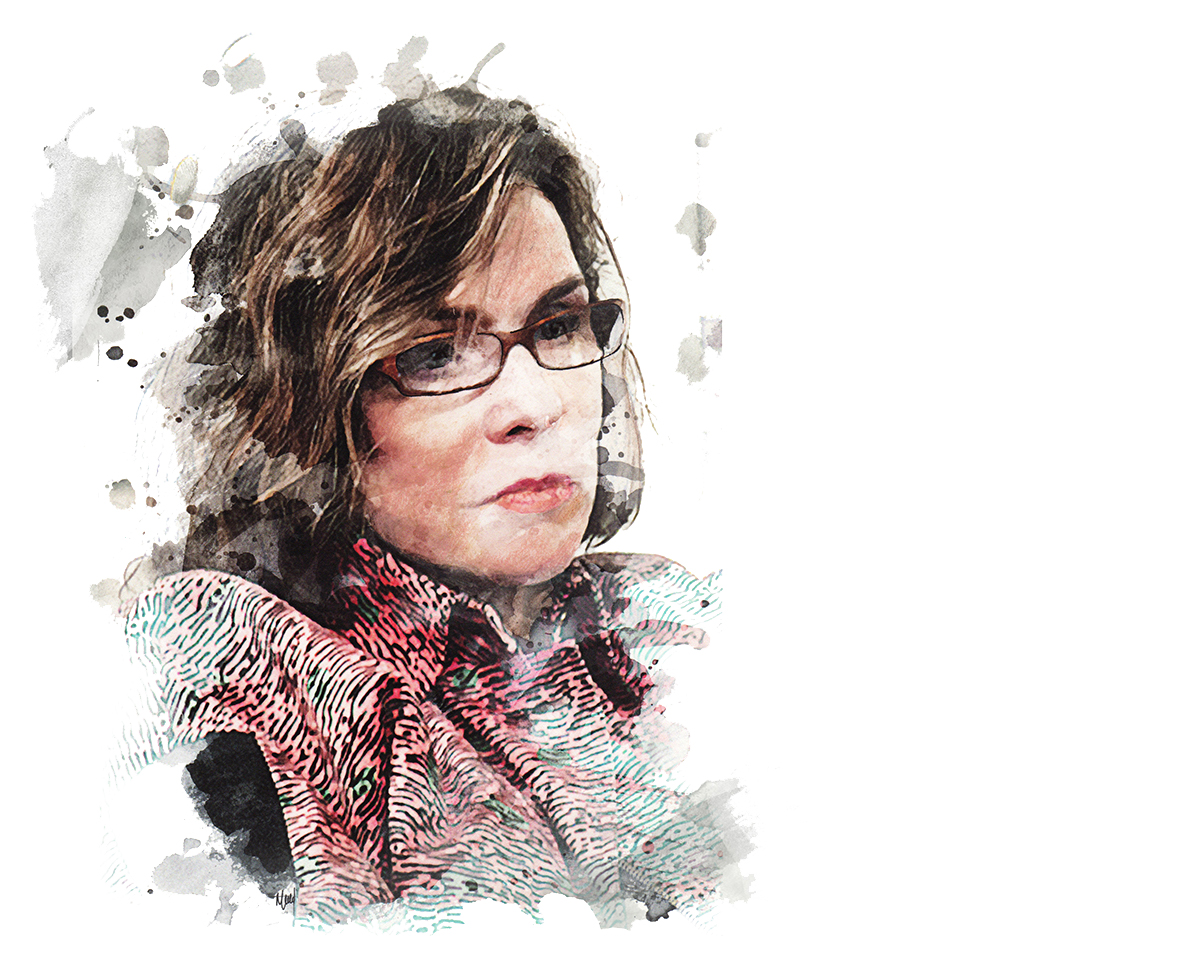
Penny Pun


It is always a rare treat to discover a fellow Hong Kong transplant in the New York theater community, and this time, the blessing came in the form of Penny Pun. Speaking with Penny tugged at my heartstrings and energized my spirits, and I dare anyone not to be inspired by her resilience. Read on to find out more about this indomitable soul, who has and continues to persist through every obstacle life has thrown her way.


Michelle Tse: I want to start with your experience with growing up in Hong Kong. What juts out to you in terms of being differently abled, and growing up in public housing?
 

Penny Pun: When I started primary school, my parents put me in a special education school. It was about 200 students with only 20 students who had the abilities of a mainstream curriculum, so I have always been hanging around those 20 students throughout my whole primary school education. And then once I reached secondary school, I decided that I would transfer to a mainstream school because I thought I need to get out of the “special-needs world” to “the real world” anyway, I might as well get out now.
 

So I transferred to a mainstream school and then it was a public school serving multiple public housing sectors, so the kids there were low-income and lower-middle class students. It was difficult. It was just under 2,000 students. I mean in America, it’s nothing, but in Hong Kong, [I went from] a special ed school with 200 kids in one school, and 10 kids in a class, to 40 kids in one classroom. So …
 

MT: Wait, so it went from 20 kids to 40.
 

PP: It went from 20 kids in two classes to 40 kids in one class. So it was a lot. And because I got good grades, and most secondary schools in Hong Kong have the elitist practice to put the top 40 students in one class for all courses. I always was around hanging around with those 40 people, so I got a relatively stable social circle, compared to people who got reassigned every year, so that was good. But it was getting increasingly difficult. It’s just more exhausting for me to do something, and then the Hong Kong curriculum for secondary schools get more and more insane as you advance. And my teachers were working us really hard! I mean, I go to school at 8am, and then I have extra classes til 7pm. After I go home, I still have three hours’ worth of homework and studying.
 

MT: Was this typical?
 

PP: It was very typical. I was at school, and they’re telling me you’re never getting out of this neighborhood. Only [about] 15 people go to college every year from my school, and then about 25 more go to the equivalent of community college or other diploma or certificate programs, and they were serving about 200 students per grade.
 

MT: Wow.
 

PP: So yep, you’re told you’re never getting out. And I went to this crazy conservative school, like your skirt can’t be above your knees; it had to cover your whole knee. Your bangs can’t go past your brows… stuff like that. So I wasn’t fitting in. I was exhausted. By the time I reached 8th grade, I found out that my friend from primary school died. Nobody bothered to tell me, because he died around Chinese New Year, so everybody was like, “we shouldn’t talk about this right now, we shouldn’t talk about this.”

 

Penny Pun
 

MT: Why did he pass away?
 

PP: It was muscular dystrophy. I knew that he was gonna pass away at some point during his (and my) mid-to-late teen years, I just didn’t know when it happened. [Nobody] talked about it, until I called up one of my friends, asking him, “How is he doing?” and he told me he passed away. So yeah… Everything was crashing down, and then I had a breakdown, and I didn’t go to school for four days, which is a big deal for students in Hong Kong because you need a doctor’s note, or else it counts as truancy, and could eventually result in me being kicked out of school. But I couldn’t even get out the door to get the doctor’s note.
 

MT: Right.
 

PP: Because of my disability, I have always had doctors following my situation, so my parents called my pediatric surgeon and he put me in line to see a therapist at a government-funded clinic, and then I started going to the therapist for like three months before I came back to full school days. I usually just leave early because of panic attacks and other psychosomatic symptoms. I got therapy over the course of a year. It was therapy at a government-funded clinic, so [eventually] the therapist told me that I was well enough to discontinue treatment.
 

MT: So that was eighth to ninth grade.
 

PP: Yeah. After that my parents got called up by the Make A Wish Foundation. They were like, does your child want to use it because we have “too much money,” and we have to give it away somewhere. My parents were involved in advocacy for disabled children. That’s why the foundation got their number. My parents asked me what I want to do. I knew that I wanted to be in theater by then, so I told them can I have a summer course at NYU, and they were like no, it’s not how the foundation functions, so I asked for a seven day trip to New York instead, and then [at the time] the revival of Rent was running, so I got to see that because, basically Rent is the reason I’m doing this. During those three months [when] I couldn’t even make it through a school day, Rent helped me a lot with coping with my friend’s death and being different.
 

MT: Is that how you got into theater?
 

PP: Yeah. That was when I fell love with theater and started considering doing it as a career. But at that point, all I was doing was watching theater-related videos on YouTube and reading theater blogs. The access to theater in Hong Kong was scarce, especially for a person with low-income.
 

MT: How did you find it?
 

PP: “Glee.” I was watching “Glee.” [At the time,] “Glee” was broadcasting in Hong Kong, and I discovered Rent when they did a cover of one of the songs.
 

Penny Pun
 

MT: Oh, okay. And then, since that trip, how then did you cater your public school education to a point where you were able to get into college here in the US?
 

PP: So after I came back to Hong Kong from New York—
 

MT: So this was 9th grade, or 10th grade? 10th grade?
 

PP: Yes. After my therapy. I knew I wanted to be here, so I started looking at what I can do to make it happen. On the financial side, I found the Sir Edward Youde Memorial Overseas Scholarship for Disabled Students, and applied. In regard to the curricular and academic requirements, I self-studied the SAT, on top of my regular education. I remember I bought two copies of the Princeton Review and registered at the SAT exams they have in Hong Kong. Then asked my teachers to help me generate an English translation of my transcript and write me recommendation letters, which you don’t need for university admission in Hong Kong. They were looking at me weird, but they did it, and I got all my things to Marymount online, and got accepted. A couple months later, I found out that I got the scholarship, and that made it possible for me to accept the offer from Marymount, because it was completely impossible without a scholarship.
 

MT: Right. And even with the scholarship, you had a timeframe, right?
 

PP: Yeah, the scholarship would only provide for me for three years. They are open to giving me a interest free loan for a fourth year, but a loan is a loan, not a scholarship, so I graduated college [in] three years.
 

MT: And the scholarship, was it a set amount of money or was it just, we will provide everything for three years?
 

PP: It was a set amount of money. It was I think about $32,000 a year, so it doesn’t cover everything. My parents took out a loan for the rest.
 

MT: Granted, you were here for college and you were in Hong Kong for elementary and high school, but how do you see the difference in the education systems?
 

PP: I can definitely see that where you get your education means a lot. If I’m a high school student here and I got [the] grades [that I got], I’d have more options in terms of colleges, I think. But my grades in Hong Kong meant nothing here. I got something like a 74 out of 100 GPA, which is pretty low, if you use the American standard, but in Hong Kong, I was the top of my class, and ranking was more important than score. So it’s really important where you get your education, and there is definitely a glass ceiling internationally, and it was a glass ceiling that can only be broken with money—paying for an education at private international schools. And when I was moving from elementary school to high school, my grades also meant nothing because I came from a special ed school. So I basically did not get into the best school that I could have, for my grades, so yeah, there’s definitely a parity, due to the bias that disabled children get “special and nicer treatments.”
 

American kids just have more freedom with their education. It’s not unusual for you to take a psychology class or theater class or writing class in high school if you wanted to, and discover and pursue your interests early. However, [in Hong Kong] our class schedule is decided by the faculty, because of the culture is so that you’re stuck with certain kids and classes for the next six years of your life, and don’t care if you like it or not, or if it helps you develop to be a well-rounded person.
 

MT: I left after sixth grade—but I remember my older sister actually had to take physics, biology, and chemistry together for three years, or something like that. Here it’s–for my highly ranked public high school in Silicon Valley when I was there a decade ago, anyway–physics one year, chemistry one year and then biology one year, and I think you do it in the order you wanted to. I actually think from my high school you only had to take like two of the three or something like that, and I don’t think it was even for the whole year, but a semester or two quarters. Maybe things have changed, though. I think my sister had something like thirteen subjects a year in high school in Hong Kong. That’s typical, right? More or less?
 

PP: Something like that. Twelvish.
 

MT: And here it’s like five, and seven is a lot. I remember thinking, seven classes, that’s it, really?
 

PP: And classes are quarter or semester long here. In Hong Kong you don’t really have choices, they schedule everything for you–
 

MT: The entire year.
 

PP: They schedule your teacher for you, everything is completely decided for you. Just show up.
 

Penny Pun
 

MT: What do you wish people knew about Asians or Asian-Americans—I guess Chinese Americans, and Chinese—that you wish they would stop confusing, or asking about?
 

PP: First of all, I think the biggest thing is that they have to know that not every Asian-looking person is from China. Chinese Americans and Chinese like me actually have really different experiences, and it’s dangerous for someone to generalize all of these experiences. I was just telling the writers of color in my writers’ group that if I sit in on an Asian-American writers’ group, the way I think is different from the way [American-born Chinese] think. It’s not the same thing. Chinese American, and Chinese who moved here, zero-generation, are not the same thing.
 

And, just ask. I don’t know how to describe it, but sometimes they’ll talk to you and they are really aware of the fact that they are talking to a Chinese person or Chinese American and then they’re just talking to a Chinese American about their experiences with China or other Chinese-American people you don’t even know instead of talking to a person with an array of life experiences.
 

MT: I really get that. I got rid of my accent early on and oh, the confusion. So similarly, what do you wish people knew about folks with different abilities that you wish they would stop asking about or confusing?
 

PP: To be honest, just ask. In a very scientific way, it’s a medical condition. There are so many variables in every body. I have cerebral palsy, and what I can do as a person with cerebral palsy versus another person with cerebral palsy is completely different. Our set of abilities are completely different. So if you’re confused, personally, I don’t mind that you ask. And yeah, just don’t make assumptions as to what I can or cannot do.
 

I have a friend who is having a house party in Brooklyn next Saturday and he was so nervous, he didn’t know if he should ask me or not because his house is not exactly accessible. So and I was like, just tell me if you want me to come, ask me to come and just tell me what the situation is because I’ve been living with it for 20 years and I probably know how to solve this problem or get around it. It’s just problem solving. The situation is not as awkward as you might make it.
 

MT: Can you talk about job opportunities as related to accessibility?
 

PP: I think there’s still a lot of work in terms of accessibility in the theater field, and the lack of accessibility of the offices and backstage areas of theatres directly limits my job opportunities. I think the front of house is usually accessible, not because of anyone with disabilities, but because of senior citizens and the enforcement of the ADA. But in terms of like administrative offices, I think that it’s still difficult for them to imagine a person with any kind of disability will work here alongside them as equal. So the physical inaccessibility is just one manifestation of that. I’ve been in accessible offices before, and in there I still felt like I’m not welcomed and I’m disrupting their space. So like, it’s just a matter of the industry not being able to imagine us working alongside them.
 

MT: Can you talk about the workshop you mentioned earlier? And I know you’re doing a few internships as well.
 

PP: So the workshop that I’m doing is from Rising Circle Theater Collective, called INKtank. We’re given 12 weeks to develop a full play that we’ve already sent in. It will be presented with a reading at the end of the program. We will be partnered with a professional director of color and professional actors, and it’s really awesome. I don’t know how much I can say publicly, but I think Raquel [Almazan] and Monet [Hurst-Mendoza] have really successfully made it into a people of color’s space. Every theater says that they want to “do diversity,” but like, you know it’s still a White space, where people of color are put into the position to educate and to defend, and this space is clearly a space for people of color, where we get to lead and heal from the traumas of being in certain White spaces. Because it was the first meeting, we weren’t talking about plays. We were just talking about being a person of color in the theater industry, how to deal with it, and that this program, even after we finish it, we will still have it as a map or as a resource for these kind of things. It’s like the best thing ever.
 

MT: That’s amazing. I don’t think I’ve ever heard that before.
 

PP: Yeah.
 

Penny Pun
 

MT: Although, Musical Theater Factory is pretty good at that. But yeah, it’s hard to come by. Can you talk about your internships?
 

PP: At The Play Company, I’m the literary specialist and I research about the plays that come by and I provide dramaturgical support whenever they need it, because I can, as someone who can speak Chinese, to provide translation support. I’m in my first week, so I don’t have much to share yet.
 

I also have an internship at PEN America, which is awesome. They’re really interesting and intelligent people doing really important jobs. My job there is as an administrator, and I enter a lot of membership info. They have the Free Expression program, which just released a report on Chinese media censorship, so I get to help out a lot with that just because I’m a person in my office who can read Chinese. I also get to go to really cool parties for writers–a lot of networking, a lot of international work, which I really like. They’re not an organization that is constantly promoting diversity as some sort of buzzword, but the diversity is just there, because they’re looking at the world, and the world of literature internationally, and nationally. They’re looking at the whole thing.
 

MT: Can you talk about Pan-Asian Rep? I know you were selected last year.
 

PP: I was selected for the 2017 Pan-Asian Rep NuWorks Festival. My ten minute play got chosen, and it was my college thesis in a way. The assignment was, in first semester of my senior year—although I didn’t really officially have a senior year—I was to be partnered with a professor, cast Marymount students, and put on a short play in the black box theater. So I did that. Then my director submitted my play to Pan-Asian Rep NuWorks Festival, and I got in.
 

I’m really glad that I was unusually vocal about the casting process when I did my casting at Marymount. I stood strong that I would hold an equitable audition, and cast students of color only, because they usually won’t do that. On the official casting call, it’s like, “We are open to considering all actors,” you know that way of thinking? All actors?
 

MT: Oh, yes.
 

PP: Yes. We did the play and it was supposed to be the end of it. I mean, we were lucky to have a great team of people, and to be able to receive a second production in a professional setting. And those two actors [I casted] are just phenomenal, [even though] they’re sophomores. So I’m really glad that when the play got accepted, I actually got to give the opportunity to those two actors of color who are sophomores, who are constantly underappreciated, to do a professional production before any of their classmates can get out there and do something.
 

MT: That’s amazing.
 

PP: So I’m very glad that I made that happen for them. Also, I don’t know if it’s related, but the actress in my production never got cast at Marymount, ever. But the semester following that production, she got cast. So…
 

MT: That’s amazing. Thank you so much for chatting with me.
 
&nbsp

Posted on

Can Playwriting Be Taught?

Playwriting Be Taught


Originally published by The Dramatist Guild
Keynote address from the Southeasern Theater Conference, 2006


The age-old answer to this question was always “”No, playwriting cannot be taught.” And like other age-old answers – abstinence is the only way, father knows best, etc – it was not true at all, but did serve a certain purpose, which was to keep young people from trying stuff the grayhairs wanted to keep for themselves, or knew to be fraught with peril. The “answer” also kept the grayhairs from having to learn how to teach playwriting, or from having to answer any number of other questions that would come up in a playwriting class, such as why can a good writer write so many bad plays, or why are Shakespeare and Sherlock Holmes so popular when the plays by or about them are always so long.
 

The real answer to the age-old question is simple enough. Some aspects of playwriting can be taught, and some cannot. But that is true of everything. You can teach someone the rules of writing a haiku, but you cannot teach them to write one that will make you cry. You can teach people how to improve the odds of having better sex through cool techniques and secret knowledge, but that doesn’t mean that in practice, they will actually have better sex, there being so many other factors involved. And so it is with playwriting.
 

There are things about playwriting that can be taught. Christopher Durang and I have been working up at Juilliard for the last thirteen years discovering many of them. Much of what I will say here, is knowledge we came upon together. There are also things about playwriting that cannot be taught, and there is some common wisdom about plays that cannot be counted on to be true. So here we go.


WHAT CAN BE TAUGHT
 

1. You can teach young playwrights what the audience expects.
 

There are things audience members want when they come to the theater. In general, they want to care about a character, see the trouble that character is in, and watch while that character figures out what to do about it.
 

Very early in the play, say on page 8, people in the audience also want to know when they can go home, what is at stake here –Which brother will get the piano? Will the girl actually kill herself? What will the Sphinx-dispatching hero do when he learns he’s just married his mother? The audience wants to know what it’s waiting for, why are you telling this story, what do you want from them? They are like a jury, they need to know what the person is accused of so they can know how to listen to the information, render a judgment, and be dismissed. They also need that information delivered to them in a way that they can process it, but that’s a longer discussion.
 

In the first ten minutes, people in the audience want to know where they are, where they are going, who is related to whom, and how things work here – kind of like what you want when you get on a plane, arrive at a wedding, or wake up in some strange bed without knowing how you got there.
 

And finally, the audience expects the playwright to pay off on the promises you made them in the first ten minutes. If you say you are here to decide who gets the piano, somebody better damn well get the thing by the end. No amount of pretty writing or character development will save you from the wrath of the audience if whatever was at stake, isn’t resolved. Is the marriage over or not? Is the father revenged or not? Do the sisters get to Moscow or not?
 

The chaos that interrupted the order at the beginning of the play, must be dealt with, and the order, even if it’s a new order, must return. That is what the audience has come to see, the return of order. The old version of this old rule was Get the main character up in the tree, throw rocks at him, and get him down. You could do a lot worse than just remembering this one rule.
 

2. You can teach playwrights how to write the various types of scenes that are useful in plays.
 

Writers can easily learn that an argument is the best way to cover exposition. Writers can learn that a long monologue is usually just you the writer talking to yourself, which is not a bad thing to do as an exercise, but in the actual play, it’s better when you let the characters talk to each other. Writers can learn how to make the characters sound different from each other. (Take away all the names, give the play to somebody else, and see if they know who is talking.) Writers can learn how to make the audience know the end is coming, wait for it, wait for it, and then give it to them. (see the sex reference at the beginning) And writers can learn how to write a love scene, which all good plays must have, almost without exception.
 

It is also important for playwrights to learn to write a good opening scene (say what’s at stake, who’s in this and where you are), a good end of the first act (state the question the audience should talk about during intermission), a good opening of the second act (remind the audience where you are without making them feel stupid), a good climactic scenery-chewing, hair-pulling fight, (so you’ll interest good actors and get your play on) and a satisfying final scene (so the audience will go out and call their friends and tell them to come see your show)
 

Figuring out where and when to use these scenes is not so hard. Read The Cat in the Hat and look at what happens moment to moment. It’s the golden guide to writing plays.
 

3. You can teach playwrights how to recognize a good subject for a play.
 

Most troubled plays go wrong right at the beginning, in the choice of subject. This is the unrecoverable mistake. If I gave ten people twenty ideas for plays, it would only take them two minutes of conversation or voting to decide which two plays they would be most inclined to see. I don’t know why this is, but it is. Audiences are not equally interested in all subjects, and nothing will compel them to be interested in something they don’t care about. For example, audiences hate plays about how hard it is to be a writer. They just don’t care.
 

Audiences very much like stories of love and justice, both of which involve seeking and finding. But it’s worse than that. I actually think that the only thing an audience wants to see is a search. If a play can be reduced to the search for x, it has a chance, no matter what X is. I can’t believe it’s that simple, but I believe that it is. Try it. Go through the plays you love, and see if they can’t be reduced to the search for x. Hamlet, A Doll’s House, True West, Lear, The Faith Healer, Sideman, Rabbit Hole, Our Town, West Side Story, Proof, they are all searches. We love to see what happens when somebody wants something enough to go looking for it. We want to see what happens, we want to experience the consequences of desire. Why? Because we all want things, that’s why. (The scientists are now saying that we’re humans precisely because we developed the ability to want things.) And plays are about humans at their most basic.
 

So write about somebody wanting something. But you have to choose a search that you know about personally. You can’t write somebody else looking for something they want. That old rule about writing about what you know? It’s not a bad rule, it’s just not active enough. Write about what you want, and what would happen to you if you went looking for it. Or if all else fails, pick some time when you really afraid and write about that.


WHAT CANNOT BE TAUGHT
 

1. Voice cannot be taught
 

Real playwrights just naturally listen to how people talk. And this is good, because it is very hard to teach someone how to create the impression of real speech onstage. Stage talk isn’t actually real, but it sounds real. It’s something slightly larger than real talk in size and quality, which if delivered well by an actor, will shrink slightly on its way out to the audience, and then strike them as perfectly natural once they hear it. It is also difficult to teach people how to listen to their characters as they write them, so they can draw clues from those characters as if they were real people. There are also verbal rhythms that work well on the stage, and some that don’t. Real playwrights know these instinctively, and are musical in their souls, and the sentences they write just sound good from the stage. This is the famous ear for dialogue you hear about. If the audience detects something false in the way a character is talking, you will lose them. Characters must pass a certain “reality” test that the audience administers. You wouldn’t put a robotic dog in a dog show and expect to win a prize. Ditto for playwriting.
 

And it goes without saying that you can’t have a play where all the characters have the same voice, and thus are the same person, (the author) but have different names. This we call laziness and vanity.
 

The same is also true of gender differences in language, but that’s a longer conversation. But the short version is if you want to write two men in a marriage, write two men. Don’t give one of them a woman’s name and hope no one will notice. Men and women speak very different languages. And women in the audience notice this.
 

2. Observation cannot be taught.
 

If a writer cannot observe what happens around him/her, and write about it with some compassion, then he/she should go into journalism. The theater depends on subjectivity, not objectivity. And you need to be able to write all the characters with the same degree of compassion. Demonizing people is the province of politics, not theater.
 

3. A sense of theatricality cannot be taught.
 

Plays are about conflict. We come to plays to see things happen. Plays must contain mistakes, surprises, reversals, murders, betrayals, fights, overheard conversations, secrets, in short, dramatic action. Plays are not conversations. If something doesn’t happen, it’s not a play. Or it’s not a play that’s going to find much of an audience anyway. Because so many young writers spend their lives listening to readings, they begin to think that a play is the stuff people say to each other while sitting in a line of chairs. But it is not. Nor is a play a string of unrelated events, even if they are killings, murders, fights, etc. A play is a series of events arising naturally from the situation the hero is in, and what he/she does about it.
 

There are other things that cannot be taught, and other things that cannot be counted on to be true (the main one being that you can read a play and know what it is), but this seems like enough for now. I have only one warning, in conclusion.
 

Once before, I wrote an article like this, proclaiming some things to be true, and one person actually resigned from the Guild because I had made such pronouncements about such a personal art. Well. I am doing it again, playing my dogmatic role, just for the purpose of stating, more or less, where the boundaries are in the writing of plays. Once you know these fundamentals, then if you want to duck under the fence and ski the fresh powder on a slope no one has ever tried, please do. Break the rules all you want. Just know that if you get lost, it’s the dreary old rules that will get you back on course and back down to the lodge in time for drinks. See you there.


Stage-&-Candor_Marsha-Norman_BioMarsha Norman won a Pulitzer for her play ‘night, Mother, a Tony for The Secret Garden on Broadway and a Tony nomination for her book for The Color Purple.
 

Ms. Norman is co-chair of Playwriting at Julliard and serves on the Steering Committee of the Dramatists Guild. She has numerous film and TV credits, as well as a Peabody for her work in TV. She has won numerous awards including the Inge Lifetime Achievement in Playwriting. She is also Presiden of the Lilly Awards Foundation, a non-profit honoring women in theater and working for gender parity nationwide.

Posted on

Hazel, A Musical Maid in America

Lissa Levin


What is the specific challenge of basing a musical on an everyday housekeeper? As a writer who doesn’t cook and has never cleaned a window without making it look worse, the answer is clear. But although Google Chrome can provide no end of housekeeping tips, there is no website, no YouTube tutorial on how to take HAZEL, a housekeeper character in a sixties tv series, based on a 1940’s Saturday Evening Post cartoon, and turn her and her world into a musical for 2016 audiences. But if there were a tutorial…
 

Step One. Getting Started. Examine your source materials.
 

Hazel is not your everyday maid. But she is a maid named Hazel. A lead character with a name from another time (although it’s making a comeback), whose occupation’s title is from another time. How do you feature a female character in a subservient role during a time when Hillary Clinton is running for president?
 

Step Two. Compare Hazel and Hillary Clinton.
 

As it turns out, the similarities are uncanny. Both are servants; one just happens to be public. Hazel serves the Baxter family – conservative, George; his evolving sixties wife, Dorothy, and their intense, impulsive eight year old son, Harold. Hillary serves the interests of not one, but many American families. Both assess what a family needs to feel safe, secure, to be well-fed, healthy. Both are committed problem solvers. Once they identify and address a problem, both are very opinionated about the subject. Both share their opinions with others. Repeatedly. Whether others want to hear it or not. Both wear iconic uniforms reflective of their line of work. Whether a power suit and pearls or a maid’s apron and hat; whether chosen to convey command or for its wash n’ wear capabilities, both women dress for success. Both are emblems of feminism. Running for the ultimate position of executive power, a two hundred year old male-only institution, ain’t the only way to wave your flag. Hazel, too, walks the walk. Never married, fiercely independent, she leads by example, by being true to herself, not driven by other people’s expectations of her as a woman or a domestic, unapologetic for her beliefs or opinions, and not to serve a cause or run a race. It is simply who she is. In so doing, she actually serves as an inspiration and role model for the very wife and mother for whom she works. Plus, she runs a household, traditionally a wife or mother’s domain, and gets paid for it. And in no way did she rely on a husband to get the job. In a death match, Hazel would beat Hillary, hands down. So the character is more than relevant to our times, but is her time relevant to our own, and to its audiences?
 

Step Three. Compare 2016 with 1965.
 

Take, for example, America’s awareness that it’s no longer number one: that other countries are pulling ahead in science and technology, the issues of equal pay and reproductive rights for women, the fear by many that foreigners pose a threat to our shores, or could trigger nuclear war. And now let’s look at 2016. HAZEL, the musical is set in the 1960s not only because the TV series was, (because there are those of you who don’t remember the TV series, let alone network TV) but because the U.S. was suffering a bruised ego not unlike today. Russia had beaten us getting a satellite in space and a man in space, and while we feared we were losing our innovative footing, we also feared a Russian spacecraft not just beating us to the moon, but being able to reach us with a nuclear payload. Our national psychology then as now makes George Baxter as a charmingly competitive, paranoid alpha male relatable and/or recognizable. But while the U.S. was lagging in the Space Race, it was a leader in social and political change – that certainly shaped Hillary Clinton’s future, my future as a comedy writer, and informs the characters and storylines in HAZEL, the musical. For example, a plot wherein the open-minded housekeeper is hired by and runs interference between George and Dorothy Baxter, who grapple with the early burgeoning of feminism and their gender roles as Dorothy decides to return to work. And who don’t necessarily agree on the upbringing of young, impressionable loose-canon Harold Baxter. Paranoia, bruised egos, men behaving badly, conflicted women, battles of the sexes, family dysfunction – do they ever go out of style as fodder for comedy? Particularly when your star is also the observer who comments on them?
 

Step Five. See Step Two.
 

Hilary will never be as funny as Hazel. Because as a politician, she can never be as unflinchingly honest. She can never say what she or what everybody else is really thinking. But Hazel never censors herself. She calls it as she sees it. And as a daily witness and window on to one American family, she sees everything. And comments on it. The dysfunction, the secrets, the clutter. Her charm being, as it was in the TV series and the original cartoon, that she’s as savvy as she is innocent, as wise as she is uneducated. In dialogue or lyric, her perceptions are sophisticated but never her expression of them. “To thine own self be true” in Hazel-speak becomes “A toaster wasn’t meant to bake a chicken.”
 

Step Six. Yes, but does it sing?
 

Unlike Mame, Dolly, or Mama Rose, Hazel is not larger than life, a lead character staple in a musical. But her heart is. Her humanity. Her sense of dignity. Her sense of self. As a housekeeper, Hazel’s station in life may be considered low, but she sees it as a calling. Such character deserves a larger than life talent; say, Klea Blackhurst. A simple maid with a power belt? In a big show with a varied score and dynamic choreography? You can’t help but root for her, and that reaction is what musical theater is all about. In fact, Hazel is pretty much classic musical theater personified: she is funny, charming, optimistic, joyous, and life affirming. Not only relevant to our times, but the answer to our times. 


 Stage-&-Candor_Lissa-Levin_BioLissa Levin is the recipient of the prestigious Kleban Award for her libretto for Twist Of Fate; composer, Ron Abel. The musical comedy won L.A. Weekly’s Musical of the Year and two L.A. Drama Critics Circle Awards, and a Los Angeles Ovation Award nomination for Best Musical. Her play, Sex And Education, first presented at the Kennedy Center’s Page-to-Stage Festival, (New York premiere, Penguin Rep), opens in spring of 2016 at the Laguna Playhouse. She also penned book and lyrics for Jewsical, The Low Bar Mitzvah; Hot Blooded, A Vampire in Rio; and the play, What Would Jesus Do? A twenty-five year veteran of television as a writer producer, Levin’s credits include the Emmy Award winning Mad About You and Cheers; Wkrp In Cincinnati, Family Ties, Brothers, Complete Savages (with Keith Carradine), Thunder Alley (with Ed Asner) and Gloria (with Sally Struthers), amongst many others. Her essay, Pisser, a rant about insufficient stalls in women’s restrooms in theaters, was published by Random House in an anthology of noted female humorists: Life’s A Stitch; later transformed into a theatrical revue co-produced by Levin, a staunch activist, benefiting breast cancer research.

Posted on

On Playwriting


Originally published in The Dramatist


What are we doing when we write for the stage? Are we entertaining ourselves? Entertaining others? Having our say? Trying to make a living? Trying to make a point? Furthering the art form? Joining the dialogue? Trying to save the ship? Trying to sink the ship? Getting even? Getting ahead? Keeping our career alive? Completing a commission? What?
 

We’ve all written for all of these reasons from time to time. We’ve all needed what only the theater has to give, and we’ve all offered our hearts up to the gods in the hope of getting a place at the playwrights’ table. And we have all been hurt. We have all heard
 

“No, you can’t sit here. You’re not ready.”
“Yes, you can sit here, but we’re not going to feed you.”
“Are you crazy? People like you can’t sit here.”
“OK, you can sit here, but just til the new you comes in.”
“No, you write for TV, you can’t sit here.”
“Yes, you can sit here. But just til your next show opens.”


If you are reading this magazine, you know that it hurts to write for the theater. But you also know that hurt is not just what artists go through. Hurt is the human condition. Fortunately, hurt is not the only human condition. Humans also feel hope and love and fear and confusion and power and glory. They experience frustration and defeat and triumph. They long for the wrong person, they make bargains with the devil, they take things that don’t belong to them, they have fatal flaws and outrageous fortune, they make the same mistake again and again, and sometimes they learn things. Especially in musicals, people learn things. What we need to do, as playwrights, librettists and composers, is not try for a seat at the table, we just need to say what it has felt like to be a lone, living human in our time. The playwrights who convey the human condition, who chart the desperate path of one human toward one goal, those are the playwrights we treasure. The plays that tell the stories we need to hear, because we are traveling the same road, those are the plays that survive.
 

We all want to write these plays that don’t go back in the drawer, that have a life of their own. Like Dr. Frankenstein, we all want to create the monster that gets up off the table and walks out into the night looking for love. But how do we do that? If we were going up a big mountain, a trusted guide would tell us what to wear, what to take in our pack, and when to stop and rest. Listening to this good guide could improve our chances of getting to the summit and back, save us time and even save our lives, maybe.
 

So what are the ropes of the playwrights’ life, the signposts, the signals, the ways to get on the right path and stay there. This whole issue is a collection of them, from some of the finest guides we have, people who have spent their lives watching people go up the big mountain. But I want to talk a little about SUBJECT, because in my experience, choosing the wrong subject is the mistake you don’t recover from, it’s the beginner’s mistake that anybody can make any time. So what is a good subject for a play? Arthur Miller said the only subject was, how does a man make of the world, a home. But what does that mean?
 

When I was first starting to write, Jon Jory asked me what I wanted to write about. I said I didn’t know, I just knew I belonged in the theater. And then he gave me this advice. “Go back to a time when you were really scared and write about that. Being afraid makes you remember details, and details convince people a story is real. And chances are, if you were scared by this, other people will be scared of it too, and that will make them pay attention.” The play I wrote after that advice was Getting Out, based on a violent girl I met when I worked in a state mental hospital. It launched my career and is still the most performed of all my plays. All my students have heard this advice. David Lindsay-Abaire has credited this advice with giving him the subject for Rabbit Hole. I heard Toni Morrison say the same thing once. She said, “Dread is what keep people turning the pages.” Clearly, fear of something is a great subject.
 

At this point, we could go through all the great plays and musicals and reduce them to what all the great characters were afraid of. That might feel trivial, but Hamlet is afraid of what will happen if he doesn’t discover who killed his father. Nora is afraid of what will happen to her if she keeps living in Torvald’s house. Lear is afraid his girls don’t love him, Oedipus is afraid more people will die if the curse is not lifted. Masha is afraid of not getting to Moscow, Juliet is afraid she won’t get Romeo, Curly is afraid Judd will take his girl, Maria is afraid to leave the convent, etc etc. But a better use of our time is thinking about fear, and how we are pulled to edge of our seats when we have some form of it on the stage.
 

One thing I know for absolute certain, it isn’t enough just to have the fear by itself. I was recently onboard a whale-watching expedition north of Iceland. I was so afraid of drowning that I wore a huge blue moonsuit, an orange raincoat, a life preserver, two sets of gloves, and three hats. I never stood up, not once. Because the sea was so rough, I held onto my seat and kept my eyes shut the whole trip. What I was hoping for the whole time was some relief from this fear, but it never came. Only when the boat docked was I free to leave, and I got out of there as fast as I could. If this had been a play, I would have been furious at the playwright for trapping me and torturing me like this.
 

The point here is that your character needs some action she can take to overcome her fear and save herself. We come to the theater to see what people do when they get in trouble, almost any kind of trouble. We want to see this because we may find ourselves in that same trouble someday. For all of our time on earth, we have gathered around our tribal fires at night to listen to stories. But they are not the stories of what made our people happy. They are the stories of how our people survived their difficulties. Maybe this is why we know so little about being happy, because we see so few stories about how people do it. But we have survived as a species because we have told stories about how people have solved their problems, conquered their fears and got where they were going. Or not.
 

So now. This is your guide speaking. If you know a story about a brave human in big trouble, write that. Write how the trouble started, what the person did, and how it turned out. Little troubles, for example, troubles that will solve themselves just by the person growing up, you don’t need to waste your time on those. Write about greed, revenge, rage, betrayal, guilt, adultery, and murder. When writing about softer troubles such as injustice, loss, humiliation, incapacity, aging, sadness and being misunderstood, just be sure to attach them to one of the more active troubles. Attach betrayal to loss and you have a play. Attach adultery to aging and you have a play. And let fear drive the whole thing. An aging woman is afraid her husband is having an affair, so she plots to kill him. Just kidding, but you see what I mean. We know we would watch that story, as stupid as it is in sentence form. Then you just add your great dialogue and your fabulous scenes and you’re done. Haha.
 

Seriously, what we are doing when we write for the stage is telling stories people need to see. We do it for the same reason we put up stop signs, because it is important, for some reason, for people to stop at this place and look around. Our place at the playwrights’ table is determined by how many people remember the stories we tell, and people remember the stories they feel they will need someday. Just like life. Urgency is the key to a good story, fear is the force that keeps it moving. The good news is that humans are so hungry for stories that our brains invent them even when we are asleep. So they need us. It is a great privilege to be a storyteller. And if it hurts, it hurts. We can take it.


Stage-&-Candor_Marsha-Norman_BioMarsha Norman won a Pulitzer for her play ‘night, Mother, a Tony for The Secret Garden on Broadway and a Tony nomination for her book for The Color Purple.
 

Ms. Norman is co-chair of Playwriting at Julliard and serves on the Steering Committee of the Dramatists Guild. She has numerous film and TV credits, as well as a Peabody for her work in TV. She has won numerous awards including the Inge Lifetime Achievement in Playwriting. She is also Presiden of the Lilly Awards Foundation, a non-profit honoring women in theater and working for gender parity nationwide.