Posted on

Line, Please!?

line, please!?


Hi, I’m Liz and I’ll be offering you advice on navigating the tricky situations that can come from working in or being a fan of theater.
I’ve been doing it out on my blog, fyeahgreatplays.com, for a while now, so it seemed only natural to migrate here in a more official Advice Columnist capacity. I’ve freelanced as a stage manager around New York as well as regionally, I’m a member of Actor’s Equity and a total contract junkie, and I occasionally cohost a podcast on theater and performance (Maxamoo).
 

To submit a question, email lineplease@stageandcandor.wpcomstaging.com.


Dear Liz,
 

Should I spend $10k on tuition for a playwriting degree or spend a fraction of that on seeing more theater, buying plays and other books, practicing and teaching myself?


One of my producer friends once said that theater is one of the only professions where you can wake up and decide you’re in it. A doctor will have a very hard time if they suddenly start calling themselves a doctor and open up an office. (Or at least a very dangerous time.)
 

So yes, you can be a playwright without going to school for it. You can write like mad, read and see everything, and work on your own. But I also think that going to a school and surrounding yourself with like-minded, driven people can help you challenge yourself in a way that’s hard to do on your own. It’s less about the prestige or reputation you can gain from a specific university program (though sometimes connections made through colleges can be invaluable), and more about being constantly pushed and challenged in a structured environment bent on getting the best out of you they can. There’s a freedom to experiment in the collegiate environment that is sometimes harder to find in the real world: you have performance space, prop, costume, and scene shops with archives at your disposal, and most importantly, the time to work things out on your own you often aren’t afforded in the real world of producing.
 

I’m not saying everyone has to go to college. If you can afford it, it’s a wonderful resource. If not, there are plenty of previously mentioned ways to create your own education. You can form your own weekly writers’ groups, meeting to read and give feedback. Find your favorite collaborators and play with them. See lots of shows and read lots of books. Make your homework reading the trade papers. There’s more than one way to get your work onstage.

Posted on

Butler

Butler


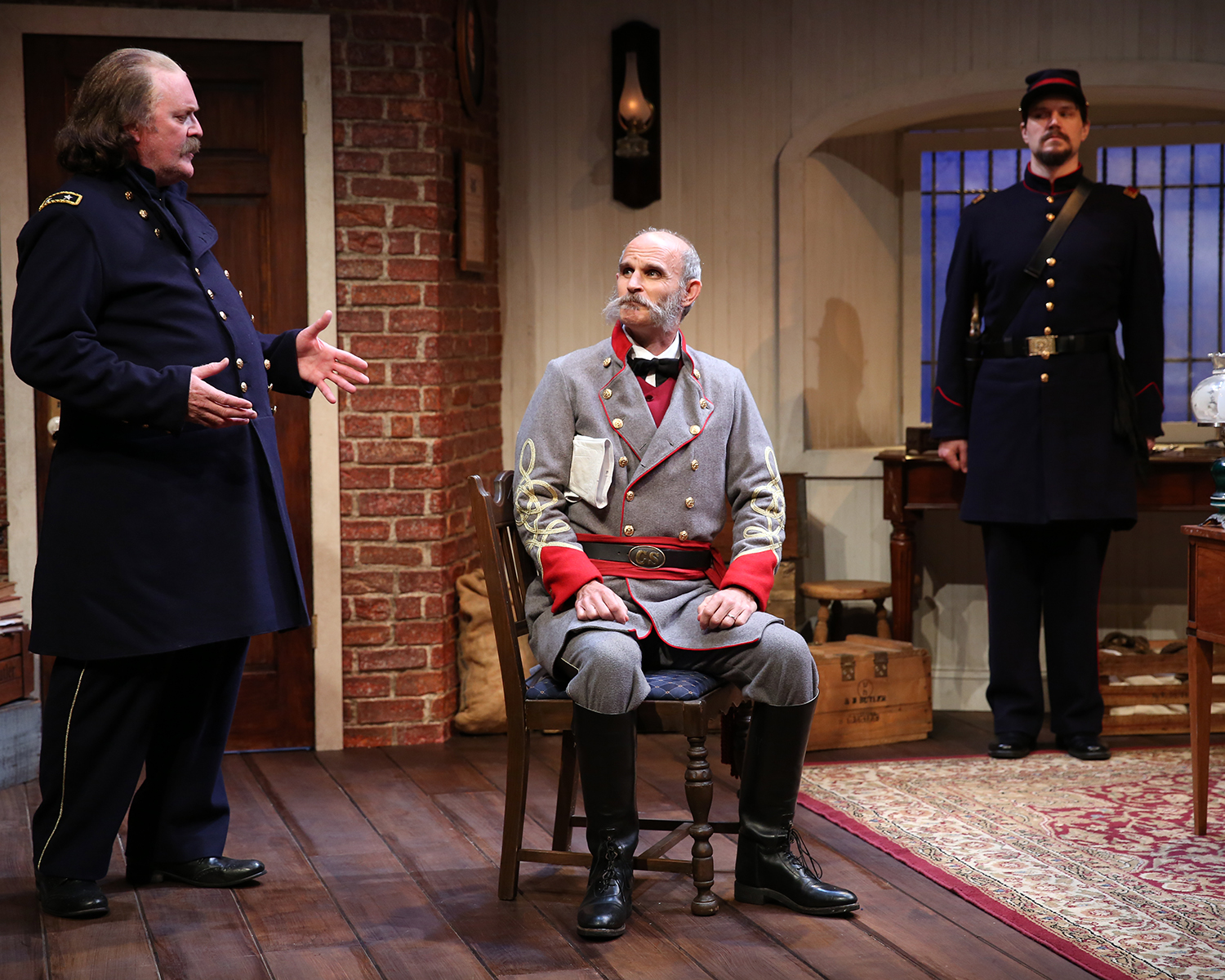
Playwright Richard Strand’s Butler is an outstanding, captivating, important play about race relations – part historical drama and part biography. In wake of the 2016 summer shootings in Louisiana, Minnesota, Dallas, and elsewhere, the issues debated in Butler about Black equality are extremely timely.
 

A simple act of defiance or a “why not?” decision can be a catalyst for change. For example, on December 1, 1955 in Montgomery, Alabama, African American civil rights activist Rosa Parks challenged a bus driver, refusing to give up her seat to a white man, thereby making a stand against an unjust segregation law. And, on November 9, 1989, a Berlin checkpoint captain, Harald Jäger, decided to open the Berlin Wall gates, effectively ending the Cold War.
 

In Butler, the play focuses on such a moment in history — another catalyst — a moment that helped enact a sea change for racial equality. On May 23, 1861 at Fort Monroe, Virginia, three courageous fugitive slaves – Shepard Mallory, Frank Baker and James Townsend – and a shrewd politic Major General Benjamin Franklin Butler worked in tandem in unexpected ways to set in motion the Emancipation Proclamation of 1862.
 

Fort Monroe, Virginia is central in the momentous events, which altered history for people of color – actually two specific histories. Ironically, in August 1619, this exact location was where the first Africans (20 African captives) set foot on the North American continent and where slavery first was established. Almost 250 years later, the Union-held Virginia Fort Monroe was where the three refugee slaves sought sanctuary from the Confederacy. They escaped from the Confederate-held post of Big Bethel, Virginia, eight miles away.
 

A key event to these Virginia locations being pivotal was the Confederacy Act the day before (May 22, 1861). Virginia seceded from the Union and became essentially a “foreign country.” Laws particular to the United States of America no longer applied to the Confederate States, including The Fugitive Slave Act of 1850. Butler, both a military man and lawyer in civil life, recognized the judicial loophole and took action to establish a way and means by which slaves did not have to be returned to the Confederacy and their “owners,” and, in fact, could become part of the Union army.
 

Butler is not just a story about one man, but two – Benjamin Butler (Ames Adamson) and Shepard Mallory (John G. Williams). However important the other two slaves who sought asylum were, their contributions are back-story in the play, and the other two slaves are never seen. It is through Butler’s and Mallory’s meetings, conversations and decisions that caused the dominos to fall and change history.
 

Besides Butler and Mallory, Union Lt. Kelly (Benjamin Sterling) and Confederate Major Cary (David Stiller) are an integral part of the drama. Joseph Discher (Director) has inspired exceptional performances from all four actors, each channeling their characters in distinct ways.
 

The two main actors, Butler and Mallory, square off against each other in an admirable battle of wits, circling each other with one rhetoric jab after another. Butler has never had a conversation with a black man. Mallory, a learned man, surprises Butler with his eruditeness. Butler becomes more and more intrigued by Mallory’s knowledge of and use of words. Butler is an absorbing boxing match on which historical revisions are not based on rabbit punches, but verbal feints.
 

Butler, a lawyer and aspiring politician, weighs words more carefully than most military men. The opening scene of the play establishes how words and their importance come into play. Butler demands that words be precise. Astonished is different from being surprised. A request is considered being polite; a demand is not. Butler takes offense at having demands made of him.
 

Butler
 

I spoke with Ames Adamson and John G. Williams about the moment in the play that stands out to them the most:
 

Ames Adamson (Butler): “Mallory’s entrance into Butler’s office and Mallory and Butler regarding each other. Butler has never been confronted by a slave before. I am sure Butler has seen them, but not in such close proximity as a man. And Mallory is standing almost exactly as Butler is standing. And looking Butler straight in the eye. Mallory and Butler regard each other. And I think that’s a very powerful moment. And then Mallory, of course, tells what’s happened to him. But when Mallory shows Butler the scars on his back, Butler sees that this is a “man,” a human who has been tortured. And that sets the dominos falling.”
 

John Williams (Mallory): “In piggy-backing on what Ames just said, for me, a significant moment for my character [Mallory] in his journey he takes throughout the play is the line, ‘You find me interesting, don’t you?’ The line comes at the same scene that Ames just referred to … I feel that Mallory has been waiting his whole life to give a confession about the person that he is. And, he has found a willing listener. Someone who wants to know him. The way that [Butler] takes that in and says ‘thank you.’ It’s sort of weighted. Nobody has ever found [Mallory] interesting before. He knows that he is interesting but nobody has ever seen it. And Butler sees it. From that point on Mallory feels he can work with [Butler].”
 

Strand structures their discussions with comedic panache – ping pong exchanges with each trying to one up the other. Discher directs their back and forth debates with fast-paced humor. Discher carefully choreographs their meetings of mind and quick witted conversations so that they escalate into a growing trust of each other and camaraderie.
 

Adamson portrays Butler as a man not to be toyed – brazen, confident, with a tad of hubris. Adamson highlights Butler’s pride in securing a military general’s commission, but also aptly conveys his assuredness and his abilities as a canny attorney.
 

Williams’ Mallory counters Butler effectively, depicting Mallory as a complex, quick-change artist, who can easily swing between being impertinent, cocksure, guarded, hotheaded, and clever – at a moment’s notice. Mallory gets away (except in one instance) with slyly making sport of Butler, without crossing the line.
 

As their guarded relationship grows into mutual respect, Butler comments: “You are a collection of contradictions. You’re brash but wary. I don’t even know how it’s possible to be both of those things at once. You seem, I don’t know, scared and overly confident at the same time. You’re humble and arrogant at once. It’s quite remarkable.”
 

Mallory recognizes first how ”not unlike” they are, when he proclaims: “It’s because I remind you of you. It’s because I’m just like you.”
 

And, it is Mallory who maintains, and even plants a seed with Butler: “I heard a good lawyer can always use convoluted reasoning to find a loophole.”
 

Butler10
 

Butler’s right-hand is Lt. Kelly, who shifts from being on the fence as to what to do about Mallory to taking Mallory’s side. Benjamin Sterling subtly captures Lt. Kelly’s belief shift in whether or not to like this Black man, to changing his opinion and to trying to champion him. Sterling maintains the air of puzzled complaisance as his change towards Mallory evolves.
 

David Stiller takes on the difficult role of the Confederate Major Cary – conveying both superciliousness and ignorance.
 

As Butler comes to like Mallory, Butler grudgingly begins to agree there may be ways to bend the law in Mallory’s favor, and Butler devises a way to shrewdly use language in the service of justice.
 

A pivotal plot point occurs when Confederate Major Cary confronts Butler and reads a document drafted by his superior, Confederate Colonel Charles Mallory:
 

“You have, in your possession, property belonging to Colonel Charles Mallory of the Sovereign State of Virginia. Specifically, you are sheltering three runaway slaves: Shepard Mallory, Frank Baker and James Townsend. We ‘demand’ that you release those slaves to the custody of Major John B. Cary, also of of the Sovereign State of Virginia, as is appropriate under the Constitution of the United States, and the universal Articles of War. If you refuse our ‘demand,’ we will have no choice but to consider you no more than a common thief and we will take appropriate measures in response.”
 

When Cary reads the document, his usage of the word, “demand,” triggers an aha moment for Butler. He sees a way out for Mallory and the other slaves, where Butler is not obligated to return them to the Confederacy. Butler realizes the slaves are ‘contraband.’
 

Butler (addressing Cary) in the play: “Nothing in either document (the Constitution and The Fugitive Slave Act) requires me to return a runaway slave to a foreign country. Yesterday, I’d have been obliged to return these three men to the state of Virginia. But since yesterday Virginia has claimed to be no longer a part of the United States …. The three slaves you speak of – the property you allude to – they were being used by you to build fortifications. They are, therefore, contraband …. which I can impound according to the Articles of War.”
 

The playwright, Richard Strand, gives the words “demand” and “contraband” weight – shifting the balance for Butler to be able to help Mallory.
 

Strand researched the Civil War extensively and stated that he came to know about Butler and his relationship to the fugitive slaves by way of reading a biography about Abraham Lincoln. However, Strand discovered Mallory and the other slaves’ contributions to history as but a footnote in the Lincoln biography he read. Strand felt impassioned to render Mallory’s and Butler’s story; their relationship deserved much more consideration.
 

Strand was unable to find out much about what became of Mallory or the others after 1861. But, Butler lived on to become both famous, as well as notorious. Among Butler’s accomplishments was his appointment of the first woman to a political office in his home state of Massachusetts— Clara Barton, the pioneering nurse who founded the American Red Cross.
 

However, according to Ames Adamson’s research, Butler was not highly regarded in New Orleans, when the city was under his command in 1862. Butler made hard choices to save New Orleans from the yellow fever epidemic. He was hated for his strict quarantines and his serve measures for garbage disposal, and became known as the “Beast of New Orleans.” Butler’s unpopularity reached such heights that he was ridiculed in the most outrageous way — his image was stamped into the bottom of chamber pots (which can still be procured on eBay today).
 

Terry Gilliam too has immortalized Benjamin Franklin Butler in his opening title sequence of the British TV series, Monty Python’s Flying Circus. After Gilliam announces: “Now for something completely different,” Butler’s photo pops up over the TV series title, whereby a large foot stomps on him. Butler’s feats of accomplishment in public policy are legendary today despite his notoriety.
 

Kudos to Richard Strand, the actors and production designers in portraying an historic event that might have been left obscured. Butler is Strand’s tribute to the two catalysts that largely caused the Emancipation Proclamation of 1862 to be enacted — Shepard Mallory’s act of defiance and Benjamin Franklin Butler’s “why not?” decision.
 

Butler (through August 28, 2016)
Produced by New Jersey Repertory Company (Artistic Director SuzAnne Barabas, Executive Producer Gabor Barabas) by special arrangement with Eric Falkenstein, Czekaj Artistic Productions, Ken Wirth, and Jamie deRoy/Catherine Adler at 59E59 Theaters, 59 East 59th Street, between Park and Madison Avenues, in Manhattan
For tickets, call Ticket Central at 212-279-4200 or visit http://www.59e59.org
Running time: two hours with one intermission
 

Posted on

A Conversation with Carla Ching

Carla Ching


Carla Ching is in full LA-mode: she calls us from the car in – you guessed it – immense traffic. She was rolling into a spacing rehearsal for her newest play, The Two Kids That Blow Shit Up at Artists at Play. After rehearsal, it’s home to work on rewrites. There’s a new project for The Kilroys to be constructed, a show to open, and more scenes to be written for her gig on Jill Soloway’s I Love Dick. But she still has time to talk to us about the educational system in America, balancing the worlds of television and theater, and why representation matters – especially when it comes to Asian artists.


Helen Schultz: You developed this play at a week-long Lark/Vassar retreat. For our readers, what’s a quick synopsis of the show?
 

Carla Ching: It’s the story of a Chinese-American and Korean-American kid who meet when they are nine years old and their parents start sleeping with each other. We follow them through their lives together: they get married, divorced, fall apart, and then get back together. It’s really about who they become to each other over the course of their parents’ relationship.
 

HS: You have two actors playing two characters are at different stages in their lives – sometimes they’re 9, sometimes they’re 30. Knowing you didn’t want this to be a memory play, how did you decide on the ‘order’ of events? How did you go about casting actors who had the range to do all of these parts justice?
 

CC: It’s an insane challenge, and I’m so lucky that I have amazing actors – Nelson Lee and Julia Cho – who’ve both gone above and beyond. We also had the help of an incredible movement specialist named Donna Eshelman who taught them the specific behavior and movements and body of a nine year old, a thirteen year old, a seventeen year old, a twenty-four year old, and finding the body that comes to convey how you feel on the inside. So we worked really hard to achieve all those different ages. The play poses a challenge because it’s not in order – it doesn’t go nine, 14, 17, 24. That would be one thing. They have to go through the extra rigor of dealing with a play that is not even in order. They are heroes for sure.
 

HS: How did you go about determining that order?
 

CC: It’s something that we talk about a lot. I had originally made it out of order – that’s how I built the play when I was at the Lark, and each day I would write a scene: one from when they were children, and one from when they were adults. And that’s how I really constructed the play. When I was at the workshop, I did put the play in order, largely for the actors to see how it felt to play it in order, and to make sure that there weren’t any holes that were being appeared by the fact that it was out of order. At the time, we sort of enjoyed the chronology, so it stayed that way for a while. But after that, my wonderful dramaturg, Andy Knight, talked to me about the different incarnations it had and the different shapes of the play, chronological and not chronological. He said to me, “Well, can you tell me what you get from the play either way?” He said that when it went forward it felt more like a memory play to him, whereas when it was not in order, it evoked the title more – The Two Kids That Blow Shit Up, and these fragments from their lives. It showed the challenges in their friendship and their relationship, which I wanted. So we kept it like that, but it took us quite a long time to find the right order, and to make sure that it suited them. We were still making changes to the order up until a few days ago. It was a lot of trial and error, but it was trying it a bunch of different ways until we found the order that had the emotional journey that we wanted the audience to go on. We wanted to see what broke them before we saw what got them back together.
 

Carla Ching
 

Michelle Tse: You used to work a lot in poetry. Do you use a specific medium to achieve a specific goal, or do you stick with your theater and TV work now?
 

CC: I pretty much stick with theater and my TV work now. I haven’t written a poem in a very long time. I used to very much love it, but I think all of my stories go into the play now. I enjoy writing different worlds and different characters and I have a selfish need to write people, because that way they’re sort of all-encompassing.
 

MT: Was it figuring out what the proper medium was for you, or were you drawn to different mediums of writing at different parts of your life?
 

CC: I went down a pretty long road with poetry. I was doing the whole poetry and spoken word thing in New York. I even went back to school and tried to do my MFA at City College of New York in poetry and I got about a year and change through before I realized I wasn’t having a breakthrough and there were other people who were far better at it than me. It’s a very lonely way of writing. In the best case scenario, I could publish a chapbook and forty people could read it, which made me sad. At the same time, I was writing and performing with a Pan-Asian Performance group called Peeling where we would read my poems and they sort of became plays. So I transitioned from doing poetry and writing poetry into doing performance pieces that looked more like theater. I really liked them and the nature of them, which naturally started to send me down a road of trying to do theater.
 

HS: Is there a big difference for you between writing a play and writing a TV show?
 

CC: Playwriting is different in that it took me a little while to find that frame. And when I first started doing TV writing, the TV writing made my playwriting suck, and my playwriting made my TV writing suck. And I think – I would hope – I’ve gotten a little bit more of a handle on it. Television is just so much more about digital media, and you have to be a lot more terse and pithy with your dialogue. Your scenes are much shorter. You can control people’s gaze and what they’re looking at, and do a lot with the image in a way. In theater, you need to have dialogue do that for you, because you can’t do a close-up. You can’t focus in on someone’s eye. You can’t do a close-up of someone’s chest heaving. So we have different tools to do it in different media. I enjoy both of them a lot.
 

MT: You discovered theater in high school. Would you say that’s maybe why you gravitated back to theater?
 

CC: Theater will always be my first love. It’s this seed of an idea and then it grows into something collaborative in the room. In TV, you get these great writers together in the same room and it’s just the biggest treat ever. It’s very different breaking story in a room with seven or eight other people. It has its challenges, but it’s also really wonderful because it means that you have seven or eight other minds at work and all their stories of the world. Sometimes you can break through a problem at lot faster with eight brains. With most of them you are writing to the world of the show, you are writing to the showrunner’s voice, but once the story is spoken together, you’re allowed to go off and spin out the story and give it a bit of your art. There’s some art in that you have to go off and write it all by yourself. And then it becomes lot like play production again where you have actors and directors and your own production team working together to spit this thing out really fast. In a lot of ways, theater is similar when you get to that juncture. Theater was a really great training ground for the other stuff. They’re both great in different ways. I wonder if – cause I’ve never been a showrunner and I’m still working my way up the ladder – I do wonder if perhaps being a showrunner is exactly like being a playwright.
 

HS: How does the writing process differ for you in New York versus LA?
 

CC: In New York, I had this really tiny, tiny apartment and my place was essentially a closet. I would try to write there, and I would sometimes write there, but the only place I had to sit in my apartment was on my bed. It was hard to be sleeping and working in the same place, and I’d also just get claustrophobic. I’d just have to go to a coffee shop or the library, or – for a little while – I subscribed to Paragraph Writing Space just to have a sure place to write. Even in a coffee shop they’ll eventually kick you out. Here [in LA], I have a little more space so I can work at home, but there’s also a completely incredible library near me that has these doors and windows and I can look out on this beautiful sculptural design center. I still need to hustle, but when I lived in New York I had six jobs at any given time – I wish that were an exaggeration. Now I still have to hustle, but I’m able to have one survival job and that’s the TV writing. And then I do my playwriting. For whatever reason – cost of living, hustle of life – I feel like I have a little more time to write [in LA]. I go to my job at I Love Dick from like 10 until 5 or 6, and then I go straight to rehearsal from around 7:30 until 11. Sometimes, at 11, it’s like, “are there any rewrites that need to be attended to, any more information? Then I get up again and do the same thing again. It feels a little like New York.
 

MT: So, just FYI, I’m also Asian.
 

CC: Oh, awesome!
 

[Everyone laughs]
 

MT: I bring that up because for me, it’s so great to see an Asian playwright, but also someone who is socially engaged – you’re part of The Kilroys. Does that clue you into social and political engagement?
 

CC: Completely. To me, writing a play with two Asian-American people is a political act. I do this with intention. I do not do it accidentally. I want to put Asian-American people onstage. My partner is an actor. I know a lot of super talented Asian-American actors. It hurts me sometimes, the parts that they get to play and they don’t get to play. So I just wanted to write a play that would show the breadth and depth of all of these actors, and to show a life. You probably grew up watching a bunch of stories over time – I know I did – and they never contained people that looked like me. So I wanted to write one.
 

MT: Yep. There’s this one scene in your play where they’re talking about Chinese school, and that their parents just wanted them to have a place where they belonged. Was that something you experienced as a kid? I know that you taught middle and high school, and you did a bit of teaching artist work. Does your identity and working in the education system foster your sense of empathy and how these kids are affected?
 

CC: I think because of a lot of gaps in my educational career, feeling invisible and not noticed… I worked hard and wasn’t the best student in the class but certainly wasn’t the worst. I sort of fell between the cracks. I was often frustrated in school and often felt unchallenged and lost. So I went into education to sort of figure out how to – at least for that period of time – how to give back and figure out how to engage young people in a real and meaningful way. I think that’s why, in a lot of my plays, young [characters] show up, because it bothers me how young people are often portrayed in theater, in TV, and in film in only a small fragment of their complexity, their bravery, and in how their incredible stories are told. So I try to put those out there too.
 

MT: Were your parents dismayed that you wanted to go into the arts and become a writer?
 

CC: My mom was horrifically dismayed. To be honest, I don’t think that they truly accepted that I could have a career as a writer until maybe a year or two ago. Their whole thing was, “Make sure you get a safety job,” which is part of why I actually got into teaching. I thought, “If I’m going to have a safety job, I want it to be something that I’m engaged with, that I can stand to do for the rest of my life, that is meaningful.” That’s why I chose teaching. Although, she got mad at me – she was a former teacher, but she got mad at me for teaching. She said something like she thought I could do better, or something about a teaching degree being a bullshit degree. Anyway, she didn’t agree with my choice to become a teacher.
 

MT: Sounds about right. And dad?
 

CC: My dad was very different. My dad is unusual as an Asian-American parent in that he thought it was very important to chase what you love. My mom is opposite – my mom is “do what’s practical.” I think that came from him growing up very poor – there were seven kids in his family and his dad was a gas station manager. He didn’t go to a restaurant until he was in college. They struggled.
 

MT: Were they first generation?
 

CC: They were not – my parents were third gen. When he said he wanted to be a doctor, they said, “You’re crazy. You’re reaching too far. You’re trying to be out of your station. You need to do something way more reasonable.” He fought his way through. It took him a long time, and he had to serve in the Navy in order to pay for it, but he came out and by the time he was forty-one he was a doctor. He loved what he did every day of his life, and you could see it. Having him as a role model was pretty great. And, in a way, having his permission, to “be smart about it, but try to do what you love, and then hopefully the money will come or you’ll get paid for it but you have to enjoy yourself, whatever you choose.”
 

MT: That’s incredible!
 

CC: I know. And especially – he’s a little older – for an older Asian-American man to have that mentality for sure.
 

MT: Are you at all sick of talking about diversity?
 

CC: No. I’m not. I’d really like to get to the point where we don’t have to talk about it anymore, but we obviously still do. It’s such a part of our theatrical seasons, and the problems are better in television and there’s still not as much representation as I’d like to see in front of the camera, and especially behind the camera. My first job, I was the only woman; often I’m the only person of color. What happens and who gets in front of the screen is determined by who’s writing stuff. No – I think diversity is something we still need to talk about. It’s why I work with The Kilroys, it’s why I worked with Second Generation for a number of years. I was still a struggling playwright myself, but Lloyd Suh gave me the opportunity: “Hey, you want to run 2G for a couple of years?”
 

MT: He’s incredible.
 

CC: He’s completely incredible. And I owe so much of my career to Lloyd: he gave me my first production, he was in my first production, he gave me the opportunity to run 2G, and he’s always been a dear friend. I learned so much from running 2G, and the best part was that we [tried to] see how many people – how many Asian-American artists we can cull. How many plays we can get started, how many directors, actors, and writers we can get to know each other? Let’s really community build here in New York so that most of the Asian-American theatrical artists that are working know each other. I think that’s fantastic. And what’s incredible now too is that so many names that I came up with, Maureen Sebastian, Ali Ahn, Rey Pamatmat, Mike Lew – everyone’s over there doing what they’re meant to do. People are working across platforms in theater and TV and film and just killing it, rooting for each other, helping each other, and casting each other when they can. I think it’s going to take all of us to change things. It’s a small force. But the more that we’re working together, the more we can pull the community forward, I hope.
 

MT: For us, as a community, it’s like we haven’t even identified all the problems yet.
 

CC: Yes. We still have work to do. I remember when I was in class in college, I was told, generationally, we’re behind the African-American movement by a generation or two. And I was like, “That’s not true!” But yes: we have a way to go.
 

HS: How did you get involved with The Kilroys?
 

CC: I was lucky in that they had already gotten started up a bit. Before it happened, there was sort of a backyard barbecue with a bunch of the women who are now The Kilroys who were meeting up and sort of talking about how they were sick of seeing seasons that were so non-diverse, and so many all-male seasons, and what they started to say was, “We can keep talking about it, or we can do something about it. Can we band together and leverage the people that we know and figure it out?” So I think they just started to get started, and I arrived a little later with Kelly Miller and maybe a couple of others. What I appreciated about them was that they were interested in doing specific actions. The idea of The List emerged to sort of combat the notion that the reason that more women aren’t produced is that they’re not in the pipeline, i.e. they don’t exist. So we figured, why don’t we survey the field, and ask what are the good plays being written right now? And they put them out here, they’re here, and here are the ones that they recommended. They do exist. So that artistic directors and theater companies don’t have the excuse anymore. So it seems like it’s been helping out a little more in terms of female playwrights getting more traction, which we are happy about. But also there should be celebration of the companies that are producing lots of women. That’s why we do the Cake Bomb. It was someone’s idea that we should do something fun and celebratory. And there are other projects that are currently in the bubbling process. It’s a group of women who were tired of waiting and ready to put their action where their mouths are. What I really appreciate about everybody is that it’s a super busy group of folks, but somehow everybody makes the time, finds the time, to pitch in.
 

HS: Something that we’ve talked a lot about is that some theaters think it’s okay to now produce 50/50 men and women, but that 50/50 is solely white men and white women.
 

CC: It’s so difficult. I feel like, currently, in seasons, we’re lumped together. In most rooms in television, when they talk about diversity hires in writers’ rooms, women count as diversity. That’s how bad it is. That’s how male-dominated it is. I don’t think much of theater is any different – when they’re looking to diversify their seasons, I feel that they’re looking at women and people of color the same, in the same breath. I don’t really know how I feel about that. I’m surprised nobody has done this yet, but I think some coalition building is in order to get people of color in the theater to work with groups like The Kilroys to really put pressure on theaters to do better. It’s also not just about putting pressure on the theaters – it’s about putting pressure on the theatergoers to chime in about what they want to see. Again – I would like to sometimes see people like me onstage, and so I probably need to make more noise about that than I do to my local theaters. That’s an action I can take – that’s an action we all can take – and if we are loud enough and there are enough of us, they have to listen.
 

Carla Ching
 

HS: Something that we talked with Leah Nanako Winkler about was that a theater asked her to provide them with her own list of Asian actors. You tweeted about having a theater ask you to replace your cast with white actors. Do you feel that playwrights of color have an unfair responsibility to educate theaters in diversity?
 

CC: Oh yes. White writers rarely have to provide a list of white actors, although they might have to provide a list of actors that they’d rather have. I’ve been asked to help cast before. Which is okay because I do know – through 2G – a lot of people. And being in Los Angeles for a couple years now, I know a lot of people here. I’m happy to help out if the people who are casting don’t know better. I personally feel a responsibility to be representative or to write Asian-American characters or to write people of color because if I’m not going to do it, then who’s going to do it? If I’m not seeing people of color onstage, then I need to write them. I, as a single writer, need to do it in any way I can. Again: I look at that as a political act. I’m putting people of color onstage – that’s intentional. However if I can change the world’s mind about how they view us, and give them a richer and more detailed perspective of what they’ve already seen, then great. I’m doing my job. I know that not all Asian-American artists or playwrights feel that way and they just want to write what they want to write, and more props to them. I don’t want to say I have an agenda, but maybe I have an agenda.
 

MT: But your plays seem to never be “here is an Asian person.” They just happen to be Asian.
 

CC: They just happen to be, and I don’t write overt identity plays. But I also like to say that my plays, like The Two Kids, need to be played by Asian actors. It’s how it’s written. These are these people. There are influences that are taken from my life, people that I know. So it can’t be done by white people. I don’t even think this could be done by another group of people of color – it’s race-specific. One of my other plays, Fast Company, a pretty massive regional theater said that they would consider it, but only if they cast it with white people. I said no. There are Asian-American people in your city that you could find to play these parts and it’s an Asian-American family – that’s the story. It’s the story of an Asian-American family. You can’t do that. I was even asked by another theater company if we could make it half-Asian, and the unspoken phrase after that was “and half white” so they could get more of their company membership in the show. And I was like “no – if you want to do this play, you need to get more Asian-American company members or you cast outside this company. I’m not going to change the race of these characters.” Even though it’s not an identity play, I think that it is very important that the characters are Asian American. They’re meant to be that; they’re meant to be that way. The way that they interact onstage is partially influenced by their identity and who they are to each other.
 

MT: And usually all of Asian cultures are lumped together. We’re just Asian… strength in numbers?
 

CC: I think identification and this umbrella is partially a political act, right? We coalesce communities so we can have more power. We stand together so we can fight together. While we’re radically different and our communities speak different languages, have different customs, ideologies, I still am proud that we’re able to fight the good fight together.
 

MT: Definitely.
 

HS: Do you have any advice for aspiring playwrights?
 

CC: Read and see as many things as possible. Being in New York for so many years was so great because theater is so accessible. There are ways to find cheap tickets – 99 Cent Sundays at Soho Rep is a great example. There are great ways to find a cheap ticket. My advice to theatermakers is always to see as much as you can, because – certainly – all of my practice is formed by the mind-blowing amazing shit that I’ve seen onstage and going to stuff and making yourself available for readings and making shit from the ground up as much as possible and learning every job that you can. New York feels so warm – if you’re really willing to spend time, you can insinuate yourself into so many different communities. They welcome you. Find your tribe.


A Los Angeles native, Carla Ching stumbled upon pan-Asian performance collective Peeling at the Asian American Writers Workshop and wrote and performed with them for three years, which she still considers her first theater training. Her plays include Nomad Motel (2015 O’Neill Playwrights Conference), Fast Company (South Coast Repertory, Ensemble Studio Theatre, Lyric Stage, Pork Filled Productions; recipient of the Edgerton New American Play Award), TBA (2g), The Sugar House at the Edge of the Wilderness (Ma-Yi Theater Company), and The Two Kids That Blow Shit Up (also forthcoming from Mu Performing Arts). Alumna of The Women’s Project Lab, the Lark Play Development Center Writers Workshop and Meeting of the Minds, the CTG Writers’ Workshop and the Ma-Yi Writers Lab. Former Artistic Director of Asian American Theater Company, 2g. TBA is published in Out of Time and Place. Fast Company is published by Samuel French. BA, Vassar College. MFA, New School for Drama. Proud member of New Dramatists and The Kilroys. On television, Carla has written on USA’s Graceland, AMC’s Fear the Walking Dead and is currently writing on Amazon’s I Love Dick, executive produced by Sarah Gubbins and Jill Soloway.

Posted on

A Conversation with Jocelyn Bioh

Jocelyn Bioh


Jocelyn Bioh plays William Hawkins in Men on Boats by Jaclyn Backhaus, directed by Will Davis at Playwrights Horizons. The fascinating show closes August 21st 2016. After attending a sold-out matinee performance, I spoke with Jocelyn Bioh about gender, race, and performance, and about her future projects as a playwright and actor. Here’s what she had to say.


Darrel Alejandro Holnes: After a solid run on Broadway, you left Curious Incident of the Dog in the Night-Time and have now joined the cast of Men on Boats at Playwrights Horizons. What has the experience been like joining a new cast-family in an Off-Broadway house?
 

Jocelyn Bioh: Joining Men on Boats has actually been quite a wild ride. It’s been ten months since I left Curious Incident, which was an extremely physical show. It took a few months of physical therapy to completely heal and feel back to normal again. So when I said yes to Men on Boats, it was like déjà vu! You wouldn’t know it from reading the script, but this show is extremely physical and calls for an actor to flex a lot of muscles at once, and even crazier, because it was a remount of the Clubbed Thumb production, I only had ten days, including tech, to learn the entire show. My castmates and my director were so great and so patient with me and helped me through the whole process. Truly one of the craziest rehearsal processes of my life.
 

DAH: How would you describe the character you play in context of the play? In context of history?
 

JB: Men on Boats is based on John Wesley Powell‘s journals of the 1869 expedition he went on with nine other men to chart the Green and Colorado rivers. In our production, all ten of the men are played by women and I play William Hawkins, who served as one of Powell’s right-hand men and also the cook for the expedition. Because of our fast rehearsal process, I didn’t do much research on Hawkins while we were rehearsing. From what Jaclyn [Backhaus, the playwright] wrote on the page, it seemed to me that Hawkins was dependable, a straight talker, shoot-from-the-hip kind of guy, so I built on that foundation. Because we only know so much about him based on Powell’s journals, it’s hard to know how much influence he had in our history – suffice it to say, Powell really depended on and trusted him, so I just want to do right by him in my portrayal and make him proud.
 

DAH: What were some of the steps you took to prepare for the role? How did you prepare on your own? And what was it like for you to work with the play’s director Will Davis?
 

JB: Working with Will was great! He is the perfect person to take on a play like this. We are both similar in that we have a dance background and understand the importance of telling stories with our bodies. The choreography of the show came pretty naturally to me in that way, but I did need a lot of help in crafting my interpretation of Hawkins. I decided one night that I would think of characters that I knew who were cooks to see if I could pull inspiration from them. The first one that came to mind was Lou Myers character named “Mr. Gaines” on the sitcom A Different World. I always thought he was so funny, yet stern and discerning and I thought I could infuse a lot of that into Hawkins and it would fit into this kooky world and language we were creating in this play. Will never gave me a note about it, so I think it works!
 

DAH: Would the men from your family or friend group recognize themselves in your portrayal of Hawkins?
 

JB: A lot of the men in my life, between my father, brother and all of my male friends are very funny and crack jokes a lot. If there is anything they recognize in my character, it would be that I think! [Laughs]
 

DAH: What was it like to play a man? Did it change how you view and interact with men? Or how and what you understand of male privilege?
 

JB: Playing a man has actually been really fun and, weirdly, easy. Will let us be free with our interpretations of masculinity. Some of my castmates are using a deeper register with their voices and some of us are speaking with our regular timbre. Some castmates are wearing a glamoured up face of makeup and others are rocking a more muted look. It’s been interesting because the more we do the show, the more I understand the simplicity of men – their wants, desires, and emotions. They want what they want when they want it. That is certainly indicative of male privilege. In 1869, the President was certainly not entrusting ten women to set off on an expedition through the Grand Canyon. Women are always questioned about their skills and their level of expertise on anything. Considering the time we are in now politically, I would say that idea still rings, sadly, true.
 

DAH: Was James Brown right? Is it really a man’s world? How can theater make it a world for everybody? How is this play and your performance in it part of that movement towards more diversity, inclusion, and equal representation in contemporary American theater?
 

JB: James Brown is always right in my book! I love his music, but it’s true – theater is definitely still a playground for men. The fact that The Kilroys List was created (an annual list of industry recommended plays written by female and trans playwrights) just shows how we need to force theaters and producers to take our work seriously. Men on Boats made the list in 2015, and as a playwright, I have been on both the 2015 and 2016 lists. I think what this play is doing, with a diverse cast of ten women playing men, is showing that diversity and inclusion can come in all sorts of forms. The theater community is thirsty for work that’s new, different, and innovative. This is what has always made the theater an exciting place to go to and it will continue to be exciting with the inclusion of stories not written by the same kind of people with the same kind of perspective.
 

DAH: The play is about much more than gender. As a black actress, or however you identify, telling a history written by white men, how do you think race is challenged in your re-telling of this historical white male narrative?
 

JB: Well, thanks to Hamilton, you don’t have to be a white man to tell the stories of other dead white men. [Laughs] As a black actress, I always approach my work with being true to the character and serving the story. With this play, I just assumed that the creatives knew that casting me in this role meant that I was going to bring a lot of myself to the table. Jaclyn also wrote a lot of contemporary language so this really freed me up to not shy away from the fact that audiences are experiencing Hawkins via the vessel of a black woman. This play would be far less interesting if it were cast to type. I think the non-traditional casting of this play only further emphasizes the narratives American history has created and how little women and people of color are included in them – regardless of how much we were a vital part of the construction of this country, of this world.
 

DAH: You are one of several women of color in the cast playing white men. How do you transcend differences between constructed dichotomous identities (black vs. white; male vs. female) to find your entry point to a character that on the surface seems so different from you?
 

JB: My entry point was simple – Hawkins was human, just like me. He had goals, dreams, and aspirations. He decided to take a risk and go on a crazy journey that changed the course of his life. As an artist, I live in constant cloud of goals, dreams, and certainly risks. Seeing the humanity of Hawkins transcended any barrier I could have created for myself in terms of race and gender.
 

DAH: Around NYC, your plays have a reputation of being quite humorous and in Men on Boats your character, Hawkins, provides a lot of comic relief. Do you have any tips for actors interested in working on their comedic timing? Or for playwrights interested in developing their comedic voices?
 

JB: Thank you for saying that. I have always loved comedy. I read a quote a long time ago that said, “Comedy is just a funny way of being serious,” and that has been my mantra and thesis statement really for my work as both an actress and a writer. I would encourage actors that love comedy and want to work on the craft to study the greats. Lucille Ball, Eddie Murphy, Whoopi Goldberg, Bill Cosby, and Sinbad were my heroes growing up. I did not realize it at the time, but I would watch them and marvel at how great they were at impressions, comedic timing and soon began to mimic them and eventually formed my own comedic language. Because all of them wrote their own material, they also influenced how I tell stories as well. I write a lot of character-driven plays and I’m sure that is a direct result of my influences. Truly, if there is any advice I always give it is to study the greats – they knew what they were doing and just like any other subject, if you study it hard enough eventually the formulas are easy to solve.
 

DAH: What is next for you? How can we continue to support you and your great work?
 

JB: As a playwright, in the beginning of September, my play School Girls; Or The African Mean Girls Play will be featured in the MCC PlayLab Series at the Lucille Lortel Theater. It’s inspired by true events but tells the fictional story of Paulina, the queen bee of her mean girls crew who has her sights set on winning the Miss Ghana pageant, until the arrival of a new girl at school throws her off course. It’s a fun play and I’m looking forward to working on it and presenting a reading of it.
 
As an actor, my next scheduled play is in January of 2017 where I will be starring in Branden Jacob-Jenkins new play Everybody at The Signature Theater. I’m really excited about both projects and hope for more things to come in the future!


Jocelyn Bioh is a writer/performer from New York City. She was last seen in the Tony Award-winning play The Curious Incident of the Dog in the Night-Time. Other credits include An Octoroon (Soho Rep.), Bootycandy (Wilma Theater), SEED (Classical Theater of Harlem), and Neighbors (The Public). Her plays include Nollywood Dreams (Kilroys List 2015), School Girls, and the musical The Ladykiller’s Love Story (with music/lyrics by CeeLo Green).

Posted on

Acting While Asian

Ann Harada


Being an actor is not particularly fun except when you’re working, but it is very difficult to be taken seriously when you complain about being an actor because it is so obviously a conscious choice to be one. Absolutely no one is encouraged to be an actor, so, if you are one, you have done so against conventional wisdom and deserve whatever hardships come with the profession. Now multiply that premise by about a thousand if you are an actor of color.
 

On top of the dearth of roles for Asian actors, I was a young Asian character actress, so I was practically unusable. And by “character actress,” I mean “not conventionally attractive,” so I would never be cast in shows like Miss Saigon or The King and I because I didn’t fit the mold of what Asian women were supposed to look like: slim, beautiful, and graceful. I remember auditioning to replace Mia Korf in the 1988 off-Broadway production of Godspell and absolutely nailing the callback, only to be told I wasn’t cast because I wouldn’t fit her costume. Hilariously, I recently met one of the producers of that show, who insisted I had been cast in Godspell. I replied that I had not. “Well, if it wasn’t you, who was it?” “You hired Elizabeth Kubota,” I answered, almost instantly. I have not thought about this incident in years and was amazed how quickly it all came back to my mind. Maybe I haven’t dealt with rejection very well after all. I also didn’t fit the costume when I auditioned to replace Cathy Foy as Chah Li in Song of Singapore. Of course, that character demanded an element of glamour, not something I usually project. I did get to play Bloody Mary a couple of times!
 

I was born and raised in Hawaii, and when I was growing up, it didn’t occur to me that being Asian might be a liability when it came to casting. All the plays I ever saw in high school or in the community theaters cast the best actor available for the role regardless of race. At that time, I never thought I’d ever be trying to act professionally. And I probably would never have had the guts to try if it weren’t for the encouragement of a Broadway veteran, Roger Minami, who performed the iconic “Arthur in the Afternoon” number with Liza Minnelli in The Act. For some reason Roger attended a performance of A Funny Thing Happened on the Way to the Forum at my local community theater when I was playing Philia, and told me that I had talent and could do it professionally. He was an Asian in musical theater and so was I! And he had worked with the best! Not that I want to put all the blame for my career at his doorstep, but it was reassuring. When I meet young Asian theater fans at a stage door, they have the same look in their eyes as I did….”you did it, maybe I can too.”
 

I have been terrifically lucky to have been offered many jobs that fall under the concept of non-traditional casting. I can’t stress enough that non-traditional casting only goes one way. It’s only supposed to enable minority actors to play traditionally white roles, not vice versa. White actors have always had more opportunities than the rest of us. They don’t need to play roles designated for people of color. I played one of the stepsisters in Cinderella on Broadway; I played the mom who vomits in God of Carnage at George Street Playhouse; I was Zerbinette in Scapin at Portland Stage; I played Ms. Darbus the drama teacher in High School Musical, Maggie Jones in 42nd Street, and Rosie in Mamma Mia – all at the MUNY. I like to think that the directors and producers of these shows managed to see my soul as well as my face when they cast me. Not that I’m ashamed of my face, but it’s nice to know I’m not just being cast on the basis of it. However, some of the most precious memories of my career occurred when I was cast traditionally as Pitti-Sing in Mikado, Inc. at Papermill Playhouse, Comrade Chin in M. Butterfly on Broadway, and Christmas Eve in Avenue Q. At least in the first two shows, it was a comfort to experience a cast full of other Asian actors, a built-in family of peers and confidantes. To finally belong, with all of the baggage that word entails.
 

I know things are getting better for actors of Asian descent. I know efforts are being made to increase diversity in casting and that awareness is being raised in regards to yellowface and race-specific casting. I know this because I hear white actors complaining that they are losing roles “because of diversity.” I also know this because black actors have made it a point to come up to me and say, “Wow, I thought we had it bad, but you guys REALLY don’t have many opportunities.” There are so many horrible inequalities in this world, casting almost seems irrelevant. But I do believe the more faces of color on our stages and screens there are, the more people will understand the importance and relevance of inclusivity in both art and in daily life. And they will be better able to identify with us, get involved in our stories, and empathize with our feelings because we are a part of their world. 


 Ann HaradaANN HARADA is best known for playing Christmas Eve in the Broadway and West End productions of AVENUE Q and stepsister Charlotte in RODGERS + HAMMERSTEIN’S CINDERELLA. Other Bway: Madame Thenardier in LES MISERABLES (revival), 9 TO 5, SEUSSICAL, and M. BUTTERFLY. She performed her solo concert in Lincoln Center’s American Songbook series in 2014. Film: SISTERS, TROUBLE, YOUTH IN OREGON, ADMISSION, HOPE SPRINGS, FEEL, HAPPINESS. TV includes: SMASH (recurring as Linda, the Stage Manager), LIPSTICK JUNGLE, 30 ROCK, DOUBT, THE GOOD WIFE, HOUSE OF CARDS, MASTER OF NONE, THE JIM GAFFIGAN SHOW (recurring as Stevie, Jim’s clueless agent).

Posted on

A Conversation with Klea Blackhurst & Andrea Prestinario

Klea Blackhurst & Andrea Pestinario


Andrea Prestinario and Klea Blackhurst are a musical theater family. Even their dog, Sprout, will sing along to Book of Mormon on command. But musical theater hasn’t been particularly kind to the lesbian community in return. The first lesbian kiss to appear on Broadway came early, in 1923, in God of Vengeance at the Apollo Theatre. That may seem progressive…until you read that the entire cast was arrested on obscenity charges for it. Lesbians have made appearances on Broadway since then, to be sure, but not quite in the way the community would hope. Legally Blonde turned a gay lawyer attending Harvard Law School into a running gag that even the New York Times called, “the object of the show’s most unsavory jokes.” Hairspray trades on the tired stereotype of lesbianism in prison, offering “extra credit” to shower with the female prison guard. Shows like Aspects of Love, Falsettos, and Rent fare a bit better in comparison, but the queer female characters are still there only in supporting roles, to further the plot for other characters, or simply as the butt of an ongoing joke. Fun Home brought the first lesbian protagonist on a Broadway stage, but saying that in 2016 feels less like a victory and more like a long overdue representation of an entire community, both in and out of the theatrical world.
 

We sat down with Andrea and Klea in what Andrea affectionately refers to as their “brownstone of dreams” to talk about their experiences as a queer couple trying to find a home in an industry that has, thus far, failed to tell their stories.


Kelly Wallace: So let’s start with some basics. Where are you from, how did you end up in Chicago and then in New York?
 

Klea Blackhurst: Well, I’m from Salt Lake City, Utah. And I came to New York…and I came here because this is where they kept Broadway. That’s what I wanted to do, my whole mission was to do Broadway shows…so I got a musical theater degree; my mom was a performer in musicals. She did “Bells Are Ringing” with Hal Linden and Betty Garrett and old school kind of people would come in and work in Utah. So I always knew those people’s names and had an awareness of what that was. I followed that, moved to New York right after college (a billion years ago), and I’ve been here ever since, just following that dream. That’s how I ended up here.
 

Andrea Prestinario: I grew up in the South suburbs of Chicago; since I was 11, I always wanted to do musical theatre. I was in a production of Joseph and the Amazing Technicolor Dreamcoat with Donny Osmond, our children’s choir, so that is what made me decide at 11 – bam, this is what I’m doing for the rest of my life. And it has dictated most of the choices of my life. I then went to Ball State University in Indiana for musical theater, I had professors encourage me to go back to Chicago first before coming to New York. They said, “Get your card in Chicago, start there.” And I liked Chicago so much that I stayed for eight years before I got here. I left because I had gone through a breakup and I was kind of at this point in my life of…if I’m gonna do New York, I need to not be afraid and just go. So yeah, I’m very glad I’m here. I don’t regret that choice.
 

KW: Where did you two meet?
 

KB: We met doing a show…
 

AP: The last show I did in Chicago before I moved was Gypsy and I was considering moving to New York and I played Louise and she played my mother…
 

[Laughter]
 

KB: That’s a good meet-cute. We shared a dressing room, with Sprout, Sprout played Chowsie. And it was a beautiful production. I’ve done another Gypsy since and I didn’t end up falling in love with Louise, so I don’t think that’s the thing.
 

AP: Well, we didn’t fall in love then…
 

KB: No, no, but since I was living with my Louise, I was looking at the new Louise and thought…I would never live with you. A soprano…I don’t know. It was a slow burn, this relationship. I’m not really…first of all, I’ve never dated anybody in the arts. That was not a dream of mine. It’s just too much up and down and too much neediness. For both of you to have that component…it’s actually working out great. It’s not as bad as I thought. It was nothing I sought out.
 

AP: It kind of became of thing of…we were friends for a while, she was a mentor of mine, and she went through a breakup and was newly single and needed a roommate. She had been with her ex for many years and was going into the rental market kind of scandalized by the rent prices. I actually needed a roommate too at the time. We just had a moment where we were like…we can’t be roommates.
 

KB: Yeah, she came with me to look at a place in Brooklyn, for me, and we were supposed to go for dinner. So we just went and I saw this place and I thought I would rather die than live in this commute. Nothing against Brooklyn, but it was tough. And then I was like…should we just address the obvious? Like, we shouldn’t be roommates, right? …I actually think you’re pretty cute…and it would just wreck everything. So we finally confessed the feelings and didn’t become roommates. Because I was like, “Nothing gets you in the wrong place faster than real estate in Manhattan.” People get into things they shouldn’t, they stay in things they shouldn’t. So I at least had that awareness.
 

AP: It’s funny, because now we are roommates. But it was the conversation that was the catalyst. Like, we have this sexual tension, we need to address it.
 

Klea Blackhurst & Andrea Prestinario
 

KW: Growing up in Utah…did you have a lot of exposure to gay culture, to even lesbianism as a broader concept?
 

KB: No. I was twisted up in Mormonism. I was taught it was a grievous sin, second only to murder. I ultimately felt grateful that I was gay because if I wasn’t gay, I think I would’ve stayed there. Being gay was what drove me to feel like I had to get thousands of miles away from this to figure out if I am, what it is, and I see that as a good thing.
 

AP: I’ve read so many articles about how people flock to cities and urban areas because of sexuality, feeling like, “I need to get out of this place.” So it’s interesting to think of what the future holds for that. As more places become accepting, how does the landscape change? Will there not be as much of a huge concentration of the gay population in large cities?
 

KW: Now we have the internet, which makes access to information about different cultures and experiences so much more accessible. Even when I was growing up, which wasn’t so terribly long ago but it was before social media, before the internet was a thing everyone had…you just didn’t have the same tools to figure it all out.
 

AP: I’m so jealous of the kids now! You have so many resources at your fingertips.
 

Michelle Tse: But it does increase the amount of bullying.
 

AP: That’s true, maybe I shouldn’t be so envious.
 
KB: I find that’s what’s challenging about all that access. I run into a lot of younger people who aren’t curious about anything, because you can go right to Google at the dinner table. Somebody asks, “Oh, who got the Academy Award that year?” and then there’s three people on the phone, and I would get insulted, until I realized they were looking up who won.
 

AP: As opposed to talking about it?
 

KB: Oh no, I just mean that you used to just have to wait or go figure it out from a book or something. It wasn’t instantaneous. I did this show about Ethel Merman; it’s kind of my calling card.
 

AP: It’s not just a little show; it’s a huge deal.You’ve made a living off that show for the last 14 years. Not solely, but…
 

KB: My research on Merman was thrilling. It all came from used bookstores and the Strand and going to the index and seeing if there was a listing for Merman. It was like actual research. Now, everything I found could probably be looked up on the internet. I’m not sure if that’s true; I still hope I have some corner on the market. But researching something is no longer this giant mountain to climb. When I teach a master class with young people, I get so delighted when they know who Jerry Herman is. And it’s like…well, they googled him last night. And that’s good, but they weren’t curious until I said one of the requirements was that you had to sing a Jerry Herman song, you know what I mean? I’m sure the future is going to be never-endingly fascinating.
 

MT: I’m starting to notice – I finished my masters not long ago – the difference of us looking stuff up and how it’s hurting our memory. I talk to my 80-year-old mentor and he’s like a dictionary or an encyclopedia, because he’s used to the first 60 years of his life having to memorize everything. You couldn’t look stuff up, so you have to remember everything. So you ask a question, and get like a 15-year timeline of the entire thing you asked about. I don’t have to retain information that way. I remember my house phone number from when I was five, but that’s about it.
 

KB: I have no idea what your phone number is.
 

AP: Honey! Learn it!
 

KB: I know my phone number.
 

KW: So, you would go to the Strand and look up all this stuff on Ethel Merman…
 

KB: The Strand Annex was down on Fulton Street. Now I own all the books. That’s what survived the move. We’ve got the feminism and every theater book…I got rid of things, because in this big move, I had to get rid of stuff. If you are a novel and I love you and I’ve read you…you’re now going away. Because I’m probably not going to read you again. And if I decide to, I will go buy you.
 

AP: She’s a theater historian. She really should be classified that way. She has an encyclopedic amount of knowledge.
 

KB: I love that part of it. I love our history.
 

AP: It really is impressive. She’s actually doing Lyrics & Lyricists at the 92nd Street Y.
 

KB: Deborah Grace Winer is the artistic director of the overall Lyrics & Lyricists programming. She invited me to join Robert Kimball and Vince Giordano to curate a show about Harold Arlen before the Wizard of Oz. It’s such a huge honor. It validates the historian in me.
 

AP: I’m excited for the future to see her do more of that kind of thing because people should take advantage of you as a resource…
 

KB: Yes, take advantage of me!
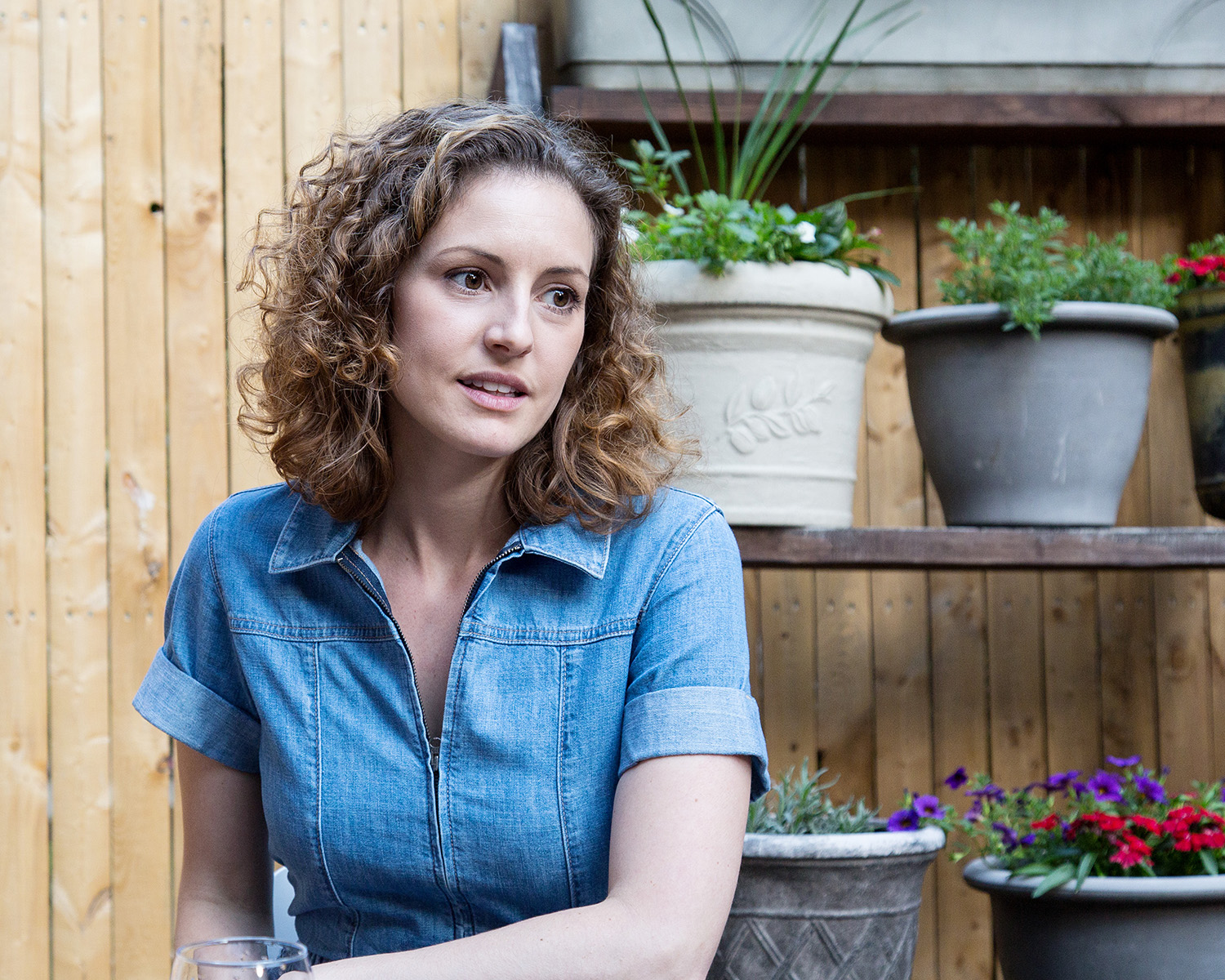
 

Klea Blackhurst & Andrea Prestinario
 

KW: Andrea, you’re a bit of a music historian too. You recently did a Smokeytown cabaret
 

AP: That show was inspired by her show, very much so. So I have to give credit where credit is due; she was one of the influences, in that I had done cabaret shows in Chicago but I was inspired to do my Smokey Robinson show…
 

KB: Look, I’m a big fan of not waiting for permission. So, y’know, when you come to New York, or anywhere, there’s a lot of power, in particular we’ve been lamenting the power of casting directors, you have to get an agent, who will put you on a list to send you in to have the casting director say yes or no. And if for some reason you get on the list and get into the room, probably nobody who can make final decisions is there so you come back again, so you go through all this to actually be in the room with the person who can say no.
 

KW: I interned in casting for a little while and it was very much like that. You come back and you come back and come back; it’s such an ordeal.
 

AP: It’s an ordeal just to get an audition, just to get in the room.
 

KB: I wrote my show eventually just because I wanted to be busy. I wasn’t ready to quit yet but nobody saw me as what I saw myself as, casting-wise. And it just seemed like…well, I basically just wrote something and cast myself in it. I’m not famous or powerful, but you can rent a cabaret room, and go in there and do it. The whole thing took off out of necessity and drive. I think that’s part of what you were attracted to…
 

AP: And it’s a big transition. When I got here, it’s a brand new marketplace and there are a lot of casting directors to meet and learn and build relationships with. It was jarring to be at a place in Chicago where I was making a living as an actor – I didn’t even have a day job for the last three years of my life in Chicago – to then go here where I was not seeing results immediately. I don’t think I thought it would happen right away; I don’t know what I thought. I didn’t think it would take as long – relationship-building takes a long time. I can’t not have something artistically to dig my teeth into and that’s kind of how that show came about.
 

KW: What’s it like switching from playing a character to actually being Andrea onstage?
 

AP: It’s a very different medium. We talk about that a lot too. Producing your own work is really scary and producing my Smokey Robinson show is probably the hardest thing I’ve ever done. It isn’t validated in accolades or any of that, but personally it really fulfilled me. I want to keep doing it, and I’m still working on it, and it’s so great because it’s this full show that I have in my back pocket that I can pull out.
 

KW: Obviously you did Gypsy…do you two want to do another show together?
 

AP: It’s interesting, we kind of laugh about doing a cabaret show together but we would just fight the whole time I think. She’s so not disciplined.
 

KB: That’s true. But it would get done, thanks to you.
 

AP: We’re polar opposites in the way we come about our work. I’m warming up to just practice in our bedroom and she doesn’t ever warm up.
 

KB: I’m just one of those performers that I feel like I might need those notes later.
 

AP: That’s such an Ethel Merman quote.
 

KB: I don’t do it. I’ll do a side run and stretch and bend, but I don’t need to practice the notes. Because I might actually need them later. I find them to be a semi-finite resource.
 

AP: She also has an old-school belt, and I’m a soprano. She’s a comedian; I’m academic and cerebral. I have a Moleskine that I use for every character I build and I furiously write notes about.
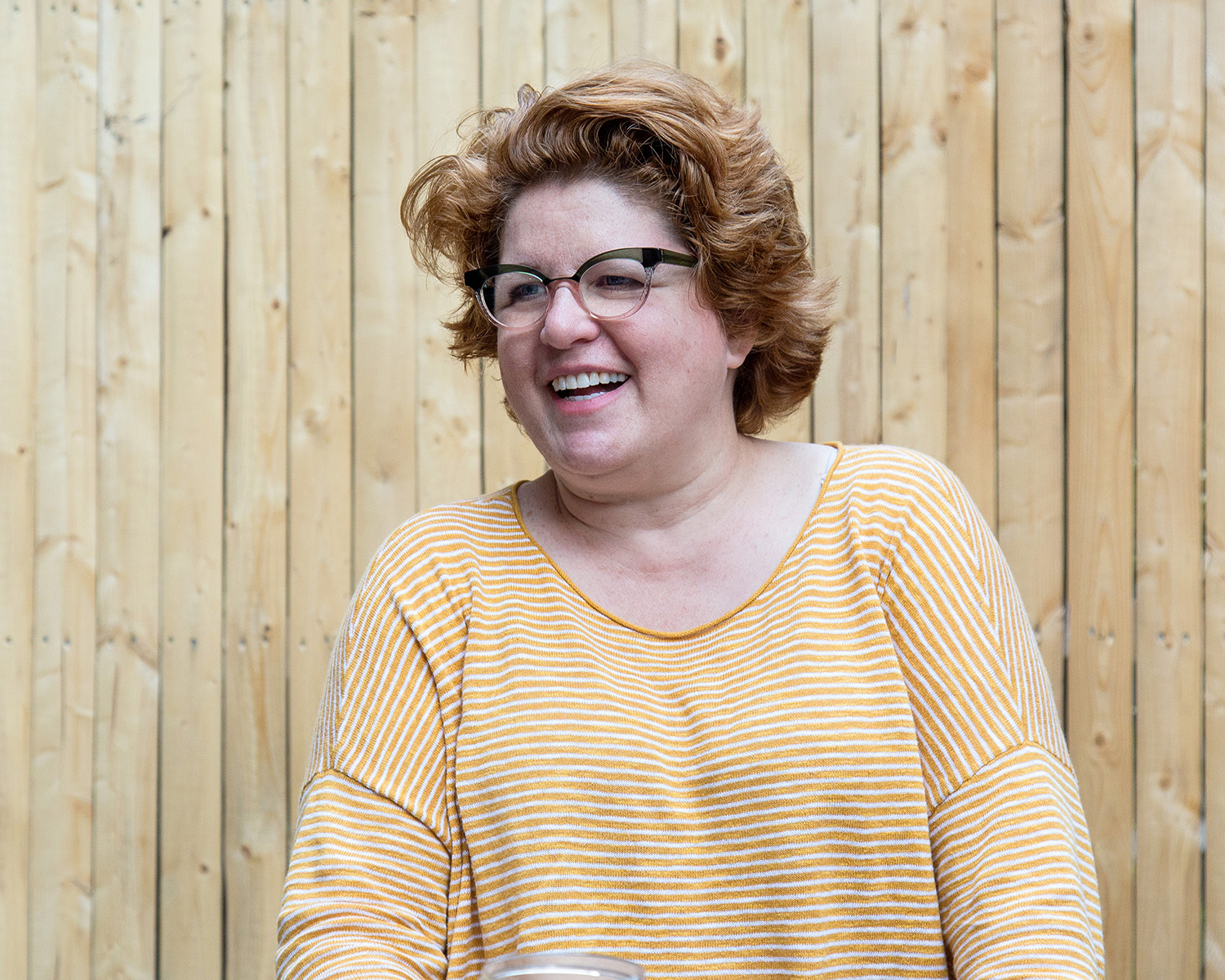
 

Klea Blackhurst & Andrea Prestinario
 

KW: It’s interesting to me, you both came to do cabaret work out of a want for artistic fulfillment and something to sink your teeth into. You almost can’t do a show together…how many shows even are there with two strong female leading roles? If you wanted to play romantic opposites, how many shows are there about lesbians?
 

AP: Right, exactly. That’s why Fun Home resonated so strongly with me.
 

KB: I think it might be the only one.
 

AP: Well, it’s certainly one of the first real lesbian protagonists.
 

KW: That’s the dangerous thing. We talk about diversity and wanting opportunity, and it feels like some people say… well, we gave them Fun Home, or, we have Hamilton, now we’re diverse, let’s move on.
 

KB: It’s gonna be really interesting to see how it plays out. Hamilton has really put musical theater in the national conversation and that’s exciting.
 

MT: I’m so happy people are talking about theater, and it is exciting, but at the same time the audiences are very white because they’re who can afford to see the show…
 

KB: And the new block of tickets came out and the top ticket is $850! I mean, come on.
 

KW: It’s a fantastic show but there’s no show I could spend that much money on.
 

KB: Exactly. That’s exactly to your point.
 

MT: I feel like because Hamilton has become what it is…there are so many shows that are deserving of attention this year, like Waitress, Shuffle Along, The Color Purple
 

KW: I think I was worried this season might be sparse because people would be afraid of competing with Hamilton, but it turned out that this season was actually really rich and diverse.
 

KW: Obviously it wasn’t a huge presence in your early life, but did you have any queer books, music, TV…for me it was Annie on My Mind
 

KB: I don’t think I know it.
 

KW: It’s an older book about a girl in New York who’s at this private school and figuring out her sexuality, and she meets this girl Annie and it’s just a sweet, lovely book. That was one of the first for me. I highly recommend it.
 

AP: I definitely had Indigo Girls. I was in college and listening to that and quite literally went to the library on campus, and would just look up the homosexuality section. I would just sit in that section on the floor and hope nobody was around…
 

KW: I would just go to the LGBT section, grab a book and run, and hope it was something I was interested in reading so no one would see me in that section.
 

KB: Thank God, that’s something that’s changed.
 

KW: It used to be like, half of one shelf. It wasn’t even it’s own section, it was just this label in the middle of a wooden shelf that said like, “Gay and Lesbian.” I would always sneak downtown when I was younger and they used to have this great bookshop, the Oscar Wilde bookshop…
 

KB: I know!! Oh, that’s the first one I went to. I loved it; I just loved it. It was great. That was a real loss. It was very special.
 

AP: Was it just a gay and lesbian bookstore?
 

KW: Yeah, it was all LGBT-centric.
 

AP: I had a moment walking on campus and being like…I can’t be, I don’t want to cut my hair like Ellen, I can’t be. All I knew was Ellen and Rosie O’Donnell.
 

KW: The gay community definitely has an interesting relationship with portraying gay women. I always think of The Heidi Chronicles line, “You either shave your legs or you don’t.” And I feel like sometimes that stereotypical image lesbianism hurts people.
 

AP: I definitely felt that coming out at first.
 

KW: How old were you?
 

AP: It was 2003, I think that’s important given the cultural relevancy. It was awhile ago, it was in college. I was twenty-one.
 

KW: Ellen Page said recently that ever since she came out, she gets offered mostly gay roles. Were you concerned as an actress about how it would affect your career?
 

AP: Oh, absolutely. That was part of my neurosis about it, because my career has always just come first and it’s what’s most important to me but I didn’t want to sacrifice who I really was. There was this inner turmoil about how I could have both. How could I be myself and still be taken seriously in musical theater? And playing ingenues! I’m a soprano; I play ingenues. I’m a wildcard – there’s really none of that. That’s what’s so weird to about when we met in Gypsy. In Chicago, there were no lesbian, queer women in musical theater. Then I met her and I was like, “Woah, you’re gay? I don’t know anyone else that’s gay!”
 

KW: And Klea, when did you come out? How did that process work for you?
 

KB: I was about thirty. Late.
 

AP: But you had relationships with women.
 

KB: Yes, very closeted. But I found, I was coming of age in a time where you could sleep with anybody you wanted to. But like, don’t acknowledge it. Don’t say it in public, don’t say it at work. It has changed so fast, for me, from my perspective. I know we still have a long way go, but I remember when there were no gay people on TV. And now, you gotta have the gay friend! That whole phenomenon. And Ellen coming out…right on the cover of Time Magazine. I remember that summer. Ellen really risked everything.
 

KW: She was everybody’s best friend; she put everything on the line.
 

KB: She really lost her career for awhile.
 

AP: She really did.
 

KW: It took her so long to get back to what she was, but now she’s such an icon.
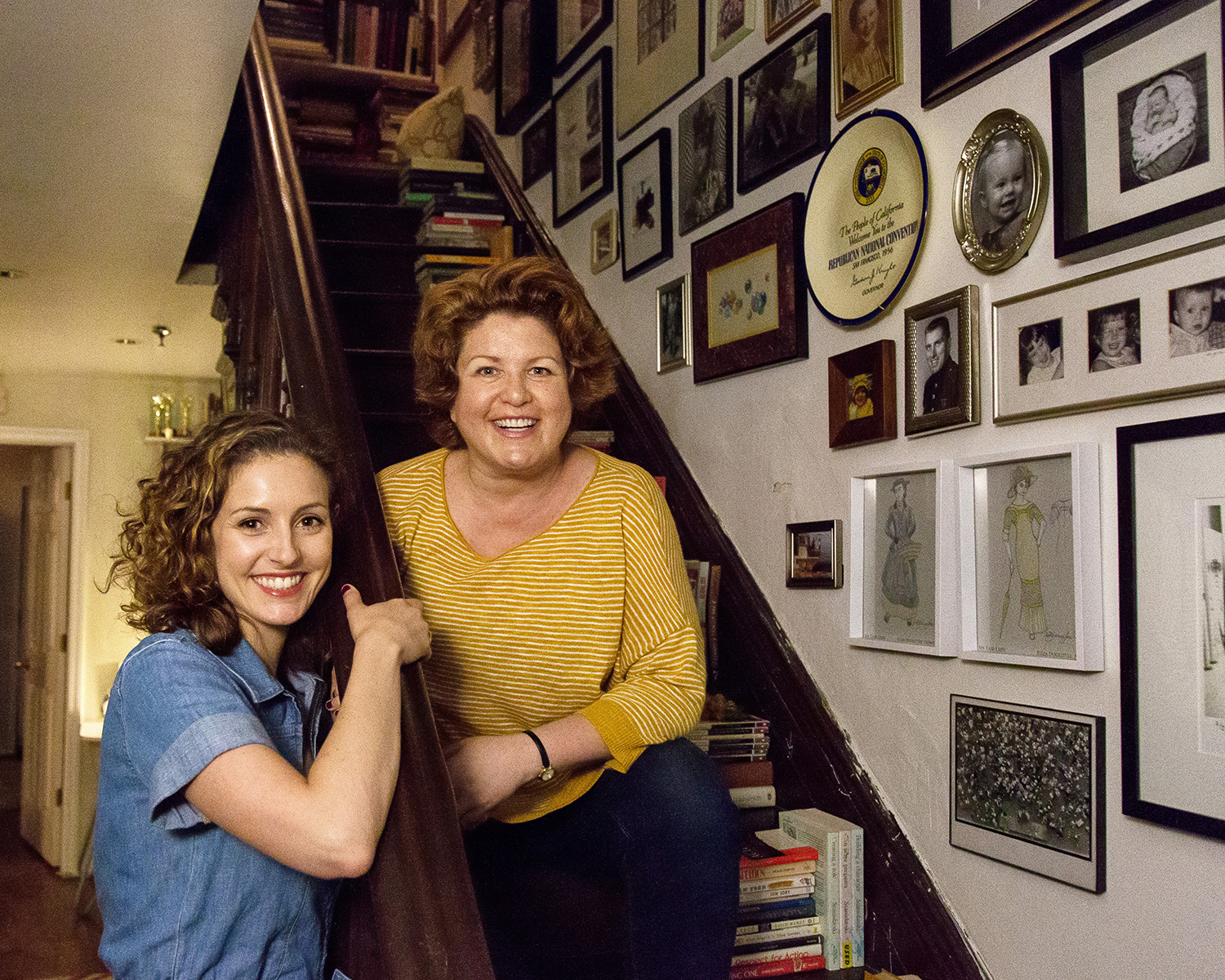
 

Klea Blackhurst & Andrea Prestinario
 

KB: It’s easy for successful comedians to cross a line between being funny and thinking that what they believe is more important than being funny. Bill Maher, Rosie O’Donnell, Lenny Bruce – their politics become more important than their comedy. Ellen has always stayed on the side of the line that says the reason you know me and love me is because I’m funny; that’s the reason you let me into your living room. I think that’s very unique and I love that about her.
 

KW: You as a comedienne wouldn’t want to lose the entertainment of what you do to put more political activist content in there.
 

KB: No. I don’t think I have an inner activist. I don’t think I’m a coward or I lay down though.
 

AP: She just isn’t political.
 

KB: It doesn’t drive me at the expense of other things, no.
 

KW: Andrea, you, to me, seem to be very political.
 

AP: Very much so. It’s how I see the world. I see the world through a feminist lens. It’s a curse and a blessing. Sometimes you want to not be able to see things so analytically and just relax. I have a gender studies and musical theater degree…
 

KB: That’s a rare combo, I think. I myself went for musical theater and geology. We’re very rare. I like to collect rocks and you like to introduce me to Dworkin.
 

AP: You do not collect rocks.
 

KB: I have a rock collection!
 

AP: Shut up.
 

KB: I do.
 

AP: She also has a rubber stamp collection.
 

KB: I love rubber stamps.
 

AP: I grew up in a house with just sisters and my parents are obsessed with fairness. So everything was always the same for all of us. If I got a phone in my bedroom when I was ten, I was the oldest, everyone else had everything else lined up that way. Then I went to an all-girls Catholic high school that was very progressive. There was even a sign in the hallway that said, “God is good, She is great.” It was very empowering. In my fourth year, you got to choose what theology class you wanted to take, there were options like God Talk or something else…I chose Women’s Contemporary Issues. That’s where my feminist seed was born.
 

KW: There was something on Facebook, I’ll probably misquote it, but it said something to the effect of, “God has to be a woman, why else would the Bible be a bunch of men explaining what she meant?”
 

[Laughter]
 

AP: That class sort of illuminated everything. I grew up in this household, and your household sets your guidelines for what you understand in the world and I understood it to be very fair and I went out and suddenly you’re coming to maturity and I was so enraged when my eyes were opened to it. At the end of freshman year of college, I started taking classes in the women’s studies department and that’s how it all started.
 

KW: Both of you…when you came out, what was your family’s reaction like? Was it supportive? Was it a welcoming thing or…
 

KB: I think it was good? It wasn’t talked about for awhile, and then it just like…was fine. It felt like a big risk but it actually ended up being great, I think. My first partner died very suddenly. I was in the closet, I was 27.
 

AP: They lived together but no one knew they were together.
 

KB: I was so invested in nobody knowing and family and stuff. I look back on it now, because I went through that whole experience in the closet, and I’m like…what was I doing? There was an obituary for her, because we lived here but she had been an acting professor at the university where I’d gone to school…the person writing the article talked to me and was like, “Do you want to be listed as a survivor?” And I was like…yeah, but I was totally in the closet.
 

AP: So what did it say…like, “friend of”?
 

KB: Yeah, something like that. It was so weird. That was a long time coming. I think it was easier for girls. This might be political here, I might get political.
 

AP: Whoa!
 

KB: It seems like boys were getting in more trouble because they’re actually like spilling seed and doing foul things…
 

AP: Spilling seed?
 

KB: That’s in the Bible! You know, you’re supposed to procreate, not just goof off. So they’re wasting it. I’m just talking like the Mormons. They weren’t enlightened, they were in hell on earth. The women it felt more like, “don’t ask, don’t tell.” Even if you had a suspicion, it was really like…they share expenses and snuggle. That’s what it felt like. In a way, if I had been the oldest son…
 

KW: Religion places such a high premium on masculinity and maleness…
 

KB: The patriarchy!
 

KW: So if it’s the person in the position of the most power disobeying this religious law or going against the faith…
 

KB: Exactly. That’s right. We’re just the sister wives. It was terrible. I was terrified to come out. I’m so glad I finally did. I remember the first interview I had, when I started giving interviews, when people cared…and this interviewer from Rehoboth Beach was like, “So, are you in-out or out-out?” And I was like…in-out? I think? By the end of the interview, I was like…I’m gonna be out-out. I was able to change that in the span of a conversation. I mean, I was going to Rehoboth Beach which is very gay-centric and your mom already knows, so what’re you saving it up for? But I did think, since I did a lot of solo performing, gay men like their women straight.
 

AP: That’s so true.
 

KB: They want you to suffer, like…over the man that got away. It is true.
 

AP: It’s so penis-heavy in musical theater, between all the gay men and all the straight women.
 

KB: And in Streisand and Garland, all the leading ladies, they flock to the one who is voicing what they’re voicing, which is always about a man. So I was reluctant. But then I was like, no, it’s okay. Nothing is really going to change.
 

AP: They also love a belter!
 

KB: I court that audience.
 

AP: Gay men love her.
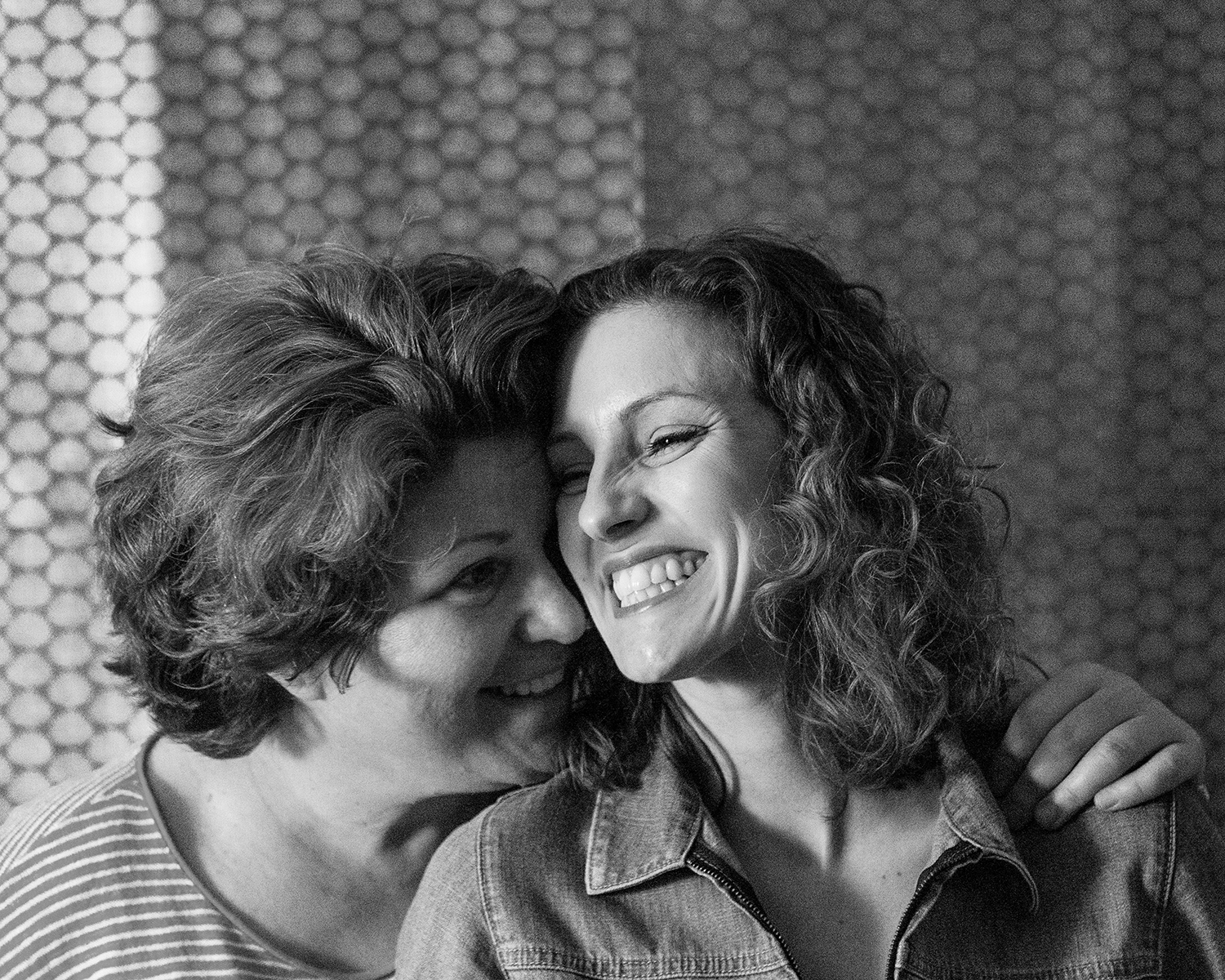
 

Klea Blackhurst & Andrea Prestinario
 

KW: Andrea, when you first came to me about doing this, one of the phrases you used was “normalizing queer women in theater,” what do you feel like we can do? What do you want to see theater do?
 

AP: Exposure. Obviously you can’t recruit queer women to partake in musical theater. We are a minority, but I don’t know why…maybe the future holds the opportunity for that type of woman to be interested in theater. Right now, we’re not really telling those stories, so why would a young queer girl be drawn to it? I mean that in the sense of being an artist and an audience member, being a part of it in all aspects, arts administration, all of those components. I don’t know, do you have answers?
 

KB: No, I would never say something like that. I wouldn’t have been smart enough to even say that.
 

KW: Visibility is important; if you can’t see someone doing it…having the first black President, possibly the first female President, so young people can see…I can do that too.
 

KB: To me, that’s what Fun Home represented. We’ve heard gay male stories…
 

AP: So many times.
 

KB: It’s like everything else. The guys got there first. I was talking to a lesbian friend of mine about Fun Home, and she had decided she didn’t like it because she didn’t think we should know that the father kills himself from the beginning. And I was like.. anything else? She said no. And I said: okay, may I challenge you please to open your heart a bit bigger? That could be the artifact of the source material. You’re taking this one thing about the storytelling and have decided you don’t like this piece that is trailblazing like a giant comet through our lives. You’ve got to open your heart a little bigger.
 

AP: That’s a great example. I don’t think that queer women root for themselves in that sense the way that gay men do.
 

KB: Have you watched The Women? They’re so awful to each other and as I grew up, I was shocked to find out that’s how straight women relate to each other. They will take each other down.
 

KW: Women are pitted against each other so constantly, from a young age.
 

MT: People think there’s only one cake. So if you don’t get in there, you won’t get a piece. But it’s like actually there’s hundreds of cakes around you.
 

KB: That’s right.
 

AP: I think, in terms of normalizing and visibility, I think it irritates me that as a community, that men and women who are gay don’t come together more often. There are some gay men, I absolutely don’t want to generalize here, but there are some gay men that love their gay female friends. But there’s still that niche of gay men to whom we’re a bunch of jokes. You always say the example about when the AIDS crisis came, the lesbian community were the first to come to their side and take care of them. When your friends were dying…
 

KB: When it came down to it, yes, absolutely.
 

AP: And I would like to think gay men could support us in return.
 

KB: I know, I remember I introduced you at a party to a casting director and said, “This is my girlfriend, Andrea” and she’d been in for him before, and he did like a big cartoon eyes thing. Then later he comes over to me and says, “I’m sure she’s delighted that you told me she’s your girlfriend.” And I said, “What do you mean?” And he said, “I’m sure she wants me to know she’s gay.” Meaning that I never should’ve done that because she’s an ingenue.
 

AP: And he’s gay!
 

KW: It’s within our community and these stereotypes – we should be the first to break them, and yet…
 

AP: I think it’s what makes me an interesting ingenue.
 

KW: Do you think your experience as a queer woman informs your acting?
 

AP: Totally.
 

KW: Some of the ingenue roles are just so thin. You’re a prop for something else or for the male lead so much of the time.
 

AP: And we blame the actresses sometimes, but it’s the source material; it’s not heavy to begin with. Last summer the choreographer, and I love this quote, said, “You’re the anti-ingenue.” I love that. I should put that on my website as a pull-quote.
 

KW: Obviously the competition for female roles is steep and the roles that do exist can be pretty two-dimensional and sparse; have you ever gotten a show or an audition or an offer that you’ve turned down because you didn’t connect with it or were offended by it?
 

KB: My thing is always…there are three reasons to take a job. And one can trump the other two. Sorry, I said Trump. Personal satisfaction, prestige, and money. I’ve recently added health insurance, for real. I’m doing a job coming up and the deciding factor will be that I’d get the four weeks for health insurance, because it’s certainly not the money or prestige. 
 

AP: There’s a lot of shows I’ve been in where I just disagree entirely with the plot. Like I was thinking, Seven Brides for Seven Brothers…
 

KB: Annie Get Your Gun!
 

AP: I did that show and I just hated it the whole time I was in it. I had the choice to not audition, ultimately I sometimes have to swallow my feminism a bit and choke it down in the sense…I just don’t understand why we’re still telling that story. Why are we still doing that?
 

KB: I’m not a fan of that show. I don’t know that it really has a place in 2016.
 

KW: I keep thinking about what you said about being in-out vs. being out-out, and I was rewatching Ellen Page’s coming out speech like a week ago…
 

AP: Ugh, it was so good.
 

KW: She said that she felt like she was lying by omission by not being out. Do you feel like people who aren’t out are lying by omission? Did you feel that way?
 

KB:I don’t think I did personally, because I was so wrapped up in religion and expectation and wading through all that, it felt like for the longest time just like bad news and how am I gonna break this to people? First, how am I gonna try to get rid of it? Then, how am I gonna embrace it? Then, how am I gonna show others it isn’t scary? I’m older, it’s a lot different.
 

AP: We’ve definitely had very different experiences.
 

KB: Now I can say, oh, that’s my girlfriend. Also, when you get to a certain age, towards your 50s, people ask are you married? No. Oh, um, do you have kids? No. If you’re being in, at 50, saying no to those questions, it’s a very different person. To me, the test of whether a girl was gay in high school and college…it was the girl who was with the gang, but kinda separate, an observer, she caught the comedy, she very often was a comedic person, and never talked about a boy.
 

AP: You use comedy as a vehicle.
 

KW: What about you?
 

AP: I waited until…I was telling friends and my sisters, but I was waiting to tell my parents until I was completely on my own financially. I was on my own as soon as I graduated college, so I was wanting to get that apartment and get out of their house as soon as I could. A couple months after graduating, I was dating my first girlfriend, and she broke up with me, and it was my first heartbreak. It was so overwhelming, they knew something was wrong. I told them, and it was a very emotional experience. My grandpa had just died, and my dad was in a very emotional place, and my mom, she can be very matter-of-fact, and she doesn’t cry, but my dad is way more theatrical and emotional. My dad just cried and my mom just sat there and listened and said, “We kinda had a feeling…”
 

KW: They always know before you do!
 

AP: Yes! I said, “I waited until I moved out because I was scared you were gonna disown me.” We can laugh about it now but I really did think…you expect the worst.
 

KW: Especially if you grow up in a family that is religious in any way at all, even if it’s in a small way.
 

AP: Catholicism has an effect. My dad just cried and said nothing would ever make me stop loving you. I still cry every time I say that.
 

Klea Blackhurst & Andrea Prestinario
 

KW: After all we’ve talked about…where do you see us in ten years? Where do you want theater to be?
 

AP: I want to see more gender-bending. I wanna see women playing Aaron Burr. I wanna see more of that. It’s funny to think about what we’re seeing illuminated by the activism in theatre right now. In the 60s, the Civil Rights Movement happened and there were these raising consciousness groups, and there were all these women’s groups that were like, we’re fighting about race but we’re also all still second class to these men. It’s that pecking order. Intersectionality, right? I want to see all of it at once in a way. I wanna see us work on all of them all the time and work on that in theater and tell those stories and have opportunities for women and men of color and minorities overall. There’s such a disparity of roles.
 

KB: Well, that’s why I was like…come on, Hazel. But that role doesn’t come along. It doesn’t exist.
 

KW: It’s a great part. You wish that there were ten parts like that.
 

KB: And it just doesn’t exist! Exactly. It could join the ranks of like, does Dolly get a guy? We don’t care. Does Rose get a guy? We don’t care.
 

KW: That’s part of what I loved about it. The love story was never the focus. The central question isn’t whether or not she’ll find a man.
 

KB: That’s what I think is actually Merman-esque about it, having nothing to do with Merman. But she was a star. She had thirteen Broadway hits. Thirteen! But none of them depended on the guy, nobody cared. Yeah, in Annie Get Your Gun, she throws the contest at the end so he can think he’s the big man so that one she ends up with him, but the other ones…it’s not the central thing. You didn’t need a guy’s name with her name. That’s all that anybody cared about, at a time when Broadway was a major growing concern. That’s what attracted me to Hazel, and is one of the things I think they need to do to it. Make it Hazel’s story. Focus that thing and just…people wanna know about Hazel, not because I’m Hazel, but the same thing happened with Hello Dolly! out of town. People didn’t want Act I to end with a song about how Horace became half a millionaire. We just wanna get back to Dolly.
 

KW: At least everyone I have heard talk about the show or what I’ve read, Hazel is what people are responding to. She’s the heart of the show.
 

AP: The work ahead is very exciting to think about.
 

KB: Taking that story, making it more. My questions became, if we’re going to encourage Mrs. Baxter to have it all, why can’t Hazel have it all? This millionaire guy dates her and it’s like, no, I’m gonna stay with the family…that I met last week. It doesn’t make sense. Those things could be more realistic and valid. And why can’t she date a millionaire and have a job? And why can’t Mrs. Baxter have a job?
 

KW: It’s very subtle, the way it’s done, but there’s a level of classism in the show as well. You do feel that she’s “working class,” that she’s the help.
 

KB: That’s right, absolutely. I think that should be fixed. Hazel has to come out on top on every question. And she should solve every problem. That’s what she does! To me, it’s so exciting, I hope they get it right, because I will play her forever. You would have to kick me out of my Broadway dressing room, you would have to ask me cordially to leave after like 30 years. I’d be like, nope, I like taking naps between shows on Wednesdays, I like having my soup sent in, I would not want to leave. It’s taken me so long to get to where I am. I was just thinking the other day, it’s kind of obnoxious to say, but lately I’ve done a string of roles where I get the last bow. And that’s just a fact; it’s how it is. It’s awesome, what an awesome thing! I’m hoping ten years from now that I look back and that I have opportunities to create things, do things, and that I stuck in this long.
 

KW: They say if you’re not a soprano, you won’t work steadily until your 40s…
 

KB: Yes, exactly! And I am hoping that’s true. ‘Cause once the Reno Sweeney years were over, the Gypsy years arrived, now that time has come. I hope it’s a long train. And a lot of stuff gets sent to me now, new stuff…Let’s see. One of them, there’s one called Vanishing Point, I love this piece so much… It’s about Aimee Semple McPherson, Agatha Christie, and Amelia Earhart, all of whom vanished. Aimee Semple McPherson who walked out of the dessert saying that she had no idea what happened to her, and then Agatha Christie disappeared for days and found her car wrecked by the side of the road, and she was registered at a nearby hotel under the name of her husband’s mistress. So three different experiences of women vanishing. It’s so smart. I did concept things and Agatha Christie was always Alison Frasier, I was Aimee, and Amelia has changed a couple times…you’d be a great Amelia Earhart.
 

AP: Cast me!
 

KW: There it is! There’s your show together.
 

KB: Yes!!! There it is!
 

AP: Oh, babe, we did it!
 

KB: That could actually be good. It’s been struggling, but stuff I get asked to do, I say yes yes yes unless there’s a reason to say no. They don’t want me for Seven Brides but let’s say no. If you can, just say yes. My whole career is a series of what happened because I said yes. Interesting combinations of things you could not have made up. So, I’m gonna do more of that.


Posted on

A Conversation with Jeff Augustin & Srda Vasiljevic

Srda Vasiljevic and Jeff Augustin have both played instrumental parts in my first year post-grad. Both as artists and as people they surprise me with their warmth, focus and generosity time and time again. Srda and I played in the same playground of college theater and the splash he's made in New York in the short time he's been here has been nothing short of inspiring. His hard work and clarity of vision teach me something every day, but even more than that, his willingness to make space, to pull others up with him has made me more excited than ever about being part of the New York theater community. I was struck first by the quiet precision with which Jeff enters a room, and quickly came to love both the joyful movement and radical thoughtfulness he brings to his work and his relationships. As Jeff closes The Last Tiger in Haiti at La Jolla Playhouse and Srda opens Dust Can’t Kill Me at the June Havoc, I am endlessly excited by the stories they share.


Srda Vasiljevic and Jeff Augustin have both played instrumental parts in my first year post-grad. Both as artists and as people, they surprise me with their warmth, focus and generosity time and time again. Srda and I played in the same playground of college theater and the splash he’s made in New York in the short time he’s been here has been nothing short of inspiring. His hard work and clarity of vision teach me something every day, but even more than that, his willingness to make space, to pull others up with him has made me more excited than ever about being part of the New York theater community. I was struck first by the quiet precision with which Jeff enters a room, and quickly came to love both the joyful movement and radical thoughtfulness he brings to his work and his relationships. As Jeff closes The Last Tiger in Haiti at La Jolla Playhouse and Srda opens Dust Can’t Kill Me at the June Havoc, I am endlessly excited by the stories they share.


Corey Ruzicano: How have you come to tell your origin story, publicly or privately, and has the practice of telling that story informed the way you tell stories as an artist? What is your story and how has it given you a lens to listen to other stories? How did you come to be who you are, and how have you drawn the lines between those points of the constellation for yourself?
 

Srda Vasiljevic: I was born as a refugee. Actually, I was born right before the Bosnian genocide happened, so I guess there was a six month period where I was not a refugee. I think when most people hear the word refugee, they think of women and children wrapped in layers of fabric, people huddled together, decrepit housing, but my understanding of what a refugee was, was based on the community around me. As a young child, I was always with other children – it was for the most part women and children, and I feel like that plays a huge role in the kinds of stories I’m interested in and the kind of relationships I hold dear. I think I’m drawn to telling female stories and have always loved female characters, because I love and appreciate my mom and my sister and my grandmother. I feel very tied to the women in my family.
 

Jeff Augustin: Did you still feel like a refugee, moving around?
 

SV: I actually wrote about this recently for a grant application or something – I don’t think I realized that I was a refugee until I started grade school in Iowa. When you grow up like that, that very, very early, elementary age, you don’t realize that your situation is different from anyone else’s.
 

CR: It’s like a categorization only in hindsight.
 

SV: Exactly, and then we moved to Iowa and lived with refugee families, so I was still surrounded by other people like me. For some reason that cultural smashing of Bosnian and Iowan together was normal, because that’s what everyone else around me was, too. It wasn’t until I met people with other understandings of what a refugee was, that I started to think about what I was or what it meant. That was a big time historically with Clinton’s involvement with Bosnia – specifically in those few years – you would say “refugee” and you would just think of photos shown on the news of the Bosnian Genocide, and think of these horrific stories. So my presence was always defined then by others’ insinuations, their very limited understanding of what this culture actually is. I started grade school and I guess at that point, I decided I needed to start American-izing myself. My name is so weird, I hated it growing up – you have to hate it growing up! Every substitute teacher is scared of it…
 

JA: You know it’s you when they pause…
 

SV: Weirdly, I remember as a seven- or eight-year-old going to the vending machine at the big K-Mart by where we lived that sold these really gaudy fake cross necklaces. I needed one. I thought if I had a cross necklace, that would make me feel so much more American. I’m not really sure why. I remember thinking, I’ll be one of them. I wore it for a couple of days until my family said, “you can’t just wear that, it’s not just a necklace, it’s a symbol that means something.” So I quickly moved on from that, but I do find these little vestiges of needing to become American, subconsciously. It’s always little things, little ways of wanting to acclimate myself to the culture and the art.
 

JA: Yeah, I grew up in Miami, the youngest of seven. So it was a whole lot of people. My sister and I are the two youngest and we’re the only two who were born here and everyone else was born in Haiti. I learned Creole and English at the same time. I remember distinctly in fourth or fifth grade finally figuring out how to say the word “iron”, because it sounded so different in Creole. Things like that stick in my mind even though my Creole is practically gone. But growing up in Miami, it just feels like the Caribbean – it’s just like all these different immigrants. It’s tricky. I also remember going through this whole thing of understanding what black meant – having a phase where I was African American and then reevaluating and realizing I’m very much Haitian American. My roots come from Haitian culture and so a lot of my journey has been exploring where that comes from, all sorts of things like vodou and the Haitian revolution. And I do think very much that the way I first started stories was very influenced by the folklore quality of Haitian culture. I think Haitians are some of the best storytellers. And then I think the first time I really began to understand the cultural difference of what it means to be American or what America looks like didn’t happen until I left Miami and went to college.
 

SV: Because Miami is such a specific pocket of American culture?
 

JA: Yeah. I went to Boston College, and BC is one of the whitest institutions and economically is also so different from where I grew up. That was a culture shock. And that was the first time I really felt like my identity was shaped out of that shock – it was the first time I really felt like “I am a Haitian American.” It’s where I started to understand the significance of place and what home means.
 

CR: What did some of those things mean or look like to you?
 

JA: I think I understood privilege in a very particular way. I understood my place and how I was seen. I was this poor Haitian kid and also very obviously gay, so there were a lot of different lenses to be seen through. A lot of people at Boston College are at least upper middle class and my fashion sense was so different – I think I always had a bit of fashion sense but what I could afford was so different from everyone else.
 

CR: Well especially when so much of the dominant culture only sees color, it doesn’t always see the cultural gradations within it.
 

SV: There’s a strange separation but overlap of race and culture that I think many people don’t really understand. I’m white, obviously I’m caucasian, but I feel such a very specific identity with Eastern European culture, so I don’t necessarily identify with white American culture, although I’m very obviously white. For example, a lot of Bosnian people are Muslim. It’s the predominant religion in Bosnia, especially in the countrysides. A lot of my community and friends and family are Muslim, so when Donald Trump says “let’s ban all Muslims” and focusing his attacks on the Middle East, he doesn’t realize that a lot of Muslims are not what he imagines Muslim people to be. It’s also the language. Anti-Muslim rhetoric is cropping up in schools, but the people that are persecuted for being Muslim are people with brown skin, people who look different, and that’s troublesome, because people are associating religion and a culture with a shade of skin. It’s very intricate, that way of compartmentalizing.
 

CR: And so much of it is informed by external projections from the outside world that aren’t factual, but exist in their own kind of fact because perceptions create reality.
 

SV: If they exist in any world, they exist. We as people need to understand why these biases exist and how to clarify… or do you need to clarify things?
 

CR: It’s an interesting question. I was talking to a writer the other day and he was talking about being a white-presenting biracial person and that for him, he’s gone through so many iterations of understanding and owning his racial identity that he’s begun to think of race as a fluid thing the way we think of gender as a fluid thing. But it doesn’t work like that for everyone because not everyone has the capacity for or is beholden to that fluctuation, or is able to make choices about that journey they’re on. When you’re having to identity yourself as a certain thing, how do you find the license or empathy or understanding, or the ground to stand on, when you’re trying to tell more than your own story?
 

JA: I think it’s tricky. I feel, at least in theater, there’s this mark of “I’m this Haitian playwright.” And I think the expectation, when I walk into a room or a meeting, is that I’m going to pitch you a play about Haitian culture. And I do want to tell those stories, but I shouldn’t feel forced or obligated to. Fundamentally I got into writing because watching TV and movies, I did not see any stories about Haitian culture, or if I did it was horribly exploitative or just wrong. So that’s kind of where I entered and that’s just part of the fabric of who I am, and so I do feel that pressure of having to be a specific type of writer. But the question of the ownership of work… I was born here. And my siblings who spent fifteen, sixteen, twenty years of their lives in Haiti, they are Haitian people.
 

SV: Do they consider themselves Haitian American or Haitian?
 

JA: I think they consider themselves Haitian. I’ve never asked. But for me, that American part of me is important and very much a part of my identity, but there’s also a fear when Haitian people come to my plays to know if I’ve gotten this quote unquote right. Am I telling the story right? And how am I presenting Haitian culture to these majority white audiences? And making sure it’s clear that this is my one experience, my one lens into this and there are many Haitian stories. Please do not make this your one reference.
 

SV: But people do that. People see one thing and just automatically assume that it’s everyone’s experience. Just like you were saying, there’s a such a gradient of white stories, there isn’t one experience. You don’t think all white people think this way, because Willy Loman does.
 

CR: Because white usually means “neutral,” and anything is defined by the negative space that that leaves. There are only these tiny corners made for the non-dominant culture, so it’s made to feel like there’s only room for one or two types of stories within that corner.
 

SV: You look at a theater season and there are six slots and you have to – I hate to say this – but there’s usually a show that caters to a “minority” audience. Why aren’t we focusing on human stories regardless of background for every slot?
 

CR: People are always worrying how you make any story relevant, but the theory of the United States of America should predicate that they’re all relevant. We aren’t carrying out the thesis statement we started with, so of course there’s a lot of gear shifting to be done. And it’s not only a cultural conversation to be had but a capitalist one. Because when there’s a price tag on everything, some things will always be valued more than others. You’re always in a marketplace, you always have to be thinking about how to sell yourself and your stories. So does that change the way you make choices about the pieces that you look for or the collaborators you’re interested in working with?
 

SV: As a refugee I grew up with stories – we didn’t have television to watch. So now as an adult, I want to tell stories that feel larger than life, a deviation from your normal circumstances. Theater is the last art form where you can present something on stage where the audience has the ability to use their imagination to understand the world you’re presenting. I feel like that’s what storytelling is, at it’s basest form, you’re saying “fill in the rest.”
 

CR: Especially when you’re thinking about what it means to own a story… and the word own has such specific, dark roots in this country –
 

SV: Yes, it can be very challenging being a director, directing a work that is outside of your own background.
 

CR: Yeah, I never think about it as much with directors as much as I do with writers.
 

SV: But I also think there is a stigma. August Wilson wanted his plays to only be directed by directors of color, which makes a lot of sense. I think there’s a specific reason why his stories about the African-American condition should be told by directors of colors. But do I, as a gay, Bosnian American director, have the ability to direct an August Wilson play? What is my “ownership” of that – do I have any ownership at all? Am I just the third party observing and trying to make sense of it? I think one of the reasons I love Jeff’s writing is that the cultural aspect of it resonates with me. It feels like our backgrounds are incredibly divergent. Do I have a clear understanding of the Haitian American experience? No. Do I have an understanding of growing up in an immigrant household? Yes. So it depends on what context you’re talking about. You definitely have to make choices about whether or not you have the authority to tell a story and why. You have to be conscious of it, or you aren’t really telling the whole story.
 

CR: Ultimately the idea is that the ideal we’re moving toward is that the playing field is not uneven, so that sharing each other’s stories will not be so fraught with inequity, that no one will be disenfranchised from the platform to tell stories. But that’s not where we are right now, so the choices you make sort of have to be prioritized in that direction. It’s hard because there are times right now when the gear-shifting feels really transparent and uncomfortable and pointed but it’s all about habit forming.
 

SV: You’re making a statement. I think there should be more cross-pollination of ideas and backgrounds, especially between directors and playwrights. A lot of the time we get paired together because of our similarities, rather than our differences.
 

CR: It’s like saying two people of the same culture will automatically have the same thoughts and want to work in the same way.
 

JA: It’s a tricky road. There are certain plays where there is a certain kind of director I would like to work with because of the matter that I’m diving into. I’m working on a play about a bunch of generations of Haitian women working on this farm and there’s this very particular director I want to work with that’s half Haitian, and that’s important because I’m diving into this world and I want that perspective. But other times, back to that idea of the machine of season planning, a company decides to do your show and the directors that they come up with are only people of color and you can feel the pigeon holing. This is our minority play so we’re going to stuff in every minority that we can. In the same way that plays written by straight white men should not only be directed by straight white men.
 

SV: Signature just announced their season and I think five of the six directors are female, and it’s so exciting to see shows written by men being directed by women, because women can and should do more than tell female stories. I do think the pairing thing is really problematic because sometimes the best stories are told by people with completely separate backgrounds. Look at John Doyle and The Color Purple.
 

JA: When I’m writing a play, I’m thinking more about what these characters are going through and what kind of director, what kind of people whose work I’ve seen connects with the heart of that story. We can’t forget that there are people on stage who are acting the way people act.
 

CR: Of course, and some of the circumstances have been informed by a social paradigm, but if I’m coming to your show as an actor, I’m looking for what anxiety or desire or fear would make me say the next line on the page. It’s an endlessly interesting conversation that never has an answer.
 

SV: I don’t know if people talk about it, though.
 

CR: Well it’s a privilege too, to have the time and space and resources to have these conversations. Sometimes I forget that. I also feel like I’m always asking this question, but I’m always trying to define what community is for me and for the people around me. What does community mean to you and how have you found your place in it?
 

SV: I grew up in one culture and then was plopped in another, so I never really felt at home in either. I feel a kinship with both, but do I feel at home in either? I think I finally felt at home in New York. It feels like an island of misfit toys to me. Everyone has weird backgrounds and weird ways they got here. The artist community here that didn’t take the same narrow path to get here but we’ve all sort of hopscotched to it, so it feels like we’re all very similar, yet incredibly different, and that makes me feel at home.
 

JA: I think one of the most important ideas about community for me is a place where I can feel grounded, where I can just be whatever version of myself I want to be, where I can find mental stability. When I work with people who are of both my artistic and my deep friend community, I feel like they carry me creatively and personally, and that always challenges me to be a better person. Community for me is very much about my personal alignment, because as a writer I spend hours and hours alone and feel like I’m in a bubble.
 

CR: And in New York as individual artists who aren’t always working collaboratively or with the same people, there’s also a very practical question of how you find your people.
 

SV: Yeah, finding community in a freelance life is definitely a puzzle. I’m part of an artist board and that introduced me to so many people on similar artistic wavelengths. I think you just have to be open to it. You meet people all the time, so you really have to put the time into finding out what your connection is with them. That’s my job as director – finding the connective tissue. I know that if I were working in an institution and using that as my main throughline to meet people, I wouldn’t have met the same kind of varied groups of people that I have freelancing. They connect the dots for me, make me a more whole person, supplement something in me and make me stronger, and truth be told, your artistic community doesn’t have to just be artists.
 

CR: Absolutely, and I love the idea that your community is the people who make you want to be a better person. I don’t know if I’ve ever thought about it like that, but I think it’s completely true for the people I’m most drawn to–they make me want to show up and be better.
 

SV: But it definitely takes a while. It doesn’t happen immediately. It accumulates, the people and the experiences.
 

JA: And you do make relationships with institutions over time, not just people who will do your play but people who are behind your voice.
 

CR: People do stick their necks out for you every once in awhile. It’s not an industry that supports corporate singularity, it’s totally a word of mouth world.
 

JA: Absolutely, and the more people you meet, the more new experiences you get pulled into, the more you’re stretching as an artist and as a person.
 

SV: I don’t want to say it’s happenstance but a lot of it is just where the chips fall… that’s an expression right? That’s one thing about being Bosnian is that I still don’t know idioms.
 

JA: Oh I know.
 

SV: It’s how the crackers crunch? No.
 

CR: Do you have any Bosnian idioms?
 

SV: No, just curse words. Bosnian language can be vile. And the literal translation of Bosnian curse words can be so much worse than English.
 

CR: Yeah, expressions like that are so cultural.
 

SV: And they translate so differently. I speak English fluently and I speak Serbian-Croatian fluently and there’s such a difference of tone between the two languages.
 

JA: I’ve been thinking a lot lately, talking about language, that so much of understanding my work is understanding the style. So much of the influence of my work is Haitian language and culture, and it’s big and it’s loud. Creole happens to be a lot more poetic than English, so people’s turn of phrase are different, and that has influenced the way I work. Sometimes when I’m writing, I think that’s not going to read or be understood. When you’re directing, do you feel like that ever?
 

SV: I feel like Bosnian, as a language and as a culture, exists in this slightly heightened realm. We would have parties at our house and seeing how Bosnian adults interact…everything is big. There are big screaming fights, big love, big feelings. There’s a lot of emotion. So when I look at a piece of text, I always want to know what happens if you pull this tiny string and elevate it to this almost hyper-heightened sensibility. Did that change the ebb and flow of a scene? How do you dramatize real life? I don’t necessarily consciously try to hyper-dramatize my work, but I guess in my head I see conversations as much more dramatic, because that’s what I grew up with.
 

JA: Right.
 

SV: Nothing is ever easy but it’s also just funny. There’s a lot of joy and laughter in my family and in storytelling, so all that emotion and the fights and the laughter all lead into how I tell stories and how I see characters interact. It has that blood flow.
 

CR: I’m a big believer that often language creates reality. It’s like that John Muir saying, “When we try to pick out anything by itself, we find it hitched to everything else in the Universe,” and I think language is no different especially because it’s man made.
 

JA: I can only think about writing-wise, but sometimes I’ll have a line that feels like, there’s so much acting in that, and yeah, Haitian culture can dig at someone with one word, and it’s very still and very smiley. I do sometimes feel that trickiness of navigating having to unpack that more or figure out a way to sound a bit more American or pull in more Western dramaturgy, whatever that means. Sometimes it feels like it opens up the work, but not always.
 

CR: Where do you draw the line of I want to represent this, this way but I also want it to be understood? It’s a very delicate balancing act. I don’t want people to shut off, but I also don’t want to spoon-feed them.
 

SV: When you’re looking at a piece as a director, sometimes you feel like you understand exactly the intention of the writer in that moment but it may not read to the audience at large, because it’s so specific. So what do you do? Do you keep it specific or do you open it up so that it’s a moment that more people resonate with? Do you adjust?
 

JA: I think there’s also a bigger question about how we watch plays and critique works of groups you don’t have an education about.
 

CR: Totally, how can you engage as an insider and as an outsider or somewhere in between?


Jeff Augustin’s play Little Children Dream of God received its world premiere at the Roundabout Underground, where he was the inaugural Tow Foundation Playwright-in-Residence. His plays have also been produced by Actors Theatre of Louisville (Cry Old Kingdom, Humana 2013; That High Lonesome Sound, Humana Apprentice Anthology 2015), and Western Washington University (Corktown). His work has been developed at the Eugene O’Neill Playwrights Conference, La Jolla Playhouse, The Ground Floor at Berkeley Rep, American Conservatory Theater, and Seattle Rep. He is a member of The Working Farm at SPACE on Ryder Farm and was a New York Theatre Workshop 2050 Fellow. Currently, Jeff is the Shank Playwright-in-Residence at Playwrights Horizons. He is under commission from Manhattan Theatre Club and Roundabout. BA: Boston College, MFA: UCSD.
 

Srda Vasiljevic is a theater director living and working in New York City. Born in Sarajevo, Bosnia a few months before the Bosnian War broke out, Srda spent his childhood living in refugee camps across Europe before moving to the bustling Midwestern metropolis of Des Moines, Iowa, and later on, New York City. Srda has worked on and off Broadway developing new and reinvented works with artists such as Terrence McNally, Jeanine Tesori, Moisés Kaufman, Billy Porter, Leigh Silverman, and Deaf West Theatre Company. Working on the directorial teams of such productions as The Laramie Project Cycle at BAM, 2014 Tony-nominated Mothers and Sons, ENCORES! Off-Center revival of Andrew Lippa’s The Wild Party and the Deaf West Theater’s Broadway revival of Spring Awakening have contributed to Srda’s eclectic and electric style.