Posted on

A Conversation with Mark Russell

Mark Russell


In the dying fire of 2016 we met in the heart of the Public Theater to speak with Mark Russell, the Festival Director of the Under the Radar Festival. UTR itself is a conversation, within each piece and across artists and disciplines, and Mark Russell has been orchestrating this dialogue for over a decade. He reminds us that a festival is a celebration. Always and especially in our current climate, art gives us the opportunity to tell the truth in ways we don’t expect and that is certainly something worth celebrating.
 

As I look into the darkened unknown of 2017, it is in conversations like these, about and in the art and truth that I find hope.


Corey Ruzicano: I would love to start by talking about what it means to be a curator. From PS. 122 and Portland and now the Public, what are some of the things you’ve learned and what values have become important to you, as a curator?
 

Mark Russell: Well, curator is an interesting word. I’ve never really embraced the word “curator”; I usually call myself a programmer, because I feel I’m just a lens on what’s going on and I’m trying to reflect that. And in theater, where this stuff moves around a lot, if I wanted to do my Blue Period or my All Hamlet Festival, it would take so much money to make it happen. So I have to be really open and available to what’s going on. The real agenda of the Under the Radar Festival is to give a snapshot of what we think is going on in performance and new theater around the world.
 

CR: What role does this medium play during any current event, but particularly this current political climate? What can you speak to with a festival that you couldn’t speak to in the same way with a house that has more established yearlong programming? What tools does the festival give you to react?
 

MR: Well, you know festivals are celebrations, they are a time when you can break the rules. Either it’s celebrating bringing in the crops or Lent or having a whole bunch of bands together, and this one is all about the theater community. It’s a time when we throw away the rules, go binge on theater, bring together that community around it, and join it. It’s also open for people around the city to join in the celebration. Within celebrations, especially theater celebrations, there is room for sadness and anger and loss and poignancy, but coming together is the force of the festival. There’s a lot of need. I feel a need to come together with these people.
 

CR: Absolutely, I think there’s been so much interesting talk about how the language of our country has become a utilitarian one, that we’ve made a shift away from the communal and spiritual-based vocabularies of the past, and I come to theater the way I think a lot of people go to church. I’m interested in how you’ve come to define that idea of community for yourself and how you’ve built the community for this event?
 

MR: The community sort of built itself and I’ve been adding on, of course, drawing in the artists and what they bring to it. Sometimes the festival can sort of shift in communities, in what it’s addressing and who comes. It’s interesting because I didn’t know what to expect this year. I thought, either it’s going to be really happy and joyous or we could be despondent, we could be bored—we just didn’t know. And then when this election happened, when certain things happen, I looked around at the work that we had invited and thought, yes, it’s going to fit. In fact, in this room are going to be 600 Highwaymen, where the audience makes the show themselves, and in that sense it’s all about community and how far you can push it and stretch it—what our agency is in community. I’m very happy about what this festival will say in January in all its different parts. The Bengsens are more about the joy.
 

CR: Yeah, Hundred Days is such a celebration of life.
 

MR: And I need that as well.
 

Mark Russell
 

CR: What’s it like to have all these different voices and vocabularies speaking together in one conversation and how do you go about orchestrating a conversation like that?
 

MR: If I knew the conversation, I would be bored, so I’m just waiting to see what this festival is going to say along with everybody else. I have a few more clues than most people, but actually, when you start to go through these festivals, there’s a different thread and you go, oh everyone’s about missing dad. All these different themes and threads come out. And actually we’re gonna do this: Jeanie O’Hare, the new dramaturg, is going to do a special event called “The Sweep” and it’s going to be in this room. She’s going to be embedded throughout the festival and then talk about the different themes that she sees and allow everyone to join in on the last Saturday of the festival to talk about what they saw.
 

CR: What else are you excited about this year?
 

MR: Oh gosh. This year we have more things being made for the festival than ever before.
 

CR: Oh really, what is that process like?
 

MR: It’s like commissioning 600 Highwaymen, which is our centerpiece, but also things like Club Diamond, which began as a workshop last year and is now a full blown, beautiful piece that we’ve helped shepherd to get there. I have an associate that I work with, Andrew Kircher, who sort of acts as a producing dramaturg for all these pieces. So we get into some of the technical challenges but also the dramaturgical, the textual, the larger challenges within each piece, and I’m very excited that all of them are coming together. Keith Wallace is taking a piece that is a promenade piece for basketball courts that he was doing in San Diego, and we’re taking it and making it into an actual sit down piece and trying to make that crossover, and of course it will really be a different piece when it gets here. I’m really excited about it. It means that this piece, which is one of the strongest Black Lives Matter pieces I’ve seen, is going to reach more people, and I think that’s even more important than the interactive version.
 

CR: So what is that submission process like? How do you go about choosing which voices you give a platform to?
 

MR: Now I’d have to shoot you. I’m not an intellectual curator, I’m more “go from the gut” and “I feel like…” I see something and think, “This is a voice that my community of Under the Radar needs, those that have been there and those that I want to reach out to and bring into the room, those people need this part of the conversation.” I spend all year looking for it, I travel places, people send me videotapes, I have a lot of spies around the world that call me up and say, “This is the piece you want.” I’ve been doing it a while and there’s a flow to it. I’m also thinking of pieces for ‘18 and ‘19. I think of it as a privileged position, of course. It’s a joy. I work with a lot of people to make this happen; it isn’t me coming down from the mountain. I’m working with people like Andrew or my producers Ellen Dennis and Lily Lamb-Atkinson. It’s a conversation, and at the end I end up taking responsibility for it, so someone can hate me. We try and create a shape, you need a little bit of joy like the Hundred Days, and you also need a little bit of beauty like Manuel Cinema’s Lula Del Ray, or Club Diamond, and then you need to look into pieces that are taking the form and stretching it like Gardens Speak, which is about Syrian martyrs and is the most powerful piece I saw this year. It doesn’t have any actors in it, it’s more of an installation piece and I’m really excited about it. We have interactive pieces like 600 Highwaymen which is all about community and the piece that we’re doing out in the Brooklyn Museum in the Egyptian wing by Rimini Protokoll called Top Secret International (State I), and by the end of that you’ll think of everyone as spies. It’s about the spying community, and you actually do a little spying yourself in and amongst this beautiful exhibit of Egyptian antiquities.
 

Mark Russell
 

CR: It’s so interesting to get to see the vernacular of a piece like that in relation to different mediums. I always feel the most fulfilled when I can see the shoulders that people are standing on, not just theatrically but visually or aurally, etc.
 

MR: Under the Radar is dealing with a lot of cross disciplinary things, which is really where a lot of the inspiration goes or a lot of the rules get broken. And that transgression opens up a certain truth, and that’s what I’m interested in.
 

CR: I love that idea of truth, especially in this era where truth feels like a really rare commodity, or maybe that it’s over produced and so people are inundated and oversaturated with it.
 

MR: We’re in the KMart of Truth.
 

CR: Exactly, Ira Glass, before the election, said, “it’s easier than ever to check if a fact is true and facts matter less than ever.” I’m interested in how theater can speak to the art of telling truths in interesting and unexpected ways. I wonder if you could talk about how the festival gets at that.
 

MR: Again it’s something that we try to feel. Sometimes things can be all about facts. Rimini Protokoll has tapes in it from Edward Snowden. Or it can be completely fantastical, an artificial world, but get at a core, human truth, a more spiritual truth that we know and can share. That’s what we’re going for. When I’m in a room and I feel that or I feel an artist going toward that, that’s where we want to go and those are the people we try to include in this thing. Marga Gomez is doing a solo performance piece, but it’s so much about gentrification and loss and all the things that are going on in San Francisco, in her hometown, but also about her missing her dad who was this crazy Latin music star.
 

CR: I’m interested still in how, as a programmer, when you talk about this community, a lot of which has built itself, how do you go about knowing them? Even practically, how do you get to know them and how do you speak with and about them?
 

MR: Once the festival starts I spend most of my time in the lobby. I feel like I’m meeting that community while trying to expand on who else we need to include. It’s interesting to see who selects and makes the effort to come and who does not. We have a lot of opportunities to exchange and speak after shows, we meet in our reading room and talk. In some ways festivals are transient communities. You’ll go and say, I saw you at that show, what did you think? The whole idea is to see more than one show and join this thing, this celebration, and then it all goes away. Hopefully they come back next year, or maybe find themselves at a mainstage Public Theater show, but the main experience is the festival. A lot of these names are not known at all but they’re all really interesting artists and they have a lot to say, and the audience is taking a risk with them. The way I book these things is by imagining how I see or want to see New York City. I want it to reflect everything. I want it to be queer, I want it to be multicultural, to have passion, to have energy. That’s how I put this together. And sometimes I look at it, I looked at it in July, and we realized something was missing. By the end of August we found something, took the whole festival, turned it upside down and put this other thing in it. It really stretched us, but that’s how we make this soup.
 

Mark Russell
 

CR: I just want to ask you why you love theater? Why have you stuck with this?
 

MR: I started as a theater director and now I’m directing a theater. I’m just honored that I get paid to do this. I’ve always been about bringing people together, at one point I think I could have gone into the church if I’d believed in that Jesus story. I think that could have been a lot easier and with a better health plan. In some ways it’s a lot of that, I’m tending to a flock.
 

CR: You have a congregation.
 

MR: And these vessels, these places where people meet, there’s such history. It’s an honor to be building on top of that and answering to that.
 

CR: And continuing its relevance.
 

MR: Exactly.
 

CR: And since you’ve gotten to travel and see art all over the world, what do you hope New York City can learn from the art of other countries?
 

MR: Well, one particular one that’s very relevant here–and let’s hope it doesn’t get this bad–but the Belarus Free Theatre is a truly underground theater. We talk about underground theater, but they are truly underground. If they do anything and the authorities find out, they arrest the audience and the actors. I went to Minsk and I saw this piece, Time of Women, and I’ve tried to recreate as much as I can, except the police part, the experience of going to see one of their pieces. It’s kind of like seeing a Birdman movie, you’re so close to these great actresses and the story is so powerful. This one is about women journalists that were arrested and questioned and toyed with and eventually got out, but when the regime began to down the hammer, they were there and this is their real experience. I could have done this in a room where I could get 200 people, but instead I’m doing it in a room where I can get 49. Makes it tough. We’re doing lots of shows of it. God forbid we have to actually go underground considering certain people’s lack of allowing diverse voices or hearing answers they don’t like. It’s a cautionary tale. These things happen. When I came in on Nov. 9, I was walking in here and I ran into Gale Papp, Joe Papp’s widow, and said, “Gosh this just reminds me of the night when Reagan got in.” And she said, “It reminds me of Mccarthy.” That put it in a whole new perspective.
 

Mark Russell
 

CR: It will be interesting to see artists either continue to play like they did in the Mccarthy Era or have to invent a new way to exist as we move forward.
 

MR: It brings up, where are you going to stand? What are your limits?
 

CR: The lines are getting drawn.
 

MR: The lines are getting drawn. With whom do you collaborate, how do you collaborate and to what level? These questions I hoped I’d never have to answer. It’s been luxurious, we haven’t been put on the line, but that could be happening in our world and I hope something like this begins to get people thinking about those things because those questions are coming.
 

CR: What are those questions you’re having to grapple with as you build this festival and exist within this particular community?
 

MR: I’m always trying to keep this community a bit on edge and challenged, so it goes both ways. I don’t want us to feel comfortable downtown. I don’t want it to feel like, we’re all friends and we all laugh at each other’s jokes … I’m not interested in that work, I’m always looking for the group that’s trying to crack out of that and at the same time doing really professional and important work. I think those questions haven’t been asked yet, and who knows how they’ll show up as questions and how we will be asked to put ourselves on the line. We’ve been watching this, Mitt Romney shows up for the circus, how does he sleep with himself at night after this experience of being stumped by Trump? Are we going to be considered irrelevant to this world? Rudy Guiliani came down on a bunch of work during his administration, not as much performance as visual artwork that he thought was disgusting and should be shuttered, and it took the artist community coming together and saying no. There will be an economic effect, they can take away the money. I’m thinking about the people in the middle of the country, across the country, those are the real trenches. It’s unlikely that we’ll feel it in the same way. We might get threatened, but it’s going to be hard for them to affect us financially. But in Iowa it’s different. You could be driving home and someone could egg your house, and just as you watch the few protesters in the Trump rallies that were pushed and shoved and abused as they were going—it’s trying to keep a perspective on all that.
 

CR: Exactly, I keep thinking about the short game and the long game and how you balance those two things when it feels like a state of emergency, like there’s only time for the short game, but that’s not necessarily going to best serve us. I’m trying to look for balance in how to approach both of those things, and I’m sure for someone who is programming for this moment right now as well as in the future, there are a lot of ingredients that have to get balanced. How do you define success for this festival?
 

MR: Well I have to say one of the most successful moments we’ve ever had was getting Belarus Free Theatre out of the country right after they’d been arrested and they had to go through safe houses and safe cars and not ride the train, etc. and we reworked their visas to actually get them here. So it was the first time that we were more on the front page than the Arts & Leisure page. That was one of the most striking moments in our history. I love it when shows really resonate. HuffPost just put one of our shows that we did so, so far last year, Germinall, as one of their favorite shows. I love that. These things really do land and stay with people.
 

Mark Russell
 

CR: In a world where we’re constantly inundated with headlines that aren’t physical, that you can’t touch, so often the only thing that does stick is story. So how do you find the stories and get them to the people that need them? Do you have any advice for this up and coming generation, in this field, in this time?
 

MR: I have really high hopes for this generation. The people that I’ve met and that work with me are so much more savvy and know better how to take care of themselves in the long run that I have really high hopes that they will be a great resistance. There is a spine. I’m excited to see how they’re going to deal with this because there will be some marching in the streets, but it’s going to take totally new tactics that we don’t even know about to get actual things done and to keep everyone together and safe. I have great hopes and I listen and that’s what I’m trying to put forward.


Mark Russell created the Under the Radar Festival in 2005. The Festival moved to The Public in 2006 and became an integral part of its season. From 1983-2004, Russell was the Executive Artistic Director of Performance Space 122 (P.S. 122).

Posted on

A Conversation with Morgan James, Torya Beard, & Richard Amelius

Jesus Christ Superstar


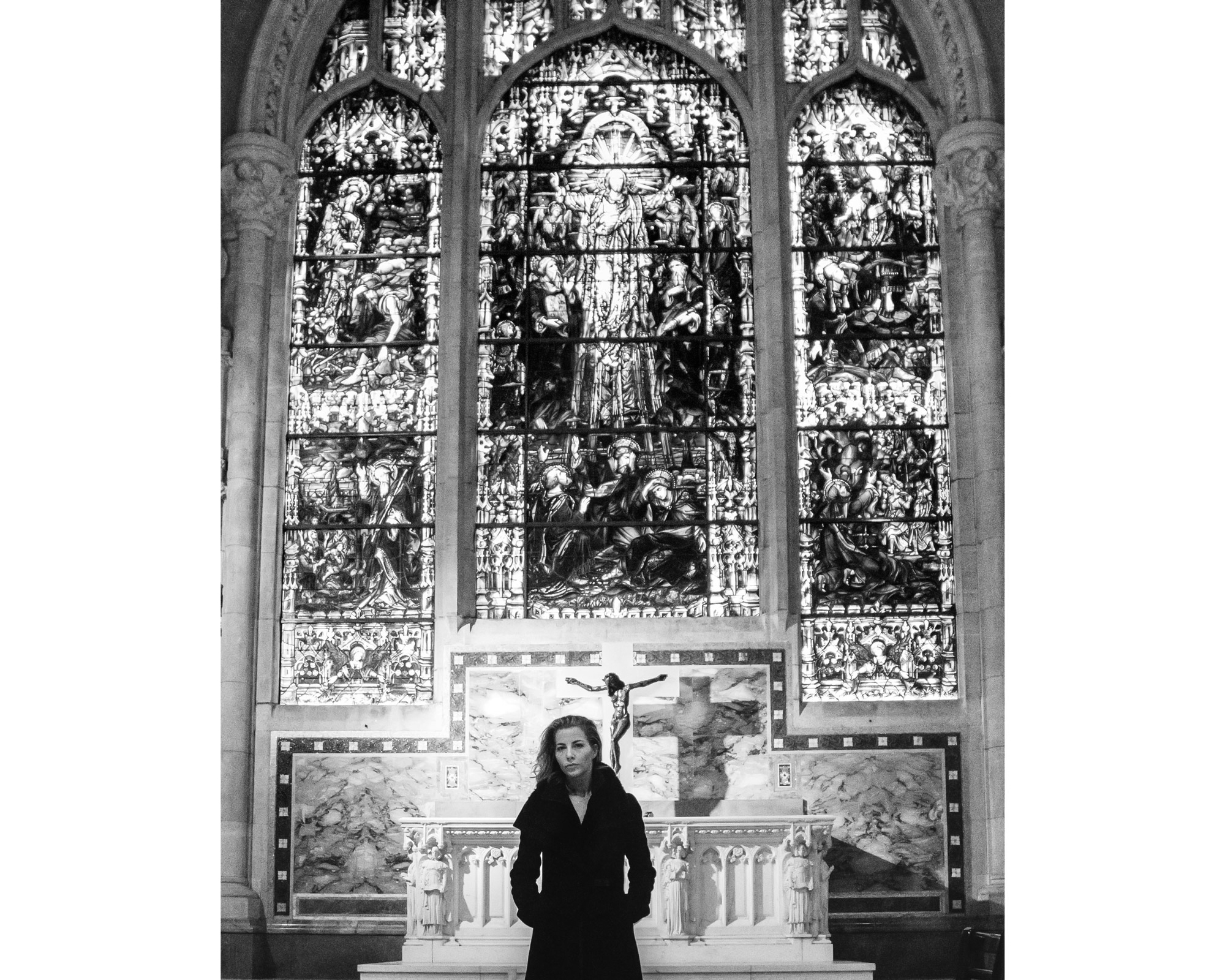
Walking into St. John the Divine to meet with the three masterminds behind the upcoming one-night-only female centric Jesus Christ Superstar concert felt epic. While I’ve never been religious, St. John always felt like a sanctuary to me. I first started visiting the cathedral as a young art student, sketching the Gothic interior architecture for hours on end, while visiting Tibetan monks created Mandala Sand Art in an adjacent chapel. As years passed, I would often return for New York Philharmonic’s free concerts, and often stopped by to light candles for loved ones and their families during challenging times. This conversation was Stage & Candor’s first scheduled exchange since the election, and it felt like the quiet revolution I’ve been craving – to meet in a space that’s built and held so many representations of the patriarchy. We sat down with actor/singer Morgan James, producer Torya Beard, and director Richard Amelius to discuss the conception of this concert, the timeliness and timelessness of the material, and what it means to be an artist during the incoming administration.


Michelle Tse: Let’s start with the obvious. Why Jesus Christ Superstar?
 

Richard Amelius: Morganza?
 

Morgan James: Right around Christmas of last year, I had a dream that I did Jesus Christ Superstar with Shoshana Bean as Judas. I didn’t know Shoshana very well at the time ­– I didn’t even have her number. [Richard and Torya] were coming over for Christmas dinner, and when they came over, I said, oh, I had this dream, and they both immediately said, when are you doing that? That needs to happen. So I asked a friend for Shoshana’s number and I texted her: It’s Morgan James. I had this dream. She said something to the effect of WHEN ARE WE DOING THAT? and I thought, ok, there’s three people that I like a lot who don’t think I’m insane.
 

Michelle: I was certainly looking for tickets the second I heard.
 

Morgan: We started spitballing immediately and went into production mode. We didn’t know how hard it was going to be to get the rights, who else would say yes, if anyone, but we started putting together an idea of what we could feasibly make happen.
 

Michelle: Right. Our mutual friend had mentioned something in passing a few months into this year.
 

Morgan: We initially wanted to do it in April. We thought around Easter would be interesting. We didn’t end up getting the rights in time. We encountered a lot of red tape because I don’t think it’s been done this way, ever, maybe. Certainly not in New York.
 

Michelle: Assembling a cast must have been a fun challenge as well.
 

Morgan: Everyone we wanted or ended up getting, I reached out to personally because I figured that’s the best way to communicate with someone that you’re asking to do a lot for very little. So first of all I called my friends [laughs] – that’s always my rule of thumb.
 

Michelle: Why one-night-only if it’s so much work?
 

Morgan: If it’s a nightmare, or a terrible idea, then i’ll go down with the ship. I would love this concert to serve as the start of the development process.
 

Jesus Christ Superstar

 
Michelle: So the evening is billed as a ‘female centered concert of Jesus Christ Superstar.’ The two leads, typically played by male identifying actors, will be portrayed by two women. The role of Mary will be portrayed by Alex Newell
 

Richard: Ninety percent of the cast is typically male – there are two female roles in the whole show: Mary, and there’s an ensemble member named “Maid by the Fire.”
 

Michelle: Would you say the event is more about challenging the spectrum of gender, a gendered or role reversal, or more the idea of casting people as characters they’ll typically never be able to play?
 

Morgan: I want to say that I don’t love concept-y things generally. I don’t love the ‘all-Asian this,’ or the ‘all-Black this,’ because that defeats the purpose of being inclusive or ‘color-blind.’ If something is not completely based around race, then any person should be able to play them. So I hate when people say, well, they wouldn’t have been there back in the day. We get it. We’re smarter than that. So I think to reverse it completely defeats the purpose of inclusion. I don’t want to be gimmicky; I initially just thought that women don’t have these good roles to play, period. There’s no other show that has this many great female roles, but there are plenty of shows with this many great male roles.
 

Michelle: I just saw a production of it that our contributor Gina Rattan directed. I forgot how high the voices that are required are.
 

Morgan: That was one of the things R&H was worried about – the keys. We aren’t changing the keys. Richard can probably speak to the concept on a greater scope.
 

Richard: I think what [Morgan] said is very important. The majority of the names [Morgan] was throwing out in terms of who would you like to do this with were female. So it was bound to be female centered. But we were always open to possibilities.
 

Michelle: And Alex? I love his work.
 

Richard: Morgan had met him and he said he’d love to do something with her. She asked me, what do you think about him? I said I think he’d be great. At the time, Mary was sort of a question mark. Ironically, of the roles, once you do cast women in the roles, Mary is the lowest, vocally. Alex happens to have a high voice, and he’s going to sing that role with no problem. He is interesting because as you said, this is on the spectrum of femininity. He is what makes it female-centric as opposed to all-female. His point of view adds to the inclusion; it doesn’t detract from it.
 

Michelle: Were there any female names attached to it before Alex came along?
 

Richard: There were many women that would sing the crap out of it and be awesome. Then the idea of him came up and it was a game-changer.
 

Morgan: I also had a conversation with him because we were teaching together. We were getting to know each other and finding out what the other person likes to do. He said that he was having trouble because his agents would say, well, what roles could you even play on Broadway now? He goes through every show and he can’t list one, because he has a female voice and wants to sing female roles. It’s not as black and white as oh, are you this? Are you that?
 

Michelle: It’s more about the vocal range.
 

Morgan: He would say, I am an actor and this is the voice I have. I don’t have a traditional male voice, why can’t you understand that?
 

Jesus Christ Superstar
 

Richard: This was written 40 years ago. I think that the men who wrote it were trying to say something provocative. And I’ve seen many productions where it is a robe-and-sandal passion play – Jesus is a beautiful white guy with abs and a great wig, who wears linen and you think to yourself, that’s what you heard? We know what white people think Jesus looked like in 4BC, but I don’t think that’s what they were trying to say.
 

Michelle: What’s your interpretation of the material?
 

Richard: To me, they were talking a lot about celebrity. Jesus, today, would be a rock star. Today, people would follow him because of his celebrity, which Judas warns about in the first song. Jesus had an incredible ability to communicate with people and people were drawn to him. It is a story that will always be relevant because there will always be people that… I’m not comparing Jesus Christ to Donald Trump in any way, but look what just happened.
 

Michelle: That’s kind of my next question. Go on.
 

Richard: Christ was speaking to politics and people thought that was dangerous. They thought he was anti-government, which he certainly was, and so this narrative is not hard to imagine. It is something that’s very relevant.
 

Michelle: Right. So my question is, to be putting this concert together post-election, to be performed four days before the end of Obama’s administration—
 

Torya Beard: On MLK Day.
 

Michelle: Has your idea of the production shifted in any way, in terms of somehow amplifying exactly what you’re saying?
 

Torya: I don’t think it shifts the way we’re thinking about it, but it validates [Richard’s] point – shines a light on it. A multigenerational, diverse group of mostly women telling this story gives you a multifaceted prism through which to view it.This is a story that everyone is familiar with on some level. If you examine it from all sides, informed by our current climate, it becomes a new story in some respects. Different things bubble to the top.
 

Morgan: I agree with that. I’m in depression mode right now, so I don’t think I’ve really thought about how I’m going to tell anything differently, but like [Torya] said, all the more reason to tell this story with a diverse group of people. I definitely want it to represent every color, shape, size, voice, and otherwise. I called my friends that I love and people I wanted to sing with, and there are so many great female singers that we can cast it 12 times over. We have a burden of riches. Theoretically in an administration that would look out for this faction of people… what better time, I suppose.
 

Richard: Tim Rice is a brilliant guy. He had a lot of really important things to say. But music is so cool, you get lost sometimes in the points he’s trying to make. The great thing about doing it in a concert setting is that the audience will be listening more than watching. It was our responsibility to cast it in a way that your ear would automatically tune in. I think by having the first voice be Shoshana singing, “Heaven on Their Minds,” it’s going to be an unfamiliar sound. [Shoshana] is very creative and she’s going to do things with it, and I think it’s going to set the absolute right tone. When each of these roles you’re used to hearing a certain way is taken over by a female voice, you’re going to hear the words in a new way.
 

Morgan: It’s also going to be an all-female band. We’ve all been trying to bring as many women into the fold as possible.
 

Michelle: Have all the roles been cast?
 

Morgan: Yes.
 

Michelle: It seems you’re selling well without any promotion. The VIP tickets are already gone despite the fact that you haven’t even done a press release.
 

Torya: We’re finding that it’s very popular, which is good.
 

Jesus Christ Superstar
 

Michelle: The three of you are educators, artists, dancers, singers, and entrepreneurs – all things that are considered ‘elitist’ in this post-truth new climate that we’re living in. Moving forward, how do you think these roles you all occupy inform and intersect with each other? How does it affect your ways of storytelling, if at all?
 

Torya: It helps to see people who believe in racial equality, gender parity, and inclusion for all people speaking out, advocating for themselves and others. As it relates to telling stories, I am even more committed to maintaining a No Bullshit Policy. For me, that means working harder and more truthfully – saying what I mean and doing what I say. I am not interested in work that is self-serving. I want to put things into the world that change it for the better, even in the smallest ways. It’s hard to even scratch the surface without accountability partners. I have an incredible crew [Morgan & Richard, the artists at Siena Music] and because of them, I feel strong. I am leaning into possibility.
 

Morgan: I find solace and comfort in the community. Everybody keeps talking about how divided we are, that the two sides of the country don’t understand the middle of the country. We definitely learned that. But the middle of the country doesn’t understand our side of the country, and they don’t see it. The way we work, the way we see our working class. They think we are elitists. They’re not the only part of the country that has a working class, a middle class, or people who are disenfranchised… they think they’re the only ones who are. They don’t see it and they’re in a bubble, too. Now obviously the reason we got into this mess is because neither side wants to talk to the other, but I take solace in the community that I have here. We’ve survived worse, and people have still made art.
 

Michelle: Has it, in this way, here? Not since—
 

Morgan: We have to go further back. My father was drafted, during Vietnam…
 

Michelle: Right. I’m in a fascinating position, having been born in Hong Kong at the beginning of the Tiananmen conflict. I get to hear first person accounts from differing sides of a lot of conflicts.
 

Morgan: We’ve survived things. God forbid it turns to that, but we have to press forward. We have to surround ourselves with like-minds. We have to understand we both live in bubbles. There’s no way to solve it by getting further apart.
 

Richard: There is that great Nina Simone quote…
 

Morgan: “It’s the job of an artist to reflect that time they’re living in.”
 

Richard: Right. When this was written in 1970, Tim Rice and Andrew Lloyd Webber were talking about the present. If you listen to the music, it’s 70’s vernacular. Now, it feels like a period piece, but what they were doing was telling a very old story in a very modern way. So the best way to approach any project is from the truth. When you read it, what does it say? Not what you want it to be, not how you’re going to decorate it vocally, not making your stamp as a director, but what is the book in front of you telling you? The works that have existed the longest still speak to you and they’re honest. It doesn’t matter who you cast, how you dress them, or what set they stand in front of. If the material is good, and people relate to it, it’s a home run before you even start. Sometimes you just have to do the show. You have to tell the story that’s been told before you. We didn’t write our own version of Jesus Christ Superstar, we’re doing the one that’s always been done. The point of view is different, but we didn’t have to rewrite the material in the process.
 

Morgan: The other thing is – and I hear this from a lot of younger singers – that idea of oh, I want to make it my own, or let’s change everything! It really made me come to this idea that, do you really think you’re better than someone who has done it before you, better than something that’s classic? We’re not trying to make something better. It sounds cheesy, but it’s already great. All we have to do is put in the hands of great people, and great ideas. We add value to things by being there.
 

Richard: And working together, listening to each other, and collaborating.
 

Jesus Christ Superstar
 

Morgan: I didn’t have to call Richard or Torya to convince them of something. These things happened organically.
 

Richard: I think you come to that realization in any discipline when you reach outside of your bubble. When you start writing songs, you have a great appreciation for the songwriter. When you start directing, you have a greater responsibility for telling everyone’s story, not just one person’s.
 

Morgan: I can’t speak for Shoshana because I didn’t know her back in the day, but there may have been a time ten years ago if you’d asked me to do this, you’d get a very indulgent performance. I think you’re getting us at a time when we’ve been through our particular struggles, and I have an appreciation for where I am, and I think she does too. There’s this humility and grace about Shoshana, and I’ve always loved going to see her sing. I’ve always been blown away by a grounded wisdom in her instrument.
 

Michelle: She’s great.
 

Morgan: I basically forced my way into her life. We didn’t even know each other! I tricked her into being my friend.
 

Richard: She’s going to betray you. I can feel it.
 

[Everybody laughs]
 

Michelle: I want to go back to a point made earlier because I usually end with asking what kind of advice you’d have for future generations. As it was brought up earlier, Nina Simone has said that our job as artists is to reflect the times, and it seems so now more than ever. We’ve been standing on the shoulders of Nina, of Ethel Merman, Josephine Baker…
 

Torya: Absolutely.
 

Michelle: What I’m interested to know is, other than continuing to tell the truth, make art, and exercise your constitutional rights, how do we as a community keep fostering our support for one another during this hostile time, and assure for the generations to come that art is ‘worth it’ to devote your career to? How will we continue to grow the platform the way giants before our time have done for us?
 

Torya: Recently, I assisted a friend, Brian Brooks, with choreography for the opening number for the BC/EFA benefit Gypsy of the Year. It was a condensed version of The Wiz, maybe 15 minutes long, and members of the original cast were performing. We sat in the room with them, and they shared stories about their experiences working on the show. It was an incredibly powerful moment. As our society continues to obsess over youth, beauty and all things fleeting, our elders can often fade into the shadows. Interaction with the people whose shoulders we stand on is essential for sustaining our art. We need to hear those stories. It provides an opportunity for us revel in the joy of being a part of a legacy. I have joy, so just by having this experience with you now, [the joy is] being multiplied. The communities that we are building are largely virtual: we share, comment, post, like, and love on social media and that’s fun, but having face time with people, spending time sitting at the feet of our elders while they are still alive, sharing our combined joy, and multiplying that joy is really what’s going to keep it alive.
 

Morgan: I love that. Whenever I am about to sing a cover of a song – which I often do – I say, I’d be nothing without Nina and Aretha. You’re only as good as what you listen to. Artists that come along and think they’ve just invented something – it’s just mind-boggling to me, you know? I think what happened at Hamilton the other night is amazing. I don’t think we have to worry about kids finding music or theater, but we have to hope that they pass through their tumultuous 20s and discover that they need to feed themselves with everything that came before them. We need to lead by example, lead with humility. If I get to make a living doing what I do, it is with a greater sense of humility everyday, because I did not understand what that meant ten or fifteen years ago.
 

Jesus Christ Superstar
 

Richard: I’m asked this question a lot because I work with kids often. I feel that young performers want the chance to play the lead, so they end up at places where they will get the lead. My advice? Don’t do that. Find the best place, and get in any way you can, because you’re going to learn a lot more being in a show with really quality people. A healthy ego is great for any artist, but if you think you’re the most talented person in the room, go find another room, one where you will learn something.
 

Michelle: Pay your dues.
 

Richard: I know that when I was 20, I thought, I can do this! Just give me a chance to do this! As I grew up, people would always be like, you’re good… but I think it’s a lot harder than you think. So I said to myself, fine, I’ll direct, and I’ll choreograph, and I’ll write. I want to see how hard it is. It’s horrible! Just to have the guts to sit down and write something, you realize how much courage it takes to ask, ‘will you read this?’
 

Michelle: I’m still struggling with that.
 

Richard: Do it all. Learn everything. Keep your eyes open. When someone invites you to be a something experimental, don’t ask, what’s in it for me, you will be rewarded, even if it’s not a success. Do you want to learn to drive from someone who has been doing it for 20 years, or do you want to get in the car and go? But at the beginning of Stephen Sondheim’s career, they said, you need to write the lyrics with established composers and he said, I don’t want to do that. I want to do my own thing and I have my own ideas. But what would West Side Story or Gypsy be—
 

Morgan: And what would he be!
 

Richard: Exactly.
 

Morgan: I was teaching high school kids, and they all just wanted to do new music, which is great, but I wanted to teach a class on Sondheim. They love him, but they don’t want to sing it. (Frankly, they hadn’t put in the time to learn the rhythms). So I went in, and I told them, “you like Hamilton? There’s a reason Lin-Manuel exists. He idolized Sondheim. Who did Sondheim idolize? Hammerstein.” These things don’t exist in a vacuum. You can’t understand one without the other. You just can’t.
 

One more thing about what we’re telling, and how divided our country is – we’re going to tell a story that a lot of people think ‘elitists’ don’t understand. I’m not a religious person; music is my church. Now it’s my job to understand this story. Maybe it’ll bring me closer to the middle of the country, and maybe them hearing it done this way will bring them closer to us.
 

***


Jesus Christ Superstar – In Concert is playing one-night-only at the Highline Ballroom on January 16, 2017. Tickets can be purchased at highlineballroom.com.

Posted on

A Conversation with Lyndsay Magid & Josh Aviner

Lyndsay Magid & Josh Aviner


Walking into the studio where producer Lyndsay Magid and director Josh Aviner are rehearsing is like walking into EDM slumber party fever dream. As they tell the story, the performers walk the line between precision and wild abandon. We sat down with Lyndsay and Josh to talk about their dazzling hybrid of dance-circus-storytelling, SLUMBER, premiering at House of Yes.


Corey Ruzicano: I would love to start by talking about the language of circus. How does the cirque vocabulary add to or shift the process and limits of storytelling?
 

Josh Aviner: I think circus traditionally is very trick-based. Most different cirque disciplines have a series of tricks that you learn and do. In the last thirty years, a lot of circus schools have been focusing less on the trick and more on the over-the-top physicality stuff you might see at Streb. It’s closer to dance, but still circus-esque. A challenge for us is picking what tricks we think enhance the storytelling and which are just too “show-biz-y” to use. It’s a balance between, okay that trick looks like you’re choking her and is also a really impressive circus trick, versus, that one looks too much like a style, like it belongs on a more old school style show. It’s important to be familiar with the vocabulary, seeing a lot of different acts, and being able to say, out of the thirty tricks you can do, which are the fifteen that work best for what we’re doing, and then using Keone and Mari [Madrid, choreographers] to fill in the gaps to make the tricks look a little less like tricks and a little more like acting moments.
 

Lyndsay Magid: Something that’s been really interesting is that most circus performers come with a specific act and then there’s a process of restructuring it so it has the feeling of the song and the moment of the show, which is different than a traditional circus show where they just book the act.
 

JA: They already come with a song.
 

LM: They come with the song, they come with the act, that’s what you get. With this it’s: let’s deconstruct your act and mold it to fit the dynamics of the moment.
 

JA: That’s the fun part.
 

CR: I would love to hear more about what are the things that you love about doing this? As a pair you have such compatible backgrounds for this kind of work –what is it like working on a project where you’re both coming at it from such different angles?
 

LM: Well, I’m like, what’s the story? Who are you? What is their connection to each other? Because I’m a musical theater girl. Make me feel something. And Josh is like, I want to feel something but I want to be wowed.
 

JA: What’s special about circus, at least to me, is that in-the-moment, visceral reaction. When you see someone drop from fifteen feet and all you know is that the only thing catching them is their own hands, that gives you a gasp you can’t really get in another medium. So the tricky part is tying what’s best about circus and what’s best about theater, and now that we have Keone and Mari here, what’s best about dance. What’s interesting about adding dance is that it’s this level of precision that theater and circus don’t really have. Theater often, with the exception of Curious Incident, isn’t so specifically choreographed. Circus isn’t choreographed at all – it’s athletic, it’s a trick and then another trick. Having Keone and Mari has been so helpful because they point out that we can take all of these little moments in between and just by moving your hand in this direction you can add a whole meaning to it without text. And that’s been my favorite part.
 

We’ve been working on this contortion number with Olga, where the premise is that she’s coming back from being almost dead. Usually a contortion number is just picking the trick sequences and now that we have the song, we have all this cool movement you can do within a trick with your free hand or your free foot or leg or head, to make it way more creepy and make the character way more clear. So that kind of collaboration, taking what the artist brings to it, has been the most fun part.
 

LM: It’s almost like the dance is the bridge between these two worlds, it’s connecting it. When we started, I knew it would be additive, but I didn’t think it would be so connecting of the two. It’s so cool because we have the dancers and we have the circus performers, and both groups keep saying, I feel so out of my element. It’s not a circus show, it’s not a dance show.
 

Lyndsay Magid & Josh Aviner
 

CR: Absolutely. What’s it like when all these people who speak different languages get in a room together?
 

LM: It’s awesome. I think a lot of people would think it’d be hard, building a show with so many different vocabularies, but everyone is so game to do it. It’s funny, we’re doing lift and the dancers are trying to figure out how to do it, and the circus performers get it in one go, and then they’re doing a section where they’re dancing in counts and that’s easy for the dancers, but it’s so different from circus. So it’s really cool to see the different skills, it’s what makes it a show I’ve never seen before, it’s a whole new genre.
 

JA: All the numbers that we’re making are ensemble numbers, and usually when you’re seeing a circus show, you see a Chinese pole act, there’s a sort of lamppost looking thing. If you’re doing an ensemble piece in circus, you have a bunch of people coming down and doing flips and things, but now that we have all these dancers we can do all these things with dance that match – like, as he drops, what kind of dance movements can we do that a typical circus performer wouldn’t have the physical awareness to be able to do? We picked Keone and Mari when we were looking around, because they do this very close storytelling thing that we really want to do and because we thought our languages were similar.
 

CR: In that vein, what has it been like cultivating these different creative partnerships, both with each other and with the community? How and with whom do you collaborate? What’s your recipe for success?
 

JA: Well, I think I have a recipe for collaboration, not necessarily for success. I think it’s being super, super open, to start with. Not taking anything personally if someone throws up an idea that’s different from your idea. And I think listening, particularly for me as the director and Lyndsay as the producer, it’s really about getting everybody’s thoughts on how they imagined it, because usually that’s so much better than I imagined it in my head alone. I feel like if we let everybody bring to the table what we hired them for, why we wanted to work with them in the first place, I think that’s really key. Listening.
 

LM: Yeah, not treating any idea like it’s precious. Being open, knowing that ideas can come from anywhere; I think that’s really important way to think about the process. My idea isn’t the right idea, it’s just an idea. It’s how we go about it, even with each other when we’re talking about something. It’s like, well I have an idea, so we just start with that, and then it usually ends up a totally different idea, but if you’re not open to it, it can never get to that other place.
 

JA: Circus is also a little bit different from theater in that there’s no playwright. The job of the director is mostly to come up with the concept for each of the scenes. Circus community doesn’t call the rehearsal period rehearsal, they call it creation, because so much that actually needs to be created in that period that typically the playwright would probably have created prior to, that would map out the beginning, middle, end of the scene. With circus, it’s like we know we need to hit this trick and this trick and we have to get to the finale trick at this musical cue, and I want to use you guys…and there’s no way to really script that.
 

CR: Do you guys use text in this piece?
 

JA: We do. We have two characters who have pre-scripted text and there’s about ten minutes of talking in the show – some of it is improv, some of it is set. We do acknowledge the audience is there, so some of it, who’s in the audience that day will determine what we talk about.
 

CR: That’s so cool. I ask because I remember reading this article on HowlRound while Les 7 Doigts de la Main were doing their show Traces at ArtsEmerson, about how the use of spoken text in circus was so form-breaking and shocking for a lot of people, that it’s a different practice with a different set of rules. So I think it’s so cool to hear about how you’re taking this rulebook and reframing it for what you want to make and do.
 

JA: Oh yeah, we’ve definitely been inspired by 7 Fingers. Gypsy [Snider], one of the co-founders who directs many of their shows, was actually very helpful in getting two of our circus performers. We called her and said, we need a contortionist and we need someone who can do Chinese pole, and she was like, I have the people for you. It’s so great to be able to all help each other out and it’s a pretty small community, you get to know everybody pretty quickly.
 

CR: Of course, I’m sure there aren’t very many performers who can do all those things. How do you see horror and circus being used as a lens for autobiography?
 

JA: That’s a good question. I think the tricky part about circus is being very specific. It’s hard to hit or talk about specific themes. In a play, you’re talking, so you can talk about things, about what you want to artistically say. I think the purpose of circus is to give you emotion, and we’re trying to use the text to get you the ideas, that hopefully over the show, the music, the dance, the circus, has put you in the right kind of mood to be receptive to the little bit of talking they have, to what the motivation is behind the show, why we’re here doing what we’re doing.
 

LM: I also think the idea, when you see horror, that person doing the horrific acts has a very strong motivation, and that motivation is clear to see when you go see horror.
 

JA: And the way in which we’re treating horror less like slasher film and more like a Quentin Tarantino movie: lots of thriller, blood, action, but it’s not just gore.
 

LM: Exactly, and I think it helps that it’s horror because this character with the motivation, we follow her through the whole show and she has a very strong point of view and a very strong point to her actions, so it’s a really easy story to follow. I think sometimes with contemporary circus, you get the idea or theme of the show but it’s hard to follow the actual story; whereas with this I understand what’s happening to these people, especially with the talking, it clarifies exactly what’s happening. You get the story and you get the visceral motivation.
 

JA: The most important thing is character, so with all of the physicality, with your dance, how can we be really clear about how everyone is related together, who’s the one who’s not cool, who’s the one who’s super cool, who has a crush on whom, who’s angry at whom? Without words you have to get that all across, but if you manage to do that, then you can get the audience aligned with the performers the way you would in a play.
 

Lyndsay Magid & Josh Aviner
 

CR: What about fear is compelling for the act of storytelling, especially when there’s a choice involved?
 

JA: Circus is very fear-based I think. You can imagine someone walking a wire or doing an aerial act and the danger is just real, and therefore the fear is real.
 

LM: I mean, they train lots and lots and lots of years. It’d be different if, say, I decided to get up there and do it.
 

CR: Oh yeah, me too.
 

JA: Of course, but fear is still really tied to circus. Even the best acting moments…you could have Meryl Streep stabbing Al Pacino on stage, and at the end of the day, you know it’s all fake. With circus, if you mess up, the danger is real.
 

LM: I really want to see that show.
 

CR: Well, there you go, that’s your next project!
 

JA: Definitely. And that’s what makes fear such a fun thing to play with. Our performers totally know what they’re doing, but maybe to the audience there is a question of whether or not they’re in control of what they’re doing.
 

LM: It’s new every time – even though I know exactly what trick he’s doing, I know the setup, I still gasp. As an audience member, it is really fun to feel that real, urgent sense of fear.
 

CR: And it’s so interesting to juxtapose the manufactured horror-fear with the very real physical fear.
 

JA: Yes, exactly. Nailed it.
 

CR: Oh amazing, I passed the test. So why Brooklyn? Why New York? How does circus relate to place?
 

LM: Well, we both live in Brooklyn. We’ve lived in New York for the past seven or eight years, my formative understanding of the field is what it’s like to be part of the field in New York. I spent a lot of time in commercial theater and Broadway and I loved the community. Meeting Josh three years ago at Columbia and talking about where New York fits in this greater scheme of circus…it’s a pretty small community here. And it’s such a hub for all other art forms that it’s strange that circus is so underrepresented here.
 

JA: But the thing about New York circus is that it seems inherently a little more theatrical because it’s in a very theatrical city, and there are other cities like Montreal or Chicago or Las Vegas, where it’s a little more traditional show-biz-y, and not in a bad way, it’s just more presentational. And because we’re in New York and there’s less circus, the circus that does exist seems to pull a lot from the theater and from the dance community and so I think we both realized that and thought, oh, we really really commit to that and really pull from theater and really pull from dance and try to make something that New York audiences will like.
 

LM: And we also both felt strongly that we wanted to stay in New York and create this new voice of our voices in circus and what the future of the American contemporary circus is and can be, because there’s a lot of people doing it that I really admire, and so in trying to create our own voice, doing it in Brooklyn felt like the most authentic place to start.
 

JA: And then we can tour it.
 

Lyndsay Magid & Josh Aviner
 

CR: How does audience engagement differ for this kind of art? How has the development of your podcast informed your work?
 

JA: Oh man the podcast has been so awesome, because when we started it, I think the idea was, it doesn’t really matter who listens because we’re just going to get to talk to all these amazing people we admire. They come over to our house and have beer and hang out and we chat, but we never really get into it in the way you sometimes do in an interview. And after the podcast we felt like all these amazing people give these snippets of advice and things that have worked for them, that we’re trying to absorb as much as we can. As to how we’re trying to work with the audience in this show, we start off with the audience thinking that there’s a fourth wall and there are all these perceptions that get shattered pretty quickly.
 

LM: It’s an immersive show in that you’re actually inside of this environment of the world. It’s not invasive in that you have to participate.
 

JA: It comes to you.
 

CR: What is the role of technology in the conversation – both of making the art and producing or communicating it?
 

LM: Well we found Keone and Mari on YouTube. Their career started through YouTube.
 

JA: And the internet is so amazing in terms of casting. Circus performers are spread all over the world, and sometimes you’re hiring people from Mongolia or Russia or Australia, and that’s pretty normal just because there aren’t that many people who can do all that stuff, so you have to find them wherever you can. And the internet is the number one way to find them, and then you try to go see and meet them in person. But that casting is pretty key for the conception of the project, but other than that this is a pretty low-tech show. The blood effects have a little tech in them but pretty much everything else is done by hand, old school ropes and pulleys.
 

LM: And as far as the audience using their cell phones, the good thing about circus and being in the space we’re in, we don’t care if you post a photo.
 

JA: As long as you use the right hashtag.
 

LM: Yeah, we’re lucky in that sense that it’s not destructive to the show, it’s additive in a way. Just no flash. Other than that it’s a pretty low-tech show, which is nice.
 

JA: The more tech, the more things can go wrong.
 

CR: Definitely, there’s already a lot of fear involved. When you feel stuck, what do you do? To whom do you turn?
 

JA: One another.
 

CR: That’s awesome – do you have pieces or places you look to for inspiration, or heroes that you draw from?
 

JA: Oh absolutely. Sort of all over the place. Artistically, 7 Fingers and James Thiérrée, Charlie Chaplin’s grandson, who has a lot of shows that come to BAM, and frankly Cirque du Soleil have been huge influences in shaping what I like and got me excited abou circus in the first place. Whenever we’re stuck, Lyndsay and I sit in our apartment and we just talk it out.
 

LM: And coming from musical theater, I love contemporary musical theater songs. I think they’re great at telling a song telling a specific story and I love listening to the builds of those songs. I worked at Atlantic Theater Company for a while and the Managing Director there, Jeff Lawson, I call him my theater dad. He’s really great at being part of the theater world but also understanding what we’re doing.
 

JA: And both our dad’s are entrepreneurs, totally self-made people, so whenever we have a real legal problem like, oh man this contract totally blew up in my face and it has nothing to do with theater, it’s nice to have parents who have that business background and have been through that struggle.
 

LM: Because that stuff is a struggle.
 

Lyndsay Magid & Josh Aviner
 

CR: My last question is, what’s the best piece of advice you’ve ever gotten?
 

LM: The best piece of advice I’ve actually ever gotten has nothing to do with anything, but I was an actor at one point and studied at BADA in Oxford, and Alan Rickman came and taught class and someone had said, you always play the villain – and I think this is really pertinent to this show – and he said, I never think of myself as the villain. The villain never sees themself as the villain. They want whatever they want more than anyone else and they’ll do whatever it takes to get it. And I just thought, that’s so smart and it’s so relevant to this show with a character who wants what she wants more than anybody else.
 

JA: Mine’s more circus-y but Paul Binder, the founder of Big Apple Circus, told me this thing about working with collaborators which is that, you know you have a good or bad collaborator if, when you tell them you don’t know about an idea, they get very defensive. Because people who are genuinely creative are open to new ideas and coming up with more things. But if someone is so defensive and fights so hard for their idea it’s because they’re worried they won’t have more. And even though that sounds like something you would use as a template to hire people, it’s actually great internal advice: don’t fight so hard for that one idea, you’ll have more, be in a place where you can let them go, be confident enough that you’ll think of new ones. And if you go into that, you will be in a place to be a good collaborator. 
 

Posted on

A Conversation with Ayodele Casel

Ayodele Casel


Ayodele Casel is one of those people you can point to and say, that is one of the most exceptional humans I know. Fierce and funny, disciplined and brave, Ayodele is quick-footed and lion-hearted as she takes on the world. Whether it’s on tap dancing, safety tips, how to play video games on her couch at home or active, hopeful ways to look at the world, she teaches me monumental new things with every conversation, class, or performance. Ayodele upholds a level of excellence across the board in art and in heart, a reminder of what we can all strive for.


Corey Ruzicano: You have this new, extraordinary piece coming up, so I wanted to start out by talking about storytelling. You’re a dancer and an educator and a leader and an actress and a photographer, you’re now running this space, Original Tap House, you’re bursting with talents, and I’m wondering how all these different roles inform one another, and how they’ve shaped the way you communicate and the way you tell your story.
 

Ayodele Casel: Thank you. Yeah, it’s such a great question because I’m not sure I’ve ever actually verbalized how they all intersect. I suppose that there is a throughline, right? There has to be. I was always into telling stories. I think kids are so naturally engaged with their imagination. I knew I wanted to be an actress since I was nine. I knew then: that’s what I wanted to do. So everything that I experienced from that point was with the knowledge that one day I was going to be an actress.
 

CR: That filter was always there?
 

AC: Exactly, it was always through that filter. If I played with my friends, I was practicing. If I watched a film I would think, how are they doing that? How does that work? I was always processing in that kind of a way. I was also a very introverted person, so I think it was also easy for me to kind of play and imagine and pretend in my own space and time. This is kind of related to the piece that I’m doing. When I was eighteen, I discovered classic films and I was really, really into them – analyzing who the directors were, what kind of stories they liked to tell, who they worked with consistently, what kind of storyteller was Hitchcock, what kind of films Cary Grant always did… and so I knew that who I was watching was masterful at what they were doing. I’d like to think that I had, at an early age, a sense for quality. When I started tap dancing in college, I was fortunate enough to meet someone who was an incredible tap dancer. I was fortunate to always have a high level of people around me and for some reason, I just always sought that. I always wanted to surround myself with the best. Having danced with some of, I feel like, the best tap dancers to grace the earth, you can’t help but be filled with that. It just happens naturally; their greatness rubs off on you. At least you hope it does. You know what’s good, there’s a high standard, a bar that you’re always reaching for. That discipline, you can’t escape that. I feel like I have carried that through every aspect of my life. When I became interested in photography, I wanted to look at the best images out there, the best photographers. Even with this space that Torya Beard and I have created here, we wanted to have an elegant space for artists to create. The through line would be integrity and quality, that’s what I’ve tried to draw through everything. But I think I may have lost what your initial question was about storytelling.
 

CR: Not at all. I’m really interested in this question of, how do you tell your own story? Especially for people who are used to expressing themselves through different lenses and with different mediums, how do those vocabularies start to inform the very nature of how you talk about yourself? And then I feel like there’s the tendency or the opportunity to step into the narrative you create for yourself, from that. When you have so many different intersecting interests, how do they come together and shape the way you communicate?
 

AC: You know, it’s so interesting because I feel like I have just recently tried to articulate my story. For many years, I was just dancing it. There are no words, and I was dancing for myself a lot of the time. And with acting, you’re saying words but they aren’t yours. Even now as I struggle to find the words…this piece has been a really great gift and tool for me. For so many years I had always either been acting or dancing and I wanted to combine the two.
 

I had actually explored doing my own show about fifteen years ago, and it was a concert, I had a ten-piece Latin band behind me, and basically I wanted to give voices to my influences. Like my grandfather, I grew up with him and I started listening to Latin music because of him and then I wanted to honor my great-grandmother, because I was so fortunate to know my great-grandparents. I had these really vivid memories of them and I loved their spirits, they were so humble, and I wanted to share that with people. Not a lot of people tell their story and I want to hear everybody’s story. I have wanted to also really give voice to these women tap dancers that I had done as much research as I could, because there’s such little information on them and I’ve had such a great career; I’ve been so blessed that sometimes I don’t think it’s fair. I don’t take it for granted that I’m so fortunate and I don’t like it when people just think they’re the origins of something. One of the things that I’m so connected to and proud of is that I am a part of a larger picture, not just of my family but of this art form, and I think that it’s important to honor the people that put in good blood, sweat, and tears before you so that you could safely step on the stage or express yourself or be recognized.
 

Ayodele Casel
 

CR: Absolutely. Your piece is called “While I Have the Floor.” What are some of the floors or platforms that have been given to you or that you’ve had to fight for along the way? How has artistic mentorship played a role in your life?
 

AC: I feel like it’s important to be very mindful of gratitude. Not always on purpose, but we take things for granted – where you live, being able-bodied, getting to go to college. My mom was really proud that I attended college because she didn’t get to go. For her to have given me that space and encouragement, and to have that vision for myself, right there, that’s one more leg up than what she had. It starts there. And actually, I started dancing in college, so really it was like a double blessing! To meet this guy who was a freshman who said, you like tap, I like tap, I’ll teach you for free. It was just a sharing, there’s no monetary value you can put on that. People take private lessons all the time, I give them all the time, but here I was and he was freely giving his knowledge and sharing his love with me, so that was another leg up for me. When I started tap dancing, there were women in my generation who wanted to dance, but I felt like they were very intimidated by the energy that the men were giving off. They were very confident and virtuosic in improv circles – and I just wanted to dance so badly it didn’t really matter to me. I didn’t see gender in that way, I just thought, we’re here, and I want to do that, so I’m gonna put myself in that circle. As far as having to fight for something, one of my favorite shows and influences was Bring in ‘da Noise, Bring in ‘da Funk. I was so inspired by that show and also so incredibly disheartened by the fact that there weren’t any female roles for tap dancers. Ann Duquesnay was the singer/actress, but the dancing was all done by men at the time and there were no conceivable openings for women. How do you react to that, if you don’t see yourself fitting in the picture? Do you quit? Do you say, screw it? I thought, I’m gonna make space. It didn’t deter me, I just kept dancing.
 

So when Savion [Glover] first created this group, Not Ordinary Tappers, which was my first big, professional group thing that I did, I was the only woman. That gave me a huge platform. At the time, it wasn’t like, I am woman, hear me roar, I stand for all women, watch out! I just was happy to be there. I didn’t realize it was a thing for me to be the only woman, until people would interview us or they would interview me and say, I didn’t even know women tap-danced. I thought, I get that my presence must feel like an anomaly, but surely I can’t be the only one that’s ever done this. There was Brenda Bufalino, she’s one of our pioneers, and Roxane Butterfly who’s maybe five years my senior, but in terms of that circle of men and people of color doing it…I was kind of alone, especially in New York, in this particular environment. So I thought, clearly there’s a platform here, for me to really speak on this. My first solo show, the one I was telling you about, I called out these same women that I’m calling out in this piece now. It was important to me then to say their names. Nobody was saying their names. The first time I saw Lois Bright, my jaw dropped to the ground, because we knew about Lon Chaney, and Chuck Greene, and Buster Brown, and Jimmy Slyde; they were all alive at that time, but nobody had ever said: Lois Bright, Juanita Pitts, Louise Madison, the Whitman Sisters. And I get it, I know that it comes up when it comes up and sometimes the focus just isn’t on any particular gender but I just thought, isn’t anyone talking about these women?
 

CR: Yeah, whose stories do you think we’re missing – either the stories that you name in this piece or stories you’ve encountered in life that you want to lift?
 

AC: I want to know so much about Lois Bright. Cholly Atkins writes in his book that she was a beautiful, wonderful dancer and his right-hand person for when he would choreograph. That’s a small piece of what we know of her and we know that she was gorgeous and an incredible, flashy, and athletic tap dancer because of the ONE dance clip in “Hi-De-Ho”. She was married to one of the brothers that she danced with and there isn’t much more on her. I don’t know when she started dancing, I don’t know why she quit. I just want to know and see so much more. Louise Madison, there’s just a small short paragraph on her in this dissertation I discovered by Cheryl Willis and it says that she could eat Gregory Hines alive.
 

CR: Wow, what a thing to be remembered by!
 

AC: I know, I was reading it and just thought, oh my god, where is she? Where’s the rest of it? They say she may have fallen in with drugs, and then she essentially just fell off the face of the earth.
 

CR: The way so many women’s stories do.
 

AC: Exactly. We know more about the Whitman Sisters because they were producers and they had their own show, their own Vaudeville act and they were very successful in that circuit, but there’s no footage on them, not in all my twenty plus years of dancing have I seen anything because it doesn’t exist. We’re missing all of their stories, we’re missing all of their voices and I don’t want to be that. I just feel like it would devolve dance and the lineage, so I just feel like it’s really important to write it down.
 

Ayodele Casel
 

CR: How does it change the relationship you have to what kind of story you want to leave behind?
 

AC: I’ll tell you, I’ve been wanting to do this kind of thing since the year 2000 and what really kind of woke me up was a tap history book that was recently published. There’s this section on me and as iI was reading it and its depiction of other women it wasn’t that I was expecting a full story, the book isn’t about me, it’s about a tap dance history, and I’m thankful to even be mentioned in the lineage, but what really bothered me about this particular version of my life that’s now in print forever and ever, amen, is that it reads: “and she stopped for two years.” Period. And then on to the next section. It’s three pages and it ends with that, and I just thought, oh my god this is not my story. This will not define me in print. God forbid something happens to me tomorrow and that’s what’s left. I don’t want to let other people define what that is, because I know what a loss it was to me not to have those other voices and stories of these other women.
 

CR: It’s that same need to “see it to be it” idea, what Jeanine Tesori said in her Tony speech, what we always talk about, how deeply important and revolutionary it is to see representations of people like you doing what you want to do, being who you want to be. Especially when you don’t fit into what’s been presented to you as the canon of whatever that field is, being yourself in that is a political act.
 

AC: Yeah, it absolutely is. I think that, that is one of the wonderful things that tap dance has given me: it teaches you to recognize your individuality from the get-go. In improvisation, you cannot be anybody else. If you aren’t being yourself, you aren’t being authentic, you aren’t being interesting, you aren’t honoring the dance that you’re doing, you aren’t honoring the art form and most importantly, you aren’t honoring yourself because we all have our own unique and wonderful point of view. If you’re paying attention, you learn very quickly to start honing some authenticity.
 

CR: And I love that word “attention” – you’ve said that before to me about making conscious choices about what you pay attention to –
 

AC: Yes, what you put your attention on grows stronger.
 

CR: Yes, I love that idea and that language.
 

AC: That’s how I try to live my life, very intentionally aware of your energy, your point of view, how you see things, positively or negatively, and if they’re negative, you’re going to attract a lot of crap in your life. When I was in my twenties, I read a book called The Four Agreements and it really changed my life because I thought, oh I don’t have to be mad at little things, I don’t have to take things personally. I really started to shift internally how I was reacting. I witnessed a lot of violence as a child and I wasn’t a violent kid, but…well, actually I was going to say that I wasn’t a violent kid, but I used to fight all the time! They used to call me Muhammad Ali, because I was constantly fighting boys, so actually, I was taking that out on the playground. But I was a very good student, I got straight A’s…
 

CR: And you were also in fight club.
 

AC: Yes!
 

CR: It’s so interesting, because female aggression is something that’s so little talked of and so seldom represented, especially for young women growing up.
 

AC: And it’s judged if it is.
 

CR: Right, it’s only the Wicked Stepmothers.
 

AC: Exactly. The book was life-changing because it felt like in my personal life I’d released a lot of tension of anger and lack of control, I felt much happier and at peace. If you cut me off while driving, clearly you’re having a bad day, that doesn’t reflect on me, but then I started to going to William Esper Acting Studio and doing Meisner work, and you have to take everything personally in your work. I realized, doing that training, that, though I’d become a more benevolent, graceful human, I wasn’t honoring the full spectrum of my feelings and emotions. When we’d be doing scene work and you’re supposed to really take in the other person and my partner would be dismissive, and just let it go and Bill Esper would say, how do you feel about it? And it took that for me to actually go back and honor and exercise the full spectrum of all my emotions. Maybe because I was a little bit older, I had the maturity to actually apply that concept into my life with me. I meet everybody now with as much positivity as I can muster, I’m very even-tempered, but I’m from the Bronx. I could beat you down if I wanted to. I don’t have to access that all the time, I cultivate a very peaceful existence because that is something great to put my attention on but I do think it’s important for young girls to know that it’s okay to have that strength. It’s really valuable because, for any human you’re going to face things, things that will want to beat you down, but especially for girls we are constantly judged for how we exhibit strength. She’s a bitch, why’s she so angry? We’re judged on a different scale but I say, don’t apologize for who you are.
 

Same thing for the presidential elections, I just find it so interesting that all of a sudden everyone cares so passionately about a candidate’s honesty and whether or not they lie – and I’m not saying that’s not an important thing on it’s own, but all of a sudden it’s her honesty and her purity that’s under scrutiny and I call hypocrisy.
 

CR: I can only imagine how many more hurdles she’s had to jump than her male counterparts – of course she’s more of a politician, she’s survived this long.
 

Ayodele Casel
 

AC: Yes, that’s the other thing, I read these comments that say: she just feels like “it’s her turn,” she just wants people to vote for her because “it’s her turn,” you know what? YES. It is her turn; she’s held just about every imaginable office. It just makes sense that if you start your life, just like I did at nine years old with the intent of being an actress and joining art programs and going to school for it and doing community theater, and training and this and that and the other thing, then now, yes. If I audition for something now, I want to get it because it’s my turn, I’ve been at this a long time. Don’t tell me that the audacity of me wanting it to be my turn is a bad thing. That double standard is killing me.
 

CR: It’s just equity versus equality, it’s not an equal chance at the goal if they playing fields up until that point haven’t been equal.
 

AC: And I believe the parallel to be absolutely true about tap dancing for men and women. How is that we had someone like Louise Madison, who had the reputation of being able to eat Gregory Hines alive, but we don’t know anything about her? And I get it, we’ve evolved, society has evolved, then in the fifties and the forties, it was different especially for a black woman, but let’s just call it what it is – there is a definite difference in how the genders have been treated. I’ve had such a breeze comparatively, it’s not a complaint because I’ve been so lucky and that’s not lost on me, however, even after I’d worked a lot, agents would call me and say, they’re looking for a tap dancer for a commercial…and I’d say, so, you called me…? And they’d say, well they want a man. They would call me to get the name of a male tap dancer. That was then and it’s gotten so much better, even from twenty years ago. I’m so happy to have witnessed the evolution of it, because, as I said, when I started there weren’t a lot of women getting in the ring with the fellas.
 

CR: Except for Muhammad Ali!
 

AC: Exactly, I was in there, and a lot of women tap dancers would tell me how momentous it was for them to see me up there because it would show them that they could do it. Now I’m looking at so many women flourish, Michelle Dorrance just won a MacArthur Genius Grant, there are so many female dancers who are working at high levels, so I hope that they are aware.
 

CR: And that their history begins to get chronicled in the way that it should.
 

AC: And then, only because I’m obsessed with it, that they then recognize that they’re standing on the shoulders of many, many others.
 

CR: Definitely, and with that in mind, how have you come to define the word “community” for yourself? Has that influenced the genesis of this Tap House you’re creating?
 

AC: Yeah, so many of my friends have been talking a lot lately about that idea of finding your tribe. Because sometimes you land in something that looks like a community and sounds like a community, talks like a community, but really is not a community. It’s really confusing, especially when you’re the newbie, but in my old, wise age.
 

You know, in July, when I was doing the piece at City Center, the reason I was so moved, that it had such an impact on me was because I think it was the first time in my entire career that I felt so supported by fellow artists and the people around me in these last few years. It’s the first time. It felt really good to have people genuinely cheering for you and encouraging you, being moved and expressing that freely, not withholding their compliments and experience, it was an incredible feeling.
 

CR: I wonder if that’s because of the people or because you’ve developed a sense of what you’re looking for, or both maybe.
 

AC: Yeah, I think it all goes back to that community. I got to a point where it’s not about what you have or your status in the field; I now try to keep people around who are great people. That wasn’t always the case. I was trying to fit the circle in the square or the square in the circle. There was a lot of conflict. I mean, I wasn’t fighting anymore! But when you grow up and you aren’t fighting anymore, if you haven’t resolved that way to deal with conflict then you do it internally. And I finally stopped doing that, I stopped trying to fit into people that weren’t my tribe. I’ve definitely cultivated that and I’m much happier for it.


CR: Absolutely, so then tell me about the Tap House! What are your dreams for this space?
 

AC: Yes, Original Tap House! Torya and I, my little lady love, several years ago we were walking – we used to live on the Upper West Side – so we would walk to the river and were talking about how we wanted to have a space, a building where artists could come to collaborate and make work, we wanted to commission work, we want them to take risks and, as a tap dancer, it’s really important to me to actually have space to rehearse, because in New York a lot of those spaces are closing down.
 

CR: Really?
 

AC: Yeah, we used to have Fazil’s – rest in peace Fazil’s, I love them so much – it was this rickety, rickety studio with holes everywhere but it was amazing. It had wood floors and when I first started it was eight dollars an hour and it was so cheap and there was no pretense. When you were going in there you were going in there to work, you weren’t going in there to get cast or get discovered or hob nob, you were there to work out yourself. Since that space closed, there have been others. We used to go to Chelsea Studios, but now they no longer accept tap dancers. So we’ve slowly and systematically been shut out of all rental and rehearsal spaces in New York City, and that pisses me off. I think if Gregory were alive, he would be banging down doors. It’s important to me for tap dancers to have a space to come and work and not be harassed – you’re tapping, you’re going to scuff the wood, that’s just what happens.
 

So Tap House is all of these things. It’s a space for artists to create, collaborate, in a space that is positive and not oppressive, and elegant at the same time. You should feel as free as possible to create. The big dream is the four-floor building, I have my sights set on one in particular, but we did not want to wait for that. So often we wait and tomorrow is not guaranteed, so what can we do now, while you’re still breathing? I’m a real believer that if I wake up and have breath in my body it’s another chance to do something great. So we thought, what can we do now? We don’t have the million dollar building and we don’t have the time to sit down and write grants which is a job in and of itself. So we thought, what we have now is this space. It’s kind of like the shell, like the body, what matters is what happens inside. Right now, this is the shell, but really what it is, is the program, the idea that you can come here, if you have a play that you’ve written and you’re too scared to invest five hundred dollars in a day to have a reading, you can come here, invite twenty people of your choosing, it looks great and you get to share something. And that is the environment we’re creating. Like when we had Johan Thomas come here, we presented this artist who’s been doing oil on canvas for many, many years, but only for himself because he was hesitant to share his art with the public. So over brunch Torya said why don’t you just present at Tap House? Get some cheese and grapes and wine and we’ll just do it. Just get the ball rolling.
 

CR: That’s what Van Gogh did.
 

AC: Yeah! So he committed to it! He was really nervous, and that’s real, it’s such a vulnerable position to be in. But he came here, forty-five people came, and he sold about eighty percent of his work that afternoon! He didn’t anticipate such interest and I feel like he released something in himself. That is what we want to do for artists. When you talk about opening up the floor, I feel like that is what Jeanine Tesori did for me. She said, you have this idea, here’s a platform for you to do it and I think it’s really important to have people support you in that way. So that kind of energy? That’s my community. If you’re on board with that, with helping us be the absolute best we can be while we’re on this earth, then I’m good with you.
 

Ayodele Casel


Ayodele Casel began her professional training at NYU Tisch and is a graduate of The William Esper Studio. Hailed by Gregory Hines as “one of the top young tap dancers in the world,” Ms. Casel has created commissions for Harlem Stage, the Apollo Theater’s Salon Series, and Lincoln Center. Ms. Casel co-choreographed and was featured on the PBS special The Rodgers & Hart Story. Other TV/Film: Third Watch, Law & Order, The Jamie Foxx Show, Bojangles, and Savion Glover’s Nu York. She has performed with Gregory Hines, Jazz Tap Ensemble, and American Tap Dance Orchestra. Ms. Casel was the only female in Savion Glover’s company NYOTs and recently performed in his work STePz. Ms. Casel is a founding director of Original Tap House and Operation:Tap. She is on the faculty of A BroaderWay, and LA DanceMagic. She has appeared on the cover of Dance Spirit, American Theatre, and The Village Voice.