Posted on

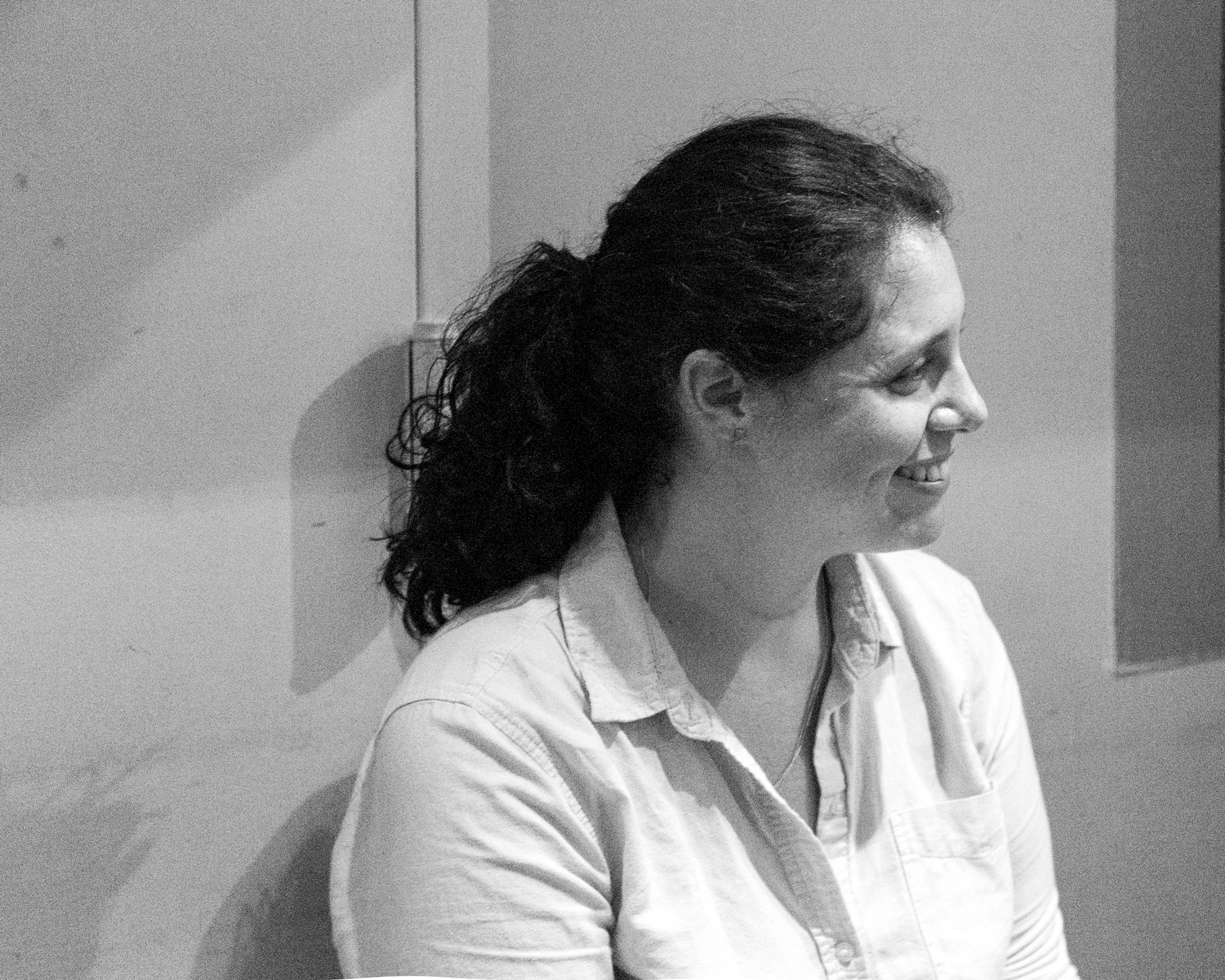
A Conversation with Penny Pun

Penny Pun


It is always a rare treat to discover a fellow Hong Kong transplant in the New York theater community, and this time, the blessing came in the form of Penny Pun. Speaking with Penny tugged at my heartstrings and energized my spirits, and I dare anyone not to be inspired by her resilience. Read on to find out more about this indomitable soul, who has and continues to persist through every obstacle life has thrown her way.


Michelle Tse: I want to start with your experience with growing up in Hong Kong. What juts out to you in terms of being differently abled, and growing up in public housing?
 

Penny Pun: When I started primary school, my parents put me in a special education school. It was about 200 students with only 20 students who had the abilities of a mainstream curriculum, so I have always been hanging around those 20 students throughout my whole primary school education. And then once I reached secondary school, I decided that I would transfer to a mainstream school because I thought I need to get out of the “special-needs world” to “the real world” anyway, I might as well get out now.
 

So I transferred to a mainstream school and then it was a public school serving multiple public housing sectors, so the kids there were low-income and lower-middle class students. It was difficult. It was just under 2,000 students. I mean in America, it’s nothing, but in Hong Kong, [I went from] a special ed school with 200 kids in one school, and 10 kids in a class, to 40 kids in one classroom. So …
 

MT: Wait, so it went from 20 kids to 40.
 

PP: It went from 20 kids in two classes to 40 kids in one class. So it was a lot. And because I got good grades, and most secondary schools in Hong Kong have the elitist practice to put the top 40 students in one class for all courses. I always was around hanging around with those 40 people, so I got a relatively stable social circle, compared to people who got reassigned every year, so that was good. But it was getting increasingly difficult. It’s just more exhausting for me to do something, and then the Hong Kong curriculum for secondary schools get more and more insane as you advance. And my teachers were working us really hard! I mean, I go to school at 8am, and then I have extra classes til 7pm. After I go home, I still have three hours’ worth of homework and studying.
 

MT: Was this typical?
 

PP: It was very typical. I was at school, and they’re telling me you’re never getting out of this neighborhood. Only [about] 15 people go to college every year from my school, and then about 25 more go to the equivalent of community college or other diploma or certificate programs, and they were serving about 200 students per grade.
 

MT: Wow.
 

PP: So yep, you’re told you’re never getting out. And I went to this crazy conservative school, like your skirt can’t be above your knees; it had to cover your whole knee. Your bangs can’t go past your brows… stuff like that. So I wasn’t fitting in. I was exhausted. By the time I reached 8th grade, I found out that my friend from primary school died. Nobody bothered to tell me, because he died around Chinese New Year, so everybody was like, “we shouldn’t talk about this right now, we shouldn’t talk about this.”
 

Penny Pun
 

MT: Why did he pass away?
 

PP: It was muscular dystrophy. I knew that he was gonna pass away at some point during his (and my) mid-to-late teen years, I just didn’t know when it happened. [Nobody] talked about it, until I called up one of my friends, asking him, “How is he doing?” and he told me he passed away. So yeah… Everything was crashing down, and then I had a breakdown, and I didn’t go to school for four days, which is a big deal for students in Hong Kong because you need a doctor’s note, or else it counts as truancy, and could eventually result in me being kicked out of school. But I couldn’t even get out the door to get the doctor’s note.
 

MT: Right.
 

PP: Because of my disability, I have always had doctors following my situation, so my parents called my pediatric surgeon and he put me in line to see a therapist at a government-funded clinic, and then I started going to the therapist for like three months before I came back to full school days. I usually just leave early because of panic attacks and other psychosomatic symptoms. I got therapy over the course of a year. It was therapy at a government-funded clinic, so [eventually] the therapist told me that I was well enough to discontinue treatment.
 

MT: So that was eighth to ninth grade.
 

PP: Yeah. After that my parents got called up by the Make A Wish Foundation. They were like, does your child want to use it because we have “too much money,” and we have to give it away somewhere. My parents were involved in advocacy for disabled children. That’s why the foundation got their number. My parents asked me what I want to do. I knew that I wanted to be in theater by then, so I told them can I have a summer course at NYU, and they were like no, it’s not how the foundation functions, so I asked for a seven day trip to New York instead, and then [at the time] the revival of Rent was running, so I got to see that because, basically Rent is the reason I’m doing this. During those three months [when] I couldn’t even make it through a school day, Rent helped me a lot with coping with my friend’s death and being different.
 

MT: Is that how you got into theater?
 

PP: Yeah. That was when I fell love with theater and started considering doing it as a career. But at that point, all I was doing was watching theater-related videos on YouTube and reading theater blogs. The access to theater in Hong Kong was scarce, especially for a person with low-income.
 

MT: How did you find it?
 

PP: “Glee.” I was watching “Glee.” [At the time,] “Glee” was broadcasting in Hong Kong, and I discovered Rent when they did a cover of one of the songs.
 

Penny Pun
 

MT: Oh, okay. And then, since that trip, how then did you cater your public school education to a point where you were able to get into college here in the US?
 

PP: So after I came back to Hong Kong from New York—
 

MT: So this was 9th grade, or 10th grade? 10th grade?
 

PP: Yes. After my therapy. I knew I wanted to be here, so I started looking at what I can do to make it happen. On the financial side, I found the Sir Edward Youde Memorial Overseas Scholarship for Disabled Students, and applied. In regard to the curricular and academic requirements, I self-studied the SAT, on top of my regular education. I remember I bought two copies of the Princeton Review and registered at the SAT exams they have in Hong Kong. Then asked my teachers to help me generate an English translation of my transcript and write me recommendation letters, which you don’t need for university admission in Hong Kong. They were looking at me weird, but they did it, and I got all my things to Marymount online, and got accepted. A couple months later, I found out that I got the scholarship, and that made it possible for me to accept the offer from Marymount, because it was completely impossible without a scholarship.
 

MT: Right. And even with the scholarship, you had a timeframe, right?
 

PP: Yeah, the scholarship would only provide for me for three years. They are open to giving me a interest free loan for a fourth year, but a loan is a loan, not a scholarship, so I graduated college [in] three years.
 

MT: And the scholarship, was it a set amount of money or was it just, we will provide everything for three years?
 

PP: It was a set amount of money. It was I think about $32,000 a year, so it doesn’t cover everything. My parents took out a loan for the rest.
 

MT: Granted, you were here for college and you were in Hong Kong for elementary and high school, but how do you see the difference in the education systems?
 

PP: I can definitely see that where you get your education means a lot. If I’m a high school student here and I got [the] grades [that I got], I’d have more options in terms of colleges, I think. But my grades in Hong Kong meant nothing here. I got something like a 74 out of 100 GPA, which is pretty low, if you use the American standard, but in Hong Kong, I was the top of my class, and ranking was more important than score. So it’s really important where you get your education, and there is definitely a glass ceiling internationally, and it was a glass ceiling that can only be broken with money—paying for an education at private international schools. And when I was moving from elementary school to high school, my grades also meant nothing because I came from a special ed school. So I basically did not get into the best school that I could have, for my grades, so yeah, there’s definitely a parity, due to the bias that disabled children get “special and nicer treatments.”
 

American kids just have more freedom with their education. It’s not unusual for you to take a psychology class or theater class or writing class in high school if you wanted to, and discover and pursue your interests early. However, [in Hong Kong] our class schedule is decided by the faculty, because of the culture is so that you’re stuck with certain kids and classes for the next six years of your life, and don’t care if you like it or not, or if it helps you develop to be a well-rounded person.
 

MT: I left after sixth grade—but I remember my older sister actually had to take physics, biology, and chemistry together for three years, or something like that. Here it’s–for my highly ranked public high school in Silicon Valley when I was there a decade ago, anyway–physics one year, chemistry one year and then biology one year, and I think you do it in the order you wanted to. I actually think from my high school you only had to take like two of the three or something like that, and I don’t think it was even for the whole year, but a semester or two quarters. Maybe things have changed, though. I think my sister had something like thirteen subjects a year in high school in Hong Kong. That’s typical, right? More or less?
 

PP: Something like that. Twelvish.
 

MT: And here it’s like five, and seven is a lot. I remember thinking, seven classes, that’s it, really?
 

PP: And classes are quarter or semester long here. In Hong Kong you don’t really have choices, they schedule everything for you–
 

MT: The entire year.
 

PP: They schedule your teacher for you, everything is completely decided for you. Just show up.
 

Penny Pun
 

MT: What do you wish people knew about Asians or Asian-Americans—I guess Chinese Americans, and Chinese—that you wish they would stop confusing, or asking about?
 

PP: First of all, I think the biggest thing is that they have to know that not every Asian-looking person is from China. Chinese Americans and Chinese like me actually have really different experiences, and it’s dangerous for someone to generalize all of these experiences. I was just telling the writers of color in my writers’ group that if I sit in on an Asian-American writers’ group, the way I think is different from the way [American-born Chinese] think. It’s not the same thing. Chinese American, and Chinese who moved here, zero-generation, are not the same thing.
 

And, just ask. I don’t know how to describe it, but sometimes they’ll talk to you and they are really aware of the fact that they are talking to a Chinese person or Chinese American and then they’re just talking to a Chinese American about their experiences with China or other Chinese-American people you don’t even know instead of talking to a person with an array of life experiences.
 

MT: I really get that. I got rid of my accent early on and oh, the confusion. So similarly, what do you wish people knew about folks with different abilities that you wish they would stop asking about or confusing?
 

PP: To be honest, just ask. In a very scientific way, it’s a medical condition. There are so many variables in every body. I have cerebral palsy, and what I can do as a person with cerebral palsy versus another person with cerebral palsy is completely different. Our set of abilities are completely different. So if you’re confused, personally, I don’t mind that you ask. And yeah, just don’t make assumptions as to what I can or cannot do.
 

I have a friend who is having a house party in Brooklyn next Saturday and he was so nervous, he didn’t know if he should ask me or not because his house is not exactly accessible. So and I was like, just tell me if you want me to come, ask me to come and just tell me what the situation is because I’ve been living with it for 20 years and I probably know how to solve this problem or get around it. It’s just problem solving. The situation is not as awkward as you might make it.
 

MT: Can you talk about job opportunities as related to accessibility?
 

PP: I think there’s still a lot of work in terms of accessibility in the theater field, and the lack of accessibility of the offices and backstage areas of theatres directly limits my job opportunities. I think the front of house is usually accessible, not because of anyone with disabilities, but because of senior citizens and the enforcement of the ADA. But in terms of like administrative offices, I think that it’s still difficult for them to imagine a person with any kind of disability will work here alongside them as equal. So the physical inaccessibility is just one manifestation of that. I’ve been in accessible offices before, and in there I still felt like I’m not welcomed and I’m disrupting their space. So like, it’s just a matter of the industry not being able to imagine us working alongside them.
 

MT: Can you talk about the workshop you mentioned earlier? And I know you’re doing a few internships as well.
 

PP: So the workshop that I’m doing is from Rising Circle Theater Collective, called INKtank. We’re given 12 weeks to develop a full play that we’ve already sent in. It will be presented with a reading at the end of the program. We will be partnered with a professional director of color and professional actors, and it’s really awesome. I don’t know how much I can say publicly, but I think Raquel [Almazan] and Monet [Hurst-Mendoza] have really successfully made it into a people of color’s space. Every theater says that they want to “do diversity,” but like, you know it’s still a White space, where people of color are put into the position to educate and to defend, and this space is clearly a space for people of color, where we get to lead and heal from the traumas of being in certain White spaces. Because it was the first meeting, we weren’t talking about plays. We were just talking about being a person of color in the theater industry, how to deal with it, and that this program, even after we finish it, we will still have it as a map or as a resource for these kind of things. It’s like the best thing ever.
 

MT: That’s amazing. I don’t think I’ve ever heard that before.
 

PP: Yeah.
 

Penny Pun
 

MT: Although, Musical Theater Factory is pretty good at that. But yeah, it’s hard to come by. Can you talk about your internships?
 

PP: At The Play Company, I’m the literary specialist and I research about the plays that come by and I provide dramaturgical support whenever they need it, because I can, as someone who can speak Chinese, to provide translation support. I’m in my first week, so I don’t have much to share yet.
 

I also have an internship at PEN America, which is awesome. They’re really interesting and intelligent people doing really important jobs. My job there is as an administrator, and I enter a lot of membership info. They have the Free Expression program, which just released a report on Chinese media censorship, so I get to help out a lot with that just because I’m a person in my office who can read Chinese. I also get to go to really cool parties for writers–a lot of networking, a lot of international work, which I really like. They’re not an organization that is constantly promoting diversity as some sort of buzzword, but the diversity is just there, because they’re looking at the world, and the world of literature internationally, and nationally. They’re looking at the whole thing.
 

MT: Can you talk about Pan-Asian Rep? I know you were selected last year.
 

PP: I was selected for the 2017 Pan-Asian Rep NuWorks Festival. My ten minute play got chosen, and it was my college thesis in a way. The assignment was, in first semester of my senior year—although I didn’t really officially have a senior year—I was to be partnered with a professor, cast Marymount students, and put on a short play in the black box theater. So I did that. Then my director submitted my play to Pan-Asian Rep NuWorks Festival, and I got in.
 

I’m really glad that I was unusually vocal about the casting process when I did my casting at Marymount. I stood strong that I would hold an equitable audition, and cast students of color only, because they usually won’t do that. On the official casting call, it’s like, “We are open to considering all actors,” you know that way of thinking? All actors?
 

MT: Oh, yes.
 

PP: Yes. We did the play and it was supposed to be the end of it. I mean, we were lucky to have a great team of people, and to be able to receive a second production in a professional setting. And those two actors [I casted] are just phenomenal, [even though] they’re sophomores. So I’m really glad that when the play got accepted, I actually got to give the opportunity to those two actors of color who are sophomores, who are constantly underappreciated, to do a professional production before any of their classmates can get out there and do something.
 

MT: That’s amazing.
 

PP: So I’m very glad that I made that happen for them. Also, I don’t know if it’s related, but the actress in my production never got cast at Marymount, ever. But the semester following that production, she got cast. So…
 

MT: That’s amazing. Thank you so much for chatting with me.
 
&nbsp

Posted on

A Conversation with Joe Breen

Joe Breen


On a breezy evening in Hell’s Kitchen, I met up with my tall, well-spoken and charming friend Joe Breen, a NYC based playwright whose latest play, All My Love, Kate, is being presented as part of this year’s ESPA Drills at Primary Stages. It tells the love story of two men whose relationship is challenged when one of them enlists to fight in World War II. I attended an early reading of the play last year, and found it to be deeply moving, surprisingly funny, politically relevant, and full of sharp, witty dialogues. I sat down with Joe over wine and hummus for a long and engaging conversation about his play, the things they don’t teach you about World War II, the LGBT community, authentic representation in the arts, and our mutual obsession for musical theater.


Margarita Javier: Tell us a little about yourself, your background, and where you come from.
 

Joe Breen: I grew up in Western Massachusetts, in the Berkshires. I was exposed to a lot of great theater out there. I moved to New York City in 2002 as an actor, singer, and dancer in the musical-theater world. Somewhere along the line, I started writing.
 

MJ: Why do you write?
 

JB: It was something that I never really put much thought into; it was something that I always just did. A lot of times, it would be something you could do at 3 o’clock in the morning, or in between acting jobs. It was something I did for fun, but I never thought much about doing anything with. And then, within the past few years, I really started taking it very seriously and looking at what I was doing. And here I am.
 

MJ: Why did you suddenly start taking it seriously?
 

JB: Once I made the decision to stop performing, I decided to go back to school. While I was in school, the academic part of my brain was being stimulated in a way that it never had before. I didn’t go right to college after high school. The artistic side of myself was not being fed at all. So I found myself writing to fulfill that, and the more I wrote, the more I actually started believing in it and wanting to do something with it.
 

MJ: What kind of stuff were you writing? Was it always theater or did you write anything else?
 

JB: I used to write a lot of short plays. I wrote some screenplays in my early 20s. I wrote a novel—an unpublished novel. And then a play that I had started over 10 years ago, which I had worked on on and off, I really started focusing on getting that finished and getting it where I wanted it to be. I felt the drive to create something. I started to realize that I got much more fulfillment out of writing something and creating something, and creating a world, than I did in actually performing. That was a big sort of “Aha!” moment to me.
 

MJ: You mentioned a play that you had been working on for 10 years. What was that?
 

JB: It’s called The Hands that Hold Us. It was a finalist for the Princess Grace Playwriting Fellowship last year. And then it was selected as part of Capital Repertory Theatre’s NEXT ACT! New Play Summit. There were four plays chosen to get staged readings, which took place last October.
 

MJ: It’s amazing that you just decided to do this seriously and already you’re a finalist for awards and getting staged readings.
 

JB: It was. And I have to give a lot of credit to a company called The Bechdel Project which produced the first table read. I sent the play to a friend of mine, Maria Maloney, who’s one of the founders of the company. And she said, “Let’s hear this out loud!”
 

MJ: Why theater specifically? What draws you to theater as an art form?
 

JB: As far as writing for theater, I think it’s because theater is where I’m the most comfortable.
 

MJ: Why?
 

JB: Because I know it. It’s something I’ve always done. As a kid, I was in productions of The Music Man and Mame—you know, community theater.
 

MJ: So you fell in love with it as a young kid.
 

JB: Yeah. And as I evolved and became a professional actor, writing theater seemed like the natural next step.
 

MJ: Who and what would you say are your artistic influences? Who are your favorite writers, favorite playwrights, and favorite pieces of theater?
 

JB: I’m not gonna lie; I’m a big musical-theater dork. So when I’m asked, “What are your favorite productions?” I sit there and name a bunch of classic musicals.
 

MJ: Like what?
 

JB: Man of La Mancha, A Little Night Music … I love Sunday in the Park with George. Most recently, Bandstand. I have to plug Bandstand, one of the greatest things I’ve seen in a long time. I also loved The Visit.
 

MJ: An underrated masterpiece!
 

JB: Yes. That’s where my heart is.
 

MJ: But you mostly write straight theater.
 

JB: Yes, I only write straight theater. When it comes to playwrights, I love Tennessee Williams. I love Eugene O’Neill. Sort of the big classic Americana plays.
 

MJ: I’m also a big theater lover, and I sometimes go see a piece of theater that makes me go, “Yes! This is why I want to work in theater!” Have you had moments like that? What’s the earliest experience you had where you were like, “This is what I want to do”?
 

JB: I grew up watching a lot of old musical films. Also, growing up in the Berkshires, we had Williamstown Theatre Festival, Berkshire Theatre Festival, and Barrington Stage Company. In the summer, there would be summer stock—The Mac-Haydn Theatre which is a small summer-stock theater that only does musicals. Because that was my big love, my uncle, who also loved musicals, had season subscriptions, and brought me all summer long to Mac-Haydn Theatre. When you see a production of The King and I on a tiny, round stage and Anna’s in a hoop skirt, there’s no room for anyone else. And in my head as a kid, not being able to separate or see the difference between that and Yul Brynner and Deborah Kerr in the film—there’s something magical about that.
 

Joe Breen
 

MJ: Tell us about Primary Stages and ESPA. How did you become involved with them?
 

JB: Kimberly Faith Hickman, one of the founding members of the Bechdel Project, was an assistant director at MTC for Of Good Stock, written by Melissa Ross. Kimberly had said that The Hands That Hold Us reminded her a lot of Ross’s style, so she connected us through email. Ross and I had a little back and forth over email; I was asking for advice because, like I said, I was very new to this. I’d had some short plays produced over the years, but never a full length play. I was very much out to sea. With the short plays, you can enter them to random festivals here and there. But when suddenly you have a large two-hour-plus play, it’s different. So Melissa, who actually teaches at ESPA, suggested I take a class there. She said they have a lot of amazing instructors, so I signed up for a first draft class with Bess Wohl who wrote Small Mouth Sounds, and that’s where I really started working on All My Love, Kate.
 

MJ: And All My Love, Kate is being featured as part of this year’s ESPA Drills. How did that come about?
 

JB: The ESPA Drills happen every year, and the rules are, in order to submit, it has to be a full-length finished play that has been developed in some way at Primary Stages. Over the span of a year, I had taken four classes there and had worked on All My Love, Kate. So I submitted it—it’s a blind submission process—and they got back to me and said I was a semi-finalist, then a finalist, and then I was one of the four plays chosen.
 

MJ: So yours is one of only four plays chosen. Do you know anything about the other playwrights in the series: Liz Appel, Jacqueline Bircher, and Daniel Loeser?
 

JB: Yes. Primary Stages ESPA sent us to a house in the Catskills on a retreat and I was very nervous because you know there’s always one person—especially when you get a group of artists together—there’s always going to be that one person that makes you want to bash your head against the wall. But there was not. Other than the four of us, there was Sarah Matteucci, the Associate Director of Education of ESPA, and playwright Crystal Skillman, who was our faculty advisor. The four of us connected so quickly. We’re very different people, very different writers, with very different processes, very different styles. The four plays are very different, but we’re all very supportive of each other. I know that sounds ridiculous, people say that all the time, but it really is true. We keep saying we were shocked at how well we jelled, being as different as we all are.
 

MJ: So, All My Love, Kate. What is it about? What was the inspiration? How did you come up with it?

JB: At the core, it is a love story. It takes place in the 1940s right before and during World War II. It’s about two men—they live together, they have a life together, they’re in a committed relationship. Then the war happens and one of them joins the Air Corps in a station in the Philippines. That’s the basic plot. It’s about two men who want to be together, but can’t. But on a larger scale, what I hope that I’m doing is examining the idea of what it means to be an American, what it means to be a patriot, and whether or not you can be those things if you don’t fit into the definition that has been set up by the government, by the country, by society.
 

MJ: Right, how do people who don’t conform to heteronormative standards fit into the narrative of American history?
 

JB: In the ‘40s it was a different mindset when talking about war. Nowadays, many of us look at war in a very cynical light. In the ‘40s, when America went to war, if you were a man, you joined up. You didn’t question it. You just did. And to be an American hero—a male American hero—you went to war, you fought for your country, you put your life on the line. And as for women—gender roles blurred a little bit in the ‘40s for women. Because suddenly they were allowed to go to the workforce to replace the men who were fighting. Various branches of the military had all-female divisions. The women, they had secretarial jobs, they worked the radios, they did things that were not combative, but the women were fighting for the country all the same. It all leads to the inspiration of my play—and it’s the women who were at home, who didn’t join the ranks, who didn’t necessarily go to the factories—they had their own part to play, too. To be an American hero as a woman meant to sacrifice your husband, your brother, your son. And if they died, then you suddenly became part of a group that was called the Gold Star Wives. And they were held up almost with reverence, almost like the Virgin Mary, because of all they had sacrificed. There’s actually a song in Bandstand (to bring it back), “Who I Was,” that Laura Osnes sings about what her life was like before she became a Gold Star widow. And so that whole idea of these women in a way being glorified for sacrificing the men in their lives, I started to wonder how many Gold Star men and women there were who went unacknowledged, because at that time men and women who were gay in the military service could not admit to having those loves at home, could not tell you, they couldn’t even admit who was waiting for them at home.
 

MJ: Why was that important for you to explore?
 

JB: In many ways, I think we as an LGBT community take for granted—I mean, this is such an old, gay man way of like, “Oh if the kids only knew!”—but we take for granted, especially in this city, the freedoms and the rights that we have. Don’t Ask Don’t Tell has been overturned; that’s amazing. But now we’re in the process of our President saying that Trans soldiers are not allowed to fight, cannot be a part of the military, cannot voluntarily fight and die for their country. I started writing this play before that happened, but it’s taken on a very interesting timeliness, which surprised me, because my writing tends to be a throwback when it comes to “queer theater”—and I hate that term.
 

MJ: Why do you hate that term?
 

JB: I find it reductive. Because as soon as a play—not even a play, but a film, a novel, anything—if the voice that is highlighted is a gay character, a black character, an Asian character, or a Latino character, it suddenly becomes “a gay play,” “a black play,” etc. And there’s this weight and this extra expectation that is placed on them. And I think as gay writers, as far as theater goes, what we write has tended to be very timely. It talks about a specific experience in a point in time. You look at Tennessee Williams, he was writing gay men. They were self-hating closeted Southern gay men. But at the time, that was a very true experience for the average gay man. Now we look at Tennessee Williams’ plays as period pieces. We then moved on to Angels in America and Torch Song Trilogy, or Torch Song as it’s called now, which I cannot wait for. And those plays were very specific to the gay experience of those times. Very of the time—what the gay community was dealing with in that moment. Although, if you look at Torch Song, a character in that wants to get married and have children, which was very forward-thinking. We weren’t, I don’t think, actively fighting for marriage equality when that play was written.
 

MJ: I think the LGBT community was, but it wasn’t at the forefront of the narrative.
 

JB: Right, there were other battles to fight. But now when those plays are done, they’re looked at as period pieces. Now we have plays like Dada Woof Papa Hot, by Peter Parnell, which explored the idea of Ok, we can get married and have kids and a house; we can be out and proud. But then what? What happens to the community that we built and the community that kept us safe for so many years? What does it evolve us into?
 

MJ: Funny you mention that, because I was going to ask you about the changing landscape of theater that deals with LGBT issues. There was a piece in the New York Times when Dada Woof Papa Hot came out about the changing landscape of LGBT theater.
 

JB: I remember that!
 

MJ: It was about that play as well as Steve by Mark Gerrard, at Signature, and it was about how now that we have marriage equality, what are these new-wave LGBT plays talking about? They interviewed Craig Lucas, and he actually said that he wouldn’t bet on “a whole bunch of plays celebrating our achievements only because we don’t know how long those achievements are going to last.” This was in 2015. Now, after the 2016 election, we’re realizing that Lucas was right; all of these things that we were celebrating may not be as secure as we thought they were. Suddenly, we realize we’re not past these issues yet. I was thinking about how supposedly we’re past talking about the AIDS crisis in theater, and just recently Michael Friedman died of AIDS complications. So these things that we had supposedly moved past from, we haven’t. You mentioned revivals of Torch Song and Angels in America, which is coming to Broadway next year, and suddenly we’re realizing, yes they’re period pieces, but they’re still incredibly relevant.
 

JB: Much to our surprise.
 

MJ: So I wonder: As a gay writer, are you consciously writing as part of this history and do you have anything to contribute to the new wave of LGBT plays?
 

JB: It’s interesting because one of the questions I always hate as a writer is when someone asks “Why are you writing this? What do you want the audience to take away from this? What are you saying?”
 

Joe Breen
 

MJ: By the way, why are you writing this? What do you want the audience to take away from this? What are you saying?
 

JB: [laughs] Well that’s a three-part question. When I started writing this play, I just started writing a story that happens to take place in the 1940s, a very interesting point in history. And the play just happens to be about two men. Well no, I guess I can’t say that it “just happens” to be that way, because I made the decision to write it about two men because of the whole question of how many Gold Star widows were men. See, I am in awe of writers who can look at something, one of the great topics and say, “I’m going to write a play about that. I’m going to write of today and now,” and have something to say about that. Because if I tried to do that, I’d be afraid it would come across as too heavy-handed.
 

MJ: I know what you mean, but I’ve spoken to a lot of writers and I feel like most come at it from a very personal standpoint; I don’t think it’s always wanting to make a political statement. I think for most writers, it’s a very personal experience and then you can extrapolate any kind of political message from that.
 

JB: I guess that’s what I was trying to get to. When someone says, “What do you want people to take away from this?” I never know; I don’t know what I want people to take away from this. My last play, The Hands That Hold Us, is about Alice, a 25-year-old woman who, during her third bout of cancer, chooses to forego treatment, much to the chagrin of her family. Now, while writing and working on that, a lot of people asked me, “Are you saying that people should have the right to kill themselves? Don’t they have a responsibility to their family to fight?” And I never knew what to say to that. Because when it comes to the character of Alice, I still don’t know if I agree that what she did is right. I don’t know if I would do that. So I guess what I’m saying is it’s up to the audiences, to people like you, to go see the play and walk away and draw your own meaning and conclusions. Because one person could go to this play and say “Oh, he’s showing us why gays should be open in the military” but then someone else could say “My God, he’s showing us why gays shouldn’t be open in the military.” It’s subjective; all art is such a subjective thing.
 

MJ: Your play is fiction, but it does take place during World War II. During the process of writing, did you do any research? Was historical accuracy important? Did you come across any real life stories that may have inspired your characters?
 

JB: When I first started going down this road, I knew that gay people were out there in the world during this period; although, what’s interesting is that even during readings, I’ve had people in the room who are gay and have asked me, “Well, were people living together as actual couples then?” Well, it didn’t just suddenly happen after 1981! But there aren’t a lot of examples of that. It wasn’t in the media; it’s not in films. But a very important book that I came across is called Coming Out Under Fire: The History of Gay Men and Women in World War II by Allan Bérubé. And it’s focused on men and women who joined the US military. There’s also a documentary which is wonderful. The documentary came out as a response to Don’t Ask Don’t Tell being put into effect. And they talk firsthand to the gays and lesbians who were there. And amazingly, a lot of them in the documentary wouldn’t go on camera, even though they were lending their voices. They were shown in shadows. Even then, it would’ve been the ‘90s, these are World War II vets that lived—if not openly—lived as gay and lesbian women with partners. And they still had that fear of letting that be known. I also did a lot of reading into various battles, trying to get a general sense of the things we didn’t learn in history class. I was doing reading on the fall of Bataan and the Bataan Death March. I was very intrigued by this group of soldiers because within seven hours of Pearl Harbor being hit, the Philippines was hit. We weren’t at war yet, officially. The military people in the Philippines, both American and Filipino, hadn’t even heard about Pearl Harbor yet. So within seven hours, the Japanese Imperial army bombed Manila, which became the Battle of Bataan. Ultimately, Japan won the battle and in what was a truly horrific war crime, this group of soldiers was marched over I think six days, 60-plus miles, no water, no food, and something like 70,000 American and Filipino POWs. What fascinated me about this group of people that was involved in the Bataan Death March, is that they were among the first soldiers to be captured during World War II and one of the last to be released. They were shuttled from a few different countries, shuttled from different camps; so much so, that the military and the government lost track of them. Many of their families were told that they were presumed dead. And then suddenly, World War II ends and all these soldiers are coming back saying, “I’m not dead.” So I was very fascinated by that. Which actually leads me to one of the biggest struggles I’ve had in writing this play. It’s a Japanese character named Toshio, who is a soldier in the Imperial Japanese Army. And the reason I’ve struggled so much with him is because, from the very beginning, I have been hyper-aware of being a white man writing a person of color, who, historically in this moment of time, was considered and will be considered the “villain.”
 

MJ: Right because at the time Japan was the enemy of the United States.
 

JB: Right. And the worst thing you can say to a liberal white person is that they’re racist, you know? We’re terrified of that! [laughs] So, I have this Japanese character, who, in my efforts to want to make him three-dimensional, I was afraid to commit to the parts of him that would be perceived by audiences as being offensive. I had a reading this spring and, historically in the ‘40s, Americans called Japanese people “Japs.” It wasn’t even in their minds that it was a derogatory term, if they wanted to be derogatory they would use something else. This was just what they were. So I have a character in the play that represents very much the heteronormative, white-America good ol’ boy. And that is how he refers to Japanese people. After the reading, during the feedback session, another playwright in the room, a white liberal man, said he was very offended by the use of the word “Jap.” And he thought it was too much, and it really took him out of it. And so, of course, my white liberal Spidey senses started tingling, thinking, “Oh God, what have I done?” But in the room were two Asian actors—one Filipino, one Cambodian. And both of them stood up and said, “Oh no, that’s not offensive at all; it’s very valid. It rings true to me.”
 

MJ: Because it’s being said by a racist character.
 

JB: Exactly. So that was interesting. Flash forward a year later, just recently, I’m still struggling with this character. And one night before a reading, I made a very bold choice, and had him do something that I was very uncomfortable with. The next day, when that part came up in the play, there was an audible gasp. And during the feedback session, those white liberals of us in the room were like, “Oh that was so shocking! We’re afraid of what that’s going to make Toshio look like.” But the Japanese actor in the room said, “No, he’s a trained soldier. That is exactly what he would have done in that scenario.” So it’s a very hard thing to write an “other” to myself, because we handle those characters with kid gloves, and risk making them, for lack of a better term, an “Uncle Tom” character.
 

MJ: It’s interesting because I think a problem not just in theater, but in any kind of artistic representation—when it specifically comes to white people writing people of color, especially white liberals writing people of color—there’s a tendency to idealize.
 

JB: So that we can say, “See? They weren’t all bad!”
 

MJ: Right. And in this overt effort to not be offensive, it creates a stereotype in itself. It’s interesting that you’re so hyper-aware of that.
 

JB: I’m very fortunate that I have very outspoken people of color in my life that will call me out on things like that. And they make me aware of my white guilt. [laughs]
 

MJ: So when writing for Toshio, have you done any research? How do you approach being authentic to a Japanese character, apart from your liberal guilt?
 

JB: Something I feel very strongly about, and it’s something that’s unfortunately not feasible for the reading, is I want all of Toshio’s dialogue to be in Japanese. I don’t speak Japanese, I’m writing all of his dialogue in English with the intention of it being translated. For the purposes of a staged reading, there’s not going to be projections of his lines.
 

MJ: But your intent is for the character to only speak Japanese.
 

JB: Right.
 

MJ: Do you want it translated for the audience?
 

JB: I’ve gone back and forth. Initially, I wanted the English speaking audience to be as clueless to what he’s saying as the American characters in the play. But I think feasibly down the road, when it came to a full production, I would want to do the tried and true projections of the translations. But for the purposes of this reading, Toshio will be reading his lines in English, just so everyone in the theater can understand what is happening. But that is something I feel very strongly about. I want him to speak Japanese. I’ve also done research into the treatment of homosexuality both in Japan and in the Japanese military. Which surprisingly, within the world of the military, was much more accepting because in the American military, if you were outed as gay, or you outed yourself, it was an automatic dismissal—dishonorable discharge. There were no rules about that in the Japanese military at the time because it almost wasn’t acknowledged that it was a thing. But openly, the male soldiers were having sex with each other, but it was almost seen as a necessary evil. But it wasn’t thought about as anything more than that. It’s hard to find testimonies and documentation of gay Japanese people from the ‘40s because it wasn’t acknowledged. But, of course, there were! So I’ve tried to piece together as many things as I could find, and then of course, at a certain point, you have to let that go and write for the story you’re creating.
 

MJ: One of my earliest memories as a theatergoer was going to see A Chorus Line as a little girl with my parents and sister. I’m from Puerto Rico, and we were on a trip to New York. This was in the ‘80s, I’m aging myself, but I was young. And, like yourself, I’ve been an avid theatergoer all my life. And I have this vivid memory of seeing this Puerto Rican woman character in this play on Broadway.
 

JB: Diana Morales!
 

MJ: Diana Morales! And she was talking about being from San Juan, and I had this immense feeling of recognition and just wanting to root for her that was very foreign to me. I wasn’t used to seeing myself represented in that way. Anyone who is in some way outside the norm, it’s very rare to see ourselves represented in the media. Especially represented accurately. And this was very authentic and true to my real experience.
 

JB: Because that came from the testimony of a real Puerto Rican.
 

Joe Breen
 

MJ: Right, Priscilla Lopez. It was actually her real story and it was vivid. And I had never seen that on a Broadway stage. I’m wondering if you’ve ever had that experience. Of seeing yourself as a gay man recognized?
 

JB: Growing up in the ‘90s, I was still trying to figure out what it was that made me different. I came out to my parents on my 16th birthday, but prior to that, I didn’t know what it was that was different about me. But the first one that I can remember—and what’s interesting is I couldn’t even identify it at the time—where I was like, “Oh! That’s me!” was Rickie in My So-Called Life. I was just like, Wow, he’s hanging out with Claire Danes and combing her hair; hanging out in the girls’ bathroom—all the things that I wanted to do.
 

MJ: And the character doesn’t even acknowledge he’s gay until one of the very last episodes.
 

JB: Right. I didn’t have the self-awareness to realize, “That is it. That is who I am.” But I remember being fascinated by him. To parallel your musical theater story, one of the first gay characters I remember in a musical is Molina from Kiss of the Spider Woman. I remember being in my room singing along with Chita Rivera and Brent Carver, but again, not understanding that what I was seeing in Molina was myself. And that my reverence for Chita Rivera was the same as his reverence for Aurora. I didn’t have that. But I was still doing it.
 

MJ: You still felt that connection, even if you couldn’t identify it.
 

JB: I imagine for you it’s a very visual thing; you’re like, “Oh! There I am.”
 

MJ: Yes, it’s very visual.
 

JB: For me it was an emotional connection without understanding what that was.
 

MJ: There are some writers and artists in the LGBT community who talk about the dangers of what they call “queer assimilation” as a way of finding acceptance in a heteronormative society. Even the idea of marriage as a way of normalizing these relationships, letting straight people know, “We’re just like you” in order to gain acceptance. But some artists believe it’s at the cost of losing this culture that was always in the fringes, this otherness that they’re very proud of. That’s a complicated issue and has many sides, but I was just wondering how do you personally feel about that?
 

JB: I am a gay man who has always wanted to get married. I’ve had other gay men look at me and say, “That’s just because you grew up wanting to be straight, wanting to be Meg Ryan in When Harry Met Sally.” Is that valid? Perhaps. But for whatever reason, I’m someone who very much believes in the institution of marriage, not in a religious or even political or financial way, but to me there’s something very powerful about being able to say, “You are the one for me; I am committing to you.” At the expense of not being able to go to a bar and hook up with anyone I see. To me, there’s something very special about that. Now, that’s not to say that I think that marriages last forever and that there’s one person for everyone. I’m not saying that. But for me personally, I’m someone who finds that to be a very special thing. There’s a play Off-Broadway right now, Afterglow, I have not seen it but my understanding is that it’s about a committed, married, same-sex couple who’s exploring the idea of polygamy, or at least an open marriage. ‘Cause it’s saying, We have this connection, but do we have to play by “heteronormative rules”? So when it comes to the question of gay marriage as falling into queer assimilation, I would say it doesn’t have to be, because you can make up your own rules. And it’s not just for gay people, straight people, too. No one’s saying what the rules of your marriage have to be. I feel like if there is a couple who has committed to having a life together and raising a family together but they choose to have an open marriage, it’s certainly not my place and I should never tell them they’re doing it wrong. But on that same token, if I choose to have a monogamous relationship, I think it’s dangerous for someone to turn around and say I’m doing it wrong because I’m trying to assimilate.
 

MJ: Of course, I mean there have been monogamous same sex relationships throughout history.
 

JB: Right, and I get how people are equating —I also don’t like the term “gay marriage.” Marriage equality— equating marriage equality to assimilation, I get it. But fighting against that is, I think, dangerous because to be gay does not necessarily mean to be a polyamorous person. A lot of people rope that into part of our culture, but I don’t see that as a cultural choice, I think that’s just a sexual choice.
 

MJ: Authentic representation in the arts has become a hot-button issue lately. Mostly when it comes up, we’re talking about people of color, but it’s been used to included the Trans community—Trans characters should be played by Trans actors—and we’re starting to see greater representation of disabled actors playing disabled roles that had traditionally been portrayed by able-bodied actors.
 

JB: Like the autistic actor who’s doing The Curious Incident of the Dog in the Night-Time.
 

MJ: Right, or the Deaf West Theatre production of Spring Awakening, or The Cost of Living, for which the playwright Martyna Majok has specified that the disabled characters must be played by disabled actors. There’s a push for more authentic representation in the sense not just of how it’s written, but how it’s portrayed. It’s partly for authenticity, but also partly to give participation to performers who are in some way marginalized. But this discussion doesn’t usually extend to the gay, lesbian, and bisexual communities. We have a lot of prominent gay roles being portrayed by straight actors; straight playwrights write gay themes. I don’t know if there’s a right or wrong answer to that, but I was just wondering if you personally have an opinion on it.
 

JB: My view on that has evolved. But it’s a double edged sword because there remain a lot of actors who are in the closet. There are actors who will not come out for fear of losing their career. There are actors who have come out and lost their career. On the other hand, there are actors who have come out and have an amazing career: Michael Urie, for example. In one respect, if I say that gay characters should be played by gay actors, that lends credence to people saying, “Gay actors can’t play straight characters.” But with all of that said, for the past year, I’ve had a lot of readings of this play. And I had an actor, who throughout the entire process was reading the role of Danny, the character who stays in the States while his partner is overseas. And he’s a fantastic actor, but he’s straight. Now that’s something that in the earlier readings never occurred to me, until we did a reading and I wanted to mix up the voices. And I had a bunch of actors who had never read any of the roles, and I had a gay actor play that role. And suddenly something clicked in me. And it’s not that what he was doing was better than what the initial actor was doing. But it was still something that I thought, “Oh! This is right.” So moving forward, do I want to pull an Edward Albee and say, “No! Only gay actors can play my characters!”? No, I’m not going to say that. If Colin Firth wants to play one of my gay characters, please, by all means! [laughs] But I will say there is something when I’m sitting in that room—and not to take away from that straight actor who had been reading Danny so beautifully for a year—but there is something emotional for me to be watching a gay man read my words. Truth is a hard thing to get at.
 

Joe Breen
 

MJ: Going back to the discussion we had about the character of Toshio, in terms of authentic representation, how was that approached in the casting?
 

JB: Toshio was the last one to be cast in the reading, because Sara Matteucci felt very strongly that he not just be an Asian actor. She wanted a Japanese actor. During the table reads, I’ve had a Cambodian actor, at one point Sara read it herself, but for the reading itself she wanted a Japanese actor. And I get it. And I’ll be honest, I didn’t think about that until she brought it up, and then as soon as she said it I thought, “Oh, absolutely.”
 

MJ: When is the reading?
 

JB: Tuesday October 3rd at 6:30 PM at the Cherry Lane Theater. It’s free!
 

MJ: What are your future hopes for this play?
 

JB: Broadway!
 

MJ: No, honestly. I don’t think Broadway is the end goal for everybody.
 

JB: For me, Broadway will always be the end goal. [laughs] I just want it to have a life, whatever that means, because I’ve fallen in love with all of these characters. I have had fights with these characters and hated them all at different points like a crazy person, but ultimately I love these characters and I love the story that I’m telling. I want people to meet my characters.
 

MJ: Are you working on something new?
 

JB: [laughs] “That is not like you George!” Well played. Now that you ask me, I have a very rough draft of a first act of another play that is about a female painter during the expressionist movement and a woman’s place in the art world.
 

MJ: Assuming you make it, Joe Breen plays being performed all over the country and studied in classrooms—what do you think they would say is the unifying thread of your work? What will your work be remembered for?
 

JB: Oy. [laughs] Aside from there being a gay character in all of them, I think the common thread in my plays is—this sounds so corny—but relationships between people, whether it be romantic, siblings, or friendship. They’re all about love. Oh god, that’s awful! I sound like the end of Love Actually. “Love is all around.” But yes, truthfully, all my plays are about love. The primary passion in your life, whatever it is that makes you tick, be it romantic, or artistic, or familial.
 

MJ: And what is the primary passion in your life?
 

JB: My ultimate goal is to be able to relax. To be able to breathe. [laughs]


Joe Breen is a New York-based playwright, whose work has been seen at The Bechdel Project, Theatre in Asylum, The Boston Center For The Arts, and as part of the Primary Stages ESPA Detention Series. His play, The Hands That Hold Us, was a 2016 finalist for The Princess Grace Awards Playwriting Fellowship through New Dramatists, and winner of the 2016 NEXT ACT! New Play Summit at Capital Repertory Theatre in Albany, NY. He is a member of the Dramatists Guild of America, and resides in Manhattan with his boyfriend and two geriatric Brussels Griffons.

Posted on

A Conversation with Ariel Stess, Alex Borinsky, and Heidi Schreck

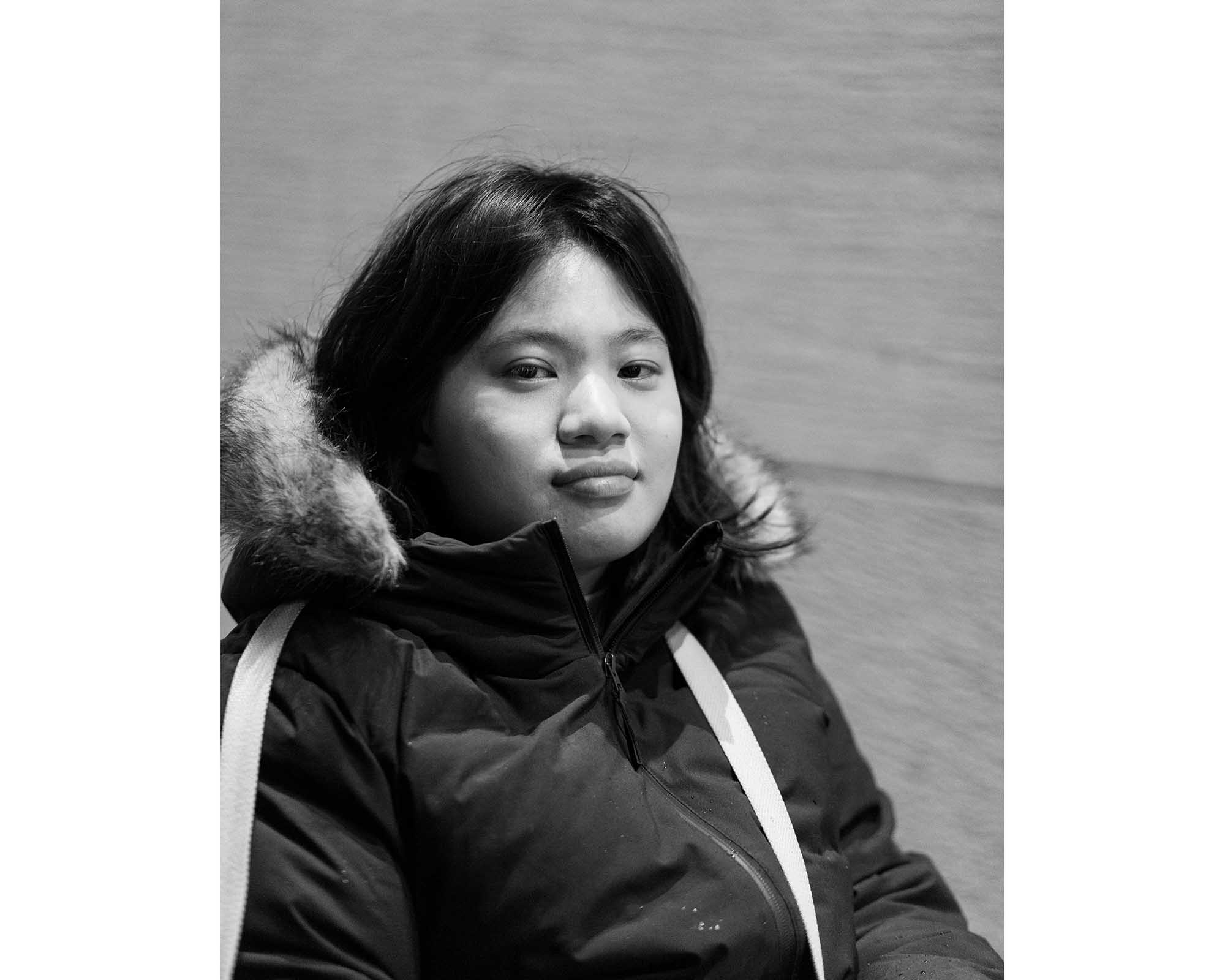
Ariel Stess, Alex Borinsky, Heidi Schrek


It was a pleasure to sit down with Ariel Stess, Alex Borinsky, and Heidi Schreck, the playwrights of Clubbed Thumb’s Summerworks Series, to talk about plays, passion, and politics. In our current climate, I find myself most hopeful in conversations like these, with artists actively engaged in reflection, questioning and the desire to learn.


Corey Ruzicano: I’d love to begin by hearing about each of your pieces and talking about entry-points — what excites you about a story; what’s your way in?
 

Ariel Stess: I often start with an image as I’m starting, or a memory.
 

Heidi Schreck: Mine is different each time. This particular piece I’ve been working on for over a decade on and off, which is funny because it’s so unfinished, still. I grew up doing these Constitution Contests to store up scholarship money which is how I paid for college. I wanted to do a piece kind of inspired by this writer, W. David Hancock, called Race of the Ark Tattoo, which was a rummage sale and the audience could pick an item and the actor would tell a story about the objects and the stories would weave together and even though the story was different every night it formed the same sort of whole every night. For some reason when I saw that, I had this idea — which I’m not doing — to take out the amendments of the Constitution and talk about them and tell a personal story about each one. It’s actually evolved into something very different exploring the history of the women on my mom’s side.
 

Alex Borinsky: It’s different for me too, for each piece, but it tends to be a little swatch of texture or language. Or just a sense of the machine of the play or how it moves. For this one, I was really responding to the Clubbed Thumb biennial commission prompt so I was reading a lot of [María Irene] Fornés’ plays and her voice is very clear and she’s very suspicious of style, I think. There are all these people that speak very directly but in a very human way, so that texture was part of it. And then I wanted to use a shape where things kept getting split off from each other.
 

Corey: Those sound great — Ariel, I don’t know if you wanted to talk a little bit about your piece and maybe the memory or the image that sparked it?
 

Ariel: For this piece, I was reading a lot about the criminal justice system, reading a lot about who was getting stopped and frisked, so that’s the first image that I came to, the idea of white people being stopped and frisked and wondering what that would be like. We don’t see that, so I wanted to put that on stage and that’s where the play came from. I was trying to explore different systems that are not broken but engineered to oppress people,: incarceration, school, and criminal justice.
 

Ariel Stess, Alex Borinsky, Heidi Schrek
 

Corey: Absolutely, and I’m definitely interested in hearing about what everyone’s relationship is to creating in this political climate. Maybe it doesn’t feel different at all than it did a year ago, and I’d like to hear about that too.
 

Heidi: It’s funny because I’ve been working on this constitution piece for over a decade and someone said, I think you have to do it now, even though it’s not finished. And I agreed. Although I do think it’s interesting — I was working on a TV show when the election happened where suddenly the content changed dramatically and then I started working on this…it’s tricky for me to figure out how to tune your work in response to what’s going on because I’ve found for me that it’s easy to fall into a very crude, very heavy handed response and for the work to become polemical. I think the problems of responding to it as an artist are the same as responding to it as a person, which is, What is my duty now, what is my obligation? And also recognizing our complicity. That for many of us, being passive has contributed to this. The recognition that this is a symptom of things that have been here all along and complicity and being really passive about them before is maybe what’s led to this. I guess I’m finding all the confusion I have as a person confronting it is translating to my work.
 

Alex: Confusion sounds right. I feel like it’s just brought into focus some things that have been in the background for awhile. There’s a project that I’ve been obsessed with since I was a part of it and that was part of the inspiration for this play. A few years ago I met someone who said he was going to Vermont for a month to work on a musical in a field and asked if I wanted to come. I did and there were about 50 of us living in a field in tents, pooping in buckets, and rehearsing under a circus tent for a month. There are so many things I could say about this, but it was 50 people living in a field, many of whom were politically oriented or engaged and were taking a break from that work. We’re all cooking and living and working together on this project; we only have three copies of the score so we have to share those – you’d write down your lines, and there was an actor who had been an opera singer who would lead us in vocal warm-ups and teach us how to sing the parts. There was some conflict, some romances…it was a whole little society in and of itself. One person built a revolving stage on roller blade wheels and we took it on tour. I remember that before the show in Philly — we would do these shows and it would be swelteringly hot with like three-hundred people gathering to watch this very, very large show— the assistant director said, we’re performing this play– but we’re also performing ourselves, the relationships and the process of it. I just keep thinking about that, how with any play, the process is woven deeply into what the piece becomes. So that experience is part of what inspired this play for Clubbed Thumb, but especially since the election I’ve been thinking about process and theater-making — how important it is to be thoughtful about process. I don’t want to be too grand and say it’s a political act… but just awareness and attending to how we exist with one another. What we’re making is not just a product, it’s a set of relationships.
 

Ariel: I would agree. What I’ve been thinking about mostly is: how does the model for creating relate to the product you make? It felt like previously it was okay not to think too much about power structures or dynamics or resource distribution and then have a product that is political or stirs up a political question, but now I’m reflecting more on the steps and all of the collaborations that go into making something and making something political and how to be sensitive to that. The steps and the way we make things are the thing we make, but for some reason, ever since the election, I’ve been even more focused on that.
 

Heidi: That’s true for me too. I worked on a show called I Love Dick and we began to examine the way that structure works. We had many writers of color on staff, for example, but they’d hired upper-level writers who were all white. We took an anti-racism workshop and an anti-oppression workshop to see how the way we were making the show was still enacting an oppressive power structure.
 

Michelle Tse: Heidi, I know you a little bit, so I just have to ask: I know you were a journalist in Russia. I would love to hear about that.
 

Heidi: You want to know my take on the situation?
 

Michelle: It’s fascinating that you were there. For me, being an immigrant, yes, this is all overwhelming, but not shocking. So I wonder if for you, as an American who lived there, not necessarily covering politics but working as a journalist —
 

Heidi: I don’t have any secret information.
 

Michelle: I wonder what your reaction was when things started happening here — did you have any perspective on what you thought might happen?
 

Heidi: Maybe it feels less surprising to me than to some people. Because I was in Russia when the groundwork was being laid for Putin, I saw how easily it can happen. And I never assumed it couldn’t happen here.
 

Ariel Stess, Alex Borinsky, Heidi Schrek
 

Corey: I’ve also been asking most of the people I speak with what change you’re looking to see in the field — you can be as specific and granular or as expansive as you want with that, but I’m interested in how people articulate that vision. If you were going to make a change in the field or within your reach, what might that look like?
 

Heidi: For me, one granular thing that is connected to an expansive idea, is understanding that I am not some kind of “neutral” voice because I am white. And if I don’t examine how whiteness affects my process, my working relationships, the way I think about story, I’m likely perpetuating oppression. I’ve been the only woman in a writers room before, so I’ve seen how well-intentioned men have blind spots when it comes to their own complicity in misogyny. I have to confront that in terms of racism.
 

Alex: One thing I’ve been thinking about is that it’s very easy to start thinking — and I’m talking about playwriting specifically but you could say this about art-making in general — about what makes it possible to do your work is in relationship to institutions. The ways that they do and do not provide resources to support your work. I think in a weird way that becomes sort of a focus for what makes it possible to live in New York and make art – what this or that institution supports. But I feel like for most people, what makes it possible to live in New York or any place is stuff like, is housing affordable, is food affordable, do you have access to healthcare and education and childcare. It’s very easy for artists to start thinking of ourselves as living in a different city than everyone else, in that artists are fighting for resources in the context of arts institutions—as opposed to fighting for affordable housing or childcare, which are other ways of making art-making possible. How do we avoid getting siloed within the arts-ecosystems that make our artist-lives possible, instead of living in the same city as the rest of the people who live here, and see that we need to fight for the same things as everyone else to make this place livable, and to make art-making possible?
 

Ariel: Yeah, the only thing I can think of right now is, and it’s really small, but I’ve been thinking about lack of information and how withholding information can be a form of power. I’m thinking about ways that the process of making and supporting art can be more transparent — all of the people in the making of art being in on the goals, like appealing to a certain audience, or being aware of the things you have to do, as part of an institution, to appeal to that certain audience. I’d like to see more basic information-sharing, I’ve just been feeling recently that there’s a lot of information withheld depending on your role in the process of making a play and it’s just expected that some people get this kind of information and [other] people get that kind of information and that feels like a sort of oppression as well. That’s the way we know how to work in a collaborative art like theater, and I’m not sure what that shift would look like because we keep information from each other to protect egos and protect the creative process.
 

Corey: Because it’s so complicatedly personal. I wonder, in that vein, what ingredients make a successful collaborator? What makes you excited to work with someone?
 

Heidi: It really varies. I think for me, it’s a sense of openness and a willingness to be okay with not knowing or deciding too quickly. I’ve been working with Oliver Butler on this piece and what has been very exciting for me that we’re both willing to sit in the place of we don’t know yet, we don’t have to decide yet. That’s very exciting for me and allows me to push the kind of work that I normally feel able to do because I’m just getting a little more comfortable in the mystery of it all.
 

Ariel: Probably a willingness to make decisions and then switch them, to be able to say, I was wrong. I’m working with Kip Fagan and being able to go back and change things has been really important for us and being able to talk about a lot of things that may be uncomfortable or even if you’re talking about it badly, you talk and then find out how to do it better through talking.
 

Alex: The only thing to add to that is trust. I’m working with [director]Jeremy [Bloom]. I trust him, and that’s so important.
 

Corey: We are talking a little bit about language, but I’d love to hear about the development of each of your voices as a writer and what influences have stuck with you throughout that developmental process. Was there a new language you had to learn to be able to write this piece?
 

Ariel: I think when I was working on this piece, I was thinking about words that seem neutral but have a violence to them or have an oppression within them, so I guess that’s what I’ve been working on. I wrote the play knowing I would highlight certain words or phrases that sound neutral but aren’t, but then when we were working on the piece, there was text that I wrote and when I wrote it I thought it was neutral, which turned out to have a violence to it or cruelty as well. I was italicizing words and phrases in the script that I deemed questionable initially — words we use all the time — and then as we went through the script with the actors I found more and more words that I had written but hadn’t realized their violence, so it’s been a process of examining language and how it’s oppressive and violent and at times unexpectedly discovering that oppression and violence in words I’m still using. Once you start to scrutinize language, you see a lot of cruelty in commonplace expressions.
 

Heidi: I’m dealing with the language of the Constitution and it’s very strange. I’ve been meeting with a lot of constitutional scholars about it and one of the most fascinating things has been how different words’ meanings can be in legal language [versus] in human language. The word ‘person’, for example, as a legal term means something very different than what we think it does — the idea of corporate personhood is problematic in so many ways, but it actually doesn’t mean ‘person’ in the way that we think of it. It’s fascinating and I’d like to explain more but I’m not sure that I have fully grasped it myself. And that’s been so interesting to see how the language of this document that’s shaped so many things about our lives has its own very confusing rules and is its own foreign language in a sense. I find it quite overwhelming.
 

Alex: For me, it feels like Fornés and her suspicion of style, so it’s been a lot of trying not to do too much. It’s also just trying to give myself permission to be a little stupid. Which is not necessarily Fornes, but. I’ve been trying to give all of my stupid, cheesy impulses some space.
 

Heidi: I started writing because of Fornés. I found her in high school and that was the first time I thought I might want to be a playwright; she’s been very influential for me.
 

Alex: Which did you read?
 

Heidi: I read Springtime and then Fefu.
 

Ariel: I know, I remember thinking, You can do that with a play?
 

Heidi: I got to be in Springtime when I was 20. I still feel this, for most of my 20s, a lot of my early plays are just complete rip-offs, but I had to write those plays.
 

Ariel Stess, Alex Borinsky, Heidi Schrek
 

Corey: I keep thinking about what you said about thinking about yourself as a white writer more than you ever have and I wanted to see if that resonates with anyone else or what that shift in consciousness has looked like for you either in action or impression.
 

Heidi: I honestly don’t know yet. I feel much more aware that I can’t position myself as some neutral default person and I don’t yet know exactly what that will mean but it seems like something I understood intellectually, that I understand viscerally now. I think it’s a good thing.
 

Alex: Yeah. It needs examining.
 

Heidi: I will say it has come up in my piece a little bit because I’m telling stories that I learned at 15 that now many, many years later, I have to reframe. Here’s a very simple example: I grew up learning that where I come from, Washington state, the male to female ratio when my grandmother came over from Germany, who was a mail order bride, was nine to one – nine men to every woman – and that’s why they were shipping all these women in. But, of course, now I know that that’s a totally false statistic. It leaves out the Native American women — the women of the Salish Tribes. As I go back and reframe the stories I was taught and see how inaccurate it was, I feel like it just sort of speaks to how seldom we’re looking at the whole story.
 

Ariel: I agree. I think understanding yourself as a white person and a white woman, understanding myself as those things and how that should affect your work and your writing…I think there’s a lot more work to be done. We’re all moving in certain circles and I want them all to expand and I’m not sure how. That’s what I’m working on, trying to expand those bubbles of social groups because that’s where you’re stalled if you’re only in touch with one type of person.
 

Corey: Absolutely. To close I would just like to hear something you’re excited about — whether that’s in this piece or something you’re working on next or what you’re going to have for lunch.
 

Ariel: Well, my play is running right now, so I’m excited to see it tonight. The actors are incredible and the designers are amazing and the direction…I’m excited to watch them again.
 

Heidi: I’m going to see Indecent and I haven’t seen it yet and I cannot wait.
 

Alex: I’m excited to spend some time outside this summer.
 

Corey: Where outside?
 

Alex: I think the beach a little. Maybe in Vermont.
 

Corey: Back to the field!
 

Alex: Back to the field.


Posted on

A Conversation with Martyna Majok

Martyna Majok


Every time the name Martyna Majok comes up in a conversation, it is always followed by the same knee-jerk reaction: a look of awe, a hand on the heart, a great big beaming smile. In ink and in action, Martyna is an exceptional human. She speaks and writes with fierce compassion; she listens without agenda; she crafts stories with unflinching integrity and wholehearted grace. I am reminded joyfully and often how lucky I am to be one of Martyna’s many admirers and wish everyone that luck in the theater, at the bar, and beyond.


Corey Ruzicano: Just as a jumping off point, let’s talk a little bit about what you’re working on, what you’re excited about coming up.
 

Martyna Majok: I’m working on a play about two generations of immigrant women from various places whose lives at some point intersect in the same apartment in Queens. It’s set in the year 2001 and 2017.
 

CR: Scary.
 

MM: Yeah. The second act is just one long scene with all the women in December 2001. I was living right over the water in North Jersey when 9/11 happened – we watched the towers fall from our school windows – and the sense of national mourning and worry in certain communities feels eerily similar. Playwrights are now having to specify whether their plays are pre- or post-Trump. Similarly with 9/11. I began writing queens in April 2016. I chose to write about the present in relation to 2001 and where we’ve arrived at since through the lens of various female immigrant experiences. And then November happened. I didn’t really need to change much about the play, besides just stating the dates. A lot of it’s set in a basement apartment where these women had lived while they were in transition. I have two of the three acts written. It feels epic and exciting and daunting. It’s a challenge. The past two plays were 90 minutes and had four people in them. This one has seven women and is probably gonna run three hours.
 

CR: It’s so exciting.
 

MM: And scary.
 

CR: It’s big! And the other thing is Cost of Living, which you already know I love.
 

MM: Yeah. We did it at Williamstown and now we’re doing it at Manhattan Theatre Club.
 

Martyna Majok
 

CR: I can’t wait. It’s funny, I was going to say – a lot of the shock right now in this new political climate is a reaction to a lot of things that aren’t really that new, and yet it does feel like a really different world than the last time you and I were sitting down to have a conversation. I have the words “pre- and post- Trump” written in my notes even, and I’m sure there are different answers now. I wonder how you’re making active decisions in your work to address the climate right now.
 

MM: Yeah. He’s definitely in queens. Not as a character and his name is never spoken – because we don’t need to see or hear any more of him – but he’s there. Unless I can get Alec Baldwin. If I can get Alec Baldwin, maybe I’ll toss in a monologue.
 

CR: Might be worth it to break the all-women rule you’ve set, if Alec wants to play.
 

MM: Totally. I wonder if it would have been different if I had started writing it now – if today had been my starting point. But nothing about the events of the play has really changed. It was always set in the present. I just made the months and year specific. I recently saw a play that a playwright had written in 2014 or 2015 but who then decided to move it to present day, post-election. And sometimes that works and sometimes it doesn’t. In certain plays, the political can feel like it’s added on. It’s gonna feel like an afterthought if it wasn’t something you were concerned with before you first started writing. That concern is often woven into the DNA of a play whether you say it’s post-election or not. It’s tricky. I’m writing queens as we go. We see June in the play, so we’ll see if what I fear happens.
 

CR: The Prophet Martyna.
 

MM: Scary. Actually speaking of prophets, I was re-reading “Homebody/Kabul” by Tony Kushner, who was writing this giant play about Afghanistan, and it started rehearsals in September of 2001.
 

CR: He does seem to be able to uncover us before we uncover ourselves.
 

MM: Exactly. Genius. There’s a foreword or an afterword where he said that after 9/11 happened, the Times pretty immediately asked him to write something in response. He writes about how he didn’t feel quite comfortable doing that. And he talked about the Jewish period of mourning, the ritual, I’m not sure what it’s called—
 

CR: Shiva.
 

MM: Yes, and it’s a week, right? You mourn the person for a week.
 

CR: And there are sort of rules you have to follow.
 

MM: Exactly. He said it was too early to write something. That there was a process of mourning he had to go through – that the country had to go through – in order to process that day and so he decided not to write anything. There’s something similar about plays about this present moment. It would be good to sit with this for a little bit. I would like to sit with this too. I was bursting into tears at random moments for the first three or four days after the election. I would walk out of my apartment and crumble. I think that in making art about this moment, there are parallels to be made with the past. We could start with yesterday in trying to understand today. Of course some things are unprecedented. But I think a lot of the answers are in history – in the psychology surrounding power. I’m primarily focused on the lives of these women in queens. And the laws governing immigration are a factor in their lives. And many of these laws have been in place a while. The destruction some of these rules – and their recent, higher stringency – have waged on the lives of certain people is now coming into sharper focus. People are talking about it.
 

CR: I’m sure, and I wonder, if we shift back a little, if you could talk a little bit about your journey – how you got to where you are now and if the practice of telling your story has informed how you tell the stories of others.
 

MM: You mean like when I’m talking to other people?
 

CR: Yeah, just in how you’ve developed your biography, even solely for yourself.
 

MM: Whenever I have tried to write a version myself, it always comes out terrible. I hold back too much in my writing. So instead I write about things that I have gone through, or that I am going through, for characters that are different from me but who have a certain experience in common with me. Externally we may seem different, but internally we’re incredibly similar. They’re often composites of people I know too – so the characters themselves don’t feel like total strangers. You have to write what you know, but if you know too much there’s no reason to go through the writing. I need that distance to be able to get close to the truth. You have to write what you know to understand what you don’t about the world. I can only understand myself or talk about myself when I’m wearing a mask. I’m not even sure I answered your question.
 

Martyna Majok
 

CR: No that was even better than the question that I asked. I’m always interested, and this is maybe a hot button issue right now, but I’m always interested in this ownership of story and how you navigate the politics of that?
 

MM: Yeah, it’s tricky. No one’s saying you can’t write a certain story. A writer can write what a writer wants. That’s the beauty of what we’re afforded here. But I think that there’s a responsibility for knowing what the stereotypes and tropes are of the people that you’re writing about because you are always in cultural conversations with those things. People are human – flaws aplenty. But in the limited space of a 90 or so minute story, you need to make sure you are not reinforcing something damaging or dishonest about any one identity or experience. That’s also just a recipe for making a good character: no one is entirely noble or villainous. Everyone is complicated. But I get the authenticity question. With queens, I feel comfortable to write about Eastern European women. I was born in Poland. I am an Eastern European female immigrant. And I witnessed enough varieties on that experience growing up – being an immigrant in America – through people in my life who come from a mix of countries to feel like I can connect. There’s not one version of an immigrant story. Other writer’s versions of the experience will be different from my own, my family’s, and those families I’ve known.
 

I will say this though: people coming in to see a play that is representing something about them and their culture are gonna smell a rat instantly if it isn’t truthful. That’s how I feel about certain plays about the low-income experience. I’m particularly sensitive to those stories because there’s a psychology to that experience. There’s a way of moving through the world, and what kind of humor you have, and the specificity of certain circumstances and experiences you have gone through. They become shorthand for those who have experienced them. So yes, you can write whatever you want. You can tell whatever story you want to tell. but the folks who have gone through it will know.
 

CR: Yeah, absolutely, that representation of shorthand is such a tricky thing. In your writing and in your speaking, you employ language in such a beautiful way and I was wondering if you would tell me a little bit about the development of your voice. You started writing in high school?
 

MM: Pretty late. I didn’t see a play until I was eighteen. My first encounter with playwriting though…I used to work for this adult literacy program that would help immigrant parents and their preschool aged children learn English together. I would write these skits of what they might need to say if they, say, needed to go to the bank or grocery shopping, things like that. They weren’t really plays. They were little scenes. Circumstances. The point was to give the students “ready language” – like muscle memory. Practical English. Then my skits started to get a little too elaborate. There was a murder heist in one. An affair at the grocery store. But I didn’t know that that was playwriting. For a long time I thought a play was a movie you couldn’t afford to make. And about language: I grew up in an immigrant neighborhood where a lot of adults were learning English at the same time as they were teaching their own children to walk and talk. Or the parents would come over with their kids and their kids would learn English at school and the parents were learning from them or from doing whatever job they were doing. I became sensitive to language. It communicates so much about a person – the rhythm of how they speak, their sentence structures, whether they interrupt themselves. I get really nervous whenever I do interviews where I’m recorded because it’s this really vulnerable thing. It reveals so much and I can’t edit. In my own playwriting, more so than writing a character biography, listening to someone talk tells me so much about them.
 

CR: Absolutely, and as someone who has known people from these many places and who has gotten to travel to different parts of this country and a little bit outside, I wonder how that perspective has affected your work. Have their been lessons from your travels that have influenced your writing or are there lessons that you think New York could learn from other parts of the world about how to make or take in work?
 

MM: I’ve been to two places that I’ve seen theater outside of this country – I think just two? I’ve been to Poland and to Russia. I went to Russia with a program in grad school that was similar to one of the Lark programs where they translate your play into Russian and they stage it. I speak Polish; I don’t speak Russian, but I know enough cognates to have an idea of what’s going on. It’s funny – they flew me out to Moscow, translated my play and then when I got there they were like, What are you doing here? Get out! Playwrights, we don’t want you here! The director that was trying to get me out of the room said he didn’t speak English very well so I’d have to go but it turned out the two main actresses were from Poland. They said they’d translate for me but the director was not having it. For that particular experience though, I was totally fine to be out of the room. I mean, Isherwood wasn’t about to show up to Moscow to like, make or break this production. I was happy to go out and grab a drink and walk around Moscow and, you know, See you at opening!
 

CR: Wow, so it’s a really director-centric culture there?
 

MM: Oh yeah, it seems like they’re the auteurs there. I was on a panel with some Russian playwrights who became really emotional talking about how they felt like their words were disrespected. In their experiences, the directors would cut or insert or do whatever they want with their text. It seems if you want to have the more authorial voice in Russia, you become a director. But that was just my one experience. It seems similar in Poland. In this Russian production of my play, I was more watching someone’s response to my work versus my work. It was interesting to me as an experiment. And in Poland, from what I understand, it’s similarly director-driven, where often groups work for a long time devising a piece of theater that’s written together. Or they work from a text that they choose from freely. And it’s very politically engaged. I went out this past December for the Festiwal Boska Komedia in Kraków – my first time seeing Polish theater in Poland – and these shows were not shy about attacking the direction of the current government. I’d love to be able to work on a text for a really long time. Or to devise with a group – like Joint Stock, where people meet around an idea, talk and explore, and then the writer goes off with those thoughts and creates something for an ensemble. I’ve only gotten to do that once and I loved it.
 

CR: When you get stuck, do you have a trick or a system for how to keep going?
 

MM: Good question. Someone puts a gun to my head, essentially. My agent or an artistic director will be like, Where are the pages? and then I’ll have a nervous breakdown and write them. There’s certain plays that I’ve written in a week, but most take a much longer time. I get stuck whenever I feel like I’m not heading in an honest direction. I stop being able to write. And then I have to take a break. I think when you get stuck, it’s because you forget when you were in a position like the one the character’s in, that you’ve separated yourself from who you’re writing and the situation you’re writing about. It means there’s something hiding from you in that moment. You haven’t been allowing yourself to see the true depths of this thing you’re dealing with. Because it can be difficult. For me, I have to go back to the times when that thing happened, or something like that thing. It’s not necessarily the same situation you’re writing about, but recalling that last time you felt grief or betrayal helps to find your way back into the life of your character and what they might feel they have to do next. And also, drinking. Drinking helps when I’m stuck.
 

Martyna Majok
 

CR: I was gonna say, wine’s gotta be an answer here. So I keep saying this but I’ll say it again, I love queens, and I wonder what the process has been like working with all women—
 

MM: Highly recommend.
 

CR: Amazing. Tell me more, are there stark differences or—
 

MM: It’s been great. There’s always a moment, each time I’ve developed it with actors, where someone realizes somewhere midway through the process that we’re all women in the room. And then—this is what happened to me when I first noticed—then the conversation moves very quickly to shorthand. We talk about certain things without having to give context or much explanation. We feel united in an experience, which lets us celebrate and listen to our differences within that experience. There was one process where I realized everyone in the room was either an immigrant or first generation. Which was very exciting. I realized that I could talk about certain things that I might have to give context for in other rehearsal rooms. You don’t have to explain—
 

CR: There’s a fluency.
 

MM: Exactly, there’s a fluency. We make this work because we’re trying to unearth the things that are hard to express or articulate. And part of that is being in a supportive place to be able to talk about all these things. As a playwright, I’m hoping to make something that feels universal while being very specific. And being in rooms with this play with all women–with all of our differences, we share so many common experiences. We can get right to the difficult thing.
 

CR: Totally, less codes to switch through.
 

MM: Yeah. I’m realizing right now I’ve mostly worked with female directors. It wasn’t a conscious choice.
 

CR: Yeah, what are some of the things you’ve learned from your collaborators? Could you talk about some of the lessons you’ve learned about how to work successfully with collaborators?
 

MM: I think it’s how to have a conversation in pursuit of clarity and truth. The process of making theater – once you’re in rehearsal – can feel fast. Sometimes you get lost or you feel you have to make decisions quickly. And as long as you trust the person you’re working with, and you want them to succeed and they want you to succeed, you respect one another. All the directors I’ve really connected with, we’ve both been able to say, I don’t understand that, let’s investigate that, let’s talk and drink.
 

CR: Always drink. This one’s a big question: I wonder if you have thoughts about what essential changes you think need to be made in the field right now.
 

MM: Oh man. You know, I see the changes happening slowly, in terms of diversity of stories. I’ll be curious to see what [The Dramatists Guild and The Lilly Awards’s] The Count is this year. But I guess here’s something…and how to say this without insulting people…I feel like I’ve been seeing a lot of plays lately that are actively about nothing. Like that’s the point. The ennui of comfort and being dissatisfied with that.
 

CR: With comfort?
 

MM: Yeah, and lots of what is the meaning of life plays that just sort of…
 

CR: Can’t help but betray privilege?
 

MM: Maybe it’s just not for me. Because there is a way to raise the what does it all mean question that can be outside of privilege or outside of comfort or is more inclusive of other experiences that are not just that, that isn’t just everyone else has this thing, why don’t I have this thing. I get that people are often writing from their experience and you can’t fault them for that. But anytime you get to stage a play, you are given a platform to address a lot of people and there is an immense privilege in that. I think we have to be more responsible about what we make that conversation about. Just to recognize that not everyone has the opportunity to hear their story, let alone their words on that kind of platform. I think playwrights should use it well. With great power comes great responsibility.
 

CR: Yep, we’ve all gotta learn from Spider Man.
 

MM: Who doesn’t?! I feel like there’s sometimes this classism – this idea that because one character is a lawyer or a king or “established,” that they’re stronger, more valid characters than characters from lower classes. You have to treat your characters with integrity no matter their background.
 

CR: Well, also it would be pretty historically inaccurate to say that all of leaders are “strong characters” just because they’ve been given a place in history.
 

MM: Exactly.
 

Martyna Majok
 

CR: The last question I want to ask you is if there’s a question in your life or in your work right now that you’re grappling with?
 

MM: Yeah, I’m actively dealing with what’s the right balance of shorthand and explanation of experience. I understand that, at least at the moment, your typical audience is going to be comprised mostly of theater people and people with disposable income. So I think about an audience’s relationship to an experience onstage they may not have had in life. How much of that do I have to explain versus how much of it can I just show?
 

CR: Yes, I’ve been thinking about that exact thing a lot lately, what the responsibility of the playwright and director, the text and the choices made with it to the audience when the majority of them will not have gone through what they’re watching onstage. Where is the line of when you’re doing that story a disservice by over-explaining or by under-explaining? How do you include everyone and not assume a baseline understanding without pandering—
 

MM: It’s hard to know what an audience is getting sometimes.
 

CR: Exactly, how do you meet people where they’re at when it’s a stretch for them to go where you’re trying to take them?
 

MM: Yeah, I’m wondering with queens how much of the immigration process I need to explain. What does overstaying a visa actually mean, what rights are kept from you, things like that. I’m trying to balance that, how much is too much.
 

CR: Totally – what moments will benefit from a really clear, practical or intellectual understanding and what moments just don’t need it?
 

MM: Exactly. Which is why it’s like, four hours long right now. I’m shooting for three.
 

CR: A tight three hours.
 

MM: Yeah, man!
 

CR: It’s an epic.
 

MM: I keep thinking like, I could have just had three plays! I should have stretched this out and had three productions!
 

CR: I know but that’s part of what’s so cool about it, defying that pressure for the 90 minute four-hander!
 

MM: It was never the plan! But every time I turned a corner, there was just more there, more story. So I just figured I have to do this.


Martyna Majok was born in Bytom, Poland, and aged in Jersey and Chicago. Her plays have been performed and developed at The O’Neill Theater Center, Steppenwolf Theatre Company, Williamstown Theatre Festival, Manhattan Theatre Club, Actors Theatre of Louisville, Rattlestick Playwrights Theater/Women’s Project Theatre, Ensemble Studio Theatre, Round House Theatre, LAByrinth Theatre Company, The John F. Kennedy Center, Dorset Theatre Festival, Marin Theatre Company, and New York Stage & Film, among others. Awards include The Dramatists Guild’s Lanford Wilson Award, The Lilly Awards’ Stacey Mindich Prize, Helen Merrill Emerging Playwright Award, Charles MacArthur Award for Outstanding Original New Play or Musical (Helen Hayes Awards), The Ashland New Plays Festival Women’s Invitational Prize, The Kennedy Center’s Jean Kennedy Smith Award, Marin Theatre’s David Calicchio Emerging American Playwright Prize, New York Theatre Workshop’s 2050 Fellowship, Aurora Theatre’s Global Age Project Prize, National New Play Network’s Smith Prize for Political Playwriting, Jane Chambers Student Feminist Playwriting Prize, and The Merage Foundation Fellowship for the American Dream. Commissions from Lincoln Center, The Bush Theatre in London, The Geffen Playhouse, La Jolla Playhouse, South Coast Rep, Manhattan Theatre Club, Marin Theatre Company, and The Foundry Theatre. Publications by Dramatists Play Service, Samuel French, TCG, and Smith & Kraus. Residencies at SPACE on Ryder Farm, Fuller Road, Marble House Project, and Ragdale. BA: University of Chicago; MFA: Yale School of Drama, The Juilliard School. She has taught playwriting at Williams College, Wesleyan University, SUNY Purchase, Primary Stages ESPA, NJRep, and as an assistant to Paula Vogel at Yale. Alumna of EST’s Youngblood and Women’s Project Lab. Martyna is a Core Writer at Playwrights Center and a member of The Dramatists Guild, The Writers Guild of America East, and New York Theatre Workshop’s Usual Suspects. Martyna was a 2012-2013 NNPN playwright-in-residence and the 2015-2016 PoNY Fellow at the Lark Play Development Center.

Posted on

NYFA Hall of Fame 2017

Lynn Nottage, NYFA


I saw Sweat at the Public Theater the day after the presidential election, and I have never had a more politically timely experience of theater in my many years in New York theater. Months later, I took my NYU students to see the show on Broadway and then had the fortune of introducing them to Lynn Nottage at a preview of Venus at Signature theatre; she was her usual kind and generous self, a little shy and a little quiet too. It’s a wonder how playwrights with such important voices on stage are at times the quietest in person. Then again, when you’re in dialogue with the forces that shape the economic, social, and racial realities of this country’s working class, as she is in Sweat, perhaps you commit the best of your mind to that conversation. What I hope my students take away from Sweat is that we must enter the conversation and confront these forces. Some may call this “resistance” and in a society that may have been rather apathetic, perhaps any kind of civic engagement is a “revolution.” I’m not sure that I am one of those people, but I was impressed by how Sweat speaks to our times and am happy to share this Stage & Candor exclusive with our readers, Lynn Nottages’s remarks from her induction into the NYFA Hall of Fame Benefit Lifetime Achievement Award acceptance speech. Check it out below.


“Twenty two years ago, before my very first writing commission, before my very first production of a play in New York, before I had an inkling that I was going to forge a life in theater in New York, I received a NYFA grant. It was the first grant I ever received. And it was really the first substantial thing and the first time that anyone said that ‘you can be a writer.’ And it pumped up my ego just enough to contemplate a life in theater so I thank you for that. It was unexpected and it resuscitated all of my creative impulses. It was 1994, I’d just gotten married and spent a lot of money on that wedding, and recently left a full time job and was trying to figure out how to forge a life in an industry that really didn’t seem to want me at all. And I was temping at a pharmaceutical company…has anyone ever temped at a pharmaceutical company? [laughter from crowd] So you know how that was…where people literally treated me like fly paper. And the only consolation was that at night, I got to go into the supply closet and get reams of paper and supplies that I would horde and stack in my apartment. [more crowd laughter] But, I was writing plays and I was using that paper and commiserating with friends and feeling that I’d made this awful mistake that I’d left my full time job. And then, I got a letter in the mail–you guys remember when you used to get letters in the mail–and they arrive in those sort of off-white envelopes and usually those off-white envelopes meant that you’d won a prize or most often for us writers it was rejection letters. And, um, this time it was from NYFA, which formalized literally the beginning of my writing career in New York. Periodically artists and ideas come under siege, and I’m so grateful that there’s an organization that recognizes the totality of who we are as artists and doesn’t restrict our craft. And doesn’t sort of demand that we sort of conform to anything…they just give us grants and let us write what we want to write. I think that that’s a really beautiful thing, and a very rare thing. And as writers we so often face criticism, and we face rejection, and we face exclusion, and we face a multitude of these very visible barriers but more often very invisible barriers. And so we need those bursts of encouragement and support to get us through our days. And that letter I have to say is just that burst of encouragement that really gave me life at a moment when I needed life, and pushed me forward at a time when I really needed to be pushed forward. And I have to say that that’s true and it’s not hyperbole. And I thank you for also having the very easiest grant to write [cheers and applause from audience]. It’s such an artist-friendly application and we fill out those applications that make us jump through hoops and it’s such a blessing to have an application where you can write a paragraph, send in your resume, send in a sample of writing, and then god forbid you get a grant six months later. And so, a NYFA grant is wonderful because it asks the artists not to change their impulses and shift who they are, but merely to continue do what you do. But mostly I have to thank my husband, who in 1994 was the person who said ‘you should apply for this grant’ and is the person who continues to push me. So thank you.”

Posted on

A Conversation with Mfoniso Udofia & Ed Sylvanus Iskandar

Mfoniso Udofia & Ed Sylvanus Iskandar


Mfoniso Udofia and Ed Sylvanus Iskandar are the latest dynamite duo to take over New York Theater Workshop, and this time with two plays, Sojourners and Her Portmanteau, two plays in a nine-play cycle Udofia is writing. We sat down with these dynamic, emerging, and important voices in contemporary American theater to talk about time, family, immigration, and history – all essential themes to the play and their overall work.


Darrel Alejandro Holnes: Thank you for sitting down with me.
 

Ed Sylvanus Iskandar: Oh, thank you!
 

DAH: And thank you for having me sit in on your rehearsal today. That was a really great opportunity and privilege. A lot of my first questions are in response to what I saw here in this brief scene that was rehearsed for the last hour. And my first questions is – both of you feel free to jump in – family is essential to the play, so what role does your family play in your process: inspiration, support, obstacle, all of the above?
 

[Ed and Mfoniso laugh]
 

ESI: I think because I left home when I was seven to go to boarding school I have been on a fairly consistent life-long journey in terms of defining and redefining for myself what “family” actually means. And family is…not special for me anymore. I still say I go home to Indonesia because my parents are still there, the home I grew up in is still standing, but I think when I say “family” now it feels like it’s about a community of people that I have been lucky enough to be accepted by. And that includes my biological family, but that seems to define for me not only a space emotionally in my life, but also the way I like to work and the kind of work I like to do with an audience watching. Which is really, I think, more than anything driven by the ability to further social connections – real ones. It’s how I conduct my rehearsal process. It’s how I like to let my companies and my car spawn – I’m constantly cooking. I can’t help it. It’s my nervous tick. It’s not a nervous tick. It’s a thing I like to do in order to keep myself grounded. This is actually kind of amazing here because I love working at New York Theater Workshop. There’s a little kitchen that just feels like a home. I really can settle into the rehearsal process in the way that you normally can’t in self-rented or borrowed rehearsal space. What the general managers do, which is really so amazing, is they literally give you the third floor. And you can figure out a way to make it work. And I do think with a play like that and a process like this – two plays together – that my job is to make family out of the people that are most regularly in the room, and to incorporate the designers who will now start to come in and join us in tech. And you know, I’ve come to the realization that once the play opens my job is actually over. And my real job is about making sure that whatever we’ve built together has a foundation to continue.
 

DAH: Like a family?
 

ESI: Yes.
 

Mfoniso Udofia & Ed Sylvanus Iskandar
 

DAH: Beautiful! And you, Mfoniso?
 

Mfoniso Udofia: I write about immigrants, also I’m the child of immigrants. My family’s been instrumental, at least for me, for the creation of these plays. In that my mother has become my biggest champion. When you talk about the child of immigrants and what trajectory is, there’s so many hopes and dreams. My mother looked at me and she was like, You are going to be a lawyer! Propah! You go do that. And so it was a huge thing when all of a sudden I was like, Mommy I’m an artist, and she’s like, No you’re not. At all. And so to turn around because family for me – it’s not as if I have much spread, you know, it’s quite localized. What my mom thinks, what my father thinks, what my brother, my sister – they’re my people here. So there are not many other people. So when my mother turned around and said, “Aye, daughter you’re an artist” it’s like breathing. And so it makes creating these plays…I mean creation in general is plot. So to have that family support, especially when I was wondering for the longest time if I would get it, is incredible for me. And then yes to what Ed said, you’re also building family. But I’m so lucky to have biological family to go, Oh yes, this is a good thing. as I’m building family and being in relation to some incredible artists, some geniuses in their own right. You know? I also have the core support that I find I need in order to write plays about families.
 

DAH: Sure, sure. And that’s a beautiful thing. Also beautiful, yet just as complicated, is how, in the scene that I observed, love seems to be defined as “mountains of desire, bitter river of burden.” Can you explain what this line means and how that works through the play?
 

MU: “Mountains of desire and a bitter, bitter river.”
 

DAH: Yes, that’s quite a line. Care to elaborate?
 

MU: I’m not sure, and this is where I get … Am I gonna say this? Yea. Sometimes I think American Western love is illogical [laughs]. It’s extraordinarily romantic, and this kind of straight thing. Maybe I’ve watched too many romantic comedies. I probably did and then I went, Ooo this is what love is. And then I was in the middle of it going, This is not love! I don’t know what that thing was. I think love is complicated – is an action, actually. It’s not this thing that just falls on you. And if it does, it doesn’t stay a thing that just falls on you. So, there is, there can be love and burden. I don’t know that it is necessarily a terrible thing. It doesn’t have to be. It doesn’t also have to be a thing that you…You know, you can look at that kind of love, you can go, I choose this. I want it. I walk into it. Or you can look at that and you can be like, I don’t. I can’t do that for now. Because the love I have of myself or my own desire won’t let me carry the burden of the love that I might have for you – it’s complicated. That line of love is complicated and purposefully convoluted. And love and desire, duty and birth date, they went through all my plays and they live side-by-side, because I don’t know if I…I think as an artist myself I’m trying to figure out exactly what the natures of love are. And at any given point, even in my relationship with Ed and relationship with the actors and my relationship with any production company, love is always changing. You know what I mean? So I’m not into the purest feeling of it. And so depending on where you are I think you will hear that line differently.
 

DAH: Interesting. And Ed, in your vision, of this play and of both plays, how do you see the characters negotiating desire and burden. How do you see those themes working throughout the play?
 

ESI: They’re not separate. It’s two flipped sides of the same coin, which is also how I think of both plays. I don’t think of them as two separate plays at all because I think the expression of love causes burden. And I think if love is going to be worth anything, it’s going to require that amount of work. I think that…Yes, I think I can say the experience of working on both plays and getting to know Mfoniso as a collaborator, it’s an amazing thing because I find myself challenging my own definition of what love means from the assumption of what I think I’ve given, and continue to find more that I’ve assumed – that I then need to ingest and choose to give more of, in order to actually continue deepening and building. And I can say that that’s probably the most full love I have given an experience. Because the journey of it has been so full and it’s been so expansive.
 

DAH: I love that word that you used, “journey.” Can you tell us a little about the journey of all nine plays?
 

MU: [laughing] How much time do we have?
 

Mfoniso Udofia & Ed Sylvanus Iskandar
 

DAH: Can you discuss how what people will see in these two plays are paintings that are part of a larger picture?
 

MU: So when I started writing, the first play I ever wrote was The Grove – it’s the youngest play and I was writing about the eldest daughter, some immigrants…And she was in the middle of figuring out what identity and duty and love, you know, where those things shred up against each other. Then I realized that in order to understand Mac you have to actually understand from whence she came. And so then from there came, what is now known as Sojourners, which was first called Towards because I knew I going towards something, but I didn’t know what,so that was the title of it. The Grove, then Towards, and then to understand the parents I had to understand the revolution in country and that’s where you get something like runboyrun – which goes back and forth between the Nigerian homeland and now the American resettlement place that they are in. Then from there came my number of nine, which will be five interior plays that follow Abasiama and Disciple Uffat, and the last four are gonna be love plays which follow their children as first generation youth in America or discovering what blackness is without a certain kind of historicity attached to it. Technically these could go on forever, they’re not. I’m gonna end it at nine. A promise that I’ve given to myself that it has to end at nine, but as I’m writing I’m discovering how concerned I am with lineage and I do think that that is something of a very immigrant mentality too. Like now that I’m here, what does “forward” actually mean on soil that is not my historical soil. So I don’t know if that explains the question, but that is at least the scope of the project.
 

DAH: Yeah. And I think that’s definitely what people need. I’m also an immigrant. So I absolutely understand what you’re saying about lineage. And in thinking about that I recall how the character played by Chinasa has a line about the baby’s name and time. Time must certainly play an important role in this play and in any sort of nine-part series, as you just explained,, that follows this family over generations. Why write about time? And let’s broaden that and also say, why write about lineage? Why bring that to the contemporary American stage?
 

MU: It was particularly important for me to write about West African, Nigerian, Ibibio, migration here and what lineage is. In my culture you actually count where you’re from, you hold it. You come from compound culture. You know your grandparents, you know the history of your great-grandparents, and your great-great – which is very, very, very different somehow, than what I find happening here, and I think we might be in the middle of a change. It’s like more 32-year-olds are staying at home with mom, you know. There’s a shift starting to happen. However, we don’t build community and lineage that way here. I see my people from home being able to count their history. Lineage is important for me, because when you come from that culture and you come into this culture, what do you retain and how? It’s as simple as, in one of the plays, Abasiama and Upem, you know, they’re fighting to figure out how to make fufu here. And they’re going to get products that are not yam in order to do it. So it’s fighting to figure out: How do I make lineage here now that it’s different than the way it was back home and I’m not going back home?
 

DAH: Are those some of the struggles you’ve faced?
 

MU: It’s some of the struggles that I’ve watched my people face. And yes, I can implicate myself here and I am interested in this because I have heard the stories of grandmothers and great-grands and my great-great who is this Big Man. And I wanna be able to pass some of that to my children as well, so I want to answer the question, what is that new tradition that I need to make here, in a different space, for me to carry on that culture?
 

Mfoniso Udofia & Ed Sylvanus Iskandar
 

DAH: And is that something that resonates with you Ed, as to why you were drawn to these projects? Is it also something that you can relate to personally?
 

ESI: What specifically?
 

DAH: This idea of time, lineage, and how it’s negotiated between the characters – what we carry maybe, from one generation to the next.
 

ESI: Yes and no. Because my relationship to time and lineage is very different for all the reasons we chose to work together. I am an incredibly linear person and everything about how I negotiate achievement, finishing, and construction is linear and very logical. And one of the very first things Mfoniso said – I’m paraphrasing – to me in one of our earlier conversations, before we committed to this play together, is the notion that for her time is a spiral and time is relative and your experience of time is completely insular and about how it is you understanding how to listen to yourself and how to contextualize yourself within the definitions of time of those around you. And I can relate to that very deeply. Although it still is interesting because it’s not necessarily natural in my thinking process. But I came to the scene in New York and created many long-form pieces, which is something I’m very interested in. The average run time with a show I’ve done in New York is typically six-plus hours. And I learned over the process of making those plays that an audience’s experience of six hours does not mean the same thing as an actual experience of six hours depending, of course, on your choice of activity within those. To be even more simplistic in that particular analogy, I have sat and watched plays that are sixty minutes that felt much longer and ones that are six hours that can speed by. So that is, I think, where we connect. And it’s also where we differ because my natural instincts normally take me to a place where I want to move forward when Mfoniso is still in a place of thought. And I think that is both our strength and our challenge. And we’re guilty of it in this relationship together.
 

DAH: Considering what we’ve just discussed, what do you hope the audience walks away with after seeing these plays? And I’m sure the list of things is endless, but specifically thinking about time, lineage, maybe time as a spiral, as linear – what are you hoping they walk away with at the end of the day?
 

MU: Multitiered. These plays aren’t just about time and lineage. The subject is something a bit more political. I hope that the audience walks away with a more nuanced imagination regarding the lives immigrant bodies lead on American soil. I also hope that people walk away a little shaken by how quick they are to potentially judge and assess someone’s motivation when they are within that struggle. Like the pairing of Sojourners and Her Portmanteau. Some of the weeping I’ve seen people do about what Abasiama does at the end of that play without understanding what Abasiama is going through to then maybe come back in Her Portmanteau and get even more information. Perhaps we can nuance-out what bodies of color do in moments of struggle. I hope that people will actually get up and go out and read some books. Because people don’t read books.
 

DAH: A couple titles?
 

Mfoniso Udofia & Ed Sylvanus Iskandar
 

MU: Ben Okri’s The Famished Road, Chinua Achebe’s There Was A Country and Things Fall Apart, Helen Oyeyemi’s Icarus Girl and the way in which she’s constructing fairy tale stories from other mythologies, which is part of what’s happening here as well. And then even just researching: exactly where is Nigeria? Where are the Ibibio people? Do I know these people? And why haven’t I even thought to think and ask about who and what and where they were? So, those are some of my hopes.
 

[Everyone laughs]
 

DAH: So, Chinese-Indonesian director with American training, Nigerian-American playwright, is the global perspective an American perspective? This should be a prompt for you to discuss trends in contemporary American theater, perspectives in a contemporary American theater, and what it means to have creators – playwright and director – with these different backgrounds in that space.
 

MU: Do you want to go first before I go? This is a complicated one.
 

ESI: I could try. I might be better able to answer this question by posing a response to the previous one. I’ve been thinking, a lot in the past two weeks especially, about the gift of being able to work on Sojourners a second time. It’s something that I have not had a great deal of experience in doing – having an opportunity to revisit and build upon and advance from and learn through. And what’s most interesting to me is in this second attempt at turning the story of Sojourners, is I find myself continuously letting go everything I imposed upon the play. And I find myself reaffirming the nuance in the text and the nuance in the stage direction.
 

That I was not able to fully comprehend the last time. Which also reveals a level of re-commitment and reveals an actual trust in what’s on the page that I feel I did not have the first time. Because my response to the play initially was, Surely this is a Nigerian A Doll’s House [by Henrik Ibsen], because my cultural framing is Western. And I feel the conversation I had with the play initially, even though I fully believed that I had advanced beyond the conversation that I actually did have was about trying to figure out how it fit within a Western construction. I honored it’s variation, I honored it’s uniqueness, but I do think my basic map in my head, or through my gut, was in comparison to linearity and a Western dramaturgy I have become used to, not just because of training, but because of the way a play looks on the page.
 

And what I feel the gain of this experience has been for me is, a further understanding of A) the basic truth that when we need to write something that it’s all intentional – which is something I fully love so much. And there I think she is similar to Ibsen. You ignore a stage direction and a word or a punctuation mark at your peril. And B) I also then fully understand that the play can only fully do its work and and fully realize its impact if it’s staged from the perspective of that trust.
 

It’s not that I didn’t believe I trusted the play last time. I would never sign on to a play that I don’t trust, or a voice that I don’t trust or a person I don’t trust. But it’s a higher level of trust that I’ve developed in the interim. And it is linked to what I now understand I can be more intentional about on the stage. And I find everything is stripped down in a gorgeous way. There’s just less of everything. There’s less space. I think I’m trying to make, in between scenes, to try and foreground story that is always useful, but may not be necessary because I was afraid that the story that’s in the text, wasn’t enough. And I find myself doing less in the scenes themselves – in a fairly radical way.
 

The scene that you experienced watching in rehearsal, previously does not look a thing like that. It has changed from a scene about a woman moving within her home and negotiating how it is to leave the door, to a scene in which this woman has no inkling to the choice that would take her to the door at all. And so has become a scene in which it’s two people on a couch. And that is also I think the right way to frame what I now believe fundamentally is my job, which is to construct every scene in such a way that the audience can listen.
 

The text is so rich it is outrageous how much work I have to do before rehearsing to actually get fully on top of it. And I suddenly realize that is also the level of attention I’m asking for from an audience. So if I’m not allowing them to tune into the auditory context of the physical picture, I’ve not done my job. I’ve created, successfully, distractions rather than amplifications, which was my original intention. So I do believe my intentions have always been sincere, but I do know how much I have learned.
 

Mfoniso Udofia & Ed Sylvanus Iskandar
 

DAH: Mfoniso, sometimes people say that the United States is a nation of immigrants. This play, and also our conversation so far has also discussed the idea of immigration and what that means and what those stories are. So my question to you now is, is the immigrant story inherently an American story? And is the American story essentially an immigrant story? Are Sojourners and Her Portmanteau inherently American stories?
 

MU: Am I gonna say some of these stigmas out loud? Yes. America has some work to do. And I do think yes, America is a country chocked full of immigrants that after maybe the third or fourth generation develop the worst case of amnesia and forget. And then we’re somehow cycling from an immigrant nation to a violently xenophobic one within the same – it’s a vicious spiral that is almost nonsensical. What kind of peculiar American amnesia is this? And so it’s like we have to constantly teach ourselves to remember, which is part of the plays, what it is to remember to not forget. Because we are a country of immigrants and that makes us special.
 

Ed’s sight is different than my sight; it’s different than your sight; and the way I look at the story is different than the way Ed will, or the way somebody else will. And as a nation of immigrants, we also have to be a nation of plural ideology. And that’s what I feel like America doesn’t do very well. There’s something else that happens as amnesia trips us up and then we become set in this weird non-porose American way. And so we should be. We are a nation of immigrants.
 

And it becomes a real issue for me when I don’t understand why I’m not seeing more plural stories on the American stage. Why me and Ed together – myself creating this play, and Ed setting it up from page to stage is just this radical, amazing thing. When actually that’s the thing. And why haven’t we been taught earlier how we shred up against each other? That our gazes are different? Why is this learning happening in what feels like a very singular narrow way? Why isn’t this the American theater normative, if we are a nation of immigrants and if theater is a representational art form – which we claim theater to be – because what Ed is talking about is true and is particularly salient in our case. There are two different gazes; we have read two different cannons; we have two different histories, none of them – I don’t know that we should be ascribing value to one over the other, but my sight is critically different than Ed’s sight. So the way in which we work together, that is the American theater. But by God, we’re taking photos of it and putting it in an exhibit and going, Look at this beautiful wonderful thing, when it should be the thing!
 

DAH: When it should be the norm.
 

MU: Right.
 

DAH: Right. Last question. I teach dramatic writing at NYU and I always end interviews by asking theater-makers what advice they have for young theater-makers: so student directors, student playwrights, you know. And not just students formally enrolled in the university, but anyone who’s just starting out and in this field and in this industry. Any tips? What do you wish someone had told you ten years ago?
 

ESI: I would say don’t do it unless you must because the theater is far too important a space to be met by anything less than a total commitment of your life. To squander even a single person’s gamble that night, on purchasing a ticket, only to be met by incompetence is the only real crime I can imagine an artist can commit.
 

MU: I second that. I tell some of my students to rigorously pursue their inherent, innate, illogical – the way I write plays, the way I construct plays, makes some people discomforted, some people…There’s a range of emotions when people first meet my play. But I had to. It’s been seven years now. The rigor that’s involved in the playwriting, and then the trying it out and teaching people and then knowing that it works, and then the rigor it’s advocating against a new – I shouldn’t say “new” because then it makes me like, like I was birthed now and there are other people who write like me. The rigor of the education and the teaching into and then the standing behind your work when people might not be able to see through it is a real skillset. And I say “rigor” because there are some students who are like, I did this new thing. It’s great. But they haven’t practiced it and gone through the steps to go, No, does it really work? How do I stand by it? I’m not saying just pursue your illogical passions – it’s like, do so rigorously. And perhaps it’s not illogical, pursue whatever is inherent in you. And I think the keyword is “rigor.” I don’t know that I’d be anywhere without it and I don’t know many artists who are. With the artists that I love, I think about their longevity, the span of their careers. There is rigor attached to it.
 

DAH: Excellent. So previews begin April 22nd and the play opens May 7th. I will be there. Thank you so much!
 

MU & ESI: Thank you!


Mfoniso Udofia, a first generation Nigerian-American storyteller and educator, attended Wellesley College and obtained her MFA from ACT. She co-pioneered the youth initiative, The Nia Project, providing artistic outlets for youth residing in Bayview/Huntspoint. Mfoniso’s Ufot Family Cycle plays, Sojourners and Her Portmanteau, will be produced this coming Spring 2017 as part of New York Theatre Workshop’s season. She is also Playwrights Realm’s 2015-16 Page One Playwright and in Winter 2016 they produced the World Premiere of Sojourners. In Spring 2016, The Magic Theater in San Francisco produced the West Coast Premiere of Sojourners and the World Premiere of the third installation in the Ufot Family Cycle, runboyrun. Mfoniso is currently working on Oregon Shakespeare Festival’s Play On! commission translating Shakespeare’s, Othello. She’s also the Artistic Director of the NOW AFRICA: Playwrights Festival and a proud member of New Dramatists class of 2023. Mfoniso’s plays have been developed, presented and/or produced by Playwrights Realm, The Magic Theatre, Dr. Barbara Ann Teer’s National Black Theatre, Hedgebrook, Sundance Theatre Lab, Space on Ryder Farm, NNPN and New Play Showcase, Makehouse, Soul Productions, terraNOVA, I73, The New Black Fest, Rising Circle’s INKTank, At Hand Theatre Company, The Standard Collective, American Slavery Project, Liberation Theatre Company and more. Mfoniso was a finalist for the 2015 PoNY Prize, the Eugene O’Neill NPC, Bay Area Playwrights Festival, Many Voices Fellowship, Page73 Development Programs, Jerome Fellowship, NYTW’s 2050 Fellowship and Lark Playwrights’ Week.
 

Ed Sylvanus Iskandar has directed over 150 productions globally. NEW YORK: The Mysteries, Restoration Comedy, and These Seven Sicknesses (all NYT Critics’ Picks, The Flea Theater); The Red Umbrella (Drama League); The Golden Dragon (The Play Company at the New Ohio Theatre). REGIONAL: Head Over Heels (Oregon Shakespeare Festival), Don Juan, Translations, and The Collection (Stanford Repertory Theatre); Homemade Fusion (Pittsburgh CLO); Don Carlos, Brand and Miss Julie (CMU); The Dumb Waiter, No Exit, Death and the Maiden and Sexual Perversity in Chicago (Edinburgh Fringe Festival). INTERNATIONAL: Venus in Fur (Singapore); Memphis (Japan) OTHER: As Founding Artistic Director of invite-only NYC collective Exit, Pursued By a Bear (EPBB), Ed has served over 12,000 free home-cooked meals and shared 150 priceless nights of theater over the course of staging 8 Labs and 40 Salons, including NY or world premieres of The Further Adventures of Hedda Gabler, Arok of Java, and the musical Dani Girl, alongside new versions of Don Carlos, The Master Builder, and King Lear. Restoration Comedy and These Seven Sicknesses both began their NYC lives as EPBB Labs, later transferring to critical acclaim as productions at The Flea. EPBB fulfills a vision of theater that deepens the audience’s ability to engage by creating empathy for the human effort behind the art. Ed’s body of work with EPBB was honored with the 2013 National Theatre Conference Emerging Professional Award, conferred by Bill Rauch (Artistic Director of the Oregon Shakespeare Festival).

Posted on 1 Comment

A Conversation with Hilary Bettis

Hilary Bettis


Earlier this year, The Sol Project was announced as a new initiative to raise visibility of Latina/o voices in the theatrical landscape. To kick off this venture, The Sol Project is collaborating with New Georges to present a brand new production of accomplished playwright Hilary Bettis’ Alligator, which opens on December 4 and runs through December 18 at the A.R.T./New York Theatres. I sat down with the smart, funny, charming, and wittily self-deprecating Hilary over hot tea on a rainy day in Williamsburg, where we chatted, among other things, about her play, her creative process, the current political climate, and the complicated nature of her personal cultural identity. I also attempted to get her to spill some spoilers for the upcoming season of FX’s The Americans, for which she is a staff writer.


Margarita Javier: The first thing I wanted to ask you is about The Sol Project. I’m very excited about it. How did you become involved with them?
 

Hilary Bettis: It’s one of those things that happened organically. Elena Araoz, who’s directing, has been a longtime friend of mine. We’ve done lots of readings and workshops together over the past four or five years. She actually directed a reading of [Alligator] in 2012, and that’s how she and I met. She was part of the founding members of [The Sol Project], and this was one of the plays that they had been considering. New Georges – who I also had a relationship with and had done a lot of workshops with for this play years ago as well – ended up being the first producers. I got a phone call one day from Susan [Bernfield] and Jacob [Padrón] and they were like, Hey! We’re gonna do your play!
 

MJ: That’s amazing. And it’s been a good experience so far?
 

HB: Yeah! It’s been a great experience. There’s been bumps in the road, because The Sol Project is new and they’re trying to figure out how they produce together. This is the biggest play that New Georges has ever done, on top of the first play in the A.R.T./New York space that’s still literally under construction. We just figured out how to have heat in the theater two days ago. It’s the first production that Elena and I have done together, so we’re trying to figure out what that relationship is, how we work together, and how we communicate. It seems so easy in theory, and then you’re in the thick of it and you’re like, Oh, we didn’t talk about this, or maybe we should talk about this, or maybe we should approach it this way. It’s actually really exciting, despite the stress and the lack of sleep that I’ve gotten throughout this process.
 

MJ:Tell me about the play, Alligator. What is it about, where did the idea come from?
 

HB: It’s this crazy, messy, chaotic, bloody, ensemble-driven play that I wrote when I was going through a lot of shit in my own personal life, like taking care of a friend who was dying of cancer and living with my alcoholic ex-boyfriend – a lot of a lot of a lot of a lot of chaos. That play came in like a fever dream; it sort of vomited out one night. It was very instinctual. I’ve never written anything quite like that since in that way, and I think it came out of trying to survive my life at that time and find meaning in this messy chaos with all these people that are literally wrestling life and death demons, including myself. It’s set in the Everglades. It’s in a really small rural town and it’s about all of these teenagers, and they’re trying to figure out how they fit into the world and trying to figure out how to love and be loved, but none of them have the tools or even know what that really means. It’s like a collision of pain and how these seemingly innocent interactions translate into this bigger destruction of this community.
 

MJ: Why the Everglades?
 

HB: I like to write about places that I’ve never been and I get really excited about, and I think for a long time it was because I was so poor and couldn’t actually travel. I wanted to see the world.
 

MJ: So you could write it.
 

HB: Yeah, and when you have an excuse to just dig and research and let your mind go on crazy tangents. I love being able to do that, but I also think there’s something really interesting about it, because you don’t have the familiarity of that place. In some ways, you can have a bigger perspective of it if you really do your homework. In all of my plays, place is always the number one character. All of who we are as people, the choices that we make, the decisions that we have to make, come from our environment and surviving our environment. The Everglades in particular is this messy, swampy, isolated part of the world that you really have to understand how to fight to survive in because everything in there is trying to kill you. It takes a certain type of person in and of itself just to be able to live in that environment, and that becomes a metaphor for these deeper struggles.
 

Hilary Bettis
 

MJ: Why do you write? Out of all the things you could be, why a writer?
 

HB: Oh man, I don’t know. Insanity? [laughs] Writing is really a byproduct of surviving my own life, you know? My family moved a lot when I was growing up and we didn’t have a lot of money – and I was the oldest, the only girl, and I was “the new kid” every two years. I saw a lot of violence and sexual abuse and all kinds of shit when I was growing up. We never lived in a community long enough to really get to know a community. My parents both worked 60-hour work weeks, and so we would end up just having to learn how to survive and navigate people with our instincts. And sometimes that was good and sometimes it wasn’t good. Being the only girl on top of that, writing was a thing that I did to deal with life and deal with feelings, and it was the only place I felt safe because you can say the most poetic thing or the most horrible thing, and you can rip it up and burn it or you can show the world. There’s a sense of empowerment that I never felt in any other aspects of my life.
 

I never actually wanted to be a writer. I wanted to be a veterinarian and then I probably wanted to be an actress. I moved to LA a week out of high school to escape this very small, rural, conservative Minnesota town that we’d moved to when I was 15. I ended up homeless in LA. My first job was cocktailing at a strip club when I was 17 years old. I saw the greatness and the rottenness of that world and also the complicated humanity. You know, people don’t lose their dignity just because they make hard choices for survival, and I think that it’s so easy to place moral judgment on people when we have food and shelter and water, you know? I was going out for terrible, terrible acting roles, and reading scripts where women were non-existent – they weren’t human, they were body parts. My 17/18-year-old brain was like, Well, I’ve lived in six different states at this point and I’ve been through so much shit and survived so much shit. I’ve had my big existential crisis over religion; I’ve seen people die when I’ve lived. Why is it that nobody writes people like me? I can’t be the only one in the world, you know? And so I think asking that question started this career path that has been – I mean, I’ve been really blessed. I have this sort of beautiful, lovely career that I never thought would happen to someone like me.
 

MJ: As a woman playwright, how has your experience been in the theater community or in television? Given the fact that it is – some would say and I would agree – harder for women to make it in these environments. Do you feel that pressure at all, or are you fighting to get more representation for women – is that a struggle?
 

HB: Yes. Especially in the TV world where people are really starting to recognize the importance of diversity. In some ways, I think that I’ve had doors opened that even three or four years ago women trying to break into TV didn’t have. I think it’s harder in theater for women than TV really, truly. Truly. In TV there’s a lot of turnover and executives tend to be younger. Everybody wants who the next up-and-coming voices are, and so they’re really excited to at least read your work. In theater I feel, you know, artistic directors who have been in the same position for 20 or 30 years feel very much a generation behind in their tastes, and I think there’s a lot of subconscious biases in there. They look at young women playwrights and it’s like, Oh well, you are a niche market, you cannot be mainstream. Whereas you can be a straight white male writer and, you know. I watch my classmates out of Juilliard, and hands down the guys always had it very easy in a way that it wasn’t for the girls.
 

MJ: You look at representation right now, and there’s not that many plays being produced or written by women happening in New York, or women directed plays, but there’s so much talent out there. What can be done about that?
 

HB: Really, I think that women need to be in positions of power and leadership. I think that it’s not enough unfortunately and I wish it were, but it’s not enough just to write a play. It’s not enough just to want to be a director. You have to also be an advocate, not just for your work, but for your career. You have to be an advocate for other women, and you have to really think in versatile terms. What I am really consistently learning in my career is that if I really want to protect the things that I write, and protect the female characters that I write from becoming stock characters, gratuitous, or objectified. Then I need to learn how to produce and I need to learn the business side of things.
 

MJ: I’ve read a lot about you, and I know that a recurring theme in your work is identity.You’ve talked about your desire to reclaim your Mexican identity and that’s reflected in your work. That’s a very conflicting thing: not quite fitting in, not quite knowing. I identify because I’m Puerto Rican but don’t fit into a stereotypical look, so I understand the conflict that comes from that, but being part of The Sol Project, and the fact that it is something that recurs in your plays, how do you feel about your identity or wanting to reclaim that side of yourself?
 

HB: God, yeah, I feel like it’s gonna be something that is always gonna be – I don’t think I’ll ever have a definitive answer. I think it’s always going to be evolving as I evolve and the world evolves. Growing up, we mostly lived in really rural parts of the country that were really, really white. My brothers and I were always the most ethnic kids at our school, and I never thought about that as a hindrance to my opportunity in the world. My grandfather had experienced it – I mean, his whole life was fighting against prejudice – and he really felt that he was deeply held back and denied opportunities in his life because he was Mexican.
 

I think in order to protect us from that, he really deeply advocated for us being as American as possible and not learning Spanish.He didn’t speak Spanish around us. When my mother was pregnant with me, his biggest fear was that I would be dark and I would look too Mexican and I would have to deal with the same prejudices he dealt with, and so for me in some ways… I mean, yes, there are a lot of prejudices in the world, especially with Donald Trump in power now and it’s really, really scary. It’s really scary. But part of reclaiming that side of my family is giving dignity and honor to my grandfather’s life and his struggles, and it’s a complicated thing, right? My entire life people have told me that I don’t fit into any community. When I moved to LA and met a lot of Chicanos, they were like, Oh, you’re a white girl, you’re not Mexican at all. And yet being in rural white communities in the Midwest, I was always Latina. And so it’s been a strange thing. Am I allowed to claim? I struggle with it. I actually struggle with whether or not I’m allowed to claim that part of my identity, and yet it’s my blood and my DNA.
 

MJ: Absolutely. And I understand where the dissent comes from because I do feel very protective about portrayals of Puerto Ricans specifically, and I do have that same struggle where I’m like, Well, you’re only ¼ Puerto Rican. I don’t know if you’re qualified to represent us. But at the same time, why create that conflict? It’s really complicated.
 

HB: It’s really complicated and I would never claim to be able to speak for Mexican culture. I’m an American. I was born in America. I speak a little Spanish, but it’s not great. I don’t know what life is like to be Mexican in Mexico. I don’t really know what life is like really to come to this country as an immigrant from Mexico. It’s a complicated thing, but at the same time, it’s also part of my own family identity.
 

MJ: I think it’s admirable because it’s so easy to give into not claiming that, because doing so makes it harder. If you are ethnic, it is harder in this country, and there’s this constant struggle to want to assimilate. I think it’s admirable of you to want to claim that part of yourself because it would be easy to just be like, No, I’m just American. That path would be easier, I think, than saying, No, I want to talk about this. I think it’s important to do so.
 

HB: Well, I really appreciate that. I really do.
 

Hilary Bettis
 

MJ: So you mentioned Donald Trump. And I wanted to bring it up, especially since somewhat recently Vice President-elect Mike Pence went to see Hamilton, and it became this big thing where suddenly the president-elect was launching an attack against the theater community, and I was just wondering if you have any thoughts about that.
 

HB: I mean it’s scary, right? On the surface, it’s like, Oh, you know, he’s crazy and his ego was hurt, and it’s just somebody complaining on Twitter and it’s harmless. But the reality is that those are the beginning steps towards really taking away some of our basic fundamental rights in this country. And it’s not really even about theater – it’s about freedom of speech; it’s about being able to be safe in this world and say things that might not always be popular, be able to talk about and give voice to marginalized communities, and be able call into question the people that are in power and the way that we always have… That’s one of the foundations of our country. I think we have to be very vigilant about it, especially as artists. Our purpose in this world really is to call into question the world around us and make people uncomfortable.
 

MJ: Absolutely, and it’s about challenging ideas and theater has always been challenging and arts have always been challenging.
 

HB: Yeah, and it should be! We’re doing our jobs.
 

MJ: What is the intended audience for your plays when you’re writing?
 

HB: I know that my plays are probably never gonna be at places like MTC. Especially with Alligator, I wanted to write plays that my friends would go see. My friends who weren’t in theater. I wanted to write things that I would want to go see and I also wanna write things that ask really uncomfortable questions. I know that that’s not always popular, and people want to go to the theater to escape and you have to have money, really, to see theater, for most people. Many of them will walk out of my plays, and that’s fine. But the ones that stay, I want plays that are really gonna make people think, and make me think as the writer too. I mean, it’s not just about, Oh, I’m gonna use this as a soap box. It’s just as much about, These are the things that I also struggle with or the hypocrisy that I see in myself, and let’s talk about it. Let’s not pretend that we’re better, or that these things don’t exist.
 

MJ: So why theater specifically? What drew you to theater?
 

HB: You know, I think part of it is just always being a new kid and never having friends growing up, and really yearning for a community. My dad’s a Methodist minister, and so the church was a big part of my childhood and my father’s very poetic and he loves to tell stories. I think part of it was growing up watching my father write beautiful sermons, and the way that he could captivate a room of people. That’s what great theater does; it’s a shared experience. Especially in this day and age where we’re so addicted to technology, we’re having less and less human interaction, and our entertainment, our love lives, and our whole existence is us and a screen. Theater, I really and truly believe, is going to become more and more relevant because people are going to crave human connection in a way that I don’t think we quite understand yet, because of what technology is doing.
 

MJ: What are your theatrical influences, and who are your favorite playwrights? Or is there anything you’ve seen recently that you thought was great?
 

HB: Well, I haven’t seen anything recently because I’ve been so crazy [busy], but I have a very special place in my heart for Marsha Norman, of course. I fell in love with her work when I was 18 years old. To have gotten to study with her at Juilliard for two years and be… I actually talked to her on the phone today, and to have a relationship with her is incredible. I really love [Edward] Albee and Sam Shepard and Sarah Kane, and unapologetic writers, and I really love Westerns too. I love Cormac McCarthy and [Quentin] Tarantino and super masculine genres. I love to try to find a woman’s perspective in those worlds, and so I tend to write things that feel really gritty on the surface but have a lot of empathy and vulnerability underneath.
 

MJ: Have you ever had a great idea that you abandoned because it didn’t work?
 

HB: [laughs] Um, every day. I don’t know if any of them are great. I have ideas all the time. I have a lot of files on my computer that are false starts to things that seemed so cool and then five pages in you’re like, Oh, this is not a thing at all. I have a lot of those. A lot. And then I have these ideas that are like, Oh, that’s my magnum opus that I’m gonna write some day when I have the ability to. I think there are some things that I want to write that I just don’t have the craft yet. I haven’t written enough to be able to execute it.
 

MJ:You’re a staff writer for The Americans. I love that show. How did that gig happen?
 

HB: It’s such a good show! And it’s such a great culture. My bosses are amazing. They’re at the top of their field and their craft and are the nicest, most respectful, down to earth people, that also have families and lives and treat everyone with respect and value everybody’s opinions. To have that be your first TV job and to also really see that you can be successful in this career and you can write things that are of really high quality and you can still be a normal person and treat people well – I feel really blessed to have that be the place where I’m starting from. So yeah, they were looking for a writer for my position and read some of my plays and I went and met with them and then they hired me.
 

MJ: That’s amazing. They’re filming now, right?
 

HB: Yeah, it’s insanity. We finished the first two episodes. We have the producers’ cuts for those; we have the entire season broken; we have scripts through episode nine written and all the rest of the episodes are in process of being written right now. They’re like a machine, it’s insane.
 

MJ: Can you tease anything about the upcoming season?
 

HB: [laughs] It’s going to be awesome!
 

Hilary Bettis
 

MJ: I read that you have a development deal for a show called Finding Natalie?
 

HB: I have two! I have a project at the Weinstein Company with Alyssa Milano, who’s executive producer on it, and we’ve been working on that for about a year. Then Finding Natalie is a gritty hour drama about sex trafficking. It’s about a young Mexican girl whose sister is kidnapped by a sex trafficking cartel, and she gets herself kidnapped to find her sister, and so really it’s a love story at the heart of it about two sisters, and what family will do for each other and the things that we will endure for love, for real love, and having that juxtaposed against this brutal world. Our culture really associates sex with love and being wanted, and to be able to say that’s actually not at all, that what these sisters are willing to do for each other is real intimacy. It’s in the pretty early stages. I’m in the middle of writing the first draft of the pilot right now, so I’m sure that I’ll have hundreds and hundreds of drafts with all the network notes and things like that.
 

MJ: And there are a few movies you’ve done as well.
 

HB: I have. I’ve done a couple of short films, and produced, and I have a feature film project that I’m developing with some producers as well that’s in the super early stages. I don’t quite know what that will be yet.
 

MJ: Do you think you’ll continue to do theater?
 

HB: I have to do theater. I have to. I do, but it’s so damn hard to get a production. I see why so many playwrights that are like, I’m done with theater. I’m gonna write for TV. I get it. I totally, totally get it. You have to continue to write plays because you love writing plays, and you don’t care if they’ll sit in a desk drawer and never see the light of day and you’ll never be paid for it.
 

MJ: What advice would you have liked to have had when you were younger and deciding that you wanted to be writer?
 

HB: Don’t be so hard on yourself. Just write and let things be terrible. I think I had the impulse to write long before I really started doing it, and I think that I was really scared and didn’t think I had anything worth saying. I didn’t think that I was smart enough to be able to do it, and I meet a lot of people that say, “I just started writing” or “I want to be a writer” or “I want to write a play, how do you do it?” I think the biggest obstacle is fear. You have to take the pressure off yourself and give yourself permission to just be really terrible for awhile. Even when you learn how to write, the first draft of everything you write is going to be terrible. Giving yourself permission allows you to really trust your instincts and really conquer your fear. I think that more than anything is what prevents people from following their heart and saying the things they need to say. Also, learning how to protect and advocate for your work. Start in that place and really give yourself permission to be terrible.
 

MJ: Why should people come see Alligator?
 

HB: Yes, come see my show! Because, first of all, Elena has done an incredible job with the direction, and it’s messy and it’s bloody, and there’s an alligator onstage who also happens to be my boyfriend. There’s an actual alligator.
 

MJ: Well, I’ve heard so many wonderful things about it. I can’t wait to see it.
 

HB: Good! It’s so scary right now. The past week I’ve been like, Oh my god, I’m just gonna call everyone tomorrow and say this is terrible, let’s pull the plug, let’s pretend this never happened, let’s never talk about it again! Elena and I just sit in the corner ripping the whole thing apart and being like, Oh my god, what have we done? We’re both perfectionists.
 

MJ: I think if you get to a point where you’re entirely happy with what you’re doing, you’re doing something wrong. I think you always have to challenge yourself to be better.
 

HB: Yeah. Yeah! I hope you’re right!


Hilary Bettis writes for the theater, television and film. Her work includes: “Dolly Arkansas,” “Blood & Dust,” “The Ghosts of Lote Bravo,” “The History of American Pornography,” “Alligator,” “Dakota Atoll,” “Mexico” and “American Girls.” A two-time recipient of the Lecomte du Nouy Prize from Lincoln Center, she is a 2015 graduate of the Lila Acheson Wallace Playwright Fellowship at The Juilliard School.
 

Bettis has received many fellowships and residencies at the O’Neill National Playwrights Conference, York Theatre Workshop, SPACE at Ryder Farm, La Jolla Playhouse, New York Foundation for the Arts, Playwrights’ Week at The Lark, Audrey Residency at New Georges, Two River Theater, Great Plains Theatre Conference, The Kennedy Center/NNPN MFA Workshop and more.
 

As a screenwriter, Bettis has written and produced two short films, “B’Hurst” and “The Iron Warehouse,” which have screened at multiple film festivals across the globe. She lives in Brooklyn, New York, where she works as a staff writer for the TV series “The Americans” on FX.

Posted on

Advocating for Inclusion in Post 11/9 America

Christine Toy Johnson


I’ve been thinking a lot about how we are starting to look at the world as “pre 11/9” and “post 11/9.” That’s not a typo, and is in no way meant to disrespect references to the devastating tragedies that happened in America on September 11, 2001. But I do believe that November 9, 2016 is a date on which many Americans – no matter how they voted in the presidential election the day before – saw a seismic shift in the way certain citizens found permission to express themselves. This, in turn, has created a seismic shift in our understanding of the world in which we have always lived, but are perhaps seeing through a pair of newly shattered glasses.
 

It seems that for some people who have been harboring years, decades, and perhaps generations of hatred and fear towards those who do not look like them or worship like them or speak like them (just to begin), the election has sanctioned expressing their preferred worldview in new and bold ways. Words and actions indicate that some now feel profoundly entitled to demonize (with a certain kind of giddiness) entire populations of other human beings who have been living, working, voting, and paying taxes amongst them. Turning their backs on the principles with which this country was founded, they seem to be intent on rewriting the narrative to say: “Give us your tired, your poor, your huddled masses yearning to breathe free – but not you, you, and certainly not you.”
 

Can the arts influence a wider worldview? The tip of the iceberg of this debate is reflected in the response to the whole Hamilton/Mike Pence situation (if you were hiding under your covers that weekend, here is a link to the New York Times article about it). The incident spurred comments suggesting (among other things) that the show, which casts our founding fathers with people of color to make a statement on the role immigrants had in the forming of the U.S.A, “erases white culture,” but that’s a whole other discussion.
 

What I’d like to talk about here might seem like a simplistic assessment of some of the ways I think the arts can influence a worldview that is diverse, equitable, and inclusive. But it seems to me that the spate of hate crimes that have been occurring post 11/9 are as huge a flashing sign as any that we need to do better in how we reflect the world and our individual diversity on our stages and screens, in the media and in popular culture.
 

Now to be crystal clear: I am not equating in any way, shape or form the arts and media’s portrayal of our gorgeous tapestry to the kind of prejudice we’re seeing across the country right now. And I’m not naïve enough to think that expanding this portrayal could heal the giant schism that is at the heart of our national divide all by itself. But I think it can absolutely play a part. And we need to do better.
 

When journalist Roland Martin recently interviewed Richard Spencer (president of an “alt-right” organization with the seemingly innocuous name of “The National Policy Institute”) about his view of post 11/9 America, Mr. Spencer claimed supremacy founded on an assertion that Europeans invented everything in civilization (no, really, he said this – watch this lengthy but illuminating interview). This, he believes, is why white people deserve to be compensated with all of the opportunities that America has to offer. When Mr. Martin asked if he had ever heard about the pyramids built by the Egyptians, for example (never mind gunpowder, paper, the compass, and printing – all contributed by the Chinese – and other life altering inventions by other cultures), Mr. Spencer countered that “Egyptians are white.” Now, clearly he needs a history lesson. But it could also be argued that the plethora of media images on stage and screen (see “Aida,” “Cleopatra,” “Exodus,” “The Ten Commandments,” etc.) help to tell him that this is so. In addition, the more we (women, Muslims, Asian Americans, African Americans, LGBTQ Americans, people with disabilities, Latino/a, etc.) are viewed as “other” in the media and not portrayed with authenticity or accuracy or sheer inclusion of our stories, the more people who have this kind of skewed view of the world and/or have no contact with actual living humans who are women, Muslim, Asian American, African American, LGBTQ, Latino/a and/or have a disability etc can choose to believe that these images and portrayals reflect the truth of our American landscape. The more we are seen as “other” in the media and the American theater, the more we are seen as “other” in the theater of American culture.
 

In June of 2015, I had the privilege of addressing members of FIA (The International Federation of Actors) about the global impact of diversity on our stages. FIA is made up of performers’ trade unions, guilds and professional associations from more than 60 countries around the world – and as national chair of the Equal Employment Opportunity Committee at Actors’ Equity Association, I had been invited to participate in the conference along with other elected leaders of the union and executive staff. What moved me most, without a doubt, was to see the shared passions that we had for making theater, and the ways in which our commonalities were made more textured and beautifully complex by our differences.
 

When I addressed the delegates, I pointed out that the bridges we were building there and the ways our global perspective had expanded by getting to know each other just over a few short days were prime examples of why inclusion is vital. Without it, you would miss out on a whole lot. I noted how we began introductions to each other by asking what country we were from and whom we represented – but after that, all that mattered was how we connected on a human level: what we cared about, what we were fighting for, and how we were effecting change. And that phenomenon – connecting on a human level once you get a glimpse into someone’s life; someone who might literally live around the world from you, or not even speak the same language as you, or look anything like you — that phenomenon of connecting on a human level is at the heart of how I believe the theater can unite us. It’s a spectacular and singular opportunity. And one that can never be underestimated.
 

I asked them to imagine if the conference delegates had been chosen based solely on the color of our eyes – nothing to do with individual qualities, skills, contributions, or achievements – but only on the color of our eyes. That would be ridiculous. But that’s how many of us feel when we are evaluated or excluded from even having the chance to audition for a role whose cultural specificity is not germane to the story. That’s how we feel when we are excluded based solely on the color of our skin or the shape of our eyes. That’s how we feel when we are told to “go back to where you came from,” based not on actual knowledge of who we are and where we actually did come from, but based on an assumption that our “otherness” makes us “less than” and therefore unworthy to be considered “American.”
 

It seems that this is what is at the core of today’s fractured discourse: the unwillingness to connect on a human level, but rather responding to fear and perceived threats to the status quo. The outright dismissal of individualism, the blanket assumptions attached to race, gender, religious beliefs, presence or absence of a disability, sexual preference, gender identity, and so on, and the belief that the mere existence of entire populations of people can only lead to lack – all add up to form a vicious circle of fear and hate, hate and fear.
 

I acknowledge that this assessment requires me to try to connect on a human level with those who threaten Muslim citizens living in their neighborhoods, those who vandalize synagogues with swastikas, those who beat up LGBTQ Americans for being LGBT or Q, those who tell children they’ll be deported, those who would have me banished from the only country I’ve ever called home, etc. I’m still working on wrapping my head around that one. To follow this line of thinking, I cannot in good faith condemn these people without getting to know them either. But as we disagree, fundamentally, on how to treat one another, I admit that this is a more difficult task than I can currently handle.
 

Still, I contend that now more than ever, we need to find ways to go further in expanding perceptions of who we are and what we can do. At my core, I’ve always firmly believed that the media and media images can help do this. When we find more substantive ways to stop defining our storytellers only by the color of their skin, their presence of a disability, gender, age, creed, sexual identity, etc. and look more at our individual qualities and skills, perhaps we can help to penetrate the national psyche with our individual and then collective humanity, as expressed through our art. Can this really make a dent in the National Hate? Honestly, I don’t know anymore. But I think we have to try. And try harder.
 

The gross display of man’s inhumanity to man over the past few weeks has made me go through the seven stages of grief for my advocacy work – yet I have also been buoyed and inspired by the compassion and empathy of artists. We cannot capitulate and make hate the new normal. We cannot. This is not a statement in favor of “political correctness.” This is a statement in favor of civility and kindness, an appeal to uplift our better angels with the help of the images and stories we share in the arts and media.
 

We must be even louder than those who scream at us to “go back to where we came from.” Because where I really want to go is a place where our open, creative hearts can beat freely and express the many layers of our diverse humanity – with an expectation of celebration, not annihilation. A place where we can help keep the world we want to live in from being bullied to death. I hope we can.


 Christine Toy JohnsonCHRISTINE TOY JOHNSON is an award-winning writer, actor, filmmaker, director and advocate for inclusion. Her plays and musicals have been developed and produced at such places as the Roundabout Theatre Company, The O’Neill Theater Center, The Meryl Streep/IRIS Writers Lab, Crossroads Theatre, The Barrow Group, Prospect Theater Company, CAP21, The Weston Playhouse, Gorilla Rep, Leviathan Lab and Village Theatre. A collection of her written work is included in the Library of Congress Asian Pacific American Performing Arts Collection.
As a performer, she has been breaking the color barrier in non-traditionally cast roles for over 25 years, and has been featured extensively on Broadway, off-Broadway, in regional theatres across the country, in film, television, and concerts worldwide.
Christine is a proud member of the elected leaderships of both the Dramatists Guild (also serving on the Publications Committee) and Actors’ Equity Association (also serving as National chair of the Equal Employment Opportunity Committee and National chair of the Equity News Advisory Committee), an alumna of the BMI Lehman Engel Musical Theatre Writing Workshop, a founding member of AAPAC (Asian American Performers Action Coalition), a board member of Alliance for Inclusion in the Arts and founder of The Asian American Composers & Lyricists Project. She is a graduate of Sarah Lawrence College and the Certificate of Screenwriting Program at NYU.
She was honored by the JACL (the nation’s largest and oldest Asian American civil rights organization) in 2010 for “exemplary leadership and dedication”, the “Wai Look Award for Service in the Arts” from the Asian American Arts Alliance in 2012, and the Rosetta LeNoire Award for “outstanding contributions to the universality of the human spirit” from Actors’ Equity Association, in 2013. For more information, please visit www.christinetoyjohnson.com. Twitter: @CToyJ.

Posted on

Writing While Asian

Timothy Huang


“Dear Mr. Huang,” the email usually reads. “I was recently at your show at [insert venue here] and really enjoyed your work. I was wondering if we could have a meeting. I’m a [lyricist/librettist] in need of a composer and I’m working on a show that I think is right up your alley…” My eyes roll. This email/facebook message/tweet always seems to find its way to me – no matter where I run, no matter what disguise I’m wearing, or what wooden barrel I’m hiding in. And it is always awkward.
 

With the exception of one single time (hey, Marlo), what happens next is always the same: I take the meeting, the person has little if any idea what is actually “up my alley,” and instead is actually just a Caucasian person who wants to write about China but feels the need for some kind of political cover. And it breaks my heart. For so many reasons, none of which are what you probably think.
 

I’ve written about this before, but in order to really appreciate the cognitive dissonance, let’s talk about a few givens:
 

1. We live in a time where plays and musicals that aren’t about race can and should be cast color-consciously – aware and reflective of the diversity of contemporary audiences. This is a step forward.
2. We also live in a time where the playing field is still uneven. Characters within produced shows still largely reflect a heteronormative, Caucasian, male perspective. (This isn’t a bad thing, per se; it points to a deeper institutional exclusivity that’s a different discussion altogether – see below about the tail-eating snake.)
3. Because of this, when shows are written specifically for characters of color (or for that matter, of any diversity), we should always make our best efforts to cast them “traditionally” diversely.
 

So why is it, you ask, that if we adhere to this type of awareness in the casting of the show we should be blind in the creating of it? Isn’t the telling of a story as much about the author as the subject? I for one have seen countless shows about Asians written by non-Asians that were at best ill-considered, at worst offensive. Why shouldn’t all shows about Chinese things be written by someone who was culturally Chinese?
 

The short answer is, “Because if I want to write about #BlackLivesMatter, I shouldn’t have to be Black to write about it.” Nobody has the corner market on telling stories about other people or cultures. Period. What we do have (and this is part of the longer answer, so pay attention), is a responsibility to represent those other people and cultures as if they were our own – with the highest of standards and greatest integrity, with twice as much research and twice as much oversight.
 

During the writing of my full length Peter and the Wall, (which involves an American man who must travel to Japan to locate and identify the body of his deceased husband) it wasn’t just researching Gay culture in Japan, or government procedure for transporting a dead American citizen, though it was that as well. It was enlisting the help of three different Japanese and Japanese-American translators to get confirmation of pronunciation, and then scansion (some words “sing” differently than they “speak.” And sometimes my very American ideas “did not exist in Japanese thought.”) Then, when we got into workshop, it was things like “‘a concierge would never be this impolite’ vs. ‘But I need her to be the bad guy in this scene so he can be the good guy. How do I achieve that?’” It was, in short, a monumental pain in the ass. And it cost me many beers and favors. But each time, it was me with an idea and context, and frequently a finished execution being asked to modify. It was never “You do it. Whatever you do is okay because your last name is Matsui.” And it certainly wasn’t “I’ll just hire a Japanese director.” (Though if you’re out there and interested, give me a call.)
 

And here’s where the heartbreak comes. More often than not the shows I’ve been asked to co-write were born from a desire to exoticize, or otherwise re-appropriate Chinese culture and not, say, add a meaningful or deeper understanding therein. At the ground floor, if there isn’t a dramatic need for you to set a show “in an exotic locale” you’re fetishizing. If writing as an outsider is research and oversight, then hiring an insider is circumventing the former with the latter. These were never my stories to tell, yet embedded within the offers to co-write them was a tacit expectation that not only would I do the homework, but I would in part be the homework.
 

Now, let’s not talk about how the color of my skin doesn’t qualify me to write for the Erhu or Pipa any more than it qualifies me to write you a doctor’s note. My ethnicity is not a permission slip. The writers I have encountered were either unaware of their own responsibility, or just lazy. No middle ground. Either way, the eyes roll, the heart breaks.
 

But the good news is this isn’t where the story ends; it’s where it begins. Firstly, these invitations always come from decent if misguided intentions and any time there’s curiosity, there’s also room for recognition. I have a list of questions I always ask writers in this situation about why this story, why you, why me. Even if I know I want to decline the invitation, I take the opportunity to share the questions. Curiosity begets recognition begets responsibility. Secondly, that same curiosity manifests in general audiences as a desire to see what my former grad school professor and good friend Robert Lee, calls the “Third Generation [Asian-American] Show” to enter the conversation. These are shows where the ethnicity or self-identity of a character, while deliberate, takes a back seat to larger thematic ideas within the narrative: A Chinese-American protagonist, for example, whose journey is not about struggling to understand her first generation parents, but instead, must come to terms with her best friend who is in love with her. In this story, she is allowed to be Chinese American because such things exist.
 

And such things do. Just off the top of my head I can count fifteen plays and musicals that follow the Third Generation Rule (twelve if I’m not including my own work). These types of shows have existed for years. And while they have been produced on smaller scales, off-radar, their emergence into the mainstream is helping to dismantle snake that eats its own tail mentality: no one will produce stories like this because they don’t resonate with audiences, because no one will produce stories like this…. lather, rinse, repeat. Imagine then, what a difficult and monochromatic world it would be if the advent of these kinds of stories were coupled with the expectation that they be written only by people who had first-hand knowledge of that experience. The skin may be different, but it’s still the same snake eating the same tail.
 

Like the lyric says: Art isn’t easy. But it isn’t meant to be, and we won’t always get it right. My list of questions changes frequently because nuance is hard. But as excruciating as these conversations can be, they are always necessary for quality work. They may not yield bars of music, or fancy lyrics, but they are the telltale signs of marginalized stories coming into the mainstream. And that is not a bad thing at all. Curiosity begets recognition, begets responsibility.


 Timothy HuangTimothy Huang is a New York based writer of new musical theater. His full length musical Costs of Living was the recipient of the 2015 New American Musical Award, and the 2015 Richard Rodgers Award. Other works include Peter and the Wall (2013 Rhinebeck Retreat), And the Earth Moved, (CAP21) Death and Lucky (MacDowell Fellowship), the song cycle LINES (NYMF), A Relative Relationship (Winner, Best Musical, 2013 SoundBites Festival) and Missing Karma (2016 Samuel French OOB Short Play Festival). He is the creator of the one person musical The View From Here (cast album available wherever digital music is sold) and was a 2012 Dramatists Guild Fellow. He is also the recipient of the 2013 Jerry Harrington Award, a Fred Ebb Award Finalist and a two time Jonathan Larson Grant finalist. His song Everything I Do, You Do (with co-lyricist Sara Wordsworth) was recorded by Sutton Foster for the charity album Over the Moon: The Broadway Lullaby Project. To see a website made before the advent of smart phones, please visit www.TimothyHuang.net

Posted on

A Conversation with Nathan Alan Davis & Megan Sanberg-Zakian

Nathan Alan Davis & Megan Sandberg-Zakian


The story of Nat Turner is going viral these days as the United States continues to confront slavery’s legacy when we witness and respond to police brutality, mass incarceration, and more. Nat Turner’s story is also made current by the premiere of the film, Birth of a Nation by Nate Parker and by the premier of the play, Nat Turner in Jerusalem this season at the New York Theatre Workshop. Since Nat Turner is on everyone’s tongue and mind, I sat down with playwright, Nathan Alan Davis and director, Megan Sandberg-Zakian, the visionaries behind the play at New York Theatre Workshop, to talk to them about all things Nat Turner including their new play, and the continued fight for diversity and inclusion in contemporary American theatre. Here’s what we had to say.


Darrel Alejandro Holnes: Nathan, you’re making your New York debut with what feels like a very timely play. Is it true what they say, that timing is everything?
 

Nathan Alan Davis: Who says that?!
 

Megan Sandberg-Zakian: They!
 

[Everyone laughs]
 

NAD: I mean, yes, timing. I definitely feel like there are forces at work, besides myself, in terms of this play. The way that Megan, myself, Phillip [James Brannon, who plays Nat Turner], and Rowan [Vickers, who plays Thomas R. Gray and Guard], all came together – the way the theater came around to support us and the work has kept us together as a team to continue the process all the way to production. [This] has just been a dream come true. It’s allowed us to, as fully as possible, develop this story and get the play out. So much of the timing and those types of things are out of my control as an artist, so when it all falls into line, it’s a beautiful thing.
 

DAH: Why is Nat Turner in Jerusalem so timely? What does it mean to see the piece produced now as conversations around race in America continue to heat up?
 

MSZ: Well, one of the scholars who writes about Nat Turner – his name is Ken Greenberg – has said that the story of Nat Turner continually resurfaces. There have been these moments over the last couple hundred years where the story suddenly arrives back in the consciousness, and how we’re telling the story this time and why we’re telling the story now probably has a lot to do with where we are right now. So I think the questions that you just asked are the set of questions that we are hoping people will be in conversation about and around the play. Why do we need to hear this story right now? I actually think that in a way, that is what the play is about. The play isn’t about here’s the story, the play is about why do we need to be in a room together and engage with this story at this moment? So I don’t know that I have a really great answer. If I did, I could solve everything.
 

DAH: Thank you for your response.
 

MSZ: Partially, for me, the thing that feels really rich and activated right now, around this story, is the questions [raised] about how we view violence. What is the story we tell around violent acts? What is our understanding of the social violence that is shaping our daily lives and our awareness of it? What is our stake in maintaining ignorance about violence? – Ta-Nehisi Coates calls it “The Dream” – What is our stake in staying ignorant of these really violent social systems? Then, what is our response to violence that resists those systems? For me – for all of us – it’s been a very uncomfortable conversation. When you read about – as we did in development – the shooters in Baton Rouge and Dallas who are taking out cops with sniper rifles… to experience the coverage of those things, and see the families of those people whose lives were taken, our reaction, whether it’s grief or activism or sharing on social media – whatever it is – [must be to] then consider our ongoing reaction of, or ignorance of, or complicity in all of the other kinds of deaths that are going on all around us…
 

DAH: What are the other kinds? To name a few…
 

MSZ: All of the deaths related to poverty and disenfranchisement in this country; the deaths of people who aren’t receiving adequate healthcare; the deaths of people who are in dire types of housing situations; the deaths of people who are wrongfully incarcerated in a system that is strongly biased; and of course, the deaths of people all over this country, particularly black people, gunned down by our police forces. So, it’s really hard, as a human being and a progressive person, to say that the violent taking a human’s life is somehow necessary.
 
In the play, when I hear Thomas Gray talk about all of the people that were killed during Nat Turner’s “insurrection,” as it’s called by Thomas Gray, the lawyer character, when 75% of the deaths were women and children – small children, infants and babies – it’s very hard to hear. It’s very hard to listen to, you know? You think about describing the deaths of those 55 people, and then you think about if you had a play describing all of the violent deaths of people under the system of slavery, it would be a 15 year long play.
 

DAH: Yeah, or a 400 year long play.
 

NAD: It continues.
 

MSZ: It’s just very uncomfortable stuff to engage with. So coming back around to my answer to your question, I wonder if part of the reason that the story comes back is that somehow we’re at a place where we’re more motivated to tolerate that discomfort.
 

NAD: I remember Megan and I had a conversation on the phone after I’d written an initial draft of the play, which barely anybody had seen; it was kind of a dream state type of the play; it didn’t really have a lot of the plot elements that this play has now. Megan read it, and it wasn’t even a complete draft, but Megan was like “I’m really uncomfortable! This makes me feel bad!” And that was the main takeaway for me; this is hard stuff to think about, to process, and to look at. It was actually a very important part of the growth of the play for me. You write something, and you have a response…I had to take a breath and be like, yeah, the territory that this delves into is extremely difficult to handle and it asks so much of the artists who are involved in creating it and carrying it and sharing it. It asks us to give everything to it, to honor it in the right way, and to live in a place of discomfort, and to not hide from it. It’s been extremely challenging and also a rewarding part of this process, staying in that conversation.
 

Nathan Alan Davis & Megan Sandberg-Zakian
 

DAH: So a few of the words I’ve heard you both mention are: difficult, hard, complicated. I have not heard the word contentious, controversial. I’m wondering, is this play about controversy? Is this play a controversy?
 

NAD: I never looked at it that way, and I never defined it that way. I think when I approach a play or a piece of art, I’m not particularly thinking of it attempting to cause a controversy or attempting to respond to a controversy. To me, controversy kind of is in the realm of what people find aesthetically acceptable or what people find can or cannot be spoken, or should or should not be said. I’m not saying that…Megan mentioned, when the Nat Turner story does appear in our consciousness over and over again, controversy does erupt out of it. Probably the most famous example is the William Styron novel about Nat Turner, which caused a lot of controversy, because William Styron is a white author portraying Nat Turner, so there was backlash of that from black writers and scholars and people who just found that that wasn’t a fair or accurate depiction. So it happens. But looking at myself now, as an artist, I feel it is my responsibility to tell as much of the truth of the story as I could see. That means me looking inward, and looking outward, having conversations, and keeping the story moving forward. I think for all of us, we really want to honor the spirit of Nat Turner and the spirits of everybody who was involved in that insurrection, you know? Knowing that that is a real thing, and that this is a thing that happened, and that we just want to do our very best to bring as much light as we can to it. As one of many Nat Turner stories that will be told – I certainly don’t claim to be writing any sort of a definitive interpretation, I don’t think that exists, but we’re just really focused on doing our very best.
 

MSZ: I will say though, that we have a lot more information than William Styron did. I would say pretty much more than anyone else has had, in creating this story, just because there’s been a couple of books published recently and one in particular that is extremely exhaustive in terms of the research. I think that book was published after Nate Parker’s film was already happening. So I think once we read that book, by David Allmendinger, we felt a lot of responsibility not to actually have facts that we knew were wrong. For a play that’s very poetic, and is really an invented event, it’s very factually correct. I can only think of one thing in it that is tiny, that I know is not historically true.
 

DAH: And what is that?
 

MSZ: The lawyer character was disinherited by his father. His father made him the executor of his will where he was disinherited. In the play, the father also wills that lawyer a desk, to be the executor of the will on. I would say that was a poetic, dramatic underscore of that historical fact, but really, I don’t think there’s anything else. And I’ve been very, you know, nope, that’s not right, find another way to do that!
 

DAH: So historical accuracy was a priority for you guys?
 

MSZ: Oh yeah. I mean, it’s more like I don’t want the play to contain something that I know to be a historical inaccuracy. Although, I don’t think that it can be historically accurate, it is a crazy idea anyway.
 

NAD: It actually helps a lot, artistically. I think if I felt limited to “Oh, I can only have hard facts in the play,” or “you’ve got to make sure all the facts will tell the actual story,” that would be a problem. But when you actually get down to real specifics of the story – like if you find the historical truth – it actually brings a specificity to the play, which I think actually makes it more poetic. You also just have to realize these were real people, living real lives, with real problems, who did real things. It’s not this portrait of a distant past.
 

MSZ: Every single new fact that we’ve found, has been like oh, shit! It feels like it drops you deeper and deeper into the truth of what the story was and why we need to tell it. It’s like there’s no inconvenient facts for this play… This is what we do all day, except you guys are not usually here.
 

[Everyone laughs]
 

Nathan Alan Davis & Megan Sandberg-Zakian
 

DAH: You mentioned William Styron and the controversy of who gets to tell Nat Turner’s story. Nathan, can you speak a little to the politics of racial identity and authorship?
 

NAD: Wow, that’s a big question.
 

DAH: I can point the question more if you want me to.
 

NAD: Please do, and I’ll either take the small point or the larger point.
 

DAH: In what ways does your personal experience of race inform your writing of the play, and what kind of responsibility does your unique experience as a person of color give you in telling stories with characters of color?
 

NAD: I guess the first part is that, in every way, being black in America yields full-time internal conflict. What does this country mean to you? How do I reconcile being part of this society? I think that the internal conflict and questioning, naturally, makes its way into all aspects of my life, especially the art that I create and the plays that I write. I don’t know that there is [a specific], identifiable way, it’s just a part of who I am, you know what I mean? The thing about responsibility is a big question because I think one of the biggest difficulties, being a person of any marginalized community, is that you feel the need to represent everybody in your group every time you have a platform, every time you have a chance to speak up. You feel that you’re not just speaking for yourself. I think on one hand, that’s just the truth, and I hope to embrace that responsibility. On the other hand, I need to find room for my own individual voice, my individuality. Who am I? What do I have to say? How do I do things as a person? I think oftentimes, if you get too caught up in representing, what does that mean? It doesn’t mean the same thing to me as everybody else. You can lose you own fire and your own artistic passion if you start to generalize your approach, because you’re repping a group. But at the same time, the need to rep the group is always present, you know? I think it’s a constant balancing act.
 

DAH: Megan, as a female-identifying director, can you speak to the absence of women in the show, and the ways in which their presence might be felt, whether it’s in the writing, or in any decisions you’ve made as the director?
 

MSZ: There’s a physical absence of women in the play. Women are talked about in the play, as the victims of murder, as mothers who die in childbirth or abandoned by their families – helpless victims. I think to some extent the play does a really great job of representing the 19th century view of women. The politics of the time, as we have them recorded, are very male. I am quite sure that there are lots of very interesting female viewpoints on this history that we just don’t have. That would be another really interesting play, but we unfortunately just don’t have it.
 

DAH: Are there any women referenced by the men who played an integral role in this particular history during its time? Someone we should all know about and have never heard of?
 

MSZ: The one woman that stood out to me in the research didn’t make it into the play at all. She was a woman named Elizabeth Harris, I think, who was a slave owning white woman whose house was deliberately skipped by the insurgents as a favor to one of the original core group. We don’t know why, we don’t have any other information on it, but the thing that we do know about her is that there’s a free black man who was living in the household of some of the white folks who were victims of the insurgency. Immediately following it, he sold himself back into slavery to this woman, Elizabeth, for $1, which to me is just the world’s craziest story. It makes you think about – as opposed to women as victims – women as protectors, and what women were actually doing at the time, in the context that they could, with whatever the oppressive and the unjust structures that were in place at that time. How were people resisting them? There isn’t anything about that in the play. The focus is on violent resistance and revolution.
 

DAH: That’s remarkable. She didn’t make it into your play, but has discovering her influenced how you think or dare I say fantasize about history at that time?
 

MSZ: My fantasy is that there were black women and white women – and women in between – who were finding ways to subvert this stuff everyday. But I think I kind of keep that narrative alive, because I need to, working on material that doesn’t really include us.
 

DAH: Would you say that intersectionality is a way for you look closely at mirrors that do not reflect your own face when you polish them? How is intersectionality at work when you work behind the scenes on this play?
 

MSZ: My assistant director is also a woman, a biracial woman, and it’s been incredibly important to have the directorial perspective of two intersectional women. Our design team is predominantly women, and our design team is very intersectional in terms of identity. That kind of multiplicity of holding of different identities and perspectives is incredibly helpful with this story. Working on a story like this, as a 21st century artist, I feel is an asset. If you are an artist that identifies as white working on this play, I think that it may be… More painful? Or harder. It’s like you get stuck in where the racial politics are now and then, somehow you can’t find your way out of it. Rebecca [Frank, assistant director] is black and Jewish; I’m Armenian and Jewish – there’s something about being able to breathe into owning parts of it and not owning other parts of it, and respect parts that I don’t understand. I think it gives it a little bit of the breath, and is maybe useful. As any human being, sometimes you just have to go, “This shit isn’t about me! And it’s okay that there’s a play that isn’t about women.” This play is very important. And it’s not about part of my own identity. It’s not about queerness, which is part of my identity. It’s really not about me or my identity, but in some ways, it really is.
 

Nathan Alan Davis & Megan Sandberg-Zakian
 

DAH: Hmm. Your answer makes me think, Is this history, her story, their story, is this our story?
 

NAD: Yes? I think what Megan said was really poignant – our ability to find ourselves in a story that is relatively narrow and limited in some ways, finding an expanse within that. One of the most beautiful things about this process for me… I think it’s sort of a mark of our maturity. There’s oftentimes talk in and around the theater and in general about who has the right to tell what story. I think those are always going to be ongoing negotiations that we should be involved in, but I feel like being able to collaborate with people who have widely diverse identities and represent the facets of life is so enriching. It’s shaped this production the way that it is. This play is this play because of the people doing it – I have no comparison, but I will say that the way that everybody has been together… Megan came in and said, “Okay, we’re going to pray together every day, we’re each going to bring our own version of prayer, whatever that means to us.” Everyday, somebody would come in, and bring some kind of offering – whether it was a poem, a prayer, or some spiritual practice – and we’d do it together, so we found this collective identity together. It has been really essential for us staying cohesive. Having that foundation has been so key.
 

MSZ: For me, the play is a kind of a dance between history and poetry. Even in just the physical design of it, there’s a kind of dance between the intimate and the epic, the physical shape of it, experience of both the elemental and the apocalyptic, the personal and the interpersonal. To me, that’s what it is – the relationship where you can hold history and watch it become something poetic that can help you come back to it and understand it better. For me, that’s what it is. I think it’s a story that is critically important to all of us, but I wouldn’t say that it is “our story.” I think that we have a responsibility to come together, live, in rooms that have a shared encounter around this story, but I don’t think it’s all of ours.
 

DAH: Megan you talk about how in a way, the play is a story of violence. Thinking about this play as a story of violence and as a story of all male characters, is the story of violence also a story of men?
 

NAD: Yes, very much so. I think one of the things that causes of violence is the imbalance between the masculine and the feminine aspects of society. I think our value of men and of masculinity and that as an ideal – or making everything revolve around it, marginalizing femininity and women and femininity in ourselves – I think this is one of the reasons why we have such imbalance and violence in society. I don’t know that I went into the play attempting to expose that thesis, but I think it’s very much a part of that world, and very much part of the fabric of the world we live in now, but certainly in a more obvious way, in the world of 1831.
 

DAH: Is it also a marginalizing of peace?
 

NAD: Yeah! That’s a great way to put it. I do think in some ways we don’t recognize the peace that we do have. It’s that old story of the more violent, the more extreme things that happen are going to get more attention. Certainly, we shouldn’t ignore [that]– when violence happens, it should be known – but marginalizing peace is an interesting way to look at it because do we honor the peacekeeping, not only of now, but of our history? There’s that book, A People’s History of the United States, that goes into stories of everyday people that often wouldn’t be told. It features more stories about women, of people working together for change than we usually get. To a certain extent, our obsession over the violence or the wrongs can drown out the goodness that’s happening. We have to know what’s working if you want to improve upon it. The play tries to hold some goodness in it, even though the situation and the events of the play are extremely violent. I do think it’s important to hold space for light to come in as well, and for there to be some sense of hope or a possibility of peace, even if it’s distant.
 

DAH: Can you talk a little bit about the poetry that’s in the play? Or perhaps, not “poetry” per se, but please speak about the lyrical language that’s in the play. What are some of your influences? Is the play’s language a mix of southern vernacular and biblical language? How have your aesthetics related to language come together when writing this play?
 

NAD: I do consider myself a poet at heart; I’m not a poet in practice, and I don’t write poems very often, but I’m always looking for and gravitating towards musicality in language and creating poetic images. That’s incredibly important for the kind of theater that I want to make. I think that the experience and the world that’s created in someone’s mind when they’re processing poetry, to co-create a picture, expand the person’s horizons, just by the way the words are put together, is incredibly important. A lot of it also comes from the actual document; “The Confessions of Nat Turner” by Thomas R Gray, is written in this lyrical, biblical, heightened style. When I read that, that sort of ignited me, reading the style of that document. I felt like it was a place where what I do, what I’m attracted to, and what the document has given me kind of met, and I retained some of that style throughout the play. I’m always thinking about language, poetry, hip-hop – I love Shakespeare, I love language, and always have.
 

DAH: Can you talk a little bit about Dontrell Who Kissed the Sea, and in what ways that play prepared you to write this one?
 

NAD: From the purely practical standpoint, that’s the play that helped me get engrossed into the profession. Dontrell was the play that I used to apply to the 2050 Fellowship here at New York Theatre Workshop. I also learned quite a bit from seeing Dontrell produced – it had a National New Play Network Rolling World Premiere, so several small productions in different places. It’s also how I met Megan. Megan directed the production in Cleveland, and I met her through that process. It certainly paved the way. I’d hope that every time I write a play I’d get a little bit more refined in my understanding of the craft, that I get wiser, but I also feel like every play is it’s own puzzle I have to solve, so I can’t necessarily take everything that I might have learned on Dontrell and just apply it to this. I think, everytime I write a play it forces me to grow and transform, and this is no exception.
 

DAH: A favorite moment of mine in the play was a scene where the two lead characters debate whether the lives of the slave owners’ children were more, less, or just as important as the lives of enslaved children. It made me think of the lyric, “I believe that children are the future” from Whitney Houston’s “Greatest Love of All” song. Does that ring true as a key value in Nat Turner in Jerusalem? Can you talk a bit more about the thinking behind that scene in particular?
 

NAD: Wow.
 

MSZ: I think you saw the second time that scene was ever performed, so we’re still working on it.
 

NAD: I mean, for me, I have three children, all girls, and that’s just such a huge part of who I am that it’s always with me. I think it makes its way into my writing in different ways. When I’m around these little people who are just giving this very innocent unfiltered perspective about life – I find constantly refreshing, at times scary, at times challenging. What our children say or do – they mimic and reflect us – they live in the world that we made. I think that that scene is too fresh for me to have perspective that is useful right now.
 

MSZ: I was laughing at directing that scene because we got the scene at night, and these amazing actors memorized it – they must stay up all night or something. We have this tiny little amount of time to rehearse it before they perform it that night, so for that particular performance that you saw, they just did it in rehearsal. The guys have already figured out that at the end of the scene, Thomas kind of collapses, and Nat displays an enormous amount of compassion towards him, and it just felt like such a powerful moment of this white fragility idea that people are talking about now. The white guy falls apart by being overwhelmed by the things in the world that are really hard in his life, and the fact that he’s being asked to come up to this larger truth and be part of the revolution and it’s just overwhelming and intense. The person that’s actually in the oppressed position, in this case actually getting executed momentarily, is required to step in and comfort him and provide compassion. Yet that’s the only way forward. That moment is so real to me. I think that what the rewrite did, which is the text that you’re talking about, provided Nat with some language to say what you feel, what you experience, the things that cause you pain and grief, you can have company in that. You can stand with the rest of humankind and be in the beloved community if you choose to stand with us. I mean this is the poison of privilege. It makes you alone. It doesn’t allow you to be connected with other people. It’s so clear now how much loss there is there. Also, when Nat stands up and says, “The signs of revolution will continue to come until injustice ceases,” that’s one of my favorite moments, and also one of the things we were talking about earlier about what’s so scary about the play. It really does feel like that.
 
One of the things I keep listening to over and over again as we were developing the play is the long outtake interview at the end of To Pimp A Butterfly, that long interview he does with Tupac, and Tupac is like, yeah you’re young, but you’ve got to do what you’ve got to do now before you turn 30 because the world beats brothers down once you turn 30. You have to make your mark. Kendrick is like, yeah, I mean, what do you see for my generation, because things are getting really scary. Tupac says, oh yeah, white America isn’t ready for us. They think that whatever the next thing is is just us looting TVs out of stores. But it’s going to be Nat Turner 1831 up in here.
 

Nathan Alan Davis & Megan Sandberg-Zakian
 

DAH: There’s this beautiful metaphor of crossing the river in the play, where Nat Turner discusses America coming to the river but not yet crossing it as a metaphor for this nation attempting to confront the horrors of slavery yet not engaging in true healing and reparations; thinking about diversity and inclusion in contemporary American Theater, have we come to the river, have we crossed it?
 

NAD: Wow. Great question.
 

MSZ: I don’t think that we cross the river. I think we go in the water. We get baptized, we come out, we go back in and get baptized again. I wish that everyone in the American Theater would let go of the idea that you could cross the river and come out of the other side and be like now we are diverse! That’s not a thing.
 

NAD: I’d answer just like Megan did. That was perfect. I do think that to some extent we look at it as a numbers game. We think if we check this box and that box, we’ve achieved. I do think assessment and numbers and important aspect of assessing progress, but they’re not the thing itself. The thing itself is a revolution of the mind and the reorientation of the way that we interact together, you know? It’s actually much harder and more painstaking, longer work. It’s not that it isn’t happening, but the question is where is it happening, and where isn’t it happening, and are we aware of that?
 

DAH: Any advice for young theater artists of color or who identify with a marginalized group?
 

NAD: I think the most important thing is to find a place where you have unquestioned support, where people know you and support you, and you feel as much as you can able to be yourself and grow. As a young artist, one of the difficulties I had was just being comfortable with my own skin – not that I’ve totally solved that in every way. I think especially for artists of color or marginalized groups, you often feel like you’re the person on the outside looking in, or you’re the odd person out. You just have to find that place where you’re you. People can hold you up and support you. You really have to believe in yourself, like authentically believe that you can do it, which is a very hard thing to do. I think maintaining a sort of somewhat irrational belief in yourself is a good thing, knowing that the mountain is really high, and if I just start climbing, I’m going to get there. There’s no guarantee that you’re going to be affirmed every step of the way, you have to cultivate that belief in yourself.


Nathan Alan Davis’ plays include Nat Turner in Jerusalem, Dontrell Who Kissed the Sea (NNPN Rolling World Premiere; Steinberg/ATCA New Play Citation), The Wind and the Breeze (Blue Ink Playwriting Award; Lorraine Hansberry Award) and The Refuge Plays Trilogy: Protect the Beautiful Place (L. Arnold Weissberger Award Finalist), Walking Man and Early’s House. His work has been produced or developed with New York Theatre Workshop, The Public Theatre, Rattlestick Playwrights Theatre, McCarter Theatre Center, New Neighborhood, Baltimore Center Stage, Merrimack Rep., The Kennedy Center, Theater Alliance, Skylight Theatre, Lower Depth Theatre Ensemble, Oregon Contemporary Theatre, Phoenix Theatre, Cleveland Public Theatre, The Source Festival, Chicago Dramatists and The New Harmony Project. He is a 2016 graduate Juilliard’s Lila Acheson Wallace American Playwrights Program and a recipient of NYTW’s 2050 Fellowship for 2015-16. MFA: Indiana University, BFA: University of Illinois.
 

Megan Sanberg-Zakian is a theater-maker based in Watertown, MA. She is a current recipient of the Princess Grace Foundation Theatre Fellowship, working with Merrimack Repertory Theatre in Lowell, MA, as their Director in Residence – nurturing, developing, and directing work that will premiere in MRT’s and other theatre’s upcoming seasons. Previously, Megan completed a TCG Future Leaders grant at Central Square Theater in Cambridge, MA, aimed at deepening the theater’s engagement with its community. In addition to her directing work, Megan is an activist and consultant supporting theaters to work towards inclusion and equity. She is a member of the Lincoln Center Theater Directors Lab, a Merrimack Repertory Theater “Artistic Patriot” and an Associate member of SDC. Megan is a graduate of Brown University and holds an MFA in Interdisciplinary Arts from Goddard College.

Posted on

A Conversation with Carla Ching

Carla Ching


Carla Ching is in full LA-mode: she calls us from the car in – you guessed it – immense traffic. She was rolling into a spacing rehearsal for her newest play, The Two Kids That Blow Shit Up at Artists at Play. After rehearsal, it’s home to work on rewrites. There’s a new project for The Kilroys to be constructed, a show to open, and more scenes to be written for her gig on Jill Soloway’s I Love Dick. But she still has time to talk to us about the educational system in America, balancing the worlds of television and theater, and why representation matters – especially when it comes to Asian artists.


Helen Schultz: You developed this play at a week-long Lark/Vassar retreat. For our readers, what’s a quick synopsis of the show?
 

Carla Ching: It’s the story of a Chinese-American and Korean-American kid who meet when they are nine years old and their parents start sleeping with each other. We follow them through their lives together: they get married, divorced, fall apart, and then get back together. It’s really about who they become to each other over the course of their parents’ relationship.
 

HS: You have two actors playing two characters are at different stages in their lives – sometimes they’re 9, sometimes they’re 30. Knowing you didn’t want this to be a memory play, how did you decide on the ‘order’ of events? How did you go about casting actors who had the range to do all of these parts justice?
 

CC: It’s an insane challenge, and I’m so lucky that I have amazing actors – Nelson Lee and Julia Cho – who’ve both gone above and beyond. We also had the help of an incredible movement specialist named Donna Eshelman who taught them the specific behavior and movements and body of a nine year old, a thirteen year old, a seventeen year old, a twenty-four year old, and finding the body that comes to convey how you feel on the inside. So we worked really hard to achieve all those different ages. The play poses a challenge because it’s not in order – it doesn’t go nine, 14, 17, 24. That would be one thing. They have to go through the extra rigor of dealing with a play that is not even in order. They are heroes for sure.
 

HS: How did you go about determining that order?
 

CC: It’s something that we talk about a lot. I had originally made it out of order – that’s how I built the play when I was at the Lark, and each day I would write a scene: one from when they were children, and one from when they were adults. And that’s how I really constructed the play. When I was at the workshop, I did put the play in order, largely for the actors to see how it felt to play it in order, and to make sure that there weren’t any holes that were being appeared by the fact that it was out of order. At the time, we sort of enjoyed the chronology, so it stayed that way for a while. But after that, my wonderful dramaturg, Andy Knight, talked to me about the different incarnations it had and the different shapes of the play, chronological and not chronological. He said to me, “Well, can you tell me what you get from the play either way?” He said that when it went forward it felt more like a memory play to him, whereas when it was not in order, it evoked the title more – The Two Kids That Blow Shit Up, and these fragments from their lives. It showed the challenges in their friendship and their relationship, which I wanted. So we kept it like that, but it took us quite a long time to find the right order, and to make sure that it suited them. We were still making changes to the order up until a few days ago. It was a lot of trial and error, but it was trying it a bunch of different ways until we found the order that had the emotional journey that we wanted the audience to go on. We wanted to see what broke them before we saw what got them back together.
 

Carla Ching
 

Michelle Tse: You used to work a lot in poetry. Do you use a specific medium to achieve a specific goal, or do you stick with your theater and TV work now?
 

CC: I pretty much stick with theater and my TV work now. I haven’t written a poem in a very long time. I used to very much love it, but I think all of my stories go into the play now. I enjoy writing different worlds and different characters and I have a selfish need to write people, because that way they’re sort of all-encompassing.
 

MT: Was it figuring out what the proper medium was for you, or were you drawn to different mediums of writing at different parts of your life?
 

CC: I went down a pretty long road with poetry. I was doing the whole poetry and spoken word thing in New York. I even went back to school and tried to do my MFA at City College of New York in poetry and I got about a year and change through before I realized I wasn’t having a breakthrough and there were other people who were far better at it than me. It’s a very lonely way of writing. In the best case scenario, I could publish a chapbook and forty people could read it, which made me sad. At the same time, I was writing and performing with a Pan-Asian Performance group called Peeling where we would read my poems and they sort of became plays. So I transitioned from doing poetry and writing poetry into doing performance pieces that looked more like theater. I really liked them and the nature of them, which naturally started to send me down a road of trying to do theater.
 

HS: Is there a big difference for you between writing a play and writing a TV show?
 

CC: Playwriting is different in that it took me a little while to find that frame. And when I first started doing TV writing, the TV writing made my playwriting suck, and my playwriting made my TV writing suck. And I think – I would hope – I’ve gotten a little bit more of a handle on it. Television is just so much more about digital media, and you have to be a lot more terse and pithy with your dialogue. Your scenes are much shorter. You can control people’s gaze and what they’re looking at, and do a lot with the image in a way. In theater, you need to have dialogue do that for you, because you can’t do a close-up. You can’t focus in on someone’s eye. You can’t do a close-up of someone’s chest heaving. So we have different tools to do it in different media. I enjoy both of them a lot.
 

MT: You discovered theater in high school. Would you say that’s maybe why you gravitated back to theater?
 

CC: Theater will always be my first love. It’s this seed of an idea and then it grows into something collaborative in the room. In TV, you get these great writers together in the same room and it’s just the biggest treat ever. It’s very different breaking story in a room with seven or eight other people. It has its challenges, but it’s also really wonderful because it means that you have seven or eight other minds at work and all their stories of the world. Sometimes you can break through a problem at lot faster with eight brains. With most of them you are writing to the world of the show, you are writing to the showrunner’s voice, but once the story is spoken together, you’re allowed to go off and spin out the story and give it a bit of your art. There’s some art in that you have to go off and write it all by yourself. And then it becomes lot like play production again where you have actors and directors and your own production team working together to spit this thing out really fast. In a lot of ways, theater is similar when you get to that juncture. Theater was a really great training ground for the other stuff. They’re both great in different ways. I wonder if – cause I’ve never been a showrunner and I’m still working my way up the ladder – I do wonder if perhaps being a showrunner is exactly like being a playwright.
 

HS: How does the writing process differ for you in New York versus LA?
 

CC: In New York, I had this really tiny, tiny apartment and my place was essentially a closet. I would try to write there, and I would sometimes write there, but the only place I had to sit in my apartment was on my bed. It was hard to be sleeping and working in the same place, and I’d also just get claustrophobic. I’d just have to go to a coffee shop or the library, or – for a little while – I subscribed to Paragraph Writing Space just to have a sure place to write. Even in a coffee shop they’ll eventually kick you out. Here [in LA], I have a little more space so I can work at home, but there’s also a completely incredible library near me that has these doors and windows and I can look out on this beautiful sculptural design center. I still need to hustle, but when I lived in New York I had six jobs at any given time – I wish that were an exaggeration. Now I still have to hustle, but I’m able to have one survival job and that’s the TV writing. And then I do my playwriting. For whatever reason – cost of living, hustle of life – I feel like I have a little more time to write [in LA]. I go to my job at I Love Dick from like 10 until 5 or 6, and then I go straight to rehearsal from around 7:30 until 11. Sometimes, at 11, it’s like, “are there any rewrites that need to be attended to, any more information? Then I get up again and do the same thing again. It feels a little like New York.
 

MT: So, just FYI, I’m also Asian.
 

CC: Oh, awesome!
 

[Everyone laughs]
 

MT: I bring that up because for me, it’s so great to see an Asian playwright, but also someone who is socially engaged – you’re part of The Kilroys. Does that clue you into social and political engagement?
 

CC: Completely. To me, writing a play with two Asian-American people is a political act. I do this with intention. I do not do it accidentally. I want to put Asian-American people onstage. My partner is an actor. I know a lot of super talented Asian-American actors. It hurts me sometimes, the parts that they get to play and they don’t get to play. So I just wanted to write a play that would show the breadth and depth of all of these actors, and to show a life. You probably grew up watching a bunch of stories over time – I know I did – and they never contained people that looked like me. So I wanted to write one.
 

MT: Yep. There’s this one scene in your play where they’re talking about Chinese school, and that their parents just wanted them to have a place where they belonged. Was that something you experienced as a kid? I know that you taught middle and high school, and you did a bit of teaching artist work. Does your identity and working in the education system foster your sense of empathy and how these kids are affected?
 

CC: I think because of a lot of gaps in my educational career, feeling invisible and not noticed… I worked hard and wasn’t the best student in the class but certainly wasn’t the worst. I sort of fell between the cracks. I was often frustrated in school and often felt unchallenged and lost. So I went into education to sort of figure out how to – at least for that period of time – how to give back and figure out how to engage young people in a real and meaningful way. I think that’s why, in a lot of my plays, young [characters] show up, because it bothers me how young people are often portrayed in theater, in TV, and in film in only a small fragment of their complexity, their bravery, and in how their incredible stories are told. So I try to put those out there too.
 

MT: Were your parents dismayed that you wanted to go into the arts and become a writer?
 

CC: My mom was horrifically dismayed. To be honest, I don’t think that they truly accepted that I could have a career as a writer until maybe a year or two ago. Their whole thing was, “Make sure you get a safety job,” which is part of why I actually got into teaching. I thought, “If I’m going to have a safety job, I want it to be something that I’m engaged with, that I can stand to do for the rest of my life, that is meaningful.” That’s why I chose teaching. Although, she got mad at me – she was a former teacher, but she got mad at me for teaching. She said something like she thought I could do better, or something about a teaching degree being a bullshit degree. Anyway, she didn’t agree with my choice to become a teacher.
 

MT: Sounds about right. And dad?
 

CC: My dad was very different. My dad is unusual as an Asian-American parent in that he thought it was very important to chase what you love. My mom is opposite – my mom is “do what’s practical.” I think that came from him growing up very poor – there were seven kids in his family and his dad was a gas station manager. He didn’t go to a restaurant until he was in college. They struggled.
 

MT: Were they first generation?
 

CC: They were not – my parents were third gen. When he said he wanted to be a doctor, they said, “You’re crazy. You’re reaching too far. You’re trying to be out of your station. You need to do something way more reasonable.” He fought his way through. It took him a long time, and he had to serve in the Navy in order to pay for it, but he came out and by the time he was forty-one he was a doctor. He loved what he did every day of his life, and you could see it. Having him as a role model was pretty great. And, in a way, having his permission, to “be smart about it, but try to do what you love, and then hopefully the money will come or you’ll get paid for it but you have to enjoy yourself, whatever you choose.”
 

MT: That’s incredible!
 

CC: I know. And especially – he’s a little older – for an older Asian-American man to have that mentality for sure.
 

MT: Are you at all sick of talking about diversity?
 

CC: No. I’m not. I’d really like to get to the point where we don’t have to talk about it anymore, but we obviously still do. It’s such a part of our theatrical seasons, and the problems are better in television and there’s still not as much representation as I’d like to see in front of the camera, and especially behind the camera. My first job, I was the only woman; often I’m the only person of color. What happens and who gets in front of the screen is determined by who’s writing stuff. No – I think diversity is something we still need to talk about. It’s why I work with The Kilroys, it’s why I worked with Second Generation for a number of years. I was still a struggling playwright myself, but Lloyd Suh gave me the opportunity: “Hey, you want to run 2G for a couple of years?”
 

MT: He’s incredible.
 

CC: He’s completely incredible. And I owe so much of my career to Lloyd: he gave me my first production, he was in my first production, he gave me the opportunity to run 2G, and he’s always been a dear friend. I learned so much from running 2G, and the best part was that we [tried to] see how many people – how many Asian-American artists we can cull. How many plays we can get started, how many directors, actors, and writers we can get to know each other? Let’s really community build here in New York so that most of the Asian-American theatrical artists that are working know each other. I think that’s fantastic. And what’s incredible now too is that so many names that I came up with, Maureen Sebastian, Ali Ahn, Rey Pamatmat, Mike Lew – everyone’s over there doing what they’re meant to do. People are working across platforms in theater and TV and film and just killing it, rooting for each other, helping each other, and casting each other when they can. I think it’s going to take all of us to change things. It’s a small force. But the more that we’re working together, the more we can pull the community forward, I hope.
 

MT: For us, as a community, it’s like we haven’t even identified all the problems yet.
 

CC: Yes. We still have work to do. I remember when I was in class in college, I was told, generationally, we’re behind the African-American movement by a generation or two. And I was like, “That’s not true!” But yes: we have a way to go.
 

HS: How did you get involved with The Kilroys?
 

CC: I was lucky in that they had already gotten started up a bit. Before it happened, there was sort of a backyard barbecue with a bunch of the women who are now The Kilroys who were meeting up and sort of talking about how they were sick of seeing seasons that were so non-diverse, and so many all-male seasons, and what they started to say was, “We can keep talking about it, or we can do something about it. Can we band together and leverage the people that we know and figure it out?” So I think they just started to get started, and I arrived a little later with Kelly Miller and maybe a couple of others. What I appreciated about them was that they were interested in doing specific actions. The idea of The List emerged to sort of combat the notion that the reason that more women aren’t produced is that they’re not in the pipeline, i.e. they don’t exist. So we figured, why don’t we survey the field, and ask what are the good plays being written right now? And they put them out here, they’re here, and here are the ones that they recommended. They do exist. So that artistic directors and theater companies don’t have the excuse anymore. So it seems like it’s been helping out a little more in terms of female playwrights getting more traction, which we are happy about. But also there should be celebration of the companies that are producing lots of women. That’s why we do the Cake Bomb. It was someone’s idea that we should do something fun and celebratory. And there are other projects that are currently in the bubbling process. It’s a group of women who were tired of waiting and ready to put their action where their mouths are. What I really appreciate about everybody is that it’s a super busy group of folks, but somehow everybody makes the time, finds the time, to pitch in.
 

HS: Something that we’ve talked a lot about is that some theaters think it’s okay to now produce 50/50 men and women, but that 50/50 is solely white men and white women.
 

CC: It’s so difficult. I feel like, currently, in seasons, we’re lumped together. In most rooms in television, when they talk about diversity hires in writers’ rooms, women count as diversity. That’s how bad it is. That’s how male-dominated it is. I don’t think much of theater is any different – when they’re looking to diversify their seasons, I feel that they’re looking at women and people of color the same, in the same breath. I don’t really know how I feel about that. I’m surprised nobody has done this yet, but I think some coalition building is in order to get people of color in the theater to work with groups like The Kilroys to really put pressure on theaters to do better. It’s also not just about putting pressure on the theaters – it’s about putting pressure on the theatergoers to chime in about what they want to see. Again – I would like to sometimes see people like me onstage, and so I probably need to make more noise about that than I do to my local theaters. That’s an action I can take – that’s an action we all can take – and if we are loud enough and there are enough of us, they have to listen.
 

Carla Ching
 

HS: Something that we talked with Leah Nanako Winkler about was that a theater asked her to provide them with her own list of Asian actors. You tweeted about having a theater ask you to replace your cast with white actors. Do you feel that playwrights of color have an unfair responsibility to educate theaters in diversity?
 

CC: Oh yes. White writers rarely have to provide a list of white actors, although they might have to provide a list of actors that they’d rather have. I’ve been asked to help cast before. Which is okay because I do know – through 2G – a lot of people. And being in Los Angeles for a couple years now, I know a lot of people here. I’m happy to help out if the people who are casting don’t know better. I personally feel a responsibility to be representative or to write Asian-American characters or to write people of color because if I’m not going to do it, then who’s going to do it? If I’m not seeing people of color onstage, then I need to write them. I, as a single writer, need to do it in any way I can. Again: I look at that as a political act. I’m putting people of color onstage – that’s intentional. However if I can change the world’s mind about how they view us, and give them a richer and more detailed perspective of what they’ve already seen, then great. I’m doing my job. I know that not all Asian-American artists or playwrights feel that way and they just want to write what they want to write, and more props to them. I don’t want to say I have an agenda, but maybe I have an agenda.
 

MT: But your plays seem to never be “here is an Asian person.” They just happen to be Asian.
 

CC: They just happen to be, and I don’t write overt identity plays. But I also like to say that my plays, like The Two Kids, need to be played by Asian actors. It’s how it’s written. These are these people. There are influences that are taken from my life, people that I know. So it can’t be done by white people. I don’t even think this could be done by another group of people of color – it’s race-specific. One of my other plays, Fast Company, a pretty massive regional theater said that they would consider it, but only if they cast it with white people. I said no. There are Asian-American people in your city that you could find to play these parts and it’s an Asian-American family – that’s the story. It’s the story of an Asian-American family. You can’t do that. I was even asked by another theater company if we could make it half-Asian, and the unspoken phrase after that was “and half white” so they could get more of their company membership in the show. And I was like “no – if you want to do this play, you need to get more Asian-American company members or you cast outside this company. I’m not going to change the race of these characters.” Even though it’s not an identity play, I think that it is very important that the characters are Asian American. They’re meant to be that; they’re meant to be that way. The way that they interact onstage is partially influenced by their identity and who they are to each other.
 

MT: And usually all of Asian cultures are lumped together. We’re just Asian… strength in numbers?
 

CC: I think identification and this umbrella is partially a political act, right? We coalesce communities so we can have more power. We stand together so we can fight together. While we’re radically different and our communities speak different languages, have different customs, ideologies, I still am proud that we’re able to fight the good fight together.
 

MT: Definitely.
 

HS: Do you have any advice for aspiring playwrights?
 

CC: Read and see as many things as possible. Being in New York for so many years was so great because theater is so accessible. There are ways to find cheap tickets – 99 Cent Sundays at Soho Rep is a great example. There are great ways to find a cheap ticket. My advice to theatermakers is always to see as much as you can, because – certainly – all of my practice is formed by the mind-blowing amazing shit that I’ve seen onstage and going to stuff and making yourself available for readings and making shit from the ground up as much as possible and learning every job that you can. New York feels so warm – if you’re really willing to spend time, you can insinuate yourself into so many different communities. They welcome you. Find your tribe.


A Los Angeles native, Carla Ching stumbled upon pan-Asian performance collective Peeling at the Asian American Writers Workshop and wrote and performed with them for three years, which she still considers her first theater training. Her plays include Nomad Motel (2015 O’Neill Playwrights Conference), Fast Company (South Coast Repertory, Ensemble Studio Theatre, Lyric Stage, Pork Filled Productions; recipient of the Edgerton New American Play Award), TBA (2g), The Sugar House at the Edge of the Wilderness (Ma-Yi Theater Company), and The Two Kids That Blow Shit Up (also forthcoming from Mu Performing Arts). Alumna of The Women’s Project Lab, the Lark Play Development Center Writers Workshop and Meeting of the Minds, the CTG Writers’ Workshop and the Ma-Yi Writers Lab. Former Artistic Director of Asian American Theater Company, 2g. TBA is published in Out of Time and Place. Fast Company is published by Samuel French. BA, Vassar College. MFA, New School for Drama. Proud member of New Dramatists and The Kilroys. On television, Carla has written on USA’s Graceland, AMC’s Fear the Walking Dead and is currently writing on Amazon’s I Love Dick, executive produced by Sarah Gubbins and Jill Soloway.

Posted on

A Conversation with Jocelyn Bioh

Jocelyn Bioh


Jocelyn Bioh plays William Hawkins in Men on Boats by Jaclyn Backhaus, directed by Will Davis at Playwrights Horizons. The fascinating show closes August 21st 2016. After attending a sold-out matinee performance, I spoke with Jocelyn Bioh about gender, race, and performance, and about her future projects as a playwright and actor. Here’s what she had to say.


Darrel Alejandro Holnes: After a solid run on Broadway, you left Curious Incident of the Dog in the Night-Time and have now joined the cast of Men on Boats at Playwrights Horizons. What has the experience been like joining a new cast-family in an Off-Broadway house?
 

Jocelyn Bioh: Joining Men on Boats has actually been quite a wild ride. It’s been ten months since I left Curious Incident, which was an extremely physical show. It took a few months of physical therapy to completely heal and feel back to normal again. So when I said yes to Men on Boats, it was like déjà vu! You wouldn’t know it from reading the script, but this show is extremely physical and calls for an actor to flex a lot of muscles at once, and even crazier, because it was a remount of the Clubbed Thumb production, I only had ten days, including tech, to learn the entire show. My castmates and my director were so great and so patient with me and helped me through the whole process. Truly one of the craziest rehearsal processes of my life.
 

DAH: How would you describe the character you play in context of the play? In context of history?
 

JB: Men on Boats is based on John Wesley Powell‘s journals of the 1869 expedition he went on with nine other men to chart the Green and Colorado rivers. In our production, all ten of the men are played by women and I play William Hawkins, who served as one of Powell’s right-hand men and also the cook for the expedition. Because of our fast rehearsal process, I didn’t do much research on Hawkins while we were rehearsing. From what Jaclyn [Backhaus, the playwright] wrote on the page, it seemed to me that Hawkins was dependable, a straight talker, shoot-from-the-hip kind of guy, so I built on that foundation. Because we only know so much about him based on Powell’s journals, it’s hard to know how much influence he had in our history – suffice it to say, Powell really depended on and trusted him, so I just want to do right by him in my portrayal and make him proud.
 

DAH: What were some of the steps you took to prepare for the role? How did you prepare on your own? And what was it like for you to work with the play’s director Will Davis?
 

JB: Working with Will was great! He is the perfect person to take on a play like this. We are both similar in that we have a dance background and understand the importance of telling stories with our bodies. The choreography of the show came pretty naturally to me in that way, but I did need a lot of help in crafting my interpretation of Hawkins. I decided one night that I would think of characters that I knew who were cooks to see if I could pull inspiration from them. The first one that came to mind was Lou Myers character named “Mr. Gaines” on the sitcom A Different World. I always thought he was so funny, yet stern and discerning and I thought I could infuse a lot of that into Hawkins and it would fit into this kooky world and language we were creating in this play. Will never gave me a note about it, so I think it works!
 

DAH: Would the men from your family or friend group recognize themselves in your portrayal of Hawkins?
 

JB: A lot of the men in my life, between my father, brother and all of my male friends are very funny and crack jokes a lot. If there is anything they recognize in my character, it would be that I think! [Laughs]
 

DAH: What was it like to play a man? Did it change how you view and interact with men? Or how and what you understand of male privilege?
 

JB: Playing a man has actually been really fun and, weirdly, easy. Will let us be free with our interpretations of masculinity. Some of my castmates are using a deeper register with their voices and some of us are speaking with our regular timbre. Some castmates are wearing a glamoured up face of makeup and others are rocking a more muted look. It’s been interesting because the more we do the show, the more I understand the simplicity of men – their wants, desires, and emotions. They want what they want when they want it. That is certainly indicative of male privilege. In 1869, the President was certainly not entrusting ten women to set off on an expedition through the Grand Canyon. Women are always questioned about their skills and their level of expertise on anything. Considering the time we are in now politically, I would say that idea still rings, sadly, true.
 

DAH: Was James Brown right? Is it really a man’s world? How can theater make it a world for everybody? How is this play and your performance in it part of that movement towards more diversity, inclusion, and equal representation in contemporary American theater?
 

JB: James Brown is always right in my book! I love his music, but it’s true – theater is definitely still a playground for men. The fact that The Kilroys List was created (an annual list of industry recommended plays written by female and trans playwrights) just shows how we need to force theaters and producers to take our work seriously. Men on Boats made the list in 2015, and as a playwright, I have been on both the 2015 and 2016 lists. I think what this play is doing, with a diverse cast of ten women playing men, is showing that diversity and inclusion can come in all sorts of forms. The theater community is thirsty for work that’s new, different, and innovative. This is what has always made the theater an exciting place to go to and it will continue to be exciting with the inclusion of stories not written by the same kind of people with the same kind of perspective.
 

DAH: The play is about much more than gender. As a black actress, or however you identify, telling a history written by white men, how do you think race is challenged in your re-telling of this historical white male narrative?
 

JB: Well, thanks to Hamilton, you don’t have to be a white man to tell the stories of other dead white men. [Laughs] As a black actress, I always approach my work with being true to the character and serving the story. With this play, I just assumed that the creatives knew that casting me in this role meant that I was going to bring a lot of myself to the table. Jaclyn also wrote a lot of contemporary language so this really freed me up to not shy away from the fact that audiences are experiencing Hawkins via the vessel of a black woman. This play would be far less interesting if it were cast to type. I think the non-traditional casting of this play only further emphasizes the narratives American history has created and how little women and people of color are included in them – regardless of how much we were a vital part of the construction of this country, of this world.
 

DAH: You are one of several women of color in the cast playing white men. How do you transcend differences between constructed dichotomous identities (black vs. white; male vs. female) to find your entry point to a character that on the surface seems so different from you?
 

JB: My entry point was simple – Hawkins was human, just like me. He had goals, dreams, and aspirations. He decided to take a risk and go on a crazy journey that changed the course of his life. As an artist, I live in constant cloud of goals, dreams, and certainly risks. Seeing the humanity of Hawkins transcended any barrier I could have created for myself in terms of race and gender.
 

DAH: Around NYC, your plays have a reputation of being quite humorous and in Men on Boats your character, Hawkins, provides a lot of comic relief. Do you have any tips for actors interested in working on their comedic timing? Or for playwrights interested in developing their comedic voices?
 

JB: Thank you for saying that. I have always loved comedy. I read a quote a long time ago that said, “Comedy is just a funny way of being serious,” and that has been my mantra and thesis statement really for my work as both an actress and a writer. I would encourage actors that love comedy and want to work on the craft to study the greats. Lucille Ball, Eddie Murphy, Whoopi Goldberg, Bill Cosby, and Sinbad were my heroes growing up. I did not realize it at the time, but I would watch them and marvel at how great they were at impressions, comedic timing and soon began to mimic them and eventually formed my own comedic language. Because all of them wrote their own material, they also influenced how I tell stories as well. I write a lot of character-driven plays and I’m sure that is a direct result of my influences. Truly, if there is any advice I always give it is to study the greats – they knew what they were doing and just like any other subject, if you study it hard enough eventually the formulas are easy to solve.
 

DAH: What is next for you? How can we continue to support you and your great work?
 

JB: As a playwright, in the beginning of September, my play School Girls; Or The African Mean Girls Play will be featured in the MCC PlayLab Series at the Lucille Lortel Theater. It’s inspired by true events but tells the fictional story of Paulina, the queen bee of her mean girls crew who has her sights set on winning the Miss Ghana pageant, until the arrival of a new girl at school throws her off course. It’s a fun play and I’m looking forward to working on it and presenting a reading of it.
 
As an actor, my next scheduled play is in January of 2017 where I will be starring in Branden Jacob-Jenkins new play Everybody at The Signature Theater. I’m really excited about both projects and hope for more things to come in the future!


Jocelyn Bioh is a writer/performer from New York City. She was last seen in the Tony Award-winning play The Curious Incident of the Dog in the Night-Time. Other credits include An Octoroon (Soho Rep.), Bootycandy (Wilma Theater), SEED (Classical Theater of Harlem), and Neighbors (The Public). Her plays include Nollywood Dreams (Kilroys List 2015), School Girls, and the musical The Ladykiller’s Love Story (with music/lyrics by CeeLo Green).

Posted on

A Conversation with Jeff Augustin & Srda Vasiljevic

Srda Vasiljevic and Jeff Augustin have both played instrumental parts in my first year post-grad. Both as artists and as people they surprise me with their warmth, focus and generosity time and time again. Srda and I played in the same playground of college theater and the splash he's made in New York in the short time he's been here has been nothing short of inspiring. His hard work and clarity of vision teach me something every day, but even more than that, his willingness to make space, to pull others up with him has made me more excited than ever about being part of the New York theater community. I was struck first by the quiet precision with which Jeff enters a room, and quickly came to love both the joyful movement and radical thoughtfulness he brings to his work and his relationships. As Jeff closes The Last Tiger in Haiti at La Jolla Playhouse and Srda opens Dust Can’t Kill Me at the June Havoc, I am endlessly excited by the stories they share.


Srda Vasiljevic and Jeff Augustin have both played instrumental parts in my first year post-grad. Both as artists and as people, they surprise me with their warmth, focus and generosity time and time again. Srda and I played in the same playground of college theater and the splash he’s made in New York in the short time he’s been here has been nothing short of inspiring. His hard work and clarity of vision teach me something every day, but even more than that, his willingness to make space, to pull others up with him has made me more excited than ever about being part of the New York theater community. I was struck first by the quiet precision with which Jeff enters a room, and quickly came to love both the joyful movement and radical thoughtfulness he brings to his work and his relationships. As Jeff closes The Last Tiger in Haiti at La Jolla Playhouse and Srda opens Dust Can’t Kill Me at the June Havoc, I am endlessly excited by the stories they share.


Corey Ruzicano: How have you come to tell your origin story, publicly or privately, and has the practice of telling that story informed the way you tell stories as an artist? What is your story and how has it given you a lens to listen to other stories? How did you come to be who you are, and how have you drawn the lines between those points of the constellation for yourself?
 

Srda Vasiljevic: I was born as a refugee. Actually, I was born right before the Bosnian genocide happened, so I guess there was a six month period where I was not a refugee. I think when most people hear the word refugee, they think of women and children wrapped in layers of fabric, people huddled together, decrepit housing, but my understanding of what a refugee was, was based on the community around me. As a young child, I was always with other children – it was for the most part women and children, and I feel like that plays a huge role in the kinds of stories I’m interested in and the kind of relationships I hold dear. I think I’m drawn to telling female stories and have always loved female characters, because I love and appreciate my mom and my sister and my grandmother. I feel very tied to the women in my family.
 

Jeff Augustin: Did you still feel like a refugee, moving around?
 

SV: I actually wrote about this recently for a grant application or something – I don’t think I realized that I was a refugee until I started grade school in Iowa. When you grow up like that, that very, very early, elementary age, you don’t realize that your situation is different from anyone else’s.
 

CR: It’s like a categorization only in hindsight.
 

SV: Exactly, and then we moved to Iowa and lived with refugee families, so I was still surrounded by other people like me. For some reason that cultural smashing of Bosnian and Iowan together was normal, because that’s what everyone else around me was, too. It wasn’t until I met people with other understandings of what a refugee was, that I started to think about what I was or what it meant. That was a big time historically with Clinton’s involvement with Bosnia – specifically in those few years – you would say “refugee” and you would just think of photos shown on the news of the Bosnian Genocide, and think of these horrific stories. So my presence was always defined then by others’ insinuations, their very limited understanding of what this culture actually is. I started grade school and I guess at that point, I decided I needed to start American-izing myself. My name is so weird, I hated it growing up – you have to hate it growing up! Every substitute teacher is scared of it…
 

JA: You know it’s you when they pause…
 

SV: Weirdly, I remember as a seven- or eight-year-old going to the vending machine at the big K-Mart by where we lived that sold these really gaudy fake cross necklaces. I needed one. I thought if I had a cross necklace, that would make me feel so much more American. I’m not really sure why. I remember thinking, I’ll be one of them. I wore it for a couple of days until my family said, “you can’t just wear that, it’s not just a necklace, it’s a symbol that means something.” So I quickly moved on from that, but I do find these little vestiges of needing to become American, subconsciously. It’s always little things, little ways of wanting to acclimate myself to the culture and the art.
 

JA: Yeah, I grew up in Miami, the youngest of seven. So it was a whole lot of people. My sister and I are the two youngest and we’re the only two who were born here and everyone else was born in Haiti. I learned Creole and English at the same time. I remember distinctly in fourth or fifth grade finally figuring out how to say the word “iron”, because it sounded so different in Creole. Things like that stick in my mind even though my Creole is practically gone. But growing up in Miami, it just feels like the Caribbean – it’s just like all these different immigrants. It’s tricky. I also remember going through this whole thing of understanding what black meant – having a phase where I was African American and then reevaluating and realizing I’m very much Haitian American. My roots come from Haitian culture and so a lot of my journey has been exploring where that comes from, all sorts of things like vodou and the Haitian revolution. And I do think very much that the way I first started stories was very influenced by the folklore quality of Haitian culture. I think Haitians are some of the best storytellers. And then I think the first time I really began to understand the cultural difference of what it means to be American or what America looks like didn’t happen until I left Miami and went to college.
 

SV: Because Miami is such a specific pocket of American culture?
 

JA: Yeah. I went to Boston College, and BC is one of the whitest institutions and economically is also so different from where I grew up. That was a culture shock. And that was the first time I really felt like my identity was shaped out of that shock – it was the first time I really felt like “I am a Haitian American.” It’s where I started to understand the significance of place and what home means.
 

CR: What did some of those things mean or look like to you?
 

JA: I think I understood privilege in a very particular way. I understood my place and how I was seen. I was this poor Haitian kid and also very obviously gay, so there were a lot of different lenses to be seen through. A lot of people at Boston College are at least upper middle class and my fashion sense was so different – I think I always had a bit of fashion sense but what I could afford was so different from everyone else.
 

CR: Well especially when so much of the dominant culture only sees color, it doesn’t always see the cultural gradations within it.
 

SV: There’s a strange separation but overlap of race and culture that I think many people don’t really understand. I’m white, obviously I’m caucasian, but I feel such a very specific identity with Eastern European culture, so I don’t necessarily identify with white American culture, although I’m very obviously white. For example, a lot of Bosnian people are Muslim. It’s the predominant religion in Bosnia, especially in the countrysides. A lot of my community and friends and family are Muslim, so when Donald Trump says “let’s ban all Muslims” and focusing his attacks on the Middle East, he doesn’t realize that a lot of Muslims are not what he imagines Muslim people to be. It’s also the language. Anti-Muslim rhetoric is cropping up in schools, but the people that are persecuted for being Muslim are people with brown skin, people who look different, and that’s troublesome, because people are associating religion and a culture with a shade of skin. It’s very intricate, that way of compartmentalizing.
 

CR: And so much of it is informed by external projections from the outside world that aren’t factual, but exist in their own kind of fact because perceptions create reality.
 

SV: If they exist in any world, they exist. We as people need to understand why these biases exist and how to clarify… or do you need to clarify things?
 

CR: It’s an interesting question. I was talking to a writer the other day and he was talking about being a white-presenting biracial person and that for him, he’s gone through so many iterations of understanding and owning his racial identity that he’s begun to think of race as a fluid thing the way we think of gender as a fluid thing. But it doesn’t work like that for everyone because not everyone has the capacity for or is beholden to that fluctuation, or is able to make choices about that journey they’re on. When you’re having to identity yourself as a certain thing, how do you find the license or empathy or understanding, or the ground to stand on, when you’re trying to tell more than your own story?
 

JA: I think it’s tricky. I feel, at least in theater, there’s this mark of “I’m this Haitian playwright.” And I think the expectation, when I walk into a room or a meeting, is that I’m going to pitch you a play about Haitian culture. And I do want to tell those stories, but I shouldn’t feel forced or obligated to. Fundamentally I got into writing because watching TV and movies, I did not see any stories about Haitian culture, or if I did it was horribly exploitative or just wrong. So that’s kind of where I entered and that’s just part of the fabric of who I am, and so I do feel that pressure of having to be a specific type of writer. But the question of the ownership of work… I was born here. And my siblings who spent fifteen, sixteen, twenty years of their lives in Haiti, they are Haitian people.
 

SV: Do they consider themselves Haitian American or Haitian?
 

JA: I think they consider themselves Haitian. I’ve never asked. But for me, that American part of me is important and very much a part of my identity, but there’s also a fear when Haitian people come to my plays to know if I’ve gotten this quote unquote right. Am I telling the story right? And how am I presenting Haitian culture to these majority white audiences? And making sure it’s clear that this is my one experience, my one lens into this and there are many Haitian stories. Please do not make this your one reference.
 

SV: But people do that. People see one thing and just automatically assume that it’s everyone’s experience. Just like you were saying, there’s a such a gradient of white stories, there isn’t one experience. You don’t think all white people think this way, because Willy Loman does.
 

CR: Because white usually means “neutral,” and anything is defined by the negative space that that leaves. There are only these tiny corners made for the non-dominant culture, so it’s made to feel like there’s only room for one or two types of stories within that corner.
 

SV: You look at a theater season and there are six slots and you have to – I hate to say this – but there’s usually a show that caters to a “minority” audience. Why aren’t we focusing on human stories regardless of background for every slot?
 

CR: People are always worrying how you make any story relevant, but the theory of the United States of America should predicate that they’re all relevant. We aren’t carrying out the thesis statement we started with, so of course there’s a lot of gear shifting to be done. And it’s not only a cultural conversation to be had but a capitalist one. Because when there’s a price tag on everything, some things will always be valued more than others. You’re always in a marketplace, you always have to be thinking about how to sell yourself and your stories. So does that change the way you make choices about the pieces that you look for or the collaborators you’re interested in working with?
 

SV: As a refugee I grew up with stories – we didn’t have television to watch. So now as an adult, I want to tell stories that feel larger than life, a deviation from your normal circumstances. Theater is the last art form where you can present something on stage where the audience has the ability to use their imagination to understand the world you’re presenting. I feel like that’s what storytelling is, at it’s basest form, you’re saying “fill in the rest.”
 

CR: Especially when you’re thinking about what it means to own a story… and the word own has such specific, dark roots in this country –
 

SV: Yes, it can be very challenging being a director, directing a work that is outside of your own background.
 

CR: Yeah, I never think about it as much with directors as much as I do with writers.
 

SV: But I also think there is a stigma. August Wilson wanted his plays to only be directed by directors of color, which makes a lot of sense. I think there’s a specific reason why his stories about the African-American condition should be told by directors of colors. But do I, as a gay, Bosnian American director, have the ability to direct an August Wilson play? What is my “ownership” of that – do I have any ownership at all? Am I just the third party observing and trying to make sense of it? I think one of the reasons I love Jeff’s writing is that the cultural aspect of it resonates with me. It feels like our backgrounds are incredibly divergent. Do I have a clear understanding of the Haitian American experience? No. Do I have an understanding of growing up in an immigrant household? Yes. So it depends on what context you’re talking about. You definitely have to make choices about whether or not you have the authority to tell a story and why. You have to be conscious of it, or you aren’t really telling the whole story.
 

CR: Ultimately the idea is that the ideal we’re moving toward is that the playing field is not uneven, so that sharing each other’s stories will not be so fraught with inequity, that no one will be disenfranchised from the platform to tell stories. But that’s not where we are right now, so the choices you make sort of have to be prioritized in that direction. It’s hard because there are times right now when the gear-shifting feels really transparent and uncomfortable and pointed but it’s all about habit forming.
 

SV: You’re making a statement. I think there should be more cross-pollination of ideas and backgrounds, especially between directors and playwrights. A lot of the time we get paired together because of our similarities, rather than our differences.
 

CR: It’s like saying two people of the same culture will automatically have the same thoughts and want to work in the same way.
 

JA: It’s a tricky road. There are certain plays where there is a certain kind of director I would like to work with because of the matter that I’m diving into. I’m working on a play about a bunch of generations of Haitian women working on this farm and there’s this very particular director I want to work with that’s half Haitian, and that’s important because I’m diving into this world and I want that perspective. But other times, back to that idea of the machine of season planning, a company decides to do your show and the directors that they come up with are only people of color and you can feel the pigeon holing. This is our minority play so we’re going to stuff in every minority that we can. In the same way that plays written by straight white men should not only be directed by straight white men.
 

SV: Signature just announced their season and I think five of the six directors are female, and it’s so exciting to see shows written by men being directed by women, because women can and should do more than tell female stories. I do think the pairing thing is really problematic because sometimes the best stories are told by people with completely separate backgrounds. Look at John Doyle and The Color Purple.
 

JA: When I’m writing a play, I’m thinking more about what these characters are going through and what kind of director, what kind of people whose work I’ve seen connects with the heart of that story. We can’t forget that there are people on stage who are acting the way people act.
 

CR: Of course, and some of the circumstances have been informed by a social paradigm, but if I’m coming to your show as an actor, I’m looking for what anxiety or desire or fear would make me say the next line on the page. It’s an endlessly interesting conversation that never has an answer.
 

SV: I don’t know if people talk about it, though.
 

CR: Well it’s a privilege too, to have the time and space and resources to have these conversations. Sometimes I forget that. I also feel like I’m always asking this question, but I’m always trying to define what community is for me and for the people around me. What does community mean to you and how have you found your place in it?
 

SV: I grew up in one culture and then was plopped in another, so I never really felt at home in either. I feel a kinship with both, but do I feel at home in either? I think I finally felt at home in New York. It feels like an island of misfit toys to me. Everyone has weird backgrounds and weird ways they got here. The artist community here that didn’t take the same narrow path to get here but we’ve all sort of hopscotched to it, so it feels like we’re all very similar, yet incredibly different, and that makes me feel at home.
 

JA: I think one of the most important ideas about community for me is a place where I can feel grounded, where I can just be whatever version of myself I want to be, where I can find mental stability. When I work with people who are of both my artistic and my deep friend community, I feel like they carry me creatively and personally, and that always challenges me to be a better person. Community for me is very much about my personal alignment, because as a writer I spend hours and hours alone and feel like I’m in a bubble.
 

CR: And in New York as individual artists who aren’t always working collaboratively or with the same people, there’s also a very practical question of how you find your people.
 

SV: Yeah, finding community in a freelance life is definitely a puzzle. I’m part of an artist board and that introduced me to so many people on similar artistic wavelengths. I think you just have to be open to it. You meet people all the time, so you really have to put the time into finding out what your connection is with them. That’s my job as director – finding the connective tissue. I know that if I were working in an institution and using that as my main throughline to meet people, I wouldn’t have met the same kind of varied groups of people that I have freelancing. They connect the dots for me, make me a more whole person, supplement something in me and make me stronger, and truth be told, your artistic community doesn’t have to just be artists.
 

CR: Absolutely, and I love the idea that your community is the people who make you want to be a better person. I don’t know if I’ve ever thought about it like that, but I think it’s completely true for the people I’m most drawn to–they make me want to show up and be better.
 

SV: But it definitely takes a while. It doesn’t happen immediately. It accumulates, the people and the experiences.
 

JA: And you do make relationships with institutions over time, not just people who will do your play but people who are behind your voice.
 

CR: People do stick their necks out for you every once in awhile. It’s not an industry that supports corporate singularity, it’s totally a word of mouth world.
 

JA: Absolutely, and the more people you meet, the more new experiences you get pulled into, the more you’re stretching as an artist and as a person.
 

SV: I don’t want to say it’s happenstance but a lot of it is just where the chips fall… that’s an expression right? That’s one thing about being Bosnian is that I still don’t know idioms.
 

JA: Oh I know.
 

SV: It’s how the crackers crunch? No.
 

CR: Do you have any Bosnian idioms?
 

SV: No, just curse words. Bosnian language can be vile. And the literal translation of Bosnian curse words can be so much worse than English.
 

CR: Yeah, expressions like that are so cultural.
 

SV: And they translate so differently. I speak English fluently and I speak Serbian-Croatian fluently and there’s such a difference of tone between the two languages.
 

JA: I’ve been thinking a lot lately, talking about language, that so much of understanding my work is understanding the style. So much of the influence of my work is Haitian language and culture, and it’s big and it’s loud. Creole happens to be a lot more poetic than English, so people’s turn of phrase are different, and that has influenced the way I work. Sometimes when I’m writing, I think that’s not going to read or be understood. When you’re directing, do you feel like that ever?
 

SV: I feel like Bosnian, as a language and as a culture, exists in this slightly heightened realm. We would have parties at our house and seeing how Bosnian adults interact…everything is big. There are big screaming fights, big love, big feelings. There’s a lot of emotion. So when I look at a piece of text, I always want to know what happens if you pull this tiny string and elevate it to this almost hyper-heightened sensibility. Did that change the ebb and flow of a scene? How do you dramatize real life? I don’t necessarily consciously try to hyper-dramatize my work, but I guess in my head I see conversations as much more dramatic, because that’s what I grew up with.
 

JA: Right.
 

SV: Nothing is ever easy but it’s also just funny. There’s a lot of joy and laughter in my family and in storytelling, so all that emotion and the fights and the laughter all lead into how I tell stories and how I see characters interact. It has that blood flow.
 

CR: I’m a big believer that often language creates reality. It’s like that John Muir saying, “When we try to pick out anything by itself, we find it hitched to everything else in the Universe,” and I think language is no different especially because it’s man made.
 

JA: I can only think about writing-wise, but sometimes I’ll have a line that feels like, there’s so much acting in that, and yeah, Haitian culture can dig at someone with one word, and it’s very still and very smiley. I do sometimes feel that trickiness of navigating having to unpack that more or figure out a way to sound a bit more American or pull in more Western dramaturgy, whatever that means. Sometimes it feels like it opens up the work, but not always.
 

CR: Where do you draw the line of I want to represent this, this way but I also want it to be understood? It’s a very delicate balancing act. I don’t want people to shut off, but I also don’t want to spoon-feed them.
 

SV: When you’re looking at a piece as a director, sometimes you feel like you understand exactly the intention of the writer in that moment but it may not read to the audience at large, because it’s so specific. So what do you do? Do you keep it specific or do you open it up so that it’s a moment that more people resonate with? Do you adjust?
 

JA: I think there’s also a bigger question about how we watch plays and critique works of groups you don’t have an education about.
 

CR: Totally, how can you engage as an insider and as an outsider or somewhere in between?


Jeff Augustin’s play Little Children Dream of God received its world premiere at the Roundabout Underground, where he was the inaugural Tow Foundation Playwright-in-Residence. His plays have also been produced by Actors Theatre of Louisville (Cry Old Kingdom, Humana 2013; That High Lonesome Sound, Humana Apprentice Anthology 2015), and Western Washington University (Corktown). His work has been developed at the Eugene O’Neill Playwrights Conference, La Jolla Playhouse, The Ground Floor at Berkeley Rep, American Conservatory Theater, and Seattle Rep. He is a member of The Working Farm at SPACE on Ryder Farm and was a New York Theatre Workshop 2050 Fellow. Currently, Jeff is the Shank Playwright-in-Residence at Playwrights Horizons. He is under commission from Manhattan Theatre Club and Roundabout. BA: Boston College, MFA: UCSD.
 

Srda Vasiljevic is a theater director living and working in New York City. Born in Sarajevo, Bosnia a few months before the Bosnian War broke out, Srda spent his childhood living in refugee camps across Europe before moving to the bustling Midwestern metropolis of Des Moines, Iowa, and later on, New York City. Srda has worked on and off Broadway developing new and reinvented works with artists such as Terrence McNally, Jeanine Tesori, Moisés Kaufman, Billy Porter, Leigh Silverman, and Deaf West Theatre Company. Working on the directorial teams of such productions as The Laramie Project Cycle at BAM, 2014 Tony-nominated Mothers and Sons, ENCORES! Off-Center revival of Andrew Lippa’s The Wild Party and the Deaf West Theater’s Broadway revival of Spring Awakening have contributed to Srda’s eclectic and electric style.

Posted on

A Conversation with Scott Gilmour & Claire McKenzie


The story of Forest Boy seems like it was meant to be put onstage: out of nowhere, a boy emerges from the woods, and tells the story of how he hid out in the forest and is all alone in the world. Or is he?
 

Scott Gilmour and Claire McKenzie, a composing team from Scotland, brings Forest Boy to the New York Musical Festival this summer. We sat down to talk about making a living as an artist, social media, and the freedom to construct one’s own identity.


Helen Schultz: How did you first encounter the story of Forest Boy?
 

Scott Gilmour: In 2013, Claire and I were commissioned to write a piece for the Royal Conservatoire of Scotland. We were brought in for a very last-minute notice – they said, “We have a development week thing and if you have any ideas, you can come in and work with this cast,” but we didn’t have any ideas. That story was trending at the time on Twitter and Facebook, and we kind of got a bit hooked.
 

Claire McKenzie: I found it on Facebook one night and I read it, and it’s a fascinating true story and I just wanted to keep on reading about what happened. It was still unraveling at the time, so back then there wasn’t an end to the story – where it ended was that he was found working in Burger King. I thought there’s something very poetic about that. He came out of the forest and this land and character he had created, but in reality he was working at a Burger King. I found that there was something theatrical in that for me.
 

SG: We took the story and a song into this development week as a starting point, and the conservatoire that we were working with liked it. They gave us some commission money to go to the Edinburgh Fringe Festival. The story was still unraveling, [so] the version at Fringe didn’t have an ending. This version does have an ending, don’t worry.
 

HS: And you both went to the Royal Conservatoire in Scotland. How did you guys meet and start working together?
 

CM: I studied composition in the music school – they have a music school and a drama school. For the first four years, our paths didn’t cross because I was in the music school. Scott studied musical theater performance. I moved to the drama school for a year and did musical direction. We met and became friends through that course and through meeting in drama school. We decided that we liked the same things, and we went to see lots of theater and just became friends. One day we decided we might try to write together, and, actually [Scott] signed me up for something–
 

SG: –yeah… I kind of forced Claire to do it. We had put together another project, and it was a new works thing. I was working as an actor in it, and you were a musical director. The vibe of the room was very cool, and I thought maybe we should try to do this, the two of us. At the end of my degree, there was this sort of collaboration thing between the Conservatoire and this theater in Glasgow that was an underground, new works venue. They had this collaborative project where if you had any ideas you wanted to develop, you could do that. I didn’t ask Claire, and I [just] signed her up to work with me. We went for the pitch, and our first piece was a piece called Freak Show. It was based around a Coney Island freakshow, so it was a song-cycle type thing. It was sort of immersive, so the audience moved around it and if you’d stop by a performer, they’d have a song and interact with you. That was the first idea we had. From then on, that show went on to have another life and we were like, “Oh! Well maybe we should do this again sometime!” That was four years ago, and now we’re here!
 

Scott Gilmour & Claire McKenzie
 

HS: Forest Boy is of course based on a true story and real people that are still alive. How did you go about culling all these facts and figures, and putting them into something that’s also narrative?
 

SG: For me, I find it a challenge in that when you’re able to come up with your own world and your own story, there’s a lot more artistic license to do what you want with it. When you take a true subject, there’s a respect there. You can’t lie too much if it’s a true thing. The biggest challenge was trying – with the theatricality – to fit in these facts.
 

CM: True, and I’d say structure. Because we’ve done three or four different versions of the show over the years, I think the main thing that we’ve been playing with is what the best order and structure to tell the audience this story, because it’s quite complicated. Do you tell them all of the forest story, then all of the real story of what really happened, or do you tell them at the same time, or do you try and tell them as it was unveiled in the press? That’s this version. You can tell it lots of different ways. It’s just very complicated story to tell – it’s not a linear structure.
 

SG: It’s also that dangerous thing that when you get a real story, you’ve got to try and find the version of it that’s actually true because it was a story that came through the press and social media, and they have a tendency to exaggerate. In order to get the facts, you need to troll through the different articles. For me, when it came to getting the actual facts and figures about when he was there, when he was kept there, and how long he stayed in Berlin and all that, I actually turned to the German papers. Everyone else was a knock-off version of the German newspapers at the time. There were a lot of news sources in the UK, but there was a sort of a diluted version of the truth, so you have to do the detective work to get the real story.
 

CM: He hasn’t done many interviews. There’s not much we found of what he made of the whole thing. He’s decided not to really talk about it.
 

SG: I think that was a way in, of making it a drama, because he’s the only one that has not spoken out. So you’ve got all these people saying that he’s like this, or like that, and actually there’s this kid in the middle of it all who still hasn’t done any press – he did one interview in a little tiny paper in Holland, and that’s it. Immediately you go, well maybe we can make a character out of him.
 

HS: So much of this show is about media frenzy.
 

CM: That’s a big part of the show.
 

HS: And I feel like that’s a big part of our world right now, too.
 

CM: They made “Forest Boy.” They made the story what it is. In reality, a boy turned up and tried to be taken in by social workers, but we – the media and social media and the press – made it into the story of Forest Boy, a big mystery that lasted about a year. Without them, it would have never become a story.
 

SG: It’s enticing and I think it was one of the reasons that we felt maybe now is the time to tell the story in that way because even five years ago, ten years ago certainly, it wouldn’t have happened. He wouldn’t have become this huge, massive “who’s Forest Boy?” and #ForestBoy would have never become a thing. It would have stayed local, it would have stayed a national thing in Germany and it wouldn’t have permeated across into all our cultures. Forest Boy is one story, but – like you said – social media is doing that all over the place. It’s exaggerating everything. As a person, I get most of my news through Twitter way quicker than I get it through a newspaper – it’s immediate. That said, you take what’s said there as truth… It’s a different time now, I guess.
 

Scott Gilmour & Claire McKenzie
 

HS: Has it made you consider these things differently in your own lives, and how it forms your opinions?
 

CM: Scott doesn’t have Facebook, do you?
 

SG: I’m really bad at it; I’m really awful. I’ve been told to get Twitter because of work. But I’m getting better at it. I’ve started doing hashtags and everything, but I never got Facebook. It is a really fascinating thing: how quickly you can become reliant on it being there, and how quickly you can rely on it not just for communication, but for information. We take what it says as granted right away.
 

CM: Also, we know something that’s happened, instantly, anywhere in the world. In the past, it would take time to feed through.
 

SG: Exactly! Like the thing in Turkey, the madness that happened there. The Prime Minister, he’s out of the country, and they cut off the internet in Turkey, but he’s got Twitter and can see everything happening, like the coup. It’s a really different kind of time.
 

HS: And now celebrities like Forest Boy have morphed into politicians like Donald Trump.
 

SG: Because he’s become a character in himself.
 

CM: In Scotland, we have an opinion of him through the media. That’s all we have.
 

SG: Taking it back to the story, what always took me about that story was that it he has been turned into a character, like Donald Trump – he’s become The Forest Boy. But who actually is that, underneath all that stuff? Why did he do that thing, and how does he feel about it? It began to become a window into why we wanted to make a piece about it.
 

HS: Forest Boy also constructs his own identity, that’s so disparate from his reality. Could you talk about identity in this piece, and what role it plays?
 

SG: I think one of the most exciting parts of this story, for me, is that it immediately divides people. On one side, you have people saying this guy is a hero! He managed to convince the whole world that he was this kid from the forest, he escaped his life, and he said I’m not going to accept that this is the life I’ve been given, I’m going to do something different about it. And I feel that. I think he’s brilliant. And that fact that his imagination could do that to the world. But then you get all these other people, who are like he’s like a little dick. How could you do that?! He lied, and cheated, and played everyone along in that way and I think it’s one of the interesting parts of the story: what is it about his identity and our own? Do you just accept what’s been laid out in front of you, or do you have a say in it?
 

CM: Can you change it? He did. He tried to.
 

SG: I think as a piece, it’s a massive part of it. One of the hooks about the story is that you kind of want it to be true. You want to believe that he actually did live in the forest. You think, wouldn’t that be great? Because in the back of your head, it’s the thing you ask yourself: could I do that? Could I drop everything and go live in this other place and become someone else? I think it questions an awful lot about how we feel about our own identity, and I certainly did when I first read it.


HS: Switching gears a bit: can we talk about the difference in making art in the US, Scotland, and the UK?
 

CM: There are some similarities – we have experience in Fringe; and this right now is a festival. There are some similarities in the kind of speed you need to make it, the speed you need to put it up in the theater; there’s no comfort time, everyone’s running at pace to make the show, which I think creates an energy. I think that’s something that, for shows that a take a long time, sometimes you can lose that momentum. So that’s a really positive thing. In terms of differences, in Scotland, musicals aren’t a big culture, and in the UK it’s not as big as it is here in the US. Scotland hasn’t made that many [musicals] so you’re trying to build an audience for musicals over there, while here the musical is the major genre of theater. It’s wonderful being in this environment where it’s such a big thing and you have a massive audience waiting to see the work.
 

SG: I think it’s a slightly different feeling about how you make stuff over here as well. It’s different in that – particularly in New York City, which is like this incredible place that all this wonderful work come from – even at this stage, you’re surrounded by a bunch of people asking you, “What’s the next thing? Where’s it going to go next?” I think that’s great, because to think in that way is really positive. In Scotland, because a lot of arts is subsidized by the government, if you want to do anything, you have to send an application into an arts council, and if they consider it and they like it, you get some money to do the thing. Whereas here, if you want to do the thing, do the thing. You’re on your own and you’ve got to make it. That energy is really present here, but sometimes you can see it clouding everyone’s vision on actually making a bit of art because everyone is so worried about the next thing, and how can we make it bigger.
 

CM: It’s very much a business here, isn’t it?
 

SG: That’s it! That’s missing from where we are.
 

CM: Well, we’re on a festival level, but on a Broadway level, there has to be a return. There has to be a viable business, which is understandable. Whereas in Scotland, you would get money to put on a show and if you made money, that would be great.
 

SG: It’s less for profit. It’s never “let’s sell this thing out.” It’s “let’s make another piece for people in Dundee because they don’t get theater that much and let’s make it for them” and that’s a slightly different tone. Actually, being over here, I think the best version is set somewhere between the two. I think it’s something that I think is a business, but also keeps the heart of it at the front.
 

CM: It’s probably why we’re grateful to be here, though, because we’re learning from both ways of doing it. We’ll hopefully find that middle ground of how to make work, but also make money while doing it. That would be nice.
 

HS: How does government funding affect the tenor of your work, and what it’s like to live as an artist in Scotland?
 

SG: You can live as an artist in Scotland. You can afford to. You can afford to do a couple of jobs throughout the year and that is enough to make a living and you can have your own place just by doing your job. Over here everyone has so many jobs and everyone does everything – it’s amazing! Everyone’s sort of like I do this at night, then that and that pace is really incredible.
 

CM: I have to move around Scotland to whichever theater wants some music for the next show, but I’ve only ever worked as a composer. I imagine I couldn’t have that here. I would have to do something else on the side. I imagine I would have to do something else and write in my spare time here with the hope that it would get on.
 

SG: We’ve been been quite lucky in that way. It’s that thing of allowing you some time to develop your craft. We’ve done five other shows since doing Forest Boy, and now we come back to doing Forest Boy and it’s like, “oh, we’re better at this now than when we started.” I think being away from it, working in a more regional environment, [in our case] Scottish theater, allows you that time to make mistakes; you’re allowed to get it wrong, and it doesn’t destroy your entire career if you get it wrong in an environment like that. It feels like – coming to a place like New York – it’s a wonderful place to bring stuff to when it’s ready to come here. If it’s really ready, it’s the perfect place for it to flourish. But if you mistime that, you kind of get eaten up, it feels like, and you can never come back here.
 

Scott Gilmour & Claire McKenzie
 

HS: Claire, I wanted to ask you, in the US, female composers are not the most common, and it’s just starting to get talked about. Is it the same in Scotland?
 

CM: It’s still a male-dominated industry. I’m a musical director as well, and that’s very male-dominated. The thing is, I’ve kind of gotten used to it because I remember even when I was back in school, I was the only one in my music class. I was the only girl in the composition department when I started at the Conservatoire. That’s gotten better though – they’ve started bringing in more girls. But I remember at the start I was the only girl in my year. I’ve just kind of been used to that environment. I stopped noticing it. I think if you do a good job and you keep doing good work, it shouldn’t matter, and I hope it would count over here as well. I remember I was warned when I thought I wanted to go into theater by quite a lauded musical director in London. He said, “It’s really hard for a woman.” At that stage, I think it really was. I hope it’s changing. I think it is in the UK, and I would hope it is here, too. It’s good that we are talking about it as an issue!
 

HS: I think Fun Home was our wake-up call.
 

CM: Yes. You know, you’re right. I can’t name anyone… even in London, can you name anyone? In the big shows?
 

SG: No, actually.
 

CM: It’s an interesting one. It’s funny – when you’re living it, you don’t realize it so much. Maybe we should change all that.
 

HS: The stories we tell about ourselves and others are at the center of this piece. When you choose to write stories about yourself and others, how do you decide on what stories you choose to tell? How do you take on that responsibility?
 

SG: The way we always work is the story has to come from both of us. Usually the idea has got to be a thing that we share and we both connect to because if it’s not that, it’s never going to work. From that point, we find a way in, make a story, make what it will be as a structure, and write the thing. And then I give it to Claire, and she makes it sound good. That way of working always puts the story at the heart.
 

CM: For us, it’s always picking the lyrics first. In terms of picking a story, we probably go with something that would allow music to have a voice, because I think there’s nothing worse than a very domestic story where you’re trying to chuck music in there.. Certainly with Forest Boy, there was such an environment and imagination, and so many themes that allowed me to be a bit freer in the writing.
 

SG: I think it has to be a story around an idea that has a way in for music and song for it to make sense, otherwise it’s a waste of the form and it just allows for a lot of storytelling that way. Even if it’s not on a domestic level, if it’s pitched right… Fun Home is totally brilliant that way. It’s allowing the music to do some storytelling for you. I think that’s where musical theater can suffer a little from “I’ve got this great idea, let’s make a musical from it!” Yes, but that idea has to be musical as an idea.
 

CM: In terms of our ideas, some of our ideas are completely original, whereas I think with Forest Boy and a couple of our other shows, it’s like more of an adaptation, but here’s what we can make our own. It’s always how original can we be with this?
 

HS: Does Forest Boy know about this musical?
 

SG: No, but we’ve tried to find him. We went to Berlin to try to find some information about him, and we went to the various places where he appeared. We found the people he appeared to and it was crazy! We met them, and they remembered him. When he arrived in Berlin, he turned up and said to them, “I’m all alone in the world; I don’t know who I am”. They totally remembered him. It was odd because we only knew about him through social media, and suddenly we’re at this place and it’s like my god, it really was real – this was a thing! 
He doesn’t know about it because he’s missing again. After they found out about him and that it was a hoax, he went on trial, disappeared, and they found him nine months later, as we said earlier, at a Burger King. After that he had to do the community service and then he just vanished. He was meant to be sent back home to the Netherlands but he never did. So that’s why he doesn’t know, I guess.
 

CM: We would love to meet him. We have a million questions for him.
 

SG: The biggest question that we’ve always spoke about is did he plan it? Or did it just come out? That was a choice in the writing and I had to decide that. But I’ve always been so intrigued: did he actually plan it, or did he just appear in front of them and it just came out at that moment? It just changes the whole color of the lie, and the story.
 

CM: Maybe if the story has another life and we can get to him some way, that would be a goal.
 

HS: Is it weird to talk about this person and think about what they would do and know that they are out there somewhere?
 

SG: In my head, if he is the character I think he is, I’d imagine he’d be quite cool in that he is a total fantasist, and I think that the idea that your story is so good that people would spend years writing a musical… I think that’s the fuel for more fantasy. It’s kind of weird, that he’s out there somewhere. All of them are! All the people in that story are really real. That’s the weird bit: the fact that these people are normal, everyday people and just were just thrown into this crazy limelight and then they go back to being normal again.
 

Scott Gilmour & Claire McKenzie
 

HS: And there’s this sort of empathy in writing about these people who are all pretty “grey area” – can you talk about theater and empathy and how you access that?
 

SG: For me, it’s where’s the heart? What’s the idea? It has to fit the theater and it has to fit the imagination. It also has to answer the question, “why should we care about it?” Going to the theater is kind of a pain in the ass, actually – it’s expensive and not always good and if you can answer why I should care about this thing, it actually helps with all of that. I think talking about empathy, it only becomes relevant when the story that you’re telling can in someway be taken back to the present, watching it and going “Oh that’s me, and my own life”. With this story, it’s the subject of identity, and do we have to just accept who we are, or can we make a change in that too?
 

CM: And we’ve played with different endings as well – we won’t give it away, but in terms of giving the audience the “oh! I could make my life what I want it to be!” and “I have some control,” it’s that sort of… you can make your life exactly what you want with some confidence and courage.
 

SG: And I think it’s the magic of theater. It’s that actual live conversation between the people onstage and the audience out there, and if we can strike some kind of note that the audience can take away, the note is what theater has over all these other forms. You can’t really get that note as strongly from a film or a book. They speak to us in different ways because they speak to us in the way of life. Think about this and it is magic in that way and I think that what you said in terms of empathy, that’s how you get into it.
 

HS: And I love that idea of courage too, and I was wondering where you get the courage to go out there and make something like this, and put it in the world as artists.
 

CM: Because… the two of us.
 

SG: Definitely.
 

CM: I was composing a little bit before we started writing together, and I was doing fine, but I think, like, having the courage to come up to New York is a lot easier when you’re a team doing it. And facing it all the difficulties, I don’t think I would be here without you.
 

SG: I think that is the thing though. We’ve been a partnership for four, five years now, and you give each other confidence in that way.
 

CM: And you push each other!
 

SG: Exactly. Absolutely.
 

CM: If I was on my own, writing a musical, the writing would not be half as good. It’s only because we’re trying to make each other write the best we’ve ever written. And I’m trying to not only write for myself and the audience, but I’m also trying to write the best thing for you as well. So I do think that we’ll get the best part of each other out of that.
 

SG: I do think that it’s being alone, I think it’s something difficult as an artist out on your own, it is hard – it’s hard to keep momentum, to keep courage, but when you do have that other person –
 

CM: – even in those hard times, those stressful moments –
 

SG: – it’s okay, because it’s just a stressful moment. In short, it’s because there’s two of us.
 

HS: What advice would you give to someone who’s where you guys were when you first met?
 

CM: Don’t try to be anything you’re not when you’re a writer. Write from the heart. Only write something you connect with and want to tell. Don’t think “I know what a musical is,” because we don’t follow a form. Try and find your own voice, try to be original, but mostly don’t be afraid of making mistakes while you’re learning. And I think we’re absolutely learning.
 

SG: Totally. Get it wrong. Allow yourself to be inspired by other artists – by other writers, by other stories. But don’t try to emulate them. Just find yourself. Be inspired, but don’t emulate.


Scott trained at the Royal Conservatoire of Scotland and now works as an actor, writer and director within the UK and internationally. Alongside composer Claire McKenzie, he runs multi award-winning musical theatre company, Noisemaker. Together Scott and Claire are dedicated to creating and developing original and innovative musical theatre. Previous work includes The National Theatre of Scotland, The BBC, Chichester Festival Theatre, The Royal Lyceum, Clerkenwell Films, Dundee Rep and Starz.
 

Claire trained in composition at the Royal Conservatoire of Scotland and now writes music for theatre throughout the UK. Claire has worked for theatre companies such as National Theatre of Scotland, The Royal Lyceum Edinburgh, Dundee Rep, Citizens’ Theatre and was recently nominated for a BAFTA New Talent Award for Original Music. Alongside writer Scott Gilmour, Claire runs multi award-winning company, Noisemaker, who create and develop original music theatre in the UK and internationally.

Posted on

A Conversation with Jaime Lozano & Lauren Epsenhart

Jaime Lozano & Lauren Epsenhart


Lauren Epsenhart and Jaime Lozano are hard at work. It’s almost opening night and there are decisions to make: what costume to choose; which lighting gel looks just right; where to seat their friends and family for the best view. But this dynamic team isn’t sweating any of it: having worked together since their time in graduate school at NYU, the two share a closeness and common vocabulary that is clear from the moment you meet them. Though these two artists were raised worlds apart, they’ve since learned to harmonize beautifully.
 

Their show Children of Salt, which has been in development for nearly ten years, is headed for its world premiere at NYMF. We sat down with them to discuss the state of diversity and empathy in the American theater, the wide-reaching Latinx influences in the show, and their longtime collaboration.


Esther Cohen: The two of you met at NYU’s Graduate Musical Theatre Writing Program.
 

Lauren Epsenhart: Yes, about nine years ago.
 

EC: How did you decide to work together and collaborate; when did it start clicking?
 

Jaime Lozano: They actually put us together.
 

LE: NYU has a process: It’s a two year program, and so the first year, you collaborate – so all the words people collaborate with all the composers, so you get to kind of feel each other out. At the end of that first year, you compile a list of people that you’re interested in working with. They do their best to match you with your top picks and people on your list, so they paired us!
 

JL: Yup! It was so random, but so right.
 

EC: So it was an immediate click for you guys?
 

LE: Yeah, pretty much.
 

JL: We wrote a couple of songs together during the first year, and I think we have a great collaboration and that’s why we were in each other’s lists in some way. I don’t know where I was on the list –
 

LE: I’ll never tell.
 

EC: Obviously it was up there!
 

JL: [laughs] So all the second year, we worked on this project. During the summer, we were trying to figure out about what we should write –
 

LE: Yeah, school isn’t really over in the summer in that program because that’s the time you’re paired up, at the end of the year, and then you’re exploring material. What we had to do was, we had to present an original option, then an adapted option at the beginning of the year to the faculty. So we started an original piece, which we actually are continuing to work on, and then we – we didn’t explore Children of Salt first, I thought about that today. We wanted to write Like Water for Chocolate, and the rights weren’t available, which I suppose worked in our favor.
 

JL: I’m sure someone is working on it right now and bringing it to Broadway.
 

EC: Well, darn it.
 

LE: Darn it, what do we do!?
 

Jaime Lozano & Lauren Epsenhart
 

EC: So let’s talk about why you did decide to adapt Los Niños De Sal.
 

LE: Jaime had seen the stage production in Mexico.
 

JL: Yeah, I did. I saw the stage production in Monterrey, Mexico, in 2001, I think. So eight years before we actually talked about adapting this piece. I told Lauren that I’ve seen this piece in Mexico that I liked, that is very poetic, that it could be good material to adapt into a musical. I sent her the script –
 

LE: It’s funny, you had actually printed the script.
 

JL: Right.
 

LE: So I remember reading through it – I don’t think I ever shared this with you, Jaime – I finished reading it, and I’m scared out of my mind, even trying to think about tackling it, because the stage show is so existential in a way, and it is very poetic, so I had to ground that into a solid musical piece –
 

EC: – without it losing that touch?
 

LE: Right. So I was quite intimidated by it.
 

JL: It was a big challenge. Now we keep the story –
 

LE: – and the theme –
 

JL: Right, but no: it’s a very different show. We made it our own, and we added a lot of different scenes that weren’t in the original play. We even changed a character. I think we brought a lot of ourselves into the piece in so many ways. It’s changed a lot from during that time at NYU to now eight years later.
 

LE: Yeah, a lot has happened and a lot has changed in that time.
 

JL: When Lauren said go for it, we contacted the writer and we asked him for the rights, and from there we have been working during the last eight years.
 

LE: We’re not always in the same state. He went back to Mexico for a period of time then came back to New York, then I left New York, so we’ve been doing a lot of it through email, and messaging.
 

EC: I can’t imagine how hard that must be.
 

JL: I think we dealt with a lot of it during those two years [at NYU], and knew each other very well, good and bad. We collaborated a lot. So we learned a lot from each other and helped us to keep working.
 

LE: You learn your vocabulary. And there were periods of time where nothing was happening.
 

JL: Yeah, like even for a year.
 

LE: Yeah, a year would go by, and we wouldn’t work on it, because he was in other projects and I was working, so it just all depends on where life is taking you in that moment. But that’s probably why the time doubled for us to get this on its feet – because we were together.
 

JL: But that helped the show as well.
 

LE: Definitely. I think something really clicked this past year, at least for me, in editing it, cause I finally got to that point where… it’s a Mexican piece, and I’m a Jewish white girl.
 

JL: Really?! I thought you were Mexican!
 

LE: [Laughs] But really, there’s so much richness in Mexican culture that I’ve not been privy to in the past because I didn’t grow up around it. I finally got to the point where in making those edits and in working on the book and lyrics, realized I do have to make it my own in some way.
 

JL: But at the same time, I always say that when something is very specific, that’s what makes it universal, you know? So the fact that it’s set in Mexico and they’re suppose to be a Mexican story is actually what makes it universal because of that specificity.
 

Jaime Lozano & Lauren Epsenhart
 

EC: Theater operates on the idea of empathy. When you see or listen to a piece of music or theater, you can relate to people that are different from you. But on the other hand, Jaime, you may have a better idea of adapting a Mexican piece of art because of your background. Lauren, theater is about playing pretend, but you also have to respect and relate as a Jewish white woman, while not knowing everything about that experience. So can you talk a little bit about how you both approached it?
 

LE: Well thankfully, Jaime is in my skin now. He’s kept me in check. There are a lot of things that have come up in writing the piece that I didn’t necessarily understand. For example, there’s something that happened recently. You weren’t there for it, Jaime, but we were talking about costume design. They showed me the costumes for one of our characters, Ángel, and I thought oh wow, it’s a little over the top there. Then I was speaking with our director, José Zayas, and our lead actor Mauricio Martinez, who said, “No, that’s common!” I didn’t know that. There are things that I just don’t know. Other people in the cast that are Latino or Mexican are able to say hold up, white girl, that’s not what it is.
 

JL: We’re very glad that we have a good mix of people in this production. We have a guy from Venezuela, another from Spain, an American with Mexican parents, Puerto Rican, a girl from LA, two Mexicans. Our choreographer is from Hamilton, Stephanie Klemons. We have people from all different cultures, and that helped the show a lot.
 

LE: Definitely. And they’re very proactive in suggesting ideas, and it helps, and makes it a bit more authentic.
 

EC: It’s funny that you say that you’re the only white person in the room, because in most rehearsal rooms, in the United States and across the world, it is very rare for it not just be white people. So it’s actually a very unique experience.
 

LE: You’re right. My past experiences have been like that.
 

EC: Theater is usually overwhelmingly white, and overwhelmingly male, especially on the creative side. In theater right now, diversity is growing, but a big issue is that non-black people of color are still extremely underrepresented. Hamilton is definitely helping, but how would you like to see that change, or how do you think that is changing?
 

JL: We’re lucky to be living in this era of the musical theater. There’s a lot of diversity on Broadway right now. We have Hamilton, we have On Your Feet!. Right now, two very close friends of mine are the stars of Chicago, and they’re Mexican. So I think it’s the right moment for this show to happen at NYMF. New York City is this big diverse city, people from all around, but for some reason, musical theater was about Jewish people, and gay people.
 

LE: Well, hey now.
 

EC: My boss always says that American Theater, for a very long time, was just the white upper middle class Jewish experience in the living room, and that’s all that it was. And then people started realizing oh wait! America is not all white Jewish people!
 

JL: What’s great is that, me as a Latino, I can identify myself with a lot of shows that have no Latinos. And white people should be able to see themselves in shows not about white people. That’s the great thing about theater and art. You can reflect yourself and whatever kind of show.
 

LE: Right, and that’s the point. And I suppose my experience is a bit colored, but this is my only true musical experience. In terms of being a part of something like this, I don’t have any other experience. It feels different for me – not in a bad way, but this is all I’m used to. How I’m perceiving things right now is different because all I see is Latin things on Broadway, because my head is so in it right now. I know it’s not a lot, but to your point, there’s a lot going on right now.
 

EC: This year is definitely a jumping off point for the Broadway community. This year was the first time in a long time it was possible for all black people to sweep the musical acting categories.
 

LE: I’m going to play devil’s advocate for a moment. I agree with you, but did you follow what happened at the Oscars this year, with all the people boycotting? I wonder if the Tonys had something to do with that, not to say that all the people who won didn’t deserve it. When I watched them, I had that moment of, good or bad, but this person is extremely talented but why are they really winning?
 

EC: Three of them were from one show. So part of it was obviously that Hamilton was going to sweep. I think without Hamilton, having four actors from four different shows that are people of color winning those trophies would’ve been much less likely.
 

JL: We’re not there yet.
 

LE: Absolutely not.
 

Jaime Lozano & Lauren Epsenhart
 

EC: Jaime, you work with – I’m going to butcher the name of this, I’m so sorry – R.Evolucion Latina. Did I just totally ruin that?
 

JL: No! No you didn’t. And before [NYU], I didn’t speak English.
 

EC: Wow.
 

LE: That was the first thing that came out of your mouth when you got here. I remember that. You introduced yourself and said “I don’t speak English” and then you sat down. I still remember that. That’s brave. That’s strong.
 

EC: I have so much respect for anyone who has to learn English in the twenties and thirties.
 

JL: At the end of everyday, I get a headache, because I was trying to understand what they were saying in class, and I didn’t get it. After class, I’d have to talk with friends.
 

LE: Really? During the first year?
 

JL: Yeah, and every week or two, the faculty would go over all the information with me.
 

EC: That’s really amazing.
 

LE: You never gave that away. You were always confident.
 

JL: I tried to fake it.
 

EC: You faked it till you made it!
 

JL: Yeah!
 

EC: Back to R.Evolucion Latina, can you talk about why arts activism is so important to you?
 

JL: R.Evolucion Latina is a non-profit organization, founded and led by Luis Salgado, who was the In the Heights Latin choreographer, and now he’s in On Your Feet! We they do, what they say, is that they do “art with a purpose”, to touch people, to move people. Luis Salgado is bringing musical theater to every suburb, for example they do this summer camp with hundreds of kids. During the fall, they do a free workshop with New York City actors and dancers. They bring kids to the theater. They’re just trying to bring arts to the Latino community. I work with them as a teacher. I went to different schools to teach musical theater or theater or music –
 

LE: A teaching artist.
 

JL: Right. A teaching artist. I worked on a couple of projects. We did something with a lot of Broadway artists – Corbin Bleu, Janet Dacal, so on, all the In the Height people – recorded an album and I was the music arranger on that. It’s called “Dare to Go Beyond”. Things like that. What is it called, a catchphrase? “Dare to Go Beyond” is actually their –
 

LE: Oh, motto.
 

JL: Motto. “Dare to Go Beyond” is their motto. It invites people to know that they can do anything they want to do. Just be brave, and go for it. Some of their projects are very private, some are very big, like this album.
 

Jaime Lozano & Lauren Epsenhart
 

EC: That’s really cool.
 

JL: I’m really glad I crossed paths with them. It started out when I was very alone in New York City. So this took me into a Latino community in New York City. Because of that, I met a lot of people that now have collaborated with us in the show. That’s what’s really great about New York City and musical theater in New York City – we’re really a community.
 

EC: Everyone knows everyone.
 

JL: Exactly. And especially in the Latino community. So it’s been really helpful as a Mexican to have this community.
 

LE: Hm, I just learned a few things.
 

JL: Another thing I want to bring up is that we have a lot of women on our team. Of course Lauren, our choreographer, our music director–
 

LE: Your wife.
 

JL: Right of course. Anyway, we have three very important women in our creative team.
 

LE: It’s interesting because – you’d mentioned earlier, being a women – it’s interesting being a woman in this particular instance amongst all of that, and not being Latino. I’m not saying this to be like… and I’m not saying it’s bad, I mean Jaime, I don’t think you’d even think twice about it, but there are times when I’m not completely comfortable and at times I feel like wow I really don’t fit in here. I definitely have those moments.
 

JL: Is it because one person speaks Spanish and then all of a sudden everyone’s speaking Spanish?
 

LE: No, no, you guys are very good about that with me. No. It’s not that. It’s just sometimes I don’t – I’m not a part of your culture necessarily.
 

EC: You’re not sure where you fit.
 

LE: I think that’s very true, in a certain way.
 

JL: I mean that’s how I felt at NYU.
 

LE: But you’ve moved on in a way that I haven’t.
 

EC: But I think it’s an important experience, I think – especially – as white people, to be in spaces where you think you don’t fit. Because you fit in most spaces.
 

LE: I’ve felt that way my entire life. That depends on perspective and experience also, though. Not every white person has the same experience. But it’s there.


Born in Monterrey, Mexico. Jamie Lozano is an accomplished musician, vocal coach, composer, arranger, orchestrator, musical producer and musical director. Jaime’s musical theatre works include Tlatelolco (composer, lyricist, librettist), Myths (composer), The Yehuatl (composer, lyricist), Lightning Strikes Twice (composer) Off-Broadway, The Yellow Brick Road (composer, lyricist) Off-Broadway and National Tour, Carmen La Cubana (additional orchestrations) Théâtre du Châtelet in Paris, France, Children of Salt (composer) New York Musical Festival 2016. Albums: Tlatelolco (producer, composer, lyricist), Carols for a Cure 2010 (arranger, orchestrator), R.Evolución Latina’s Dare to Go Beyond (arranger, orchestrator, music director), Florencia Cuenca’s Aquí – Los Nuevos Standards (producer, arranger, music director), Doreen Montalvo’s Alma Americana, Corazón Latino (producer, arranger, music director). As a director: The Last Five Years, Into the Woods, Jesus Christ Superstar, The Fantasticks, Jekyll & Hyde, Songs for a New World, Joseph and the Amazing Dreamcoat Technicolor, some of them Spanish World Premiere or Mexican Premiere; as well as his very own works Tlatelolco and Myths. He is a teacher and activist for the New York City based not-for-profit organization R.Evolución Latina. BFA: Music & Composition, Universidad Autónoma de Nuevo León; MFA: NYU/Tisch, Graduate Musical Theatre Writing Program. Proud member of the Dramatists Guild of America and BMI. “A mi hermosa familia, Florencia (Mi Henrucha hermosa), mi inspiración. Alonzo, bienvenido a este mundo, y mi princesa Ely Aimé. Los amo todo, siempre”.
 

Lauren graduated from the SUNY Plattsburgh, where she received a BFA in Writing. Lauren earned a MFA in Musical Theatre Writing from NYU. Lauren began a M.S.e.D. at CUNY Hunter and finished her studies at Indian River State College. Recent projects include Children of Salt and Pushing Daisy. Past productions have been featured at Lincoln Center, Julliard, NYU, The Secret Theatre, Goodspeed Opera House, Triad Theatre, Queens Botanical and The Theatre for the New City.

Posted on

A Conversation with Aya Aziz

Aya Aziz


Look up any positive adjective in the dictionary and Aya Aziz should be cited as an example: bright, magnetic, gregarious, compassionate, insightful – the list goes on. In short, we’re utterly obsessed with her. Read on to see why you will be too.


Esther Cohen: Let’s start by learning a little bit about you.
 

Aya Aziz: I grew up in New York City in many different social spaces. I had a grandmother who was an actress, and my mother was a dancer and a mad scientist type, so I had an interesting childhood where I jumped between all of these different social spaces, classes, cultures and perspectives. I was a very loud, dancing child, and I’ve used that in this piece about identity and growing up. How do you become one thing from so many different things? What is the process of differentiating between different identities or honing in on one particular vernacular or perspective or culture? The question of who we are is very prevalent and interesting to me and I’m still trying to figure it out.
 

ES: Can you tell us a bit about what the piece is, and also how you came to create it? How did you make the transition from doing more traditional theater to writing specifically your own story? What challenges did you discover as you made that transition to being a solo artist and a playwright?
 

AA: I would say that this is – I don’t know if this is a real term – but a friend once said, “I write autobiographical fiction.” That feels like what I’m doing. I’m taking autobiographical elements and things that have happened, but weaving them into an arc that isn’t as consecutive. I take liberty with how I portray different people in my life, and also to protect my family so I don’t embarrass anyone. So there are many, many fictional elements within how this story is organized and how it came together.
 

Stage & Candor_Aya Aziz_03
 

The piece is about a young woman who travels to Philadelphia to see her Muslim Egyptian family. She’s not estranged from them, but she’s certainly distanced. She lives her life separately as an artist New York City and, ultimately, leads a pretty privileged life. She has a relaxed life where she can think about the world and take liberties with how she spends her time. So she spends a few nights with her family in Philadelphia and she’s pushed to confront what it means to have distanced herself from their reality. It’s a reality that she’s never lived. She’s documented and has a white American mom, so she has that privilege that her cousins do not; she’s taking liberty with her time and taking time off college; she lives as a performance artist while her family is very conservative and traditional. There’s a culture clash: in one scene, she comes out as Princess Jasmine in this performance piece that she’s devised against orientalism, and her family doesn’t know what orientalism is. She comes to her art with certain privileges because she hasn’t actually lived the experiences that she writes about. That concept encouraged me and guided me towards this piece. How did I experience so many different spaces that I never had to experience the consequences of?
 

Michelle Tse: Can you elaborate on those different spaces?
 

AA: I spent a lot of time in public housing. I lived across the street from the Elliott Houses in Chelsea and I spent a lot of time there just by virtue of my mom being busy and my dad being away. And yet, ultimately, I had vastly different experiences than the kids that I grew up with and who were my friends. The projects have a unique atmosphere and I got to leave that. Even though I was across the street, I was a world away. Similarly, I could visit my Muslim family but never feel surveilled, never have ICE pressure me for documentation, never have green cards denied, never having to leave the country, which they ultimately had to do.
 

MT: It baffles me when someone like you can accept your privileges, but a lot of white people can’t.
 

AA: I have so much privilege because I can get close to these parts of my identity but never experience the consequences of them. I can pretend to be them. I get to pick and choose. The play takes that lens and explores that privilege in her meeting with her family, reflecting on her childhood and moments of closeness she felt, and how that sits behind the present day distance she has from the traumas that happened between childhood and now.
 

MT: When did the piece take shape?
 

AA: The play came out of my time living in Lebanon. I was given a chance to play my songs at a cabaret theater. I didn’t have enough songs to fill an hour and fifteen minutes, but I love performing and telling stories, so I thought, “Oh, I’ll do short vignettes between each.” People really responded to it and I realized that all my music had this kind of common thread of identity because it was something I’d been working out internally. The play came out of that. I’d never produced anything myself before.
 

EC: So I’m sure it’s been an adventure.
 

AA: NYMF is a whirlwind! And it’s so shiny! And I wonder the entire time, “Who let me in here?!”
 

EC: Let’s talk about the challenges of doing a solo show. Is it hard to be critical of yourself, or to be a collaborator but still stay true to your work?
 

AA: Oh my god, I’ve faced all of it. It’s been a kind of continuous meta crisis. The work kind of came out of me whether I wanted it to or not. And last year, I turned 21 and I wanted to commemorate my adulthood by having done something. So I just sent these vignettes to Fringe and Planet Connections and they said, “Yeah, great.” And I was like, “What? No! No!”
 

EC: “I was kidding!”
 

AA: So I had to make an actual piece! There was a lot of cognitive dissonance in the process, because the people I’m writing about are inspired by real people in my life, right? So even if I change names, I’m still in a position where I can really embarrass people. I didn’t appreciate that until the opening of my first show at Planet Connections. Almost nobody was there, but my mother was. And in my former show, I talked much more about New York City than I did about my Muslim family. The show was about growing up in Chelsea and this triangle of different classes and that ever-gentrifying, changing space.
 

Stage & Candor_Aya Aziz_01
 

MT: How did Mom react?
 

AA: My mom told me she was really hurt by it. I was talking about growing up in this crazy tenement that was so unattractive and so shabby that it was featured as a heroin den in a Nicholas Cage movie. I mean, we didn’t have a bathroom in the apartment, it was in the hallway. And the whole time growing up there – I spent 16 years there – I wanted to leave. I was embarrassed about it, but upon reflection, I realized it was this great show material, because of all the crazy stuff that would happen in that tenement. Oh, the characters I wish I had space to fit into my show! 
Back then, I didn’t realize that the work carries its own narrative. Even if the place I was writing it from was loving, just by sharing it I could embarrass people. I don’t want to reflect negatively on, or hurt, anyone in my life. I’m in a position where I can do a lot of damage to people. So that’s been difficult, because that is truly my nightmare and I wouldn’t know what to do with myself if I hurt someone.
 

EC: But of course you also still want to be honest.
 

AA: Yes. So I’m wrestling with how to be honest while also being careful. And of course I have to confront again that is such a position of privilege! How many people get to be in a space where they can reflect to mass audiences on other people’s lives that they have not lived, whose traumas they have not experienced? So I was writing about that and I was acting out that privilege – and it was a little overwhelming, honestly. But it’s also pushed me to grow up. Because ultimately, I can’t walk away from the piece. And that’s what Fringe and Planet Connections represented. I have to keep moving forward. I’ve since had many talks with my parents about it.
 

MT: Did you edit down or take things out because of those conversations?
 

AA: Well, another reality for me is that Egypt is not the nicest of places right now. My family is there and my father is not liked by that government. So it’s very real. I had a theme I loved in one of my earlier pieces where I rapped the Quran, because that was how I’d learned it as a kid! I loved learning the Quran and I wanted to be a part of that world, but I was also bringing my New York with me. And no, of course, I couldn’t keep that in.
I’ve lived so sheltered from that aggression and violence that I haven’t had to think about how parts of me that I love will be used as weapons against other people and myself. That reality has been difficult to wrestle with as I shape and go forward with this work.
 

EC: There are still huge gaps in diversity in theater. One of the big ones is that people of color, and especially non-black people of color, are still extremely underrepresented both on and off stage. What do you see as non-black people of color’s role in the American theater right now, and how would you like to see that change?
 

AA: Wow. I think you’re right, and that is such a good and such a frustrating point, the lack of availability of theater to non-white communities. And I think so many people are making their own theater because of it. There are so many people making incredible art in this city who are just not seen. They get to La Mama and then it’s the end, because, until recently, those stories weren’t wanted. Culturally, we’re now seeing a change by virtue of the immensity of globalization and multiculturalism. We’re seeing a change in the forced or protected singularity of the American narrative, and what it means to be American.
 

EC: American theater used to be only about the white, upper middle class Jewish experience in a living room. But now, people are realizing that white Jews in a living room is not all of America. It’s not even most of it.
 

AA: And it’s wonderful that Hamilton has done what it has done. But I want to see more shows like Hamilton that are accessible to people who can’t afford that ticket price. There’s certainly been a change in the pressure that the public is putting on big outlets to diversify their ensembles. We need to see more lives and more faces and bodies that are traditionally not marketed, intentionally not marketed. Those populations have been making work forever, so we should just keep making what we’re making and putting pressure on those outlets to attend to our art. The quality of the work I’ve seen out there is unbelievable and yet it never sees an audience more than 30. And that’s a real issue, especially in this city.
 

EC: And there’s definitely a balance to strike between only talking about niche identities and just using theater as a means of pure storytelling, which is something I think your show really does. Theater should be about the ability of any person to tell any story.
 

MT: And yet, some people can suspend their disbelief enough to believe a talking crab, but not to believe that a black woman could be, say, a 19th century explorer, like in Men On Boats.
 

AA: Arpita [Mukherjee, producer] would sometimes joke, when we’d go to festival meetings, that “when it comes to you and your presentation, folks are just not going to get it or believe it.” It never happened, but we always made that joke because in theater, people are reticent to suspend their disbelief when confronted with body types and faces and people they don’t want to see. And let me tell you, my whole show is premised on suspending disbelief. I have to completely get rid of disbelief.
 

Stage & Candor_Aya Aziz_02
 

EC: Let’s talk about Girl Be Heard. Girls, especially young and minority girls, are told to be small and quiet. Girl Be Heard completely throws that out the door and says, “Be big! Be loud! Tell your story!” Tell us about how you, as one of their teachers, encourage girls to tell their stories.
 

AA: I’ve been with Girl Be Heard since 2011. It started as this little collective of radical women and teenagers in a synagogue somewhere in Dumbo and now it’s an NGO and is co-sponsored by the UN! The organization works with young women globally and essentially says, “Whatever you are feeling, talk about it.” Because from those narratives, we can reflect on how the experiences of girls intersect with larger political platforms and problems in the world. The work is inherently political. Asking a young woman to speak out about her story is both a political and personal act. 
I work a lot with middle schoolers. They’re at this beautiful age that’s also somewhat tragic to me. The change that happens between eleven and fourteen with puberty and the pressures put on their bodies and the pressure to express femininity can be painful to watch. They’re at this age where they’re becoming something, and what they’re becoming is not necessarily what they want to be or how they really feel.
 

MT: So is it sort of like a seminar, or a writing class?
 

AA: When the girls enter the room I have them free write immediately. I say, “Write anything that you need to get off your chest! Give me something that you feel is really important that people should know! Either about you, or about the world – something that people aren’t thinking about that they should be!” It’s incredible what comes out of that writing. Kids have so much curiosity, but in women that curiosity is sculpted down into something that is acceptable and packaged. So I made sure that whatever we did in that classroom, whether it was talking about gun violence or talking about domestic violence or the question of “what is a woman?” came out of the questions that they wrote down. You give girls a pen and an incentive – they have so much of it – and they fly. 
I’ve seen that a lot of storytelling comes out of having the space and freedom to let yourself inspire yourself. As women, there are so many voices in our head telling us what we cannot do. I had one student who would constantly say, “I’m too stupid, I’m not good enough, no I can’t” about everything. But after many, many group hugs and read-alouds and chanting her name, she got onstage and went crazy with this incredible dance! When she got offstage, she immediately said, “I messed up.” So I said, “Yeah, but you did it.” And she said, “Yeah! I did!” Learning to turn off those voices is an essential lesson for women.
 

EC: I think that’s part of the reason we see so many women, and especially young women, embrace theater. Because theater is an empowering, but not too personal, way to express ideas and face doubts.
 

AA: Pretend and play have been powerful tools in the classroom. Even when we’re playing other women, at least we’re in control of those women. By being outside of your body and your head, you actually are more in control.
 

EC: What are the best and worst pieces of advice you’ve received? And if you were to give advice to a young, female theater artist, what would that advice be?
 

AA: Something my mom has told me throughout this entire process is, “Just let the work take you.” Once you’re not thinking about whether you’ll make it and who will like you, you’ll realize that if you’re doing what you love, you will be good at it. If you do what you love, what you love will carry you to where you need to go. Being unafraid to keep going and keep doing what you love is such a simple piece of advice, but it’s been incredibly helpful.
 

EC: That is such a Mom piece of advice. Only moms have that kind of wisdom.
 

AA: Yes! Thank god for moms! And to anyone who wants to do what I’m doing, I’d tell them not to second guess themselves. When festivals accepted my work last year, it scared the bajeesus out of me! But if you have the opportunity, you have to take it. Take every opportunity. 
On the other hand, festivals can be stressful and it can be difficult to know when to take time for yourself and say, “Actually, I can’t do that right now.” That knowledge is especially important for women because we’re conditioned to say yes to everything or give a highly apologetic no. Creative energy takes a toll on a person, and while being on a deadline can be a good way to be productive, it’s also a fast way to become exasperated with yourself. So to love yourself throughout that process and take time when you need it is really important.  
Love yourself, that’s my piece of advice. Just love yourself!


Aya Aziz is a performance artist and songwriter based between New York and Beirut, Lebanon. She is a graduate of the Hemispheric Institute for Performance and Politics and a longtime member of and current teaching artist for the feminist theater ensemble Girl Be Heard. Sitting Regal by the Window is her first full production and has been featured in the Fringe and Planet Connections Theater Festival in New York as well as at the Metro Al-Madina cabaret theater in Beirut, Lebanon where the show was first produced. When Aya isn’t preparing for a show, studying, or guiding middle-schoolers in the writing and performing of their stories she is probably playing her music at a local restaurant or coffee shop in the city. You can follow her work on SoundCloud and Facebook.

Posted on

Can Playwriting Be Taught?

Playwriting Be Taught


Originally published by The Dramatist Guild
Keynote address from the Southeasern Theater Conference, 2006


The age-old answer to this question was always “”No, playwriting cannot be taught.” And like other age-old answers – abstinence is the only way, father knows best, etc – it was not true at all, but did serve a certain purpose, which was to keep young people from trying stuff the grayhairs wanted to keep for themselves, or knew to be fraught with peril. The “answer” also kept the grayhairs from having to learn how to teach playwriting, or from having to answer any number of other questions that would come up in a playwriting class, such as why can a good writer write so many bad plays, or why are Shakespeare and Sherlock Holmes so popular when the plays by or about them are always so long.
 

The real answer to the age-old question is simple enough. Some aspects of playwriting can be taught, and some cannot. But that is true of everything. You can teach someone the rules of writing a haiku, but you cannot teach them to write one that will make you cry. You can teach people how to improve the odds of having better sex through cool techniques and secret knowledge, but that doesn’t mean that in practice, they will actually have better sex, there being so many other factors involved. And so it is with playwriting.
 

There are things about playwriting that can be taught. Christopher Durang and I have been working up at Juilliard for the last thirteen years discovering many of them. Much of what I will say here, is knowledge we came upon together. There are also things about playwriting that cannot be taught, and there is some common wisdom about plays that cannot be counted on to be true. So here we go.


WHAT CAN BE TAUGHT
 

1. You can teach young playwrights what the audience expects.
 

There are things audience members want when they come to the theater. In general, they want to care about a character, see the trouble that character is in, and watch while that character figures out what to do about it.
 

Very early in the play, say on page 8, people in the audience also want to know when they can go home, what is at stake here –Which brother will get the piano? Will the girl actually kill herself? What will the Sphinx-dispatching hero do when he learns he’s just married his mother? The audience wants to know what it’s waiting for, why are you telling this story, what do you want from them? They are like a jury, they need to know what the person is accused of so they can know how to listen to the information, render a judgment, and be dismissed. They also need that information delivered to them in a way that they can process it, but that’s a longer discussion.
 

In the first ten minutes, people in the audience want to know where they are, where they are going, who is related to whom, and how things work here – kind of like what you want when you get on a plane, arrive at a wedding, or wake up in some strange bed without knowing how you got there.
 

And finally, the audience expects the playwright to pay off on the promises you made them in the first ten minutes. If you say you are here to decide who gets the piano, somebody better damn well get the thing by the end. No amount of pretty writing or character development will save you from the wrath of the audience if whatever was at stake, isn’t resolved. Is the marriage over or not? Is the father revenged or not? Do the sisters get to Moscow or not?
 

The chaos that interrupted the order at the beginning of the play, must be dealt with, and the order, even if it’s a new order, must return. That is what the audience has come to see, the return of order. The old version of this old rule was Get the main character up in the tree, throw rocks at him, and get him down. You could do a lot worse than just remembering this one rule.
 

2. You can teach playwrights how to write the various types of scenes that are useful in plays.
 

Writers can easily learn that an argument is the best way to cover exposition. Writers can learn that a long monologue is usually just you the writer talking to yourself, which is not a bad thing to do as an exercise, but in the actual play, it’s better when you let the characters talk to each other. Writers can learn how to make the characters sound different from each other. (Take away all the names, give the play to somebody else, and see if they know who is talking.) Writers can learn how to make the audience know the end is coming, wait for it, wait for it, and then give it to them. (see the sex reference at the beginning) And writers can learn how to write a love scene, which all good plays must have, almost without exception.
 

It is also important for playwrights to learn to write a good opening scene (say what’s at stake, who’s in this and where you are), a good end of the first act (state the question the audience should talk about during intermission), a good opening of the second act (remind the audience where you are without making them feel stupid), a good climactic scenery-chewing, hair-pulling fight, (so you’ll interest good actors and get your play on) and a satisfying final scene (so the audience will go out and call their friends and tell them to come see your show)
 

Figuring out where and when to use these scenes is not so hard. Read The Cat in the Hat and look at what happens moment to moment. It’s the golden guide to writing plays.
 

3. You can teach playwrights how to recognize a good subject for a play.
 

Most troubled plays go wrong right at the beginning, in the choice of subject. This is the unrecoverable mistake. If I gave ten people twenty ideas for plays, it would only take them two minutes of conversation or voting to decide which two plays they would be most inclined to see. I don’t know why this is, but it is. Audiences are not equally interested in all subjects, and nothing will compel them to be interested in something they don’t care about. For example, audiences hate plays about how hard it is to be a writer. They just don’t care.
 

Audiences very much like stories of love and justice, both of which involve seeking and finding. But it’s worse than that. I actually think that the only thing an audience wants to see is a search. If a play can be reduced to the search for x, it has a chance, no matter what X is. I can’t believe it’s that simple, but I believe that it is. Try it. Go through the plays you love, and see if they can’t be reduced to the search for x. Hamlet, A Doll’s House, True West, Lear, The Faith Healer, Sideman, Rabbit Hole, Our Town, West Side Story, Proof, they are all searches. We love to see what happens when somebody wants something enough to go looking for it. We want to see what happens, we want to experience the consequences of desire. Why? Because we all want things, that’s why. (The scientists are now saying that we’re humans precisely because we developed the ability to want things.) And plays are about humans at their most basic.
 

So write about somebody wanting something. But you have to choose a search that you know about personally. You can’t write somebody else looking for something they want. That old rule about writing about what you know? It’s not a bad rule, it’s just not active enough. Write about what you want, and what would happen to you if you went looking for it. Or if all else fails, pick some time when you really afraid and write about that.


WHAT CANNOT BE TAUGHT
 

1. Voice cannot be taught
 

Real playwrights just naturally listen to how people talk. And this is good, because it is very hard to teach someone how to create the impression of real speech onstage. Stage talk isn’t actually real, but it sounds real. It’s something slightly larger than real talk in size and quality, which if delivered well by an actor, will shrink slightly on its way out to the audience, and then strike them as perfectly natural once they hear it. It is also difficult to teach people how to listen to their characters as they write them, so they can draw clues from those characters as if they were real people. There are also verbal rhythms that work well on the stage, and some that don’t. Real playwrights know these instinctively, and are musical in their souls, and the sentences they write just sound good from the stage. This is the famous ear for dialogue you hear about. If the audience detects something false in the way a character is talking, you will lose them. Characters must pass a certain “reality” test that the audience administers. You wouldn’t put a robotic dog in a dog show and expect to win a prize. Ditto for playwriting.
 

And it goes without saying that you can’t have a play where all the characters have the same voice, and thus are the same person, (the author) but have different names. This we call laziness and vanity.
 

The same is also true of gender differences in language, but that’s a longer conversation. But the short version is if you want to write two men in a marriage, write two men. Don’t give one of them a woman’s name and hope no one will notice. Men and women speak very different languages. And women in the audience notice this.
 

2. Observation cannot be taught.
 

If a writer cannot observe what happens around him/her, and write about it with some compassion, then he/she should go into journalism. The theater depends on subjectivity, not objectivity. And you need to be able to write all the characters with the same degree of compassion. Demonizing people is the province of politics, not theater.
 

3. A sense of theatricality cannot be taught.
 

Plays are about conflict. We come to plays to see things happen. Plays must contain mistakes, surprises, reversals, murders, betrayals, fights, overheard conversations, secrets, in short, dramatic action. Plays are not conversations. If something doesn’t happen, it’s not a play. Or it’s not a play that’s going to find much of an audience anyway. Because so many young writers spend their lives listening to readings, they begin to think that a play is the stuff people say to each other while sitting in a line of chairs. But it is not. Nor is a play a string of unrelated events, even if they are killings, murders, fights, etc. A play is a series of events arising naturally from the situation the hero is in, and what he/she does about it.
 

There are other things that cannot be taught, and other things that cannot be counted on to be true (the main one being that you can read a play and know what it is), but this seems like enough for now. I have only one warning, in conclusion.
 

Once before, I wrote an article like this, proclaiming some things to be true, and one person actually resigned from the Guild because I had made such pronouncements about such a personal art. Well. I am doing it again, playing my dogmatic role, just for the purpose of stating, more or less, where the boundaries are in the writing of plays. Once you know these fundamentals, then if you want to duck under the fence and ski the fresh powder on a slope no one has ever tried, please do. Break the rules all you want. Just know that if you get lost, it’s the dreary old rules that will get you back on course and back down to the lodge in time for drinks. See you there.


Stage-&-Candor_Marsha-Norman_BioMarsha Norman won a Pulitzer for her play ‘night, Mother, a Tony for The Secret Garden on Broadway and a Tony nomination for her book for The Color Purple.
 

Ms. Norman is co-chair of Playwriting at Julliard and serves on the Steering Committee of the Dramatists Guild. She has numerous film and TV credits, as well as a Peabody for her work in TV. She has won numerous awards including the Inge Lifetime Achievement in Playwriting. She is also Presiden of the Lilly Awards Foundation, a non-profit honoring women in theater and working for gender parity nationwide.

Posted on

A Conversation with Winter Miller


Winter Miller’s ferocious, forward-facing energy is contagious. In her words, in her work, in her sense of humor, she champions action and raises vital, challenging questions. Especially in a week like this one where fear and darkness feel paralyzing, speaking with Winter Miller calls me to action, to open up the conversations that are uncomfortable, to ask the questions that prompt complicated answers, if there are any answers to be had. Her upcoming piece, Spare Rib, hosted by Gloria Steinem and friends, and directed by Adrienne Campbell-Holt, is a fundraising celebration honoring the legacy of Dr. Willie Parker and broadening the rhetoric around female reproductive rights.


Corey Ruzicano: I’m so excited to hear about your new project – maybe we should start there. Will you tell me about Spare Rib?
 

Winter Miller: Yeah, I can talk a little bit about process. First of all, the place of inspiration came from an intellectual idea, but out of urgency. Just thinking about how, in this country, we don’t have a way to talk about abortion beyond the semantics of pro-life/pro-choice, this is a fetus, this is a baby. We got really stuck in what those labels meant and the consequence was that our access to reproductive freedom has been chiseled away and is in deep danger of not being accessible to people who need it. That’s how it is. There are not enough clinics. Rhetoric got in the way of a movement for equality. And I was thinking about how the way the gay rights movement moved ahead was by being about pro-love and pro-family and that if we could say the same thing about abortion – that it is pro-love and pro-family because it allows us to choose the kind of family we want and to be able to love and care for them as we are able without stigma or shame, whatever that decision is. That debate had sort of been snatched from liberals by the Christian Right and the consequences of that are dire. So the inciting action of this was: how could I write a play that could be about the subject of abortion but could involve us in such a way that we could show up with whatever beliefs we had and come away with a broader understanding?
 

CR: Yeah, absolutely.
 

WM: So it’s not just about–
 

CR: –that binary.
 

WM: Yes, exactly. I think what I try to do with all my work is to get out of the binary.
 

CR: And I think that’s something that’s so particularly enlarging for me about this piece is that it expands that single-story narrative model. Because that single narrative is so seductive, we as humans are so compelled and attach so easily to that protagonist, part-for-whole structure. It’s so exciting to have a piece that’s really a quilt or a community of stories that are all confronting the same thing. And being able to talk about the way we talk about these different issues and open up the rhetoric is revolutionary.
 

WM: Well what’s challenging – what’s exciting, I’ll say that – is that this is a play with multiple narratives. There’s not one protagonist and we’re time-hopping throughout history. We’re time-bending and gender-bending and genre-bending. The play invites you to engage with it in kind of a Coney Island way. Welcome to the amusement park, get on whatever ride you want and some are going to scare you, some will make you howl with laughter, and – probably not that many rides make you cry – but some of this will make you cry. There is humor, you have to have levity with the deeply true.
 

CR: Yeah, totally. I’m always so fascinated with the different lenses and openings and ways in that writers provide audiences with, especially when the subject matter is something that every human body has to engage with, and I think humor is an incredible tool.
 

WM: Yeah, I’ve not written a play without it. I don’t exist without it.
 

CR: That’s really useful and important. Are there places that you’ve drawn inspiration from, in the realm of humor or beyond?
 

WM: There are different kinds of humor that I connect with. I like silliness. I like wordplay. I also like the juxtaposition of two ideas that don’t belong together. There’s a scene in the play where all these different women from different times and different eras are sitting around and it’s somewhere between a consciousness raising and an AA meeting and at the end of an introductory speech about herself, one of the characters says, oh is there reindeer milk? Like is there cream or milk, but it’s particular to the goofiness of time-hopping. It’s unexpected and probably many people will breeze right by it, but I giggle every time I hear it. I don’t know, is there reindeer milk? What would that be?
 

CR: Maybe.
 

WM: Most everything in my play is fact-checked, but I have not fact-checked whether or not there is reindeer milk.
 

CR: Well, it’s nice to have questions like that in there, more full of whimsy–
 

WM: Yes, there’s definitely room for whimsy. In researching the play I visited Schlesinger Library at Radcliffe and they have vast archives of first-person accounts of feminists and abortion providers and I read through a bunch of those accounts just to get a deeper knowledge. I spent a weekend in Michigan with these women who do really thoughtful work around de-stigmatizing what it is to be an abortion provider. They invited me to come and pitch creative ideas to them and part of that was spent at a Planned Parenthood shadowing one of the doctors but also several patients as they came in. I didn’t know the steps that people go through when they arrive at a clinic, and I followed a young woman throughout her visit.
 

CR: Could you talk a little more about what that was like?
 

WM: What struck me is just the precision and skill of someone who does her job well and has experience. When I walk down the street and see sanitation workers and watch the way they arc the trash perfectly into the back of the truck, I’m looking at skill and experience and athleticism, and I marvel at it. It’s the same thing with watching this doctor perform an abortion. I’m not sure the words to describe it. I was seeing experience and prowess and grace. I thought, of course, she’s skilled at this. But I haven’t sat in on anyone else’s dental or doctor appointment to see what anyone else’s experience looks like outside of myself as the patient, so I’m sure I would experience much of what doctors do, to be like that. It was impressive. This is something that this doctor has done over and over again and she’s good at it; the same way that the sanitation workers perfectly arc the trash.
 

CR: Yeah, there’s a procedure and precision to it.
 

WM: I sat on the other side as someone got an ultrasound to make sure that she was pregnant. I watched as someone was given a medical abortion, the pills that you take. You take some in the office and you take some at home later. The conversation is all very straightforward. This is what this does and this is what this does. It’s not particularly dramatic. Then I watched some surgical abortions and it was something that I had never seen. At the end of it, there is what’s been removed, blood and organs and the tiny beginnings of what will become a person. The doctor sifts through it to make sure they’ve gotten everything out; she’s looking for two hands, two feet. And that’s a fact. You can’t hide from the truth of what you see at fourteen weeks, but that doesn’t make it a person with any kind of rights that should supercede those of a woman. Women are not incubators, we have a choice. What is inside is something that is alive in as much as it is growing, just like a plant is alive and growing, but it’s not a person. It does not have personhood. It has been scientifically proven a fetus is not a thinking or feeling being.
 

CR: And I wonder how your connection with these different organizations changed the way you’re looking to tell this story? How do these different connections and conversations impact the way you’re trying to tell these many narratives?
 

WM: Any time that you see something that is new to you, it has an effect on the totality of the play. For instance, when I wrote In Darfur, I’d read many, many things and I’d heard many first- and second-hand accounts, and I’d looked at many photographs – things the general public wasn’t seeing but I was seeing because I was working with Nicholas Kristof at the New York Times – but I still felt I have to go to Darfur to see what I don’t know. You don’t know what you don’t know until you know more. I wanted to know: what is the ground like? What is the dust like? What does the terrain feel like; what does it smell like? All that stuff you can’t get from news accounts and things people don’t include in their stories because they’re it’s unremarkable to them. You don’t know the smell of blood until you smell it. That’s just how it is. You’re taking someone else’s word for it unless you’re seeing something or hearing something firsthand, and that matters to me.
 

CR: So this project is about to have a public showing?
 

WM: We’re just doing Act I. It’s a big play. I just keep slicing it down.
 

CR: That sounds so hard – it’s scope is so multivalent; it would be so hard to make it shorter!
 

WM: Yeah, it is. I think, Oh I want to include that. But there’s great discipline in cutting. One of the nice things about this upcoming reading is that it’s a chance for more discipline. I know that the length of this first act needs to be an hour, so knowing that I’m just choosing even more specifically what needs to be included and what doesn’t. You can fall in love with characters and then realize they have to go. I tell that to all of my students, so I have to take my own medicine.
 

CR: Always hard to kill your darlings. In a perfect world, what action steps does this play want us to take away?
 

WM: It’s broad. First of all, I hope that we open up for a greater dialogue about abortion. There are so many people that don’t know that their partners or sisters or friends or mothers have had abortions. It’s not something to be ashamed of, so I’d like to decrease the stigma so people can actually think: can I choose this for myself without fear of being judged? Can I talk about this without being slut-shamed or called a murderer? We have to make room for people to be able to say, “I had an abortion and it was really painful emotionally.” But there also has to be room to say, “I had an abortion and it was not a big deal and such a great relief.” We have to have room for the vast experiences in the way that we might talk about going to the dentist: “I had a tooth pulled but it was fine,” or, “I had a tooth pulled and it was upsetting.” Not to make light of when people have emotional thoughts about something, but to actually say let’s not project onto people what we think they might feel.
 

CR: Bodies have responses and you have to be able to talk about them without fear of being reduced.
 

WM: Or being stigmatized. I want to create a space where people feel included. I want to have a way of helping to create more community for people who are abortion providers. Because there’s an idea that they’re either killers or heroes, and they’re people doing their job. Some of them have a real attachment to the mission, for others it’s their job and they think it’s what needs to happen. But they can’t talk about that in front of many people without fear of how they’ll be responded to. That’s isolating. How many people are comfortable coming out as abortion providers in environments that are hostile to them? Not to mention the number of people that harass and threaten and in some cases murder abortion providers. So I think that we as a society could be less binary about heroes or killers and just say they’re people and this is the job they do. That would be less isolating and more people would be willing to provide abortions. It’s an area where we need skilled workers and access.I hope the play will galvanize people to stand up for reproductive freedom, regardless of what their personal choice is, that they would stand up and say that each person deserves their own choice. We’re dealing with issues of privilege – who has access to clinics, who has money, who can afford childcare for their already existing children, who has the ability to get time off work… We have to make sure that reproductive freedom is truly free, that it’s accessible, so that people can choose their families.
 

CR: Yeah, and that bottom line people should have control over their own body without jurisdiction from any of the systems that are at play.
 

WM: Yes. The parental consent laws are terrible. They leave young women with the option of a judge deciding their fate if they can’t tell their parents. Not only that, there are so many instances that are tied to incest or rape and it forces people to have to confront people in environments that may not be safe if they want to have an abortion. We have to do better at supporting reproductive freedom, whether or not we ourselves need it.
 

CR: Of course. Are there any other resources or things that are happening in the conversation that we should know about?
 

WM: Sure. I think campaigns like Shout Your Abortion – people underestimate how important that is. I think the organization that Martha Plimpton founded, A is For, is important because this is how we create acceptance and tolerance and support for something that is legally a fundamental right. But also I am inspired by Dr. Willie Parker, his life story and his mission are of great interest to me and I want more people to know about him. We need more Dr. Willie Parkers. I’m excited to hold this event to honor him and I hope we raise substantial funds for the National Network of Abortion Funders, they help they help provide money for people who cannot afford travel their abortion, to pay for what they need. With waiting periods, people have to factor in a place to stay – they have to take a bus, whatever it is; it’s doubly and triply expensive based on legislation that exists to prevent people from getting abortions. So this fund is allocated directly to people that need it. I think it’s great to that we all stand with Planned Parenthood, but it’s also important to stand with the clinics and the funders that are directly involved with making reproductive freedom a reality. Watch the movie Trapped – it’ll be on PBS – and see the sacrifices people are making; what they’re up against to keep these clinics open and for people to get their abortion. I’m so inspired by Dr. Willie Parker and I’m excited to hold this event to honor him. Two-thirds of the proceeds of this event will go to supporting the NAAF in the areas where Dr. Parker worked in the Southeast. The other third goes towards whatever the next Spare Rib event will be so we continue to grow. It’s not so difficult to arrange an abortion in New York City. It is in much of Mississippi, Alabama, Texas, and I could go on. But this is where we as a community help out the people who need it. This is sisterhood, this is brotherhood. Reproductive freedom affects all of us.


For more information visit Winter’s website. Ticket information can be found here. For those unable to attend but would like to contribute can do so here, even after the event has passed. For more information contact spareribtheplay@gmail.com  


Winter Miller is an award-winning playwright and founding member of the Obie-recognized collective 13 Playwrights. She is best known for her drama IN DARFUR which premiered at The Public Theater, followed by a standing room only performance at their 1800-seat Delacorte Theater in Central Park, a first for a play by a woman.

Posted on

A Conversation with Leah Nanako Winkler


Meeting Leah Nanako Winkler in a coffee shop is something everyone should do. Her imaginative character and insurgent passion for art, story, and equity leave her listeners not only more informed but somehow more hopeful for change. Whether it’s at Pret A Manger or in the studio of EST, Leah’s work and words light up the room.


Corey Ruzicano: I loved hearing you talk about the idea of “home,” those you’re born into and those you create. I would love to hear more about your search for home and how the shaping of your identity has played into that.
 

Leah Nanako Winkler: I moved from Japan when I was a child. There, I was known as “the white girl,” as in I look pretty white, especially to a really homogenous race. There weren’t that many HAPAs. I was actually a child model.
 

CR: Oh wow, what did you model?
 

LNW: I modeled for this clothing magazine called Samantha and it was really fun. Then, when we moved to Kentucky that life was taken away from me, and I had an identity crisis. I went from being viewed as an American in Japan to being viewed as a Japanese person in America, even though I didn’t know the language. I think it made me internalize a lot of feelings, and I grew changed from being a very outgoing child to a very shy and reserved child. I didn’t really have any creative or emotional outlet to express these feelings, until I found theater. I had a an exceptional drama teacher. Theater really kept me out of trouble. It let me go to college.
 

CR: Yeah, one good teacher really can change everything.
 

LNW: She helped me find a home in the theater. Hiro [from Kentucky] is actually kind of a bizarro world version of me. I don’t imagine her as a theater kid at all-but I did try to transport the passion I have for the arts into her passion for her amazing job in marketing and making a life for herself in New York City.
 

CR: Of course, and that idea to belong, too, can be anything. I do think theater has some special powers, but I think when you decide to devote yourself to a place, that can matter just as much. I really enjoyed that about the play, the passion that some characters had for Kentucky, as well as this desire to leave and get out. I think that’s so human and so relatable, and I have such a different background but I think those feelings are every bit as relatable. Having a vehicle, especially something like art or storytelling that includes this constant search for identity and re-examination of the self, allows you to move through the world in a way that brings home with you.
 

LNW: I define “home” as anywhere that you can be free to really express yourself. I wanted to stay away from expressing the stereotypes because a lot of people are really happy in Kentucky. All my friends who stayed aren’t jealous of me or wishing that they’d gotten out. It’s “oh, you have a play? Cool, I have a baby.
 

Stage-&-Candor_Leah-Nanako-Winkler_Emma-Pratte_3BW
 

CR: Absolutely. And I think it’s really important because there are two, probably more, stereotypes of the South. Often it’s either the romantic, small town, everybody knows you or it’s this backwater white supremacist Hicksville everyone is trying to get out of. And I thought your play did a really good job of trying to straddle such a complex thing. In a show with so many perspectives, and different characters from different places, how have you struck that balance of developing and listening to each character and their voice?
 

LNW: I think theater makes you a really empathetic person.
 

CR: I hope.
 

LNW: Exactly, I hope. As a writer it’s been really important that I participated in various aspects of theater growing up because it teaches you to listen to people, be inquisitive and not judge. In my work, I like presenting various perspectives, sometimes through stereotypes and then breaking it to help dismantle preconceived notions that both I and the audience may have had. This was especially true with Kentucky.
 

CR: It’s almost more building a muscle than trying to balance an equation. How have audiences reacted to such different perspectives or if you see alignments start to form?
 

LNW: Everyone has a different opinion about my writing, and it’s been like that since I’ve been active here, which is actually about nine years.
 

CR: Congratulations!
 

LNW: Thank you! But this is my first produced play. I’ve been a self-producing playwright for years. I’ve always known that my writing is not for everyone.
 

CR: Nothing can be.
 

LNW: Commercial theater people think my writing is experimental. Experimental theater people think it’s commercial. Some critics say I write cartoons or too long monologues. But the people that get it, love it. I just try to be as honest as possible.
 

CR: And the truth is weird.
 

LNW: One night they love it and the next night someone walks out.
 

CR: Wow, well I certainly know which camp I’m in. I wonder if you could talk a little bit about what it means to be an artist in the United States. What is the American Theater to you, and how has that affected your writing process as you’ve grown up?
 

LNW: I made my first play in New York at the Brick Theater where I did all the scene changes myself and there were like six people in the audience because nobody knew who I was. But I still had a blast because it’s a great place- and there is a compulsive part of who I am that needs to do theater. I think theater artists in the United States need this compulsion to keep going because trying to carve out a career in this industry can often be challenging. That being said- it’s a really exciting time to be in American Theater right now. There are a lot of conversations being had about diversity and inclusion and it’s finally, finally acceptable to talk about race and class. I remember even five years ago getting crucified for talking about those issues under the guise of a science fiction parody called, “ Flying Snakes in 3D!!!” [Co-written with Teddy Nicholas] People got so upset about that show! They were like, “How dare you say that people in the theater are independently wealthy. How dare you say everyone is white.
 

CR: Wow. How dare you, Leah?
 

LNW: I know, it sounds so crazy now, but it wasn’t that long ago. This journalist, who shall remain unnamed, wrote a long, long tirade on facebook saying [essentially] “Why don’t we stop blaming the white man for our problems, you should just work harder.” And I got really mad because they didn’t even come see the show! Then it kind of became this whole big thing, and I got invited to give a manifesto about race and class at the Prelude Festival and ever since some people have assumed I’m an extremely angry person. But I’m not. I just grew up with stories that weren’t predominantly white. So, I kind of went through a culture shock when I started trying to make work here–
 

CR: Here, that we think of as the cultural hub of American Theater–
 

LNW: Yes! I didn’t really start thinking about the lack of diversity in theater in a serious way until I started doing theater here, and my way of processing it was writing about it. It was so shocking to me at the time.
 

CR: I wonder if, after these couple of years of really having to assess what the state of this place is, you have any action steps for yourself and your work moving forward?
 

LNW: Lately I’ve learned that audiences respond better to my work when I write actively and authentically. I’m less interested in making a play with criticism being the baseline and more willing to tell the stories that are often under-represented in a funny, engaging way.
 

Stage-&-Candor_Leah Nanako Winkler_Emma Pratte_4BW
 

CR: Definitely. Do you have any advice to the younger playwrights coming up, both to those who have those diverse perspectives and to those that don’t? How do you tell stories responsibly in this world we live in right now?
 

LNW: It’s a learning process, right? I have a hard time writing outside of my identity.
 

CR: But you did it in this piece…
 

LNW: Well actually, on the page many characters in Kentucky can be played by any race. So maybe the answer is not to write for specific races because then they become beholden to that, their sole characteristic becomes about that. I don’t go around saying, hi, I’m half-Asian, let’s talk about it. White people definitely don’t say, hi, I’m white. Who am I to give advice because we’re all still trying to figure it out, but I think thinking outside the box when it comes to casting is key. I fundamentally believe that the everyman can be any race, the romantic lead can be any race. Same goes for the hero. I think it’s important to visually reflect the world we live in and while also checking my own biases. You grow up with these notions that the blonde, white girl is the “every girl.” And I’m not sick of seeing that, I love Reese Witherspoon movies, but I think that if you trust your audience, it doesn’t make that big of a difference if you put Sandra Oh in that role. People will come.
 

CR: Absolutely. We’ve been talking about the whitewashedout hashtag that was trending for a while, and when it was really popular Sarah Kuhn, who’s a HAPA writer, tweeted: “whitewashedout meant it took years for me to realize writing an Asian protag was possible, I cast myself as the sidekick in my own story.” And I wonder what, if any, resonance that statement has for you?
 

LNW: That’s actually the first time I’ve heard that statement. I had to take a break from the online activism world when a blog I wrote went semi-viral, and I got a lot of hate mail for it; and any time I tweet about anything Asian-related, those trolls come back. I love the whitewashedout movement, I just decided to take a step back and work on my play, but then I got complaints from people on twitter saying, why aren’t you a part of the whitewashedout movement?
 

CR: You really can’t win.
 

LNW: But taking in that statement now- I can relate. Growing up, white girls told me I could only play Pocahontas when we’re playing Disney princesses and -this is specifically for mixed races; I can only speak about being biracial, but I didn’t have a vocabulary to identify myself until I was twenty-one. Because I was white in Japan, and Japanese in America, it was like: you’re not white enough. I think it’s another reason I feel so at home in New York, because I really feel like I was able to find my identity here. I remember there was this exhibition at NYU with the APA Institute called Part Asian, One 100% HAPA by Kip Fullbeck. It was just a room filled with photographs of the faces of mixed race people. Until then I didn’t know about the artist, I didn’t know about any community, I thought we were just supposed to choose one side. All my life people have asked, “Do you feel more Japanese or do you feel more American?” It wasn’t until I saw that exhibition I was able to say, “I’m both and that’s OK.” I still think that there isn’t a lot of art out there that speaks to the mixed race- and maybe that’s because we’re still talking through the definition of diversity as one race against the other. In order to have the hapa conversation we need to be able to have the Asian conversation first. And people still don’t know what Asian American performers can actually do. For example- people still tell me Asians can’t sing.
 

CR: They do?
 

LNW: Yeah! But when we were casting an Asian American triple threat for Kentucky, we saw so many girls who were AMAZING. It really blew my mind when we had these open calls because I have my own list of nearly 200 Asian American performers and we saw girl after girl that I’d never heard of. When casting Asian roles I often have to come up with my own list because many theaters claim to not know many.
 

CR: Two hundred sounds like a lot, but it’s actually a tiny little fraction.
 

LNW: And there still aren’t that many roles that are specifically Asian American and a lot of my Asian American actor friends go in for the same roles even though they’re totally different types. It’s like getting Susan Sarandon and Emma Stone because they both have red hair to go in for the same part. The only type that these girls are , is Asian, whereas the white girls are broken down in so many more specific ways. Asian is still seen as a full characteristic. So what I’ve been trying to do is, not writing specifically for any race, and just casting outside of the traditional box. For example, I just wrote a two person play about sex that doesn’t have race as a central theme- but the casting criteria is that the actors be different ethnicities from each other. I’m less interested in blantantly commenting right now and more interested in showing.
 

CR: Yes, absolutely, and I’m excited about the way you talk about building vocabulary around these things.
 

LNW: It’s hard!
 

CR: It’s really hard, and it’s so easy to use language as a scapegoat – not having the language to have the uncomfortable conversation, when the conversation will always be uncomfortable. But, I do really believe in the power of language, and I think giving people literacy around these things is actually at the heart of this movement.
 

LNW: Yeah, I get the feeling that this movement isn’t about confrontation. It’s less about saying, “Fuck you.” I’ve learned the hard way that people shut down pretty quickly.
 

CR: You can only digest so much shame.
 

LNW: There’s a lot of fragility among white people. I think with theater culture, because a lot of people grew up a certain way, and it’s so free and it’s so fun that I think if you’re a trust fund person, of course you’re going to get defensive. That was a learning curve for me. I was misunderstood when I wasn’t careful of that fragility, I realized I have to be an adult. To be effective, there’s a way to do it. Shonda Rhimes is really great at it.
 

Stage-&-Candor_Leah Nanako Winkler_Emma Pratte_5
 

CR: Yes, that’s a great example. Do you have a question that you’re grappling with right now? And how are you using art to help you ask that question?
 

LNW: I have no idea what is going to happen. I quit my job to do this play. I could afford to self produce because I had a really good job and then when the show started, I quit and in order to be able to pay rent I moved upstate. So I’ve been couch-surfing and I’m just at the point where I’m wondering: how am I going to live? What’s the best way to sustain myself as an artist? My whole life is a big question mark right now.
 

CR: Totally. But I’m so, so glad to hear you say the theater world is so fun.
 

LNW: Oh my god, yeah.
 

CR: I don’t know if people say that, that often.
 

LNW: I love it. I wish I could do this all the time. It’s a gift to have a production. I literally had the time of my life. The fact that they put sixteen diverse actors on stage to tell a story that deals with some big questions – that means things are changing. And we had fun.
 

CR: We had fun, too. 


Leah Nanako Winkler is from Kamakura, Japan and Lexington, Kentucky. Her other plays incluse Death for Sydney Black (terraNova Collective), Double Suicide At Ueno Park!!! (EST Marathon), and more. She was a winner of the 2015 Samuel French OOB Festical, 2016 Susan Smith Blackburn Nominee, member of Youngblood, and the Dorothy Stelsin New American Writers Group at Primary Stages. Pending MFA at Brooklyn College. Learn more at www.leahwinkler.org.

Posted on

A Conversation with Sigrid Gilmer


Even from 3000 miles away, Sigrid Gilmer’s exuberance, artistic insight, and hilarious writing brightened our days. In this conversation, we discuss why she reimagined Harriet Tubman as an action star in Harry and the Thief, the myth of niche writing, a pesky little thing called the fourth wall, and everything in between.


Esther Cohen: Give me the quick biography of Sigrid Gilmer.
 

Sigrid Gilmer: I was in born in San Francisco and raised out in the ‘burbs in Pittsburg, California–
 

EC: It’s called ‘Pittsburg’?
 

SG: Yeah [laughs]. It doesn’t have an ‘H’ on the end! The town had a steel plant early in its history so they changed the name to ‘Pittsburg.’ So yes, it’s not very original. But that’s where I grew up. 
I went to college at Cal State LA and studied theater, but not playwriting – I did acting and directing and was just a total theater nerd overall. And towards the end of my college career, right before I was about to graduate, I fell out of love with acting. I realized I didn’t have any control, it was high stress, and I wasn’t having fun anymore. You don’t have any agency when it comes to being able to do your art. You’re always dependent on somebody else.
 

EC: How did you make the transition from actor to playwright?
 

SG: I had a playwriting class and an English class to take right before I graduated. And the playwriting class just made sense to me. I found this new way to put myself in another person’s shoes. I could still pretend to be somebody else, something I loved about acting, but in a way that seemed to fit better.
 

EC: So tell me, what is the difference between New York and LA for playwriting? It seems unusual to be a playwright based in LA.
 

SG: So, the caveat here is that I don’t really leave my house that much [laughs]. So the scene that I’m in is a very small community. Most of the theater in LA is very small and company- and actor-driven. Personally, I feel much freer out here than I did in New York. It’s not exactly that nobody is paying attention, but the stakes aren’t as high.
 

EC: Tell me about the spark for this play. It’s a pretty traditional story presented in a really uniquely funny and fast-paced way. How did the base idea and the unusual structure of the play come together?
 

SG: A couple different threads merged to make this play. I joined two writing groups in LA, Center Theatre Group and Skylight Theatre, that involved writing a play over the span of one year. And I was talking to a friend of mine, a playwright who writes a lot of TYA (Theatre for Young Audiences) plays, and he was talking about how a bunch of TYA plays that deal with African Americans experiences – he made this big joke – that all of them were about Harriet Tubman. And I remember saying, “Well, I’m gonna write a Harriet Tubman play!”
 

EC: And it’s gonna be different!
 

SG: Exactly! I’m gonna write my own version of ‘The Harriet Tubman Play’! I had The Thief and The Mad Scientist characters from a previous short play. I started thinking, oh, I have these characters that I really love over here, and I have Harriet Tubman over here. And I just started playing around thinking, how can I mesh these characters together?
 
I went into the writing process knowing the basics of Harriet Tubman, but I was poking around on the internet and read that she apparently carried a gun with her. When the people traveling North would get freaked out, she would pull out her gun and she would tell them, “You’re gonna be free or you’re gonna be dead.” I read that and instantly thought it was the coolest, most action-movie badassery I had ever heard in my life. Like, why hasn’t Michael Bay done a big flashy Harriet Tubman action movie? [laughs] And as I was writing, a writer at Skylight said, “You should have a trailer for the play.” He was just being snarky, but I thought, “y’know, I should have a trailer. That feels appropriate for this play.” So the action movie concept kept informing the play’s style.
 

EC: Even outside of the guiding theme of “action movie,” the play has a structure I’ve never seen before. Did you dictate in the script the dance breaks and chase scenes and repeated montages? How much of that did you imagine when you first wrote the play, and how much was developed with the director and actors?
 

SG: The short answer is yes, all of the action sequences and songs are written into the play. Of course the specifics get developed in the room with me and the actors and the director. So the tone is everywhere in the script, but how it looks has been different in each production.
 

EC: What do you hope to achieve by very specifically dictating action in a script? Some playwrights love stage directions; others hate them. What’s your stance?
 

SG:: Theater is a visual medium. As much as it is auditory and linguistic, in the end, it must be visual. Movement informs action – it carries the story. I think you can get a lot of storytelling and emotional punch with gesture and movement as much as you can, and sometimes even more so, than with just language. So I do see the action in my head because it is part of the story I’m telling. What the actors are physically doing, how their bodies carry the story, is important to me. That, to me, is an essential aspect of writing a play.
 

Stage & Candor_Sigrid-Gilmer_Harry and the Thief

EC: The play also breaks the fourth wall a ton. Tell me about that.
 

SG: I enjoy the idea that my plays are really just me and the audience, in my backyard, playing. “Let’s pretend this is a spaceship; let’s pretend this is a horse; let’s pretend the floor is lava!” I like that proverbial play found in all theater. And I like the idea of the form acknowledging that and making the audience complicit in it. Saying, no, we’re not actually going back to the 1800s, no we’re not in somebody’s living room – none of this is real. Because you can see people breathe and spit.
 

EC: And that’s the point!
 

SG: Yes, exactly. That’s the point, and that’s the joy and the fun of it: that we’re all gonna sit here together and say, “Let’s play!” To me, that is one of the great things about theater that other storytelling mediums don’t get to do.
 

EC: And breaking the fourth wall is really just another form of audience engagement.
 

SG: Yeah, it’s “Hey, welcome!” I love that engagement and deciding that on this night, in this space, we’re all together and we’re gonna make some shit happen. For me, that always feels right and juicy and delicious.
Especially with this play, because I’m playing around with subject matter that gets told in a certain way all the time, I felt like I needed to reach out to the audience and acknowledge, no, this isn’t the way we normally tell this.
 

EC: You had to acknowledge the unusual circumstances.
 

SG: And also question “Why do we always tell it the other way?” Why are all stories about people of color always tragic, tragic stories? There’s a set frame around suffering. The play actively butts up against that and says, “We can still tell this story and these people can be happy and have agency and joy.” And at the same time, it still acknowledges – not even the challenges –
 

EC: The bullshit.
 

SG: Right! The insurmountable, horrible, messed-up shit that happens. But that stuff isn’t framed in a way that makes the people tragic. Being born into a situation that is fucked up and tragic is different from being fucked up and tragic because of a situation.
 

EC: This play, along with many of your other works, is chock full of both obvious and not-so-obvious historical and popular culture references. How do those references find their way into your writing? What do you hope to achieve with them?
 

SG: When I write, I’m writing for and from what’s in my head. This sounds so narcissistic and selfish, but my first audience is always myself. Like, naming the band of slaves after the Jolie-Pitt kids literally happened because I was obsessed with Brad Pitt and Angelina Jolie when I was writing it. And all the cultural references from civil war and antebellum-style movies were just what came to mind when I thought about the content of the play.
 
Music also helps me a lot in my writing process, so the soundtracks I make when I write will make it into the play. When I was looking for songs and trying to figure out characters through those songs, Rebel Yell started playing in iTunes. And it just dawned on me: oh, Rebel Yell has roots in the Civil War, and it sends a kind of fucked-up message. So in my mind, that song fit Harry perfectly. Because this show messes with time, it felt super normal to insert, like, a Dawson’s Creek reference. Because why not? Nothing else in this play plays by the rules. Also, I was watching Dawson’s Creek while writing it [laughs]. My writing is just me working through my own feelings and assumptions about the play and the content. I was working through what I’d read about Harriet Tubman and the Civil War in order to write the play. That ends up getting filtered through my own idiosyncratic interests and whatever I connect with.
 

EC: Tell me about the rehearsal process for this play.
 

SG: In this rehearsal process, and in other the rehearsal rooms of other productions, what I’ve found is that the table work, the first week of being with the play, is important for unpacking the themes, the hard stuff, the messed up stuff. So especially in this production, that first week was really remarkable because we just sat and talked about race, and slavery, and what it’s like to be a woman of color, and how we frame history, and how images about people of color and women get disseminated and framed, and how we negotiate those frames. The first week was laying all that stuff out.
 
The rest of the rehearsal process felt really playful. Katie Lindsay, the director, ran such a warm, open, creative, collaborative room. And this cast – I’m shaking my head now because I can’t even find the words. They are talented and facile and just badass. Everyday in that room was a fucking joy. And for me – outside of making an amazing, great, successful show – the process needs to be wonderful and joyful and encouraging so that I’ll actually want to make another play.
 

EC: And as a member of the creative team, your time is really the process.
 

SG: I think the process matters for everybody. Because how miserable and horrible would it be to be in a room and a process where people aren’t giving and generous and kind to one another? That energy filters down into the final product of the play and the audience feels it. I think, and hope, that our joy comes across onstage and informs the play.
 

EC: This play reclaims a story that is usually told in distorted or sanitized ways about people like you. Have you always had an attraction to writing about people of color, about women, about your personal experience, and rewriting those narratives?
 

SG: I mean, it might be super egocentric, but yes, a lot of the time, I’m writing about me.
 

EC: I’ll also go back on my own question and say that it’s not really egocentric. When women or people of color write about themselves, they get told they’re writing for a niche. But when white men write stories about white men they’re never told that.
 

SG: Exactly. There’s an idea that white maleness is somehow universal and everyone else is super specific. It’s just not true. Everyone’s writing is super specific. Tennessee William’s writing was super specific, but because he fit into the dominant power structure, he gets to be universal.
 

EC: Plays about rich white people are not universal.
 

SG: They’re specifically about rich white people. Which is fine! I love a good Noel Coward play, but let’s be real and say that that is a specific cultural viewpoint. And that’s great, and there really is enough room for everyone’s story. There are a ton of people in the world, so why do all the stories we see have to be about one specific, narrow group?
 

EC: And why do stories that are not about that group have to be ‘niche’?
 

SG: Exactly. Because it’s all niche. It’s all one person sitting down and saying, “I’m gonna think about and explore x, y, and z from my point of view, and my point of view is predicated on my race, my gender, my sexuality, where I grew up, how old I am, and all of that goes into it.”
 
So really, to answer your question, I honestly don’t even think about it. I get interested in a topic and it filters through me and what creatively inspires me and what I’m working through in my own life. I just think “I want to see people that look like me.” Because if I can’t be an actor, at least I can make characters that look like me and live through them.
 

EC: As you said at the very beginning of our conversation, acting is not the only part of theater that involves pretending to be someone else, and I think people forget that. Every single part of theater is about projecting yourself onstage.
 

SG: Hopefully we’re bringing ourselves as artists to the work. And if not, why do it? All of who you are informs your writing. So I don’t think of my writing as niche any more than any other writer’s writing is niche. It’s me specifically. Another black woman would write a totally different play. And you’d think I’m stating the obvious there, but unfortunately, that’s not obvious to a lot of people.
 

EC: Have people approached you and said, “you’re a black female writer, write me a play like a black female writer?” Do you feel lumped in with a demographic?
 

SG: I don’t actually. I’ve been very fortunate to not have an experience in which someone says “write blacker,” or you know, “write more ladylike” [laughs].
 

EC: That’s nice.
 

SG: It is nice. And if that does happen, I will cross, and then burn down, that horrible bridge when I come to it.


Sigrid Gilmer makes black comedies that are historically bent, totally perverse, joyfully irreverent and are concerned with issues of identity, pop culture and contemporary American society. Her work has been performed at the Skylight Theatre, Pavement Group, Know Theatre of Cincinnati, Cornerstone Theater Company and Highways Performance Space. She is a winner of the Map Fund Creative Exploration Grant, the James Irving Foundation Fellowship and is an United States Artist Ford Fellow in Theatre.

Posted on

Hazel, A Musical Maid in America

Lissa Levin


What is the specific challenge of basing a musical on an everyday housekeeper? As a writer who doesn’t cook and has never cleaned a window without making it look worse, the answer is clear. But although Google Chrome can provide no end of housekeeping tips, there is no website, no YouTube tutorial on how to take HAZEL, a housekeeper character in a sixties tv series, based on a 1940’s Saturday Evening Post cartoon, and turn her and her world into a musical for 2016 audiences. But if there were a tutorial…
 

Step One. Getting Started. Examine your source materials.
 

Hazel is not your everyday maid. But she is a maid named Hazel. A lead character with a name from another time (although it’s making a comeback), whose occupation’s title is from another time. How do you feature a female character in a subservient role during a time when Hillary Clinton is running for president?
 

Step Two. Compare Hazel and Hillary Clinton.
 

As it turns out, the similarities are uncanny. Both are servants; one just happens to be public. Hazel serves the Baxter family – conservative, George; his evolving sixties wife, Dorothy, and their intense, impulsive eight year old son, Harold. Hillary serves the interests of not one, but many American families. Both assess what a family needs to feel safe, secure, to be well-fed, healthy. Both are committed problem solvers. Once they identify and address a problem, both are very opinionated about the subject. Both share their opinions with others. Repeatedly. Whether others want to hear it or not. Both wear iconic uniforms reflective of their line of work. Whether a power suit and pearls or a maid’s apron and hat; whether chosen to convey command or for its wash n’ wear capabilities, both women dress for success. Both are emblems of feminism. Running for the ultimate position of executive power, a two hundred year old male-only institution, ain’t the only way to wave your flag. Hazel, too, walks the walk. Never married, fiercely independent, she leads by example, by being true to herself, not driven by other people’s expectations of her as a woman or a domestic, unapologetic for her beliefs or opinions, and not to serve a cause or run a race. It is simply who she is. In so doing, she actually serves as an inspiration and role model for the very wife and mother for whom she works. Plus, she runs a household, traditionally a wife or mother’s domain, and gets paid for it. And in no way did she rely on a husband to get the job. In a death match, Hazel would beat Hillary, hands down. So the character is more than relevant to our times, but is her time relevant to our own, and to its audiences?
 

Step Three. Compare 2016 with 1965.
 

Take, for example, America’s awareness that it’s no longer number one: that other countries are pulling ahead in science and technology, the issues of equal pay and reproductive rights for women, the fear by many that foreigners pose a threat to our shores, or could trigger nuclear war. And now let’s look at 2016. HAZEL, the musical is set in the 1960s not only because the TV series was, (because there are those of you who don’t remember the TV series, let alone network TV) but because the U.S. was suffering a bruised ego not unlike today. Russia had beaten us getting a satellite in space and a man in space, and while we feared we were losing our innovative footing, we also feared a Russian spacecraft not just beating us to the moon, but being able to reach us with a nuclear payload. Our national psychology then as now makes George Baxter as a charmingly competitive, paranoid alpha male relatable and/or recognizable. But while the U.S. was lagging in the Space Race, it was a leader in social and political change – that certainly shaped Hillary Clinton’s future, my future as a comedy writer, and informs the characters and storylines in HAZEL, the musical. For example, a plot wherein the open-minded housekeeper is hired by and runs interference between George and Dorothy Baxter, who grapple with the early burgeoning of feminism and their gender roles as Dorothy decides to return to work. And who don’t necessarily agree on the upbringing of young, impressionable loose-canon Harold Baxter. Paranoia, bruised egos, men behaving badly, conflicted women, battles of the sexes, family dysfunction – do they ever go out of style as fodder for comedy? Particularly when your star is also the observer who comments on them?
 

Step Five. See Step Two.
 

Hilary will never be as funny as Hazel. Because as a politician, she can never be as unflinchingly honest. She can never say what she or what everybody else is really thinking. But Hazel never censors herself. She calls it as she sees it. And as a daily witness and window on to one American family, she sees everything. And comments on it. The dysfunction, the secrets, the clutter. Her charm being, as it was in the TV series and the original cartoon, that she’s as savvy as she is innocent, as wise as she is uneducated. In dialogue or lyric, her perceptions are sophisticated but never her expression of them. “To thine own self be true” in Hazel-speak becomes “A toaster wasn’t meant to bake a chicken.”
 

Step Six. Yes, but does it sing?
 

Unlike Mame, Dolly, or Mama Rose, Hazel is not larger than life, a lead character staple in a musical. But her heart is. Her humanity. Her sense of dignity. Her sense of self. As a housekeeper, Hazel’s station in life may be considered low, but she sees it as a calling. Such character deserves a larger than life talent; say, Klea Blackhurst. A simple maid with a power belt? In a big show with a varied score and dynamic choreography? You can’t help but root for her, and that reaction is what musical theater is all about. In fact, Hazel is pretty much classic musical theater personified: she is funny, charming, optimistic, joyous, and life affirming. Not only relevant to our times, but the answer to our times. 


 Stage-&-Candor_Lissa-Levin_BioLissa Levin is the recipient of the prestigious Kleban Award for her libretto for Twist Of Fate; composer, Ron Abel. The musical comedy won L.A. Weekly’s Musical of the Year and two L.A. Drama Critics Circle Awards, and a Los Angeles Ovation Award nomination for Best Musical. Her play, Sex And Education, first presented at the Kennedy Center’s Page-to-Stage Festival, (New York premiere, Penguin Rep), opens in spring of 2016 at the Laguna Playhouse. She also penned book and lyrics for Jewsical, The Low Bar Mitzvah; Hot Blooded, A Vampire in Rio; and the play, What Would Jesus Do? A twenty-five year veteran of television as a writer producer, Levin’s credits include the Emmy Award winning Mad About You and Cheers; Wkrp In Cincinnati, Family Ties, Brothers, Complete Savages (with Keith Carradine), Thunder Alley (with Ed Asner) and Gloria (with Sally Struthers), amongst many others. Her essay, Pisser, a rant about insufficient stalls in women’s restrooms in theaters, was published by Random House in an anthology of noted female humorists: Life’s A Stitch; later transformed into a theatrical revue co-produced by Levin, a staunch activist, benefiting breast cancer research.

Posted on

On Playwriting


Originally published in The Dramatist


What are we doing when we write for the stage? Are we entertaining ourselves? Entertaining others? Having our say? Trying to make a living? Trying to make a point? Furthering the art form? Joining the dialogue? Trying to save the ship? Trying to sink the ship? Getting even? Getting ahead? Keeping our career alive? Completing a commission? What?
 

We’ve all written for all of these reasons from time to time. We’ve all needed what only the theater has to give, and we’ve all offered our hearts up to the gods in the hope of getting a place at the playwrights’ table. And we have all been hurt. We have all heard
 

“No, you can’t sit here. You’re not ready.”
“Yes, you can sit here, but we’re not going to feed you.”
“Are you crazy? People like you can’t sit here.”
“OK, you can sit here, but just til the new you comes in.”
“No, you write for TV, you can’t sit here.”
“Yes, you can sit here. But just til your next show opens.”


If you are reading this magazine, you know that it hurts to write for the theater. But you also know that hurt is not just what artists go through. Hurt is the human condition. Fortunately, hurt is not the only human condition. Humans also feel hope and love and fear and confusion and power and glory. They experience frustration and defeat and triumph. They long for the wrong person, they make bargains with the devil, they take things that don’t belong to them, they have fatal flaws and outrageous fortune, they make the same mistake again and again, and sometimes they learn things. Especially in musicals, people learn things. What we need to do, as playwrights, librettists and composers, is not try for a seat at the table, we just need to say what it has felt like to be a lone, living human in our time. The playwrights who convey the human condition, who chart the desperate path of one human toward one goal, those are the playwrights we treasure. The plays that tell the stories we need to hear, because we are traveling the same road, those are the plays that survive.
 

We all want to write these plays that don’t go back in the drawer, that have a life of their own. Like Dr. Frankenstein, we all want to create the monster that gets up off the table and walks out into the night looking for love. But how do we do that? If we were going up a big mountain, a trusted guide would tell us what to wear, what to take in our pack, and when to stop and rest. Listening to this good guide could improve our chances of getting to the summit and back, save us time and even save our lives, maybe.
 

So what are the ropes of the playwrights’ life, the signposts, the signals, the ways to get on the right path and stay there. This whole issue is a collection of them, from some of the finest guides we have, people who have spent their lives watching people go up the big mountain. But I want to talk a little about SUBJECT, because in my experience, choosing the wrong subject is the mistake you don’t recover from, it’s the beginner’s mistake that anybody can make any time. So what is a good subject for a play? Arthur Miller said the only subject was, how does a man make of the world, a home. But what does that mean?
 

When I was first starting to write, Jon Jory asked me what I wanted to write about. I said I didn’t know, I just knew I belonged in the theater. And then he gave me this advice. “Go back to a time when you were really scared and write about that. Being afraid makes you remember details, and details convince people a story is real. And chances are, if you were scared by this, other people will be scared of it too, and that will make them pay attention.” The play I wrote after that advice was Getting Out, based on a violent girl I met when I worked in a state mental hospital. It launched my career and is still the most performed of all my plays. All my students have heard this advice. David Lindsay-Abaire has credited this advice with giving him the subject for Rabbit Hole. I heard Toni Morrison say the same thing once. She said, “Dread is what keep people turning the pages.” Clearly, fear of something is a great subject.
 

At this point, we could go through all the great plays and musicals and reduce them to what all the great characters were afraid of. That might feel trivial, but Hamlet is afraid of what will happen if he doesn’t discover who killed his father. Nora is afraid of what will happen to her if she keeps living in Torvald’s house. Lear is afraid his girls don’t love him, Oedipus is afraid more people will die if the curse is not lifted. Masha is afraid of not getting to Moscow, Juliet is afraid she won’t get Romeo, Curly is afraid Judd will take his girl, Maria is afraid to leave the convent, etc etc. But a better use of our time is thinking about fear, and how we are pulled to edge of our seats when we have some form of it on the stage.
 

One thing I know for absolute certain, it isn’t enough just to have the fear by itself. I was recently onboard a whale-watching expedition north of Iceland. I was so afraid of drowning that I wore a huge blue moonsuit, an orange raincoat, a life preserver, two sets of gloves, and three hats. I never stood up, not once. Because the sea was so rough, I held onto my seat and kept my eyes shut the whole trip. What I was hoping for the whole time was some relief from this fear, but it never came. Only when the boat docked was I free to leave, and I got out of there as fast as I could. If this had been a play, I would have been furious at the playwright for trapping me and torturing me like this.
 

The point here is that your character needs some action she can take to overcome her fear and save herself. We come to the theater to see what people do when they get in trouble, almost any kind of trouble. We want to see this because we may find ourselves in that same trouble someday. For all of our time on earth, we have gathered around our tribal fires at night to listen to stories. But they are not the stories of what made our people happy. They are the stories of how our people survived their difficulties. Maybe this is why we know so little about being happy, because we see so few stories about how people do it. But we have survived as a species because we have told stories about how people have solved their problems, conquered their fears and got where they were going. Or not.
 

So now. This is your guide speaking. If you know a story about a brave human in big trouble, write that. Write how the trouble started, what the person did, and how it turned out. Little troubles, for example, troubles that will solve themselves just by the person growing up, you don’t need to waste your time on those. Write about greed, revenge, rage, betrayal, guilt, adultery, and murder. When writing about softer troubles such as injustice, loss, humiliation, incapacity, aging, sadness and being misunderstood, just be sure to attach them to one of the more active troubles. Attach betrayal to loss and you have a play. Attach adultery to aging and you have a play. And let fear drive the whole thing. An aging woman is afraid her husband is having an affair, so she plots to kill him. Just kidding, but you see what I mean. We know we would watch that story, as stupid as it is in sentence form. Then you just add your great dialogue and your fabulous scenes and you’re done. Haha.
 

Seriously, what we are doing when we write for the stage is telling stories people need to see. We do it for the same reason we put up stop signs, because it is important, for some reason, for people to stop at this place and look around. Our place at the playwrights’ table is determined by how many people remember the stories we tell, and people remember the stories they feel they will need someday. Just like life. Urgency is the key to a good story, fear is the force that keeps it moving. The good news is that humans are so hungry for stories that our brains invent them even when we are asleep. So they need us. It is a great privilege to be a storyteller. And if it hurts, it hurts. We can take it.


Stage-&-Candor_Marsha-Norman_BioMarsha Norman won a Pulitzer for her play ‘night, Mother, a Tony for The Secret Garden on Broadway and a Tony nomination for her book for The Color Purple.
 

Ms. Norman is co-chair of Playwriting at Julliard and serves on the Steering Committee of the Dramatists Guild. She has numerous film and TV credits, as well as a Peabody for her work in TV. She has won numerous awards including the Inge Lifetime Achievement in Playwriting. She is also Presiden of the Lilly Awards Foundation, a non-profit honoring women in theater and working for gender parity nationwide.

Posted on

A Conversation with Jaime Jarrett


Jaime Jarrett is a composer, playwright, and student at the University of the Arts in Philadelphia. Their musical Normativity is being produced as part of The Next Link Project at The New York Musical Theatre Festival this July. We sat down at The Last Drop Coffee House in Philadelphia to discuss Normativity, being a queer person in theater, the limits of representation, and of course, Fun Home.


Esther Cohen: What’s your elevator pitch? How would you describe yourself as a person and an artist?
 

Jaime Jarrett: I got started in theater really young, maybe 6 years old. My parents sent me to workshops and classes, so I was a performer in the beginning.
 

EC: Everyone starts out in community theater musicals.
 

JJ: Yes! I think the first thing I did was Disney. And I always loved writing songs – I was writing these little songs when I was really young – but I started actually writing songs on guitar and piano when I was in middle school. I put my songs on Youtube for a while, but those are all gone now, of course. When I got to college I deleted them, because some of my friends were finding them, and those were not the type of thing I wanted circulating. They were really embarrassing. I realized that I really loved writing music my senior year of high school. I wrote this song that was a parody about being a hipster. Everyone always called me a hipster in high school, even though, if they had used their brains, they would have realized I was actually just gay. Like, wow, I wore a lot of flannels, I wonder why that was! So I wrote this parody song for a class and I kept getting asked to perform it again and again at school functions. And I started thinking, “Wow, people like this. I’m doing something cool that people like.” And then I wrote a film underscore for another class, and I won an award for that piece. That was when I started connecting the dots and going, “Oh, I’m good at this.”
 

EC: Discovering that you’re good at something is the best feeling.
 

JJ: It’s really wild. My freshman year of college, I wrote this song, and I remember showing it to the girl I was dating at the time and my sister, and I remember them saying “How did you do that?!” That was one of the first songs I wrote for Normativity.
 

EC: How did Normativity come about? It seems like it’s had a long development period before even getting to NYMF.
 

JJ: It started as this 60-minute show called Don’t Bury Your Gays.
 

EC: Oh god, what a title.
 

JJ: I know! And I got this mishmash group together of my friends and people who were friends of friends and we just did a show. And a lot of people came to see it. I was totally blown away by that. The summer after my freshman year of college, I made myself stay at school in Philadelphia so that I would write everyday. I would go to the practice rooms at 11 am everyday and I would stay for 6 or 7 hours. I’d bring my lunch and I’d just stay and write music all day. I wrote so much stuff that didn’t even end up in the show, but the whole point was that I was working really hard. I’m so grateful that I had that summer to kick myself into gear and say “I’m going to finish this show. I’m just going to do it until its done.” I was grateful for the consistency that writing gave my life. The schedule of waking up, eating breakfast, exercising, and then sitting with a piano for 7 hours. I loved that. That felt amazing. Especially because I don’t think I’ll ever have the chance to really do something like that again. Life gets in the way, y’know?
 

EC: And now you’re going to NYMF! How did the show get there?
 

JJ: I applied on a whim, knowing that there was a really high chance I wouldn’t get in. They told me I’d hear back sometime in December about whether or not I was being considered. And on December 1st, I got an email telling me I was being considered as a finalist. And that was “¦ I mean, I was screaming and jumping around because I had never been recognized that way before.
 

EC:: And NYMF is such an incredible festival!
 

JJ: I mean, it’s blowing my mind. I’m really grateful. And since then, everything has just been falling into place. Like, Mia [Walker], our director, was just casually talking to Rachel [Sussman], the Director of Programming, about what she wanted to work on next, and she told Rachel that she wanted to work on a lesbian love story. So from the first time I spoke with Rachel, she was able to say “We already have a director who’s interested.” And Mia is great. I think that our morality and our issues with the world lie in the same place, so I think we’re really going to click.
 

EC: Normativity is a story very much plucked from your own experiences. What’s your view on queer representation in media? What void are you trying to fill with Normativity?
 

JJ: Even with a really supportive family and friend group, I struggled with coming out to people. And as I continued to come out – because it really is an ongoing process – I was trying to pick apart why I wasn’t feeling comfortable with my identity yet. So I started looking at the theater and the media I was taking in, looking at the portrait of lesbians that was being painted there, and I thought, “this is where I think something is going wrong.”
That portrait was abysmal and made me feel like I did not have a life ahead of me in any way. I just remember thinking, and this is kind of dark, but I remember thinking pretty confidently that I was going to die before I was 30. I wasn’t suicidal, I just felt that I wasn’t going to have a long life.
 

EC: You were asking “What’s next?” and there didn’t seem to be a clear answer.
 

JJ: Exactly. I didn’t see any queer stories. I remember going into Barnes & Nobles and saying “I want a book with a lesbian protagonist. Can you help me find that?” And they searched, and searched, and searched, and found nothing. In an entire bookstore! There were floors and floors of books, and they couldn’t find one. Eventually, they directed me to the queer section. Which is the same at every Barnes & Noble I’ve ever been to. It’s two shelves, one labeled gay, one labeled lesbian. And it’s all erotica. And I was standing there wondering “Is this me? Is this what I get as a person?” I did find a handful of books with protagonists who were questioning their sexuality, but it was always a really taboo thing. There’s actually a line in the Normativity script that is pulled directly from the back of a book like that, in which a girl’s life gets turned upside down when she falls in love with a girl because she didn’t even know that could happen and now everything is so wrong! Why does realizing you’re gay always have to be associated with “and now my life is going to shit”?
 

EC: Why can’t it be “I realized I’m gay. And then, life continues.”
 

JJ: Yes! Life continues! We never see lesbian stories that continue on past the point of realizing you’re gay. It’s always about the tragedy of coming out. I just wanted to read a book about a girl whose problems didn’t revolve around her being queer. And that was so hard to find. So Normativity is about literally rewriting the queer narrative and pushing it in that direction.
 

EC: How do you think Fun Home deals with telling a fully-realized story about a gay woman without being all about the fact that she’s gay?
 

JJ: If someone asked me what Fun Home was about, in one word, I would say family. It’s about the connections that a child and parent can have, and it’s about uncovering your family’s past and rewriting the past. And I think it just so happens that one of the connections that Alison and Bruce shared was that they were both queer. But I wouldn’t say Fun Home is about being gay. What makes that novel and that show so great is that it’s not just about one thing – there’s so much to connect to. It’s written for anyone who doesn’t see themselves, who doesn’t know how to identify themselves in the world. That “Ring of Keys” song isn’t just about seeing someone like you who is gay – it’s about seeing someone who is like you, period.
 

EC: It’s about the thought of “I can live past 30 being who I am.”
 

JJ: Exactly. And my “Ring of Keys” moment came really late, in that it came when I saw Fun Home. I saw the show and I thought, “Oh, this is me. This is the kind of person I am.” I’m so grateful for that, and I do feel very connected to Alison Bechdel as an artist because of that.
 

EC: The ability to identify oneself in art and the media is obviously important to your work. How far do you think representation and truthfulness need to go in creating narratives? In other words, do writers and actors simply have to look the part, or do they have to have lived it too?
 

JJ: That’s a complicated question. So I’m gonna give you a complicated answer.
 

EC: Great!
 

JJ: I have this discussion every time I newly cast Normativity. We want a cast full of people who are queer. But what’s the deal if we see someone who is really right for the role and they happen to be straight? It’s a tricky question. And so far, we’ve only had straight women play the two lesbian characters. We’ve never had queer women in those roles. So even in my own work, I don’t have a clear answer.
As far as gender and race goes, I’m very strong and unwavering on the point that, if a character is trans or if a character is black, it must be a trans actor or a black actor playing that role.
 

EC: And why is that? Is it about bringing truth to the role? Or is it about artistic opportunity?
 

JJ: My friend explained this in a great way the other day. He is a cis man and he once played a serial killer. And he was saying, well, theoretically, in some world, he could become a serial killer. That’s something that could happen, it’s an experience he can tap into that is in the realm of possibility. However, no matter the experiences he goes through, he identifies as male and is never gonna be a trans man. And, no matter the experiences he goes through, he is white and is never going to become black. Identities are developed over time, but there are certain aspects of your identity that do not change. Your race doesn’t change, and while gender is fluid, I think we can all agree that there are cis people who will always identify as cis. There isn’t anything that can change that fact about you.
So it’s about truth of experience and it’s also about opportunity. Because if my cis male friend is cast in a trans role, there is a trans actor out there being actively denied an opportunity.
 

EC: Does your take on this issue change when it comes to writing experiences? Because a big part of playwriting is accurately writing a whole host of characters who might be completely different from you.
 

JJ: As someone who is queer, I can certainly speak to the sexuality aspect of that. I do think straight people should be writing queer stories as well. If straight people only write straight stories and queer people only write queer stories, then we’re not going to – well, first of all, we’re going to have fewer queer stories, because there’s less queer representation amongst playwrights.
 

EC: Right, and if white people only write plays about white people – which they kind of already do – there will be very few stories about anyone who is not white.
 

JJ: Yes. And as a white playwright, I can’t fully speak to the race aspect. Because maybe I’d like to say that I can totally write a truthful story from a black perspective, but could I? What I could do is listen. A lot. I once had a man ask me, “How do I write about women?” And I told him, to get a truthful perspective, you just have to listen. You have to talk to actual, real, live women and actually listen to their stories. If you don’t know someone’s life and lifestyle, and you want to write about that, then you have to actively learn and not stereotype and not fetishize.
 

EC: Talk to me about your experience being a woman and being queer in theater.
 

JJ: So, while I can certainly speak to experiences in the theater as a woman – because for most of my life I’ve been treated as one – I think it’s important to clarify that I currently identify as genderqueer.
 

EC: Great point.
 

JJ: When I was younger and auditioning for female roles, there was this weird competitiveness. I was realizing that all my friends who were male got cast all the time because there was a scarcity, and because there were so many girls, I just wouldn’t get callbacks for things. I just remember thinking that that didn’t make sense, because these boys who I was working just as hard as or harder than were getting roles, and I wasn’t getting any turnaround.
 

EC: When I was maybe 14 I have a distinct memory of a director telling me I didn’t “look like a leading lady.” When you’re not traditionally pretty as a female actress your options shrink intensely.
 

JJ: I remember all my dance teachers talking about my weight when I was younger. I would always hear that if I lost a couple pounds that I would be more marketable. And I’ve always felt uncomfortable with my body, but I could never figure out why. In the past couple years, I’ve come to identify somewhere in between the binary genders. I’m somewhere along that spectrum. So being told that my body wasn’t right, that it wasn’t female or feminine enough, when I was only 12 years old, was difficult. And men or boys just don’t get as much flack for their bodies not being perfect or not looking right.
 

EC: How did your experience change as you moved from acting to playwriting?
 

JJ: When I made the switch over to being a playwriting major, I started to dress how I wanted to dress. I realized that I didn’t have to be female anymore. I switched my major and I cut off all my hair. I was changing my major to Joan! I used that joke a lot when I was changing majors. I don’t really wear dresses anymore, I don’t really wear makeup – except for my eyebrows –
 

EC: On fleek eyebrows are important no matter who you are.
 

JJ: Yes, of course. So moving away from acting meant I got to stop thinking about how to make myself desirable for men to look at. Because even though I was never actually trying to attract men sexually, it still mattered what they thought.
 

EC: Because men rule the industry.
 

JJ: Exactly. And that’s part of why I love working with women and with non-binary folks. I feel very safe in that environment. And even if I’m working with men who identify as queer, there’s a shared perspective there that I like.
 

EC: One last fun question. Who or what inspires your work? Who are some of your dream collaborators?
 

JJ: When I was really young, one of my first memories is of my Mom playing a song from Falsettos on the piano and my Dad singing along. It’s such a beautiful song – “What More Can I Say” – about falling deeply in love with someone. And of course I ended up becoming so obsessed with queer politics, so William Finn has always had a big influence on my work. I also have such a love for the basics. I love Sondheim. And – this sounds so nerdy – sometimes I’ll just sit and listen to A Little Night Music because I think it’s just such a beautiful score and there’s a lot to learn from it. Also, although I know I’m so different from Lin-Manuel Miranda, I’m obsessed with his work. And if I could work with him one day, I would die. He’s just so smart. I just admire his sheer creativity. And I think he’s very socially-aware, which makes me happy.


Jaime Jarett is a Philadelphia-based playwright, composer, and lyricist who is currently studying Directing, Playwriting, and Production at the University of the Arts. Writing credits include Normativity, Aubade, The Cabin Play, and Brief Connection(s). They were the associate music director of Sometimes in Prague and will music direct and orchestrate the upcoming Hear Me War. Dramaturgy credits include She Keeps Me Warm and Michael Friedman’s American Pop. They are the recipient of the NVOT Outstanding Original Score Award for their work on the film From Me To You. Projects currently in development include Hearts, Brains, and Other Organs: A Song Collection in Progress and Fair Woman. They are particularly enthusiastic about bringing queer stories to the stage.