Posted on

A Conversation with Marina Kondo

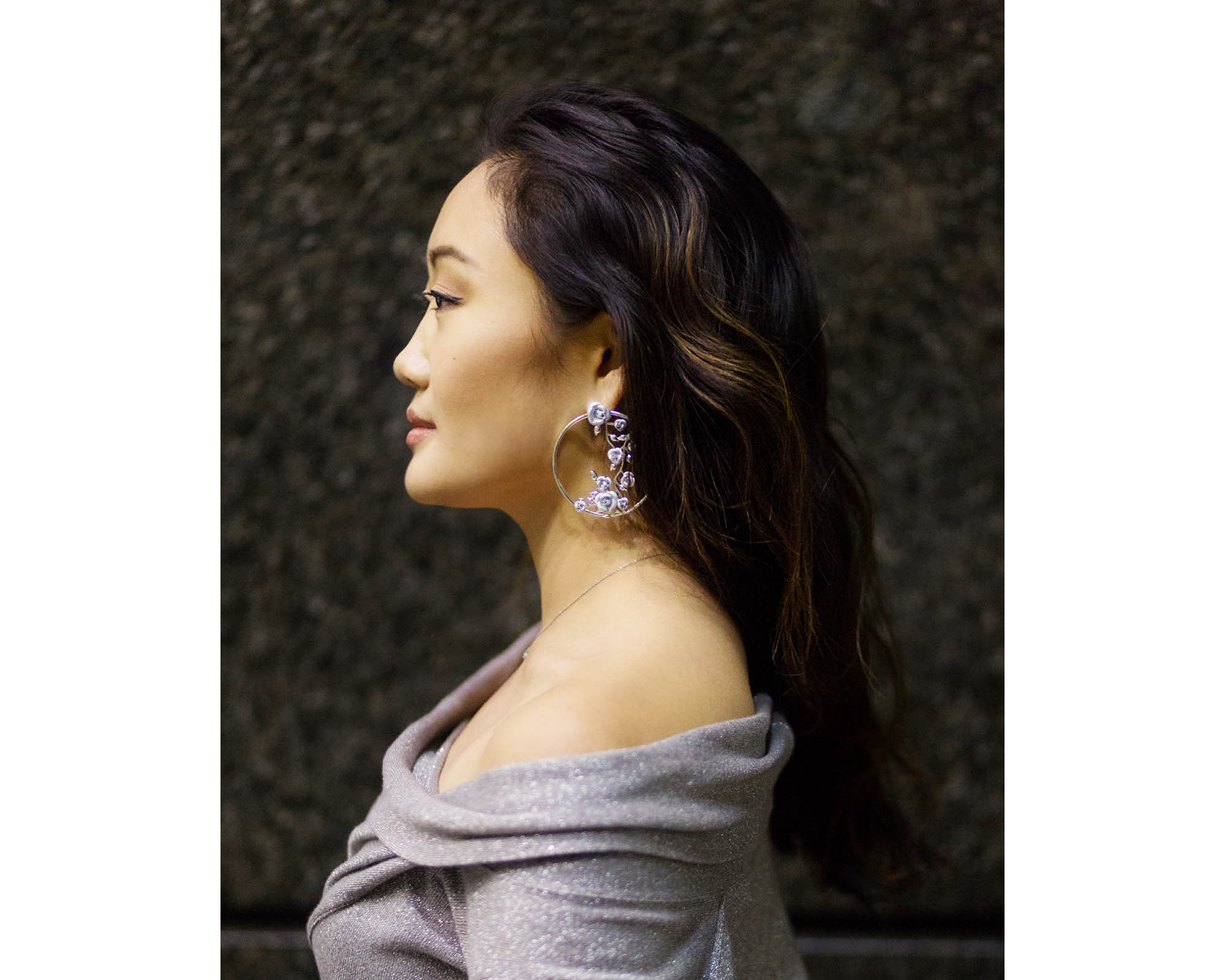
Marina Kondo


It’s Monday afternoon, around 1pm and I’ve completely lost my momentum. I’m twenty minutes behind and ten blocks away. The trains are predictably un-predictable and if my internal monologue wasn’t holding for the house, it would say “Cross the damn street already, your interview is waiting for you.” Murakami would call it a day where I haven’t wound my spring. But all is forgiven, because my interview is with Marina Kondo. Have you met her? She’s cool.
 

I first became aware of Ms. Kondo when a press release announced she would be going in to Jason Kim, Helen Park and Max Vernon’s rad, immersive show KPOP. I admit my motives for meeting her were selfish. Having not one but now two pieces that deal with Japan and Japanese culture, it’s always to my benefit to know artists closer to that world than I could ever be. Plus, knowing singer-actors with fluency in both Japanese and English doesn’t hurt either. I send her a quick email, we meet at Hamilton Bakery, and to make a short set-up long, I think you two would really dig each other.


Timothy Huang: Is it fair to say there was rarely a time in your life when music didn’t play a part?
 

Marina Kondo: Totally. Between my mom and dad there was always music involved. My dad is an amateur jazz pianist and my mom studied piano during college. She got her PhD in early childhood music education. I was in her dissertation.
 

TH: Was she constantly taking notes while you spent time together?
 

MK: She would take videos actually. A lot of videos. Her dissertation was entitled Hybrid Identity Through Eastern and Western Eyes Teaching Music and Space In Group Studio Piano.
 

TH: We had spoken earlier about the earthquake that struck Japan in 2011, and you had said that much of your artistic life was born from that tragedy. Can you tell me about that?
 

MK: I was born in the Netherlands, grew up in America mostly, but I’m 100% Japanese. It felt strange to me that I didn’t know how to reach out after the disaster. During that year I had the opportunity to go to Pendleton, Oregon, to perform on behalf of a sister city of theirs called Minamisoma, which is in Hiroshima. The mayor of Minamisoma asked me to sing on their behalf to pay respects and thank-yous to Pendleton for their support. That was one of the hooking points for me. It made me realize that no matter what language you speak or where you’re from, music is the one form of communication that transcends all.
 

Marina Kondo
 

TH: Tell me a little bit about Brazil, please.
 

MK: Brazil. So outside of Japan, Brazil has the largest community of Japanese people. So it’s around 100 years now in Brazil, that there’s- it’s called Nikkejin in Japanese, [which means] “Japanese diaspora” And there’s about six, seven generations now. Over there Japanese culture is a huge thing. They have this festival every year, called Festival do Japão, or, “Festival of Japan,” and they bring Tyco groups and different cultural dancing groups and stuff like that. The Nikkejin come together and recreate culture in this festival. And I get invited to sing. This past summer was my third time being there.
 

TH: So it’s a big thing.
 

MK: It’s a three day event that has about twenty five thousand people attend. The city supplies the whole festival with free public transportation. Most of the people who come are Japanese, and there are also a lot of Brazilians who love Japanese culture. And there’s fifty ken (県) in Japan.… it’s not provinces… prefectures. They have a booth for every prefecture. My mom is from Ehime, so every time I go there, I get sponsored by the Ehime booth. They serve udon because they are famous for their udon. Every ken is known for a special dish.
 

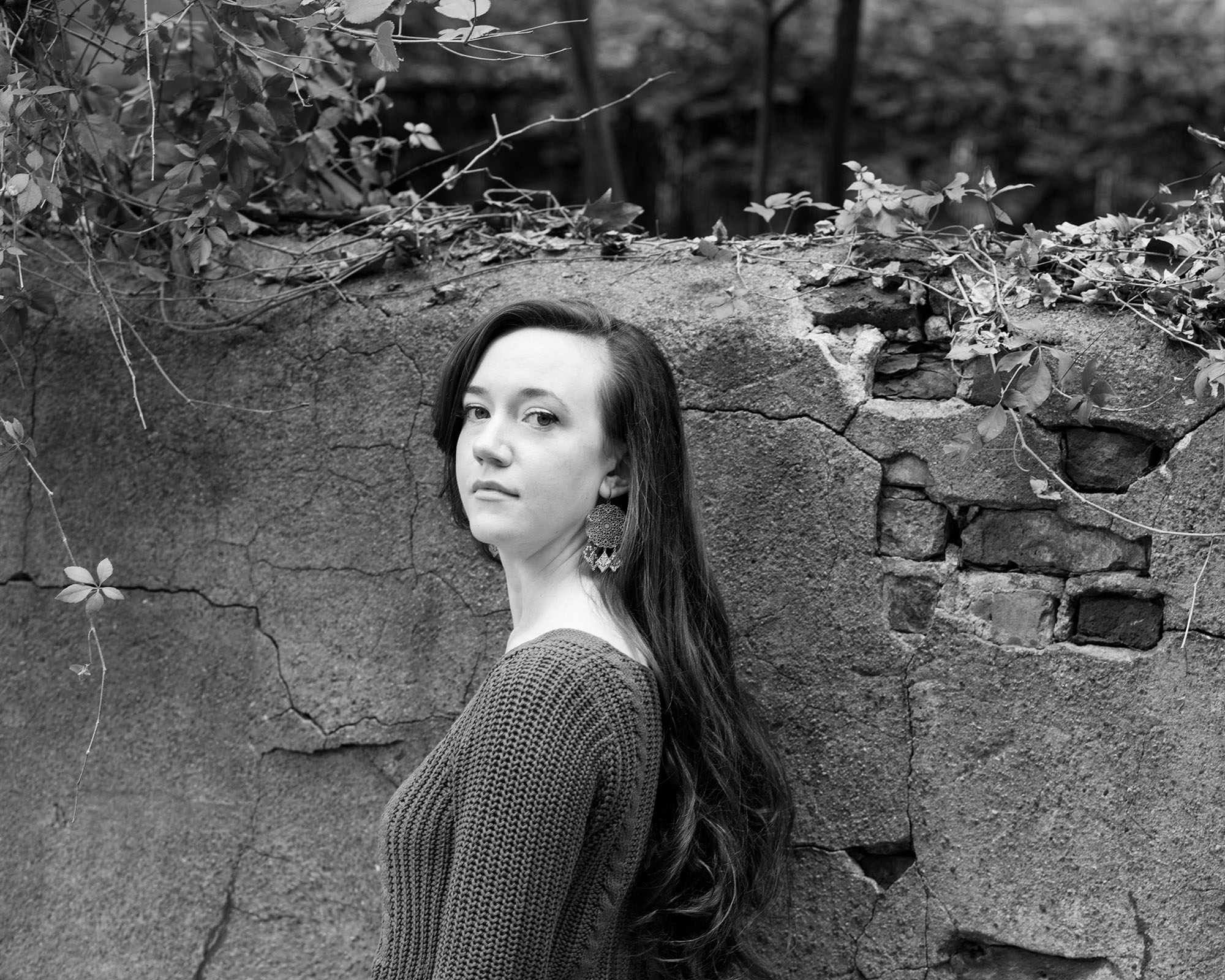
Marina Kondo
 

TH: Can you tell me a little bit about KPOP?
 

MK: I graduated college, had my showcase, signed with an agent. And then I went on this. I knew that I wouldn’t be able to do it because I had other obligations, so I let them know. A month later they said “Hey we cast this role but we need an understudy and a replacement.” At that time I was still in Michigan so they had me self-tape. My flight to officially move to New York was August 31st, I had my callback on September 1st.
 

TH: That’s crazy.
 

MK: Yeah, they didn’t freeze the script until a day before my first rehearsal. So [prior to that] I was just kind of learning, but also it’s a different language. Korean is not something that I speak and is not my culture. I had multiple panic attacks but my roommates were amazing and they got me in touch with a former Korean pop star/dancer, and she went through every one of my songs and lines with me at a bar- it was really loud- we were screaming at each other- laughing at how ‘Japanese’ I sounded, and getting specific about the nuances of the Korean language, sharing and having a good time but I recorded the entire conversation and that’s how I did my own Korean research. And by the first day of rehearsal I had everything memorized.
 

TH: Had you previously been called upon in your career to play an Asian person that was not Japanese?
 

MK: This was probably the third or fourth “Asian” thing I went in for. I’m okay with that, I’m obviously Asian, but I’m not Korean. It’s such an interesting, fine line.
 

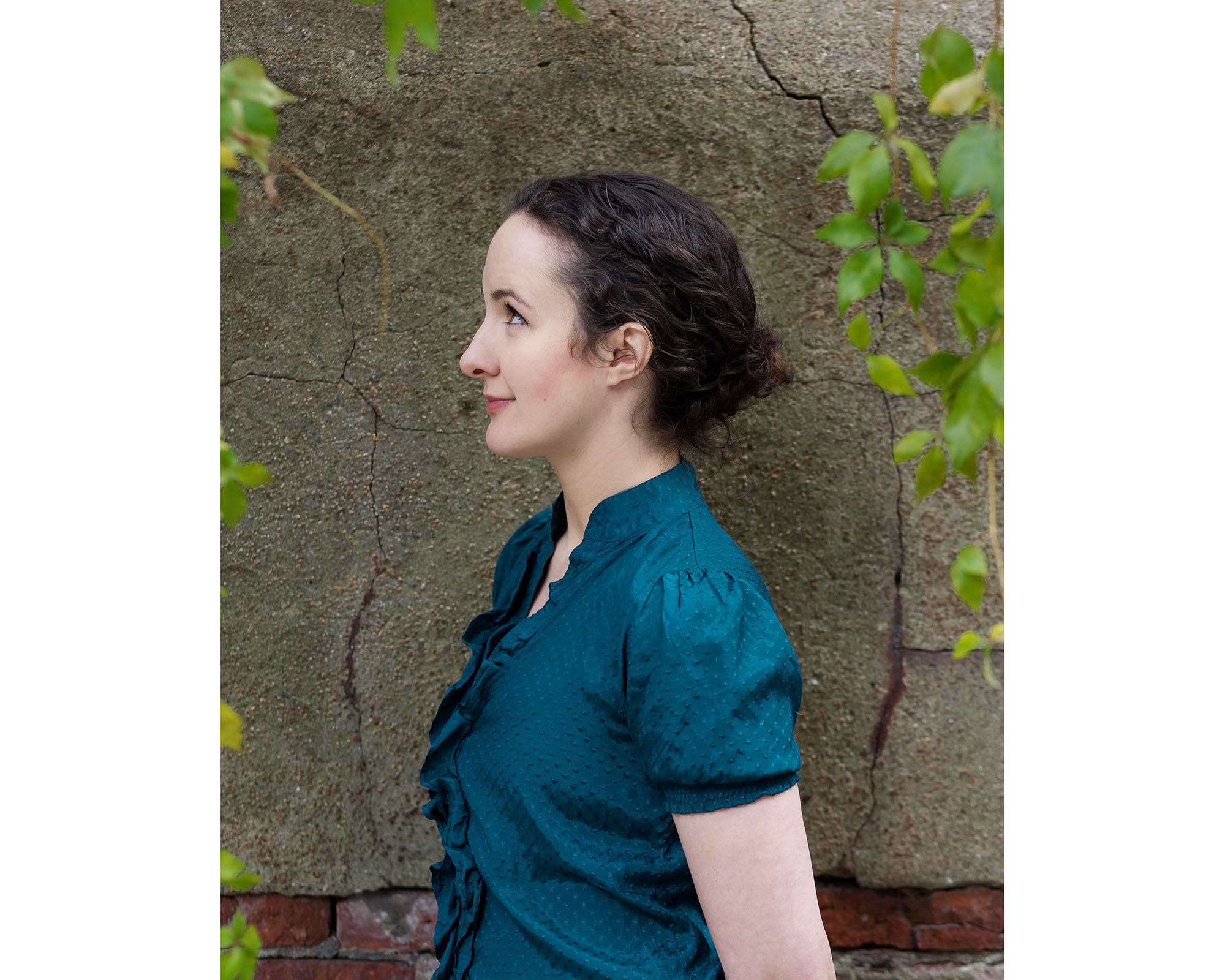
Marina Kondo
 

TH: In our industry, we’re pretty comfortable grouping all Asians under one umbrella. The benefits to this are obvious, but sometimes it takes an invisible toll. Can you speak about that?
 

MK: I had such an identity crisis about being Japanese when I was younger. As someone who [now] feels a lot of pride being Japanese, I want to pay as much respect as I can because that’s important and it’s worth exploring. Especially when you are representing a specific culture. And KPOP is specifically about Korean pop music. For example, when you’re playing a doctor you don’t want to just “use the tools.” You do research. Maybe this tool specifically is used to cut someone’s stomach. You should know those things. I feel like that’s just as important for culture too and understanding how it is different from your own.
 

TH: Bucket list?
 

MK: Definitely skydiving. That scares me so much. I have a friend who did it once and said it was the most thrilling experience ever.
 

TH: Is there a role of a lifetime that you would like to play but haven’t?
 

MK: I’d love to play Tracy Turnblatt. Hairspray is one of my favorite musicals. But that will probably never happen.
 

TH: Never say never. What else?
 

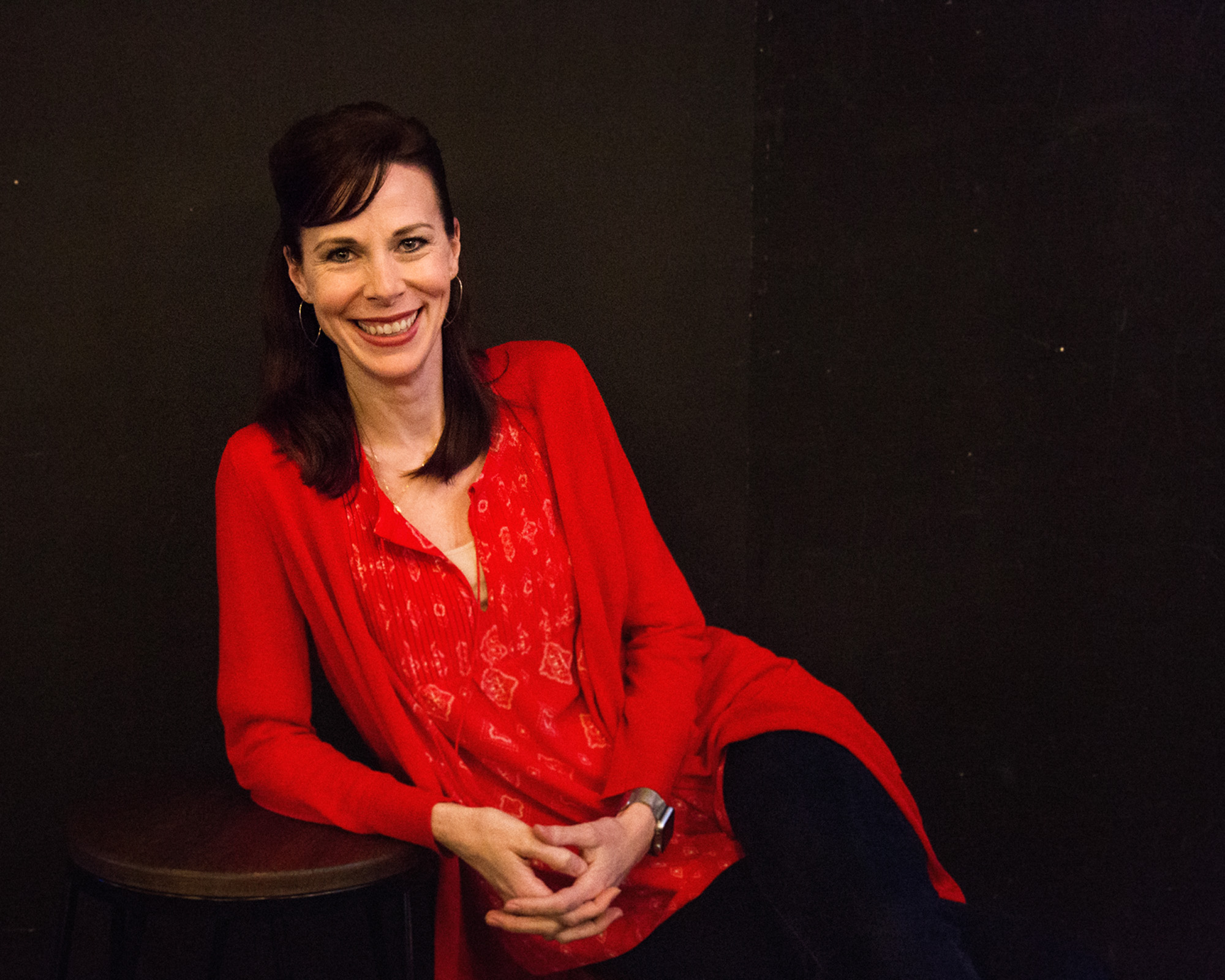
Marina Kondo
 

MK: I paint restaurants. In Ann Arbor, I painted a restaurant called Fred’s. I’d love to do that as a side career.
 

TH: Like, murals on the restaurant wall?
 

MK: There’s a bench in front of it. People tag me when they take photos of themselves in front of it.
 

TH: What are your thoughts on frozen corn?
 

MK: I love the Trader Joe’s brand. If I’m bored I will walk past the fridge and reach down and eat it, then put it back in. It’s like that ice cream that’s haunting you from the fridge. But corn.
 

TH: You were born in the Netherlands, but raised in America. Is there anything about Japanese culture that you have discovered is different from American culture?
 

MK: I think as a performer I bring a lot of simplicity. And in Japan that is a very huge thing. Simplicity is a sign of beauty. My senior thesis was about this: if there’s a cup and there’s a crack on it, in Japan the crack is the beauty. That missing part, that emptiness represents something. And I feel like that’s a great metaphor for Japanese art and culture. In America we try as much as possible to fill every single white space with some color or design. In Japan it’s the emptiness that is mesmerizing. The missing part. The silence.


Marina Kondo is a bicultural (USA/Japan) singer, actor, dancer, and lyric translator. She is a Netherland-born, Japanese singer who is currently based in New York City. She grew up mostly in Michigan (USA) and began performing professionally at the age of 9 singing in jazz bars in Tokyo, Japan and continued to participate in many concerts, musicals, T.V programs, and recordings since. As a music ambassador of Minami Soma, Fukushima, Japan, she performs at many charity concerts and festivals in the US, Japan, and Brazil. She performed in many events for the local communities of the Metropolitan Detroit area, such as Detroit Children’s Hospital, Detroit Libraries and schools, and other charity events sponsored by GM, Nissan, Japan Business Society- Detroit, WLDTV etc.

Posted on

A Conversation with Kimberly Chatterjee, Kate Hamill, Amelia Pedlow, and Nance Williamson

Kimberly Chatterjee, Kate Hamill, Amelia Pedlow, and Nance Williamson


Something joyous is happening at the Cherry Lane Theatre. That’s the home of Kate Hamill’s uproariously funny, clever, and at times deeply moving adaptation of Jane Austen’s most famous and celebrated novel, Pride and Prejudice. The limited engagement, directed by Amanda Dehnert and led by an energetic cast with Hamill herself playing the iconic Lizzie Bennett, is being presented by Primary Stages in co-production with The Hudson Valley Shakespeare Festival through January 6. We caught up with Kate and the other women in the cast: Kimberly Chatterjee, Amelia Pedlow, and Nance Williamson—whose palpable energy, playfulness, and affection towards each other suggested we were spending an afternoon with the Bennetts themselves—to discuss the role of women in the arts and the ways this 200-year-old text still manages to enlighten and surprise us.


Margarita Javier: Tell us about the character or characters you play.
 

Kate Hamill: I play Lizzie Bennett, and I wrote the script as well. Lizzie is a bit of a cynic. At least for herself, she’s extremely anti-marriage minded. And she has to grapple with what happens when you meet someone who kind of turns around your beliefs about yourself. Nowadays she would be a feminist, but she was born before those terms. She’s a proto-feminist.
 

Amelia Pedlow: I play Jane Bennett, who’s the eldest Bennet sister. She’s very sweet, she means very well, she’s a big ‘ol romantic, but she’s also a big believer in following the rules and doing the right thing. In that time, part of that meant not being too forward with guys. Not that we understand that at all! [laughs] That’s her tragic flaw. I also play Anne de Bourgh, who’s the daughter of a very powerful, very wealthy lady of the time, and she is going to inherit her mother’s estate and marry the love of her life, Darcy. That’s what happens at the end of the play, spoiler! [laughs] She’s a perfect angel.
 

Kimberly Chatterjee: I play Lydia Bennett, who is the best of all the Bennett sisters. [laughs] She’s the youngest sister, and she loves her mother. She thinks her mother is the absolute perfect prototype of a woman. She loves her sisters. She thinks she’s smarter and better than them, but she idolizes them, which of course makes no sense. What I think is so interesting about her and the amazing way that Kate wrote her is that you think she isn’t paying attention or is just bopping through life, but she’s actually taking away all these nuggets of information of things that she’s learned about how to be in the world. She gets it all wrong, but she’s constantly observing and taking in the world around her. And then when she finally takes charge, it doesn’t go great. But she has some good reasons for it, which is amazing. And I also play Lady Catherine de Bourgh, who is Darcy’s aunt, the wealthiest woman in England; powerful, has no time for nonsense, but also loves to belittle and crush people for fun [laughs] just because she can. And her sweet, beautiful, perfect daughter Anne is going to marry Darcy. There’s nothing wrong with Anne. [laughs]
 

Amelia: Nothing is wrong!
 

Kimberly: Nothing is wrong! They’re been betrothed since probably before they were born, and it’s going to go great. She has not a care in the world when we meet her! [laughs]
 

Nance Williamson: I play Mrs. Bennett, who is the mother of all of these beautiful girls. My agenda is to get them married well. Because if we don’t, there are no sons in the family, there are just daughters, which means that our home will go to the next male heir, which is Mr. Collins. And if Mr. Bennett—my husband—dies, we’re out on the street. So I have made it my life’s work to prepare and prod and push and irritate my daughters into being marriage-minded. I’m the push behind them all. And I also play the servant, whom we affectionately call Lurch. [laughter]
 

Amelia: Uncredited.
 

Nance: A bubbling male, old, bitter…
 

Kate: …secret lover of Lady Catherine. [laughs]
 

Nance: Not true!
 

Kimberly: Not true at all!
 

Amelia: It’s on the record, guys. It’s going in the public record. [laughs]
 

Kimberly Chatterjee, Kate Hamill, Amelia Pedlow, Nance Williamson
 

Margarita: You just finished a very successful run at the Hudson Valley Shakespeare Festival and you’re coming into this Primary Stages production with high expectations. They announced an extension even before the first preview happened. What has this experience been like so far, and what are your expectations now coming to play in front of New York audiences?
 

Kate: I think we’re just trying to let the play and the production teach us what it is, especially in a new space. The space is very different. During the first show, we were like Oh, we don’t have to scream! Hudson Valley is a 500-seat outdoor theater, at which Nance has done 18 seasons. So automatically that’s a big difference. Otherwise, I think this is what the preview process is for. We’re feeling it out. I think it even changes the jokes.
 

Nance: It does. And, you know, we went to people’s homes and did scenes for fundraisers, so besides performing in the tent, we were in different homes, yards—in different kinds of places. There’s a sort of playful improvisational chaos to doing it. It can be, when you’re not tired, a really fun process to see how we shift this here, how do we do this or that. And it’s a wonderful cast.
 

Kimberly: I was going to say we all, even when we’re at our most tired and sick and grumpy, we still love each other, which seems kind of impossible, but makes even the most stressful parts of this enjoyable. We have each other; we trust each other to be able to navigate the jokes and the timing. If something doesn’t go right, it’s never because someone is incompetent. I never walk away like Well. Everyone’s terrible! [laughs]
 

Kate: I also credit so much our director, Amanda Denhert, who creates a really fun, happy, safe room in which you feel really free to make stupid decisions. [laughs] And she sets that tone so much.
 

Margarita: Given how well known and beloved Pride and Prejudice is, and how often it’s been adapted, is there any pressure in trying to contribute something new and unique at the same time that you want to appease fans of the original?
 

Amelia: My sister is the one who gave me this book when I was however old and said, “Here is your bible.” And she’s very literary in general, but she knew I was going to love this and The Princess Bride—she introduced me to both. When she was coming to see the show, she was the person I was most excited to see it because I knew that anyone who loves this book will have a whole other level of love for this production, that people who don’t know the book at all—my boyfriend, for one – had an amazing time. Kate so beautifully takes characters and moments and recognizable scenes from the book and hones in on exactly what has made them so easy to fall in love with throughout the hundreds of years people have loved this book. Bingley being a dog might be one of the biggest ones. [laughs] My sister lost her mind.
 

Kate: He’s not literally a dog.
 

Kimberly: He’s dog like.
 

Amelia: Inspired by a Labrador. And that, in essence, is that character! It’s such a beautiful, slightly theatrical, irreverent thing, but ultimately a real distillation of the character in the Jane Austen novel. That type of work is throughout the piece and I know my sister was one of those people—and we had a lot of them over the summer—who began cackling from the moment something was introduced without having to get to know it over time. It really speaks to people on both of those levels, and I’m really excited for all of those people to see it.
 

Kate: The kind of theater I dislike the most, I think, is when I go in expecting something and it just meets those expectations, and I leave and nothing in me was challenged. I like stuff that’s more surprising. I think this is like that. We surprise ourselves! Sometimes we’re like What’s happening? But hopefully it’s a way to see a story that’s 200 years old and that people, including so many of us, love so much in a new, surprising way while still honoring it.
 

Margarita: What do you think Jane Austen would make of the current political climate in the UK and US?
 

Kate: There was an article about a year ago about—derp—“Alt right says Jane Austen would have liked them.” No! You know what? When you’re a racist, sexist hammer, everything looks like a racist, sexist nail. Her writing is so feminist, so subversive, and I think she would tear apart Donald Trump and all his UK counterparts and flip them the bird in every single way. Bite me.
 

Kimberly Chatterjee, Kate Hamill, Amelia Pedlow, Nance Williamson
 

Margarita: There have been a lot of sexual harassment accusations coming forward against powerful men, in the arts and politics, and people, especially women, are feeling open to share their stories in ways we haven’t felt comfortable talking about it before. I think all of this brings relevancy to texts like this one, especially the way Austen talks about marriage. So I was wondering, what do you think is your character’s contribution to this discussion? What is her #metoo story?
 

Kimberly: Poor Lydia doesn’t know anything.
 

Kate: I got a letter from one of the other productions from someone who was quite nice but was saying, “It was so upsetting to me when Mr. Collins pursues Lizzie because it seemed like that was upsettingly sexual, upsettingly a sexual-harassment thing.” And I’m like “It is. She says no, and he won’t listen to her.” My experience being in it is the more terrified I am, the funnier the audience thinks it is. I think it’s a laugh of recognition. So for Lizzie, she sees so clearly how the power dynamics in a marriage situation are set up that she doesn’t even want to play that game. We were saying the other day that the subtext of this play is love can exist in patriarchal structures, but patriarchal structures make it harder. Lizzie eventually falls in love with a man and she’s like Gah! How do you reconcile that with feminism? So that’s Lizzie.
 

Nance: Mrs. Bennet, I mean, is in some ways so who she is, so in spite of being married, she views it is a necessary—I wouldn’t call it “evil”—but she’s very much in charge of that family, or so she thinks. Her husband has kind of distanced himself from the family, he loves Lizzie especially, and the rest of them are kind of silly, cackling creatures. She’s very much driven, she’s very much in charge, but it’s chaotic, and her agenda—I wouldn’t call it a “feminist” one at all—is a realistic one given the time. It’s not like Oh, you’re going to go to college and get a degree and take care of yourself. There’s a desperate need to get the girls married because they need to. So it’s a kind of survival mode, but it’s not necessarily a model marriage that the daughters would look at and go “I’m going to have a marriage just like my parents” because it’s a little dysfunctional.
 

Kate: Traumatizing!
 

Nance: And traumatizing. It is what it is, and it’s kind of loveable and sad, chaotic and crazy.
 

Amelia: There are so many things to say, because this play deals with all of these themes on a hundred different levels. One thing I will say that’s maybe inspiring, since the boys aren’t here: The men in power in this play, the men who have power, men who have wealth and money, who are meeting these girls behave in quite a respectful manner in many ways. They recognize their own power and they have genuine feelings, and so they err on the side of caution and hesitation and move very slowly. There’s a lesson there to be taken away. This was written by a woman, and these are the good guys, and that’s how the good guys should behave, especially when they have power and money, and know it. If they wanted to just take one of these girls, they really could. But they know it’s not what the women want, and I think that’s evidence of the author and the playwright. It’s really easy to fall in love with them when they behave that way. I’ll say that.
 

Kimberly: Lydia… We don’t get to see much of her post-marriage relationship. One can imagine that it is a very unhappy one. Because Wickham has absolutely no interest in any permanent relationship with anyone, even if there was a world—not to speak for Mark’s character, but from my perspective—if there was a world where he couldn’t love someone, permanence of any kind is not on his mind.
 

Kate: Yeah, he’s a narcissist!
 

Kimberly: And she’s young and naïve and incessant and outspoken and it’s going to be miserable. It’s going to be absolutely miserable. And she’ll have a level of protection because Darcy’s a good guy. She will never be on the street. But in that time, you can beat your wife, you can do whatever you want. I imagine she has a long, dark road ahead. But she will visit her family and come back to the women in her life as much as she can. Which is great to have that in contrast with Lady Catherine, who, when we meet her in the play, she’s in charge of everything; it’s her money, it’s her power, it’s her home, it’s her daughter. She gets to plan whatever she wants to do. Her values aren’t necessarily the most understandable. She doesn’t necessarily care what other people think, which is why things don’t work out. But it’s very freeing and fun to be like I don’t have to consider anyone else! You don’t get to see any other woman in the play do that. Lydia may act that way, but that’s not the actual reality. Catherine’s reality is “I can do whatever I want” until it comes down to the men.
 

Kimberly Chatterjee, Kate Hamill, Amelia Pedlow, Nance Williamson
 

Kate: I think it’s so interesting when people are like “Well, this is a comedy.” And a lot of it is very funny and very absurd, but I think it’s so funny when people want to censor out the darkness and the desperation. Do you think women’s lives don’t still have those things? Do you think they didn’t have them then? I think the love stories that work out in this play are moving because they get past that imperfection, or they embrace that imperfection, whereas it’s so funny when people are like “Well, I was just expecting a lot of polite conversation!” [laughs] “It’s not very theatrical!”
 

Amelia: And how could you even say that if you’ve ever read or seen anything by Jane Austen ever? Every single work, even the ones that don’t jump off the page in the most exciting way, it’s all about the struggle and the incredible things they have to overcome.
 

Kate: And how does that reflect people’s relationships? Even the happiest relationships have dark times and you mess up, and you fight, and, you know.
 

Nance: You do. I’ve been married for a long time, in a happy marriage, but you have to have the bottom notes, the bottom notes give it purpose. If it was just all that, why do it? You can’t live that way.
 

Margarita: I want to talk about the fact that some actors play multiple roles. I think it’s really cool that a lot of the female roles are played by men. It was the same in Sense and Sensibility and Vanity Fair. I’m curious, is this something that happens in the writing process, or something that comes about during rehearsals or casting? Is there some sort of thematic link by having the same actors play these multiple roles?
 

Kate: I like ensemble pieces. I like everyone in the ensemble to have basically equal roles. I think that that’s more fun for actors, and, if possible, in very contrasting roles. In this play, I wrote a lot of roles to be gender neutral, so Mrs. Bennett can be played by either a man or a woman, Mr. Bennett can be played by either a man or a woman, Mary can be played by either a man or a woman. Collins is most often played by men just because I want him to be disgusting. And the most perfect, beautiful woman in the play, Miss Bingley, is played by a man. I wanted it to be gender neutral just because sometimes I think the audience listens differently. For instance, all the men playing women in this particular production are the women who enforce patriarchal structures. They’re the ones who give them roles and say, This is perfect, this is imperfect, this is what you’re supposed to do, this is what you’re not supposed to do. But then having that choice of gender neutrality allows us to cast based on the energy of who comes into the room. Nance read Mrs. Bennett at the first reading and I was basically like Well! That’s cast! Phew! [laughs]. In Vanity Fair everyone except the two women were played by men because that is about women in a patriarchy, in a world full of men. So that was a choice. This one is more gender neutral. This is what we ended up with based on who came in the room.
 

Margarita: So in other productions it could be cast completely different?
 

Kate: Oh yeah! It’s listed as completely gender neutral. In general, I feel like the right actor can switch back and forth, so this is what we landed here. And it’s so fun having women play men, and men play women. You just listen differently. When the men are saying, “This is how women are supposed to act” the audience listens differently. Including Charlotte. I love Charlotte. I think Charlotte is the most sympathetic character, but she enforces those patriarchal rules, including on herself, and she pays the price, for sure.
 

Margarita: What has it been like working with the director, Amanda Denhert?
 

Nance: She’s great. I met Amanda when she was a graduate student. She was, I think, the assistant director or musical director of A Christmas Carol that I did in the mid-90s, at Trinity Rep. I vaguely remember her—I was a flying ghost—and I remember her with singing children. She was a graduate student, but I remember her because she would really rehearse the B-team. She was very bright and very smart. And over the years, she worked a lot over at Trinity Rep, and I had worked there a number of times. So you would hear about these amazing productions that were happening by this young woman, kind of in the tradition of Adrian Hall and Eugene Lee. Then I sort of lost track of her for a time. So to meet her again 20 years later has been really fun, because I grew up in that same tradition: a creation of what the play is. It’s not all decided before you come into the room; it’s very much a piece of alchemy that is discovered right then as opposed to an idea of what something should be and having to find your little nook in what’s already decided. It’s very freeing and very playful. She really sets a fun tone, as Kate was saying.
 

Kate: Yeah, highly theatrical, totally fearless. Working with her as a playwright as well as an actor, she really illuminates the text, really wants to be very specific about what the text is and that pushes me to be a better writer. Super collaborative. It makes it such a fun, happy, and loving room. She was described to me before we met as someone who creates “feminist fairy tales.” And I think that’s very true. They’re so beautiful, there’s so much heart, but they’re totally fearless as well. Oh my God. She has no fear.
 

Amelia: No, she actually doesn’t. You’ll meet some directors who’ll say, and she actually said on the first day, “I really want us to really mess up. I really want us to do it very wrong, to fully go down the road of a wrong choice for a week and a half and then we’ll swing back around.” A lot of directors say that. But she means it. And part of the reason she’s able to mean it, I think, is as much as she’s operating on instinct and she’s a brilliant musician, her instinct absolutely pairs up with her intellect in a way that she’s able to articulate why she wants your left hand not your right hand in that moment, or why this is the operative word and not that one, or why we’re cutting the cat, which actually happened in the middle of rehearsal. Some directors will say, We’re cutting the cat because we’re cutting the cat; the cat doesn’t make sense. Amanda will say, We’re cutting the cat because the cat is a creature and you’re a creature and if we’re focusing on this creature and how it moves in a new world in a new place, we’re not meeting your creature yet and you go Of course! That makes so much sense from an audience’s perspective! And she’s able to take that seat and tell you for storytelling purposes why she wants a ridiculous choice, or to take away a ridiculous choice. And that’s a really rare thing in my experience, to even take the time to do it. It gives the actors so much respect.
 

Kate: She really is a master director. And you can tell, because she’s a master of that craft. Sometimes she says something and I’m This should be in a book! She can defend the principle of what you’re doing. It’s never arbitrary. It’s based in the principles of her convictions.
 

Nance: And I would say that because of you, Kate, the relationship between the playwright and the director is so interesting. Kate will have the playwright part of her brain listen to a scene and go “How about if we change that?” and then the actor part of her brain says something else. And so the director is talking sometimes to the playwright part of Kate’s brain, sometimes to the actor part. And Kate will sometimes come out as one part of her in response, and the other part will come out and do this. It’s like an amazing relationship that the three of you have.
 

Kimberly Chatterjee, Kate Hamill, Amelia Pedlow, Nance Williamson
 

Kimberly: Sometimes she’d be like “Can I speak to the playwright now?”
 

Nance: It’s like Sybil, only everybody knows it’s going on. [laughs] I want to talk to Zuul now. Is Zuul in there? [laughs]
 

Margarita: It almost makes me angry that a piece like this one, based on a woman author’s book, written by a woman, directed by a woman, with strong female characters is so rare, especially in New York City, in this landscape. We’re so underrepresented in the arts. So I’m wondering, as women artists, what can be done? What is your role in improving representation for women?
 

Kate: To be completely honest, I think there’s no excuse. There’s no excuse, and it starts at the undergraduate level. When I was an undergrad, what I was told was: “There are more roles for men and there’s more work for men, and that’s how it is” as if it was handed down on stone tablets. And I liked my undergrad, but that’s how it was treated. And then in the world you’re often taught that there just isn’t as much work, and it’s de facto. What I think is really encouraging now is you see members of the public really putting pressure on: Why is this season all male? Why are you having all-male directors? And that’s why things are changing. I feel like that’s pretty key. There’s no excuse, actually.
 

Amelia: There isn’t.
 

Kimberly: This is the non-romantic version of this, but money speaks. Don’t go to see things that you think are hurting the art that you want to see in the world. And go see things that support it. I remember—and this is not theater—but when the Ghostbusters movie came out, I have so many female friends who don’t care for the genre and they were like Absolutely! I’m going to go spend money and support this to show box office numbers. Because people think it’s a risk. They think people aren’t interested in it, they think people won’t spend their money. But then time and time again you have things like the all-female Henry IV at St, Ann’s Warehouse—which was amazing—and it’s like Oh, that show is selling out every single night and it’s extending? Hmmm. Maybe we can do that.
 

Kate: Sixty-eight percent of the ticket buying audience is female. They’re already coming! Like “if you build it they will come”? They’re already coming! Why are you not playing to your home base? It’s so outrageous!
 

Kimberly: And I think it’s the idea that people think that female centric stories, if it’s an all-female anything, the female centric stories will be uninteresting or unrelatable. That’s what I think the undertone is. And it’s like Kate was saying: What did you think women’s lives were and are that would be so uninteresting or shallow, that people wouldn’t want to see that? Nobody ever says that. I grew up idolizing so many male centric stories and the inverse is absolutely true.
 

Kate: When Sense and Sensibility first came Off-Off-Broadway, a producer laughed in my face that it was happening, like “Haha!” and turned and walked away from me. And it ran for a year! That’s a story about women! That’s your ticket buying audience, and there’s no excuse anymore. It’s like, pick a side American theater—I’m sorry! Donald Trump is the fucking President. Pick which side you’re on. Really. Don’t be those guys. Don’t be the people who reinforce that the female is always the “other” because the female is half of your population!
 

Kimberly: And have conversations. There are so many conversations that people don’t want to have, about gender, about race, often the two going together, or how the two don’t go together, and it’s never going to be comfortable. And when we decide to avoid uncomfortable conversations, we get to where we are today in America, which will get better, but it’s awful right now.
 

Kate: I’m so interested to hear what Nance has to say, because Nance has been in the business for a long time.
 

Kimberly Chatterjee, Kate Hamill, Amelia Pedlow, Nance Williamson
 

Nance: I was going to say that Davis McCallum, who’s the new artistic director of the Hudson Shakespeare Valley Festival, has really done a good job. He hired Kate, and did Kate’s play. He did Lauren Gunderson’s play last year, and he hires women directors. He’s in a position now of power where he’s hiring women writers in a Shakespeare festival. A Shakespeare festival. And he’s putting women in men’s roles. He’s injecting women in a much more vivid upfront way than there have been in a lot of different places. I think to support theaters like that who do that is great. I think that there’s a lot of young artistic directors, young men artistic directors who are supporting that and doing that.
 

Kate: And female artistic directors.
 

Nance: And female artistic directors, obviously. We just did a three women version of The Scottish Play, and it was from a man’s point of view, but coming from a woman’s mouth. And how does that sound to you? How does that speak to you? Do you pretend that you’re a man? Do you pretend you’re a woman? Do you pretend that you’re androgynous? And so it opens up, I think, for the actor, for the audience, all sorts of different ways of looking at text that is broadening in a way, that’s kind of exciting and thrilling.
 

Kimberly: It was absolutely brilliant, that production. I understudied the production and saw it a bunch of times and I remember talking to a male director after. He said, “Don’t you think that’s a masculine story, that it’s such a man’s perspective?” And I laughed in his face because I assumed he was joking. It was a white male director who has directed in many places. I was just like “Hmm.” To me, it was such an incredible, beautiful production—and of course, no production is ever perfect—but it was definitive for me of Women can play men in men centric stories, unequivocally. And trying to articulate that to someone who so did not hear it was very Wow, we have to talk about it over and over and get people to see it over and over again before they listen.
 

Amelia: I’m with you. I’m just with you.
 

Nance: I think the bottom line is that you do the best work possible. Because I think the work is what makes people come. You have to make those choices, but it has to be done well.


Kimberly Chatterjee (Lydia/Lady Catherine) NEW YORK: The Tempest (Classical Theatre of Harlem); The Christians (Playwrights Horizons). REGIONAL: Pride & Prejudice, The General From America, Macbeth, Measure for Measure (Hudson Valley Shakespeare Festival); As You Like It (Folger Theatre). TELEVISION: “High Maintenance.” Proud graduate of NYU Tisch’s New Studio on Broadway. Kimberlychatterjee.com
 

Kate Hamill (Lizzy) is an actor / playwright. As playwright: Sense & Sensibility (in which she originated the role of Marianne), Winner, Off-Broadway Alliance Award 2016; Nominee, Drama League Award (Best Revival, 2016); 265+ performances Off-Broadway. Other plays include Vanity Fair (in which she originated the role of Becky Sharp; Nominee, Off-Broadway Alliance Award 2017), In the Mines (Sundance Lab semi-finalist), Em (Red Bull New Play finalist), Little Fellow (O’Neill semi-finalist). Additional acting credits include: The Seagull (Bedlam), All That Fall (Kaliyuga), Dreams… Marsupial Girl (PearlDamour). Her plays have been produced at the Guthrie Theatre, Pearl Theatre, Dallas Theater Center, Folger Theatre (Helen Hayes Award, best production: S&S) & others. Upcoming productions at Oregon Shakespeare Festival, A.R.T., Playmakers Rep, Seattle Rep, & more. Kate-hamill.com
 

Amelia Pedlow (Jane/Miss De Bourgh) OFF-BROADWAY: The Liar and The Heir Apparent (Classic Stage Company); ‘Tis Pity She’s a Whore (Red Bull Theatre Company); You Never Can Tell (The Pearl). REGIONAL: Pride and Prejudice and The General from America (Hudson Valley Shakespeare Festival); Red Velvet and The Metromaniacs (The Old Globe); The Metromaniacs, A Midsummer Night’s Dream, and Merchant of Venice (The Shakespeare Theatre DC); Ether Dome (La Jolla Playhouse, Hartford Stage, and The Huntington); The Glass Menagerie, Hamlet, and The Liar (Denver Center); Legacy of Light (Cleveland Playhouse); The Diary of Anne Frank and The Tempest (Virginia Stage Company). TV: “The Good Wife”; “Blue Bloods”; “Shades of Blue”; “The Blacklist”. EDUCATION: B.F.A. Juilliard.
 

Nance Williamson (Mrs. Bennet) is thrilled to be reprising Mrs. Bennett in Pride and Prejudice. During her 33-year career as an Equity actor Nance has performed on Broadway in Broken Glass, Henry IV, Cyrano and Romeo and Juliet as well as numerous Off-Broadway and regional productions most recently Amanda in The Glass Menagerie at Pioneer Stage and premier production of Book of Will at DCTC. Nance is happily married to actor Kurt Rhoads.

Posted on

A Conversation with Christa Scott-Reed

Christa Scott-Reed


Shadowlands tells the touching story of the relationship between C. S. Lewis and Helen Joy Davidman. The Fellowship of Performing Arts is producing the first New York revival of this acclaimed play, which began performances at the Acorn Theater on October 17. We spoke with Christa Scott-Reed, who is making her directorial debut, about what makes the play relevant to modern audiences, and about the relationship between faith and the arts.


Margarita Javier: Could you tell us a little bit about yourself?
 

Christa Scott-Reed: I’m originally from the Pacific Northwest, from a little town called Wenatchee, Washington. It’s actually surprisingly home to a few theater artists in New York. It’s interesting because for a small town kind of in the middle of nowhere, they have a surprising love for theater. And I think it’s because it’s not geographically close to any other cities, so they sort of had to create their own cultural life.
 

MJ: So there’s a lot of theater there?
 

CSR: Yes! I mean, it’s all community theater; it’s not professional. But there’s a real love of it. For an agricultural town and one that’s relatively conservative, it’s remarkable how much they really value theater. I grew up just being immersed in it from a young age. And occasionally we’d get to go over to Seattle—and Dan Sullivan was running Seattle Rep at the time—and saw stuff there, and so that’s where I began. I went to undergrad at Whitman College in Washington, went to grad school at the Denver Center, and then found my way here.
 

MJ: Did you start as a performer?
 

CSR: I was always a performer until this particular job.
 

MJ: This is your first time directing?
 

CSR: This is my first time directing, yes.
 

MJ: How did that come about?
 

CSR: As a performer, I worked for Fellowship of the Performing Arts starting in 2013 on their production of The Great Divorce. And it started as a developmental production Off-Broadway, then we did a two-year national tour, and then we brought it back again to Off-Broadway. So it was a long stretch with them. And while I was working with them on Great Divorce, they started using me because, in my off-time as a performer, I also teach and coach other actors, so they started bringing me in, kind of as an artistic consultant, to maybe work with other actors in other productions, to direct readings, to help cast readings, to give artistic input in certain ways. And they started using me more and more for that. They sort of made it official when they realized that one thing they lacked in the company was a literary manager. And since I had been doing a lot with them in various ways, they said, “How about stepping in for this literary manager job?” I said, “I’m still a performer!” They said, “We get that; let’s call it a part time gig.” And in that role as literary manager, I directed a staged reading of Shadowlands for over a hundred donors and everybody seemed happy with that. Things started rolling and, because they had seen me handle the stage reading and because they had seen me in the room with actors, a couple of which are in the cast now, they said, “Ok you know what? We feel like we trust you. Let’s just have you do it. You’ve been a professional actor for over 20 years—you’ve been in the room. We think you can handle this.”
 

Christa Scott-Reed
 

MJ: Are you taking from directors you’ve worked with?
 

CSR: Absolutely. In fact, the other day my assistant director was noticing how I was doing my notes in the script a certain way, and he said, “Who’d you get that from?” And I said, “Rob Ruggiero” [laughs]. So, absolutely. And in fact, I’ve reached out in this process to several good friends of mine who I respect hugely as directors, and asked for their advice, their wisdom. They’ve put in good words for me. I’ve not been shy to try to humbly learn from those who know better than I do.
 

MJ: Correct me if I’m wrong, but this is the first New York City revival of Shadowlands.
 

CSR: It is.
 

MJ: So it’s a big undertaking as the first project to be directing, right?
 

CSR: It is. When you’re going to direct something for the first time, why not pick a show that’s set in the 1950s England, with 12 cast members, two of which are children, and 35 scene changes—why not? I mean, it’s an easy one. An easy one [laughs].
 

MJ: What can you tell us about the show itself, Shadowlands?
 

CSR: It’s a beautiful show. A lot of people know it because it was not only from Broadway and the West End, but because it was made into a movie with Anthony Hopkins and Debra Winger. People know it from that. They go “Oh right, Shadowlands!” But it’s time for it to come back to remind themselves of it. It’s a beautiful story. It’s known as a little bit of a three-hanky piece, but it’s not just that. Working on it, I’m reminded of how moving and how thought provoking it is. Those are all clichéd words, but really true in this case. And it’s also really nice -I was telling somebody else- it’s really nice to have a show that is a love story, but a love story between people who aren’t 22, who aren’t passionately falling for each other in that first-time way. There’s room for those stories, and those stories are being done, but I like the fact that these are mature people who have lived their lives, who have pain and suffering under their belts, who have past marriages and children and all those kinds of things. Telling that story as a love story is, I think, refreshing, especially for a theater audience who’s not largely 22 year olds. I know I’m not! And then you add to it the layers of what it has to say about the meaning of suffering: Why does God allow suffering in the world? What do we give up in order to gain something? When we gain so much joy and love, what do we give up in the form of pain and suffering? How does that test our faith, our doubt? All universal subjects that really resonate. Even though C. S. Lewis was, I think, a renowned Christian, there are things that resonate for anyone regardless of faith background. It’s about human experience.
 

MJ: And because this is based on a true story, has there been a process of doing research into the lives of C. S. Lewis and Joy Davidman? What has that been like?
 

CSR: Absolutely. And in fact, as somebody who probably in another life would have preferred to be a librarian—and I don’t joke when I say that—I love research. I took my dramaturgical element burden a little bit too far and spent months reading every biography I could get my hands on, and I ended up compiling it into this hefty stack of research about the characters, background about Oxford, everything I could get my hands on. And I presented it to the cast. I said, “There won’t be a test on this, but use this as a resource.” And I remember Danny, who plays C. S. Lewis, said, “Well, I do have a friend in England who had studied with or knew C. S. Lewis, and I was going to contact him. I don’t know that I need to now!” [laughs]. So I went a little crazy. It was also important for me to tell them that this isn’t a documentary. Danny doesn’t look like C. S. Lewis. These are different people—this is a play, it’s not reality. Of course it’s inspired by true events, and we want to maintain a sense of strong connection to those ideas. He may not look exactly like Lewis, but he is Lewis for this story. What are his needs, his wants, his loves?
 

Christa Scott-Reed
 

MJ: Why do you think this play is relevant to today’s audiences, specifically in New York? What do you think it’s telling us?
 

CSR: Touching on what I said before, honestly, look at what happened recently in Las Vegas. One of the first things the character of Lewis does as he walks out onstage is to hold up a newspaper and say, “This tragedy.” In this case, it was the Gillingham bus disaster in the 1950s. He says, “This just happened. How can God allow this to happen? What is the meaning of this kind of suffering?” Obviously, that’s true of any period in time, but I think this is something we’re struggling with constantly. How do we deal with pain? What is the purpose of it? I think it’s true no matter what decade you’re in. It’s always going to be relevant.
 

MJ: And you mentioned this is being produced by the Fellowship of Performing Arts, a not-for-profit company that is interested in delivering theater that has a Christian worldview. So first of all, how did you first become involved with them?
 

CSR: I auditioned like anybody else through their casting director for The Great Divorce. One thing I particularly respect about FPA is they have this mission to deliver theater from a Christian worldview that will engage a diverse audience, so they want to present a piece of art that is executed to its highest level possible. To that end, they want the best artists. They did not ask me when I auditioned what my faith background was or what my beliefs were. I’ve been at talkbacks with the artistic directors, and members of the audience ask, “Well, who in the cast, or designers, or crew—who is Christian?” And he just says, “I don’t know. You’ll have to ask them.” And I really appreciate that. What they require from an artist who works with them is somebody who is willing to do the best job they can, to make the best piece of art that they can, that speaks to that mission. But we have artists of all faith backgrounds or no faith backgrounds. Because so often—and I’m just speaking for myself now—when you hear the term “Christian theater”—and I happen to be a Christian—but even I wince a little bit. You think this is going to be some kind of eye rolling niche theater that’s just … ugh. And that’s really not their purpose. They really want to do a piece of art that’s intellectually challenging, emotionally engaging, something that audience members can come to and, regardless of faith background, be interested or fascinated by, come out of the theater laughing, thinking. They have managed to do that. When we did The Great Divorce, friends of mine came to see it when we were on tour in D.C.—and these are people who firmly have their own faith tradition which is not Christian, and they will never be interested in being Christian, nor should they—but they signed up for the newsletter because they loved the play so much. They all happen to be psychologists and they were all so engaged in the ideas. That’s the kind of thing that they’re interested in. Yes, of course FPA wants to provide theater for practicing Christians who are looking for art that speaks to them, that’s not speaking beneath them, but actually meets them at an intellectual level that’s satisfying. But at the same time, we want to bring other people in. The ideas of C. S. Lewis are interesting to people of all different types and sorts.
 

MJ: Going by what you said, I think we can agree that Christianity as a religion has been hijacked by the political right, definitely in this country, but also other parts of the world. Because of that, there tends to be a negative association with that religion for people of more liberal political leanings, especially in the theater world. What would you say to that end in terms of what this theater company is trying to achieve?
 

CSR: Certainly in our audience, there are conservative people, there are progressive people, there are people who span all parts of the political spectrum, as well as all parts of the faith spectrum. But I think we deliver stories that speak authentically to the human experience and that expand our imaginations rather than limit them. And I think a lot of progressives—and I count myself as progressive—get upset with a too-conservatively imagined Christianity; there’s this idea of limiting thought, of limiting experience of putting up barriers and saying, “This is acceptable and this is not.” And I don’t think that artists are in the business of doing that.
 

MJ: Right, and C. S. Lewis was a perfect example of that: he was very much an intellectual proponent of Christianity.
 

CSR: I know that for Max, our artistic director, his real desire is to do work that is intellectually respected. I think we can get people’s attention that way. You can walk in and be like “Let’s see what these Christians have for us” and then walk out going “That blew my mind a little bit.” We get a lot of reviews like that. Over the course of the last few years, a lot of the reviewers will start by saying, “I expected to be preached at. And that’s not what I got. I started thinking new thoughts.” We’re not in the business of alienating people; we’re not in the business of telling people what to think. We’re in the business of showing a piece of art that hopefully speaks to your body, soul, and mind.
 

Christa Scott-Reed
 

MJ: When you talk about a “Christian worldview,” what is that? What is a Christian worldview?
 

CSR: Well, certainly, it would be one that speaks to the values and the ideas behind a Christ centered life. So it would be love, compassion, what they talk about in Shadowlands. The whole concept of the title of Shadowlands is a Platonic idea—that the world we live in now is really just a shadow of the life to come, that true reality is something that lives beyond. It’s not special just to Christianity, but it’s certainly something that is an important part of Christianity: that there is another world, there is something supernatural that is beyond that. All of our shows have an element of the supernatural for that reason: that there’s something beyond, there’s something more. If we can find how we can best live in the present and be in the best relationship with other people and with God, that’s all part of becoming more real for the realness to come.
 

MJ: I’m fascinated by Joy Davidman.
 

CSR: I know, right? What an amazing character.
 

MJ: And we don’t know as much about her as we do about C. S. Lewis, so I was hoping you can talk about her, in terms of the play.
 

CSR: Yes, it’s interesting when you asked, “How does this play speak to New Yorkers?” because she’s perfect. She is such a New Yorker: from the Bronx, born into a Jewish but non-religious family, an incredible intellectual. She was absolutely C. S. Lewis’ intellectual equal. She was a genius, off the charts.
 

MJ: That’s what drew him to her initially, her intellect.
 

CSR: Oh absolutely, yeah. And she started as a passionate communist and a writer, and then discovered that communism as it was being practiced was just not for her, so she eventually moved away from that. She was always searching for something. At one point she was interested in Dianetics, before it became Scientology, but she eventually came to Christianity herself and, as a result of that, started writing to C. S. Lewis and him to her. As you said, then it was meeting of the minds—this purely intellectual relationship started via letter writing for a couple of years and then once they finally met, everything blew up from there.
 

MJ: What can you tell us about the cast?
 

CSR: Our cast is great. Daniel Gerroll plays C. S. Lewis. He’s a wonderful British and American actor that people will know from years of Broadway and Off-Broadway shows, films, and television. Robin Abramson plays Joy, and she’s a revelation. I’m really excited about showing Robin to New York audiences because she has been sort of the young leading lady of Pittsburgh, which is where she’s from. She only recently moved to New York, this is her New York stage debut. This feels like the way Joy kind of bursts into C. S. Lewis’ life, and, in a way, I feel like Robin is bursting into New York, and I can’t wait for people to see her. It’s just a wonderful group of actors. John C. Vennema, whom audiences have seen in a million wonderful things in New York, is exceptional and hilarious as C. S. Lewis’ brother Warnie. There are excellent actors across the board in this play.
 

MJ: Being a performer yourself, how does that inform your job as a director?
 

CSR: My assistant director, whom I had never worked with before, has worked with lots of directors but never with one who was also an actor, so he keeps saying, “It’s so interesting the things that you focus on that other directors don’t.” Whether it’s concern about how certain actors should carry certain things, or how difficult it will be for an actor to wear a costume, or how the dialogue is going—just little actor-centric things. He says most directors don’t think of that stuff. I think my strength going into the production was knowing how to communicate with actors, not only from teaching and coaching, but also just being in productions and having that relationship. The thing that I’ve had to learn on the job is staging in a way I never had before: blocking, seeing the entire arc of a show in a new way. I was always focused on my part as an actor. So it’s been a learn-on-the-job situation, but it’s been very satisfying.
 

MJ: Who would you say are your biggest influences both as a performer and as a director?
 

CSR: Where to begin? I will have to say Dan Sullivan’s productions on Seattle Rep stage. His productions are what made me love theater. There are so many beautiful directors working today. I saw a production recently that blew me away, Everybody by Branden Jacobs-Jenkins at Signature, directed by Lila Neugebauer. It’s a modern retelling of the medieval Everyman story, and it had this heightened, almost theological, philosophical thing, and it was not coming from a Christian worldview, but it spoke at those levels and it was so deeply affecting. Shadowlands is a little bit of a departure for FPA in the sense that it’s so traditional. They have tended to do very artistically “out there” stuff, whether it’s The Screwtape Letters or The Great Divorce. The show they have right now, Martin Luther on Trial, which is touring, tells the story of Martin Luther in the afterlife; he’s on trial and the devil is the prosecuting attorney. St. Peter is the judge and the witnesses are everyone from Hitler to Freud to Pope Francis to Martin Luther King Jr. They tend to do these highly theatrical pieces, so in a way, Shadowlands is a bit more of a traditional affair for them. But it still has magic in it.
 

Christa Scott-Reed
 

MJ: What do you feel is the relationship between faith and the arts, specifically theater?
 

CSR: It seems like such a natural connection. If you go back in history, theater first evolved from religious expression: the mask works of the Greeks, to the Medieval Churches, the Passion plays. How do you express magic? How do you express the unexpressed? Through art, right? And how does one even begin to articulate what is faith or what is ultimate joy as experienced through faith? Why do they sing in musicals? Because they have no other way of expressing emotions. I think at some point, you have to leave standard expressions and enter into an artistic realm. Even Christ spoke in stories, in parable. A lot of times, it’s difficult when we get too strict in our definitions of biblical text, because we as a society don’t have an understanding of how people thousands of years ago wrote and expressed themselves much more metaphorically. So it seems like the arts are a natural extension of that.
 

MJ: Moving forward, do you want to direct again?
 

CSR: I’m certainly open to it. It’s been a really fun, mind-blowing, and mind-expanding experience. I’ve learned so much more about theater. I thought I kinda knew it; I was like: “I got this! I know all about it!” And then you go into this meeting where they’re discussing set construction, and where and how it gets constructed, and they talk about the electrics, and the light rigging, and I realized I didn’t even begin to know. The amount of marketing material, the thousands of daily e-mails tweaking every little thing. I didn’t realize that when you pull open that wonderful Wizard of Oz curtain, behind there, it’s a mile long. I don’t want to sound too ignorant; I obviously had an idea, but there was more that I had no idea about. So it’s exciting. I’ve just seen behind the curtain. I want to get better at it. I want to learn even more. Let your readers know, though, I am not giving up acting. It is my passion. Please cast me! [laughs]
 

MJ: Is there a play that you would love to direct?
 

CSR: The minute I learned that I was directing this, I was like: “So that my mind doesn’t completely liquefy from being too overwhelmed, I’m just going to focus on this play and think about nothing but this play”. So obviously it hasn’t occurred to me. Other than the fact that as a literary manager I have other scripts for FPA that we’re talking about developing and—no pressure on FPA—but certainly every now and then it occurs to me about whether I’d like to try to convince them to let me do this again.
 

MJ: What about performing wise? Is there any role you’ve always wanted to play and haven’t yet?
 

CSR: It’s interesting how I’ve had to shift those over the course of my life. There would be parts that now I realize “I’ve aged right out of that one, haven’t I?” I did so much classical theater when I was a younger woman, and then I had children and that necessitated staying in New York, so I just started working with more new plays. So now that I’ve skipped forward into a different age range, when can I go back to playing all those classical roles that were always out of my reach? But still please cast me in modern plays and in film and TV [laughs].
 

MJ: Why should people come see this show and what do you hope people will get out of it?
 

CSR: I’ll say the obvious: it’s really good. It’s a really good play. Our sound designer, John Gromada, a wonderful Tony-nominated sound designer, said, “This is a really good play!” It sneaks up on you. You go in and think: I’m going to hear some smart ideas from the mouth of C. S. Lewis that you would expect to hear. And then all of a sudden, you’re crying and you’re not exactly sure why. It just sinks into your bones. There’s something about this play that is deeply affecting in a mature way. Not that you can’t be 22 and see this and enjoy it, but this is a play for someone like me, someone who’s had some life experience and who’s had to ask those tough life questions, deal with pain and loss and love and joy. I was just reading this amazing article about the midlife crisis for women—a subject that’s not much dealt with—and how suddenly there’s this perfect life storm of all these different life things bouncing up against each other. Coming to see a piece of art like this—where someone like me is sorting through those ideas too, but in a way that’s a thousand times more articulate than I could ever be—emotionally organizes those thoughts in a way that makes me go: “Yes. This is actually how prayer works in a way that’s not derivative or simple minded. That is really how we can think of suffering and love in a way that has real genuine, mature thought, but still grabs me by the gut at the same time.” We go see smart plays, witty plays, and we go see emotionally powerful plays that are messy. But to see those worlds meet? I think it’s rarer than we realize.


Broadway: The Pitman Painters.  National Tour: C.S. Lewis’ The Great Divorce. Off-Broadway: Church and State (New World Stages); The Great Divorce (world premiere, Fellowship for Performing Arts); The Talls (world premiere, Second Stage); The Freedom of the City (Irish Repertory Theatre); Celebration and The RoomThe Bald Soprano and the Lesson10×2010×25 (Atlantic Theatre Company); Beasley’s Christmas PartyPullman Car HiawathaMuseum (Keen Company); Deathbed (world premiere, McGinn-Cazale Theatre); Marion Bridge (Urban Stages); The Voysey Inheritance (Mint Theater Company).  Film & Television: 30 RockThe ImpossibilitiesEdenGossip Girl666 Park AvenueLaw & OrderLaw & Order: SVULove LifeNew AmsterdamAs the World Turns. Regional Theater: Mark St. Germain’s Relativity at TheatreWorks (with Richard Dreyfuss); On Golden Pond (with Keir Dullea, Bucks County Playhouse); Argonautika, Honour (with Kathleen Chalfant, Berkeley Repertory Theatre); Restoration ComedyThe Food Chain (The Old Globe); The Little Dog Laughed (Intiman Theatre);  As You Like ItCrimes of the Heart, the world premiere of Charles L. Mee’s Limonade Tous les Jours (Actors Theatre of Louisville).  Other Regional: Papermill Playhouse, Cincinnati Playhouse in the Park, Repertory Theatre of St. Louis, Pioneer Theatre, Barrington Stage, Syracuse Stage, Denver Center Theatre Company, Cleveland Playhouse, Olney Theatre Center, and many more.

Posted on

Reconciling My Filipino-American Identity

Shea Renne


I was born in Quezon City in the Philippines on September 30, 1991. Soon after, I was put up for adoption. My 18 year-old birth mother didn’t have the resources to take care of a baby at her young age. For reasons unknown to me, my birth father was out of the picture. But I was loved. I have to believe it. I believe with my whole heart that I was given up for adoption because she, my birth mother, wanted me to have a better life than she knew she could provide.
 

Seven months later, I was flown from the Philippines to Ann Arbor, Michigan. To this day, my adoptive parents are MY PARENTS. There were times growing up when I was confused, sure, but no doubt about it, I belonged with them. My family is my family. My mom is my best friend. We are soul mates. Anyone who knows us can attest to that. That being said, I was certainly curious. I have a strange obsession with meeting my friend’s parents because I’m fascinated at how similar they are, not just in personalities, but also in physical features. You look so much like your mom! You’re twins! You’re definitely a combination of your mom and dad.
 

Growing up in a predominately Caucasian town in Michigan gave me a very small window to the world. My parents did their best to introduce me to my Filipino culture, but I avoided it. In school, I became known as “the whitest Asian you’ll ever meet.” I thrived on it. I laughed about it. But now, being in the Filipino musical, Here Lies Love, I’m immersed in my culture, and I’m slowly but surely embracing it. I feel like I’m in a whole new world, and I’m embarrassed at how I pushed it away for so long, until now.
 

Here Lies Love is one of my most proud theater opportunities to date. Being in a predominantly Filipino-American show is unlike any other show I’ve ever been in. I learn new things every day from my cast, whether it be phrases in Tagalog, or new Filipino foods. (During my Broadway debut in Allegiance, I had my first lumpia and nearly fainted — It was so good, I had 10). In the dressing room, I hear stories of Filipino families and their distinct habits, and how my friends were raised. Of course, Allegiance consisted of mostly Asian Americans, but somehow, being a Filipina in a show that tells a piece of Philippine history changes my perspective of my culture. We are family here. I can’t begin to explain the connection I feel with these cast members. Maybe it’s because they’re just really great people, but something about being among other Filipinos makes me feel at home.
 

A few days ago, my castmate and friend, Janelle Velasquez, was talking about how she bought a DNA test called 23andMe. You spit in a tube, receive your ancestry composition, and have an option to connect with people who share DNA with you. My heart and my brain told me: I needed to do this too.
 

I have been considering doing a DNA test for years, but something always held me back. Was I ready? How would I react? How would my parents handle it? I kept putting it off. In my early teens, I told my parents that I wanted to find my birth parents when I was 18 and could legally investigate. I finally turned 18 years old, but I told myself I couldn’t follow through with my plans because I was too busy with college, etc. The truth was, I wasn’t ready emotionally.
 

Now I’m 25 years old. A few days ago, I bought myself a DNA test and told my mom. We cried together on the phone. I told her she is my mom and my only real mom, but that I needed to do this for myself. I told her my curiosity was starting to break me down. Although she was of course emotional, she trusts me and is as supportive as can be.
 

I want to thank Here Lies Love for giving me the courage to take the steps to know myself better. The DNA test may not prove much, but this experience has shown me that there is so much more to who I am than I thought. Here Lies Love has opened up my heart and my mind. I don’t know if I would have ever gained this newfound perspective if it weren’t for this show. I will forever be grateful.
 

The universe works in mysterious ways. I truly believe everything happens for a reason. I was given up for adoption so that I could be with my family in the United States. And in being in the United States, I have found my passion and love for the theater. My parents have given me every resource possible for me to chase my dreams of being onstage. I am so lucky to represent Asian Americans and Pacific Islanders in this business. Before I graduated from the University of Michigan, I was one of those actors who shied away from roles because of excuses such as, “I’m not white,” and “They won’t cast an Asian for that role.” A dear director and friend, Jen Waldman, was the person who helped me to believe that I can be whatever damn role I want to be if I work hard for it, and that I shouldn’t let my being Filipina take me away from that. I’m so proud to be a part of the AAPI community and I hope that this inspires young actors to chase their dreams, regardless of their color or nationality.


 Shea RenneShea Renne is an actress based in New York City. She is currently in Here Lies Love at the Seattle Repertory Theatre. Other credits include: Broadway: Allegiance (Betsy Tanaka). Regional: Spring Awakening (Ilse, The Hangar Theatre), Seussical The Musical (Bird Girl, The St. Louis Muny), West Side Story (Rosalia, Music Theatre Wichita), South Pacific (Liat, MTW) Footloose (Urleen, Fulton Theatre). She is a proud member of the Actors’ Equity Association and graduate of the University of Michigan.

Posted on

A Conversation with Annie Dow & Eddie Martínez

Annie Dow Eddie Martínez


Within just a few years, Tanya Saracho has emerged as one of the most vibrant, creative, original, and, in many ways, important contemporary playwrights. Seeing her fantastic new play Fade, which is currently at the Cherry Lane as part of Primary Stages season, you understand why. In it, Lucía, an aspiring writer, crosses paths with Abel, a janitor in the building she now works in. The two bond over their shared Mexican background. Stereotypes and preconceptions are shattered as the two converse, and issues of class, culture, identity, and more are explored in depths rarely, if ever, seen onstage. We sat down with the two talented and engaging stars of Fade, Annie Dow and Eddie Martínez, to discuss their process and the play’s meaning and importance in this current political climate.


Margarita Javier: I really loved the play a lot, but first I wanted to know if you guys could talk a little about your background, where you’re from, how you got here.
 

Annie Dow: I’m from Monterrey, México, and I came here for college. I came here when I was 18. I grew up in Monterrey, doing my thing, doing theater stuff in my high school. So I caught the acting bug, I applied to NYU, got in.
 

MJ: Why did you want to go to NYU?
 

AD: Before acting was really in my head, I had this idea that I really wanted to go to a liberal arts college, one that had the trees and brownstones. I had this visual of what I really wanted. And then of course I applied to NYU that has basically no trees or brownstones, it’s just the park and that’s it (laughs). And I knew it’s a great theater program. I came to New York City for the first time when I was 15, and it was all Broadway and big eyes and “Oh my god, this is it! This is where I wanna be!” You know? So a few years later I was here.
 

MJ: How did you like it when you first moved here?
 

AD: You know, it’s weird because there was a lot of culture clash. I mean, I grew up speaking English at school and watching American TV, but there were a lot of little things that I didn’t know. Like saying, “Hi,” to people? Do you hug them? Do you kiss them? Do you handshake?
 

MJ: I had that too, because back in Puerto Rico we greet each other with a kiss on the cheek. But here they don’t do that.
 

AD: Right! And in groups of friends, or people you haven’t seen in a long time, it’s a big hug. Okay, great, but what do you do in the professional world, and what do you do on a date? It’s bizarre. ’Cause a handshake feels extremely cold, sometimes a little too cold for work, but then on a date kissing someone you just met on the cheek is weird. So that kind of stuff was a little disorienting at first. I was lucky enough that my program was very interested in the individual person’s perspective, so there was a lot of “Oh this is how you do it? Okay we’ll do that. And that’s how you do this other thing? Okay we’ll bring that in.” So it wasn’t like I had to shut down who I was or where I came from. I got to bring it to the table.
 

Annie Dow Eddie Martínez
 

Eddie Martínez: I was born and raised in Chicago, Illinois. My parents are both from El Salvador. They met in the early ’70s in Chicago. I started doing theater late, when I was 16 or 17, around junior year of high school. My guidance counselor was asking me “What do you want to do with yourself?” And I sort of always was into film, so I thought I wanted to be a filmmaker. I started talking about that and she told me about a summer program at Columbia College Chicago, which is like a liberal arts school in Chicago, and through that I did an acting class, ’cause it was a backup to some of the film classes which ended up being full. I did the acting class and caught the bug right there. Ended up going to Columbia for theater, and then I got involved in the sketch comedy improv scene at Second City in Chicago. I was part of the first all-minority sketch group. We called ourselves BrownCo, ’cause all the touring companies are GreenCo, RedCo, BlueCo, so we were like, “BrownCo!” (laughs). It was just a joke at first, but it stuck. And then I got involved with doing shows with Teatro Vista, which is, I think, the only Latino equity theater company in the Midwest. I worked with Steppenwolf out there, the Goodman, Lookingglass. So yeah, most of my work has been out in Chicago.
 

MJ: And what brought you to New York?
 

EM: This show. I’m still in Chicago. I’m here just for the three and a half months or whatever it’s been or it’s gonna be. I got involved with the show like three years ago. It was just a reading at the Goodman Theatre in downtown Chicago. I’ve known Tanya for 10 to 11 years. You know, she started out as a playwright in Chicago, she was an actress in Chicago, so we know a lot of the same people, and we worked at a lot of the same places. You know, we were the Latino theater community in Chicago. So through that she just reached out to me and was like, “You know, I think you’d be good for this part, do you want to do a reading for it?” And the show was only like 55 pages at the time. So we did a reading of it at the Goodman and then a year passed and that was it, I did the reading and that was that. And then the people at Denver Center wanted to maybe commission it and all that, so then we did the New Play Summit at the Denver Center, and I went to Denver for two weeks to do that. Through that they decided to produce the show and then I did it this time last year in Denver for the world premiere.
 

MJ: And Annie, how did you get involved with this show?
 

AD: Oh man, it was just a goodness of heart, a good friend. Cristina Nieves and I had worked on one of Tanya’s other plays in New Jersey and I didn’t get a chance to meet Tanya at all during that process. We weren’t too familiar with each other. And when Primary Stages picked up the show, Cristina told Tanya, “You have to meet her.” So you know, casting reached out and I actually ended up doing a reading before Eddie jumped on.
 

EM: Yeah, ’cause after Denver it was sort of up in the air. I wasn’t promised anything.
 

AD: I think Primary Stages did an original reading in October or something to see where the play was and what made it work and what didn’t etc. So I came in for that, and then we did that other reading in December? November?
 

EM: Early December.
 

AD: Yeah, and then it was like, “Okay now you’re doing the show.” Okay! So it was really just the power of community. I’m eternally thankful to her [Cristina] because I never would’ve been on anybody’s radar if it wasn’t for that.
 

MJ: I’m wondering about your process in approaching your characters, especially since I notice there are some similarities in yours and your characters’ backgrounds. So specifically for this play, but also when you have to play a Latino character in other projects, how do you approach that? Is making sure the accent is correct something that you focus on? What are your processes as actors?
 

EM: There are some parallels between me and Abel, but then there’s these huge differences that I can’t even relate to. But we’re both from blue-collar working-class communities, which is what I grew up in. I went to Catholic school for 13 years but it was still very much representative of Chicago; Latinos, Black, Asians, everybody. So I grew up with the American experience. Hip-hop culture was also something that influenced me a lot growing up, because there weren’t a lot of salvadoreños in Chicago, so they thought I was Mexican or Puerto Rican or Middle Eastern, you know. I heard everything. But approaching Abel, I think the first thing I did was just learn about El Sereno, Boyle Heights, the people out there and what they’re like. And the little differences because, yeah, it’s similar communities, but LA and Chicago are two different things. As far as accents or anything like that, I didn’t really focus on that too much. I thought about doing this sort of, you know, more like Chicano rounding everything out, that sort of thing, but I felt like I’ve met a lot of people out there that don’t speak that way, and I sort of wanted to represent that. You gotta find the right places where it comes out and where it’s just like, “I’m at work, and it’s standard American English.”
 

AD: For Lucía, it’s hard because biographically the main stats are all very similar, I think. I mean, I look the way I look, I have the name that I have. It has put me in a position of being able to “pass” for white a lot of the time, so it creates an interesting dynamic where I was never really tokenized. It would be one or the other. Like extremely, “Oh, you are Mexican, you are a foreigner. Tell us about your culture, let’s go have Cinco de Mayo.” It was kind of like that level of interest and specificity, which is to say not much. And then on the other hand it would be me finding myself in rooms of people having very candid conversations about race or class or whatever and forgetting who I was and where I came from. So having to kind of be in the position that Lucía is in, of, like, “Oh man, do I say something? Do I call these people out? Do I pick my battles? Where is the line? What responsibilities do I have to represent who we are and where we come from? Do I even have the authority to do that?” Those kinds of questions have been in my head for a while, and so when this play comes along, I’m like, “Oh, this is exactly it.” So preparing for this was a lot of grappling with those questions, asking friends, asking people who immigrated the way I did, which is basically through education and work. Do you speak in Spanish to your servers? Do you wait? And it raises a lot of questions, especially coming from a place where I was the majority. They’re hard to contend with and interesting and fascinating questions. For me it was mostly engaging with those questions in my own life and with my friends and life. So in terms of the externals it’s not like I had to do a lot of body work or had to put on a voice. I think the closest was to do a Mexico City accent which is not my…
 

EM: Differentiating that, because you wanted to get it authentic. I remember you talking about getting it right for the mexicanos who do come see this.
 

AD: Right. Because I can pull off a pretty good Mexican Monterrey fresa [upper class] accent, but I think that comes across as a little provincial to someone from Mexico City. And Tanya wanted something a little more Mexico City, so I had to do some research, watch some YouTube videos, talk to some people I know. So for me it was a lot more internal work. Then of course getting into what position do I have to put myself in, in relation to the world around me, and am I going to do the things Lucía does? I think in Lucía’s mind it’s a lot of, “It’s either me or him, and I have to choose me.”
 

Annie Dow Eddie Martínez
 

MJ: One of the things that resonated with me about this play is how it deals with authentic representation, of Latinos and, in this case specifically, Mexicans. The play does poke fun of it when they talk about the executives having created a “generic Latino” character, so I wanted to get your thoughts about authentic representation in general, what has your experience been, and how this play deals with that.
 

EM: Yeah. I think that there’s still a lot of work to do. I’m trying to think of what Latino shows are really out there right now.
 

AD: There’s that new Netflix one.
 

MJ: It’s really good, One Day at a Time. With Rita Moreno.
 

EM: Oh, yeah yeah! I haven’t gotten a chance to see it.
 

MJ: It’s about Cubans, and it’s really good.
 

EM: People are saying it’s a good representation.
 

MJ: It is, and they have Latino executives and writers.
 

EM: Yeah, I think that’s what it is, more than anything. Nothing’s going to change until Latinos are behind the scenes. Producing, show running. It’s why it’s exciting, this sort of position that Tanya’s in right now. She may be one of the pioneers of this, you know what I mean? ’Cause it’s 2017, but yet we’re still scratching the surface. I think there’s still a lot of the archetypes that have been out there, like when I audition for stuff it’s still very much the thug, the criminal, or the janitor. Why I said yes to this, why I was okay playing a janitor in this, is because it’s more than that, you know what I mean? But there’s definitely those parts out there. The “wise janitor,” you know? But I’ve also done stuff that had nothing to do with my race. I did a movie called The Dilemma, and I played an IT guy. And actually the part was originally written for, I think, an Indian guy. And I went in there and I didn’t try to do an accent or anything like that. ’Cause that’s a whole other thing that I’m having issues with now. Somebody asks me to audition for an Indian or Middle Eastern, and I’m not. So I’m kinda turning those things down now. With this particular part, I just went in and did my own thing and they ended up changing the character and made him Latino, and that worked. But that’s not always the case. And it was comedy. I think comedy, I think they say something in the play about where in comedy it’s okay and for other genres it’s not. So I think in the comedy world there seems to be a lot more diversity. I hate that word sometimes, but yeah. I’ve had voiceovers where I’m the voice of a taco, things like that. Which I’ve done. But, you know.
 

AD: Oh, yeah. Or like, “Selling that cerveza!”
 

EM: Yeah, that sort of thing. So there’s still a lot of work to do, but we’re still in a place where we need to make money. But I’m a lot more conscious of what I do, especially after doing this show. I think before maybe I would’ve been a little bit more open to doing things that, even though I didn’t agree with, I was like, “Well, I need the money!” But now with this show it’s like, no. You have to put your foot down at a certain point or it’s going to continue. I mean they’ll replace me, you know? It is what it is. But there’s still a lot of work to do.
 

AD: I think for me it’s almost kind of coming at it from the opposite experience. I’ve had casting directors tell me, almost in confidence, “Oh you’re so lucky you get to play white.” And because I came from a place where I was the majority, suddenly realizing, “Oh, there’s something wrong with who I am? Being white, playing white is better than Latina? What does that mean?” And then also on the other hand people being like, “Oh you’re not Latina enough to play a Latina.” And it’s like, “But I am Latina! Do you need my passport? It’s here!” So I’ve had a lot more fluidity in terms of the ethnicity that I play or the nationality that I play. I do think that Eddie has a point when he says that things change a lot when the artist gets to bring their own lives into it. So I’m looking into, like, Orange is the New Black, where you get to actually bring in your own experience. And the Latinas aren’t “Latinas,” they’re Dominican and some of them are Mexican, and that creates a thing. And the Asian girl, Soso [played by Kimiko Glenn], who’s very privileged, is different from the rest of the Asian people in prison. And I think that does something. If we can’t create our own material, then at least let us bring something of our background, of ourselves, because if you don’t have the experience to draw out a full-fledged character, which is okay, then at least let the actor bring something to the table, or hire writers that are doing that. Shows like How to Get Away With Murder having Karla Souza there, or watching Sara Ramirez when I was a little younger in Grey’s Anatomy was transformative for me, because I was like, “She’s me! She’s not this idea of what I’m supposed to be.” And learning to challenge people a little more on that when doing a commercial or when doing whatever it’s like, “Oh, do you mind if I try this? Or is this okay, can I try it?” And most of the time people are open. Or maybe I’ve been lucky enough that I’ve auditioned for the right projects. But we still have a long way to go, and I don’t know, there’s just something more colorful about differences.
 

EM: Again, a lot of shows, a lot of productions, I think, are trying to be better about stuff like that. I know a playwright here that I was hanging out with a week ago, and he’s a consultant on the show Power, and what they have him there for is basically to make sure that when Dominicans speak Spanish, they sound like Dominicans, and that the Mexicans sound like Mexicans. Because in so many shows in the past, somebody’s Mexican but they obviously sound Dominican, and we all know that, we catch that. Or somebody’s supposed to be Puerto Rican and they obviously sound Mexican. So they have him there and it’s a position now, and that is a good step.
 

AD: It’s like that show Narcos, I think, where it’s like the colors of the Latino rainbow, but they’re all supposed to be Colombian. And it’s like, “Great, this is showcasing Latino diversity this is awesome,” but…
 

EM: Some of them nail it. But some of them are obviously not Colombian.
 

AD: I’ve just always assumed that the drug trade is multicultural and that’s what we’re going to do.
 

EM: We’re ALL drug dealers! (Laughs.)
 

MJ: I think that speaks to the fact that there’s still a pervasive idea that audiences are mostly white. You know? Because they don’t notice those things. But there are audience members for whom it does matter. Like you wouldn’t have a British character speaking in an obvious American accent, they would never do that, but they still do it with Latinos or with Asians as well. And I think it’s important to keep in mind that not only do we want more diversity on screen, but for everyone to realize that the audience is diverse as well. Cater to all of us.
 

EM: It matters.
 

AD: And I think at the same time it’s important to talk about creating that diverse audience. So especially theaters in the city they’ll put on this great Latino play or this great Middle Eastern play, and then where are the audiences? A lot of the time there is no culture of going to the theater because the theater has not provided anything that is interesting to us, and has been to a certain degree unwelcoming. I mean, for some people it has been dangerous to go out and participate in community events like theatergoing. So being able to reach out to these communities and continue engaging them is, I think, very important. Because, I’m sure Eddie has felt this way, but the show is a completely different show depending on who’s in the audience. It’s incredible.
 

EM: Where we get the laughs changes based on who the audience is.
 

AD: Yeah, if the audiences are mostly white, English speakers, then it’s a serious drama. And if it’s Latinos, or even younger people, it’s an uproarious comedy. It’s so strange.
 

MJ: Yeah, I noticed that when my friend and I saw it, we were reacting differently than a lot of the people around us. And we were like, “Oh, that’s because our experience and understanding is different.”
 

AD: Right, and I can imagine it’s uncomfortable to not be in on the joke for once. You know? But I think that discomfort is — I mean, I’ve been feeling it my whole life.
 

EM: I think that’s the best thing about the show: whether you enjoy it or not, or whether you agree with these characters and the choices they make, it creates a conversation. I think that’s the best thing about it. We’re talking about things that make people uncomfortable. And we want people to go home and talk about these things. I wish we had talk backs after every show, just to really be able to hash things out. So people are walking away with a clear message of what the show is trying to say, ’cause it can be interpreted, I think, a lot of different ways.
 

AD: Yeah, I mean it depends on especially what Lucía does or doesn’t do in order to get ahead. I’m sure there are many different perspectives on that, and whether that is okay or whether it’s not okay.
 

EM: Like the guy I told you about who’s a DJ, and he brought a date and she was a mexicana — dark skinned from Chicago, who grew up in a rough neighborhood, her dad was in jail for 10 years, and she ran far away from that lifestyle. She moved out here, created this whole new life, and then she saw the show and she loved it and she was crying. And I was like, “But what did you take away from it?” And she was like, “That you have to sell out!” And I was like, “Noooooo!” And this is somebody that doesn’t go to the theater, you know what I mean? She’s from a different world. And I was like, “Nooooo! That is not! No!” But it made me worried. I think people that go to the theater, they get it. But somebody who doesn’t, I’m afraid — is that what they take away? I wouldn’t want that.
 

MJ: I do appreciate the complexity in this play though, that it doesn’t have a moral absolute. Especially when it comes to Lucía’s actions, I think it can be interpreted in different ways. Do you hate her or do you understand where she’s coming from? That’s something to be discussed. The play doesn’t lay it out, and I like that, because I’m tired of seeing things where the moral is very obvious, especially in the context of a Latino play, to have that complexity in it, I was blown away by it. I think that’s a good thing.
 

EM: And I can’t think of another play that really talks about the classism thing.
 

AD: The only other play I can think of is one of Tanya’s plays. She seems to be the only one who’s really talking about it. And it’s an issue that, at least in México, is not talked about to the degree that it should be. So it’s funny that now I’m here and now we’re talking about it.
 

EM: In México they’re just now acknowledging their African roots, within some of the people. And that’s huge.
 

AD: And it’s not like it was, and maybe I’m wrong about this, it was never a taboo, or a conscious shunning of all that, it was just kind of like a whitewash. Like it doesn’t exist, it doesn’t matter, it’s irrelevant, why should we care?
 

EM: Who did that benefit?
 

AD: Right. And it’s almost infuriating that it’s so passive. It’s not coming out of hatred — it seems to be coming out of ambivalence, which is worse to me. Like I just don’t care either way.
 

EM: Yeah, that is worse, absolutely.
 

MJ: Yeah, and I had never seen it addressed before in an English-language play, and to have that addressed to a presumably English-speaking audience is great, because Latinos are usually lumped in as just “Latinos,” and we have so much conflict with each other, not just cultures but also class. And it’s good to show that to people who may not understand. That might help create a better understanding, especially for the immigrants living here, that there are these issues that we’re grappling with. Within our communities there is so much conflict, and it was great seeing that represented onstage.
 

EM: Yeah, or like Afro-Latinos who come here to the US and have to assimilate into the black culture, ’cause, “Oh, that’s who I am, that’s who I have to be.” And black culture isn’t acknowledging that. So there’s that, too.
 

MJ: Right, where do I belong in this conversation?
 

EM: Exactly.
 

Annie Dow Eddie Martínez
 

MJ: Not that I want to get too political, but given the current political climate, especially all the talk about immigration and all the negative attention immigration issues are receiving: Do you feel any responsibility as artists, as actors, to address this in some way? To elevate the conversation? And how do you do so?
 

EM: Yes. How is what I’m still trying to figure out.
 

MJ: I think even what you were saying before about turning down certain roles is a choice to address that.
 

EM: Yeah. The last thing I turned down was something where I’d be playing a bay worker, the guys who line up at, like, The Home Depot waiting for work. There’s nothing wrong with that. Like, I want to put dignity into any role, I would play those parts, as long as there’s dignity. If you show how they really are, they’re hardworking, doing it for a reason. But in this movie it was more like the white-savior thing, and I see too much of that. So that was one thing that I turned down. So yeah in that way, I think, I can be active. But it’s also going to the protests, things like that, which we’ve been missing out on ’cause we’ve been in rehearsals. I think in time we’ll know where we can do things.
 

AD: I think for me the most important thing that I’ve sort of learned over the last couple of years is: What’s the conversation that we’re having? Who’s in charge of framing that? Because if you start engaging in a conversation in the terms that the other person is using, you’re already losing. You really have to reframe the whole thing. And so I think the conversation that this country has been having over immigration, over nationality, over national origin, over race, puts anybody who’s arguing for inclusivity or for a bit more of a cosmopolitan, a political, or an expansive approach at a disadvantage, until we figure out a way to reframe the conversation. A show like Hamilton is, I think, doing an incredible job, and even with that — I love me some Lin-Manuel Miranda — but couldn’t we have a female Hamilton?
 

MJ: He said we could, actually. He went on record and said he’d support women playing the Founding Fathers.
 

AD: Oh good! That’s something that I’m excited about, just being able to reframe it so we don’t have this idea of the past or even the present that is shaped by somebody else who might not have the best interests of everybody at heart. I think that’s the most important thing for me. So I think yeah, artists and journalists, anybody who’s in charge of painting a picture of something you can’t see because you’re not there, I think there’s a huge responsibility there and I think, in a way, both those communities are at fault for what’s happening. Because we’ve abdicated that responsibility.
 

EM: In brown and black communities too, we want people to take part in our struggle, our plight of immigration, etc., but our communities as well have to address the homophobia, the sexism, because those are huge problems among the straight males in the black and brown communities. Still very sexist, misogynist, homophobic.
 

AD: Looking at it in a real, in a very unfiltered way, makes a big difference. I think a lot of people who maybe have formed certain ideas of Muslim immigrants or Latino immigrants or whatever, those impressions are not because they have been in touch with somebody who has affected their lives in a negative way. Those impressions are there because somebody told them that’s the way it is. So how do you change that conversation? How do you start telling at least the truth?
 

EM: When people interact with each other, it’s amazing how a lot of that goes away. You know what I mean? Like a lot of the people who are racist, they’ve been in all white communities in, like, the South. And they don’t really interact with anyone else. And even if they do, they’ll say, “Oh but they’re different!” Why are they different? Because you know them! ’Cause you interact with them. ’Cause they’re not this stereotype that you see on TV or the media or whatever. It’s just about interaction.
 

MJ: Yeah, and I think also greater exposure in the media is important to that effect. Because if you live in a community where there aren’t any Latinos or black people etc., and all you see is what’s on the news or what’s in movies, that’s the idea you’re going to have. And if we start to reshape the ways we’re portrayed that might have a positive effect. It might already be happening.
 

AD: Right, and it should be a diversity of experience. There are also women like Lucía, who have an ability to blend in and coast through and maybe trample on others to get what she wants. So there’s that too. The Latino experience is extremely diverse, but we’re losing the conversation because it’s been framed as this one or the other thing.
 

EM: And it’s not.
 

AD: Right.
 

EM: Another thing we do is we stereotype poor white people, rural America, and I think we need to be better about that. Connecting with those people. ’Cause if we all get together? Forget about it. That’s what they don’t want in this country. They want to keep it separate. And they use race and religion and all these things because it’s important to a lot of these people. But really? If the poor and the black and brown and LGBTQ and the women and the poor white people that have been forgotten in this country got together? I got chills.
 

MJ: is there a line in the play that resonates with you?
 

EM: So many good ones! “The language of assholiness is universal.”
 

AD: I don’t know. Oh, man. I’ve suddenly forgotten all my lines. I think Lucía has a moment where she grapples with maybe not knowing what her artistic contribution should be, so she tells Abel, “I don’t know if I have anything left to say.” That resonates with me because in it is wrapped up not only whether she’s maybe going through some writer’s block or if she considers herself a hack or not, but also who she’s supposed to be and what she’s supposed to say to whom. I think it’s a big question for her, and sometimes it is for me too.
 

MJ: Who are your biggest influences as actors?
 

EM: An actor that I’ve always looked up to is Benicio del Toro. ¡Puertorriqueño! Yeah, man, that guy to me is it, because he can play anybody. It has a lot to do with the way he looks, but it’s also how seriously he takes what he does. I aspire to that.
 

AD: I really like old-timey movies. So I think Greta Garbo, everything she ever did, was insane. She basically invented acting on camera. And then Bette Davis. The first time I saw Jezebel, I was like, “Oh my god!” So yeah. Nobody alive matters! (Laughs.)
 

MJ: What is your dream role, if you have one? Regardless of ethnicity or gender or any other constrictions?
 

EM: I like Aaron the Moor in Titus. I don’t think I’d ever play it. Maybe!
 

MJ: Oh, that’s a good one! Have you done any Shakespeare?
 

EM: I did As You Like it, [at the Denver Center]. I played Corin, the shepherd.
 

AD: I think probably Juliet. I just don’t think Juliet is some star-struck swoony ingénue. She’s a rebel! She runs away and gets married to someone she just met! And she fights with the guy all the time!
 

EM: That’s a Latino relationship right there!
 

AD: (Laughs.) Yeah! And you don’t see that. So I’d love to do that. Also if somebody reads this and wants to let me audition for the role of Hamilton, I will take that!
 

MJ: So I did a little research and I saw that you, Annie, co-wrote a short film and you, Eddie, I saw you were working on a script. Do you have aspirations as writers as well as performers, and how’s that going?
 

AD: I definitely write. I go back and forth between deciding whether what I write is meant for my own personal enjoyment or whether it is something that I should make, and I think at this point, given where we are, I think it’s something I should make. So originally I was supposed to produce a web series, but then I booked this role, so I’m pushing it to spring. So I’m excited about that.
 

EM: You’re doing it!
 

AD: Yeah, yeah, yeah, definitely! This has been a pet project for a few years now so I’m excited to get it off the ground.
 

MJ: What’s it about?
 

AD: I think, I’m not 100 percent sure on the title, but I think it’s called Kink, and it’s about a young woman who decides that she wants to be an escort to provide kinky services and what that entails. So she, you know, lets people lick her toes or that sort of thing. Yeah. And what that journey is. She’s also somebody who maybe isn’t that comfortable with her own sexuality, so learning to deal with that.
 

EM: I have two or three ideas for scripts that I’ve been thinking about for two years, but I wrote one short film. It is done. I just haven’t shown it to anyone. I have Tanya and another friend that I keep on saying, “I’m going to send it to you guys! I’m going to send it to you guys!” It’s inspired by the neighborhood I grew up in and Catholic school and basketball, which was very important, the community got into it more than they probably should have. These were eighth graders playing, and I’m pretty sure they were gambling on the side, and people fixing games. Like this is an eighth grade game, but they were the priests, the altar men, the cops. Yeah so it’s about that but exaggerated a little. Elements of comedy. The main character’s just this kid who wants a pair of Reebok pumps, and he’s got these whole Payless-type shoes he’s had for five years, they’re two sizes too small, but he still brushes them with a toothbrush to clean, and it’s sort of what he decides to do to get the Reeboks and all these situations he ends up in.
 

Annie Dow Eddie Martínez
 

AD: Don’t you and I have a thing we’re going to work on now?
 

EM: Oh, yeah, what was that idea?
 

AD: We came up with something in the middle of rehearsal.
 

EM: And we were like, “We need to work on this.”
 

AD: What was it? It was like — oh what do you call those competitions?
 

EM: Oh, yeah, it was about in South Texas, at a grade school, a competition for El Grito, but how it’s all boys who compete in these competitions and there’s this little girl who wants to compete, but everyone’s like, “No, no, no, you don’t do that.”
 

AD: I think it’d be a short film. Just about that.
 

EM: I don’t even know, somebody was talking about it and we started riffing and then we were like, “We need to write it.” I know nothing about South Texas (laughs).
 

AD: That’s okay, I’ve been there (laughs).
 

MJ: You should definitely work together again because you have great chemistry onstage.
 

EM: Aw, thank you.
 

MJ: Finally, why should people come see this play?
 

EM: I think for the reason that we said earlier, about the conversation that can be had after seeing the show. Seeing something that you probably haven’t seen before about Latinos onstage, which is the classism. And it’s funny, it’s a good time! And it’s by one of the most important playwrights that we have right now, Tanya.
 

AD: Yeah. The same.


Annie Dow was born and raised in Monterrey, México. Regional credits include Much Ado About Nothing (Hero) with the Shakespeare Theatre Company in DC alongside Kathryn Meisle, Derek Smith, and Tony Plana; as well as the world premiere of Tanya Saracho’s Song For the Disappeared (Mila) with the Passage Theatre Company in New Jersey. In New York, she has participated in the development of new plays and musicals at CAP 21, Baryshnikov Arts Center, The New Victory Theater, Playwrights Realm, and The Lark. She has recently appeared onscreen in LMN’s I Love You…But I Lied, as well as Netflix’s “The OA” and “The Late Show with David Letterman.”  Annie is also a veteran commercial actor and voiceover artist, appearing in multiple national and regional ads in both English and Spanish. She earned her BFA in Drama and Psychology at NYU’s Tisch School of the Arts and is a proud member of AEA and SAG-AFTRA.
 

Eddie Martínez Chicago Theatre credits include: Parachute Men as Andrew (Teatro Vista), Big Lake Big City asStewart (Looking Glass Theatre), Our Lady of 121st Street asPinky (Steppenwolf Theatre Company). Denver Theatre credits: FADE as Abel (Denver Center Theater Company), As You Like It as Corin (Denver Center Theatre Company). Film & TV credits include “The Dilemma”, “The Break Up”, “Boss”, “Chicago Fire”, “Sense8’, and “Sirens”.

Posted on

A Conversation with Sarah Stiles

Sarah Stiles


Sarah Stiles does a lot of things. She sings, she dances, she acts, she crochets cozy hats and scarves in her spare time. And she’s picked up quite a few fans (and a Tony nomination) playing funny and fierce women on and off-Broadway. With a long list of projects lined up, she’s about to take over your TV screen too. Outside of her work, Sarah is a true believer in the radical and revolutionary power of love, empathy, and small acts of kindness, in a world where those beliefs couldn’t be more essential. I sat down with her to talk about life and art, and, most importantly, how we can start to move past fear and get to the hard work of building a world where everyone can be safe and smiling and free.


Kelly Wallace: Tell me a little about how you grew up, and why you were drawn to acting?
 

Sarah Stiles: I grew up in New Hampshire and I started doing theater in about 4th or 5th grade. Whenever we had school projects, I always found some way of making it a play. So my teacher pulled my mom aside at one point and told her to think about getting me involved in theater. I joined a theater camp and I fell deeply in love. I started doing community theater, semi-professional sort of non-equity stuff. It was definitely like a job though. Some of it was at Seacoast Repertory Theatre. I started doing that every summer starting when I was 11, until I left for New York, right out of school. I left school my senior year of high school, and I did get a diploma, but through a different school in the mail? I was fourth in my class but I dropped out my senior year and started working at that community theater in their office. And then I came straight to New York. So I didn’t go to college, I went to AMDA for a year and a half and then just started working. I’ve done a lot else to survive.
 

KW: And growing up in New Hampshire…it’s not really a diverse state.
 

SS: Not at all.
 

KW: Did you feel like you were exposed to art that was outside of your worldview?
 

SS: Yes, mostly because of my mom. She comes from a family of artists, fine artists, so we were going to the museums. We were going to Boston a lot. I was in a lot of road shows. Once I figured out I loved musicals, she started taking me. We watched great movies, we were well-read. We were brought up macrobiotic and we always had different food nights to try to experience different cultures as much as we could. There were a lot of influences. It was still a small town though.
 

KW: So when you came here, did you have total culture shock?
 

SS: For sure! I moved to the Upper West Side, somewhere around the 70s, and went to school. I don’t think I really left that area for the first six months. The subway terrified me – everything was crazy. I grew up in the woods where you had to drive to get to the nearest friend’s house. We were on a dirt road. Then to move here was…intense. But singing and dancing and acting…that was all the same. That was my grounding force.
 

KW: After you came here and started professionally acting…you’re in this position of constantly being judged. That’s kind of your career, in a way. It’s part of your job description. How do you stay sure of yourself when you’re in that position so often?
 

SS: I don’t…I think I struggle constantly with confidence. There’s just nothing in the world that I want to do more than this. When your drive is that strong and your love and passion for something is that strong, you’ll put up with a lot. You keep getting beaten down but you stick it out.
 

KW: They always say if you can do something else, do something else.
 

SS: Yeah. Isn’t that everything? The thing about being human is you have to figure out what you love and go for that. If you’re doing anything else besides that, whatever it may be, you’re not really happy.
 

KW: Theater is obviously your main focus, but you do other things too. You have your fashion line on the side, for example. Does having those other outlets inform your art across disciplines?
 

SS: Just being a well-rounded person makes you a better artist. I don’t necessarily consider myself a theater girl, I would say I’m an actor, whatever medium. I’m doing a lot more TV and that’s been really fun, and so different. Whatever I’m doing, I like to be creative. I love making things – tactile things like handiwork and crafts. I love cooking. I love creating things. It’s never a solo thing for me either; I really like working with people. That’s why being an actor is the greatest. There’s so many people involved in making this one piece. I love discovery. I want a million lives because there are so many things I want to do in the world. Being a student of life and acting and performing has been such an amazing way of being a student.
 

Sarah Stiles
 

KW: You did Into the Woods in Central Park, playing Little Red. I was thinking about this when we set up the interview…when they did the movie, the scene between Red and the Wolf was so different. The way it was played in the park was much less G-Rated. What was your take on that scene when you played the role? Most people interpret it as a sort of sexual awakening…
 

SS: It is 100% that for me.
 

KW: Then in the movie, it was overtly not that at all.
 

SS: They couldn’t, really, when they decided to go with an actual child. I deeply loved that particular production. I think that will go down as one of my favorite experiences. I just love the show; I loved that take on her. It was something that we really discovered in the rehearsal process. They weren’t sold on what Red would look like. The drawing of her was very different than what my costume ended up being. We really came up with that based on what I was coming into the room wearing and my approach to her. The director would give certain suggestions on how to move and what her vibe was and how she’d stuff all this food in her mouth…and I just saw her as this scrappy, tough, tomboy. It wasn’t the easiest collaboration in rehearsals, but it wound up being so lovely by the time we opened.
 

KW: Little Red goes through one of the largest growth arcs in the entire story. She starts out so young and so naive, and at the end, she’s left with pretty much no one. She’s gone through this sexual awakening, she’s gone through this horrifying, traumatic experience…
 

SS: James Lapine came and talked to all of us about it before we opened. And he told me that everyone in the show, when they go into the woods, they’re going in with a lot of fear. Except Little Red, who goes in with absolutely no fear. By the end, she learns fear. She learns that there are bad things, that there are consequences, and that life can be a little scary. I always thought that was interesting. I thought about that a lot when I started the show every night. She’s just fearless. Then it’s just a matter of letting things affect you. The way it ended, the way he directed it, with the four of us [Jack, the Baker, Cinderella, and Little Red] coming out of the woods…it’s like the apocalypse. He said basically, I want to feel like you walk through, the fog clears, and you’re looking at war. Everything around you has been destroyed. It’s a battleground, and there’s no one left. That’s what it should feel like. I remember walking through it, and we were by ourselves at that point, and it was so easy to imagine it that way. Being out in the park, it was so great. It was musical war. I felt like we started every show tucked underneath the mulch in back and everyone is on the floor all curled up and as soon as the music starts, we’d just go.
 

KW: Did you meet the Central Park raccoon?
 

SS: The raccoon was obsessed with me. I had to hide during Amy’s song, “Moments in the Woods.” I had the baby and all the luggage. I was just sort of in the mulch on the ground behind her, behind a tree. The raccoon would constantly come at me in that moment. I had my little fake dagger and I would be like, back off.
 

KW: Little Red could take a raccoon.
 

SS: Yup, and then eat it, and make a coat. She’s not afraid.
 

KW: You end up playing a lot of children in your career. What’s different for you when you play someone who’s 10, versus playing an adult?
 

SS: The thing about playing kids is you have to remember this is the first time they’re ever experiencing what is happening. It’s the first time I’m hearing someone say something, the first time being presented with new situations, so everything is constantly fresh. Thinking in those terms really helps me. There’s no baggage attached. Every situation has this undertone of not knowing, not being sure what’s gonna happen, and then going from there. It’s the moment to moment that gets hard, because they’re so all about what’s right in front of them. It’s actually very liberating to play children, honestly. I’ve always really loved it. There’s a freeness about it and a bravery and excitement. Does that make sense?
 

KW: Yeah, absolutely.
 

SS: It’s like you’re on your toes and there’s a bubble above your head. That’s the best way I can describe it. Even in Hand to God, Jessica is like that. Even though she’s very grounded and earthy, she’s closer to being a teenager, and she’s very wise.

KW: She is his grounding force throughout the entire show.
 

SS: She is. She’s kind of like the audience, in a way. She’s very steady. But still, this is the first time any of this stuff has happened to her; she doesn’t have a lot of experience.
 

KW: To be fair, not many people have puppet sex experience.
 

SS: No, certainly not. I don’t know how much sex she’s had…you know, that’s interesting. I’m not sure if she’s a virgin or not. I wonder if she’s had sex. She’s definitely had puppet sex…but she knew a lot of moves. She knew what she was doing. She’s either watched a lot of porn or read a lot of books or…
 

KW: You also did the 25th Annual Putnam County Spelling Bee and understudied three characters – Marcy, Logainne and Olive. What did it feel like to do Marcy? Did you ever go on?
 

SS: No. That was my first Broadway gig and I was with the company for just a few weeks. I hadn’t had put ins, I hadn’t even rehearsed Marcy yet. It was a Sunday night when both Celia [Keenan-Bolger] and Sarah [Saltzberg] were out and I ended up going on for Sarah at the matinee and Celia at night. That was my big debut. It was insane. After that, I started rehearsing Marcy, which was super hard. Kate Wetherhead had been doing it and they said she played it like a smart, preppy, Southern girl. Like a Type-A kind of cheerleader. I’m so glad I never went on though.
 

KW: That character just seems so overtly Asian-American, so many of the jokes rely on playing off that stereotype. Did you ever feel a little uncomfortable with that?
 

SS: Oh yeah. I mean, I did not want to go on for that role. I just knew I wasn’t going to do it right. I had no idea what take I would do. Now, I’d approach it differently and try to find another way into the role, but that was one of my first big jobs. I couldn’t quite figure it out. But Kate went on and she’s great, so I guess she figured it out. When I was, on our Mitch Mahoney cover was white. It was Andrew Kober, actually. He played it kind of like Vanilla Ice.
 

KW: That was one of the first shows I saw where someone had gay parents. It was very cool to see that just as a thing that you can have. Was that your first experience playing a non-nuclear family?
 

SS: I think it was. Except Little Orphan Annie, I guess. She doesn’t really have a family.
 

KW: She doesn’t really have anyone.
 

SS: I mean…she’s an orphan.
 

KW: Vanities was another show that was fascinating that is just about female friendship that don’t involve a man or a love triangle. It’s about those women, their relationships – that’s the story. A lot of the time a girl always has some kind of man she’s tangled up with onstage.
 

SS: That’s so true. I did do Steel Magnolias, which is all ladies.
 

KW: What was it like to build those very close relationships in the rehearsal process for Vanities?
 

SS: I did two major productions with different girls. It was always awesome. That show really lends to that. It’s three very different personalities and you’re doing super fun things and you’re out of town and you’re bonding. We all loved each other.
 

KW: And your character, Joanne, is really a departure from you, Sarah Stiles.
 

SS: Oh totally. She’s a disaster. I mean, I’m a disaster too, but in a different way. She’s very closed-minded. But the thing is, she’s got a huge heart, she’s just been brought up in such a way that she can’t even comprehend other ways of doing things. She’s trying so hard to be loved and be perfect and be accepted. That’s the path she thinks she has to go down in order to achieve that. I have a lot of love for Joanne, even though she says some really terrible things.
 

KW: You move here, no high school diploma, no college…in a business of where women get take advantage of quite a bit..did you ever feel vulnerable or worried about that?
 

SS: Not necessarily, but my path was more…I did more damage to myself than other people did to me, honestly. It took me a very long time to figure out who I was and connect with myself and be really proud of myself. As soon as I believed that I was deserving and interesting and capable, then things got a lot easier. That was the hardest part for me. I don’t think it was other people.
 

Sarah Stiles
 

KW: In the time I’ve known you, you’ve always been such an outwardly loving and positive person. Someone recently told me that love isn’t just an emotion, it’s a conscious choice we make every day about how we interact with the world.
 

SS: I love that, that’s such a beautiful sentiment. I think I am positive person. I have darkness in me, you have to, you have to have both. I swing really far one way, but also in the other direction. I want people around me to feel good and to feel happy and feel loved, so I try to approach every situation that way. I do want that, I’ve always been that way. You have to make that choice. Authenticity is also really important to me though. I don’t want to bullshit anyone or be fake, but I think I’m able to look at someone and see something that is…like a jewel inside of them. That’s the part that I’m going to extract and focus on. That’s what I try to do. It’s not always as great for boyfriends along the way…that one part is so good, but the rest is so bad. That one thing is so shiny! That’s what life is about. That’s why I love theater so much, there’s that immediate thing that happens when you’re onstage and the audience is there and you’re connecting and you can just feel the energy coming back to you. That’s delicious to me. TV is not the same thing. Even though I really love some of the TV that I’ve done.
 

KW: It’s not that live, immediate response.
 

SS: It’s very different, there’s also a really wonderful intimacy on camera. When you’re in the scene with them, it feels so real and so close…
 

KW: Well, you’re not playing to the back of the house.
 

SS: Exactly. So there’s something incredible about that too, it feels unbelievably raw. I like both.
 

KW: Given your upbringing, when do you feel like you started to be aware of diversity and started being around more people who didn’t really look like you?
 

SS: I must’ve been older. There’s like no other race but white in New Hampshire. Like, super white. In my high school, I don’t think there were any people of color. Definitely not in my class. It wasn’t until I came to New York, really. But it wasn’t a shock of like…”Oh, there’s black people here!” It’s funny, I remember having the Guys and Dolls album as a kid and it was an all-black cast and I didn’t know the show, I didn’t know anything, but I grew up thinking it was just an all-black show. I had no idea. I just assumed that’s what it was.
 

KW: Do you think now, with a lot of these conversations we’re having about different kinds of privilege that people have or different ways that you present visually…does that make you think about the advantages and disadvantages you’ve had?
 

SS: I will say this, I will speak to just beauty in general, and the idea of…it’s very hard to be a woman, especially an older woman, in this business, where everything is filtered and social media is there…there’s such an emphasis on physical beauty. That’s hard, and once you go down that rabbit hole, it gets even harder.
 

KW: That’s part of your career, in a lot of ways…
 

SS: It is. I’ll be totally honest and I have no problem saying this…I’m 37, I play kids. On TV, I don’t look like I’m in my early 20s, but I’m also still not totally in my mid-30s, I’m in this in-between place and I absolutely started to get botox a couple years ago. I had to, I’ve got these teeny forehead and I’m crazy expressive, so I had a lot of creases. My manager and I talked about it, it was a very conscious decision. I went and got it done, I don’t know why I didn’t do it sooner. I come from this very hippie, natural background, but I also don’t think it’s a problem to do things like that. As long as you’re not doing it for other people and you’re doing it for yourself and you have self-love.
 

KW: You felt like it was really your decision and it was for you.
 

SS: Yes. I didn’t get it done until I knew totally who I was, and loved who I was. It has made a difference in my TV career, for sure. It’s hard. Where does it stop? I love actresses like Kate Winslet who is very open about being your own person and not doing things to yourself. In this day and age, most people do though. It’s a weird balance. As long as you really keep that core human inside you safe, happy, and feeling good…the outward stuff is easier.
 

KW: Right.
 

SS: It is hard though. I just started wearing my hair curly again, I’d been straightening it for years, because I thought it made me more beautiful. I went back to my natural hair when I started dating this guy who I really frickin’ love. I came out of the shower once and hadn’t dried it and he was shocked, he asked what was going on with my hair. I told him that’s just how it is and he told me it was the most beautiful thing he’d ever seen. So I tried wearing it that way again and I booked a huge job a week later with this crazy, curly hair that’s actually me. I’m really embracing it. Beauty and appearance…that’s the thing I think about more than anything else in terms of me feeling insecure. Do I think I lose jobs sometimes because I’m not pretty enough? Yeah. I still think it sometimes. It’s just a constant process.
 

KW: Who are some of your inspirations and heroes when you were growing up? Or even now?
 

SS: It’s weird maybe, but my sister is who I thought of. It’s such a small thing, but she’s an incredible woman. She’s five years younger than me,she has two babies, and she just got divorced from her husband, who is transitioning to be a woman. It was a very intense, crazy experience. The road to that and also the acceptance of it. Living with it, trying to be okay with it. She realized it just wasn’t what they wanted and what their life was. But watching her go through it with such positivity and strength has been deeply inspiring to me. On a grander scale…I’ve never necessarily been obsessed with some diva or celebrity, but it’s really my circle of friends and the people I meet along the way who inspire me. My best friend, Jess Chase, who is at MCC – I love how she lives her life. Watching her and how she’s grown in her career…I see all sides of her and it inspires me. Is that a bad answer?
 

KW: There’s no bad answer to that question!
 

SS: That’s really how is. It’s the people who taught me along the way.
 

KW: What role have you played that’s the closest to you? Real life Sarah Stiles.
 

SS: Oh gosh. I think every role has a piece of me in it. I think the raw core of me, the essence, is Little Red. If I had no boundaries and was just really able to do anything that I wanted, I think that would be her. I’m feisty like that. I’m also just curious and brave. She’s so brave, she throws herself into things. Logainne was for sure the worst pieces of me. Because of that, it was one of the hardest roles I had to play. When I say worst pieces, I mean the parts of me that I find the hardest to deal with. It’s her anxiety, her need to be loved and to be perfect, her competitiveness and her drive…there’s a lot of me in that. Those are parts that I’m not as comfortable letting out into the world. So playing her on the road like that almost broke me, for real. Jessica was a big turning point for me. I told the director and the writer this, but I said that I felt like I grew up so much through Jessica. She really taught me a lot. I’ve come to a place where I’m much more Jessica in my real life than I ever was before. The calm, the balance, the ability to see a situation and find a solution. And not needing to be validated, totally feeling validated on my own and by myself. I learned that from her and being in her shoes for a year. I cried so hard at closing. I was so worried that I was going to lose that part of myself. Every night, I got to remind myself to be that way. And so I was really nervous that I was going to leave her and fall off the rails. But I didn’t! She’s still in me!
 

Sarah Stiles
 

KW: Tell me about the projects you have coming up and where people can look for you, I know you have a lot of exciting things in the works.
 

SS: Dude, yes! I can’t believe how much has happened. I’m going to be in I’m Dying Up Here on Showtime, which is debuting June 4th. I’m in one of those episodes, I’m in the trailer…without my clothes on. And then I just started shooting the third episode of Get Shorty with Epix. They picked up all 10 episodes…I play Gladys, who is Rick’s [Ray Romano] secretary. I’m doing the whole series and we’re in the middle of it in Albuquerque right now.. It’s been really fun so far. And then there’s the animated series, Sunny Day, for Nickelodeon. I play the mean girl, Lacy, in that and it’s coming out this summer.
 

KW: Talk about the night of the election, after the election, how did that go for you?
 

SS: This is so awful, but I went to sleep at like…9? It didn’t even occur to me that this would happen. I remember going to bed early. I don’t remember why, but I was asleep by 9. My phone started blowing up later and I started getting all these text messages from a girlfriend saying she couldn’t believe what was happening and didn’t know what was going on. I didn’t know what she was talking about. I remember looking at it and thinking there’s no way, and then I woke up at something like 4 or 5AM and seeing a text from the same friend freaking out and I looked online and all of the headlines and I just…I thought it was a joke. I remember calling my mom at like 4:30AM and we both just cried. My sister called me first thing in the morning just sobbing. All of these powerful, amazing women in my life, men too, but especially the women in my life…people were just heartbroken by it. I got on a bus immediately that afternoon to go see my sister in New Hampshire so I could be with her because it was just so crazy. I watched Hillary’s speech on the bus and just sobbed.
 

KW: That speech was so much more dignified than I would ever have been able to be in that moment.
 

SS: It’s been one of the strangest things ever. It’s like a horrible movie.
 

KW: I’ve heard a few people say this but I agree…if you pitched this as a movie, they’d tell you it was unrealistic.
 

SS: I totally agree. It’s so strange and it’s caused such an upheaval. I have moments of a lot of fear about it, but at the end of the day that doesn’t do anyone any good. I was preaching to all my friends about it, about how we have to…it’s not about thinking positive. We are in charge of ourselves, our happiness, and the space immediately around us. We need to keep paying that forward and pushing out and stay committed to our happiness and faith. It sounds like a Pollyanna thing, but it does help. It gives comfort and peace of mind and small acts of kinds will lead to bigger acts of kindness. That’s so important right now. The fear and the hate is very loud and splashy and it’s intimidating.
 

KW: The opposition is very in your face right now.
 

SS: Absolutely. But kindness and truth and love always…ugh, I want to say trumps it but that phrase is sort of ruined now. But it does. It will prevail. I have complete faith in that. We have to keep loving and being authentic and believing that there is a reason for all of this. I don’t know what it is but…
 

KW: I hope you’re right. I keep thinking of something Cory Booker said this week, “The arc of the moral universe does not just naturally curve towards justice, we must bend it.”
 

SS: That’s a great way to put it. I read this amazing quote about the morning that it happened:
 

“There’s a concept in behavioral therapy known as an “extinction burst”—basically, when you’re trying to remove a behavior (let’s say in this case, xenophobia, misogyny/etc) often you will actually see an increase in that behavior before it dies. The old world order is SCREAMING right now. What I’m seeing tonight are the death throes of a system that cannot last. Whatever the outcome, remember that what happens at the federal level is not the end of the story. We can take charge in our communities and we can continue to move in the right direction. Let ‘em scream, the rest of us have work to do.” – Amanda Jennison-Sousa
 

It really gave me some peace to read that in the weeks leading after the election.
 

KW: Do you feel like as an artist and someone in this community, that there’s a role and a responsibility that we have now as people who are leaders or have an influence that not everyone else has?
 

SS: I think we all have a responsibility as humans. In one way, it’s all the same. But as a performer, you’re reaching more people. We have these built-in platforms where we get to speak to large groups of other humans. We do have a responsibility in the sense that we have a much bigger audience.
 

KW: What would you say to the people who follow you and who you can reach who are probably pretty scared or angry or freaked out right now?
 

SS: I say choose love, honestly. I think it’s really easy to get wrapped up in scary quotes and horrible Twitter things that he sends out…it’s very easy to get caught up in all of that. It’s so important to keep yourself healthy and happy and full of faith. It’s the only thing we have control over, to care for other people and be kind. And faith…just have faith that we’re not going to fall. The universe doesn’t want us to fail and get trampled. Now we know how important our own voices are and that we really need to find the things we believe in and fight for them. A lot of us just never realized this could happen, it didn’t occur to us to do more. I don’t think anyone can make that mistake again.


Sarah Stiles has been seen onstage as Annelle in Judith Ivey’s Steel Magnolias at the Alliance Theatre, Jessica in Hand to God (Tony and Lucille Lortel nominations), Little Red Riding Hood in Shakespeare in the Park’s Into the Woods. On Broadway: Muriel in On a Clear Day You Can See Forever (Muriel) Avenue Q (Kate/Lucy), The 25th Annual Putnam County Spelling Bee. Off-Broadway/original cast recordings: Joanne in Vanities (Second Stage), Nazirah in The Road to Qatar (York Theatre). She also toured in the first national companies of Spelling Bee and Tommy Tune’s Dr. Doolittle. Sarah will be featured in Showtime’s upcoming I’m Dying Up Here, Epix’s Get Shorty, and Nickelodeon’s Sunny Day.

Posted on

Advocating for Inclusion in Post 11/9 America

Christine Toy Johnson


I’ve been thinking a lot about how we are starting to look at the world as “pre 11/9” and “post 11/9.” That’s not a typo, and is in no way meant to disrespect references to the devastating tragedies that happened in America on September 11, 2001. But I do believe that November 9, 2016 is a date on which many Americans – no matter how they voted in the presidential election the day before – saw a seismic shift in the way certain citizens found permission to express themselves. This, in turn, has created a seismic shift in our understanding of the world in which we have always lived, but are perhaps seeing through a pair of newly shattered glasses.
 

It seems that for some people who have been harboring years, decades, and perhaps generations of hatred and fear towards those who do not look like them or worship like them or speak like them (just to begin), the election has sanctioned expressing their preferred worldview in new and bold ways. Words and actions indicate that some now feel profoundly entitled to demonize (with a certain kind of giddiness) entire populations of other human beings who have been living, working, voting, and paying taxes amongst them. Turning their backs on the principles with which this country was founded, they seem to be intent on rewriting the narrative to say: “Give us your tired, your poor, your huddled masses yearning to breathe free – but not you, you, and certainly not you.”
 

Can the arts influence a wider worldview? The tip of the iceberg of this debate is reflected in the response to the whole Hamilton/Mike Pence situation (if you were hiding under your covers that weekend, here is a link to the New York Times article about it). The incident spurred comments suggesting (among other things) that the show, which casts our founding fathers with people of color to make a statement on the role immigrants had in the forming of the U.S.A, “erases white culture,” but that’s a whole other discussion.
 

What I’d like to talk about here might seem like a simplistic assessment of some of the ways I think the arts can influence a worldview that is diverse, equitable, and inclusive. But it seems to me that the spate of hate crimes that have been occurring post 11/9 are as huge a flashing sign as any that we need to do better in how we reflect the world and our individual diversity on our stages and screens, in the media and in popular culture.
 

Now to be crystal clear: I am not equating in any way, shape or form the arts and media’s portrayal of our gorgeous tapestry to the kind of prejudice we’re seeing across the country right now. And I’m not naïve enough to think that expanding this portrayal could heal the giant schism that is at the heart of our national divide all by itself. But I think it can absolutely play a part. And we need to do better.
 

When journalist Roland Martin recently interviewed Richard Spencer (president of an “alt-right” organization with the seemingly innocuous name of “The National Policy Institute”) about his view of post 11/9 America, Mr. Spencer claimed supremacy founded on an assertion that Europeans invented everything in civilization (no, really, he said this – watch this lengthy but illuminating interview). This, he believes, is why white people deserve to be compensated with all of the opportunities that America has to offer. When Mr. Martin asked if he had ever heard about the pyramids built by the Egyptians, for example (never mind gunpowder, paper, the compass, and printing – all contributed by the Chinese – and other life altering inventions by other cultures), Mr. Spencer countered that “Egyptians are white.” Now, clearly he needs a history lesson. But it could also be argued that the plethora of media images on stage and screen (see “Aida,” “Cleopatra,” “Exodus,” “The Ten Commandments,” etc.) help to tell him that this is so. In addition, the more we (women, Muslims, Asian Americans, African Americans, LGBTQ Americans, people with disabilities, Latino/a, etc.) are viewed as “other” in the media and not portrayed with authenticity or accuracy or sheer inclusion of our stories, the more people who have this kind of skewed view of the world and/or have no contact with actual living humans who are women, Muslim, Asian American, African American, LGBTQ, Latino/a and/or have a disability etc can choose to believe that these images and portrayals reflect the truth of our American landscape. The more we are seen as “other” in the media and the American theater, the more we are seen as “other” in the theater of American culture.
 

In June of 2015, I had the privilege of addressing members of FIA (The International Federation of Actors) about the global impact of diversity on our stages. FIA is made up of performers’ trade unions, guilds and professional associations from more than 60 countries around the world – and as national chair of the Equal Employment Opportunity Committee at Actors’ Equity Association, I had been invited to participate in the conference along with other elected leaders of the union and executive staff. What moved me most, without a doubt, was to see the shared passions that we had for making theater, and the ways in which our commonalities were made more textured and beautifully complex by our differences.
 

When I addressed the delegates, I pointed out that the bridges we were building there and the ways our global perspective had expanded by getting to know each other just over a few short days were prime examples of why inclusion is vital. Without it, you would miss out on a whole lot. I noted how we began introductions to each other by asking what country we were from and whom we represented – but after that, all that mattered was how we connected on a human level: what we cared about, what we were fighting for, and how we were effecting change. And that phenomenon – connecting on a human level once you get a glimpse into someone’s life; someone who might literally live around the world from you, or not even speak the same language as you, or look anything like you — that phenomenon of connecting on a human level is at the heart of how I believe the theater can unite us. It’s a spectacular and singular opportunity. And one that can never be underestimated.
 

I asked them to imagine if the conference delegates had been chosen based solely on the color of our eyes – nothing to do with individual qualities, skills, contributions, or achievements – but only on the color of our eyes. That would be ridiculous. But that’s how many of us feel when we are evaluated or excluded from even having the chance to audition for a role whose cultural specificity is not germane to the story. That’s how we feel when we are excluded based solely on the color of our skin or the shape of our eyes. That’s how we feel when we are told to “go back to where you came from,” based not on actual knowledge of who we are and where we actually did come from, but based on an assumption that our “otherness” makes us “less than” and therefore unworthy to be considered “American.”
 

It seems that this is what is at the core of today’s fractured discourse: the unwillingness to connect on a human level, but rather responding to fear and perceived threats to the status quo. The outright dismissal of individualism, the blanket assumptions attached to race, gender, religious beliefs, presence or absence of a disability, sexual preference, gender identity, and so on, and the belief that the mere existence of entire populations of people can only lead to lack – all add up to form a vicious circle of fear and hate, hate and fear.
 

I acknowledge that this assessment requires me to try to connect on a human level with those who threaten Muslim citizens living in their neighborhoods, those who vandalize synagogues with swastikas, those who beat up LGBTQ Americans for being LGBT or Q, those who tell children they’ll be deported, those who would have me banished from the only country I’ve ever called home, etc. I’m still working on wrapping my head around that one. To follow this line of thinking, I cannot in good faith condemn these people without getting to know them either. But as we disagree, fundamentally, on how to treat one another, I admit that this is a more difficult task than I can currently handle.
 

Still, I contend that now more than ever, we need to find ways to go further in expanding perceptions of who we are and what we can do. At my core, I’ve always firmly believed that the media and media images can help do this. When we find more substantive ways to stop defining our storytellers only by the color of their skin, their presence of a disability, gender, age, creed, sexual identity, etc. and look more at our individual qualities and skills, perhaps we can help to penetrate the national psyche with our individual and then collective humanity, as expressed through our art. Can this really make a dent in the National Hate? Honestly, I don’t know anymore. But I think we have to try. And try harder.
 

The gross display of man’s inhumanity to man over the past few weeks has made me go through the seven stages of grief for my advocacy work – yet I have also been buoyed and inspired by the compassion and empathy of artists. We cannot capitulate and make hate the new normal. We cannot. This is not a statement in favor of “political correctness.” This is a statement in favor of civility and kindness, an appeal to uplift our better angels with the help of the images and stories we share in the arts and media.
 

We must be even louder than those who scream at us to “go back to where we came from.” Because where I really want to go is a place where our open, creative hearts can beat freely and express the many layers of our diverse humanity – with an expectation of celebration, not annihilation. A place where we can help keep the world we want to live in from being bullied to death. I hope we can.


 Christine Toy JohnsonCHRISTINE TOY JOHNSON is an award-winning writer, actor, filmmaker, director and advocate for inclusion. Her plays and musicals have been developed and produced at such places as the Roundabout Theatre Company, The O’Neill Theater Center, The Meryl Streep/IRIS Writers Lab, Crossroads Theatre, The Barrow Group, Prospect Theater Company, CAP21, The Weston Playhouse, Gorilla Rep, Leviathan Lab and Village Theatre. A collection of her written work is included in the Library of Congress Asian Pacific American Performing Arts Collection.
As a performer, she has been breaking the color barrier in non-traditionally cast roles for over 25 years, and has been featured extensively on Broadway, off-Broadway, in regional theatres across the country, in film, television, and concerts worldwide.
Christine is a proud member of the elected leaderships of both the Dramatists Guild (also serving on the Publications Committee) and Actors’ Equity Association (also serving as National chair of the Equal Employment Opportunity Committee and National chair of the Equity News Advisory Committee), an alumna of the BMI Lehman Engel Musical Theatre Writing Workshop, a founding member of AAPAC (Asian American Performers Action Coalition), a board member of Alliance for Inclusion in the Arts and founder of The Asian American Composers & Lyricists Project. She is a graduate of Sarah Lawrence College and the Certificate of Screenwriting Program at NYU.
She was honored by the JACL (the nation’s largest and oldest Asian American civil rights organization) in 2010 for “exemplary leadership and dedication”, the “Wai Look Award for Service in the Arts” from the Asian American Arts Alliance in 2012, and the Rosetta LeNoire Award for “outstanding contributions to the universality of the human spirit” from Actors’ Equity Association, in 2013. For more information, please visit www.christinetoyjohnson.com. Twitter: @CToyJ.

Posted on

A Conversation with Emily Simoness

Emily Simoness SPACE on Ryder Farm

 
Emily Simoness and I met seven years ago on a blustery January morning. Emily was an actor and I was working at Disney Theatricals. It was 6:45am in Harlem; we were stationed outside of the Apollo Theater, registering legions of hopeful young Simbas and Nalas for an open call of The Lion King. As is customary among chilly compatriots working an open call, Emily and I stole time to make small talk. Warming on our hands on dunkin donuts coffee, we discussed, among many usual topics, our aspirations to make a lasting impact in the industry in the interest of new, exciting, and vital work. We spent a harried day freezing and thawing our fascia all for the sake of the dreams of these little ones — and a paycheck from doing work in the biz.
 

After spending the day with Emily I was struck by two wonderful things about her: she was confident and powerful in a warm way. She has nothing to prove – she knew she had a place at the table just by virtue of her passion for art and artists. She’s not arrogant. She knows she can make a difference, and does. She sees you. She listens attentively without waiting for her turn to speak. Okay, so maybe this is more than two things. If you don’t know her, you don’t know it’s hard to just pick two. And if you don’t know me you don’t know that I say “just two little things” which eventually leads to an effusively extended list.
 

When Emily created a space for artists I wasn’t surprised. But, SPACE?! Who knew the woman had a three hundred year connection to a farm in upstate New York? I don’t know that for much of her life even Emily knew. I love visiting the farm. Everyone you encounter looks well fed and contemplative and yes, they really are all theater artists. They’re well fed, nurtured by nature, and trusted to do their work. Emily’s leadership on the farm is apparent not only in her involvement but also in her delegation. She trusts those she’s hired to be ambassadors of the SPACE mission – let the people do the work in the most beautiful place with the confidence and validation that just being at SPACE is enough.
 

What follows is the transcript of what always proves to be an enlightening conversation with a very real, very honest, and very special person. Emily, thank you for the space. From all of us.


Gina Rattan: So is Ryder Farm your mom’s side or dad’s side of the family?
 

Emily Simoness: My mom’s.
 

GR: Was she ever out here?
 

ES: She was born in upstate New York, but she never visited the farm until I visited the farm. So her father, my grandfather, had been here a lot but she had never visited. So it really wasn’t until…she told me tales of it when I was a kid, and one of my aunts had visited a few times, so she told me about it. Now they come and visit. My branch of the tree was sort of far flung – my grandparents moved them all to Wisconsin and they weren’t really involved – and now they’ve come back, which is cool.
 

Emily Simoness SPACE on Ryder Farm
 

GR: It’s cool that it skipped one generation in your family and has now come back. What brought you here in the first place?
 

ES: That’s the part I still don’t know. I had heard about it as a kid. We would get like a yearly letter from the corporation which owns the land, which is comprised of 87 family members, and I remember getting that letter and I remember hearing about it and then I honestly don’t know what made me cold call Betsey Ryder, who is my fourth cousin once removed. I called and said, “I’m Emily, I’m related to you, can I come and check out the farm?” And she was like, sure. But I don’t know what made me curious.. I was an actress, I was bored, I was curious, and the farm seemed so groovy. That’s the part that like…I don’t really believe in God, but…destiny or something. It’s weird. It was great timing. It’s very clear to me why I stayed, but why I went in the first place? I don’t know.
 

GR: So, now the dream has been realized, right? This incredible place exists, you have a phenomenal team, and really well-developed programming. Is your ultimate goal achieved?
 

ES: Right now, because this 1795 homestead is not insulated, we’re limited with the time we can be here because the winters are not bearable. One of the things I’m interested in is getting the place (buildings) online for the whole year, what that would look like, and what that would necessitate. It’s something I really have my mind on.
 

In terms of the first six years, I do feel like it’s been a test kitchen. It’s been great, and successful – we’ve tried a lot of different things. We started out with just a general residency, which meant that any individual artist or artistic organization could apply with a project. Now we have the Family Residency and the Creative Solutions Symposium, which is for those working in the social justice space and are looking at creative solutions for their organization’s mandates. We have The Working Farm, which is where seven or eight playwrights come up for five weeks and they all work on a play. Additionally, we support a bunch of institutions, and they come up and either work on strategic planning or workshop plays for their next season. We also just hosted a week of social justice activists, their guiding question was how to combat racial inequity. I would say 80% of our constituents are theater artists, and the other 20% sort of wax and wane between activists and dancers and some visual artists, musicians, and filmmakers. Next year, we’re really going to clarify the communities we’re serving are and why; who’s primary and who is secondary.
 

GR: What’s down the road in the immediate future?
 

ES: We’re also on the brink of a capital campaign. We’ve done what we can do with the existing physical plant. We’ve rehabilitated these structures and started renting them; the outdoor stage was built – there’s now a stage in the barn – and there’s now a dock on the lake. We’ve converted a chicken coop to an artist studio. There isn’t any other existing structure that we can do anything with. We’ve had some informal performances in the barn, and I really think having a barn-like structure, whether it’s the existing one or a new one, would allow us to have rehearsals and workshops and present shows and hold conferences for farmers. Part of what I’m trying to sort out is what the earned revenue engine is of this place, from a business standpoint. A commercial kitchen is on my mind, because that would allow us to take our farm-to-table dinner situation to the next level. And then, ultimately – and this is down the road – really looking to have a different housing set-up with artists and farmers. This house – which is called The Sycamores, and was built in 1795 – ultimately probably wants to be the show piece and a love letter to the family, so [I want] to preserve the house.
 

Emily Simoness SPACE on Ryder Farm
 

GR: Did you ever think you were going to be here, at this time, looking at all of these past and future endeavors? It’s really remarkable what you’ve all accomplished.
 

ES: No, fuck no. Thank you, and no. No way. I did not grow up in a rural setting so that wasn’t ever anything I saw for myself. There’s always so many new challenges here. The minute you figure out how to get your 501(c)(3) non-profit status and [figure out] what that even means, and what a board of a non-profit means, and all of those things…the minute you sort all that out, you have to hire staff and understand what that means, both from a person-to-person place and also a legality place. And then the minute you figure that out, you have to start working with building inspectors about what compliance looks like, in terms of buildings. It’s just a lot of different areas of learning. I think that’s been good for my temperament.
 

GR: Because there’s enough variety.
 

ES: Yeah. I’m trying to learn now what a conservation easement would mean. I don’t know a lot about that. Learning how people organize around that, and what a winning application would look like, and how that differs from a winning application from the NEA.
 

GR: What is a conservation easement?
 

ES: There are a bunch of different kinds of easements, but essentially it would ensure the land’s safety and security from development. So essentially, you apply to the state…well, you first get an appraisal on the land, and the appraisers tell you what it’s worth. Then you apply to the state and if you win, the state puts up 75% of the appraised value of the land, and 25% in matching funds is secured for the rest of the appraised value. So Ryder Farm would get paid a nice sum of money in exchange for agreeing to never develop the land, which is funny, because if you had said to me seven years ago that land conservation was of interest, I wouldn’t have even known what that meant.
 

GR: Or why it would be important.
 

ES: Right. It factors in hugely to me, because our artistic mission is a big one, but there’s also the mission of this family and keeping this land. I guess that’s another question. What’s next? Ultimately, I’ve got this thing in my craw about saving family farms through art, which sounds crazy. When I first said this to my mom, she was like, “So you’re putting a church on a farm?” But I do think that if a template can be created here, who knows? You might be able to take that to other places.
 

GR: Saving family farms through art, meaning people setting up similar things to this because it revitalizes everything?
 

ES: Yeah, basically learning from what we have done at Ryder and seeing what the components are that we can take forward into the next venture that would yield a similar result.
 

Emily Simoness SPACE on Ryder Farm
 

GR: Does this help make money for the farm? Or is not really about money?
 

ES: I think it’s more about reviving. This makes money because [SPACE] pays rent on the structures we use, thus we created revenue streams through rent. There are a lot of ways to skin that cat, but it might be a viable model. We’ve got a lot of work to do still.
 

GR: This seems like a place where no matter who comes here, they’re profoundly impacted by it and want to be around here. There’s something that’s revitalizing about the place. What a wonderful lifecycle for the artist to give back to the farm and continue to engage.
 

ES: Exactly. And I guess a question I have is, was SPACE a fluke? I doubt it. I’m sure there are other places like this that could use a similar model.
 

GR: Oh, especially being able to get out of the city and into a different place. It has been inspiring for artists of many generations, retreating to nature and the country and all of that…but something you guys do that’s unique is that the whole experience is very home-y. Everyone eats meals together that are cooked fresh in the kitchen with ingredients from the farm.
 

ES: Being in someone’s home is different than being in a dorm. Having your rehearsal studio be a barn or a chicken coop is different than being in a fluorescent-lighted, mirrored space. Actually, a lot of the feedback we’ve gotten, is that there’s something about the wildness of the land and imperfect nature of these homes that lets people feel like it doesn’t have to be so perfect, you know? The pressure is off. In the beginning we said – and it’s on the website still – that this is “your artistic home away from home.” It really does feel like a home. It wasn’t by design because we’re using what was here, but it certainly has been leaned into.
 

GR: Feeling at home and releasing your non-fluorescent work are correlated.
 

Emily Simoness SPACE on Ryder Farm
 

ES: At the beginning, the intention was to paint a wall or fix a ceiling so we could inhabit it. It wasn’t much beyond that. The fact that there’s a guy gardening there [points to the field] is hilarious to me, because for four years we didn’t even look at the land – I couldn’t take that on. I couldn’t focus on how to spackle a wall and how to erect a loft in the corn crib and how to insulate a structure and also look at manicuring the hedges.
 

GR: I like that idea; that being in a space that’s not perfect allows you to take the pressure off of yourself, or allows you to focus more on the process. This house is keeping me dry in the rain, it doesn’t have to be fabulous, so what’s the purpose of what I’m working on now?
 

ES: Right, which like, when we do “improve” the things here, it wants to be in line with this sentiment. I never want to get too fancy, because that’s just not what this is. I love the idea that people came to Taylor Mac’s performance here and used a port-a-potty.
 

GR: That’s the gig.
 

ES: That’s what this is, and most people are pretty great about that.
 

GR: In a way, it attracts a good fit artist-wise.
 

ES: That’s true. And I take that really seriously. That’s one thing I’ve really learned about this – managing expectations. In a lot of ways, this is a hospitality job. It’s really important for people to feel safe and comfortable. They know what they’re getting into and what it’s going to look like and I think that’s a part of feeling safe. They need to feel safe to be creative. It can be dangerous too, but there needs to be a container for it. There are so many variables here, like the weather…
 

GR: There are bugs, there are raccoons…
 

ES: Yeah, it’s like, really freakin’ old. That’s why the days are grounded in the three meals, so there’s some sort of grounding or common denominator.
 

GR: Well, yeah, it allows it to be a cohesive experience. Is it worth complaining about something when you have this beautiful meal in front of you and you’re all working away?
 

ES: The staffing has been a huge part of it, too. At the very beginning, it was like ten of us who were hardy and down and it was a totally different thing. There was no evidence that what you and I are talking about right now [SPACE] was ever going to exist. And then it was like I was on a life raft for a very long time with various founders who would come in for short spurts or we’d cobble together a little bit of money and hire a contractor for a stint, and then in the last two-and-a-half years we’ve really had people who get up in the morning and think about the organization like I do, because they’re paid to. That’s a radically different thing, and there’s so much responsibility that comes with that too.
 

GR: Well, it must’ve changed a lot for you to have full time support.
 

ES: Right, the fact that Maggie [SPACE’s Company Manager] was able to take you guys down to the lake, and that there are three contractors with the kids who are in residency with their moms, that’s the only way we can do this. I was never going to run this Family Residency program if SPACE didn’t have this kind of professional oversight. I would say that is the number one thing that has changed since the beginning. I mean, time is this crazy thing, because you’re like…could [SPACE] happen? Will all the things I want in terms of the buildings and the programs and the infrastructure come to fruition? Something that I can point to is staffing. It’s alleviated the strain and made us able to do more things and helped us serve people more deeply.
 

GR: I imagine, too, that every year you do it, the more you realize is possible, because you accomplish this, this year and then next year…
 

ES: That’s a big thrill of it too.
 

GR: Wanting more.
 

ES: There’s so much responsibility to do what I see as the right thing for now. But also…I’m seventh generation of this family. I want the place (the farm) to still be flexible enough so that the version of me 140 years from now could have some amazing idea that isn’t this idea. [Emily points down towards the road] You know, there used to be a tennis court over there. There was an apple orchard over there for a long time. Towards the back of the property, at the lake, is a forest, but 40 years ago it wasn’t a forest, it was pasture, which is crazy. I find myself constantly trying to zoom out, and that’s challenging.
 

Emily Simoness SPACE on Ryder Farm
 

GR: Right, what allows you to be here today is that legacy and then you are also realizing that you’re a part of someone else’s legacy in doing it. I wonder then what it would be like to make those decisions and go, “Okay, we don’t want this to be a prohibitive choice”…it would be so interesting to see how your relatives in the past made those decisions and what plays into it historically, because some of it is out of necessity, of course. You build this and that and build a forest or an apple orchard because it was time to do that.
 

ES: That’s what’s so crazy about it. Different iterations.
 

GR: I have a question for you about transitioning from being a freelance actor – which you were for years in New York – to doing this. In some ways you’re using similar skills – having to be bright, resourceful, and excellent at dealing with people, but in a very different way. That’s a huge transition. What was that like? Did you have regrets?
 

ES: It was hard. When I first came here, [SPACE on Ryder Farm] was a hobby. It was not a salary, it wasn’t even a thing…it was just this crazy notion that was distracting at a time when I needed a lot of distraction.
 

GR: Because you were unhappy?
 

ES: Yeah. I have tremendous respect for actors. My husband [Michael Chernus] is an actor, but it was such an unrelentingly hard profession for me. For Michael, [SPACE] would be unrelentingly difficult. I really believe that it’s all going to be hard, it just depends on what you’re built for and what you want to do. Anything worth doing is going to be hard. When I was an actor, I hated not being able to get up in the morning and have a thing I was doing. I hated waiting for other people’s permission and invitation.
 

I landed here in 2009 and I would say I really stopped acting in 2012. So for three years, I was still identifying as an actress. SPACE was a hobby on the side, and then all of a sudden – not all of a sudden, a couple mornings in a row, a couple of weeks in a row, and then for a couple months in a row – I realized, I am only thinking about Ryder Farm. I’m never thinking about being an actor. Right around the time that I started making the decision [to focus on SPACE] is when things really started to kick in for me. It was hard in some ways. Acting was my life. I went to conservatory and failure is not something that I had a good time with. Not to say that I was a failure, but my time acting was incomplete for sure. What I set out to do, I didn’t do as an actor, but I also didn’t want to be an actor anymore.
 

GR: Being a super successful working actor didn’t happen right away for you but you found something else that had a greater number of elements of what you were interested in.
 

ES: In a lot of ways, thank God success in acting didn’t happen right away, because we probably wouldn’t be standing here. At the beginning of SPACE, the concept appealed to so many actors. It’s such a tactile thing. It’s making something. There were walls to paint.
 

GR: Like, oh look I painted that, it’s done, it’s accomplished.
 

ES: Right, it’s really good for people. Something I really try to instill in the interns, the ones who are actors, is to figure out what you’re doing between acting jobs that is meaningful and uses your skills.


Posted on

Butler

Butler


Playwright Richard Strand’s Butler is an outstanding, captivating, important play about race relations – part historical drama and part biography. In wake of the 2016 summer shootings in Louisiana, Minnesota, Dallas, and elsewhere, the issues debated in Butler about Black equality are extremely timely.
 

A simple act of defiance or a “why not?” decision can be a catalyst for change. For example, on December 1, 1955 in Montgomery, Alabama, African American civil rights activist Rosa Parks challenged a bus driver, refusing to give up her seat to a white man, thereby making a stand against an unjust segregation law. And, on November 9, 1989, a Berlin checkpoint captain, Harald Jäger, decided to open the Berlin Wall gates, effectively ending the Cold War.
 

In Butler, the play focuses on such a moment in history — another catalyst — a moment that helped enact a sea change for racial equality. On May 23, 1861 at Fort Monroe, Virginia, three courageous fugitive slaves – Shepard Mallory, Frank Baker and James Townsend – and a shrewd politic Major General Benjamin Franklin Butler worked in tandem in unexpected ways to set in motion the Emancipation Proclamation of 1862.
 

Fort Monroe, Virginia is central in the momentous events, which altered history for people of color – actually two specific histories. Ironically, in August 1619, this exact location was where the first Africans (20 African captives) set foot on the North American continent and where slavery first was established. Almost 250 years later, the Union-held Virginia Fort Monroe was where the three refugee slaves sought sanctuary from the Confederacy. They escaped from the Confederate-held post of Big Bethel, Virginia, eight miles away.
 

A key event to these Virginia locations being pivotal was the Confederacy Act the day before (May 22, 1861). Virginia seceded from the Union and became essentially a “foreign country.” Laws particular to the United States of America no longer applied to the Confederate States, including The Fugitive Slave Act of 1850. Butler, both a military man and lawyer in civil life, recognized the judicial loophole and took action to establish a way and means by which slaves did not have to be returned to the Confederacy and their “owners,” and, in fact, could become part of the Union army.
 

Butler is not just a story about one man, but two – Benjamin Butler (Ames Adamson) and Shepard Mallory (John G. Williams). However important the other two slaves who sought asylum were, their contributions are back-story in the play, and the other two slaves are never seen. It is through Butler’s and Mallory’s meetings, conversations and decisions that caused the dominos to fall and change history.
 

Besides Butler and Mallory, Union Lt. Kelly (Benjamin Sterling) and Confederate Major Cary (David Stiller) are an integral part of the drama. Joseph Discher (Director) has inspired exceptional performances from all four actors, each channeling their characters in distinct ways.
 

The two main actors, Butler and Mallory, square off against each other in an admirable battle of wits, circling each other with one rhetoric jab after another. Butler has never had a conversation with a black man. Mallory, a learned man, surprises Butler with his eruditeness. Butler becomes more and more intrigued by Mallory’s knowledge of and use of words. Butler is an absorbing boxing match on which historical revisions are not based on rabbit punches, but verbal feints.
 

Butler, a lawyer and aspiring politician, weighs words more carefully than most military men. The opening scene of the play establishes how words and their importance come into play. Butler demands that words be precise. Astonished is different from being surprised. A request is considered being polite; a demand is not. Butler takes offense at having demands made of him.
 

Butler
 

I spoke with Ames Adamson and John G. Williams about the moment in the play that stands out to them the most:
 

Ames Adamson (Butler): “Mallory’s entrance into Butler’s office and Mallory and Butler regarding each other. Butler has never been confronted by a slave before. I am sure Butler has seen them, but not in such close proximity as a man. And Mallory is standing almost exactly as Butler is standing. And looking Butler straight in the eye. Mallory and Butler regard each other. And I think that’s a very powerful moment. And then Mallory, of course, tells what’s happened to him. But when Mallory shows Butler the scars on his back, Butler sees that this is a “man,” a human who has been tortured. And that sets the dominos falling.”
 

John Williams (Mallory): “In piggy-backing on what Ames just said, for me, a significant moment for my character [Mallory] in his journey he takes throughout the play is the line, ‘You find me interesting, don’t you?’ The line comes at the same scene that Ames just referred to … I feel that Mallory has been waiting his whole life to give a confession about the person that he is. And, he has found a willing listener. Someone who wants to know him. The way that [Butler] takes that in and says ‘thank you.’ It’s sort of weighted. Nobody has ever found [Mallory] interesting before. He knows that he is interesting but nobody has ever seen it. And Butler sees it. From that point on Mallory feels he can work with [Butler].”
 

Strand structures their discussions with comedic panache – ping pong exchanges with each trying to one up the other. Discher directs their back and forth debates with fast-paced humor. Discher carefully choreographs their meetings of mind and quick witted conversations so that they escalate into a growing trust of each other and camaraderie.
 

Adamson portrays Butler as a man not to be toyed – brazen, confident, with a tad of hubris. Adamson highlights Butler’s pride in securing a military general’s commission, but also aptly conveys his assuredness and his abilities as a canny attorney.
 

Williams’ Mallory counters Butler effectively, depicting Mallory as a complex, quick-change artist, who can easily swing between being impertinent, cocksure, guarded, hotheaded, and clever – at a moment’s notice. Mallory gets away (except in one instance) with slyly making sport of Butler, without crossing the line.
 

As their guarded relationship grows into mutual respect, Butler comments: “You are a collection of contradictions. You’re brash but wary. I don’t even know how it’s possible to be both of those things at once. You seem, I don’t know, scared and overly confident at the same time. You’re humble and arrogant at once. It’s quite remarkable.”
 

Mallory recognizes first how ”not unlike” they are, when he proclaims: “It’s because I remind you of you. It’s because I’m just like you.”
 

And, it is Mallory who maintains, and even plants a seed with Butler: “I heard a good lawyer can always use convoluted reasoning to find a loophole.”
 

Butler10
 

Butler’s right-hand is Lt. Kelly, who shifts from being on the fence as to what to do about Mallory to taking Mallory’s side. Benjamin Sterling subtly captures Lt. Kelly’s belief shift in whether or not to like this Black man, to changing his opinion and to trying to champion him. Sterling maintains the air of puzzled complaisance as his change towards Mallory evolves.
 

David Stiller takes on the difficult role of the Confederate Major Cary – conveying both superciliousness and ignorance.
 

As Butler comes to like Mallory, Butler grudgingly begins to agree there may be ways to bend the law in Mallory’s favor, and Butler devises a way to shrewdly use language in the service of justice.
 

A pivotal plot point occurs when Confederate Major Cary confronts Butler and reads a document drafted by his superior, Confederate Colonel Charles Mallory:
 

“You have, in your possession, property belonging to Colonel Charles Mallory of the Sovereign State of Virginia. Specifically, you are sheltering three runaway slaves: Shepard Mallory, Frank Baker and James Townsend. We ‘demand’ that you release those slaves to the custody of Major John B. Cary, also of of the Sovereign State of Virginia, as is appropriate under the Constitution of the United States, and the universal Articles of War. If you refuse our ‘demand,’ we will have no choice but to consider you no more than a common thief and we will take appropriate measures in response.”
 

When Cary reads the document, his usage of the word, “demand,” triggers an aha moment for Butler. He sees a way out for Mallory and the other slaves, where Butler is not obligated to return them to the Confederacy. Butler realizes the slaves are ‘contraband.’
 

Butler (addressing Cary) in the play: “Nothing in either document (the Constitution and The Fugitive Slave Act) requires me to return a runaway slave to a foreign country. Yesterday, I’d have been obliged to return these three men to the state of Virginia. But since yesterday Virginia has claimed to be no longer a part of the United States …. The three slaves you speak of – the property you allude to – they were being used by you to build fortifications. They are, therefore, contraband …. which I can impound according to the Articles of War.”
 

The playwright, Richard Strand, gives the words “demand” and “contraband” weight – shifting the balance for Butler to be able to help Mallory.
 

Strand researched the Civil War extensively and stated that he came to know about Butler and his relationship to the fugitive slaves by way of reading a biography about Abraham Lincoln. However, Strand discovered Mallory and the other slaves’ contributions to history as but a footnote in the Lincoln biography he read. Strand felt impassioned to render Mallory’s and Butler’s story; their relationship deserved much more consideration.
 

Strand was unable to find out much about what became of Mallory or the others after 1861. But, Butler lived on to become both famous, as well as notorious. Among Butler’s accomplishments was his appointment of the first woman to a political office in his home state of Massachusetts— Clara Barton, the pioneering nurse who founded the American Red Cross.
 

However, according to Ames Adamson’s research, Butler was not highly regarded in New Orleans, when the city was under his command in 1862. Butler made hard choices to save New Orleans from the yellow fever epidemic. He was hated for his strict quarantines and his serve measures for garbage disposal, and became known as the “Beast of New Orleans.” Butler’s unpopularity reached such heights that he was ridiculed in the most outrageous way — his image was stamped into the bottom of chamber pots (which can still be procured on eBay today).
 

Terry Gilliam too has immortalized Benjamin Franklin Butler in his opening title sequence of the British TV series, Monty Python’s Flying Circus. After Gilliam announces: “Now for something completely different,” Butler’s photo pops up over the TV series title, whereby a large foot stomps on him. Butler’s feats of accomplishment in public policy are legendary today despite his notoriety.
 

Kudos to Richard Strand, the actors and production designers in portraying an historic event that might have been left obscured. Butler is Strand’s tribute to the two catalysts that largely caused the Emancipation Proclamation of 1862 to be enacted — Shepard Mallory’s act of defiance and Benjamin Franklin Butler’s “why not?” decision.
 

Butler (through August 28, 2016)
Produced by New Jersey Repertory Company (Artistic Director SuzAnne Barabas, Executive Producer Gabor Barabas) by special arrangement with Eric Falkenstein, Czekaj Artistic Productions, Ken Wirth, and Jamie deRoy/Catherine Adler at 59E59 Theaters, 59 East 59th Street, between Park and Madison Avenues, in Manhattan
For tickets, call Ticket Central at 212-279-4200 or visit http://www.59e59.org
Running time: two hours with one intermission
 

Posted on

A Conversation with Jocelyn Bioh

Jocelyn Bioh


Jocelyn Bioh plays William Hawkins in Men on Boats by Jaclyn Backhaus, directed by Will Davis at Playwrights Horizons. The fascinating show closes August 21st 2016. After attending a sold-out matinee performance, I spoke with Jocelyn Bioh about gender, race, and performance, and about her future projects as a playwright and actor. Here’s what she had to say.


Darrel Alejandro Holnes: After a solid run on Broadway, you left Curious Incident of the Dog in the Night-Time and have now joined the cast of Men on Boats at Playwrights Horizons. What has the experience been like joining a new cast-family in an Off-Broadway house?
 

Jocelyn Bioh: Joining Men on Boats has actually been quite a wild ride. It’s been ten months since I left Curious Incident, which was an extremely physical show. It took a few months of physical therapy to completely heal and feel back to normal again. So when I said yes to Men on Boats, it was like déjà vu! You wouldn’t know it from reading the script, but this show is extremely physical and calls for an actor to flex a lot of muscles at once, and even crazier, because it was a remount of the Clubbed Thumb production, I only had ten days, including tech, to learn the entire show. My castmates and my director were so great and so patient with me and helped me through the whole process. Truly one of the craziest rehearsal processes of my life.
 

DAH: How would you describe the character you play in context of the play? In context of history?
 

JB: Men on Boats is based on John Wesley Powell‘s journals of the 1869 expedition he went on with nine other men to chart the Green and Colorado rivers. In our production, all ten of the men are played by women and I play William Hawkins, who served as one of Powell’s right-hand men and also the cook for the expedition. Because of our fast rehearsal process, I didn’t do much research on Hawkins while we were rehearsing. From what Jaclyn [Backhaus, the playwright] wrote on the page, it seemed to me that Hawkins was dependable, a straight talker, shoot-from-the-hip kind of guy, so I built on that foundation. Because we only know so much about him based on Powell’s journals, it’s hard to know how much influence he had in our history – suffice it to say, Powell really depended on and trusted him, so I just want to do right by him in my portrayal and make him proud.
 

DAH: What were some of the steps you took to prepare for the role? How did you prepare on your own? And what was it like for you to work with the play’s director Will Davis?
 

JB: Working with Will was great! He is the perfect person to take on a play like this. We are both similar in that we have a dance background and understand the importance of telling stories with our bodies. The choreography of the show came pretty naturally to me in that way, but I did need a lot of help in crafting my interpretation of Hawkins. I decided one night that I would think of characters that I knew who were cooks to see if I could pull inspiration from them. The first one that came to mind was Lou Myers character named “Mr. Gaines” on the sitcom A Different World. I always thought he was so funny, yet stern and discerning and I thought I could infuse a lot of that into Hawkins and it would fit into this kooky world and language we were creating in this play. Will never gave me a note about it, so I think it works!
 

DAH: Would the men from your family or friend group recognize themselves in your portrayal of Hawkins?
 

JB: A lot of the men in my life, between my father, brother and all of my male friends are very funny and crack jokes a lot. If there is anything they recognize in my character, it would be that I think! [Laughs]
 

DAH: What was it like to play a man? Did it change how you view and interact with men? Or how and what you understand of male privilege?
 

JB: Playing a man has actually been really fun and, weirdly, easy. Will let us be free with our interpretations of masculinity. Some of my castmates are using a deeper register with their voices and some of us are speaking with our regular timbre. Some castmates are wearing a glamoured up face of makeup and others are rocking a more muted look. It’s been interesting because the more we do the show, the more I understand the simplicity of men – their wants, desires, and emotions. They want what they want when they want it. That is certainly indicative of male privilege. In 1869, the President was certainly not entrusting ten women to set off on an expedition through the Grand Canyon. Women are always questioned about their skills and their level of expertise on anything. Considering the time we are in now politically, I would say that idea still rings, sadly, true.
 

DAH: Was James Brown right? Is it really a man’s world? How can theater make it a world for everybody? How is this play and your performance in it part of that movement towards more diversity, inclusion, and equal representation in contemporary American theater?
 

JB: James Brown is always right in my book! I love his music, but it’s true – theater is definitely still a playground for men. The fact that The Kilroys List was created (an annual list of industry recommended plays written by female and trans playwrights) just shows how we need to force theaters and producers to take our work seriously. Men on Boats made the list in 2015, and as a playwright, I have been on both the 2015 and 2016 lists. I think what this play is doing, with a diverse cast of ten women playing men, is showing that diversity and inclusion can come in all sorts of forms. The theater community is thirsty for work that’s new, different, and innovative. This is what has always made the theater an exciting place to go to and it will continue to be exciting with the inclusion of stories not written by the same kind of people with the same kind of perspective.
 

DAH: The play is about much more than gender. As a black actress, or however you identify, telling a history written by white men, how do you think race is challenged in your re-telling of this historical white male narrative?
 

JB: Well, thanks to Hamilton, you don’t have to be a white man to tell the stories of other dead white men. [Laughs] As a black actress, I always approach my work with being true to the character and serving the story. With this play, I just assumed that the creatives knew that casting me in this role meant that I was going to bring a lot of myself to the table. Jaclyn also wrote a lot of contemporary language so this really freed me up to not shy away from the fact that audiences are experiencing Hawkins via the vessel of a black woman. This play would be far less interesting if it were cast to type. I think the non-traditional casting of this play only further emphasizes the narratives American history has created and how little women and people of color are included in them – regardless of how much we were a vital part of the construction of this country, of this world.
 

DAH: You are one of several women of color in the cast playing white men. How do you transcend differences between constructed dichotomous identities (black vs. white; male vs. female) to find your entry point to a character that on the surface seems so different from you?
 

JB: My entry point was simple – Hawkins was human, just like me. He had goals, dreams, and aspirations. He decided to take a risk and go on a crazy journey that changed the course of his life. As an artist, I live in constant cloud of goals, dreams, and certainly risks. Seeing the humanity of Hawkins transcended any barrier I could have created for myself in terms of race and gender.
 

DAH: Around NYC, your plays have a reputation of being quite humorous and in Men on Boats your character, Hawkins, provides a lot of comic relief. Do you have any tips for actors interested in working on their comedic timing? Or for playwrights interested in developing their comedic voices?
 

JB: Thank you for saying that. I have always loved comedy. I read a quote a long time ago that said, “Comedy is just a funny way of being serious,” and that has been my mantra and thesis statement really for my work as both an actress and a writer. I would encourage actors that love comedy and want to work on the craft to study the greats. Lucille Ball, Eddie Murphy, Whoopi Goldberg, Bill Cosby, and Sinbad were my heroes growing up. I did not realize it at the time, but I would watch them and marvel at how great they were at impressions, comedic timing and soon began to mimic them and eventually formed my own comedic language. Because all of them wrote their own material, they also influenced how I tell stories as well. I write a lot of character-driven plays and I’m sure that is a direct result of my influences. Truly, if there is any advice I always give it is to study the greats – they knew what they were doing and just like any other subject, if you study it hard enough eventually the formulas are easy to solve.
 

DAH: What is next for you? How can we continue to support you and your great work?
 

JB: As a playwright, in the beginning of September, my play School Girls; Or The African Mean Girls Play will be featured in the MCC PlayLab Series at the Lucille Lortel Theater. It’s inspired by true events but tells the fictional story of Paulina, the queen bee of her mean girls crew who has her sights set on winning the Miss Ghana pageant, until the arrival of a new girl at school throws her off course. It’s a fun play and I’m looking forward to working on it and presenting a reading of it.
 
As an actor, my next scheduled play is in January of 2017 where I will be starring in Branden Jacob-Jenkins new play Everybody at The Signature Theater. I’m really excited about both projects and hope for more things to come in the future!


Jocelyn Bioh is a writer/performer from New York City. She was last seen in the Tony Award-winning play The Curious Incident of the Dog in the Night-Time. Other credits include An Octoroon (Soho Rep.), Bootycandy (Wilma Theater), SEED (Classical Theater of Harlem), and Neighbors (The Public). Her plays include Nollywood Dreams (Kilroys List 2015), School Girls, and the musical The Ladykiller’s Love Story (with music/lyrics by CeeLo Green).

Posted on

Acting While Asian

Ann Harada


Being an actor is not particularly fun except when you’re working, but it is very difficult to be taken seriously when you complain about being an actor because it is so obviously a conscious choice to be one. Absolutely no one is encouraged to be an actor, so, if you are one, you have done so against conventional wisdom and deserve whatever hardships come with the profession. Now multiply that premise by about a thousand if you are an actor of color.
 

On top of the dearth of roles for Asian actors, I was a young Asian character actress, so I was practically unusable. And by “character actress,” I mean “not conventionally attractive,” so I would never be cast in shows like Miss Saigon or The King and I because I didn’t fit the mold of what Asian women were supposed to look like: slim, beautiful, and graceful. I remember auditioning to replace Mia Korf in the 1988 off-Broadway production of Godspell and absolutely nailing the callback, only to be told I wasn’t cast because I wouldn’t fit her costume. Hilariously, I recently met one of the producers of that show, who insisted I had been cast in Godspell. I replied that I had not. “Well, if it wasn’t you, who was it?” “You hired Elizabeth Kubota,” I answered, almost instantly. I have not thought about this incident in years and was amazed how quickly it all came back to my mind. Maybe I haven’t dealt with rejection very well after all. I also didn’t fit the costume when I auditioned to replace Cathy Foy as Chah Li in Song of Singapore. Of course, that character demanded an element of glamour, not something I usually project. I did get to play Bloody Mary a couple of times!
 

I was born and raised in Hawaii, and when I was growing up, it didn’t occur to me that being Asian might be a liability when it came to casting. All the plays I ever saw in high school or in the community theaters cast the best actor available for the role regardless of race. At that time, I never thought I’d ever be trying to act professionally. And I probably would never have had the guts to try if it weren’t for the encouragement of a Broadway veteran, Roger Minami, who performed the iconic “Arthur in the Afternoon” number with Liza Minnelli in The Act. For some reason Roger attended a performance of A Funny Thing Happened on the Way to the Forum at my local community theater when I was playing Philia, and told me that I had talent and could do it professionally. He was an Asian in musical theater and so was I! And he had worked with the best! Not that I want to put all the blame for my career at his doorstep, but it was reassuring. When I meet young Asian theater fans at a stage door, they have the same look in their eyes as I did….”you did it, maybe I can too.”
 

I have been terrifically lucky to have been offered many jobs that fall under the concept of non-traditional casting. I can’t stress enough that non-traditional casting only goes one way. It’s only supposed to enable minority actors to play traditionally white roles, not vice versa. White actors have always had more opportunities than the rest of us. They don’t need to play roles designated for people of color. I played one of the stepsisters in Cinderella on Broadway; I played the mom who vomits in God of Carnage at George Street Playhouse; I was Zerbinette in Scapin at Portland Stage; I played Ms. Darbus the drama teacher in High School Musical, Maggie Jones in 42nd Street, and Rosie in Mamma Mia – all at the MUNY. I like to think that the directors and producers of these shows managed to see my soul as well as my face when they cast me. Not that I’m ashamed of my face, but it’s nice to know I’m not just being cast on the basis of it. However, some of the most precious memories of my career occurred when I was cast traditionally as Pitti-Sing in Mikado, Inc. at Papermill Playhouse, Comrade Chin in M. Butterfly on Broadway, and Christmas Eve in Avenue Q. At least in the first two shows, it was a comfort to experience a cast full of other Asian actors, a built-in family of peers and confidantes. To finally belong, with all of the baggage that word entails.
 

I know things are getting better for actors of Asian descent. I know efforts are being made to increase diversity in casting and that awareness is being raised in regards to yellowface and race-specific casting. I know this because I hear white actors complaining that they are losing roles “because of diversity.” I also know this because black actors have made it a point to come up to me and say, “Wow, I thought we had it bad, but you guys REALLY don’t have many opportunities.” There are so many horrible inequalities in this world, casting almost seems irrelevant. But I do believe the more faces of color on our stages and screens there are, the more people will understand the importance and relevance of inclusivity in both art and in daily life. And they will be better able to identify with us, get involved in our stories, and empathize with our feelings because we are a part of their world. 


 Ann HaradaANN HARADA is best known for playing Christmas Eve in the Broadway and West End productions of AVENUE Q and stepsister Charlotte in RODGERS + HAMMERSTEIN’S CINDERELLA. Other Bway: Madame Thenardier in LES MISERABLES (revival), 9 TO 5, SEUSSICAL, and M. BUTTERFLY. She performed her solo concert in Lincoln Center’s American Songbook series in 2014. Film: SISTERS, TROUBLE, YOUTH IN OREGON, ADMISSION, HOPE SPRINGS, FEEL, HAPPINESS. TV includes: SMASH (recurring as Linda, the Stage Manager), LIPSTICK JUNGLE, 30 ROCK, DOUBT, THE GOOD WIFE, HOUSE OF CARDS, MASTER OF NONE, THE JIM GAFFIGAN SHOW (recurring as Stevie, Jim’s clueless agent).

Posted on

A Conversation with Klea Blackhurst & Andrea Prestinario

Klea Blackhurst & Andrea Pestinario


Andrea Prestinario and Klea Blackhurst are a musical theater family. Even their dog, Sprout, will sing along to Book of Mormon on command. But musical theater hasn’t been particularly kind to the lesbian community in return. The first lesbian kiss to appear on Broadway came early, in 1923, in God of Vengeance at the Apollo Theatre. That may seem progressive…until you read that the entire cast was arrested on obscenity charges for it. Lesbians have made appearances on Broadway since then, to be sure, but not quite in the way the community would hope. Legally Blonde turned a gay lawyer attending Harvard Law School into a running gag that even the New York Times called, “the object of the show’s most unsavory jokes.” Hairspray trades on the tired stereotype of lesbianism in prison, offering “extra credit” to shower with the female prison guard. Shows like Aspects of Love, Falsettos, and Rent fare a bit better in comparison, but the queer female characters are still there only in supporting roles, to further the plot for other characters, or simply as the butt of an ongoing joke. Fun Home brought the first lesbian protagonist on a Broadway stage, but saying that in 2016 feels less like a victory and more like a long overdue representation of an entire community, both in and out of the theatrical world.
 

We sat down with Andrea and Klea in what Andrea affectionately refers to as their “brownstone of dreams” to talk about their experiences as a queer couple trying to find a home in an industry that has, thus far, failed to tell their stories.


Kelly Wallace: So let’s start with some basics. Where are you from, how did you end up in Chicago and then in New York?
 

Klea Blackhurst: Well, I’m from Salt Lake City, Utah. And I came to New York…and I came here because this is where they kept Broadway. That’s what I wanted to do, my whole mission was to do Broadway shows…so I got a musical theater degree; my mom was a performer in musicals. She did “Bells Are Ringing” with Hal Linden and Betty Garrett and old school kind of people would come in and work in Utah. So I always knew those people’s names and had an awareness of what that was. I followed that, moved to New York right after college (a billion years ago), and I’ve been here ever since, just following that dream. That’s how I ended up here.
 

Andrea Prestinario: I grew up in the South suburbs of Chicago; since I was 11, I always wanted to do musical theatre. I was in a production of Joseph and the Amazing Technicolor Dreamcoat with Donny Osmond, our children’s choir, so that is what made me decide at 11 – bam, this is what I’m doing for the rest of my life. And it has dictated most of the choices of my life. I then went to Ball State University in Indiana for musical theater, I had professors encourage me to go back to Chicago first before coming to New York. They said, “Get your card in Chicago, start there.” And I liked Chicago so much that I stayed for eight years before I got here. I left because I had gone through a breakup and I was kind of at this point in my life of…if I’m gonna do New York, I need to not be afraid and just go. So yeah, I’m very glad I’m here. I don’t regret that choice.
 

KW: Where did you two meet?
 

KB: We met doing a show…
 

AP: The last show I did in Chicago before I moved was Gypsy and I was considering moving to New York and I played Louise and she played my mother…
 

[Laughter]
 

KB: That’s a good meet-cute. We shared a dressing room, with Sprout, Sprout played Chowsie. And it was a beautiful production. I’ve done another Gypsy since and I didn’t end up falling in love with Louise, so I don’t think that’s the thing.
 

AP: Well, we didn’t fall in love then…
 

KB: No, no, but since I was living with my Louise, I was looking at the new Louise and thought…I would never live with you. A soprano…I don’t know. It was a slow burn, this relationship. I’m not really…first of all, I’ve never dated anybody in the arts. That was not a dream of mine. It’s just too much up and down and too much neediness. For both of you to have that component…it’s actually working out great. It’s not as bad as I thought. It was nothing I sought out.
 

AP: It kind of became of thing of…we were friends for a while, she was a mentor of mine, and she went through a breakup and was newly single and needed a roommate. She had been with her ex for many years and was going into the rental market kind of scandalized by the rent prices. I actually needed a roommate too at the time. We just had a moment where we were like…we can’t be roommates.
 

KB: Yeah, she came with me to look at a place in Brooklyn, for me, and we were supposed to go for dinner. So we just went and I saw this place and I thought I would rather die than live in this commute. Nothing against Brooklyn, but it was tough. And then I was like…should we just address the obvious? Like, we shouldn’t be roommates, right? …I actually think you’re pretty cute…and it would just wreck everything. So we finally confessed the feelings and didn’t become roommates. Because I was like, “Nothing gets you in the wrong place faster than real estate in Manhattan.” People get into things they shouldn’t, they stay in things they shouldn’t. So I at least had that awareness.
 

AP: It’s funny, because now we are roommates. But it was the conversation that was the catalyst. Like, we have this sexual tension, we need to address it.
 

Klea Blackhurst & Andrea Prestinario
 

KW: Growing up in Utah…did you have a lot of exposure to gay culture, to even lesbianism as a broader concept?
 

KB: No. I was twisted up in Mormonism. I was taught it was a grievous sin, second only to murder. I ultimately felt grateful that I was gay because if I wasn’t gay, I think I would’ve stayed there. Being gay was what drove me to feel like I had to get thousands of miles away from this to figure out if I am, what it is, and I see that as a good thing.
 

AP: I’ve read so many articles about how people flock to cities and urban areas because of sexuality, feeling like, “I need to get out of this place.” So it’s interesting to think of what the future holds for that. As more places become accepting, how does the landscape change? Will there not be as much of a huge concentration of the gay population in large cities?
 

KW: Now we have the internet, which makes access to information about different cultures and experiences so much more accessible. Even when I was growing up, which wasn’t so terribly long ago but it was before social media, before the internet was a thing everyone had…you just didn’t have the same tools to figure it all out.
 

AP: I’m so jealous of the kids now! You have so many resources at your fingertips.
 

Michelle Tse: But it does increase the amount of bullying.
 

AP: That’s true, maybe I shouldn’t be so envious.
 
KB: I find that’s what’s challenging about all that access. I run into a lot of younger people who aren’t curious about anything, because you can go right to Google at the dinner table. Somebody asks, “Oh, who got the Academy Award that year?” and then there’s three people on the phone, and I would get insulted, until I realized they were looking up who won.
 

AP: As opposed to talking about it?
 

KB: Oh no, I just mean that you used to just have to wait or go figure it out from a book or something. It wasn’t instantaneous. I did this show about Ethel Merman; it’s kind of my calling card.
 

AP: It’s not just a little show; it’s a huge deal.You’ve made a living off that show for the last 14 years. Not solely, but…
 

KB: My research on Merman was thrilling. It all came from used bookstores and the Strand and going to the index and seeing if there was a listing for Merman. It was like actual research. Now, everything I found could probably be looked up on the internet. I’m not sure if that’s true; I still hope I have some corner on the market. But researching something is no longer this giant mountain to climb. When I teach a master class with young people, I get so delighted when they know who Jerry Herman is. And it’s like…well, they googled him last night. And that’s good, but they weren’t curious until I said one of the requirements was that you had to sing a Jerry Herman song, you know what I mean? I’m sure the future is going to be never-endingly fascinating.
 

MT: I’m starting to notice – I finished my masters not long ago – the difference of us looking stuff up and how it’s hurting our memory. I talk to my 80-year-old mentor and he’s like a dictionary or an encyclopedia, because he’s used to the first 60 years of his life having to memorize everything. You couldn’t look stuff up, so you have to remember everything. So you ask a question, and get like a 15-year timeline of the entire thing you asked about. I don’t have to retain information that way. I remember my house phone number from when I was five, but that’s about it.
 

KB: I have no idea what your phone number is.
 

AP: Honey! Learn it!
 

KB: I know my phone number.
 

KW: So, you would go to the Strand and look up all this stuff on Ethel Merman…
 

KB: The Strand Annex was down on Fulton Street. Now I own all the books. That’s what survived the move. We’ve got the feminism and every theater book…I got rid of things, because in this big move, I had to get rid of stuff. If you are a novel and I love you and I’ve read you…you’re now going away. Because I’m probably not going to read you again. And if I decide to, I will go buy you.
 

AP: She’s a theater historian. She really should be classified that way. She has an encyclopedic amount of knowledge.
 

KB: I love that part of it. I love our history.
 

AP: It really is impressive. She’s actually doing Lyrics & Lyricists at the 92nd Street Y.
 

KB: Deborah Grace Winer is the artistic director of the overall Lyrics & Lyricists programming. She invited me to join Robert Kimball and Vince Giordano to curate a show about Harold Arlen before the Wizard of Oz. It’s such a huge honor. It validates the historian in me.
 

AP: I’m excited for the future to see her do more of that kind of thing because people should take advantage of you as a resource…
 

KB: Yes, take advantage of me!
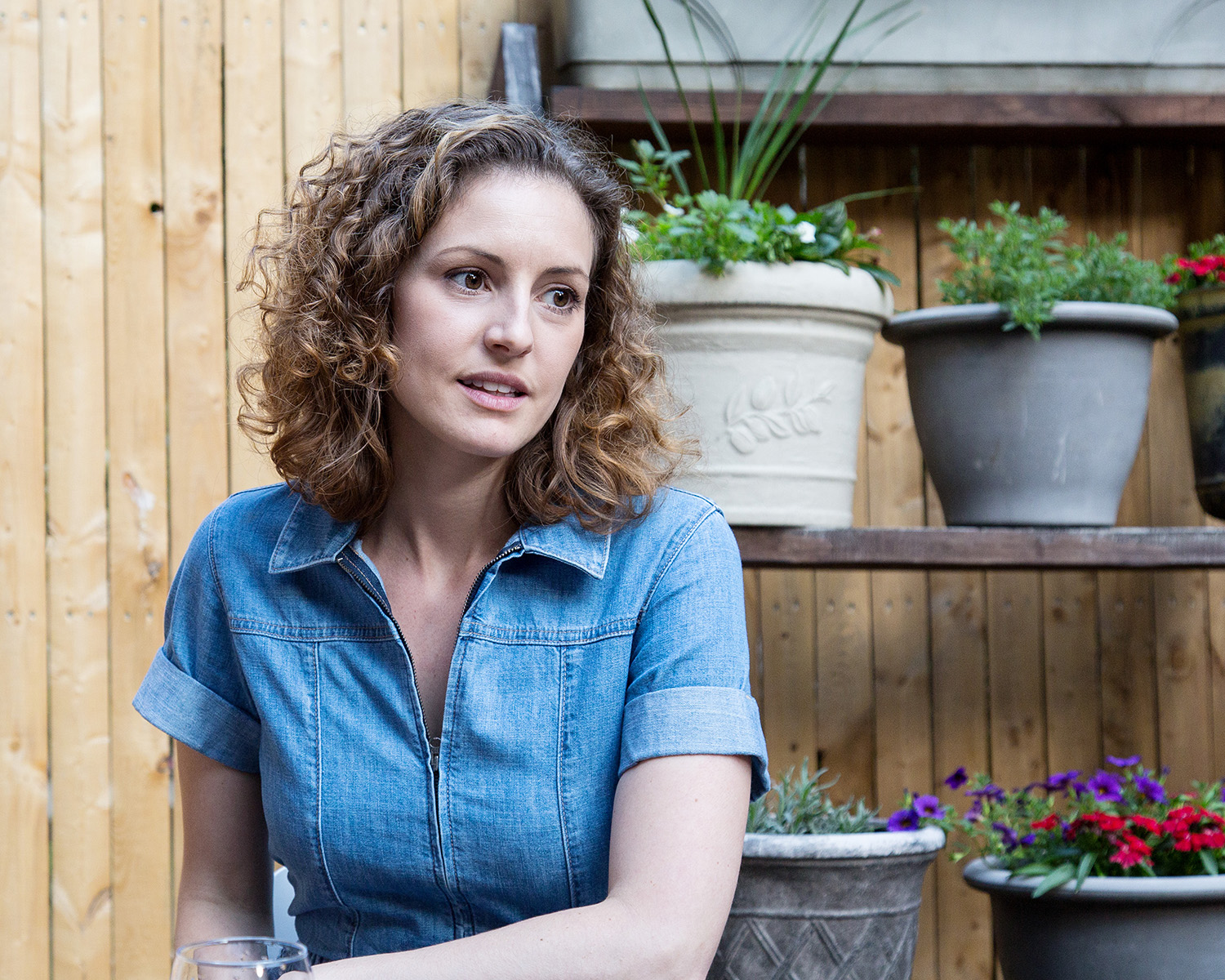
 

Klea Blackhurst & Andrea Prestinario
 

KW: Andrea, you’re a bit of a music historian too. You recently did a Smokeytown cabaret
 

AP: That show was inspired by her show, very much so. So I have to give credit where credit is due; she was one of the influences, in that I had done cabaret shows in Chicago but I was inspired to do my Smokey Robinson show…
 

KB: Look, I’m a big fan of not waiting for permission. So, y’know, when you come to New York, or anywhere, there’s a lot of power, in particular we’ve been lamenting the power of casting directors, you have to get an agent, who will put you on a list to send you in to have the casting director say yes or no. And if for some reason you get on the list and get into the room, probably nobody who can make final decisions is there so you come back again, so you go through all this to actually be in the room with the person who can say no.
 

KW: I interned in casting for a little while and it was very much like that. You come back and you come back and come back; it’s such an ordeal.
 

AP: It’s an ordeal just to get an audition, just to get in the room.
 

KB: I wrote my show eventually just because I wanted to be busy. I wasn’t ready to quit yet but nobody saw me as what I saw myself as, casting-wise. And it just seemed like…well, I basically just wrote something and cast myself in it. I’m not famous or powerful, but you can rent a cabaret room, and go in there and do it. The whole thing took off out of necessity and drive. I think that’s part of what you were attracted to…
 

AP: And it’s a big transition. When I got here, it’s a brand new marketplace and there are a lot of casting directors to meet and learn and build relationships with. It was jarring to be at a place in Chicago where I was making a living as an actor – I didn’t even have a day job for the last three years of my life in Chicago – to then go here where I was not seeing results immediately. I don’t think I thought it would happen right away; I don’t know what I thought. I didn’t think it would take as long – relationship-building takes a long time. I can’t not have something artistically to dig my teeth into and that’s kind of how that show came about.
 

KW: What’s it like switching from playing a character to actually being Andrea onstage?
 

AP: It’s a very different medium. We talk about that a lot too. Producing your own work is really scary and producing my Smokey Robinson show is probably the hardest thing I’ve ever done. It isn’t validated in accolades or any of that, but personally it really fulfilled me. I want to keep doing it, and I’m still working on it, and it’s so great because it’s this full show that I have in my back pocket that I can pull out.
 

KW: Obviously you did Gypsy…do you two want to do another show together?
 

AP: It’s interesting, we kind of laugh about doing a cabaret show together but we would just fight the whole time I think. She’s so not disciplined.
 

KB: That’s true. But it would get done, thanks to you.
 

AP: We’re polar opposites in the way we come about our work. I’m warming up to just practice in our bedroom and she doesn’t ever warm up.
 

KB: I’m just one of those performers that I feel like I might need those notes later.
 

AP: That’s such an Ethel Merman quote.
 

KB: I don’t do it. I’ll do a side run and stretch and bend, but I don’t need to practice the notes. Because I might actually need them later. I find them to be a semi-finite resource.
 

AP: She also has an old-school belt, and I’m a soprano. She’s a comedian; I’m academic and cerebral. I have a Moleskine that I use for every character I build and I furiously write notes about.
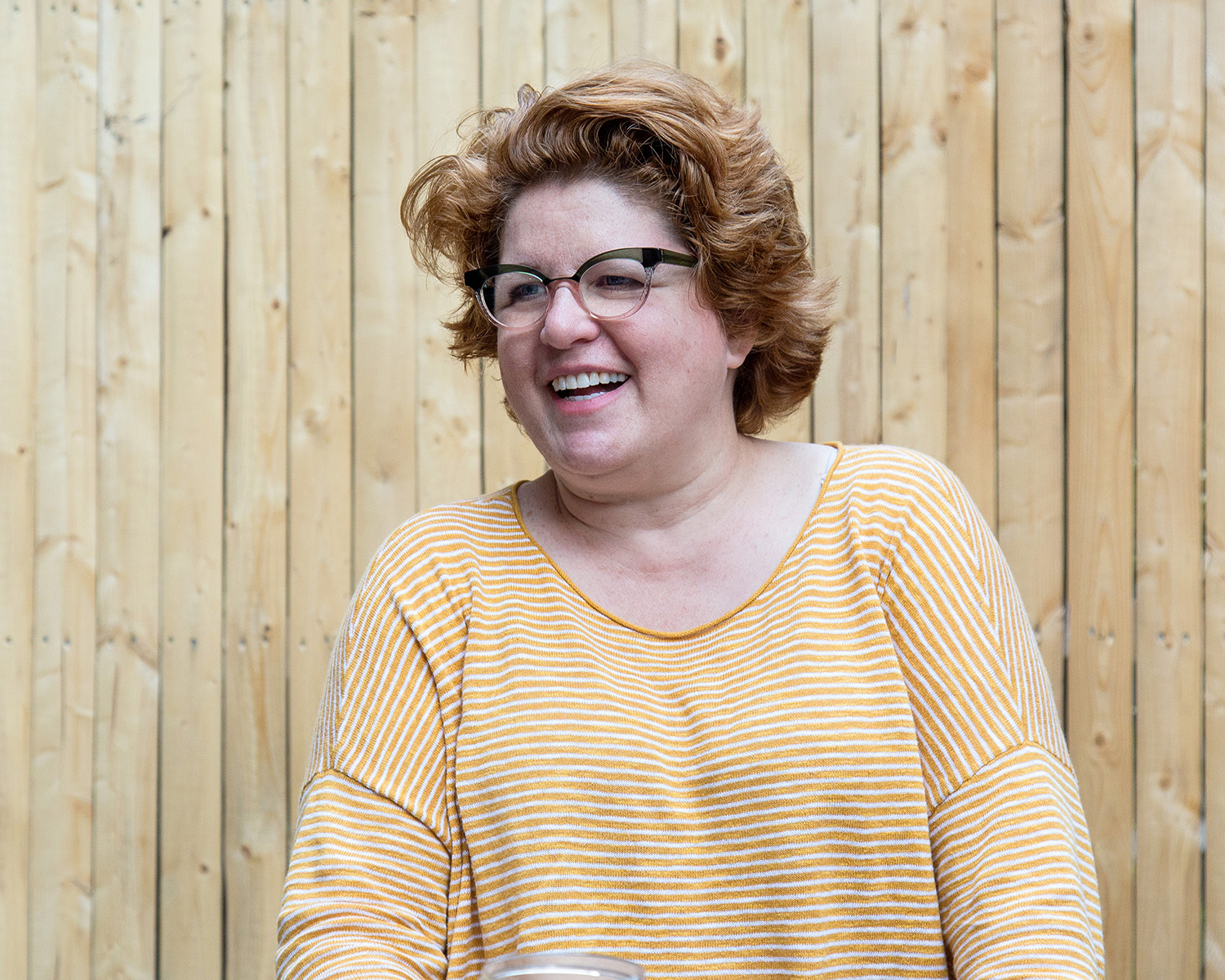
 

Klea Blackhurst & Andrea Prestinario
 

KW: It’s interesting to me, you both came to do cabaret work out of a want for artistic fulfillment and something to sink your teeth into. You almost can’t do a show together…how many shows even are there with two strong female leading roles? If you wanted to play romantic opposites, how many shows are there about lesbians?
 

AP: Right, exactly. That’s why Fun Home resonated so strongly with me.
 

KB: I think it might be the only one.
 

AP: Well, it’s certainly one of the first real lesbian protagonists.
 

KW: That’s the dangerous thing. We talk about diversity and wanting opportunity, and it feels like some people say… well, we gave them Fun Home, or, we have Hamilton, now we’re diverse, let’s move on.
 

KB: It’s gonna be really interesting to see how it plays out. Hamilton has really put musical theater in the national conversation and that’s exciting.
 

MT: I’m so happy people are talking about theater, and it is exciting, but at the same time the audiences are very white because they’re who can afford to see the show…
 

KB: And the new block of tickets came out and the top ticket is $850! I mean, come on.
 

KW: It’s a fantastic show but there’s no show I could spend that much money on.
 

KB: Exactly. That’s exactly to your point.
 

MT: I feel like because Hamilton has become what it is…there are so many shows that are deserving of attention this year, like Waitress, Shuffle Along, The Color Purple
 

KW: I think I was worried this season might be sparse because people would be afraid of competing with Hamilton, but it turned out that this season was actually really rich and diverse.
 

KW: Obviously it wasn’t a huge presence in your early life, but did you have any queer books, music, TV…for me it was Annie on My Mind
 

KB: I don’t think I know it.
 

KW: It’s an older book about a girl in New York who’s at this private school and figuring out her sexuality, and she meets this girl Annie and it’s just a sweet, lovely book. That was one of the first for me. I highly recommend it.
 

AP: I definitely had Indigo Girls. I was in college and listening to that and quite literally went to the library on campus, and would just look up the homosexuality section. I would just sit in that section on the floor and hope nobody was around…
 

KW: I would just go to the LGBT section, grab a book and run, and hope it was something I was interested in reading so no one would see me in that section.
 

KB: Thank God, that’s something that’s changed.
 

KW: It used to be like, half of one shelf. It wasn’t even it’s own section, it was just this label in the middle of a wooden shelf that said like, “Gay and Lesbian.” I would always sneak downtown when I was younger and they used to have this great bookshop, the Oscar Wilde bookshop…
 

KB: I know!! Oh, that’s the first one I went to. I loved it; I just loved it. It was great. That was a real loss. It was very special.
 

AP: Was it just a gay and lesbian bookstore?
 

KW: Yeah, it was all LGBT-centric.
 

AP: I had a moment walking on campus and being like…I can’t be, I don’t want to cut my hair like Ellen, I can’t be. All I knew was Ellen and Rosie O’Donnell.
 

KW: The gay community definitely has an interesting relationship with portraying gay women. I always think of The Heidi Chronicles line, “You either shave your legs or you don’t.” And I feel like sometimes that stereotypical image lesbianism hurts people.
 

AP: I definitely felt that coming out at first.
 

KW: How old were you?
 

AP: It was 2003, I think that’s important given the cultural relevancy. It was awhile ago, it was in college. I was twenty-one.
 

KW: Ellen Page said recently that ever since she came out, she gets offered mostly gay roles. Were you concerned as an actress about how it would affect your career?
 

AP: Oh, absolutely. That was part of my neurosis about it, because my career has always just come first and it’s what’s most important to me but I didn’t want to sacrifice who I really was. There was this inner turmoil about how I could have both. How could I be myself and still be taken seriously in musical theater? And playing ingenues! I’m a soprano; I play ingenues. I’m a wildcard – there’s really none of that. That’s what’s so weird to about when we met in Gypsy. In Chicago, there were no lesbian, queer women in musical theater. Then I met her and I was like, “Woah, you’re gay? I don’t know anyone else that’s gay!”
 

KW: And Klea, when did you come out? How did that process work for you?
 

KB: I was about thirty. Late.
 

AP: But you had relationships with women.
 

KB: Yes, very closeted. But I found, I was coming of age in a time where you could sleep with anybody you wanted to. But like, don’t acknowledge it. Don’t say it in public, don’t say it at work. It has changed so fast, for me, from my perspective. I know we still have a long way go, but I remember when there were no gay people on TV. And now, you gotta have the gay friend! That whole phenomenon. And Ellen coming out…right on the cover of Time Magazine. I remember that summer. Ellen really risked everything.
 

KW: She was everybody’s best friend; she put everything on the line.
 

KB: She really lost her career for awhile.
 

AP: She really did.
 

KW: It took her so long to get back to what she was, but now she’s such an icon.
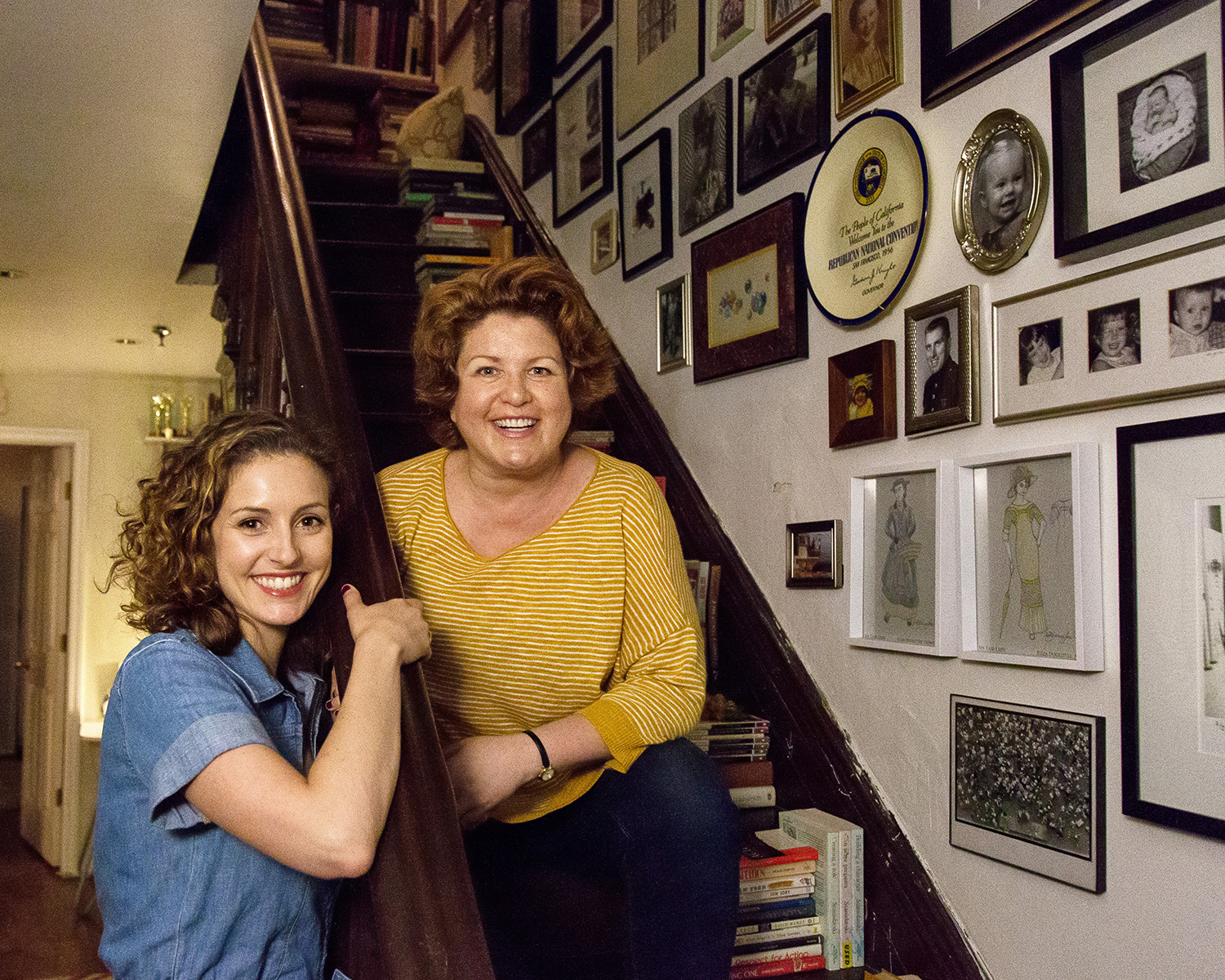
 

Klea Blackhurst & Andrea Prestinario
 

KB: It’s easy for successful comedians to cross a line between being funny and thinking that what they believe is more important than being funny. Bill Maher, Rosie O’Donnell, Lenny Bruce – their politics become more important than their comedy. Ellen has always stayed on the side of the line that says the reason you know me and love me is because I’m funny; that’s the reason you let me into your living room. I think that’s very unique and I love that about her.
 

KW: You as a comedienne wouldn’t want to lose the entertainment of what you do to put more political activist content in there.
 

KB: No. I don’t think I have an inner activist. I don’t think I’m a coward or I lay down though.
 

AP: She just isn’t political.
 

KB: It doesn’t drive me at the expense of other things, no.
 

KW: Andrea, you, to me, seem to be very political.
 

AP: Very much so. It’s how I see the world. I see the world through a feminist lens. It’s a curse and a blessing. Sometimes you want to not be able to see things so analytically and just relax. I have a gender studies and musical theater degree…
 

KB: That’s a rare combo, I think. I myself went for musical theater and geology. We’re very rare. I like to collect rocks and you like to introduce me to Dworkin.
 

AP: You do not collect rocks.
 

KB: I have a rock collection!
 

AP: Shut up.
 

KB: I do.
 

AP: She also has a rubber stamp collection.
 

KB: I love rubber stamps.
 

AP: I grew up in a house with just sisters and my parents are obsessed with fairness. So everything was always the same for all of us. If I got a phone in my bedroom when I was ten, I was the oldest, everyone else had everything else lined up that way. Then I went to an all-girls Catholic high school that was very progressive. There was even a sign in the hallway that said, “God is good, She is great.” It was very empowering. In my fourth year, you got to choose what theology class you wanted to take, there were options like God Talk or something else…I chose Women’s Contemporary Issues. That’s where my feminist seed was born.
 

KW: There was something on Facebook, I’ll probably misquote it, but it said something to the effect of, “God has to be a woman, why else would the Bible be a bunch of men explaining what she meant?”
 

[Laughter]
 

AP: That class sort of illuminated everything. I grew up in this household, and your household sets your guidelines for what you understand in the world and I understood it to be very fair and I went out and suddenly you’re coming to maturity and I was so enraged when my eyes were opened to it. At the end of freshman year of college, I started taking classes in the women’s studies department and that’s how it all started.
 

KW: Both of you…when you came out, what was your family’s reaction like? Was it supportive? Was it a welcoming thing or…
 

KB: I think it was good? It wasn’t talked about for awhile, and then it just like…was fine. It felt like a big risk but it actually ended up being great, I think. My first partner died very suddenly. I was in the closet, I was 27.
 

AP: They lived together but no one knew they were together.
 

KB: I was so invested in nobody knowing and family and stuff. I look back on it now, because I went through that whole experience in the closet, and I’m like…what was I doing? There was an obituary for her, because we lived here but she had been an acting professor at the university where I’d gone to school…the person writing the article talked to me and was like, “Do you want to be listed as a survivor?” And I was like…yeah, but I was totally in the closet.
 

AP: So what did it say…like, “friend of”?
 

KB: Yeah, something like that. It was so weird. That was a long time coming. I think it was easier for girls. This might be political here, I might get political.
 

AP: Whoa!
 

KB: It seems like boys were getting in more trouble because they’re actually like spilling seed and doing foul things…
 

AP: Spilling seed?
 

KB: That’s in the Bible! You know, you’re supposed to procreate, not just goof off. So they’re wasting it. I’m just talking like the Mormons. They weren’t enlightened, they were in hell on earth. The women it felt more like, “don’t ask, don’t tell.” Even if you had a suspicion, it was really like…they share expenses and snuggle. That’s what it felt like. In a way, if I had been the oldest son…
 

KW: Religion places such a high premium on masculinity and maleness…
 

KB: The patriarchy!
 

KW: So if it’s the person in the position of the most power disobeying this religious law or going against the faith…
 

KB: Exactly. That’s right. We’re just the sister wives. It was terrible. I was terrified to come out. I’m so glad I finally did. I remember the first interview I had, when I started giving interviews, when people cared…and this interviewer from Rehoboth Beach was like, “So, are you in-out or out-out?” And I was like…in-out? I think? By the end of the interview, I was like…I’m gonna be out-out. I was able to change that in the span of a conversation. I mean, I was going to Rehoboth Beach which is very gay-centric and your mom already knows, so what’re you saving it up for? But I did think, since I did a lot of solo performing, gay men like their women straight.
 

AP: That’s so true.
 

KB: They want you to suffer, like…over the man that got away. It is true.
 

AP: It’s so penis-heavy in musical theater, between all the gay men and all the straight women.
 

KB: And in Streisand and Garland, all the leading ladies, they flock to the one who is voicing what they’re voicing, which is always about a man. So I was reluctant. But then I was like, no, it’s okay. Nothing is really going to change.
 

AP: They also love a belter!
 

KB: I court that audience.
 

AP: Gay men love her.
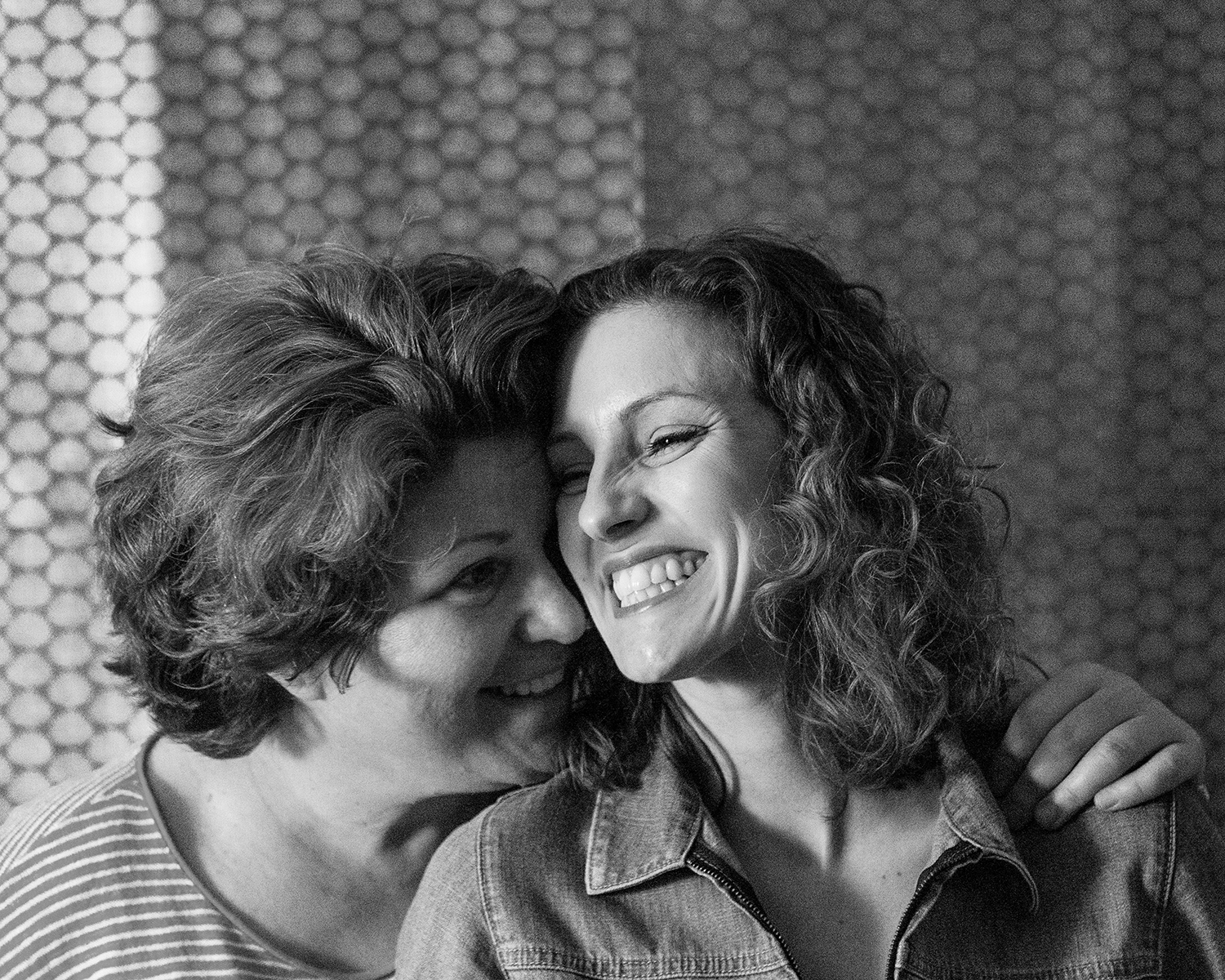
 

Klea Blackhurst & Andrea Prestinario
 

KW: Andrea, when you first came to me about doing this, one of the phrases you used was “normalizing queer women in theater,” what do you feel like we can do? What do you want to see theater do?
 

AP: Exposure. Obviously you can’t recruit queer women to partake in musical theater. We are a minority, but I don’t know why…maybe the future holds the opportunity for that type of woman to be interested in theater. Right now, we’re not really telling those stories, so why would a young queer girl be drawn to it? I mean that in the sense of being an artist and an audience member, being a part of it in all aspects, arts administration, all of those components. I don’t know, do you have answers?
 

KB: No, I would never say something like that. I wouldn’t have been smart enough to even say that.
 

KW: Visibility is important; if you can’t see someone doing it…having the first black President, possibly the first female President, so young people can see…I can do that too.
 

KB: To me, that’s what Fun Home represented. We’ve heard gay male stories…
 

AP: So many times.
 

KB: It’s like everything else. The guys got there first. I was talking to a lesbian friend of mine about Fun Home, and she had decided she didn’t like it because she didn’t think we should know that the father kills himself from the beginning. And I was like.. anything else? She said no. And I said: okay, may I challenge you please to open your heart a bit bigger? That could be the artifact of the source material. You’re taking this one thing about the storytelling and have decided you don’t like this piece that is trailblazing like a giant comet through our lives. You’ve got to open your heart a little bigger.
 

AP: That’s a great example. I don’t think that queer women root for themselves in that sense the way that gay men do.
 

KB: Have you watched The Women? They’re so awful to each other and as I grew up, I was shocked to find out that’s how straight women relate to each other. They will take each other down.
 

KW: Women are pitted against each other so constantly, from a young age.
 

MT: People think there’s only one cake. So if you don’t get in there, you won’t get a piece. But it’s like actually there’s hundreds of cakes around you.
 

KB: That’s right.
 

AP: I think, in terms of normalizing and visibility, I think it irritates me that as a community, that men and women who are gay don’t come together more often. There are some gay men, I absolutely don’t want to generalize here, but there are some gay men that love their gay female friends. But there’s still that niche of gay men to whom we’re a bunch of jokes. You always say the example about when the AIDS crisis came, the lesbian community were the first to come to their side and take care of them. When your friends were dying…
 

KB: When it came down to it, yes, absolutely.
 

AP: And I would like to think gay men could support us in return.
 

KB: I know, I remember I introduced you at a party to a casting director and said, “This is my girlfriend, Andrea” and she’d been in for him before, and he did like a big cartoon eyes thing. Then later he comes over to me and says, “I’m sure she’s delighted that you told me she’s your girlfriend.” And I said, “What do you mean?” And he said, “I’m sure she wants me to know she’s gay.” Meaning that I never should’ve done that because she’s an ingenue.
 

AP: And he’s gay!
 

KW: It’s within our community and these stereotypes – we should be the first to break them, and yet…
 

AP: I think it’s what makes me an interesting ingenue.
 

KW: Do you think your experience as a queer woman informs your acting?
 

AP: Totally.
 

KW: Some of the ingenue roles are just so thin. You’re a prop for something else or for the male lead so much of the time.
 

AP: And we blame the actresses sometimes, but it’s the source material; it’s not heavy to begin with. Last summer the choreographer, and I love this quote, said, “You’re the anti-ingenue.” I love that. I should put that on my website as a pull-quote.
 

KW: Obviously the competition for female roles is steep and the roles that do exist can be pretty two-dimensional and sparse; have you ever gotten a show or an audition or an offer that you’ve turned down because you didn’t connect with it or were offended by it?
 

KB: My thing is always…there are three reasons to take a job. And one can trump the other two. Sorry, I said Trump. Personal satisfaction, prestige, and money. I’ve recently added health insurance, for real. I’m doing a job coming up and the deciding factor will be that I’d get the four weeks for health insurance, because it’s certainly not the money or prestige. 
 

AP: There’s a lot of shows I’ve been in where I just disagree entirely with the plot. Like I was thinking, Seven Brides for Seven Brothers…
 

KB: Annie Get Your Gun!
 

AP: I did that show and I just hated it the whole time I was in it. I had the choice to not audition, ultimately I sometimes have to swallow my feminism a bit and choke it down in the sense…I just don’t understand why we’re still telling that story. Why are we still doing that?
 

KB: I’m not a fan of that show. I don’t know that it really has a place in 2016.
 

KW: I keep thinking about what you said about being in-out vs. being out-out, and I was rewatching Ellen Page’s coming out speech like a week ago…
 

AP: Ugh, it was so good.
 

KW: She said that she felt like she was lying by omission by not being out. Do you feel like people who aren’t out are lying by omission? Did you feel that way?
 

KB:I don’t think I did personally, because I was so wrapped up in religion and expectation and wading through all that, it felt like for the longest time just like bad news and how am I gonna break this to people? First, how am I gonna try to get rid of it? Then, how am I gonna embrace it? Then, how am I gonna show others it isn’t scary? I’m older, it’s a lot different.
 

AP: We’ve definitely had very different experiences.
 

KB: Now I can say, oh, that’s my girlfriend. Also, when you get to a certain age, towards your 50s, people ask are you married? No. Oh, um, do you have kids? No. If you’re being in, at 50, saying no to those questions, it’s a very different person. To me, the test of whether a girl was gay in high school and college…it was the girl who was with the gang, but kinda separate, an observer, she caught the comedy, she very often was a comedic person, and never talked about a boy.
 

AP: You use comedy as a vehicle.
 

KW: What about you?
 

AP: I waited until…I was telling friends and my sisters, but I was waiting to tell my parents until I was completely on my own financially. I was on my own as soon as I graduated college, so I was wanting to get that apartment and get out of their house as soon as I could. A couple months after graduating, I was dating my first girlfriend, and she broke up with me, and it was my first heartbreak. It was so overwhelming, they knew something was wrong. I told them, and it was a very emotional experience. My grandpa had just died, and my dad was in a very emotional place, and my mom, she can be very matter-of-fact, and she doesn’t cry, but my dad is way more theatrical and emotional. My dad just cried and my mom just sat there and listened and said, “We kinda had a feeling…”
 

KW: They always know before you do!
 

AP: Yes! I said, “I waited until I moved out because I was scared you were gonna disown me.” We can laugh about it now but I really did think…you expect the worst.
 

KW: Especially if you grow up in a family that is religious in any way at all, even if it’s in a small way.
 

AP: Catholicism has an effect. My dad just cried and said nothing would ever make me stop loving you. I still cry every time I say that.
 

Klea Blackhurst & Andrea Prestinario
 

KW: After all we’ve talked about…where do you see us in ten years? Where do you want theater to be?
 

AP: I want to see more gender-bending. I wanna see women playing Aaron Burr. I wanna see more of that. It’s funny to think about what we’re seeing illuminated by the activism in theatre right now. In the 60s, the Civil Rights Movement happened and there were these raising consciousness groups, and there were all these women’s groups that were like, we’re fighting about race but we’re also all still second class to these men. It’s that pecking order. Intersectionality, right? I want to see all of it at once in a way. I wanna see us work on all of them all the time and work on that in theater and tell those stories and have opportunities for women and men of color and minorities overall. There’s such a disparity of roles.
 

KB: Well, that’s why I was like…come on, Hazel. But that role doesn’t come along. It doesn’t exist.
 

KW: It’s a great part. You wish that there were ten parts like that.
 

KB: And it just doesn’t exist! Exactly. It could join the ranks of like, does Dolly get a guy? We don’t care. Does Rose get a guy? We don’t care.
 

KW: That’s part of what I loved about it. The love story was never the focus. The central question isn’t whether or not she’ll find a man.
 

KB: That’s what I think is actually Merman-esque about it, having nothing to do with Merman. But she was a star. She had thirteen Broadway hits. Thirteen! But none of them depended on the guy, nobody cared. Yeah, in Annie Get Your Gun, she throws the contest at the end so he can think he’s the big man so that one she ends up with him, but the other ones…it’s not the central thing. You didn’t need a guy’s name with her name. That’s all that anybody cared about, at a time when Broadway was a major growing concern. That’s what attracted me to Hazel, and is one of the things I think they need to do to it. Make it Hazel’s story. Focus that thing and just…people wanna know about Hazel, not because I’m Hazel, but the same thing happened with Hello Dolly! out of town. People didn’t want Act I to end with a song about how Horace became half a millionaire. We just wanna get back to Dolly.
 

KW: At least everyone I have heard talk about the show or what I’ve read, Hazel is what people are responding to. She’s the heart of the show.
 

AP: The work ahead is very exciting to think about.
 

KB: Taking that story, making it more. My questions became, if we’re going to encourage Mrs. Baxter to have it all, why can’t Hazel have it all? This millionaire guy dates her and it’s like, no, I’m gonna stay with the family…that I met last week. It doesn’t make sense. Those things could be more realistic and valid. And why can’t she date a millionaire and have a job? And why can’t Mrs. Baxter have a job?
 

KW: It’s very subtle, the way it’s done, but there’s a level of classism in the show as well. You do feel that she’s “working class,” that she’s the help.
 

KB: That’s right, absolutely. I think that should be fixed. Hazel has to come out on top on every question. And she should solve every problem. That’s what she does! To me, it’s so exciting, I hope they get it right, because I will play her forever. You would have to kick me out of my Broadway dressing room, you would have to ask me cordially to leave after like 30 years. I’d be like, nope, I like taking naps between shows on Wednesdays, I like having my soup sent in, I would not want to leave. It’s taken me so long to get to where I am. I was just thinking the other day, it’s kind of obnoxious to say, but lately I’ve done a string of roles where I get the last bow. And that’s just a fact; it’s how it is. It’s awesome, what an awesome thing! I’m hoping ten years from now that I look back and that I have opportunities to create things, do things, and that I stuck in this long.
 

KW: They say if you’re not a soprano, you won’t work steadily until your 40s…
 

KB: Yes, exactly! And I am hoping that’s true. ‘Cause once the Reno Sweeney years were over, the Gypsy years arrived, now that time has come. I hope it’s a long train. And a lot of stuff gets sent to me now, new stuff…Let’s see. One of them, there’s one called Vanishing Point, I love this piece so much… It’s about Aimee Semple McPherson, Agatha Christie, and Amelia Earhart, all of whom vanished. Aimee Semple McPherson who walked out of the dessert saying that she had no idea what happened to her, and then Agatha Christie disappeared for days and found her car wrecked by the side of the road, and she was registered at a nearby hotel under the name of her husband’s mistress. So three different experiences of women vanishing. It’s so smart. I did concept things and Agatha Christie was always Alison Frasier, I was Aimee, and Amelia has changed a couple times…you’d be a great Amelia Earhart.
 

AP: Cast me!
 

KW: There it is! There’s your show together.
 

KB: Yes!!! There it is!
 

AP: Oh, babe, we did it!
 

KB: That could actually be good. It’s been struggling, but stuff I get asked to do, I say yes yes yes unless there’s a reason to say no. They don’t want me for Seven Brides but let’s say no. If you can, just say yes. My whole career is a series of what happened because I said yes. Interesting combinations of things you could not have made up. So, I’m gonna do more of that.


Posted on

Tug of War: Come on Back to the War

Tug Of War


It seems like every politician has put Hamilton on their must-see list, and rightfully so, but truly, they should all be required to experience Tug of War: Foreign Fire at Chicago Shakespeare Theatre. Foreign Fire is the first in a two-part adaptation of Shakespeare’s histories, the passion project and brainchild of Artistic Director Barbara Gaines. If you think you know what six hours of Shakespeare feels like, you haven’t seen Tug of War. And in a world where the definition of warfare is constantly changing, where two armies don’t meet on the field anymore, and where the United States of America has escaped the monarchal system, what do these kings have to teach us? As it turns out, quite a lot.
 

Tug of War plays out as the French and the English spend decades entangled in a bloody political feud, as kings come and go. The show first introduces us to Edward III and his thirst to claim the French throne that he believes is his birthright, then to his grandson, Henry V, rousing his comrades with grand speeches, and then failing to find words to win the heart of the French Princess Katherine, and finally, to their infant son, Henry VI, who sets off yet another series of war games because he is too young to assume the throne. The production is scored to the heavy drumbeat of rock music, sampling everything from Pink to Pink Floyd, which only adds to the urgency and contemporary feel of this play that begins in the 14th century.
 

This is more than Shakespearean Game of Thrones, though the comparisons are certainly apt. Tug of War is, at its core, a journey through generations embroiled in the futility and fatigue of endless conflict over invisible lines on a map. It’s a story of a perpetual power struggle, of men cutting the head of a Hydra over and over again, and being shocked when two grew back in its place. This notion that changing one leader for another will somehow change the nature of power and the need to fight to keep it still plagues American policy today. Just in the past 15 years, we’ve engaged in military action to overthrow foreign dictators in Iraq, Libya, Egypt, and now Syria may be next. But there was no peace to be had after these efforts. We created new enemies, new alliances, and supplied weapons to new rebel groups, but we’ve stayed engaged in the oldest, deadliest game in the world: war.
 

The show doesn’t necessarily advocate against interventionism, to the contrary, the show illustrates that we very clearly live in a world where the lines that divide us are mostly imaginary and that peace is fragile and always in danger of collapse. Moreover, it reveals that the motivations that take us to war, the things that weigh on the minds of those who decide what battles we will fight, are sometimes more personal than political. Henry V fights bitterly to finish the battle his grandfather started and take back control of France and immediately, you can’t help but think about President George W. Bush, taking us to war in Iraq, some would say motivated by the need for revenge on behalf of his father’s failure to take out Saddam Hussein during the Gulf War. Even without the context of a debt to settle, the need to be perceived as strong on behalf of the populace haunts all of our leaders, whether it be 700 years ago, or right now. For the first time ever, as of December 2015, a CNN poll showed that the majority of Americans, 53%, believed that we should send troops into Syria. Depending on the outcome of this election, we may be looking at yet another exercise in violently replacing a dictatorial leader and hoping that the results will be different this time, in the face of all evidence to the contrary.
 

Tug of War also gives voice to the personal, internal struggles of some of history’s most enduring figures. One of the most moving parts of the production comes when Joan la Pucelle (played dazzlingly and with fierce strength by Heidi Kettenring), is captured after spending a captivating two acts fighting off men who believe themselves to be stronger than her and outwitting even the French king. She pleads for her life with her captors, first insisting on her maidenhood, then invoking a pregnancy to try to stop her inevitable execution, all but begging, frantic and trapped, but never defeated. She is taken away to eventually be burned at the stake, the symbolism of defeating “The Maid of Orléans” is much more important than considering Joan’s humanity, even for a moment. From the iconic, like Joan, down to the unnamed soldiers, who all feel deeply connected due to the double, triple, and quadruple casting, Tug of War brilliantly takes us through war on a macro and micro level, all at once.
 

After six hours of the epic saga, engaging and thrilling enough that I could’ve watched another six, the show ends with a musical tease, courtesy of Leonard Cohen. The cast sings “come on back to the war,” and I want to, but only in the fictional castle Barbara Gaines has built at Chicago Shakespeare Theatre.
 

Tug of War: Civil Strife begins performances at Chicago Shakespeare Theatre on September 14th. Tickets can be purchased at chicagoshakes.com.
 

Posted on

A Conversation with James Earl Jones II


From the way James Earl Jones II shows up, early, dressed to the nines when it’s barely noon, and with that disarming smile at the ready, you could easily assume he’s running for office. Currently though, Jones is starring in Carlyle, a new work by playwright Thomas Bradshaw, at The Goodman Theatre in Chicago. Carlyle is based on a simple premise. The Republican Party is in trouble and they need someone to save it. So, enter Carlyle, a black Republican man and the Republican Party’s choice for the role of cheery ringmaster, impossibly charming you with feats of daring and slights of hand, luring your attention away from the broken lock on the tiger cage in back.
 

Now, in an industry that sets schedules eighteen months in advance, Bradshaw and The Goodman have managed to produce their smart satire on the American political arena at the exact point of pique bloodlust in the election season. My trip to the campaign office, such as it is, was spent in one of those infamous back rooms (a lounge, upstairs at The Goodman) talking red, white, blue, and black.


Kelly Wallace: So this show…I’m very excited about it.
 

James Earl Jones II: As am I.
 

KW: You’ve done the show before, now you’re coming back to it in the middle of a complete firestorm in the American election cycle.
 

JEJ: Yes! I was telling someone…it just so happens that all of the stars are aligned and here we are in a discussion about the Republican Party and where it’s headed, who could be heading it, and people of color involved in the Republican race, and who will come out victorious. So I think it’s extra interesting.
 

KW:It certainly is. And who will be heading it is the interesting question we’re all stuck on right now. A lot of people seem to think the Republican Party is about to crack down the center.


JEJ: Right, yeah. Especially with our show, before we even really jump into the script, it’s like… “Did you hear?” That’s every day. Somebody comes in with something new. “Did you hear?” And sometimes we haven’t heard because, for me, I will say that I get a lot of information secondhand because… if I think about anything other than the script I will lose my mind.
 

KW: How do you separate the noise from doing character work – from doing the text?
 

JEJ: Honestly, I know it sounds really crazy, but I’m an actor first. It’s not only something that I’m passionate about, but it’s my job. It goes back to when kids used to say, “My dog ate my homework.” There’s a lot of things going on, but you have to get your homework done. And so I find myself in these moments where it’s like, “Wow, this is happening and this is happening…” I’m like…but I’ve gotta get my homework done. We did a show on Sunday afternoon that was drastically changed by half-hour for the evening show. And so, if I come into the theater, there’s a possibility that I can get an email maybe an hour or two before the show starts… here’s a new line. And that’s where I keep my focus, regardless of all of the outside stuff going on, regardless of what people are saying is coming up now. I’ll know about it because I have to say it.
 

KW: Were you a political/history nerd before this process?
 

JEJ: I was not. And I’m ashamed to say that I really wasn’t. My father was a CTA bus driver, but he’s from Mississippi and dealt with a lot of civil rights issues. My mother was a teacher for 42 years in East Englewood. I know that there’s a lot that goes on, just with education, the balance of who gets what in that particular arena. And so there are certain things that I know about as it applies to people of various colors not necessarily being on equal footing. …I’m a little ashamed to say that I didn’t know more, but it’s very weird. I was talking to a friend who is a dual citizen…people who are taking tests to become citizens know everything. So I’ve been learning – slowly but surely – about some things I was less familiar with. One of the big things – and it doesn’t really seem that big – but I didn’t know that Booker T. Washington was a Republican.
 

KW: I feel like that surprises a lot of people.
 

JEJ: Right. And that there was this conflict between him and W.E.B. DuBois and I was like…really? This happened? I had no idea!
 

KW: One of the things you say in the press videos as Carlyle, is that everyone might be a little more Republican than they think they are. Do you feel like you’re more Republican than you thought you were?
 

JEJ: I don’t feel like I’m a little more Republican than I thought I was. I know that I’m a little Republican, but just a smidge. In the play they talk about affirmative action. I find myself torn in many ways because I know people who have jobs, who work really, really hard, and they work really hard to get to about here, and they’re above poverty but not quite at middle-income, but they’re working their butts off. And no one just says here, have this. Then there are people who are like, I have had 5 or 6 kids, I’ve been in and out of homeless shelters, but I can have housing downtown if I work the system right. I think that’s a discredit to people who are getting up every day. You work hard to get a little bit of nothing; this person doesn’t work at all to get everything. That seems unfair. So yeah there are lots of things on the Republican side that I don’t get but with regards to empowering yourself and working hard for what you get, that’s something I do believe. It bothers me, just because I just see it so often. It just makes me sad sometimes. So I will say, yes there is a dash of Republican in me. Because I believe in African-American empowerment, I believe in Latin-American empowerment, I believe in people fighting and earning things and saying that I got this because I actually deserve it and worked for it, as opposed to someone saying I have this fantastic home and I have two hundred and-fifty dollars in food stamps, which I can sell at my leisure. You know it was something I had never been exposed to until maybe about 10 or 11 years ago. It was the first time a person approached me in a store and was like hey, I can sell you some food stamps. I was just thinking…this is supposed to be for food. But if I give you $50 or $35, you can give me $75 worth of food stamps and it’s no skin off your back. Okay, I say to myself. I look at my check. I look at my taxes. And I say that I’m paying them for this person to have free stuff. And that irritates me. But yeah, that’s just one aspect.
 

KW: At one point, Carlyle describes himself as a “political unicorn,” to be a Black Republican. One of the things I was looking over before this was a poll in the New York Times that said 1 in 5 Donald Trump supporters don’t believe in the Emancipation Proclamation. When you hear something like that, how is there a place for Carlyle in the party?
 

JEJ: As James Earl Jones II, I’m never shocked by something like that. And maybe in the years, decades, centuries to come, someone will be shocked. I’m not shocked today. It is disturbing to see what the Trump supporters – it’s really kind of like some kind of reckless, free card – , it’s anarchy almost. You’re like, “˜My God!’ I feel Trump’s people right now are caged pit bulls that were beaten over and over and then you release them. There’s no filter. And people are saying and doing things that they have been waiting to –it reminds me of that movie The Purge, where just for one night people just do all types of random craziness. Except it’s happening every day with Trump supporters. In general, it’s hard to think that an African-American, Latin-American, anyone of color is like, oh I found a comfortable place here in the Republican Party with a statistic like that.
 
I guess in that same vein, life in Chicago is not necessarily life in Wyoming or life in Glencoe, even. There’s obviously some give and take in everything. I think that’s how anybody of color says to themselves, “Oh, I fit here. Even if this person doesn’t necessarily agree with me. I still have the freedom to have my opinion. And maybe that person didn’t agree with the Emancipation Proclamation, but I don’t see them at home and I’m just going to go about my business. I’m not shocked by it. Carlyle might be shocked by it, but he lives in his own world.
 

KW: And Carlyle’s world is funny. It’s a comedy; there’s humor there. Obviously, these issues we’re talking about are serious but…
 

JEJ: Yeah, you know, I think somebody was telling me that in some magazine someplace someone called it a drama. And I was thinking, huh, where did they get that from? Because I think that – I’ve always loved comedy. It’s rare that I get a chance to do dramas. But, I mean, when I do them, sure they’re great. But I will say that heavy topics in my opinion are more readily accepted, easier to understand, or the message can sometimes sink in more if it’s lighter. I think there’s something to be said about not hitting people over the head with bricks of despair and sadness. Even if it’s one-act, no one wants to sit through 70 minutes of that. Pain, suffering, despair, more pain. And the audience is like, “God, when is this going to be over?” You don’t want people to come to the theater, I mean you want peoples’ lives to be changed, but ideally for the better, something to invoke thought…but not thought of suicide.
 
Like, my God, life is awful. You want people to – you hope that people will come away from this show and yeah, there are serious topics, but perhaps serious topics where you’re like, “Huh, I didn’t think about it that way.” But you’re ideally smiling about something. I think that this show is a comedy, but there’s no doubt that it’s going to touch on hot topics and push buttons. We found that out in New Stages. But as far as I’m concerned, this is the best type of theater. The theater that…it might shock you a bit, but it’s definitely going to make you laugh, it’s gonna make you think and talk about it after.
 

Stage-&-Candor_James Earl Jones_Carlyle-reh

KW: What has the audience response been like?
 

JEJ: I can only speak about a couple people who have approached me. I have had people approach me with nothing but good things to say. I’ve had a couple people secretly tell me they’re a Republican on the way out the door. Like, “Hey man, that was an excellent job…[whispered] wanted to let you know I’m a Republican…okay, take care, bye!” And they’d rush off. Like, alright then. That always makes me giggle. One guy in one of the talkbacks – I guess he got grilled in there because he was a Republican/African American, I just…I think the responses have been awesome. People who approach me are like, “I’m gonna tell all my friends, I’m gonna come see it again.” The word of mouth has spread the show.
 
It’s not necessarily Second City, but you’re not sure what show you’re gonna see. Tonight’s show could be potentially very different from tomorrow’s. I have three new monologues…we went to lunch and came back and there were 10 edited pages, there you go. And by “there you go” they mean, “James, this is for you.” ‘Cause it really is generally just me who gets lots of new stuff.
 

KW: Do you feel like there’s a different energy, for you, doing a show like this written by an African-American author, as opposed to someone else trying to tackle these issues? Does it feel more authentic?
 

JEJ: So, Stephen Sondheim writes these amazing, brilliant musicals; people are always trying to make the comparison. “Is this your life?” And Sondheim’s like, it’s not my life. None of these things are my life. One specific song in one specific show was about his life called, “Opening Doors,” and that was it. For the most part, these people write these things but it’s not their lives”¦.Too often you find that it’s just a whitewash of a creative team putting together this show for people of color. What they won’t do is hire me, Thomas Bradshaw, and a couple of other popular African Americans to tell the story of Fiddler on the Roof. I’m not offended by it, but I get it.
 
So they’re like…you might know Jewish people, you might even have a relative that’s Jewish, you may even convert to the faith at some point in your life, but what we won’t do is have you direct Fiddler on the Roof. I’m okay with that. But on the flip side, when you have shows that you know are speaking from this African-American perspective or this Latin American perspective, there’s nothing but a white creative team…it does something to you. It’s weird also when you know, when they write about it. Even going past color, it’s like…Spike Lee wrote this Chi-raq film…but he’s not from Chicago. And he can do the research and he can bring in all of these random actors from LA and New York but there were like two or three people, most of them not leads, from Chicago and it’s like…you don’t know the Chicago experience. You think you do. You’ve googled and you’ve gone on Wikipedia, but have you lived it? How often does a writer of color get to write first person stories? It’s rare and it’s unfortunate.
 

KW: And it feels like in a lot of ways, Chicago’s ahead of the rest of the country at least having these conversations; we’re talking about these things. Is this a new development, or is there more of an open dialogue in Chicago?
 

JEJ: Chicago is blue collar. Chicago is gritty. And we hustle in a different way than New York does. It’s very interesting. There are a lot of Chicago actors who are like, I’m in Chicago and I’m not thinking about going to Broadway; I’m just telling this story. I’m interested in doing this work here. And it’s odd sometimes because people are like, what do you want to do, do you want to go to Broadway? That’s the end game. And you’re like…no, I just love what I do and I love telling these stories. I think there’s a certain air that’s put on in New York that I don’t find here as often? Everywhere in this business, there is a question of being blackballed. Things don’t change like when things are going well. It’s like crisis. I have to give credit where credit is due. I have spoken to directors personally like – I think that this is inappropriate; I think that this is wrong – but I have to say, in my opinion, Bear Bellinger is really the catalyst for extreme change. Bear had nothing to lose. He was just like…here goes. He was fed up with various things that had happened to him in his own personal career and was like alright, this is the last straw. A lot of people make the argument that like….oh, couldn’t you have handled it a different way? What other way could this have been addressed so we can talk about race in theaters and identity in theaters? But the thing is, there really is no better way than just to do it. The people who are in positions of power in these theaters have been there for years. It’s not to think that this just happened overnight. These things have been happening at these various theaters for quite some time. But no one has spoken about it. After a certain amount of years, people say, well, what’s the alternative? Well..now, we gotta do this. Because I’m sure there probably were other ideas, but no one did them. So now we’re here. There might’ve been another one back there. I’m sure there were other ideas, but no one did them. So now we’re here. And I think Chicago’s already more conscious but now it’s even a bigger deal. Also, I do also feel there are some theaters that are going to have to follow suit with what’s going on at the Marriott. This theater [the Goodman] isn’t one of them. That is one of the cool things, all the madness going on out there, the audiences that come to the Goodman are regular people; they’re sophisticated, they’re intelligent, blue color, white color; they see themselves reflected on this stage. I think each director, each writer, and Bob Falls make these conscious choices to be extremely inclusive. I’m glad I’m in Chicago where we are more grounded and have a better take on seeing everyone included. I do think obviously some theaters need some help but, as a whole, we are ahead of other cities.
 

KW: You are. Yet there’s still this sense that Broadway is the goal. What made you want to stay here in Chicago?
 

JEJ: Well, I have done a tour. And I’ve done regional work. But I think for me…well, I have a daughter here. I wouldn’t want to uproot her life moving to New York. I think that New York, if you are living somewhere like in Ithaca, it might be ideal to raise your children. But there’s something about…every time I’m in New York I always think to myself, these kids go to school on their own, on these trains, and that guy over there might have just killed three people, like…you say to yourself…and then you look over and you see Bobby and Diane and Katie and they’re just sitting there with their chocolate milk and you’re like…this is strange. I’m nervous. So I feel bringing my daughter up in an environment that is healthy and normal and ideally nurturing is important for me. People want to be on Broadway for various reasons. I know someone who booked Les Miserables on Broadway as a Valjean cover, but he was just like, “My bills are killing me.” If you’re asking about being rich and famous, I don’t know anything about that, but these college loans are kicking me. And so people do it for various reasons. I think most people do it for fame. But I think some people do it for financial security. I personally have been very fortunate to be here, in Chicago, with very steady employment. That I haven’t felt like there was a need for me to go anywhere else or do anything else. Maybe I would cross that bridge if I found myself destitute, like I just had nothing, but I love Chicago. I love Chicago theater. I think we’re more real; I think we’re more grounded. We are truth-tellers. It’s like seeing Carlyle or 2666 as opposed to seeing Wicked. I mean, it’s grand. There are dragons. There’s a little bit of pyro but like, at the end of the day you’re just like…but it’s just The Wizard of Oz but really grand, and yeah it took her awhile to get that makeup on and God bless her, but after that it’s like…is there any real truth telling to it? That’s what I think is so amazing. I saw 2666; I was blown away. For one, they were out on that stage for about 5,000 hours. Two, because I was like this is so interesting, intriguing, thought provoking. Carlyle obviously provokes thought in a different way. It’s just 70-minutes. That’s just one Metra ride from Chicago to Wisconsin and you can learn a lot and be super entertained as opposed to like, “I saw this chick with green and she flew…and it was fun.” But I get it, I mean, sometimes people are drawn to that. It’s the Chicago theater audiences that are drawn to “the real” and that’s what you get here, but many tourists go to Cadillac and Oriental and they wonder what show is coming up. But this will always be here. It’s because of the stories that they tell and how they tell them.
 

KW: A lot of what we’re talking about touches on your kids, too. They need role models. What about you? Who did you look up to and think, “I wanna be that”?
 

JEJ: Ohhh boy. Well, when I was super young, Eddie Murphy. Eddie Murphy is always stuck in my head. For me it was like a bucket list when I played Donkey [in Shrek] at Chicago Shakes in 2013. I was just like, I get to play Eddie!!!! When I got a little older – at that time I just loved telling jokes; I wasn’t so much concerned with the acting. When I finally started to act, my father was like, “Well, you should probably know James Earl Jones is your cousin. And he’s coming here to do a show. And if you’re interested in goin’, we can go.” I was like…”Oh! Sure!” So I went. Whenever he came here, we would get tickets and see him perform. His story is specifically personal to me because he has an awful stutter. I have Tourette’s. Both he and I…it’s a matter of finding yourself so focused, so in love with what you’re doing, the stutter goes away; the Tourette’s goes away, the quirks and jerks, they stop, and watching him perform, knowing his story, helped me – as I got older – focus on my craft. It was easier to, in the moment, suppress all off my physical quirks and jerks. It was not, though, my desire to be an actor as a career. I wanted to be a doctor.


KW: Slightly different.
 

JEJ: It actually links to the Tourette’s. They say that it’s a hereditary disease. When I was a sophomore in college and I still had a great-great Grandmother,nobody in my family had tourettes. My mother was talking to me about my very difficult birth and how they thought it might break my neck. Me, theorizing as a non-doctor, I was like, maybe it was my intense breech that did something to the nerve, and perhaps triggered… I mean, a lot of things aren’t hereditary, but it has to start somewhere. I thought, okay, here’s my mission. I’m gonna become an obstetrician and deliver children all over the world and they will never suffer from hurt, harm, or danger, ever in life. And I did early application to Emory University. I was gonna go there for pre-med; I was all suited and booted. I was doing a medical program at UIC [University of Illinois at Chicago] in the department of transplant surgery and I just remember my supervisor talking to me casually about his trajectory through medical school and I was like hmmm…that’s just for you, right? Not everybody has to be there that long?” He was like, “Of course, you can skew it by a year, maybe two, but…you’re lookin’ at 8. Minimum.” So I was like, well, I gotta find something else to do, Jesus. I finished the program and then I immediately started applying to college. Someone told me I could get a scholarship if I sing, which I do, so I went to University of Illinois (at Urbana Champaign), specifically opera. I sang one opera in my entire time at the school. I never auditioned for a single one. Didn’t want to. I was forced to do it. And came out of school still confused. I went to Europe, sang. Came back to Chicago, confused. I didn’t know what I wanted to do for the rest of my life. I was working in advertising and the catalyst that pushed me to perform, he passed away, and left me a letter saying that I had amounted to nothing. He didn’t say it exactly like that, but I kinda felt like in the words it was, “I’m leaving you my piano; I’m leaving you my music. You’re one of my dearest students. I’ve loved you for many years, You’re a wonderful person. You just haven’t done anything.” Like, you’ve spent your time casually singing with Grant Park Chorus or CSO, but you’re singing these well-oiled machines and it’s not something you really enjoy. It’s not something you really care about. You need to do something that sets you apart. Essentially the note was saying that he felt I had a star quality and that he thought I should embrace that. So, beginning of the next year, I auditioned, and I didn’t look back. I was doing shows. Singing on the boat at Navy Pier. I was super busy. Then I booked the show Spelling Bee at Drury Lane Water Tower in ’06 and that basically cemented it for me. Like….okay, I guess this is what I’m going to do for my life. So I did. And so that’s how I found my way here. Which is kind of random but…now that I’m doing it, I couldn’t imagine not doing it. This is all I wanna do for the rest of my life.
 

KW: It’s funny, my father is a doctor. He would love to be doing what you’re doing…he’d get off at the next exit ramp…
 

JEJ: [laughter] Well, it’s like Ken Jeong! He’s an M.D. But he’s hilarious. You would’ve never known. It can happen, clearly. If you wanna do it, you just gotta do it.
 

KW: We talked to Harmony France and Danni Smith
 

JEJ: Firebrand!
 

KW: We were talking about responsibility to racial parity, in addition to gender parity, and how they want to navigate that without just “talking the talk,” why not just do it? Do you feel a responsibility as an artist or an actor to what projects you take or theaters you work at in the sense of being a socially conscious person?
 

JEJ: Yeah, I think that luckily, for the most part, I haven’t found myself in a really uncomfortable situation where I just absolutely don’t agree at all. But I have found myself doing a show where I thought I had a responsibility to speak up about things that I thought were not really appropriate. Or, I don’t agree. But I think that there has yet to be a show that I have felt my family could not see. There have certainly been shows my daughter can’t see, but I don’t think that I felt like there was a show she couldn’t see because of the subject material, but just that she’s a child I just think that if there’s an excessive amount of cursing…and you can talk about race, but when people get killed onstage then it kinda makes me a little uncomfortable honestly and I say no thank you. Obviously I think that adults grasp that stuff better. And yes, you can’t really seem to avoid something like that on the news. But at the same time, if I can, I want her to see the things that aren’t too intense. God willing, I’m still doing this and she’s older and she feels compelled and wants to attend, she can. I don’t think I’ve done something yet where I’m like – where my family can’t see this because this is just ridiculous. When the time comes, I’m sure that I will make the conscious decision, my parents encourage me in everything that I do. But I feel like I want to make sure that I’m making them just as proud as I think they’re feeling when they’re supporting me. As opposed to them smiling like, “Great job son, can’t believe you did that!” Now to be fair, my mother, I love her so much, [sotto voce] she’s so boring, but she’ll say James, I don’t know. That one moment I had to turn my head. Okay mama, that’s fine. My grandmother on the other hand is like, “Baby, I loved every minute! It was so FUNNY.” Like, in this show, my mom is like…”James, what’re you doin’ onstage?” And my dad loves everything. My mother is the nurturer, but she’s also the prude. She’s the prude in the family. But I don’t feel like I’ve done anything so out of pocket that my family could not be there to support me. And hopefully I never find myself at that point.
 
There’s art and there is morality. I do believe that they can coexist. I feel like there are probably people out there who think they’ve lost their souls years ago, but I still have it. I’d like to hold onto it for a few more years. I haven’t done a show yet where I’ve felt like I was being socially irresponsible, or inconsiderate to who I am, or to my family, or to who I am as a culture.
 

Stage-&-Candor_James Earl Jones_Carlyle-reh

KW: So you don’t want to lose your soul…where does your soul want to be in theater-future? Five, ten years from now? What conversations do you want us to be having?
 

JEJ: The conversations that we’re having now. The conversation that you and I are having. But on a grander scale…to the point that we don’t have to have the conversation. That we find ourselves in a place where the things that you talk about have nothing to do with race or height but just that you saw an amazing show. I realize that’s ambitious. For all of the stuff people say, many people are like it’s 2016 and you look out your window or watch your TV screen and you’re like, but this madness is happening. So as far as people think we’ve gone, there are still people who have taken 3.5 million steps back. You just hope that, especially in something like theater, like you go to the AEA website and go on any casting notice, the first thing they try to make clear is, ‘AEA is open to all ethnicities, disabilities’ and that’s not true. A lot of theaters will say well, yeah, we put it. We don’t BELIEVE it, but we have to put it, we have to put it. And I think that’s sad and unfortunate. So, hopefully, when we have conversations five years later, it’s not about asking whether there’s an issue with being too black, too hispanic, where it’s just like, we’re doing this show and we’re all various cultures and we all like to identify individually, but we are all accepted. When you sit down and watch a show, you’re not completely caught off guard by the difference in race or gender, but instead caught up in it. The Matchmaker…if that isn’t the most randomly diverse group of actors brought together in a long time I don’t know what is. To have someone say, “No, I only have one leg, but I’m all good.” That’s amazing. But the thing is, I read one of her interviews, you want people to just see the show and not think, which leg is real. You want people to see the through and not get caught up with something that is trivial. Are you in the story or not?” You know, like, don’t worry about how short this actress is as opposed to how tall he is or how short he is vs how tall she is or the fact that one of them is Asian American and one is Latin American or any of those things. Just being able to come to a theater, see a show, and have a conversation about how great it was. Not about how black, how dark, how light. How Asian sounding. I mean, there are so many things that people will sometimes touch on and you’re like, that’s irrelevant. So, that’s…what I’d like to see in 5 years? Hell, I’d like to see it tomorrow. The sooner the better.
 

KW: Do shows like this help? Do you think a piece like Carlyle gets people engaged who may not have been before?
 

JEJ: I will say the awesome thing about our time right now is that we have Google. And Yahoo, and Bing, and access to the internet. All types of searches. There are people who learn things about the show that they didn’t know…and they will wait until they can turn their phone on, and they will look this stuff up. It’s kind of random, but I don’t know if you know there’s a story coming out about Anita Hill.
 

KW: Yes, with Kerry Washington.
 

JEJ: So if you google it, Kerry Washington, Anita Hill, you’ll see it. It’s like, this show couldn’t be more on time. But it’s one of those things where 20 years ago, eh, 25 years ago where what you could do was very limited on the internet, people were talking about stuff that happened with Anita Hill. Things that happened decades ago, sometimes people talk about, but it’s not like, those things don’t “go viral” per se. The time that we’re living in now, everything can go viral. It’s like, there are young people who know nothing about Anita Hill or younger generations who don’t know, they’ll come and see this and be like…Clarence Thomas, Anita Hill, what!? And they’re gonna google it and then Kerry Washington’s show is gonna get more heat – not that it isn’t already – but it’s out there and it’s being talked about. So it’s just interesting how that circle works. People will leave this theater and things that may be were never really relevant to a younger generation is going to be relevant, and people will talk about more. It’s very interesting how it all comes together. I know about Anita Hill, because I’m of a certain age, but a lot of people don’t. And they’re like, what’s the story? Huh. And I can guarantee that someone is going to see Confirmation and wish that they had seen this show too.
 

KW: Confirmation is, obviously, a TV movie. What do you feel you get out of being onstage that maybe you don’t get on film or in TV?
 

JEJ: Well, I do a lot of voiceover. But theater is great because every day it’s different. Every audience is different. Sometimes…some days the script is different. [Shhhhhh!] Alright, alright. But that’s the thing, when you’re doing a show like this or the Spelling Bee show where you have four spellers from the audience you have no idea what they’re gonna say, no idea how they’re gonna react or what they’re gonna do. Carlyle is the same in that it immediately breaks the fourth wall. The purpose is to talk to these audiences. And so just talking to them, just having a conversation, the reactions are…[pause] they’re great. For me, theater is the best because you know that you’re changing all of these people. Maybe for the better, hopefully not for the worse. But you know at that moment, you are affecting each of these individuals in a way. You don’t do that with film. You do the film, you leave. You do a commercial, you leave. But like the theater you’re in it, you see these people, you hear them. It doesn’t necessarily change my show per say but it’s interesting to hear and to see. It’s just as thrilling for the actor’s onstage watching the audience.
 

KW: So you have a daughter…how old is she?
 

JEJ: Ten…OOOOHHHHH. Eleven! She’s eleven, I’m in trouble.
 

KW: What kind of conversations do you have with her about all this?
 

JEJ: It’s no offense to anyone who happens to be a white child, but my daughter will find herself in the thick of more conversations…my daughter is me, she’s like a female Caryle. Carlita. In the regard that like, she’s a dark-skinned African-American girl, who really hasn’t had to deal a great deal of issues regarding race because most of her friends at her school, many of them, are white, Asian, or Latino. For some odd reason, and it’s super disturbing, you’re made fun of more as an African-American girl amongst other African Americans. At my mother’s school, I just felt like the kids said the most out of pocket things. I don’t know if you’ve ever seen Hotel Rwanda?
 

KW: Yes.
 

JEJ: It’s like Hutu and the Tutsis. We have a problem with you because you’re darker, as opposed to just being a different color. That’s something she doesn’t necessarily deal with at her school. They’re just like, oh, that’s Semaje. As opposed to oh, that’s Semaje the African dark girl. She just happens to be dark skinned, that doesn’t classify her as something less than you, or not as important, or not as attractive. But for some odd reason, the ignorant black kids do that. And so that was…that’s been a slight issue for her when she finds herself around a lot of black kids that may be… She generally doesn’t deal with that, with us. And she’s intelligent, she’s an only child. She can have fun but she’s sometimes not as playful because she is the only child. I’m not outside every day doing cartwheels with her, we ride bikes together, but…I feel like there are things that I tell her that I want her to be aware of when I think that it’s appropriate. But I have to say that there’s also the drawback of sometimes, when you don’t find a good balance of being with people of various races, colors, creeds, what can happen sometimes and what I feel has happened with my daughter at some point, where she was like, “All you see on TV are these Disney princesses who are white with fair skin, and she was like…I want to be like that.” Until the Princess and the Frog came out, every princess didn’t look like her. And it’s so subtle, it like goes under the radar, but it can affect them greatly. There’s another cast member in the show, Patrick Clear, his daughter is doing her residency at St. Francis in Evanston. He said, “I’m so lucky that my daughter had great, positive, female science teachers along the way.” You don’t think about it, but…they were female, and they were great at their job, very interested, and this potentially shaped who his daughter was. My mother is a teacher at my daughter’s school, unfortunately there is one African female teacher. Ms. Easely, 2nd grade. I remember that during the teacher assignments, they gave my daughter the other teacher first. And I was like “Oh…oh no, laughter,”I don’t want to have to burn down the school.” Miss Easely is going to be my daughter’s 2nd grade teacher hell or high water. Why? Because my mother is a teacher, my mother is a positive female figure in my daughter’s life, and the only opportunity she could see that in action is Miss Easely. So then I’m gonna need her to have Miss Easely. This may be the only time until she gets to high school where she can be exposed to an African-American woman doing something great in the classroom setting. So yeah, that is important. It might seem like a subtle thing but like…having people who look like my daughter exposing her to musicians and actors and scientists…I try to expose her to as much as I can but I also want her to know that there are POC both male and female that she can read and learn about. I think it is important for her to know that if she sets her mind do it, anything she wants to do, she should be able to do. And so I try to expose her to what I feel is appropriate. We talk about Civil Rights. She loves Coretta Scott King. She’s done some research papers about her. She tells the whole story, the speech. That’s important to me. Unfortunately, we don’t see that enough, specifically in the African-American community. I feel like you’re surrounded sometimes by a sense of apathy and mediocrity in certain circles. It’s important to pull people from those circles. To encourage them to shoot for the stars.


James Earl Jones II returns to Goodman Theatre, where he previously appeared in the New Stages Festival production of Carlyle. Chicago credits include October Sky, Elf, Dreamgirls and The Full Monty (Marriott Theatre); Satchmo at the Waldorf, The Secret Garden, The Good Book and Porgy and Bess (Court Theatre); Sondheim on Sondheim (Porchlight Music Theatre); Shrek (Chicago Shakespeare Theater); Cymbeline (First Folio Theatre); Sweet Charity and the upcoming Company (Writers Theatre); Mr. Rickey Calls a Meeting (Lookingglass Theatre Company); Porgy and Bess (Lyric Opera of Chicago and San Francisco Opera); The Wiz (Theatre at the Center, Jeff Award nomination); Aida, Spamalot and Ragtime (Drury Lane Theatre); A Civil War Christmas (Northlight Theatre); Annie Get Your Gun (Ravinia Festival); The 25th Annual Putnam County Spelling Bee (Broadway in Chicago and Mason Street Warehouse); Dessa Rose (Apple Tree Theatre); Aspects of Love (Jedlicka Performing Arts Center); I Pagliacci (Intimate Opera); On the Town (New Classic Singers), as well as The Gondoliers, Patience, H.M.S. Pinafore and The Pirates of Penzance. National tour credits include The Gershwin’s Porgy and Bess. Television and film credits include Pokerhouse, Chicago Fire and Empire.

Posted on

Approaching Race in The Adding Machine


Our production was probably miscast from the start. The Adding Machine, as it exists in our musical form, is a surrealistic expression of Mr. Zero’s journey that, loosely, takes place in the 1920s. The production was cast with an eye towards inclusivity and color-blindness with two Black men, one Black woman, and a Latino man participating in a show that lives in the mind of a racist White man. Along with three White women and another White man, we become the boss who fires him, the friends who ignore him, and the machinations of his destruction. We are a Benetton ad set in a polarized time.
 

That show, as I have described above, is possible. It could be compelling and beautiful while examining the role of race in America’s past and present. The problem is that The Adding Machine, as written, was, seemingly, not thought of with these issues in mind. It’s inhabitants hurl epithets around the stage in a stylized musical sequence that is an apparent send-up of American White nationalism in an age of discrimination. But, when you add minority bodies to that mix, the message becomes muddled.
 

None of this is an indictment of the actors on our stage. I could not have asked for a more talented, enthusiastic, and collaborative group to have the honor of taking the stage with every night. Everyone on that stage deserves their spot and more and has poured themselves into this production. The issue is how do we address this racism in an era of inclusivity?
 

Before I even auditioned, I asked the director about the racism in the show and how it would be approached. He responded with an enthusiastic desire to tackle race as presented in the script. I accepted his explanations with measured skepticism – I am, truthfully, jaded by years of experiencing people talking inclusivity, while not doing the real work of examining race.
 

Come a few weeks before rehearsals start, I am surprised by two emails. The first one is addressed to the cast, welcoming us; I’m immediately struck by the diversity. The second is a personal e-mail from our director asking to have a meeting on race in the piece: Wait, is he actually following through?
 

We meet, and one of the first things he does is apologize for asking me to be the voice on minorities and race. Maybe he does get it . I respond that, being so outspoken on race issues, I’ve come to expect and embrace it: anything I can do to help promote better understanding of marginalized voices. He then asks the exact same question that popped into my head upon reception of the cast list: How do we approach this racist world with a multi-racial cast? It’s not inherent in the script so, what do we do? We speak for three hours, weaving in and out of the topic of race in the show, the current state of the world, and politics at large. I leave encouraged.
 

First rehearsal – The director gives a speech about how the overt racism in the piece, while being a function of the time period, is a reminder of Mr. Zero’s dysfunction in the world and another manifestation of his ugliness. We’re told we will lean-into the racism while honoring our relationships to race as the actors playing the parts, the characters within the story, and as an audience viewing the racism.
 

Four weeks into rehearsal – We are tackling the most difficult sequence, racially: A list of slurs spoke-sung by the ensemble while in lock-step. I’m sitting on the side of the room, uninvolved in the sequence. The director walks over and asks what I think, given our earlier conversations and his stated intentions. I give feedback, we discuss, and he immediately starts working to address the more problematic aspects of the scene’s possible impact.
 

Tech – We’ve had a few audiences, and are working on that same sequence in a post-show rehearsal. If you’ve never been in a technical rehearsal, time is incredibly limited. You triage which issues are the most glaring. The director stops running the sequence to hold a 30 minute discussion about everyone involved in the scene’s opinion on what they’re being asked to do personally, creatively, and technically. In doing so, he, whether conscious of the impact or not, acknowledged that conversations about race are just as important as every other aspect of a show.
 

We’ve opened now. There are no more rehearsals. Reviews have poured in and they have been glowing. The show is a critical success. But, where did we land racially? Honestly, I don’t know. I’ve had friends of color ask me about it. I don’t think it’s perfect. I’m not even sure that it’s good. I don’t know that there was a way to achieve the sweet spot we desired given the racial make up of the cast.
 

What I do know is that I can, confidently, respond that it was addressed. I can say that it was a true collaboration and that the multitude of our experiences and perspectives were valued throughout the process. While I have to limit details about the depth of our conversations here for brevity, I can tell those who ask that, while we may not have gotten to the perfect choice, the conversations were valuable, respectful, and consistently held – This is not something I can say, with conviction, about many processes I have been a part of.
 

I’m not sure there is a “right” perspective on race on stage. What I am sure of is that, in a medium where our bodies are our instruments, candid, honest, and open conversation about what is being perceived is a huge step towards true diversity and inclusion. Start by asking questions and truly listening to the answers as equals. Theater is a community; we succeed, most, when we remember that.  


 Stage-&-Candor_Bear-Bellinger_BioBear Bellinger is an actor, writer, singer, bartender, activist, and all-around trouble maker based in Chicago.
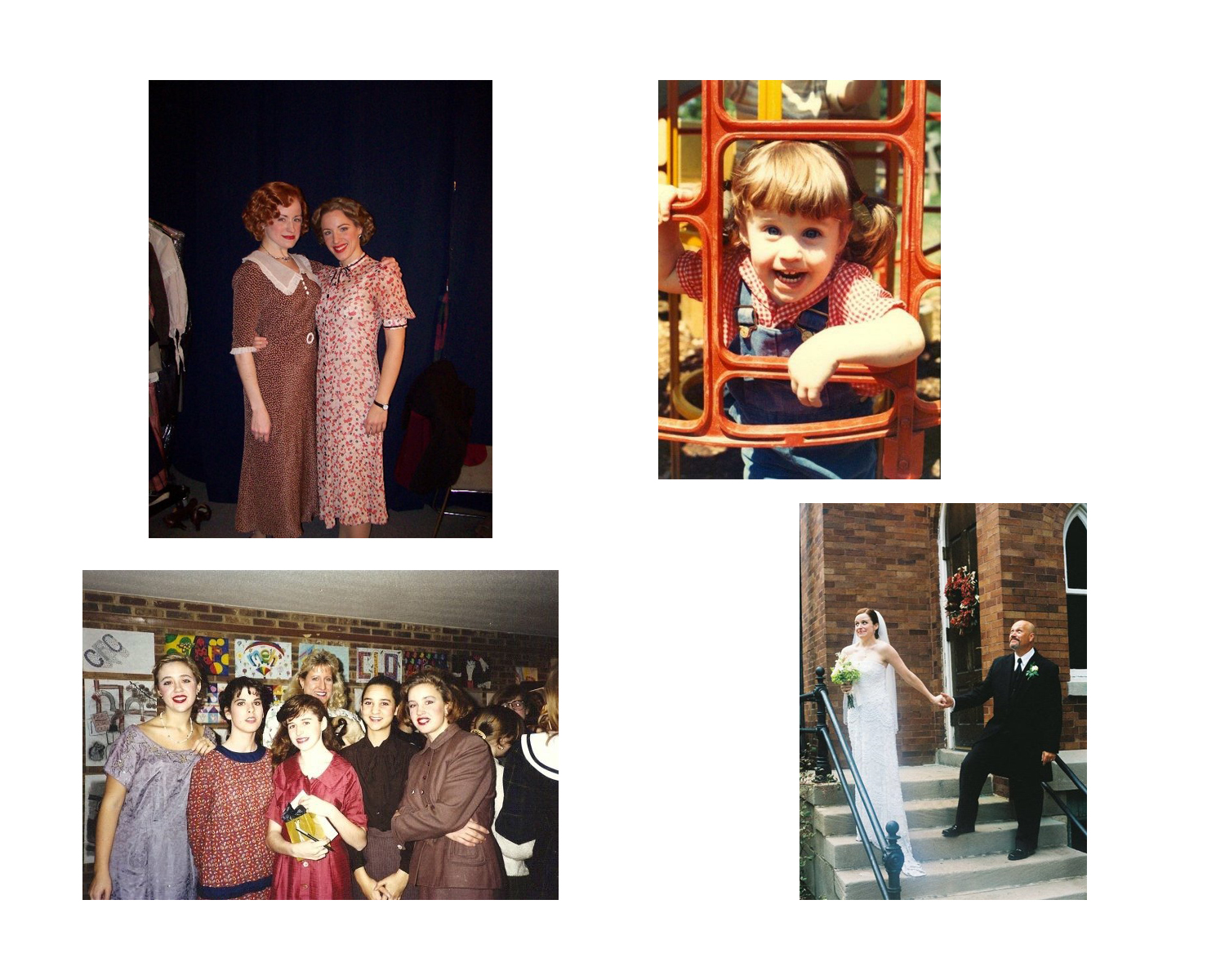
 

He has been seen on stage with The Hypocrites, Court Theatre, Paramount Theatre, The Inconvenience, and Chicago Children’s Theatre among many others. And, his words have graced such prestigious spaces as Vox First Person, The RedEye, and his Facebook page. If you would like to follow more of what he has to say, you can follow him on Facebook under his name or on twitter: @lifeofablacktor.

Posted on

A Conversation with Heidi Kettenring


First Davis, then Bacall, now Kettenring. That’s what the graphic from Porchlight Theatre Company read, advertising Heidi Kettenring’s turn as Margo Channing in Applause. And if you ask anyone who has seen Heidi perform, they would tell you that Addison DeWitt’s analysis of Margo in All About Eve could just as easily apply to her: “Margo is a great star, a true star. She never was or will be anything less or anything else.” Onstage, you can’t argue with the comparison to Margo, and undoubtedly Heidi will soon have even more pages of glowing notices to add to her collection, just like Bacall and Davis. But to get a real sense of what has made Heidi one of Chicago’s most beloved leading ladies, you need to dig a little deeper than that. As impressive as she is as an actress, and she is very impressive, there is just as much to be said for her offstage. There is an intellectual ease with which Heidi analyzes a text, a genuine passion for the collaborative process and a deeply rooted belief in the power of truth, kindness, and understanding. Put it all together and you can begin to understand the reviews she gets, not just from the critics, but from the people who have come to know her over the course of her multi-decade career in Chicago.
 

We sat down for coffee in Evanston, Illinois, and talked about the iconic roles she’s played, what it means to “have it all” as a woman in the theater industry, and why she doesn’t care what Hillary Clinton wears.


Kelly Wallace: Let’s start with some basics. Where are you from? Where did you grow up?
 

Heidi Kettenring: I’m originally from Metairie, Louisiana, which is a part of New Orleans. I grew up in Nashville, Tennessee, and moved here to go to Northwestern, and just…stayed.
 

KW: Why acting? How did you come to the decision to pursue it professionally?
 

HK: I don’t think I really knew that until I was about 24. And honestly…other people? I graduated; I was never very confident. In particular, in my abilities as an auditioner. I was never good at that. I always sang the wrong stuff and walked in too shyly. And so when I graduated, I auditioned for three things, one of which I got. It was Healthworks Theatre and you travel to schools doing health –­ mostly at the time HIV/AIDS –­education shows. And I was doing that while I decided what I wanted to do. And I auditioned for two other things and one of the experiences was so bad that I quit. I waited tables in three different restaurants and did Healthworks for about two years, and then a friend of mine basically called me out for being miserable and told me to go audition at the Wagon Wheel Dinner Theatre, which I did. I got cast in everything there, and I met people who did theater in Chicago professionally. One of the gals there convinced me to audition for a show at Drury Lane, which I got cast in. And that’s where I met my future husband, my future agent, and got my Equity card.
 

KW: Now, you’ve chosen to stay here in Chicago. In theater, as you know, there’s a common wisdom that New York is the center of everything, and that Broadway is the standard. We would challenge that assumption. There’s a huge diversity of opportunity out here, especially for women. What made you want to be here in Chicago specifically, as opposed to pursuing a career out in New York?
 

HK: I mean, initially, it was because once I started doing theater, I was successful pretty quickly. I love this town. There are tons of opportunities. And then as I got older and was sort of faced with the choice of…well, I could go to New York. At the end of the day, I do think when people first start doing theater…Broadway is the brass ring. It’s the brass ring that’s in your head of…well, I’m going to be on Broadway someday. But my brass ring wasn’t ‘I want to be on Broadway,’ it was ‘I want to be a working actor’ and ‘I want to have a certain kind of lifestyle.’ Meaning, I love having my own home. Not that you can’t do that in New York, but it takes a lot more money to do that. But immediately in Chicago, I met people like Paula Scrofano and John Reeger, like Roger and Jill Mueller, and looked at them and thought, “They have the life that I want to live. They have a home, they have a family, their job is being an actor. That’s their job; that’s what they do.” And when I was first starting and waiting tables and doing theater at night, that was so exhausting to me. I thought, “I just hope that, sooner rather than later, I get to the point where I don’t have to do all of these other things to put food on my table.” That’s what I wanted. And that’s what I got. It’s just never really been part of my reality to want to move to New York. It’s not a hugely glamorous answer. Every now and then, you think, “Oh, wouldn’t that be great? To be on Broadway and live on the Upper West Side” and then, pretty immediately, I think…no. I love my house, I love this town, I love the supportive nature of it. I mean, I’ll be standing in a room, at an audition, with five women and we’re all audition ing for the same part, and we’re basically saying to each other, you guys would be great in this! As opposed to not talking to each other. And part of that, maybe, is because there’s a lot of opportunity, and you know that if this one doesn’t work out, hopefully another one will.
 

Lila Morse, actor, The Diary of Anne Frank:
“I learned a lot from her about being a principled artist and professional. Regardless of the circumstances offstage, or any mishaps onstage, she always focused her energy on supporting the rest of the cast and giving the audience a wonderful show. Not only was it a comfort to know that kind of support was there, I find it to be a great example of a standard to have in my own work. And that she was never mean or awkward around me after I busted her elbow and sent her to the hospital.”


KW: You came here and saw Paula Scrofano and Jill Mueller having the life that you wanted to have. Do you feel like you needed to “see it to be it”?
 

HK: I do. Because I didn’t know what to expect. I think that’s sort of why I was reticent at all turns to go into this field. I think being able to see anything and be able to put yourself in those shoes and try to see…and know that it’s possible. That’s great. Kudos to people who don’t have that and decide to do who they want to be and what they want to do and they just trailblaze and make it happen. But I know it helped me. I know it helped me to be able to meet people right away who were mentors to me, who were kind to me, but I believed them. I never felt like I was being condescended to or told that I was better than I actually was. I felt like I was truly being mentored here. Truly, right away. Sam Samuelson was one of the first people I met and he was married to Mary Beth and they were making a go of it and making it work. And I thought, well that’s fantastic. It’s not just about, oh, they have a relationship and they’re doing theater. It was, well, what are all the elements of life that I would like to have. Not just “I want to be an actor,” because that has never been all that I was. Can I read my book for an hour? Can I work hard at what I really love doing? Can I cook myself a meal and walk in my back door to my home? All of these elements of things that, over time, I cobbled together…that’s what I want. And I can do that here.
 

KW: Mentorship is a huge issue; there should be so many more opportunities for young women to be able to have that experience. You’ve taught before, and some of your former castmates have said you were a great teacher to them backstage. Is it important to you to give back in that way?
 

HK: Absolutely. I feel like it’s interestingly part of my job. I’m reticent to use the word job; it makes it sound like it’s something I’m supposed to do. But in a positive way. I feel like it’s something that we’re all supposed to do. What is life without being able to help anybody with the knowledge that you have? It is. I love it when people are asking me questions about what have you done to create this life that I would very much like to have. At the end of the day, everyone’s experience is going to be different. But I know as a woman, as a female in Chicago, as an actor, what it has been like for me. It’s one of my favorite things about working with younger people, is helping if they want my help. If they don’t, that’s fine. But if somebody wants it, it’s my honor to help.
 

KW: Sometimes there’s a lot women aren’t prepared for or don’t know about being an actor, and one of those things often is being comfortable saying no. Did that take you time to learn?
 

HK: Oh absolutely. I think that there’s always a fear of…they don’t know me, I don’t want to be perceived as difficult.
 

KW: Which can be such a uniquely female problem, to be called difficult or a diva, and then it makes you worry about your ability to work.
 

HK: Right! It definitely took me a long time to learn that. Even in just over-booking myself. That ‘no’ is a perfectly acceptable answer. It doesn’t mean that I’m not being agreeable, it means that I just can’t. It just doesn’t work. Yes, I could technically do that and run myself ragged and be really tired, but that doesn’t help anybody . Learning how to say no, I think, for anyone, but especially for women, is a really difficult lesson to learn. And to realize, why do I want to say no? Do I want to say no just because I want to say no? I want to say no because the answer is actually no. And I want to say yes because the answer is actually yes, I don’t want to answer any question unless the truth behind it is the truth behind it. But yes and no…they really are, they’re sentences unto themselves. When am I meaning it? And when is it important to say? It’s a wonderful, difficult lesson to learn.
 

KW: Seeing people like you be able to do that and say that is really important. Were there women you worked with who you helped you develop that skill as a performer, both onstage and off?
 

HK: Oh yeah, lots of them. I mean, Susan Moniz is one of the first people that pops into my mind. Just from an audience perspective, oh my god, she’s incredible. And then being offstage with her, she’s lovely and delightful and kind and works hard, but when it’s not working for her…she’s perfectly delightful in her way of standing up for herself and getting what she needs and wants. It’s my honor and pleasure, there are countless women in this town that I consider mentors. And a lot of them are my age, and part of that is because I was a little late to auditioning, it was really fun to meet people who initially felt like they were older and I was younger, because they’d been doing this longer, but we actually were very similar or the same age. Truly, the dressing room is such a wonderful, sacred, awesome place. The things that I’ve learned about how I want to be in rehearsal, backstage, onstage, are from watching and learning from all of these magnificent women that I’ve gotten to spend time with. And ones that I don’t want to emulate. Learning from, “Oh, I don’t want to behave like that. I don’t want to learn like that. I don’t want to be perceived like that.” It has been invaluable for me.
 

KW: What’s onstage can be just as inspiring. Seeing women take on challenging, powerful roles can really help aspiring performers find inspiration to pursue their own art as well. What performances have really changed you?
 

HK: Oh god, what would they be? There’s so many. Kate Fry in a production of Hapgood. A Tom Stoppard play, I don’t remember the play; I haven’t read it since. This was when I was a student at Northwestern. I will never forget that. I don’t remember the play at all, and I don’t know if I’d met Kate yet. I’ve known Kate since 1991 and we’ve never worked together, which is crazy to me, but we’re good friends. I remember she was doing this scene and food was flying out of her mouth and she was having an argument of some kind and just going for it, and I had never seen anything like it. I have truly never seen anything like that, to the point that I don’t remember anything except her in that play. That was a life-changer for me. And honestly, since then, everything I’ve seen her in, I have felt that way about. She just has –­ and she’s like this in life –­ she’s just an honest, true person. And it reads onstage. She comes to everything from a completely honest and true place, which sounds so easy and it’s so hard. That’s a big one.
 

Stage-&-Candor_Heidi Kettenring_personal

KW: Have you seen anything recently that really struck you?
 

HK: Renee Elise Goldsberry, the woman who plays Angelica in Hamilton. That was a performance that knocked me out, just knocked me out on every level. And part of it is that the material was so surprising, I didn’t know anything about it when I saw it. I hadn’t listened to it on purpose. So you know, the fact that this elegant, beautiful woman comes out and then starts rapping like a, just, diva, for lack of a better word, and then singing like an angel and emoting with every inch of her body…the whole show was mind-altering, but that performance for me stood out. She was my favorite.
 

Dara Cameron, actor, Little Women:
“I feel so lucky to have gotten to share the stage with Heidi several times and she is one of my dearest friends. The first time we worked together, in Little Women, was a magical experience. It was one of my first professional jobs and I remember feeling instantly comfortable with Heidi. She has this ease about her – we became close very quickly. We got to sing a beautiful duet together and I’m not sure I’ve felt more connected with someone onstage (except maybe when playing opposite my husband…maybe…). She is a uniquely respectful and attentive scene partner, and one of the most honest actors I’ve ever encountered. 
We were also lucky enough to perform in Hero together, also at the Marriott, where she schooled me on holding a coffee cup realistically onstage (you have to hold it like there’s actual hot liquid in there!) and where we consistently had the hardest time keeping it together in one of our scenes because we just were having too much fun. Every night I got to listen to her sing her big act one solo number while waiting in the wings to enter and I remember marveling at her both her consistency and her spontaneity. I love going to work with Heidi because she takes herself and our business exactly the right amount of seriously.”


KW: So, since you started, you’ve gotten to play some of the most well- known roles in theater history. You’ve played Fanny Brice, Eliza Doolittle, and you played one of my personal heroines, Jo March.
 

HK: Oh, Jo is one of my favorites too!
 

KW: Let’s talk about Jo and Little Women. She’s one of my favorite characters, I know you’ve said in the past that she was a big love of yours too. Why do you think she’s become such a hero for women?
 

HK: I think a lot of the time when women are represented as strong professionally or strong as a leader, their femininity is left out. Their ability to love and be loved is left out, and what I loved about her is that she –­ surprise surprise –­ she can do well at that and she can love as a sister and love as a friend, with Laurie, and love as a lover, with the professor, but more importantly than that she…I don’t want to say she’s unforgivingly who she is, because she does try to be kind and she struggles within herself and asks, am I doing the right thing? But she knows what she wants to do and who she wants to be and she does what she needs to in a healthy way, to get it done. But at the same time, she is open to following love, and getting married if she wants. I think that for so long there hasn’t been a heroine that embodied all of that, even from a time when that wasn’t considered the norm, it wasn’t considered something people would want to be read about, and go figure, they did. It was sort of interesting proof of that we’ve come so far, but then we haven’t at all.
 

KW: There’s a lot of academic debate about Jo’s ending, in the book and onstage, about whether ending up home with her family and her husband is a betrayal of her pursuit of her career and her independence.
 

HK: I don’t agree with that at all. That’s one of the reasons why I love her, you don’t have to sacrifice one for the other. She [Louisa May Alcott] isn’t in the room for us to ask, but that’s an interesting thing. I can understand that point of view, “Oh well, she got professionally what she wanted, but it’s just not enough, I have to be something for a man” but I don’t think that’s it. I think there’s a wonderful partnership with the professor and Jo does doubt herself a lot at the time. There’s something sort of wonderful, I feel, about the fact that he helps her. I mean, it would’ve been just as good for her to handle everything on her own, but how wonderful that she didn’t have to. There are many ways to be fulfilled and she happens to fall in love while she was becoming an author.
 

KW: I think that’s one of the things that’s important to touch on: the fact that there’s not one path, there’s not one way to be a woman or to be strong. But that there’s room for all different kinds of choices and that real empowerment for women is about being able to make the choice…
 

HK: Right! And not necessarily what that choice is.
 

KW: Obviously, her relationship with her family, and with her sisters, is at the heart of the piece. You did the show out here at the Marriott Lincolnshire, with a lot of other great women…Dara Cameron, Morgan Weed, Abby Mueller. How do you feel like you all worked together in the rehearsal process to make that bond really present onstage?
 

HK: It was immediate. It was really immediate. I had been doing Wicked for two years when I did Little Women. I had been out of the loop of Chicago theater, really, for two years. I knew Abby because I had worked with, at that point, Roger…I think Roger was the only Mueller I’d worked with at that point, and I’d worked with him a lot. So I knew them from when they were kids. But it truly was immediate. I mean, that whole company was just really, really awesome. And the show is set up that you kind of –­ at least with the sisters anyway –­ if you can’t create that bond, you’re gonna have a terrible time. And I don’t think you can play Jo; I mean, I feel this way about any show. If you’re playing Annie in Annie Get Your Gun, or Fanny in Funny Girl, if you go into it thinking ‘I’m Jo March,’ then the whole thing is doomed to failure. You’re part of an ensemble, in any show that you do. So that’s what we were collectively, although we did have an issue when we got our sweatshirts. And we got pink ones, and the guys were really mad. ‘Cause they were like, I don’t want a pink sweatshirt that says ‘Little Women’ on the back, and we were like…’tough!’. That was maybe the one time we weren’t very ensemble–ish. But, it was funny.
 

Annaleigh Ashford, actor, Wicked:
“Heidi Kettenring is an astoundingly versatile and wonderfully gifted actress that is such a treat to work with onstage and off. It is no wonder that her craft and work ethic has made her known as Chicago’s leading lady. I had the great pleasure of working with her in the Chicago company of Wicked, a show that celebrates female empowerment and female driven stories.”


KW: You were in Wicked for quite some time.
 

HK: I did it for three years! I want to say I did over a thousand performances of that show.
 

KW: That show attracts such a young, passionate female fanbase. Did you have the opportunity to really engage with the fans of that show?
 

HK: I did. It took me awhile to accept that. It’s such a phenomenon, and that’s something that here…nobody hangs out, really, at the stage doors. I never experienced that before. It’s gotten more –­which is kind of exciting –­ that people now know that they can do that. But for the first year, I was able to get out of the building before the orchestra had finished playing. And I’d be at my car before people were even out of the theater. And it was actually somebody in the show who said to me, “You know, it might behoove you to go to the stage door. Because there are hundreds of girls, there are hundreds of young people and not-so-young people…there are tons of people hanging out at the stage door, and they just want to meet you. They want to talk to you.” And I’m really good at being onstage and behind lights, but I get really nervous about when I have to do a concert and be myself, or speak in front of people as myself. I get really, really nervous. It was a really big learning curve for me. But once I started doing it…you know, I loved it. 
Facebook started really becoming a thing during Wicked . And I am still Facebook friends with a lot of the fans. I’m actually almost grateful, because I think if Facebook had started now, I would probably not have accepted a lot of friend requests from people I didn’t know. But at the time, I was like, “Oh, sure!” and I didn’t know who these people were. And what’s interesting is that these people who were teenagers, young teenagers at the time; I’m still sort of seeing their lives in an interesting way. And we’re still in communication, and there’s a handful of them who will every now and then drop a line about how important that thirty seconds was, at the stage door, of just saying hello. And I don’t regret that first year, because that’s how I learned how much I enjoyed it, by not doing it, but there’s a little part of me that wishes I hadn’t waited so long to actually experience that. And it’s not because it makes me feel good to have people say, “You’re so good!” It’s almost the opposite. That’s the part that makes me uncomfortable, once I get beyond that, and they’re telling me how good they feel because of what they just experienced…I love that. And there’s still a handful of people who now come see me in things all over the place because of that. Yeah, I mean, it’s kind of it’s own weird form of…it’s not mentoring, but it’s the same kind of feeling of like…realizing I’ve just done my show for the 725th time. But this is the first time for this person, who just spent their money to come experience that and how singularly awesome that is, the responsibility and opportunity that I have even when it’s over, to say thank you. Thank you for coming.
 

KW: The stage door after a show is a place where people really have access to their heroes. Anyone can go, anyone can say hi and share their experiences.
 

HK: Yeah, we’re all standing out there wearing our coats and our hats and our scarves at that point. I’m not wearing my costume that was designed by somebody standing on this big fancy stage. I’m just standing in an alley next to a dumpster and we’re complete equals talking about what we both just experienced from two sides of the stage.
 

KW: Have you ever met or worked with someone that was an idol to you?
 

HK: I’m sure. Well, Susan. I keep bringing Susan Moniz up, and it’s fun, because she’s such a good friend of mine, but I remember being in a show with her for the first time…I was just knocked out because I had seen her when I was at Northwestern; I had seen The Hot Mikado at the Marriott Lincolnshire and we’re sitting next to each other in a dressing room and it was just crazy, crazy, crazy to me. Ben Vereen! Oh my god, he was in Wicked for one week. He did the show for one week. And the Wizard didn’t walk onstage for 45 minutes, he could’ve shown up at half hour, and gone to his dressing room. But he came up on the deck at places every day, shook everybody’s hand. He said, “Make some magic out there!” He learned everybody’s name before he got there, for the one week he was there. Oh man, that was incredible.
 

KW: Have you found that the people who are the most engaged and kind and honest offstage are often also some of the best performers you’ve worked with onstage?
 

HK: Yes. I’m sure there are many who are not, but from my experience, the more open you are…being a good actor is reacting to what is coming at you. ‘Cause even a one person show, you have to react to the music, you have to react to the lights, you have to react to the audience, you have to react to your own self. And if you have a block up for that, then I don’t know how you can really truly tap into being a really good actor. If you can’t look someone in the eye and say hello, how are you gonna look someone in the eye onstage and see, “Oh, today their energy is a little bit lower, I gotta maybe kick it up a notch a little bit,” or vice versa.
 

KW: And in the moment you’re lost in the world of the show. But now we live in a world now where technology has enabled a lot of people to react offstage and share opinions on what they saw or how they feel. Do you read reviews or reactions to your performances online?
 

HK: I do read reviews. I went through a period of thinking, don’t read reviews, they’re detrimental. I’m the kind of person who…I almost even have a hard time not flipping through and reading the last page of a book. For me, it’s ripping the band-aid off. Yeah, sometimes I read stuff that I don’t wanna read, but I find they help me. I don’t necessarily listen to them, but I like to get that over with. Reactions…on the flip side, I learned very quickly, especially with Wicked, I don’t go to blogs, I don’t read message board type stuff. Because it’s too easy for people to…like, when people are driving a car and they feel like they’re in the privacy of their car and act horribly, sometimes I feel like behind the screen of a computer, even if people don’t necessarily mean to be really mean, I’ve read some really hurtful things about myself. And I don’t need that. But there’s something about, in the confines of a review, I can’t not. Every time I try to not do it, I end up thinking, “I wonder what they said. I wonder what they’re saying.” And I find that for me, it takes the mystique away. I read it, it’s done, and then I can move on with my life.
 

Jessie Mueller, actor, She Loves Me:
“Heidi and I did She Loves Me together at Writers’ theater and it’s one of my favorite things I’ve ever seen her do. She’s just kind of dreamy to work with. She knows how she works and how to work with others – when to get down to business and when to have fun. You’ll realize after a day of rehearsal that you’ve laughed your butt off AND gotten the scene blocked too. She’s also a gem of a human being and a great friend – the kind that can help you look at this business with a keen eye, or a healthy dose of humor. She’s a great human being and a great actor. You’d be surprised at how rare that is.”


KW: One of the other big shows you did here in Chicago was She Loves Me at Writers Theatre
 

HK: I love that show, I love Jessie Mueller.
 

KW: Ilona is so interesting as a character. She’s very open about sex and sexuality in a time when a lot of women were not, and that was a controversial thing to be. She’s very resistant to marriage and she’s even slightly afraid of Paul, whom she later marries, when they meet. The lyric is, ‘he looks really strong, I wonder if he could hurt me’.
Where do you think that comes from? Why does she find herself able to let Paul in, in a way she hasn’t been able to before?
 

HK: If somebody is bigger than you, somebody’s stronger than you…you don’t know them. It’s wise to be trepidatious about that. But for her, she finds him very attractive, but also it’s the first time that she’s allowed herself to be interested in somebody because of their mind, and he’s interested in her…they probably both find each other very attractive, they’re talking about books. They’re talking. They’re sipping hot chocolate and actually talking. They’re not flirting. It’s not just ‘a really attractive man has walked into the Parfumerie and I’m going to flirt with them,’ it’s ‘Oh, this respectable guy with glasses has asked me a question, asked me if he could help.’ There’s a moment, where the lyric is, “Clearly respectable/thickly bespectacled man,” by the second verse she’s singing “slightly bespectacled man,” it’s like even she stops looking at his surface because of what he’s giving her from the inside, to her inside.
 

Stage-&-Candor_Heidi Kettenring_Theater

KW: Have you ever had to do a show where you get the script, and you look at the text, and you don’t necessarily identify with your character or their story arc? How do you proceed from there?
 

HK: Oh sure. There are definitely times when technique has to come into play, if my human experience isn’t going to help me. Angels in America was a really hard one for me to tap into. The language is so beautiful but a little difficult, and the subject matter was difficult to tap into. I do tend to then lean a little bit more on technique. But interestingly, even those, after awhile they become easier, almost because they must. The longer they’re in your body, and the longer you work on them…your body as a vessel, it does become easier, just because it must, for lack of a better way to put it. In order to lose yourself into a performance, while at the same time bringing a lot of Heidi into everything I do, because I am who I am, so the more challenging ones, I think, the more of myself I let in, it helps me with that.
 

KW: Jessie Mueller she said something similar about playing Carole, that she felt that you can’t just play the character without bringing some of what you are into the role. Have you ever had the experience of playing a real person? How was that different?
 

HK: Oh, Jessie! Fanny Brice was the big one, probably.
 

KW: Did you lean on the biographical material? How do you combine that with finding your way into it as Heidi?
 

HK: Because of the nature of who I am, I am sort of a natural mimic. So I try very hard to not do too much visual, audio research because I will just innately have a difficult time shedding that. We actually talked about this a lot with The Diary of Anne Frank [Writers Theatre, 2015] actually. Some people read the actual diary and some people didn’t. 99.9% of the time, the words on the page of the play that I’m doing are gonna give me the information that I need. If I don’t understand something or I’m speaking of something historically that I don’t really know what that is, I’m gonna look it up so I know what I’m talking about, but if the scene on the page didn’t happen, knowing what really happened doesn’t help me tell the story I’m trying to tell. So playing somebody like Carole King, when there’s so much out there…it’s a really fine line to walk. You don’t want to do a mimicry of Carole King’s voice, but, you know, I’m Jessie. There are certain things that are quintessential that people are gonna think about…it’s a really fine line to walk.
 

KW: And a show like Funny Girl, people come into it with a certain expectation of what they think that character is or what it should be. You come in, and you surprise people. Do you enjoy that?
 

HK: I really do. I mean, playing Patsy Cline in Always Patsy Cline is one of the funnest times I’ve ever had. And it was really complicated. Now that’s one where I listened to her recordings over and over, because I’m never going to sound like Patsy Cline. I’m not Patsy Cline. But…she’s an iconic singer. So, I love that, I love the idea that there is no way I’m going to sound like Patsy Cline, but what can I do to give grace notes to her so that within a few minutes, people have forgotten the fact that I’m Heidi Kettenring playing Patsy Cline. And that was really fun, people knew she had died years prior, but you hear people saying, “I thought she died?” like, they would actually lose themselves into thinking, “Oh my god, I’m watching Patsy Cline in a play”, and I think that’s wonderful and fun and cool and such a challenge. I don’t want to do it all the time, because it’s a whole other element of taking a little bit of the freedom away as an actor. You do have to work to fit into that mold, but it’s a fun challenge.
 

KW: There’s been some controversy around Madeleine Albright lately but there’s something really interesting she wrote in an op-ed, “In a society where women feel pressured to tear one another down, the real saving grace we have is our willingness to lift one another up.” How can we do better about lifting each other up?
 

HK: I almost feel like if I knew the answer to that, the problem wouldn’t be there. All I do know is that it is the truth. It’s something that I don’t understand why it’s a conversation we need to keep having but we obviously do. Knocking people down isn’t going to help. Building people up is going to help. It helps you as a human being to build somebody up. It blows my mind that it’s a conversation we will need to have. So we have to keep having it. We can’t be afraid of having it. Don’t be afraid of, “Oh no, somebody might call me a feminist!” So? Be a feminist.
 

KW: Do you describe yourself as a feminist?
 

HK: Absolutely.
 

KW: Some people would say that it’s a loaded word. What does that word mean to you?
 

HK: Right, I think maybe I am because I don’t think it’s a loaded word. I’m a feminist because —maybe it’s a naive reaction— I’m a feminist because of the fact that we still have to ask if it’s okay for me to say I’m a feminist. I am a woman who believes that I— in every way other than my actually physiologically differences— I’m tongue-tied about it, even…
 

KW: “Feminism is the radical notion that women are people”?
 

HK: Yeah, exactly! Like the fact that it just blows my mind that we’re gonna have a conversation about what Hillary Clinton wore. It seems so irrelevant. I sit there and I’m like, okay, she wore a gold outfit. Show me a time that one of the men shows up not wearing a suit and a red or maroon tie, y’know? And even when they do, we’re not gonna talk about it. Because it’s not what’s important. I guess because of that it has this stigma that it’s a word that means I’m shrilly, speaking about what I’m owed and what I’m deserved…the fact that there still needs to be a conversation about what makes people equal…that alone makes me a feminist, because how could I not be? I’m a woman who in no way doesn’t think in every way we’re equal.
 

KW: Have you ever felt treated differently because you were a woman?
 

HK: Yes. That’s definitely been the case. I’ve never been one to be actively physical, I’m not a hugger. It takes awhile for me to walk up and kiss a friend of mine that I don’t know very well. In theater, that’s an interesting thing, I don’t know if it’s a gender thing or a me thing, but I do think it’s a gender thing. The immediate intimacy that a lot of people have…I don’t immediately have. Words come up like “lighten-up” or “oh, you’re such a prude” in that regard, and it’s not all the time, but when it happens my wall immediately goes up. “Oh, I’m a prude because I don’t like the fact that you just smacked my ass? Okay.”
 

KW: Do you feel like there’s that pressure onstage too…to “lighten up”, to be more likeable?
 

HK: I do. Yes. I do. And a lot of it is, in particular, with words that I’ve always hated. “You’re making her really shrill, you’re making her really strident.” As a woman, why are those a bad thing? That is actually the timbre of my voice. When I’m getting angry, I get a little “shrill” or “strident”, so really what you’re telling me is that you want me to be likeable. Well, in this moment, she’s not likeable. I’ve never heard “shrill” used towards a man. And…ugh, I just hate that word so much.
 

KW: We were talking before about politics, which feels relevant here…Donald Trump, who comes from a place of anger so much of the time, or even Bernie Sanders, who come from this place of being loud and having raised voices…if Hillary Clinton or Carly Fiorina matched that tone, they’d certainly be (and are) called “shrill”. But somehow with men, it’s seen as strong.
 

HK: That’s exactly it. People don’t realize that they don’t want to associate women with anger or strength until they actually see it happening. They’re like …ugh, what is this unladylike behavior? But at a debate, when a man is doing it, it’s not even considered.
 

KW: What do you want to see in the future? For women, for theater, what is your vision of where you want to be in 10 years?
 

HK: My hope is that, the gilded lily hope, it’s a conversation that we no longer need to have because everyone is on the same page and on the same foot. My hope is just that it’s not, “Oh my god we have this wonderful female director, we have this wonderful female…” that it’s just “wonderful director”, so what if it happens to be a woman. And that there’s just more. More opportunity to talk about it. To talk about it like this, like we are right now. More to actually do. That it’s not avant garde for there to be a play of all women. That it’s not avant garde that the team is all women, you know? The fact that it’s news in 2015 to have on Broadway the creative team for Waitress is all women…my hope is that in five years that not only is that not a conversation, but it’s not even a question. It shouldn’t be a novelty. I don’t want it to be a surprising thing. It’s just a thing. Well, of course it’s all women. They were the best ones to do the job. But there doesn’t have to be a press release, because of how great and unusual it is, and right now it is great and unusual, but it would be great for it to just be great.
 

Barbara Gaines, Artistic Director, Chicago Shakespeare Theatre, directing the upcoming Tug of War:
“Every performance I see of Heidi’s—no matter what the play—is my favorite performance, because she is the ultimate chameleon. She changes characterization depending on the show and the demands of the role. She completely blows us away with her versatility, and with her profound understanding of human nature. Besides that, having her in the rehearsal room is nothing but a complete and utter joy. She is a fantastic human being…wise, warm, and she makes the best egg salad I’ve ever tasted. I feel truly blessed for all of the opportunities we have had to work together—and for the great adventure we are embarking on this year with Tug of War.”


KW: Now, you’re on to Tug of War at Chicago Shakespeare Theatre, a six-hour marathon of a show.
 

HK: Terrifying!
 

KW: Barbara Gaines is directing that…do you feel like the energy in the room is different when you’ve got mostly women?
 

HK: Oh yeah, just as we were saying before, the inherent fact that she’s a woman is different. Barbara for me is a singular, wonderful person to work with because she’s so strong and she’s so nurturing. She embodies for me all these wonderful elements of being a strong, full woman. She’s smart, she commands a room, she’s nurturing, she’s kind, and not that I haven’t worked with men who are like this, but there’s something about this petite, spark plug, lovely woman who I feel completely at ease talking to. It’s just a different energy. I don’t know what’s better, what’s not, but I love working with women, and with Barbara. She brings a positive, kind, strong forward momentum into the room every day. And I so admire that about her.
 

KW: And then, working on Applause, with Margo and Eve…their relationship starts off with a conversation at a stage door.
 

HK: Right, like, you’ve come to see me twenty-four times. You’ve earned my attention.
 

KW: Her instinct is to be the mentor. The break-up of that friendship feels like it is a product of the idea that there isn’t room for everyone. Eve feels like it’s her OR Margo, but there’s a place for both of them.
 

HK: That’s where my Margo is coming from. She’s mentoring her. Eve, unfortunately, I mean, it turns sour, because of the fact that…when Margo sees her with her, “Oh, I’ll take care of that, I’ll do that, I’ll sew your clothes” and then she goes back into the room and she’s bowing and holding Margo’s dress up to her. I don’t think –­I mean there is the undercurrent of Margot feeling old, so there is that element of it. Women can have less opportunity as they age. But y’know, what I see for Margot, because I’m coming at it on her side now. I’ve played Eve years ago. Margo’s reaction is to the dishonesty. As much as Margot is this sort of flamboyant, fabulous personality, she is unabashedly who she is. And here is this woman who is hiding completely who she is so there’s that part of –­ you’re trying to be successful by being completely who you are not. The number, “Who’s That Girl” she sings when Eve is there –­ y’know, does he want to marry this Margo, that Margo, or the one on the TV –­ well I don’t feel like she’s saying that’s not who I was, this is who I am now, that’s what I was, but I think one of the many things that bothers her about Eve is that she is completely not in any way who she says that she is. She’s covering up, whether or not she’s doing it because she’s a woman or because her dad was so horrible to her as a child; she is not who she says she is. It’s an interesting piece. What I’m struggling with is the end, is how to make the end not unpalatable. Because of the fact that Margo, the words to it are beautiful, ‘there’s something greater,’ I don’t need to just be the person on the screen. But then it’s like, she just gives it all up to be with Bill. So finding the way in a non-1960s world, to take that and make it work in my brain and not make it, “Well, I’m giving up the theatre so I can be with my guy!” That’s become a really interesting, fun, challenge.
 

KW: Gloria Steinem said in an interview with PBS a few years ago that women can’t “have it all” until we realize that not only can women do anything men can do, but men can do anything women can do, because women end up expected to do two jobs, one in the home and one out of it. Do you feel like you’ve been able to “have it all”? What does that mean to you?


HK: I do feel like I’ve been able to have it all. Well, all I wanted in the the time that I wanted it, if that makes sense. Because I don’t think anyone can or should have it all, because then…what do we need other people for? I was actually having a conversation with my husband just last night. We were talking about all kinds of stuff, but the conversation we had recently was that you can’t possibly understand what I’m feeling because I’m a woman. And he said, “I do, I understand”. And I said, “Well, no, I think it’s actually okay that you don’t. And it’s okay that I don’t understand everything that you’re going through since you’re a man. You’re a man, I’m a woman. The difference is how we handle those things and how we interact because of them. Because we’re all innately different. For me personally, yeah, I think, and I don’t look at it in any way as giving up anything, how do I want to say this…I feel like I have what I need and I want because…I try, I work very hard all the time and in every phase of my life to look at my life and think, “What do I need, in this moment, to have the full life that I need right now?”
 

KW: I’m really glad that you brought that up. The idea that we can’t ever completely understand what someone else is going through when you have such a different identity or life experience is something some people are afraid to say. Man and woman is one example, race is another. It’s important to have the conversation.
 

HK: Right, absolutely. I always feel like, if I don’t understand, which I can’t, with race, with gender, with class…you know, we’re all different. Talk to me about it. Explain to me what, you know, I’m going to say or do something “wrong” just from the sheer fact that I don’t know. And so…help me. Educate me. And I will do the same. Because it is impossible for me to understand the full experience of a man, of anyone of a different race than me, because I just am not those things. But I want to. I want to do everything in my power to understand that because we all walk the face of the earth and we should all walk it together, as much as we can. But I cannot pretend that I understand everything because I just don’t. I would like to learn as much as I possibly can. And I think that, I hope, that’s part of why I’ve been able to lead the life that I do, and that I’ve wanted, is that I try to have as much empathy and sympathy to the degree that I can, and I want to live to my honest and true self.


Heidi Kettenring’s favorite Chicago credits include: Wicked (Nessa) with Broadway in Chicago, The Diary Of Anne Frank (Mrs. Van Daan) and She Loves Me (Ilona), at Writers’ Theatre, The King And I (Anna—Jeff Award best actress in a musical) and Funny Girl (Fanny Brice), at Marriott Theatre in Lincolnshire, The Merry Wives Of Windsor (Mistress Ford) and The School For Lieu (Eliante), at Chicago Shakespeare, Oliver (Nancy) at Drury Lane Oakbrook, as well as work with Chicago Commercial Collective, Court Theatre, Northlight Theatre, Theatre At The Center, Drury Lane Evergreen Park, and American Theatre Company. She toured the U.S. in Disney’s Beauty And The Beast. Regional credits include work at Fulton Theatre, Maine State Music Theatre, TheatreWorks Palo Alto, Peninsula Players and Bar Harbor Theatre. Ms. Kettenring has also sung concerts for Artists Lounge Live, Ravinia Festival, the Pensacola Symphony Orchestra and at Millennium Park. Heidi can be heard singing on two Disney Junior Books and can be seen in the film Man Of Steel. Television credits include Cupid and Chicago Fire. She is the recipient of a Joseph Jefferson Award, 7 Jeff Award nominations, the Sarah Siddons’ Chicago Leading Lady Award, an After Dark Award, the Richard M. Kneeland Award and is a graduate of Northwestern University. She is a proud member of AEA and wife of actor David Girolmo. Heidi can be seen this Summer and this Fall in Tug Of War at Chicago Shakespeare Theatre.