Posted on

A Conversation with Ayodele Casel

Ayodele Casel


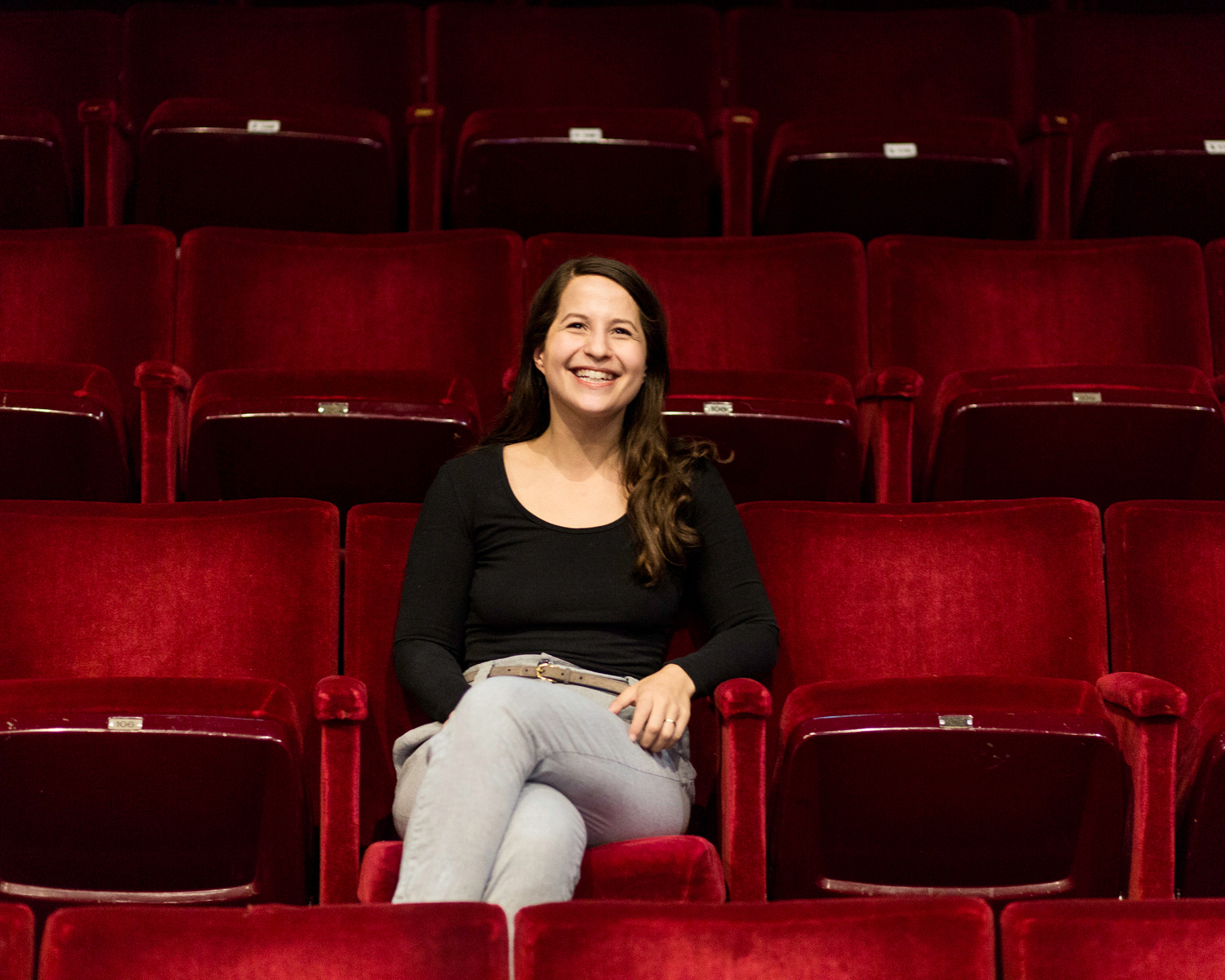
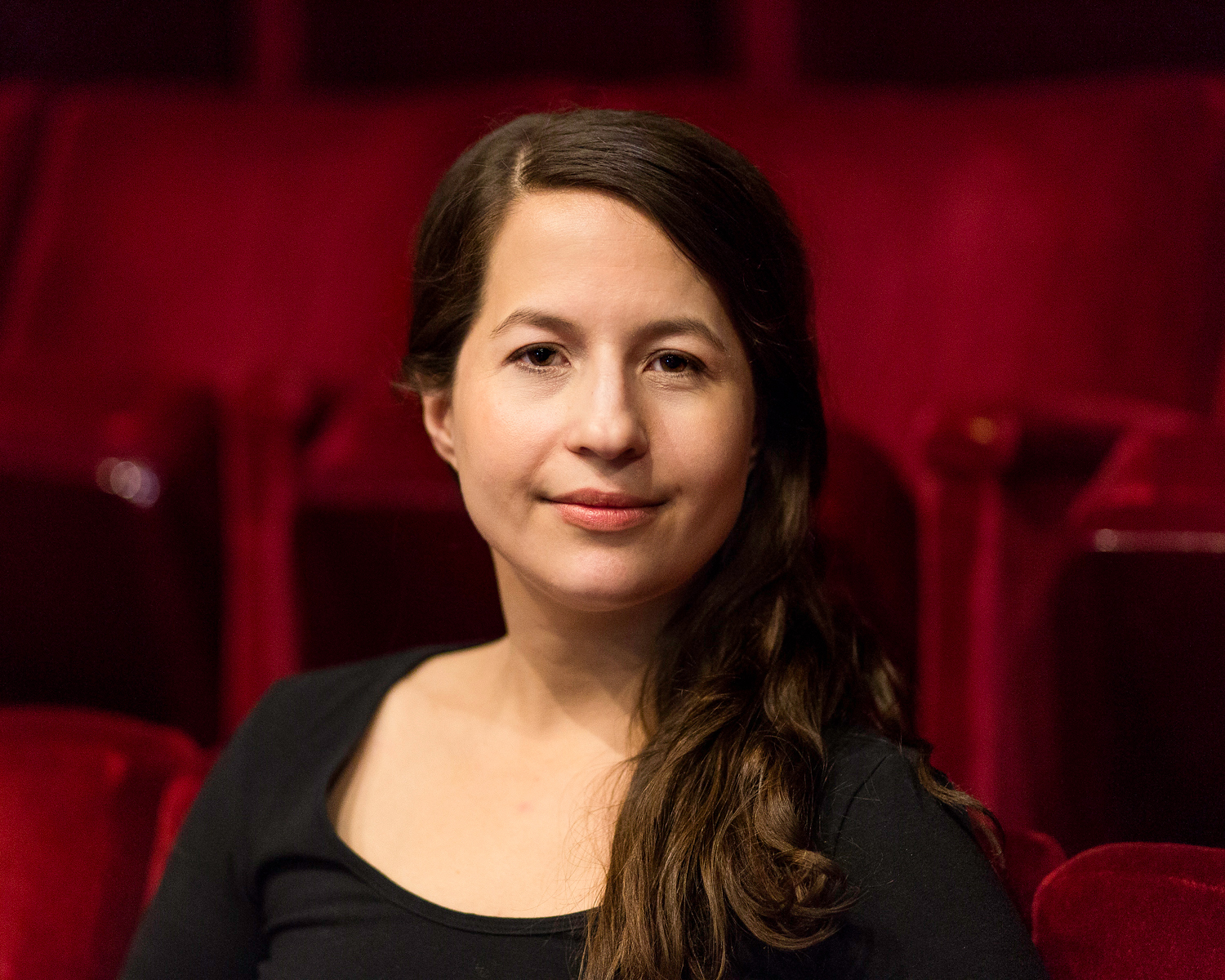
Ayodele Casel is one of those people you can point to and say, that is one of the most exceptional humans I know. Fierce and funny, disciplined and brave, Ayodele is quick-footed and lion-hearted as she takes on the world. Whether it’s on tap dancing, safety tips, how to play video games on her couch at home or active, hopeful ways to look at the world, she teaches me monumental new things with every conversation, class, or performance. Ayodele upholds a level of excellence across the board in art and in heart, a reminder of what we can all strive for.


Corey Ruzicano: You have this new, extraordinary piece coming up, so I wanted to start out by talking about storytelling. You’re a dancer and an educator and a leader and an actress and a photographer, you’re now running this space, Original Tap House, you’re bursting with talents, and I’m wondering how all these different roles inform one another, and how they’ve shaped the way you communicate and the way you tell your story.
 

Ayodele Casel: Thank you. Yeah, it’s such a great question because I’m not sure I’ve ever actually verbalized how they all intersect. I suppose that there is a throughline, right? There has to be. I was always into telling stories. I think kids are so naturally engaged with their imagination. I knew I wanted to be an actress since I was nine. I knew then: that’s what I wanted to do. So everything that I experienced from that point was with the knowledge that one day I was going to be an actress.
 

CR: That filter was always there?
 

AC: Exactly, it was always through that filter. If I played with my friends, I was practicing. If I watched a film I would think, how are they doing that? How does that work? I was always processing in that kind of a way. I was also a very introverted person, so I think it was also easy for me to kind of play and imagine and pretend in my own space and time. This is kind of related to the piece that I’m doing. When I was eighteen, I discovered classic films and I was really, really into them – analyzing who the directors were, what kind of stories they liked to tell, who they worked with consistently, what kind of storyteller was Hitchcock, what kind of films Cary Grant always did… and so I knew that who I was watching was masterful at what they were doing. I’d like to think that I had, at an early age, a sense for quality. When I started tap dancing in college, I was fortunate enough to meet someone who was an incredible tap dancer. I was fortunate to always have a high level of people around me and for some reason, I just always sought that. I always wanted to surround myself with the best. Having danced with some of, I feel like, the best tap dancers to grace the earth, you can’t help but be filled with that. It just happens naturally; their greatness rubs off on you. At least you hope it does. You know what’s good, there’s a high standard, a bar that you’re always reaching for. That discipline, you can’t escape that. I feel like I have carried that through every aspect of my life. When I became interested in photography, I wanted to look at the best images out there, the best photographers. Even with this space that Torya Beard and I have created here, we wanted to have an elegant space for artists to create. The through line would be integrity and quality, that’s what I’ve tried to draw through everything. But I think I may have lost what your initial question was about storytelling.
 

CR: Not at all. I’m really interested in this question of, how do you tell your own story? Especially for people who are used to expressing themselves through different lenses and with different mediums, how do those vocabularies start to inform the very nature of how you talk about yourself? And then I feel like there’s the tendency or the opportunity to step into the narrative you create for yourself, from that. When you have so many different intersecting interests, how do they come together and shape the way you communicate?
 

AC: You know, it’s so interesting because I feel like I have just recently tried to articulate my story. For many years, I was just dancing it. There are no words, and I was dancing for myself a lot of the time. And with acting, you’re saying words but they aren’t yours. Even now as I struggle to find the words…this piece has been a really great gift and tool for me. For so many years I had always either been acting or dancing and I wanted to combine the two.
 

I had actually explored doing my own show about fifteen years ago, and it was a concert, I had a ten-piece Latin band behind me, and basically I wanted to give voices to my influences. Like my grandfather, I grew up with him and I started listening to Latin music because of him and then I wanted to honor my great-grandmother, because I was so fortunate to know my great-grandparents. I had these really vivid memories of them and I loved their spirits, they were so humble, and I wanted to share that with people. Not a lot of people tell their story and I want to hear everybody’s story. I have wanted to also really give voice to these women tap dancers that I had done as much research as I could, because there’s such little information on them and I’ve had such a great career; I’ve been so blessed that sometimes I don’t think it’s fair. I don’t take it for granted that I’m so fortunate and I don’t like it when people just think they’re the origins of something. One of the things that I’m so connected to and proud of is that I am a part of a larger picture, not just of my family but of this art form, and I think that it’s important to honor the people that put in good blood, sweat, and tears before you so that you could safely step on the stage or express yourself or be recognized.
 

Ayodele Casel
 

CR: Absolutely. Your piece is called “While I Have the Floor.” What are some of the floors or platforms that have been given to you or that you’ve had to fight for along the way? How has artistic mentorship played a role in your life?
 

AC: I feel like it’s important to be very mindful of gratitude. Not always on purpose, but we take things for granted – where you live, being able-bodied, getting to go to college. My mom was really proud that I attended college because she didn’t get to go. For her to have given me that space and encouragement, and to have that vision for myself, right there, that’s one more leg up than what she had. It starts there. And actually, I started dancing in college, so really it was like a double blessing! To meet this guy who was a freshman who said, you like tap, I like tap, I’ll teach you for free. It was just a sharing, there’s no monetary value you can put on that. People take private lessons all the time, I give them all the time, but here I was and he was freely giving his knowledge and sharing his love with me, so that was another leg up for me. When I started tap dancing, there were women in my generation who wanted to dance, but I felt like they were very intimidated by the energy that the men were giving off. They were very confident and virtuosic in improv circles – and I just wanted to dance so badly it didn’t really matter to me. I didn’t see gender in that way, I just thought, we’re here, and I want to do that, so I’m gonna put myself in that circle. As far as having to fight for something, one of my favorite shows and influences was Bring in ‘da Noise, Bring in ‘da Funk. I was so inspired by that show and also so incredibly disheartened by the fact that there weren’t any female roles for tap dancers. Ann Duquesnay was the singer/actress, but the dancing was all done by men at the time and there were no conceivable openings for women. How do you react to that, if you don’t see yourself fitting in the picture? Do you quit? Do you say, screw it? I thought, I’m gonna make space. It didn’t deter me, I just kept dancing.
 

So when Savion [Glover] first created this group, Not Ordinary Tappers, which was my first big, professional group thing that I did, I was the only woman. That gave me a huge platform. At the time, it wasn’t like, I am woman, hear me roar, I stand for all women, watch out! I just was happy to be there. I didn’t realize it was a thing for me to be the only woman, until people would interview us or they would interview me and say, I didn’t even know women tap-danced. I thought, I get that my presence must feel like an anomaly, but surely I can’t be the only one that’s ever done this. There was Brenda Bufalino, she’s one of our pioneers, and Roxane Butterfly who’s maybe five years my senior, but in terms of that circle of men and people of color doing it…I was kind of alone, especially in New York, in this particular environment. So I thought, clearly there’s a platform here, for me to really speak on this. My first solo show, the one I was telling you about, I called out these same women that I’m calling out in this piece now. It was important to me then to say their names. Nobody was saying their names. The first time I saw Lois Bright, my jaw dropped to the ground, because we knew about Lon Chaney, and Chuck Greene, and Buster Brown, and Jimmy Slyde; they were all alive at that time, but nobody had ever said: Lois Bright, Juanita Pitts, Louise Madison, the Whitman Sisters. And I get it, I know that it comes up when it comes up and sometimes the focus just isn’t on any particular gender but I just thought, isn’t anyone talking about these women?
 

CR: Yeah, whose stories do you think we’re missing – either the stories that you name in this piece or stories you’ve encountered in life that you want to lift?
 

AC: I want to know so much about Lois Bright. Cholly Atkins writes in his book that she was a beautiful, wonderful dancer and his right-hand person for when he would choreograph. That’s a small piece of what we know of her and we know that she was gorgeous and an incredible, flashy, and athletic tap dancer because of the ONE dance clip in “Hi-De-Ho”. She was married to one of the brothers that she danced with and there isn’t much more on her. I don’t know when she started dancing, I don’t know why she quit. I just want to know and see so much more. Louise Madison, there’s just a small short paragraph on her in this dissertation I discovered by Cheryl Willis and it says that she could eat Gregory Hines alive.
 

CR: Wow, what a thing to be remembered by!
 

AC: I know, I was reading it and just thought, oh my god, where is she? Where’s the rest of it? They say she may have fallen in with drugs, and then she essentially just fell off the face of the earth.
 

CR: The way so many women’s stories do.
 

AC: Exactly. We know more about the Whitman Sisters because they were producers and they had their own show, their own Vaudeville act and they were very successful in that circuit, but there’s no footage on them, not in all my twenty plus years of dancing have I seen anything because it doesn’t exist. We’re missing all of their stories, we’re missing all of their voices and I don’t want to be that. I just feel like it would devolve dance and the lineage, so I just feel like it’s really important to write it down.
 

Ayodele Casel
 

CR: How does it change the relationship you have to what kind of story you want to leave behind?
 

AC: I’ll tell you, I’ve been wanting to do this kind of thing since the year 2000 and what really kind of woke me up was a tap history book that was recently published. There’s this section on me and as iI was reading it and its depiction of other women it wasn’t that I was expecting a full story, the book isn’t about me, it’s about a tap dance history, and I’m thankful to even be mentioned in the lineage, but what really bothered me about this particular version of my life that’s now in print forever and ever, amen, is that it reads: “and she stopped for two years.” Period. And then on to the next section. It’s three pages and it ends with that, and I just thought, oh my god this is not my story. This will not define me in print. God forbid something happens to me tomorrow and that’s what’s left. I don’t want to let other people define what that is, because I know what a loss it was to me not to have those other voices and stories of these other women.
 

CR: It’s that same need to “see it to be it” idea, what Jeanine Tesori said in her Tony speech, what we always talk about, how deeply important and revolutionary it is to see representations of people like you doing what you want to do, being who you want to be. Especially when you don’t fit into what’s been presented to you as the canon of whatever that field is, being yourself in that is a political act.
 

AC: Yeah, it absolutely is. I think that, that is one of the wonderful things that tap dance has given me: it teaches you to recognize your individuality from the get-go. In improvisation, you cannot be anybody else. If you aren’t being yourself, you aren’t being authentic, you aren’t being interesting, you aren’t honoring the dance that you’re doing, you aren’t honoring the art form and most importantly, you aren’t honoring yourself because we all have our own unique and wonderful point of view. If you’re paying attention, you learn very quickly to start honing some authenticity.
 

CR: And I love that word “attention” – you’ve said that before to me about making conscious choices about what you pay attention to –
 

AC: Yes, what you put your attention on grows stronger.
 

CR: Yes, I love that idea and that language.
 

AC: That’s how I try to live my life, very intentionally aware of your energy, your point of view, how you see things, positively or negatively, and if they’re negative, you’re going to attract a lot of crap in your life. When I was in my twenties, I read a book called The Four Agreements and it really changed my life because I thought, oh I don’t have to be mad at little things, I don’t have to take things personally. I really started to shift internally how I was reacting. I witnessed a lot of violence as a child and I wasn’t a violent kid, but…well, actually I was going to say that I wasn’t a violent kid, but I used to fight all the time! They used to call me Muhammad Ali, because I was constantly fighting boys, so actually, I was taking that out on the playground. But I was a very good student, I got straight A’s…
 

CR: And you were also in fight club.
 

AC: Yes!
 

CR: It’s so interesting, because female aggression is something that’s so little talked of and so seldom represented, especially for young women growing up.
 

AC: And it’s judged if it is.
 

CR: Right, it’s only the Wicked Stepmothers.
 

AC: Exactly. The book was life-changing because it felt like in my personal life I’d released a lot of tension of anger and lack of control, I felt much happier and at peace. If you cut me off while driving, clearly you’re having a bad day, that doesn’t reflect on me, but then I started to going to William Esper Acting Studio and doing Meisner work, and you have to take everything personally in your work. I realized, doing that training, that, though I’d become a more benevolent, graceful human, I wasn’t honoring the full spectrum of my feelings and emotions. When we’d be doing scene work and you’re supposed to really take in the other person and my partner would be dismissive, and just let it go and Bill Esper would say, how do you feel about it? And it took that for me to actually go back and honor and exercise the full spectrum of all my emotions. Maybe because I was a little bit older, I had the maturity to actually apply that concept into my life with me. I meet everybody now with as much positivity as I can muster, I’m very even-tempered, but I’m from the Bronx. I could beat you down if I wanted to. I don’t have to access that all the time, I cultivate a very peaceful existence because that is something great to put my attention on but I do think it’s important for young girls to know that it’s okay to have that strength. It’s really valuable because, for any human you’re going to face things, things that will want to beat you down, but especially for girls we are constantly judged for how we exhibit strength. She’s a bitch, why’s she so angry? We’re judged on a different scale but I say, don’t apologize for who you are.
 

Same thing for the presidential elections, I just find it so interesting that all of a sudden everyone cares so passionately about a candidate’s honesty and whether or not they lie – and I’m not saying that’s not an important thing on it’s own, but all of a sudden it’s her honesty and her purity that’s under scrutiny and I call hypocrisy.
 

CR: I can only imagine how many more hurdles she’s had to jump than her male counterparts – of course she’s more of a politician, she’s survived this long.
 

Ayodele Casel
 

AC: Yes, that’s the other thing, I read these comments that say: she just feels like “it’s her turn,” she just wants people to vote for her because “it’s her turn,” you know what? YES. It is her turn; she’s held just about every imaginable office. It just makes sense that if you start your life, just like I did at nine years old with the intent of being an actress and joining art programs and going to school for it and doing community theater, and training and this and that and the other thing, then now, yes. If I audition for something now, I want to get it because it’s my turn, I’ve been at this a long time. Don’t tell me that the audacity of me wanting it to be my turn is a bad thing. That double standard is killing me.
 

CR: It’s just equity versus equality, it’s not an equal chance at the goal if they playing fields up until that point haven’t been equal.
 

AC: And I believe the parallel to be absolutely true about tap dancing for men and women. How is that we had someone like Louise Madison, who had the reputation of being able to eat Gregory Hines alive, but we don’t know anything about her? And I get it, we’ve evolved, society has evolved, then in the fifties and the forties, it was different especially for a black woman, but let’s just call it what it is – there is a definite difference in how the genders have been treated. I’ve had such a breeze comparatively, it’s not a complaint because I’ve been so lucky and that’s not lost on me, however, even after I’d worked a lot, agents would call me and say, they’re looking for a tap dancer for a commercial…and I’d say, so, you called me…? And they’d say, well they want a man. They would call me to get the name of a male tap dancer. That was then and it’s gotten so much better, even from twenty years ago. I’m so happy to have witnessed the evolution of it, because, as I said, when I started there weren’t a lot of women getting in the ring with the fellas.
 

CR: Except for Muhammad Ali!
 

AC: Exactly, I was in there, and a lot of women tap dancers would tell me how momentous it was for them to see me up there because it would show them that they could do it. Now I’m looking at so many women flourish, Michelle Dorrance just won a MacArthur Genius Grant, there are so many female dancers who are working at high levels, so I hope that they are aware.
 

CR: And that their history begins to get chronicled in the way that it should.
 

AC: And then, only because I’m obsessed with it, that they then recognize that they’re standing on the shoulders of many, many others.
 

CR: Definitely, and with that in mind, how have you come to define the word “community” for yourself? Has that influenced the genesis of this Tap House you’re creating?
 

AC: Yeah, so many of my friends have been talking a lot lately about that idea of finding your tribe. Because sometimes you land in something that looks like a community and sounds like a community, talks like a community, but really is not a community. It’s really confusing, especially when you’re the newbie, but in my old, wise age.
 

You know, in July, when I was doing the piece at City Center, the reason I was so moved, that it had such an impact on me was because I think it was the first time in my entire career that I felt so supported by fellow artists and the people around me in these last few years. It’s the first time. It felt really good to have people genuinely cheering for you and encouraging you, being moved and expressing that freely, not withholding their compliments and experience, it was an incredible feeling.
 

CR: I wonder if that’s because of the people or because you’ve developed a sense of what you’re looking for, or both maybe.
 

AC: Yeah, I think it all goes back to that community. I got to a point where it’s not about what you have or your status in the field; I now try to keep people around who are great people. That wasn’t always the case. I was trying to fit the circle in the square or the square in the circle. There was a lot of conflict. I mean, I wasn’t fighting anymore! But when you grow up and you aren’t fighting anymore, if you haven’t resolved that way to deal with conflict then you do it internally. And I finally stopped doing that, I stopped trying to fit into people that weren’t my tribe. I’ve definitely cultivated that and I’m much happier for it.



CR: Absolutely, so then tell me about the Tap House! What are your dreams for this space?
 

AC: Yes, Original Tap House! Torya and I, my little lady love, several years ago we were walking – we used to live on the Upper West Side – so we would walk to the river and were talking about how we wanted to have a space, a building where artists could come to collaborate and make work, we wanted to commission work, we want them to take risks and, as a tap dancer, it’s really important to me to actually have space to rehearse, because in New York a lot of those spaces are closing down.
 

CR: Really?
 

AC: Yeah, we used to have Fazil’s – rest in peace Fazil’s, I love them so much – it was this rickety, rickety studio with holes everywhere but it was amazing. It had wood floors and when I first started it was eight dollars an hour and it was so cheap and there was no pretense. When you were going in there you were going in there to work, you weren’t going in there to get cast or get discovered or hob nob, you were there to work out yourself. Since that space closed, there have been others. We used to go to Chelsea Studios, but now they no longer accept tap dancers. So we’ve slowly and systematically been shut out of all rental and rehearsal spaces in New York City, and that pisses me off. I think if Gregory were alive, he would be banging down doors. It’s important to me for tap dancers to have a space to come and work and not be harassed – you’re tapping, you’re going to scuff the wood, that’s just what happens.
 

So Tap House is all of these things. It’s a space for artists to create, collaborate, in a space that is positive and not oppressive, and elegant at the same time. You should feel as free as possible to create. The big dream is the four-floor building, I have my sights set on one in particular, but we did not want to wait for that. So often we wait and tomorrow is not guaranteed, so what can we do now, while you’re still breathing? I’m a real believer that if I wake up and have breath in my body it’s another chance to do something great. So we thought, what can we do now? We don’t have the million dollar building and we don’t have the time to sit down and write grants which is a job in and of itself. So we thought, what we have now is this space. It’s kind of like the shell, like the body, what matters is what happens inside. Right now, this is the shell, but really what it is, is the program, the idea that you can come here, if you have a play that you’ve written and you’re too scared to invest five hundred dollars in a day to have a reading, you can come here, invite twenty people of your choosing, it looks great and you get to share something. And that is the environment we’re creating. Like when we had Johan Thomas come here, we presented this artist who’s been doing oil on canvas for many, many years, but only for himself because he was hesitant to share his art with the public. So over brunch Torya said why don’t you just present at Tap House? Get some cheese and grapes and wine and we’ll just do it. Just get the ball rolling.
 

CR: That’s what Van Gogh did.
 

AC: Yeah! So he committed to it! He was really nervous, and that’s real, it’s such a vulnerable position to be in. But he came here, forty-five people came, and he sold about eighty percent of his work that afternoon! He didn’t anticipate such interest and I feel like he released something in himself. That is what we want to do for artists. When you talk about opening up the floor, I feel like that is what Jeanine Tesori did for me. She said, you have this idea, here’s a platform for you to do it and I think it’s really important to have people support you in that way. So that kind of energy? That’s my community. If you’re on board with that, with helping us be the absolute best we can be while we’re on this earth, then I’m good with you.
 

Ayodele Casel


Ayodele Casel began her professional training at NYU Tisch and is a graduate of The William Esper Studio. Hailed by Gregory Hines as “one of the top young tap dancers in the world,” Ms. Casel has created commissions for Harlem Stage, the Apollo Theater’s Salon Series, and Lincoln Center. Ms. Casel co-choreographed and was featured on the PBS special The Rodgers & Hart Story. Other TV/Film: Third Watch, Law & Order, The Jamie Foxx Show, Bojangles, and Savion Glover’s Nu York. She has performed with Gregory Hines, Jazz Tap Ensemble, and American Tap Dance Orchestra. Ms. Casel was the only female in Savion Glover’s company NYOTs and recently performed in his work STePz. Ms. Casel is a founding director of Original Tap House and Operation:Tap. She is on the faculty of A BroaderWay, and LA DanceMagic. She has appeared on the cover of Dance Spirit, American Theatre, and The Village Voice.

Posted on

Line, Please!?

line please


Hi, I’m Liz and I’ll be offering you advice on navigating the tricky situations that can come from working in or being a fan of theater.
I’ve been doing it out on my blog, fyeahgreatplays.com, for a while now, so it seemed only natural to migrate here in a more official Advice Columnist capacity. I’ve freelanced as a stage manager around New York as well as regionally, I’m a member of Actor’s Equity and a total contract junkie, and I occasionally cohost a podcast on theater and performance (Maxamoo).
 

To submit a question, email lineplease@stageandcandor.wpcomstaging.com.


Dear Liz,
 

Is there money to be made in theater or do people do it more as passion projects? I’m wondering if theater artists usually work on a deficit or breaking even or actually bring in decent money. I’m talking more about the off/off-off Broadway/regional theater creatives and performers. Everyone’s situation is different, but generally how do they get by financially?


Oh, my darling sweet letter writer, I can hear the panic in your voice. If you are looking for a career that will guarantee big bucks, this is not the one. Anecdotally, I’d say people come into theater as a passion with the hopes of making money. And similarly to other arts professions, there’s lots of opportunities to make little to no money, fewer opportunities to make a full-time living wage out of it, and fewer still to be wealthy. It’s a tough field to break even in, and since I’ve always been employed in the arts (or arts-adjacent), it’s hard for me to say if that’s the case everywhere, but I don’t think it is.
 

So how do people who aren’t getting wealthy off theater (aka most of us) get by? Day jobs, temp jobs, freelance gigs. The fortunate thing is many people in theater have transferable skills that translate to non-theater jobs. The Ensemblist podcast has done a few episodes on actors and their side hustles, some of which became their passion and led to them leaving the theater world altogether. I think most people who want to make it work find a way, and the people who can’t make it work find a way to stay involved at a capacity that makes financial sense to them. Personally, I moved from the freelance theater world to a full time job that uses many of my skills honed as a stage manager, and I occasionally drop in to work on shows I feel passionate about. It allows me to be selective about the productions I choose to work on, and not panic about my financial situation. It’s actually made me a happier person.
 

I also remember a great interview with John Slattery where, when asked how he felt about his “overnight” success on Mad Men, said he considered it back payment for all the underpaid, unrecognized gigs he did up until that point. So if that doesn’t sound like such a bad deal to you, go for it.

Posted on

What’s That You Hear?

Brian Quijada


We asked Brian Quijada to tell us about the technology he uses during his one man show, Where Did We Sit On The Bus?, now playing at Ensemble Studio Theatre. Read our conversation with Brian here.


Brian Quijada
 

1.   There’s two harmonicas and a MPK mini, which is how I finger drum and how I play piano in the show.
 

2.   This is an electric ukelele. A lot of people are like, “that’s a weird looking small guitar.” It isn’t.
 

3.   I have an iPod touch that works as a remote control to operate my iPad when I’m not near it, via bluetooth.
 

4.   I have eight applications running at once [on my iPad] – everywhere from a voice modulator to the app that programs things, to the actual looping application, called Loopy HD. It is $8 and the most incredible $8 I’ve ever spent in my life.
 

5.   It’s all hooked up into the house through this Apogee Duet. This is the thing that’s kind of like the brain right here. It’s what everything plugs into, including the iPad, which is the other brain that actually controls all the applications running.


Where Did We Sit On The Bus? is now playing at Ensemble Studio Theatre through October 9th. Tickets can be purchased at ensemblestudiotheatre.org.

Posted on

A Conversation with Nathan Alan Davis & Megan Sanberg-Zakian

Nathan Alan Davis & Megan Sandberg-Zakian


The story of Nat Turner is going viral these days as the United States continues to confront slavery’s legacy when we witness and respond to police brutality, mass incarceration, and more. Nat Turner’s story is also made current by the premiere of the film, Birth of a Nation by Nate Parker and by the premier of the play, Nat Turner in Jerusalem this season at the New York Theatre Workshop. Since Nat Turner is on everyone’s tongue and mind, I sat down with playwright, Nathan Alan Davis and director, Megan Sandberg-Zakian, the visionaries behind the play at New York Theatre Workshop, to talk to them about all things Nat Turner including their new play, and the continued fight for diversity and inclusion in contemporary American theatre. Here’s what we had to say.


Darrel Alejandro Holnes: Nathan, you’re making your New York debut with what feels like a very timely play. Is it true what they say, that timing is everything?
 

Nathan Alan Davis: Who says that?!
 

Megan Sandberg-Zakian: They!
 

[Everyone laughs]
 

NAD: I mean, yes, timing. I definitely feel like there are forces at work, besides myself, in terms of this play. The way that Megan, myself, Phillip [James Brannon, who plays Nat Turner], and Rowan [Vickers, who plays Thomas R. Gray and Guard], all came together – the way the theater came around to support us and the work has kept us together as a team to continue the process all the way to production. [This] has just been a dream come true. It’s allowed us to, as fully as possible, develop this story and get the play out. So much of the timing and those types of things are out of my control as an artist, so when it all falls into line, it’s a beautiful thing.
 

DAH: Why is Nat Turner in Jerusalem so timely? What does it mean to see the piece produced now as conversations around race in America continue to heat up?
 

MSZ: Well, one of the scholars who writes about Nat Turner – his name is Ken Greenberg – has said that the story of Nat Turner continually resurfaces. There have been these moments over the last couple hundred years where the story suddenly arrives back in the consciousness, and how we’re telling the story this time and why we’re telling the story now probably has a lot to do with where we are right now. So I think the questions that you just asked are the set of questions that we are hoping people will be in conversation about and around the play. Why do we need to hear this story right now? I actually think that in a way, that is what the play is about. The play isn’t about here’s the story, the play is about why do we need to be in a room together and engage with this story at this moment? So I don’t know that I have a really great answer. If I did, I could solve everything.
 

DAH: Thank you for your response.
 

MSZ: Partially, for me, the thing that feels really rich and activated right now, around this story, is the questions [raised] about how we view violence. What is the story we tell around violent acts? What is our understanding of the social violence that is shaping our daily lives and our awareness of it? What is our stake in maintaining ignorance about violence? – Ta-Nehisi Coates calls it “The Dream” – What is our stake in staying ignorant of these really violent social systems? Then, what is our response to violence that resists those systems? For me – for all of us – it’s been a very uncomfortable conversation. When you read about – as we did in development – the shooters in Baton Rouge and Dallas who are taking out cops with sniper rifles… to experience the coverage of those things, and see the families of those people whose lives were taken, our reaction, whether it’s grief or activism or sharing on social media – whatever it is – [must be to] then consider our ongoing reaction of, or ignorance of, or complicity in all of the other kinds of deaths that are going on all around us…
 

DAH: What are the other kinds? To name a few…
 

MSZ: All of the deaths related to poverty and disenfranchisement in this country; the deaths of people who aren’t receiving adequate healthcare; the deaths of people who are in dire types of housing situations; the deaths of people who are wrongfully incarcerated in a system that is strongly biased; and of course, the deaths of people all over this country, particularly black people, gunned down by our police forces. So, it’s really hard, as a human being and a progressive person, to say that the violent taking a human’s life is somehow necessary.
 
In the play, when I hear Thomas Gray talk about all of the people that were killed during Nat Turner’s “insurrection,” as it’s called by Thomas Gray, the lawyer character, when 75% of the deaths were women and children – small children, infants and babies – it’s very hard to hear. It’s very hard to listen to, you know? You think about describing the deaths of those 55 people, and then you think about if you had a play describing all of the violent deaths of people under the system of slavery, it would be a 15 year long play.
 

DAH: Yeah, or a 400 year long play.
 

NAD: It continues.
 

MSZ: It’s just very uncomfortable stuff to engage with. So coming back around to my answer to your question, I wonder if part of the reason that the story comes back is that somehow we’re at a place where we’re more motivated to tolerate that discomfort.
 

NAD: I remember Megan and I had a conversation on the phone after I’d written an initial draft of the play, which barely anybody had seen; it was kind of a dream state type of the play; it didn’t really have a lot of the plot elements that this play has now. Megan read it, and it wasn’t even a complete draft, but Megan was like “I’m really uncomfortable! This makes me feel bad!” And that was the main takeaway for me; this is hard stuff to think about, to process, and to look at. It was actually a very important part of the growth of the play for me. You write something, and you have a response…I had to take a breath and be like, yeah, the territory that this delves into is extremely difficult to handle and it asks so much of the artists who are involved in creating it and carrying it and sharing it. It asks us to give everything to it, to honor it in the right way, and to live in a place of discomfort, and to not hide from it. It’s been extremely challenging and also a rewarding part of this process, staying in that conversation.
 

Nathan Alan Davis & Megan Sandberg-Zakian
 

DAH: So a few of the words I’ve heard you both mention are: difficult, hard, complicated. I have not heard the word contentious, controversial. I’m wondering, is this play about controversy? Is this play a controversy?
 

NAD: I never looked at it that way, and I never defined it that way. I think when I approach a play or a piece of art, I’m not particularly thinking of it attempting to cause a controversy or attempting to respond to a controversy. To me, controversy kind of is in the realm of what people find aesthetically acceptable or what people find can or cannot be spoken, or should or should not be said. I’m not saying that…Megan mentioned, when the Nat Turner story does appear in our consciousness over and over again, controversy does erupt out of it. Probably the most famous example is the William Styron novel about Nat Turner, which caused a lot of controversy, because William Styron is a white author portraying Nat Turner, so there was backlash of that from black writers and scholars and people who just found that that wasn’t a fair or accurate depiction. So it happens. But looking at myself now, as an artist, I feel it is my responsibility to tell as much of the truth of the story as I could see. That means me looking inward, and looking outward, having conversations, and keeping the story moving forward. I think for all of us, we really want to honor the spirit of Nat Turner and the spirits of everybody who was involved in that insurrection, you know? Knowing that that is a real thing, and that this is a thing that happened, and that we just want to do our very best to bring as much light as we can to it. As one of many Nat Turner stories that will be told – I certainly don’t claim to be writing any sort of a definitive interpretation, I don’t think that exists, but we’re just really focused on doing our very best.
 

MSZ: I will say though, that we have a lot more information than William Styron did. I would say pretty much more than anyone else has had, in creating this story, just because there’s been a couple of books published recently and one in particular that is extremely exhaustive in terms of the research. I think that book was published after Nate Parker’s film was already happening. So I think once we read that book, by David Allmendinger, we felt a lot of responsibility not to actually have facts that we knew were wrong. For a play that’s very poetic, and is really an invented event, it’s very factually correct. I can only think of one thing in it that is tiny, that I know is not historically true.
 

DAH: And what is that?
 

MSZ: The lawyer character was disinherited by his father. His father made him the executor of his will where he was disinherited. In the play, the father also wills that lawyer a desk, to be the executor of the will on. I would say that was a poetic, dramatic underscore of that historical fact, but really, I don’t think there’s anything else. And I’ve been very, you know, nope, that’s not right, find another way to do that!
 

DAH: So historical accuracy was a priority for you guys?
 

MSZ: Oh yeah. I mean, it’s more like I don’t want the play to contain something that I know to be a historical inaccuracy. Although, I don’t think that it can be historically accurate, it is a crazy idea anyway.
 

NAD: It actually helps a lot, artistically. I think if I felt limited to “Oh, I can only have hard facts in the play,” or “you’ve got to make sure all the facts will tell the actual story,” that would be a problem. But when you actually get down to real specifics of the story – like if you find the historical truth – it actually brings a specificity to the play, which I think actually makes it more poetic. You also just have to realize these were real people, living real lives, with real problems, who did real things. It’s not this portrait of a distant past.
 

MSZ: Every single new fact that we’ve found, has been like oh, shit! It feels like it drops you deeper and deeper into the truth of what the story was and why we need to tell it. It’s like there’s no inconvenient facts for this play… This is what we do all day, except you guys are not usually here.
 

[Everyone laughs]
 

Nathan Alan Davis & Megan Sandberg-Zakian
 

DAH: You mentioned William Styron and the controversy of who gets to tell Nat Turner’s story. Nathan, can you speak a little to the politics of racial identity and authorship?
 

NAD: Wow, that’s a big question.
 

DAH: I can point the question more if you want me to.
 

NAD: Please do, and I’ll either take the small point or the larger point.
 

DAH: In what ways does your personal experience of race inform your writing of the play, and what kind of responsibility does your unique experience as a person of color give you in telling stories with characters of color?
 

NAD: I guess the first part is that, in every way, being black in America yields full-time internal conflict. What does this country mean to you? How do I reconcile being part of this society? I think that the internal conflict and questioning, naturally, makes its way into all aspects of my life, especially the art that I create and the plays that I write. I don’t know that there is [a specific], identifiable way, it’s just a part of who I am, you know what I mean? The thing about responsibility is a big question because I think one of the biggest difficulties, being a person of any marginalized community, is that you feel the need to represent everybody in your group every time you have a platform, every time you have a chance to speak up. You feel that you’re not just speaking for yourself. I think on one hand, that’s just the truth, and I hope to embrace that responsibility. On the other hand, I need to find room for my own individual voice, my individuality. Who am I? What do I have to say? How do I do things as a person? I think oftentimes, if you get too caught up in representing, what does that mean? It doesn’t mean the same thing to me as everybody else. You can lose you own fire and your own artistic passion if you start to generalize your approach, because you’re repping a group. But at the same time, the need to rep the group is always present, you know? I think it’s a constant balancing act.
 

DAH: Megan, as a female-identifying director, can you speak to the absence of women in the show, and the ways in which their presence might be felt, whether it’s in the writing, or in any decisions you’ve made as the director?
 

MSZ: There’s a physical absence of women in the play. Women are talked about in the play, as the victims of murder, as mothers who die in childbirth or abandoned by their families – helpless victims. I think to some extent the play does a really great job of representing the 19th century view of women. The politics of the time, as we have them recorded, are very male. I am quite sure that there are lots of very interesting female viewpoints on this history that we just don’t have. That would be another really interesting play, but we unfortunately just don’t have it.
 

DAH: Are there any women referenced by the men who played an integral role in this particular history during its time? Someone we should all know about and have never heard of?
 

MSZ: The one woman that stood out to me in the research didn’t make it into the play at all. She was a woman named Elizabeth Harris, I think, who was a slave owning white woman whose house was deliberately skipped by the insurgents as a favor to one of the original core group. We don’t know why, we don’t have any other information on it, but the thing that we do know about her is that there’s a free black man who was living in the household of some of the white folks who were victims of the insurgency. Immediately following it, he sold himself back into slavery to this woman, Elizabeth, for $1, which to me is just the world’s craziest story. It makes you think about – as opposed to women as victims – women as protectors, and what women were actually doing at the time, in the context that they could, with whatever the oppressive and the unjust structures that were in place at that time. How were people resisting them? There isn’t anything about that in the play. The focus is on violent resistance and revolution.
 

DAH: That’s remarkable. She didn’t make it into your play, but has discovering her influenced how you think or dare I say fantasize about history at that time?
 

MSZ: My fantasy is that there were black women and white women – and women in between – who were finding ways to subvert this stuff everyday. But I think I kind of keep that narrative alive, because I need to, working on material that doesn’t really include us.
 

DAH: Would you say that intersectionality is a way for you look closely at mirrors that do not reflect your own face when you polish them? How is intersectionality at work when you work behind the scenes on this play?
 

MSZ: My assistant director is also a woman, a biracial woman, and it’s been incredibly important to have the directorial perspective of two intersectional women. Our design team is predominantly women, and our design team is very intersectional in terms of identity. That kind of multiplicity of holding of different identities and perspectives is incredibly helpful with this story. Working on a story like this, as a 21st century artist, I feel is an asset. If you are an artist that identifies as white working on this play, I think that it may be… More painful? Or harder. It’s like you get stuck in where the racial politics are now and then, somehow you can’t find your way out of it. Rebecca [Frank, assistant director] is black and Jewish; I’m Armenian and Jewish – there’s something about being able to breathe into owning parts of it and not owning other parts of it, and respect parts that I don’t understand. I think it gives it a little bit of the breath, and is maybe useful. As any human being, sometimes you just have to go, “This shit isn’t about me! And it’s okay that there’s a play that isn’t about women.” This play is very important. And it’s not about part of my own identity. It’s not about queerness, which is part of my identity. It’s really not about me or my identity, but in some ways, it really is.
 

Nathan Alan Davis & Megan Sandberg-Zakian
 

DAH: Hmm. Your answer makes me think, Is this history, her story, their story, is this our story?
 

NAD: Yes? I think what Megan said was really poignant – our ability to find ourselves in a story that is relatively narrow and limited in some ways, finding an expanse within that. One of the most beautiful things about this process for me… I think it’s sort of a mark of our maturity. There’s oftentimes talk in and around the theater and in general about who has the right to tell what story. I think those are always going to be ongoing negotiations that we should be involved in, but I feel like being able to collaborate with people who have widely diverse identities and represent the facets of life is so enriching. It’s shaped this production the way that it is. This play is this play because of the people doing it – I have no comparison, but I will say that the way that everybody has been together… Megan came in and said, “Okay, we’re going to pray together every day, we’re each going to bring our own version of prayer, whatever that means to us.” Everyday, somebody would come in, and bring some kind of offering – whether it was a poem, a prayer, or some spiritual practice – and we’d do it together, so we found this collective identity together. It has been really essential for us staying cohesive. Having that foundation has been so key.
 

MSZ: For me, the play is a kind of a dance between history and poetry. Even in just the physical design of it, there’s a kind of dance between the intimate and the epic, the physical shape of it, experience of both the elemental and the apocalyptic, the personal and the interpersonal. To me, that’s what it is – the relationship where you can hold history and watch it become something poetic that can help you come back to it and understand it better. For me, that’s what it is. I think it’s a story that is critically important to all of us, but I wouldn’t say that it is “our story.” I think that we have a responsibility to come together, live, in rooms that have a shared encounter around this story, but I don’t think it’s all of ours.
 

DAH: Megan you talk about how in a way, the play is a story of violence. Thinking about this play as a story of violence and as a story of all male characters, is the story of violence also a story of men?
 

NAD: Yes, very much so. I think one of the things that causes of violence is the imbalance between the masculine and the feminine aspects of society. I think our value of men and of masculinity and that as an ideal – or making everything revolve around it, marginalizing femininity and women and femininity in ourselves – I think this is one of the reasons why we have such imbalance and violence in society. I don’t know that I went into the play attempting to expose that thesis, but I think it’s very much a part of that world, and very much part of the fabric of the world we live in now, but certainly in a more obvious way, in the world of 1831.
 

DAH: Is it also a marginalizing of peace?
 

NAD: Yeah! That’s a great way to put it. I do think in some ways we don’t recognize the peace that we do have. It’s that old story of the more violent, the more extreme things that happen are going to get more attention. Certainly, we shouldn’t ignore [that]– when violence happens, it should be known – but marginalizing peace is an interesting way to look at it because do we honor the peacekeeping, not only of now, but of our history? There’s that book, A People’s History of the United States, that goes into stories of everyday people that often wouldn’t be told. It features more stories about women, of people working together for change than we usually get. To a certain extent, our obsession over the violence or the wrongs can drown out the goodness that’s happening. We have to know what’s working if you want to improve upon it. The play tries to hold some goodness in it, even though the situation and the events of the play are extremely violent. I do think it’s important to hold space for light to come in as well, and for there to be some sense of hope or a possibility of peace, even if it’s distant.
 

DAH: Can you talk a little bit about the poetry that’s in the play? Or perhaps, not “poetry” per se, but please speak about the lyrical language that’s in the play. What are some of your influences? Is the play’s language a mix of southern vernacular and biblical language? How have your aesthetics related to language come together when writing this play?
 

NAD: I do consider myself a poet at heart; I’m not a poet in practice, and I don’t write poems very often, but I’m always looking for and gravitating towards musicality in language and creating poetic images. That’s incredibly important for the kind of theater that I want to make. I think that the experience and the world that’s created in someone’s mind when they’re processing poetry, to co-create a picture, expand the person’s horizons, just by the way the words are put together, is incredibly important. A lot of it also comes from the actual document; “The Confessions of Nat Turner” by Thomas R Gray, is written in this lyrical, biblical, heightened style. When I read that, that sort of ignited me, reading the style of that document. I felt like it was a place where what I do, what I’m attracted to, and what the document has given me kind of met, and I retained some of that style throughout the play. I’m always thinking about language, poetry, hip-hop – I love Shakespeare, I love language, and always have.
 

DAH: Can you talk a little bit about Dontrell Who Kissed the Sea, and in what ways that play prepared you to write this one?
 

NAD: From the purely practical standpoint, that’s the play that helped me get engrossed into the profession. Dontrell was the play that I used to apply to the 2050 Fellowship here at New York Theatre Workshop. I also learned quite a bit from seeing Dontrell produced – it had a National New Play Network Rolling World Premiere, so several small productions in different places. It’s also how I met Megan. Megan directed the production in Cleveland, and I met her through that process. It certainly paved the way. I’d hope that every time I write a play I’d get a little bit more refined in my understanding of the craft, that I get wiser, but I also feel like every play is it’s own puzzle I have to solve, so I can’t necessarily take everything that I might have learned on Dontrell and just apply it to this. I think, everytime I write a play it forces me to grow and transform, and this is no exception.
 

DAH: A favorite moment of mine in the play was a scene where the two lead characters debate whether the lives of the slave owners’ children were more, less, or just as important as the lives of enslaved children. It made me think of the lyric, “I believe that children are the future” from Whitney Houston’s “Greatest Love of All” song. Does that ring true as a key value in Nat Turner in Jerusalem? Can you talk a bit more about the thinking behind that scene in particular?
 

NAD: Wow.
 

MSZ: I think you saw the second time that scene was ever performed, so we’re still working on it.
 

NAD: I mean, for me, I have three children, all girls, and that’s just such a huge part of who I am that it’s always with me. I think it makes its way into my writing in different ways. When I’m around these little people who are just giving this very innocent unfiltered perspective about life – I find constantly refreshing, at times scary, at times challenging. What our children say or do – they mimic and reflect us – they live in the world that we made. I think that that scene is too fresh for me to have perspective that is useful right now.
 

MSZ: I was laughing at directing that scene because we got the scene at night, and these amazing actors memorized it – they must stay up all night or something. We have this tiny little amount of time to rehearse it before they perform it that night, so for that particular performance that you saw, they just did it in rehearsal. The guys have already figured out that at the end of the scene, Thomas kind of collapses, and Nat displays an enormous amount of compassion towards him, and it just felt like such a powerful moment of this white fragility idea that people are talking about now. The white guy falls apart by being overwhelmed by the things in the world that are really hard in his life, and the fact that he’s being asked to come up to this larger truth and be part of the revolution and it’s just overwhelming and intense. The person that’s actually in the oppressed position, in this case actually getting executed momentarily, is required to step in and comfort him and provide compassion. Yet that’s the only way forward. That moment is so real to me. I think that what the rewrite did, which is the text that you’re talking about, provided Nat with some language to say what you feel, what you experience, the things that cause you pain and grief, you can have company in that. You can stand with the rest of humankind and be in the beloved community if you choose to stand with us. I mean this is the poison of privilege. It makes you alone. It doesn’t allow you to be connected with other people. It’s so clear now how much loss there is there. Also, when Nat stands up and says, “The signs of revolution will continue to come until injustice ceases,” that’s one of my favorite moments, and also one of the things we were talking about earlier about what’s so scary about the play. It really does feel like that.
 
One of the things I keep listening to over and over again as we were developing the play is the long outtake interview at the end of To Pimp A Butterfly, that long interview he does with Tupac, and Tupac is like, yeah you’re young, but you’ve got to do what you’ve got to do now before you turn 30 because the world beats brothers down once you turn 30. You have to make your mark. Kendrick is like, yeah, I mean, what do you see for my generation, because things are getting really scary. Tupac says, oh yeah, white America isn’t ready for us. They think that whatever the next thing is is just us looting TVs out of stores. But it’s going to be Nat Turner 1831 up in here.
 

Nathan Alan Davis & Megan Sandberg-Zakian
 

DAH: There’s this beautiful metaphor of crossing the river in the play, where Nat Turner discusses America coming to the river but not yet crossing it as a metaphor for this nation attempting to confront the horrors of slavery yet not engaging in true healing and reparations; thinking about diversity and inclusion in contemporary American Theater, have we come to the river, have we crossed it?
 

NAD: Wow. Great question.
 

MSZ: I don’t think that we cross the river. I think we go in the water. We get baptized, we come out, we go back in and get baptized again. I wish that everyone in the American Theater would let go of the idea that you could cross the river and come out of the other side and be like now we are diverse! That’s not a thing.
 

NAD: I’d answer just like Megan did. That was perfect. I do think that to some extent we look at it as a numbers game. We think if we check this box and that box, we’ve achieved. I do think assessment and numbers and important aspect of assessing progress, but they’re not the thing itself. The thing itself is a revolution of the mind and the reorientation of the way that we interact together, you know? It’s actually much harder and more painstaking, longer work. It’s not that it isn’t happening, but the question is where is it happening, and where isn’t it happening, and are we aware of that?
 

DAH: Any advice for young theater artists of color or who identify with a marginalized group?
 

NAD: I think the most important thing is to find a place where you have unquestioned support, where people know you and support you, and you feel as much as you can able to be yourself and grow. As a young artist, one of the difficulties I had was just being comfortable with my own skin – not that I’ve totally solved that in every way. I think especially for artists of color or marginalized groups, you often feel like you’re the person on the outside looking in, or you’re the odd person out. You just have to find that place where you’re you. People can hold you up and support you. You really have to believe in yourself, like authentically believe that you can do it, which is a very hard thing to do. I think maintaining a sort of somewhat irrational belief in yourself is a good thing, knowing that the mountain is really high, and if I just start climbing, I’m going to get there. There’s no guarantee that you’re going to be affirmed every step of the way, you have to cultivate that belief in yourself.


Nathan Alan Davis’ plays include Nat Turner in Jerusalem, Dontrell Who Kissed the Sea (NNPN Rolling World Premiere; Steinberg/ATCA New Play Citation), The Wind and the Breeze (Blue Ink Playwriting Award; Lorraine Hansberry Award) and The Refuge Plays Trilogy: Protect the Beautiful Place (L. Arnold Weissberger Award Finalist), Walking Man and Early’s House. His work has been produced or developed with New York Theatre Workshop, The Public Theatre, Rattlestick Playwrights Theatre, McCarter Theatre Center, New Neighborhood, Baltimore Center Stage, Merrimack Rep., The Kennedy Center, Theater Alliance, Skylight Theatre, Lower Depth Theatre Ensemble, Oregon Contemporary Theatre, Phoenix Theatre, Cleveland Public Theatre, The Source Festival, Chicago Dramatists and The New Harmony Project. He is a 2016 graduate Juilliard’s Lila Acheson Wallace American Playwrights Program and a recipient of NYTW’s 2050 Fellowship for 2015-16. MFA: Indiana University, BFA: University of Illinois.
 

Megan Sanberg-Zakian is a theater-maker based in Watertown, MA. She is a current recipient of the Princess Grace Foundation Theatre Fellowship, working with Merrimack Repertory Theatre in Lowell, MA, as their Director in Residence – nurturing, developing, and directing work that will premiere in MRT’s and other theatre’s upcoming seasons. Previously, Megan completed a TCG Future Leaders grant at Central Square Theater in Cambridge, MA, aimed at deepening the theater’s engagement with its community. In addition to her directing work, Megan is an activist and consultant supporting theaters to work towards inclusion and equity. She is a member of the Lincoln Center Theater Directors Lab, a Merrimack Repertory Theater “Artistic Patriot” and an Associate member of SDC. Megan is a graduate of Brown University and holds an MFA in Interdisciplinary Arts from Goddard College.

Posted on

A Conversation with Brian Quijada

Brian Quijada


The Chicago born, New York based writer and performer Brian Quijada is young, witty, energetic, talented and oozing charisma. His technologically ingenious hip-hop, dance and poetry infused one man show Where Did We Sit On The Bus? is currently playing through October 9 at Ensemble Studio Theater. The title of the piece comes from an episode in Brian’s childhood when, during a third grade lesson on the Civil Rights movement and Rosa Parks, Brian – suddenly realizing his people were not represented in this story – raised his hand and asked the titular question. His teacher’s dismissive response prompted a lifelong examination of the role of latinos in the US historical narrative and of his own personal history. I sat down with Brian after a matinée of his show to talk about his upbringing, his creative process, latino identity, the political climate, and the future of diversity and representation in the theatrical world.


Margarita Javier: This is the first time I’ve ever seen a show where they say, “There’s use of Bluetooth technology, turn off your phones or else there’s going to be interference.” Has there been interference at any of the performances?
 

Brian Quijada: Today there was interference.
 

MJ: Do you have to stop the show when that happens?
 

BQ: No. Luckily today it just happened while I was already [onstage], and it just requires me to press a button that reconnects. But we’re prepared; there are a few moments in the show that we are prepared to accommodate when I can’t go back [behind the equipment]. Luckily, though, here the audiences have been pretty good about it. So that’s good.
 

[Editor’s Note: Read about the technology Brian uses here.]
 

MJ: I saw the show, and I was blown away.
 

BQ: Amazing!
 

MJ: It was absolutely fantastic. It’s very close to my heart. I’m from Puerto Rico, and I brought my friend from Puerto Rico, and we were talking about how much we identified with it and how wonderful it is. And after the show she was texting her husband, “You have to see the show. Tines que venir a verlo.” So I just wanted to let you know how much I loved it and can’t wait to talk about it.
 

BQ: Oh my God, thank you.
 

MJ: She actually wanted me to ask you: When you’re recording with the Looper, do you ever save those recordings or listen to them after the show, or do you discard them?
 

BQ: I discard them. Well, the play actually started with improvisational looping, à la Reggie Watts. Reggie Watts is one of my favorite loopers. He just totally improvises everything, and that’s how I started developing the show – through improvisational loops. And the ones that I really liked I would save. But the looping that’s in the show is kind of now set. Sometimes I don’t have perfect pitch, so it’s sometimes a little different, different ranges of my voice, but it’s the same construct. But improvising the loop is how I first developed the show.
 

MJ: Can you talk a little more about the development of the show? Where did the idea come from? How has it grown from when it started to what it is now?
 

BQ: I was at the Denver Center and I was working in a different show, and I was looping. I’m in a band. We’re not really a real band, we go to theater conferences and perform there [laughs]. My friend and playwright Idris Goodwin is the rapper; I’m the looper. Chay Yew, who directed the piece, saw us perform and afterwards came up to me. He’s the artistic director of Victory Gardens in Chicago, and when I used to live in Chicago, I auditioned for him. And he says, “Do you ever write plays?” And I’m like, “No, not really. I write poems.” I felt stupid [laughs]. Very dumb. And he said, “Well, if you ever write anything about Chicago, let us know.” And so a few months later I wrote this piece and then I submitted it to terraNOVA Collectives soloNOVA. And they accepted it, and then I was like, “Hey Chay, by the way, you told me to write a play. I mean, you didn’t tell me to write a play but you were like, hey!” And I sent it to them and they liked it, and now I’m doing it over there. And then it went to Ignition Festival with Chay; we worked on it together. It went to the Millennium Stage at The Kennedy Center. I kind of developed it at these theater conferences. Anytime I had a little support…people wanting me to workshop it around the country. And then it premiered in Chicago earlier this year.
 

MJ: And now you’re here.
 

BQ: And now I’m here!
 

160922_emma-pratte-for-sc_brian-quijada_01
 

MJ: I thought the direction and the overall aesthetics were really impressive. I loved the use of projections. How much of that is coming from you, and how much is it a collaboration with the director and the designers?
 

BQ: Very little was coming from me. I didn’t tell them to do anything. They read the script and Liviu Pasare – who did the projection design – it was his interpretation. He’d worked a lot with Chay. I think the only thing that I was fascinated with was the Michael Jackson blocks. Because it’s not like the choreography is the same. It’s an Xbox Kinect Sensor that reads where I’m walking on the stage, which is amazing. The design is great. The lighting designer is just mind blowingly good. All those aesthetics and the blocking and all, I really had very little to do with it [laughs]. But I’m happy that I was in great hands.
 

MJ: You’re doing pretty much everything onstage. You’re acting, you’re singing, you’re playing instruments, you’re dancing, you’re rapping. What do you do to prepare when you’re backstage?
 

BQ: I dance. There’s a little bit of dancing. I like to go over the text. Because I also wrote it in a certain mindset. Sometimes I’m saying a line and I go over line notes and I’m like, “Oh. The way that I wrote it is better than the way that the actor in me is saying it.” So I go over super simple but really huge notes. It’s a solo show; it’s not like a play where you’re talking to a character. It’s talking to the audience. It changes based on who’s in the audience and it changes every night. The big note that I keep repeating to myself over and over backstage is to talk to the audience and not at them. And that’s also something that I work on throughout the run. I don’t want it to become stale and the same. So reminding myself to be honest and talk to the people is important to me.
 

MJ: The show is obviously very autobiographical. Can you talk about your upbringing?
 

BQ: My parents are from El Salvador. They came here in the 70s. They already had two children, Fernando and Roberto. And then they had me and my brother Marvin, and they gave us those names to give us easier lives, I guess, in the States. And we first moved to a Trailer Park, cause that’s what my parents could afford. And then my dad started making a little more money and we moved to a ‘burb that’s surrounded by a very affluent – I would say 70% Jewish town. You can’t leave my town, where I grew up, without going into their town. I remember being the first latinos on our block, which was all Italian. And now when I go back and visit my parents it’s a latino street, which is great. It’s blasting a lot of music [laughs]. Going to middle school and high school was a weird culture shock. I was just like, “What is this? What is Jewish?” And then going to people’s houses and being like, “Your house is enormous. What do your parents do?” And then I started becoming really great friends with my new Jewish friends and then you kind of have an identity crisis. But anyway, this “Where did we sit on the bus?” moment that the play is named after, to me was the supernova. Asking my third grade teacher that question and her responding, “They weren’t around,” it flipped my mind. It was the first time that I was just like, “Where the hell were we in history?” There’s a whole other thing that I feel about the way that history is taught in the public school system. That’s, honestly, I think a totally separate show that needs to be tackled. It’s something else. But yeah, my upbringing was moving around and new cultures, and a cultural explosion for me throughout my life.
 

MJ: Since you mentioned that comment the teacher made in the classroom, I had a question about that, because it really stuck with me, when she said, “They weren’t around.” And I was like, “What do you mean we weren’t around? We’ve been around since the 17th century! Look at the names of some of the towns in this country, Los Angeles, Santa Fe, those are Spanish names!”
 

BQ: [Laughs] Yeah, yeah, totally!
 

MJ: So it’s blatantly false and it speaks to what you were talking about – the gaps in education in this country. And I feel like maybe it’s the role of the artist to fill in those gaps, to tell the stories of the people that have been marginalized.
 

BQ: Yeah, totally!
 

MJ: Do you think that’s one of the roles of art? Is it your intent to maybe educate people about these gaps in narrative history?
 

BQ: I think the beginning wasn’t that. I didn’t feel that a story like ours was being told often enough, so I was just like, “Well, I’m gonna tell it!” Cause who is gonna write a show for me where I get to play a bunch of instruments and beatbox, sing, and dance? Nobody. So I’m gonna do it. And then later as I started working on it, people were like, “This is my story” or “This touched me because I love Michael Jackson” or “This touched me because my parents are Polish” and “Your parents are my parents” or “This touched me because I’m an artist.” And then I felt an obligation to write in more things that – it’s still honest, but it’s a little more opinionated where I’m like, “Ok, we need to talk about the political climate right now.” But I don’t think it started that way. It was just me trying to tell an infrequently told story.
 

MJ: Speaking about politics, there’s a moment in the show when you make a very impassioned speech about immigration. You keep repeating, “Let them in,” which to me felt like an act of rebellious compassion. Just let them in. Which is something that for some of us who are immigrants or have parents who are immigrants rings true. Yet it’s still one of the most hotly debated issues in this country. So what would you say to detractors, or people who say things like, “Well, why can’t they just immigrate legally”?
 

BQ: Listen, the thing is that I don’t think that this show, nor I have an answer for the immigration policies. I think it’s a little too complex to really go into it. It’s already messed up. I don’t have the answer, but there needs to be a little more compassion, I think. And that’s why I feel that it’s important to have people who don’t believe, or are not with my certain opinions, that they should come. Even though it scares me very much to have somebody who doesn’t agree with me watch this show, I think it’s important. Because I think that what’s missing is being able to hear the story from a person who you see as a human first and not as a stereotype. The biggest thing that warms my heart is if people who watch the show would leave being like “Oh I see things just a slightly bit different than I used to.” In a good way. You know? That’s the best.
 

160922_emma-pratte-for-sc_brian-quijada_03
 

MJ: Speaking about immigration, I did notice that there was a line in the show where you said, “All latinos are rapists,” which I felt was a reference to Donald Trump’s comments during this election cycle.
 

BQ: Absolutely.
 

MJ: Are you influenced by current events and then you write it into the show, or do you feel it’s pretty much set?
 

BQ: That Donald Trump line, I couldn’t help it, it’s unavoidable. It’s so big, it’s so scary right now, and putting that into the show felt like a no brainer. The thing is, a lot of people are like, “Oh, this show is so relevant right now!” And it’s relevant always, I think. It’s just that right now it’s hot because somebody just said something really racist. But I think that it’s relevant always; it’s just that we forget about it a little bit. We put it in the back of our heads and we put it on the back burner. But really, it’s still burning, it’s still right there, it’s just that now we’re talking about it again. You know? That’s why when Colin Kaepernick sits down or he doesn’t stand, all of a sudden it’s fired up again. But no, it’s still always been there. It’s just fresh.
 

MJ: I feel like latino identity is an important part of the show. Being latina myself, every country in Latin America is so different and so distinct.
 

BQ: Totally.
 

MJ: We each have our own culture, and Mexico is different from El Salvador and from Puerto Rico and from Cuba. And yet in this country, we always do talk about a unified latino identity. Why do you feel that it’s important to talk about latinos as a unified whole?
 

BQ: I think because as a country the United States unifies us so much that we stick together. So that when Donald Trump says something about Mexico, we’re all affected. Even though, yes, the small town where I grew up is now all Mexican, and I’m not Mexican, what can we do but unify, really? Somebody told me recently that we like to stick to our traditions, which is true. But there is this other half of our brains, I think, that is trying really hard to assimilate, and fit into the norm that is American culture and society. But it’s hard to let go of the traditions, nor do I want to lose those traditions. That’s in the show, where I say, “Am I going to speak Spanish and you’ll speak German?” to my fiancée, who’s Austrian and Swiss. I have something deep within me that wants to pass on what was passed on to me because I find so much comfort in my racial and cultural identity.
 

MJ: I feel the same way. There’s been some talk recently about there being greater diversity in the theater world than ever before, especially when you look at the success of a show like Hamilton.
 

BQ: No doubt!
 

MJ: But do you hope, like I do, that it’s a trend that’s going to continue, or is it a fluke?
 

BQ: Oh man, I don’t know! I think I’m always going to lean on the hopeful side of “Yeah! This is the beginning of something great!” But I really don’t know. What’s cool is that there is, like Ensemble Studio Theater, a great place that said, “Yeah, let’s do this show! We want to include the untold stories.” And that’s what’s great; it’s going from the smaller theaters to the Broadway scale theaters, which are finally being like, “Let’s maybe listen to something else. Let’s try to take in an American story in a completely new way, in a new light.” I hope so. Hamilton is pretty remarkable in the way that it kind of just opened up a cast of, what, 30, 40 people of color to show up there and play these familiar faces that have been on our money. It’s kind of beautiful; it’s a beautiful thing.
 

MJ: Yeah, and it’s putting people of color in the audience as well.
 

BQ: Absolutely.
 

MJ: If we want more diversity onstage, we have to have more diversity in the audience, because that’s where artists are born. You know, you were watching Michael Jackson on MTV and wanted to do that.
 

BQ: YEAH!
 

160922_emma-pratte-for-sc_brian-quijada_02
 

MJ: Is that your goal? Cause I’ve noticed the audience is pretty diverse.
 

BQ: That’s what we’re trying to do. We’re trying to reach out to a youthful, people of color audience. They’re making an effort to reach out to the latino community, to the young urban spoken word kind of audiences. Because that’s what it is, really, it’s a whole bunch of spoken word poetry and rap put onstage. And it’s real. It’s such a part of me and my brother Marvin’s experience growing up in Chicago land. It was such a no-brainer that that’s how we would begin to express ourselves. We listened to hip-hop and that became the way of storytelling. “The art of storytelling,” like the rapper Slick Rick. I’m happy that they’re making an effort to reach out to a new audience that doesn’t usually sit in those seats.
 

MJ: I noticed there were people in the audience who were older and white, and they were like, “Oh the show is fantastic!”
 

BQ: [Laughs] Yeah, right!
 

MJ: So it’s also great to appeal to that audience as well.
 

BQ: Yeah! I think that a show like this shouldn’t feel like anybody’s excluded. It shouldn’t feel like that. To me this show is a celebration of the path that this country is going in. Hopefully. That maybe there’s a little bit of humanity and compassion in all of us, and if we unite we’ll be able to come out all right. This is the country that experiments, so let’s try to go into this experimentation with good vibes and good intentions. And that’s something that – it’s easy to be like, “Nah! Nah! I’m not down with that!” You know what I mean? But you have to embrace the fact that we’re all in this big bus together trying to get somewhere.
 

MJ: You talk a lot about your relationship with your parents in the show, especially your father, which I thought was very relatable to a lot or artists. That idea of maybe your parents don’t fully approve of your career choice. Have your parents seen the show, and what did they think?
 

BQ: They have. They saw the show. They saw it front row opening night in Chicago. And before that, they saw it at Ignition Festival, which is Victory Garden’s new play festival at Chay Yew’s theater. I’ll sum it up with this one story where my dad had just gotten out of the show. Ignition Festival’s free for all, which is amazing. And a guy came up to my dad and he’s just like, “Hey, are you Brian’s father?” And he’s just like, “Yeah, yeah. I’m his dad.” And he’s just like, “Oh my God, I just saw a show at the Goodman, I paid $65” – No shots on Goodman, no shots on Goodman. Love the Goodman! – But this guy was just like, “I paid $65 for a show at the Goodman, and that shit sucked! I paid zero dollars for this show, and this show was amazing!” And my dad said, “Thank you, thank you.” And then he came up to me and he was just like, “Brian, you could really make some money doing this show.” [Laughs] And I’m like, “Of course that’s what you’re gonna say, dad! It’s so typical!” And it made sense. My relationship with my dad now that he’s kind of given me the go-ahead with doing art – and especially now that I’m getting married and we’re talking about having kids – is that I finally, now, after so many years of him being like, “Don’t do it, don’t do it, please!” I get it. Because I’m about to get married, maybe have kids in a few years and I get it. Of course! He doesn’t want his kids to die. He doesn’t want his children to starve.
 

MJ: Right, it’s coming from a good place.
 

BQ: It’s coming from a great place, and before I was just like, “He just wants to cramp my style! He just wants to stunt me!” And I didn’t get it. And I totally understand now. And so we have a much better relationship. He’s still on the whole, “You have no idea how much I did to make sure that we could afford a house, a car – that you could afford to go to college.” But I think he’s finally seeing that the American Dream is not a one-way street.
 

MJ: You have a strong theatrical background, so I was wondering: What is your dream role?
 

BQ: Oh man! The very first play that I ever saw was Cabaret. I saw it in Chicago, and when I saw it I went home and just listened to the soundtrack. Alan Cumming. The original, well, not the original, and not the recent one, but the original revival. And for my birthday a couple of years ago, I went to go see it again, and he was in it, and it was the most amazing thing. I was crying the entire time. Just dying of tears. Because it brought me back. Of course, I don’t know that I could ever do it. It would be a very crazy world where they’d cast a Latin dude to play a German guy or a French guy.
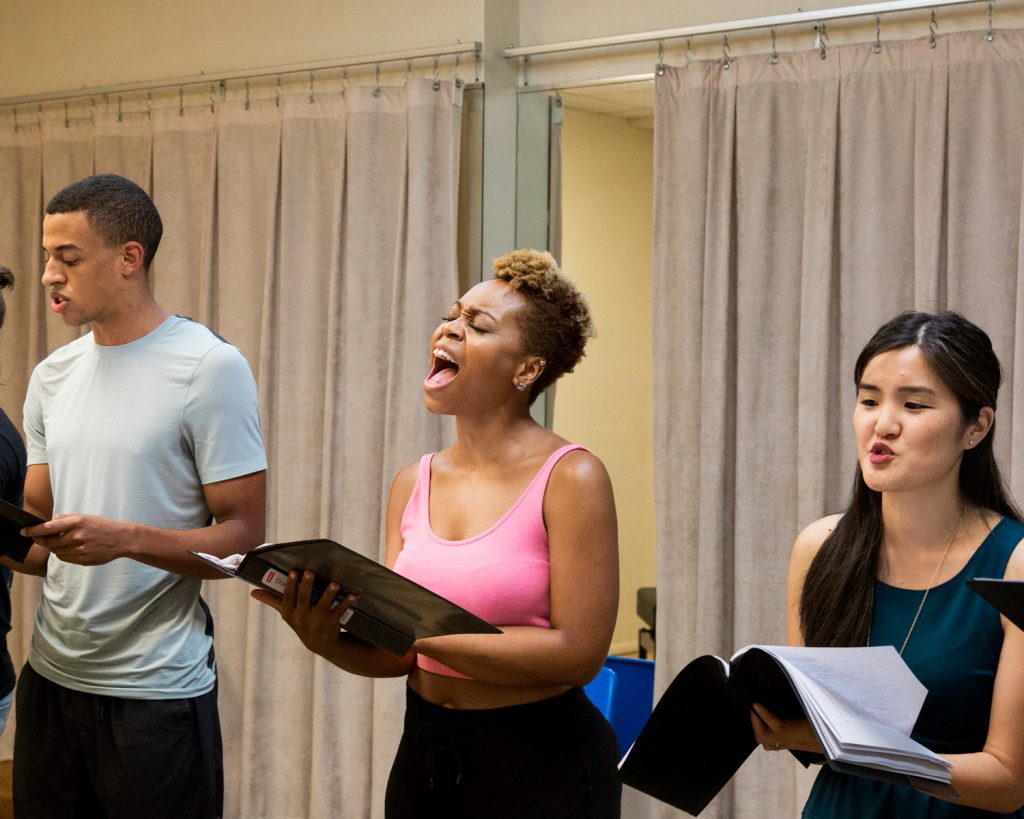
 

MJ: But Raúl Esparza played the Emcee!
 

BQ: Really?
 

MJ: Yeah, you could totally do it!
 

BQ: It’s gonna happen! You’ve given me so much faith! It’s gonna happen! Yeah, I would love to play that part. That part is amazing. And that play is just so political as well, and so great and beautiful, and dark, and lovely and funny. Yeah, Cabaret. It’s the first play; you have such a deep connection to the first play you ever see.
 

MJ: I wonder if you wanted to talk about your new project, Kid Prince and Pablo.
 

BQ: Yes, Kid Prince and Pablo was at Ars Nova. I was asked to write it for Texas Tech University, for their WildWind Performance Lab, where they bring in artists who are doing the work and established and write a new play. And it serves as new play development and a way for the theater students to have conversations with and collaborate with professional artists. So the new play takes place in the future of an alternate universe of America, where when America seceded from England, they sat their own monarch. So it’s still a king in the United States but it’s in the future so at this point, everybody’s mixed race, everybody is brown, for the most part, except the Royal family, who stayed white. And it’s set in this hip-hop world where the Prince is this aspiring rapper, and this poor pauper, this Mexican boy, whose name is Pablo, is a bucket drummer. It’s based off Mark Twain’s The Prince and the Pauper story. So when they switch spots, Pablo, who barely speaks a lick of English, has technology, futuristic, beautiful hip-hop technology to be able to make beats and become a producer. And the Prince is kind of like, “What is this, what are these streets? What are these colored people?” Blah blah. And through his hardships is able to actually rap about something as opposed to rap about, you know, what I like to compare it to is being in the club, popping bottles, a life of luxury. And then finally he experiences something real to rap about. And it’s the same thing. Trading places, etc. I’m working on it with my brother, his name is Marvin. He’s an actor, too, so you can imagine what my parents were like.
 

MJ: Oh your parents must love that!
 

BQ: [Laughs] My parents were like, “We had two kids in the States for them to become artists.” They’re dealing with it. Yeah, no he’s done well. He’s done Chicago PD, and Chicago Fire. He still lives in Chicago, he’s doing well. He’s great. We’ve never really worked on a play together, so, and we’re both actors and I’m writing plays now, after this one.
 

160922_emma-pratte-for-sc_brian-quijada_05
 

MJ: You should absolutely keep writing.
 

BQ: Yeah, I’m excited about it.
 

MJ: So what are your hopes for this show?
 

BQ: I didn’t know that people would be like, “This is an important story.” Because, again, I started just telling it because I feel like I needed to tell it for myself, for my own health. But now that I’m seeing people respond to it and I’m going to some colleges to talk about it and teach workshops, I’m realizing that it’s a story that I think other people also need. So I’m hoping that whatever it means to have the most amount of people watch it and see it, that’s what I want. Isn’t that the point of all art? To have as many people watch it? And I know that this is a play that will not, on a totally broad scale get everybody.
 

MJ: It has a very wide appeal, though.
 

BQ: Yeah, yeah, but still, there are some people who are just like, “Nah!” But my hope is that people at least take something away from it. Whether it be a red state or a blue state, or whether it be in a big city like New York, or we’re going to Boise in January, so we’ll see how it goes there. I’m very excited. My friends run the company over there, Boise Contemporary. So we’ll see. You cross your fingers that people like it and continue to talk about it.
 

MJ: Yes, I’m sure they will, because it’s fantastic.
 

BQ: Thanks.
 

MJ: Finally, what would you say to young artists, especially young latinos, who are now getting started? Any words or wisdom or advice?
 

BQ: If there’s anything that I’ve learned out of doing all this is that every story is worth telling. Every story is worth telling. I didn’t think that I had it within me to do this, until somebody was like, “You should write a play!” And I’m like, “Oh ok! I’ll write what I know.” I didn’t know that I had the capacity to write something where designers would sit at home and conceive of design, whether it be light or set or projections. That’s insane! And it wouldn’t have happened if somebody hadn’t just said, “Do it. Just go home and write it.” I guess that’s the advice. There’s no one stopping you other than yourself.


Brian Quijada is a Chicago-born, New York-based actor, musician, and playwright. As an actor, Brian has helped develop new work across the country. New York collaborations include: Ensemble Studio Theatre, Repertorio Español, The Lark, The Brick, Page 73, Atlantic Theatre Company, Up Theatre, Astoria Performing Arts Center, Primary Stages, TerraNOVA Collective, LAByrinth, New Georges, The Public, and Playwright’s Realm. Regional: How We Got On(Actor’s Theater of Louisville’s Humana Festival), Beat Generation by Jack Keroac (Merrimack Rep), The Solid Sand Below by Martin Zimmerman (The Eugene O’Neill’s National Playwright’s Conference), No More Sad Things by Hansol Jung (Boise Contemporary Theatre), andInformed Consent by Deborah Laufer (The Baltic Playwright’s Conference in Estonia). Most recently, Brian was seen performing in his newest play development, Kid Prince and Pablo (a Digital Age, Hip Hop, American retelling of Mark Twain’s The Prince and The Pauper) at Ars Nova’s Ant Fest.

Posted on

A Conversation with Lauren Molina & Bri Sudia

Lauren Molina Bri Sudia


“What year is this?” Bri Sudia, in-character as Ruth, asks in a promotional video for Wonderful Town. In the video, Lauren Molina and Bri Sudia run all around Chicago, trying to figure out if it’s quite as wonderful of a town as New York City. And even though their characters are confused after arriving straight out of 1935, you could be forgiven for asking the same question in earnest with one look around today’s world. So you can see why The Goodman would think we all need a little more Leonard Bernstein in our lives right now. The production, helmed by MacArthur-certified genius Mary Zimmerman, opens this week and from what audiences are saying, the break spent with smartphones and cable news turned off is giving them a rare respite from a rapidly changing world, a chance to live in an exuberant, silly, joyful Wonderful Town, even if it’s just for two and a half hours.


Kelly Wallace: Let’s start with how you came to be involved with the show.
 

Lauren Molina:  I got an audition through my agent and fortunately I had a wonderful experience doing Candide here at The Goodman years ago with Doug Peck, the music director. They brought me in for an audition and after some callbacks, I ended up with the part!
 

Bri Sudia: I’m based here in Chicago so I knew the show was auditioning and was sort of trying to figure out how to get seen for it, since I don’t have an agent, who usually makes that process a little smoother. But actually our musical director, Doug Peck, who is fabulous and just a great music director and also a really good human being…he threw my name out. He said, “It sounds like you’re looking for Bri Sudia.” And then they had me send a tape, because they were in New York City, probably because of Lauren, and then I came in when they were back in Chicago and it all just fell into place from there.
 

KW: Did you know each other before working on this show?
 

BS: No! We actually met for the first time on a phone interview, just like this one.
 

LM: Which is actually hilarious because we were on the phone for this interview for what seemed like 40 minutes and when we got off, a couple days later the interviewer sent us an email saying that interview was never recorded, so we have to do it all over again.
 

KW: Well, I promise you this is recording and we won’t do it over again. So you didn’t know each other, you come into the rehearsal room and you’re playing sisters. How did you create that bond with each other in a believable way?
 

LM: I have to say, Bri makes it super easy to be her sister. I really feel a kindred spirit towards her and I feel like we are sisters in comedy as well as we have a sense of…I don’t know. I just feel like we both get it.
 

BS: Yeah, we had to do a couple of different press events before we even started rehearsals. For example, we had to take the poster photograph.
 

LM: They flew me out to Chicago a week early, just to do that kind of thing.
 

BS: So she came out for the photo shoot and I don’t know if you’ve ever been to a professional photo studio but it’s very…models have it hard; I get it now. It’s not easy but we had such a fun time and we had the whole day to get to know each other outside of the confines of a rehearsal hall and any pressure to chat. We had the choice to get to know each other and then we did another day doing the promo video, which you can see on the website, of us just going around Chicago and talking to people about what makes Chicago great. We had a really good time and just enjoy each other. The other thing that’s wonderful is that there’s nothing better than being onstage with someone who you really think is funny and who you really think is a great singer. We learned to love matching our voices together. We’re different singers but when we sing together, we wanted it to sound like people who grew up together and they do sound alike. We found a way of blending our voices into the duets we sing together and that’s just been a bonding experience on its own.
 

Lauren Molina Bri Sudia
 

KW: So you were asking people what’s so great about being here in Chicago…what do you love about being out here? Lauren, you’re based in New York and Bri, you’re based here, so I’m sure you have different experiences.
 

LM: I love Chicago theater because everyone is so genuinely nice. I feel this warmth here that is so special, that I feel no cattiness or competitive divaness here. I feel like it’s a community that builds each other up, in my experience. Bri, you live it more, but just whenever I’m here I feel that. And whenever I’m in Chicago, I’m doing a dream job, so that doesn’t hurt. Even just the city in general, people are very friendly and in the summertime, I think people are extra happy.
 

BS: That’s so true.
 

LM: I just find a general sunniness here. Also, people are very smart here. At least working with The Goodman, the people in our cast, the creative team – the wheels are always spinning. Mary Zimmerman is actually a certified genius: she’s a MacArthur Genius Award winner! So in general, I love Chicago.
 

BS: I came here because, well, I went to grad school out here, but I’m from the East Coast, and I applied to a lot of graduate programs on the East Coast and for graduate school they do these sort of interview/callback weekends where you go and you meet the other potential students and see the facilities. All the schools I saw on the East Coast…everyone at the callback was really beautiful. I remember being there and taking my shoes off and wanting to do my monologue barefoot. When I auditioned for a school in the Midwest, before I even had a chance, the school I ended up going to, he said why don’t you take your shoes off and let’s talk? There was something about that – I’ve always hated shoes my whole life, so I love working barefoot – it felt like a sign to me that the type of work being done here is just dressed down and it’s about people. It’s not about how you look as much. I feel like I can walk into a room in an audition in Chicago and they will really consider you if you’re outside the box. I’m 5’10” and I’m not super-petite and I don’t really fit into a type. I’ve made my own type.
 

LM: Yes, girl! I feel the same way.
 

KW: I definitely get that vibe. Lauren, I had seen you in Sweeney Todd, so I knew that aspect of your voice, and then I saw you sing “King of Anything” by Sara Bareilles and it was just a totally different thing. It’s so important for women who aren’t that cookie-cutter stereotype musical theater girl. I’ve seen both of your work enough to know that neither of you “fit” in a box, in a great way.
 

BS: And that’s what’s awesome about Chicago; Chicago says yes. Chicago says show me your idea. Show me your idea of this character. Show me who you are. And when we all say yes together, it makes it really exciting and different. It’s so filled with people breaking expectations and filled with people breaking barriers and getting out of that box. We’re also fiercely protective of our own and that’s something I just really admire. If they identify a problem, they go after it and they attempt to solve it. We don’t just bring it up and say this is a problem, someone fix it. The community is really driven, as we’ve seen lately, to make change and make things better for everybody. I just couldn’t be more proud of our community.
 

wt_03_lizlauren
 

KW: You’re right, we’ve seen a lot of that especially in the past few months, for better or worse. There’s been this series of conversations about appropriate casting and diversity in shows. In New York, I didn’t necessarily hear those conversations happening in as big of a way, the way that you hear it here.
 

LM: From the New York perspective, I feel like small, experimental theater does exist, but it’s so priced out in New York. Everything has become so commercial; things that are happening Off-Broadway are basically guaranteed to not make money, so people don’t want to do that anymore and people aren’t taking the same kind of risks in New York that they can in Chicago, I think just simply based on funding.
 

KW: You don’t necessarily have access to the top of the food chain in New York, so to speak. New York is such a machine.
 

LM: It’s so money-driven. I really see that, as an outsider, coming into this community. I feel everything that Bri is talking about. People are very aware and conscious.
 

BS: Also, casting people here are way more accessible. They’re more accessible to young actors and old actors alike and you develop relationships with them. I first met Bob Mason at Chicago Shakespeare Theatre six or seven years ago and he has seen me and he sees a lot. He comes out to Utah Shakespeare Festival most years, so he’s had the chance to see me out there. We had a relationship where it wasn’t a matter of if you were good; it was about if you were right. You can ask questions. You can get feedback. I feel like the one-on-one relationship is really special and helps young actors get better and do better and work more. That upward mobility and support is really exciting.
 

wt_02_lizlauren
 

KW: Lauren, you’re very active on social media. You’re very openly political; you talk a lot about your personal views. Do you feel like marrying your performance with that activism is something that’s important to your art?
 

LM: I mean, I believe in speaking up for equality and justice. I don’t think you often get an opportunity in a commercial way to be in a show that’s going to address some of the greater issues we have. For me, I haven’t gotten to do any political pieces or anything, but I do think that what I can do is use any…I’m like an F or G-List “celebrity,” maybe like H or I or J. But any people that respect me as a person, I can use that platform to bring up things that I believe in or sing about them with The Skivvies and talk about them. It’s very important. I wish I could do it more through big plays or musicals, but often it has to be on a smaller scale. I like to be a part of benefits and concerts that raise awareness too, that raise money for all different types of organizations.
 

KW: Bri, you worked on Shining Lives at Northlight, which is such a women’s story and definitely the heart of it was the bond between those women. It addresses the very real issues that existed at the time – these are real events. What was it like to build that character and engage with that kind of history?
 

BS: That show is incredibly special to me mostly because it was the first time I’d ever worked on a new musical and originated a character and I was with it for about a year before we actually went into rehearsal. Multiple people did multiple workshops of it. During one of those workshops, when we were up at Northwestern rehearsing, Molly Glynn and Bernie Yvon passed away. We got word of their passing during the workshop. We were all together. We had really just met and we were working on this show about what it is to be friends and lose friends and grieve friends and how to move on, figuring out if it’s even possible to move on, and what that looks like. I didn’t know them personally, but the moment that happened between all of us in the room that day was…it was an unspeakable level of grief. Once you show that deep of an emotion to a stranger, you’re linked to them. Because we don’t often really, really ugly cry in front of people we just met, let alone our professional comrades. It’s a rare thing to really let it fly. I think that day, and in the following days, all of our barriers were down and we were walking with that in our hearts. After that workshop, making the show really always kept the preciousness of life and the time we have together in the forefront of the piece. I think that was a big factor in why we actually felt such a strong bond, the women in that show particularly. We genuinely love each other. It’s the only cast I’ve ever been a part of that regularly tries to see each other. The four of us regularly try to hang out and have a glass of wine and catch up because we shared so much of our lives together.
 

KW: I think a lot of people are drawn to theater, as you were describing, because it can be very healing and help people through their struggles in real way. Shining Lives took that on in a very serious way, but at the same time, you’re both working now on Wonderful Town and that kind of show brings a different kind of healing, almost a form of escapism, at a time that we’re in right now.
 

LM: Absolutely. I want to touch on this topic as Bri is talking about the sadness. I feel as a performer, part of the way I can give back is by making people laugh and bringing people joy through theater and music. And in a different way, on a side note, I have a band called The Skivvies and we perform in our underwear and do comedic mash-ups and on October 17th, Bri is going to be doing a number with us! But I do feel like there’s something to feeling confident and empowering in being that exposed…literally in my underwear but also just being real and natural and bring people joy by connecting with them. And I think with Wonderful Town, you escape. The comedy and the deliciousness of the characters…I think we definitely need that in today’s world.
 

wt_03_lizlauren
 

KW: And to touch on another issue that I think is important in theater now…Bri, I noticed you have a degree in interpreting sign language. What made you decide to pursue that? Have you had experience using that in your work?
 

BS: Yeah, I was actually involved in community theater as a kid, but I went to college for interpreting and worked as an interpreter for several years in New Jersey and Philadelphia. I started regularly interpreting for theatrical performances. I trained at the Theatre Development Fund, the Juilliard School theater interpreting program, which is a summer intensive where they train you specifically in interpreting theatrical performances. That was what I did. There came a point where I became deeply conflicted because I wanted to be onstage and it was hard for me to continue that on the sidelines, so I stopped and went back to graduate school for acting. But I love working and performing in ASL, it’s one of my favorite things. I’m so happy to see a resurgence of shows like Big River as a Deaf West Production and Spring Awakening which had such success.
 

LM: The deaf production of Hunchback of Notre Dame.
 

BS: Yeah! John McGinty, he and I worked together on Tribes at Steppenwolf. I’m always excited to incorporate ASL into my acting. The time commitment of interpreting would be impossible right now, but I would definitely go back to interpreting. My hands feel a little rusty.
 

KW: Lauren, you briefly touched on your group, The Skivvies. do you want to tell us a little more about that and how it came about?
 

LM: Absolutely. It was kind of a fluke how it got started. My best friend, Nick Cearly, we met in 2003 doing a children’s theater tour together and then became best friends. So we made music together, with our clothes on. But it wasn’t until four years ago, when we were hanging out one day, where we were putting a cover on YouTube and we wanted to strip it down in the quirky way that we usually do. We made this arrangement of Rihanna’s “We Found Love” and set up the video camera. I was trying to figure out what to wear to film the piece and I was walking around in my bra and Nick said, you should just wear that. I said, well, we are stripping it down. What if we did a whole strip-down music series? And then my boyfriend said you should call yourselves The Skivvies and we did a whole series. The videos started to go viral, and fans started asking when we’d do a live show, so we did. Everything blew up since then. We’ve had amazing Broadway friends guest perform with us and it’s so collaborative. It’s all about the music and coming up with fun new arrangements constantly. I love the freedom of being creative with my best friend and starting a small business has felt. This industry can be so miserable sometimes and so full of rejection…being able to start something and keep it up in a way that is so fulfilling and bring it around the country has been incredible. Right now, we’re just trying to balance theater and The Skivvies and try to plan concerts when one of us is out of town doing a gig, we try to do concerts in that city. We jump around all over and what’s next…who knows.
 

KW: And Bri, you’re doing Sweeney Todd at the Paramount next season, is that right?
 

BS: Yes, that’s correct!
 

LM: You are!?
 

KW: Do you have any tips for her?
 

LM: Wait, I didn’t know this! Who are you playing?
 

BS: I’m in the ensemble, I think I’m going to sing in the quintet.
 

LM: Oh super. We did it just slightly differently…
 

BS: Just a little bit! And before that I’m doing Miss Bennett at Northlight.
 

LM: You’ve got things all planned out. I don’t have any theater planned yet after Wonderful Town but I have a bunch of concerts. In January, I’m doing a show called Eating Raoul and we’re just doing a few performances of a reading version of that musical at 54 Below. We have a holiday show, we’re taking it to San Francisco and Cincinnati, Nantucket. All over the place. It’s going to be crazy. It’s so fun; I love traveling so much.
 

BS: She does really good train station dances.
 

LM: Ohhh yeah. When I’m miserable and waiting for delayed flights or trains, I like to dance when there’s no one else in there at 1AM and send my videos to Bri.
 

KW: See, and just based on this conversation, I would buy that you were sisters.
 

LM: Absolutely, we are.
 

wt_04_lizlaurenrehearsal
 

KW: What is it that attracts you to this piece? What do you love about it? Is there a moment or a theme that made you want to do this?
 

LM: I think it’s the joy. The music and the characters are so classic – classic musical theater comedy.
 

BS: Exactly, it’s what I grew up on. It feels like…it feels familiar. We were talking a lot in rehearsal about the running time of the show because you know, musicals used to be allowed to be these big, epic experiences that were hours and hours long and our tolerance as American audiences has gone down a bit. Movies are shorter.
 

KW: Well, you would know specifically, just based on doing Tug of War at Chicago Shakes. I saw that, at first I have to admit I balked at the idea of 6 hours. And I swear, I went and at the end of it, I was like, wow I could sit here for three more hours. I’ve been to 75 minute shows that felt longer. So I feel like, when you have something that’s engaging, it should be allowed to be as long as it needs to be.
 

BS: Absolutely, that’s something that’s really exciting to throw the kitchen sink at an audience. We joke about it in rehearsal, but I don’t think there’s anything in rehearsal that the show doesn’t tap. We have singing policeman…
 

LM: Irish step-dancing policeman.
 

BS: Swing dancing, secretaries on wheels…we have pretty much everything that you can want out of a musical comedy, and we’re just hoping to bring our audiences a few hours of a great time and leave them smiling.


Lauren Molina returns to Goodman Theatre, where she previously appeared in Mary Zimmerman’s Candide (also at Huntington Theatre Company and Shakespeare Theatre, Helen Hayes Award). She appeared on Broadway as Regina in Rock of Ages and Johanna in Sweeney Todd (IRNE Award). Off-Broadway, Ms. Molina played Her in Marry Me A Little (Keen Company, Drama League Award nomination), originated Megan in Nobody Loves You (Second Stage Theatre and also at The Old Globe, San Diego Critics Circle Award nomination) and Regina in Rock of Ages. She most recently performed as Audrey in Little Shop of Horrors at the Cleveland Playhouse and the Countess in A Little Night Music at Huntington Theatre Company. Other regional credits include Murder Ballad (TUTS Houston), The Rocky Horror Show (Bucks County Playhouse) and Ten Cents a Dance (Williamstown Theatre Festival). Television credits include The Good Wife, and she has filmed pilots for A&E, WE and FOX. She is half of the comedy-pop duo The Skivvies and can be found performing in New York City and on tour across the country. LaurenMolina.com. TheSkivviesNYC.com.
 

Bri Sudia makes her Goodman Theatre debut. Chicago credits include Shining Lives, A Musical (Northlight Theatre); Far From Heaven (Porchlight Music Theatre); Road Show, Pericles and Shakespeare’s Greatest Hits (Chicago Shakespeare Theatre) and understudying in Tribes (Steppenwolf Theatre Company). Regional credits include three seasons at the Utah Shakespeare Festival, the Texas and Arkansas Shakespeare Festivals and the Milwaukee Repertory Theatre. Ms. Sudia received her MFA in acting from The University of Illinois and holds a degree in sign language interpreting for the deaf.

Posted on

A Conversation with HowlRound

HowlRound


Discussions are had by those who show up. HowlRound has been showing up to facilitate conversation about theater since its inception at Arena Stage. Now at Emerson College under the leadership of its original team plus some new recruits, the online commons has been disrupting our views about the performing arts online and in-person through positive inquiry.


Helen Schultz: How do you end up at HowlRound? These aren’t jobs you necessarily train for or think about going into when you study theater.
 

Vijay Mathew: In the summer of 2007, I got the directing fellowship at Arena Stage in D.C. Through the course of the year, I met David Dower and Jamie [Gahlon] was there too. I told David that I wanted to make it more of a producing, behind-the-scenes fellowship. Then what happened was at the end of that year in 2008, at that moment, David Dower was able to get Arena Stage to be a cooperator with the National Endowment for the Arts new play program, so we we’re administering that program for the NEA, running its application process and its panel, and then eventually documenting the results of this grant over the two years.
 

Jamie Gahlon: I started in 2006 in the fall, part-time. Then after the NEA, kind of in tandem with the NEA, we got this grant from the Mellon Foundation to start the American Voices New Play Institute, and that in combination with the work we were doing with the NEA became the precursor to what is now HowlRound. The Institute was founded in 2009, and then we stayed at Arena doing that work in 2012. And in January 2011, we officially started HowlRound as the Journal. And then we moved here; we basically moved everything with us from Arena. And so Vijay, Carl, David, and I moved here from D.C. up to Boston to be here at Emerson. That’s how HowlRound as it was currently conceived came to be.
 

VM: In terms of the platforms that are still in existence from the original start, there is TV – which was the New Play Development Program TV, then New Play TV, and now HowlRound TV – and then there was the New Play Map which we started in 2009 once Mellon funded this thing called the American Voices New Play Institute. And then, a year and a half later, we started the Journal, the HowlRound.com Journal.
 

JG: The other thing that we had been doing, since 2007, was having convenings – in-person gatherings that we were hosting about topics that felt important for people from our field to be discussing together. And so we were also doing that.
HowlRound
Ramona Ostrowski: And the Twitter chats, which used to be under #NewPlay.
 

JG: So in terms of how we ended up here, for Vijay and I, it has been a sort of journey of many different roles and different versions of an organization that is now HowlRound but began at Arena Stage.
 

RO: I got this job last April, April 2015, and I had been working at a local arts services organization and as a dramaturg at a local company and was sort of feeling like I was interested in not focusing quite so locally in my career, so not necessarily just working for one theater company, which had been my goal throughout college and for the first few years of my career. So when the HowlRound job opened up and it was clearly a chance to interface with the field more broadly and think about the trends of the international theater community rather than doing a deep dive into one theater’s season and dig deep into individual plays, but to think more broadly it felt like a really exciting fit for me.
 

Adewunmi Oke: I had heard about HowlRound while I was in grad school, and it was probably spring 2012 when someone in the dramaturgy part of the department was like, “I read this HowlRound article,” and I was like, “What is that?” Throughout grad school, some of the articles from HowlRound and some of the livestreamings that were happening, they turned into the conversation, and I was like, “Oh. Okay. Cool.” I actually started the job last July, and when I was applying for it, I was just so happy there was an opportunity with HowlRound because I was like, “Oh my gosh – this is them!” I wasn’t when I was applying to stuff after grad school I didn’t think I was going to get anything in theater – I had applied to different theater companies in Philly and Atlanta and just nothing was coming through and happening. And then with HowlRound I was like, “Oh my gosh – I know about them!” and just to be a part of them, to work with the different platforms and work in them, has been really beneficial.
HowlRound
HS: A lot of all your roles and the work that HowlRound does has to do with tech, and the role of disruption in theater.
 

VM: I think the key idea, to boil it down, is using the internet in its most powerful way, which is empowering and enabling everyone to have a voice and everyone to produce content and have a voice through that. It’s all peer-production. Just that idea is basically how all the HowlRound platforms work and are designed. What that allows is for an incredible power shift, it allows for democratizing, and it allows for previously unknown perspectives to be amplified in a way that they’ve never been amplified. And so that deals with gender parity, and every kind of issue that the theater is facing.
 

JG: And also, practically speaking, the power shift is an intentional power shift; it’s a really intentional means of making sure that no voice is privileged over any other, which hilariously in the theater scene is still really radical while you think it would be at the forefront of all of these sort of countercultural alternative movements in some ways. At least in America, it has been replicating these sort of dominant power structures and hierarchies, just like in all over the world; we’re trying to use the internet as a kind of means for that democratization to happen in a way that is quicker and more connected than sort of in-person reality could allow.
 

VM: These ideas are changing this dynamic of democratization that the internet has enabled. It’s really social media platforms and YouTube in earlier days – YouTube and Twitter and Facebook that used that technique on social media, of allowing everyone to be a media producer. However, all – because they’re corporations – to leverage this media and leverage this collaboration to gain a profit by selling advertising, by selling attention. What we’re doing differently than that: we’re using the same technique, but leveraging this attention and all of this media in order to do something good besides just making money, to help the future. So we call it common space peer production as opposed to profit-motivated production.
 

AO:: I think the cool thing about social media and the internet at large that really benefits us is the idea that there is no geographical boundary. Anyone can pitch an article for us, and as a team we figure out whether or not we think it’s a right fit in terms of the issues that our authors dole out. Anyone can livestream – if you’re interested in livestreaming, we’ll teach you how to livestream over the phone. If you’re in the area, you can come by. I think this idea of not having geographical boundaries and I think that’s something that, with theater specifically, if you don’t see a show in New York, you miss it. If you can’t get to Chicago to see a new play, you miss it. It’s something that really drew me to HowlRound, this idea of erasing boundaries, erasing those borders, and being able to traverse them in ways that you couldn’t do if you were just like in isolation.
 

RO: It’s been so interesting – we’re going through a strategic planning process right now, and so we did a survey of various stakeholders: readers, writers, and livestreamers and just people we’ve intersected with. One of the things that we’ve heard is that people are hungry for us to do more convenings, more in-person gatherings. So as amazing as the internet is – and realistically, as we move to a more international focus, our main platforms probably will be digital – I think there’s also a hunger to see people face-to-face. To share a room and share ideas too.
stage-candor_howlround-4
HS: I feel like so many conferences in theater are focused around software and business – all people who use AudienceView, all people who use Tessitura. But you bring together underrepresented artists. What sort of conversations and actions come from those gatherings?
 

JG: From the beginning, our convenings have really focused on trying to bring together people who share some common ground in terms of issue at stake, but it’s never been focused; it’s always been focused on hot button issues, or issues that feel like they’re bubbling up in many different places and are affecting many different parts of the sector. We usually start by figuring out who needs to be in the room. I don’t mean specific people – I mean like what is the sort of DNA the room needs to look like, what should the artist to producer ratio be, are we looking for people from a specific region or are we trying to make this a truly national conversation? Do we have varying levels of experience in the field? Are we getting people who are all working in the same aesthetic or are we focused on making it intentionally broad in that way? A lot of what ends up dictating the types of conversations that we have is actually making that room full of people that can represent different perspectives on the same thing, and engage in meaningful and productive dialogue. The other thing that we do particularly well and has been a focus of ours is really trying to structure the conversation in a way that can be productive and action oriented, but also can allow for the kind of grey areas that do exist and the nuances that do exist within a topic. We also livestream every convening that we have, and so that’s a really intentional thing. We’re trying to be really transparent about not only the conversation that’s happening, but also make everyone that’s in the room physically feel as though they’re a delegate for a broader community that they’re representing so people feel like when they can find a way to look beyond their kind of individual eye, their own self, and think about the broader implications of being in that room and what they can do by being in that room, not only for themselves but on behalf of other people who can’t be in the room because of capacity, economic barriers, geographic barriers.
 

HS: At the trans theater convening, you had people like Carl, who’s hugely prominent, and Will Davis in the same room as people who are more emerging. You’re bringing people together from all these different perspectives and I think that feels like a physical manifestation of what HowlRound is.
 

VM: Totally. And that’s what the soul of disruption is about at HowlRound – no longer maintaining this old hierarchy, and this scarcity to the conversation and who gets to have the conversation and who has access to what knowledge is produced from that conversation. And so, in the very beginning, making these convenings accessible to the very people who didn’t have the resources or didn’t have the connections or didn’t know the right people to get in the physical room that we were filming it, tweeting about it, make broadcasting basically everything that was happening in this formerly very private, scarce room where these conversations would happen. That changes social dynamics hugely. It allows that knowledge to do more and to advance more.
 

RO: One thing that we did for the trans convening and we do as much as possible for convenings is to pay for everybody’s travel and housing, so that it is truly accessible for people who don’t necessarily have personal or institutional resources to travel to be a part of those conversations. We’re really just trying to break down as many barriers as possible to get as many perspectives and experiences in the room as possible.
 

HS: So much of theater criticism is so snarky and negative. HowlRound has a guiding editorial policy of “positive inquiry.” Could you talk more about that policy and why it exists?
 

RO: We have this policy not just in our articles, but in our comments section as well. We really don’t do a lot of moderating, but the community as a whole has one of the most generous and respectful environments that you’ll find in a comment section almost anywhere else on the internet. A lot of times the comments section becomes a sort of second article – so many people are weighing in differently and the author is responding and it’s a real conversation. The times that we do step in and delete comments and tell that person why is when they’re making a personal attack against the author, like saying “you are stupid” instead of saying “this idea you’re laying out is problematic.” Or that they’re speaking in a way that shuts down the conversation – it’s hard to respond to “you are stupid,” but it’s really easy to respond to “I don’t agree to this idea that you’ve laid out here” or “I don’t understand the way you went about this” or “in my experience, I’ve done this differently and it worked out” and stuff like that. So I think that sort of expectation that we set up not just in the content that we publish, but in the way that we center the conversations around it has been really positive and really worth it.
 

HS: HowlRound has had so many articles about Hamilton. A lot of the conversation around the show in these articles has been that the diversity of this past season is not reflective of the theater world as a whole – we have so far to go. Could you talk a bit about how these new representations in commercial theater are both helping, hindering, or changing the conversation you’re having here? And how non-theater people are getting in on that conversation?
 

JG: On that level, I think Hamilton is a good thing. I saw the show, I thought it was incredible and life-altering and all of the things, all of the good things. In terms of HowlRound, we’ve have a lot of pieces about Hamilton and I am proud that they haven’t all be one note. They haven’t all been “this is the greatest thing since sliced bread.” We had a really smart piece by James McMaster called, “Why Hamilton Is Not The Revolution You Think It Is” and it’s a deep dive look into Hamilton’s politics and what the representation means through certain lenses and even how the story is told. I think there are as many different opinions about Hamilton as there are people in the world right now. But, on the whole, in terms of what I think it’s doing for the American theater right now, I think it’s fantastic. Are you kidding me? There’s a bunch of New York public school kids who are getting to see the show and are getting to see a show in the first place, period – which is a sad statement. The world of arts education in our country… But that’s great. I think that the story is an important story to be told, and the way that Lin is telling it is brilliant. Masters of craft.
HowlRound

Posted on

Making Depression Sing: The Cast of We Have Apples on Mental Health

We Have Apples


Do you have apples? In America, over 50 million people do and Rachel Griffin’s new musical is giving voice, and music, to their suffering. The fruit in question in We Have Apples represents mental health, and recent estimates suggest that nearly 1 in 5 people have some form of mental illness. Those statistics beg the question…why aren’t we doing anything to remedy inadequate, cold, and confusing maze that they have to navigate to receive any kind of care? Enter We Have Apples. The musical centers around Jane, who suffers from anxiety and depression, as she enters a psych ward, and finds herself surrounded by people who also have apples, all different, destructive, and beautiful, like hers.
 

We were given the opportunity to sit in on a rehearsal the week before their concert, which premieres tonight at 54 Below, and talk to creator Rachel Griffin and the cast about their message, their experiences, and their goals; to help audiences empathize and learn about one of the most misunderstood issues in our country with authenticity, humor, and boundless imagination.


We Have Apples
 

Kelly Wallace: You’ve had a lot of experience as a songwriter before, but this is your first musical. Why did you want to use this medium for this story?
 

Rachel Griffin: Theater gives me the ability to share a story about mental illness that starts with debilitation and suffering and ends with triumph and recovery. I think we need more stories that show that a mental health diagnosis does not mean you are doomed. I wanted to show a bunch of characters that have mental illness but are not defined by it. They are a professor, a med student, a creative writer, a musician, etc. By the end of the show, you want to be friends with them. You respect them and admire their strength. You also see how stigma and crappy healthcare affect them. Hopefully their stories will foster action and compassion!  
I didn’t think about writing theater until I met my husband, who is the associate music director of Aladdin and a musical theater composer. All the shows we saw together and his projects got me really excited about the power storytelling and theater. I noticed how theater can reach people and awaken something in them that might fail to awaken through other methods. Without being preachy, you can preach! 
I really care about mental healthcare reform and de-stigmatizing mental illness. I’m not going to run for office or work in healthcare, but I can use creativity and music to help. I started writing this show on my iPhone and I was writing it out of frustration with my own mental healthcare experiences and the stigma I faced and saw others face. I was afraid to let the show out of my iPhone because I knew if I shared it then people would probably figure I had a mental health condition. Then it dawned on me that stigma was stopping me from sharing it. Stigma is powerful. I realized if what I was writing could help people, it was worth being vulnerable. I think writing about what we fear can lead to our best writing. I still resist it, but I want to be brave. We have this one life, I think it’s important to remember that and be bold and as fearless as possible with our writing. It still scares me, though!
 

KW: As you said, it is so personal. Did you find the editing and cutting process was hard for you because of how close to home the story is?
 

RG: Yeah! Once in awhile someone says, “You know, I don’t think this part is realistic,” and it’s literally something that I’ve experienced in real life with the mental health care system. It’s so bad that people don’t believe it as fiction. That’s crazy! As some of my mentors have recommended, like Larry O’Keefe and Michael Korie, sometimes I make a change someone suggests, but I make it in a way that makes sense to me but might not be exactly what they thought was right. I love that theater is collaborative. I love when an actor will email me and say, you know, I don’t think my character would say exactly that, what do you think about this? Just to take that in and be like, you know, let me think about that. It’s been incredible, because composing can be kind of lonely. So with theater, you have this community. I feel extremely blessed to have the people we do involved with this show because they bring so much. One mind alone is so much less powerful than a bunch of different perspectives.
 

KW: When did you decide to have Depression be a physical presence onstage as a person?
 

RG: It wasn’t in the first draft. The show is based on a short story I wrote in undergrad about a girl in therapy. In the short story her thoughts were shouted in capitals. We all have that voice in our head, whether we have depression or not, that says you’re not good enough. We all have that fight or flight reflex that we don’t need going off all the time anymore, because a lion isn’t going to jump out at us. I don’t think we talk about that voice too much, I don’t think we talk about those weird or scary thoughts. I thought it would be cool to have a character who was saying those things so the audience can realize that other people have those thoughts, too. I played with the idea of having an offstage voice say it and then moved to having a character. I like that the character, at first was one-sided and was just the darkness, and then I was like, I couldn’t write this show if I didn’t have the imagination I have. Having such a vivid imagination can look like anxiety, racing thoughts.. but it also can look like creativity and music and empathy.. so depression and anxiety and mental illness have beauty in them, and that’s something I’ve always wanted to show. A lot of media show only the bad stuff, which we need and we need to see the struggle that is a reality for many, but we also need the beauty, the hope, the brilliance. So, I thought, maybe I could also make this character be the source of imagination and have that there too. It’s been cool too, because a lot of people’s favorite character in the piece is Depression and I’m like, oh, I thought everybody would hate her! She’s the antagonist. And I’ve had people come up after presentations and say, “I just love Depression!” And I’m like…”Okay!” That’s… great!
 

KW: What do you hope that audiences take from the show? When someone comes to see this, what do you want them to leave with?
 

RG: I want them to see that people with mental health conditions are their doctors, their friends, their teachers, people they admire. I want people to realize mental healthcare is inadequate and inaccessible and that causes suicide. I want people to see how isolating it is to have people respond with silence and shame to an illness. When a friend of the family is in the hospital with a physical illness, people bring pies and cards. When they are there for a mental illness, people disappear.  
We can’t have all the shame and the silence, because it really does corrode the human spirit. People really lose lives because of it. We need to talk about it in the open so it evolves to not be so uncomfortable. Mental health should be taught in schools along with physical health in health class. I think many teenagers think their pain is permanent. They need to be aware of symptoms, treatments, and stories of hope.


We Have Apples
 

Kelly Wallace: Tell me about your character.
 

Hannah Elless: I play Jane and she is a young woman that is aspiring to go to college and all the normal things that a young woman aspires to. She’s a writer, she’s creative, she really has a lot of great energy and yet she has this duality about her that she’s constantly coming to terms with. In the show, they call that character Depression, which is personified by Emily, who plays Depression. So it’s pretty interesting to have that, since the audience can see both of these characters having a conversation with each other, when in reality it’s Jane having a conversation in her mind and fighting, sometimes fighting and sometimes agreeing. That’s what’s lovely about the show. We’re looking at Depression not as an enemy but as sort of a friend in a way. Maybe a friend that doesn’t always help you make good choices, but we’re definitely looking at it as part of who Jane is inherently, and not something that she despises, but something she’s constantly trying to reconcile within herself.
 

KW: How has working on this piece changed or informed your views on mental illness?
 

HE: I just think it’s so important that we’re having a dialogue about mental health and putting it into a musical is so smart. What the writers have done to bring this to the surface of everybody’s minds is really commendable. I think my viewpoint has changed in a great way. Being able to work with this company, and explore who Jane is – I think the point is that as an actor you always want to play these great roles and the point of Jane is that she’s just a normal girl. That’s what surprised me the most, reading through her character and her songs and her singing. She wants all the things any girl wants. So there’s something different and lovely about her, but there’s also something so normal and relatable because she’s just a girl.
 

KW: Why do you think theater is such a powerful medium for telling this kind of story and to help change people’s minds and erase some of the stigmas associated with mental illness?
 

HE: I think it’s because when you sit through this show, you feel like you really know these people. After sitting through a concert or a full production of this hopefully someday, you really feel like you know Jane. You feel like you know Avery and Charlie and Alex and all these characters and by the end of the show they’re your neighbors, your brother, your sister, your mom, your dad…you start relating to these people and realize they’re people in your life. It makes it really safe to talk about mental illness in a way that’s funny and heartbreaking and completely serious sometimes. They hit all spectrums of the emotional journey. That’s what is great about this show too. They let you laugh and they let you cry and there’s no right or wrong, it’s just exploring who these people are and their specific journeys in life.


We Have Apples
 

Kelly Wallace: Tell me about your character.
 

Emily Nash:  I play Depression, who is the personification of Jane’s mental illness. It’s kind of larger than that; it also embodies her OCD, her anxiety, but also her creativity and her protection. So, it’s all of the good and bad aspects that come from mental illness. So, I’m the personification of all of that, and I appear as a person, but I’m really just a figment, not of her imagination, but of what’s going on in her mind. You’re seeing everything from the inside out, which I think is really cool. I love this role; I think it’s really great to get the chance to play this.
 

KW: How has working on this piece changed or informed your views on mental illness?
 

EN: I’ve always been passionate about the topic. I actually just lost my grandmother to depression a few weeks ago, so it feels especially powerful now to be working on this. I feel like I’m giving voice to her story in a way that…it feels great to have ownership of that story. I myself have struggled with anxiety my whole life, just generalized anxiety, which has at times manifested itself in depressive episodes. So, definitely not to the extent that Jane experiences it in the show, but I so relate. Singing a song about having a panic attack? That’s not something I have to get into someone else’s shoes and figure out what that feels like. I know what that feels like.
 

KW: Why do you think theater is such a powerful medium for telling this kind of story and to help change people’s minds and erase some of the stigmas associated with mental illness?
 

EN: It’s the best medium because we’re getting people in a room together talking about this. We’re not hiding behind a movie screen, this is live and in the flesh. People are going to respond in different ways, but I just really hope that people will grow to become more vocal about this and not stay silent, because it is something that plagues so many people.


We Have Apples
 

Kelly Wallace: Tell me about your character.
 

Meagan Hodson: I’m playing Charlie. Her illness has evolved with the character. I used to be Martha and she was older, so she’s evolved back into a twenty-something. She’s relatively new to the psych ward because she has just been turned down with all her cries for help and not getting what she needed, so she did something drastic and hurt herself to finally get admitted. And then, I think, a couple weeks passed by and the insurance company said, “Alright, you’re good, you’re fine, you’re free to go.” She’s not ready, and she’s terrified, and she ends her life. Which is hard, and it’s that one character. Unfortunately, it feels very necessary. It’s such a, not common, but it is an outcome that happens. It’s the reality of it. Not to make it a statement, but to make it realistic. That’s something they’re trying to combat, trying to get better, and sometimes it doesn’t work out.
 

KW: How has working on this piece changed or informed your views on mental illness?
 

MH: I think it really opened my eyes a little bit more to how much stigma there is. Because, I think growing up, we don’t have as much interaction with people, or if we do, it’s a little more quiet. There’s a separation. But I never realized there was a huge discriminatory element to it until I really thought about it. There’s not a lot of talk about it in the media. And more people are coming out and talking about it, which is such a big deal, but it shouldn’t be such a big deal. It should be common place.
 

KW: Why do you think theater is such a powerful medium for telling this kind of story and to help change people’s minds and erase some of the stigmas associated with mental illness?
 

MH: Well, I really love theater for social change, just because I think you can say things without it being so direct. It seems more of an artistic way to present it, but it still can be very real and start conversations. So you don’t feel like you’re being lectured the whole time; you’re immersing yourself into a story and a character and then you realize that really says something to you personally as well, or about someone you know. There’s that wall that helps to ease into that for other people.


We Have Apples
 

Kelly Wallace: Tell me about your character.
 

Andrew Kober: I play a character named Alex, he’s manic. He’s sort of the bright shining face of the psych ward. He’s excited about everything that happens there. He’s a source for positivity and ultimately for organization and his illness manifests itself in a way that can be a positive influence on the rest of the ward. Does that sound like an intelligent answer? I’m faking it.
 

KW: It does! How has working on this piece changed or informed your views on mental illness?
 

AK: Rarely do you see stories where people with different mental illnesses co-exist in this way. I mean, there’s really, at least in this kind of condensed version of it…yes, it’s about one character’s struggle, but it’s about all sorts of backgrounds coming together to support the storytelling. What it’s done for me more than anything, is to say that everyone has a story to tell. It’s a great reminder that there is absolutely no story that is not worth telling, exploring, delving into. There is absolutely something theatrical and beautiful to be mined in anyone’s experience and their journey.
 

KW: Why do you think theater is such a powerful medium for telling this kind of story and to help change people’s minds and erase some of the stigmas associated with mental illness?
 

AK: I’ll tell you why. For lack of a better way of putting it, you can’t leave. It’s there. It’s in front of you. It’s live, happening in front of your face. You can’t disconnect from it in the way that you can with some other art forms. Social constructs say you can’t check your phone in the middle of it, you can’t run to the bathroom in the middle of it. You’re there, and it’s happening to humans in front of your human eyes. I think that adds an immediacy and raises the stakes to the conversation.


We Have Apples
 

Kelly Wallace: Tell me about your character.
 

Tamika Lawrence: I play Avery, she’s one of the patients in the ward. She’s there because she’s been dealing with a lot of body issues and with bulimia.
 

KW: How has working on this piece changed or informed your views on mental illness?
 

TL: It hasn’t, actually, because I am pretty familiar with a little bit of it because I think living in the city and being around so many people who don’t have access to mental care in this country makes you aware. Doing research and also, you know, being here makes you invest in things like therapy, just to stay healthy and take care of yourself. But I’m very happy that she’s doing this piece to bring awareness to all of this, because a lot of people don’t have that experience.
 

KW: Why do you think theater is such a powerful medium for telling this kind of story and to help change people’s minds and erase some of the stigmas associated with mental illness?
 

TL: I think because theater is accessible; theater is enjoyable. For issues that might be hard, such as mental illness, or even politics, things that are hot button topics, I think theater helps to build the conversation on both sides. Whether you agree with what’s being presented or not, I think it helps to make it palatable.


We Have Apples
 

Kelly Wallace: Tell me about your character.
 

Brian Graziani: I play Jonah. Rachel just incorporated Jonah into the show recently, so I’ve had a lot of wiggle room to do whatever I want. I chose me – there’s not really a single difference between the two of us.
 

KW: How has working on this piece changed or informed your views on mental illness?
 

BG: You know, this is my fourth time doing the show in various stages. I realized doing it the first time that I suffer from a mental illness. It wasn’t until that first scene, seeing the way that depression is personified, it’s very jarring. It was very eye-opening in regards to some of the trials and tribulations I’ve been through myself and how I cope with them, especially those little voices we all hear. I went from there and was diagnosed with depression, so this changed my life.
 

KW: And why theater? Why is this such a powerful medium for changing people’s’ minds and getting them to really think about this issue?
 

BG: I think art in general, especially onscreen or onstage, is just a very passive way of communicating about social issues. It feels less preachy, because we’re invested in a story. We’re looking at a person, rather than a direct lecture on how we cope with an issue. It’s not a political statement, you think, but then subconsciously, hopefully, the piece teaches us something and gives us some shape of life and some taste of this heightened version of reality. I would like to think that’s what this piece and theater in general can do.


We Have Apples
 

Kelly Wallace: Tell me about your character.
 

Michael Winther: My character’s name is Bill, and he has a really beautiful song about losing his wife and kids. This is one of those things where it’s like SWAT Team theater, where you sweep in and do this for creatives so they can see what they have. Being on both sides of that, because I’ve worked as a writer on my own stuff as well, I always love to do it as much as I can.
 

KW: How has working on this piece changed or informed your views on mental illness?
 

MW: It’s a bit of an anthology kind of piece. Everyone has their stories. I definitely have history of mental illness in my family; I had a cousin who was undiagnosed on the spectrum and schizophrenia and he ended up dying very young. He was like 40. He had another brother, my other cousin, who committed suicide. There’s a lot of that on my mother’s side of the family. I think everybody has some kind of personal experience with this. With a piece like this, you start talking about it and like many things, you think you’re the only one or it’s unusual, because we don’t talk about it. It’s important to talk about. The country in general, and the United States in general, is moving towards having less shame about mental illness, I hope.

 
KW: Why do you think theater is such a powerful medium for telling this kind of story and to help change people’s’ minds and erase some of the stigmas associated with mental illness?
 

MW: It’s the reason why I wanted to go out on tour with a show like Fun Home. Like this, it’s about an issue that matters and there’s something about your having an encounter with an actual person. You have to show up as an audience member, especially in musical theater, the voice literally hits your body. I think it’s a really great thing to try and find a way to tell this story about mental illness and depression with music. Non-musical theater people always scoff, “You’re going to make a musical out of that?” But it’s the same thing with Hamilton. At first, you’re like, “Really? That? I can’t believe it.” But it’s those shows that – not all of them break through – but when all the pieces work together, it’s transcendent. It transforms people in a non-intellectual way, which is I think what we all want to do. At least for me, that’s what I care about. It’s great to see a lot of musicals now that tackle weightier issues, which doesn’t mean they’re downers, like Evan Hansen, they just have a mission along with the story they’re telling. Even if you look back…The King and I, Oklahoma, Carousel…they have some really heavy stuff in it. There’s a bit of that in musical theater, always. I did Mamma Mia on Broadway the year of the Republican National Convention and it was on the list of “approved shows” to go see, until an advance person came to see it and they’re like, “There’s a story about an unwed mother and there’s a gay guy in this, this is no longer on the Republican okay list.” So the delegates knew what was “okay” to see. Things have changed a lot since then, of course. So we were shocked. There would be these Republicans who would come and say things like, “Don’t tell anybody I’m here but we really had a great time.” You’re like, really? This show? We live in a bubble in New York and we think, oh, this is no big deal.


We Have Apples
 

Kelly Wallace: Tell me about your character.
 

Coleman Hemsath: Orien is his name. So he is not really in the whole psych ward at all, he is the son of the guy who runs it. He’s on the outside looking in at all the “crazies,” even though he really relates to them. He relates to the main character because they both are very out of touch with modern-day things and ways to connect. They connect when they’re both like, “Wow, we don’t get anything; wow, we’re the same person because we don’t understand anything in the real world.” So even though he’s from the outside looking in, he’s still a part of that whole idea that he feels like an outcast.
 

KW: How has working on this piece changed or informed your views on mental illness?
 

CH: I’ve never really thought about the inner workings of a psych ward or how people interact with other people who are in the psych ward at the same time. I think it’s really cool that you get to see that, you get to hear people communicate, and you see this girl start at the beginning and go through this whole journey. It’s really terrible at the end when people leave in all this debt or leave without a plan on what to do, it’s very eye-opening and things that I’d never even thought about before. If you do have exposure to that environment, people don’t always want to talk about it. I feel like this is great, because it makes more people able to talk about it, since I feel like it touches a lot of people’s families.
 

KW: Why do you think theater is such a powerful medium for telling this kind of story and to help change people’s minds and erase some of the stigmas associated with mental illness?
 

CH: I think theater in general makes people talk, even with uncomfortable topics such as this. So therefore, I think this gives people the opportunity to bring it up. You generally won’t just sit down with someone and say, “Hey, let’s talk about mental illness.” This, seeing the show or watching the YouTube video, will give them the springboard to start talking about it if it’s a conversation they want to have.


Posted on

A Conversation with Tyrone Phillips

Tyrone Phillips


Byhalia, Mississippi closed at Steppenwolf’s on August 21st, but don’t expect that to be your last opportunity to see this American classic in the making. The play tells the story of a young, blue-collar couple expecting their first child. The baby, Bobby, is born and Jim realizes immediately he isn’t the father because of an extra-marital relationship Lauren had with an African-American man. It complicates Jim’s relationship with Karl, a black man, who is one of his closest friends, and it lights the fuse to a powder keg that had been lying in wake in their small house in the small town of Byhalia. The play is doing the same thing for the theater community both here in Chicago and around the country. Byhalia, Mississippi, written by Evan Linder, has enjoyed productions in two countries and all across the United States, and if you love art that asks you questions, that demands something of you as an audience member, and leaves your mind turning at the final blackout, make sure you get a ticket when you have the chance.
 

I sat down with the Artistic Director of Definition Theatre Company and the director of the show, Tyrone Phillips, whose hand guided his incredible cast and whose vision took Evan’s brilliant words and made them so real that they hurt you, they give you hope, and ultimately, they heal you if you let them.


Kelly Wallace: I was so excited when I heard about this play; I was so glad to see that it was coming to this new space and having this second life. Is that gratifying?
 

Tyrone Phillips: It’s been so strange for me because I didn’t realize how many people hadn’t seen it yet, and we’re basically sold out. So it’s been great.
 

KW: How did you get involved with the play?
 

TP: Julian Parker was reading Karl’s part and was in the reading and we throw plays at each other all the time. He’s a co-founder of Definition Theatre Company as well, so once he said that, I said alright, let me read this play. And Evan [Lindner] sent us the scripts and at the time we were talking about producing it, just being co-producers, which we did. But I wasn’t directing. I went into rehearsals and took a page of notes and I just remember getting so invested in this play from the first rehearsal. We had half the cast that I’d seen or heard do a reading of the play. The one thing we didn’t have was Momma, and we didn’t have Cecelia Wingate until tech. But after I listened to her read the scene and I thought, this is Momma. It was written with her [Cecelia Wingate] voice in mind, and Evan jazzed me up about her. I met Cecelia and I went down to Byhalia myself, and to Memphis, and I rehearsed with her. Evan played Liz and she was here finally and met her cast and luckily it all worked out! She is a force to be reckoned with, as you now know.
 

KW: She’s incredible.
 

TP: I still remember reading the first scene of the play, between the mom and her daughter, and thinking this is an American classic. This is going to be done over and over again. We need to get this play. Immediately as I continue to read and find out about the son, Bobby, that’s where it got my heart. That’s where it got me as an artist, that we can actually say something here. There’s a reason this is all coming together for this story. And as time went on, no one could predict the events of the world. The show has become even more meaningful now.
 

KW: Of course it’s been through a long development process, it’s being done all over…
 

TP: Six different cities are doing it at the same time.
 

KW: So already, this story has been all over the country.
 

TP: As far as Toronto to Memphis to L.A., from readings to full productions. It’s really exciting.
 

KW: And now you are putting this piece up in this specific political moment. You couldn’t have planned for it, but here you are.
 

TP: I just knew that story could help. We’re all learning. There’s still things we’re trying to fix. At the end of the play, that question, no matter what happens, will always be relevant. How do we start to see each other as human? How do we do that before these things escalate? When we watch these videos of black people being shot on the street, and even after they’re shot and killed, the way that they treat the body…is not human. There’s something missing there. That’s what got me going. Finding out about Butler Young Jr., in 1974, shot and killed, hands behind his back. It happened back then and it’s happening now. How?
 

KW: The conversation between Karl and Jim where he admits that he doesn’t know who Butler Young Jr. is…
 

TP: I can’t watch the play from that moment. I couldn’t even watch it at opening. After Karl can’t find the words to describe it, it breaks my heart. From that moment on, the whole rest of the play, I’m crying the whole time.
 

KW: The range of emotions and the arc Karl takes, I found to be incredibly compelling. At the end, the play talks a lot about forgiveness. Do you feel like you would be able to forgive in Karl’s situation?
 

TP: It’s so interesting, all these characters change in front of us, which of course is another sign of a great play. Every single person changes. Momma’s the only one we’re not sure of, she just leaves, but we’re hoping and praying and wishing that when she gets in that car, she will change. Something’s gonna happen. I do think one day maybe Karl can come to forgiveness. One lady, after the first production, came up to me in tears. She was an older, white lady and she said that she had a friend in college – she could barely get it out. I stood there because I wanted to know what was happening and she said, “She just passed away, she was African American, she’s been my best friend her whole life.” She said, “I just hope I never made her feel the way Jim made Karl feel. And I don’t know. She’s already passed on.” My hope is that everyone finds peace for themselves, and that everyone finds forgiveness here and in the world. We can all be friends. But sometimes, there is just too much baggage to hold onto. People need to be okay with that sometimes. It’s not always about you. You’re not absolved of all of it. I could talk about this play all day. I was going through some personal things during the first rehearsals and love and forgiveness and how much and how far you’re willing to go to make a relationship work, and all of that was fresh in my mind. It’s been a healing process for me too.
 

stage-candor_tyrone-phillips_byhalia-mississippi_1
 

KW: One of the things people seem to really love about the show, and keep talking about, is the authenticity. People look at these characters and say, “I know these people. I’ve seen these people.” It could so easily have veered away from that. You have many stereotypes in your head going in about poor people, or about “white trash,” or about how people in a town like that would behave. As a director, how do you feel like you dismantled that?
 

TP: That’s something I’m always asking – in my own work as an actor – and when I’m directing. This is new for me. This is the second show I’ve professionally directed. Be truthful, be honest. Love each other, tell the truth. That’s the motto of the play and that’s the motto of the rehearsal room. I know you’re all amazing actors, that’s why you’re here, and I’m gonna try to make you better. Cecelia’s a well-known director in Memphis. They were almost all older than me. There’s that. So coming into the room, I thought, what do I have to offer? Why am I directing this play? It is something every director needs to know. But how can I help them tell the story? The end, this child, that’s where I see myself. I told them my vision for this show is about Bobby. I want to feel him in the room when you’re walking, the arguments you have; I need you to know that everything you say and do in this house is affecting that child immediately. He’s right there, overhearing everything.
 

KW: He’s not onstage, but he is distinctly a character in the show.
 

TP: And he’s the most important character, in my view. I was always worried about that child, and he’s not revealed to the audience, not once. I didn’t want a fake baby. Everybody knows. Everybody knows it’s a fake baby. You check out immediately, because it feels like a prop. But it’s not, this is a real life. My actors were all also really talented, they’re great. It was awesome. You can only hope for a collaboration to go as well as this one between actor and director. They know I’m crazy, and they’re used to it. I give them notes and I can be like, “Well, that didn’t work at all!” And they can be like, “Yeah, that was pretty terrible…” and we’re okay. The honesty, the trust, it’s there. It happened very fast. They were creating these characters, and I just wanted to help them be three-dimensional. As you said, you connected to them personally, and that’s huge.
 

KW: What do you think the show has to bring here in Chicago? What do you like about Chicago as a theater town?
 

TP: I grew up in Chicago, so I know the audience. I was the audience, growing up as a child. I didn’t see much theater, but I was always involved in school. My family’s here, and that’s also very important to me. All artists need a support system. You can’t make a living in this business by yourself, you need a support system. This is home. If I ever go anywhere, I’ll come back. If you’ve got a job for me, I’ll pack my bags, but I’m still coming back here. To me, this is where the best theater happens. There’s heart in Chicago theater. The actors are the most hard-working. The institutions are trying to do better. Authentic acting happens here. It’s not about backstabbing or competition, it’s the best man for the job. I’m Chicago born and bred, I love it, and I won’t leave. Definition Theatre is also my passion, and as the Artistic Director, I hope it shows people that I’m staking claim here and building a foundation here and having a visible flag. I mean, we don’t have a building yet, but when we do, we will have a flag and it will be here. I just love it here. Why are you here? Why not New York? I mean, I love New York, don’t get me wrong.
 

KW: It’s interesting, I always like to ask people about why they’re in Chicago because the prevailing wisdom is that New York is the epicenter of the theater world. It’s Broadway. You know, the whole idea of it…
 

TP: Totally, and sure it’d be fun to do shows in New York.
 

KW: New York is great! Chicago is interesting in that I feel that there’s a diversity of opportunity in Chicago that’s very different from the New York theater scene. It’s interesting, of late, to see some of the conversations we’re having here about race, about gender, about how to treat artists, are not happening in New York. And I can’t imagine them happening on this scale in New York…
 

TP: Not anytime soon, no. Because of what it is. Because of the machine.
 

KW: Right. Here, you can actually communicate and be in a conversation with the people at the top of the chain.
 

TP: And you do!
 

KW: It’s been my experience here that, now, when something is brought to the attention of a theater company and you say you have a problem with it and want to have a conversation, you actually get a real response.
 

TP: It’s incredible. The heart and compassion and the level of care people have for their art…we need this. We need it now. I’m over the gun violence. It can all just numb you. I remember asking…how are we helping? How are we in theater changing the world? Is this play helping anything? To go back into rehearsal immediately after the trip to Byhalia, told me that yes, it is. It was more than reassuring. I know theater can change hearts.
 

KW: Theater, unfortunately, isn’t as diverse as it should be either, but at least you can see the conversation starting to be had.
 

TP: That’s what we want to do. Our staff is multicultural, as it should be. Theater should look like the world. And if you look at institutions – unfortunately Chicago is not the best either – I know there’s work to be done.
 

KW: It almost has to start at the top, but representation is so important. If you don’t see people who are like you succeeding in your field…
 

TP: Right! Why would you do it? I agree, I hear you. That’s what we want to do at Definition Theatre Company. The day that we don’t exist…I mean, there could come a day where we don’t need to exist, but I highly, highly doubt it.
 

KW: I think a lot of people working on these kinds of issues wish that they didn’t need to, that we could put ourselves out of business, but…
 

TP: It’s not going to happen anytime soon.
 

KW: A play like this makes you confront a lot of your internalized prejudice in an interesting way too. Have people expressed that kind of reaction to you? What do you hope they take from this?
 

TP: I want to take care of my audience members the same way I take care of my actors. Enlightenment is the best word I can think of. I don’t want to get into preaching and telling everyone they’re wrong. I want people to reflect. We’re all grown-ups – look inside yourself, take a look. Sometimes you don’t know. It’s making people take a step back and ask questions. All good theater does that. I remember being told that as a kid, that good theater asks questions. I couldn’t comprehend that as a child, but now I totally do. This play isn’t going to solve everything; it won’t just end racism. But people do leave changed, in their own lives, and with their own stories. Who hasn’t been in love? Or wanted to be in love? These things affect everyone.
 

KW: The emotions are absolutely universal. It’s a very focused story. It’s about these very specific people at this moment in their life, but at the same time, it speaks to things that transcend all of our human experiences.
 

TP: It’s absolutely crazy how good it is.
 

KW: What was it like being down there in Byhalia?
 

TP: I’m a new director, so that was something I always wanted to do. I wanted to go to the actual place. We were doing research, taking pictures, when we were stopped. I was with Evan, the playwright, and a reporter as well, and apparently there’s a bank down the road. So they thought maybe we were taking pictures of the bank. So we were stopped and questioned. And I remember thinking, “Holy shit, I’m gonna die here. This is real.” The problems we’re facing in this play are real. Evan talked to the officer for the most part, we were there for about ten minutes talking to him because we were taking pictures as research for a play. And sometimes I get so stressed out and I just try to remember…it’s theater. We’re doing theater here. It’s not life or death right now. But it immediately became that.
 

KW: And most white people don’t experience that. I would never feel that fear to take some pictures for my play.
 

TP: It was insane. But to see the town, to see how small it was, that helped. When they say, everybody is going to know, they mean it. When we walk down the street with our half-black baby, they’ll know he’s not adopted. This isn’t New York. That’s real life, when you’re in a smaller community. It’s a microcosm of the bigger picture in America. We’ve been hiding things, sweeping them under the rug. There’s no way to heal that way.
 

KW: The adoption issue really hit for me, being adopted myself, but both my parents look like me. Nobody would ever look at my family walking down the street…
 

TP: And think like…they don’t match.
 

KW: Right, it just wouldn’t happen.
 

TP: That’s the thing, it’s very telling. I want the audience to realize that when Bobby grows up, as he’s growing up, they’re the ones. They have a big say in how his life will go. It’s that town. That’s Byhalia, Mississippi. Nothing ever changes unless people are forced to look at it. The audience is moved to tears sometimes because they never thought about these issues this way before. People are fascinating to me. Our meeting…it’s for a reason, I feel. There’s so many people in this world, and even the strangers you pass, you can just smile at someone, and it could change their day. We’re all here for a reason. That’s it, that’s all you can do. You don’t have to do everything for everybody, but I want my experiences when I’m dead and gone to be positive.
 

stage-candor_tyrone-phillips_byhalia-mississippi_2
 

KW: Where do you see the play going next?
 

TP: I see it going everywhere. My thing is that I want as many people to see it as possible.
 

KW: And of course bringing it to New York would be great for the audience, but you’re right that this show should be done everywhere, especially in the South. Do it in Mississippi!
 

TP: Yeah! Exactly, it should be everywhere. We can start those conversations. They’re already started, so it’s really that we need to confront those conversations. The play was preserved at the Harold Washington Library already, our first production. I just want more people to see it. That’s literally it. Theater can change the world. I believe in that, and it sounds cliché, but that’s how you actually get in someone’s psyche. Everyone sits down and we pretend and here we are. Evan was passionate and he was smart, and I’m honored he asked me to direct this play. Who’s telling the story? What stories are you responsible for telling and what opportunities are you giving? Two different conversations. Sometimes bigger theaters get confused.
 

KW: It’s so complicated to untangle. I’m a solutions person.
 

TP: Thank you, yes.
 

KW: We’ve found a problem. Now what are the steps we take? What do we do to make sure that all of this is resolved in a way where people feel heard and represented?
 

TP: That’s what we strive for at Definition. I grew up in a very diverse school environment, and I’ve seen it work. It’s not a mystery to me. The other part of it for me is that I’m Jamaican American, and people have no idea, but I’m first generation, born here from Jamaica. So, my outlook and experience as a black male and seeing the difference in how we’re culturally treated, it’s unique and propelling me. My mindset is just different. I want to show people that this is for you, too. The first thing I said when I started Definition was…if you don’t see anyone who looks like you, you’ll never know it’s for you. If a ten-year-old kid goes and sees a play and everyone in it is white, or even the reverse, you wouldn’t think, “Oh, that could be me!”
 

KW: I always think of that photo of the young boy with President Obama who was so enthralled by the fact that the President had hair like his.
 

TP: Yes! That is it. That’s the key. I’m passionate. I could talk about this all day.
 

KW: What do you want see Chicago theater go from here? If you got to direct the next five years…
 

TP: I see a beautiful world, I really do. Another thing that’s become really important to me are younger people that love theater. I’m really hopeful. They see past all the bullshit that we’re fighting. They believe we can do it. They think differently. I hope that we, Definition, can say hey, come here. We can do it. We’ll help you. I hope that all of Chicago is like that. What are you leaving behind? Legacy is really important to me. It’s morbid but…when I’m dead and gone, what have you done? What can you speak for? What can you say you’ve changed? What opportunities have you given someone else? Being able to spend time with these people and their passion and their energy and finding their voice because the media isn’t doing it and the world isn’t doing it…that’s exciting to me. There’s no place like Chicago – I couldn’t have started this company anywhere else. I couldn’t have found the traction or gotten the people that we have behind us. That mystifies me a little, but it’s also why I’m so proud of this city. I believe in Chicago, you can do whatever you want to. We’ve fought and scratched but we’ve done it all by not being afraid of asking. People are going to say no. But you won’t hear the no if you don’t ask. In five years, I hope I’m singing a song about how happy I am to be in Chicago.


Tyrone Phillips is the founding artistic director of Chicago’s Definition Theatre Company where he recently appeared as Torvald in A Doll’s House. He holds a B.F.A. from the University of Illinois in Urbana-Champaign where he graduated with departmental distinction. He is proudly represented by Grossman and Jack Talent. Recent onstage credits include Stick Fly (Windy City Playhouse), Genesis (Definition Theatre Company), and Saturday Night/Sunday Morning (Prologue Theatre at Steppenwolf Garage Rep). Tyrone has also studied abroad at Shakespeare’s Globe and was an artistic intern at the Milwaukee Repertory Theater. At Milwaukee Rep he was seen in Assassins (Ensemble), A Christmas Carol (Ensemble, U/S Bob Cratchit), The Mountaintop (U/S MLK), Clybourne Park (U/S Kevin/Albert), and A Raisin in the Sun (Moving Man, U/S Walter Lee). Directing credits include Dutchman, Evening News, A Taurian Tale, Just Suppose (Definition Theatre Company), Amuse Bosh (Pavement Group), Luck of the Irish, Lord of the Flies, and The Tempest (Niles North Theatre). Film and television credits include Boss, Divergent, Gimmick, and Intersection. In fall 2015, the Chicago Tribune named Tyrone a “rising star” in Chicago theatre.

Posted on

A Conversation with Shaina Taub

Shaina Taub


We sat with Shaina Taub in the quiet, ghost-lit Anspacher Theater of the Public, on break from her rehearsal for Twelfth Night, on another of these swelteringly hot Manhattan days. Having for years known her genius through her music, it was no surprise that her head was full of beautiful, revolutionary things. As a performer, composer, and maker of things, she lends herself generously to the conversation of how to love each other better, how to leave this planet better than we found it.
 

On the record of the world, Shaina is moving the needle toward empathy in her words and trade and deeds, reminding us that we all have much left to learn and how better to do it than together.


Corey Ruzicano: I said this to you the last time we chatted, but I haven’t stopped thinking about an idea you said you’d borrowed from the Public Works program, that singing together is a proposal of the best humankind could be.
 

Shaina Taub: Yeah, that’s part of the Public Works language, that it’s a radical proposal to humanity through unified singing.
 

CR: Have you felt that reflected in your work here with Public Works? Has that sentiment deepened for you?
 

ST: Yeah, I think about it all the time. In the times we’re living in, just to come together in a room and do something joyful is kind of a radical act. When I think about what it took for all these people to be in a room, all hundred people, everyone in the ensemble, from all different walks of life, all different economic, social, racial backgrounds – just what it took for every person to arrive in that room. Including the team, that’s not an us and them situation, it’s such a miracle for all of us to be making art together. It’s important to remember how much that took and how easy it feels in a way, and how natural it feels. And there’s a quote right now that’s outside the Public on all the window-casings by Nelson Mandela – I’ll probably butcher it so you should look it up – but it’s something like, no one is born hating, people learn to hate so they can also learn to love and loving is more natural.
 
And especially the kids. We have maybe ten or twelve people all under the age of thirteen from, again, all different backgrounds, and just watching them teach one another dance steps – it always reminds me of that final line in Ragtime. Are you a Ragtime person?
 

Stage & Candor_Shaina Taub_Quotings-01
 

CR: Clearly not enough of one!
 

ST: I’m a super fan. It’s Tateh saying, I have an idea for a movie, a gang, a bunch of kids getting into trouble, getting out of trouble, black, white, Christian, Jew, gay, straight – he doesn’t say “gay” and “straight” in Ragtime, but – all the time, despite their differences, seeing these kids together, you see that it’s true: we learn these biases. We learn to hate and just being around young people has changed the way I look at the city. And what I’ve realized these past couple weeks is that I know that I’m inside it right now and the processing is going to happen later, in these next couple months, so I don’t even know how to articulate how I feel about it because it’s impacting me so immediately but it’s already changing how I walk down the streets of New York. Every block, everyone I see, I just think, you look like you could be in our show. Every person has that story to tell.
 

CR: That’s really beautiful; I don’t think you have to be any more articulate than that.
 

ST: Yeah, I’m just so grateful to be involved in this kind of work and it’s made me realize, I can never not do this kind of work now. It’s not that I don’t want to do all kinds of work but it’s one of those moments where there’s no going back.
 

CR: You can’t unsee it.
 

ST: Exactly.
 

Shaina Taub
 

CR: A word that I really love and am often sensitive to its overuse because it is one of these nonprofit buzzwords, but I would love to hear what the word community means to you. How have you defined your artistic community?
 

ST: It’s interesting. I think my answer before these couple of weeks would have been different. In my own artistic community, it’s the idea of truly supporting each other and truly being on the same team and having this mutual inspiration ecosystem of talent and ideas where we’re all feeding off each other and not feeding into the myth of the individual genius alone in their room, that we all make each other better. Actually embracing that, actually letting yourself learn from each other. I feel more a part of the city this past month than I have in a decade of living here.
 

CR: That’s amazing.
 

ST: And part of it is that it makes a difference to actually know people. It’s one thing to intellectually say I’m an ally to lots of people different from me, and yes, of course I believe in equality and stand against oppression and institutional racism, but it’s another thing to really know all the people with the differences. I’ve realized to know these people from all the different backgrounds, that I might not have crossed paths with otherwise, when I think of something happening to any of them… just thinking about it, I get emotional – if anything were to happen to any of us, especially at the hands of something to do with our oppressive system, it kills me. It now kills me in a different way. Knowing people matters. It’s one thing to have your politics and be on the right side of history – and I’m not trying to put everything in binary, but I do think if you stand for equality and freedom, that’s the right side – but it’s important to build those real relationships; it’s a different kind of engagement.
 

CR: Yeah, I think that is absolutely true. And it is a special thing; it’s not always obviously accessible all the time.
 

ST: And you do have to seek it out. You should…and I don’t want to preach, I want to engage actively with as many people who are different from me as possible.
 

CR: It enlarges your life.
 

ST: And it makes you realize we’re not different. The more different a person you meet, the more you realize we’re not so different. It’s the thread I’m trying to pull out of Twelfth Night, because when I was assigned it, I had to look at, what about this story would this community possibly care about? What would be the way in? I was reading the various literature that the Public Works has put together over the past couple of years where they’ve had some amazing anthropologists release reports and study how this work affects the community. It’s so hard to convince people and institutions that the arts matter, because their impact is not as tangible as other things. It’s qualitative not quantitative, so they’re trying to really study to gather data to show the various places funding comes from, that this stuff does matter. One of the big takeaways was the idea of empathy, and that this program and this work and community arts engagement helps you empathize in this deeper way I was talking about before. And then I was like oh, Twelfth Night is all about empathy; it’s all about walking a mile in another person’s shoes. It’s about Viola taking on her brother’s identity, taking on a male identity and pretending to be something she’s not. By taking on that other person, she learns more about herself and learns more about others. That became my way in.
 

CR: That’s a really beautiful and fascinating way of looking at it – I don’t know that I’ve ever thought about it like that, and it makes perfect sense.
 

ST: Yeah, that was a challenge with this. Oskar Eustis is a great man for so many reasons, but in the first draft I had written one finale song and it was kind of about wearing your heart on your sleeve, kind of all these platitudes and plays on words about how it’s not about what you wear, it’s about who you are…it didn’t quite land. It didn’t quite nail it. And he said, really try and write a song that sums up why we were here this evening. What’s the point?
 

CR: Ooh that’s a tall order.
 

ST: That’s when I really went back to the drawing board and had to think about why is she here, why does New York care about Twelfth Night, what does it have to say to us in 2016. From that came our finale song that’s called “Eyes of Another” and it’s about looking through the eyes of other people.
 

CR: I wonder if you could talk about some of those relationships that have taken shape in, and helped to shape, this process?
 

ST: I think it’s just seeing people, beyond all the differences I was talking about, the generational differences, to be seeing the nine- and ten-year-old from completely different walks of life teaching each other dance steps, remembering that every person was that age. Looking at the senior citizens and knowing they’ve gone through so much. One of the organizations we work with is called Military Resilience Project, so it’s a lot of people who fought in the armed services, and we work with the Fortune Society, which provides support for reentry for people who have been recently incarcerated, people who have served time. What it’s taken for all these people to go through all that and show up in a room and still say yes to life, and say yes to joy, has been inspiring and perspective-putting for me.
 

CR: Yeah, absolutely, in both the practice of art-making and for this specific story, it feels like it’s really all related.
 

ST: Right, and something that is so important about Public Works that I think is really central is the value of excellence. This isn’t a pageant where we’re patting ourselves on the back and, you know, gave it a college try, and the community did the best they could. This production, every element of it, is at the highest level. We all bring our best selves to it, and what’s so beautiful about it, when I’ve seen the Public Works shows in the past, is we have five equity actors and you don’t always know who they are. You can’t spot them – I mean you might know who one is, like there’s Nikki JamesBook of Mormon, but you don’t totally know. When I saw The Tempest, I wish we could do an audience exit poll: which do you think the five equity actors were? You don’t know. There’s so much talent in the community, and that’s something else I love: there is talent and genius everywhere. It’s kind of an accident which ones end up making it to the pedestal, but it’s just incredible creative, artistic virtuosity. And I think one incredibly powerful thing is, with some of the young people in our cast, they’re incredibly gifted singers, performers, and I’ve gotten the sense that, when I tell them that, that potentially they haven’t heard it before, and how powerful that is. What an honor for me to get to get to encourage them – because it’s clear to me how talented they are, so if my believing in them can help facilitate them having the courage to keep pursuing it, that would be such a great reward.
 

CR: And I think for young people to be treated with the same kind of creative responsibility as the adults in the room is such a powerful tool toward agency-building.
 

ST: Yeah, and that is a talent-continuum. Talent is not something that people have or don’t have. Theater and art and music – it’s not something that divides between people who do it and people who don’t; it’s something we all own and can take part in.
 

Stage&Candor_Shaina Taub_Emma Pratte_02
 

CR: I read your tedX talk and I love what you’ve said about listening, and I would love to hear more about that – how has your work, with Public Works and beyond, informed the way you listen and how has listening informed the way you work?
 

ST: We’re all standing on the shoulders of giants, no one is making art alone, no one is not a combination of their influences. And how awesome? I think this is a Billy Joel quote, that you can spend all your time taking in art or music and you can never be done – even if art stopped now, you would never get through it all. And that’s such a gift. For me, whenever I’m stuck on a song or a character or lyrics, there’s just a trove and there’s so much to borrow from. Being in conversation with it is not stealing from it or plagiarizing – but to get to be in conversation with all that came before me and all the people that are working around me is one of the most exciting parts of it. I’m constantly looking to other musicals, other artists, to see how they handled a specific character or moment and then try and put my own spin on it.
 

CR: Yeah, and someone said to me once that great leadership is being able to ask the question and actually hear the answer, and I think that listening is actually a much more radical idea than we give it credit sometimes.
 

ST: Yeah, and accepting that…I hope in forty years, I’m writing my best shit. I’m aware that there’s so much I don’t know yet. I don’t want to be the best writer I can be already, I want to get there, it’s like that quote, I think it’s Cheryl Strayed, that humility is the first byproduct of self-knowledge. I’m aware that I have a lot to learn. So maybe up till now I’ve written in the hundred-ish range of songs I’ve written. I hope that in forty years there are still three of those songs that I’m standing by or still playing life, that would be ideal.
 

Stage & Candor_Shaina Taub_Quotings-04
 

CR: Yeah, and it just takes all of that time, to become. Becoming is hard.
 

ST: Yes, and being okay with throwing things away. That’s been a big lesson for me and Jeanine Tesori has been a big mentor for me and she’s always told me, it’s okay to productively fail. I’ve had various projects or collaborations that haven’t panned out necessarily but what I’ve learned from them is so worth it. I don’t for a second think of it as lost work.
 

CR: We do talk about making mistakes a lot in this field, that pro-failing rhetoric feels really common, but I was talking to a playwright friend the other day who was saying, yeah, yeah everyone says it’s great to fail, it’s so important to fail, but they don’t remind you how bad it sucks! How do you make it not suck? But maybe that’s part of it, maybe you can’t dilute that part without also losing what you learn from it? I don’t know.
 

ST: Right, me either.
 

CR: But throwing things away or moving on from them isn’t a bad thing.
 

ST: Oh yeah, I released an album six months ago and for every song on it there are four or five songs that didn’t make it in – the songs on the album are the culmination of all the songs that have been able to stick around the last couple of years.
 

CR: Is there something about those songs that you can recognize as similar? Can you trace why they’ve all remained?
 

ST: The common denominator is that they all withstood two years of being played live. It gets fed back to you. it’s the reaction they get over time. If a song lasts for two years in concert and I’m still playing it, it still feels like it’s getting an honest response and my band is still excited about playing it, after two years – and this is going to sound too lofty for what I mean – but after that, it enters my canon. It reveals itself.
 

CR: Something that I find so exciting about your work is that you are an interdisciplinary artist and I wonder what that ability to be in different roles has informed you about your practice of each one?
 

ST: I have a thing that I think helps feed doing the multiple things which is that the grass is always a little greener. When I’m only acting I think, oh man I have all these creative opinions about the show, I wish I had a hand in it, but then when I’m writing, I think aw man I wish I could just be an actor and go home at six o’clock and be done…and every combination of it there are different benefits. It all informs each other.
 

CR: That’s awesome. I think it is becoming a much more common story that people do more than one thing, and that’s exciting at least to me.
 

ST: Yeah and I think part of it, and this is sort of a truism but I believe it – that how you define yourself and treat yourself is how you teach everyone else how to treat you. I think for a while I was skating back and forth saying, oh I’m a writer, I’m a performer, I have to choose. I had different bios, I’d use a different one if I was trying to pursue this or that and I felt that pressure to choose, or that split, but then a couple of years ago I was like, I do all these things. I introduce myself that way, I present myself that way all the time, and I don’t try to backtrack or apologize about it and I do a lot of it. From there, it started to roll back to me in that those were the kind of opportunities I got, those were the calls I got, to come do Old Hats, and write songs and perform and improv little songs and dances and arrange…the jobs I’ve been lucky enough to have in these last few years have started to reflect that.
 

CR: And something else that I really value in your work is that you use your art really explicitly to bring awareness to and ask for change around certain things, and I wanted to know if you had any thoughts about how artists can be part of the conversation around social and policy change?
 

ST: Yeah, well…now I’m always quoting other people, but I love the Nina Simone quote of how can you be an artist and not reflect the times? I don’t think there’s political or social art and then not, it’s all one big conversation with the world around me. People look for stories, they love to watch their stories on TV, that’s the thing that people respond to, they don’t want to listen to data numbers and facts and polls and pundits and twenty-four-hour news cycle, people want stories. That’s what they listen to. For me the kind of stories that we’re putting out there through music, through theater, it’s not that it necessarily gets legislation passed, but it informs a conversation, informs the communal hive-mind about what we care about.
 

Stage & Candor_Shaina Taub_Quotings-02
 

CR: Yeah, absolutely. I’m always really excited to hear about how someone who has a totally different skillset to mine, talk about work and how that informs their view of the world. Do you see any lessons that songwriting has taught you when you look at the rest of your life?
 

ST: Well, I think why I’m drawn to writing songs is the way they’re always constantly being re-taken on. If you write a song, it’s just not definitive – other people cover it. One of the most rewarding things to me has been other people singing my music, and I think that’s one thing that draws me to theater, that I like to perform myself too, but to me that’s the conversation, that’s the generational lineage of how many people have sung “Hallelujah,” or “Hey Jude,” or “You’ve Got A Friend”? It’s not just something you can take in, you have to wear it, to try it on yourself. It’s not like a painting where it is what it is, no one does a new version of it, or maybe that’s not true, I don’t know enough about the visual art world, but I love that songs are this thing that everyone gets to continually examine.
 

CR: Absolutely. Is there a song that’s taught you a specific lesson – in your writing or someone else’s, in the listening?
 

ST: Yes, oh man. Well for me, I always think of “He Wanted to Say” from Ragtime, which I recently found out that in the libretto is one that they make optional to do, which is crazy because to me, just in thinking about theater songs, in terms of songs that can uniquely use the form of music to tell that moment better than a scene could, I love “He Wanted to Say” because it’s this moment of Mother’s younger brother, going to Coalhouse. And he has all these things inside of him of wanting to join in Coalhouse’s cause, which is black men speaking out against systemic racism, and there’s all this stuff going on because Mother’s younger brother is this wealthy white guy but he really wants to stand with him. So he goes to him and he’s trying to think of how to express that, and he also has technical skills that can help in what Coalhouse is going through, but then Emma Goldman, who’s this other character, comes forward while Mother’s younger brother is saying he wanted to…and she says, he wanted to say…? And she sings this whole song about all the things he wants to say, and then the last line of the song is but all he said was, and he says: I know how to blow things up, because he can help build a bomb. And I just love that song because it’s all the emotions and all the things he has inside, and it works so uniquely and so specifically as a song. I always point to that one.
 

Stage&Candor_Shaina Taub_Emma Pratte_03
 

CR: So I’ve heard a little about what you’re up to next but I would love to hear more about your dream project.
 

ST: Yeah, as soon as we finish Twelfth Night, the project I’m starting – which I’m already in the research phase of – is the women’s suffrage movement. It does feel like a dream project because in a way, like I was saying before in terms of productive failing, I’ve known I wanted to write musicals, but I’ve had kind of a tug-of-war with it because I’m such a musicals person but it links everything we’re talking about because I still have so much to learn. I constantly have songs I want to write, I always have statements I want to make in two-three minutes, and that feels like a well that keeps serving me, but to make an evening length story, to find a thing that I really care enough about…and what Jeanine talks about is, even when you’re going crazy, because musicals make you crazy because they’re so hard, the running engine, the slow hum underneath it all has to be how much you don’t want to die without telling that story. And I feel like I hadn’t quite found that, but getting this history feels like the first time I’ve felt that way.
 

CR: It’s certainly a story I’m still so hungry to hear. That’s really exciting. And it’s so cool getting to see you bringing to light this story about women, when you’ve worked with so many incredible women in this field.
 

ST: Yeah, there are so many freaking awesome female directors. I feel so lucky that I’ve gotten to work with Rachel Chavkin twice and Tina Landau and Lear deBessonet. And those are my favorite directors; it’s not that they’re women – I mean, they’re women and that’s awesome – but even beyond that, they’re my favorite directors. They’re the people I’m most excited about, genitals aside.
 

CR: Totally, and it’s just exciting to have so many different people at the table. Not that enough room has been made at this table we’re all sharing yet, but that it feels like more room is being made.
 

ST: Definitely, and walking into this building always feels like magic because Liz Swados was my mentor in college and now Jeanine is my mentor, and there are no two more badass women than those two. I’m sure the shit they went through as women in the 70s, 80s, 90s, being the only ones, or one of the few in positions of leadership at that time, the way they’ve paved the way…I’ve had my difficult experiences of what it is to be a woman in this field, for sure our work is far from over, but my path has been infinitely easier because of the barriers they knocked down, and before them, the suffragettes, so it feels like, yes, the work is never over, but that’s no excuse not to do it. You have to move your little inch in the line, and sometimes it can feel like, I can work my whole life and only move it a millimeter forward, and why bother? It’s just a millimeter? But we all have to do that, and over time—this is another quote that I’m going to butcher, but, the moral arc of the universe is long but it bends towards justice. You have move your link in the chain forward.
 

Stage & Candor_Shaina Taub_Quotings-05
 

CR: And it takes so much longer than even conceivable. And yes, probably nine times out of ten, the things you do won’t change a thing, but that one time, you have no idea who or how or what things you’re setting in motion, so you have to keep at it.
 

ST: I’m gonna quote again, cause I’m a big dork; I’m gonna be really Jew-y, this is a Talmud quote sort of in the idea of tikkun olam, of social justice, that our duty is to leave the world better than we found it and there’s a quote that you are not obligated to complete the task, nor are you free to abandon it. You’re not gonna finish it, but you have to do your part.
 

Stage & Candor_Shaina Taub_Quotings-03
 

CR: Yeah, and this feels like your music is part of you discovering what work there is to be done and what of it is yours to do. When you have a gift or a tool or a platform, like you do, it feels exciting to be able to use your art to reflect the things that you want to see.
 

ST: Yeah, and – oh man I’m full of quotes – but it’s like the Moral Bucket List, the question should not be what do I want out of life but it should be, how can I use my gifts to meet the deep needs of the world? And that really resonated with me; I have these things that I happen to have skill in, and have worked really hard on, and how can I use that to fill in gaps and fill holes. It’s not just, what do I want out of life – doing that work actually becomes the thing that I want. It’s the humility thing we were talking about earlier; if I can just inspire the fourteen-year-old girls in my cast, [sung:] that would be enough. Had to, I’m sorry, how can you get through a day without quoting Hamilton?
 

Stage & Candor_Shaina Taub_Quotings-06
 

CR: You can’t, it’s not possible. And I think it’s really true, and it feels like for a lot of this work you really have to know who you are and the Public Works program really feels like a channel to be in a space with people who are different from you, and realize how similar everyone really is, like you were saying before. I mean, I’m not in the room where it happens, but it sounds like that’s what it’s like.
 

ST: Yeah, yes, yes it is. It’s such a gift, I’m already feeling how much I’m going to miss them, but when I started to feel sad about it, Laurie Woolery, who’s another amazing woman who works at The Public and Public Works, said, but now you get to watch them grow; it gets to continue on.
 

CR: And that’s amazing, and to know that New York City is full of that, even when it’s hard to see. The storytelling around New York is often so polarized – it’s really nice to hear about something that encompasses all of it.
 

ST: Yeah, I’ve been here eleven years, and maybe I just haven’t been here long enough to be jaded about it, but I love it. I grew up in a very small town in Vermont, and rural Vermont is lovely, but it’s pretty homogenous. My being Jewish was pretty exotic. So to now be constantly immersed in so many different cultures and stories, I don’t think I fully appreciated or knew how to appreciate it before this project. It’s just such an exciting and inspiring place to live. You can’t hide from the world here, for better and for worse.
 

CR: Exactly, and I’ll give you a quote too, that James Baldwin wrote: “the role of the artist is exactly the same as the role of the lover; if I love you I have to make you aware of the things you can’t see.” New York is a really hardcore love, you have to keep being aware.
 

ST: Yeah, and how you act and the energy you put out does matter. We’re not powerless. A thought I had in the wake of one of the unfortunately fill-in-the-blank terrible days we’ve had this year, was that: we’re not powerless, we can’t give into the myth that we’re powerless. We can love each other and put out a loving, joyful energy and that doesn’t count for nothing. It counts for a lot. We can’t let anyone take that away from us.
 

CR: And that telling stories spills out into everything, everything we do is a story and it’s really easy not to take responsibility for the plot. There is deep power in just being aware of what story you’re telling, as a person.
 

ST: I’m trying to pick a show next year; I’m trying to pick a play that responds to what we need, and a thing that keeps coming up, that comes up a lot in Shakespeare and also in our lives and in the lives of a lot of these community members is the idea of second chances. It’s never over, no matter the terrible things you’ve been through, you can start again.
 

Stage&Candor_Shaina Taub_Emma Pratte_04
 

CR: Yeah, and it’s amazing that Shakespeare is one of these things that continues to give and give and give, and lend itself to all times and all people. Were you big into Shakespeare before this project?
 

ST: No. I did a show in middle school and I worked on a production of The Tempest two years ago at A.R.T. but no, I just hadn’t spent a lot of time with it, so I have a newfound appreciation for it. The stories are big, and for a lot of the lives of the people in New York, the lives are lived in these epic proportions, so it really resonates. And you feel it, it’s so exciting to see community members click in. And our director Kwame has a particular gift for finding the ways to connect those dots with people working on Shakespeare, in ways I had never thought about it. He just has a way of making it feel immediate and necessary, like it happened yesterday.
 

CR: That’s beautiful. And language sort of is this amazing human-made gift, and it’s almost like music or a score – that everyone can own in the way you were talking about songs before.
 

ST: Yeah, we’re constantly doing it again and again. For me, the main thing has been figuring out Viola in 2016, and that’s so cool. I hope in another hundred years, someone does another musical adaptation, so these things continually hold the mirror up to ourselves again and again.
 

CR: So what have you learned about Viola today?
 

ST: I feel like a lot of her journey is figuring out that it was inside her all along, that she thought she needed to dress a certain way or act a certain way or take something on in order to be taken seriously in order to succeed, in order to survive, but she had it. And I think for me, working on the show and collaborating, so to speak, with Shakespeare, it’s been a process of, no, it’s in me, and owning yourself and not apologizing for it. You can still have that humility and know how much you have left to learn and still trust yourself without any added accessories. I used to have this thing where I thought, I need to wear pants and suits, like I would never want to dress too girly if I had a fancy meeting, and it’s been a process of taking ownership of however you want to dress and however you want to be. It’s you that matters.


Raised in the green mountains of Vermont, Shaina Taub is a New York-based performer and songwriter.
 

She made her Lincoln Center solo concert debut in their American Songbook series in 2015, and plays regularly in New York with her band. Her sold-out Joe’s Pub concert and debut EP What Otters Do were featured on NPR/WNYC’s Best of the Year listing, and her debut full-length album Visitors was released at the end of 2015.
 

As a songwriter, Shaina won the 2014 Jonathan Larson Grant, and was Ars Nova’s 2012 Composer-in-Residence. Her original soul-folk opera, The Daughters, has been developed by the Yale Institute of Music Theatre, CAP21 Theater Company, and was featured in NYU’s mainstage season. She has created songs for Walt Disney Imagineering, Sesame Street, and recently signed a publishing deal with Ghostlight / Sh-k-Boom Records and Razor & Tie, as the first artist in their new joint venture to represent songwriters that fuse theatrical and pop music. Six-time Tony winner Audra McDonald is currently performing Shaina’s song, The Tale of Bear & Otter, on her world concert tour.
 

Shaina is currently creating a musical adaptation of Shakespeare’s Twelfth Night for the Public Theater with director Kwame Kwei-Armah that will be performed in the summer of 2016 at the Delacorte Theater in Central Park as part of the Public Works initiative. She is also currently writing a new musical about Alice Paul and the last seven years of the American women’s suffrage movement.
 

As a performer, Shaina has traveled the world as a vocalist, actor and musician. She was Karen O’s (of the Yeah Yeah Yeahs) vocal standby and back-up singer in her psycho-opera, Stop the Virgens at St. Ann’s Warehouse and the Sydney Opera House. She earned a Lucille Lortel Award nomination for her portrayal of Princess Mary in the the hit electropop opera, Natasha, Pierre & The Great Comet of 1812, and performed the songs of Tom Waits in the American Repertory Theater’s production of Shakespeare’s The Tempest, for which she also arranged the music. She recently starred in the critically acclaimed west coast premiere of Bill Irwin and David Shiner’s Old Hats, directed by Tina Landau, performing her original songs along with her band. The production will return for an encore run at New York’s Signature Theatre, beginning performances in January 2016.
 

A fellow of the MacDowell Colony, the Yaddo Colony, the Sundance Institute and the Johnny Mercer Songwriter’s Project, winner of the 2013 MAC John Wallowitch Award, a TEDx conference speaker, and a featured artist in the Gc Watches ad campaign, Shaina served on the music theatre faculty at Pace University, and is a University Scholar alumnus of NYU’s Tisch School of the Arts.