Posted on

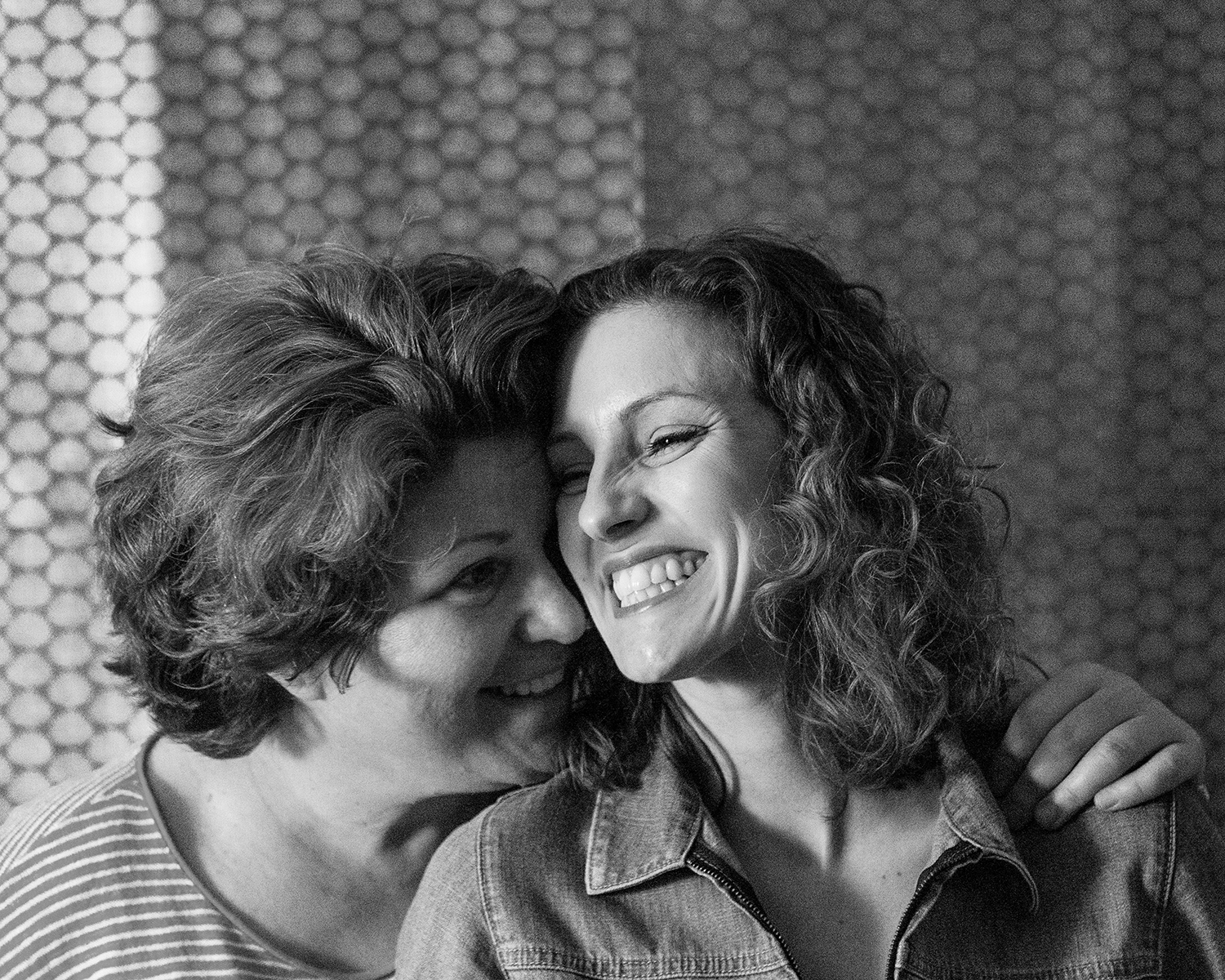
A Conversation with the Crystal Lucas Perry, Alexandra Henrikson, and Olivia Washington

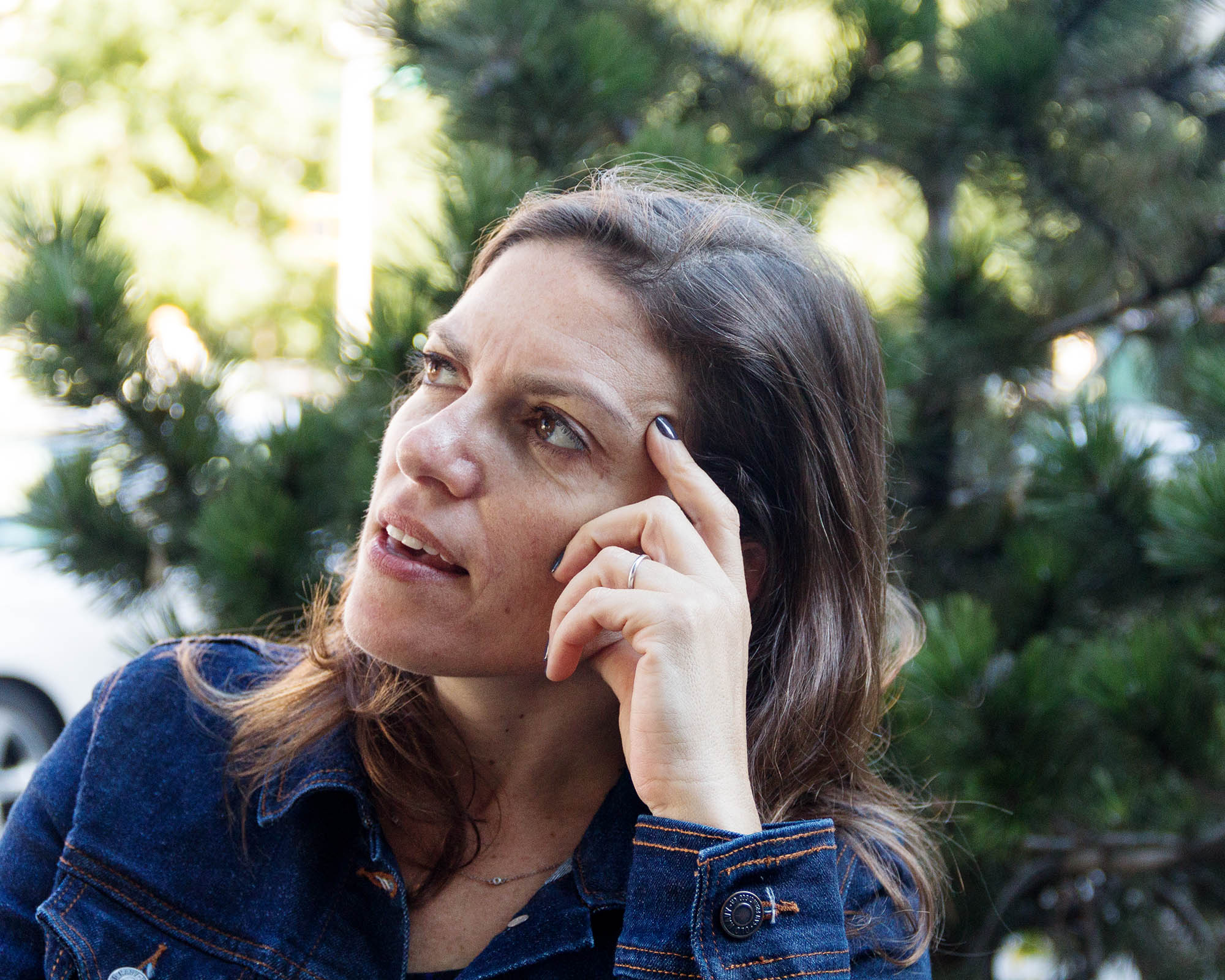
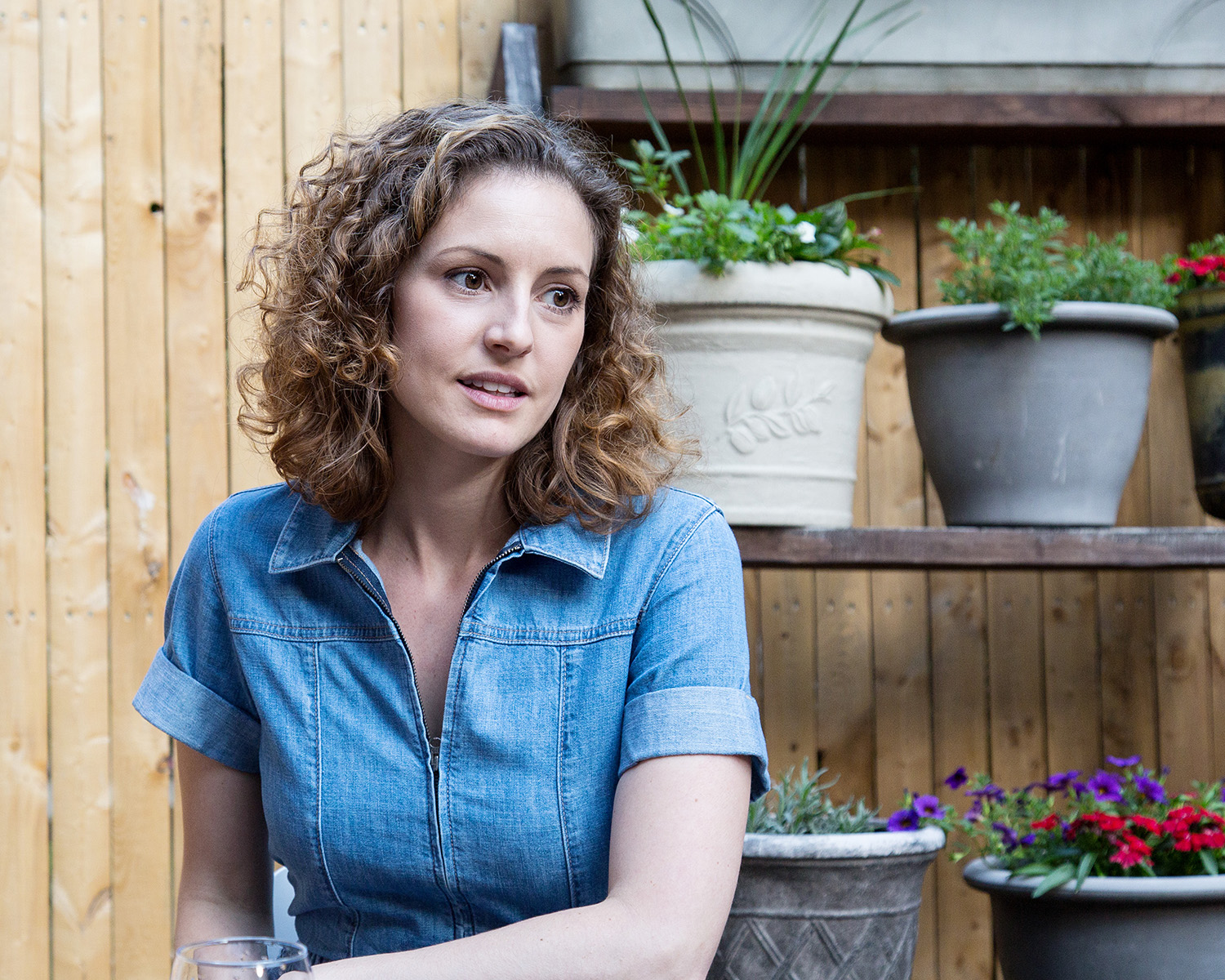
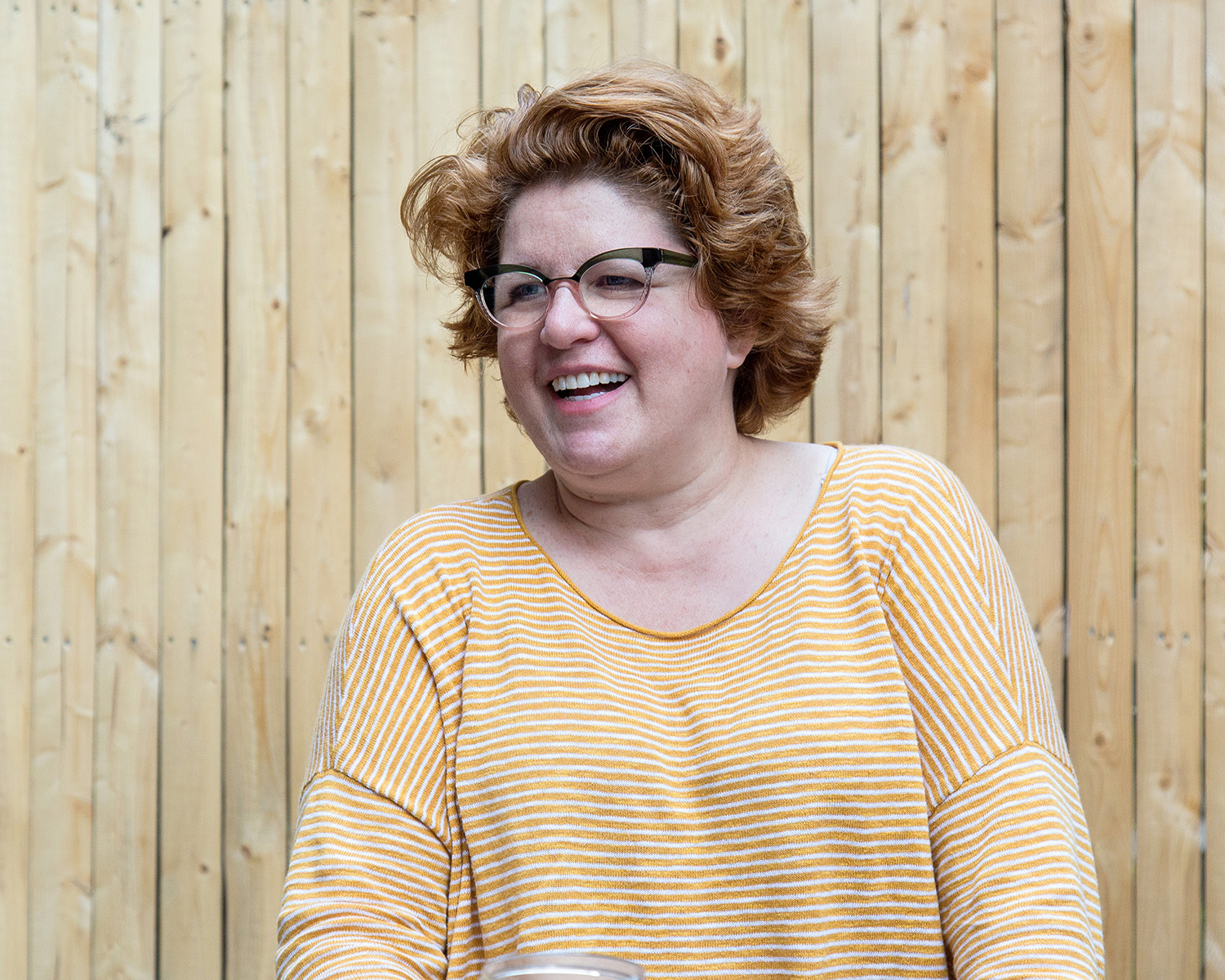
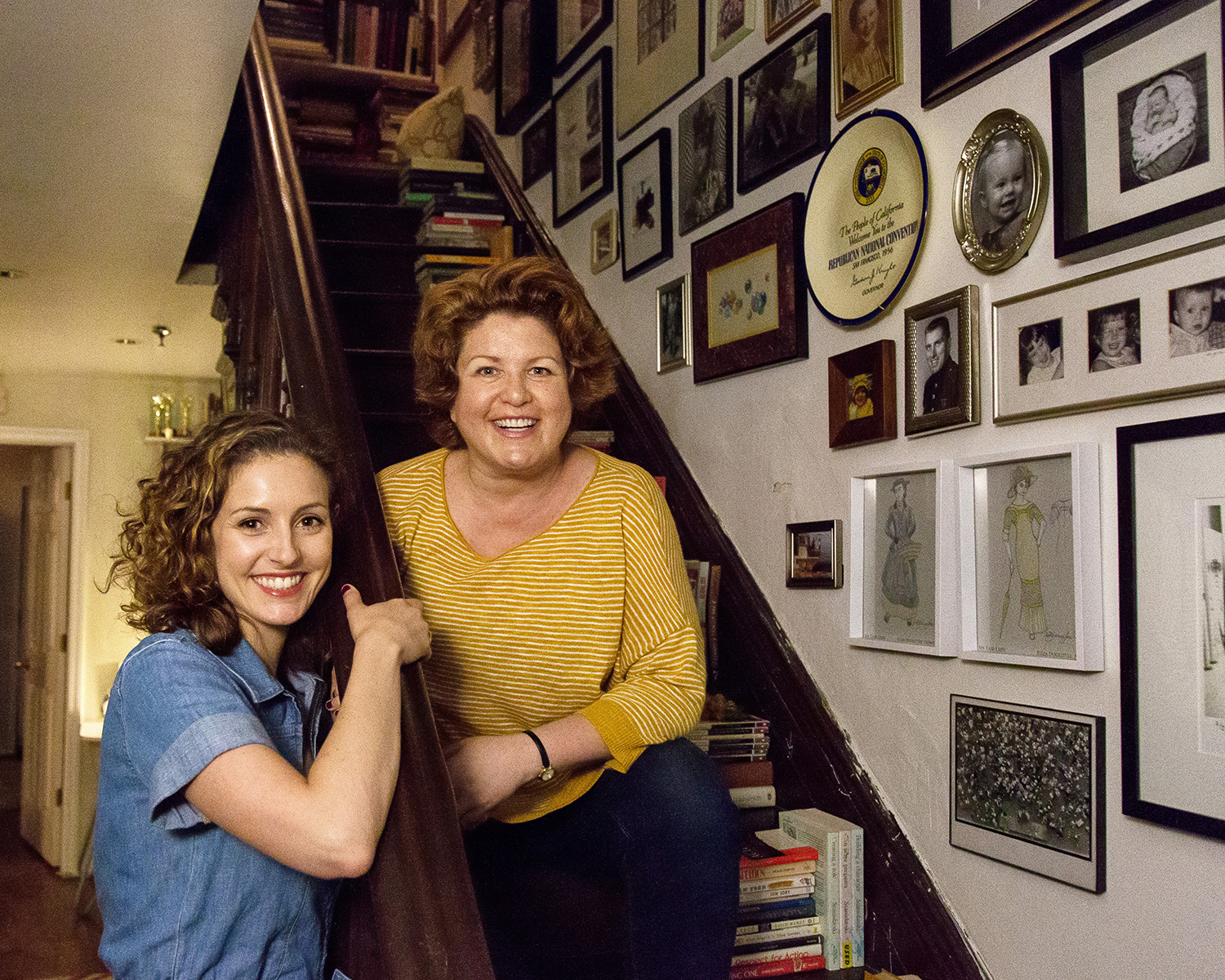
Crystal Lucas Perry, Alexandra Henrikson, Olivia Washington


When you think of plays that empower women, The Taming of the Shrew doesn’t come to mind, but Chicago Shakespeare Theatre’s new production is trying to change that. With a cast of thirteen women and a suffragette twist, this Shrew is unlike any production you’ve ever seen before. I sat down with three of the show’s stars, Crystal Lucas Perry, Alexandra Henrikson, and Olivia Washington to talk about voting, feminism and Oregon Trail.


Kelly Wallace: So, you guys have started performances? You started last week, yeah? Let’s start with who you are and who you’re playing—just give me a short description of that character.
 

Crystal Lucas Perry: I’m playing Petruchio as well as Mrs. Van Dyne—Victoria Van Dyne. Mrs. Van Dyne is a suffragette during 1919, and one of the champions of the club. She prides herself on being out and physical with the movement and doing her best to do her part. Any chance she has to express her enthusiasm for the cause and the rights of women, she takes it. She encourages her other suffragettes and members to also take pride in the cause. And then Petruchio, obviously the tamer of the shrew, he’s a man going after what he wants. He will stop at nothing to obtain that.
 

Alex Henrikson: Hello, I’m eating a muffin. When I know I’m being recorded I suddenly get real weird and I apologize. I’ll stop trying to entertain. I play Kate and Mrs. Louise Harrison. What’s so fun is Mrs. Louise Harrison is a woman in 1919 and is an industrialist’s wife and is happy to be so and likes that her husband is in charge. I like to imagine him as a middle-aged Sean Connery…
 

Crystal: Wouldn’t we all like to imagine being married to a middle-aged Sean Connery?
 

Alex: Sean Connery’s where you start. No, but, she’s that woman who has learned to play the world with the set of tools that she has in 1919 to have power, which is her beauty, her being a great host, her gentle voice, and also her diva-level narcissism—which is another part of it that’s a little hard to reconcile sometimes. She doesn’t understand suffrage. She’s come here to act; she wants to be an actress. I think she’s a frustrated actress because she would’ve been a great actress in a different time. Then I get to play Kate, which is just the most fun. It feels like every time we get together is a political act, which feels great at this moment in time. In the beginning, I get to be a woman who goes from being a wildcat and not knowing how to use her words exactly but having all this passion, to a woman who figures out how to use her words by the end. Unfortunately, what she uses her words for is not what me, Alex Henrikson, would want her to stay. That’s what the play wrestles with on that journey.
 

Olivia Washington: I play Emily Ingersoll slash Ms. Ingersoll slash Bianca. Emily is a daughter of the Senator, Senator Sherman, and she’s very loving and supportive and keeps to herself. She has an awakening at the end, and meeting all these women … she’s not an initial supporter of suffrage, but she’s educated on it. She’s learned it more in a book way, not in the way of having seen what it is. So I think she wakes up to the idea of what it means to believe in something, and believe in something for the country and for herself as well. She’s able to have conversations with her mother that she wouldn’t have been able to have without that awakening. And then Bianca … she’s so much fun to play. And in a similar way, she is a loving daughter. But she kind of uses her power in a different way than Kate uses her power. She picks her times to speak and how she speaks to get what she wants, but then still goes behind her dad’s back and gets married. I like that kind of sassy, quiet, sneaky way about her.
 

Kelly: What does it feel like to do a show, which as you mentioned has this political side, right now? This is, undeniably, a very contentious moment in our country, no matter what side you’re on.
 

Crystal: Well, I think about the Women’s March that happened everywhere, I like to imagine Mrs. Van Dyne at the front lines of that march, making all the hilarious yet powerful signs. I can’t help but think of her as one of those women, and the Instagram photos she must have taken [laughter]. That was a day to gain a ton of followers. But, really, that’s the beauty of what I get to witness. I watch how these women choose to fight, seeing how the women of today choose to fight, or choose to push against the barriers we’re facing. It always seems to be the same. They use what they have to get what they want. They take the opportunities that they are able to seize and use that as a platform.
 

During the play, we have our own “votes,” um … what’s it called?
 

Alex: A democratic process? [laughter]
 

Crystal: We do the whole voice voting “ay”/”nay” thing, and that’s what’s so beautiful. This is a chance where we get to demonstrate and recognize our power. It might be something meaningless, but it means something to us. We can make change within our little house and that gives us the power to go and make change elsewhere. That’s something I like, the parallels between those two, of how we choose to fight and how we energize ourselves to make something better.
 

Alex: Yeah, what you just said made me think of how being in high school, there were lots of boys telling me like, during the Gore vote (okay, it was a little past high school, don’t worry about the time), that my vote didn’t mean anything, that it was the lesser of two evils.
 

Crystal: Where’d we hear that again?
 

Alex: Exactly. It comes up every single election, doesn’t even matter who the politicians are, there’s a mistrust of government. To me, I never saw it as a lesser of two evils. I always can see someone I admire, some quality, and only this year—and it’s taken me a long time to get here—but my vote does matter. What I think does matter. I went to the Women’s March and I saw a lot of little girls with a lot of women around them saying, No, this is important. There are more women getting involved in politics. When I was doing research for this show, I read Rebecca Traister’s book, All the Single Ladies. She tells this story of women in Wyoming, where there’s all this trash in the streets and the male politicians and the mayor couldn’t get it together, and the women were like, “Our streets are disgusting.” So they all ran for positions in the town, won, got all this shit done, and then went back to the house all like, see you later. There’s part of me that’s really excited. For me, this has been a huge awakening experience, and I think the same happens for my character, and getting to do The Taming of the Shrew for the third time (I’ve played Gremio and Bianca before) … what’s been nice about this time and this rehearsal process is when we would get to points where it just was never okay with me. You watch these versions and you’re like “…and he probably raped her,” or he’s calling her chattel. It’s dark. It’s so funny, but then it gets really, really dark. You see these two characters smash against each other and fall in love.
 

Kelly: Not the fun Beatrice and Benedick kind of thing.
 

Alex: They’re literally hitting each other.
 

Kelly: It isn’t that contentious, Shakespearean, comedic courtship…
 

Alex: It’s their way of falling in love, and I think they do fall in love, but for me as a modern woman in 2017, playing a woman in 1919, watching this play from the 1590s, I have all these out of body experiences. I’m seeing what’s not okay with me; I’m seeing where my line is. I think that now, as a woman who is 32 (and you can print that, I’m proud of it), I’m finding all these things that aren’t okay for me anymore. I can point to that and say it wasn’t okay when it happened.
 

Olivia: I agree with both of them. To put it so simply, it’s amazing how something so small can birth a bigger movement. I think that was a lovely reminder, not just in this political climate, but in the world. This story of these women, it shows your voice matters, even if people are telling you it does not matter. If you can just get involved, I think that’s what most people of our generation are saying right now. Most millennials are like, you know what, a takeaway from this whole election is that I need to pay more attention to what’s happening. We have to take back our rights, and our voice, because we can. I’m going to educate myself on things about our government that I let go by, because I let people speak for me, or because I assumed it would be okay. Growing up in that way, we have to take responsibility for our actions and our part in making a difference in the world today.
 

Crystal: And what affects one affects us all. Mrs. Van Dyne knows the passing of this, this 19th Amendment, and the right to vote, may not mean mountains are moved for her individually. A move for women is a move for her. A win for women is a win for her. Not until ’65 when the Voting Rights Act passes does she get that, so the barriers are still in the way for her character particularly. But the fact that they’ve been able to come together and be united in this is a complete reflection of what I see with women today. We have been able to set aside our differences and our viewpoints because at some level, we agree this vote is a right that belongs to us all. `
 

Olivia: For the good of the country.
 

Kelly: You’ve had a few performances—do you have any sense of how the audience has been reacting? It’s a show that everyone’s familiar with, but has a wildly different take on.
 

Olivia: I’ll speak up first since they’re onstage most of the time and we’re in the aisles watching it. It’s one of my favorite parts, watching the end of the first act. They get married, and you’re just listening to the audience respond. Everyone is so sucked in. They’re trying to figure out Petruchio like, is that a woman? I don’t know…
 

Alex: Crystal is an incredibly convincing gentleman…
 

Olivia: But really, you watch this man overpower this strong-willed woman and what is she gonna do? What are we gonna do? Can we do anything? The vocal responses coming from the audiences are chilling sometimes. So it doesn’t matter if it’s a man playing this part; it doesn’t matter if it’s a woman. If you’re good at your job, you get the message across. They do it so beautifully and you’re watching it and … it sucks. People realize it’s not that kind of comedy.
 

Alex: And that final “No,” Barbara [Gaines, Artistic Director] was like, “What do you feel in that moment?” And my answer was: “I don’t want to go with him.” So she told me to say that. And I did. And you hear the audience laugh, it’s like this almost impetuous child. Then Crystal takes that impetuous energy away and everyone is silent. I love this play, and I am a feminist, and this is the moment for me that shows why this play is so tricky.
 

Kelly: How is that for you, playing such an aggressive man? Does the gender swap change anything about your onstage interaction?
 

Alex: I feel like I’m actually stronger onstage with her than with any male counterpart because I feel like she can actually match me. Like, as an actress, I’m very tall. I’m 5’10” and I have a very large wingspan and a very big voice. Oftentimes, I felt like I had to diminish myself to make sure the guy looked strong, or at least that’s the traditional gender role. So many shows would say they couldn’t find someone to match me, which, I think, is often code for finding someone as tall as me. When I met Crystal, it was like wow, it’s on. I’m not pulling any punches, she didn’t pull any punches with me. We just kept raising up. I wish every actor could get to work with Crystal Lucas Perry and Olivia Washington at some point. Everyone says yes. No one is diminishing themselves. Now that I know how much power there is, I can see how I wasn’t raising up to that.
 

Crystal: Aside from the physical adjustments I’m trying to show that are more masculine, I honestly don’t turn off my female brain. I really think of him as a woman who thinks differently and who executes from a different place than my other counterparts. As a woman playing this role, it’s incredibly satisfying because I know every move I would make as a woman. I know every tic that would turn me off or on as a woman. So because I know those things, I get to decide if I would be turned off or on by that.
 

Kelly: You know to push those buttons.
 

Crystal: Oh, I get to push the buttons, and I recognize when buttons are being pushed of mine. It’s really lovely and working with Alex has been fun because she does not filter and she goes all in and so we’ve been able to take this scene … I mean, we could show you the wooing scene in a million different ways and keep you on your toes. That’s just been the joy. Previews are helping us figure out what story we want to tell with that. At the end of the day, it’s two people coming together and realizing they can’t just break through the other person, they can’t just go around them, they have to meet—there has to be a collision. It’s exciting. He’s a really strong woman, strong in a different way.
 

Crystal Lucas Perry, Alexandra Hendrikson

(Liz Lauren)


Kelly: Now, the framing of this show is the suffragette movement; you’re all playing these 20th-century suffragettes as well. You’re both people of color, as you brought up, the right to vote wasn’t a “win” at that moment, so what is that like for you as a human and as an actress? This victory, ostensibly, has happened, but not for everyone.
 

Crystal: A win for one of us is a win for all. And we talked a lot about that. We chose to acknowledge who we are in the space and celebrate that, because that’s one more beautiful thing about these women being able to come together because of their social level. They’re here, in this group, choosing to commune with this Shakespeare. Of course, all of these things happen on this day. I think that I’ll speak for Mrs. Van Dyne: she’s a woman who has a vision for the future, and she is able to see that we have to focus on right now, and right now, this is the next step. This is the opportunity. Similar to how Petruchio seizes an opportunity when it’s presented, she’s gonna seize this opportunity as it stands before her. There’s not many times we have to touch on it. It’s there. It’s a part of the play by us being onstage.
 

Kelly: It doesn’t need to be explicit.
 

Olivia: It’s underneath; the undertones are there. And we have different perspectives. You have Mrs. Van Dyne, who is such a clear cut fighter for the cause, and I think for my character, I was raised by a white Senator’s family, so I come from a place of privilege in that family and in that home. And yet, there’s this kind of … Oh, I have to start using my voice in a way outside the safety net of my home that was created for me. I am a woman of color in this world, and I want to effect change in this world, but not just from back here. So, how do I step forward? This is all undertone, of course.
 

Kelly: But that’s the kind of undertone and tension that keeps the show interesting, it draws you in even further.
 

Crystal: There’s a moment in the play where some of us rush out to join a rally and some of the women stay, and you hear some of their reasons. Some people feel they’re too old, some are too afraid, and you get a chance to see that it’s not just because they don’t want that, it’s because they have something to lose themselves. So getting to the core, stripping color, stripping social class, stripping all of those other things, it gets to the human need of wanting to be safe and wanting to make change and wanting to be a part of something great.
 

Olivia: It’s human. You see throughout history—no matter race, gender, whatever—to fight for a bigger cause, you let go of yourself, it’s for the bigger battle.
 

Crystal: And I don’t think these women are done. I feel like they’ve got a taste of change and the ability to make change.
 

Kelly: There’s an optimism in where it ends up. The “tide-turning” feeling is very present. And that one-hundred years ago … not even, really…
 

Olivia: It’s so crazy!
 

Kelly: How recently all of this was for millennials is mind-boggling. The Voting Rights Act, Roe vs. Wade, marriage equality … we feel like these are all a given. Of course, we should have those things. I think the good idea behind the Women’s March is maybe to remind younger generations how much there is to protect, and what we still have to lose.
 

Alex: I was born in the ‘80s, we had the internet, I was playing Oregon Trail on it…
 

Kelly: I’m not sure if the internet was a net positive or not yet.
 

Alex: I’m not sure either, we won’t take a side. But part of it was that I saw all this heroines in Disney movies. I wasn’t seeing Snow White anymore, I was seeing Belle. And she really liked reading. Then it turned into this competition of reading. Or She-Ra princess of power! I think the heroines and the storytelling I had growing up versus what my mother had … it affected what her expectations of me were. She told me if I got pregnant before 30 it would hurt more to give birth to the baby? Which is a lie, of course? She also told me I didn’t need to learn to cook, let’s look into writing more. I think she was doing this very active “you will not be that woman.” By ‘that woman,” she meant the idea of what she was brought up as, and what she was trying to steer me away from. By now we know every woman is every woman. I love cooking. I get turned on when I cook a meal for a man. It is hot! You know? I also get turned on when I cook a meal for all my friends, not turned on in that way. It’s just seeing all the different options that we as women have. When I look at Mrs. Van Dyne and I see her going outside and going into the fray again, I think she is black, she will get double hurt and that’s how brave she is. That’s one of the things I use for my character to move forward. She’s such a brave fucking woman, why am I being a coward over here? You can’t know something until you know it. Because I’m playing Kate, I have a very clear journey through the play of learning that there’s more. And once you know something, you can’t unknow it. I think that’s what’s so exciting about the storytelling in this. I think that our storytelling is powerful—what story we are telling, specifically.
 

Crystal: I definitely have to thank Barbara Gaines and Ron West, our writer and director, for allowing us the time to work through this process. We have a huge play to learn, we didn’t have that much time to do it. We also have two plays to learn, because of the frame of a play within a play. It’s still being developed every day. So to be able to alot for those times where we can have these conversations as we’re having now, and be very specific and clear about the weight of these situations and the way we want to play these things here—it’s a balancing act. Truly, knowing the mothers who have come before us and all of their accomplishments and their sacrifices and their triumphs … all of that is what lies beneath the foundation of this play.
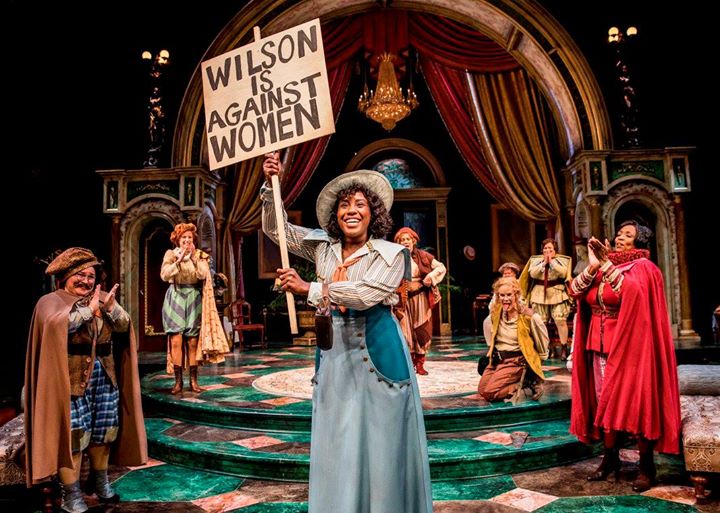
 

Crystal Lucas Perry, Alexandra Hendrikson

(Liz Lauren)


Kelly: What do you hope the audience experiences with this show?
 

Crystal: Always, for me, I hope it starts conversation. I think there are so many things to talk about after you see this show. Whether it’s about how you had so much fun watching these women…
 

Alex: It is funny, it’s really funny!
 

Crystal: Thirteen women onstage at one time. We were just talking about how we’re pretty sure there isn’t another production with thirteen women onstage in America right now. That’s a beautiful thing. All of these characters would be men. So there’s a celebration of that! There’s a celebration over these women playing a part in the 19th Amendment! But also Alex’s character’s journey—not just as Kate, but as Mrs. Harrison—is that she goes through a change. One of her lines is “people change” and again, it’s also what Olivia says. The more we educate ourselves, the more information we have about what is happening and what we can do to be a part of that—how we’re hurting, and how we’re helping. You could say the same about the environment: ultimately, the more we know, the more we can contribute. I believe that everyone who comes to the theater wants to be a part of something.
 

Olivia: Also, I hope the audience sees how things aren’t so black and white. Growing up in our safe millennial bubble, we have to realize things can be confusing and muddy. It won’t always be all good or always bad. Coming away from this production, I’ve laughed, but there are other parts I’m not really okay with. Why is that? You have to realize the world is not so clear-cut, so where do you fit into that? How do you have a conversation about that? I think that’s what I come away looking at.
 

Crystal: You’ll meet this women and see little glimpses of who they are and their backgrounds— whether it be religious, or racial, or a stance—but no matter what, they’ve come together for this cause. No matter what they are, there is something bigger than them. For the audience to see that, to see it was happening during that time, and to have it mirror what’s happening now—to know it’s possible, it still exists, that things do matter. It’s an important reminder for people.
 

Alex: I like looking out into the ground. One night, I was doing the final monologue. I saw this woman elbow her husband at a certain point. I guess I want women to feel seen. I hope men can see their women feel seen and support women talking. It’s just an opportunity to say hi, we see you. There’s one moment where Barbara had given me the direction, to be Kate at the end and do the submission speech, but let Mrs. Harrison push against that. I almost felt like I saw ghosts last night. Because there are posters of suffragettes, but then I saw my mother, and my grandmother, and little me, and the little mess of people in the audience, and their mothers and grandmothers—and I’m wearing my grandmother’s ring in this, so it feels like these generations of women who have supported and loved each other. There’s something beautiful about women from 2017 playing women from 1919, playing men from the 1590s. You feel the ghosts. Theater is a tradition where you feel the ghosts anyway; you feel this communal, tribal vibe of coming together to tell a story at the end. There’s this moment of the campfire and our mothers and our grandmothers holding hands across millennia, and it’s beautiful.


Crystal Lucas-Perry makes her Chicago debut at Chicago Shakespeare Theater. Off-Broadway credits include Bull in a China Shop (Lincoln Center Theater); Little Children Dream of God (Roundabout Theatre); Bastard Jones (The Cell Theatre); The Convent of Pleasure(Cherry Lane Theatre); Storm Still: A King Lear Adaptation (Brooklyn Yard Theatre); Devil Music (Ensemble Studio Theatre); and The Wedding Play (The Tank Theatre). Regional credits include A Sign of the Times (Goodspeed Musicals); Far from Heaven, A Streetcar Named Desire, Finding Robert Hutchens, and When You’re Here (Williamstown Theatre Festival). Film credits include Mimesis 2, Frank and Azalee Austin, and Roulette. Ms. Lucas-Perry is also a solo artist and continues to compose, produce, and perform her original music at venues across the country. She received her BA from Western Michigan University’s College of Fine Arts and her MFA from New York University’s Tisch Graduate Acting Program.
 

Alexandra Henrikson makes her Chicago debut at Chicago Shakespeare Theater. Broadway credits include Larry David’s Fish in the Dark and The Snow Geese (Manhattan Theatre Club). Off-Broadway and her off-off Broadway credits include: We Play for the Gods (Women’s Project Theater); Bones in the Basket (The Araca Group); Hell House (St. Ann’s Warehouse); Commedia dell’Artichoke (Gene Frankel Theatre); The Maids (Impure Artists); and Much Ado About Nothing (Smith Street Stage). Her independent film works include: Towheads, Love Like Gold, and Here We Are in the Present … Again. Regional credits include: the world premiere of Steve Martin’s Meteor Shower (The Old Globe); Ironbound (Helen Hayes nomination, Round House Theatre); Fairytale Lives of Russian Girls (Suzi Bass Award – Best Ensemble, Alliance Theatre); and productions with California Shakespeare Theater and the Eugene O’Neill Theater Center. Ms. Henrikson received a BFA in theater from New York University and an MFA in acting from Yale University.
 

Olivia Washington makes her Chicago debut at Chicago Shakespeare Theater. She has appeared off Broadway as Laura in The Glass Menagerie (Masterworks Theater Company) and in Caucasian Chalk Circle (Stella Adler Studio of Acting). Her regional credits include Clybourne Park (Hangar Theatre). Film and television credits include Lee Daniel’s The Butler and Mr. Robot. Ms. Washington received her BFA in drama from the Tisch School of the Arts at NYU.

Posted on

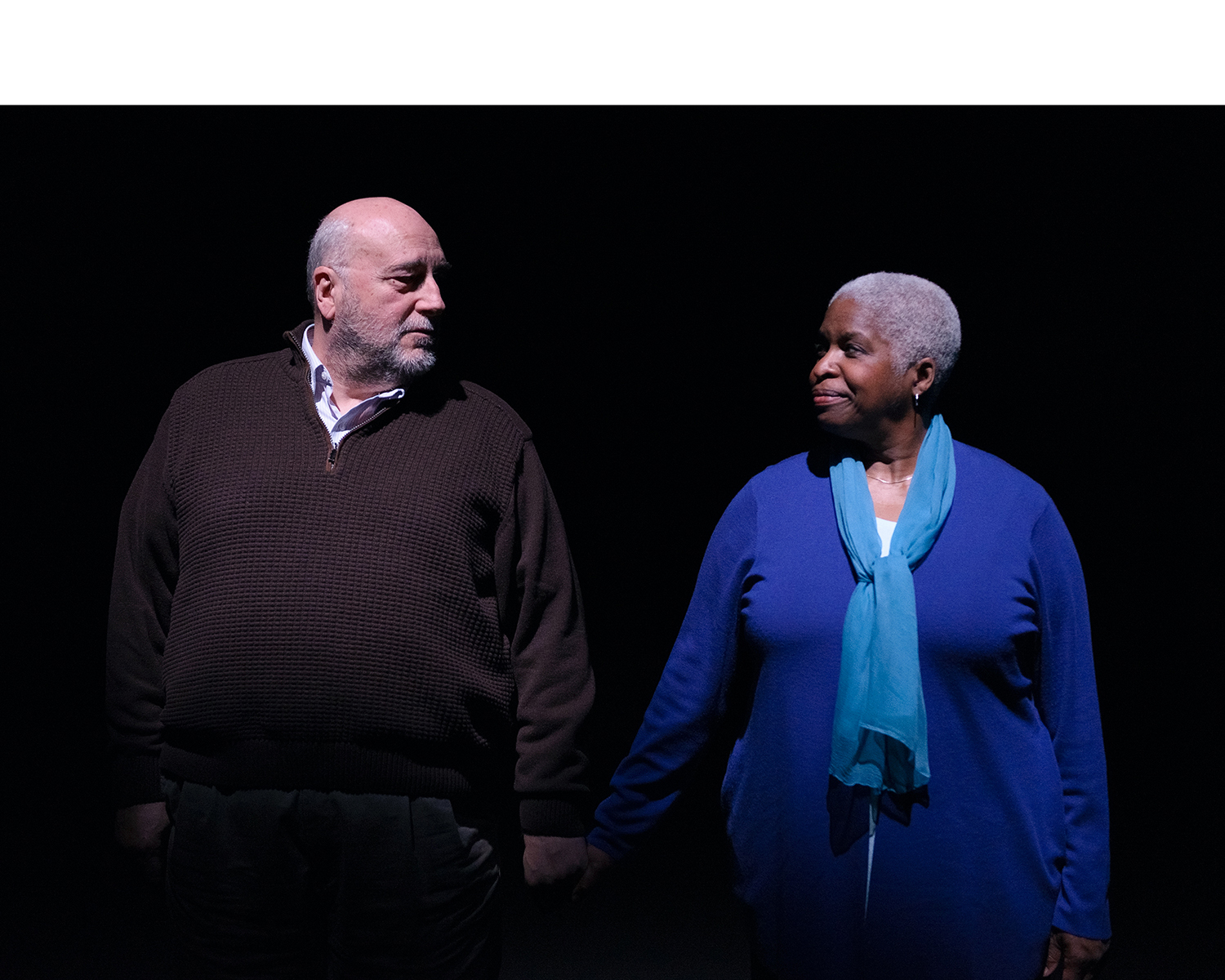
A Conversation with Michelle Lauto

Michelle Lauto


Since moving to Chicago, to say Michelle Lauto has been busy is an understatement. She’s played the iconic Liza Minnelli (The Boy from Oz), the big-city-dreaming Vanessa from In the Heights, and she just finished up a run in a second Lin-Manuel Miranda-related starring role, in Spamilton. Before she jumps into her latest triumph, NYU student-flower-child Sheila in The Mercury Theatre’s Hair, she sat down with us to talk theater, identity, and using Coinstar to get Rent tickets.


Kelly Wallace: How did you come to be in Spamilton?
 

Michelle Lauto: It was kind of crazy. I had just signed with the agency I’m with now, Stewart Talent, that morning. They told me they wanted to represent me…that night I got an email saying they had an audition for me tomorrow. I left almost in tears and called my dad, like, I need a job; I can’t keep doing this. I was really hoping for a break. I got a callback and they had me come dance, they had me sing and do more material and a few days later I got a call from my agent and he told me I was going to be in Spamilton. They offered me an Equity contract, because I’d been EMC, which meant that I could turn and get my card. It was the fastest thing in the world. It went from me crying under the train tracks saying, Something has got to give; I can’t do this to, My whole life is changing!
 

I’m doing insane quick changes, going from full Hamilton to 55-year-old Liza Minnelli in 25 seconds. I’m having so much fun. It’s opened a lot of other doors and introduced me to a lot of cool people. It’s insane. I’m having a great time.
 

KW: Did you go to school for musical theater?
 

ML: I am a college dropout!
 

Michelle Lauto
 

KW: What made you decide to come out here and leave college?
 

ML: I think anyone’s path is the right path for them. Studying musical theater in a BFA program was not my path. I didn’t feel like I belonged in a program like that. My friends who went to Pace loved it and that’s awesome for them, but I had this urge to be auditioning. So I did. I was also, at that time, getting a bunch of callbacks for things. So, I felt like, “You have Dramatics 101 and this text, or you have a callback for the national tour of Rock of Ages,” so I would go to the callback. After awhile, it started to feel counterintuitive to spend $45,000 a year to do what I was already doing. Again, I’m not dismissing the value of education in theater; it’s just not for everyone.
 

I thought I was just going to work in the city, live in the city, and audition. But, as you know, living in New York City costs a lot of money. So, when you’re 18-19 years old and bartending until 3 o’clock in the morning, you don’t want to wake up at 6AM to get your name on a list and maybe get seen at 5:30pm. Maybe they’ll let you sing eight bars. It started to feel really taxing. I was craving something else: I always wanted to do comedy; I always loved writing. Living somewhere else started to feel really appealing to me, having grown up in New Jersey and then living in New York…that was all I knew. The only city I knew was New York. To me, there was no other city. You just call it, “the City.” You say, “I’m going to the City” and everyone knows what you mean.
 

KW: Which I said for months after moving to Chicago, and people would be so confused.
 

ML: They’re like, “Which city are you referring to? Be specific.” So the plan was to go to Chicago for a year, study and go through the initial program at Second City, and then I was going to leave. I met amazing friends. I also started to vibe with Chicago, I really liked it here, but I still had my plan to move back to New York. I auditioned for conservatory at Second City and got in. I told myself that if I got in, it was a sign that I should stay for a while more. I sort of walked away from musical theater for a while. I had to go back and start auditioning for things. I went to an audition here for a non-equity production of Murder Ballad and it was the very first thing I auditioned for and I got offered the swing track, to cover both women in the show. From there, it was steps and making connections and auditioning and working my tush off.
 

KW: What do you feel like is the biggest difference between New York and Chicago?
 

ML: I love my home and I love New York. My dream has not changed since I was five years old. I want to be on Broadway one day. As far as the acting scene goes, Chicago is a city of workers. It’s about the work, not about the ego. I think if you’re not in it to do the work, you won’t last long. That spreads really fast. If you start to garnish a reputation as someone who doesn’t do it for the work or doesn’t do it for the right reasons, that spreads like wildfire.
 

KW: This city seems to talk more about things. I think that Chicago is having more conversations about the content and direction of theater than New York does.
 

ML: Absolutely. I was a part of In the Heights at Porchlight, and there was a ton of controversy around it. I don’t regret it at all. I’m very grateful for the conversation it ignited within the theater community. But it’s very interesting to watch the buzz and attention it got, and the huge controversy it caused, and then I see the national tour of something like Aladdin and, great, but is there a single Middle Eastern person in the Broadway production or on the tour? Probably not. Or, if there are, they’re very underrepresented. There’s a tendency to say, “There’s diversity!” in a way that makes people of color interchangeable. Latinos are very different from Middle Eastern people and black people are very different from Latinos. That’s not interchangeable.
 

Michelle Lauto
 

KW: How do you think we can go from tossing blame around to actually, constructively working on developing more inclusive talent?
 

ML: My boyfriend, Nick, and I were talking about this the other day in a broader sense of the political landscape. We’re in – I don’t love this term, but I see it so much – “woke culture.” It’s like, “How woke are you?” Competitive wokeness. While I love that as someone who has been a social justice warrior since I was 10…when we play the blame game too much, it poses risk to alienate people from your cause or your movement. There’s a way of saying, “Hey, that’s not acceptable, we have to do better than that” without coming out with a pitchfork.
 

Unfortunately, what wound up happening was that our cast was comprised of 15 or 16 people of color who were black or Latino, and we all felt really alienated from our community. Our show was a sold-out run for four-and-a-half months. That doesn’t happen in Chicago and it certainly doesn’t happen for shows full of brown people.
 

KW: The audience and the ticket sales say something, in terms of the wider reaction.
 

ML: Absolutely. And I got to have conversations with students who came in from primarily Latino neighborhoods to see our show, we had talkbacks with them…I don’t regret a minute of that process. It was taxing, and that’s part of what comes with it. I say that from a place of privilege. If that’s the most taxing thing in my life, then I’m a very fortunate person. I love the accountability of Chicago theater, I think we need to hold each other accountable. What upset me the most was when I see casting announcements day after day for non-race-specific shows, for revues even, with all white people. No one is saying anything about that. Misrepresentation onstage is a problem and shouldn’t be accepted or dismissed, but why is it only exclusive to our stories? Why can’t representation mean this cool new piece that doesn’t have anything to base itself on, casting wise? Can’t we agree that it would be cool to have those opportunities too?
 

KW: As an actor, what do you think your responsibility is to be engaged politically or as an activist, both in the industry and in the broader world? A lot of people would say, “Oh, well, you’re an entertainer, stick to entertaining. We don’t need your political opinion.”
 

ML: Ugh! When people tell actors to stick to acting, I want to tell them that art has never just been about entertainment, ever. Plays and musicals and films and books have all come from a place of people writing what they know or making social commentary. You can’t separate the two almost ever, in my opinion. How can you possibly embody the essence of someone else if you’re not putting yourself in other people’s shoes? That means doing your research about all different cultures. It means advocating. Don’t just slide into someone’s skin and use it. What can you do to advocate on the part of communities you’re representing? I think it’s really important to put your money where your mouth is.
 

KW: When did you become interested in musical theater?
 

ML: I think I was interested in musical theater before I really knew what it was. My mom likes to say I was singing before I could speak. I always loved singing and performing. The moment that I felt like, This is going down, this is what I have to do for the rest of my life — and it’s so corny and so clichéd – but I was a freshman in high school and my choir’s class trip was to see Wicked and I was just in tears the whole time. My best friend from high school was sitting next to me and clutching my arm. Elphaba and Glinda came out to take their bows and did a kind of princess wave and I was up in the mezzanine, but I was waving back to them. I thought they were doing this for me. And then I saw Rent. It was really special. I grew up listening to pop and rock, so I didn’t have a traditional musical theater voice at that age. I thought I should just belt everything, which at 14 is just screaming. But Rent was the first rock musical I ever saw, so it changed my world. The women were unconventionally pretty, they sounded unconventional, and that really spoke to me. It made me feel like I could be on Broadway.
 

The first professional Broadway show I auditioned for was Spiderman, for Mary Jane. And this was at least four years before it even wound up opening. It’s hilarious to think that at 16 I thought I could sing “Come to Your Senses” and surely if I just scream through this Jonathan Larson song, I’ll be in the Spiderman musical. But actually from that I wound up getting a callback for Next to Normal on Broadway, for Natalie. I remember being really excited. That was kind of the start of everything. Ultimately, it’s my favorite thing. I have a love/hate relationship with it sometimes, but I think that’s any person/actor’s relationship with it.
 

Michelle Lauto
 

KW: You’ve talked about this before — you’re Puerto Rican; you feel you white-pass sometimes.
 

ML: Definitely. I’m mixed, my dad is Italian and stuff, and I have fair skin. So I’m afforded privileges. That’s just obvious. I think I’ve found a good balance in the last year or so.
 

KW: Was that confusing for you? To figure out where you fit on the spectrum?
 

ML: Definitely, big time. Even auditioning for In the Heights, there was a part of me that was tentative to audition because of the way I look. But I’ve gotta say, somebody who kept coming back into my mind was Krysta Rodriguez. When I saw her in In the Heights, I saw her go on as Vanessa, and it made me think I could play that part. Mandy Gonzalez is half-Jewish. Those experiences really changed me, in terms of how I saw myself. I needed to just be Michelle. I’m very lucky in that I got to play an iconic Italian woman, Liza Minelli.That’s something I’m very grateful for. It’s also been exciting to embrace different sides of myself. Ethnicity, even voice type. I’ve stopped saying, I’m not this enough, I’m not an ingenue enough, I’m not Latino enough, I’m not white enough. I think one of the reasons I’ve always felt like I don’t belong in certain situations is that I can’t tell you how many times in the audition room people ask what I am or say I’m ambiguous looking. I’m a human being. Yes, I know what you’re saying, but it makes me feel kind of weird about myself. It makes me think about what people perceive me as and I wonder what people see me as and what I’m allowed to own. Even when I signed with my agency, my one friend was like, “Make sure they don’t just send you in for Latino roles, show them that you want everything”.
 

KW: You’ve been working here for awhile, but I imagine you’d consider In the Heights to be one of the bigger shows you’ve done in terms of publicity and visibility.
 

ML: Definitely. It was my first time leading an Equity show. I’ve been in some great shows in Chicago, but I loved doing In the Heights more than anything in this whole world. I’m spoiled in a way, and I don’t take it for granted that I had this opportunity, but it’s a whole other thing to literally not be able to get a ticket to an Equity storefront theater in Chicago. It was wild. In any show, you wonder how the house is going to be. That’s the nature of the game.
 

KW: Right, and it doesn’t inherently say anything about the quality of the show or you personally or anything like that.
 

ML: And hey, I’ll give 20 people the same show as I would give 500 people. You paid money to be here; we entered into a contract when you walked into this building. You’re here to be entertained and I’m here to entertain you and move you. But to just walk out every night and it was a sold out crowd that was losing their shit every night for us…wow.
 

You go from, “Please come see my show in Wicker Park, this is a beautiful piece of art,” and unfortunately, a beautiful piece of art doesn’t always sell tickets. I wish it did. I really wish it did. But to go from that to this school bus of 16-year-old girls whose class trip was to see our show, messaging me on Instagram…it’s a pinch me moment.
 

KW: Is that something you care a lot about? Being a role model for young people who come see your shows, engaging with young people?
 

ML: Yes! I love teaching too. In New York I worked at The Broadway Workshop which offers professional theatrical experiences to young kids. I was a teacher last summer for Emerald City. I’ll be teaching at Porchlight this summer. I think that’s something that I still hang onto – I was a nanny for so long. I love kids. And I love watching kids get so excited over musicals, because I was the 14 year old seeing Wicked and waving to Elphaba and Glinda.
 

KW: Who are some of the people you looked up to who inspired you to get into this business?
 

ML: I think, like any young girl, I saw Idina Menzel for the first time and was like, “Woah.” I remember taking the kids I watched to see Frozen and being so emotional to hear her voice as a Disney princess. It felt like everything came full circle. Alice Ripley. I’m thinking about people who mesmerized me. Watching Alice Ripley…that’s how you act. There were also shows that expanded my mind. The Drowsy Chaperone really got me. I think it was the Man in Chair’s monologue at the end. I just remember thinking, Oh, there’s a piece of my soul. Karen Olivo is another one. When I’m feeling down, I watch her Tonys’ speech. For one, I love that she was not a dancer and won a Tony playing Anita in West Side Story. She became a dancer for that show, but the point being that she worked her ass off and made the impossible possible.
 

KW: Well, she didn’t say, “I’m not going to audition for this; I’m not a dancer.”
 

ML: Exactly. That’s something I need to learn how to do. Just also the career Karen has had is so inspiring to me, and taking space when you need space. I know how that works.
 

Michelle Lauto
 

KW: It’s a tough business. Especially right now. Where do you want to see theater go in the next five or ten years? Taking into account, even, the political environment we’re in, the way the world is changing, where do you feel like we need to go to continue to be relevant?
 

ML: That’s been my comforting thought since November, that maybe, just maybe, some really incredible art will be made. It will happen. I don’t know if it makes the medicine go down that much better, because we don’t have that art right now. Let’s not limit ourselves to who can be the protagonist in a story. That’s where I think we still have a lot of room to grow even with more “diverse” shows and stuff. We lack in certain ways within that. Porchlight is doing Marry Me a Little and we get to see Bethany Thomas in that, who’s amazing. She’s unbelievable. We get to see a tall black woman leading a Sondheim show. And guess what? No one blinks an eye at that. Because whatever construct people have made in their head about who can play certain parts…it’s just a construct. It’s made up.
 

I think we can do more. I think we have a construct of what a leading man looks like. It doesn’t have to be like that. I want to see all different bodies and voices being represented. More than anything, writing. I was just saying this at lunch, they announced the Carousel revival, and that’s cool. I personally don’t think Carousel should be done in 2017. I don’t think it has any place being done in 2017. It has beautiful music. I love some of the actors who were announced. Do I think it’s problematic that they’re putting a white woman onstage and having her beaten by a black man? Yes. I think it’s problematic as hell. I don’t feel good about it. It makes me feel icky.
 

KW: It’s one thing to say we want diversity, we want “color blind” casting, but we need to look at which roles we’re casting and why.
 

ML: It matters what stories we’re giving people. “Oh, we’re doing a diverse production of this…” Okay, is it still a traditionally white story that in no way relates to the community? The beauty of In the Heights is a story about a group of people we don’t hear stories about. Hamilton, despite it being about the American Revolution, they related to a place that’s about what it means to scrappy and an immigrant. To me, that means we need to be behind the table writing. We need to be casting. We need to be in every aspect of this, behind the scenes. I think we have to continue on a quest to make inclusivity a priority. That means people with different body types, people of different races, people with different abilities, people with different gender identities. The list goes on and on. I think we’re getting there. I feel it, I feel us and the community as a whole wanting more. That’s what I want to see.


Michelle Lauto is a Chicago based actor, singer, writer, and improviser. Michelle grew up in the Jersey suburbs of New York. She began acting in and around the city at the age of 16. At 21 she moved to Chicago to study her other love: comedy. Michelle is a 2014 graduate of The Second City Training Center’s Conservatory program. She loves crafting, watching true crime shows, and talking about pizza.

Posted on

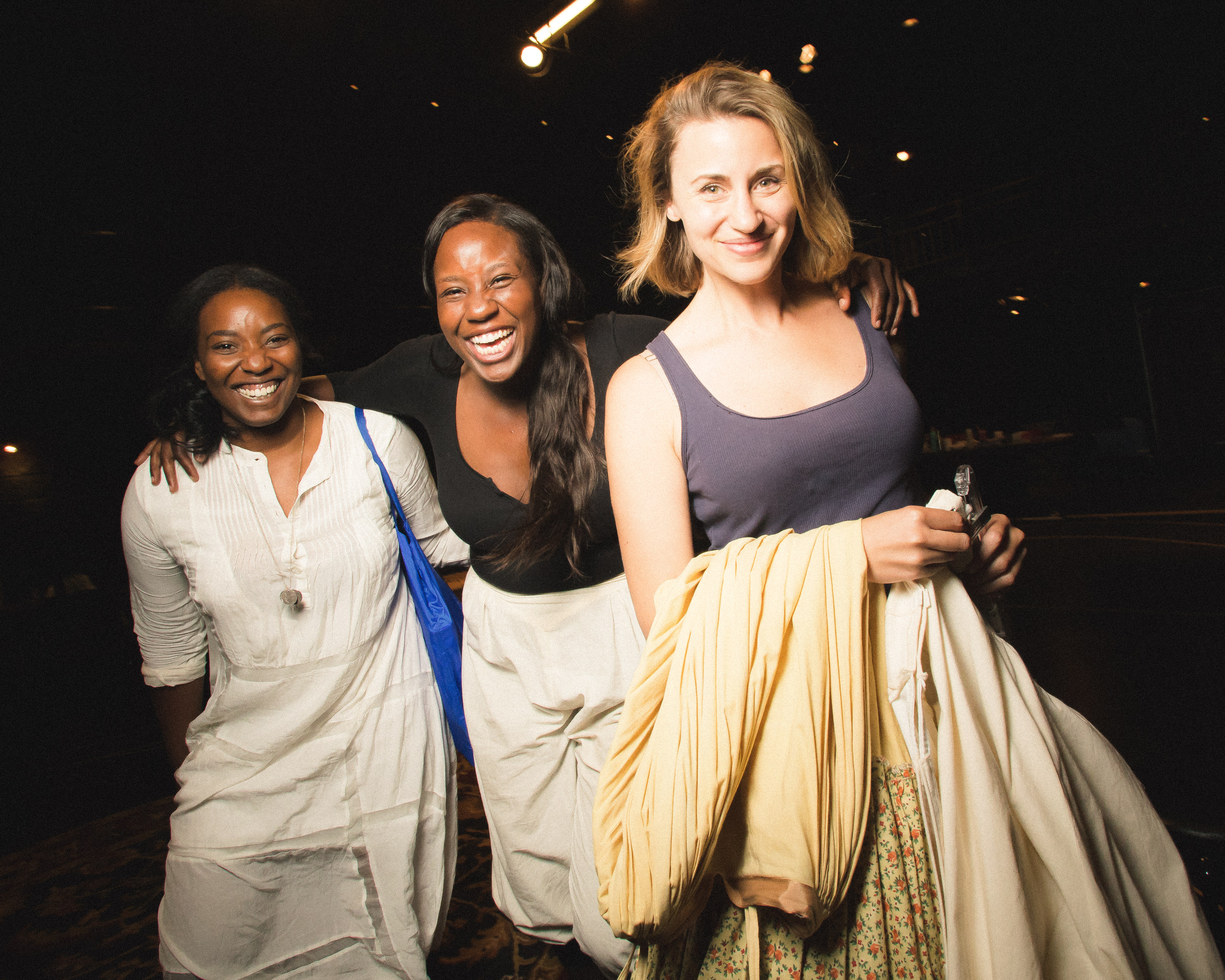
A Conversation with Lauren Yee


When you see King of the Yees, the latest work by playwright Lauren Yee, you’ll either feel like Larry Yee is your father, or you’ll wish he was. Now having its world premiere at The Goodman Theatre in Chicago, the play is a two-hour journey through Lauren’s changing relationship with her dad, imbued with sharp emotional insight and unrelenting joy. It’s hard not to be swept up in the exuberant warmth as we follow Lauren Yee (the character) through San Francisco’s Chinatown, searching for a deeper relationship with her father…and good, cheap liquor.
 

We sat down after the show’s third preview to talk about representation, the future of Chinatown, and being a character in your own play.


Kelly Wallace: This is the first full production of King of the Yees. What’s it like to see that after it being in development for years?
 

Lauren Yee: I feel like it’s been such a joy and privilege to have seen this piece through from the very beginning with The Goodman Theatre and do it all the way up until the world premiere. How often does that happen? We started it when it was just an idea and then they commissioned it…we had a reading, then a workshop. I would say this play has been through the process rather quickly, but at the same time, I think it’s been like three and a half years since I started thinking about it. It’s a reminder of how theater is sometimes not nimble. I feel like theater having the ability to respond to the world it lives in is a great characteristic for theaters to have.
 

KW: When you first started brainstorming this, what was your process like taking this from an idea to a script?
 

LY: I knew I always wanted to write a play about my father. I always thought he deserved to have his own piece. And then when I started writing it, I didn’t really know what the “why now” of it was or what shape it was going to take. Then, coincidentally, some of the real life events that happened in the play happened, just as I was starting to sit down and say, “why now.” My father has been dedicated to this community and these political causes for years and years, what is the “why now”? It’s almost like you sit down to write the play and then the universe rolls out the answer in like a wonderful way.
 

KW: When did you show the script to your father?
 

LY: Late in the process. I think my father first saw it when we did the New Stages workshop production, which is fairly late in the play’s evolution. It had been around for awhile, and I think at first I told him it was a play about Yees. I said it was about the Yee Family Association. And when he heard that, he was like I know how I will help you and put me in touch with all the different Yee branches across the country. I got to meet these very similar men at very similar organizations around the country who were very much like my father but not quite. Like, I got to see the bizarro versions of him. Doing the play was actually my strange way of getting to know my father, in a very roundabout sort of sense. I didn’t say to him, I want to write a play about you and know you better. But I said, I want to write a play about other people named Yee. There was a point at which I told him and that I was writing this play and it’s about him. And I remember his reaction to it. We’re a very non-confrontational family, and I think we were driving in the car, and I was like, Oh, this play is about you, and he said, Oh…okay, and kept on driving. I think, luckily, it’s a portrayal that’s filled with a lot of affection.
 

KW: You can definitely tell it comes from a place of extreme warmth.
 

LY: Yeah, so I felt more comfortable about that. Also, Act II is all of my father’s favorite things in one play. That also feels like a gift I’m giving to him, and hopefully to other people.
 

KW: There’s a frustrating tendency for people to say this is a Chinese show, this is a Black show, this is a gay show…whereas we’re supposed to accept the universality of every play about straight white characters unquestioningly.
 

LY: This play is very definitely set in a very specific world with a very specific aesthetic and in that kind of very specific story…it’s still all of us. This play is a play for anyone who has been through that relationship with their parents where they’re coming of age, have a great relationship with their family, but at the same time, there’s this awkward transition from your parent parenting you to you going out into the world on your own and saying this is who I am, let’s meet each other as adults. I feel like that’s something everyone goes through. What’s also interesting is that this play very clearly refracts Lauren’s, and my, experiences growing up as an American in San Francisco with many different references. The play touches on everything from Sesame Street to Greek mythology to “Thriller” to kung fu movies…it’s kind of a hodgepodge of all the interests I had growing up as a child.
 

KW: Was it hard to write yourself as a character?
 

LY: I think it was kind of fun. The interesting thing is that when I first started I thought that in order to write the play, I needed to make it very dramatic. My first draft was making the relationship between father and daughter much more tense and dysfunctional and I thought I was writing my own August: Osage County where they hate each other and they don’t know one another. I think that the story I’m capable of telling is the story of a father and a daughter who love each other a lot, who have a great relationship, but have never been able to connect in the way that Lauren wants to. I feel like that is so much more reflective of a lot more people.
 

KW: Is it harder to cut and edit things from this as opposed to some of your other work?
 

LY: Yeah, I think so. I think the play always continues to delight me, just because it’s a lot of things that I love and have a very strong relationship to, obviously. But at the same time, it’s been a lot easier for me to separate myself from the story than a lot of people would expect. When actors embody these roles, they worry I’m going to be offended or that they’re doing it wrong, and I feel like we’ve assembled such a lovely, open-hearted group of actors, that I never worried about that. I always believe that they understand what the play is.
 

KW: What was it like to try and cast someone to play your father?
 

LY: We got lucky very early on. One of the first workshops I did of this piece was with Francis Jue, whose background is very similar to mine. His parents were born and raised in San Francisco, they lived in Chinatown, he grew up outside of Chinatown, he’s a Chinese-American kid from San Francisco. In addition to being a really transcendent performer, he also just inherently gets the world that the play is set in because that’s what he experienced growing up. I don’t think that’s necessary to do the part, but I think it gives it this wonderful texture.
 

KW: Have you been to Chinatown here, since you got to Chicago?
 

LY: I have! I went to visit the Chicago Yee Association. It was great, it was the same struggles my father goes through. It’s like…no one wants to join, I didn’t want to join, but they guilted me into it. But once you have the right connection, there’s this incredible generosity that happens. They take you out, you’re like family. I think that’s kind of the two sides of this. Chinatowns are like any other ethnic or specific closed community. To an outsider, it can seem kind of unwelcoming, but as soon as you have the right way in, the world opens up. I find those organizations throughout the United States to be super interesting.
 

KW: Do you still struggle with balancing holding on to the traditional parts of your community while not standing in the way of forward motion?
 

LY: Yeah, I think it’s something I struggle with all the time. Every single human being related to me lives in San Francisco. My brothers, my cousins, my parents, all their siblings. We’ve been in San Francisco for like a hundred or a hundred and fifty years. So, for me, there always is that struggle of living outside of that community and not giving my children the same experience that I grew up with. You couldn’t go into a restaurant without somebody knowing someone else. My father walks through San Francisco and people recognize him on the street. I can’t give them that.
 

KW: Was the play always a “show-within-a-show”?
 

LY: Yeah.
 

KW: What made you decide that was the right way to structure the story?
 

LY: I think the play, thematically, always seemed to be about representation and how to tell a story and how to represent something specific and idiosyncratic and complicated onstage in a nuanced way. It felt like in order to tell the story of Chinatown, viewing it through the lens of wondering how do we tell this story seemed very important.
 

KW: There’s a joke in the show where your dad answers the question about who the show is for with “the Jews”! Who do you think the show is for?
 

LY: I think there’s always joy in seeing audience members who are Asian-American or from San Francisco or have a very specific firsthand knowledge of what’s going on in the play. There’s a joy in that they’ll just get some of it in a way that other audience members don’t. But I am really interested in sharing this story with all different kinds of people. It’s a play for anyone who dearly loves their parent and finds them so totally frustrating. If someone could see the show and think, that’s my father, or at the end of the play, if they leave and want to call their parents and start asking these questions…that would make me happy.
 

KW: The line where the father says “if you don’t vote, you never know what could happen”…was that always in the show? I would imagine it gets a very different reaction now.
 

LY: It didn’t mean anything before!
 

KW: The whole audience had this sort of mournful laugh.
 

LY: Before you didn’t get a reaction to it at all. It was like, oh yeah, of course. But I think that particular joke plays differently. It’s always been a part of who my father is and what he believes in. Whoever we are, we need to represent and exist in the world. If you don’t demand that, you don’t get to exist.
 

KW: Where did you, real Lauren Yee, land on the question of whether or not Chinatown is still something that needs to exist?
 

LY: It’s complicated. I think Chinatown, over the next ten, twenty, thirty years will always be shifting. I’m not one of those people who thinks we have to hang onto something because it has existed before. Theaters die, organizations die, because nobody needs them anymore. But I feel like what we can do, in positive ways, is figure out how to open up those communities and get people whose interests might intersect with it in there. For example, it’s very hard to join the Yee Fong Toy Family Association. I wish that process were more open, it’s just very hard. I feel like the more that we share these stories and the more we’re talking, the more information gets passed down. As far as Chinatowns in particular, you do have more mainland Chinese folks coming in and being part of Chinatown. And then you have new, specific enclaves. Here in Chicago, a lot of the suburbs have a lot of Chinese immigrants moving in. I think Asian-American identity in the United States will continue to evolve and I think it’s just a reality that you have to adjust with it. In ten or twenty years, there’s going to be an even larger mixed-race population. I think it would make me sad if that wasn’t considered a part of what Chinatown and what Chinese identity is.
 

KW: What do you really want to see from plays and playwrights in the future?
 

LY: I want to see plays do what only plays can do. There’s so much good TV and film going on right now, amazing stuff, and I think we could do what they do, but we’re not going to do it as well. That’s not what theater does best. Theater is best when it celebrates the act of live performance and sharing it with this live audience who is assembled here tonight and sharing the space with you. The more we can invest in events or experiences that can only happen in person, the better.


Lauren Yee returns to Goodman Theatre, where her play King of the Yees appeared in the 2015 New Stages Festival. Her plays include Ching Chong Chinaman (Pan Asian Repertory Theatre, Mu Performing Arts, SIS Productions and Impact Theatre), The Hatmaker’s Wife (Playwrights Realm, The Hub, Moxie and AlterTheater), Hookman (Encore Theatre and Company One), in a word (rolling world premiere at San Francisco Playhouse, Cleveland Public Theatre and Strawdog Theatre Company), Samsara (Victory Gardens Theater, Chance Theatre, Eugene O’Neill Theatre Center’s National Playwright Conference and Bay Area Playwrights Festival) and The Tiger Among Us (MAP Fund and Mu Performing Arts). She was born and raised in San Francisco and currently lives in New York.

Posted on

A Conversation with Kimberly Senior

Kimberly Senior

In Emily St. John Mandel’s 2014 novel, Station Eleven, she imagines a world where a theatrical troupe called The Travelling Symphony travels the country, performing Shakespeare after a plague turned the United States into an abandoned dystopia. Should we ever find ourselves in that reality, Kimberly Senior is ready to roll her sleeves up and get on the road. With a firm belief in the enduring power of art and the absolute necessity of stories, she creates art that stimulates and inspires. Her latest project, directing Theresa Rebeck’s The Scene at Writers Theatre, opened on March 2nd. Much like some of her previous work, it asks the audience to grapple with a lot of tough questions about conscience, moral relativism, and the complexities of human relationships.
 

We sat down the night before opening to talk about the show, her commitment to parity, and what role art and artists will play in the current political climate.
 

Kelly Wallace: So let’s start with this show, The Scene. How are rehearsals and previews going?
 

Kimberly Senior: Good, it’s been such a great experience from top to bottom. The play, which was written ten years ago, is even more resonant today. It really deals with the idea of what happens if we live in a world without consequences – where meaninglessness is key, not giving a shit about anybody means you’re awesome, and selfishness is the top value. It’s harrowing. Then last week the playwright, Theresa Rebeck, came to town.We’ve known each other for a while. It’s our first time being in a room together. She has this amazing light and pushed us to work even more towards the things we were already doing. We’ve had five previews, so we’ve had five different audiences now. I was sitting behind these two women and at intermission one turns to the other and goes, “Oh my god, I love it!” And the other one goes, “Oh my god, I hate it.” And then they started talking away about that and I was like, Yes, yes, yes! Everyone identifies with a different character. It just feels really resonant. I wish I could stay in previews forever because I love working during the day, seeing the play manifest at night, changing things, being a fly on the wall.
 

KW: Most of the creative team for this show is female…
 

KS: It’s at least 60% women working on this show. And it’s a huge value of this theater. Not just gender parity, but racial parity. I want to start using the word parity more, because I believe it’s more about equality than about diversifying. It’s about how are we addressing these things and reflecting the world that we live in. Our world now looks like that optimistic Benetton commercial from the 80s. So, how are we putting that on our stages in our theaters? This theater is incredibly supportive of that mission and has also really made it their own mission. I think we all feel enriched by that.
 

KW: You’re the resident director here; you’ve directed here quite a bit. What do you like about Writers Theatre?
 

KS: My values and ethics are represented throughout the organization, and I love the audience here. They are brilliant. The people are passionate, and intelligent, and hungry to have intellectual conversations. They’re supportive of the work and the artists. Very few theaters give the opportunity for the artists to interact so much with the audience and I feel – maybe because it’s a small community – I get to know them. I recognize people here. I love the depth of experience that you get. I also feel like Writers is one of the places where their mission is the artist and the word, and that is true. I do some of my best work here.
 

KW: Talking about the Benetton commercial sort of world, I was thinking about that because your show has a cast that is…I believe there’s one white man in the cast?
 

Kimberly Senior
 

KS: There’s no majority; we have four different races onstage.
 

KW: It doesn’t seem like any of the characters within the text are race-specific. My question is…one of the things that is frustrating is that the default in casting seems to be “cisgender, white” unless it’s specified otherwise. What do you think about how we can get out of that narrative? Whether it be race, gender identity, disability, etc.
 

KS: It’s interesting. I think it starts with our playwrights when they’re doing those casting breakdowns in the front of the script – make it so there isn’t a default. It can say “Kimberly, white female.” Starting to specify “white” could be one interesting way. I think that’s part of it, to make sure those things aren’t just givens. And when is it a necessity that a character be a certain race, gender, etc.? Of course, there are times that’s essential to the telling of the story. And then there are times where it really doesn’t matter. I remember a lot of the conversation five/six years ago was about how great it was that we had all these “gay” plays, which are plays about being gay. But, as it turns out, gay people also have parents and go to work and eat food…why is every single play with gay characters talking about the experience of being gay or about coming out?
 

KW: Yes, exactly! Literature is the same way. The story is always inherently about sexuality or coming out of the closet.
 

KS: As opposed to a story with someone who just happens to be gay, right. I think within the LGBT world things are starting to get better, and now we’re moving into this landscape of queer, gender non-conforming, and trans…how do we tell those stories? I think that we’re attempting to keep pace with how those stories are being told in the public eye as well. Though, obviously, it’s been in the private world since the beginning of time.
 

KW: I think of something like Moonlight. It’s not about being gay. It’s not a coming out story. It’s not about sexuality. It’s just about a life, where he happens to be gay.
 

KS: It was amazing. And we’re also talking about identity and how do we all walk around and claim our identity? I don’t want to be removed from being called female. I lead from that place, I am that place. But it isn’t all I am. I have days where I’m like, “Am I the worst because I’m this cisgendered straight woman? Does that make me terrible?” And the answer is, I’m not the enemy. But for the former majority, the former default, they need to name their identity as well. I don’t have to always say who I am, but I should. I think that’s helpful. Playwrights writing stories about what it means to be in the world as a person is helpful. I don’t wake up every day and think, “Wow, what is it like to be a half-Arab/Jewish woman, mother, freelance theater director living in the world?” We don’t wake up with those questions, so our stories shouldn’t always have to be about them.
 

KW: Right, well, that’s what you are. It’s your lived experience, you don’t necessarily spend every day thinking about it. One thing that I think we struggle with is including all of it, the intersectionality, and how all of it fits together…
 

KS: I love that idea of lived experience. We have to acknowledge that this is the only skin I’ve ever been in. To be able to be candid about saying, I don’t know what your experience is. You’re a whole different person taking up a whole different space in the world than I am. So I need to open myself up to hear from you, to not make assumptions about you. We need to be open and ready to listen to somebody else’s lived experience and be ready to claim terrific, wonderful ownership of our own lived experience. I hope that’s where we’re going; it’s become an imperative now because some people are being denied their voice.
 

Kimberly Senior
 

KW: Do you feel like being an artist is different now, in this political climate? Do you feel a different responsibility?
 

KS: Yes. When you go back through history, one of the first targeted groups in totalitarian regimes are the artists. I guess we’re a threat. I think with being something that could be dangerous, with being something that could be weaponized, understanding that it’s a privilege – it’s a responsibility. I guess we are now speaking on behalf of everyone. I think it’s important to think about the stories we’re telling. A friend of mine, who is a fantastic writer, has written a beautiful play that’s about two different couples and the decision to have a baby. Which is a totally real experience that a lot of people go through. It’s so well-written, it’s funny, it’s heartbreaking. It draws from experience I’ve had in my life. I’m very connected to it and it means something to me, so I said to him, “There’s just only twelve months in the year. And I can only do so many projects. So I can’t work on this right now, because there are some other stories that I think I have to push to the front of my queue that are speaking more to this specific moment. Your play is every moment.”
 

I’m also very interested right now in a generational conversation that I’m finding myself feeling challenged to have. I’m gonna be 44 soon and I’m just acknowledging that I’m not part of the same generation that 20 year olds are in. I grew up in a different way. I have different vocabulary. I have different levels of understanding. I think talking about “non-binary,” “gender nonconforming” – that’s language I want to understand.
 

KW: I think a lot of people feel that way. That they want to be an ally, they want to be there to help…
 

KS: But they don’t know how. To be an ally, you have to have vocabulary to be able to engage. And I’m terrified of saying the wrong thing. That’s just an example of a way that I feel like I need to catch up. So I’m interested in stories that are accessing the generational divide of mutually well-intentioned people and where those conversations go wrong. I think it’s really interesting, explosive theater. And then what happens to us going forward. I think it could open up a vein to help people to start talking. A mother could say to her daughter, I don’t get it. It’s not because I’m a jerk, or your enemy. Help me.
 

KW: When you think about what we were saying about artists being targeted, funding for arts programs potentially going away…how would you explain to someone why they should invest in the arts?
 

KS: Well, it’s the opposite end of the threat thing. If we’re a threat, we must have a power to have a voice. In a culture where the media isn’t invited into the White House…we have to rely on our artists to get the story out. Theater began as a news source. Artists would travel from town to town and put on shows about what was happening in these different towns. That’s important – that we are a way to keep different perspectives alive. We’re a way to create representation. And we have to do better. I know a lot of artists who grew up in red states. And after the election, I knew a lot of artists who would say, I grew up in Alabama. I have to go back there and make theater with those people. They have things to say, they have voices. How do we support greater representation on our stages, how do we support all these voices in our country? The arts are a great way to do that. You’re angry? Let’s send some theater to your town and help your story be told. That’s what I would say. It is an amazing opportunity to create community and create dialogue. In theater, there’s a shared experience of going to the theater together. When communities are dying, when we’re all on our devices, it’s one of the few places left where you can come together in a non-partisan way and be with people who are different than you. When you go to a church, there’s a shared system of belief, a religious organization. When you come to the theater, you don’t know who you’re gonna be sitting next to.
 

KW: The power of art or culture is empathy — seeing other human beings, even if they’re fictional characters, for some reason, does something for people.
 

KS: Because it’s just a step away enough. If you’re talking, it becomes personal. I think sometimes people feel a little attacked when they don’t understand something. The great news is if you take away our funding, we don’t need much. We have all these historical stories about theater companies and plays that existed in the ghettos during the Holocaust and we have wonderful stories that grow out of marginalized communities. What more evidence do we need that theater has to exist? When people are in their last, most desperate moments and everything is taken away from them, the power of stories is the thing that has survived again and again and again. All of our religious texts are stories of survival. There’s not one religious text that isn’t about a marginalized people. They’re all coming from this place of forces working against them. What do you do? You create stories, you write them down, you pass them on. You can take away our funding but you can’t take that away. You can’t kill us.
 

KW: Thinking about your work on Disgraced…I think the quote was that it was a “powder keg of identity politics.” Now we hear that phrase a lot in the mainstream political world…
 

KS: The experience of working on that play over five years has been really interesting. The world caught up to the play. Ayad [Akhtar, the playwright] and I talked about this the last time we worked on it together. Lines resonate in a different way. A lot of Amir’s hostility in his rants are things that when he said in 2011-2012, people hadn’t heard that language before around Islam. Now…Trump is saying that stuff, so the audience would laugh at it now, whereas in 2012 they were horrified by it. But now they recognize and know what it is. It’s kind of amazing.
 

Kimberly Senior
 

KW: If you had to describe Chicago theater to a New Yorker, what would you say?
 

KS: There are short and long answers to that. A lot of it is about economics. Everything is so expensive in New York, as you know, so that means that to be able to live as an artist there is more complicated. To be able to produce is more complicated. Here, there’s just a lot more space, a lot more time, and in a way there’s more money because the cost of living is so much less. So there’s a lot of freedom. There’s a lot of risk-taking that happens because it can. I love the New York community in very different way. There’s a great standard of excellence, there’s an ambition and a drive and a pace…my metabolism makes sense there. It’s also easier to have a community here in Chicago. Everybody drives and hangs out at each other’s houses because people have houses you can hang out in.It just changes the conversation. My friends who I make plays with, we’ve grown up together here in a way. There’s a great sense of community here. There’s no anonymity here. And there definitely is anonymity in New York. There’s pros and cons.
 

In some places it feels like non-equity equals non-professional. Like, union status equals a certain level of professionalism. Which isn’t wrong, but here in Chicago there is a huge, thriving non-equity community. Which goes back to economics. You can work for free and have your daytime job and still make theater. I was able to cut my teeth on dozens of productions. I think I’ve directed something like 140 productions professionally. I couldn’t have done that living in New York. I was able to do that here because there are a breadth of companies that are producing on a low budget.
 

KW: There’s just so much here in terms of smaller theater companies…
 

KS: I can make a play above a Mexican restaurant and increase my skill set and put in my Malcolm Gladwell “10,000 hours” and experiment. The crossover between highly experienced artists working alongside novices happens a lot in this community and there’s a lot of mentorship, both accidental and intentional. I think that’s really special. It’s a result of the fact that there are so many artists making so much work at so many different levels. Then there’s the other thing, which is…in L.A., there’s always the chance that you might get film or TV. In New York, there’s always that chance the show is going to go to Broadway. Here…I mean, those chances exist, but not in the same way.
 

KW: As a director, you did not go the “traditional” path with getting an MFA…
 

KS: I didn’t get a grad degree, I didn’t assist anybody.
 

KW: I know it’s hard to say if it was better or not…
 

KS: I don’t know any other way. Everybody has a different path. My path isn’t at all what I thought it was going to be. I thought I was going to assist a bunch of people and do fellowships and go to grad school. I was planning on all those things; I think those things are great. I ended up being in this town and one thing lead to another and suddenly I was like, Well, I can’t go to grad school next year because I already have four shows that I’m doing. I also worked in the administrative offices at Steppenwolf Theatre for a very long time. I think what was cool for me was my day job was at Steppenwolf, so I got to work at this big, high-functioning professional institution. I learned, just by being around, about writing grants and marketing and being around those conversations while I was making my own art with spit and duct tape at night. Getting to have that balance was a tremendous kind of grad school for me. And as it turns out, I’m a really big nerd who reads all the time anyway. I start director’s groups and we all get together and exchange books…it’s like I’m still in grad school! It’s a very long degree.
 

I think one of the challenging things for people in the arts is that we always have to be beginning. It doesn’t matter how many plays I’ve directed because the next time I walk into a room for the first rehearsal, it will be the first rehearsal of that play with those actors at that theater…you have to start over every time. It has to be okay for you to feel terrified constantly.
 

KW: As you said, you teach too, what’s that like?
 

KS: All I want is to be in the classroom. It’s the best. Part of it is, like we were talking about earlier with the generational conversation, I have to be around people who have new ideas. It’s the future of the American theater that I’m teaching, I want to hear from them. What stories do they want to tell? What are they excited about? What are their conversations? I remember trying to teach my kids how to tie their shoes. It was so hard for me to explain how to do it because you do it without thinking. A lot of the things we do in our work, whatever your job is, you do without thinking. Teaching makes you rewind and pull apart your process and your thinking. I think that is really important. I’m constantly reinventing the way that I approach work and I think it’s because I’m constantly getting new feedback and a lot of that is from students There’s a kind of think-tank approach. I mean, I’m not teaching math. There’s not a finite answer.
 

KW: It’s not definite in the way math is.
 

KS: Right, that’s why I’m like, You can’t do anything wrong in this class except be a jerk, not show up, not get your work done, or be unkind to people. But you can’t be wrong.
 

KW: You have this mentor role as an educator, and you’re a parent…what do you feel is important to be teaching kids and students right now?
 

KS: We’ve touched on a lot of the things, but I think it’s guided by a passionate curiosity about others and the world around you. A very big thing is about agency and ownership and breaking down a lot of our coded behavior that we have. Something I’m personally working on is speaking in declarative sentences. Removing the word “just” and “sorry” and “kind of”…
 

KW: “Just” is such a big one.
 

KS: And the word does nothing. Removing “I guess,” “sort of” – removing that language from my speech, from my emails. “Would it be possible if…?” “Does that make sense…?”
 

KW: “If that’s okay with you…”
 

Kimberly Senior
 

KS: There’s a sense of ownership that I’m trying to teach. You have a point of view and it’s yours and it comes from your lived experience and from your perspective and it is of equal value as the person next to you. I’m trying to do that for myself and help others do that. I think there’s something about finding our own power, coupled with passionate curiosity. I’m really trying to remove anger or victim mentality. Not, “you can’t,” but “I can.” I’m trying to change that language.
 

KW: Where do you feel like theater is going? Where do you want it to go in the next five to ten years? Where do you want to see us?
 

KS: I would like theater to keep pace with the world around us. It’s exciting and terrifying that we don’t know what’s to come. I would hope that our theater is brave enough to ask the hard questions and stand up for itself and the stories that need to be told. Theater should be a safe space to explore. The things we shouldn’t say and do in real life, we should do in the theater, so then we can talk about them. I don’t think all of our theater should be nice and rosy and all of us holding hands and hugging and kissing. That’s not what the world looks like. And I know it’s hard for somebody to have to play Hitler or a serial killer, but those things exist and I think if we put them onstage and we’re not afraid of showing those things and we talk about them, we can go and heal outside in the world. We can heal ourselves. I believe every act of theater is a political act by being a publicly witnessed event. How do we stay with our politics, how do we keep pace with the important stories being told? Have plays about what it means to be seen in the world. How are we activating the issues around us through tremendous humanity and empathy and passionate curiosity?
 

Posted on

A Conversation with Alana Arenas

Alana Arenas


Alana Arenas loves drama and in Erika Sheffer’s new play, The Fundamentals, she gets to see plenty. The show takes a backstage look at the staff that keeps the sheets turned down and the bar stocked at a fancy New York City hotel. Arenas plays Millie, a housekeeper and a mother trying to make ends meet and our winsome guide through the highs and lows of hospitality. As she approaches her tenth year in the ensemble, I sat down with her before a performance at Steppenwolf’s Front Bar, to talk about taking care, onstage and off.


Kelly Wallace: How did you get started? What brought you to this company and why?
 

Alana Arenas: I was a student at DePaul. And I’m not originally from Chicago; I’m from Miami, Florida. So when you’re a student of a craft and you’re preparing yourself to enter the professional world, you know what the standard of excellence is. I had a list of all these places I wanted to work because based on reputation they were the biggest within the city. I honestly didn’t know the whole history behind Steppenwolf, beyond that I knew it was somewhere I wanted to work. So I kept going and going and wasn’t booking anything and so I decided I was going to call the casting director. Now, I know you’re not supposed to do that, but I called anyway and asked them to tell me what I was missing, what I was not getting. They said, That’s why we keep calling you in, we love you, we have to find the right role. And at the time there was nothing in me that would see that one day I could be an ensemble member there. I ended up doing a young-adults play by Lydia Diamond, which was where my relationship really began with Steppenwolf.
 

KW: What’s the experience like, of being an ensemble member as opposed to going from company to company?
 

AA: Interestingly enough, I was thinking about that onstage the other night. I have so much respect for the actors in this theater company; they’re the best actors I’ve seen. There are beautiful, wonderful actors everywhere, but this is an ensemble of amazing people. Something happens when somebody allows you to have more work opportunities and you know when it’s going to be, it alleviates that pressure you feel as an artist where you’re always reeling in limbo. You’re always reeling from a “no” and desperate to get another “yes.” When you can relax a little bit and know a job is coming and work with people you feel safe with…it really fosters an environment where you can strive for your best work. People are not at their most creative selves when they’re stressed out. When you can relax into discovery and play and really work as your creative self, it affords you the opportunity to continue to get better. It should push us all to seek to get better. It’s a real gift.
 

KW: I’ve heard that from other actors and artists that having so much focus on the machine and the product is exhausting, or at least, distracting. Having the stability of such an outstanding company whose work and actions really fuel themselves, it must be a nice change.
 

AA: I was thinking about that onstage too, looking at all the wonderful actors I had working with. I was thinking about how fortunate we are to be in this ensemble and have a home as an artist. Sometimes what you do might not be that great, but you still have a family who is supportive and who loves you, almost unconditionally. That might sound far reaching, but when you invite somebody into the ensemble, you enter a kind of marriage with them. That was the first thing I asked when they invited me in. I was like, “What do you have to do to get kicked out?” They were like, No…you don’t get kicked out. So, to have somebody make that type of commitment to you as an artist is extremely liberating, inspiring, and it’s just…a real incubator for that artist to become their best self.
 

KW: What made you want to pursue acting as a career?
 

AA: It was in high school. I went to performing arts high school, completely by chance. When I was young, I never wanted to be an actor. My mom made me audition for the school and I got in and it changed my life, for real. I have no idea what I would’ve done if I hadn’t gone down that path.
 

KW: Were there any actors who were role models to you? Or shows that you connected with?
 

AA: It was the school. It helped me discover who I am as a person, through my involvement with theater work. A lot of theater work and theater training is based on an individual really getting to know themselves. You have to have a great level of awareness beyond yourself as an actor, which starts with becoming aware of yourself. I appreciated the invitation to become conscious about who I am and what’s unique about me. To see that for myself, and then see it in other people was revolutionary for me. I got excited about an art form that made me have to be more in touch with human beings. I get to learn about people. And it’s really hard to get to know a person, or a character, and not find something to love about them.
 

KW: Theater is such an empathetic art. I mean, we’re in such divided times, do you think theater can play a role in helping to heal that divide now?
 

AA: My entryway into the art was to find it extremely therapeutic. Having gone through high school, college, and worked a little bit…I come to it with a desire to be the healing for other people.
 

KW: When did you find out about this show?
 

AA: We workshopped it. I’m gonna be honest, I don’t really remember; I just had a baby. It must’ve been a year ago.
 

KW: What jumped out at you about the character?
 

AA: Moreso, I was interested in the play, not just Millie. I’m a sucker for drama. I feel like…take the audience on a ride. Take them on a journey. I like when people are surprised, so I was interested in that experience. I think the actual vehicle, the play itself, is the unexpected thing. Millie herself isn’t an unfamiliar person, but she does finally gets to have her moment onstage in the spotlight.
 

KW: It’s not often that you see a well-rounded interesting female character be the lead in the show at all, and have her romantic life not be at the center of the plot.
 

AA: I think it’s about her wanting to be the things she believes she can be. But she learns she has to do a lot of juggling to have all the roles she wants within her circumstances. She’s still a mom to three kids. It’s very unfortunate but when you’re a wife, or a mom – and I’m both – you kinda have no idea what those titles are until you’re inside of them. Definitely having a child taught me that I had no idea. You think you can imagine, but you can’t. Some people think being a mom is a frustrating idea that’s projected on a woman, against their desires. Me, personally, I want to be a mom and I want to be there watching every second of his development as much as I wanna be onstage fully invested in that career. You have to figure out how to juggle them. But I will say, my son has put everything in perspective. Being an artist is such a precarious career; every audition I went on felt different. It was all or nothing. I’m either going to be an actor and this is my job or it isn’t. So everything I do, I have to go my 100% for him.
 

KW: I don’t have a child, but I would imagine that if you have one, you really do arrange the rest of your life around that.
 

AA: I feel like I know the point of view of women who will say, Oh, that’s not all you are, you’re not just a mom – and that’s so true. But I also do understand that being a mom is a part of my identity now and I love that.
 

KW: Why did you feel so called to the theater? What would you say to people who are having a hard time or who might be gay or a person of color who might not see a place for themselves in the industry?
 

AA: Personally, I am a person of faith. The first thing I would say is don’t let anything in society determine your path. Get in touch with the thing you feel you were placed here to go. Someone told me, “Welcome to not working,” and I thought…that might be your story, but it won’t be my story. I’m not going to walk out with a negative point of view. I’m going to do my best and hope. I feel like a lot of what has been afforded to me had to involve some kind of divine orchestrations. I really feel like God saved my life. Everybody has their talent and we have to share our talents with each other. You might find it disappointing if you’re looking for a spotlight and looking for it to be about you. Revisit yourself. See if you’re passionate about something that can help fulfill you and aim to be a gift to someone else too. I’d say do not take any struggle we have experienced in this life, our history, and assume you will be defeated. If someone has a problem with you for being gay or Latina that’s their perspective, but amongst your people and the people who understand that’s not a reality. You’ll find the people who need you and who support you, I promise.


Alana Arenas joined the Steppenwolf Theatre Company ensemble in 2007 and created the role of Pecola Breedlove for the Steppenwolf for Young Adults production of The Bluest Eye, which also played at the New Victory Theater off Broadway. She recently appeared in Belleville, Head of Passes, Good People, Three Sisters, The March, Man in Love, Middletown, The Hot L Baltimore, The Etiquette of Vigilance, The Brother/Sister Plays (Steppenwolf Theatre Company); Disgraced (American Theater Company); and The Arabian Nights (Lookingglass Theatre Company, Berkeley Repertory Theatre and Kansas City Repertory Theatre). Other theater credits include The Tempest, The Crucible, Spare Change, The Sparrow Project (Steppenwolf Theatre Company); Black Diamond (Lookingglass Theatre Company); Eyes (eta Creative Arts); SOST (MPAACT); WVON (Black Ensemble Theater); and Hecuba (Chicago Shakespeare Theater). Television and film credits include Boss, The Beast, Kabuku Rides and Lioness of Lisabi. She is originally from Miami, Florida where she began her training at the New World School of the Arts. Alana holds a BFA from The Theatre School at DePaul University.

Posted on

A Conversation with the cast of Julius Caesar

Julius Ceasar


The production of Julius Caesar currently playing at Writers Theatre is, in many ways, feels like a 105-minute meditation on ambition and the nature of power. And though Caesar’s reign came well before the eventual collapse of the Roman Empire, it’s hard not to remember the fate of the ancient world’s biggest superpower as the projections onstage light up with the hashtag #MakeRomeGreatAgain. The words may have been written in the late 16th Century, but juxtaposed with the imagery of a rabid mob clamoring angrily for the complete destruction of its political enemies feel just a little too familiar. This Caesar is unapologetic about its modernity, and doesn’t waste time condescending to its audience by over-explaining its message.
 

I sat down with some of the cast to talk about the show’s point of view, which instead of transporting us to Rome, reminds us that we are all, in many ways, Roman…even today.


Kelly Wallace: So this is a very non-traditional production of Julius Caesar. When you first got the script and saw how modern and political the themes and undertones would be, what did you think? How did you react to that?
 

Arya Daire (Portia/Decia/Soothsayer): For me, when I got the script…I haven’t done Julius Caesar before and I hadn’t read it in a long time. I got the eight sides and I saw our current political climate reflected in it, and that was the vibe I had with Michael Halberstam, our co-director, when I went in to audition. It was informed by a lot of current events, especially the omens, were very reflective of our current politics all over the world and that’s all I saw. I think the casting itself was a broader pool, but it wasn’t set that it would be this way. I don’t think it was predetermined with minority reflection in it in advance from the start.
 

Madrid St. Angelo (Julius Caesar): Julius Caesar is one of Shakespeare’s greatest plays. I was familiar with it and have seen productions of it throughout my life. When I was invited to audition for it, and especially the opportunity to work with Michael and Writers Theatre, there was no question. It’s a great role and I would’ve played him in any way that they’d chosen to depict him or portray him.
 

As far as reading the script, I really appreciated the stripped down adaptation and I thought it gave a great deal of focus to this idea of ambition and how ambition can trickle down and infect an entire population of people. I personally saw that parallel in the political climate, not that it was told to me, but I saw the emphasis on the relationship between Brutus and Cassius and the central characters’ obsession with power and how it spreads to the entire city and the people.
 

Kelly: It almost reminded me of something like Hamilton, in the sense that it takes historical figures or characters that we’ve seen in history books and have pre-determined ideas about and what they look like, and flips that on its head. What do you think it does to open up the show, if you remove that visual barrier?
 

Madrid: This is something I think Lin-Manuel Miranda has done incredibly well in Hamilton. It’s an indictment on our education system here in America. We learn very little about our political leaders from the past, in particular Hamilton. What we know and what we think about him is so small when you actually look at the history, where he came from, the world he lived in, what his upbringing was…it was completely multi-ethnic. It was a very dark-skinned world, not a white-washed world like we see in our history books. Lin was super smart in trying to cast and write the show with people of color, and give us the world that Hamilton lived in prior to his coming to America and studying in American schools. The world he came from was slaves and Dominicans and blacks.
 

Arya: And contemporary casting isn’t always accurate anyway. We’re all aware of it. Sometimes you see, in plays with all-caucasian casts, a mother and a daughter cast who look nothing alike, even though they’re both caucasian. Even if there’s no way this daughter came from this mother, the fact that they’re both caucasian makes it okay. When there are works done about Ancient Egypt, Cleopatra is often white and the Egyptians are played by Caucasian actors. When you read about the history, that’s not very accurate.
 

Kelly: When you think of Rome, it was in a lot of ways the melting pot of its time.
 

Madrid: It was a multi-cultural epicenter.
 

Arya: We’re used to that kind of casting that isn’t necessarily accurate and correct. We’re just used to it so we accept it as “correct.”
 

Madrid: I think that somehow, theater-makers believed for a long time that it was a safer bet to cast “traditionally” to make it palatable for the audience. It’s like…oh my god, girls, hide your gold, there’s some dark people coming onstage! I think what Michael’s doing with this production is painting Rome in a very authentic manner, and hopefully, if somebody says God, Caesar looks like Che Guevara, or ask why there’s a Latino Caesar, they move beyond that and we draw them into the world that we’re crafting and they get the story and start to see that the world is multi-faceted and multi-colored.
 

Kelly: Would you say that’s something you really want people to focus on in this? That they leave the show realizing that their mental picture of that character doesn’t mean much other than it was their pre-conception? I think about young people seeing something like this…all they know is mostly multi-cultural interpretation, which is incredibly valuable. 
 

Julian Parker (Caska/Cobbler): I spent most of my process trying to convince myself that this was a reality that I could accept. I was fortunate enough to have a mother who is an English teacher and I was always the…not that I loved school, but I loved English and History. My first experience with Julius Caesar was in sixth grade and nobody wanted to read any parts, so I was the only one doing all of them. I love language and finding that balance between finding my voice through a culture where I don’t have many representations of people that look like me with my age, speaking the words I do.
 

I spent a lot of my time trying to convince myself that I didn’t need to speak how I’ve been told people speak from this time and to use my own voice. I realized it today when we had the high school kids. It was a real pleasure to have them, and they’re much closer to where I’m from at least, even in hue. It made me want to make sure that this shit was understood and –I hate to use the word but – to represent. This table in this room is beautiful. This is what it should look like. We have so many different voices at this table alone. So most of it was about myself, and any time I became hesitant, I looked around and I was constantly reaffirmed by my castmates, who also may have had a similar plight.
 

Arya: Also, the thing about doing Shakespeare is, you can take as many classes as you want, or as many monologues as you want, but the fact is minorities are not often in the productions.
 

Madrid: Or it’s only in minor roles.
 

Arya: Right, and because of that, you don’t get that mastery and fluidity in the language. The only way to get it is to do it night after night in front of an audience. I was so nervous with this text, it took me a long time to relax. Maybe a week or two ago, I hit a point where I was happy with what was happening. The language started to pull me and I understood what people meant in those books when they talk about acting Shakespeare. I would’ve never been able to reach that understanding if we hadn’t been given an opportunity to actually play it. If theater companies say they want to encourage diversity in casting, there’s just one way: You just do it. You don’t talk about it anymore. Talking has happened enough, and it’s time to just do it, and Michael is just doing it. He just said, the people who came in for these roles were the best. We need that kind of acknowledgment and we all earned our spots here in this production.
 

Kelly: Yes, how often do we use “the best person for the role” and they mean who’s the best white person?
 

Arya: It’s very coded language.
 

Madrid: This time apparently it was the best faggot for the role.
 

Julius Caesar
 

[Everyone Laughs]
 

Kelly: We’ve seen it a lot in Chicago recently too. First at the Marriott for Evita, and now with In the Heights. Those were more conversational exchanges, not necessarily any concrete action. But this is a choice, this is an action. This is in front of an audience every night, it’s not a conversation about how we could do that.
 

Arya: Exactly.
 

Madrid: I don’t want to monopolize the conversation, but I want to say that on the hand of diversity in casting: just do it. A lot of people have their hearts in the right place, but aren’t at the place where Michael and Writers Theatre are at. It could be all of Michael’s experience as a man and an artistic director and an actor, where they’re actually laboring over the conversation pre-casting. They’re saying, can this role be portrayed this way, that way, and the other way? In a recent interview, Michael talked about Octavius and Cinna. Is it possible to cast that person and have one actor play both? Is that person, given the sexual ambiguity of Octavius historically, cast as a woman? Can we cast a man? Can we cast a trans-person? They’re advancing the conversation and pushing the envelope before they go into casting. Not enough Artistic Directors are doing that. They’ve never thought to. You can’t have a casting call and say we’re going to bring in 500 Latinos or 500 “ethnic people.”
 

Arya: It really was like that. There were all kinds of people at the audition for this production, caucasian included, and he really made an emphatic point to say that the person who got the role was the best, regardless [of identity]. It wasn’t based on trying for anything specific thing.
 

Kelly: Syd, do you feel that being trans has really informed your work here playing Octavius?
 

Sydney Germaine (Octavius/Cinna): Yes, absolutely. Originally, I was called in for Calphurnia and Octavius and that was really interesting. I was excited, because those are two very different characters who could be grouped that way. Something I had to get over in playing Octavius was, historically, as far as we know, Octavius was a cis male.I started trying to put on some very masculine things that may not have been right or authentic. In my everyday life, I always am having to “put on” something to be a little more presentable to people. There’s some stuff I do in my everyday life that I do onstage, but I had to realize that whatever I am is fine. That’s who the person is onstage. It’s not a trans person playing a male character. It’s, this kind of person is playing this kind of person and that’s how it is. I’ve never been able to do that onstage. I’ve always played characters who are very clearly a man or a woman, without ambiguity, which is something I deal with in my everyday life. People don’t get how to deal with what’s going on, they have to choose one or the other. Does that make sense? There’s a parallel between figuring out things onstage and figuring out things in my personal life. It’s informed and helped me in my personal life.
 

Kelly: It makes sense, and Octavius is figuring himself out too at this point in history.
 

Sydney: Right! It was also just exciting to me to be called in for a Shakespeare character who was very clearly a male, because I medically transitioned and stopped hormone therapy a few years ago because I was like, Fuck it, I don’t want to do that anymore, I’m beyond whatever this thing is. That has resulted in a lot of people reading me as female, which is what I don’t identify as, and no one had given me the opportunity yet to come in and read for a character that is traditionally cast a male. That was really, really cool to me.
 

Kelly: Performing Julius Caesar in this way, in this political moment, is fascinating. In the playbill, someone said something to the effect of that if you want to see more of this world, just turn on CNN when you get home. What is that like for you, to know you’re performing this show in a context that’s ever-evolving? You do this during the day, and go home and live it at night.
 

Sydney: I started thinking about it, even in regard to the Senators onstage today, there’s so much about this mob mentality and so much of that happening on social media. I see all these very blanket statements where people are grouping together and getting very excited or very upset about stuff and it’s all very polarized. All of that, onstage, is reflecting what I see in real life. It’s made me more aware of when am I doing that? When am I not doing my research on something and how easy is it to let myself get worked up and out of control?
 

Arya: Or just being carried along by a current opinion.
 

Julian: There are small things that are very touchy in the show, that came as a surprise. We spend so much time at the table, contextualizing and over-contextualizing, and then we finally get on our feet and we’re feeling it out. A couple weeks ago, [we were doing] something that we had been doing forever: at the very top of the show, a gun was pointed at me onstage, but in lieu of what had happened the night before in the news, I saw the other actor realize at the same time I did, that this is potentially bigger than us, even in that small moment that’s going to end in a paragraph. It can cause you to drift in a place where you have to force even your ego to override whatever’s going on with you internally. That freaked me the hell out. Something else that I saw was that we did a really good job of trying to create a culture in the room that was as nonpartisan as possible in order to stick to the work, although we did have a theme of wanting Caesar to represent a hybrid of Trump/Bernie Sanders…
 

Kelly: You even use the hashtags on the projections, like #MakeRomeGreatAgain, which is a pretty explicit reference…
 

Julian: Right, right, right. I allowed myself to dismiss that idea in the marketplace scene…where [Julius Caesar] is laying on the ground for what must be at least thirty minutes; I can’t imagine what he’s thinking under there. Something really intimate happened where he was under the cloak and I could see the brown of his skin on his calf and I don’t associate that skin tone with Bernie or Trump and now I see Barack. Now I see people that killed a brown man based on what he achieved and off of what they fear him to do based off of some social science of people who historically don’t look anything like him. So it’s a completely different variable and you’ve taken it into your hands, literally, to murder someone. Some nights I’m like, wow, we kill somebody every night, in one of the most tragic ways possible. We know this man, we’re close enough to stab him in the back, and we kill this man on the ground based off a fear of what he could potentially do, which is bullshit. It messed me up. I see somebody that looks like me on the ground. I wouldn’t have been able or allowed to have that in my brain if this hadn’t been cast in the way that it was.
 

Arya: History repeats itself. This was written how long ago and we always consider ourselves very highly evolved. Every generation considers itself more evolved or civilized than the ones that came before it. But…are we really?
 

Madrid: And there are more ways than one to kill somebody. In one way, we’ve been killing Barack Obama for eight years. We’ve been killing Hillary Clinton for thirty years. The media encourages it. We actually have candidates implying that somebody should shoot this person, and you have somebody saying here’s a President who wasn’t even born in this country and amassing an incredible amount of hate towards someone. That’s another way of killing any good that they might do, be it out of fear, jealousy, or envy. When I think of Caesar, I heard the Trump allegory and the parallels that were being talked about when we were working in the script. I always liked Caesar, and I try not to judge the characters that I play going in. I was able to separate Caesar, the way he is with his wife in the play, versus this idea of ambition and how ambition can spiral out of control and blind you to everything. It blinds you to decency, and general good-doing. It catapults you somewhere else. People can love it, hate it, want to bury it, want to kill it, and I think that’s what happens.
 

Julian: That’s so interesting. I believe there’s a lot in the show that revolves around ambition. You could play a drinking game with how many times we’ve mentioned it. I also think that it can even be about reform versus tradition. And I think, again, with Caesar in this adaptation, we or at least I, see a man who sees what the people need. Who’s to say that Rome doesn’t need a fucking dictator right now? It could’ve been like the one dictator that did it right. It’s reform versus tradition. We have a Republic who insists to keep it how it was, versus the new. That is the crux of the play and what’s driving it, and how quickly it all falls apart. You see at the beginning of the prologue we created, and the beginning of a hint of what a Democracy should look like, it’s like 12 Angry Men almost. Then you see it again at Portia’s house. That’s the moment where I think it would be like a back room, where they’re actually trying to fight this out. They don’t all agree. You get to see the Republic they set up, that they understand, and the workings of that, and then you see it all fall apart immediately after they stab and kill him. People decide this maybe wasn’t a good idea.
 

Sydney: When we leave the house, at the end of the scene, it’s not settled. We were talking about this in rehearsals, but they didn’t have an exit plan.
 

Julian: And Cassius is a dictator!
 

Arya: The ideas are connected, the ambition informs the reform versus tradition. We don’t reform unless ambition informs that wish to better what comes before. Ambition runs everything. Ambition informs a lot of the honor that Caesar stands on, but it’s also ambition to kill your best friend.
 

Julius Caesar
 

Kelly: This is fascinating…Julian, since you brought it up, I’d love to know what’s the crux of the piece for all of you.
 

Madrid: I would like to believe that it has to do with love. Love of country can take you in directions that are both good or bad. Everyone clearly loves Rome – I think Caesar loves his country, I think Brutus does, I think Cassius loves Rome. But I think that when you add the ambition to that, like they say money is the root of all evil, ambition can take you in directions that ultimately result in your own demise. At the end everyone’s dead.
 

Arya: For me, the crux of it…I always go with psychological things to help me understand plays I work on. Every character in the play has certain traits about themselves that they value and certain other traits about themselves that they try and silence. Using Brutus as an example, he values honor, virtue, nobility, but he doesn’t listen to his emotional self, which is kicking underneath very hard. The harder it kicks, the more brutal his words become to suppress it. He’s not respecting that other part of himself. All characters in the play have this duality. The reason I think of it this way is I do that a lot in my own life. I don’t respect my emotional side, I always think the logical, rational thing has to happen. And if I cave to the emotional side, it’s weak. So, in the play, that’s the crux of it. That’s where I see the human in all of the characters.
 

Christine Bunuan (Calphurnia/Metella Cimber): I feel like for the characters that I play, it’s coming from a place of love and maybe righteousness, and a protection. I feel like that’s where I’m coming from. Metella loves her brother and is trying to find a way to protect him and bring him back because what was done to him was not right and she is fighting for him. And Calphurnia absolutely loves her husband and the last thing on earth that she wants to do is lose him and it’s just horrifying. I mean, I’m married, so the thought of losing my own husband is awful. If the only way I could protect him was to keep him in the house for just that one day, then…I would do everything that I could to keep him in the house. I actually come from a very emotional place. This play has touched a lot of emotional things in my life, because I also don’t normally get to play roles like this. I play funny, quirky roles. So to play a woman like Calphurnia has been very rewarding and has allowed me to be the strong person that I am in my life and to represent her onstage.
 

Kelly: What do you think about the diversity of theater here in Chicago? You have a lot of theater, from the storefronts to the bigger theaters like this one…
 

Madrid: People should keep in mind, about storefront theater, that you’re talking about a city that has over 300 non-equity theater companies. You’re talking about a lot of actors getting work, but not making any money. Here, we’re working at a theater that pays actors really well. Is there the opportunity to take this elsewhere? Sure, but not making what we’re making here. Money is a factor.
 

Kelly: What do you think is so different out here versus other cities?
 

Julian: I think it’s all about the handshake here. It’s very much rooted in a complete open-door policy. You can meet anybody from the Artistic Director all the way down the ladder. Through my non-profit, Definition Theatre Company, I truly believe it’s all about the handshake here and relationships, more than anywhere else. If you do good work and want to do good work, people will link you in. There’s so much shit happening here all the time. As far as representation goes, I think Chicago is doing much better in the theater scene, but it’s still a huge gap of what should and could be. I know I’m preaching to the choir, but it starts with representation from a young age, in the classrooms. That’s why those performances are the most important.
 

I was almost a manager at Hollister. I didn’t know where I was going, I was out in Northbrook trying on clothes and they signed me up to be a manager. But what I learned from it is that they put you in the front of the store wearing the clothes. If I’m the only one who wears that, it’s like, oh, somebody looks like me wears that! So you have to get in the schools and get these kids to know. There’s such a push to have all-black or all-lady administration on both sides of the table. If they don’t know that’s even an option, all we’re doing is twiddling our thumbs that we can’t find them because we never showed them it was cool, or a trustful place to go, or that you could accrue cash from it too.
 

Kelly: I think it’s really moving for people to see people who look like them. It shows them that they can do it too, whatever it is.
 

Sydney: The first time I saw someone onstage who was like me was three years ago and a thing happened to me where I was like oh…OH. It’s okay. You can be different. I am still very impacted by that.
 

Christine: Performing is a part of my culture. People start singing karaoke when they come out of the womb and they all start dancing and stuff. So I was trying to think back about when it did affect me. My mother always encouraged me to sing as a child, then I did see somebody doing a talent show, and she was Asian. So I never necessarily believed I couldn’t do it, because I saw other kids. Sometimes I think that talking too much can actually separate us. I didn’t see colors, really, until I came to Chicago and not really until I’d graduated from school, because I was told that I was Asian. I would see auditions and I would just go in because I “didn’t know any better,” but it wasn’t until everyone started talking about diversity that it actually made me fearful of it. Then I started to only go in for Asian roles, and I put myself in a little box and started to live in fear. A few years ago, I saw I put myself in my own box. Some people do need to see someone like them in order to know that they can do that too, but it’s also on us to be like, well, this is what I want to do, so I’m just going to do it anyway. If it’s in you, the worst that someone can ever say is no. So go try again.
 

Kelly: The last thing I want to pose to all of you is…what do you hope people take from this? When someone leaves the theater, what do you want them to have that they didn’t have before the show started?
 

Madrid: A) An appreciation for the language, B) I hope that the story inspires them to have a real conversation amongst themselves.
 

Sydney: And an understanding that the ideas that they have about what casting should be is not…
 

Arya: It’s not set in stone.
 

Sydney: Yeah, I think especially a lot of the people in this area –and I don’t want to make assumptions –but a lot of people have a certain idea and I want it to be shattered.
 

Christine: What’s fascinating is they did a reading with the Chicago Inclusion Project of Saint Joan, and [Michael Halberstam] presented a very diverse cast, and asked the question to the audience, did it throw you to actually see this diversity onstage? And one woman raised her hand and said she thought about it for a moment, but that’s it.
 

I think it is important for Artistic Directors to understand. Michael is one of the rare ADs who actually understands the complexity. When he did present this show to his audience, he was like, did this change the story in any way? And the audience said no, not at all. It’s our responsibility as artists to give our audiences more credit, that they are smarter than what we think they are. So the door’s open, and it’s going to be a different world.

Posted on

A Conversation with Lauren Molina & Bri Sudia

Lauren Molina Bri Sudia


“What year is this?” Bri Sudia, in-character as Ruth, asks in a promotional video for Wonderful Town. In the video, Lauren Molina and Bri Sudia run all around Chicago, trying to figure out if it’s quite as wonderful of a town as New York City. And even though their characters are confused after arriving straight out of 1935, you could be forgiven for asking the same question in earnest with one look around today’s world. So you can see why The Goodman would think we all need a little more Leonard Bernstein in our lives right now. The production, helmed by MacArthur-certified genius Mary Zimmerman, opens this week and from what audiences are saying, the break spent with smartphones and cable news turned off is giving them a rare respite from a rapidly changing world, a chance to live in an exuberant, silly, joyful Wonderful Town, even if it’s just for two and a half hours.


Kelly Wallace: Let’s start with how you came to be involved with the show.
 

Lauren Molina:  I got an audition through my agent and fortunately I had a wonderful experience doing Candide here at The Goodman years ago with Doug Peck, the music director. They brought me in for an audition and after some callbacks, I ended up with the part!
 

Bri Sudia: I’m based here in Chicago so I knew the show was auditioning and was sort of trying to figure out how to get seen for it, since I don’t have an agent, who usually makes that process a little smoother. But actually our musical director, Doug Peck, who is fabulous and just a great music director and also a really good human being…he threw my name out. He said, “It sounds like you’re looking for Bri Sudia.” And then they had me send a tape, because they were in New York City, probably because of Lauren, and then I came in when they were back in Chicago and it all just fell into place from there.
 

KW: Did you know each other before working on this show?
 

BS: No! We actually met for the first time on a phone interview, just like this one.
 

LM: Which is actually hilarious because we were on the phone for this interview for what seemed like 40 minutes and when we got off, a couple days later the interviewer sent us an email saying that interview was never recorded, so we have to do it all over again.
 

KW: Well, I promise you this is recording and we won’t do it over again. So you didn’t know each other, you come into the rehearsal room and you’re playing sisters. How did you create that bond with each other in a believable way?
 

LM: I have to say, Bri makes it super easy to be her sister. I really feel a kindred spirit towards her and I feel like we are sisters in comedy as well as we have a sense of…I don’t know. I just feel like we both get it.
 

BS: Yeah, we had to do a couple of different press events before we even started rehearsals. For example, we had to take the poster photograph.
 

LM: They flew me out to Chicago a week early, just to do that kind of thing.
 

BS: So she came out for the photo shoot and I don’t know if you’ve ever been to a professional photo studio but it’s very…models have it hard; I get it now. It’s not easy but we had such a fun time and we had the whole day to get to know each other outside of the confines of a rehearsal hall and any pressure to chat. We had the choice to get to know each other and then we did another day doing the promo video, which you can see on the website, of us just going around Chicago and talking to people about what makes Chicago great. We had a really good time and just enjoy each other. The other thing that’s wonderful is that there’s nothing better than being onstage with someone who you really think is funny and who you really think is a great singer. We learned to love matching our voices together. We’re different singers but when we sing together, we wanted it to sound like people who grew up together and they do sound alike. We found a way of blending our voices into the duets we sing together and that’s just been a bonding experience on its own.
 

Lauren Molina Bri Sudia
 

KW: So you were asking people what’s so great about being here in Chicago…what do you love about being out here? Lauren, you’re based in New York and Bri, you’re based here, so I’m sure you have different experiences.
 

LM: I love Chicago theater because everyone is so genuinely nice. I feel this warmth here that is so special, that I feel no cattiness or competitive divaness here. I feel like it’s a community that builds each other up, in my experience. Bri, you live it more, but just whenever I’m here I feel that. And whenever I’m in Chicago, I’m doing a dream job, so that doesn’t hurt. Even just the city in general, people are very friendly and in the summertime, I think people are extra happy.
 

BS: That’s so true.
 

LM: I just find a general sunniness here. Also, people are very smart here. At least working with The Goodman, the people in our cast, the creative team – the wheels are always spinning. Mary Zimmerman is actually a certified genius: she’s a MacArthur Genius Award winner! So in general, I love Chicago.
 

BS: I came here because, well, I went to grad school out here, but I’m from the East Coast, and I applied to a lot of graduate programs on the East Coast and for graduate school they do these sort of interview/callback weekends where you go and you meet the other potential students and see the facilities. All the schools I saw on the East Coast…everyone at the callback was really beautiful. I remember being there and taking my shoes off and wanting to do my monologue barefoot. When I auditioned for a school in the Midwest, before I even had a chance, the school I ended up going to, he said why don’t you take your shoes off and let’s talk? There was something about that – I’ve always hated shoes my whole life, so I love working barefoot – it felt like a sign to me that the type of work being done here is just dressed down and it’s about people. It’s not about how you look as much. I feel like I can walk into a room in an audition in Chicago and they will really consider you if you’re outside the box. I’m 5’10” and I’m not super-petite and I don’t really fit into a type. I’ve made my own type.
 

LM: Yes, girl! I feel the same way.
 

KW: I definitely get that vibe. Lauren, I had seen you in Sweeney Todd, so I knew that aspect of your voice, and then I saw you sing “King of Anything” by Sara Bareilles and it was just a totally different thing. It’s so important for women who aren’t that cookie-cutter stereotype musical theater girl. I’ve seen both of your work enough to know that neither of you “fit” in a box, in a great way.
 

BS: And that’s what’s awesome about Chicago; Chicago says yes. Chicago says show me your idea. Show me your idea of this character. Show me who you are. And when we all say yes together, it makes it really exciting and different. It’s so filled with people breaking expectations and filled with people breaking barriers and getting out of that box. We’re also fiercely protective of our own and that’s something I just really admire. If they identify a problem, they go after it and they attempt to solve it. We don’t just bring it up and say this is a problem, someone fix it. The community is really driven, as we’ve seen lately, to make change and make things better for everybody. I just couldn’t be more proud of our community.
 

wt_03_lizlauren
 

KW: You’re right, we’ve seen a lot of that especially in the past few months, for better or worse. There’s been this series of conversations about appropriate casting and diversity in shows. In New York, I didn’t necessarily hear those conversations happening in as big of a way, the way that you hear it here.
 

LM: From the New York perspective, I feel like small, experimental theater does exist, but it’s so priced out in New York. Everything has become so commercial; things that are happening Off-Broadway are basically guaranteed to not make money, so people don’t want to do that anymore and people aren’t taking the same kind of risks in New York that they can in Chicago, I think just simply based on funding.
 

KW: You don’t necessarily have access to the top of the food chain in New York, so to speak. New York is such a machine.
 

LM: It’s so money-driven. I really see that, as an outsider, coming into this community. I feel everything that Bri is talking about. People are very aware and conscious.
 

BS: Also, casting people here are way more accessible. They’re more accessible to young actors and old actors alike and you develop relationships with them. I first met Bob Mason at Chicago Shakespeare Theatre six or seven years ago and he has seen me and he sees a lot. He comes out to Utah Shakespeare Festival most years, so he’s had the chance to see me out there. We had a relationship where it wasn’t a matter of if you were good; it was about if you were right. You can ask questions. You can get feedback. I feel like the one-on-one relationship is really special and helps young actors get better and do better and work more. That upward mobility and support is really exciting.
 

wt_02_lizlauren
 

KW: Lauren, you’re very active on social media. You’re very openly political; you talk a lot about your personal views. Do you feel like marrying your performance with that activism is something that’s important to your art?
 

LM: I mean, I believe in speaking up for equality and justice. I don’t think you often get an opportunity in a commercial way to be in a show that’s going to address some of the greater issues we have. For me, I haven’t gotten to do any political pieces or anything, but I do think that what I can do is use any…I’m like an F or G-List “celebrity,” maybe like H or I or J. But any people that respect me as a person, I can use that platform to bring up things that I believe in or sing about them with The Skivvies and talk about them. It’s very important. I wish I could do it more through big plays or musicals, but often it has to be on a smaller scale. I like to be a part of benefits and concerts that raise awareness too, that raise money for all different types of organizations.
 

KW: Bri, you worked on Shining Lives at Northlight, which is such a women’s story and definitely the heart of it was the bond between those women. It addresses the very real issues that existed at the time – these are real events. What was it like to build that character and engage with that kind of history?
 

BS: That show is incredibly special to me mostly because it was the first time I’d ever worked on a new musical and originated a character and I was with it for about a year before we actually went into rehearsal. Multiple people did multiple workshops of it. During one of those workshops, when we were up at Northwestern rehearsing, Molly Glynn and Bernie Yvon passed away. We got word of their passing during the workshop. We were all together. We had really just met and we were working on this show about what it is to be friends and lose friends and grieve friends and how to move on, figuring out if it’s even possible to move on, and what that looks like. I didn’t know them personally, but the moment that happened between all of us in the room that day was…it was an unspeakable level of grief. Once you show that deep of an emotion to a stranger, you’re linked to them. Because we don’t often really, really ugly cry in front of people we just met, let alone our professional comrades. It’s a rare thing to really let it fly. I think that day, and in the following days, all of our barriers were down and we were walking with that in our hearts. After that workshop, making the show really always kept the preciousness of life and the time we have together in the forefront of the piece. I think that was a big factor in why we actually felt such a strong bond, the women in that show particularly. We genuinely love each other. It’s the only cast I’ve ever been a part of that regularly tries to see each other. The four of us regularly try to hang out and have a glass of wine and catch up because we shared so much of our lives together.
 

KW: I think a lot of people are drawn to theater, as you were describing, because it can be very healing and help people through their struggles in real way. Shining Lives took that on in a very serious way, but at the same time, you’re both working now on Wonderful Town and that kind of show brings a different kind of healing, almost a form of escapism, at a time that we’re in right now.
 

LM: Absolutely. I want to touch on this topic as Bri is talking about the sadness. I feel as a performer, part of the way I can give back is by making people laugh and bringing people joy through theater and music. And in a different way, on a side note, I have a band called The Skivvies and we perform in our underwear and do comedic mash-ups and on October 17th, Bri is going to be doing a number with us! But I do feel like there’s something to feeling confident and empowering in being that exposed…literally in my underwear but also just being real and natural and bring people joy by connecting with them. And I think with Wonderful Town, you escape. The comedy and the deliciousness of the characters…I think we definitely need that in today’s world.
 

wt_03_lizlauren
 

KW: And to touch on another issue that I think is important in theater now…Bri, I noticed you have a degree in interpreting sign language. What made you decide to pursue that? Have you had experience using that in your work?
 

BS: Yeah, I was actually involved in community theater as a kid, but I went to college for interpreting and worked as an interpreter for several years in New Jersey and Philadelphia. I started regularly interpreting for theatrical performances. I trained at the Theatre Development Fund, the Juilliard School theater interpreting program, which is a summer intensive where they train you specifically in interpreting theatrical performances. That was what I did. There came a point where I became deeply conflicted because I wanted to be onstage and it was hard for me to continue that on the sidelines, so I stopped and went back to graduate school for acting. But I love working and performing in ASL, it’s one of my favorite things. I’m so happy to see a resurgence of shows like Big River as a Deaf West Production and Spring Awakening which had such success.
 

LM: The deaf production of Hunchback of Notre Dame.
 

BS: Yeah! John McGinty, he and I worked together on Tribes at Steppenwolf. I’m always excited to incorporate ASL into my acting. The time commitment of interpreting would be impossible right now, but I would definitely go back to interpreting. My hands feel a little rusty.
 

KW: Lauren, you briefly touched on your group, The Skivvies. do you want to tell us a little more about that and how it came about?
 

LM: Absolutely. It was kind of a fluke how it got started. My best friend, Nick Cearly, we met in 2003 doing a children’s theater tour together and then became best friends. So we made music together, with our clothes on. But it wasn’t until four years ago, when we were hanging out one day, where we were putting a cover on YouTube and we wanted to strip it down in the quirky way that we usually do. We made this arrangement of Rihanna’s “We Found Love” and set up the video camera. I was trying to figure out what to wear to film the piece and I was walking around in my bra and Nick said, you should just wear that. I said, well, we are stripping it down. What if we did a whole strip-down music series? And then my boyfriend said you should call yourselves The Skivvies and we did a whole series. The videos started to go viral, and fans started asking when we’d do a live show, so we did. Everything blew up since then. We’ve had amazing Broadway friends guest perform with us and it’s so collaborative. It’s all about the music and coming up with fun new arrangements constantly. I love the freedom of being creative with my best friend and starting a small business has felt. This industry can be so miserable sometimes and so full of rejection…being able to start something and keep it up in a way that is so fulfilling and bring it around the country has been incredible. Right now, we’re just trying to balance theater and The Skivvies and try to plan concerts when one of us is out of town doing a gig, we try to do concerts in that city. We jump around all over and what’s next…who knows.
 

KW: And Bri, you’re doing Sweeney Todd at the Paramount next season, is that right?
 

BS: Yes, that’s correct!
 

LM: You are!?
 

KW: Do you have any tips for her?
 

LM: Wait, I didn’t know this! Who are you playing?
 

BS: I’m in the ensemble, I think I’m going to sing in the quintet.
 

LM: Oh super. We did it just slightly differently…
 

BS: Just a little bit! And before that I’m doing Miss Bennett at Northlight.
 

LM: You’ve got things all planned out. I don’t have any theater planned yet after Wonderful Town but I have a bunch of concerts. In January, I’m doing a show called Eating Raoul and we’re just doing a few performances of a reading version of that musical at 54 Below. We have a holiday show, we’re taking it to San Francisco and Cincinnati, Nantucket. All over the place. It’s going to be crazy. It’s so fun; I love traveling so much.
 

BS: She does really good train station dances.
 

LM: Ohhh yeah. When I’m miserable and waiting for delayed flights or trains, I like to dance when there’s no one else in there at 1AM and send my videos to Bri.
 

KW: See, and just based on this conversation, I would buy that you were sisters.
 

LM: Absolutely, we are.
 

wt_04_lizlaurenrehearsal
 

KW: What is it that attracts you to this piece? What do you love about it? Is there a moment or a theme that made you want to do this?
 

LM: I think it’s the joy. The music and the characters are so classic – classic musical theater comedy.
 

BS: Exactly, it’s what I grew up on. It feels like…it feels familiar. We were talking a lot in rehearsal about the running time of the show because you know, musicals used to be allowed to be these big, epic experiences that were hours and hours long and our tolerance as American audiences has gone down a bit. Movies are shorter.
 

KW: Well, you would know specifically, just based on doing Tug of War at Chicago Shakes. I saw that, at first I have to admit I balked at the idea of 6 hours. And I swear, I went and at the end of it, I was like, wow I could sit here for three more hours. I’ve been to 75 minute shows that felt longer. So I feel like, when you have something that’s engaging, it should be allowed to be as long as it needs to be.
 

BS: Absolutely, that’s something that’s really exciting to throw the kitchen sink at an audience. We joke about it in rehearsal, but I don’t think there’s anything in rehearsal that the show doesn’t tap. We have singing policeman…
 

LM: Irish step-dancing policeman.
 

BS: Swing dancing, secretaries on wheels…we have pretty much everything that you can want out of a musical comedy, and we’re just hoping to bring our audiences a few hours of a great time and leave them smiling.


Lauren Molina returns to Goodman Theatre, where she previously appeared in Mary Zimmerman’s Candide (also at Huntington Theatre Company and Shakespeare Theatre, Helen Hayes Award). She appeared on Broadway as Regina in Rock of Ages and Johanna in Sweeney Todd (IRNE Award). Off-Broadway, Ms. Molina played Her in Marry Me A Little (Keen Company, Drama League Award nomination), originated Megan in Nobody Loves You (Second Stage Theatre and also at The Old Globe, San Diego Critics Circle Award nomination) and Regina in Rock of Ages. She most recently performed as Audrey in Little Shop of Horrors at the Cleveland Playhouse and the Countess in A Little Night Music at Huntington Theatre Company. Other regional credits include Murder Ballad (TUTS Houston), The Rocky Horror Show (Bucks County Playhouse) and Ten Cents a Dance (Williamstown Theatre Festival). Television credits include The Good Wife, and she has filmed pilots for A&E, WE and FOX. She is half of the comedy-pop duo The Skivvies and can be found performing in New York City and on tour across the country. LaurenMolina.com. TheSkivviesNYC.com.
 

Bri Sudia makes her Goodman Theatre debut. Chicago credits include Shining Lives, A Musical (Northlight Theatre); Far From Heaven (Porchlight Music Theatre); Road Show, Pericles and Shakespeare’s Greatest Hits (Chicago Shakespeare Theatre) and understudying in Tribes (Steppenwolf Theatre Company). Regional credits include three seasons at the Utah Shakespeare Festival, the Texas and Arkansas Shakespeare Festivals and the Milwaukee Repertory Theatre. Ms. Sudia received her MFA in acting from The University of Illinois and holds a degree in sign language interpreting for the deaf.

Posted on

A Conversation with Tyrone Phillips

Tyrone Phillips


Byhalia, Mississippi closed at Steppenwolf’s on August 21st, but don’t expect that to be your last opportunity to see this American classic in the making. The play tells the story of a young, blue-collar couple expecting their first child. The baby, Bobby, is born and Jim realizes immediately he isn’t the father because of an extra-marital relationship Lauren had with an African-American man. It complicates Jim’s relationship with Karl, a black man, who is one of his closest friends, and it lights the fuse to a powder keg that had been lying in wake in their small house in the small town of Byhalia. The play is doing the same thing for the theater community both here in Chicago and around the country. Byhalia, Mississippi, written by Evan Linder, has enjoyed productions in two countries and all across the United States, and if you love art that asks you questions, that demands something of you as an audience member, and leaves your mind turning at the final blackout, make sure you get a ticket when you have the chance.
 

I sat down with the Artistic Director of Definition Theatre Company and the director of the show, Tyrone Phillips, whose hand guided his incredible cast and whose vision took Evan’s brilliant words and made them so real that they hurt you, they give you hope, and ultimately, they heal you if you let them.


Kelly Wallace: I was so excited when I heard about this play; I was so glad to see that it was coming to this new space and having this second life. Is that gratifying?
 

Tyrone Phillips: It’s been so strange for me because I didn’t realize how many people hadn’t seen it yet, and we’re basically sold out. So it’s been great.
 

KW: How did you get involved with the play?
 

TP: Julian Parker was reading Karl’s part and was in the reading and we throw plays at each other all the time. He’s a co-founder of Definition Theatre Company as well, so once he said that, I said alright, let me read this play. And Evan [Lindner] sent us the scripts and at the time we were talking about producing it, just being co-producers, which we did. But I wasn’t directing. I went into rehearsals and took a page of notes and I just remember getting so invested in this play from the first rehearsal. We had half the cast that I’d seen or heard do a reading of the play. The one thing we didn’t have was Momma, and we didn’t have Cecelia Wingate until tech. But after I listened to her read the scene and I thought, this is Momma. It was written with her [Cecelia Wingate] voice in mind, and Evan jazzed me up about her. I met Cecelia and I went down to Byhalia myself, and to Memphis, and I rehearsed with her. Evan played Liz and she was here finally and met her cast and luckily it all worked out! She is a force to be reckoned with, as you now know.
 

KW: She’s incredible.
 

TP: I still remember reading the first scene of the play, between the mom and her daughter, and thinking this is an American classic. This is going to be done over and over again. We need to get this play. Immediately as I continue to read and find out about the son, Bobby, that’s where it got my heart. That’s where it got me as an artist, that we can actually say something here. There’s a reason this is all coming together for this story. And as time went on, no one could predict the events of the world. The show has become even more meaningful now.
 

KW: Of course it’s been through a long development process, it’s being done all over…
 

TP: Six different cities are doing it at the same time.
 

KW: So already, this story has been all over the country.
 

TP: As far as Toronto to Memphis to L.A., from readings to full productions. It’s really exciting.
 

KW: And now you are putting this piece up in this specific political moment. You couldn’t have planned for it, but here you are.
 

TP: I just knew that story could help. We’re all learning. There’s still things we’re trying to fix. At the end of the play, that question, no matter what happens, will always be relevant. How do we start to see each other as human? How do we do that before these things escalate? When we watch these videos of black people being shot on the street, and even after they’re shot and killed, the way that they treat the body…is not human. There’s something missing there. That’s what got me going. Finding out about Butler Young Jr., in 1974, shot and killed, hands behind his back. It happened back then and it’s happening now. How?
 

KW: The conversation between Karl and Jim where he admits that he doesn’t know who Butler Young Jr. is…
 

TP: I can’t watch the play from that moment. I couldn’t even watch it at opening. After Karl can’t find the words to describe it, it breaks my heart. From that moment on, the whole rest of the play, I’m crying the whole time.
 

KW: The range of emotions and the arc Karl takes, I found to be incredibly compelling. At the end, the play talks a lot about forgiveness. Do you feel like you would be able to forgive in Karl’s situation?
 

TP: It’s so interesting, all these characters change in front of us, which of course is another sign of a great play. Every single person changes. Momma’s the only one we’re not sure of, she just leaves, but we’re hoping and praying and wishing that when she gets in that car, she will change. Something’s gonna happen. I do think one day maybe Karl can come to forgiveness. One lady, after the first production, came up to me in tears. She was an older, white lady and she said that she had a friend in college – she could barely get it out. I stood there because I wanted to know what was happening and she said, “She just passed away, she was African American, she’s been my best friend her whole life.” She said, “I just hope I never made her feel the way Jim made Karl feel. And I don’t know. She’s already passed on.” My hope is that everyone finds peace for themselves, and that everyone finds forgiveness here and in the world. We can all be friends. But sometimes, there is just too much baggage to hold onto. People need to be okay with that sometimes. It’s not always about you. You’re not absolved of all of it. I could talk about this play all day. I was going through some personal things during the first rehearsals and love and forgiveness and how much and how far you’re willing to go to make a relationship work, and all of that was fresh in my mind. It’s been a healing process for me too.
 

stage-candor_tyrone-phillips_byhalia-mississippi_1
 

KW: One of the things people seem to really love about the show, and keep talking about, is the authenticity. People look at these characters and say, “I know these people. I’ve seen these people.” It could so easily have veered away from that. You have many stereotypes in your head going in about poor people, or about “white trash,” or about how people in a town like that would behave. As a director, how do you feel like you dismantled that?
 

TP: That’s something I’m always asking – in my own work as an actor – and when I’m directing. This is new for me. This is the second show I’ve professionally directed. Be truthful, be honest. Love each other, tell the truth. That’s the motto of the play and that’s the motto of the rehearsal room. I know you’re all amazing actors, that’s why you’re here, and I’m gonna try to make you better. Cecelia’s a well-known director in Memphis. They were almost all older than me. There’s that. So coming into the room, I thought, what do I have to offer? Why am I directing this play? It is something every director needs to know. But how can I help them tell the story? The end, this child, that’s where I see myself. I told them my vision for this show is about Bobby. I want to feel him in the room when you’re walking, the arguments you have; I need you to know that everything you say and do in this house is affecting that child immediately. He’s right there, overhearing everything.
 

KW: He’s not onstage, but he is distinctly a character in the show.
 

TP: And he’s the most important character, in my view. I was always worried about that child, and he’s not revealed to the audience, not once. I didn’t want a fake baby. Everybody knows. Everybody knows it’s a fake baby. You check out immediately, because it feels like a prop. But it’s not, this is a real life. My actors were all also really talented, they’re great. It was awesome. You can only hope for a collaboration to go as well as this one between actor and director. They know I’m crazy, and they’re used to it. I give them notes and I can be like, “Well, that didn’t work at all!” And they can be like, “Yeah, that was pretty terrible…” and we’re okay. The honesty, the trust, it’s there. It happened very fast. They were creating these characters, and I just wanted to help them be three-dimensional. As you said, you connected to them personally, and that’s huge.
 

KW: What do you think the show has to bring here in Chicago? What do you like about Chicago as a theater town?
 

TP: I grew up in Chicago, so I know the audience. I was the audience, growing up as a child. I didn’t see much theater, but I was always involved in school. My family’s here, and that’s also very important to me. All artists need a support system. You can’t make a living in this business by yourself, you need a support system. This is home. If I ever go anywhere, I’ll come back. If you’ve got a job for me, I’ll pack my bags, but I’m still coming back here. To me, this is where the best theater happens. There’s heart in Chicago theater. The actors are the most hard-working. The institutions are trying to do better. Authentic acting happens here. It’s not about backstabbing or competition, it’s the best man for the job. I’m Chicago born and bred, I love it, and I won’t leave. Definition Theatre is also my passion, and as the Artistic Director, I hope it shows people that I’m staking claim here and building a foundation here and having a visible flag. I mean, we don’t have a building yet, but when we do, we will have a flag and it will be here. I just love it here. Why are you here? Why not New York? I mean, I love New York, don’t get me wrong.
 

KW: It’s interesting, I always like to ask people about why they’re in Chicago because the prevailing wisdom is that New York is the epicenter of the theater world. It’s Broadway. You know, the whole idea of it…
 

TP: Totally, and sure it’d be fun to do shows in New York.
 

KW: New York is great! Chicago is interesting in that I feel that there’s a diversity of opportunity in Chicago that’s very different from the New York theater scene. It’s interesting, of late, to see some of the conversations we’re having here about race, about gender, about how to treat artists, are not happening in New York. And I can’t imagine them happening on this scale in New York…
 

TP: Not anytime soon, no. Because of what it is. Because of the machine.
 

KW: Right. Here, you can actually communicate and be in a conversation with the people at the top of the chain.
 

TP: And you do!
 

KW: It’s been my experience here that, now, when something is brought to the attention of a theater company and you say you have a problem with it and want to have a conversation, you actually get a real response.
 

TP: It’s incredible. The heart and compassion and the level of care people have for their art…we need this. We need it now. I’m over the gun violence. It can all just numb you. I remember asking…how are we helping? How are we in theater changing the world? Is this play helping anything? To go back into rehearsal immediately after the trip to Byhalia, told me that yes, it is. It was more than reassuring. I know theater can change hearts.
 

KW: Theater, unfortunately, isn’t as diverse as it should be either, but at least you can see the conversation starting to be had.
 

TP: That’s what we want to do. Our staff is multicultural, as it should be. Theater should look like the world. And if you look at institutions – unfortunately Chicago is not the best either – I know there’s work to be done.
 

KW: It almost has to start at the top, but representation is so important. If you don’t see people who are like you succeeding in your field…
 

TP: Right! Why would you do it? I agree, I hear you. That’s what we want to do at Definition Theatre Company. The day that we don’t exist…I mean, there could come a day where we don’t need to exist, but I highly, highly doubt it.
 

KW: I think a lot of people working on these kinds of issues wish that they didn’t need to, that we could put ourselves out of business, but…
 

TP: It’s not going to happen anytime soon.
 

KW: A play like this makes you confront a lot of your internalized prejudice in an interesting way too. Have people expressed that kind of reaction to you? What do you hope they take from this?
 

TP: I want to take care of my audience members the same way I take care of my actors. Enlightenment is the best word I can think of. I don’t want to get into preaching and telling everyone they’re wrong. I want people to reflect. We’re all grown-ups – look inside yourself, take a look. Sometimes you don’t know. It’s making people take a step back and ask questions. All good theater does that. I remember being told that as a kid, that good theater asks questions. I couldn’t comprehend that as a child, but now I totally do. This play isn’t going to solve everything; it won’t just end racism. But people do leave changed, in their own lives, and with their own stories. Who hasn’t been in love? Or wanted to be in love? These things affect everyone.
 

KW: The emotions are absolutely universal. It’s a very focused story. It’s about these very specific people at this moment in their life, but at the same time, it speaks to things that transcend all of our human experiences.
 

TP: It’s absolutely crazy how good it is.
 

KW: What was it like being down there in Byhalia?
 

TP: I’m a new director, so that was something I always wanted to do. I wanted to go to the actual place. We were doing research, taking pictures, when we were stopped. I was with Evan, the playwright, and a reporter as well, and apparently there’s a bank down the road. So they thought maybe we were taking pictures of the bank. So we were stopped and questioned. And I remember thinking, “Holy shit, I’m gonna die here. This is real.” The problems we’re facing in this play are real. Evan talked to the officer for the most part, we were there for about ten minutes talking to him because we were taking pictures as research for a play. And sometimes I get so stressed out and I just try to remember…it’s theater. We’re doing theater here. It’s not life or death right now. But it immediately became that.
 

KW: And most white people don’t experience that. I would never feel that fear to take some pictures for my play.
 

TP: It was insane. But to see the town, to see how small it was, that helped. When they say, everybody is going to know, they mean it. When we walk down the street with our half-black baby, they’ll know he’s not adopted. This isn’t New York. That’s real life, when you’re in a smaller community. It’s a microcosm of the bigger picture in America. We’ve been hiding things, sweeping them under the rug. There’s no way to heal that way.
 

KW: The adoption issue really hit for me, being adopted myself, but both my parents look like me. Nobody would ever look at my family walking down the street…
 

TP: And think like…they don’t match.
 

KW: Right, it just wouldn’t happen.
 

TP: That’s the thing, it’s very telling. I want the audience to realize that when Bobby grows up, as he’s growing up, they’re the ones. They have a big say in how his life will go. It’s that town. That’s Byhalia, Mississippi. Nothing ever changes unless people are forced to look at it. The audience is moved to tears sometimes because they never thought about these issues this way before. People are fascinating to me. Our meeting…it’s for a reason, I feel. There’s so many people in this world, and even the strangers you pass, you can just smile at someone, and it could change their day. We’re all here for a reason. That’s it, that’s all you can do. You don’t have to do everything for everybody, but I want my experiences when I’m dead and gone to be positive.
 

stage-candor_tyrone-phillips_byhalia-mississippi_2
 

KW: Where do you see the play going next?
 

TP: I see it going everywhere. My thing is that I want as many people to see it as possible.
 

KW: And of course bringing it to New York would be great for the audience, but you’re right that this show should be done everywhere, especially in the South. Do it in Mississippi!
 

TP: Yeah! Exactly, it should be everywhere. We can start those conversations. They’re already started, so it’s really that we need to confront those conversations. The play was preserved at the Harold Washington Library already, our first production. I just want more people to see it. That’s literally it. Theater can change the world. I believe in that, and it sounds cliché, but that’s how you actually get in someone’s psyche. Everyone sits down and we pretend and here we are. Evan was passionate and he was smart, and I’m honored he asked me to direct this play. Who’s telling the story? What stories are you responsible for telling and what opportunities are you giving? Two different conversations. Sometimes bigger theaters get confused.
 

KW: It’s so complicated to untangle. I’m a solutions person.
 

TP: Thank you, yes.
 

KW: We’ve found a problem. Now what are the steps we take? What do we do to make sure that all of this is resolved in a way where people feel heard and represented?
 

TP: That’s what we strive for at Definition. I grew up in a very diverse school environment, and I’ve seen it work. It’s not a mystery to me. The other part of it for me is that I’m Jamaican American, and people have no idea, but I’m first generation, born here from Jamaica. So, my outlook and experience as a black male and seeing the difference in how we’re culturally treated, it’s unique and propelling me. My mindset is just different. I want to show people that this is for you, too. The first thing I said when I started Definition was…if you don’t see anyone who looks like you, you’ll never know it’s for you. If a ten-year-old kid goes and sees a play and everyone in it is white, or even the reverse, you wouldn’t think, “Oh, that could be me!”
 

KW: I always think of that photo of the young boy with President Obama who was so enthralled by the fact that the President had hair like his.
 

TP: Yes! That is it. That’s the key. I’m passionate. I could talk about this all day.
 

KW: What do you want see Chicago theater go from here? If you got to direct the next five years…
 

TP: I see a beautiful world, I really do. Another thing that’s become really important to me are younger people that love theater. I’m really hopeful. They see past all the bullshit that we’re fighting. They believe we can do it. They think differently. I hope that we, Definition, can say hey, come here. We can do it. We’ll help you. I hope that all of Chicago is like that. What are you leaving behind? Legacy is really important to me. It’s morbid but…when I’m dead and gone, what have you done? What can you speak for? What can you say you’ve changed? What opportunities have you given someone else? Being able to spend time with these people and their passion and their energy and finding their voice because the media isn’t doing it and the world isn’t doing it…that’s exciting to me. There’s no place like Chicago – I couldn’t have started this company anywhere else. I couldn’t have found the traction or gotten the people that we have behind us. That mystifies me a little, but it’s also why I’m so proud of this city. I believe in Chicago, you can do whatever you want to. We’ve fought and scratched but we’ve done it all by not being afraid of asking. People are going to say no. But you won’t hear the no if you don’t ask. In five years, I hope I’m singing a song about how happy I am to be in Chicago.


Tyrone Phillips is the founding artistic director of Chicago’s Definition Theatre Company where he recently appeared as Torvald in A Doll’s House. He holds a B.F.A. from the University of Illinois in Urbana-Champaign where he graduated with departmental distinction. He is proudly represented by Grossman and Jack Talent. Recent onstage credits include Stick Fly (Windy City Playhouse), Genesis (Definition Theatre Company), and Saturday Night/Sunday Morning (Prologue Theatre at Steppenwolf Garage Rep). Tyrone has also studied abroad at Shakespeare’s Globe and was an artistic intern at the Milwaukee Repertory Theater. At Milwaukee Rep he was seen in Assassins (Ensemble), A Christmas Carol (Ensemble, U/S Bob Cratchit), The Mountaintop (U/S MLK), Clybourne Park (U/S Kevin/Albert), and A Raisin in the Sun (Moving Man, U/S Walter Lee). Directing credits include Dutchman, Evening News, A Taurian Tale, Just Suppose (Definition Theatre Company), Amuse Bosh (Pavement Group), Luck of the Irish, Lord of the Flies, and The Tempest (Niles North Theatre). Film and television credits include Boss, Divergent, Gimmick, and Intersection. In fall 2015, the Chicago Tribune named Tyrone a “rising star” in Chicago theatre.

Posted on

A Conversation with Klea Blackhurst & Andrea Prestinario

Klea Blackhurst & Andrea Pestinario


Andrea Prestinario and Klea Blackhurst are a musical theater family. Even their dog, Sprout, will sing along to Book of Mormon on command. But musical theater hasn’t been particularly kind to the lesbian community in return. The first lesbian kiss to appear on Broadway came early, in 1923, in God of Vengeance at the Apollo Theatre. That may seem progressive…until you read that the entire cast was arrested on obscenity charges for it. Lesbians have made appearances on Broadway since then, to be sure, but not quite in the way the community would hope. Legally Blonde turned a gay lawyer attending Harvard Law School into a running gag that even the New York Times called, “the object of the show’s most unsavory jokes.” Hairspray trades on the tired stereotype of lesbianism in prison, offering “extra credit” to shower with the female prison guard. Shows like Aspects of Love, Falsettos, and Rent fare a bit better in comparison, but the queer female characters are still there only in supporting roles, to further the plot for other characters, or simply as the butt of an ongoing joke. Fun Home brought the first lesbian protagonist on a Broadway stage, but saying that in 2016 feels less like a victory and more like a long overdue representation of an entire community, both in and out of the theatrical world.
 

We sat down with Andrea and Klea in what Andrea affectionately refers to as their “brownstone of dreams” to talk about their experiences as a queer couple trying to find a home in an industry that has, thus far, failed to tell their stories.


Kelly Wallace: So let’s start with some basics. Where are you from, how did you end up in Chicago and then in New York?
 

Klea Blackhurst: Well, I’m from Salt Lake City, Utah. And I came to New York…and I came here because this is where they kept Broadway. That’s what I wanted to do, my whole mission was to do Broadway shows…so I got a musical theater degree; my mom was a performer in musicals. She did “Bells Are Ringing” with Hal Linden and Betty Garrett and old school kind of people would come in and work in Utah. So I always knew those people’s names and had an awareness of what that was. I followed that, moved to New York right after college (a billion years ago), and I’ve been here ever since, just following that dream. That’s how I ended up here.
 

Andrea Prestinario: I grew up in the South suburbs of Chicago; since I was 11, I always wanted to do musical theatre. I was in a production of Joseph and the Amazing Technicolor Dreamcoat with Donny Osmond, our children’s choir, so that is what made me decide at 11 – bam, this is what I’m doing for the rest of my life. And it has dictated most of the choices of my life. I then went to Ball State University in Indiana for musical theater, I had professors encourage me to go back to Chicago first before coming to New York. They said, “Get your card in Chicago, start there.” And I liked Chicago so much that I stayed for eight years before I got here. I left because I had gone through a breakup and I was kind of at this point in my life of…if I’m gonna do New York, I need to not be afraid and just go. So yeah, I’m very glad I’m here. I don’t regret that choice.
 

KW: Where did you two meet?
 

KB: We met doing a show…
 

AP: The last show I did in Chicago before I moved was Gypsy and I was considering moving to New York and I played Louise and she played my mother…
 

[Laughter]
 

KB: That’s a good meet-cute. We shared a dressing room, with Sprout, Sprout played Chowsie. And it was a beautiful production. I’ve done another Gypsy since and I didn’t end up falling in love with Louise, so I don’t think that’s the thing.
 

AP: Well, we didn’t fall in love then…
 

KB: No, no, but since I was living with my Louise, I was looking at the new Louise and thought…I would never live with you. A soprano…I don’t know. It was a slow burn, this relationship. I’m not really…first of all, I’ve never dated anybody in the arts. That was not a dream of mine. It’s just too much up and down and too much neediness. For both of you to have that component…it’s actually working out great. It’s not as bad as I thought. It was nothing I sought out.
 

AP: It kind of became of thing of…we were friends for a while, she was a mentor of mine, and she went through a breakup and was newly single and needed a roommate. She had been with her ex for many years and was going into the rental market kind of scandalized by the rent prices. I actually needed a roommate too at the time. We just had a moment where we were like…we can’t be roommates.
 

KB: Yeah, she came with me to look at a place in Brooklyn, for me, and we were supposed to go for dinner. So we just went and I saw this place and I thought I would rather die than live in this commute. Nothing against Brooklyn, but it was tough. And then I was like…should we just address the obvious? Like, we shouldn’t be roommates, right? …I actually think you’re pretty cute…and it would just wreck everything. So we finally confessed the feelings and didn’t become roommates. Because I was like, “Nothing gets you in the wrong place faster than real estate in Manhattan.” People get into things they shouldn’t, they stay in things they shouldn’t. So I at least had that awareness.
 

AP: It’s funny, because now we are roommates. But it was the conversation that was the catalyst. Like, we have this sexual tension, we need to address it.
 

Klea Blackhurst & Andrea Prestinario
 

KW: Growing up in Utah…did you have a lot of exposure to gay culture, to even lesbianism as a broader concept?
 

KB: No. I was twisted up in Mormonism. I was taught it was a grievous sin, second only to murder. I ultimately felt grateful that I was gay because if I wasn’t gay, I think I would’ve stayed there. Being gay was what drove me to feel like I had to get thousands of miles away from this to figure out if I am, what it is, and I see that as a good thing.
 

AP: I’ve read so many articles about how people flock to cities and urban areas because of sexuality, feeling like, “I need to get out of this place.” So it’s interesting to think of what the future holds for that. As more places become accepting, how does the landscape change? Will there not be as much of a huge concentration of the gay population in large cities?
 

KW: Now we have the internet, which makes access to information about different cultures and experiences so much more accessible. Even when I was growing up, which wasn’t so terribly long ago but it was before social media, before the internet was a thing everyone had…you just didn’t have the same tools to figure it all out.
 

AP: I’m so jealous of the kids now! You have so many resources at your fingertips.
 

Michelle Tse: But it does increase the amount of bullying.
 

AP: That’s true, maybe I shouldn’t be so envious.
 
KB: I find that’s what’s challenging about all that access. I run into a lot of younger people who aren’t curious about anything, because you can go right to Google at the dinner table. Somebody asks, “Oh, who got the Academy Award that year?” and then there’s three people on the phone, and I would get insulted, until I realized they were looking up who won.
 

AP: As opposed to talking about it?
 

KB: Oh no, I just mean that you used to just have to wait or go figure it out from a book or something. It wasn’t instantaneous. I did this show about Ethel Merman; it’s kind of my calling card.
 

AP: It’s not just a little show; it’s a huge deal.You’ve made a living off that show for the last 14 years. Not solely, but…
 

KB: My research on Merman was thrilling. It all came from used bookstores and the Strand and going to the index and seeing if there was a listing for Merman. It was like actual research. Now, everything I found could probably be looked up on the internet. I’m not sure if that’s true; I still hope I have some corner on the market. But researching something is no longer this giant mountain to climb. When I teach a master class with young people, I get so delighted when they know who Jerry Herman is. And it’s like…well, they googled him last night. And that’s good, but they weren’t curious until I said one of the requirements was that you had to sing a Jerry Herman song, you know what I mean? I’m sure the future is going to be never-endingly fascinating.
 

MT: I’m starting to notice – I finished my masters not long ago – the difference of us looking stuff up and how it’s hurting our memory. I talk to my 80-year-old mentor and he’s like a dictionary or an encyclopedia, because he’s used to the first 60 years of his life having to memorize everything. You couldn’t look stuff up, so you have to remember everything. So you ask a question, and get like a 15-year timeline of the entire thing you asked about. I don’t have to retain information that way. I remember my house phone number from when I was five, but that’s about it.
 

KB: I have no idea what your phone number is.
 

AP: Honey! Learn it!
 

KB: I know my phone number.
 

KW: So, you would go to the Strand and look up all this stuff on Ethel Merman…
 

KB: The Strand Annex was down on Fulton Street. Now I own all the books. That’s what survived the move. We’ve got the feminism and every theater book…I got rid of things, because in this big move, I had to get rid of stuff. If you are a novel and I love you and I’ve read you…you’re now going away. Because I’m probably not going to read you again. And if I decide to, I will go buy you.
 

AP: She’s a theater historian. She really should be classified that way. She has an encyclopedic amount of knowledge.
 

KB: I love that part of it. I love our history.
 

AP: It really is impressive. She’s actually doing Lyrics & Lyricists at the 92nd Street Y.
 

KB: Deborah Grace Winer is the artistic director of the overall Lyrics & Lyricists programming. She invited me to join Robert Kimball and Vince Giordano to curate a show about Harold Arlen before the Wizard of Oz. It’s such a huge honor. It validates the historian in me.
 

AP: I’m excited for the future to see her do more of that kind of thing because people should take advantage of you as a resource…
 

KB: Yes, take advantage of me!
 

Klea Blackhurst & Andrea Prestinario
 

KW: Andrea, you’re a bit of a music historian too. You recently did a Smokeytown cabaret
 

AP: That show was inspired by her show, very much so. So I have to give credit where credit is due; she was one of the influences, in that I had done cabaret shows in Chicago but I was inspired to do my Smokey Robinson show…
 

KB: Look, I’m a big fan of not waiting for permission. So, y’know, when you come to New York, or anywhere, there’s a lot of power, in particular we’ve been lamenting the power of casting directors, you have to get an agent, who will put you on a list to send you in to have the casting director say yes or no. And if for some reason you get on the list and get into the room, probably nobody who can make final decisions is there so you come back again, so you go through all this to actually be in the room with the person who can say no.
 

KW: I interned in casting for a little while and it was very much like that. You come back and you come back and come back; it’s such an ordeal.
 

AP: It’s an ordeal just to get an audition, just to get in the room.
 

KB: I wrote my show eventually just because I wanted to be busy. I wasn’t ready to quit yet but nobody saw me as what I saw myself as, casting-wise. And it just seemed like…well, I basically just wrote something and cast myself in it. I’m not famous or powerful, but you can rent a cabaret room, and go in there and do it. The whole thing took off out of necessity and drive. I think that’s part of what you were attracted to…
 

AP: And it’s a big transition. When I got here, it’s a brand new marketplace and there are a lot of casting directors to meet and learn and build relationships with. It was jarring to be at a place in Chicago where I was making a living as an actor – I didn’t even have a day job for the last three years of my life in Chicago – to then go here where I was not seeing results immediately. I don’t think I thought it would happen right away; I don’t know what I thought. I didn’t think it would take as long – relationship-building takes a long time. I can’t not have something artistically to dig my teeth into and that’s kind of how that show came about.
 

KW: What’s it like switching from playing a character to actually being Andrea onstage?
 

AP: It’s a very different medium. We talk about that a lot too. Producing your own work is really scary and producing my Smokey Robinson show is probably the hardest thing I’ve ever done. It isn’t validated in accolades or any of that, but personally it really fulfilled me. I want to keep doing it, and I’m still working on it, and it’s so great because it’s this full show that I have in my back pocket that I can pull out.
 

KW: Obviously you did Gypsy…do you two want to do another show together?
 

AP: It’s interesting, we kind of laugh about doing a cabaret show together but we would just fight the whole time I think. She’s so not disciplined.
 

KB: That’s true. But it would get done, thanks to you.
 

AP: We’re polar opposites in the way we come about our work. I’m warming up to just practice in our bedroom and she doesn’t ever warm up.
 

KB: I’m just one of those performers that I feel like I might need those notes later.
 

AP: That’s such an Ethel Merman quote.
 

KB: I don’t do it. I’ll do a side run and stretch and bend, but I don’t need to practice the notes. Because I might actually need them later. I find them to be a semi-finite resource.
 

AP: She also has an old-school belt, and I’m a soprano. She’s a comedian; I’m academic and cerebral. I have a Moleskine that I use for every character I build and I furiously write notes about.
 

Klea Blackhurst & Andrea Prestinario
 

KW: It’s interesting to me, you both came to do cabaret work out of a want for artistic fulfillment and something to sink your teeth into. You almost can’t do a show together…how many shows even are there with two strong female leading roles? If you wanted to play romantic opposites, how many shows are there about lesbians?
 

AP: Right, exactly. That’s why Fun Home resonated so strongly with me.
 

KB: I think it might be the only one.
 

AP: Well, it’s certainly one of the first real lesbian protagonists.
 

KW: That’s the dangerous thing. We talk about diversity and wanting opportunity, and it feels like some people say… well, we gave them Fun Home, or, we have Hamilton, now we’re diverse, let’s move on.
 

KB: It’s gonna be really interesting to see how it plays out. Hamilton has really put musical theater in the national conversation and that’s exciting.
 

MT: I’m so happy people are talking about theater, and it is exciting, but at the same time the audiences are very white because they’re who can afford to see the show…
 

KB: And the new block of tickets came out and the top ticket is $850! I mean, come on.
 

KW: It’s a fantastic show but there’s no show I could spend that much money on.
 

KB: Exactly. That’s exactly to your point.
 

MT: I feel like because Hamilton has become what it is…there are so many shows that are deserving of attention this year, like Waitress, Shuffle Along, The Color Purple
 

KW: I think I was worried this season might be sparse because people would be afraid of competing with Hamilton, but it turned out that this season was actually really rich and diverse.
 

KW: Obviously it wasn’t a huge presence in your early life, but did you have any queer books, music, TV…for me it was Annie on My Mind
 

KB: I don’t think I know it.
 

KW: It’s an older book about a girl in New York who’s at this private school and figuring out her sexuality, and she meets this girl Annie and it’s just a sweet, lovely book. That was one of the first for me. I highly recommend it.
 

AP: I definitely had Indigo Girls. I was in college and listening to that and quite literally went to the library on campus, and would just look up the homosexuality section. I would just sit in that section on the floor and hope nobody was around…
 

KW: I would just go to the LGBT section, grab a book and run, and hope it was something I was interested in reading so no one would see me in that section.
 

KB: Thank God, that’s something that’s changed.
 

KW: It used to be like, half of one shelf. It wasn’t even it’s own section, it was just this label in the middle of a wooden shelf that said like, “Gay and Lesbian.” I would always sneak downtown when I was younger and they used to have this great bookshop, the Oscar Wilde bookshop…
 

KB: I know!! Oh, that’s the first one I went to. I loved it; I just loved it. It was great. That was a real loss. It was very special.
 

AP: Was it just a gay and lesbian bookstore?
 

KW: Yeah, it was all LGBT-centric.
 

AP: I had a moment walking on campus and being like…I can’t be, I don’t want to cut my hair like Ellen, I can’t be. All I knew was Ellen and Rosie O’Donnell.
 

KW: The gay community definitely has an interesting relationship with portraying gay women. I always think of The Heidi Chronicles line, “You either shave your legs or you don’t.” And I feel like sometimes that stereotypical image lesbianism hurts people.
 

AP: I definitely felt that coming out at first.
 

KW: How old were you?
 

AP: It was 2003, I think that’s important given the cultural relevancy. It was awhile ago, it was in college. I was twenty-one.
 

KW: Ellen Page said recently that ever since she came out, she gets offered mostly gay roles. Were you concerned as an actress about how it would affect your career?
 

AP: Oh, absolutely. That was part of my neurosis about it, because my career has always just come first and it’s what’s most important to me but I didn’t want to sacrifice who I really was. There was this inner turmoil about how I could have both. How could I be myself and still be taken seriously in musical theater? And playing ingenues! I’m a soprano; I play ingenues. I’m a wildcard – there’s really none of that. That’s what’s so weird to about when we met in Gypsy. In Chicago, there were no lesbian, queer women in musical theater. Then I met her and I was like, “Woah, you’re gay? I don’t know anyone else that’s gay!”
 

KW: And Klea, when did you come out? How did that process work for you?
 

KB: I was about thirty. Late.
 

AP: But you had relationships with women.
 

KB: Yes, very closeted. But I found, I was coming of age in a time where you could sleep with anybody you wanted to. But like, don’t acknowledge it. Don’t say it in public, don’t say it at work. It has changed so fast, for me, from my perspective. I know we still have a long way go, but I remember when there were no gay people on TV. And now, you gotta have the gay friend! That whole phenomenon. And Ellen coming out…right on the cover of Time Magazine. I remember that summer. Ellen really risked everything.
 

KW: She was everybody’s best friend; she put everything on the line.
 

KB: She really lost her career for awhile.
 

AP: She really did.
 

KW: It took her so long to get back to what she was, but now she’s such an icon.
 

Klea Blackhurst & Andrea Prestinario
 

KB: It’s easy for successful comedians to cross a line between being funny and thinking that what they believe is more important than being funny. Bill Maher, Rosie O’Donnell, Lenny Bruce – their politics become more important than their comedy. Ellen has always stayed on the side of the line that says the reason you know me and love me is because I’m funny; that’s the reason you let me into your living room. I think that’s very unique and I love that about her.
 

KW: You as a comedienne wouldn’t want to lose the entertainment of what you do to put more political activist content in there.
 

KB: No. I don’t think I have an inner activist. I don’t think I’m a coward or I lay down though.
 

AP: She just isn’t political.
 

KB: It doesn’t drive me at the expense of other things, no.
 

KW: Andrea, you, to me, seem to be very political.
 

AP: Very much so. It’s how I see the world. I see the world through a feminist lens. It’s a curse and a blessing. Sometimes you want to not be able to see things so analytically and just relax. I have a gender studies and musical theater degree…
 

KB: That’s a rare combo, I think. I myself went for musical theater and geology. We’re very rare. I like to collect rocks and you like to introduce me to Dworkin.
 

AP: You do not collect rocks.
 

KB: I have a rock collection!
 

AP: Shut up.
 

KB: I do.
 

AP: She also has a rubber stamp collection.
 

KB: I love rubber stamps.
 

AP: I grew up in a house with just sisters and my parents are obsessed with fairness. So everything was always the same for all of us. If I got a phone in my bedroom when I was ten, I was the oldest, everyone else had everything else lined up that way. Then I went to an all-girls Catholic high school that was very progressive. There was even a sign in the hallway that said, “God is good, She is great.” It was very empowering. In my fourth year, you got to choose what theology class you wanted to take, there were options like God Talk or something else…I chose Women’s Contemporary Issues. That’s where my feminist seed was born.
 

KW: There was something on Facebook, I’ll probably misquote it, but it said something to the effect of, “God has to be a woman, why else would the Bible be a bunch of men explaining what she meant?”
 

[Laughter]
 

AP: That class sort of illuminated everything. I grew up in this household, and your household sets your guidelines for what you understand in the world and I understood it to be very fair and I went out and suddenly you’re coming to maturity and I was so enraged when my eyes were opened to it. At the end of freshman year of college, I started taking classes in the women’s studies department and that’s how it all started.
 

KW: Both of you…when you came out, what was your family’s reaction like? Was it supportive? Was it a welcoming thing or…
 

KB: I think it was good? It wasn’t talked about for awhile, and then it just like…was fine. It felt like a big risk but it actually ended up being great, I think. My first partner died very suddenly. I was in the closet, I was 27.
 

AP: They lived together but no one knew they were together.
 

KB: I was so invested in nobody knowing and family and stuff. I look back on it now, because I went through that whole experience in the closet, and I’m like…what was I doing? There was an obituary for her, because we lived here but she had been an acting professor at the university where I’d gone to school…the person writing the article talked to me and was like, “Do you want to be listed as a survivor?” And I was like…yeah, but I was totally in the closet.
 

AP: So what did it say…like, “friend of”?
 

KB: Yeah, something like that. It was so weird. That was a long time coming. I think it was easier for girls. This might be political here, I might get political.
 

AP: Whoa!
 

KB: It seems like boys were getting in more trouble because they’re actually like spilling seed and doing foul things…
 

AP: Spilling seed?
 

KB: That’s in the Bible! You know, you’re supposed to procreate, not just goof off. So they’re wasting it. I’m just talking like the Mormons. They weren’t enlightened, they were in hell on earth. The women it felt more like, “don’t ask, don’t tell.” Even if you had a suspicion, it was really like…they share expenses and snuggle. That’s what it felt like. In a way, if I had been the oldest son…
 

KW: Religion places such a high premium on masculinity and maleness…
 

KB: The patriarchy!
 

KW: So if it’s the person in the position of the most power disobeying this religious law or going against the faith…
 

KB: Exactly. That’s right. We’re just the sister wives. It was terrible. I was terrified to come out. I’m so glad I finally did. I remember the first interview I had, when I started giving interviews, when people cared…and this interviewer from Rehoboth Beach was like, “So, are you in-out or out-out?” And I was like…in-out? I think? By the end of the interview, I was like…I’m gonna be out-out. I was able to change that in the span of a conversation. I mean, I was going to Rehoboth Beach which is very gay-centric and your mom already knows, so what’re you saving it up for? But I did think, since I did a lot of solo performing, gay men like their women straight.
 

AP: That’s so true.
 

KB: They want you to suffer, like…over the man that got away. It is true.
 

AP: It’s so penis-heavy in musical theater, between all the gay men and all the straight women.
 

KB: And in Streisand and Garland, all the leading ladies, they flock to the one who is voicing what they’re voicing, which is always about a man. So I was reluctant. But then I was like, no, it’s okay. Nothing is really going to change.
 

AP: They also love a belter!
 

KB: I court that audience.
 

AP: Gay men love her.
 

Klea Blackhurst & Andrea Prestinario
 

KW: Andrea, when you first came to me about doing this, one of the phrases you used was “normalizing queer women in theater,” what do you feel like we can do? What do you want to see theater do?
 

AP: Exposure. Obviously you can’t recruit queer women to partake in musical theater. We are a minority, but I don’t know why…maybe the future holds the opportunity for that type of woman to be interested in theater. Right now, we’re not really telling those stories, so why would a young queer girl be drawn to it? I mean that in the sense of being an artist and an audience member, being a part of it in all aspects, arts administration, all of those components. I don’t know, do you have answers?
 

KB: No, I would never say something like that. I wouldn’t have been smart enough to even say that.
 

KW: Visibility is important; if you can’t see someone doing it…having the first black President, possibly the first female President, so young people can see…I can do that too.
 

KB: To me, that’s what Fun Home represented. We’ve heard gay male stories…
 

AP: So many times.
 

KB: It’s like everything else. The guys got there first. I was talking to a lesbian friend of mine about Fun Home, and she had decided she didn’t like it because she didn’t think we should know that the father kills himself from the beginning. And I was like.. anything else? She said no. And I said: okay, may I challenge you please to open your heart a bit bigger? That could be the artifact of the source material. You’re taking this one thing about the storytelling and have decided you don’t like this piece that is trailblazing like a giant comet through our lives. You’ve got to open your heart a little bigger.
 

AP: That’s a great example. I don’t think that queer women root for themselves in that sense the way that gay men do.
 

KB: Have you watched The Women? They’re so awful to each other and as I grew up, I was shocked to find out that’s how straight women relate to each other. They will take each other down.
 

KW: Women are pitted against each other so constantly, from a young age.
 

MT: People think there’s only one cake. So if you don’t get in there, you won’t get a piece. But it’s like actually there’s hundreds of cakes around you.
 

KB: That’s right.
 

AP: I think, in terms of normalizing and visibility, I think it irritates me that as a community, that men and women who are gay don’t come together more often. There are some gay men, I absolutely don’t want to generalize here, but there are some gay men that love their gay female friends. But there’s still that niche of gay men to whom we’re a bunch of jokes. You always say the example about when the AIDS crisis came, the lesbian community were the first to come to their side and take care of them. When your friends were dying…
 

KB: When it came down to it, yes, absolutely.
 

AP: And I would like to think gay men could support us in return.
 

KB: I know, I remember I introduced you at a party to a casting director and said, “This is my girlfriend, Andrea” and she’d been in for him before, and he did like a big cartoon eyes thing. Then later he comes over to me and says, “I’m sure she’s delighted that you told me she’s your girlfriend.” And I said, “What do you mean?” And he said, “I’m sure she wants me to know she’s gay.” Meaning that I never should’ve done that because she’s an ingenue.
 

AP: And he’s gay!
 

KW: It’s within our community and these stereotypes – we should be the first to break them, and yet…
 

AP: I think it’s what makes me an interesting ingenue.
 

KW: Do you think your experience as a queer woman informs your acting?
 

AP: Totally.
 

KW: Some of the ingenue roles are just so thin. You’re a prop for something else or for the male lead so much of the time.
 

AP: And we blame the actresses sometimes, but it’s the source material; it’s not heavy to begin with. Last summer the choreographer, and I love this quote, said, “You’re the anti-ingenue.” I love that. I should put that on my website as a pull-quote.
 

KW: Obviously the competition for female roles is steep and the roles that do exist can be pretty two-dimensional and sparse; have you ever gotten a show or an audition or an offer that you’ve turned down because you didn’t connect with it or were offended by it?
 

KB: My thing is always…there are three reasons to take a job. And one can trump the other two. Sorry, I said Trump. Personal satisfaction, prestige, and money. I’ve recently added health insurance, for real. I’m doing a job coming up and the deciding factor will be that I’d get the four weeks for health insurance, because it’s certainly not the money or prestige. 
 

AP: There’s a lot of shows I’ve been in where I just disagree entirely with the plot. Like I was thinking, Seven Brides for Seven Brothers…
 

KB: Annie Get Your Gun!
 

AP: I did that show and I just hated it the whole time I was in it. I had the choice to not audition, ultimately I sometimes have to swallow my feminism a bit and choke it down in the sense…I just don’t understand why we’re still telling that story. Why are we still doing that?
 

KB: I’m not a fan of that show. I don’t know that it really has a place in 2016.
 

KW: I keep thinking about what you said about being in-out vs. being out-out, and I was rewatching Ellen Page’s coming out speech like a week ago…
 

AP: Ugh, it was so good.
 

KW: She said that she felt like she was lying by omission by not being out. Do you feel like people who aren’t out are lying by omission? Did you feel that way?
 

KB:I don’t think I did personally, because I was so wrapped up in religion and expectation and wading through all that, it felt like for the longest time just like bad news and how am I gonna break this to people? First, how am I gonna try to get rid of it? Then, how am I gonna embrace it? Then, how am I gonna show others it isn’t scary? I’m older, it’s a lot different.
 

AP: We’ve definitely had very different experiences.
 

KB: Now I can say, oh, that’s my girlfriend. Also, when you get to a certain age, towards your 50s, people ask are you married? No. Oh, um, do you have kids? No. If you’re being in, at 50, saying no to those questions, it’s a very different person. To me, the test of whether a girl was gay in high school and college…it was the girl who was with the gang, but kinda separate, an observer, she caught the comedy, she very often was a comedic person, and never talked about a boy.
 

AP: You use comedy as a vehicle.
 

KW: What about you?
 

AP: I waited until…I was telling friends and my sisters, but I was waiting to tell my parents until I was completely on my own financially. I was on my own as soon as I graduated college, so I was wanting to get that apartment and get out of their house as soon as I could. A couple months after graduating, I was dating my first girlfriend, and she broke up with me, and it was my first heartbreak. It was so overwhelming, they knew something was wrong. I told them, and it was a very emotional experience. My grandpa had just died, and my dad was in a very emotional place, and my mom, she can be very matter-of-fact, and she doesn’t cry, but my dad is way more theatrical and emotional. My dad just cried and my mom just sat there and listened and said, “We kinda had a feeling…”
 

KW: They always know before you do!
 

AP: Yes! I said, “I waited until I moved out because I was scared you were gonna disown me.” We can laugh about it now but I really did think…you expect the worst.
 

KW: Especially if you grow up in a family that is religious in any way at all, even if it’s in a small way.
 

AP: Catholicism has an effect. My dad just cried and said nothing would ever make me stop loving you. I still cry every time I say that.
 

Klea Blackhurst & Andrea Prestinario
 

KW: After all we’ve talked about…where do you see us in ten years? Where do you want theater to be?
 

AP: I want to see more gender-bending. I wanna see women playing Aaron Burr. I wanna see more of that. It’s funny to think about what we’re seeing illuminated by the activism in theatre right now. In the 60s, the Civil Rights Movement happened and there were these raising consciousness groups, and there were all these women’s groups that were like, we’re fighting about race but we’re also all still second class to these men. It’s that pecking order. Intersectionality, right? I want to see all of it at once in a way. I wanna see us work on all of them all the time and work on that in theater and tell those stories and have opportunities for women and men of color and minorities overall. There’s such a disparity of roles.
 

KB: Well, that’s why I was like…come on, Hazel. But that role doesn’t come along. It doesn’t exist.
 

KW: It’s a great part. You wish that there were ten parts like that.
 

KB: And it just doesn’t exist! Exactly. It could join the ranks of like, does Dolly get a guy? We don’t care. Does Rose get a guy? We don’t care.
 

KW: That’s part of what I loved about it. The love story was never the focus. The central question isn’t whether or not she’ll find a man.
 

KB: That’s what I think is actually Merman-esque about it, having nothing to do with Merman. But she was a star. She had thirteen Broadway hits. Thirteen! But none of them depended on the guy, nobody cared. Yeah, in Annie Get Your Gun, she throws the contest at the end so he can think he’s the big man so that one she ends up with him, but the other ones…it’s not the central thing. You didn’t need a guy’s name with her name. That’s all that anybody cared about, at a time when Broadway was a major growing concern. That’s what attracted me to Hazel, and is one of the things I think they need to do to it. Make it Hazel’s story. Focus that thing and just…people wanna know about Hazel, not because I’m Hazel, but the same thing happened with Hello Dolly! out of town. People didn’t want Act I to end with a song about how Horace became half a millionaire. We just wanna get back to Dolly.
 

KW: At least everyone I have heard talk about the show or what I’ve read, Hazel is what people are responding to. She’s the heart of the show.
 

AP: The work ahead is very exciting to think about.
 

KB: Taking that story, making it more. My questions became, if we’re going to encourage Mrs. Baxter to have it all, why can’t Hazel have it all? This millionaire guy dates her and it’s like, no, I’m gonna stay with the family…that I met last week. It doesn’t make sense. Those things could be more realistic and valid. And why can’t she date a millionaire and have a job? And why can’t Mrs. Baxter have a job?
 

KW: It’s very subtle, the way it’s done, but there’s a level of classism in the show as well. You do feel that she’s “working class,” that she’s the help.
 

KB: That’s right, absolutely. I think that should be fixed. Hazel has to come out on top on every question. And she should solve every problem. That’s what she does! To me, it’s so exciting, I hope they get it right, because I will play her forever. You would have to kick me out of my Broadway dressing room, you would have to ask me cordially to leave after like 30 years. I’d be like, nope, I like taking naps between shows on Wednesdays, I like having my soup sent in, I would not want to leave. It’s taken me so long to get to where I am. I was just thinking the other day, it’s kind of obnoxious to say, but lately I’ve done a string of roles where I get the last bow. And that’s just a fact; it’s how it is. It’s awesome, what an awesome thing! I’m hoping ten years from now that I look back and that I have opportunities to create things, do things, and that I stuck in this long.
 

KW: They say if you’re not a soprano, you won’t work steadily until your 40s…
 

KB: Yes, exactly! And I am hoping that’s true. ‘Cause once the Reno Sweeney years were over, the Gypsy years arrived, now that time has come. I hope it’s a long train. And a lot of stuff gets sent to me now, new stuff…Let’s see. One of them, there’s one called Vanishing Point, I love this piece so much… It’s about Aimee Semple McPherson, Agatha Christie, and Amelia Earhart, all of whom vanished. Aimee Semple McPherson who walked out of the dessert saying that she had no idea what happened to her, and then Agatha Christie disappeared for days and found her car wrecked by the side of the road, and she was registered at a nearby hotel under the name of her husband’s mistress. So three different experiences of women vanishing. It’s so smart. I did concept things and Agatha Christie was always Alison Frasier, I was Aimee, and Amelia has changed a couple times…you’d be a great Amelia Earhart.
 

AP: Cast me!
 

KW: There it is! There’s your show together.
 

KB: Yes!!! There it is!
 

AP: Oh, babe, we did it!
 

KB: That could actually be good. It’s been struggling, but stuff I get asked to do, I say yes yes yes unless there’s a reason to say no. They don’t want me for Seven Brides but let’s say no. If you can, just say yes. My whole career is a series of what happened because I said yes. Interesting combinations of things you could not have made up. So, I’m gonna do more of that.


Posted on

Chimerica: Theater’s Role in Preserving History

Chimerica


Chimerica


Do you recognize the Tank Man photo? If you don’t, you’re not alone. Chinese history isn’t something that American schooling teaches about. Even some of the cast of Lucy Kirkwood’s Chimerica (playing now through July 31st at Timeline Theatre Company) didn’t have much familiarity with the now-iconic photograph taken during the Tiananmen Square protests in 1989. What happened after the photo was taken is anybody’s guess, there isn’t any definitive information on what happened to “the Tank Man.” That’s where Lucy Kirkwood comes in, demonstrating a masterful command of crafting an alternate history, and brings us Chimerica. The play is set 20 years after the protest, focusing on a photojournalist who is trying to uncover the identity of the man in the photograph, and the deeply felt relationship with his friend Zhang, who is still living in China. I spoke to several members of the cast and Artistic Director of Timeline Theatre, PJ Powers, about the show and their connection to it.
 

With performers that represent such a wide range of ages, their experiences with the photo and the protests themselves were varied. Wai Yim, who plays several roles including that of a Chinese soldier, recalls, “I remember that I saw [the Tank Man photograph] when I was in Hong Kong; I’m originally from Hong Kong and I saw it right after the massacre. I was so young then, I mostly remember snapshots of famous photos. I remember the burning rubbish, I remember people running, and I remember the Tank Man.” Yim moved to America in 1996, when Hong Kong was returning back to China from England, because his family did not want to risk life in a communist country. Christine Bunuan remembers seeing the photo when she was younger too but the show gave her the opportunity to engage with it more fully. She said, “It had the most impact on me when I auditioned for this play. Even more so when we started rehearsals and we got all the video – I’d never seen the video, it knocked the wind out of me. It punched me in the stomach to actually see the images of those who were killed when all they were trying to do was fight for what they believed in.” Cheryl Hamada knew the Tank Man photo well, it was ingrained in her growing up, but she wasn’t as familiar with the poster that her character, Ming Xiaoli, posed for in the play. “One of my characters is a dying woman,” she said, “and she talks about being in a Chinese propaganda poster. They brought some of the posters in…it was an interesting part of the history that I didn’t know about.”
 

In the rehearsal process, it was important to Timeline and director Nick Bowling to give the cast all the information they needed to understand the world of the show and begin to define their characters. The show mentions the fact that many people – especially those of the newer generation – may not even have seen the photo before, might not know anything about Tiananmen Square. Lucy Kirkwood’s script connects the larger political movement to an incredibly personal story in a way that will bring it to life for the unfamiliar and give new context and meaning to a familiar event to those who remember it well, like Yim: “Even though it’s about China and America, there’s the personal relationship, how one person struggled to achieve something at all costs. What is right and wrong, who’s a hero and who is not…the show is about humanity, still, no matter what.” Dan Lin, who plays the younger Zhang Lin among other characters, said the conversation began on the very first day of rehearsal, “Nick held up the photo and asked us to go around and say what the picture meant to us. People said things like justice, protest…I said, ‘wrong place, right time.’”
 

The historical significance of the show is conspicuous, but the significance of the production offstage isn’t lost on the company either. Artistic Director PJ Powers found the epic nature of the play, the global perspective, and the diversity of it incredibly appealing; he fought for two years to obtain the rights to do the show at Timeline. “I just want to shout from the rooftops that plays like this deserve championing. We read the play and we were like, …’This scares the fuck out of us. Let’s do it.’” Lin said that the opportunity to play parts that weren’t one-dimensional was one of the things he loved most about the show. “As a working minority actor,” he says, “I hope things like this come around more often. Juicy roles, well-rounded people with baggage and lives and perspectives – people you can identify with. I don’t feel any of my characters are caricatures in any way. That’s something I treasure.” Still, there is a lot of progress yet to be made in the theater industry, he admits, “I’d love to be able to play a Chinese-American one day. It’d be good to be me, to represent myself and people like me onstage. That would be really exciting.”
 

Chimerica is playing at the Timeline Theatre Company now through July 31st. Tickets can be purchased at timelinetheatre.com.

Posted on

Tug of War: Come on Back to the War

Tug Of War


It seems like every politician has put Hamilton on their must-see list, and rightfully so, but truly, they should all be required to experience Tug of War: Foreign Fire at Chicago Shakespeare Theatre. Foreign Fire is the first in a two-part adaptation of Shakespeare’s histories, the passion project and brainchild of Artistic Director Barbara Gaines. If you think you know what six hours of Shakespeare feels like, you haven’t seen Tug of War. And in a world where the definition of warfare is constantly changing, where two armies don’t meet on the field anymore, and where the United States of America has escaped the monarchal system, what do these kings have to teach us? As it turns out, quite a lot.
 

Tug of War plays out as the French and the English spend decades entangled in a bloody political feud, as kings come and go. The show first introduces us to Edward III and his thirst to claim the French throne that he believes is his birthright, then to his grandson, Henry V, rousing his comrades with grand speeches, and then failing to find words to win the heart of the French Princess Katherine, and finally, to their infant son, Henry VI, who sets off yet another series of war games because he is too young to assume the throne. The production is scored to the heavy drumbeat of rock music, sampling everything from Pink to Pink Floyd, which only adds to the urgency and contemporary feel of this play that begins in the 14th century.
 

This is more than Shakespearean Game of Thrones, though the comparisons are certainly apt. Tug of War is, at its core, a journey through generations embroiled in the futility and fatigue of endless conflict over invisible lines on a map. It’s a story of a perpetual power struggle, of men cutting the head of a Hydra over and over again, and being shocked when two grew back in its place. This notion that changing one leader for another will somehow change the nature of power and the need to fight to keep it still plagues American policy today. Just in the past 15 years, we’ve engaged in military action to overthrow foreign dictators in Iraq, Libya, Egypt, and now Syria may be next. But there was no peace to be had after these efforts. We created new enemies, new alliances, and supplied weapons to new rebel groups, but we’ve stayed engaged in the oldest, deadliest game in the world: war.
 

The show doesn’t necessarily advocate against interventionism, to the contrary, the show illustrates that we very clearly live in a world where the lines that divide us are mostly imaginary and that peace is fragile and always in danger of collapse. Moreover, it reveals that the motivations that take us to war, the things that weigh on the minds of those who decide what battles we will fight, are sometimes more personal than political. Henry V fights bitterly to finish the battle his grandfather started and take back control of France and immediately, you can’t help but think about President George W. Bush, taking us to war in Iraq, some would say motivated by the need for revenge on behalf of his father’s failure to take out Saddam Hussein during the Gulf War. Even without the context of a debt to settle, the need to be perceived as strong on behalf of the populace haunts all of our leaders, whether it be 700 years ago, or right now. For the first time ever, as of December 2015, a CNN poll showed that the majority of Americans, 53%, believed that we should send troops into Syria. Depending on the outcome of this election, we may be looking at yet another exercise in violently replacing a dictatorial leader and hoping that the results will be different this time, in the face of all evidence to the contrary.
 

Tug of War also gives voice to the personal, internal struggles of some of history’s most enduring figures. One of the most moving parts of the production comes when Joan la Pucelle (played dazzlingly and with fierce strength by Heidi Kettenring), is captured after spending a captivating two acts fighting off men who believe themselves to be stronger than her and outwitting even the French king. She pleads for her life with her captors, first insisting on her maidenhood, then invoking a pregnancy to try to stop her inevitable execution, all but begging, frantic and trapped, but never defeated. She is taken away to eventually be burned at the stake, the symbolism of defeating “The Maid of Orléans” is much more important than considering Joan’s humanity, even for a moment. From the iconic, like Joan, down to the unnamed soldiers, who all feel deeply connected due to the double, triple, and quadruple casting, Tug of War brilliantly takes us through war on a macro and micro level, all at once.
 

After six hours of the epic saga, engaging and thrilling enough that I could’ve watched another six, the show ends with a musical tease, courtesy of Leonard Cohen. The cast sings “come on back to the war,” and I want to, but only in the fictional castle Barbara Gaines has built at Chicago Shakespeare Theatre.
 

Tug of War: Civil Strife begins performances at Chicago Shakespeare Theatre on September 14th. Tickets can be purchased at chicagoshakes.com.
 

Posted on

A Conversation with Anne Kauffman


During intermission at Lorraine Hansberry’s The Sign in Sidney Brustein’s Window, everyone was having a conversation. Not the usual, “Do you have to go to the bathroom?” or “I’m going to get a drink” chatter that generally fills a lobby. As I stood near the doors, I heard a daughter ask her mother what the 60s were like for her, two friends debating their level of empathy for Sidney, and a woman telling a girlfriend about how deeply she understood, on a spiritual level, what Iris was going through in her marriage. The theater was full of vibrant, smart, diverse people engaging with the complicated characters they’d come to know during the first act. And the guiding hand that shaped the beautiful, naturalistic production, running at The Goodman through June 5th, is director Anne Kauffman.


Kelly Wallace: How did you come to be involved in this production with The Goodman?
 

Anne Kauffman: Well, I actually brought it to the Goodman because I’d been wanting to do it for ten years. I originally came into contact with it when I was an undergrad and I was an actress and I was looking for an audition monologue. You know those anthologies of audition monologues. Well I was looking through it and I found this monologue, the Iris monologue about her fear of auditioning. So that was my first encounter with the play. And then several years later, when I was working at NYU (teaching directing) one of my students wanted to do this play for her thesis. I was like, “Really, you want to do this play? It’s so creaky…what do you want to do this old thing for?” But she really wanted to do it and so the faculty agreed to let her. I was her mentor and I sat in and watched rehearsals and I was totally blown away. I was completely blown away. I was first and foremost blown away by the marriage at the center of it and then its immediacy and urgency in terms of the social and political climate. So I started talking to Joi Gresham, who is the Director and Trustee of the Lorraine Hansberry Literary Trust, about doing this. I just fell in love with it. And so I started to pursue a production of it. And finally gave it to Bob [Falls] after Smokefall when we were talking about what we should do together next. And I said, “I really want to do this…” and he was like, “Great, let’s do it.”
 

KW: What made you feel like The Goodman was the right home for it?
 

AK: I feel like Bob and The Goodman are expansive thinkers. They’re interested in the epic, like 2666, and plays that are very ambitious in what they’re trying to do, who they’re trying to reach, what they’re trying to say. I feel like there’s a kind of large embrace that The Goodman has; they are interested in diverse voices and varying styles and eclectic subject matter so this felt like a really good fit in terms of that aesthetic. And also Bob was saying earlier at a board meeting, which I thought was kind of interesting, that he was interested in the lesser-known works of great writers. So, that seemed to be a little bit of a theme with Thornton Wilder this season, with The Matchmaker, and then I brought this to them. A Raisin in the Sun recently had its 50th birthday in 2009, and this had its 50th birthday in 2014. So all the stars aligned and here we are.
 

KW: You’ve worked in New York a lot too, what do you think the differences are between Chicago audiences and New York audiences?
 

AK: Oh gosh. It’s hard. I think that Chicago audiences come at things with their heart and New York audiences come to things with their brain. And neither one is better or worse. I think that they’re both necessary and ways of watching work. That’s where I’m at. That’s my very unprofessional opinion about it.
 

KW: How does doing this play today, in this political climate, affect your perception of the show and your process?
 

AK: Well, it’s really interesting. I think for awhile when I was passing this play around, people were really hesitant to do it because they felt like the issues being explored in it have been somehow resolved in our country. Unfortunately, recently these issues have raised their ugly heads once again. They sort of resurfaced; it’s all been underneath the surface for a while, and now we’re in a moment where all of this rumbling is actually erupting. Trump is really allowing the vitriol and things that have been buried for a while and never went away, that were just sublimated – he’s opening up the floodgates. It’s a little bit…it’s funny, I was reading the Carlyle interview that you did –which was really amazing – and he had said something about how it felt like The Purge, and it does. It has that kind of feel to it. We’re living in a time where gay marriage is…yes, we’ve made some strides, but there are still a lot of issues with sexuality and the fact that people can’t go into the bathroom they feel they have the right to go into, in this country, in this day. Definitely women – pay equity, and the struggle women have to gain the same access that men do…it’s still an issue. And we have a movement called Black Lives Matter, the fact that we actually need to have that in 2016 is pretty astonishing and reprehensible.
 

KW: Black Lives Matter is very close to my heart, I’ve demonstrated with them in New York quite a few times.
 

AK: Oh, that’s really cool.
 

KW: And the energy there in that movement, especially in the aftermath of Eric Garner, was transformative. It’s interesting because Lorraine Hansberry was so in favor of civil disobedience as a means of communication and protest. She’s pretty hard on white America when they don’t accept these kind of “radical” tactics.
 

AK: That’s exactly right, that’s what this play is about. She’s trying to excite the white liberal into action. That’s what The Sign in Sidney Brustein’s Window is all about.
 

KW: What is the heart of the play, for you? What excites you about it?
 

AK: I think the play is about commitment and engagement, and in order to do that you have to really understand who you are at your core, the revelation of your true self, and be honest with yourself. What I really really like about the play is that it’s not just a political statement, it’s a personal statement. This marriage is happening.
 

KW: The politics and the personal are so intertwined in this show.
 

AK: Absolutely. I keep thinking what’s happening is that Sidney has this young wife who is growing and changing right in front of his eyes and he’s still treating her the same way as he always has treated her and he not seeing the change. There’s a rupture that happened with him not being able to recognize the change and address the change. The same thing is happening in his world at that moment, the same thing is happening in our world. We’re very afraid of change and we don’t know how to adapt to change. It’s really crazy. Again, Donald Trump, wanting to send us back to the Dark Ages. For him, it’s not about change; it’s about going back to what it used to be. It’s oppressive. That’s what is exciting to me is that the political is being reflected in the personal, and in the marriage.
 

KW: Do you think it’s possible to separate the two completely?
 

AK: I think a lot of us are able to. I’ve always thought that a certain strata of society can very much separate the personal and political because they don’t have as much at stake, in terms of what laws are being passed. Meaning, there are certain people of a certain class in this country who can live a life unaffected by government policies. The first time I took notice of this was when I went to the Soviet Union when it was still the “Soviet Union.” I come from a very comfortable home and family – suburban Arizona, Jewish. And going to the Soviet Union and seeing how directly the government is mistreating its citizens, it’s like a 1:1 ratio there. It was very clear that the government was the parents who are treating the people, their children, poorly. And you could see it on the street. No one is exempt from it. In our country, there are people who can be exempt, not literally exempt, but they can certainly live in a world where they’re not looking it in the face.
 

KW: Gender issues come up a lot in this show, and in the world. It’s interesting because in theater, which you think of as such a liberal art form, or that the community is such a liberal group of people…but then you look at stats like 10.7% of works in the ’12-13 season on Broadway were written by women, gender parity in theater is not where it should be, even though audiences are 68% women. What has your experience with that been?
 

AK: This is a touchy issue. We talk about this all the time. It’s interesting to hear you say that, and it’s true, you have this liberal art form, this accepting art form, and they’re treating their women not so well, which is exactly what Sidney is. He’s this liberal guy, who thinks of himself as a very experimental, avante garde, forward-thinking person who is ignoring his wife. I mean, it’s true the statistics don’t lie. For me personally, I think it’s dangerous to get caught up in it. I feel like I need to put my head down, and do the work, and I’ll be recognized, and that’s a little bit naive because I don’t think I actually have the access that guys do to certain things. I’m a little myopic when I put my head down and think, “This is actually great, I’m doing my work and I’m getting stuff…” and I look up and around me and I’m like, “Holy fuck.” We’re nowhere near where some of these dudes are. It is difficult to identify, it’s hard to say that if you don’t get a certain job, it’s because I’m a woman. So it’s hard to identify it specifically. And the last thing I’ll say is that this all changed for me when I got back from graduate school in the late 90s. I came back to New York and I was having an interview. I was being interviewed by Zelda Fichandler for a job at NYU. She said to me, “How’s it going?” I said, “Well, you know, it’s hard being a woman in this field.” And she looked at me and she was like, “What?” Zelda Fichandler, who basically started the regional theater movement in the 50s. She translated Russian documents in World War II. She built the Arena Stage, the NYU acting conservatory, she’s responsible for basically a huge movement in the theater. And for me, that was when I decided I’m going to do my work, do it well, hopefully, and be recognized. It’s a very complicated issue.
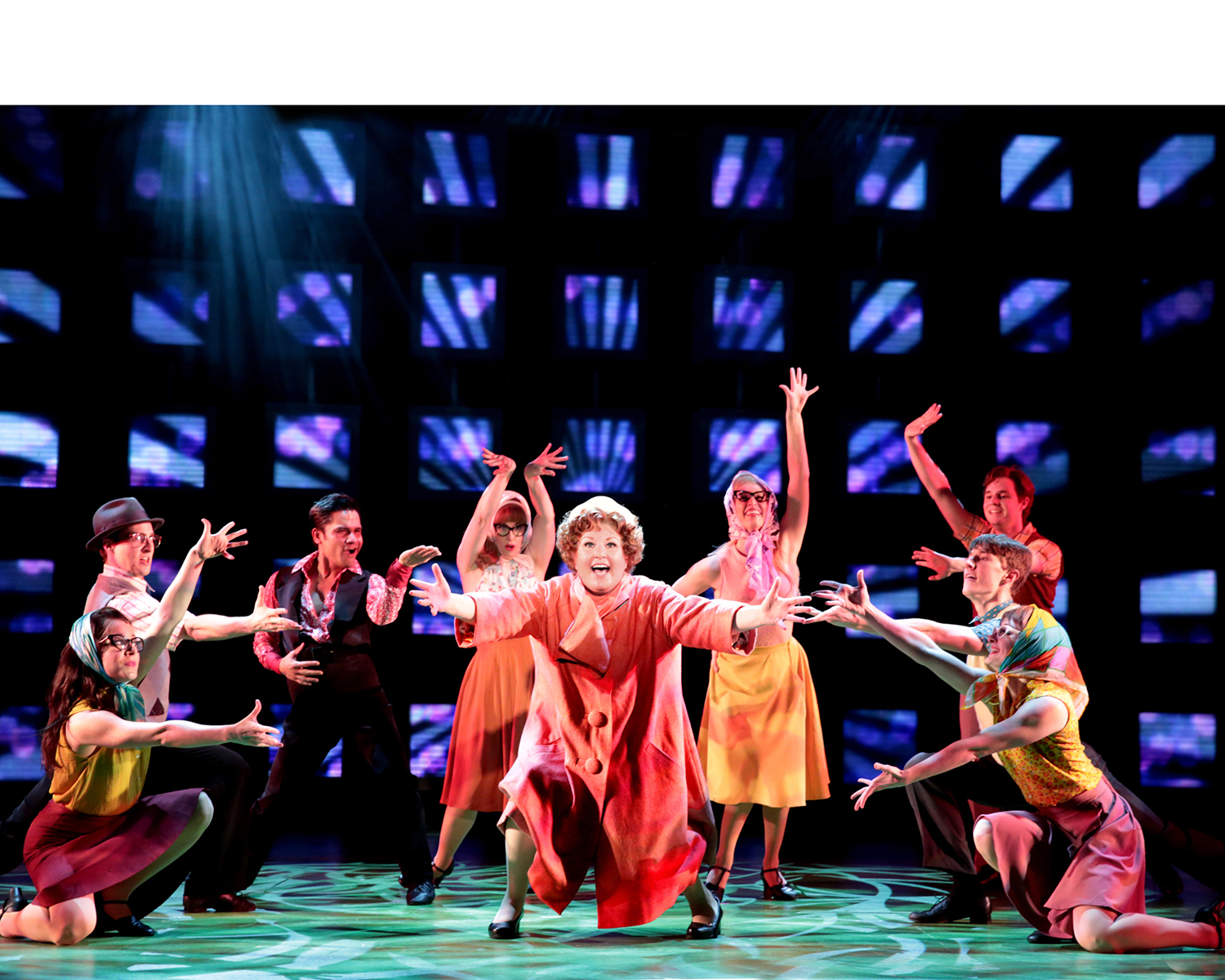
 

Stage-&-Candor_Anne-Kauffman_Photo1_BW
 

KW: You started as an actor…what made you switch to directing?
 

AK: I’m kind of a control freak, I think. I always was one growing up. I grew up in a family of six children and I was always organizing these little shows with the kids in the neighborhood. But I wanted to be a musical theater star, that was what I really wanted to be. I wasn’t very good. It became really evident in undergrad when I kept being cast as guys. It was because there weren’t a lot of guys in the drama department and they were like, “Well, what’re we gonna do with Annie? Just stick her in some breeches and whatever.” It became very apparent, I knew that I wasn’t good. Someone gave me a play to do in the dorm and so I did it and then I took a directing class and the guy who taught it, Michael Hackett, was like, “You’re a director.” So that’s how I came to it. Also, as an actor, not only was I not very good, I really checked out. When I was in a play and a director was telling me what to do I would sort of pay attention only when he told me what to do and then I would check out. I got bored. I didn’t have an idea of the whole play or any interest in figuring out where I am in the play. I’m actually, by nature, kind of a lazy person. So directing was the only thing that fully engaged all of my faculties in a way that I was interested in. It kept me excited. You’re responsible for so much, it was the only thing that would bring me out of what I think of as my laziness, to activate myself, to get me excited about something.
 

KW: When you direct a show like this, when you start the rehearsal process and start working with actors and putting the pieces together…do you find it helpful to talk to the cast about the outside, real life issues or is it more useful to you to stick close to the text and keep it in the bubble of the show?
 

AK: That’s a very good question. I don’t think I ever talked to the cast; I mean, we all agreed that the play is important to do right now but we actually, all of us, went inside the play. We have a great dramaturg team, so we all immersed ourselves in 1964. I think that the more we immersed ourselves in 1964 and the more expansive our knowledge became, just by being in that world, the parallels became really apparent. But we never said, “Oh, that’s like today!” We were just living inside of that world.
 

KW: As you said, you grew up in Arizona in a fairly comfortable environment. What’s it like to come at this as a white woman from a comfortable background, to look at something that touches on race, and privilege, and all those things?
 

AK: It’s funny because what I like about it, and why I think it’s interesting to have a woman direct it is because it’s Lorraine Hansberry, it’s a woman’s point of view so in a way that’s why I think I’m very attached to Iris. I think she’s the person with the most evident journey in the play from the beginning to the end. And I happen to be a white liberal, so having to take apart the play and understand all the different points of view and to identify where the white liberals’ blind spots are, was a really interesting process. It’s been really incredible. Joi Gresham has come into rehearsal, one of our understudies is very well-versed in the civil rights movement, so it’s been an education. There are so many different points of view, so many different kinds of people in the play, it’s really a community. It’s a motley crew of people. We’ve got politicians, we’ve got artists, we’ve got activists, we’ve got actors. It felt like my way of educating myself about where Lorraine Hansberry was coming from, to be in dialogue with this play.
 

KW: You’ve done a lot of new work, and then you come to a show like this that’s from the past. What’re the differences for you in coming back to a piece like this and doing something new?
 

AK: Since I’m exploring this piece for the first time, and we’re working with several different versions of the play, and again we have the dramaturgs, we have Joi, so in a way…it feels like a new play. We just changed where the intermission is, so it tells a very different story now. The major difference for me is, well, first, there’s a responsibility that feels different. I feel like this is a play that has been done, it’s had a rocky past, I think it’s so important for our communities to see this play, to access Lorraine Hansberry through this particular vantage point and to hear what she had to say and how it’s relevant today. So I feel a responsibility there. Of course I feel a responsibility for new work too, but it’s a different thing. What’s really interesting is I don’t actually have a playwright in the room, so I can and need to answer for myself. I’m so used to the collaboration and asking if something works, or a playwright telling me, “No, we can’t do that.” What’s nice is it feels like it’s all me. It’s generative in terms of the world, and that it’s totally my responsibility.
 

KW: Who are some of your favorite female playwrights? What other plays are you drawn to?
 

AK: Lillian Hellman. Contemporary ones…Anne Washburn, Jenny Schwartz, Annie Baker, Amy Herzog, Sarah Gancher, Sarah Gubbins. Oh god, there’s a million. A bunch of people. Tracy Scott Wilson, Jackie Sibblies Drury, Claire Barron, Lynn Nottage, Quiara Alegria Hudes.
 

KW: What plays did you feel like made you gravitate towards theater? What specifically about live theater is it that you’re drawn to?
 

AK: I grew up on musicals! All the greats. Oklahoma, My Fair Lady, The Sound of Music, Kiss Me Kate, The Wizard of Oz. I mean, those are the things I grew up on. And what’s so great about musicals is that they’re inherently not realistic. They’re really not realistic. So you’re entering another world, and I was always very drawn to these other worlds. As I got older, I got very interested in Eastern European writers who were very, very dark. They were coming out of World War II and so had very desolate points of view on humankind. It’s very stripped down; it’s a very different kind of theatricality. It’s very raw; it’s very real. It’s a really strange journey that I’ve had because then for a while, I was sort of known as the weird new play director in New York. It’s funny because growing up I was much more interested in linear narratives and these musicals, but wait, now that I’m thinking about it out loud, I’m like…of course, there’s nothing weirder than a musical, actually, when you think about it.
 

KW: You have to go in with an inherent suspension of disbelief that other art forms don’t require.
 

AK: Exactly. I think that’s really true.
 

KW: You walk in and you have to immediately accept, for example, that singing is dialogue from the very beginning.
 

AK: Right, it’s absurd!
 

KW: The show talks about idealism and the way we look at people and the ways that people can disappoint us or not disappoint us. How do you feel like political idealism has evolved between the world of this play and where we are now? In an election year where people talk about compromise and the lesser of two evils, is idealism a luxury?
 

AK: You know, this election season generates such a cynicism. And I feel like we’re at a very cynical point in our history. I do feel like there’s a lot of succumbing to the issues. We’re not actually solving them right now. It’s a difficult thing to figure out how to solve. And then you think about Lorraine’s time, where there was a lot of political activity, but then I think she would say that her generation and what was going on then, that they had a lot of cynicism too and I would say the same thing. I actually think not much has changed. What I mean is, I feel like the ratio of idealistic to cynical people probably has not changed. I think this is what I feel like Lorraine Hansberry was trying to say in a way with this play, and what she felt was so important to her, was that we cannot be subsumed by our cynicism. We cannot be subsumed by our failure. We cannot give over to not being able to solve these issues. We cannot acquiesce. Period. She believes that even though there’s a lot of darkness, there are a lot of issues, a lot of problems, a lot of conflicts, she believes in humanity. She believes in humanity triumphing. That’s what I find so moving about the play. Inside the play, there’s a duality. There’s David, there’s Sidney. David is absorbed in the existentialist, the absurdist, “there’s nothing we can do, so let’s give up and acquiesce to the darkness as human beings.” Sidney, weirdly, is the most positive cynic I’ve ever encountered. So the argument is what’s the path we want to take, and Lorraine was having it at her time too. Do not give into thinking we can’t do anything about. We’re all in the same boat. Yes, there’s a lot of darkness and cruelty and human beings are capable of terrible, terrible things but we’re also capable of really great things. I think that remains today. I feel like that’s where we’re at.
 

KW: Lorraine was such a political person. Do you consider yourself to be a political person?
 

AK: No! That’s the thing, I’m really not. How I align with Lorraine is that these plays are tools. These plays are a weapon. These plays are meant to provoke. I feel like, for me, I’m more interested in going inside of them and educating myself. I haven’t marched in years. I haven’t been involved. Her way was writing these plays, my way is directing them and sharing them with people. That’s my political act, my political act is directing, not marching on the street.
 

KW: What was your biggest challenge coming at this play?
 

AK: Stylistically, this is a tricky play. Lorraine was playing with a lot of different styles, so trying to figure out how to approach that was very tricky. I know when I first wanted to do it, I thought I would have to convince people that this was actually a relevant piece of writing. I felt like that was my chore, that it was going to be crazy to make it clear that it’s relevant, but that challenge has become the easiest thing. I didn’t have to really do anything, unfortunately, to have it resonate so deeply with audiences.
 

KW: For audiences, seeing a show like this will, hopefully, start a conversation for them. Do you listen to the audience reaction?
 

AK: It depends on the day. I really do like to eavesdrop. I think it’s important to hear how people are interpreting the story and sometimes I will actually outright say, “This moment, what did it mean to you?” I do canvas the audience sometimes to make sure that the story I want to be telling is actually coming through.
 

KW: Do you read reviews and listen to critics, or is it the audience you’re most interested in hearing from?
 

AK: Critics…I mean, you want them to like the show. I’m much more interested in how audiences are responding to it and receiving it. Unfortunately, after a review comes out, that’s the way the audience sees it. It’s nice to get to them before they’re being told how to react to something.
 

KW: Well, there’s a lack of diversity in criticism too. So when you put such weight on a review, sometimes you don’t realize that you’re only getting a certain point of view, a certain type of person who comes into that job.
 

AK: That’s totally right. And you know, the critics don’t do what they used to do. Critics were actually supposed to contextualize art. Contextualize the plays. Their role wasn’t to say see it or don’t come see it. Their role was to put it in the larger context of our art form, which is sadly, sadly missing these days. I actually think that some of our critics have no idea about theater history. So they criticize something without realizing the etymology of it, the antecedents to it. So yes, it’s very problematic. The diversity and what it’s come to.
 

KW: We don’t necessarily have a Frank Rich or a Brooks Atkinson. There’s this storied history of theatrical criticism, and you see what we have now; it’s a different world.
 

Stage-&-Candor_Anne-Kauffman_Photo2_BW
 

AK: I don’t know if you read Joseph Papp’s biography, which is so amazing that he called up a critic and told him you have to get your ass back here and you have to re-review this, and the critic was like…okay. The same thing happened with this show. There were a couple critics who came back after panning it and re-engaged with it and changed their minds. What we do, it’s sad that it’s still happening, but Lorraine Hansberry wrote A Raisin in the Sun and she was celebrated as a black voice. And then she writes a play about white people. There’s only one black person and he passes for white. So the critics come and they’re looking through these lenses and it’s so crazy for them, they come expecting something. They expect her to stay in the box they created for her, the black culture box.
 

KW: She’s been criticized, in this work, for not representing the African-American experience.
 

AK: Exactly. And we still have that, as a problem. We don’t let black writers write outside their culture. White people can write about anyone’s culture. So we’re still in that place where that’s happening.
 

KW: It’s that same problem of white stories or men’s stories are universal, but it’s always a qualifier for other people. She’s a female playwright, she’s an African-American playwright, you’re attached to a label.
 

AK: And that’s part of the issue that I have talking about women and all that. The New York Times did this piece on female directors and got a bunch of us together and did it. I was actually bummed I said yes to it because the fact that we need to have an article about it means we’re ghettoized. That’s part of my conflict with this issue. If we really give into it, then we’re saying that we’re a ghettoized community. That’s the tricky balance.
 

KW: We don’t do that to white men, we don’t interview them asking them to talk about the white male experience.
 

AK: Exactly.
 

KW: What do you think Lorraine would think if she came into the world now? Would she be horrified, excited?
 

AK: I think she’d be horrified. But I was watching the video for “Formation” recently and I thought…oh my god, she and Beyoncé would be best buds. I feel like she would love Beyoncé. Holy shit, that video totally blew me away. I didn’t realize, was there some controversy about it?
 

KW: Well, there was this reaction to it about this idea that somehow by celebrating black culture she was inciting racial conflict, or that she was inciting violence against police by referencing the Black Lives Matter movement. People saw it as aggressive instead of celebratory.
 

AK: And even so, what if? What if it is a criticism? I think that Lorraine and Beyoncé would be best friends. It’s really sad to me that she didn’t live to meet her. But I do think she’d be horrified. Don’t you?
 

KW: I do. I think she would be on the street in Ferguson.
 

AK: Oh my god, yeah. And then she would criticize Black Lives Matter because it wouldn’t be exactly what she thought when she first joined, or it wasn’t exactly what she wanted it to be. She was a very singular, specific, opinionated, and complex person.
 

KW: And she would be right to say that even that movement has it’s problems. I remember going to the protests and there would be TV cameras, and it would always be these young, white college kids jumping in front of the camera to explain why they were there, instead of saying this isn’t my microphone, this isn’t my place.
 

AK: Exactly.
 

KW: Where do you want to see us in five years, ten years? Where should theater be going?
 

AK: That’s such a good question. Well, I definitely think there needs to be a diversity of voices, and diversity of how to tell a story. We’re still kind of stuck in modern drama and not contemporary drama. I feel like the theater has a responsibility to show its audiences the gray area and contradictions and complexity. We don’t get that in our lives; we have to make these decisions. Politicians are so black and white, and we’re scared to acknowledge the gray area. I think it’s very important that we, working in this art form, address that. To do that, it’s not just a straight narrative, it’s a diversity of style. One thing I will say, I’m very interested in plays that are language heavy, that experiment with language. That’s what theater does best. Language creates the world, unlike TV or film where sets create the world, it’s actually the language in the theater… So I really want us to listen again, in a new way.


Anne Kauffman returns to Goodman Theatre, where she previously directed Smokefall in both the 2014/2015 and 2013/2014 Seasons. Ms. Kauffman is an Obie Award–winning director whose production highlights include You Got Older with P73; The Nether at MCC; Somewhere Fun at Vineyard Theatre; Your Mother’s Copy of the Kama Sutra, Detroit and Maple and Vine at Playwrights Horizons; Belleville at New York Theatre Workshop, Yale Repertory Theatre and Steppenwolf Theatre Company; Tales from My Parents’ Divorce at the Williamstown Theatre Festival and The Flea Theater; This Wide Night at Naked Angels; Becky Shaw, Cherokee and Body Awareness at The Wilma Theater; Slowgirl and Stunning at LCT3; Sixty Miles to Silver Lake with Page 73 Productions at Soho Rep; God’s Ear at Vineyard Theatre and New Georges; The Thugs at Soho Rep and the musical 100 Days at Z Space. Ms. Kauffman is a recipient of the Joan and Joseph F. Cullman Award for Extraordinary Creativity, the Alan Schneider Director Award and several Barrymore awards. She is a Program Associate with Sundance Theater Institute, a New York Theatre Workshop Usual Suspect, a member of Soho Rep’s Artistic Council, on the New Georges’ Kitchen Cabinet, an alumna of the Lincoln Center Directors Lab and the Drama League, a founding member of the Civilians and an associate artist with Clubbed Thumb with whom she created the CT Directing Fellowship.

Posted on

Reflections on the Chicago Spring Season

Chicago Spring


Stage & Candor_Hazel


Hazel
March 31 – May 29, 2016 at the Dury Lane Theatre
Book by Lissa Levin; Lyrics by Chuck Steffan; Music by Ron Abel; Directed and Choreographed by Joshua Bergasse
Photo: Brett Beiner

 
Hazel Burke could easily run a small country with efficiency, grace, and a sense of humor. But in the world of the early 1960s, we meet her as the maid to the Baxter family, at a time where wearing pants is enough to make George Baxter do a double-take at his wife. The show gives us a snapshot of the world as it was –still in the midst of the space-race, on the precipice of drastic change and progress. The new musical, with a sharp book by Lissa Levin, period-appropriate music by George Abel, and lyrics by Chuck Steffan, takes on a myriad of serious issues such as changes in the traditional, Leave it to Beaver world of the 50s; women beginning to enter the workforce; inequalities in class structure and economic status; and the choice women felt forced to make between their careers and their families, to name a few. In our political landscape, these conversations still feel unfortunately relevant.
 
But with Hazel as our guide and North Star, we trust that things truly will change. She handles all manner of crisis and conflict, and remains warm-hearted and convinced of the romantic notion that there is a solution for all problems. In a serious world, a visit with Hazel feels like salve on a wound. It’s impossible not to leave with a smile on your face; her optimism is so contagious and catching. We all need a little help, and thank goodness Hazel is here to lend a hand.


Stage & Candor_Dreamgirls


Dreamgirls
April 8 – May 22, 2016 at Porchlight Music Theater
Book and Lyrics by Tom Eyen; Music by Henry Kreger; Directed and Choreographed by Brenda Didier
Photo: Kelsey Jorissen

 
You don’t necessarily think of Dreamgirls as a show about race. Truthfully, I can’t say that I did either, until I saw Porchlight Music Theatre’s production. One of the biggest laughs of the night was during the cartoonishly neutered recreation of “Cadillac Car” by a white artist, immediately following the electric version performed by Jimmy Early and the Dreams. It’s a little less funny when you start to think about how many white artists built castles with the money they made stealing from black culture.
 
The show is a glorious celebration of music, full of exuberant numbers that shake the walls, sung in impressively tight, perfect harmony. It is also an indictment of an industry that demands endless negotiations between artist and audience, driven by the sinister motive of a white-dominated world’s discomfort with black artists. Instead of seeming like the temper-tantrum of a fading star, Eric Lewis performs Jimmy’s Rap like an explosion of soul that had been building underneath all the desperate attempts to whitewash his aesthetic to get him jobs at the lounges where “even Sammy Davis Jr.” couldn’t perform. It makes you wish that was a piece of the narrative that had stayed in the 60s.


Stage & Candor_The Woen of Lockerbie


The Women of Lockerbie
April 7 – May 8, 2016, Presented by AstonRep Theatre Company at the West Stage at the Raven Theatre Complex
Written by Deborah Brevoort; Directed by Robert Tobin
Photo: Emily Schwartz

 
Revisiting the bombing of Pan Am 103 over Lockerbie, Scotland has a great deal of historical weight in a post-9/11 world. But what The Women of Lockerbie does so brilliantly is marry the importance of the facts of the tragedy to the personal grief of the women at the heart of the show. Sometimes it’s tempting, even easy, to talk about things like this in abstractions. It’s easy to condemn an ideology, an act of violence. It’s harder to get past the platitudes and let people be broken in front of us. Amy and Bill Livingston lost their son in the bombing and have returned to Lockerbie –Amy searching endlessly for some physical, tangible piece of her child to cling to in the absence of his body. She is embraced and aided by the women of the town, even when she doesn’t want to be.
 
It is a show that celebrates the sometimes seemingly small, everyday acts of compassion. The women of Lockerbie are fighting to gain access to the recovered clothes of the victims from the government, so that they may be washed and returned to their families. I don’t think a group of people has ever wept so much watching someone do laundry. That’s the beauty of the show –sometimes there are events that are so earth-shaking they defy human comprehension; they feel completely outside our ability to heal. And it’s true that we may not be able to heal everything, but we can still, always, do something.


Stage & Candor_Dry Land


Dry Land
April 28 – May 28, 2016 at The Rivendell Theatre Ensemble
Written by Ruby Rae Spiegel; Directed by Hallie Gordon
Photo: Michael Brosilow

 
You know these people. You went to school with Amy and Ester. You’ve watched someone like Amy try so desperately to prove how little she cares, hurting anyone who comes close to making her feel like a girl when she wants so badly to be a woman. You’ve watched someone like Ester follow her around, accepting any table scrap of friendship that she can pick up off the ground. What you probably haven’t seen is those same girls you know doing shots, or Amy begging Ester to punch her in the stomach harder and harder and harder, praying that these actions will terminate her unplanned pregnancy.
 
Ruby Rae Spiegel doesn’t let anyone off the hook, including the audience, in her hyper-realistic depiction of teen pregnancy, female friendship, and the many ways that young girls are expected to be women well before they’re prepared for it. In one of the most unexpectedly affecting exchanges of the night, Amy is telling dark jokes about her situation and says to Ester: “What do you call a black woman who’s had 9 abortions? A crime fighter.” The audience at the performance I saw giggled uncomfortably, unsure if they were being given permission to laugh. Ester sat on the chlorine-soaked floor of the locker room in silence. “It’s not funny?” Amy asks. “No.” “Why? Because it’s racist?” “Yeah.” There is such a profound bravery that needs to be exhibited more in today’s world in Ester’s simple decision not to laugh to make Amy comfortable. What would happen in a world where we all stopped laughing to make other people feel comfortable?

Posted on

Hazel, A Musical Maid in America

Lissa Levin


What is the specific challenge of basing a musical on an everyday housekeeper? As a writer who doesn’t cook and has never cleaned a window without making it look worse, the answer is clear. But although Google Chrome can provide no end of housekeeping tips, there is no website, no YouTube tutorial on how to take HAZEL, a housekeeper character in a sixties tv series, based on a 1940’s Saturday Evening Post cartoon, and turn her and her world into a musical for 2016 audiences. But if there were a tutorial…
 

Step One. Getting Started. Examine your source materials.
 

Hazel is not your everyday maid. But she is a maid named Hazel. A lead character with a name from another time (although it’s making a comeback), whose occupation’s title is from another time. How do you feature a female character in a subservient role during a time when Hillary Clinton is running for president?
 

Step Two. Compare Hazel and Hillary Clinton.
 

As it turns out, the similarities are uncanny. Both are servants; one just happens to be public. Hazel serves the Baxter family – conservative, George; his evolving sixties wife, Dorothy, and their intense, impulsive eight year old son, Harold. Hillary serves the interests of not one, but many American families. Both assess what a family needs to feel safe, secure, to be well-fed, healthy. Both are committed problem solvers. Once they identify and address a problem, both are very opinionated about the subject. Both share their opinions with others. Repeatedly. Whether others want to hear it or not. Both wear iconic uniforms reflective of their line of work. Whether a power suit and pearls or a maid’s apron and hat; whether chosen to convey command or for its wash n’ wear capabilities, both women dress for success. Both are emblems of feminism. Running for the ultimate position of executive power, a two hundred year old male-only institution, ain’t the only way to wave your flag. Hazel, too, walks the walk. Never married, fiercely independent, she leads by example, by being true to herself, not driven by other people’s expectations of her as a woman or a domestic, unapologetic for her beliefs or opinions, and not to serve a cause or run a race. It is simply who she is. In so doing, she actually serves as an inspiration and role model for the very wife and mother for whom she works. Plus, she runs a household, traditionally a wife or mother’s domain, and gets paid for it. And in no way did she rely on a husband to get the job. In a death match, Hazel would beat Hillary, hands down. So the character is more than relevant to our times, but is her time relevant to our own, and to its audiences?
 

Step Three. Compare 2016 with 1965.
 

Take, for example, America’s awareness that it’s no longer number one: that other countries are pulling ahead in science and technology, the issues of equal pay and reproductive rights for women, the fear by many that foreigners pose a threat to our shores, or could trigger nuclear war. And now let’s look at 2016. HAZEL, the musical is set in the 1960s not only because the TV series was, (because there are those of you who don’t remember the TV series, let alone network TV) but because the U.S. was suffering a bruised ego not unlike today. Russia had beaten us getting a satellite in space and a man in space, and while we feared we were losing our innovative footing, we also feared a Russian spacecraft not just beating us to the moon, but being able to reach us with a nuclear payload. Our national psychology then as now makes George Baxter as a charmingly competitive, paranoid alpha male relatable and/or recognizable. But while the U.S. was lagging in the Space Race, it was a leader in social and political change – that certainly shaped Hillary Clinton’s future, my future as a comedy writer, and informs the characters and storylines in HAZEL, the musical. For example, a plot wherein the open-minded housekeeper is hired by and runs interference between George and Dorothy Baxter, who grapple with the early burgeoning of feminism and their gender roles as Dorothy decides to return to work. And who don’t necessarily agree on the upbringing of young, impressionable loose-canon Harold Baxter. Paranoia, bruised egos, men behaving badly, conflicted women, battles of the sexes, family dysfunction – do they ever go out of style as fodder for comedy? Particularly when your star is also the observer who comments on them?
 

Step Five. See Step Two.
 

Hilary will never be as funny as Hazel. Because as a politician, she can never be as unflinchingly honest. She can never say what she or what everybody else is really thinking. But Hazel never censors herself. She calls it as she sees it. And as a daily witness and window on to one American family, she sees everything. And comments on it. The dysfunction, the secrets, the clutter. Her charm being, as it was in the TV series and the original cartoon, that she’s as savvy as she is innocent, as wise as she is uneducated. In dialogue or lyric, her perceptions are sophisticated but never her expression of them. “To thine own self be true” in Hazel-speak becomes “A toaster wasn’t meant to bake a chicken.”
 

Step Six. Yes, but does it sing?
 

Unlike Mame, Dolly, or Mama Rose, Hazel is not larger than life, a lead character staple in a musical. But her heart is. Her humanity. Her sense of dignity. Her sense of self. As a housekeeper, Hazel’s station in life may be considered low, but she sees it as a calling. Such character deserves a larger than life talent; say, Klea Blackhurst. A simple maid with a power belt? In a big show with a varied score and dynamic choreography? You can’t help but root for her, and that reaction is what musical theater is all about. In fact, Hazel is pretty much classic musical theater personified: she is funny, charming, optimistic, joyous, and life affirming. Not only relevant to our times, but the answer to our times. 


 Stage-&-Candor_Lissa-Levin_BioLissa Levin is the recipient of the prestigious Kleban Award for her libretto for Twist Of Fate; composer, Ron Abel. The musical comedy won L.A. Weekly’s Musical of the Year and two L.A. Drama Critics Circle Awards, and a Los Angeles Ovation Award nomination for Best Musical. Her play, Sex And Education, first presented at the Kennedy Center’s Page-to-Stage Festival, (New York premiere, Penguin Rep), opens in spring of 2016 at the Laguna Playhouse. She also penned book and lyrics for Jewsical, The Low Bar Mitzvah; Hot Blooded, A Vampire in Rio; and the play, What Would Jesus Do? A twenty-five year veteran of television as a writer producer, Levin’s credits include the Emmy Award winning Mad About You and Cheers; Wkrp In Cincinnati, Family Ties, Brothers, Complete Savages (with Keith Carradine), Thunder Alley (with Ed Asner) and Gloria (with Sally Struthers), amongst many others. Her essay, Pisser, a rant about insufficient stalls in women’s restrooms in theaters, was published by Random House in an anthology of noted female humorists: Life’s A Stitch; later transformed into a theatrical revue co-produced by Levin, a staunch activist, benefiting breast cancer research.
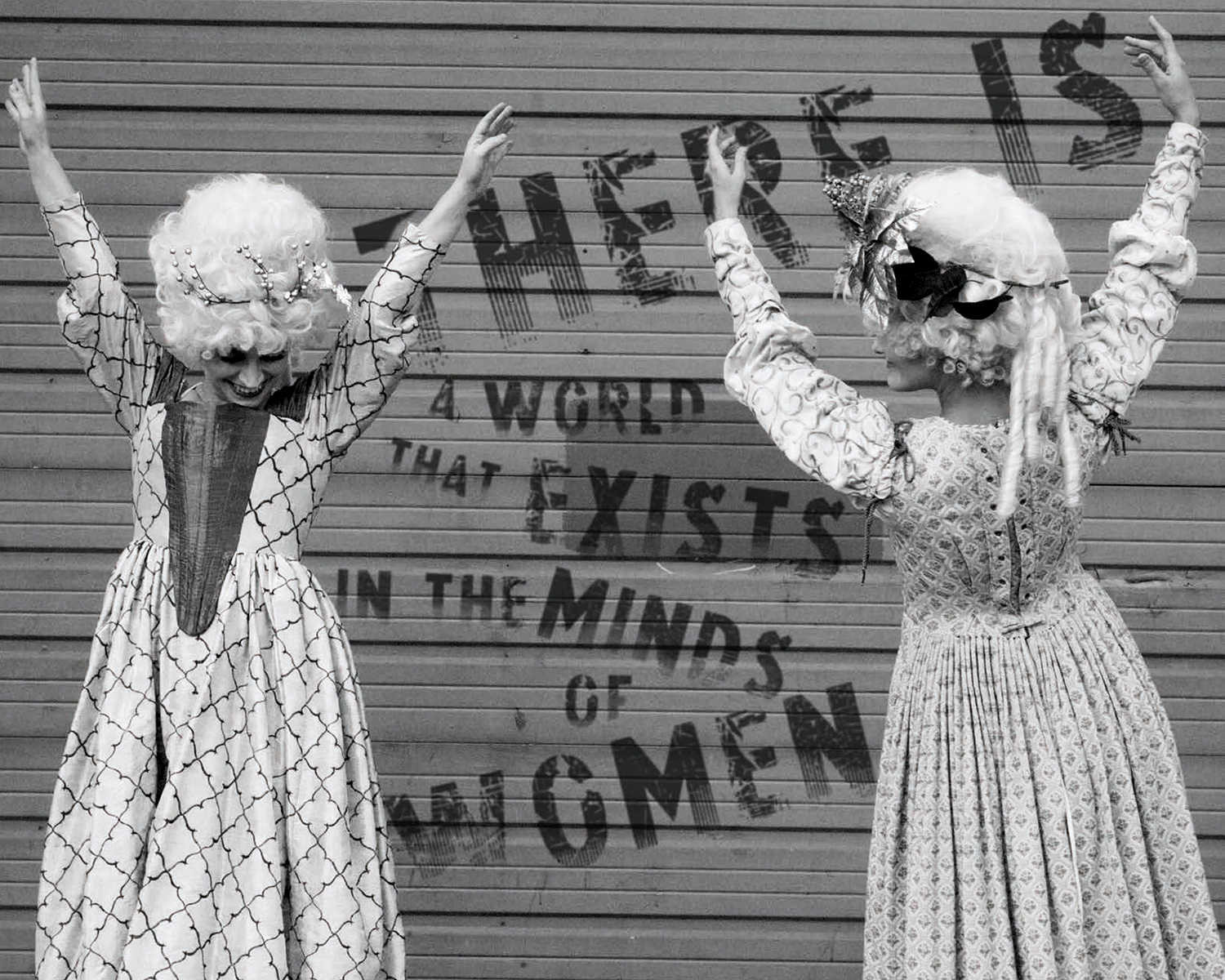
Posted on

Firebrand Theatre Company


As soon as the press release came out announcing the launch of Firebrand Theatre Company, the first equity, feminist musical theater company, we knew we had to sit down with its founders, Harmony France and Danni Smith. So, we spent an afternoon tucked into the corner of Hoosier Mama Pie Company in Evanston to talk about feminism and musical theater. A few days later, I attended the opening night of Hazel at Drury Lane in Oakbrook, and I mentioned that I’d met with them to a friend. She asked, “Was it at Hoosier Mama?” Our feminist pie summit had been overheard, and she was just as excited as I was. As it turns out, Firebrand’s launch was unintentionally well-timed, at a moment when the Chicago theater community is beginning to have some real conversations about the importance of representation and diversity. Firebrand and its founders are about to start a whole lot more.


Kelly Wallace: The timing of all this is perfect. It seems like you’ve jumped into a moment where this conversation is happening in a lot of different places.
 

Harmony France: It’s very odd. Because we didn’t plan it. There’s a couple of weird things that happened, and it’s why we think we’re on the right path. My post about body image and inclusive casting that went viral; we’d already been planning the company when that happened. Then we had to push our press launch day by a day because Steppenwolf was announcing, so we pushed it a day, not knowing that day was International Women’s Day. Not intentional.
 

Danni Smith: It’s all very serendipitous.
 

HF: Well, it is intentional in the sense that this is the conversation we wanted to have. What isn’t intentional is the “jumping on a bandwagon” – this is already the direction we’d been heading in for for a long time, actually knowing we’re starting a theater company for the last six months. But everything is happening very fast and it’s confusing a lot of old, white men. Our community is demanding change at a very rapid pace and I think a lot of people are really taken aback by it. I think it’s the quote, “Once we know better, we do better”. That’s what everyone needs to do. Take away the blame, take away the shame.
 

DS: And the defensiveness.
 

HF: And the offensiveness. All of it. And just…”oh, okay, now I know better, so now I’ll do better.”
 

KW: Why Firebrand? What inspired the name?
 

HF: We were stream of consciousness trying to think of something. We thought of Greek goddesses; I wanted something very ancient. This has been around for a long time. We thought Athena, but that’s a little on the nose. Then I thought of Cassandra of Troy, who was the prophetess who no one believed, and one of my favorite books from when I was younger was Marion Zimmer Bradley’s The Firebrand, where Cassandra is the firebrand. We liked it, and then looked up the meaning and it was like, “to incite change or cause radical action”.
 

DS: We were like…yup! There it is. That’s perfect.
 

KW: You just launched. Firebrand is here. How are you guys doing? What’s the response been like so far?
 

HF: It’s been overwhelmingly positive. Yeah. We’ve got support…nationally, not just in Chicago. Just people reaching out. LA, New York…
 

KW: This doesn’t exist anywhere else.
 

HF: It doesn’t exist anywhere. We’re the first one!
 

DS: The more we work on it and realize that, because we are so laser-focused with our mission, I think some people would get scared and say that’s very limiting. And for us, we acknowledge that we’ve not made it easy on ourselves. But that’s the excitement; it’s going to keep us really focused on what kind of work we’re producing.
 

KW: What kind of work do you want to produce?
 

HF: We definitely want to do full-blown musicals. It’s less about the type of musical and more about representation of women onstage, passing the Bechdel test, passing what we’ve started as the “Firebrand Test.”
 

The Firebrand Test:
— In this work, there are at least as many women as men in the cast,
— It lends itself to inclusive, diverse casting,
— It empowers women.


HF: We’ve both been a part of theater companies before. There’s something different with this one. People are donating their time to us in ways that I’ve never seen before. We don’t even have to ask. People are just approaching us. So I think we’ve really captured something.
 

DS: We’d make a list of like, ten people we could potentially ask to do something assuming that the first eight are going to say no. And then we’ll be…
 

HF: We’re actually – we’re not in trouble, but our next benefit, it’s our “Sung By Her” series, so basically we pick an artist and find some kickass women to do a tribute to that artist. So, the first one we’re doing is Pink. So we’ve reached out to more than what we would normally put in the show, thinking not everyone would do it, and then every person has said yes. So…
 

DS: You’ll get to hear more of Pink!
 

KW:You’re calling yourselves the first equity, feminist musical theater company. Why is it important to be Equity; what’s the importance in differentiating that it’s a union theater company?
 

HF: There are a couple things. One is because the shows we can produce are going to be so limited, by us, by our standards. If we need an Equity actor to play like, a random older character, we don’t want that to be a barrier too. We want to be able to have access to all actors. Plus, we don’t want to be unable to use someone because they’re union. The goal, eventually, is to pay everyone a living wage. That’s important to us too.
 

DS: We want to be a part of that, and I mean commercial in the sense of like, people that come to the theater and subscribe and are theater-goers, we want them to see this as a valid part of the conversation in musical theater. There’s something about people who don’t know the inner workings of Equity and non-equity and all that, there’s something about having that stamp to appeal to a more commercial base. It’s just – ultimately, it’s access.
 

HF: We want to be on the same level as any theater in the city. We want to be competitive with any theater in the city. We don’t really see ourselves as a storefront. I mean, we definitely still want it to be Chicago and have that feel and be in glorious intimate spaces, but also to have the professionalism, and the quality. That’s the goal.
 

Stage-&-Candor_Firebrand2

KW: You both come from an acting background. Have you ever turned a role down because you were either offended by or couldn’t stomach the content?
 

DS: It’s an interesting conversation because…I certainly feel like it’s in the light now because of social media and the access we have to raising our voices. I am appreciative of being asked to think before I accept. It would’ve never occurred to me that I couldn’t accept that role or that I shouldn’t go in for that. So I don’t know that there’s anything I’ve turned down at this point, but I certainly have an awareness now.
 

HF: Yeah, I want to say that I’ve walked out of unprofessional situations. I think it’s kind of another reason why we started this company; it’s years and years and years of frustrated conversations on my couch. How we were being treated or having to dance around a male director’s ego or a leading actor’s ego.
 

DS: Or being tired of seeing each other every Saturday morning at whatever callback it was for the same one part that was available to us in that show.
 

HF: To the point that for years we were almost convinced we were the same actor. Which we are not, at all. But we were constantly up for the same roles. And it’s because there is not a variety. We are so different but we are enough alike that we fit into this one type, and it’s just because when you’re a man, in musical theater, you can play anything. When you’re a woman, you’re the virgin, the whore, the mother, or the hag. Those are the options.
 

KW: Now we’re seeing things like Lauren Villegas’ “Am I Right?” and my wonder becomes, at what point is it an actor’s responsibility to say no? It is hard to make a living as an actor; at what point do you have to say no to a job?
 

DS: I think there are instances in which it is very clear. It is, for lack of a better term, black and white. What I appreciate about Lauren’s website is that it’s a series of questions. And ultimately she says, at the end of that, if after asking yourself all of these things you feel like you can move forward, then do that. But just make sure you’ve asked the questions. I think that is a responsibility of actors to do that.
 

KW: Why Chicago? What brought you here? Why are you still here?
 

DS: I’m from Indiana. And I did a New York showcase and I visited L.A., and those were always like, the three options that we were given. You can go to New York, L.A., or Chicago. And I had a professor who was actually with Red Orchid Theatre, but she teaches in Muncie, where I went to school. And she told us, she encouraged everybody to go to Chicago right out of school. Because she said, Chicago is like street grad school, which I always loved. She was like, if you go to Chicago and you show up at auditions, you will work. You know? It may not always be at the Goodman or wherever, but you’re going to work. And if you go to work and you are respectful and you show up on time and you do your job and you’re professional, you’ll probably get the opportunity to work again. I think for me, I just see her people working. They are here to work on their craft. So much risk is taken here, particularly in the storefronts. There’s a glorious, rich storefront scene here. I love that any day of the week you can find something to see and celebrate. Monday’s not necessarily a dark day for everybody here.
 

HF: The quality of work, the risk. I actually grew up in New York. Basically, after being in the Navy for six years, I got out, and the whole time I knew I wanted to get out and be an actor. I auditioned for two schools, Julliard and Columbia College. There was just something about Chicago; there was something about Columbia. You can take a math class, but it’s art-based. Columbia is the craziest liberal arts school ever, and it really appealed to my brain, that had been in this very regimented thing for six years. And the thing about Chicago that has really come home to me after doing a Broadway national tour is what Danni said. It is about the art here. There are actually people here, we all have to make a living. We all have to pay the rent. But we want to be artists first. The show I did was so commercial, and I got to travel the world with it. It was an incredible experience, but all I wanted to do was come home and make art. That’s all I wanted to do. When you’re an actor, particularly musical theater, the ultimate goal for most everyone is Broadway. And I think doing that tour, I was like…oh, maybe that’s not my ultimate goal. Maybe my ultimate goal is that I want to help fix some of these inequities. I truly believe the longer we go on this path that this is my calling. This. Not to star on Broadway. But I want to make a difference. The kind of theater that makes me feel good. I’ve never been a hoofer. I’m not a dancer. I don’t dance in ensembles. Dessa Rose, which I did with Bailiwick in Chicago a few years back, was about slavery, or I did a play at Profiles Theatre, which was about 9/11. When it’s about something, an activist part of me gets lit up. I need that aspect in my art. I need to feel like I’m making the world better, and not just because they’re distracted for an hour. I want them to actually leave the theater thinking about something. There’s just no better place for that then Chicago. I’ve been all over the world and I just wanted to come home.
 

DS: I would say the word that I feel like always comes up among Chicago artists is “community.” I always hear people saying the theater community.
 

HF: We actually care about each other. We care about each other’s careers. Like, in a different world, we could have not been friends because we were constantly in competition with each other. Chicago lends itself to wanting everyone to win. If she wins, I win. There’s just that feeling of camaraderie that I haven’t felt anywhere else…if I am losing a role, I want Danni to be really, really good! It’s just what Amy Poehler says.
 

DS: Bitches get stuff done?
 

HF: Well, bitches get stuff done, yes. But “good for her, not for me”. In that…that wasn’t for me. And every time I have lost something that I wanted so desperately, as far as a role or something, something else has happened that has enriched me more than that initial experience ever could.
 

KW: You said you worked on Dessa Rose and had a lot of conversations about race. When you come into starting Firebrand, you are in a position of power. Your Firebrand Test for submissions specifically lists diverse casting as a priority for you. What does “diverse” casting mean to you? What do you hope this is going to accomplish?
 

HF: Quite honestly, we want to have as many different types of people and women as possible. It just enriches the conversation. I’ve been casting for awhile. When I was with Bailiwick Chicago, we always used inclusive casting. The first show I helped cast at Bailiwick was Aida, and we cast it with an almost all-black cast. And that’s not how Aida is normally done. And Lili-Anne Brown [the director] was like, well, they’re in Africa. And I hadn’t ever thought of that. And I was like…well, yeah! They’re in Africa. It makes so much sense if you really think about it. I don’t see it as, “oh, we have to make sure we have this many of this type of person,” I see it as a privilege to represent as many points of view as we possibly can. It’s so important to us. We are just looking for an open, inclusive community, and that’s how we’re going to pick our shows. We’re going to pick shows that lend themselves to diversity.
 

DS: It’s all about action. It’s like…just do it. Just DO it. We’re committed to going beyond that paragraph blurb, just speaking of our casting right now, you know the blurb. Where it says, “all ethnicities are encouraged to attend”, it’s like…we’re gonna go beyond that. That’s a token stamp. We’re putting it into action. I don’t know how else more to say it. We’re just gonna do the damn thing. It’s also important to us because we’re very aware that we are two white women starting a feminist musical theater company that is committed to inclusive, diverse casting. We didn’t want to be “whitesplaining”.
 

HF: It’s a very complicated and nuanced conversation and feminism has a history of not being the most inclusive for other races. We’re very aware of that too.
 

KW: What made you hit that point of “enough is enough”?
 

DS: It truly has been a conversation we’ve been having for years, that other women have been having too. For me, the turning point was for the past six months I’ve been going through this process…I was close to having the amount of points to take my Equity card but somewhere in my mind, it was still in the distant future. Then I was offered a contract at The Paramount for A Christmas Story and they were like, we need to offer you an Equity contract because of the amount of non-equity we have to use. All of a sudden, it was like, we’re gonna do this. And it made me sit back and reflect on the past ten years of my life in this city as a non-equity actor and the incredible experiences that I’ve been able to have. It’s not that that isn’t available in Equity but the opportunities and the kind of work that’s produced at houses that have to maintain a subscription base and a lot of money…some of those glorious shows for actors where you get to dig in and work on something…they’re usually non-equity storefronts. That’s where those risks are taken. I was having this pain in my heart of…I feel like it’s time to go Equity and give that a try and give myself a chance to be paid a living wage to do what I do. But where can I find my heart again too? And it was in helping others. It was in taking action and this theater company happened because we were like, we need to act. We need to do something about it.
 

HF: It came from conversations not just about theater. It came from conversations about the war on women, about inequities in the political situation right now. And both of us have come to points in our careers where we’ve been like…this is such a vain thing, what are we doing? Shouldn’t we be helping the world? How can we do that? And what we came to is…well, this is what we do, this is how we help the world. We’re not politicians or heart surgeons or any of these things. I make art. But what if we make art with a socially-conscious mission? Then we can change the world, in our way.
 

KW: One of the things that you said is important is feeling like you’re creating a safe space. How do you do that and create an environment where people can express themselves without worrying about being judged for it?
 

DS: I think it’s all about communication. I had an incredibly positive experience with a show called The Wild Party (LaChiusa) and the very first get-together that we had, our director Brenda sat there with us and said, “I care about all of you as people first. You are a person to me before you’re an actor. And so I want to acknowledge that if there’s ever a point in this rehearsal process where you don’t feel safe or you feel like I can’t quite go there today, because today is not a good day, just know we can have that conversation.” And so just for her to have that conversation with us and establish that right away, it empowered everybody to jump off the cliff together. Everybody dove in and I swear it was because of that initial meeting of, let’s take a few minutes and acknowledge that we’re all human beings.
 

HF: I think for actors to feel comfortable and not “diva out”, ’cause I’ve done it and I’ve felt a certain way…is they need to feel respected and safe. Those are the two things. And there are so many situations where actors are just treated like scenery, y’know, where as Danni said…they’re not treated as people, as humans, as employees, as people with rights. So I had a similar experience with Dessa Rose where it’s about slavery, so that first day, we talked about race. We talked about it for like five hours. It was instructive and made us all feel safe with each other, that our opinions weren’t taboo, and we could speak honestly about things. I think you can have, even if it’s just a half-hour “come to Jesus” with the cast, it’s important to feel like you’re respected, to not feel scared. I always – as an actor, I was terrified I am going to be fired every day until we open the show. Every day, when I was in nun bootcamp for the Sister Act tour, I thought I was getting fired every day. And part of that insecurity is just…actors are insecure beings, in general, but part of that insecurity is being treated like, “Oh, you’re so lucky to be here. There’s so many people who would like to have your spot.” And that’s probably true, but that doesn’t mean we don’t have worth. Even if there are ten people that could fill my spot, I still have worth, you still chose me. So treat me with the respect that I deserve as a professional.
 

DS: There are a lot of little things that add up too, like something as simple as…if you don’t think you’re going to realistically use that actor until an hour into the rehearsal…don’t call them until an hour into the rehearsal. If you’re not paying that actor a living wage to be there, try to at least respect their time. Use them as much as you can. If we need to have a conversation that’s about the company or something logistically that’s not working, rather than having that in front of the actors, say “take a five” and have a pow-wow. Little things that you’d be surprised not every company feels that way.
 

HF: I mean, I have a military background. So rule number one is that you praise in public and you admonish in private. Like, that’s rule number one. And I can’t tell you how many theater companies I’ve been to where they’ll pick on someone or call someone out in front of the whole cast. That kind of stuff isn’t needed. And specifically because we’re actors, I think it gives us a great insight into how actors want to be treated. We just want to take care of our employees, and not just our actors, all of our employees. We just want to make them feel as safe and respected as possible. It makes for better work. When people feel good, they give you their best.
 

KW: Who are some of your influences? Who do you look at and see inspiration in?
 

DS: I feel like I see it more in my people here, in our community; I see it in my friend, Harmony. I look at Jeanine Tesori or a Michael John LaChiusa, who writes gorgeously for women.
 

HF: Lin-Manuel Miranda.
 

KW: And even something like Hamilton sounds like a huge risk on paper. Who do you have in your head with a stronger image of whiteness than the founding fathers?
 

DS: We’ve all seen the paintings, the portraits.
 

HF: The marble busts.
 

KW: And then you say, okay, let’s cast a multicultural rap musical about them. The idea just sounds outlandish to people, and then you see it. The opening number wasn’t even over and you’re not even thinking about the fact that these people aren’t the same race as the people they’re portraying.
 

HF: It’s a suspension of disbelief. It’s part of theater.
 

KW: I mean, you can buy a singing crab in The Little Mermaid but you can’t buy that Thomas Jefferson is played by a black man?
 

DS: That’s such a good point.
 

HF: It’s a wonderful point. And the thing is that I keep stressing this to people that we’re pitching things to…as a businesswoman, it doesn’t make sense to not be inclusive. It doesn’t make sense. This is an audience that has probably stopped paying attention to you because you are not representing them onstage. As we spoke about in the 2014/2015 season, 68% of the audience on Broadway were women. It makes good business sense to tailor to women. So it’s just a little backwards to me. I think in every way. All it’s gonna do when we make theater more inclusive, is include more people. More people are going to see themselves onstage. It’s the future of theater.
 

DS: If we want theater to be for everybody, it needs to be by everybody.
 

KW: Now, on Facebook, you wrote a post that went viral about commenting on women’s appearances. In theater, and especially in casting, how do you not comment on women’s appearances? That’s a world where the shorthand can be…
 

HF: It can be gross. On the other end too, I cast a show once where we were auditioning guys and they were being objectified. It’s tricky because you almost need to go back to the text. Every time. Does the text specifically say that we need a 5’8″ blonde with a 36/28/36? Maybe it does.
 

DS: Does it say specifically caucasian? Does it specifically black?
 

HF: Does it say specifically one gender, even? So that’s kind of how we’re gonna increase our canon. We’re going to really look at texts and looking at what can we get away with, quite honestly. It’s almost a challenge to ourselves of…how diversified can we get?
 

DS: How can we break the preconceived norm of what that show is “supposed” to be? And just go back and commit to breaking down that barrier and seeing it with fresh eyes.
 

HF: We have to be so creative with musical theater because it’s just not there. Even the shows that are…it’s so funny that I say that Broadway is revolutionary right now because that’s so not normally the case but it is. With Hamilton and Fun Home and even Waitress, there’s some really inclusive stuff.
 

DS: Eclipsed!
 

HF: But we’re not going to get those titles for a very, very long time. So in the meantime, we have to think outside the box of how we can bring change and how we can make this better within what we have to work with.
 

DS: While we continue to foster new work…
 

HF: While we foster new work. We don’t want to be behind! Why should we be behind New York? We’re Chicago. Are you kidding me? This is the hub! This is where you go for exciting, brave theater.
 

KW: And even when you put on this great work, you’re still in the position of having so many men in power who get to comment on what you’re doing…Waitress had that article in the New York Post that Michael Riedel wrote about Diane Paulus and her “merry band of feminists”…
 

HF: Oh yeah! The piece I’m writing is a response to that.
 

DS: It was infuriating on multiple levels too. Like, why can’t women have that conversation? Why can’t we dive deeper into this stuff with musical theater? Why is it only in plays that we can address tough topics?
 

KW: And women buy most of the tickets…
 

HF: 68% of them! The article is ridiculous anyway. He used The Color Purple as an example of what we should be striving for, rather than the domestic abuse in Waitress. Have you seen either show? The Color Purple is definitely about domestic abuse. Like, quite definitely. I didn’t even understand what that article was about. It infuriated me. It was so confusing. That last line about, “leave domestic violence to Tennessee Williams and David Mamet”…I mean, my blood was boiling.
 

DS: I just want to ask him…why?
 

HF: Why can’t a woman tell her point of view in a situation like that? Why is that not as important? Just…all the questions.
 

KW: And can’t a show be both things? Can’t it be a hopeful show and be about domestic violence?
 

HF: It is! You saw it, I saw it. I think it’s very uplifting at the end.
 

DS: And aren’t most shows about reflecting on human nature? At the core of them, it’s about reflecting on how we get through everything we get through in this world, what brings out the best in us, what brings out the worst in us. So it’s an examination of that and I don’t think that you can only have one or the other. Life isn’t that way.
 

HF: I also don’t think musical theater should be exempt from that conversation. Why can’t musical theater be effective, life-changing theater? It is!
 

KW: To reference Tennessee Williams and David Mamet completely erases musical theater from the conversation.
 

HF: Yes! It deletes the art form, entirely. Like musical theater isn’t worth that kind of heavy material. Some of my most profound experiences have been in musical theater. There is something about music that can touch emotions in us that nothing else can.
 

KW: And this isn’t to pile on to Michael Riedel. He’s hardly the only culprit.
 

HF: It’s just society.
 

DS: I think that’s another goal of our company too. In this world, I think it’s harder for women, that we’re pitted against each other. It’s easier to tear each other down, it’s easier to leave a snarky comment and not be held accountable. Something you would probably never say in person to somebody’s face. In this world of crazy, we can create a place where we lift each other up and we create opportunities for each other. There are always going to be people out there trying to tear it down. So, it’s incredibly important to us to try and make something good.
 

KW: One of the things that’s important to us is the idea that there’s not one way to be a feminist.
 

HF: We talked about that, we didn’t know if wanted to use the word feminist or not because it’s so loaded. It has all of this baggage attached to it. And finally we were like, what else is there, we don’t have another word for this yet. Hopefully one day we don’t need this word, but when we talk about feminism, all we’re talking about is equality. That’s it. At our launch party, we did a gender bender concert, and so many conversations were started from that. We picked a show that’s typical all-male with one female character and we turned it. It was all women and one male character. People came up to me and were like, I didn’t even notice that it was weird that this is all guys until you flipped it, ’cause it looked strange. People aren’t used to seeing it.
 

DS: Or hearing the words in a new way, of something they were maybe very familiar with and there’s the potential to unlock that by simply casting a woman.
 

HF: It was just very interesting, all of it. And on the other end of it, we cast a man to play a role that is very vulnerable and has moments of weakness, and when do you see a man do that in musical theater? So, it was really interesting. How did the story change, how did it stay the same? But people didn’t come up to us just to say, “Oh, that was awesome!” They wanted to talk to us about that stuff. I think that’s our ultimate goal. To get this conversation going.
 

DS: A lot of people play devil’s advocate with us about feminism and running a feminist theater company and we just want to say, stop playing devil’s advocate and just play advocate.
 

Stage-&-Candor_Firebrand1

KW: There’s this idea that a show about women, by women, is a “women’s musical” as opposed to a show about men by men is universal, it’s for everyone.
 

HF: There’s also this expectation that if it’s a woman’s story, it’s everyone wearing pink or eating cupcakes or something. It’s this certain thing; it’s a chick flick.
 

DS: “I had to go see some rom-com with my wife; it’s my duty.”
 

HF: Exactly. And it’s not necessarily the case, you know? And so…we just wanna be human. We just want to be equal. It’s just exhausting. Every day, reading some nonsense like the New York Post article or what’s happening in the political campaigns…
 

KW: I don’t know any woman who didn’t watch even the Democratic debate and say…wow, I’ve been that person who’s had a finger pointed in their face, maybe that’s not how you engage with someone. No matter who you’re supporting, you see the double standard.
 

DS: They even did it on Scandal a little bit.
 

HF: I haven’t seen the last couple!
 

DS: Well, Mellie’s running and they’re practicing debates and it’s all of that.
 

HF: I love that. Obviously as a theater company, we can’t endorse anyone or anything like that. But what I will say is that all of that trickles down. If we’re gonna treat a woman as accomplished and respected as Hillary Clinton this way…then you’ll treat any woman this way. We all have these silent rules. We see it played out on a national stage in this situation, and we’re not under scrutiny, but even now, when we have to do business dealings with a man, I find myself having to correct my corrective behavior, if that makes sense. You think, “I could charm my way out of that if I want to”. You think of all those things. We’ve figured out how to get what we want, as women, without actually saying what we want.
 

DS: You have to tell yourself that it’s okay just to ask the damn question.
 

KW: Things like the word “just”, that you don’t even think about. You diminish the things you’re asking.
 

HF: Or, “does that make sense?” I do that a lot.
 

KW: “We don’t have to do this, but…”
 

HF: It’s all those ways that we’ve learned to try to get what we want, without just saying what we want.
 

DS: And it’s not just with men, it’s with other women too.
 

KW: Even women are raised in the same society that men are raised in. We grow up being told to compete with other women. That’s hard, even for women, to escape.
 

DS: We both acknowledge the whole “seeing is believing” aspect of things. When we’ve talked about Star Wars, seeing a woman and a black man as our leading characters, in Star Wars
 

HF: But then you can’t find her doll!
 

DS: I remember reading some blog post, it was a Dad talking about his daughter, saying here’s why Rey is not a great example for my daughter. It was the whole anti-argument of…well, my daughter doesn’t need Rey to tell her she can be anything she wants to be. It’s like, actually sir, we do need to see that. For some of us, we need to see it to see that it’s even possible.
 

HF: When I was a little girl, when I would play Star Wars, I was a jedi. I mean, duh. Obviously. So, I’ve always known I’m called to be a jedi. But when you’re kids, there aren’t those rules, you learn them.
 

KW: People reacted the same way when J.J. Abrams talked about putting gay characters in Star Wars. And the reaction was that they were just trying to check the boxes…not really.
 

HF: No! And I think we need to stop that way of thinking. That like, oh, we need the tokens. I don’t think of it that way. I think of it like…it’s really important that we represent everyone.
 

KW: How is it more outlandish to be gay than to be an alien?
 

DS: It’s the singing crab and the founding father!
 

HF: It’s so absurd to me. It’s 2016. I look around at some of the stuff that’s going on, and it’s what feeds, and support feeds us to stay motivated because this is hard but I think the other thing that feeds me is looking around and being like, “No. This is 2016. Absolutely not.” It’s all crazy. We say every day that we have a lot of work to do. We’ll be talking about some of this and just stop and be like…we have a lot of work to do.
 

DS: We can do this, though.
 

HF: As cliché as it sounds, we’re just trying to make a difference.
 

DS: Be the change.
 

HF: I’m tired of bitching about it on my couch. I want to fix it…we’re trying to do things that…I mean, take all the activism away. We’re also artists that want to make really good art.
 

DS: We want to make really, really good theater.
 

KW: You have to balance the entertainment without losing the socially-conscious aspect of it. People want to go to a show and not feel like they’re being lectured.
 

HF: It’s a delicate balance, we talk about it all the time, how to get both things across? I don’t care if you came in the door because you believe in the cause or if you came in the door because you heard that show was awesome. I want both groups of those people to come in the door and see the theater. And maybe the people who heard the show was awesome are gonna leave with a little bit of that conversation started about activism and feminism. And maybe the people who came for the activism are going to see this great show.

Posted on

A Conversation with James Earl Jones II


From the way James Earl Jones II shows up, early, dressed to the nines when it’s barely noon, and with that disarming smile at the ready, you could easily assume he’s running for office. Currently though, Jones is starring in Carlyle, a new work by playwright Thomas Bradshaw, at The Goodman Theatre in Chicago. Carlyle is based on a simple premise. The Republican Party is in trouble and they need someone to save it. So, enter Carlyle, a black Republican man and the Republican Party’s choice for the role of cheery ringmaster, impossibly charming you with feats of daring and slights of hand, luring your attention away from the broken lock on the tiger cage in back.
 

Now, in an industry that sets schedules eighteen months in advance, Bradshaw and The Goodman have managed to produce their smart satire on the American political arena at the exact point of pique bloodlust in the election season. My trip to the campaign office, such as it is, was spent in one of those infamous back rooms (a lounge, upstairs at The Goodman) talking red, white, blue, and black.


Kelly Wallace: So this show…I’m very excited about it.
 

James Earl Jones II: As am I.
 

KW: You’ve done the show before, now you’re coming back to it in the middle of a complete firestorm in the American election cycle.
 

JEJ: Yes! I was telling someone…it just so happens that all of the stars are aligned and here we are in a discussion about the Republican Party and where it’s headed, who could be heading it, and people of color involved in the Republican race, and who will come out victorious. So I think it’s extra interesting.
 

KW:It certainly is. And who will be heading it is the interesting question we’re all stuck on right now. A lot of people seem to think the Republican Party is about to crack down the center.


JEJ: Right, yeah. Especially with our show, before we even really jump into the script, it’s like… “Did you hear?” That’s every day. Somebody comes in with something new. “Did you hear?” And sometimes we haven’t heard because, for me, I will say that I get a lot of information secondhand because… if I think about anything other than the script I will lose my mind.
 

KW: How do you separate the noise from doing character work – from doing the text?
 

JEJ: Honestly, I know it sounds really crazy, but I’m an actor first. It’s not only something that I’m passionate about, but it’s my job. It goes back to when kids used to say, “My dog ate my homework.” There’s a lot of things going on, but you have to get your homework done. And so I find myself in these moments where it’s like, “Wow, this is happening and this is happening…” I’m like…but I’ve gotta get my homework done. We did a show on Sunday afternoon that was drastically changed by half-hour for the evening show. And so, if I come into the theater, there’s a possibility that I can get an email maybe an hour or two before the show starts… here’s a new line. And that’s where I keep my focus, regardless of all of the outside stuff going on, regardless of what people are saying is coming up now. I’ll know about it because I have to say it.
 

KW: Were you a political/history nerd before this process?
 

JEJ: I was not. And I’m ashamed to say that I really wasn’t. My father was a CTA bus driver, but he’s from Mississippi and dealt with a lot of civil rights issues. My mother was a teacher for 42 years in East Englewood. I know that there’s a lot that goes on, just with education, the balance of who gets what in that particular arena. And so there are certain things that I know about as it applies to people of various colors not necessarily being on equal footing. …I’m a little ashamed to say that I didn’t know more, but it’s very weird. I was talking to a friend who is a dual citizen…people who are taking tests to become citizens know everything. So I’ve been learning – slowly but surely – about some things I was less familiar with. One of the big things – and it doesn’t really seem that big – but I didn’t know that Booker T. Washington was a Republican.
 

KW: I feel like that surprises a lot of people.
 

JEJ: Right. And that there was this conflict between him and W.E.B. DuBois and I was like…really? This happened? I had no idea!
 

KW: One of the things you say in the press videos as Carlyle, is that everyone might be a little more Republican than they think they are. Do you feel like you’re more Republican than you thought you were?
 

JEJ: I don’t feel like I’m a little more Republican than I thought I was. I know that I’m a little Republican, but just a smidge. In the play they talk about affirmative action. I find myself torn in many ways because I know people who have jobs, who work really, really hard, and they work really hard to get to about here, and they’re above poverty but not quite at middle-income, but they’re working their butts off. And no one just says here, have this. Then there are people who are like, I have had 5 or 6 kids, I’ve been in and out of homeless shelters, but I can have housing downtown if I work the system right. I think that’s a discredit to people who are getting up every day. You work hard to get a little bit of nothing; this person doesn’t work at all to get everything. That seems unfair. So yeah there are lots of things on the Republican side that I don’t get but with regards to empowering yourself and working hard for what you get, that’s something I do believe. It bothers me, just because I just see it so often. It just makes me sad sometimes. So I will say, yes there is a dash of Republican in me. Because I believe in African-American empowerment, I believe in Latin-American empowerment, I believe in people fighting and earning things and saying that I got this because I actually deserve it and worked for it, as opposed to someone saying I have this fantastic home and I have two hundred and-fifty dollars in food stamps, which I can sell at my leisure. You know it was something I had never been exposed to until maybe about 10 or 11 years ago. It was the first time a person approached me in a store and was like hey, I can sell you some food stamps. I was just thinking…this is supposed to be for food. But if I give you $50 or $35, you can give me $75 worth of food stamps and it’s no skin off your back. Okay, I say to myself. I look at my check. I look at my taxes. And I say that I’m paying them for this person to have free stuff. And that irritates me. But yeah, that’s just one aspect.
 

KW: At one point, Carlyle describes himself as a “political unicorn,” to be a Black Republican. One of the things I was looking over before this was a poll in the New York Times that said 1 in 5 Donald Trump supporters don’t believe in the Emancipation Proclamation. When you hear something like that, how is there a place for Carlyle in the party?
 

JEJ: As James Earl Jones II, I’m never shocked by something like that. And maybe in the years, decades, centuries to come, someone will be shocked. I’m not shocked today. It is disturbing to see what the Trump supporters – it’s really kind of like some kind of reckless, free card – , it’s anarchy almost. You’re like, “˜My God!’ I feel Trump’s people right now are caged pit bulls that were beaten over and over and then you release them. There’s no filter. And people are saying and doing things that they have been waiting to –it reminds me of that movie The Purge, where just for one night people just do all types of random craziness. Except it’s happening every day with Trump supporters. In general, it’s hard to think that an African-American, Latin-American, anyone of color is like, oh I found a comfortable place here in the Republican Party with a statistic like that.
 
I guess in that same vein, life in Chicago is not necessarily life in Wyoming or life in Glencoe, even. There’s obviously some give and take in everything. I think that’s how anybody of color says to themselves, “Oh, I fit here. Even if this person doesn’t necessarily agree with me. I still have the freedom to have my opinion. And maybe that person didn’t agree with the Emancipation Proclamation, but I don’t see them at home and I’m just going to go about my business. I’m not shocked by it. Carlyle might be shocked by it, but he lives in his own world.
 

KW: And Carlyle’s world is funny. It’s a comedy; there’s humor there. Obviously, these issues we’re talking about are serious but…
 

JEJ: Yeah, you know, I think somebody was telling me that in some magazine someplace someone called it a drama. And I was thinking, huh, where did they get that from? Because I think that – I’ve always loved comedy. It’s rare that I get a chance to do dramas. But, I mean, when I do them, sure they’re great. But I will say that heavy topics in my opinion are more readily accepted, easier to understand, or the message can sometimes sink in more if it’s lighter. I think there’s something to be said about not hitting people over the head with bricks of despair and sadness. Even if it’s one-act, no one wants to sit through 70 minutes of that. Pain, suffering, despair, more pain. And the audience is like, “God, when is this going to be over?” You don’t want people to come to the theater, I mean you want peoples’ lives to be changed, but ideally for the better, something to invoke thought…but not thought of suicide.
 
Like, my God, life is awful. You want people to – you hope that people will come away from this show and yeah, there are serious topics, but perhaps serious topics where you’re like, “Huh, I didn’t think about it that way.” But you’re ideally smiling about something. I think that this show is a comedy, but there’s no doubt that it’s going to touch on hot topics and push buttons. We found that out in New Stages. But as far as I’m concerned, this is the best type of theater. The theater that…it might shock you a bit, but it’s definitely going to make you laugh, it’s gonna make you think and talk about it after.
 

Stage-&-Candor_James Earl Jones_Carlyle-reh

KW: What has the audience response been like?
 

JEJ: I can only speak about a couple people who have approached me. I have had people approach me with nothing but good things to say. I’ve had a couple people secretly tell me they’re a Republican on the way out the door. Like, “Hey man, that was an excellent job…[whispered] wanted to let you know I’m a Republican…okay, take care, bye!” And they’d rush off. Like, alright then. That always makes me giggle. One guy in one of the talkbacks – I guess he got grilled in there because he was a Republican/African American, I just…I think the responses have been awesome. People who approach me are like, “I’m gonna tell all my friends, I’m gonna come see it again.” The word of mouth has spread the show.
 
It’s not necessarily Second City, but you’re not sure what show you’re gonna see. Tonight’s show could be potentially very different from tomorrow’s. I have three new monologues…we went to lunch and came back and there were 10 edited pages, there you go. And by “there you go” they mean, “James, this is for you.” ‘Cause it really is generally just me who gets lots of new stuff.
 

KW: Do you feel like there’s a different energy, for you, doing a show like this written by an African-American author, as opposed to someone else trying to tackle these issues? Does it feel more authentic?
 

JEJ: So, Stephen Sondheim writes these amazing, brilliant musicals; people are always trying to make the comparison. “Is this your life?” And Sondheim’s like, it’s not my life. None of these things are my life. One specific song in one specific show was about his life called, “Opening Doors,” and that was it. For the most part, these people write these things but it’s not their lives”¦.Too often you find that it’s just a whitewash of a creative team putting together this show for people of color. What they won’t do is hire me, Thomas Bradshaw, and a couple of other popular African Americans to tell the story of Fiddler on the Roof. I’m not offended by it, but I get it.
 
So they’re like…you might know Jewish people, you might even have a relative that’s Jewish, you may even convert to the faith at some point in your life, but what we won’t do is have you direct Fiddler on the Roof. I’m okay with that. But on the flip side, when you have shows that you know are speaking from this African-American perspective or this Latin American perspective, there’s nothing but a white creative team…it does something to you. It’s weird also when you know, when they write about it. Even going past color, it’s like…Spike Lee wrote this Chi-raq film…but he’s not from Chicago. And he can do the research and he can bring in all of these random actors from LA and New York but there were like two or three people, most of them not leads, from Chicago and it’s like…you don’t know the Chicago experience. You think you do. You’ve googled and you’ve gone on Wikipedia, but have you lived it? How often does a writer of color get to write first person stories? It’s rare and it’s unfortunate.
 

KW: And it feels like in a lot of ways, Chicago’s ahead of the rest of the country at least having these conversations; we’re talking about these things. Is this a new development, or is there more of an open dialogue in Chicago?
 

JEJ: Chicago is blue collar. Chicago is gritty. And we hustle in a different way than New York does. It’s very interesting. There are a lot of Chicago actors who are like, I’m in Chicago and I’m not thinking about going to Broadway; I’m just telling this story. I’m interested in doing this work here. And it’s odd sometimes because people are like, what do you want to do, do you want to go to Broadway? That’s the end game. And you’re like…no, I just love what I do and I love telling these stories. I think there’s a certain air that’s put on in New York that I don’t find here as often? Everywhere in this business, there is a question of being blackballed. Things don’t change like when things are going well. It’s like crisis. I have to give credit where credit is due. I have spoken to directors personally like – I think that this is inappropriate; I think that this is wrong – but I have to say, in my opinion, Bear Bellinger is really the catalyst for extreme change. Bear had nothing to lose. He was just like…here goes. He was fed up with various things that had happened to him in his own personal career and was like alright, this is the last straw. A lot of people make the argument that like….oh, couldn’t you have handled it a different way? What other way could this have been addressed so we can talk about race in theaters and identity in theaters? But the thing is, there really is no better way than just to do it. The people who are in positions of power in these theaters have been there for years. It’s not to think that this just happened overnight. These things have been happening at these various theaters for quite some time. But no one has spoken about it. After a certain amount of years, people say, well, what’s the alternative? Well..now, we gotta do this. Because I’m sure there probably were other ideas, but no one did them. So now we’re here. There might’ve been another one back there. I’m sure there were other ideas, but no one did them. So now we’re here. And I think Chicago’s already more conscious but now it’s even a bigger deal. Also, I do also feel there are some theaters that are going to have to follow suit with what’s going on at the Marriott. This theater [the Goodman] isn’t one of them. That is one of the cool things, all the madness going on out there, the audiences that come to the Goodman are regular people; they’re sophisticated, they’re intelligent, blue color, white color; they see themselves reflected on this stage. I think each director, each writer, and Bob Falls make these conscious choices to be extremely inclusive. I’m glad I’m in Chicago where we are more grounded and have a better take on seeing everyone included. I do think obviously some theaters need some help but, as a whole, we are ahead of other cities.
 

KW: You are. Yet there’s still this sense that Broadway is the goal. What made you want to stay here in Chicago?
 

JEJ: Well, I have done a tour. And I’ve done regional work. But I think for me…well, I have a daughter here. I wouldn’t want to uproot her life moving to New York. I think that New York, if you are living somewhere like in Ithaca, it might be ideal to raise your children. But there’s something about…every time I’m in New York I always think to myself, these kids go to school on their own, on these trains, and that guy over there might have just killed three people, like…you say to yourself…and then you look over and you see Bobby and Diane and Katie and they’re just sitting there with their chocolate milk and you’re like…this is strange. I’m nervous. So I feel bringing my daughter up in an environment that is healthy and normal and ideally nurturing is important for me. People want to be on Broadway for various reasons. I know someone who booked Les Miserables on Broadway as a Valjean cover, but he was just like, “My bills are killing me.” If you’re asking about being rich and famous, I don’t know anything about that, but these college loans are kicking me. And so people do it for various reasons. I think most people do it for fame. But I think some people do it for financial security. I personally have been very fortunate to be here, in Chicago, with very steady employment. That I haven’t felt like there was a need for me to go anywhere else or do anything else. Maybe I would cross that bridge if I found myself destitute, like I just had nothing, but I love Chicago. I love Chicago theater. I think we’re more real; I think we’re more grounded. We are truth-tellers. It’s like seeing Carlyle or 2666 as opposed to seeing Wicked. I mean, it’s grand. There are dragons. There’s a little bit of pyro but like, at the end of the day you’re just like…but it’s just The Wizard of Oz but really grand, and yeah it took her awhile to get that makeup on and God bless her, but after that it’s like…is there any real truth telling to it? That’s what I think is so amazing. I saw 2666; I was blown away. For one, they were out on that stage for about 5,000 hours. Two, because I was like this is so interesting, intriguing, thought provoking. Carlyle obviously provokes thought in a different way. It’s just 70-minutes. That’s just one Metra ride from Chicago to Wisconsin and you can learn a lot and be super entertained as opposed to like, “I saw this chick with green and she flew…and it was fun.” But I get it, I mean, sometimes people are drawn to that. It’s the Chicago theater audiences that are drawn to “the real” and that’s what you get here, but many tourists go to Cadillac and Oriental and they wonder what show is coming up. But this will always be here. It’s because of the stories that they tell and how they tell them.
 

KW: A lot of what we’re talking about touches on your kids, too. They need role models. What about you? Who did you look up to and think, “I wanna be that”?
 

JEJ: Ohhh boy. Well, when I was super young, Eddie Murphy. Eddie Murphy is always stuck in my head. For me it was like a bucket list when I played Donkey [in Shrek] at Chicago Shakes in 2013. I was just like, I get to play Eddie!!!! When I got a little older – at that time I just loved telling jokes; I wasn’t so much concerned with the acting. When I finally started to act, my father was like, “Well, you should probably know James Earl Jones is your cousin. And he’s coming here to do a show. And if you’re interested in goin’, we can go.” I was like…”Oh! Sure!” So I went. Whenever he came here, we would get tickets and see him perform. His story is specifically personal to me because he has an awful stutter. I have Tourette’s. Both he and I…it’s a matter of finding yourself so focused, so in love with what you’re doing, the stutter goes away; the Tourette’s goes away, the quirks and jerks, they stop, and watching him perform, knowing his story, helped me – as I got older – focus on my craft. It was easier to, in the moment, suppress all off my physical quirks and jerks. It was not, though, my desire to be an actor as a career. I wanted to be a doctor.


KW: Slightly different.
 

JEJ: It actually links to the Tourette’s. They say that it’s a hereditary disease. When I was a sophomore in college and I still had a great-great Grandmother,nobody in my family had tourettes. My mother was talking to me about my very difficult birth and how they thought it might break my neck. Me, theorizing as a non-doctor, I was like, maybe it was my intense breech that did something to the nerve, and perhaps triggered… I mean, a lot of things aren’t hereditary, but it has to start somewhere. I thought, okay, here’s my mission. I’m gonna become an obstetrician and deliver children all over the world and they will never suffer from hurt, harm, or danger, ever in life. And I did early application to Emory University. I was gonna go there for pre-med; I was all suited and booted. I was doing a medical program at UIC [University of Illinois at Chicago] in the department of transplant surgery and I just remember my supervisor talking to me casually about his trajectory through medical school and I was like hmmm…that’s just for you, right? Not everybody has to be there that long?” He was like, “Of course, you can skew it by a year, maybe two, but…you’re lookin’ at 8. Minimum.” So I was like, well, I gotta find something else to do, Jesus. I finished the program and then I immediately started applying to college. Someone told me I could get a scholarship if I sing, which I do, so I went to University of Illinois (at Urbana Champaign), specifically opera. I sang one opera in my entire time at the school. I never auditioned for a single one. Didn’t want to. I was forced to do it. And came out of school still confused. I went to Europe, sang. Came back to Chicago, confused. I didn’t know what I wanted to do for the rest of my life. I was working in advertising and the catalyst that pushed me to perform, he passed away, and left me a letter saying that I had amounted to nothing. He didn’t say it exactly like that, but I kinda felt like in the words it was, “I’m leaving you my piano; I’m leaving you my music. You’re one of my dearest students. I’ve loved you for many years, You’re a wonderful person. You just haven’t done anything.” Like, you’ve spent your time casually singing with Grant Park Chorus or CSO, but you’re singing these well-oiled machines and it’s not something you really enjoy. It’s not something you really care about. You need to do something that sets you apart. Essentially the note was saying that he felt I had a star quality and that he thought I should embrace that. So, beginning of the next year, I auditioned, and I didn’t look back. I was doing shows. Singing on the boat at Navy Pier. I was super busy. Then I booked the show Spelling Bee at Drury Lane Water Tower in ’06 and that basically cemented it for me. Like….okay, I guess this is what I’m going to do for my life. So I did. And so that’s how I found my way here. Which is kind of random but…now that I’m doing it, I couldn’t imagine not doing it. This is all I wanna do for the rest of my life.
 

KW: It’s funny, my father is a doctor. He would love to be doing what you’re doing…he’d get off at the next exit ramp…
 

JEJ: [laughter] Well, it’s like Ken Jeong! He’s an M.D. But he’s hilarious. You would’ve never known. It can happen, clearly. If you wanna do it, you just gotta do it.
 

KW: We talked to Harmony France and Danni Smith
 

JEJ: Firebrand!
 

KW: We were talking about responsibility to racial parity, in addition to gender parity, and how they want to navigate that without just “talking the talk,” why not just do it? Do you feel a responsibility as an artist or an actor to what projects you take or theaters you work at in the sense of being a socially conscious person?
 

JEJ: Yeah, I think that luckily, for the most part, I haven’t found myself in a really uncomfortable situation where I just absolutely don’t agree at all. But I have found myself doing a show where I thought I had a responsibility to speak up about things that I thought were not really appropriate. Or, I don’t agree. But I think that there has yet to be a show that I have felt my family could not see. There have certainly been shows my daughter can’t see, but I don’t think that I felt like there was a show she couldn’t see because of the subject material, but just that she’s a child I just think that if there’s an excessive amount of cursing…and you can talk about race, but when people get killed onstage then it kinda makes me a little uncomfortable honestly and I say no thank you. Obviously I think that adults grasp that stuff better. And yes, you can’t really seem to avoid something like that on the news. But at the same time, if I can, I want her to see the things that aren’t too intense. God willing, I’m still doing this and she’s older and she feels compelled and wants to attend, she can. I don’t think I’ve done something yet where I’m like – where my family can’t see this because this is just ridiculous. When the time comes, I’m sure that I will make the conscious decision, my parents encourage me in everything that I do. But I feel like I want to make sure that I’m making them just as proud as I think they’re feeling when they’re supporting me. As opposed to them smiling like, “Great job son, can’t believe you did that!” Now to be fair, my mother, I love her so much, [sotto voce] she’s so boring, but she’ll say James, I don’t know. That one moment I had to turn my head. Okay mama, that’s fine. My grandmother on the other hand is like, “Baby, I loved every minute! It was so FUNNY.” Like, in this show, my mom is like…”James, what’re you doin’ onstage?” And my dad loves everything. My mother is the nurturer, but she’s also the prude. She’s the prude in the family. But I don’t feel like I’ve done anything so out of pocket that my family could not be there to support me. And hopefully I never find myself at that point.
 
There’s art and there is morality. I do believe that they can coexist. I feel like there are probably people out there who think they’ve lost their souls years ago, but I still have it. I’d like to hold onto it for a few more years. I haven’t done a show yet where I’ve felt like I was being socially irresponsible, or inconsiderate to who I am, or to my family, or to who I am as a culture.
 

Stage-&-Candor_James Earl Jones_Carlyle-reh

KW: So you don’t want to lose your soul…where does your soul want to be in theater-future? Five, ten years from now? What conversations do you want us to be having?
 

JEJ: The conversations that we’re having now. The conversation that you and I are having. But on a grander scale…to the point that we don’t have to have the conversation. That we find ourselves in a place where the things that you talk about have nothing to do with race or height but just that you saw an amazing show. I realize that’s ambitious. For all of the stuff people say, many people are like it’s 2016 and you look out your window or watch your TV screen and you’re like, but this madness is happening. So as far as people think we’ve gone, there are still people who have taken 3.5 million steps back. You just hope that, especially in something like theater, like you go to the AEA website and go on any casting notice, the first thing they try to make clear is, ‘AEA is open to all ethnicities, disabilities’ and that’s not true. A lot of theaters will say well, yeah, we put it. We don’t BELIEVE it, but we have to put it, we have to put it. And I think that’s sad and unfortunate. So, hopefully, when we have conversations five years later, it’s not about asking whether there’s an issue with being too black, too hispanic, where it’s just like, we’re doing this show and we’re all various cultures and we all like to identify individually, but we are all accepted. When you sit down and watch a show, you’re not completely caught off guard by the difference in race or gender, but instead caught up in it. The Matchmaker…if that isn’t the most randomly diverse group of actors brought together in a long time I don’t know what is. To have someone say, “No, I only have one leg, but I’m all good.” That’s amazing. But the thing is, I read one of her interviews, you want people to just see the show and not think, which leg is real. You want people to see the through and not get caught up with something that is trivial. Are you in the story or not?” You know, like, don’t worry about how short this actress is as opposed to how tall he is or how short he is vs how tall she is or the fact that one of them is Asian American and one is Latin American or any of those things. Just being able to come to a theater, see a show, and have a conversation about how great it was. Not about how black, how dark, how light. How Asian sounding. I mean, there are so many things that people will sometimes touch on and you’re like, that’s irrelevant. So, that’s…what I’d like to see in 5 years? Hell, I’d like to see it tomorrow. The sooner the better.
 

KW: Do shows like this help? Do you think a piece like Carlyle gets people engaged who may not have been before?
 

JEJ: I will say the awesome thing about our time right now is that we have Google. And Yahoo, and Bing, and access to the internet. All types of searches. There are people who learn things about the show that they didn’t know…and they will wait until they can turn their phone on, and they will look this stuff up. It’s kind of random, but I don’t know if you know there’s a story coming out about Anita Hill.
 

KW: Yes, with Kerry Washington.
 

JEJ: So if you google it, Kerry Washington, Anita Hill, you’ll see it. It’s like, this show couldn’t be more on time. But it’s one of those things where 20 years ago, eh, 25 years ago where what you could do was very limited on the internet, people were talking about stuff that happened with Anita Hill. Things that happened decades ago, sometimes people talk about, but it’s not like, those things don’t “go viral” per se. The time that we’re living in now, everything can go viral. It’s like, there are young people who know nothing about Anita Hill or younger generations who don’t know, they’ll come and see this and be like…Clarence Thomas, Anita Hill, what!? And they’re gonna google it and then Kerry Washington’s show is gonna get more heat – not that it isn’t already – but it’s out there and it’s being talked about. So it’s just interesting how that circle works. People will leave this theater and things that may be were never really relevant to a younger generation is going to be relevant, and people will talk about more. It’s very interesting how it all comes together. I know about Anita Hill, because I’m of a certain age, but a lot of people don’t. And they’re like, what’s the story? Huh. And I can guarantee that someone is going to see Confirmation and wish that they had seen this show too.
 

KW: Confirmation is, obviously, a TV movie. What do you feel you get out of being onstage that maybe you don’t get on film or in TV?
 

JEJ: Well, I do a lot of voiceover. But theater is great because every day it’s different. Every audience is different. Sometimes…some days the script is different. [Shhhhhh!] Alright, alright. But that’s the thing, when you’re doing a show like this or the Spelling Bee show where you have four spellers from the audience you have no idea what they’re gonna say, no idea how they’re gonna react or what they’re gonna do. Carlyle is the same in that it immediately breaks the fourth wall. The purpose is to talk to these audiences. And so just talking to them, just having a conversation, the reactions are…[pause] they’re great. For me, theater is the best because you know that you’re changing all of these people. Maybe for the better, hopefully not for the worse. But you know at that moment, you are affecting each of these individuals in a way. You don’t do that with film. You do the film, you leave. You do a commercial, you leave. But like the theater you’re in it, you see these people, you hear them. It doesn’t necessarily change my show per say but it’s interesting to hear and to see. It’s just as thrilling for the actor’s onstage watching the audience.
 

KW: So you have a daughter…how old is she?
 

JEJ: Ten…OOOOHHHHH. Eleven! She’s eleven, I’m in trouble.
 

KW: What kind of conversations do you have with her about all this?
 

JEJ: It’s no offense to anyone who happens to be a white child, but my daughter will find herself in the thick of more conversations…my daughter is me, she’s like a female Caryle. Carlita. In the regard that like, she’s a dark-skinned African-American girl, who really hasn’t had to deal a great deal of issues regarding race because most of her friends at her school, many of them, are white, Asian, or Latino. For some odd reason, and it’s super disturbing, you’re made fun of more as an African-American girl amongst other African Americans. At my mother’s school, I just felt like the kids said the most out of pocket things. I don’t know if you’ve ever seen Hotel Rwanda?
 

KW: Yes.
 

JEJ: It’s like Hutu and the Tutsis. We have a problem with you because you’re darker, as opposed to just being a different color. That’s something she doesn’t necessarily deal with at her school. They’re just like, oh, that’s Semaje. As opposed to oh, that’s Semaje the African dark girl. She just happens to be dark skinned, that doesn’t classify her as something less than you, or not as important, or not as attractive. But for some odd reason, the ignorant black kids do that. And so that was…that’s been a slight issue for her when she finds herself around a lot of black kids that may be… She generally doesn’t deal with that, with us. And she’s intelligent, she’s an only child. She can have fun but she’s sometimes not as playful because she is the only child. I’m not outside every day doing cartwheels with her, we ride bikes together, but…I feel like there are things that I tell her that I want her to be aware of when I think that it’s appropriate. But I have to say that there’s also the drawback of sometimes, when you don’t find a good balance of being with people of various races, colors, creeds, what can happen sometimes and what I feel has happened with my daughter at some point, where she was like, “All you see on TV are these Disney princesses who are white with fair skin, and she was like…I want to be like that.” Until the Princess and the Frog came out, every princess didn’t look like her. And it’s so subtle, it like goes under the radar, but it can affect them greatly. There’s another cast member in the show, Patrick Clear, his daughter is doing her residency at St. Francis in Evanston. He said, “I’m so lucky that my daughter had great, positive, female science teachers along the way.” You don’t think about it, but…they were female, and they were great at their job, very interested, and this potentially shaped who his daughter was. My mother is a teacher at my daughter’s school, unfortunately there is one African female teacher. Ms. Easely, 2nd grade. I remember that during the teacher assignments, they gave my daughter the other teacher first. And I was like “Oh…oh no, laughter,”I don’t want to have to burn down the school.” Miss Easely is going to be my daughter’s 2nd grade teacher hell or high water. Why? Because my mother is a teacher, my mother is a positive female figure in my daughter’s life, and the only opportunity she could see that in action is Miss Easely. So then I’m gonna need her to have Miss Easely. This may be the only time until she gets to high school where she can be exposed to an African-American woman doing something great in the classroom setting. So yeah, that is important. It might seem like a subtle thing but like…having people who look like my daughter exposing her to musicians and actors and scientists…I try to expose her to as much as I can but I also want her to know that there are POC both male and female that she can read and learn about. I think it is important for her to know that if she sets her mind do it, anything she wants to do, she should be able to do. And so I try to expose her to what I feel is appropriate. We talk about Civil Rights. She loves Coretta Scott King. She’s done some research papers about her. She tells the whole story, the speech. That’s important to me. Unfortunately, we don’t see that enough, specifically in the African-American community. I feel like you’re surrounded sometimes by a sense of apathy and mediocrity in certain circles. It’s important to pull people from those circles. To encourage them to shoot for the stars.


James Earl Jones II returns to Goodman Theatre, where he previously appeared in the New Stages Festival production of Carlyle. Chicago credits include October Sky, Elf, Dreamgirls and The Full Monty (Marriott Theatre); Satchmo at the Waldorf, The Secret Garden, The Good Book and Porgy and Bess (Court Theatre); Sondheim on Sondheim (Porchlight Music Theatre); Shrek (Chicago Shakespeare Theater); Cymbeline (First Folio Theatre); Sweet Charity and the upcoming Company (Writers Theatre); Mr. Rickey Calls a Meeting (Lookingglass Theatre Company); Porgy and Bess (Lyric Opera of Chicago and San Francisco Opera); The Wiz (Theatre at the Center, Jeff Award nomination); Aida, Spamalot and Ragtime (Drury Lane Theatre); A Civil War Christmas (Northlight Theatre); Annie Get Your Gun (Ravinia Festival); The 25th Annual Putnam County Spelling Bee (Broadway in Chicago and Mason Street Warehouse); Dessa Rose (Apple Tree Theatre); Aspects of Love (Jedlicka Performing Arts Center); I Pagliacci (Intimate Opera); On the Town (New Classic Singers), as well as The Gondoliers, Patience, H.M.S. Pinafore and The Pirates of Penzance. National tour credits include The Gershwin’s Porgy and Bess. Television and film credits include Pokerhouse, Chicago Fire and Empire.

Posted on

Approaching Race in The Adding Machine


Our production was probably miscast from the start. The Adding Machine, as it exists in our musical form, is a surrealistic expression of Mr. Zero’s journey that, loosely, takes place in the 1920s. The production was cast with an eye towards inclusivity and color-blindness with two Black men, one Black woman, and a Latino man participating in a show that lives in the mind of a racist White man. Along with three White women and another White man, we become the boss who fires him, the friends who ignore him, and the machinations of his destruction. We are a Benetton ad set in a polarized time.
 

That show, as I have described above, is possible. It could be compelling and beautiful while examining the role of race in America’s past and present. The problem is that The Adding Machine, as written, was, seemingly, not thought of with these issues in mind. It’s inhabitants hurl epithets around the stage in a stylized musical sequence that is an apparent send-up of American White nationalism in an age of discrimination. But, when you add minority bodies to that mix, the message becomes muddled.
 

None of this is an indictment of the actors on our stage. I could not have asked for a more talented, enthusiastic, and collaborative group to have the honor of taking the stage with every night. Everyone on that stage deserves their spot and more and has poured themselves into this production. The issue is how do we address this racism in an era of inclusivity?
 

Before I even auditioned, I asked the director about the racism in the show and how it would be approached. He responded with an enthusiastic desire to tackle race as presented in the script. I accepted his explanations with measured skepticism – I am, truthfully, jaded by years of experiencing people talking inclusivity, while not doing the real work of examining race.
 

Come a few weeks before rehearsals start, I am surprised by two emails. The first one is addressed to the cast, welcoming us; I’m immediately struck by the diversity. The second is a personal e-mail from our director asking to have a meeting on race in the piece: Wait, is he actually following through?
 

We meet, and one of the first things he does is apologize for asking me to be the voice on minorities and race. Maybe he does get it . I respond that, being so outspoken on race issues, I’ve come to expect and embrace it: anything I can do to help promote better understanding of marginalized voices. He then asks the exact same question that popped into my head upon reception of the cast list: How do we approach this racist world with a multi-racial cast? It’s not inherent in the script so, what do we do? We speak for three hours, weaving in and out of the topic of race in the show, the current state of the world, and politics at large. I leave encouraged.
 

First rehearsal – The director gives a speech about how the overt racism in the piece, while being a function of the time period, is a reminder of Mr. Zero’s dysfunction in the world and another manifestation of his ugliness. We’re told we will lean-into the racism while honoring our relationships to race as the actors playing the parts, the characters within the story, and as an audience viewing the racism.
 

Four weeks into rehearsal – We are tackling the most difficult sequence, racially: A list of slurs spoke-sung by the ensemble while in lock-step. I’m sitting on the side of the room, uninvolved in the sequence. The director walks over and asks what I think, given our earlier conversations and his stated intentions. I give feedback, we discuss, and he immediately starts working to address the more problematic aspects of the scene’s possible impact.
 

Tech – We’ve had a few audiences, and are working on that same sequence in a post-show rehearsal. If you’ve never been in a technical rehearsal, time is incredibly limited. You triage which issues are the most glaring. The director stops running the sequence to hold a 30 minute discussion about everyone involved in the scene’s opinion on what they’re being asked to do personally, creatively, and technically. In doing so, he, whether conscious of the impact or not, acknowledged that conversations about race are just as important as every other aspect of a show.
 

We’ve opened now. There are no more rehearsals. Reviews have poured in and they have been glowing. The show is a critical success. But, where did we land racially? Honestly, I don’t know. I’ve had friends of color ask me about it. I don’t think it’s perfect. I’m not even sure that it’s good. I don’t know that there was a way to achieve the sweet spot we desired given the racial make up of the cast.
 

What I do know is that I can, confidently, respond that it was addressed. I can say that it was a true collaboration and that the multitude of our experiences and perspectives were valued throughout the process. While I have to limit details about the depth of our conversations here for brevity, I can tell those who ask that, while we may not have gotten to the perfect choice, the conversations were valuable, respectful, and consistently held – This is not something I can say, with conviction, about many processes I have been a part of.
 

I’m not sure there is a “right” perspective on race on stage. What I am sure of is that, in a medium where our bodies are our instruments, candid, honest, and open conversation about what is being perceived is a huge step towards true diversity and inclusion. Start by asking questions and truly listening to the answers as equals. Theater is a community; we succeed, most, when we remember that.  


 Stage-&-Candor_Bear-Bellinger_BioBear Bellinger is an actor, writer, singer, bartender, activist, and all-around trouble maker based in Chicago.
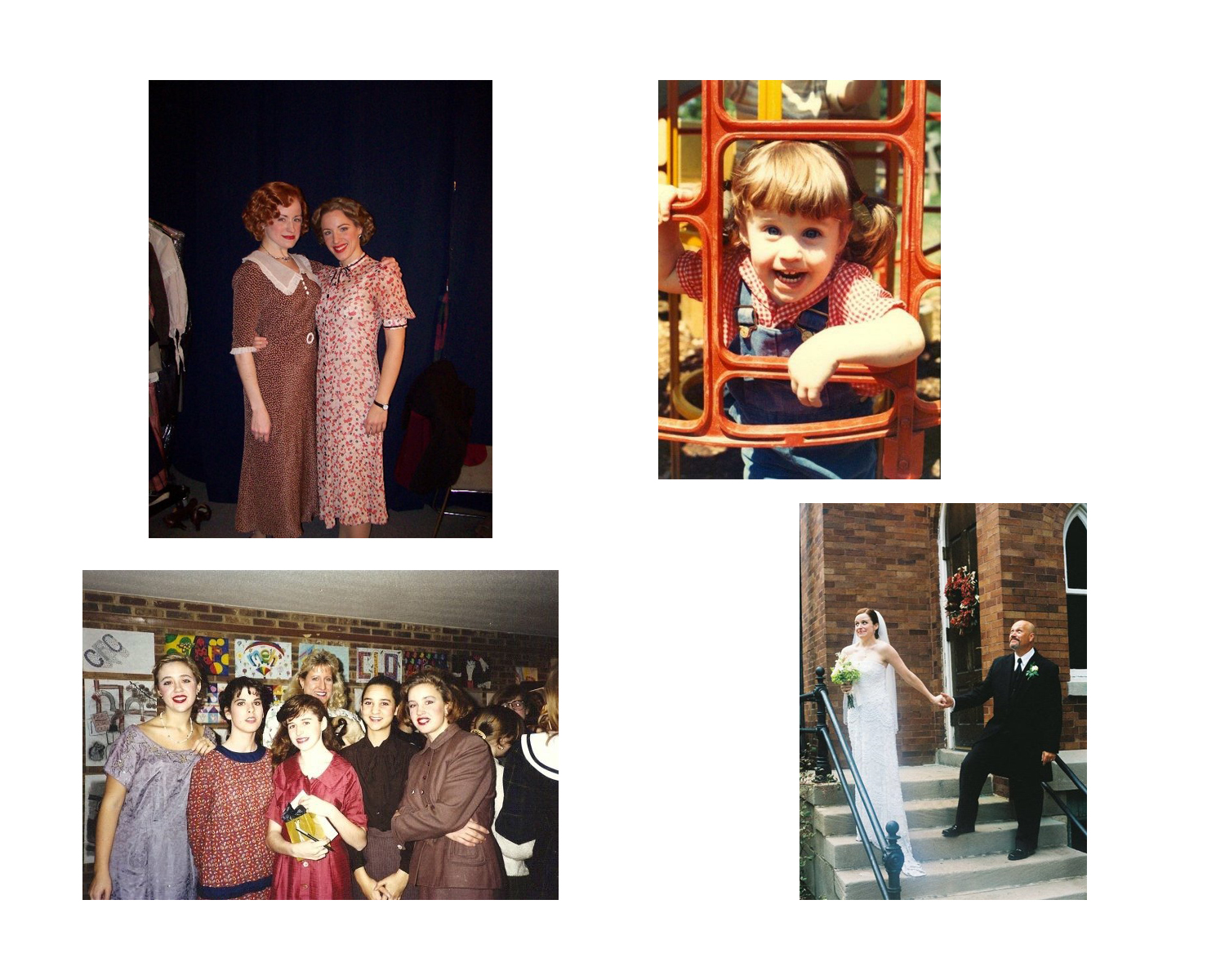
 

He has been seen on stage with The Hypocrites, Court Theatre, Paramount Theatre, The Inconvenience, and Chicago Children’s Theatre among many others. And, his words have graced such prestigious spaces as Vox First Person, The RedEye, and his Facebook page. If you would like to follow more of what he has to say, you can follow him on Facebook under his name or on twitter: @lifeofablacktor.

Posted on

A Conversation with Heidi Kettenring


First Davis, then Bacall, now Kettenring. That’s what the graphic from Porchlight Theatre Company read, advertising Heidi Kettenring’s turn as Margo Channing in Applause. And if you ask anyone who has seen Heidi perform, they would tell you that Addison DeWitt’s analysis of Margo in All About Eve could just as easily apply to her: “Margo is a great star, a true star. She never was or will be anything less or anything else.” Onstage, you can’t argue with the comparison to Margo, and undoubtedly Heidi will soon have even more pages of glowing notices to add to her collection, just like Bacall and Davis. But to get a real sense of what has made Heidi one of Chicago’s most beloved leading ladies, you need to dig a little deeper than that. As impressive as she is as an actress, and she is very impressive, there is just as much to be said for her offstage. There is an intellectual ease with which Heidi analyzes a text, a genuine passion for the collaborative process and a deeply rooted belief in the power of truth, kindness, and understanding. Put it all together and you can begin to understand the reviews she gets, not just from the critics, but from the people who have come to know her over the course of her multi-decade career in Chicago.
 

We sat down for coffee in Evanston, Illinois, and talked about the iconic roles she’s played, what it means to “have it all” as a woman in the theater industry, and why she doesn’t care what Hillary Clinton wears.


Kelly Wallace: Let’s start with some basics. Where are you from? Where did you grow up?
 

Heidi Kettenring: I’m originally from Metairie, Louisiana, which is a part of New Orleans. I grew up in Nashville, Tennessee, and moved here to go to Northwestern, and just…stayed.
 

KW: Why acting? How did you come to the decision to pursue it professionally?
 

HK: I don’t think I really knew that until I was about 24. And honestly…other people? I graduated; I was never very confident. In particular, in my abilities as an auditioner. I was never good at that. I always sang the wrong stuff and walked in too shyly. And so when I graduated, I auditioned for three things, one of which I got. It was Healthworks Theatre and you travel to schools doing health –­ mostly at the time HIV/AIDS –­education shows. And I was doing that while I decided what I wanted to do. And I auditioned for two other things and one of the experiences was so bad that I quit. I waited tables in three different restaurants and did Healthworks for about two years, and then a friend of mine basically called me out for being miserable and told me to go audition at the Wagon Wheel Dinner Theatre, which I did. I got cast in everything there, and I met people who did theater in Chicago professionally. One of the gals there convinced me to audition for a show at Drury Lane, which I got cast in. And that’s where I met my future husband, my future agent, and got my Equity card.
 

KW: Now, you’ve chosen to stay here in Chicago. In theater, as you know, there’s a common wisdom that New York is the center of everything, and that Broadway is the standard. We would challenge that assumption. There’s a huge diversity of opportunity out here, especially for women. What made you want to be here in Chicago specifically, as opposed to pursuing a career out in New York?
 

HK: I mean, initially, it was because once I started doing theater, I was successful pretty quickly. I love this town. There are tons of opportunities. And then as I got older and was sort of faced with the choice of…well, I could go to New York. At the end of the day, I do think when people first start doing theater…Broadway is the brass ring. It’s the brass ring that’s in your head of…well, I’m going to be on Broadway someday. But my brass ring wasn’t ‘I want to be on Broadway,’ it was ‘I want to be a working actor’ and ‘I want to have a certain kind of lifestyle.’ Meaning, I love having my own home. Not that you can’t do that in New York, but it takes a lot more money to do that. But immediately in Chicago, I met people like Paula Scrofano and John Reeger, like Roger and Jill Mueller, and looked at them and thought, “They have the life that I want to live. They have a home, they have a family, their job is being an actor. That’s their job; that’s what they do.” And when I was first starting and waiting tables and doing theater at night, that was so exhausting to me. I thought, “I just hope that, sooner rather than later, I get to the point where I don’t have to do all of these other things to put food on my table.” That’s what I wanted. And that’s what I got. It’s just never really been part of my reality to want to move to New York. It’s not a hugely glamorous answer. Every now and then, you think, “Oh, wouldn’t that be great? To be on Broadway and live on the Upper West Side” and then, pretty immediately, I think…no. I love my house, I love this town, I love the supportive nature of it. I mean, I’ll be standing in a room, at an audition, with five women and we’re all audition ing for the same part, and we’re basically saying to each other, you guys would be great in this! As opposed to not talking to each other. And part of that, maybe, is because there’s a lot of opportunity, and you know that if this one doesn’t work out, hopefully another one will.
 

Lila Morse, actor, The Diary of Anne Frank:
“I learned a lot from her about being a principled artist and professional. Regardless of the circumstances offstage, or any mishaps onstage, she always focused her energy on supporting the rest of the cast and giving the audience a wonderful show. Not only was it a comfort to know that kind of support was there, I find it to be a great example of a standard to have in my own work. And that she was never mean or awkward around me after I busted her elbow and sent her to the hospital.”


KW: You came here and saw Paula Scrofano and Jill Mueller having the life that you wanted to have. Do you feel like you needed to “see it to be it”?
 

HK: I do. Because I didn’t know what to expect. I think that’s sort of why I was reticent at all turns to go into this field. I think being able to see anything and be able to put yourself in those shoes and try to see…and know that it’s possible. That’s great. Kudos to people who don’t have that and decide to do who they want to be and what they want to do and they just trailblaze and make it happen. But I know it helped me. I know it helped me to be able to meet people right away who were mentors to me, who were kind to me, but I believed them. I never felt like I was being condescended to or told that I was better than I actually was. I felt like I was truly being mentored here. Truly, right away. Sam Samuelson was one of the first people I met and he was married to Mary Beth and they were making a go of it and making it work. And I thought, well that’s fantastic. It’s not just about, oh, they have a relationship and they’re doing theater. It was, well, what are all the elements of life that I would like to have. Not just “I want to be an actor,” because that has never been all that I was. Can I read my book for an hour? Can I work hard at what I really love doing? Can I cook myself a meal and walk in my back door to my home? All of these elements of things that, over time, I cobbled together…that’s what I want. And I can do that here.
 

KW: Mentorship is a huge issue; there should be so many more opportunities for young women to be able to have that experience. You’ve taught before, and some of your former castmates have said you were a great teacher to them backstage. Is it important to you to give back in that way?
 

HK: Absolutely. I feel like it’s interestingly part of my job. I’m reticent to use the word job; it makes it sound like it’s something I’m supposed to do. But in a positive way. I feel like it’s something that we’re all supposed to do. What is life without being able to help anybody with the knowledge that you have? It is. I love it when people are asking me questions about what have you done to create this life that I would very much like to have. At the end of the day, everyone’s experience is going to be different. But I know as a woman, as a female in Chicago, as an actor, what it has been like for me. It’s one of my favorite things about working with younger people, is helping if they want my help. If they don’t, that’s fine. But if somebody wants it, it’s my honor to help.
 

KW: Sometimes there’s a lot women aren’t prepared for or don’t know about being an actor, and one of those things often is being comfortable saying no. Did that take you time to learn?
 

HK: Oh absolutely. I think that there’s always a fear of…they don’t know me, I don’t want to be perceived as difficult.
 

KW: Which can be such a uniquely female problem, to be called difficult or a diva, and then it makes you worry about your ability to work.
 

HK: Right! It definitely took me a long time to learn that. Even in just over-booking myself. That ‘no’ is a perfectly acceptable answer. It doesn’t mean that I’m not being agreeable, it means that I just can’t. It just doesn’t work. Yes, I could technically do that and run myself ragged and be really tired, but that doesn’t help anybody . Learning how to say no, I think, for anyone, but especially for women, is a really difficult lesson to learn. And to realize, why do I want to say no? Do I want to say no just because I want to say no? I want to say no because the answer is actually no. And I want to say yes because the answer is actually yes, I don’t want to answer any question unless the truth behind it is the truth behind it. But yes and no…they really are, they’re sentences unto themselves. When am I meaning it? And when is it important to say? It’s a wonderful, difficult lesson to learn.
 

KW: Seeing people like you be able to do that and say that is really important. Were there women you worked with who you helped you develop that skill as a performer, both onstage and off?
 

HK: Oh yeah, lots of them. I mean, Susan Moniz is one of the first people that pops into my mind. Just from an audience perspective, oh my god, she’s incredible. And then being offstage with her, she’s lovely and delightful and kind and works hard, but when it’s not working for her…she’s perfectly delightful in her way of standing up for herself and getting what she needs and wants. It’s my honor and pleasure, there are countless women in this town that I consider mentors. And a lot of them are my age, and part of that is because I was a little late to auditioning, it was really fun to meet people who initially felt like they were older and I was younger, because they’d been doing this longer, but we actually were very similar or the same age. Truly, the dressing room is such a wonderful, sacred, awesome place. The things that I’ve learned about how I want to be in rehearsal, backstage, onstage, are from watching and learning from all of these magnificent women that I’ve gotten to spend time with. And ones that I don’t want to emulate. Learning from, “Oh, I don’t want to behave like that. I don’t want to learn like that. I don’t want to be perceived like that.” It has been invaluable for me.
 

KW: What’s onstage can be just as inspiring. Seeing women take on challenging, powerful roles can really help aspiring performers find inspiration to pursue their own art as well. What performances have really changed you?
 

HK: Oh god, what would they be? There’s so many. Kate Fry in a production of Hapgood. A Tom Stoppard play, I don’t remember the play; I haven’t read it since. This was when I was a student at Northwestern. I will never forget that. I don’t remember the play at all, and I don’t know if I’d met Kate yet. I’ve known Kate since 1991 and we’ve never worked together, which is crazy to me, but we’re good friends. I remember she was doing this scene and food was flying out of her mouth and she was having an argument of some kind and just going for it, and I had never seen anything like it. I have truly never seen anything like that, to the point that I don’t remember anything except her in that play. That was a life-changer for me. And honestly, since then, everything I’ve seen her in, I have felt that way about. She just has –­ and she’s like this in life –­ she’s just an honest, true person. And it reads onstage. She comes to everything from a completely honest and true place, which sounds so easy and it’s so hard. That’s a big one.
 

Stage-&-Candor_Heidi Kettenring_personal

KW: Have you seen anything recently that really struck you?
 

HK: Renee Elise Goldsberry, the woman who plays Angelica in Hamilton. That was a performance that knocked me out, just knocked me out on every level. And part of it is that the material was so surprising, I didn’t know anything about it when I saw it. I hadn’t listened to it on purpose. So you know, the fact that this elegant, beautiful woman comes out and then starts rapping like a, just, diva, for lack of a better word, and then singing like an angel and emoting with every inch of her body…the whole show was mind-altering, but that performance for me stood out. She was my favorite.
 

Dara Cameron, actor, Little Women:
“I feel so lucky to have gotten to share the stage with Heidi several times and she is one of my dearest friends. The first time we worked together, in Little Women, was a magical experience. It was one of my first professional jobs and I remember feeling instantly comfortable with Heidi. She has this ease about her – we became close very quickly. We got to sing a beautiful duet together and I’m not sure I’ve felt more connected with someone onstage (except maybe when playing opposite my husband…maybe…). She is a uniquely respectful and attentive scene partner, and one of the most honest actors I’ve ever encountered. 
We were also lucky enough to perform in Hero together, also at the Marriott, where she schooled me on holding a coffee cup realistically onstage (you have to hold it like there’s actual hot liquid in there!) and where we consistently had the hardest time keeping it together in one of our scenes because we just were having too much fun. Every night I got to listen to her sing her big act one solo number while waiting in the wings to enter and I remember marveling at her both her consistency and her spontaneity. I love going to work with Heidi because she takes herself and our business exactly the right amount of seriously.”


KW: So, since you started, you’ve gotten to play some of the most well- known roles in theater history. You’ve played Fanny Brice, Eliza Doolittle, and you played one of my personal heroines, Jo March.
 

HK: Oh, Jo is one of my favorites too!
 

KW: Let’s talk about Jo and Little Women. She’s one of my favorite characters, I know you’ve said in the past that she was a big love of yours too. Why do you think she’s become such a hero for women?
 

HK: I think a lot of the time when women are represented as strong professionally or strong as a leader, their femininity is left out. Their ability to love and be loved is left out, and what I loved about her is that she –­ surprise surprise –­ she can do well at that and she can love as a sister and love as a friend, with Laurie, and love as a lover, with the professor, but more importantly than that she…I don’t want to say she’s unforgivingly who she is, because she does try to be kind and she struggles within herself and asks, am I doing the right thing? But she knows what she wants to do and who she wants to be and she does what she needs to in a healthy way, to get it done. But at the same time, she is open to following love, and getting married if she wants. I think that for so long there hasn’t been a heroine that embodied all of that, even from a time when that wasn’t considered the norm, it wasn’t considered something people would want to be read about, and go figure, they did. It was sort of interesting proof of that we’ve come so far, but then we haven’t at all.
 

KW: There’s a lot of academic debate about Jo’s ending, in the book and onstage, about whether ending up home with her family and her husband is a betrayal of her pursuit of her career and her independence.
 

HK: I don’t agree with that at all. That’s one of the reasons why I love her, you don’t have to sacrifice one for the other. She [Louisa May Alcott] isn’t in the room for us to ask, but that’s an interesting thing. I can understand that point of view, “Oh well, she got professionally what she wanted, but it’s just not enough, I have to be something for a man” but I don’t think that’s it. I think there’s a wonderful partnership with the professor and Jo does doubt herself a lot at the time. There’s something sort of wonderful, I feel, about the fact that he helps her. I mean, it would’ve been just as good for her to handle everything on her own, but how wonderful that she didn’t have to. There are many ways to be fulfilled and she happens to fall in love while she was becoming an author.
 

KW: I think that’s one of the things that’s important to touch on: the fact that there’s not one path, there’s not one way to be a woman or to be strong. But that there’s room for all different kinds of choices and that real empowerment for women is about being able to make the choice…
 

HK: Right! And not necessarily what that choice is.
 

KW: Obviously, her relationship with her family, and with her sisters, is at the heart of the piece. You did the show out here at the Marriott Lincolnshire, with a lot of other great women…Dara Cameron, Morgan Weed, Abby Mueller. How do you feel like you all worked together in the rehearsal process to make that bond really present onstage?
 

HK: It was immediate. It was really immediate. I had been doing Wicked for two years when I did Little Women. I had been out of the loop of Chicago theater, really, for two years. I knew Abby because I had worked with, at that point, Roger…I think Roger was the only Mueller I’d worked with at that point, and I’d worked with him a lot. So I knew them from when they were kids. But it truly was immediate. I mean, that whole company was just really, really awesome. And the show is set up that you kind of –­ at least with the sisters anyway –­ if you can’t create that bond, you’re gonna have a terrible time. And I don’t think you can play Jo; I mean, I feel this way about any show. If you’re playing Annie in Annie Get Your Gun, or Fanny in Funny Girl, if you go into it thinking ‘I’m Jo March,’ then the whole thing is doomed to failure. You’re part of an ensemble, in any show that you do. So that’s what we were collectively, although we did have an issue when we got our sweatshirts. And we got pink ones, and the guys were really mad. ‘Cause they were like, I don’t want a pink sweatshirt that says ‘Little Women’ on the back, and we were like…’tough!’. That was maybe the one time we weren’t very ensemble–ish. But, it was funny.
 

Annaleigh Ashford, actor, Wicked:
“Heidi Kettenring is an astoundingly versatile and wonderfully gifted actress that is such a treat to work with onstage and off. It is no wonder that her craft and work ethic has made her known as Chicago’s leading lady. I had the great pleasure of working with her in the Chicago company of Wicked, a show that celebrates female empowerment and female driven stories.”


KW: You were in Wicked for quite some time.
 

HK: I did it for three years! I want to say I did over a thousand performances of that show.
 

KW: That show attracts such a young, passionate female fanbase. Did you have the opportunity to really engage with the fans of that show?
 

HK: I did. It took me awhile to accept that. It’s such a phenomenon, and that’s something that here…nobody hangs out, really, at the stage doors. I never experienced that before. It’s gotten more –­which is kind of exciting –­ that people now know that they can do that. But for the first year, I was able to get out of the building before the orchestra had finished playing. And I’d be at my car before people were even out of the theater. And it was actually somebody in the show who said to me, “You know, it might behoove you to go to the stage door. Because there are hundreds of girls, there are hundreds of young people and not-so-young people…there are tons of people hanging out at the stage door, and they just want to meet you. They want to talk to you.” And I’m really good at being onstage and behind lights, but I get really nervous about when I have to do a concert and be myself, or speak in front of people as myself. I get really, really nervous. It was a really big learning curve for me. But once I started doing it…you know, I loved it. 
Facebook started really becoming a thing during Wicked . And I am still Facebook friends with a lot of the fans. I’m actually almost grateful, because I think if Facebook had started now, I would probably not have accepted a lot of friend requests from people I didn’t know. But at the time, I was like, “Oh, sure!” and I didn’t know who these people were. And what’s interesting is that these people who were teenagers, young teenagers at the time; I’m still sort of seeing their lives in an interesting way. And we’re still in communication, and there’s a handful of them who will every now and then drop a line about how important that thirty seconds was, at the stage door, of just saying hello. And I don’t regret that first year, because that’s how I learned how much I enjoyed it, by not doing it, but there’s a little part of me that wishes I hadn’t waited so long to actually experience that. And it’s not because it makes me feel good to have people say, “You’re so good!” It’s almost the opposite. That’s the part that makes me uncomfortable, once I get beyond that, and they’re telling me how good they feel because of what they just experienced…I love that. And there’s still a handful of people who now come see me in things all over the place because of that. Yeah, I mean, it’s kind of it’s own weird form of…it’s not mentoring, but it’s the same kind of feeling of like…realizing I’ve just done my show for the 725th time. But this is the first time for this person, who just spent their money to come experience that and how singularly awesome that is, the responsibility and opportunity that I have even when it’s over, to say thank you. Thank you for coming.
 

KW: The stage door after a show is a place where people really have access to their heroes. Anyone can go, anyone can say hi and share their experiences.
 

HK: Yeah, we’re all standing out there wearing our coats and our hats and our scarves at that point. I’m not wearing my costume that was designed by somebody standing on this big fancy stage. I’m just standing in an alley next to a dumpster and we’re complete equals talking about what we both just experienced from two sides of the stage.
 

KW: Have you ever met or worked with someone that was an idol to you?
 

HK: I’m sure. Well, Susan. I keep bringing Susan Moniz up, and it’s fun, because she’s such a good friend of mine, but I remember being in a show with her for the first time…I was just knocked out because I had seen her when I was at Northwestern; I had seen The Hot Mikado at the Marriott Lincolnshire and we’re sitting next to each other in a dressing room and it was just crazy, crazy, crazy to me. Ben Vereen! Oh my god, he was in Wicked for one week. He did the show for one week. And the Wizard didn’t walk onstage for 45 minutes, he could’ve shown up at half hour, and gone to his dressing room. But he came up on the deck at places every day, shook everybody’s hand. He said, “Make some magic out there!” He learned everybody’s name before he got there, for the one week he was there. Oh man, that was incredible.
 

KW: Have you found that the people who are the most engaged and kind and honest offstage are often also some of the best performers you’ve worked with onstage?
 

HK: Yes. I’m sure there are many who are not, but from my experience, the more open you are…being a good actor is reacting to what is coming at you. ‘Cause even a one person show, you have to react to the music, you have to react to the lights, you have to react to the audience, you have to react to your own self. And if you have a block up for that, then I don’t know how you can really truly tap into being a really good actor. If you can’t look someone in the eye and say hello, how are you gonna look someone in the eye onstage and see, “Oh, today their energy is a little bit lower, I gotta maybe kick it up a notch a little bit,” or vice versa.
 

KW: And in the moment you’re lost in the world of the show. But now we live in a world now where technology has enabled a lot of people to react offstage and share opinions on what they saw or how they feel. Do you read reviews or reactions to your performances online?
 

HK: I do read reviews. I went through a period of thinking, don’t read reviews, they’re detrimental. I’m the kind of person who…I almost even have a hard time not flipping through and reading the last page of a book. For me, it’s ripping the band-aid off. Yeah, sometimes I read stuff that I don’t wanna read, but I find they help me. I don’t necessarily listen to them, but I like to get that over with. Reactions…on the flip side, I learned very quickly, especially with Wicked, I don’t go to blogs, I don’t read message board type stuff. Because it’s too easy for people to…like, when people are driving a car and they feel like they’re in the privacy of their car and act horribly, sometimes I feel like behind the screen of a computer, even if people don’t necessarily mean to be really mean, I’ve read some really hurtful things about myself. And I don’t need that. But there’s something about, in the confines of a review, I can’t not. Every time I try to not do it, I end up thinking, “I wonder what they said. I wonder what they’re saying.” And I find that for me, it takes the mystique away. I read it, it’s done, and then I can move on with my life.
 

Jessie Mueller, actor, She Loves Me:
“Heidi and I did She Loves Me together at Writers’ theater and it’s one of my favorite things I’ve ever seen her do. She’s just kind of dreamy to work with. She knows how she works and how to work with others – when to get down to business and when to have fun. You’ll realize after a day of rehearsal that you’ve laughed your butt off AND gotten the scene blocked too. She’s also a gem of a human being and a great friend – the kind that can help you look at this business with a keen eye, or a healthy dose of humor. She’s a great human being and a great actor. You’d be surprised at how rare that is.”


KW: One of the other big shows you did here in Chicago was She Loves Me at Writers Theatre
 

HK: I love that show, I love Jessie Mueller.
 

KW: Ilona is so interesting as a character. She’s very open about sex and sexuality in a time when a lot of women were not, and that was a controversial thing to be. She’s very resistant to marriage and she’s even slightly afraid of Paul, whom she later marries, when they meet. The lyric is, ‘he looks really strong, I wonder if he could hurt me’.
Where do you think that comes from? Why does she find herself able to let Paul in, in a way she hasn’t been able to before?
 

HK: If somebody is bigger than you, somebody’s stronger than you…you don’t know them. It’s wise to be trepidatious about that. But for her, she finds him very attractive, but also it’s the first time that she’s allowed herself to be interested in somebody because of their mind, and he’s interested in her…they probably both find each other very attractive, they’re talking about books. They’re talking. They’re sipping hot chocolate and actually talking. They’re not flirting. It’s not just ‘a really attractive man has walked into the Parfumerie and I’m going to flirt with them,’ it’s ‘Oh, this respectable guy with glasses has asked me a question, asked me if he could help.’ There’s a moment, where the lyric is, “Clearly respectable/thickly bespectacled man,” by the second verse she’s singing “slightly bespectacled man,” it’s like even she stops looking at his surface because of what he’s giving her from the inside, to her inside.
 

Stage-&-Candor_Heidi Kettenring_Theater

KW: Have you ever had to do a show where you get the script, and you look at the text, and you don’t necessarily identify with your character or their story arc? How do you proceed from there?
 

HK: Oh sure. There are definitely times when technique has to come into play, if my human experience isn’t going to help me. Angels in America was a really hard one for me to tap into. The language is so beautiful but a little difficult, and the subject matter was difficult to tap into. I do tend to then lean a little bit more on technique. But interestingly, even those, after awhile they become easier, almost because they must. The longer they’re in your body, and the longer you work on them…your body as a vessel, it does become easier, just because it must, for lack of a better way to put it. In order to lose yourself into a performance, while at the same time bringing a lot of Heidi into everything I do, because I am who I am, so the more challenging ones, I think, the more of myself I let in, it helps me with that.
 

KW: Jessie Mueller she said something similar about playing Carole, that she felt that you can’t just play the character without bringing some of what you are into the role. Have you ever had the experience of playing a real person? How was that different?
 

HK: Oh, Jessie! Fanny Brice was the big one, probably.
 

KW: Did you lean on the biographical material? How do you combine that with finding your way into it as Heidi?
 

HK: Because of the nature of who I am, I am sort of a natural mimic. So I try very hard to not do too much visual, audio research because I will just innately have a difficult time shedding that. We actually talked about this a lot with The Diary of Anne Frank [Writers Theatre, 2015] actually. Some people read the actual diary and some people didn’t. 99.9% of the time, the words on the page of the play that I’m doing are gonna give me the information that I need. If I don’t understand something or I’m speaking of something historically that I don’t really know what that is, I’m gonna look it up so I know what I’m talking about, but if the scene on the page didn’t happen, knowing what really happened doesn’t help me tell the story I’m trying to tell. So playing somebody like Carole King, when there’s so much out there…it’s a really fine line to walk. You don’t want to do a mimicry of Carole King’s voice, but, you know, I’m Jessie. There are certain things that are quintessential that people are gonna think about…it’s a really fine line to walk.
 

KW: And a show like Funny Girl, people come into it with a certain expectation of what they think that character is or what it should be. You come in, and you surprise people. Do you enjoy that?
 

HK: I really do. I mean, playing Patsy Cline in Always Patsy Cline is one of the funnest times I’ve ever had. And it was really complicated. Now that’s one where I listened to her recordings over and over, because I’m never going to sound like Patsy Cline. I’m not Patsy Cline. But…she’s an iconic singer. So, I love that, I love the idea that there is no way I’m going to sound like Patsy Cline, but what can I do to give grace notes to her so that within a few minutes, people have forgotten the fact that I’m Heidi Kettenring playing Patsy Cline. And that was really fun, people knew she had died years prior, but you hear people saying, “I thought she died?” like, they would actually lose themselves into thinking, “Oh my god, I’m watching Patsy Cline in a play”, and I think that’s wonderful and fun and cool and such a challenge. I don’t want to do it all the time, because it’s a whole other element of taking a little bit of the freedom away as an actor. You do have to work to fit into that mold, but it’s a fun challenge.
 

KW: There’s been some controversy around Madeleine Albright lately but there’s something really interesting she wrote in an op-ed, “In a society where women feel pressured to tear one another down, the real saving grace we have is our willingness to lift one another up.” How can we do better about lifting each other up?
 

HK: I almost feel like if I knew the answer to that, the problem wouldn’t be there. All I do know is that it is the truth. It’s something that I don’t understand why it’s a conversation we need to keep having but we obviously do. Knocking people down isn’t going to help. Building people up is going to help. It helps you as a human being to build somebody up. It blows my mind that it’s a conversation we will need to have. So we have to keep having it. We can’t be afraid of having it. Don’t be afraid of, “Oh no, somebody might call me a feminist!” So? Be a feminist.
 

KW: Do you describe yourself as a feminist?
 

HK: Absolutely.
 

KW: Some people would say that it’s a loaded word. What does that word mean to you?
 

HK: Right, I think maybe I am because I don’t think it’s a loaded word. I’m a feminist because —maybe it’s a naive reaction— I’m a feminist because of the fact that we still have to ask if it’s okay for me to say I’m a feminist. I am a woman who believes that I— in every way other than my actually physiologically differences— I’m tongue-tied about it, even…
 

KW: “Feminism is the radical notion that women are people”?
 

HK: Yeah, exactly! Like the fact that it just blows my mind that we’re gonna have a conversation about what Hillary Clinton wore. It seems so irrelevant. I sit there and I’m like, okay, she wore a gold outfit. Show me a time that one of the men shows up not wearing a suit and a red or maroon tie, y’know? And even when they do, we’re not gonna talk about it. Because it’s not what’s important. I guess because of that it has this stigma that it’s a word that means I’m shrilly, speaking about what I’m owed and what I’m deserved…the fact that there still needs to be a conversation about what makes people equal…that alone makes me a feminist, because how could I not be? I’m a woman who in no way doesn’t think in every way we’re equal.
 

KW: Have you ever felt treated differently because you were a woman?
 

HK: Yes. That’s definitely been the case. I’ve never been one to be actively physical, I’m not a hugger. It takes awhile for me to walk up and kiss a friend of mine that I don’t know very well. In theater, that’s an interesting thing, I don’t know if it’s a gender thing or a me thing, but I do think it’s a gender thing. The immediate intimacy that a lot of people have…I don’t immediately have. Words come up like “lighten-up” or “oh, you’re such a prude” in that regard, and it’s not all the time, but when it happens my wall immediately goes up. “Oh, I’m a prude because I don’t like the fact that you just smacked my ass? Okay.”
 

KW: Do you feel like there’s that pressure onstage too…to “lighten up”, to be more likeable?
 

HK: I do. Yes. I do. And a lot of it is, in particular, with words that I’ve always hated. “You’re making her really shrill, you’re making her really strident.” As a woman, why are those a bad thing? That is actually the timbre of my voice. When I’m getting angry, I get a little “shrill” or “strident”, so really what you’re telling me is that you want me to be likeable. Well, in this moment, she’s not likeable. I’ve never heard “shrill” used towards a man. And…ugh, I just hate that word so much.
 

KW: We were talking before about politics, which feels relevant here…Donald Trump, who comes from a place of anger so much of the time, or even Bernie Sanders, who come from this place of being loud and having raised voices…if Hillary Clinton or Carly Fiorina matched that tone, they’d certainly be (and are) called “shrill”. But somehow with men, it’s seen as strong.
 

HK: That’s exactly it. People don’t realize that they don’t want to associate women with anger or strength until they actually see it happening. They’re like …ugh, what is this unladylike behavior? But at a debate, when a man is doing it, it’s not even considered.
 

KW: What do you want to see in the future? For women, for theater, what is your vision of where you want to be in 10 years?
 

HK: My hope is that, the gilded lily hope, it’s a conversation that we no longer need to have because everyone is on the same page and on the same foot. My hope is just that it’s not, “Oh my god we have this wonderful female director, we have this wonderful female…” that it’s just “wonderful director”, so what if it happens to be a woman. And that there’s just more. More opportunity to talk about it. To talk about it like this, like we are right now. More to actually do. That it’s not avant garde for there to be a play of all women. That it’s not avant garde that the team is all women, you know? The fact that it’s news in 2015 to have on Broadway the creative team for Waitress is all women…my hope is that in five years that not only is that not a conversation, but it’s not even a question. It shouldn’t be a novelty. I don’t want it to be a surprising thing. It’s just a thing. Well, of course it’s all women. They were the best ones to do the job. But there doesn’t have to be a press release, because of how great and unusual it is, and right now it is great and unusual, but it would be great for it to just be great.
 

Barbara Gaines, Artistic Director, Chicago Shakespeare Theatre, directing the upcoming Tug of War:
“Every performance I see of Heidi’s—no matter what the play—is my favorite performance, because she is the ultimate chameleon. She changes characterization depending on the show and the demands of the role. She completely blows us away with her versatility, and with her profound understanding of human nature. Besides that, having her in the rehearsal room is nothing but a complete and utter joy. She is a fantastic human being…wise, warm, and she makes the best egg salad I’ve ever tasted. I feel truly blessed for all of the opportunities we have had to work together—and for the great adventure we are embarking on this year with Tug of War.”


KW: Now, you’re on to Tug of War at Chicago Shakespeare Theatre, a six-hour marathon of a show.
 

HK: Terrifying!
 

KW: Barbara Gaines is directing that…do you feel like the energy in the room is different when you’ve got mostly women?
 

HK: Oh yeah, just as we were saying before, the inherent fact that she’s a woman is different. Barbara for me is a singular, wonderful person to work with because she’s so strong and she’s so nurturing. She embodies for me all these wonderful elements of being a strong, full woman. She’s smart, she commands a room, she’s nurturing, she’s kind, and not that I haven’t worked with men who are like this, but there’s something about this petite, spark plug, lovely woman who I feel completely at ease talking to. It’s just a different energy. I don’t know what’s better, what’s not, but I love working with women, and with Barbara. She brings a positive, kind, strong forward momentum into the room every day. And I so admire that about her.
 

KW: And then, working on Applause, with Margo and Eve…their relationship starts off with a conversation at a stage door.
 

HK: Right, like, you’ve come to see me twenty-four times. You’ve earned my attention.
 

KW: Her instinct is to be the mentor. The break-up of that friendship feels like it is a product of the idea that there isn’t room for everyone. Eve feels like it’s her OR Margo, but there’s a place for both of them.
 

HK: That’s where my Margo is coming from. She’s mentoring her. Eve, unfortunately, I mean, it turns sour, because of the fact that…when Margo sees her with her, “Oh, I’ll take care of that, I’ll do that, I’ll sew your clothes” and then she goes back into the room and she’s bowing and holding Margo’s dress up to her. I don’t think –­I mean there is the undercurrent of Margot feeling old, so there is that element of it. Women can have less opportunity as they age. But y’know, what I see for Margot, because I’m coming at it on her side now. I’ve played Eve years ago. Margo’s reaction is to the dishonesty. As much as Margot is this sort of flamboyant, fabulous personality, she is unabashedly who she is. And here is this woman who is hiding completely who she is so there’s that part of –­ you’re trying to be successful by being completely who you are not. The number, “Who’s That Girl” she sings when Eve is there –­ y’know, does he want to marry this Margo, that Margo, or the one on the TV –­ well I don’t feel like she’s saying that’s not who I was, this is who I am now, that’s what I was, but I think one of the many things that bothers her about Eve is that she is completely not in any way who she says that she is. She’s covering up, whether or not she’s doing it because she’s a woman or because her dad was so horrible to her as a child; she is not who she says she is. It’s an interesting piece. What I’m struggling with is the end, is how to make the end not unpalatable. Because of the fact that Margo, the words to it are beautiful, ‘there’s something greater,’ I don’t need to just be the person on the screen. But then it’s like, she just gives it all up to be with Bill. So finding the way in a non-1960s world, to take that and make it work in my brain and not make it, “Well, I’m giving up the theatre so I can be with my guy!” That’s become a really interesting, fun, challenge.
 

KW: Gloria Steinem said in an interview with PBS a few years ago that women can’t “have it all” until we realize that not only can women do anything men can do, but men can do anything women can do, because women end up expected to do two jobs, one in the home and one out of it. Do you feel like you’ve been able to “have it all”? What does that mean to you?


HK: I do feel like I’ve been able to have it all. Well, all I wanted in the the time that I wanted it, if that makes sense. Because I don’t think anyone can or should have it all, because then…what do we need other people for? I was actually having a conversation with my husband just last night. We were talking about all kinds of stuff, but the conversation we had recently was that you can’t possibly understand what I’m feeling because I’m a woman. And he said, “I do, I understand”. And I said, “Well, no, I think it’s actually okay that you don’t. And it’s okay that I don’t understand everything that you’re going through since you’re a man. You’re a man, I’m a woman. The difference is how we handle those things and how we interact because of them. Because we’re all innately different. For me personally, yeah, I think, and I don’t look at it in any way as giving up anything, how do I want to say this…I feel like I have what I need and I want because…I try, I work very hard all the time and in every phase of my life to look at my life and think, “What do I need, in this moment, to have the full life that I need right now?”
 

KW: I’m really glad that you brought that up. The idea that we can’t ever completely understand what someone else is going through when you have such a different identity or life experience is something some people are afraid to say. Man and woman is one example, race is another. It’s important to have the conversation.
 

HK: Right, absolutely. I always feel like, if I don’t understand, which I can’t, with race, with gender, with class…you know, we’re all different. Talk to me about it. Explain to me what, you know, I’m going to say or do something “wrong” just from the sheer fact that I don’t know. And so…help me. Educate me. And I will do the same. Because it is impossible for me to understand the full experience of a man, of anyone of a different race than me, because I just am not those things. But I want to. I want to do everything in my power to understand that because we all walk the face of the earth and we should all walk it together, as much as we can. But I cannot pretend that I understand everything because I just don’t. I would like to learn as much as I possibly can. And I think that, I hope, that’s part of why I’ve been able to lead the life that I do, and that I’ve wanted, is that I try to have as much empathy and sympathy to the degree that I can, and I want to live to my honest and true self.


Heidi Kettenring’s favorite Chicago credits include: Wicked (Nessa) with Broadway in Chicago, The Diary Of Anne Frank (Mrs. Van Daan) and She Loves Me (Ilona), at Writers’ Theatre, The King And I (Anna—Jeff Award best actress in a musical) and Funny Girl (Fanny Brice), at Marriott Theatre in Lincolnshire, The Merry Wives Of Windsor (Mistress Ford) and The School For Lieu (Eliante), at Chicago Shakespeare, Oliver (Nancy) at Drury Lane Oakbrook, as well as work with Chicago Commercial Collective, Court Theatre, Northlight Theatre, Theatre At The Center, Drury Lane Evergreen Park, and American Theatre Company. She toured the U.S. in Disney’s Beauty And The Beast. Regional credits include work at Fulton Theatre, Maine State Music Theatre, TheatreWorks Palo Alto, Peninsula Players and Bar Harbor Theatre. Ms. Kettenring has also sung concerts for Artists Lounge Live, Ravinia Festival, the Pensacola Symphony Orchestra and at Millennium Park. Heidi can be heard singing on two Disney Junior Books and can be seen in the film Man Of Steel. Television credits include Cupid and Chicago Fire. She is the recipient of a Joseph Jefferson Award, 7 Jeff Award nominations, the Sarah Siddons’ Chicago Leading Lady Award, an After Dark Award, the Richard M. Kneeland Award and is a graduate of Northwestern University. She is a proud member of AEA and wife of actor David Girolmo. Heidi can be seen this Summer and this Fall in Tug Of War at Chicago Shakespeare Theatre.

Posted on

Reflections on the Chicago Spring Season

Chicago Spring

Stage & Candor_Carlyle


Carlyle
April 2 – May 1, 2016 in the Owen, at Goodman Theatre
Written by Thomas Bradshaw; Directed by Benjamin Kamine
Photo: Liz Lauren

 
Enter Carlyle, the hour-and-fifteen minute personal travelogue of the self-described “political unicorn”, a Harvard-educated black Republican whose personal hero is Clarence Thomas. The Goodman Theatre has become host to biographical play about the life of Carlyle Meyers, played by Carlyle Meyers (played by James Earl Jones II with smooth charm and a winning smile that would sell even the most liberal on entertaining a tax cut or two). The show is one of the most relevant satires of the decade, but Carlyle is no joke. At the performance I attended, a discussion ensued between a young black woman made a comment about two side-characters, Shaniqua and Tyrone (Charlette Speigner and Levenix Riddle, respectively), who are Carlyle’s schoolmates, and are worried he just isn’t black enough. She asked Mr. Jones about the fact that in the show, Tyrone is expelled for having weed, and isn’t that a retread of a lazy stereotype? Mr. Jones took her point thoughtfully, and then responded, “It also tells me that we still have police looking for weed in black kids lockers.” Before you can even finish calling something a stereotype, Bradsaw expertly breaks it. The play, in a very real way, ask the audience to define what blackness means to them, and then look in the mirror and wonder where you learned your answer.


Stage & Candor_Hillary and Clinton


Hillary and Clinton
April 1 – May 1, 2016 at Victory Gardens Theater
Written by Lucas Hnath; Directed by Chay Yew

 
Hillary & Clinton (pristinely directed by Chay Yew) at Victory Gardens takes us to another world too, though this time they ask a little more politely. Where The Realm drops you right into a different place in time, playwright Lucas Hnath instead asks us to imagine a world very much like our own, and a time very much like our own, and a woman very much like a one Hillary Rodham Clinton. It’s the thick of a tough primary campaign and Hillary is about to lose New Hampshire. and that’s when we meet her. We explore this other Hillary as she is crafted with expert grace by Cheryl Lynn Bruce. This Hillary has been in the battlefield for a long time and is struggling with the impossible challenge of trying to cram that lifetime of experience into a hashtag, which has somehow become a necessary part of campaigning to run the free world. I felt a tightness in my chest as we, as an audience, become witness once again to the humiliating parade of false accusations of sexist critique we’ve subject Hillary Clinton to over the past two decades, and a burning frustration at the constant hemming and hawing about her needing a more “presidential narrative”. At times I was sure I was hearing the CNN commentary echoed across Chicago from my apartment. And then Bill Clinton (John Apicella) says it, “You’re Hillary. Not Hillary Clinton. You’re just Hillary. That’s your story.” I’d punch a ballot for that.


Stage & Candor_The Realm


The Realm
April 14 – May 8, 2016 at The Side Project Theatre, presented by The Other Theatre Co.
Written by Sarah Myers; Directed by Kelly Howe
Photo: Ashlee Estabrook

 
Words make worlds. I heard the phase at The Other Theatre Company’s The Realm. In the cacophony of platitudes and instructions, the awesome chaos of having visual and aural information jackhammered into all of my sense receptors, one clear phrase stuck in my brain. And it wasn’t until I stepped out of the fascinating fun house that Sarah Myers’ created in The Realm, that the three word phrase was finally alone in my mind so I could chew on it a little more. In The Realm, resources are short and are almost entirely under the Realm’s control. This allowed them to rise, with their motionless and incisive ideas for curbing overuse of resources and overpopulation. Our guide is Kansas (played by Esme Perez), whose name is not really Kansas, a teenage girl who is “immune” and thus, isn’t losing her vocabulary or free will the way that those around her are. We know there’s a dark, hard underbelly beneath the primary-color red paint that covers the set, but this story isn’t a story of conquering worlds, it’s a story of defining your own.