Posted on

Giving Voice to the Body: The Cast of ReconFIGUREd

ReconFIGUREd


Honest Accomplice Theatre tells stories that are rarely brought to light: those that are silenced, pushed aside, or deemed too “fringe” for mainstream theater. Working with an ensemble of artists, the company works to bring these topics into the light; to create dialogue about the things we don’t see onstage when it comes to the lives of female-identified and trans people.
 

ReconFIGUREd, the company’s latest piece, is a heart-warming devised work about the experience of living in our bodies, and how it feels to inhabit the female and trans identity. We spoke with members of the cast about their process, their characters, and why theater matters.


ReconFIGUREd
 

Helen Schultz: How did you get involved with HAT/ReconFIGUREd?
 

Seth Day (He/Him/His): It’s actually a funny story! Although I had some theater experience growing up, I’m not an actor by trade. I wasn’t actively searching for acting gigs, but I’m a member of this Facebook group that is a forum to share queer-friendly employment opportunities, and I saw the casting call for ReconFIGUREd and thought, “Why not!?” To be honest, I almost chickened out of the audition, but the project seemed so important to me. The subject matter of the show is what really piqued my interest. It was the first time I had seen a casting call that was genuinely interested in the trans experience.
 

HS: Tell me about your character and creative/design role.
 

SD: I’m one of the two actors playing Luke, a trans guy in the first year of his transition, who struggles with feeling the need to perform toxic masculinity in order to be seen as male. He also has some family drama going on and has to balance that with dealing with his masculinity issues. It’s very exciting for me as a transperson to get to play a trans character, and to put a story on stage that feels more authentic than other trans representations in the media.
 

I’m also the prop designer, which was a first for me and a fun challenge! I really tried to give attention to detail to each and every prop in a way that each prop adds something to the story.
 

HS: Why do you think theater is such a powerful medium for telling this kind of story and to help change people’s minds and erase some of the stigmas associated with current identity/body politics?
 

SD: Generally when people see theater it’s for enjoyment, so I think when we go see a show, we let our guard down. If I were to walk up to someone and try to engage in a conversation about the body or gender or any sensitive topic, I think they’d probably be a little guarded. But when we let our guard down and are open, theater can really change us.
 

HS: Tell me about one of the scenes in the play.
 

SD: There is a power ballad sung from the last remaining estrogen in a menopausal body. What more do you need?
 

HS: Tell me about a moment in the development process that surprised or stuck out to you.
 

SD: At the beginning of each devising session, we would go around and introduce our name and pronouns (as these are things that can change!). And one session, one of the ensemble members asked us to use a pronoun I had never even heard of before, which was a really humbling moment for me. Sometimes I think just because I’m trans, I know all there is to know about gender, but that was a great reminder that we all have room to grow and learn!
 

HS: What is one thing you hope people take away from this piece?
 

SD: I suppose I don’t really care what people take away from the show as long as they’re still thinking after it’s over. My hope is that the show starts a conversation!
 

HS: What makes this show unique?
 

SD: I think one of the most unique aspects of this show is its honesty. That and the fact that about a third of the cast is trans! Which is just amazing.


ReconFIGUREd
 

Helen Schultz: How did you get involved with ReconFIGUREd?
 

Jo’Lisa Jones (She/Her/Hers): I saw a posting to audition for the devising portion, not realizing that a friend of mine had actually worked for HAT previously and gave them glowing reviews, so I knew I should go for it! The reason I first wanted to get involved was because I feel like seldom do women and trans folk have an opportunity to truly discuss and express what our bodies go through. I also wanted to share and relate my experiences with other people so that others feel comfortable to speak up and so that I could find some camaraderie.
 

HS: Tell me about your character.
 

JJ: My character’s name is Fiona, and she works in a women’s health clinic that also performs abortions. Despite having fertility issues, she gets pregnant, only to suffer a miscarriage. This character is loosely related to a short movement piece that I created about having an invisible illness, as I have PCOS [Polycystic Ovary Syndrome] and can potentially have fertility issues, so this character is very near and dear to my heart.
 

HS: Why do you think theater is such a powerful medium for telling this kind of story? How does it help change people’s minds and erase some of the stigmas associated with current identity/body politics?
 

JJ: I think it’s a fun way to be educated. You are moved by the characters and gain new perspectives on what others may be going through. People want to have fun, and I think ReconFIGUREd is a really fun show that has a beautifully crafted undercurrent of truth telling and insight – and other times we just let it all hang out because that’s appropriate too!
 

HS: Tell me about a moment in the development process that surprised or stuck out to you.
 

JJ: I think the strongest moment in the development process that stuck out was the day we were embodying mental illness and addictions. It was truly enlightening to me. I have been very fortunate to not suffer from either and, although I may logically understand both, I don’t always physically or emotionally understand what’s happening. It finally clicked that day because, rather than having a verbal scene, I got to see how it wears on the body, and that really struck a cord with me.


ReconFIGUREd
 

Helen Schultz: How did you get involved with HAT/ReconFIGUREd?
 

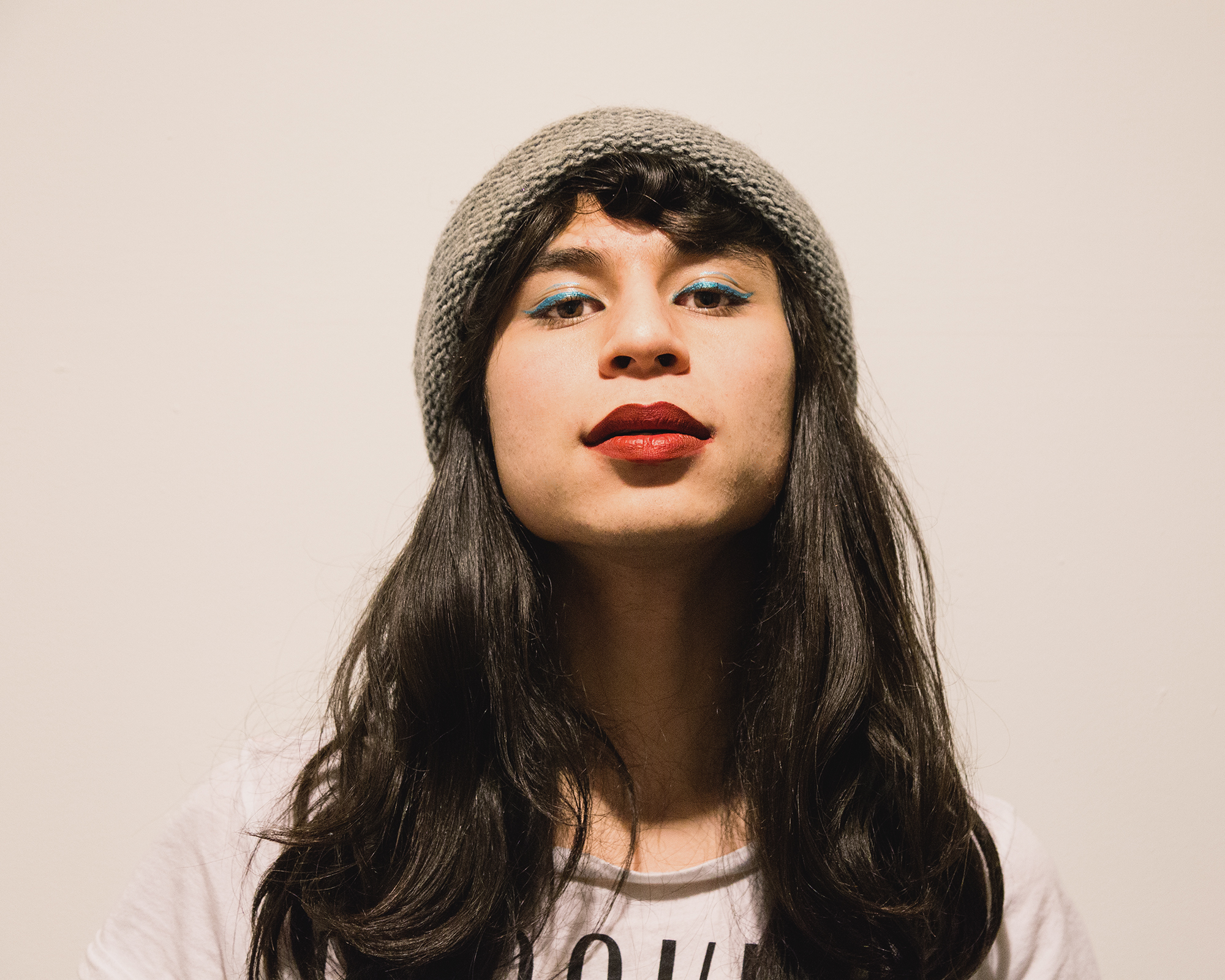
Jordan Ho (Xe/Xem/Xyr or She/Her/Hers): I started working with HAT in 2015 for the Tank run of The Birds and the Bees: Unabridged and I have been with them ever since. I stayed because this company is like home to me.
 

HS: Tell me about your character.
 

JH: I devised the role of Melanie in the show with castmate Holly Samson. There are many facets to Melanie: having a trans brother and a mother who works in an abortion clinic, on top of figuring out her race, ethnic identity, and coping with mental illness. It’s been a joy getting to create Melanie, and I hope anyone else who is suffering can find comfort in her arc.
 

HS: Why do you think theater is such a powerful medium for telling this kind of story? How does it help change people’s minds and erase some of the stigmas associated with current identity/body politics?
 

JH: When talking about the body academically, it’s easy to desensitize ourselves from actually addressing the issues. Not to say that literature and news articles are telling lies, but written word automatically makes these concepts abstract and not attached to our physical forms. And even if these concepts do manifest inside our bones, the natural next step is to act, which is why we do theater. I think there will be something powerful about seeing actual bodies tell the stories about how we carry and take care of our vessels.
 

HS: Tell me about one of the scenes in the play.
 

JH: There happens to be a musical number called “Gemme Femmes” that is horrifyingly entertaining. I grew up watching shows like Sailor Moon, The Winx Club, and Mew Mew Power, so I have a strong affinity to girl-power television. That being said, it is so, so interesting looking back and seeing just the opening intros and seeing these shallow molds of femininity veiled under the guise of being a cute television show for kids.
 

HS: Tell me about a moment in the development process that surprised or stuck out to you.
 

JH: Honestly, I was most surprised when we learned our character tracks and who was paired with whom. I’m a trans gender fluid actrex, so I just assumed that I would be assigned a trans character. But when I heard that I would be working with Holly to devise the role of a cisgender woman, I was really struck for a moment. And then I had a creative epiphany: because if Hollywood is so dead set on allowing cis people to play trans characters, then why can’t a trans person play a cis character? I will never forget this moment because it gave me such clarity that trans artists are capable of anything. Creating this role has helped me reclaim my femininity, and I’m so glad that Maggie, Rachel, and Holly have trusted me in this creation process.
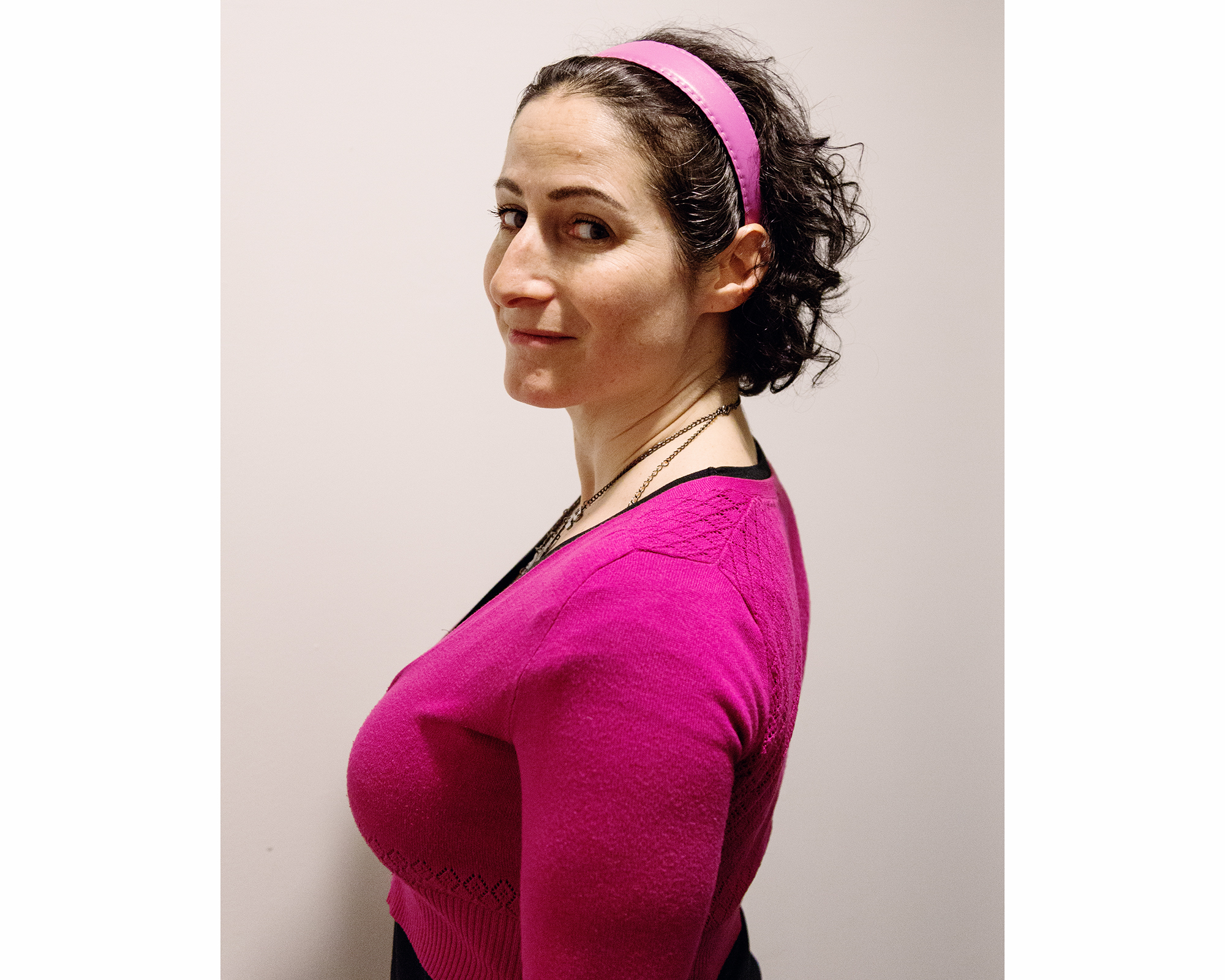


ReconFIGUREd
 

Helen Schultz: How did you get involved with HAT/ReconFIGUREd?
 

Simona Berman (She/Her/Hers): I came on board this year for ReconFIGUREd and am outrageously happy to now be in the company.
 

HS: Why do you think theater is such a powerful medium for telling this kind of story? How does it help change people’s minds and erase some of the stigmas associated with current identity/body politics?
 

​”​And i said to my body. softly. ‘I want to be your friend.’ it took a long breath. and replied ‘i have been waiting my whole life for this.'”​

When I first read this quote by Nayyirah Waheed, I literally took a deep breath as I was reading, unconsciously wrapped my arms around my body, and started to cry. Or at least dry heave a bit, because I stopped myself from crying long ago when I was bullied growing up and didn’t want to give the bullies anymore fodder for their fire. Much of that bullying was a catalyst in my long continuous battle with my body. Along with a few eating disorders, I also struggle with body dysmorphia: where I look in the mirror and see my arm and where the large muscle from doing gymnastics meets my large breast it triggers my brain to see my body as one big armbreast – much bigger than it actually is.
 

That quote by Nayyirah took me out of my head and separated me from my body and gave my body its own persona, arousing empathy in me for my body. As a self-hating Empath, it is easier for me to be moved to action by others, not so much for myself. I suddenly saw my body as a scared little girl, who opened her arms wide and said, “Please love me, I beg of you!” The quote made me want to take care of that little girl that is my body. This was easier for me to process as opposed to trying to just love me for me.
 

That’s what theater does for certain issues, such as the ones we tackle in ReconFIGUREd. Theater takes an issue and initiates awareness for someone to be able to see outside of themselves. For an audience, if they connect deeply to the story as if it was theirs personally, theater allows for aesthetic distance where the story becomes a safe friend that might help someone feel less alone or less awkward. It also opens up whole new worlds for people who can’t relate at all to the story personally, but being able to see, hear, feel the story played out can now evoke empathy for the characters. Or at least a better understanding, as opposed to just hearing about it or reading about it in a random story.
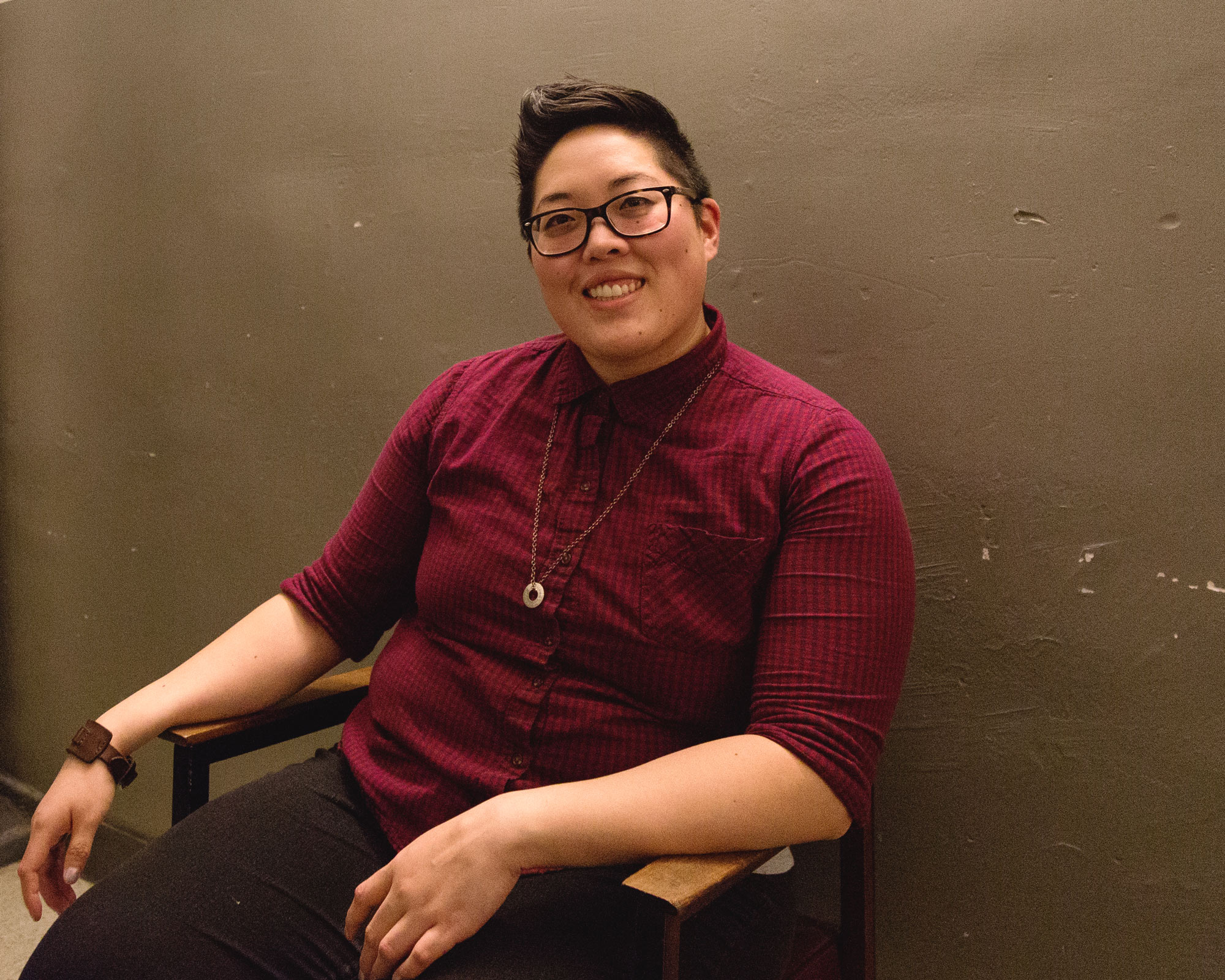


ReconFIGUREd
 

Helen Schultz: How did you get involved with HAT/ReconFIGUREd?
 

Holly Sansom (She/Her/Hers): I started working with Maggie and Rachel before the Honest Accomplice Theatre company was created, back in 2012. I was an original ensemble member and deviser for the show The Birds and the Bees: Unabridged. When HAT was formed in 2014, I came on as the General Manager as well.
 

HS: Tell me about your character.
 

Holly: I share the role of Melanie with Mx. Jordan Ho. Melanie is a cis woman thinking about her identity as a biracial person in America. She is also dealing with mental illness and how these aspects of her body affect her relationship with the world and the people in her life.


ReconFIGUREd
 

Helen Schultz: How and when did you get involved with HAT/ReconFIGUREd?
 

Jesse Geguzis (Squee/Squer/Squem): I had auditioned for the previous project and then I was asked to be a part of this project about a year ago.
 

HS: Tell me about your character.
 

JG: Luke is a young trans guy in college and struggling to be comfortable in his new body with old friends and family of origin.
 

HS: Why do you think theater is such a powerful medium for telling this kind of story? How does it help change people’s minds and erase some of the stigmas associated with current identity/body politics?
 

JG: I think theater can change the world. Everyone involved in this project is throwing their energy at creating change. I think visual mediums are the strongest vehicle to get into folks’ heads and leave them starting to change their thinking. It plants a seed. This company is gardening a new world by telling new non-heteronormative narratives.
 

HS: Tell me about one of the scenes in the play.
 

JG: My favorite scene is with my character, Luke, and his sister Melanie, fighting and trying to find common ground around identity struggles. The whole scene takes place with both characters wearing the same giant shirt, as a punishment for fighting by their mother.
 

HS: What is one thing you hope people take away from this piece?
 

JG: I hope people leave thinking about how to open up their minds more and more every day.
 

HS: What makes this show unique?
 

JG: It’s a company of only female and trans-identified folks.
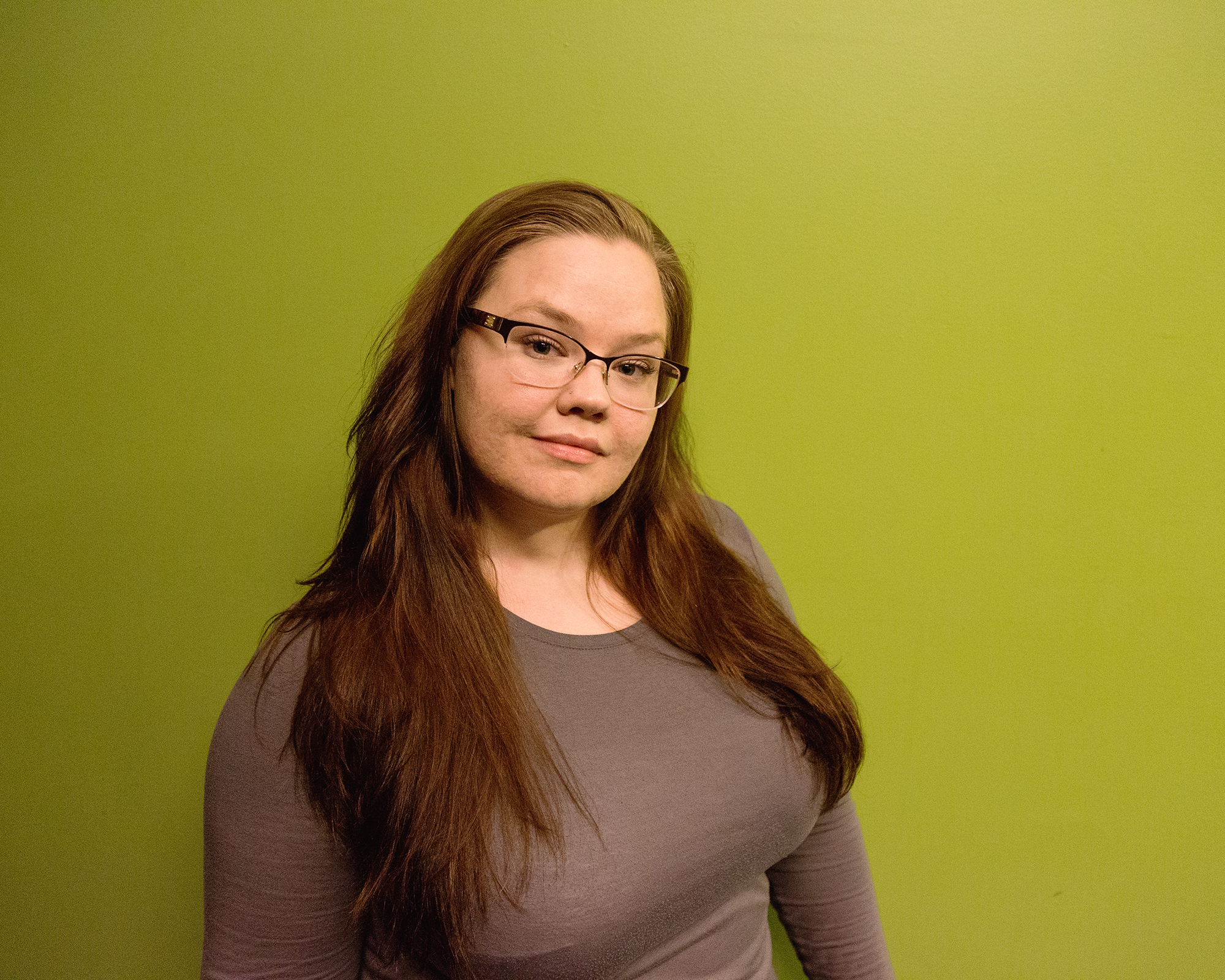


reconFIGUREd
 

Helen Schultz: How and when did you get involved with HAT/ ReconFIGUREd?
 

Kat Swanson (She/Her/Hers): I was lucky enough to be involved with HAT early through some of the first Birds and the Bees workshops, which I heard about through Rachel while working with her on another project. I remember being so struck by the questions being asked and by the process. I tried to be involved in whatever way I could from there. I helped out a bit with general support on one of the Birds and the Bees productions, and finally had the chance to be involved from the beginning of this project.
 
 
HS: Tell me about your character.
 

KS: My character is a struggling single mother named Donna. She has an eight-year-old daughter named Ari – short for Ariel – who she’s supporting on her own (the father has been out of the picture for some time now), which creates a lot of financial hardships. She also grapples with lack of self-love, binge eating disorder (BED), and back pain, partially caused by having larger breasts. Donna suffers from the classic single-parent time versus money dilemma: how can she be a good mother to Ari when all she has time to focus on is the next step, the next place to be, the next bill to pay? She’s in survival mode and is realizing the negative impact on her growing daughter.
 

HS: Why do you think theater is such a powerful medium for telling this kind of story and to help change people’s minds and erase some of the stigmas associated with current identity/body politics?
 

KS: I really think that seeing is believing and feeling is understanding. People who aren’t trans or women or disabled and so on don’t really know what gaps exist in their understanding. When you don’t live it, you just don’t know. You can read an article or catch on to all the political and social media buzzwords and think you know something, but you just don’t. People are often afraid to admit, even to themselves, that they don’t understand.
 

Theater is such a unique art form in how it is able to combine all the other art forms to create a true, visceral experience. It is able to make the audience see and feel and have at least the opportunity to start to know. By attending and really opening yourself up to a play that portrays an experience that is not your own, you get a chance to empathize with other people. That empathy, especially when it occurs on a large scale, is – I think – what really has the power to make a difference in people and society as a whole.
 
 
HS: Tell me about one of the scenes in the play.
 

KS: Ooph – tough question! There are so many excellent ones. My favorite scene is one that portrays caretaking for a character whose mobility has been severely impacted by her battle with cancer. It’s really loaded – the daughter is getting ready herself and is helping her mother get ready for the day at the same time. The scene is great because the dialogue is very normal but also tells so much in so little. I think it’s something a lot of families can relate to, [regardless of the] situation they’re in. It hit a chord with me because my mom has been wheelchair-bound her entire life, but growing up, I realized that no one really understood what that meant for her day-to-day life. They had this general, blind pity and were usually kind – all good things – but they had no idea what it took for her just to get out of bed, to use the bathroom, things that able-bodied folk, myself included, often take for granted. I cried when I saw it because it just hit home so hard. I hope it makes able-bodied folks happy to be in their bodies to some degree, and also helps people who are in a similar position as this character for whatever reason feel more understood and represented onstage.
 

HS: Tell me about a moment in the development process that surprised you or stuck out to you.
 

KS: I didn’t realize how tough the development process could be. For a while, I thought I was the only one who was in rehearsal feeling as though I didn’t belong there, like I didn’t have anything to contribute. To Maggie and Rachel’s credit, things kept moving forward because they heard these concerns from several folks in the room and implemented things like a “question box”. [The idea of the box is] to try and help the cast understand each other better, and also understand what they each brought to the room – all while taking the “educator” responsibility on themselves. [Because of that], folks who are often put into that position involuntarily in their day-to-day lives didn’t have to take that role on here. It became such a safe space to discuss really challenging issues with lots of differing viewpoints. While it was tough, the end result and the value of realizing that kind of space is possible was immeasurable to me.
 

As for a specific moment… picking one, I guess I was really surprised to realize that a lot of people don’t view their periods as a negative thing. For some it’s culturally celebrated, for others it’s empowering and magical – it opened my mind because for me, my period had just always been a monthly “Congrats, you’re not pregnant!” notification and a frustrating, painful, messy pain-in-the-ass. It’s hard to explain, but it was a really memorable rehearsal.
 

HS: What is one thing you hope people take away from this piece?
 

KS: I hope people take away a new appreciation for the complexity of a person’s agency over their body, as well as the wide variety of experiences that are different from their own. I hope they see and appreciate something new, and I hope they ask questions and start talking about things they’ve been silent about before.
 

HS: What makes this show unique?
 

KS: It’s people and it’s honesty.


***


ReconFIGUREd is playing at The Tank on January 6 to January 15, 2017. Tickets can be purchased at http://thetanknyc.org. For $10 tickets, use code HATBODY.

Posted on

A Conversation with Ayodele Casel

Ayodele Casel


Ayodele Casel is one of those people you can point to and say, that is one of the most exceptional humans I know. Fierce and funny, disciplined and brave, Ayodele is quick-footed and lion-hearted as she takes on the world. Whether it’s on tap dancing, safety tips, how to play video games on her couch at home or active, hopeful ways to look at the world, she teaches me monumental new things with every conversation, class, or performance. Ayodele upholds a level of excellence across the board in art and in heart, a reminder of what we can all strive for.


Corey Ruzicano: You have this new, extraordinary piece coming up, so I wanted to start out by talking about storytelling. You’re a dancer and an educator and a leader and an actress and a photographer, you’re now running this space, Original Tap House, you’re bursting with talents, and I’m wondering how all these different roles inform one another, and how they’ve shaped the way you communicate and the way you tell your story.
 

Ayodele Casel: Thank you. Yeah, it’s such a great question because I’m not sure I’ve ever actually verbalized how they all intersect. I suppose that there is a throughline, right? There has to be. I was always into telling stories. I think kids are so naturally engaged with their imagination. I knew I wanted to be an actress since I was nine. I knew then: that’s what I wanted to do. So everything that I experienced from that point was with the knowledge that one day I was going to be an actress.
 

CR: That filter was always there?
 

AC: Exactly, it was always through that filter. If I played with my friends, I was practicing. If I watched a film I would think, how are they doing that? How does that work? I was always processing in that kind of a way. I was also a very introverted person, so I think it was also easy for me to kind of play and imagine and pretend in my own space and time. This is kind of related to the piece that I’m doing. When I was eighteen, I discovered classic films and I was really, really into them – analyzing who the directors were, what kind of stories they liked to tell, who they worked with consistently, what kind of storyteller was Hitchcock, what kind of films Cary Grant always did… and so I knew that who I was watching was masterful at what they were doing. I’d like to think that I had, at an early age, a sense for quality. When I started tap dancing in college, I was fortunate enough to meet someone who was an incredible tap dancer. I was fortunate to always have a high level of people around me and for some reason, I just always sought that. I always wanted to surround myself with the best. Having danced with some of, I feel like, the best tap dancers to grace the earth, you can’t help but be filled with that. It just happens naturally; their greatness rubs off on you. At least you hope it does. You know what’s good, there’s a high standard, a bar that you’re always reaching for. That discipline, you can’t escape that. I feel like I have carried that through every aspect of my life. When I became interested in photography, I wanted to look at the best images out there, the best photographers. Even with this space that Torya Beard and I have created here, we wanted to have an elegant space for artists to create. The through line would be integrity and quality, that’s what I’ve tried to draw through everything. But I think I may have lost what your initial question was about storytelling.
 

CR: Not at all. I’m really interested in this question of, how do you tell your own story? Especially for people who are used to expressing themselves through different lenses and with different mediums, how do those vocabularies start to inform the very nature of how you talk about yourself? And then I feel like there’s the tendency or the opportunity to step into the narrative you create for yourself, from that. When you have so many different intersecting interests, how do they come together and shape the way you communicate?
 

AC: You know, it’s so interesting because I feel like I have just recently tried to articulate my story. For many years, I was just dancing it. There are no words, and I was dancing for myself a lot of the time. And with acting, you’re saying words but they aren’t yours. Even now as I struggle to find the words…this piece has been a really great gift and tool for me. For so many years I had always either been acting or dancing and I wanted to combine the two.
 

I had actually explored doing my own show about fifteen years ago, and it was a concert, I had a ten-piece Latin band behind me, and basically I wanted to give voices to my influences. Like my grandfather, I grew up with him and I started listening to Latin music because of him and then I wanted to honor my great-grandmother, because I was so fortunate to know my great-grandparents. I had these really vivid memories of them and I loved their spirits, they were so humble, and I wanted to share that with people. Not a lot of people tell their story and I want to hear everybody’s story. I have wanted to also really give voice to these women tap dancers that I had done as much research as I could, because there’s such little information on them and I’ve had such a great career; I’ve been so blessed that sometimes I don’t think it’s fair. I don’t take it for granted that I’m so fortunate and I don’t like it when people just think they’re the origins of something. One of the things that I’m so connected to and proud of is that I am a part of a larger picture, not just of my family but of this art form, and I think that it’s important to honor the people that put in good blood, sweat, and tears before you so that you could safely step on the stage or express yourself or be recognized.
 

Ayodele Casel
 

CR: Absolutely. Your piece is called “While I Have the Floor.” What are some of the floors or platforms that have been given to you or that you’ve had to fight for along the way? How has artistic mentorship played a role in your life?
 

AC: I feel like it’s important to be very mindful of gratitude. Not always on purpose, but we take things for granted – where you live, being able-bodied, getting to go to college. My mom was really proud that I attended college because she didn’t get to go. For her to have given me that space and encouragement, and to have that vision for myself, right there, that’s one more leg up than what she had. It starts there. And actually, I started dancing in college, so really it was like a double blessing! To meet this guy who was a freshman who said, you like tap, I like tap, I’ll teach you for free. It was just a sharing, there’s no monetary value you can put on that. People take private lessons all the time, I give them all the time, but here I was and he was freely giving his knowledge and sharing his love with me, so that was another leg up for me. When I started tap dancing, there were women in my generation who wanted to dance, but I felt like they were very intimidated by the energy that the men were giving off. They were very confident and virtuosic in improv circles – and I just wanted to dance so badly it didn’t really matter to me. I didn’t see gender in that way, I just thought, we’re here, and I want to do that, so I’m gonna put myself in that circle. As far as having to fight for something, one of my favorite shows and influences was Bring in ‘da Noise, Bring in ‘da Funk. I was so inspired by that show and also so incredibly disheartened by the fact that there weren’t any female roles for tap dancers. Ann Duquesnay was the singer/actress, but the dancing was all done by men at the time and there were no conceivable openings for women. How do you react to that, if you don’t see yourself fitting in the picture? Do you quit? Do you say, screw it? I thought, I’m gonna make space. It didn’t deter me, I just kept dancing.
 

So when Savion [Glover] first created this group, Not Ordinary Tappers, which was my first big, professional group thing that I did, I was the only woman. That gave me a huge platform. At the time, it wasn’t like, I am woman, hear me roar, I stand for all women, watch out! I just was happy to be there. I didn’t realize it was a thing for me to be the only woman, until people would interview us or they would interview me and say, I didn’t even know women tap-danced. I thought, I get that my presence must feel like an anomaly, but surely I can’t be the only one that’s ever done this. There was Brenda Bufalino, she’s one of our pioneers, and Roxane Butterfly who’s maybe five years my senior, but in terms of that circle of men and people of color doing it…I was kind of alone, especially in New York, in this particular environment. So I thought, clearly there’s a platform here, for me to really speak on this. My first solo show, the one I was telling you about, I called out these same women that I’m calling out in this piece now. It was important to me then to say their names. Nobody was saying their names. The first time I saw Lois Bright, my jaw dropped to the ground, because we knew about Lon Chaney, and Chuck Greene, and Buster Brown, and Jimmy Slyde; they were all alive at that time, but nobody had ever said: Lois Bright, Juanita Pitts, Louise Madison, the Whitman Sisters. And I get it, I know that it comes up when it comes up and sometimes the focus just isn’t on any particular gender but I just thought, isn’t anyone talking about these women?
 

CR: Yeah, whose stories do you think we’re missing – either the stories that you name in this piece or stories you’ve encountered in life that you want to lift?
 

AC: I want to know so much about Lois Bright. Cholly Atkins writes in his book that she was a beautiful, wonderful dancer and his right-hand person for when he would choreograph. That’s a small piece of what we know of her and we know that she was gorgeous and an incredible, flashy, and athletic tap dancer because of the ONE dance clip in “Hi-De-Ho”. She was married to one of the brothers that she danced with and there isn’t much more on her. I don’t know when she started dancing, I don’t know why she quit. I just want to know and see so much more. Louise Madison, there’s just a small short paragraph on her in this dissertation I discovered by Cheryl Willis and it says that she could eat Gregory Hines alive.
 

CR: Wow, what a thing to be remembered by!
 

AC: I know, I was reading it and just thought, oh my god, where is she? Where’s the rest of it? They say she may have fallen in with drugs, and then she essentially just fell off the face of the earth.
 

CR: The way so many women’s stories do.
 

AC: Exactly. We know more about the Whitman Sisters because they were producers and they had their own show, their own Vaudeville act and they were very successful in that circuit, but there’s no footage on them, not in all my twenty plus years of dancing have I seen anything because it doesn’t exist. We’re missing all of their stories, we’re missing all of their voices and I don’t want to be that. I just feel like it would devolve dance and the lineage, so I just feel like it’s really important to write it down.
 

Ayodele Casel
 

CR: How does it change the relationship you have to what kind of story you want to leave behind?
 

AC: I’ll tell you, I’ve been wanting to do this kind of thing since the year 2000 and what really kind of woke me up was a tap history book that was recently published. There’s this section on me and as iI was reading it and its depiction of other women it wasn’t that I was expecting a full story, the book isn’t about me, it’s about a tap dance history, and I’m thankful to even be mentioned in the lineage, but what really bothered me about this particular version of my life that’s now in print forever and ever, amen, is that it reads: “and she stopped for two years.” Period. And then on to the next section. It’s three pages and it ends with that, and I just thought, oh my god this is not my story. This will not define me in print. God forbid something happens to me tomorrow and that’s what’s left. I don’t want to let other people define what that is, because I know what a loss it was to me not to have those other voices and stories of these other women.
 

CR: It’s that same need to “see it to be it” idea, what Jeanine Tesori said in her Tony speech, what we always talk about, how deeply important and revolutionary it is to see representations of people like you doing what you want to do, being who you want to be. Especially when you don’t fit into what’s been presented to you as the canon of whatever that field is, being yourself in that is a political act.
 

AC: Yeah, it absolutely is. I think that, that is one of the wonderful things that tap dance has given me: it teaches you to recognize your individuality from the get-go. In improvisation, you cannot be anybody else. If you aren’t being yourself, you aren’t being authentic, you aren’t being interesting, you aren’t honoring the dance that you’re doing, you aren’t honoring the art form and most importantly, you aren’t honoring yourself because we all have our own unique and wonderful point of view. If you’re paying attention, you learn very quickly to start honing some authenticity.
 

CR: And I love that word “attention” – you’ve said that before to me about making conscious choices about what you pay attention to –
 

AC: Yes, what you put your attention on grows stronger.
 

CR: Yes, I love that idea and that language.
 

AC: That’s how I try to live my life, very intentionally aware of your energy, your point of view, how you see things, positively or negatively, and if they’re negative, you’re going to attract a lot of crap in your life. When I was in my twenties, I read a book called The Four Agreements and it really changed my life because I thought, oh I don’t have to be mad at little things, I don’t have to take things personally. I really started to shift internally how I was reacting. I witnessed a lot of violence as a child and I wasn’t a violent kid, but…well, actually I was going to say that I wasn’t a violent kid, but I used to fight all the time! They used to call me Muhammad Ali, because I was constantly fighting boys, so actually, I was taking that out on the playground. But I was a very good student, I got straight A’s…
 

CR: And you were also in fight club.
 

AC: Yes!
 

CR: It’s so interesting, because female aggression is something that’s so little talked of and so seldom represented, especially for young women growing up.
 

AC: And it’s judged if it is.
 

CR: Right, it’s only the Wicked Stepmothers.
 

AC: Exactly. The book was life-changing because it felt like in my personal life I’d released a lot of tension of anger and lack of control, I felt much happier and at peace. If you cut me off while driving, clearly you’re having a bad day, that doesn’t reflect on me, but then I started to going to William Esper Acting Studio and doing Meisner work, and you have to take everything personally in your work. I realized, doing that training, that, though I’d become a more benevolent, graceful human, I wasn’t honoring the full spectrum of my feelings and emotions. When we’d be doing scene work and you’re supposed to really take in the other person and my partner would be dismissive, and just let it go and Bill Esper would say, how do you feel about it? And it took that for me to actually go back and honor and exercise the full spectrum of all my emotions. Maybe because I was a little bit older, I had the maturity to actually apply that concept into my life with me. I meet everybody now with as much positivity as I can muster, I’m very even-tempered, but I’m from the Bronx. I could beat you down if I wanted to. I don’t have to access that all the time, I cultivate a very peaceful existence because that is something great to put my attention on but I do think it’s important for young girls to know that it’s okay to have that strength. It’s really valuable because, for any human you’re going to face things, things that will want to beat you down, but especially for girls we are constantly judged for how we exhibit strength. She’s a bitch, why’s she so angry? We’re judged on a different scale but I say, don’t apologize for who you are.
 

Same thing for the presidential elections, I just find it so interesting that all of a sudden everyone cares so passionately about a candidate’s honesty and whether or not they lie – and I’m not saying that’s not an important thing on it’s own, but all of a sudden it’s her honesty and her purity that’s under scrutiny and I call hypocrisy.
 

CR: I can only imagine how many more hurdles she’s had to jump than her male counterparts – of course she’s more of a politician, she’s survived this long.
 

Ayodele Casel
 

AC: Yes, that’s the other thing, I read these comments that say: she just feels like “it’s her turn,” she just wants people to vote for her because “it’s her turn,” you know what? YES. It is her turn; she’s held just about every imaginable office. It just makes sense that if you start your life, just like I did at nine years old with the intent of being an actress and joining art programs and going to school for it and doing community theater, and training and this and that and the other thing, then now, yes. If I audition for something now, I want to get it because it’s my turn, I’ve been at this a long time. Don’t tell me that the audacity of me wanting it to be my turn is a bad thing. That double standard is killing me.
 

CR: It’s just equity versus equality, it’s not an equal chance at the goal if they playing fields up until that point haven’t been equal.
 

AC: And I believe the parallel to be absolutely true about tap dancing for men and women. How is that we had someone like Louise Madison, who had the reputation of being able to eat Gregory Hines alive, but we don’t know anything about her? And I get it, we’ve evolved, society has evolved, then in the fifties and the forties, it was different especially for a black woman, but let’s just call it what it is – there is a definite difference in how the genders have been treated. I’ve had such a breeze comparatively, it’s not a complaint because I’ve been so lucky and that’s not lost on me, however, even after I’d worked a lot, agents would call me and say, they’re looking for a tap dancer for a commercial…and I’d say, so, you called me…? And they’d say, well they want a man. They would call me to get the name of a male tap dancer. That was then and it’s gotten so much better, even from twenty years ago. I’m so happy to have witnessed the evolution of it, because, as I said, when I started there weren’t a lot of women getting in the ring with the fellas.
 

CR: Except for Muhammad Ali!
 

AC: Exactly, I was in there, and a lot of women tap dancers would tell me how momentous it was for them to see me up there because it would show them that they could do it. Now I’m looking at so many women flourish, Michelle Dorrance just won a MacArthur Genius Grant, there are so many female dancers who are working at high levels, so I hope that they are aware.
 

CR: And that their history begins to get chronicled in the way that it should.
 

AC: And then, only because I’m obsessed with it, that they then recognize that they’re standing on the shoulders of many, many others.
 

CR: Definitely, and with that in mind, how have you come to define the word “community” for yourself? Has that influenced the genesis of this Tap House you’re creating?
 

AC: Yeah, so many of my friends have been talking a lot lately about that idea of finding your tribe. Because sometimes you land in something that looks like a community and sounds like a community, talks like a community, but really is not a community. It’s really confusing, especially when you’re the newbie, but in my old, wise age.
 

You know, in July, when I was doing the piece at City Center, the reason I was so moved, that it had such an impact on me was because I think it was the first time in my entire career that I felt so supported by fellow artists and the people around me in these last few years. It’s the first time. It felt really good to have people genuinely cheering for you and encouraging you, being moved and expressing that freely, not withholding their compliments and experience, it was an incredible feeling.
 

CR: I wonder if that’s because of the people or because you’ve developed a sense of what you’re looking for, or both maybe.
 

AC: Yeah, I think it all goes back to that community. I got to a point where it’s not about what you have or your status in the field; I now try to keep people around who are great people. That wasn’t always the case. I was trying to fit the circle in the square or the square in the circle. There was a lot of conflict. I mean, I wasn’t fighting anymore! But when you grow up and you aren’t fighting anymore, if you haven’t resolved that way to deal with conflict then you do it internally. And I finally stopped doing that, I stopped trying to fit into people that weren’t my tribe. I’ve definitely cultivated that and I’m much happier for it.


CR: Absolutely, so then tell me about the Tap House! What are your dreams for this space?
 

AC: Yes, Original Tap House! Torya and I, my little lady love, several years ago we were walking – we used to live on the Upper West Side – so we would walk to the river and were talking about how we wanted to have a space, a building where artists could come to collaborate and make work, we wanted to commission work, we want them to take risks and, as a tap dancer, it’s really important to me to actually have space to rehearse, because in New York a lot of those spaces are closing down.
 

CR: Really?
 

AC: Yeah, we used to have Fazil’s – rest in peace Fazil’s, I love them so much – it was this rickety, rickety studio with holes everywhere but it was amazing. It had wood floors and when I first started it was eight dollars an hour and it was so cheap and there was no pretense. When you were going in there you were going in there to work, you weren’t going in there to get cast or get discovered or hob nob, you were there to work out yourself. Since that space closed, there have been others. We used to go to Chelsea Studios, but now they no longer accept tap dancers. So we’ve slowly and systematically been shut out of all rental and rehearsal spaces in New York City, and that pisses me off. I think if Gregory were alive, he would be banging down doors. It’s important to me for tap dancers to have a space to come and work and not be harassed – you’re tapping, you’re going to scuff the wood, that’s just what happens.
 

So Tap House is all of these things. It’s a space for artists to create, collaborate, in a space that is positive and not oppressive, and elegant at the same time. You should feel as free as possible to create. The big dream is the four-floor building, I have my sights set on one in particular, but we did not want to wait for that. So often we wait and tomorrow is not guaranteed, so what can we do now, while you’re still breathing? I’m a real believer that if I wake up and have breath in my body it’s another chance to do something great. So we thought, what can we do now? We don’t have the million dollar building and we don’t have the time to sit down and write grants which is a job in and of itself. So we thought, what we have now is this space. It’s kind of like the shell, like the body, what matters is what happens inside. Right now, this is the shell, but really what it is, is the program, the idea that you can come here, if you have a play that you’ve written and you’re too scared to invest five hundred dollars in a day to have a reading, you can come here, invite twenty people of your choosing, it looks great and you get to share something. And that is the environment we’re creating. Like when we had Johan Thomas come here, we presented this artist who’s been doing oil on canvas for many, many years, but only for himself because he was hesitant to share his art with the public. So over brunch Torya said why don’t you just present at Tap House? Get some cheese and grapes and wine and we’ll just do it. Just get the ball rolling.
 

CR: That’s what Van Gogh did.
 

AC: Yeah! So he committed to it! He was really nervous, and that’s real, it’s such a vulnerable position to be in. But he came here, forty-five people came, and he sold about eighty percent of his work that afternoon! He didn’t anticipate such interest and I feel like he released something in himself. That is what we want to do for artists. When you talk about opening up the floor, I feel like that is what Jeanine Tesori did for me. She said, you have this idea, here’s a platform for you to do it and I think it’s really important to have people support you in that way. So that kind of energy? That’s my community. If you’re on board with that, with helping us be the absolute best we can be while we’re on this earth, then I’m good with you.
 

Ayodele Casel


Ayodele Casel began her professional training at NYU Tisch and is a graduate of The William Esper Studio. Hailed by Gregory Hines as “one of the top young tap dancers in the world,” Ms. Casel has created commissions for Harlem Stage, the Apollo Theater’s Salon Series, and Lincoln Center. Ms. Casel co-choreographed and was featured on the PBS special The Rodgers & Hart Story. Other TV/Film: Third Watch, Law & Order, The Jamie Foxx Show, Bojangles, and Savion Glover’s Nu York. She has performed with Gregory Hines, Jazz Tap Ensemble, and American Tap Dance Orchestra. Ms. Casel was the only female in Savion Glover’s company NYOTs and recently performed in his work STePz. Ms. Casel is a founding director of Original Tap House and Operation:Tap. She is on the faculty of A BroaderWay, and LA DanceMagic. She has appeared on the cover of Dance Spirit, American Theatre, and The Village Voice.

Posted on

What’s That You Hear?

Brian Quijada


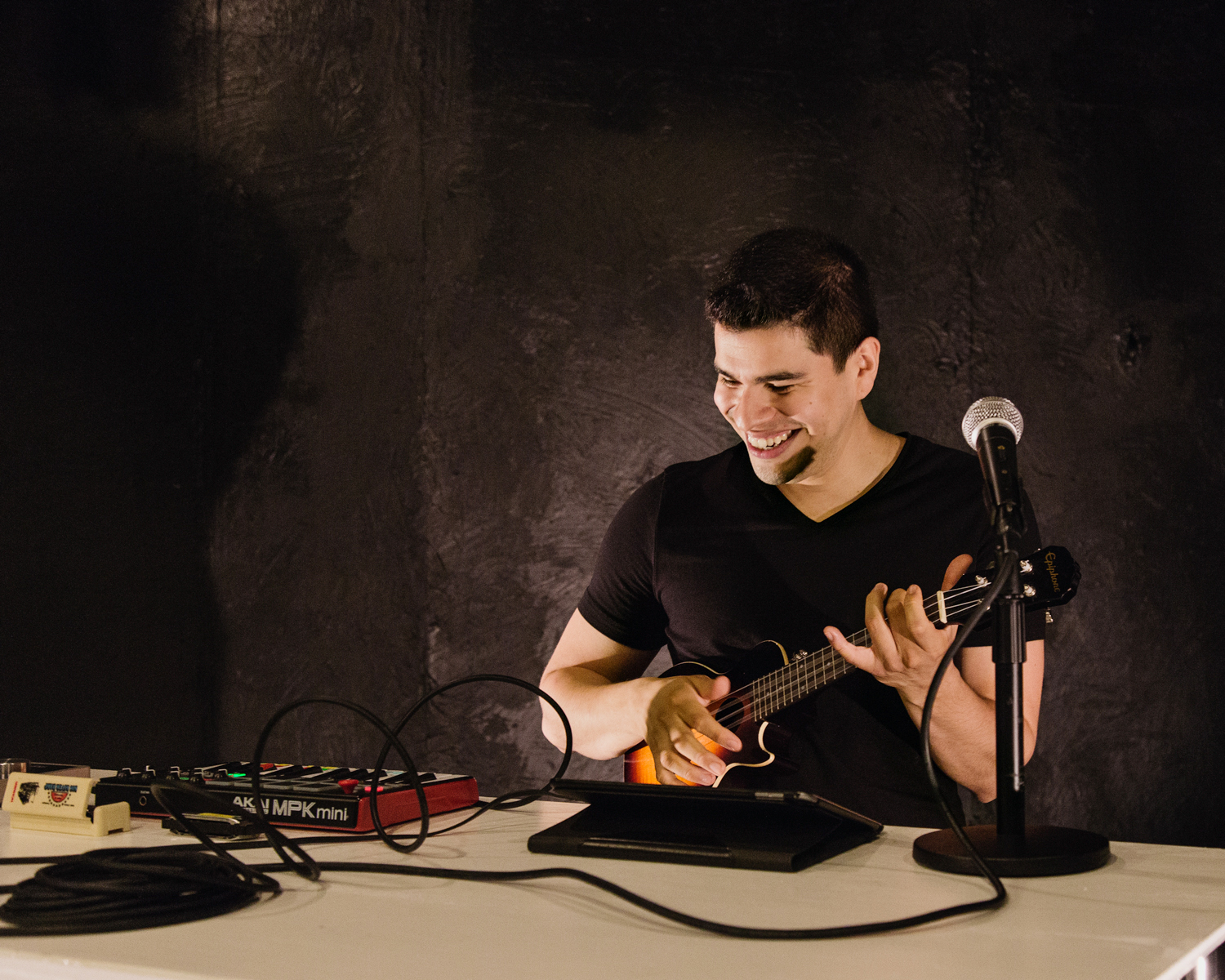
We asked Brian Quijada to tell us about the technology he uses during his one man show, Where Did We Sit On The Bus?, now playing at Ensemble Studio Theatre. Read our conversation with Brian here.


Brian Quijada
 

1.   There’s two harmonicas and a MPK mini, which is how I finger drum and how I play piano in the show.
 

2.   This is an electric ukelele. A lot of people are like, “that’s a weird looking small guitar.” It isn’t.
 

3.   I have an iPod touch that works as a remote control to operate my iPad when I’m not near it, via bluetooth.
 

4.   I have eight applications running at once [on my iPad] – everywhere from a voice modulator to the app that programs things, to the actual looping application, called Loopy HD. It is $8 and the most incredible $8 I’ve ever spent in my life.
 

5.   It’s all hooked up into the house through this Apogee Duet. This is the thing that’s kind of like the brain right here. It’s what everything plugs into, including the iPad, which is the other brain that actually controls all the applications running.


Where Did We Sit On The Bus? is now playing at Ensemble Studio Theatre through October 9th. Tickets can be purchased at ensemblestudiotheatre.org.

Posted on

A Conversation with Brian Quijada

Brian Quijada


The Chicago born, New York based writer and performer Brian Quijada is young, witty, energetic, talented and oozing charisma. His technologically ingenious hip-hop, dance and poetry infused one man show Where Did We Sit On The Bus? is currently playing through October 9 at Ensemble Studio Theater. The title of the piece comes from an episode in Brian’s childhood when, during a third grade lesson on the Civil Rights movement and Rosa Parks, Brian – suddenly realizing his people were not represented in this story – raised his hand and asked the titular question. His teacher’s dismissive response prompted a lifelong examination of the role of latinos in the US historical narrative and of his own personal history. I sat down with Brian after a matinée of his show to talk about his upbringing, his creative process, latino identity, the political climate, and the future of diversity and representation in the theatrical world.


Margarita Javier: This is the first time I’ve ever seen a show where they say, “There’s use of Bluetooth technology, turn off your phones or else there’s going to be interference.” Has there been interference at any of the performances?
 

Brian Quijada: Today there was interference.
 

MJ: Do you have to stop the show when that happens?
 

BQ: No. Luckily today it just happened while I was already [onstage], and it just requires me to press a button that reconnects. But we’re prepared; there are a few moments in the show that we are prepared to accommodate when I can’t go back [behind the equipment]. Luckily, though, here the audiences have been pretty good about it. So that’s good.
 

[Editor’s Note: Read about the technology Brian uses here.]
 

MJ: I saw the show, and I was blown away.
 

BQ: Amazing!
 

MJ: It was absolutely fantastic. It’s very close to my heart. I’m from Puerto Rico, and I brought my friend from Puerto Rico, and we were talking about how much we identified with it and how wonderful it is. And after the show she was texting her husband, “You have to see the show. Tines que venir a verlo.” So I just wanted to let you know how much I loved it and can’t wait to talk about it.
 

BQ: Oh my God, thank you.
 

MJ: She actually wanted me to ask you: When you’re recording with the Looper, do you ever save those recordings or listen to them after the show, or do you discard them?
 

BQ: I discard them. Well, the play actually started with improvisational looping, à la Reggie Watts. Reggie Watts is one of my favorite loopers. He just totally improvises everything, and that’s how I started developing the show – through improvisational loops. And the ones that I really liked I would save. But the looping that’s in the show is kind of now set. Sometimes I don’t have perfect pitch, so it’s sometimes a little different, different ranges of my voice, but it’s the same construct. But improvising the loop is how I first developed the show.
 

MJ: Can you talk a little more about the development of the show? Where did the idea come from? How has it grown from when it started to what it is now?
 

BQ: I was at the Denver Center and I was working in a different show, and I was looping. I’m in a band. We’re not really a real band, we go to theater conferences and perform there [laughs]. My friend and playwright Idris Goodwin is the rapper; I’m the looper. Chay Yew, who directed the piece, saw us perform and afterwards came up to me. He’s the artistic director of Victory Gardens in Chicago, and when I used to live in Chicago, I auditioned for him. And he says, “Do you ever write plays?” And I’m like, “No, not really. I write poems.” I felt stupid [laughs]. Very dumb. And he said, “Well, if you ever write anything about Chicago, let us know.” And so a few months later I wrote this piece and then I submitted it to terraNOVA Collectives soloNOVA. And they accepted it, and then I was like, “Hey Chay, by the way, you told me to write a play. I mean, you didn’t tell me to write a play but you were like, hey!” And I sent it to them and they liked it, and now I’m doing it over there. And then it went to Ignition Festival with Chay; we worked on it together. It went to the Millennium Stage at The Kennedy Center. I kind of developed it at these theater conferences. Anytime I had a little support…people wanting me to workshop it around the country. And then it premiered in Chicago earlier this year.
 

MJ: And now you’re here.
 

BQ: And now I’m here!
 

160922_emma-pratte-for-sc_brian-quijada_01
 

MJ: I thought the direction and the overall aesthetics were really impressive. I loved the use of projections. How much of that is coming from you, and how much is it a collaboration with the director and the designers?
 

BQ: Very little was coming from me. I didn’t tell them to do anything. They read the script and Liviu Pasare – who did the projection design – it was his interpretation. He’d worked a lot with Chay. I think the only thing that I was fascinated with was the Michael Jackson blocks. Because it’s not like the choreography is the same. It’s an Xbox Kinect Sensor that reads where I’m walking on the stage, which is amazing. The design is great. The lighting designer is just mind blowingly good. All those aesthetics and the blocking and all, I really had very little to do with it [laughs]. But I’m happy that I was in great hands.
 

MJ: You’re doing pretty much everything onstage. You’re acting, you’re singing, you’re playing instruments, you’re dancing, you’re rapping. What do you do to prepare when you’re backstage?
 

BQ: I dance. There’s a little bit of dancing. I like to go over the text. Because I also wrote it in a certain mindset. Sometimes I’m saying a line and I go over line notes and I’m like, “Oh. The way that I wrote it is better than the way that the actor in me is saying it.” So I go over super simple but really huge notes. It’s a solo show; it’s not like a play where you’re talking to a character. It’s talking to the audience. It changes based on who’s in the audience and it changes every night. The big note that I keep repeating to myself over and over backstage is to talk to the audience and not at them. And that’s also something that I work on throughout the run. I don’t want it to become stale and the same. So reminding myself to be honest and talk to the people is important to me.
 

MJ: The show is obviously very autobiographical. Can you talk about your upbringing?
 

BQ: My parents are from El Salvador. They came here in the 70s. They already had two children, Fernando and Roberto. And then they had me and my brother Marvin, and they gave us those names to give us easier lives, I guess, in the States. And we first moved to a Trailer Park, cause that’s what my parents could afford. And then my dad started making a little more money and we moved to a ‘burb that’s surrounded by a very affluent – I would say 70% Jewish town. You can’t leave my town, where I grew up, without going into their town. I remember being the first latinos on our block, which was all Italian. And now when I go back and visit my parents it’s a latino street, which is great. It’s blasting a lot of music [laughs]. Going to middle school and high school was a weird culture shock. I was just like, “What is this? What is Jewish?” And then going to people’s houses and being like, “Your house is enormous. What do your parents do?” And then I started becoming really great friends with my new Jewish friends and then you kind of have an identity crisis. But anyway, this “Where did we sit on the bus?” moment that the play is named after, to me was the supernova. Asking my third grade teacher that question and her responding, “They weren’t around,” it flipped my mind. It was the first time that I was just like, “Where the hell were we in history?” There’s a whole other thing that I feel about the way that history is taught in the public school system. That’s, honestly, I think a totally separate show that needs to be tackled. It’s something else. But yeah, my upbringing was moving around and new cultures, and a cultural explosion for me throughout my life.
 

MJ: Since you mentioned that comment the teacher made in the classroom, I had a question about that, because it really stuck with me, when she said, “They weren’t around.” And I was like, “What do you mean we weren’t around? We’ve been around since the 17th century! Look at the names of some of the towns in this country, Los Angeles, Santa Fe, those are Spanish names!”
 

BQ: [Laughs] Yeah, yeah, totally!
 

MJ: So it’s blatantly false and it speaks to what you were talking about – the gaps in education in this country. And I feel like maybe it’s the role of the artist to fill in those gaps, to tell the stories of the people that have been marginalized.
 

BQ: Yeah, totally!
 

MJ: Do you think that’s one of the roles of art? Is it your intent to maybe educate people about these gaps in narrative history?
 

BQ: I think the beginning wasn’t that. I didn’t feel that a story like ours was being told often enough, so I was just like, “Well, I’m gonna tell it!” Cause who is gonna write a show for me where I get to play a bunch of instruments and beatbox, sing, and dance? Nobody. So I’m gonna do it. And then later as I started working on it, people were like, “This is my story” or “This touched me because I love Michael Jackson” or “This touched me because my parents are Polish” and “Your parents are my parents” or “This touched me because I’m an artist.” And then I felt an obligation to write in more things that – it’s still honest, but it’s a little more opinionated where I’m like, “Ok, we need to talk about the political climate right now.” But I don’t think it started that way. It was just me trying to tell an infrequently told story.
 

MJ: Speaking about politics, there’s a moment in the show when you make a very impassioned speech about immigration. You keep repeating, “Let them in,” which to me felt like an act of rebellious compassion. Just let them in. Which is something that for some of us who are immigrants or have parents who are immigrants rings true. Yet it’s still one of the most hotly debated issues in this country. So what would you say to detractors, or people who say things like, “Well, why can’t they just immigrate legally”?
 

BQ: Listen, the thing is that I don’t think that this show, nor I have an answer for the immigration policies. I think it’s a little too complex to really go into it. It’s already messed up. I don’t have the answer, but there needs to be a little more compassion, I think. And that’s why I feel that it’s important to have people who don’t believe, or are not with my certain opinions, that they should come. Even though it scares me very much to have somebody who doesn’t agree with me watch this show, I think it’s important. Because I think that what’s missing is being able to hear the story from a person who you see as a human first and not as a stereotype. The biggest thing that warms my heart is if people who watch the show would leave being like “Oh I see things just a slightly bit different than I used to.” In a good way. You know? That’s the best.
 

160922_emma-pratte-for-sc_brian-quijada_03
 

MJ: Speaking about immigration, I did notice that there was a line in the show where you said, “All latinos are rapists,” which I felt was a reference to Donald Trump’s comments during this election cycle.
 

BQ: Absolutely.
 

MJ: Are you influenced by current events and then you write it into the show, or do you feel it’s pretty much set?
 

BQ: That Donald Trump line, I couldn’t help it, it’s unavoidable. It’s so big, it’s so scary right now, and putting that into the show felt like a no brainer. The thing is, a lot of people are like, “Oh, this show is so relevant right now!” And it’s relevant always, I think. It’s just that right now it’s hot because somebody just said something really racist. But I think that it’s relevant always; it’s just that we forget about it a little bit. We put it in the back of our heads and we put it on the back burner. But really, it’s still burning, it’s still right there, it’s just that now we’re talking about it again. You know? That’s why when Colin Kaepernick sits down or he doesn’t stand, all of a sudden it’s fired up again. But no, it’s still always been there. It’s just fresh.
 

MJ: I feel like latino identity is an important part of the show. Being latina myself, every country in Latin America is so different and so distinct.
 

BQ: Totally.
 

MJ: We each have our own culture, and Mexico is different from El Salvador and from Puerto Rico and from Cuba. And yet in this country, we always do talk about a unified latino identity. Why do you feel that it’s important to talk about latinos as a unified whole?
 

BQ: I think because as a country the United States unifies us so much that we stick together. So that when Donald Trump says something about Mexico, we’re all affected. Even though, yes, the small town where I grew up is now all Mexican, and I’m not Mexican, what can we do but unify, really? Somebody told me recently that we like to stick to our traditions, which is true. But there is this other half of our brains, I think, that is trying really hard to assimilate, and fit into the norm that is American culture and society. But it’s hard to let go of the traditions, nor do I want to lose those traditions. That’s in the show, where I say, “Am I going to speak Spanish and you’ll speak German?” to my fiancée, who’s Austrian and Swiss. I have something deep within me that wants to pass on what was passed on to me because I find so much comfort in my racial and cultural identity.
 

MJ: I feel the same way. There’s been some talk recently about there being greater diversity in the theater world than ever before, especially when you look at the success of a show like Hamilton.
 

BQ: No doubt!
 

MJ: But do you hope, like I do, that it’s a trend that’s going to continue, or is it a fluke?
 

BQ: Oh man, I don’t know! I think I’m always going to lean on the hopeful side of “Yeah! This is the beginning of something great!” But I really don’t know. What’s cool is that there is, like Ensemble Studio Theater, a great place that said, “Yeah, let’s do this show! We want to include the untold stories.” And that’s what’s great; it’s going from the smaller theaters to the Broadway scale theaters, which are finally being like, “Let’s maybe listen to something else. Let’s try to take in an American story in a completely new way, in a new light.” I hope so. Hamilton is pretty remarkable in the way that it kind of just opened up a cast of, what, 30, 40 people of color to show up there and play these familiar faces that have been on our money. It’s kind of beautiful; it’s a beautiful thing.
 

MJ: Yeah, and it’s putting people of color in the audience as well.
 

BQ: Absolutely.
 

MJ: If we want more diversity onstage, we have to have more diversity in the audience, because that’s where artists are born. You know, you were watching Michael Jackson on MTV and wanted to do that.
 

BQ: YEAH!
 

160922_emma-pratte-for-sc_brian-quijada_02
 

MJ: Is that your goal? Cause I’ve noticed the audience is pretty diverse.
 

BQ: That’s what we’re trying to do. We’re trying to reach out to a youthful, people of color audience. They’re making an effort to reach out to the latino community, to the young urban spoken word kind of audiences. Because that’s what it is, really, it’s a whole bunch of spoken word poetry and rap put onstage. And it’s real. It’s such a part of me and my brother Marvin’s experience growing up in Chicago land. It was such a no-brainer that that’s how we would begin to express ourselves. We listened to hip-hop and that became the way of storytelling. “The art of storytelling,” like the rapper Slick Rick. I’m happy that they’re making an effort to reach out to a new audience that doesn’t usually sit in those seats.
 

MJ: I noticed there were people in the audience who were older and white, and they were like, “Oh the show is fantastic!”
 

BQ: [Laughs] Yeah, right!
 

MJ: So it’s also great to appeal to that audience as well.
 

BQ: Yeah! I think that a show like this shouldn’t feel like anybody’s excluded. It shouldn’t feel like that. To me this show is a celebration of the path that this country is going in. Hopefully. That maybe there’s a little bit of humanity and compassion in all of us, and if we unite we’ll be able to come out all right. This is the country that experiments, so let’s try to go into this experimentation with good vibes and good intentions. And that’s something that – it’s easy to be like, “Nah! Nah! I’m not down with that!” You know what I mean? But you have to embrace the fact that we’re all in this big bus together trying to get somewhere.
 

MJ: You talk a lot about your relationship with your parents in the show, especially your father, which I thought was very relatable to a lot or artists. That idea of maybe your parents don’t fully approve of your career choice. Have your parents seen the show, and what did they think?
 

BQ: They have. They saw the show. They saw it front row opening night in Chicago. And before that, they saw it at Ignition Festival, which is Victory Garden’s new play festival at Chay Yew’s theater. I’ll sum it up with this one story where my dad had just gotten out of the show. Ignition Festival’s free for all, which is amazing. And a guy came up to my dad and he’s just like, “Hey, are you Brian’s father?” And he’s just like, “Yeah, yeah. I’m his dad.” And he’s just like, “Oh my God, I just saw a show at the Goodman, I paid $65” – No shots on Goodman, no shots on Goodman. Love the Goodman! – But this guy was just like, “I paid $65 for a show at the Goodman, and that shit sucked! I paid zero dollars for this show, and this show was amazing!” And my dad said, “Thank you, thank you.” And then he came up to me and he was just like, “Brian, you could really make some money doing this show.” [Laughs] And I’m like, “Of course that’s what you’re gonna say, dad! It’s so typical!” And it made sense. My relationship with my dad now that he’s kind of given me the go-ahead with doing art – and especially now that I’m getting married and we’re talking about having kids – is that I finally, now, after so many years of him being like, “Don’t do it, don’t do it, please!” I get it. Because I’m about to get married, maybe have kids in a few years and I get it. Of course! He doesn’t want his kids to die. He doesn’t want his children to starve.
 

MJ: Right, it’s coming from a good place.
 

BQ: It’s coming from a great place, and before I was just like, “He just wants to cramp my style! He just wants to stunt me!” And I didn’t get it. And I totally understand now. And so we have a much better relationship. He’s still on the whole, “You have no idea how much I did to make sure that we could afford a house, a car – that you could afford to go to college.” But I think he’s finally seeing that the American Dream is not a one-way street.
 

MJ: You have a strong theatrical background, so I was wondering: What is your dream role?
 

BQ: Oh man! The very first play that I ever saw was Cabaret. I saw it in Chicago, and when I saw it I went home and just listened to the soundtrack. Alan Cumming. The original, well, not the original, and not the recent one, but the original revival. And for my birthday a couple of years ago, I went to go see it again, and he was in it, and it was the most amazing thing. I was crying the entire time. Just dying of tears. Because it brought me back. Of course, I don’t know that I could ever do it. It would be a very crazy world where they’d cast a Latin dude to play a German guy or a French guy.
 

MJ: But Raúl Esparza played the Emcee!
 

BQ: Really?
 

MJ: Yeah, you could totally do it!
 

BQ: It’s gonna happen! You’ve given me so much faith! It’s gonna happen! Yeah, I would love to play that part. That part is amazing. And that play is just so political as well, and so great and beautiful, and dark, and lovely and funny. Yeah, Cabaret. It’s the first play; you have such a deep connection to the first play you ever see.
 

MJ: I wonder if you wanted to talk about your new project, Kid Prince and Pablo.
 

BQ: Yes, Kid Prince and Pablo was at Ars Nova. I was asked to write it for Texas Tech University, for their WildWind Performance Lab, where they bring in artists who are doing the work and established and write a new play. And it serves as new play development and a way for the theater students to have conversations with and collaborate with professional artists. So the new play takes place in the future of an alternate universe of America, where when America seceded from England, they sat their own monarch. So it’s still a king in the United States but it’s in the future so at this point, everybody’s mixed race, everybody is brown, for the most part, except the Royal family, who stayed white. And it’s set in this hip-hop world where the Prince is this aspiring rapper, and this poor pauper, this Mexican boy, whose name is Pablo, is a bucket drummer. It’s based off Mark Twain’s The Prince and the Pauper story. So when they switch spots, Pablo, who barely speaks a lick of English, has technology, futuristic, beautiful hip-hop technology to be able to make beats and become a producer. And the Prince is kind of like, “What is this, what are these streets? What are these colored people?” Blah blah. And through his hardships is able to actually rap about something as opposed to rap about, you know, what I like to compare it to is being in the club, popping bottles, a life of luxury. And then finally he experiences something real to rap about. And it’s the same thing. Trading places, etc. I’m working on it with my brother, his name is Marvin. He’s an actor, too, so you can imagine what my parents were like.
 

MJ: Oh your parents must love that!
 

BQ: [Laughs] My parents were like, “We had two kids in the States for them to become artists.” They’re dealing with it. Yeah, no he’s done well. He’s done Chicago PD, and Chicago Fire. He still lives in Chicago, he’s doing well. He’s great. We’ve never really worked on a play together, so, and we’re both actors and I’m writing plays now, after this one.
 

160922_emma-pratte-for-sc_brian-quijada_05
 

MJ: You should absolutely keep writing.
 

BQ: Yeah, I’m excited about it.
 

MJ: So what are your hopes for this show?
 

BQ: I didn’t know that people would be like, “This is an important story.” Because, again, I started just telling it because I feel like I needed to tell it for myself, for my own health. But now that I’m seeing people respond to it and I’m going to some colleges to talk about it and teach workshops, I’m realizing that it’s a story that I think other people also need. So I’m hoping that whatever it means to have the most amount of people watch it and see it, that’s what I want. Isn’t that the point of all art? To have as many people watch it? And I know that this is a play that will not, on a totally broad scale get everybody.
 

MJ: It has a very wide appeal, though.
 

BQ: Yeah, yeah, but still, there are some people who are just like, “Nah!” But my hope is that people at least take something away from it. Whether it be a red state or a blue state, or whether it be in a big city like New York, or we’re going to Boise in January, so we’ll see how it goes there. I’m very excited. My friends run the company over there, Boise Contemporary. So we’ll see. You cross your fingers that people like it and continue to talk about it.
 

MJ: Yes, I’m sure they will, because it’s fantastic.
 

BQ: Thanks.
 

MJ: Finally, what would you say to young artists, especially young latinos, who are now getting started? Any words or wisdom or advice?
 

BQ: If there’s anything that I’ve learned out of doing all this is that every story is worth telling. Every story is worth telling. I didn’t think that I had it within me to do this, until somebody was like, “You should write a play!” And I’m like, “Oh ok! I’ll write what I know.” I didn’t know that I had the capacity to write something where designers would sit at home and conceive of design, whether it be light or set or projections. That’s insane! And it wouldn’t have happened if somebody hadn’t just said, “Do it. Just go home and write it.” I guess that’s the advice. There’s no one stopping you other than yourself.


Brian Quijada is a Chicago-born, New York-based actor, musician, and playwright. As an actor, Brian has helped develop new work across the country. New York collaborations include: Ensemble Studio Theatre, Repertorio Español, The Lark, The Brick, Page 73, Atlantic Theatre Company, Up Theatre, Astoria Performing Arts Center, Primary Stages, TerraNOVA Collective, LAByrinth, New Georges, The Public, and Playwright’s Realm. Regional: How We Got On(Actor’s Theater of Louisville’s Humana Festival), Beat Generation by Jack Keroac (Merrimack Rep), The Solid Sand Below by Martin Zimmerman (The Eugene O’Neill’s National Playwright’s Conference), No More Sad Things by Hansol Jung (Boise Contemporary Theatre), andInformed Consent by Deborah Laufer (The Baltic Playwright’s Conference in Estonia). Most recently, Brian was seen performing in his newest play development, Kid Prince and Pablo (a Digital Age, Hip Hop, American retelling of Mark Twain’s The Prince and The Pauper) at Ars Nova’s Ant Fest.

Posted on

A Conversation with Shaina Taub

Shaina Taub


We sat with Shaina Taub in the quiet, ghost-lit Anspacher Theater of the Public, on break from her rehearsal for Twelfth Night, on another of these swelteringly hot Manhattan days. Having for years known her genius through her music, it was no surprise that her head was full of beautiful, revolutionary things. As a performer, composer, and maker of things, she lends herself generously to the conversation of how to love each other better, how to leave this planet better than we found it.
 

On the record of the world, Shaina is moving the needle toward empathy in her words and trade and deeds, reminding us that we all have much left to learn and how better to do it than together.


Corey Ruzicano: I said this to you the last time we chatted, but I haven’t stopped thinking about an idea you said you’d borrowed from the Public Works program, that singing together is a proposal of the best humankind could be.
 

Shaina Taub: Yeah, that’s part of the Public Works language, that it’s a radical proposal to humanity through unified singing.
 

CR: Have you felt that reflected in your work here with Public Works? Has that sentiment deepened for you?
 

ST: Yeah, I think about it all the time. In the times we’re living in, just to come together in a room and do something joyful is kind of a radical act. When I think about what it took for all these people to be in a room, all hundred people, everyone in the ensemble, from all different walks of life, all different economic, social, racial backgrounds – just what it took for every person to arrive in that room. Including the team, that’s not an us and them situation, it’s such a miracle for all of us to be making art together. It’s important to remember how much that took and how easy it feels in a way, and how natural it feels. And there’s a quote right now that’s outside the Public on all the window-casings by Nelson Mandela – I’ll probably butcher it so you should look it up – but it’s something like, no one is born hating, people learn to hate so they can also learn to love and loving is more natural.
 
And especially the kids. We have maybe ten or twelve people all under the age of thirteen from, again, all different backgrounds, and just watching them teach one another dance steps – it always reminds me of that final line in Ragtime. Are you a Ragtime person?
 

Stage & Candor_Shaina Taub_Quotings-01
 

CR: Clearly not enough of one!
 

ST: I’m a super fan. It’s Tateh saying, I have an idea for a movie, a gang, a bunch of kids getting into trouble, getting out of trouble, black, white, Christian, Jew, gay, straight – he doesn’t say “gay” and “straight” in Ragtime, but – all the time, despite their differences, seeing these kids together, you see that it’s true: we learn these biases. We learn to hate and just being around young people has changed the way I look at the city. And what I’ve realized these past couple weeks is that I know that I’m inside it right now and the processing is going to happen later, in these next couple months, so I don’t even know how to articulate how I feel about it because it’s impacting me so immediately but it’s already changing how I walk down the streets of New York. Every block, everyone I see, I just think, you look like you could be in our show. Every person has that story to tell.
 

CR: That’s really beautiful; I don’t think you have to be any more articulate than that.
 

ST: Yeah, I’m just so grateful to be involved in this kind of work and it’s made me realize, I can never not do this kind of work now. It’s not that I don’t want to do all kinds of work but it’s one of those moments where there’s no going back.
 

CR: You can’t unsee it.
 

ST: Exactly.
 

Shaina Taub
 

CR: A word that I really love and am often sensitive to its overuse because it is one of these nonprofit buzzwords, but I would love to hear what the word community means to you. How have you defined your artistic community?
 

ST: It’s interesting. I think my answer before these couple of weeks would have been different. In my own artistic community, it’s the idea of truly supporting each other and truly being on the same team and having this mutual inspiration ecosystem of talent and ideas where we’re all feeding off each other and not feeding into the myth of the individual genius alone in their room, that we all make each other better. Actually embracing that, actually letting yourself learn from each other. I feel more a part of the city this past month than I have in a decade of living here.
 

CR: That’s amazing.
 

ST: And part of it is that it makes a difference to actually know people. It’s one thing to intellectually say I’m an ally to lots of people different from me, and yes, of course I believe in equality and stand against oppression and institutional racism, but it’s another thing to really know all the people with the differences. I’ve realized to know these people from all the different backgrounds, that I might not have crossed paths with otherwise, when I think of something happening to any of them… just thinking about it, I get emotional – if anything were to happen to any of us, especially at the hands of something to do with our oppressive system, it kills me. It now kills me in a different way. Knowing people matters. It’s one thing to have your politics and be on the right side of history – and I’m not trying to put everything in binary, but I do think if you stand for equality and freedom, that’s the right side – but it’s important to build those real relationships; it’s a different kind of engagement.
 

CR: Yeah, I think that is absolutely true. And it is a special thing; it’s not always obviously accessible all the time.
 

ST: And you do have to seek it out. You should…and I don’t want to preach, I want to engage actively with as many people who are different from me as possible.
 

CR: It enlarges your life.
 

ST: And it makes you realize we’re not different. The more different a person you meet, the more you realize we’re not so different. It’s the thread I’m trying to pull out of Twelfth Night, because when I was assigned it, I had to look at, what about this story would this community possibly care about? What would be the way in? I was reading the various literature that the Public Works has put together over the past couple of years where they’ve had some amazing anthropologists release reports and study how this work affects the community. It’s so hard to convince people and institutions that the arts matter, because their impact is not as tangible as other things. It’s qualitative not quantitative, so they’re trying to really study to gather data to show the various places funding comes from, that this stuff does matter. One of the big takeaways was the idea of empathy, and that this program and this work and community arts engagement helps you empathize in this deeper way I was talking about before. And then I was like oh, Twelfth Night is all about empathy; it’s all about walking a mile in another person’s shoes. It’s about Viola taking on her brother’s identity, taking on a male identity and pretending to be something she’s not. By taking on that other person, she learns more about herself and learns more about others. That became my way in.
 

CR: That’s a really beautiful and fascinating way of looking at it – I don’t know that I’ve ever thought about it like that, and it makes perfect sense.
 

ST: Yeah, that was a challenge with this. Oskar Eustis is a great man for so many reasons, but in the first draft I had written one finale song and it was kind of about wearing your heart on your sleeve, kind of all these platitudes and plays on words about how it’s not about what you wear, it’s about who you are…it didn’t quite land. It didn’t quite nail it. And he said, really try and write a song that sums up why we were here this evening. What’s the point?
 

CR: Ooh that’s a tall order.
 

ST: That’s when I really went back to the drawing board and had to think about why is she here, why does New York care about Twelfth Night, what does it have to say to us in 2016. From that came our finale song that’s called “Eyes of Another” and it’s about looking through the eyes of other people.
 

CR: I wonder if you could talk about some of those relationships that have taken shape in, and helped to shape, this process?
 

ST: I think it’s just seeing people, beyond all the differences I was talking about, the generational differences, to be seeing the nine- and ten-year-old from completely different walks of life teaching each other dance steps, remembering that every person was that age. Looking at the senior citizens and knowing they’ve gone through so much. One of the organizations we work with is called Military Resilience Project, so it’s a lot of people who fought in the armed services, and we work with the Fortune Society, which provides support for reentry for people who have been recently incarcerated, people who have served time. What it’s taken for all these people to go through all that and show up in a room and still say yes to life, and say yes to joy, has been inspiring and perspective-putting for me.
 

CR: Yeah, absolutely, in both the practice of art-making and for this specific story, it feels like it’s really all related.
 

ST: Right, and something that is so important about Public Works that I think is really central is the value of excellence. This isn’t a pageant where we’re patting ourselves on the back and, you know, gave it a college try, and the community did the best they could. This production, every element of it, is at the highest level. We all bring our best selves to it, and what’s so beautiful about it, when I’ve seen the Public Works shows in the past, is we have five equity actors and you don’t always know who they are. You can’t spot them – I mean you might know who one is, like there’s Nikki JamesBook of Mormon, but you don’t totally know. When I saw The Tempest, I wish we could do an audience exit poll: which do you think the five equity actors were? You don’t know. There’s so much talent in the community, and that’s something else I love: there is talent and genius everywhere. It’s kind of an accident which ones end up making it to the pedestal, but it’s just incredible creative, artistic virtuosity. And I think one incredibly powerful thing is, with some of the young people in our cast, they’re incredibly gifted singers, performers, and I’ve gotten the sense that, when I tell them that, that potentially they haven’t heard it before, and how powerful that is. What an honor for me to get to get to encourage them – because it’s clear to me how talented they are, so if my believing in them can help facilitate them having the courage to keep pursuing it, that would be such a great reward.
 

CR: And I think for young people to be treated with the same kind of creative responsibility as the adults in the room is such a powerful tool toward agency-building.
 

ST: Yeah, and that is a talent-continuum. Talent is not something that people have or don’t have. Theater and art and music – it’s not something that divides between people who do it and people who don’t; it’s something we all own and can take part in.
 

Stage&Candor_Shaina Taub_Emma Pratte_02
 

CR: I read your tedX talk and I love what you’ve said about listening, and I would love to hear more about that – how has your work, with Public Works and beyond, informed the way you listen and how has listening informed the way you work?
 

ST: We’re all standing on the shoulders of giants, no one is making art alone, no one is not a combination of their influences. And how awesome? I think this is a Billy Joel quote, that you can spend all your time taking in art or music and you can never be done – even if art stopped now, you would never get through it all. And that’s such a gift. For me, whenever I’m stuck on a song or a character or lyrics, there’s just a trove and there’s so much to borrow from. Being in conversation with it is not stealing from it or plagiarizing – but to get to be in conversation with all that came before me and all the people that are working around me is one of the most exciting parts of it. I’m constantly looking to other musicals, other artists, to see how they handled a specific character or moment and then try and put my own spin on it.
 

CR: Yeah, and someone said to me once that great leadership is being able to ask the question and actually hear the answer, and I think that listening is actually a much more radical idea than we give it credit sometimes.
 

ST: Yeah, and accepting that…I hope in forty years, I’m writing my best shit. I’m aware that there’s so much I don’t know yet. I don’t want to be the best writer I can be already, I want to get there, it’s like that quote, I think it’s Cheryl Strayed, that humility is the first byproduct of self-knowledge. I’m aware that I have a lot to learn. So maybe up till now I’ve written in the hundred-ish range of songs I’ve written. I hope that in forty years there are still three of those songs that I’m standing by or still playing life, that would be ideal.
 

Stage & Candor_Shaina Taub_Quotings-04
 

CR: Yeah, and it just takes all of that time, to become. Becoming is hard.
 

ST: Yes, and being okay with throwing things away. That’s been a big lesson for me and Jeanine Tesori has been a big mentor for me and she’s always told me, it’s okay to productively fail. I’ve had various projects or collaborations that haven’t panned out necessarily but what I’ve learned from them is so worth it. I don’t for a second think of it as lost work.
 

CR: We do talk about making mistakes a lot in this field, that pro-failing rhetoric feels really common, but I was talking to a playwright friend the other day who was saying, yeah, yeah everyone says it’s great to fail, it’s so important to fail, but they don’t remind you how bad it sucks! How do you make it not suck? But maybe that’s part of it, maybe you can’t dilute that part without also losing what you learn from it? I don’t know.
 

ST: Right, me either.
 

CR: But throwing things away or moving on from them isn’t a bad thing.
 

ST: Oh yeah, I released an album six months ago and for every song on it there are four or five songs that didn’t make it in – the songs on the album are the culmination of all the songs that have been able to stick around the last couple of years.
 

CR: Is there something about those songs that you can recognize as similar? Can you trace why they’ve all remained?
 

ST: The common denominator is that they all withstood two years of being played live. It gets fed back to you. it’s the reaction they get over time. If a song lasts for two years in concert and I’m still playing it, it still feels like it’s getting an honest response and my band is still excited about playing it, after two years – and this is going to sound too lofty for what I mean – but after that, it enters my canon. It reveals itself.
 

CR: Something that I find so exciting about your work is that you are an interdisciplinary artist and I wonder what that ability to be in different roles has informed you about your practice of each one?
 

ST: I have a thing that I think helps feed doing the multiple things which is that the grass is always a little greener. When I’m only acting I think, oh man I have all these creative opinions about the show, I wish I had a hand in it, but then when I’m writing, I think aw man I wish I could just be an actor and go home at six o’clock and be done…and every combination of it there are different benefits. It all informs each other.
 

CR: That’s awesome. I think it is becoming a much more common story that people do more than one thing, and that’s exciting at least to me.
 

ST: Yeah and I think part of it, and this is sort of a truism but I believe it – that how you define yourself and treat yourself is how you teach everyone else how to treat you. I think for a while I was skating back and forth saying, oh I’m a writer, I’m a performer, I have to choose. I had different bios, I’d use a different one if I was trying to pursue this or that and I felt that pressure to choose, or that split, but then a couple of years ago I was like, I do all these things. I introduce myself that way, I present myself that way all the time, and I don’t try to backtrack or apologize about it and I do a lot of it. From there, it started to roll back to me in that those were the kind of opportunities I got, those were the calls I got, to come do Old Hats, and write songs and perform and improv little songs and dances and arrange…the jobs I’ve been lucky enough to have in these last few years have started to reflect that.
 

CR: And something else that I really value in your work is that you use your art really explicitly to bring awareness to and ask for change around certain things, and I wanted to know if you had any thoughts about how artists can be part of the conversation around social and policy change?
 

ST: Yeah, well…now I’m always quoting other people, but I love the Nina Simone quote of how can you be an artist and not reflect the times? I don’t think there’s political or social art and then not, it’s all one big conversation with the world around me. People look for stories, they love to watch their stories on TV, that’s the thing that people respond to, they don’t want to listen to data numbers and facts and polls and pundits and twenty-four-hour news cycle, people want stories. That’s what they listen to. For me the kind of stories that we’re putting out there through music, through theater, it’s not that it necessarily gets legislation passed, but it informs a conversation, informs the communal hive-mind about what we care about.
 

Stage & Candor_Shaina Taub_Quotings-02
 

CR: Yeah, absolutely. I’m always really excited to hear about how someone who has a totally different skillset to mine, talk about work and how that informs their view of the world. Do you see any lessons that songwriting has taught you when you look at the rest of your life?
 

ST: Well, I think why I’m drawn to writing songs is the way they’re always constantly being re-taken on. If you write a song, it’s just not definitive – other people cover it. One of the most rewarding things to me has been other people singing my music, and I think that’s one thing that draws me to theater, that I like to perform myself too, but to me that’s the conversation, that’s the generational lineage of how many people have sung “Hallelujah,” or “Hey Jude,” or “You’ve Got A Friend”? It’s not just something you can take in, you have to wear it, to try it on yourself. It’s not like a painting where it is what it is, no one does a new version of it, or maybe that’s not true, I don’t know enough about the visual art world, but I love that songs are this thing that everyone gets to continually examine.
 

CR: Absolutely. Is there a song that’s taught you a specific lesson – in your writing or someone else’s, in the listening?
 

ST: Yes, oh man. Well for me, I always think of “He Wanted to Say” from Ragtime, which I recently found out that in the libretto is one that they make optional to do, which is crazy because to me, just in thinking about theater songs, in terms of songs that can uniquely use the form of music to tell that moment better than a scene could, I love “He Wanted to Say” because it’s this moment of Mother’s younger brother, going to Coalhouse. And he has all these things inside of him of wanting to join in Coalhouse’s cause, which is black men speaking out against systemic racism, and there’s all this stuff going on because Mother’s younger brother is this wealthy white guy but he really wants to stand with him. So he goes to him and he’s trying to think of how to express that, and he also has technical skills that can help in what Coalhouse is going through, but then Emma Goldman, who’s this other character, comes forward while Mother’s younger brother is saying he wanted to…and she says, he wanted to say…? And she sings this whole song about all the things he wants to say, and then the last line of the song is but all he said was, and he says: I know how to blow things up, because he can help build a bomb. And I just love that song because it’s all the emotions and all the things he has inside, and it works so uniquely and so specifically as a song. I always point to that one.
 

Stage&Candor_Shaina Taub_Emma Pratte_03
 

CR: So I’ve heard a little about what you’re up to next but I would love to hear more about your dream project.
 

ST: Yeah, as soon as we finish Twelfth Night, the project I’m starting – which I’m already in the research phase of – is the women’s suffrage movement. It does feel like a dream project because in a way, like I was saying before in terms of productive failing, I’ve known I wanted to write musicals, but I’ve had kind of a tug-of-war with it because I’m such a musicals person but it links everything we’re talking about because I still have so much to learn. I constantly have songs I want to write, I always have statements I want to make in two-three minutes, and that feels like a well that keeps serving me, but to make an evening length story, to find a thing that I really care enough about…and what Jeanine talks about is, even when you’re going crazy, because musicals make you crazy because they’re so hard, the running engine, the slow hum underneath it all has to be how much you don’t want to die without telling that story. And I feel like I hadn’t quite found that, but getting this history feels like the first time I’ve felt that way.
 

CR: It’s certainly a story I’m still so hungry to hear. That’s really exciting. And it’s so cool getting to see you bringing to light this story about women, when you’ve worked with so many incredible women in this field.
 

ST: Yeah, there are so many freaking awesome female directors. I feel so lucky that I’ve gotten to work with Rachel Chavkin twice and Tina Landau and Lear deBessonet. And those are my favorite directors; it’s not that they’re women – I mean, they’re women and that’s awesome – but even beyond that, they’re my favorite directors. They’re the people I’m most excited about, genitals aside.
 

CR: Totally, and it’s just exciting to have so many different people at the table. Not that enough room has been made at this table we’re all sharing yet, but that it feels like more room is being made.
 

ST: Definitely, and walking into this building always feels like magic because Liz Swados was my mentor in college and now Jeanine is my mentor, and there are no two more badass women than those two. I’m sure the shit they went through as women in the 70s, 80s, 90s, being the only ones, or one of the few in positions of leadership at that time, the way they’ve paved the way…I’ve had my difficult experiences of what it is to be a woman in this field, for sure our work is far from over, but my path has been infinitely easier because of the barriers they knocked down, and before them, the suffragettes, so it feels like, yes, the work is never over, but that’s no excuse not to do it. You have to move your little inch in the line, and sometimes it can feel like, I can work my whole life and only move it a millimeter forward, and why bother? It’s just a millimeter? But we all have to do that, and over time—this is another quote that I’m going to butcher, but, the moral arc of the universe is long but it bends towards justice. You have move your link in the chain forward.
 

Stage & Candor_Shaina Taub_Quotings-05
 

CR: And it takes so much longer than even conceivable. And yes, probably nine times out of ten, the things you do won’t change a thing, but that one time, you have no idea who or how or what things you’re setting in motion, so you have to keep at it.
 

ST: I’m gonna quote again, cause I’m a big dork; I’m gonna be really Jew-y, this is a Talmud quote sort of in the idea of tikkun olam, of social justice, that our duty is to leave the world better than we found it and there’s a quote that you are not obligated to complete the task, nor are you free to abandon it. You’re not gonna finish it, but you have to do your part.
 

Stage & Candor_Shaina Taub_Quotings-03
 

CR: Yeah, and this feels like your music is part of you discovering what work there is to be done and what of it is yours to do. When you have a gift or a tool or a platform, like you do, it feels exciting to be able to use your art to reflect the things that you want to see.
 

ST: Yeah, and – oh man I’m full of quotes – but it’s like the Moral Bucket List, the question should not be what do I want out of life but it should be, how can I use my gifts to meet the deep needs of the world? And that really resonated with me; I have these things that I happen to have skill in, and have worked really hard on, and how can I use that to fill in gaps and fill holes. It’s not just, what do I want out of life – doing that work actually becomes the thing that I want. It’s the humility thing we were talking about earlier; if I can just inspire the fourteen-year-old girls in my cast, [sung:] that would be enough. Had to, I’m sorry, how can you get through a day without quoting Hamilton?
 

Stage & Candor_Shaina Taub_Quotings-06
 

CR: You can’t, it’s not possible. And I think it’s really true, and it feels like for a lot of this work you really have to know who you are and the Public Works program really feels like a channel to be in a space with people who are different from you, and realize how similar everyone really is, like you were saying before. I mean, I’m not in the room where it happens, but it sounds like that’s what it’s like.
 

ST: Yeah, yes, yes it is. It’s such a gift, I’m already feeling how much I’m going to miss them, but when I started to feel sad about it, Laurie Woolery, who’s another amazing woman who works at The Public and Public Works, said, but now you get to watch them grow; it gets to continue on.
 

CR: And that’s amazing, and to know that New York City is full of that, even when it’s hard to see. The storytelling around New York is often so polarized – it’s really nice to hear about something that encompasses all of it.
 

ST: Yeah, I’ve been here eleven years, and maybe I just haven’t been here long enough to be jaded about it, but I love it. I grew up in a very small town in Vermont, and rural Vermont is lovely, but it’s pretty homogenous. My being Jewish was pretty exotic. So to now be constantly immersed in so many different cultures and stories, I don’t think I fully appreciated or knew how to appreciate it before this project. It’s just such an exciting and inspiring place to live. You can’t hide from the world here, for better and for worse.
 

CR: Exactly, and I’ll give you a quote too, that James Baldwin wrote: “the role of the artist is exactly the same as the role of the lover; if I love you I have to make you aware of the things you can’t see.” New York is a really hardcore love, you have to keep being aware.
 

ST: Yeah, and how you act and the energy you put out does matter. We’re not powerless. A thought I had in the wake of one of the unfortunately fill-in-the-blank terrible days we’ve had this year, was that: we’re not powerless, we can’t give into the myth that we’re powerless. We can love each other and put out a loving, joyful energy and that doesn’t count for nothing. It counts for a lot. We can’t let anyone take that away from us.
 

CR: And that telling stories spills out into everything, everything we do is a story and it’s really easy not to take responsibility for the plot. There is deep power in just being aware of what story you’re telling, as a person.
 

ST: I’m trying to pick a show next year; I’m trying to pick a play that responds to what we need, and a thing that keeps coming up, that comes up a lot in Shakespeare and also in our lives and in the lives of a lot of these community members is the idea of second chances. It’s never over, no matter the terrible things you’ve been through, you can start again.
 

Stage&Candor_Shaina Taub_Emma Pratte_04
 

CR: Yeah, and it’s amazing that Shakespeare is one of these things that continues to give and give and give, and lend itself to all times and all people. Were you big into Shakespeare before this project?
 

ST: No. I did a show in middle school and I worked on a production of The Tempest two years ago at A.R.T. but no, I just hadn’t spent a lot of time with it, so I have a newfound appreciation for it. The stories are big, and for a lot of the lives of the people in New York, the lives are lived in these epic proportions, so it really resonates. And you feel it, it’s so exciting to see community members click in. And our director Kwame has a particular gift for finding the ways to connect those dots with people working on Shakespeare, in ways I had never thought about it. He just has a way of making it feel immediate and necessary, like it happened yesterday.
 

CR: That’s beautiful. And language sort of is this amazing human-made gift, and it’s almost like music or a score – that everyone can own in the way you were talking about songs before.
 

ST: Yeah, we’re constantly doing it again and again. For me, the main thing has been figuring out Viola in 2016, and that’s so cool. I hope in another hundred years, someone does another musical adaptation, so these things continually hold the mirror up to ourselves again and again.
 

CR: So what have you learned about Viola today?
 

ST: I feel like a lot of her journey is figuring out that it was inside her all along, that she thought she needed to dress a certain way or act a certain way or take something on in order to be taken seriously in order to succeed, in order to survive, but she had it. And I think for me, working on the show and collaborating, so to speak, with Shakespeare, it’s been a process of, no, it’s in me, and owning yourself and not apologizing for it. You can still have that humility and know how much you have left to learn and still trust yourself without any added accessories. I used to have this thing where I thought, I need to wear pants and suits, like I would never want to dress too girly if I had a fancy meeting, and it’s been a process of taking ownership of however you want to dress and however you want to be. It’s you that matters.


Raised in the green mountains of Vermont, Shaina Taub is a New York-based performer and songwriter.
 

She made her Lincoln Center solo concert debut in their American Songbook series in 2015, and plays regularly in New York with her band. Her sold-out Joe’s Pub concert and debut EP What Otters Do were featured on NPR/WNYC’s Best of the Year listing, and her debut full-length album Visitors was released at the end of 2015.
 

As a songwriter, Shaina won the 2014 Jonathan Larson Grant, and was Ars Nova’s 2012 Composer-in-Residence. Her original soul-folk opera, The Daughters, has been developed by the Yale Institute of Music Theatre, CAP21 Theater Company, and was featured in NYU’s mainstage season. She has created songs for Walt Disney Imagineering, Sesame Street, and recently signed a publishing deal with Ghostlight / Sh-k-Boom Records and Razor & Tie, as the first artist in their new joint venture to represent songwriters that fuse theatrical and pop music. Six-time Tony winner Audra McDonald is currently performing Shaina’s song, The Tale of Bear & Otter, on her world concert tour.
 

Shaina is currently creating a musical adaptation of Shakespeare’s Twelfth Night for the Public Theater with director Kwame Kwei-Armah that will be performed in the summer of 2016 at the Delacorte Theater in Central Park as part of the Public Works initiative. She is also currently writing a new musical about Alice Paul and the last seven years of the American women’s suffrage movement.
 

As a performer, Shaina has traveled the world as a vocalist, actor and musician. She was Karen O’s (of the Yeah Yeah Yeahs) vocal standby and back-up singer in her psycho-opera, Stop the Virgens at St. Ann’s Warehouse and the Sydney Opera House. She earned a Lucille Lortel Award nomination for her portrayal of Princess Mary in the the hit electropop opera, Natasha, Pierre & The Great Comet of 1812, and performed the songs of Tom Waits in the American Repertory Theater’s production of Shakespeare’s The Tempest, for which she also arranged the music. She recently starred in the critically acclaimed west coast premiere of Bill Irwin and David Shiner’s Old Hats, directed by Tina Landau, performing her original songs along with her band. The production will return for an encore run at New York’s Signature Theatre, beginning performances in January 2016.
 

A fellow of the MacDowell Colony, the Yaddo Colony, the Sundance Institute and the Johnny Mercer Songwriter’s Project, winner of the 2013 MAC John Wallowitch Award, a TEDx conference speaker, and a featured artist in the Gc Watches ad campaign, Shaina served on the music theatre faculty at Pace University, and is a University Scholar alumnus of NYU’s Tisch School of the Arts.