Posted on

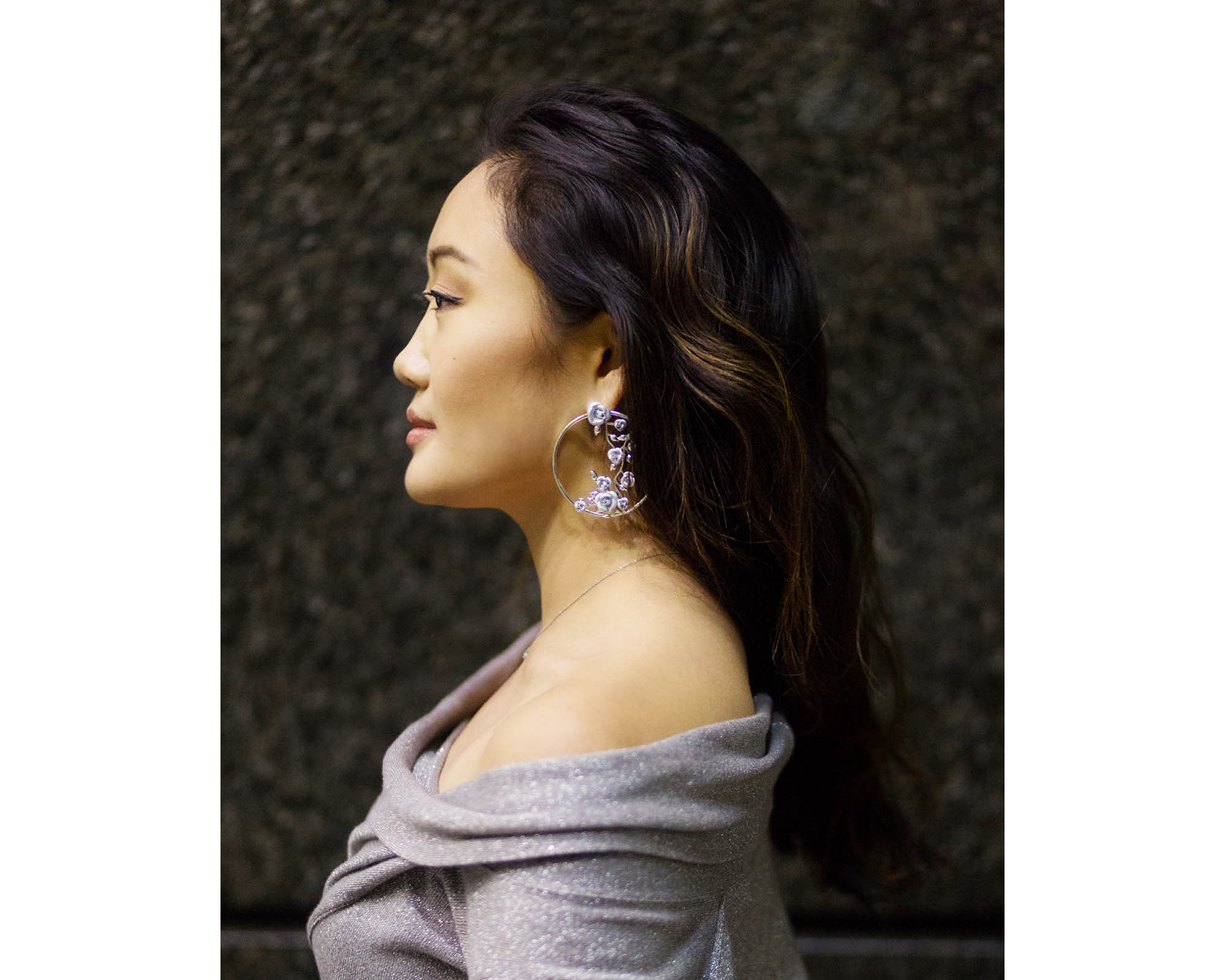
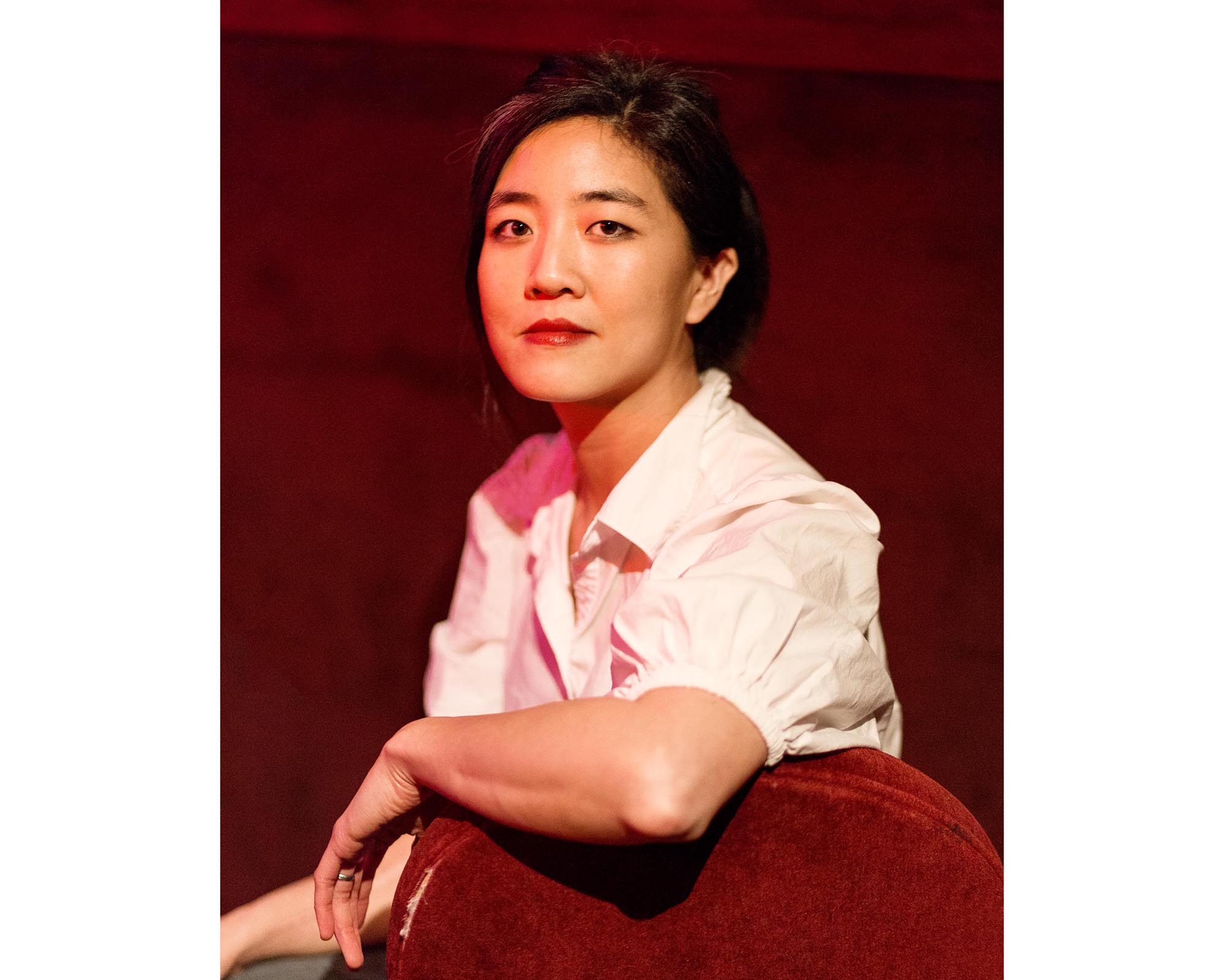
A Conversation with Marina Kondo

Marina Kondo


It’s Monday afternoon, around 1pm and I’ve completely lost my momentum. I’m twenty minutes behind and ten blocks away. The trains are predictably un-predictable and if my internal monologue wasn’t holding for the house, it would say “Cross the damn street already, your interview is waiting for you.” Murakami would call it a day where I haven’t wound my spring. But all is forgiven, because my interview is with Marina Kondo. Have you met her? She’s cool.
 

I first became aware of Ms. Kondo when a press release announced she would be going in to Jason Kim, Helen Park and Max Vernon’s rad, immersive show KPOP. I admit my motives for meeting her were selfish. Having not one but now two pieces that deal with Japan and Japanese culture, it’s always to my benefit to know artists closer to that world than I could ever be. Plus, knowing singer-actors with fluency in both Japanese and English doesn’t hurt either. I send her a quick email, we meet at Hamilton Bakery, and to make a short set-up long, I think you two would really dig each other.


Timothy Huang: Is it fair to say there was rarely a time in your life when music didn’t play a part?
 

Marina Kondo: Totally. Between my mom and dad there was always music involved. My dad is an amateur jazz pianist and my mom studied piano during college. She got her PhD in early childhood music education. I was in her dissertation.
 

TH: Was she constantly taking notes while you spent time together?
 

MK: She would take videos actually. A lot of videos. Her dissertation was entitled Hybrid Identity Through Eastern and Western Eyes Teaching Music and Space In Group Studio Piano.
 

TH: We had spoken earlier about the earthquake that struck Japan in 2011, and you had said that much of your artistic life was born from that tragedy. Can you tell me about that?
 

MK: I was born in the Netherlands, grew up in America mostly, but I’m 100% Japanese. It felt strange to me that I didn’t know how to reach out after the disaster. During that year I had the opportunity to go to Pendleton, Oregon, to perform on behalf of a sister city of theirs called Minamisoma, which is in Hiroshima. The mayor of Minamisoma asked me to sing on their behalf to pay respects and thank-yous to Pendleton for their support. That was one of the hooking points for me. It made me realize that no matter what language you speak or where you’re from, music is the one form of communication that transcends all.
 

Marina Kondo
 

TH: Tell me a little bit about Brazil, please.
 

MK: Brazil. So outside of Japan, Brazil has the largest community of Japanese people. So it’s around 100 years now in Brazil, that there’s- it’s called Nikkejin in Japanese, [which means] “Japanese diaspora” And there’s about six, seven generations now. Over there Japanese culture is a huge thing. They have this festival every year, called Festival do Japão, or, “Festival of Japan,” and they bring Tyco groups and different cultural dancing groups and stuff like that. The Nikkejin come together and recreate culture in this festival. And I get invited to sing. This past summer was my third time being there.
 

TH: So it’s a big thing.
 

MK: It’s a three day event that has about twenty five thousand people attend. The city supplies the whole festival with free public transportation. Most of the people who come are Japanese, and there are also a lot of Brazilians who love Japanese culture. And there’s fifty ken (県) in Japan.… it’s not provinces… prefectures. They have a booth for every prefecture. My mom is from Ehime, so every time I go there, I get sponsored by the Ehime booth. They serve udon because they are famous for their udon. Every ken is known for a special dish.
 

Marina Kondo
 

TH: Can you tell me a little bit about KPOP?
 

MK: I graduated college, had my showcase, signed with an agent. And then I went on this. I knew that I wouldn’t be able to do it because I had other obligations, so I let them know. A month later they said “Hey we cast this role but we need an understudy and a replacement.” At that time I was still in Michigan so they had me self-tape. My flight to officially move to New York was August 31st, I had my callback on September 1st.
 

TH: That’s crazy.
 

MK: Yeah, they didn’t freeze the script until a day before my first rehearsal. So [prior to that] I was just kind of learning, but also it’s a different language. Korean is not something that I speak and is not my culture. I had multiple panic attacks but my roommates were amazing and they got me in touch with a former Korean pop star/dancer, and she went through every one of my songs and lines with me at a bar- it was really loud- we were screaming at each other- laughing at how ‘Japanese’ I sounded, and getting specific about the nuances of the Korean language, sharing and having a good time but I recorded the entire conversation and that’s how I did my own Korean research. And by the first day of rehearsal I had everything memorized.
 

TH: Had you previously been called upon in your career to play an Asian person that was not Japanese?
 

MK: This was probably the third or fourth “Asian” thing I went in for. I’m okay with that, I’m obviously Asian, but I’m not Korean. It’s such an interesting, fine line.
 

Marina Kondo
 

TH: In our industry, we’re pretty comfortable grouping all Asians under one umbrella. The benefits to this are obvious, but sometimes it takes an invisible toll. Can you speak about that?
 

MK: I had such an identity crisis about being Japanese when I was younger. As someone who [now] feels a lot of pride being Japanese, I want to pay as much respect as I can because that’s important and it’s worth exploring. Especially when you are representing a specific culture. And KPOP is specifically about Korean pop music. For example, when you’re playing a doctor you don’t want to just “use the tools.” You do research. Maybe this tool specifically is used to cut someone’s stomach. You should know those things. I feel like that’s just as important for culture too and understanding how it is different from your own.
 

TH: Bucket list?
 

MK: Definitely skydiving. That scares me so much. I have a friend who did it once and said it was the most thrilling experience ever.
 

TH: Is there a role of a lifetime that you would like to play but haven’t?
 

MK: I’d love to play Tracy Turnblatt. Hairspray is one of my favorite musicals. But that will probably never happen.
 

TH: Never say never. What else?
 

Marina Kondo
 

MK: I paint restaurants. In Ann Arbor, I painted a restaurant called Fred’s. I’d love to do that as a side career.
 

TH: Like, murals on the restaurant wall?
 

MK: There’s a bench in front of it. People tag me when they take photos of themselves in front of it.
 

TH: What are your thoughts on frozen corn?
 

MK: I love the Trader Joe’s brand. If I’m bored I will walk past the fridge and reach down and eat it, then put it back in. It’s like that ice cream that’s haunting you from the fridge. But corn.
 

TH: You were born in the Netherlands, but raised in America. Is there anything about Japanese culture that you have discovered is different from American culture?
 

MK: I think as a performer I bring a lot of simplicity. And in Japan that is a very huge thing. Simplicity is a sign of beauty. My senior thesis was about this: if there’s a cup and there’s a crack on it, in Japan the crack is the beauty. That missing part, that emptiness represents something. And I feel like that’s a great metaphor for Japanese art and culture. In America we try as much as possible to fill every single white space with some color or design. In Japan it’s the emptiness that is mesmerizing. The missing part. The silence.


Marina Kondo is a bicultural (USA/Japan) singer, actor, dancer, and lyric translator. She is a Netherland-born, Japanese singer who is currently based in New York City. She grew up mostly in Michigan (USA) and began performing professionally at the age of 9 singing in jazz bars in Tokyo, Japan and continued to participate in many concerts, musicals, T.V programs, and recordings since. As a music ambassador of Minami Soma, Fukushima, Japan, she performs at many charity concerts and festivals in the US, Japan, and Brazil. She performed in many events for the local communities of the Metropolitan Detroit area, such as Detroit Children’s Hospital, Detroit Libraries and schools, and other charity events sponsored by GM, Nissan, Japan Business Society- Detroit, WLDTV etc.

Posted on

Reconciling My Filipino-American Identity

Shea Renne


I was born in Quezon City in the Philippines on September 30, 1991. Soon after, I was put up for adoption. My 18 year-old birth mother didn’t have the resources to take care of a baby at her young age. For reasons unknown to me, my birth father was out of the picture. But I was loved. I have to believe it. I believe with my whole heart that I was given up for adoption because she, my birth mother, wanted me to have a better life than she knew she could provide.
 

Seven months later, I was flown from the Philippines to Ann Arbor, Michigan. To this day, my adoptive parents are MY PARENTS. There were times growing up when I was confused, sure, but no doubt about it, I belonged with them. My family is my family. My mom is my best friend. We are soul mates. Anyone who knows us can attest to that. That being said, I was certainly curious. I have a strange obsession with meeting my friend’s parents because I’m fascinated at how similar they are, not just in personalities, but also in physical features. You look so much like your mom! You’re twins! You’re definitely a combination of your mom and dad.
 

Growing up in a predominately Caucasian town in Michigan gave me a very small window to the world. My parents did their best to introduce me to my Filipino culture, but I avoided it. In school, I became known as “the whitest Asian you’ll ever meet.” I thrived on it. I laughed about it. But now, being in the Filipino musical, Here Lies Love, I’m immersed in my culture, and I’m slowly but surely embracing it. I feel like I’m in a whole new world, and I’m embarrassed at how I pushed it away for so long, until now.
 

Here Lies Love is one of my most proud theater opportunities to date. Being in a predominantly Filipino-American show is unlike any other show I’ve ever been in. I learn new things every day from my cast, whether it be phrases in Tagalog, or new Filipino foods. (During my Broadway debut in Allegiance, I had my first lumpia and nearly fainted — It was so good, I had 10). In the dressing room, I hear stories of Filipino families and their distinct habits, and how my friends were raised. Of course, Allegiance consisted of mostly Asian Americans, but somehow, being a Filipina in a show that tells a piece of Philippine history changes my perspective of my culture. We are family here. I can’t begin to explain the connection I feel with these cast members. Maybe it’s because they’re just really great people, but something about being among other Filipinos makes me feel at home.
 

A few days ago, my castmate and friend, Janelle Velasquez, was talking about how she bought a DNA test called 23andMe. You spit in a tube, receive your ancestry composition, and have an option to connect with people who share DNA with you. My heart and my brain told me: I needed to do this too.
 

I have been considering doing a DNA test for years, but something always held me back. Was I ready? How would I react? How would my parents handle it? I kept putting it off. In my early teens, I told my parents that I wanted to find my birth parents when I was 18 and could legally investigate. I finally turned 18 years old, but I told myself I couldn’t follow through with my plans because I was too busy with college, etc. The truth was, I wasn’t ready emotionally.
 

Now I’m 25 years old. A few days ago, I bought myself a DNA test and told my mom. We cried together on the phone. I told her she is my mom and my only real mom, but that I needed to do this for myself. I told her my curiosity was starting to break me down. Although she was of course emotional, she trusts me and is as supportive as can be.
 

I want to thank Here Lies Love for giving me the courage to take the steps to know myself better. The DNA test may not prove much, but this experience has shown me that there is so much more to who I am than I thought. Here Lies Love has opened up my heart and my mind. I don’t know if I would have ever gained this newfound perspective if it weren’t for this show. I will forever be grateful.
 

The universe works in mysterious ways. I truly believe everything happens for a reason. I was given up for adoption so that I could be with my family in the United States. And in being in the United States, I have found my passion and love for the theater. My parents have given me every resource possible for me to chase my dreams of being onstage. I am so lucky to represent Asian Americans and Pacific Islanders in this business. Before I graduated from the University of Michigan, I was one of those actors who shied away from roles because of excuses such as, “I’m not white,” and “They won’t cast an Asian for that role.” A dear director and friend, Jen Waldman, was the person who helped me to believe that I can be whatever damn role I want to be if I work hard for it, and that I shouldn’t let my being Filipina take me away from that. I’m so proud to be a part of the AAPI community and I hope that this inspires young actors to chase their dreams, regardless of their color or nationality.


 Shea RenneShea Renne is an actress based in New York City. She is currently in Here Lies Love at the Seattle Repertory Theatre. Other credits include: Broadway: Allegiance (Betsy Tanaka). Regional: Spring Awakening (Ilse, The Hangar Theatre), Seussical The Musical (Bird Girl, The St. Louis Muny), West Side Story (Rosalia, Music Theatre Wichita), South Pacific (Liat, MTW) Footloose (Urleen, Fulton Theatre). She is a proud member of the Actors’ Equity Association and graduate of the University of Michigan.

Posted on

A Conversation with Mimi Lien

Mimi Lien


It’s hard to believe that Mimi Lien only just made her Broadway debut this past season with Natasha, Pierre & the Great Comet of 1812. Although Mimi cultivated her craft over the years in various off-Broadway and regional productions and at her performance venue, JACK, this MacArthur Fellow seems to be just getting started. I had the honor of sitting down with Mimi within the environment she created at the Imperial Theater, to discuss her most ambitiously-scaled project to date, her journey from architecture to scenic design, and her experience with being Chinese-American.


Michelle Tse: I must say first that as a designer who recently left architecture, I shed a tear when I walked through those double doors onto the set and into this house. Thank you for the inspiration. And do call me out if the questions get too nerdy.
 

Mimi Lien: [laughs] Thank you! And that’s quite alright — I, too, am nerdy!
 

MT: Perfect. For our readers who may not be completely familiar, what for you is the big concept idea of this design?
 

ML: The main thing about the design for me was that it functions as a delivery system: to deliver the actors to the audience. I say this — and I do feel this way, but others may disagree — that it’s not the usual spectacle, but it’s about creating the environment, creating the container, and orchestrating the way that people share space together within that.
 

MT: What is it like staying with a show through so many iterations and getting to scale up each time? Did the difference in the container of the show force you to make design choices that you wouldn’t have done and maybe then ended up getting incorporated?
 

ML: It has been heartbreak and ecstasy, because of the effort to maintain the essential DNA of the show and of the design. I feel really fortunate, and we as a team have been fortunate — and I don’t know that we would’ve known this from the outset — because we’ve had to design it in so many different places and tried to adapt that basic concept to a lot of different physical scenarios, we’ve gotten to prove to ourselves that somehow we got it right the first time.
 

The reason there’s red curtains everywhere is to create one envelope that everyone is in. It’s not just the stage is over there, and the audience goes over here. It’s enveloping the audience too. All of these same elements have been here since the beginning: the curtains, the paintings… so on the one hand, it’s a design that very much responses to each environment, but the thing that we’re trying to deploy is remarkably consistent.
 

I think there were moments of anxiety about when we first went from a black box to a proscenium. When we went from the tent to A.R.T. was probably the biggest moment of fear for me. We were very worried that we’d lose something that was essential to the show. I was pleasantly proven wrong.
 

MT: Was the proscenium covered in red curtain, like it is here?
 

ML: At A.R.T. we were actually able to remove the proscenium. That was a theater that was built in the ‘60s, so it was sort of modular, and they didn’t have the ornate frame like we do here, where we’ve covered the proscenium on all sides. At A.R.T. there wasn’t a real proscenium, per say, and there were these portals that we kind of were able to just remove.
 

Mimi Lien
 

MT: Well that’s nice! So now, making your Broadway debut… I mean, you got to revamp a Broadway theater! What’s that like? Was it another point of anxiety, or after all those iterations, it was more, “Nah, I got this!”
 

ML: [laughs] Well definitely I think the most anxiety came when we went to A.R.T.. Because that was completely redesigning it to fit a completely different space. The audience-actor relationship was going to be very different, dictated by the space. Once we did that, I knew it was going to work here. The one big difference here is there’s a mezzanine, a second level. We didn’t have that at A.R.T. — everyone was in the same room, everyone can see the same thing all the time. Here, there are things that happen down [in the orchestra] that people can’t see up [in the mezzanine], and vice versa. But I knew that it was doable.
 

I feel very fortunate to have the backing of producers who recognized the importance of the environment to the show, and supported that. It’s something that I think many producers would say no to. It’s too expensive. It’s too involved. For example, putting up the red curtains: it’s just a simple gesture that fulfills the concept of putting everyone in the same space, but there’s nothing to hang it on! There’s no drawings that existed of this space. Everything had to be measured. Now there’s a whole system of pipe structure behind the curtains that were really hard to put up.
 

MT: Did you work with a registered architect, then? Or was it all on the structural engineer?
 

ML: The shop that built it has a number of engineers on staff, so I worked with them. But also we got a permit of assembly, because we have to comply with building code, and be approved because the audience is occupying the same space as the actors. The entire set has to be code-worthy, so we did work with an architect because we needed all drawings stamped and submitted to the Department of Buildings. There was also a code consultant and expeditor. So, leaving architecture… [chuckles] I somehow found my way back through this show.
 

MT: Great, that’s exactly what I was about to get to! You’ve spoken before about buildings as “a series of theatrical events.” So how important was it, aesthetically and phenomenally, to design the choreography from 45th street, to the lobby bunker, to the interstitial threshold, then finally into the house, knowing it might not be registering in a theater patron’s mind what is happening?
 

ML: The path that the audience takes has been really important to me design-wise, and also dramaturgically to the show. We really wanted to draw the distinction between the outside and the inside. I mean, “There’s a war going on. Out there somewhere.” So although some people might not recognize what they’re going through when they’re coming into the show, I do think that by the time intermission comes around, they can wander back out and go, Ohh, right! I saw Andre going to war and walked out here into the hallway in which I entered, and that was a military bunker! So for me that was very important for the audience to walk through that “war outside”, before arriving “inside.” Certainly from a design and spatial standpoint, creating and extending this portion of the journey in order to make that moment of entry really be high contrast is something we’ve done since Ars Nova. We didn’t have any money to construct anything, but we took the audience through the basement, to the dressing rooms, where we turned off all the lights, and we had a boombox and sodium vapor on the floor, which was effective. The point is to disorient the audience spatially and by doing that, it triggers this questioning of where you are. I feel like when you walk into a normal theater lobby, it’s I know where I am, I’ll pick up my ticket and go to my seat. There’s no being thrusted into an unknown circumstance, and so by doing it physically, you’re essentially switching on the senses of the audience member, and I think that’s a great way to prime someone for this experience of watching the show.
 

MT: Then on top of that, having to negotiate between the audience’s path to their stage seating versus the rest of the house… what did that resolution look like?
 

ML: Originally I would’ve loved to have created that bunker hallway for all of [the audience], and there was talk of making the back [of the house] an aisle that I was going to encase like a tunnel, out of corrugated metal, so that you’d still walk through a hallway into these doors that would open into the aisles for the seats. But it was maybe the only thing they said no to. [laughs] We were even going to do the mezzanine lobby as a bunker. So there was a point where we just ran out of time, you know?
 

MT: Ah, yes. But this is nice, too.
 

ML: Yes, this is nice, too!
 

Mimi Lien
 

MT: I know the general idea is this is a supper club, cabaret room. Was there a particular way in which you decided what type of chairs went where in terms of the location of the stage seats? Did that change at all throughout the production?
 

ML: No, that was from the beginning, setting out to design a supper club at Ars Nova. When I thought of what kinds of chairs people sat on in supper clubs, it was, Well, there’s the banquets in the booths, there’s bar stools at the bars, and sometimes there are loose tables and chairs. It was just a matter of variegated… Akin to a family of seating.
 

MT: And I also imagine for this show, you maybe collaborated with the other designers more than any other production. Was there one designer you worked with more closely than another? We sat down with Paloma [Young, costume designer] recently, who said your set informed her designs a lot.
 

ML: Really?!
 

MT: Yes! And I noticed when I was at the show that when the actors are spinning around on the constructed aisles that the circumference of their dresses were literally the exact width of your aisles.
 

[Everybody laughs]
 

ML: I know! I don’t know whether it’s possible that Paloma went and calculated that, but I noticed that, too! Everytime I watch the hem of their skirts I worry that it was going to knock over something. [laughs] I mean, if Paloma has calculated that, she hasn’t told me, but I worship her. I feel like for me, a lot of the bunker is actually in response to the punk flavor of some of the ensemble costumes. We certainly talked about it in the beginning, about this being an anachronistic vision of Russia. We’re not being period specific. This is not what 19th-century Russia looks like, you know? This is maybe if you went to a nightclub in Moscow in the late ‘90s and their theme was Imperial Russia. Maybe that’s it. So that has a lot to do with the techno music that Dave [Malloy, creator and composer] composed. So it’s kind of a mashup of things.
 

For me also, growing up in the ‘80s, Russia was this very bifurcated thing. There’s the Cold War era Russia, and then there’s this imperial, lush, czarist era, and those are the two different versions of Russia that immediately come to mind.
 

MT: Right. So in terms of the collaboration —
 

ML: Right. So I think Paloma and I kind of collaborated in that way, where we sort of provided little inspiration launchpads for each other. Bradley King, the lighting designer and I had a more literal collaboration with the chandeliers. They are an object that both departments are completely responsible for. I literally had to draw the drawing of the chandelier, decide how many light bulbs looked good, send it to him, then he would tell me whether there was enough power to circuit that many lightbulbs. So there was this back and forth in that way, with the layout of the lightbulbs and how they’re hung. It was a complete hand in glove kind of [collaboration].
 

Mimi Lien
 

MT: And the sound? Cause I noticed the vents on the stairs as well — those are speakers, correct?
 

ML: Yep! Those are speakers! Because of the way the show works with it’s 360 degree experience, we needed the sound to come from everywhere. Because the performers go everywhere, the sound needs to follow. When they’re singing, it needs to sound like the sound itself is coming from that particular spot in the theater.
 

There are also surround speakers — some of the paintings are printed on a scrim, so that sound can penetrate. Again, I drew my painting elevation, and then I sent it to him, and he’d put a layer of speakers on. Sometimes it wouldn’t land behind a painting, so I’d have to ask if I can move it, and if it’d be okay.
 

MT: Phenomenal. So let’s move on a bit to your personal journey. I’m incredibly interested in knowing how supportive your parents were about you going into the arts. I know you started in architecture.
 

ML: They’ve definitely been supportive. They never said no. I actually knew I wanted to be an architect since I was 8 or 9. I had a brief foray into science and biology, which coincided with when I was applying for college, after my 10th grade biology class. I was like, I’m going to be a genetic engineer! So I actually applied to college as a biology major, which I think they were happy about. But after my first semester of college, I was like, this is not for me. So I immediately went back to architecture.
 

I think during my time in college, it was a gradual becoming or recognizing that I wanted to be an artist. So I don’t feel like there was a moment where I felt like I was making a big decision. I was taking more and more art classes as I was going through college, just through my mindset — or maybe I wasn’t even aware of it. My memory is that it was kind of this gradual journey. But I guess there was a moment when I graduated from college where I thought I was going to grad school for architecture. But then I was like, you know what? That’s a long road. You know — three years of grad school and then working [to fulfill NCARB requirements]. I had just taken my first painting class my senior year of college, and I’d been having this artistic awakening, I guess, so I said, I’m going to take a year and do something for myself before I go to grad school. So that fateful year I was in Italy and it was while I was there that this teacher suggested, Have you ever thought about set design? I guess that out of everything was the moment of Oh, maybe I’m going to do this instead. Then I actually applied to a graduate program in set design in London. Then I ended up not going to London because I thought I needed to figure out what this thing is and to work for a little bit first, so then I ended up moving to New York and started trying to look for a job doing set design. But they were very supportive.
 

MT: That’s amazing. Are they first generation?
 

ML: Yeah. They came to the US in the mid ‘60s for graduate school, so they were in their early 20s. My mom studied computer science and my dad studied linguistics. I always say that I feel like my mom has this soul of an artist. There are some people in my dad’s family, like a couple of my cousins [are artistic]. One of them is a musician, a pianist, and another one is an architect actually, and another is a fashion designer.
 

MT: Oh wow. Amazing.
 

ML: Yeah! So his side of the family… though no one was an artist out right, I feel like there’s an appreciation. My uncle, my dad’s brother, became a graphic designer. So I feel like there’s some, but there’s definitely a cultural bias where it was a luxury, you know?
 

MT: Absolutely.
 

ML: Like it was indulgent. But they never really brought that up or made a case about that…. Yeah, it is amazing. I don’t think I appreciated it at the time. I guess also in my undergrad architecture class of 20, 10 were female, 10 were male—
 

MT: What!
 

ML: Yeah I know. So of the males, one of them was Asian, and of the females, nine were Asian and one was white. [laughs] It was very weird.
 

MT: Okay we need to do some sort of analysis about that.
 

ML: [laughs] So a lot of those classmates, I feel like our parents probably had similar journeys, and so somehow architecture was okay, because it was still a well respected profession. So maybe that’s the way I inadvertently ended up easing [my parents] into it. [laughs]
 

Mimi Lien
 

MT: So do you think your varied background aided in your varied lenses of work now? Specifically with your installation work —
 

ML: Yeah, most designers — at least the ones I know — do work in ballets and operas and dance pieces [like me]. But yes, installations. I have always felt that because I didn’t have an undergraduate theater education, I’ve always somehow found it to be helpful. On the one hand there’s a lot of things that I don’t know, and I was never really taught the cannon, but I think that it maybe has been helpful in some way because I don’t think that there’s only one way you’re suppose to do things. By the same token, coming from that background, I still feel very inspired by architecture and the dialogue within that community. So I kind of try to keep up with that. I feel like it feeds me as an artist in general, to not just be having a dialogue in one community. I do feel the more you can be exposed to different things and different kinds of people, it’s just going to lead to a more complex and diverse understanding and way of working. So the short answer is yes.
 

MT: Jumping a little bit here, but I’m curious about your process for designing Frances Ya-Chu Cowhig’s The World of Extreme Happiness. How did you research that? I’m originally from Hong Kong so I assume I know that area a tiny bit more than a Chinese-American would, and your design was so authentic and familiar to me, from what I’ve experienced myself when I go north of the border.
 

ML: Oh good, I’m glad to hear that. I think a lot of it started with the playwright. I do feel like when I read that play for the first time, I did feel a sense of shock. Because the language that was used was so Oh! I don’t normally see Chinese people being portrayed this way, swear, saying “fuck”…
 

MT: And people gasping at the just born baby girl being thrown into the trash in the opening scene—
 

ML: But that wasn’t as shocking to me.
 

MT: Right. We know.
 

ML: I feel like the stereotype of Chinese people and the way they feel about girls, I knew about. So, I do speak Chinese, but I don’t actually read Chinese. I did at one point when I was younger, but then I just lost it. But I do speak to my relatives [in Chinese] and I do have a basic vocabulary. My accent is pretty good so I pass pretty well, but I don’t know any swear words in Chinese! My chinese is limited to how I communicate with my grandparents, so maybe it was shocking to me to hear these Chinese people swearing, and then it was transposed to English, my primary language, but then the whole thing is this culture that I feel like I know very well, but I also haven’t spent any time there because I was born here, so…
 

MT: …have you been since?
 

ML: I have. I have visited China twice. I’ve been to Hong Kong three times. But all those were brief visits. And I definitely absorbed that and I think a lot of that I drew upon for that design. It was just a feeling. When I look at a photo [for reference], I knew what felt right. I recognized as being true.
 

Mimi Lien
 

MT: Epigenetics, maybe. Finally, a question we love to ask everyone: any advice for up and coming artist in your field?
 

ML: I’ve definitely felt that a certain amount of tenacity is necessary. On the one hand theater is a place where you can do anything. The stage is your laboratory and it doesn’t have to be like life — which is why I initially made the shift from architecture. I don’t have to adhere to building code — of course now I do, but — or gravity, or permanence. On the other hand, theater can oddly be low-tech when compared to architecture. I can’t even tell you how many times people have told me I can’t span unsupported a distance of 20 feet.
 

MT: But yes you can! Just a way more expensive I-beam.
 

ML: Exactly. They say it as if it is impossible. Look at the Barclays Center! There’s a giant cantilever! So I think it’s just the economics and time. In theater, often those aspects are taken as unchangeable things. Literally people have said, You can’t do that. And then I have had to be like Well actually, yes you can. There are other ways to do that. So I do feel like I’m always having that conversation. But then when people get excited about something it’s really helpful, because then everyone wants to make it happen and you put your heads together and figure it out.
 

So I feel like that tenacity to be able to want to try new things and get these new ideas accomplished is one thing. And it is exhausting a little bit the lifestyle and the schedule — 10 projects a year — compared to architecture, it’s like one building might take two years—
 

MT: Seven.
 

ML: Or seven! The turnover is so fast; it’s a lot of adrenaline. So sticking with it is the advice I have.
 

MT: Wonderful. Thank you so much for sitting down with me.


Mimi Lien is a designer of sets/environments for theater, dance, and opera.  Arriving at set design from a background in architecture, her work often focuses on the interaction between audience/environment and object/performer.  She hails from New Haven, CT and is based in Brooklyn, NY.
 

She was recently named a 2015 MacArthur Fellow, and is the first set designer ever to achieve this distinction.  Selected work includes Natasha, Pierre, & The Great Comet of 1812 (Broadway, Lortel Award, 2013 Hewes Design Award), John (Signature Theatre, 2016 Hewes Design Award), Appropriate (Mark Taper Forum, LA Drama Critics Circle Award), Preludes, The Oldest Boy (Lincoln Center), An Octoroon (Soho Rep/TFANA, Drama Desk and Lortel nominations), Black Mountain Songs (BAM Next Wave). Her stage designs have been exhibited in the Prague Quadrennial in 2011 and 2015, and her sculptures were featured in the exhibition, LANDSCAPES OF QUARANTINE, at the Storefront for Art and Architecture.
 

Her designs for theater, dance, and opera have been seen around the U.S. at such venues as Lincoln Center Theater, Signature Theatre, Playwright’s Horizons, the Public Theater, Berkeley Repertory Theatre, The Joyce Theater, Goodman Theatre, Soho Rep, and internationally at Perm Opera and Ballet Theatre (Russia), Intradans (Netherlands), National Theatre (Taiwan), among many others.  Mimi Lien received a B.A. in Architecture from Yale University (1997) and an M.F.A. in Stage Design from New York University (2003).
 

She is a company member of Pig Iron Theatre Company and co-founder of the performance space JACK.

Posted on

A Conversation with Keiko Agena

Keiko Agena


In the first decade of the millennium, there were only a handful of (East) Asian Americans in mainstream media who regularly represented Asian women. Sure, there were the random side characters portraying the usual stereotypes; Pick your two-dimensional poison: masseuse, sex worker, nail salon tech or even that one time we had a kung fu kickass like Lucy Liu in movie blockbuster Charlie’s Angels. In this desert of representation was Japanese American actor Keiko Agena who played Lane Kim, the young Korean American best friend of Rory Gilmore on the WB/CW television show Gilmore Girls. Over the course of seven seasons, we learned about Lane’s quirky hobbies and the stresses of being the “good daughter” in a strict Christian, Korean immigrant family. She wasn’t just a caricature but a rare “well-rounded” character who had time to breathe and evolve during the long run of this popular network television show.
 

It has been nearly a decade since the final cup of coffee was poured in Stars Hollow and Keiko Agena has continued her steady and successful career as a Hollywood actress. Recently, the Thanksgiving release of the Gilmore Girls mini-series Gilmore Girls: A Year In The Life on Netflix has also revived interest in Keiko’s character and how far we’ve come as Asian Americans in media.
 

In December, I sat down with my dear friend and collaborator Keiko Agena, to debrief this latest Gilmore Girls mini-series madness and what it’s like to be an Asian American actor and comedian in today’s media landscape. Feel free to imagine this conversation punctuated with lots of giggles and cackles of love and delight.


Jenny Yang: Keiko, first thank you so much for sitting down with me. This is fun for me because I feel like we get to chat more formally about the stuff that we would typically talk about anyway because we are in a community together–
 

Keiko Agena: Yes, and we are supportive of each other as artists, I feel.
 

JY: We are.
 

KA: We totally are.
 

JY: You’re a big supporter of mine.
 

KA: I would say with many exclamation points and stars that we do that for each other.
 

JY: Aw, thank you. So I think what interests me and Stage & Candor readers about you… Okay, we just have to talk about Gilmore Girls first.
 

KA: Okay, yes!
 

JY: Can I just say, day after Thanksgiving, when Gilmore Girls: A Year in the Life dropped, my ass was at home watching the whole damn thing, all day.
 

KA: Did you really?! All six hours?
 

JY: I saw all six hours, and it felt good. I don’t know if you remember this, but I feel like people who grew up on 80’s and 90’s sitcoms, whenever they do a reunion show, they always would give you what you liked, right? They give you what you wanted. Do you remember those reunion shows?
 

KA: Yes, yes, yes!
 

JY: Whoever would write it made sure of that.
 

KA: Someone became a princess, someone became the editor of Time magazine
 

JY: They gave you what you liked, and I think that – definitely spoiler alerts ahead–
 

KA: Stop reading here if you don’t want any spoilers.
 

[Editor’s note: The Gilmore Girls section of this conversation will be in grey.]
 

JY: Skip ahead to where we don’t talk about Gilmore Girls anymore. But I feel that as a 60-70% Gilmore Girls fan, that even I got the itch scratched for all that I needed.
 

KA: Yeah.
 

JY: Number one, not enough Keiko.
 

KA: Not enough Keiko! More Keiko!
 

JY: Not enough Lane Kim.
 

KA: #MoreLaneKim.
 

JY: Yes!
 

KA: #MoreLaneKim is very lame. Don’t do that.
 

JY: We don’t say ‘lame’ anymore, Keiko.
 

KA: Oh, sorry.
 

JY: It’s okay. I just reprimand. But yeah, it’s not cool. But I think #MoreLaneKim is good.
 

KA: Let’s Donald Trump this hashtag. What is the most direct and simple–
 

JY: As Donald Trump would tweet, “Gilmore Girls. It was good. But not enough Lane Kim. Sad. #MoreLaneKim”
 

KA: Exactly. To the point.
 

[Everybody laughs]
 

JY: But anyway. It did scratch that itch of it opened with a meta joke about talking really fast and a lot, and crazy commentary, and pop culture references. Then we got into seeing what their lives are all like – all the cameos, all the different men in their life, and where they’re at.
 

KA: They got a lot into those six hours. You pretty much saw or heard about every character that you knew about in the original seven seasons – which is an accomplishment – and introduced you to a few new main characters as well. I don’t know that there’s a stone left unturned.
 

JY: Yes. I feel the only thing that I was a little surprised by but definitely loved, was the fact that Rory Gilmore didn’t have her shit together.
 

KA: No. And it got worse as the episodes went on. She really hit a low. You saw her fall apart. All of the things that she was counting on slipped away, and you’re really going with her on this journey downward. It’s heart-achy.
 

JY: Thirty-two and not super together with her career goals–
 

KA: And her relationship goals–
 

JY: –and her relationship goals. Not that I know what that’s like.
 

[Everybody laughs]
 

KA: Are we veering off?! Are we tangent-ing? How personal are we going to get?!
 

JY: No, no, not personal.
 

KA: Follow Jenny and I on our new show as we talk about personal things. We are going to create it right after this interview.
 

[Everybody laughs]
 

JY: Anyway. That kind of intrigued me because of course it made it more interesting. There was a sense, watching the show before, that Oh okay, miss ‘I got into Yale, I’m so smart’, maybe she’d have her shit together. But knowing a bunch of these overachieving people – maybe myself as one – I know for a fact that after you go through college, and you’re an overachiever, real life happens, and it’s not perfect. You no longer have this structured world. I feel it’s almost like it’s a stereotypical overachiever Asian American story. Maybe at 32 you’re not going to have everything you’re supposed to have.
 

KA: Yes, not all the boxes are checked off. Especially if you go for the primary thing that you want, which she did – she wanted to be a journalist and a writer – and she’s going for it, and this is that time in her life where… It’s not that she’s been unsuccessful, because she has had success, but that’s not the end of the story. It’s not that you can just check that box and say, Okay, career success, let me sail into my 70s. That’s not the creative life and I think maybe people who read Stage & Candor know that. I have yet to meet a creative person where that is their journey. No artist I know found exactly what they wanted to do at 23, and rode that train safely–
 

JY: Uphill.
 

KA: Yes, uphill to greater and greater success.
 

JY: It’s not a linear process.
 

KA: It’s not.
 

JY: Totally, which is why we’re supportive of each other!
 

KA: It takes a village.
 

JY: It does. So how do you feel about being back in the Gilmore Girls revival? What was it like for you?
 

KA: You know what’s funny is, besides feeling like slipping into comfortable shoes, or something that’s fun, is that seeing it as an audience member really made me appreciate what we were just talking about. The people that were kids when we first met them – Paris, Lane, Rory – they’re all of a certain age, and their lives aren’t perfect, and they still have a lot of stuff to work out. I think when I was originally filming it, I was so focused on where Lane was that I thought, Oh it’s only Lane that doesn’t have her perfect dream life. Now, watching the series, in the greatest way possible, I think we feel the angst and the struggle and the ambition of all of those 30-something gang of people, where we have some successes but there’s still a lot to discover and a far way yet to go.
 

JY: Yeah, as if turning 30 is this magic number where everything is figured out.
 

KA: It’s not now, and I don’t know that it ever was in the past, or if that’s just the fairytale that previous stories have taught us.
 

JY: Right. So it was very gratifying, with lots of jokes and references and dialogue packed in there.
 

KA: Did you enjoy that? I know that I loved all that fun stuff that only happens in Gilmore World.
 

JY: Yes! I loved reading on my Facebook feed, where a comedy writer friend of mine who was confessing on a status update, Already got through my first viewing of Gilmore Girls revival. Getting started on episode one again. Same day.
 

KA: Wow.
 

JY: I know. Day after Thanksgiving. She was so happy.
 

KA: There’s a lot packed in there.
 

JY: There is. I feel like it’s like fine art. You see something new probably with every viewing. But #MoreLaneKim.
 

KA: #MoreLaneKim!
 

[Everybody laughs]
 

KA: I like that they won’t get to hear our laughing. Wow, Keiko is really uppity! That’s all she talks about! #MoreLaneKim!
 

JY: Chuckle chuckle chuckle. When did the final season end?
 

KA: 2007.
 

JY: [gasp] That’s like nine years ago. Almost ten years ago.
 

KA: Yeah. So a lot has happened.
 

JY: So for you, what have you seen in terms of changes as an Asian American actor in that time in terms of the industry?
 

KA: I feel that last year, especially, was such a high tide year. We were talking about it when we were doing the fundraiser for Angry Asian Man where we were talking about Wow, if we were to choose what our favorite scene was that an Asian person was in on television for the last year in America, we’d have so much to choose from.
 

JY: Much more.
 

KA: Way more than you would five years ago. Five years ago, you’d have to really search your brain for any scene that you could remember that an Asian person was in that was your favorite. I feel like now, there are so many shows that are out now, and there’s a lot to celebrate. Again, there’s a far, far way to go, but I think the content and the quality that is coming out is something to be supported and celebrated.
 

JY: Yes. Seven years ago, if we asked the question, What are your favorite characters and scenes up until that point? It would be maybe a Lane Kim reference, maybe Margaret Cho, maybe Lucy Liu, and maybe Brenda Song.
 

KA: As you know very well, 2016 has been a crazy year with whitewashing feeling like it’s making a resurgence of some kind, which is challenging to come up against.
 

JY: I feel like it happened in 2016 because it’s been an increasing drumbeat of Hollywood wanting to be like, Oh, we’ve got to make Asian stuff so that China will want it, so let’s maybe start making more Asian stuff. But it’s also the drumbeat of, We have these other ‘diverse’ properties like the Marvel and DC world, let’s just also bring that up. So they’re deciding they just can’t bear to take a risk on non-white talent, not even have us play Asian characters. They do these crazy mental jiujitsu public gymnastics around justifying why the whitest actors are playing the Asian characters.
 

KA: Right.
 

JY: It’s almost a joke to me that the palest, porcelain, transparent actors are chosen, right? Emma Stone is translucent. Benedict Cumberbatch?! It’s like the whitest… It’s not even like Italians, you know?
 

KA: Maybe it’s the love of the geisha.
 

JY: The paleness? The pale Asian?
 

KA: Yes.
 

JY: In the right light, Scarlett Johansson’s European roots will look kind of pale and Asian.
 

KA: It’s tough, man.
 

JY: Scarlett Johansson, Tilda Swinton, Benedict Cumberbatch, Emma Stone: they all have the most pale ethnic heritage.
 

KA: Yes, I think it’s true.
 

JY: And then there’s Matt Damon, but he played a white person that’s saving China.
 

KA: Yes, and that’ll probably do well, too.
 

JY: So I feel that’s kind of upsetting that China is also down for it. I feel like they got brainwashed. The world got brainwashed to want white people as heroes.
 

KA: I feel like I’m part of that generation too of being brainwashed a little. You think it’s natural and then one day, you go, Is it? What would it be like to have a different option? I look at that trailer for “Ghost in the Shell”, and – first of all, I love Scarlett Johansson, I think she’s incredibly talented and she does play that type of character very well.
 

JY: You mean slightly robotic and a little flat?
 

[Everybody laughs]
 

KA: I know you said it as a joke, but yeah, kind of! It’s funny because that’s actually a very tough thing to play – to still be human, and still create empathy, but be dead inside. Anyway, as I’m watching, I cringe and clench a little because it’s so Asian-stylized, and there are just a few people that pop up in Asian dress that it’s uncomfortable to watch. But the second or third time I watched it, I thought, What would it have been like to see a fresh Asian face in that role? It would’ve been incredible. It absolutely would have been star making material, because it’s so incredible. I guess that’s the whole point though, that they don’t feel like it’s bankable – but I don’t think this is bankable the way it has been done.
 

JY: The trailer shows oriental things as only costume and backdrop.
 

KA: Someone already wrote this, but all the bad guys get to be Asian, and that’s been true in other movies too.
 

JY: Since the 80’s films.
 

KA: Yes. You can have the people that actually know kung-fu and different martial arts, the bad guys, be actual Asian people, and that’s acceptable.
 

JY: So you came up during a time where you were probably a part of seeing the default as this is how it works. It’s white people who are the ones that are chosen to lead. How has that shifted for you, or not?
 

KA: I guess it has shifted, little bits over time. I do know when I was a kid, I didn’t think about Asian people because there were none. But I was a huge consumer of media, and I related to all of the white characters, and I emotionally invested in them. So I didn’t feel at that time that I was cheated, but maybe that’s because I didn’t know what I was missing. When you actually do see someone that’s Asian, there’s a different level of excitement that comes with that, that I didn’t even know was an option, I suppose.
 

JY: Right.
 

KA: It’s like living on skim milk ice-cream and being satisfied. When you have a taste of full fat ice-cream, you’re like, Dammit, I want more! Give me more Constance Wu! Give me more! Then for some reason, you’re not satisfied anymore.
 

JY: I think that’s a good analogy. If you think there’s only skim milk ice-cream…

KA: Damn, this is alright!
 

JY: Oh it’s sweet, and kind of creamy. It’s ice-cream!
 

KA: This is what ice-cream is!
 

JY: Oh, I like that. Do you ever feel like now, especially with the rise of social media, and the ability for us to basically protest something that’s not good, how different that feels? You’re basically a Generation X-er, and now Millennials are like, Oh what the fuck, this isn’t good.
 

KA: I think without social media, there are pockets of people that would have this opinion, but there wasn’t a way for you to know that a thousand miles away, there’s another pocket of people that have the same opinion. Asian Americans are concentrated in some big cities, but we’re also spread out all across the United States. So having this platform where people can come and show themselves – we have a voice in this way that has been very productive. In a lot of ways, niche groups have used social media to be very dangerous also, but I think in this way, for the Asian-American community, it’s been extremely helpful.
 

JY: And therefore, #MoreLaneKim, #NotDangerous.
 

[Everybody laughs]
 

KA: Now, let me ask you, how do you feel as someone who has switched – because I think this is very interesting viewpoint – from a completely different career where you were seriously involved, into now having become an artist and producer full-time? What are the changes that have happened for you in the past five or six years? How do you think it’s coincided with how the country has been changing?
 

JY: Oh god, that’s a big question. So I used to work in politics, where creativity was very limited. I didn’t start pursuing entertainment in my early 20s like a lot of folks I meet in LA, so I feel like I had the benefit of work experience and some maturity, but I personally could not have the kind of career I have just five years in, now, if I had started in my early 20s, because of social media.
 

KA: The timing was right for you.
 

JY: The timing was right for me – oh, I’m reliving my early 20s, girl.
 

KA: You’re not in your early 20s?!
 

[Everybody laughs]
 

JY: It’s a completely new terrain. I’m able to have my career because I decided to do a very old school craft of stand-up comedy, where it’s just you and an audience. That’s the core of what I do, but I’ve been able to grow an audience and get work because of new media. Honestly, if I wasn’t on the ground floor of when Buzzfeed Video started… I mean, that’s when they started, three or four years ago. It doesn’t sound like that long ago–
 

KA: But so much has changed in that time.
 

JY: Yes, so much has changed in three or four years. If I wasn’t there, knowing one of the original director/producers who comprised of this new BuzzFeed Video unit, I don’t know if I could’ve had the career I’ve had already in just the last two or three years, simply because I was a part of that process of figuring out what made a viral video. I feel like I’m a part of that history.
 

KA: That’s also half of where I see the success of your career, too, because you’re a very proactive go-getter/producer person.
 

JY: Right – touring, events, and shows.
 

KA: I think it’s an interesting point to say that from an outsider’s point of view – knowing you for a long time – I can see all of the experience that you have gained through the work that you’d done previously of knowing how to organize people, knowing how to set up an event, learning all of that on the job, training, and being very proficient at that… All of that translates now into a new goal and a new dream. That life experience isn’t lost, it just gets funneled into your new creative endeavor. Sometime what maybe would’ve taken 10 years previously, now the time is even quicker because you have an engine of knowledge that’s pushing you forward.
 

JY: Damn. That’s a good summary of my professional life.
 

KA: It’s true though.
 

JY: Yes, all the skills I learned while working, I have been using to build my career now. It makes me hit the ground running a lot more. I have all these business skills because I know about resumes, I know about business communication, I know how to negotiate contracts, because that’s what I used to do. I know how to run meetings, I know how to run large scale events for people, and produce things.
 

KA: Exactly.
 

JY: One of my first jobs was in communications. I was being trained to write a press release, or know how to pitch to a reporter. All of these skills I learned in politics like organizing campaigns and being a part of that all applies to leadership skills, and business skills for being an entrepreneur, essentially.
 

KA: Right. One of the last big things that we worked on together was the Comedy Comedy Festival. How many people were a part of that team and that were volunteering? You had a leadership circle that was how many people?
 

JY: We had about 15 people on the leadership team that took big chunks of what the work needed to be.
 

KA: Right. Then with volunteers–
 

JY: That was another 20.
 

KA: And that’s not even counting performers.
 

JY: 150 performers.
 

KA: So there was a lot happening.
 

JY: Right, and I was able to do that because that was stuff that I did in my previous career. I feel very fortunate that not every stand-up comedian is able to do something like that. I feel very grateful that people feel grateful that such a thing exists. It has helped my career – me personally – but I think what’s tough is balancing external energy like producing things versus, Oh yeah, I need to be writing and creating new material. I think that’s a struggle.
 

KA: Right.
 

JY: But going back to you.
 

KA: We will get back to me, but one thing I do want to say is that that is also a great thing that has happened in the last couple years, where there is the Comedy Comedy Festival that you put on, which is a place for Asian Americans to come and perform, and it’s important for us to have a place with that much support and that many people involved to make it great. Even Will Choi, who is starting to do this stuff over at UCB, is starting to put together shows that have an Asia focus. I feel like this is also a new thing that’s starting to happen right now, where maybe five years down the line we’ll look at this year and be like, Wow, can you believe that this last couple of years, the seed of us all coming together and doing these shows have built into something else? Who knows where that goes.
 

JY: I hope so. When people ask me what I do, I say, “I’m a stand-up comedian, writer, actor, host, producer,” but I really do still think of myself as an organizer, cause that’s what I did for politics. I just apply that same perspective to organizing my career and organizing like-minded people. I see myself as organizing Asian-American audiences and creatives. We have to, or else we’re missing out on opportunities to collaborate and strengthen each other if we don’t get to know each other and build these relationships. I’m super proud about that.
 

KA: You should be super proud.
 

JY: I’m super proud of Comedy Comedy Fest. Will Choi gets complete credit for creating these really successful shows at Upright Citizens Brigade, and really expanding the Asian-American presence at UCB. I personally also feel that it’s part of this greater movement of all of us through Comedy Comedy Fest, or even Tuesday Night Cafe, if we want to go back to that institution in LA of Asian American Artists – that’s where you and I met.
 

KA: Right.
 

JY: I feel like it’s up to us to keep really solid institutions like Tuesday Night going, but also to build on that, and to adapt to current needs. Let’s get all Asian-American people doing comedy together, and include YouTubers, live performers, up-and-comers, as well as veterans.
 

KA: Totally.
 

JY: I feel good about that, that we’re a part of that, you know?
 

KA: Uh huh, I think so.
 

JY: High-five. [They do.]
 

KA: Final thoughts?
 

JY: I feel like a lot of the drum beat and the message that everyone has been saying is, We have to tell our own stories.
 

KA: Yes, absolutely. We have to create our own stories, right?
 

JY: And we’re not the first ones to say that.
 

KA: Yes.
 

JY: How has that call to create or tell our own stories evolved for you, in terms of your work?
 

KA: Hm.
 

JY: For example, I know that you had taken a stab at improv, and it wasn’t a super positive experience necessarily, and then you came back to it, and now you’re an improv beast. You’re an addict! You’re in it, and you love it.
 

KA: Absolutely, for sure.
 

JY: I know that you write, you draw, all this stuff. So that idea of creating your own material and telling your own stories, how has that call operated in your career?
 

KA: I have a podcast called “Drunk Monk,” where the shell of it is where we get drunk and we watch Monk and we talk about it, which is a fun starting point, but really, we go into a lot of tangents. What’s fun about that podcast is that we didn’t intend it, but we’re two Asian people – me and Will Choi, who we mentioned earlier – so we have our point of view, which is an Asian-American point of view by the mere fact that we’re Asian Americans. It’s something that comes up every once in awhile, but I think even if you weren’t coming to it for that perspective, it’s just part of what it is, which is something that I like about it. We also get very personal and we share a lot of personal stories over the course of it. I find that really fulfilling, because that structure is something that we create on our own, and it could be whatever we wanted, and so it is exactly what we wanted. In that way, it’s completely fulfilling because you’re not answering to anybody.
 

JY: Right.
 

KA: The other thing about creating through improv is that part of the reason why I think improv is a draw – especially for people of color – is because you can play family members to anyone that’s on stage. It might sound silly, but it’s not really silly if you think about the fact that I can’t go in and audition for a family member for 90% of the roles out there. I’m not going to match that person as a family member. The freedom of being able to play any type of role that I can think of and not have to be constrained by the fact that I am a 43-year-old Asian woman is freeing in a way that almost feels at this point necessary to my creativity as an artistic person. It’s not something that necessarily gets fulfilled in other areas of my career at this point.
 

JY: Because you’re at the mercy of the character descriptions that you get sent for auditions.
 

KA: Yup, uh huh.
 

JY: Asian. Thirties. Blah blah blah, you know?
 

KA: Yes. I really do appreciate that a lot of them, especially recently, are written as open ethnicity. I appreciate that. That’s most of what I go out for, or a mix of that. The good and the bad of that is, almost everything is written now as open ethnicity, which is great, but, the other side of that is that the two leads have already been cast, and they’re white. That’s the ‘norm.’
 

JY: Yeah…
 

KA: So they’re open to all ethnicities, except for the leads.
 

JY: We’re working on that, Keiko.
 

KA: We’re working on that.


Keiko Agena is best known for the TV show, GILMORE GIRLS, where she played LANE KIM for seven seasons. As a guest star she has appeared on such shows as SHAMELESS, SCANDAL, TWISTED, HOUSE, ER and WITHOUT A TRACE, and got to work with Frances McDormand on the film TRANSFORMERS DARK OF THE MOON. Besides iO she has also trained with Dave Razowsky, at the Groundlings and UCB and her band FLYING PLATFORMS has a monthly residency (first Fridays) at the Grandstar Jazz Club in downtown LA. Plus (believe it or not) Keiko was once featured in PEOPLE MAGAZINE’S 100 MOST BEAUTIFUL PEOPLE ISSUE, in the “they play meek and geeky, but off screen they shine” section, with America Ferrera, Jenna Fischer and Mary Lynn Rajskub!

Posted on

Advocating for Inclusion in Post 11/9 America

Christine Toy Johnson


I’ve been thinking a lot about how we are starting to look at the world as “pre 11/9” and “post 11/9.” That’s not a typo, and is in no way meant to disrespect references to the devastating tragedies that happened in America on September 11, 2001. But I do believe that November 9, 2016 is a date on which many Americans – no matter how they voted in the presidential election the day before – saw a seismic shift in the way certain citizens found permission to express themselves. This, in turn, has created a seismic shift in our understanding of the world in which we have always lived, but are perhaps seeing through a pair of newly shattered glasses.
 

It seems that for some people who have been harboring years, decades, and perhaps generations of hatred and fear towards those who do not look like them or worship like them or speak like them (just to begin), the election has sanctioned expressing their preferred worldview in new and bold ways. Words and actions indicate that some now feel profoundly entitled to demonize (with a certain kind of giddiness) entire populations of other human beings who have been living, working, voting, and paying taxes amongst them. Turning their backs on the principles with which this country was founded, they seem to be intent on rewriting the narrative to say: “Give us your tired, your poor, your huddled masses yearning to breathe free – but not you, you, and certainly not you.”
 

Can the arts influence a wider worldview? The tip of the iceberg of this debate is reflected in the response to the whole Hamilton/Mike Pence situation (if you were hiding under your covers that weekend, here is a link to the New York Times article about it). The incident spurred comments suggesting (among other things) that the show, which casts our founding fathers with people of color to make a statement on the role immigrants had in the forming of the U.S.A, “erases white culture,” but that’s a whole other discussion.
 

What I’d like to talk about here might seem like a simplistic assessment of some of the ways I think the arts can influence a worldview that is diverse, equitable, and inclusive. But it seems to me that the spate of hate crimes that have been occurring post 11/9 are as huge a flashing sign as any that we need to do better in how we reflect the world and our individual diversity on our stages and screens, in the media and in popular culture.
 

Now to be crystal clear: I am not equating in any way, shape or form the arts and media’s portrayal of our gorgeous tapestry to the kind of prejudice we’re seeing across the country right now. And I’m not naïve enough to think that expanding this portrayal could heal the giant schism that is at the heart of our national divide all by itself. But I think it can absolutely play a part. And we need to do better.
 

When journalist Roland Martin recently interviewed Richard Spencer (president of an “alt-right” organization with the seemingly innocuous name of “The National Policy Institute”) about his view of post 11/9 America, Mr. Spencer claimed supremacy founded on an assertion that Europeans invented everything in civilization (no, really, he said this – watch this lengthy but illuminating interview). This, he believes, is why white people deserve to be compensated with all of the opportunities that America has to offer. When Mr. Martin asked if he had ever heard about the pyramids built by the Egyptians, for example (never mind gunpowder, paper, the compass, and printing – all contributed by the Chinese – and other life altering inventions by other cultures), Mr. Spencer countered that “Egyptians are white.” Now, clearly he needs a history lesson. But it could also be argued that the plethora of media images on stage and screen (see “Aida,” “Cleopatra,” “Exodus,” “The Ten Commandments,” etc.) help to tell him that this is so. In addition, the more we (women, Muslims, Asian Americans, African Americans, LGBTQ Americans, people with disabilities, Latino/a, etc.) are viewed as “other” in the media and not portrayed with authenticity or accuracy or sheer inclusion of our stories, the more people who have this kind of skewed view of the world and/or have no contact with actual living humans who are women, Muslim, Asian American, African American, LGBTQ, Latino/a and/or have a disability etc can choose to believe that these images and portrayals reflect the truth of our American landscape. The more we are seen as “other” in the media and the American theater, the more we are seen as “other” in the theater of American culture.
 

In June of 2015, I had the privilege of addressing members of FIA (The International Federation of Actors) about the global impact of diversity on our stages. FIA is made up of performers’ trade unions, guilds and professional associations from more than 60 countries around the world – and as national chair of the Equal Employment Opportunity Committee at Actors’ Equity Association, I had been invited to participate in the conference along with other elected leaders of the union and executive staff. What moved me most, without a doubt, was to see the shared passions that we had for making theater, and the ways in which our commonalities were made more textured and beautifully complex by our differences.
 

When I addressed the delegates, I pointed out that the bridges we were building there and the ways our global perspective had expanded by getting to know each other just over a few short days were prime examples of why inclusion is vital. Without it, you would miss out on a whole lot. I noted how we began introductions to each other by asking what country we were from and whom we represented – but after that, all that mattered was how we connected on a human level: what we cared about, what we were fighting for, and how we were effecting change. And that phenomenon – connecting on a human level once you get a glimpse into someone’s life; someone who might literally live around the world from you, or not even speak the same language as you, or look anything like you — that phenomenon of connecting on a human level is at the heart of how I believe the theater can unite us. It’s a spectacular and singular opportunity. And one that can never be underestimated.
 

I asked them to imagine if the conference delegates had been chosen based solely on the color of our eyes – nothing to do with individual qualities, skills, contributions, or achievements – but only on the color of our eyes. That would be ridiculous. But that’s how many of us feel when we are evaluated or excluded from even having the chance to audition for a role whose cultural specificity is not germane to the story. That’s how we feel when we are excluded based solely on the color of our skin or the shape of our eyes. That’s how we feel when we are told to “go back to where you came from,” based not on actual knowledge of who we are and where we actually did come from, but based on an assumption that our “otherness” makes us “less than” and therefore unworthy to be considered “American.”
 

It seems that this is what is at the core of today’s fractured discourse: the unwillingness to connect on a human level, but rather responding to fear and perceived threats to the status quo. The outright dismissal of individualism, the blanket assumptions attached to race, gender, religious beliefs, presence or absence of a disability, sexual preference, gender identity, and so on, and the belief that the mere existence of entire populations of people can only lead to lack – all add up to form a vicious circle of fear and hate, hate and fear.
 

I acknowledge that this assessment requires me to try to connect on a human level with those who threaten Muslim citizens living in their neighborhoods, those who vandalize synagogues with swastikas, those who beat up LGBTQ Americans for being LGBT or Q, those who tell children they’ll be deported, those who would have me banished from the only country I’ve ever called home, etc. I’m still working on wrapping my head around that one. To follow this line of thinking, I cannot in good faith condemn these people without getting to know them either. But as we disagree, fundamentally, on how to treat one another, I admit that this is a more difficult task than I can currently handle.
 

Still, I contend that now more than ever, we need to find ways to go further in expanding perceptions of who we are and what we can do. At my core, I’ve always firmly believed that the media and media images can help do this. When we find more substantive ways to stop defining our storytellers only by the color of their skin, their presence of a disability, gender, age, creed, sexual identity, etc. and look more at our individual qualities and skills, perhaps we can help to penetrate the national psyche with our individual and then collective humanity, as expressed through our art. Can this really make a dent in the National Hate? Honestly, I don’t know anymore. But I think we have to try. And try harder.
 

The gross display of man’s inhumanity to man over the past few weeks has made me go through the seven stages of grief for my advocacy work – yet I have also been buoyed and inspired by the compassion and empathy of artists. We cannot capitulate and make hate the new normal. We cannot. This is not a statement in favor of “political correctness.” This is a statement in favor of civility and kindness, an appeal to uplift our better angels with the help of the images and stories we share in the arts and media.
 

We must be even louder than those who scream at us to “go back to where we came from.” Because where I really want to go is a place where our open, creative hearts can beat freely and express the many layers of our diverse humanity – with an expectation of celebration, not annihilation. A place where we can help keep the world we want to live in from being bullied to death. I hope we can.


 Christine Toy JohnsonCHRISTINE TOY JOHNSON is an award-winning writer, actor, filmmaker, director and advocate for inclusion. Her plays and musicals have been developed and produced at such places as the Roundabout Theatre Company, The O’Neill Theater Center, The Meryl Streep/IRIS Writers Lab, Crossroads Theatre, The Barrow Group, Prospect Theater Company, CAP21, The Weston Playhouse, Gorilla Rep, Leviathan Lab and Village Theatre. A collection of her written work is included in the Library of Congress Asian Pacific American Performing Arts Collection.
As a performer, she has been breaking the color barrier in non-traditionally cast roles for over 25 years, and has been featured extensively on Broadway, off-Broadway, in regional theatres across the country, in film, television, and concerts worldwide.
Christine is a proud member of the elected leaderships of both the Dramatists Guild (also serving on the Publications Committee) and Actors’ Equity Association (also serving as National chair of the Equal Employment Opportunity Committee and National chair of the Equity News Advisory Committee), an alumna of the BMI Lehman Engel Musical Theatre Writing Workshop, a founding member of AAPAC (Asian American Performers Action Coalition), a board member of Alliance for Inclusion in the Arts and founder of The Asian American Composers & Lyricists Project. She is a graduate of Sarah Lawrence College and the Certificate of Screenwriting Program at NYU.
She was honored by the JACL (the nation’s largest and oldest Asian American civil rights organization) in 2010 for “exemplary leadership and dedication”, the “Wai Look Award for Service in the Arts” from the Asian American Arts Alliance in 2012, and the Rosetta LeNoire Award for “outstanding contributions to the universality of the human spirit” from Actors’ Equity Association, in 2013. For more information, please visit www.christinetoyjohnson.com. Twitter: @CToyJ.

Posted on

Writing While Asian

Timothy Huang


“Dear Mr. Huang,” the email usually reads. “I was recently at your show at [insert venue here] and really enjoyed your work. I was wondering if we could have a meeting. I’m a [lyricist/librettist] in need of a composer and I’m working on a show that I think is right up your alley…” My eyes roll. This email/facebook message/tweet always seems to find its way to me – no matter where I run, no matter what disguise I’m wearing, or what wooden barrel I’m hiding in. And it is always awkward.
 

With the exception of one single time (hey, Marlo), what happens next is always the same: I take the meeting, the person has little if any idea what is actually “up my alley,” and instead is actually just a Caucasian person who wants to write about China but feels the need for some kind of political cover. And it breaks my heart. For so many reasons, none of which are what you probably think.
 

I’ve written about this before, but in order to really appreciate the cognitive dissonance, let’s talk about a few givens:
 

1. We live in a time where plays and musicals that aren’t about race can and should be cast color-consciously – aware and reflective of the diversity of contemporary audiences. This is a step forward.
2. We also live in a time where the playing field is still uneven. Characters within produced shows still largely reflect a heteronormative, Caucasian, male perspective. (This isn’t a bad thing, per se; it points to a deeper institutional exclusivity that’s a different discussion altogether – see below about the tail-eating snake.)
3. Because of this, when shows are written specifically for characters of color (or for that matter, of any diversity), we should always make our best efforts to cast them “traditionally” diversely.
 

So why is it, you ask, that if we adhere to this type of awareness in the casting of the show we should be blind in the creating of it? Isn’t the telling of a story as much about the author as the subject? I for one have seen countless shows about Asians written by non-Asians that were at best ill-considered, at worst offensive. Why shouldn’t all shows about Chinese things be written by someone who was culturally Chinese?
 

The short answer is, “Because if I want to write about #BlackLivesMatter, I shouldn’t have to be Black to write about it.” Nobody has the corner market on telling stories about other people or cultures. Period. What we do have (and this is part of the longer answer, so pay attention), is a responsibility to represent those other people and cultures as if they were our own – with the highest of standards and greatest integrity, with twice as much research and twice as much oversight.
 

During the writing of my full length Peter and the Wall, (which involves an American man who must travel to Japan to locate and identify the body of his deceased husband) it wasn’t just researching Gay culture in Japan, or government procedure for transporting a dead American citizen, though it was that as well. It was enlisting the help of three different Japanese and Japanese-American translators to get confirmation of pronunciation, and then scansion (some words “sing” differently than they “speak.” And sometimes my very American ideas “did not exist in Japanese thought.”) Then, when we got into workshop, it was things like “‘a concierge would never be this impolite’ vs. ‘But I need her to be the bad guy in this scene so he can be the good guy. How do I achieve that?’” It was, in short, a monumental pain in the ass. And it cost me many beers and favors. But each time, it was me with an idea and context, and frequently a finished execution being asked to modify. It was never “You do it. Whatever you do is okay because your last name is Matsui.” And it certainly wasn’t “I’ll just hire a Japanese director.” (Though if you’re out there and interested, give me a call.)
 

And here’s where the heartbreak comes. More often than not the shows I’ve been asked to co-write were born from a desire to exoticize, or otherwise re-appropriate Chinese culture and not, say, add a meaningful or deeper understanding therein. At the ground floor, if there isn’t a dramatic need for you to set a show “in an exotic locale” you’re fetishizing. If writing as an outsider is research and oversight, then hiring an insider is circumventing the former with the latter. These were never my stories to tell, yet embedded within the offers to co-write them was a tacit expectation that not only would I do the homework, but I would in part be the homework.
 

Now, let’s not talk about how the color of my skin doesn’t qualify me to write for the Erhu or Pipa any more than it qualifies me to write you a doctor’s note. My ethnicity is not a permission slip. The writers I have encountered were either unaware of their own responsibility, or just lazy. No middle ground. Either way, the eyes roll, the heart breaks.
 

But the good news is this isn’t where the story ends; it’s where it begins. Firstly, these invitations always come from decent if misguided intentions and any time there’s curiosity, there’s also room for recognition. I have a list of questions I always ask writers in this situation about why this story, why you, why me. Even if I know I want to decline the invitation, I take the opportunity to share the questions. Curiosity begets recognition begets responsibility. Secondly, that same curiosity manifests in general audiences as a desire to see what my former grad school professor and good friend Robert Lee, calls the “Third Generation [Asian-American] Show” to enter the conversation. These are shows where the ethnicity or self-identity of a character, while deliberate, takes a back seat to larger thematic ideas within the narrative: A Chinese-American protagonist, for example, whose journey is not about struggling to understand her first generation parents, but instead, must come to terms with her best friend who is in love with her. In this story, she is allowed to be Chinese American because such things exist.
 

And such things do. Just off the top of my head I can count fifteen plays and musicals that follow the Third Generation Rule (twelve if I’m not including my own work). These types of shows have existed for years. And while they have been produced on smaller scales, off-radar, their emergence into the mainstream is helping to dismantle snake that eats its own tail mentality: no one will produce stories like this because they don’t resonate with audiences, because no one will produce stories like this…. lather, rinse, repeat. Imagine then, what a difficult and monochromatic world it would be if the advent of these kinds of stories were coupled with the expectation that they be written only by people who had first-hand knowledge of that experience. The skin may be different, but it’s still the same snake eating the same tail.
 

Like the lyric says: Art isn’t easy. But it isn’t meant to be, and we won’t always get it right. My list of questions changes frequently because nuance is hard. But as excruciating as these conversations can be, they are always necessary for quality work. They may not yield bars of music, or fancy lyrics, but they are the telltale signs of marginalized stories coming into the mainstream. And that is not a bad thing at all. Curiosity begets recognition, begets responsibility.


 Timothy HuangTimothy Huang is a New York based writer of new musical theater. His full length musical Costs of Living was the recipient of the 2015 New American Musical Award, and the 2015 Richard Rodgers Award. Other works include Peter and the Wall (2013 Rhinebeck Retreat), And the Earth Moved, (CAP21) Death and Lucky (MacDowell Fellowship), the song cycle LINES (NYMF), A Relative Relationship (Winner, Best Musical, 2013 SoundBites Festival) and Missing Karma (2016 Samuel French OOB Short Play Festival). He is the creator of the one person musical The View From Here (cast album available wherever digital music is sold) and was a 2012 Dramatists Guild Fellow. He is also the recipient of the 2013 Jerry Harrington Award, a Fred Ebb Award Finalist and a two time Jonathan Larson Grant finalist. His song Everything I Do, You Do (with co-lyricist Sara Wordsworth) was recorded by Sutton Foster for the charity album Over the Moon: The Broadway Lullaby Project. To see a website made before the advent of smart phones, please visit www.TimothyHuang.net

Posted on

A Conversation with Carla Ching

Carla Ching


Carla Ching is in full LA-mode: she calls us from the car in – you guessed it – immense traffic. She was rolling into a spacing rehearsal for her newest play, The Two Kids That Blow Shit Up at Artists at Play. After rehearsal, it’s home to work on rewrites. There’s a new project for The Kilroys to be constructed, a show to open, and more scenes to be written for her gig on Jill Soloway’s I Love Dick. But she still has time to talk to us about the educational system in America, balancing the worlds of television and theater, and why representation matters – especially when it comes to Asian artists.


Helen Schultz: You developed this play at a week-long Lark/Vassar retreat. For our readers, what’s a quick synopsis of the show?
 

Carla Ching: It’s the story of a Chinese-American and Korean-American kid who meet when they are nine years old and their parents start sleeping with each other. We follow them through their lives together: they get married, divorced, fall apart, and then get back together. It’s really about who they become to each other over the course of their parents’ relationship.
 

HS: You have two actors playing two characters are at different stages in their lives – sometimes they’re 9, sometimes they’re 30. Knowing you didn’t want this to be a memory play, how did you decide on the ‘order’ of events? How did you go about casting actors who had the range to do all of these parts justice?
 

CC: It’s an insane challenge, and I’m so lucky that I have amazing actors – Nelson Lee and Julia Cho – who’ve both gone above and beyond. We also had the help of an incredible movement specialist named Donna Eshelman who taught them the specific behavior and movements and body of a nine year old, a thirteen year old, a seventeen year old, a twenty-four year old, and finding the body that comes to convey how you feel on the inside. So we worked really hard to achieve all those different ages. The play poses a challenge because it’s not in order – it doesn’t go nine, 14, 17, 24. That would be one thing. They have to go through the extra rigor of dealing with a play that is not even in order. They are heroes for sure.
 

HS: How did you go about determining that order?
 

CC: It’s something that we talk about a lot. I had originally made it out of order – that’s how I built the play when I was at the Lark, and each day I would write a scene: one from when they were children, and one from when they were adults. And that’s how I really constructed the play. When I was at the workshop, I did put the play in order, largely for the actors to see how it felt to play it in order, and to make sure that there weren’t any holes that were being appeared by the fact that it was out of order. At the time, we sort of enjoyed the chronology, so it stayed that way for a while. But after that, my wonderful dramaturg, Andy Knight, talked to me about the different incarnations it had and the different shapes of the play, chronological and not chronological. He said to me, “Well, can you tell me what you get from the play either way?” He said that when it went forward it felt more like a memory play to him, whereas when it was not in order, it evoked the title more – The Two Kids That Blow Shit Up, and these fragments from their lives. It showed the challenges in their friendship and their relationship, which I wanted. So we kept it like that, but it took us quite a long time to find the right order, and to make sure that it suited them. We were still making changes to the order up until a few days ago. It was a lot of trial and error, but it was trying it a bunch of different ways until we found the order that had the emotional journey that we wanted the audience to go on. We wanted to see what broke them before we saw what got them back together.
 

Carla Ching
 

Michelle Tse: You used to work a lot in poetry. Do you use a specific medium to achieve a specific goal, or do you stick with your theater and TV work now?
 

CC: I pretty much stick with theater and my TV work now. I haven’t written a poem in a very long time. I used to very much love it, but I think all of my stories go into the play now. I enjoy writing different worlds and different characters and I have a selfish need to write people, because that way they’re sort of all-encompassing.
 

MT: Was it figuring out what the proper medium was for you, or were you drawn to different mediums of writing at different parts of your life?
 

CC: I went down a pretty long road with poetry. I was doing the whole poetry and spoken word thing in New York. I even went back to school and tried to do my MFA at City College of New York in poetry and I got about a year and change through before I realized I wasn’t having a breakthrough and there were other people who were far better at it than me. It’s a very lonely way of writing. In the best case scenario, I could publish a chapbook and forty people could read it, which made me sad. At the same time, I was writing and performing with a Pan-Asian Performance group called Peeling where we would read my poems and they sort of became plays. So I transitioned from doing poetry and writing poetry into doing performance pieces that looked more like theater. I really liked them and the nature of them, which naturally started to send me down a road of trying to do theater.
 

HS: Is there a big difference for you between writing a play and writing a TV show?
 

CC: Playwriting is different in that it took me a little while to find that frame. And when I first started doing TV writing, the TV writing made my playwriting suck, and my playwriting made my TV writing suck. And I think – I would hope – I’ve gotten a little bit more of a handle on it. Television is just so much more about digital media, and you have to be a lot more terse and pithy with your dialogue. Your scenes are much shorter. You can control people’s gaze and what they’re looking at, and do a lot with the image in a way. In theater, you need to have dialogue do that for you, because you can’t do a close-up. You can’t focus in on someone’s eye. You can’t do a close-up of someone’s chest heaving. So we have different tools to do it in different media. I enjoy both of them a lot.
 

MT: You discovered theater in high school. Would you say that’s maybe why you gravitated back to theater?
 

CC: Theater will always be my first love. It’s this seed of an idea and then it grows into something collaborative in the room. In TV, you get these great writers together in the same room and it’s just the biggest treat ever. It’s very different breaking story in a room with seven or eight other people. It has its challenges, but it’s also really wonderful because it means that you have seven or eight other minds at work and all their stories of the world. Sometimes you can break through a problem at lot faster with eight brains. With most of them you are writing to the world of the show, you are writing to the showrunner’s voice, but once the story is spoken together, you’re allowed to go off and spin out the story and give it a bit of your art. There’s some art in that you have to go off and write it all by yourself. And then it becomes lot like play production again where you have actors and directors and your own production team working together to spit this thing out really fast. In a lot of ways, theater is similar when you get to that juncture. Theater was a really great training ground for the other stuff. They’re both great in different ways. I wonder if – cause I’ve never been a showrunner and I’m still working my way up the ladder – I do wonder if perhaps being a showrunner is exactly like being a playwright.
 

HS: How does the writing process differ for you in New York versus LA?
 

CC: In New York, I had this really tiny, tiny apartment and my place was essentially a closet. I would try to write there, and I would sometimes write there, but the only place I had to sit in my apartment was on my bed. It was hard to be sleeping and working in the same place, and I’d also just get claustrophobic. I’d just have to go to a coffee shop or the library, or – for a little while – I subscribed to Paragraph Writing Space just to have a sure place to write. Even in a coffee shop they’ll eventually kick you out. Here [in LA], I have a little more space so I can work at home, but there’s also a completely incredible library near me that has these doors and windows and I can look out on this beautiful sculptural design center. I still need to hustle, but when I lived in New York I had six jobs at any given time – I wish that were an exaggeration. Now I still have to hustle, but I’m able to have one survival job and that’s the TV writing. And then I do my playwriting. For whatever reason – cost of living, hustle of life – I feel like I have a little more time to write [in LA]. I go to my job at I Love Dick from like 10 until 5 or 6, and then I go straight to rehearsal from around 7:30 until 11. Sometimes, at 11, it’s like, “are there any rewrites that need to be attended to, any more information? Then I get up again and do the same thing again. It feels a little like New York.
 

MT: So, just FYI, I’m also Asian.
 

CC: Oh, awesome!
 

[Everyone laughs]
 

MT: I bring that up because for me, it’s so great to see an Asian playwright, but also someone who is socially engaged – you’re part of The Kilroys. Does that clue you into social and political engagement?
 

CC: Completely. To me, writing a play with two Asian-American people is a political act. I do this with intention. I do not do it accidentally. I want to put Asian-American people onstage. My partner is an actor. I know a lot of super talented Asian-American actors. It hurts me sometimes, the parts that they get to play and they don’t get to play. So I just wanted to write a play that would show the breadth and depth of all of these actors, and to show a life. You probably grew up watching a bunch of stories over time – I know I did – and they never contained people that looked like me. So I wanted to write one.
 

MT: Yep. There’s this one scene in your play where they’re talking about Chinese school, and that their parents just wanted them to have a place where they belonged. Was that something you experienced as a kid? I know that you taught middle and high school, and you did a bit of teaching artist work. Does your identity and working in the education system foster your sense of empathy and how these kids are affected?
 

CC: I think because of a lot of gaps in my educational career, feeling invisible and not noticed… I worked hard and wasn’t the best student in the class but certainly wasn’t the worst. I sort of fell between the cracks. I was often frustrated in school and often felt unchallenged and lost. So I went into education to sort of figure out how to – at least for that period of time – how to give back and figure out how to engage young people in a real and meaningful way. I think that’s why, in a lot of my plays, young [characters] show up, because it bothers me how young people are often portrayed in theater, in TV, and in film in only a small fragment of their complexity, their bravery, and in how their incredible stories are told. So I try to put those out there too.
 

MT: Were your parents dismayed that you wanted to go into the arts and become a writer?
 

CC: My mom was horrifically dismayed. To be honest, I don’t think that they truly accepted that I could have a career as a writer until maybe a year or two ago. Their whole thing was, “Make sure you get a safety job,” which is part of why I actually got into teaching. I thought, “If I’m going to have a safety job, I want it to be something that I’m engaged with, that I can stand to do for the rest of my life, that is meaningful.” That’s why I chose teaching. Although, she got mad at me – she was a former teacher, but she got mad at me for teaching. She said something like she thought I could do better, or something about a teaching degree being a bullshit degree. Anyway, she didn’t agree with my choice to become a teacher.
 

MT: Sounds about right. And dad?
 

CC: My dad was very different. My dad is unusual as an Asian-American parent in that he thought it was very important to chase what you love. My mom is opposite – my mom is “do what’s practical.” I think that came from him growing up very poor – there were seven kids in his family and his dad was a gas station manager. He didn’t go to a restaurant until he was in college. They struggled.
 

MT: Were they first generation?
 

CC: They were not – my parents were third gen. When he said he wanted to be a doctor, they said, “You’re crazy. You’re reaching too far. You’re trying to be out of your station. You need to do something way more reasonable.” He fought his way through. It took him a long time, and he had to serve in the Navy in order to pay for it, but he came out and by the time he was forty-one he was a doctor. He loved what he did every day of his life, and you could see it. Having him as a role model was pretty great. And, in a way, having his permission, to “be smart about it, but try to do what you love, and then hopefully the money will come or you’ll get paid for it but you have to enjoy yourself, whatever you choose.”
 

MT: That’s incredible!
 

CC: I know. And especially – he’s a little older – for an older Asian-American man to have that mentality for sure.
 

MT: Are you at all sick of talking about diversity?
 

CC: No. I’m not. I’d really like to get to the point where we don’t have to talk about it anymore, but we obviously still do. It’s such a part of our theatrical seasons, and the problems are better in television and there’s still not as much representation as I’d like to see in front of the camera, and especially behind the camera. My first job, I was the only woman; often I’m the only person of color. What happens and who gets in front of the screen is determined by who’s writing stuff. No – I think diversity is something we still need to talk about. It’s why I work with The Kilroys, it’s why I worked with Second Generation for a number of years. I was still a struggling playwright myself, but Lloyd Suh gave me the opportunity: “Hey, you want to run 2G for a couple of years?”
 

MT: He’s incredible.
 

CC: He’s completely incredible. And I owe so much of my career to Lloyd: he gave me my first production, he was in my first production, he gave me the opportunity to run 2G, and he’s always been a dear friend. I learned so much from running 2G, and the best part was that we [tried to] see how many people – how many Asian-American artists we can cull. How many plays we can get started, how many directors, actors, and writers we can get to know each other? Let’s really community build here in New York so that most of the Asian-American theatrical artists that are working know each other. I think that’s fantastic. And what’s incredible now too is that so many names that I came up with, Maureen Sebastian, Ali Ahn, Rey Pamatmat, Mike Lew – everyone’s over there doing what they’re meant to do. People are working across platforms in theater and TV and film and just killing it, rooting for each other, helping each other, and casting each other when they can. I think it’s going to take all of us to change things. It’s a small force. But the more that we’re working together, the more we can pull the community forward, I hope.
 

MT: For us, as a community, it’s like we haven’t even identified all the problems yet.
 

CC: Yes. We still have work to do. I remember when I was in class in college, I was told, generationally, we’re behind the African-American movement by a generation or two. And I was like, “That’s not true!” But yes: we have a way to go.
 

HS: How did you get involved with The Kilroys?
 

CC: I was lucky in that they had already gotten started up a bit. Before it happened, there was sort of a backyard barbecue with a bunch of the women who are now The Kilroys who were meeting up and sort of talking about how they were sick of seeing seasons that were so non-diverse, and so many all-male seasons, and what they started to say was, “We can keep talking about it, or we can do something about it. Can we band together and leverage the people that we know and figure it out?” So I think they just started to get started, and I arrived a little later with Kelly Miller and maybe a couple of others. What I appreciated about them was that they were interested in doing specific actions. The idea of The List emerged to sort of combat the notion that the reason that more women aren’t produced is that they’re not in the pipeline, i.e. they don’t exist. So we figured, why don’t we survey the field, and ask what are the good plays being written right now? And they put them out here, they’re here, and here are the ones that they recommended. They do exist. So that artistic directors and theater companies don’t have the excuse anymore. So it seems like it’s been helping out a little more in terms of female playwrights getting more traction, which we are happy about. But also there should be celebration of the companies that are producing lots of women. That’s why we do the Cake Bomb. It was someone’s idea that we should do something fun and celebratory. And there are other projects that are currently in the bubbling process. It’s a group of women who were tired of waiting and ready to put their action where their mouths are. What I really appreciate about everybody is that it’s a super busy group of folks, but somehow everybody makes the time, finds the time, to pitch in.
 

HS: Something that we’ve talked a lot about is that some theaters think it’s okay to now produce 50/50 men and women, but that 50/50 is solely white men and white women.
 

CC: It’s so difficult. I feel like, currently, in seasons, we’re lumped together. In most rooms in television, when they talk about diversity hires in writers’ rooms, women count as diversity. That’s how bad it is. That’s how male-dominated it is. I don’t think much of theater is any different – when they’re looking to diversify their seasons, I feel that they’re looking at women and people of color the same, in the same breath. I don’t really know how I feel about that. I’m surprised nobody has done this yet, but I think some coalition building is in order to get people of color in the theater to work with groups like The Kilroys to really put pressure on theaters to do better. It’s also not just about putting pressure on the theaters – it’s about putting pressure on the theatergoers to chime in about what they want to see. Again – I would like to sometimes see people like me onstage, and so I probably need to make more noise about that than I do to my local theaters. That’s an action I can take – that’s an action we all can take – and if we are loud enough and there are enough of us, they have to listen.
 

Carla Ching
 

HS: Something that we talked with Leah Nanako Winkler about was that a theater asked her to provide them with her own list of Asian actors. You tweeted about having a theater ask you to replace your cast with white actors. Do you feel that playwrights of color have an unfair responsibility to educate theaters in diversity?
 

CC: Oh yes. White writers rarely have to provide a list of white actors, although they might have to provide a list of actors that they’d rather have. I’ve been asked to help cast before. Which is okay because I do know – through 2G – a lot of people. And being in Los Angeles for a couple years now, I know a lot of people here. I’m happy to help out if the people who are casting don’t know better. I personally feel a responsibility to be representative or to write Asian-American characters or to write people of color because if I’m not going to do it, then who’s going to do it? If I’m not seeing people of color onstage, then I need to write them. I, as a single writer, need to do it in any way I can. Again: I look at that as a political act. I’m putting people of color onstage – that’s intentional. However if I can change the world’s mind about how they view us, and give them a richer and more detailed perspective of what they’ve already seen, then great. I’m doing my job. I know that not all Asian-American artists or playwrights feel that way and they just want to write what they want to write, and more props to them. I don’t want to say I have an agenda, but maybe I have an agenda.
 

MT: But your plays seem to never be “here is an Asian person.” They just happen to be Asian.
 

CC: They just happen to be, and I don’t write overt identity plays. But I also like to say that my plays, like The Two Kids, need to be played by Asian actors. It’s how it’s written. These are these people. There are influences that are taken from my life, people that I know. So it can’t be done by white people. I don’t even think this could be done by another group of people of color – it’s race-specific. One of my other plays, Fast Company, a pretty massive regional theater said that they would consider it, but only if they cast it with white people. I said no. There are Asian-American people in your city that you could find to play these parts and it’s an Asian-American family – that’s the story. It’s the story of an Asian-American family. You can’t do that. I was even asked by another theater company if we could make it half-Asian, and the unspoken phrase after that was “and half white” so they could get more of their company membership in the show. And I was like “no – if you want to do this play, you need to get more Asian-American company members or you cast outside this company. I’m not going to change the race of these characters.” Even though it’s not an identity play, I think that it is very important that the characters are Asian American. They’re meant to be that; they’re meant to be that way. The way that they interact onstage is partially influenced by their identity and who they are to each other.
 

MT: And usually all of Asian cultures are lumped together. We’re just Asian… strength in numbers?
 

CC: I think identification and this umbrella is partially a political act, right? We coalesce communities so we can have more power. We stand together so we can fight together. While we’re radically different and our communities speak different languages, have different customs, ideologies, I still am proud that we’re able to fight the good fight together.
 

MT: Definitely.
 

HS: Do you have any advice for aspiring playwrights?
 

CC: Read and see as many things as possible. Being in New York for so many years was so great because theater is so accessible. There are ways to find cheap tickets – 99 Cent Sundays at Soho Rep is a great example. There are great ways to find a cheap ticket. My advice to theatermakers is always to see as much as you can, because – certainly – all of my practice is formed by the mind-blowing amazing shit that I’ve seen onstage and going to stuff and making yourself available for readings and making shit from the ground up as much as possible and learning every job that you can. New York feels so warm – if you’re really willing to spend time, you can insinuate yourself into so many different communities. They welcome you. Find your tribe.


A Los Angeles native, Carla Ching stumbled upon pan-Asian performance collective Peeling at the Asian American Writers Workshop and wrote and performed with them for three years, which she still considers her first theater training. Her plays include Nomad Motel (2015 O’Neill Playwrights Conference), Fast Company (South Coast Repertory, Ensemble Studio Theatre, Lyric Stage, Pork Filled Productions; recipient of the Edgerton New American Play Award), TBA (2g), The Sugar House at the Edge of the Wilderness (Ma-Yi Theater Company), and The Two Kids That Blow Shit Up (also forthcoming from Mu Performing Arts). Alumna of The Women’s Project Lab, the Lark Play Development Center Writers Workshop and Meeting of the Minds, the CTG Writers’ Workshop and the Ma-Yi Writers Lab. Former Artistic Director of Asian American Theater Company, 2g. TBA is published in Out of Time and Place. Fast Company is published by Samuel French. BA, Vassar College. MFA, New School for Drama. Proud member of New Dramatists and The Kilroys. On television, Carla has written on USA’s Graceland, AMC’s Fear the Walking Dead and is currently writing on Amazon’s I Love Dick, executive produced by Sarah Gubbins and Jill Soloway.

Posted on

Acting While Asian

Ann Harada


Being an actor is not particularly fun except when you’re working, but it is very difficult to be taken seriously when you complain about being an actor because it is so obviously a conscious choice to be one. Absolutely no one is encouraged to be an actor, so, if you are one, you have done so against conventional wisdom and deserve whatever hardships come with the profession. Now multiply that premise by about a thousand if you are an actor of color.
 

On top of the dearth of roles for Asian actors, I was a young Asian character actress, so I was practically unusable. And by “character actress,” I mean “not conventionally attractive,” so I would never be cast in shows like Miss Saigon or The King and I because I didn’t fit the mold of what Asian women were supposed to look like: slim, beautiful, and graceful. I remember auditioning to replace Mia Korf in the 1988 off-Broadway production of Godspell and absolutely nailing the callback, only to be told I wasn’t cast because I wouldn’t fit her costume. Hilariously, I recently met one of the producers of that show, who insisted I had been cast in Godspell. I replied that I had not. “Well, if it wasn’t you, who was it?” “You hired Elizabeth Kubota,” I answered, almost instantly. I have not thought about this incident in years and was amazed how quickly it all came back to my mind. Maybe I haven’t dealt with rejection very well after all. I also didn’t fit the costume when I auditioned to replace Cathy Foy as Chah Li in Song of Singapore. Of course, that character demanded an element of glamour, not something I usually project. I did get to play Bloody Mary a couple of times!
 

I was born and raised in Hawaii, and when I was growing up, it didn’t occur to me that being Asian might be a liability when it came to casting. All the plays I ever saw in high school or in the community theaters cast the best actor available for the role regardless of race. At that time, I never thought I’d ever be trying to act professionally. And I probably would never have had the guts to try if it weren’t for the encouragement of a Broadway veteran, Roger Minami, who performed the iconic “Arthur in the Afternoon” number with Liza Minnelli in The Act. For some reason Roger attended a performance of A Funny Thing Happened on the Way to the Forum at my local community theater when I was playing Philia, and told me that I had talent and could do it professionally. He was an Asian in musical theater and so was I! And he had worked with the best! Not that I want to put all the blame for my career at his doorstep, but it was reassuring. When I meet young Asian theater fans at a stage door, they have the same look in their eyes as I did….”you did it, maybe I can too.”
 

I have been terrifically lucky to have been offered many jobs that fall under the concept of non-traditional casting. I can’t stress enough that non-traditional casting only goes one way. It’s only supposed to enable minority actors to play traditionally white roles, not vice versa. White actors have always had more opportunities than the rest of us. They don’t need to play roles designated for people of color. I played one of the stepsisters in Cinderella on Broadway; I played the mom who vomits in God of Carnage at George Street Playhouse; I was Zerbinette in Scapin at Portland Stage; I played Ms. Darbus the drama teacher in High School Musical, Maggie Jones in 42nd Street, and Rosie in Mamma Mia – all at the MUNY. I like to think that the directors and producers of these shows managed to see my soul as well as my face when they cast me. Not that I’m ashamed of my face, but it’s nice to know I’m not just being cast on the basis of it. However, some of the most precious memories of my career occurred when I was cast traditionally as Pitti-Sing in Mikado, Inc. at Papermill Playhouse, Comrade Chin in M. Butterfly on Broadway, and Christmas Eve in Avenue Q. At least in the first two shows, it was a comfort to experience a cast full of other Asian actors, a built-in family of peers and confidantes. To finally belong, with all of the baggage that word entails.
 

I know things are getting better for actors of Asian descent. I know efforts are being made to increase diversity in casting and that awareness is being raised in regards to yellowface and race-specific casting. I know this because I hear white actors complaining that they are losing roles “because of diversity.” I also know this because black actors have made it a point to come up to me and say, “Wow, I thought we had it bad, but you guys REALLY don’t have many opportunities.” There are so many horrible inequalities in this world, casting almost seems irrelevant. But I do believe the more faces of color on our stages and screens there are, the more people will understand the importance and relevance of inclusivity in both art and in daily life. And they will be better able to identify with us, get involved in our stories, and empathize with our feelings because we are a part of their world. 


 Ann HaradaANN HARADA is best known for playing Christmas Eve in the Broadway and West End productions of AVENUE Q and stepsister Charlotte in RODGERS + HAMMERSTEIN’S CINDERELLA. Other Bway: Madame Thenardier in LES MISERABLES (revival), 9 TO 5, SEUSSICAL, and M. BUTTERFLY. She performed her solo concert in Lincoln Center’s American Songbook series in 2014. Film: SISTERS, TROUBLE, YOUTH IN OREGON, ADMISSION, HOPE SPRINGS, FEEL, HAPPINESS. TV includes: SMASH (recurring as Linda, the Stage Manager), LIPSTICK JUNGLE, 30 ROCK, DOUBT, THE GOOD WIFE, HOUSE OF CARDS, MASTER OF NONE, THE JIM GAFFIGAN SHOW (recurring as Stevie, Jim’s clueless agent).