Posted on

A Conversation with Scott Gilmour & Claire McKenzie


The story of Forest Boy seems like it was meant to be put onstage: out of nowhere, a boy emerges from the woods, and tells the story of how he hid out in the forest and is all alone in the world. Or is he?
 

Scott Gilmour and Claire McKenzie, a composing team from Scotland, brings Forest Boy to the New York Musical Festival this summer. We sat down to talk about making a living as an artist, social media, and the freedom to construct one’s own identity.


Helen Schultz: How did you first encounter the story of Forest Boy?
 

Scott Gilmour: In 2013, Claire and I were commissioned to write a piece for the Royal Conservatoire of Scotland. We were brought in for a very last-minute notice – they said, “We have a development week thing and if you have any ideas, you can come in and work with this cast,” but we didn’t have any ideas. That story was trending at the time on Twitter and Facebook, and we kind of got a bit hooked.
 

Claire McKenzie: I found it on Facebook one night and I read it, and it’s a fascinating true story and I just wanted to keep on reading about what happened. It was still unraveling at the time, so back then there wasn’t an end to the story – where it ended was that he was found working in Burger King. I thought there’s something very poetic about that. He came out of the forest and this land and character he had created, but in reality he was working at a Burger King. I found that there was something theatrical in that for me.
 

SG: We took the story and a song into this development week as a starting point, and the conservatoire that we were working with liked it. They gave us some commission money to go to the Edinburgh Fringe Festival. The story was still unraveling, [so] the version at Fringe didn’t have an ending. This version does have an ending, don’t worry.
 

HS: And you both went to the Royal Conservatoire in Scotland. How did you guys meet and start working together?
 

CM: I studied composition in the music school – they have a music school and a drama school. For the first four years, our paths didn’t cross because I was in the music school. Scott studied musical theater performance. I moved to the drama school for a year and did musical direction. We met and became friends through that course and through meeting in drama school. We decided that we liked the same things, and we went to see lots of theater and just became friends. One day we decided we might try to write together, and, actually [Scott] signed me up for something–
 

SG: –yeah… I kind of forced Claire to do it. We had put together another project, and it was a new works thing. I was working as an actor in it, and you were a musical director. The vibe of the room was very cool, and I thought maybe we should try to do this, the two of us. At the end of my degree, there was this sort of collaboration thing between the Conservatoire and this theater in Glasgow that was an underground, new works venue. They had this collaborative project where if you had any ideas you wanted to develop, you could do that. I didn’t ask Claire, and I [just] signed her up to work with me. We went for the pitch, and our first piece was a piece called Freak Show. It was based around a Coney Island freakshow, so it was a song-cycle type thing. It was sort of immersive, so the audience moved around it and if you’d stop by a performer, they’d have a song and interact with you. That was the first idea we had. From then on, that show went on to have another life and we were like, “Oh! Well maybe we should do this again sometime!” That was four years ago, and now we’re here!
 

Scott Gilmour & Claire McKenzie
 

HS: Forest Boy is of course based on a true story and real people that are still alive. How did you go about culling all these facts and figures, and putting them into something that’s also narrative?
 

SG: For me, I find it a challenge in that when you’re able to come up with your own world and your own story, there’s a lot more artistic license to do what you want with it. When you take a true subject, there’s a respect there. You can’t lie too much if it’s a true thing. The biggest challenge was trying – with the theatricality – to fit in these facts.
 

CM: True, and I’d say structure. Because we’ve done three or four different versions of the show over the years, I think the main thing that we’ve been playing with is what the best order and structure to tell the audience this story, because it’s quite complicated. Do you tell them all of the forest story, then all of the real story of what really happened, or do you tell them at the same time, or do you try and tell them as it was unveiled in the press? That’s this version. You can tell it lots of different ways. It’s just very complicated story to tell – it’s not a linear structure.
 

SG: It’s also that dangerous thing that when you get a real story, you’ve got to try and find the version of it that’s actually true because it was a story that came through the press and social media, and they have a tendency to exaggerate. In order to get the facts, you need to troll through the different articles. For me, when it came to getting the actual facts and figures about when he was there, when he was kept there, and how long he stayed in Berlin and all that, I actually turned to the German papers. Everyone else was a knock-off version of the German newspapers at the time. There were a lot of news sources in the UK, but there was a sort of a diluted version of the truth, so you have to do the detective work to get the real story.
 

CM: He hasn’t done many interviews. There’s not much we found of what he made of the whole thing. He’s decided not to really talk about it.
 

SG: I think that was a way in, of making it a drama, because he’s the only one that has not spoken out. So you’ve got all these people saying that he’s like this, or like that, and actually there’s this kid in the middle of it all who still hasn’t done any press – he did one interview in a little tiny paper in Holland, and that’s it. Immediately you go, well maybe we can make a character out of him.
 

HS: So much of this show is about media frenzy.
 

CM: That’s a big part of the show.
 

HS: And I feel like that’s a big part of our world right now, too.
 

CM: They made “Forest Boy.” They made the story what it is. In reality, a boy turned up and tried to be taken in by social workers, but we – the media and social media and the press – made it into the story of Forest Boy, a big mystery that lasted about a year. Without them, it would have never become a story.
 

SG: It’s enticing and I think it was one of the reasons that we felt maybe now is the time to tell the story in that way because even five years ago, ten years ago certainly, it wouldn’t have happened. He wouldn’t have become this huge, massive “who’s Forest Boy?” and #ForestBoy would have never become a thing. It would have stayed local, it would have stayed a national thing in Germany and it wouldn’t have permeated across into all our cultures. Forest Boy is one story, but – like you said – social media is doing that all over the place. It’s exaggerating everything. As a person, I get most of my news through Twitter way quicker than I get it through a newspaper – it’s immediate. That said, you take what’s said there as truth… It’s a different time now, I guess.
 

Scott Gilmour & Claire McKenzie
 

HS: Has it made you consider these things differently in your own lives, and how it forms your opinions?
 

CM: Scott doesn’t have Facebook, do you?
 

SG: I’m really bad at it; I’m really awful. I’ve been told to get Twitter because of work. But I’m getting better at it. I’ve started doing hashtags and everything, but I never got Facebook. It is a really fascinating thing: how quickly you can become reliant on it being there, and how quickly you can rely on it not just for communication, but for information. We take what it says as granted right away.
 

CM: Also, we know something that’s happened, instantly, anywhere in the world. In the past, it would take time to feed through.
 

SG: Exactly! Like the thing in Turkey, the madness that happened there. The Prime Minister, he’s out of the country, and they cut off the internet in Turkey, but he’s got Twitter and can see everything happening, like the coup. It’s a really different kind of time.
 

HS: And now celebrities like Forest Boy have morphed into politicians like Donald Trump.
 

SG: Because he’s become a character in himself.
 

CM: In Scotland, we have an opinion of him through the media. That’s all we have.
 

SG: Taking it back to the story, what always took me about that story was that it he has been turned into a character, like Donald Trump – he’s become The Forest Boy. But who actually is that, underneath all that stuff? Why did he do that thing, and how does he feel about it? It began to become a window into why we wanted to make a piece about it.
 

HS: Forest Boy also constructs his own identity, that’s so disparate from his reality. Could you talk about identity in this piece, and what role it plays?
 

SG: I think one of the most exciting parts of this story, for me, is that it immediately divides people. On one side, you have people saying this guy is a hero! He managed to convince the whole world that he was this kid from the forest, he escaped his life, and he said I’m not going to accept that this is the life I’ve been given, I’m going to do something different about it. And I feel that. I think he’s brilliant. And that fact that his imagination could do that to the world. But then you get all these other people, who are like he’s like a little dick. How could you do that?! He lied, and cheated, and played everyone along in that way and I think it’s one of the interesting parts of the story: what is it about his identity and our own? Do you just accept what’s been laid out in front of you, or do you have a say in it?
 

CM: Can you change it? He did. He tried to.
 

SG: I think as a piece, it’s a massive part of it. One of the hooks about the story is that you kind of want it to be true. You want to believe that he actually did live in the forest. You think, wouldn’t that be great? Because in the back of your head, it’s the thing you ask yourself: could I do that? Could I drop everything and go live in this other place and become someone else? I think it questions an awful lot about how we feel about our own identity, and I certainly did when I first read it.


HS: Switching gears a bit: can we talk about the difference in making art in the US, Scotland, and the UK?
 

CM: There are some similarities – we have experience in Fringe; and this right now is a festival. There are some similarities in the kind of speed you need to make it, the speed you need to put it up in the theater; there’s no comfort time, everyone’s running at pace to make the show, which I think creates an energy. I think that’s something that, for shows that a take a long time, sometimes you can lose that momentum. So that’s a really positive thing. In terms of differences, in Scotland, musicals aren’t a big culture, and in the UK it’s not as big as it is here in the US. Scotland hasn’t made that many [musicals] so you’re trying to build an audience for musicals over there, while here the musical is the major genre of theater. It’s wonderful being in this environment where it’s such a big thing and you have a massive audience waiting to see the work.
 

SG: I think it’s a slightly different feeling about how you make stuff over here as well. It’s different in that – particularly in New York City, which is like this incredible place that all this wonderful work come from – even at this stage, you’re surrounded by a bunch of people asking you, “What’s the next thing? Where’s it going to go next?” I think that’s great, because to think in that way is really positive. In Scotland, because a lot of arts is subsidized by the government, if you want to do anything, you have to send an application into an arts council, and if they consider it and they like it, you get some money to do the thing. Whereas here, if you want to do the thing, do the thing. You’re on your own and you’ve got to make it. That energy is really present here, but sometimes you can see it clouding everyone’s vision on actually making a bit of art because everyone is so worried about the next thing, and how can we make it bigger.
 

CM: It’s very much a business here, isn’t it?
 

SG: That’s it! That’s missing from where we are.
 

CM: Well, we’re on a festival level, but on a Broadway level, there has to be a return. There has to be a viable business, which is understandable. Whereas in Scotland, you would get money to put on a show and if you made money, that would be great.
 

SG: It’s less for profit. It’s never “let’s sell this thing out.” It’s “let’s make another piece for people in Dundee because they don’t get theater that much and let’s make it for them” and that’s a slightly different tone. Actually, being over here, I think the best version is set somewhere between the two. I think it’s something that I think is a business, but also keeps the heart of it at the front.
 

CM: It’s probably why we’re grateful to be here, though, because we’re learning from both ways of doing it. We’ll hopefully find that middle ground of how to make work, but also make money while doing it. That would be nice.
 

HS: How does government funding affect the tenor of your work, and what it’s like to live as an artist in Scotland?
 

SG: You can live as an artist in Scotland. You can afford to. You can afford to do a couple of jobs throughout the year and that is enough to make a living and you can have your own place just by doing your job. Over here everyone has so many jobs and everyone does everything – it’s amazing! Everyone’s sort of like I do this at night, then that and that pace is really incredible.
 

CM: I have to move around Scotland to whichever theater wants some music for the next show, but I’ve only ever worked as a composer. I imagine I couldn’t have that here. I would have to do something else on the side. I imagine I would have to do something else and write in my spare time here with the hope that it would get on.
 

SG: We’ve been been quite lucky in that way. It’s that thing of allowing you some time to develop your craft. We’ve done five other shows since doing Forest Boy, and now we come back to doing Forest Boy and it’s like, “oh, we’re better at this now than when we started.” I think being away from it, working in a more regional environment, [in our case] Scottish theater, allows you that time to make mistakes; you’re allowed to get it wrong, and it doesn’t destroy your entire career if you get it wrong in an environment like that. It feels like – coming to a place like New York – it’s a wonderful place to bring stuff to when it’s ready to come here. If it’s really ready, it’s the perfect place for it to flourish. But if you mistime that, you kind of get eaten up, it feels like, and you can never come back here.
 

Scott Gilmour & Claire McKenzie
 

HS: Claire, I wanted to ask you, in the US, female composers are not the most common, and it’s just starting to get talked about. Is it the same in Scotland?
 

CM: It’s still a male-dominated industry. I’m a musical director as well, and that’s very male-dominated. The thing is, I’ve kind of gotten used to it because I remember even when I was back in school, I was the only one in my music class. I was the only girl in the composition department when I started at the Conservatoire. That’s gotten better though – they’ve started bringing in more girls. But I remember at the start I was the only girl in my year. I’ve just kind of been used to that environment. I stopped noticing it. I think if you do a good job and you keep doing good work, it shouldn’t matter, and I hope it would count over here as well. I remember I was warned when I thought I wanted to go into theater by quite a lauded musical director in London. He said, “It’s really hard for a woman.” At that stage, I think it really was. I hope it’s changing. I think it is in the UK, and I would hope it is here, too. It’s good that we are talking about it as an issue!
 

HS: I think Fun Home was our wake-up call.
 

CM: Yes. You know, you’re right. I can’t name anyone… even in London, can you name anyone? In the big shows?
 

SG: No, actually.
 

CM: It’s an interesting one. It’s funny – when you’re living it, you don’t realize it so much. Maybe we should change all that.
 

HS: The stories we tell about ourselves and others are at the center of this piece. When you choose to write stories about yourself and others, how do you decide on what stories you choose to tell? How do you take on that responsibility?
 

SG: The way we always work is the story has to come from both of us. Usually the idea has got to be a thing that we share and we both connect to because if it’s not that, it’s never going to work. From that point, we find a way in, make a story, make what it will be as a structure, and write the thing. And then I give it to Claire, and she makes it sound good. That way of working always puts the story at the heart.
 

CM: For us, it’s always picking the lyrics first. In terms of picking a story, we probably go with something that would allow music to have a voice, because I think there’s nothing worse than a very domestic story where you’re trying to chuck music in there.. Certainly with Forest Boy, there was such an environment and imagination, and so many themes that allowed me to be a bit freer in the writing.
 

SG: I think it has to be a story around an idea that has a way in for music and song for it to make sense, otherwise it’s a waste of the form and it just allows for a lot of storytelling that way. Even if it’s not on a domestic level, if it’s pitched right… Fun Home is totally brilliant that way. It’s allowing the music to do some storytelling for you. I think that’s where musical theater can suffer a little from “I’ve got this great idea, let’s make a musical from it!” Yes, but that idea has to be musical as an idea.
 

CM: In terms of our ideas, some of our ideas are completely original, whereas I think with Forest Boy and a couple of our other shows, it’s like more of an adaptation, but here’s what we can make our own. It’s always how original can we be with this?
 

HS: Does Forest Boy know about this musical?
 

SG: No, but we’ve tried to find him. We went to Berlin to try to find some information about him, and we went to the various places where he appeared. We found the people he appeared to and it was crazy! We met them, and they remembered him. When he arrived in Berlin, he turned up and said to them, “I’m all alone in the world; I don’t know who I am”. They totally remembered him. It was odd because we only knew about him through social media, and suddenly we’re at this place and it’s like my god, it really was real – this was a thing! 
He doesn’t know about it because he’s missing again. After they found out about him and that it was a hoax, he went on trial, disappeared, and they found him nine months later, as we said earlier, at a Burger King. After that he had to do the community service and then he just vanished. He was meant to be sent back home to the Netherlands but he never did. So that’s why he doesn’t know, I guess.
 

CM: We would love to meet him. We have a million questions for him.
 

SG: The biggest question that we’ve always spoke about is did he plan it? Or did it just come out? That was a choice in the writing and I had to decide that. But I’ve always been so intrigued: did he actually plan it, or did he just appear in front of them and it just came out at that moment? It just changes the whole color of the lie, and the story.
 

CM: Maybe if the story has another life and we can get to him some way, that would be a goal.
 

HS: Is it weird to talk about this person and think about what they would do and know that they are out there somewhere?
 

SG: In my head, if he is the character I think he is, I’d imagine he’d be quite cool in that he is a total fantasist, and I think that the idea that your story is so good that people would spend years writing a musical… I think that’s the fuel for more fantasy. It’s kind of weird, that he’s out there somewhere. All of them are! All the people in that story are really real. That’s the weird bit: the fact that these people are normal, everyday people and just were just thrown into this crazy limelight and then they go back to being normal again.
 

Scott Gilmour & Claire McKenzie
 

HS: And there’s this sort of empathy in writing about these people who are all pretty “grey area” – can you talk about theater and empathy and how you access that?
 

SG: For me, it’s where’s the heart? What’s the idea? It has to fit the theater and it has to fit the imagination. It also has to answer the question, “why should we care about it?” Going to the theater is kind of a pain in the ass, actually – it’s expensive and not always good and if you can answer why I should care about this thing, it actually helps with all of that. I think talking about empathy, it only becomes relevant when the story that you’re telling can in someway be taken back to the present, watching it and going “Oh that’s me, and my own life”. With this story, it’s the subject of identity, and do we have to just accept who we are, or can we make a change in that too?
 

CM: And we’ve played with different endings as well – we won’t give it away, but in terms of giving the audience the “oh! I could make my life what I want it to be!” and “I have some control,” it’s that sort of… you can make your life exactly what you want with some confidence and courage.
 

SG: And I think it’s the magic of theater. It’s that actual live conversation between the people onstage and the audience out there, and if we can strike some kind of note that the audience can take away, the note is what theater has over all these other forms. You can’t really get that note as strongly from a film or a book. They speak to us in different ways because they speak to us in the way of life. Think about this and it is magic in that way and I think that what you said in terms of empathy, that’s how you get into it.
 

HS: And I love that idea of courage too, and I was wondering where you get the courage to go out there and make something like this, and put it in the world as artists.
 

CM: Because… the two of us.
 

SG: Definitely.
 

CM: I was composing a little bit before we started writing together, and I was doing fine, but I think, like, having the courage to come up to New York is a lot easier when you’re a team doing it. And facing it all the difficulties, I don’t think I would be here without you.
 

SG: I think that is the thing though. We’ve been a partnership for four, five years now, and you give each other confidence in that way.
 

CM: And you push each other!
 

SG: Exactly. Absolutely.
 

CM: If I was on my own, writing a musical, the writing would not be half as good. It’s only because we’re trying to make each other write the best we’ve ever written. And I’m trying to not only write for myself and the audience, but I’m also trying to write the best thing for you as well. So I do think that we’ll get the best part of each other out of that.
 

SG: I do think that it’s being alone, I think it’s something difficult as an artist out on your own, it is hard – it’s hard to keep momentum, to keep courage, but when you do have that other person –
 

CM: – even in those hard times, those stressful moments –
 

SG: – it’s okay, because it’s just a stressful moment. In short, it’s because there’s two of us.
 

HS: What advice would you give to someone who’s where you guys were when you first met?
 

CM: Don’t try to be anything you’re not when you’re a writer. Write from the heart. Only write something you connect with and want to tell. Don’t think “I know what a musical is,” because we don’t follow a form. Try and find your own voice, try to be original, but mostly don’t be afraid of making mistakes while you’re learning. And I think we’re absolutely learning.
 

SG: Totally. Get it wrong. Allow yourself to be inspired by other artists – by other writers, by other stories. But don’t try to emulate them. Just find yourself. Be inspired, but don’t emulate.


Scott trained at the Royal Conservatoire of Scotland and now works as an actor, writer and director within the UK and internationally. Alongside composer Claire McKenzie, he runs multi award-winning musical theatre company, Noisemaker. Together Scott and Claire are dedicated to creating and developing original and innovative musical theatre. Previous work includes The National Theatre of Scotland, The BBC, Chichester Festival Theatre, The Royal Lyceum, Clerkenwell Films, Dundee Rep and Starz.
 

Claire trained in composition at the Royal Conservatoire of Scotland and now writes music for theatre throughout the UK. Claire has worked for theatre companies such as National Theatre of Scotland, The Royal Lyceum Edinburgh, Dundee Rep, Citizens’ Theatre and was recently nominated for a BAFTA New Talent Award for Original Music. Alongside writer Scott Gilmour, Claire runs multi award-winning company, Noisemaker, who create and develop original music theatre in the UK and internationally.
Posted on

Line, Please!?

line, please!?


Hi, I’m Liz and I’ll be offering you advice on navigating the tricky situations that can come from working in or being a fan of theater.
I’ve been doing it out on my blog, fyeahgreatplays.com, for a while now, so it seemed only natural to migrate here in a more official Advice Columnist capacity. I’ve freelanced as a stage manager around New York as well as regionally, I’m a member of Actor’s Equity and a total contract junkie, and I occasionally cohost a podcast on theater and performance (Maxamoo).
 

To submit a question, email lineplease@stageandcandor.wpcomstaging.com.


Dear Liz,
 

I have a friend who, to be frank, acts like a snob. We met in college and have become theatre buddies, usually attending at least one play or musical together a month. I noticed lately when I make suggestions for interesting new shows, she is excited about the concept or plot, but then when hears it’s not “Broadway,” shuts it down quickly. “Nope!” Should I call her out on her snobbish attitude, ditch her and go to the theatre with other friends instead? Please help.
 

xoxo
Havana


Hi Havana,
 

Between you and me, your friend is probably missing out on some great theater. But that doesn’t mean you have to! Some friends are more adventurous theatergoers than others. I think you could go one of two ways with this:
 

Option A: You both alternate who gets to choose the show you’re going to see together. Let them choose the Broadway show they want to see, then you choose what you want the next time. It’s a nice way to get your friend out of their comfort zone, and you still get to see shows with your friend. Maybe you could ease them off-Broadway with a show in the New York Musical Festival (NYMF) this summer?
 

Option B: This friend is now your designated Broadway friend. Maybe you see shows with them less often in favor of seeing the shows you want to see with people who will be excited about it. I personally have different friends who enjoy many different kinds of theater, so who I invite depends on who’s going to actually enjoy it; one of my best friends loves a big splashy musical but I think she’d die if I took her to some performance art. And if you worry you don’t have enough theatergoing friends, here’s what I used to do: if I get offered a free ticket to something, ask if it’s ok to have 2 tickets, then bring someone you don’t know well but you know likes theater. It takes a little bravery on your part, but you may find a new theatre buddy who’s open to theatrical adventures with you.

Posted on

A Conversation with (some of) the cast of Hadestown

Hadestown


There’s something in the water at New York Theatre Workshop the famed East Village theater is known for producing hits: RENT, Once, and – most recently – David Bowie’s final project, Lazarus.
 

But Hadestown, a new musical based on Anaïs Mitchell’s concept album, has a certain magic all its own. The show, based on the Greek myth of Orpheus and Eurydice, combines bluegrass music with the inventive staging by Rachel Chavkin (Preludes; Natasha, Pierre, and the Great Comet of 1812; The TEAM). The result is an intoxicating glance into the underworld and a tale about the perils of love in an unforgiving world.
 

We sat down with some of the cast of Hadestown to talk about the development of the show, what Hadestown has to say about Trump-era America, and why theater – now more than ever – is the ultimate textbook on empathy.


Esther Cohen: How did each of you come to be involved with the show? I know it’s had many iterations.
 

Damon Daunno: In 2012, I received an email that they were doing a reading of this piece called Hadestown based on a concept album by Anaïs Mitchell, and this gang from Vermont was coming down to New York to try it out in the big city. I happily agreed to audition and was immediately blown away by Anaïs and her cronies and all the beauty that followed.
 

Lulu Fall: Rachel Chavkin, whom I know from doing Natasha, Pierre, and the Great Comet of 1812, reached out to my agents and asked if I could personally audition for the show. I’m really happy that I accepted the audition and that I … did a good job!
 

Shaina Taub: I grew up in Vermont, where Anaïs is from. I’d been a big fan of hers for a long time because she’s musical royalty in Vermont and beyond. So I’d been a fan of the record and then I was working with Rachel on Natasha, Pierre, and the Great Comet of 1812. And one day in a rehearsal she turned to me and said, “Do you know Anaïs Mitchell?” And I kind of just put it together in my head; I was like, “You’re developing Hadestown, YES! That’s perfect! That’s perfect!” I was so happy that they had found each other. And then I got to audition for the 2014 Dartmouth workshop and went to Dartmouth for 2 weeks to work on it and have luckily been a part of it ever since.
 

Amber Gray: Rachel Chavkin is sort of my partner in crime. Thank god – she keeps me employed. This is may be my sixth show with her, all of which have had many iterations. When we were doing Great Comet, she asked me to audition for Persephone and I GOT IT, yeah! [laughs] I also did the workshop in 2014.
 

Jessie Shelton: I did a reading with the Foundry Theatre upstairs at New York Theatre Workshop. The casting director saw me there and asked me to come in to audition. There was a long time where I heard nothing, but I went back for an open call cause I really wanted to work on this piece. They eventually called me back to be one of the Fates and that’s how I met everyone and joined the magic!
 

Nabiyah Be: I met Rachel when I was in college and ever since then I’ve been involved in many of her projects. She asked me to be involved in this, so I did the last workshop in the fall and have been involved since then.
 

Chris Sullivan: I also joined in the workshop right before this production. That’s about it for me.
 

061916_Hadestown Cast_S&C_04
 

Alicia Carroll: Even though this show has been in development for a long time, much of the music is very similar to the original concept album. In what ways have you all seen the show change over the years?
 

Damon: The core remains the same for sure. The greatest hits are the greatest hits. But what’s on the cutting the room floor is of course always vast. What have you guys noticed?
 

Jessie: I’m new to the show, but it’s really cool to hear how it started, the audience it had, the people who made it, and how it was made. Anaïs says on her website that the first album and production couldn’t have happened anywhere but Vermont. So to bring it to this city, obviously things had to change. I think that the story has shifted to be more accessible to a wider audience.
 

Esther: For those of you who have been with the show for a longer time, do you feel that you’ve had a big role in the development of it? What influence did the developmental climate have on the rehearsal room and how much influence do you think you had as actors?
 

Damon: Whenever I came back into the room for a new iteration it felt very collaborative. For example, I play tenor guitar. Rachel and Anaïs and I had a been in conversation for a long time about “What is going to be Orpheus’ golden gun?” And they were very open to my preferences and skill set and thoughts. The same went for the singing and musical phrasing. They gave me some license but then wrangled accordingly. That was really lovely.
 

Amber: I work on a lot of new plays and can sometimes be slow to say, “Oh, this isn’t working.” That’s never what I’m trying to do in a two week workshop. I’m just trying to do the thing that the writer has written for that one phase. When we did the workshop at Dartmouth a few years ago, that was the first time it had ever been on its feet in any form. Anaïs had originally written Hades for a tenor. And just by having it on its feet, you figure out, this works or this doesn’t work. And we realized that some cliches and archetypes were right on – like, Hades should definitely be that low bass. So that’s what actors can help figure out. The biggest thing that I’ve seen change over the past two years is that more has been added and spelled out for the audience. I think that’s a bit out of fear that people don’t know the myth.
 

Nabiyah: During the workshop in October, there were two polar opposite ideas of what Eurydice was in both Anaïs and Rachel’s heads. Either she was the wide-eyed, child-like soul not too experienced with pragmatic things in life, or she was hardened. And I feel like I was very much dwelling and swimming in the wide-eyed Eurydice in the workshop, and that was working for me. But then for this production I really had to dig into the other side of it.
 

061916_Hadestown Cast_S&C_05
 

Alicia: Do you see yourself as more of an Orpheus, or more of an Eurydice?
 

Jessie: It’s all in all of us. It all exists and sometimes Orpheus wins, sometimes Eurydice wins. Sometimes even Hades wins. What I love so much about Orpheus is that he can make something from nothing. I often feel that way as an artist. Maybe I don’t have a lot of skills in terms of making money [laughs], but I can make a lot of things just with my body. Then again, I also need to make sure that someone can give me money to put food on the table. So that’s a bit of Eurydice.
 

Lulu: If we all dig deep and think about it, there is a little bit of Orpheus in even the most practical people, and a little bit of Eurydice in the dreamers.
 

Esther: I love the line, “Orpheus has a way of seeing the world in the way that it could be.” Everyone needs a little bit of that hope.
 

Chris: There are so many moments like that in the life of an artist. You can’t see how anything you’re doing is going to do you any good, but you put all of your faith in your creativity and hope for the best. I mean, that is literally why we’re all sitting here. Because at one point we did it for the first time. And sometimes it works out, and sometimes it doesn’t, but we keep doing it.
 

Amber: When I was a kid, I actually thought art could change the world. And now that I’m 35, I don’t really believe that any more. However, I stay for the community. Having a community of artists is a radical thing and can change things. When I was a kid, I was very much an Orpheus and that’s why I went into theater in the first place. But I’ve gotten a little less Orpheus and a little more Eurydice.
 

Esther: Because you have to.
 

Damon: As you get older, you get smacked around enough that you do lose a little bit of the glow. You have to fight to get that back and remember why we do this and what’s so pure and potent about it. But it’s fair enough to move more towards Eurydice as you grow.
 

Jessie: That’s what brings you back to theater, though. Going through different periods, feeling jaded, having frustration and difficulty. But what I love about theater and the people in it is their child-like desire to always learn and be open to new people and opinions. When you work on a character that is so far from yourself, you have to meet them halfway and get inside their mind. That experience changes you, and you can let it go if you want, but the better artists carry it with them. I find that a lot of artists, even those in their 60s, 70s, 80s, still have a vital curiosity and willingness.
 

061916_Hadestown Cast_S&C_01
 

Alicia: Let’s talk about the politics of the show. The first thing out of everybody’s mouth at the talkback was, “Is this an allegory for our election?” The relevance of the message, especially because so much of it was written ten years ago, is astounding.
 

Esther: “Why We Build The Wall” was written in 2006. That’s amazing.
 

Amber: But those archetypes have always been around and they always will be. That’s why myths are so great for teaching lessons.
 

Chris: Exactly. It’s so thoroughly entertaining to see people surprised and offended by Donald Trump saying those things. Politicians have been saying this forever.
 

Nabiyah: It’s so funny to me because I was born and raised in Brazil, a place where corruption is a part of life. We have had Donald Trumps in our elections many, many, many times. It’s funny to see Americans react to someone who is gaining status through corruption and bigotry. It affirms the existence of this ongoing archetype that lives in any political system.
 

Esther: The concept of an “Us” and a “Them.”
 

Nabiyah: Yes.
 

Esther: So if Hadestown is America, what is our “Wall”? And who is the enemy?
 

Chris: The wall is money and the fact that we have all been conditioned to seek money above all else. The choice becomes, do you pursue financial security or do you pursue spiritual happiness? And can they coexist? I believe heaven in right in the middle, but that happens so rarely.
 

Jessie: The idea of a class system is also key to the concept of the wall.
 

Shaina: And fear. That’s the common denominator of humanity, that we’re all always scared. But it’s about how you channel that fear, and how leaders choose to manipulate that fear in order to unite people, either uniting them against an enemy or uniting them for good. Leaders throughout history, just like Trump, have gathered people based on fear. They say, “This is the enemy, and if this enemy is gone, your fear will go away. So we must build a wall against that enemy.”
 

061916_Hadestown Cast_S&C_02
 

Esther: At the end of the show, everyone says, “We’re going to tell this story again and again and again in hopes that it turns out differently.” Can you guys talk a little bit about retelling stories and, partially why this story now, and also what the point of retelling stories is in general. Is it because we hope they’re gonna turn out differently?
 

Chris: The point of telling a story again and again is because every time you tell it you’re at a different point in your life. And the people watching it are at a different point in their lives. And you learn something different from it every time you tell it. Every time we perform this on an acting level I learn something. So that repetition and that reintroducing it into the ether is – it might be the same story but it’s never told the same way twice.
 

Esther: Which is the magic of theater.
 

Jessie: Yes. Live theater is such an amazing space and I’m just at the very tip of the iceberg of discovering how amazing it is. People come back to see the show many many times and they learn something completely new. The four of us [The Fates and Hermes] watch the entire show every night – for one thing, we have to stay activated, so obviously I’m watching everyone and trying to figure things out afresh. But it’s not hard to do because if you just think thinking about – like I was hit by a bunch of new stuff today that I just never –that didn’t get me before. And that’s because every day, we go through a different day before we get to the theater. We have different conversations with each other, with other people, we have different experiences walking down the street in New York City. And that all comes into this story. And because it is so specific and yet so universal it’s – there’s constant turnover.
 

Damon: There’s a new audience every day.
 

Chris: The themes are why this story has lasted for thousands and thousands of years. There’s something primal. No matter how hard we try to evolve, we will never evolve out of this story.
 

Esther: And as you said, every person has a little bit of every character in them. And that’s why myths survive because every human being can identify with them.
 

Jessie: And I was taught growing up that we learn history so it won’t repeat itself. I don’t believe that is true because I’ve seen it repeat itself so many times, and it’s horrible – or great! And I think that’s another reason why retelling stories in different places, different times, even this show as written now with different people versus us a year from now is going to be completely different. And I think that’s because, yeah, to check back in, now that you’ve been in that headspace, now that this election is coming, whatever it is, you will see everything differently. And you can watch film over and over again and have a similar experience, but something about everyone coming to the table fresh every time is – that’s chemistry.
 

Esther: And people come to the theater to experience something, not to just see – if they already know what the ending is, they come to experience the story overall.
 

Nabiyah: I also think there’s something unique about retelling myths and tales, which is the aspect of dissecting archetypes. Because you can dissect an archetype as it is outside of yourself and in the external world, but you can also use it to dissect aspects of your psyche and learn so much about yourself, and therefore learn about other people and be more compassionate and be a little more understanding. So I think there’s something special about the classics.
 

Shaina: Specifically musicals, musicals that join sort of the canon of musicals that become a part of our international vocabulary and are done over and over again – and I believe Hadestown will join that canon – is that unlike films that get passed down over generations or paintings or other art forms, theater is constantly re-taken on. Like everyone does Fiddler in high school, there are these stories that generations of people grow up actually getting to embody and immerse in and it’s just this amazing shared dialogue of the generations that is unlike any other art form. Especially the musicals, what musicals do for community. That we gather to tell stories, the great ones again and again and again. Something that is simultaneously timeless and interacts differently in the ‘50s and the ‘70s and the ‘90s…2016, 2050…and will hold that mirror up to us again and again in different ways.
 

Damon: And that is the way in which art can change the world. I mean, this medium is epic; it is storytelling. Before the modern world, people gathered. And so, this kind of piece, that asks you to think about whose side you’re on, or where do you stand, what do you stand for. Do you want to fight for that, do you want to stand for that, do you wanna find that within yourself in this otherwise cold world? This hard world? It’s beautiful and magic, but it is hard, so it’s natural to wither sometimes. So to have children and young folks step into these themes and to have audiences, like waves, come in every day to take this really beautiful question into themselves. And hopefully they say, no, I am a light, I do want to stand for goodness, and can carry that into the world and can be that for their mini worlds, y’know? That’s how you do it. That’s how you change the world. You start on an individual level and ask people to find their humanity and then you find that humanity is a bit richer for it.
 

Esther: And one thing Stage & Candor is trying to do – it’s amazing going to this show and seeing such a diverse cast onstage, that’s incredible, and to see women in creative roles, directing and creating new musicals. But we also want to look around in the audience and see that reflected in the audience.
 

061916_Hadestown Cast_S&C_03
 

Jessie: There are theaters that have initiatives like “99 cent Sunday” and it’s like, even if you can’t, even if you’re a person who will camp out for something like that, those are often the most fun shows. Because those people really want to be there. Sometimes there are audiences – and I try not to be at war with them, but rather just send more and more energy out to get more back in hopefully – but people who just buy a ticket to be seen at a place. I hope that we will change something in their minds over the course of the show. But oftentimes, it’s like, yeah, you’re here and it’s a status symbol to have spent the money on this ticket, versus someone who is like, “I desperately want to see this!” And afterwards, those people say, “Thank you” after the performance and it’s genuine and real and I miss that a lot of the time. But of course, we have to get paid too so you find yourself at the higher-priced ticket venues.
 

Lulu: You can learn a ton from kids. My nephew, he wants to be an architect, and every time I visit he has me read the same book over and over again. And I always say, “Sure!” And every single time I read it, same words, same pictures, same everything, he tells me that he learned something different. And that fuels your imagination, that fuels your hunger, that just opens you up to endless possibilities. And going back to why storytelling is important, why doing what we do is important – it’s just to get a different perspective, to chip away at our walls and open up a little bit. And learn something new. And I think that’s so important, to open up to things. We did a student matinee a couple weeks ago, which was great and terrible and funny and weird. And they were with us in the end, they all gasped, they all went crazy. And I hope that they go see different performances; I hope that my nephew, hanging with me, hopefully will be able to check out more performances and be able to open up his world a little bit more – fuel his imagination. I believe in the power of moving the spirit and opening up your horizons and opening up that third eye.
 

Amber: It’s a human right to have a creative outlet. You have to have it.
 

Damon: And hopefully they’ll grow up to be police officers who don’t shoot people, y’know what I mean? There’s a sad element, there’s such a crazy element of this waking life, everyone on their own spiritual trajectory, but if you can just tip the scales a bit …
 

Jessie: I have to do a shout-out – because I’ve had people tell me to my face that they don’t see the need for the arts. And it’s just for all the stuff we’ve said here today – so vital. Because it’s not just about learning to sing and dance. That’s not what the arts mean; that’s not what an arts education means. It’s about looking at things differently.
 

Esther: It’s about learning compassion.
 

061916_Hadestown Cast_S&C_06
 

Chris: The only thing I wanted to say about theater, regardless of the show that is being performed, the mere act of theater is an act of revolution. We don’t have campfires any more, we don’t have anywhere to gather, so the theater is a place to gather and to witness something human and to witness something communally. It doesn’t matter what the show is because the act of doing it as a group affects the group in the same way every time. Now, the better the show, the better the effect on the group. But there’s a reason why – especially musicals, Shaina was commenting on musicals – there’s a reason the word “harmony” has become the most beautiful word in the world. Because if you watch enough people sing together in harmony, you will cry.
 

Shaina: I’m stealing this phrase from the Public Works program at The Public, but it’s, “When people are singing together, it’s a radical proposal of what humanity could be.” And are all the different factions and boroughs of New York and the world in harmony? No, of course not. But if they’re all singing onstage together, it’s saying, “It’s possible.” So take that out onto the street.
 

Chris: The most basic song ever written – lyrically, melodically – is “We Shall Overcome.” I mean, it’s a crappy song. But if you sing it with 10,000 people, it’s the greatest song in the world.
 

Nabiyah: I like to think that art itself, what is being created, is so much farther ahead than whoever is creating it, than us who are trying to figure it out. And whatever it is that we’re doing and expelling out with our bodies and voices and consciousness is much farther ahead. It’s like in music – music is so much more intertwined than the labels [think] – they’re trying to fit in all of these types of music. It’s already there, and we’re here trying to hold it back and categorize it.
 

Shaina: And it’s unkillable. There’s this quote that “theater artists don’t leave artifacts for the museums.” We put something out there and it happens and you can’t kill it or change it.


With Hadestown, celebrated singer-songwriter Anaïs Mitchell and inventive two-time Obie award-winning director Rachel Chavkin transform Mitchell’s “phenomenal concept album” (Rolling Stone) into a bold new work for the stage. This folk opera follows Orpheus’ mythical quest to overcome Hades and regain the favor of his one true love, Eurydice. Together we travel from wide open plains where love and music are not enough nourishment to survive the winter, down to Hadestown, an industrialized world of mindless labor and full stomachs. Inspired by traditions of classic American folk music and vintage New Orleans jazz, Mitchell’s beguiling melodies and poetic imagination pit nature against industry, faith against doubt, and love against death.

Posted on

A Conversation with Jaime Lozano & Lauren Epsenhart

Jaime Lozano & Lauren Epsenhart


Lauren Epsenhart and Jaime Lozano are hard at work. It’s almost opening night and there are decisions to make: what costume to choose; which lighting gel looks just right; where to seat their friends and family for the best view. But this dynamic team isn’t sweating any of it: having worked together since their time in graduate school at NYU, the two share a closeness and common vocabulary that is clear from the moment you meet them. Though these two artists were raised worlds apart, they’ve since learned to harmonize beautifully.
 

Their show Children of Salt, which has been in development for nearly ten years, is headed for its world premiere at NYMF. We sat down with them to discuss the state of diversity and empathy in the American theater, the wide-reaching Latinx influences in the show, and their longtime collaboration.


Esther Cohen: The two of you met at NYU’s Graduate Musical Theatre Writing Program.
 

Lauren Epsenhart: Yes, about nine years ago.
 

EC: How did you decide to work together and collaborate; when did it start clicking?
 

Jaime Lozano: They actually put us together.
 

LE: NYU has a process: It’s a two year program, and so the first year, you collaborate – so all the words people collaborate with all the composers, so you get to kind of feel each other out. At the end of that first year, you compile a list of people that you’re interested in working with. They do their best to match you with your top picks and people on your list, so they paired us!
 

JL: Yup! It was so random, but so right.
 

EC: So it was an immediate click for you guys?
 

LE: Yeah, pretty much.
 

JL: We wrote a couple of songs together during the first year, and I think we have a great collaboration and that’s why we were in each other’s lists in some way. I don’t know where I was on the list –
 

LE: I’ll never tell.
 

EC: Obviously it was up there!
 

JL: [laughs] So all the second year, we worked on this project. During the summer, we were trying to figure out about what we should write –
 

LE: Yeah, school isn’t really over in the summer in that program because that’s the time you’re paired up, at the end of the year, and then you’re exploring material. What we had to do was, we had to present an original option, then an adapted option at the beginning of the year to the faculty. So we started an original piece, which we actually are continuing to work on, and then we – we didn’t explore Children of Salt first, I thought about that today. We wanted to write Like Water for Chocolate, and the rights weren’t available, which I suppose worked in our favor.
 

JL: I’m sure someone is working on it right now and bringing it to Broadway.
 

EC: Well, darn it.
 

LE: Darn it, what do we do!?
 

Jaime Lozano & Lauren Epsenhart
 

EC: So let’s talk about why you did decide to adapt Los Niños De Sal.
 

LE: Jaime had seen the stage production in Mexico.
 

JL: Yeah, I did. I saw the stage production in Monterrey, Mexico, in 2001, I think. So eight years before we actually talked about adapting this piece. I told Lauren that I’ve seen this piece in Mexico that I liked, that is very poetic, that it could be good material to adapt into a musical. I sent her the script –
 

LE: It’s funny, you had actually printed the script.
 

JL: Right.
 

LE: So I remember reading through it – I don’t think I ever shared this with you, Jaime – I finished reading it, and I’m scared out of my mind, even trying to think about tackling it, because the stage show is so existential in a way, and it is very poetic, so I had to ground that into a solid musical piece –
 

EC: – without it losing that touch?
 

LE: Right. So I was quite intimidated by it.
 

JL: It was a big challenge. Now we keep the story –
 

LE: – and the theme –
 

JL: Right, but no: it’s a very different show. We made it our own, and we added a lot of different scenes that weren’t in the original play. We even changed a character. I think we brought a lot of ourselves into the piece in so many ways. It’s changed a lot from during that time at NYU to now eight years later.
 

LE: Yeah, a lot has happened and a lot has changed in that time.
 

JL: When Lauren said go for it, we contacted the writer and we asked him for the rights, and from there we have been working during the last eight years.
 

LE: We’re not always in the same state. He went back to Mexico for a period of time then came back to New York, then I left New York, so we’ve been doing a lot of it through email, and messaging.
 

EC: I can’t imagine how hard that must be.
 

JL: I think we dealt with a lot of it during those two years [at NYU], and knew each other very well, good and bad. We collaborated a lot. So we learned a lot from each other and helped us to keep working.
 

LE: You learn your vocabulary. And there were periods of time where nothing was happening.
 

JL: Yeah, like even for a year.
 

LE: Yeah, a year would go by, and we wouldn’t work on it, because he was in other projects and I was working, so it just all depends on where life is taking you in that moment. But that’s probably why the time doubled for us to get this on its feet – because we were together.
 

JL: But that helped the show as well.
 

LE: Definitely. I think something really clicked this past year, at least for me, in editing it, cause I finally got to that point where… it’s a Mexican piece, and I’m a Jewish white girl.
 

JL: Really?! I thought you were Mexican!
 

LE: [Laughs] But really, there’s so much richness in Mexican culture that I’ve not been privy to in the past because I didn’t grow up around it. I finally got to the point where in making those edits and in working on the book and lyrics, realized I do have to make it my own in some way.
 

JL: But at the same time, I always say that when something is very specific, that’s what makes it universal, you know? So the fact that it’s set in Mexico and they’re suppose to be a Mexican story is actually what makes it universal because of that specificity.
 

Jaime Lozano & Lauren Epsenhart
 

EC: Theater operates on the idea of empathy. When you see or listen to a piece of music or theater, you can relate to people that are different from you. But on the other hand, Jaime, you may have a better idea of adapting a Mexican piece of art because of your background. Lauren, theater is about playing pretend, but you also have to respect and relate as a Jewish white woman, while not knowing everything about that experience. So can you talk a little bit about how you both approached it?
 

LE: Well thankfully, Jaime is in my skin now. He’s kept me in check. There are a lot of things that have come up in writing the piece that I didn’t necessarily understand. For example, there’s something that happened recently. You weren’t there for it, Jaime, but we were talking about costume design. They showed me the costumes for one of our characters, Ángel, and I thought oh wow, it’s a little over the top there. Then I was speaking with our director, José Zayas, and our lead actor Mauricio Martinez, who said, “No, that’s common!” I didn’t know that. There are things that I just don’t know. Other people in the cast that are Latino or Mexican are able to say hold up, white girl, that’s not what it is.
 

JL: We’re very glad that we have a good mix of people in this production. We have a guy from Venezuela, another from Spain, an American with Mexican parents, Puerto Rican, a girl from LA, two Mexicans. Our choreographer is from Hamilton, Stephanie Klemons. We have people from all different cultures, and that helped the show a lot.
 

LE: Definitely. And they’re very proactive in suggesting ideas, and it helps, and makes it a bit more authentic.
 

EC: It’s funny that you say that you’re the only white person in the room, because in most rehearsal rooms, in the United States and across the world, it is very rare for it not just be white people. So it’s actually a very unique experience.
 

LE: You’re right. My past experiences have been like that.
 

EC: Theater is usually overwhelmingly white, and overwhelmingly male, especially on the creative side. In theater right now, diversity is growing, but a big issue is that non-black people of color are still extremely underrepresented. Hamilton is definitely helping, but how would you like to see that change, or how do you think that is changing?
 

JL: We’re lucky to be living in this era of the musical theater. There’s a lot of diversity on Broadway right now. We have Hamilton, we have On Your Feet!. Right now, two very close friends of mine are the stars of Chicago, and they’re Mexican. So I think it’s the right moment for this show to happen at NYMF. New York City is this big diverse city, people from all around, but for some reason, musical theater was about Jewish people, and gay people.
 

LE: Well, hey now.
 

EC: My boss always says that American Theater, for a very long time, was just the white upper middle class Jewish experience in the living room, and that’s all that it was. And then people started realizing oh wait! America is not all white Jewish people!
 

JL: What’s great is that, me as a Latino, I can identify myself with a lot of shows that have no Latinos. And white people should be able to see themselves in shows not about white people. That’s the great thing about theater and art. You can reflect yourself and whatever kind of show.
 

LE: Right, and that’s the point. And I suppose my experience is a bit colored, but this is my only true musical experience. In terms of being a part of something like this, I don’t have any other experience. It feels different for me – not in a bad way, but this is all I’m used to. How I’m perceiving things right now is different because all I see is Latin things on Broadway, because my head is so in it right now. I know it’s not a lot, but to your point, there’s a lot going on right now.
 

EC: This year is definitely a jumping off point for the Broadway community. This year was the first time in a long time it was possible for all black people to sweep the musical acting categories.
 

LE: I’m going to play devil’s advocate for a moment. I agree with you, but did you follow what happened at the Oscars this year, with all the people boycotting? I wonder if the Tonys had something to do with that, not to say that all the people who won didn’t deserve it. When I watched them, I had that moment of, good or bad, but this person is extremely talented but why are they really winning?
 

EC: Three of them were from one show. So part of it was obviously that Hamilton was going to sweep. I think without Hamilton, having four actors from four different shows that are people of color winning those trophies would’ve been much less likely.
 

JL: We’re not there yet.
 

LE: Absolutely not.
 

Jaime Lozano & Lauren Epsenhart
 

EC: Jaime, you work with – I’m going to butcher the name of this, I’m so sorry – R.Evolucion Latina. Did I just totally ruin that?
 

JL: No! No you didn’t. And before [NYU], I didn’t speak English.
 

EC: Wow.
 

LE: That was the first thing that came out of your mouth when you got here. I remember that. You introduced yourself and said “I don’t speak English” and then you sat down. I still remember that. That’s brave. That’s strong.
 

EC: I have so much respect for anyone who has to learn English in the twenties and thirties.
 

JL: At the end of everyday, I get a headache, because I was trying to understand what they were saying in class, and I didn’t get it. After class, I’d have to talk with friends.
 

LE: Really? During the first year?
 

JL: Yeah, and every week or two, the faculty would go over all the information with me.
 

EC: That’s really amazing.
 

LE: You never gave that away. You were always confident.
 

JL: I tried to fake it.
 

EC: You faked it till you made it!
 

JL: Yeah!
 

EC: Back to R.Evolucion Latina, can you talk about why arts activism is so important to you?
 

JL: R.Evolucion Latina is a non-profit organization, founded and led by Luis Salgado, who was the In the Heights Latin choreographer, and now he’s in On Your Feet! We they do, what they say, is that they do “art with a purpose”, to touch people, to move people. Luis Salgado is bringing musical theater to every suburb, for example they do this summer camp with hundreds of kids. During the fall, they do a free workshop with New York City actors and dancers. They bring kids to the theater. They’re just trying to bring arts to the Latino community. I work with them as a teacher. I went to different schools to teach musical theater or theater or music –
 

LE: A teaching artist.
 

JL: Right. A teaching artist. I worked on a couple of projects. We did something with a lot of Broadway artists – Corbin Bleu, Janet Dacal, so on, all the In the Height people – recorded an album and I was the music arranger on that. It’s called “Dare to Go Beyond”. Things like that. What is it called, a catchphrase? “Dare to Go Beyond” is actually their –
 

LE: Oh, motto.
 

JL: Motto. “Dare to Go Beyond” is their motto. It invites people to know that they can do anything they want to do. Just be brave, and go for it. Some of their projects are very private, some are very big, like this album.
 

Jaime Lozano & Lauren Epsenhart
 

EC: That’s really cool.
 

JL: I’m really glad I crossed paths with them. It started out when I was very alone in New York City. So this took me into a Latino community in New York City. Because of that, I met a lot of people that now have collaborated with us in the show. That’s what’s really great about New York City and musical theater in New York City – we’re really a community.
 

EC: Everyone knows everyone.
 

JL: Exactly. And especially in the Latino community. So it’s been really helpful as a Mexican to have this community.
 

LE: Hm, I just learned a few things.
 

JL: Another thing I want to bring up is that we have a lot of women on our team. Of course Lauren, our choreographer, our music director–
 

LE: Your wife.
 

JL: Right of course. Anyway, we have three very important women in our creative team.
 

LE: It’s interesting because – you’d mentioned earlier, being a women – it’s interesting being a woman in this particular instance amongst all of that, and not being Latino. I’m not saying this to be like… and I’m not saying it’s bad, I mean Jaime, I don’t think you’d even think twice about it, but there are times when I’m not completely comfortable and at times I feel like wow I really don’t fit in here. I definitely have those moments.
 

JL: Is it because one person speaks Spanish and then all of a sudden everyone’s speaking Spanish?
 

LE: No, no, you guys are very good about that with me. No. It’s not that. It’s just sometimes I don’t – I’m not a part of your culture necessarily.
 

EC: You’re not sure where you fit.
 

LE: I think that’s very true, in a certain way.
 

JL: I mean that’s how I felt at NYU.
 

LE: But you’ve moved on in a way that I haven’t.
 

EC: But I think it’s an important experience, I think – especially – as white people, to be in spaces where you think you don’t fit. Because you fit in most spaces.
 

LE: I’ve felt that way my entire life. That depends on perspective and experience also, though. Not every white person has the same experience. But it’s there.


Born in Monterrey, Mexico. Jamie Lozano is an accomplished musician, vocal coach, composer, arranger, orchestrator, musical producer and musical director. Jaime’s musical theatre works include Tlatelolco (composer, lyricist, librettist), Myths (composer), The Yehuatl (composer, lyricist), Lightning Strikes Twice (composer) Off-Broadway, The Yellow Brick Road (composer, lyricist) Off-Broadway and National Tour, Carmen La Cubana (additional orchestrations) Théâtre du Châtelet in Paris, France, Children of Salt (composer) New York Musical Festival 2016. Albums: Tlatelolco (producer, composer, lyricist), Carols for a Cure 2010 (arranger, orchestrator), R.Evolución Latina’s Dare to Go Beyond (arranger, orchestrator, music director), Florencia Cuenca’s Aquí – Los Nuevos Standards (producer, arranger, music director), Doreen Montalvo’s Alma Americana, Corazón Latino (producer, arranger, music director). As a director: The Last Five Years, Into the Woods, Jesus Christ Superstar, The Fantasticks, Jekyll & Hyde, Songs for a New World, Joseph and the Amazing Dreamcoat Technicolor, some of them Spanish World Premiere or Mexican Premiere; as well as his very own works Tlatelolco and Myths. He is a teacher and activist for the New York City based not-for-profit organization R.Evolución Latina. BFA: Music & Composition, Universidad Autónoma de Nuevo León; MFA: NYU/Tisch, Graduate Musical Theatre Writing Program. Proud member of the Dramatists Guild of America and BMI. “A mi hermosa familia, Florencia (Mi Henrucha hermosa), mi inspiración. Alonzo, bienvenido a este mundo, y mi princesa Ely Aimé. Los amo todo, siempre”.
 

Lauren graduated from the SUNY Plattsburgh, where she received a BFA in Writing. Lauren earned a MFA in Musical Theatre Writing from NYU. Lauren began a M.S.e.D. at CUNY Hunter and finished her studies at Indian River State College. Recent projects include Children of Salt and Pushing Daisy. Past productions have been featured at Lincoln Center, Julliard, NYU, The Secret Theatre, Goodspeed Opera House, Triad Theatre, Queens Botanical and The Theatre for the New City.

Posted on

A Conversation with Aya Aziz

Aya Aziz


Look up any positive adjective in the dictionary and Aya Aziz should be cited as an example: bright, magnetic, gregarious, compassionate, insightful – the list goes on. In short, we’re utterly obsessed with her. Read on to see why you will be too.


Esther Cohen: Let’s start by learning a little bit about you.
 

Aya Aziz: I grew up in New York City in many different social spaces. I had a grandmother who was an actress, and my mother was a dancer and a mad scientist type, so I had an interesting childhood where I jumped between all of these different social spaces, classes, cultures and perspectives. I was a very loud, dancing child, and I’ve used that in this piece about identity and growing up. How do you become one thing from so many different things? What is the process of differentiating between different identities or honing in on one particular vernacular or perspective or culture? The question of who we are is very prevalent and interesting to me and I’m still trying to figure it out.
 

ES: Can you tell us a bit about what the piece is, and also how you came to create it? How did you make the transition from doing more traditional theater to writing specifically your own story? What challenges did you discover as you made that transition to being a solo artist and a playwright?
 

AA: I would say that this is – I don’t know if this is a real term – but a friend once said, “I write autobiographical fiction.” That feels like what I’m doing. I’m taking autobiographical elements and things that have happened, but weaving them into an arc that isn’t as consecutive. I take liberty with how I portray different people in my life, and also to protect my family so I don’t embarrass anyone. So there are many, many fictional elements within how this story is organized and how it came together.
 

Stage & Candor_Aya Aziz_03
 

The piece is about a young woman who travels to Philadelphia to see her Muslim Egyptian family. She’s not estranged from them, but she’s certainly distanced. She lives her life separately as an artist New York City and, ultimately, leads a pretty privileged life. She has a relaxed life where she can think about the world and take liberties with how she spends her time. So she spends a few nights with her family in Philadelphia and she’s pushed to confront what it means to have distanced herself from their reality. It’s a reality that she’s never lived. She’s documented and has a white American mom, so she has that privilege that her cousins do not; she’s taking liberty with her time and taking time off college; she lives as a performance artist while her family is very conservative and traditional. There’s a culture clash: in one scene, she comes out as Princess Jasmine in this performance piece that she’s devised against orientalism, and her family doesn’t know what orientalism is. She comes to her art with certain privileges because she hasn’t actually lived the experiences that she writes about. That concept encouraged me and guided me towards this piece. How did I experience so many different spaces that I never had to experience the consequences of?
 

Michelle Tse: Can you elaborate on those different spaces?
 

AA: I spent a lot of time in public housing. I lived across the street from the Elliott Houses in Chelsea and I spent a lot of time there just by virtue of my mom being busy and my dad being away. And yet, ultimately, I had vastly different experiences than the kids that I grew up with and who were my friends. The projects have a unique atmosphere and I got to leave that. Even though I was across the street, I was a world away. Similarly, I could visit my Muslim family but never feel surveilled, never have ICE pressure me for documentation, never have green cards denied, never having to leave the country, which they ultimately had to do.
 

MT: It baffles me when someone like you can accept your privileges, but a lot of white people can’t.
 

AA: I have so much privilege because I can get close to these parts of my identity but never experience the consequences of them. I can pretend to be them. I get to pick and choose. The play takes that lens and explores that privilege in her meeting with her family, reflecting on her childhood and moments of closeness she felt, and how that sits behind the present day distance she has from the traumas that happened between childhood and now.
 

MT: When did the piece take shape?
 

AA: The play came out of my time living in Lebanon. I was given a chance to play my songs at a cabaret theater. I didn’t have enough songs to fill an hour and fifteen minutes, but I love performing and telling stories, so I thought, “Oh, I’ll do short vignettes between each.” People really responded to it and I realized that all my music had this kind of common thread of identity because it was something I’d been working out internally. The play came out of that. I’d never produced anything myself before.
 

EC: So I’m sure it’s been an adventure.
 

AA: NYMF is a whirlwind! And it’s so shiny! And I wonder the entire time, “Who let me in here?!”
 

EC: Let’s talk about the challenges of doing a solo show. Is it hard to be critical of yourself, or to be a collaborator but still stay true to your work?
 

AA: Oh my god, I’ve faced all of it. It’s been a kind of continuous meta crisis. The work kind of came out of me whether I wanted it to or not. And last year, I turned 21 and I wanted to commemorate my adulthood by having done something. So I just sent these vignettes to Fringe and Planet Connections and they said, “Yeah, great.” And I was like, “What? No! No!”
 

EC: “I was kidding!”
 

AA: So I had to make an actual piece! There was a lot of cognitive dissonance in the process, because the people I’m writing about are inspired by real people in my life, right? So even if I change names, I’m still in a position where I can really embarrass people. I didn’t appreciate that until the opening of my first show at Planet Connections. Almost nobody was there, but my mother was. And in my former show, I talked much more about New York City than I did about my Muslim family. The show was about growing up in Chelsea and this triangle of different classes and that ever-gentrifying, changing space.
 

Stage & Candor_Aya Aziz_01
 

MT: How did Mom react?
 

AA: My mom told me she was really hurt by it. I was talking about growing up in this crazy tenement that was so unattractive and so shabby that it was featured as a heroin den in a Nicholas Cage movie. I mean, we didn’t have a bathroom in the apartment, it was in the hallway. And the whole time growing up there – I spent 16 years there – I wanted to leave. I was embarrassed about it, but upon reflection, I realized it was this great show material, because of all the crazy stuff that would happen in that tenement. Oh, the characters I wish I had space to fit into my show! 
Back then, I didn’t realize that the work carries its own narrative. Even if the place I was writing it from was loving, just by sharing it I could embarrass people. I don’t want to reflect negatively on, or hurt, anyone in my life. I’m in a position where I can do a lot of damage to people. So that’s been difficult, because that is truly my nightmare and I wouldn’t know what to do with myself if I hurt someone.
 

EC: But of course you also still want to be honest.
 

AA: Yes. So I’m wrestling with how to be honest while also being careful. And of course I have to confront again that is such a position of privilege! How many people get to be in a space where they can reflect to mass audiences on other people’s lives that they have not lived, whose traumas they have not experienced? So I was writing about that and I was acting out that privilege – and it was a little overwhelming, honestly. But it’s also pushed me to grow up. Because ultimately, I can’t walk away from the piece. And that’s what Fringe and Planet Connections represented. I have to keep moving forward. I’ve since had many talks with my parents about it.
 

MT: Did you edit down or take things out because of those conversations?
 

AA: Well, another reality for me is that Egypt is not the nicest of places right now. My family is there and my father is not liked by that government. So it’s very real. I had a theme I loved in one of my earlier pieces where I rapped the Quran, because that was how I’d learned it as a kid! I loved learning the Quran and I wanted to be a part of that world, but I was also bringing my New York with me. And no, of course, I couldn’t keep that in.
I’ve lived so sheltered from that aggression and violence that I haven’t had to think about how parts of me that I love will be used as weapons against other people and myself. That reality has been difficult to wrestle with as I shape and go forward with this work.
 

EC: There are still huge gaps in diversity in theater. One of the big ones is that people of color, and especially non-black people of color, are still extremely underrepresented both on and off stage. What do you see as non-black people of color’s role in the American theater right now, and how would you like to see that change?
 

AA: Wow. I think you’re right, and that is such a good and such a frustrating point, the lack of availability of theater to non-white communities. And I think so many people are making their own theater because of it. There are so many people making incredible art in this city who are just not seen. They get to La Mama and then it’s the end, because, until recently, those stories weren’t wanted. Culturally, we’re now seeing a change by virtue of the immensity of globalization and multiculturalism. We’re seeing a change in the forced or protected singularity of the American narrative, and what it means to be American.
 

EC: American theater used to be only about the white, upper middle class Jewish experience in a living room. But now, people are realizing that white Jews in a living room is not all of America. It’s not even most of it.
 

AA: And it’s wonderful that Hamilton has done what it has done. But I want to see more shows like Hamilton that are accessible to people who can’t afford that ticket price. There’s certainly been a change in the pressure that the public is putting on big outlets to diversify their ensembles. We need to see more lives and more faces and bodies that are traditionally not marketed, intentionally not marketed. Those populations have been making work forever, so we should just keep making what we’re making and putting pressure on those outlets to attend to our art. The quality of the work I’ve seen out there is unbelievable and yet it never sees an audience more than 30. And that’s a real issue, especially in this city.
 

EC: And there’s definitely a balance to strike between only talking about niche identities and just using theater as a means of pure storytelling, which is something I think your show really does. Theater should be about the ability of any person to tell any story.
 

MT: And yet, some people can suspend their disbelief enough to believe a talking crab, but not to believe that a black woman could be, say, a 19th century explorer, like in Men On Boats.
 

AA: Arpita [Mukherjee, producer] would sometimes joke, when we’d go to festival meetings, that “when it comes to you and your presentation, folks are just not going to get it or believe it.” It never happened, but we always made that joke because in theater, people are reticent to suspend their disbelief when confronted with body types and faces and people they don’t want to see. And let me tell you, my whole show is premised on suspending disbelief. I have to completely get rid of disbelief.
 

Stage & Candor_Aya Aziz_02
 

EC: Let’s talk about Girl Be Heard. Girls, especially young and minority girls, are told to be small and quiet. Girl Be Heard completely throws that out the door and says, “Be big! Be loud! Tell your story!” Tell us about how you, as one of their teachers, encourage girls to tell their stories.
 

AA: I’ve been with Girl Be Heard since 2011. It started as this little collective of radical women and teenagers in a synagogue somewhere in Dumbo and now it’s an NGO and is co-sponsored by the UN! The organization works with young women globally and essentially says, “Whatever you are feeling, talk about it.” Because from those narratives, we can reflect on how the experiences of girls intersect with larger political platforms and problems in the world. The work is inherently political. Asking a young woman to speak out about her story is both a political and personal act. 
I work a lot with middle schoolers. They’re at this beautiful age that’s also somewhat tragic to me. The change that happens between eleven and fourteen with puberty and the pressures put on their bodies and the pressure to express femininity can be painful to watch. They’re at this age where they’re becoming something, and what they’re becoming is not necessarily what they want to be or how they really feel.
 

MT: So is it sort of like a seminar, or a writing class?
 

AA: When the girls enter the room I have them free write immediately. I say, “Write anything that you need to get off your chest! Give me something that you feel is really important that people should know! Either about you, or about the world – something that people aren’t thinking about that they should be!” It’s incredible what comes out of that writing. Kids have so much curiosity, but in women that curiosity is sculpted down into something that is acceptable and packaged. So I made sure that whatever we did in that classroom, whether it was talking about gun violence or talking about domestic violence or the question of “what is a woman?” came out of the questions that they wrote down. You give girls a pen and an incentive – they have so much of it – and they fly. 
I’ve seen that a lot of storytelling comes out of having the space and freedom to let yourself inspire yourself. As women, there are so many voices in our head telling us what we cannot do. I had one student who would constantly say, “I’m too stupid, I’m not good enough, no I can’t” about everything. But after many, many group hugs and read-alouds and chanting her name, she got onstage and went crazy with this incredible dance! When she got offstage, she immediately said, “I messed up.” So I said, “Yeah, but you did it.” And she said, “Yeah! I did!” Learning to turn off those voices is an essential lesson for women.
 

EC: I think that’s part of the reason we see so many women, and especially young women, embrace theater. Because theater is an empowering, but not too personal, way to express ideas and face doubts.
 

AA: Pretend and play have been powerful tools in the classroom. Even when we’re playing other women, at least we’re in control of those women. By being outside of your body and your head, you actually are more in control.
 

EC: What are the best and worst pieces of advice you’ve received? And if you were to give advice to a young, female theater artist, what would that advice be?
 

AA: Something my mom has told me throughout this entire process is, “Just let the work take you.” Once you’re not thinking about whether you’ll make it and who will like you, you’ll realize that if you’re doing what you love, you will be good at it. If you do what you love, what you love will carry you to where you need to go. Being unafraid to keep going and keep doing what you love is such a simple piece of advice, but it’s been incredibly helpful.
 

EC: That is such a Mom piece of advice. Only moms have that kind of wisdom.
 

AA: Yes! Thank god for moms! And to anyone who wants to do what I’m doing, I’d tell them not to second guess themselves. When festivals accepted my work last year, it scared the bajeesus out of me! But if you have the opportunity, you have to take it. Take every opportunity. 
On the other hand, festivals can be stressful and it can be difficult to know when to take time for yourself and say, “Actually, I can’t do that right now.” That knowledge is especially important for women because we’re conditioned to say yes to everything or give a highly apologetic no. Creative energy takes a toll on a person, and while being on a deadline can be a good way to be productive, it’s also a fast way to become exasperated with yourself. So to love yourself throughout that process and take time when you need it is really important.  
Love yourself, that’s my piece of advice. Just love yourself!


Aya Aziz is a performance artist and songwriter based between New York and Beirut, Lebanon. She is a graduate of the Hemispheric Institute for Performance and Politics and a longtime member of and current teaching artist for the feminist theater ensemble Girl Be Heard. Sitting Regal by the Window is her first full production and has been featured in the Fringe and Planet Connections Theater Festival in New York as well as at the Metro Al-Madina cabaret theater in Beirut, Lebanon where the show was first produced. When Aya isn’t preparing for a show, studying, or guiding middle-schoolers in the writing and performing of their stories she is probably playing her music at a local restaurant or coffee shop in the city. You can follow her work on SoundCloud and Facebook.

Posted on

A Conversation with Mia Walker

Mia Walker


Mia Walker greets us with a hug and we immediately feel like she’s been our friend for years. Maybe that’s what it’s like to be in the rehearsal room with her. It figures: Mia is responsible for some of the most galvanizing, vulnerable theater in New York right now. She is the assistant director of Waitress, the emotional and optimistic musical about a working-class woman surviving and thriving through an abusive relationship and illicit affair. Then there’s Normativity, the project she’s helming off-off-Broadway at NYMF. Penned by twenty-year old Jaime Jarrett, starring a cast as diverse in gender expression as anything we’ve seen onstage, the new musical is the buzziest show of the festival this year. So it’s natural that we feel right at home with Mia – she’s in the business of empathy.


Helen Schultz: Looking at the projects you’ve done – you’ve done American Sexy at The Flea; Normativity, which is about gender identity; and Waitress, which brought domestic violence to a stage that it hadn’t necessarily been on before. How do you come to pick projects?
 

Mia Walker: I wanted to do a show that told a love story between two women. To me, that hadn’t been represented. People don’t empathize with that, and that’s how homophobia perpetuates itself as well because we’re not identifying characters that are women falling in love. There are shows about lesbian love, but I wanted to see something that felt very real and honest for a younger generation. With Normativity, I don’t think I totally understood how bold it was or how needed it was in the theater community until I got involved. It wasn’t until auditions, when I was getting Facebook messages and emails from people coming in to auditions for us. Multiple people wrote me and said, “I don’t care if I don’t get cast in this show – thank you for letting me audition,” because our casting notice said, “all gender identities welcome.” Our casting director, Rebecca Feldman, works at The Public and is an amazing advocate for queer trans performers being welcomed and embraced in the community. People were saying how liberating and empowering it was to go into an audition where they could just be themselves, where they didn’t have to hide their gender identity, where they didn’t have to find a song that didn’t sit well in their voice because that’s not how they identify in terms of their gender, that’s when I started really realizing how necessary this piece was. It became a movement.
 

HS: How did that translate to the rehearsal process?
 

MW: When I first started it with Jaime [Jarrett], I was just really excited to be doing a musical, and I thought it was dealing with something that was bold and marginalized. And I was excited about that. But as we were getting more and more people involved, I realized that it was truly a movement. Normally, in theater, your first production meeting you talk about set design and you figure out when designer runs will be, you talk about budget – it’s a pretty straight-forward model for a production meeting. But our production meeting was different because I started telling our whole team about all these emails and messages I was getting. As I was telling our crew how important this piece really was, I started expressing how much of a movement it is, and how I’ve become part of that movement just by virtue of caring about Jaime and wanting to represent [the LGBT community] in the world and I saw their eyes light up, and I thought, “everyone on our team just became part of that movement.”
 

HS: Can you talk a bit about the phenomenon of “Bury Your Gays?” It looms very large in Normativity.
 

MW: What’s interesting about Normativity, the whole premise, is that there’s this phenomenon called “Bury Your Gays.” It’s a tendency in arts and culture and media where gay characters are killed off. It’s crazy – if you do the research, you’ll see. The percentage of gay characters that die, commit suicide, get hit by a stray bullet, it’s like society is subconsciously telling us that being gay is a sin. That is ever-present in the media, and Jaime has been reacting to that and trying to fight that. The quest of Normativity is to rewrite the queer narrative. The idea is that we want positive representation in the LGBTQ community, and everyone deserves a happy ending. There’s a song where one of the characters, Taylor, sings “I’m sick of reading stories about girls who don’t make it past age nineteen” because there’s this phenomenon of queer characters committing suicide.
 

HS: And in the wake of Orlando, that movement feels even more urgent.
 

MW: It was a very somber reminder that tragedy is still happening in this world to the queer community, and our show is not trying to erase that or deny that. I met with Jaime after Orlando, and we were both very shell-shocked and in a weird place and we sort of went through the show and we sort of worked on ways to recognize that it doesn’t erase the fact that tragedy still happens in the queer community, and that’s been a really important part of the piece. Something that’s so exciting about working on a new musical that actually deals with timely issues is that it’s being affected by the moment. It’s not like we’re working on a show that was written fifty years ago and isn’t being impacted by current events; we’re actually working on something that’s living and breathing right now. Jaime’s making changes every day based on what’s happening in the world. That’s been what’s been really eye-opening about this experience – how much our daily lives play into it.
 

HS: Could you talk about Jaime, and how you connect with them for this show?
 

MW: Rachel Sussman is the programmer at NYMF. I had an informal meeting with her, like “Hi! I’m a female director. Hi! You’re a female producer. Let’s meet.” She said to me, “If you could direct anything right now, what would it be?” and I said, “I’ve been trying to find a piece that has to do with a lesbian love story. She said, “I think I may have something for you,” and sent me the materials for Normativity. I met with Jaime and that meeting was pretty amazing because it was pretty clear that we were having some sort of soul connection. Jaime is a student at UArts in Philly. Jaime is twenty years old. Jaime wrote the book, the music, and the lyrics, which is an incredible feat for anyone, let alone a student. And the music is beautiful. When I met with Jaime, I really got this sense that Jaime was very open to making changes and delving through and working with this piece. I got the sense that there was potential, and a spark, and an amazing story that needed to be told; and I could tell immediately that Jaime’s voice as a composer was deeply needed in the musical theater community, but I was also reassured by the fact that Jaime was totally game to delve into an intense rewrite process. And that’s what we did – we cleaned for months. Jaime was churning out draft after draft, creating new characters. We actually went to an open call that NYMF had for casting, and we met one of our actors there, Soph Menas, and Soph inspired a whole new character – Jaime wrote a whole new song to do with the experience of being trans. And that was really inspired by Soph, who identifies as a trans man. I really felt deeply connected to Jaime, and excited to go on this ride with them.
 

HS: And this play is so personal to Jamie’s own experience as a gender-queer person.
 

MW: When I first met Jaime, it was like a whole new world opened up to me. … Jaime explained to me the use of ‘they’ as a pronoun. It’s amazing because now that’s so second-nature to me, because there are multiple people in the show who identify as gender-queer and so pronouns are a very sensitive issue in our rehearsal room, and we all take great care to respect people’s gender pronoun preferences. But I just think back to that meeting in October, November when that kind of blew my mind. And now it’s second-nature.
 

Stage & Candor_Mia Walker_02
 

HS: I wanted to ask you about the design of Normativity, in as much as the set echoes what’s going on in the characters’ minds and in their emotional lives. Could you talk about that process of putting together the design and the world of the show?
 

MW: So, we have an amazing set designer named Kristen Robinson, who studied at Yale. And her background actually is in installation art and painting. So she does a lot of set design for plays and musicals, but she also has that installation side of her. I went to see something she did recently – it was called The Heart of Darkness. And it was an immersive experience where you were thrown into the jungle. It was just incredible. But it also felt like modern art – it felt like I was at MoMa or something. I knew she was the right person to bring onto this because we had a few meetings with Kristen – it was me, Jaime, and Kristen – and we were talking about why Jaime wrote this show, where it came from in Jaime’s soul, why Jaime felt the need to write it. Kristen sort of took that away and came back with a list of locations that we needed to have: a high school, a writer’s office, and a bookstore. Then we had a meeting with her and she was like, “my instinct is rather than to have a very literal world, that we have a sort of surreal – this was her word – ‘poetic gesture.’ She wanted to have a poetic gesture so that we’re in a space that’s already surreal. I think the design element is very important because with NYMF, it’s a festival show, so there are certain restrictions. Their entire set needs to be taken down within twenty minutes and put up in half an hour. Every prop and every set piece has to be stored within a set amount of space. There’s a really incredible floor treatment that Kristen’s doing and it’s a very minimal set but it all comes together in this one poetic gesture. I’ve never been interested in literal theater and so, for me, the approach that the show takes is embracing the fact that we are in a theatrical space and we’re not in a cinematic world where we can just be in a school, a store, and an office.
 

HS: Choreography is a big part of that world too. And your brother is the choreographer!
 

MW: Adin just graduated from Princeton this year, so he’s right out of college. He’s an amazing choreographer. I’ve never had an experience with a choreographer before where it felt like we were really creating a vocabulary of the show together, and Adin – I don’t know if it’s because he’s my brother, or because he’s a genius – he’s illuminating the world of the show in a way that I don’t think anyone else would have. And I think that’s part of why Kristin and I wanted to keep the space sparse – now it’s really about bodies and space and the awkwardness of not feeling totally in your skin. Adin has been exploring how to create a stage vocabulary of that, and I actually think that people are going to see the show and go “who choreographed that?”
 

HS: Let’s talk about your time at Harvard. It’s interesting that you went from being a film major to working in theater.
 

MW: When I was nine, I was actually on Broadway. I lived in Washington, D.C. and my grandfather took me to a Broadway audition as a present. I wanted to be an actress – “I want to go to a real Broadway casting call!” Then I booked it.
 

HS: Can I ask what show it was?
 

MW: It was Annie Get Your Gun with Bernadette Peters.
 

HS: Oh, wow!
 

MW: Oh yeah. So I spent a year in New York doing that show when I was nine years old. I think that’s when the theater got in my blood after that. Like whenever I’m working on a show now, or on any of the shows I’ve worked on with Diane [Paulus], being in a Broadway theater to me feels like home. I thought I was going to be an actress, and that was my whole thing; after Annie Get Your Gun, I was auditioning for more shows, I went to LA for pilot season, but when I went to college, I started to feel frustrated when I was in shows. I don’t really want anyone else telling me what to do! I was lucky at Harvard that there wasn’t a theater major at the time because I was able to do whatever I wanted. I got space in the experimental black box, and I was allowed to do whatever I wanted as soon as the on-campus student groups gave us permission to do it. I was really able to explore and treat Harvard as my lab. I started out with directing a three-person play that was about college students, and then I did The History Boys, and Grease was my senior project.
 

HS: How did you connect with Diane?
 

MW: Diane actually generously came to see a tech rehearsal of Grease and that was sort of what connected us. I had been flinging myself into her office, asking for advice, like, “How do you work with a choreographer?” and in between meetings, she would for ten minutes bare her soul to me, and I was just taken by that: how generous she was to actually mentor me. It was incredible. She took me under her wing. So after I graduated, I started going from project to project with her. The access that she’s given me has been such a gift.
 

HS: What is it like to learn from a female director in a field that’s so hugely dominated by men?
 

MW: It’s funny because when people say to me, “theater is dominated by men,” I literally have not seen them. I’ve worked with so many women, because Diane surrounds herself with women – and not intentionally, by the way. It happens organically. I think she just has this incredible network of strong, amazing, talented women and she just happens to staff her shows with them. A lot of men, too. But I’ve gotten so used to working with women, and it’s been such a blessing. I guess in a way it’s how people say, “you grow up knowing what you know,” so for me the idea that women are not empowered or not represented in the theater… I’ve literally never seen that because I have had the blessing of just seeing women kick ass for the past six years. Diane is so strong, but she’s strong in a way that is non-gender. She’s just a person with the vision and the endurance to push people to their best. That’s what I’m most thankful for: the fact that I don’t see being female as any sort of hindrance. In fact, I see it as a benefit. I don’t want to make any gender-divided assumptions, especially after working on a show right now that’s bashing all expectations and assumptions about gender and sexuality that I’ve ever had. I do find that the women I work with are incredibly focused on detail and incredibly compassionate, vulnerable, and strong, and I feel very much at home working with other women. I hope that, as I continue to turn into my own director, that I’m also giving opportunities to women. Diane’s whole thing is that I’m a director. I’m not just a female director. I’m an artist. My gender is part of me, but doesn’t define me. I very much feel the same way too.
 

Stage & Candor_Mia Walker_01
 

HS: Something people talk about when they talk about women and directors is confidence and taking up space and being bold, things we really try to beat out of women from a very young age.
 

MW: I read this article about how women tend to use the word “just” more. They write emails with questions more. “Just checking in,” “just wanting to know.” There’s a tendency for women in rhetoric to excuse themselves or apologize. I do see that – I see that happens. Part of what’s great about working with Diane is that she doesn’t apologize for herself. She takes up space. Hugely confident. I think I, personally, have definitely struggled with confidence. I think part of being a child actress and getting rejected from auditions at the age of nine impacted me. Part of why I didn’t want to continue being a performer was I didn’t like that feeling of being rejected. My mom used to say, “you care a lot about what people think of you, and that’s what is going to be hard for you as a performer,” and that’s ultimately why I ended my career as an actor. It made me very anxious. I’ve found my confidence in directing. It’s funny – in real life, I’m very indecisive. It’s hard for me to pick out clothes; it’s very hard for me to make general life decisions. But in a rehearsal room, I’m decisive, I’m in my element, I’m working from my gut. I would like to try to apply that to the rest of my life.
 

HS: I think it’s starting to change now, but there seems to be a certain level of shame that women feel, just because we’re women.
 

MW: I do think that women have to stop apologizing for ourselves. I know someone that works in resources in a media company, and he told me how little women ask for more. Men ask for a promotion every six months, and women go ten years with the same paycheck. It’s the asking that’s scary. I’m really trying to attack that, because asking for more, for me, is also really hard. Asserting my needs is not easy. It’s definitely a process. I’m getting better at that; directing is forcing me to get better at that because I think directing is all about asserting your needs and not being afraid to take up space, ask for what you want, demand it, not doubt that you mean it, not try to please anyone.
 

Michelle Tse: As a director, you’ve stepped in so many other people’s shoes that are different than your own. Where does your empathy come from?
 

MW: I remember this moment in college where I was really trying to figure out what to do, and I wanted to be a director. But then I decided that my goal had to be bigger than “I want to be a director.” So that’s when I identified: I want to move people. I think it’s because I’ve had the blessing of being moved myself. My parents always took me to see shows when I was little. My parents would take my brother and I to Shakespeare festivals when we were five years old. I love that experience of sitting in an audience and feeling moved, or feeling sick, or scared, and I think that I wanted to give that to other people. That’s my goal, to do that. My parents have also said that I’ve always been very sensitive. When I was a kid, if something was upsetting me or I saw something in the news about a bomb I would just immediately throw up. I think in artists, that’s often mistaken for mental illness or depression or anxiety, and it can be all of those things – and that’s certainly part of my life. But, to me, that’s what allows me to tell stories. I think the most important thing about theater and about a piece worth telling is that there are not good guys and bad guys. I would like to never do a piece where I’m perpetuating an idea that someone is good and someone is bad. To me, it’s messy and I’m drawn to pieces where you can see the reasoning behind people doing evil things, and you see the reasoning behind people doing good things and it’s hard to locate a black and white structure in that.
 

HS: It’s hard to get people to really embrace that ambiguity, that discomfort.
 

MW: The shame is that the people who are seeing these things… it’s like preaching to the choir. I think that Normativity will attract people who are excited and happy about it, but I would love to go find some really homophobic people, sit them in the theater, and make them feel compassion for those characters. That’s the struggle, I think: reaching people who actually need these stories.
 

MT: That’s a doozy of a struggle.
 

HS: We can probably talk for the rest of the day about that.
 

MT: I’m hopeful, though, with musicals becoming more popular in the mainstream the past year, that people will start to seek out and do theater. Do you have any advice for aspiring theater artists?
 

MW: I am still learning myself, so it’s definitely coming from a place of still taking advice myself, but I definitely think that the most important thing that I’ve learned is how to listen. I think when I graduated college there was an environment that was so focused on your opinion, your voice, what you think, and as soon as I graduated and started working with Diane, I learned to silence myself and that didn’t mean that I wasn’t expressing myself, but that I was able to take in what other people were saying around me, and know that if I don’t express my idea right now, it’s okay. They’re going to eventually arrive at it in their own way. I think that’s a really big kernel of advice that I’d give to aspiring directors in general – if you are taking the path of assisting and working with other people, it’s learning how to listen and not have to voice yourself in order to feel confident. You can know that you have value without other people validating you.
 
When I graduated college, my icon was Lena Dunham. She was twenty-five and doing it. I was feeling that if I wasn’t doing it, there was no hope for me. But now I’m six, seven years out of college, and I’m grateful for every minute and I feel like I’m really ready for my voice and to direct. It definitely took me that long, and it may take me longer. My advice is, also, in this time and generation of feeling like you have to do everything now, there is something to be said for learning and developing a path and being ready. Growing and becoming ready. Once you express your voice, it’s out there.


Mia is currently Assistant Director for A.R.T.’s new Broadway musical Waitress, directed by Diane Paulus, with music by Sara Bareilles. She is also Assistant Director on Finding Neverland, Pippin (winner of 4 Tony Awards in 2013, including Best Revival and Best Director); The Gershwins’ Porgy and Bess; Invisible Thread (Second Stage). Recent directing credits include world premieres of new works by Trista Baldwin and Israel Horovitz (The Flea); recurrent projects at Ensemble Studio Theater; Zoe Sarnak’s The Last Five Years at 54 Below; Gardenplays (East 4th St. Theatre). 
Mia is also in development for the film adaptation of American Sexy, her feature film directorial debut; she also made a dance film with Sonya Tayeh, award-winning choreographer on So You Think you Can Dance and frequently shoots and edits video content for Amsale the fashion designer and singer/songwriter Rachel Brown. Not Cool, a short film Mia directed was recently screened at the Soho Short Film Festival and LA Indie Film Fest. B.A. Harvard University. While at Harvard, Mia was one of the founding members of On Harvard Time, the university’s first student-run news station, that still exists today.

Posted on

Are The #TonySoDiverse?

#TonySoDiverse


The Tony Awards are a celebration of a tiny fraction of what’s happening in American Theater, and this year’s event was full of love in the wake of the Orlando Shooting.
 

At the 70th Annual Tony Awards, host James Corden said, “The Tonys are like the Oscars but with diversity.” It got us wondering: if Broadway is a representation of what’s happening in theater in the United States right now, who is being represented? Are the #TonySoDiverse?
 

To learn more about who is being produced across America, check out The Lilly Awards and The Dramatist Guild‘s The Count. To learn more about who designs and directs in League of Resident Theatres (LORT), check out Porsche McGovern‘s project.
 

Click here to download our Tony Statistics.


Posted on

A Conversation with Diana Oh


I’ve lived in cities all my life. On the sidewalk, I have been called a slut, a princess, a whore, a bitch, I’ve been bowed to and guilted and leered at and grabbed at and followed home. And, of course, it doesn’t just happen on the street: I’ve been propositioned at corporate events, had hands slid onto knees under tables, been called jailbait. I live in a state of recoiling, of doubt, full of questions that I never know how or when or whom to ask, when so often the story written is of The Girl Who Cried Wolf. So I stay quiet more often than not. This year, I met Diana Oh, a performance artist whose ten-piece installation and social movement is dedicated to creating a safe world for women to live in. Diana is a Courage Woman whose acts of art and of activism are intimately entwined. Working with Diana has granted me permission as an artist, as a citizen, and as a woman to speak up, to question, to push back on a world that grinds along, fueled by silences like mine. In a world like this one, where bombs are falling and bullets are flying and people are abandoning one another, I look to people like Diana for how to talk about these impossible things. We sat down to talk on the threshold of her show at Joe’s Pub to about the messy process of making art and making change, and figuring it out as you go along.


Corey Ruzicano: So this is it, right? This is the final installment of {my lingerie play}. Do you see an end goal for this project?
 

Diana Oh: I don’t know if there is one. I can’t really see an end, if anything I see a passing onto. If I were to move on from this project, it would look like: okay Corey, it’s yours. Have fun with the facebook page, it’s your cultural hub. Take over the website. I’d like to blog, when I want to blog, but it’s yours.
 

CR: Now you have a written text, you have songs written, so in the next world do you think it’s a different installation? Do you think that this text lives on or pieces of it live on? Or you write new text that lives in the same world of questions?
 

DO: I have no idea.
 

CR: That’s kind of amazing.
 

DO: It’s what’s so awesome, right? It’s not my lingerie play, it’s our lingerie play. We really did reinvent the wheel with this one. Rather than it being, I’m scared it won’t work or no theater is going to produce this…it will work. We know what we’re trying to say.
 

CR: So when you find other people with that vocabulary –
 

DO: or enthusiasm –
 

CR: or the same kind of values or respect…it keeps moving?
 

DO: Exactly. With the ‘Catcalling Sucks’ shirts – I have my own artistic experience wearing them. It’s not a public street installation, I’m not standing on a soapbox, but it’s a very one-on-one thing. I always end up engaging in conversation about it, because it always spark questions. Just last night, some guy stopped me in a Swatch store and said talk to me about your shirt, what does it mean? And I said to him, catcalling sucks. It sucks. And so he asked what men should do when they want to talk to a woman, when they have something to say to a stranger, and I said you just don’t. Don’t say anything. We don’t leave for the day wanting your attention, so don’t. And if you genuinely feel a real connection with a person and you think you want to get to know that, then you can pursue that in a sincere way. But we don’t need to know that you think we’re pretty.
 

CR: We weren’t made for that.
 

DO: Exactly. I realized it while talking to him, that, wow, we both just had a learning experience.
 

CR: And an artistic experience.
 

DO: Yes! I had this one-on-one performance thing. Isn’t that what theater is? We all get into a room to be changed in some way. You don’t just go to be entertained. I’m learning more and more that theater isn’t just entertainment. It can be entertaining, but there’s something there. You’re going there to be challenged.
 

Stage & Candor Diana Oh Catcalling Sucks 1

(Amanda Tralle, @trallskis_writes)


CR: I think it’s about an intersection of those roads. There’s a reason people love television – not that there aren’t challenging and intelligent television shows, obviously there are, but it takes an extra step to show up in a room with strangers. I guess I struggle with whether or not it’s okay to have something that’s purely entertaining?I just can’t un-see how, say, white everything is, and especially in something where people are bursting into song spontaneously, it feels like there’s just zero justification for whether or not there were historically people of color in that particular story’s setting. It’s a space to be expanded, why can’t we just lean into that?
 

DO: I know…I can’t enjoy Disney movies anymore. I can’t watch children’s television. I know too much…so because all of that is true, I can’t see {my lingerie play} ending.
 

CR: I guess the ending is that we have racial and gender parity. With this publication, too, our mission is in hopes that the space for conversation about these things is no longer necessary because it’s already habit, it’s already known.
 

DO: Exactly. But even then, maybe it’s a celebration of gender equality. There was a decision, I remember, when I changed all my social media stuff from my name to {my lingerie play} where I felt: I am ready to be this, to be {my lingerie play}. Just this, right now.
 

CR: It’s your calling card.
 

DO: Yeah, it’s comfortable now. I’ve already accepted that I’m a multi-disciplinary actor-singer-songwriter-whatever, so I’m not trying to push myself as one thing, as Diana Oh.
 

CR: Which is so exciting to me, this rise of the slash-person, of the interdisciplinary artist. What is it like to pursue many things at once?
 

DO: It’s exhausting and really exciting and manic. You can’t turn it off because your senses are always on fire. You’re always inspired. There’s a genuine curiosity and a genuine hunger for anything. Even if it’s “bad”, it still feeds some part of you.
 

CR: Everything connects to everything.
 

DO: Yes. I’m so thankful JLo exists. I just feel like she’s the only person we can really look up to.
 

CR: Really?
 

DO: Yes!
 

CR: Please say more about this. Why do we love JLo?
 

DO: In terms of commercial success, I feel like she’s the only true hyphenate artist –
 

CR: singer, dancer, actor, producer –
 

DO: Produces her own things, makes her own projects happen. I’m sure she has a perfume line in there somewhere, or makes baby clothes or something. She does it and makes time for it, or maybe it’s all a team. I don’t know her strategy but she does it and she has a platform. She’s like the commercial version of Taylor Mac, whom I would love to have as a mentor.
 

CR: Because they both do it all?
 

DO: Exactly. It’s about being able to answer the vertical, the core why or calling – you’re given these gifts, why? What are you trying to communicate into the world? That higher purpose calling is the vertical, for me. And by being secure in my mission, in my understanding of what I’m trying to do, I can then answer the horizontal.
 

CR: You mean how you relate to other people?
 

DO: Exactly, how you can spread yourself with communication? You need tools: social media? Manipulative tool. Websites? Manipulative tool. All this stuff, we use to spread ourselves out into the world, and they can only occur as long as your vertical is clear. Does that make sense?
 

CR: I think so. You have to start with something, so you have to be clear about what you start with?
 

DO: Yeah, cause otherwise you’re just a horizontal blob that exists and here’s my selfie and here’s all this stuff…but if you have a vertical line that you’re answering, that I’m posting a selfie because there are people out there in the world that want to kill me and people like me, now I’m tall and horizontally wide.
 

CR: Totally, start with why.
 

DO: Yeah, that’s how I made peace with all the social media stuff because I used to hate it. Then the street installations happened and I realized this is just a tool. This is an artistic tool.
 

CR: That everyone has tools or weapons that take all different forms. Words are definitely a weapon, pictures can definitely be a weapon. But it’s all stories so however you end up telling them –
 

DO: It’s just like what you were saying about stories and how stories shape the world.
 

CR: It sounds dramatic, but I believe it – people live and die by stories. You can change a life in the telling. And I’m sure music is a huge tool or weapon in all of this.
 

DO: It’s the best. It’s the best one. I think it’s also the hardest one. I’ve been trying to record for the past five years and it’s been impossible to me. I have yet to put anything out because there’s always a problem. There’s too much of an inner critic. I can’t release it in the way I can release live performances or acting. I only ever want it to be experienced live, but I understand that you need that tool. You need the recording to get your voice out there, but I don’t know…
 

CR: I guess you either have to redefine your picture of what success looks like, or find a different way to get the same picture.
 

DO: Yeah…probably the answer is just to record. And you have to figure out the way to do it. The moral of the story is everything is hard, and what makes it easy is that you have to do it.
 

CR: What do you do when you get stuck?
 

DO: DEADLINES.
 

CR: I know you love a good deadline.
 

DO: I do. I’ll have a rewrite deadline coming up, and I won’t know how to fix any of it, but I’ll find a way because I don’t have a choice. Pressure is cool like that, and the singing-songwriting stuff is the best one because everyone loves music. It’s another tool, another manipulator.
 

CR: That word, manipulation, is so full of negative connotations for me, but it’s true, music is incredibly communicative. There’s a stage direction in one of Jeff Augustin’s plays where two characters are listening to music together and inevitably something happens to them, they are changed, in the way theater wishes it could but music is simpler, more visceral than we can ever be in the theater. It reaches right on in and you can’t help yourself.
 

DO: I can’t tell you how many projects I’ve done and it’s been fine or good but then the sound designer comes in and it’s like, whoa we’re doing a play now, I’m ready to take my job seriously. Now {my lingerie play} has a band, which it didn’t have in January. The scheduling is crazy in the wild freelance arts world, but it’s all worth it. Matt Park leaves his job in Brooklyn on his lunch break to take the train for an hour so that we can play music in Hell’s Kitchen for an hour, so he can go back to his job in Brooklyn, because we love it so much. Playing music is the best.
 

CR: It always feels like a magic trick, too, even though I know there’s study and precision and science behind it, songwriters still always feel like wizards to me.
 

DO: And it’s also a unifying thing, right? Maybe this play is making some people sleepy and some people are really into it, but if there’s music, at least we can all sway together?
 

CR: And some of these things, the feelings that your play, and that all stories elicit to some degree, are bigger than language, in the way that music too is bigger than language. I think that some of those complicated, deep things are really hard to express in a linear monologue form. It’s possible but really hard and language-bound.
 

DO: Yeah, it’s a really powerful tool and I’m still just barely learning. I’m only scratching the surface. I wish that the tickets for the Joe’s Pub show could be pay what you can, because really this is just visibility. It’s just a vehicle to ask the question of how to get a producer who can make this their pet project, who can connect and produce it in a way that breaks the form with us. How can we do it so the audience pays at the end of the show and they pay what they can? How can we learn to trust our audiences?
 

CR: Well and it’s funny because my first reaction is always naive. Or, I guess I should say, that my first reaction is idealistic and then my immediate second reaction is, oh, right, I’m naive, of course I don’t know. But maybe the answer that I don’t necessarily know how to do this or what these venues need or whatever, maybe the answer is that we don’t even want to live in the same system.
 

2016-07-02 11:55
 

DO: Exactly, and when I even just try to picture it, I don’t see it in a Broadway house. The day that I do, the day that this fits there, will be revolutionary. We will all feel that like a revolution – the day this weird badass feminist story thing that started as street art is in a big commercial space? Who’s even going to come see that? People are going to be fucking confused. But it’ll have to be in a way that works for us and our audience.
 

CR: And that idea of trusting the audience is such an interesting thing, because so much of it does feel like it stems from a divide between the people in the seats or the people behind the curtain. But if it started with trust, at least if it crashes and burns, it started in the right way? I’m not sure. It’s complicated.
 

DO: Exactly, at least you were striving for authenticity. And I’m falling so much more in love with grants and fellowships. There are a lot of opportunities if you keep looking.

CR: Especially if you walk in these spaces where the paths meet.
 

DO: Last night was an excellent example of that – I was asked to come in as an actor, and I love acting so much. It’s the first of my hyphenates. And I came in because Adrienne Campbell-Holt knew me from having worked with me in Chris Nunez’s play, the work that I do with {my lingerie play}, and she had me come in and do this reading of Winter [Miller]’s play to honor Dr. Willie Parker, hosted by Gloria Steinem. It was just this perfect synthesis of soul-brain-heart-talent-gifts. And it was the most rewarding thing. This is what every job should feel like. I just kept thinking, whoa, this is an option? You don’t just have to do Nickelodeon? This is real. Your acting roles are your political choices, and there’s space for that.
 

CR: And it’s such a hard balance to strike when work for actors is so scarce – you have really tough choices to make: do you work on a project you don’t believe in because you might meet someone who will lead you to a project that will feed you, figuratively but also literally?
 

DO: Oh yeah, I went through that. There were so many years of does this headshot look like me? And now I can’t even look at my headshots. I just feel like, you’ll ask me because you want me. Not my face picture, but me.
 

CR: And probably part of that is knowing who that person is, and the confidence of knowing who you are.
 

DO: Yes, and there’s always another way in. How many people can say, oh yeah I met that playwright because I did their friend’s workshop in a garbage can where I ate trash and then they cast me in She Loves Me or whatever. I feel like 89% of the past few years has been that, just building those little things in an organic way.
 

CR: Do you have any other advice for young artists?
 

DO: You have to set your Dope North Star. You put that star, that dream, up here and you say to yourself: that’s my Dope North Star and I just have to let myself be dope so I can reach it, and all I need is one other person to believe in it. Everyone else can think I’m crazy, because all I need is that star and that one person to help me keep going. So when I start to doubt my star, I can turn to my person and they’ll tell me to shut the fuck up and keep my eye on the prize. Half of it is just figuring out what you actually want. We don’t have to have all the answers. The conversation can be messy.
 

CR: And it should be, probably. Life is.


Diana Oh creator of {my lingerie play} that culminates into an 80 minute concert-play of her original music featured on People.com, The Huffington Post, Upworthy, Marie Claire Netherlands, at Ensemble Studio Theatre, The Lark, and All For One. One of Refinery 29’s Top 14 LGBTQ Influencers, recipient of the Van Lier New Voices Fellowship in Acting with the Asian American Arts Alliance, the first Queer Korean-American interviewed on Korean Broadcast Radio, a featured Playwright at the Lark, a Radical Diva Finalist, an Elphaba Thropp Fellow, and one of New York Theatre Now’s Person of the Year. Great big music from the {my lingerie play} band coming soon. The Wall Street Journal and Upworthy call her “bad-ass.”

Posted on

Can Playwriting Be Taught?

Playwriting Be Taught


Originally published by The Dramatist Guild
Keynote address from the Southeasern Theater Conference, 2006


The age-old answer to this question was always “”No, playwriting cannot be taught.” And like other age-old answers – abstinence is the only way, father knows best, etc – it was not true at all, but did serve a certain purpose, which was to keep young people from trying stuff the grayhairs wanted to keep for themselves, or knew to be fraught with peril. The “answer” also kept the grayhairs from having to learn how to teach playwriting, or from having to answer any number of other questions that would come up in a playwriting class, such as why can a good writer write so many bad plays, or why are Shakespeare and Sherlock Holmes so popular when the plays by or about them are always so long.
 

The real answer to the age-old question is simple enough. Some aspects of playwriting can be taught, and some cannot. But that is true of everything. You can teach someone the rules of writing a haiku, but you cannot teach them to write one that will make you cry. You can teach people how to improve the odds of having better sex through cool techniques and secret knowledge, but that doesn’t mean that in practice, they will actually have better sex, there being so many other factors involved. And so it is with playwriting.
 

There are things about playwriting that can be taught. Christopher Durang and I have been working up at Juilliard for the last thirteen years discovering many of them. Much of what I will say here, is knowledge we came upon together. There are also things about playwriting that cannot be taught, and there is some common wisdom about plays that cannot be counted on to be true. So here we go.


WHAT CAN BE TAUGHT
 

1. You can teach young playwrights what the audience expects.
 

There are things audience members want when they come to the theater. In general, they want to care about a character, see the trouble that character is in, and watch while that character figures out what to do about it.
 

Very early in the play, say on page 8, people in the audience also want to know when they can go home, what is at stake here –Which brother will get the piano? Will the girl actually kill herself? What will the Sphinx-dispatching hero do when he learns he’s just married his mother? The audience wants to know what it’s waiting for, why are you telling this story, what do you want from them? They are like a jury, they need to know what the person is accused of so they can know how to listen to the information, render a judgment, and be dismissed. They also need that information delivered to them in a way that they can process it, but that’s a longer discussion.
 

In the first ten minutes, people in the audience want to know where they are, where they are going, who is related to whom, and how things work here – kind of like what you want when you get on a plane, arrive at a wedding, or wake up in some strange bed without knowing how you got there.
 

And finally, the audience expects the playwright to pay off on the promises you made them in the first ten minutes. If you say you are here to decide who gets the piano, somebody better damn well get the thing by the end. No amount of pretty writing or character development will save you from the wrath of the audience if whatever was at stake, isn’t resolved. Is the marriage over or not? Is the father revenged or not? Do the sisters get to Moscow or not?
 

The chaos that interrupted the order at the beginning of the play, must be dealt with, and the order, even if it’s a new order, must return. That is what the audience has come to see, the return of order. The old version of this old rule was Get the main character up in the tree, throw rocks at him, and get him down. You could do a lot worse than just remembering this one rule.
 

2. You can teach playwrights how to write the various types of scenes that are useful in plays.
 

Writers can easily learn that an argument is the best way to cover exposition. Writers can learn that a long monologue is usually just you the writer talking to yourself, which is not a bad thing to do as an exercise, but in the actual play, it’s better when you let the characters talk to each other. Writers can learn how to make the characters sound different from each other. (Take away all the names, give the play to somebody else, and see if they know who is talking.) Writers can learn how to make the audience know the end is coming, wait for it, wait for it, and then give it to them. (see the sex reference at the beginning) And writers can learn how to write a love scene, which all good plays must have, almost without exception.
 

It is also important for playwrights to learn to write a good opening scene (say what’s at stake, who’s in this and where you are), a good end of the first act (state the question the audience should talk about during intermission), a good opening of the second act (remind the audience where you are without making them feel stupid), a good climactic scenery-chewing, hair-pulling fight, (so you’ll interest good actors and get your play on) and a satisfying final scene (so the audience will go out and call their friends and tell them to come see your show)
 

Figuring out where and when to use these scenes is not so hard. Read The Cat in the Hat and look at what happens moment to moment. It’s the golden guide to writing plays.
 

3. You can teach playwrights how to recognize a good subject for a play.
 

Most troubled plays go wrong right at the beginning, in the choice of subject. This is the unrecoverable mistake. If I gave ten people twenty ideas for plays, it would only take them two minutes of conversation or voting to decide which two plays they would be most inclined to see. I don’t know why this is, but it is. Audiences are not equally interested in all subjects, and nothing will compel them to be interested in something they don’t care about. For example, audiences hate plays about how hard it is to be a writer. They just don’t care.
 

Audiences very much like stories of love and justice, both of which involve seeking and finding. But it’s worse than that. I actually think that the only thing an audience wants to see is a search. If a play can be reduced to the search for x, it has a chance, no matter what X is. I can’t believe it’s that simple, but I believe that it is. Try it. Go through the plays you love, and see if they can’t be reduced to the search for x. Hamlet, A Doll’s House, True West, Lear, The Faith Healer, Sideman, Rabbit Hole, Our Town, West Side Story, Proof, they are all searches. We love to see what happens when somebody wants something enough to go looking for it. We want to see what happens, we want to experience the consequences of desire. Why? Because we all want things, that’s why. (The scientists are now saying that we’re humans precisely because we developed the ability to want things.) And plays are about humans at their most basic.
 

So write about somebody wanting something. But you have to choose a search that you know about personally. You can’t write somebody else looking for something they want. That old rule about writing about what you know? It’s not a bad rule, it’s just not active enough. Write about what you want, and what would happen to you if you went looking for it. Or if all else fails, pick some time when you really afraid and write about that.


WHAT CANNOT BE TAUGHT
 

1. Voice cannot be taught
 

Real playwrights just naturally listen to how people talk. And this is good, because it is very hard to teach someone how to create the impression of real speech onstage. Stage talk isn’t actually real, but it sounds real. It’s something slightly larger than real talk in size and quality, which if delivered well by an actor, will shrink slightly on its way out to the audience, and then strike them as perfectly natural once they hear it. It is also difficult to teach people how to listen to their characters as they write them, so they can draw clues from those characters as if they were real people. There are also verbal rhythms that work well on the stage, and some that don’t. Real playwrights know these instinctively, and are musical in their souls, and the sentences they write just sound good from the stage. This is the famous ear for dialogue you hear about. If the audience detects something false in the way a character is talking, you will lose them. Characters must pass a certain “reality” test that the audience administers. You wouldn’t put a robotic dog in a dog show and expect to win a prize. Ditto for playwriting.
 

And it goes without saying that you can’t have a play where all the characters have the same voice, and thus are the same person, (the author) but have different names. This we call laziness and vanity.
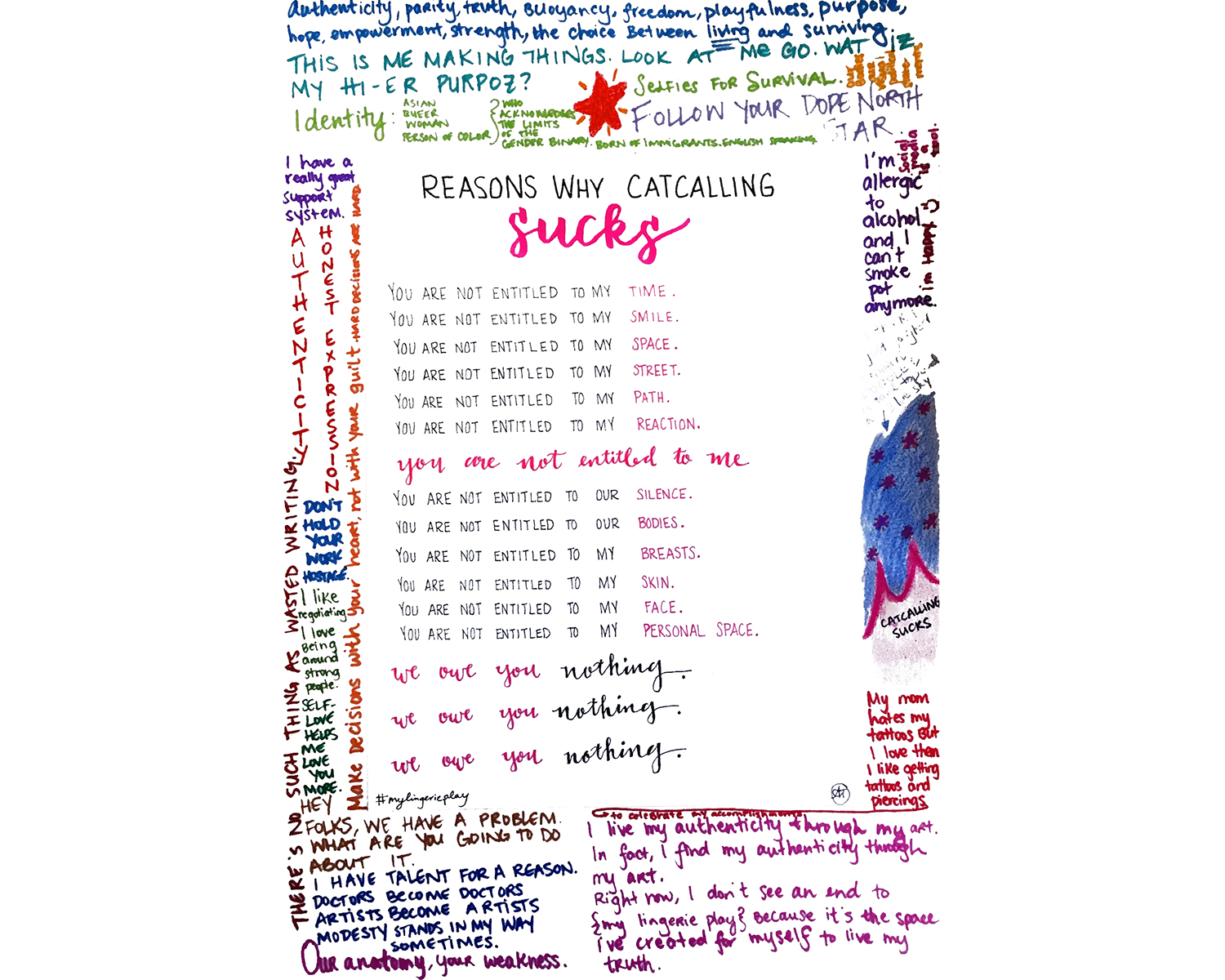
 

The same is also true of gender differences in language, but that’s a longer conversation. But the short version is if you want to write two men in a marriage, write two men. Don’t give one of them a woman’s name and hope no one will notice. Men and women speak very different languages. And women in the audience notice this.
 

2. Observation cannot be taught.
 

If a writer cannot observe what happens around him/her, and write about it with some compassion, then he/she should go into journalism. The theater depends on subjectivity, not objectivity. And you need to be able to write all the characters with the same degree of compassion. Demonizing people is the province of politics, not theater.
 

3. A sense of theatricality cannot be taught.
 

Plays are about conflict. We come to plays to see things happen. Plays must contain mistakes, surprises, reversals, murders, betrayals, fights, overheard conversations, secrets, in short, dramatic action. Plays are not conversations. If something doesn’t happen, it’s not a play. Or it’s not a play that’s going to find much of an audience anyway. Because so many young writers spend their lives listening to readings, they begin to think that a play is the stuff people say to each other while sitting in a line of chairs. But it is not. Nor is a play a string of unrelated events, even if they are killings, murders, fights, etc. A play is a series of events arising naturally from the situation the hero is in, and what he/she does about it.
 

There are other things that cannot be taught, and other things that cannot be counted on to be true (the main one being that you can read a play and know what it is), but this seems like enough for now. I have only one warning, in conclusion.
 

Once before, I wrote an article like this, proclaiming some things to be true, and one person actually resigned from the Guild because I had made such pronouncements about such a personal art. Well. I am doing it again, playing my dogmatic role, just for the purpose of stating, more or less, where the boundaries are in the writing of plays. Once you know these fundamentals, then if you want to duck under the fence and ski the fresh powder on a slope no one has ever tried, please do. Break the rules all you want. Just know that if you get lost, it’s the dreary old rules that will get you back on course and back down to the lodge in time for drinks. See you there.


Stage-&-Candor_Marsha-Norman_BioMarsha Norman won a Pulitzer for her play ‘night, Mother, a Tony for The Secret Garden on Broadway and a Tony nomination for her book for The Color Purple.
 

Ms. Norman is co-chair of Playwriting at Julliard and serves on the Steering Committee of the Dramatists Guild. She has numerous film and TV credits, as well as a Peabody for her work in TV. She has won numerous awards including the Inge Lifetime Achievement in Playwriting. She is also Presiden of the Lilly Awards Foundation, a non-profit honoring women in theater and working for gender parity nationwide.

Posted on

Chasing Stages

chasing stages


I’ve been involved in theater since 2006. I became brave enough to pursue it professionally when I graduated college at Minnesota State University Moorhead and then enrolled in graduate school at Mason Gross School of the Arts (Rutgers University). Since 2012, I’ve been designing professionally as well as snagging some artistically quirky side jobs. I’m very proud of the work I’ve done, but I recognize that I also have more to learn and I’m hoping this column will allow me to pass along what I know while also sharing my current creative challenges.


I was involved in a more improvisational approach to theater design at the Princeton Festival last month. To designers just starting out, I can’t stress enough the importance of having a step-by-step process that you can adapt for new design projects. Yet, every now and again, designers must throw their process out the window and figure out a new plan as they go along. Depending on your personality type, this second approach can be a bit scary or liberating.
 

Keep in mind, smaller theater groups (i.e. high schools, off-off Broadway, or summer stock theater) make last-minute builds happen ALL THE TIME. I’m a planner, therefore most comfortable with shows that have solid pre-production phases. However, even though these kinds of projects always shake my snow globe, this past month reminded me that it’s valuable to be adaptable.
 

When the producer contacted me about serving as the props craftsperson for A Little Night Music (a musical), I expected to be crafting props, painting furniture, and painting the floor treatment for the set. However, the day before the work call, the producer told me that the project would require more construction than originally thought.
 

When I arrived at the theater, the producer handed me a credit card and told me we needed supplies to build several birch trees to fill the space. Although I was surprised to learn that we were at the beginning of the build during the “load-in,” I was relieved to see a box-truck and driver waiting to whisk me away to Home Depot. The basics had been addressed: transportation and a budget. If these two things can be taken care of ahead of time, much can be accomplished.
 

All theater artisans will eventually get thrown into a last minute project. When this happens, stay positive, stay collected, and ask for what you need to do your job. Not everyone has worked on scenery, so don’t assume that people will be able to discern what is needed for time and materials. Be a good resource to your co-workers, use common sense, and make suggestions to streamline the situation. In this case, I had a proactive hands-on producer that did an impressive job orchestrating all the details of a last-minute, non-union build.
 

Stage & Candor_Gennie Neuman_Chasing Stages_1
 
This kind of strategy was needed to finish these trees on time for opening. For those of you who have never built a tree, let alone a forest (and unless you’re God or an established scenic artist, I’m assuming that’s most of you), building full-scale, realistic trees with leaves and grassy knolls can take a lot of time, alternative materials, and manpower. It’s very easy to underestimate your resources for organic structures because there are so many different ways of making them, and you will have to experiment with your method before you find a way to get the effect you want. Professor Peter Miller at Rutgers University completed a step-by-step instructional article for creating realistic foliage for the stage for USITT in 2012. If you ever need a good resource for taking on theatrical foliage, and you can’t go outside and cut it down yourself like we did for my first summer stock in rural Minnesota, check out this article. Building trees has challenges of its own, but you don’t have to deal with all the bugs and critters that come in with the real ones.
 

Lucky for us, the trees needed for this production were whimsical, abstract, white birch trees. We needed no heavy armatures or hundreds of synthetic leaves (sigh of relief). The director/designer also took the time to make the bark out of unbleached muslin, antique sheet music, and glossy Mod-Podge. We used these as a sample to make more.
 

Our original plan was to build a three-foot tall wooden armature to give the trees vertical direction and attach a round wooden disk on top for rigging and shape. The muslin bark would have been wrapped around the wooden structures, then hung off the lighting grid to make a semi-hollow, lightweight birch tree.
 

Stage & Candor_Gennie Neuman_Chasing Stages_2
 
For the style of tree we were going for, this method could have worked if we had enough material. However, when my crafty co-conspirator, Brit Bannon, calculated the circumference of the wooden discs needed, she discovered that the muslin bark would only make a five-inch diameter trunk. Given the narrow circumference, the crinkly fabric would not behave well without an inner cylinder.
 

We went back to the drawing board. Luckily, Brit and the director went dumpster diving and salvaged some sturdy shipping tubes from an art project that had been tossed at the end of Princeton’s semester. Additionally, Staples had a sale on five-inch diameter mailing tubes, so we bought them out. With the new tube infrastructure, the trees were slightly narrower than envisioned, but still true to natural birch tree proportions.
 

We achieved the full length of the tree by attaching the shipping tubes together with window screen. Window screen is great to sculpt with and it’s super cheap. This also allowed us to add gaps between each mailing tube, making the trees less rigid. This bendy-straw method made the structures flexible, creating a more naturalistic sway when hung from the grid.
 

Once the structures were complete, we wrapped the fabric around the tube and made more bark so we could have a few more trees. Since the structures were light-weight, we rigged them with tie-line. With the major tree structures attached to the grid, we moved onto making branches. Again, these trees needed a crafty-handmade aesthetic, so they didn’t have to look real, but rather leave the impression of the natural proportion and sway of birch trees. We used a thicker twine with hand-crafted music paper leaves to give the set the graceful gesture of branches.
 

Rigging branches was the most challenging part of this process. We needed three people: a branch-hanging person (situated on top of the scaffolding), a scaffolding mover/hot gluer (situated on the floor level), and an observer to make sure the trees looked good from the audience’s perspective. The three of us took two four-hour work sessions to do this project. This is one of those tasks that sounds like it could be completed quickly, but actually takes some time and finesse. Easy doesn’t necessarily mean fast; this is a lesson I learn over and over again.
 

Stage & Candor_Gennie Neuman_Chasing Stages_3
 
Even with a little scrambling, the show came together to be something truly enjoyable that I would recommend seeing. Designs that need to happen quickly can turn out to be truly innovative and beautiful. When approaching these projects, keep things as simple as possible and take a bit of time to discern which scenic elements will best tell the story.


A Little Night Music at The Princeton Festival
Director/set designer: Diana Basmajian
Lighting designer: Burke Wilmore
Costume Designer: Marie Miller
Scenic artists: Gennie Neuman Lambert & Brit Bannon
Producer: Lauren Parish