Posted on

How A Doll’s House Part 2 and Brett Kavanaugh Taught An Actor How To Listen

sarah-durn-dolls-house-kavanaugh


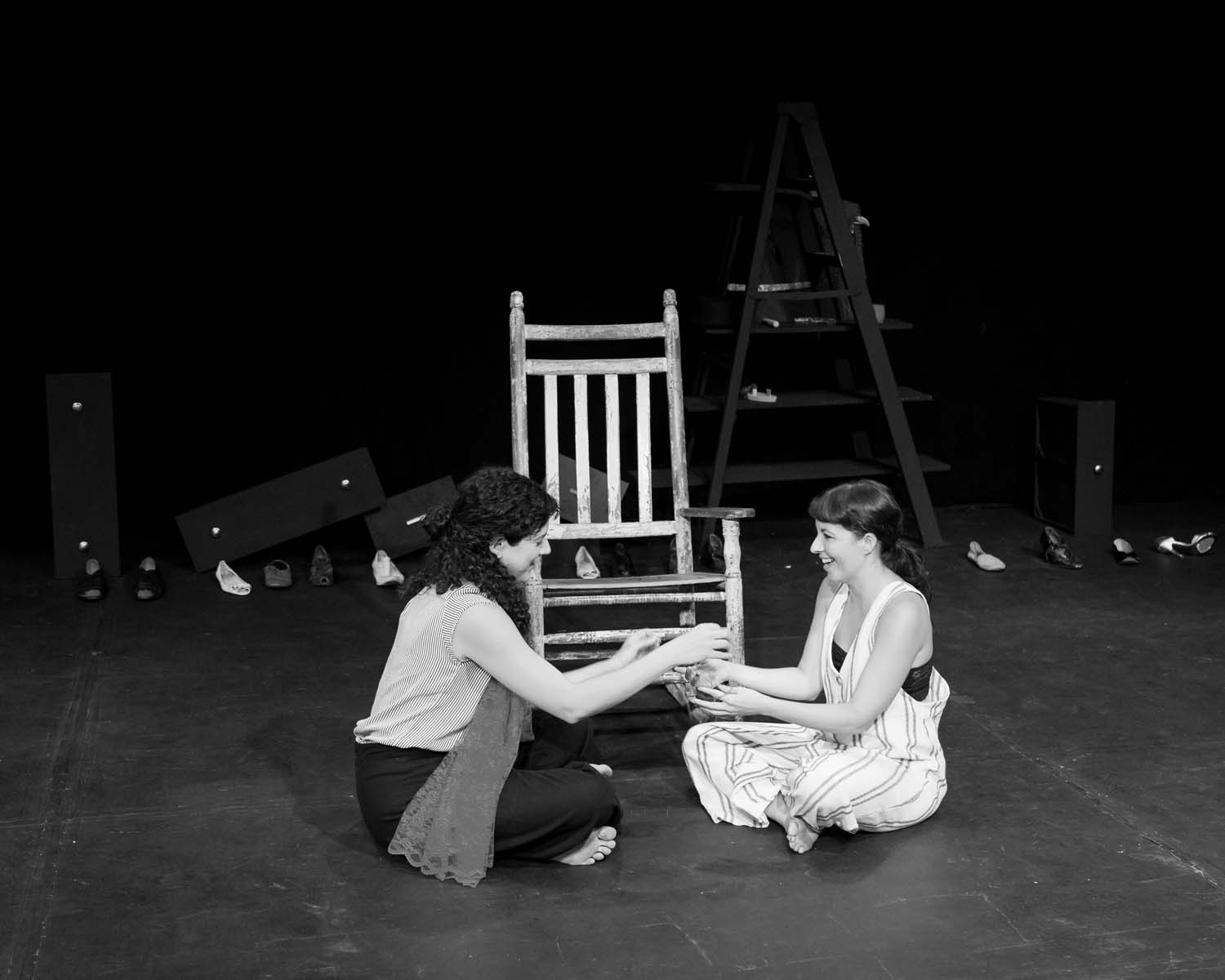
American Theatre Magazine recently announced that Lucas Hnath’s A Doll’s House Part 2 is the most produced play this year. It will be staged at 27 theaters nationwide during the 2018-19 season. I am an actor who is performing in one of those productions as Emmy, the daughter Nora left behind.
 

Nora returns in Hnath’s sequel because of a judge’s threats to expose her as a married woman. But, as we began previews, we were discussing a very different judge in the dressing rooms— Judge Brett Kavanaugh. And, suddenly our play was made viscerally relevant. There was something uncanny in listening to Dr. Christine Blasey Ford’s and Judge Kavanaugh’s hearings, to watch this very different kind of performance unfold, one with real, political stakes.
 

A Doll’s House Part 2 and the Ford/Kavanaugh hearings share a structure. During the hearings, Dr. Ford made an argument, and Kavanaugh countered. In Dolls, Nora makes an argument— that marriage will become obsolete, that we’d be happier without it— and the other characters counter. Hnath explained in an interview with the Chautauqua Institute’s Andrew Borba that this is how he builds all of his plays—an argument followed by a series of counter-arguments.
 

But, what happens in A Doll’s House Part 2 and not in Dr. Ford and Judge Kavanaugh’s hearings is the space to see the people beneath the arguments, to create the space for empathy. Politics and political news coverage is often so reductive, that there’s no space to see the people beneath the extracted quote and no time for empathy. Following the hearings, it was a terrifying thing to see how the right and left could translate the same words so differently. The New York Times called Kavanaugh’s testimony “aggressive, tearful, and partisan.” Trump praised Kavanaugh calling his same words “powerful, honest, and riveting.” Just like that five hours of testimony is reduced to a Tweet, a person reduced to a few adjectives.
 

My favorite line in A Doll’s House Part 2 comes near the end when Torvald says, “I don’t know. It’s just so hard… all of this. Being with people.” After so much of the play is people making arguments and taking sides, this one hesitant line from Torvald beautifully reduces what all plays, all politics, all life is really about— figuring out how to be with people.
 

To be an actor is to practice listening. There are always moments up on stage where my mind wanders, where I’m pulled out of the scene because I’m thinking about so-and-so in the audience or how I just messed up that line or how I really need to do laundry. My work as an actor is to bring myself back to the moment, to the present, to listen to my scene partner. Even when I’m speaking, I’m listening to my scene partner’s facial and body expressions. It’s in the moments when I stop listening that my mind gets away from me. But, in the moments when I’m listening completely, I can feel myself tune to that other person, like two violins finding a root note. To be an actor is ultimately to practice how to do this, how to listen. To be an actor is to practice how to be with people.
 

We, as a society, must learn again to listen to one another, to tune ourselves to each other so that we can find the truth even in incongruent notes. We must learn again how to be with each other. We must listen especially to those voices that have gone unheard for so long. We must listen to survivors, to people of color, to immigrants, to women. We must listen to our annoying uncles and neighbors. We must listen to them more keenly than we listen to the friends and family we already agree with.
 

In her testimony, Ford said that her speaking was an act of civic duty, to inform senators about the character of a man they were considering for the highest court in the land. The same civic duty motivates Nora. Nora is striving to create a better world, a world with no more “bad rules,” a world where her words as a woman matter. She is asking to be heard.
 

Today is election day, and we find a record number of women running for office. #MeToo has rocked Hollywood, tech, journalism, and politics. Just over a week ago, words taken from Dr. Ford’s testimony were found spray-painted across the entrance of Yale’s Law School. Dr. Ford, Nora, #MeToo, the 256 women running for office— all seem to be asking for one thing, to be heard.
 

I worry though that we haven’t taught people how to listen. In our increasingly divisive news cycles, we’re being taught to ridicule the other side. Politicians are being asked to become agenda spokespeople, rather than just people. We demand that our politicians never fail, never stray from their ideals. There’s no room for empathy, for understanding because we never allow a politician to tell their true story, to show their humanity. Instead, we allow them to put on a mask of perfection.
 

But, there can’t be any room for growth when we’re so tied to our ideas. Nora, in time, comes to listen, really listen to the other characters as they challenge her opinions one by one. And, it’s only after she listens to all of their counter-arguments that she’s able to strengthen her own ideas and her resolve to continue fighting for what she believes is right.
 

Just as acting has taught me and continues to teach me how to listen, so too does being in the audience. As audience members, we sit there in a darkened room, suspending our lives for those a hundred or so minutes, and we listen. We tune ourselves to these other lives. And, if the story works, we come to recognize that this character is just like us, just another person striving to be and do better.
 

We all are learning, that simple act of, how to be with people. And, we cannot learn how to do that without listening. Whether we’re a United States senator or a character from an Ibsen play, we must create the space to listen to one another, because it’s the only way we can grow together. It’s the only path to empathy.


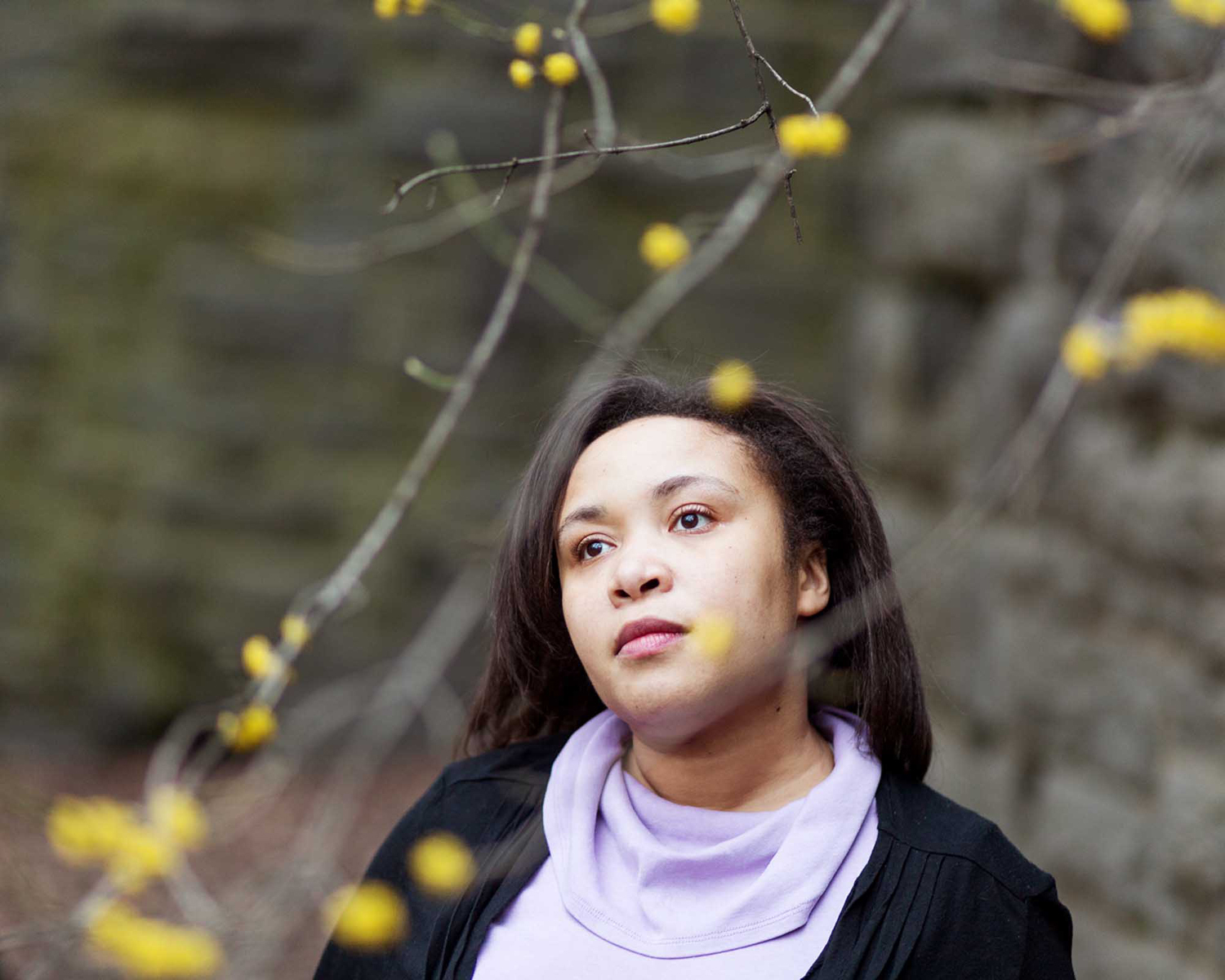
 Sarah Durn is an actor, writer, and maker based in New Orleans, LA.

Posted on

A Conversation with Denny Dale Bess, Sheldon Best, Brian D. Coats, Bjorn DuPaty, Lynnette R. Freeman, and Ivan Moore


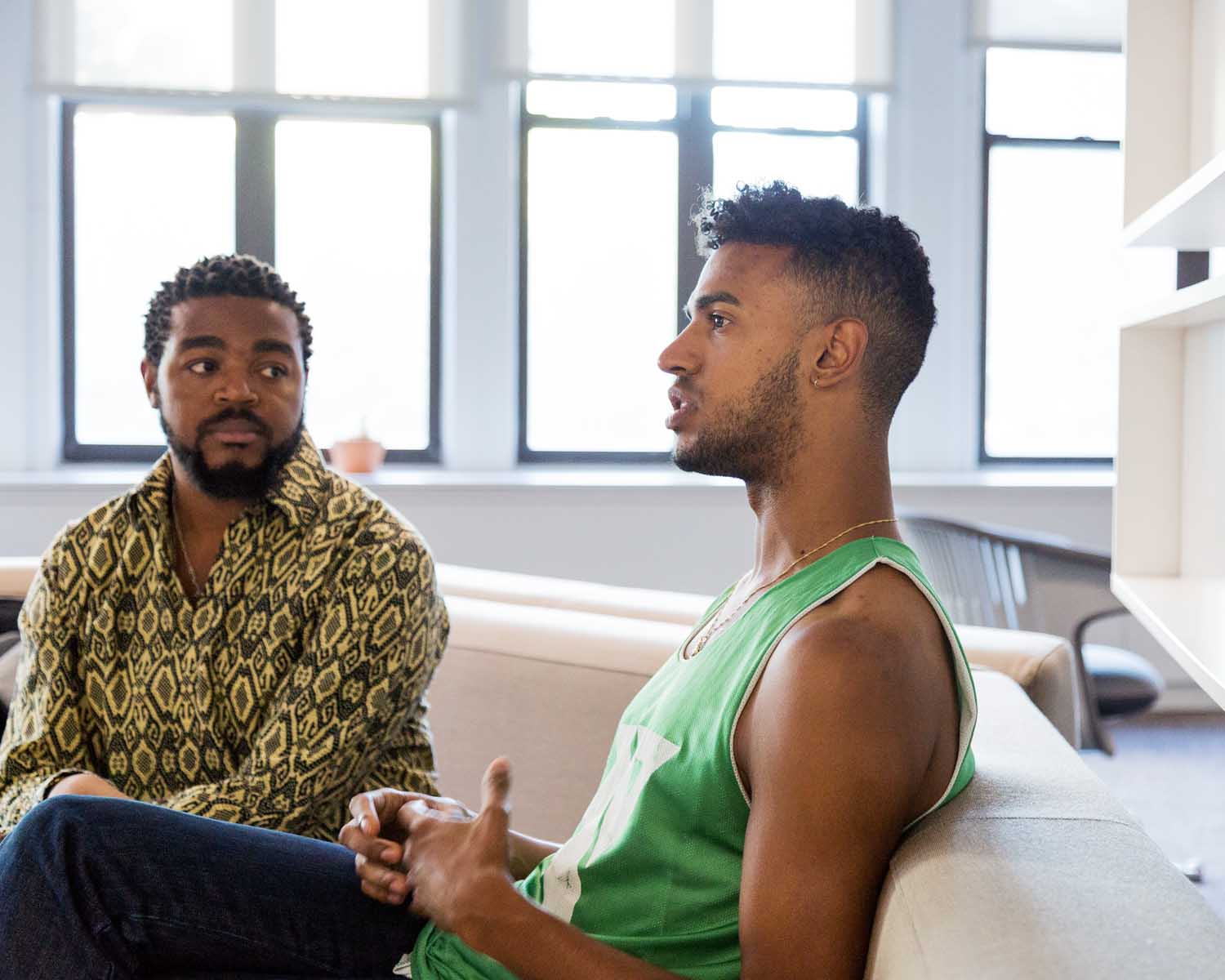
William Jackson Harper’s impressive debut play Travisville, though set in the 1960s, feels like a contemporary piece tackling issues of race, gentrification, and political revolution. We sat down with cast members Denny Dale Bess, Sheldon Best, Brian D. Coats, Bjorn DuPaty, Lynnette R. Freeman, and Ivan Moore over lunch to discuss the play’s impact and importance in our current political climate.


Margarita Javier: What can you tell us about the character or characters you play?
 

Brian D. Coats: I play Elder Hearst. He’s running things at the Church and the Minister’s Alliance. I think he takes things going on with black people and Civil Rights very personally. He has a protégé and is trying to get him to take his rightful place in the fight in the struggle against all the things that we’re experiencing.
 

Lynnette R. Freeman: I play Georgia Dawson who is a mother of three. She is a housekeeper and married to Orthel Dawson who is a mechanic in the district that is slated to be displaced for this Travisville project. She is an extremely forthright woman. First and foremost comes her family, so she does everything she can to make her family comfortable and living a good life.
 

Bjorn DuPaty: I play Ora Fletcher. I would say he’s stuck between the old way and the new way. Obviously things are changing in the world around this time period. I think he recognizes that, but also initially he never really wanted to get into the political side. He was more of a church man. He’s felt like he’s a man of justice doing what’s just, what’s right. And I think that mindset gets him involved in local politics. I think his whole thing was just to be a pastor of a church and to take care of the people of the church and the community. But as we all know, the church was very involved with politics during that time. I think he’s stuck between how things used to be and surviving that way and the new way, being more outspoken and standing for our rights and being more active and proactive. And by the end of the play, I think he makes a choice about which side to land on.
 

Sheldon Best: I play Zeke Phillips who is a young activist who comes from Atlanta and has come to this town in Texas. He’s working with CORE, the Congress of Racial Equality, and has come to this town in order to help uplift people and to get them to move from being complacent with injustice to taking some action, because Zeke has zero tolerance for injustice and is willing to sacrifice in order to move things forward for his people.
 

Denny Dale Bess: I play two characters. The first one I play is Mayor Gillette. He’s a bit rough and gruff. He’s very blunt, but he is very caring for his community and wants equal rights for black and white citizens. The second character I play is a real estate developer named Honeycutt who is proposing the Travisville Project to the Fannin Gardens district. Honeycutt is more of a cosmopolitan individual and he is intensely a businessman.
 

Ivan Moore: I play a dual role. I play Minister Howard Mims, commonly known as Jumpy now [laughs]. And one of the townspeople, Howard Birch. Mr. Mims is part of the Alliance. I lean towards more radical side, but I’m not too radical. Howard Birch is one of the older folk that’s lived in a town for many, many years. I know how it works in terms of white black relation. I’m willing to sell my house and get up outta there if I have to. I don’t necessarily appreciate the intervention of the young men coming into town and stirring things up. I would prefer if he just went back to the land of the giants, as it were.
 

Margarita: The play is Travisville by William Jackson Harper. There’s a lot of buzz about it, a lot of great word of mouth. If you had to describe in a few words what this play is about, what would you say?
 

Ivan: Gentrification of the ‘60s with racial overtones.
 

Denny: Individuals trying to get what they need and what they want.
 

Sheldon: How we demand or seek progress in a society. Do we do it in small steps, small stages? Do we demand what we deserve and get it, and then take the consequences of those demands and use that as a vehicle to move forward? Or do we try to move more gradually?
 

Bjorn: All progress demands some type of sacrifice.
 

Travisville
 

Margarita: The play is set in the 1960s during the civil rights movement; it’s a new play. Obviously it goes without saying, but it’s something that’s still relevant to today’s society. Like you mentioned —gentrification, racism, the fight for equality. How do you think this play speaks specifically to New York City audiences?
 

Sheldon: In many respects I think it speaks to who we are in life today, not just in New York but in the world. You guys can correct me if I’m wrong, but the play takes place in a place where nothing was really happening, right? Black people and white people in this town more or less got along. There weren’t lynching, bombings, anything like that. People were comfortable. So take our world now, more or less people are comfortable. There are some extreme things, but for the most part, everybody’s eating, they have a household and they can progress. There’s opportunity. So are you going to stay comfortable or are you going to make sure that equality is really upheld, that the tenants of this country are really upheld? Or are you just going to go along with the flow because that’s what you’ve been doing the majority of your life?
 

Ivan: I think it addresses a lot of the issues that we have today. You know, we kind of feel that white folks are going to get what they want one way or the other. I think if you ask people of color, minorities in this day and age, the sentiment still runs deep that way. Gentrification is real. It’s happening as we speak. One character says “It’s not personal, it’s business,” and I think that’s justification for a lot of what you do when people are displaced. Some people, like my character, fought the fight for a long time and then you’ve got a young guy who comes along and says how it needs to be done, and that internal tug of war as they had back then, it’s still the same thing. Except we’re not hanging from trees and getting things cut off. Yet. In our current political climate, I think we’re all kind of waiting for stuff like that to happen on some level or another, but right now we just live with the tension that there’s a reality there we can talk about but are not tactile seeing it.
 

Lynnette: Here in New York specifically, you can’t just talk about gentrification and talk about economic disparity without also talking about race. Look at Brooklyn, at the Atlantic yards, the fact that people didn’t have a choice. You are going to be displaced, period. Whenever I hear Honeycutt and Zeke’s back and forth during the show when talking about Travisville, they’re talking about place that’s prone to flooding. I think it’s very interesting, particularly post Sandy when we found out how vulnerable New York actually is. All of a sudden there were all of these changes, and then people are being moved in order to live in this city farther and farther away from the center of the city, towards the ocean, which is the most susceptible place to flooding. And so you do have to look at that and see those disparities where one person may say it’s just business, but then it’s like, no, people’s lives are now on the line if another really big hurricane comes. I feel like this play puts all of those things together, especially now with Black Lives Matter and whatnot. Maybe people were being told that black and brown folk are not being targeted or racially profiled, but clearly it is happening, and often. And when people protest peacefully, when that is not heard, or when that is painted with a brush stroke that says that people are aggressive or violent, how do we make our voices heard? How do we move towards civil rights being really not only considered but actually followed through? Look at the children being detained, even in New York. I think this play is a really wonderful way to look at the past because many times people will look at the past and say “that’s then.” But a lot of it is still happening now.
 

Sheldon: One of the things that I found really relevant to New York about this play is the way that people’s latent, just under-the-surface racism comes out when housing issues are on the table. For example, there was a school in Park Slope where they were like, Oh, we’re gonna have these two schools join. And one school had mostly people of color, and the other was mostly white. And the parents at this white school went ballistic.
 

Margarita: Yeah, and that was supposedly liberal people being overtly racist.
 

Sheldon: Yeah! And that’s exactly what I think is true of this play and what’s true of New York City, and what’s true today: it’s often people who would consider themselves liberal and say like, we get along and love each other. That’s great. But my character has a line in the play that says, “You don’t have to hate someone to think you’re superior to them.” And once you have that superiority complex, that white supremacy that is right below the surface, once the issue has come forward, that means you’re going to have to confront this in some way. Either when your kids are going to school together or you are going to have to live together, or work together with people you think you deserve better than or you are better than. Those kinds of things can suddenly come out, and they come up with vitriol. It’s true in the play and it’s true in the city today in 2018.
 

Denny: Acceptance and understanding is something that always comes to mind for me because when Zeke comes to the Fannin Gardens district to disrupt this Travisville project to get people to stand up in his community, the mayor is adamant about going to the minister’s Alliance and getting Elder Hearst to keep his people in line. Because this is a big money moment for this town. We could potentially have a lot of money to get people working together. “White and Negro side by side” is what I say verbatim and that’s when they start to show some change within that old guard to the new guard. Minister Gunn has gotten Zeke to come in from Atlanta to disrupt this and then they slowly start to persuade Minister Fletcher to join their side, but he makes up his own mind later in the play because he wants to honor Elder Hearst’s vision of play ball with the mayor, play ball with city hall. This could work in all of our favor because it will bring revenue to everyone, but at the same time there’s this need to have their own voice. It’s time for things to stop, time for things to change. But I think the mayor is very adamant about swaying that idea until we can get this project past. So he is for both white and black, but at the same time, like Sheldon was saying, when it comes to money and housing, it’s thinking of ourselves first.


Margarita: Right, and the same thing is happening now. This is a broad question, but what can be done? What is the solution? Is it political activism? Peaceful protesting? Revolution?
 

Denny: I think this play is a start of the conversation.
 

Ivan: Sit down and have a conversation. Teach people how to treat you. If you sit down and just let people displace you, and you say nothing, they’ll keep doing it. There’s no reason not to, because they know you’re not gonna meet any resistance. I think the thing about this particular play is that you kind of see both sides of the resistance coming in. People who want to resist them and people don’t want to resist, and invariably there’s a price that one of our characters pays for resisting. We’re kind of used to and not used to all at the same time. It’s always different when you read something in the newspaper and then it becomes a little more different when it’s something that becomes very personal to you, you know? We’re living at a time where the issues are really not all that removed from the 1960s or what have you. The activism, the resistance, if you will, it’s still very much alive and well after all these years. They’re still fighting the same battles but just not fighting them all in the same place. So things have not changed all that much.
 

Lynnette: What I think is really funny is in general, this country was very much built with certain inherent biases already entrenched in its creation and its fabric. But then one of the big things that this country was built on was the fact that we can overthrow things and there can be messy revolution and that as Americans we should do that in order to have ourselves better representative forward democracy. Now, that has never actually been true. We say it’s true. But it’s not. And so I think that before we can even address things in full revolution or even peaceful protests, there is a necessity for everyone to speak very frankly about inherent biases, to speak very frankly about racism and sexism and misogyny and all of that. That is literally built into our institutions because it’s hard to move forward when the laws themselves are not fair or built with those same ideals in mind.
 

Ivan: I’ve always felt that. The one thing I’ve always said is that we always say the laws are not fair. But the laws are fair – for the people they’re written for. Which are not minorities, which are not women. When you want this country to do something that is fair, you have to force it, you have to have them make a law and have them enforce it, anything from not selling slaves to women voting. Up until you made a law, these were things that were all right to do.
 

Lynnette: And there were laws about that! If you look at people actually following the law, having a slave was part of the law.
 

Ivan: So when people say the laws are not fair in this country, the laws of very fair in this country to the people they were written for, and that’s not us [laughs].
 

Bjorn: I’ve gotten to the point where I don’t really see this country getting better unless there is a revolution, and that’s going to take sacrifice and maybe even bloodshed. We can say everything about laws and things like that, but there is still a power structure that is still in place. That’s why we have a guy like Kavanaugh getting in like it doesn’t matter. It does not matter. They can do the investigation for the public eye and say they did that, and it’s funny, as it’s happening, some people go, Well, it’s gonna work this time, and then some people go, That motherfuckers getting in [laughs]. Excuse the language, but you see it. And I feel like a lot of people are starting to see more of it. A few days after Trump got elected, a friend of mine who’s Jewish interviewed me for this thing he was putting together and the first question he asked was, Were you surprised? And I said, Do you want my PC answer or do you want my real answer? He’s all, I want you to be really honest. I was like, Okay, I’ll be honest with you, black people and most people like me, were not surprised at all. And it wasn’t even about trying to be different. It’s just that we’ve seen this story play out in some way or fashion. I always tell people the biggest time that I was ever surprised were two moments: when O.J Simpson got off and when Barack Obama got elected. If you look at both of them, the celebrations were exactly the same. If you really look at it. When O.J got off, people ran in the street talking about We won! We didn’t win shit. But what we did see, finally, was a man of color when all the evidence at the counter said he should be under the jail, he actually got off. That was something we’d never seen before. It was like what just happened? Because I’ve seen people go to jail for less than that. And then the opposite, Barack Obama. I was five years old. My father told me you can be anything in this world but you will never be president of the United States. Me and my friends used to go to school and joke around, half joking, half serious knowing that that was a truism of being a black person in America. And so to see that? That was also incredible because we were always told it will never happen. It would never happen in my lifetime.
 

Ivan: Black families don’t tell their children you could grow up to be president. You can go up and work for the president [laughs].
 

Bjorn: You can do a lot of things, but you will never ever rise to that position. I look at it and I go, sure we can create laws and protest, and now don’t get me wrong, those things are necessary. I think all of it’s necessary, but I think eventually if we really want to create a change that’s long lasting, it’s going to have to be by destroying the system that we currently have.
 

Lynnette: And also, the onus is not just on those who are oppressed to rise up. The onus is on those liberal white people, those who have privilege, to change their populations, to change those around them. When President Obama was elected, that was awesome, but it also kind of drove in this kind of insidious notion of Well, we’re post racial, don’t you know? And then there is this gaslighting that does happen because just because he got elected did not erase discrimination and racism at all. Whenever people would get up and say, you know, this is wrong, I’m being discriminated against, look at this video of this person being assaulted.
 

Margarita: And it took videos, because how long had black people been saying they were being targeted by police, and no one believed it?
 

Lynnette: Right, but even with video, people were like, well, what did he do? What did he do to deserve it?
 

Ivan: The thing is that nothing has really changed except technology is accessible. Now we can videotape these things. You know, black folks been getting shot by cops for years. The only difference is now we got cell phones that can record it, you know? I mean, that’s the only thing that has revolutionized over the years. Everything else is pretty much the same.
 

Travisville
 

Bjorn: I think as a country we have to finally get to the point where we say the American dream does not exist or that it does exist on the backs of oppressing people regardless, right? Anywhere in this country that there is a millionaire or billionaire, that’s on the back of taking advantage of somebody; someone’s on the bottom that is being oppressed for that one person to be a millionaire. Everybody who grows up in this country has this idea that I’m going to be that. And so therefore in the pursuit of that, it’s okay for all these people to be suffering.
 

Ivan: There’s a fallacy in this country that makes it believed that everything that they do is somehow for the greater good of the whole. You know what I mean? And that’s where, you know, it gets kinda tricky because who do we consider the whole? Is it us? Is it them? You know, who is us and who is them? It’s not just minorities, immigrants, women, gay, straight, across the spectrum. And we are separated because we live in this society where we pretend to be enlightened, anything that we do is coming from that enlightened point of view. When they were talking about moving Travisville, they said this is for the betterment of the neighborhood, but who consists of the neighborhood? We’re not talking about the people, we’re talking about the real estate, you know what I mean? And that’s where you have that tug of war.
 

Sheldon: To the question of what it’s going to take to get change, I think of when you see something in the news where they’re like, Oh, so and so is the first black woman nominated or the first black man to be a governor in x, y, z state. Usually it’s followed by “since reconstruction”. Because during reconstruction, there were all these gains that were had because you had the white power structure enforcing that these changes are going to be made across the board. These laws are going to be enforced. And that racism is not the law of the land anymore. And when reconstruction prematurely ended, you had this regression, all of the gains that were made were lost and they haven’t moved a lot of them. We haven’t seen those gains since, which is why you often hear on the news: So and so was the first black x, y, z since reconstruction. So I think in order for there to be some kind of real lasting change, first you have to upend whatever power structure is in existence right now. And that may happen through revolution. But it also could happen because people politically decide it is not the best thing for us as a whole, for us as a country, to have white supremacy be the law of the land, to have people suffer under other people so that they can become millionaires. It’s not beneficial for us as a whole. And if the powers that be decided that we are going to implement those kinds of changes, we’re going to make sure that people have equal protection under the law, and then enforced it. It could take the right government, be it by saying We’re gonna occupy these states. I mean, I don’t know if that’s gonna happen, but I think it would take something as extreme in order for people to go, Okay, these are the laws and while we may not like it, we’re going to get used to it. And then when people get used to it and realize, Oh, we are better, everything is fine, this didn’t destroy our family or our homes, our livelihood, and things like that, then people can go, oh, okay. And then at some point you can take that pressure off from the top down, and hope that people on a community level are going to be there for each other and the law from the top down will protect them. But we don’t have that right now.
 

Margarita: I’m from Puerto Rico.
 

Lynnette: Oh! Oh yea.
 

Margarita: Yeah, so I’m feeling all of this very deeply. Going back to the play, what’s it been like working with the playwright William Jackson Harper and the director Steve H. Broadnax III?
 

Ivan: They’re horrible people. It was just the worst experience in the world. [laughs] I mean, I don’t know if you could say enough great things about either one of them. Steve, I think I told him not one week or so ago. I was doing a comparison. I remember looking at a documentary once with Michael Jackson and watching him do his thing, you know what I mean? And when you looked at it, you know, put all that controversy and crap away, and just look at the man doing his work. You just knew he was born to do what he was doing. He could not do anything else. And when I watched Steve work, his mind is always going and he’s very meticulous. It’s really great to watch. He’s a great person to work with. He knows what the hell he’s doing. And Will is fun. [laughs] These guys have really creative minds. But I think I just have to say across the board, writer, director cast, I’ve been calling them all rock stars from the very beginning. There’s no weak links in the chain, none at all.
 

Lynnette: Such joy showing up to work every single day. It’s not even like work. Steve brought that to the table because he says and it’s totally true, he is of service to not only the story but also the actors inhabiting the story, and of service to whatever ancestors are working through it to make it happen. And we just had so much fun in the process of constructing and telling this story. I mean, a lot of it and being in it is not fun, because it is retelling certain things that are horrific, many of which ancestrally you felt. But showing up, it’s like family and I feel like that level of camaraderie in giving, especially doing a script that’s very well written, it’s all right there on the page and the amount of thought and consideration that is given to every line and every piece of every line. It was a true collaboration. Will was open, Steve was open, everyone else was open. And so, you know, even from our table work, it got really passionate but not so much that at the end of it you weren’t walking away smiling. It was really good.
 

Ivan: I saw that interview where you talked about table work, because it was really something to see. Someone, I can’t remember who, said we got mad but had so much fun getting mad. We were fighting about your character or your lines in the history of what was going on or whatnot. And it was like surgery, where you were watching everybody to kind of dissect, what’s going on here? Why am I doing this? And it was really something to see. And like she said, Steve was really open to letting all of that happen and whatnot.
 

Sheldon: And they worked so hard. Being that open, that takes work. Yes, it does. Oh, you could very easily say No, we’re going to do what’s on the page, learn the words, say the words, do the actions and let’s do this play, but both Steve and Will were so open to us challenging and questioning the words and the intentions and the actions. We would talk about it. We’d be in dialogue. Will, who’s a very hardworking actor, was abroad shooting a movie during some of the rehearsal process and so he came back for a week and then he had to leave again and then he came back. He was away working on another job and would stay up, you know, with the five or six hour difference, and be writing new pages for us based on the conversations and questions that we had, that Steve would be up all night talking to him about. You know, that kind of openness takes a lot of hard work and I just can’t speak enough to how hardworking these two guys have been.
 

Travisville
 

Margarita: Tell me if you disagree, but to me theater still feels very white and male, and stuck in the past. There’s so much diverse talent out there, but it still feels like a very white, male, straight landscape. Sometimes it feels like we’re making progress, and sometimes it feels like we’re taking steps back, but I’m wondering what your thoughts are and what your experience has been working in theater and what can be done to get to a point where all voices are accurately represented.
 

Ivan: I worked in the education system for over 25 years, and the arts are not something that’s pushed. It’s one of those things where if a child feels inspired by something, whether it be acting, dancing or singing, then they have to seek it out. You know what I mean? It’s not something that you are generationally teaching the children. It wouldn’t be natural for arts to just appear and I think if you talk about getting more diversity in writing, acting, dancing and all that stuff, you’ve got to start at a base level and that doesn’t start with the adults. The adults have to chart the course, but we have to go to where it begins and then start to bring them up. Teach the arts in the school or whatnot. Nowadays, they say there’s no money in it to teach it, so they take money away from the arts. So you’re not teaching the children that, or anything like that. If you want to make the arts more friendly towards whatever the group may be, you have to start at a place where the creativity begins, you know what I mean? It could be on a junior high school, high school level, but something that promotes the interest and I don’t think interests like that are promoted nowadays. Kids have to go looking for it.
 

Lynnette: Along those same lines, even if you’re looking at, say an English class. What exactly are you teaching? Which plays? The things we learn or are taught are the pinnacle of theater? We hear Shakespeare. White, dead males.
 

Ivan: Yeah, that’s exactly what happens.
 

Lynnette: There has to be an interest in looking at your curriculum to also reflect your students, to reflect your city, reflect your world and open those up and use those as teaching tools as well. And then, you know, if you’re an artistic director or on the board of a theater, if you’re looking around the room and everybody looks like you, you’re doing something wrong. If you’re looking at your entire staff and the only people of color or different sexual orientation are just the people cleaning up for maintenance, there’s a problem there. Are you actually looking at your programming, not just from what’s visible or fashionable— you know, black plays or are really in fashion right now— but what are you trying to do? Are you looking at your mission statement? Does it include everybody? Are you looking at not only what’s going on your stages with the programming you have? Are you engaging with the neighborhood that your programming is in? Who are you serving? When you’re doing audience outreach, are you going to outreach? It’s actually not that hard. Are you going to outreach with lots of other theater companies? Because there are lots of theater companies for lots of people that do programming specifically focusing on all artists. Are you aligning yourself with them? Are you going to see things? Are you looking at all of the immense talent that is in the city, or are you just towing the line and getting paid for that? And if you are, I say make that a choice. Say that you are, but don’t say that we are a theater for everybody and then turn around and just be the same old, same old. I think that it’s necessary for boards of theater and artistic staff to actually be very real about who is making those decisions and the different perspectives that they are getting in. Even your costume designers or set designers, sound designers— there are lots of people from very diverse backgrounds. There’s actually several excel sheets with lists. So if you don’t know, there are people that you can seek out. And if you say that there are none, then that means you’re actually not doing your job.
 

Sheldon: I think that the power structure has to evolve because you look at a lot of the theater institutions, and sometimes the plays are more reflective of society than it is of the administrators in the field. And while that might be good, it makes me question what are you actually seeking to do with these plays? Because on one level you’re bringing people in. Letting them feel good, like another one of those liberal pats on the back. We feel good because we produced this, because we told this story, but who is the audience seeing the story? Who was actually consuming this? Who are the people who are deciding this and why? That’s why I feel like sometimes I go to the theater and I see like torture porn for minorities. Like, I can cry for people and it makes me feel better because it made me see that I see their humanity. But do you see their humanity in your daily life? Do you see their humanity and what you’re doing? And does the theater see their humanity? I think it comes down to our blind spots and our consciousness. For example, me walking through the world as a black man, I have this double consciousness, so to speak, of what it is like to walk through the world as a black man. But I also know, because I have to navigate a world where black people are not the ones making the decisions, I have to navigate a white world. So I’m aware of how I move through the world. If I didn’t have that double consciousness, I would be blind to some of the things. I’m not a woman. So walking through the world as a man, I don’t see some of the things that women see. I have privilege, I benefit from it. I just go on the subway sometimes and I don’t think. A friend of mine, she was like Will you actually just take a cab with me? It was something I didn’t think of, I was just like, Oh yeah, we’ll just take the train together until this point. And we split. She was like, I’d rather, you know, get a cab together. And it was something I hadn’t thought of, but she thinks of daily, you know? So if you are in a position of power as a theater administrator and your blind spots aren’t being covered by either you doing your homework and your research and figuring out why it’s important to do certain works and why it’s important to have other people working alongside you, then you’re not fully doing what your job should be, and you either need to make room for someone who is going to do that or you need to make sure that the people around you are holding you accountable.
 

Ivan: I think at the end of the day, a revolutionary thing as a matter of thought and action takes us out of our comfort zone and nobody wants to be out of their comfort zone. Whether you’re white or you’re black or someone like that, the only way that you grow in anything is to come out of that. It’s a little difficult but that’s the way change works universally.
 

Bjorn: I just think that, same with this country, it needs to change from the top. We can surround ourselves with people, but at the same time, the theaters I’ve seen work well are the ones that were run by people of color or women and because they naturally tried to look at the whole. We also have to talk about, yes, stories get done, yes, but it’s always done from the white gaze anyway. So are these stories really challenging the norm? Is it really something that’s gonna push the community forward and open eyes? That’s something that always makes me think.


Stori Ayers (Bethany/LaVerne) is elated to make her EST debut. Acting credits include: A Raisin in the Sun (Indiana Repertory Theatre & Syracuse Stage); Foster Mom (Premiere Stages); Detroit ‘67 (Chautauqua Theater Company); Barbecue (Pennsylvania Centre Stage); Jitney (Cincinnati Playhouse in the Park); Yellowman (Anacostia Playhouse); Blood at the Root (National Black Theatre); Father Comes Home From the Wars Parts 1, 2 and 3 (Round House Theatre); Doubt; Love’s Labours Lost; In the Red and Brown Water (Pennsylvania Centre Stage). Stori will next be seen as Black Mary in Gem of the Ocean at Round House Theatre.


Denny Dale Bess (Gillette/Honeycutt) is honored to be a part of Travisville. Theatre: The Legend of Georgia McBride by Matthew Lopez (regional premier, Dorset Theatre Festival), Year of the Rooster by Olivia Dufault (world premier, EST), The Sluts of Sutton Drive by Joshua Conkel, Where the Children Are by Amy Fox, and Phantom Killer by Jan Buttram (world premier). Film: How He Fell in Love, The Suspect, The Umbrella Man, My First Miracle, and Darcy. TV: “Law & Order”, “Law & Order: Criminal Intent”, “Public Morals”, “Boardwalk Empire”, and “The Blacklist”. He lives in Hell’s Kitchen with his beautiful wife Abigail. Represented by Andreadis Talent Agency & Stewart Talent NYC. Member of AEA, SAG-AFTRA, & EST. Thank you to EST. WJH, you are a man of passion, perseverance, and talent. Thank you sir!


Sheldon Best (Zeke Phillips) Theatre Credits include: Sugar in Our Wounds (Manhattan Theatre Club), Romeo & Juliet (Public Theater, Classical Theatre of Harlem), brownsville song: b-side for tray (Lincoln Center/LCT3), The Loneliness of the Long Distance Runner (Atlantic Theater), the box: a black comedy (Foundry Theatre), A Midsummer Night’s Dream (CTH), Freed (59E59 & Penguin Rep), Six Rounds of Vengeance, Alice in Slasherland, Geek! (Vampire Cowboys); Soul Samurai (Ma-Yi Theater & Vampire Cowboys), Paradox of the Urban Cliché (LAByrinth). TV/Film – “Manifest” (NBC), “The Good Wife,” “Unforgettable,” “Person of Interest” (CBS); Ghost Light (H9 Films). www.SheldonBest.com.


Brian D. Coats (Elder Alden Hearst) Broadway: Jitney. Off-Broadway includes: La Ruta (Working Theater), The First Noel (Classical Theatre of Harlem/The Apollo), On the Levee (Lincoln Center), The Merry Wives of Windsor, Two Gentlemen of Verona (Public/NYSF). Regional: The Royale (Cleveland Play House), The Nest (Denver Center Theatre), Ralph Ellison’s Invisible Man (Huntington Theater, Studio Theatre DC), Seven Guitars, Ma Rainey’s Black Bottom (Two River Theater), Fences, A Raisin in the Sun (Geva Theater), Distant Fires (People’s Light and Theater), Clybourne Park (Caldwell Theatre), The Wedding Gift, pen/man/ship (Contemporary American Theatre Fest), Count (PlayMakers Rep). TV includes: “Law & Order”, “Law & Order: SVU”, “JAG”, “Blue Bloods”, “The Sopranos”, “Boardwalk Empire”, “Luke Cage”, and “The Blacklist”. Up next: King Hedley II.


Bjorn DuPaty (Min. Ora Fletcher) Off Broadway: Mlima’s Tale (Public Theater), Two Mile Hollow (Women’s Project Theater). National Tour: Julius Caesar, Comedy of Errors (The Acting Co.). Regional: Do You Feel Anger (Humana Festival), A Raisin in the Sun (Crossroads Theater), Clybourne Park (Pittsburgh Public Theater), Fairfield (Cleveland Playhouse). Film: Demolition TV: “Alpha House”, “Sleepy Hollow”, “The Blacklist”, “Person of Interest”, “Zero Hour”, “All My Children”. MFA From Rutgers’ University, Mason Gross School of the Arts. http://www.bjorndupaty. com


Lynnette R. Freeman (Georgia Dawson) is beyond excited to be working on this fantastic play with this fiercely talented group of artists at her EST home. Lynnette is a Jamaican-American actress, dancer, and teaching artist, raised in East Cleveland, OH. Brown/Trinity MFA. Member of EST, and the League of Professional Theatre Women. Previous EST roles: Letitia in On The Outs, Amy in Kentucky, African Woman in Waking Up. Other roles include God in An Act Of God, Ruth in A Raisin in the Sun, Reheema Abu-Salaam in In a Daughter’s Eyes, Esther Mills in Intimate Apparel. Special thanks to friends and family for always believing, encouraging, and supporting. LEAP!


Nathan James (Gunn) is excited to be making his debut with EST! Off-Broadway: Playing with Fire (Gene Frankel Theatre), Black Angels Over Tuskegee (St. Luke’s Theatre). NY: Maid’s Door (Billy Holiday Theatre), Growing Pains (One man show, Billy Holiday Theatre). Regional: Pennsylvania Centre Stage, Pittsburgh City Theatre. Film/TV: “Shades of Blue” (NBC), “Quantico” (ABC), “The Wire” (HBO), “Blindspot” (NBC), “VINYL” (HBO), “Person of Interest” (CBS), “The Interestings” (Amazon), “Blue Bloods” (CBS), “The Path” (Hulu), Pain Within (Sundance Film Festival), We Are Unsatisfied (opposite Billy Crystal–Post- production). BA: Pitt MFA: Penn State. www.officialnathanjames.com


Ivan Moore (Mims/Birch) is a Native Brooklynite, who is grateful, honored, and thrilled for the opportunity to work with Ensemble Studio Theatre. Ivan’s acting career began at the American Academy of Dramatic Arts. He continued his education at CCNY, where he received a BFA in Theatre and Acting and continued his studies at the William Esper Studio in New York City under Bill Esper. His recent theatre credits include The Cost with The Negro Ensemble. Recent Film and TV credits include roles in the award-winning short film Blue Diamonds and “Luke Cage” (Netflix), “Bull” (CBS), & “Gotham” (Fox).


Shawn Randall (Beasly/Orthel) is an actor, poet, singer-songwriter, musician, freestyle emcee, and producer, born and raised in Brooklyn. He is the founder and host of Symphonics Live, a multi- disciplined evening that showcases the finest singer-songwriters and poets in NY, currently in residence at The Bowery Poetry Club. Shawn has competed in the National Poetry Slam and performed with the Blue Man Group, Ensemble Studio Theatre, Public Theatre, the Bardavon Opera House, The Kennedy Center, INTAR Theatre, La Mama, and Brooklyn Academy of Music. http://www.iloveshawnrandall.com


Posted on

A Conversation with Nicole Betancourt, Zahydé Pietri, and Jerry Soto

The Waters of Friendship


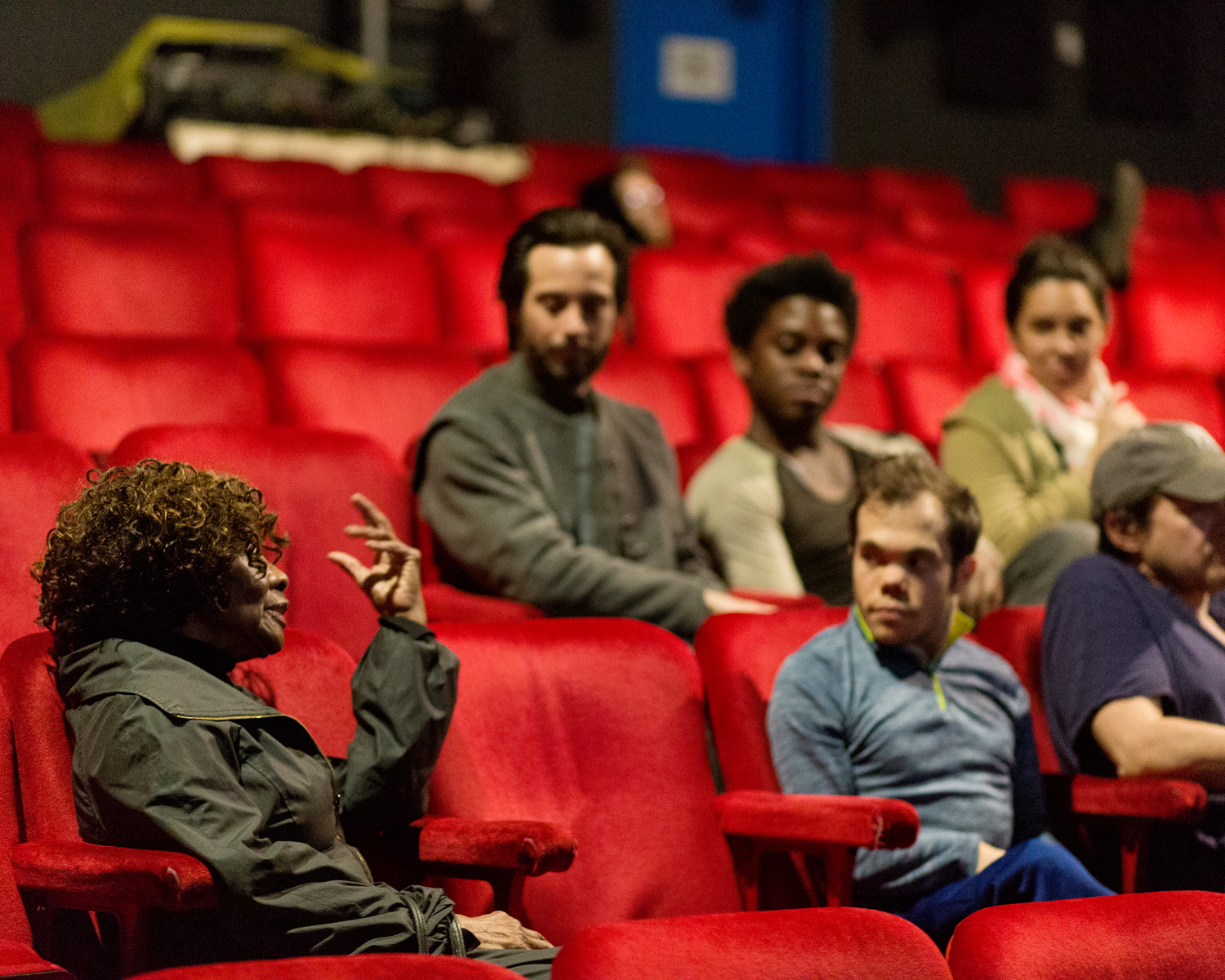
Two women and lifelong friends are stranded together in a faraway land. That deceptively simple premise is the impetus for Argentinian playwright Arístides Vargas’ poetic, funny, and poignant Donde el viento hace buñuelos (The Waters of Friendship), which will have a world premiere English production at LaTea September 16 through the 23rd. We sat down with director Jerry Soto and cast members Nicole Betancourt and Zahydé Pietri to discuss the play, their involvement in the translation, and how current events —particularly the devastation of Hurricane Maria on their homeland of Puerto Rico — have helped shape and illuminate this piece for contemporary New York audiences.


Margarita Javier: Tell us a little about yourselves.
 

Zahydé Pietri: I’m an actress and an artist from Puerto Rico. I’ve been living in New York City for almost nine years.
 

Margarita: What brought you to here to New York?
 

Zahydé: I worked a lot as an actress in Puerto Rico, in children’s theater and things like that. I felt like it was time to transfer to New York, to find more to do. I had already achieved all I could in Puerto Rico, but I wanted more. New York afforded me the opportunity.
 

Nicole Betancourt: I’m an actress from Puerto Rico, and I’ve been in New York over 22 years. I came here to study and never left. I grew up in a film environment. I’ve been acting here for a long time. I do a lot of voiceover. I used to run a program for children to teach Spanish through theater. But I got really busy, so I had to stop.
 

Jerry Soto: I’m the director of the play. I’m an actor, and this is my directorial debut, which is great. I’ve been acting in the city of New York for about seven or eight years. That’s how I came to the city of New York, through a play. I had been acting for a long time in Puerto Rico, and was invited to join the cast of a Spanish-language production called El caballero del milagro in New York. I came here to do that, and then I stayed. I also work for television, I work for the WWE, and I’m really happy to be directing this piece.
 

Margarita: The play is The Waters of Friendship, which will be at LaTea September 16-23. It is an English translation of a play by Arístides Vargas, an esteemed Latin American playwright who’s not very well known outside of Latin America. I was wondering if you could tell our readers a little bit about him and his work.
 

Zahydé: Arístides Vargas is an Argentinian playwright who was exiled from Argentina during the dictatorship. It was political persecution, and he had to leave his home. Exile is a common theme in his plays.
 

Jerry: I’ve been surprised to learn that even in Spain many people know who Arístides Vargas is. I wasn’t expecting that at all because they’re really proud of their own writers. And they really know him, more so than in Latin America. Every Argentinian knows who he is, of course. But being an author who writes the kind of theater he writes, it’s good to know he is known outside of Latin America. I also know that in the world of academia, many English speakers know his work as well. Now with this production and other works that have been translated, it’s a great opportunity for us and the rest of the world to get to know him.
 

Margarita: Correct me if I’m wrong, but this is the first ever English translation of his plays.
 

Zahydé: Of this play. I believe Nuestra Señora de las Nubes (Our Lady of the Clouds) has been translated and performed in English before. I believe it was in a college setting. Jardín de pulpos (Octopus’s Garden) was also recently translated and performed. But this is the first time that this play is going to be performed in English. The translation was done by a professor in Puerto Rico, Aurora Lozado. She’s been working with Arístides closely on a few of his plays. I believe they have plans to publish them in the future. She was very excited that she wasn’t only translating for it to be published, but for it to be performed on stage. That is part of her project as well. She translates for theater companies to put them onstage, and then hopefully get published.
 

The Waters of Friendship
 

Margarita: How did this collaboration come across?
 

Zahydé: I approached her. This is one of the plays that she had gotten permission from Arístides himself to translate, but she hadn’t worked on it yet. This project had been a dream of mine for a while. She had translated another one of his plays, Jardín de pulpos (Octopus’s Garden) and it was presented at the Julia de Burgos Latino Cultural Center in New York. I approached her and talked to her about this project. And she said yes! She was excited to work with actors, because she said I want to hear the words actually said out loud to know if the translation works. So we initiated a conversation, and kept in touch, and were able to work together to bring this English translation to the stage.
 

Margarita: What is your relationship with this play?
 

Zahydé: It’s interesting how this play came about. Rosa Luisa Márquez is a well-known professor from the University of Puerto Rico. She’s very close friends with Charo Francés, a Spanish actress based in Ecuador, and Arístides Vargas’ wife. She and Arístides run a theater company called Malayerba. He writes and directs plays in which Charo often performs. Rosa Luisa and Charo are very good friends. So they were like Let’s work together so we can see each other more often! They improvised scenes, they had conversations, and Arístides was always there, like a fly in the wall, writing down their conversations. Their stories became the play. The two characters in the piece are based on these women. So it’s a very personal play for both of them. Rosa Luisa was my teacher when I was in college, and I play the character based on her, so this is a huge and thrilling undertaking for me.
 

Nicole: I knew it as a great piece of theater. I hadn’t seen it. I’ve actually never seen it in Spanish. Arístides has a very specific style, which is surprising because that’s what a lot of people say. Oh I love Arístides’ style! But I hadn’t read it in years and I’ve never seen it. So for me it was interesting to see this from scratch, like it was completely new, having almost zero references, besides who the people in the play are based on. Zahydé’s character, Catalina, is based on Rosa Luisa, who is so well known to us, having been students at the university where she teaches. I didn’t study with her, but I knew of her and her work. So for me she was like a faraway icon. This was about her life and it was based on her improvisations. So that was my jumping point to this piece.
 

Margarita: What could you tell us about the play itself?
 

Jerry: The simple answer to that question is: Two friends — they meet, and one of them is dying. That’s the real simple answer to that question. But then it goes to so many different places. It’s a surrealist play, mostly based on these famous surrealist films and it takes a lot from it, sometimes through blatant references. If you’ve watched the film you understand the reference and have something to take from it; if not, you just heard a name, the play keeps going, no big deal. Sometimes it imbues what’s going on stage and the character. The character Miranda in the piece actually plays a dog, named Buñuelo, which is a play on Luis Buñuel, the famous Spanish artist and filmmaker. It’s explained a little bit in the text, and the translator, Aurora Lazado, chose to make more palatable and approachable for English speaking audiences who might not know either the filmmaker or how words and names work in Spanish.
 

Margarita: I had a question about that, because the title of the play in Spanish is Donde el viento hace buñuelos, which is a play on both Luis Buñuel and a dessert called buñuelos which is popular in a lot of Hispanic countries. And that’s very hard to translate. I was wondering, as native Spanish speakers having to do this play in English, how do you work towards making some of these culturally specific, hard to translate ideas and concepts for an English speaking audience?
 

Nicole: Maybe I’m wrong, but I don’t feel this is regional or that culturally specific. This play features different cultures: Argentina, Spain, Puerto Rico. They meet through the complexity, but also the simplicity of life, which is friendship, which is death, the emptiness, exile, immigration. I feel it was more of a challenge to translate because of the nature of the language as opposed to culture in itself. I think that that was probably more of a challenge. The poetry. How do you really translate poetry? It’s not easy.
 

Jerry: Translation is always difficult. You’re never satisfied, so we’ve had a lot of back and forth between ideas and what makes it more clear, what’s the best way to say it or feel it and then go through the motions. That’s why from the translator’s point of view it was great to have actors actually doing it. Even today as we’re running the whole play, sometimes I think Maybe that word is not working. Maybe it’s not the best way to communicate that idea. It is a challenge, starting with the title, which ended up being what it is. We’ve wanted to change it and at the same time it is what it is and it works really well inside the play. It’s not as good a title as the one in Spanish, but it works really well in the context of the play.


Margarita: Can you think of an example in the play where the translation actually illuminates or gives a different meaning to the text than the Spanish does?
 

Jerry: It’s funny, because I’m 100 percent sure that’s happened many times. I wish I could think of a specific example. This is a great question because there have been moments where I think Huh, this works better in English!
 

Nicole: The ending was written in a certain way, I’m not going to give it away [laughs]. But that was the beauty of Aurora, she was so open, and always going back to the Spanish, to be more honest or closer to the Spanish without changing it completely. And there are certain terms that even though they do have a translation, they don’t have the same weight. That was a challenge as well. Sometimes the whole sentence had to be almost rewritten, but to maintain the essence of what was being said or written in Spanish.
 

Zahydé: I always come back to “I don’t have a country, so what? I have a family and that’s wonderful.” That’s one of my favorite phrases in the whole play. We went back and forth on that line. The English translation is very different from the Spanish. But it didn’t work as a literal translation. What does it mean to say, “so what?” We just wanted to make sure that people understood that these two women are exiled from their countries and they found a home with each other and that’s what makes it so powerful. The friendship. Their country now is the relationship they have with each other.
 

Jerry: It’s amazing to think we’re almost playing the role of writer, or editor, whether we want to or not. And it’s complicated because you want to be faithful to the original, yet you also want to make sure the ideas come across accurately.
 

Margarita: I think that also happens not just in translation, but when you’re doing a piece from a different era and sensibilities have changed. How do we make it relevant to today’s audience while still being more or less faithful to the original?
 

Jerry: It’s also interesting, when you read the play in Spanish, one of the characters is from Spain, and the other from Puerto Rico, and you can really feel that in the text. It’s hard for someone to get rid of their own idiosyncrasies when it comes to language. So the Spanish from Spain feels from Spain, even though it’s really universal, yes, but only they talk like that, only they use certain words.
 

Zahydé: Or it comes back to specific themes. The character based on Rosa Luisa’s life talks about hurricanes a lot. This was written in the early 2000s, but it feels so relevant, not only because of what happened in Puerto Rico recently, but because it talks about immigration. It feels like it was written for today. Because of everything that’s happening in this country, we felt it was important to perform it in English because this is our side of the story. You have these debates about not letting people in, or who gets deported or not, and this is what we go through as immigrants, why we come to this country.
 

Jerry: The other character talks a lot about what a dictatorship is, and how it treats its people. And you can feel like maybe someone will hear that today and think about Venezuela, or North Korea, or any other country that’s going through that. That’s really interesting because we come back to what is really a universal theme.
 

Zahydé: In general, immigrants — at least in my case and a lot of people I know — don’t want to leave their country. I mean, many people do, but a lot of people leave because they need to. There’s a reason for it. We miss our language. We miss our homes. But there’s a reason why we’re here. And that’s also very important in the play.
 

The Waters of Friendship
 

Margarita: You mentioned Hurricane Maria, so let’s dive into that because all of us here are Puerto Rican, and this play is written by an Argentinian, but there’s a lot of Puerto Rico in it. It’s being presented for New York audiences. I feel like all of us, especially those of us who grew up on the island and still have family there, are going through this sort of collective mourning process that’s very hard to articulate to people who haven’t experienced it. I was wondering how you and your personal experiences and — I don’t want presume — your pain because of what’s happened, how that translates into the work that you’re doing with his piece.
 

Jerry: I see it in my perspective as the director, but I see it in the actors as well. It’s so there, even if we want it or not. Sometimes purposely putting, not even just the Puerto Rico story, but what’s going on with the Catholic Church, the abuse scandal. Everything that’s going on, all current events, even if you want them or not, they’re there. Sometimes we make nods at it. The Puerto Rico thing is there, because as Zahydé said, Catalina mentions hurricanes a lot. And this was written before this huge crisis, but it’s there, it’s impossible to diverge from it. It’s important, and it’s there. That’s one of the challenges that I’m making them face as actors. How do you deal with that? It’s suffering. You get mad. It’s going through all those emotions that we have in reality. How do you then do that on the stage? And that wasn’t necessarily the purpose of the text.
 

Nicole: I was recently in Puerto Rico, and I hadn’t been back since Hurricane Irma. I just got back three days ago. I had this fear of what to expect, the fear of seeing the houses that still have blue tarps instead of roofs. I still haven’t been back to my original house where my dad lives with his girlfriend, because it was so damaged. I was so scared to see all of that. And nobody in my immediate family passed away, so you have this gratefulness, which is weird, and it makes you feel selfish. Because there are so many people whose lives changed, probably forever. To see the deterioration of the island is infuriating because it’s almost like you’re losing your country. And what can you do about it, other than call for revolution which is almost fantastical? And going with what Aristides is doing in this play, he leaves his country during the time of The Dirty War and the “Desaparecidos” — the disappeared people. And then seeing what happened in Puerto Rico, the memorial with the shoes, the demand to give the victims of the hurricane a name. You don’t know what happened to some of the elderly, exactly how many people died, or where certain bodies are buried. It’s very similar to what happened in Argentina. Unfortunately, it’s almost like history is repeating itself in another way. One with a dictatorship and the other one through a natural catastrophe, but how it was managed is parallel to a dictatorship. That’s there regardless. Like Zahydé said, not having a country; that’s in the back of your mind. It’s there. I’ve been in New York 22 years, and I still say I go back home when talking about Puerto Rico. That is still home to me. I don’t think that ever goes away.
 

Zahydé: Catalina is a character that mentions hurricanes a lot. It’s been tough but also has been a way to cope with this tragedy. We’re actually going to be performing during the one year anniversary of when the hurricane hit Puerto Rico, on September 20. When it happened and there was no communication, we didn’t hear from our people for weeks at a time, because the communications were down, electricity was off. We were here, and we saw the images of the damage in Puerto Rico before they did. We knew what a disaster it was. We saw what was happening, but we couldn’t reach them to make sure they were ok. I felt like I was screaming everyday on social media. I would see someone and I couldn’t help myself, it was all I could talk about. Why aren’t we doing more? People are dying, or are going to die if there’s no electricity. People don’t have access to the oxygen or dialysis they needed, and that’s why so many died. But we’re finally getting an official death toll now, a year later. It’s a lot higher than what the government had officially told us. And we knew. Everything that we’ve been screaming about is finally being acknowledged. Even though, as Nicole said, we still don’t know the names of all the victims; they’re not all accounted for. So for me, playing this character is another way to deal with all that’s been happening for the last year. All that frustration, and sadness, and anger.
 

Margarita: Unless you are from Puerto Rico or know people from Puerto Rico that despair for those of us living outside Puerto Rico when we couldn’t reach our loved ones for days, maybe weeks, was excruciating and I don’t know if that’s something that people are aware of.
 

Zahydé: I don’t want to generalize, but my experience has been that most people in the United States don’t really understand what Puerto Rico’s relationship to the U.S. is. So they would ask, “How’s your family?” And all you want to do is scream. And having to tell them that we can’t really get any help from anyone but the U.S. because of the relationship that we have to the mainland. If the government of the Dominican Republic, which is right next door, wants to send ships with water and provisions, we can’t accept it because of laws the United States has imposed.
 

Nicole: Which actually happened. They wouldn’t let us accept help.
 

Zahydé: There’s no way for it to reach people because the U.S. is blocking every ship that isn’t from the U.S. And you would explain that, and people would say But why isn’t help reaching? What’s going on? You tell them why, and get the blank stares of Oh, oh, I didn’t know that.
 

Margarita: And also the complicated politics surrounding the reason why the infrastructure was so bad in Puerto Rico — which didn’t allow us to properly prepare — is because of our relationship with the United States, and the austerity measures that the United States have placed on Puerto Rico that are crippling our economy. It’s not just Donald Trump throwing paper towels. It’s all a result of this ongoing, very messed-up relationship between the United States and Puerto Rico that most people in this country don’t really know about or understand.
 

Nicole: When I was on my way back, I was in line at the airport, and there was a minor delay. This guy behind me was young, and he was super pissed. He turns to me, I guess he didn’t realize I was Puerto Rican, and he was like, I’ve been here for a month and I have to report to my superior. I’m just shrugging, then he starts ranting It’s a mess down here. I can’t believe it, you know, it reminds me of Detroit. And I’m like, so it reminds you of a state in the United States that cannot be compared with our political situation? And then he was suggesting that there should be martial law in Puerto Rico. All because there’s a line in the airport? Because it’s slightly inconvenient to you? And then of course I’m not going to engage in argument. He said he was from New York, Hell’s Kitchen born and raised. And he asked where I was from and I said Oh, I’m from here. And immediately he’s like Oh, no offense! And I’m like None taken. But that was the thing, you’re coming here telling me what should happen. And suggesting martial law as the solution? Do you even know what that means? All of a sudden it’s a country of complete chaos.
 

Jerry: How would you like if they imposed martial law in Hell’s Kitchen? [laughs]
 

Nicole: Exactly! Or Detroit, since you’re comparing us to Detroit.
 

Margarita: What, if any, are your expectations for audiences coming to see this who are not Hispanic or non-Spanish speakers?
 

Jerry: I’ve been telling people, if they want to have fun for awhile and think in a different way, they should come to this play. This is a mean thing to say, but I always say that this kind of theater is as smart as the person who’s watching it [laughs]. That’s the way it works. It’s not theater for everybody, I’ll say that. You have to be in the mindset to let it sink in, to just go with the flow of whatever’s happening in front of you. You go for a great time and you get a lot from it. It’s a powerful story. I did watch this play in Spanish many years ago, and to be honest, it wasn’t my cup of tea. It’s not my kind of theater. But I had a blast watching it. I loved it. I thought I would never do that, but I love it. It’s weird. I had never seen anything like it before. It’s so close to your heart. You cry and you don’t know why. It’s a thing of letting yourself go, and to me that’s priceless, because it talks about artistry. It talks about what Salvador Dalí was doing, even Picasso, or Jackson Pollock. People who think outside of the frame. That’s why they’re so good. From my director’s point of view, it’s just great. One of the things I’ve been working with them is the playfulness. We’re literally playing sometimes. And it’s amazing to see it happening because it helps a lot to the understanding of the scenes. I think it really comes across to an audience that will get a lot of ideas and a lot of specificity from what we’re doing.
 

Zahydé: Yes, it’s a very poetic play, and the structure is not linear. It jumps back and forth in time and it deals a lot with memory. But it talks about friendship, right? There’s nostalgia, there’s stories about your home and your family. It talks about many things that everybody’s familiar with. Everybody has friends, or has had a very important friend in their life that they maybe grew up with, or they have a family, maybe not a normal traditional nuclear family, but they understand what family is. So hopefully what we’ve been able to do is suck people in, with the games and the playfulness and the relationship that we have built between these two characters and then give them the heavy important things that we want to talk about. It’s a fine line. It’s a balancing act, so we’ll see. My hope is that people will be able to experience that back and forth. It gets heavy, and then it gets lighter.
 

Margarita: It’s also a very funny play. Outrageously funny at times.
 

Jerry: It really is. From the immigration point of view and all that, I think New York is interesting, because, yes there are native New Yorkers, but most people living here came from somewhere else. So even though it’s not the same as moving from a different country, you know what going back home is, you understand what it’s like to be living somewhere else. Some people pay more for a plane ticket to another state than we do to go to Puerto Rico. So there’s some empathy there to what that experience is like.
 

Margarita: Jerry, this is your directorial debut. How did this come about? Why did you decide to do this? What has that process been like?
 

Jerry: It was lucky set of circumstances that led me to direct this play, let’s put it that way. Most actors say I’ve always wanted to direct, and that’s true for me as well. Even though I never studied to be a director — I studied to be an actor — I have learned a lot through working with other directors. I have the blessing and curse to work on five to seven productions a year, which is great. So I’ve worked with a lot of different directors. That’s helped me feel like this is something I can do. I feel like I’m bragging, but I’m the kind of actor who other actors turn to for advice. So I’ve always wanted to experiment with directing, even though it’s scary. We’ll see.
 

Margarita: Everyone has to have a first one.
 

Jerry: Yeah, and this is mine. When I started acting, my first love was Henrik Ibsen. I’ve always loved realism. Chekhov, Ibsen, that’s me. And suddenly I’m directing this play, which is on the other side of the spectrum. And I love it because it’s getting to be like this amazing experiment; I can be weird and I can do unexpected stuff instead of just Move to the left, move to the right. I’m not saying there’s no value in that, of course there is, and I would love to do it one day, but it’s been an amazing experience for me to play, to actually play and to be open.
 

Zahydé: I mean, even though it’s not realism, there’s a lot of reality in this play.
 

Jerry: Yes. Also, it’s been fun to drive the actors crazy (laughs). Many times I know exactly what I want to do but I don’t tell them, and instead ask What would you propose? I think it’s worked because many times they come up with something that’s better than what I wanted to do [laughs]. So thank you.
 

Margarita: And you get to take credit for it!
 

Jerry: Yeah! [laughs] It’s like that saying that my job is not to have the best idea in the room, but to recognize the best idea. Hopefully I’ve done that [laughs]. We’re still experimenting and finding the perfect way to do things. It’s been great.
 

The Waters of Friendship
 

Margarita: Zahydé and Nicole, is there anything about your acting process both for this project and other projects that you’d like to talk about?
 

Zahydé: I feel like this is the biggest thing I’ve done, so it’s been a challenge. But It’s a very important play to me, and I want to feel that challenge of telling stories that matter to you. It’s been a lot of fun to play with Jerry and Nicole. A lot of what’s gonna be happening is a result of us being open to each other’s ideas. It has been different. Most of the time as an actor, people tell you what to do. But I’m finding myself participating in the process a lot more, which has been great.
 

Nicole: This may sound kumbaya-ish, but you do so many projects, and more so than the project itself, what matters is who you’re working with. That’s very important. I know this is more of a baby for Jerry and for Zahydé, in terms of how hard they worked to get the contacts and make all of it happen, and it sounds corny, but I feel privileged to be here, honestly. As an actor, I’m very stubborn [laughs]. Being open, recognizing that not only because of the nature of this play, it’s almost like it changes and morphs constantly. It even took Rosa Luisa and Charo two years to fully put this play together. This is a play that even if you continue doing it, it changes, which is something that is very exciting and scary to me personally. I’m dealing with personal stuff that I haven’t touched in many years, which makes it almost like a numbness. That’s also why I think when you asked what is your expectation of the audiences, I almost want to say I don’t care. I just want to be true to that presence.
 

Margarita: There’s a lot of Latino theater in New York City specifically, but it feels very isolated from mainstream. What has your experience been as Latino actors in New York city? How do you perceive the landscape? What do you think can be done to improve our level of representation in the arts?
 

Jerry: When you’re a member of a disenfranchised and oppressed group, one of the first challenges you get when you go to another country is the language. And like you said, there’s plenty of Latino theater in New York. Which is great, yet for so many reasons we don’t have a theater here that will accommodate 700 people. We just have very small houses. Which is not bad. Playing in small houses is a dream job for a lot of people. That being said, from an acting standpoint, when you come to another country, and you have to use another language, you have to master it. A lot has to do with training, and opportunity. For example, I have an agent for acting. And she said I’m asking you this because we have some rapport, what’s the difference between Argentinians and Cubans? It was like she was How do I broach this without being racist? [laughs] Because it’s tough. It’s difficult for other people to understand. And I told her, it’s like when you hear someone from Britain talking, you know they’re from Britain. If I hear someone from Cuba talking, I know they’re from Cuba. And if they’re onstage saying, “In Argentina we do this” with a Cuban accent, I get pissed because you should cast an Argentinian or get this person to talk with an Argentinian accent, or at least use a neutral one because it doesn’t make sense. It’s weird. So it’s a lot to do with that. And also, you just have to look at the numbers. Even when In the Heights was on Broadway, something like four percent of the workforce on Broadway was Latino. Only four percent.
 

Margarita: Looking at the roster of mainstream, major New York theater companies on and off Broadway, I can’t think of any major productions by Latino playwrights going on right now. Maybe there are some, but I can’t think of any.
 

Jerry: And yet we can think of many Latino playwrights. There are a lot of people writing; there’s no lack of great Latino plays.
 

Zahydé: And they’re writing about things that aren’t specific or relevant only to Latino communities. They’re writing about universal themes. There’s interesting and very good theater out there. But there’s a disconnect. And there’s a big Latino community in the US, and especially in New York City, but commercial theater doesn’t reflect this. I think it has to do with that stereotype. This is what a Latino person looks like, this is how they talk. And you go to auditions and they’re like Oh, do the accent! I’m like, What are you talking about? And they go Do a Puerto Rican accent! And I’m like But I am from Puerto Rico! [laughs] Are they talking about the accent of a Puerto Rican who grew up in New York? Because that’s a different thing. They just lack the imagination, or can’t understand that it’s bigger and more complicated than what they have been exposed to. We’re working on it.
 

Jerry: I’ve gotten Can you do it again but with a more broken English? [laughs] You sound too good. Um, okay I guess.
 

Nicole: I think that question has been asked for a really long time. Even theaters like this one, LaTea, how they fight to keep it open. There are actors who are constantly working whom you don’t necessarily know are Latino. I’m not saying it happens a lot, but when it happens it’s not always palpable. I also think that sometimes the Latino theaters are afraid of breaking the rules, and that’s why I think this play is so important. That we’re daring to do it in English; anybody can see it. Sometimes there’s some hesitation to breaking the rules within the Spanish communities. It’s a risk, and it’s understandable because you don’t want to alienate that core Latino audience. And on the other hand, I’m just tired; I’m tired of going to casting directors, and being told You don’t look Latina. I’ve been hearing that for the past 20 years. It’s starting to change, the reference is always Hamilton or In the Heights, like, come on man! We’re talking about Broadway mainstream. It’s a completely different machine of how it works compared to Latino theaters.
 

Jerry: Another challenge, maybe the challenge that many companies face, is also that they have to tell specific stories if they want to receive grants. They need to have a specific target. There are theaters that have to talk about immigration, or have to touch on certain themes because it’s the only way they can get money to produce theater. Hopefully we’re doing something by doing this play, which is a huge undertaking. Hopefully we can show the audience what we’re all about.


Nicole Betancourt is a versatile actress who develops characters for film, theater and web series. Most recently she can be seen as Melty Face, a co-star role for OITNB and a guest role as Officer Spanos for Start Up Season 2. Her theater credits include: The Madman and The Nun (Pregones), UBU ROI (IRT & INTAR), Storage Locker (IATI), Life Could Be A Sueño (HERE Arts Center & Teatro La Tea), The Vagina Monologues and A Taste Of Honey (under the direction of Susan Batson). Nicole is currently working on a one woman show as well as being the face and voice for various mainstream commercials on air. This performance is dedicated to those who couldn’t cheat death; Laura, Juanchi. And those who did, MC. More can be seen at NicoleBetancourt.com
 

Zahydé Pietri is a Puerto Rican actress, prop stylist and artist living in New York City. She has a BA in Drama from the University of Puerto Rico and has trained with Deborah Hunt in Puerto Rico, Juan Pablo Félix in NYC and with the prestigious theatre companies Malayerba in Quito, Ecuador and Yuyachkani in Lima, Perú. She’s been onstage in Puerto Rico, Ecuador, Perú and NYC. She’s particularly proud of the her work with the Improv Group IMPROpio in Puerto Rico, the sculpture and photography collaboration “Fresh Faces” with photographer Emily Dryden and the work she did with the Puerto Rican Children’s Theatre Group Desiderátum, where she got to collaborate with other artists in the creation and performance of larger than life masks and puppets. Favorite roles in NYC include Who in “Among Who, Whom and Ever” at LaTea, many roles for Writopia’s Worldwide Plays Festival and the title role in the upcoming short film “Adriana”.
 

Jerry Soto started his theatre career at the University of Puerto Rico and has trained with the prestigious theatre groups Malayerba (Ecuador) and Yuyachkani (Perú). Soto had his acting NY debut as Filiberto in “El caballero del milagro” (Lope de Vega) produced by Teatro Círculo. He was praised as Don Rodrigo in the critically acclaimed production of “El caballero de Olmedo” in Washington, DC produced by GALA Hispanic Theatre and Acción Sur (Spain). He has played many roles with Spanish Repertory Theatre including “En el nombre de Salomé” (ACE Award for Best Supporting Actor/HOLA Award for Best Ensemble) and his ACE Award nominated turn as Toñito in “La nena se casa”. You are about to enjoy “The Waters of Friendship”, his directorial debut! Set your mind free and engage. He is an announcer for WWE’s weekly Latin American TV Shows.
 

Posted on

A Conversation with Joniece Abbott-Pratt, Juliana Canfield, Harriett D Foy, Marie Thomas, and Michelle Wilson

The House That Will Not Stand


Marcus Gardley’s The House That Will Not Stand is an adaptation from Federico García Lorca´s seminal The House of Bernarda Alba inspired by real life stories of Creole women of color in New Orleans in the early 19th century who had, for a time, freedom and status allowed due to their romantic relationships with powerful white men. While covering somber topics like the evils of slavery, racism, and the patriarchy, the play is a joyous celebration of black women. It is running through August 19 at New York Theatre Workshop. We sat down with five of the talented women who make up this all female cast–Joniece Abbott-Pratt, Juliana Canfield, Harriett D Foy, Marie Thomas, and Michelle Wilson–to talk about the play and its resonance to contemporary audiences.


Margarita Javier: At the beginning of this play, Beartrice Albans, a Creole woman of color, is facing the death of her wealthy white lover, and her inheritance and what will happen to her three daughters is in question. What can you tell us about the character you play?
 

Joniece Abbott-Pratt: I play Odette. She’s the youngest of the three sisters and she is identified as the romantic, all heart. At first, life is great and things are beautiful. Even though the father just died, I think that she is able to find the beauty and joy and love in everyone around her, until her identity is questioned, which makes her question how she feels about everyone else around her. And then you get to see her transform into this other person who’s trying to, in stages, reclaim herself.
 

Marie Thomas: I play La Veuve, who is in many ways an antagonist to Beartrice. Nobody that’s hateful or a villain thinks that they are, except sometimes this character does. Quite frankly, I find her an interesting person in that she’s so very confident, except she’s not, because she’s been hurt and she’s been talked badly about by Beartrice. We learn later in the script that she did a number on Beartrice too, but she still holds some kind of vendetta and wants to see her hurt. The one quality that I admire is that she likes the girls and she doesn’t want the girls to be hurt. I’m enjoying playing this person because I just finished playing a lady who was 103 years old, and she was a lot different to this character. I have many sides to me that a lot of people have not seen because I’ve not been out here for a while. I took a leave of absence doing other things, but I’m enjoying the energy that I have to find once again to play these kinds of forthright, direct, aggressive kinds of people. The thing that interests me most at the very end is when she’s having a conversation with Beartrice. I think LaVeuve has some sympathy to what she’s going through, but I don’t have an opportunity to show that except to soften my last line to her and hope for the best. One dimensional characters don’t exist in life, you know, so I’m always trying to find the one place where she is a decent human being.
 

Juliana Canfield: I play Maude Lynn, the middle daughter. She’s the most invested in her Catholic faith. I think she uses her religious piety as a framework for her tendency to nag and to tattle and to worry. Those personal tendencies are very enmeshed with her religious fervor.
 

Michelle Wilson: I play Marie Josephine, Beartrice’s crazy sister in the attic. I think the question quickly becomes: How crazy is she? She’s passion and freedom. What do you do with a woman who doesn’t behave or follow the rules? She’s haunted. She’s haunted by her own inability to really break free. Why doesn’t she leave the house? Because it’s terrifying there. And so this cat and mouse game is a lot more satisfying when you have so much fear.
 

Margarita: Have you read The Madwoman in the Attic? It’s a feminist literary text, the title is based on Charlotte Bronte’s Jane Eyre. There’s a character who locks up his wife who was a Creole woman in the attic because she was supposedly insane, and it becomes a metaphor for men and the patriarchy trying to suppress women.
 

Michelle: It’s interesting because in this play, Beartrice does it. It’s hard at times to have empathy for her because she rules with such an iron fist. It feels like she’s just reinforcing the patriarchy when in truth, the play reveals that she’s just trying to protect everyone the only way she knows how.
 

Harriett D Foy: I play Makeda, the slave house servant to the house of Albans. She is the heartbeat of the house, she is caretaker, nurturer. She’s fighting with all her life to get her freedom; whatever she has to do, she’s going to get it. She’s a strong leader. She’s fun, she’s intense, she’s honest.
 

The House That Will Not Stand
 

Margarita: Coming into this play, I knew that it was an adaptation of Federico García Lorca’s The House of Bernarda Alba, which is a play I know very well. All your characters have a counterpart in that play, the plot is similar, there are a lot of thematic links. I’m curious about your level of knowledge of that play. Did you know it coming into this project? Have you read it?
 

Harriett: Yeah, I read it. I did a reading of another adaptation of this play a long time ago. I think this was just starting anew with hints of Lorca’s play, and we touched on it, but after that we just created this piece on its own.
 

Margarita: One of the links between the two plays is the patriarchy and the treatment of women. What I find interesting about this play is how there are all these different things that are very much of the era: there’s slavery, racism, the patriarchy. But you could set this play today and it would feel very current. I was wondering if you could talk about the way this play speaks to modern audiences and our current political discourse.
 

Juliana: One thing I love about the play is that yes, it deals with all of those troubling aspects of our history and our present. But I think Marcus has done a really incredible job of making the spirit of the play one that’s ultimately positive, and that refuses to buckle under those historical realities. I think that feels very resonant today. The whole Mahalee Congo sequence with Makeda and Marie: Josephine and Odette reminds me of this instagram trend of, you know, #blackgirlmagic, which feels like this reclaiming of all the different ways in which blackness and femininity can be beautiful and how there’s not just one way to be a black woman. I think that there’s a real resurgence of support for that multitudinous representation. That’s my favorite resonance in the play.
 

Michelle: The idea that it’s so difficult to protect your children in this society, you know? We’re watching babies be snatched from their mothers. What do black mothers have to tell their children before they go out of the house? My daughter attends Smith. She’s staying up there this summer to work in a lab and one of her fellow RAs, the police came in like What are you doing here? What is the message? That you’re a suspect in white spaces? You’re always just renting space in this world, right? I mean, the rules can change. You can be of a certain caste or class now and still, there is no safety because our thinking is so fear driven and power driven, and it’s exhausting. But I do love that there’s a sense of triumph in this play, that in spite of all of these dynamics–they’ll deal with the consequences and there will be consequences–but in spite of all that, their sparks have not been extinguished.
 

Margarita: Yeah, I agree. It felt very much like a love letter to black women and you can tell the author loves black women.
 

Michelle: That’s it, Marcus, he just loves us so fiercely in our individuality, you know? We’re not just this one type of woman. It’s really quite profound.
 

Margarita: I read in the program that many of the actors collaborated with Marcus on the development of the text. Can you elaborate?
 

Harriett: I’ve been involved since the first reading. Marcus is always open to hear how things flow in your mouth, or if you get to a certain passage and you’re having trouble getting it, he talks to you, you’ll listen, maybe fine tune it. The Mahalee Congo piece that Juliana: mentioned earlier wasn’t in the original version. We were working at New Dramatists and he said it came to him at night and he thought Makeda needed to say something else to Odette. It wasn’t so easy to wrap it up, so he brought it in and it was like five pages and I was like What is this? He said Just read it! So that’s what I did. We’ve always been in synch in terms of his language. He has a great ear. He’s very specific about his text, because it flows. You can’t adlib. It would mess it up.
 

Michelle: You can’t even change a word. You have to ride the words and there’s freedom in that.
 

Juliana: It’s like Shakespeare, can’t have one too many syllables.
 

Joniece: He’s a poet top to bottom.
 

Harriett: It’s poetry. Lush, dense, beautiful, sexy poetry.
 

Michelle: And Lileana is like, And keep it moving! [laughs] Because you’re languishing.
 

Harriett: And you have to have great breath control.
 

Joniece: That is so true. There’s moments when I’m like, Oh girl, you got to hold on to the breath, just to make it work, to make it land the way it needs to.
 

Marie: Sometimes you might mess up a line because you’re trying to breathe somewhere along the line.
 

The House That Will Not Stand
 

Margarita: You mentioned Lileana Blain-Cruz. How has it been working with her as a director?
 

Marie: I personally like it. I like her spirit, and I like the fact that she will tell you what’s good and then tell you what’s not in such a way so you don’t feel bad. An actor is a very sensitive human being. As much as we think we know things and we have great self esteem, there’s no such thing as paying your dues, or going “I got this now!”. Learning is continuous. On opening night, she was very complimentary, very kind, and we were walking up to the opening night party together, and I said I knew I had to learn the lines, but I had to learn them my way. I can’t just say words without some meaning behind them. So in the very early stages of our rehearsal, because my character opens the show, I felt uncomfortable a lot of times because I wasn’t sure where I was going. Lileana was very good at understanding and accepting that, and helping to bring it in. And then finally, you know, my organism stepped into it and then I could carry it from there. I like her spirit and I liked the fact that she will work until she gets it. And you might not like what you’re saying, you might not want to do it, but the director sees. We feel. And we have to go by what the director is doing.
 

Michelle: She’s sneaky like that though. She trusts the actor so much and she’ll almost let you wear yourself out with your idea.
 

Harriett: She creates a safe space–it’s fun, it’s open, you can try anything. She also loves music so that if we’re having a bad day, she’d put on some great music and we’ll just move about and we all come together spiritually and it’s like we’re on the same level.
 

Joniece: She has a very positive energy when she comes into the room. That’s always helpful and I appreciate it.
 

Margarita: Marcus also was inspired by stories from his family in New Orleans and the Plaçage system, which is not often spoken about. I was wondering if you could explain to our readers what that is.
 

Harriett: It was a common-law marriage between women of color and their white counterparts, who also had a household on the other side of town. It was a sort of business agreement, but yet there was love, at least in most cases. If the man had a lot of money, it was very beneficial to the woman of color. These women were pretty much money in this town, helping these men keep their businesses. But those arrangements were frowned upon by the Puritans when they started coming back. So it all was coming to a head at that night when the Louisiana Purchase was about to happen.
 

Michelle: It’s a caste system. And it’s an extra layer of caste system, because it was a contrast to the Puritans, who don’t own their sin. Do you know what I mean? They didn’t recognize their illegitimate children. They would sell them off.
 

Marie: A lot of the women from France couldn’t get to Louisiana because they were so delicate and many of them would die when they were traveling. The men would arrive, and here were these beautiful black women who were very attracted to these men. What was the thing Marcus said about the hair? White woman were very upset about the black women’s hair.
 

Michelle: It was so exotic.
 

Marie: So then they made them wear the hair wigs, they made it into a law. They even made the hair gear more exciting to look at.
 

Michelle: But everything has a cost. What I think is interesting about this and how it’s explored in the play is the question, what is freedom? If your freedom is dependent on how close you are to whiteness, is it really free? They’re free women of color, but they’re about to be stripped of their inheritance.
 

Margarita: And the play also explores internalized racism, like how the eldest daughter tells the younger sister that her darker skin is not attractive.
 

Michelle: We still have that.
 

Marie: We 100% really have that in the South. I grew up with that nonsense. My father used to say, when talking about hair “All hair is good as long as it covers the head”
 

Margarita: Luis Rafael Sánchez, a Puerto Rican author, wrote an essay about racism in Puerto Rico called Pelo malo or “bad hair” because there’s a lot of internalized racism in Puerto Rico despite our African heritage. In the essay he states that the only “bad” hair is hair that falls off.
 

Michelle: Yeah, and it’s talking about worth and how we as women are still dealing with all this worth placed on us outside of ourselves. What is valuable? What makes you valuable?
 

Harriett: I remember going to Puerto Rico because my boyfriend at the time was Puerto Rican, and we went to the museum and saw where Puerto Ricans were made from, a heritage of African and Spanish and Native. But I could see people judging us, because he was very fair, like you, and I was very brown. So we would drive down to Carolina and it was like, Oh, so this is where the brown people are. So yeah, it’s a little intense in Puerto Rico.
 

Margarita: Yeah, that idea resonated with me when I saw the play. I think it’s the evil of colonialism. Even though you’re a colonial subject, you’re still being led to believe that whiteness is the ideal.
 

Harriett: But then in the summer, why does everyone want to get tan and darken the skin?
 

Michelle: It’s a mind fuck. It’s so seeded. And they still have power.
 

Margarita: That’s why it’s so powerful when Makeda gives that speech about embracing the beauty of blackness. It’s a very empowering thing, and it’s a celebration of all black women, darker skin, lighter skin, it doesn’t matter. It’s all part of a shared heritage.
 

Harriett: Our young girls have it too. I saw a video on Facebook, it was a round table discussion with teenage girls, all around 11 or 12 years old. A brown girl was speaking, a very beautiful girl with long hair. And she was saying how she thought she was ugly because she was brown. There were kids of all colors there, and they were trying to encourage and tell her, No, you’re beautiful! I wish I had skin like that. I wish my eyes were like that. But she was hearing none of it. It was so sad to see that already built in. And where is that coming from?
 

The House That Will Not Stand
 

Joniece: That’s interesting to me because I’m dark. But I didn’t experience dark being bad until I got to graduate school, when I was good and grown. And it was a shock to me. I went to a historically black college so I knew what the Brown Paper Bag Test was and all of the issues around color, but I had never experienced it directly. I remember calling my mother and saying How did you raise me? Because I don’t understand how I was able to avoid hearing things like You’re pretty for a dark skinned girl. I never experienced that. I had to call my friends and be like Did I miss something?
 

Juliana: It’s like Odette!
 

Joniece: I was also born in the north. I was raised in Philly and like Marie said, that’s something that I imagine maybe happened more in the South. I’m just just speaking to my experience growing up in like the eighties and the nineties.
 

Michelle: I think it was some class stuff too. I mean when I was growing up there was a lot of classism.
 

Marie: That gets ridiculous after awhile. I guess for all of us who’ve experienced these kinds of caste or color issues, it depends on our families and how strongly they were teaching us that we were okay. We all probably have many different complexions in our families because of slavery, because of segregation, because of all of that. So I never even thought about it too much. I knew it existed. I hated the thought of it. I don’t like being compared. I don’t like being in a situation where I have to be like everybody else. That’s so Southern, so middle class, and that’s so bourgeois. I had to get the hell out in order to be different. I couldn’t be different because everybody else had to do the same thing that everybody else knew. That irks me, down to my core. This play is wonderful and I’m excited to be in it and to translate any kind of message that will make somebody think about what’s going on now.
 

Margarita: When I saw the play, there were a lot of black people in the audience, and there was so much palpable energy.
 

Joniece: It’s a different play when it’s a majority white audience. When there are a lot of black people, every single line or moment that has some juice in it; they get it out, you know. It seems different when it’s…I don’t even want to say a black audience, but, like the culture.
 

Margarita: The energy changes.
 

Harriett: But as actors, we can’t judge the audience. You may be tempted to push when you’re not getting that response, but sometimes you have to live in the moment. Sometimes people are crying, they’re listening. We transported them to another place.
 

Margarita: Right, people respond differently to art, there’s no right or wrong way to appreciate it.
 

Juliana: It’s fun to have a raucous show where there’s a huge response, but there’s also something really powerful about feeling an audience that’s listening and working really hard to understand and absorb something new. And to feel like we’re giving certain audiences something they’ve never seen or heard before is really special.
 

Marie: Sometimes people rise to their feet after being quiet all this time. They’ve been enjoying it in their own way. Sometimes the raucous audiences annoy me. [laughs] You have to be careful when people are so involved, and so on every joke and line. They will take over the show. I’ve seen that happen and you have to stop, breathe and allow them to finish and realize it’s not their place to continue to laugh for 20 minutes.
 

Joniece: I think ultimately it’s a shared experience no matter who the audience is. They are in it, whether they’re just sitting here and listening and observing everything or having a very visceral vocal response to it. It’s a shared energy.
 

Marie: You don’t have theater until you have an audience.
 

Margarita: I agree. What I was trying to get to is that there’s something really great about being surrounded by people who are part of your tribe, and where you feel you can express yourself. I think for a long time, theater has felt like a very white space, and it’s important for theater to make all audiences feel welcome.
 

Harriett: We have had black people come to the show in a mostly white audience, and they wanted to cry out but they felt they couldn’t do it. And then you have the opposite, where they’re sitting there looking at us wondering Do I join in?
 

Margarita: I think that it’s important when we talk about wanting to diversify theater to not just focus on what’s being presented onstage, but to also talk about the audience. There’s a perception that most of the people who go to the theater are white, but I think a lot of it has to do with how welcoming it is or isn’t to non-white audiences.
 

Harriett: Theater has to be reaching out to everyone. You can’t just do one show of color and expect that people of color to just come. You have to already be engaging that.
 

Michelle: Dominique Morisseau has those Audience Rules of Engagement that she did for Pipeline and it’s like you can laugh, you can express yourself or not. The Public did a survey where they were asking people how they feel about the theater, their concerns, etc. And do you know what the number one question people had was? What do I wear? Yeah. People do not feel like they can just come and be. They feel like there are all these rules. But who cares what you wear? Somehow that’s not getting translated, and I think that doing more plays like Sugar in Our Wounds and this one, where you bring people in to have an experience together in time and space is really important. This is subversive. Putting this up on stage. Seven women of color who are speaking their truths.
 

The House That Will Not Stand
 

Joniece: There’s something about black women telling a story about black women. We are making history and telling history at the same time.
 

Margarita: And it’s for black audiences. It invites an audience of any type, but it very much feels like this play is for black audiences in particular.
 

Joniece: And I’m excited about that.
 

Juliana: I think it’s pretty great. There are posters for the show all over the city in the subways and I feel like that’s a really groovy way to get people to come who aren’t just the old, blue haired crowd, and to make it feel like kids can come see this. It’s not just like, you know, whatever The Rock’s new movie is. It’s also Look at this other thing that’s a cultural event! And they did something really smart too, by putting all of our faces down at the bottom of the poster. At first I was like That’s kinda weird. But then I realized that if someone sees that and they take five seconds to look, they’re going to see that it’s all women of color, and that’s an invitation.
 

Marie: Vinnette Carroll was a wonderful director and she said that people like to see women on stage. Attractive women, as she kept saying. [laughs] What that meant to her, I don’t know. But I’m glad to see plays about women. Mr. Wilson was very wonderful. However, his plays had one woman, maybe two women. His plays are done all the time and it’s time for the #metoo generation or whatever you want to call it. It’s time. Wake up, ladies. It’s time to show up. Women directors, young women directors and playwrights. I had the privilege of meeting Lorraine Hansbury many years ago, and she of course was on Broadway with A Raisin in the Sun, but that was it. She said We need more writers. She said that then. And it’s happening now. I think it’s just extraordinary.
 

Margarita: And if you want to create new artists, you have to attract them in the first place.
 

Marie: And have some place for them to show their work. The National Endowment of the Arts around 20 years ago made it a rule that regional theater has to do at least one show that is African-American oriented. So then all of a sudden here they come looking for us because they knew they had to have at least one. And of course it was always done in February [laughs].
 

Joniece: One thing that’s been very exciting is seeing the reaction from my peers or colleagues, those other black actresses who see this show and they’re moved and affected and appreciate seeing us on stage, because we’re a reflection of them. It’s so rare to get this opportunity. Harriett and I made a list of all the plays that we could think of that just had black women in them. We might be working on an Anthology.
 

Juliana: How many could you think of?
 

Harriett: Was it fifteen?
 

Joniece: No, we came up with twelve. Just twelve plays with only black women in them.
 

Margarita: Do you know anything about the set designer Adam Rigg? The stage is stunning. In Lorca’s play the whiteness of the house is a big thematic element, and this design echoes that beautifully while still being very reminiscent of New Orleans.
 

Juliana: He went to the Yale School of drama with Lileana, so they’ve been collaborating for almost a decade. Lileana did Doctor Faustus Lights the Lights, the Gertrude Stein play. The fact that I know this reveals the extent to which I stalked her online. [laughs] He designed her thesis many years ago and they’ve worked together since.
 

The House That Will Not Stand
 

Margarita: You have been extended through August 19th, congratulations. Why do you want people to come see this play?
 

Marie: Cause it’s good! And the acting is wonderful! [laughs] It’s got all the elements. Conflict, love and humor. Like life itself. You don’t have to sit and be scared to breathe because something tragic will happen any given moment. Then something happens to make you laugh. And then something happens to make you see the love. It’s got all the elements and it’s very well put together.
 

Michelle: Monica Williams who is a director and does some dramaturgy was saying that this is like the epitome of black theater, right? It’s got the spirituality and it’s got the lyricism. It’s dealing with literal issues and what’s oppressing us, but it’s us having this conversation, do you know what I mean? Not someone coming in and doing the oppressing. It’s got pageantry. It’s like a culmination of everything that we’ve been doing for ourselves at National Black Theater and these small theaters where we were trying to work out these themes. It’s all come together under the auspice, but with so many resources and talented women.
 

Joniece: I just had this thought. One thing I love about women, and black women in particular, is that I know that if I need nurturing and love and support and healing, that I can go to my sisters and they will cover me and take care of me. I think that audiences feel that when they come and see this. There is love and nurturing and support and they are welcome to be here.
 

Juliana: Someone said that to me at opening. She said, I’ve been going to the theater for 60 years and it’s rare to feel that quantity of love among the company, so much so that it spills out into the audience. I thought that was a very kind and beautiful observation.
 

Margarita: Yeah. Not that feminist theater has to be all women, but there is something about seeing only women on stage that’s so powerful just on its own.
 

Marie: We are powerful. Sometimes we don’t realize it. Because we live in a patriarchal society. I’ve never felt less than any man in my life, including my husband. I’ve never been anybody’s shrinking violet. I didn’t come from that kind of environment and I don’t intend to in my life, which is why I left a place where everybody had to be a shrinking violet. Can’t do it. I guess in my personal history, it’s right on for me to be able to do this play at this junction in my life and I feel very appreciative of it. I’m inspired by all of this talent around me. It’s very competitive. [laughs]
 

Michelle: But it’s ambitious as shit. There are a lot of moving parts. I feel like we’re trying to bake a cake and everybody’s got different ingredients.
 

Marie: Please understand what I mean about competitive. I’m talking about good competition. It makes you rise to the occasion. There’s not a moment when I’m like Ooh get off that stage!
 

Michelle: And that’s it. We’re all baking the same cake and we have different things to add to it. I remember when it started to come together, during previews and was like Oh shit, now that’s lovely!


Joniece Abbott-Pratt New York: The Good Negro (Public Theater). Regional: Sunset Baby (City Theatre), Seven Guitars (Actors Theater of Louisville), The Mountaintop (Geva Theatre), Seven Guitars (No Rules Theater Company), The House That Will Not Stand (Berkeley Repertory Theatre and Yale Repertory), Stick Fly (Arden Theatre), A Raisin in the Sun (Palm Beach Dramaworks), Slippery as Sin (Passage Theatre), Ma Rainey’s Black Bottom (Huntington Theatre Company), Gem of the Ocean (Hartford Stage), The Piano Lesson (Yale Rep and Delaware Theatre Company), The Good Negro (Dallas Theatre Center), Mama’s Gonna Buy You (William Inge Theatre Festival), Dirt Rich (NY Summer Stage), Stick Fly and The Overwhelming (Contemporary American Theatre Festival), False Creeds (Alliance Theatre Company), Breath, Boom (Synchronicity Performance Group) and The Doll Play’s (Actor’s Express). Television: “Instinct,” “Blindspot,” “Law & Order: SVU,” “Orange Is the New Black,” “Show Me a Hero,” “Luke Cage.” Training: Clark Atlanta University; MFA–University of Iowa.
 

Juliana Canfield: Juliana recently starred in the Theater for a New Audience production of He Brought Her Heart Back in a Box, in what the The Hollywood Reporter called an “affecting performance,” New York Magazine lauded it as “luminous,” and The New York Times hailed as “perfect.” She followed that with a performance in the Fourth Street Theater’s production of Zürich, opposite Paul Wesley, that The New Yorker called “especially good.” Juliana recently shot a recurring role on the highly-anticipated upcoming HBO series “Succession,” opposite Brian Cox and Kieran Culkin, and directed by Adam McKay. She graduated with an MFA from the Yale School of Drama.
 

Harriett D Foy Broadway: Amelie, Amazing Grace, The American Plan, Mamma Mia and Once on This Island. Off-Broadway: X or Betty Shabazz vs The Nation, Rimbaud in New York (BAM), On the Levee (AUDELCO nomination) and Crowns (AUDELCO Award). Original Cast recordings: Amelie, Amazing Grace, Inside Out, Lone Star Love and Reunion. Regional: Nina Simone: Four Women (as Nina Simone – Arena Stage); Ella: First Lady of Song (DTC); MotherFreakingHood! (NYMF – Outstanding Individual Performance Award); The House That Will Not Stand (Yale Rep, Connecticut Critics Award Nomination; Berkeley Rep, Theatre Bay Award); dance of the holy ghosts (Yale Rep); Breath and Imagination (ArtsEmerson); LMNOP (Goodspeed); Ambassador Satch (Dubai); The Women of Brewster (Helen Hayes Nomination), Polk County (Helen Hayes Nomination) and The Piano Lesson (Arena Stage); Reunion (Ford’s Theater – Helen Hayes Nomination); and Seven Guitars (Center Stage). Film: Winter’s Tale, Collateral Beauty. Television: “Welcome to the Wayne,” “Orange Is the New Black,” “Rescue Me,” “Law & Order: SVU,” and “Law & Order.” BFA in Acting – Howard University “WGATAP!”
 

Marie Thomas recently returned from the Goodman Theatre in Chicago playing Sadie Delaney in Having Our Say. She played Nina Dubois in Charles Smith’s Knock Me a Kiss in New York at the New Federal Theater, the National Black Theater Festival in Winston Salem, NC, and at Crossroads Theater in New Brunswick, NJ. She received the Audelco Award for Best Supporting Actress for her performance. Also at Crossroads Theater, she was Sister Moore in the Amen Corner and Dorabelle in The Disappearance with Ruby Dee. Other Theater credits include The Summer House at The Passage Theater in Trenton, NJ; Goneril in King Lear, starring Avery Brooks, at the Yale Repertory Theater in New Haven, Connecticut; Samm-Art William’s The Dance on Widow’s Row at the New Federal Theater in New York and The National Black Theater Festival. She was Pam in Richard Wesley’s, The Talented Tenth in New York and in Atlanta at the National Black Arts Festival. She received an Audelco Award for Best Actress for her performance of Pam and an Audelco nomination for her performance in An Evening with Josephine Baker Off-Broadway and at the National Black Arts Festival. She has appeared on Broadway in the musical Don’t Bother me I Can’t Cope and at Lincoln Center in The Duplex and Antigone. Television and film credits include “The Cosby Mysteries,” “L.A. Law,” “Knots Landing,” “Amen” and on the daytime dramas “The Doctors,” “One Life To Live,” “As The World Turns” and the film Hot Shots
 

Michelle Wilson is best known for her Tony-nominated performance in the Pulitzer-Prize winning play Sweat. Wilson played long-time factory worker Cynthia, a role she originated off-Broadway at the Public Theatre before the show transitioned to Broadway with incredible reviews. In 2017, Sweat received three Tony award nominations including Best Play, and Best Performance by an Actress in a Featured Role for Wilson. Wilson’s other notable theater credits include A Raisin in the Sun, Detroit ’67, Follow Me to Nellie’s, Fahrenheit 451, Two Trains Running, The People Before the Park and more. Wilson also had memorable turns on the small screen in “The Good Fight,” “Blue Bloods” and “E.R.,” as well as in indie films Nehemiah, Sink and The Bicycle. Wilson can be seen next in the indie film The True Adventures of Wolfboy alongside Jaeden Lieberher and John Turturro. The film is currently in production.
 

Posted on

A Conversation with Darrel Alejandro Holnes and Jonathan González

Bird of Pray


Darrel Alejandro Holnes’ Bird of Pray (recently featured as part of the Brick Theater’s Festival of Lies) beautifully uses spoken word, language, and dance to illuminate issues of race, sexual identity, depression, PTSD, and the high suicide rate among U.S. veterans. We sat down with Darrel and choreographer Jonathan González to discuss their collaboration and creative process.


Margarita Javier: My pronouns are she and her. Could you introduce yourselves and say your pronouns?
 

Jonathan González: My name is Jonathan González and my pronouns are he and him.
 

Darrel Alejandro Holnes: My name is Darrel Alejandro Holnes and my pronouns are he and him.
 

MJ: What can you tell us about the play, Bird of Pray?
 

DAH: Bird of Pray is about two characters who are African-American veterans and navigating the world of PTSD and mental health as one of them contemplates suicide, and the other appears with an interesting proposition: don’t kill yourself. Why don’t you share your body with me and together we can live a better life? So there are elements of magical realism in there, but it’s really based on several interviews that I’ve done with African-American veterans of the war in Afghanistan and the war in Iraq.
 

MJ: And what prompted your interest in having those interviews?
 

DAH: I was really inspired by conversations that I was having with veterans who are friends of mine, as well as folks that are connected to the military community through their family members. Growing up in Panama, I lived part of that life on military bases and have been a part of the military community because of that. I’ve kept in touch with a lot of those folks over the years and even contemplated enlisting myself. I think this is a part of that journey.
 

Bird Pray
 

MJ: There’s a lot of dancing and movement in this play. How did you become involved, Jonathan?
 

JG: I think Darrel first contacted me about the work in its inception. What he was realizing after the residency appearance they had together was that he had an interest for movement — to see how movement could do what I think it’s now doing in the work. It doesn’t just supplement the text. It also provides an atmosphere and an arc of the body. It really speaks for itself in many ways without speaking a word. I think we spent that time trying to figure out what that could be.
 

MJ: What was that creative process like?
 

DH: I think of it as a symbiosis. We started with the text because I had already written out a description for how I imagined the dance to be, and then I shared that with our director, Mimi Barcomi, and he added shapes as to how my vision of the dance could fit his vision of the overall play. And then that was transferred over to Jonathan who came in and worked with the actors and modeled the dance, or made the dance on the actors who were really dancers.
 

JG: Josiah Vasquez plays the vulture in the work. He’s the one body that you see not speaking, moving throughout.
 

MJ: Yeah, he’s moving in the background throughout the entire piece. It’s really interesting how your eye goes from the action, to the dialogue, to a movement and creates this beautiful relationship between all of them.
 

JG: I think we had that discussion before about trying to choreograph the vultures and understanding that they kind of functioned as a Greek chorus. Behind this veil, they reveal certain things, or they post commentary on certain things that are happening between the two.
 

DH: I was really excited by some of the ideas that Jonathan brought to the table, including having the vultures parallel some of the movement that the actors were doing on stage, and some of the tension between them. And so, in that narrative movement, we dive deeper into the metaphorical language of the play: their metaphors and the words, their metaphors and the actors, their actions and movement. There’s also a metaphor in the dance.
 

MJ: You mentioned the director Mimi Barcomi. How did you get involved with him for this project?
 

DH: I met Mimi at the Lincoln Center Directors Lab last summer and he reached out to me after seeing a reading of Starry Night, one of my plays, at the National Black Theater. Mimi was really inspired by that. He said Let’s collaborate. Let’s get something on its feet. And I was like Well, I have this play from a couple years ago. And back then the play was called Trigger. I decided to dust off the second act in Trigger and share that with Mimi and see what he thought. He was really excited about it and that started the process of turning that second act into its own play. And I’m really grateful to The Collective New York for giving us a residency, and the Arch and Bruce Brand Foundation for a production grant that helped to finance that residency. It really helped to make the play what it is today.
 

Bird Pray
 

MJ: The play deals with a lot heavy themes: mental illness, post traumatic stress disorder, suicide. How do you approach talking about these themes in a respectful way, in a way to shed light on these issues?
 

JG: I think I’m going back to what you were asking before. The way that the movement was brought into the work was that the script was presented to me with certain highlighted sections. There were a lot of buzzwords and was I willing to scaffold something? Because I don’t think the process at large was about setting anything. Nothing is actually set. There’s a lot of ideas about how to improvise around certain concepts and keywords. That brings us back to this question about PTSD and these threads in the work. What were the words inside of the texts that were activating movement and how can those become most apparent? So I offered kind of anchors of movement or ideas of inspiration for how the body can move, and kept it consistent with the character and the plot as it was developing. Where I think you might see a contrast is with Josiah, for which maybe there is a kind of essence of leaning into a modernist dance, or something that’s about form and falls between being about meaning. It’s a very formal sculptural movement. What’s happening between the actors is a deep inroads. It’s very coded — it’s coded in the colloquial. It’s like a real gesture, a real pedestrian act. It’s all about trying to speak to those threads when they present themselves. The sections that we deal with.
 

DH: And I think for me in terms of language, the play offers a series of monologues that are really closely based on the responses to questions that I asked these veterans during interviews. I have a lot of reverence for these soldiers and a lot of respect for their journeys. And so even though it is my rendering and the characters are ultimately composite characters, a lot of the stories are true. I think that’s how you navigate it, by really seeing this play as an opportunity for them to tell their own stories. I try to honor that and really make the play an opportunity for that by making sure that those stories are true.
 

MJ: You mentioned magical realism as being part of the story. Could you expand on that?
Where does the inspiration come from to use magical realism both in the text and dance?
 

DH: I don’t want to give too much away, but I will say that magical realism for me started with dance because I saw Pina Bausch’s The Rite of Spring at BAM. I saw Ligia LewisMinor Matter in which Jonathan performed. I saw What the Day Owes to the Night by Herve Koubi and Compagnie Hervé KOUBI at the Joyce Theater. I was really fascinated by how narrative was one of the threads that tied the movement together in each of those pieces, and it got me thinking really creatively about how I could incorporate dance into this piece. I knew that it would be through magical realism because I would have to create a world where dance could naturally be part of the language of these characters, as someone who’s coming from Latin America and having a real appreciation for magical realism. That’s one of the reasons I’m also excited to collaborate with Jonathan because of his connection to Latin America as well. I’m really thrilled that we found a way to collaborate together to make this world a real one onstage.
 

JG: In dance, there’s definitely a kind of intense hybridizing, especially when you’re talking about people who are coming from the black diaspora, from the African diaspora. They really have been thinking critically about magical realism as being a way of being resilient and so dance has been doing that and I’m very inspired by those people who do that. So they’re in the room.
 

DH: I would also say that in terms of magical realism, there are dances in the piece that are part of African-American ritual or west-African ritual, or diaspora ritual. And in that way, we’re really honoring culture and honoring the ancestors. I do think that that makes room for there to be an element of magic in the play because it is a kind of lifting of the veil or an opening of a door of sorts in a respectful and reverent manner. And I was so happy. One of my favorite memories so far is when, in the early parts of our collaboration, Jonathan was teaching the Ring Shout and the Rain Dance to Cornelius Davidson who plays Shaq and has to take on the majority of the dance, at least in the first half of the play. That really felt like a moment that put me in touch with the ancestors, just by watching this happen. And it was an opportunity for us all to learn what those steps were about. Jonathan said, and you’re right here, so why should I paraphrase it? Can you talk a little bit about what a Ring Shout is in the Rain Dance?
 

JG: The historical reference of a Ring Shout is coming from the African slave trade as it resides in the Commonwealth of the United States. And the practice of stomping the feet, the circle, and the group dance is something that we can tie it back through the diaspora as a kind of ritual practice, but also as an art practice, and the stomping as a gesture, as a way to deal with the dead. It’s like the pounding of the soil, the awakening of what has passed or the coming together of what is alive. It’s like an allegiance of life and death. And so in the Ring Shout and also the Rain Dance, which is also in the work, we’re thinking about the old traditions and the practices of Yamayá. Those are also located in santería and many others as we talk about the lineage of coming from Europa. But how these operate in the work because it is within a storm, right? We hear the track of the storm, we hear this situation of a kind of conjuring, and we think about weather patterns and also the spiritual and also blackness wrapped into each other. It’s very historic site.
 

DH: When I interviewed a lot of these veterans, some of them expressed that they were searching for something to make sense of their experiences. Searching in a way that led them to spirituality, sometimes towards religion, sometimes away from religion, into an abyss or a void of unknowing. But always still searching and with these characters, I think what they’re finding is themselves and a kind of beauty, if you will, in the tragedies of war through the rituals that they’re working with on stage. So I’m really excited about being able to incorporate that in the play with Jonathan´s support and direction. And I’ve really been happy with how the actors have been able to successfully bring all of those elements to life as well.
 

MJ: At the heart of the play is this love story between two men who were both soldiers and they’re both black and it’s really beautiful to make that connection between culture and history and queerness. Can you speak a little about the history of gay soldiers in the military, or if soldiers of color in the military, and how those stories aren’t as well known and have been sort of in the shadows for a long time?
 

DH: Well, one of the reasons why I really am drawn to this community is because so many of the stories related to LGBT service in the military specifically focuses on gay, CIS, white men. And so many stories of veterans in general focus on straight, CIS, white men. With all of my work, I always think about who is left out of the history books and I take it on as a mission to write those stories into the history books by writing them into the history of the American stage. And so this is really made to honor those stories which are complex and full of contradiction and sometimes the stories are completely opposite experiences because we are diverse people, right? Some people have it great, some people have it bad, some people have up and down, some people have everything in the middle. And so I think it’s really important to show that diversity even within this specific community; to show the wide range of experiences within the military, within blackness, and within queerness as well.
 

Bird Pray
 

MJ: The current president and the administration are openly hostile to the LGBTQ community, to the black community, to immigrants. Do you as artists feel any responsibility in taking part in the political discourse?
 

JG: I think no matter what work you’re making, it’s always political. I know that some people don’t want to agree with that, but I’ve been making work before this administration and it’s always been garnered on the idea of black life and the possibility of working with people that are trying to really work against them inside of the institution. So nothing’s changed.
 

DH: I feel that my work is in a lot of ways about memory and awareness. So you could argue that that in and of itself is a political act just by sharing these stories and telling these truths. Right? I hope that my work transcends politics because it’s not about Democrat or Republican. You know, LGBT folks had been mistreated in the military regardless of who’s president. African Americans have been mistreated regardless of who’s president. Latinos have been mistreated regardless of who’s president. I hope that this transcends politics and really touches the audience where it comes to how human beings treat each other overall. Because in every community there is, an outsider, right? There’s someone who we don’t let in; someone who we’re afraid of. And it’s usually because we don’t know their story. These plays tell those stories, so I do hope that whoever sees it, when they’re out there voting or when they’re out there deciding what to support, that they remember that these soldiers are people too.
 

MJ: And this play is part of a trilogy?
 

DH: This play is part of a cycle. There are currently three but there could be more. The plays are all part of what I call The Sandstorm Cycle. Sandstorm is a line that’s in one of the other plays, Nativity because all of those service men, women and people that I’ve interviewed have served in Afghanistan. Many of them have also served in other countries and in other conflicts, but they all have that in common. And so a lot of the stories take place in the desert. A lot of those stories take place in that landscape. I think as someone who is either a millennial or on the cusp of being a millennial, I think that our experience of U.S. wars has everything to do with the Middle East and so a lot of the stories come from soldiers with those experiences specifically. All of the plays are based on interviews that I’ve done with African-American veterans, but recently it started to expand and I’ve been including other LGBT veterans, as well. I’m really excited to share these stories and to bring them to the stage. And I’m also really grateful for how they’ve been received so far. Nativity was selected for the 50PP list, and Starry Night was a finalist for the O’Neill National Playwrights Conference and Trigger, which is related to Bird of Pray, was a finalist for the Princess Grace Award. That’s helped the play; it’s gotten a lot of interest and attention from other theaters, and even possibly landed this great opportunity [at the Brick Theater]. So I’m really grateful for the theater community for being receptive to these stories and I hope that we can all continue to collaborate together bringing them to life.
 

MJ: You almost already answered my next question: what are your hopes for the next steps of your work?
 

DH: I hope to continue to collect more stories and to bring them to life on the stage and to continue to collaborate with great artists. I really hope to continue to also explore the ways that theater and dance can come together. Recently, I was in Europe doing a little short tour hopping around theater and performing arts festivals and was really inspired by how the lines between the performing arts are really blurry and some would say perhaps even don’t exist, or are only the limits of your own mind. And so here’s to hoping that more of the contemporary American theater can be like that and that collaborations like this can continue to happen. It’s really an honor to collaborate with an all queer team. And it’s also really exciting to share this play with Brooklyn during PTSD Awareness Month, during Pride and also at a time when suicide prevention is part of the national conversation because it does figure significantly in the play. I think it’s a really important conversation to have. On average, 20 veterans a day commit suicide, which is one veteran every 65 minutes. Suicide is within the top 10 causes of death in the United States. And in 2012, suicide was the number one killer among veterans or amongst soldiers from the United States. And that was the first year that it climbed higher than actual combat. This is an epidemic and with trends of suicide within the LGBT community, as well. You can imagine that even though a lot of studies are still being done right now to look at that cross section, that there’s a lot of overlap between the trends of suicide within the LGBT community and trends of suicide within the veterans community. And so that’s one of the reasons why I think telling these stories is so important because it really does affect a significant amount of people.
 

Bird Pray
 

MJ: This is a somewhat a loaded question, but what can you say about the fact that the United States, one of if not the most powerful country in the world, in large part because of its military, treats its soldiers so poorly? As you said, the suicide rate is so high amongst veterans, and so many of them live in poverty and their spouses don’t receive support.
 

JG: That’s Neo liberalism, isn’t it? You make bodies utilities, and that’s what this country is good at. But I think the disillusionment is when we all think as Americans that it hasn’t been happening and what we packaged and digested over the process of believing in the nation state of America, is that we haven’t had our hand in everything international and haven’t been using bodies in a disposable way. We’ve been doing it here for black people for centuries. So it shouldn’t be different that those who fight in the name of this country die forgotten.
 

DH: I would add that I hope that anyone reading this feels encouraged to support the vets and are encouraged to promote mental health literature and services in their community, because they call it performative empathy and it actually does make a difference when someone is considering suicide. Just having the opportunity to talk to someone about it really does help people feel heard and seen and could turn the tides. I would really encourage folks to do that. And I think also, it’s really important that we as a nation and we as human beings in this world try to solve our problems in ways that don’t involve war, right? So that we can reduce the amount of human casualties. I think everyone who cares about their family, their community, their nation, or just humanity in general should always be looking towards other means like diplomacy and just good old fashion sit down conversation as a first resort rather than as a last resort. So I really hope that that happens.
 

I would just add that there’s a lot that we still don’t understand about PTSD. So I think supporting research is going to be vital and I also think that there are a lot of good folks at the VA who are doing everything they can to work with these soldiers and they need support as well. There are a lot of things that doctors, nurses, and researchers ask for and are struggling to get. I hope that Congress and everyone in power can give these folks the supports that they need so that they can continue to provide – and hopefully provide better – services for our veterans because they certainly deserve it.
 

MJ: Can you name a few organizations to help support veterans?
 

DH: Here are some ways folks can support our veterans: Wounded Warrior Project, Semper Fi Fund, and Fisher House.


Jonathan González ambulates between the roles of performer, educator, and choreographer – initiating questions through the body alongside composing sound, design, and text for performance. His works have been presented among others by BAX/Helix Queer Performance Network, New York Live Arts, Center for Performance Research, La MaMa, and Danspace Project. A CUNY faculty member, artist-organizer with WoW/Works On Water, previous curator for Knockdown Center’s Sunday Service, and co-curator for Movement Research’s Fall Festival invisible material. Diebold Awardee for Distinction in Choreography & Performance; POSSE Scholar (Trinity College); Bessie Schonberg Scholar (Sarah Lawrence College/MFA). Jonathan is based in their hometown of Queens, NY.
 

Darrel Alejandro Holnes is a poet, playwright, and director from Panamá City, Panamá, and the former Panamá Canal Zone. He is a member of the Lincoln Center Directors Lab, the Musical Theatre Factory’s POC Roundtable, the Stillwater Writers Workshop, and Page 73’s Interstate 73 Writers’ Group. His play BIRD OF PRAY was a recent finalist for the Princess Grace Award, and his play STARRY NIGHT was a recent finalist for the 2018 O’Neill National Playwrights Conference, the Van Lier Fellowship from The Lark Play Development Center, and the 2050 Fellowship in Playwriting at NYTW. His other plays have been developed with the generous support of the Saltonstall Foundation for the Arts, the Virginia Center for Creative Arts, the Kitchen Theater Company, National Black Theater, the Arch and Bruce Brown Foundation, and the Collective NY. He is currently an Assistant Professor of Creative Writing and Playwriting at Medgar Evers College and he teaches playwriting at New York University. darrelholnes.com
 

Posted on

A Conversation with Donna Couteau, Joe Cross, Gloria Miguel, Muriel Miguel, Soni Moreno and Sheldon Raymore

Fear of Oatmeal


In 1976, three sisters – Gloria Miguel, Muriel Miguel and Lisa Mayo (née Elizabeth Miguel) from Kuna and Rappahannock ancestry – formed the legendary Spiderwoman Theater, the first indigenous feminist theater group in the United States. Their plays have been produced all over the world and published in numerous anthologies. Muriel Miguel’s latest piece as writer and director, Fear of Oatmeal, is playing through June 24 at Theater for a New City. An elder Native woman (played by Muriel’s sister Gloria) sits at her colorful Brooklyn apartment as the spirits of her ancestors – ever present – materialize with stories that illuminate her past, present, and future. The play features an entirely Native cast, and is a vibrant, funny, and heartfelt tribute to heritage, memory, family, and the perseverance of culture. We sat down with Gloria and Muriel, as well as the remaining cast members – Donna Couteau, Joe Cross, Soni Moreno and Sheldon Raymore – to discuss the play and the importance of Native representation in the arts.


Margarita Javier: Could you please introduce yourselves and tell us which character you play?
 

Soni Moreno: I play the part of Nita Matariki, and I’m from Pleiades.
 

Joe Cross: The seeum that I play is Bear and it says “Knotsititi” on my shield. From the Caddo Tribe. Knotsi is bear, titi is little/small.So it means Little Bear. It also refers to Ursa Minor as a constellation.
 

Sheldon Reymore: I’m the other seeum. I play Thunder and I’m from the Pleiades as well.
 

Muriel Miguel: Could everyone please mention where they’re from?
 

Soni: I’m from California, and I’m Maya, Apache, and Yaqui. And I live in Staten Island.
 

Joe: I’m Caddo and Pottawatomie and I live in New York City.
 

Sheldon: I’m from the Cheyenne River Sioux tribe.
 

Gloria Miguel: I’m from Brooklyn, New York, and my character is Nelly.
 

Muriel: Where are you from, Gloria?
 

Gloria: My native background is Kuna Yala and Rappahanock.
 

Donna Couteau: My character is Henny. I call her Henny Penny cause every penny helps [laughs]. And I’m from the Sac and Fox Nation of Oklahoma.
 

Muriel Miguel: I’m Kuna Rappahanock. I live in Brooklyn. And I’m the writer and director.
 

Fear of Oatmeal
 

Margarita: Is there a terminology you prefer when referring to your heritage?
 

Joe: I’ll say it’s a question that’s been going on for some decades. All kinds of names have been passed around, which I don’t care to go into. One thing I liked 40 years ago was the term “indigenous.” I liked that. Now Native people and indigenous kind of has a connection with other people all around the world.
 

Soni: I like that, too.
 

Margarita: This production is from Theater for the New City in collaboration with Amerinda and Spiderwoman Theater. What can you tell us about Amerinda and Spiderwoman Theater, since we have two founders of Spiderwoman right here?
 

Gloria: Spiderwoman, we’ve been together since 1975. I think we had our first rehearsal then. We’ve performed all over the world. We got together because we were three sisters, and we were all in theater. We decided that we didn’t see ourselves represented and that if we did get together and use all our different backgrounds we would be able to do that. I think we were successful in that. We changed attitudes. I mean, we were still fighting…
 

Joe: Just with each other! [laughs]
 

Gloria: No, well, yes, with each other, but one of us passed away. We’re still fighting in our dreams, I guess. No, but fighting for certain rights.
 

Muriel: We are the oldest Native feminist theater in the world, as far as we know. That’s important. The stories that we tell are from many nations, but mostly from the spirit, which is really important to us.
 

Gloria: We were performing for a few years before the cross country to go to reservations, etc. And that was one of the reasons we wanted the young people to see that we can be on stage. We didn’t have to be just in John Wayne movies and stuff like that. Sheldon said that he saw us when he was in high school and it had an effect on him. And here he is working with us! I think it’s so exciting.
 

Margarita: Do you want to talk about when you saw them?
 

Sheldon: They’re legends in the Native Theater world. So it’s an honor to have this opportunity and to be mentored. It’s just really cool.
 

Margarita: What can you tell us about this play, Fear of Oatmeal?
 

Gloria: I feel my family when we are on the stage. I’m wearing my mother’s dress, you know. There are stories from way back there. I wasn’t always with my sister. I know the story and I know her feelings. And mine, also, all of which are connected to our house. It just occurred to me that we use the word “mound” without connecting it to the Native world. We used to have a mound, and used to put things in there and cover it up with flowers of asphalt or whatever for years and underneath our house we have a mound. So it’s like we are sitting on all this history.
 

Donna: I was just going to say that their house is also legendary. I’ve been around a very long time, but their family has been here for over a hundred years, so Native people that would come to this area would find themselves over at their home, and you could stay there. They would take care of you. And so they had these incredible stories, and it’s so wonderful to see this play and I just feel so blessed to be a part of this because when I came to New York, I was a dancer and a ballerina. I had a very brief career because I injured myself. I was so fortunate to have met them and then be able to have another career which went into theater. There are so many stories, and this is such a great one – the thing with the spirits and everything – and I really feel that we’re really encountering that every single night [laughs].
 

Fear of Oatmeal
 

Margarita: I was very struck by the set design by Dedalus Wainwright and the costumes by Gabriekke Amelia Marino. Do you have any insight about that process and did you have any input in the design of the costumes and set design?
 

Soni: We did have input and we were given the freedom to design our own space pod, or the shield.
 

Margarita: So you each designed your own shield?
 

Joe: Pretty much.
 

Soni: Yes, and they’re a part of the character. I knew I wanted this skirt [laughs]. It’s like reverting back to my childhood, but also, this is who I am, too, you know. I believe in magic and I believe in seeums. We do encounter them every day and every culture has them. And so this play in particular sings and speaks to me.
 

Muriel: I try when I’m directing to make an ensemble, that’s really the important thing, to make the ensemble. I really want to work with Native actors. So I’m very fortunate that I have five Native actors who are talented and can work. I’m also fortunate because they followed me [laughs].
 

Joe: I think confidence is something that comes out. It’s a process. It may not be something you understand in your scene or even in your monologue or dialogue at that time. You just have to feel that the changes that you’re experiencing are going to be for the best. I think everybody’s worked with Muriel before, except for Sheldon, so we have experienced that directoral comradery that comes with this. You’ve got to have a lot of giving and you’re going to go do a lot of taking.
 

Margarita: It actually shows. You’re very comfortable with each other and there’s something about it that when you’re in the audience and you’re seeing it, you can tell there’s trust, that you know each other that you understand the work in a way that’s pretty unique.
 

Muriel: We’re all pretty good friends. There’s a lot of generosity.
 

Fear of Oatmeal
 

Margarita: I’m fascinated with using theater as a tool for social change. Is there a political motivation or is there some activism into what you do as performers and as creators and artists?
 

Sheldon: Muriel says, if it’s Native theater, if it’s about us, it should be for us and by us. Right? No red face!
 

Donna: And don’t do side shows! [laughs]
 

Soni: We don’t do circus acts! [laughs]
 

Joe: Hashtag no red face.
 

Margarita: Muriel, you mentioned in your artistic statement the importance of having not just Native people on stage but also behind the scenes as, and I think it’s really great that you are doing that. I think of a lot of companies in New York City that always make the excuse whenever they don’t cast authentically and claim it’s impossible, and here you are proving that it’s possible. It can be done.
 

Suni: It’s difficult.
 

Muriel: We are many generations here. Also you have to think about what you do when you have someone over 70 working. What do you have to do to be accommodating to them?
 

Fear of Oatmeal
 

Gloria: And that’s me [laughs]. I’m going to be 92 next month, and that’s old [laughs].
 

Donna: I don’t think you’re going to find a lot of 92-year-old performers, period. And that’s why I think it’s so important to be so inclusive, to have all the generations represented. I think it’s a very rare and wonderful thing.
 

Muriel: It’s also what Native people really think of, in the families and talking about their elders. We have to keep them really close. We have to teach the other generations how to be generous and how to work. That’s really important. That goes both ways.
 

Margarita: Is there a younger generation of Native artists that you work with, thinking of the future of companies like this one?
 

Muriel: It’s all Sheldon [laughs]. I have actually. With our family, theater is a business.
 

Gloria: My daughter’s an actress, my grandson’s a performer. I don’t have great-grandkids yet, but…
 

Muriel: My daughter is a performer and writer, my granddaughter is also a singer and a dancer. I think of working other younger actors. For a long time, I worked at the Centre for Indigenous Theater, which is in Toronto. I’m going to do an intensive workshop with young people in July.
 

Gloria: Our father was a performer. He did a lot carnival work too. That’s how we met Native people since we were young.
 

Muriel: Many years ago in New York City, it was really snake oil time, and showbiz Indian time. A lot of people don’t like to admit it, but that’s what we were. And that’s how a lot of us made money for our families.
 

Julia: We found an old photograph of my father performing way back from 1936.
 

Margarita: Sheldon, I have a question for you. You are also a dancer, choreographer, right? Did you do the choreography for the show or did you have any input on it?
 

Sheldon: No, I was directed by Muriel. We worked that out together. I’m a grass dancer and Native dancer.
 

Fear of Oatmeal
 

Margarita: For those of you who are performers, what is your dream role?
 

Muriel: Sheldon wants to play Pagliacci [laughs].
 

Sheldon: Disney World! [laughs]
 

Donna: I always wanted to go on Broadway. I had always wanted to do a musical and be a triple threat. One of my very favorite performers, and I love to see her, is Chita Rivera.
 

Margarita: I am obsessed with Chita Rivera.
 

Donna: Me too! I was sitting in the front row. She had this like black and red feather boa, and a feather flew out and right in my lap.
 

Margarita: What do you hope audiences – Native and non-Native alike – take away from this play?
 

Donna: I want audiences to do their own thinking. I don’t like to say and the moral is in an Aesop’s fable-y way. I’m not like that. I guess just to know that we’re here and we continue to be here and we’re going to be here. Like Nelly says at the end of the play: “I’m still here.”
 

Soni: I kind of feel the same way, it’s up to the audience. Think a little bit.
 

Muriel: I guess I feel that way too. I had a lot in mind when I started to write. A lot of it came from dialogue and seeing if I could write dialogue. That’s how it started. And then I started to think about all the people that I knew and how they talk and, and then it just kept on going. Someone said to me Well, you know, your house is a mound and that started a whole other direction. This thing about oatmeal was something in my family since I was seven or eight years old. All of that started to come together and I really wanted to know if I could write a play rather than working on people’s bodies and working together on their stories. I wanted to tell my stories. That’s how it had its birth, with those thoughts in mind. I don’t know what I want anyone to come away with because I just write, and if I’m not writing, I’m working with people. I really don’t know how they come out of it and what they’re saying. I’m really interested in what people say. I want to know what you think.
 

Margarita: I’m curious about your thoughts on this current administration’s immigration policies.
 

Muriel: I’ve been thinking a lot about this thing with the children. What do we do about leaving children at the border? What is that? You can’t say, “Give me your tired, your poor, your huddled masses yearning to breathe free,” but then leave your children and put them in concentration camps, almost. It does remind me of the old regime. This is 1492 again. Now it’s 2018 and here we are doing the same thing again. And it’s brown people. What are we doing about it? What are we doing about that, that’s what I want to know. What are we doing about it? We have to do something. I’ve been thinking about this because I feel like we have to do something. And so what are you doing? You’re going to get rid of all the brown people in the United States? Anyway, that’s what I’ve been thinking of. I was thinking about it last night and I was thinking about it today. What, what are we going to do? We have to do something. We have to say something.
 

Fear of Oatmeal


Joe Cross (Caddo Nation of Oklahoma) Television: ONE LIFE TO LIVE, SNL, CBS SUNDAY MORNING, THE JURY, DAVID LETTERMAN, SPIN CITY, CHRIS ROCK, THE WHITEST KIDS I KNOW, LA LAW, ESPN. Film credits include LUCKY DOG, AFFLUENZA, AIMLESS, CREATING KARMA, THE STORYTELLER, NATIVES (NYU), SMOKE BREAK (NYU), BUZZKILL, THE WAR THAT MADE AMERICA, THE STORY OF THE PEQUOT WAR, ROYAL TANENBAUM, KINSEY, A THOUSAND ROADS (signature piece for NMAI, Smithso¬nian). Theater: MACBETH (AMERINDA), POWWOW HIGHWAY (YELLOWROBE), THE HISTORY OF ASKING THE WRONG QUESTION (NORTH FOURTH ST THEATRE), WHITE WOMAN STREET (DAELAUS), INKTOMI (Public), HARVEST CEREMONY (director, Smithsonian), EARTH, SUN & MOON (Lincoln Center), and Broadway Melody 1492 (Ohio Theater). Awards: Silvercloud Outstanding Service, Metro Caddo Cultural Club, SAG Cultural Award, Fort Monmouth Heritage Award, Bergen County Community College Historic Award, Lower Manhattan Cultural Council (Wiping Away the Tears-WTC). SAG/AFTRA


Gloria Miguel (Kuna/Rappahannock) Gloria studied drama at Oberlin College and is a founding member of Spiderwoman Theater. She is an actor, playwright, and educator. She has toured throughout Europe, Australia, New Zealand and performed in Beijing, China at the 4th World Woman’s Conference. She received an Honorary DFA from Miami University and is a lifetime member of the Lee Strasberg Institute. Selected acting credits include Du Tu Kapsus MATERIAL WITNESS; Hanay Geiogamah GRANDMA; Tomson Highway THE REZ SISTERS; JESSICA in Edmonton, AB-nominated for a Sterling Award for Best Supporting Actress; CHOCOLATE WOMAN DREAMS THE MILKYWAY with Monique Mojica, MATERIAL WITNESS and the film CAOTIOA ANA. She was a visiting professor of drama at Brandon University in Canada and has taught drama workshops at the Navajo Nation Reservation. Her one woman show, SOMETHING OLD, SOMETHING NEW, SOME-THING BORROWED, SOMETHING BLUE, has been performed at the Weesageechak Begins to Dance Festival in Toronto.


Soni Moreno (Maya/Apache/Yaqui) is originally from the Bay Area in California and studied at the American Conservatory Theatre in San Francisco. She started her career in original San Francisco production of HAIR in be the role of Chrissy. Theatre Credits: HAIR (The Revival), THE LEAF PEOPLE – INNER CITY — AMERICA SMITH — THE TRAVELS OF ALADDIN, SMOKE, DAUGHTER OF THE HILLS by Martha Redbone and Aaron Whitby as part of The Public Theatre’s Under the Radar Festival 2016. She is the Co-founder of First Nations acappella woman’s trio, ULALI, The group toured with Buffy Sainte-Marie and recorded with the Indigo Girls and Robbie Robertson the Red Road Ensemble. Soundtrack credits for film and television include THE L WORD I THE NATIVE AMERICANS / SMOKE SIGNALS / FOLLOW ME HOME / HOMELAND / THE GIFT / ROCKS WITH WINGS / ONE GIANT LEAP / ALCATRAZ IN NOT AN ISLAND. She was one of the artists in the Collaborative Art Installation of THIS PATH WE TRAVEL at the National Museum of the American Indian in New York City. Designer credits – Costumes / Sets / Story Quilts for MATERIAL WITNESS / Costumes for Spiderwoman Theatre Company. She is currently recording an Album with longtime writing partner and friend, Charley Buckland.


Shelson Raymore (Cheyenne River Sioux) is a member of the Cheyenne River Sioux Nation, a Native American Storyteller, Visual Artist, Actor, Choreographer, Cultural Consultant, and an award-winning Grass Dancer. The South Dakota Native recently finished touring with Heather Henson’s AJIJAAK ON TURTLE ISLAND theatre production (2015-2018). Captivating and moving, Sheldon also starred in ABC’s Born to Explore, LEGEND OF THE DANCE with Richard Weiss, where they were the featured grass dancer at the Smithsonian’s National Museum of the American Indian. Ever the consummate keeper of tradition, they continue to cultivate their artistry, with the utmost integrity, humility, and authenticity, letting the love for their culture shine through in all that they do.


Muriel Miguel (Kuna/Rappahannock) is a choreographer, director, and actor. She is a founding member and Artistic Director of Spiderwoman Theater, the longest running Indigenous feminist theater in North America. Muriel is a 2016 John S. Guggenheim Fellow; has an Honorary DFA from Miami University in Ohio; is a member of the National Theatre Conference and attended the Rauschenberg Residency in 2015. She has pioneered Spiderwoman Theater’s story weaving methodology and the development of a culturally – based Indigenous performance methodology. Choreography: THROW AWAY KIDS – Banff Centre for Arts and Creativity; Director (Selected) MATERIAL WITNESS – Spiderwoman Theater; THE SCRUBBING PROJECT – Turtle Gals Performance Ensemble and EVENING IN PARIS – Raven Spirit Dance Company. Acting: Off-Broadway – Taylor Mac’s LILY’S REVENGE; Philomena Moosetail- THE REZ SISTERS; Aunt Shadie – THE UNNATURAL AND ACCIDENTAL WOMEN; One woman shows – HOT N SOFT, TRAIL.

Posted on

A Conversation with Ramiro Antonio Sandoval

Ramiro Antonio Sandoval


On a rainy Monday, I stopped by Teatro LaTea, located on the second floor of the Clemente Soto Velez Cultural Center on the Lower East Side. LaTea is hosting a residency of the international theater collective Tabula Rasa whose mission statement is, among other things, to foster dialogue on an international level through artistic expression. We were invited to sit at a run through of their latest piece, In the Eye of the Needle, a funny, inventive, and ultimately poignant look at communication in the modern age. We sat down with Ramiro Antonio Sandoval, the founder and artistic director, who in the middle of an arduous day full of rehearsal was gracious enough to share his thoughts on theater, social change, diversity, and the importance of interpersonal communication.


Margarita Javier: What can you tell us about Tabula RaSa?
 

Ramiro Antonio Sandoval: Tabula Rasa is an international theater collective, an ensemble of artists from different countries. It started with mainly Latino artists from different countries like Colombia, Ecuador, Mexico, Spain, Ecuador, Argentina. Our last production also included artists from The United States, Korea, and The Dominican Republic. In a broad sense, our aim is to reflect what New York is like and what we think the world is like nowadays, to visualize how being inclusive and diverse in our society can create interesting works of art. One could go out to the community and teach a bit of what we have discovered, go to other countries, bring that to other countries and exchange and build bridges of communication between the United States and other cultures.
 

We have also built within Tabula Rasa, the Theatre For Peace Project, which came from an agreement we have with Hye Ja Ju, a director from a theater company in South Korea. She is one of the very few female directors in a predominantly male dominant society, even within the arts. We knew we had in our work topics and a passion for peace, so we created the Theatre For Peace Project which brought us to Korea, where we presented our last show in a production in which half the cast was from the United States –– including people from different countries –– and the other half was Korean. The show was presented in both English and Korean in a festival as part of a month and a half residency. The idea was bringing the message of peace.
 

After that we went to Columbia, to the Women on Stage for Peace Festival, a very important theater festival in Colombia. We had a great experience going to the mountains to work with ex-combatants, ex-guerrilla people. We did some work with them, they’re very creative and they have developed great things. They shared their vision, and then they came to a university where I was teaching a workshop, and it was a great exercise of rejoining them with the society from which they had been separated for a long time. Some of them are now going to school for theater, for arts. We were very happy to be part of that process. Later they created a theater company and did a show on their own along with students from the university. That relationship is ongoing. Then we went to an even more dangerous zone in south Colombia bordering Ecuador, where recently people had been killed. It was very dangerous, but we thought that Theatre for Peace should be there where it’s needed. And we spent about three weeks doing theater with ex-combatants and people from the community, trying to bridge those relationships between these folks that had suffered from a lot of different factors during the war in Colombia. We created a show there with them, listening to their own manifestations, to their own will, and we put something together that was shown in their community. And we came back to NYC to bring our third large production, which is In the Eye of the Needle, after The Winter of April, which is about human trafficking, and Where There was Fire, which talks about the women who are left behind. They’re also victims of war who are left behind when their partners go to war for many, many years at a time. And then they reunite after they have grown and they meet up with different people. These are victims of the war as well.
 

Ramiro Antonio Sandoval
 

MJ: You mentioned In the Eye of the Needle, which is the piece you’re presenting during your residency at LaTea. Can you tell us about that?
 

RAS: We started working on In the Eye of the Needle after the experience in Colombia. Two years ago, a couple of the actresses from the company decided they wanted to do a show that talks about communication, about conflict resolution, about gender, about a lot of different things. And I was wondering, Why so many things? And they said it’s because that’s what’s happening nowadays. Everything all at once. It’s not one topic that people are concerned about, but many topics that are intertwined. How communication, the manipulation of communication and manipulation of knowledge is creating attachments or detachments within this society.
 

MJ: Right, both interpersonal and also the way the media handles communication.
 

RAS: Exactly. When there’s a big illusion about living a wonderful life when the basic needs for an individual to survive are denied. So we wanted to portray these characters as being in an in-between kind of situation. We don’t know where they’re coming from, where they’re going, or what’s happening. What we do know is that they’re being taken, that they’re missing, they’re disappearing. One of the key points along the way is let’s not talk about them because we’ll forget.
 

MJ: Was that a collaborative process?
 

RAS: Yes. We’re experimenting in different ways. I come from an experience of working 12 years with another company that I had founded here in New York working with immigrant communities, based on their experiences. And then you put together the dramaturgy and everything around it. In starting Tabula Rasa, I wanted to stay close to that process, but open it to celebrating the diversity of New York, of our world and the fact that we’re stronger when we add more, we’re putting more heads together. And also, we welcome conflict, which is something that is touched upon in this show. We welcome conflicts and we treat it as important, within a theatrical perspective. It’s key. I think I believe in that democratic way of doing theater, of collecting everybody else’s creative inspiration and putting it together, because every actor has something to say. I feel that because I grew up in that environment, maybe I’m biased that way, but I do see actors who are like, I wish this was more like this than like that. I mean, yeah, I understand where they’re coming from. It’s like a level of creativity can be expressed because you’re tied to “here’s text that someone wrote.” You become trained to execute. You’re an executioner of, more than a creative individual. One of the questions I ask my actors is: What do you want to tell the world as an artist? With that we start having lots of material to play with. There are many ways of doing it. For this piece, I adapted a few of the actresses’ stories. The story line helped weave their stories and their own expression. The experience we had with collective creation in The Window of April was different. We spent a lot more time in the research. We watched documentaries. We wanted to know, wanted to talk about social pathologies –– pathologies in the relationships nowadays, how people relate and how some pathologies get us to not relate to each other or to just put a value to those relationships. And little by little we started getting into human trafficking. We focused on sex trafficking for several reasons. We interviewed victims, police officers who have been involved in investigations. And then Ricardo Sarmiento Gaffurri, a great playwright and director who was my professor in college and part of the advisory board said Hey, this is great. Would it help if I write it? I said By all means, please. He took it over and did amazing job. He’s a very thorough and integral artist. For In Winter of April, we wanted to focus on drama, so we did a police thriller. Now we’re working in comedy. What do we laugh about? Do we laugh at the same things we used to laugh at? Why is that? We’re discovering that a lot of times we laugh about nothing new, which other very important and famous playwrights have posited. Somebody else’s tragedy becomes our biggest laugh.
 

MJ: Right. And it’s also a coping mechanism.
 

RAS: Exactly. So we took that kind of scenic route.
 

MJ: So In The Eye of the Needle is a comedy?
 

RAS: We hope so [laughs].
 

Ramiro Antonio Sandoval
 

MJ: And how did you become involved with LaTea?
 

RAS: I had come in the past, but they’re busy doing their things. This time when we came back from Korea, a close friend of one of the actresses from the company and the director Miguel Trelles connected us with LaTea. We had things to talk about and it was our fifth anniversary in September. So we said Hey, it would be great if we could get to collaborate. When we set a date to the premiere of In the Eye of the Needle, Miguel said Why don’t you guys come and not just do the premiere, but also a residency here with us –– sit in a desk and do your things here, have an exhibit, do workshops so people know what kind of techniques you use, have a Q and A afterwards? So that’s what we’re doing! We’ll be here, open to like sit down with people and talk about theater, about Theatre for Peace Project, and do interesting things like that.
 

MJ: What kind of workshops are you doing while you’re here?
 

RAS: We picked four different ones that are pillars of the kind of work we do. One that’s just a fun game and theater for people who are curious about how we get to do that. We really wanted to do that. Let’s play, let’s have fun. Let’s play some games that will allow us to create a structure about something meaningful, and then maybe turn it into a theater piece. There is another workshop called “The Body in Power,” which is based on the Feldenkrais technique of movement. It’s great for actors, for dancers, even for non-performers because it’s discovering the amazing energetic potential of a human body. How we use that, how to administer, how to manage that energy, how to be efficient with our bodies on stage, but on the day to day tasks as well. So it is great because it opens the creativity that we have in the innate captivity of the body to express ourselves through this amazing organ like this. Along the lines of the Feldenkrais work, we have another one called “The Semantic Embodiment,” which has to do with how we incorporate experiences in our life, how we get to reflect in our bodies. From a theater standpoint, characters embody conflicts, traumas, and a lot of different things in their body. It happens in our lives as well. I will also be holding a space related creativity workshop where I use the technique of a neutral mask and exercises to explore the creative potential of the empty space, the “tabula rasa.” It’s a nonverbal type of a creative work, movement work, which is not dance either. We get to see how the body can create many things that can be molded into artistic pieces. Those encompass the type of things that we do. Also, it’s not in the program, but we have a singer collaborating with us, an amazing singer, who’s also an actor. He’s offering a workshop on voice technique, techniques to warm up your voice, which is very key.
 

Ramiro Antonio Sandoval
 

MJ: I’m always fascinated by the idea of theater as a tool for social change. What is it about theater specifically as an art form that contributes to actually making a difference in the world?
 

RAS: I think that theater in that sense is above all arts. The direct contact with the audience is something that can’t be replaced, because the farther we steer from everybody, the more we appreciate when we can get together around one idea, one thought, one feeling, one sound. Through theater, and these are not my words, I’m paraphrasing Peter Brooks, who acknowledges that in society, those dynamics that break up society because we cannot see each other dismembers all of the parts, and they find in theater a place where all those members get together to become one big organ, if you will. So because of that you can go beyond ideologies, religion. You can go beyond many borders that are created by men to supposedly evolve and to solve problems, but end up separating us, isolating us from even ourselves. When we don’t even go out to see and feel what the weather’s like today, but we just ask our phones; we’re losing that level of awareness, the human touch. Theater breaks through that and sheds light on those issues that will come together, and we have something in common now that we’ve seen this and when we have something in common, then we can do things together. Ideas may generate from that.
 

MJ: Yeah, and that shared experience when you’re in the audience, even if you’re not part of the creative process, you’re just in the audience and having that collective experience of everybody laughing at the same time, sharing in this experience; it’s a very powerful thing. You don’t get that in any other art form.
 

RAS: Exactly.
 

Ramiro Antonio Sandoval
 

MJ: You talked about wanting to create theater that actually represents the diverse landscape of New York, but I feel like the theatrical landscape in New York is still very homogenous. It’s still dominated by white males. There’s a lack of diversity even in the city that has so many cultures, so many talented people. There is still a very big problem with diversity and obviously there are projects like yours and there are a lot of things that are being done, but I always like to ask artists in the theatrical community: What more needs to be done to improve the theatrical landscape in New York City to make it more diverse?
 

RAS: Yeah, exactly that, to take a big bet to be diverse. It’s my impression that we have been confusing “being diverse” with “ghettoizing” as an artist, or as a social or religious being. I once went to see a discussion about diversity in a university, and I walked out because I didn’t think it was diverse. There were 12 people from different groups, all segregated: the Latino Group, the Korean group, Indian group, African-American, etc. They were each focused on their own group. That doesn’t create diversity. I didn’t hear anyone say Hey, we would like to open up to work with anybody who wants to come and do the experience and collaborate. Bring their own creativity, learn from us, teach us things. We need to open up and stop thinking that we’re being discriminated upon in the arts landscape. Come and have dialogues with people who are looking to talk to other people. It’s like here at LaTea, where you have Puerto Rican, Latino plays and you see that people come from all over the world. That’s one of the things I like. There’s a genuine cultural exchange in this place, you know? Good things happen when we start sharing our cultures, even if we’re in the same building. We’re presenting the play in English, and we have someone from Switzerland, from Germany, Mexico, Colombia. And then we do the Spanish version. And then you hear accents. I think accents are important and they’re beautiful. They’re welcome. We need to understand what they’re saying but they are absolutely welcome and we pay tribute to that diversity with different languages. We’re in a context where we hear all of these things and so you can go off script for a bit.
 

MJ: Why do you want people to come see this play?
 

RAS: Because I think this is a good opportunity for a dialogue with artists, just by watching this kind of show which has all this creative energy from all of these artists, from people who are creating through music, the acting, the writing, the production. Everybody is contributing. They’re saying something to the world, so if you really want to have a kind of a dialogue there, it will be great to see this because it’s a relevant play.


Ramiro Antonio Sandoval has lived in New York for over two decades and he is the founder and Artistic Director of Tabula RaSa NYC Theater and Performance Lab –– an international artistic ensemble based in New York City, where he has been developing his own vision of theater and acting around the relationship actor-space (acting-design). His work has been presented in both English and Spanish in the US and abroad. He studied acting, directing, and staging at the National School for Drama in his native city Bogotá, Colombia; where he was also resident actor of one of the most important theater companies in Colombian contemporary theater. He has trained with professors from Teatro La Candelaria, the International School of Jacques Lecoq, the Piccolo Teatro di Milano, and the Workcenter of Jerzy Grotowski. He has also appeared in several film productions and tv series. In 2001, Ramiro co-founded ID Studio Theater where he was co-artistic director, actor, and manager of the permanent workshop for actors’ development, a space for research and education specializing in work with actors and non-actors from New York’s immigrant communities. Besides his award winning work as an actor, director, and producer for more than a decade, Ramiro was the creative director of the Medical and Scientific communications division of Ogilvy & Mather New York, where he was able to unite his research and artistic passions working with immersive technologies as well as directing and producing educational programs, live and online. He is a director of the Theatre For Peace Project, a global initiative to build cultural bridges around peace and human rights discussions. The project has brought Ramiro’s vision to Asia and South America as well as the new peace-building communities (former guerrilla communities) in Colombia building bridges of reconciliation through theater. Ramiro has been invited to be part of judging panels for important film festivals such as the Ícaro International Film Festival of Central America, the Americas International Film Festival, and the Havana Film Festival of New York. He is a board member of the Spanish Benevolent Society and member of the organization committee of the Lower East Side Festival of The Arts in New York City. He has been a guest lecturer at important schools such as the New School For Drama; the New York HB Studio; New York University; the Universidad del Valle in Cali, Colombia; the Universidad de los Andes post-graduate faculty of Design in Bogotá; the La Guardia Community College-City University of New York (CUNY); and recently participated at the 11th International Congress of Education Universidad 2018 in Havana, Cuba. He is an active member of the Red de Colombianos por La Paz NY and the International Agendas of Citizen’s Initiatives for Peace and collaborates with the Colombian Studies Group of Graduate Center at CUNY. In 2017, Ramiro received proclamations from the Westchester, New York County Executive and a New York State Senatorial proclamation for his outstanding work on peace and human rights through the arts.

Posted on

A Conversation with Vinie Burrows, Rob Campbell, Matthew Jeffers, Mikéah Ernest Jennings, Gregg Mozgala, and Evelyn Spahr

Light Shining in Buckinghamshire


We sat down with the entire cast of Light Shining in Buckinghamshire on a Saturday afternoon, now playing at the New York Theatre Workshop, to talk about interpreting a play set in 1600s England for a modern audience, stamina, and different types of accessibility in the theater.


Michelle Tse: I want to start with your first experience with a Caryl Churchill piece and when you first became familiar with this particular play.
 

Mikéah Ernest Jennings: No performance experience with Churchill’s work prior to this but definitely very familiar, generally in school, or study. But this play was new to me.
 

Matthew Jeffers: I had a similar experience. Caryl Churchill was bible in college. There was always the Top Girls scene. It’s always a staple in scene study.
 

Greggg Mozgala: I was in a production of Mad Forest in undergrad. But I was unfamiliar this play until recently.
 

Michelle: What were your impressions of this particular play when you first read it?
 

Evelyn Spar: I thought it was the perfect play for Rachel [Chavkin] to direct. Particularly because the style of her work, so often people jumping in and out of characters and she’s also not scared of doing really daring things and things that most people would seem as impossible work. So I was like oh, of course Rachel would pick this play. That was my first impression.
 

Mikéah: I like the immediacy of it. Just reading it, understanding when it was written, and what it was written about, but still really felt like the conversations and arguments and rants [in the play are similar to what we’re] currently discussing politically and personally.
 

Light Shining in Buckinghamshire
 

Michelle: I want to get into the relevancy of the play. Even though it’s set in 1600s England, and is very much rooted in religion, as you said, the arguments within it are in many ways exactly what we’re dealing with today. It is also set where a lot of the music that’s used within the show is contemporary music, so I wonder if coming into this production has in any way affected or shaped your view of current politics in any way?
 

Gregg: I think how it relates to now, not only as it current of what’s happening now in our sort of politics in this country, but it seems like this is a 350-year long conversation. Like these issues have not been fully resolved, they’re still being hashed out and argued and worked on culturally and politically. But I think the main thing for me is feeling that I could be active as a citizen of this country and of the world and that there’s so much discussion of people having agency, and I feel like there’s sort of been a resurgence of that within our political conversations these days, especially [as] it relates to the issues in this play.
 

Matthew: I feel that a really poignant aspect that has always struck me has been the fact that [the actions in the play and in the real Putney Debates] didn’t come to fruition, so we got to this point in 1600s England, where they reached a level but they weren’t able to fully make it happen. And I think it can be seen as a lesson of sometimes of what not to do when trying to create a new socio-economic landscape. You go through this whole show, and it’s draining and it’s so dense and then at the end, it’s like it didn’t fully happen and I think that’s so heartbreaking but also so hopeful to see the steps that were taken and affected.
 

Light Shining in Buckinghamshire
 

Michelle: And the way that Rachel has put this production together does have a very contemporary feel, especially on an aesthetic level. Walking in and seeing the open caption board, and it reminded me of being at the opera.
 

As you said, Matthew, the language can be very dense for someone who doesn’t come from drama school, who’s never heard of Caryl Churchill. This is a downtown theater that I think perhaps more seasoned theatergoers would visit but were there any discussions on the approach of the language to perhaps make it less alienating to a newer theatergoer?
 

Rob Campbell: Rachel’s really focused on the sounds for sure, and the softening and contemporizing and taking the sort of sound of any formality out of it, making it that much more present tense. I think part of the objective is to try to make it as if it’s from now even though it’s hard to do that just from the sound of it.
 

Gregg: It was an interesting challenge. We’re using the choice not to use British dialect throughout this piece too and syntactically this plays very English and very British, so that was a challenge too, approaching the text, just figuring out how that division of a common language is, but how to make sense of that in an American way of speaking even though it was written very- she’s an English playwright. So a lot of that work was making sense and making our brains work. It was a very rigorous approach to the text.
 

Michelle: And the show is very lengthy and physical, and there are a lot of moments where you guys are within the house and the audience. How much does an audience’s energy affect the energy of the entire show?
 

Rob: A lot.
 

Michelle: How do you get through that? I’m sure there are perhaps a matinee or-
 

Rob: Or Friday night. Yeah.
 

Light Shining in Buckinghamshire
 

Matthew: Personally for me, I find it very challenging to muster and maintain that level of athleticism, verbal and physical, when it’s quieter and less engaged. I find it very challenging.
 

As Rob mentioned, just staying focused. I’ve taken that to heart. Sometimes I’ll be up on the stage and I’ll have my mind wander and I’ll be like, today’s audience…I don’t feel like they’re 100% with us. And then I’ll think about the people on stage, and I do it for them, because everyone is so wonderful here and everyone brings the other person up. I feel I can feed off what they’re giving and that’s very fulfilling to me to know that we could have two people in the audience and if we’re on stage and something is happening, you know- and that’s partially Caryl Churchill’s words but- I think more that matters is what these guys and girls bring to the stage, and that’s at the end of the day for me how I stay focused.
 

Evelyn: Piggybacking off of that, yes it is an extreme challenge but when I remember that there are people that this play means a great deal to and they may not be the person laughing out loud. It could be someone very quiet and be having a very thoughtful moment, and this means a great deal to them. Another thing is that one of the things that Caryl spoke about concerning the structure of the play, is a feeling of universality, that there are these archetypal characters that have a universal connection, and when you get close to the characters, they’re people that you want to protect and have their story known in a way that is not usual in other shows, like you’re another character, cool. But here it’s something about them, that you care a great deal for each of them.
 

The other thing is about what Matthew said, that yeah sometimes my brain will wander off and I’ll say “no, I want to give to the team” and then I put myself back in the game. You look at someone [on stage] and they can tell that you’re playing, and then they’re playing and then you look around and everyone’s playing a higher game, so it’s always a really good reminder, especially if you love to do this, to keep playing. Someone else will want to throw the ball back at you.
 

Vinie Burrows: Good health and good nutrition and good solid mental health and good family support. Our family doesn’t have to be our blood family, those who care about us. It’s important to have them in your life. The importance of sanity in this crazy world. Life is energy, life is motion.
 

Rob: And this is a play about a movement. I think originally this play was developed with a particular ensemble, joint stock, so it was written around those particular actors and that was the root and seed of it. I think that was a very singular event but what we’ve tried really hard to develop here and what Rachel’s really- what she does, one of her strengths as a director is to work collaboratively with an ensemble. I really feel this incredible sense of ensemble with everyone here, not just the actors on stage but everyone behind the scenes, administratively. We are all in this together, the actors are here, the people on the production side are here long before us. You know, they’re the Marines, they’re the first and the last to leave.
 

Again, there really is this sense of we’re all in this together, we are all hashing this out together. This is a play about movement. This is a play about hopes and dreams and revolution and that idea of “you can.” There is a revelation in this play but you can’t always live in revelation. You can’t stay there forever, that was one thing that came up in rehearsal a lot. Another thing that came up too was that revolution is almost easy, public policy is hard. Right? That was sort of this constant refrain that was coming up throughout the course of rehearsals, and it’s something our characters are going through throughout the course of this play and we as actors are going through as we embody those characters.
 

It’s been unlike any other experience for me, professionally, to date, in both challenging and incredibly rewarding.
 

Michelle: Wonderful. I want to end by asking a more general theater question. When the Tony Award nominations came out this year, I remembered thinking that the theater art off Broadway is so different than from what is more commercial art, on Broadway. I wonder what you all wish you could see reach a larger audience? For example, would a Caryl Churchill play make it on Broadway [now]?
 

Rob: Well it has.
 

Light Shining in Buckinghamshire
 

Michelle: I should clarify, I meant in this climate, what do you wish you were able to see and bring to a more commercial audience?
 

Mikéah: I think in general, what’s missing in particular in this country that we live in, is the level of accessibility that will generate generations of interest and- what’s the word I’m looking for- grooming. Our kids being invited to the theater. Our kids going to the theater. Can their parents afford to take them to the theater? Because of the greater level of access that you have, the more risks you’re going to take. People are going to say, “I don’t know what this show is but it’s on tonight, let’s go see something live.” But if your ticket prices are so bloated that it has to be the special event, but then if it’s a special event it has to be something that someone’s like “oh I know what I’m getting, because I’m spending this much money” and that’s kind of an argument about this current season on Broadway, that it’s all of these kinds of television and movie remakes.
 

Not saying anything about the shows cause I haven’t seen any of them, and I’ve heard some of them are quite good. But that model exists because people are like “I can’t take the risk of paying $250 for a ticket unless I know it’s something that I already either like or something I understand.” The level of risk is not there. So I would just like to see a greater level of financial accessibility which I think would then promote a greater level of risk-taking in audiences.
 

Gregg: Accessibility is the sort of word I would say… It’s interesting, if you did a workshop, there are tons of off-Broadway and Broadway theaters committed to accessibility and often times people think of that only in structural access. Brick and mortar access. But one thing, I think, you mentioned the open captioning, and it’s not just a breaking device, that is an accessibility function for a particular population of deaf and hard hearing actors and what not. And even the casting of this particular ensemble embodies a level of programmatic accessibility, which I’ve never seen, been a part of, or experienced in your theater ever.
 

People don’t look at all those different facets of accessibility together and I think you’re absolutely right Mikéah, this expanding and broadening [of economic access]. When we look at the question of accessibility, you need to look at economics, look at structural, look at programming. So you’re getting at all those things and you’re making theater available to all, the entire community, because if I was a teenage kid or adolescent kid or even an adult and seeing the bodies that are inhabiting these words on [this] stage right now, I would be absolutely blown away and broken open in a way. But if I can’t get in the door, due to whatever reason, structural, economic, whatever, then a great opportunity is being lost.
 

Michelle: Thank you so much for chatting with me.


Posted on

A Conversation with Alexis Williams

Alexis Williams


It’s five o’clock on a Sunday, and I’m sitting at a bar on the Upper West Side, sipping whiskey and trying my best to focus. It’s very cold outside, and the city’s color has been sucked out of the windows and into the petite frame of the effervescent powerhouse sitting next to me. We might actually pass for a Billy Joel lyric if either of us could muster a life-regret. Not today though. My compatriot drinking buddy, Alexis Williams is not only a go-to, at-the-ready, fixer-of-problems but also an all-around-great Literary Agent at Bret Adams Ltd. Read on.


Timothy Huang: Let’s start here. Tell me about how you got into agenting.
 

Alexis Williams: I trained at Northwestern, studied theater, and realized early on that I was more interested in directing than acting and was able to tailor my studies accordingly. So, post graduation I freelanced in Chicago and New York, I had a year-long Directing Fellowship at the McCarter, and at the end of that I kind of realized I didn’t want to freelance forever. There are still parts of my soul that would love to put together a scene with a couple of my friends just for the joy of it, but the practicalities of that looks like in the professional world- I was fine doing it my twenties, but I wasn’t sure I’d be fine doing it forever. So I had a coffee with the producing director from McCarter to pick her brain about other opportunities out there on the other side of the business, I mentioned that I had always been curious about the land of agenting, and she told me “oh call this guy Mark Orisini at Bret Adams Ltd. He used to work at the McCarter and is now an agent. He’ll tell you all about it.” And so I did, and when I got to the city he took me out to a lovely Thai lunch and told me about the world. Within six weeks of that, there was a job opening, and I applied and got it.
 

TH: Do you find that when you’re advocating for your clients who are either people of color or women, that you have to re-contextualize their value all the time, or is that already a part of the conversation industry-wide?
 

AW: One thing I’m asking lit managers and AD’s a lot these days is “what sorts of plays are you looking for?” And often they reply that they’re looking for new exciting work by women and writers of color. So in those situations at least I don’t need to do that dance. I can just send over the plays and let the wonderful work speak for itself. Though I do get annoyed if afterward I look at a season and it’s all plays by white men and with one August Wilson in February.
 

Alexis Williams
 

TH: Let me ask a hypothetical, as an outsider: You want to advocate for a woman director for a first-class production of a comedy. But whoever gets to sign the checks says “I don’t think women are funny.” This person is dead right for this project. How often does something like this happen, and how do you handle that?
 

AW: I don’t think it often happens outright. But I wouldn’t be surprised if in some people’s brains that’s happening, and they’re just not saying it out loud. I don’t want to say everybody, I don’t even want to say most people, but… you know. So then the task becomes to pre-empt it. To say: “Check out some of her press, and this other thing she has coming up that’s so much fun!” you know? I feel like you can kind of manage it, particularly if you’re going in with somebody who has done previous work in that genre. It’s kind of harder if a producer has never seen anything they’ve done which is why whenever a director client has a production happening onstage I think it’s always essential to invite lots of producers, whether or not they’re looking to hire at that moment or not, but it becomes a way for a director’s work to be seen which down the line can lead to more opportunities.
 

TH: There is this un-attributable quote that goes “To the privileged, equality often feels like oppression.” Do you have any clients who feel oppressed in the wake of this push for equity and diversity as of late? How would you advise your clients if they felt this way?
 

AW: I do think that if you’re a new-to-the-scene white male playwright, you need to work a little harder than before to get your foot in the door these days. But no client has voiced that to me. I’d like to think that if you’re an incredible artist, as long as your work is getting out there and being sent around, you will find success. That said, there are lots of plays that are written by women and people of color that are getting stuck in development hell too. I can think of so many people where you see their names everywhere and they’re getting a lot of opportunities (workshops, reading series and the like) but they’re getting developed, not produced. That’s a whole other issue.
 

I think the only thing one can do is continue to do the work, write plays, go out and see plays and meet people, submit to the festivals, meet wonderful fellow artists with whom to collaborate.
 

Alexis Williams
 

TH: What change haven’t you seen yet that you’d like to see.
 

AW: Right now, so many theaters are on the hunt for a new AD and I’m going to be really curious about what happens when that dust settles. I think this would be a great opportunity to get in fresh blood and having more women and artists of color running things. And truly running things in positions of power. Not just the gatekeepers: the associates and lit managers who can go to the mat as much as they want about the pieces they think should be produced, but who can’t necessarily make that happen. They can’t say “I am programming your show.” I would truly love to see a more diverse landscape of leaders in the American Theater.
 

TH: Right now, we’re in a time when any one of us people of color who gets called upon to fill a place on a creative team is more than qualified. Because so many of us have studied and have been perpetually overlooked. How soon do you think it will be before we start filling those positions with less qualified people just for diversity and equity’s sake? Is this a real concern?
 

AW: It’s tough. In terms of supply and demand, it would be pretty hard to get to the point where all the qualified people are taken. But I also think you’re excluding intersectionality in that concern. Let’s say DreamWorks Asia asks you for a list of female Asian composers for a specific project, and the folks who seem like the best choices for it are all booked. Hey, what about a male Asian composer and his non-Asian female lyricist or something? I do think there are similarly creative ways around this so that very emerging composers aren’t being put forth for very high profile jobs before they’re ready, but also where producers aren’t discounting the need for diverse voices in the room. I also think it’s useful for producers to watch those very emerging artists from early on – go to the workshops, the presentations, the concerts – just to have a sense of the landscape and the folks new to the scene who won’t be emerging forever.
 

Alexis Williams
 

Posted on

A Conversation with Penny Pun

Penny Pun


It is always a rare treat to discover a fellow Hong Kong transplant in the New York theater community, and this time, the blessing came in the form of Penny Pun. Speaking with Penny tugged at my heartstrings and energized my spirits, and I dare anyone not to be inspired by her resilience. Read on to find out more about this indomitable soul, who has and continues to persist through every obstacle life has thrown her way.


Michelle Tse: I want to start with your experience with growing up in Hong Kong. What juts out to you in terms of being differently abled, and growing up in public housing?
 

Penny Pun: When I started primary school, my parents put me in a special education school. It was about 200 students with only 20 students who had the abilities of a mainstream curriculum, so I have always been hanging around those 20 students throughout my whole primary school education. And then once I reached secondary school, I decided that I would transfer to a mainstream school because I thought I need to get out of the “special-needs world” to “the real world” anyway, I might as well get out now.
 

So I transferred to a mainstream school and then it was a public school serving multiple public housing sectors, so the kids there were low-income and lower-middle class students. It was difficult. It was just under 2,000 students. I mean in America, it’s nothing, but in Hong Kong, [I went from] a special ed school with 200 kids in one school, and 10 kids in a class, to 40 kids in one classroom. So …
 

MT: Wait, so it went from 20 kids to 40.
 

PP: It went from 20 kids in two classes to 40 kids in one class. So it was a lot. And because I got good grades, and most secondary schools in Hong Kong have the elitist practice to put the top 40 students in one class for all courses. I always was around hanging around with those 40 people, so I got a relatively stable social circle, compared to people who got reassigned every year, so that was good. But it was getting increasingly difficult. It’s just more exhausting for me to do something, and then the Hong Kong curriculum for secondary schools get more and more insane as you advance. And my teachers were working us really hard! I mean, I go to school at 8am, and then I have extra classes til 7pm. After I go home, I still have three hours’ worth of homework and studying.
 

MT: Was this typical?
 

PP: It was very typical. I was at school, and they’re telling me you’re never getting out of this neighborhood. Only [about] 15 people go to college every year from my school, and then about 25 more go to the equivalent of community college or other diploma or certificate programs, and they were serving about 200 students per grade.
 

MT: Wow.
 

PP: So yep, you’re told you’re never getting out. And I went to this crazy conservative school, like your skirt can’t be above your knees; it had to cover your whole knee. Your bangs can’t go past your brows… stuff like that. So I wasn’t fitting in. I was exhausted. By the time I reached 8th grade, I found out that my friend from primary school died. Nobody bothered to tell me, because he died around Chinese New Year, so everybody was like, “we shouldn’t talk about this right now, we shouldn’t talk about this.”
 

Penny Pun
 

MT: Why did he pass away?
 

PP: It was muscular dystrophy. I knew that he was gonna pass away at some point during his (and my) mid-to-late teen years, I just didn’t know when it happened. [Nobody] talked about it, until I called up one of my friends, asking him, “How is he doing?” and he told me he passed away. So yeah… Everything was crashing down, and then I had a breakdown, and I didn’t go to school for four days, which is a big deal for students in Hong Kong because you need a doctor’s note, or else it counts as truancy, and could eventually result in me being kicked out of school. But I couldn’t even get out the door to get the doctor’s note.
 

MT: Right.
 

PP: Because of my disability, I have always had doctors following my situation, so my parents called my pediatric surgeon and he put me in line to see a therapist at a government-funded clinic, and then I started going to the therapist for like three months before I came back to full school days. I usually just leave early because of panic attacks and other psychosomatic symptoms. I got therapy over the course of a year. It was therapy at a government-funded clinic, so [eventually] the therapist told me that I was well enough to discontinue treatment.
 

MT: So that was eighth to ninth grade.
 

PP: Yeah. After that my parents got called up by the Make A Wish Foundation. They were like, does your child want to use it because we have “too much money,” and we have to give it away somewhere. My parents were involved in advocacy for disabled children. That’s why the foundation got their number. My parents asked me what I want to do. I knew that I wanted to be in theater by then, so I told them can I have a summer course at NYU, and they were like no, it’s not how the foundation functions, so I asked for a seven day trip to New York instead, and then [at the time] the revival of Rent was running, so I got to see that because, basically Rent is the reason I’m doing this. During those three months [when] I couldn’t even make it through a school day, Rent helped me a lot with coping with my friend’s death and being different.
 

MT: Is that how you got into theater?
 

PP: Yeah. That was when I fell love with theater and started considering doing it as a career. But at that point, all I was doing was watching theater-related videos on YouTube and reading theater blogs. The access to theater in Hong Kong was scarce, especially for a person with low-income.
 

MT: How did you find it?
 

PP: “Glee.” I was watching “Glee.” [At the time,] “Glee” was broadcasting in Hong Kong, and I discovered Rent when they did a cover of one of the songs.
 

Penny Pun
 

MT: Oh, okay. And then, since that trip, how then did you cater your public school education to a point where you were able to get into college here in the US?
 

PP: So after I came back to Hong Kong from New York—
 

MT: So this was 9th grade, or 10th grade? 10th grade?
 

PP: Yes. After my therapy. I knew I wanted to be here, so I started looking at what I can do to make it happen. On the financial side, I found the Sir Edward Youde Memorial Overseas Scholarship for Disabled Students, and applied. In regard to the curricular and academic requirements, I self-studied the SAT, on top of my regular education. I remember I bought two copies of the Princeton Review and registered at the SAT exams they have in Hong Kong. Then asked my teachers to help me generate an English translation of my transcript and write me recommendation letters, which you don’t need for university admission in Hong Kong. They were looking at me weird, but they did it, and I got all my things to Marymount online, and got accepted. A couple months later, I found out that I got the scholarship, and that made it possible for me to accept the offer from Marymount, because it was completely impossible without a scholarship.
 

MT: Right. And even with the scholarship, you had a timeframe, right?
 

PP: Yeah, the scholarship would only provide for me for three years. They are open to giving me a interest free loan for a fourth year, but a loan is a loan, not a scholarship, so I graduated college [in] three years.
 

MT: And the scholarship, was it a set amount of money or was it just, we will provide everything for three years?
 

PP: It was a set amount of money. It was I think about $32,000 a year, so it doesn’t cover everything. My parents took out a loan for the rest.
 

MT: Granted, you were here for college and you were in Hong Kong for elementary and high school, but how do you see the difference in the education systems?
 

PP: I can definitely see that where you get your education means a lot. If I’m a high school student here and I got [the] grades [that I got], I’d have more options in terms of colleges, I think. But my grades in Hong Kong meant nothing here. I got something like a 74 out of 100 GPA, which is pretty low, if you use the American standard, but in Hong Kong, I was the top of my class, and ranking was more important than score. So it’s really important where you get your education, and there is definitely a glass ceiling internationally, and it was a glass ceiling that can only be broken with money—paying for an education at private international schools. And when I was moving from elementary school to high school, my grades also meant nothing because I came from a special ed school. So I basically did not get into the best school that I could have, for my grades, so yeah, there’s definitely a parity, due to the bias that disabled children get “special and nicer treatments.”
 

American kids just have more freedom with their education. It’s not unusual for you to take a psychology class or theater class or writing class in high school if you wanted to, and discover and pursue your interests early. However, [in Hong Kong] our class schedule is decided by the faculty, because of the culture is so that you’re stuck with certain kids and classes for the next six years of your life, and don’t care if you like it or not, or if it helps you develop to be a well-rounded person.
 

MT: I left after sixth grade—but I remember my older sister actually had to take physics, biology, and chemistry together for three years, or something like that. Here it’s–for my highly ranked public high school in Silicon Valley when I was there a decade ago, anyway–physics one year, chemistry one year and then biology one year, and I think you do it in the order you wanted to. I actually think from my high school you only had to take like two of the three or something like that, and I don’t think it was even for the whole year, but a semester or two quarters. Maybe things have changed, though. I think my sister had something like thirteen subjects a year in high school in Hong Kong. That’s typical, right? More or less?
 

PP: Something like that. Twelvish.
 

MT: And here it’s like five, and seven is a lot. I remember thinking, seven classes, that’s it, really?
 

PP: And classes are quarter or semester long here. In Hong Kong you don’t really have choices, they schedule everything for you–
 

MT: The entire year.
 

PP: They schedule your teacher for you, everything is completely decided for you. Just show up.
 

Penny Pun
 

MT: What do you wish people knew about Asians or Asian-Americans—I guess Chinese Americans, and Chinese—that you wish they would stop confusing, or asking about?
 

PP: First of all, I think the biggest thing is that they have to know that not every Asian-looking person is from China. Chinese Americans and Chinese like me actually have really different experiences, and it’s dangerous for someone to generalize all of these experiences. I was just telling the writers of color in my writers’ group that if I sit in on an Asian-American writers’ group, the way I think is different from the way [American-born Chinese] think. It’s not the same thing. Chinese American, and Chinese who moved here, zero-generation, are not the same thing.
 

And, just ask. I don’t know how to describe it, but sometimes they’ll talk to you and they are really aware of the fact that they are talking to a Chinese person or Chinese American and then they’re just talking to a Chinese American about their experiences with China or other Chinese-American people you don’t even know instead of talking to a person with an array of life experiences.
 

MT: I really get that. I got rid of my accent early on and oh, the confusion. So similarly, what do you wish people knew about folks with different abilities that you wish they would stop asking about or confusing?
 

PP: To be honest, just ask. In a very scientific way, it’s a medical condition. There are so many variables in every body. I have cerebral palsy, and what I can do as a person with cerebral palsy versus another person with cerebral palsy is completely different. Our set of abilities are completely different. So if you’re confused, personally, I don’t mind that you ask. And yeah, just don’t make assumptions as to what I can or cannot do.
 

I have a friend who is having a house party in Brooklyn next Saturday and he was so nervous, he didn’t know if he should ask me or not because his house is not exactly accessible. So and I was like, just tell me if you want me to come, ask me to come and just tell me what the situation is because I’ve been living with it for 20 years and I probably know how to solve this problem or get around it. It’s just problem solving. The situation is not as awkward as you might make it.
 

MT: Can you talk about job opportunities as related to accessibility?
 

PP: I think there’s still a lot of work in terms of accessibility in the theater field, and the lack of accessibility of the offices and backstage areas of theatres directly limits my job opportunities. I think the front of house is usually accessible, not because of anyone with disabilities, but because of senior citizens and the enforcement of the ADA. But in terms of like administrative offices, I think that it’s still difficult for them to imagine a person with any kind of disability will work here alongside them as equal. So the physical inaccessibility is just one manifestation of that. I’ve been in accessible offices before, and in there I still felt like I’m not welcomed and I’m disrupting their space. So like, it’s just a matter of the industry not being able to imagine us working alongside them.
 

MT: Can you talk about the workshop you mentioned earlier? And I know you’re doing a few internships as well.
 

PP: So the workshop that I’m doing is from Rising Circle Theater Collective, called INKtank. We’re given 12 weeks to develop a full play that we’ve already sent in. It will be presented with a reading at the end of the program. We will be partnered with a professional director of color and professional actors, and it’s really awesome. I don’t know how much I can say publicly, but I think Raquel [Almazan] and Monet [Hurst-Mendoza] have really successfully made it into a people of color’s space. Every theater says that they want to “do diversity,” but like, you know it’s still a White space, where people of color are put into the position to educate and to defend, and this space is clearly a space for people of color, where we get to lead and heal from the traumas of being in certain White spaces. Because it was the first meeting, we weren’t talking about plays. We were just talking about being a person of color in the theater industry, how to deal with it, and that this program, even after we finish it, we will still have it as a map or as a resource for these kind of things. It’s like the best thing ever.
 

MT: That’s amazing. I don’t think I’ve ever heard that before.
 

PP: Yeah.
 

Penny Pun
 

MT: Although, Musical Theater Factory is pretty good at that. But yeah, it’s hard to come by. Can you talk about your internships?
 

PP: At The Play Company, I’m the literary specialist and I research about the plays that come by and I provide dramaturgical support whenever they need it, because I can, as someone who can speak Chinese, to provide translation support. I’m in my first week, so I don’t have much to share yet.
 

I also have an internship at PEN America, which is awesome. They’re really interesting and intelligent people doing really important jobs. My job there is as an administrator, and I enter a lot of membership info. They have the Free Expression program, which just released a report on Chinese media censorship, so I get to help out a lot with that just because I’m a person in my office who can read Chinese. I also get to go to really cool parties for writers–a lot of networking, a lot of international work, which I really like. They’re not an organization that is constantly promoting diversity as some sort of buzzword, but the diversity is just there, because they’re looking at the world, and the world of literature internationally, and nationally. They’re looking at the whole thing.
 

MT: Can you talk about Pan-Asian Rep? I know you were selected last year.
 

PP: I was selected for the 2017 Pan-Asian Rep NuWorks Festival. My ten minute play got chosen, and it was my college thesis in a way. The assignment was, in first semester of my senior year—although I didn’t really officially have a senior year—I was to be partnered with a professor, cast Marymount students, and put on a short play in the black box theater. So I did that. Then my director submitted my play to Pan-Asian Rep NuWorks Festival, and I got in.
 

I’m really glad that I was unusually vocal about the casting process when I did my casting at Marymount. I stood strong that I would hold an equitable audition, and cast students of color only, because they usually won’t do that. On the official casting call, it’s like, “We are open to considering all actors,” you know that way of thinking? All actors?
 

MT: Oh, yes.
 

PP: Yes. We did the play and it was supposed to be the end of it. I mean, we were lucky to have a great team of people, and to be able to receive a second production in a professional setting. And those two actors [I casted] are just phenomenal, [even though] they’re sophomores. So I’m really glad that when the play got accepted, I actually got to give the opportunity to those two actors of color who are sophomores, who are constantly underappreciated, to do a professional production before any of their classmates can get out there and do something.
 

MT: That’s amazing.
 

PP: So I’m very glad that I made that happen for them. Also, I don’t know if it’s related, but the actress in my production never got cast at Marymount, ever. But the semester following that production, she got cast. So…
 

MT: That’s amazing. Thank you so much for chatting with me.
 
&nbsp

Posted on

A Conversation with Andrea Prestinario and Royer Bockus of Ring of Keys

Ring of Keys


When Jeanine Tesori and Lisa Kron became the first all-female writing team to win Best Score at the Tony Awards, Tesori said: “You have to see it to be it.” Andrea Prestinario and Royer Bockus are hoping their new organization, Ring of Keys, will help queer women+, trans, and gender non-conforming artists be seen a whole lot more often both on and offstage. Ring of Keys seeks to help connect non-cisheterosexual theater professionals connect both with each other and with potential employers. At a time when so many theater companies are talking the talk about commitment to diversity, Ring of Keys is challenging the industry to move beyond lip service and start doing the work.
 
I talked to Andrea and Royer recently and they told me all about how Ring of Keys got started, where they’re going, and why Seven Brides for Seven Brothers is a problem.


Kelly Wallace: Tell me about Ring of Keys. Where did the idea come from? What motivated you to start it?
 
Royer Bockus: I think the story of how we met is basically the story of how the group got started. I was going to do a workshop of an opera that our mutual friend had written the music for. He said, “Oh, Royer, there’s another woman in the cast, she’s an actress and…she’s a lesbian.” Like, he whispered it.
 
Andrea Prestinario: I had the same experience of being whispered at with, “Andrea, I really want you to meet this girl who’s going to be in this reading with us, she’s a lesbian.”
 
Royer: And obviously Andrea has a partner, so it wasn’t about setting us up. He just really wanted us to know each other. What’s crazy is we get to the opera reading and we meet each other and we’re instantly friends and I’m like, “Did the music director tell you that I was a lesbian?” And she said yes and I said, “Oh, great! Well, I guess now we’re friends.” We realized, or at least I realized, that we don’t really know any other queer, female actresses in the community. Gay men have kajillions of people who are out and open and networking with each other and they’re very visible. We had the idea that we wanted to find all of us.
 
Andrea: We needed to find each other!
 
Royer: We needed to be organized and find a way to meet one another. It meant so much to me to meet Andrea. I just felt like I was alone, in a way, in the industry and that I was invisible.
 
Andrea: It feels like we’re the butt of gay mens’ jokes still? We’re not all one team; we’re still the joke. Even though he was kidding, there’s some implication there and we thought that we needed to join and merge and make our own club.
 
Royer: And so we did! After awhile of being just friends, we decided we were going to make our idea into a reality and that’s how we got here.
 

Ring of Keys
 

Kelly: Were there other specific moments in your career where someone made a joke or said something that made you aware of the discrimination that queer women face in this industry?
 
Andrea: I remember a moment of just being in a dressing room and coming out to the other women in my dressing room and they were like, “You can’t be gay, you’re too pretty!” I am straight-presenting and I think that’s also part of the issue in terms of having to come out again and again, obviously, but it being this idea that I felt alone in that world.
 
Royer: I think most of it for me, instead of outright discrimination, I didn’t feel represented in my industry. I remember completely losing my mind the first time I heard the soundtrack to Fun Home because I couldn’t believe that it was my story and my genre. I had never realized that those things had never met before. Also, I just didn’t know anybody else, or if I did, they weren’t out or were keeping it a secret. I felt like I had two identities, in a way: I had my work identity and my personal identity. One of the things that we hope, by creating this group, is that when we all see our collective queerness, and the industry sees our collective queerness, people will want to represent those stories onstage. The stage is one of our society’s pedestals for ideas and people, and we all know how important representation is. I know that’s what Stage & Candor is all about.
 
Andrea: I would add too that Ring of Keys is a collective for queer women, trans, and gender non-conforming artists working on and offstage in musical theater. We want to encompass everything under the umbrella of the queer spectrum that is not cis-men. When we see queerness onstage, they’re primarily cis-male narratives.
 

Kelly: Intersectionality is a big goal you’ve talked about for Ring of Keys; how do you plan to make sure transwomen and nonbinary people feel welcome, especially when there is a lot of trans-exclusive rhetoric in the cis-lesbian community?
 
Royer: I mean, I think the most important thing in that situation is to listen to their concerns and adapt to them. We can say all kinds of stuff about wanting to be inclusive and that we want to make sure you feel welcome here, but we need to listen to people. I hope that anyone would tell us if there were reasons they didn’t feel welcome.
 
Andrea: We also really look forward to having diversified leadership in the future, as our organization grows. We understand that as much as we try, there’s just a perspective that we don’t have. We are absolutely anti trans-exclusive radical feminism. We are not interested in anything that excludes trans and non-binary people.
 
Royer: We’re definitely striving to make space for marginalized voices within our own queer community, and we look forward to a leadership that isn’t just three cis women.
 
Kelly: What has the reaction been so far since you’ve launched?
 
Royer: It’s mostly been overwhelmingly positive from folks who have been seeking and needing this kind of collective. Everyone who has signed up to be a member has been looking for this and their responses in their applications have said so.
 
I had a gay friend who was concerned it would be anti-guys, and I found that to be an interesting comment because we’re making space and asking to have a seat at the table. Gay men set the table. There are all kinds of other humans that are under that queer spectrum, and those narratives aren’t being told. You want those stories onstage but you also want to see queer leadership off the stage as well.


Ring of Keys
 

Kelly: Why did you decide to go with the name “Ring of Keys”?
 
Royer: “Ring of Keys” is a song from the musical Fun Home. It refers to a moment in the character Young Allison’s life when she sees a woman in a diner who is basically like old school butch lesbian, and she has this moment where she recognizes something in herself in that person. It helps her to understand her own identity and grow into it. I think most queer people who you talk to will speak to the truth of this song. It’s so affirming to see yourself in someone else, to feel like you’re not alone in the world. That’s the goal of the organization. We want to be visible so young artists can look at us and think they can do this—they can be in musical theater. It’s really hard to see yourself in musical theater sometimes.
 
Kelly: It feels like it’s almost…not for you, on some level.
 
Royer: I used to wish when I did shows that I could put some sort of asterisk or indicator in the program that I was queer because I know how much it would’ve meant to me as a kid and see there’s somebody like me.
 
Andrea: I also have a friend who’s a very butch, gay woman in her 60s, and when I told her about Ring of Keys, she was so taken by it. She told me about how she used to see shows all the time and thought about doing musical theater. She said, “But I would go see musicals and nobody looked like me.” And so she thought it wasn’t for her. That breaks my heart. You have to see it to be it. She didn’t see her story, or anyone that looked like her, and so she went in another direction.
 
Another thing was when we did a Stage & Candor interview about two years ago, you had asked me why I thought we weren’t in musical theater, and I thought, maybe because our stories aren’t being told. It seems obvious when we think about it through that lens.


Kelly: The offstage representation is something I think a lot about. There are so few trans, NB, queer roles available, and there are mostly cisheterosexual men and women playing those roles. You wish that wasn’t true and that more people got to play “themselves.”
 
Royer: I think that any time somebody plans to profit artistically or financially from a character who is trans, nonbinary, queer, those people should get the opportunity to play that role. Those characters are never onstage, or so rarely onstage, and now that they are starting to be, the idea that we would cast somebody else in those roles, to me, is unfortunate and wrong.
 

Ring of Keys
 

Kelly: One thing I do want to talk about is the discourse around shows like Carousel, My Fair Lady, and Kiss Me Kate, which are all returning to Broadway. Are they sexist? Is it a good idea to produce these shows right now? What’s the line? A lot of older shows don’t align with our goals of representation and equality now.
 
Royer: I don’t see the value anymore in putting museum pieces onstage. If I’m going to see an older piece of our canon, I need to see it through an intersectional feminist lens. I thought Sweet Charity at the Signature did that well. I left that production thinking there is a future for musical theater and there is a future that doesn’t just completely throw away our canon. You can perform old pieces of theater through a lens that demonstrates either how far we’ve come or how far we haven’t come, but I’m not a fan of putting up “purist” revivals that don’t really say anything about the gender politics or racial politics within them. It’ll depend on what these productions do with themselves. If they put women at the forefront of the stories, if they are produced in a way that highlights that, and doesn’t make things sugary and sweet for old school audiences, put that onstage. If it’s behind a piece of museum glass, I’m not interested anymore, personally.
 
Andrea: I had a conversation with a casting director in a casting director session and we were talking about the musical Seven Brides for Seven Brothers. They’re doing it in their season because their audiences demand it. I think we need put more impetus on the chokehold theaters say they’re in with their audiences. Are you sure they “demand” it? I think we’re not exposing them enough to know that. They’re smarter than that. They just can’t know what they don’t know. His comment was about how he would have a hard time with that show “in this day and age,” it’s an example of raising consciousness. He finally looked at a musical and saw women abducted and taken against their consent and saw that was not okay.
 
Kelly: It’s honestly a terrible show.
 
Royer: And if you still want to do it, you need to navigate that. Our current consciousness is not going to be okay with that. And it’s so great that we are having these conversations and saying like, yeah, this is troubling. I just want to see that continue and for all of us to constantly have this lens. I don’t want it to be that you can’t do it because of the #MeToo movement right now and you’re going to do it next summer. It’s not okay. It’s just not okay.
 
Kelly: I think that’s a valid fear that a lot of women have, that this moment is temporary and things will regress to what they were before.
 
Andrea: There’s a fear that it’s just a trend, but we’re pushing the needle. We can never go back.
 
Kelly: I think my concern with something like Carousel, the creative team is pretty much all cis white men.
 
Royer: You can put my groaning in the interview if you want. [laughter]
 
Kelly: It’s just so hard to trust the idea of these shows when the same people are in charge who have always been in charge.
 
Royer: That Sweet Charity I described was directed by Leigh Silverman, who is a queer woman. I didn’t know that when I saw it and was experiencing it, and afterwards I thought, of course. Queer women were at the table; queer women were running the ship.
 
Andrea: Consider the fact that so much of the Golden Age was written by men. Why are most women written in that time period just virgins or mothers? The female perspective and experience wasn’t there.
 
Kelly: And all of this goes back to what you’re doing with Ring of Keys.
 
Andrea: It’s the intersection of queerness and musical theater and not being a white cis man.
 
Kelly: What else do you see in the future for the organization?
 
Andrea: I think the future is unknown, in terms of what potential Ring of Keys has. We’re twofold in our mission. One is to build a community and two is for it to be a hiring resource.
 
Kelly: It’s great that beyond just having this online network, you’re also committed to having in-person events and bringing people together that way. What kind of things will you guys be doing?

Royer: Well, we started with just gathering, which I think is really important. We got to know each other and learn what we’re doing as artists and activists in our own communities. I think of Ring of Keys as a community center. I think it would be great in the future to have readings of people’s work, to go see theater together, to organize politically and artistically. Ring of Keys is the building in which to do that, both online and in-person.
 
We’re looking to produce events too that showcase our members in concert, in cabarets, and in workshops.
 
Kelly: How would you explain to someone why Ring of Keys is important if we want to make change?
 
Andrea: To me, it’s like, just think of how much it would mean to other people for you to be public about your identity in this industry.
 
Royer: This is our diversity; it’s an asset we bring to the theater world. It’s exciting to make room at the table for these stories and drive opportunities for these artists. I think that this is an opportunity to, as we put it, kick-ball-change open the closet door and reveal a vibrant, new musical theater landscape.


Ring of Keys
 
If you are a queer women+, trans, or gender non-conforming artist and would like to apply to be a key, you can find more information at www.ringofkeys.org.

Posted on

A Conversation with Purva Bedi, Sanjit De Silva, Rita Wolf, Angel Desai, Sathya Sridharan, and Andrew Hovelson

An Ordinary Muslim


Walking into the room that held much of the cast of An Ordinary Muslim felt like walking into a family home during Sunday dinner. Despite the seriousness of the play, the atmosphere was light and warm behind the scenes—it was a joy to be a part of it. I sat down with Sanjit De Silva (who plays Azeem, the protagonist), Purva Bedi (Saima, the wife), Rita Wolf (Malika, the mother), Angel Desai (Javeria, the sister), Sathya Sridharan (Hamza, the lover), and Andrew Hovelson (David, the token white friend, and here, the most sarcastic of the bunch) to discuss being the odd one out, in life and in the industry, the psychological mindset that changes when one is no longer the minority of the room (or vice versa), and of course, An Ordinary Muslim, playing at the New York Theatre Workshop until March 25th.


Michelle Tse: So I want to start with asking you all what the phrase “an ordinary Muslim” means to you.
 

Andrew Hovelson: Ladies?
 

Angel Desai: That’s so weird, I hadn’t thought of that!
 

Sanjit De Silva: Well, I guess, I was taught that … For me, at least, it’s what we just talked about [before we started taping], ‘normalization’, right? There’s a sense that people have a pre-judgment when you say ‘Muslim.’ They have a judgment of it being monolithic. They think of the Middle East, they think terrorism, they think ISIS, or they have these prejudged versions that seem to be super stereotypes of what ‘Muslim’ means. And the title An Ordinary Muslim means just an ordinary person. Muslim is just what another person can be. Another person can be Catholic, another person can be French, another person can be from Tennessee … somebody who’s just an ordinary Muslim; and I think it’s trying to regain that moniker, you know? Trying to make it just another thing a person can be, not necessarily this monolithic thing that has to stand for something.
 

Purva Bedi: And as it relates to this play, for me, I think of it as—yes, what Sanjit just said—and also, you see these—how many are we, seven? How many Muslims, how many…?
 

Angel: Seven Muslims.
 

Purva: Seven Muslim characters in this play and all of [them] are an ordinary Muslim. And yet, all of ISIS and terrorism and all of that is a part of [their] language and identity as the way the world is seeing [them] as well. For example, my character’s conflicting feelings about two different men in her life and all the others things that just makes [these characters] complicated, ordinary human beings. So the Muslim part has a strong color, but so does humanity, and to me, that’s an ordinary Muslim.
 

Angel: I feel like there are layers to it, because there’s hope in it, and there’s paradox in it. Hope, in the sense of—as Sanjit was saying—ordinary, like parsing what that word means, ordinary in the sense of “can we normalize this?” But also then there’s the other connotation “ordinary” like “not-special,” just sort of “meh.” So to me, there’s an irony because, as Purva was just saying, there are seven different aspects of what it means to be Muslim [just in this play alone]—especially in England, now [where the play takes place]. And so, which one is ordinary, right? Does it negate itself by the fact that there are seven different aspects to it? And yet, there’s the hope of “can we move ourselves to the place where these don’t have to be unusual stories where the struggle that Azeem goes through throughout the play isn’t something that the next generation has to face? Can we get to a place where we can do that?”And yet, the paradox is that there’s nothing ordinary about any of it, right?
 

Rita Wolf: I think it’s a very clever title. I was just thinking about this as other people were being so articulate about it. Muslim, the word “Muslim” itself now is so hot. It’s such a hot word. It’s in conversation and people, as Sanjit’s saying, have such preconceptions. But putting “ordinary” in front of it is very clever. Because it takes that heat away from the word “Muslim,” and tries to make it every day. Some friends of mine who’ve seen this play—refer to it as “the Muslim play.” No. The title of the play is An Ordinary Muslim, now think about that. So it takes the curse of that word, if you will.
 

Michelle: So how has the experience been immersing yourself into the Muslim culture? Because from my knowledge, none of you are practicing?
 

Sathya Sridharan: Right.
 

Everyone: Yes.
 

Sanjit: [points to Andrew, jokingly] He’s been converted — Hammaad [Chaudry, the playwright] has plans to do a conversion in the sequel on David.
 

Andrew: I think it’s been very helpful that there isn’t a practicing Muslim in the cast. Or Muslim period. Because we’ve all had tons of questions about the religious aspects, the words, the terminology, how people would go through their day-to-day life. And when you get hot-button topics like this, people can tend to dominate the rehearsal room—in good or bad ways, really, that’s not a judgment. It’s just that we all had a lot of the same questions which I found to be very helpful.
 

Sathya: I also think we come into this play with a lot of preconceived notions of what the Muslim experience might be for anybody. But to be able to really ask those questions, and not be precious about it, but feel like we want to do these characters justice, we want to really excavate the interiority of these characters and really find the specific nuances and the ways that they approach their relationship to their religion, I think, for me at least, it’s given me boatloads of new kinds of compassion and empathy towards what it means to Muslim, especially in the UK. It’s just a kind of experience that I didn’t realize how wrought it was and how difficult it can be. And so I’ve had many assumptions about it, but to actually read this play, work on this play, navigate this play, has gifted me that in a lot of ways.
 

Andrew: Because Islam is a religion, just as Christianity is, just as Judaism is. And there is, within all of those, a trillion different ways that people practice. And what’s very exciting about what Hammaad has written is that these characters themselves, even the blood relatives, or married relatives, all practice differently. So that’s part of the joy of being an actor, is that you get to learn some new stuff. Now if you came in and I said, “I’m Muslim, this is how I practice,” And I [told you], “you would never do that. You would never do that. You would never do that, this is the way this does,” it’s not really beneficial towards a rehearsal process or coming up with any sort of engaging drama at the end of the day.
 

Angel: And also, truthful. Because, like you said, if there are a million ways to practice, you could say, “Well, we don’t do that.” But then that person might say, “Well, we did.”
 

Andrew: Yeah. Yeah.
 

Angel: Church, temple, mosque, whatever.
 

Sanjit: And I think that the question itself is tricky, right? We’re assuming there’s one way of being, and I think that this play is actually specifically about a Pakistani Muslim family in London, and it all is specifically very South-Asian, ‘cause Islam practice in South Asia is different from China, different from the Middle East, from Africa. So there is no monolithic-Muslim ideal in any case. So when you talk about this play, I would say, “Well it’s a specific play about a Pakistani practice who are Muslim and who live in London.” Right?
 

So I think that was the most important thing. We had someone named Sahar Ullah come in, who talked about the Jamaat, the Tablighi Jamaat, which is very specific to South Asia. So learning about that was really important. I actually think I would’ve loved to have somebody who was Muslim [acting] in this play. I think we would have benefited from it a lot. And specifically South Asian Muslim, because that is very different from Middle Eastern. I think, and hopefully, in other productions, there will be, and they should be, specifically Pakistani Muslims. I’d love to see this play with all Pakistani Muslim actors. That would be incredible.
 

So for that, it was about learning the specifics of it. And of course, Hammaad is Pakistani Muslim, so having him in the room is incredible because he is the primary source. He wrote it, he lived it, he knows things. But as we found out, sometimes he would say stuff, and Sahar would be like, “Nah, that’s wrong.”
 

Angel: Jo [Bonney, the director]’s assistant [Shayok Misha Chowdhury], is…
 

Sanjit: He’s Bengali.
 

Angel: So we actually had a few Muslim people in the room…
 

Sanjit: Who all said different, yeah so, that was lovely to see too. To have Hammaad go, “actually, I don’t know,” Then Sahar go, “Actually, no, that’s wrong. It’s actually…”
 

Purva: Because Sahar would specifically help us with distinguishing South Asian Muslim pronunciation of a word versus a more Arabic pronunciation, which is going to be a little bit purer depending on where we are—where our characters are, each in our relation to our religion.
 

Angel: But beyond that too, just origins of history and gestures and so, to add to your question, has as many answers as there are people.
 

Michelle: Yes, right. So I did wanna ask you, Andrew, now, specifically…
 

Andrew: Yes! [leans in to the recorder] This question is for the Whitey McWhite Face.
 

Sanjit: [jokingly, to the recorder] Press pause!
 

An Ordinary Muslim
 

Michelle: This isn’t the first time where you’ve been in the show where you, the white man, have been the minority.
 

Andrew: No, this is not.
 

Michelle: Can you talk about that?
 

Sanjit: He’s the go-to white-actor-being-the-minority in a play.
 

Rita: He’s a friend to the brown man.
 

Andrew: I enjoy it. I’ve played a few characters like this. I grew up in a very small farm town in Minnesota, where everyone was white. We had one black kid who was a friend of ours and, that’s it! So…
 

Rita: Were his parents white?
 

Andrew: What?
 

Rita: The black kids parents, were they white?
 

Andrew: I’m not sure his parents were in the picture, to be honest.
 

Sanjit: Awkward.
 

Andrew: Not for me! It wasn’t awkward for me! It’s awkward for—I also find that when I say something and it’s awkward, it’s awkward for them, not for me.
 

[Everyone joins in with an opinion]
 

Rita: Welcome to our cast.
 

Andrew: That’s it! That’s it, there’s only one way to go about this play from my standpoint as David Adkins and it’s as a white man surrounded by brown people in a world where a lot of people, maybe that I grew up with, are afraid that Muslims are bad people. And if they’re not afraid of that, they’re just afraid of seeing people that don’t look like them. That’s it. You just see white people in rural Minnesota. So when you see something new, anywhere, you have a judgment about it, right? So in a process like this, I’m thankful enough to have lived in New York for a while, and a lot of the new plays that are being written have a lot more people with different skin colors than I have.
 

It’s an exciting thing in the rehearsal room for me to be there as the only person of my—well, the only actor, I should say—of my skin color. But it’s exciting for me because I do not have the history of any sort of oppression at all. So that works in my favor as an actor, but if I were the other way, if I were any of these people, and I was the only person of color in the play, that’s a whole different ballgame. Because there’s a history there that that sort of ratio doesn’t always work out well, you know?
 

For me, I’m happy to have a job, and I’m really happy to be able to say some stuff that pushes the envelope a bit, good or bad, it doesn’t matter, that’s fun on stage. That’s fun on stage, so then it’s fun to explore. I had two really, really bleach blonde white boys. And it’s incredibly important for them as they grow up in New York City to be able to talk about this stuff is good—and to have an opinion about it, in one way, and to have some compassion about it, even if their opinion doesn’t match with everyone else’s opinion. So maybe I try to do a little bit of that, if that’s possible in a rehearsal room.
 

Rita: That was a very gracious answer, Andrew, if I may say so.
 

Andrew: Thank you.
 

Sanjit: Except for the “these people” part.
 

[Everybody laughs]
 

Andrew: I do believe the biggest racist in the cast is [gestures toward Sanjit]…
 

[Everybody cackles]
 

Sanjit: That’s how you end an interview!
 

Rita: The reason I say I think it’s gracious is that you’re even thinking about what it might be like in that reverse situation, which, we have all been in as actors, where you are, a minority in a cast that’s predominately white.
 

Michelle: Right, and that’s actually my next question, which is for everyone else. The experience of finally not being the only one or only two in the cast, and then, to … be able to play well-rounded characters.
 

Sanjit: Three-dimensional, complex human beings? Yeah. This is the first time—and I’ve been an actor for many, many years—where I’ve been in a play where it’s a majority of South Asian people. That has never happened—
 

Angel: To him.
 

Sanjit: To me. That’s never happened to me. And so that is astounding to me, that I can go that long. And it’s like one other time when I’ve done a play with—I did a play with NAATCO. It was all Asian actors, and it was the first time [I had been in that situation, so] I didn’t realize until I was in that scenario how much pressure and angst I had in rooms where it was mostly white. Until I was in a room where I didn’t have to explain myself to anybody, I went, “Oh my god! This is what white people feel like to be just in a room with all white people! They don’t have to explain themselves!”
 

Sathya: You only have to correct one person’s pronunciation, versus like, the whole room.
 

Sanjit: And I was like, “Oh my god! This whole time I’ve been a professional actor, I haven’t had that experience.” Except when I did this play with NAATCO, and now here. And it has blown my mind and made me wanna be more and more in rooms that are more diverse, you know? And sometimes, you don’t even understand it, until you’re in a room surrounded by people. And so it’s like, I didn’t even understand it, and so it is great that you did say that there is a sense of oppression there. But I didn’t get that, understand that feeling until I was in a room where I didn’t have that, and I didn’t realize how much it weighed on the brain.
 

I think that’s one of the things that Hammaad has written so beautifully about this play is the way culture and society are white Supremacist structures, colonialist structures—they impinge on people’s brains in a way that is so subconscious. The anger and the insecurity that come, the frustration is there because of these structures that are almost invisible. But they are there on a daily basis, pushing down, you know? And so it’s, for me, it’s been a beautiful experience being surrounded by it.
 

Purva: Well that is the kind of stuff they teach you in Drama School. I didn’t go to Drama School, but I know that it is, those kinds of—the very thing that Sanjit’s talking about—that psychological freedom, or lack of freedom, is probably something that you only experience when you’re out in the working world.
 

Angel: Yeah. Because it’s a bubble in school. School doesn’t represent the professional reality in any way, shape, or form. Let alone that.
 

Andrew: I would say there’s a couple of us that have gone through NYU, through Mark Wing-Davey—who happens to be a tall, white Brit who has these conversations often.
 

Rita: Good man.
 

Andrew: And he has them unemotionally. He finds that that—in a good and bad way, right? But he finds that incredibly important to talk to the students about. About how you’re gonna talk about these things.
 

Angel: But we talked about it too before—with Zelda, I mean; he’s continuing a tradition and all that. But, you can talk about it, but I was still the only Asian person in my class. And so when discussions of race came up, and there hasn’t been an Asian student in the Grad program in the last three, four years—I’m meaning the ones now. So that’s gonna be three years without any Asian person.
 

Sanjit: Really?
 

Angel: Yep. And so, just to feel that, to have … I had a different experience professionally in that, I got to do a play about an Indian family like two years out of school. And I tended to be in mixed casts. But then I often was the token person, even in an all black—I did this mostly black musical at Playwrights Horizons, and it was so much fun, but I was still the token non-black, non-white person.
 

And also, because I’m mixed Indian and Filipina, then there’s even more of that, because it’s a struggle to get into all Indian rooms and all Filipino rooms. And so, there’s a lot of those layers, but I was conscious earlier, maybe because of Rice Boy, which was the play [I did early on], or maybe because of all the different kinds of experiences, I was conscious that—
 

Sanjit: That’s the last time you were in a room with mostly South Asians, right?
 

Angel: [No,] The Monsoon Wedding lab. But … Yeah. There was a huge gap, but again, there’s also another layer for me, because then I get excluded, and can’t get into the Indian rooms because they don’t even see me as…
 

Sanjit: Right.
 

Sathya: I will say having had a shorter professional lifespan than all these folkies here … I will say, it feels—if I can spin it positive—this feels like being home. In a very amazing way. I mean, when you can walk into a room and not have to … There are so many things that are already given circumstances, you know? There are so many things that we just don’t have to explain or … It’s amazing to come into a room where the two older gentlemen in the play are just speaking Hindi to each other in the corner and, to think, we have chaat on breaks, or Angel’s making Chai in the kitchen, we’re all coming in for chaat. Like that kind of stuff; you’re never gonna get that! Because there’s a sense of family, a sense of like, yeah, we can pick on each other, and pick away at each other, but that feels like home! Also, I mean, partially cause a lot of these folks have known each other for a while, but it feels like…
 

Rita: Isn’t that nice?
 

Sathya: And that’s been super incredible, like a lot of folks have worked with each other, and there’s already a built-in sense of family, and you add on top of that shared experience of culture or, being a first generation, or an immigrant to this country. It’s so comforting. It’s so comforting.
 

Rita: You know that there are many performers who have that?
 

Sathya: Sure! But like…
 

Rita: No, that’s what I’m saying. You’re saying that it’s that comforting and reassuring when you have that. There are people who have that every time they go through life.
 

Sanjit: Whoa! Right… that’s the norm…
 

Rita: Every project in their life. That’s going to be that. And they know it.
 

Andrew: …Wow.
 

Sathya: Except we … Not that they might, but we don’t take it for granted.
 

Rita: No, we don’t take it for granted. But what I’m saying is the thing that [Michelle is] talking about and, apropos to what Sanjit was talking about, in terms of the psychological aspects of that is huge. I think.
 

Michelle: Yes.
 

Purva: So I’d love to add on to that.
 

Michelle: Please do.
 

An Ordinary Muslim
 

Sanjit: [leans in to recorder] This is Purva Bedi, the star of “American Desi.”
 

[Everybody laughs]
 

Purva: Really?
 

Andrew: [leans in to recorder] Her next show is…
 

Sathya: Dance Nation!
 

Andrew: [sings] Dance, dance Nation! Dance, dance Nation! Dance, dance Nation! Nation!
 

Purva: Anyway … I don’t know if I can go on.
 

Michelle: Hah! Please go on!
 

Andrew: Go. Sorry.
 

Purva: I was gonna say—
 

Andrew: Sorry. Kind of.
 

Purva: Is right out of college, I started acting. And I was really scared because I did study theater and I had no idea what kind of opportunities would be out there, because looking around, I saw nothing for me. I saw nothing. I was very lucky in my first year to connect with an experimental theater company called Target Margin Theater, where their entire mandate is about diversity and inclusion and normalization. And that was what I attributed so much of my work came from that company. And then I was really blessed that early in my career, I got “American Desi,” which was the first Indian-American rom-com independent. Immediately followed by East is East, which was the other play that had a lot of South Asian people in it. In 1999!
 

Angel: Rice Boy was the same year.
 

Purva: Right. And I also was in the West Coast premiere of Rice Boy, the play that Angel was in the East Coast premiere of. So there were these little beautiful, gorgeous nuggets really early in my career and then it was sort of … not a lot. I was spoiled early, and then told: “It’s not really gonna be like that.”
 

Rita: You weren’t spoiled, you were a working actor.
 

Sanjit: What people call normal, we call spoiled.
 

Purva: Right. But you know what I mean.
 

Rita: I know what you mean.
 

Purva: There were a couple other movies like “Green Card Fever”—that was another one that was a movie made by South Asians for South Asians.
 

Sathya: Were you in it?
 

Purva: Uh-huh! I’m in it.
 

Sathya: Oh, I’m watching it now.
 

Purva: Yup. Yup.
 

Sathya: I was a big “American Desi” fan as a middle-schooler.
 

Purva: When Sathya and I first met, he went totally fangirl on me.
 

[Everybody laughs]
 

Andrew: [jokingly] Me too. But what are you gonna do?
 

Purva: But like Sathya said about coming home, those projects are the ones where I had that kind of experience of a real heart opening of like, I love my work, and I love these people that I get to work with. Not that I don’t love white people.
 

Rita: You’re married to one, girlfriend.
 

Andrew: Yeah, come on now.
 

Purva: I’m married to a white man. And we have a child together. He’s Jewish though, so, does that count?
 

Michelle: For the sake of this conversation right now, let’s say yes.
 

Andrew: Like the line in the play.
 

Purva: What did I want to say?
 

Andrew: That it was good, you said.
 

Purva: Yes and here we are, and I will say, and I’ve said this to everyone in this cast numerous times that it’s like … can I say the F-word?
 

Michelle: Fuck yes.
 

Purva: It’s a fucking joy coming in and every day walking to the theater. I feel lightness in my heart even though we’re doing such a very serious and intense play. And when I get on that stage for that first moment, it’s like … Yeah, I just feel love and light for this play and this experience with these people. And the creators, and the rehearsal room too, right?
 

Andrew: Yeah, this rehearsal room, there was only one way to go about it. And that’s how we did it, and I don’t know, I mean for me, right? I can’t explain to everyone else cause you have to … The last play that I did like this, somebody had … the writer of the play also directed, right? That wasn’t gonna happen this time, okay?
 

So it was their material, that’s wasn’t gonna happen this time, so it was a huge collaboration and there was, somehow, Jo Bonney and Hammaad, and the administrative powers that be really created a room where anything could be said, anything could be asked, you wouldn’t feel stupid about it, and any opinion could be thrown out that could be important. They said, “I don’t like that, that makes me feel…” And that was the exciting part about it, rather than the, “Oh my god, we’re getting into this again,” that was the exciting part. I mean Harsh [Nayyar], the actor who plays Imran, the Imam who comes in at the end, we had done a workshop and he knew so much about partition, and he kept bringing this up in the workshop. And it became—it’s in the play now. And it informs the play so well about the dad, Ranjit’s character. I’ve lived through … It wasn’t a good time. So I was hoping that here in London would be a better time, you know?
 

But some of those conversations, when they were brought up, were hard to have, and Jo and Hammaad let them happen. Let the actors be heard, let the actors make mistakes, and let the actors be passionate about both their characters and the subject matter. And I think that’s why we all have such an ownership over this. I’m on stage for two scenes, but I feel like they’re my scenes because Sanjit and I have talked about it enough that we were allowed to do that.
 

Sanjit: Andrew, my scenes. But yeah, but I definitely want him to feel like they’re his scenes.
 

Angel: I wondered if I had missed a question.
 

Rita: No it was a comment, it wasn’t really a question.
 

Michelle: He just had some thoughts after Purva’s comment.
 

Andrew: Remember when [Michelle] said this is more of a conversation? Good.
 

Rita: I’m still getting over the fact that Sathya used ‘interior excavation.’
 

Sathya: Come on, baby!
 

Sanjit: No, no, no, no. He used the word ‘interiority.’ It doesn’t even make … That’s not a word!
 

Sathya: That’s a thing. That’s a thing!
 

Sanjit: No it’s not!
 

Sathya: Interiority is a thing that people academics use! It is totally a word guys!
 

Sanjit: Interiority?
 

Sathya: Yes!
 

Angel: It is not!
 

Rita: Inferiority.
 

Sanjit: That’s a word. It’s a good word.
 

Andrew: Oh, he wants a washed view of the Ivy League of the Midwest.
 

An Ordinary Muslim
 

Michelle: So I want to end with, actually … The two scenes that Sanjit and Andrew were in that are “yours,” because those are the ones that we talked about the most as—
 

Angel: [jokingly] Should we leave?
 

Michelle: No! No, it’s a question for everyone.
 

Sanjit: The pub scenes we’re talking about.
 

Michelle: Yes, because…
 

Purva: The English pub scenes.
 

Sathya: Cursed.
 

Andrew: You fuckers!
 

Angel: Let her ask the question.
 

[Editor’s note: There are two scenes in the play that take place in a pub, where the protagonist and his white friend—played by Sanjit and Andrew, respectively—confront each other about race and privilege, through the protagonist’s need for a promotion at their company.]
 

Michelle: In this current climate, those scenes can translate the most closely into everyone’s real life, I think. Watching those two scenes in particular, I was energized and exhausted because I could relate to the idea of I’m so exhausted talking about this, but if I don’t talk about it, that person will, from now on, shy away from this topic, of trying to have the empathy, or the fill in the blank. Whatever it is in the context of a conversation you’d have in real life—and I’m certain we all have moments in mind—I would love to hear your thoughts on staying open without over-exhausting.
 

Sanjit: You mean, specifically, on racism? Or White Supremacy? Or Colonialism, or politics? Or all of those?
 

Michelle: Any and all of that. To me, it’s all intersected.
 

Purva: And you’re saying that you’re becoming exhausted having the conversation but…
 

Michelle: Yes, and then the worry of if I don’t exhaust myself with this conversation now, is that person then going to put up a wall about this subject from now on?
 

Rita: I’ll kick it off. I must say that those scenes, when I first read them, and when we started rehearsing them, seemed to me a little bit dialectic. They seemed a little like … Where there’s complexity … character-filled things in the rest of the play, those seemed very much like scenes about ideas and two people talking across purposes or trying to find a common ground with their ideas. And I thought, “Hmm. I wonder how that’s gonna play when we do it,” Because at the moment, are people going to sit and listen to what are basically ideas, and as you’re saying, things that they might be exhausted about hearing, in a way. But in the play of it, and in the way that people respond to those things as part of a bigger play, I really see how necessary they are. Because you can’t take for granted anything about someone who might come and see your play. Particularly a play like this. And how much they might need to hear that stuff.
 

We may not need to, but that doesn’t mean that it’s not essential. And we might, but I would listen to it and nod and feel “yes,” but other people might have their minds blown by this stuff, because they’ve actually never heard it, let alone heard it in a play before. Where you have a brown character and a white character as friends talking together.
 

Angel: To go off this way from that, what’s actually not exhausting but what I’ve noticed about certain friends who have come, is the ones who don’t talk about the politics of … In just the terms of this play, I think in general, in life, I’m feeling you because there’s a general exhaustion in that I’ve been having, and I’m like engaging with people less and less, I do it less and less, ‘cause I’m really tired.
 

But in terms of this play, the politics, what’s been really interesting is to see the people who talk only about the things that they see about the play itself. Like, actor friends who are like, “well, this part of the play structurally and this part of the play…” And I’m like, “Right, but did you hear the play?” Yes, it’s a first-time play, yes there’s first-time playwright stuff going on, for sure. But what do you think? And so for me, there’s actually a part of me that wants just get in there and be like, “So, yeah but what about, what about the play?” You heard what those people are saying, you heard what we were saying. What? The people who avoid it.
 

Sanjit: I’ve had a lot of conversations where people come and say “thank you, thank you for this play. Thank you for the pub scenes because finally, you’re saying it.” And I gotta be honest, when I first read the play, I thought, “Oh my god! I only say this in front of brown people! I’m not gonna get in front of white people or paying customers and say this to them!” And I thought, “Thank god! It’s about time!” There is stuff in this play that I’ve said in private to people who are also South Asian of color, or African-American and I’m like, “Wow, we’re gonna say this on stage.” And I think some people who are reacting like, “Oh, that’s too much,” But it’s like “No, that is exactly how much rage and frustration is actually there.” You know? And it’s amazing when people, South Asian, African-American friends would come like, “I get it. You can just transpose African-American in there because I get it.”
 

And the great thing about this pub scene is that they are complicated, and a lot of stuff that David says is also correct and both make arguments that come from a very personal place that they’re both making very good arguments. I think that’s why those work, they wouldn’t work if we tipped to one side or the other, but they work because they’re both really coming at it from their personal point of views and their both making really good points of view. Smart, articulate points of view. And I think that’s why it’s so hard to watch, cause you’re like, on one side, then the other side, and you’re just left like, “Oh my god.”
 

Andrew: Yeah. For me, more than that, I probably want to…I would’ve done this play cause I needed a job. Is that the reason that there…
 

Rita: Was it that severe?
 

Andrew: Yeah, come on! I needed a job!
 

They’re making these points because they’re friends, and they’re going after a human connection, right? So they are on the same page with a lot of stuff, but these certain things happen to be triggered in Azeem’s life that brings what David already knew [deep down] onto the surface. When David says, “Well I’ll help you out as a friend, ‘cause I don’t want you to feel this way.” Then by him helping, it makes things so much worse. And at that point, when Azeem says, “I’ve never hated myself so much,” As hard as everyone’s trying, you never want to see your friends feel bad about themselves. I will never, ever, ever have a South Asian experience because I’m white. I just won’t have that. And for someone to say “I’ve never felt this bad about myself.” And you [as a white person] have tried everything you have to just help him feel good about himself… it doesn’t go very well!
 

Those scenes work, because, at that point, there are two ways they can go. They can say, “We’re throwing up our hands. This isn’t working,” [or] I start saying, “Well, go back. Okay, go back [to beg for the job],” [and he says], “I’m not going back to a racist.” And they really fight for trying to help each other, all the way until the end. Sometimes it’s not going to work. Sometimes it’s going to work really, really well. And sometimes, that’s not enough.
 

Does that make David a racist? I don’t know. Does it make him practical? Probably. Does it mean that Azeem hasn’t been screwed out of his mind every day walking into subtle racism? That’s the thing that I think white people don’t get, is the subtle racism. We just don’t get it.
 

Angel: Or even if it’s not a joke, the thing that Sanjit was referring to early on when you asked about our professional experiences, of just even if there’s never a joke, but of just feeling alone, and feeling like there’s this thing that it’s like, “I’m the other, I’m the other thing,” And most of the time, it’s varying levels, right, of either feeling a bigger gap like this or a gap like that. And then when you get into discussions of how that translates into policy and law outside of the theater, outside of—because ultimately, we are all theater actors. Ultimately we come in, we make little homes and families and have fun where we go and do stuff, even with something as rich as this. But then to go out into the world…
 

Purva: Yeah…
 

Andrew: Because Azeem says, “Give me my dignity back.” But no one can give you your dignity. You just can’t do it. And that’s heartbreaking and so then you kinda have to get into a fight and stick up for yourself. Say, “What did I do to take your dignity? Because I’m willing to try to help you get it back,” but the line has been crossed. But we’re fighting ’til the end to do something, you know? You can’t enter into these discussions knowing where you want to go at the end.
 

An Ordinary Muslim
 

Angel: Yes, but the more you have them out in the real world, the more exhausted you get.
 

Purva: And that’s what I love about your question, right? You talk about how exhausting it is to have these conversations in the real world, and the beauty of what we get to do is we get to make it art. And we don’t, we’re saying, we’re gonna show you this possibility of a possible conversation and you get to think about it, comment on it, or, in the case of some of Angel’s friends, choose not to comment on it. Only let in as much as you can let in today. But by presenting this work of art, and the other kinds of work that we’re doing that engage in these conversations, we’re showing these dialogues happening. We’re showing what Azeem is going through. And the pain of talking to his white friend about this, and having their friendship rupture over this, over the racism in their society. So I think we’re not having the conversation, we’re doing something else, which, to me, is very exciting.
 

Rita: Yeah, yeah the exhaustion happens outside—
 

Purva: The exhaustion is at the bar after the show. Which we get to have.
 

Rita: And the anxious energy, you can feel people just … The other night? I will say, there was spontaneous applause.
 

Sanjit: Yeah when I said, “just beautiful Brown Muslim faces, this is the face of Britain now.” It was like spontaneous applause.
 

Rita: Yes!
 

Sanjit: Like, “Yeah! Yeah!”
 

Rita: We were like, “Whoa!” You feel like, sometimes people want to do it, but they just don’t. And that night, they did and we were all high as kites when they did.
 

Andrew: [jokingly] Especially because I went back and I said, “See, this white face…” [Everybody laughs] Nah, I didn’t say … I didn’t say that.
 

Angel: ‘Cause in the end, we’re still a bunch of grown-ups who come here for very little money and put on costumes and accents and tell a story.
 

Purva: To tell an important story.
 

Sanjit: For me, it’s more than that; I’m doing this story because I feel like it hits a zeitgeist in the moment. It addresses a moment in our country and our politics, and where we are, and so for me this is more than just a job and just a play and coming and putting my costume on, because it’s personal to me. When we have those arguments on stage, I’m not—
 

Angel: It’s personal to all of us though.
 

Sanjit: No I know, I’m talking specifically—I’m not saying it’s not just a costume though for me. And so…
 

Angel: It’s not just for me either. I’m saying that in the end, what [Michelle is] talking about is what happens outside of the walls.
 

Sanjit: Right. But I just wanted to say it’s not just a costume for me, and not just coming to a job. It means way more than that, and it’s even more exhausting sometimes after you go through something like this, and then you go outside the walls, and be like, “Oh wow! What I did didn’t necessarily change anything outside!” But sometimes, it does. And meeting those people who do come back in the moment who say, “I saw myself on stage. Thank you. Thank you for showing my story on stage.”
 

Angel: Do you know what was really … I’ll just go on record of saying, “Yes,” to all of that too. I’m not saying that’s all of it is.
 

Sanjit: I didn’t say it was, I just wanted to make sure that we got that point across.
 

Angel: But then, I don’t know if we didn’t talk about this in the dressing room. But then, I get exhausted because I read in the newspaper just the other day in London where the hate mail that—you probably saw this—the hate mail going to Muslims out in the community, in Bradford… Every time I say Bradford now [on stage], since I’ve read that article, all I can think of are all the Muslims in that community getting those hate letters.
 

Rita: Well, this morning, I circulated an email to everyone an article from the Guardian newspaper, [Michelle] you probably saw it? Two women in New York City—
 

Michelle: Oh, yes. Uh huh—
 

Rita: Right here, are suing the New York City Police Department for insisting that in a precinct, they take off their hijabs. Completely unnecessarily, and they’re being sued. And I thought, “Yes, this is a play that I’m in and hallelujah.” Or “Ay Allah,” whichever you prefer.
 

Angel: That’s what’s exhausting. That’s what’s exhausting.
 

Michelle: But I would say that you are putting the energy out there by doing this eight times a week, and you are … Since we’ve seen the show, I’ve been thinking about it.
 

Rita: Yeah, good.
 

Michelle: Every day.
 

Angel: Wow, cool.
 

Sanjit: And I think there are people who come … There are always people there in the lobby after the show, the people who really are moved by it, they stay, they talk to us about it. And that’s what keeps me going, on the days where I’m so exhausted, I’m like, “Oh my god. Can I get through this?” But I think about the person who’s going to be outside afterward, looking at all of us and saying, “Thank you for the story, I needed to hear this.”
 

Purva: Particularly the brown people.
 

Sanjit: Especially the people who see themselves onstage. But across the board also. It’s incredible.
 

Andrew: Their thanks have been specific. That’s the thing. Specific about a moment or two moments in the play. And that’s been really eye-opening.
 

Angel: And people of all stripes are just like, “This play is so important. Everyone needs to see this play, because of this stuff you’re talking about.” That is really gratifying. All ages.
 

Rita: And they’re diverse, I don’t know if you know, but the diversity of the audience that’s been brought to the workshop for this play, you know, on record, probably the most diverse they’ve had. If you’re serious about expanding your audience base, you gotta do something real about it, there’s no alternative.
 

Andrew: That’s why we’re flyering in the East Village during St. Patrick’s day. For tonight’s production.
 

[Everybody laughs]
 

Michelle: Alright, let’s tap out. It’s half hour.
 

Andrew: All right.
 

Sanjit: Thank you!
 

Angel: Thank you for this.
 

Purva: Thank you so much.
 

Rita: This was just what we need!
 

Michelle: This was so great, thank you all.


Posted on

A Conversation with Rajesh Bose, Mohit Gautam, Caroline Hewitt, Jack Mikesell, Sammy Pignalosa, Babak Tafti, and Avery Whitted

Against the Hillside


Sylvia Khoury’s Against the Hillside, currently playing through February 25 at Ensemble Studio Theater, tackles the controversial nature of drone warfare by following US drone pilots and the Pakistani families being targeted thousands of miles away. We sat down with seven of the cast members of the play: Rajesh Bose, Mohit Gautam, Caroline Hewitt, Jack Mikesell, Sammy Pignalosa, Babak Tafti, and Avery Whitted, to discuss the play, the role of theater in contributing to the national discourse, how to improve diversity in the arts, and the human cost of war.


Margarita Javier: First of all, could you each tell us a little about the character or characters you play in Against the Hillside?
 

Babak Tafti: I play Sayid, who lives in Waziristan. The village is currently being watched by drones from the US army, or Airforce for that matter.
 

Sammy Pignalosa: I play the 14-year-old Moussa, and he’s a confused, vengeful teenager who is trying to figure out how to hang with the best of them in these rough times.
 

Mohit Gautam: I play Ahmed, cousin to Sayid, son to Farid. I also live in Waziristan, and I do not like it.
 

Jack Mikesell: I play Matt, a drone pilot in Creech, Nevada doing surveillance on these people in Waziristan.
 

Rajesh Bose: I play Farid who is Ahmed’s father and Sayid’s uncle. I also play Abdul who is Sayid’s son.
 

Caroline Hewitt: I play Erin who is Matt’s wife, and who is pregnant. I also play Dr. Carter – I was going to try to do a British accent – who is British and is in the final scene examining Abdul’s ears.
 

Avery Whitted: I play Cameron Anthony, who’s a new drone pilot training with Matt Walker and who gets in a little deeper than he thought he would.
 

Margarita: The play is Against the Hillside, by Sylvia Khoury. What can you tell us about the play?
 

Babak: I think in the Waziristan part of it there’s a thematic conflict between survival and perpetuating the culture. Perpetuating home, perpetuating your customs, and how those two things can conflict, and whether you’re able to have both. That’s the big question. Do we stay? Do we go? Do we try to keep our village and our customs alive, or do we have to adapt to the current world?
 

Caroline: To me, the play is about disconnect, and the way that people want to be connected through art. Whether it’s couples or people who are having trouble communicating with each other, or trying to connect with someone who’s 3,000 or 7,000 miles away from them. And all the ways that not being able to connect to other people causes us to have a hard time connecting to ourselves.
 

Jack: For me, a big part of this play is the fact that there’s two worlds and both of these worlds are dealing with war in very different ways. For example, in Waziristan there’s a literal battleground going on. The trauma of war is there every day on a very physical level. Whereas war on Creech Nevada is all done on a psychological level, because these people are not physically at war; they are thousands and thousands of miles away, but engaged in war. The differences between being at ground zero of this war and also being connected and detached at the same time, and how that affects people in different ways. The latter end is the repercussions of those things and how years down the line, that war affects the ways we live.
 

Mohit: I think this play is about relationships, not just familiar relationships, but relationships to ourselves, what we want and how we react and live according to outside pressures. In this case, in Waziristan with the drone attacks and constant surveillance, how do we reconcile with that? How do we live our lives the way we want to live our lives yet know that we are being watched and we have pressure that’s building up? What is our breaking point? I think the same thing is true with the pilots who operate the drones. What are their pressures? What are their relationships with themselves and with their families? How does their work affect what is happening?
 

Avery: I think it’s also about the technology itself. I remember when the US government started using drones it was all about how precise they were, and how it would really mitigate the collateral damage that comes out of warfare; the pilots would be safe and bystanders would be safe and it was all about that. And as it’s gone on, and especially in this play, we have to ask what this technology does to people. What’s the human cost of this technology? What’s the human cost of technology in general? In the last scene, it’s also about how technology affects a person’s life.
 

Caroline: Yeah, and how you use technology to make your life better.
 

Rajesh: Years ago, I was having a conversation with a colleague about the drone bombings in Pakistan and lamenting how, to me, what was happening was grossly immoral. And this individual didn’t think of it with much consequence. He said, Well, they’re getting the bad guys; I don’t see the problem. And I said, They also kill innocent people, and he said, Well, it’s just a few. I was living in the West coast at the time, and I said, What if it there was a terrorist hiding in Van Nuys in the house next to yours and they used a drone bomb to get him and they missed and killed your family? Would it be ok with you then? And he was very defensive about that. These are people who are losing their lives. I think the play demonstrates that.
 

Against the Hillside
 

Margarita: And how have you been preparing for your role? Are you doing research, reading up on the history?
 

Babak: Billy had this fantastic book, Cheegha: The Call by Ghulam Qadir Khan Daur. It’s basically a wonderful account by a guy, I believe he’s from South Waziristan, who is a journalist and he goes back to his town and talks about it, he talks about the culture and his family, and they all become these wonderful characters you see, the traditions they have and the structures of their society, the patriarchal element of the town elder, and how things are worked out. There was also another wonderful study, I believe it was at the NYU Stanford Law site that Sylvia gave us, that was about the effects of the drone warfare: psychological effects, educational effects, economic effects–
 

Caroline: –but on the people who are being watched. Not on the people doing the watching.
 

Babak: Yeah, exactly.
 

Caroline: There are two branches of research. The results in Pakistan, and the collateral in Creech Nevada.
 

Babak: That was the eye-opener of the thing. The pressures of these people, specifically if you have a terrorist in your household, the Taliban specifically would pressure them. You’re gonna let me stay here. They had no choice and they end up being that collateral damage. And you couldn’t have more than five people together because the drones would think that was a meeting of some importance, and terrible things would happen. And then education dwindles severely because people were too afraid to send children to school. The literacy dropped. Endless amounts of destruction in that area.
 

Jack: Billy gave us some firsthand accounts of drone pilots. The aftermath of what it was like to leave at the end of the day and go back to real life. And the responsibility that you take on, and this idea of you take on an order and you do so regardless of consequences.
 

Caroline: I found it very hard to understand, physically, what being a drone pilot is like. So I saw an Ethan Hawke movie on Netflix that I thought was really helpful, called Good Kill. It really hit home for me just how claustrophobic and physically awkward it is doing what they do, but also how when the CIA is your client, you do not question that. You do exactly what they’re saying even if you have moral qualms with what’s going on, which I thought was really interesting because I think it’s important to remember that the people who are pressing the button are pressing the button, but it’s also coming down from somewhere else. In that way, there is damage done to them even though they’re accepting the mission.
 

Mohit: There’s also the actual physical changes we’re all going through. You know? Whether it be facial hair or cutting your hair or something like that. I mean, wearing a pregnancy belly. These things add a lot of who you are as you’re going through this journey as this character. It makes a world of difference. Cause you’re looking at yourself in the mirror and go whoa, that looks like a different person.
 

Margarita: Given the scope of these themes being explored, and how it’s not clear-cut by partisan issues–the drone programs have been instituted by both liberal and conservative administrations, it’s complex, it’s dirty–what conversations do you hope are sparked by audiences attending this play? What do you hope this play is going to add to that conversation?
 

Rajesh: I think that what struck me the most was that the consequences of any war, but the consequences of this particular kind of warfare aren’t just the immediate consequences of–obviously the horrific consequences of people being killed–but how it wipes out generations upon generations of people; its effects are far reaching across generations. I remember when I first read the play, it reminded me of an article talking about Vietnam, that children are still born with birth defects because of the Napalm, and this was how many years ago?
 

Margarita: Yeah and people are still reeling from effects from World War II.
 

Rajesh: Yeah, it’s still destroying people’s lives. What the US government has decided to do in South Asia is going to destroy people’s lives for generations to come.
 

Mohit: And going along with that, I think the main question I have for myself is what is our limit to the destruction? Right? Where do we stop? How far are we willing to go? Do we realize that if we’re willing to go to this point where ten, fifteen, twenty people die as collateral deaths, is that good? Is that bad? Is it 100 deaths? Is it 200? Is it the effects of mental issues with drone pilots? PTSD?
 

Margarita: Right, and as you said earlier, what is the limit? If there’s a terrorist living in US suburbia why don’t we bomb there, when it’s ok to do it in these other countries? What is that line?
 

Avery: I think there’s also a mentality amongst many Americans that Afghanistan, Pakistan, Iraq, and all those countries are just perpetually war zones anyway, so it almost doesn’t matter. I was born when my country was at war, and I’ve never not been at war. Especially for my generation, it’s really hard to imagine what those places would be like if there wasn’t a war going on. And I had an eye opening moment when I saw pictures of–remember when Aleppo was in the news, that it was destroyed? They would put up all these pictures of what it used to look like. All of these places used to look something like that. They didn’t just become war zones. That started, and hopefully someday it will end. But what I would want out of this play is for people to not just think of it as a really far off place made of rubble. That there are people there living lives.
 

Mohit: Exactly. This has nothing to do with drones, but the other day in Afghanistan there was a suicide bomber who killed 97 people in a market, and you open the New York Times and it’s on page 87 in the corner. It’s below the fold.
 

Avery: It’s kind of par for the course right now.
 

Mohit: It’s been almost 20 years now and our shock system is gone. We’re used to it now.
 

Caroline: I feel like for me the most I hope for in a play is that the audience will feel compassion for people who aren’t like them. One of the extraordinary things about this play is that one of the drone pilots does feel compassion for this family that he’s watching, and he does act on that. I think if people can leave feeling like they now care about something or someone that they weren’t aware of or didn’t care about before, then we will have succeeded.
 

Avery: Just for myself, I hate when plays have a super political explicit message, like Here’s the moral! Go out in the world and live like this. This play does not do that. I feel like it does a really good job of just showing you people.
 

Margarita: And on that line, what do you feel as actors is the role of arts, specifically theater? Speaking for myself, there’s something about theater, because you’re right in the room as the art is being performed, there’s a connectivity there, so what is the role of theater in contributing to a national discourse or themes that need to be addressed and aren’t often talked about?
 

Babak: We learn from stories, don’t we? That’s how cultures learn, from stories that are passed on. So in any capacity–theater, television, film, anything that’s telling a story–I think changes minds or at least opens a thought to explore a bit more. It’s always necessary. Everything we learn as a kid growing up, society, the impressions we get from television… it’s shaping how we see love, how we see hate, how we see all these things. So when you take a kid to this show or an adult comes to a show or whatever, it’s going to open them up to something they’re maybe not completely aware of, or that they didn’t know as much about.
 

Sammy: I think the thing about theater is how there are real people, it’s the human contact you get to see that humanizes things, personalizes things in a way that you don’t really get through looking at a painting. It’s so far out from your realm in the world. When it’s brought to you and shoved in your face by real people and you get emotions that you sympathize with, I think that can change your mind, just the sheer human contact and realization.
 

Caroline: I agree completely, and I feel like the thing about theater right now in a culture that’s so steeped in visual entertainment that you can control, is that you can’t control us. We are real people, and that’s a problem, right? There are real people in front of you that you have to deal with. Which I think is great, and there’s an urgency to it that doesn’t exist in a lot of other forms of entertainment right now. They can’t press pause. We are going to tell them this story, and they are going to have to come along with us.
 

Sammy: The depths of the human hearts, it’s cavernous: nobody knows how far and deep a meaning can go behind something like that. There isn’t that level of emotional, moral foundation under less personal things.
 

Rajesh: I think to that point, theater is more important than it maybe has been in a long time. I feel culturally at the moment we’re in a vast empathy gap–all of our consumption of stories is so curated to the point where we can just say, I don’t like this, I’m going to watch something else. But when confronted with something that makes you feel discomfort, to have to sit and really work through it is something that I don’t think as a culture we do anymore.
 

Avery: Yeah, you can’t escape to your phone.
 

Rajesh: Right.
 

Caroline: I mean, some will try, but you shouldn’t.
 

Margarita: And you spoke about empathy and how a play like this creates empathy. I haven’t seen it, but I can imagine that you get to spend intimate time with these families in a way that you wouldn’t in real life. It’s a private space, and you as an audience member have to witness that which creates a greater level of empathy you don’t get by just reading about it in the news. Like you said, it’s on page 87; I don’t know these faces, I don’t know these people, it makes it easier to distance yourself than when you’re confronted with these human beings. Even though they’re fictional, they’re human beings.
 

Caroline: There was an article that came out recently, I don’t remember where, about scientists who have studied audiences and realized that during plays their heartbeats start to sync up. In addition to what we’re talking about of there being real people, we’re not performing for one person and their experience. We’re performing for a community. That happens because they’re all sitting there together.
 

Avery: Yeah. Just from a performance standpoint, there are a lot of moments in this play where if you’re watching a movie, you’re watching the moments from an omniscient objective standpoint. When you’re sitting in a theater and there’s something happening, you’re all in the same moment. We’re all sitting in the same room together and we’re taking things off of them and they’re taking things off of us.
 

Margarita: Yeah, and unlike a movie, the audience contributes to the performance. In a movie, you’re all in it together, but they’re not getting anything from you, whereas when you’re in the theater, the actors are on stage.
 

Mohit: There’s no immediate transaction.
 

Against the Hillside
 

Margarita:Yeah. It’s the only art form I can think of that does that, that kind of communication between the spectator and the artist, which is why I love theater. And what has it been like working with the director William Carden?
 

Caroline: Great. Yeah, I think he’s a really generous director. He’s like the advocate for the script when we’re in the room with him, but also super open to listening to our thoughts and ideas are really good at layering things without demanding too much at any one moment.
 

Rajesh: I do remember him saying this is among the most challenging things he’s ever worked on. And it’s a beautiful script, but it requires enormous amount of exploration from everybody involved. Because the possibilities are endless. He always navigated that very artfully. Being able to find the time to explore everything that needs to be explored and still come up with what you need to at the end.
 

Margarita: I haven’t seen it, and I don’t want you to give too much away, but how are the two different spaces conveyed in these two different countries? Does it happen simultaneously on stage, or do you shift between the two?
 

Babak: I think it’s pretty simple shifting between trying to find a blend of the two. So then you can shift between both worlds easily and swiftly, which I think does a wonderful thing with how they’re connected. They’re connected through this drone. How they both affect each other. So, even the transitions, which I don’t think is going to give anything away, kind of bleed into each other. The two worlds just shift more and more.
 

Mohit: And if you think about it, in both Waziristan and Nevada the terrain is–as we have been talking about–quite similar: mountainous, desert, arid. I mean, when you see it, you’ll understand exactly–I don’t want to give it away–but there’s, there’s something on set that understand as to what is happening to create those parallels.
 

Avery: What was also interesting in rehearsal, just because of managing time with different people is we would hardly ever see each other. There was the Nevada group and there was the Waziristan group, and we were never in the same space at the same time. So when we finally came together, the first time we ran the show was really cool because it had been two or three weeks and we were seeing these scenes that were miles ahead of where they were when we did the table read. I think that also helped just make them feel like different worlds, but also the same.
 

Caroline: And then there’s the only time that two actors from those worlds interact is the final scene.
 

Babak: Do you think it’s a spoiler to say anything about the final scene? I’m worried about that.
 

Margarita: I don’t think so, that makes me really want to see it.
 

Rajesh: To watch the show and not know anything about it and have that happen, I would imagine is a pretty great surprise. I don’t think anybody’s expecting that at that moment.
 

Mohit: See, now you really want to see it!
 

Avery: There was also a choice that was made very early on where I remember when I was reading the script, I imagined that the scenes in Waziristan would be done in accents, kind of as a trope of like we understand that they are speaking a different language because they are speaking with that accent, but it was decided that everyone would have their own accents.
 

Margarita: Oh, I appreciate that so much!
 

Avery: Sometimes it works, but in this instance it was better not to.
 

Babak: It usually uses a distancing kind of thing, which is not what this is about.
 

Margarita: You have to trust that the audiences understand they’re speaking their own language, but the actors are using their voices. So I appreciate that and am happy to hear it. I always like to ask this because at Stage & Candor, we’re very much about fostering diversity in the arts. We live in a very forward thinking, very multicultural city, but it feels like there’s still a lot to be done in terms of representation: so what can be done? What do you think needs to be done to get to a point where we feel like every community is equally or authentically represented?
 

Sammy: I don’t think that’s something we can really tackle with just specific policy. I think that needs to happen over time because it’s much more societal, like the mind of society. There has to be a mental revolution in the population of the city and that’s not something that you can turn on. That takes time.
 

Babak: I will respectfully disagree, because right out of school this has been the immediate and constant question. I have dealt with shows that had been very heated with this very question. It’s all from the top, man. If you don’t have people in administrative roles, it just comes from around there and there have not been any changes like that at all since I’ve been out of school, if not longer. So it’s one of those things where it’s going to be a tricky navigation of: are we going to have this question? How are we going to actually have the people present that can actually do this change, be present in the room and bring this question out? Can we actually try to do things to where we give opportunities in the administrative offices, give opportunities in the directing and the whatever, putting whose play up, everything up there? It’s about opportunities and those opportunities aren’t going to be given unless the people who make those decisions see that. And generally, that hasn’t been the case. I think it’s something that needs to be talked about. This has been talked about. Nothing has changed for so long, and I don’t know, it’s one of those things, like, I don’t know. I mean, there have been wonderful people who’ve been talking about this, like Stephanie Ybarra at the Public Theater, wonderful sources of people who’ve been trying to push this change constantly. And I think that’s a big question. That’s been a bigger question these past two years, I think, specifically with our higher up political elements, right? Everything’s at a peak. It has to come from the top.
 

Mohit: I agree with that. Until our heads of the theaters in the country, heads of our production studios, heads of our arts centers or wherever reflect the community that they represent, that they are a part of, things won’t really change. As Babak was saying, it’s up to the hesitant to hire people to want to change themselves as well. Hire the people who reflect the stories that we want to tell, not the stories that will make the most money or the stories that will please their membership base or something like that.
 

Margarita: And also to stop thinking that there’s this certain thing that is what makes money. There are stories to be told and there are communities that are willing to spend money if it’s something that appeals to us.
 

Caroline: I think too, that many of the plays that we have in the Canon are portraying the people who were in power at that time, and I think that at this point what we need to do is we need to be doing plays of the people we wish to see in power. Otherwise, I don’t think that anything will change. And the fact is the writing is out there, the actors are out there. It’s just a matter of choosing to portray, not the White House as it is right now, but as we want to see it in 50 years. We have to be a little bit aspirational with programming, I think.
 

Sammy: I also think that when we do movies and TV shows and plays about a certain race or group of people, they’re about them, but they’re also about their situation. And I think that’s also taking away from the progress, because if we just had a regular play with that group of people and it didn’t have to be mentioned that this is their economic situation. They’re just a regular person. It doesn’t have to be stated that they’re black or they’re Latino. That doesn’t matter.
 

Avery: I had a conversation with a friend in the last play that I did where we were both saying that it’s so infuriating when people say things like It doesn’t matter what race someone is or that shouldn’t affect how they’re treated or their lives or anything, and to a certain extent that’s true. But if your race is not important to you, if that’s not part of who you are and if you don’t recognize that, then you’re missing something. That is a huge part of who everybody is. So I think it’s a mistake to try to put certain people in a certain place arbitrarily because they are a different race than is usually expected. A much better idea is to have stories that are about different people. Of course there are stories about Pakistani families. Of course there are stories about black families. Everyone needs to be represented but not represented in a clinical, statistical way.
 

Margarita: Yeah, especially because usually when people say that what they mean is that white is the standard. Because it has been. So when you say Oh, the race of this character doesn’t matter what you’re saying is the character is read as white and it doesn’t matter if it’s played by somebody else. But wouldn’t it be nice to have characters that are actually speaking to these communities?

Caroline: And more female characters.
 

Mohit: For me personally, there’s some value in saying Hey, we’re doing A Midsummer Night’s Dream with an all Asian-American cast. Right? And they’re not just saying Shakespeare’s words. They are implementing their own culture into the production. I am an Indian American. Indian American. I’m 50/50, I’m American and I’m Indian, and I hold both cultures in my heart dearly and I will bring both to the stage every single time. That is what we should value. We shouldn’t value saying, Oh no, look at that guy’s skin color. He’s white or he’s black or, or something like that. He can only understand one thing or she can only understand one thing. No, it’s not like that. You can tell the story that is so diverse. And it can be inspiring also, right? You can tell these stories if you just do it.
 

Rajesh: I think to that point of what Sammy was saying too, it’s sort of interrelated in the sense that who we are and where we come from as artists is not something to hide, it’s something to reveal. The idea is that who this person is and where they comes from is something to welcome, not to ignore in a statistical fashion, but rather there shouldn’t be, it’s not whitewashing exactly, but…
 

Babak: That white is the standard
 

Caroline: White male. White male.
 

Rajesh: And you can somehow pass. But that’s not the point. The point isn’t to pass, the point is to reveal everything.
 

Babak: Reveal what we see every day. That’s the thing, man. So many times where I’m seeing a play–like I saw Homecoming Queen at the Atlantic–it was so incredibly authentic to me. I had no idea of the culture or anything like, but it was a beautiful tale of being both from America and from a different culture, and you see how those two things clash and that’s the most immigrant American thing you can talk about. And seeing that, and seeing that story, more and more of them, because that’s more and more what I see in the streets around me. It’s amazing how much I actually thirst for that in the theater. I actually see more of that in TV and film than in the theater.
 

Margarita: Yeah, and in this city, which is so surprising.
 

Babak: It’s absolutely absurd. It just blows my mind because I think there’s a lot of good work being done in that front. Like we were talking about Stephanie Ybarra. I think Noor Theater, Lameece Issaq, Maha Chehlaoui, they are doing wonderful work, so things are being done. Things are pushing, but I think it’s one of those things you just have to keep going at it, because it’s not going to change on its own, that’s for sure.
 

Against the Hillside
 
Margarita: And what you said about behind the scenes is very important too. I spoke to Jacob Padrón recently and he mentioned that it’s not just putting people, diverse people, women and people of color on stage, but behind the scenes too. Who’s taking your tickets? Who are the ushers, who is the director, who’s a writer, who is the artistic director? Those things matter.
 

Caroline: And even where things are being advertised, like on NPR. I love NPR, but I love when I see posters shows in the subway because everyone sees them.
 

Margarita: Right, exactly. And you have to think of the audience. If you’re just putting women or people of color in a play to appease white liberal audiences, you’re not really changing the landscape and everything is going to remain the same.
 

Babak: I want to see younger people. I wish there was more of a push to appeal to younger audiences.
 

Avery: I think that a huge part of that is that theater is more often than not prohibitively expensive, but there are a lot of theaters that are trying to change that. I think the reason it is prohibitively expensive is because a large part of the people who go see the theater can afford to see it. And they’re going to see it because the stories that are up there mostly are about them. So it’s interesting. I think that that would change if there were more stories about more people.
 

Babak: Yeah, it needs to be done. And I mean, EST is wonderful in the sense that I see more youthful faces in the audience. I’m not trying to call out any theaters specifically, I’m just saying it’s nice that there are initiatives to reach out to that. There’s that common tale of theater is a dying art form, and when the older generation leaves, then what are we going to do? And that’s never been the case. Art constantly survives, but I would like to see kids come to a show that they can respond to. So first of all, they have to be interested in it because it has to speak to them. Right? That’s one side of it and the other side is to be able to have the ability to, monetarily. I don’t know, I might be unaware of certain things being done by certain theaters, so I might be completely ignorant, but I hope there is stuff out there to kind of make that the case more.
 

Margarita: I think there’s a lot of misguided efforts by a lot of big theater companies.
 

Caroline: But that’s where it starts, right?
 

Margarita: And having conversations like this.
 

Caroline: Just keep talking about it.
 

Jack: I imagine that work is out there that young people want to see, but it’s not being marketed, it’s not being accepted by larger theaters who can bring it to a bigger audience.
 

Margarita: Or the people who have money are not investing in it because they don’t believe in it. And we need to prove that, yes of course it can be both innovative and profitable. It can happen. It has happened.
 

Babak: Exactly. There are so many artists who want to put up a production of whatever it may be. And you go to a theater and it’s like all 500 bucks a day or something like that. Who has that kind of money to spend to do a full production, right? Let it be accessible to people. Let it be an open community thing, you know, an educational experience.
 

Against the Hillside
 

Margarita: Finally, why should people come see this play?
 

Jack: I think it’s important to witness other people’s experiences and they should come to see a perspective of someone else’s life.
 

Babak: There’s humor, it’s tense. There’s humor in the tension. You know what I mean?
 

Caroline: Also, I hear on the news that there was a drone strike and I didn’t actually know what that was. That’s my own ignorance, but I also think it was great to just get people aware of what we’re doing, the war crimes that our country is committing every day that Obama started, well, Bush started and Obama got really excited about. I love Obama, but…
 

Margarita: It’s easy to criticize when the President is somebody you don’t like, but when it’s somebody you like and they’re doing these evil things, it’s a lot harder to take.
 

Babak: You guys were talking about it before, the power of theater, right? That when you’re in the presence of the people, you can’t deny them. To be in the presence of the two sides of that coin, of the people who are implementing the battles, the wars and their effects on them and the doubts that come into their mind and what that does to them because they have to follow commands. Right? And the other side where you have to see people struggling to survive in their homes, just everyday life and having that confronted, death being present right there, right there in front of you. You don’t really get that a lot in theater, I don’t think.
 

Avery: And something I always love about theater is, it’s just cool. It looks cool. It sounds cool. The writing is really fast and it moves along and it’s just fucking cool.
 

Caroline: Plus, it’s only 90 minutes!
 

Jack: I look at my clock on my phone and I’m like Wow, it’s only 10:30 now?
 

Babak: I think it’s a great introduction to Sylvia. I expect great things for her are on the horizon. Seriously. I’m glad this her first production and that we all get to be a part of it.
 

Sammy: One of the reasons to see this play, like we said a little bit before, is that it calls into question the morality of humanity, because we have this technology and it’s honestly maybe a little too much for us to handle. We talked about how when you get an order from the CIA, you don’t question it, regardless any disagreements you may have with it. So it challenges you. What are some authoritative things in your life that you might not agree with? How do you act on that and how do you deal with that?
 

Caroline: Which we’re all doing every day with this current political climate.


With the constant buzz of American drones above the Pakistani countryside, a young woman fears for the safety and sanity of her family. Thousands of miles away, the drone pilot in Nevada tasked with watching her family becomes increasingly removed from his own life. Playwright Sylvia Khoury examines the cost of wars fought at distance on both the observer and the observed. Get your tickets here.

Posted on

A Conversation with Mashuq Mushtaq Deen

Mashuq Mushtaq Deen


Few shows feel as specific as they do inclusive, yet Mashuq Mushtaq Deen’s solo show, Draw the Circle, currently playing at Rattlestick Playwrights Theater, achieves such a feat. Draw the Circle, chronicling Deen’s journey through a series of monologues as told by the characters from his life, simultaneously breaks your heart while making it swell with emotion. We sat down with the playwright and actor for a wide-ranging conversation about the show, his life, and why inclusion in the theater feels closer yet further away.


Michelle Tse: I want to start with the title of the show [Draw the Circle] and the words that were in the playbill from Edwin Markham: “He drew a circle that shut me out — Heretic, rebel, a thing to flout. But Love and I had the wit to win: We drew a circle that took him in.” How did these words come into your life, and how, would you elaborate on how it all comes together?
 

Mashuq Mushtaq Deen: I was looking for a title for the play and I couldn’t find one, and at the time I was long distance between New York City–where I was in The Public Theater‘s emerging writers group– and DC, in Arlington, Virginia where my partner was still. So I was going back and forth. When I was in Arlington, I used to like to visit with the Unitarians on occasion—and I’m not Unitarian, but I enjoy them. I was visiting, and this Edwin Markham poem was in the program that day. There was something about it…I felt like the poem spoke to what I’m trying to do in the piece, and so to me, the performance of the piece is a drawing of the circle around the audience. I think it’s also a request that if it feels moving to the audience members, I hope they will leave and go out and draw their own circles.
 

The circle is meant to be a big circle, so you know the poem goes, “He drew a circle to shut me out — Heretic, rebel, thing to flout, but Love and I had the wit to win: We drew a circle and took him in.” I just say that because I–occasionally I feel like after the performances, people might say, “Oh sometimes you need to draw just a very small circle,” and I was like, “That’s not what the play is about, though.” You can do that and certainly people need to take care of where they’re at, and themselves, but I think the idea is that if we could draw a circle big enough, that we take in the people who are even scared of us and trying to push us away. What could happen when we include them? That’s what I do in the play. I hope.
 

MT: I think it does. Does part of that include, I think the frustration may be when you do draw a bigger circle, the exhaustion that sets in when you’re constantly educating someone that might not want to understand?
 

MMD: Right. You know, I was talking to my partner about this, and you know I don’t think there’s a right and wrong. I think it depends on what you’re emotionally capable of in the moment, what you feel like doing where you are. Certainly at a party I am not likely to want to educate people in that moment, but in my art, and because I have perhaps enough distance from my own transition to have really spent time thinking about writing about the characters around me, I feel that there’s something I can understand about [the fact that] neither one of us has to be right or wrong, and we can even take right and wrong off the table. It can be about this is what it feels like, this is what I miss, love, want, and this is what it feels like for you.
 

What does that space between those two feeling states to communicate where we’re at? What if I was vulnerable to my parents? Which I probably wasn’t, when I was going through this. What if they could actually be vulnerable to me and we could sit with each other’s grief and love and loss and realize it didn’t mean that we didn’t love each other, it just meant that we were struggling with something? I just think something becomes possible, something becomes magical in that moment. I feel like I see it in audiences. I see parents talk to me in ways that I bet they’re not always talking to their kids. I can say things to them that I’ve never, or maybe can’t always say to my parents. In doing so, I’m just like a stand-in.
 

They’re saying it to the kids, and the kids are saying it to their parents and maybe, over time, that evolves to them saying it to their own parents. I don’t know. I feel like something becomes possible when we’re vulnerable. Again, I’m not saying everyone has to be, I don’t think everyone has the bandwidth for it. It’s not like it’s my job to educate. But I can do that and I’m willing to do that, and I think everyone learns somewhere and I think there’s a lot of allies, or soon to be allies, that could exist if some people have the bandwidth to take them in a little bit.
 

Mashuq Mushtaq Deen
 

MT: Right. You just spoke of your parents, and that was something I’m very curious about because the characters in the play seem incredibly personal. How was it to negotiate going through your own feelings and writing them down and realizing these characters? Did you ever get a chance to sit down with your parents and go through what you just described?
 

MMD: No, they would not have participated in the writing of this play. The only person who was helpful in that way was my partner, who gave me her journals from that time. We talked about it and there are certain pieces of her speech that are lifted from her journals. For the rest of it, as a writer, I have to get out of the way and it can’t be me trying to put across my point of view. Like through my mother, I’ve really gotta listen to the way she speaks and what it says about who she is, and what her behavior is and what does she want and need and it has to be about her. I really had to make sure I was not in the way. So a lot of things that got cut, or I had to toss were moments when I started to get in the way and wanted to, some part of me wanted to defend myself or make me look better or something, and I had to really cut that stuff out because it wasn’t good writing.
 

MT: In that sense was–who was the hardest character to actualize?
 

MMD: I don’t really know; you know, in some ways the Molly character is very hard because she’s so close to me, that for me to get enough distance to see her sometimes can be a challenge. Also, Molly’s character had to do double duty. She both had to represent herself, and her wants and needs on stage, but there were moments of my journey that only she would have access to, and so I have to find a way that she can also bring that up so that the audience can follow what my journey is through it. She has some very long, long monologues because she’s doing so much work as a character in the piece.
 

MT: I loved those monologues. Could you elaborate on the decision to draw the circle with the characters around you and not have the protagonist show up until—
 

MMD: Not even in the play.
 

MT: That last very powerful moment.
 

MMD: Yeah. There’s a few things that go into that one. I don’t like self-serving plays. I’m not a fan of defending. I just don’t think the writer should be there trying to prove a point or defend themselves to the audience. I think writers should always question themselves and their own values as much, if not more than they’re questioning everyone else in their play. So that’s part of it. Another part of it is I’d already lived through it, and to tell it from my point of view felt very redundant, and I wasn’t learning anything.
 

Telling it from other people’s points of view was a way for me to discover and learn as a writer. Then, I know that you’re getting Deen’s journey. I’m aware that even though I’ve taken my character out, I know that you’re still going to get what my journey was for me, and in some ways in a much more nuanced and complicated way than if my character got up on stage and told it to you. All of those things together were why I took myself out. There was one draft in the middle where I tried to put myself back in, and it was terrible because every time I spoke I could tell I was defending myself or trying to prove something, and it sounded horrible, and so I cut the character.
 

MT: How was it working with Chay Yew, who is also a playwright himself? Was there any collaboration in terms of writing, or was it a strictly director and writer relationship?
 

MMD: Oh it was strictly director/writer. He’s brilliant. I think he knows what I’m doing when I’m playwriting, from his own experience of writing. He’s dramaturgically brilliant, and so there was a way that it allowed me to sometimes get lost in the trees while he always had his eye on the forest. So he would keep his eye on what do audiences need to know to get them from A to B to C to D to E–so that they understand what’s happening. While I could be sort of be lost in the intricacies of each character. So he did help me shape things. He’s been very generous in that we were set up at The Public Theater for him to direct a reading. He met with me many more times than just the one day before the reading and he stayed with it for years afterwards.
 

He likes to joke around and say this is the longest piece he’s ever worked on and then he’ll roll his eyes. I know he loves me when he says that. I think the only reason he would have done it is because he believes in the piece. He doesn’t have to. So that’s meant a lot to have his support over the years. I really like working with him, I actually think there’s a way he understands when I, especially when I’m overlapping issues of either immigration or Asian ethnicity with queer issues that he intrinsically gets without me having to explain anything. That makes for a very quick frame of reference for each of us, and we can move into deeper issues. I really enjoy working with him a lot.
 

MT: And speaking of intersectionality—
 

MMD: Oh it’s such an intellectual word.
 

Mashuq Mushtaq Deen
 

MT: Hah. How are you doing in this climate? How are you handling or dealing with it? Do you step back from the news, or does it becomes such a catalyst?
 

MMD: A catalyst of?
 

MT: To be like, “Yeah, I feel that fire more than ever, let me be an even bigger activist and … ”
 

MMD: I feel like I come from an activist background, so I had taken a step back from doing that work just because it’s kind of burnout work. After the election, my partner and I and some neighbors started a civic action group and we meet once a month. I think it’s really important to get together face to face with people and share actual community and not just be online. There’s something that just feeds a helplessness online, and I think a desperation. When you’re actually in the room with people and doing it together, something’s different about it. So, I mean, post-election I think we are more engaged. I think I struggle with [whether] online engagement is true engagement? I feel the addiction of it. It is really frustrating also, and during the show I definitely take a step back from being online just for my own sanity.
 

To go to your first part of that question, which was how do you handle the cultural moment we’re in? I actually think it’s really difficult, particularly because I think with social media the conversation to me feels very—and I don’t know if this is also a factor of me getting older or what—but it feels very black and white, us or them, right or wrong. In these clearly defined ways that I find coming from the theater, or just coming from myself, I don’t find right and wrong so easily defined. I’m always very suspicious of people who do, because I just wonder if they’re also questioning their own motivations and wants. I think that it’s true that people “other” us all the time. Whether it’s because we’re minorities or because I’m trans or queer, whatever, they do do that, but I don’t think it makes it better if I then turn around and do it back.
 

If I “other” another person, I’ve just done the same thing they’ve done and I don’t know that that makes me any better. I think they do it out of fear. Probably if my community does it back, we’re also doing it out of fear. So we’re just sort of stuck in the cycle. For me I really crave a more complicated conversation where people could somehow really be there with what they’re feeling about something, and not try and win an argument, but just, could you just be like, this is what frightens me about it or, like I have only known two genders my whole life you’re really scaring the shit out of me when you say there are more, or you take it away. I can hold that. I can say, “Yeah, I can imagine that is really scary. That’s okay. Also, now let me share with you back what it is like to not fit into the gender you were assigned and how you know, that might have led me to kill myself at one point. Or might have led me to be really hurtful towards myself,” or all those things, and how I found my way through it. Now what? Now we’re all in it with our feelings, what happens? I just don’t think, we don’t have those conversations very much and I really yearn for them and I think I’m never going to get it. I’m just this idealist. I’m going to turn into that curmudgeonly old guy who’s like, “Why don’t people talk about their feelings? Why?”
 

MT: I think that’s partly because we’ve turned into a culture where you know, even watching a video, even a news clip, I feel like for a lot of people if it’s more than two minutes they’ll just shut it off. So if you can’t even stare at a screen for 120 seconds, but you’re trying to engage them in a conversation, and maybe an intellectual one at that—
 

MMD: I don’t want to engage them in an intellectual conversation. I really want to engage people in a heart conversation. I want people to get out of their heads and get in to their hearts, and so for the talkbacks after the show I’m really particular and I’m always revising them with the people who are facilitating because I don’t want it to be an intellectual conversation about politics, because there’s some retreating we do from our vulnerability, and we go to a safe little bunker where we start throwing out ideas. I really want people to be naked and vulnerable in a place together where they talk about loss and fear and love and those things. I just think something’s possible there that’s not always possible in our heads. I get it. I mean, not that those conversations aren’t important, it’s just not what I want.
 

MT: Have there been any conversations from those talk backs that have maybe affected your next performance or anything?
 

MMD: No, not like that, but I mean they are very moving to me. I feel like I’m always terrified before I go on stage and for much of the time when I am on stage. Then afterwards I feel like people will often open up to me and share with me what it’s like to be a parent. Once I had a conversation where one parent said, “You know, my kid’s growing up and they’re going to leave home soon and I’m just always so scared that I can’t protect them in this world. I see what the world is like and I know they’re going to go into it and I know I can’t, I shouldn’t stop them, and I’m really nervous that I’m not going to be able to protect them.”
 

Then across the aisle we had a young man who said, “I always wanted to come out to my dad, but I was too scared to, and then he died. Now I’ll never get to come out to my dad.” There was just something about those conversations that I think they’re talking to me, but really they’re talking to each other. If they can start to talk to each other and hear things that they’re not maybe hearing elsewhere, could they then take that back to their families and potentially have that conversation with the person they actually mean to have it with? You know, I think someone asked me about, oh god, “love” and “family” in this cultural moment. I was like, “What do I do with that?” I thought, you know I think family is where we practice love.
 

So we’re with people we didn’t choose often, and even when we do choose them, they still drive us crazy. Even though they drive us up the wall, we know so much about them that we still love them and they drive us up the wall, and we love them, like all of those things are true at the same time. So if that’s true, is it possible that I could look out into the world and see somebody I don’t know and think, “Well I don’t know the rest of them, but probably they have lovable traits and probably they drive people up the wall, and probably they’re flawed and human, and probably they do some really kind things that I’m not aware of, and probably all those things are true.” Then it just becomes a more complicated conversation because I can’t just see you as an idea, right? That’s my soapbox.
 

Mashuq Mushtaq Deen
 

MT:Yes, empathy. To switch gears a tiny bit, what are your thoughts on Asian representation in theater?
 

MMD: You mean all of it?
 

MT: All of it, any of it. I know it’s a huge umbrella question, but I think about aspects of it every day and am always curious to hear from others.
 

MMD: I think it is also a conversation that has a lot of complexity to it and I think in general I feel like we’re not having the complex conversation. I understand why, like in this greater white dominant culture that is not making a lot of space–and in fact is often making less and less space for Asian-Americans on stage–there is a very human and self-preservative way in which we get defensive. We’re trying to push for certain things and for more Asian actors on stage, more Asian writers to be produced, more Asian directors and like, that is really important. What we really need is Asian-Americans to be part of the institutions. That needs to happen. That said, I also think there is truth to the idea that it’s acting. It is theater, so how specific do we need to be, and in this globalized world, why is it okay to have a “South Asian” actor? South Asia’s huge.
 

Why didn’t I say Indian actor? India’s like a fifth of the world. Like that’s big enough. I didn’t even say South India, like what part is specific enough, authentic enough, true enough? If you’re Indian-American are you really Indian or are you Indian-American? Those are not the same thing. When I go to India, I’m American. They don’t see me as Indian. Here, I’m Indian, so what does that mean? Then I just think, how far outside of India counts? Like 50 miles, 100 miles–like at what point are drawing the line? I have somebody that’s Southeast Asian, but not Japanese; am I going for cultural knowledge of a character, or am I going for the visual effect I want my audiences to see? Am I going for the best actor who understands the heart of my character? All of those are considerations. I just think it’s complicated.
 

I have talked to some South Asian actors who have said, now that people are starting to get on board with trying to cast more Asian actors, they’re like, “Now they’re going to put in a character in the play, in the TV show, and his name is gonna be Ali and that is the only part now I can audition for. I can’t audition for all the other parts anymore because now I’m only allowed to audition for the one part.” It’s progress and also it’s a step back, and so how do we navigate that? I think it’s a really important thing to keep talking about. I think institutions need to do diversity trainings, have conversations. If their mission is to be more inclusive and more diverse they need to look at the fabric of their institutions and see if the fabric is representing that mission or not. It’s hard and it’s complicated and we need to hopefully wade into these conversations together, with some understanding that it’s hard and complicated.
 

It must be really frightening for artistic directors who have been fighting just to have theater with no money in a country that doesn’t subsidize the arts, to be in a different generation, to now, I’m sure, feel attacked on some level for not being liberal enough. They’ve been spending their whole life fighting to be a certain kind of liberal in the world that they knew, right? So how do we say, “Yeah and that’s great, and now let’s do more and I actually think you want to do more, so let me help you do more.” I think that’s possible. There’s always going to be assholes, but not everyone is.
 

MT: Recently a big institution had a round table about women in theater, and I think on a panel of five they had four white women and one black woman. It feels to me that whenever it is a larger institution that does try to say, “Okay, let’s talk about this,” and when I show up, I end up feeling like, “Oh, I think I’ve been to this talk five years ago at a smaller company,” but because they’re a smaller company they’re sort of stuck because they don’t have the finances and reach. It’s a vicious circle—
 

MMD: I think as we’re in this new era of more civic engagement, what does that look like in the theater? How do we become participating audience members who write to our theaters and say, “I really loved that show because I loved seeing more different, more diversity on your stage. It was so refreshing. I really didn’t like that show you know, and I felt like we see so much of that and it’s not representative of our culture anymore. I would really like to see you change what you do.” Do people do that? I don’t know. Do people call and say, “Hey, artistic director, I want to talk to you about this,” and maybe they won’t get a call back, but I mean what is the pressure that we can as artists, but also as audiences, put on a theater for the greater good?
 

But I think that’s also a double-edged sword because I actually think in America I’m a little disheartened that, because we have no subsidized art I feel like audiences and subscribers, the people who have money to be subscribers, lead their institutions. What I really wish, and which I see in other countries where they do have subsidized art, the theaters can really be the ground breakers leading the audiences and the audiences don’t know where the fuck they’re going but they’re happy to go. They’re happy to hate it and love it and argue with it, but they’re happy to go. I wish we could retrain our American audiences to do that.
 

MT: Every time I go to London, I’m like why are tickets so cheap? Why is the director 25 years old? I get jealous. There’s a track and you get out and you get hired by national theater.
 

MMD: Yeah. Then you know, we have a real love affair with youth in this country–
 

MT: We really do.
 

MMD: I know if you’re an older, not if you’re an older white man writer, but like there are older writers who have been working for a long time, and they’ll say, you know if you’re not the new, young thing nobody cares about you anymore. I feel like if you look at our TV shows everything is about being young and pretty and, so, how can we bring in young voices and older voices, which are not very represented stories, and minority stories, and minority older stories? What’s it like to have all of that together in one space?
 

MT: Yeah. I’ve been trying for ages to put together a series of round tables on inclusion. I, being a little selfish wanted to focus on Asian representation and within half an hour had a 15-page document. I don’t even know where to start. Maybe I should just get a bunch of people in the room and–
 

MMD: I hear the argument about writing our own stories and I think that is so important because nobody else really does the work to get it right. So we are providing nuance and complication and authenticity that most other people writing about us are not. That said, I don’t want to only have to write stories about South Asian trans people, my imagination and my political engagement in the arts is much bigger and wider than that. How do we also sort of keep that space open, and call people out when they don’t do the work? Be like, “You didn’t do your homework, we just wrote another stereotype, that’s not cool.”
 

MT: Without fearing for your own standing…
 

MMD: Yeah, you know, I wonder about that, but I find, and I have had writers tell me, “Oh don’t bring it up with so and so,” and I’ll just be like, you know, but if they, if I bring it up respectfully and I am concerned. I show that I care. If they really hate me for it and are like, “Why are you questioning me?” We’re never going to work together anyway, because our work is never going to be, you’re never going to be interested in my work. I find a lot of people actually will have the conversation with me, and maybe they haven’t changed what they’re going to produce that season, maybe it stays with them. Maybe they start to think about something in the long term. Maybe it’s like a seed that gets planted for later. So, I think it’s really important to be engaged citizens and colleagues to each other and say, “Hey, I generally love what your theater does and I’m really concerned about this show, or I’m really concerned about this season. Why did you do that?” I think if it was meant to be they’re going to respect you more for it, and if it wasn’t meant to be, it wasn’t meant to be.
 

Mashuq Mushtaq Deen
 

MT: So what would you say to a younger South Asian or an Asian artist trying to break into theater?
 

MMD: So many things. I would say work really, really hard. Pay attention to the politics of our industry, but not to the exclusion of your own work. Don’t rest on the argument that the industry is not fair—of course it’s not fair! So work harder, make things of great beauty and change the world with them. Make it because it needs to be made, not to be famous or well-thought of. Get coffee a lot, with actors, directors, literary managers, everyone. We don’t get paid enough in this industry, unless you’re very commercial. To “work with crazy;” we want to work with people who we enjoy spending time with. Get to know people—and not for their usefulness to you, but really get to know them: Why do they love the theater? What can you do to help them? Can you introduce them to writers or directors they would click with? Be generous. What goes around comes around.
 

MT: As long as you can afford to.
 

MMD: I guess if you can marry rich, it won’t hurt. Financially, this is a rough profession. But marry for love first, because putting yourself on the line is emotionally hard and sometimes eviscerating, and you will need that love to sooth your hurt. And you should always put yourself on the line in your work. Never play it safe. Safe is a waste of everyone’s time. When you put yourself on the line, you honor your collaborators, your audience, and yourself, and they will honor you back by traveling to magical places with you.
 

MT: I love that. I’d love to close with your thoughts on being an artist.
 

MMD: There is a poem by Rumi: “The way of love is not a subtle argument. The door there is devastation. Birds make great sky circles of their freedom. How do they learn it? They fall, and in falling, they’re given wings.”
 

To me, my job as an artist is to devastate with kindness. To crack the shell around your heart–and it might hurt a little bit—but that wall was keeping your heart in, and now your heart can ooze out, expand, breathe, and reform itself, and it will be bigger than it was before. And then we’ll do it again. If the walls around your heart are too thick, or you are someone who gives your head more power than your heart, then you might not like my work. And that’s okay. But for me, I am most interested in the heroic journeys of the heart. That is where Love is, where God is, where You are, and where I am. That is where I want to meet you.
 

MT: I love that. Thank you.


Mashuq Mushtaq Deen (The Betterment Society, Resident Playwright at New Dramatists), is making his New York debut in the New York premiere of Draw the Circle. The hilarious and moving story of his transition, Draw the Circle is told entirely from the point of view of Deen’s family and friends, as portrayed by Deen, bringing to life the often-ignored struggle that a family goes through when their child transitions from one gender to another.

Posted on

A Conversation with Marina Kondo

Marina Kondo


It’s Monday afternoon, around 1pm and I’ve completely lost my momentum. I’m twenty minutes behind and ten blocks away. The trains are predictably un-predictable and if my internal monologue wasn’t holding for the house, it would say “Cross the damn street already, your interview is waiting for you.” Murakami would call it a day where I haven’t wound my spring. But all is forgiven, because my interview is with Marina Kondo. Have you met her? She’s cool.
 

I first became aware of Ms. Kondo when a press release announced she would be going in to Jason Kim, Helen Park and Max Vernon’s rad, immersive show KPOP. I admit my motives for meeting her were selfish. Having not one but now two pieces that deal with Japan and Japanese culture, it’s always to my benefit to know artists closer to that world than I could ever be. Plus, knowing singer-actors with fluency in both Japanese and English doesn’t hurt either. I send her a quick email, we meet at Hamilton Bakery, and to make a short set-up long, I think you two would really dig each other.


Timothy Huang: Is it fair to say there was rarely a time in your life when music didn’t play a part?
 

Marina Kondo: Totally. Between my mom and dad there was always music involved. My dad is an amateur jazz pianist and my mom studied piano during college. She got her PhD in early childhood music education. I was in her dissertation.
 

TH: Was she constantly taking notes while you spent time together?
 

MK: She would take videos actually. A lot of videos. Her dissertation was entitled Hybrid Identity Through Eastern and Western Eyes Teaching Music and Space In Group Studio Piano.
 

TH: We had spoken earlier about the earthquake that struck Japan in 2011, and you had said that much of your artistic life was born from that tragedy. Can you tell me about that?
 

MK: I was born in the Netherlands, grew up in America mostly, but I’m 100% Japanese. It felt strange to me that I didn’t know how to reach out after the disaster. During that year I had the opportunity to go to Pendleton, Oregon, to perform on behalf of a sister city of theirs called Minamisoma, which is in Hiroshima. The mayor of Minamisoma asked me to sing on their behalf to pay respects and thank-yous to Pendleton for their support. That was one of the hooking points for me. It made me realize that no matter what language you speak or where you’re from, music is the one form of communication that transcends all.
 

Marina Kondo
 

TH: Tell me a little bit about Brazil, please.
 

MK: Brazil. So outside of Japan, Brazil has the largest community of Japanese people. So it’s around 100 years now in Brazil, that there’s- it’s called Nikkejin in Japanese, [which means] “Japanese diaspora” And there’s about six, seven generations now. Over there Japanese culture is a huge thing. They have this festival every year, called Festival do Japão, or, “Festival of Japan,” and they bring Tyco groups and different cultural dancing groups and stuff like that. The Nikkejin come together and recreate culture in this festival. And I get invited to sing. This past summer was my third time being there.
 

TH: So it’s a big thing.
 

MK: It’s a three day event that has about twenty five thousand people attend. The city supplies the whole festival with free public transportation. Most of the people who come are Japanese, and there are also a lot of Brazilians who love Japanese culture. And there’s fifty ken (県) in Japan.… it’s not provinces… prefectures. They have a booth for every prefecture. My mom is from Ehime, so every time I go there, I get sponsored by the Ehime booth. They serve udon because they are famous for their udon. Every ken is known for a special dish.
 

Marina Kondo
 

TH: Can you tell me a little bit about KPOP?
 

MK: I graduated college, had my showcase, signed with an agent. And then I went on this. I knew that I wouldn’t be able to do it because I had other obligations, so I let them know. A month later they said “Hey we cast this role but we need an understudy and a replacement.” At that time I was still in Michigan so they had me self-tape. My flight to officially move to New York was August 31st, I had my callback on September 1st.
 

TH: That’s crazy.
 

MK: Yeah, they didn’t freeze the script until a day before my first rehearsal. So [prior to that] I was just kind of learning, but also it’s a different language. Korean is not something that I speak and is not my culture. I had multiple panic attacks but my roommates were amazing and they got me in touch with a former Korean pop star/dancer, and she went through every one of my songs and lines with me at a bar- it was really loud- we were screaming at each other- laughing at how ‘Japanese’ I sounded, and getting specific about the nuances of the Korean language, sharing and having a good time but I recorded the entire conversation and that’s how I did my own Korean research. And by the first day of rehearsal I had everything memorized.
 

TH: Had you previously been called upon in your career to play an Asian person that was not Japanese?
 

MK: This was probably the third or fourth “Asian” thing I went in for. I’m okay with that, I’m obviously Asian, but I’m not Korean. It’s such an interesting, fine line.
 

Marina Kondo
 

TH: In our industry, we’re pretty comfortable grouping all Asians under one umbrella. The benefits to this are obvious, but sometimes it takes an invisible toll. Can you speak about that?
 

MK: I had such an identity crisis about being Japanese when I was younger. As someone who [now] feels a lot of pride being Japanese, I want to pay as much respect as I can because that’s important and it’s worth exploring. Especially when you are representing a specific culture. And KPOP is specifically about Korean pop music. For example, when you’re playing a doctor you don’t want to just “use the tools.” You do research. Maybe this tool specifically is used to cut someone’s stomach. You should know those things. I feel like that’s just as important for culture too and understanding how it is different from your own.
 

TH: Bucket list?
 

MK: Definitely skydiving. That scares me so much. I have a friend who did it once and said it was the most thrilling experience ever.
 

TH: Is there a role of a lifetime that you would like to play but haven’t?
 

MK: I’d love to play Tracy Turnblatt. Hairspray is one of my favorite musicals. But that will probably never happen.
 

TH: Never say never. What else?
 

Marina Kondo
 

MK: I paint restaurants. In Ann Arbor, I painted a restaurant called Fred’s. I’d love to do that as a side career.
 

TH: Like, murals on the restaurant wall?
 

MK: There’s a bench in front of it. People tag me when they take photos of themselves in front of it.
 

TH: What are your thoughts on frozen corn?
 

MK: I love the Trader Joe’s brand. If I’m bored I will walk past the fridge and reach down and eat it, then put it back in. It’s like that ice cream that’s haunting you from the fridge. But corn.
 

TH: You were born in the Netherlands, but raised in America. Is there anything about Japanese culture that you have discovered is different from American culture?
 

MK: I think as a performer I bring a lot of simplicity. And in Japan that is a very huge thing. Simplicity is a sign of beauty. My senior thesis was about this: if there’s a cup and there’s a crack on it, in Japan the crack is the beauty. That missing part, that emptiness represents something. And I feel like that’s a great metaphor for Japanese art and culture. In America we try as much as possible to fill every single white space with some color or design. In Japan it’s the emptiness that is mesmerizing. The missing part. The silence.


Marina Kondo is a bicultural (USA/Japan) singer, actor, dancer, and lyric translator. She is a Netherland-born, Japanese singer who is currently based in New York City. She grew up mostly in Michigan (USA) and began performing professionally at the age of 9 singing in jazz bars in Tokyo, Japan and continued to participate in many concerts, musicals, T.V programs, and recordings since. As a music ambassador of Minami Soma, Fukushima, Japan, she performs at many charity concerts and festivals in the US, Japan, and Brazil. She performed in many events for the local communities of the Metropolitan Detroit area, such as Detroit Children’s Hospital, Detroit Libraries and schools, and other charity events sponsored by GM, Nissan, Japan Business Society- Detroit, WLDTV etc.

Posted on

A Conversation with Jacob Padrón

Jacob Padrón


The Sol Project was launched as an ambitious initiative to raise and empower Latina/o/x voices in the arts in order to nurture and foster true diversity. We sat down with Jacob Padrón, the young, smart, and passionate founder and current Artistic Director of The Sol Project to talk about this initiative, and his hopes for the future of Latina/o/x voices in the American theatrical landscape.


Margarita Javier: I’m very excited about The Sol Project. What can you tell us about it?
 

Jacob Padrón: I grew up in Gilroy, a small town in California which is just south of San Francisco. There’s not a lot going on in a small little town, but it’s very close to a seminal theater company, El Teatro Campesino, by Luis Valdez. I grew up seeing their shows—I was in the shows when I was little— so, early on, I understood that theater could be a catalyst for social justice and social change, because that’s really what the Teatro stands for. Fast forward to 2013, I went to a convene at Emerson College in Boston, and we brought together a group of about 80 Latino theater makers to talk about the state of the American Theater relative to Latino theater, and recognizing that we weren’t necessarily having the kind of opportunities that we need or deserve. So I thought to myself Could I create an initiative that would support Latino playwrights, Latinx playwrights in New York City? At the time, I was living in Chicago and I was going to be moving to New York to work at The Public Theater as a producer, so when I landed here in New York, I started to put the pieces together; I started to have conversations with different artistic directors, inviting them to basically partner with me and a collective of artists that I had formed to promote Latinx voices. When we launched the initiative, we had six Off-Broadway theaters committed as partners; now we have nine. We’ve done three productions so far. And, really, the initiative in a nutshell is we pair a Latinx playwright with an Off-Broadway company. That company commits to producing that play. And the hope is that after all twelve writers have been produced we will have created a body of work for the new American theater. That was the hope.
 

MJ: So do you only commission new works by Latino playwrights?
 

JP: We ask each artistic director for three commitments: The first is to produce a play by a Latinx writer; it can be a brand new play, or it could be a play that’s been produced before. The second is that the theater commissions a Latinx playwright for a future production, to commission a brand new play. And the third is that you meet with as many artists of color that you maybe don’t know. Because what we’re also trying to do is build that pipeline of creative talent that a theater can draw from in putting those creative teams together. Because when you go to see theater, how often do you open a Playbill and see primarily white artists? So what we’re trying to do is create a more inclusive theater ecology.
 

MJ: Right, so not just the playwright but behind the scenes as well.
 

JP: Exactly; the director, the design team, the stage management team, etc. What The Sol Project is really trying to do is catalyze systemic change within each of the organizations that we’re working with. That’s really the hope. It’s an invitation to create a more inclusive theater organization.
 

Jacob Padrón
 

MJ: It’s starting in New York City, but is there hope for it to be a more nationwide initiative?
 

JP: Exactly, that’s exactly right. The hope is that the work starts here, and then it radiates out, which is very connected to the name of the initiative, Sol Project, that it radiates out like the sun. After the work happens in New York, the hope is to identify regional theaters who commit to the continued life of each play. Ideally each writer will get the New York production, and then a second, third, or fourth production in different parts of the country. The idea being that you have all these theaters around the country who are in conversation with each other and all these different stages that are lifting up Latino voices across the United States.
 

MJ: Right, and then if the play becomes part of the canon, then it’s done regionally.
 

JP: Yes, exactly.
 

MJ: What is the process for selection of the playwrights?
 

JP: We don’t necessarily have an open selection, although writers can submit scripts directly to me or to members of the collective. I work with six other individuals—they are called the artistic collective—and together, we are The Sol Project company. Mainly. the way it works is once we have the partner committed, The Sol Project and the parent company work together. We read scripts together, sometimes a partner will have ideas for writers they maybe want to support, and we have ideas of writers that we think would be a good fit for that company. We sort of enter a curatorial process together and that’s how we land on the writer that we’re going to do.
 

Jacob Padrón
 

MJ: Are you only looking for English language plays, is there an initiative to maybe produce Spanish language plays eventually?
 

JP: That’s a great question; it’s something that we’re thinking about a lot. I think for now, the focus has primarily been on English-based plays. That being said, so many of the plays that we’re looking at are very bilingual. The play that we’re going to do next has a ton of Spanish. I would actually say it’s 50/50.
 

MJ: With that in mind, when we talk about improving representation, I feel like sometimes the focus has been on having more people of color involved in the productions, but we don’t always talk about the makeup of the audience. I think if we want to improve the theatrical landscape—which right now I agree with you is very white—you have to create new theater lovers. And I think one of the reasons it’s perceived that people of color don’t go to the theater as much is because we want to go see theater that relates to us. I feel like a lot of theater companies focus on diversity, they do so thinking of white audiences instead of focusing how to attract audiences of color. Is that something that you have considered?
 

JP: Yes, absolutely, it’s something that we definitely think about in each of our partnerships. I think you’re absolutely right that in order for us to have a more inclusive ecosystem, we have to think about all the different facets, not just the creative team, but also the people who are coming to see the shows and supporting the work. The way that The Sol Project thinks about it, or the way I think about it as the Artistic Director, is that we have to extend the invitation, and the invitation has to continue. What I mean by that is it’s not enough for a theater to program a Latino play once and invite that community into your home and then not invite them in. Once you invite them into your home, you have to make a sustained commitment; you have to continue to program stories that reflect and honor and celebrate that community. So the hope is that with each partnership, that after The Sol Project goes away, the theater will continue to pick up the mantel and make Latino theater part of their core practice. One of the things I say to each Artistic Director is that if the only time you produce a play by a Latinx playwright it’s with The Sol Project, we will have failed in our collaboration. The hope is that we’re generating a spark within your company, and when we go away, you’re going to continue to support these artists, and you’re going to continue to cultivate that community of Latino theatergoers into your home, into your artistic home.
 

MJ: Yes, I agree, and Latinos do go to the theater. I grew up in Puerto Rico, and there was theater culture, and there’s a lot of great theater happening in Latin America.
 

JP: Yes. I think it’s a misconception that it’s not part of our cultural practice, but it definitely is. I think maybe where we fail the Latino community is that the invitation doesn’t continue. That we don’t continue to program to celebrate, lift up and tell the stories of our community.
 

MJ: I think also it sometimes feels alienating because it feels like you’re entering into these very white spaces, and it’s not very welcoming of the different reactions different audiences have. There’s an idea of what theater etiquette should be that’s not entirely open to the realities of other communities.
 

JP: Yes, exactly. When George C. Wolfe was running The Public Theater, he made a really considered effort to make sure the front of house staff, you know, the ushers who were letting audiences in, reflected the city of New York. When we think about how equity and social justice has to touch all parts of an organization. I think what you’re speaking to is exactly right: as a person of color coming into the organization, or coming to see the show, how are they welcomed? Who are the people they see in the box office? Who’s the person handing them their program? We have to be able to unpack all of it if we’re to really address systemic change.
 

MJ: You mentioned working for The Public Theater, I feel like the Public has done a great job with that recently. Were you involved with Public Works?
 

JP: I was involved with the producer, I wasn’t involved in the curation of that program. But, absolutely, it’s about reaching diverse communities and giving them an opportunity to share their artistry and to share their gifts. The animating idea behind that is that culture belongs to everybody and that we are all artists in our own right, I think it’s something very special and very needed in the city of New York.
 

MJ: You have a very impressive resume. How do you find time to do all of this? You teach at Yale, correct?
 

JP: [laughs] I teach at Yale; my class just finished up. I taught a new class, Artistic Producing, which is fantastic. My full time job is with Time Warner, where I work in cultural investments, and then The Sol Project as the Artistic Director. But you know, I think when, like I say, when your corazón is really full, and you get to do something where you feel like you’re making a difference in the world, you don’t feel fatigued. The fact that I’m able to do these things that are hopefully affecting change makes me feel very nourished by that work. The appointment to the Yale faculty happened just this year, and it was definitely hard to maneuver the trip up to New Haven. But just being with those students was completely energizing, and to be a part of their journey in graduate school—which as you know is very hard—it can be a really defining moment in your life. So to be able to be on that journey with my ten students was very rich and very fulfilling. It really fed me; it didn’t actually tire me out.
 

Jacob Padrón
 

MJ: We’ve been talking about Latino playwrights and Latino identity, and we do talk about it in a general sense, even though we all have such distinct cultural identities. I’m from Puerto Rico, and I always identify as Puerto Rican, and Puerto Rican culture is very different from Mexican culture, etc. I find that sometimes it’s hard to explain to non-Latinos the differences and idiosyncrasies in our cultures. To speak of my own experience, if, say I’m seeing a Puerto Rican character, and there’s no attention paid to the accent, or specificity of my culture, it’s jarring to me as an audience member. Because we’re somewhat lumped together as Latinos, all these idiosyncrasies are often lost. I’m wondering what your take is, or what The Sol Project does in terms of authenticity of specific cultures.
 

JP: That’s a great question. I feel like it’s something we still struggle with. I don’t know that we have an answer just yet because I think—to use your language—being lumped together means that sometimes, unfortunately, we don’t have the kinds of opportunities that other communities have. So I think sometimes what happens is there’s a bifurcation between our different communities. Like I’m Mexican, you’re Puerto Rican, and yes, while there are things that are specific to our cultural heritage, that doesn’t mean that we can’t support each other, or come together and celebrate each other.
 

MJ: Absolutely.
 

JP: And I think the more we can lock arms and say yes, we are specific but we are also the same, as we talk about the American theater, I think there might be strength in that. It’s something that we really struggle with. So for example, Oedipus El Rey is a play about Chicanos, Mexican Americans—the writer Luis Alfaro is Mexican—but in the casting of that show we had Puerto Ricans, Colombians, Dominicans, and I felt very honored and proud that those actors were part of the show and were able to inhabit and tell that story of a Latino, or a Mexican community. It’s nuanced, it’s complicated.
 

MJ: Yes, but to use a specific example: I have a friend who’s part of Repertorio Español, and he has told me that when he’s playing a Dominican character, even though he’s not Dominican, he knows he has to work on his Dominican accent, because the mostly Dominican audience is going to know. But he says it’s something he takes upon himself; it’s not necessarily a concern of the production. And I agree that the audiences notice things like that, so I’m just wondering if attention is being paid in your productions to these things behind the scenes. I’m not saying that if the characters are Chicano, they have to be played by Chicanos, but I’m just wondering about the attention given to authentic representation of specific cultures.
 

JP: Absolutely. To be totally frank, there are probably some who would disagree with me. There might be those inside our community and outside our community who would say, No, those roles should be played my Mexicanos, by Chicanos, that’s actually really important! That’s why I say we don’t necessarily have an answer for it, but I think at this point what we can do is be conscientious and try to be thoughtful about these casting decisions and how we’re representing Latino communities onstage.
 

MJ: And how do you feel about non-Latinos playing Latino roles?
 

JP: I do not support it. I just think that because as I said earlier, for Latinos opportunities are far and few between, so it’s important that we claim space and have opportunities to share our gifts and our artistry. So I don’t support that.
 

MJ: I think the thing that gets lost in these arguments is that, yeah, maybe in an ideal world any actor should be able to play any role, but we don’t live in an ideal world.
 

JP: No, we live in a racialized world, where race matters!
 

MJ: Right, and there’s lack of roles available to Latinos, so when there’s a Latino role and you give it to a non-Latino actor, you’re taking away from us.
 

JP: That’s exactly right.
 

MJ: You mentioned the three shows you’ve already done: Alligator by Hilary Bettis with New Georges, Seven Spots on the Sun by Martín Zimmerman with Rattlestick Playwrights Theater, and Oedipus El Rey by Luis Alfaro with The Public Theater. We actually spoke with Hilary Bettis when Alligator was starting, and she talked about The Sol Project. Could you tell us about these shows? How was the response? How has the experience been so far?
 

JP: It was completely gratifying to be able to give these three Latinx playwrights productions in NYC. It feels like the very active expression of what The Sol Project is trying to do, give visibility and lift up these voices. It would be interesting to hear what Martín says or what Luis and Hilary say, but I thought it was very moving to see all those Latinos sharing a stage and telling the story of these writers. And to bring in a new audience into these companies. For me, my hope is that the work continues to get richer and we continue to build that body of work for the American Theater. I also think that the thing that was really wonderful was that we were able to hopefully build lifelong relationships with these companies, the idea being that we are now in a creative relationship, and that relationship will extend beyond the one production that we’re doing together. So with New Georges, Rattlestick and now The Public Theater.
 

MJ: We’re in very precarious times. It feels like every strive we make we’re pushed back 10 steps in this country. We have a President who ran on a very anti-immigrant and anti-Latino platform. The Supreme Court just upheld the travel ban, which is currently for Muslims but could easily be extended to Latinos, and we continue to be very underrepresented in the arts; even in what some are calling a post-Hamilton landscape, it’s still a very white-supremacist landscape in New York City.
 

JP: Yes, very much so.
 

Jacob Padrón
 

MJ: Projects like yours are very encouraging, but what more can be done? For other people in the arts, what can they do, other than start their own initiative?
 

JP: I think the first thing is to educate yourself as much as you can. We’re all gatekeepers; I like to describe it as that. We can all affect change in our own circles, in our own communities. I think sometimes people think that in order to be a gatekeeper you have to be a CEO or an Artistic Director or a Managing Director. But in fact, in whatever space you occupy, you can affect change. And the way I think you do that is by asking really difficult questions. And when you see injustice, to speak out about it. As an example, the way I’m trying to do that is if I see a season that doesn’t actually reflect the kaleidoscope of our city, I try to just reach out to that Artistic Director. I try to activate conversation. In terms of educating myself, I try to read as much as I can about how to be a real ally, how to dismantle systems of oppression, and how to dismantle white supremacy. One of the things that I did recently was I organized an “Undoing Racism” training with my classmates from Yale, where we brought together 40 leaders from around NYC—cultural leaders, artistic directors, agents, actors, designers—and we came together and shared space to understand racism and the causes of racism; the idea being that now you have tools and language and knowledge to combat and dismantle white supremacy. I always encourage people that if you can—I know this sounds so specific but it’s actually very powerful—take an “Undoing Racism” training. That’s also something that you can do. Because I know that the idea that you have to start an initiative to affect change that’s not the case, it can be very overwhelming. What are the levers that you can push and pull to address systemic change?
 

MJ: Yes, and when I spoke to actor Kimberly Chatterjee for Stage & Candor she said something that resonated with me: “Don’t go to see things that you think are hurting the art that you want to see in the world. And go see things that support it.”
 

JP: That’s a huge one, right? Go see the work. That’s a huge thing, because if we’re programming this work that’s populated by people of color and you’re not going and seeing it, that’s tough. Or if we as a community say we need more representation, we need to widen that circle; we don’t make a very good case for ourselves if we’re not supporting the work, supporting those artists who are making this thing possible.
 

MJ: Can you tell us anything about your next project?
 

JP: Not yet, but it’s going to be by a female writer. It’s going to be a world premiere; it’s a play that The Sol Project has been working on since the beginning. She was actually the first writer that I reached out to when I started the initiative and said, “I really believe in your artistry, I believe in your voice. Do you have a play that you would want to work on with us?” And this is the play that we’re going to work on together. We were in graduate school together. She studied as an actor in the theater management program. I ended up producing her first play at Yale Cabaret, which is the student theater at Yale. It feels really wonderful that things are coming full circle and I’ll be working on her world premiere play.
 

MJ: What would be your advice to young up and coming Latinos who want to work in theater in some capacity?
 

JP: I’m going to steal a page from my dear mentor and friend Bill Rauch who taught me so much about how to be a thoughtful producer, and how to be an artistic leader. Bill Rauch is the Artistic Director at the Oregon Shakespeare Festival. He gave me my first job when I graduated from Yale in 2008. He was asked this question on a podcast and he said, “There’s no one path. To have a life in the theater, your path can be uniquely your own.” So for those who decide to go to grad school, that’s one path. If you decide that’s not for you and you want to get to work, that’s another path. But to figure out what it is that you’re passionate about and follow a path that makes sense for you. I think that’s the way I’ve done it and that’s the advice that I’d want to give to a young person looking to have a life in the theater.


Jacob G. Padrón is the Founder and Artistic Director of The Sol Project. He was most recently on the artistic staff of the Public Theater as the Senior Line Producer where he worked on new plays, new musicals, Shakespeare in the Park and Public Works. At The Public he shepherded the work of Tarell Alvin McCraney (“Head of Passes”), Universes (“Party People”), Stew & Heidi Rodewald (“The Total Bent”), Tracey Scott Wilson (“Buzzer”), Lemon Andersen (“Toast”), Richard Nelson (“The Gabriels”), Suzan-Lori Parks (“Father Comes Home From the Wars,” Parts 1, 2 and 3) and Shaina Taub & Kwame Kwei-Armah (“Twelfth Night”), among others.