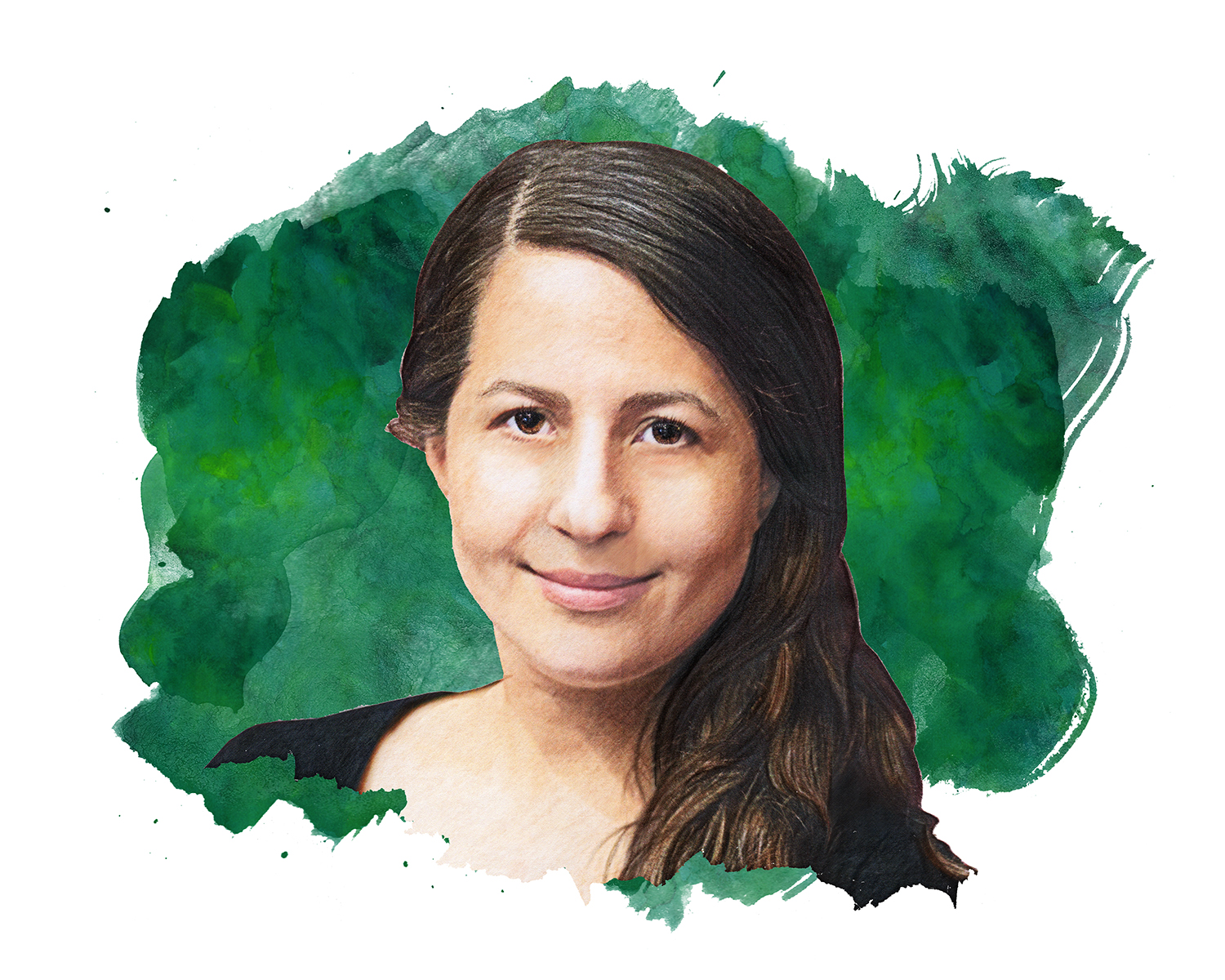
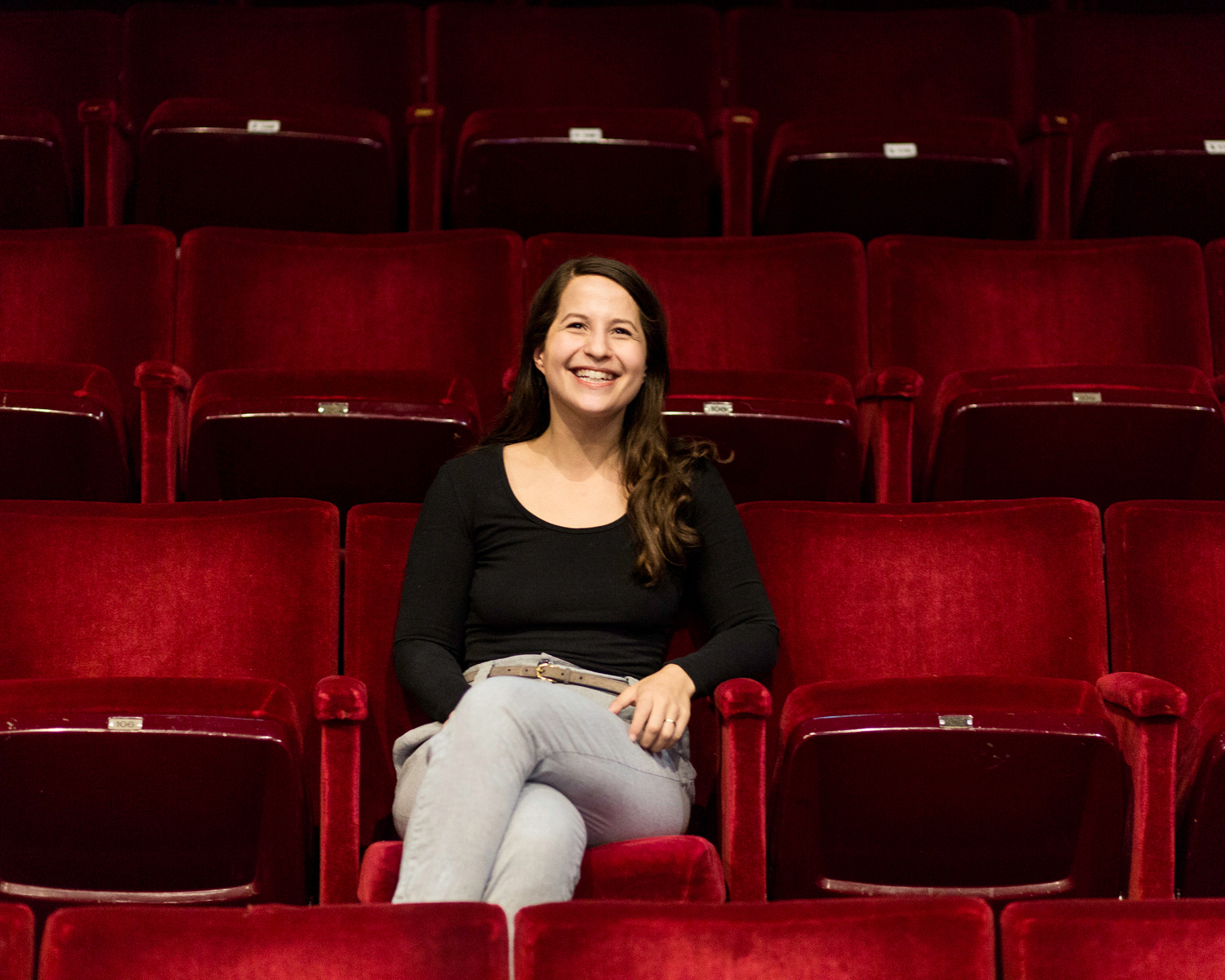
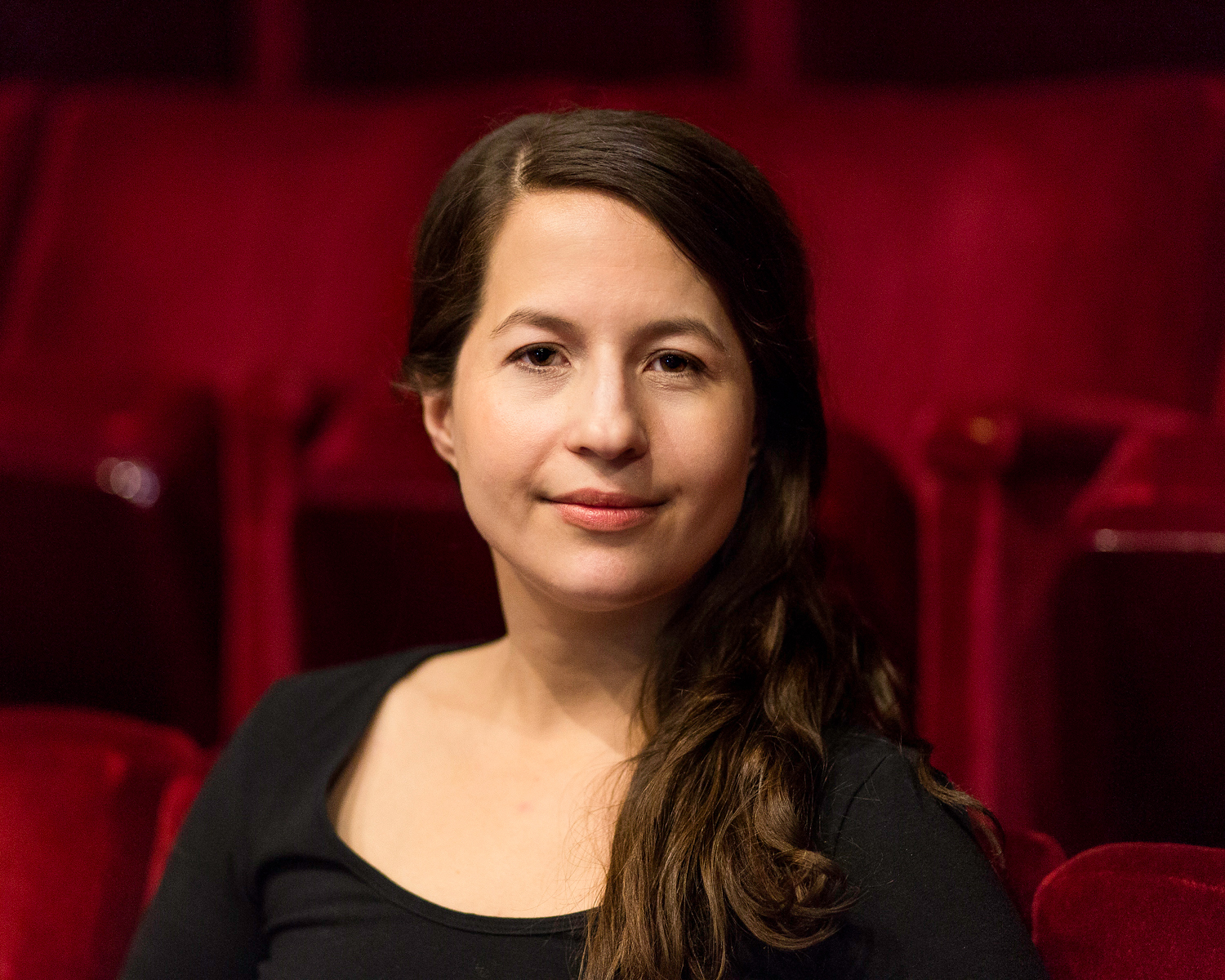
We sat with Shaina Taub in the quiet, ghost-lit Anspacher Theater of the Public, on break from her rehearsal for Twelfth Night, on another of these swelteringly hot Manhattan days. Having for years known her genius through her music, it was no surprise that her head was full of beautiful, revolutionary things. As a performer, composer, and maker of things, she lends herself generously to the conversation of how to love each other better, how to leave this planet better than we found it.
On the record of the world, Shaina is moving the needle toward empathy in her words and trade and deeds, reminding us that we all have much left to learn and how better to do it than together.
Corey Ruzicano: I said this to you the last time we chatted, but I haven’t stopped thinking about an idea you said you’d borrowed from the Public Works program, that singing together is a proposal of the best humankind could be.
Shaina Taub: Yeah, that’s part of the Public Works language, that it’s a radical proposal to humanity through unified singing.
CR: Have you felt that reflected in your work here with Public Works? Has that sentiment deepened for you?
ST: Yeah, I think about it all the time. In the times we’re living in, just to come together in a room and do something joyful is kind of a radical act. When I think about what it took for all these people to be in a room, all hundred people, everyone in the ensemble, from all different walks of life, all different economic, social, racial backgrounds – just what it took for every person to arrive in that room. Including the team, that’s not an us and them situation, it’s such a miracle for all of us to be making art together. It’s important to remember how much that took and how easy it feels in a way, and how natural it feels. And there’s a quote right now that’s outside the Public on all the window-casings by Nelson Mandela – I’ll probably butcher it so you should look it up – but it’s something like, no one is born hating, people learn to hate so they can also learn to love and loving is more natural.
And especially the kids. We have maybe ten or twelve people all under the age of thirteen from, again, all different backgrounds, and just watching them teach one another dance steps – it always reminds me of that final line in Ragtime. Are you a Ragtime person?

CR: Clearly not enough of one!
ST: I’m a super fan. It’s Tateh saying, I have an idea for a movie, a gang, a bunch of kids getting into trouble, getting out of trouble, black, white, Christian, Jew, gay, straight – he doesn’t say “gay” and “straight” in Ragtime, but – all the time, despite their differences, seeing these kids together, you see that it’s true: we learn these biases. We learn to hate and just being around young people has changed the way I look at the city. And what I’ve realized these past couple weeks is that I know that I’m inside it right now and the processing is going to happen later, in these next couple months, so I don’t even know how to articulate how I feel about it because it’s impacting me so immediately but it’s already changing how I walk down the streets of New York. Every block, everyone I see, I just think, you look like you could be in our show. Every person has that story to tell.
CR: That’s really beautiful; I don’t think you have to be any more articulate than that.
ST: Yeah, I’m just so grateful to be involved in this kind of work and it’s made me realize, I can never not do this kind of work now. It’s not that I don’t want to do all kinds of work but it’s one of those moments where there’s no going back.
CR: You can’t unsee it.
ST: Exactly.
CR: A word that I really love and am often sensitive to its overuse because it is one of these nonprofit buzzwords, but I would love to hear what the word community means to you. How have you defined your artistic community?
ST: It’s interesting. I think my answer before these couple of weeks would have been different. In my own artistic community, it’s the idea of truly supporting each other and truly being on the same team and having this mutual inspiration ecosystem of talent and ideas where we’re all feeding off each other and not feeding into the myth of the individual genius alone in their room, that we all make each other better. Actually embracing that, actually letting yourself learn from each other. I feel more a part of the city this past month than I have in a decade of living here.
CR: That’s amazing.
ST: And part of it is that it makes a difference to actually know people. It’s one thing to intellectually say I’m an ally to lots of people different from me, and yes, of course I believe in equality and stand against oppression and institutional racism, but it’s another thing to really know all the people with the differences. I’ve realized to know these people from all the different backgrounds, that I might not have crossed paths with otherwise, when I think of something happening to any of them… just thinking about it, I get emotional – if anything were to happen to any of us, especially at the hands of something to do with our oppressive system, it kills me. It now kills me in a different way. Knowing people matters. It’s one thing to have your politics and be on the right side of history – and I’m not trying to put everything in binary, but I do think if you stand for equality and freedom, that’s the right side – but it’s important to build those real relationships; it’s a different kind of engagement.
CR: Yeah, I think that is absolutely true. And it is a special thing; it’s not always obviously accessible all the time.
ST: And you do have to seek it out. You should…and I don’t want to preach, I want to engage actively with as many people who are different from me as possible.
CR: It enlarges your life.
ST: And it makes you realize we’re not different. The more different a person you meet, the more you realize we’re not so different. It’s the thread I’m trying to pull out of Twelfth Night, because when I was assigned it, I had to look at, what about this story would this community possibly care about? What would be the way in? I was reading the various literature that the Public Works has put together over the past couple of years where they’ve had some amazing anthropologists release reports and study how this work affects the community. It’s so hard to convince people and institutions that the arts matter, because their impact is not as tangible as other things. It’s qualitative not quantitative, so they’re trying to really study to gather data to show the various places funding comes from, that this stuff does matter. One of the big takeaways was the idea of empathy, and that this program and this work and community arts engagement helps you empathize in this deeper way I was talking about before. And then I was like oh, Twelfth Night is all about empathy; it’s all about walking a mile in another person’s shoes. It’s about Viola taking on her brother’s identity, taking on a male identity and pretending to be something she’s not. By taking on that other person, she learns more about herself and learns more about others. That became my way in.
CR: That’s a really beautiful and fascinating way of looking at it – I don’t know that I’ve ever thought about it like that, and it makes perfect sense.
ST: Yeah, that was a challenge with this. Oskar Eustis is a great man for so many reasons, but in the first draft I had written one finale song and it was kind of about wearing your heart on your sleeve, kind of all these platitudes and plays on words about how it’s not about what you wear, it’s about who you are…it didn’t quite land. It didn’t quite nail it. And he said, really try and write a song that sums up why we were here this evening. What’s the point?
CR: Ooh that’s a tall order.
ST: That’s when I really went back to the drawing board and had to think about why is she here, why does New York care about Twelfth Night, what does it have to say to us in 2016. From that came our finale song that’s called “Eyes of Another” and it’s about looking through the eyes of other people.
CR: I wonder if you could talk about some of those relationships that have taken shape in, and helped to shape, this process?
ST: I think it’s just seeing people, beyond all the differences I was talking about, the generational differences, to be seeing the nine- and ten-year-old from completely different walks of life teaching each other dance steps, remembering that every person was that age. Looking at the senior citizens and knowing they’ve gone through so much. One of the organizations we work with is called Military Resilience Project, so it’s a lot of people who fought in the armed services, and we work with the Fortune Society, which provides support for reentry for people who have been recently incarcerated, people who have served time. What it’s taken for all these people to go through all that and show up in a room and still say yes to life, and say yes to joy, has been inspiring and perspective-putting for me.
CR: Yeah, absolutely, in both the practice of art-making and for this specific story, it feels like it’s really all related.
ST: Right, and something that is so important about Public Works that I think is really central is the value of excellence. This isn’t a pageant where we’re patting ourselves on the back and, you know, gave it a college try, and the community did the best they could. This production, every element of it, is at the highest level. We all bring our best selves to it, and what’s so beautiful about it, when I’ve seen the Public Works shows in the past, is we have five equity actors and you don’t always know who they are. You can’t spot them – I mean you might know who one is, like there’s Nikki JamesBook of Mormon, but you don’t totally know. When I saw The Tempest, I wish we could do an audience exit poll: which do you think the five equity actors were? You don’t know. There’s so much talent in the community, and that’s something else I love: there is talent and genius everywhere. It’s kind of an accident which ones end up making it to the pedestal, but it’s just incredible creative, artistic virtuosity. And I think one incredibly powerful thing is, with some of the young people in our cast, they’re incredibly gifted singers, performers, and I’ve gotten the sense that, when I tell them that, that potentially they haven’t heard it before, and how powerful that is. What an honor for me to get to get to encourage them – because it’s clear to me how talented they are, so if my believing in them can help facilitate them having the courage to keep pursuing it, that would be such a great reward.
CR: And I think for young people to be treated with the same kind of creative responsibility as the adults in the room is such a powerful tool toward agency-building.
ST: Yeah, and that is a talent-continuum. Talent is not something that people have or don’t have. Theater and art and music – it’s not something that divides between people who do it and people who don’t; it’s something we all own and can take part in.

CR: I read your tedX talk and I love what you’ve said about listening, and I would love to hear more about that – how has your work, with Public Works and beyond, informed the way you listen and how has listening informed the way you work?
ST: We’re all standing on the shoulders of giants, no one is making art alone, no one is not a combination of their influences. And how awesome? I think this is a Billy Joel quote, that you can spend all your time taking in art or music and you can never be done – even if art stopped now, you would never get through it all. And that’s such a gift. For me, whenever I’m stuck on a song or a character or lyrics, there’s just a trove and there’s so much to borrow from. Being in conversation with it is not stealing from it or plagiarizing – but to get to be in conversation with all that came before me and all the people that are working around me is one of the most exciting parts of it. I’m constantly looking to other musicals, other artists, to see how they handled a specific character or moment and then try and put my own spin on it.
CR: Yeah, and someone said to me once that great leadership is being able to ask the question and actually hear the answer, and I think that listening is actually a much more radical idea than we give it credit sometimes.
ST: Yeah, and accepting that…I hope in forty years, I’m writing my best shit. I’m aware that there’s so much I don’t know yet. I don’t want to be the best writer I can be already, I want to get there, it’s like that quote, I think it’s Cheryl Strayed, that humility is the first byproduct of self-knowledge. I’m aware that I have a lot to learn. So maybe up till now I’ve written in the hundred-ish range of songs I’ve written. I hope that in forty years there are still three of those songs that I’m standing by or still playing life, that would be ideal.

CR: Yeah, and it just takes all of that time, to become. Becoming is hard.
ST: Yes, and being okay with throwing things away. That’s been a big lesson for me and Jeanine Tesori has been a big mentor for me and she’s always told me, it’s okay to productively fail. I’ve had various projects or collaborations that haven’t panned out necessarily but what I’ve learned from them is so worth it. I don’t for a second think of it as lost work.
CR: We do talk about making mistakes a lot in this field, that pro-failing rhetoric feels really common, but I was talking to a playwright friend the other day who was saying, yeah, yeah everyone says it’s great to fail, it’s so important to fail, but they don’t remind you how bad it sucks! How do you make it not suck? But maybe that’s part of it, maybe you can’t dilute that part without also losing what you learn from it? I don’t know.
ST: Right, me either.
CR: But throwing things away or moving on from them isn’t a bad thing.
ST: Oh yeah, I released an album six months ago and for every song on it there are four or five songs that didn’t make it in – the songs on the album are the culmination of all the songs that have been able to stick around the last couple of years.
CR: Is there something about those songs that you can recognize as similar? Can you trace why they’ve all remained?
ST: The common denominator is that they all withstood two years of being played live. It gets fed back to you. it’s the reaction they get over time. If a song lasts for two years in concert and I’m still playing it, it still feels like it’s getting an honest response and my band is still excited about playing it, after two years – and this is going to sound too lofty for what I mean – but after that, it enters my canon. It reveals itself.
CR: Something that I find so exciting about your work is that you are an interdisciplinary artist and I wonder what that ability to be in different roles has informed you about your practice of each one?
ST: I have a thing that I think helps feed doing the multiple things which is that the grass is always a little greener. When I’m only acting I think, oh man I have all these creative opinions about the show, I wish I had a hand in it, but then when I’m writing, I think aw man I wish I could just be an actor and go home at six o’clock and be done…and every combination of it there are different benefits. It all informs each other.
CR: That’s awesome. I think it is becoming a much more common story that people do more than one thing, and that’s exciting at least to me.
ST: Yeah and I think part of it, and this is sort of a truism but I believe it – that how you define yourself and treat yourself is how you teach everyone else how to treat you. I think for a while I was skating back and forth saying, oh I’m a writer, I’m a performer, I have to choose. I had different bios, I’d use a different one if I was trying to pursue this or that and I felt that pressure to choose, or that split, but then a couple of years ago I was like, I do all these things. I introduce myself that way, I present myself that way all the time, and I don’t try to backtrack or apologize about it and I do a lot of it. From there, it started to roll back to me in that those were the kind of opportunities I got, those were the calls I got, to come do Old Hats, and write songs and perform and improv little songs and dances and arrange…the jobs I’ve been lucky enough to have in these last few years have started to reflect that.
CR: And something else that I really value in your work is that you use your art really explicitly to bring awareness to and ask for change around certain things, and I wanted to know if you had any thoughts about how artists can be part of the conversation around social and policy change?
ST: Yeah, well…now I’m always quoting other people, but I love the Nina Simone quote of how can you be an artist and not reflect the times? I don’t think there’s political or social art and then not, it’s all one big conversation with the world around me. People look for stories, they love to watch their stories on TV, that’s the thing that people respond to, they don’t want to listen to data numbers and facts and polls and pundits and twenty-four-hour news cycle, people want stories. That’s what they listen to. For me the kind of stories that we’re putting out there through music, through theater, it’s not that it necessarily gets legislation passed, but it informs a conversation, informs the communal hive-mind about what we care about.

CR: Yeah, absolutely. I’m always really excited to hear about how someone who has a totally different skillset to mine, talk about work and how that informs their view of the world. Do you see any lessons that songwriting has taught you when you look at the rest of your life?
ST: Well, I think why I’m drawn to writing songs is the way they’re always constantly being re-taken on. If you write a song, it’s just not definitive – other people cover it. One of the most rewarding things to me has been other people singing my music, and I think that’s one thing that draws me to theater, that I like to perform myself too, but to me that’s the conversation, that’s the generational lineage of how many people have sung “Hallelujah,” or “Hey Jude,” or “You’ve Got A Friend”? It’s not just something you can take in, you have to wear it, to try it on yourself. It’s not like a painting where it is what it is, no one does a new version of it, or maybe that’s not true, I don’t know enough about the visual art world, but I love that songs are this thing that everyone gets to continually examine.
CR: Absolutely. Is there a song that’s taught you a specific lesson – in your writing or someone else’s, in the listening?
ST: Yes, oh man. Well for me, I always think of “He Wanted to Say” from Ragtime, which I recently found out that in the libretto is one that they make optional to do, which is crazy because to me, just in thinking about theater songs, in terms of songs that can uniquely use the form of music to tell that moment better than a scene could, I love “He Wanted to Say” because it’s this moment of Mother’s younger brother, going to Coalhouse. And he has all these things inside of him of wanting to join in Coalhouse’s cause, which is black men speaking out against systemic racism, and there’s all this stuff going on because Mother’s younger brother is this wealthy white guy but he really wants to stand with him. So he goes to him and he’s trying to think of how to express that, and he also has technical skills that can help in what Coalhouse is going through, but then Emma Goldman, who’s this other character, comes forward while Mother’s younger brother is saying he wanted to…and she says, he wanted to say…? And she sings this whole song about all the things he wants to say, and then the last line of the song is but all he said was, and he says: I know how to blow things up, because he can help build a bomb. And I just love that song because it’s all the emotions and all the things he has inside, and it works so uniquely and so specifically as a song. I always point to that one.

CR: So I’ve heard a little about what you’re up to next but I would love to hear more about your dream project.
ST: Yeah, as soon as we finish Twelfth Night, the project I’m starting – which I’m already in the research phase of – is the women’s suffrage movement. It does feel like a dream project because in a way, like I was saying before in terms of productive failing, I’ve known I wanted to write musicals, but I’ve had kind of a tug-of-war with it because I’m such a musicals person but it links everything we’re talking about because I still have so much to learn. I constantly have songs I want to write, I always have statements I want to make in two-three minutes, and that feels like a well that keeps serving me, but to make an evening length story, to find a thing that I really care enough about…and what Jeanine talks about is, even when you’re going crazy, because musicals make you crazy because they’re so hard, the running engine, the slow hum underneath it all has to be how much you don’t want to die without telling that story. And I feel like I hadn’t quite found that, but getting this history feels like the first time I’ve felt that way.
CR: It’s certainly a story I’m still so hungry to hear. That’s really exciting. And it’s so cool getting to see you bringing to light this story about women, when you’ve worked with so many incredible women in this field.
ST: Yeah, there are so many freaking awesome female directors. I feel so lucky that I’ve gotten to work with Rachel Chavkin twice and Tina Landau and Lear deBessonet. And those are my favorite directors; it’s not that they’re women – I mean, they’re women and that’s awesome – but even beyond that, they’re my favorite directors. They’re the people I’m most excited about, genitals aside.
CR: Totally, and it’s just exciting to have so many different people at the table. Not that enough room has been made at this table we’re all sharing yet, but that it feels like more room is being made.
ST: Definitely, and walking into this building always feels like magic because Liz Swados was my mentor in college and now Jeanine is my mentor, and there are no two more badass women than those two. I’m sure the shit they went through as women in the 70s, 80s, 90s, being the only ones, or one of the few in positions of leadership at that time, the way they’ve paved the way…I’ve had my difficult experiences of what it is to be a woman in this field, for sure our work is far from over, but my path has been infinitely easier because of the barriers they knocked down, and before them, the suffragettes, so it feels like, yes, the work is never over, but that’s no excuse not to do it. You have to move your little inch in the line, and sometimes it can feel like, I can work my whole life and only move it a millimeter forward, and why bother? It’s just a millimeter? But we all have to do that, and over time—this is another quote that I’m going to butcher, but, the moral arc of the universe is long but it bends towards justice. You have move your link in the chain forward.

CR: And it takes so much longer than even conceivable. And yes, probably nine times out of ten, the things you do won’t change a thing, but that one time, you have no idea who or how or what things you’re setting in motion, so you have to keep at it.
ST: I’m gonna quote again, cause I’m a big dork; I’m gonna be really Jew-y, this is a Talmud quote sort of in the idea of tikkun olam, of social justice, that our duty is to leave the world better than we found it and there’s a quote that you are not obligated to complete the task, nor are you free to abandon it. You’re not gonna finish it, but you have to do your part.

CR: Yeah, and this feels like your music is part of you discovering what work there is to be done and what of it is yours to do. When you have a gift or a tool or a platform, like you do, it feels exciting to be able to use your art to reflect the things that you want to see.
ST: Yeah, and – oh man I’m full of quotes – but it’s like the Moral Bucket List, the question should not be what do I want out of life but it should be, how can I use my gifts to meet the deep needs of the world? And that really resonated with me; I have these things that I happen to have skill in, and have worked really hard on, and how can I use that to fill in gaps and fill holes. It’s not just, what do I want out of life – doing that work actually becomes the thing that I want. It’s the humility thing we were talking about earlier; if I can just inspire the fourteen-year-old girls in my cast, [sung:] that would be enough. Had to, I’m sorry, how can you get through a day without quoting Hamilton?

CR: You can’t, it’s not possible. And I think it’s really true, and it feels like for a lot of this work you really have to know who you are and the Public Works program really feels like a channel to be in a space with people who are different from you, and realize how similar everyone really is, like you were saying before. I mean, I’m not in the room where it happens, but it sounds like that’s what it’s like.
ST: Yeah, yes, yes it is. It’s such a gift, I’m already feeling how much I’m going to miss them, but when I started to feel sad about it, Laurie Woolery, who’s another amazing woman who works at The Public and Public Works, said, but now you get to watch them grow; it gets to continue on.
CR: And that’s amazing, and to know that New York City is full of that, even when it’s hard to see. The storytelling around New York is often so polarized – it’s really nice to hear about something that encompasses all of it.
ST: Yeah, I’ve been here eleven years, and maybe I just haven’t been here long enough to be jaded about it, but I love it. I grew up in a very small town in Vermont, and rural Vermont is lovely, but it’s pretty homogenous. My being Jewish was pretty exotic. So to now be constantly immersed in so many different cultures and stories, I don’t think I fully appreciated or knew how to appreciate it before this project. It’s just such an exciting and inspiring place to live. You can’t hide from the world here, for better and for worse.
CR: Exactly, and I’ll give you a quote too, that James Baldwin wrote: “the role of the artist is exactly the same as the role of the lover; if I love you I have to make you aware of the things you can’t see.” New York is a really hardcore love, you have to keep being aware.
ST: Yeah, and how you act and the energy you put out does matter. We’re not powerless. A thought I had in the wake of one of the unfortunately fill-in-the-blank terrible days we’ve had this year, was that: we’re not powerless, we can’t give into the myth that we’re powerless. We can love each other and put out a loving, joyful energy and that doesn’t count for nothing. It counts for a lot. We can’t let anyone take that away from us.
CR: And that telling stories spills out into everything, everything we do is a story and it’s really easy not to take responsibility for the plot. There is deep power in just being aware of what story you’re telling, as a person.
ST: I’m trying to pick a show next year; I’m trying to pick a play that responds to what we need, and a thing that keeps coming up, that comes up a lot in Shakespeare and also in our lives and in the lives of a lot of these community members is the idea of second chances. It’s never over, no matter the terrible things you’ve been through, you can start again.
CR: Yeah, and it’s amazing that Shakespeare is one of these things that continues to give and give and give, and lend itself to all times and all people. Were you big into Shakespeare before this project?
ST: No. I did a show in middle school and I worked on a production of The Tempest two years ago at A.R.T. but no, I just hadn’t spent a lot of time with it, so I have a newfound appreciation for it. The stories are big, and for a lot of the lives of the people in New York, the lives are lived in these epic proportions, so it really resonates. And you feel it, it’s so exciting to see community members click in. And our director Kwame has a particular gift for finding the ways to connect those dots with people working on Shakespeare, in ways I had never thought about it. He just has a way of making it feel immediate and necessary, like it happened yesterday.
CR: That’s beautiful. And language sort of is this amazing human-made gift, and it’s almost like music or a score – that everyone can own in the way you were talking about songs before.
ST: Yeah, we’re constantly doing it again and again. For me, the main thing has been figuring out Viola in 2016, and that’s so cool. I hope in another hundred years, someone does another musical adaptation, so these things continually hold the mirror up to ourselves again and again.
CR: So what have you learned about Viola today?
ST: I feel like a lot of her journey is figuring out that it was inside her all along, that she thought she needed to dress a certain way or act a certain way or take something on in order to be taken seriously in order to succeed, in order to survive, but she had it. And I think for me, working on the show and collaborating, so to speak, with Shakespeare, it’s been a process of, no, it’s in me, and owning yourself and not apologizing for it. You can still have that humility and know how much you have left to learn and still trust yourself without any added accessories. I used to have this thing where I thought, I need to wear pants and suits, like I would never want to dress too girly if I had a fancy meeting, and it’s been a process of taking ownership of however you want to dress and however you want to be. It’s you that matters.
Raised in the green mountains of Vermont, Shaina Taub is a New York-based performer and songwriter.
She made her Lincoln Center solo concert debut in their American Songbook series in 2015, and plays regularly in New York with her band. Her sold-out Joe’s Pub concert and debut EP What Otters Do were featured on NPR/WNYC’s Best of the Year listing, and her debut full-length album Visitors was released at the end of 2015.
As a songwriter, Shaina won the 2014 Jonathan Larson Grant, and was Ars Nova’s 2012 Composer-in-Residence. Her original soul-folk opera, The Daughters, has been developed by the Yale Institute of Music Theatre, CAP21 Theater Company, and was featured in NYU’s mainstage season. She has created songs for Walt Disney Imagineering, Sesame Street, and recently signed a publishing deal with Ghostlight / Sh-k-Boom Records and Razor & Tie, as the first artist in their new joint venture to represent songwriters that fuse theatrical and pop music. Six-time Tony winner Audra McDonald is currently performing Shaina’s song, The Tale of Bear & Otter, on her world concert tour.
Shaina is currently creating a musical adaptation of Shakespeare’s Twelfth Night for the Public Theater with director Kwame Kwei-Armah that will be performed in the summer of 2016 at the Delacorte Theater in Central Park as part of the Public Works initiative. She is also currently writing a new musical about Alice Paul and the last seven years of the American women’s suffrage movement.
As a performer, Shaina has traveled the world as a vocalist, actor and musician. She was Karen O’s (of the Yeah Yeah Yeahs) vocal standby and back-up singer in her psycho-opera, Stop the Virgens at St. Ann’s Warehouse and the Sydney Opera House. She earned a Lucille Lortel Award nomination for her portrayal of Princess Mary in the the hit electropop opera, Natasha, Pierre & The Great Comet of 1812, and performed the songs of Tom Waits in the American Repertory Theater’s production of Shakespeare’s The Tempest, for which she also arranged the music. She recently starred in the critically acclaimed west coast premiere of Bill Irwin and David Shiner’s Old Hats, directed by Tina Landau, performing her original songs along with her band. The production will return for an encore run at New York’s Signature Theatre, beginning performances in January 2016.
A fellow of the MacDowell Colony, the Yaddo Colony, the Sundance Institute and the Johnny Mercer Songwriter’s Project, winner of the 2013 MAC John Wallowitch Award, a TEDx conference speaker, and a featured artist in the Gc Watches ad campaign, Shaina served on the music theatre faculty at Pace University, and is a University Scholar alumnus of NYU’s Tisch School of the Arts.


