Posted on

A Conversation with Kimberly Chatterjee, Kate Hamill, Amelia Pedlow, and Nance Williamson

Kimberly Chatterjee, Kate Hamill, Amelia Pedlow, and Nance Williamson


Something joyous is happening at the Cherry Lane Theatre. That’s the home of Kate Hamill’s uproariously funny, clever, and at times deeply moving adaptation of Jane Austen’s most famous and celebrated novel, Pride and Prejudice. The limited engagement, directed by Amanda Dehnert and led by an energetic cast with Hamill herself playing the iconic Lizzie Bennett, is being presented by Primary Stages in co-production with The Hudson Valley Shakespeare Festival through January 6. We caught up with Kate and the other women in the cast: Kimberly Chatterjee, Amelia Pedlow, and Nance Williamson—whose palpable energy, playfulness, and affection towards each other suggested we were spending an afternoon with the Bennetts themselves—to discuss the role of women in the arts and the ways this 200-year-old text still manages to enlighten and surprise us.


Margarita Javier: Tell us about the character or characters you play.
 

Kate Hamill: I play Lizzie Bennett, and I wrote the script as well. Lizzie is a bit of a cynic. At least for herself, she’s extremely anti-marriage minded. And she has to grapple with what happens when you meet someone who kind of turns around your beliefs about yourself. Nowadays she would be a feminist, but she was born before those terms. She’s a proto-feminist.
 

Amelia Pedlow: I play Jane Bennett, who’s the eldest Bennet sister. She’s very sweet, she means very well, she’s a big ‘ol romantic, but she’s also a big believer in following the rules and doing the right thing. In that time, part of that meant not being too forward with guys. Not that we understand that at all! [laughs] That’s her tragic flaw. I also play Anne de Bourgh, who’s the daughter of a very powerful, very wealthy lady of the time, and she is going to inherit her mother’s estate and marry the love of her life, Darcy. That’s what happens at the end of the play, spoiler! [laughs] She’s a perfect angel.
 

Kimberly Chatterjee: I play Lydia Bennett, who is the best of all the Bennett sisters. [laughs] She’s the youngest sister, and she loves her mother. She thinks her mother is the absolute perfect prototype of a woman. She loves her sisters. She thinks she’s smarter and better than them, but she idolizes them, which of course makes no sense. What I think is so interesting about her and the amazing way that Kate wrote her is that you think she isn’t paying attention or is just bopping through life, but she’s actually taking away all these nuggets of information of things that she’s learned about how to be in the world. She gets it all wrong, but she’s constantly observing and taking in the world around her. And then when she finally takes charge, it doesn’t go great. But she has some good reasons for it, which is amazing. And I also play Lady Catherine de Bourgh, who is Darcy’s aunt, the wealthiest woman in England; powerful, has no time for nonsense, but also loves to belittle and crush people for fun [laughs] just because she can. And her sweet, beautiful, perfect daughter Anne is going to marry Darcy. There’s nothing wrong with Anne. [laughs]
 

Amelia: Nothing is wrong!
 

Kimberly: Nothing is wrong! They’re been betrothed since probably before they were born, and it’s going to go great. She has not a care in the world when we meet her! [laughs]
 

Nance Williamson: I play Mrs. Bennett, who is the mother of all of these beautiful girls. My agenda is to get them married well. Because if we don’t, there are no sons in the family, there are just daughters, which means that our home will go to the next male heir, which is Mr. Collins. And if Mr. Bennett—my husband—dies, we’re out on the street. So I have made it my life’s work to prepare and prod and push and irritate my daughters into being marriage-minded. I’m the push behind them all. And I also play the servant, whom we affectionately call Lurch. [laughter]
 

Amelia: Uncredited.
 

Nance: A bubbling male, old, bitter…
 

Kate: …secret lover of Lady Catherine. [laughs]
 

Nance: Not true!
 

Kimberly: Not true at all!
 

Amelia: It’s on the record, guys. It’s going in the public record. [laughs]
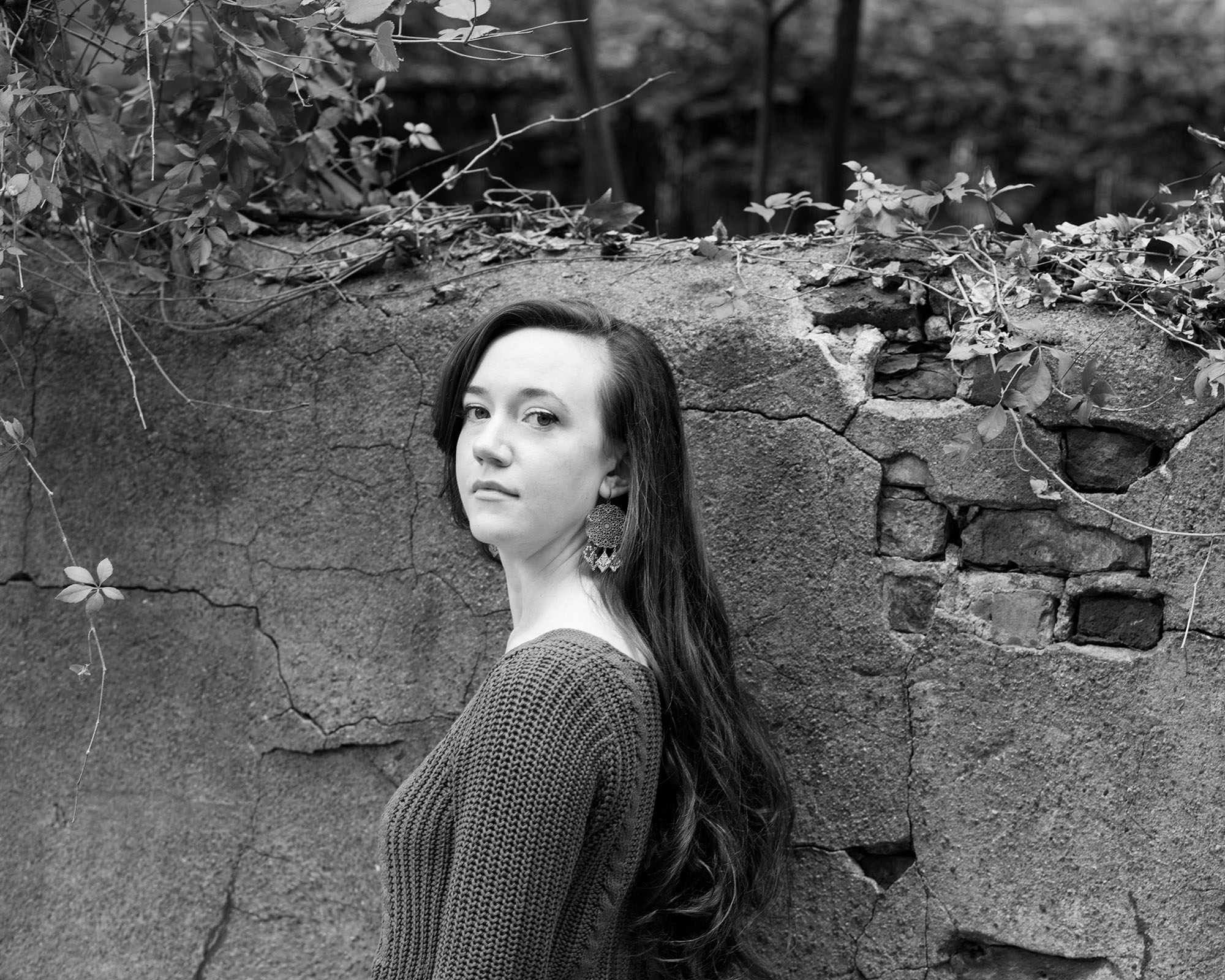
 

Kimberly Chatterjee, Kate Hamill, Amelia Pedlow, Nance Williamson
 

Margarita: You just finished a very successful run at the Hudson Valley Shakespeare Festival and you’re coming into this Primary Stages production with high expectations. They announced an extension even before the first preview happened. What has this experience been like so far, and what are your expectations now coming to play in front of New York audiences?
 

Kate: I think we’re just trying to let the play and the production teach us what it is, especially in a new space. The space is very different. During the first show, we were like Oh, we don’t have to scream! Hudson Valley is a 500-seat outdoor theater, at which Nance has done 18 seasons. So automatically that’s a big difference. Otherwise, I think this is what the preview process is for. We’re feeling it out. I think it even changes the jokes.
 

Nance: It does. And, you know, we went to people’s homes and did scenes for fundraisers, so besides performing in the tent, we were in different homes, yards—in different kinds of places. There’s a sort of playful improvisational chaos to doing it. It can be, when you’re not tired, a really fun process to see how we shift this here, how do we do this or that. And it’s a wonderful cast.
 

Kimberly: I was going to say we all, even when we’re at our most tired and sick and grumpy, we still love each other, which seems kind of impossible, but makes even the most stressful parts of this enjoyable. We have each other; we trust each other to be able to navigate the jokes and the timing. If something doesn’t go right, it’s never because someone is incompetent. I never walk away like Well. Everyone’s terrible! [laughs]
 

Kate: I also credit so much our director, Amanda Denhert, who creates a really fun, happy, safe room in which you feel really free to make stupid decisions. [laughs] And she sets that tone so much.
 

Margarita: Given how well known and beloved Pride and Prejudice is, and how often it’s been adapted, is there any pressure in trying to contribute something new and unique at the same time that you want to appease fans of the original?
 

Amelia: My sister is the one who gave me this book when I was however old and said, “Here is your bible.” And she’s very literary in general, but she knew I was going to love this and The Princess Bride—she introduced me to both. When she was coming to see the show, she was the person I was most excited to see it because I knew that anyone who loves this book will have a whole other level of love for this production, that people who don’t know the book at all—my boyfriend, for one – had an amazing time. Kate so beautifully takes characters and moments and recognizable scenes from the book and hones in on exactly what has made them so easy to fall in love with throughout the hundreds of years people have loved this book. Bingley being a dog might be one of the biggest ones. [laughs] My sister lost her mind.
 

Kate: He’s not literally a dog.
 

Kimberly: He’s dog like.
 

Amelia: Inspired by a Labrador. And that, in essence, is that character! It’s such a beautiful, slightly theatrical, irreverent thing, but ultimately a real distillation of the character in the Jane Austen novel. That type of work is throughout the piece and I know my sister was one of those people—and we had a lot of them over the summer—who began cackling from the moment something was introduced without having to get to know it over time. It really speaks to people on both of those levels, and I’m really excited for all of those people to see it.
 

Kate: The kind of theater I dislike the most, I think, is when I go in expecting something and it just meets those expectations, and I leave and nothing in me was challenged. I like stuff that’s more surprising. I think this is like that. We surprise ourselves! Sometimes we’re like What’s happening? But hopefully it’s a way to see a story that’s 200 years old and that people, including so many of us, love so much in a new, surprising way while still honoring it.
 

Margarita: What do you think Jane Austen would make of the current political climate in the UK and US?
 

Kate: There was an article about a year ago about—derp—“Alt right says Jane Austen would have liked them.” No! You know what? When you’re a racist, sexist hammer, everything looks like a racist, sexist nail. Her writing is so feminist, so subversive, and I think she would tear apart Donald Trump and all his UK counterparts and flip them the bird in every single way. Bite me.
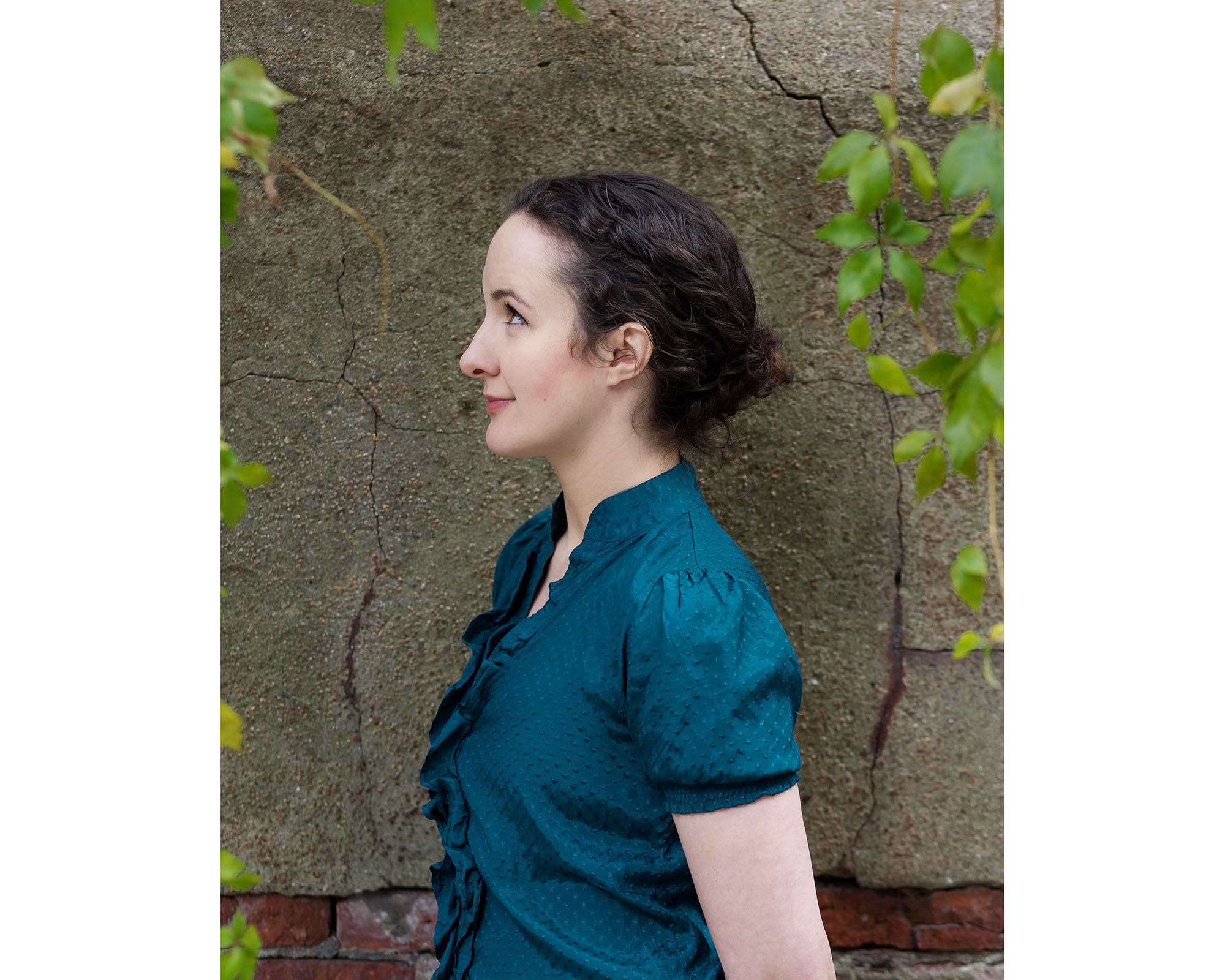
 

Kimberly Chatterjee, Kate Hamill, Amelia Pedlow, Nance Williamson
 

Margarita: There have been a lot of sexual harassment accusations coming forward against powerful men, in the arts and politics, and people, especially women, are feeling open to share their stories in ways we haven’t felt comfortable talking about it before. I think all of this brings relevancy to texts like this one, especially the way Austen talks about marriage. So I was wondering, what do you think is your character’s contribution to this discussion? What is her #metoo story?
 

Kimberly: Poor Lydia doesn’t know anything.
 

Kate: I got a letter from one of the other productions from someone who was quite nice but was saying, “It was so upsetting to me when Mr. Collins pursues Lizzie because it seemed like that was upsettingly sexual, upsettingly a sexual-harassment thing.” And I’m like “It is. She says no, and he won’t listen to her.” My experience being in it is the more terrified I am, the funnier the audience thinks it is. I think it’s a laugh of recognition. So for Lizzie, she sees so clearly how the power dynamics in a marriage situation are set up that she doesn’t even want to play that game. We were saying the other day that the subtext of this play is love can exist in patriarchal structures, but patriarchal structures make it harder. Lizzie eventually falls in love with a man and she’s like Gah! How do you reconcile that with feminism? So that’s Lizzie.
 

Nance: Mrs. Bennet, I mean, is in some ways so who she is, so in spite of being married, she views it is a necessary—I wouldn’t call it “evil”—but she’s very much in charge of that family, or so she thinks. Her husband has kind of distanced himself from the family, he loves Lizzie especially, and the rest of them are kind of silly, cackling creatures. She’s very much driven, she’s very much in charge, but it’s chaotic, and her agenda—I wouldn’t call it a “feminist” one at all—is a realistic one given the time. It’s not like Oh, you’re going to go to college and get a degree and take care of yourself. There’s a desperate need to get the girls married because they need to. So it’s a kind of survival mode, but it’s not necessarily a model marriage that the daughters would look at and go “I’m going to have a marriage just like my parents” because it’s a little dysfunctional.
 

Kate: Traumatizing!
 

Nance: And traumatizing. It is what it is, and it’s kind of loveable and sad, chaotic and crazy.
 

Amelia: There are so many things to say, because this play deals with all of these themes on a hundred different levels. One thing I will say that’s maybe inspiring, since the boys aren’t here: The men in power in this play, the men who have power, men who have wealth and money, who are meeting these girls behave in quite a respectful manner in many ways. They recognize their own power and they have genuine feelings, and so they err on the side of caution and hesitation and move very slowly. There’s a lesson there to be taken away. This was written by a woman, and these are the good guys, and that’s how the good guys should behave, especially when they have power and money, and know it. If they wanted to just take one of these girls, they really could. But they know it’s not what the women want, and I think that’s evidence of the author and the playwright. It’s really easy to fall in love with them when they behave that way. I’ll say that.
 

Kimberly: Lydia… We don’t get to see much of her post-marriage relationship. One can imagine that it is a very unhappy one. Because Wickham has absolutely no interest in any permanent relationship with anyone, even if there was a world—not to speak for Mark’s character, but from my perspective—if there was a world where he couldn’t love someone, permanence of any kind is not on his mind.
 

Kate: Yeah, he’s a narcissist!
 

Kimberly: And she’s young and naïve and incessant and outspoken and it’s going to be miserable. It’s going to be absolutely miserable. And she’ll have a level of protection because Darcy’s a good guy. She will never be on the street. But in that time, you can beat your wife, you can do whatever you want. I imagine she has a long, dark road ahead. But she will visit her family and come back to the women in her life as much as she can. Which is great to have that in contrast with Lady Catherine, who, when we meet her in the play, she’s in charge of everything; it’s her money, it’s her power, it’s her home, it’s her daughter. She gets to plan whatever she wants to do. Her values aren’t necessarily the most understandable. She doesn’t necessarily care what other people think, which is why things don’t work out. But it’s very freeing and fun to be like I don’t have to consider anyone else! You don’t get to see any other woman in the play do that. Lydia may act that way, but that’s not the actual reality. Catherine’s reality is “I can do whatever I want” until it comes down to the men.
 

Kimberly Chatterjee, Kate Hamill, Amelia Pedlow, Nance Williamson
 

Kate: I think it’s so interesting when people are like “Well, this is a comedy.” And a lot of it is very funny and very absurd, but I think it’s so funny when people want to censor out the darkness and the desperation. Do you think women’s lives don’t still have those things? Do you think they didn’t have them then? I think the love stories that work out in this play are moving because they get past that imperfection, or they embrace that imperfection, whereas it’s so funny when people are like “Well, I was just expecting a lot of polite conversation!” [laughs] “It’s not very theatrical!”
 

Amelia: And how could you even say that if you’ve ever read or seen anything by Jane Austen ever? Every single work, even the ones that don’t jump off the page in the most exciting way, it’s all about the struggle and the incredible things they have to overcome.
 

Kate: And how does that reflect people’s relationships? Even the happiest relationships have dark times and you mess up, and you fight, and, you know.
 

Nance: You do. I’ve been married for a long time, in a happy marriage, but you have to have the bottom notes, the bottom notes give it purpose. If it was just all that, why do it? You can’t live that way.
 

Margarita: I want to talk about the fact that some actors play multiple roles. I think it’s really cool that a lot of the female roles are played by men. It was the same in Sense and Sensibility and Vanity Fair. I’m curious, is this something that happens in the writing process, or something that comes about during rehearsals or casting? Is there some sort of thematic link by having the same actors play these multiple roles?
 

Kate: I like ensemble pieces. I like everyone in the ensemble to have basically equal roles. I think that that’s more fun for actors, and, if possible, in very contrasting roles. In this play, I wrote a lot of roles to be gender neutral, so Mrs. Bennett can be played by either a man or a woman, Mr. Bennett can be played by either a man or a woman, Mary can be played by either a man or a woman. Collins is most often played by men just because I want him to be disgusting. And the most perfect, beautiful woman in the play, Miss Bingley, is played by a man. I wanted it to be gender neutral just because sometimes I think the audience listens differently. For instance, all the men playing women in this particular production are the women who enforce patriarchal structures. They’re the ones who give them roles and say, This is perfect, this is imperfect, this is what you’re supposed to do, this is what you’re not supposed to do. But then having that choice of gender neutrality allows us to cast based on the energy of who comes into the room. Nance read Mrs. Bennett at the first reading and I was basically like Well! That’s cast! Phew! [laughs]. In Vanity Fair everyone except the two women were played by men because that is about women in a patriarchy, in a world full of men. So that was a choice. This one is more gender neutral. This is what we ended up with based on who came in the room.
 

Margarita: So in other productions it could be cast completely different?
 

Kate: Oh yeah! It’s listed as completely gender neutral. In general, I feel like the right actor can switch back and forth, so this is what we landed here. And it’s so fun having women play men, and men play women. You just listen differently. When the men are saying, “This is how women are supposed to act” the audience listens differently. Including Charlotte. I love Charlotte. I think Charlotte is the most sympathetic character, but she enforces those patriarchal rules, including on herself, and she pays the price, for sure.
 

Margarita: What has it been like working with the director, Amanda Denhert?
 

Nance: She’s great. I met Amanda when she was a graduate student. She was, I think, the assistant director or musical director of A Christmas Carol that I did in the mid-90s, at Trinity Rep. I vaguely remember her—I was a flying ghost—and I remember her with singing children. She was a graduate student, but I remember her because she would really rehearse the B-team. She was very bright and very smart. And over the years, she worked a lot over at Trinity Rep, and I had worked there a number of times. So you would hear about these amazing productions that were happening by this young woman, kind of in the tradition of Adrian Hall and Eugene Lee. Then I sort of lost track of her for a time. So to meet her again 20 years later has been really fun, because I grew up in that same tradition: a creation of what the play is. It’s not all decided before you come into the room; it’s very much a piece of alchemy that is discovered right then as opposed to an idea of what something should be and having to find your little nook in what’s already decided. It’s very freeing and very playful. She really sets a fun tone, as Kate was saying.
 

Kate: Yeah, highly theatrical, totally fearless. Working with her as a playwright as well as an actor, she really illuminates the text, really wants to be very specific about what the text is and that pushes me to be a better writer. Super collaborative. It makes it such a fun, happy, and loving room. She was described to me before we met as someone who creates “feminist fairy tales.” And I think that’s very true. They’re so beautiful, there’s so much heart, but they’re totally fearless as well. Oh my God. She has no fear.
 

Amelia: No, she actually doesn’t. You’ll meet some directors who’ll say, and she actually said on the first day, “I really want us to really mess up. I really want us to do it very wrong, to fully go down the road of a wrong choice for a week and a half and then we’ll swing back around.” A lot of directors say that. But she means it. And part of the reason she’s able to mean it, I think, is as much as she’s operating on instinct and she’s a brilliant musician, her instinct absolutely pairs up with her intellect in a way that she’s able to articulate why she wants your left hand not your right hand in that moment, or why this is the operative word and not that one, or why we’re cutting the cat, which actually happened in the middle of rehearsal. Some directors will say, We’re cutting the cat because we’re cutting the cat; the cat doesn’t make sense. Amanda will say, We’re cutting the cat because the cat is a creature and you’re a creature and if we’re focusing on this creature and how it moves in a new world in a new place, we’re not meeting your creature yet and you go Of course! That makes so much sense from an audience’s perspective! And she’s able to take that seat and tell you for storytelling purposes why she wants a ridiculous choice, or to take away a ridiculous choice. And that’s a really rare thing in my experience, to even take the time to do it. It gives the actors so much respect.
 

Kate: She really is a master director. And you can tell, because she’s a master of that craft. Sometimes she says something and I’m This should be in a book! She can defend the principle of what you’re doing. It’s never arbitrary. It’s based in the principles of her convictions.
 

Nance: And I would say that because of you, Kate, the relationship between the playwright and the director is so interesting. Kate will have the playwright part of her brain listen to a scene and go “How about if we change that?” and then the actor part of her brain says something else. And so the director is talking sometimes to the playwright part of Kate’s brain, sometimes to the actor part. And Kate will sometimes come out as one part of her in response, and the other part will come out and do this. It’s like an amazing relationship that the three of you have.
 

Kimberly Chatterjee, Kate Hamill, Amelia Pedlow, Nance Williamson
 

Kimberly: Sometimes she’d be like “Can I speak to the playwright now?”
 

Nance: It’s like Sybil, only everybody knows it’s going on. [laughs] I want to talk to Zuul now. Is Zuul in there? [laughs]
 

Margarita: It almost makes me angry that a piece like this one, based on a woman author’s book, written by a woman, directed by a woman, with strong female characters is so rare, especially in New York City, in this landscape. We’re so underrepresented in the arts. So I’m wondering, as women artists, what can be done? What is your role in improving representation for women?
 

Kate: To be completely honest, I think there’s no excuse. There’s no excuse, and it starts at the undergraduate level. When I was an undergrad, what I was told was: “There are more roles for men and there’s more work for men, and that’s how it is” as if it was handed down on stone tablets. And I liked my undergrad, but that’s how it was treated. And then in the world you’re often taught that there just isn’t as much work, and it’s de facto. What I think is really encouraging now is you see members of the public really putting pressure on: Why is this season all male? Why are you having all-male directors? And that’s why things are changing. I feel like that’s pretty key. There’s no excuse, actually.
 

Amelia: There isn’t.
 

Kimberly: This is the non-romantic version of this, but money speaks. Don’t go to see things that you think are hurting the art that you want to see in the world. And go see things that support it. I remember—and this is not theater—but when the Ghostbusters movie came out, I have so many female friends who don’t care for the genre and they were like Absolutely! I’m going to go spend money and support this to show box office numbers. Because people think it’s a risk. They think people aren’t interested in it, they think people won’t spend their money. But then time and time again you have things like the all-female Henry IV at St, Ann’s Warehouse—which was amazing—and it’s like Oh, that show is selling out every single night and it’s extending? Hmmm. Maybe we can do that.
 

Kate: Sixty-eight percent of the ticket buying audience is female. They’re already coming! Like “if you build it they will come”? They’re already coming! Why are you not playing to your home base? It’s so outrageous!
 

Kimberly: And I think it’s the idea that people think that female centric stories, if it’s an all-female anything, the female centric stories will be uninteresting or unrelatable. That’s what I think the undertone is. And it’s like Kate was saying: What did you think women’s lives were and are that would be so uninteresting or shallow, that people wouldn’t want to see that? Nobody ever says that. I grew up idolizing so many male centric stories and the inverse is absolutely true.
 

Kate: When Sense and Sensibility first came Off-Off-Broadway, a producer laughed in my face that it was happening, like “Haha!” and turned and walked away from me. And it ran for a year! That’s a story about women! That’s your ticket buying audience, and there’s no excuse anymore. It’s like, pick a side American theater—I’m sorry! Donald Trump is the fucking President. Pick which side you’re on. Really. Don’t be those guys. Don’t be the people who reinforce that the female is always the “other” because the female is half of your population!
 

Kimberly: And have conversations. There are so many conversations that people don’t want to have, about gender, about race, often the two going together, or how the two don’t go together, and it’s never going to be comfortable. And when we decide to avoid uncomfortable conversations, we get to where we are today in America, which will get better, but it’s awful right now.
 

Kate: I’m so interested to hear what Nance has to say, because Nance has been in the business for a long time.
 

Kimberly Chatterjee, Kate Hamill, Amelia Pedlow, Nance Williamson
 

Nance: I was going to say that Davis McCallum, who’s the new artistic director of the Hudson Shakespeare Valley Festival, has really done a good job. He hired Kate, and did Kate’s play. He did Lauren Gunderson’s play last year, and he hires women directors. He’s in a position now of power where he’s hiring women writers in a Shakespeare festival. A Shakespeare festival. And he’s putting women in men’s roles. He’s injecting women in a much more vivid upfront way than there have been in a lot of different places. I think to support theaters like that who do that is great. I think that there’s a lot of young artistic directors, young men artistic directors who are supporting that and doing that.
 

Kate: And female artistic directors.
 

Nance: And female artistic directors, obviously. We just did a three women version of The Scottish Play, and it was from a man’s point of view, but coming from a woman’s mouth. And how does that sound to you? How does that speak to you? Do you pretend that you’re a man? Do you pretend you’re a woman? Do you pretend that you’re androgynous? And so it opens up, I think, for the actor, for the audience, all sorts of different ways of looking at text that is broadening in a way, that’s kind of exciting and thrilling.
 

Kimberly: It was absolutely brilliant, that production. I understudied the production and saw it a bunch of times and I remember talking to a male director after. He said, “Don’t you think that’s a masculine story, that it’s such a man’s perspective?” And I laughed in his face because I assumed he was joking. It was a white male director who has directed in many places. I was just like “Hmm.” To me, it was such an incredible, beautiful production—and of course, no production is ever perfect—but it was definitive for me of Women can play men in men centric stories, unequivocally. And trying to articulate that to someone who so did not hear it was very Wow, we have to talk about it over and over and get people to see it over and over again before they listen.
 

Amelia: I’m with you. I’m just with you.
 

Nance: I think the bottom line is that you do the best work possible. Because I think the work is what makes people come. You have to make those choices, but it has to be done well.


Kimberly Chatterjee (Lydia/Lady Catherine) NEW YORK: The Tempest (Classical Theatre of Harlem); The Christians (Playwrights Horizons). REGIONAL: Pride & Prejudice, The General From America, Macbeth, Measure for Measure (Hudson Valley Shakespeare Festival); As You Like It (Folger Theatre). TELEVISION: “High Maintenance.” Proud graduate of NYU Tisch’s New Studio on Broadway. Kimberlychatterjee.com
 

Kate Hamill (Lizzy) is an actor / playwright. As playwright: Sense & Sensibility (in which she originated the role of Marianne), Winner, Off-Broadway Alliance Award 2016; Nominee, Drama League Award (Best Revival, 2016); 265+ performances Off-Broadway. Other plays include Vanity Fair (in which she originated the role of Becky Sharp; Nominee, Off-Broadway Alliance Award 2017), In the Mines (Sundance Lab semi-finalist), Em (Red Bull New Play finalist), Little Fellow (O’Neill semi-finalist). Additional acting credits include: The Seagull (Bedlam), All That Fall (Kaliyuga), Dreams… Marsupial Girl (PearlDamour). Her plays have been produced at the Guthrie Theatre, Pearl Theatre, Dallas Theater Center, Folger Theatre (Helen Hayes Award, best production: S&S) & others. Upcoming productions at Oregon Shakespeare Festival, A.R.T., Playmakers Rep, Seattle Rep, & more. Kate-hamill.com
 

Amelia Pedlow (Jane/Miss De Bourgh) OFF-BROADWAY: The Liar and The Heir Apparent (Classic Stage Company); ‘Tis Pity She’s a Whore (Red Bull Theatre Company); You Never Can Tell (The Pearl). REGIONAL: Pride and Prejudice and The General from America (Hudson Valley Shakespeare Festival); Red Velvet and The Metromaniacs (The Old Globe); The Metromaniacs, A Midsummer Night’s Dream, and Merchant of Venice (The Shakespeare Theatre DC); Ether Dome (La Jolla Playhouse, Hartford Stage, and The Huntington); The Glass Menagerie, Hamlet, and The Liar (Denver Center); Legacy of Light (Cleveland Playhouse); The Diary of Anne Frank and The Tempest (Virginia Stage Company). TV: “The Good Wife”; “Blue Bloods”; “Shades of Blue”; “The Blacklist”. EDUCATION: B.F.A. Juilliard.
 

Nance Williamson (Mrs. Bennet) is thrilled to be reprising Mrs. Bennett in Pride and Prejudice. During her 33-year career as an Equity actor Nance has performed on Broadway in Broken Glass, Henry IV, Cyrano and Romeo and Juliet as well as numerous Off-Broadway and regional productions most recently Amanda in The Glass Menagerie at Pioneer Stage and premier production of Book of Will at DCTC. Nance is happily married to actor Kurt Rhoads.

Posted on

A Conversation with Duane Boutté, Michael Laurence and Thom Sesma

Duane Boutté, Michael Laurence, Thom Sesma


Thomas Jefferson, Charles Dickens, and Count Leo Tolstoy are trapped together in a room. That’s the basic premise for Scott Carter’s play, The Gospel According to Thomas Jefferson, Charles Dickens and Count Leo Tolstoy: Discord, which recently opened at the Cherry Lane Theater as part of Primary Stage’s season. I recently sat down for an engaging conversation with the three talented, charming, and intelligent actors who bring Jefferson, Dickens, and Tolstoy to life.


Margarita Javier: I love the title of the play: The Gospel According to Thomas Jefferson, Charles Dickens and Count Leo Tolstoy: Discord. What can you tell us about it?
 

Duane Boutté: Where to begin?
 

Thom Sesma: How much do you know about it, firstly?
 

Margarita: I know the playwright, Scott Carter, found out that these different people had written their versions of the gospels, so he wrote an imagined meeting between the three of them in the afterlife. And then they get into a philosophical discussion, all their ideals clashing.
 

Thom: Thanks for explaining it; now it’s all so much clearer to me! [laughs]
 

Margarita: But how would you describe it?
 

Michael Laurence: That’s a pretty good summary. They’re trapped in a limbo, sort of No Exit style.
 

Duane: And they’re all on a quest to find out why the three of them are together, and that ends up being very, I think, powerful, when they finally do figure it out.
 

Thom: They’re three very cerebral, self-sufficient individuals, and this meeting of the minds is between three very self-sufficient, powerful egos who can’t help but result in conflict, without effort.
 

Michael: And it’s a conflict that’s sort of ignited by the discovery—and I don’t think this is a spoiler because it happens pretty early on, the title kind of sums it up anyway—but it turns out that they all edited a version of the New Testament. And so that sends them hurdling into a clash of ideas around theology.
 

Thom: That’s the premise. But essentially, to reduce it to the most basic idea, it’s about three guys trapped in a room who aren’t getting along.
 

Duane: It’s about an afterlife, it’s about salvation, it’s about Christianity.
 

Thom: It’s about doubt, skepticism, and faith. Faith at work even when you don’t realize it.
 

Duane Boutté, Michael Laurence, Thom Sesma
 

Margarita: How much did you already know about the characters you’re playing—Jefferson, Tolstoy, or Dickens—before you embarked on this project?
 

Duane: I think we all knew a little about these people, as much as anyone else. I think we’re all pretty well-read as individuals. We know about Jefferson from history, we know about Tolstoy because we all saw a miniseries of War and Peace at some point in our life, we’ve all read Christmas Carol or seen Oliver! the Musical. But Scott Carter, the author, in addition to being incredibly read and well-informed and deep into the research for this play, is also the most generous playwright I think I’ve ever worked with in sharing his research. So about three months before we started working, we all started getting packages in the mail.
 

Michael: A tome every week. Giant biographies.
 

Duane: More reading than you could ever do in a lifetime.
 

Margarita: And did you actually read all of it?
 

Duane: We did our best. [laughs]
 

Margarita: Have you read the gospels that they each wrote?
 

All three: Yes.
 

Duane: That was the easy part.
 

Thom: Those are relatively short.
 

Michael: He sent me, I think, six biographies of Jefferson, and each one of them is a doorstopper, a 900-page tome.
 

Thom: I got two biographies of Tolstoy, a stack of essays, several videos, a documentary on Tolstoy’s life, a video adaptation of War and Peace, a new translation of War and Peace, a new translation of Anna Karenina, and a number of other translations of his fiction.
 

Duane: I got about the same. I got two biographies, I got his notes on Dickens’ American tour, I got three novels, short stories, and videos. We just sort of take it from where you are, and pull what to use as your research for that week.
 

Michael: I think he told me in a note after the third or fourth package arrived, he said, “I’m helping you to build the Jefferson pavilion in the Scott Carter wing of the Laurence library.” Just a giant shelf of books and videos. [laughs]
 

Margarita: Is accuracy important to this play in terms of being true to these people or are there liberties taken?
 

Duane: It’s important for a way in, and then the play is the play. Things are taken at face value of the play, but also knowing that people are coming into the experience with maybe some knowledge of perhaps one more than the other two. So there is a responsibility, but when it comes down to it, the play tells you what you need to know.
 

Duane Boutté, Michael Laurence, Thom Sesma
 

Margarita: How has it been working with the director, Kimberly Senior?
 

Thom: Kimberly’s terrific. It’s a great room to be in. First of all, to be with a couple of incredibly generous actors, guys who are fun to spend time with. Kimberly’s the same way. She makes the room a very safe place to do your work. I’ve heard it said that 75% of a director’s job is getting people on the same page and then getting out of the way. And she has done that since day one. She’s just tremendous.
 

Duane: She gives us a lot of room for exploration.
 

Thom: And she challenges us, too, to not take the easy way out.
 

Margarita: You’re currently in previews. How has the audience response been so far?
 

Duane: It’s been good. They’re laughing with us a lot, which is I think part of the hopes for the play: that people are drawn by the characters, and their humor, and then they’re more inclined to follow the more philosophical aspects of the play.
 

Margarita: I’m interested in talking about the casting. I know the casting notice specified that it was open to all ethnicities. Even though these were historically white men, the casting doesn’t necessarily correspond to that. Is this something that Scott has always intended? Was it just for this production? Is it something that makes any difference in the way it’s performed, or does it not matter?
 

Michael: I’m the “necessarily” in that sentence [laughs]. There have been a few other productions of this play, and I think this is the first production that is not three white actors playing three white dead men. And I think that was purposeful; I think that was in line with Kimberly’s vision of the play in New York, in a post-Hamilton theatrical landscape.
 

Duane: Kimberly has expressed that she’s grown tired of seeing and working on plays that don’t reflect the world that she lives in. And along with that, she’s wanted to find opportunities in things that she’s now working on. So this is not just this play, this is something that’s important to her going forward in her work. She wants to find ways for the plays to reflect the people she knows. So she came into this with the desire to have a cast of mixed races and really had to hold out for that. It didn’t turn out for her in the initial casting. She had to really be patient. And she was, and I’m grateful that she was.
 

Thom: You know what’s been really lovely? It’s that we’ve been performing now for a full week, right? A full week of performances. We have an African American playing Dickens, we have an Asian American playing Tolstoy, and a white guy playing Jefferson. I haven’t heard one single comment by anyone about the diverse landscape that’s onstage right now. Which is great, which means it doesn’t matter.
 

Margarita: It doesn’t. And I imagine it’s a more sophisticated audience going to this show. Because there have been comments about that kind of thing in other productions, even Hamilton had a bit of backlash.
 

Duane: I think in Hamilton, and also in this play, it adds relevance for me, because we all have these ideas of Thomas Jefferson now, who in our company is the one role played by a white actor. And he’s now running in relation to actors of a different background, which I feel from the inside, I carry who I am in everything I do. So I think it informs Dicken’s reaction to Jefferson, Dicken’s reaction to America. Dickens did visit America, twice, and had strong opinions about slavery and class. I think that for me as an African American male, it’s easy for me to adopt his perceptions, because I agree with them.
 

Michael: At least one of the themes of the play, one of the major themes, is race relations. I think, in a way, it brings another layer into the room and the experience for the audience watching this play, because the legacy of race relations, the legacy of slavery is threaded into the biography of Jefferson and Dickens, and in a more indirect way Tolstoy as well, because there’s a sort of analog there with Russian serfs and Tolstoy’s relationship to people “who are owned,” as Dickens says in the play. So I think that, whether it’s pointed to or not, there’s an added layer there of some kind.
 

Duane Boutté, Michael Laurence, Thom Sesma
 

Margarita: Why is it okay for a person of color to play a historically white person, but it’s not ok for a white actor to play a historical person of color?
 

Duane: If you look at the canon of American plays, and you’re going to give a ratio of how many roles there are in produced theater that call for white characters, compared to the roles and opportunities available for black characters, or Asian characters, who are more underrepresented, etc., and how many people in this country whose stories aren’t being told. So for that reason, it’s just not time. We’re not there yet. When will we be there? I can’t say. But it’s not time yet.
 

Thom: To put it another way, to use this as a point of departure: To see a white person playing, for instance, the King of Siam, indicates white ownership of that character. Of that role. In other words, it’s an extension of a kind of slavery, if you will, to put it very crudely. That somehow it’s still ok to be colonial. When in fact it’s not. Why is it correct in the other way? Because it’s the only way we can give the public greater exposure. It’s interesting also, the thing about Hamilton, I just have to point this out, in terms of people’s backlash towards Hamilton: Hamilton is about people of color telling the story of the white person. “Who lives, who dies, who tells your story.” That’s what that’s about, so that’s why the backlash of show is missing the point.
 

Margarita: I agree and I feel the same way because I’m Latina and historically a lot of famous Latino roles have been played by white actors and like you say it’s kind of ownership of your role, but it’s also misrepresentation because then it’s portrayed in a way that’s not accurate to our real experience and that furthers the divide and people’s misconceptions about our cultures.
 

Thom: It’s not just ownership of the role; that minimizes what I’m trying to say. It’s ownership of the race. Ownership of the culture. And that’s what perpetuates more than anything else. You know, there’s a huge controversy right now over the casting of a production of Evita. Which is interesting because ethnically, Eva Perón didn’t have any Latina blood in her. She was Basque and French, right? Or Italian. And yet they never even saw Latina women for the role simply on the basis of their talent; they were excluded because they were Latina.
 

Margarita: What do you think this play is telling us, why is it relevant to us now in this moment of time?
 

Michael: For some of the reasons we were just talking about, in terms of how America is haunted by its own past.
 

Duane: Kimberly came into our dressing room a few nights ago, and said that a friend of hers thanked her for this play because it’s about things that we don’t get to see and discuss in the theater. Religion. Christianity. God. Atheism. And for that reason I find it unique, important. It’s a thing that we avoid because it’s a very tender topic for a lot of people. And it’s potentially divisive.
 

Michael: I also think it’s enormously relevant in the sense that America, our country is in the throes of an existential crisis right now. An identity crisis, the culture wars of the ‘80s have reared their heads again. The political divide is deeper than it’s been since the 1960s. More savage, more violent. People are more deeply entrenched and tribal in their thinking and their politics. Not to talk about it only from the Jefferson side of things, but I feel that responsibility every night, of walking out onstage and playing one of the great Presidents in our country’s history who, for all of his flaws, which are unmasked appropriately in this play, bring those questions, even just in terms of separation of Church and state which, again, is something that is also tearing questions around that issue. And here we’re reminded that the origins, the founding of our nation, that there was an experiment there, a new experiment in the world, about separating those things and why that was and how that came about. That’s important to see.
 

Thom: The fact that Christianity has been hijacked by the radical right, has been turned into a truncheon that they can beat anyone with, is frightening. Because it’s not just the origins of our country, it’s the origins of Christianity itself, which is based on charity, which is rooted in thought and kindness and suffering. It goes back to what Duane was saying, what Kimberly told us about her friend. Generally, there are people in the theater who tend to be progressive; left-leaning people don’t want to talk about those things. Don’t want to talk about faith. Don’t want to talk about belief. They will talk about skepticism. And I think that most of those people, like these characters, are more spiritually oriented than they actually realize.
 

Duane: And it’s not a play just for Christians. It really isn’t, you know?
 

Michael: It’s relevant too to how essential it is to see three cerebral, great figures who shaped history, each of them in their prominent ways, discussing religion and politics and being nuanced and thoughtful in ways beyond 140 characters.
 

Thom: And revealing themselves not as icons, but as humans. Deeply flawed, fallible, passionate humans.
 

Duane Boutté, Michael Laurence, Thom Sesma
 

Margarita: What are your personal artistic influences? Anything that moves you or any particular work or artist that has really motivated you throughout your career?
 

Duane: Tough question.
 

Michael: For me there’s almost too many influences to name here, but I will say, something that is very moving to me personally is I have always been steeped in the lore of Off-Broadway. When I was a teenager, I was meeting Beckett and Albee. And the Cherry Lane, which is ground zero for a lot of those early Off-Broadway experiments of the ‘60s and ‘70s, for me, it’s such a joy to be performing there.
 

Thom: I’m so glad to hear you say that because I feel exactly the same way. I was telling someone else about that. You can have a career, for 35, almost 40 years, on Broadway and TV and film, but man, I feel like I’ve arrived. At this extraordinary, legendary place. To “trod these boards,” as they say, where Beckett had his American premiere.
 

Michael: You walk into the stage door and there’s a giant poster of Beckett looming on the wall. And Sam Shepherd and Irene Fornés. Albee.
 

Thom: We just let the ghosts take care of us. [laughs]
 

Margarita: Since you mentioned Beckett, Michael, I wanted to tell you I saw Krapp 39.
 

Michael: You did? Oh my God, wow!
 

Margarita: Yeah, I studied Beckett in grad school.
 

Michael: Did you really?
 

Margarita: Yeah! I saw your play and I loved it.
 

Michael: Oh thank you!
 

Margarita: Are you still writing?
 

Michael: My last play was called Hamlet in Bed, it was at Rattlesnake. And then last summer I took both pieces, Krapp 39 and Hamlet in Bed to the Edinburgh festival, so that was a dream come true. And I’m working on a new play now. Writing—I don’t want to say I love it more than acting, but…
 

Margarita: Does writing inform your acting? Or does your performing inform your writing?
 

Michael: I’m sure it does in many ways I’m not great at articulating. But I’m sure it does.
 

Margarita: And Duane, you’re a composer and a director. What’s it like for you, as a director, when you’re performing for someone else?
 

Duane: I have to turn it off. Absolutely turn it off. One of the things that I always tell myself is “your director is very smart,” no matter who I’m working with. The other person is sitting on the outside looking at things that I’m not. It’s not my job to look at. So listen to your director. Always say yes, and maybe eventually you’ll figure out why you’ve been asked to do what you’ve been asked to do. It’s nice to just focus on one character and that character’s track and journey, and let someone else be responsible for all the rest of it.
 

Duane Boutté, Michael Laurence, Thom Sesma
 

Margarita: What, if anything, is your dream role?
 

Duane: One of my favorite playwrights is August Wilson. I’ve only been in one of his plays.
 

Margarita: Which one?
 

Duane: Joe Turner’s Come and Gone. That was in Denver during graduate school. It was a company production, but I was a student. So I would love to do some of his plays. They, for me, are right up there with O’Neill and the other greats. And I’ve had a good time with Shakespeare; there are certainly a lot of those roles that I hope I don’t outage.
 

Margarita: Which one? Name one.
 

Duane: Hamlet. I’d love to play Hamlet.
 

Margarita: You can still play Hamlet!
 

Thom: You know, I’ve gotten to play a lot of my dream roles. I’ve been very blessed in that way. And I know it sounds like such a cliché, but my dream role is invariably the one I’m working on. It really is. Because it has invariably all the same chewiness—you still have to be truthful, you still have to be naked, eager to work what teaches you. Willing to follow where it leads.
 

Michael: I’ve been lucky to play many dream roles, and there are many more that I’m a little long in the tooth to play as well. I have always wanted to play Jerry in The Zoo Story. I actually auditioned for Albee for a production of that, and I didn’t get it because I think I was trying too hard. But we ended up having a nice long conversation about Beckett. More than anything these days, what I love doing is working on new plays. So my dream role maybe hasn’t been written yet. I can tell you there are so many playwrights that I would love to work with. A couple of years ago in one season I worked with both Branden Jacobs-Jenkins and Sam Hunter, who are two of the most brilliant playwrights I know. So I would eagerly jump into anything, any worlds that they create. Annie Baker, I would love to be in an Annie Baker play. We’re lucky to be living in an era of so many extraordinarily gifted American playwrights. And you know, if none of that works out, I’ll go and write a dream role for myself.
 

Margarita: Discord is currently running through October 22. Why should people come see this play?
 

Duane: Because it’s good. And it has heart.
 

Michael: And funny. It’s very funny.
 

Thom: Because there’s nothing better than a good night at the theater. What are the six most beautiful words in the English language? “We are going to the theater.”


Duane Boutté (Charles Dickens) played Harlem Renaissance artist “Bruce Nugent, young” in Rodney Evans’ film Brother to Brother, and “Bostonia” in Nigel Finch’s Stonewall (’96). Boutté appeared on Broadway in Parade and Carousel (Lincoln Center), and Off-Broadway in The Bubbly Black Girl Sheds Her Chameleon Skin and as “Louis Chauvin” in The Heliotrope Bouquet by Scott Joplin and Louis Chauvin (Playwrights Horizons).

Michael Laurence (Thomas Jefferson) previously appeared at Primary Stages in Opus and The Morini Strad. Also: Talk Radio (Broadway), Hamlet in Bed (playwright/performer,Rattlestick), Appropriate (Signature), The Few (Rattlestick), Genet’s Splendid’s (La Colline, Paris), Poison (Origin), Krapp 39 (playwright/performer, DramaDesk nomination), “John Proctor” in The Crucible (Hartford), Starbuck in The Rainmaker (Arena). TV: “Shades of Blue” (recurring), “Damages,” “The Good Wife,” “Elementary,” others.

Thom Sesma (Count Leo Tolstoy) has appeared in leading roles on and Off-Broadway, and at some of the nation’s leading regional theaters, including The Old Globe, Yale Rep, Cincinnati Playhouse, Arena Stage, McCarter, and Baltimore Centre Stage. Most recent credit: John Doyle’s acclaimed revival of Pacific Overtures (Classic Stage Company.) Television: “Madam Secretary,” “Jessica Jones,” “Gotham,” “The Good Wife,” “Person Of Interest,” “Over/Under,” “Single Ladies,” and more. Proud member AEA and SAG-AFTRA.

Posted on

A Conversation with Joe Breen

Joe Breen


On a breezy evening in Hell’s Kitchen, I met up with my tall, well-spoken and charming friend Joe Breen, a NYC based playwright whose latest play, All My Love, Kate, is being presented as part of this year’s ESPA Drills at Primary Stages. It tells the love story of two men whose relationship is challenged when one of them enlists to fight in World War II. I attended an early reading of the play last year, and found it to be deeply moving, surprisingly funny, politically relevant, and full of sharp, witty dialogues. I sat down with Joe over wine and hummus for a long and engaging conversation about his play, the things they don’t teach you about World War II, the LGBT community, authentic representation in the arts, and our mutual obsession for musical theater.


Margarita Javier: Tell us a little about yourself, your background, and where you come from.
 

Joe Breen: I grew up in Western Massachusetts, in the Berkshires. I was exposed to a lot of great theater out there. I moved to New York City in 2002 as an actor, singer, and dancer in the musical-theater world. Somewhere along the line, I started writing.
 

MJ: Why do you write?
 

JB: It was something that I never really put much thought into; it was something that I always just did. A lot of times, it would be something you could do at 3 o’clock in the morning, or in between acting jobs. It was something I did for fun, but I never thought much about doing anything with. And then, within the past few years, I really started taking it very seriously and looking at what I was doing. And here I am.
 

MJ: Why did you suddenly start taking it seriously?
 

JB: Once I made the decision to stop performing, I decided to go back to school. While I was in school, the academic part of my brain was being stimulated in a way that it never had before. I didn’t go right to college after high school. The artistic side of myself was not being fed at all. So I found myself writing to fulfill that, and the more I wrote, the more I actually started believing in it and wanting to do something with it.
 

MJ: What kind of stuff were you writing? Was it always theater or did you write anything else?
 

JB: I used to write a lot of short plays. I wrote some screenplays in my early 20s. I wrote a novel—an unpublished novel. And then a play that I had started over 10 years ago, which I had worked on on and off, I really started focusing on getting that finished and getting it where I wanted it to be. I felt the drive to create something. I started to realize that I got much more fulfillment out of writing something and creating something, and creating a world, than I did in actually performing. That was a big sort of “Aha!” moment to me.
 

MJ: You mentioned a play that you had been working on for 10 years. What was that?
 

JB: It’s called The Hands that Hold Us. It was a finalist for the Princess Grace Playwriting Fellowship last year. And then it was selected as part of Capital Repertory Theatre’s NEXT ACT! New Play Summit. There were four plays chosen to get staged readings, which took place last October.
 

MJ: It’s amazing that you just decided to do this seriously and already you’re a finalist for awards and getting staged readings.
 

JB: It was. And I have to give a lot of credit to a company called The Bechdel Project which produced the first table read. I sent the play to a friend of mine, Maria Maloney, who’s one of the founders of the company. And she said, “Let’s hear this out loud!”
 

MJ: Why theater specifically? What draws you to theater as an art form?
 

JB: As far as writing for theater, I think it’s because theater is where I’m the most comfortable.
 

MJ: Why?
 

JB: Because I know it. It’s something I’ve always done. As a kid, I was in productions of The Music Man and Mame—you know, community theater.
 

MJ: So you fell in love with it as a young kid.
 

JB: Yeah. And as I evolved and became a professional actor, writing theater seemed like the natural next step.
 

MJ: Who and what would you say are your artistic influences? Who are your favorite writers, favorite playwrights, and favorite pieces of theater?
 

JB: I’m not gonna lie; I’m a big musical-theater dork. So when I’m asked, “What are your favorite productions?” I sit there and name a bunch of classic musicals.
 

MJ: Like what?
 

JB: Man of La Mancha, A Little Night Music … I love Sunday in the Park with George. Most recently, Bandstand. I have to plug Bandstand, one of the greatest things I’ve seen in a long time. I also loved The Visit.
 

MJ: An underrated masterpiece!
 

JB: Yes. That’s where my heart is.
 

MJ: But you mostly write straight theater.
 

JB: Yes, I only write straight theater. When it comes to playwrights, I love Tennessee Williams. I love Eugene O’Neill. Sort of the big classic Americana plays.
 

MJ: I’m also a big theater lover, and I sometimes go see a piece of theater that makes me go, “Yes! This is why I want to work in theater!” Have you had moments like that? What’s the earliest experience you had where you were like, “This is what I want to do”?
 

JB: I grew up watching a lot of old musical films. Also, growing up in the Berkshires, we had Williamstown Theatre Festival, Berkshire Theatre Festival, and Barrington Stage Company. In the summer, there would be summer stock—The Mac-Haydn Theatre which is a small summer-stock theater that only does musicals. Because that was my big love, my uncle, who also loved musicals, had season subscriptions, and brought me all summer long to Mac-Haydn Theatre. When you see a production of The King and I on a tiny, round stage and Anna’s in a hoop skirt, there’s no room for anyone else. And in my head as a kid, not being able to separate or see the difference between that and Yul Brynner and Deborah Kerr in the film—there’s something magical about that.
 

Joe Breen
 

MJ: Tell us about Primary Stages and ESPA. How did you become involved with them?
 

JB: Kimberly Faith Hickman, one of the founding members of the Bechdel Project, was an assistant director at MTC for Of Good Stock, written by Melissa Ross. Kimberly had said that The Hands That Hold Us reminded her a lot of Ross’s style, so she connected us through email. Ross and I had a little back and forth over email; I was asking for advice because, like I said, I was very new to this. I’d had some short plays produced over the years, but never a full length play. I was very much out to sea. With the short plays, you can enter them to random festivals here and there. But when suddenly you have a large two-hour-plus play, it’s different. So Melissa, who actually teaches at ESPA, suggested I take a class there. She said they have a lot of amazing instructors, so I signed up for a first draft class with Bess Wohl who wrote Small Mouth Sounds, and that’s where I really started working on All My Love, Kate.
 

MJ: And All My Love, Kate is being featured as part of this year’s ESPA Drills. How did that come about?
 

JB: The ESPA Drills happen every year, and the rules are, in order to submit, it has to be a full-length finished play that has been developed in some way at Primary Stages. Over the span of a year, I had taken four classes there and had worked on All My Love, Kate. So I submitted it—it’s a blind submission process—and they got back to me and said I was a semi-finalist, then a finalist, and then I was one of the four plays chosen.
 

MJ: So yours is one of only four plays chosen. Do you know anything about the other playwrights in the series: Liz Appel, Jacqueline Bircher, and Daniel Loeser?
 

JB: Yes. Primary Stages ESPA sent us to a house in the Catskills on a retreat and I was very nervous because you know there’s always one person—especially when you get a group of artists together—there’s always going to be that one person that makes you want to bash your head against the wall. But there was not. Other than the four of us, there was Sarah Matteucci, the Associate Director of Education of ESPA, and playwright Crystal Skillman, who was our faculty advisor. The four of us connected so quickly. We’re very different people, very different writers, with very different processes, very different styles. The four plays are very different, but we’re all very supportive of each other. I know that sounds ridiculous, people say that all the time, but it really is true. We keep saying we were shocked at how well we jelled, being as different as we all are.
 

MJ: So, All My Love, Kate. What is it about? What was the inspiration? How did you come up with it?

JB: At the core, it is a love story. It takes place in the 1940s right before and during World War II. It’s about two men—they live together, they have a life together, they’re in a committed relationship. Then the war happens and one of them joins the Air Corps in a station in the Philippines. That’s the basic plot. It’s about two men who want to be together, but can’t. But on a larger scale, what I hope that I’m doing is examining the idea of what it means to be an American, what it means to be a patriot, and whether or not you can be those things if you don’t fit into the definition that has been set up by the government, by the country, by society.
 

MJ: Right, how do people who don’t conform to heteronormative standards fit into the narrative of American history?
 

JB: In the ‘40s it was a different mindset when talking about war. Nowadays, many of us look at war in a very cynical light. In the ‘40s, when America went to war, if you were a man, you joined up. You didn’t question it. You just did. And to be an American hero—a male American hero—you went to war, you fought for your country, you put your life on the line. And as for women—gender roles blurred a little bit in the ‘40s for women. Because suddenly they were allowed to go to the workforce to replace the men who were fighting. Various branches of the military had all-female divisions. The women, they had secretarial jobs, they worked the radios, they did things that were not combative, but the women were fighting for the country all the same. It all leads to the inspiration of my play—and it’s the women who were at home, who didn’t join the ranks, who didn’t necessarily go to the factories—they had their own part to play, too. To be an American hero as a woman meant to sacrifice your husband, your brother, your son. And if they died, then you suddenly became part of a group that was called the Gold Star Wives. And they were held up almost with reverence, almost like the Virgin Mary, because of all they had sacrificed. There’s actually a song in Bandstand (to bring it back), “Who I Was,” that Laura Osnes sings about what her life was like before she became a Gold Star widow. And so that whole idea of these women in a way being glorified for sacrificing the men in their lives, I started to wonder how many Gold Star men and women there were who went unacknowledged, because at that time men and women who were gay in the military service could not admit to having those loves at home, could not tell you, they couldn’t even admit who was waiting for them at home.
 

MJ: Why was that important for you to explore?
 

JB: In many ways, I think we as an LGBT community take for granted—I mean, this is such an old, gay man way of like, “Oh if the kids only knew!”—but we take for granted, especially in this city, the freedoms and the rights that we have. Don’t Ask Don’t Tell has been overturned; that’s amazing. But now we’re in the process of our President saying that Trans soldiers are not allowed to fight, cannot be a part of the military, cannot voluntarily fight and die for their country. I started writing this play before that happened, but it’s taken on a very interesting timeliness, which surprised me, because my writing tends to be a throwback when it comes to “queer theater”—and I hate that term.
 

MJ: Why do you hate that term?
 

JB: I find it reductive. Because as soon as a play—not even a play, but a film, a novel, anything—if the voice that is highlighted is a gay character, a black character, an Asian character, or a Latino character, it suddenly becomes “a gay play,” “a black play,” etc. And there’s this weight and this extra expectation that is placed on them. And I think as gay writers, as far as theater goes, what we write has tended to be very timely. It talks about a specific experience in a point in time. You look at Tennessee Williams, he was writing gay men. They were self-hating closeted Southern gay men. But at the time, that was a very true experience for the average gay man. Now we look at Tennessee Williams’ plays as period pieces. We then moved on to Angels in America and Torch Song Trilogy, or Torch Song as it’s called now, which I cannot wait for. And those plays were very specific to the gay experience of those times. Very of the time—what the gay community was dealing with in that moment. Although, if you look at Torch Song, a character in that wants to get married and have children, which was very forward-thinking. We weren’t, I don’t think, actively fighting for marriage equality when that play was written.
 

MJ: I think the LGBT community was, but it wasn’t at the forefront of the narrative.
 

JB: Right, there were other battles to fight. But now when those plays are done, they’re looked at as period pieces. Now we have plays like Dada Woof Papa Hot, by Peter Parnell, which explored the idea of Ok, we can get married and have kids and a house; we can be out and proud. But then what? What happens to the community that we built and the community that kept us safe for so many years? What does it evolve us into?
 

MJ: Funny you mention that, because I was going to ask you about the changing landscape of theater that deals with LGBT issues. There was a piece in the New York Times when Dada Woof Papa Hot came out about the changing landscape of LGBT theater.
 

JB: I remember that!
 

MJ: It was about that play as well as Steve by Mark Gerrard, at Signature, and it was about how now that we have marriage equality, what are these new-wave LGBT plays talking about? They interviewed Craig Lucas, and he actually said that he wouldn’t bet on “a whole bunch of plays celebrating our achievements only because we don’t know how long those achievements are going to last.” This was in 2015. Now, after the 2016 election, we’re realizing that Lucas was right; all of these things that we were celebrating may not be as secure as we thought they were. Suddenly, we realize we’re not past these issues yet. I was thinking about how supposedly we’re past talking about the AIDS crisis in theater, and just recently Michael Friedman died of AIDS complications. So these things that we had supposedly moved past from, we haven’t. You mentioned revivals of Torch Song and Angels in America, which is coming to Broadway next year, and suddenly we’re realizing, yes they’re period pieces, but they’re still incredibly relevant.
 

JB: Much to our surprise.
 

MJ: So I wonder: As a gay writer, are you consciously writing as part of this history and do you have anything to contribute to the new wave of LGBT plays?
 

JB: It’s interesting because one of the questions I always hate as a writer is when someone asks “Why are you writing this? What do you want the audience to take away from this? What are you saying?”
 

Joe Breen
 

MJ: By the way, why are you writing this? What do you want the audience to take away from this? What are you saying?
 

JB: [laughs] Well that’s a three-part question. When I started writing this play, I just started writing a story that happens to take place in the 1940s, a very interesting point in history. And the play just happens to be about two men. Well no, I guess I can’t say that it “just happens” to be that way, because I made the decision to write it about two men because of the whole question of how many Gold Star widows were men. See, I am in awe of writers who can look at something, one of the great topics and say, “I’m going to write a play about that. I’m going to write of today and now,” and have something to say about that. Because if I tried to do that, I’d be afraid it would come across as too heavy-handed.
 

MJ: I know what you mean, but I’ve spoken to a lot of writers and I feel like most come at it from a very personal standpoint; I don’t think it’s always wanting to make a political statement. I think for most writers, it’s a very personal experience and then you can extrapolate any kind of political message from that.
 

JB: I guess that’s what I was trying to get to. When someone says, “What do you want people to take away from this?” I never know; I don’t know what I want people to take away from this. My last play, The Hands That Hold Us, is about Alice, a 25-year-old woman who, during her third bout of cancer, chooses to forego treatment, much to the chagrin of her family. Now, while writing and working on that, a lot of people asked me, “Are you saying that people should have the right to kill themselves? Don’t they have a responsibility to their family to fight?” And I never knew what to say to that. Because when it comes to the character of Alice, I still don’t know if I agree that what she did is right. I don’t know if I would do that. So I guess what I’m saying is it’s up to the audiences, to people like you, to go see the play and walk away and draw your own meaning and conclusions. Because one person could go to this play and say “Oh, he’s showing us why gays should be open in the military” but then someone else could say “My God, he’s showing us why gays shouldn’t be open in the military.” It’s subjective; all art is such a subjective thing.
 

MJ: Your play is fiction, but it does take place during World War II. During the process of writing, did you do any research? Was historical accuracy important? Did you come across any real life stories that may have inspired your characters?
 

JB: When I first started going down this road, I knew that gay people were out there in the world during this period; although, what’s interesting is that even during readings, I’ve had people in the room who are gay and have asked me, “Well, were people living together as actual couples then?” Well, it didn’t just suddenly happen after 1981! But there aren’t a lot of examples of that. It wasn’t in the media; it’s not in films. But a very important book that I came across is called Coming Out Under Fire: The History of Gay Men and Women in World War II by Allan Bérubé. And it’s focused on men and women who joined the US military. There’s also a documentary which is wonderful. The documentary came out as a response to Don’t Ask Don’t Tell being put into effect. And they talk firsthand to the gays and lesbians who were there. And amazingly, a lot of them in the documentary wouldn’t go on camera, even though they were lending their voices. They were shown in shadows. Even then, it would’ve been the ‘90s, these are World War II vets that lived—if not openly—lived as gay and lesbian women with partners. And they still had that fear of letting that be known. I also did a lot of reading into various battles, trying to get a general sense of the things we didn’t learn in history class. I was doing reading on the fall of Bataan and the Bataan Death March. I was very intrigued by this group of soldiers because within seven hours of Pearl Harbor being hit, the Philippines was hit. We weren’t at war yet, officially. The military people in the Philippines, both American and Filipino, hadn’t even heard about Pearl Harbor yet. So within seven hours, the Japanese Imperial army bombed Manila, which became the Battle of Bataan. Ultimately, Japan won the battle and in what was a truly horrific war crime, this group of soldiers was marched over I think six days, 60-plus miles, no water, no food, and something like 70,000 American and Filipino POWs. What fascinated me about this group of people that was involved in the Bataan Death March, is that they were among the first soldiers to be captured during World War II and one of the last to be released. They were shuttled from a few different countries, shuttled from different camps; so much so, that the military and the government lost track of them. Many of their families were told that they were presumed dead. And then suddenly, World War II ends and all these soldiers are coming back saying, “I’m not dead.” So I was very fascinated by that. Which actually leads me to one of the biggest struggles I’ve had in writing this play. It’s a Japanese character named Toshio, who is a soldier in the Imperial Japanese Army. And the reason I’ve struggled so much with him is because, from the very beginning, I have been hyper-aware of being a white man writing a person of color, who, historically in this moment of time, was considered and will be considered the “villain.”
 

MJ: Right because at the time Japan was the enemy of the United States.
 

JB: Right. And the worst thing you can say to a liberal white person is that they’re racist, you know? We’re terrified of that! [laughs] So, I have this Japanese character, who, in my efforts to want to make him three-dimensional, I was afraid to commit to the parts of him that would be perceived by audiences as being offensive. I had a reading this spring and, historically in the ‘40s, Americans called Japanese people “Japs.” It wasn’t even in their minds that it was a derogatory term, if they wanted to be derogatory they would use something else. This was just what they were. So I have a character in the play that represents very much the heteronormative, white-America good ol’ boy. And that is how he refers to Japanese people. After the reading, during the feedback session, another playwright in the room, a white liberal man, said he was very offended by the use of the word “Jap.” And he thought it was too much, and it really took him out of it. And so, of course, my white liberal Spidey senses started tingling, thinking, “Oh God, what have I done?” But in the room were two Asian actors—one Filipino, one Cambodian. And both of them stood up and said, “Oh no, that’s not offensive at all; it’s very valid. It rings true to me.”
 

MJ: Because it’s being said by a racist character.
 

JB: Exactly. So that was interesting. Flash forward a year later, just recently, I’m still struggling with this character. And one night before a reading, I made a very bold choice, and had him do something that I was very uncomfortable with. The next day, when that part came up in the play, there was an audible gasp. And during the feedback session, those white liberals of us in the room were like, “Oh that was so shocking! We’re afraid of what that’s going to make Toshio look like.” But the Japanese actor in the room said, “No, he’s a trained soldier. That is exactly what he would have done in that scenario.” So it’s a very hard thing to write an “other” to myself, because we handle those characters with kid gloves, and risk making them, for lack of a better term, an “Uncle Tom” character.
 

MJ: It’s interesting because I think a problem not just in theater, but in any kind of artistic representation—when it specifically comes to white people writing people of color, especially white liberals writing people of color—there’s a tendency to idealize.
 

JB: So that we can say, “See? They weren’t all bad!”
 

MJ: Right. And in this overt effort to not be offensive, it creates a stereotype in itself. It’s interesting that you’re so hyper-aware of that.
 

JB: I’m very fortunate that I have very outspoken people of color in my life that will call me out on things like that. And they make me aware of my white guilt. [laughs]
 

MJ: So when writing for Toshio, have you done any research? How do you approach being authentic to a Japanese character, apart from your liberal guilt?
 

JB: Something I feel very strongly about, and it’s something that’s unfortunately not feasible for the reading, is I want all of Toshio’s dialogue to be in Japanese. I don’t speak Japanese, I’m writing all of his dialogue in English with the intention of it being translated. For the purposes of a staged reading, there’s not going to be projections of his lines.
 

MJ: But your intent is for the character to only speak Japanese.
 

JB: Right.
 

MJ: Do you want it translated for the audience?
 

JB: I’ve gone back and forth. Initially, I wanted the English speaking audience to be as clueless to what he’s saying as the American characters in the play. But I think feasibly down the road, when it came to a full production, I would want to do the tried and true projections of the translations. But for the purposes of this reading, Toshio will be reading his lines in English, just so everyone in the theater can understand what is happening. But that is something I feel very strongly about. I want him to speak Japanese. I’ve also done research into the treatment of homosexuality both in Japan and in the Japanese military. Which surprisingly, within the world of the military, was much more accepting because in the American military, if you were outed as gay, or you outed yourself, it was an automatic dismissal—dishonorable discharge. There were no rules about that in the Japanese military at the time because it almost wasn’t acknowledged that it was a thing. But openly, the male soldiers were having sex with each other, but it was almost seen as a necessary evil. But it wasn’t thought about as anything more than that. It’s hard to find testimonies and documentation of gay Japanese people from the ‘40s because it wasn’t acknowledged. But, of course, there were! So I’ve tried to piece together as many things as I could find, and then of course, at a certain point, you have to let that go and write for the story you’re creating.
 

MJ: One of my earliest memories as a theatergoer was going to see A Chorus Line as a little girl with my parents and sister. I’m from Puerto Rico, and we were on a trip to New York. This was in the ‘80s, I’m aging myself, but I was young. And, like yourself, I’ve been an avid theatergoer all my life. And I have this vivid memory of seeing this Puerto Rican woman character in this play on Broadway.
 

JB: Diana Morales!
 

MJ: Diana Morales! And she was talking about being from San Juan, and I had this immense feeling of recognition and just wanting to root for her that was very foreign to me. I wasn’t used to seeing myself represented in that way. Anyone who is in some way outside the norm, it’s very rare to see ourselves represented in the media. Especially represented accurately. And this was very authentic and true to my real experience.
 

JB: Because that came from the testimony of a real Puerto Rican.
 

Joe Breen
 

MJ: Right, Priscilla Lopez. It was actually her real story and it was vivid. And I had never seen that on a Broadway stage. I’m wondering if you’ve ever had that experience. Of seeing yourself as a gay man recognized?
 

JB: Growing up in the ‘90s, I was still trying to figure out what it was that made me different. I came out to my parents on my 16th birthday, but prior to that, I didn’t know what it was that was different about me. But the first one that I can remember—and what’s interesting is I couldn’t even identify it at the time—where I was like, “Oh! That’s me!” was Rickie in My So-Called Life. I was just like, Wow, he’s hanging out with Claire Danes and combing her hair; hanging out in the girls’ bathroom—all the things that I wanted to do.
 

MJ: And the character doesn’t even acknowledge he’s gay until one of the very last episodes.
 

JB: Right. I didn’t have the self-awareness to realize, “That is it. That is who I am.” But I remember being fascinated by him. To parallel your musical theater story, one of the first gay characters I remember in a musical is Molina from Kiss of the Spider Woman. I remember being in my room singing along with Chita Rivera and Brent Carver, but again, not understanding that what I was seeing in Molina was myself. And that my reverence for Chita Rivera was the same as his reverence for Aurora. I didn’t have that. But I was still doing it.
 

MJ: You still felt that connection, even if you couldn’t identify it.
 

JB: I imagine for you it’s a very visual thing; you’re like, “Oh! There I am.”
 

MJ: Yes, it’s very visual.
 

JB: For me it was an emotional connection without understanding what that was.
 

MJ: There are some writers and artists in the LGBT community who talk about the dangers of what they call “queer assimilation” as a way of finding acceptance in a heteronormative society. Even the idea of marriage as a way of normalizing these relationships, letting straight people know, “We’re just like you” in order to gain acceptance. But some artists believe it’s at the cost of losing this culture that was always in the fringes, this otherness that they’re very proud of. That’s a complicated issue and has many sides, but I was just wondering how do you personally feel about that?
 

JB: I am a gay man who has always wanted to get married. I’ve had other gay men look at me and say, “That’s just because you grew up wanting to be straight, wanting to be Meg Ryan in When Harry Met Sally.” Is that valid? Perhaps. But for whatever reason, I’m someone who very much believes in the institution of marriage, not in a religious or even political or financial way, but to me there’s something very powerful about being able to say, “You are the one for me; I am committing to you.” At the expense of not being able to go to a bar and hook up with anyone I see. To me, there’s something very special about that. Now, that’s not to say that I think that marriages last forever and that there’s one person for everyone. I’m not saying that. But for me personally, I’m someone who finds that to be a very special thing. There’s a play Off-Broadway right now, Afterglow, I have not seen it but my understanding is that it’s about a committed, married, same-sex couple who’s exploring the idea of polygamy, or at least an open marriage. ‘Cause it’s saying, We have this connection, but do we have to play by “heteronormative rules”? So when it comes to the question of gay marriage as falling into queer assimilation, I would say it doesn’t have to be, because you can make up your own rules. And it’s not just for gay people, straight people, too. No one’s saying what the rules of your marriage have to be. I feel like if there is a couple who has committed to having a life together and raising a family together but they choose to have an open marriage, it’s certainly not my place and I should never tell them they’re doing it wrong. But on that same token, if I choose to have a monogamous relationship, I think it’s dangerous for someone to turn around and say I’m doing it wrong because I’m trying to assimilate.
 

MJ: Of course, I mean there have been monogamous same sex relationships throughout history.
 

JB: Right, and I get how people are equating —I also don’t like the term “gay marriage.” Marriage equality— equating marriage equality to assimilation, I get it. But fighting against that is, I think, dangerous because to be gay does not necessarily mean to be a polyamorous person. A lot of people rope that into part of our culture, but I don’t see that as a cultural choice, I think that’s just a sexual choice.
 

MJ: Authentic representation in the arts has become a hot-button issue lately. Mostly when it comes up, we’re talking about people of color, but it’s been used to included the Trans community—Trans characters should be played by Trans actors—and we’re starting to see greater representation of disabled actors playing disabled roles that had traditionally been portrayed by able-bodied actors.
 

JB: Like the autistic actor who’s doing The Curious Incident of the Dog in the Night-Time.
 

MJ: Right, or the Deaf West Theatre production of Spring Awakening, or The Cost of Living, for which the playwright Martyna Majok has specified that the disabled characters must be played by disabled actors. There’s a push for more authentic representation in the sense not just of how it’s written, but how it’s portrayed. It’s partly for authenticity, but also partly to give participation to performers who are in some way marginalized. But this discussion doesn’t usually extend to the gay, lesbian, and bisexual communities. We have a lot of prominent gay roles being portrayed by straight actors; straight playwrights write gay themes. I don’t know if there’s a right or wrong answer to that, but I was just wondering if you personally have an opinion on it.
 

JB: My view on that has evolved. But it’s a double edged sword because there remain a lot of actors who are in the closet. There are actors who will not come out for fear of losing their career. There are actors who have come out and lost their career. On the other hand, there are actors who have come out and have an amazing career: Michael Urie, for example. In one respect, if I say that gay characters should be played by gay actors, that lends credence to people saying, “Gay actors can’t play straight characters.” But with all of that said, for the past year, I’ve had a lot of readings of this play. And I had an actor, who throughout the entire process was reading the role of Danny, the character who stays in the States while his partner is overseas. And he’s a fantastic actor, but he’s straight. Now that’s something that in the earlier readings never occurred to me, until we did a reading and I wanted to mix up the voices. And I had a bunch of actors who had never read any of the roles, and I had a gay actor play that role. And suddenly something clicked in me. And it’s not that what he was doing was better than what the initial actor was doing. But it was still something that I thought, “Oh! This is right.” So moving forward, do I want to pull an Edward Albee and say, “No! Only gay actors can play my characters!”? No, I’m not going to say that. If Colin Firth wants to play one of my gay characters, please, by all means! [laughs] But I will say there is something when I’m sitting in that room—and not to take away from that straight actor who had been reading Danny so beautifully for a year—but there is something emotional for me to be watching a gay man read my words. Truth is a hard thing to get at.
 

Joe Breen
 

MJ: Going back to the discussion we had about the character of Toshio, in terms of authentic representation, how was that approached in the casting?
 

JB: Toshio was the last one to be cast in the reading, because Sara Matteucci felt very strongly that he not just be an Asian actor. She wanted a Japanese actor. During the table reads, I’ve had a Cambodian actor, at one point Sara read it herself, but for the reading itself she wanted a Japanese actor. And I get it. And I’ll be honest, I didn’t think about that until she brought it up, and then as soon as she said it I thought, “Oh, absolutely.”
 

MJ: When is the reading?
 

JB: Tuesday October 3rd at 6:30 PM at the Cherry Lane Theater. It’s free!
 

MJ: What are your future hopes for this play?
 

JB: Broadway!
 

MJ: No, honestly. I don’t think Broadway is the end goal for everybody.
 

JB: For me, Broadway will always be the end goal. [laughs] I just want it to have a life, whatever that means, because I’ve fallen in love with all of these characters. I have had fights with these characters and hated them all at different points like a crazy person, but ultimately I love these characters and I love the story that I’m telling. I want people to meet my characters.
 

MJ: Are you working on something new?
 

JB: [laughs] “That is not like you George!” Well played. Now that you ask me, I have a very rough draft of a first act of another play that is about a female painter during the expressionist movement and a woman’s place in the art world.
 

MJ: Assuming you make it, Joe Breen plays being performed all over the country and studied in classrooms—what do you think they would say is the unifying thread of your work? What will your work be remembered for?
 

JB: Oy. [laughs] Aside from there being a gay character in all of them, I think the common thread in my plays is—this sounds so corny—but relationships between people, whether it be romantic, siblings, or friendship. They’re all about love. Oh god, that’s awful! I sound like the end of Love Actually. “Love is all around.” But yes, truthfully, all my plays are about love. The primary passion in your life, whatever it is that makes you tick, be it romantic, or artistic, or familial.
 

MJ: And what is the primary passion in your life?
 

JB: My ultimate goal is to be able to relax. To be able to breathe. [laughs]


Joe Breen is a New York-based playwright, whose work has been seen at The Bechdel Project, Theatre in Asylum, The Boston Center For The Arts, and as part of the Primary Stages ESPA Detention Series. His play, The Hands That Hold Us, was a 2016 finalist for The Princess Grace Awards Playwriting Fellowship through New Dramatists, and winner of the 2016 NEXT ACT! New Play Summit at Capital Repertory Theatre in Albany, NY. He is a member of the Dramatists Guild of America, and resides in Manhattan with his boyfriend and two geriatric Brussels Griffons.

Posted on

A Conversation with Annie Dow & Eddie Martínez

Annie Dow Eddie Martínez


Within just a few years, Tanya Saracho has emerged as one of the most vibrant, creative, original, and, in many ways, important contemporary playwrights. Seeing her fantastic new play Fade, which is currently at the Cherry Lane as part of Primary Stages season, you understand why. In it, Lucía, an aspiring writer, crosses paths with Abel, a janitor in the building she now works in. The two bond over their shared Mexican background. Stereotypes and preconceptions are shattered as the two converse, and issues of class, culture, identity, and more are explored in depths rarely, if ever, seen onstage. We sat down with the two talented and engaging stars of Fade, Annie Dow and Eddie Martínez, to discuss their process and the play’s meaning and importance in this current political climate.


Margarita Javier: I really loved the play a lot, but first I wanted to know if you guys could talk a little about your background, where you’re from, how you got here.
 

Annie Dow: I’m from Monterrey, México, and I came here for college. I came here when I was 18. I grew up in Monterrey, doing my thing, doing theater stuff in my high school. So I caught the acting bug, I applied to NYU, got in.
 

MJ: Why did you want to go to NYU?
 

AD: Before acting was really in my head, I had this idea that I really wanted to go to a liberal arts college, one that had the trees and brownstones. I had this visual of what I really wanted. And then of course I applied to NYU that has basically no trees or brownstones, it’s just the park and that’s it (laughs). And I knew it’s a great theater program. I came to New York City for the first time when I was 15, and it was all Broadway and big eyes and “Oh my god, this is it! This is where I wanna be!” You know? So a few years later I was here.
 

MJ: How did you like it when you first moved here?
 

AD: You know, it’s weird because there was a lot of culture clash. I mean, I grew up speaking English at school and watching American TV, but there were a lot of little things that I didn’t know. Like saying, “Hi,” to people? Do you hug them? Do you kiss them? Do you handshake?
 

MJ: I had that too, because back in Puerto Rico we greet each other with a kiss on the cheek. But here they don’t do that.
 

AD: Right! And in groups of friends, or people you haven’t seen in a long time, it’s a big hug. Okay, great, but what do you do in the professional world, and what do you do on a date? It’s bizarre. ’Cause a handshake feels extremely cold, sometimes a little too cold for work, but then on a date kissing someone you just met on the cheek is weird. So that kind of stuff was a little disorienting at first. I was lucky enough that my program was very interested in the individual person’s perspective, so there was a lot of “Oh this is how you do it? Okay we’ll do that. And that’s how you do this other thing? Okay we’ll bring that in.” So it wasn’t like I had to shut down who I was or where I came from. I got to bring it to the table.
 

Annie Dow Eddie Martínez
 

Eddie Martínez: I was born and raised in Chicago, Illinois. My parents are both from El Salvador. They met in the early ’70s in Chicago. I started doing theater late, when I was 16 or 17, around junior year of high school. My guidance counselor was asking me “What do you want to do with yourself?” And I sort of always was into film, so I thought I wanted to be a filmmaker. I started talking about that and she told me about a summer program at Columbia College Chicago, which is like a liberal arts school in Chicago, and through that I did an acting class, ’cause it was a backup to some of the film classes which ended up being full. I did the acting class and caught the bug right there. Ended up going to Columbia for theater, and then I got involved in the sketch comedy improv scene at Second City in Chicago. I was part of the first all-minority sketch group. We called ourselves BrownCo, ’cause all the touring companies are GreenCo, RedCo, BlueCo, so we were like, “BrownCo!” (laughs). It was just a joke at first, but it stuck. And then I got involved with doing shows with Teatro Vista, which is, I think, the only Latino equity theater company in the Midwest. I worked with Steppenwolf out there, the Goodman, Lookingglass. So yeah, most of my work has been out in Chicago.
 

MJ: And what brought you to New York?
 

EM: This show. I’m still in Chicago. I’m here just for the three and a half months or whatever it’s been or it’s gonna be. I got involved with the show like three years ago. It was just a reading at the Goodman Theatre in downtown Chicago. I’ve known Tanya for 10 to 11 years. You know, she started out as a playwright in Chicago, she was an actress in Chicago, so we know a lot of the same people, and we worked at a lot of the same places. You know, we were the Latino theater community in Chicago. So through that she just reached out to me and was like, “You know, I think you’d be good for this part, do you want to do a reading for it?” And the show was only like 55 pages at the time. So we did a reading of it at the Goodman and then a year passed and that was it, I did the reading and that was that. And then the people at Denver Center wanted to maybe commission it and all that, so then we did the New Play Summit at the Denver Center, and I went to Denver for two weeks to do that. Through that they decided to produce the show and then I did it this time last year in Denver for the world premiere.
 

MJ: And Annie, how did you get involved with this show?
 

AD: Oh man, it was just a goodness of heart, a good friend. Cristina Nieves and I had worked on one of Tanya’s other plays in New Jersey and I didn’t get a chance to meet Tanya at all during that process. We weren’t too familiar with each other. And when Primary Stages picked up the show, Cristina told Tanya, “You have to meet her.” So you know, casting reached out and I actually ended up doing a reading before Eddie jumped on.
 

EM: Yeah, ’cause after Denver it was sort of up in the air. I wasn’t promised anything.
 

AD: I think Primary Stages did an original reading in October or something to see where the play was and what made it work and what didn’t etc. So I came in for that, and then we did that other reading in December? November?
 

EM: Early December.
 

AD: Yeah, and then it was like, “Okay now you’re doing the show.” Okay! So it was really just the power of community. I’m eternally thankful to her [Cristina] because I never would’ve been on anybody’s radar if it wasn’t for that.
 

MJ: I’m wondering about your process in approaching your characters, especially since I notice there are some similarities in yours and your characters’ backgrounds. So specifically for this play, but also when you have to play a Latino character in other projects, how do you approach that? Is making sure the accent is correct something that you focus on? What are your processes as actors?
 

EM: There are some parallels between me and Abel, but then there’s these huge differences that I can’t even relate to. But we’re both from blue-collar working-class communities, which is what I grew up in. I went to Catholic school for 13 years but it was still very much representative of Chicago; Latinos, Black, Asians, everybody. So I grew up with the American experience. Hip-hop culture was also something that influenced me a lot growing up, because there weren’t a lot of salvadoreños in Chicago, so they thought I was Mexican or Puerto Rican or Middle Eastern, you know. I heard everything. But approaching Abel, I think the first thing I did was just learn about El Sereno, Boyle Heights, the people out there and what they’re like. And the little differences because, yeah, it’s similar communities, but LA and Chicago are two different things. As far as accents or anything like that, I didn’t really focus on that too much. I thought about doing this sort of, you know, more like Chicano rounding everything out, that sort of thing, but I felt like I’ve met a lot of people out there that don’t speak that way, and I sort of wanted to represent that. You gotta find the right places where it comes out and where it’s just like, “I’m at work, and it’s standard American English.”
 

AD: For Lucía, it’s hard because biographically the main stats are all very similar, I think. I mean, I look the way I look, I have the name that I have. It has put me in a position of being able to “pass” for white a lot of the time, so it creates an interesting dynamic where I was never really tokenized. It would be one or the other. Like extremely, “Oh, you are Mexican, you are a foreigner. Tell us about your culture, let’s go have Cinco de Mayo.” It was kind of like that level of interest and specificity, which is to say not much. And then on the other hand it would be me finding myself in rooms of people having very candid conversations about race or class or whatever and forgetting who I was and where I came from. So having to kind of be in the position that Lucía is in, of, like, “Oh man, do I say something? Do I call these people out? Do I pick my battles? Where is the line? What responsibilities do I have to represent who we are and where we come from? Do I even have the authority to do that?” Those kinds of questions have been in my head for a while, and so when this play comes along, I’m like, “Oh, this is exactly it.” So preparing for this was a lot of grappling with those questions, asking friends, asking people who immigrated the way I did, which is basically through education and work. Do you speak in Spanish to your servers? Do you wait? And it raises a lot of questions, especially coming from a place where I was the majority. They’re hard to contend with and interesting and fascinating questions. For me it was mostly engaging with those questions in my own life and with my friends and life. So in terms of the externals it’s not like I had to do a lot of body work or had to put on a voice. I think the closest was to do a Mexico City accent which is not my…
 

EM: Differentiating that, because you wanted to get it authentic. I remember you talking about getting it right for the mexicanos who do come see this.
 

AD: Right. Because I can pull off a pretty good Mexican Monterrey fresa [upper class] accent, but I think that comes across as a little provincial to someone from Mexico City. And Tanya wanted something a little more Mexico City, so I had to do some research, watch some YouTube videos, talk to some people I know. So for me it was a lot more internal work. Then of course getting into what position do I have to put myself in, in relation to the world around me, and am I going to do the things Lucía does? I think in Lucía’s mind it’s a lot of, “It’s either me or him, and I have to choose me.”
 

Annie Dow Eddie Martínez
 

MJ: One of the things that resonated with me about this play is how it deals with authentic representation, of Latinos and, in this case specifically, Mexicans. The play does poke fun of it when they talk about the executives having created a “generic Latino” character, so I wanted to get your thoughts about authentic representation in general, what has your experience been, and how this play deals with that.
 

EM: Yeah. I think that there’s still a lot of work to do. I’m trying to think of what Latino shows are really out there right now.
 

AD: There’s that new Netflix one.
 

MJ: It’s really good, One Day at a Time. With Rita Moreno.
 

EM: Oh, yeah yeah! I haven’t gotten a chance to see it.
 

MJ: It’s about Cubans, and it’s really good.
 

EM: People are saying it’s a good representation.
 

MJ: It is, and they have Latino executives and writers.
 

EM: Yeah, I think that’s what it is, more than anything. Nothing’s going to change until Latinos are behind the scenes. Producing, show running. It’s why it’s exciting, this sort of position that Tanya’s in right now. She may be one of the pioneers of this, you know what I mean? ’Cause it’s 2017, but yet we’re still scratching the surface. I think there’s still a lot of the archetypes that have been out there, like when I audition for stuff it’s still very much the thug, the criminal, or the janitor. Why I said yes to this, why I was okay playing a janitor in this, is because it’s more than that, you know what I mean? But there’s definitely those parts out there. The “wise janitor,” you know? But I’ve also done stuff that had nothing to do with my race. I did a movie called The Dilemma, and I played an IT guy. And actually the part was originally written for, I think, an Indian guy. And I went in there and I didn’t try to do an accent or anything like that. ’Cause that’s a whole other thing that I’m having issues with now. Somebody asks me to audition for an Indian or Middle Eastern, and I’m not. So I’m kinda turning those things down now. With this particular part, I just went in and did my own thing and they ended up changing the character and made him Latino, and that worked. But that’s not always the case. And it was comedy. I think comedy, I think they say something in the play about where in comedy it’s okay and for other genres it’s not. So I think in the comedy world there seems to be a lot more diversity. I hate that word sometimes, but yeah. I’ve had voiceovers where I’m the voice of a taco, things like that. Which I’ve done. But, you know.
 

AD: Oh, yeah. Or like, “Selling that cerveza!”
 

EM: Yeah, that sort of thing. So there’s still a lot of work to do, but we’re still in a place where we need to make money. But I’m a lot more conscious of what I do, especially after doing this show. I think before maybe I would’ve been a little bit more open to doing things that, even though I didn’t agree with, I was like, “Well, I need the money!” But now with this show it’s like, no. You have to put your foot down at a certain point or it’s going to continue. I mean they’ll replace me, you know? It is what it is. But there’s still a lot of work to do.
 

AD: I think for me it’s almost kind of coming at it from the opposite experience. I’ve had casting directors tell me, almost in confidence, “Oh you’re so lucky you get to play white.” And because I came from a place where I was the majority, suddenly realizing, “Oh, there’s something wrong with who I am? Being white, playing white is better than Latina? What does that mean?” And then also on the other hand people being like, “Oh you’re not Latina enough to play a Latina.” And it’s like, “But I am Latina! Do you need my passport? It’s here!” So I’ve had a lot more fluidity in terms of the ethnicity that I play or the nationality that I play. I do think that Eddie has a point when he says that things change a lot when the artist gets to bring their own lives into it. So I’m looking into, like, Orange is the New Black, where you get to actually bring in your own experience. And the Latinas aren’t “Latinas,” they’re Dominican and some of them are Mexican, and that creates a thing. And the Asian girl, Soso [played by Kimiko Glenn], who’s very privileged, is different from the rest of the Asian people in prison. And I think that does something. If we can’t create our own material, then at least let us bring something of our background, of ourselves, because if you don’t have the experience to draw out a full-fledged character, which is okay, then at least let the actor bring something to the table, or hire writers that are doing that. Shows like How to Get Away With Murder having Karla Souza there, or watching Sara Ramirez when I was a little younger in Grey’s Anatomy was transformative for me, because I was like, “She’s me! She’s not this idea of what I’m supposed to be.” And learning to challenge people a little more on that when doing a commercial or when doing whatever it’s like, “Oh, do you mind if I try this? Or is this okay, can I try it?” And most of the time people are open. Or maybe I’ve been lucky enough that I’ve auditioned for the right projects. But we still have a long way to go, and I don’t know, there’s just something more colorful about differences.
 

EM: Again, a lot of shows, a lot of productions, I think, are trying to be better about stuff like that. I know a playwright here that I was hanging out with a week ago, and he’s a consultant on the show Power, and what they have him there for is basically to make sure that when Dominicans speak Spanish, they sound like Dominicans, and that the Mexicans sound like Mexicans. Because in so many shows in the past, somebody’s Mexican but they obviously sound Dominican, and we all know that, we catch that. Or somebody’s supposed to be Puerto Rican and they obviously sound Mexican. So they have him there and it’s a position now, and that is a good step.
 

AD: It’s like that show Narcos, I think, where it’s like the colors of the Latino rainbow, but they’re all supposed to be Colombian. And it’s like, “Great, this is showcasing Latino diversity this is awesome,” but…
 

EM: Some of them nail it. But some of them are obviously not Colombian.
 

AD: I’ve just always assumed that the drug trade is multicultural and that’s what we’re going to do.
 

EM: We’re ALL drug dealers! (Laughs.)
 

MJ: I think that speaks to the fact that there’s still a pervasive idea that audiences are mostly white. You know? Because they don’t notice those things. But there are audience members for whom it does matter. Like you wouldn’t have a British character speaking in an obvious American accent, they would never do that, but they still do it with Latinos or with Asians as well. And I think it’s important to keep in mind that not only do we want more diversity on screen, but for everyone to realize that the audience is diverse as well. Cater to all of us.
 

EM: It matters.
 

AD: And I think at the same time it’s important to talk about creating that diverse audience. So especially theaters in the city they’ll put on this great Latino play or this great Middle Eastern play, and then where are the audiences? A lot of the time there is no culture of going to the theater because the theater has not provided anything that is interesting to us, and has been to a certain degree unwelcoming. I mean, for some people it has been dangerous to go out and participate in community events like theatergoing. So being able to reach out to these communities and continue engaging them is, I think, very important. Because, I’m sure Eddie has felt this way, but the show is a completely different show depending on who’s in the audience. It’s incredible.
 

EM: Where we get the laughs changes based on who the audience is.
 

AD: Yeah, if the audiences are mostly white, English speakers, then it’s a serious drama. And if it’s Latinos, or even younger people, it’s an uproarious comedy. It’s so strange.
 

MJ: Yeah, I noticed that when my friend and I saw it, we were reacting differently than a lot of the people around us. And we were like, “Oh, that’s because our experience and understanding is different.”
 

AD: Right, and I can imagine it’s uncomfortable to not be in on the joke for once. You know? But I think that discomfort is — I mean, I’ve been feeling it my whole life.
 

EM: I think that’s the best thing about the show: whether you enjoy it or not, or whether you agree with these characters and the choices they make, it creates a conversation. I think that’s the best thing about it. We’re talking about things that make people uncomfortable. And we want people to go home and talk about these things. I wish we had talk backs after every show, just to really be able to hash things out. So people are walking away with a clear message of what the show is trying to say, ’cause it can be interpreted, I think, a lot of different ways.
 

AD: Yeah, I mean it depends on especially what Lucía does or doesn’t do in order to get ahead. I’m sure there are many different perspectives on that, and whether that is okay or whether it’s not okay.
 

EM: Like the guy I told you about who’s a DJ, and he brought a date and she was a mexicana — dark skinned from Chicago, who grew up in a rough neighborhood, her dad was in jail for 10 years, and she ran far away from that lifestyle. She moved out here, created this whole new life, and then she saw the show and she loved it and she was crying. And I was like, “But what did you take away from it?” And she was like, “That you have to sell out!” And I was like, “Noooooo!” And this is somebody that doesn’t go to the theater, you know what I mean? She’s from a different world. And I was like, “Nooooo! That is not! No!” But it made me worried. I think people that go to the theater, they get it. But somebody who doesn’t, I’m afraid — is that what they take away? I wouldn’t want that.
 

MJ: I do appreciate the complexity in this play though, that it doesn’t have a moral absolute. Especially when it comes to Lucía’s actions, I think it can be interpreted in different ways. Do you hate her or do you understand where she’s coming from? That’s something to be discussed. The play doesn’t lay it out, and I like that, because I’m tired of seeing things where the moral is very obvious, especially in the context of a Latino play, to have that complexity in it, I was blown away by it. I think that’s a good thing.
 

EM: And I can’t think of another play that really talks about the classism thing.
 

AD: The only other play I can think of is one of Tanya’s plays. She seems to be the only one who’s really talking about it. And it’s an issue that, at least in México, is not talked about to the degree that it should be. So it’s funny that now I’m here and now we’re talking about it.
 

EM: In México they’re just now acknowledging their African roots, within some of the people. And that’s huge.
 

AD: And it’s not like it was, and maybe I’m wrong about this, it was never a taboo, or a conscious shunning of all that, it was just kind of like a whitewash. Like it doesn’t exist, it doesn’t matter, it’s irrelevant, why should we care?
 

EM: Who did that benefit?
 

AD: Right. And it’s almost infuriating that it’s so passive. It’s not coming out of hatred — it seems to be coming out of ambivalence, which is worse to me. Like I just don’t care either way.
 

EM: Yeah, that is worse, absolutely.
 

MJ: Yeah, and I had never seen it addressed before in an English-language play, and to have that addressed to a presumably English-speaking audience is great, because Latinos are usually lumped in as just “Latinos,” and we have so much conflict with each other, not just cultures but also class. And it’s good to show that to people who may not understand. That might help create a better understanding, especially for the immigrants living here, that there are these issues that we’re grappling with. Within our communities there is so much conflict, and it was great seeing that represented onstage.
 

EM: Yeah, or like Afro-Latinos who come here to the US and have to assimilate into the black culture, ’cause, “Oh, that’s who I am, that’s who I have to be.” And black culture isn’t acknowledging that. So there’s that, too.
 

MJ: Right, where do I belong in this conversation?
 

EM: Exactly.
 

Annie Dow Eddie Martínez
 

MJ: Not that I want to get too political, but given the current political climate, especially all the talk about immigration and all the negative attention immigration issues are receiving: Do you feel any responsibility as artists, as actors, to address this in some way? To elevate the conversation? And how do you do so?
 

EM: Yes. How is what I’m still trying to figure out.
 

MJ: I think even what you were saying before about turning down certain roles is a choice to address that.
 

EM: Yeah. The last thing I turned down was something where I’d be playing a bay worker, the guys who line up at, like, The Home Depot waiting for work. There’s nothing wrong with that. Like, I want to put dignity into any role, I would play those parts, as long as there’s dignity. If you show how they really are, they’re hardworking, doing it for a reason. But in this movie it was more like the white-savior thing, and I see too much of that. So that was one thing that I turned down. So yeah in that way, I think, I can be active. But it’s also going to the protests, things like that, which we’ve been missing out on ’cause we’ve been in rehearsals. I think in time we’ll know where we can do things.
 

AD: I think for me the most important thing that I’ve sort of learned over the last couple of years is: What’s the conversation that we’re having? Who’s in charge of framing that? Because if you start engaging in a conversation in the terms that the other person is using, you’re already losing. You really have to reframe the whole thing. And so I think the conversation that this country has been having over immigration, over nationality, over national origin, over race, puts anybody who’s arguing for inclusivity or for a bit more of a cosmopolitan, a political, or an expansive approach at a disadvantage, until we figure out a way to reframe the conversation. A show like Hamilton is, I think, doing an incredible job, and even with that — I love me some Lin-Manuel Miranda — but couldn’t we have a female Hamilton?
 

MJ: He said we could, actually. He went on record and said he’d support women playing the Founding Fathers.
 

AD: Oh good! That’s something that I’m excited about, just being able to reframe it so we don’t have this idea of the past or even the present that is shaped by somebody else who might not have the best interests of everybody at heart. I think that’s the most important thing for me. So I think yeah, artists and journalists, anybody who’s in charge of painting a picture of something you can’t see because you’re not there, I think there’s a huge responsibility there and I think, in a way, both those communities are at fault for what’s happening. Because we’ve abdicated that responsibility.
 

EM: In brown and black communities too, we want people to take part in our struggle, our plight of immigration, etc., but our communities as well have to address the homophobia, the sexism, because those are huge problems among the straight males in the black and brown communities. Still very sexist, misogynist, homophobic.
 

AD: Looking at it in a real, in a very unfiltered way, makes a big difference. I think a lot of people who maybe have formed certain ideas of Muslim immigrants or Latino immigrants or whatever, those impressions are not because they have been in touch with somebody who has affected their lives in a negative way. Those impressions are there because somebody told them that’s the way it is. So how do you change that conversation? How do you start telling at least the truth?
 

EM: When people interact with each other, it’s amazing how a lot of that goes away. You know what I mean? Like a lot of the people who are racist, they’ve been in all white communities in, like, the South. And they don’t really interact with anyone else. And even if they do, they’ll say, “Oh but they’re different!” Why are they different? Because you know them! ’Cause you interact with them. ’Cause they’re not this stereotype that you see on TV or the media or whatever. It’s just about interaction.
 

MJ: Yeah, and I think also greater exposure in the media is important to that effect. Because if you live in a community where there aren’t any Latinos or black people etc., and all you see is what’s on the news or what’s in movies, that’s the idea you’re going to have. And if we start to reshape the ways we’re portrayed that might have a positive effect. It might already be happening.
 

AD: Right, and it should be a diversity of experience. There are also women like Lucía, who have an ability to blend in and coast through and maybe trample on others to get what she wants. So there’s that too. The Latino experience is extremely diverse, but we’re losing the conversation because it’s been framed as this one or the other thing.
 

EM: And it’s not.
 

AD: Right.
 

EM: Another thing we do is we stereotype poor white people, rural America, and I think we need to be better about that. Connecting with those people. ’Cause if we all get together? Forget about it. That’s what they don’t want in this country. They want to keep it separate. And they use race and religion and all these things because it’s important to a lot of these people. But really? If the poor and the black and brown and LGBTQ and the women and the poor white people that have been forgotten in this country got together? I got chills.
 

MJ: is there a line in the play that resonates with you?
 

EM: So many good ones! “The language of assholiness is universal.”
 

AD: I don’t know. Oh, man. I’ve suddenly forgotten all my lines. I think Lucía has a moment where she grapples with maybe not knowing what her artistic contribution should be, so she tells Abel, “I don’t know if I have anything left to say.” That resonates with me because in it is wrapped up not only whether she’s maybe going through some writer’s block or if she considers herself a hack or not, but also who she’s supposed to be and what she’s supposed to say to whom. I think it’s a big question for her, and sometimes it is for me too.
 

MJ: Who are your biggest influences as actors?
 

EM: An actor that I’ve always looked up to is Benicio del Toro. ¡Puertorriqueño! Yeah, man, that guy to me is it, because he can play anybody. It has a lot to do with the way he looks, but it’s also how seriously he takes what he does. I aspire to that.
 

AD: I really like old-timey movies. So I think Greta Garbo, everything she ever did, was insane. She basically invented acting on camera. And then Bette Davis. The first time I saw Jezebel, I was like, “Oh my god!” So yeah. Nobody alive matters! (Laughs.)
 

MJ: What is your dream role, if you have one? Regardless of ethnicity or gender or any other constrictions?
 

EM: I like Aaron the Moor in Titus. I don’t think I’d ever play it. Maybe!
 

MJ: Oh, that’s a good one! Have you done any Shakespeare?
 

EM: I did As You Like it, [at the Denver Center]. I played Corin, the shepherd.
 

AD: I think probably Juliet. I just don’t think Juliet is some star-struck swoony ingénue. She’s a rebel! She runs away and gets married to someone she just met! And she fights with the guy all the time!
 

EM: That’s a Latino relationship right there!
 

AD: (Laughs.) Yeah! And you don’t see that. So I’d love to do that. Also if somebody reads this and wants to let me audition for the role of Hamilton, I will take that!
 

MJ: So I did a little research and I saw that you, Annie, co-wrote a short film and you, Eddie, I saw you were working on a script. Do you have aspirations as writers as well as performers, and how’s that going?
 

AD: I definitely write. I go back and forth between deciding whether what I write is meant for my own personal enjoyment or whether it is something that I should make, and I think at this point, given where we are, I think it’s something I should make. So originally I was supposed to produce a web series, but then I booked this role, so I’m pushing it to spring. So I’m excited about that.
 

EM: You’re doing it!
 

AD: Yeah, yeah, yeah, definitely! This has been a pet project for a few years now so I’m excited to get it off the ground.
 

MJ: What’s it about?
 

AD: I think, I’m not 100 percent sure on the title, but I think it’s called Kink, and it’s about a young woman who decides that she wants to be an escort to provide kinky services and what that entails. So she, you know, lets people lick her toes or that sort of thing. Yeah. And what that journey is. She’s also somebody who maybe isn’t that comfortable with her own sexuality, so learning to deal with that.
 

EM: I have two or three ideas for scripts that I’ve been thinking about for two years, but I wrote one short film. It is done. I just haven’t shown it to anyone. I have Tanya and another friend that I keep on saying, “I’m going to send it to you guys! I’m going to send it to you guys!” It’s inspired by the neighborhood I grew up in and Catholic school and basketball, which was very important, the community got into it more than they probably should have. These were eighth graders playing, and I’m pretty sure they were gambling on the side, and people fixing games. Like this is an eighth grade game, but they were the priests, the altar men, the cops. Yeah so it’s about that but exaggerated a little. Elements of comedy. The main character’s just this kid who wants a pair of Reebok pumps, and he’s got these whole Payless-type shoes he’s had for five years, they’re two sizes too small, but he still brushes them with a toothbrush to clean, and it’s sort of what he decides to do to get the Reeboks and all these situations he ends up in.
 

Annie Dow Eddie Martínez
 

AD: Don’t you and I have a thing we’re going to work on now?
 

EM: Oh, yeah, what was that idea?
 

AD: We came up with something in the middle of rehearsal.
 

EM: And we were like, “We need to work on this.”
 

AD: What was it? It was like — oh what do you call those competitions?
 

EM: Oh, yeah, it was about in South Texas, at a grade school, a competition for El Grito, but how it’s all boys who compete in these competitions and there’s this little girl who wants to compete, but everyone’s like, “No, no, no, you don’t do that.”
 

AD: I think it’d be a short film. Just about that.
 

EM: I don’t even know, somebody was talking about it and we started riffing and then we were like, “We need to write it.” I know nothing about South Texas (laughs).
 

AD: That’s okay, I’ve been there (laughs).
 

MJ: You should definitely work together again because you have great chemistry onstage.
 

EM: Aw, thank you.
 

MJ: Finally, why should people come see this play?
 

EM: I think for the reason that we said earlier, about the conversation that can be had after seeing the show. Seeing something that you probably haven’t seen before about Latinos onstage, which is the classism. And it’s funny, it’s a good time! And it’s by one of the most important playwrights that we have right now, Tanya.
 

AD: Yeah. The same.


Annie Dow was born and raised in Monterrey, México. Regional credits include Much Ado About Nothing (Hero) with the Shakespeare Theatre Company in DC alongside Kathryn Meisle, Derek Smith, and Tony Plana; as well as the world premiere of Tanya Saracho’s Song For the Disappeared (Mila) with the Passage Theatre Company in New Jersey. In New York, she has participated in the development of new plays and musicals at CAP 21, Baryshnikov Arts Center, The New Victory Theater, Playwrights Realm, and The Lark. She has recently appeared onscreen in LMN’s I Love You…But I Lied, as well as Netflix’s “The OA” and “The Late Show with David Letterman.”  Annie is also a veteran commercial actor and voiceover artist, appearing in multiple national and regional ads in both English and Spanish. She earned her BFA in Drama and Psychology at NYU’s Tisch School of the Arts and is a proud member of AEA and SAG-AFTRA.
 

Eddie Martínez Chicago Theatre credits include: Parachute Men as Andrew (Teatro Vista), Big Lake Big City asStewart (Looking Glass Theatre), Our Lady of 121st Street asPinky (Steppenwolf Theatre Company). Denver Theatre credits: FADE as Abel (Denver Center Theater Company), As You Like It as Corin (Denver Center Theatre Company). Film & TV credits include “The Dilemma”, “The Break Up”, “Boss”, “Chicago Fire”, “Sense8’, and “Sirens”.