Posted on

A Conversation with Darrel Alejandro Holnes and Jonathan González

Bird of Pray


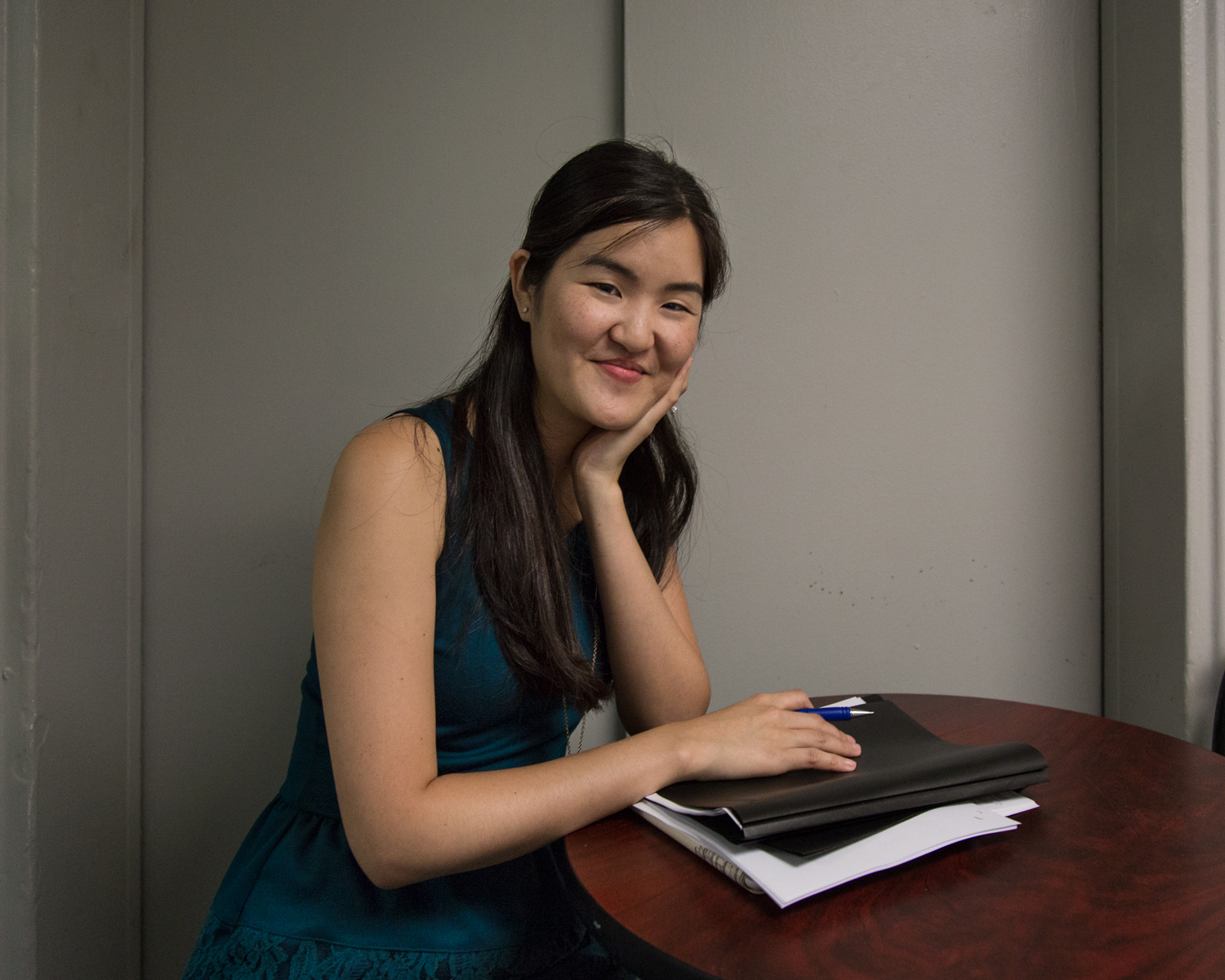
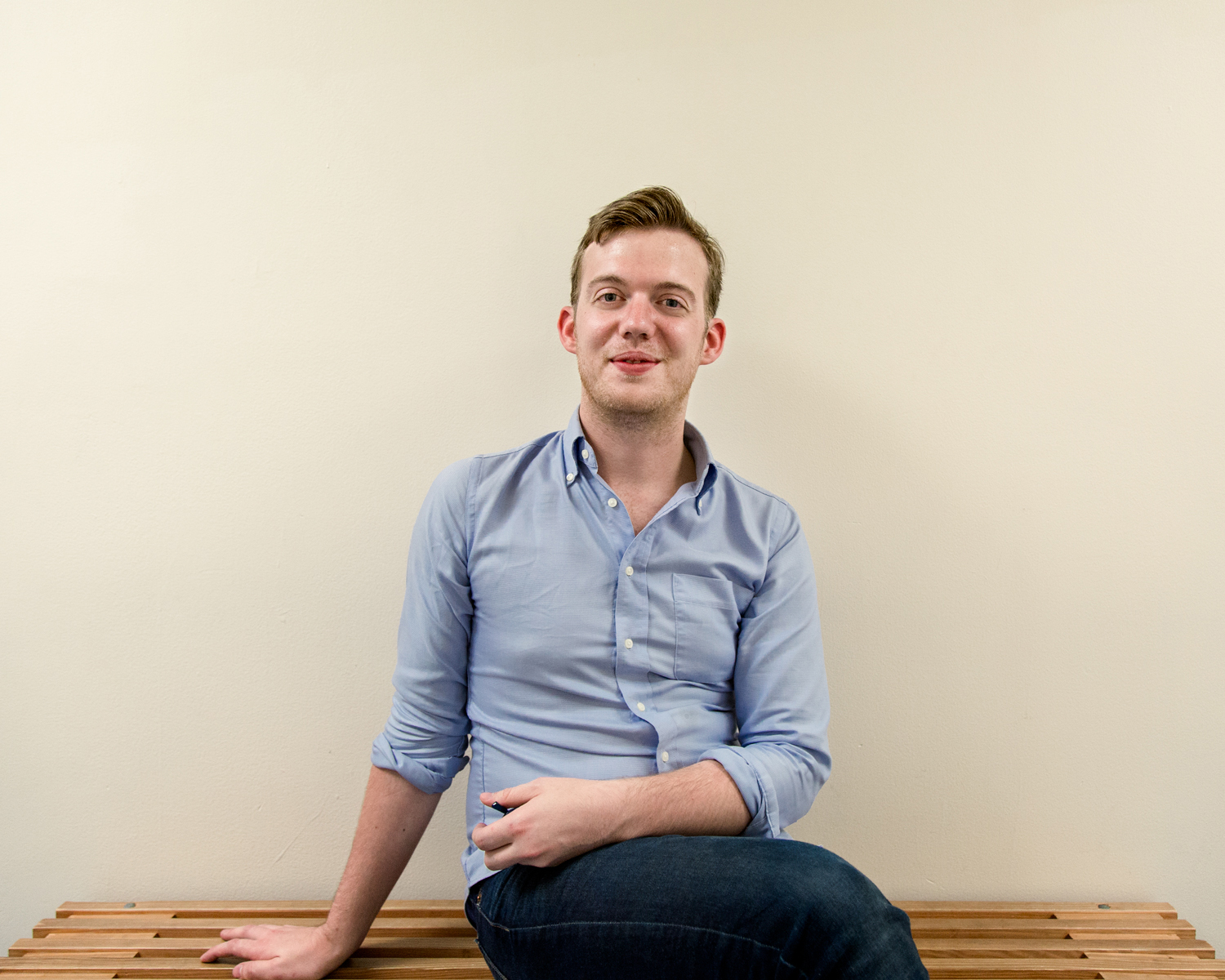
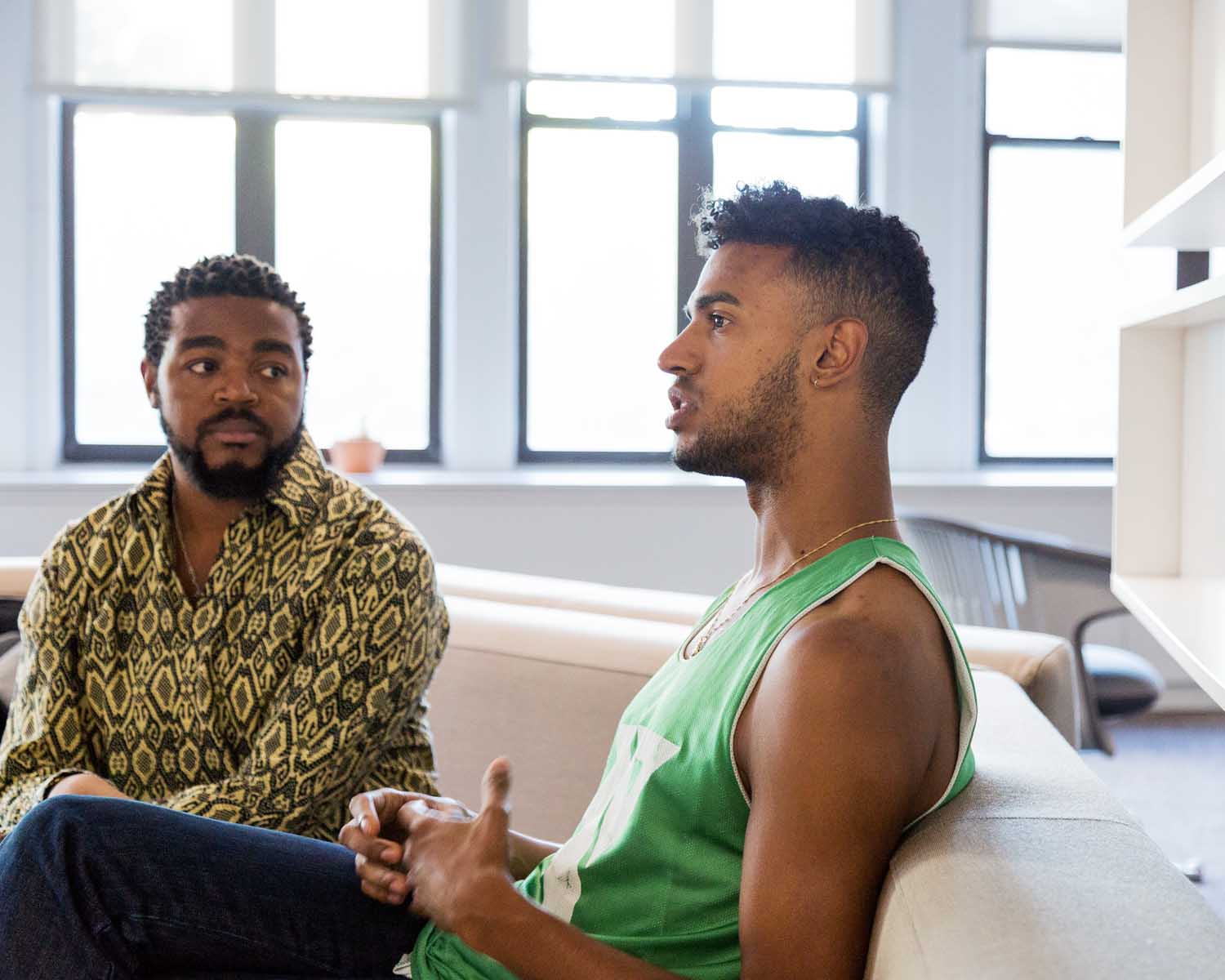
Darrel Alejandro Holnes’ Bird of Pray (recently featured as part of the Brick Theater’s Festival of Lies) beautifully uses spoken word, language, and dance to illuminate issues of race, sexual identity, depression, PTSD, and the high suicide rate among U.S. veterans. We sat down with Darrel and choreographer Jonathan González to discuss their collaboration and creative process.


Margarita Javier: My pronouns are she and her. Could you introduce yourselves and say your pronouns?
 

Jonathan González: My name is Jonathan González and my pronouns are he and him.
 

Darrel Alejandro Holnes: My name is Darrel Alejandro Holnes and my pronouns are he and him.
 

MJ: What can you tell us about the play, Bird of Pray?
 

DAH: Bird of Pray is about two characters who are African-American veterans and navigating the world of PTSD and mental health as one of them contemplates suicide, and the other appears with an interesting proposition: don’t kill yourself. Why don’t you share your body with me and together we can live a better life? So there are elements of magical realism in there, but it’s really based on several interviews that I’ve done with African-American veterans of the war in Afghanistan and the war in Iraq.
 

MJ: And what prompted your interest in having those interviews?
 

DAH: I was really inspired by conversations that I was having with veterans who are friends of mine, as well as folks that are connected to the military community through their family members. Growing up in Panama, I lived part of that life on military bases and have been a part of the military community because of that. I’ve kept in touch with a lot of those folks over the years and even contemplated enlisting myself. I think this is a part of that journey.
 

Bird Pray
 

MJ: There’s a lot of dancing and movement in this play. How did you become involved, Jonathan?
 

JG: I think Darrel first contacted me about the work in its inception. What he was realizing after the residency appearance they had together was that he had an interest for movement — to see how movement could do what I think it’s now doing in the work. It doesn’t just supplement the text. It also provides an atmosphere and an arc of the body. It really speaks for itself in many ways without speaking a word. I think we spent that time trying to figure out what that could be.
 

MJ: What was that creative process like?
 

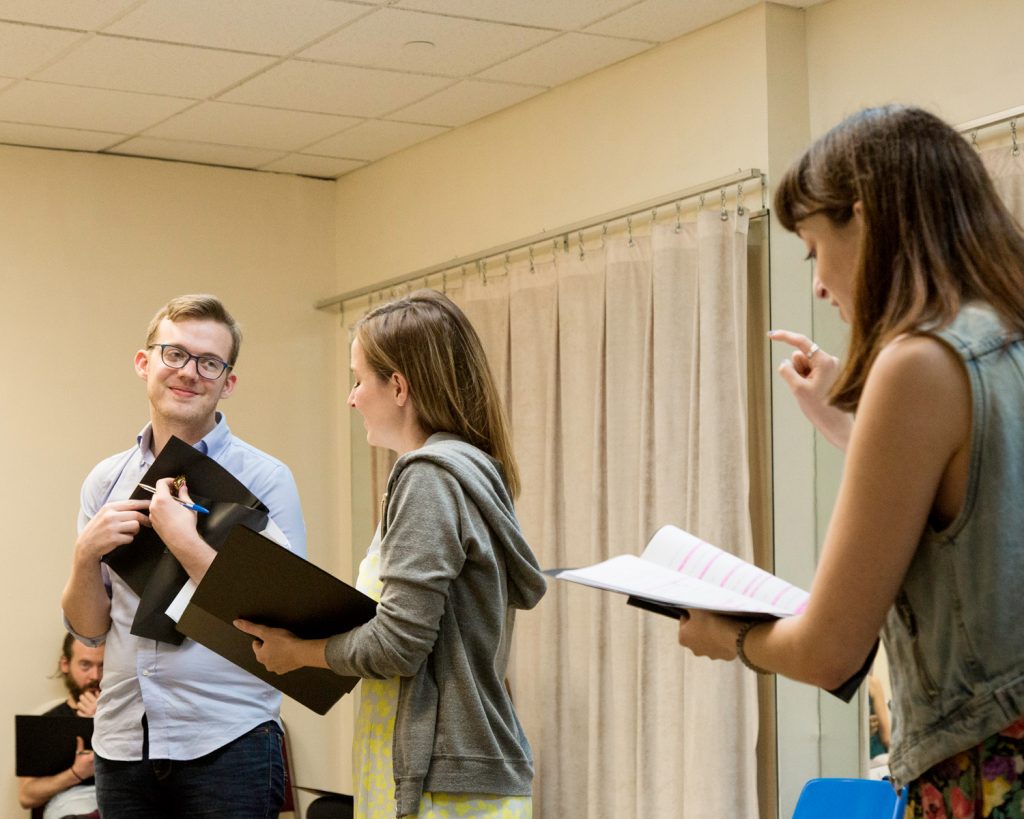
DH: I think of it as a symbiosis. We started with the text because I had already written out a description for how I imagined the dance to be, and then I shared that with our director, Mimi Barcomi, and he added shapes as to how my vision of the dance could fit his vision of the overall play. And then that was transferred over to Jonathan who came in and worked with the actors and modeled the dance, or made the dance on the actors who were really dancers.
 

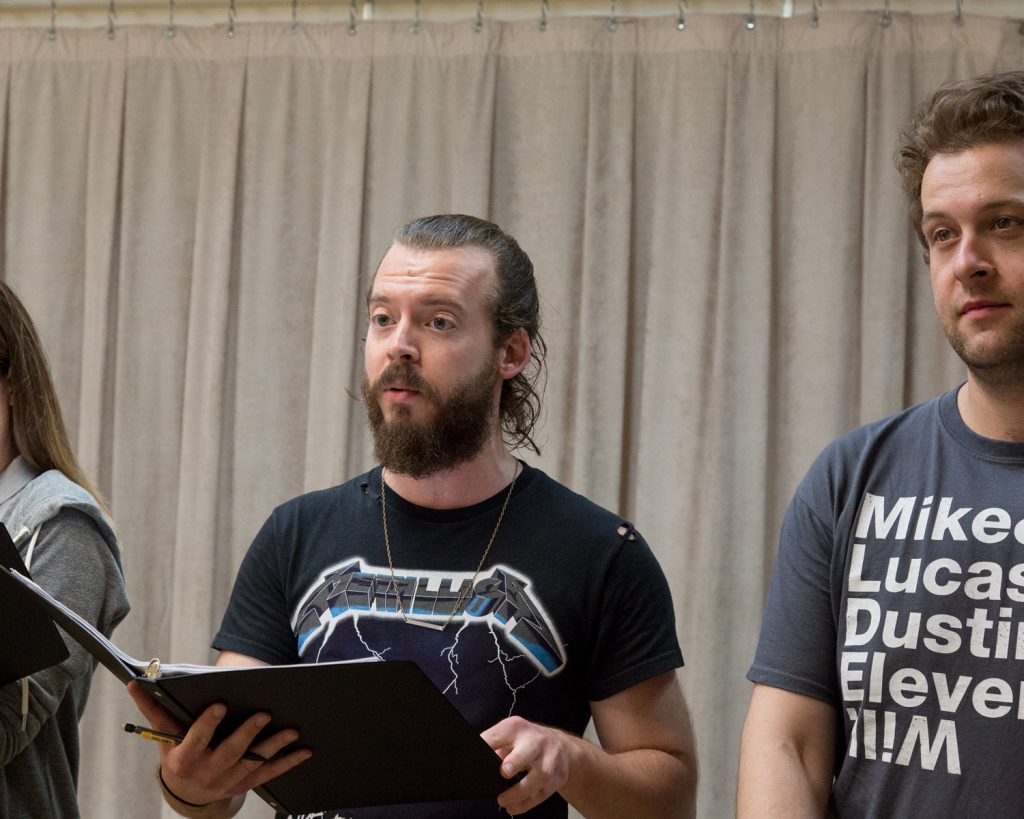
JG: Josiah Vasquez plays the vulture in the work. He’s the one body that you see not speaking, moving throughout.
 

MJ: Yeah, he’s moving in the background throughout the entire piece. It’s really interesting how your eye goes from the action, to the dialogue, to a movement and creates this beautiful relationship between all of them.
 

JG: I think we had that discussion before about trying to choreograph the vultures and understanding that they kind of functioned as a Greek chorus. Behind this veil, they reveal certain things, or they post commentary on certain things that are happening between the two.
 

DH: I was really excited by some of the ideas that Jonathan brought to the table, including having the vultures parallel some of the movement that the actors were doing on stage, and some of the tension between them. And so, in that narrative movement, we dive deeper into the metaphorical language of the play: their metaphors and the words, their metaphors and the actors, their actions and movement. There’s also a metaphor in the dance.
 

MJ: You mentioned the director Mimi Barcomi. How did you get involved with him for this project?
 

DH: I met Mimi at the Lincoln Center Directors Lab last summer and he reached out to me after seeing a reading of Starry Night, one of my plays, at the National Black Theater. Mimi was really inspired by that. He said Let’s collaborate. Let’s get something on its feet. And I was like Well, I have this play from a couple years ago. And back then the play was called Trigger. I decided to dust off the second act in Trigger and share that with Mimi and see what he thought. He was really excited about it and that started the process of turning that second act into its own play. And I’m really grateful to The Collective New York for giving us a residency, and the Arch and Bruce Brand Foundation for a production grant that helped to finance that residency. It really helped to make the play what it is today.
 

Bird Pray
 

MJ: The play deals with a lot heavy themes: mental illness, post traumatic stress disorder, suicide. How do you approach talking about these themes in a respectful way, in a way to shed light on these issues?
 

JG: I think I’m going back to what you were asking before. The way that the movement was brought into the work was that the script was presented to me with certain highlighted sections. There were a lot of buzzwords and was I willing to scaffold something? Because I don’t think the process at large was about setting anything. Nothing is actually set. There’s a lot of ideas about how to improvise around certain concepts and keywords. That brings us back to this question about PTSD and these threads in the work. What were the words inside of the texts that were activating movement and how can those become most apparent? So I offered kind of anchors of movement or ideas of inspiration for how the body can move, and kept it consistent with the character and the plot as it was developing. Where I think you might see a contrast is with Josiah, for which maybe there is a kind of essence of leaning into a modernist dance, or something that’s about form and falls between being about meaning. It’s a very formal sculptural movement. What’s happening between the actors is a deep inroads. It’s very coded — it’s coded in the colloquial. It’s like a real gesture, a real pedestrian act. It’s all about trying to speak to those threads when they present themselves. The sections that we deal with.
 

DH: And I think for me in terms of language, the play offers a series of monologues that are really closely based on the responses to questions that I asked these veterans during interviews. I have a lot of reverence for these soldiers and a lot of respect for their journeys. And so even though it is my rendering and the characters are ultimately composite characters, a lot of the stories are true. I think that’s how you navigate it, by really seeing this play as an opportunity for them to tell their own stories. I try to honor that and really make the play an opportunity for that by making sure that those stories are true.
 

MJ: You mentioned magical realism as being part of the story. Could you expand on that?
Where does the inspiration come from to use magical realism both in the text and dance?
 

DH: I don’t want to give too much away, but I will say that magical realism for me started with dance because I saw Pina Bausch’s The Rite of Spring at BAM. I saw Ligia LewisMinor Matter in which Jonathan performed. I saw What the Day Owes to the Night by Herve Koubi and Compagnie Hervé KOUBI at the Joyce Theater. I was really fascinated by how narrative was one of the threads that tied the movement together in each of those pieces, and it got me thinking really creatively about how I could incorporate dance into this piece. I knew that it would be through magical realism because I would have to create a world where dance could naturally be part of the language of these characters, as someone who’s coming from Latin America and having a real appreciation for magical realism. That’s one of the reasons I’m also excited to collaborate with Jonathan because of his connection to Latin America as well. I’m really thrilled that we found a way to collaborate together to make this world a real one onstage.
 

JG: In dance, there’s definitely a kind of intense hybridizing, especially when you’re talking about people who are coming from the black diaspora, from the African diaspora. They really have been thinking critically about magical realism as being a way of being resilient and so dance has been doing that and I’m very inspired by those people who do that. So they’re in the room.
 

DH: I would also say that in terms of magical realism, there are dances in the piece that are part of African-American ritual or west-African ritual, or diaspora ritual. And in that way, we’re really honoring culture and honoring the ancestors. I do think that that makes room for there to be an element of magic in the play because it is a kind of lifting of the veil or an opening of a door of sorts in a respectful and reverent manner. And I was so happy. One of my favorite memories so far is when, in the early parts of our collaboration, Jonathan was teaching the Ring Shout and the Rain Dance to Cornelius Davidson who plays Shaq and has to take on the majority of the dance, at least in the first half of the play. That really felt like a moment that put me in touch with the ancestors, just by watching this happen. And it was an opportunity for us all to learn what those steps were about. Jonathan said, and you’re right here, so why should I paraphrase it? Can you talk a little bit about what a Ring Shout is in the Rain Dance?
 

JG: The historical reference of a Ring Shout is coming from the African slave trade as it resides in the Commonwealth of the United States. And the practice of stomping the feet, the circle, and the group dance is something that we can tie it back through the diaspora as a kind of ritual practice, but also as an art practice, and the stomping as a gesture, as a way to deal with the dead. It’s like the pounding of the soil, the awakening of what has passed or the coming together of what is alive. It’s like an allegiance of life and death. And so in the Ring Shout and also the Rain Dance, which is also in the work, we’re thinking about the old traditions and the practices of Yamayá. Those are also located in santería and many others as we talk about the lineage of coming from Europa. But how these operate in the work because it is within a storm, right? We hear the track of the storm, we hear this situation of a kind of conjuring, and we think about weather patterns and also the spiritual and also blackness wrapped into each other. It’s very historic site.
 

DH: When I interviewed a lot of these veterans, some of them expressed that they were searching for something to make sense of their experiences. Searching in a way that led them to spirituality, sometimes towards religion, sometimes away from religion, into an abyss or a void of unknowing. But always still searching and with these characters, I think what they’re finding is themselves and a kind of beauty, if you will, in the tragedies of war through the rituals that they’re working with on stage. So I’m really excited about being able to incorporate that in the play with Jonathan´s support and direction. And I’ve really been happy with how the actors have been able to successfully bring all of those elements to life as well.
 

MJ: At the heart of the play is this love story between two men who were both soldiers and they’re both black and it’s really beautiful to make that connection between culture and history and queerness. Can you speak a little about the history of gay soldiers in the military, or if soldiers of color in the military, and how those stories aren’t as well known and have been sort of in the shadows for a long time?
 

DH: Well, one of the reasons why I really am drawn to this community is because so many of the stories related to LGBT service in the military specifically focuses on gay, CIS, white men. And so many stories of veterans in general focus on straight, CIS, white men. With all of my work, I always think about who is left out of the history books and I take it on as a mission to write those stories into the history books by writing them into the history of the American stage. And so this is really made to honor those stories which are complex and full of contradiction and sometimes the stories are completely opposite experiences because we are diverse people, right? Some people have it great, some people have it bad, some people have up and down, some people have everything in the middle. And so I think it’s really important to show that diversity even within this specific community; to show the wide range of experiences within the military, within blackness, and within queerness as well.
 

Bird Pray
 

MJ: The current president and the administration are openly hostile to the LGBTQ community, to the black community, to immigrants. Do you as artists feel any responsibility in taking part in the political discourse?
 

JG: I think no matter what work you’re making, it’s always political. I know that some people don’t want to agree with that, but I’ve been making work before this administration and it’s always been garnered on the idea of black life and the possibility of working with people that are trying to really work against them inside of the institution. So nothing’s changed.
 

DH: I feel that my work is in a lot of ways about memory and awareness. So you could argue that that in and of itself is a political act just by sharing these stories and telling these truths. Right? I hope that my work transcends politics because it’s not about Democrat or Republican. You know, LGBT folks had been mistreated in the military regardless of who’s president. African Americans have been mistreated regardless of who’s president. Latinos have been mistreated regardless of who’s president. I hope that this transcends politics and really touches the audience where it comes to how human beings treat each other overall. Because in every community there is, an outsider, right? There’s someone who we don’t let in; someone who we’re afraid of. And it’s usually because we don’t know their story. These plays tell those stories, so I do hope that whoever sees it, when they’re out there voting or when they’re out there deciding what to support, that they remember that these soldiers are people too.
 

MJ: And this play is part of a trilogy?
 

DH: This play is part of a cycle. There are currently three but there could be more. The plays are all part of what I call The Sandstorm Cycle. Sandstorm is a line that’s in one of the other plays, Nativity because all of those service men, women and people that I’ve interviewed have served in Afghanistan. Many of them have also served in other countries and in other conflicts, but they all have that in common. And so a lot of the stories take place in the desert. A lot of those stories take place in that landscape. I think as someone who is either a millennial or on the cusp of being a millennial, I think that our experience of U.S. wars has everything to do with the Middle East and so a lot of the stories come from soldiers with those experiences specifically. All of the plays are based on interviews that I’ve done with African-American veterans, but recently it started to expand and I’ve been including other LGBT veterans, as well. I’m really excited to share these stories and to bring them to the stage. And I’m also really grateful for how they’ve been received so far. Nativity was selected for the 50PP list, and Starry Night was a finalist for the O’Neill National Playwrights Conference and Trigger, which is related to Bird of Pray, was a finalist for the Princess Grace Award. That’s helped the play; it’s gotten a lot of interest and attention from other theaters, and even possibly landed this great opportunity [at the Brick Theater]. So I’m really grateful for the theater community for being receptive to these stories and I hope that we can all continue to collaborate together bringing them to life.
 

MJ: You almost already answered my next question: what are your hopes for the next steps of your work?
 

DH: I hope to continue to collect more stories and to bring them to life on the stage and to continue to collaborate with great artists. I really hope to continue to also explore the ways that theater and dance can come together. Recently, I was in Europe doing a little short tour hopping around theater and performing arts festivals and was really inspired by how the lines between the performing arts are really blurry and some would say perhaps even don’t exist, or are only the limits of your own mind. And so here’s to hoping that more of the contemporary American theater can be like that and that collaborations like this can continue to happen. It’s really an honor to collaborate with an all queer team. And it’s also really exciting to share this play with Brooklyn during PTSD Awareness Month, during Pride and also at a time when suicide prevention is part of the national conversation because it does figure significantly in the play. I think it’s a really important conversation to have. On average, 20 veterans a day commit suicide, which is one veteran every 65 minutes. Suicide is within the top 10 causes of death in the United States. And in 2012, suicide was the number one killer among veterans or amongst soldiers from the United States. And that was the first year that it climbed higher than actual combat. This is an epidemic and with trends of suicide within the LGBT community, as well. You can imagine that even though a lot of studies are still being done right now to look at that cross section, that there’s a lot of overlap between the trends of suicide within the LGBT community and trends of suicide within the veterans community. And so that’s one of the reasons why I think telling these stories is so important because it really does affect a significant amount of people.
 

Bird Pray
 

MJ: This is a somewhat a loaded question, but what can you say about the fact that the United States, one of if not the most powerful country in the world, in large part because of its military, treats its soldiers so poorly? As you said, the suicide rate is so high amongst veterans, and so many of them live in poverty and their spouses don’t receive support.
 

JG: That’s Neo liberalism, isn’t it? You make bodies utilities, and that’s what this country is good at. But I think the disillusionment is when we all think as Americans that it hasn’t been happening and what we packaged and digested over the process of believing in the nation state of America, is that we haven’t had our hand in everything international and haven’t been using bodies in a disposable way. We’ve been doing it here for black people for centuries. So it shouldn’t be different that those who fight in the name of this country die forgotten.
 

DH: I would add that I hope that anyone reading this feels encouraged to support the vets and are encouraged to promote mental health literature and services in their community, because they call it performative empathy and it actually does make a difference when someone is considering suicide. Just having the opportunity to talk to someone about it really does help people feel heard and seen and could turn the tides. I would really encourage folks to do that. And I think also, it’s really important that we as a nation and we as human beings in this world try to solve our problems in ways that don’t involve war, right? So that we can reduce the amount of human casualties. I think everyone who cares about their family, their community, their nation, or just humanity in general should always be looking towards other means like diplomacy and just good old fashion sit down conversation as a first resort rather than as a last resort. So I really hope that that happens.
 

I would just add that there’s a lot that we still don’t understand about PTSD. So I think supporting research is going to be vital and I also think that there are a lot of good folks at the VA who are doing everything they can to work with these soldiers and they need support as well. There are a lot of things that doctors, nurses, and researchers ask for and are struggling to get. I hope that Congress and everyone in power can give these folks the supports that they need so that they can continue to provide – and hopefully provide better – services for our veterans because they certainly deserve it.
 

MJ: Can you name a few organizations to help support veterans?
 

DH: Here are some ways folks can support our veterans: Wounded Warrior Project, Semper Fi Fund, and Fisher House.


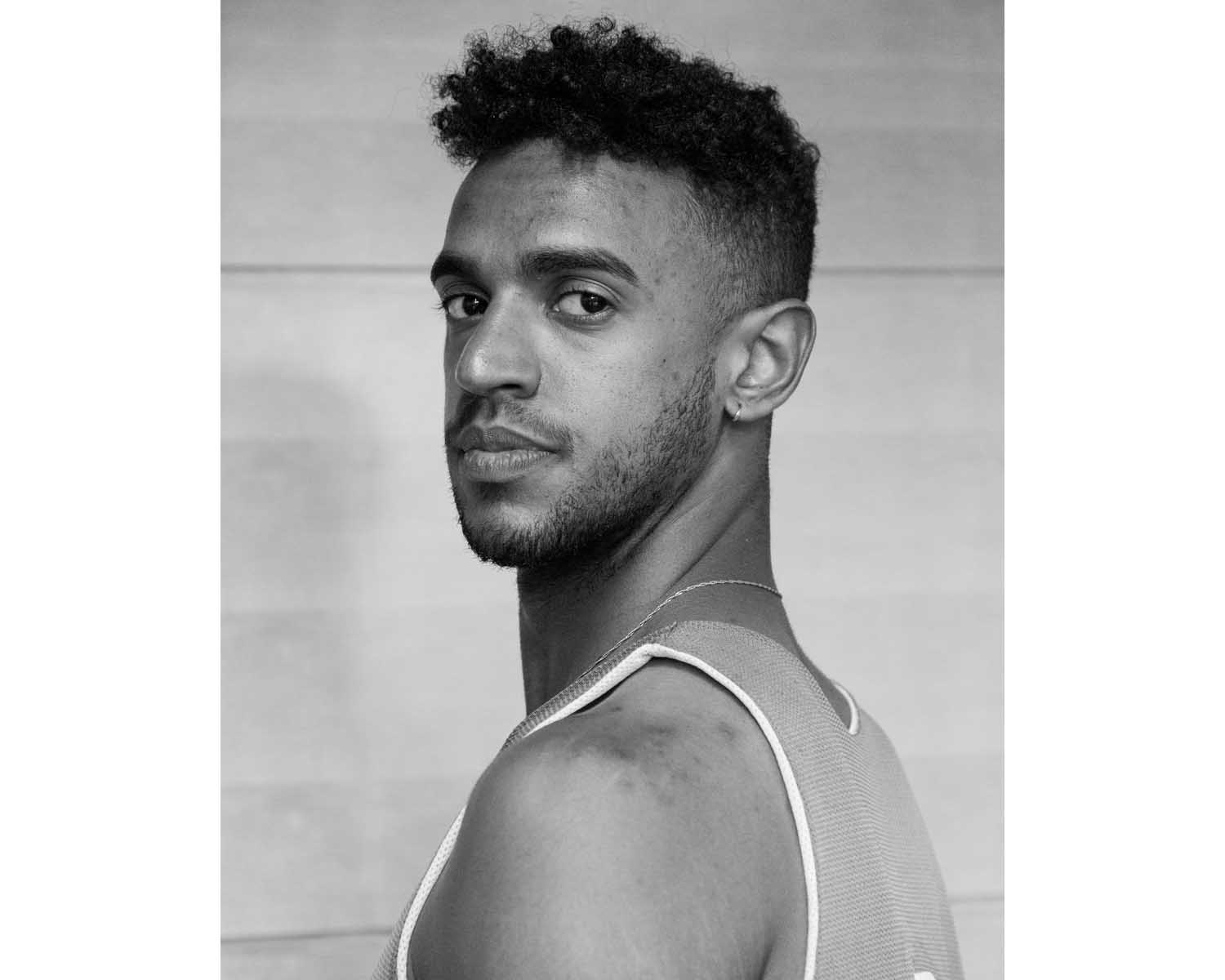
Jonathan González ambulates between the roles of performer, educator, and choreographer – initiating questions through the body alongside composing sound, design, and text for performance. His works have been presented among others by BAX/Helix Queer Performance Network, New York Live Arts, Center for Performance Research, La MaMa, and Danspace Project. A CUNY faculty member, artist-organizer with WoW/Works On Water, previous curator for Knockdown Center’s Sunday Service, and co-curator for Movement Research’s Fall Festival invisible material. Diebold Awardee for Distinction in Choreography & Performance; POSSE Scholar (Trinity College); Bessie Schonberg Scholar (Sarah Lawrence College/MFA). Jonathan is based in their hometown of Queens, NY.
 

Darrel Alejandro Holnes is a poet, playwright, and director from Panamá City, Panamá, and the former Panamá Canal Zone. He is a member of the Lincoln Center Directors Lab, the Musical Theatre Factory’s POC Roundtable, the Stillwater Writers Workshop, and Page 73’s Interstate 73 Writers’ Group. His play BIRD OF PRAY was a recent finalist for the Princess Grace Award, and his play STARRY NIGHT was a recent finalist for the 2018 O’Neill National Playwrights Conference, the Van Lier Fellowship from The Lark Play Development Center, and the 2050 Fellowship in Playwriting at NYTW. His other plays have been developed with the generous support of the Saltonstall Foundation for the Arts, the Virginia Center for Creative Arts, the Kitchen Theater Company, National Black Theater, the Arch and Bruce Brown Foundation, and the Collective NY. He is currently an Assistant Professor of Creative Writing and Playwriting at Medgar Evers College and he teaches playwriting at New York University. darrelholnes.com
 

Posted on

Making Depression Sing: The Cast of We Have Apples on Mental Health

We Have Apples


Do you have apples? In America, over 50 million people do and Rachel Griffin’s new musical is giving voice, and music, to their suffering. The fruit in question in We Have Apples represents mental health, and recent estimates suggest that nearly 1 in 5 people have some form of mental illness. Those statistics beg the question…why aren’t we doing anything to remedy inadequate, cold, and confusing maze that they have to navigate to receive any kind of care? Enter We Have Apples. The musical centers around Jane, who suffers from anxiety and depression, as she enters a psych ward, and finds herself surrounded by people who also have apples, all different, destructive, and beautiful, like hers.
 

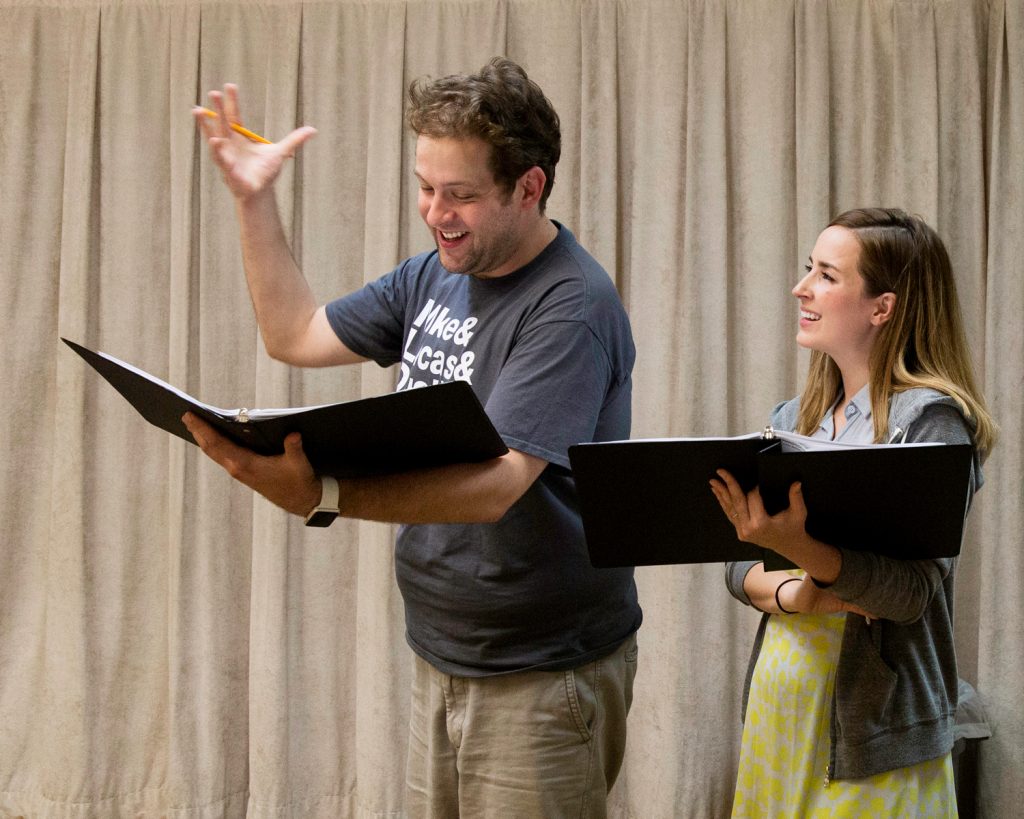
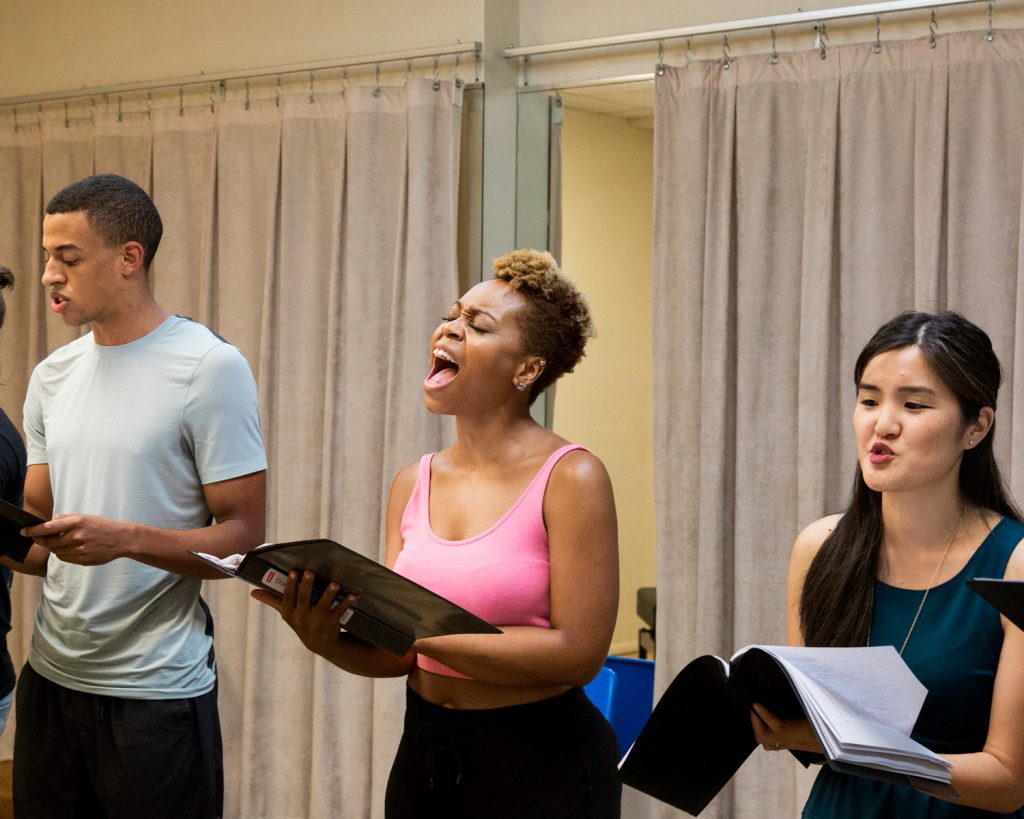
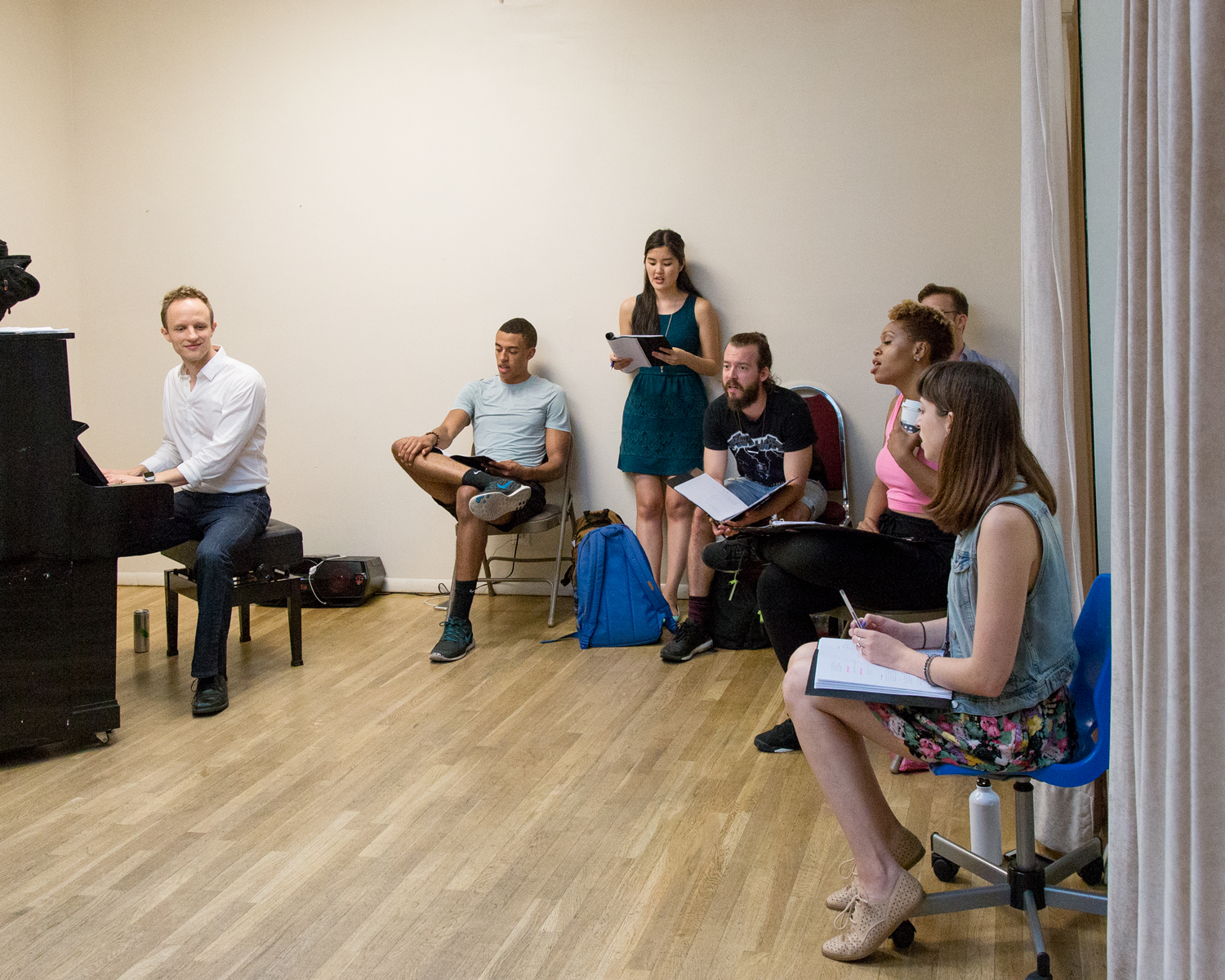
We were given the opportunity to sit in on a rehearsal the week before their concert, which premieres tonight at 54 Below, and talk to creator Rachel Griffin and the cast about their message, their experiences, and their goals; to help audiences empathize and learn about one of the most misunderstood issues in our country with authenticity, humor, and boundless imagination.


We Have Apples
 

Kelly Wallace: You’ve had a lot of experience as a songwriter before, but this is your first musical. Why did you want to use this medium for this story?
 

Rachel Griffin: Theater gives me the ability to share a story about mental illness that starts with debilitation and suffering and ends with triumph and recovery. I think we need more stories that show that a mental health diagnosis does not mean you are doomed. I wanted to show a bunch of characters that have mental illness but are not defined by it. They are a professor, a med student, a creative writer, a musician, etc. By the end of the show, you want to be friends with them. You respect them and admire their strength. You also see how stigma and crappy healthcare affect them. Hopefully their stories will foster action and compassion!  
I didn’t think about writing theater until I met my husband, who is the associate music director of Aladdin and a musical theater composer. All the shows we saw together and his projects got me really excited about the power storytelling and theater. I noticed how theater can reach people and awaken something in them that might fail to awaken through other methods. Without being preachy, you can preach! 
I really care about mental healthcare reform and de-stigmatizing mental illness. I’m not going to run for office or work in healthcare, but I can use creativity and music to help. I started writing this show on my iPhone and I was writing it out of frustration with my own mental healthcare experiences and the stigma I faced and saw others face. I was afraid to let the show out of my iPhone because I knew if I shared it then people would probably figure I had a mental health condition. Then it dawned on me that stigma was stopping me from sharing it. Stigma is powerful. I realized if what I was writing could help people, it was worth being vulnerable. I think writing about what we fear can lead to our best writing. I still resist it, but I want to be brave. We have this one life, I think it’s important to remember that and be bold and as fearless as possible with our writing. It still scares me, though!
 

KW: As you said, it is so personal. Did you find the editing and cutting process was hard for you because of how close to home the story is?
 

RG: Yeah! Once in awhile someone says, “You know, I don’t think this part is realistic,” and it’s literally something that I’ve experienced in real life with the mental health care system. It’s so bad that people don’t believe it as fiction. That’s crazy! As some of my mentors have recommended, like Larry O’Keefe and Michael Korie, sometimes I make a change someone suggests, but I make it in a way that makes sense to me but might not be exactly what they thought was right. I love that theater is collaborative. I love when an actor will email me and say, you know, I don’t think my character would say exactly that, what do you think about this? Just to take that in and be like, you know, let me think about that. It’s been incredible, because composing can be kind of lonely. So with theater, you have this community. I feel extremely blessed to have the people we do involved with this show because they bring so much. One mind alone is so much less powerful than a bunch of different perspectives.
 

KW: When did you decide to have Depression be a physical presence onstage as a person?
 

RG: It wasn’t in the first draft. The show is based on a short story I wrote in undergrad about a girl in therapy. In the short story her thoughts were shouted in capitals. We all have that voice in our head, whether we have depression or not, that says you’re not good enough. We all have that fight or flight reflex that we don’t need going off all the time anymore, because a lion isn’t going to jump out at us. I don’t think we talk about that voice too much, I don’t think we talk about those weird or scary thoughts. I thought it would be cool to have a character who was saying those things so the audience can realize that other people have those thoughts, too. I played with the idea of having an offstage voice say it and then moved to having a character. I like that the character, at first was one-sided and was just the darkness, and then I was like, I couldn’t write this show if I didn’t have the imagination I have. Having such a vivid imagination can look like anxiety, racing thoughts.. but it also can look like creativity and music and empathy.. so depression and anxiety and mental illness have beauty in them, and that’s something I’ve always wanted to show. A lot of media show only the bad stuff, which we need and we need to see the struggle that is a reality for many, but we also need the beauty, the hope, the brilliance. So, I thought, maybe I could also make this character be the source of imagination and have that there too. It’s been cool too, because a lot of people’s favorite character in the piece is Depression and I’m like, oh, I thought everybody would hate her! She’s the antagonist. And I’ve had people come up after presentations and say, “I just love Depression!” And I’m like…”Okay!” That’s… great!
 

KW: What do you hope that audiences take from the show? When someone comes to see this, what do you want them to leave with?
 

RG: I want them to see that people with mental health conditions are their doctors, their friends, their teachers, people they admire. I want people to realize mental healthcare is inadequate and inaccessible and that causes suicide. I want people to see how isolating it is to have people respond with silence and shame to an illness. When a friend of the family is in the hospital with a physical illness, people bring pies and cards. When they are there for a mental illness, people disappear.  
We can’t have all the shame and the silence, because it really does corrode the human spirit. People really lose lives because of it. We need to talk about it in the open so it evolves to not be so uncomfortable. Mental health should be taught in schools along with physical health in health class. I think many teenagers think their pain is permanent. They need to be aware of symptoms, treatments, and stories of hope.


We Have Apples
 

Kelly Wallace: Tell me about your character.
 

Hannah Elless: I play Jane and she is a young woman that is aspiring to go to college and all the normal things that a young woman aspires to. She’s a writer, she’s creative, she really has a lot of great energy and yet she has this duality about her that she’s constantly coming to terms with. In the show, they call that character Depression, which is personified by Emily, who plays Depression. So it’s pretty interesting to have that, since the audience can see both of these characters having a conversation with each other, when in reality it’s Jane having a conversation in her mind and fighting, sometimes fighting and sometimes agreeing. That’s what’s lovely about the show. We’re looking at Depression not as an enemy but as sort of a friend in a way. Maybe a friend that doesn’t always help you make good choices, but we’re definitely looking at it as part of who Jane is inherently, and not something that she despises, but something she’s constantly trying to reconcile within herself.
 

KW: How has working on this piece changed or informed your views on mental illness?
 

HE: I just think it’s so important that we’re having a dialogue about mental health and putting it into a musical is so smart. What the writers have done to bring this to the surface of everybody’s minds is really commendable. I think my viewpoint has changed in a great way. Being able to work with this company, and explore who Jane is – I think the point is that as an actor you always want to play these great roles and the point of Jane is that she’s just a normal girl. That’s what surprised me the most, reading through her character and her songs and her singing. She wants all the things any girl wants. So there’s something different and lovely about her, but there’s also something so normal and relatable because she’s just a girl.
 

KW: Why do you think theater is such a powerful medium for telling this kind of story and to help change people’s minds and erase some of the stigmas associated with mental illness?
 

HE: I think it’s because when you sit through this show, you feel like you really know these people. After sitting through a concert or a full production of this hopefully someday, you really feel like you know Jane. You feel like you know Avery and Charlie and Alex and all these characters and by the end of the show they’re your neighbors, your brother, your sister, your mom, your dad…you start relating to these people and realize they’re people in your life. It makes it really safe to talk about mental illness in a way that’s funny and heartbreaking and completely serious sometimes. They hit all spectrums of the emotional journey. That’s what is great about this show too. They let you laugh and they let you cry and there’s no right or wrong, it’s just exploring who these people are and their specific journeys in life.


We Have Apples
 

Kelly Wallace: Tell me about your character.
 

Emily Nash:  I play Depression, who is the personification of Jane’s mental illness. It’s kind of larger than that; it also embodies her OCD, her anxiety, but also her creativity and her protection. So, it’s all of the good and bad aspects that come from mental illness. So, I’m the personification of all of that, and I appear as a person, but I’m really just a figment, not of her imagination, but of what’s going on in her mind. You’re seeing everything from the inside out, which I think is really cool. I love this role; I think it’s really great to get the chance to play this.
 

KW: How has working on this piece changed or informed your views on mental illness?
 

EN: I’ve always been passionate about the topic. I actually just lost my grandmother to depression a few weeks ago, so it feels especially powerful now to be working on this. I feel like I’m giving voice to her story in a way that…it feels great to have ownership of that story. I myself have struggled with anxiety my whole life, just generalized anxiety, which has at times manifested itself in depressive episodes. So, definitely not to the extent that Jane experiences it in the show, but I so relate. Singing a song about having a panic attack? That’s not something I have to get into someone else’s shoes and figure out what that feels like. I know what that feels like.
 

KW: Why do you think theater is such a powerful medium for telling this kind of story and to help change people’s minds and erase some of the stigmas associated with mental illness?
 

EN: It’s the best medium because we’re getting people in a room together talking about this. We’re not hiding behind a movie screen, this is live and in the flesh. People are going to respond in different ways, but I just really hope that people will grow to become more vocal about this and not stay silent, because it is something that plagues so many people.


We Have Apples
 

Kelly Wallace: Tell me about your character.
 

Meagan Hodson: I’m playing Charlie. Her illness has evolved with the character. I used to be Martha and she was older, so she’s evolved back into a twenty-something. She’s relatively new to the psych ward because she has just been turned down with all her cries for help and not getting what she needed, so she did something drastic and hurt herself to finally get admitted. And then, I think, a couple weeks passed by and the insurance company said, “Alright, you’re good, you’re fine, you’re free to go.” She’s not ready, and she’s terrified, and she ends her life. Which is hard, and it’s that one character. Unfortunately, it feels very necessary. It’s such a, not common, but it is an outcome that happens. It’s the reality of it. Not to make it a statement, but to make it realistic. That’s something they’re trying to combat, trying to get better, and sometimes it doesn’t work out.
 

KW: How has working on this piece changed or informed your views on mental illness?
 

MH: I think it really opened my eyes a little bit more to how much stigma there is. Because, I think growing up, we don’t have as much interaction with people, or if we do, it’s a little more quiet. There’s a separation. But I never realized there was a huge discriminatory element to it until I really thought about it. There’s not a lot of talk about it in the media. And more people are coming out and talking about it, which is such a big deal, but it shouldn’t be such a big deal. It should be common place.
 

KW: Why do you think theater is such a powerful medium for telling this kind of story and to help change people’s minds and erase some of the stigmas associated with mental illness?
 

MH: Well, I really love theater for social change, just because I think you can say things without it being so direct. It seems more of an artistic way to present it, but it still can be very real and start conversations. So you don’t feel like you’re being lectured the whole time; you’re immersing yourself into a story and a character and then you realize that really says something to you personally as well, or about someone you know. There’s that wall that helps to ease into that for other people.


We Have Apples
 

Kelly Wallace: Tell me about your character.
 

Andrew Kober: I play a character named Alex, he’s manic. He’s sort of the bright shining face of the psych ward. He’s excited about everything that happens there. He’s a source for positivity and ultimately for organization and his illness manifests itself in a way that can be a positive influence on the rest of the ward. Does that sound like an intelligent answer? I’m faking it.
 

KW: It does! How has working on this piece changed or informed your views on mental illness?
 

AK: Rarely do you see stories where people with different mental illnesses co-exist in this way. I mean, there’s really, at least in this kind of condensed version of it…yes, it’s about one character’s struggle, but it’s about all sorts of backgrounds coming together to support the storytelling. What it’s done for me more than anything, is to say that everyone has a story to tell. It’s a great reminder that there is absolutely no story that is not worth telling, exploring, delving into. There is absolutely something theatrical and beautiful to be mined in anyone’s experience and their journey.
 

KW: Why do you think theater is such a powerful medium for telling this kind of story and to help change people’s minds and erase some of the stigmas associated with mental illness?
 

AK: I’ll tell you why. For lack of a better way of putting it, you can’t leave. It’s there. It’s in front of you. It’s live, happening in front of your face. You can’t disconnect from it in the way that you can with some other art forms. Social constructs say you can’t check your phone in the middle of it, you can’t run to the bathroom in the middle of it. You’re there, and it’s happening to humans in front of your human eyes. I think that adds an immediacy and raises the stakes to the conversation.


We Have Apples
 

Kelly Wallace: Tell me about your character.
 

Tamika Lawrence: I play Avery, she’s one of the patients in the ward. She’s there because she’s been dealing with a lot of body issues and with bulimia.
 

KW: How has working on this piece changed or informed your views on mental illness?
 

TL: It hasn’t, actually, because I am pretty familiar with a little bit of it because I think living in the city and being around so many people who don’t have access to mental care in this country makes you aware. Doing research and also, you know, being here makes you invest in things like therapy, just to stay healthy and take care of yourself. But I’m very happy that she’s doing this piece to bring awareness to all of this, because a lot of people don’t have that experience.
 

KW: Why do you think theater is such a powerful medium for telling this kind of story and to help change people’s minds and erase some of the stigmas associated with mental illness?
 

TL: I think because theater is accessible; theater is enjoyable. For issues that might be hard, such as mental illness, or even politics, things that are hot button topics, I think theater helps to build the conversation on both sides. Whether you agree with what’s being presented or not, I think it helps to make it palatable.


We Have Apples
 

Kelly Wallace: Tell me about your character.
 

Brian Graziani: I play Jonah. Rachel just incorporated Jonah into the show recently, so I’ve had a lot of wiggle room to do whatever I want. I chose me – there’s not really a single difference between the two of us.
 

KW: How has working on this piece changed or informed your views on mental illness?
 

BG: You know, this is my fourth time doing the show in various stages. I realized doing it the first time that I suffer from a mental illness. It wasn’t until that first scene, seeing the way that depression is personified, it’s very jarring. It was very eye-opening in regards to some of the trials and tribulations I’ve been through myself and how I cope with them, especially those little voices we all hear. I went from there and was diagnosed with depression, so this changed my life.
 

KW: And why theater? Why is this such a powerful medium for changing people’s’ minds and getting them to really think about this issue?
 

BG: I think art in general, especially onscreen or onstage, is just a very passive way of communicating about social issues. It feels less preachy, because we’re invested in a story. We’re looking at a person, rather than a direct lecture on how we cope with an issue. It’s not a political statement, you think, but then subconsciously, hopefully, the piece teaches us something and gives us some shape of life and some taste of this heightened version of reality. I would like to think that’s what this piece and theater in general can do.


We Have Apples
 

Kelly Wallace: Tell me about your character.
 

Michael Winther: My character’s name is Bill, and he has a really beautiful song about losing his wife and kids. This is one of those things where it’s like SWAT Team theater, where you sweep in and do this for creatives so they can see what they have. Being on both sides of that, because I’ve worked as a writer on my own stuff as well, I always love to do it as much as I can.
 

KW: How has working on this piece changed or informed your views on mental illness?
 

MW: It’s a bit of an anthology kind of piece. Everyone has their stories. I definitely have history of mental illness in my family; I had a cousin who was undiagnosed on the spectrum and schizophrenia and he ended up dying very young. He was like 40. He had another brother, my other cousin, who committed suicide. There’s a lot of that on my mother’s side of the family. I think everybody has some kind of personal experience with this. With a piece like this, you start talking about it and like many things, you think you’re the only one or it’s unusual, because we don’t talk about it. It’s important to talk about. The country in general, and the United States in general, is moving towards having less shame about mental illness, I hope.

 
KW: Why do you think theater is such a powerful medium for telling this kind of story and to help change people’s’ minds and erase some of the stigmas associated with mental illness?
 

MW: It’s the reason why I wanted to go out on tour with a show like Fun Home. Like this, it’s about an issue that matters and there’s something about your having an encounter with an actual person. You have to show up as an audience member, especially in musical theater, the voice literally hits your body. I think it’s a really great thing to try and find a way to tell this story about mental illness and depression with music. Non-musical theater people always scoff, “You’re going to make a musical out of that?” But it’s the same thing with Hamilton. At first, you’re like, “Really? That? I can’t believe it.” But it’s those shows that – not all of them break through – but when all the pieces work together, it’s transcendent. It transforms people in a non-intellectual way, which is I think what we all want to do. At least for me, that’s what I care about. It’s great to see a lot of musicals now that tackle weightier issues, which doesn’t mean they’re downers, like Evan Hansen, they just have a mission along with the story they’re telling. Even if you look back…The King and I, Oklahoma, Carousel…they have some really heavy stuff in it. There’s a bit of that in musical theater, always. I did Mamma Mia on Broadway the year of the Republican National Convention and it was on the list of “approved shows” to go see, until an advance person came to see it and they’re like, “There’s a story about an unwed mother and there’s a gay guy in this, this is no longer on the Republican okay list.” So the delegates knew what was “okay” to see. Things have changed a lot since then, of course. So we were shocked. There would be these Republicans who would come and say things like, “Don’t tell anybody I’m here but we really had a great time.” You’re like, really? This show? We live in a bubble in New York and we think, oh, this is no big deal.


We Have Apples
 

Kelly Wallace: Tell me about your character.
 

Coleman Hemsath: Orien is his name. So he is not really in the whole psych ward at all, he is the son of the guy who runs it. He’s on the outside looking in at all the “crazies,” even though he really relates to them. He relates to the main character because they both are very out of touch with modern-day things and ways to connect. They connect when they’re both like, “Wow, we don’t get anything; wow, we’re the same person because we don’t understand anything in the real world.” So even though he’s from the outside looking in, he’s still a part of that whole idea that he feels like an outcast.
 

KW: How has working on this piece changed or informed your views on mental illness?
 

CH: I’ve never really thought about the inner workings of a psych ward or how people interact with other people who are in the psych ward at the same time. I think it’s really cool that you get to see that, you get to hear people communicate, and you see this girl start at the beginning and go through this whole journey. It’s really terrible at the end when people leave in all this debt or leave without a plan on what to do, it’s very eye-opening and things that I’d never even thought about before. If you do have exposure to that environment, people don’t always want to talk about it. I feel like this is great, because it makes more people able to talk about it, since I feel like it touches a lot of people’s families.
 

KW: Why do you think theater is such a powerful medium for telling this kind of story and to help change people’s minds and erase some of the stigmas associated with mental illness?
 

CH: I think theater in general makes people talk, even with uncomfortable topics such as this. So therefore, I think this gives people the opportunity to bring it up. You generally won’t just sit down with someone and say, “Hey, let’s talk about mental illness.” This, seeing the show or watching the YouTube video, will give them the springboard to start talking about it if it’s a conversation they want to have.


Posted on

Creating Characters with Mental Illness Who Aren’t “Crazy”

creating characters mental illness crazy rachel griffin


When people ask me why I’m writing a whole musical by myself, the answer isn’t, “frustration,” it’s “passion.” My passion is huge. It’s a T-Rex. It’s a caffeinated T-Rex. That being said, frustration does play a role and fuels me as well. It’s a smaller dinosaur. But it’s still a dinosaur.
 

I am frustrated by the portrayals of people with mental illness in the media. The stereotypes, dated language, and misinformation make me cringe. They are the violent criminals, pill-downing zombies, the men in the basement who collect troll doll hair. (Well, I kind of like the troll guy.) These are not people with mental health conditions, they are caricatures of mental illnesses.
 

Besides being wrong, these portrayals also lead to a misinformed public who are then uncomfortable with conversations about mental illness or even people with mental illness. They lead to unnecessary shame, guilt and embarrassment in people with the conditions. (The last thing they need on top of chronic pain!) After a piece I wrote in the Huffington Post “5 Reasons Why I’m Not Ashamed of My Mental Health Condition” went viral, I realized just how prevalent the shame is and that is why I started the #ImNotAshamed movement. The media creating a culture of shame around mental illness is lethal and we have a responsibility to future generations to change this.
 

These stereotypes affect people like me in my daily life. Someone commented on a piece I wrote on the huff post that I must be wild in bed. A gal I know told her friend she was bipolar and the friend said she’d have to “hide the knives” when they were around.
 

Don’t get me wrong, there are wonderful portrayals that have opened doors, and moved people and changed hearts. I’m so thankful for those. They show that mental illness is just that– an illness. “Crazy” does not describe anyone suffering from a mental health condition.
 

Though I have enjoyed and have been touched by some portrayals of mental illness in theater and in the media, I haven’t seen anything at all like my own experience. That is one of the many reasons I felt moved to write We Have Apples. I was debilitated by depression, anxiety, and OCD. It was scary. Finding the right treatment was a nightmare. But my life now is not one of debilitation but one of triumph. I am graduating with a masters from NYU with a 3.9 GPA. I’m marrying my best friend this summer. I’m developing a musical in NYC and helping people through the #imnotashamed campaign. I have gifts and talents I feel I wouldn’t have had without the brain differences and I have gained so much strength and grown more compassionate because of them as well. Having anxiety, I picture things going wrong in the wackiest ways. It sucks. But I also imagined this whole musical. And that’s awesome.
 

Also, for the writing of We Have Apples, I’m not guessing what it’s like to try to navigate awful mental health care, to go into debt paying for it, to sit on the phone with an insurance company’s terrible waiting music (can’t they get better tunes with all that money?) for an hour and then be told they are denying the claims. I’m not guessing what it’s like to be stigmatized. I know.
 

I’m excited that in We Have Apples I’m showing the pain and struggle, but also the possibility of triumph and transformation. I’m showing many varied faces of mental illness. The characters in the show are people with enormous compassion, wonderful gifts and talents, that also happen to have mental illnesses. You will want to be BFFs with them. The protagonist, Jane, has a mental illness, but she also has aspirations to be a writer and to go to college. Spoiler alert: she’s not saved by a dude. Yes!
 

What I love about the creative process is it can help us turn negative feelings into something beautiful. Negative feelings are energy we can convert to art. We can do an evil laugh (muahahaha) when someone treats us terribly and be like “I’m going to write you into my show!” I’ve tried with this piece to turn frustration into something more beautiful. The dinosaurs in my head are starting to dance. 


 Stage-&-Candor Rachel Griffin BioRachel Griffin is a 2015-2016 Dramatists Guild Fellow whose compositions have been showcased at 54 Below, 47th St Theatre, the Musical Theatre Factory, Alice Tully Hall at Lincoln Center, the New Light Theatre Project, Rockwood Music Hall, The Living Room, and Hotel Cafe. She has won two National songwriting contests, the NPR Historic Songwriting Contest and the American Idol Underground Songwriting Contest. Griffin’s work has been featured in The Washington Post, The Huffington Post, The Mighty, PBS News Hour chats, Art With Impact and on CBS News. She has created several viral videos, blogs, and the viral Twitter campaign #imnotashamed. She is writing full length musical about mental health that can be found at www.wehaveapples.com.