Posted on

A Conversation with Mimi Lien

Mimi Lien


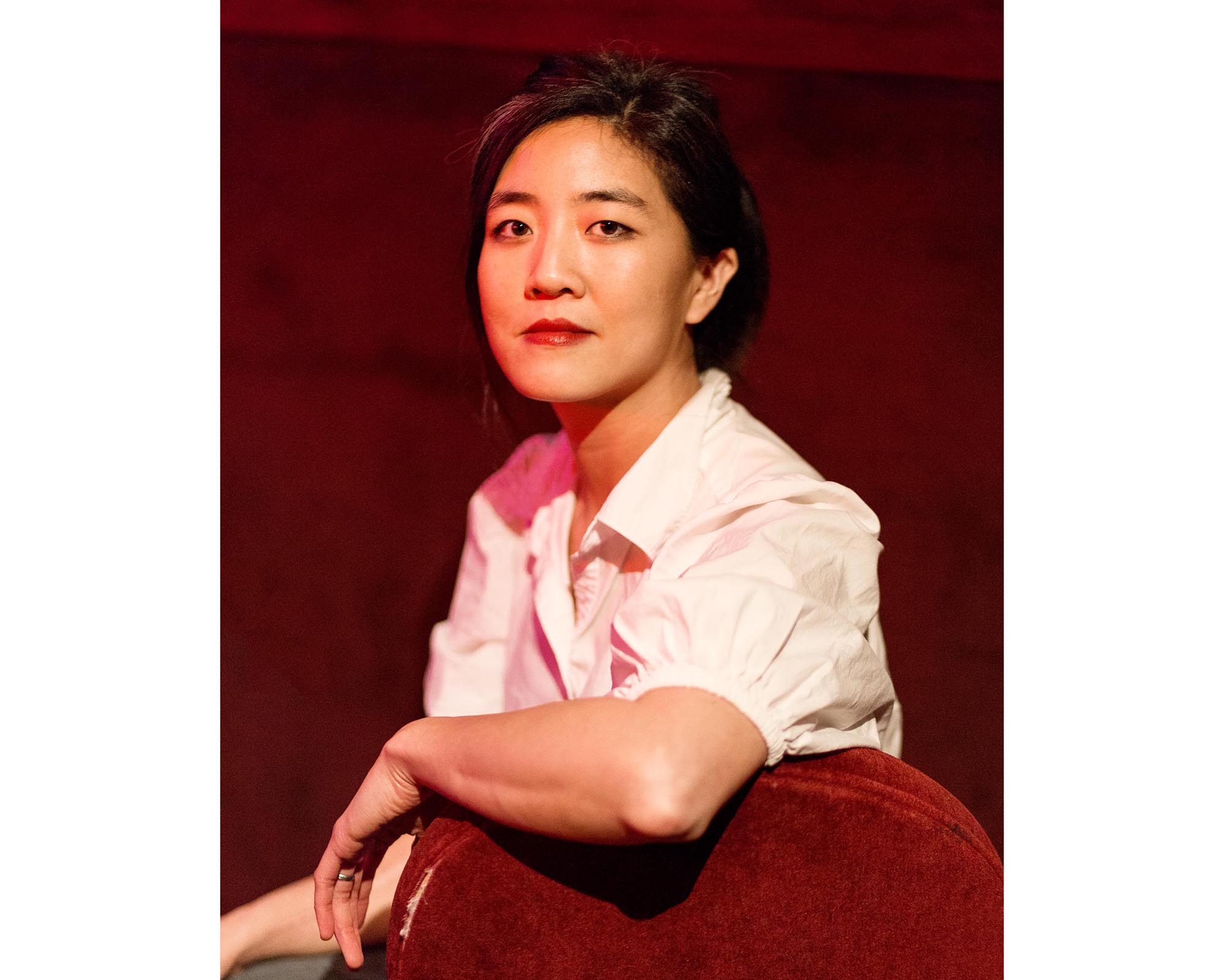
It’s hard to believe that Mimi Lien only just made her Broadway debut this past season with Natasha, Pierre & the Great Comet of 1812. Although Mimi cultivated her craft over the years in various off-Broadway and regional productions and at her performance venue, JACK, this MacArthur Fellow seems to be just getting started. I had the honor of sitting down with Mimi within the environment she created at the Imperial Theater, to discuss her most ambitiously-scaled project to date, her journey from architecture to scenic design, and her experience with being Chinese-American.


Michelle Tse: I must say first that as a designer who recently left architecture, I shed a tear when I walked through those double doors onto the set and into this house. Thank you for the inspiration. And do call me out if the questions get too nerdy.
 

Mimi Lien: [laughs] Thank you! And that’s quite alright — I, too, am nerdy!
 

MT: Perfect. For our readers who may not be completely familiar, what for you is the big concept idea of this design?
 

ML: The main thing about the design for me was that it functions as a delivery system: to deliver the actors to the audience. I say this — and I do feel this way, but others may disagree — that it’s not the usual spectacle, but it’s about creating the environment, creating the container, and orchestrating the way that people share space together within that.
 

MT: What is it like staying with a show through so many iterations and getting to scale up each time? Did the difference in the container of the show force you to make design choices that you wouldn’t have done and maybe then ended up getting incorporated?
 

ML: It has been heartbreak and ecstasy, because of the effort to maintain the essential DNA of the show and of the design. I feel really fortunate, and we as a team have been fortunate — and I don’t know that we would’ve known this from the outset — because we’ve had to design it in so many different places and tried to adapt that basic concept to a lot of different physical scenarios, we’ve gotten to prove to ourselves that somehow we got it right the first time.
 

The reason there’s red curtains everywhere is to create one envelope that everyone is in. It’s not just the stage is over there, and the audience goes over here. It’s enveloping the audience too. All of these same elements have been here since the beginning: the curtains, the paintings… so on the one hand, it’s a design that very much responses to each environment, but the thing that we’re trying to deploy is remarkably consistent.
 

I think there were moments of anxiety about when we first went from a black box to a proscenium. When we went from the tent to A.R.T. was probably the biggest moment of fear for me. We were very worried that we’d lose something that was essential to the show. I was pleasantly proven wrong.
 

MT: Was the proscenium covered in red curtain, like it is here?
 

ML: At A.R.T. we were actually able to remove the proscenium. That was a theater that was built in the ‘60s, so it was sort of modular, and they didn’t have the ornate frame like we do here, where we’ve covered the proscenium on all sides. At A.R.T. there wasn’t a real proscenium, per say, and there were these portals that we kind of were able to just remove.
 

Mimi Lien
 

MT: Well that’s nice! So now, making your Broadway debut… I mean, you got to revamp a Broadway theater! What’s that like? Was it another point of anxiety, or after all those iterations, it was more, “Nah, I got this!”
 

ML: [laughs] Well definitely I think the most anxiety came when we went to A.R.T.. Because that was completely redesigning it to fit a completely different space. The audience-actor relationship was going to be very different, dictated by the space. Once we did that, I knew it was going to work here. The one big difference here is there’s a mezzanine, a second level. We didn’t have that at A.R.T. — everyone was in the same room, everyone can see the same thing all the time. Here, there are things that happen down [in the orchestra] that people can’t see up [in the mezzanine], and vice versa. But I knew that it was doable.
 

I feel very fortunate to have the backing of producers who recognized the importance of the environment to the show, and supported that. It’s something that I think many producers would say no to. It’s too expensive. It’s too involved. For example, putting up the red curtains: it’s just a simple gesture that fulfills the concept of putting everyone in the same space, but there’s nothing to hang it on! There’s no drawings that existed of this space. Everything had to be measured. Now there’s a whole system of pipe structure behind the curtains that were really hard to put up.
 

MT: Did you work with a registered architect, then? Or was it all on the structural engineer?
 

ML: The shop that built it has a number of engineers on staff, so I worked with them. But also we got a permit of assembly, because we have to comply with building code, and be approved because the audience is occupying the same space as the actors. The entire set has to be code-worthy, so we did work with an architect because we needed all drawings stamped and submitted to the Department of Buildings. There was also a code consultant and expeditor. So, leaving architecture… [chuckles] I somehow found my way back through this show.
 

MT: Great, that’s exactly what I was about to get to! You’ve spoken before about buildings as “a series of theatrical events.” So how important was it, aesthetically and phenomenally, to design the choreography from 45th street, to the lobby bunker, to the interstitial threshold, then finally into the house, knowing it might not be registering in a theater patron’s mind what is happening?
 

ML: The path that the audience takes has been really important to me design-wise, and also dramaturgically to the show. We really wanted to draw the distinction between the outside and the inside. I mean, “There’s a war going on. Out there somewhere.” So although some people might not recognize what they’re going through when they’re coming into the show, I do think that by the time intermission comes around, they can wander back out and go, Ohh, right! I saw Andre going to war and walked out here into the hallway in which I entered, and that was a military bunker! So for me that was very important for the audience to walk through that “war outside”, before arriving “inside.” Certainly from a design and spatial standpoint, creating and extending this portion of the journey in order to make that moment of entry really be high contrast is something we’ve done since Ars Nova. We didn’t have any money to construct anything, but we took the audience through the basement, to the dressing rooms, where we turned off all the lights, and we had a boombox and sodium vapor on the floor, which was effective. The point is to disorient the audience spatially and by doing that, it triggers this questioning of where you are. I feel like when you walk into a normal theater lobby, it’s I know where I am, I’ll pick up my ticket and go to my seat. There’s no being thrusted into an unknown circumstance, and so by doing it physically, you’re essentially switching on the senses of the audience member, and I think that’s a great way to prime someone for this experience of watching the show.
 

MT: Then on top of that, having to negotiate between the audience’s path to their stage seating versus the rest of the house… what did that resolution look like?
 

ML: Originally I would’ve loved to have created that bunker hallway for all of [the audience], and there was talk of making the back [of the house] an aisle that I was going to encase like a tunnel, out of corrugated metal, so that you’d still walk through a hallway into these doors that would open into the aisles for the seats. But it was maybe the only thing they said no to. [laughs] We were even going to do the mezzanine lobby as a bunker. So there was a point where we just ran out of time, you know?
 

MT: Ah, yes. But this is nice, too.
 

ML: Yes, this is nice, too!
 

Mimi Lien
 

MT: I know the general idea is this is a supper club, cabaret room. Was there a particular way in which you decided what type of chairs went where in terms of the location of the stage seats? Did that change at all throughout the production?
 

ML: No, that was from the beginning, setting out to design a supper club at Ars Nova. When I thought of what kinds of chairs people sat on in supper clubs, it was, Well, there’s the banquets in the booths, there’s bar stools at the bars, and sometimes there are loose tables and chairs. It was just a matter of variegated… Akin to a family of seating.
 

MT: And I also imagine for this show, you maybe collaborated with the other designers more than any other production. Was there one designer you worked with more closely than another? We sat down with Paloma [Young, costume designer] recently, who said your set informed her designs a lot.
 

ML: Really?!
 

MT: Yes! And I noticed when I was at the show that when the actors are spinning around on the constructed aisles that the circumference of their dresses were literally the exact width of your aisles.
 

[Everybody laughs]
 

ML: I know! I don’t know whether it’s possible that Paloma went and calculated that, but I noticed that, too! Everytime I watch the hem of their skirts I worry that it was going to knock over something. [laughs] I mean, if Paloma has calculated that, she hasn’t told me, but I worship her. I feel like for me, a lot of the bunker is actually in response to the punk flavor of some of the ensemble costumes. We certainly talked about it in the beginning, about this being an anachronistic vision of Russia. We’re not being period specific. This is not what 19th-century Russia looks like, you know? This is maybe if you went to a nightclub in Moscow in the late ‘90s and their theme was Imperial Russia. Maybe that’s it. So that has a lot to do with the techno music that Dave [Malloy, creator and composer] composed. So it’s kind of a mashup of things.
 

For me also, growing up in the ‘80s, Russia was this very bifurcated thing. There’s the Cold War era Russia, and then there’s this imperial, lush, czarist era, and those are the two different versions of Russia that immediately come to mind.
 

MT: Right. So in terms of the collaboration —
 

ML: Right. So I think Paloma and I kind of collaborated in that way, where we sort of provided little inspiration launchpads for each other. Bradley King, the lighting designer and I had a more literal collaboration with the chandeliers. They are an object that both departments are completely responsible for. I literally had to draw the drawing of the chandelier, decide how many light bulbs looked good, send it to him, then he would tell me whether there was enough power to circuit that many lightbulbs. So there was this back and forth in that way, with the layout of the lightbulbs and how they’re hung. It was a complete hand in glove kind of [collaboration].
 

Mimi Lien
 

MT: And the sound? Cause I noticed the vents on the stairs as well — those are speakers, correct?
 

ML: Yep! Those are speakers! Because of the way the show works with it’s 360 degree experience, we needed the sound to come from everywhere. Because the performers go everywhere, the sound needs to follow. When they’re singing, it needs to sound like the sound itself is coming from that particular spot in the theater.
 

There are also surround speakers — some of the paintings are printed on a scrim, so that sound can penetrate. Again, I drew my painting elevation, and then I sent it to him, and he’d put a layer of speakers on. Sometimes it wouldn’t land behind a painting, so I’d have to ask if I can move it, and if it’d be okay.
 

MT: Phenomenal. So let’s move on a bit to your personal journey. I’m incredibly interested in knowing how supportive your parents were about you going into the arts. I know you started in architecture.
 

ML: They’ve definitely been supportive. They never said no. I actually knew I wanted to be an architect since I was 8 or 9. I had a brief foray into science and biology, which coincided with when I was applying for college, after my 10th grade biology class. I was like, I’m going to be a genetic engineer! So I actually applied to college as a biology major, which I think they were happy about. But after my first semester of college, I was like, this is not for me. So I immediately went back to architecture.
 

I think during my time in college, it was a gradual becoming or recognizing that I wanted to be an artist. So I don’t feel like there was a moment where I felt like I was making a big decision. I was taking more and more art classes as I was going through college, just through my mindset — or maybe I wasn’t even aware of it. My memory is that it was kind of this gradual journey. But I guess there was a moment when I graduated from college where I thought I was going to grad school for architecture. But then I was like, you know what? That’s a long road. You know — three years of grad school and then working [to fulfill NCARB requirements]. I had just taken my first painting class my senior year of college, and I’d been having this artistic awakening, I guess, so I said, I’m going to take a year and do something for myself before I go to grad school. So that fateful year I was in Italy and it was while I was there that this teacher suggested, Have you ever thought about set design? I guess that out of everything was the moment of Oh, maybe I’m going to do this instead. Then I actually applied to a graduate program in set design in London. Then I ended up not going to London because I thought I needed to figure out what this thing is and to work for a little bit first, so then I ended up moving to New York and started trying to look for a job doing set design. But they were very supportive.
 

MT: That’s amazing. Are they first generation?
 

ML: Yeah. They came to the US in the mid ‘60s for graduate school, so they were in their early 20s. My mom studied computer science and my dad studied linguistics. I always say that I feel like my mom has this soul of an artist. There are some people in my dad’s family, like a couple of my cousins [are artistic]. One of them is a musician, a pianist, and another one is an architect actually, and another is a fashion designer.
 

MT: Oh wow. Amazing.
 

ML: Yeah! So his side of the family… though no one was an artist out right, I feel like there’s an appreciation. My uncle, my dad’s brother, became a graphic designer. So I feel like there’s some, but there’s definitely a cultural bias where it was a luxury, you know?
 

MT: Absolutely.
 

ML: Like it was indulgent. But they never really brought that up or made a case about that…. Yeah, it is amazing. I don’t think I appreciated it at the time. I guess also in my undergrad architecture class of 20, 10 were female, 10 were male—
 

MT: What!
 

ML: Yeah I know. So of the males, one of them was Asian, and of the females, nine were Asian and one was white. [laughs] It was very weird.
 

MT: Okay we need to do some sort of analysis about that.
 

ML: [laughs] So a lot of those classmates, I feel like our parents probably had similar journeys, and so somehow architecture was okay, because it was still a well respected profession. So maybe that’s the way I inadvertently ended up easing [my parents] into it. [laughs]
 

Mimi Lien
 

MT: So do you think your varied background aided in your varied lenses of work now? Specifically with your installation work —
 

ML: Yeah, most designers — at least the ones I know — do work in ballets and operas and dance pieces [like me]. But yes, installations. I have always felt that because I didn’t have an undergraduate theater education, I’ve always somehow found it to be helpful. On the one hand there’s a lot of things that I don’t know, and I was never really taught the cannon, but I think that it maybe has been helpful in some way because I don’t think that there’s only one way you’re suppose to do things. By the same token, coming from that background, I still feel very inspired by architecture and the dialogue within that community. So I kind of try to keep up with that. I feel like it feeds me as an artist in general, to not just be having a dialogue in one community. I do feel the more you can be exposed to different things and different kinds of people, it’s just going to lead to a more complex and diverse understanding and way of working. So the short answer is yes.
 

MT: Jumping a little bit here, but I’m curious about your process for designing Frances Ya-Chu Cowhig’s The World of Extreme Happiness. How did you research that? I’m originally from Hong Kong so I assume I know that area a tiny bit more than a Chinese-American would, and your design was so authentic and familiar to me, from what I’ve experienced myself when I go north of the border.
 

ML: Oh good, I’m glad to hear that. I think a lot of it started with the playwright. I do feel like when I read that play for the first time, I did feel a sense of shock. Because the language that was used was so Oh! I don’t normally see Chinese people being portrayed this way, swear, saying “fuck”…
 

MT: And people gasping at the just born baby girl being thrown into the trash in the opening scene—
 

ML: But that wasn’t as shocking to me.
 

MT: Right. We know.
 

ML: I feel like the stereotype of Chinese people and the way they feel about girls, I knew about. So, I do speak Chinese, but I don’t actually read Chinese. I did at one point when I was younger, but then I just lost it. But I do speak to my relatives [in Chinese] and I do have a basic vocabulary. My accent is pretty good so I pass pretty well, but I don’t know any swear words in Chinese! My chinese is limited to how I communicate with my grandparents, so maybe it was shocking to me to hear these Chinese people swearing, and then it was transposed to English, my primary language, but then the whole thing is this culture that I feel like I know very well, but I also haven’t spent any time there because I was born here, so…
 

MT: …have you been since?
 

ML: I have. I have visited China twice. I’ve been to Hong Kong three times. But all those were brief visits. And I definitely absorbed that and I think a lot of that I drew upon for that design. It was just a feeling. When I look at a photo [for reference], I knew what felt right. I recognized as being true.
 

Mimi Lien
 

MT: Epigenetics, maybe. Finally, a question we love to ask everyone: any advice for up and coming artist in your field?
 

ML: I’ve definitely felt that a certain amount of tenacity is necessary. On the one hand theater is a place where you can do anything. The stage is your laboratory and it doesn’t have to be like life — which is why I initially made the shift from architecture. I don’t have to adhere to building code — of course now I do, but — or gravity, or permanence. On the other hand, theater can oddly be low-tech when compared to architecture. I can’t even tell you how many times people have told me I can’t span unsupported a distance of 20 feet.
 

MT: But yes you can! Just a way more expensive I-beam.
 

ML: Exactly. They say it as if it is impossible. Look at the Barclays Center! There’s a giant cantilever! So I think it’s just the economics and time. In theater, often those aspects are taken as unchangeable things. Literally people have said, You can’t do that. And then I have had to be like Well actually, yes you can. There are other ways to do that. So I do feel like I’m always having that conversation. But then when people get excited about something it’s really helpful, because then everyone wants to make it happen and you put your heads together and figure it out.
 

So I feel like that tenacity to be able to want to try new things and get these new ideas accomplished is one thing. And it is exhausting a little bit the lifestyle and the schedule — 10 projects a year — compared to architecture, it’s like one building might take two years—
 

MT: Seven.
 

ML: Or seven! The turnover is so fast; it’s a lot of adrenaline. So sticking with it is the advice I have.
 

MT: Wonderful. Thank you so much for sitting down with me.


Mimi Lien is a designer of sets/environments for theater, dance, and opera.  Arriving at set design from a background in architecture, her work often focuses on the interaction between audience/environment and object/performer.  She hails from New Haven, CT and is based in Brooklyn, NY.
 

She was recently named a 2015 MacArthur Fellow, and is the first set designer ever to achieve this distinction.  Selected work includes Natasha, Pierre, & The Great Comet of 1812 (Broadway, Lortel Award, 2013 Hewes Design Award), John (Signature Theatre, 2016 Hewes Design Award), Appropriate (Mark Taper Forum, LA Drama Critics Circle Award), Preludes, The Oldest Boy (Lincoln Center), An Octoroon (Soho Rep/TFANA, Drama Desk and Lortel nominations), Black Mountain Songs (BAM Next Wave). Her stage designs have been exhibited in the Prague Quadrennial in 2011 and 2015, and her sculptures were featured in the exhibition, LANDSCAPES OF QUARANTINE, at the Storefront for Art and Architecture.
 

Her designs for theater, dance, and opera have been seen around the U.S. at such venues as Lincoln Center Theater, Signature Theatre, Playwright’s Horizons, the Public Theater, Berkeley Repertory Theatre, The Joyce Theater, Goodman Theatre, Soho Rep, and internationally at Perm Opera and Ballet Theatre (Russia), Intradans (Netherlands), National Theatre (Taiwan), among many others.  Mimi Lien received a B.A. in Architecture from Yale University (1997) and an M.F.A. in Stage Design from New York University (2003).
 

She is a company member of Pig Iron Theatre Company and co-founder of the performance space JACK.

Posted on

A Conversation with Paloma Young

Paloma Young


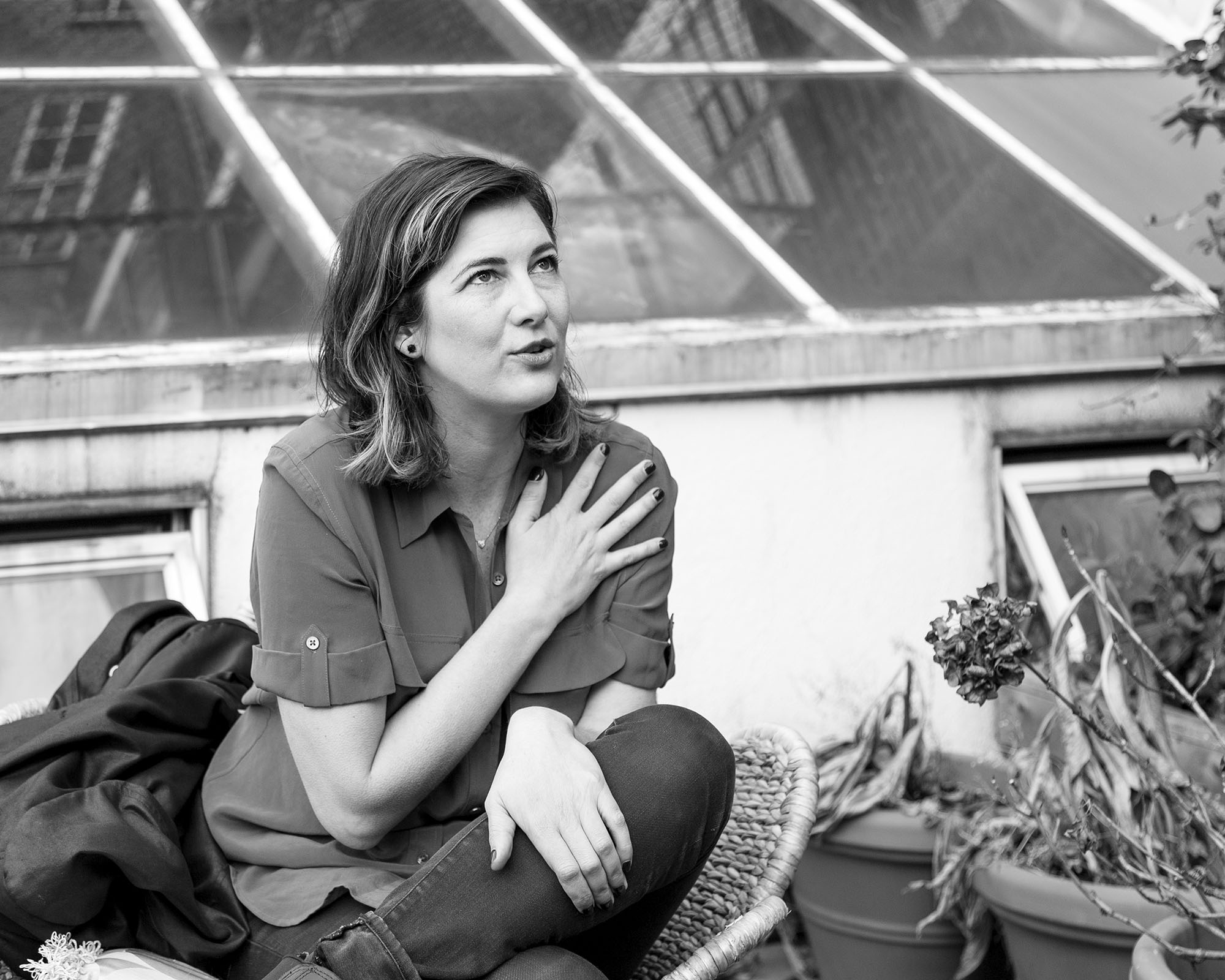
In this first few moments of speaking with Paloma Young it is clear she is as eloquent and intentional as her work is eye-catching and boundary-defying. Our conversation reminded me of a deep and often left unsaid truth in the theater, about how immediately and sometimes ubiquitously designers hold the keys to our understanding of a story. The world she has created through the costumes of Natasha, Pierre & the Great Comet of 1812 is staggering in all its brightness and her talent as a storyteller is every bit as brilliant.


Corey Ruzicano: What was so fun about watching Great Comet was getting to see all of these different source materials and mediums put together. I wonder if you could talk about what you’ve learned from the dialogue of all those different things, and what you’ve learned from the dialogue of working with your collaborators.
 

Paloma Young: What’s really unique about Great Comet is that I’ve gotten to work on it over a long period of time. Especially when we transferred to Broadway and we really expanded both the size of the ensemble but also what they were doing and how they were helping to tell this sort of crazy mash-up that Dave [Malloy] had created – I was able to take the things I had used before but really layer on a lot more texture and incorporate things about the performers’ personalities. Something that Sam [Pinkleton] the choreographer does, is he really embraces the individual weirdness in the way that we’re creating a world of individuals, so even though our ensemble’s not exactly human – sometimes they fill a space like they’re a band of gypsies or they’re people at the opera, but they’re also sort of a Greek Chorus that tells the characters what they’re going through. I look for ways that they could live in a half-human, half-magical world, and then also really capture the spirit of the really eclectic music of the score. What I do is I a lot of thrifting and in addition we have a lot of folk pieces, but not just Russian folk and Ukrainian folk or things that are one step removed from Russian peasant wear, but also maybe a second step removed. We sort of spread the world all the way out, I would say, we hit Europe, we hit South Asia…if something were sort of Mexican I would nix it, anything that really felt like it was the other side of the world. But it really is a way that I think the spirit of the show itself is telling the story about 19th-century Russia. Tolstoy wasn’t even telling the story contemporaneously, he was telling it many decades after the war and so it’s definitely a 21st-century telling and so it’s like, how do our audiences think about Russian peasants? How do they think about opulent people at an opera or at a ball? And the way that those ideas get translated, if you think of the opera for instance, as this kind of Lower East Side “we’re gonna go to this crazy Russian opera party,” and so conceptually you take that artistic idea and throw together these couple of disparate elements that feel like A) a little fancy, B) maybe a little Russian, color-wise, you know, a lot of embroidery and maybe some kind of jewels – but the spirit of it is really is youth and fun and free and a little bit trashy.
 

CR: What more could you want.
 

PY: Exactly, so there’s all of that, and a lot of that’s collaged – the ensemble, I’m not building from scratch as I would for a character like Natasha, where I do the drawing, I research for certain things that I want the draper to look at when they make the dress, and then pick the fabric. It’s a couture garment; it’s handmade from scratch. That’s one form of storytelling. And I’m definitely influenced by the performer and that particular actor’s look, but when you move into the ensemble, I’ve got a closet of things that I’ve gotten and then I just spend some time in a room with them, we have a fitting, we try things on, and sometimes we won’t use anything from a first fitting but I get this great sense of who they are as a character. I mean the personality of the character, how they move – I ask them to move around the room in the clothes – and then we do further shopping and treasure hunting and really get to put together larger themes: what are the shapes that this person wears on their body? What pants do they wear – do they wear skinny pants that are really stretchy, are we accentuating their legs? Are we accentuating their arms? Do we want a really columnular shape to accentuate what Leah Loukas, the hair designer, is doing with their hair? And we also throw in a lot of easter eggs. With Great Comet, you’re so close to the actors, and most of the time you want to be focused on the core part of the story and the key players, but we also want the audience to feel like they’re living in this world, and a lot of this world is about Natasha and Pierre, in different ways, being overwhelmed by the saturation of stimuli that Moscow throws at them and so I just packed in a lot of stimuli, so if the audience, for one second are like, Natasha’s run off to get her hair piece put on for the ball, they look over and there’s all sorts of crazy textures and colors, and so hopefully they feel a little bit part of the world in that way.
 

Paloma Young
 

CR: Absolutely, and I think that speaks a little bit to that idea that you and Mimi had said in a previous interview, about creating an environment rather than a representation of something. I wonder if you could talk a little bit about what that means to you. Is there an image that you started with for this piece or if there’s something that’s stuck with you that this piece has taught you that you’ll carry with you into the next project?
 

PY: In a lot of ways, I was really inspired by Mimi’s set. When I came onto the project, she had already been working for several months; she had been involved with the workshop before we did it at Ars Nova, so I was lucky in that I got a sense of what the atmosphere was going to be before I really had to have any sort of visual thoughts about what the people would be wearing in the space. I usually start from pure research – place, dresses from 1812, portraits, things in museums, paintings of the time for color pallette – and then I expand from there, this information plus the tenor of the way the story’s being told, that much more energetic, youthful speed to things, and I just start bringing my own personal experience. You have research, plus the story and the score coming together and it’s going to be in this beautiful red velvet box and you have these archetypal characters like the Innocent Girl and her Best Friend who is also her cousin, which in a way really matches up with that space because a lot of women in 1812 were wearing that white empire waisted dresses. She’s going to be like an albino moth, and everyone is going to come at her, you can’t take your eyes off her, she’s so full of light, so to set her in a white dress in the center of this overwhelming opulent gold and red space, so in that sense it was really the environment plus that information and then as we expanded it was the playfulness of the score and that I know that the colors of the Russian military are green but I don’t like that green. Not so much that I don’t like it, there’s a place for it, but the green of the Imperial Army is what we now would think of as Christmas green, Nutcracker green, with red accents. If I use that green – because of where we are culturally, where our audience is culturally – it’s going to look like Christmas. There was a much sexier and sinister story to tell, so I took that green and pushed it into a more acidic, beetle-y place, so even though the war is going on outside of our space, the way that the war and the violence and the potential danger creeps into the space is through color.
 

CR: Oh that’s so interesting, it’s such an act of translation of what the research says and knowing what will read with an audience today–
 

PY: Yes, and I jumped around a lot but that’s a really good example of creating an environment and not just trying to recreate research because you have to think about who your audience is and the context of where their brains are in 2016, 2017. It’s changed even over time, I started working on the show in 2012 and so there were certain things that if they still wanted to have sort of an edgy feel, the sense of what was edgy in 2012 is different than what’s edgy in 2017, so every time we have a new costume track put in the show, it changes a little bit. It’ll be interesting to watch the show evolve over time.
 

Paloma Young
 

CR: Totally, and I keep thinking about something else you said in another previous interview, the idea that seeing a character through the lens of when they actually lived gives us the permission to forgive them and that was such a good articulation for me of how much power you have as a designer. We’re such an image-based culture, how do you harness that power and focus it toward storytelling?
 

PY: The biggest thing I do is listen to my collaborators. I’m one brain and I come to the table with my own cultural biases and my own visual biases and I like to think that I am very self critical that I am always on the lookout for how people are interacting around me and how people dress, and that I am doing my best to understand as much of the cultural context as possible at all times, but really knowing that the more input I can have, the better. And learning to be open to that and not defensive is how I sort of hopefully get to the best place of storytelling. There will always be two people in the audience that read the same dress two radically different ways because we’re all different human beings, but my goal is to get at least most of the people engaged in the story and engaged in a way that is not distancing. Even if they’re reading it differently, they’re reading it with interest and so they might take away a different story, but they’re still engaging. One of the things I try to get away from is the idea of, let’s make a costume that’s simple and beautiful and pleasing to everybody, or is absolutely an archetype or a play off of archetypes. I like to have a variation in there because even though it’s a costume, it should still feel like clothing that the character is wearing, unless it’s a big Busby Berkeley number and there are sunflower headdresses, there’s not really a human behind that, that’s just fun and magic and color.
 

CR: Well, that sounds good too. When you get stuck, how do you keep going? Where do you go for inspiration? It sounds like talk to you collaborators a lot, but is there also a creative process that you’re able to stick to?
 

PY: I like to go to museums, because I’m very bad about going on a regular basis, which, living in New York, makes me feel like the worst person in the world, but when I am feeling stuck I’ve surrounded myself with the story, the music, the research, the collaborators, I’ve brought them into my headspace, so it doesn’t really help to keep pinging things off of them, so I need to go to a place that’s visually a completely different space, that did not ask to be in conversation with the work that I’m in. I just come in, not necessarily looking for inspiration but just to give myself some distance, and then a lot of times I will find something either in the museum or someone sitting reading a book at that museum…there’s just something about stepping out of that headspace and not answering emails or thinking about budget, being able to step out and jump into a completely different visual world whether it’s sculpture or an atmospheric piece or an installation or just painting…I think that that’s very helpful.
 

Paloma Young
 

CR: And I think particularly with this piece, but probably in all pieces, the audience is sort of the last scene partner, but in this one particularly you all have to capitalize on the audience – how do you prepare for that and how do you create the space between the performers and the spectators?
 

PY: In Great Comet, the audience is part of the show. In live theater, every audience is part of the show – they’re laughing, they’re crying, they’re bored – they’re filling the space with an energy, with sound, they make the space warmer, they can make the space noisier…they’re always part of a performance, but in this case they are always seen. There’s something in our brains visually where we’ve gotten so used to viewing movies and theater in a proscenium that we can actually make most of the audience disappear when we’re in that format, even when we first sat down we could see the people in front of us, we had peripheral vision, we’re conditioned to do that. In Great Comet, every time we are looking at a character we are also looking at a new section of the audience because as that character moves through the space we are also seeing new people in the audience, so you cannot ignore them as part of the visual space. For the most part, you don’t want people to focus on the audience but you do want them feel like they’re part of the party; we don’t want to completely isolate them because that’s part of the energy of the space and this particular story and that this is happening in the context of this fancy club. It should feel intimate and I think it enhances our experience as an audience when the audience interacts with the performers and the performers with the audience. That can sometimes feel a little bit jarring but if you see someone across the way having a similar experience, it normalizes it. So one of the things that I wanted to do was to make the ensemble both pop from the audience and the crowd so if you’re looking at them all you can distinguish them but not distance them so much that there wasn’t a link between the two, which was one of the big reasons for using real clothes. Our eyes, as an audience, are very savvy about things that feel false in any way, especially about clothes because we wear them. It’s always my biggest challenge as a designer–everyone has opinions about clothes because we all put them on in the morning. With grandiose architecture or lighting design or sound design, there’s this little bit of magic to it, where I’m dealing with something that’s much more intimate and visceral – not just to the actor that has to wear it – but to the people that are watching them wear it and thinking about how it feels to the actor on their body and how it makes them feel and how they would feel wearing it… I just saw La La Land and there were actually a lot of things I really liked about the design of the movie but a lot of Emma Stone’s dresses, you could tell that they had been made for her and that they’d been made out of silk which was the right kind of fabric for the movement that they wanted but the wrong kind of fabric for the character. You know, where did she buy that dress? I have a lot of context and experience articulating why that felt false to me but I’ve met a lot of people who said, it just felt weird. We don’t always know why, the audience doesn’t always know why, but they can tell when something is just a costume and what we wanted to do with Great Comet was really break down that. Is this a costume? Is this not a costume? And some people hate the costumes and think they look like they cost us five dollars, but that’s what’s so wonderful about it, to have all these different perceptions. But it’s very intentional for them to feel like a bridge between us and our sort of couture costumes in the center of the story where everything is made from scratch and feels period even though we tweaked all sorts of elements about it, but they are built from scratch just like a dress in 1812 would have been – it would not have been made in a factory, it would have been made by hand, pattern out on a table. So in that sense it’s just as true as the crazy punk rock gypsy girl that’s in H&M mixed with something from Beacon’s Closet, something that I got from some antique sale in Romania, they’re all just thrown together and they feel like, not like a person you would necessarily see every day, but a character that exists in our world.
 

CR: Definitely, and it feels related to that theme of ”There’s a war going on. Out there somewhere,” and we pass through the bunker and we get to get lost in the red drape of the art, but there is a war going on in our world today. What stories are you looking to see in the world? What are you hoping to say with your work?
 

PY: I think the most important thing I can do as a designer is to not attempt to tell all the story or all the feeling with the costumes because I’m there to support a much larger, collaborative creation. I feel that way about Great Comet and I can certainly put my own personal commentary that comes from an emotional place in a way, of what I feel it’s like to be a modern teenage girl and the heartbreaking impact of bullying…but I’m making those design choices based on what makes me the saddest. I was like, this makes me sad, and I want the audience to feel as sad as I do and I want them to feel it as not a distant emotion but that the characters that they’ve been watching and following actually remind them of things that they feel sad or happy about in a much more contemporary way. There’s a lot of steps. I picked this cotton and I picked this shape because it makes me think of sexting scandals. None of that – there’s no direct line. It’s that part of your brain where it starts this plus this, and then it just sort of jumps over and expands in a way that you can share your emotions with somebody without using words or something that is fully articulated. It’s important to bring my emotion to the table when there are things that resonate with me in the story. I definitely connect with the sense of anarchy and that sort of morphed into this form of resistance, there’s a lot of punk-rock imagery and there are some pussy riot references that are hidden in there. I really wanted someone to dance in a full balaclava but she just couldn’t breathe.
 

CR: Wow, weak.
 

PY: I know! She’s got it rolled up into a beanie, so I know and she knows. We know together. So yeah, staying out of the way but also being emotionally present in my design is the best I can hope for in terms of resisting or being politically or emotionally woke in my sense of art.
 

Paloma Young
 

CR: My final question is if you have any questions that you’re grappling with right now in your life or work right now?
 

PY: I feel like your last question kind of bleeds into that. For me, it’s not been the greatest year civically, politically, culturally. And I struggle sometimes with, how is my work relevant? If my work isn’t actively a form of resistance or a form of progress… The most progressive, the craziest thing I could do right now would be to move to Detroit and vote or maybe run for school board, but not do theater, not do design. That’s the gnawing emotion but it’s also that this is the way that I have a voice. I think if you give up and you don’t make art of all kinds, you let the terrorists win. Then you really have contributed to creating a world that is without joy, without nuance, without refuge for different ways of thinking. With Great Comet what has been so special is the way that the choreography works and the way that the directing works, the energy and the emotions that are written into the book as it were, it’s all very gender-fluid. Even though we have this very heteronormative love triangle in the center of our story, when you’re watching it, there’s a lot more nuance in the way that these characters relate to each other and the way that Anatole has a lot of feminine characteristics, in the way that Bowie is rock and roll and the way that Adam Ant is sexy but also not hyper-masculine and that that’s an acceptable form of sexiness. And when you get into the ensemble that just explodes, even when I was doing the racks for the show, my intern had come in and made a great closet of here’s the men’s shirts, here’s the women’s shirts, here’s the men’s pants, here’s the women’s pants, and I just said, there’s no binary. All the pants together by waist size, all the shirts together. There’s a lot of women wearing men’s clothes, a lot of men in women’s clothes. One of our male swings has a sarong-loincloth that he wears – there are male-male couples in the ball, female-female…as a world, it’s very progressive and representative of the world I live in now and the world that I want a larger demographic to accept as normal. I get to be part of that and I get to be a part of making that seem enticing but also normal. It’s not just, oh look at those crazy S&M people over there, there’s something beautiful and sweet and real about them when they’re crying together at the end of the show. If a Josh Groban fan from Iowa comes out to see this show a lot of that is gonna be like, whoa New York is crazy, but through the design if I can be a part of something that expands their world even just a couple of inches, then I do feel like I have a little bit of purpose.


Paloma H. Young. NY: Brooklyn Babylon (BAM Next Wave), Peter and the Starcatcher (NYTW, Drama Desk nom.), Wildflower (Second Stage). Regional: You, Nero (Berkeley Rep); Current Nobody, Hoover Comes Alive! (La Jolla Playhouse); Titus Andronicus (California Shakespeare Theatre); A Midsummer Night’s Dream (Old Globe); Pride and Prejudice, Charlotte’s Web (South Coast Rep); 1001 (Mixed Blood); Dos Pueblos (Miracle Theatre). Graduate of UCSD.