Posted on

A Conversation with Keiko Agena

Keiko Agena


In the first decade of the millennium, there were only a handful of (East) Asian Americans in mainstream media who regularly represented Asian women. Sure, there were the random side characters portraying the usual stereotypes; Pick your two-dimensional poison: masseuse, sex worker, nail salon tech or even that one time we had a kung fu kickass like Lucy Liu in movie blockbuster Charlie’s Angels. In this desert of representation was Japanese American actor Keiko Agena who played Lane Kim, the young Korean American best friend of Rory Gilmore on the WB/CW television show Gilmore Girls. Over the course of seven seasons, we learned about Lane’s quirky hobbies and the stresses of being the “good daughter” in a strict Christian, Korean immigrant family. She wasn’t just a caricature but a rare “well-rounded” character who had time to breathe and evolve during the long run of this popular network television show.
 

It has been nearly a decade since the final cup of coffee was poured in Stars Hollow and Keiko Agena has continued her steady and successful career as a Hollywood actress. Recently, the Thanksgiving release of the Gilmore Girls mini-series Gilmore Girls: A Year In The Life on Netflix has also revived interest in Keiko’s character and how far we’ve come as Asian Americans in media.
 

In December, I sat down with my dear friend and collaborator Keiko Agena, to debrief this latest Gilmore Girls mini-series madness and what it’s like to be an Asian American actor and comedian in today’s media landscape. Feel free to imagine this conversation punctuated with lots of giggles and cackles of love and delight.


Jenny Yang: Keiko, first thank you so much for sitting down with me. This is fun for me because I feel like we get to chat more formally about the stuff that we would typically talk about anyway because we are in a community together–
 

Keiko Agena: Yes, and we are supportive of each other as artists, I feel.
 

JY: We are.
 

KA: We totally are.
 

JY: You’re a big supporter of mine.
 

KA: I would say with many exclamation points and stars that we do that for each other.
 

JY: Aw, thank you. So I think what interests me and Stage & Candor readers about you… Okay, we just have to talk about Gilmore Girls first.
 

KA: Okay, yes!
 

JY: Can I just say, day after Thanksgiving, when Gilmore Girls: A Year in the Life dropped, my ass was at home watching the whole damn thing, all day.
 

KA: Did you really?! All six hours?
 

JY: I saw all six hours, and it felt good. I don’t know if you remember this, but I feel like people who grew up on 80’s and 90’s sitcoms, whenever they do a reunion show, they always would give you what you liked, right? They give you what you wanted. Do you remember those reunion shows?
 

KA: Yes, yes, yes!
 

JY: Whoever would write it made sure of that.
 

KA: Someone became a princess, someone became the editor of Time magazine
 

JY: They gave you what you liked, and I think that – definitely spoiler alerts ahead–
 

KA: Stop reading here if you don’t want any spoilers.
 

[Editor’s note: The Gilmore Girls section of this conversation will be in grey.]
 

JY: Skip ahead to where we don’t talk about Gilmore Girls anymore. But I feel that as a 60-70% Gilmore Girls fan, that even I got the itch scratched for all that I needed.
 

KA: Yeah.
 

JY: Number one, not enough Keiko.
 

KA: Not enough Keiko! More Keiko!
 

JY: Not enough Lane Kim.
 

KA: #MoreLaneKim.
 

JY: Yes!
 

KA: #MoreLaneKim is very lame. Don’t do that.
 

JY: We don’t say ‘lame’ anymore, Keiko.
 

KA: Oh, sorry.
 

JY: It’s okay. I just reprimand. But yeah, it’s not cool. But I think #MoreLaneKim is good.
 

KA: Let’s Donald Trump this hashtag. What is the most direct and simple–
 

JY: As Donald Trump would tweet, “Gilmore Girls. It was good. But not enough Lane Kim. Sad. #MoreLaneKim”
 

KA: Exactly. To the point.
 

[Everybody laughs]
 

JY: But anyway. It did scratch that itch of it opened with a meta joke about talking really fast and a lot, and crazy commentary, and pop culture references. Then we got into seeing what their lives are all like – all the cameos, all the different men in their life, and where they’re at.
 

KA: They got a lot into those six hours. You pretty much saw or heard about every character that you knew about in the original seven seasons – which is an accomplishment – and introduced you to a few new main characters as well. I don’t know that there’s a stone left unturned.
 

JY: Yes. I feel the only thing that I was a little surprised by but definitely loved, was the fact that Rory Gilmore didn’t have her shit together.
 

KA: No. And it got worse as the episodes went on. She really hit a low. You saw her fall apart. All of the things that she was counting on slipped away, and you’re really going with her on this journey downward. It’s heart-achy.
 

JY: Thirty-two and not super together with her career goals–
 

KA: And her relationship goals–
 

JY: –and her relationship goals. Not that I know what that’s like.
 

[Everybody laughs]
 

KA: Are we veering off?! Are we tangent-ing? How personal are we going to get?!
 

JY: No, no, not personal.
 

KA: Follow Jenny and I on our new show as we talk about personal things. We are going to create it right after this interview.
 

[Everybody laughs]
 

JY: Anyway. That kind of intrigued me because of course it made it more interesting. There was a sense, watching the show before, that Oh okay, miss ‘I got into Yale, I’m so smart’, maybe she’d have her shit together. But knowing a bunch of these overachieving people – maybe myself as one – I know for a fact that after you go through college, and you’re an overachiever, real life happens, and it’s not perfect. You no longer have this structured world. I feel it’s almost like it’s a stereotypical overachiever Asian American story. Maybe at 32 you’re not going to have everything you’re supposed to have.
 

KA: Yes, not all the boxes are checked off. Especially if you go for the primary thing that you want, which she did – she wanted to be a journalist and a writer – and she’s going for it, and this is that time in her life where… It’s not that she’s been unsuccessful, because she has had success, but that’s not the end of the story. It’s not that you can just check that box and say, Okay, career success, let me sail into my 70s. That’s not the creative life and I think maybe people who read Stage & Candor know that. I have yet to meet a creative person where that is their journey. No artist I know found exactly what they wanted to do at 23, and rode that train safely–
 

JY: Uphill.
 

KA: Yes, uphill to greater and greater success.
 

JY: It’s not a linear process.
 

KA: It’s not.
 

JY: Totally, which is why we’re supportive of each other!
 

KA: It takes a village.
 

JY: It does. So how do you feel about being back in the Gilmore Girls revival? What was it like for you?
 

KA: You know what’s funny is, besides feeling like slipping into comfortable shoes, or something that’s fun, is that seeing it as an audience member really made me appreciate what we were just talking about. The people that were kids when we first met them – Paris, Lane, Rory – they’re all of a certain age, and their lives aren’t perfect, and they still have a lot of stuff to work out. I think when I was originally filming it, I was so focused on where Lane was that I thought, Oh it’s only Lane that doesn’t have her perfect dream life. Now, watching the series, in the greatest way possible, I think we feel the angst and the struggle and the ambition of all of those 30-something gang of people, where we have some successes but there’s still a lot to discover and a far way yet to go.
 

JY: Yeah, as if turning 30 is this magic number where everything is figured out.
 

KA: It’s not now, and I don’t know that it ever was in the past, or if that’s just the fairytale that previous stories have taught us.
 

JY: Right. So it was very gratifying, with lots of jokes and references and dialogue packed in there.
 

KA: Did you enjoy that? I know that I loved all that fun stuff that only happens in Gilmore World.
 

JY: Yes! I loved reading on my Facebook feed, where a comedy writer friend of mine who was confessing on a status update, Already got through my first viewing of Gilmore Girls revival. Getting started on episode one again. Same day.
 

KA: Wow.
 

JY: I know. Day after Thanksgiving. She was so happy.
 

KA: There’s a lot packed in there.
 

JY: There is. I feel like it’s like fine art. You see something new probably with every viewing. But #MoreLaneKim.
 

KA: #MoreLaneKim!
 

[Everybody laughs]
 

KA: I like that they won’t get to hear our laughing. Wow, Keiko is really uppity! That’s all she talks about! #MoreLaneKim!
 

JY: Chuckle chuckle chuckle. When did the final season end?
 

KA: 2007.
 

JY: [gasp] That’s like nine years ago. Almost ten years ago.
 

KA: Yeah. So a lot has happened.
 

JY: So for you, what have you seen in terms of changes as an Asian American actor in that time in terms of the industry?
 

KA: I feel that last year, especially, was such a high tide year. We were talking about it when we were doing the fundraiser for Angry Asian Man where we were talking about Wow, if we were to choose what our favorite scene was that an Asian person was in on television for the last year in America, we’d have so much to choose from.
 

JY: Much more.
 

KA: Way more than you would five years ago. Five years ago, you’d have to really search your brain for any scene that you could remember that an Asian person was in that was your favorite. I feel like now, there are so many shows that are out now, and there’s a lot to celebrate. Again, there’s a far, far way to go, but I think the content and the quality that is coming out is something to be supported and celebrated.
 

JY: Yes. Seven years ago, if we asked the question, What are your favorite characters and scenes up until that point? It would be maybe a Lane Kim reference, maybe Margaret Cho, maybe Lucy Liu, and maybe Brenda Song.
 

KA: As you know very well, 2016 has been a crazy year with whitewashing feeling like it’s making a resurgence of some kind, which is challenging to come up against.
 

JY: I feel like it happened in 2016 because it’s been an increasing drumbeat of Hollywood wanting to be like, Oh, we’ve got to make Asian stuff so that China will want it, so let’s maybe start making more Asian stuff. But it’s also the drumbeat of, We have these other ‘diverse’ properties like the Marvel and DC world, let’s just also bring that up. So they’re deciding they just can’t bear to take a risk on non-white talent, not even have us play Asian characters. They do these crazy mental jiujitsu public gymnastics around justifying why the whitest actors are playing the Asian characters.
 

KA: Right.
 

JY: It’s almost a joke to me that the palest, porcelain, transparent actors are chosen, right? Emma Stone is translucent. Benedict Cumberbatch?! It’s like the whitest… It’s not even like Italians, you know?
 

KA: Maybe it’s the love of the geisha.
 

JY: The paleness? The pale Asian?
 

KA: Yes.
 

JY: In the right light, Scarlett Johansson’s European roots will look kind of pale and Asian.
 

KA: It’s tough, man.
 

JY: Scarlett Johansson, Tilda Swinton, Benedict Cumberbatch, Emma Stone: they all have the most pale ethnic heritage.
 

KA: Yes, I think it’s true.
 

JY: And then there’s Matt Damon, but he played a white person that’s saving China.
 

KA: Yes, and that’ll probably do well, too.
 

JY: So I feel that’s kind of upsetting that China is also down for it. I feel like they got brainwashed. The world got brainwashed to want white people as heroes.
 

KA: I feel like I’m part of that generation too of being brainwashed a little. You think it’s natural and then one day, you go, Is it? What would it be like to have a different option? I look at that trailer for “Ghost in the Shell”, and – first of all, I love Scarlett Johansson, I think she’s incredibly talented and she does play that type of character very well.
 

JY: You mean slightly robotic and a little flat?
 

[Everybody laughs]
 

KA: I know you said it as a joke, but yeah, kind of! It’s funny because that’s actually a very tough thing to play – to still be human, and still create empathy, but be dead inside. Anyway, as I’m watching, I cringe and clench a little because it’s so Asian-stylized, and there are just a few people that pop up in Asian dress that it’s uncomfortable to watch. But the second or third time I watched it, I thought, What would it have been like to see a fresh Asian face in that role? It would’ve been incredible. It absolutely would have been star making material, because it’s so incredible. I guess that’s the whole point though, that they don’t feel like it’s bankable – but I don’t think this is bankable the way it has been done.
 

JY: The trailer shows oriental things as only costume and backdrop.
 

KA: Someone already wrote this, but all the bad guys get to be Asian, and that’s been true in other movies too.
 

JY: Since the 80’s films.
 

KA: Yes. You can have the people that actually know kung-fu and different martial arts, the bad guys, be actual Asian people, and that’s acceptable.
 

JY: So you came up during a time where you were probably a part of seeing the default as this is how it works. It’s white people who are the ones that are chosen to lead. How has that shifted for you, or not?
 

KA: I guess it has shifted, little bits over time. I do know when I was a kid, I didn’t think about Asian people because there were none. But I was a huge consumer of media, and I related to all of the white characters, and I emotionally invested in them. So I didn’t feel at that time that I was cheated, but maybe that’s because I didn’t know what I was missing. When you actually do see someone that’s Asian, there’s a different level of excitement that comes with that, that I didn’t even know was an option, I suppose.
 

JY: Right.
 

KA: It’s like living on skim milk ice-cream and being satisfied. When you have a taste of full fat ice-cream, you’re like, Dammit, I want more! Give me more Constance Wu! Give me more! Then for some reason, you’re not satisfied anymore.
 

JY: I think that’s a good analogy. If you think there’s only skim milk ice-cream…

KA: Damn, this is alright!
 

JY: Oh it’s sweet, and kind of creamy. It’s ice-cream!
 

KA: This is what ice-cream is!
 

JY: Oh, I like that. Do you ever feel like now, especially with the rise of social media, and the ability for us to basically protest something that’s not good, how different that feels? You’re basically a Generation X-er, and now Millennials are like, Oh what the fuck, this isn’t good.
 

KA: I think without social media, there are pockets of people that would have this opinion, but there wasn’t a way for you to know that a thousand miles away, there’s another pocket of people that have the same opinion. Asian Americans are concentrated in some big cities, but we’re also spread out all across the United States. So having this platform where people can come and show themselves – we have a voice in this way that has been very productive. In a lot of ways, niche groups have used social media to be very dangerous also, but I think in this way, for the Asian-American community, it’s been extremely helpful.
 

JY: And therefore, #MoreLaneKim, #NotDangerous.
 

[Everybody laughs]
 

KA: Now, let me ask you, how do you feel as someone who has switched – because I think this is very interesting viewpoint – from a completely different career where you were seriously involved, into now having become an artist and producer full-time? What are the changes that have happened for you in the past five or six years? How do you think it’s coincided with how the country has been changing?
 

JY: Oh god, that’s a big question. So I used to work in politics, where creativity was very limited. I didn’t start pursuing entertainment in my early 20s like a lot of folks I meet in LA, so I feel like I had the benefit of work experience and some maturity, but I personally could not have the kind of career I have just five years in, now, if I had started in my early 20s, because of social media.
 

KA: The timing was right for you.
 

JY: The timing was right for me – oh, I’m reliving my early 20s, girl.
 

KA: You’re not in your early 20s?!
 

[Everybody laughs]
 

JY: It’s a completely new terrain. I’m able to have my career because I decided to do a very old school craft of stand-up comedy, where it’s just you and an audience. That’s the core of what I do, but I’ve been able to grow an audience and get work because of new media. Honestly, if I wasn’t on the ground floor of when Buzzfeed Video started… I mean, that’s when they started, three or four years ago. It doesn’t sound like that long ago–
 

KA: But so much has changed in that time.
 

JY: Yes, so much has changed in three or four years. If I wasn’t there, knowing one of the original director/producers who comprised of this new BuzzFeed Video unit, I don’t know if I could’ve had the career I’ve had already in just the last two or three years, simply because I was a part of that process of figuring out what made a viral video. I feel like I’m a part of that history.
 

KA: That’s also half of where I see the success of your career, too, because you’re a very proactive go-getter/producer person.
 

JY: Right – touring, events, and shows.
 

KA: I think it’s an interesting point to say that from an outsider’s point of view – knowing you for a long time – I can see all of the experience that you have gained through the work that you’d done previously of knowing how to organize people, knowing how to set up an event, learning all of that on the job, training, and being very proficient at that… All of that translates now into a new goal and a new dream. That life experience isn’t lost, it just gets funneled into your new creative endeavor. Sometime what maybe would’ve taken 10 years previously, now the time is even quicker because you have an engine of knowledge that’s pushing you forward.
 

JY: Damn. That’s a good summary of my professional life.
 

KA: It’s true though.
 

JY: Yes, all the skills I learned while working, I have been using to build my career now. It makes me hit the ground running a lot more. I have all these business skills because I know about resumes, I know about business communication, I know how to negotiate contracts, because that’s what I used to do. I know how to run meetings, I know how to run large scale events for people, and produce things.
 

KA: Exactly.
 

JY: One of my first jobs was in communications. I was being trained to write a press release, or know how to pitch to a reporter. All of these skills I learned in politics like organizing campaigns and being a part of that all applies to leadership skills, and business skills for being an entrepreneur, essentially.
 

KA: Right. One of the last big things that we worked on together was the Comedy Comedy Festival. How many people were a part of that team and that were volunteering? You had a leadership circle that was how many people?
 

JY: We had about 15 people on the leadership team that took big chunks of what the work needed to be.
 

KA: Right. Then with volunteers–
 

JY: That was another 20.
 

KA: And that’s not even counting performers.
 

JY: 150 performers.
 

KA: So there was a lot happening.
 

JY: Right, and I was able to do that because that was stuff that I did in my previous career. I feel very fortunate that not every stand-up comedian is able to do something like that. I feel very grateful that people feel grateful that such a thing exists. It has helped my career – me personally – but I think what’s tough is balancing external energy like producing things versus, Oh yeah, I need to be writing and creating new material. I think that’s a struggle.
 

KA: Right.
 

JY: But going back to you.
 

KA: We will get back to me, but one thing I do want to say is that that is also a great thing that has happened in the last couple years, where there is the Comedy Comedy Festival that you put on, which is a place for Asian Americans to come and perform, and it’s important for us to have a place with that much support and that many people involved to make it great. Even Will Choi, who is starting to do this stuff over at UCB, is starting to put together shows that have an Asia focus. I feel like this is also a new thing that’s starting to happen right now, where maybe five years down the line we’ll look at this year and be like, Wow, can you believe that this last couple of years, the seed of us all coming together and doing these shows have built into something else? Who knows where that goes.
 

JY: I hope so. When people ask me what I do, I say, “I’m a stand-up comedian, writer, actor, host, producer,” but I really do still think of myself as an organizer, cause that’s what I did for politics. I just apply that same perspective to organizing my career and organizing like-minded people. I see myself as organizing Asian-American audiences and creatives. We have to, or else we’re missing out on opportunities to collaborate and strengthen each other if we don’t get to know each other and build these relationships. I’m super proud about that.
 

KA: You should be super proud.
 

JY: I’m super proud of Comedy Comedy Fest. Will Choi gets complete credit for creating these really successful shows at Upright Citizens Brigade, and really expanding the Asian-American presence at UCB. I personally also feel that it’s part of this greater movement of all of us through Comedy Comedy Fest, or even Tuesday Night Cafe, if we want to go back to that institution in LA of Asian American Artists – that’s where you and I met.
 

KA: Right.
 

JY: I feel like it’s up to us to keep really solid institutions like Tuesday Night going, but also to build on that, and to adapt to current needs. Let’s get all Asian-American people doing comedy together, and include YouTubers, live performers, up-and-comers, as well as veterans.
 

KA: Totally.
 

JY: I feel good about that, that we’re a part of that, you know?
 

KA: Uh huh, I think so.
 

JY: High-five. [They do.]
 

KA: Final thoughts?
 

JY: I feel like a lot of the drum beat and the message that everyone has been saying is, We have to tell our own stories.
 

KA: Yes, absolutely. We have to create our own stories, right?
 

JY: And we’re not the first ones to say that.
 

KA: Yes.
 

JY: How has that call to create or tell our own stories evolved for you, in terms of your work?
 

KA: Hm.
 

JY: For example, I know that you had taken a stab at improv, and it wasn’t a super positive experience necessarily, and then you came back to it, and now you’re an improv beast. You’re an addict! You’re in it, and you love it.
 

KA: Absolutely, for sure.
 

JY: I know that you write, you draw, all this stuff. So that idea of creating your own material and telling your own stories, how has that call operated in your career?
 

KA: I have a podcast called “Drunk Monk,” where the shell of it is where we get drunk and we watch Monk and we talk about it, which is a fun starting point, but really, we go into a lot of tangents. What’s fun about that podcast is that we didn’t intend it, but we’re two Asian people – me and Will Choi, who we mentioned earlier – so we have our point of view, which is an Asian-American point of view by the mere fact that we’re Asian Americans. It’s something that comes up every once in awhile, but I think even if you weren’t coming to it for that perspective, it’s just part of what it is, which is something that I like about it. We also get very personal and we share a lot of personal stories over the course of it. I find that really fulfilling, because that structure is something that we create on our own, and it could be whatever we wanted, and so it is exactly what we wanted. In that way, it’s completely fulfilling because you’re not answering to anybody.
 

JY: Right.
 

KA: The other thing about creating through improv is that part of the reason why I think improv is a draw – especially for people of color – is because you can play family members to anyone that’s on stage. It might sound silly, but it’s not really silly if you think about the fact that I can’t go in and audition for a family member for 90% of the roles out there. I’m not going to match that person as a family member. The freedom of being able to play any type of role that I can think of and not have to be constrained by the fact that I am a 43-year-old Asian woman is freeing in a way that almost feels at this point necessary to my creativity as an artistic person. It’s not something that necessarily gets fulfilled in other areas of my career at this point.
 

JY: Because you’re at the mercy of the character descriptions that you get sent for auditions.
 

KA: Yup, uh huh.
 

JY: Asian. Thirties. Blah blah blah, you know?
 

KA: Yes. I really do appreciate that a lot of them, especially recently, are written as open ethnicity. I appreciate that. That’s most of what I go out for, or a mix of that. The good and the bad of that is, almost everything is written now as open ethnicity, which is great, but, the other side of that is that the two leads have already been cast, and they’re white. That’s the ‘norm.’
 

JY: Yeah…
 

KA: So they’re open to all ethnicities, except for the leads.
 

JY: We’re working on that, Keiko.
 

KA: We’re working on that.


Keiko Agena is best known for the TV show, GILMORE GIRLS, where she played LANE KIM for seven seasons. As a guest star she has appeared on such shows as SHAMELESS, SCANDAL, TWISTED, HOUSE, ER and WITHOUT A TRACE, and got to work with Frances McDormand on the film TRANSFORMERS DARK OF THE MOON. Besides iO she has also trained with Dave Razowsky, at the Groundlings and UCB and her band FLYING PLATFORMS has a monthly residency (first Fridays) at the Grandstar Jazz Club in downtown LA. Plus (believe it or not) Keiko was once featured in PEOPLE MAGAZINE’S 100 MOST BEAUTIFUL PEOPLE ISSUE, in the “they play meek and geeky, but off screen they shine” section, with America Ferrera, Jenna Fischer and Mary Lynn Rajskub!

Posted on

A Conversation with Jorge Molina

Jorge Molina


Since November 9th, the art world has been entrenched in discussion and debate on what the purpose of Art is now – what is its impact? What does it look like? What do we want it to look like? And how does it affect us? Now, more than ever, the fight for inclusion is a battle that must be won, and we look to up and coming artists like Jorge Molina and countless others to lead the charge for the next generation of cultural influencers.
 

As a recent graduate, artist, immigrant, and a member of the LGBTQ+ community, Jorge speaks to the importance of intersectional representation on screen, “breaking in” in Hollywood, and his experience on the up and coming TV Land pilot anthology adaptation of the seminal 1988 classic, Heathers.


Alicia Carroll: So, why don’t you start by telling us a little about yourself!
 

Jorge Molina: Sure! I was born in Mexico City and raised in a suburb right outside of it. I always knew I wanted to work in the film industry in some way and knew that I had to come to the U.S. to do that. I’ve also always loved writing, so screenwriting seemed like an obvious career choice. I applied to several schools my senior year and got into USC with a scholarship. So I moved here, graduated last May, and now am in the process of getting my artist’s visa to stay.
 

AC: What is that process like? I know so many people who have stayed on education or work visa, but how does it differ for artists? Has your experience been smooth?
 

JM: It has been smooth, luckily, but it’s a long and complicated process. The way I describe it best is you’re preparing for a job interview you won’t be present in. It’s a talent-based process, so immigration is basically deciding if you’re talented enough to stay in the country. You compile literally everything you’ve ever done in a binder (your work history, education, awards, letters of reference, etc…) and present it to immigration and they base their decision off of that. There’s other things to it, like lots of paperwork and bureaucracy, but that’s the gist of it.
 

AC: Wow that seems highly subjective. Maybe that’s just me.
 

JM: Hah, I feel you. That’s exactly how I feel.
 

Kelly Wallace: When you decided to come to the U.S., what kinds of concerns did you have?
 

JM: To be honest, I was much more excited and looking forward to come here than concerned. It was always a conscious and active decision to come here and actually move countries, so when it happened it was all very quick and surreal, and didn’t really give me much time to be afraid. I had some worries that I would be home sick, and wouldn’t fit in, but I felt so well versed in American culture – film and TV culture especially, which is what I came here to do – and I wanted it so much that those worries quickly dissipated.
 

AC: That’s wonderful. What made you gravitate towards film and television at a young age?
 

JM: I still ask myself that a lot of the times. I think for me, film and TV have always represented a place where anything that can be conjured up in your head can come to exist. If you can imagine it, it can become a movie or TV show. And that’s enormously appealing. I know it’s a bit of a cliché to be the young, closeted boy that didn’t fit in and yearns of bigger places with more creative freedom, but clichés are grounded on truth.
 

KW: It’s a common feeling, I think. I felt the same way when I was younger. How helpful was TV and film for you when you were discovering your sexuality and when you were coming out?
 

JM: Ah, I can go on about that for ages. More than film and TV directly informing of my sexuality – they were not great at that, since the content we got back home wasn’t always the most inclusive – they served as an escape and kind of a gateway for me to start creating my own worlds. Now looking back, I can see that I was always attracted to stories about underdogs and people not fitting in, and to films with so much queer sensibility, but at the time I didn’t see that. That’s actually a big propeller of what I write. I try to create stories that I would like to have seen when I was growing up.
 

AC: So what kind of worlds do you create for yourself now, in your writing?
 

JM: I am very attracted to coming-of-age stories, people realizing who they are and their identities, and people fitting in. I feel that’s a topic I’m very familiar with, and I’m a believer in the “write what you know best.” I try not to be bounded by genres, but by themes.
 

AC: I am very similar in that I gravitate towards themes. From what I hear, you also write for the stage?
 

JM: I have dabbled in that. I’ve written a couple of one-act plays and would definitely like to explore that more one day, but right now I am more focused on features and TV especially.
 

AC: What draws you to the film and television mediums? It’s always interesting to hear since writers have so many storytelling avenues available to them; why the screen?
 

JM: I think ultimately for me it comes down to the number of people it can reach. I grew up with American content all around me, and it’s the same for so many places around the world. Hollywood is a world forefront in film and TV, and the stories they tell can really make an impact. So that’s what I’m after. I’m sure of the power of art in all its forms, but few have the widespread reach that film and TV have.
 

AC: Agreed. I also went to film school and I’m drawn to it for the same reasons. There is also a certain unlimited freedom to the medium, which I love. In terms of impact, what characters or stories had a significant impact on you? Do you see representation of aspects of your identity improving as you grow?
 

JM: As far as specific characters or stories, I always talk about Ugly Betty and how big that was for me. It had this character of her nephew Justin and it was the first time I saw someone that was a young, Latino gay boy like me and that was huge because his family and coming out circumstances looked a lot like me. I’d seen some gay and Latino characters before, but never one so specific to me. Glee was also huge because it was the first show for me to really both normalize and shed a direct light on gay characters.
 

As for if I see representation, yes. It is definitely growing and changing and that’s what’s so amazing about today’s current entertainment landscape: everyone is getting a voice. Where I think it sometimes lags is getting into nuanced representation that go beyond a single identity. Intersectionality is tricky.
 

AC: It is very tricky. I love seeing intersectional representation because it makes the stories more rich – more human.
 

JM: Exactly. No one is just one thing. I’m gay, and Mexican, and an immigrant, and a writer, and so many more things
 

AC: You mentioned that you use pieces of your real experience and what you know in your writing. How do you think the different parts of your identity have helped you develop your perspective as an artist?
 

JM: Well, it took me a while to realize and embrace that no one else has my experience. I think that in Hollywood, you are often forced into a box and to fit someone else’s vision, but if you look, it’s the people with unique perspectives that stand out. Those are the people I admire, so now I search for stories that only I can tell, in whatever way that may be. Maybe I identify with a character’s story, or am familiar with a world, or know a certain central feeling well.
 

AC: Inclusion in writing is definitely improving but still generally white-cis-straight-male dominated in the industry at large. Because of that, so many people write outside their experience or write stories that…maybe they shouldn’t be telling…or maybe are stories you should be telling, or they should include you in. What do you say to those people? Or is there a way we can combat that aspect of the system other than diversity pipelines?
 

JM: That’s a tricky question. What many people forget a lot of the time is that filmmaking and television are collaborative mediums by nature. I am generally not against people writing outside their own experience, as long as they do their homework. Reach out to people that do have that experience and let it inform the project. Have them read over the script and give an honest opinion. If it’s a TV show – since it’s a writer’s room – a diverse group of people is essential in my opinion. But for more solitary projects like filmmaking, it doesn’t have to be a one-person duty, even if the writing itself is. I don’t know if that makes any sense.
 

AC: That makes perfect sense. I think that is what all of us hope for. The ideal is that anyone can write anything as long as they include research and points of view that make it authentic. It doesn’t always work out that way, but that’s what we strive for.
 

JM: Exactly, I mean no one can write everything. But if you’re going outside what you know, learn it before. These movies and shows do have a very big social and cultural impact.
 

AC: What kind of impact do you hope to have with your work?
 

JM: I do believe entertainment should be the first goal of any of these, so of course to get people entertained. But beyond that, I want people to 1) feel something, and 2) either feel identified [or represented] or feel they knew someone/something they didn’t. I guess I want people to find meaning in what I do, whatever that is for them.
 

AC: Definitely. So we want to transition a little bit to talk about TV Land’s Heathers. For background, what was your journey to Heathers and TV Land? You graduated recently, correct?
 

JM: Yes, I graduated in May. And that’s actually a funny story. When I found out they were developing Heathers – my all time favorite movie – into a TV series, I made it a goal to be a part of the project. So when my school contacts gave me no leads to anyone involved, I tracked down the showrunner on Instagram, DMed him and told him I was willing to do any type of work but I wanted to be on the show. After some months of bothering him, he agreed to interview me, and I ended up as his assistant.
 

AC: That is a bold move. A true Hollywood story.
 

JM: It was crazy. While I was on set just watching the show being made, I couldn’t believe I actually got there.
 

AC: I can imagine. From what has been released thus far about the new Anthology series, the show is diverse in terms of race, sexual orientation, and gender identity. Has it been exciting for you to work on a show that values that?
 

JM: Oh of course! I mean, besides the original being my all-time favorite movie and kind of my model for how I want to write, this new version does such an amazing job of bringing it to the 21st century in those very important terms. I couldn’t be more excited to have been part of a project that sees that, and values that, and kind of plays around with that.
 

AC: That’s truly amazing. You seem like a very dedicated Winona Ryder fan.
 

JM: [Laughs] Oh I am. Favorite actress, I’m sure you can tell.
 

AC: Heathers has such a specific tone. Do you gravitate towards dark comedy? Or the macabre? I feel that is Winona’s wheelhouse.
 

JM: Hm, yes, I gravitate towards dark comedy, but even more towards satire. That’s my favorite genre. Shows like The Comeback or Crazy Ex-Girlfriend, or this new show Search Party, they all take a subject and examine it under a lens and pick it apart and make fun of it. I like pointing things out about society and making it fun.
 

AC: All great shows, we have similar taste Comedy can be such a great avenue for subversion and commentary too.
 

JM: Oh of course! I can’t really do pure comedy; I’m not really good at that, but I like the dark funny – when anytime it can jump to a drama.
 

AC: It’s weird to say that comedic drama or dramatic comedy is “in” right now, but it is. [Laughs] #SadCom
 

JM: Absolutely, it is. And that’s good for me, because that’s my wheelhouse.
 

AC: I agree that the new series does an excellent job of bringing the story into the 21st century. What do you think the benefit of re-inventing stories for a new era or generation is?
 

JM: Well, I don’t think every story should be reinvented. I think if a story still has relevance today, or the creators can find a way to make it relevant for today’s audience, there is big value to it. And Heathers definitely does that. But what’s the point of telling a story that lost its value or that feels dated?
 

AC: Agreed. So what is the relatable/relevant element of this story, Heathers? Or other reboots that are on television now – there are a lot.
 

JM: Well, it should say something about the audience that watches it, or the characters inside them. Heathers does a wonderful job of portraying teen culture like it is now, and not in 1989. I don’t know if I can say much else, but it feels 2016. I think that reboots, whether they do it directly like this, or more nuanced – like say, Westworld, is doing – should really say something about today.
 

AC: So, what do you feel the role of art is, today?
 

JM: Wow, that is a broad question. I think the role of art today – and always, really – is to provide some sort of meaning to whoever is enjoying it. That can be everything from inspiration, to information, to emotion. What’s great about art is that it can be anything you want it to be. Both from the artist’s and the audience’s perspective.


Jorge is a professional screenwriter and filmmaker from Mexico City. Jorge is a two time recipient of The Juan Rulfo National Short Story Award, and his works have been published in several anthology collections from the Universidad Iberoamericana and his original script “Fool Me Once” won him the Best Screenplay Award at the 2014 Ed Wood Film Festival. Jorge is a contributor to Gay and Lesbian Alliance Against Defamation (GLAAD) website, as well as The Film Experience and AwesomenessTV. Currently, Jorge works on the television reboot of the 1989 cult film classic Heathers, spearheaded by TVLand, written by Jason Micallef (Butter) and directed by Leslye Headland (Sleeping with Other People, Bachelorette).

Posted on

A Conversation with Gabriela Ortega


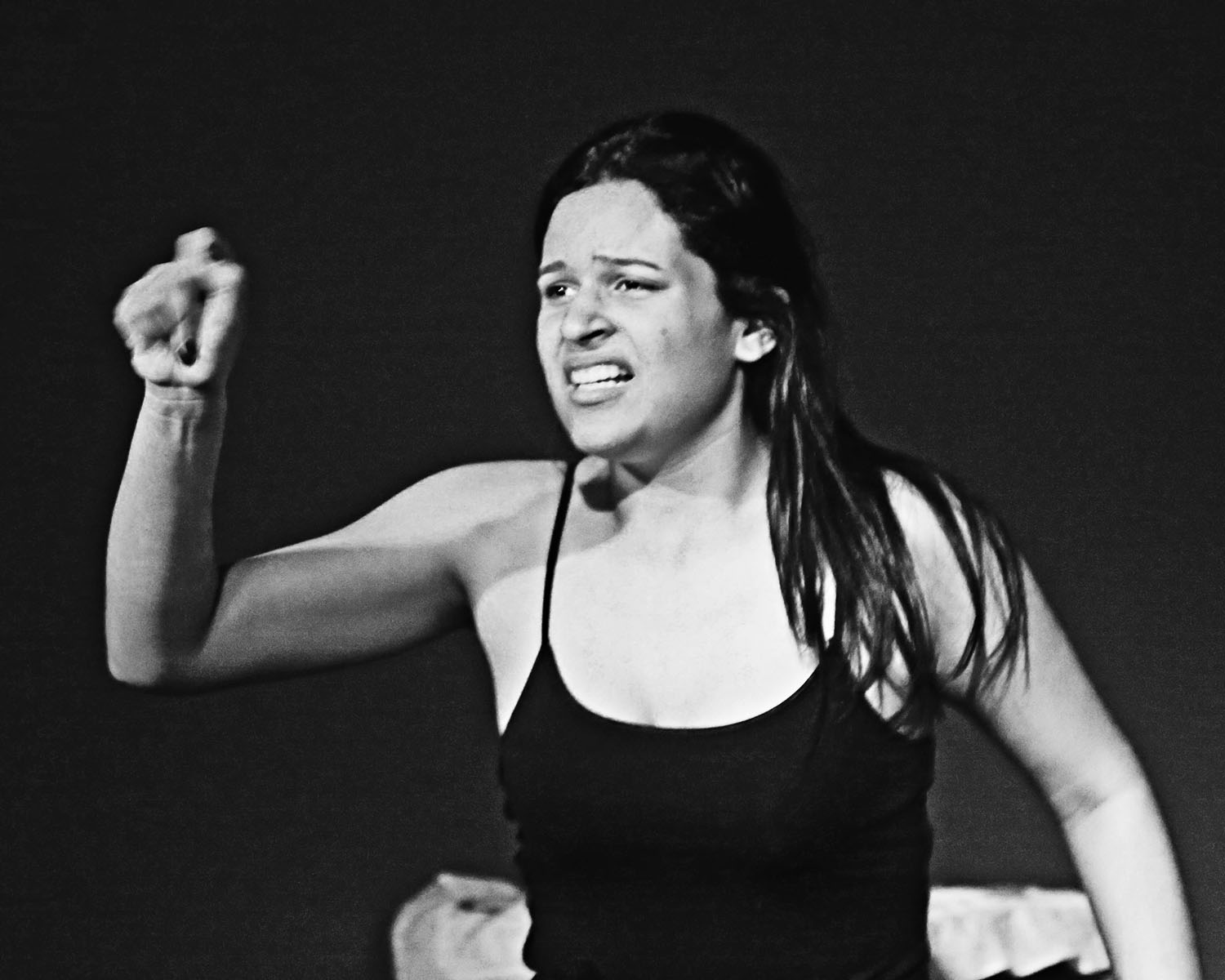
Though New York still has yet to embark on its Fringe Season, the Pacific coast is already underway. The Hollywood Fringe Festival provides a platform for developing artists in the Los Angeles area to bring their work to an audience hungry for new voices – a mission that is furthered by the Hollywood Fringe Festival Scholarship, which was awarded to five productions that “features the participation of ethnically diverse artists; the production will enrich audience experience through the presentation of unique, underrepresented themes…” One recipient of the first inaugural scholarship is Gabriela Ortega, a native of the Dominican Republic and BFA Acting student at University of Southern California who has written, produced, and stars in a one-woman show entitled Las Garcia, currently running at the 2016 Hollywood Fringe Festival. In this conversation, we discuss the process of writing a solo performance piece, fighting for your space, embodying personal history in your work, and how Disney Movies can make a difference in a person’s life.


Alicia Carroll: If you could, start by telling me a little about the production you have created!
 

Gabriela Ortega: Well, the production that I am doing at the Hollywood Fringe Festival is called Las Garcia. It’s a solo performance inspired by my heritage in Santo Domingo, Dominican Republic. I wanted to write a show about how I felt when I moved to the States, which was sort of split in two because I felt like I was drawing inspiration from this place that I left. So it was sort of like the representation of discovering myself as a Latina in [another] country rather than my town. But I didn’t want to write it just about me, and I wanted it to be more universal. The story came to me in different pieces, and basically what it is right now – it follows two women of the same bloodline from different generations. One is in 1960s Dominican Republic, and one is in 2016, or present day, in Los Angeles. They both are struggling with a literal war in DR and the other is struggling with a war against herself. It’s a coming of age about how generations pass on that culture, and sort of my coming of age -which is kind of half true, half not – but because it’s part of the creative process, I was able to draw from my experience and my imagination. So it was kind of fun to have those two aspects of storytelling.
 

AC: How was it moving to the United States from The Dominican Republic?
 

GO: I came to the US at 17 to start college. I had visited the US multiple times before I got to go school at USC [University of Southern California] for acting. I had done a few summer programs and I sort of got my feet wet in terms of what it was to get a degree in acting. I wasn’t sure what four years of that was going to be. So I moved here and USC was kind of a reach school for me; I didn’t think I was going to get in. So when I did get in, I was like, “of course I’m coming here.” But I’d never visited California, nor the school. So, I kind of thought, “Ok, I am going to wing it and go to this place” and it was really shocking to me to see how independent people are here, you know? You move out of your house when you get married in Dominican Republic, or at least when you had a really steady job. I mean, my sister moved out of the house at 28, when she was about to get married and she had a full-time job – like a whole career, and an MFA everything – and it’s just how we do it there. You don’t have dorms or roommates; you just live in your house and commute to school. And everything just stays like that, you go to school with the same people you’ve known since you were three, and I came here and there were so many people from so many places, and so many languages, and so many…labels and perceptions. And the most amazing thing was, I think, being identified as a Latina for the first time in my life because I didn’t really have to deal with that back home, you know. Because we were all Dominicans, we were all there. There were people who were black, or white, or sort of in between, like my color, and that’s just how it was. But, here, you have “what are you?” “Are you mixed?” “Are you ethnically ambiguous?” “Are you Middle Eastern?”… and it was really shocking. It took me leaving my country in order to realize what it really meant to be a Latino woman. So, it was kind of this whole new discovery, which was both scary and exciting.
 

AC: And so now are you the only person in your family who has left the Dominican Republic for an extended period of time?
 

GO: My sister went to grad school. She went to Georgetown for Law, and that was only a year. And then some of my cousins have gone to grad school – that’s usually how you do it; you go to grad school. But for undergraduate, I actually moved here and lived here – for sure, I am probably the only one. I have family in the States like in New York and stuff, but they moved there when they were really young, so they were already there, but definitely even in my close friend group, I was probably the only person who left. And not only left, but also pursued a creative career. A lot of my friends and family members are lawyers or doctors or architects and…not something that necessarily has to do with the arts – or the performing arts I would say.
 

AC: So I know something I have talked about – and we have probably discussed in the past – is the privilege of being able to study the arts. How has going to school for Theater, and the relationship between you and your family and the “lawyer-doctor tradition” – because it’s the same in my family I am the only one. So how does that dynamic work, or how do they view your studies?
 

GO: Well, I am very persistent. I have always had an affinity towards the arts. Like I started painting early on, so they thought I have always been creative. And I talk a lot and I wanted to be a comedian when I was little. So not that they didn’t take it seriously in my young age, but they just thought it would develop into something else. So in high school I thought I was going to be a lawyer because, honestly, I was more ignorant than that. Because I had been taking classes as an extracurricular program outside of school, in acting and theater. But I didn’t know you could major in this. I thought if by the time you were 14 if you weren’t on Disney Channel, you were done. So I thought, “Well, I am not Hannah Montana, that means I am going to be a lawyer.” So realizing how young I was and how much more there is to the arts was so crazy – like I went to a camp at AADA when I was a junior. And then things started changing because some of the kids there, in New York, they were like, “I go to a performing arts high school” and I said, “What is that?” Then, I started doing the research. I think once I started taking it seriously and saying, “Okay, I gotta find a way to get myself there. I gotta get my grades up. I’ve gotta get good scores on the SATs, I gotta get extracurriculars, and my essays and everything. My parents started to say, “Oh, she’s actually serious about this” and, I mean getting into USC helped, but I guess my commitment to doing this really opened their eyes to like, “Well maybe, that is what she does” and, you know, I always believed that they were supportive, but as soon as I started seeing a little bit of a result and me getting it together and going for it, they were like, “Let’s let her do this and support her fully.” And now, they’re not anything but excited, you know? And they have faith that this is what I came into this world to do, and that is not, honestly, a privilege that a lot of people share, but it’s not something I am going to take for granted you know? It sort of opens your eyes when you study theater. It makes you a better person because you start seeing different perspectives.Just being able to learn about other people’s stories, and maybe sometimes you shut up and listen and see what the other person is about before coming in with your own perspective. That has definitely helped me, at least.
 

990A8642
 

AC: Well, speaking of other people’s stories, did you see yourself in the media or culture you consumed when you were little? Growing up with television, you mentioned Disney Channel and stuff; how did that affect you?
 

GO: I think now I am realizing stuff, looking back. Because I remember when I would dress up for Halloween, I wanted to be Little Mermaid but people would be like, “You’re not a redhead,” and stuff like that. You know the little things that you realize – like I was almost always a pumpkin or a random witch. [Laughs] My mom would joke around, “You’re going to be a pumpkin this year” like, thanks, Mom. So it was always a pumpkin or something. I was thinking, you know what changed for me? What you just asked made me be like, “Of course, this made me see those things differently, High School Musical. A girl named Gabriella, and Vanessa Hudgens cast, she looks a little bit Hispanic, I don’t know if she has any [in her heritage]. But when I saw her in that musical, I was like, “She has my name, and she can sing and she is doing it.” And I saw the staged version in the Dominican Republic – the girl that played her in the DR, she was Dominican, and she looked like me too, and I was with my cousin and it was the first musical that I saw…and I was like, “I wanna do this.” And after that I started taking acting classes, to be honest. It was really astonishing to me that someone could have my name and be up there and do that.
 

AC: Wow, that’s so true; I understand. For Las Garcia, how does it embody your experience and how does it portray history? It’s two characters, but obviously a solo show, so how do you think each character reflects you and reflects the history after writing it?
 

GO: It reflects the history because – sister here had to do some research. It was going back and reading all these stories about our dictatorship in the 1930s and the 30 years of oppression and the women, and my own family. It was calling up my mom and my sister in the middle of the night and asking, “Could you tell me what were you doing around this time,” and putting the pieces together – how can I create this character, this woman? The character in the 1960s is a singer and she has this larger than life personality. I wanted to challenge this perception that people have of Latinos: like the Sofia Vergara, over-the-top accent, and that only means you’re funny, and you have big boobs. And, I mean, I love her, but people think that’s the only thing. And I wondered how can I have something like that, but challenges us to flip the coin. And how could I have a woman – she could be a delinquent. She could be a fighter on her own terms. She could be a singer. She could be fighting a war we didn’t even know about. And she has a thick accent and moves her hips and sings, but she’s so much more than that. And I wanted to make these characters different than just a stereotype you know?
 
And it reflects me because…I am the 1%. I’m the exception,you know? I am lucky enough to go to school for theater, to have an education, to have a different perspective and to be in the arts. And back home, a lot of them cannot necessarily do that, so I, as a Latina, have privilege. We have this character in the play that is a version of me and what was really most interesting about it was really exploring my own dark sides and the things that sometimes I don’t want to talk about. And how do I not make that indulgent, and how can I make that relatable? It’s really when you look at your story, and you don’t judge it, and you talk to the truth that… and in this play I am talking about growing up with nannies and I’m addressing that privilege – I mean, there’s a line in the play that goes:
 

“Look around, there are 101 paintings in this house. I know that because I have the privilege of being bored. So bored, that I counted them.”


I’m looking into the privilege that I have and the disadvantage that I have as a latino woman, putting those two together and seeing which one ends up on top. But the reality is that they’re both part of me and I can’t just bring you a story about how sad it is to be a latino, or how lucky I am to have everything I have. But I can bring you a story about how I was at times inside a bubble and how I had to see past myself, and grow up. I mean, we’re not all perfect you know? We all have lightness and darkness about ourselves, you know? It was very scary to tap into that. And then have people read the script and be like, “You’re afraid of this line, that’s why you’re paraphrasing. You’re subconsciously moving away from it,” and realize, “Oh, you’re finding subtext in something I wrote.” It’s been really an interesting experience, doing this type of work. It’s like driving a car in the middle of a raid and you can’t stop because you have to get to the finish line. It’s just you.
 

AC: What made you choose to make it a solo show versus having a partner on stage?
 

GO: I wanted to challenge myself – well, first of all, it’s cheap [laughs] – but also it’s my own past and my own story. But, I will say that the best discovery in the solo work, is that it truly is the story about women, and the women in my family so it should be played by a woman. And they’re related, so the fact that it’s me, you know, I am able to play into that and you can see the different generations without needing the male characters to come up. I wanted to make it a solo show because I wanted you to see the women and the generational aspects of it. And I think it could extend to a play, I mean, I believe in the story so much, I would love to see if I could turn it into a script for a film because I think there is some cinematic quality to it. But I really think of it as a first step; I think a solo show was the way to go because of that. We don’t see stories about women often…so you gotta force yourself to make it about the women because you’re a woman and you’re doing it on your own, you know? So it really challenged me to enhance these two female characters beyond a box, beyond the stereotype, or beyond a circumstance.
 

AC: Something that I don’t think writers get asked often enough, so as a playwright, if it were to get published right now and the rights were to become available, what do you hope for people to take away from the play, at its core? And what do you hope for potential future productions of the work? Especially something so personal and intimate. Like eventually some high school is going to do Hamilton – is there anything you’d nervous for?
 

GO: First of all, the only man who could play it is Lin-Manuel Miranda. [Laughs] Maybe Leslie [Odom Jr.] who knows? I mean, I think the show should be played by a woman…I think that there is a specific song in, it it’s called “Dondé es?” It’s sort of a theme in the show of “Where is your life hiding” I would like that song to be in it, as a guiding tool. I wouldn’t be opposed to – I wrote the whole thing as if it were a script, like the scenes between men and women, they are written as dialogue [as opposed to monologue] so I’d be interested in seeing it developed into a play opposed to a solo show; I would like to give people the chance to work with it and workshop it whatever way they would like, but definitely keeping mind the people and their ethnicities – because so many shows take advantage of that…because they think that “yes art is for everyone,” but there are certain stories that may need to be told by the people who can really tell them, and can give them justice.
 

AC: Yes, I completely agree. Interesting. Well, also, congrats on the Fringe scholarship!
 

GO: Thank you.
 

AC: What does it mean to you, that you received the scholarship? And what do you think it will give you in terms of furthering your audience and telling your story?
 

GO: I think it means a welcome to me and as a reminder that we are here. And the fact that we got that scholarship is nothing to be cocky about, or to be to think “oh, we got somewhere” – no, it’s actually challenging us to tell this story to the best of our ability, and my ability. And Fringe is such a wonderful platform to workshop new work because it really is a very supportive community; everybody wants to see each other’s shows. It is a competition in the way that there are awards and stuff, but at its core it’s an opportunity for everyone who’s an artist in Los Angeles and wants to create new work and be bold and wants to put up things at no budget pretty much to have that opportunity and to showcase their work. And to me, this is my coming out party as a writer and a performer and to me that scholarship is me saying I will not conform, and I will write my own work and I will star in it and produce it and I will wear all the hats, and I am a woman and I’m Hispanic and I’m here. And I won’t let anyone or anything that believes I don’t fit in this medium – or that I’m too this or too that for this art form tell me I don’t belong. So, I am happy that the Fringe Festival community sees that and is encouraging that and are hungry for stories that are different. It’s the first year that they’re doing this scholarship and the five people who won are all people of color and women, three of them I think are written, directed, and starring women. And I think that’s telling of what people are hungry for and the stories they want to hear.
 

IMG_6240
 

AC: Are there any last thoughts you’d like to get into the universe, or anything you’d like to say?
 

GO: Thank you, first of all, for reaching out to me and thank you for your support. For anyone that will read this and is a young artist or woman or girl who thinks they are too young to do something, don’t. Because honestly, if you look for space and if you fight for that space, the doors will open and people will come support you and people will be with you. The amount of gratitude I have for so many people who have reached out to me and offered their help and their services for me to create this piece of theater really gave me hope as to what I can do in the future and – you just gotta ask sometimes, you know? And just really fight for and go for it without judgment. So, I really encourage people to try this type of work and just get out there and figure it out.
 

AC: Absolutely. Awesome, well, thank you so much for speaking with us. And break a leg on your premiere!
 

GO: Thank you, thank you. I am trying to get it to New York, hopefully I can get it into the United Solo Festival. So, we will keep in touch, because I really want to travel with it. Thanks again, I really appreciate it.
 

AC: Yes of course, keep us posted!


Gabriela was born and raised in the Dominican Republic and is an LA based Actress, writer and Spoken word poet. She is currently pursuing a Bachelor of Fine Arts in Acting at the University of Southern California.A proud Latina, Feminist and above all: a collaborator, Gabriela is thrilled to be returning to the Hollywood Fringe in 2016 with her own show. She is excited to bring her stories to life in her show inspired by her heritage and life in Santo Domingo. In 2014, Gabriela helped develop “The New Artist’s Festival” at the 13th Street Repertory Company in NYC. As part of the festival, she helped produce 7 original one-act plays (2 which she directed, 1 which she wrote), as well as two MainStage productions (Rabbit Hole, Dark Play/Stories for Boys). Some of her most recent roles include: HOMEFREE by Lisa Loomer at The Road*, SPIT! at HFF15, The House of Bernarda Alba with the Bilingual Foundation of The Arts (Magdalena), Grey Street, The Musical (Off-Broadway Workshop, Ensemble) and Blossoming readings with The Vagrancy. USC: Breath, Boom (Angel)**, Camille (Prudence), Marisol (Ensemble), Anna in the Tropics (Conchita), What We’re Up Against and other short plays (Lorna/Annie), Disappearing Act by Lena Ford (USC workshop/ Millie)
*WINNER: Noho Fringe Festival Best play/Best Ensemble
**WINNER: Aileen Stanley Memorial Award for excellence in Acting
Las Garcia (my solo show) won one of the 5 “2016 Fringe Scholarships”
webpage: www.ortegart.com
manager: Nick Campbell
Velocity entertainment partners
nick@velocity-ent.com