
It’s Monday afternoon, around 1pm and I’ve completely lost my momentum. I’m twenty minutes behind and ten blocks away. The trains are predictably un-predictable and if my internal monologue wasn’t holding for the house, it would say “Cross the damn street already, your interview is waiting for you.” Murakami would call it a day where I haven’t wound my spring. But all is forgiven, because my interview is with Marina Kondo. Have you met her? She’s cool.
I first became aware of Ms. Kondo when a press release announced she would be going in to Jason Kim, Helen Park and Max Vernon’s rad, immersive show KPOP. I admit my motives for meeting her were selfish. Having not one but now two pieces that deal with Japan and Japanese culture, it’s always to my benefit to know artists closer to that world than I could ever be. Plus, knowing singer-actors with fluency in both Japanese and English doesn’t hurt either. I send her a quick email, we meet at Hamilton Bakery, and to make a short set-up long, I think you two would really dig each other.
Timothy Huang: Is it fair to say there was rarely a time in your life when music didn’t play a part?
Marina Kondo: Totally. Between my mom and dad there was always music involved. My dad is an amateur jazz pianist and my mom studied piano during college. She got her PhD in early childhood music education. I was in her dissertation.
TH: Was she constantly taking notes while you spent time together?
MK: She would take videos actually. A lot of videos. Her dissertation was entitled Hybrid Identity Through Eastern and Western Eyes Teaching Music and Space In Group Studio Piano.
TH: We had spoken earlier about the earthquake that struck Japan in 2011, and you had said that much of your artistic life was born from that tragedy. Can you tell me about that?
MK: I was born in the Netherlands, grew up in America mostly, but I’m 100% Japanese. It felt strange to me that I didn’t know how to reach out after the disaster. During that year I had the opportunity to go to Pendleton, Oregon, to perform on behalf of a sister city of theirs called Minamisoma, which is in Hiroshima. The mayor of Minamisoma asked me to sing on their behalf to pay respects and thank-yous to Pendleton for their support. That was one of the hooking points for me. It made me realize that no matter what language you speak or where you’re from, music is the one form of communication that transcends all.
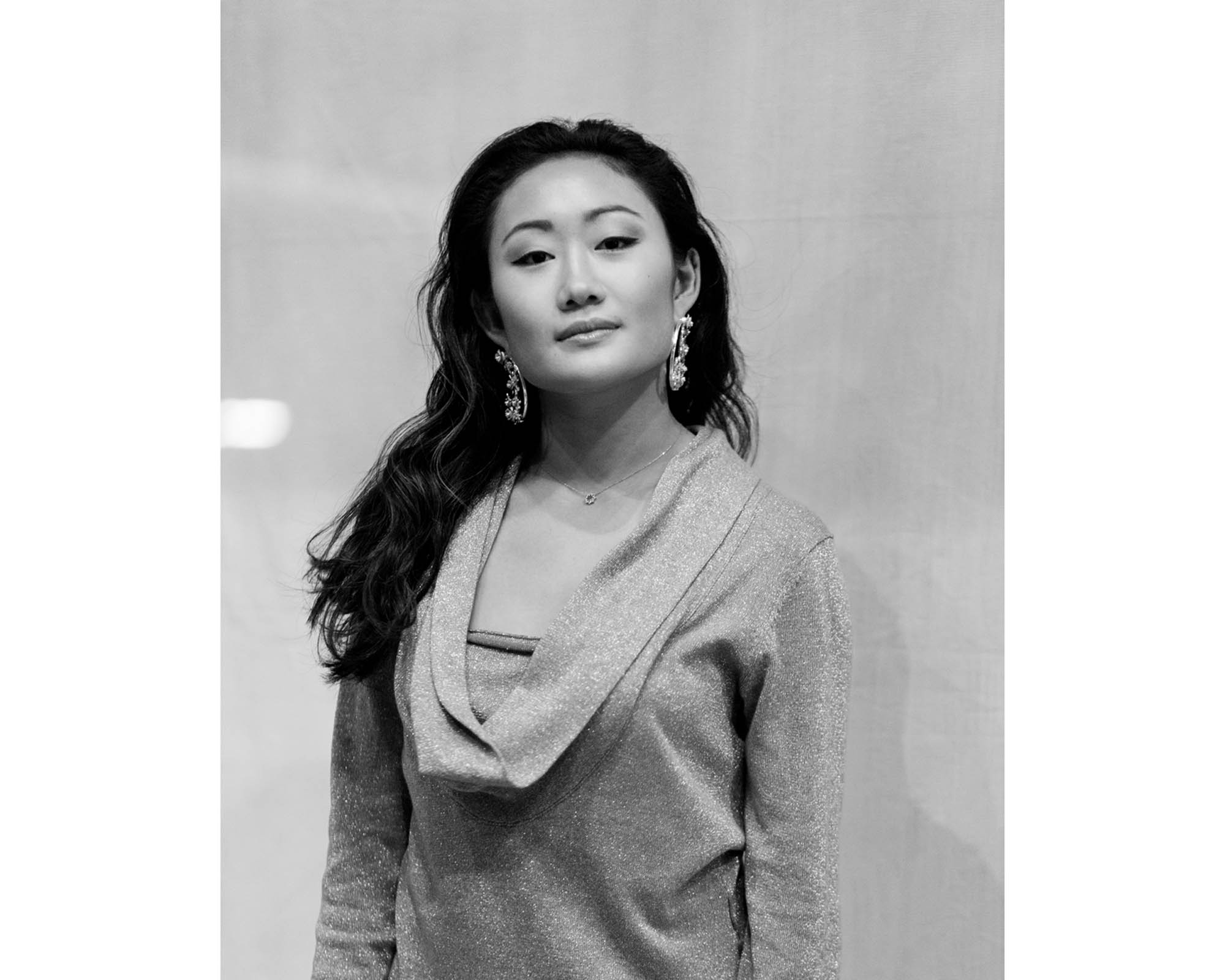
TH: Tell me a little bit about Brazil, please.
MK: Brazil. So outside of Japan, Brazil has the largest community of Japanese people. So it’s around 100 years now in Brazil, that there’s- it’s called Nikkejin in Japanese, [which means] “Japanese diaspora” And there’s about six, seven generations now. Over there Japanese culture is a huge thing. They have this festival every year, called Festival do Japão, or, “Festival of Japan,” and they bring Tyco groups and different cultural dancing groups and stuff like that. The Nikkejin come together and recreate culture in this festival. And I get invited to sing. This past summer was my third time being there.
TH: So it’s a big thing.
MK: It’s a three day event that has about twenty five thousand people attend. The city supplies the whole festival with free public transportation. Most of the people who come are Japanese, and there are also a lot of Brazilians who love Japanese culture. And there’s fifty ken (県) in Japan.… it’s not provinces… prefectures. They have a booth for every prefecture. My mom is from Ehime, so every time I go there, I get sponsored by the Ehime booth. They serve udon because they are famous for their udon. Every ken is known for a special dish.
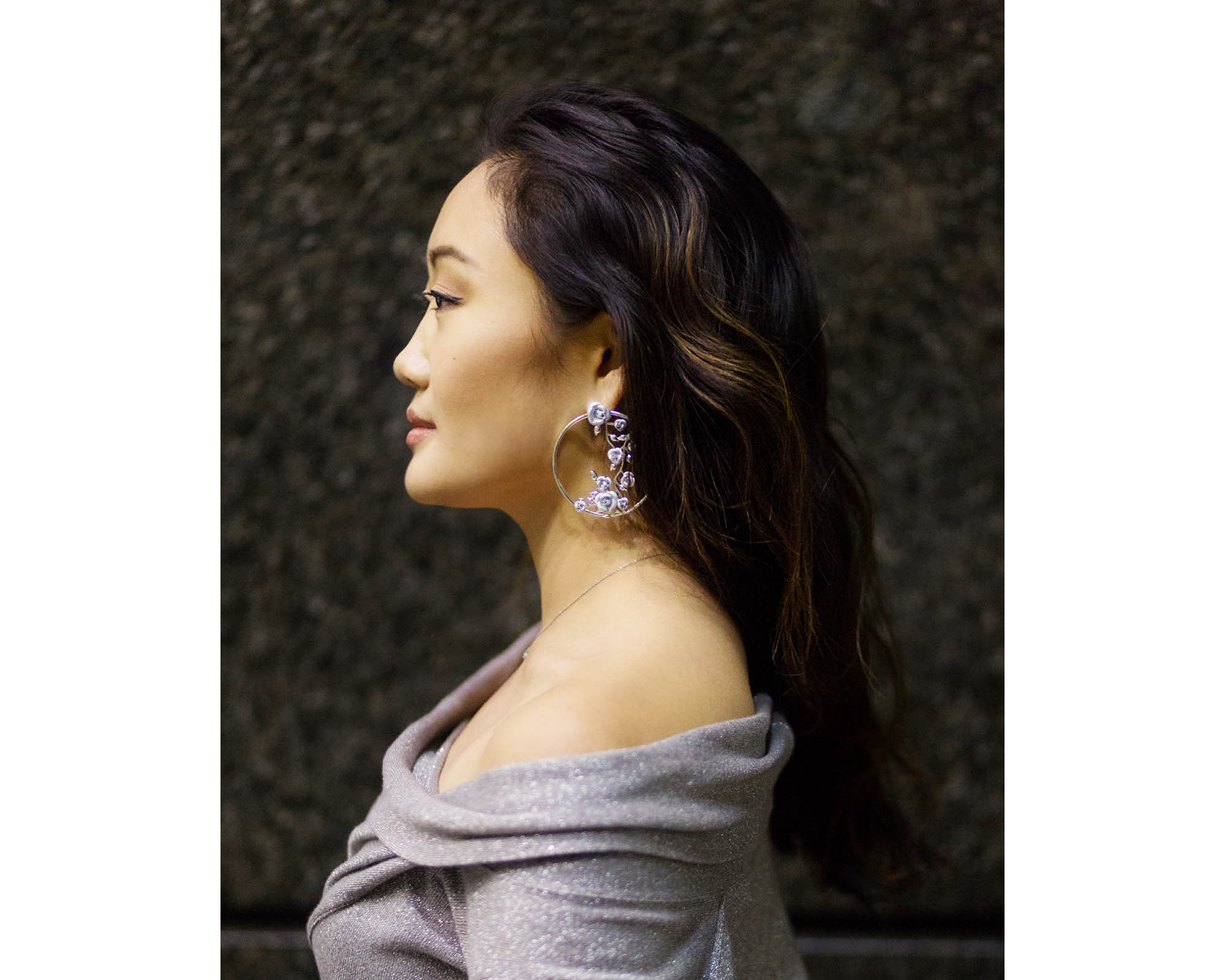
TH: Can you tell me a little bit about KPOP?
MK: I graduated college, had my showcase, signed with an agent. And then I went on this. I knew that I wouldn’t be able to do it because I had other obligations, so I let them know. A month later they said “Hey we cast this role but we need an understudy and a replacement.” At that time I was still in Michigan so they had me self-tape. My flight to officially move to New York was August 31st, I had my callback on September 1st.
TH: That’s crazy.
MK: Yeah, they didn’t freeze the script until a day before my first rehearsal. So [prior to that] I was just kind of learning, but also it’s a different language. Korean is not something that I speak and is not my culture. I had multiple panic attacks but my roommates were amazing and they got me in touch with a former Korean pop star/dancer, and she went through every one of my songs and lines with me at a bar- it was really loud- we were screaming at each other- laughing at how ‘Japanese’ I sounded, and getting specific about the nuances of the Korean language, sharing and having a good time but I recorded the entire conversation and that’s how I did my own Korean research. And by the first day of rehearsal I had everything memorized.
TH: Had you previously been called upon in your career to play an Asian person that was not Japanese?
MK: This was probably the third or fourth “Asian” thing I went in for. I’m okay with that, I’m obviously Asian, but I’m not Korean. It’s such an interesting, fine line.

TH: In our industry, we’re pretty comfortable grouping all Asians under one umbrella. The benefits to this are obvious, but sometimes it takes an invisible toll. Can you speak about that?
MK: I had such an identity crisis about being Japanese when I was younger. As someone who [now] feels a lot of pride being Japanese, I want to pay as much respect as I can because that’s important and it’s worth exploring. Especially when you are representing a specific culture. And KPOP is specifically about Korean pop music. For example, when you’re playing a doctor you don’t want to just “use the tools.” You do research. Maybe this tool specifically is used to cut someone’s stomach. You should know those things. I feel like that’s just as important for culture too and understanding how it is different from your own.
TH: Bucket list?
MK: Definitely skydiving. That scares me so much. I have a friend who did it once and said it was the most thrilling experience ever.
TH: Is there a role of a lifetime that you would like to play but haven’t?
MK: I’d love to play Tracy Turnblatt. Hairspray is one of my favorite musicals. But that will probably never happen.
TH: Never say never. What else?

MK: I paint restaurants. In Ann Arbor, I painted a restaurant called Fred’s. I’d love to do that as a side career.
TH: Like, murals on the restaurant wall?
MK: There’s a bench in front of it. People tag me when they take photos of themselves in front of it.
TH: What are your thoughts on frozen corn?
MK: I love the Trader Joe’s brand. If I’m bored I will walk past the fridge and reach down and eat it, then put it back in. It’s like that ice cream that’s haunting you from the fridge. But corn.
TH: You were born in the Netherlands, but raised in America. Is there anything about Japanese culture that you have discovered is different from American culture?
MK: I think as a performer I bring a lot of simplicity. And in Japan that is a very huge thing. Simplicity is a sign of beauty. My senior thesis was about this: if there’s a cup and there’s a crack on it, in Japan the crack is the beauty. That missing part, that emptiness represents something. And I feel like that’s a great metaphor for Japanese art and culture. In America we try as much as possible to fill every single white space with some color or design. In Japan it’s the emptiness that is mesmerizing. The missing part. The silence.
Marina Kondo is a bicultural (USA/Japan) singer, actor, dancer, and lyric translator. She is a Netherland-born, Japanese singer who is currently based in New York City. She grew up mostly in Michigan (USA) and began performing professionally at the age of 9 singing in jazz bars in Tokyo, Japan and continued to participate in many concerts, musicals, T.V programs, and recordings since. As a music ambassador of Minami Soma, Fukushima, Japan, she performs at many charity concerts and festivals in the US, Japan, and Brazil. She performed in many events for the local communities of the Metropolitan Detroit area, such as Detroit Children’s Hospital, Detroit Libraries and schools, and other charity events sponsored by GM, Nissan, Japan Business Society- Detroit, WLDTV etc.