Posted on

A Conversation with Morgan Green & Johnson Henshaw

Morgan Green Johnson Henshaw


To hear some people tell it, New York is the only incubator for the most exciting young artists. But as the Sharon Playhouse proves, creating work outside of the Broadway and Off-Broadway sphere isn’t just a way to pay the rent — it’s a way to make the art you really want to make.
 

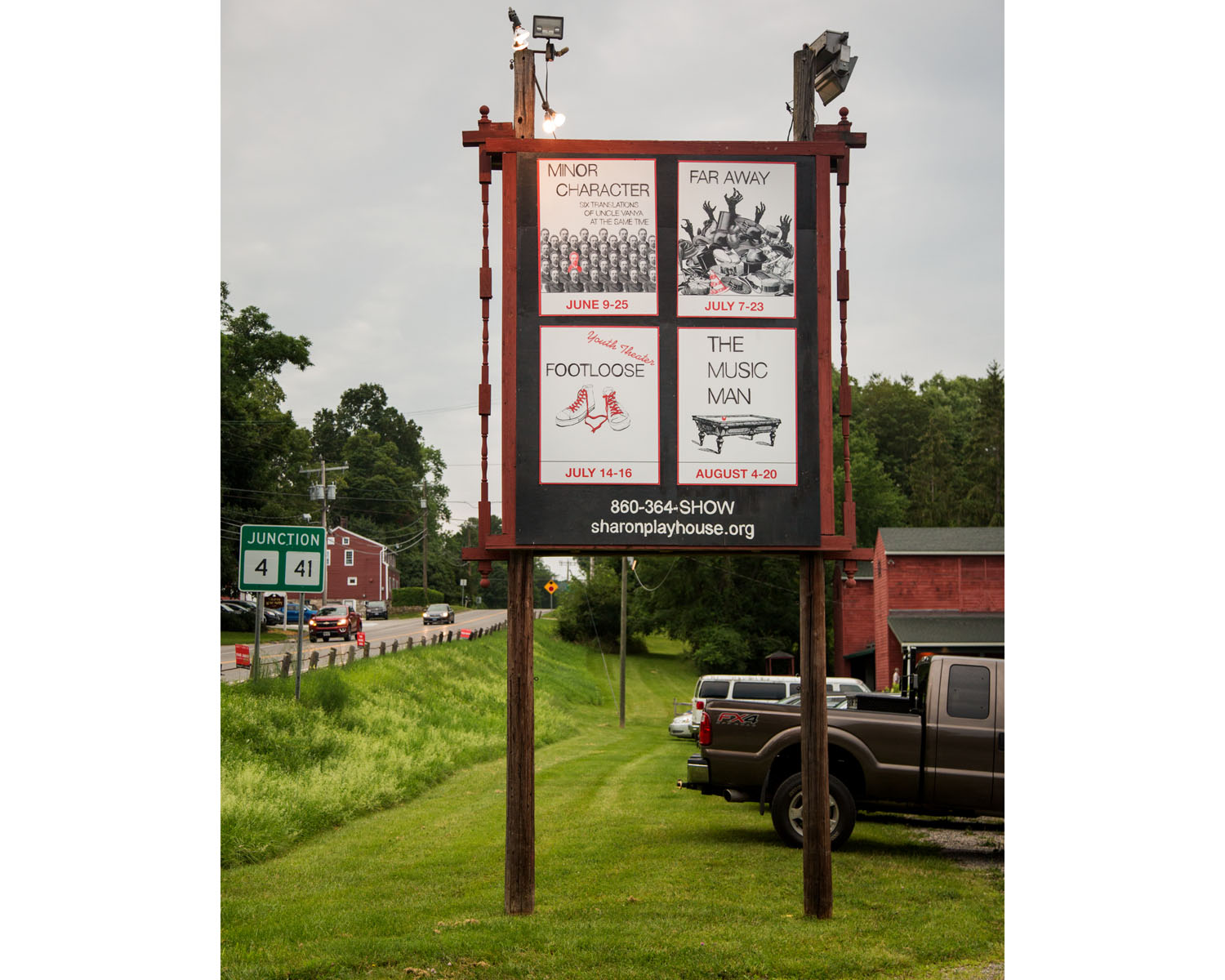
We took a break from the city and met with Johnson Henshaw, Artistic Director of Sharon Playhouse, and director-in-residence Morgan Green after their first run-through of The Music Man — their third collaboration this summer — to talk about the inventive restructuring of the Playhouse’s season, the importance of trust, the goal to foster emerging theater artists, and their thoughts on the future of this art form.


Michelle Tse: How was the first run-through?
 

Morgan Green: It was good. I have a headache [laughs] but it was really good.
 

Michelle: Should we get you some water?
 

Morgan: I’m good. I just had some; I’ll be okay. [laughs] No, but it was very exciting to see everything together. Johnson was there, and we had the smallest little audience so I feel like there was a lot of pressure in a good way, so that the actors were really focusing.
 

Michelle: That’s good. That’s exciting! So I wanted to start with asking about why you, Johnson, chose to do a director-driven season, particularly with an emerging female director.
 

Johnson Henshaw: I’m a director myself, and in my 20’s all of my playwright friends had so many opportunities for fellowships and mentorships and all sorts of ways that theaters in New York were trying to connect with them — they were trying to foster and incubate them. There’s not a lot of that for directors. Then I did this fellowship with the Old Vic in London. I went over to London, and visited many of the major theaters there — the National Theatre, the Donmar. Those theaters have these incredible incubators where they take young directors who have just gotten out of drama school or university and they start giving them space and time and money — they’re fully salaried! — and they start prepping them so that they are ready to do mainstage productions at the National Theatre when they’re like 26 years old. So then those directors are being seen by commercial producers and other artistic directors. Their work is getting seen much earlier and their careers are so much more dynamic and fruitful because of it.
 

Directors in New York have to tie themselves to playwrights. They have to really fight for those relationships. [Morgan and I] talked about this a little bit. The playwrights you get, that’s how your boat floats or sinks. It’s so often that the director’s work takes a back seat. When I had this opportunity, I was like, This should be a place that’s a theater for directors. Where they get to come up and do work that they’re excited about, as opposed to an artistic director being excited about [a certain] play, and finds a director to do that work.
 

I wasn’t sure originally that it was going to be all one director for the whole season but I had reached out to people at Playwrights Horizons, the Public Theater, Manhattan Theatre Club, and New Georges, and I said, Who are young directors you’re interested in? There was a bunch of names on each of those lists, and some people were on two lists, but maybe not all of them, and there was only one name that was on every single list, and that was Morgan’s. I actually didn’t know her work. I didn’t know her. [laughs] This was all happening around late December, and Minor Character the show that Morgan did with [her theater company], New Saloon, had been asked to be in the Under the Radar Festival as part of the Incoming lineup.The show was sold out, but I got a friend of mine to write Morgan to say, Hey, this is my friend Johnson, he just got this job, he wants to come see your show, can you get him in? And she said yes, of course.
 

I thought I would go see Minor Character, and if I liked it, I’d be like, Why don’t you direct a show this summer? What show do you want to do? And I was so blown away by it, it was so incredible, and one of the best things I’ve seen in the theater ever, I couldn’t believe it. And the ways in which it was great felt like the work of a really great director. It was so smart and so stylish and moving. So I met with Morgan, we had breakfast, and I sort of was like, Will you come and direct all the plays? Because first of all, I wanted to bring Minor Character here, but I didn’t want that to be the only show that Morgan directed this summer. Selfishly, the best part about this job, is I get to program work that I want to see. It’s the best part of being artistic director.
 

Because this audience is an older audience, the work that has typically been done here at the Playhouse is very traditional and I was trying to figure out what were the programming choices that would be great for a director to tackle but for this audience would feel welcoming. So my guidelines were a classic American musical, a classic American play, and a new work, and that was Minor Character.
 

Morgan Green Johnson Henshaw
 

Michelle: So Minor Character kicked off the season for obvious reasons that Johnson just touched on, and tonight we’re seeing Far Away. Why Far Away?
 

Morgan: Like Johnson was saying, there are all these opportunities to direct new plays and to ‘pitch’ yourself to playwrights as a director. I have been doing that, and I have relationships with playwrights that I like, but it’s really rare for an opportunity like this to come, for someone to ask me, the director, What do you want to do? So for the play, Johnson originally proposed it be a great American play, so I was thinking about Arthur Miller and Tennessee Williams, but I really wanted to fill that slot with a work by a female playwright. I love Caryl Churchill, and I’ve always loved her, and I feel like she’s not done enough in New York or America in general — she’s not as well known here, she’s in England. And she’s one of the greatest living playwrights. So it felt like a really special opportunity to do a Churchill play, whereas that would not happen in the city, and nobody would let me do it, unless I self-produced it. So I jumped at the opportunity, and Far Away is a play that I’ve wanted to direct since the first time I read it. I had visualized it when I was reading it, which is a good sign. I didn’t direct it when I first encountered it because I didn’t understand the ending. As I came back to it for this as an option for the middle slot, I still didn’t really understand the ending, but I was kind of excited by that challenge. I was also excited by its relevance, how it feels like the whole world is going to war, struggling with the responsibilities as an artist, and the distance between art and politics. Caryl’s is being self-aware and critical about artists, and I was excited to engage with that.
 

I was also really excited by the contrast between Minor Character which is Chekhov — but it’s also extra Chekhov, because we do 6 different translations on top of each other — with The Music Man, a musical with 27 people and huge, with this really spare, really poetic dynamite little play in the middle that is 45 minutes long, but has three distinct time periods and worlds within it, with this crazy hat parade spectacle. I got to have that theatrical event happening that is physical and design-based, which feels like an essential part of theater to me. I’m not that excited about plays that are just people talking to each other. It basically has all the things I like about theater in 45 minutes. [laughs]
 

Michelle: Well, that’s perfect then! You just mentioned being able to very quickly visualize Far Away. Is that how your process comes about most times? How do you negotiate between visual and literary cues?
 

Morgan: Yeah, I was thinking that [about Far Away because it can be seen] in terms of something that’s unusual. But to me it’s still not actually that radical because everything I’m doing this summer is text-based.
 

A lot of my work is text-based. The text is almost always the first thing versus a visual or an idea. So for me it does start with the text, and sitting alone and visualizing the text, and it feels right if I can get a picture [in my head]. It’s very instinctual, and it’s also about choosing the right material for the setting. I have maybe a bucket list of plays or projects that I want to do, but it doesn’t feel real till I’ve seen the space, see what would work in the space, what would be good for the audience at this time; it’s like this perfect storm of things that have to click into place.
 

Michelle: So how did the choice of The Music Man come about?
 

Johnson: I had two musicals in mind that I didn’t say anything about, but Morgan immediately said, I really want to doThe Music Man, and that was the show I wanted her to do. The story of a con man who comes to middle America is … so real.
 

Michelle: Absolutely. We just saw Death of a Salesman last night.
 

Johnson: Oh! Theater Mitu’s? What did you think?
 

Michelle: We loved it. We sat in the front row, so it was incredibly immersive. We very much interpreted it as empathizing with a Trump voting family. I also hadn’t seen that play in so long that I forgot about how agitated I get sitting through Willy’s monologues. It was very much like… dude, get a grip. We ran into a large group of friends and many of them didn’t make that connection, though.
 

Morgan: Oh, wow.
 

Johnson: That’s wild.
 

Michelle: They were either thinking about their own fathers, or family or friends, or whatever it was. Anyway, it just seems like it’s something that’s popping up everywhere, and folks are making connections whether the directors meant for it or not.
 

Johnson: Well, [Willy] is so emblematic of the worst parts of our culture. So as we look at these stories of patriarchy, and whiteness, and oppression, he’s in all of those.
 

Morgan: One of the things I was trying to deal with after Trump was elected — there was all this criticism about him, obviously, leading up to the election, every horrible thing he did, every lie, and everything that was revealed that was like, Is this the thing that’ll take him down? No, that’s not it. There was nothing that happened that was so bad that would prevent him from succeeding, so I was thinking about the public that elected him, and that there was more of those people in New York, around me, than I realized. So I was really connecting to The Music Man in that it’s a story about townspeople in middle America who accept a fantasy and enjoy it, because it sounds good and it feels good. They just buy into it, even when they find out that it’s a fantasy and they’ve been lied to and cheated. They kind of forgive this white guy. So I was interested in looking at myself and people who enjoy the feeling of believing in a fantasy. That’s so much a part of the American dream and the American psyche, and advertising, and Twitter — I mean, we’re just fed pieces of information and we consume them, digest them, and take them for truth. We don’t stop to think or criticize. And if we do, and something is revealed to be a lie, we’re still okay with it, because it felt better. It feels better, and is more satisfying to just buy the fantasy. And I experience that too in myself, so it was not so much getting to Trump voters specifically, but at American people who buy the fantasy.
 

Michelle: I definitely looked up the exit polls for this town when I was preparing for this interview. [laughs]
 

Morgan: You did?
 

Michelle: It went…
 

Johnson: For Hillary.
 

Morgan Green Johnson Henshaw
 

Michelle: Yeah, well, 800-something to 500-something. So it’s interesting to me. I also looked up the demographics, which says it’s about 98% white. This summer season you’ve put on and are putting on work that is perhaps challenging to the audience, but I wonder, at a place like the Sharon Playhouse, is there any fear of touching on subjects like racial disparity, gender disparity, or any marginalized issue, without basically pissing off most of your subscriber base?
 

Johnson: This pocket of Connecticut, Litchfield County, is in many ways a weekend community. So many of the people up here are city people, who come up here on the weekends. So it’s a sophisticated bunch.
 

Morgan: In Minor Character, men play women, and women play men, and actors of all races play the different characters. It’s really fluid, and one person who came to a dress rehearsal that the only good part of the show was when the women were kissing each other. So I feel like there is also that contingency of an audience here. There’s also people who totally loved it and embraced it. I think New Saloon, my company that I made Minor Character with, I don’t think we’re trying to make a bold statement about racial politics in our piece, but we are making a statement about identity and its fluidity and how we all hold many identities inside of us. I think that the intentionally diverse casting is trying to crack open some stereotypes. The diversity in the casting of that piece is essential to the project. We couldn’t do Minor Character with an all white cast. That felt important to get to do here.
 

Michelle: In that sense, what do you think of color conscious casting, which is what I’d call what you just described in Minor Character’s concept, versus a director and casting director trying to check off boxes in trying to satisfy diversity in a way?
 

Morgan: I try not to do those kinds of plays, or if I do, I play against it. In The Music Man, the Paroo family is written as an Irish family, which had more social stigma when it was first originally written, but no longer does. So I’ve cast the Paroo family as an African American family. The storyline is about how Marian is treated in this town in Iowa, so I think it heightened the urgency, especially because of the whole plotline about her younger brother and his safety and success in the world. So there’s a young Black boy running around in a town that is stirred up by this white guy and it becomes sort of an angry mob. That’s really scary right now.
 

Johnson: In the run-through today, I was so struck by the line about Winthrop’s father being killed, about being dead, which is usually, like, whatever. But when you have this young Black boy, upset, and his mother trying to explain things to him, it just made me think of Philando Castile, and so many others…. All the black bodies that are being killed every day, and those children that are left behind…
 

Michelle: Absolutely. I’m very interested in coming back and seeing it done in this way. I want to now zoom out a little and go back to a great point that was brought up, about the disparity between fellowships and mentorship for playwrights versus directors. I would argue there are even less for designers. Though all this seems very doable to me.
 

Johnson: Yeah.
 

Michelle: So, how has the experience been, what are the lessons learned, and what can others take away from this type of programming? How would you encourage other artistic directors or administrative folks to be inclusive in their guidance of emerging theater artists?
 

Johnson: It’s a leap of faith. You have to trust the artist. I’ve only seen Morgan do one show.
 

Morgan: He was very trusting. I couldn’t believe it.
 

Johnson: Well, I don’t think great work happens without great risk. There are so many theaters in this country. There are so many theaters in New York that are picking the trusted directors, the old steady hand, with the way that it has been done before. It feels to me, if I’m going to be a young artistic director, I should do something different. I should make a different choice. I should think about who’s going to make the next great theater, and give a platform. I’m really proud of Morgan’s work, and now she’s had three big productions in a row. I won’t speak for whatever she’s learned, but there have been insane learning moments. No artistic director can ever tell her she’s not ready to do a musical. No artistic director can tell her she doesn’t know how to do a stylized Caryl Churchill play, you know, and that’s so exciting to me. To give her that experience…
 

Morgan: Yeah, it’s a ton of experience right in a row. It forces this kind of feverish creativity.
 

Michelle: It must be all overwhelming.
 

Morgan: Very overwhelming. But it’s pushed me to be really collaborative with the designers and the actors and trust them in the way that Johnson’s trusting me. I think [Johnson] told me I brought about 80 people here, all in all.
 

Johnson: 70 people contracted.
 

Morgan: Right. So I brought my entire New York network with me. So it’s not like I actually did this by myself, you know? There’s a lot of other people involved. The pressure I find useful, but that’s just the kind of person I am. I like the pressure, but it is and was overwhelming.
 

Michelle: Right. Because other than the Lincoln Center Theater Lab—
 

Morgan: Right, which is not practicing, it’s a lab.
 

Michelle: Exactly. Other than that, I don’t think I’ve heard much else for directing.
 

Morgan: There are a lot of residencies and apprenticeships that are centered around assistant directing, and I’ve done a lot of those, and it’s a good way to learn, and met a lot of people I learned a lot from. In terms of getting our hands dirty, and making work, there’s not a lot of opportunity for that. There is in London, for example, so it feels like there’s a real dirth for directors in that.
 

Michelle: In Europe, to my knowledge, it’s mostly government subsidies that allow that to happen though, right? We are on a different system.
 

Morgan: Yes, it’s a completely different structure.
 

Johnson: Yes, but it used to exist in New York. New York Theatre Workshop, throughout the ‘80s, that’s where Michael Greif started, in the New Directors Project, where they would throw up these plays that were hugely foundational for a lot of the directors who are now directors on Broadway. The Public Theater, you look at what Joseph Papp was doing, he was finding young directors and just giving them rooms and giving them actors and paying those people, and saying, What happens in this room?
 

Michelle: That doesn’t quite happen anymore.
 

Johnson: It doesn’t quite happen anymore like that. I wish that all those Shakespeare plays in the park weren’t directed by Daniel Sullivan. I wish they were directed by young directors. We just keep seeing the same plays directed by the same people. It’s so boring.
 

Morgan Green Johnson Henshaw
 

Michelle: I agree. And so both of you are relatively young for being in the positions that you are in. What would you say is the steepest part of the learning curve so far?
 

Johnson: This summer has been a lot just in terms of getting 70 people up here to Sharon, Connecticut, and getting them all to the theater, making sure they’re housed. The logistics of producing here are tough. But in terms of the experience of being an artistic director…As a director, I’m always so nervous about sharing my own work, you know? And I have this sense of modesty, or I’m embarrassed to tell someone that I think what I’ve done is good. The great thing about being artistic director is that I get to scream from the rooftops about how special [Morgan] is, and that feels awesome.
 

Morgan: It also feels awesome to me. [laughs]
 

Johnson: But with the learning curve, I don’t know. Morgan and I haven’t agreed on every choice this summer. There have been some moments of disagreement. I think figuring out how to negotiate those disagreements has been a learning event.
 

Morgan: Right. And for me, it’d be how to take notes from an artistic director. I haven’t had that experience before, figuring out what things I can really negotiate on and what I need to fight for. Another thing that I think I’ve been getting better at out of necessity is articulating my ideas and my vision so that it is clear to people that are not inside my head, or don’t have the same relationship to theater as I do. To be clear about what I want to do, I have to change the way in which I’m describing it, based on who I’m talking to. I feel like being forced to do that so many times, with so many different kind of people this summer, I’ve gotten a lot better at it.
 

Michelle: Communication bootcamp!
 

Morgan: Seriously, yeah. I can’t assume somebody knows what something looks like in my head. I have to break it down.
 

Michelle: So as a theater and as directors, what do you hope the future of theater would look like? What do you want to see more of, or less of?
 

Morgan: I want to see more work that is breaking out of traditional theater conventions. I feel like I see a lot of theater that I’m sort of expecting. I feel excited to see work that is breaking the mold, so that in order for that to happen, people need to be given opportunities that aren’t necessarily given to them. So what Johnson’s doing here feels like that, but also for women, for queer artists, and people of color, having more opportunities to make their work — with support, because it’s so hard to do it on your own.
 

Johnson: I just want to see less of the straight white male gaze. I feel like so many of my theatrical experiences come through the viewpoint of a straight man, and we’ve seen that. I want to see so many more people’s work than I’ve gotten to see.
 

The funny thing is, in these Far Away talkbacks [which happens after every performance], there are people who love it, and people who are angry that the play makes them think. They’re angry because they’ve been challenged and not simply entertained It has emboldened me hearing that to only want to present work that challenges people, that challenges their perception of what should happen in a theatrical space. I want to make work and present work that people are still talking about later, that they’re still responding to. I’ve learned that so many people go to the theater and really want it to happen in there, and end in there, and to never engage with it again. I hope that nothing we do this summer ends in that space. I sort of hope that of all work.
 

The Wassaic Project, [an artist-in-residency program 20 minutes away in Upstate New York,] some of their residents came over, saw Minor Character, and loved it. They went back and told the rest of them, You have to come see this. They’re visual art people who don’t think that summer theater is going to be cool. They all came and lost their minds. I’ve now had so many conversations with people who have stopped working in theater because the rules of it, and the system of it, is so oppressive about the type of work that had to be made. So many of them have seen Minor Character and have been so inspired and thought, Oh right, theater can feel like this. It can feel dangerous and totally new while exploring something really old. I hope to keep being a part of work like that.
 

Michelle: Absolutely. Morgan, you mentioned quickly opportunity for women. I wonder if you can expand on your thoughts on opportunities for women and directors, perhaps particularly for musicals. I’ve been thinking a lot about not just what we touched on earlier about the lack of a support system, but even in terms of someone like me going to ‘diversity’ panels, and feeling like I’ve been going to the same one for five years in a row. It’s so circular. I wonder what a young 20-something just out of school can do beyond somewhat following the system that already exists.
 

Morgan: I can talk about my own experience with it, which is that I just made work. It was small, and dinky, and scrappy and self-produced, and I’d invite everybody I could to come see it. Most of them didn’t come until the third or fourth thing that I invited them to. I just kept going. A lot of the things I knew they wouldn’t come, but I’d invite them anyways, just so that by the sixth time – I guess I was pretty annoying… But it’s a dangerous line to walk because you can’t force yourself to receive recognition or gain support. It’s a delicate balance I think. But that’s what I’ve started to tell younger artists who ask me about it. Make work, and invite people to see it, as opposed to sitting and waiting. Instead of asking for opportunities, make them. I guess that’s pretty generic sounding.
 

Michelle: Yes, and it’s also hard to make it or make work as young theater artists if you don’t have some sort of financial support. So once again it becomes a very circular movement, where everyone who is able to make it in this industry is at least middle, upper-middle class.
 

Johnson: Totally.
 

Michelle: Yet theater is suppose to be a form of art empathy, and yet the spectrum of voices needed is impossible to achieve with this current model. It’s frustrating.
 

Morgan: That is really frustrating, and I think that without financial support, what I have noticed is that it just takes a lot longer. If you have that cushion, you can just do your work all the time and nothing else. If you’re working to support yourself, it’s a much slower slog. It takes a long time to get anywhere.
 

Johnson: That’s the worst. That sucks. It sucks that the big institutional theaters aren’t doing more.
 

Morgan: This is the first year that I am freelance directing and not doing five other jobs. So I tutored, did admin work, waited tables, did all the things. I actually have no idea if I’ll be able to sustain this. It’s very up in the air, so we’ll see.
 

Morgan Green Johnson Henshaw
 

Michelle: I think and hope that you will. Lastly, any other advice, and what’s next for both of you, after The Music Man?
 

Morgan: What I said before, I think: Make work. Sometimes you do have to be silent for a really long time and listen and learn. I was so frustrated by doing that for so long, but now I’m feeling grateful for putting in that time. Also, going to see stuff and learning from other people.
 

What’s next for me, is I’m directing a play by Milo Cramer, who is in New Saloon, called Cute Activist, at the Bushwick Starr in January. We just did a reading here this summer actually, very casually. Johnson read in it [laughs] and it was amazing.
 

Johnson: I would agree, make work, find artists you love and write to them and tell them you love their work and ask how you can help them make their work.
 

Morgan: That’s so good.
 

Johnson: Because the most important way to get people to come see your work is to be a part of a community. I think singlehandedly that is the key to success. It’s such a small world, and people want to help their friends.
 

Morgan: That’s true.
 

Johnson: And be nice to people. Don’t be a jerk.
 

I don’t know what happens next! This has sort of been a big, grand experiment. I think at the end of the summer we will take stock, and see what’s right for the playhouse moving forward. And I’m going to try to make some work. Morgan has very much inspired me to.
 

Michelle: Amazing. That’s the best type of collaboration.
 

Johnson: And I made a friend!
 

Morgan: Yes you did!
 

[Everybody laughs]
 

Johnson: It’s the best part of it all.
 

Michelle: Wonderful. Thank you so much for sitting down with me!
 

Morgan and Johnson: Thank you so much!


Morgan Green is a theater director and co-founder of New Saloon. She is thrilled to have the opportunity to direct three shows at the Sharon Playhouse this summer. Recent credits include Minor Character: Six Translations of Uncle Vanya at the Same Time (The Public Theater), I’m Miserable But Chance Scares Me by Milo Cramer (The Brick), Parabola by Sarah DeLappe (JACK), and William Shakspeare’s Mom by Milo Cramer (Ars Nova). Morgan is a New Georges Affiliated Artist, part of the 2012 Williamstown Theater Festival Directing Core, the 2013 Lincoln Center Director’s Lab, and a 2014-2015 Bob Moss Directing Resident at Playwrights Hoirzons. She was the Associate Director for Pam Mackinnon on Amelie, A New Musical on Broadway. Upcoming works include Cute Activist by Milo Cramer (The Bushwick Starr) and the West Coast Premier of The Wolves by Sarah DeLappe (Marin Theatre Company).
 

Johnson Henshaw is a film and theater maker. He has developed theatrical work with New Georges, New York Theater Workshop, PS122, Dixon Place, the Public, and the Goodman Theater in Chicago. While at the Public Theater he assisted the writers Tony Kushner, Branden Jacobs-Jenkins play An Octoroon whose production would be cited by the MacArthur Foundation when they awarded Mr. Jacobs-Jenkins one of their ‘Genius Grants’. For nearly 3 years Mr. Henshaw produced a monthly performance review in Brooklyn called Pillow Talk which featured performers such as Erin Markey, John Early, Kate Berlant, and Sasheer Zamata. Because of Pillow Talk, Johnson was approached by the Meredith Corporation to create and produce a comedy web-series for their new coporate channel DIGS as part of the Youtube 100 Channel Initiative. Johnson and co-creator Kim Rosen created Craft & Burn which the New York Times called, “raucous, and darkly funny.” In 2013 Johnson was selected by the Film Society of Lincoln Center to take part in their first Artist Academy, a laboratory for emerging filmmakers. He is a co-founder of Nobody Cares Productions with Kim Rosen. Their first television pilot “Entrepeneur” was bought last year and ultimately lost on the shelves of development. Johnson splits his time between Sharon and Greenwich Village with his partner Michael and their poodle, Henry.

Posted on

A Conversation with Zurin Villanueva & Darnell Abraham

Zurin Villanueva Darnell Abraham


Theater has a sneaky way of recycling itself. It’s relevant. Then time passes. And then it’s just like new again.
Ragtime at Barrington Stage arrives at a time where the issues from the musical set in 1900s America are eerily timely. Racism, xenophobia, immigration rights… it feels like the characters could have lived as easily in today’s America as they do in Roosevelt’s. We chatted with the production’s Zurin Villanueva and Darnell Abraham to talk about the source material, the process of breathing new life into the much-beloved show, and where we go from here as artists and Americans.


Michelle Tse: How would you say you identify most and least with Sarah and Coalhouse, respectively?
 

Zurin Villanueva: Sarah is a simple but very decisive woman. When there is a problem she immediately goes into solution mode. I definitely relate to that impulse. Also, the heartbreaks in my life have helped me tap into the grief Sarah is feeling in “Your Daddy’s Son” and “New Music.” It was not hard to know what it felt like to be left by the love of her life.
 

Darnell Abraham: I grew up in a rough part of town and had to learn how to survive in two different worlds: the ‘hood,’ with its unique challenges, while going to schools in predominately white neighborhoods with their own unique challenges as well. So I had to learn how to exist in two different worlds without compromising who I really am, all the while believing that if I work hard enough, I’ll be recognized and awarded for my hard work and championing the fact that Black men are as equally intellectual, talented – and contribute as positively – to society. We see the exact same thing in Coalhouse. He learned how to exist in two different worlds and did his best to rise above a system that was designed to work against him. He rose above it until a couple traumatic experiences turn him.
 

Michelle: Wonderful. What do you think of the ending of the show and what do you think will become of the baby?
 

Zurin: The ending of the show is something we spoke about in length during the staging of this production. It’s hard because once the show has ended we have delved head first into the harsh reality of racial prejudice, immigration, big business, and even a woman’s role in society and then we kind of end the story with not much idea of what the solution to all those things are. I love the fact that Joe Calarco decided to have the last image of the children. Saying that they are our only solution, which I wholeheartedly believe is true. Coalhouse Junior would have probably lived a good life, very different from other boys his color – and that would be a good thing in some respects, but hard for him when feeling different than his peers. When this happens in real life, this makes the child feel like he can’t be himself but only a representation of what his white peers expect him to be. He’d be like many Black children who have been brought up in privilege, surrounded by people that may not look like them. Hopefully, it leads them to a greater understanding of both worlds and our society as a whole.
 

Zurin Villanueva Darnell Abraham
 

Darnell: Zurin answered this question perfectly. I agree.
 

Michelle: Leading off that, Ragtime revolves around not just the identity of the characters, but also about the changing identity of America as a country. Does our current sociopolitical situation make that story more poignant and important to tell right now?
 

Zurin: Of course it does. I think it’s obvious in the midst of Black Lives Matter movement, immigration laws changing against new refugees, and even abortion coming back into the forefront how sensitive we all are now as a country. The sad truth is, not much has changed, especially when speaking of how African Americans are treated in this country by law enforcement. It’s very scary and we are all aware of it. I do believe as long as we stay vigilant and keep pushing for policy change, fighting for what’s fair and right, we will succeed. As a country, we have become complacent in exercising our rights as citizens to make sure our rights stay intact. And seeing the play now reminds us of that fact and hopefully inspires us to action.
 

Darnell: I think Ragtime has always been poignant but I must say it is even more so now than before in modern history. When it comes to our sociopolitical landscape and the overall changing identity of America, I have learned that people will see what they want to see and hear what they want to hear, but when you put a mirror in front them, they can’t deny what’s in front of them. That’s what Ragtime is and what it does — it’s a mirror that forces us to reckon with our inner demons and brokenness. There has never been a more crucial time for this in our country.
 

Michelle: So how has it been performing this piece in a place like Pittsfield, where the demographic is 85-95% white?
 

Darnell: As an actor, I am focused on sharing my truth regardless of the demographic of the audience. However, I hope that by doing so, it will enlighten the audience.
 

Zurin: Unfortunately, it’s not much different than all of the other regional theaters I’ve performed at with the exception of Crossroads Theatre in New Jersey. All the other great regional theaters I’ve performed at have been 90% white as well. I’m glad there have been some school groups that have come that have children of all ethnicities, that is always the most important thing to me. As long as young people see actors that look like them doing this, they know that more is possible than what they may have been taught. That is something I would definitely like to see more of.
 

Zurin Villanueva Darnell Abraham
 

Michelle: What does Ragtime say about the role of Blackness in America and how does that connect to the present real world? Do you think it is interpreted differently now vs. its conception in 1996?
 

Darnell: I believe ‘Blackness’ is the result of ‘Whiteness.’ It’s merely cause and effect. I believe in context of the show, Blackness in America is an acknowledgement of racial disparity. Ragtime makes this clear by reminding us of what American society looked like at the turn of the 20th century. Sadly, not much has changed since. There is a natural evolution to everything but I think the principal themes found in the show are timeless and timely. How we interpret them today will vary depending on individual experiences.
 

Zurin: Well, I would like to say that random citizens can no longer stop a vehicle or harm another person without getting arrested the way it happened in 1906 when things like lynching were common. However, [as Darnell pointed out], the only difference now is at least now they are arrested and tried before they are often acquitted such as Trayvon Martin’s killer who was not a cop. We have to think about what that says about our society, what that says about what we believe. If a Black child can be killed beyond a shadow of a doubt and the killer is not punished, what does that say to our youth about what’s important? I think while doing this play we all realize how little has changed. Then we are forced to ask ourselves how is that possible? It shouldn’t be and we have to face that reality.
 

Michelle: So would you both agree with Coalhouse regarding the conclusion that words can best actions, in terms of spurring radical change?
 

Darnell: I think Coalhouse finds middle ground. He exhorts his followers to resist violence but to continue the fight for justice with word and action. I like to think of it as embracing the fundamental ideas of Booker T. Washington and W.E.B. Dubois.
 

Zurin: No, I do not think only words can spur change. I don’t agree that violence does it either. I do believe that having conversations across color lines do help. We have to talk to each other, that is the only way we can start to heal ourselves. In terms of results, I think the only action that really gets a response in this capitalist society is money. The only thing that can truly stop the policy that is against our best interest is attacking the businesses that uphold those policies.
 

Michelle: I am also curious about both your thoughts on the role of race in the industry, and specifically the idea of playing roles written by folks outside of the culture.
 

Zurin: Race in this industry is just starting to shift. It shifts in that roles that would previously be given to white actors are now up for grabs by other races. The roles in Great Comet on Broadway right now is a great example. I’m sure this is a result of Hamilton. Hamilton’s success using a cast of color entirely to play real-known people that were most certainly white and having that show be a huge success proves that color will not stop folks from buying tickets. That has been the myth used for centuries. That somehow more roles of color in Broadway shows, TV, and movies would hurt ticket sales. That has always been a myth and now we know for sure. With regards to people of other cultures writing stories of other people, I think we will always have a bit of that and as long as their research is done that is fine. I think it’s a matter of range. I only take issue if the ONLY stories being produced about my people are written by other races. That means the variety of storytelling is off and that should never be. In a perfect world, of course.
 

Darnell: I agree with Zurin on this. The tide is changing and I hope that our industry leaders will continue to embrace art that is reflective of our diverse society. I applaud writers like Terrence McNally that seemingly take careful approach in developing characters of color such as Coalhouse. In addition, to see more inclusive casting in the industry coupled with more roles written for artists of color is encouraging. Audiences are also beginning to hold our leaders accountable because they want entertainment — whether on the screen or the stage — that reflects our real world.
 

Zurin Villanueva Darnell Abraham
 

Michelle: A slight change in topic — Darnell, you list a handful of charitable organizations you’ve worked with on your website, from sending Liberian kids caught up in the war to school, to empowering the poor in Harlem, to providing safe drinking water, and ending sex trafficking of young girls. How do you choose which organization to work with? What would you like to say to folks who are new to activism, most likely since and because of the current climate?
 

Darnell: My wife and I aim to support local and global communities however we can. We look for organizations whose mission align with topics that we are passionate about: education, feeding the poor, human rights, women rights, and the right to live a healthy and fulfilling life. We’ve come in contact with some of these organizations by way of own network and research. My advice for anyone new to activism, especially in the midst of our current sociopolitical climate is this: It’s a big beautiful world and we all must do our part to make sure that it is protected for generations to come. Humble yourself. Challenge yourself by interacting with people who don’t share your faith, political views, or social ideologies. We can all learn something from someone whether it be good or bad. Protect the widows and the orphans and love your neighbor, but you must learn how to truly love yourself first before you can extend love healthily.
 

Michelle: Finally, any advice for aspiring theater artists? What has been the steepest part of the learning curve for you?
 

Zurin: I would say what has helped me the most was my awareness of my skill. Knowing where I was in development, checking every three months on what I was missing, what I needed to improve upon, and what teacher or lesson could help me fix it. The key is to stay aware and know that no matter where you went to school, your training is never over. You are constantly changing as a person. That means your skill will change and you must keep abreast. You can also learn on the job. A job can get you to the next level but only if you know how to get through the audition. The audition is in many ways the most difficult thing in this business. You have to learn how to love the audition any way you can. If you are freaked out by dance auditions, go until you don’t care. Know how long you need to practice before you start over analyzing or how short if you’re under prepared. Love the audition at all costs.
 

Darnell: Keep going! Surround yourself with people that will be honest and supportive. Be hungry to grow and learn. Stay humble but be persistent. Don’t let anyone dictate your truth. No one.
 

Michelle: Thank you both for such a lovely conversation!


Zurin Villanueva. Broadway: Shuffle Along, or the Making of the Musical Sensation of 1921 and All That Followed. National Tour: The Book of Mormon. New York: Witness Uganda (lab). Regional: Ruined (Everyman Theatre), Ain’t Misbehavin’ (Crossroads Theatre), Josephine Tonight! (MetroStage), and Crowns (Arena Stage).
 

Darnell Abraham has been seen on many stages around the world and continues to prove himself a versatile artist by slipping into character for traditional or contemporary musical theater. In the studio and concert stage, he has collaborated with some of Broadway’s top performers as well as Grammy and Emmy award-winning artists. Darnell received critical acclaim for his recent performance as Jake in Media Theatre’s Broadway Series production of Side Show. Darnell has been featured as a principal performer in Disney’s Festival of The Lion King and can be heard on the video game soundtrack Tekken 7 by Bandai Namco Entertainment. He has also been an invited guest solo artist for several high profile events around the United States as well as a global think tank in Cape Town, South Africa where he performed for world leaders representing over 44 countries. Darnell is a proud member of the Actor’s Equity Association and resides in Manhattan. He will continue in the role of Coalhouse at Ogunquit Playhouse in their production of Ragtime from Aug. 2-26. Learn more here.

Posted on

A Conversation with Rubén Polendo

Rubén Polendo


Last week, I had the opportunity to speak to Rubén Polendo, the Founding Artistic Director of Theater Mitu to talk about reinventing the classic American play by Arthur Miller, Death of a Salesman, and making theater in a time of change. A look inside his company’s process is a look inside one of the most innovative and creative minds in today’s American theater.


Darrel Alejandro Holnes: Why Death of a Salesman? Why now?
 

Rubén Polendo: I’ll tell you a bit about the arrival of the project, and then connect it to the now. When we first started exploring the piece, it came into the company’s conversation in a really particular way. We had been, as we often are on a yearly basis, in a conversation about what the next works we’ll be doing are. And I realized that as a company, we had fallen into a bit of a rut of saying, oh we don’t like that, oh we don’t do that. So there was an instinct in me to really unpack that. So I told the company — these are members who have been with the company for eight, six, or seven years, so there’s a fluency flowing through the dialogue — to make a list of all the things that we hated, that Theater Mitu “doesn’t do.” From making the list — and Arthur Miller ended up on that list — and it was oh, Arthur Miller. Who cares! It’s boring! It’s old-timey! All these things. After making that list, I told the company that I believe that this must be our next three years of work. If we’re asking audiences to open their hearts, their minds, their conversations, then there’s a kind of arrogance in the artist in then saying we only do that which is comfortable to us. I challenged the company away from saying Theater Mitu doesn’t do, be it Arthur Miller, Shakespeare, or musicals, into how does Theater Mitu wrestle with, or do, or engage with. It was such a wonderful space. So that was step one.
 

That summer, we had one of our training intensives, when we were in Thailand. I had packed my Arthur Miller plays and was reading them. I was gravitating towards The Crucible, just because the thematics I had some interest in and so forth, but I had several of his other plays with me. It happened to be that that moment landed during a company retreat, and in the timeline of the founding and original members, that while we were in Thailand, we started a whole other conversation, which was about really reaching that adult moment in your life as an artist and really coming to terms with who you are as an artist. The way that for me, in my early 20’s, so much was driven by what I was going to be and do, like it was a really conscious shaping of the future. Something really happened on the outset of reaching my late 30’s, which is that kind of realization of so this is who we are, and this is what the company has become, and it was really a celebration and admission to what it is. In some cases, it has become a letting go of what didn’t happen, or what did take shape, and so forth. And so in taking part in this part joyful, part sad conversation, and realize how much external pressure there was for us to be what we thought we were going to be, and do what we thought we were going to do, and so it became a very personal dialogue about aspirations that one has when young, and the realizations of where those land when you are truly an adult. I remember that night I went back to the place where we were staying at in Thailand, picked up Death of a Salesman, and then all of a sudden saw this incredible spectrum around that exact conversation, of Biff, saying, I am who I am, I am proud of it, let go of everything else, right up to Willy saying no, no, no, I am what I was supposed to be, I’m going to keep fighting for it. So there was a kind of entrapment to that, and within it are contradictions and nuances and so forth. I became incredibly moved by the piece. When I was rereading it, the four central characters became very clear to me quite instinctively, and their aloneness became very clear to me. And everybody else in the world of that Miller play felt so pre-recorded somehow, in the way that when you’re in some kind of crisis and you come to somebody and expect them to listen, that person always says, It’s going to be okay! Cheer up! – these kind of pre-recorded clichés. So that propelled a further instinct that all of the other characters would actually be pre-recorded, and the void of the humanity turns into these objects. That’s what started the process.
 

As we developed the piece and continued into the present time, it continues to reveal itself. One of the big revelations was, of course, being in this political moment — we’re in such a, I mean, the most benevolent framing would be to call it a moment of transition — there’s a way in which one of the biggest threads is this constant attempt to rewrite what is to be American. To actually see how literal it is to write people out of what is means to be American. To look back at Miller’s piece and realize he was dealing with the same things, which was revealing with this creature, Willy Loman, whose entire identity is tethered to his function, yet his function is being written out, by nature of industrialization, by nature of his age, and the nature of all of this change that is happening into the 50’s. The world is moving forward to this idea that it’s progress, it’s a new way of thinking, and people are being written out; Willy Loman is being written out. So to me that takes on a kind of Greek Tragedy quality to it, which really sets everything sail to where it is headed. I feel like it becomes a cautionary tale and a reminder of the moment and echoes the words of the play, which is that if we don’t pay attention, this is where it ends, just so everybody knows. The piece reveals itself so vibrantly. Manifesting it now really became important to us as a company.
 

Rubén Polendo
 

DAH: Can you talk about the theatrical approach to Death of a Salesman, and how you’re using the theatrical elements to answer the question of “What happens when you’re written out of the American Dream”?
 

RP: This goes back to that initial instinct. We as a company not only make work together, but we train together as well. One of the big goals is really to lean in and trust the artistic instinct, and to know that following that instinct will actually reveal the reason for that instinct. Often in making theatrical work, the artists have an instinct, and immediately that instinct is interrogated. So as an artist, you see the color blue, and someone says why is that? Why is that in the script? And you think, I don’t know! That was an instinct! We as a company actually feel that the rationale for all of our instincts we usually don’t see or truly understand until the work is complete because you’re being impacted by the text and your own ideas in the moment.
 

The instinct for me as a director became to manifest these four central characters and to really place them in a complete austere aloneness. That already had a kind of aesthetic implication which sort of implied an incredibly bare space, dry and absent of humanity. Once we did the pre-recorded voices, once that started, my instinct was to follow that and make [the supporting characters] these objects. There was also obviously a gravitation towards the time period so they became these objects of the time and they really became about manifesting the metaphorical language one uses for people. So if someone says, “that young man is so bright,” it literally manifests as a bright light that no one can even look at because it’s so bright. It was about taking the poetics of everyday language and manifesting them on stage. There’s something about that clarity that is so fantastic and exciting.
 

The equation that is then created is this world that has somehow stopped paying attention to the changes happening, but in fact, is just very blindly becoming another object or cog or piece in the machinery. We use this emotional focus on the family that is actually trying to stay human and ask questions and explore. The result is this very asphyxiating experience with, say Willy, as he’s sitting surrounded by these other characters that have now become objects, and truly saying, help me, please help me. And the objects are completely inhuman, and out of the recording comes, It’ll get better tomorrow! Willy, what’s going on next Thursday? And they keep ignoring him. It’s really frustrating to watch, because the objects just go about themselves, and it really becomes this cautionary tale of what happens when you ignore.
 

DAH: Thank you for sharing that; I just learned a lot. It makes me really curious about your work with your design team, and how they’ve all come together to create this very unique Theater Mitu aesthetic.
 

RP: One of the things that’s really important to us is to really promote a unified process, which is to move away from creating a kind of space that separates between director, designer, and actor. This makes for a longer process for us in terms of how it long it takes to develop work, but we do this because designer and actor and myself and all the other collaborators go from day one together. We actually don’t have pre-production meetings, we don’t have design meetings, we’re always all together. So what starts happening is that the aesthetic is really shaped in a unified way and links directly to the style. There’s never an aesthetic or design choice that is made and then revealed to one of the actors. It’s really about artists sitting together, having equal voice around this text, and really have it come from a central space; it becomes quite democratic. My job becomes much more curatorial, actually curating those ideas into unison.
 

I think of it as these three moments: First, it’s a really unified collaborative moment around the tables, the other is the moment is which everyone begins to bring out their skillsets, then the last – which is probably the most divided moment – is when we really separate to designer and actor on stage. In many ways that’s the least interesting moment as a director, but obviously is the one that gets us to the result.
 

Rubén Polendo
 

DAH: Can you talk a bit about how music works in this piece? I know you have the fortune of working with Ellen Reid and Ada Westfall.
 

RP: Yeah. So Ellen and Ada are incredible. They were very much in that first moment of sitting around tables. We were still trying to understand the piece and the instincts of it. For me, music played a really key role because it manifests a kind of emotional landscape to the piece. The entire piece is scored beginning to end. It’s a score that’s looking at a lot of source material that at first glance have nothing to do with Arthur Miller, so we did tons of research into funerary chants and songs from different parts of the world. Then of course we did a ton of research into 1930’s and 1940’s jazz, particularly into the 50’s and really begin to transliterate and play in that. Ada and Ellen are and have been in every moment of the piece. Every rehearsal they are there, creating along with the actors. So the score interestingly is really attached to the piece. I don’t know that I’ve even heard many of the scenes without music; I don’t know what that would sound like. What happens is that the rhythm, the emotional space, and the pitching of the actor’s language are really linked to the music. The music is music, but the music is soundscape, in a lot of ways.
 

The other pieces are from Willy’s long monologues. There are about four per act. Well, they’re more soliloquies, not monologues. And I hate them. I think they’re so incredibly boring. [Laughs] I always like it when the company kind of gives in to them. At the beginning we decided that we would not touch the text. So we sat there with this instinct of working around it, and then we started playing with song. With orchestrating and pitching and adding chromality to those moments, they kind of become these song-speak moments. And then I loved them. And then we all loved them.
 

When the character goes into these song-speak moments, it’s like madness. It creates these beautiful moments of madness that’s quite stunning. So the music is not only a score, but is integral to each Willy Loman scene. I can’t imagine it any other way. A couple years ago, I saw another production of Death of a Salesman and it was so confusing to me! [Laughs] He doesn’t sing? What does this mean?! [Laughs] I say that because the instinct I have for it was actually such a clumsy one, where it was not born out of this rigorous dramaturgical map. It was born out of an artist saying, When I hear this monologue, I, the director, disconnect. It’s uninteresting to me. So the music heightens it in many ways. Ultimately there’s a full score, and [Willy] is the only one who sings in this way, because of his state of mind.
 

DAH: The theme of the Lincoln Center Director’s Lab this year, which I am a part of, is “Theater in a Time of Change.” What your play is asking is very timely: What happens when you are written out of the American Dream? Can you expand on what it means to make theater in a time of change, responding to the current political climate? I’m thinking also about increasing diverse representation in theater.
 

RP: Absolutely. The theme behind the lab this year I think is terrific for obvious reasons. As a whole, I actually think oftentimes where there is dialogue or conversations around change, it either vilifies it, or somehow triumphs it too much. I think one of the big things that’s missed is that there is a great amount of responsibility in change in that change is often deeper than the aesthetics of change, but the big change is actually a change in the belief system. I feel that artists are essential in assuring that the process is a healthy and productive one for the great societal space. I feel very deeply that the kind of language we use in our company around the subject of mythology — and I don’t mean mythology as in ancient or western idea of myths, but more of the anthropological definition of mythology, which are the set of stories one tells to make sense of the world around them — I think that as artists, we create the mythology. In creating that mythology, we have this incredible opportunity to celebrate the belief that we have at the moment. So I feel the space of change, and the conversations around change — capital C Change in terms of belief systems — really can be impacted by artists. That’s what makes our work political and spiritual and social.
 

This piece is certainly key in that. But more than that in many ways, Theater Mitu in many ways is constantly looking at this notion of change and how we make art, and how that changes. How do we innovate, collaborate, have ideas of inclusion — how do we truly truly do that, knowing we can lead the conversation in terms of how beliefs develop and change. So that to me I feel is the work at the roots as artists. To me, that becomes an important part of our responsibility, regardless of the piece. I take it on very directly as a company who is interested in that. Forgive me for being a bit esoteric, but when we hear the word “change,” it’s very easy to get caught up in the cosmetics in terms of a change, but I believe it’s key to look at change in terms of belief systems and values. What in that is changing, when is it changing, and do we want it to? If we don’t, we get a chance to speak to it. But that also means we have to look at how we make work, and how we organize, and who we give voice to.
 

Rubén Polendo
 

DAH: That’s incredible. What is next for Theater Mitu? What is next for Rubén Polendo?
 

RP: [Laughs] For Theater Mitu, after we premier Death of a Salesman [at BAM], we begin it’s tour by going to Chile, and that will begin its trajectory in the next year. We’re developing a new piece called Remnant. And Remnant is a piece that’s made up of interviews with soldiers that have gone to combat all over the world — Middle East, Southeast Asia, the United States, Latin America — and interjecting that with sacred text concerning the subject of death. It’s quite an ambitious project. It’s at its very early phase. And then we have another project which will be premiering next year, which is a huge investigation into Hamlet. So it’s not a version of Hamlet, but more a dissecting of Hamlet. Those are our two development projects, but for now Salesman is our focus.
 

For me, I was appointed in September as chair of Tisch Drama, so I will continue doing that and building and shaping and continue to serve the department of drama at Tisch, and really bring a lot of the conversation you and I are having here more into the blood of the department. In many ways it’s already there, but it’s about activating and using innovative ideas of change. So that takes up my time just a little bit.
 

DAH: That’s wonderful. And congratulations on that position. I remember when it was announced.
 

RP: Thanks! It’s been really fun. Everyone keeps asking me, but I’m having a really good time, because I’m approaching it as a director and I love coming together with people and making things. Students have been really key in that. Colleagues have been really key in that. It’s a really great moment to do exactly what you were talking about which is what is the role of the artist in the time of change? It’s key to look at everything in terms of diversity and innovation and sustainability of the artists, so it’s been really cool.
 

Rubén Polendo
 

DAH: Do you have any advice for an artist making theater in a time of change? I’m specifically thinking about a theater director entering this current landscape. How do we make innovative theater today that challenges our audiences but also sells tickets?
 

RP: Again, the root of that kind of goes back to the previous questions. For me, it goes a little bit back to the making of the work. I think that the mindset becomes very important. Something we really believe in in the company and something I’m really trying to espouse at Tisch, is to move away from thinking of theater as an industry, and to begin to look at theater as a field. In a very small part of that field, is the industry, and the rest is this incredibly artistic field. So the job of the artist is to actually navigate that field versus to look at it as an industry space. What that means in the year 2017 is that the artist has agency. We can navigate, propel, make, communicate, on digital spaces, on a range of ideations and create new collaborative models. There’s some of us that are stuck in this 1920’s model that the phone is going to ring, and someone is going to go, I’m going to make you a star! I honestly believe that that is so debilitating to the artist, and absolutely goes against sustainability. I say this because I feel like that 1920’s model is so placed in me in grad school, that even though I kind of knew better, I still was kind of waiting for it. And that waiting is deadly. Waiting won’t create innovation, and in fact will limit you in the shaping of the artist to try to fit into an industry. So it should be the field that changes the industry. I feel like an artist should be doing, say, a large scale project within the industry, and then a global collaboration, and then should be publishing something, and then should be writing a column, and then should be teaching, and then should be doing an experimental piece in Mongolia, and then come back to New York and do something. So this navigation, all of a sudden, impacts the artist, maintains their sustainability, and frees them from this waiting model, which to me is so crazy. And I think we’re inspiring as artists, but also insecure as artists, in that when that phone rings… I mean, you literally feel like Willy Loman, right? They’re not calling him anymore! We make this crazy equation! I always tell my students that things happen in the artistic life, we really have to move away from making things a metaphor, so it doesn’t really mean anything. I say that because, for example, all the folks who are now graduating from Tisch drama, some of them applied to graduate school and didn’t get in. So their first response is, that must mean that I am fill in the blank. So I feel like, stop making your life a metaphor! It doesn’t mean anything! You didn’t get into grad school. So the next question should be, what’s next? You have agency. You’re not in a place where if you don’t get into grad school, forget it. We love making our lives a metaphor, whether it’s grad school, or any opportunity, or an audition. We keep beating ourselves up in that way. I’ve seen too many students who became colleagues who got lost in that. I see them 10, 15 years later, and they’ve left the field, because they believed it was only an industry and they couldn’t find a way to fit into that. It’s a little idealistic, but it’s also the idea behind Theater Mitu.
 

DAH: Wow, that’s incredible and so generous. Thank you for a wonderful conversation. Is there anything else you want to add that you didn’t get a chance to?
 

RP: No, your questions have been great. Thank you so much. It’s really a joy to chat with you.


Rubén Polendo is the founding artistic director of the permanent group of collaborators, Theater Mitu. He and his company work towards expanding the definition of theater through rigorous experimentation with its form. Polendo and his company research and investigate global performance as a source for their training, work, and methodologies. This is all driven by what he calls, “Whole Theater,” a theatrical experience that is rigorously visual, aural, emotional, intellectual and spiritual all in the same moment. His practice investigates trans-global performance; interdisciplinary collaborative models; the performativity of non-violence; the geopolitics of objects; contemporary mythology; artist training and education; investigations of the ritual and the sacred. In addition to his scholarly work, Polendo produces theatrical productions that bring these ideas to life. He has directed, curated and/or written a great many of Theater Mitu’s work, which has premiered in theaters Internationally and in the United States. Internationally, these include: The Cairo Opera House (Cairo, Egypt), Teatro DUOC (Santiago, Chile), Od Nowa (Torun, Poland), Mansion (Beirut, Lebanon), Centro Cultural Paso Del Norte (Mexico), Black Box (Ulaanbaatar, Mongolia), Visthar (Bangalore, India), Patravadi Arts Center (Bangkok, Thailand), Manarat al Saadiyat (UAE) and The NYUAD Arts Center (UAE). In the United States, these include: Mass MoCA (North Adams, MA), Contemporary Arts Center (New Orleans, LA), Los Angeles Theater Center (Los Angeles, CA), Ignite Arts/CaraMia (Dallas, TX), and Z Space (San Francisco, CA). Additionally in the United States, Polendo’s work as been seen at Baruch Performing Arts Center, New York Theater Workshop, CSV, The Public, INTAR, Blue Light, Lincoln Center, A.C.T., McCarter, The Perseverance, NAATCO, Mark Taper, Alliance, ETC and South Coast Rep. His Awards and recognitions include the prestigious MAP Fund Grant, the CEC Arts Link Grant, Mid Atlantic Arts Foundation, NY Cultural Development Fund, National Endowment for the Arts, NEFA’s National Theater Project award, the Rolex Protégé Arts Initiative, Company Residencies at NYUAD Arts Center and at New York Theater Workshop, New York State council for the Arts Grant, The Rosenberg Foundation Grant, Alpert Award, Greenwald Foundation Grant and The Mental Insight Foundation Grant, The Watermill Center Resident Artist, and a Sundance Theater Lab resident artist. Polendo has an MFA in directing from the UCLA School of Theater, an M.A. in non-Western theater from Lancaster University in the U.K., and a B.S. in Biochemistry from Trinity University in Texas. Currently he is Chair of Undergraduate Drama at New York University’s Tisch School of the Arts. Based in New York City, he continues to create, develop and present work in the US and Internationally.