Posted on

Theater Breaking Through Barriers

TBTB


“Disability is an experience that shapes my life and view of the world…it is the one minority class in which anyone can become a member of at any time.” — John Belluso


As of 2012, the US Census Bureau estimates that close to 1 in 5 Americans have some form of disability. You’d think something that affects 20% of the population would take center stage a little more often, but theater has been slow to to present productions that truly represents people with disabilities and often when they do, able-bodied people are chosen to play roles that could easily be filled by actors with actual lived experience as a person with a disability. But for 37 years, Theatre Breaking Through Barriers has been creating art Off-Broadway with a mission exclusively focused on producing work for both writers and actors with disabilities. We sat down with Nicholas Viselli, the Artistic Director, to talk about the history of TBTB, the importance of inclusive casting, and the work we all have to do to normalize the experience and the art of actors with disabilities.


Michelle Tse: Where do you think your empathy comes from, as a Straight White Able-Bodied Man running a theater company that ‘breaks through barriers’?
 

Nicholas Viselli: In order to have that empathy, you have to filter through the intellectual stuff and identify with people on a deeper level. I have a sister with lupus, and both her and my older brother had epilepsy. I also lived with my grandmother, who had just suffered a stroke and couldn’t walk without a walker. I had a neighbor who spent time at our house all the time who had Down Syndrome. I have a cousin with cerebral palsy. My wife has multiple sclerosis, and she is a wheelchair user. I was immersed with a lot of different disabilities throughout my early life. Disability and diversity were never a big deal for me, and I was always attracted to people who were different from me because I found those interactions interesting. I can credit my parents with that, because in the town I grew up with, people were small-minded and if you were different you were segregated because of your differences.
 

Empathy is a combination of things. Another part of it is that you always have to be open and not shut the door and label. When you do that, you’re shutting out empathy and not acknowledging it. You need to keep feeding it and opening it up, because that will help you.
 

Helen Schultz: Can you talk a bit about how you became involved with Theater Breaking Through Barriers? I know you’re an actor as well as an artistic director.
 

NV: Richard Harris’s brother was producing the Camelot tour in the late 80s and it had stopped in my hometown. His brother passed away while they were on the road, so our local university, University of Scranton, said they wanted to set up a memorial scholarship in his name. Richard Harris was so moved by that that he said, “I’ve always had this idea to do a production of Julius Caesar and I want to take it to Broadway. I would like to do it in Scranton as a work in progress.” So I ran home when I graduated from Hofstra University and auditioned for the play and I got a small part.
 

There was an actor, George, in that play who managed to come in from New York and he was blind. He was wonderful and we became very fast friends, and he told me he worked with this theater company in New York called Theater By The Blind and they were doing a production of an Agatha Christie play called The Unexpected Guest. That was my first experience with TBTB. At that time, the artistic director was working with a lot of blind actors and creating performances in which you would not be able to tell whether the actors were blind or not. George was completely blind, and he was moving around the stage and it was a non-issue. At that point I didn’t think TBTB was an integrated company [the way it is now]. It wasn’t until about 10 years later that they started hiring sighted actors to do play readings, rather than printing scripts in braille and large print. One of those readings was how I started working with the company, and it was also sort of my audition. If the artistic director liked those sighted actors, he would continue to hire them and eventually feed them into the shows. So I really started working with the company in the summer of ‘97 and the company started growing and became a really solid professional corps.
 

MT: What have you learned, being the Artistic Director of TBTB?
 

NV: One of my biggest revelations through all of this as a new Artistic Director is that I want to be as open as possible. I don’t want to be limited. When you start building walls and creating parameters – in art, it’s all valid. If you only want to do plays that deal with being an Asian female, that’s great and it’s absolutely valid. If you are a theater company that only wants to do Jacobian drama, that’s great. And it’s great that we live in a city where you can do something that specialized and still thrive. But for my money, I don’t want to be limited by anything. I don’t want to just talk about disability because there’s more to life than that.
 

MT: It’s right in your company name, “barriers.” Breaking through barriers. Ah, those pesky walls.
 

NV: We’ve gotten criticized by saying, “oh you’re a company of disabled artists and it’s so great that you’ve got these disabled people breaking the barriers, aww, that’s so nice.” But they’re not getting it. It’s barriers of perception. We’re all others. We all have our limitations. We’re never going to be omniscient. The great thing about this life is that every person you meet is a new story, unless they’re putting up walls and identifying as something. Then they become less interesting. I want to know about you, not your label. That’s why I love theater and art, because it is the expression of humanity. We’ve become very compartmentalized and dehumanized. We spend so much time on our phones and in our own little worlds, and it’s much more interesting to live in your heart. Your head will mess with you all the time – it’s our greatest gift as humans and our worst enemy.
 

TBTB
 

MT: To go back a little bit, how do you deal with triggers, offensive words, and labels?
 

NV: When you go through something without fear and limitations, you make the best art. We did Unexpected Guest last year and some advocates in the disabled community were very upset with us because the play was written in 1956 and there was a character in the play who has a mental disability and becomes one of the suspects in the murder mystery. In 1956, if you had a mental disability, you were called ‘retarded,’ and that’s the standard vernacular of the time. I wasn’t willing to change that because we were doing a play set in 1956. A lot of advocates were upset with us and said, you should at least have program notes that talk about it. I’m not going to change it because that turns into something else called censorship, which to me is more offensive than any other political correctness.
 

I had a discussion with David Henry Hwang, who has also written for us, about when he did Kung Fu, the play about Bruce Lee. In the 60s and 70s, if you were Asian, you were often called ‘Oriental.’
 

MT: I was actually called that just a few days ago.
 

NV: And you will be called that because there are older generations that grew up on that. Oriental, colored, crippled…
 

MT: They’re just not going to catch up. And us ‘others’ have learned to try to ignore microaggressions.
 

NV: I think the best way to do that is to talk to each individual and ask, how do you want me to address that if it ever comes up? I have a friend with cerebral palsy who says, “Yeah, call me a crip, I’m crippled, I don’t care.” If that’s how he identifies, I’m going to respect that. That goes for anything. Any type of vernacular. If a person identifies as that, I only care what that person thinks.
 

MT: It’s similar to people that are taking back the word “bitch.”
 

NV: David Henry Hwang said, “Of course I’m going to use that in my play because the play is set in that time period and in the 60s in San Francisco, people who were Asian were not referred to as Asian.” They were referred to as their ethnicity or as oriental as a general blanket term. And I agree with that. And as an artist, I want to be able to say and do whatever is right for the play. And if people are offended by it, good.
 

MT: It starts a conversation.
 

HS: How do you make sure that your work, or any work like this, is evaluated at the same artistic standard and treated as a serious piece of theatre?
 

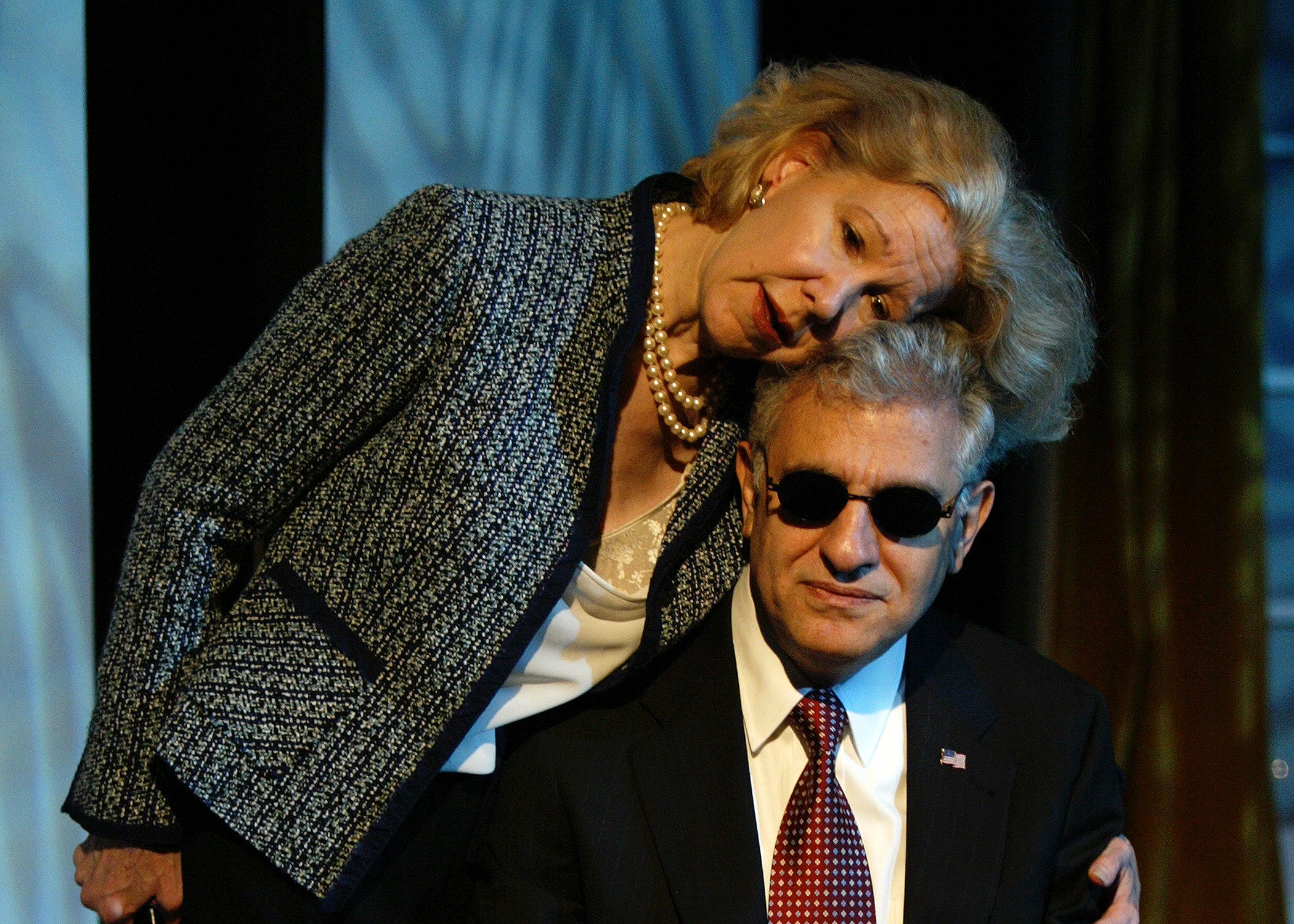
NV: We had to fight that for a long time in our company. When we used to be Theater By The Blind, we had a great group of talented people – some experienced actors mixed in with some other people who were not as experienced – and it became a kind of community theater. The common theme was blindness, so it became a connection – so the work was not as professional. We were getting reviewed in the early and the mid-90s when we were still forming, and critics would come and say, “This is actually really good work for a group of blind artists.” And it’s like, don’t give me the “Special” award. If you’re going to judge the work, judge it at face value and judge it for what it is. And if it sucks, say it sucks! As a group of artists, that is what we need to hear.
 

TBTB
 

HS: We also go so far out of our way to praise actors without disabilities that play people with disabilities, or actors who are not trans that play trans characters, yet we don’t privilege the stories of people who actually live that. Why do you think that happens?
 

NV: There’s this whole idea of what an actor must do to prepare and endure to create a role, the hardships they have to put themselves through and the positions they have to twist themselves into. Oh, I played someone who was blind, and for six weeks I lived in total darkness. It’s like, Great, that’s lovely and interesting, but why don’t you even consider hiring someone who has that disability to play that role?
 

MT: People seem to be afraid of what they don’t know or see every day.
 

NV: In theater and in film, they’ll hire a disabled actor to serve as an advisor. And yet they also say, “We don’t want to work with a blind person because there’ll be too much liability, too many demands, too much work. They’re going to have needs we won’t be able to meet.” There’s the star factor too. If I’m going to do a production of My Left Foot, I’m going to want Daniel Day Lewis. I don’t want someone who has cerebral palsy who I don’t know to play the role because I want to see Daniel Day Lewis do it. And then I can say, Wow he is really an amazing actor, because look at his range.
 

HS: It’s remarkable that the first person with an actual disability to play Laura in The Glass Menagerie is going to happen next season on Broadway.
 

NV: The fact that a major producer like Scott Rudin is considering and casting a person with a natural disability to play the role of Laura in Glass Menagerie is great and it shows that there is indeed progress being made.
 

MT: Disability is so often an afterthought in the conversation of inclusion.
 

NV: People always look at disability as something that makes a person less-than. You say, I have a disability, and they go “Aw, can I help you? You need a hand?” Because suddenly you’re a poor damaged bird who needs help. When it comes to disability, there are definitely people who are in a position where they might need more help than others, but it’s up to the individual to make those decisions. It’s not up to the society to make those decisions for them. That’s horribly condescending and it’s just wrong. It’s a perception that has been hardwired into us forever.
 

HS: And it’s so interesting that, as you said, it intersects with other forms of diversity. And yet, those categories usually become the more dominant form of diversity.
 

NV: The idea of non-traditional casting always came down to making sure that we’re being inclusive. If possible, we also try not to look at gender. I’ve always tried to address [issues of inclusion]. Our world is full of limitations; there are obstacles everywhere. If you have a disability, getting through daily life means you have to learn to really navigate through many obstacles. I don’t think anybody wants to be disabled, but if you become disabled or have a disability and you learn to adapt and live with it, you may realize, I don’t need my eyes, I don’t need my legs, I’m still me and that’s wonderful. The idea is that, if you were to become disabled tomorrow it would be horrible but you would learn to adapt and you would still want to be treated as you. And that’s how it is for everybody.
 

MT: So you’re talking about inclusion beyond disability at TBTB?
 

NV: I want our company to be able to explore all types of diversity. Most of the performers I know with disabilities are white. I don’t know a whole lot of actors with disabilities who are actors of color. I know they’re out there, and I want to work with them, I really want to meet them. Anytime you bring someone into a work, their energy and their life experience changes it and adds a different tone and color to it. It always makes the work richer. To me, that’s what’s exciting. Let’s see what we can get out of this.
 

MT: How often do you communicate with casting directors about inclusive casting?
 

NV: We’ve had a lot of conversations with casting directors, and they for the most part are on board. They want a fresh perspective and face. A lot of the issues with casting comes down to the money people, because they wonder, Is this person marketable or sellable? If they’re disabled, will people be uncomfortable with that? And that’s the perception we have to get over.
 

MT: I’m sure you hear a lot of stories from your cast members…
 

NV: We’ve had actors who have been told over and over again that they didn’t get a part because their disability was too real. You’re a congenital amputee, and that makes people squeamish. One of our actors, Mary, was up for a role a couple years ago in Army Wives. The part was for a female soldier who just came back from Afghanistan and she had lost her arm. Mary is a congenital amputee and is missing her arm. They auditioned her, called her back 6 times, and her agent thought she had it in the bag.
 

She didn’t get it, and the other actress who was not disabled got it, and they CGI’ed her arm out. They thought the cast and crew would be too uncomfortable being in the presence of an actor with a missing arm, that was why they did it. And everyone has those stories.
 

TBTB
 

HS: Let’s talk about The Healing, your last production. It was written by Sam Hunter, and was commissioned for TBTB. Without giving it away, I found it fascinating that Joan, the one character in the show without a disability, is actually the most fragile and the one we’re most worried about. The rest of them have their lives so together. Sharon, for example, is this very successful woman. Her detriment is almost that she is so together.
 

NV: It’s very subtle but the fact of the matter is it’s about a group of people that are haunted by their past. Sharon especially, she’s haunted by Zoe – was I able to help her? Was I able to do anything for her? And all of them are haunted by the ghost of Joan, a second ghost in the play. She’s painted as this horrible person, she’s awful, so you expect this crazy fanatical woman to enter, but instead you get this very sweet fragile woman who is terrified. Which sort of says something about all of us. That’s something that says, when it comes right down to it, we’re all the same in that regard. We all can relate to this play because we’ve all had things happen to us in the past that have affected us, good and bad, and changed our lives. That’s the parameter of what this life is I think. But I think it is important to realize that the other great message is to realize that we all matter, we all leave something behind. You are influence over the people you interact with in your life. Maybe it’s not a huge influence at first, maybe we won’t feel that influence for months and years down the road, but it’s important to think that everybody you encounter sort of nudges you in a different direction or different way.
 

MT: So Helen saw the show when there was a primarily deaf and hard of hearing audience. I went when VISIONS was there. Do you partner with them? Do they come to most of the productions? How does your accessibility program work?
 

NV: They don’t always come. We try to do at least one open caption performance whenever we do a show, but it’s my goal to make everything we do fully accessible to everyone always. We’re not there yet and I’m not saying we’re gonna be there next year or even in five years. But it’s something we’re constantly working on. Until the time that we can create work that is fully accessible to all people at all times, there will be those limitations. This year we did two open captioned performances and we did not do an audio description performance, because I don’t think this show really needed an audio description performance. It was a very dialogue driven play, there wasn’t a lot of non-verbal action that a blind or low-vision audience member would miss. We did create a series of program notes for our braille programs so that if you were blind, if there was something that was a non-verbal indication, there would be a note about what that thing was.
 

MT: What about the time changes and flashbacks within the show?
 

NV: Our blind and low vision audience got that. They might not have gotten it right away, but if you saw it, you might not get it right away either. The lights change, but you realize eventually that Zoe was dead and now Zoe is onstage talking. We like to do talkbacks for all of our show, and we very intentionally did talkbacks for our Deaf and HoH audience and our Blind and Low Vision audiences because I really wanted to get their feedback. I wanted to know what they thought – did they miss anything? Was there something we didn’t do right? What could we have done better? I thought it was great that you guys attended those talkbacks.
 

MT: And John McGinty was in the show. I know from the talkback that the role was slightly edited to fit him.
 

NV: This was the first show that we worked with an actor who was deaf. We’ve worked with hard of hearing actors and actors with assisted devices, but John is deaf and needs an interpreter in the room. That was all a new but great experience. It’s work we should be doing.
 

MT: It’s often people that are empathetic and compassionate that actively look for shows that are not about themselves or the majority. We at Stage & Candor look at it and talk about it because we’re interested in confronting it. But the people who actually need to be there will never seek it out. Do you ever think about that with TBTB, about how you can somehow reach out to a larger audience and unexpected groups of people?
 

NV: The thing you have to do is just keep reaching out. If you try to force a message on people they will not want to hear it, especially when it comes to entertainment. People go to the theater because they want to be entertained, not because they want to be educated or talked down to.
 

It’s always been a tough thing for our company because, bottom line, disability doesn’t sell. People hear disability and they automatically think it is going to be less-than. I cannot tell you how many times we’ve had people send us a donation and say, “That’s great work you’re doing,” and I think, “Wait a second, how do you know it’s great work if you’ve never seen it?”
 

Our ultimate goal has always been to create great work. We want to do work that you’re going to want to come and see, and you will see a group of great artists, many of whom have disabilities, and it’s going to be an eye opening experience.
 

TBTB
 

MT: Have you ever chosen to not disclose the fact that most of the company members have disabilities?
 

NV: As a non-profit theater, when we’re asking for funding, we want it to advance the work of performers, writers, directors with disabilities. Last year we did Agatha Christie’s The Unexpected Guest and sold out 95% of the run when we announced we were doing Christie. Our audiences didn’t know what TBTB was. We had a cast of nine artists, seven of whom were performers with disabilities. And at the end of the show when people would read the program it was like, “Where was the disability? I saw one actress in a wheelchair, but I thought that was a character choice!” This world is full of limitations. And in our lifetime, we may never see a wheelchair user working as a construction worker on a high rise, we may never see a person who is completely blind doing brain surgery. What we do as artists is create our own world and set our own limitations.
 

MT: “If you can believe in a singing crab in a Disney show, why can’t you believe in a person with a wheelchair playing an able-bodied role?”
 

NV: We say it all the time, but disability is a human characteristic. Sometimes you’re born with a disability, sometimes it comes to you in your life. As you age, the chances are you will have to deal with a disability at some point. Whether it is minor, whether it prevents you from being able to do something you were able to do earlier, that is a disability. Disability is personal. And it’s not.
 

We were talking before about hierarchies in our society and how we strive for equality and a level playing field, and this sounds negative, but we will never have a level playing field because our world and our society is one based on hierarchies. Who is smarter than whom, who is richer than whom, who lives here versus there, and we make judgments on that. And as long as we’re making judgments on those levels, there will always be the haves and the have nots. There will always be someone who we can point to and say, “’You’re different because you don’t have what we have.” It’s human, but that doesn’t mean we can’t keep working on that. Our goal for this company is to change the perception of disability and make people realize it is simply a human characteristic, and not something that invokes pity, not something that makes a person lesser-than. In fact, anybody who has a disability but lives in this city who is able to survive and exist and get around and do things – they are the truly incredible and true survivors. We always say the strong survive, but it’s not the strong, it’s the ones who are adaptable to change. And change is one of those things that – it’s the only constant in our life. We don’t like change, we’re creatures of habit, we like to know that when we roll out of bed the floor will be there, the water will be on, and we’ll be able to get to our favorite coffee shop. And when that changes, it’s earth shattering.
 

MT: Any general goals and challenges?
 

NV: Ike Shamblin, the founding artistic director of this company, started this company back in 1979 and he ran it virtually single-handedly for almost the entirety of its existence. This little off-Broadway, essentially community theater, existed for 38 years with such great potential, but he was only able to grow the company as big as one person can grow a company. You can be the hardest worker in the world, but there are only so many hours in the day and one person can only reach out to so many people.
 

My goal now is to grow this company and blow the walls out and grow our administrative staff and try to get more money. We need to do more work. Because, if we’re going to change perceptions, we need to be out there all the time, tapping people on the shoulder saying, “Come see this.”
 

MT: Is that why it went from Theater for the Blind to Theater Breaking Through Barriers? Was that part of that perception shift?
 

NV: It was a part of our expansion. It was also for practical reasons. The disabled performing arts community in New York City is probably one of the largest in the country – but that’s not saying much; it’s a very small community and everyone knows everyone else. If you decide to limit it further, and focus on just one disability, you’re really narrowing the field and you really have just a handful of actors. It got to a point where Ike was working with the same actors and casting shows for the same actors and felt constrained by it. I really pushed for this change. One of the things we’re fighting against is being discriminated against as a disabled performer. What we were doing is discrimination in itself, and why would we do that? So we need to change the name and open it up. Many of our blind actors felt that they were losing their company and losing their identity, and we had to say, no, you’re not losing it, you’re gaining something and growing the company. Some people didn’t like it and walked away. But it was the best move we could have ever made for the company and it changed everything. The work became richer. [The Healing] would not have happened if we were just theater by the blind. It’s a great gift. And what that taught me was that if I see myself limiting anything, I need to check that. Do we really want to limit ourselves? One of the reasons that our world is in the mess it’s in right now is because of the closures that we make and the judgments that we make.
 

The other goal is that there are so many different types of disability and I want to be able to work with anybody. We haven’t even gotten into working with artists with mental disabilities. That’s a very unique experience and it depends on the artist and the project, but it’s all a possibility and it’s all something I hope to do.
 

TBTB
 

MT: What’s coming up next for TBTB?
 

NV: In March, we’re going to be bringing back our short play festival, which we haven’t had for a couple of years. We used to do plays about disability; we don’t want to do that anymore. I’ve reached out to a lot of different playwrights and I want to do plays about otherness in our society. I want that otherness to focus on racial otherness, sexual orientation otherness, religious otherness, social otherness. The plays will be called “The Other Plays.” That’s the title of the festival and it is going to be a group of plays – and the idea is that the playwrights will write these plays knowing that they’re going to be performed by performers with disabilities. I don’t want the otherness to be disability, because the point is disability is one diversity that cuts through all other diversities. We want to examine transgender and race and religion through a lense of disability.
 

MT: Any fun commissions coming up, from other writers? Do you guys do it every couple of seasons or every season?
 

NV: I don’t have any actual formal commissions, but I’ve spoken to several different writers and I’ve asked them to write for us. Lameece Issaq, who is with the Noor Theatre, she is Arab American, and I would love for her to write a play about that experience. I’m just curious about the experience of being an Arab-American female in our world today. That role could be played by someone with a disability. Dennis Allen, who is a wonderful playwright, who does a lot of work for Theatre Harlem, I’ve asked him to write. I’ve also asked Neil LaBute to write. Now Neil LaBute, that’s going to be an interesting one, because his plays are always very misogynistic. But I think he could really come up with something really interesting when it comes to social otherness. I’m also especially fascinated because I’ve asked this other writer, Basil Kreimendahl – Basil is transgender so a lot of Basil’s work focuses on transgender issues. And I’m thinking, how cool would it be to bump Basil’s play up against Neil LaBute’s play. With a short play festival, you want a bunch of different perspectives thrown at you. As for other writers, Neil was interested in writing a full length for us, as was Bekah Brunstetter. There are a lot of writers out there I’d love to have.
 

Here’s the hard part – there are a lot of people I want to work with, but I also have to think, as a small off-Broadway theater company, we do very few shows per year and we have to make those shows count. We have to sell tickets. My biggest goal is to draw people in to see our work. So if I have a playwright I’m interested in but no one else really knows them, I can’t do the show, at least not right now. So my goal is to keep building so I can get back to doing a three-show season and I can have a brand new play by Sam Hunter, a fun crowd-pleasing play like a Neil Simon company, and another play by a new up-and-coming playwright. That will allow us to introduce new writers, as does the short play festival.
 

MT: Other than, from my knowledge, New York Deaf Theatre, I believe you are the only two companies in New York City that cater to disabled artists. Beyond donating money and showing up to support the productions, what can people without disabilities, people wanting to help, do?
 

NV: Perceptions of what disabilities are need to change. I think we have a good shot at really making a change through theater, through film, through television. America was the pioneer that innovated many things, and one thing we still do better than anyone else is entertainment. There are other parts of the world that produce more entertainment, but people look to us. The world learns about America through our television and our films – that’s why our stars and celebrities are such commodities. The sad part of it though, is that perceptions won’t change as long as it is misrepresented, or represented in a way where it becomes, “we’re going to have a celebrity winning an Oscar for playing a disabled person.”
 

Normalizing what disability is is really the only way to help change that. And I think it’s that way with everything! And talking about it helps, when we talk about racial diversity, religious diversity. The more we can talk and come to an accord that the bottom line is we’re all just people. We’re all human beings who are inhabiting the same planet, and there’s so much more to us than our bodies. Take the time to look at how absolutely special and unique every person is, because every person’s life experience is unique. You’re a walking story book, you’ve got stories that are your own that nobody else has. It’s overwhelming, but it’s true.

Posted on

The Trigger Project


The Trigger Project is meant to be a resource for theatergoers who appreciate a heads-up. Understandably, productions want to protect the work– the twists, the stolen kisses, the fights, the cliffhangers – but sometimes, in order to fully enjoy a piece of art, a clue into potentially sensitive material within a piece goes further than the collective *Gasp* from the audience you partake in when Juliet dies at the end. (Hopefully, that wasn’t a spoiler. That’s Shakespeare, maybe you’ve heard of him?) We at Stage & Candor want you to feel comfortable and confident going into a production and give you the information and tools you need to make sure caring for yourself and being an audience member are not mutually exclusive. So be forewarned, there are so many spoilers ahead. Spoilers abound. We can’t say SPOILERS enough times to let you know that if you want to stay in the dark about the plot, this is not the page for you. If you’d like to continue, scroll down.
 

We are of the firm belief that many members of the Stage & Candor team possess super powers, but alas (poor Yorick, ha!) omnipresence was not one of them. We can’t see every show! If you have seen a production and would like to submit a trigger warning to be posted on this resource page, email tips to resources@stageandcandor.wpcomstaging.com


Keep Scrolling


New York – Broadway


Show Theater Genre Trigger
Aubergine Playwrights Horizons Play Death of a parent
Beautiful Sondheim Musical Discussion of domestic abuse
Book of Mormon O’Neil Musical Depiction of violence; Reference to genital mutilation
Chicago Ambassador Musical Revival Gunshots; Depiction of violence against women
Fun Home Circle in the Square Musical Discussion and imagery of suicide
Hamilton Richard Rodgers Musical Depictions of war; Violence
Les Miserables Imperial Musical Revival War; Gun Violence; Violence against women; Sexual assault
Matilda Shubert Musical Depiction of child neglect
Phantom of the Opera Circle in the Square Musical Discussion and imagery of suicide
The Color Purple Jacobs Musical Revival Depiction and discussion of domestic abuse and child abuse; Discussion of sexual assault
The Crucible Walter Kerr Play Revival Witchcraft; Torture; Excessive loud noise, screaming, etc.
The Humans Schoenfeld Play New York-based story with reference to 9/11/2001
The Lion King Minskoff Musical Depicts parental death, violence
Waitress Brooks Atkinson Musical Depicts domestic abuse
Posted on

Firebrand Theatre Company


As soon as the press release came out announcing the launch of Firebrand Theatre Company, the first equity, feminist musical theater company, we knew we had to sit down with its founders, Harmony France and Danni Smith. So, we spent an afternoon tucked into the corner of Hoosier Mama Pie Company in Evanston to talk about feminism and musical theater. A few days later, I attended the opening night of Hazel at Drury Lane in Oakbrook, and I mentioned that I’d met with them to a friend. She asked, “Was it at Hoosier Mama?” Our feminist pie summit had been overheard, and she was just as excited as I was. As it turns out, Firebrand’s launch was unintentionally well-timed, at a moment when the Chicago theater community is beginning to have some real conversations about the importance of representation and diversity. Firebrand and its founders are about to start a whole lot more.


Kelly Wallace: The timing of all this is perfect. It seems like you’ve jumped into a moment where this conversation is happening in a lot of different places.
 

Harmony France: It’s very odd. Because we didn’t plan it. There’s a couple of weird things that happened, and it’s why we think we’re on the right path. My post about body image and inclusive casting that went viral; we’d already been planning the company when that happened. Then we had to push our press launch day by a day because Steppenwolf was announcing, so we pushed it a day, not knowing that day was International Women’s Day. Not intentional.
 

Danni Smith: It’s all very serendipitous.
 

HF: Well, it is intentional in the sense that this is the conversation we wanted to have. What isn’t intentional is the “jumping on a bandwagon” – this is already the direction we’d been heading in for for a long time, actually knowing we’re starting a theater company for the last six months. But everything is happening very fast and it’s confusing a lot of old, white men. Our community is demanding change at a very rapid pace and I think a lot of people are really taken aback by it. I think it’s the quote, “Once we know better, we do better”. That’s what everyone needs to do. Take away the blame, take away the shame.
 

DS: And the defensiveness.
 

HF: And the offensiveness. All of it. And just…”oh, okay, now I know better, so now I’ll do better.”
 

KW: Why Firebrand? What inspired the name?
 

HF: We were stream of consciousness trying to think of something. We thought of Greek goddesses; I wanted something very ancient. This has been around for a long time. We thought Athena, but that’s a little on the nose. Then I thought of Cassandra of Troy, who was the prophetess who no one believed, and one of my favorite books from when I was younger was Marion Zimmer Bradley’s The Firebrand, where Cassandra is the firebrand. We liked it, and then looked up the meaning and it was like, “to incite change or cause radical action”.
 

DS: We were like…yup! There it is. That’s perfect.
 

KW: You just launched. Firebrand is here. How are you guys doing? What’s the response been like so far?
 

HF: It’s been overwhelmingly positive. Yeah. We’ve got support…nationally, not just in Chicago. Just people reaching out. LA, New York…
 

KW: This doesn’t exist anywhere else.
 

HF: It doesn’t exist anywhere. We’re the first one!
 

DS: The more we work on it and realize that, because we are so laser-focused with our mission, I think some people would get scared and say that’s very limiting. And for us, we acknowledge that we’ve not made it easy on ourselves. But that’s the excitement; it’s going to keep us really focused on what kind of work we’re producing.
 

KW: What kind of work do you want to produce?
 

HF: We definitely want to do full-blown musicals. It’s less about the type of musical and more about representation of women onstage, passing the Bechdel test, passing what we’ve started as the “Firebrand Test.”
 

The Firebrand Test:
— In this work, there are at least as many women as men in the cast,
— It lends itself to inclusive, diverse casting,
— It empowers women.


HF: We’ve both been a part of theater companies before. There’s something different with this one. People are donating their time to us in ways that I’ve never seen before. We don’t even have to ask. People are just approaching us. So I think we’ve really captured something.
 

DS: We’d make a list of like, ten people we could potentially ask to do something assuming that the first eight are going to say no. And then we’ll be…
 

HF: We’re actually – we’re not in trouble, but our next benefit, it’s our “Sung By Her” series, so basically we pick an artist and find some kickass women to do a tribute to that artist. So, the first one we’re doing is Pink. So we’ve reached out to more than what we would normally put in the show, thinking not everyone would do it, and then every person has said yes. So…
 

DS: You’ll get to hear more of Pink!
 

KW:You’re calling yourselves the first equity, feminist musical theater company. Why is it important to be Equity; what’s the importance in differentiating that it’s a union theater company?
 

HF: There are a couple things. One is because the shows we can produce are going to be so limited, by us, by our standards. If we need an Equity actor to play like, a random older character, we don’t want that to be a barrier too. We want to be able to have access to all actors. Plus, we don’t want to be unable to use someone because they’re union. The goal, eventually, is to pay everyone a living wage. That’s important to us too.
 

DS: We want to be a part of that, and I mean commercial in the sense of like, people that come to the theater and subscribe and are theater-goers, we want them to see this as a valid part of the conversation in musical theater. There’s something about people who don’t know the inner workings of Equity and non-equity and all that, there’s something about having that stamp to appeal to a more commercial base. It’s just – ultimately, it’s access.
 

HF: We want to be on the same level as any theater in the city. We want to be competitive with any theater in the city. We don’t really see ourselves as a storefront. I mean, we definitely still want it to be Chicago and have that feel and be in glorious intimate spaces, but also to have the professionalism, and the quality. That’s the goal.
 

Stage-&-Candor_Firebrand2

KW: You both come from an acting background. Have you ever turned a role down because you were either offended by or couldn’t stomach the content?
 

DS: It’s an interesting conversation because…I certainly feel like it’s in the light now because of social media and the access we have to raising our voices. I am appreciative of being asked to think before I accept. It would’ve never occurred to me that I couldn’t accept that role or that I shouldn’t go in for that. So I don’t know that there’s anything I’ve turned down at this point, but I certainly have an awareness now.
 

HF: Yeah, I want to say that I’ve walked out of unprofessional situations. I think it’s kind of another reason why we started this company; it’s years and years and years of frustrated conversations on my couch. How we were being treated or having to dance around a male director’s ego or a leading actor’s ego.
 

DS: Or being tired of seeing each other every Saturday morning at whatever callback it was for the same one part that was available to us in that show.
 

HF: To the point that for years we were almost convinced we were the same actor. Which we are not, at all. But we were constantly up for the same roles. And it’s because there is not a variety. We are so different but we are enough alike that we fit into this one type, and it’s just because when you’re a man, in musical theater, you can play anything. When you’re a woman, you’re the virgin, the whore, the mother, or the hag. Those are the options.
 

KW: Now we’re seeing things like Lauren Villegas’ “Am I Right?” and my wonder becomes, at what point is it an actor’s responsibility to say no? It is hard to make a living as an actor; at what point do you have to say no to a job?
 

DS: I think there are instances in which it is very clear. It is, for lack of a better term, black and white. What I appreciate about Lauren’s website is that it’s a series of questions. And ultimately she says, at the end of that, if after asking yourself all of these things you feel like you can move forward, then do that. But just make sure you’ve asked the questions. I think that is a responsibility of actors to do that.
 

KW: Why Chicago? What brought you here? Why are you still here?
 

DS: I’m from Indiana. And I did a New York showcase and I visited L.A., and those were always like, the three options that we were given. You can go to New York, L.A., or Chicago. And I had a professor who was actually with Red Orchid Theatre, but she teaches in Muncie, where I went to school. And she told us, she encouraged everybody to go to Chicago right out of school. Because she said, Chicago is like street grad school, which I always loved. She was like, if you go to Chicago and you show up at auditions, you will work. You know? It may not always be at the Goodman or wherever, but you’re going to work. And if you go to work and you are respectful and you show up on time and you do your job and you’re professional, you’ll probably get the opportunity to work again. I think for me, I just see her people working. They are here to work on their craft. So much risk is taken here, particularly in the storefronts. There’s a glorious, rich storefront scene here. I love that any day of the week you can find something to see and celebrate. Monday’s not necessarily a dark day for everybody here.
 

HF: The quality of work, the risk. I actually grew up in New York. Basically, after being in the Navy for six years, I got out, and the whole time I knew I wanted to get out and be an actor. I auditioned for two schools, Julliard and Columbia College. There was just something about Chicago; there was something about Columbia. You can take a math class, but it’s art-based. Columbia is the craziest liberal arts school ever, and it really appealed to my brain, that had been in this very regimented thing for six years. And the thing about Chicago that has really come home to me after doing a Broadway national tour is what Danni said. It is about the art here. There are actually people here, we all have to make a living. We all have to pay the rent. But we want to be artists first. The show I did was so commercial, and I got to travel the world with it. It was an incredible experience, but all I wanted to do was come home and make art. That’s all I wanted to do. When you’re an actor, particularly musical theater, the ultimate goal for most everyone is Broadway. And I think doing that tour, I was like…oh, maybe that’s not my ultimate goal. Maybe my ultimate goal is that I want to help fix some of these inequities. I truly believe the longer we go on this path that this is my calling. This. Not to star on Broadway. But I want to make a difference. The kind of theater that makes me feel good. I’ve never been a hoofer. I’m not a dancer. I don’t dance in ensembles. Dessa Rose, which I did with Bailiwick in Chicago a few years back, was about slavery, or I did a play at Profiles Theatre, which was about 9/11. When it’s about something, an activist part of me gets lit up. I need that aspect in my art. I need to feel like I’m making the world better, and not just because they’re distracted for an hour. I want them to actually leave the theater thinking about something. There’s just no better place for that then Chicago. I’ve been all over the world and I just wanted to come home.
 

DS: I would say the word that I feel like always comes up among Chicago artists is “community.” I always hear people saying the theater community.
 

HF: We actually care about each other. We care about each other’s careers. Like, in a different world, we could have not been friends because we were constantly in competition with each other. Chicago lends itself to wanting everyone to win. If she wins, I win. There’s just that feeling of camaraderie that I haven’t felt anywhere else…if I am losing a role, I want Danni to be really, really good! It’s just what Amy Poehler says.
 

DS: Bitches get stuff done?
 

HF: Well, bitches get stuff done, yes. But “good for her, not for me”. In that…that wasn’t for me. And every time I have lost something that I wanted so desperately, as far as a role or something, something else has happened that has enriched me more than that initial experience ever could.
 

KW: You said you worked on Dessa Rose and had a lot of conversations about race. When you come into starting Firebrand, you are in a position of power. Your Firebrand Test for submissions specifically lists diverse casting as a priority for you. What does “diverse” casting mean to you? What do you hope this is going to accomplish?
 

HF: Quite honestly, we want to have as many different types of people and women as possible. It just enriches the conversation. I’ve been casting for awhile. When I was with Bailiwick Chicago, we always used inclusive casting. The first show I helped cast at Bailiwick was Aida, and we cast it with an almost all-black cast. And that’s not how Aida is normally done. And Lili-Anne Brown [the director] was like, well, they’re in Africa. And I hadn’t ever thought of that. And I was like…well, yeah! They’re in Africa. It makes so much sense if you really think about it. I don’t see it as, “oh, we have to make sure we have this many of this type of person,” I see it as a privilege to represent as many points of view as we possibly can. It’s so important to us. We are just looking for an open, inclusive community, and that’s how we’re going to pick our shows. We’re going to pick shows that lend themselves to diversity.
 

DS: It’s all about action. It’s like…just do it. Just DO it. We’re committed to going beyond that paragraph blurb, just speaking of our casting right now, you know the blurb. Where it says, “all ethnicities are encouraged to attend”, it’s like…we’re gonna go beyond that. That’s a token stamp. We’re putting it into action. I don’t know how else more to say it. We’re just gonna do the damn thing. It’s also important to us because we’re very aware that we are two white women starting a feminist musical theater company that is committed to inclusive, diverse casting. We didn’t want to be “whitesplaining”.
 

HF: It’s a very complicated and nuanced conversation and feminism has a history of not being the most inclusive for other races. We’re very aware of that too.
 

KW: What made you hit that point of “enough is enough”?
 

DS: It truly has been a conversation we’ve been having for years, that other women have been having too. For me, the turning point was for the past six months I’ve been going through this process…I was close to having the amount of points to take my Equity card but somewhere in my mind, it was still in the distant future. Then I was offered a contract at The Paramount for A Christmas Story and they were like, we need to offer you an Equity contract because of the amount of non-equity we have to use. All of a sudden, it was like, we’re gonna do this. And it made me sit back and reflect on the past ten years of my life in this city as a non-equity actor and the incredible experiences that I’ve been able to have. It’s not that that isn’t available in Equity but the opportunities and the kind of work that’s produced at houses that have to maintain a subscription base and a lot of money…some of those glorious shows for actors where you get to dig in and work on something…they’re usually non-equity storefronts. That’s where those risks are taken. I was having this pain in my heart of…I feel like it’s time to go Equity and give that a try and give myself a chance to be paid a living wage to do what I do. But where can I find my heart again too? And it was in helping others. It was in taking action and this theater company happened because we were like, we need to act. We need to do something about it.
 

HF: It came from conversations not just about theater. It came from conversations about the war on women, about inequities in the political situation right now. And both of us have come to points in our careers where we’ve been like…this is such a vain thing, what are we doing? Shouldn’t we be helping the world? How can we do that? And what we came to is…well, this is what we do, this is how we help the world. We’re not politicians or heart surgeons or any of these things. I make art. But what if we make art with a socially-conscious mission? Then we can change the world, in our way.
 

KW: One of the things that you said is important is feeling like you’re creating a safe space. How do you do that and create an environment where people can express themselves without worrying about being judged for it?
 

DS: I think it’s all about communication. I had an incredibly positive experience with a show called The Wild Party (LaChiusa) and the very first get-together that we had, our director Brenda sat there with us and said, “I care about all of you as people first. You are a person to me before you’re an actor. And so I want to acknowledge that if there’s ever a point in this rehearsal process where you don’t feel safe or you feel like I can’t quite go there today, because today is not a good day, just know we can have that conversation.” And so just for her to have that conversation with us and establish that right away, it empowered everybody to jump off the cliff together. Everybody dove in and I swear it was because of that initial meeting of, let’s take a few minutes and acknowledge that we’re all human beings.
 

HF: I think for actors to feel comfortable and not “diva out”, ’cause I’ve done it and I’ve felt a certain way…is they need to feel respected and safe. Those are the two things. And there are so many situations where actors are just treated like scenery, y’know, where as Danni said…they’re not treated as people, as humans, as employees, as people with rights. So I had a similar experience with Dessa Rose where it’s about slavery, so that first day, we talked about race. We talked about it for like five hours. It was instructive and made us all feel safe with each other, that our opinions weren’t taboo, and we could speak honestly about things. I think you can have, even if it’s just a half-hour “come to Jesus” with the cast, it’s important to feel like you’re respected, to not feel scared. I always – as an actor, I was terrified I am going to be fired every day until we open the show. Every day, when I was in nun bootcamp for the Sister Act tour, I thought I was getting fired every day. And part of that insecurity is just…actors are insecure beings, in general, but part of that insecurity is being treated like, “Oh, you’re so lucky to be here. There’s so many people who would like to have your spot.” And that’s probably true, but that doesn’t mean we don’t have worth. Even if there are ten people that could fill my spot, I still have worth, you still chose me. So treat me with the respect that I deserve as a professional.
 

DS: There are a lot of little things that add up too, like something as simple as…if you don’t think you’re going to realistically use that actor until an hour into the rehearsal…don’t call them until an hour into the rehearsal. If you’re not paying that actor a living wage to be there, try to at least respect their time. Use them as much as you can. If we need to have a conversation that’s about the company or something logistically that’s not working, rather than having that in front of the actors, say “take a five” and have a pow-wow. Little things that you’d be surprised not every company feels that way.
 

HF: I mean, I have a military background. So rule number one is that you praise in public and you admonish in private. Like, that’s rule number one. And I can’t tell you how many theater companies I’ve been to where they’ll pick on someone or call someone out in front of the whole cast. That kind of stuff isn’t needed. And specifically because we’re actors, I think it gives us a great insight into how actors want to be treated. We just want to take care of our employees, and not just our actors, all of our employees. We just want to make them feel as safe and respected as possible. It makes for better work. When people feel good, they give you their best.
 

KW: Who are some of your influences? Who do you look at and see inspiration in?
 

DS: I feel like I see it more in my people here, in our community; I see it in my friend, Harmony. I look at Jeanine Tesori or a Michael John LaChiusa, who writes gorgeously for women.
 

HF: Lin-Manuel Miranda.
 

KW: And even something like Hamilton sounds like a huge risk on paper. Who do you have in your head with a stronger image of whiteness than the founding fathers?
 

DS: We’ve all seen the paintings, the portraits.
 

HF: The marble busts.
 

KW: And then you say, okay, let’s cast a multicultural rap musical about them. The idea just sounds outlandish to people, and then you see it. The opening number wasn’t even over and you’re not even thinking about the fact that these people aren’t the same race as the people they’re portraying.
 

HF: It’s a suspension of disbelief. It’s part of theater.
 

KW: I mean, you can buy a singing crab in The Little Mermaid but you can’t buy that Thomas Jefferson is played by a black man?
 

DS: That’s such a good point.
 

HF: It’s a wonderful point. And the thing is that I keep stressing this to people that we’re pitching things to…as a businesswoman, it doesn’t make sense to not be inclusive. It doesn’t make sense. This is an audience that has probably stopped paying attention to you because you are not representing them onstage. As we spoke about in the 2014/2015 season, 68% of the audience on Broadway were women. It makes good business sense to tailor to women. So it’s just a little backwards to me. I think in every way. All it’s gonna do when we make theater more inclusive, is include more people. More people are going to see themselves onstage. It’s the future of theater.
 

DS: If we want theater to be for everybody, it needs to be by everybody.
 

KW: Now, on Facebook, you wrote a post that went viral about commenting on women’s appearances. In theater, and especially in casting, how do you not comment on women’s appearances? That’s a world where the shorthand can be…
 

HF: It can be gross. On the other end too, I cast a show once where we were auditioning guys and they were being objectified. It’s tricky because you almost need to go back to the text. Every time. Does the text specifically say that we need a 5’8″ blonde with a 36/28/36? Maybe it does.
 

DS: Does it say specifically caucasian? Does it specifically black?
 

HF: Does it say specifically one gender, even? So that’s kind of how we’re gonna increase our canon. We’re going to really look at texts and looking at what can we get away with, quite honestly. It’s almost a challenge to ourselves of…how diversified can we get?
 

DS: How can we break the preconceived norm of what that show is “supposed” to be? And just go back and commit to breaking down that barrier and seeing it with fresh eyes.
 

HF: We have to be so creative with musical theater because it’s just not there. Even the shows that are…it’s so funny that I say that Broadway is revolutionary right now because that’s so not normally the case but it is. With Hamilton and Fun Home and even Waitress, there’s some really inclusive stuff.
 

DS: Eclipsed!
 

HF: But we’re not going to get those titles for a very, very long time. So in the meantime, we have to think outside the box of how we can bring change and how we can make this better within what we have to work with.
 

DS: While we continue to foster new work…
 

HF: While we foster new work. We don’t want to be behind! Why should we be behind New York? We’re Chicago. Are you kidding me? This is the hub! This is where you go for exciting, brave theater.
 

KW: And even when you put on this great work, you’re still in the position of having so many men in power who get to comment on what you’re doing…Waitress had that article in the New York Post that Michael Riedel wrote about Diane Paulus and her “merry band of feminists”…
 

HF: Oh yeah! The piece I’m writing is a response to that.
 

DS: It was infuriating on multiple levels too. Like, why can’t women have that conversation? Why can’t we dive deeper into this stuff with musical theater? Why is it only in plays that we can address tough topics?
 

KW: And women buy most of the tickets…
 

HF: 68% of them! The article is ridiculous anyway. He used The Color Purple as an example of what we should be striving for, rather than the domestic abuse in Waitress. Have you seen either show? The Color Purple is definitely about domestic abuse. Like, quite definitely. I didn’t even understand what that article was about. It infuriated me. It was so confusing. That last line about, “leave domestic violence to Tennessee Williams and David Mamet”…I mean, my blood was boiling.
 

DS: I just want to ask him…why?
 

HF: Why can’t a woman tell her point of view in a situation like that? Why is that not as important? Just…all the questions.
 

KW: And can’t a show be both things? Can’t it be a hopeful show and be about domestic violence?
 

HF: It is! You saw it, I saw it. I think it’s very uplifting at the end.
 

DS: And aren’t most shows about reflecting on human nature? At the core of them, it’s about reflecting on how we get through everything we get through in this world, what brings out the best in us, what brings out the worst in us. So it’s an examination of that and I don’t think that you can only have one or the other. Life isn’t that way.
 

HF: I also don’t think musical theater should be exempt from that conversation. Why can’t musical theater be effective, life-changing theater? It is!
 

KW: To reference Tennessee Williams and David Mamet completely erases musical theater from the conversation.
 

HF: Yes! It deletes the art form, entirely. Like musical theater isn’t worth that kind of heavy material. Some of my most profound experiences have been in musical theater. There is something about music that can touch emotions in us that nothing else can.
 

KW: And this isn’t to pile on to Michael Riedel. He’s hardly the only culprit.
 

HF: It’s just society.
 

DS: I think that’s another goal of our company too. In this world, I think it’s harder for women, that we’re pitted against each other. It’s easier to tear each other down, it’s easier to leave a snarky comment and not be held accountable. Something you would probably never say in person to somebody’s face. In this world of crazy, we can create a place where we lift each other up and we create opportunities for each other. There are always going to be people out there trying to tear it down. So, it’s incredibly important to us to try and make something good.
 

KW: One of the things that’s important to us is the idea that there’s not one way to be a feminist.
 

HF: We talked about that, we didn’t know if wanted to use the word feminist or not because it’s so loaded. It has all of this baggage attached to it. And finally we were like, what else is there, we don’t have another word for this yet. Hopefully one day we don’t need this word, but when we talk about feminism, all we’re talking about is equality. That’s it. At our launch party, we did a gender bender concert, and so many conversations were started from that. We picked a show that’s typical all-male with one female character and we turned it. It was all women and one male character. People came up to me and were like, I didn’t even notice that it was weird that this is all guys until you flipped it, ’cause it looked strange. People aren’t used to seeing it.
 

DS: Or hearing the words in a new way, of something they were maybe very familiar with and there’s the potential to unlock that by simply casting a woman.
 

HF: It was just very interesting, all of it. And on the other end of it, we cast a man to play a role that is very vulnerable and has moments of weakness, and when do you see a man do that in musical theater? So, it was really interesting. How did the story change, how did it stay the same? But people didn’t come up to us just to say, “Oh, that was awesome!” They wanted to talk to us about that stuff. I think that’s our ultimate goal. To get this conversation going.
 

DS: A lot of people play devil’s advocate with us about feminism and running a feminist theater company and we just want to say, stop playing devil’s advocate and just play advocate.
 

Stage-&-Candor_Firebrand1

KW: There’s this idea that a show about women, by women, is a “women’s musical” as opposed to a show about men by men is universal, it’s for everyone.
 

HF: There’s also this expectation that if it’s a woman’s story, it’s everyone wearing pink or eating cupcakes or something. It’s this certain thing; it’s a chick flick.
 

DS: “I had to go see some rom-com with my wife; it’s my duty.”
 

HF: Exactly. And it’s not necessarily the case, you know? And so…we just wanna be human. We just want to be equal. It’s just exhausting. Every day, reading some nonsense like the New York Post article or what’s happening in the political campaigns…
 

KW: I don’t know any woman who didn’t watch even the Democratic debate and say…wow, I’ve been that person who’s had a finger pointed in their face, maybe that’s not how you engage with someone. No matter who you’re supporting, you see the double standard.
 

DS: They even did it on Scandal a little bit.
 

HF: I haven’t seen the last couple!
 

DS: Well, Mellie’s running and they’re practicing debates and it’s all of that.
 

HF: I love that. Obviously as a theater company, we can’t endorse anyone or anything like that. But what I will say is that all of that trickles down. If we’re gonna treat a woman as accomplished and respected as Hillary Clinton this way…then you’ll treat any woman this way. We all have these silent rules. We see it played out on a national stage in this situation, and we’re not under scrutiny, but even now, when we have to do business dealings with a man, I find myself having to correct my corrective behavior, if that makes sense. You think, “I could charm my way out of that if I want to”. You think of all those things. We’ve figured out how to get what we want, as women, without actually saying what we want.
 

DS: You have to tell yourself that it’s okay just to ask the damn question.
 

KW: Things like the word “just”, that you don’t even think about. You diminish the things you’re asking.
 

HF: Or, “does that make sense?” I do that a lot.
 

KW: “We don’t have to do this, but…”
 

HF: It’s all those ways that we’ve learned to try to get what we want, without just saying what we want.
 

DS: And it’s not just with men, it’s with other women too.
 

KW: Even women are raised in the same society that men are raised in. We grow up being told to compete with other women. That’s hard, even for women, to escape.
 

DS: We both acknowledge the whole “seeing is believing” aspect of things. When we’ve talked about Star Wars, seeing a woman and a black man as our leading characters, in Star Wars
 

HF: But then you can’t find her doll!
 

DS: I remember reading some blog post, it was a Dad talking about his daughter, saying here’s why Rey is not a great example for my daughter. It was the whole anti-argument of…well, my daughter doesn’t need Rey to tell her she can be anything she wants to be. It’s like, actually sir, we do need to see that. For some of us, we need to see it to see that it’s even possible.
 

HF: When I was a little girl, when I would play Star Wars, I was a jedi. I mean, duh. Obviously. So, I’ve always known I’m called to be a jedi. But when you’re kids, there aren’t those rules, you learn them.
 

KW: People reacted the same way when J.J. Abrams talked about putting gay characters in Star Wars. And the reaction was that they were just trying to check the boxes…not really.
 

HF: No! And I think we need to stop that way of thinking. That like, oh, we need the tokens. I don’t think of it that way. I think of it like…it’s really important that we represent everyone.
 

KW: How is it more outlandish to be gay than to be an alien?
 

DS: It’s the singing crab and the founding father!
 

HF: It’s so absurd to me. It’s 2016. I look around at some of the stuff that’s going on, and it’s what feeds, and support feeds us to stay motivated because this is hard but I think the other thing that feeds me is looking around and being like, “No. This is 2016. Absolutely not.” It’s all crazy. We say every day that we have a lot of work to do. We’ll be talking about some of this and just stop and be like…we have a lot of work to do.
 

DS: We can do this, though.
 

HF: As cliché as it sounds, we’re just trying to make a difference.
 

DS: Be the change.
 

HF: I’m tired of bitching about it on my couch. I want to fix it…we’re trying to do things that…I mean, take all the activism away. We’re also artists that want to make really good art.
 

DS: We want to make really, really good theater.
 

KW: You have to balance the entertainment without losing the socially-conscious aspect of it. People want to go to a show and not feel like they’re being lectured.
 

HF: It’s a delicate balance, we talk about it all the time, how to get both things across? I don’t care if you came in the door because you believe in the cause or if you came in the door because you heard that show was awesome. I want both groups of those people to come in the door and see the theater. And maybe the people who heard the show was awesome are gonna leave with a little bit of that conversation started about activism and feminism. And maybe the people who came for the activism are going to see this great show.

Posted on

Advocates and Links


If you want to share resources you believe benefit the performing arts community, email resources@stageandcandor.wpcomstaging.com. If you work for an organization interested in collaborating with Stage & Candor, email hello@stageandcandor.wpcomstaging.com.


Video Series

Title Author
Women in Theatre CUNY TV/ Linda Winer
Working in the Theatre American Theatre Wing


Advocacy Groups

Name Website Twitter
A Broader Way http://abroaderway.org/ @ABroaderWay
Alliance for Inclusion in the Arts http://inclusioninthearts.org/ @InclusionArts
Arts Integrity Initiative at The New School http://www.artsintegrity.org/ @ArtsIntegrity
Broadway Black http://broadwayblack.com/ @BroadwayBlack
Broadway PATP http://www.onbroadway-patp.com/ @OnBroadway_patp
Girl Be Heard http://girlbeheard.org/ @GirlBeHeard
HowlRound http://howlround.com/ @HowlRound
League of Professional Theatre Women http://theatrewomen.org/ @LPTWomen
National New Play Network http://nnpn.org/ @NewPlayNetwork
Stage Source Boston http://www.stagesource.org/ @StageSourceBos
The Dramatist Guld http://www.dramatistsguild.com/ @dramatistsguild
The Interval NY http://theintervalny.com @theintervalny
The Kilroys http://thekilroys.org/ @thekilroys13
Literary Managers and Dramaturgs of the Americas http://www.lmda.org/ @LMDAmericas
The Lilly Awards http://thelillyawards.org @TheLillyAwards
The Ziegfeld Club http://www.theziegfeldclubinc.com/ @ZiegfeldClubInc
Works By Women https://worksbywomen.wordpress.com/ N/A